This Lawsuit Aims to Block California’s New K-12 Antisemitism Law
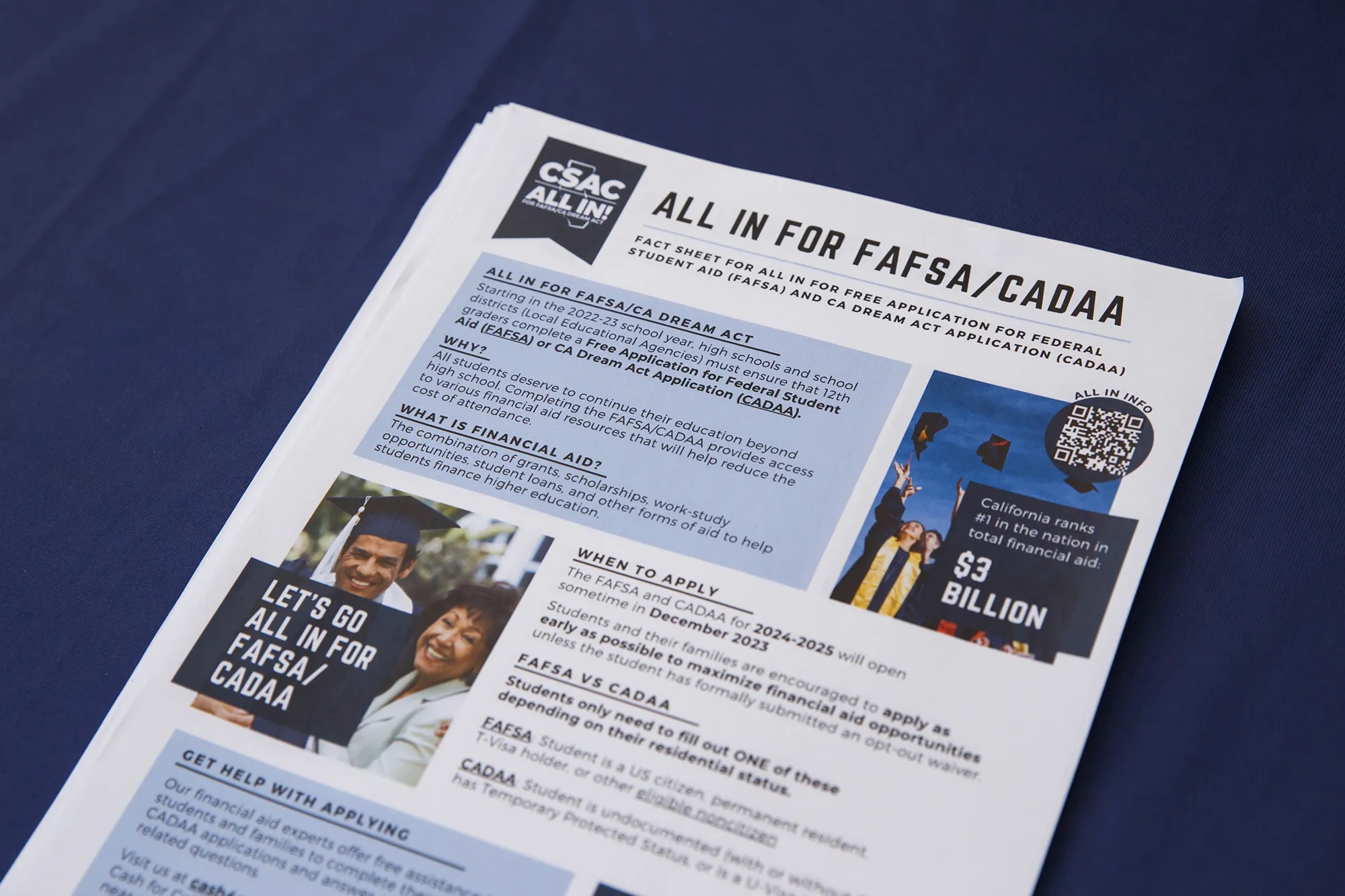
California Students With Immigrant Parents Seek Financial Aid Despite Deportation Risks
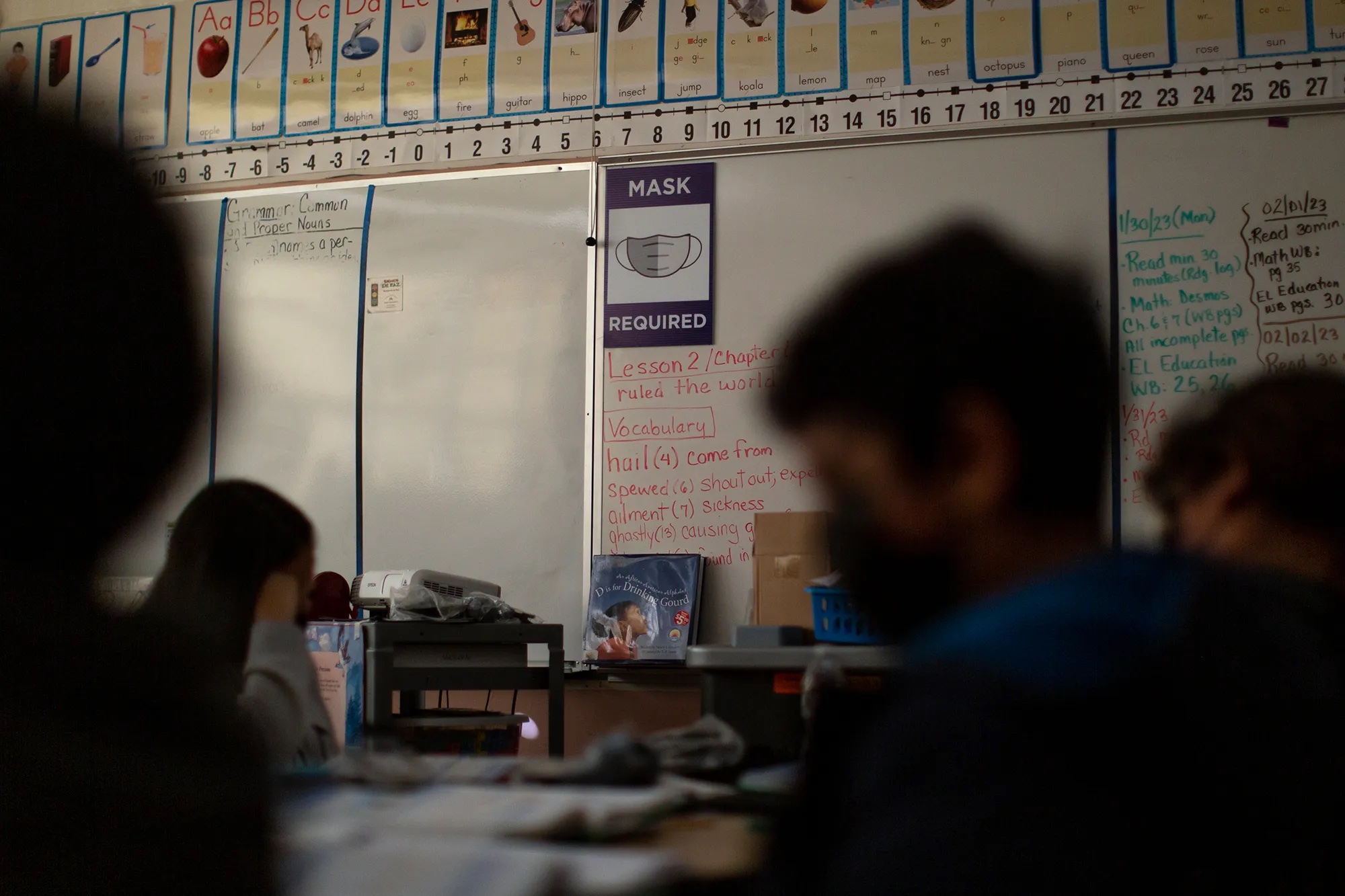
Heinous, Heartbreaking — and Expensive. California Schools Face Avalanche of Sex Abuse Claims
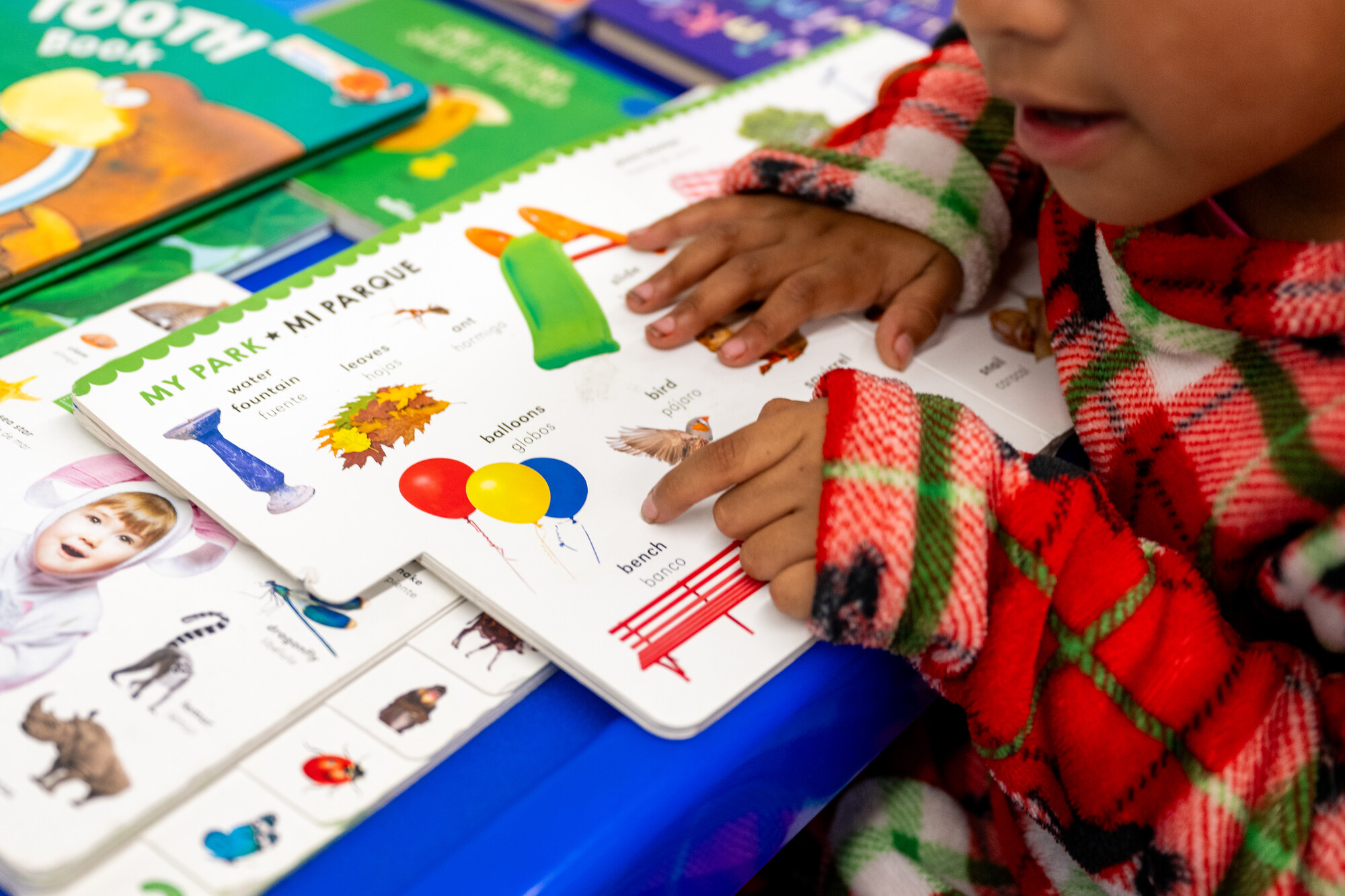
Sudden US Education Grant Freeze Targets Money for English Learners, Migrant Students
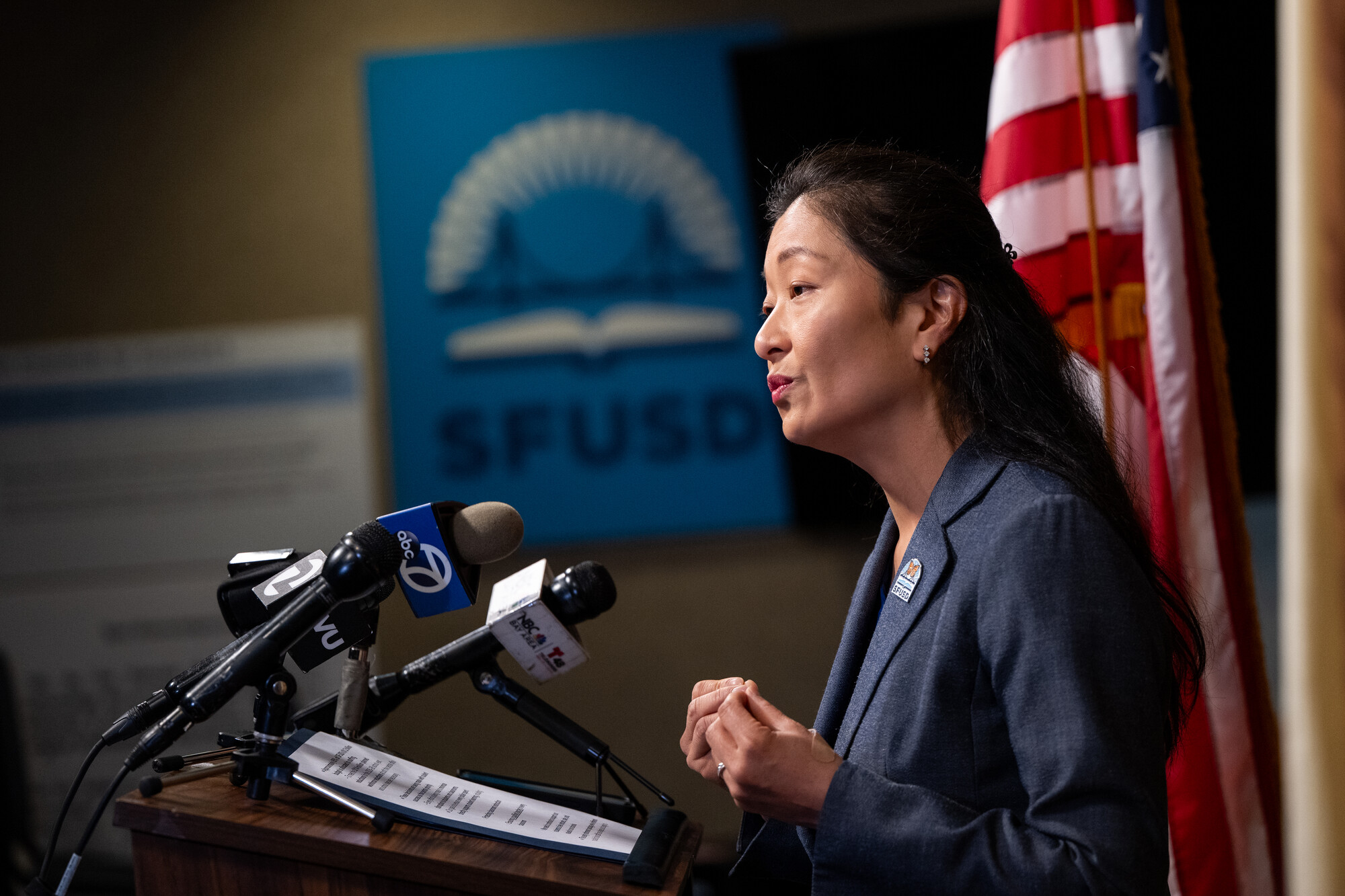
SF School District Unveils Balanced Budget After Cutting Over $110 Million in Spending
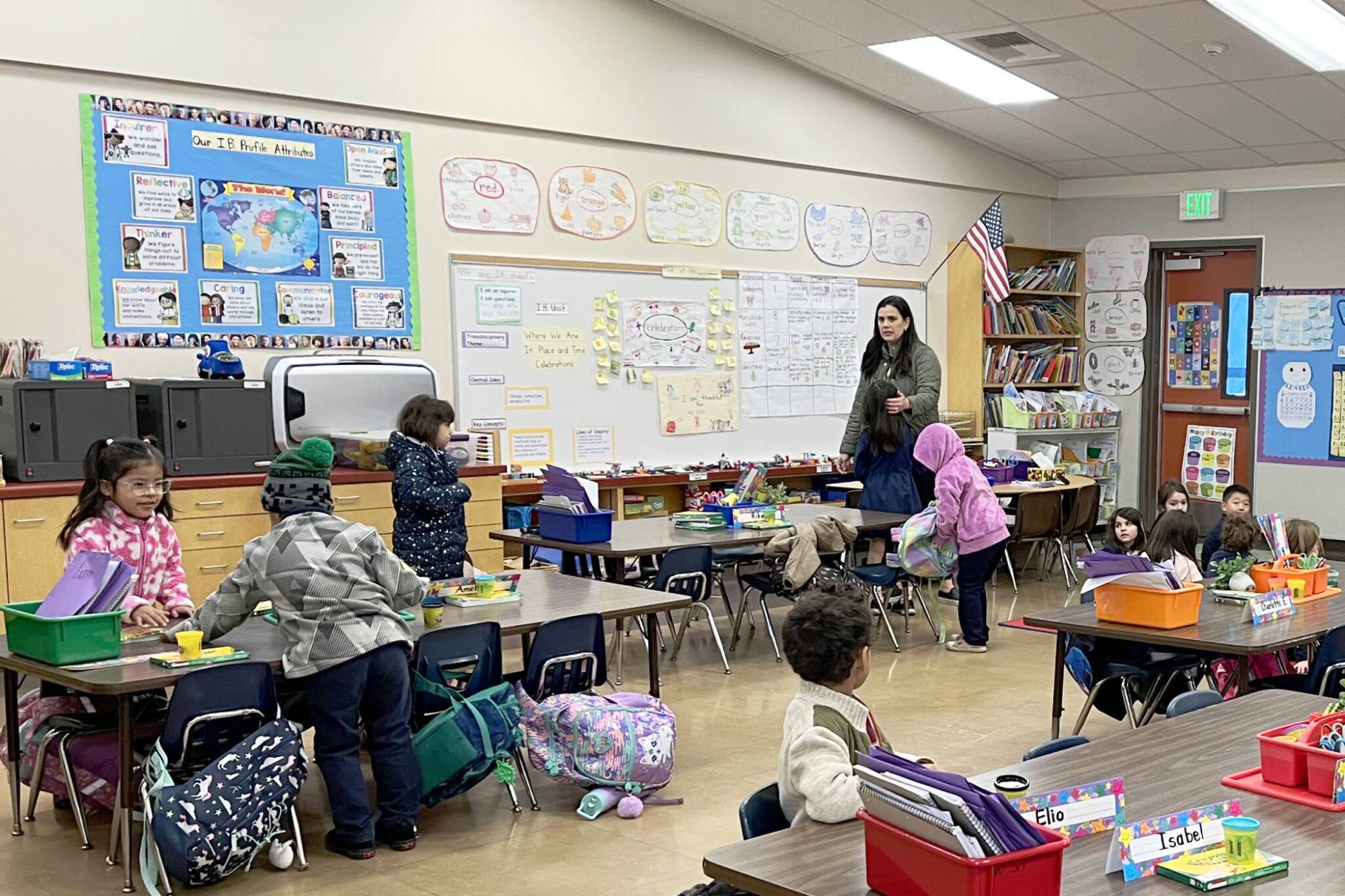
Students Showed Resilience as Schools Recovered From LA Fires
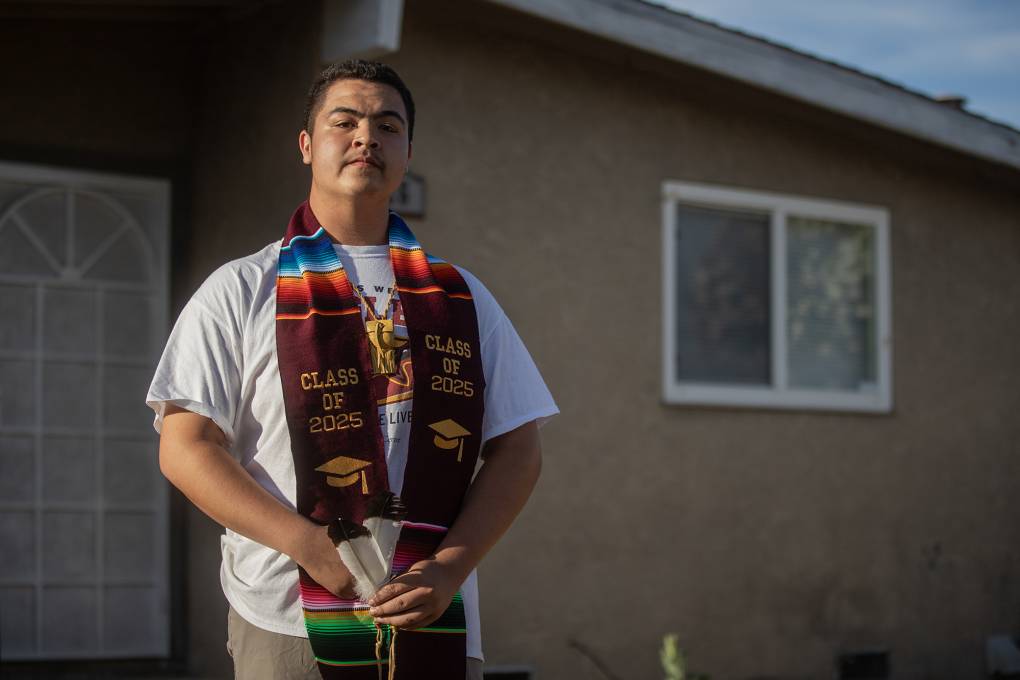
California Bill Aims to Ease Restrictions on Tribal Regalia at Graduation
California Promised to Boost Mental Health in Schools. Why a Key Program Is Behind Schedule
Looming Closure of Zuckerberg-Funded School Raises Concerns in East Palo Alto
Sponsored
Player sponsored by
window.__IS_SSR__=true
window.__INITIAL_STATE__={
"attachmentsReducer": {
"audio_0": {
"type": "attachments",
"id": "audio_0",
"imgSizes": {
"kqedFullSize": {
"file": "https://ww2.kqed.org/news/wp-content/themes/KQED-unified/img/audio_bgs/background0.jpg"
}
}
},
"audio_1": {
"type": "attachments",
"id": "audio_1",
"imgSizes": {
"kqedFullSize": {
"file": "https://ww2.kqed.org/news/wp-content/themes/KQED-unified/img/audio_bgs/background1.jpg"
}
}
},
"audio_2": {
"type": "attachments",
"id": "audio_2",
"imgSizes": {
"kqedFullSize": {
"file": "https://ww2.kqed.org/news/wp-content/themes/KQED-unified/img/audio_bgs/background2.jpg"
}
}
},
"audio_3": {
"type": "attachments",
"id": "audio_3",
"imgSizes": {
"kqedFullSize": {
"file": "https://ww2.kqed.org/news/wp-content/themes/KQED-unified/img/audio_bgs/background3.jpg"
}
}
},
"audio_4": {
"type": "attachments",
"id": "audio_4",
"imgSizes": {
"kqedFullSize": {
"file": "https://ww2.kqed.org/news/wp-content/themes/KQED-unified/img/audio_bgs/background4.jpg"
}
}
},
"placeholder": {
"type": "attachments",
"id": "placeholder",
"imgSizes": {
"thumbnail": {
"file": "https://cdn.kqed.org/wp-content/uploads/2024/12/KQED-Default-Image-816638274-2000x1333-1-160x107.jpg",
"width": 160,
"height": 107,
"mimeType": "image/jpeg"
},
"medium": {
"file": "https://cdn.kqed.org/wp-content/uploads/2024/12/KQED-Default-Image-816638274-2000x1333-1-800x533.jpg",
"width": 800,
"height": 533,
"mimeType": "image/jpeg"
},
"medium_large": {
"file": "https://cdn.kqed.org/wp-content/uploads/2024/12/KQED-Default-Image-816638274-2000x1333-1-768x512.jpg",
"width": 768,
"height": 512,
"mimeType": "image/jpeg"
},
"large": {
"file": "https://cdn.kqed.org/wp-content/uploads/2024/12/KQED-Default-Image-816638274-2000x1333-1-1020x680.jpg",
"width": 1020,
"height": 680,
"mimeType": "image/jpeg"
},
"1536x1536": {
"file": "https://cdn.kqed.org/wp-content/uploads/2024/12/KQED-Default-Image-816638274-2000x1333-1-1536x1024.jpg",
"width": 1536,
"height": 1024,
"mimeType": "image/jpeg"
},
"fd-lrg": {
"file": "https://cdn.kqed.org/wp-content/uploads/2024/12/KQED-Default-Image-816638274-2000x1333-1-1536x1024.jpg",
"width": 1536,
"height": 1024,
"mimeType": "image/jpeg"
},
"fd-med": {
"file": "https://cdn.kqed.org/wp-content/uploads/2024/12/KQED-Default-Image-816638274-2000x1333-1-1020x680.jpg",
"width": 1020,
"height": 680,
"mimeType": "image/jpeg"
},
"fd-sm": {
"file": "https://cdn.kqed.org/wp-content/uploads/2024/12/KQED-Default-Image-816638274-2000x1333-1-800x533.jpg",
"width": 800,
"height": 533,
"mimeType": "image/jpeg"
},
"post-thumbnail": {
"file": "https://cdn.kqed.org/wp-content/uploads/2024/12/KQED-Default-Image-816638274-2000x1333-1-672x372.jpg",
"width": 672,
"height": 372,
"mimeType": "image/jpeg"
},
"twentyfourteen-full-width": {
"file": "https://cdn.kqed.org/wp-content/uploads/2024/12/KQED-Default-Image-816638274-2000x1333-1-1038x576.jpg",
"width": 1038,
"height": 576,
"mimeType": "image/jpeg"
},
"xxsmall": {
"file": "https://cdn.kqed.org/wp-content/uploads/2024/12/KQED-Default-Image-816638274-2000x1333-1-160x107.jpg",
"width": 160,
"height": 107,
"mimeType": "image/jpeg"
},
"xsmall": {
"file": "https://cdn.kqed.org/wp-content/uploads/2024/12/KQED-Default-Image-816638274-2000x1333-1-672x372.jpg",
"width": 672,
"height": 372,
"mimeType": "image/jpeg"
},
"small": {
"file": "https://cdn.kqed.org/wp-content/uploads/2024/12/KQED-Default-Image-816638274-2000x1333-1-672x372.jpg",
"width": 672,
"height": 372,
"mimeType": "image/jpeg"
},
"xlarge": {
"file": "https://cdn.kqed.org/wp-content/uploads/2024/12/KQED-Default-Image-816638274-2000x1333-1-1020x680.jpg",
"width": 1020,
"height": 680,
"mimeType": "image/jpeg"
},
"full-width": {
"file": "https://cdn.kqed.org/wp-content/uploads/2024/12/KQED-Default-Image-816638274-2000x1333-1-1920x1280.jpg",
"width": 1920,
"height": 1280,
"mimeType": "image/jpeg"
},
"guest-author-32": {
"file": "https://cdn.kqed.org/wp-content/uploads/2025/01/KQED-Default-Image-816638274-1333x1333-1-160x160.jpg",
"width": 32,
"height": 32,
"mimeType": "image/jpeg"
},
"guest-author-50": {
"file": "https://cdn.kqed.org/wp-content/uploads/2025/01/KQED-Default-Image-816638274-1333x1333-1-160x160.jpg",
"width": 50,
"height": 50,
"mimeType": "image/jpeg"
},
"guest-author-64": {
"file": "https://cdn.kqed.org/wp-content/uploads/2025/01/KQED-Default-Image-816638274-1333x1333-1-160x160.jpg",
"width": 64,
"height": 64,
"mimeType": "image/jpeg"
},
"guest-author-96": {
"file": "https://cdn.kqed.org/wp-content/uploads/2025/01/KQED-Default-Image-816638274-1333x1333-1-160x160.jpg",
"width": 96,
"height": 96,
"mimeType": "image/jpeg"
},
"guest-author-128": {
"file": "https://cdn.kqed.org/wp-content/uploads/2025/01/KQED-Default-Image-816638274-1333x1333-1-160x160.jpg",
"width": 128,
"height": 128,
"mimeType": "image/jpeg"
},
"detail": {
"file": "https://cdn.kqed.org/wp-content/uploads/2025/01/KQED-Default-Image-816638274-1333x1333-1-160x160.jpg",
"width": 160,
"height": 160,
"mimeType": "image/jpeg"
},
"kqedFullSize": {
"file": "https://cdn.kqed.org/wp-content/uploads/2024/12/KQED-Default-Image-816638274-2000x1333-1.jpg",
"width": 2000,
"height": 1333
}
}
},
"news_12007683": {
"type": "attachments",
"id": "news_12007683",
"meta": {
"index": "attachments_1716263798",
"site": "news",
"id": "12007683",
"found": true
},
"title": "Empty classroom at elementary school!",
"publishDate": 1727974066,
"status": "inherit",
"parent": 12007681,
"modified": 1727974159,
"caption": "Opponents of AB 715, which was born out of antisemitism concerns after the recent war in Gaza, argue the state law actually interferes with free speech in classrooms.\r\n",
"credit": "Getty Images",
"altTag": null,
"description": null,
"imgSizes": {
"medium": {
"file": "https://cdn.kqed.org/wp-content/uploads/sites/10/2024/10/GettyImages-1792528853-800x534.jpg",
"width": 800,
"height": 534,
"mimeType": "image/jpeg"
},
"large": {
"file": "https://cdn.kqed.org/wp-content/uploads/sites/10/2024/10/GettyImages-1792528853-1020x680.jpg",
"width": 1020,
"height": 680,
"mimeType": "image/jpeg"
},
"thumbnail": {
"file": "https://cdn.kqed.org/wp-content/uploads/sites/10/2024/10/GettyImages-1792528853-160x107.jpg",
"width": 160,
"height": 107,
"mimeType": "image/jpeg"
},
"1536x1536": {
"file": "https://cdn.kqed.org/wp-content/uploads/sites/10/2024/10/GettyImages-1792528853-1536x1025.jpg",
"width": 1536,
"height": 1025,
"mimeType": "image/jpeg"
},
"post-thumbnail": {
"file": "https://cdn.kqed.org/wp-content/uploads/sites/10/2024/10/GettyImages-1792528853-672x372.jpg",
"width": 672,
"height": 372,
"mimeType": "image/jpeg"
},
"twentyfourteen-full-width": {
"file": "https://cdn.kqed.org/wp-content/uploads/sites/10/2024/10/GettyImages-1792528853-1038x576.jpg",
"width": 1038,
"height": 576,
"mimeType": "image/jpeg"
},
"full-width": {
"file": "https://cdn.kqed.org/wp-content/uploads/sites/10/2024/10/GettyImages-1792528853-1920x1281.jpg",
"width": 1920,
"height": 1281,
"mimeType": "image/jpeg"
},
"kqedFullSize": {
"file": "https://cdn.kqed.org/wp-content/uploads/sites/10/2024/10/GettyImages-1792528853.jpg",
"width": 2000,
"height": 1334
}
},
"fetchFailed": false,
"isLoading": false
},
"news_12049112": {
"type": "attachments",
"id": "news_12049112",
"meta": {
"index": "attachments_1716263798",
"site": "news",
"id": "12049112",
"found": true
},
"title": "101423_Collge-Info-Berkeley_JY-CM-20 copy",
"publishDate": 1753142650,
"status": "inherit",
"parent": 12049109,
"modified": 1753142671,
"caption": "FAFSA fact sheets at College Information Day at UC Berkeley in Berkeley on Oct. 14, 2023. \n",
"credit": "Juliana Yamada for CalMatters",
"altTag": null,
"description": null,
"imgSizes": {
"thumbnail": {
"file": "https://cdn.kqed.org/wp-content/uploads/sites/10/2025/07/101423_Collge-Info-Berkeley_JY-CM-20-copy-160x107.jpg",
"width": 160,
"height": 107,
"mimeType": "image/jpeg"
},
"1536x1536": {
"file": "https://cdn.kqed.org/wp-content/uploads/sites/10/2025/07/101423_Collge-Info-Berkeley_JY-CM-20-copy-1536x1024.jpg",
"width": 1536,
"height": 1024,
"mimeType": "image/jpeg"
},
"post-thumbnail": {
"file": "https://cdn.kqed.org/wp-content/uploads/sites/10/2025/07/101423_Collge-Info-Berkeley_JY-CM-20-copy-672x372.jpg",
"width": 672,
"height": 372,
"mimeType": "image/jpeg"
},
"twentyfourteen-full-width": {
"file": "https://cdn.kqed.org/wp-content/uploads/sites/10/2025/07/101423_Collge-Info-Berkeley_JY-CM-20-copy-1038x576.jpg",
"width": 1038,
"height": 576,
"mimeType": "image/jpeg"
},
"kqedFullSize": {
"file": "https://cdn.kqed.org/wp-content/uploads/sites/10/2025/07/101423_Collge-Info-Berkeley_JY-CM-20-copy.jpg",
"width": 2000,
"height": 1333
}
},
"fetchFailed": false,
"isLoading": false
},
"news_12047872": {
"type": "attachments",
"id": "news_12047872",
"meta": {
"index": "attachments_1716263798",
"site": "news",
"id": "12047872",
"found": true
},
"title": "070825-Elementary-School-SK-47 copy",
"publishDate": 1752504904,
"status": "inherit",
"parent": 12047871,
"modified": 1752504921,
"caption": "A classroom at an elementary school in Richmond on Feb. 6, 2023. \n",
"credit": "Shelby Knowles for CalMatters",
"altTag": null,
"description": null,
"imgSizes": {
"thumbnail": {
"file": "https://cdn.kqed.org/wp-content/uploads/sites/10/2025/07/070825-Elementary-School-SK-47-copy-160x107.jpg",
"width": 160,
"height": 107,
"mimeType": "image/jpeg"
},
"1536x1536": {
"file": "https://cdn.kqed.org/wp-content/uploads/sites/10/2025/07/070825-Elementary-School-SK-47-copy-1536x1024.jpg",
"width": 1536,
"height": 1024,
"mimeType": "image/jpeg"
},
"post-thumbnail": {
"file": "https://cdn.kqed.org/wp-content/uploads/sites/10/2025/07/070825-Elementary-School-SK-47-copy-672x372.jpg",
"width": 672,
"height": 372,
"mimeType": "image/jpeg"
},
"twentyfourteen-full-width": {
"file": "https://cdn.kqed.org/wp-content/uploads/sites/10/2025/07/070825-Elementary-School-SK-47-copy-1038x576.jpg",
"width": 1038,
"height": 576,
"mimeType": "image/jpeg"
},
"kqedFullSize": {
"file": "https://cdn.kqed.org/wp-content/uploads/sites/10/2025/07/070825-Elementary-School-SK-47-copy.jpg",
"width": 2000,
"height": 1333
}
},
"fetchFailed": false,
"isLoading": false
},
"news_12046737": {
"type": "attachments",
"id": "news_12046737",
"meta": {
"index": "attachments_1716263798",
"site": "news",
"id": "12046737",
"found": true
},
"title": "240517-TKBilingualLearners-128-BL_qed",
"publishDate": 1751407704,
"status": "inherit",
"parent": 12046684,
"modified": 1751407715,
"caption": "A student reads a book in English and Spanish in a bilingual transitional kindergarten class at Global Family Elementary School in Oakland on May 17, 2024.",
"credit": "Beth LaBerge/KQED",
"altTag": null,
"description": null,
"imgSizes": {
"thumbnail": {
"file": "https://cdn.kqed.org/wp-content/uploads/sites/10/2025/07/240517-TKBilingualLearners-128-BL_qed-160x107.jpg",
"width": 160,
"height": 107,
"mimeType": "image/jpeg"
},
"1536x1536": {
"file": "https://cdn.kqed.org/wp-content/uploads/sites/10/2025/07/240517-TKBilingualLearners-128-BL_qed-1536x1024.jpg",
"width": 1536,
"height": 1024,
"mimeType": "image/jpeg"
},
"post-thumbnail": {
"file": "https://cdn.kqed.org/wp-content/uploads/sites/10/2025/07/240517-TKBilingualLearners-128-BL_qed-672x372.jpg",
"width": 672,
"height": 372,
"mimeType": "image/jpeg"
},
"twentyfourteen-full-width": {
"file": "https://cdn.kqed.org/wp-content/uploads/sites/10/2025/07/240517-TKBilingualLearners-128-BL_qed-1038x576.jpg",
"width": 1038,
"height": 576,
"mimeType": "image/jpeg"
},
"kqedFullSize": {
"file": "https://cdn.kqed.org/wp-content/uploads/sites/10/2025/07/240517-TKBilingualLearners-128-BL_qed.jpg",
"width": 2000,
"height": 1333
}
},
"fetchFailed": false,
"isLoading": false
},
"news_12044772": {
"type": "attachments",
"id": "news_12044772",
"meta": {
"index": "attachments_1716263798",
"site": "news",
"id": "12044772",
"found": true
},
"title": "250421-SFUSDCentralCuts-07-BL_qed",
"publishDate": 1750192751,
"status": "inherit",
"parent": 12044768,
"modified": 1750192759,
"caption": "San Francisco Unified School District Superintendent Dr. Maria Su speaks during a press conference at the school district offices in San Francisco on April 21, 2025.",
"credit": "Beth LaBerge/KQED",
"altTag": null,
"description": null,
"imgSizes": {
"thumbnail": {
"file": "https://cdn.kqed.org/wp-content/uploads/sites/10/2025/06/250421-SFUSDCentralCuts-07-BL_qed-160x107.jpg",
"width": 160,
"height": 107,
"mimeType": "image/jpeg"
},
"1536x1536": {
"file": "https://cdn.kqed.org/wp-content/uploads/sites/10/2025/06/250421-SFUSDCentralCuts-07-BL_qed-1536x1024.jpg",
"width": 1536,
"height": 1024,
"mimeType": "image/jpeg"
},
"post-thumbnail": {
"file": "https://cdn.kqed.org/wp-content/uploads/sites/10/2025/06/250421-SFUSDCentralCuts-07-BL_qed-672x372.jpg",
"width": 672,
"height": 372,
"mimeType": "image/jpeg"
},
"twentyfourteen-full-width": {
"file": "https://cdn.kqed.org/wp-content/uploads/sites/10/2025/06/250421-SFUSDCentralCuts-07-BL_qed-1038x576.jpg",
"width": 1038,
"height": 576,
"mimeType": "image/jpeg"
},
"kqedFullSize": {
"file": "https://cdn.kqed.org/wp-content/uploads/sites/10/2025/06/250421-SFUSDCentralCuts-07-BL_qed.jpg",
"width": 2000,
"height": 1333
}
},
"fetchFailed": false,
"isLoading": false
},
"news_12044537": {
"type": "attachments",
"id": "news_12044537",
"meta": {
"index": "attachments_1716263798",
"site": "news",
"id": "12044537",
"found": true
},
"title": "IMG-0540-crop-2048x1365",
"publishDate": 1750017645,
"status": "inherit",
"parent": 12044536,
"modified": 1750091258,
"caption": "Pasadena Unified School District students return to school after the Eaton fire.",
"credit": "Mallika Seshadri/EdSource",
"altTag": "A woman stands in front of several children in a classroom.",
"description": null,
"imgSizes": {
"medium": {
"file": "https://cdn.kqed.org/wp-content/uploads/sites/10/2025/06/IMG-0540-crop-2048x1365-1-2000x1333.jpg",
"width": 2000,
"height": 1333,
"mimeType": "image/jpeg"
},
"large": {
"file": "https://cdn.kqed.org/wp-content/uploads/sites/10/2025/06/IMG-0540-crop-2048x1365-1-2000x1333.jpg",
"width": 2000,
"height": 1333,
"mimeType": "image/jpeg"
},
"thumbnail": {
"file": "https://cdn.kqed.org/wp-content/uploads/sites/10/2025/06/IMG-0540-crop-2048x1365-1-160x107.jpg",
"width": 160,
"height": 107,
"mimeType": "image/jpeg"
},
"1536x1536": {
"file": "https://cdn.kqed.org/wp-content/uploads/sites/10/2025/06/IMG-0540-crop-2048x1365-1-1536x1024.jpg",
"width": 1536,
"height": 1024,
"mimeType": "image/jpeg"
},
"post-thumbnail": {
"file": "https://cdn.kqed.org/wp-content/uploads/sites/10/2025/06/IMG-0540-crop-2048x1365-1-672x372.jpg",
"width": 672,
"height": 372,
"mimeType": "image/jpeg"
},
"twentyfourteen-full-width": {
"file": "https://cdn.kqed.org/wp-content/uploads/sites/10/2025/06/IMG-0540-crop-2048x1365-1-1038x576.jpg",
"width": 1038,
"height": 576,
"mimeType": "image/jpeg"
},
"full-width": {
"file": "https://cdn.kqed.org/wp-content/uploads/sites/10/2025/06/IMG-0540-crop-2048x1365-1-2000x1333.jpg",
"width": 2000,
"height": 1333,
"mimeType": "image/jpeg"
},
"kqedFullSize": {
"file": "https://cdn.kqed.org/wp-content/uploads/sites/10/2025/06/IMG-0540-crop-2048x1365-1.jpg",
"width": 2048,
"height": 1365
}
},
"fetchFailed": false,
"isLoading": false
},
"news_12040721": {
"type": "attachments",
"id": "news_12040721",
"meta": {
"index": "attachments_1716263798",
"site": "news",
"id": "12040721",
"found": true
},
"title": "051425-Native-American-Regalia-LV-CM-08",
"publishDate": 1747596844,
"status": "inherit",
"parent": 12040718,
"modified": 1747597178,
"caption": "Ethan Molina wears his graduation stole as he stands in front of his home in Fresno on May 14, 2025. Molina, a member of the Pascua Yaqui Tribe in Arizona and a senior at Clovis West High, was told by the school district that he could not wear the stole to his graduation ceremony. ",
"credit": "Larry Valenzuela / CalMatters/CatchLight Local",
"altTag": "A man stands in front of a house wearing a colorful graduation stole.",
"description": null,
"imgSizes": {
"medium": {
"file": "https://cdn.kqed.org/wp-content/uploads/sites/10/2025/05/051425-Native-American-Regalia-LV-CM-08-800x533.jpg",
"width": 800,
"height": 533,
"mimeType": "image/jpeg"
},
"large": {
"file": "https://cdn.kqed.org/wp-content/uploads/sites/10/2025/05/051425-Native-American-Regalia-LV-CM-08-1020x680.jpg",
"width": 1020,
"height": 680,
"mimeType": "image/jpeg"
},
"thumbnail": {
"file": "https://cdn.kqed.org/wp-content/uploads/sites/10/2025/05/051425-Native-American-Regalia-LV-CM-08-160x107.jpg",
"width": 160,
"height": 107,
"mimeType": "image/jpeg"
},
"1536x1536": {
"file": "https://cdn.kqed.org/wp-content/uploads/sites/10/2025/05/051425-Native-American-Regalia-LV-CM-08-1536x1024.jpg",
"width": 1536,
"height": 1024,
"mimeType": "image/jpeg"
},
"post-thumbnail": {
"file": "https://cdn.kqed.org/wp-content/uploads/sites/10/2025/05/051425-Native-American-Regalia-LV-CM-08-672x372.jpg",
"width": 672,
"height": 372,
"mimeType": "image/jpeg"
},
"twentyfourteen-full-width": {
"file": "https://cdn.kqed.org/wp-content/uploads/sites/10/2025/05/051425-Native-American-Regalia-LV-CM-08-1038x576.jpg",
"width": 1038,
"height": 576,
"mimeType": "image/jpeg"
},
"full-width": {
"file": "https://cdn.kqed.org/wp-content/uploads/sites/10/2025/05/051425-Native-American-Regalia-LV-CM-08-1920x1280.jpg",
"width": 1920,
"height": 1280,
"mimeType": "image/jpeg"
},
"kqedFullSize": {
"file": "https://cdn.kqed.org/wp-content/uploads/sites/10/2025/05/051425-Native-American-Regalia-LV-CM-08.jpg",
"width": 2000,
"height": 1333
}
},
"fetchFailed": false,
"isLoading": false
},
"news_12039588": {
"type": "attachments",
"id": "news_12039588",
"meta": {
"index": "attachments_1716263798",
"site": "news",
"id": "12039588",
"found": true
},
"title": "101023_AI-College-Toby-Reed_LA_CM_05 copy",
"publishDate": 1746821475,
"status": "inherit",
"parent": 12039585,
"modified": 1752708567,
"caption": "A student walks down a hallway at Fremont High School in Oakland on Oct. 10, 2023. \n",
"credit": "Laure Andrillon for Cal Matters",
"altTag": null,
"description": null,
"imgSizes": {
"medium": {
"file": "https://cdn.kqed.org/wp-content/uploads/sites/10/2025/05/101023_AI-College-Toby-Reed_LA_CM_05-copy-800x533.jpg",
"width": 800,
"height": 533,
"mimeType": "image/jpeg"
},
"large": {
"file": "https://cdn.kqed.org/wp-content/uploads/sites/10/2025/05/101023_AI-College-Toby-Reed_LA_CM_05-copy-1020x680.jpg",
"width": 1020,
"height": 680,
"mimeType": "image/jpeg"
},
"thumbnail": {
"file": "https://cdn.kqed.org/wp-content/uploads/sites/10/2025/05/101023_AI-College-Toby-Reed_LA_CM_05-copy-160x107.jpg",
"width": 160,
"height": 107,
"mimeType": "image/jpeg"
},
"1536x1536": {
"file": "https://cdn.kqed.org/wp-content/uploads/sites/10/2025/05/101023_AI-College-Toby-Reed_LA_CM_05-copy-1536x1024.jpg",
"width": 1536,
"height": 1024,
"mimeType": "image/jpeg"
},
"post-thumbnail": {
"file": "https://cdn.kqed.org/wp-content/uploads/sites/10/2025/05/101023_AI-College-Toby-Reed_LA_CM_05-copy-672x372.jpg",
"width": 672,
"height": 372,
"mimeType": "image/jpeg"
},
"twentyfourteen-full-width": {
"file": "https://cdn.kqed.org/wp-content/uploads/sites/10/2025/05/101023_AI-College-Toby-Reed_LA_CM_05-copy-1038x576.jpg",
"width": 1038,
"height": 576,
"mimeType": "image/jpeg"
},
"full-width": {
"file": "https://cdn.kqed.org/wp-content/uploads/sites/10/2025/05/101023_AI-College-Toby-Reed_LA_CM_05-copy-1920x1280.jpg",
"width": 1920,
"height": 1280,
"mimeType": "image/jpeg"
},
"kqedFullSize": {
"file": "https://cdn.kqed.org/wp-content/uploads/sites/10/2025/05/101023_AI-College-Toby-Reed_LA_CM_05-copy.jpg",
"width": 2000,
"height": 1333
}
},
"fetchFailed": false,
"isLoading": false
},
"news_12037113": {
"type": "attachments",
"id": "news_12037113",
"meta": {
"index": "attachments_1716263798",
"site": "news",
"id": "12037113",
"found": true
},
"title": "$500 Million Donation For Kempner Institute",
"publishDate": 1745347391,
"status": "inherit",
"parent": 12037106,
"modified": 1745347556,
"caption": "Mark Zuckerberg and Priscilla Chan leave the stage after announcing a $500 million gift from the Chan Zuckerberg Initiative to Harvard, all to fund a new institute called the Kempner Institute to study natural and artificial intelligence.",
"credit": "Lane Turner/The Boston Globe via Getty Images",
"altTag": null,
"description": null,
"imgSizes": {
"medium": {
"file": "https://cdn.kqed.org/wp-content/uploads/sites/10/2025/04/ZuckerbergChanGetty-800x533.jpg",
"width": 800,
"height": 533,
"mimeType": "image/jpeg"
},
"large": {
"file": "https://cdn.kqed.org/wp-content/uploads/sites/10/2025/04/ZuckerbergChanGetty-1020x680.jpg",
"width": 1020,
"height": 680,
"mimeType": "image/jpeg"
},
"thumbnail": {
"file": "https://cdn.kqed.org/wp-content/uploads/sites/10/2025/04/ZuckerbergChanGetty-160x107.jpg",
"width": 160,
"height": 107,
"mimeType": "image/jpeg"
},
"1536x1536": {
"file": "https://cdn.kqed.org/wp-content/uploads/sites/10/2025/04/ZuckerbergChanGetty-1536x1024.jpg",
"width": 1536,
"height": 1024,
"mimeType": "image/jpeg"
},
"post-thumbnail": {
"file": "https://cdn.kqed.org/wp-content/uploads/sites/10/2025/04/ZuckerbergChanGetty-672x372.jpg",
"width": 672,
"height": 372,
"mimeType": "image/jpeg"
},
"twentyfourteen-full-width": {
"file": "https://cdn.kqed.org/wp-content/uploads/sites/10/2025/04/ZuckerbergChanGetty-1038x576.jpg",
"width": 1038,
"height": 576,
"mimeType": "image/jpeg"
},
"full-width": {
"file": "https://cdn.kqed.org/wp-content/uploads/sites/10/2025/04/ZuckerbergChanGetty-1920x1280.jpg",
"width": 1920,
"height": 1280,
"mimeType": "image/jpeg"
},
"kqedFullSize": {
"file": "https://cdn.kqed.org/wp-content/uploads/sites/10/2025/04/ZuckerbergChanGetty.jpg",
"width": 2000,
"height": 1333
}
},
"fetchFailed": false,
"isLoading": false
}
},
"audioPlayerReducer": {
"postId": "stream_live",
"isPaused": true,
"isPlaying": false,
"pfsActive": false,
"pledgeModalIsOpen": true,
"playerDrawerIsOpen": false
},
"authorsReducer": {
"byline_news_12049109": {
"type": "authors",
"id": "byline_news_12049109",
"meta": {
"override": true
},
"slug": "byline_news_12049109",
"name": "Mercy Sosa, CalMatters",
"isLoading": false
},
"byline_news_12047871": {
"type": "authors",
"id": "byline_news_12047871",
"meta": {
"override": true
},
"slug": "byline_news_12047871",
"name": "Carolyn Jones, CalMatters",
"isLoading": false
},
"byline_news_12044536": {
"type": "authors",
"id": "byline_news_12044536",
"meta": {
"override": true
},
"slug": "byline_news_12044536",
"name": "\u003ca href=\"https://edsource.org/author/mseshadri\">Mallika Seshadri\u003c/a>, EdSource",
"isLoading": false
},
"byline_news_12040718": {
"type": "authors",
"id": "byline_news_12040718",
"meta": {
"override": true
},
"slug": "byline_news_12040718",
"name": "\u003ca href=\"https://calmatters.org/author/carolyn-jones\">Carolyn Jones, \u003c/a>CalMatters",
"isLoading": false
},
"byline_news_12039585": {
"type": "authors",
"id": "byline_news_12039585",
"meta": {
"override": true
},
"slug": "byline_news_12039585",
"name": "\u003ca href=\"https://calmatters.org/author/anaibarra/\">Ana B. Ibarra\u003c/a>, CalMatters",
"isLoading": false
},
"byline_news_12037106": {
"type": "authors",
"id": "byline_news_12037106",
"meta": {
"override": true
},
"slug": "byline_news_12037106",
"name": "Cami Dominguez",
"isLoading": false
},
"shossaini": {
"type": "authors",
"id": "3214",
"meta": {
"index": "authors_1716337520",
"id": "3214",
"found": true
},
"name": "Sara Hossaini",
"firstName": "Sara",
"lastName": "Hossaini",
"slug": "shossaini",
"email": "shossaini@kqed.org",
"display_author_email": true,
"staff_mastheads": [
"news"
],
"title": "KQED Reporter",
"bio": "Sara Hossaini came to general assignment reporting at KQED in 2013 after two winters reporting at Wyoming Public Radio. She holds a bachelor's degree in broadcast journalism from the University of Nebraska-Lincoln. Her radio romance began after a bitter breakup with documentary film (Ok, maybe it's still complicated). Her first simultaneous jobs in San Francisco were as Associate Producer on a PBS film series through the Center for Asian American Media and as a butler. She likes to trot, plot and make things with her hands.",
"avatar": "https://secure.gravatar.com/avatar/060e9f56b9554e17942e89f413242774?s=600&d=blank&r=g",
"twitter": "mshossaini",
"facebook": null,
"instagram": null,
"linkedin": null,
"sites": [
{
"site": "news",
"roles": [
"author"
]
},
{
"site": "stateofhealth",
"roles": [
"author"
]
}
],
"headData": {
"title": "Sara Hossaini | KQED",
"description": "KQED Reporter",
"ogImgSrc": "https://secure.gravatar.com/avatar/060e9f56b9554e17942e89f413242774?s=600&d=blank&r=g",
"twImgSrc": "https://secure.gravatar.com/avatar/060e9f56b9554e17942e89f413242774?s=600&d=blank&r=g"
},
"isLoading": false,
"link": "/author/shossaini"
},
"kdebenedetti": {
"type": "authors",
"id": "11913",
"meta": {
"index": "authors_1716337520",
"id": "11913",
"found": true
},
"name": "Katie DeBenedetti",
"firstName": "Katie",
"lastName": "DeBenedetti",
"slug": "kdebenedetti",
"email": "kdebenedetti@kqed.org",
"display_author_email": false,
"staff_mastheads": [
"news",
"science"
],
"title": "KQED Contributor",
"bio": "Katie DeBenedetti is a digital reporter covering daily news for the Express Desk. Prior to joining KQED as a culture reporting intern in January 2024, she covered education and city government for the Napa Valley Register.",
"avatar": "https://secure.gravatar.com/avatar/6e31073cb8f7e4214ab03f42771d0f45?s=600&d=blank&r=g",
"twitter": null,
"facebook": null,
"instagram": null,
"linkedin": null,
"sites": [
{
"site": "news",
"roles": [
"author"
]
},
{
"site": "science",
"roles": [
"author"
]
},
{
"site": "liveblog",
"roles": [
"author"
]
}
],
"headData": {
"title": "Katie DeBenedetti | KQED",
"description": "KQED Contributor",
"ogImgSrc": "https://secure.gravatar.com/avatar/6e31073cb8f7e4214ab03f42771d0f45?s=600&d=blank&r=g",
"twImgSrc": "https://secure.gravatar.com/avatar/6e31073cb8f7e4214ab03f42771d0f45?s=600&d=blank&r=g"
},
"isLoading": false,
"link": "/author/kdebenedetti"
}
},
"breakingNewsReducer": {},
"pagesReducer": {},
"postsReducer": {
"stream_live": {
"type": "live",
"id": "stream_live",
"audioUrl": "https://streams.kqed.org/kqedradio",
"title": "Live Stream",
"excerpt": "Live Stream information currently unavailable.",
"link": "/radio",
"featImg": "",
"label": {
"name": "KQED Live",
"link": "/"
}
},
"stream_kqedNewscast": {
"type": "posts",
"id": "stream_kqedNewscast",
"audioUrl": "https://www.kqed.org/.stream/anon/radio/RDnews/newscast.mp3?_=1",
"title": "KQED Newscast",
"featImg": "",
"label": {
"name": "88.5 FM",
"link": "/"
}
},
"news_12067413": {
"type": "posts",
"id": "news_12067413",
"meta": {
"index": "posts_1716263798",
"site": "news",
"id": "12067413",
"score": null,
"sort": [
1765987200000
]
},
"guestAuthors": [],
"slug": "this-lawsuit-aims-to-block-californias-new-k-12-antisemitism-law",
"title": "This Lawsuit Aims to Block California’s New K-12 Antisemitism Law",
"publishDate": 1765987200,
"format": "standard",
"headTitle": "This Lawsuit Aims to Block California’s New K-12 Antisemitism Law | KQED",
"labelTerm": {
"site": "news"
},
"content": "\u003cp>A coalition of teachers and students is suing to block the implementation of a new \u003ca href=\"https://www.kqed.org/news/12055560/controversial-ca-bill-to-combat-antisemitism-in-schools-races-against-legislative-clock\">California law that aims to address antisemitism \u003c/a>concerns in K-12 public schools, amid ongoing debate over how classrooms can approach the latest conflict in the Middle East.\u003c/p>\n\u003cp>A judge is expected to hear arguments on Wednesday at the Northern District of California’s San José division. The lawsuit, filed by Jenin Younes, national legal director of the American-Arab Anti-discrimination Committee, claims that \u003ca href=\"https://legiscan.com/CA/text/AB715/id/3269818\">AB 715\u003c/a>, which is set to take effect Jan. 1, 2026, is unconstitutionally vague.\u003c/p>\n\u003cp>“The real purpose of the bill is to chill the speech of teachers and students so that they’re afraid to talk about anything that could be deemed critical of Israel,” Younes said.\u003c/p>\n\u003cp>[ad fullwidth]\u003c/p>\n\u003cp>AB 715 adds to existing anti-discrimination state law through the creation of a governor-appointed Antisemitism Prevention Coordinator under a new California Office of Civil Rights. Proponents of AB 715 have said the coordinator will track antisemitic incidents at schools, help respond to cases and make policy recommendations to the state Legislature\u003cem>. \u003c/em>\u003c/p>\n\u003cp>The coordinator will also be tasked with training schools to identify antisemitism. The state law directs districts to rely on the Biden administration’s National \u003ca href=\"https://bidenwhitehouse.archives.gov/wp-content/uploads/2023/05/U.S.-National-Strategy-to-Counter-Antisemitism.pdf\">Strategy\u003c/a> to Counter Antisemitism. This federal guide, in turn, refers to the \u003ca href=\"https://holocaustremembrance.com/resources/working-definition-antisemitism?__cf_chl_tk=MqqkOuqzgEw_sPLZk3uaHpHsppz2V_czSKvLy7GL.QM-1765759821-1.0.1.1-B1BsiVRBbMMDzlaBsFOImvLNsuJWznftqkSyjzryE6Y\">working definition\u003c/a> of the International Holocaust Remembrance Alliance.\u003c/p>\n\u003cfigure id=\"attachment_12011951\" class=\"wp-caption aligncenter\" style=\"max-width: 2000px\">\u003ca href=\"https://cdn.kqed.org/wp-content/uploads/sites/10/2024/10/241031-BORDER-CROSSINGS-ZM-16-KQED.jpg\">\u003cimg loading=\"lazy\" decoding=\"async\" class=\"size-full wp-image-12011951\" src=\"https://cdn.kqed.org/wp-content/uploads/sites/10/2024/10/241031-BORDER-CROSSINGS-ZM-16-KQED.jpg\" alt=\"\" width=\"2000\" height=\"1334\" srcset=\"https://cdn.kqed.org/wp-content/uploads/sites/10/2024/10/241031-BORDER-CROSSINGS-ZM-16-KQED.jpg 2000w, https://cdn.kqed.org/wp-content/uploads/sites/10/2024/10/241031-BORDER-CROSSINGS-ZM-16-KQED-800x534.jpg 800w, https://cdn.kqed.org/wp-content/uploads/sites/10/2024/10/241031-BORDER-CROSSINGS-ZM-16-KQED-1020x680.jpg 1020w, https://cdn.kqed.org/wp-content/uploads/sites/10/2024/10/241031-BORDER-CROSSINGS-ZM-16-KQED-160x107.jpg 160w, https://cdn.kqed.org/wp-content/uploads/sites/10/2024/10/241031-BORDER-CROSSINGS-ZM-16-KQED-1536x1025.jpg 1536w, https://cdn.kqed.org/wp-content/uploads/sites/10/2024/10/241031-BORDER-CROSSINGS-ZM-16-KQED-1920x1281.jpg 1920w\" sizes=\"auto, (max-width: 2000px) 100vw, 2000px\">\u003c/a>\u003cfigcaption class=\"wp-caption-text\">Children play outside at the Jewish Family Services shelter for migrants in San Diego, Sept. 19, 2024. \u003ccite>(Zoë Meyers for KQED)\u003c/cite>\u003c/figcaption>\u003c/figure>\n\u003cp>The Alliance’s definition includes 11 bullet-pointed descriptors of anti-Jewish bias. More than half of the list cites Israel, such as “claiming the existence of a State of Israel is a racist endeavor,” “applying double standards by requiring of it a behavior not expected or demanded of any other democratic nation” and “accusing Jewish citizens of being more loyal to Israel.”\u003c/p>\n\u003cp>Earlier iterations of AB 715 echoed — and expanded — on the IHRA’s definition. According to those versions — later stricken — an antisemitic learning environment could mean classrooms where instruction or materials assert “dual loyalty directed at Jewish individuals or communities,” “inaccurate historical narratives such as labeling Israel a settler colonial state” or discriminating against a “nationality,” including “a social organization where a collective identity has emerged from a combination of shared features.”\u003c/p>\n\u003cp>“The earlier iterations were pretty crazy,“ said Younes, who has argued that the final version of AB 715 has the same effect “surreptitiously.”\u003c/p>\n\u003cp>“It’s been an incredibly frustrating process,” said David Bocarsly, executive director of the Jewish Public Affairs Committee of California and one of the main backers of the law.\u003c/p>\n\u003cp>Bocarsly said the committee started off its efforts as California mandated new ethnic studies courses to ensure they didn’t include antisemitic content. \u003ca href=\"https://calmatters.org/politics/2025/10/school-antisemitism-bill-signed/\">After pushback from educators\u003c/a>, he said proponents decided to set their sights instead on protecting Jewish students more generally — in what eventually became AB 715. (A companion law, \u003ca href=\"https://leginfo.legislature.ca.gov/faces/billCompareClient.xhtml?bill_id=202520260SB48&showamends=false\">SB 48\u003c/a>, creates four similar coordinator positions for religion, race, gender and LGBTQ+ discrimination prevention.)\u003c/p>\n\u003cp>\u003cstrong>“\u003c/strong>So, even this one bill that we asked to be focused just on the Jewish community because there was a particular acute need for our community, where there were opportunities to expand and support other vulnerable communities, we ultimately leapt at those opportunities,” Bocarsly said.[aside postID=news_12066489 hero='https://cdn.kqed.org/wp-content/uploads/sites/10/2025/12/Peyrin-Kao-1-2-2000x1123.jpg']Teachers still weren’t on board with revisions to AB 715. In a statement, David Goldberg, president of the California Teachers Association, the union that represents teachers in the state, said the law “raises serious free speech concerns” and “at a time when too many are seeking to attack academic freedom and weaponize public education, AB 715 would unfortunately arm ill-intentioned people with the ability to do so.”\u003c/p>\n\u003cp>The new law allows the public to anonymously file complaints not just about teacher materials they believe are discriminatory, but also instruction.\u003c/p>\n\u003cp>\u003cstrong>“\u003c/strong>Anytime that I meet with more than two teachers who are ethnic studies teachers in a group, this is one of the things that comes up. It’s like, ‘Hey, no one knows all the things that’re happening to us, and no one is really helping us,’” said Jason Muñiz, who supports around 500 Bay Area teachers in ethnic studies each year as part of his work with the University of California at Berkeley’s History-Social Science Project.\u003c/p>\n\u003cp>Muñiz said dozens of teachers have described becoming the subject of legal inquiries, including public records requests, related to lessons that touch on Judaism, Islam or the Middle East.\u003c/p>\n\u003cp>Bocarsly acknowledged the pressure that academic institutions face, noting that JPAC has spoken out against the \u003ca href=\"https://www.kqed.org/news/12056118/uc-labor-groups-sue-trump-over-coercive-antisemitism-investigations-and-demands\">Trump administration’s attempts to use antisemitism legislation\u003c/a> as an excuse to cut school funding or diversity programs.\u003c/p>\n\u003cp>“We have gone through three different iterations of bills, have taken so many of [the educators’] recommendations, and they continue to move the goalposts and oppose everything that we do,” said Bocarsly, who considers the alleged lack of willingness to focus on Jewish student safety itself discrimination. “I think that there’s some implicit bias happening here.”\u003c/p>\n\u003cp>In the state’s official response to the motion for an injunction, California Attorney General Rob Bonta has argued that AB 715 does not create a new, undefined type of civil rights violation. He has said that fears of unfounded discrimination claims could happen under existing law and are not enough reason to block AB 715.\u003c/p>\n\u003cp>\u003c/p>\n",
"blocks": [],
"excerpt": "Opponents of AB 715, which was born out of antisemitism concerns after the recent war in Gaza, argue that the state law actually interferes with free speech in classrooms.\r\n",
"status": "publish",
"parent": 0,
"modified": 1766009729,
"stats": {
"hasAudio": false,
"hasVideo": false,
"hasChartOrMap": false,
"iframeSrcs": [],
"hasGoogleForm": false,
"hasGallery": false,
"hasHearkenModule": false,
"hasPolis": false,
"paragraphCount": 19,
"wordCount": 976
},
"headData": {
"title": "This Lawsuit Aims to Block California’s New K-12 Antisemitism Law | KQED",
"description": "Opponents of AB 715, which was born out of antisemitism concerns after the recent war in Gaza, argue that the state law actually interferes with free speech in classrooms.\r\n",
"ogTitle": "",
"ogDescription": "",
"ogImgId": "",
"twTitle": "",
"twDescription": "",
"twImgId": "",
"schema": {
"@context": "https://schema.org",
"@type": "NewsArticle",
"headline": "This Lawsuit Aims to Block California’s New K-12 Antisemitism Law",
"datePublished": "2025-12-17T08:00:00-08:00",
"dateModified": "2025-12-17T14:15:29-08:00",
"image": "https://cdn.kqed.org/wp-content/uploads/2020/02/KQED-OG-Image@1x.png",
"isAccessibleForFree": "True",
"publisher": {
"@type": "NewsMediaOrganization",
"@id": "https://www.kqed.org/#organization",
"name": "KQED",
"logo": "https://cdn.kqed.org/wp-content/uploads/2020/02/KQED-OG-Image@1x.png",
"url": "https://www.kqed.org",
"sameAs": [
"https://www.facebook.com/KQED",
"https://twitter.com/KQED",
"https://www.instagram.com/kqed/",
"https://www.tiktok.com/@kqedofficial",
"https://www.linkedin.com/company/kqed",
"https://www.youtube.com/channel/UCeC0IOo7i1P_61zVUWbJ4nw"
]
}
}
},
"primaryCategory": {
"termId": 31795,
"slug": "california",
"name": "California"
},
"audioUrl": "https://traffic.omny.fm/d/clips/0af137ef-751e-4b19-a055-aaef00d2d578/ffca7e9f-6831-41c5-bcaf-aaef00f5a073/9a7f0e9e-2cd8-4bf5-8787-b3b60120bd95/audio.mp3",
"sticky": false,
"nprStoryId": "kqed-12067413",
"templateType": "standard",
"featuredImageType": "standard",
"excludeFromSiteSearch": "Include",
"articleAge": "0",
"path": "/news/12067413/this-lawsuit-aims-to-block-californias-new-k-12-antisemitism-law",
"audioTrackLength": null,
"parsedContent": [
{
"type": "contentString",
"content": "\u003cdiv class=\"post-body\">\u003cp>\u003cp>A coalition of teachers and students is suing to block the implementation of a new \u003ca href=\"https://www.kqed.org/news/12055560/controversial-ca-bill-to-combat-antisemitism-in-schools-races-against-legislative-clock\">California law that aims to address antisemitism \u003c/a>concerns in K-12 public schools, amid ongoing debate over how classrooms can approach the latest conflict in the Middle East.\u003c/p>\n\u003cp>A judge is expected to hear arguments on Wednesday at the Northern District of California’s San José division. The lawsuit, filed by Jenin Younes, national legal director of the American-Arab Anti-discrimination Committee, claims that \u003ca href=\"https://legiscan.com/CA/text/AB715/id/3269818\">AB 715\u003c/a>, which is set to take effect Jan. 1, 2026, is unconstitutionally vague.\u003c/p>\n\u003cp>“The real purpose of the bill is to chill the speech of teachers and students so that they’re afraid to talk about anything that could be deemed critical of Israel,” Younes said.\u003c/p>\n\u003cp>\u003c/p>\u003c/div>",
"attributes": {
"named": {},
"numeric": []
}
},
{
"type": "component",
"content": "",
"name": "ad",
"attributes": {
"named": {
"label": "fullwidth"
},
"numeric": [
"fullwidth"
]
}
},
{
"type": "contentString",
"content": "\u003cdiv class=\"post-body\">\u003cp>\u003c/p>\n\u003cp>AB 715 adds to existing anti-discrimination state law through the creation of a governor-appointed Antisemitism Prevention Coordinator under a new California Office of Civil Rights. Proponents of AB 715 have said the coordinator will track antisemitic incidents at schools, help respond to cases and make policy recommendations to the state Legislature\u003cem>. \u003c/em>\u003c/p>\n\u003cp>The coordinator will also be tasked with training schools to identify antisemitism. The state law directs districts to rely on the Biden administration’s National \u003ca href=\"https://bidenwhitehouse.archives.gov/wp-content/uploads/2023/05/U.S.-National-Strategy-to-Counter-Antisemitism.pdf\">Strategy\u003c/a> to Counter Antisemitism. This federal guide, in turn, refers to the \u003ca href=\"https://holocaustremembrance.com/resources/working-definition-antisemitism?__cf_chl_tk=MqqkOuqzgEw_sPLZk3uaHpHsppz2V_czSKvLy7GL.QM-1765759821-1.0.1.1-B1BsiVRBbMMDzlaBsFOImvLNsuJWznftqkSyjzryE6Y\">working definition\u003c/a> of the International Holocaust Remembrance Alliance.\u003c/p>\n\u003cfigure id=\"attachment_12011951\" class=\"wp-caption aligncenter\" style=\"max-width: 2000px\">\u003ca href=\"https://cdn.kqed.org/wp-content/uploads/sites/10/2024/10/241031-BORDER-CROSSINGS-ZM-16-KQED.jpg\">\u003cimg loading=\"lazy\" decoding=\"async\" class=\"size-full wp-image-12011951\" src=\"https://cdn.kqed.org/wp-content/uploads/sites/10/2024/10/241031-BORDER-CROSSINGS-ZM-16-KQED.jpg\" alt=\"\" width=\"2000\" height=\"1334\" srcset=\"https://cdn.kqed.org/wp-content/uploads/sites/10/2024/10/241031-BORDER-CROSSINGS-ZM-16-KQED.jpg 2000w, https://cdn.kqed.org/wp-content/uploads/sites/10/2024/10/241031-BORDER-CROSSINGS-ZM-16-KQED-800x534.jpg 800w, https://cdn.kqed.org/wp-content/uploads/sites/10/2024/10/241031-BORDER-CROSSINGS-ZM-16-KQED-1020x680.jpg 1020w, https://cdn.kqed.org/wp-content/uploads/sites/10/2024/10/241031-BORDER-CROSSINGS-ZM-16-KQED-160x107.jpg 160w, https://cdn.kqed.org/wp-content/uploads/sites/10/2024/10/241031-BORDER-CROSSINGS-ZM-16-KQED-1536x1025.jpg 1536w, https://cdn.kqed.org/wp-content/uploads/sites/10/2024/10/241031-BORDER-CROSSINGS-ZM-16-KQED-1920x1281.jpg 1920w\" sizes=\"auto, (max-width: 2000px) 100vw, 2000px\">\u003c/a>\u003cfigcaption class=\"wp-caption-text\">Children play outside at the Jewish Family Services shelter for migrants in San Diego, Sept. 19, 2024. \u003ccite>(Zoë Meyers for KQED)\u003c/cite>\u003c/figcaption>\u003c/figure>\n\u003cp>The Alliance’s definition includes 11 bullet-pointed descriptors of anti-Jewish bias. More than half of the list cites Israel, such as “claiming the existence of a State of Israel is a racist endeavor,” “applying double standards by requiring of it a behavior not expected or demanded of any other democratic nation” and “accusing Jewish citizens of being more loyal to Israel.”\u003c/p>\n\u003cp>Earlier iterations of AB 715 echoed — and expanded — on the IHRA’s definition. According to those versions — later stricken — an antisemitic learning environment could mean classrooms where instruction or materials assert “dual loyalty directed at Jewish individuals or communities,” “inaccurate historical narratives such as labeling Israel a settler colonial state” or discriminating against a “nationality,” including “a social organization where a collective identity has emerged from a combination of shared features.”\u003c/p>\n\u003cp>“The earlier iterations were pretty crazy,“ said Younes, who has argued that the final version of AB 715 has the same effect “surreptitiously.”\u003c/p>\n\u003cp>“It’s been an incredibly frustrating process,” said David Bocarsly, executive director of the Jewish Public Affairs Committee of California and one of the main backers of the law.\u003c/p>\n\u003cp>Bocarsly said the committee started off its efforts as California mandated new ethnic studies courses to ensure they didn’t include antisemitic content. \u003ca href=\"https://calmatters.org/politics/2025/10/school-antisemitism-bill-signed/\">After pushback from educators\u003c/a>, he said proponents decided to set their sights instead on protecting Jewish students more generally — in what eventually became AB 715. (A companion law, \u003ca href=\"https://leginfo.legislature.ca.gov/faces/billCompareClient.xhtml?bill_id=202520260SB48&showamends=false\">SB 48\u003c/a>, creates four similar coordinator positions for religion, race, gender and LGBTQ+ discrimination prevention.)\u003c/p>\n\u003cp>\u003cstrong>“\u003c/strong>So, even this one bill that we asked to be focused just on the Jewish community because there was a particular acute need for our community, where there were opportunities to expand and support other vulnerable communities, we ultimately leapt at those opportunities,” Bocarsly said.\u003c/p>\u003c/div>",
"attributes": {
"named": {},
"numeric": []
}
},
{
"type": "component",
"content": "",
"name": "aside",
"attributes": {
"named": {
"postid": "news_12066489",
"hero": "https://cdn.kqed.org/wp-content/uploads/sites/10/2025/12/Peyrin-Kao-1-2-2000x1123.jpg",
"label": ""
},
"numeric": []
}
},
{
"type": "contentString",
"content": "\u003cdiv class=\"post-body\">\u003cp>Teachers still weren’t on board with revisions to AB 715. In a statement, David Goldberg, president of the California Teachers Association, the union that represents teachers in the state, said the law “raises serious free speech concerns” and “at a time when too many are seeking to attack academic freedom and weaponize public education, AB 715 would unfortunately arm ill-intentioned people with the ability to do so.”\u003c/p>\n\u003cp>The new law allows the public to anonymously file complaints not just about teacher materials they believe are discriminatory, but also instruction.\u003c/p>\n\u003cp>\u003cstrong>“\u003c/strong>Anytime that I meet with more than two teachers who are ethnic studies teachers in a group, this is one of the things that comes up. It’s like, ‘Hey, no one knows all the things that’re happening to us, and no one is really helping us,’” said Jason Muñiz, who supports around 500 Bay Area teachers in ethnic studies each year as part of his work with the University of California at Berkeley’s History-Social Science Project.\u003c/p>\n\u003cp>Muñiz said dozens of teachers have described becoming the subject of legal inquiries, including public records requests, related to lessons that touch on Judaism, Islam or the Middle East.\u003c/p>\n\u003cp>Bocarsly acknowledged the pressure that academic institutions face, noting that JPAC has spoken out against the \u003ca href=\"https://www.kqed.org/news/12056118/uc-labor-groups-sue-trump-over-coercive-antisemitism-investigations-and-demands\">Trump administration’s attempts to use antisemitism legislation\u003c/a> as an excuse to cut school funding or diversity programs.\u003c/p>\n\u003cp>“We have gone through three different iterations of bills, have taken so many of [the educators’] recommendations, and they continue to move the goalposts and oppose everything that we do,” said Bocarsly, who considers the alleged lack of willingness to focus on Jewish student safety itself discrimination. “I think that there’s some implicit bias happening here.”\u003c/p>\n\u003cp>In the state’s official response to the motion for an injunction, California Attorney General Rob Bonta has argued that AB 715 does not create a new, undefined type of civil rights violation. He has said that fears of unfounded discrimination claims could happen under existing law and are not enough reason to block AB 715.\u003c/p>\n\u003cp>\u003c/p>\n\u003c/div>\u003c/p>",
"attributes": {
"named": {},
"numeric": []
}
}
],
"link": "/news/12067413/this-lawsuit-aims-to-block-californias-new-k-12-antisemitism-law",
"authors": [
"3214"
],
"categories": [
"news_31795",
"news_18540",
"news_8"
],
"tags": [
"news_24276",
"news_1386",
"news_18538",
"news_22307",
"news_30911",
"news_20228",
"news_35401",
"news_22350",
"news_3457"
],
"featImg": "news_12007683",
"label": "news"
},
"news_12049109": {
"type": "posts",
"id": "news_12049109",
"meta": {
"index": "posts_1716263798",
"site": "news",
"id": "12049109",
"score": null,
"sort": [
1753214435000
]
},
"guestAuthors": [],
"slug": "california-students-with-immigrant-parents-seek-financial-aid-despite-deportation-risks",
"title": "California Students With Immigrant Parents Seek Financial Aid Despite Deportation Risks",
"publishDate": 1753214435,
"format": "standard",
"headTitle": "California Students With Immigrant Parents Seek Financial Aid Despite Deportation Risks | KQED",
"labelTerm": {
"term": 18481,
"site": "news"
},
"content": "\u003cp>\u003c!-- Creative Commons Attribution-NonCommercial-NoDerivatives https://creativecommons.org/licenses/by-nc-nd/4.0/ -->\u003c/p>\n\u003cp>\u003cem>This story was originally published by \u003ca href=\"https://calmatters.org/\">CalMatters\u003c/a>. \u003ca href=\"https://calmatters.org/subscribe-to-calmatters/\">Sign up\u003c/a> for their newsletters.\u003c/em>\u003c/p>\n\u003cp>While witnessing a rise in deportations across the country, college-bound high school seniors with immigrant parents in California had to decide this spring whether to submit a federal financial aid application. Their fear: The federal government will use sensitive personal information from the application to identify people in the country who lack legal status. \u003ca href=\"https://www.npr.org/2025/04/08/g-s1-59056/irs-dhs-information-sharing-deal-immigrants-tax-records\">An agreement\u003c/a> between the IRS and U.S. Immigration and Customs Enforcement to share tax information is already in motion.\u003c/p>\n\u003cp>However, the latest data available from the California Student Aid Commission shows that the number of high school senior applicants from mixed-status families has not decreased as much as \u003ca href=\"https://calmatters.org/education/higher-education/2025/02/financial-aid-2/\">some financial aid advocates feared\u003c/a> it would. In fact, the number of high school senior applicants with at least one parent lacking legal status has nearly rebounded to the 2023 number after the revised financial aid form last year kept them from being able to apply without parental Social Security numbers for several months.\u003c/p>\n\u003cp>[ad fullwidth]\u003c/p>\n\u003cp>Despite the risk of exposing their parents to a deportation dragnet, 35% more college-bound high school seniors from mixed-status families have submitted a Free Application for Federal Student Aid as of the May 2 deadline compared to applications submitted by the same date last year. However, 9% fewer high school seniors from mixed-status families submitted their FAFSA compared to the same date two years ago. Community college students are notably excluded from these numbers as they have a separate deadline of Sept. 2.\u003c/p>\n\u003cp>Students who choose not to submit a financial aid application lose potential federal aid through grants, work study and loans. While the federal deadline is not until the end of the academic year for which a student applies, California sets its own early deadline for the FAFSA to determine state aid such as Cal Grants.\u003c/p>\n\u003cp>[aside postID=forum_2010101909645 hero='https://cdn.kqed.org/wp-content/uploads/sites/43/2025/04/GettyImages-2205113389-1-1020x574.jpg']\u003c/p>\n\u003cp>California officials gave students a one-month extension from April 2 to May 2 to submit the FAFSA after the U.S. Department of Education opened the application in December 2024 rather than the usual launch of October.\u003c/p>\n\u003cp>The \u003ca href=\"https://www.csac.ca.gov/about\">California Student Aid Commission\u003c/a> administers financial aid programs for students in California and helps organizations that counsel students on their financial aid applications. The commission’s spokesperson, Shelveen Ratnam, said the federal student aid application should have been a little easier for mixed-status families this time around.\u003c/p>\n\u003cp>“Now the concern this year has kind of been the federal landscape, the federal administration, given… all the increased immigration enforcement (and) the unprecedented data sharing between federal agencies,” Ratnam said.\u003c/p>\n\u003cp>In the federal financial aid application, parents must submit personal details such as their Social Security numbers. If parents do not have them due to their legal status, they need to click a box that says “I do not have a SSN.” Although Ratnam and fellow staff at the commission are not currently aware of any efforts by immigration enforcement to access the personal information of FAFSA applicants, some students said they are concerned about the possibility that the personal details of their parents might be used to deport them.\u003c/p>\n\u003ch2>\u003cstrong>Students and parents face a tough choice\u003c/strong>\u003c/h2>\n\u003cp>College-bound high school seniors in California who spoke to CalMatters for this story say the importance of going to college outweighs fears of their parents being deported.\u003c/p>\n\u003cp>A graduate of Hawthorne High School in Los Angeles, Janet said she and her parents were antsy as they filled out the application together for the first time. Due to her family’s mixed legal status, she asked to go by her first name only. Janet recalls the concern from one of her parents who lacks permanent legal status that by submitting the application to the federal government they would be exposing themselves to immigration enforcement. However, her parents decided it was more important that their daughter receive financial aid for college.\u003c/p>\n\u003cp>“When we submitted the application together, they said to me, ‘This is for you Janet. This is for the future generations and I hope we stay together,’” she said.\u003c/p>\n\u003cfigure>\u003cimg decoding=\"async\" src=\"https://calmatters.org/wp-content/uploads/2025/07/032725_CJN-FAFSA_AJ_05-1024x682.jpg\" alt=\"\">\u003cfigcaption>Janet, a high school senior, outside of Hawthorne High School in Los Angeles on March 27, 2025. Janet is hoping to study theatre in college. \u003cem>(Alisha Jucevic for CalMatters)\u003c/em>\u003c/figcaption>\u003c/figure>\n\u003cp>Alondra, a graduate of University High School Charter in Los Angeles, says she feels stress because most of her family does not have permanent legal status. Alondra also requested to use only her first name to protect her family from potential deportation. Alondra said it surprised her family when she informed them of the possible risk if they apply. However, a counselor in the One Voice Scholars Program, which works with low-income, first-generation students, pointed out that Alondra’s parents already share their personal information with the federal government when they file taxes.\u003c/p>\n\u003cp>“So, it’s like we already know that my parents are already in the system, so we just kind of hope that me submitting my FAFSA isn’t adding on to that risk,” Alondra said.\u003c/p>\n\u003cp>Some students from mixed-status families who have older siblings may already have shared their data with the U.S. Department of Education, according to Alison De Lucca, executive director of the Southern California College Access Network. She said each family has to determine the pros and cons of the implications when applying for financial aid. Mixed-status families are also likely sharing their data with the state and federal government when they file taxes, get a driver’s license, or adjust their immigration status.[aside postID=news_12024593 hero='https://cdn.kqed.org/wp-content/uploads/sites/10/2025/01/20250129_UcBerkeleyRally_GC-1-1020x680.jpg']Angela, a graduate of the Los Angeles County High School of the Arts who also requested to use her first name only due to her family’s mixed legal status, said she started grappling with the decision of whether to apply for federal student aid during her sophomore year. At the time, her parents were still in the process of obtaining their citizenship and did not know if they would receive it in time for Angela’s financial aid application.\u003c/p>\n\u003cp>“They just really wanted me to be able to go (to college) for as cheap as possible,” Angela said.\u003c/p>\n\u003cp>Angela’s parents were able to obtain citizenship recently. However, she feels some of her college options are “off the table,” including Cornell University, which had offered her a scholarship that would have funded her first year at the university. Angela grew concerned about attending universities in New York after hearing reports of Immigration and Customs Enforcement “targeting” students that led pro-Palestinian protests, such as \u003ca href=\"https://www.nbcnews.com/news/us-news/mahmoud-khalil-columbia-ice-deportation-rcna199814\">Mahmoud Khalil\u003c/a> at Columbia and \u003ca href=\"https://www.nbcnews.com/news/us-news/momodou-taal-cornell-student-activist-surrender-ice-rcna197604\">Momodou Taal\u003c/a> at Cornell.\u003c/p>\n\u003cp>She also feels guilt as some of her extended family and friends who are applying for financial aid do not have parents with permanent legal status in the U.S.\u003c/p>\n\u003cp>“I’m happy for myself but that feels selfish,” Angela said. “I know that I can help my family in that sense, but it’s really upsetting. You worry for your friends that might not be able to do it, might not be able to get that future that they really dream of.”\u003c/p>\n\u003ch2>\u003cstrong>Federal financial aid application faces new problems\u003c/strong>\u003c/h2>\n\u003cp>Following President Donald Trump’s \u003ca href=\"https://www.whitehouse.gov/presidential-actions/2025/03/improving-education-outcomes-by-empowering-parents-states-and-communities/\">executive order \u003c/a>to dismantle the U.S. Department of Education, the department’s spokesperson James Bergeron wrote \u003ca href=\"https://fsapartners.ed.gov/knowledge-center/library/electronic-announcements/2025-03-17/acting-under-secretary-james-bergeron-letter-education-stakeholders-march-14-2025\">in a letter on March 14\u003c/a> that those working directly with the federal financial aid application or student loan servicing were not affected by the staff reductions.\u003c/p>\n\u003cp>Although Bergeron’s letter addressed the department’s staff reduction, De Lucca said that she and fellow staff at the College Access Network are concerned that layoffs at the department could lead to less support available for students and families when they call for assistance with their financial aid applications.\u003c/p>\n\u003cfigure>\u003cimg decoding=\"async\" src=\"https://calmatters.org/wp-content/uploads/2024/05/101423_Collge-Info-Berkeley_JY_CM_22-1024x682.jpg\" alt=\"\">\u003cfigcaption>FAFSA fact sheets are displayed at College Information Day at UC Berkeley in Berkeley on Oct. 14, 2023. \u003cem>(Juliana Yamada for CalMatters)\u003c/em>\u003c/figcaption>\u003c/figure>\n\u003cp>“There’s less staff at the Department of Education to consult with community-based organizations like SoCal CAN (College Access Network) and our members,” De Lucca said. “So for us, it’s been more difficult to reach folks at the department when we do have questions.”\u003c/p>\n\u003cp>\u003ca href=\"https://www.insidehighered.com/news/government/student-aid-policy/2025/03/27/how-education-department-cuts-could-jeopardize-fafsa\">Inside Higher Ed reported\u003c/a> in March that the staff reductions in the Office of Federal Student Aid would impact the staff’s ability to fix technical issues with the form, which were prevalent last year. Additional cuts were made to the FAFSA call center and training for financial aid practitioners, according to the same story by Inside Higher Ed.\u003c/p>\n\u003cp>A \u003ca href=\"https://www.politico.com/news/2025/05/22/education-department-court-ruling-firings-00365170\">federal judge blocked Trump’s executive order\u003c/a> that led to the massive staff reduction at the education department in May. However, on July 14 \u003ca href=\"https://apnews.com/article/supreme-court-trump-education-layoffs-9370415531185092341b16a6bfea9344\">the U.S. Supreme Court allowed for the president’s plan to continue\u003c/a>.\u003c/p>\n\u003cp>The education department’s press office did not respond to repeated requests from CalMatters about the number of staff cuts at the Office of Federal Student Aid.\u003c/p>\n\u003cp>During last year’s updated FAFSA rollout, students faced technical issues with the application’s overhaul, \u003ca href=\"https://www.gao.gov/blog/botched-fafsa-rollout-leaves-uncertainty-students-seeking-financial-aid-college\">prompting a review by the U.S. Government Accountability Office\u003c/a>. Revisions to the application included reducing the number of questions by pulling students’ and parents’ financial information straight from the IRS. If parents were missing Social Security numbers then students could not submit a financial aid application.\u003c/p>\n\u003cp>Students had to wait until March 12, 2024 for the glitch on the website to be fixed before completing their submission, still ahead of the state’s extended deadline of May 2. The issues with the application last year resulted in 9,642 fewer federal financial aid applications submitted by May 2 from students in mixed-status families in the state compared to this year, according to the California Student Aid Commission.\u003c/p>\n\u003cp>Sacramento State senior Fernanda Arteaga spent four months trying to submit a FAFSA last year due to her parents not having Social Security numbers.\u003c/p>\n\u003cp>Arteaga tried calling the office about six times to ensure that her application had the necessary information to be submitted, but each time she had to wait for assistance, leading her to hang up and try again at another time. Finally, Arteaga was able to reach a staff member and submit her application. Experts from the federal \u003ca href=\"https://www.gao.gov/blog/botched-fafsa-rollout-leaves-uncertainty-students-seeking-financial-aid-college\">Governmental Accountability Office\u003c/a> testified before Congress in the fall of 2024 that 74% of the calls to the department’s call center went unanswered due to understaffing.\u003c/p>\n\u003cfigure>\u003cimg decoding=\"async\" src=\"https://calmatters.org/wp-content/uploads/2025/03/032025-Fernanda-FAFSA-CM-01-1024x682.jpg\" alt=\"A person with dark hair pulled back by a headband stands in front of a colorful mural featuring Indigenous and cultural motifs. They wear a floral-patterned dress with a square neckline and gold hoop earrings. Their expression is calm and confident, with soft lighting highlighting their face. Lush greenery surrounds the scene, and a modern glass building is visible in the background.\">\u003cfigcaption>Cal State Sacramento senior Fernanda Arteaga stands by Lassen Hall, where students can access assistance with their financial aid and scholarships, on Jan. 16, 2025. Arteaga, who comes from a mixed-status family, faced difficulties when applying for federal financial aid last year due to glitches on the site. \u003cem>(Mercy Sosa/CalMatters)\u003c/em>\u003c/figcaption>\u003c/figure>\n\u003cp>“I would mainly say that I just overcame those obstacles by just constantly checking in with the (Office of Federal Student Aid) and making sure that everything I could do on my end was done, and that everything I had was there,” Arteaga said. She finally received her financial aid a month into the fall 2024 semester and was granted an extension to pay for her tuition by the university while the funds were disbursed.\u003c/p>\n\u003cp>With this year’s federal financial aid application, Arteaga did not encounter any website glitches, and had an easier process applying. Instead, Arteaga was concerned about the implications of applying for federal student aid given the political climate. Arteaga and her parents accepted the risk of immigration enforcement accessing their personal information through the application and ultimately applied.\u003c/p>\n\u003cp>“Obviously it is a federal organization,” Arteaga said. “So we were concerned that … our information wasn’t going to be protected. But my parents, since we’ve already done applications … in the past, they were like just do it. We really need the money, and we want to get you to finish your last year in college.”\u003c/p>\n\u003ch2>\u003cstrong>California offers alternative financial aid application\u003c/strong>\u003c/h2>\n\u003cp>Students who lack permanent legal status themselves are not eligible for federal financial aid. However, since 2013, the state has administered the California Dream Act Application, also known as CADAA, for those students to apply for state and campus-based aid. When students from mixed-status families were unable to submit a federal application in 2024, California opened its financial aid application temporarily to those students so they could at least apply for state aid.\u003c/p>\n\u003cp>The California Student Aid Commission again opened the Dream Act application to \u003ca href=\"https://www.csac.ca.gov/cadaa-msf\">students from mixed-status families\u003c/a> this year to provide them a state-protected way to apply for financial aid. California \u003ca href=\"https://leginfo.legislature.ca.gov/faces/codes_displaySection.xhtml?lawCode=GOV§ionNum=7284.8.\">state law\u003c/a> protects students and families by not sharing their personal information with immigration officials.\u003c/p>\n\u003cp>Now a state senator is proposing to open the financial aid application permanently to students from mixed-status families. State Sen. Sasha Renée Pérez, a Democrat from Pasadena, proposed \u003ca href=\"https://calmatters.digitaldemocracy.org/bills/ca_202520260sb323\">Senate Bill 323\u003c/a>, which would require the California Student Aid Commission to ensure that the state application can be used by “any student eligible for state financial aid programs,” according to the bill text.\u003c/p>\n\u003cp>“It is crucial we provide California college bound students with a stable, safe, and alternative state-based financial aid application to feel safe in applying for financial aid and choosing to go to college,” \u003ca href=\"https://calmatters.digitaldemocracy.org/hearings/259431?t=1593&f=ac41f44fc0a8b5d4e237cc540187d245\">Pérez said on the Senate floor June 2\u003c/a>.\u003c/p>\n\u003cp>Emmanuel Rodriguez, senior director of policy and advocacy at The Institute for College Access and Success, said California’s Dream Act application adds a level of security for applicants as the information they receive is only shared with the campuses listed on a student’s application to determine whether the student is eligible for financial aid.\u003c/p>\n\u003cp>Financial aid advocates say that each family applying for financial aid must make a decision based on their specific situation and whether they should submit the federal application, the state Dream Act application, or both.\u003c/p>\n\u003cp>\u003cem>Samantha Yee contributed to this story. Mercy Sosa is a fellow with the College Journalism Network, a collaboration between CalMatters and student journalists from across California. CalMatters higher education coverage is supported by a grant from the College Futures Foundation.\u003c/em>\u003c/p>\n\u003cp>\u003cem>This article was \u003ca href=\"https://calmatters.org/education/2025/07/financial-aid-immigration-deportation-fears/\">originally published on CalMatters\u003c/a> and was republished under the \u003ca href=\"https://creativecommons.org/licenses/by-nc-nd/4.0/\">Creative Commons Attribution-NonCommercial-NoDerivatives\u003c/a> license.\u003c/em>\u003c/p>\n\u003cp>[ad floatright]\u003c/p>\n",
"blocks": [],
"excerpt": "Despite fears the federal government will use personal information from financial aid applications to identify immigrant parents who lack legal status, the number of high school senior applicants from mixed-status families has not decreased as much as some thought it would, according to the California Student Aid Commission.",
"status": "publish",
"parent": 0,
"modified": 1753143716,
"stats": {
"hasAudio": false,
"hasVideo": false,
"hasChartOrMap": false,
"iframeSrcs": [],
"hasGoogleForm": false,
"hasGallery": false,
"hasHearkenModule": false,
"hasPolis": false,
"paragraphCount": 44,
"wordCount": 2461
},
"headData": {
"title": "California Students With Immigrant Parents Seek Financial Aid Despite Deportation Risks | KQED",
"description": "Despite fears the federal government will use personal information from financial aid applications to identify immigrant parents who lack legal status, the number of high school senior applicants from mixed-status families has not decreased as much as some thought it would, according to the California Student Aid Commission.",
"ogTitle": "",
"ogDescription": "",
"ogImgId": "",
"twTitle": "",
"twDescription": "",
"twImgId": "",
"schema": {
"@context": "https://schema.org",
"@type": "NewsArticle",
"headline": "California Students With Immigrant Parents Seek Financial Aid Despite Deportation Risks",
"datePublished": "2025-07-22T13:00:35-07:00",
"dateModified": "2025-07-21T17:21:56-07:00",
"image": "https://cdn.kqed.org/wp-content/uploads/2020/02/KQED-OG-Image@1x.png",
"isAccessibleForFree": "True",
"publisher": {
"@type": "NewsMediaOrganization",
"@id": "https://www.kqed.org/#organization",
"name": "KQED",
"logo": "https://cdn.kqed.org/wp-content/uploads/2020/02/KQED-OG-Image@1x.png",
"url": "https://www.kqed.org",
"sameAs": [
"https://www.facebook.com/KQED",
"https://twitter.com/KQED",
"https://www.instagram.com/kqed/",
"https://www.tiktok.com/@kqedofficial",
"https://www.linkedin.com/company/kqed",
"https://www.youtube.com/channel/UCeC0IOo7i1P_61zVUWbJ4nw"
]
}
}
},
"primaryCategory": {
"termId": 8,
"slug": "news",
"name": "News"
},
"sticky": false,
"nprByline": "Mercy Sosa, CalMatters",
"templateType": "standard",
"featuredImageType": "standard",
"excludeFromSiteSearch": "Include",
"showOnAuthorArchivePages": "No",
"articleAge": "0",
"path": "/news/12049109/california-students-with-immigrant-parents-seek-financial-aid-despite-deportation-risks",
"audioTrackLength": null,
"parsedContent": [
{
"type": "contentString",
"content": "\u003cdiv class=\"post-body\">\u003cp>\u003cp>\u003c!-- Creative Commons Attribution-NonCommercial-NoDerivatives https://creativecommons.org/licenses/by-nc-nd/4.0/ -->\u003c/p>\n\u003cp>\u003cem>This story was originally published by \u003ca href=\"https://calmatters.org/\">CalMatters\u003c/a>. \u003ca href=\"https://calmatters.org/subscribe-to-calmatters/\">Sign up\u003c/a> for their newsletters.\u003c/em>\u003c/p>\n\u003cp>While witnessing a rise in deportations across the country, college-bound high school seniors with immigrant parents in California had to decide this spring whether to submit a federal financial aid application. Their fear: The federal government will use sensitive personal information from the application to identify people in the country who lack legal status. \u003ca href=\"https://www.npr.org/2025/04/08/g-s1-59056/irs-dhs-information-sharing-deal-immigrants-tax-records\">An agreement\u003c/a> between the IRS and U.S. Immigration and Customs Enforcement to share tax information is already in motion.\u003c/p>\n\u003cp>However, the latest data available from the California Student Aid Commission shows that the number of high school senior applicants from mixed-status families has not decreased as much as \u003ca href=\"https://calmatters.org/education/higher-education/2025/02/financial-aid-2/\">some financial aid advocates feared\u003c/a> it would. In fact, the number of high school senior applicants with at least one parent lacking legal status has nearly rebounded to the 2023 number after the revised financial aid form last year kept them from being able to apply without parental Social Security numbers for several months.\u003c/p>\n\u003cp>\u003c/p>\u003c/div>",
"attributes": {
"named": {},
"numeric": []
}
},
{
"type": "component",
"content": "",
"name": "ad",
"attributes": {
"named": {
"label": "fullwidth"
},
"numeric": [
"fullwidth"
]
}
},
{
"type": "contentString",
"content": "\u003cdiv class=\"post-body\">\u003cp>\u003c/p>\n\u003cp>Despite the risk of exposing their parents to a deportation dragnet, 35% more college-bound high school seniors from mixed-status families have submitted a Free Application for Federal Student Aid as of the May 2 deadline compared to applications submitted by the same date last year. However, 9% fewer high school seniors from mixed-status families submitted their FAFSA compared to the same date two years ago. Community college students are notably excluded from these numbers as they have a separate deadline of Sept. 2.\u003c/p>\n\u003cp>Students who choose not to submit a financial aid application lose potential federal aid through grants, work study and loans. While the federal deadline is not until the end of the academic year for which a student applies, California sets its own early deadline for the FAFSA to determine state aid such as Cal Grants.\u003c/p>\n\u003cp>\u003c/p>\u003c/div>",
"attributes": {
"named": {},
"numeric": []
}
},
{
"type": "component",
"content": "",
"name": "aside",
"attributes": {
"named": {
"postid": "forum_2010101909645",
"hero": "https://cdn.kqed.org/wp-content/uploads/sites/43/2025/04/GettyImages-2205113389-1-1020x574.jpg",
"label": ""
},
"numeric": []
}
},
{
"type": "contentString",
"content": "\u003cdiv class=\"post-body\">\u003cp>\u003c/p>\n\u003cp>California officials gave students a one-month extension from April 2 to May 2 to submit the FAFSA after the U.S. Department of Education opened the application in December 2024 rather than the usual launch of October.\u003c/p>\n\u003cp>The \u003ca href=\"https://www.csac.ca.gov/about\">California Student Aid Commission\u003c/a> administers financial aid programs for students in California and helps organizations that counsel students on their financial aid applications. The commission’s spokesperson, Shelveen Ratnam, said the federal student aid application should have been a little easier for mixed-status families this time around.\u003c/p>\n\u003cp>“Now the concern this year has kind of been the federal landscape, the federal administration, given… all the increased immigration enforcement (and) the unprecedented data sharing between federal agencies,” Ratnam said.\u003c/p>\n\u003cp>In the federal financial aid application, parents must submit personal details such as their Social Security numbers. If parents do not have them due to their legal status, they need to click a box that says “I do not have a SSN.” Although Ratnam and fellow staff at the commission are not currently aware of any efforts by immigration enforcement to access the personal information of FAFSA applicants, some students said they are concerned about the possibility that the personal details of their parents might be used to deport them.\u003c/p>\n\u003ch2>\u003cstrong>Students and parents face a tough choice\u003c/strong>\u003c/h2>\n\u003cp>College-bound high school seniors in California who spoke to CalMatters for this story say the importance of going to college outweighs fears of their parents being deported.\u003c/p>\n\u003cp>A graduate of Hawthorne High School in Los Angeles, Janet said she and her parents were antsy as they filled out the application together for the first time. Due to her family’s mixed legal status, she asked to go by her first name only. Janet recalls the concern from one of her parents who lacks permanent legal status that by submitting the application to the federal government they would be exposing themselves to immigration enforcement. However, her parents decided it was more important that their daughter receive financial aid for college.\u003c/p>\n\u003cp>“When we submitted the application together, they said to me, ‘This is for you Janet. This is for the future generations and I hope we stay together,’” she said.\u003c/p>\n\u003cfigure>\u003cimg decoding=\"async\" src=\"https://calmatters.org/wp-content/uploads/2025/07/032725_CJN-FAFSA_AJ_05-1024x682.jpg\" alt=\"\">\u003cfigcaption>Janet, a high school senior, outside of Hawthorne High School in Los Angeles on March 27, 2025. Janet is hoping to study theatre in college. \u003cem>(Alisha Jucevic for CalMatters)\u003c/em>\u003c/figcaption>\u003c/figure>\n\u003cp>Alondra, a graduate of University High School Charter in Los Angeles, says she feels stress because most of her family does not have permanent legal status. Alondra also requested to use only her first name to protect her family from potential deportation. Alondra said it surprised her family when she informed them of the possible risk if they apply. However, a counselor in the One Voice Scholars Program, which works with low-income, first-generation students, pointed out that Alondra’s parents already share their personal information with the federal government when they file taxes.\u003c/p>\n\u003cp>“So, it’s like we already know that my parents are already in the system, so we just kind of hope that me submitting my FAFSA isn’t adding on to that risk,” Alondra said.\u003c/p>\n\u003cp>Some students from mixed-status families who have older siblings may already have shared their data with the U.S. Department of Education, according to Alison De Lucca, executive director of the Southern California College Access Network. She said each family has to determine the pros and cons of the implications when applying for financial aid. Mixed-status families are also likely sharing their data with the state and federal government when they file taxes, get a driver’s license, or adjust their immigration status.\u003c/p>\u003c/div>",
"attributes": {
"named": {},
"numeric": []
}
},
{
"type": "component",
"content": "",
"name": "aside",
"attributes": {
"named": {
"postid": "news_12024593",
"hero": "https://cdn.kqed.org/wp-content/uploads/sites/10/2025/01/20250129_UcBerkeleyRally_GC-1-1020x680.jpg",
"label": ""
},
"numeric": []
}
},
{
"type": "contentString",
"content": "\u003cdiv class=\"post-body\">\u003cp>Angela, a graduate of the Los Angeles County High School of the Arts who also requested to use her first name only due to her family’s mixed legal status, said she started grappling with the decision of whether to apply for federal student aid during her sophomore year. At the time, her parents were still in the process of obtaining their citizenship and did not know if they would receive it in time for Angela’s financial aid application.\u003c/p>\n\u003cp>“They just really wanted me to be able to go (to college) for as cheap as possible,” Angela said.\u003c/p>\n\u003cp>Angela’s parents were able to obtain citizenship recently. However, she feels some of her college options are “off the table,” including Cornell University, which had offered her a scholarship that would have funded her first year at the university. Angela grew concerned about attending universities in New York after hearing reports of Immigration and Customs Enforcement “targeting” students that led pro-Palestinian protests, such as \u003ca href=\"https://www.nbcnews.com/news/us-news/mahmoud-khalil-columbia-ice-deportation-rcna199814\">Mahmoud Khalil\u003c/a> at Columbia and \u003ca href=\"https://www.nbcnews.com/news/us-news/momodou-taal-cornell-student-activist-surrender-ice-rcna197604\">Momodou Taal\u003c/a> at Cornell.\u003c/p>\n\u003cp>She also feels guilt as some of her extended family and friends who are applying for financial aid do not have parents with permanent legal status in the U.S.\u003c/p>\n\u003cp>“I’m happy for myself but that feels selfish,” Angela said. “I know that I can help my family in that sense, but it’s really upsetting. You worry for your friends that might not be able to do it, might not be able to get that future that they really dream of.”\u003c/p>\n\u003ch2>\u003cstrong>Federal financial aid application faces new problems\u003c/strong>\u003c/h2>\n\u003cp>Following President Donald Trump’s \u003ca href=\"https://www.whitehouse.gov/presidential-actions/2025/03/improving-education-outcomes-by-empowering-parents-states-and-communities/\">executive order \u003c/a>to dismantle the U.S. Department of Education, the department’s spokesperson James Bergeron wrote \u003ca href=\"https://fsapartners.ed.gov/knowledge-center/library/electronic-announcements/2025-03-17/acting-under-secretary-james-bergeron-letter-education-stakeholders-march-14-2025\">in a letter on March 14\u003c/a> that those working directly with the federal financial aid application or student loan servicing were not affected by the staff reductions.\u003c/p>\n\u003cp>Although Bergeron’s letter addressed the department’s staff reduction, De Lucca said that she and fellow staff at the College Access Network are concerned that layoffs at the department could lead to less support available for students and families when they call for assistance with their financial aid applications.\u003c/p>\n\u003cfigure>\u003cimg decoding=\"async\" src=\"https://calmatters.org/wp-content/uploads/2024/05/101423_Collge-Info-Berkeley_JY_CM_22-1024x682.jpg\" alt=\"\">\u003cfigcaption>FAFSA fact sheets are displayed at College Information Day at UC Berkeley in Berkeley on Oct. 14, 2023. \u003cem>(Juliana Yamada for CalMatters)\u003c/em>\u003c/figcaption>\u003c/figure>\n\u003cp>“There’s less staff at the Department of Education to consult with community-based organizations like SoCal CAN (College Access Network) and our members,” De Lucca said. “So for us, it’s been more difficult to reach folks at the department when we do have questions.”\u003c/p>\n\u003cp>\u003ca href=\"https://www.insidehighered.com/news/government/student-aid-policy/2025/03/27/how-education-department-cuts-could-jeopardize-fafsa\">Inside Higher Ed reported\u003c/a> in March that the staff reductions in the Office of Federal Student Aid would impact the staff’s ability to fix technical issues with the form, which were prevalent last year. Additional cuts were made to the FAFSA call center and training for financial aid practitioners, according to the same story by Inside Higher Ed.\u003c/p>\n\u003cp>A \u003ca href=\"https://www.politico.com/news/2025/05/22/education-department-court-ruling-firings-00365170\">federal judge blocked Trump’s executive order\u003c/a> that led to the massive staff reduction at the education department in May. However, on July 14 \u003ca href=\"https://apnews.com/article/supreme-court-trump-education-layoffs-9370415531185092341b16a6bfea9344\">the U.S. Supreme Court allowed for the president’s plan to continue\u003c/a>.\u003c/p>\n\u003cp>The education department’s press office did not respond to repeated requests from CalMatters about the number of staff cuts at the Office of Federal Student Aid.\u003c/p>\n\u003cp>During last year’s updated FAFSA rollout, students faced technical issues with the application’s overhaul, \u003ca href=\"https://www.gao.gov/blog/botched-fafsa-rollout-leaves-uncertainty-students-seeking-financial-aid-college\">prompting a review by the U.S. Government Accountability Office\u003c/a>. Revisions to the application included reducing the number of questions by pulling students’ and parents’ financial information straight from the IRS. If parents were missing Social Security numbers then students could not submit a financial aid application.\u003c/p>\n\u003cp>Students had to wait until March 12, 2024 for the glitch on the website to be fixed before completing their submission, still ahead of the state’s extended deadline of May 2. The issues with the application last year resulted in 9,642 fewer federal financial aid applications submitted by May 2 from students in mixed-status families in the state compared to this year, according to the California Student Aid Commission.\u003c/p>\n\u003cp>Sacramento State senior Fernanda Arteaga spent four months trying to submit a FAFSA last year due to her parents not having Social Security numbers.\u003c/p>\n\u003cp>Arteaga tried calling the office about six times to ensure that her application had the necessary information to be submitted, but each time she had to wait for assistance, leading her to hang up and try again at another time. Finally, Arteaga was able to reach a staff member and submit her application. Experts from the federal \u003ca href=\"https://www.gao.gov/blog/botched-fafsa-rollout-leaves-uncertainty-students-seeking-financial-aid-college\">Governmental Accountability Office\u003c/a> testified before Congress in the fall of 2024 that 74% of the calls to the department’s call center went unanswered due to understaffing.\u003c/p>\n\u003cfigure>\u003cimg decoding=\"async\" src=\"https://calmatters.org/wp-content/uploads/2025/03/032025-Fernanda-FAFSA-CM-01-1024x682.jpg\" alt=\"A person with dark hair pulled back by a headband stands in front of a colorful mural featuring Indigenous and cultural motifs. They wear a floral-patterned dress with a square neckline and gold hoop earrings. Their expression is calm and confident, with soft lighting highlighting their face. Lush greenery surrounds the scene, and a modern glass building is visible in the background.\">\u003cfigcaption>Cal State Sacramento senior Fernanda Arteaga stands by Lassen Hall, where students can access assistance with their financial aid and scholarships, on Jan. 16, 2025. Arteaga, who comes from a mixed-status family, faced difficulties when applying for federal financial aid last year due to glitches on the site. \u003cem>(Mercy Sosa/CalMatters)\u003c/em>\u003c/figcaption>\u003c/figure>\n\u003cp>“I would mainly say that I just overcame those obstacles by just constantly checking in with the (Office of Federal Student Aid) and making sure that everything I could do on my end was done, and that everything I had was there,” Arteaga said. She finally received her financial aid a month into the fall 2024 semester and was granted an extension to pay for her tuition by the university while the funds were disbursed.\u003c/p>\n\u003cp>With this year’s federal financial aid application, Arteaga did not encounter any website glitches, and had an easier process applying. Instead, Arteaga was concerned about the implications of applying for federal student aid given the political climate. Arteaga and her parents accepted the risk of immigration enforcement accessing their personal information through the application and ultimately applied.\u003c/p>\n\u003cp>“Obviously it is a federal organization,” Arteaga said. “So we were concerned that … our information wasn’t going to be protected. But my parents, since we’ve already done applications … in the past, they were like just do it. We really need the money, and we want to get you to finish your last year in college.”\u003c/p>\n\u003ch2>\u003cstrong>California offers alternative financial aid application\u003c/strong>\u003c/h2>\n\u003cp>Students who lack permanent legal status themselves are not eligible for federal financial aid. However, since 2013, the state has administered the California Dream Act Application, also known as CADAA, for those students to apply for state and campus-based aid. When students from mixed-status families were unable to submit a federal application in 2024, California opened its financial aid application temporarily to those students so they could at least apply for state aid.\u003c/p>\n\u003cp>The California Student Aid Commission again opened the Dream Act application to \u003ca href=\"https://www.csac.ca.gov/cadaa-msf\">students from mixed-status families\u003c/a> this year to provide them a state-protected way to apply for financial aid. California \u003ca href=\"https://leginfo.legislature.ca.gov/faces/codes_displaySection.xhtml?lawCode=GOV§ionNum=7284.8.\">state law\u003c/a> protects students and families by not sharing their personal information with immigration officials.\u003c/p>\n\u003cp>Now a state senator is proposing to open the financial aid application permanently to students from mixed-status families. State Sen. Sasha Renée Pérez, a Democrat from Pasadena, proposed \u003ca href=\"https://calmatters.digitaldemocracy.org/bills/ca_202520260sb323\">Senate Bill 323\u003c/a>, which would require the California Student Aid Commission to ensure that the state application can be used by “any student eligible for state financial aid programs,” according to the bill text.\u003c/p>\n\u003cp>“It is crucial we provide California college bound students with a stable, safe, and alternative state-based financial aid application to feel safe in applying for financial aid and choosing to go to college,” \u003ca href=\"https://calmatters.digitaldemocracy.org/hearings/259431?t=1593&f=ac41f44fc0a8b5d4e237cc540187d245\">Pérez said on the Senate floor June 2\u003c/a>.\u003c/p>\n\u003cp>Emmanuel Rodriguez, senior director of policy and advocacy at The Institute for College Access and Success, said California’s Dream Act application adds a level of security for applicants as the information they receive is only shared with the campuses listed on a student’s application to determine whether the student is eligible for financial aid.\u003c/p>\n\u003cp>Financial aid advocates say that each family applying for financial aid must make a decision based on their specific situation and whether they should submit the federal application, the state Dream Act application, or both.\u003c/p>\n\u003cp>\u003cem>Samantha Yee contributed to this story. Mercy Sosa is a fellow with the College Journalism Network, a collaboration between CalMatters and student journalists from across California. CalMatters higher education coverage is supported by a grant from the College Futures Foundation.\u003c/em>\u003c/p>\n\u003cp>\u003cem>This article was \u003ca href=\"https://calmatters.org/education/2025/07/financial-aid-immigration-deportation-fears/\">originally published on CalMatters\u003c/a> and was republished under the \u003ca href=\"https://creativecommons.org/licenses/by-nc-nd/4.0/\">Creative Commons Attribution-NonCommercial-NoDerivatives\u003c/a> license.\u003c/em>\u003c/p>\n\u003cp>\u003c/p>\u003c/div>",
"attributes": {
"named": {},
"numeric": []
}
},
{
"type": "component",
"content": "",
"name": "ad",
"attributes": {
"named": {
"label": "floatright"
},
"numeric": [
"floatright"
]
}
},
{
"type": "contentString",
"content": "\u003cdiv class=\"post-body\">\u003cp>\u003c/p>\n\u003c/div>\u003c/p>",
"attributes": {
"named": {},
"numeric": []
}
}
],
"link": "/news/12049109/california-students-with-immigrant-parents-seek-financial-aid-despite-deportation-risks",
"authors": [
"byline_news_12049109"
],
"categories": [
"news_31795",
"news_18540",
"news_1169",
"news_8",
"news_13"
],
"tags": [
"news_30911",
"news_31715",
"news_27924",
"news_20202",
"news_17968",
"news_3457",
"news_35256",
"news_35285"
],
"affiliates": [
"news_18481"
],
"featImg": "news_12049112",
"label": "news_18481"
},
"news_12047871": {
"type": "posts",
"id": "news_12047871",
"meta": {
"index": "posts_1716263798",
"site": "news",
"id": "12047871",
"score": null,
"sort": [
1752505152000
]
},
"guestAuthors": [],
"slug": "heinous-heartbreaking-and-expensive-california-schools-face-avalanche-of-sex-abuse-claims",
"title": "Heinous, Heartbreaking — and Expensive. California Schools Face Avalanche of Sex Abuse Claims",
"publishDate": 1752505152,
"format": "standard",
"headTitle": "Heinous, Heartbreaking — and Expensive. California Schools Face Avalanche of Sex Abuse Claims | KQED",
"labelTerm": {
"term": 18481,
"site": "news"
},
"content": "\u003cp>\u003c!-- Creative Commons Attribution-NonCommercial-NoDerivatives https://creativecommons.org/licenses/by-nc-nd/4.0/ -->\u003c/p>\n\u003cp>\u003cem>This story was originally published by \u003ca href=\"https://calmatters.org/\">CalMatters\u003c/a>. \u003ca href=\"https://calmatters.org/subscribe-to-calmatters/\">Sign up\u003c/a> for their newsletters.\u003c/em>\u003c/p>\n\u003cp>When Samantha Muñoz was a second grader at Fancher Creek Elementary in Clovis, her teacher told her she “wasn’t that bright” and needed extra help with schoolwork. He’d make her stay in the classroom at recess, or tell her to sit on his lap while other students were busy with assignments.\u003c/p>\n\u003cp>During those quiet times in the classroom, she said, he sexually abused her — over and over, for at least a semester, even after the school principal walked in on him.\u003c/p>\n\u003cp>“No one knew. I just didn’t know who to run to. I ran to the school, and they shut me down into silence,” said Muñoz, who’s now 28. “But (now) I’ve figured, no one should be living like this. It’s time to speak your truth and make it OK to talk about. It’s a sensitive topic, but it needs awareness and closure.”\u003c/p>\n\u003cp>[ad fullwidth]\u003c/p>\n\u003cp>Muñoz, who lives in Fresno County, is part of a multi-plaintiff lawsuit against the Clovis Unified School District alleging the district knew about Muñoz’s teacher but — for at least seven years, from 2005-2012 — did not stop him from abusing students. Clovis Unified had no comment on the case because of the litigation.\u003c/p>\n\u003cp>Muñoz’s case is one of at least 1,000 lawsuits against California school districts and counties stemming from \u003ca href=\"https://leginfo.legislature.ca.gov/faces/billTextClient.xhtml?bill_id=201920200AB218\">AB 218\u003c/a>, a sexual abuse reform law that took effect in 2020. It temporarily dropped the statute of limitations, provided a three-year window for victims to file claims and otherwise made it easier for them to sue school districts and counties.\u003c/p>\n\u003cp>The cases span decades, some as early as the 1940s. In many cases the perpetrator is dead, the district staff has turned over, and there’s no longer a paper trail of the original complaint, if there ever was one.\u003c/p>\n\u003cp>The new law has resulted in a slew of payouts to abuse survivors, most in the range of $5 million to $10 million but some much higher. In 2023 a jury delivered a $135 million verdict against Moreno Valley Unified in Riverside County. Los Angeles Unified is expecting to pay more than $500 million to settle a portion of its claims. Overall, the claims against schools total nearly $3 billion.\u003c/p>\n\u003cp>Counties also have paid out large sums of money. In April, Los Angeles County \u003ca href=\"https://lacounty.gov/2025/04/04/la-county-reaches-4-billion-tentative-settlement-in-thousands-of-sexual-abuse-cases/\">paid $4 billion\u003c/a> to settle 6,800 abuse claims from victims who were abused in foster care or in probation department facilities. Like many government entities, Los Angeles County is self-insured.\u003c/p>\n\u003cp>The settlements have been so large that they’ve brought some school districts to the brink of financial insolvency and state takeover. They’ve also resulted in steep spikes in insurance payments for all school districts, regardless of whether they’ve been sued.\u003c/p>\n\u003ch2>‘Untenable’\u003c/h2>\n\u003cp>Carpinteria Unified is among those districts facing financial collapse.\u003c/p>\n\u003cp>The predominantly low-income Latino district near Santa Barbara has been served with four sexual abuse lawsuits, all involving the same perpetrator: a principal who was \u003ca href=\"https://www.latimes.com/archives/la-xpm-1986-12-10-mn-2255-story.html\">convicted in 1986 of abusing several boys\u003c/a> in the 1970s and early 1980s.\u003c/p>\n\u003cp>“These suits are settling for $5 million to $10 million each, and we have a $42 million budget. You do the math,” said Superintendent Diana Rigby. “It’s untenable.”\u003c/p>\n\u003cp>[aside postID=news_12047461 hero='https://cdn.kqed.org/wp-content/uploads/sites/10/2025/07/GettyImages-959592014_qed.jpg']\u003c/p>\n\u003cp>The district has already spent $750,000 on legal fees, and has had to lay off staff, increase class sizes and cut field trips, enrichment activities and other programs to pay its legal bills. Although the district had insurance at the time of the abuse, the company has since gone out of business and its current insurance company won’t cover old claims.\u003c/p>\n\u003cp>The perpetrator is dead and the district staff has turned over 100% since the incidents occurred. Years ago, the district instituted strict protocols for abuse claims, immediately contacting the police and placing the alleged perpetrator on leave until an investigation is complete.\u003c/p>\n\u003cp>Rigby worries about how her district will survive. If the state takes it over, it’ll lose its school board and superintendent, and further cuts will be inevitable.\u003c/p>\n\u003cp>“We believe all the victims need to be compensated for these heinous crimes,” Rigby said. “But AB 218 is causing current students and taxpayers to pay for crimes that happened 50 years ago, that they had nothing to do with. There has to be a better solution.”\u003c/p>\n\u003ch2>Legislative solution?\u003c/h2>\n\u003cp>Several current bills in the Legislature would curb the law, at least somewhat. A bill by Sen. John Laird, \u003ca href=\"https://calmatters.digitaldemocracy.org/bills/ca_202520260sb577\">SB 577\u003c/a>, would bring back a statute of limitations, make it easier for districts to issue bonds to pay off settlements and take other steps to give some relief to school districts and other public agencies. But it doesn’t cap attorneys’ fees or settlements.\u003c/p>\n\u003cp>The political reality, Laird said, is that there’s not enough support in the Legislature to limit legal settlements in abuse cases.\u003c/p>\n\u003cp>“We’re trying to walk between the poles of avoiding billions of dollars in settlements, while not neglecting the rights of victims,” said Laird, a Democrat from Santa Cruz.\u003c/p>\n\u003cp>The bill passed the Senate and is now in the Assembly judiciary committee.\u003c/p>\n\u003cp>Consumer Attorneys of California is neutral on the bill, but several school lobbying groups have opposed it, saying it doesn’t go far enough. One group, the Association of California School Administrators, would also like to see school districts share responsibility for paying settlements with the perpetrator or other groups that might be involved, such as sports or after-school organizations. The group also wants the state to study the possibility of a victims’ fund that’s not entirely monetary; it could also include mental and physical health services.\u003c/p>\n\u003cp>The abuse settlements are the worst financial threat to school districts since the Great Recession of 2008-2009, said Mike Fine, director of the Fiscal Crisis Management and Assistance Team, which advises the state and school districts on financial matters.\u003c/p>\n\u003cp>His \u003ca href=\"https://www.fcmat.org/PublicationsReports/child-sexual-assault-fiscal-implications-report.pdf\">group is recommending\u003c/a> that the state create a database of abuse claims as well as teachers who have been accused, to prevent perpetrators from bouncing from one district to another. The group also recommends more flexibility on settlement payment plans, and an alternative to state takeover for districts that are out of money.\u003c/p>\n\u003cp>Like Laird, Fine’s group is not calling for a cap on settlements or attorney fees. “We didn’t think tort reform was within our scope,” Fine said.\u003c/p>\n\u003cp>They’re also not calling for a state-financed victims’ fund, something school districts have asked for. Laird said the state lacks the money for such a fund. Fine’s group omitted it from its recommendations because a victims’ fund could preclude a trial, and Fine said that victims should have a right to go to court and have their voices heard.\u003c/p>\n\u003cp>But schools’ top priority, Fine said, should be setting tough protocols to prevent abuse from happening in the first place. Although some districts have instituted safeguards, not all have, and the state doesn’t have a uniform policy because it’s deemed a local issue.\u003c/p>\n\u003cp>“Schools have to hold themselves to a higher standard, and we’ve clearly failed in this regard,” Fine said. “This simply has to stop.”\u003c/p>\n\u003ch2>‘Prime time’ for trial attorneys\u003c/h2>\n\u003cp>The sexual abuse law has been a windfall for trial attorneys. Billboards seeking clients have cropped up around the state, and lawyers from throughout the country have come to California to file claims.\u003c/p>\n\u003cp>Typically attorneys in abuse lawsuits work for free until there’s a resolution, and then collect a portion of the payout if the plaintiff prevails — in some instances up to 40%, depending on the complexity of the case.\u003c/p>\n\u003cp>Dorothy Johnson, legislative advocate for the Association of California School Administrators, called the current scenario “prime time” for trial attorneys in California, but forcing impossible burdens onto school districts and other agencies. Schools are already contending with financial hardships due to declining enrollment, the end of pandemic relief funds and federal education cuts. These settlements are pushing some districts over the edge — while attorneys are making millions, she said.\u003c/p>\n\u003cp>“We don’t think trial attorneys should be profiting at the expense of current students,” Johnson said. “We want to make sure victims get resolution but at the same time put some guardrails up. Right now, there are no guardrails.”\u003c/p>\n\u003cp>The trial attorneys’ association is not opposed to changes in the law, as long as victims’ rights aren’t curtailed, said Nancy Peverini, legislative director for California Consumer Attorneys.\u003c/p>\n\u003cp>“There’s an understanding that we need to find a balance, but it’s really important that survivors’ voices don’t get lost,” Peverini said.\u003c/p>\n\u003ch2>Hard choices in Montecito\u003c/h2>\n\u003cp>Montecito — a scenic enclave near Santa Barbara — is home to Prince Harry and Meghan, Duchess of Sussex, Oprah Winfrey and other celebrities. With sweeping views of the Pacific and Santa Ynez mountains, it’s one of the most affluent and exclusive towns in the country. Its school district, however, is facing financial calamity and a possible state takeover.\u003c/p>\n\u003cp>Montecito Union Elementary District serves about 350 students, mostly children from affluent families but also the children of Montecito’s landscapers and housekeepers. Earlier this year, it took in 42 students from Pacific Palisades, which was largely destroyed in a wildfire.\u003c/p>\n\u003cp>In 2023, three former students sued the district over sexual abuse they said they experienced from 1972-76. The district denied the claim, and is negotiating a settlement. The payout and legal costs could swell to $20 million — more than the district’s annual budget. Even a state loan wouldn’t solve the problem, because the payments would be more than the district can afford, according to Fine’s organization.\u003c/p>\n\u003cp>The district’s insurance company at the time of the alleged abuse no longer exists, and its current insurer doesn’t cover events from that long ago. That means that like Carpinteria Unified, Montecito will have to pay the entire cost — cutting programs, borrowing money and using reserves.\u003c/p>\n\u003cp>“First of all, there’s a whole lot of empathy. We were heartbroken to hear these allegations,” Superintendent Anthony Ranii said. “But none of us were here then. Many of us weren’t even born. The alleged perpetrator and witnesses are dead. We’re putting the responsibility for something that might or might not have happened in 1972 100% on the heads of students in 2025. That’s not fair.”\u003c/p>\n\u003ch2>‘We need awareness’\u003c/h2>\n\u003cp>For Muñoz, the abuse she suffered during the 2004-05 school year took more than a decade to come to terms with. Even after the abuse stopped, Muñoz found school difficult, socially and academically. She lost trust in adults and emotionally withdrew. She never talked about what happened, not even to her family.\u003c/p>\n\u003cp>Neng Yang, the teacher whom Muñoz said abused her, was arrested and tried in 2014 on 45 counts of sexual abuse on a child under age 10, based on testimony from numerous victims who were students at Fancher Creek Elementary. He was \u003ca href=\"https://www.ice.gov/news/releases/former-fresno-area-teacher-pleads-guilty-producing-child-pornography\">convicted\u003c/a> and is serving a 38-year sentence.\u003c/p>\n\u003cp>Muñoz only started talking about the abuse a few years ago, when she started reading about the impacts of childhood abuse. Earlier this year, she got a call from Pfau Cochran Vertetis Amala, a Washington-based law firm, that was investigating claims from another of Yang’s victims for a potential suit against Clovis Unified.\u003c/p>\n\u003cp>She decided to share her story with the attorneys and join the lawsuit.\u003c/p>\n\u003cp>“I just want other victims to know that they’re not the only ones,” Muñoz said. “It’s OK to talk about it. We need awareness if there’s going to be change.”\u003c/p>\n\u003cp>\u003cem>This article was \u003ca href=\"https://calmatters.org/education/k-12-education/2025/07/child-sex-abuse-california/\">originally published on CalMatters\u003c/a> and was republished under the \u003ca href=\"https://creativecommons.org/licenses/by-nc-nd/4.0/\">Creative Commons Attribution-NonCommercial-NoDerivatives\u003c/a> license.\u003c/em>\u003c/p>\n\u003cp>[ad floatright]\u003c/p>\n",
"blocks": [],
"excerpt": "A California law took effect in 2020 that dropped the statute of limitations for filing lawsuits, provided a three-year window for victims to file claims and otherwise made it easier for them to sue school districts and counties.",
"status": "publish",
"parent": 0,
"modified": 1752505152,
"stats": {
"hasAudio": false,
"hasVideo": false,
"hasChartOrMap": false,
"iframeSrcs": [],
"hasGoogleForm": false,
"hasGallery": false,
"hasHearkenModule": false,
"hasPolis": false,
"paragraphCount": 49,
"wordCount": 2114
},
"headData": {
"title": "Heinous, Heartbreaking — and Expensive. California Schools Face Avalanche of Sex Abuse Claims | KQED",
"description": "A California law took effect in 2020 that dropped the statute of limitations for filing lawsuits, provided a three-year window for victims to file claims and otherwise made it easier for them to sue school districts and counties.",
"ogTitle": "",
"ogDescription": "",
"ogImgId": "",
"twTitle": "",
"twDescription": "",
"twImgId": "",
"schema": {
"@context": "https://schema.org",
"@type": "NewsArticle",
"headline": "Heinous, Heartbreaking — and Expensive. California Schools Face Avalanche of Sex Abuse Claims",
"datePublished": "2025-07-14T07:59:12-07:00",
"dateModified": "2025-07-14T07:59:12-07:00",
"image": "https://cdn.kqed.org/wp-content/uploads/2020/02/KQED-OG-Image@1x.png",
"isAccessibleForFree": "True",
"publisher": {
"@type": "NewsMediaOrganization",
"@id": "https://www.kqed.org/#organization",
"name": "KQED",
"logo": "https://cdn.kqed.org/wp-content/uploads/2020/02/KQED-OG-Image@1x.png",
"url": "https://www.kqed.org",
"sameAs": [
"https://www.facebook.com/KQED",
"https://twitter.com/KQED",
"https://www.instagram.com/kqed/",
"https://www.tiktok.com/@kqedofficial",
"https://www.linkedin.com/company/kqed",
"https://www.youtube.com/channel/UCeC0IOo7i1P_61zVUWbJ4nw"
]
}
}
},
"primaryCategory": {
"termId": 8,
"slug": "news",
"name": "News"
},
"sticky": false,
"nprByline": "Carolyn Jones, CalMatters",
"nprStoryId": "kqed-12047871",
"templateType": "standard",
"featuredImageType": "standard",
"excludeFromSiteSearch": "Include",
"showOnAuthorArchivePages": "No",
"articleAge": "0",
"path": "/news/12047871/heinous-heartbreaking-and-expensive-california-schools-face-avalanche-of-sex-abuse-claims",
"audioTrackLength": null,
"parsedContent": [
{
"type": "contentString",
"content": "\u003cdiv class=\"post-body\">\u003cp>\u003cp>\u003c!-- Creative Commons Attribution-NonCommercial-NoDerivatives https://creativecommons.org/licenses/by-nc-nd/4.0/ -->\u003c/p>\n\u003cp>\u003cem>This story was originally published by \u003ca href=\"https://calmatters.org/\">CalMatters\u003c/a>. \u003ca href=\"https://calmatters.org/subscribe-to-calmatters/\">Sign up\u003c/a> for their newsletters.\u003c/em>\u003c/p>\n\u003cp>When Samantha Muñoz was a second grader at Fancher Creek Elementary in Clovis, her teacher told her she “wasn’t that bright” and needed extra help with schoolwork. He’d make her stay in the classroom at recess, or tell her to sit on his lap while other students were busy with assignments.\u003c/p>\n\u003cp>During those quiet times in the classroom, she said, he sexually abused her — over and over, for at least a semester, even after the school principal walked in on him.\u003c/p>\n\u003cp>“No one knew. I just didn’t know who to run to. I ran to the school, and they shut me down into silence,” said Muñoz, who’s now 28. “But (now) I’ve figured, no one should be living like this. It’s time to speak your truth and make it OK to talk about. It’s a sensitive topic, but it needs awareness and closure.”\u003c/p>\n\u003cp>\u003c/p>\u003c/div>",
"attributes": {
"named": {},
"numeric": []
}
},
{
"type": "component",
"content": "",
"name": "ad",
"attributes": {
"named": {
"label": "fullwidth"
},
"numeric": [
"fullwidth"
]
}
},
{
"type": "contentString",
"content": "\u003cdiv class=\"post-body\">\u003cp>\u003c/p>\n\u003cp>Muñoz, who lives in Fresno County, is part of a multi-plaintiff lawsuit against the Clovis Unified School District alleging the district knew about Muñoz’s teacher but — for at least seven years, from 2005-2012 — did not stop him from abusing students. Clovis Unified had no comment on the case because of the litigation.\u003c/p>\n\u003cp>Muñoz’s case is one of at least 1,000 lawsuits against California school districts and counties stemming from \u003ca href=\"https://leginfo.legislature.ca.gov/faces/billTextClient.xhtml?bill_id=201920200AB218\">AB 218\u003c/a>, a sexual abuse reform law that took effect in 2020. It temporarily dropped the statute of limitations, provided a three-year window for victims to file claims and otherwise made it easier for them to sue school districts and counties.\u003c/p>\n\u003cp>The cases span decades, some as early as the 1940s. In many cases the perpetrator is dead, the district staff has turned over, and there’s no longer a paper trail of the original complaint, if there ever was one.\u003c/p>\n\u003cp>The new law has resulted in a slew of payouts to abuse survivors, most in the range of $5 million to $10 million but some much higher. In 2023 a jury delivered a $135 million verdict against Moreno Valley Unified in Riverside County. Los Angeles Unified is expecting to pay more than $500 million to settle a portion of its claims. Overall, the claims against schools total nearly $3 billion.\u003c/p>\n\u003cp>Counties also have paid out large sums of money. In April, Los Angeles County \u003ca href=\"https://lacounty.gov/2025/04/04/la-county-reaches-4-billion-tentative-settlement-in-thousands-of-sexual-abuse-cases/\">paid $4 billion\u003c/a> to settle 6,800 abuse claims from victims who were abused in foster care or in probation department facilities. Like many government entities, Los Angeles County is self-insured.\u003c/p>\n\u003cp>The settlements have been so large that they’ve brought some school districts to the brink of financial insolvency and state takeover. They’ve also resulted in steep spikes in insurance payments for all school districts, regardless of whether they’ve been sued.\u003c/p>\n\u003ch2>‘Untenable’\u003c/h2>\n\u003cp>Carpinteria Unified is among those districts facing financial collapse.\u003c/p>\n\u003cp>The predominantly low-income Latino district near Santa Barbara has been served with four sexual abuse lawsuits, all involving the same perpetrator: a principal who was \u003ca href=\"https://www.latimes.com/archives/la-xpm-1986-12-10-mn-2255-story.html\">convicted in 1986 of abusing several boys\u003c/a> in the 1970s and early 1980s.\u003c/p>\n\u003cp>“These suits are settling for $5 million to $10 million each, and we have a $42 million budget. You do the math,” said Superintendent Diana Rigby. “It’s untenable.”\u003c/p>\n\u003cp>\u003c/p>\u003c/div>",
"attributes": {
"named": {},
"numeric": []
}
},
{
"type": "component",
"content": "",
"name": "aside",
"attributes": {
"named": {
"postid": "news_12047461",
"hero": "https://cdn.kqed.org/wp-content/uploads/sites/10/2025/07/GettyImages-959592014_qed.jpg",
"label": ""
},
"numeric": []
}
},
{
"type": "contentString",
"content": "\u003cdiv class=\"post-body\">\u003cp>\u003c/p>\n\u003cp>The district has already spent $750,000 on legal fees, and has had to lay off staff, increase class sizes and cut field trips, enrichment activities and other programs to pay its legal bills. Although the district had insurance at the time of the abuse, the company has since gone out of business and its current insurance company won’t cover old claims.\u003c/p>\n\u003cp>The perpetrator is dead and the district staff has turned over 100% since the incidents occurred. Years ago, the district instituted strict protocols for abuse claims, immediately contacting the police and placing the alleged perpetrator on leave until an investigation is complete.\u003c/p>\n\u003cp>Rigby worries about how her district will survive. If the state takes it over, it’ll lose its school board and superintendent, and further cuts will be inevitable.\u003c/p>\n\u003cp>“We believe all the victims need to be compensated for these heinous crimes,” Rigby said. “But AB 218 is causing current students and taxpayers to pay for crimes that happened 50 years ago, that they had nothing to do with. There has to be a better solution.”\u003c/p>\n\u003ch2>Legislative solution?\u003c/h2>\n\u003cp>Several current bills in the Legislature would curb the law, at least somewhat. A bill by Sen. John Laird, \u003ca href=\"https://calmatters.digitaldemocracy.org/bills/ca_202520260sb577\">SB 577\u003c/a>, would bring back a statute of limitations, make it easier for districts to issue bonds to pay off settlements and take other steps to give some relief to school districts and other public agencies. But it doesn’t cap attorneys’ fees or settlements.\u003c/p>\n\u003cp>The political reality, Laird said, is that there’s not enough support in the Legislature to limit legal settlements in abuse cases.\u003c/p>\n\u003cp>“We’re trying to walk between the poles of avoiding billions of dollars in settlements, while not neglecting the rights of victims,” said Laird, a Democrat from Santa Cruz.\u003c/p>\n\u003cp>The bill passed the Senate and is now in the Assembly judiciary committee.\u003c/p>\n\u003cp>Consumer Attorneys of California is neutral on the bill, but several school lobbying groups have opposed it, saying it doesn’t go far enough. One group, the Association of California School Administrators, would also like to see school districts share responsibility for paying settlements with the perpetrator or other groups that might be involved, such as sports or after-school organizations. The group also wants the state to study the possibility of a victims’ fund that’s not entirely monetary; it could also include mental and physical health services.\u003c/p>\n\u003cp>The abuse settlements are the worst financial threat to school districts since the Great Recession of 2008-2009, said Mike Fine, director of the Fiscal Crisis Management and Assistance Team, which advises the state and school districts on financial matters.\u003c/p>\n\u003cp>His \u003ca href=\"https://www.fcmat.org/PublicationsReports/child-sexual-assault-fiscal-implications-report.pdf\">group is recommending\u003c/a> that the state create a database of abuse claims as well as teachers who have been accused, to prevent perpetrators from bouncing from one district to another. The group also recommends more flexibility on settlement payment plans, and an alternative to state takeover for districts that are out of money.\u003c/p>\n\u003cp>Like Laird, Fine’s group is not calling for a cap on settlements or attorney fees. “We didn’t think tort reform was within our scope,” Fine said.\u003c/p>\n\u003cp>They’re also not calling for a state-financed victims’ fund, something school districts have asked for. Laird said the state lacks the money for such a fund. Fine’s group omitted it from its recommendations because a victims’ fund could preclude a trial, and Fine said that victims should have a right to go to court and have their voices heard.\u003c/p>\n\u003cp>But schools’ top priority, Fine said, should be setting tough protocols to prevent abuse from happening in the first place. Although some districts have instituted safeguards, not all have, and the state doesn’t have a uniform policy because it’s deemed a local issue.\u003c/p>\n\u003cp>“Schools have to hold themselves to a higher standard, and we’ve clearly failed in this regard,” Fine said. “This simply has to stop.”\u003c/p>\n\u003ch2>‘Prime time’ for trial attorneys\u003c/h2>\n\u003cp>The sexual abuse law has been a windfall for trial attorneys. Billboards seeking clients have cropped up around the state, and lawyers from throughout the country have come to California to file claims.\u003c/p>\n\u003cp>Typically attorneys in abuse lawsuits work for free until there’s a resolution, and then collect a portion of the payout if the plaintiff prevails — in some instances up to 40%, depending on the complexity of the case.\u003c/p>\n\u003cp>Dorothy Johnson, legislative advocate for the Association of California School Administrators, called the current scenario “prime time” for trial attorneys in California, but forcing impossible burdens onto school districts and other agencies. Schools are already contending with financial hardships due to declining enrollment, the end of pandemic relief funds and federal education cuts. These settlements are pushing some districts over the edge — while attorneys are making millions, she said.\u003c/p>\n\u003cp>“We don’t think trial attorneys should be profiting at the expense of current students,” Johnson said. “We want to make sure victims get resolution but at the same time put some guardrails up. Right now, there are no guardrails.”\u003c/p>\n\u003cp>The trial attorneys’ association is not opposed to changes in the law, as long as victims’ rights aren’t curtailed, said Nancy Peverini, legislative director for California Consumer Attorneys.\u003c/p>\n\u003cp>“There’s an understanding that we need to find a balance, but it’s really important that survivors’ voices don’t get lost,” Peverini said.\u003c/p>\n\u003ch2>Hard choices in Montecito\u003c/h2>\n\u003cp>Montecito — a scenic enclave near Santa Barbara — is home to Prince Harry and Meghan, Duchess of Sussex, Oprah Winfrey and other celebrities. With sweeping views of the Pacific and Santa Ynez mountains, it’s one of the most affluent and exclusive towns in the country. Its school district, however, is facing financial calamity and a possible state takeover.\u003c/p>\n\u003cp>Montecito Union Elementary District serves about 350 students, mostly children from affluent families but also the children of Montecito’s landscapers and housekeepers. Earlier this year, it took in 42 students from Pacific Palisades, which was largely destroyed in a wildfire.\u003c/p>\n\u003cp>In 2023, three former students sued the district over sexual abuse they said they experienced from 1972-76. The district denied the claim, and is negotiating a settlement. The payout and legal costs could swell to $20 million — more than the district’s annual budget. Even a state loan wouldn’t solve the problem, because the payments would be more than the district can afford, according to Fine’s organization.\u003c/p>\n\u003cp>The district’s insurance company at the time of the alleged abuse no longer exists, and its current insurer doesn’t cover events from that long ago. That means that like Carpinteria Unified, Montecito will have to pay the entire cost — cutting programs, borrowing money and using reserves.\u003c/p>\n\u003cp>“First of all, there’s a whole lot of empathy. We were heartbroken to hear these allegations,” Superintendent Anthony Ranii said. “But none of us were here then. Many of us weren’t even born. The alleged perpetrator and witnesses are dead. We’re putting the responsibility for something that might or might not have happened in 1972 100% on the heads of students in 2025. That’s not fair.”\u003c/p>\n\u003ch2>‘We need awareness’\u003c/h2>\n\u003cp>For Muñoz, the abuse she suffered during the 2004-05 school year took more than a decade to come to terms with. Even after the abuse stopped, Muñoz found school difficult, socially and academically. She lost trust in adults and emotionally withdrew. She never talked about what happened, not even to her family.\u003c/p>\n\u003cp>Neng Yang, the teacher whom Muñoz said abused her, was arrested and tried in 2014 on 45 counts of sexual abuse on a child under age 10, based on testimony from numerous victims who were students at Fancher Creek Elementary. He was \u003ca href=\"https://www.ice.gov/news/releases/former-fresno-area-teacher-pleads-guilty-producing-child-pornography\">convicted\u003c/a> and is serving a 38-year sentence.\u003c/p>\n\u003cp>Muñoz only started talking about the abuse a few years ago, when she started reading about the impacts of childhood abuse. Earlier this year, she got a call from Pfau Cochran Vertetis Amala, a Washington-based law firm, that was investigating claims from another of Yang’s victims for a potential suit against Clovis Unified.\u003c/p>\n\u003cp>She decided to share her story with the attorneys and join the lawsuit.\u003c/p>\n\u003cp>“I just want other victims to know that they’re not the only ones,” Muñoz said. “It’s OK to talk about it. We need awareness if there’s going to be change.”\u003c/p>\n\u003cp>\u003cem>This article was \u003ca href=\"https://calmatters.org/education/k-12-education/2025/07/child-sex-abuse-california/\">originally published on CalMatters\u003c/a> and was republished under the \u003ca href=\"https://creativecommons.org/licenses/by-nc-nd/4.0/\">Creative Commons Attribution-NonCommercial-NoDerivatives\u003c/a> license.\u003c/em>\u003c/p>\n\u003cp>\u003c/p>\u003c/div>",
"attributes": {
"named": {},
"numeric": []
}
},
{
"type": "component",
"content": "",
"name": "ad",
"attributes": {
"named": {
"label": "floatright"
},
"numeric": [
"floatright"
]
}
},
{
"type": "contentString",
"content": "\u003cdiv class=\"post-body\">\u003cp>\u003c/p>\n\u003c/div>\u003c/p>",
"attributes": {
"named": {},
"numeric": []
}
}
],
"link": "/news/12047871/heinous-heartbreaking-and-expensive-california-schools-face-avalanche-of-sex-abuse-claims",
"authors": [
"byline_news_12047871"
],
"categories": [
"news_31795",
"news_18540",
"news_8"
],
"tags": [
"news_30911",
"news_20013",
"news_34669"
],
"affiliates": [
"news_18481"
],
"featImg": "news_12047872",
"label": "news_18481"
},
"news_12046684": {
"type": "posts",
"id": "news_12046684",
"meta": {
"index": "posts_1716263798",
"site": "news",
"id": "12046684",
"score": null,
"sort": [
1751408253000
]
},
"guestAuthors": [],
"slug": "sudden-us-education-grant-freeze-targets-money-for-english-learners-migrant-students",
"title": "Sudden US Education Grant Freeze Targets Money for English Learners, Migrant Students",
"publishDate": 1751408253,
"format": "standard",
"headTitle": "Sudden US Education Grant Freeze Targets Money for English Learners, Migrant Students | KQED",
"labelTerm": {
"site": "news"
},
"content": "\u003cp>Bay Area school districts stand to lose millions of federal dollars budgeted for programs that support \u003ca href=\"https://www.kqed.org/news/12002815/lawmakers-push-to-fully-implement-english-learner-roadmap-in-california-schools\">English language learners\u003c/a>, children of migrant families and others this fall after the Trump administration made a last-minute move to freeze funding for the fiscal year that begins Tuesday.\u003c/p>\n\u003cp>The U.S. Department of Education notified states Monday afternoon that it would withhold more than $6.8 billion for six grant programs under review, including those that fund language instruction, after-school programs, teacher training and more. The freeze is expected to affect upwards of $1 billion meant for California school districts, threatening to exacerbate their \u003ca href=\"https://www.kqed.org/news/12027158/how-oakland-and-sf-ended-up-among-7-ca-school-districts-who-cant-pay-their-bills\">already squeezed wallets\u003c/a>.\u003c/p>\n\u003cp>“The actions at this time represent an incredible disruption,” state Superintendent of Public Instruction Tony Thurmond said during a press conference on Tuesday. “As schools are preparing for the next school year, as many of our programs are already in their summer programming, it couldn’t come at a worse time.\u003c/p>\n\u003cp>[ad fullwidth]\u003c/p>\n\u003cp>“The administration is punishing children for the sole reason that states refuse to cater to Trump’s political ideology, so we are here in California today to say we’re not going to let that happen,” he continued.\u003c/p>\n\u003cp>State offices of education were informed Monday that, given the change in presidential administrations, the Department of Education was reviewing congressionally appropriated grant allocations for the 2025 fiscal year, which states had expected to begin drawing down on July 1.\u003c/p>\n\u003cp>The messages said final decisions had not been made for the upcoming academic year, and that the department would not issue grant award notifications until that review was complete.\u003c/p>\n\u003cfigure id=\"attachment_12045403\" class=\"wp-caption aligncenter\" style=\"max-width: 2560px\">\u003cimg loading=\"lazy\" decoding=\"async\" class=\"size-full wp-image-12045403\" src=\"https://cdn.kqed.org/wp-content/uploads/sites/10/2025/06/gettyimages-2220605099-1-scaled.jpeg\" alt=\"President Trump pumps his fist after stepping off Air Force One at Joint Base Andrews in Maryland on Saturday.\" width=\"2560\" height=\"1705\" srcset=\"https://cdn.kqed.org/wp-content/uploads/sites/10/2025/06/gettyimages-2220605099-1-scaled.jpeg 2560w, https://cdn.kqed.org/wp-content/uploads/sites/10/2025/06/gettyimages-2220605099-1-2000x1332.jpeg 2000w, https://cdn.kqed.org/wp-content/uploads/sites/10/2025/06/gettyimages-2220605099-1-160x107.jpeg 160w, https://cdn.kqed.org/wp-content/uploads/sites/10/2025/06/gettyimages-2220605099-1-1536x1023.jpeg 1536w, https://cdn.kqed.org/wp-content/uploads/sites/10/2025/06/gettyimages-2220605099-1-2048x1364.jpeg 2048w\" sizes=\"auto, (max-width: 2560px) 100vw, 2560px\">\u003cfigcaption class=\"wp-caption-text\">President Trump pumps his fist after stepping off Air Force One at Joint Base Andrews in Maryland on June 21, 2025. \u003ccite>(Mandel Ngan/AFP via Getty Images)\u003c/cite>\u003c/figcaption>\u003c/figure>\n\u003cp>It wasn’t immediately clear what the timeline would be. The Trump administration and the Department of Education did not respond to requests for comment on Tuesday.\u003c/p>\n\u003cp>Edgar Zazueta, the executive director of the Association of California School Administrators, said the cuts will have a disproportionate effect on those public school students who need some of the most support.\u003c/p>\n\u003cp>“English learners, our migrant students, adult education, after-school programs — all those who need more are the ones that are being targeted,” he said during the press conference.\u003c/p>\n\u003cp>In Oakland, $1.47 million in Title III grant funding is allocated to pay for salaries and programming in language instruction for English learners this year, and another $2 million is planned to supplement teaching instruction. More than 32% of OUSD students are considered English language learners, according to district data.[aside postID=news_12046580 hero='https://cdn.kqed.org/wp-content/uploads/sites/10/2025/06/250421-SFUSDCentralCuts-06-BL_qed-1.jpg']Julie Kessler, who heads the newcomer and English language learner programs in OUSD, said that while some of the funding targets those students specifically, all students will be affected by the loss of funds, which pay for education coaches for teachers, curriculum writers who keep lesson plans up to date, and extended hours for teachers to modify their classes and do professional development.\u003c/p>\n\u003cp>“We’re going to send teachers back to schools less prepared than they would have been if we had Title III funding,” she told KQED.\u003c/p>\n\u003cp>The San Francisco school district’s nearly $1.3 billion budget accounts for $1.48 million for instruction for more than 15,000 English language learners — about 24% of all students, according to the state’s Ed Data dashboard — and an additional $2.5 million for instruction support.\u003c/p>\n\u003cp>Both districts were already set to receive less funding from these grants this year than in the last fiscal year.\u003c/p>\n\u003cp>Districts in more rural parts of California will be hit especially hard by the loss of funds for migrant family programs, according to Patricia Unruhe, who heads the program at Pajaro Valley Unified School District in Santa Cruz County.\u003c/p>\n\u003cp>Nearly 8% of Pajaro Valley students come from migrant families, Unruhe said.\u003c/p>\n\u003cfigure id=\"attachment_12026832\" class=\"wp-caption aligncenter\" style=\"max-width: 2000px\">\u003cimg loading=\"lazy\" decoding=\"async\" class=\"size-full wp-image-12026832\" src=\"https://cdn.kqed.org/wp-content/uploads/sites/10/2025/02/GettyImages-2197914000-scaled-e1740613370625.jpg\" alt=\"\" width=\"2000\" height=\"1334\">\u003cfigcaption class=\"wp-caption-text\">A protester waves the national flags of Mexico during a demonstration for immigrants’ rights outside of Los Angeles City Hall on Feb. 5, 2025. \u003ccite>(Qian Weizhong/VCG via Getty Images)\u003c/cite>\u003c/figcaption>\u003c/figure>\n\u003cp>“We serve over 1,000 migrant education students, and those students have unique educational needs because their families move around in order to work in the agricultural field,” she told KQED.\u003c/p>\n\u003cp>She said the program helps mitigate learning loss from frequent school changes by focusing on early literacy for students as young as pre-kindergarten, and identifying students in high school who are falling behind in math and language arts and need additional support to catch up to grade level.\u003c/p>\n\u003cp>Rich DuVarney, the president of the California County Superintendents, said the frozen funds could lead to layoffs, continued use of outdated class materials and cuts to enrichment, summer and after-school programs.[aside postID=news_12046431 hero='https://cdn.kqed.org/wp-content/uploads/sites/10/2025/06/250612-NICARAGUAN-JOURNALIST-MD-01-KQED-1.jpg']“By withdrawing those funds, our district leaders will be forced to reduce staff, delay programs and cancel services for those students [who are] the most vulnerable that rely upon those services,” he said during the press conference.\u003c/p>\n\u003cp>The state was already having trouble accessing federal funding, according to California Department of Education chief of staff David Schapira, which he said is partly due to \u003ca href=\"https://www.kqed.org/news/12030839/us-education-department-says-it-is-cutting-nearly-half-of-all-staff\">mass reductions\u003c/a> in the U.S. Department of Education.\u003c/p>\n\u003cp>In March, Secretary of Education Linda McMahon said the department would cut nearly half of its staff. Courts have required the department to hire back those workers, but Schapira said they have been placed on administrative leave.\u003c/p>\n\u003cp>“Unfortunately, we believe the U.S. Department of Education lacks the resources to get some of these funds out in a timely manner — by choice,” he said.\u003c/p>\n\u003cp>The state office of education did not say whether it would sue the Trump administration over the funding freeze, but it said it was in contact with California politicians and Attorney General Rob Bonta, as well as other states, adding that no legal remedy was off the table.\u003c/p>\n\u003cp>Bonta’s office, which has been at the forefront of many state-led challenges to Trump administration policies, did not respond to a request for comment on Tuesday.\u003c/p>\n\u003cp>In a joint statement, California Sens. Alex Padilla and Adam Schiff said the state was prepared to respond.\u003c/p>\n\u003cp>“This reckless decision threatens the future of America’s workforce and our global competitiveness. And if the Administration is asking for a fight, make no mistake — California will give it to them,” they wrote.\u003c/p>\n\u003cp>\u003cem>KQED’s \u003c/em>\u003ca href=\"https://www.kqed.org/author/shossaini\">\u003cem>Sara Hossaini\u003c/em>\u003c/a>\u003cem> contributed to this report.\u003c/em>\u003c/p>\n\u003cp>[ad floatright]\u003c/p>\n",
"blocks": [],
"excerpt": "Bay Area school districts stand to lose millions budgeted for support programs after the Trump administration froze grants that states were expecting to start on Tuesday.",
"status": "publish",
"parent": 0,
"modified": 1751409477,
"stats": {
"hasAudio": false,
"hasVideo": false,
"hasChartOrMap": false,
"iframeSrcs": [],
"hasGoogleForm": false,
"hasGallery": false,
"hasHearkenModule": false,
"hasPolis": false,
"paragraphCount": 28,
"wordCount": 1132
},
"headData": {
"title": "Sudden US Education Grant Freeze Targets Money for English Learners, Migrant Students | KQED",
"description": "Bay Area school districts stand to lose millions budgeted for support programs after the Trump administration froze grants that states were expecting to start on Tuesday.",
"ogTitle": "",
"ogDescription": "",
"ogImgId": "",
"twTitle": "",
"twDescription": "",
"twImgId": "",
"schema": {
"@context": "https://schema.org",
"@type": "NewsArticle",
"headline": "Sudden US Education Grant Freeze Targets Money for English Learners, Migrant Students",
"datePublished": "2025-07-01T15:17:33-07:00",
"dateModified": "2025-07-01T15:37:57-07:00",
"image": "https://cdn.kqed.org/wp-content/uploads/2020/02/KQED-OG-Image@1x.png",
"isAccessibleForFree": "True",
"publisher": {
"@type": "NewsMediaOrganization",
"@id": "https://www.kqed.org/#organization",
"name": "KQED",
"logo": "https://cdn.kqed.org/wp-content/uploads/2020/02/KQED-OG-Image@1x.png",
"url": "https://www.kqed.org",
"sameAs": [
"https://www.facebook.com/KQED",
"https://twitter.com/KQED",
"https://www.instagram.com/kqed/",
"https://www.tiktok.com/@kqedofficial",
"https://www.linkedin.com/company/kqed",
"https://www.youtube.com/channel/UCeC0IOo7i1P_61zVUWbJ4nw"
]
}
}
},
"primaryCategory": {
"termId": 8,
"slug": "news",
"name": "News"
},
"sticky": false,
"nprStoryId": "kqed-12046684",
"templateType": "standard",
"featuredImageType": "standard",
"excludeFromSiteSearch": "Include",
"articleAge": "0",
"path": "/news/12046684/sudden-us-education-grant-freeze-targets-money-for-english-learners-migrant-students",
"audioTrackLength": null,
"parsedContent": [
{
"type": "contentString",
"content": "\u003cdiv class=\"post-body\">\u003cp>\u003cp>Bay Area school districts stand to lose millions of federal dollars budgeted for programs that support \u003ca href=\"https://www.kqed.org/news/12002815/lawmakers-push-to-fully-implement-english-learner-roadmap-in-california-schools\">English language learners\u003c/a>, children of migrant families and others this fall after the Trump administration made a last-minute move to freeze funding for the fiscal year that begins Tuesday.\u003c/p>\n\u003cp>The U.S. Department of Education notified states Monday afternoon that it would withhold more than $6.8 billion for six grant programs under review, including those that fund language instruction, after-school programs, teacher training and more. The freeze is expected to affect upwards of $1 billion meant for California school districts, threatening to exacerbate their \u003ca href=\"https://www.kqed.org/news/12027158/how-oakland-and-sf-ended-up-among-7-ca-school-districts-who-cant-pay-their-bills\">already squeezed wallets\u003c/a>.\u003c/p>\n\u003cp>“The actions at this time represent an incredible disruption,” state Superintendent of Public Instruction Tony Thurmond said during a press conference on Tuesday. “As schools are preparing for the next school year, as many of our programs are already in their summer programming, it couldn’t come at a worse time.\u003c/p>\n\u003cp>\u003c/p>\u003c/div>",
"attributes": {
"named": {},
"numeric": []
}
},
{
"type": "component",
"content": "",
"name": "ad",
"attributes": {
"named": {
"label": "fullwidth"
},
"numeric": [
"fullwidth"
]
}
},
{
"type": "contentString",
"content": "\u003cdiv class=\"post-body\">\u003cp>\u003c/p>\n\u003cp>“The administration is punishing children for the sole reason that states refuse to cater to Trump’s political ideology, so we are here in California today to say we’re not going to let that happen,” he continued.\u003c/p>\n\u003cp>State offices of education were informed Monday that, given the change in presidential administrations, the Department of Education was reviewing congressionally appropriated grant allocations for the 2025 fiscal year, which states had expected to begin drawing down on July 1.\u003c/p>\n\u003cp>The messages said final decisions had not been made for the upcoming academic year, and that the department would not issue grant award notifications until that review was complete.\u003c/p>\n\u003cfigure id=\"attachment_12045403\" class=\"wp-caption aligncenter\" style=\"max-width: 2560px\">\u003cimg loading=\"lazy\" decoding=\"async\" class=\"size-full wp-image-12045403\" src=\"https://cdn.kqed.org/wp-content/uploads/sites/10/2025/06/gettyimages-2220605099-1-scaled.jpeg\" alt=\"President Trump pumps his fist after stepping off Air Force One at Joint Base Andrews in Maryland on Saturday.\" width=\"2560\" height=\"1705\" srcset=\"https://cdn.kqed.org/wp-content/uploads/sites/10/2025/06/gettyimages-2220605099-1-scaled.jpeg 2560w, https://cdn.kqed.org/wp-content/uploads/sites/10/2025/06/gettyimages-2220605099-1-2000x1332.jpeg 2000w, https://cdn.kqed.org/wp-content/uploads/sites/10/2025/06/gettyimages-2220605099-1-160x107.jpeg 160w, https://cdn.kqed.org/wp-content/uploads/sites/10/2025/06/gettyimages-2220605099-1-1536x1023.jpeg 1536w, https://cdn.kqed.org/wp-content/uploads/sites/10/2025/06/gettyimages-2220605099-1-2048x1364.jpeg 2048w\" sizes=\"auto, (max-width: 2560px) 100vw, 2560px\">\u003cfigcaption class=\"wp-caption-text\">President Trump pumps his fist after stepping off Air Force One at Joint Base Andrews in Maryland on June 21, 2025. \u003ccite>(Mandel Ngan/AFP via Getty Images)\u003c/cite>\u003c/figcaption>\u003c/figure>\n\u003cp>It wasn’t immediately clear what the timeline would be. The Trump administration and the Department of Education did not respond to requests for comment on Tuesday.\u003c/p>\n\u003cp>Edgar Zazueta, the executive director of the Association of California School Administrators, said the cuts will have a disproportionate effect on those public school students who need some of the most support.\u003c/p>\n\u003cp>“English learners, our migrant students, adult education, after-school programs — all those who need more are the ones that are being targeted,” he said during the press conference.\u003c/p>\n\u003cp>In Oakland, $1.47 million in Title III grant funding is allocated to pay for salaries and programming in language instruction for English learners this year, and another $2 million is planned to supplement teaching instruction. More than 32% of OUSD students are considered English language learners, according to district data.\u003c/p>\u003c/div>",
"attributes": {
"named": {},
"numeric": []
}
},
{
"type": "component",
"content": "",
"name": "aside",
"attributes": {
"named": {
"postid": "news_12046580",
"hero": "https://cdn.kqed.org/wp-content/uploads/sites/10/2025/06/250421-SFUSDCentralCuts-06-BL_qed-1.jpg",
"label": ""
},
"numeric": []
}
},
{
"type": "contentString",
"content": "\u003cdiv class=\"post-body\">\u003cp>Julie Kessler, who heads the newcomer and English language learner programs in OUSD, said that while some of the funding targets those students specifically, all students will be affected by the loss of funds, which pay for education coaches for teachers, curriculum writers who keep lesson plans up to date, and extended hours for teachers to modify their classes and do professional development.\u003c/p>\n\u003cp>“We’re going to send teachers back to schools less prepared than they would have been if we had Title III funding,” she told KQED.\u003c/p>\n\u003cp>The San Francisco school district’s nearly $1.3 billion budget accounts for $1.48 million for instruction for more than 15,000 English language learners — about 24% of all students, according to the state’s Ed Data dashboard — and an additional $2.5 million for instruction support.\u003c/p>\n\u003cp>Both districts were already set to receive less funding from these grants this year than in the last fiscal year.\u003c/p>\n\u003cp>Districts in more rural parts of California will be hit especially hard by the loss of funds for migrant family programs, according to Patricia Unruhe, who heads the program at Pajaro Valley Unified School District in Santa Cruz County.\u003c/p>\n\u003cp>Nearly 8% of Pajaro Valley students come from migrant families, Unruhe said.\u003c/p>\n\u003cfigure id=\"attachment_12026832\" class=\"wp-caption aligncenter\" style=\"max-width: 2000px\">\u003cimg loading=\"lazy\" decoding=\"async\" class=\"size-full wp-image-12026832\" src=\"https://cdn.kqed.org/wp-content/uploads/sites/10/2025/02/GettyImages-2197914000-scaled-e1740613370625.jpg\" alt=\"\" width=\"2000\" height=\"1334\">\u003cfigcaption class=\"wp-caption-text\">A protester waves the national flags of Mexico during a demonstration for immigrants’ rights outside of Los Angeles City Hall on Feb. 5, 2025. \u003ccite>(Qian Weizhong/VCG via Getty Images)\u003c/cite>\u003c/figcaption>\u003c/figure>\n\u003cp>“We serve over 1,000 migrant education students, and those students have unique educational needs because their families move around in order to work in the agricultural field,” she told KQED.\u003c/p>\n\u003cp>She said the program helps mitigate learning loss from frequent school changes by focusing on early literacy for students as young as pre-kindergarten, and identifying students in high school who are falling behind in math and language arts and need additional support to catch up to grade level.\u003c/p>\n\u003cp>Rich DuVarney, the president of the California County Superintendents, said the frozen funds could lead to layoffs, continued use of outdated class materials and cuts to enrichment, summer and after-school programs.\u003c/p>\u003c/div>",
"attributes": {
"named": {},
"numeric": []
}
},
{
"type": "component",
"content": "",
"name": "aside",
"attributes": {
"named": {
"postid": "news_12046431",
"hero": "https://cdn.kqed.org/wp-content/uploads/sites/10/2025/06/250612-NICARAGUAN-JOURNALIST-MD-01-KQED-1.jpg",
"label": ""
},
"numeric": []
}
},
{
"type": "contentString",
"content": "\u003cdiv class=\"post-body\">\u003cp>“By withdrawing those funds, our district leaders will be forced to reduce staff, delay programs and cancel services for those students [who are] the most vulnerable that rely upon those services,” he said during the press conference.\u003c/p>\n\u003cp>The state was already having trouble accessing federal funding, according to California Department of Education chief of staff David Schapira, which he said is partly due to \u003ca href=\"https://www.kqed.org/news/12030839/us-education-department-says-it-is-cutting-nearly-half-of-all-staff\">mass reductions\u003c/a> in the U.S. Department of Education.\u003c/p>\n\u003cp>In March, Secretary of Education Linda McMahon said the department would cut nearly half of its staff. Courts have required the department to hire back those workers, but Schapira said they have been placed on administrative leave.\u003c/p>\n\u003cp>“Unfortunately, we believe the U.S. Department of Education lacks the resources to get some of these funds out in a timely manner — by choice,” he said.\u003c/p>\n\u003cp>The state office of education did not say whether it would sue the Trump administration over the funding freeze, but it said it was in contact with California politicians and Attorney General Rob Bonta, as well as other states, adding that no legal remedy was off the table.\u003c/p>\n\u003cp>Bonta’s office, which has been at the forefront of many state-led challenges to Trump administration policies, did not respond to a request for comment on Tuesday.\u003c/p>\n\u003cp>In a joint statement, California Sens. Alex Padilla and Adam Schiff said the state was prepared to respond.\u003c/p>\n\u003cp>“This reckless decision threatens the future of America’s workforce and our global competitiveness. And if the Administration is asking for a fight, make no mistake — California will give it to them,” they wrote.\u003c/p>\n\u003cp>\u003cem>KQED’s \u003c/em>\u003ca href=\"https://www.kqed.org/author/shossaini\">\u003cem>Sara Hossaini\u003c/em>\u003c/a>\u003cem> contributed to this report.\u003c/em>\u003c/p>\n\u003cp>\u003c/p>\u003c/div>",
"attributes": {
"named": {},
"numeric": []
}
},
{
"type": "component",
"content": "",
"name": "ad",
"attributes": {
"named": {
"label": "floatright"
},
"numeric": [
"floatright"
]
}
},
{
"type": "contentString",
"content": "\u003cdiv class=\"post-body\">\u003cp>\u003c/p>\n\u003c/div>\u003c/p>",
"attributes": {
"named": {},
"numeric": []
}
}
],
"link": "/news/12046684/sudden-us-education-grant-freeze-targets-money-for-english-learners-migrant-students",
"authors": [
"11913"
],
"categories": [
"news_31795",
"news_18540",
"news_8",
"news_13"
],
"tags": [
"news_1386",
"news_3854",
"news_18538",
"news_30911",
"news_1323",
"news_20013",
"news_27626",
"news_34377",
"news_35063",
"news_34927",
"news_17968",
"news_20516"
],
"featImg": "news_12046737",
"label": "news"
},
"news_12044768": {
"type": "posts",
"id": "news_12044768",
"meta": {
"index": "posts_1716263798",
"site": "news",
"id": "12044768",
"score": null,
"sort": [
1750280174000
]
},
"guestAuthors": [],
"slug": "sf-school-district-unveils-balanced-budget-after-cutting-over-110-million-in-spending",
"title": "SF School District Unveils Balanced Budget After Cutting Over $110 Million in Spending",
"publishDate": 1750280174,
"format": "standard",
"headTitle": "SF School District Unveils Balanced Budget After Cutting Over $110 Million in Spending | KQED",
"labelTerm": {
"site": "news"
},
"content": "\u003cp>After months of budget wrangling, buyouts and the threat of state takeover, \u003ca href=\"https://www.kqed.org/news/tag/san-francisco-unified-school-district\">San Francisco’s school district\u003c/a> will deliver a balanced budget, according to Superintendent Maria Su.\u003c/p>\n\u003cp>As the San Francisco Unified School District nears the end of its fiscal year, Su on Tuesday unveiled the financial plan she was \u003ca href=\"https://www.kqed.org/news/12017631/embattled-sf-school-district-offer-hundreds-buyouts-potential-layoffs\">brought into the embattled system to deliver\u003c/a> last fall. The budget eliminates a $113 million deficit, focuses more spending on school campuses, \u003ca href=\"https://www.kqed.org/news/12040756/sfusd-reverses-over-150-layoffs-but-hiring-teachers-may-still-be-an-uphill-battle\">avoids teacher layoffs\u003c/a> and cuts down nearly half of the district’s deficit spending.\u003c/p>\n\u003cp>“We have made a lot of really, really tough decisions and all of those necessary cuts that need to be made to support our budget and, of course, to maintain local control,” Su told reporters last week.\u003c/p>\n\u003cp>[ad fullwidth]\u003c/p>\n\u003cp>The district’s budget focus will be three-pronged, she said: improving student learning, creating strong and supported schools, and prioritizing effective governance.\u003c/p>\n\u003cp>“We have worked really hard to strategically invest in what we know our students need the most,” she continued.\u003c/p>\n\u003cp>The biggest cuts will be in staffing. Nearly 400 positions are being eliminated across school sites and \u003ca href=\"https://www.kqed.org/news/12036914/more-sfusd-layoffs-to-target-central-office-bringing-budget-gap-closer-to-zero\">the central office\u003c/a>, and 345 more positions are being vacated by retiring staffers who took a \u003ca href=\"https://www.kqed.org/news/12017631/embattled-sf-school-district-offer-hundreds-buyouts-potential-layoffs\">voluntary buyout\u003c/a> earlier this year. Of those, 315 positions will be filled by mostly lower-paid — and less experienced — workers.\u003c/p>\n\u003cfigure id=\"attachment_12036911\" class=\"wp-caption aligncenter\" style=\"max-width: 2000px\">\u003cimg loading=\"lazy\" decoding=\"async\" class=\"size-full wp-image-12036911\" src=\"https://cdn.kqed.org/wp-content/uploads/sites/10/2025/04/250418-SFUSD-06-BL-KQED.jpg\" alt=\"\" width=\"2000\" height=\"1333\" srcset=\"https://cdn.kqed.org/wp-content/uploads/sites/10/2025/04/250418-SFUSD-06-BL-KQED.jpg 2000w, https://cdn.kqed.org/wp-content/uploads/sites/10/2025/04/250418-SFUSD-06-BL-KQED-800x533.jpg 800w, https://cdn.kqed.org/wp-content/uploads/sites/10/2025/04/250418-SFUSD-06-BL-KQED-1020x680.jpg 1020w, https://cdn.kqed.org/wp-content/uploads/sites/10/2025/04/250418-SFUSD-06-BL-KQED-160x107.jpg 160w, https://cdn.kqed.org/wp-content/uploads/sites/10/2025/04/250418-SFUSD-06-BL-KQED-1536x1024.jpg 1536w, https://cdn.kqed.org/wp-content/uploads/sites/10/2025/04/250418-SFUSD-06-BL-KQED-1920x1280.jpg 1920w\" sizes=\"auto, (max-width: 2000px) 100vw, 2000px\">\u003cfigcaption class=\"wp-caption-text\">The San Francisco Unified School District administrative offices in San Francisco on April 18, 2025. \u003ccite>(Beth LaBerge/KQED)\u003c/cite>\u003c/figcaption>\u003c/figure>\n\u003cp>About 180 of the eliminated positions involve employees who work on school campuses, according to district documents, though their exact roles have not been made clear.\u003c/p>\n\u003cp>Frank Lara, vice president of the SFUSD teachers union, said most were “special assignment” roles that many experienced teachers had moved into to focus on English language learning, reforms to teaching and curriculum, or reducing class sizes.\u003c/p>\n\u003cp>The district said every school site will have a principal, clerk and classroom teachers for each grade level, but those specialized staffers, along with assistant principals and higher-than-mandated numbers of paraeducators, counselors and social workers, are not guaranteed.\u003c/p>\n\u003cp>“We’re really facing a major disruption to how schools serve students,” without those jobs, but the effects won’t be fully known until next year, Lara said.[aside postID=news_12040756 hero='https://cdn.kqed.org/wp-content/uploads/sites/10/2025/05/250204-WeCantWait-04-BL_qed-1020x680.jpg']Su said last week that the district was focused on making sure schools still have access to enrichment courses in the arts and physical education, along with language immersion opportunities and improved food options — a hot topic with students, she told reporters.\u003c/p>\n\u003cp>In the central office, the gaps could be more glaring.\u003c/p>\n\u003cp>About 190 roles have been eliminated there, which will extend wait times for technology needs and force the office to prioritize certain communications and digital resources that are aligned with curriculum, according to the district. With the reductions, spending on the central office will be about 16% of the district’s total budget, down from 25% five years ago and lower than similar districts in the state.\u003c/p>\n\u003cp>“That shows the commitment to our students, our schools, our families, and it’s much appreciated,” said board member Matt Alexander.\u003c/p>\n\u003cp>Union leaders have long said the district spends too much of its resources on the administrative office staff, and they urged for cuts to be kept away from school sites.\u003c/p>\n\u003cp>Lara said it was a positive step, but he added that the union is continuing to monitor if, and how, central office positions are reintroduced.\u003c/p>\n\u003cp>In the next year, Su said further reductions will be needed, especially after the district reported that it will receive about $8 million less revenue in state and attendance-related funding than it budgeted for in a fiscal update last month.\u003c/p>\n\u003cp>The district is also continuing to try to curb deficit spending, which is down from more than $90 million to $47 million this year. Projections for future years show the district continuing to overspend by about the same amount, meaning it will need to take additional steps to reach longer-term stability.\u003c/p>\n\u003cp>Su said that could mean discussing whether school closures are needed, investing in changes to \u003ca href=\"https://www.kqed.org/news/12031802/san-francisco-public-schools-see-surge-applications-thanks-transitional-kindergarten-demand\">transitional kindergarten\u003c/a> and special education services, and making additional reductions in some programs.\u003c/p>\n\u003cp>A clearer picture of next year’s budget outlook will come into focus next week, when the district plans to present a fiscal stabilization plan for the 2026–2027 school year.\u003c/p>\n\u003cp>\u003c/p>\n",
"blocks": [],
"excerpt": "San Francisco schools Superintendent Maria Su unveiled the financial plan she was brought into the embattled district to deliver, saying officials had to make 'tough decisions.'",
"status": "publish",
"parent": 0,
"modified": 1750281129,
"stats": {
"hasAudio": false,
"hasVideo": false,
"hasChartOrMap": false,
"iframeSrcs": [],
"hasGoogleForm": false,
"hasGallery": false,
"hasHearkenModule": false,
"hasPolis": false,
"paragraphCount": 21,
"wordCount": 759
},
"headData": {
"title": "SF School District Unveils Balanced Budget After Cutting Over $110 Million in Spending | KQED",
"description": "San Francisco schools Superintendent Maria Su unveiled the financial plan she was brought into the embattled district to deliver, saying officials had to make 'tough decisions.'",
"ogTitle": "",
"ogDescription": "",
"ogImgId": "",
"twTitle": "",
"twDescription": "",
"twImgId": "",
"schema": {
"@context": "https://schema.org",
"@type": "NewsArticle",
"headline": "SF School District Unveils Balanced Budget After Cutting Over $110 Million in Spending",
"datePublished": "2025-06-18T13:56:14-07:00",
"dateModified": "2025-06-18T14:12:09-07:00",
"image": "https://cdn.kqed.org/wp-content/uploads/2020/02/KQED-OG-Image@1x.png",
"isAccessibleForFree": "True",
"publisher": {
"@type": "NewsMediaOrganization",
"@id": "https://www.kqed.org/#organization",
"name": "KQED",
"logo": "https://cdn.kqed.org/wp-content/uploads/2020/02/KQED-OG-Image@1x.png",
"url": "https://www.kqed.org",
"sameAs": [
"https://www.facebook.com/KQED",
"https://twitter.com/KQED",
"https://www.instagram.com/kqed/",
"https://www.tiktok.com/@kqedofficial",
"https://www.linkedin.com/company/kqed",
"https://www.youtube.com/channel/UCeC0IOo7i1P_61zVUWbJ4nw"
]
}
}
},
"sticky": false,
"nprStoryId": "kqed-12044768",
"templateType": "standard",
"featuredImageType": "standard",
"excludeFromSiteSearch": "Include",
"articleAge": "0",
"path": "/news/12044768/sf-school-district-unveils-balanced-budget-after-cutting-over-110-million-in-spending",
"audioTrackLength": null,
"parsedContent": [
{
"type": "contentString",
"content": "\u003cdiv class=\"post-body\">\u003cp>\u003cp>After months of budget wrangling, buyouts and the threat of state takeover, \u003ca href=\"https://www.kqed.org/news/tag/san-francisco-unified-school-district\">San Francisco’s school district\u003c/a> will deliver a balanced budget, according to Superintendent Maria Su.\u003c/p>\n\u003cp>As the San Francisco Unified School District nears the end of its fiscal year, Su on Tuesday unveiled the financial plan she was \u003ca href=\"https://www.kqed.org/news/12017631/embattled-sf-school-district-offer-hundreds-buyouts-potential-layoffs\">brought into the embattled system to deliver\u003c/a> last fall. The budget eliminates a $113 million deficit, focuses more spending on school campuses, \u003ca href=\"https://www.kqed.org/news/12040756/sfusd-reverses-over-150-layoffs-but-hiring-teachers-may-still-be-an-uphill-battle\">avoids teacher layoffs\u003c/a> and cuts down nearly half of the district’s deficit spending.\u003c/p>\n\u003cp>“We have made a lot of really, really tough decisions and all of those necessary cuts that need to be made to support our budget and, of course, to maintain local control,” Su told reporters last week.\u003c/p>\n\u003cp>\u003c/p>\u003c/div>",
"attributes": {
"named": {},
"numeric": []
}
},
{
"type": "component",
"content": "",
"name": "ad",
"attributes": {
"named": {
"label": "fullwidth"
},
"numeric": [
"fullwidth"
]
}
},
{
"type": "contentString",
"content": "\u003cdiv class=\"post-body\">\u003cp>\u003c/p>\n\u003cp>The district’s budget focus will be three-pronged, she said: improving student learning, creating strong and supported schools, and prioritizing effective governance.\u003c/p>\n\u003cp>“We have worked really hard to strategically invest in what we know our students need the most,” she continued.\u003c/p>\n\u003cp>The biggest cuts will be in staffing. Nearly 400 positions are being eliminated across school sites and \u003ca href=\"https://www.kqed.org/news/12036914/more-sfusd-layoffs-to-target-central-office-bringing-budget-gap-closer-to-zero\">the central office\u003c/a>, and 345 more positions are being vacated by retiring staffers who took a \u003ca href=\"https://www.kqed.org/news/12017631/embattled-sf-school-district-offer-hundreds-buyouts-potential-layoffs\">voluntary buyout\u003c/a> earlier this year. Of those, 315 positions will be filled by mostly lower-paid — and less experienced — workers.\u003c/p>\n\u003cfigure id=\"attachment_12036911\" class=\"wp-caption aligncenter\" style=\"max-width: 2000px\">\u003cimg loading=\"lazy\" decoding=\"async\" class=\"size-full wp-image-12036911\" src=\"https://cdn.kqed.org/wp-content/uploads/sites/10/2025/04/250418-SFUSD-06-BL-KQED.jpg\" alt=\"\" width=\"2000\" height=\"1333\" srcset=\"https://cdn.kqed.org/wp-content/uploads/sites/10/2025/04/250418-SFUSD-06-BL-KQED.jpg 2000w, https://cdn.kqed.org/wp-content/uploads/sites/10/2025/04/250418-SFUSD-06-BL-KQED-800x533.jpg 800w, https://cdn.kqed.org/wp-content/uploads/sites/10/2025/04/250418-SFUSD-06-BL-KQED-1020x680.jpg 1020w, https://cdn.kqed.org/wp-content/uploads/sites/10/2025/04/250418-SFUSD-06-BL-KQED-160x107.jpg 160w, https://cdn.kqed.org/wp-content/uploads/sites/10/2025/04/250418-SFUSD-06-BL-KQED-1536x1024.jpg 1536w, https://cdn.kqed.org/wp-content/uploads/sites/10/2025/04/250418-SFUSD-06-BL-KQED-1920x1280.jpg 1920w\" sizes=\"auto, (max-width: 2000px) 100vw, 2000px\">\u003cfigcaption class=\"wp-caption-text\">The San Francisco Unified School District administrative offices in San Francisco on April 18, 2025. \u003ccite>(Beth LaBerge/KQED)\u003c/cite>\u003c/figcaption>\u003c/figure>\n\u003cp>About 180 of the eliminated positions involve employees who work on school campuses, according to district documents, though their exact roles have not been made clear.\u003c/p>\n\u003cp>Frank Lara, vice president of the SFUSD teachers union, said most were “special assignment” roles that many experienced teachers had moved into to focus on English language learning, reforms to teaching and curriculum, or reducing class sizes.\u003c/p>\n\u003cp>The district said every school site will have a principal, clerk and classroom teachers for each grade level, but those specialized staffers, along with assistant principals and higher-than-mandated numbers of paraeducators, counselors and social workers, are not guaranteed.\u003c/p>\n\u003cp>“We’re really facing a major disruption to how schools serve students,” without those jobs, but the effects won’t be fully known until next year, Lara said.\u003c/p>\u003c/div>",
"attributes": {
"named": {},
"numeric": []
}
},
{
"type": "component",
"content": "",
"name": "aside",
"attributes": {
"named": {
"postid": "news_12040756",
"hero": "https://cdn.kqed.org/wp-content/uploads/sites/10/2025/05/250204-WeCantWait-04-BL_qed-1020x680.jpg",
"label": ""
},
"numeric": []
}
},
{
"type": "contentString",
"content": "\u003cdiv class=\"post-body\">\u003cp>Su said last week that the district was focused on making sure schools still have access to enrichment courses in the arts and physical education, along with language immersion opportunities and improved food options — a hot topic with students, she told reporters.\u003c/p>\n\u003cp>In the central office, the gaps could be more glaring.\u003c/p>\n\u003cp>About 190 roles have been eliminated there, which will extend wait times for technology needs and force the office to prioritize certain communications and digital resources that are aligned with curriculum, according to the district. With the reductions, spending on the central office will be about 16% of the district’s total budget, down from 25% five years ago and lower than similar districts in the state.\u003c/p>\n\u003cp>“That shows the commitment to our students, our schools, our families, and it’s much appreciated,” said board member Matt Alexander.\u003c/p>\n\u003cp>Union leaders have long said the district spends too much of its resources on the administrative office staff, and they urged for cuts to be kept away from school sites.\u003c/p>\n\u003cp>Lara said it was a positive step, but he added that the union is continuing to monitor if, and how, central office positions are reintroduced.\u003c/p>\n\u003cp>In the next year, Su said further reductions will be needed, especially after the district reported that it will receive about $8 million less revenue in state and attendance-related funding than it budgeted for in a fiscal update last month.\u003c/p>\n\u003cp>The district is also continuing to try to curb deficit spending, which is down from more than $90 million to $47 million this year. Projections for future years show the district continuing to overspend by about the same amount, meaning it will need to take additional steps to reach longer-term stability.\u003c/p>\n\u003cp>Su said that could mean discussing whether school closures are needed, investing in changes to \u003ca href=\"https://www.kqed.org/news/12031802/san-francisco-public-schools-see-surge-applications-thanks-transitional-kindergarten-demand\">transitional kindergarten\u003c/a> and special education services, and making additional reductions in some programs.\u003c/p>\n\u003cp>A clearer picture of next year’s budget outlook will come into focus next week, when the district plans to present a fiscal stabilization plan for the 2026–2027 school year.\u003c/p>\n\u003cp>\u003c/p>\n\u003c/div>\u003c/p>",
"attributes": {
"named": {},
"numeric": []
}
}
],
"link": "/news/12044768/sf-school-district-unveils-balanced-budget-after-cutting-over-110-million-in-spending",
"authors": [
"11913"
],
"categories": [
"news_18540",
"news_34551",
"news_8"
],
"tags": [
"news_3854",
"news_18538",
"news_30911",
"news_20013",
"news_20516",
"news_38",
"news_3946",
"news_1290"
],
"featImg": "news_12044772",
"label": "news"
},
"news_12044536": {
"type": "posts",
"id": "news_12044536",
"meta": {
"index": "posts_1716263798",
"site": "news",
"id": "12044536",
"score": null,
"sort": [
1750026643000
]
},
"guestAuthors": [],
"slug": "students-showed-resilience-as-schools-recovered-from-l-a-fires",
"title": "Students Showed Resilience as Schools Recovered From LA Fires",
"publishDate": 1750026643,
"format": "standard",
"headTitle": "Students Showed Resilience as Schools Recovered From LA Fires | KQED",
"labelTerm": {
"term": 33681,
"site": "news"
},
"content": "\u003cp>Several weeks after students returned to Canyon Charter Elementary School following the Los Angeles fires in January, a second grade student at the school cried as his teacher packed up an absent friend’s belongings.\u003c/p>\n\u003cp>“What are you doing with this stuff?” the student asked, his grief ongoing, and mounting.\u003c/p>\n\u003cp>Katje Davis said it was difficult to explain that his friend was displaced by the Palisades fire and had to move to another school.\u003c/p>\n\u003cp>“This loss was hard,” Davis said. “But … we’re good teachers here. And we’ve figured out how to put the kids first.”\u003c/p>\n\u003cp>The second grader was one of hundreds who left the Los Angeles Unified School District, which lost two elementary schools to the fires, and the Pasadena Unified School District, which encompasses Altadena, and was the hardest hit.\u003c/p>\n\u003cp>[ad fullwidth]\u003c/p>\n\u003cp>And as the academic year comes to an end, teachers, administrators and experts have stressed that schools in areas affected by fires have remained a key source of stability, despite campuswide adjustments to a new normal and the ongoing grief expressed by students, many of whom lost their homes, pets and communities. Five months after the fires, students were back on track, making progress academically and emotionally.\u003c/p>\n\u003cp>“Schools provide a sense of continuity and safety for children,” said Pedro Noguera, the Emery Stoops and Joyce King Stoops Dean of USC’s Rossier School of Education. “And, that’s why it’s so important to be in school.”\u003c/p>\n\u003ch2>‘Nothing like COVID’: Returning to normalcy\u003c/h2>\n\u003cp>Despite losing some schools to the fire, \u003ca href=\"https://edsource.org/2025/los-angeles-schools-close-brace-for-more-fire-wind-and-ash/724794\">Los Angeles Unified and Pasadena Unified\u003c/a> were \u003ca href=\"https://edsource.org/2025/the-day-i-lost-my-house-school-communities-reel-from-eaton-palisades-fires/725439\">relatively quick to bring students back\u003c/a> and resume classes at their new locations. Many students returned by the end of January.\u003c/p>\n\u003cp>The schools that burned down were relocated to new campuses, so students could stay with the same campus community, classroom, classmates and teachers.\u003c/p>\n\u003cp>Parents at Canyon Charter Elementary were concerned about environmental risks, according to Davis, and many kept their kids home until the district completed a \u003ca class=\"external\" href=\"https://www.lausd.org/cms/lib/CA01000043/Centricity/Domain/135/Canyon%20Charter%20ES%20Fire%20Impact%20Assessment%20Report%20R1.pdf\" target=\"_blank\" rel=\"noopener\">Soil and Indoor Air Dust Report (PDF)\u003c/a> in late March.\u003c/p>\n\u003cp>In the months following the Eaton and Palisades fires, students who lived in impacted communities dealt with different circumstances and missed varying amounts of instruction. Some initially seemed happy to be back with their teacher and classmates; others struggled emotionally.\u003c/p>\n\u003cp>“This is nothing like Covid — because at Covid times, everybody was in the same boat,” Davis said. Her school was in a unique position — they were the closest to the burn zone but did not perish. They also didn’t have running water until mid-March.\u003c/p>\n\u003cp>Wendy Connor, a veteran first grade teacher at Marquez Charter Elementary School, which did burn down in Palisades, said the initial days and weeks after they resumed in January at Nora Sterry Elementary were geared toward students’ emotional well-being. [aside postID=\"news_12031140,news_12025436,news_12028438\" label=\"Related Stories\"]\u003c/p>\n\u003cp>Teachers started marking tardies in mid-February, she said, and she tried to cover only the essential parts of each lesson.\u003c/p>\n\u003cp>“We’re reading a story. We’re writing. We’re practicing spelling and writing sentences and things like that,” Connor said in an interview with EdSource in February. “But, we’re just not doing it for as long as we normally would. If there’s five questions for them to answer, maybe I’ll just have them do three.”\u003c/p>\n\u003cp>As the weeks rolled on and students started to settle into their new environments, Connor said she felt she had been able to steer her first graders back into a more normal school day.\u003c/p>\n\u003cp>By May, most of the kids at Marquez Charter Elementary had settled down and were happy at their new location, Connor told EdSource.\u003c/p>\n\u003cp>“There’s been some stories of a few different students from different classrooms whose parents wanted them to go to a different school … and the kids just refused to go. They wanted to stay at Marquez.”\u003c/p>\n\u003cp>The efforts at Pasadena Unified have yielded some surprising results, according to Julianne Reynoso, Pasadena Unified’s assistant superintendent of student wellness and support services.\u003c/p>\n\u003cp>Although 10,000 of the district’s 14,000 students were evacuated from the Eaton fire, the district’s diagnostic assessments show that the number of students performing at or above grade level in math and reading across elementary and middle school has increased between the August/September and March/April assessment periods.\u003c/p>\n\u003cp>Specifically, the number of elementary students who performed at mid- or above-grade level rose 15 percentage points in math and 14 percentage points in reading.\u003c/p>\n\u003cp>Among middle schoolers, math scores rose by 11 percentage points and 6 percentage points in reading.\u003c/p>\n\u003cp>An LAUSD spokesperson said in an email to EdSource that they do not have any data measuring the impacts of the Palisades fire on students at Palisades Charter Elementary and Marquez Charter Elementary.\u003c/p>\n\u003ch2>A changing landscape\u003c/h2>\n\u003cp>In the final weeks of the spring semester, the school day looked similar to what it was before the fires, with one notable exception. Connor’s class is a lot smaller. Only 12 of her 20 students came back, and she made the most of the smaller class size.\u003c/p>\n\u003cp>“When you have 20, you have to run around to like six different kids that need your help. When it’s only 12, it’s like two kids,” Connor said. “And then we end up with extra time in the afternoon, and we’re starting to do some more coding activities … [and] other enrichment-type activities.”\u003c/p>\n\u003cp>At least 89 students left Los Angeles Unified due to the fires, according to a district spokesperson, while Pasadena Unified lost roughly 420 students.\u003c/p>\n\u003cp>“We did have families that left us,” Reynoso said. Other families maintained long-distance commutes to keep their kids in the same district school. “But what’s interesting about it is that they said, ‘We’ll be back. This is just temporary for us,’ I hope that’s true.”\u003c/p>\n\u003cp>But the fires, coupled with fears around immigration enforcement, also led to an uptick in the district’s rate of chronic absenteeism.\u003c/p>\n\u003cp>At the same time, Reynoso said Los Angeles Unified unexpectedly gained 263 students. She speculates that this could be the result of a California executive order allowing students who were affected by the fires to attend schools in other districts.\u003c/p>\n\u003cp>But every fire is different.\u003c/p>\n\u003cp>According to Noguera from USC, many communities in \u003ca class=\"external\" href=\"https://en.wikipedia.org/wiki/Tubbs_Fire\" target=\"_blank\" rel=\"noopener\">Santa Rosa\u003c/a> and \u003ca href=\"https://edsource.org/2018/paradise-high-seniors-lost-almost-everything-in-camp-fire-but-are-determined-to-salvage-their-final-year/606170\">Paradise\u003c/a> that suffered losses after fires returned and rebuilt. However, he cautioned that a large-scale return of families might be less likely in Los Angeles.\u003c/p>\n\u003cp>“Not everybody who was there will come back or can afford to come back,” he said. “It’s a process that’s going to take time, and we will only know, with time, how it all comes together.”\u003c/p>\n\u003cp>\u003ca href=\"https://edsource.org/2025/students-return-fires-los-angeles/734370\">\u003cem>This story originally appeared in EdSource.\u003c/em>\u003c/a>\u003c/p>\n\u003cp>[ad floatright]\u003c/p>\n",
"blocks": [],
"excerpt": "The fires dislocated hundreds of families who transferred into and out of schools in LAUSD and Pasadena Unified.",
"status": "publish",
"parent": 0,
"modified": 1750091332,
"stats": {
"hasAudio": false,
"hasVideo": false,
"hasChartOrMap": false,
"iframeSrcs": [],
"hasGoogleForm": false,
"hasGallery": false,
"hasHearkenModule": false,
"hasPolis": false,
"paragraphCount": 35,
"wordCount": 1199
},
"headData": {
"title": "Students Showed Resilience as Schools Recovered From LA Fires | KQED",
"description": "The fires dislocated hundreds of families who transferred into and out of schools in LAUSD and Pasadena Unified.",
"ogTitle": "",
"ogDescription": "",
"ogImgId": "",
"twTitle": "",
"twDescription": "",
"twImgId": "",
"schema": {
"@context": "https://schema.org",
"@type": "NewsArticle",
"headline": "Students Showed Resilience as Schools Recovered From LA Fires",
"datePublished": "2025-06-15T15:30:43-07:00",
"dateModified": "2025-06-16T09:28:52-07:00",
"image": "https://cdn.kqed.org/wp-content/uploads/2020/02/KQED-OG-Image@1x.png",
"isAccessibleForFree": "True",
"publisher": {
"@type": "NewsMediaOrganization",
"@id": "https://www.kqed.org/#organization",
"name": "KQED",
"logo": "https://cdn.kqed.org/wp-content/uploads/2020/02/KQED-OG-Image@1x.png",
"url": "https://www.kqed.org",
"sameAs": [
"https://www.facebook.com/KQED",
"https://twitter.com/KQED",
"https://www.instagram.com/kqed/",
"https://www.tiktok.com/@kqedofficial",
"https://www.linkedin.com/company/kqed",
"https://www.youtube.com/channel/UCeC0IOo7i1P_61zVUWbJ4nw"
]
}
}
},
"sticky": false,
"nprByline": "\u003ca href=\"https://edsource.org/author/mseshadri\">Mallika Seshadri\u003c/a>, EdSource",
"nprStoryId": "kqed-12044536",
"templateType": "standard",
"featuredImageType": "standard",
"excludeFromSiteSearch": "Include",
"showOnAuthorArchivePages": "No",
"articleAge": "0",
"path": "/news/12044536/students-showed-resilience-as-schools-recovered-from-l-a-fires",
"audioTrackLength": null,
"parsedContent": [
{
"type": "contentString",
"content": "\u003cdiv class=\"post-body\">\u003cp>\u003cp>Several weeks after students returned to Canyon Charter Elementary School following the Los Angeles fires in January, a second grade student at the school cried as his teacher packed up an absent friend’s belongings.\u003c/p>\n\u003cp>“What are you doing with this stuff?” the student asked, his grief ongoing, and mounting.\u003c/p>\n\u003cp>Katje Davis said it was difficult to explain that his friend was displaced by the Palisades fire and had to move to another school.\u003c/p>\n\u003cp>“This loss was hard,” Davis said. “But … we’re good teachers here. And we’ve figured out how to put the kids first.”\u003c/p>\n\u003cp>The second grader was one of hundreds who left the Los Angeles Unified School District, which lost two elementary schools to the fires, and the Pasadena Unified School District, which encompasses Altadena, and was the hardest hit.\u003c/p>\n\u003cp>\u003c/p>\u003c/div>",
"attributes": {
"named": {},
"numeric": []
}
},
{
"type": "component",
"content": "",
"name": "ad",
"attributes": {
"named": {
"label": "fullwidth"
},
"numeric": [
"fullwidth"
]
}
},
{
"type": "contentString",
"content": "\u003cdiv class=\"post-body\">\u003cp>\u003c/p>\n\u003cp>And as the academic year comes to an end, teachers, administrators and experts have stressed that schools in areas affected by fires have remained a key source of stability, despite campuswide adjustments to a new normal and the ongoing grief expressed by students, many of whom lost their homes, pets and communities. Five months after the fires, students were back on track, making progress academically and emotionally.\u003c/p>\n\u003cp>“Schools provide a sense of continuity and safety for children,” said Pedro Noguera, the Emery Stoops and Joyce King Stoops Dean of USC’s Rossier School of Education. “And, that’s why it’s so important to be in school.”\u003c/p>\n\u003ch2>‘Nothing like COVID’: Returning to normalcy\u003c/h2>\n\u003cp>Despite losing some schools to the fire, \u003ca href=\"https://edsource.org/2025/los-angeles-schools-close-brace-for-more-fire-wind-and-ash/724794\">Los Angeles Unified and Pasadena Unified\u003c/a> were \u003ca href=\"https://edsource.org/2025/the-day-i-lost-my-house-school-communities-reel-from-eaton-palisades-fires/725439\">relatively quick to bring students back\u003c/a> and resume classes at their new locations. Many students returned by the end of January.\u003c/p>\n\u003cp>The schools that burned down were relocated to new campuses, so students could stay with the same campus community, classroom, classmates and teachers.\u003c/p>\n\u003cp>Parents at Canyon Charter Elementary were concerned about environmental risks, according to Davis, and many kept their kids home until the district completed a \u003ca class=\"external\" href=\"https://www.lausd.org/cms/lib/CA01000043/Centricity/Domain/135/Canyon%20Charter%20ES%20Fire%20Impact%20Assessment%20Report%20R1.pdf\" target=\"_blank\" rel=\"noopener\">Soil and Indoor Air Dust Report (PDF)\u003c/a> in late March.\u003c/p>\n\u003cp>In the months following the Eaton and Palisades fires, students who lived in impacted communities dealt with different circumstances and missed varying amounts of instruction. Some initially seemed happy to be back with their teacher and classmates; others struggled emotionally.\u003c/p>\n\u003cp>“This is nothing like Covid — because at Covid times, everybody was in the same boat,” Davis said. Her school was in a unique position — they were the closest to the burn zone but did not perish. They also didn’t have running water until mid-March.\u003c/p>\n\u003cp>Wendy Connor, a veteran first grade teacher at Marquez Charter Elementary School, which did burn down in Palisades, said the initial days and weeks after they resumed in January at Nora Sterry Elementary were geared toward students’ emotional well-being. \u003c/p>\u003c/div>",
"attributes": {
"named": {},
"numeric": []
}
},
{
"type": "component",
"content": "",
"name": "aside",
"attributes": {
"named": {
"postid": "news_12031140,news_12025436,news_12028438",
"label": "Related Stories "
},
"numeric": []
}
},
{
"type": "contentString",
"content": "\u003cdiv class=\"post-body\">\u003cp>\u003c/p>\n\u003cp>Teachers started marking tardies in mid-February, she said, and she tried to cover only the essential parts of each lesson.\u003c/p>\n\u003cp>“We’re reading a story. We’re writing. We’re practicing spelling and writing sentences and things like that,” Connor said in an interview with EdSource in February. “But, we’re just not doing it for as long as we normally would. If there’s five questions for them to answer, maybe I’ll just have them do three.”\u003c/p>\n\u003cp>As the weeks rolled on and students started to settle into their new environments, Connor said she felt she had been able to steer her first graders back into a more normal school day.\u003c/p>\n\u003cp>By May, most of the kids at Marquez Charter Elementary had settled down and were happy at their new location, Connor told EdSource.\u003c/p>\n\u003cp>“There’s been some stories of a few different students from different classrooms whose parents wanted them to go to a different school … and the kids just refused to go. They wanted to stay at Marquez.”\u003c/p>\n\u003cp>The efforts at Pasadena Unified have yielded some surprising results, according to Julianne Reynoso, Pasadena Unified’s assistant superintendent of student wellness and support services.\u003c/p>\n\u003cp>Although 10,000 of the district’s 14,000 students were evacuated from the Eaton fire, the district’s diagnostic assessments show that the number of students performing at or above grade level in math and reading across elementary and middle school has increased between the August/September and March/April assessment periods.\u003c/p>\n\u003cp>Specifically, the number of elementary students who performed at mid- or above-grade level rose 15 percentage points in math and 14 percentage points in reading.\u003c/p>\n\u003cp>Among middle schoolers, math scores rose by 11 percentage points and 6 percentage points in reading.\u003c/p>\n\u003cp>An LAUSD spokesperson said in an email to EdSource that they do not have any data measuring the impacts of the Palisades fire on students at Palisades Charter Elementary and Marquez Charter Elementary.\u003c/p>\n\u003ch2>A changing landscape\u003c/h2>\n\u003cp>In the final weeks of the spring semester, the school day looked similar to what it was before the fires, with one notable exception. Connor’s class is a lot smaller. Only 12 of her 20 students came back, and she made the most of the smaller class size.\u003c/p>\n\u003cp>“When you have 20, you have to run around to like six different kids that need your help. When it’s only 12, it’s like two kids,” Connor said. “And then we end up with extra time in the afternoon, and we’re starting to do some more coding activities … [and] other enrichment-type activities.”\u003c/p>\n\u003cp>At least 89 students left Los Angeles Unified due to the fires, according to a district spokesperson, while Pasadena Unified lost roughly 420 students.\u003c/p>\n\u003cp>“We did have families that left us,” Reynoso said. Other families maintained long-distance commutes to keep their kids in the same district school. “But what’s interesting about it is that they said, ‘We’ll be back. This is just temporary for us,’ I hope that’s true.”\u003c/p>\n\u003cp>But the fires, coupled with fears around immigration enforcement, also led to an uptick in the district’s rate of chronic absenteeism.\u003c/p>\n\u003cp>At the same time, Reynoso said Los Angeles Unified unexpectedly gained 263 students. She speculates that this could be the result of a California executive order allowing students who were affected by the fires to attend schools in other districts.\u003c/p>\n\u003cp>But every fire is different.\u003c/p>\n\u003cp>According to Noguera from USC, many communities in \u003ca class=\"external\" href=\"https://en.wikipedia.org/wiki/Tubbs_Fire\" target=\"_blank\" rel=\"noopener\">Santa Rosa\u003c/a> and \u003ca href=\"https://edsource.org/2018/paradise-high-seniors-lost-almost-everything-in-camp-fire-but-are-determined-to-salvage-their-final-year/606170\">Paradise\u003c/a> that suffered losses after fires returned and rebuilt. However, he cautioned that a large-scale return of families might be less likely in Los Angeles.\u003c/p>\n\u003cp>“Not everybody who was there will come back or can afford to come back,” he said. “It’s a process that’s going to take time, and we will only know, with time, how it all comes together.”\u003c/p>\n\u003cp>\u003ca href=\"https://edsource.org/2025/students-return-fires-los-angeles/734370\">\u003cem>This story originally appeared in EdSource.\u003c/em>\u003c/a>\u003c/p>\n\u003cp>\u003c/p>\u003c/div>",
"attributes": {
"named": {},
"numeric": []
}
},
{
"type": "component",
"content": "",
"name": "ad",
"attributes": {
"named": {
"label": "floatright"
},
"numeric": [
"floatright"
]
}
},
{
"type": "contentString",
"content": "\u003cdiv class=\"post-body\">\u003cp>\u003c/p>\n\u003c/div>\u003c/p>",
"attributes": {
"named": {},
"numeric": []
}
}
],
"link": "/news/12044536/students-showed-resilience-as-schools-recovered-from-l-a-fires",
"authors": [
"byline_news_12044536"
],
"categories": [
"news_18540",
"news_8"
],
"tags": [
"news_30911",
"news_34877",
"news_21238",
"news_18668",
"news_3457",
"news_2044"
],
"affiliates": [
"news_33681"
],
"featImg": "news_12044537",
"label": "news_33681"
},
"news_12040718": {
"type": "posts",
"id": "news_12040718",
"meta": {
"index": "posts_1716263798",
"site": "news",
"id": "12040718",
"score": null,
"sort": [
1747603806000
]
},
"guestAuthors": [],
"slug": "california-bill-aims-to-ease-restrictions-on-tribal-regalia-at-graduation",
"title": "California Bill Aims to Ease Restrictions on Tribal Regalia at Graduation",
"publishDate": 1747603806,
"format": "standard",
"headTitle": "California Bill Aims to Ease Restrictions on Tribal Regalia at Graduation | KQED",
"labelTerm": {
"term": 18481,
"site": "news"
},
"content": "\u003cp>Eight years ago, California passed a law requiring high schools to allow students to wear eagle feathers, abalone necklaces and other regalia at graduations.\u003c/p>\n\u003cp>But so many schools — more than half, \u003ca href=\"https://www.myschoolmyrights.com/wp-content/uploads/2025/02/Violations-of-Indigenous-Students-Rights-at-Graduation-Report-Update.pdf\">by one estimation\u003c/a> — have thrown up roadblocks to implementing \u003ca href=\"https://leginfo.legislature.ca.gov/faces/billNavClient.xhtml?bill_id=201720180AB1248\">the law\u003c/a> that one lawmaker has brought the issue back to the Legislature.\u003c/p>\n\u003cp>“It’s very disappointing that even after all this time, some districts still aren’t compliant,” said Assemblyman James Ramos, a Democrat from San Bernardino, who’s sponsoring the current bill. “We hope this bill gets us where we need to be.”\u003c/p>\n\u003cp>Ramos’ bill, \u003ca href=\"https://calmatters.digitaldemocracy.org/bills/ca_202520260ab1369\">AB 1369\u003c/a>, eliminates the pre-approval process for students seeking to wear any type of cultural regalia at graduations, Native American or otherwise. Fifty-six percent of high schools allow students to wear regalia but only if they get advance permission, sometimes weeks before the ceremony, according to a 2024 \u003ca href=\"https://www.myschoolmyrights.com/wp-content/uploads/2025/02/Violations-of-Indigenous-Students-Rights-at-Graduation-Report-Update.pdf\">study\u003c/a> by the American Civil Liberties Union and California Indian Legal Services.\u003c/p>\n\u003cp>Schools say they need a pre-approval process — for all students, not just Native American students — because they want to ensure graduation adornments are respectful and appropriate. Students of other backgrounds also occasionally opt for adornments, such as kente cloths, and have to undergo the same approval process.\u003c/p>\n\u003cfigure id=\"attachment_12040725\" class=\"wp-caption aligncenter\" style=\"max-width: 2000px\">\u003ca href=\"https://cdn.kqed.org/wp-content/uploads/sites/10/2025/05/041822-James-Ramos-RL-CM-01.jpg\">\u003cimg loading=\"lazy\" decoding=\"async\" src=\"https://cdn.kqed.org/wp-content/uploads/sites/10/2025/05/041822-James-Ramos-RL-CM-01.jpg\" alt=\"A closeup side image of a man wearing glasses and a suit.\" width=\"2000\" height=\"1333\" class=\"size-full wp-image-12040725\" srcset=\"https://cdn.kqed.org/wp-content/uploads/sites/10/2025/05/041822-James-Ramos-RL-CM-01.jpg 2000w, https://cdn.kqed.org/wp-content/uploads/sites/10/2025/05/041822-James-Ramos-RL-CM-01-800x533.jpg 800w, https://cdn.kqed.org/wp-content/uploads/sites/10/2025/05/041822-James-Ramos-RL-CM-01-1020x680.jpg 1020w, https://cdn.kqed.org/wp-content/uploads/sites/10/2025/05/041822-James-Ramos-RL-CM-01-160x107.jpg 160w, https://cdn.kqed.org/wp-content/uploads/sites/10/2025/05/041822-James-Ramos-RL-CM-01-1536x1024.jpg 1536w, https://cdn.kqed.org/wp-content/uploads/sites/10/2025/05/041822-James-Ramos-RL-CM-01-1920x1280.jpg 1920w\" sizes=\"auto, (max-width: 2000px) 100vw, 2000px\">\u003c/a>\u003cfigcaption class=\"wp-caption-text\">Assemblymember James Ramos, a Democrat from Rancho Cucamonga, speaks during an assembly floor meeting at the state Capitol in Sacramento, on April 18, 2022. \u003ccite>(Rahul Lal / CalMatters)\u003c/cite>\u003c/figcaption>\u003c/figure>\n\u003cp>The bill, which passed the Assembly and is now working its way through the Senate, applies to any form of cultural regalia, although its definition of “cultural” is vague: “Cultural means recognized practices and traditions of a certain group of people.” That ambiguity is why a pre-approval process is necessary, some school districts say.\u003c/p>\n\u003cp>[ad fullwidth]\u003c/p>\n\u003cp>Native students, their families and tribes say it should be their decision as to what’s appropriate tribal attire, not the school district’s. They also say the approval process is too far in advance of the ceremony; often, students receive their regalia on the day of the event, sometimes as a gift from a grandparent or tribal elder. Showing up at graduation unsure of whether you’ll be allowed to wear a cherished piece of regalia can be nerve-wracking and embarrassing, Native students have said.\u003c/p>\n\u003ch2>‘Proud to be Native’\u003c/h2>\n\u003cp>Jennie Rocha, a freshman at Oregon State University, said she was nervous last year when she arrived at her graduation ceremony at Clovis North High wearing a Comanche stole that the school had initially denied.\u003c/p>\n\u003cp>The stole, provided by the tribal headquarters in Oklahoma, was inscribed with “we the people” in English and Comanche. When Rocha first applied for approval to wear it, she was denied. But after her father complained to the school board and local media reported on the dispute, the school granted approval.\u003c/p>\n\u003cp>“I wanted to wear it because I feel like everything I have is because of the Comanche. I wouldn’t be able to go to college without their support,” Rocha said. “I’m proud to be Native and I wanted to show that.”\u003c/p>\n\u003cp>Although there may have been delays and initial denials, Clovis Unified hasn’t ultimately stopped a student from wearing cultural adornments at graduation, said district spokesperson Kelly Avants. The district stands by its approval process as a way to minimize disruptions on the day of the graduation and screen out potentially offensive adornments.\u003c/p>\n\u003cp>Not having an approval process “creates an extremely vulnerable position for school districts and hinders the ability of staff to protect students from the trauma that comes from cultural appropriation, or a situation where someone intending to mock or harm a race or culture is able to do so because school administrators are not allowed to validate adornments,” Avants said in an email.\u003c/p>\n\u003cfigure id=\"attachment_12040724\" class=\"wp-caption aligncenter\" style=\"max-width: 2000px\">\u003ca href=\"https://cdn.kqed.org/wp-content/uploads/sites/10/2025/05/060524-Mt-Eden-HS_LE_CM_31.jpg\">\u003cimg loading=\"lazy\" decoding=\"async\" src=\"https://cdn.kqed.org/wp-content/uploads/sites/10/2025/05/060524-Mt-Eden-HS_LE_CM_31.jpg\" alt=\"The view from behind students seated and dressed in blue graduation gowns with an American flag draped over a seat.\" width=\"2000\" height=\"1333\" class=\"size-full wp-image-12040724\" srcset=\"https://cdn.kqed.org/wp-content/uploads/sites/10/2025/05/060524-Mt-Eden-HS_LE_CM_31.jpg 2000w, https://cdn.kqed.org/wp-content/uploads/sites/10/2025/05/060524-Mt-Eden-HS_LE_CM_31-800x533.jpg 800w, https://cdn.kqed.org/wp-content/uploads/sites/10/2025/05/060524-Mt-Eden-HS_LE_CM_31-1020x680.jpg 1020w, https://cdn.kqed.org/wp-content/uploads/sites/10/2025/05/060524-Mt-Eden-HS_LE_CM_31-160x107.jpg 160w, https://cdn.kqed.org/wp-content/uploads/sites/10/2025/05/060524-Mt-Eden-HS_LE_CM_31-1536x1024.jpg 1536w, https://cdn.kqed.org/wp-content/uploads/sites/10/2025/05/060524-Mt-Eden-HS_LE_CM_31-1920x1280.jpg 1920w\" sizes=\"auto, (max-width: 2000px) 100vw, 2000px\">\u003c/a>\u003cfigcaption class=\"wp-caption-text\">Students of Mt. Eden High School, a public high school in the Hayward Unified School District, attend their graduation ceremony in the Pioneer Amphitheater at Cal State University East Bay campus in Hayward, on June 5, 2024. \u003ccite>(Laure Andrillon for CalMatters)\u003c/cite>\u003c/figcaption>\u003c/figure>\n\u003cp>In Rocha’s case, the district initially denied the request because staff weren’t clear on personal elements of the stole and wanted to check with Comanche tribal leaders, Avants said. That caused a delay before the district ultimately approved the stole, she said. [aside postID=\"news_12024825,news_12027602\" label=\"Related Stories\"]\u003c/p>\n\u003cp>The Association of California School Administrators hasn’t taken a position on Ramos’ bill, but their attorneys apparently agree with Clovis’ stand.\u003c/p>\n\u003cp>“Districts have to have some parameters, otherwise you’re going to end up with a free-for-all on the night of graduation,” attorney Sloan Simmons said in an April \u003ca href=\"https://content.acsa.org/speakers-singers-and-sashes-planning-for-a-successful-graduation-ceremony-podcast/\">podcast\u003c/a> advising the state’s school administrators. “That’s the only rational way to handle this.”\u003c/p>\n\u003cp>The California Department of Education formed a task force to study the issue. The task force was supposed to create a report for the Legislature by April 2023, but it hasn’t yet. Meanwhile, the Department of Education is advising school districts to consult with local tribes if they opt to have a pre-approval process for regalia.\u003c/p>\n\u003ch2>Trump’s anti-DEI orders\u003c/h2>\n\u003cp>Another potential barrier to graduation regalia is President Donald Trump’s announcement in February that the federal government would \u003ca href=\"https://calmatters.org/education/k-12-education/2025/02/diversity-programs/\">withhold school funding\u003c/a> to districts that have diversity policies and programs, specifically mentioning graduation ceremonies. A judge \u003ca href=\"https://calmatters.org/education/k-12-education/2025/04/dei/\">temporarily blocked the order\u003c/a> last month, saying it was overly vague, and California more recently filed a \u003ca href=\"https://oag.ca.gov/system/files/attachments/press-docs/StateofNY%20v%20DOE%204.25.2025.pdf\">separate lawsuit\u003c/a> to stop the order.\u003c/p>\n\u003cp>Meanwhile, confusion persists over any school policy that singles out or gives special treatment to a particular ethnic group.\u003c/p>\n\u003cp>Heather Hostler, executive director of California Indian Legal Services and a member of the Hoopa Valley tribe in Humboldt County, said she’s not worried about Ramos’ bill defying Trump’s order because recognized tribes are sovereign nations over which the federal government has no authority, she said.\u003c/p>\n\u003cp>The push for tribal regalia started as a way to tout the accomplishments of Native students, whose graduation rate — 80% — lags behind the state average of 87%. It’s also a way to strengthen Native culture by raising awareness and giving Native communities something to rally around, Ramos said.\u003c/p>\n\u003cp>“When someone graduates, it’s a big deal,” Ramos said. “The whole tribal community comes together. It makes sense that you’d be gifted something for your accomplishment.”\u003c/p>\n\u003ch2>History of discrimination\u003c/h2>\n\u003cp>Other recent laws, many by Ramos, have also addressed the treatment of Native Americans in K-12 schools. One law bans \u003ca href=\"https://calmatters.digitaldemocracy.org/bills/ca_202320240ab3074\">Native American school mascots\u003c/a>. Another \u003ca href=\"https://calmatters.org/education/k-12-education/2024/10/native-american-history/\">updates history curriculum\u003c/a> to include the genocide of Native Californians.\u003c/p>\n\u003cp>These laws are meant to help reverse more than a century of discrimination against Native students in California schools, said Morning Star Gali, founder and executive director of Indigenous Justice, an advocacy group.\u003c/p>\n\u003cp>Until the 1970s, many Native young people were sent to boarding schools where they were forced to abandon their language and culture. History curriculum often glamorizes the Mission and Gold Rush eras, when Native tribes suffered devastating losses.\u003c/p>\n\u003cfigure id=\"attachment_12040723\" class=\"wp-caption aligncenter\" style=\"max-width: 2000px\">\u003ca href=\"https://cdn.kqed.org/wp-content/uploads/sites/10/2025/05/051425-Native-American-Regalia-LV-CM-09.jpg\">\u003cimg loading=\"lazy\" decoding=\"async\" src=\"https://cdn.kqed.org/wp-content/uploads/sites/10/2025/05/051425-Native-American-Regalia-LV-CM-09.jpg\" alt=\"A closeup of a person wearing a graduation stole while holding two feathers.\" width=\"2000\" height=\"1333\" class=\"size-full wp-image-12040723\" srcset=\"https://cdn.kqed.org/wp-content/uploads/sites/10/2025/05/051425-Native-American-Regalia-LV-CM-09.jpg 2000w, https://cdn.kqed.org/wp-content/uploads/sites/10/2025/05/051425-Native-American-Regalia-LV-CM-09-800x533.jpg 800w, https://cdn.kqed.org/wp-content/uploads/sites/10/2025/05/051425-Native-American-Regalia-LV-CM-09-1020x680.jpg 1020w, https://cdn.kqed.org/wp-content/uploads/sites/10/2025/05/051425-Native-American-Regalia-LV-CM-09-160x107.jpg 160w, https://cdn.kqed.org/wp-content/uploads/sites/10/2025/05/051425-Native-American-Regalia-LV-CM-09-1536x1024.jpg 1536w, https://cdn.kqed.org/wp-content/uploads/sites/10/2025/05/051425-Native-American-Regalia-LV-CM-09-1920x1280.jpg 1920w\" sizes=\"auto, (max-width: 2000px) 100vw, 2000px\">\u003c/a>\u003cfigcaption class=\"wp-caption-text\">Ethan Molina wears his graduation stole and holds a feather as he stands in front of his home in Fresno on May 14, 2025. Molina, a member of the Pascua Yaqui Tribe in Arizona and a senior at Clovis West High, was told by the school district that he could not wear the stole to his graduation ceremony. Photo by Larry Valenzuela, CalMatters/CatchLight Local \u003ccite>(Larry Valenzuela / CalMatters/CatchLight Local)\u003c/cite>\u003c/figcaption>\u003c/figure>\n\u003cp>In light of that, wearing tribal regalia at graduations “should not be a contentious issue,” Gali said. “Our young people deserve to walk with dignity and pride. To deny them that is a continued form of cultural extermination.”\u003c/p>\n\u003cp>Ethan Molina, a senior at Clovis West High School and a member of the Pascua Yaqui tribe, got district approval to wear an eagle feather on his mortarboard at graduation next month. The feather was a gift at a recent powwow.\u003c/p>\n\u003cp>But he did not get permission to wear a sash embroidered by his aunt for the occasion. The sash reads “Class of 2025,” sewn in burgundy, blue, orange and red, significant colors for the tribe.\u003c/p>\n\u003cfigure id=\"attachment_12040722\" class=\"wp-caption aligncenter\" style=\"max-width: 2000px\">\u003ca href=\"https://cdn.kqed.org/wp-content/uploads/sites/10/2025/05/051425-Native-American-Regalia-LV-CM-05.jpg\">\u003cimg loading=\"lazy\" decoding=\"async\" src=\"https://cdn.kqed.org/wp-content/uploads/sites/10/2025/05/051425-Native-American-Regalia-LV-CM-05.jpg\" alt=\"A man sits in front of a house wearing a colorful graduation stole.\" width=\"2000\" height=\"1333\" class=\"size-full wp-image-12040722\" srcset=\"https://cdn.kqed.org/wp-content/uploads/sites/10/2025/05/051425-Native-American-Regalia-LV-CM-05.jpg 2000w, https://cdn.kqed.org/wp-content/uploads/sites/10/2025/05/051425-Native-American-Regalia-LV-CM-05-800x533.jpg 800w, https://cdn.kqed.org/wp-content/uploads/sites/10/2025/05/051425-Native-American-Regalia-LV-CM-05-1020x680.jpg 1020w, https://cdn.kqed.org/wp-content/uploads/sites/10/2025/05/051425-Native-American-Regalia-LV-CM-05-160x107.jpg 160w, https://cdn.kqed.org/wp-content/uploads/sites/10/2025/05/051425-Native-American-Regalia-LV-CM-05-1536x1024.jpg 1536w, https://cdn.kqed.org/wp-content/uploads/sites/10/2025/05/051425-Native-American-Regalia-LV-CM-05-1920x1280.jpg 1920w\" sizes=\"auto, (max-width: 2000px) 100vw, 2000px\">\u003c/a>\u003cfigcaption class=\"wp-caption-text\">Ethan Molina wears his graduation stole as he stands in front of his home in Fresno on May 14, 2025. Molina, a member of the Pascua Yaqui Tribe in Arizona and a senior at Clovis West High, was told by the school district that he could not wear the stole to his graduation ceremony. Photo by Larry Valenzuela, CalMatters/CatchLight Local \u003ccite>(Larry Valenzuela / CalMatters/CatchLight Local)\u003c/cite>\u003c/figcaption>\u003c/figure>\n\u003cp>“I was confused,” Molina said. “It’s not political or anything. I didn’t really get why they’d deny it.”\u003c/p>\n\u003cp>His mother complained to the district and they’re waiting to hear a response. Meanwhile, Molina is just eager to graduate.\u003c/p>\n\u003cp>“I’m happy I get to wear the eagle feather,” he said. “But I’m also pretty excited about leaving school.”\u003c/p>\n\u003cp>[ad floatright]\u003c/p>\n\u003cp> \u003c/p>\n\n",
"blocks": [],
"excerpt": "Many school districts require students to undergo a lengthy process if they want to wear tribal or other cultural regalia at graduation. A new bill would eliminate those obstacles.",
"status": "publish",
"parent": 0,
"modified": 1747600253,
"stats": {
"hasAudio": false,
"hasVideo": false,
"hasChartOrMap": false,
"iframeSrcs": [],
"hasGoogleForm": false,
"hasGallery": false,
"hasHearkenModule": false,
"hasPolis": false,
"paragraphCount": 32,
"wordCount": 1558
},
"headData": {
"title": "California Bill Aims to Ease Restrictions on Tribal Regalia at Graduation | KQED",
"description": "Many school districts require students to undergo a lengthy process if they want to wear tribal or other cultural regalia at graduation. A new bill would eliminate those obstacles.",
"ogTitle": "",
"ogDescription": "",
"ogImgId": "",
"twTitle": "",
"twDescription": "",
"twImgId": "",
"schema": {
"@context": "https://schema.org",
"@type": "NewsArticle",
"headline": "California Bill Aims to Ease Restrictions on Tribal Regalia at Graduation",
"datePublished": "2025-05-18T14:30:06-07:00",
"dateModified": "2025-05-18T13:30:53-07:00",
"image": "https://cdn.kqed.org/wp-content/uploads/2020/02/KQED-OG-Image@1x.png",
"isAccessibleForFree": "True",
"publisher": {
"@type": "NewsMediaOrganization",
"@id": "https://www.kqed.org/#organization",
"name": "KQED",
"logo": "https://cdn.kqed.org/wp-content/uploads/2020/02/KQED-OG-Image@1x.png",
"url": "https://www.kqed.org",
"sameAs": [
"https://www.facebook.com/KQED",
"https://twitter.com/KQED",
"https://www.instagram.com/kqed/",
"https://www.tiktok.com/@kqedofficial",
"https://www.linkedin.com/company/kqed",
"https://www.youtube.com/channel/UCeC0IOo7i1P_61zVUWbJ4nw"
]
}
}
},
"sticky": false,
"nprByline": "\u003ca href=\"https://calmatters.org/author/carolyn-jones\">Carolyn Jones, \u003c/a>CalMatters",
"templateType": "standard",
"featuredImageType": "standard",
"excludeFromSiteSearch": "Include",
"showOnAuthorArchivePages": "No",
"articleAge": "0",
"path": "/news/12040718/california-bill-aims-to-ease-restrictions-on-tribal-regalia-at-graduation",
"audioTrackLength": null,
"parsedContent": [
{
"type": "contentString",
"content": "\u003cdiv class=\"post-body\">\u003cp>\u003cp>Eight years ago, California passed a law requiring high schools to allow students to wear eagle feathers, abalone necklaces and other regalia at graduations.\u003c/p>\n\u003cp>But so many schools — more than half, \u003ca href=\"https://www.myschoolmyrights.com/wp-content/uploads/2025/02/Violations-of-Indigenous-Students-Rights-at-Graduation-Report-Update.pdf\">by one estimation\u003c/a> — have thrown up roadblocks to implementing \u003ca href=\"https://leginfo.legislature.ca.gov/faces/billNavClient.xhtml?bill_id=201720180AB1248\">the law\u003c/a> that one lawmaker has brought the issue back to the Legislature.\u003c/p>\n\u003cp>“It’s very disappointing that even after all this time, some districts still aren’t compliant,” said Assemblyman James Ramos, a Democrat from San Bernardino, who’s sponsoring the current bill. “We hope this bill gets us where we need to be.”\u003c/p>\n\u003cp>Ramos’ bill, \u003ca href=\"https://calmatters.digitaldemocracy.org/bills/ca_202520260ab1369\">AB 1369\u003c/a>, eliminates the pre-approval process for students seeking to wear any type of cultural regalia at graduations, Native American or otherwise. Fifty-six percent of high schools allow students to wear regalia but only if they get advance permission, sometimes weeks before the ceremony, according to a 2024 \u003ca href=\"https://www.myschoolmyrights.com/wp-content/uploads/2025/02/Violations-of-Indigenous-Students-Rights-at-Graduation-Report-Update.pdf\">study\u003c/a> by the American Civil Liberties Union and California Indian Legal Services.\u003c/p>\n\u003cp>Schools say they need a pre-approval process — for all students, not just Native American students — because they want to ensure graduation adornments are respectful and appropriate. Students of other backgrounds also occasionally opt for adornments, such as kente cloths, and have to undergo the same approval process.\u003c/p>\n\u003cfigure id=\"attachment_12040725\" class=\"wp-caption aligncenter\" style=\"max-width: 2000px\">\u003ca href=\"https://cdn.kqed.org/wp-content/uploads/sites/10/2025/05/041822-James-Ramos-RL-CM-01.jpg\">\u003cimg loading=\"lazy\" decoding=\"async\" src=\"https://cdn.kqed.org/wp-content/uploads/sites/10/2025/05/041822-James-Ramos-RL-CM-01.jpg\" alt=\"A closeup side image of a man wearing glasses and a suit.\" width=\"2000\" height=\"1333\" class=\"size-full wp-image-12040725\" srcset=\"https://cdn.kqed.org/wp-content/uploads/sites/10/2025/05/041822-James-Ramos-RL-CM-01.jpg 2000w, https://cdn.kqed.org/wp-content/uploads/sites/10/2025/05/041822-James-Ramos-RL-CM-01-800x533.jpg 800w, https://cdn.kqed.org/wp-content/uploads/sites/10/2025/05/041822-James-Ramos-RL-CM-01-1020x680.jpg 1020w, https://cdn.kqed.org/wp-content/uploads/sites/10/2025/05/041822-James-Ramos-RL-CM-01-160x107.jpg 160w, https://cdn.kqed.org/wp-content/uploads/sites/10/2025/05/041822-James-Ramos-RL-CM-01-1536x1024.jpg 1536w, https://cdn.kqed.org/wp-content/uploads/sites/10/2025/05/041822-James-Ramos-RL-CM-01-1920x1280.jpg 1920w\" sizes=\"auto, (max-width: 2000px) 100vw, 2000px\">\u003c/a>\u003cfigcaption class=\"wp-caption-text\">Assemblymember James Ramos, a Democrat from Rancho Cucamonga, speaks during an assembly floor meeting at the state Capitol in Sacramento, on April 18, 2022. \u003ccite>(Rahul Lal / CalMatters)\u003c/cite>\u003c/figcaption>\u003c/figure>\n\u003cp>The bill, which passed the Assembly and is now working its way through the Senate, applies to any form of cultural regalia, although its definition of “cultural” is vague: “Cultural means recognized practices and traditions of a certain group of people.” That ambiguity is why a pre-approval process is necessary, some school districts say.\u003c/p>\n\u003cp>\u003c/p>\u003c/div>",
"attributes": {
"named": {},
"numeric": []
}
},
{
"type": "component",
"content": "",
"name": "ad",
"attributes": {
"named": {
"label": "fullwidth"
},
"numeric": [
"fullwidth"
]
}
},
{
"type": "contentString",
"content": "\u003cdiv class=\"post-body\">\u003cp>\u003c/p>\n\u003cp>Native students, their families and tribes say it should be their decision as to what’s appropriate tribal attire, not the school district’s. They also say the approval process is too far in advance of the ceremony; often, students receive their regalia on the day of the event, sometimes as a gift from a grandparent or tribal elder. Showing up at graduation unsure of whether you’ll be allowed to wear a cherished piece of regalia can be nerve-wracking and embarrassing, Native students have said.\u003c/p>\n\u003ch2>‘Proud to be Native’\u003c/h2>\n\u003cp>Jennie Rocha, a freshman at Oregon State University, said she was nervous last year when she arrived at her graduation ceremony at Clovis North High wearing a Comanche stole that the school had initially denied.\u003c/p>\n\u003cp>The stole, provided by the tribal headquarters in Oklahoma, was inscribed with “we the people” in English and Comanche. When Rocha first applied for approval to wear it, she was denied. But after her father complained to the school board and local media reported on the dispute, the school granted approval.\u003c/p>\n\u003cp>“I wanted to wear it because I feel like everything I have is because of the Comanche. I wouldn’t be able to go to college without their support,” Rocha said. “I’m proud to be Native and I wanted to show that.”\u003c/p>\n\u003cp>Although there may have been delays and initial denials, Clovis Unified hasn’t ultimately stopped a student from wearing cultural adornments at graduation, said district spokesperson Kelly Avants. The district stands by its approval process as a way to minimize disruptions on the day of the graduation and screen out potentially offensive adornments.\u003c/p>\n\u003cp>Not having an approval process “creates an extremely vulnerable position for school districts and hinders the ability of staff to protect students from the trauma that comes from cultural appropriation, or a situation where someone intending to mock or harm a race or culture is able to do so because school administrators are not allowed to validate adornments,” Avants said in an email.\u003c/p>\n\u003cfigure id=\"attachment_12040724\" class=\"wp-caption aligncenter\" style=\"max-width: 2000px\">\u003ca href=\"https://cdn.kqed.org/wp-content/uploads/sites/10/2025/05/060524-Mt-Eden-HS_LE_CM_31.jpg\">\u003cimg loading=\"lazy\" decoding=\"async\" src=\"https://cdn.kqed.org/wp-content/uploads/sites/10/2025/05/060524-Mt-Eden-HS_LE_CM_31.jpg\" alt=\"The view from behind students seated and dressed in blue graduation gowns with an American flag draped over a seat.\" width=\"2000\" height=\"1333\" class=\"size-full wp-image-12040724\" srcset=\"https://cdn.kqed.org/wp-content/uploads/sites/10/2025/05/060524-Mt-Eden-HS_LE_CM_31.jpg 2000w, https://cdn.kqed.org/wp-content/uploads/sites/10/2025/05/060524-Mt-Eden-HS_LE_CM_31-800x533.jpg 800w, https://cdn.kqed.org/wp-content/uploads/sites/10/2025/05/060524-Mt-Eden-HS_LE_CM_31-1020x680.jpg 1020w, https://cdn.kqed.org/wp-content/uploads/sites/10/2025/05/060524-Mt-Eden-HS_LE_CM_31-160x107.jpg 160w, https://cdn.kqed.org/wp-content/uploads/sites/10/2025/05/060524-Mt-Eden-HS_LE_CM_31-1536x1024.jpg 1536w, https://cdn.kqed.org/wp-content/uploads/sites/10/2025/05/060524-Mt-Eden-HS_LE_CM_31-1920x1280.jpg 1920w\" sizes=\"auto, (max-width: 2000px) 100vw, 2000px\">\u003c/a>\u003cfigcaption class=\"wp-caption-text\">Students of Mt. Eden High School, a public high school in the Hayward Unified School District, attend their graduation ceremony in the Pioneer Amphitheater at Cal State University East Bay campus in Hayward, on June 5, 2024. \u003ccite>(Laure Andrillon for CalMatters)\u003c/cite>\u003c/figcaption>\u003c/figure>\n\u003cp>In Rocha’s case, the district initially denied the request because staff weren’t clear on personal elements of the stole and wanted to check with Comanche tribal leaders, Avants said. That caused a delay before the district ultimately approved the stole, she said. \u003c/p>\u003c/div>",
"attributes": {
"named": {},
"numeric": []
}
},
{
"type": "component",
"content": "",
"name": "aside",
"attributes": {
"named": {
"postid": "news_12024825,news_12027602",
"label": "Related Stories "
},
"numeric": []
}
},
{
"type": "contentString",
"content": "\u003cdiv class=\"post-body\">\u003cp>\u003c/p>\n\u003cp>The Association of California School Administrators hasn’t taken a position on Ramos’ bill, but their attorneys apparently agree with Clovis’ stand.\u003c/p>\n\u003cp>“Districts have to have some parameters, otherwise you’re going to end up with a free-for-all on the night of graduation,” attorney Sloan Simmons said in an April \u003ca href=\"https://content.acsa.org/speakers-singers-and-sashes-planning-for-a-successful-graduation-ceremony-podcast/\">podcast\u003c/a> advising the state’s school administrators. “That’s the only rational way to handle this.”\u003c/p>\n\u003cp>The California Department of Education formed a task force to study the issue. The task force was supposed to create a report for the Legislature by April 2023, but it hasn’t yet. Meanwhile, the Department of Education is advising school districts to consult with local tribes if they opt to have a pre-approval process for regalia.\u003c/p>\n\u003ch2>Trump’s anti-DEI orders\u003c/h2>\n\u003cp>Another potential barrier to graduation regalia is President Donald Trump’s announcement in February that the federal government would \u003ca href=\"https://calmatters.org/education/k-12-education/2025/02/diversity-programs/\">withhold school funding\u003c/a> to districts that have diversity policies and programs, specifically mentioning graduation ceremonies. A judge \u003ca href=\"https://calmatters.org/education/k-12-education/2025/04/dei/\">temporarily blocked the order\u003c/a> last month, saying it was overly vague, and California more recently filed a \u003ca href=\"https://oag.ca.gov/system/files/attachments/press-docs/StateofNY%20v%20DOE%204.25.2025.pdf\">separate lawsuit\u003c/a> to stop the order.\u003c/p>\n\u003cp>Meanwhile, confusion persists over any school policy that singles out or gives special treatment to a particular ethnic group.\u003c/p>\n\u003cp>Heather Hostler, executive director of California Indian Legal Services and a member of the Hoopa Valley tribe in Humboldt County, said she’s not worried about Ramos’ bill defying Trump’s order because recognized tribes are sovereign nations over which the federal government has no authority, she said.\u003c/p>\n\u003cp>The push for tribal regalia started as a way to tout the accomplishments of Native students, whose graduation rate — 80% — lags behind the state average of 87%. It’s also a way to strengthen Native culture by raising awareness and giving Native communities something to rally around, Ramos said.\u003c/p>\n\u003cp>“When someone graduates, it’s a big deal,” Ramos said. “The whole tribal community comes together. It makes sense that you’d be gifted something for your accomplishment.”\u003c/p>\n\u003ch2>History of discrimination\u003c/h2>\n\u003cp>Other recent laws, many by Ramos, have also addressed the treatment of Native Americans in K-12 schools. One law bans \u003ca href=\"https://calmatters.digitaldemocracy.org/bills/ca_202320240ab3074\">Native American school mascots\u003c/a>. Another \u003ca href=\"https://calmatters.org/education/k-12-education/2024/10/native-american-history/\">updates history curriculum\u003c/a> to include the genocide of Native Californians.\u003c/p>\n\u003cp>These laws are meant to help reverse more than a century of discrimination against Native students in California schools, said Morning Star Gali, founder and executive director of Indigenous Justice, an advocacy group.\u003c/p>\n\u003cp>Until the 1970s, many Native young people were sent to boarding schools where they were forced to abandon their language and culture. History curriculum often glamorizes the Mission and Gold Rush eras, when Native tribes suffered devastating losses.\u003c/p>\n\u003cfigure id=\"attachment_12040723\" class=\"wp-caption aligncenter\" style=\"max-width: 2000px\">\u003ca href=\"https://cdn.kqed.org/wp-content/uploads/sites/10/2025/05/051425-Native-American-Regalia-LV-CM-09.jpg\">\u003cimg loading=\"lazy\" decoding=\"async\" src=\"https://cdn.kqed.org/wp-content/uploads/sites/10/2025/05/051425-Native-American-Regalia-LV-CM-09.jpg\" alt=\"A closeup of a person wearing a graduation stole while holding two feathers.\" width=\"2000\" height=\"1333\" class=\"size-full wp-image-12040723\" srcset=\"https://cdn.kqed.org/wp-content/uploads/sites/10/2025/05/051425-Native-American-Regalia-LV-CM-09.jpg 2000w, https://cdn.kqed.org/wp-content/uploads/sites/10/2025/05/051425-Native-American-Regalia-LV-CM-09-800x533.jpg 800w, https://cdn.kqed.org/wp-content/uploads/sites/10/2025/05/051425-Native-American-Regalia-LV-CM-09-1020x680.jpg 1020w, https://cdn.kqed.org/wp-content/uploads/sites/10/2025/05/051425-Native-American-Regalia-LV-CM-09-160x107.jpg 160w, https://cdn.kqed.org/wp-content/uploads/sites/10/2025/05/051425-Native-American-Regalia-LV-CM-09-1536x1024.jpg 1536w, https://cdn.kqed.org/wp-content/uploads/sites/10/2025/05/051425-Native-American-Regalia-LV-CM-09-1920x1280.jpg 1920w\" sizes=\"auto, (max-width: 2000px) 100vw, 2000px\">\u003c/a>\u003cfigcaption class=\"wp-caption-text\">Ethan Molina wears his graduation stole and holds a feather as he stands in front of his home in Fresno on May 14, 2025. Molina, a member of the Pascua Yaqui Tribe in Arizona and a senior at Clovis West High, was told by the school district that he could not wear the stole to his graduation ceremony. Photo by Larry Valenzuela, CalMatters/CatchLight Local \u003ccite>(Larry Valenzuela / CalMatters/CatchLight Local)\u003c/cite>\u003c/figcaption>\u003c/figure>\n\u003cp>In light of that, wearing tribal regalia at graduations “should not be a contentious issue,” Gali said. “Our young people deserve to walk with dignity and pride. To deny them that is a continued form of cultural extermination.”\u003c/p>\n\u003cp>Ethan Molina, a senior at Clovis West High School and a member of the Pascua Yaqui tribe, got district approval to wear an eagle feather on his mortarboard at graduation next month. The feather was a gift at a recent powwow.\u003c/p>\n\u003cp>But he did not get permission to wear a sash embroidered by his aunt for the occasion. The sash reads “Class of 2025,” sewn in burgundy, blue, orange and red, significant colors for the tribe.\u003c/p>\n\u003cfigure id=\"attachment_12040722\" class=\"wp-caption aligncenter\" style=\"max-width: 2000px\">\u003ca href=\"https://cdn.kqed.org/wp-content/uploads/sites/10/2025/05/051425-Native-American-Regalia-LV-CM-05.jpg\">\u003cimg loading=\"lazy\" decoding=\"async\" src=\"https://cdn.kqed.org/wp-content/uploads/sites/10/2025/05/051425-Native-American-Regalia-LV-CM-05.jpg\" alt=\"A man sits in front of a house wearing a colorful graduation stole.\" width=\"2000\" height=\"1333\" class=\"size-full wp-image-12040722\" srcset=\"https://cdn.kqed.org/wp-content/uploads/sites/10/2025/05/051425-Native-American-Regalia-LV-CM-05.jpg 2000w, https://cdn.kqed.org/wp-content/uploads/sites/10/2025/05/051425-Native-American-Regalia-LV-CM-05-800x533.jpg 800w, https://cdn.kqed.org/wp-content/uploads/sites/10/2025/05/051425-Native-American-Regalia-LV-CM-05-1020x680.jpg 1020w, https://cdn.kqed.org/wp-content/uploads/sites/10/2025/05/051425-Native-American-Regalia-LV-CM-05-160x107.jpg 160w, https://cdn.kqed.org/wp-content/uploads/sites/10/2025/05/051425-Native-American-Regalia-LV-CM-05-1536x1024.jpg 1536w, https://cdn.kqed.org/wp-content/uploads/sites/10/2025/05/051425-Native-American-Regalia-LV-CM-05-1920x1280.jpg 1920w\" sizes=\"auto, (max-width: 2000px) 100vw, 2000px\">\u003c/a>\u003cfigcaption class=\"wp-caption-text\">Ethan Molina wears his graduation stole as he stands in front of his home in Fresno on May 14, 2025. Molina, a member of the Pascua Yaqui Tribe in Arizona and a senior at Clovis West High, was told by the school district that he could not wear the stole to his graduation ceremony. Photo by Larry Valenzuela, CalMatters/CatchLight Local \u003ccite>(Larry Valenzuela / CalMatters/CatchLight Local)\u003c/cite>\u003c/figcaption>\u003c/figure>\n\u003cp>“I was confused,” Molina said. “It’s not political or anything. I didn’t really get why they’d deny it.”\u003c/p>\n\u003cp>His mother complained to the district and they’re waiting to hear a response. Meanwhile, Molina is just eager to graduate.\u003c/p>\n\u003cp>“I’m happy I get to wear the eagle feather,” he said. “But I’m also pretty excited about leaving school.”\u003c/p>\n\u003cp>\u003c/p>\u003c/div>",
"attributes": {
"named": {},
"numeric": []
}
},
{
"type": "component",
"content": "",
"name": "ad",
"attributes": {
"named": {
"label": "floatright"
},
"numeric": [
"floatright"
]
}
},
{
"type": "contentString",
"content": "\u003cdiv class=\"post-body\">\u003cp>\u003c/p>\n\u003cp> \u003c/p>\n\n\u003c/div>\u003c/p>",
"attributes": {
"named": {},
"numeric": []
}
}
],
"link": "/news/12040718/california-bill-aims-to-ease-restrictions-on-tribal-regalia-at-graduation",
"authors": [
"byline_news_12040718"
],
"categories": [
"news_18540",
"news_8"
],
"tags": [
"news_30911",
"news_31791",
"news_27967",
"news_1261"
],
"affiliates": [
"news_18481"
],
"featImg": "news_12040721",
"label": "news_18481"
},
"news_12039585": {
"type": "posts",
"id": "news_12039585",
"meta": {
"index": "posts_1716263798",
"site": "news",
"id": "12039585",
"score": null,
"sort": [
1746898248000
]
},
"guestAuthors": [],
"slug": "california-promised-to-boost-mental-health-in-schools-why-1-key-program-is-behind-schedule",
"title": "California Promised to Boost Mental Health in Schools. Why a Key Program Is Behind Schedule ",
"publishDate": 1746898248,
"format": "standard",
"headTitle": "California Promised to Boost Mental Health in Schools. Why a Key Program Is Behind Schedule | KQED",
"labelTerm": {
"term": 18481,
"site": "news"
},
"content": "\u003cp>\u003cem>This story was originally published by \u003ca href=\"https://calmatters.org/\">CalMatters\u003c/a>. \u003ca href=\"https://calmatters.org/subscribe-to-calmatters/\">Sign up\u003c/a> for their newsletters.\u003c/em>\u003c/p>\n\u003cp>California made a huge \u003ca href=\"https://calmatters.org/health/2022/03/california-children-mental-health-crisis/\">one-time investment in youth mental health \u003c/a>during the COVID-19 pandemic as rates of depression, anxiety and eating disorders surged among children and teens. One piece of the state’s plan included a way to keep money flowing for schools that wanted to expand mental health services for students.\u003c/p>\n\u003cp>It involved allowing K–12 schools and colleges to charge \u003ca href=\"https://calmatters.org/tag/medi-cal/\">Medi-Cal\u003c/a> and private health insurance for behavioral health care provided on campus, a change that would allow them to provide more services and hire additional mental health staff.\u003c/p>\n\u003cp>But that effort — among the first of its kind in the country — is off to a slow start, delaying dollars and resources for schools to help students with \u003ca href=\"https://calmatters.org/tag/mental-health/\">mental health\u003c/a> challenges.\u003c/p>\n\u003cp>[ad fullwidth]\u003c/p>\n\u003cp>Only 14 school districts and county offices of education have begun billing for behavioral health services under the Children and Youth Behavioral Health Initiative Fee Schedule Program, according to state health officials. Forty six school districts and county offices of education started the implementation process in January 2024 and were supposed to start billing last July. A total of 494 school districts, county offices of education and colleges have signed up to participate in the new billing program.\u003c/p>\n\u003cp>Some school officials are frustrated over program delays. They say the state was slow to release guidance and necessary training to submit claims for mental health services provided. Officials at schools that hired mental health staff say they may soon have to lay off recent hires because payments for services provided are not coming in as expected. This means students could lose newly gained access to services.\u003c/p>\n\u003cp>“There are so many unknowns and the timelines just keep getting pushed,” said Trina Frazier, assistant superintendent of student services at the Fresno County Office of Education. “And that’s really sad because it has so much potential.”\u003c/p>\n\u003cp>The California Department of Health Care Services, which is overseeing implementation of the program, told CalMatters in an email that while the target was to begin billing in mid-2024, “the scale and complexity of implementation required adjustments to provide additional flexibilities to schools.”\u003c/p>\n\u003cp>“Major reforms of this kind require time, coordination, and phased implementation,” the department said in its email.\u003c/p>\n\u003cp>The department said it continues to work with schools to address any outstanding challenges. Its new goal is for that first group of 46 districts and education offices to start billing by the end of the current school year.\u003c/p>\n\u003ch2>A boost for mental health in schools\u003c/h2>\n\u003cp>California and the nation have seen a surge in mental health disorders among students. For example, about 284,000 California children and teens deal with major depression, and \u003ca href=\"https://www.gov.ca.gov/wp-content/uploads/2022/08/KidsMentalHealthMasterPlan_8.18.22.pdf\">two-thirds of them do not receive treatment\u003c/a>, according to state estimates.\u003c/p>\n\u003cp>Despite the slow start for the new school billing program, other mental health efforts are underway through other components of the state’s $4.7 billion \u003ca href=\"https://cybhi.chhs.ca.gov/\">Children and Youth Behavioral Health Initiative\u003c/a> that launched in 2021. That money has paid for mental health apps, education campaigns, and mental health workforce training programs, among a number of other efforts. About \u003ca href=\"https://cybhi.chhs.ca.gov/workstream/school-linked-partnership-and-capacity-grants/\">$400 million of that money\u003c/a> was allotted in the form of one-time grants to education institutions to hire providers and prepare for this new billing program.[aside postID=forum_2010101909165 hero='https://cdn.kqed.org/wp-content/uploads/sites/43/2025/03/002_SanFrancisco_ClarendonSchoolReopeningRally_02182021-1020x680.jpg']In response to delays in the billing program, a group of lawmakers recently sent Gov. Gavin Newsom \u003ca href=\"https://calmatters.org/wp-content/uploads/2025/05/4.29.25-letter.pdf\">a letter requesting bridge funding\u003c/a> that they say would allow schools to keep building mental health services while the program comes up to speed. The letter does not specify a dollar amount.\u003c/p>\n\u003cp>For the last 30 years and through a separate program, California schools have been able to get reimbursed by Medi-Cal, the state’s Medicaid program for low-income residents, \u003ca href=\"https://www.dhcs.ca.gov/provgovpart/Documents/ACLSS/LEA%20BOP/Program_Req_and_Info/LEAProgramOverview.pdf\">for certain physical and mental health services\u003c/a>. But there’s long been a gap for children with private insurance. This new billing program is supposed to address that, as well as allow schools to expand the types of mental health services they can provide and charge for.\u003c/p>\n\u003cp>Mental health experts regard school as an ideal setting for children to receive help. It’s where they spend most of their weekdays and generally feel safe. It’s also a “logistics problem solver” because schools resolve some potential barriers to care, like transportation to appointments, said Sarah Broome, a school Medicaid consultant. Also, teachers and staff see children every day and can notice when things are off.\u003c/p>\n\u003cp>Broome said that the challenges that the state and schools are facing in rolling out this new fee schedule program are somewhat predictable, partly because what California is doing is new. “So it’s not even like you can call your peer states and be like, ‘Hey, how did you guys figure out how to do this?’ You are creating a lot of this as you go. So there’s absolutely real pain there.”\u003c/p>\n\u003ch2>What’s behind the delays?\u003c/h2>\n\u003cp>State legislators are hearing from frustrated local officials about the billing delays. The Fresno County Office of Education filed its first claim for reimbursement on Feb. 28, but as of last week continued to face challenges, according to Frazier.\u003c/p>\n\u003cp>Frazier told lawmakers in a hearing last week that the program rollout “feels like building the plane while flying it.”\u003c/p>\n\u003cp>In Santa Clara County, the local office of education established 25 wellness centers across its schools and hired 50 new mental health workers, including clinicians and wellness coaches. But the delays prompted the office to notify its new staff about possible layoffs, Amanda Dickey, executive director of government relations for the Santa Clara County Office of Education, told lawmakers during the hearing.\u003c/p>\n\u003cp>“Because we didn’t receive reimbursement for a single claim until 15 months after (starting program implementation) … as of March we were forced to pink slip 27 of our staff. So 27 of the approximately 50 that we hired,” she said.\u003c/p>\n\u003cp>Dickey told legislators that the state and the third party administrator contracted to process claims, Carelon Behavioral Health, did not give schools access to or training for the billing software used to file claims until late last year.\u003c/p>\n\u003cfigure>\u003cimg decoding=\"async\" src=\"https://calmatters.org/wp-content/uploads/2025/05/031524_Wellness-Center_MO_CM_01-1024x682.jpg\" alt='A wide view of a room with students sitting on couches or chairs as they stare down at their phones or laptops. The room is decorated in light purple tones and includes several activities and resources. A digital monitor displayed a slide with \"student self-referral\" information on it.'>\u003cfigcaption>College Park High School students relax in the Wellness Center, which provides a quiet environment, peer support, social services and other resources in Pleasant Hill on March 15, 2024. \u003cem>Manuel Orbegozo for CalMatters\u003c/em>\u003c/figcaption>\u003c/figure>\n\u003cp>Meanwhile, the Los Angeles County Office of Education told CalMatters that one of the challenges has been \u003ca href=\"https://www.dhcs.ca.gov/CYBHI/Documents/CYBHI-Fee-Schedule-Program-Parent-and-Caregiver-Flyer.pdf\">collecting students’ health insurance information\u003c/a> — a new task for schools, and one that requires parents and caregivers to cooperate in sharing information about their health plan. (Mental health care provided at schools under this program should not result in any out-of-pocket costs for families, according to the state.)\u003c/p>\n\u003cp>Tanya Ward, a project director at the Los Angeles County Office of Education, said her office has yet to file mental health claims under this new program, but expects to do so later this month.\u003c/p>\n\u003cp>The California Department of Health Care Services attributes the delays to a “learning curve” for both the state and schools.\u003c/p>\n\u003cp>According to the department, a number of factors contributed to the delays, including the fact that some schools requested edits to the contractual documents to participate in the program and that others expressed confusion about the process and needed additional support.\u003c/p>\n\u003cp>The department said that districts are allowed to submit claims retroactively for dates of service back to July 1, 2024, as long as those claims are submitted by June 30.\u003c/p>\n\u003cp>The 14 districts and education offices that are now able to file claims are starting to do so in larger numbers, Autumn Boylan, deputy director of the Office of Strategic Partnerships at the state health department, told lawmakers in last week’s hearing.\u003c/p>\n\u003cp>“This is a significant change for the entire system, and changes of this magnitude take time,” Boylan told lawmakers.\u003c/p>\n\u003cp>“There is still work to be done, but I do think we are making progress,” she said.\u003c/p>\n\u003cp>Testifying next to each other at last week’s hearing, Boylan and Frazier from Fresno couldn’t agree on how much in claims had actually been paid out to the Fresno County Office of Education.\u003c/p>\n\u003cp>Of the first 40 claims that had been processed for Fresno, 21 were denied, Frazier said. Boylan said that some claims are being denied because they are incomplete or not properly filed. Lawmakers questioned whether schools are filing claims incorrectly because they have not been adequately taught how to do so.\u003c/p>\n\u003cp>“This is brand new for schools,” Sen. Caroline Menjivar, a Van Nuys Democrat, said during the hearing. “It is imperative on us, as government, to lead them in the right path if we want them to take on something that’s completely out of their scope.”\u003c/p>\n\u003cp>\u003cem>Supported by the California Health Care Foundation (CHCF), which works to ensure that people have access to the care they need, when they need it, at a price they can afford. Visit www.chcf.org to learn more.\u003c/em>\u003c/p>\n\u003cp>\u003cem>This article was \u003ca href=\"https://calmatters.org/health/mental-health/2025/05/youth-mental-health-insurance-billing/\">originally published on CalMatters\u003c/a> and was republished under the \u003ca href=\"https://creativecommons.org/licenses/by-nc-nd/4.0/\">Creative Commons Attribution-NonCommercial-NoDerivatives\u003c/a> license.\u003c/em>\u003c/p>\n\u003cp>[ad floatright]\u003c/p>\n",
"blocks": [],
"excerpt": "Only 14 school districts and county offices of education have begun billing for behavioral health services under the Children and Youth Behavioral Health Initiative Fee Schedule Program, according to state health officials.",
"status": "publish",
"parent": 0,
"modified": 1746842152,
"stats": {
"hasAudio": false,
"hasVideo": false,
"hasChartOrMap": false,
"iframeSrcs": [],
"hasGoogleForm": false,
"hasGallery": false,
"hasHearkenModule": false,
"hasPolis": false,
"paragraphCount": 35,
"wordCount": 1591
},
"headData": {
"title": "California Promised to Boost Mental Health in Schools. Why a Key Program Is Behind Schedule | KQED",
"description": "Only 14 school districts and county offices of education have begun billing for behavioral health services under the Children and Youth Behavioral Health Initiative Fee Schedule Program, according to state health officials.",
"ogTitle": "",
"ogDescription": "",
"ogImgId": "",
"twTitle": "",
"twDescription": "",
"twImgId": "",
"schema": {
"@context": "https://schema.org",
"@type": "NewsArticle",
"headline": "California Promised to Boost Mental Health in Schools. Why a Key Program Is Behind Schedule ",
"datePublished": "2025-05-10T10:30:48-07:00",
"dateModified": "2025-05-09T18:55:52-07:00",
"image": "https://cdn.kqed.org/wp-content/uploads/2020/02/KQED-OG-Image@1x.png",
"isAccessibleForFree": "True",
"publisher": {
"@type": "NewsMediaOrganization",
"@id": "https://www.kqed.org/#organization",
"name": "KQED",
"logo": "https://cdn.kqed.org/wp-content/uploads/2020/02/KQED-OG-Image@1x.png",
"url": "https://www.kqed.org",
"sameAs": [
"https://www.facebook.com/KQED",
"https://twitter.com/KQED",
"https://www.instagram.com/kqed/",
"https://www.tiktok.com/@kqedofficial",
"https://www.linkedin.com/company/kqed",
"https://www.youtube.com/channel/UCeC0IOo7i1P_61zVUWbJ4nw"
]
}
}
},
"sticky": false,
"nprByline": "\u003ca href=\"https://calmatters.org/author/anaibarra/\">Ana B. Ibarra\u003c/a>, CalMatters",
"templateType": "standard",
"featuredImageType": "standard",
"excludeFromSiteSearch": "Include",
"showOnAuthorArchivePages": "No",
"articleAge": "0",
"path": "/news/12039585/california-promised-to-boost-mental-health-in-schools-why-1-key-program-is-behind-schedule",
"audioTrackLength": null,
"parsedContent": [
{
"type": "contentString",
"content": "\u003cdiv class=\"post-body\">\u003cp>\u003cp>\u003cem>This story was originally published by \u003ca href=\"https://calmatters.org/\">CalMatters\u003c/a>. \u003ca href=\"https://calmatters.org/subscribe-to-calmatters/\">Sign up\u003c/a> for their newsletters.\u003c/em>\u003c/p>\n\u003cp>California made a huge \u003ca href=\"https://calmatters.org/health/2022/03/california-children-mental-health-crisis/\">one-time investment in youth mental health \u003c/a>during the COVID-19 pandemic as rates of depression, anxiety and eating disorders surged among children and teens. One piece of the state’s plan included a way to keep money flowing for schools that wanted to expand mental health services for students.\u003c/p>\n\u003cp>It involved allowing K–12 schools and colleges to charge \u003ca href=\"https://calmatters.org/tag/medi-cal/\">Medi-Cal\u003c/a> and private health insurance for behavioral health care provided on campus, a change that would allow them to provide more services and hire additional mental health staff.\u003c/p>\n\u003cp>But that effort — among the first of its kind in the country — is off to a slow start, delaying dollars and resources for schools to help students with \u003ca href=\"https://calmatters.org/tag/mental-health/\">mental health\u003c/a> challenges.\u003c/p>\n\u003cp>\u003c/p>\u003c/div>",
"attributes": {
"named": {},
"numeric": []
}
},
{
"type": "component",
"content": "",
"name": "ad",
"attributes": {
"named": {
"label": "fullwidth"
},
"numeric": [
"fullwidth"
]
}
},
{
"type": "contentString",
"content": "\u003cdiv class=\"post-body\">\u003cp>\u003c/p>\n\u003cp>Only 14 school districts and county offices of education have begun billing for behavioral health services under the Children and Youth Behavioral Health Initiative Fee Schedule Program, according to state health officials. Forty six school districts and county offices of education started the implementation process in January 2024 and were supposed to start billing last July. A total of 494 school districts, county offices of education and colleges have signed up to participate in the new billing program.\u003c/p>\n\u003cp>Some school officials are frustrated over program delays. They say the state was slow to release guidance and necessary training to submit claims for mental health services provided. Officials at schools that hired mental health staff say they may soon have to lay off recent hires because payments for services provided are not coming in as expected. This means students could lose newly gained access to services.\u003c/p>\n\u003cp>“There are so many unknowns and the timelines just keep getting pushed,” said Trina Frazier, assistant superintendent of student services at the Fresno County Office of Education. “And that’s really sad because it has so much potential.”\u003c/p>\n\u003cp>The California Department of Health Care Services, which is overseeing implementation of the program, told CalMatters in an email that while the target was to begin billing in mid-2024, “the scale and complexity of implementation required adjustments to provide additional flexibilities to schools.”\u003c/p>\n\u003cp>“Major reforms of this kind require time, coordination, and phased implementation,” the department said in its email.\u003c/p>\n\u003cp>The department said it continues to work with schools to address any outstanding challenges. Its new goal is for that first group of 46 districts and education offices to start billing by the end of the current school year.\u003c/p>\n\u003ch2>A boost for mental health in schools\u003c/h2>\n\u003cp>California and the nation have seen a surge in mental health disorders among students. For example, about 284,000 California children and teens deal with major depression, and \u003ca href=\"https://www.gov.ca.gov/wp-content/uploads/2022/08/KidsMentalHealthMasterPlan_8.18.22.pdf\">two-thirds of them do not receive treatment\u003c/a>, according to state estimates.\u003c/p>\n\u003cp>Despite the slow start for the new school billing program, other mental health efforts are underway through other components of the state’s $4.7 billion \u003ca href=\"https://cybhi.chhs.ca.gov/\">Children and Youth Behavioral Health Initiative\u003c/a> that launched in 2021. That money has paid for mental health apps, education campaigns, and mental health workforce training programs, among a number of other efforts. About \u003ca href=\"https://cybhi.chhs.ca.gov/workstream/school-linked-partnership-and-capacity-grants/\">$400 million of that money\u003c/a> was allotted in the form of one-time grants to education institutions to hire providers and prepare for this new billing program.\u003c/p>\u003c/div>",
"attributes": {
"named": {},
"numeric": []
}
},
{
"type": "component",
"content": "",
"name": "aside",
"attributes": {
"named": {
"postid": "forum_2010101909165",
"hero": "https://cdn.kqed.org/wp-content/uploads/sites/43/2025/03/002_SanFrancisco_ClarendonSchoolReopeningRally_02182021-1020x680.jpg",
"label": ""
},
"numeric": []
}
},
{
"type": "contentString",
"content": "\u003cdiv class=\"post-body\">\u003cp>In response to delays in the billing program, a group of lawmakers recently sent Gov. Gavin Newsom \u003ca href=\"https://calmatters.org/wp-content/uploads/2025/05/4.29.25-letter.pdf\">a letter requesting bridge funding\u003c/a> that they say would allow schools to keep building mental health services while the program comes up to speed. The letter does not specify a dollar amount.\u003c/p>\n\u003cp>For the last 30 years and through a separate program, California schools have been able to get reimbursed by Medi-Cal, the state’s Medicaid program for low-income residents, \u003ca href=\"https://www.dhcs.ca.gov/provgovpart/Documents/ACLSS/LEA%20BOP/Program_Req_and_Info/LEAProgramOverview.pdf\">for certain physical and mental health services\u003c/a>. But there’s long been a gap for children with private insurance. This new billing program is supposed to address that, as well as allow schools to expand the types of mental health services they can provide and charge for.\u003c/p>\n\u003cp>Mental health experts regard school as an ideal setting for children to receive help. It’s where they spend most of their weekdays and generally feel safe. It’s also a “logistics problem solver” because schools resolve some potential barriers to care, like transportation to appointments, said Sarah Broome, a school Medicaid consultant. Also, teachers and staff see children every day and can notice when things are off.\u003c/p>\n\u003cp>Broome said that the challenges that the state and schools are facing in rolling out this new fee schedule program are somewhat predictable, partly because what California is doing is new. “So it’s not even like you can call your peer states and be like, ‘Hey, how did you guys figure out how to do this?’ You are creating a lot of this as you go. So there’s absolutely real pain there.”\u003c/p>\n\u003ch2>What’s behind the delays?\u003c/h2>\n\u003cp>State legislators are hearing from frustrated local officials about the billing delays. The Fresno County Office of Education filed its first claim for reimbursement on Feb. 28, but as of last week continued to face challenges, according to Frazier.\u003c/p>\n\u003cp>Frazier told lawmakers in a hearing last week that the program rollout “feels like building the plane while flying it.”\u003c/p>\n\u003cp>In Santa Clara County, the local office of education established 25 wellness centers across its schools and hired 50 new mental health workers, including clinicians and wellness coaches. But the delays prompted the office to notify its new staff about possible layoffs, Amanda Dickey, executive director of government relations for the Santa Clara County Office of Education, told lawmakers during the hearing.\u003c/p>\n\u003cp>“Because we didn’t receive reimbursement for a single claim until 15 months after (starting program implementation) … as of March we were forced to pink slip 27 of our staff. So 27 of the approximately 50 that we hired,” she said.\u003c/p>\n\u003cp>Dickey told legislators that the state and the third party administrator contracted to process claims, Carelon Behavioral Health, did not give schools access to or training for the billing software used to file claims until late last year.\u003c/p>\n\u003cfigure>\u003cimg decoding=\"async\" src=\"https://calmatters.org/wp-content/uploads/2025/05/031524_Wellness-Center_MO_CM_01-1024x682.jpg\" alt='A wide view of a room with students sitting on couches or chairs as they stare down at their phones or laptops. The room is decorated in light purple tones and includes several activities and resources. A digital monitor displayed a slide with \"student self-referral\" information on it.'>\u003cfigcaption>College Park High School students relax in the Wellness Center, which provides a quiet environment, peer support, social services and other resources in Pleasant Hill on March 15, 2024. \u003cem>Manuel Orbegozo for CalMatters\u003c/em>\u003c/figcaption>\u003c/figure>\n\u003cp>Meanwhile, the Los Angeles County Office of Education told CalMatters that one of the challenges has been \u003ca href=\"https://www.dhcs.ca.gov/CYBHI/Documents/CYBHI-Fee-Schedule-Program-Parent-and-Caregiver-Flyer.pdf\">collecting students’ health insurance information\u003c/a> — a new task for schools, and one that requires parents and caregivers to cooperate in sharing information about their health plan. (Mental health care provided at schools under this program should not result in any out-of-pocket costs for families, according to the state.)\u003c/p>\n\u003cp>Tanya Ward, a project director at the Los Angeles County Office of Education, said her office has yet to file mental health claims under this new program, but expects to do so later this month.\u003c/p>\n\u003cp>The California Department of Health Care Services attributes the delays to a “learning curve” for both the state and schools.\u003c/p>\n\u003cp>According to the department, a number of factors contributed to the delays, including the fact that some schools requested edits to the contractual documents to participate in the program and that others expressed confusion about the process and needed additional support.\u003c/p>\n\u003cp>The department said that districts are allowed to submit claims retroactively for dates of service back to July 1, 2024, as long as those claims are submitted by June 30.\u003c/p>\n\u003cp>The 14 districts and education offices that are now able to file claims are starting to do so in larger numbers, Autumn Boylan, deputy director of the Office of Strategic Partnerships at the state health department, told lawmakers in last week’s hearing.\u003c/p>\n\u003cp>“This is a significant change for the entire system, and changes of this magnitude take time,” Boylan told lawmakers.\u003c/p>\n\u003cp>“There is still work to be done, but I do think we are making progress,” she said.\u003c/p>\n\u003cp>Testifying next to each other at last week’s hearing, Boylan and Frazier from Fresno couldn’t agree on how much in claims had actually been paid out to the Fresno County Office of Education.\u003c/p>\n\u003cp>Of the first 40 claims that had been processed for Fresno, 21 were denied, Frazier said. Boylan said that some claims are being denied because they are incomplete or not properly filed. Lawmakers questioned whether schools are filing claims incorrectly because they have not been adequately taught how to do so.\u003c/p>\n\u003cp>“This is brand new for schools,” Sen. Caroline Menjivar, a Van Nuys Democrat, said during the hearing. “It is imperative on us, as government, to lead them in the right path if we want them to take on something that’s completely out of their scope.”\u003c/p>\n\u003cp>\u003cem>Supported by the California Health Care Foundation (CHCF), which works to ensure that people have access to the care they need, when they need it, at a price they can afford. Visit www.chcf.org to learn more.\u003c/em>\u003c/p>\n\u003cp>\u003cem>This article was \u003ca href=\"https://calmatters.org/health/mental-health/2025/05/youth-mental-health-insurance-billing/\">originally published on CalMatters\u003c/a> and was republished under the \u003ca href=\"https://creativecommons.org/licenses/by-nc-nd/4.0/\">Creative Commons Attribution-NonCommercial-NoDerivatives\u003c/a> license.\u003c/em>\u003c/p>\n\u003cp>\u003c/p>\u003c/div>",
"attributes": {
"named": {},
"numeric": []
}
},
{
"type": "component",
"content": "",
"name": "ad",
"attributes": {
"named": {
"label": "floatright"
},
"numeric": [
"floatright"
]
}
},
{
"type": "contentString",
"content": "\u003cdiv class=\"post-body\">\u003cp>\u003c/p>\n\u003c/div>\u003c/p>",
"attributes": {
"named": {},
"numeric": []
}
}
],
"link": "/news/12039585/california-promised-to-boost-mental-health-in-schools-why-1-key-program-is-behind-schedule",
"authors": [
"byline_news_12039585"
],
"categories": [
"news_31795",
"news_18540",
"news_457",
"news_8"
],
"tags": [
"news_30911",
"news_30826",
"news_35401",
"news_2605",
"news_2109",
"news_3457"
],
"affiliates": [
"news_18481"
],
"featImg": "news_12039588",
"label": "news_18481"
},
"news_12037106": {
"type": "posts",
"id": "news_12037106",
"meta": {
"index": "posts_1716263798",
"site": "news",
"id": "12037106",
"score": null,
"sort": [
1745449093000
]
},
"guestAuthors": [],
"slug": "looming-closure-zuckerberg-funded-school-raises-concerns-east-palo-alto",
"title": "Looming Closure of Zuckerberg-Funded School Raises Concerns in East Palo Alto",
"publishDate": 1745449093,
"format": "standard",
"headTitle": "Looming Closure of Zuckerberg-Funded School Raises Concerns in East Palo Alto | KQED",
"labelTerm": {
"site": "news"
},
"content": "\u003cp>Local officials are raising concerns about students and families after a tuition-free Bay Area private school, backed by Meta CEO \u003ca href=\"https://www.kqed.org/news/tag/mark-zuckerberg\">Mark Zuckerberg\u003c/a> and his wife, Priscilla Chan, announced that it is shutting its doors at the end of next year.\u003c/p>\n\u003cp>The Primary School, with locations in East Palo Alto and the East Bay, sought to offer an education to low-income communities that included supportive services for the whole family, integrating health care, education and family support.\u003c/p>\n\u003cp>Currently, the East Palo Alto school has over 400 children, with 58% receiving specialized educational services. In a statement on Tuesday, the school said the Ravenswood City School District has agreed to help relocate students.\u003c/p>\n\u003cp>[ad fullwidth]\u003c/p>\n\u003cp>Still, East Palo Alto Vice Mayor Mark Dinan said the closure will be disruptive for students and families.\u003c/p>\n\u003cp>“I think we have component people in the Ravenswood School District — smart, competent, talented people who will be taking this on right now. However, this is a huge curveball, both for the district and for the kids and the parents and the families. It’s not something that was at all expected,” Dinan said.\u003c/p>\n\u003cfigure id=\"attachment_11593719\" class=\"wp-caption aligncenter\" style=\"max-width: 1920px\">\u003cimg loading=\"lazy\" decoding=\"async\" class=\"size-full wp-image-11593719\" src=\"https://cdn.kqed.org/wp-content/uploads/sites/10/2017/07/primary-school-edut.jpg\" alt=\"\" width=\"1920\" height=\"1088\" srcset=\"https://cdn.kqed.org/wp-content/uploads/sites/10/2017/07/primary-school-edut.jpg 1920w, https://cdn.kqed.org/wp-content/uploads/sites/10/2017/07/primary-school-edut-160x91.jpg 160w, https://cdn.kqed.org/wp-content/uploads/sites/10/2017/07/primary-school-edut-800x453.jpg 800w, https://cdn.kqed.org/wp-content/uploads/sites/10/2017/07/primary-school-edut-1020x578.jpg 1020w, https://cdn.kqed.org/wp-content/uploads/sites/10/2017/07/primary-school-edut-1180x669.jpg 1180w, https://cdn.kqed.org/wp-content/uploads/sites/10/2017/07/primary-school-edut-960x544.jpg 960w, https://cdn.kqed.org/wp-content/uploads/sites/10/2017/07/primary-school-edut-240x136.jpg 240w, https://cdn.kqed.org/wp-content/uploads/sites/10/2017/07/primary-school-edut-375x213.jpg 375w, https://cdn.kqed.org/wp-content/uploads/sites/10/2017/07/primary-school-edut-520x295.jpg 520w\" sizes=\"auto, (max-width: 1920px) 100vw, 1920px\">\u003cfigcaption class=\"wp-caption-text\">Rendering of the proposed 76,000-square-foot expansion site of The Primary School. The school will have the capacity for 511 students (K–8). \u003ccite>(Tonya Mosley/KQED)\u003c/cite>\u003c/figcaption>\u003c/figure>\n\u003cp>The Primary School did not give a specific reason for its closure, and representatives declined to comment to KQED.\u003c/p>\n\u003cp>“This was a very difficult decision, and we are committed to ensuring a thoughtful and supportive transition for students and families over the next year,” the school said in a statement.[aside postID=news_12035855 hero='https://cdn.kqed.org/wp-content/uploads/sites/10/2025/04/MetaGetty-1020x680.jpg']The nonprofit Chan Zuckerberg Initiative, which funded the school, has said it will spend $50 million over the next five years to help the affected families with the educational transition.\u003c/p>\n\u003cp>The Primary School said that, while more details are imminent, there will be investments in 529 education savings plans for all of their students, to “help support their future learning.”\u003c/p>\n\u003cp>Despite the looming closure, Carson Cook, senior manager of strategy and advancement at the Primary School, said the school remains committed to the quality of education for students.\u003c/p>\n\u003cp>“We have one more year with our families and with our students, and it really invigorates us and motivates us to provide them with the best year of school and programming that we possibly can,” Cook said. “Help them [children and their caregivers] lay the foundations that they can build on wherever the next step in their journey is going to take them.”\u003c/p>\n\u003cp>\u003c/p>\n",
"blocks": [],
"excerpt": "The tuition-free Primary School, which sought to serve low-income communities with locations in East Palo Alto and the East Bay, is closing at the end of next year.",
"status": "publish",
"parent": 0,
"modified": 1745454983,
"stats": {
"hasAudio": false,
"hasVideo": false,
"hasChartOrMap": false,
"iframeSrcs": [],
"hasGoogleForm": false,
"hasGallery": false,
"hasHearkenModule": false,
"hasPolis": false,
"paragraphCount": 12,
"wordCount": 447
},
"headData": {
"title": "Looming Closure of Zuckerberg-Funded School Raises Concerns in East Palo Alto | KQED",
"description": "The tuition-free Primary School, which sought to serve low-income communities with locations in East Palo Alto and the East Bay, is closing at the end of next year.",
"ogTitle": "",
"ogDescription": "",
"ogImgId": "",
"twTitle": "",
"twDescription": "",
"twImgId": "",
"schema": {
"@context": "https://schema.org",
"@type": "NewsArticle",
"headline": "Looming Closure of Zuckerberg-Funded School Raises Concerns in East Palo Alto",
"datePublished": "2025-04-23T15:58:13-07:00",
"dateModified": "2025-04-23T17:36:23-07:00",
"image": "https://cdn.kqed.org/wp-content/uploads/2020/02/KQED-OG-Image@1x.png",
"isAccessibleForFree": "True",
"publisher": {
"@type": "NewsMediaOrganization",
"@id": "https://www.kqed.org/#organization",
"name": "KQED",
"logo": "https://cdn.kqed.org/wp-content/uploads/2020/02/KQED-OG-Image@1x.png",
"url": "https://www.kqed.org",
"sameAs": [
"https://www.facebook.com/KQED",
"https://twitter.com/KQED",
"https://www.instagram.com/kqed/",
"https://www.tiktok.com/@kqedofficial",
"https://www.linkedin.com/company/kqed",
"https://www.youtube.com/channel/UCeC0IOo7i1P_61zVUWbJ4nw"
]
}
}
},
"sticky": false,
"nprByline": "Cami Dominguez",
"nprStoryId": "kqed-12037106",
"templateType": "standard",
"featuredImageType": "standard",
"excludeFromSiteSearch": "Include",
"showOnAuthorArchivePages": "No",
"articleAge": "0",
"path": "/news/12037106/looming-closure-zuckerberg-funded-school-raises-concerns-east-palo-alto",
"audioTrackLength": null,
"parsedContent": [
{
"type": "contentString",
"content": "\u003cdiv class=\"post-body\">\u003cp>\u003cp>Local officials are raising concerns about students and families after a tuition-free Bay Area private school, backed by Meta CEO \u003ca href=\"https://www.kqed.org/news/tag/mark-zuckerberg\">Mark Zuckerberg\u003c/a> and his wife, Priscilla Chan, announced that it is shutting its doors at the end of next year.\u003c/p>\n\u003cp>The Primary School, with locations in East Palo Alto and the East Bay, sought to offer an education to low-income communities that included supportive services for the whole family, integrating health care, education and family support.\u003c/p>\n\u003cp>Currently, the East Palo Alto school has over 400 children, with 58% receiving specialized educational services. In a statement on Tuesday, the school said the Ravenswood City School District has agreed to help relocate students.\u003c/p>\n\u003cp>\u003c/p>\u003c/div>",
"attributes": {
"named": {},
"numeric": []
}
},
{
"type": "component",
"content": "",
"name": "ad",
"attributes": {
"named": {
"label": "fullwidth"
},
"numeric": [
"fullwidth"
]
}
},
{
"type": "contentString",
"content": "\u003cdiv class=\"post-body\">\u003cp>\u003c/p>\n\u003cp>Still, East Palo Alto Vice Mayor Mark Dinan said the closure will be disruptive for students and families.\u003c/p>\n\u003cp>“I think we have component people in the Ravenswood School District — smart, competent, talented people who will be taking this on right now. However, this is a huge curveball, both for the district and for the kids and the parents and the families. It’s not something that was at all expected,” Dinan said.\u003c/p>\n\u003cfigure id=\"attachment_11593719\" class=\"wp-caption aligncenter\" style=\"max-width: 1920px\">\u003cimg loading=\"lazy\" decoding=\"async\" class=\"size-full wp-image-11593719\" src=\"https://cdn.kqed.org/wp-content/uploads/sites/10/2017/07/primary-school-edut.jpg\" alt=\"\" width=\"1920\" height=\"1088\" srcset=\"https://cdn.kqed.org/wp-content/uploads/sites/10/2017/07/primary-school-edut.jpg 1920w, https://cdn.kqed.org/wp-content/uploads/sites/10/2017/07/primary-school-edut-160x91.jpg 160w, https://cdn.kqed.org/wp-content/uploads/sites/10/2017/07/primary-school-edut-800x453.jpg 800w, https://cdn.kqed.org/wp-content/uploads/sites/10/2017/07/primary-school-edut-1020x578.jpg 1020w, https://cdn.kqed.org/wp-content/uploads/sites/10/2017/07/primary-school-edut-1180x669.jpg 1180w, https://cdn.kqed.org/wp-content/uploads/sites/10/2017/07/primary-school-edut-960x544.jpg 960w, https://cdn.kqed.org/wp-content/uploads/sites/10/2017/07/primary-school-edut-240x136.jpg 240w, https://cdn.kqed.org/wp-content/uploads/sites/10/2017/07/primary-school-edut-375x213.jpg 375w, https://cdn.kqed.org/wp-content/uploads/sites/10/2017/07/primary-school-edut-520x295.jpg 520w\" sizes=\"auto, (max-width: 1920px) 100vw, 1920px\">\u003cfigcaption class=\"wp-caption-text\">Rendering of the proposed 76,000-square-foot expansion site of The Primary School. The school will have the capacity for 511 students (K–8). \u003ccite>(Tonya Mosley/KQED)\u003c/cite>\u003c/figcaption>\u003c/figure>\n\u003cp>The Primary School did not give a specific reason for its closure, and representatives declined to comment to KQED.\u003c/p>\n\u003cp>“This was a very difficult decision, and we are committed to ensuring a thoughtful and supportive transition for students and families over the next year,” the school said in a statement.\u003c/p>\u003c/div>",
"attributes": {
"named": {},
"numeric": []
}
},
{
"type": "component",
"content": "",
"name": "aside",
"attributes": {
"named": {
"postid": "news_12035855",
"hero": "https://cdn.kqed.org/wp-content/uploads/sites/10/2025/04/MetaGetty-1020x680.jpg",
"label": ""
},
"numeric": []
}
},
{
"type": "contentString",
"content": "\u003cdiv class=\"post-body\">\u003cp>The nonprofit Chan Zuckerberg Initiative, which funded the school, has said it will spend $50 million over the next five years to help the affected families with the educational transition.\u003c/p>\n\u003cp>The Primary School said that, while more details are imminent, there will be investments in 529 education savings plans for all of their students, to “help support their future learning.”\u003c/p>\n\u003cp>Despite the looming closure, Carson Cook, senior manager of strategy and advancement at the Primary School, said the school remains committed to the quality of education for students.\u003c/p>\n\u003cp>“We have one more year with our families and with our students, and it really invigorates us and motivates us to provide them with the best year of school and programming that we possibly can,” Cook said. “Help them [children and their caregivers] lay the foundations that they can build on wherever the next step in their journey is going to take them.”\u003c/p>\n\u003cp>\u003c/p>\n\u003c/div>\u003c/p>",
"attributes": {
"named": {},
"numeric": []
}
}
],
"link": "/news/12037106/looming-closure-zuckerberg-funded-school-raises-concerns-east-palo-alto",
"authors": [
"byline_news_12037106"
],
"categories": [
"news_31795",
"news_18540",
"news_8"
],
"tags": [
"news_1386",
"news_30911",
"news_4612",
"news_20013",
"news_21308",
"news_250",
"news_3424",
"news_34586",
"news_21285"
],
"featImg": "news_12037113",
"label": "news"
}
},
"programsReducer": {
"all-things-considered": {
"id": "all-things-considered",
"title": "All Things Considered",
"info": "Every weekday, \u003cem>All Things Considered\u003c/em> hosts Robert Siegel, Audie Cornish, Ari Shapiro, and Kelly McEvers present the program's trademark mix of news, interviews, commentaries, reviews, and offbeat features. Michel Martin hosts on the weekends.",
"airtime": "MON-FRI 1pm-2pm, 4:30pm-6:30pm\u003cbr />SAT-SUN 5pm-6pm",
"imageSrc": "https://cdn.kqed.org/wp-content/uploads/2024/04/All-Things-Considered-Podcast-Tile-360x360-1.jpg",
"officialWebsiteLink": "https://www.npr.org/programs/all-things-considered/",
"meta": {
"site": "news",
"source": "npr"
},
"link": "/radio/program/all-things-considered"
},
"american-suburb-podcast": {
"id": "american-suburb-podcast",
"title": "American Suburb: The Podcast",
"tagline": "The flip side of gentrification, told through one town",
"info": "Gentrification is changing cities across America, forcing people from neighborhoods they have long called home. Call them the displaced. Now those priced out of the Bay Area are looking for a better life in an unlikely place. American Suburb follows this migration to one California town along the Delta, 45 miles from San Francisco. But is this once sleepy suburb ready for them?",
"imageSrc": "https://cdn.kqed.org/wp-content/uploads/2024/04/American-Suburb-Podcast-Tile-703x703-1.jpg",
"officialWebsiteLink": "/news/series/american-suburb-podcast",
"meta": {
"site": "news",
"source": "kqed",
"order": 19
},
"link": "/news/series/american-suburb-podcast/",
"subscribe": {
"npr": "https://rpb3r.app.goo.gl/RBrW",
"apple": "https://itunes.apple.com/WebObjects/MZStore.woa/wa/viewPodcast?mt=2&id=1287748328",
"tuneIn": "https://tunein.com/radio/American-Suburb-p1086805/",
"rss": "https://ww2.kqed.org/news/series/american-suburb-podcast/feed/podcast",
"google": "https://podcasts.google.com/feed/aHR0cHM6Ly9mZWVkcy5tZWdhcGhvbmUuZm0vS1FJTkMzMDExODgxNjA5"
}
},
"baycurious": {
"id": "baycurious",
"title": "Bay Curious",
"tagline": "Exploring the Bay Area, one question at a time",
"info": "KQED’s new podcast, Bay Curious, gets to the bottom of the mysteries — both profound and peculiar — that give the Bay Area its unique identity. And we’ll do it with your help! You ask the questions. You decide what Bay Curious investigates. And you join us on the journey to find the answers.",
"imageSrc": "https://cdn.kqed.org/wp-content/uploads/2024/04/Bay-Curious-Podcast-Tile-703x703-1.jpg",
"imageAlt": "\"KQED Bay Curious",
"officialWebsiteLink": "/news/series/baycurious",
"meta": {
"site": "news",
"source": "kqed",
"order": 3
},
"link": "/podcasts/baycurious",
"subscribe": {
"apple": "https://podcasts.apple.com/us/podcast/bay-curious/id1172473406",
"npr": "https://www.npr.org/podcasts/500557090/bay-curious",
"rss": "https://ww2.kqed.org/news/category/bay-curious-podcast/feed/podcast",
"google": "https://podcasts.google.com/feed/aHR0cHM6Ly93dzIua3FlZC5vcmcvbmV3cy9jYXRlZ29yeS9iYXktY3VyaW91cy1wb2RjYXN0L2ZlZWQvcG9kY2FzdA",
"stitcher": "https://www.stitcher.com/podcast/kqed/bay-curious",
"spotify": "https://open.spotify.com/show/6O76IdmhixfijmhTZLIJ8k"
}
},
"bbc-world-service": {
"id": "bbc-world-service",
"title": "BBC World Service",
"info": "The day's top stories from BBC News compiled twice daily in the week, once at weekends.",
"airtime": "MON-FRI 9pm-10pm, TUE-FRI 1am-2am",
"imageSrc": "https://cdn.kqed.org/wp-content/uploads/2024/04/BBC-World-Service-Podcast-Tile-360x360-1.jpg",
"officialWebsiteLink": "https://www.bbc.co.uk/sounds/play/live:bbc_world_service",
"meta": {
"site": "news",
"source": "BBC World Service"
},
"link": "/radio/program/bbc-world-service",
"subscribe": {
"apple": "https://itunes.apple.com/us/podcast/global-news-podcast/id135067274?mt=2",
"tuneIn": "https://tunein.com/radio/BBC-World-Service-p455581/",
"rss": "https://podcasts.files.bbci.co.uk/p02nq0gn.rss"
}
},
"californiareport": {
"id": "californiareport",
"title": "The California Report",
"tagline": "California, day by day",
"info": "KQED’s statewide radio news program providing daily coverage of issues, trends and public policy decisions.",
"imageSrc": "https://cdn.kqed.org/wp-content/uploads/2024/04/The-California-Report-Podcast-Tile-703x703-1.jpg",
"imageAlt": "KQED The California Report",
"officialWebsiteLink": "/californiareport",
"meta": {
"site": "news",
"source": "kqed",
"order": 8
},
"link": "/californiareport",
"subscribe": {
"apple": "https://podcasts.apple.com/us/podcast/kqeds-the-california-report/id79681292",
"google": "https://podcasts.google.com/feed/aHR0cHM6Ly9mZWVkcy5tZWdhcGhvbmUuZm0vS1FJTkM1MDAyODE4NTgz",
"npr": "https://www.npr.org/podcasts/432285393/the-california-report",
"stitcher": "https://www.stitcher.com/podcast/kqedfm-kqeds-the-california-report-podcast-8838",
"rss": "https://ww2.kqed.org/news/tag/tcram/feed/podcast"
}
},
"californiareportmagazine": {
"id": "californiareportmagazine",
"title": "The California Report Magazine",
"tagline": "Your state, your stories",
"info": "Every week, The California Report Magazine takes you on a road trip for the ears: to visit the places and meet the people who make California unique. The in-depth storytelling podcast from the California Report.",
"airtime": "FRI 4:30pm-5pm, 6:30pm-7pm, 11pm-11:30pm",
"imageSrc": "https://cdn.kqed.org/wp-content/uploads/2024/04/The-California-Report-Magazine-Podcast-Tile-703x703-1.jpg",
"imageAlt": "KQED The California Report Magazine",
"officialWebsiteLink": "/californiareportmagazine",
"meta": {
"site": "news",
"source": "kqed",
"order": 10
},
"link": "/californiareportmagazine",
"subscribe": {
"apple": "https://podcasts.apple.com/us/podcast/the-california-report-magazine/id1314750545",
"google": "https://podcasts.google.com/feed/aHR0cHM6Ly9mZWVkcy5tZWdhcGhvbmUuZm0vS1FJTkM3NjkwNjk1OTAz",
"npr": "https://www.npr.org/podcasts/564733126/the-california-report-magazine",
"stitcher": "https://www.stitcher.com/podcast/kqed/the-california-report-magazine",
"rss": "https://ww2.kqed.org/news/tag/tcrmag/feed/podcast"
}
},
"city-arts": {
"id": "city-arts",
"title": "City Arts & Lectures",
"info": "A one-hour radio program to hear celebrated writers, artists and thinkers address contemporary ideas and values, often discussing the creative process. Please note: tapes or transcripts are not available",
"imageSrc": "https://ww2.kqed.org/radio/wp-content/uploads/sites/50/2018/05/cityartsandlecture-300x300.jpg",
"officialWebsiteLink": "https://www.cityarts.net/",
"airtime": "SUN 1pm-2pm, TUE 10pm, WED 1am",
"meta": {
"site": "news",
"source": "City Arts & Lectures"
},
"link": "https://www.cityarts.net",
"subscribe": {
"tuneIn": "https://tunein.com/radio/City-Arts-and-Lectures-p692/",
"rss": "https://www.cityarts.net/feed/"
}
},
"closealltabs": {
"id": "closealltabs",
"title": "Close All Tabs",
"tagline": "Your irreverent guide to the trends redefining our world",
"info": "Close All Tabs breaks down how digital culture shapes our world through thoughtful insights and irreverent humor.",
"imageSrc": "https://cdn.kqed.org/wp-content/uploads/2025/02/CAT_2_Tile-scaled.jpg",
"imageAlt": "\"KQED Close All Tabs",
"officialWebsiteLink": "/podcasts/closealltabs",
"meta": {
"site": "news",
"source": "kqed",
"order": 1
},
"link": "/podcasts/closealltabs",
"subscribe": {
"apple": "https://podcasts.apple.com/us/podcast/close-all-tabs/id214663465",
"rss": "https://feeds.megaphone.fm/KQINC6993880386",
"amazon": "https://music.amazon.com/podcasts/92d9d4ac-67a3-4eed-b10a-fb45d45b1ef2/close-all-tabs",
"spotify": "https://open.spotify.com/show/6LAJFHnGK1pYXYzv6SIol6?si=deb0cae19813417c"
}
},
"code-switch-life-kit": {
"id": "code-switch-life-kit",
"title": "Code Switch / Life Kit",
"info": "\u003cem>Code Switch\u003c/em>, which listeners will hear in the first part of the hour, has fearless and much-needed conversations about race. Hosted by journalists of color, the show tackles the subject of race head-on, exploring how it impacts every part of society — from politics and pop culture to history, sports and more.\u003cbr />\u003cbr />\u003cem>Life Kit\u003c/em>, which will be in the second part of the hour, guides you through spaces and feelings no one prepares you for — from finances to mental health, from workplace microaggressions to imposter syndrome, from relationships to parenting. The show features experts with real world experience and shares their knowledge. Because everyone needs a little help being human.\u003cbr />\u003cbr />\u003ca href=\"https://www.npr.org/podcasts/510312/codeswitch\">\u003cem>Code Switch\u003c/em> offical site and podcast\u003c/a>\u003cbr />\u003ca href=\"https://www.npr.org/lifekit\">\u003cem>Life Kit\u003c/em> offical site and podcast\u003c/a>\u003cbr />",
"airtime": "SUN 9pm-10pm",
"imageSrc": "https://cdn.kqed.org/wp-content/uploads/2024/04/Code-Switch-Life-Kit-Podcast-Tile-360x360-1.jpg",
"meta": {
"site": "radio",
"source": "npr"
},
"link": "/radio/program/code-switch-life-kit",
"subscribe": {
"apple": "https://podcasts.apple.com/podcast/1112190608?mt=2&at=11l79Y&ct=nprdirectory",
"google": "https://podcasts.google.com/feed/aHR0cHM6Ly93d3cubnByLm9yZy9yc3MvcG9kY2FzdC5waHA_aWQ9NTEwMzEy",
"spotify": "https://open.spotify.com/show/3bExJ9JQpkwNhoHvaIIuyV",
"rss": "https://feeds.npr.org/510312/podcast.xml"
}
},
"commonwealth-club": {
"id": "commonwealth-club",
"title": "Commonwealth Club of California Podcast",
"info": "The Commonwealth Club of California is the nation's oldest and largest public affairs forum. As a non-partisan forum, The Club brings to the public airwaves diverse viewpoints on important topics. The Club's weekly radio broadcast - the oldest in the U.S., dating back to 1924 - is carried across the nation on public radio stations and is now podcasting. Our website archive features audio of our recent programs, as well as selected speeches from our long and distinguished history. This podcast feed is usually updated twice a week and is always un-edited.",
"airtime": "THU 10pm, FRI 1am",
"imageSrc": "https://cdn.kqed.org/wp-content/uploads/2024/04/Commonwealth-Club-Podcast-Tile-360x360-1.jpg",
"officialWebsiteLink": "https://www.commonwealthclub.org/podcasts",
"meta": {
"site": "news",
"source": "Commonwealth Club of California"
},
"link": "/radio/program/commonwealth-club",
"subscribe": {
"apple": "https://itunes.apple.com/us/podcast/commonwealth-club-of-california-podcast/id976334034?mt=2",
"google": "https://podcasts.google.com/feed/aHR0cDovL3d3dy5jb21tb253ZWFsdGhjbHViLm9yZy9hdWRpby9wb2RjYXN0L3dlZWtseS54bWw",
"tuneIn": "https://tunein.com/radio/Commonwealth-Club-of-California-p1060/"
}
},
"forum": {
"id": "forum",
"title": "Forum",
"tagline": "The conversation starts here",
"info": "KQED’s live call-in program discussing local, state, national and international issues, as well as in-depth interviews.",
"airtime": "MON-FRI 9am-11am, 10pm-11pm",
"imageSrc": "https://cdn.kqed.org/wp-content/uploads/2024/04/Forum-Podcast-Tile-703x703-1.jpg",
"imageAlt": "KQED Forum with Mina Kim and Alexis Madrigal",
"officialWebsiteLink": "/forum",
"meta": {
"site": "news",
"source": "kqed",
"order": 9
},
"link": "/forum",
"subscribe": {
"apple": "https://podcasts.apple.com/us/podcast/kqeds-forum/id73329719",
"google": "https://podcasts.google.com/feed/aHR0cHM6Ly9mZWVkcy5tZWdhcGhvbmUuZm0vS1FJTkM5NTU3MzgxNjMz",
"npr": "https://www.npr.org/podcasts/432307980/forum",
"stitcher": "https://www.stitcher.com/podcast/kqedfm-kqeds-forum-podcast",
"rss": "https://feeds.megaphone.fm/KQINC9557381633"
}
},
"freakonomics-radio": {
"id": "freakonomics-radio",
"title": "Freakonomics Radio",
"info": "Freakonomics Radio is a one-hour award-winning podcast and public-radio project hosted by Stephen Dubner, with co-author Steve Levitt as a regular guest. It is produced in partnership with WNYC.",
"imageSrc": "https://ww2.kqed.org/news/wp-content/uploads/sites/10/2018/05/freakonomicsRadio.png",
"officialWebsiteLink": "http://freakonomics.com/",
"airtime": "SUN 1am-2am, SAT 3pm-4pm",
"meta": {
"site": "radio",
"source": "WNYC"
},
"link": "/radio/program/freakonomics-radio",
"subscribe": {
"npr": "https://rpb3r.app.goo.gl/4s8b",
"apple": "https://itunes.apple.com/us/podcast/freakonomics-radio/id354668519",
"tuneIn": "https://tunein.com/podcasts/WNYC-Podcasts/Freakonomics-Radio-p272293/",
"rss": "https://feeds.feedburner.com/freakonomicsradio"
}
},
"fresh-air": {
"id": "fresh-air",
"title": "Fresh Air",
"info": "Hosted by Terry Gross, \u003cem>Fresh Air from WHYY\u003c/em> is the Peabody Award-winning weekday magazine of contemporary arts and issues. One of public radio's most popular programs, Fresh Air features intimate conversations with today's biggest luminaries.",
"airtime": "MON-FRI 7pm-8pm",
"imageSrc": "https://cdn.kqed.org/wp-content/uploads/2024/04/Fresh-Air-Podcast-Tile-360x360-1.jpg",
"officialWebsiteLink": "https://www.npr.org/programs/fresh-air/",
"meta": {
"site": "radio",
"source": "npr"
},
"link": "/radio/program/fresh-air",
"subscribe": {
"npr": "https://rpb3r.app.goo.gl/4s8b",
"apple": "https://itunes.apple.com/WebObjects/MZStore.woa/wa/viewPodcast?s=143441&mt=2&id=214089682&at=11l79Y&ct=nprdirectory",
"tuneIn": "https://tunein.com/radio/Fresh-Air-p17/",
"rss": "https://feeds.npr.org/381444908/podcast.xml"
}
},
"here-and-now": {
"id": "here-and-now",
"title": "Here & Now",
"info": "A live production of NPR and WBUR Boston, in collaboration with stations across the country, Here & Now reflects the fluid world of news as it's happening in the middle of the day, with timely, in-depth news, interviews and conversation. Hosted by Robin Young, Jeremy Hobson and Tonya Mosley.",
"airtime": "MON-THU 11am-12pm",
"imageSrc": "https://cdn.kqed.org/wp-content/uploads/2024/04/Here-And-Now-Podcast-Tile-360x360-1.jpg",
"officialWebsiteLink": "http://www.wbur.org/hereandnow",
"meta": {
"site": "news",
"source": "npr"
},
"link": "/radio/program/here-and-now",
"subsdcribe": {
"apple": "https://itunes.apple.com/WebObjects/MZStore.woa/wa/viewPodcast?mt=2&id=426698661",
"tuneIn": "https://tunein.com/radio/Here--Now-p211/",
"rss": "https://feeds.npr.org/510051/podcast.xml"
}
},
"hidden-brain": {
"id": "hidden-brain",
"title": "Hidden Brain",
"info": "Shankar Vedantam uses science and storytelling to reveal the unconscious patterns that drive human behavior, shape our choices and direct our relationships.",
"imageSrc": "https://ww2.kqed.org/radio/wp-content/uploads/sites/50/2018/05/hiddenbrain.jpg",
"officialWebsiteLink": "https://www.npr.org/series/423302056/hidden-brain",
"airtime": "SUN 7pm-8pm",
"meta": {
"site": "news",
"source": "NPR"
},
"link": "/radio/program/hidden-brain",
"subscribe": {
"apple": "https://itunes.apple.com/us/podcast/hidden-brain/id1028908750?mt=2",
"tuneIn": "https://tunein.com/podcasts/Science-Podcasts/Hidden-Brain-p787503/",
"rss": "https://feeds.npr.org/510308/podcast.xml"
}
},
"how-i-built-this": {
"id": "how-i-built-this",
"title": "How I Built This with Guy Raz",
"info": "Guy Raz dives into the stories behind some of the world's best known companies. How I Built This weaves a narrative journey about innovators, entrepreneurs and idealists—and the movements they built.",
"imageSrc": "https://ww2.kqed.org/news/wp-content/uploads/sites/10/2018/05/howIBuiltThis.png",
"officialWebsiteLink": "https://www.npr.org/podcasts/510313/how-i-built-this",
"airtime": "SUN 7:30pm-8pm",
"meta": {
"site": "news",
"source": "npr"
},
"link": "/radio/program/how-i-built-this",
"subscribe": {
"npr": "https://rpb3r.app.goo.gl/3zxy",
"apple": "https://itunes.apple.com/us/podcast/how-i-built-this-with-guy-raz/id1150510297?mt=2",
"tuneIn": "https://tunein.com/podcasts/Arts--Culture-Podcasts/How-I-Built-This-p910896/",
"rss": "https://feeds.npr.org/510313/podcast.xml"
}
},
"hyphenacion": {
"id": "hyphenacion",
"title": "Hyphenación",
"tagline": "Where conversation and cultura meet",
"info": "What kind of no sabo word is Hyphenación? For us, it’s about living within a hyphenation. Like being a third-gen Mexican-American from the Texas border now living that Bay Area Chicano life. Like Xorje! Each week we bring together a couple of hyphenated Latinos to talk all about personal life choices: family, careers, relationships, belonging … everything is on the table. ",
"imageSrc": "https://cdn.kqed.org/wp-content/uploads/2025/03/Hyphenacion_FinalAssets_PodcastTile.png",
"imageAlt": "KQED Hyphenación",
"officialWebsiteLink": "/podcasts/hyphenacion",
"meta": {
"site": "news",
"source": "kqed",
"order": 15
},
"link": "/podcasts/hyphenacion",
"subscribe": {
"apple": "https://podcasts.apple.com/us/podcast/hyphenaci%C3%B3n/id1191591838",
"spotify": "https://open.spotify.com/show/2p3Fifq96nw9BPcmFdIq0o?si=39209f7b25774f38",
"youtube": "https://www.youtube.com/c/kqedarts",
"amazon": "https://music.amazon.com/podcasts/6c3dd23c-93fb-4aab-97ba-1725fa6315f1/hyphenaci%C3%B3n",
"rss": "https://feeds.megaphone.fm/KQINC2275451163"
}
},
"jerrybrown": {
"id": "jerrybrown",
"title": "The Political Mind of Jerry Brown",
"tagline": "Lessons from a lifetime in politics",
"info": "The Political Mind of Jerry Brown brings listeners the wisdom of the former Governor, Mayor, and presidential candidate. Scott Shafer interviewed Brown for more than 40 hours, covering the former governor's life and half-century in the political game – and Brown has some lessons he'd like to share. ",
"imageSrc": "https://cdn.kqed.org/wp-content/uploads/2024/04/The-Political-Mind-of-Jerry-Brown-Podcast-Tile-703x703-1.jpg",
"imageAlt": "KQED The Political Mind of Jerry Brown",
"officialWebsiteLink": "/podcasts/jerrybrown",
"meta": {
"site": "news",
"source": "kqed",
"order": 18
},
"link": "/podcasts/jerrybrown",
"subscribe": {
"npr": "https://www.npr.org/podcasts/790253322/the-political-mind-of-jerry-brown",
"apple": "https://itunes.apple.com/us/podcast/id1492194549",
"rss": "https://ww2.kqed.org/news/series/jerrybrown/feed/podcast/",
"tuneIn": "http://tun.in/pjGcK",
"stitcher": "https://www.stitcher.com/podcast/kqed/the-political-mind-of-jerry-brown",
"spotify": "https://open.spotify.com/show/54C1dmuyFyKMFttY6X2j6r?si=K8SgRCoISNK6ZbjpXrX5-w",
"google": "https://podcasts.google.com/feed/aHR0cHM6Ly93dzIua3FlZC5vcmcvbmV3cy9zZXJpZXMvamVycnlicm93bi9mZWVkL3BvZGNhc3Qv"
}
},
"latino-usa": {
"id": "latino-usa",
"title": "Latino USA",
"airtime": "MON 1am-2am, SUN 6pm-7pm",
"info": "Latino USA, the radio journal of news and culture, is the only national, English-language radio program produced from a Latino perspective.",
"imageSrc": "https://ww2.kqed.org/radio/wp-content/uploads/sites/50/2018/04/latinoUsa.jpg",
"officialWebsiteLink": "http://latinousa.org/",
"meta": {
"site": "news",
"source": "npr"
},
"link": "/radio/program/latino-usa",
"subscribe": {
"npr": "https://rpb3r.app.goo.gl/xtTd",
"apple": "https://itunes.apple.com/WebObjects/MZStore.woa/wa/viewPodcast?s=143441&mt=2&id=79681317&at=11l79Y&ct=nprdirectory",
"tuneIn": "https://tunein.com/radio/Latino-USA-p621/",
"rss": "https://feeds.npr.org/510016/podcast.xml"
}
},
"marketplace": {
"id": "marketplace",
"title": "Marketplace",
"info": "Our flagship program, helmed by Kai Ryssdal, examines what the day in money delivered, through stories, conversations, newsworthy numbers and more. Updated Monday through Friday at about 3:30 p.m. PT.",
"airtime": "MON-FRI 4pm-4:30pm, MON-WED 6:30pm-7pm",
"imageSrc": "https://cdn.kqed.org/wp-content/uploads/2024/04/Marketplace-Podcast-Tile-360x360-1.jpg",
"officialWebsiteLink": "https://www.marketplace.org/",
"meta": {
"site": "news",
"source": "American Public Media"
},
"link": "/radio/program/marketplace",
"subscribe": {
"apple": "https://itunes.apple.com/WebObjects/MZStore.woa/wa/viewPodcast?s=143441&mt=2&id=201853034&at=11l79Y&ct=nprdirectory",
"tuneIn": "https://tunein.com/radio/APM-Marketplace-p88/",
"rss": "https://feeds.publicradio.org/public_feeds/marketplace-pm/rss/rss"
}
},
"masters-of-scale": {
"id": "masters-of-scale",
"title": "Masters of Scale",
"info": "Masters of Scale is an original podcast in which LinkedIn co-founder and Greylock Partner Reid Hoffman sets out to describe and prove theories that explain how great entrepreneurs take their companies from zero to a gazillion in ingenious fashion.",
"airtime": "Every other Wednesday June 12 through October 16 at 8pm (repeats Thursdays at 2am)",
"imageSrc": "https://cdn.kqed.org/wp-content/uploads/2024/04/Masters-of-Scale-Podcast-Tile-360x360-1.jpg",
"officialWebsiteLink": "https://mastersofscale.com/",
"meta": {
"site": "radio",
"source": "WaitWhat"
},
"link": "/radio/program/masters-of-scale",
"subscribe": {
"apple": "http://mastersofscale.app.link/",
"rss": "https://rss.art19.com/masters-of-scale"
}
},
"mindshift": {
"id": "mindshift",
"title": "MindShift",
"tagline": "A podcast about the future of learning and how we raise our kids",
"info": "The MindShift podcast explores the innovations in education that are shaping how kids learn. Hosts Ki Sung and Katrina Schwartz introduce listeners to educators, researchers, parents and students who are developing effective ways to improve how kids learn. We cover topics like how fed-up administrators are developing surprising tactics to deal with classroom disruptions; how listening to podcasts are helping kids develop reading skills; the consequences of overparenting; and why interdisciplinary learning can engage students on all ends of the traditional achievement spectrum. This podcast is part of the MindShift education site, a division of KQED News. KQED is an NPR/PBS member station based in San Francisco. You can also visit the MindShift website for episodes and supplemental blog posts or tweet us \u003ca href=\"https://twitter.com/MindShiftKQED\">@MindShiftKQED\u003c/a> or visit us at \u003ca href=\"/mindshift\">MindShift.KQED.org\u003c/a>",
"imageSrc": "https://cdn.kqed.org/wp-content/uploads/2024/04/Mindshift-Podcast-Tile-703x703-1.jpg",
"imageAlt": "KQED MindShift: How We Will Learn",
"officialWebsiteLink": "/mindshift/",
"meta": {
"site": "news",
"source": "kqed",
"order": 12
},
"link": "/podcasts/mindshift",
"subscribe": {
"apple": "https://podcasts.apple.com/us/podcast/mindshift-podcast/id1078765985",
"google": "https://podcasts.google.com/feed/aHR0cHM6Ly9mZWVkcy5tZWdhcGhvbmUuZm0vS1FJTkM1NzY0NjAwNDI5",
"npr": "https://www.npr.org/podcasts/464615685/mind-shift-podcast",
"stitcher": "https://www.stitcher.com/podcast/kqed/stories-teachers-share",
"spotify": "https://open.spotify.com/show/0MxSpNYZKNprFLCl7eEtyx"
}
},
"morning-edition": {
"id": "morning-edition",
"title": "Morning Edition",
"info": "\u003cem>Morning Edition\u003c/em> takes listeners around the country and the world with multi-faceted stories and commentaries every weekday. Hosts Steve Inskeep, David Greene and Rachel Martin bring you the latest breaking news and features to prepare you for the day.",
"airtime": "MON-FRI 3am-9am",
"imageSrc": "https://cdn.kqed.org/wp-content/uploads/2024/04/Morning-Edition-Podcast-Tile-360x360-1.jpg",
"officialWebsiteLink": "https://www.npr.org/programs/morning-edition/",
"meta": {
"site": "news",
"source": "npr"
},
"link": "/radio/program/morning-edition"
},
"onourwatch": {
"id": "onourwatch",
"title": "On Our Watch",
"tagline": "Deeply-reported investigative journalism",
"info": "For decades, the process for how police police themselves has been inconsistent – if not opaque. In some states, like California, these proceedings were completely hidden. After a new police transparency law unsealed scores of internal affairs files, our reporters set out to examine these cases and the shadow world of police discipline. On Our Watch brings listeners into the rooms where officers are questioned and witnesses are interrogated to find out who this system is really protecting. Is it the officers, or the public they've sworn to serve?",
"imageSrc": "https://cdn.kqed.org/wp-content/uploads/2024/04/On-Our-Watch-Podcast-Tile-703x703-1.jpg",
"imageAlt": "On Our Watch from NPR and KQED",
"officialWebsiteLink": "/podcasts/onourwatch",
"meta": {
"site": "news",
"source": "kqed",
"order": 11
},
"link": "/podcasts/onourwatch",
"subscribe": {
"apple": "https://podcasts.apple.com/podcast/id1567098962",
"google": "https://podcasts.google.com/feed/aHR0cHM6Ly9mZWVkcy5ucHIub3JnLzUxMDM2MC9wb2RjYXN0LnhtbD9zYz1nb29nbGVwb2RjYXN0cw",
"npr": "https://rpb3r.app.goo.gl/onourwatch",
"spotify": "https://open.spotify.com/show/0OLWoyizopu6tY1XiuX70x",
"tuneIn": "https://tunein.com/radio/On-Our-Watch-p1436229/",
"stitcher": "https://www.stitcher.com/show/on-our-watch",
"rss": "https://feeds.npr.org/510360/podcast.xml"
}
},
"on-the-media": {
"id": "on-the-media",
"title": "On The Media",
"info": "Our weekly podcast explores how the media 'sausage' is made, casts an incisive eye on fluctuations in the marketplace of ideas, and examines threats to the freedom of information and expression in America and abroad. For one hour a week, the show tries to lift the veil from the process of \"making media,\" especially news media, because it's through that lens that we see the world and the world sees us",
"airtime": "SUN 2pm-3pm, MON 12am-1am",
"imageSrc": "https://ww2.kqed.org/radio/wp-content/uploads/sites/50/2018/04/onTheMedia.png",
"officialWebsiteLink": "https://www.wnycstudios.org/shows/otm",
"meta": {
"site": "news",
"source": "wnyc"
},
"link": "/radio/program/on-the-media",
"subscribe": {
"apple": "https://itunes.apple.com/us/podcast/on-the-media/id73330715?mt=2",
"tuneIn": "https://tunein.com/radio/On-the-Media-p69/",
"rss": "http://feeds.wnyc.org/onthemedia"
}
},
"pbs-newshour": {
"id": "pbs-newshour",
"title": "PBS NewsHour",
"info": "Analysis, background reports and updates from the PBS NewsHour putting today's news in context.",
"airtime": "MON-FRI 3pm-4pm",
"imageSrc": "https://cdn.kqed.org/wp-content/uploads/2024/04/PBS-News-Hour-Podcast-Tile-360x360-1.jpg",
"officialWebsiteLink": "https://www.pbs.org/newshour/",
"meta": {
"site": "news",
"source": "pbs"
},
"link": "/radio/program/pbs-newshour",
"subscribe": {
"apple": "https://itunes.apple.com/us/podcast/pbs-newshour-full-show/id394432287?mt=2",
"tuneIn": "https://tunein.com/radio/PBS-NewsHour---Full-Show-p425698/",
"rss": "https://www.pbs.org/newshour/feeds/rss/podcasts/show"
}
},
"perspectives": {
"id": "perspectives",
"title": "Perspectives",
"tagline": "KQED's series of daily listener commentaries since 1991",
"info": "KQED's series of daily listener commentaries since 1991.",
"imageSrc": "https://cdn.kqed.org/wp-content/uploads/2025/01/Perspectives_Tile_Final.jpg",
"officialWebsiteLink": "/perspectives/",
"meta": {
"site": "radio",
"source": "kqed",
"order": 14
},
"link": "/perspectives",
"subscribe": {
"apple": "https://podcasts.apple.com/us/podcast/id73801135",
"npr": "https://www.npr.org/podcasts/432309616/perspectives",
"rss": "https://ww2.kqed.org/perspectives/category/perspectives/feed/",
"google": "https://podcasts.google.com/feed/aHR0cHM6Ly93dzIua3FlZC5vcmcvcGVyc3BlY3RpdmVzL2NhdGVnb3J5L3BlcnNwZWN0aXZlcy9mZWVkLw"
}
},
"planet-money": {
"id": "planet-money",
"title": "Planet Money",
"info": "The economy explained. Imagine you could call up a friend and say, Meet me at the bar and tell me what's going on with the economy. Now imagine that's actually a fun evening.",
"airtime": "SUN 3pm-4pm",
"imageSrc": "https://ww2.kqed.org/radio/wp-content/uploads/sites/50/2018/04/planetmoney.jpg",
"officialWebsiteLink": "https://www.npr.org/sections/money/",
"meta": {
"site": "news",
"source": "npr"
},
"link": "/radio/program/planet-money",
"subscribe": {
"npr": "https://rpb3r.app.goo.gl/M4f5",
"apple": "https://itunes.apple.com/us/podcast/planet-money/id290783428?mt=2",
"tuneIn": "https://tunein.com/podcasts/Business--Economics-Podcasts/Planet-Money-p164680/",
"rss": "https://feeds.npr.org/510289/podcast.xml"
}
},
"politicalbreakdown": {
"id": "politicalbreakdown",
"title": "Political Breakdown",
"tagline": "Politics from a personal perspective",
"info": "Political Breakdown is a new series that explores the political intersection of California and the nation. Each week hosts Scott Shafer and Marisa Lagos are joined with a new special guest to unpack politics -- with personality — and offer an insider’s glimpse at how politics happens.",
"airtime": "THU 6:30pm-7pm",
"imageSrc": "https://cdn.kqed.org/wp-content/uploads/2024/04/Political-Breakdown-2024-Podcast-Tile-703x703-1.jpg",
"imageAlt": "KQED Political Breakdown",
"officialWebsiteLink": "/podcasts/politicalbreakdown",
"meta": {
"site": "radio",
"source": "kqed",
"order": 5
},
"link": "/podcasts/politicalbreakdown",
"subscribe": {
"apple": "https://podcasts.apple.com/us/podcast/political-breakdown/id1327641087",
"google": "https://podcasts.google.com/feed/aHR0cHM6Ly9mZWVkcy5tZWdhcGhvbmUuZm0vS1FJTkM5Nzk2MzI2MTEx",
"npr": "https://www.npr.org/podcasts/572155894/political-breakdown",
"stitcher": "https://www.stitcher.com/podcast/kqed/political-breakdown",
"spotify": "https://open.spotify.com/show/07RVyIjIdk2WDuVehvBMoN",
"rss": "https://ww2.kqed.org/news/tag/political-breakdown/feed/podcast"
}
},
"possible": {
"id": "possible",
"title": "Possible",
"info": "Possible is hosted by entrepreneur Reid Hoffman and writer Aria Finger. Together in Possible, Hoffman and Finger lead enlightening discussions about building a brighter collective future. The show features interviews with visionary guests like Trevor Noah, Sam Altman and Janette Sadik-Khan. Possible paints an optimistic portrait of the world we can create through science, policy, business, art and our shared humanity. It asks: What if everything goes right for once? How can we get there? Each episode also includes a short fiction story generated by advanced AI GPT-4, serving as a thought-provoking springboard to speculate how humanity could leverage technology for good.",
"airtime": "SUN 2pm",
"imageSrc": "https://cdn.kqed.org/wp-content/uploads/2024/04/Possible-Podcast-Tile-360x360-1.jpg",
"officialWebsiteLink": "https://www.possible.fm/",
"meta": {
"site": "news",
"source": "Possible"
},
"link": "/radio/program/possible",
"subscribe": {
"apple": "https://podcasts.apple.com/us/podcast/possible/id1677184070",
"spotify": "https://open.spotify.com/show/730YpdUSNlMyPQwNnyjp4k"
}
},
"pri-the-world": {
"id": "pri-the-world",
"title": "PRI's The World: Latest Edition",
"info": "Each weekday, host Marco Werman and his team of producers bring you the world's most interesting stories in an hour of radio that reminds us just how small our planet really is.",
"airtime": "MON-FRI 2pm-3pm",
"imageSrc": "https://cdn.kqed.org/wp-content/uploads/2024/04/The-World-Podcast-Tile-360x360-1.jpg",
"officialWebsiteLink": "https://www.pri.org/programs/the-world",
"meta": {
"site": "news",
"source": "PRI"
},
"link": "/radio/program/pri-the-world",
"subscribe": {
"apple": "https://itunes.apple.com/us/podcast/pris-the-world-latest-edition/id278196007?mt=2",
"tuneIn": "https://tunein.com/podcasts/News--Politics-Podcasts/PRIs-The-World-p24/",
"rss": "http://feeds.feedburner.com/pri/theworld"
}
},
"radiolab": {
"id": "radiolab",
"title": "Radiolab",
"info": "A two-time Peabody Award-winner, Radiolab is an investigation told through sounds and stories, and centered around one big idea. In the Radiolab world, information sounds like music and science and culture collide. Hosted by Jad Abumrad and Robert Krulwich, the show is designed for listeners who demand skepticism, but appreciate wonder. WNYC Studios is the producer of other leading podcasts including Freakonomics Radio, Death, Sex & Money, On the Media and many more.",
"airtime": "SUN 12am-1am, SAT 2pm-3pm",
"imageSrc": "https://ww2.kqed.org/radio/wp-content/uploads/sites/50/2018/04/radiolab1400.png",
"officialWebsiteLink": "https://www.wnycstudios.org/shows/radiolab/",
"meta": {
"site": "science",
"source": "WNYC"
},
"link": "/radio/program/radiolab",
"subscribe": {
"apple": "https://itunes.apple.com/us/podcast/radiolab/id152249110?mt=2",
"tuneIn": "https://tunein.com/radio/RadioLab-p68032/",
"rss": "https://feeds.wnyc.org/radiolab"
}
},
"reveal": {
"id": "reveal",
"title": "Reveal",
"info": "Created by The Center for Investigative Reporting and PRX, Reveal is public radios first one-hour weekly radio show and podcast dedicated to investigative reporting. Credible, fact based and without a partisan agenda, Reveal combines the power and artistry of driveway moment storytelling with data-rich reporting on critically important issues. The result is stories that inform and inspire, arming our listeners with information to right injustices, hold the powerful accountable and improve lives.Reveal is hosted by Al Letson and showcases the award-winning work of CIR and newsrooms large and small across the nation. In a radio and podcast market crowded with choices, Reveal focuses on important and often surprising stories that illuminate the world for our listeners.",
"airtime": "SAT 4pm-5pm",
"imageSrc": "https://ww2.kqed.org/radio/wp-content/uploads/sites/50/2018/04/reveal300px.png",
"officialWebsiteLink": "https://www.revealnews.org/episodes/",
"meta": {
"site": "news",
"source": "npr"
},
"link": "/radio/program/reveal",
"subscribe": {
"apple": "https://itunes.apple.com/us/podcast/reveal/id886009669",
"tuneIn": "https://tunein.com/radio/Reveal-p679597/",
"rss": "http://feeds.revealradio.org/revealpodcast"
}
},
"rightnowish": {
"id": "rightnowish",
"title": "Rightnowish",
"tagline": "Art is where you find it",
"info": "Rightnowish digs into life in the Bay Area right now… ish. Journalist Pendarvis Harshaw takes us to galleries painted on the sides of liquor stores in West Oakland. We'll dance in warehouses in the Bayview, make smoothies with kids in South Berkeley, and listen to classical music in a 1984 Cutlass Supreme in Richmond. Every week, Pen talks to movers and shakers about how the Bay Area shapes what they create, and how they shape the place we call home.",
"imageSrc": "https://cdn.kqed.org/wp-content/uploads/2024/04/Rightnowish-Podcast-Tile-500x500-1.jpg",
"imageAlt": "KQED Rightnowish with Pendarvis Harshaw",
"officialWebsiteLink": "/podcasts/rightnowish",
"meta": {
"site": "arts",
"source": "kqed",
"order": 16
},
"link": "/podcasts/rightnowish",
"subscribe": {
"npr": "https://www.npr.org/podcasts/721590300/rightnowish",
"rss": "https://ww2.kqed.org/arts/programs/rightnowish/feed/podcast",
"apple": "https://podcasts.apple.com/us/podcast/rightnowish/id1482187648",
"stitcher": "https://www.stitcher.com/podcast/kqed/rightnowish",
"google": "https://podcasts.google.com/feed/aHR0cHM6Ly9mZWVkcy5tZWdhcGhvbmUuZm0vS1FJTkMxMjU5MTY3NDc4",
"spotify": "https://open.spotify.com/show/7kEJuafTzTVan7B78ttz1I"
}
},
"science-friday": {
"id": "science-friday",
"title": "Science Friday",
"info": "Science Friday is a weekly science talk show, broadcast live over public radio stations nationwide. Each week, the show focuses on science topics that are in the news and tries to bring an educated, balanced discussion to bear on the scientific issues at hand. Panels of expert guests join host Ira Flatow, a veteran science journalist, to discuss science and to take questions from listeners during the call-in portion of the program.",
"airtime": "FRI 11am-1pm",
"imageSrc": "https://cdn.kqed.org/wp-content/uploads/2024/04/Science-Friday-Podcast-Tile-360x360-1.jpg",
"officialWebsiteLink": "https://www.wnycstudios.org/shows/science-friday",
"meta": {
"site": "news",
"source": "npr"
},
"link": "/radio/program/science-friday",
"subscribe": {
"apple": "https://itunes.apple.com/WebObjects/MZStore.woa/wa/viewPodcast?s=143441&mt=2&id=73329284&at=11l79Y&ct=nprdirectory",
"tuneIn": "https://tunein.com/radio/Science-Friday-p394/",
"rss": "http://feeds.wnyc.org/science-friday"
}
},
"snap-judgment": {
"id": "snap-judgment",
"title": "Snap Judgment",
"tagline": "Real stories with killer beats",
"info": "The Snap Judgment radio show and podcast mixes real stories with killer beats to produce cinematic, dramatic radio. Snap's musical brand of storytelling dares listeners to see the world through the eyes of another. This is storytelling... with a BEAT!! Snap first aired on public radio stations nationwide in July 2010. Today, Snap Judgment airs on over 450 public radio stations and is brought to the airwaves by KQED & PRX.",
"airtime": "SAT 1pm-2pm, 9pm-10pm",
"imageSrc": "https://cdn.kqed.org/wp-content/uploads/2024/05/Snap-Judgment-Podcast-Tile-703x703-1.jpg",
"officialWebsiteLink": "https://snapjudgment.org",
"meta": {
"site": "arts",
"source": "kqed",
"order": 4
},
"link": "https://snapjudgment.org",
"subscribe": {
"apple": "https://podcasts.apple.com/us/podcast/snap-judgment/id283657561",
"npr": "https://www.npr.org/podcasts/449018144/snap-judgment",
"stitcher": "https://www.pandora.com/podcast/snap-judgment/PC:241?source=stitcher-sunset",
"spotify": "https://open.spotify.com/show/3Cct7ZWmxHNAtLgBTqjC5v",
"rss": "https://snap.feed.snapjudgment.org/"
}
},
"soldout": {
"id": "soldout",
"title": "SOLD OUT: Rethinking Housing in America",
"tagline": "A new future for housing",
"info": "Sold Out: Rethinking Housing in America",
"imageSrc": "https://cdn.kqed.org/wp-content/uploads/2024/04/Sold-Out-Podcast-Tile-703x703-1.jpg",
"imageAlt": "KQED Sold Out: Rethinking Housing in America",
"officialWebsiteLink": "/podcasts/soldout",
"meta": {
"site": "news",
"source": "kqed",
"order": 13
},
"link": "/podcasts/soldout",
"subscribe": {
"npr": "https://www.npr.org/podcasts/911586047/s-o-l-d-o-u-t-a-new-future-for-housing",
"apple": "https://podcasts.apple.com/us/podcast/introducing-sold-out-rethinking-housing-in-america/id1531354937",
"rss": "https://feeds.megaphone.fm/soldout",
"spotify": "https://open.spotify.com/show/38dTBSk2ISFoPiyYNoKn1X",
"stitcher": "https://www.stitcher.com/podcast/kqed/sold-out-rethinking-housing-in-america",
"tunein": "https://tunein.com/radio/SOLD-OUT-Rethinking-Housing-in-America-p1365871/",
"google": "https://podcasts.google.com/feed/aHR0cHM6Ly9mZWVkcy5tZWdhcGhvbmUuZm0vc29sZG91dA"
}
},
"spooked": {
"id": "spooked",
"title": "Spooked",
"tagline": "True-life supernatural stories",
"info": "",
"imageSrc": "https://cdn.kqed.org/wp-content/uploads/2024/10/Spooked-Podcast-Tile-703x703-1.jpg",
"imageAlt": "",
"officialWebsiteLink": "https://spookedpodcast.org/",
"meta": {
"site": "news",
"source": "kqed",
"order": 7
},
"link": "https://spookedpodcast.org/",
"subscribe": {
"apple": "https://podcasts.apple.com/us/podcast/spooked/id1279361017",
"npr": "https://www.npr.org/podcasts/549547848/snap-judgment-presents-spooked",
"spotify": "https://open.spotify.com/show/76571Rfl3m7PLJQZKQIGCT",
"rss": "https://feeds.simplecast.com/TBotaapn"
}
},
"tech-nation": {
"id": "tech-nation",
"title": "Tech Nation Radio Podcast",
"info": "Tech Nation is a weekly public radio program, hosted by Dr. Moira Gunn. Founded in 1993, it has grown from a simple interview show to a multi-faceted production, featuring conversations with noted technology and science leaders, and a weekly science and technology-related commentary.",
"airtime": "FRI 10pm",
"imageSrc": "https://cdn.kqed.org/wp-content/uploads/2024/04/Tech-Nation-Radio-Podcast-Tile-360x360-1.jpg",
"officialWebsiteLink": "http://technation.podomatic.com/",
"meta": {
"site": "science",
"source": "Tech Nation Media"
},
"link": "/radio/program/tech-nation",
"subscribe": {
"rss": "https://technation.podomatic.com/rss2.xml"
}
},
"ted-radio-hour": {
"id": "ted-radio-hour",
"title": "TED Radio Hour",
"info": "The TED Radio Hour is a journey through fascinating ideas, astonishing inventions, fresh approaches to old problems, and new ways to think and create.",
"airtime": "SUN 3pm-4pm, SAT 10pm-11pm",
"imageSrc": "https://ww2.kqed.org/radio/wp-content/uploads/sites/50/2018/04/tedRadioHour.jpg",
"officialWebsiteLink": "https://www.npr.org/programs/ted-radio-hour/?showDate=2018-06-22",
"meta": {
"site": "news",
"source": "npr"
},
"link": "/radio/program/ted-radio-hour",
"subscribe": {
"npr": "https://rpb3r.app.goo.gl/8vsS",
"apple": "https://itunes.apple.com/WebObjects/MZStore.woa/wa/viewPodcast?s=143441&mt=2&id=523121474&at=11l79Y&ct=nprdirectory",
"tuneIn": "https://tunein.com/radio/TED-Radio-Hour-p418021/",
"rss": "https://feeds.npr.org/510298/podcast.xml"
}
},
"thebay": {
"id": "thebay",
"title": "The Bay",
"tagline": "Local news to keep you rooted",
"info": "Host Devin Katayama walks you through the biggest story of the day with reporters and newsmakers.",
"imageSrc": "https://cdn.kqed.org/wp-content/uploads/2024/04/The-Bay-Podcast-Tile-703x703-1.jpg",
"imageAlt": "KQED The Bay",
"officialWebsiteLink": "/podcasts/thebay",
"meta": {
"site": "radio",
"source": "kqed",
"order": 2
},
"link": "/podcasts/thebay",
"subscribe": {
"apple": "https://podcasts.apple.com/us/podcast/the-bay/id1350043452",
"google": "https://podcasts.google.com/feed/aHR0cHM6Ly9mZWVkcy5tZWdhcGhvbmUuZm0vS1FJTkM4MjU5Nzg2MzI3",
"npr": "https://www.npr.org/podcasts/586725995/the-bay",
"stitcher": "https://www.stitcher.com/podcast/kqed/the-bay",
"spotify": "https://open.spotify.com/show/4BIKBKIujizLHlIlBNaAqQ",
"rss": "https://feeds.megaphone.fm/KQINC8259786327"
}
},
"thelatest": {
"id": "thelatest",
"title": "The Latest",
"tagline": "Trusted local news in real time",
"info": "",
"imageSrc": "https://cdn.kqed.org/wp-content/uploads/2025/05/The-Latest-2025-Podcast-Tile-703x703-1.jpg",
"imageAlt": "KQED The Latest",
"officialWebsiteLink": "/thelatest",
"meta": {
"site": "news",
"source": "kqed",
"order": 6
},
"link": "/thelatest",
"subscribe": {
"apple": "https://podcasts.apple.com/us/podcast/the-latest-from-kqed/id1197721799",
"npr": "https://www.npr.org/podcasts/1257949365/the-latest-from-k-q-e-d",
"spotify": "https://open.spotify.com/show/5KIIXMgM9GTi5AepwOYvIZ?si=bd3053fec7244dba",
"rss": "https://feeds.megaphone.fm/KQINC9137121918"
}
},
"theleap": {
"id": "theleap",
"title": "The Leap",
"tagline": "What if you closed your eyes, and jumped?",
"info": "Stories about people making dramatic, risky changes, told by award-winning public radio reporter Judy Campbell.",
"imageSrc": "https://cdn.kqed.org/wp-content/uploads/2024/04/The-Leap-Podcast-Tile-703x703-1.jpg",
"imageAlt": "KQED The Leap",
"officialWebsiteLink": "/podcasts/theleap",
"meta": {
"site": "news",
"source": "kqed",
"order": 17
},
"link": "/podcasts/theleap",
"subscribe": {
"apple": "https://podcasts.apple.com/us/podcast/the-leap/id1046668171",
"google": "https://podcasts.google.com/feed/aHR0cHM6Ly9mZWVkcy5tZWdhcGhvbmUuZm0vS1FJTkM0NTcwODQ2MjY2",
"npr": "https://www.npr.org/podcasts/447248267/the-leap",
"stitcher": "https://www.stitcher.com/podcast/kqed/the-leap",
"spotify": "https://open.spotify.com/show/3sSlVHHzU0ytLwuGs1SD1U",
"rss": "https://ww2.kqed.org/news/programs/the-leap/feed/podcast"
}
},
"the-moth-radio-hour": {
"id": "the-moth-radio-hour",
"title": "The Moth Radio Hour",
"info": "Since its launch in 1997, The Moth has presented thousands of true stories, told live and without notes, to standing-room-only crowds worldwide. Moth storytellers stand alone, under a spotlight, with only a microphone and a roomful of strangers. The storyteller and the audience embark on a high-wire act of shared experience which is both terrifying and exhilarating. Since 2008, The Moth podcast has featured many of our favorite stories told live on Moth stages around the country. For information on all of our programs and live events, visit themoth.org.",
"airtime": "SAT 8pm-9pm and SUN 11am-12pm",
"imageSrc": "https://ww2.kqed.org/radio/wp-content/uploads/sites/50/2018/04/theMoth.jpg",
"officialWebsiteLink": "https://themoth.org/",
"meta": {
"site": "arts",
"source": "prx"
},
"link": "/radio/program/the-moth-radio-hour",
"subscribe": {
"apple": "https://itunes.apple.com/us/podcast/the-moth-podcast/id275699983?mt=2",
"tuneIn": "https://tunein.com/radio/The-Moth-p273888/",
"rss": "http://feeds.themoth.org/themothpodcast"
}
},
"the-new-yorker-radio-hour": {
"id": "the-new-yorker-radio-hour",
"title": "The New Yorker Radio Hour",
"info": "The New Yorker Radio Hour is a weekly program presented by the magazine's editor, David Remnick, and produced by WNYC Studios and The New Yorker. Each episode features a diverse mix of interviews, profiles, storytelling, and an occasional burst of humor inspired by the magazine, and shaped by its writers, artists, and editors. This isn't a radio version of a magazine, but something all its own, reflecting the rich possibilities of audio storytelling and conversation. Theme music for the show was composed and performed by Merrill Garbus of tUnE-YArDs.",
"airtime": "SAT 10am-11am",
"imageSrc": "https://cdn.kqed.org/wp-content/uploads/2024/04/The-New-Yorker-Podcast-Tile-360x360-1.jpg",
"officialWebsiteLink": "https://www.wnycstudios.org/shows/tnyradiohour",
"meta": {
"site": "arts",
"source": "WNYC"
},
"link": "/radio/program/the-new-yorker-radio-hour",
"subscribe": {
"apple": "https://itunes.apple.com/us/podcast/id1050430296",
"tuneIn": "https://tunein.com/podcasts/WNYC-Podcasts/New-Yorker-Radio-Hour-p803804/",
"rss": "https://feeds.feedburner.com/newyorkerradiohour"
}
},
"the-sam-sanders-show": {
"id": "the-sam-sanders-show",
"title": "The Sam Sanders Show",
"info": "One of public radio's most dynamic voices, Sam Sanders helped launch The NPR Politics Podcast and hosted NPR's hit show It's Been A Minute. Now, the award-winning host returns with something brand new, The Sam Sanders Show. Every week, Sam Sanders and friends dig into the culture that shapes our lives: what's driving the biggest trends, how artists really think, and even the memes you can't stop scrolling past. Sam is beloved for his way of unpacking the world and bringing you up close to fresh currents and engaging conversations. The Sam Sanders Show is smart, funny and always a good time.",
"airtime": "FRI 12-1pm AND SAT 11am-12pm",
"imageSrc": "https://cdn.kqed.org/wp-content/uploads/2025/11/The-Sam-Sanders-Show-Podcast-Tile-400x400-1.jpg",
"officialWebsiteLink": "https://www.kcrw.com/shows/the-sam-sanders-show/latest",
"meta": {
"site": "arts",
"source": "KCRW"
},
"link": "https://www.kcrw.com/shows/the-sam-sanders-show/latest",
"subscribe": {
"rss": "https://feed.cdnstream1.com/zjb/feed/download/ac/28/59/ac28594c-e1d0-4231-8728-61865cdc80e8.xml"
}
},
"the-splendid-table": {
"id": "the-splendid-table",
"title": "The Splendid Table",
"info": "\u003cem>The Splendid Table\u003c/em> hosts our nation's conversations about cooking, sustainability and food culture.",
"imageSrc": "https://cdn.kqed.org/wp-content/uploads/2024/04/The-Splendid-Table-Podcast-Tile-360x360-1.jpg",
"officialWebsiteLink": "https://www.splendidtable.org/",
"airtime": "SUN 10-11 pm",
"meta": {
"site": "radio",
"source": "npr"
},
"link": "/radio/program/the-splendid-table"
},
"this-american-life": {
"id": "this-american-life",
"title": "This American Life",
"info": "This American Life is a weekly public radio show, heard by 2.2 million people on more than 500 stations. Another 2.5 million people download the weekly podcast. It is hosted by Ira Glass, produced in collaboration with Chicago Public Media, delivered to stations by PRX The Public Radio Exchange, and has won all of the major broadcasting awards.",
"airtime": "SAT 12pm-1pm, 7pm-8pm",
"imageSrc": "https://ww2.kqed.org/radio/wp-content/uploads/sites/50/2018/04/thisAmericanLife.png",
"officialWebsiteLink": "https://www.thisamericanlife.org/",
"meta": {
"site": "news",
"source": "wbez"
},
"link": "/radio/program/this-american-life",
"subscribe": {
"apple": "https://itunes.apple.com/WebObjects/MZStore.woa/wa/viewPodcast?s=143441&mt=2&id=201671138&at=11l79Y&ct=nprdirectory",
"rss": "https://www.thisamericanlife.org/podcast/rss.xml"
}
},
"tinydeskradio": {
"id": "tinydeskradio",
"title": "Tiny Desk Radio",
"info": "We're bringing the best of Tiny Desk to the airwaves, only on public radio.",
"airtime": "SUN 8pm and SAT 9pm",
"imageSrc": "https://cdn.kqed.org/wp-content/uploads/2025/04/300x300-For-Member-Station-Logo-Tiny-Desk-Radio-@2x.png",
"officialWebsiteLink": "https://www.npr.org/series/g-s1-52030/tiny-desk-radio",
"meta": {
"site": "news",
"source": "npr"
},
"link": "/radio/program/tinydeskradio",
"subscribe": {
"rss": "https://feeds.npr.org/g-s1-52030/rss.xml"
}
},
"wait-wait-dont-tell-me": {
"id": "wait-wait-dont-tell-me",
"title": "Wait Wait... Don't Tell Me!",
"info": "Peter Sagal and Bill Kurtis host the weekly NPR News quiz show alongside some of the best and brightest news and entertainment personalities.",
"airtime": "SUN 10am-11am, SAT 11am-12pm, SAT 6pm-7pm",
"imageSrc": "https://cdn.kqed.org/wp-content/uploads/2024/04/Wait-Wait-Podcast-Tile-300x300-1.jpg",
"officialWebsiteLink": "https://www.npr.org/programs/wait-wait-dont-tell-me/",
"meta": {
"site": "news",
"source": "npr"
},
"link": "/radio/program/wait-wait-dont-tell-me",
"subscribe": {
"npr": "https://rpb3r.app.goo.gl/Xogv",
"apple": "https://itunes.apple.com/WebObjects/MZStore.woa/wa/viewPodcast?s=143441&mt=2&id=121493804&at=11l79Y&ct=nprdirectory",
"tuneIn": "https://tunein.com/radio/Wait-Wait-Dont-Tell-Me-p46/",
"rss": "https://feeds.npr.org/344098539/podcast.xml"
}
},
"weekend-edition-saturday": {
"id": "weekend-edition-saturday",
"title": "Weekend Edition Saturday",
"info": "Weekend Edition Saturday wraps up the week's news and offers a mix of analysis and features on a wide range of topics, including arts, sports, entertainment, and human interest stories. The two-hour program is hosted by NPR's Peabody Award-winning Scott Simon.",
"airtime": "SAT 5am-10am",
"imageSrc": "https://cdn.kqed.org/wp-content/uploads/2024/04/Weekend-Edition-Podcast-Tile-360x360-1.jpg",
"officialWebsiteLink": "https://www.npr.org/programs/weekend-edition-saturday/",
"meta": {
"site": "news",
"source": "npr"
},
"link": "/radio/program/weekend-edition-saturday"
},
"weekend-edition-sunday": {
"id": "weekend-edition-sunday",
"title": "Weekend Edition Sunday",
"info": "Weekend Edition Sunday features interviews with newsmakers, artists, scientists, politicians, musicians, writers, theologians and historians. The program has covered news events from Nelson Mandela's 1990 release from a South African prison to the capture of Saddam Hussein.",
"airtime": "SUN 5am-10am",
"imageSrc": "https://cdn.kqed.org/wp-content/uploads/2024/04/Weekend-Edition-Podcast-Tile-360x360-1.jpg",
"officialWebsiteLink": "https://www.npr.org/programs/weekend-edition-sunday/",
"meta": {
"site": "news",
"source": "npr"
},
"link": "/radio/program/weekend-edition-sunday"
}
},
"racesReducer": {},
"racesGenElectionReducer": {},
"radioSchedulesReducer": {},
"listsReducer": {
"posts/news?tag=california-schools": {
"isFetching": false,
"latestQuery": {
"from": 0,
"postsToRender": 9
},
"tag": null,
"vitalsOnly": true,
"totalRequested": 9,
"isLoading": false,
"isLoadingMore": true,
"total": {
"value": 58,
"relation": "eq"
},
"items": [
"news_12067413",
"news_12049109",
"news_12047871",
"news_12046684",
"news_12044768",
"news_12044536",
"news_12040718",
"news_12039585",
"news_12037106"
]
}
},
"recallGuideReducer": {
"intros": {},
"policy": {},
"candidates": {}
},
"savedArticleReducer": {
"articles": [],
"status": {}
},
"pfsSessionReducer": {},
"subscriptionsReducer": {},
"termsReducer": {
"about": {
"name": "About",
"type": "terms",
"id": "about",
"slug": "about",
"link": "/about",
"taxonomy": "site"
},
"arts": {
"name": "Arts & Culture",
"grouping": [
"arts",
"pop",
"trulyca"
],
"description": "KQED Arts provides daily in-depth coverage of the Bay Area's music, art, film, performing arts, literature and arts news, as well as cultural commentary and criticism.",
"type": "terms",
"id": "arts",
"slug": "arts",
"link": "/arts",
"taxonomy": "site"
},
"artschool": {
"name": "Art School",
"parent": "arts",
"type": "terms",
"id": "artschool",
"slug": "artschool",
"link": "/artschool",
"taxonomy": "site"
},
"bayareabites": {
"name": "KQED food",
"grouping": [
"food",
"bayareabites",
"checkplease"
],
"parent": "food",
"type": "terms",
"id": "bayareabites",
"slug": "bayareabites",
"link": "/food",
"taxonomy": "site"
},
"bayareahiphop": {
"name": "Bay Area Hiphop",
"type": "terms",
"id": "bayareahiphop",
"slug": "bayareahiphop",
"link": "/bayareahiphop",
"taxonomy": "site"
},
"campaign21": {
"name": "Campaign 21",
"type": "terms",
"id": "campaign21",
"slug": "campaign21",
"link": "/campaign21",
"taxonomy": "site"
},
"checkplease": {
"name": "KQED food",
"grouping": [
"food",
"bayareabites",
"checkplease"
],
"parent": "food",
"type": "terms",
"id": "checkplease",
"slug": "checkplease",
"link": "/food",
"taxonomy": "site"
},
"education": {
"name": "Education",
"grouping": [
"education"
],
"type": "terms",
"id": "education",
"slug": "education",
"link": "/education",
"taxonomy": "site"
},
"elections": {
"name": "Elections",
"type": "terms",
"id": "elections",
"slug": "elections",
"link": "/elections",
"taxonomy": "site"
},
"events": {
"name": "Events",
"type": "terms",
"id": "events",
"slug": "events",
"link": "/events",
"taxonomy": "site"
},
"event": {
"name": "Event",
"alias": "events",
"type": "terms",
"id": "event",
"slug": "event",
"link": "/event",
"taxonomy": "site"
},
"filmschoolshorts": {
"name": "Film School Shorts",
"type": "terms",
"id": "filmschoolshorts",
"slug": "filmschoolshorts",
"link": "/filmschoolshorts",
"taxonomy": "site"
},
"food": {
"name": "KQED food",
"grouping": [
"food",
"bayareabites",
"checkplease"
],
"type": "terms",
"id": "food",
"slug": "food",
"link": "/food",
"taxonomy": "site"
},
"forum": {
"name": "Forum",
"relatedContentQuery": "posts/forum?",
"parent": "news",
"type": "terms",
"id": "forum",
"slug": "forum",
"link": "/forum",
"taxonomy": "site"
},
"futureofyou": {
"name": "Future of You",
"grouping": [
"science",
"futureofyou"
],
"parent": "science",
"type": "terms",
"id": "futureofyou",
"slug": "futureofyou",
"link": "/futureofyou",
"taxonomy": "site"
},
"jpepinheart": {
"name": "KQED food",
"relatedContentQuery": "posts/food,bayareabites,checkplease",
"parent": "food",
"type": "terms",
"id": "jpepinheart",
"slug": "jpepinheart",
"link": "/food",
"taxonomy": "site"
},
"liveblog": {
"name": "Live Blog",
"type": "terms",
"id": "liveblog",
"slug": "liveblog",
"link": "/liveblog",
"taxonomy": "site"
},
"livetv": {
"name": "Live TV",
"parent": "tv",
"type": "terms",
"id": "livetv",
"slug": "livetv",
"link": "/livetv",
"taxonomy": "site"
},
"lowdown": {
"name": "The Lowdown",
"relatedContentQuery": "posts/lowdown?",
"parent": "news",
"type": "terms",
"id": "lowdown",
"slug": "lowdown",
"link": "/lowdown",
"taxonomy": "site"
},
"mindshift": {
"name": "Mindshift",
"parent": "news",
"description": "MindShift explores the future of education by highlighting the innovative – and sometimes counterintuitive – ways educators and parents are helping all children succeed.",
"type": "terms",
"id": "mindshift",
"slug": "mindshift",
"link": "/mindshift",
"taxonomy": "site"
},
"news": {
"name": "News",
"grouping": [
"news",
"forum"
],
"type": "terms",
"id": "news",
"slug": "news",
"link": "/news",
"taxonomy": "site"
},
"perspectives": {
"name": "Perspectives",
"parent": "radio",
"type": "terms",
"id": "perspectives",
"slug": "perspectives",
"link": "/perspectives",
"taxonomy": "site"
},
"podcasts": {
"name": "Podcasts",
"type": "terms",
"id": "podcasts",
"slug": "podcasts",
"link": "/podcasts",
"taxonomy": "site"
},
"pop": {
"name": "Pop",
"parent": "arts",
"type": "terms",
"id": "pop",
"slug": "pop",
"link": "/pop",
"taxonomy": "site"
},
"pressroom": {
"name": "Pressroom",
"type": "terms",
"id": "pressroom",
"slug": "pressroom",
"link": "/pressroom",
"taxonomy": "site"
},
"quest": {
"name": "Quest",
"parent": "science",
"type": "terms",
"id": "quest",
"slug": "quest",
"link": "/quest",
"taxonomy": "site"
},
"radio": {
"name": "Radio",
"grouping": [
"forum",
"perspectives"
],
"description": "Listen to KQED Public Radio – home of Forum and The California Report – on 88.5 FM in San Francisco, 89.3 FM in Sacramento, 88.3 FM in Santa Rosa and 88.1 FM in Martinez.",
"type": "terms",
"id": "radio",
"slug": "radio",
"link": "/radio",
"taxonomy": "site"
},
"root": {
"name": "KQED",
"image": "https://ww2.kqed.org/app/uploads/2020/02/KQED-OG-Image@1x.png",
"imageWidth": 1200,
"imageHeight": 630,
"headData": {
"title": "KQED | News, Radio, Podcasts, TV | Public Media for Northern California",
"description": "KQED provides public radio, television, and independent reporting on issues that matter to the Bay Area. We’re the NPR and PBS member station for Northern California."
},
"type": "terms",
"id": "root",
"slug": "root",
"link": "/root",
"taxonomy": "site"
},
"science": {
"name": "Science",
"grouping": [
"science",
"futureofyou"
],
"description": "KQED Science brings you award-winning science and environment coverage from the Bay Area and beyond.",
"type": "terms",
"id": "science",
"slug": "science",
"link": "/science",
"taxonomy": "site"
},
"stateofhealth": {
"name": "State of Health",
"parent": "science",
"type": "terms",
"id": "stateofhealth",
"slug": "stateofhealth",
"link": "/stateofhealth",
"taxonomy": "site"
},
"support": {
"name": "Support",
"type": "terms",
"id": "support",
"slug": "support",
"link": "/support",
"taxonomy": "site"
},
"thedolist": {
"name": "The Do List",
"parent": "arts",
"type": "terms",
"id": "thedolist",
"slug": "thedolist",
"link": "/thedolist",
"taxonomy": "site"
},
"trulyca": {
"name": "Truly CA",
"grouping": [
"arts",
"pop",
"trulyca"
],
"parent": "arts",
"type": "terms",
"id": "trulyca",
"slug": "trulyca",
"link": "/trulyca",
"taxonomy": "site"
},
"tv": {
"name": "TV",
"type": "terms",
"id": "tv",
"slug": "tv",
"link": "/tv",
"taxonomy": "site"
},
"voterguide": {
"name": "Voter Guide",
"parent": "elections",
"alias": "elections",
"type": "terms",
"id": "voterguide",
"slug": "voterguide",
"link": "/voterguide",
"taxonomy": "site"
},
"guiaelectoral": {
"name": "Guia Electoral",
"parent": "elections",
"alias": "elections",
"type": "terms",
"id": "guiaelectoral",
"slug": "guiaelectoral",
"link": "/guiaelectoral",
"taxonomy": "site"
},
"news_30911": {
"type": "terms",
"id": "news_30911",
"meta": {
"index": "terms_1716263798",
"site": "news",
"id": "30911",
"found": true
},
"relationships": {},
"featImg": null,
"name": "california schools",
"description": null,
"taxonomy": "tag",
"headData": {
"twImgId": null,
"twTitle": null,
"ogTitle": null,
"ogImgId": null,
"twDescription": null,
"description": null,
"title": "california schools Archives | KQED News",
"ogDescription": null,
"imageData": {
"ogImageSize": {
"file": "https://cdn.kqed.org/wp-content/uploads/2020/02/KQED-OG-Image@1x.png",
"width": 1200,
"height": 630
},
"twImageSize": {
"file": "https://cdn.kqed.org/wp-content/uploads/2020/02/KQED-OG-Image@1x.png"
},
"twitterCard": "summary_large_image"
}
},
"ttid": 30928,
"slug": "california-schools",
"isLoading": false,
"link": "/news/tag/california-schools"
},
"news_31795": {
"type": "terms",
"id": "news_31795",
"meta": {
"index": "terms_1716263798",
"site": "news",
"id": "31795",
"found": true
},
"relationships": {},
"featImg": null,
"name": "California",
"description": null,
"taxonomy": "category",
"headData": {
"twImgId": null,
"twTitle": null,
"ogTitle": null,
"ogImgId": null,
"twDescription": null,
"description": null,
"title": "California Archives | KQED News",
"ogDescription": null
},
"ttid": 31812,
"slug": "california",
"isLoading": false,
"link": "/news/category/california"
},
"news_18540": {
"type": "terms",
"id": "news_18540",
"meta": {
"index": "terms_1716263798",
"site": "news",
"id": "18540",
"found": true
},
"relationships": {},
"featImg": null,
"name": "Education",
"description": null,
"taxonomy": "category",
"headData": {
"twImgId": null,
"twTitle": null,
"ogTitle": null,
"ogImgId": null,
"twDescription": null,
"description": null,
"title": "Education Archives | KQED News",
"ogDescription": null
},
"ttid": 2595,
"slug": "education",
"isLoading": false,
"link": "/news/category/education"
},
"news_8": {
"type": "terms",
"id": "news_8",
"meta": {
"index": "terms_1716263798",
"site": "news",
"id": "8",
"found": true
},
"relationships": {},
"featImg": null,
"name": "News",
"description": null,
"taxonomy": "category",
"headData": {
"twImgId": null,
"twTitle": null,
"ogTitle": null,
"ogImgId": null,
"twDescription": null,
"description": null,
"title": "News Archives | KQED News",
"ogDescription": null
},
"ttid": 8,
"slug": "news",
"isLoading": false,
"link": "/news/category/news"
},
"news_24276": {
"type": "terms",
"id": "news_24276",
"meta": {
"index": "terms_1716263798",
"site": "news",
"id": "24276",
"found": true
},
"relationships": {},
"featImg": null,
"name": "Anti-Semitism",
"description": null,
"taxonomy": "tag",
"headData": {
"twImgId": null,
"twTitle": null,
"ogTitle": null,
"ogImgId": null,
"twDescription": null,
"description": null,
"title": "Anti-Semitism Archives | KQED News",
"ogDescription": null
},
"ttid": 24293,
"slug": "anti-semitism",
"isLoading": false,
"link": "/news/tag/anti-semitism"
},
"news_1386": {
"type": "terms",
"id": "news_1386",
"meta": {
"index": "terms_1716263798",
"site": "news",
"id": "1386",
"found": true
},
"relationships": {},
"featImg": null,
"name": "Bay Area",
"description": null,
"taxonomy": "tag",
"headData": {
"twImgId": null,
"twTitle": null,
"ogTitle": null,
"ogImgId": null,
"twDescription": null,
"description": null,
"title": "Bay Area Archives | KQED News",
"ogDescription": null
},
"ttid": 1398,
"slug": "bay-area",
"isLoading": false,
"link": "/news/tag/bay-area"
},
"news_18538": {
"type": "terms",
"id": "news_18538",
"meta": {
"index": "terms_1716263798",
"site": "news",
"id": "18538",
"found": true
},
"relationships": {},
"featImg": null,
"name": "California",
"description": null,
"taxonomy": "tag",
"headData": {
"twImgId": null,
"twTitle": null,
"ogTitle": null,
"ogImgId": null,
"twDescription": null,
"description": null,
"title": "California Archives | KQED News",
"ogDescription": null
},
"ttid": 31,
"slug": "california",
"isLoading": false,
"link": "/news/tag/california"
},
"news_22307": {
"type": "terms",
"id": "news_22307",
"meta": {
"index": "terms_1716263798",
"site": "news",
"id": "22307",
"found": true
},
"relationships": {},
"featImg": null,
"name": "california laws",
"description": null,
"taxonomy": "tag",
"headData": {
"twImgId": null,
"twTitle": null,
"ogTitle": null,
"ogImgId": null,
"twDescription": null,
"description": null,
"title": "california laws Archives | KQED News",
"ogDescription": null
},
"ttid": 22324,
"slug": "california-laws",
"isLoading": false,
"link": "/news/tag/california-laws"
},
"news_20228": {
"type": "terms",
"id": "news_20228",
"meta": {
"index": "terms_1716263798",
"site": "news",
"id": "20228",
"found": true
},
"relationships": {},
"featImg": null,
"name": "discrimination",
"description": null,
"taxonomy": "tag",
"headData": {
"twImgId": null,
"twTitle": null,
"ogTitle": null,
"ogImgId": null,
"twDescription": null,
"description": null,
"title": "discrimination Archives | KQED News",
"ogDescription": null
},
"ttid": 20245,
"slug": "discrimination",
"isLoading": false,
"link": "/news/tag/discrimination"
},
"news_35401": {
"type": "terms",
"id": "news_35401",
"meta": {
"index": "terms_1716263798",
"site": "news",
"id": "35401",
"found": true
},
"relationships": {},
"name": "k-12",
"slug": "k-12",
"taxonomy": "tag",
"description": null,
"featImg": null,
"headData": {
"title": "k-12 | KQED News",
"description": null,
"ogTitle": null,
"ogDescription": null,
"ogImgId": null,
"twTitle": null,
"twDescription": null,
"twImgId": null
},
"ttid": 35418,
"isLoading": false,
"link": "/news/tag/k-12"
},
"news_22350": {
"type": "terms",
"id": "news_22350",
"meta": {
"index": "terms_1716263798",
"site": "news",
"id": "22350",
"found": true
},
"relationships": {},
"featImg": null,
"name": "kindergarten",
"description": null,
"taxonomy": "tag",
"headData": {
"twImgId": null,
"twTitle": null,
"ogTitle": null,
"ogImgId": null,
"twDescription": null,
"description": null,
"title": "kindergarten Archives | KQED News",
"ogDescription": null
},
"ttid": 22367,
"slug": "kindergarten",
"isLoading": false,
"link": "/news/tag/kindergarten"
},
"news_3457": {
"type": "terms",
"id": "news_3457",
"meta": {
"index": "terms_1716263798",
"site": "news",
"id": "3457",
"found": true
},
"relationships": {},
"name": "Students",
"slug": "students",
"taxonomy": "tag",
"description": null,
"featImg": null,
"headData": {
"title": "Students | KQED News",
"description": null,
"ogTitle": null,
"ogDescription": null,
"ogImgId": null,
"twTitle": null,
"twDescription": null,
"twImgId": null
},
"ttid": 3475,
"isLoading": false,
"link": "/news/tag/students"
},
"news_33738": {
"type": "terms",
"id": "news_33738",
"meta": {
"index": "terms_1716263798",
"site": "news",
"id": "33738",
"found": true
},
"relationships": {},
"featImg": null,
"name": "California",
"description": null,
"taxonomy": "interest",
"headData": {
"twImgId": null,
"twTitle": null,
"ogTitle": null,
"ogImgId": null,
"twDescription": null,
"description": null,
"title": "California Archives | KQED News",
"ogDescription": null
},
"ttid": 33755,
"slug": "california",
"isLoading": false,
"link": "/news/interest/california"
},
"news_33746": {
"type": "terms",
"id": "news_33746",
"meta": {
"index": "terms_1716263798",
"site": "news",
"id": "33746",
"found": true
},
"relationships": {},
"featImg": null,
"name": "Education",
"description": null,
"taxonomy": "interest",
"headData": {
"twImgId": null,
"twTitle": null,
"ogTitle": null,
"ogImgId": null,
"twDescription": null,
"description": null,
"title": "Education Archives | KQED News",
"ogDescription": null
},
"ttid": 33763,
"slug": "education",
"isLoading": false,
"link": "/news/interest/education"
},
"news_33733": {
"type": "terms",
"id": "news_33733",
"meta": {
"index": "terms_1716263798",
"site": "news",
"id": "33733",
"found": true
},
"relationships": {},
"featImg": null,
"name": "News",
"description": null,
"taxonomy": "interest",
"headData": {
"twImgId": null,
"twTitle": null,
"ogTitle": null,
"ogImgId": null,
"twDescription": null,
"description": null,
"title": "News Archives | KQED News",
"ogDescription": null
},
"ttid": 33750,
"slug": "news",
"isLoading": false,
"link": "/news/interest/news"
},
"news_1169": {
"type": "terms",
"id": "news_1169",
"meta": {
"index": "terms_1716263798",
"site": "news",
"id": "1169",
"found": true
},
"relationships": {},
"featImg": null,
"name": "Immigration",
"description": null,
"taxonomy": "category",
"headData": {
"twImgId": null,
"twTitle": null,
"ogTitle": null,
"ogImgId": null,
"twDescription": null,
"description": null,
"title": "Immigration Archives | KQED News",
"ogDescription": null
},
"ttid": 1180,
"slug": "immigration",
"isLoading": false,
"link": "/news/category/immigration"
},
"news_13": {
"type": "terms",
"id": "news_13",
"meta": {
"index": "terms_1716263798",
"site": "news",
"id": "13",
"found": true
},
"relationships": {},
"name": "Politics",
"slug": "politics",
"taxonomy": "category",
"description": null,
"featImg": null,
"headData": {
"title": "Politics | KQED News",
"description": null,
"ogTitle": null,
"ogDescription": null,
"ogImgId": null,
"twTitle": null,
"twDescription": null,
"twImgId": null
},
"ttid": 13,
"isLoading": false,
"link": "/news/category/politics"
},
"news_31715": {
"type": "terms",
"id": "news_31715",
"meta": {
"index": "terms_1716263798",
"site": "news",
"id": "31715",
"found": true
},
"relationships": {},
"featImg": null,
"name": "FAFSA",
"description": null,
"taxonomy": "tag",
"headData": {
"twImgId": null,
"twTitle": null,
"ogTitle": null,
"ogImgId": null,
"twDescription": null,
"description": null,
"title": "FAFSA Archives | KQED News",
"ogDescription": null
},
"ttid": 31732,
"slug": "fafsa",
"isLoading": false,
"link": "/news/tag/fafsa"
},
"news_27924": {
"type": "terms",
"id": "news_27924",
"meta": {
"index": "terms_1716263798",
"site": "news",
"id": "27924",
"found": true
},
"relationships": {},
"featImg": null,
"name": "immigrant students",
"description": null,
"taxonomy": "tag",
"headData": {
"twImgId": null,
"twTitle": null,
"ogTitle": null,
"ogImgId": null,
"twDescription": null,
"description": null,
"title": "immigrant students Archives | KQED News",
"ogDescription": null
},
"ttid": 27941,
"slug": "immigrant-students",
"isLoading": false,
"link": "/news/tag/immigrant-students"
},
"news_20202": {
"type": "terms",
"id": "news_20202",
"meta": {
"index": "terms_1716263798",
"site": "news",
"id": "20202",
"found": true
},
"relationships": {},
"featImg": null,
"name": "immigration",
"description": null,
"taxonomy": "tag",
"headData": {
"twImgId": null,
"twTitle": null,
"ogTitle": null,
"ogImgId": null,
"twDescription": null,
"description": null,
"title": "immigration Archives | KQED News",
"ogDescription": null
},
"ttid": 20219,
"slug": "immigration",
"isLoading": false,
"link": "/news/tag/immigration"
},
"news_17968": {
"type": "terms",
"id": "news_17968",
"meta": {
"index": "terms_1716263798",
"site": "news",
"id": "17968",
"found": true
},
"relationships": {},
"name": "Politics",
"slug": "politics",
"taxonomy": "tag",
"description": null,
"featImg": null,
"headData": {
"title": "Politics | KQED News",
"description": null,
"ogTitle": null,
"ogDescription": null,
"ogImgId": null,
"twTitle": null,
"twDescription": null,
"twImgId": null
},
"ttid": 18002,
"isLoading": false,
"link": "/news/tag/politics"
},
"news_35256": {
"type": "terms",
"id": "news_35256",
"meta": {
"index": "terms_1716263798",
"site": "news",
"id": "35256",
"found": true
},
"relationships": {},
"name": "Trump Administration",
"slug": "trump-administration",
"taxonomy": "tag",
"description": null,
"featImg": null,
"headData": {
"title": "Trump Administration | KQED News",
"description": null,
"ogTitle": null,
"ogDescription": null,
"ogImgId": null,
"twTitle": null,
"twDescription": null,
"twImgId": null
},
"ttid": 35273,
"isLoading": false,
"link": "/news/tag/trump-administration"
},
"news_35285": {
"type": "terms",
"id": "news_35285",
"meta": {
"index": "terms_1716263798",
"site": "news",
"id": "35285",
"found": true
},
"relationships": {},
"name": "undocumented students",
"slug": "undocumented-students",
"taxonomy": "tag",
"description": null,
"featImg": null,
"headData": {
"title": "undocumented students | KQED News",
"description": null,
"ogTitle": null,
"ogDescription": null,
"ogImgId": null,
"twTitle": null,
"twDescription": null,
"twImgId": null
},
"ttid": 35302,
"isLoading": false,
"link": "/news/tag/undocumented-students"
},
"news_18481": {
"type": "terms",
"id": "news_18481",
"meta": {
"index": "terms_1716263798",
"site": "news",
"id": "18481",
"found": true
},
"relationships": {},
"featImg": null,
"name": "CALmatters",
"description": null,
"taxonomy": "affiliate",
"headData": {
"twImgId": null,
"twTitle": null,
"ogTitle": null,
"ogImgId": null,
"twDescription": null,
"description": null,
"title": "CALmatters Archives | KQED Arts",
"ogDescription": null
},
"ttid": 18515,
"slug": "calmatters",
"isLoading": false,
"link": "/news/affiliate/calmatters"
},
"news_33748": {
"type": "terms",
"id": "news_33748",
"meta": {
"index": "terms_1716263798",
"site": "news",
"id": "33748",
"found": true
},
"relationships": {},
"featImg": null,
"name": "Immigration",
"description": null,
"taxonomy": "interest",
"headData": {
"twImgId": null,
"twTitle": null,
"ogTitle": null,
"ogImgId": null,
"twDescription": null,
"description": null,
"title": "Immigration Archives | KQED News",
"ogDescription": null
},
"ttid": 33765,
"slug": "immigration",
"isLoading": false,
"link": "/news/interest/immigration"
},
"news_20013": {
"type": "terms",
"id": "news_20013",
"meta": {
"index": "terms_1716263798",
"site": "news",
"id": "20013",
"found": true
},
"relationships": {},
"featImg": null,
"name": "education",
"description": null,
"taxonomy": "tag",
"headData": {
"twImgId": null,
"twTitle": null,
"ogTitle": null,
"ogImgId": null,
"twDescription": null,
"description": null,
"title": "education Archives | KQED News",
"ogDescription": null
},
"ttid": 20030,
"slug": "education",
"isLoading": false,
"link": "/news/tag/education"
},
"news_34669": {
"type": "terms",
"id": "news_34669",
"meta": {
"index": "terms_1716263798",
"site": "news",
"id": "34669",
"found": true
},
"relationships": {},
"name": "sex abuse",
"slug": "sex-abuse",
"taxonomy": "tag",
"description": null,
"featImg": null,
"headData": {
"title": "sex abuse | KQED News",
"description": null,
"ogTitle": null,
"ogDescription": null,
"ogImgId": null,
"twTitle": null,
"twDescription": null,
"twImgId": null
},
"ttid": 34686,
"isLoading": false,
"link": "/news/tag/sex-abuse"
},
"news_3854": {
"type": "terms",
"id": "news_3854",
"meta": {
"index": "terms_1716263798",
"site": "news",
"id": "3854",
"found": true
},
"relationships": {},
"featImg": null,
"name": "budget cuts",
"description": null,
"taxonomy": "tag",
"headData": {
"twImgId": null,
"twTitle": null,
"ogTitle": null,
"ogImgId": null,
"twDescription": null,
"description": null,
"title": "budget cuts Archives | KQED News",
"ogDescription": null
},
"ttid": 3873,
"slug": "budget-cuts",
"isLoading": false,
"link": "/news/tag/budget-cuts"
},
"news_1323": {
"type": "terms",
"id": "news_1323",
"meta": {
"index": "terms_1716263798",
"site": "news",
"id": "1323",
"found": true
},
"relationships": {},
"featImg": null,
"name": "Donald Trump",
"description": null,
"taxonomy": "tag",
"headData": {
"twImgId": null,
"twTitle": null,
"ogTitle": null,
"ogImgId": null,
"twDescription": null,
"description": null,
"title": "Donald Trump Archives | KQED News",
"ogDescription": null
},
"ttid": 1335,
"slug": "donald-trump",
"isLoading": false,
"link": "/news/tag/donald-trump"
},
"news_27626": {
"type": "terms",
"id": "news_27626",
"meta": {
"index": "terms_1716263798",
"site": "news",
"id": "27626",
"found": true
},
"relationships": {},
"featImg": null,
"name": "featured-news",
"description": null,
"taxonomy": "tag",
"headData": {
"twImgId": null,
"twTitle": null,
"ogTitle": null,
"ogImgId": null,
"twDescription": null,
"description": null,
"title": "featured-news Archives | KQED News",
"ogDescription": null
},
"ttid": 27643,
"slug": "featured-news",
"isLoading": false,
"link": "/news/tag/featured-news"
},
"news_34377": {
"type": "terms",
"id": "news_34377",
"meta": {
"index": "terms_1716263798",
"site": "news",
"id": "34377",
"found": true
},
"relationships": {},
"name": "featured-politics",
"slug": "featured-politics",
"taxonomy": "tag",
"description": null,
"featImg": null,
"headData": {
"title": "featured-politics Archives | KQED News",
"description": null,
"ogTitle": null,
"ogDescription": null,
"ogImgId": null,
"twTitle": null,
"twDescription": null,
"twImgId": null
},
"ttid": 34394,
"isLoading": false,
"link": "/news/tag/featured-politics"
},
"news_35063": {
"type": "terms",
"id": "news_35063",
"meta": {
"index": "terms_1716263798",
"site": "news",
"id": "35063",
"found": true
},
"relationships": {},
"name": "federal funding",
"slug": "federal-funding",
"taxonomy": "tag",
"description": null,
"featImg": null,
"headData": {
"title": "federal funding | KQED News",
"description": null,
"ogTitle": null,
"ogDescription": null,
"ogImgId": null,
"twTitle": null,
"twDescription": null,
"twImgId": null
},
"ttid": 35080,
"isLoading": false,
"link": "/news/tag/federal-funding"
},
"news_34927": {
"type": "terms",
"id": "news_34927",
"meta": {
"index": "terms_1716263798",
"site": "news",
"id": "34927",
"found": true
},
"relationships": {},
"name": "federal funds",
"slug": "federal-funds",
"taxonomy": "tag",
"description": null,
"featImg": null,
"headData": {
"title": "federal funds | KQED News",
"description": null,
"ogTitle": null,
"ogDescription": null,
"ogImgId": null,
"twTitle": null,
"twDescription": null,
"twImgId": null
},
"ttid": 34944,
"isLoading": false,
"link": "/news/tag/federal-funds"
},
"news_20516": {
"type": "terms",
"id": "news_20516",
"meta": {
"index": "terms_1716263798",
"site": "news",
"id": "20516",
"found": true
},
"relationships": {},
"featImg": null,
"name": "public schools",
"description": null,
"taxonomy": "tag",
"headData": {
"twImgId": null,
"twTitle": null,
"ogTitle": null,
"ogImgId": null,
"twDescription": null,
"description": null,
"title": "public schools Archives | KQED News",
"ogDescription": null
},
"ttid": 20533,
"slug": "public-schools",
"isLoading": false,
"link": "/news/tag/public-schools"
},
"news_33734": {
"type": "terms",
"id": "news_33734",
"meta": {
"index": "terms_1716263798",
"site": "news",
"id": "33734",
"found": true
},
"relationships": {},
"featImg": null,
"name": "Local Politics",
"description": null,
"taxonomy": "interest",
"headData": {
"twImgId": null,
"twTitle": null,
"ogTitle": null,
"ogImgId": null,
"twDescription": null,
"description": null,
"title": "Local Politics Archives | KQED News",
"ogDescription": null
},
"ttid": 33751,
"slug": "local-politics",
"isLoading": false,
"link": "/news/interest/local-politics"
},
"news_34551": {
"type": "terms",
"id": "news_34551",
"meta": {
"index": "terms_1716263798",
"site": "news",
"id": "34551",
"found": true
},
"relationships": {},
"name": "Labor",
"slug": "labor",
"taxonomy": "category",
"description": "We examine worker safety, workplace regulation, employment trends and union organizing.",
"featImg": null,
"headData": {
"title": "Labor | KQED News",
"description": "We examine worker safety, workplace regulation, employment trends and union organizing.",
"ogTitle": null,
"ogDescription": null,
"ogImgId": null,
"twTitle": null,
"twDescription": null,
"twImgId": null
},
"ttid": 34568,
"isLoading": false,
"link": "/news/category/labor"
},
"news_38": {
"type": "terms",
"id": "news_38",
"meta": {
"index": "terms_1716263798",
"site": "news",
"id": "38",
"found": true
},
"relationships": {},
"featImg": null,
"name": "San Francisco",
"description": null,
"taxonomy": "tag",
"headData": {
"twImgId": null,
"twTitle": null,
"ogTitle": null,
"ogImgId": null,
"twDescription": null,
"description": null,
"title": "San Francisco Archives | KQED News",
"ogDescription": null
},
"ttid": 58,
"slug": "san-francisco",
"isLoading": false,
"link": "/news/tag/san-francisco"
},
"news_3946": {
"type": "terms",
"id": "news_3946",
"meta": {
"index": "terms_1716263798",
"site": "news",
"id": "3946",
"found": true
},
"relationships": {},
"featImg": null,
"name": "San Francisco Unified School District",
"description": null,
"taxonomy": "tag",
"headData": {
"twImgId": null,
"twTitle": null,
"ogTitle": null,
"ogImgId": null,
"twDescription": null,
"description": null,
"title": "San Francisco Unified School District Archives | KQED News",
"ogDescription": null
},
"ttid": 3965,
"slug": "san-francisco-unified-school-district",
"isLoading": false,
"link": "/news/tag/san-francisco-unified-school-district"
},
"news_1290": {
"type": "terms",
"id": "news_1290",
"meta": {
"index": "terms_1716263798",
"site": "news",
"id": "1290",
"found": true
},
"relationships": {},
"featImg": null,
"name": "SFUSD",
"description": null,
"taxonomy": "tag",
"headData": {
"twImgId": null,
"twTitle": null,
"ogTitle": null,
"ogImgId": null,
"twDescription": null,
"description": null,
"title": "SFUSD Archives | KQED News",
"ogDescription": null
},
"ttid": 1302,
"slug": "sfusd",
"isLoading": false,
"link": "/news/tag/sfusd"
},
"news_33729": {
"type": "terms",
"id": "news_33729",
"meta": {
"index": "terms_1716263798",
"site": "news",
"id": "33729",
"found": true
},
"relationships": {},
"featImg": null,
"name": "San Francisco",
"description": null,
"taxonomy": "interest",
"headData": {
"twImgId": null,
"twTitle": null,
"ogTitle": null,
"ogImgId": null,
"twDescription": null,
"description": null,
"title": "San Francisco Archives | KQED News",
"ogDescription": null
},
"ttid": 33746,
"slug": "san-francisco",
"isLoading": false,
"link": "/news/interest/san-francisco"
},
"news_34877": {
"type": "terms",
"id": "news_34877",
"meta": {
"index": "terms_1716263798",
"site": "news",
"id": "34877",
"found": true
},
"relationships": {},
"name": "LA Fires",
"slug": "la-fires",
"taxonomy": "tag",
"description": null,
"featImg": null,
"headData": {
"title": "LA Fires | KQED News",
"description": null,
"ogTitle": null,
"ogDescription": null,
"ogImgId": null,
"twTitle": null,
"twDescription": null,
"twImgId": null
},
"ttid": 34894,
"isLoading": false,
"link": "/news/tag/la-fires"
},
"news_21238": {
"type": "terms",
"id": "news_21238",
"meta": {
"index": "terms_1716263798",
"site": "news",
"id": "21238",
"found": true
},
"relationships": {},
"featImg": null,
"name": "Los Angeles County",
"description": null,
"taxonomy": "tag",
"headData": {
"twImgId": null,
"twTitle": null,
"ogTitle": null,
"ogImgId": null,
"twDescription": null,
"description": null,
"title": "Los Angeles County Archives | KQED News",
"ogDescription": null
},
"ttid": 21255,
"slug": "los-angeles-county",
"isLoading": false,
"link": "/news/tag/los-angeles-county"
},
"news_18668": {
"type": "terms",
"id": "news_18668",
"meta": {
"index": "terms_1716263798",
"site": "news",
"id": "18668",
"found": true
},
"relationships": {},
"featImg": null,
"name": "pasadena",
"description": null,
"taxonomy": "tag",
"headData": {
"twImgId": null,
"twTitle": null,
"ogTitle": null,
"ogImgId": null,
"twDescription": null,
"description": null,
"title": "pasadena Archives | KQED News",
"ogDescription": null
},
"ttid": 18685,
"slug": "pasadena",
"isLoading": false,
"link": "/news/tag/pasadena"
},
"news_2044": {
"type": "terms",
"id": "news_2044",
"meta": {
"index": "terms_1716263798",
"site": "news",
"id": "2044",
"found": true
},
"relationships": {},
"featImg": null,
"name": "teachers",
"description": null,
"taxonomy": "tag",
"headData": {
"twImgId": null,
"twTitle": null,
"ogTitle": null,
"ogImgId": null,
"twDescription": null,
"description": null,
"title": "teachers Archives | KQED News",
"ogDescription": null
},
"ttid": 2059,
"slug": "teachers",
"isLoading": false,
"link": "/news/tag/teachers"
},
"news_33681": {
"type": "terms",
"id": "news_33681",
"meta": {
"index": "terms_1716263798",
"site": "news",
"id": "33681",
"found": true
},
"relationships": {},
"featImg": null,
"name": "EdSource",
"description": null,
"taxonomy": "affiliate",
"headData": {
"twImgId": null,
"twTitle": null,
"ogTitle": null,
"ogImgId": null,
"twDescription": null,
"description": null,
"title": "EdSource Archives | KQED News",
"ogDescription": null
},
"ttid": 33698,
"slug": "edsource",
"isLoading": false,
"link": "/news/affiliate/edsource"
},
"news_31791": {
"type": "terms",
"id": "news_31791",
"meta": {
"index": "terms_1716263798",
"site": "news",
"id": "31791",
"found": true
},
"relationships": {},
"featImg": null,
"name": "California tribes",
"description": null,
"taxonomy": "tag",
"headData": {
"twImgId": null,
"twTitle": null,
"ogTitle": null,
"ogImgId": null,
"twDescription": null,
"description": null,
"title": "California tribes Archives | KQED News",
"ogDescription": null
},
"ttid": 31808,
"slug": "california-tribes",
"isLoading": false,
"link": "/news/tag/california-tribes"
},
"news_27967": {
"type": "terms",
"id": "news_27967",
"meta": {
"index": "terms_1716263798",
"site": "news",
"id": "27967",
"found": true
},
"relationships": {},
"featImg": null,
"name": "graduation",
"description": null,
"taxonomy": "tag",
"headData": {
"twImgId": null,
"twTitle": null,
"ogTitle": null,
"ogImgId": null,
"twDescription": null,
"description": null,
"title": "graduation Archives | KQED News",
"ogDescription": null
},
"ttid": 27984,
"slug": "graduation",
"isLoading": false,
"link": "/news/tag/graduation"
},
"news_1261": {
"type": "terms",
"id": "news_1261",
"meta": {
"index": "terms_1716263798",
"site": "news",
"id": "1261",
"found": true
},
"relationships": {},
"featImg": null,
"name": "Native American Issues",
"description": null,
"taxonomy": "tag",
"headData": {
"twImgId": null,
"twTitle": null,
"ogTitle": null,
"ogImgId": null,
"twDescription": null,
"description": null,
"title": "Native American Issues Archives | KQED News",
"ogDescription": null
},
"ttid": 1273,
"slug": "native-american-issues",
"isLoading": false,
"link": "/news/tag/native-american-issues"
},
"news_457": {
"type": "terms",
"id": "news_457",
"meta": {
"index": "terms_1716263798",
"site": "news",
"id": "457",
"found": true
},
"relationships": {},
"featImg": null,
"name": "Health",
"description": null,
"taxonomy": "category",
"headData": {
"twImgId": null,
"twTitle": null,
"ogTitle": null,
"ogImgId": null,
"twDescription": null,
"description": null,
"title": "Health Archives | KQED News",
"ogDescription": null
},
"ttid": 16998,
"slug": "health",
"isLoading": false,
"link": "/news/category/health"
},
"news_30826": {
"type": "terms",
"id": "news_30826",
"meta": {
"index": "terms_1716263798",
"site": "news",
"id": "30826",
"found": true
},
"relationships": {},
"featImg": null,
"name": "children's mental health",
"description": null,
"taxonomy": "tag",
"headData": {
"twImgId": null,
"twTitle": null,
"ogTitle": null,
"ogImgId": null,
"twDescription": null,
"description": null,
"title": "children's mental health Archives | KQED News",
"ogDescription": null
},
"ttid": 30843,
"slug": "childrens-mental-health",
"isLoading": false,
"link": "/news/tag/childrens-mental-health"
},
"news_2605": {
"type": "terms",
"id": "news_2605",
"meta": {
"index": "terms_1716263798",
"site": "news",
"id": "2605",
"found": true
},
"relationships": {},
"featImg": null,
"name": "Medi-Cal",
"description": null,
"taxonomy": "tag",
"headData": {
"twImgId": null,
"twTitle": null,
"ogTitle": null,
"ogImgId": null,
"twDescription": null,
"description": null,
"title": "Medi-Cal Archives | KQED News",
"ogDescription": null
},
"ttid": 2621,
"slug": "medi-cal",
"isLoading": false,
"link": "/news/tag/medi-cal"
},
"news_2109": {
"type": "terms",
"id": "news_2109",
"meta": {
"index": "terms_1716263798",
"site": "news",
"id": "2109",
"found": true
},
"relationships": {},
"featImg": null,
"name": "mental health",
"description": null,
"taxonomy": "tag",
"headData": {
"twImgId": null,
"twTitle": null,
"ogTitle": null,
"ogImgId": null,
"twDescription": null,
"description": null,
"title": "mental health Archives | KQED News",
"ogDescription": null
},
"ttid": 2124,
"slug": "mental-health",
"isLoading": false,
"link": "/news/tag/mental-health"
},
"news_33747": {
"type": "terms",
"id": "news_33747",
"meta": {
"index": "terms_1716263798",
"site": "news",
"id": "33747",
"found": true
},
"relationships": {},
"featImg": null,
"name": "Health",
"description": null,
"taxonomy": "interest",
"headData": {
"twImgId": null,
"twTitle": null,
"ogTitle": null,
"ogImgId": null,
"twDescription": null,
"description": null,
"title": "Health Archives | KQED News",
"ogDescription": null
},
"ttid": 33764,
"slug": "health",
"isLoading": false,
"link": "/news/interest/health"
},
"news_4612": {
"type": "terms",
"id": "news_4612",
"meta": {
"index": "terms_1716263798",
"site": "news",
"id": "4612",
"found": true
},
"relationships": {},
"featImg": null,
"name": "East Palo Alto",
"description": null,
"taxonomy": "tag",
"headData": {
"twImgId": null,
"twTitle": null,
"ogTitle": null,
"ogImgId": null,
"twDescription": null,
"description": null,
"title": "East Palo Alto Archives | KQED News",
"ogDescription": null
},
"ttid": 4631,
"slug": "east-palo-alto",
"isLoading": false,
"link": "/news/tag/east-palo-alto"
},
"news_21308": {
"type": "terms",
"id": "news_21308",
"meta": {
"index": "terms_1716263798",
"site": "news",
"id": "21308",
"found": true
},
"relationships": {},
"featImg": null,
"name": "low-income",
"description": null,
"taxonomy": "tag",
"headData": {
"twImgId": null,
"twTitle": null,
"ogTitle": null,
"ogImgId": null,
"twDescription": null,
"description": null,
"title": "low-income Archives | KQED News",
"ogDescription": null
},
"ttid": 21325,
"slug": "low-income",
"isLoading": false,
"link": "/news/tag/low-income"
},
"news_250": {
"type": "terms",
"id": "news_250",
"meta": {
"index": "terms_1716263798",
"site": "news",
"id": "250",
"found": true
},
"relationships": {},
"featImg": null,
"name": "Mark Zuckerberg",
"description": null,
"taxonomy": "tag",
"headData": {
"twImgId": null,
"twTitle": null,
"ogTitle": null,
"ogImgId": null,
"twDescription": null,
"description": null,
"title": "Mark Zuckerberg Archives | KQED News",
"ogDescription": null
},
"ttid": 258,
"slug": "mark-zuckerberg",
"isLoading": false,
"link": "/news/tag/mark-zuckerberg"
},
"news_3424": {
"type": "terms",
"id": "news_3424",
"meta": {
"index": "terms_1716263798",
"site": "news",
"id": "3424",
"found": true
},
"relationships": {},
"featImg": null,
"name": "nonprofits",
"description": null,
"taxonomy": "tag",
"headData": {
"twImgId": null,
"twTitle": null,
"ogTitle": null,
"ogImgId": null,
"twDescription": null,
"description": null,
"title": "nonprofits Archives | KQED News",
"ogDescription": null
},
"ttid": 3442,
"slug": "nonprofits",
"isLoading": false,
"link": "/news/tag/nonprofits"
},
"news_34586": {
"type": "terms",
"id": "news_34586",
"meta": {
"index": "terms_1716263798",
"site": "news",
"id": "34586",
"found": true
},
"relationships": {},
"name": "Silicon Valley",
"slug": "silicon-valley",
"taxonomy": "tag",
"description": null,
"featImg": null,
"headData": {
"title": "Silicon Valley | KQED News",
"description": null,
"ogTitle": null,
"ogDescription": null,
"ogImgId": null,
"twTitle": null,
"twDescription": null,
"twImgId": null
},
"ttid": 34603,
"isLoading": false,
"link": "/news/tag/silicon-valley"
},
"news_21285": {
"type": "terms",
"id": "news_21285",
"meta": {
"index": "terms_1716263798",
"site": "news",
"id": "21285",
"found": true
},
"relationships": {},
"featImg": null,
"name": "South Bay",
"description": null,
"taxonomy": "tag",
"headData": {
"twImgId": null,
"twTitle": null,
"ogTitle": null,
"ogImgId": null,
"twDescription": null,
"description": null,
"title": "South Bay Archives | KQED News",
"ogDescription": null
},
"ttid": 21302,
"slug": "south-bay",
"isLoading": false,
"link": "/news/tag/south-bay"
},
"news_33731": {
"type": "terms",
"id": "news_33731",
"meta": {
"index": "terms_1716263798",
"site": "news",
"id": "33731",
"found": true
},
"relationships": {},
"featImg": null,
"name": "South Bay",
"description": null,
"taxonomy": "interest",
"headData": {
"twImgId": null,
"twTitle": null,
"ogTitle": null,
"ogImgId": null,
"twDescription": null,
"description": null,
"title": "South Bay Archives | KQED News",
"ogDescription": null
},
"ttid": 33748,
"slug": "south-bay",
"isLoading": false,
"link": "/news/interest/south-bay"
}
},
"userAgentReducer": {
"userAgent": "Mozilla/5.0 AppleWebKit/537.36 (KHTML, like Gecko; compatible; ClaudeBot/1.0; +claudebot@anthropic.com)",
"isBot": true
},
"userPermissionsReducer": {
"wpLoggedIn": false
},
"localStorageReducer": {},
"browserHistoryReducer": [],
"eventsReducer": {},
"fssReducer": {},
"tvDailyScheduleReducer": {},
"tvWeeklyScheduleReducer": {},
"tvPrimetimeScheduleReducer": {},
"tvMonthlyScheduleReducer": {},
"userAccountReducer": {
"user": {
"email": null,
"emailStatus": "EMAIL_UNVALIDATED",
"loggedStatus": "LOGGED_OUT",
"loggingChecked": false,
"articles": [],
"firstName": null,
"lastName": null,
"phoneNumber": null,
"fetchingMembership": false,
"membershipError": false,
"memberships": [
{
"id": null,
"startDate": null,
"firstName": null,
"lastName": null,
"familyNumber": null,
"memberNumber": null,
"memberSince": null,
"expirationDate": null,
"pfsEligible": false,
"isSustaining": false,
"membershipLevel": "Prospect",
"membershipStatus": "Non Member",
"lastGiftDate": null,
"renewalDate": null,
"lastDonationAmount": null
}
]
},
"authModal": {
"isOpen": false,
"view": "LANDING_VIEW"
},
"error": null
},
"youthMediaReducer": {},
"checkPleaseReducer": {
"filterData": {},
"restaurantData": []
},
"location": {
"pathname": "/news/tag/california-schools",
"previousPathname": "/"
}
}