Deadline Approaches for Bill Requiring Research-Based Literacy Strategies
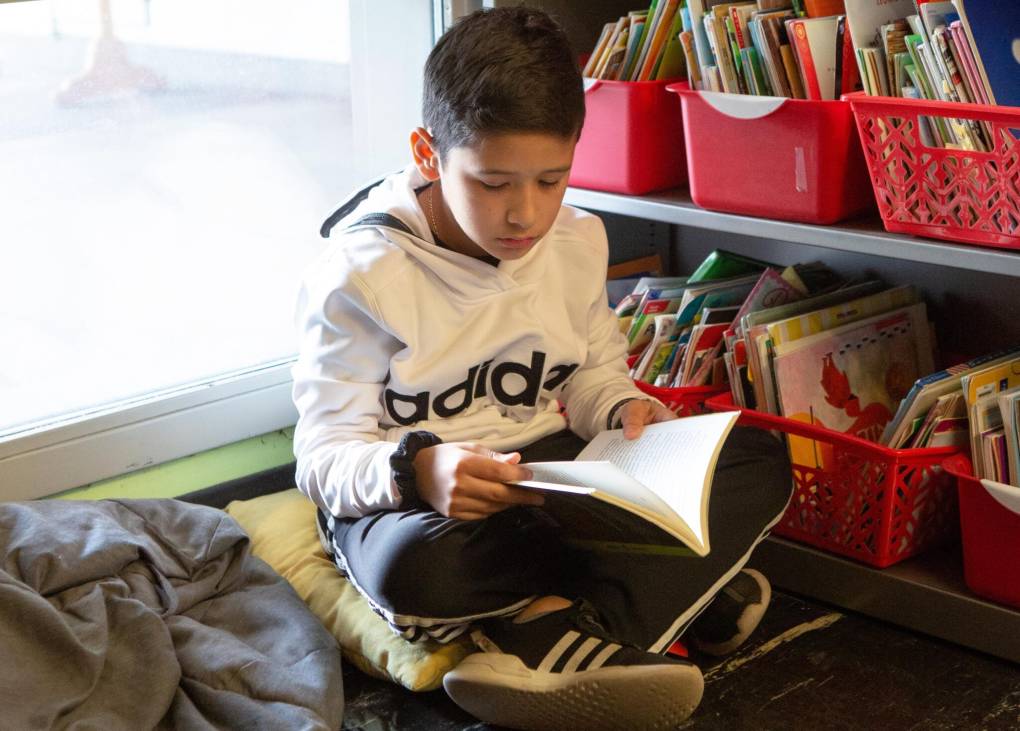
This Literary Expert Reveals the Key Problem Undermining American Education
California Legislature Halts 'Science of Reading' Mandate, Prompting Calls for Thorough Review
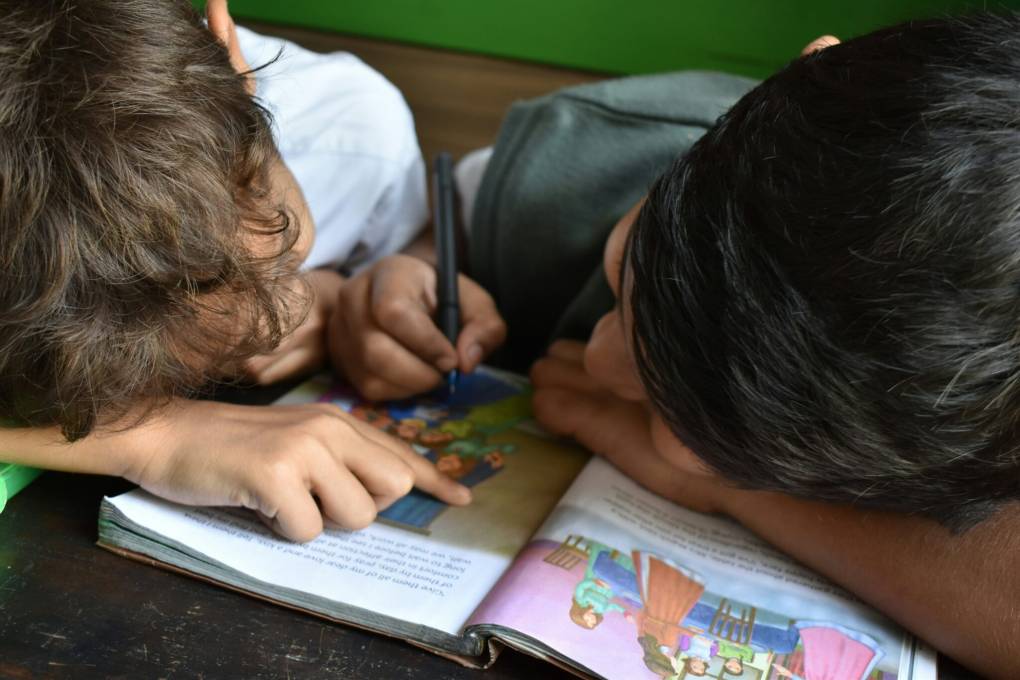
California’s Lowest-Performing Schools See Reading Success with Funding Boost
Amid Growing Literacy Crisis, California Announces New Literacy Directors
Player sponsored by
window.__IS_SSR__=true
window.__INITIAL_STATE__={
"attachmentsReducer": {
"audio_0": {
"type": "attachments",
"id": "audio_0",
"imgSizes": {
"kqedFullSize": {
"file": "https://ww2.kqed.org/news/wp-content/themes/KQED-unified/img/audio_bgs/background0.jpg"
}
}
},
"audio_1": {
"type": "attachments",
"id": "audio_1",
"imgSizes": {
"kqedFullSize": {
"file": "https://ww2.kqed.org/news/wp-content/themes/KQED-unified/img/audio_bgs/background1.jpg"
}
}
},
"audio_2": {
"type": "attachments",
"id": "audio_2",
"imgSizes": {
"kqedFullSize": {
"file": "https://ww2.kqed.org/news/wp-content/themes/KQED-unified/img/audio_bgs/background2.jpg"
}
}
},
"audio_3": {
"type": "attachments",
"id": "audio_3",
"imgSizes": {
"kqedFullSize": {
"file": "https://ww2.kqed.org/news/wp-content/themes/KQED-unified/img/audio_bgs/background3.jpg"
}
}
},
"audio_4": {
"type": "attachments",
"id": "audio_4",
"imgSizes": {
"kqedFullSize": {
"file": "https://ww2.kqed.org/news/wp-content/themes/KQED-unified/img/audio_bgs/background4.jpg"
}
}
},
"placeholder": {
"type": "attachments",
"id": "placeholder",
"imgSizes": {
"thumbnail": {
"file": "https://cdn.kqed.org/wp-content/uploads/2024/12/KQED-Default-Image-816638274-2000x1333-1-160x107.jpg",
"width": 160,
"height": 107,
"mimeType": "image/jpeg"
},
"medium": {
"file": "https://cdn.kqed.org/wp-content/uploads/2024/12/KQED-Default-Image-816638274-2000x1333-1-800x533.jpg",
"width": 800,
"height": 533,
"mimeType": "image/jpeg"
},
"medium_large": {
"file": "https://cdn.kqed.org/wp-content/uploads/2024/12/KQED-Default-Image-816638274-2000x1333-1-768x512.jpg",
"width": 768,
"height": 512,
"mimeType": "image/jpeg"
},
"large": {
"file": "https://cdn.kqed.org/wp-content/uploads/2024/12/KQED-Default-Image-816638274-2000x1333-1-1020x680.jpg",
"width": 1020,
"height": 680,
"mimeType": "image/jpeg"
},
"1536x1536": {
"file": "https://cdn.kqed.org/wp-content/uploads/2024/12/KQED-Default-Image-816638274-2000x1333-1-1536x1024.jpg",
"width": 1536,
"height": 1024,
"mimeType": "image/jpeg"
},
"fd-lrg": {
"file": "https://cdn.kqed.org/wp-content/uploads/2024/12/KQED-Default-Image-816638274-2000x1333-1-1536x1024.jpg",
"width": 1536,
"height": 1024,
"mimeType": "image/jpeg"
},
"fd-med": {
"file": "https://cdn.kqed.org/wp-content/uploads/2024/12/KQED-Default-Image-816638274-2000x1333-1-1020x680.jpg",
"width": 1020,
"height": 680,
"mimeType": "image/jpeg"
},
"fd-sm": {
"file": "https://cdn.kqed.org/wp-content/uploads/2024/12/KQED-Default-Image-816638274-2000x1333-1-800x533.jpg",
"width": 800,
"height": 533,
"mimeType": "image/jpeg"
},
"post-thumbnail": {
"file": "https://cdn.kqed.org/wp-content/uploads/2024/12/KQED-Default-Image-816638274-2000x1333-1-672x372.jpg",
"width": 672,
"height": 372,
"mimeType": "image/jpeg"
},
"twentyfourteen-full-width": {
"file": "https://cdn.kqed.org/wp-content/uploads/2024/12/KQED-Default-Image-816638274-2000x1333-1-1038x576.jpg",
"width": 1038,
"height": 576,
"mimeType": "image/jpeg"
},
"xxsmall": {
"file": "https://cdn.kqed.org/wp-content/uploads/2024/12/KQED-Default-Image-816638274-2000x1333-1-160x107.jpg",
"width": 160,
"height": 107,
"mimeType": "image/jpeg"
},
"xsmall": {
"file": "https://cdn.kqed.org/wp-content/uploads/2024/12/KQED-Default-Image-816638274-2000x1333-1-672x372.jpg",
"width": 672,
"height": 372,
"mimeType": "image/jpeg"
},
"small": {
"file": "https://cdn.kqed.org/wp-content/uploads/2024/12/KQED-Default-Image-816638274-2000x1333-1-672x372.jpg",
"width": 672,
"height": 372,
"mimeType": "image/jpeg"
},
"xlarge": {
"file": "https://cdn.kqed.org/wp-content/uploads/2024/12/KQED-Default-Image-816638274-2000x1333-1-1020x680.jpg",
"width": 1020,
"height": 680,
"mimeType": "image/jpeg"
},
"full-width": {
"file": "https://cdn.kqed.org/wp-content/uploads/2024/12/KQED-Default-Image-816638274-2000x1333-1-1920x1280.jpg",
"width": 1920,
"height": 1280,
"mimeType": "image/jpeg"
},
"guest-author-32": {
"file": "https://cdn.kqed.org/wp-content/uploads/2025/01/KQED-Default-Image-816638274-1333x1333-1-160x160.jpg",
"width": 32,
"height": 32,
"mimeType": "image/jpeg"
},
"guest-author-50": {
"file": "https://cdn.kqed.org/wp-content/uploads/2025/01/KQED-Default-Image-816638274-1333x1333-1-160x160.jpg",
"width": 50,
"height": 50,
"mimeType": "image/jpeg"
},
"guest-author-64": {
"file": "https://cdn.kqed.org/wp-content/uploads/2025/01/KQED-Default-Image-816638274-1333x1333-1-160x160.jpg",
"width": 64,
"height": 64,
"mimeType": "image/jpeg"
},
"guest-author-96": {
"file": "https://cdn.kqed.org/wp-content/uploads/2025/01/KQED-Default-Image-816638274-1333x1333-1-160x160.jpg",
"width": 96,
"height": 96,
"mimeType": "image/jpeg"
},
"guest-author-128": {
"file": "https://cdn.kqed.org/wp-content/uploads/2025/01/KQED-Default-Image-816638274-1333x1333-1-160x160.jpg",
"width": 128,
"height": 128,
"mimeType": "image/jpeg"
},
"detail": {
"file": "https://cdn.kqed.org/wp-content/uploads/2025/01/KQED-Default-Image-816638274-1333x1333-1-160x160.jpg",
"width": 160,
"height": 160,
"mimeType": "image/jpeg"
},
"kqedFullSize": {
"file": "https://cdn.kqed.org/wp-content/uploads/2024/12/KQED-Default-Image-816638274-2000x1333-1.jpg",
"width": 2000,
"height": 1333
}
}
},
"news_11949979": {
"type": "attachments",
"id": "news_11949979",
"meta": {
"index": "attachments_1716263798",
"site": "news",
"id": "11949979",
"found": true
},
"parent": 11949957,
"imgSizes": {
"twentyfourteen-full-width": {
"file": "https://ww2.kqed.org/app/uploads/sites/10/2023/05/GettyImages-1194312424-1038x576.jpg",
"width": 1038,
"mimeType": "image/jpeg",
"height": 576
},
"thumbnail": {
"file": "https://ww2.kqed.org/app/uploads/sites/10/2023/05/GettyImages-1194312424-160x105.jpg",
"width": 160,
"mimeType": "image/jpeg",
"height": 105
},
"post-thumbnail": {
"file": "https://ww2.kqed.org/app/uploads/sites/10/2023/05/GettyImages-1194312424-672x372.jpg",
"width": 672,
"mimeType": "image/jpeg",
"height": 372
},
"kqedFullSize": {
"file": "https://ww2.kqed.org/app/uploads/sites/10/2023/05/GettyImages-1194312424.jpg",
"width": 2133,
"height": 1406
},
"2048x2048": {
"file": "https://ww2.kqed.org/app/uploads/sites/10/2023/05/GettyImages-1194312424-2048x1350.jpg",
"width": 2048,
"mimeType": "image/jpeg",
"height": 1350
},
"large": {
"file": "https://ww2.kqed.org/app/uploads/sites/10/2023/05/GettyImages-1194312424-1020x672.jpg",
"width": 1020,
"mimeType": "image/jpeg",
"height": 672
},
"1536x1536": {
"file": "https://ww2.kqed.org/app/uploads/sites/10/2023/05/GettyImages-1194312424-1536x1012.jpg",
"width": 1536,
"mimeType": "image/jpeg",
"height": 1012
},
"full-width": {
"file": "https://ww2.kqed.org/app/uploads/sites/10/2023/05/GettyImages-1194312424-1920x1266.jpg",
"width": 1920,
"mimeType": "image/jpeg",
"height": 1266
},
"medium": {
"file": "https://ww2.kqed.org/app/uploads/sites/10/2023/05/GettyImages-1194312424-800x527.jpg",
"width": 800,
"mimeType": "image/jpeg",
"height": 527
}
},
"publishDate": 1684437809,
"modified": 1684437997,
"caption": "A stock image of an African-American teacher, sitting in front of her class of elementary school students, 6 and 7 years old, reading a book. She has asked a question and most of the children are raising their hands. ",
"description": null,
"title": "African-American teacher reading to school children",
"credit": "kali9 via Getty Images",
"status": "inherit",
"altTag": "A Black woman wearing a light green shirt sits in front of a class of students with their hands raised.",
"isLoading": false,
"fetchFailed": false
},
"news_11983930": {
"type": "attachments",
"id": "news_11983930",
"meta": {
"index": "attachments_1716263798",
"site": "news",
"id": "11983930",
"found": true
},
"parent": 11983918,
"imgSizes": {
"twentyfourteen-full-width": {
"file": "https://cdn.kqed.org/wp-content/uploads/sites/10/2024/04/andrew-ebrahim-zRwXf6PizEo-unsplash-2048x1365-1-1038x576.jpg",
"width": 1038,
"mimeType": "image/jpeg",
"height": 576
},
"thumbnail": {
"file": "https://cdn.kqed.org/wp-content/uploads/sites/10/2024/04/andrew-ebrahim-zRwXf6PizEo-unsplash-2048x1365-1-160x107.jpg",
"width": 160,
"mimeType": "image/jpeg",
"height": 107
},
"post-thumbnail": {
"file": "https://cdn.kqed.org/wp-content/uploads/sites/10/2024/04/andrew-ebrahim-zRwXf6PizEo-unsplash-2048x1365-1-672x372.jpg",
"width": 672,
"mimeType": "image/jpeg",
"height": 372
},
"kqedFullSize": {
"file": "https://cdn.kqed.org/wp-content/uploads/sites/10/2024/04/andrew-ebrahim-zRwXf6PizEo-unsplash-2048x1365-1.jpg",
"width": 2048,
"height": 1365
},
"large": {
"file": "https://cdn.kqed.org/wp-content/uploads/sites/10/2024/04/andrew-ebrahim-zRwXf6PizEo-unsplash-2048x1365-1-1020x680.jpg",
"width": 1020,
"mimeType": "image/jpeg",
"height": 680
},
"1536x1536": {
"file": "https://cdn.kqed.org/wp-content/uploads/sites/10/2024/04/andrew-ebrahim-zRwXf6PizEo-unsplash-2048x1365-1-1536x1024.jpg",
"width": 1536,
"mimeType": "image/jpeg",
"height": 1024
},
"full-width": {
"file": "https://cdn.kqed.org/wp-content/uploads/sites/10/2024/04/andrew-ebrahim-zRwXf6PizEo-unsplash-2048x1365-1-1920x1280.jpg",
"width": 1920,
"mimeType": "image/jpeg",
"height": 1280
},
"medium": {
"file": "https://cdn.kqed.org/wp-content/uploads/sites/10/2024/04/andrew-ebrahim-zRwXf6PizEo-unsplash-2048x1365-1-800x533.jpg",
"width": 800,
"mimeType": "image/jpeg",
"height": 533
}
},
"publishDate": 1713987413,
"modified": 1713987556,
"caption": null,
"description": null,
"title": "andrew-ebrahim-zRwXf6PizEo-unsplash-2048x1365",
"credit": "Andrew Ebrahim / Unsplash",
"status": "inherit",
"altTag": "Two children rest their heads on an open book with one child holding a writing instrument.",
"isLoading": false,
"fetchFailed": false
},
"news_11982923": {
"type": "attachments",
"id": "news_11982923",
"meta": {
"index": "attachments_1716263798",
"site": "news",
"id": "11982923",
"found": true
},
"parent": 11982920,
"imgSizes": {
"twentyfourteen-full-width": {
"file": "https://cdn.kqed.org/wp-content/uploads/sites/10/2024/04/Reading-book-2048x1468-1-1038x576.jpg",
"width": 1038,
"mimeType": "image/jpeg",
"height": 576
},
"thumbnail": {
"file": "https://cdn.kqed.org/wp-content/uploads/sites/10/2024/04/Reading-book-2048x1468-1-160x115.jpg",
"width": 160,
"mimeType": "image/jpeg",
"height": 115
},
"post-thumbnail": {
"file": "https://cdn.kqed.org/wp-content/uploads/sites/10/2024/04/Reading-book-2048x1468-1-672x372.jpg",
"width": 672,
"mimeType": "image/jpeg",
"height": 372
},
"kqedFullSize": {
"file": "https://cdn.kqed.org/wp-content/uploads/sites/10/2024/04/Reading-book-2048x1468-1.jpg",
"width": 2048,
"height": 1468
},
"large": {
"file": "https://cdn.kqed.org/wp-content/uploads/sites/10/2024/04/Reading-book-2048x1468-1-1020x731.jpg",
"width": 1020,
"mimeType": "image/jpeg",
"height": 731
},
"1536x1536": {
"file": "https://cdn.kqed.org/wp-content/uploads/sites/10/2024/04/Reading-book-2048x1468-1-1536x1101.jpg",
"width": 1536,
"mimeType": "image/jpeg",
"height": 1101
},
"full-width": {
"file": "https://cdn.kqed.org/wp-content/uploads/sites/10/2024/04/Reading-book-2048x1468-1-1920x1376.jpg",
"width": 1920,
"mimeType": "image/jpeg",
"height": 1376
},
"medium": {
"file": "https://cdn.kqed.org/wp-content/uploads/sites/10/2024/04/Reading-book-2048x1468-1-800x573.jpg",
"width": 800,
"mimeType": "image/jpeg",
"height": 573
}
},
"publishDate": 1713126369,
"modified": 1713126575,
"caption": "An elementary student reads on his own in class.",
"description": null,
"title": "Elementary boy reads alone next to window",
"credit": "Allison Shelley/American Education",
"status": "inherit",
"altTag": "A young boy wearing a white hoodie and black pants reads a book while sitting down.",
"isLoading": false,
"fetchFailed": false
},
"news_11960388": {
"type": "attachments",
"id": "news_11960388",
"meta": {
"index": "attachments_1716263798",
"site": "news",
"id": "11960388",
"found": true
},
"parent": 0,
"imgSizes": {
"twentyfourteen-full-width": {
"file": "https://cdn.kqed.org/wp-content/uploads/sites/10/2023/09/RS68740_230601-MindShift-13-BL-KQED-1038x576.jpg",
"width": 1038,
"mimeType": "image/jpeg",
"height": 576
},
"thumbnail": {
"file": "https://cdn.kqed.org/wp-content/uploads/sites/10/2023/09/RS68740_230601-MindShift-13-BL-KQED-160x107.jpg",
"width": 160,
"mimeType": "image/jpeg",
"height": 107
},
"post-thumbnail": {
"file": "https://cdn.kqed.org/wp-content/uploads/sites/10/2023/09/RS68740_230601-MindShift-13-BL-KQED-672x372.jpg",
"width": 672,
"mimeType": "image/jpeg",
"height": 372
},
"kqedFullSize": {
"file": "https://cdn.kqed.org/wp-content/uploads/sites/10/2023/09/RS68740_230601-MindShift-13-BL-KQED.jpg",
"width": 2000,
"height": 1333
},
"large": {
"file": "https://cdn.kqed.org/wp-content/uploads/sites/10/2023/09/RS68740_230601-MindShift-13-BL-KQED-1020x680.jpg",
"width": 1020,
"mimeType": "image/jpeg",
"height": 680
},
"1536x1536": {
"file": "https://cdn.kqed.org/wp-content/uploads/sites/10/2023/09/RS68740_230601-MindShift-13-BL-KQED-1536x1024.jpg",
"width": 1536,
"mimeType": "image/jpeg",
"height": 1024
},
"full-width": {
"file": "https://cdn.kqed.org/wp-content/uploads/sites/10/2023/09/RS68740_230601-MindShift-13-BL-KQED-1920x1280.jpg",
"width": 1920,
"mimeType": "image/jpeg",
"height": 1280
},
"medium": {
"file": "https://cdn.kqed.org/wp-content/uploads/sites/10/2023/09/RS68740_230601-MindShift-13-BL-KQED-800x533.jpg",
"width": 800,
"mimeType": "image/jpeg",
"height": 533
}
},
"publishDate": 1694127746,
"modified": 1701823542,
"caption": "Students prepare for a temperature mapping activity in the schoolyard at Roosevelt Elementary School in San Leandro on June 1, 2023. Students used an infrared thermometer to record temperatures in locations around the playground and yard, including asphalt and green spaces, as an opportunity to learn about climate change, sustainability and other academic topics through hands-on experience.",
"description": null,
"title": "RS68740_230601-MindShift-13-BL-KQED",
"credit": "Beth LaBerge/KQED",
"status": "inherit",
"altTag": "A group of students sitting at tables in an indoor setting.",
"isLoading": false,
"fetchFailed": false
},
"news_11944835": {
"type": "attachments",
"id": "news_11944835",
"meta": {
"index": "attachments_1716263798",
"site": "news",
"id": "11944835",
"found": true
},
"parent": 11944829,
"imgSizes": {
"twentyfourteen-full-width": {
"file": "https://ww2.kqed.org/app/uploads/sites/10/2023/03/GettyImages-159231967-e1679869924960-1038x576.jpg",
"width": 1038,
"mimeType": "image/jpeg",
"height": 576
},
"thumbnail": {
"file": "https://ww2.kqed.org/app/uploads/sites/10/2023/03/GettyImages-159231967-e1679869924960-160x107.jpg",
"width": 160,
"mimeType": "image/jpeg",
"height": 107
},
"post-thumbnail": {
"file": "https://ww2.kqed.org/app/uploads/sites/10/2023/03/GettyImages-159231967-e1679869924960-672x372.jpg",
"width": 672,
"mimeType": "image/jpeg",
"height": 372
},
"kqedFullSize": {
"file": "https://ww2.kqed.org/app/uploads/sites/10/2023/03/GettyImages-159231967-e1679869924960.jpg",
"width": 1620,
"height": 1080
},
"2048x2048": {
"file": "https://ww2.kqed.org/app/uploads/sites/10/2023/03/GettyImages-159231967-2048x1365.jpg",
"width": 2048,
"mimeType": "image/jpeg",
"height": 1365
},
"large": {
"file": "https://ww2.kqed.org/app/uploads/sites/10/2023/03/GettyImages-159231967-e1679869924960-1020x680.jpg",
"width": 1020,
"mimeType": "image/jpeg",
"height": 680
},
"1536x1536": {
"file": "https://ww2.kqed.org/app/uploads/sites/10/2023/03/GettyImages-159231967-e1679869924960-1536x1024.jpg",
"width": 1536,
"mimeType": "image/jpeg",
"height": 1024
},
"full-width": {
"file": "https://ww2.kqed.org/app/uploads/sites/10/2023/03/GettyImages-159231967-1920x1280.jpg",
"width": 1920,
"mimeType": "image/jpeg",
"height": 1280
},
"medium": {
"file": "https://ww2.kqed.org/app/uploads/sites/10/2023/03/GettyImages-159231967-e1679869924960-800x533.jpg",
"width": 800,
"mimeType": "image/jpeg",
"height": 533
}
},
"publishDate": 1679794589,
"modified": 1679951313,
"caption": "California aims to improve the number of third graders at reading level by 2026.",
"description": null,
"title": "close up boys fingers pointing to words in book",
"credit": "Gary John Norman/Getty Images",
"status": "inherit",
"altTag": "A child reads an open book, pointing at words on a page.",
"isLoading": false,
"fetchFailed": false
}
},
"audioPlayerReducer": {
"postId": "stream_live",
"isPaused": true,
"isPlaying": false,
"pfsActive": false,
"pledgeModalIsOpen": true,
"playerDrawerIsOpen": false
},
"authorsReducer": {
"byline_news_12036883": {
"type": "authors",
"id": "byline_news_12036883",
"meta": {
"override": true
},
"slug": "byline_news_12036883",
"name": "\u003ca href=\"https://edsource.org/author/jfensterwald\">John Fensterwald, \u003c/a>EdSource",
"isLoading": false
},
"byline_news_11983918": {
"type": "authors",
"id": "byline_news_11983918",
"meta": {
"override": true
},
"slug": "byline_news_11983918",
"name": "Karen D'Souza, EdSource",
"isLoading": false
},
"byline_news_11982920": {
"type": "authors",
"id": "byline_news_11982920",
"meta": {
"override": true
},
"slug": "byline_news_11982920",
"name": "\u003ca href=\"https://edsource.org/author/dlambert\">Diana Lambert\u003c/a>, \u003ca href=\"https://edsource.org/author/jfensterwald\">John Fensterwald\u003c/a> and \u003ca href=\"https://edsource.org/author/zstavely\">Zaidee Stavely\u003c/a>",
"isLoading": false
},
"byline_news_11969087": {
"type": "authors",
"id": "byline_news_11969087",
"meta": {
"override": true
},
"slug": "byline_news_11969087",
"name": "Cara Nixon and John Fensterwald",
"isLoading": false
},
"byline_news_11944829": {
"type": "authors",
"id": "byline_news_11944829",
"meta": {
"override": true
},
"slug": "byline_news_11944829",
"name": "\u003ca href=\"https://edsource.org/author/kdsouza\">Karen D'Souza\u003c/a>",
"isLoading": false
}
},
"breakingNewsReducer": {},
"pagesReducer": {},
"postsReducer": {
"stream_live": {
"type": "live",
"id": "stream_live",
"audioUrl": "https://streams.kqed.org/kqedradio",
"title": "Live Stream",
"excerpt": "Live Stream information currently unavailable.",
"link": "/radio",
"featImg": "",
"label": {
"name": "KQED Live",
"link": "/"
}
},
"stream_kqedNewscast": {
"type": "posts",
"id": "stream_kqedNewscast",
"audioUrl": "https://www.kqed.org/.stream/anon/radio/RDnews/newscast.mp3?_=1",
"title": "KQED Newscast",
"featImg": "",
"label": {
"name": "88.5 FM",
"link": "/"
}
},
"news_12036883": {
"type": "posts",
"id": "news_12036883",
"meta": {
"index": "posts_1716263798",
"site": "news",
"id": "12036883",
"score": null,
"sort": [
1745184633000
]
},
"guestAuthors": [],
"slug": "deadline-approaches-for-bill-requiring-research-based-literacy-strategies",
"title": "Deadline Approaches for Bill Requiring Research-Based Literacy Strategies",
"publishDate": 1745184633,
"format": "standard",
"headTitle": "Deadline Approaches for Bill Requiring Research-Based Literacy Strategies | KQED",
"labelTerm": {},
"content": "\u003cp>Last April, \u003ca href=\"https://edsource.org/2024/bill-to-mandate-science-of-reading-in-california-classrooms-dies/709717\">Assembly Speaker Robert Rivas pulled a bill\u003c/a> on early literacy instruction and asked proponents and adversaries to reach a compromise on legislation for improving the reading skills of California students, which overall are dismal.\u003c/p>\n\u003cp>That hasn’t happened. After several broad discussions yielding little, the three main opponents — the\u003ca class=\"external\" href=\"https://www.cta.org/\" target=\"_blank\" rel=\"noopener\"> California Teachers Association\u003c/a>,\u003ca class=\"external\" href=\"https://gocabe.org/?\" target=\"_blank\" rel=\"noopener\"> the California Association for Bilingual Education\u003c/a> (CABE), and\u003ca class=\"external\" href=\"https://californianstogether.org/\" target=\"_blank\" rel=\"noopener\"> Californians Together\u003c/a> — released statements within the past month opposing the latest version of the legislation.\u003c/p>\n\u003cp>Both sides say they are willing to keep talking. However, the April 30 deadline for an initial hearing of bills is fast approaching, and with it, the rising level of frustration of the revised bill’s author, Assemblymember Blanca Rubio, D-Baldwin Park.\u003c/p>\n\u003cp>“The kids don’t have unions. They only have us. We can’t keep kicking the can down the road. Our kids are not achieving, and not doing anything different is not working,” Rubio said. “We have a great opportunity right now so we don’t keep falling behind.”\u003c/p>\n\u003cp>Like its\u003ca class=\"external\" href=\"https://leginfo.legislature.ca.gov/faces/billNavClient.xhtml?bill_id=202320240AB2222\" target=\"_blank\" rel=\"noopener\"> 2024 version\u003c/a>, Rubio’s \u003ca class=\"external\" href=\"https://leginfo.legislature.ca.gov/faces/billNavClient.xhtml?bill_id=202520260AB1121\" target=\"_blank\" rel=\"noopener\">Assembly Bill 1121\u003c/a> would require state-funded training of all K-5 teachers in reading instruction grounded in decades of evidence-based studies and brain research known as the science of reading. The bill would require the State Board of Education to approve a choice of textbooks and materials aligned to those practices.\u003c/p>\n\u003cp>[ad fullwidth]\u003c/p>\n\u003cp>The advocacy groups sponsoring AB 1121 —\u003ca class=\"external\" href=\"https://decodingdyslexiaca.org/\" target=\"_blank\" rel=\"noopener\"> Decoding Dyslexia CA\u003c/a>,\u003ca class=\"external\" href=\"https://edvoice.org/\" target=\"_blank\" rel=\"noopener\"> EdVoice\u003c/a>,\u003ca class=\"external\" href=\"https://www.familiesinschools.org/\" target=\"_blank\" rel=\"noopener\"> Families In Schools\u003c/a>, and\u003ca class=\"external\" href=\"https://cahinaacp.org/\" target=\"_blank\" rel=\"noopener\"> the California NAACP\u003c/a> — insist that failure to approve the bill would stall the piecemeal progress by the Newsom administration and the Legislature. It would leave big holes vital to establish a coherent statewide system of teaching reading.\u003c/p>\n\u003cp>“Teachers are doing their best with what they know and can’t figure out why their kids are not reading at grade level,” said Yolie Flores, president and CEO of Families in Schools, a Los Angeles-based nonprofit that advocates for parents.\u003c/p>\n\u003cp>The state’s approach of creating academic frameworks and letting districts implement them as they want is harming children, she said. “Guidance isn’t cutting it. This bill is about taking it to the next level and making sure that teachers get this training and have the right materials.”\u003c/p>\n\u003ch2>Wide disparities in proficiency\u003c/h2>\n\u003cp>On the 2024 National Assessment of Educational Progress, the 41 percentage point gap in proficiency between economically and non-economically disadvantaged students was among the widest in the nation — and growing. Only 8% of Black and 23% of Hispanic\u003ca class=\"external\" href=\"https://nces.ed.gov/nationsreportcard/subject/publications/stt2024/pdf/2024220CA4.pdf\" target=\"_blank\" rel=\"noopener\"> fourth graders in California\u003c/a> were proficient in reading, compared with 56% of white and 67% of Asian students.\u003c/p>\n\u003cp>On the 2024 results from California’s standardized tests, only 43% of all students were proficient in English language arts in third grade, a critical predictor of future academic success; a third of low-income students were proficient, compared with 63% of non-low income students. Of the third-grade English learners taking the initial English Language Proficiency Assessments for California, 14% were proficient.\u003c/p>\n\u003cp>The opposing groups say they share concern over low test scores but that AB 1121 is not the solution. Their disagreement appears deep-seated and perhaps unbridgeable.\u003c/p>\n\u003cp>The opponents are centering their criticism on phonics, a contentious issue for 40 years. They assert the bill overemphasizes decoding skills of phonics and phonemic awareness at the expense of developing other foundational skills needed by all children, but especially English learners: oral fluency, vocabulary, background knowledge, and comprehension. Phonics refers to explicit instruction on how to connect letters to sounds. Phonemic awareness refers to the ability to recognize elements of sound.\u003c/p>\n\u003cp>Rubio and the bill’s supporters say the opponents are mischaracterizing the intent of the bill and what it actually says.\u003c/p>\n\u003cp>“I don’t know anyone who advocates for just a phonics-based approach. That would be ridiculous,” said Leslie Zoroya, reading project director for the Los Angeles County of Education. “Why would you teach them just to decode and not work on vocabulary and background knowledge and fluency and all the other pieces that are included?”\u003c/p>\n\u003cp>With a $5 million state grant, more than 8,000 teachers have taken “\u003ca class=\"external\" href=\"https://lacoe.edu/content/dam/lacoeedu/documents/curriculum-instruction/rla/GRR%20Flyer%20for%20Info%20Linked.pdf\" target=\"_blank\" rel=\"noopener\">Getting Reading Right\u003c/a>,” a short course on the principles of the science of reading offered by Zoroya’s office; they include all K-2 teachers in Long Beach, the state’s fourth-largest district.\u003c/p>\n\u003cp>“It’s not either-or. We do decoding work, vocabulary work, oral language, knowledge building, the whole kit and caboodle,” Zoroya said. “There’s been more of a heavier emphasis on phonics over the last couple of years in California because our teachers don’t understand it. They weren’t taught it in their teacher ed programs. I got a reading certificate from USC, and I didn’t get it.”\u003c/p>\n\u003cp>David Goldberg, president of the California Teachers Association union, stated that the union opposed the bill in its current form because “it negatively impacts locally made decisions to set priorities that meet the instructional needs of their students.”\u003c/p>\n\u003cp>Adding an unlikely precondition for supporting the bill, Goldberg insists that “any comprehensive, statewide approach to literacy must include fully funded and staffed schools with qualified educators and staff.”\u003c/p>\n\u003cp>Californians Together, an organization that advocates for the spread of bilingual education as well as the needs of English learners — who make up a fifth of California’s students — wrote in \u003ca class=\"external\" href=\"https://edsource.org/wp-content/uploads/2025/04/AB1121-CalTog-let-oppose-033125.pdf\" target=\"_blank\" rel=\"noopener\">its three-page opposition letter\u003c/a> that “without a clear emphasis on meeting the needs of multilingual learners, the bill’s professional development requirement is inadequate and misaligned with the needs of California’s diverse student population.”\u003c/p>\n\u003cp>[aside postID=\"news_12034679,news_11982920\" label=\"Related Stories\"]\u003c/p>\n\u003cp>The letter also criticizes the bill for taking “an overly narrow approach that prioritizes foundational reading skills at the expense of other critical components of literacy.”\u003c/p>\n\u003cp>An authority in English learner education who disagrees is Claude Goldenberg, a Professor of Education, emeritus, at Stanford University, \u003ca class=\"external\" href=\"http://claudegoldenberg.substack.com/\" target=\"_blank\" rel=\"noopener\">who wrote\u003c/a> that passage of the bill would be “an important, even if modest, step forward.”\u003c/p>\n\u003cp>“The fact is that the research that applies to kids who know English already applies to kids who are learning English, it’s just that they also need English language development,” he wrote.\u003c/p>\n\u003ch2>State policy’s shift toward the science of reading\u003c/h2>\n\u003cp>Under Newsom, the state has implemented pieces of a coherent, evidence-based system of reading instruction that shifts from a “balanced” and “whole” language approach to reading instruction. Balanced language downplays phonics in favor of teaching words through looking at pictures and guessing based on a word’s context in a paragraph.\u003c/p>\n\u003cul class=\"wp-block-list\">\n\u003cli>Starting next fall, the state will require kindergarten through second grade teachers to test students for potential reading challenges like dyslexia with a multi-language screening tool.\u003c/li>\n\u003cli>The Legislature passed a law that requires teacher credentialing programs to teach science of reading instruction.\u003c/li>\n\u003cli>Using one-time money, Newsom appropriated $500 million to train reading coaches in lowest-income schools in the science of reading.\u003c/li>\n\u003cli>The Department of Education is creating guides and instruction modules for a\u003ca href=\"https://edsource.org/2023/newsom-proposes-literacy-roadmap-but-will-remain-hands-off-on-how-districts-teach-reading/686621\"> “literacy road map.”\u003c/a> It emphasizes “explicit instruction in phonics, phonemic awareness, and other decoding skills” in the early grades.\u003c/li>\n\u003c/ul>\n\u003cp>While the new guidance is helpful, Zoroya said, “we have not put the same amount of effort into wide-scale professional learning for teachers. And that’s a disservice to them.”\u003c/p>\n\u003cp>‘It only makes sense, Rubio and allies argue, to take the next step and universally provide the same evidence-based instruction to all elementary school teachers and textbooks that support it. Otherwise, newly trained teachers face the confusing prospect of working in a “balanced language” district where instruction will contradict what they just learned.\u003c/p>\n\u003cp>Rubio and the sponsors had assumed they answered opponents’ main concerns in writing AB 1121. They deleted the previous bill’s numerous references to the “science of reading,” a source of contention. Instead, they tied the bill’s wording to the existing, but unenforced, requirements for evidence-based reading instruction in the state’s English Language Arts and English Language Development instructional frameworks and in the California \u003ca class=\"external\" href=\"https://leginfo.legislature.ca.gov/faces/codes_displaySection.xhtml?sectionNum=44259.&lawCode=EDC\" target=\"_blank\" rel=\"noopener\">Education Code\u003c/a>.\u003c/p>\n\u003cp>Their opposition letters showed that the opponents were not at all mollified.\u003c/p>\n\u003cp>The sponsors said they have repeatedly asked CABE, Californians Together and CTA for further changes to AB 1121 but haven’t received any.\u003c/p>\n\u003cp>“The author has been clear; the sponsors are clear. We are very open to improving the bill if there are improvements,” said Marshall Tuck, CEO of EdVoice, who has participated in the discussions with opponents.\u003c/p>\n\u003cp>In an email responding to questions about her group’s opposition to the bill, Martha Hernandez, executive director of Californians Together, wrote, “We understand that amendments to AB 1121 may be forthcoming, and we remain committed to engaging in the process with a focus on ensuring that any policy advances equitable access to effective, research-based literacy instruction for English learners.”\u003c/p>\n\u003cp>Rubio was blunt. “I can’t guess what they’re thinking. That’s the whole point of a negotiation. They have to bring something to the table. I can’t negotiate against myself.”\u003c/p>\n\u003cp>Rubio said she expects the bill to get a hearing before April 30 and will ask Speaker Rivas for a way forward, regardless of the continued opposition.\u003c/p>\n\u003cp>Meanwhile, Assembly Education Chair Al Muratsuchi, D-Torrance, is discussing a compromise with individuals he wouldn’t name through\u003ca class=\"external\" href=\"https://leginfo.legislature.ca.gov/faces/billNavClient.xhtml?bill_id=202520260AB1194\" target=\"_blank\" rel=\"noopener\"> a separate bill\u003c/a> he is authoring. It would create incentives but not require school administrators to take similar early literacy training that teachers would receive under AB 1121. But, like CTA, he said he favors “local control of allowing local school districts to determine what works best for their kids.”\u003c/p>\n\u003cp>[ad floatright]\u003c/p>\n\u003cp>Rivas was noncommittal. Stating he was tracking negotiations, a statement from his office said, “The Speaker looks forward to legislation that reflects greater consensus on this issue, and one that supports all students, including multilingual learners.”\u003c/p>\n\n",
"blocks": [],
"excerpt": "The legislation would require textbooks and teacher training grounded in phonics and other research-based strategies.",
"status": "publish",
"parent": 0,
"modified": 1745182336,
"stats": {
"hasAudio": false,
"hasVideo": false,
"hasChartOrMap": false,
"iframeSrcs": [],
"hasGoogleForm": false,
"hasGallery": false,
"hasHearkenModule": false,
"hasPolis": false,
"paragraphCount": 37,
"wordCount": 1735
},
"headData": {
"title": "Deadline Approaches for Bill Requiring Research-Based Literacy Strategies | KQED",
"description": "The legislation would require textbooks and teacher training grounded in phonics and other research-based strategies.",
"ogTitle": "",
"ogDescription": "",
"ogImgId": "",
"twTitle": "",
"twDescription": "",
"twImgId": "",
"schema": {
"@context": "https://schema.org",
"@type": "NewsArticle",
"headline": "Deadline Approaches for Bill Requiring Research-Based Literacy Strategies",
"datePublished": "2025-04-20T14:30:33-07:00",
"dateModified": "2025-04-20T13:52:16-07:00",
"image": "https://cdn.kqed.org/wp-content/uploads/2020/02/KQED-OG-Image@1x.png",
"isAccessibleForFree": "True",
"publisher": {
"@type": "NewsMediaOrganization",
"@id": "https://www.kqed.org/#organization",
"name": "KQED",
"logo": "https://cdn.kqed.org/wp-content/uploads/2020/02/KQED-OG-Image@1x.png",
"url": "https://www.kqed.org",
"sameAs": [
"https://www.facebook.com/KQED",
"https://twitter.com/KQED",
"https://www.instagram.com/kqed/",
"https://www.tiktok.com/@kqedofficial",
"https://www.linkedin.com/company/kqed",
"https://www.youtube.com/channel/UCeC0IOo7i1P_61zVUWbJ4nw"
]
}
}
},
"source": "EdSource",
"sourceUrl": "https://edsource.org/",
"sticky": false,
"nprByline": "\u003ca href=\"https://edsource.org/author/jfensterwald\">John Fensterwald, \u003c/a>EdSource",
"templateType": "standard",
"featuredImageType": "standard",
"excludeFromSiteSearch": "Include",
"showOnAuthorArchivePages": "No",
"articleAge": "0",
"path": "/news/12036883/deadline-approaches-for-bill-requiring-research-based-literacy-strategies",
"audioTrackLength": null,
"parsedContent": [
{
"type": "contentString",
"content": "\u003cdiv class=\"post-body\">\u003cp>\u003cp>Last April, \u003ca href=\"https://edsource.org/2024/bill-to-mandate-science-of-reading-in-california-classrooms-dies/709717\">Assembly Speaker Robert Rivas pulled a bill\u003c/a> on early literacy instruction and asked proponents and adversaries to reach a compromise on legislation for improving the reading skills of California students, which overall are dismal.\u003c/p>\n\u003cp>That hasn’t happened. After several broad discussions yielding little, the three main opponents — the\u003ca class=\"external\" href=\"https://www.cta.org/\" target=\"_blank\" rel=\"noopener\"> California Teachers Association\u003c/a>,\u003ca class=\"external\" href=\"https://gocabe.org/?\" target=\"_blank\" rel=\"noopener\"> the California Association for Bilingual Education\u003c/a> (CABE), and\u003ca class=\"external\" href=\"https://californianstogether.org/\" target=\"_blank\" rel=\"noopener\"> Californians Together\u003c/a> — released statements within the past month opposing the latest version of the legislation.\u003c/p>\n\u003cp>Both sides say they are willing to keep talking. However, the April 30 deadline for an initial hearing of bills is fast approaching, and with it, the rising level of frustration of the revised bill’s author, Assemblymember Blanca Rubio, D-Baldwin Park.\u003c/p>\n\u003cp>“The kids don’t have unions. They only have us. We can’t keep kicking the can down the road. Our kids are not achieving, and not doing anything different is not working,” Rubio said. “We have a great opportunity right now so we don’t keep falling behind.”\u003c/p>\n\u003cp>Like its\u003ca class=\"external\" href=\"https://leginfo.legislature.ca.gov/faces/billNavClient.xhtml?bill_id=202320240AB2222\" target=\"_blank\" rel=\"noopener\"> 2024 version\u003c/a>, Rubio’s \u003ca class=\"external\" href=\"https://leginfo.legislature.ca.gov/faces/billNavClient.xhtml?bill_id=202520260AB1121\" target=\"_blank\" rel=\"noopener\">Assembly Bill 1121\u003c/a> would require state-funded training of all K-5 teachers in reading instruction grounded in decades of evidence-based studies and brain research known as the science of reading. The bill would require the State Board of Education to approve a choice of textbooks and materials aligned to those practices.\u003c/p>\n\u003cp>\u003c/p>\u003c/div>",
"attributes": {
"named": {},
"numeric": []
}
},
{
"type": "component",
"content": "",
"name": "ad",
"attributes": {
"named": {
"label": "fullwidth"
},
"numeric": [
"fullwidth"
]
}
},
{
"type": "contentString",
"content": "\u003cdiv class=\"post-body\">\u003cp>\u003c/p>\n\u003cp>The advocacy groups sponsoring AB 1121 —\u003ca class=\"external\" href=\"https://decodingdyslexiaca.org/\" target=\"_blank\" rel=\"noopener\"> Decoding Dyslexia CA\u003c/a>,\u003ca class=\"external\" href=\"https://edvoice.org/\" target=\"_blank\" rel=\"noopener\"> EdVoice\u003c/a>,\u003ca class=\"external\" href=\"https://www.familiesinschools.org/\" target=\"_blank\" rel=\"noopener\"> Families In Schools\u003c/a>, and\u003ca class=\"external\" href=\"https://cahinaacp.org/\" target=\"_blank\" rel=\"noopener\"> the California NAACP\u003c/a> — insist that failure to approve the bill would stall the piecemeal progress by the Newsom administration and the Legislature. It would leave big holes vital to establish a coherent statewide system of teaching reading.\u003c/p>\n\u003cp>“Teachers are doing their best with what they know and can’t figure out why their kids are not reading at grade level,” said Yolie Flores, president and CEO of Families in Schools, a Los Angeles-based nonprofit that advocates for parents.\u003c/p>\n\u003cp>The state’s approach of creating academic frameworks and letting districts implement them as they want is harming children, she said. “Guidance isn’t cutting it. This bill is about taking it to the next level and making sure that teachers get this training and have the right materials.”\u003c/p>\n\u003ch2>Wide disparities in proficiency\u003c/h2>\n\u003cp>On the 2024 National Assessment of Educational Progress, the 41 percentage point gap in proficiency between economically and non-economically disadvantaged students was among the widest in the nation — and growing. Only 8% of Black and 23% of Hispanic\u003ca class=\"external\" href=\"https://nces.ed.gov/nationsreportcard/subject/publications/stt2024/pdf/2024220CA4.pdf\" target=\"_blank\" rel=\"noopener\"> fourth graders in California\u003c/a> were proficient in reading, compared with 56% of white and 67% of Asian students.\u003c/p>\n\u003cp>On the 2024 results from California’s standardized tests, only 43% of all students were proficient in English language arts in third grade, a critical predictor of future academic success; a third of low-income students were proficient, compared with 63% of non-low income students. Of the third-grade English learners taking the initial English Language Proficiency Assessments for California, 14% were proficient.\u003c/p>\n\u003cp>The opposing groups say they share concern over low test scores but that AB 1121 is not the solution. Their disagreement appears deep-seated and perhaps unbridgeable.\u003c/p>\n\u003cp>The opponents are centering their criticism on phonics, a contentious issue for 40 years. They assert the bill overemphasizes decoding skills of phonics and phonemic awareness at the expense of developing other foundational skills needed by all children, but especially English learners: oral fluency, vocabulary, background knowledge, and comprehension. Phonics refers to explicit instruction on how to connect letters to sounds. Phonemic awareness refers to the ability to recognize elements of sound.\u003c/p>\n\u003cp>Rubio and the bill’s supporters say the opponents are mischaracterizing the intent of the bill and what it actually says.\u003c/p>\n\u003cp>“I don’t know anyone who advocates for just a phonics-based approach. That would be ridiculous,” said Leslie Zoroya, reading project director for the Los Angeles County of Education. “Why would you teach them just to decode and not work on vocabulary and background knowledge and fluency and all the other pieces that are included?”\u003c/p>\n\u003cp>With a $5 million state grant, more than 8,000 teachers have taken “\u003ca class=\"external\" href=\"https://lacoe.edu/content/dam/lacoeedu/documents/curriculum-instruction/rla/GRR%20Flyer%20for%20Info%20Linked.pdf\" target=\"_blank\" rel=\"noopener\">Getting Reading Right\u003c/a>,” a short course on the principles of the science of reading offered by Zoroya’s office; they include all K-2 teachers in Long Beach, the state’s fourth-largest district.\u003c/p>\n\u003cp>“It’s not either-or. We do decoding work, vocabulary work, oral language, knowledge building, the whole kit and caboodle,” Zoroya said. “There’s been more of a heavier emphasis on phonics over the last couple of years in California because our teachers don’t understand it. They weren’t taught it in their teacher ed programs. I got a reading certificate from USC, and I didn’t get it.”\u003c/p>\n\u003cp>David Goldberg, president of the California Teachers Association union, stated that the union opposed the bill in its current form because “it negatively impacts locally made decisions to set priorities that meet the instructional needs of their students.”\u003c/p>\n\u003cp>Adding an unlikely precondition for supporting the bill, Goldberg insists that “any comprehensive, statewide approach to literacy must include fully funded and staffed schools with qualified educators and staff.”\u003c/p>\n\u003cp>Californians Together, an organization that advocates for the spread of bilingual education as well as the needs of English learners — who make up a fifth of California’s students — wrote in \u003ca class=\"external\" href=\"https://edsource.org/wp-content/uploads/2025/04/AB1121-CalTog-let-oppose-033125.pdf\" target=\"_blank\" rel=\"noopener\">its three-page opposition letter\u003c/a> that “without a clear emphasis on meeting the needs of multilingual learners, the bill’s professional development requirement is inadequate and misaligned with the needs of California’s diverse student population.”\u003c/p>\n\u003cp>\u003c/p>\u003c/div>",
"attributes": {
"named": {},
"numeric": []
}
},
{
"type": "component",
"content": "",
"name": "aside",
"attributes": {
"named": {
"postid": "news_12034679,news_11982920",
"label": "Related Stories "
},
"numeric": []
}
},
{
"type": "contentString",
"content": "\u003cdiv class=\"post-body\">\u003cp>\u003c/p>\n\u003cp>The letter also criticizes the bill for taking “an overly narrow approach that prioritizes foundational reading skills at the expense of other critical components of literacy.”\u003c/p>\n\u003cp>An authority in English learner education who disagrees is Claude Goldenberg, a Professor of Education, emeritus, at Stanford University, \u003ca class=\"external\" href=\"http://claudegoldenberg.substack.com/\" target=\"_blank\" rel=\"noopener\">who wrote\u003c/a> that passage of the bill would be “an important, even if modest, step forward.”\u003c/p>\n\u003cp>“The fact is that the research that applies to kids who know English already applies to kids who are learning English, it’s just that they also need English language development,” he wrote.\u003c/p>\n\u003ch2>State policy’s shift toward the science of reading\u003c/h2>\n\u003cp>Under Newsom, the state has implemented pieces of a coherent, evidence-based system of reading instruction that shifts from a “balanced” and “whole” language approach to reading instruction. Balanced language downplays phonics in favor of teaching words through looking at pictures and guessing based on a word’s context in a paragraph.\u003c/p>\n\u003cul class=\"wp-block-list\">\n\u003cli>Starting next fall, the state will require kindergarten through second grade teachers to test students for potential reading challenges like dyslexia with a multi-language screening tool.\u003c/li>\n\u003cli>The Legislature passed a law that requires teacher credentialing programs to teach science of reading instruction.\u003c/li>\n\u003cli>Using one-time money, Newsom appropriated $500 million to train reading coaches in lowest-income schools in the science of reading.\u003c/li>\n\u003cli>The Department of Education is creating guides and instruction modules for a\u003ca href=\"https://edsource.org/2023/newsom-proposes-literacy-roadmap-but-will-remain-hands-off-on-how-districts-teach-reading/686621\"> “literacy road map.”\u003c/a> It emphasizes “explicit instruction in phonics, phonemic awareness, and other decoding skills” in the early grades.\u003c/li>\n\u003c/ul>\n\u003cp>While the new guidance is helpful, Zoroya said, “we have not put the same amount of effort into wide-scale professional learning for teachers. And that’s a disservice to them.”\u003c/p>\n\u003cp>‘It only makes sense, Rubio and allies argue, to take the next step and universally provide the same evidence-based instruction to all elementary school teachers and textbooks that support it. Otherwise, newly trained teachers face the confusing prospect of working in a “balanced language” district where instruction will contradict what they just learned.\u003c/p>\n\u003cp>Rubio and the sponsors had assumed they answered opponents’ main concerns in writing AB 1121. They deleted the previous bill’s numerous references to the “science of reading,” a source of contention. Instead, they tied the bill’s wording to the existing, but unenforced, requirements for evidence-based reading instruction in the state’s English Language Arts and English Language Development instructional frameworks and in the California \u003ca class=\"external\" href=\"https://leginfo.legislature.ca.gov/faces/codes_displaySection.xhtml?sectionNum=44259.&lawCode=EDC\" target=\"_blank\" rel=\"noopener\">Education Code\u003c/a>.\u003c/p>\n\u003cp>Their opposition letters showed that the opponents were not at all mollified.\u003c/p>\n\u003cp>The sponsors said they have repeatedly asked CABE, Californians Together and CTA for further changes to AB 1121 but haven’t received any.\u003c/p>\n\u003cp>“The author has been clear; the sponsors are clear. We are very open to improving the bill if there are improvements,” said Marshall Tuck, CEO of EdVoice, who has participated in the discussions with opponents.\u003c/p>\n\u003cp>In an email responding to questions about her group’s opposition to the bill, Martha Hernandez, executive director of Californians Together, wrote, “We understand that amendments to AB 1121 may be forthcoming, and we remain committed to engaging in the process with a focus on ensuring that any policy advances equitable access to effective, research-based literacy instruction for English learners.”\u003c/p>\n\u003cp>Rubio was blunt. “I can’t guess what they’re thinking. That’s the whole point of a negotiation. They have to bring something to the table. I can’t negotiate against myself.”\u003c/p>\n\u003cp>Rubio said she expects the bill to get a hearing before April 30 and will ask Speaker Rivas for a way forward, regardless of the continued opposition.\u003c/p>\n\u003cp>Meanwhile, Assembly Education Chair Al Muratsuchi, D-Torrance, is discussing a compromise with individuals he wouldn’t name through\u003ca class=\"external\" href=\"https://leginfo.legislature.ca.gov/faces/billNavClient.xhtml?bill_id=202520260AB1194\" target=\"_blank\" rel=\"noopener\"> a separate bill\u003c/a> he is authoring. It would create incentives but not require school administrators to take similar early literacy training that teachers would receive under AB 1121. But, like CTA, he said he favors “local control of allowing local school districts to determine what works best for their kids.”\u003c/p>\n\u003cp>\u003c/p>\u003c/div>",
"attributes": {
"named": {},
"numeric": []
}
},
{
"type": "component",
"content": "",
"name": "ad",
"attributes": {
"named": {
"label": "floatright"
},
"numeric": [
"floatright"
]
}
},
{
"type": "contentString",
"content": "\u003cdiv class=\"post-body\">\u003cp>\u003c/p>\n\u003cp>Rivas was noncommittal. Stating he was tracking negotiations, a statement from his office said, “The Speaker looks forward to legislation that reflects greater consensus on this issue, and one that supports all students, including multilingual learners.”\u003c/p>\n\n\u003c/div>\u003c/p>",
"attributes": {
"named": {},
"numeric": []
}
}
],
"link": "/news/12036883/deadline-approaches-for-bill-requiring-research-based-literacy-strategies",
"authors": [
"byline_news_12036883"
],
"categories": [
"news_18540",
"news_8"
],
"tags": [
"news_25612",
"news_32584",
"news_18286",
"news_17766",
"news_16"
],
"affiliates": [
"news_33681"
],
"featImg": "news_11949979",
"label": "source_news_12036883"
},
"news_11983918": {
"type": "posts",
"id": "news_11983918",
"meta": {
"index": "posts_1716263798",
"site": "news",
"id": "11983918",
"score": null,
"sort": [
1714055427000
]
},
"parent": 0,
"labelTerm": {},
"blocks": [],
"publishDate": 1714055427,
"format": "standard",
"title": "This Literary Expert Reveals the Key Problem Undermining American Education",
"headTitle": "This Literary Expert Reveals the Key Problem Undermining American Education | KQED",
"content": "\u003cp>Amid a deepening \u003ca href=\"https://edsource.org/2022/californias-reading-dilemma/672845\">literacy crisis\u003c/a>, there’s been a focus on how to close the achievement gap, but Natalie Wexler sees the key problem undermining the American educational system a little differently.\u003c/p>\n\u003cp>The education author maintains that we can’t truly reach equity in achievement unless we first close \u003ca class=\"external\" href=\"https://nataliewexler.com/the-knowledge-gap/\" target=\"_blank\" rel=\"noopener\">\u003cem>The Knowledge Gap.\u003c/em>\u003c/a>\u003c/p>\n\u003cp>She also argues that, in the rush to embrace the science of reading, some have focused so intently on the need for phonics in the early years that they have overlooked the need for systematic \u003ca class=\"external\" href=\"https://youtu.be/r0Orifq6j8Q?si=DsgcZ5dS2UQfkBHa\" target=\"_blank\" rel=\"noopener\">knowledge-building\u003c/a>, which is also a core part of \u003ca class=\"external\" href=\"https://www.reallygreatreading.com/scarboroughs-reading-rope\" target=\"_blank\" rel=\"noopener\">structured literacy\u003c/a>, as is vocabulary. There’s more to the \u003ca href=\"https://edsource.org/2023/why-theres-more-to-the-science-of-reading-than-phonics/695976\">science of reading\u003c/a> than phonics, experts have long suggested.\u003c/p>\n\u003cp>Wexler is best known for her book \u003ca class=\"external\" href=\"https://nataliewexler.com/the-knowledge-gap/\" target=\"_blank\" rel=\"noopener\">\u003cem>The Knowledge Gap\u003c/em>,\u003c/a> but she also has a \u003ca class=\"external\" href=\"https://knowledgematterscampaign.org/podcast/\" target=\"_blank\" rel=\"noopener\">podcast\u003c/a> and \u003ca class=\"external\" href=\"https://nataliewexler.substack.com/\" target=\"_blank\" rel=\"noopener\">newsletter\u003c/a> on the subject. The frequent \u003ca class=\"external\" href=\"https://www.forbes.com/sites/nataliewexler/?sh=71b125ae4e29\" target=\"_blank\" rel=\"noopener\">Forbes contributor\u003c/a> recently made time to discuss with EdSource why background knowledge is so fundamental to reading and why it’s crucial to teach kids about the world, from science to history, if you want them to become deep readers.\u003c/p>\n\u003cp>A rich sense of context is key to fueling both vocabulary growth and reading comprehension, making inferences and connections while reading, paving the way for critical thinking and analysis, cornerstones of higher education.\u003c/p>\n\u003cp>[ad fullwidth]\u003c/p>\n\u003cp>\u003cstrong>Why do you think there are so many misunderstandings about the science of reading, and why is it often getting boiled down to just phonics? \u003c/strong>\u003c/p>\n\u003cfigure id=\"attachment_11983931\" class=\"wp-caption alignright\" style=\"max-width: 800px\">\u003ca href=\"https://cdn.kqed.org/wp-content/uploads/sites/10/2024/04/Natalie-Wexler-Headshot.jpg\">\u003cimg loading=\"lazy\" decoding=\"async\" class=\"size-medium wp-image-11983931\" src=\"https://cdn.kqed.org/wp-content/uploads/sites/10/2024/04/Natalie-Wexler-Headshot-800x1021.jpg\" alt=\"A white woman with a white shirt stands with her hands together in front of a white door.\" width=\"800\" height=\"1021\" srcset=\"https://cdn.kqed.org/wp-content/uploads/sites/10/2024/04/Natalie-Wexler-Headshot-800x1021.jpg 800w, https://cdn.kqed.org/wp-content/uploads/sites/10/2024/04/Natalie-Wexler-Headshot-1020x1302.jpg 1020w, https://cdn.kqed.org/wp-content/uploads/sites/10/2024/04/Natalie-Wexler-Headshot-160x204.jpg 160w, https://cdn.kqed.org/wp-content/uploads/sites/10/2024/04/Natalie-Wexler-Headshot-1203x1536.jpg 1203w, https://cdn.kqed.org/wp-content/uploads/sites/10/2024/04/Natalie-Wexler-Headshot.jpg 1234w\" sizes=\"(max-width: 800px) 100vw, 800px\">\u003c/a>\u003cfigcaption class=\"wp-caption-text\">Natalie Wexler, a literacy expert and author of\u003cem> The Knowledge Gap\u003c/em>. \u003ccite>(Photo Courtesy of Natalie Wexler)\u003c/cite>\u003c/figcaption>\u003c/figure>\n\u003cp>A large part of it is that the phonics issue is more familiar. We’ve been hearing about it for decades. Since the 1950s, if not before, and it’s less complicated than the whole comprehension message. Not to say it’s simple, but it’s easy to grasp. You want kids to be able to read, you have to help them sound out words, and you have to teach that explicitly, and you can see results pretty quickly when you do. Right? Whereas building knowledge is this very gradual process. The way we measure progress is mostly through the standardized reading comprehension test. And it takes a long time, years sometimes, to see the fruits of your labors reflected in standardized test scores.\u003c/p>\n\u003cp>\u003cstrong>Has the phonics debate overshadowed other aspects of how the brain learns how to read?\u003c/strong>\u003c/p>\n\u003cp>I do think that the focus on just the problems with phonics instruction or decoding instruction has given rise to the assumption that the other aspects of reading instruction are lined up with science, that they accord with what scientific evidence tells us will work. And with comprehension, that’s actually not the case.\u003c/p>\n\u003cp>\u003cstrong>Why is there so little understanding of cognitive science in the classroom? What do we need to know about working memory, for example?\u003c/strong>\u003c/p>\n\u003cp>I certainly didn’t know about working memory being only able to hold maybe four or five items of new information for about 20 seconds before it starts to become overwhelmed. And that’s the scientific explanation, but I also think once you give people concrete examples, it starts to make sense at a gut level. The goal is for kids to require enough general academic vocabulary and familiarity with the complex syntax of written language to enable them to read and understand texts on topics they don’t already know about.[aside postID=\"news_11983654,news_11982920,news_11982920\" label=\"Related Stories\"]\u003c/p>\n\u003cp>\u003cstrong>At some point, you have built up enough understanding of the world to learn through reading, is that right? \u003c/strong>\u003c/p>\n\u003cp>If you’re a proficient reader, that’s a very efficient way of learning through reading. That’s the goal. But how do we enable students to acquire that kind of general knowledge? Really, the only way is through teaching them about a lot of specific topics because the vocabulary, the syntax, doesn’t stick in the abstract, it needs a meaningful context. But there are different ways for kids to acquire that general knowledge.\u003c/p>\n\u003cp>\u003cstrong>Why is background knowledge so important to reading comprehension?\u003c/strong>\u003c/p>\n\u003cp>Vocabulary and background knowledge are inextricably linked. So, if you’ve got baseball vocabulary, you’re going to have a better chance of understanding a text on baseball. If you’re practicing finding the main idea and you’re reading a text about the solar system and you have no idea what the solar system is, your ability to decode the words is probably not going to be enough. You need to have some background knowledge in place in order to acquire more knowledge from that text. To understand a word like “dynasty,” you need to have some idea of monarchies. You can’t just memorize the definition and really understand it, right? But you could acquire that understanding by learning about African dynasties, Asian dynasties, European dynasties, indigenous dynasties. There are lots of different paths to that goal.\u003c/p>\n\u003cp>\u003cstrong>Why is this an equity issue? Is it because we’re not really spending as much time on history and science in the classroom these days, but you don’t notice that as much with higher-income children because those families are better able to fill in the gaps outside of school?\u003c/strong>\u003c/p>\n\u003cp>That’s right. But I’ve heard from educators and administrators these days that even higher-income kids are coming in with poor oral language skills because people are on their phones so much, and even more affluent, more highly educated parents are not engaging in that kind of dialogue with kids that leads to rich oral language abilities. This has long been a problem with kids from less highly educated families. I think it really has to do with the level of parental education more than with socioeconomic status or race. If you have a poor kid whose parents both have Ph. D.s, but they’re struggling because they’re adjunct professors, that kid’s probably going to be exposed to a lot of academic language and vocabulary at home. But other kids rely on school for that. I’m not saying that education can completely level the playing field, but it could be doing way more than it is currently doing to give all kids the kind of exposure to academic knowledge and vocabulary that kids from highly educated families acquire more or less naturally.\u003c/p>\n\u003cp>\u003cstrong>So, it’s more related to education than income. Is part of the issue also that schools prefer inquiry-based learning to direct instruction? We let the kids try to figure things out on their own instead of explaining it to them.\u003c/strong>\u003c/p>\n\u003cp>Where this belief in discovery and inquiry has really taken hold is at the elementary level. I do think that this focus on comprehension skills and strategies, whether consciously or not, it’s connected to that idea that we shouldn’t be the ‘sages on the stages’ just pouring information into kids’ brains. If you teach them a skill, like finding them an idea or making inferences, then they can use that skill to discover knowledge on their own, acquire knowledge on their own. That’s the theory. But it often doesn’t work in practice. It’s hard to make an inference if you don’t really understand the subject matter. Some of these skills do need to be taught, but others really are just sort of natural outgrowths of knowledge. I want to make it clear, it’s not like you have to choose between building knowledge and teaching skills and strategies. It’s a question of what you put in the foreground.\u003c/p>\n\u003cp>\u003cstrong>Why are deep dives into a topic, say dinosaurs or mummies, more compelling for children than randomly chosen abstract passages to drive comprehension?\u003c/strong>\u003c/p>\n\u003cp>If you get deeply into a topic, it’s much more interesting than if you just skim the surface. … The power of narrative is really important. It doesn’t have to be fiction; it could be a story from history. I’ve seen second graders fascinated by the War of 1812. Teachers are like, how are second graders going to be able to deal with that? Well, if they’ve learned about the American Revolution and they have the background knowledge, they get fascinated by it because they understand what’s going on. They understand the issues, but they don’t know who won. They’re like, oh, no, America’s going to lose!\u003c/p>\n\u003cp>[ad floatright]\u003c/p>\n\u003cp>\u003cstrong>Everybody loves a cliffhanger.\u003c/strong>\u003c/p>\n\n",
"stats": {
"hasVideo": false,
"hasChartOrMap": false,
"hasAudio": false,
"hasPolis": false,
"wordCount": 1457,
"hasGoogleForm": false,
"hasGallery": false,
"hasHearkenModule": false,
"iframeSrcs": [],
"paragraphCount": 24
},
"modified": 1713996945,
"excerpt": "Amid a literacy crisis, there’s been a focus on how to close the achievement gap, but literary expert Natalie Wexler sees the key problem undermining the American educational system a little differently.",
"headData": {
"twImgId": "",
"twTitle": "",
"ogTitle": "",
"ogImgId": "",
"twDescription": "",
"description": "Amid a literacy crisis, there’s been a focus on how to close the achievement gap, but literary expert Natalie Wexler sees the key problem undermining the American educational system a little differently.",
"title": "This Literary Expert Reveals the Key Problem Undermining American Education | KQED",
"ogDescription": "",
"schema": {
"@context": "https://schema.org",
"@type": "NewsArticle",
"headline": "This Literary Expert Reveals the Key Problem Undermining American Education",
"datePublished": "2024-04-25T07:30:27-07:00",
"dateModified": "2024-04-24T15:15:45-07:00",
"image": "https://cdn.kqed.org/wp-content/uploads/2020/02/KQED-OG-Image@1x.png",
"isAccessibleForFree": "True",
"publisher": {
"@type": "NewsMediaOrganization",
"@id": "https://www.kqed.org/#organization",
"name": "KQED",
"logo": "https://cdn.kqed.org/wp-content/uploads/2020/02/KQED-OG-Image@1x.png",
"url": "https://www.kqed.org",
"sameAs": [
"https://www.facebook.com/KQED",
"https://twitter.com/KQED",
"https://www.instagram.com/kqed/",
"https://www.tiktok.com/@kqedofficial",
"https://www.linkedin.com/company/kqed",
"https://www.youtube.com/channel/UCeC0IOo7i1P_61zVUWbJ4nw"
]
}
}
},
"guestAuthors": [],
"slug": "this-literary-expert-reveals-the-key-problem-undermining-american-education",
"status": "publish",
"sourceUrl": "https://edsource.org",
"nprByline": "Karen D'Souza, EdSource",
"excludeFromSiteSearch": "Include",
"sticky": false,
"source": "EdSource",
"showOnAuthorArchivePages": "No",
"articleAge": "0",
"path": "/news/11983918/this-literary-expert-reveals-the-key-problem-undermining-american-education",
"audioTrackLength": null,
"parsedContent": [
{
"type": "contentString",
"content": "\u003cdiv class=\"post-body\">\u003cp>\u003cp>Amid a deepening \u003ca href=\"https://edsource.org/2022/californias-reading-dilemma/672845\">literacy crisis\u003c/a>, there’s been a focus on how to close the achievement gap, but Natalie Wexler sees the key problem undermining the American educational system a little differently.\u003c/p>\n\u003cp>The education author maintains that we can’t truly reach equity in achievement unless we first close \u003ca class=\"external\" href=\"https://nataliewexler.com/the-knowledge-gap/\" target=\"_blank\" rel=\"noopener\">\u003cem>The Knowledge Gap.\u003c/em>\u003c/a>\u003c/p>\n\u003cp>She also argues that, in the rush to embrace the science of reading, some have focused so intently on the need for phonics in the early years that they have overlooked the need for systematic \u003ca class=\"external\" href=\"https://youtu.be/r0Orifq6j8Q?si=DsgcZ5dS2UQfkBHa\" target=\"_blank\" rel=\"noopener\">knowledge-building\u003c/a>, which is also a core part of \u003ca class=\"external\" href=\"https://www.reallygreatreading.com/scarboroughs-reading-rope\" target=\"_blank\" rel=\"noopener\">structured literacy\u003c/a>, as is vocabulary. There’s more to the \u003ca href=\"https://edsource.org/2023/why-theres-more-to-the-science-of-reading-than-phonics/695976\">science of reading\u003c/a> than phonics, experts have long suggested.\u003c/p>\n\u003cp>Wexler is best known for her book \u003ca class=\"external\" href=\"https://nataliewexler.com/the-knowledge-gap/\" target=\"_blank\" rel=\"noopener\">\u003cem>The Knowledge Gap\u003c/em>,\u003c/a> but she also has a \u003ca class=\"external\" href=\"https://knowledgematterscampaign.org/podcast/\" target=\"_blank\" rel=\"noopener\">podcast\u003c/a> and \u003ca class=\"external\" href=\"https://nataliewexler.substack.com/\" target=\"_blank\" rel=\"noopener\">newsletter\u003c/a> on the subject. The frequent \u003ca class=\"external\" href=\"https://www.forbes.com/sites/nataliewexler/?sh=71b125ae4e29\" target=\"_blank\" rel=\"noopener\">Forbes contributor\u003c/a> recently made time to discuss with EdSource why background knowledge is so fundamental to reading and why it’s crucial to teach kids about the world, from science to history, if you want them to become deep readers.\u003c/p>\n\u003cp>A rich sense of context is key to fueling both vocabulary growth and reading comprehension, making inferences and connections while reading, paving the way for critical thinking and analysis, cornerstones of higher education.\u003c/p>\n\u003cp>\u003c/p>\u003c/div>",
"attributes": {
"named": {},
"numeric": []
}
},
{
"type": "component",
"content": "",
"name": "ad",
"attributes": {
"named": {
"label": "fullwidth"
},
"numeric": [
"fullwidth"
]
}
},
{
"type": "contentString",
"content": "\u003cdiv class=\"post-body\">\u003cp>\u003c/p>\n\u003cp>\u003cstrong>Why do you think there are so many misunderstandings about the science of reading, and why is it often getting boiled down to just phonics? \u003c/strong>\u003c/p>\n\u003cfigure id=\"attachment_11983931\" class=\"wp-caption alignright\" style=\"max-width: 800px\">\u003ca href=\"https://cdn.kqed.org/wp-content/uploads/sites/10/2024/04/Natalie-Wexler-Headshot.jpg\">\u003cimg loading=\"lazy\" decoding=\"async\" class=\"size-medium wp-image-11983931\" src=\"https://cdn.kqed.org/wp-content/uploads/sites/10/2024/04/Natalie-Wexler-Headshot-800x1021.jpg\" alt=\"A white woman with a white shirt stands with her hands together in front of a white door.\" width=\"800\" height=\"1021\" srcset=\"https://cdn.kqed.org/wp-content/uploads/sites/10/2024/04/Natalie-Wexler-Headshot-800x1021.jpg 800w, https://cdn.kqed.org/wp-content/uploads/sites/10/2024/04/Natalie-Wexler-Headshot-1020x1302.jpg 1020w, https://cdn.kqed.org/wp-content/uploads/sites/10/2024/04/Natalie-Wexler-Headshot-160x204.jpg 160w, https://cdn.kqed.org/wp-content/uploads/sites/10/2024/04/Natalie-Wexler-Headshot-1203x1536.jpg 1203w, https://cdn.kqed.org/wp-content/uploads/sites/10/2024/04/Natalie-Wexler-Headshot.jpg 1234w\" sizes=\"(max-width: 800px) 100vw, 800px\">\u003c/a>\u003cfigcaption class=\"wp-caption-text\">Natalie Wexler, a literacy expert and author of\u003cem> The Knowledge Gap\u003c/em>. \u003ccite>(Photo Courtesy of Natalie Wexler)\u003c/cite>\u003c/figcaption>\u003c/figure>\n\u003cp>A large part of it is that the phonics issue is more familiar. We’ve been hearing about it for decades. Since the 1950s, if not before, and it’s less complicated than the whole comprehension message. Not to say it’s simple, but it’s easy to grasp. You want kids to be able to read, you have to help them sound out words, and you have to teach that explicitly, and you can see results pretty quickly when you do. Right? Whereas building knowledge is this very gradual process. The way we measure progress is mostly through the standardized reading comprehension test. And it takes a long time, years sometimes, to see the fruits of your labors reflected in standardized test scores.\u003c/p>\n\u003cp>\u003cstrong>Has the phonics debate overshadowed other aspects of how the brain learns how to read?\u003c/strong>\u003c/p>\n\u003cp>I do think that the focus on just the problems with phonics instruction or decoding instruction has given rise to the assumption that the other aspects of reading instruction are lined up with science, that they accord with what scientific evidence tells us will work. And with comprehension, that’s actually not the case.\u003c/p>\n\u003cp>\u003cstrong>Why is there so little understanding of cognitive science in the classroom? What do we need to know about working memory, for example?\u003c/strong>\u003c/p>\n\u003cp>I certainly didn’t know about working memory being only able to hold maybe four or five items of new information for about 20 seconds before it starts to become overwhelmed. And that’s the scientific explanation, but I also think once you give people concrete examples, it starts to make sense at a gut level. The goal is for kids to require enough general academic vocabulary and familiarity with the complex syntax of written language to enable them to read and understand texts on topics they don’t already know about.\u003c/p>\u003c/div>",
"attributes": {
"named": {},
"numeric": []
}
},
{
"type": "component",
"content": "",
"name": "aside",
"attributes": {
"named": {
"postid": "news_11983654,news_11982920,news_11982920",
"label": "Related Stories "
},
"numeric": []
}
},
{
"type": "contentString",
"content": "\u003cdiv class=\"post-body\">\u003cp>\u003c/p>\n\u003cp>\u003cstrong>At some point, you have built up enough understanding of the world to learn through reading, is that right? \u003c/strong>\u003c/p>\n\u003cp>If you’re a proficient reader, that’s a very efficient way of learning through reading. That’s the goal. But how do we enable students to acquire that kind of general knowledge? Really, the only way is through teaching them about a lot of specific topics because the vocabulary, the syntax, doesn’t stick in the abstract, it needs a meaningful context. But there are different ways for kids to acquire that general knowledge.\u003c/p>\n\u003cp>\u003cstrong>Why is background knowledge so important to reading comprehension?\u003c/strong>\u003c/p>\n\u003cp>Vocabulary and background knowledge are inextricably linked. So, if you’ve got baseball vocabulary, you’re going to have a better chance of understanding a text on baseball. If you’re practicing finding the main idea and you’re reading a text about the solar system and you have no idea what the solar system is, your ability to decode the words is probably not going to be enough. You need to have some background knowledge in place in order to acquire more knowledge from that text. To understand a word like “dynasty,” you need to have some idea of monarchies. You can’t just memorize the definition and really understand it, right? But you could acquire that understanding by learning about African dynasties, Asian dynasties, European dynasties, indigenous dynasties. There are lots of different paths to that goal.\u003c/p>\n\u003cp>\u003cstrong>Why is this an equity issue? Is it because we’re not really spending as much time on history and science in the classroom these days, but you don’t notice that as much with higher-income children because those families are better able to fill in the gaps outside of school?\u003c/strong>\u003c/p>\n\u003cp>That’s right. But I’ve heard from educators and administrators these days that even higher-income kids are coming in with poor oral language skills because people are on their phones so much, and even more affluent, more highly educated parents are not engaging in that kind of dialogue with kids that leads to rich oral language abilities. This has long been a problem with kids from less highly educated families. I think it really has to do with the level of parental education more than with socioeconomic status or race. If you have a poor kid whose parents both have Ph. D.s, but they’re struggling because they’re adjunct professors, that kid’s probably going to be exposed to a lot of academic language and vocabulary at home. But other kids rely on school for that. I’m not saying that education can completely level the playing field, but it could be doing way more than it is currently doing to give all kids the kind of exposure to academic knowledge and vocabulary that kids from highly educated families acquire more or less naturally.\u003c/p>\n\u003cp>\u003cstrong>So, it’s more related to education than income. Is part of the issue also that schools prefer inquiry-based learning to direct instruction? We let the kids try to figure things out on their own instead of explaining it to them.\u003c/strong>\u003c/p>\n\u003cp>Where this belief in discovery and inquiry has really taken hold is at the elementary level. I do think that this focus on comprehension skills and strategies, whether consciously or not, it’s connected to that idea that we shouldn’t be the ‘sages on the stages’ just pouring information into kids’ brains. If you teach them a skill, like finding them an idea or making inferences, then they can use that skill to discover knowledge on their own, acquire knowledge on their own. That’s the theory. But it often doesn’t work in practice. It’s hard to make an inference if you don’t really understand the subject matter. Some of these skills do need to be taught, but others really are just sort of natural outgrowths of knowledge. I want to make it clear, it’s not like you have to choose between building knowledge and teaching skills and strategies. It’s a question of what you put in the foreground.\u003c/p>\n\u003cp>\u003cstrong>Why are deep dives into a topic, say dinosaurs or mummies, more compelling for children than randomly chosen abstract passages to drive comprehension?\u003c/strong>\u003c/p>\n\u003cp>If you get deeply into a topic, it’s much more interesting than if you just skim the surface. … The power of narrative is really important. It doesn’t have to be fiction; it could be a story from history. I’ve seen second graders fascinated by the War of 1812. Teachers are like, how are second graders going to be able to deal with that? Well, if they’ve learned about the American Revolution and they have the background knowledge, they get fascinated by it because they understand what’s going on. They understand the issues, but they don’t know who won. They’re like, oh, no, America’s going to lose!\u003c/p>\n\u003cp>\u003c/p>\u003c/div>",
"attributes": {
"named": {},
"numeric": []
}
},
{
"type": "component",
"content": "",
"name": "ad",
"attributes": {
"named": {
"label": "floatright"
},
"numeric": [
"floatright"
]
}
},
{
"type": "contentString",
"content": "\u003cdiv class=\"post-body\">\u003cp>\u003c/p>\n\u003cp>\u003cstrong>Everybody loves a cliffhanger.\u003c/strong>\u003c/p>\n\n\u003c/div>\u003c/p>",
"attributes": {
"named": {},
"numeric": []
}
}
],
"link": "/news/11983918/this-literary-expert-reveals-the-key-problem-undermining-american-education",
"authors": [
"byline_news_11983918"
],
"categories": [
"news_18540",
"news_8"
],
"tags": [
"news_32584",
"news_20013",
"news_18500",
"news_4398"
],
"featImg": "news_11983930",
"label": "source_news_11983918"
},
"news_11982920": {
"type": "posts",
"id": "news_11982920",
"meta": {
"index": "posts_1716263798",
"site": "news",
"id": "11982920",
"score": null,
"sort": [
1713126849000
]
},
"parent": 0,
"labelTerm": {},
"blocks": [],
"publishDate": 1713126849,
"format": "standard",
"title": "California Legislature Halts 'Science of Reading' Mandate, Prompting Calls for Thorough Review",
"headTitle": "California Legislature Halts ‘Science of Reading’ Mandate, Prompting Calls for Thorough Review | KQED",
"content": "\u003cp>A bill that would have required California teachers to use the “science of reading,” which spotlights phonics, to teach children to read has died without a hearing.\u003c/p>\n\u003cp>\u003ca class=\"external\" href=\"https://legiscan.com/CA/bill/AB2222/2023\" target=\"_blank\" rel=\"noopener\">Assembly Bill 2222\u003c/a>, authored by Assemblymember Blanca Rubio (D-Baldwin Park) will not advance in the Legislature this year, according to Assembly Speaker Robert Rivas, who described the state’s student reading and literacy rates as “a serious problem,” adding that the bill should receive a “methodical” review by all key groups before there is a “costly overhaul” of how reading is taught in California.[pullquote size=\"medium\" align=\"right\" citation=\"Martha Hernandez, executive director, Californians Together\"]‘We know that addressing equity and literacy outcomes is a high priority for California and that our state is not yet where it needs to be with literacy outcomes for all students.’[/pullquote]\u003c/p>\n\u003cp>“I want the Legislature to study this problem closely, so we can be sure stakeholders are engaged and, most importantly, that all students benefit, especially our diverse learners,” Rivas said in a statement to EdSource, referring to English learners.\u003c/p>\n\u003cp>The bill, which had the support of the California State PTA, state NAACP and more than 50 other organizations, hit a snag two weeks ago when the California Teachers Association — the state’s largest teachers union — sent a letter stating its opposition to the bill to Assembly Education Committee Chairman Al Muratsuchi.\u003c/p>\n\u003cp>The\u003ca class=\"external\" href=\"https://edsource.org/wp-content/uploads/2024/04/EarllyLit-AB2222-CTA-no-032824.pdf\" target=\"_blank\" rel=\"noopener\"> union claimed\u003c/a> that the proposed legislation would duplicate and potentially undermine current literacy initiatives, would not meet the needs of English learner students and would cut teachers out of decisions, especially on curriculum.\u003c/p>\n\u003cp>[ad fullwidth]\u003c/p>\n\u003cp>Rubio, who could not be reached late Thursday\u003cstrong>,\u003c/strong> told EdSource last week that Muratsuchi asked her to work with the teachers union on a compromise.\u003c/p>\n\u003cp>Marshall Tuck, CEO of EdVoice, an advocacy nonprofit co-sponsoring the bill, said he was surprised the bill didn’t get a hearing considering the importance of the issue.[aside postID=\"news_11982196,news_11969236,news_11972684\" label=\"Related Stories\"]\u003c/p>\n\u003cp>“We understand it’s a tough budget year, but we also believe that the most important priority for the education budget is helping our kids learn how to read,” he said.\u003c/p>\n\u003cp>But he called the move to table the bill a “bump in the road.”\u003c/p>\n\u003cp>“When we launched with Assemblymember Rubio and the sponsors behind this, we knew it might be a multi-year effort,” he said. “So you get up tomorrow and keep it moving forward.”\u003c/p>\n\u003cp>Advocates say that it is imperative that California mandates this change in reading instruction. In 2023, just 43% of California third-graders met the academic standards on the state’s standardized test in 2023. Only 27.2% of Black students, 32% of Latino students and 35% of low-income children were reading at grade level, compared with 57.5% of white, 69% of Asian and 66% of non-low-income students.\u003c/p>\n\u003cp>“The California NAACP was right; this is a civil rights issue,” said Kareem Weaver, a member of the Oakland NAACP Education Committee and co-founder of the literacy advocacy group FULCRUM. “And you don’t play politics with civil rights. The misinformation and ideological posturing on AB 2222 effectively leveraged the politics of fear. We have to do better, for kids’ sake, and can’t give up.”\u003c/p>\n\u003ch2>What is the science of reading?\u003c/h2>\n\u003cp>The science of reading refers to research-based teaching strategies that reflect how the brain learns to read. While it includes phonics-based instruction, which teaches children to decode words by sounding them out, it also includes four other pillars of literacy instruction: phonemic awareness, identifying distinct units of sounds, vocabulary, comprehension and fluency. It is based on research on how the \u003ca href=\"https://edsource.org/2023/why-theres-more-to-the-science-of-reading-than-phonics/695976\">brain connects \u003c/a>letters with sounds when learning to read.\u003c/p>\n\u003cp>The legislation would have gone against the state policy of local control that gives school districts authority to select curriculum and teaching methods as long as they meet state academic standards. Currently, the state encourages, but does not mandate, districts to incorporate instruction in the science of reading in the early grades.\u003c/p>\n\u003cp>Along with mandating the science of reading approach to instruction, AB 2222 would have required that all TK to fifth-grade teachers, literacy coaches and specialists take a 30-hour-minimum course in reading instruction by 2028. School districts and charter schools would purchase textbooks from an approved list endorsed by the State Board of Education.\u003c/p>\n\u003ch2>English learner advocates opposed bill\u003c/h2>\n\u003cp>It appears lawmakers heard the pleas of advocates for English learners who opposed the bill.\u003c/p>\n\u003cp>“We know that addressing equity and literacy outcomes is a high priority for California and that our state is not yet where it needs to be with literacy outcomes for all students,” said Martha Hernandez, executive director of Californians Together, one of the organizations that opposed the bill. “AB 2222 is not the prescription that is needed for our multilingual, diverse state.”\u003c/p>\n\u003cp>She said she is willing to work with lawmakers for a literacy plan based on reading research but that “centrally addresses” the needs of English learners.\u003c/p>\n\u003cp>California’s proposed legislation to adopt the science of reading approach to early literacy would have been in sync with other states that have passed similar legislation. States nationwide are rejecting balanced literacy as failing to effectively teach children how to read since it de-emphasizes explicit instruction in phonics and instead trains children to use pictures to identify words on sight, also known as three-cueing.\u003c/p>\n\u003cp>Muratsuchi had until the end of the day Thursday to put the bill on the calendar for the April 17 meeting of the Assembly Education Committee. It would then have had to be heard by the Assembly Higher Education Committee before the April 26 deadline for legislators to get bills with notable fiscal impacts to the Appropriations Committee. Now, the bill will have to be reintroduced next year to get a hearing.\u003c/p>\n\u003cp>“It’s really too bad. Lots of kids are not being well-served now. But on the other hand, I hope this will be an opportunity to regroup and present a more robust version of the bill,” said Claude Goldenberg, a Stanford University professor emeritus of education who supported the bill.\u003c/p>\n\u003cp>Goldenberg said a future version of the bill should include a “more comprehensive definition” of the “science of reading” and should make clear that this includes research on teaching reading to all students, including English learners.\u003c/p>\n\u003cp>“English learners, for example, would benefit if teachers knew and used research that is part of the science of reading and applies whether they’re learning in their home language or in English. Same for children with limited literacy opportunities outside of school and children having difficulty learning to read,” Goldenberg said.\u003c/p>\n\u003ch2>‘Backroom politics’\u003c/h2>\n\u003cp>Lori DePole, co-state director of Decoding Dyslexia CA, one of the supporters of the bill, expressed frustration Thursday evening over the decision to table it.\u003c/p>\n\u003cp>“It is shameful that when more than half of CA kids aren’t reading at grade level that our legislators are okay with the status quo, and they have killed this literacy legislation without even allowing it to be heard,” she said in a statement.\u003c/p>\n\u003cp>“… CA kids’ futures are too important to allow backroom politics to silence this issue. We will no longer accept lip service in addressing our literacy crisis. It is time for action, and we aren’t going away.”\u003c/p>\n\u003cp>Advocates for students with dyslexia support the phonics-based teaching methods as especially effective for children with a learning disability.\u003c/p>\n\u003cp>Muratsuchi said he supports the science of reading. “However, we need to make sure that we do this right by serving the needs of all California students, including our English learners,” he said in a statement to EdSource. “California is the most language-diverse state in the country, and we need to develop a literacy instruction strategy that works for all of our students.\u003c/p>\n\u003cp>“I thank Speaker Robert Rivas for his decision to pursue a more deliberative process involving all education stakeholders before enacting a costly overhaul of how reading is taught statewide,” he said.\u003c/p>\n\u003cp>[ad floatright]\u003c/p>\n\u003cp>\u003cem>EdSource reporter Karen D’Souza contributed to this report.\u003c/em>\u003c/p>\n\n",
"stats": {
"hasVideo": false,
"hasChartOrMap": false,
"hasAudio": false,
"hasPolis": false,
"wordCount": 1415,
"hasGoogleForm": false,
"hasGallery": false,
"hasHearkenModule": false,
"iframeSrcs": [],
"paragraphCount": 32
},
"modified": 1713209199,
"excerpt": "A bill that would have required California teachers to teach children to read using the 'science of reading,' which spotlights phonics, has died without a hearing.",
"headData": {
"twImgId": "",
"twTitle": "",
"ogTitle": "",
"ogImgId": "",
"twDescription": "",
"description": "A bill that would have required California teachers to teach children to read using the 'science of reading,' which spotlights phonics, has died without a hearing.",
"title": "California Legislature Halts 'Science of Reading' Mandate, Prompting Calls for Thorough Review | KQED",
"ogDescription": "",
"schema": {
"@context": "https://schema.org",
"@type": "NewsArticle",
"headline": "California Legislature Halts 'Science of Reading' Mandate, Prompting Calls for Thorough Review",
"datePublished": "2024-04-14T13:34:09-07:00",
"dateModified": "2024-04-15T12:26:39-07:00",
"image": "https://cdn.kqed.org/wp-content/uploads/2020/02/KQED-OG-Image@1x.png",
"isAccessibleForFree": "True",
"publisher": {
"@type": "NewsMediaOrganization",
"@id": "https://www.kqed.org/#organization",
"name": "KQED",
"logo": "https://cdn.kqed.org/wp-content/uploads/2020/02/KQED-OG-Image@1x.png",
"url": "https://www.kqed.org",
"sameAs": [
"https://www.facebook.com/KQED",
"https://twitter.com/KQED",
"https://www.instagram.com/kqed/",
"https://www.tiktok.com/@kqedofficial",
"https://www.linkedin.com/company/kqed",
"https://www.youtube.com/channel/UCeC0IOo7i1P_61zVUWbJ4nw"
]
}
}
},
"guestAuthors": [],
"slug": "california-legislature-halts-science-of-reading-mandate-prompting-calls-for-thorough-review",
"status": "publish",
"sourceUrl": "https://edsource.org/",
"nprByline": "\u003ca href=\"https://edsource.org/author/dlambert\">Diana Lambert\u003c/a>, \u003ca href=\"https://edsource.org/author/jfensterwald\">John Fensterwald\u003c/a> and \u003ca href=\"https://edsource.org/author/zstavely\">Zaidee Stavely\u003c/a>",
"excludeFromSiteSearch": "Include",
"sticky": false,
"source": "EdSource",
"showOnAuthorArchivePages": "No",
"articleAge": "0",
"path": "/news/11982920/california-legislature-halts-science-of-reading-mandate-prompting-calls-for-thorough-review",
"audioTrackLength": null,
"parsedContent": [
{
"type": "contentString",
"content": "\u003cdiv class=\"post-body\">\u003cp>\u003cp>A bill that would have required California teachers to use the “science of reading,” which spotlights phonics, to teach children to read has died without a hearing.\u003c/p>\n\u003cp>\u003ca class=\"external\" href=\"https://legiscan.com/CA/bill/AB2222/2023\" target=\"_blank\" rel=\"noopener\">Assembly Bill 2222\u003c/a>, authored by Assemblymember Blanca Rubio (D-Baldwin Park) will not advance in the Legislature this year, according to Assembly Speaker Robert Rivas, who described the state’s student reading and literacy rates as “a serious problem,” adding that the bill should receive a “methodical” review by all key groups before there is a “costly overhaul” of how reading is taught in California.\u003c/p>\u003c/div>",
"attributes": {
"named": {},
"numeric": []
}
},
{
"type": "component",
"content": "‘We know that addressing equity and literacy outcomes is a high priority for California and that our state is not yet where it needs to be with literacy outcomes for all students.’",
"name": "pullquote",
"attributes": {
"named": {
"size": "medium",
"align": "right",
"citation": "Martha Hernandez, executive director, Californians Together",
"label": ""
},
"numeric": []
}
},
{
"type": "contentString",
"content": "\u003cdiv class=\"post-body\">\u003cp>\u003c/p>\n\u003cp>“I want the Legislature to study this problem closely, so we can be sure stakeholders are engaged and, most importantly, that all students benefit, especially our diverse learners,” Rivas said in a statement to EdSource, referring to English learners.\u003c/p>\n\u003cp>The bill, which had the support of the California State PTA, state NAACP and more than 50 other organizations, hit a snag two weeks ago when the California Teachers Association — the state’s largest teachers union — sent a letter stating its opposition to the bill to Assembly Education Committee Chairman Al Muratsuchi.\u003c/p>\n\u003cp>The\u003ca class=\"external\" href=\"https://edsource.org/wp-content/uploads/2024/04/EarllyLit-AB2222-CTA-no-032824.pdf\" target=\"_blank\" rel=\"noopener\"> union claimed\u003c/a> that the proposed legislation would duplicate and potentially undermine current literacy initiatives, would not meet the needs of English learner students and would cut teachers out of decisions, especially on curriculum.\u003c/p>\n\u003cp>\u003c/p>\u003c/div>",
"attributes": {
"named": {},
"numeric": []
}
},
{
"type": "component",
"content": "",
"name": "ad",
"attributes": {
"named": {
"label": "fullwidth"
},
"numeric": [
"fullwidth"
]
}
},
{
"type": "contentString",
"content": "\u003cdiv class=\"post-body\">\u003cp>\u003c/p>\n\u003cp>Rubio, who could not be reached late Thursday\u003cstrong>,\u003c/strong> told EdSource last week that Muratsuchi asked her to work with the teachers union on a compromise.\u003c/p>\n\u003cp>Marshall Tuck, CEO of EdVoice, an advocacy nonprofit co-sponsoring the bill, said he was surprised the bill didn’t get a hearing considering the importance of the issue.\u003c/p>\u003c/div>",
"attributes": {
"named": {},
"numeric": []
}
},
{
"type": "component",
"content": "",
"name": "aside",
"attributes": {
"named": {
"postid": "news_11982196,news_11969236,news_11972684",
"label": "Related Stories "
},
"numeric": []
}
},
{
"type": "contentString",
"content": "\u003cdiv class=\"post-body\">\u003cp>\u003c/p>\n\u003cp>“We understand it’s a tough budget year, but we also believe that the most important priority for the education budget is helping our kids learn how to read,” he said.\u003c/p>\n\u003cp>But he called the move to table the bill a “bump in the road.”\u003c/p>\n\u003cp>“When we launched with Assemblymember Rubio and the sponsors behind this, we knew it might be a multi-year effort,” he said. “So you get up tomorrow and keep it moving forward.”\u003c/p>\n\u003cp>Advocates say that it is imperative that California mandates this change in reading instruction. In 2023, just 43% of California third-graders met the academic standards on the state’s standardized test in 2023. Only 27.2% of Black students, 32% of Latino students and 35% of low-income children were reading at grade level, compared with 57.5% of white, 69% of Asian and 66% of non-low-income students.\u003c/p>\n\u003cp>“The California NAACP was right; this is a civil rights issue,” said Kareem Weaver, a member of the Oakland NAACP Education Committee and co-founder of the literacy advocacy group FULCRUM. “And you don’t play politics with civil rights. The misinformation and ideological posturing on AB 2222 effectively leveraged the politics of fear. We have to do better, for kids’ sake, and can’t give up.”\u003c/p>\n\u003ch2>What is the science of reading?\u003c/h2>\n\u003cp>The science of reading refers to research-based teaching strategies that reflect how the brain learns to read. While it includes phonics-based instruction, which teaches children to decode words by sounding them out, it also includes four other pillars of literacy instruction: phonemic awareness, identifying distinct units of sounds, vocabulary, comprehension and fluency. It is based on research on how the \u003ca href=\"https://edsource.org/2023/why-theres-more-to-the-science-of-reading-than-phonics/695976\">brain connects \u003c/a>letters with sounds when learning to read.\u003c/p>\n\u003cp>The legislation would have gone against the state policy of local control that gives school districts authority to select curriculum and teaching methods as long as they meet state academic standards. Currently, the state encourages, but does not mandate, districts to incorporate instruction in the science of reading in the early grades.\u003c/p>\n\u003cp>Along with mandating the science of reading approach to instruction, AB 2222 would have required that all TK to fifth-grade teachers, literacy coaches and specialists take a 30-hour-minimum course in reading instruction by 2028. School districts and charter schools would purchase textbooks from an approved list endorsed by the State Board of Education.\u003c/p>\n\u003ch2>English learner advocates opposed bill\u003c/h2>\n\u003cp>It appears lawmakers heard the pleas of advocates for English learners who opposed the bill.\u003c/p>\n\u003cp>“We know that addressing equity and literacy outcomes is a high priority for California and that our state is not yet where it needs to be with literacy outcomes for all students,” said Martha Hernandez, executive director of Californians Together, one of the organizations that opposed the bill. “AB 2222 is not the prescription that is needed for our multilingual, diverse state.”\u003c/p>\n\u003cp>She said she is willing to work with lawmakers for a literacy plan based on reading research but that “centrally addresses” the needs of English learners.\u003c/p>\n\u003cp>California’s proposed legislation to adopt the science of reading approach to early literacy would have been in sync with other states that have passed similar legislation. States nationwide are rejecting balanced literacy as failing to effectively teach children how to read since it de-emphasizes explicit instruction in phonics and instead trains children to use pictures to identify words on sight, also known as three-cueing.\u003c/p>\n\u003cp>Muratsuchi had until the end of the day Thursday to put the bill on the calendar for the April 17 meeting of the Assembly Education Committee. It would then have had to be heard by the Assembly Higher Education Committee before the April 26 deadline for legislators to get bills with notable fiscal impacts to the Appropriations Committee. Now, the bill will have to be reintroduced next year to get a hearing.\u003c/p>\n\u003cp>“It’s really too bad. Lots of kids are not being well-served now. But on the other hand, I hope this will be an opportunity to regroup and present a more robust version of the bill,” said Claude Goldenberg, a Stanford University professor emeritus of education who supported the bill.\u003c/p>\n\u003cp>Goldenberg said a future version of the bill should include a “more comprehensive definition” of the “science of reading” and should make clear that this includes research on teaching reading to all students, including English learners.\u003c/p>\n\u003cp>“English learners, for example, would benefit if teachers knew and used research that is part of the science of reading and applies whether they’re learning in their home language or in English. Same for children with limited literacy opportunities outside of school and children having difficulty learning to read,” Goldenberg said.\u003c/p>\n\u003ch2>‘Backroom politics’\u003c/h2>\n\u003cp>Lori DePole, co-state director of Decoding Dyslexia CA, one of the supporters of the bill, expressed frustration Thursday evening over the decision to table it.\u003c/p>\n\u003cp>“It is shameful that when more than half of CA kids aren’t reading at grade level that our legislators are okay with the status quo, and they have killed this literacy legislation without even allowing it to be heard,” she said in a statement.\u003c/p>\n\u003cp>“… CA kids’ futures are too important to allow backroom politics to silence this issue. We will no longer accept lip service in addressing our literacy crisis. It is time for action, and we aren’t going away.”\u003c/p>\n\u003cp>Advocates for students with dyslexia support the phonics-based teaching methods as especially effective for children with a learning disability.\u003c/p>\n\u003cp>Muratsuchi said he supports the science of reading. “However, we need to make sure that we do this right by serving the needs of all California students, including our English learners,” he said in a statement to EdSource. “California is the most language-diverse state in the country, and we need to develop a literacy instruction strategy that works for all of our students.\u003c/p>\n\u003cp>“I thank Speaker Robert Rivas for his decision to pursue a more deliberative process involving all education stakeholders before enacting a costly overhaul of how reading is taught statewide,” he said.\u003c/p>\n\u003cp>\u003c/p>\u003c/div>",
"attributes": {
"named": {},
"numeric": []
}
},
{
"type": "component",
"content": "",
"name": "ad",
"attributes": {
"named": {
"label": "floatright"
},
"numeric": [
"floatright"
]
}
},
{
"type": "contentString",
"content": "\u003cdiv class=\"post-body\">\u003cp>\u003c/p>\n\u003cp>\u003cem>EdSource reporter Karen D’Souza contributed to this report.\u003c/em>\u003c/p>\n\n\u003c/div>\u003c/p>",
"attributes": {
"named": {},
"numeric": []
}
}
],
"link": "/news/11982920/california-legislature-halts-science-of-reading-mandate-prompting-calls-for-thorough-review",
"authors": [
"byline_news_11982920"
],
"categories": [
"news_18540",
"news_8"
],
"tags": [
"news_32584",
"news_2960",
"news_33603"
],
"affiliates": [
"news_33681"
],
"featImg": "news_11982923",
"label": "source_news_11982920"
},
"news_11969087": {
"type": "posts",
"id": "news_11969087",
"meta": {
"index": "posts_1716263798",
"site": "news",
"id": "11969087",
"score": null,
"sort": [
1701876636000
]
},
"parent": 0,
"labelTerm": {},
"blocks": [],
"publishDate": 1701876636,
"format": "standard",
"title": "California’s Lowest-Performing Schools See Reading Success with Funding Boost",
"headTitle": "California’s Lowest-Performing Schools See Reading Success with Funding Boost | KQED",
"content": "\u003cp>Research by Stanford University found that 75 of the lowest-performing California elementary schools that received funding from an out-of-court settlement made significant progress on third-grade state Smarter Balanced tests this year.\u003c/p>\n\u003cp>The results indicate that the $50 million the schools received for effective reading instruction in the primary grades carried over to third grade after two years of funding.\u003c/p>\n\u003cp>“The fact that we were able to budge third-grade comprehension assessments with a grant that was focused on TK, kindergarten, first grade, second grade, with a light touch on third grade, is amazing,” said Margaret Goldberg, literacy coach at Nystrom Elementary in West Contra Costa Unified, one of the schools that received the Early Literacy Support Block Grants, or \u003ca class=\"external\" href=\"https://www.cde.ca.gov/pd/ps/elsbgrant.asp\" target=\"_blank\" rel=\"noopener\">ELSBs\u003c/a>.\u003c/p>\n\u003cp>[pullquote size=\"medium\" align=\"right\" citation=\"Sarah Novicoff, a doctoral candidate in educational policy, Stanford University\"]‘This is a story about how schools that get money tend to do better — money does matter in schools, and this is another piece of evidence into that bucket.’[/pullquote]The 75 schools had the lowest scores in the state in 2019 on the third-grade Smarter Balanced test. They received the money, averaging $1,144 per year for the 15,541 K-three students, under the settlement in the lawsuit, \u003ca href=\"https://edsource.org/2020/lawsuit-settlement-results-in-50-million-for-reading-programs-in-california-schools/624049\">Ella T. v. the State of California\u003c/a>, brought by the public interest law firm Public Counsel. It argued that the state violated the students’ constitutional right to an education by failing to teach them how to read adequately.\u003c/p>\n\u003cp>Eligible schools were chosen from various districts, including Los Angeles Unified, San Francisco Unified, West Contra Costa Unified and others. The funding promoted the literacy instruction known as the “science of reading,” which includes explicit phonics instruction in kindergarten and first grade, along with the development of vocabulary, oral language, comprehension and writing.\u003c/p>\n\u003cp>[ad fullwidth]\u003c/p>\n\u003cp>Schools had the flexibility to choose to fund literacy coaches and bilingual reading specialists, new curriculum and instructional materials, expanded access to libraries and literacy training for parents. Schools were encouraged to participate in professional development in the science of reading and seek guidance on their literacy plans from the Sacramento County Office of Education, which oversaw the grants.\u003c/p>\n\u003cp>[aside postID=\"news_11965181,mindshift_62794,mindshift_61475\" label=\"Related Stories\"]Released Monday, the study concluded that the block grants “generated significant (and cost-effective) improvements in English language arts achievement in its first two years of implementation as well as smaller, spillover improvements in math achievement,” wrote researchers Thomas Dee, a professor at Stanford’s Graduate School of Education, and Sarah Novicoff, a Stanford doctoral candidate in educational policy.\u003c/p>\n\u003cp>Students in the funded schools were scoring at the bottom of the scale in 2019, and despite significant progress, few had achieved reading at grade level in 2023. Dee and Novicoff credited the early education grant for increasing third graders’ achievement by 0.14 standard deviation, the equivalent of a 25% increase in a year of learning, compared with demographically similar students who did not receive the funding. Researchers also found a similar gain by comparing the scores of third graders in the schools with the grants with third-grade scores of fifth graders from the same schools who had not benefited from the funding.\u003c/p>\n\u003cp>The Smarter Balanced reports results in four performance bands: standard not met, standard nearly met, standard met and standard exceeded. The schools with the grants succeeded in raising scores by 6 percentage points from the lowest category to standard nearly met, significantly reducing the number of students requiring intensive help. Still, after two years of funding, only 13.5% of students are proficient in reading, having met or exceeded standard. That’s 3 percentage points higher than in 2018 and 1 percentage point above pre-pandemic 2019. Schools with similar students who are not receiving the grants remain below where they were before COVID-19, according to the research.\u003c/p>\n\u003cp>Dee and Novicoff were unable to analyze why some schools performed better than others, which could be useful in shaping the state’s policy on early literacy. Unlike some states with comprehensive literacy plans, California does not collect any assessment data that school districts collect from TK to second grade. And, under the rules that the state negotiated in the settlement, participating schools were not required to submit their assessment data to the California Department of Education; most voluntarily did in the second year, but many did not in the first year. It’s also unclear how many schools adhered to their literacy plans or focused on less effective or ineffective strategies for improvement.\u003c/p>\n\u003cp>Researchers used the only complete set of state-level data to which they had access — third-grade reading comprehension assessments. Those scores may have understated the progress in reading that many schools made on district assessments in the first and second grades.\u003c/p>\n\u003cp>Public Counsel filed the \u003ca href=\"https://edsource.org/2020/lawsuit-settlement-results-in-50-million-for-reading-programs-in-california-schools/624049\">Ella T. v. the State of California\u003c/a> lawsuit in 2017, and the settlement went into effect during the height of the pandemic. Dee said the program’s early success during COVID-19, amid teacher shortages and extremely high chronic absences, made the results even more striking.\u003c/p>\n\u003cp>The third graders who took the Smarter Balanced test in 2023 “were the hardest hit by the pandemic. They were in kindergarten when it was interrupted by COVID,” Goldberg said. “They attended first grade remotely. In second grade, in schools like mine, which chose to adopt new curriculum, their teachers had never taught the curriculum before\u003cem>.” \u003c/em>\u003c/p>\n\u003cp>Dee noted the academic gains from the grant were relatively large compared with the cost, making the program quite cost-effective — an effect size that is 13 times higher than general, untargeted spending.\u003c/p>\n\u003cp>Goldberg said the grant was efficient “because early intervention is cheaper and it’s more effective than waiting until third grade or later grades to provide reading support.”\u003c/p>\n\u003cp>The grant funding ends in June 2024. Dee said whether schools can sustain improved scores without specific funding support is an open question. Novicoff mentioned that the grant schools may be able to continue receiving support for literacy coaches and reading specialists if they receive funding from the new \u003ca class=\"external\" href=\"https://www.cde.ca.gov/fg/aa/ca/literacycoaches.asp\" target=\"_blank\" rel=\"noopener\">Literacy Coach and Reading Specialist Grant program\u003c/a>.\u003c/p>\n\u003cp>Instead of being based on performance, the literacy coach grants are awarded to schools with high \u003ca class=\"external\" href=\"https://www.cde.ca.gov/ds/ad/calpadsfiles.asp\" target=\"_blank\" rel=\"noopener\">unduplicated pupil\u003c/a> percentages, or the number of students who are eligible for free or reduced meals, are English language learners or are foster youth. Schools eligible for an early literacy grant may also qualify for a literacy coach grant.\u003c/p>\n\u003cp>Dee said design and implementation are key if the state hopes to continue or scale this success. This means paying close attention to school-based literacy action plans, oversight and resources with some flexibility.\u003c/p>\n\u003cp>[ad floatright]\u003c/p>\n\u003cp>“This is a story about how schools that get money tend to do better — money does matter in schools, and this is another piece of evidence into that bucket,” Novicoff said, “but it also shows that what we can do with the money and how you structure that funding really does matter.”\u003c/p>\n\n",
"stats": {
"hasVideo": false,
"hasChartOrMap": false,
"hasAudio": false,
"hasPolis": false,
"wordCount": 1196,
"hasGoogleForm": false,
"hasGallery": false,
"hasHearkenModule": false,
"iframeSrcs": [],
"paragraphCount": 21
},
"modified": 1701886699,
"excerpt": "Grants from a lawsuit settlement promote the science of reading.",
"headData": {
"twImgId": "",
"twTitle": "",
"ogTitle": "",
"ogImgId": "",
"twDescription": "",
"description": "Grants from a lawsuit settlement promote the science of reading.",
"title": "California’s Lowest-Performing Schools See Reading Success with Funding Boost | KQED",
"ogDescription": "",
"schema": {
"@context": "https://schema.org",
"@type": "NewsArticle",
"headline": "California’s Lowest-Performing Schools See Reading Success with Funding Boost",
"datePublished": "2023-12-06T07:30:36-08:00",
"dateModified": "2023-12-06T10:18:19-08:00",
"image": "https://cdn.kqed.org/wp-content/uploads/2020/02/KQED-OG-Image@1x.png",
"isAccessibleForFree": "True",
"publisher": {
"@type": "NewsMediaOrganization",
"@id": "https://www.kqed.org/#organization",
"name": "KQED",
"logo": "https://cdn.kqed.org/wp-content/uploads/2020/02/KQED-OG-Image@1x.png",
"url": "https://www.kqed.org",
"sameAs": [
"https://www.facebook.com/KQED",
"https://twitter.com/KQED",
"https://www.instagram.com/kqed/",
"https://www.tiktok.com/@kqedofficial",
"https://www.linkedin.com/company/kqed",
"https://www.youtube.com/channel/UCeC0IOo7i1P_61zVUWbJ4nw"
]
}
}
},
"guestAuthors": [],
"slug": "early-literacy-funding-raises-reading-scores-of-californias-lowest-performing-schools",
"status": "publish",
"sourceUrl": "https://edsource.org/",
"nprByline": "Cara Nixon and John Fensterwald",
"excludeFromSiteSearch": "Include",
"sticky": false,
"source": "EdSource",
"showOnAuthorArchivePages": "No",
"articleAge": "0",
"path": "/news/11969087/early-literacy-funding-raises-reading-scores-of-californias-lowest-performing-schools",
"audioTrackLength": null,
"parsedContent": [
{
"type": "contentString",
"content": "\u003cdiv class=\"post-body\">\u003cp>\u003cp>Research by Stanford University found that 75 of the lowest-performing California elementary schools that received funding from an out-of-court settlement made significant progress on third-grade state Smarter Balanced tests this year.\u003c/p>\n\u003cp>The results indicate that the $50 million the schools received for effective reading instruction in the primary grades carried over to third grade after two years of funding.\u003c/p>\n\u003cp>“The fact that we were able to budge third-grade comprehension assessments with a grant that was focused on TK, kindergarten, first grade, second grade, with a light touch on third grade, is amazing,” said Margaret Goldberg, literacy coach at Nystrom Elementary in West Contra Costa Unified, one of the schools that received the Early Literacy Support Block Grants, or \u003ca class=\"external\" href=\"https://www.cde.ca.gov/pd/ps/elsbgrant.asp\" target=\"_blank\" rel=\"noopener\">ELSBs\u003c/a>.\u003c/p>\n\u003cp>\u003c/p>\u003c/div>",
"attributes": {
"named": {},
"numeric": []
}
},
{
"type": "component",
"content": "‘This is a story about how schools that get money tend to do better — money does matter in schools, and this is another piece of evidence into that bucket.’",
"name": "pullquote",
"attributes": {
"named": {
"size": "medium",
"align": "right",
"citation": "Sarah Novicoff, a doctoral candidate in educational policy, Stanford University",
"label": ""
},
"numeric": []
}
},
{
"type": "contentString",
"content": "\u003cdiv class=\"post-body\">\u003cp>The 75 schools had the lowest scores in the state in 2019 on the third-grade Smarter Balanced test. They received the money, averaging $1,144 per year for the 15,541 K-three students, under the settlement in the lawsuit, \u003ca href=\"https://edsource.org/2020/lawsuit-settlement-results-in-50-million-for-reading-programs-in-california-schools/624049\">Ella T. v. the State of California\u003c/a>, brought by the public interest law firm Public Counsel. It argued that the state violated the students’ constitutional right to an education by failing to teach them how to read adequately.\u003c/p>\n\u003cp>Eligible schools were chosen from various districts, including Los Angeles Unified, San Francisco Unified, West Contra Costa Unified and others. The funding promoted the literacy instruction known as the “science of reading,” which includes explicit phonics instruction in kindergarten and first grade, along with the development of vocabulary, oral language, comprehension and writing.\u003c/p>\n\u003cp>\u003c/p>\u003c/div>",
"attributes": {
"named": {},
"numeric": []
}
},
{
"type": "component",
"content": "",
"name": "ad",
"attributes": {
"named": {
"label": "fullwidth"
},
"numeric": [
"fullwidth"
]
}
},
{
"type": "contentString",
"content": "\u003cdiv class=\"post-body\">\u003cp>\u003c/p>\n\u003cp>Schools had the flexibility to choose to fund literacy coaches and bilingual reading specialists, new curriculum and instructional materials, expanded access to libraries and literacy training for parents. Schools were encouraged to participate in professional development in the science of reading and seek guidance on their literacy plans from the Sacramento County Office of Education, which oversaw the grants.\u003c/p>\n\u003cp>\u003c/p>\u003c/div>",
"attributes": {
"named": {},
"numeric": []
}
},
{
"type": "component",
"content": "",
"name": "aside",
"attributes": {
"named": {
"postid": "news_11965181,mindshift_62794,mindshift_61475",
"label": "Related Stories "
},
"numeric": []
}
},
{
"type": "contentString",
"content": "\u003cdiv class=\"post-body\">\u003cp>Released Monday, the study concluded that the block grants “generated significant (and cost-effective) improvements in English language arts achievement in its first two years of implementation as well as smaller, spillover improvements in math achievement,” wrote researchers Thomas Dee, a professor at Stanford’s Graduate School of Education, and Sarah Novicoff, a Stanford doctoral candidate in educational policy.\u003c/p>\n\u003cp>Students in the funded schools were scoring at the bottom of the scale in 2019, and despite significant progress, few had achieved reading at grade level in 2023. Dee and Novicoff credited the early education grant for increasing third graders’ achievement by 0.14 standard deviation, the equivalent of a 25% increase in a year of learning, compared with demographically similar students who did not receive the funding. Researchers also found a similar gain by comparing the scores of third graders in the schools with the grants with third-grade scores of fifth graders from the same schools who had not benefited from the funding.\u003c/p>\n\u003cp>The Smarter Balanced reports results in four performance bands: standard not met, standard nearly met, standard met and standard exceeded. The schools with the grants succeeded in raising scores by 6 percentage points from the lowest category to standard nearly met, significantly reducing the number of students requiring intensive help. Still, after two years of funding, only 13.5% of students are proficient in reading, having met or exceeded standard. That’s 3 percentage points higher than in 2018 and 1 percentage point above pre-pandemic 2019. Schools with similar students who are not receiving the grants remain below where they were before COVID-19, according to the research.\u003c/p>\n\u003cp>Dee and Novicoff were unable to analyze why some schools performed better than others, which could be useful in shaping the state’s policy on early literacy. Unlike some states with comprehensive literacy plans, California does not collect any assessment data that school districts collect from TK to second grade. And, under the rules that the state negotiated in the settlement, participating schools were not required to submit their assessment data to the California Department of Education; most voluntarily did in the second year, but many did not in the first year. It’s also unclear how many schools adhered to their literacy plans or focused on less effective or ineffective strategies for improvement.\u003c/p>\n\u003cp>Researchers used the only complete set of state-level data to which they had access — third-grade reading comprehension assessments. Those scores may have understated the progress in reading that many schools made on district assessments in the first and second grades.\u003c/p>\n\u003cp>Public Counsel filed the \u003ca href=\"https://edsource.org/2020/lawsuit-settlement-results-in-50-million-for-reading-programs-in-california-schools/624049\">Ella T. v. the State of California\u003c/a> lawsuit in 2017, and the settlement went into effect during the height of the pandemic. Dee said the program’s early success during COVID-19, amid teacher shortages and extremely high chronic absences, made the results even more striking.\u003c/p>\n\u003cp>The third graders who took the Smarter Balanced test in 2023 “were the hardest hit by the pandemic. They were in kindergarten when it was interrupted by COVID,” Goldberg said. “They attended first grade remotely. In second grade, in schools like mine, which chose to adopt new curriculum, their teachers had never taught the curriculum before\u003cem>.” \u003c/em>\u003c/p>\n\u003cp>Dee noted the academic gains from the grant were relatively large compared with the cost, making the program quite cost-effective — an effect size that is 13 times higher than general, untargeted spending.\u003c/p>\n\u003cp>Goldberg said the grant was efficient “because early intervention is cheaper and it’s more effective than waiting until third grade or later grades to provide reading support.”\u003c/p>\n\u003cp>The grant funding ends in June 2024. Dee said whether schools can sustain improved scores without specific funding support is an open question. Novicoff mentioned that the grant schools may be able to continue receiving support for literacy coaches and reading specialists if they receive funding from the new \u003ca class=\"external\" href=\"https://www.cde.ca.gov/fg/aa/ca/literacycoaches.asp\" target=\"_blank\" rel=\"noopener\">Literacy Coach and Reading Specialist Grant program\u003c/a>.\u003c/p>\n\u003cp>Instead of being based on performance, the literacy coach grants are awarded to schools with high \u003ca class=\"external\" href=\"https://www.cde.ca.gov/ds/ad/calpadsfiles.asp\" target=\"_blank\" rel=\"noopener\">unduplicated pupil\u003c/a> percentages, or the number of students who are eligible for free or reduced meals, are English language learners or are foster youth. Schools eligible for an early literacy grant may also qualify for a literacy coach grant.\u003c/p>\n\u003cp>Dee said design and implementation are key if the state hopes to continue or scale this success. This means paying close attention to school-based literacy action plans, oversight and resources with some flexibility.\u003c/p>\n\u003cp>\u003c/p>\u003c/div>",
"attributes": {
"named": {},
"numeric": []
}
},
{
"type": "component",
"content": "",
"name": "ad",
"attributes": {
"named": {
"label": "floatright"
},
"numeric": [
"floatright"
]
}
},
{
"type": "contentString",
"content": "\u003cdiv class=\"post-body\">\u003cp>\u003c/p>\n\u003cp>“This is a story about how schools that get money tend to do better — money does matter in schools, and this is another piece of evidence into that bucket,” Novicoff said, “but it also shows that what we can do with the money and how you structure that funding really does matter.”\u003c/p>\n\n\u003c/div>\u003c/p>",
"attributes": {
"named": {},
"numeric": []
}
}
],
"link": "/news/11969087/early-literacy-funding-raises-reading-scores-of-californias-lowest-performing-schools",
"authors": [
"byline_news_11969087"
],
"categories": [
"news_18540",
"news_8"
],
"tags": [
"news_31933",
"news_32584",
"news_30911",
"news_33603",
"news_33604",
"news_33605"
],
"featImg": "news_11960388",
"label": "source_news_11969087"
},
"news_11944829": {
"type": "posts",
"id": "news_11944829",
"meta": {
"index": "posts_1716263798",
"site": "news",
"id": "11944829",
"score": null,
"sort": [
1679868827000
]
},
"guestAuthors": [],
"slug": "amid-growing-literacy-crisis-california-announces-new-literacy-directors",
"title": "Amid Growing Literacy Crisis, California Announces New Literacy Directors",
"publishDate": 1679868827,
"format": "standard",
"headTitle": "Amid Growing Literacy Crisis, California Announces New Literacy Directors | KQED",
"labelTerm": {},
"content": "\u003cp>Amid California’s mounting literacy crisis, State Superintendent of Public Instruction Tony Thurmond named two statewide literacy directors, Nancy Brynelson and Bonnie Garcia, Thursday as part of a push to get more California third graders reading by 2026.\u003c/p>\n\u003cp>“We know that when students learn to read, they can learn to read anything,” said Thurmond during a press conference, “but yet, this milestone has evaded so many in our country for so long, and California is focused on how we’re going to get there.”\u003c/p>\n\u003cp>Brynelson, one of the primary writers of the English Language Arts framework, and Garcia, a dyslexia specialist with a background in structured literacy, will be the new co-directors for statewide literacy at the California Department of Education, helping guide school districts on the best practices of evidenced-based methods grounded in the \u003ca href=\"https://www.nichd.nih.gov/sites/default/files/publications/pubs/nrp/Documents/report.pdf\">science of reading (PDF)\u003c/a>, officials say, but not bound by it.\u003c/p>\n\u003cfigure id=\"attachment_11944837\" class=\"wp-caption aligncenter\" style=\"max-width: 800px\">\u003cimg loading=\"lazy\" decoding=\"async\" class=\"size-medium wp-image-11944837\" src=\"https://ww2.kqed.org/app/uploads/sites/10/2023/03/GettyImages-1397759827-800x573.jpg\" alt=\"An African American man in a suit speaks into a microphone as he gestures with his hand.\" width=\"800\" height=\"573\" srcset=\"https://cdn.kqed.org/wp-content/uploads/sites/10/2023/03/GettyImages-1397759827-800x573.jpg 800w, https://cdn.kqed.org/wp-content/uploads/sites/10/2023/03/GettyImages-1397759827-1020x730.jpg 1020w, https://cdn.kqed.org/wp-content/uploads/sites/10/2023/03/GettyImages-1397759827-160x115.jpg 160w, https://cdn.kqed.org/wp-content/uploads/sites/10/2023/03/GettyImages-1397759827.jpg 1024w\" sizes=\"(max-width: 800px) 100vw, 800px\">\u003cfigcaption class=\"wp-caption-text\">California State Superintendent of Schools Tony Thurmond speaks during a news conference at Nystrom Elementary School on May 17, 2022, in Richmond. \u003ccite>(Justin Sullivan/Getty Images)\u003c/cite>\u003c/figcaption>\u003c/figure>\n\u003cp>“We are not interested in policing pedagogy or orthodoxy,” said Deputy Superintendent of Public Instruction Steve Zimmer, a former teacher. “We are interested in accelerating and expanding what has been proven to work on the ground. There’s an abundance of evidence that shows the critical importance of building foundational skills in the early years.”\u003c/p>\n\u003cp>After a long-standing national debate over reading philosophy, some literacy advocates are pleased that the state is highlighting structured literacy, an approach backed by decades of \u003ca href=\"https://www.nichd.nih.gov/research/supported/nrp\">exhaustive scientific research\u003c/a> that has recently \u003ca href=\"https://edsource.org/2022/a-movement-rises-to-change-the-teaching-of-reading/675989\">gained traction\u003c/a> nationally. Structured literacy stresses explicit lessons on reading fundamentals such as phonics, vocabulary and comprehension.\u003c/p>\n\u003cp>“The most important thing is that they are making early literacy a top priority,” said Todd Collins, a Palo Alto school board member and an organizer of the \u003ca href=\"http://www.careads.org/\">California Reading Coalition\u003c/a>, a literacy advocacy group. “It’s good they are introducing the literacy directors, and it’s nice they are getting some spotlight. If there is legislation, people like this at the CDE can be really helpful in implementing things. In other states, they play a very important role.”\u003c/p>\n\u003cp>These steps are being taken in the wake of the state’s \u003ca href=\"https://edsource.org/2022/how-badly-did-the-pandemic-deepen-californias-early-reading-crisis/680490\">plummeting test scores\u003c/a> and growing awareness of \u003ca href=\"https://edsource.org/2022/a-movement-rises-to-change-the-teaching-of-reading/675989\">literacy as a civil right\u003c/a> that too many children are denied. Last year, almost 60% of California’s third graders, the students most deeply affected by distance learning and other COVID disruptions, could not read at grade level. Although it should be noted that reading scores have long been languishing, in the wake of the pandemic, roughly 70% of students from lower-income families fell short of grade level.[pullquote align=\"right\" size=\"medium\" citation=\"Sanam Jorjani, founding co-director, Oakland Literacy Coalition\"]‘I believe our kids are capable learners and that reading is in reach for all California’s children. They are not broken, and they are not at fault, but they do need support.’[/pullquote]“The reality is, yes, we do have a lot of catch-up work to do,” said Thurmond. “When you look at reading overall in California, you will see less than half of students reading on grade level. You will also see that when you look specifically at subgroups — African American students, English learners, students with disabilities — those numbers drop.”\u003c/p>\n\u003cp>Since reading is a cornerstone skill that lays a foundation for all future learning, including math and science, many regard plunging test scores as cause for alarm.\u003c/p>\n\u003cp>“It is a great tragedy, and I firmly believe a preventable one,” said Sanam Jorjani, founding co-director of the \u003ca href=\"https://oaklandliteracycoalition.org/\">Oakland Literacy Coalition\u003c/a>. “I believe our kids are capable learners and that reading is in reach for all California’s children. They are not broken, and they are not at fault, but they do need support.”\u003c/p>\n\u003cp>Literacy advocates have long made the connection between rising illiteracy rates and lives on the margins of an information economy where the ability to quickly acquire knowledge is a key survival skill.\u003c/p>\n\u003cp>“We know, sadly, that when students don’t learn to read by third grade, they’re at greater risk for not graduating,” said Thurmond. “They’re at greater risk for dropping out of school, and they’re at greater risk for ending up in the criminal justice system.”[aside label=\"Related Stories\" postID=\"forum_2010101890462,news_11932102,mindshift_60585\"]It should be noted that the new statewide co-directors will be helping school districts build their own literacy plans, and not mandating that they follow any one approach. They plan to offer tools and techniques to meet local demands, officials say, ranging from the needs of English learners to dyslexic students.\u003c/p>\n\u003cp>“It’s a great first step, but the rubber hits the road with implementation,” said Jessica Reid Sliwerski, a former teacher and CEO of Ignite Reading, \u003ca href=\"https://edsource.org/2022/qa-teaching-kids-how-to-read-on-zoom/679789\">a Zoom-based reading tutorial\u003c/a>. “You can have a well-meaning policy, but there have to be guardrails around how that policy turns into meaningful action.”\u003c/p>\n\u003cp>Some literacy advocates worry that unless the state imposes requirements on districts regarding how to teach reading, as Mississippi and Tennessee have done, little may change. Each of California’s 1,000 districts is allowed to decide how and what to teach.\u003c/p>\n\u003cp>“We’re talking directly about the science of reading,” said Thurmond. “In California, there’s no state mandate for what districts use. That will require new legislation. Until that should happen, we’ll be working with districts to make sure they get access to all aspects of literacy, including structured literacy.”\u003c/p>\n\u003cp>Many districts espouse \u003ca href=\"https://edsource.org/2022/a-movement-rises-to-change-the-teaching-of-reading/675989\">balanced literacy\u003c/a>, an approach popularized by Lucy Calkins in her influential \u003ca href=\"https://www.nytimes.com/2022/05/22/us/reading-teaching-curriculum-phonics.html\">“Units of Study” curriculum\u003c/a> that often downplays phonics in favor of trying to instill a love of reading, sometimes encouraging children to guess at words using picture clues rather than sound them out.[pullquote align=\"right\" size=\"medium\" citation=\"Jessica Reid Sliwerski, CEO, Ignite Reading\"]‘It’s a great first step, but the rubber hits the road with implementation … You can have a well-meaning policy, but there have to be guardrails around how that policy turns into meaningful action.’[/pullquote]“Unfortunately for students across California, balanced literacy will likely be alive and well for years to come,” said Megan Bacigalupi, co-founder of CA Parent Power, a statewide parent advocacy organization. “Without accountability and mandates, what is going to compel districts to change, when for years we’ve known how kids learn to read, we have seen millions of kids struggle, and few changes have been made.”\u003c/p>\n\u003cp>Thurmond also announced $1 million in grants to expand literacy programs at Freedom Schools, an Afrocentric program of the Children’s Defense Fund. He also launched a series of webinars geared to highlight best practices to boost literacy.\u003c/p>\n\u003cp>“We provide these culturally responsive reading opportunities,” said Kristal Moore Clemons, national director of the Freedom Schools. “Children can’t be what they can’t see.”\u003c/p>\n\u003cp>The co-directors will also lead webinars, help guide the state’s $250 million reading coach and specialist training program and partner with the Commission on Teacher Credentialing to help implement recently adopted \u003ca href=\"https://edsource.org/2022/new-literacy-standards-for-teacher-candidates-could-be-pivotal-to-improving-student-reading-scores/680405\">literacy standards in teacher preparation\u003c/a>.\u003c/p>\n\u003cp>\u003ca href=\"https://edsource.org/2023/amid-californias-mounting-literacy-crisis-state-names-new-literacy-directors/687430\">\u003cem>This story originally appeared in EdSource.\u003c/em>\u003c/a>\u003c/p>\n\u003cp>[ad fullwidth]\u003c/p>\n\u003cp>[ad floatright]\u003c/p>\n",
"blocks": [],
"excerpt": "Only half of California students read at grade level. State Superintendent of Public Instruction Tony Thurmond recently named two statewide literacy directors to increase the number of third graders reading at grade level by 2026.",
"status": "publish",
"parent": 0,
"modified": 1721130640,
"stats": {
"hasAudio": false,
"hasVideo": false,
"hasChartOrMap": false,
"iframeSrcs": [],
"hasGoogleForm": false,
"hasGallery": false,
"hasHearkenModule": false,
"hasPolis": false,
"paragraphCount": 21,
"wordCount": 1294
},
"headData": {
"title": "Amid Growing Literacy Crisis, California Announces New Literacy Directors | KQED",
"description": "Only half of California students read at grade level. State Superintendent of Public Instruction Tony Thurmond recently named two statewide literacy directors to increase the number of third graders reading at grade level by 2026.",
"ogTitle": "",
"ogDescription": "",
"ogImgId": "",
"twTitle": "",
"twDescription": "",
"twImgId": "",
"schema": {
"@context": "https://schema.org",
"@type": "NewsArticle",
"headline": "Amid Growing Literacy Crisis, California Announces New Literacy Directors",
"datePublished": "2023-03-26T15:13:47-07:00",
"dateModified": "2024-07-16T04:50:40-07:00",
"image": "https://cdn.kqed.org/wp-content/uploads/2020/02/KQED-OG-Image@1x.png",
"isAccessibleForFree": "True",
"publisher": {
"@type": "NewsMediaOrganization",
"@id": "https://www.kqed.org/#organization",
"name": "KQED",
"logo": "https://cdn.kqed.org/wp-content/uploads/2020/02/KQED-OG-Image@1x.png",
"url": "https://www.kqed.org",
"sameAs": [
"https://www.facebook.com/KQED",
"https://twitter.com/KQED",
"https://www.instagram.com/kqed/",
"https://www.tiktok.com/@kqedofficial",
"https://www.linkedin.com/company/kqed",
"https://www.youtube.com/channel/UCeC0IOo7i1P_61zVUWbJ4nw"
]
}
}
},
"source": "EdSource",
"sourceUrl": "https://edsource.org/",
"sticky": false,
"nprByline": "\u003ca href=\"https://edsource.org/author/kdsouza\">Karen D'Souza\u003c/a>",
"excludeFromSiteSearch": "Include",
"showOnAuthorArchivePages": "No",
"articleAge": "0",
"path": "/news/11944829/amid-growing-literacy-crisis-california-announces-new-literacy-directors",
"audioTrackLength": null,
"parsedContent": [
{
"type": "contentString",
"content": "\u003cdiv class=\"post-body\">\u003cp>\u003cp>Amid California’s mounting literacy crisis, State Superintendent of Public Instruction Tony Thurmond named two statewide literacy directors, Nancy Brynelson and Bonnie Garcia, Thursday as part of a push to get more California third graders reading by 2026.\u003c/p>\n\u003cp>“We know that when students learn to read, they can learn to read anything,” said Thurmond during a press conference, “but yet, this milestone has evaded so many in our country for so long, and California is focused on how we’re going to get there.”\u003c/p>\n\u003cp>Brynelson, one of the primary writers of the English Language Arts framework, and Garcia, a dyslexia specialist with a background in structured literacy, will be the new co-directors for statewide literacy at the California Department of Education, helping guide school districts on the best practices of evidenced-based methods grounded in the \u003ca href=\"https://www.nichd.nih.gov/sites/default/files/publications/pubs/nrp/Documents/report.pdf\">science of reading (PDF)\u003c/a>, officials say, but not bound by it.\u003c/p>\n\u003cfigure id=\"attachment_11944837\" class=\"wp-caption aligncenter\" style=\"max-width: 800px\">\u003cimg loading=\"lazy\" decoding=\"async\" class=\"size-medium wp-image-11944837\" src=\"https://ww2.kqed.org/app/uploads/sites/10/2023/03/GettyImages-1397759827-800x573.jpg\" alt=\"An African American man in a suit speaks into a microphone as he gestures with his hand.\" width=\"800\" height=\"573\" srcset=\"https://cdn.kqed.org/wp-content/uploads/sites/10/2023/03/GettyImages-1397759827-800x573.jpg 800w, https://cdn.kqed.org/wp-content/uploads/sites/10/2023/03/GettyImages-1397759827-1020x730.jpg 1020w, https://cdn.kqed.org/wp-content/uploads/sites/10/2023/03/GettyImages-1397759827-160x115.jpg 160w, https://cdn.kqed.org/wp-content/uploads/sites/10/2023/03/GettyImages-1397759827.jpg 1024w\" sizes=\"(max-width: 800px) 100vw, 800px\">\u003cfigcaption class=\"wp-caption-text\">California State Superintendent of Schools Tony Thurmond speaks during a news conference at Nystrom Elementary School on May 17, 2022, in Richmond. \u003ccite>(Justin Sullivan/Getty Images)\u003c/cite>\u003c/figcaption>\u003c/figure>\n\u003cp>“We are not interested in policing pedagogy or orthodoxy,” said Deputy Superintendent of Public Instruction Steve Zimmer, a former teacher. “We are interested in accelerating and expanding what has been proven to work on the ground. There’s an abundance of evidence that shows the critical importance of building foundational skills in the early years.”\u003c/p>\n\u003cp>After a long-standing national debate over reading philosophy, some literacy advocates are pleased that the state is highlighting structured literacy, an approach backed by decades of \u003ca href=\"https://www.nichd.nih.gov/research/supported/nrp\">exhaustive scientific research\u003c/a> that has recently \u003ca href=\"https://edsource.org/2022/a-movement-rises-to-change-the-teaching-of-reading/675989\">gained traction\u003c/a> nationally. Structured literacy stresses explicit lessons on reading fundamentals such as phonics, vocabulary and comprehension.\u003c/p>\n\u003cp>“The most important thing is that they are making early literacy a top priority,” said Todd Collins, a Palo Alto school board member and an organizer of the \u003ca href=\"http://www.careads.org/\">California Reading Coalition\u003c/a>, a literacy advocacy group. “It’s good they are introducing the literacy directors, and it’s nice they are getting some spotlight. If there is legislation, people like this at the CDE can be really helpful in implementing things. In other states, they play a very important role.”\u003c/p>\n\u003cp>These steps are being taken in the wake of the state’s \u003ca href=\"https://edsource.org/2022/how-badly-did-the-pandemic-deepen-californias-early-reading-crisis/680490\">plummeting test scores\u003c/a> and growing awareness of \u003ca href=\"https://edsource.org/2022/a-movement-rises-to-change-the-teaching-of-reading/675989\">literacy as a civil right\u003c/a> that too many children are denied. Last year, almost 60% of California’s third graders, the students most deeply affected by distance learning and other COVID disruptions, could not read at grade level. Although it should be noted that reading scores have long been languishing, in the wake of the pandemic, roughly 70% of students from lower-income families fell short of grade level.\u003c/p>\u003c/div>",
"attributes": {
"named": {},
"numeric": []
}
},
{
"type": "component",
"content": "‘I believe our kids are capable learners and that reading is in reach for all California’s children. They are not broken, and they are not at fault, but they do need support.’",
"name": "pullquote",
"attributes": {
"named": {
"align": "right",
"size": "medium",
"citation": "Sanam Jorjani, founding co-director, Oakland Literacy Coalition",
"label": ""
},
"numeric": []
}
},
{
"type": "contentString",
"content": "\u003cdiv class=\"post-body\">\u003cp>“The reality is, yes, we do have a lot of catch-up work to do,” said Thurmond. “When you look at reading overall in California, you will see less than half of students reading on grade level. You will also see that when you look specifically at subgroups — African American students, English learners, students with disabilities — those numbers drop.”\u003c/p>\n\u003cp>Since reading is a cornerstone skill that lays a foundation for all future learning, including math and science, many regard plunging test scores as cause for alarm.\u003c/p>\n\u003cp>“It is a great tragedy, and I firmly believe a preventable one,” said Sanam Jorjani, founding co-director of the \u003ca href=\"https://oaklandliteracycoalition.org/\">Oakland Literacy Coalition\u003c/a>. “I believe our kids are capable learners and that reading is in reach for all California’s children. They are not broken, and they are not at fault, but they do need support.”\u003c/p>\n\u003cp>Literacy advocates have long made the connection between rising illiteracy rates and lives on the margins of an information economy where the ability to quickly acquire knowledge is a key survival skill.\u003c/p>\n\u003cp>“We know, sadly, that when students don’t learn to read by third grade, they’re at greater risk for not graduating,” said Thurmond. “They’re at greater risk for dropping out of school, and they’re at greater risk for ending up in the criminal justice system.”\u003c/p>\u003c/div>",
"attributes": {
"named": {},
"numeric": []
}
},
{
"type": "component",
"content": "",
"name": "aside",
"attributes": {
"named": {
"label": "Related Stories ",
"postid": "forum_2010101890462,news_11932102,mindshift_60585"
},
"numeric": []
}
},
{
"type": "contentString",
"content": "\u003cdiv class=\"post-body\">\u003cp>It should be noted that the new statewide co-directors will be helping school districts build their own literacy plans, and not mandating that they follow any one approach. They plan to offer tools and techniques to meet local demands, officials say, ranging from the needs of English learners to dyslexic students.\u003c/p>\n\u003cp>“It’s a great first step, but the rubber hits the road with implementation,” said Jessica Reid Sliwerski, a former teacher and CEO of Ignite Reading, \u003ca href=\"https://edsource.org/2022/qa-teaching-kids-how-to-read-on-zoom/679789\">a Zoom-based reading tutorial\u003c/a>. “You can have a well-meaning policy, but there have to be guardrails around how that policy turns into meaningful action.”\u003c/p>\n\u003cp>Some literacy advocates worry that unless the state imposes requirements on districts regarding how to teach reading, as Mississippi and Tennessee have done, little may change. Each of California’s 1,000 districts is allowed to decide how and what to teach.\u003c/p>\n\u003cp>“We’re talking directly about the science of reading,” said Thurmond. “In California, there’s no state mandate for what districts use. That will require new legislation. Until that should happen, we’ll be working with districts to make sure they get access to all aspects of literacy, including structured literacy.”\u003c/p>\n\u003cp>Many districts espouse \u003ca href=\"https://edsource.org/2022/a-movement-rises-to-change-the-teaching-of-reading/675989\">balanced literacy\u003c/a>, an approach popularized by Lucy Calkins in her influential \u003ca href=\"https://www.nytimes.com/2022/05/22/us/reading-teaching-curriculum-phonics.html\">“Units of Study” curriculum\u003c/a> that often downplays phonics in favor of trying to instill a love of reading, sometimes encouraging children to guess at words using picture clues rather than sound them out.\u003c/p>\u003c/div>",
"attributes": {
"named": {},
"numeric": []
}
},
{
"type": "component",
"content": "‘It’s a great first step, but the rubber hits the road with implementation … You can have a well-meaning policy, but there have to be guardrails around how that policy turns into meaningful action.’",
"name": "pullquote",
"attributes": {
"named": {
"align": "right",
"size": "medium",
"citation": "Jessica Reid Sliwerski, CEO, Ignite Reading",
"label": ""
},
"numeric": []
}
},
{
"type": "contentString",
"content": "\u003cdiv class=\"post-body\">\u003cp>“Unfortunately for students across California, balanced literacy will likely be alive and well for years to come,” said Megan Bacigalupi, co-founder of CA Parent Power, a statewide parent advocacy organization. “Without accountability and mandates, what is going to compel districts to change, when for years we’ve known how kids learn to read, we have seen millions of kids struggle, and few changes have been made.”\u003c/p>\n\u003cp>Thurmond also announced $1 million in grants to expand literacy programs at Freedom Schools, an Afrocentric program of the Children’s Defense Fund. He also launched a series of webinars geared to highlight best practices to boost literacy.\u003c/p>\n\u003cp>“We provide these culturally responsive reading opportunities,” said Kristal Moore Clemons, national director of the Freedom Schools. “Children can’t be what they can’t see.”\u003c/p>\n\u003cp>The co-directors will also lead webinars, help guide the state’s $250 million reading coach and specialist training program and partner with the Commission on Teacher Credentialing to help implement recently adopted \u003ca href=\"https://edsource.org/2022/new-literacy-standards-for-teacher-candidates-could-be-pivotal-to-improving-student-reading-scores/680405\">literacy standards in teacher preparation\u003c/a>.\u003c/p>\n\u003cp>\u003ca href=\"https://edsource.org/2023/amid-californias-mounting-literacy-crisis-state-names-new-literacy-directors/687430\">\u003cem>This story originally appeared in EdSource.\u003c/em>\u003c/a>\u003c/p>\n\u003cp>\u003c/p>\u003c/div>",
"attributes": {
"named": {},
"numeric": []
}
},
{
"type": "component",
"content": "",
"name": "ad",
"attributes": {
"named": {
"label": "fullwidth"
},
"numeric": [
"fullwidth"
]
}
},
{
"type": "contentString",
"content": "\u003cdiv class=\"post-body\">\u003cp>\u003c/p>\n\u003cp>\u003c/p>\u003c/div>",
"attributes": {
"named": {},
"numeric": []
}
},
{
"type": "component",
"content": "",
"name": "ad",
"attributes": {
"named": {
"label": "floatright"
},
"numeric": [
"floatright"
]
}
},
{
"type": "contentString",
"content": "\u003cdiv class=\"post-body\">\u003cp>\u003c/p>\n\u003c/div>\u003c/p>",
"attributes": {
"named": {},
"numeric": []
}
}
],
"link": "/news/11944829/amid-growing-literacy-crisis-california-announces-new-literacy-directors",
"authors": [
"byline_news_11944829"
],
"categories": [
"news_31795",
"news_18540",
"news_8"
],
"tags": [
"news_31933",
"news_32584",
"news_30911",
"news_20013",
"news_23313"
],
"featImg": "news_11944835",
"label": "source_news_11944829"
}
},
"programsReducer": {
"all-things-considered": {
"id": "all-things-considered",
"title": "All Things Considered",
"info": "Every weekday, \u003cem>All Things Considered\u003c/em> hosts Robert Siegel, Audie Cornish, Ari Shapiro, and Kelly McEvers present the program's trademark mix of news, interviews, commentaries, reviews, and offbeat features. Michel Martin hosts on the weekends.",
"airtime": "MON-FRI 1pm-2pm, 4:30pm-6:30pm\u003cbr />SAT-SUN 5pm-6pm",
"imageSrc": "https://cdn.kqed.org/wp-content/uploads/2024/04/All-Things-Considered-Podcast-Tile-360x360-1.jpg",
"officialWebsiteLink": "https://www.npr.org/programs/all-things-considered/",
"meta": {
"site": "news",
"source": "npr"
},
"link": "/radio/program/all-things-considered"
},
"american-suburb-podcast": {
"id": "american-suburb-podcast",
"title": "American Suburb: The Podcast",
"tagline": "The flip side of gentrification, told through one town",
"info": "Gentrification is changing cities across America, forcing people from neighborhoods they have long called home. Call them the displaced. Now those priced out of the Bay Area are looking for a better life in an unlikely place. American Suburb follows this migration to one California town along the Delta, 45 miles from San Francisco. But is this once sleepy suburb ready for them?",
"imageSrc": "https://cdn.kqed.org/wp-content/uploads/2024/04/American-Suburb-Podcast-Tile-703x703-1.jpg",
"officialWebsiteLink": "/news/series/american-suburb-podcast",
"meta": {
"site": "news",
"source": "kqed",
"order": 19
},
"link": "/news/series/american-suburb-podcast/",
"subscribe": {
"npr": "https://rpb3r.app.goo.gl/RBrW",
"apple": "https://itunes.apple.com/WebObjects/MZStore.woa/wa/viewPodcast?mt=2&id=1287748328",
"tuneIn": "https://tunein.com/radio/American-Suburb-p1086805/",
"rss": "https://ww2.kqed.org/news/series/american-suburb-podcast/feed/podcast",
"google": "https://podcasts.google.com/feed/aHR0cHM6Ly9mZWVkcy5tZWdhcGhvbmUuZm0vS1FJTkMzMDExODgxNjA5"
}
},
"baycurious": {
"id": "baycurious",
"title": "Bay Curious",
"tagline": "Exploring the Bay Area, one question at a time",
"info": "KQED’s new podcast, Bay Curious, gets to the bottom of the mysteries — both profound and peculiar — that give the Bay Area its unique identity. And we’ll do it with your help! You ask the questions. You decide what Bay Curious investigates. And you join us on the journey to find the answers.",
"imageSrc": "https://cdn.kqed.org/wp-content/uploads/2024/04/Bay-Curious-Podcast-Tile-703x703-1.jpg",
"imageAlt": "KQED Bay Curious",
"officialWebsiteLink": "/news/series/baycurious",
"meta": {
"site": "news",
"source": "kqed",
"order": 3
},
"link": "/podcasts/baycurious",
"subscribe": {
"apple": "https://podcasts.apple.com/us/podcast/bay-curious/id1172473406",
"npr": "https://www.npr.org/podcasts/500557090/bay-curious",
"rss": "https://ww2.kqed.org/news/category/bay-curious-podcast/feed/podcast",
"amazon": "https://music.amazon.com/podcasts/9a90d476-aa04-455d-9a4c-0871ed6216d4/bay-curious",
"stitcher": "https://www.stitcher.com/podcast/kqed/bay-curious",
"spotify": "https://open.spotify.com/show/6O76IdmhixfijmhTZLIJ8k"
}
},
"bbc-world-service": {
"id": "bbc-world-service",
"title": "BBC World Service",
"info": "The day's top stories from BBC News compiled twice daily in the week, once at weekends.",
"airtime": "MON-FRI 9pm-10pm, TUE-FRI 1am-2am",
"imageSrc": "https://cdn.kqed.org/wp-content/uploads/2024/04/BBC-World-Service-Podcast-Tile-360x360-1.jpg",
"officialWebsiteLink": "https://www.bbc.co.uk/sounds/play/live:bbc_world_service",
"meta": {
"site": "news",
"source": "BBC World Service"
},
"link": "/radio/program/bbc-world-service",
"subscribe": {
"apple": "https://itunes.apple.com/us/podcast/global-news-podcast/id135067274?mt=2",
"tuneIn": "https://tunein.com/radio/BBC-World-Service-p455581/",
"rss": "https://podcasts.files.bbci.co.uk/p02nq0gn.rss"
}
},
"californiareport": {
"id": "californiareport",
"title": "The California Report",
"tagline": "California, day by day",
"info": "KQED’s statewide radio news program providing daily coverage of issues, trends and public policy decisions.",
"imageSrc": "https://cdn.kqed.org/wp-content/uploads/2024/04/The-California-Report-Podcast-Tile-703x703-1.jpg",
"imageAlt": "KQED The California Report",
"officialWebsiteLink": "/californiareport",
"meta": {
"site": "news",
"source": "kqed",
"order": 8
},
"link": "/californiareport",
"subscribe": {
"apple": "https://podcasts.apple.com/us/podcast/kqeds-the-california-report/id79681292",
"amazon": "https://music.amazon.com/podcasts/26099305-72af-4542-9dde-ac1807fe36d5/kqed-s-the-california-report",
"npr": "https://www.npr.org/podcasts/432285393/the-california-report",
"stitcher": "https://www.stitcher.com/podcast/kqedfm-kqeds-the-california-report-podcast-8838",
"rss": "https://ww2.kqed.org/news/tag/tcram/feed/podcast"
}
},
"californiareportmagazine": {
"id": "californiareportmagazine",
"title": "The California Report Magazine",
"tagline": "Your state, your stories",
"info": "Every week, The California Report Magazine takes you on a road trip for the ears: to visit the places and meet the people who make California unique. The in-depth storytelling podcast from the California Report.",
"airtime": "FRI 4:30pm-5pm, 6:30pm-7pm, 11pm-11:30pm",
"imageSrc": "https://cdn.kqed.org/wp-content/uploads/2024/04/The-California-Report-Magazine-Podcast-Tile-703x703-1.jpg",
"imageAlt": "KQED The California Report Magazine",
"officialWebsiteLink": "/californiareportmagazine",
"meta": {
"site": "news",
"source": "kqed",
"order": 10
},
"link": "/californiareportmagazine",
"subscribe": {
"apple": "https://podcasts.apple.com/us/podcast/the-california-report-magazine/id1314750545",
"google": "https://podcasts.google.com/feed/aHR0cHM6Ly9mZWVkcy5tZWdhcGhvbmUuZm0vS1FJTkM3NjkwNjk1OTAz",
"npr": "https://www.npr.org/podcasts/564733126/the-california-report-magazine",
"stitcher": "https://www.stitcher.com/podcast/kqed/the-california-report-magazine",
"rss": "https://ww2.kqed.org/news/tag/tcrmag/feed/podcast"
}
},
"city-arts": {
"id": "city-arts",
"title": "City Arts & Lectures",
"info": "A one-hour radio program to hear celebrated writers, artists and thinkers address contemporary ideas and values, often discussing the creative process. Please note: tapes or transcripts are not available",
"imageSrc": "https://ww2.kqed.org/radio/wp-content/uploads/sites/50/2018/05/cityartsandlecture-300x300.jpg",
"officialWebsiteLink": "https://www.cityarts.net/",
"airtime": "SUN 1pm-2pm, TUE 10pm, WED 1am",
"meta": {
"site": "news",
"source": "City Arts & Lectures"
},
"link": "https://www.cityarts.net",
"subscribe": {
"tuneIn": "https://tunein.com/radio/City-Arts-and-Lectures-p692/",
"rss": "https://www.cityarts.net/feed/"
}
},
"closealltabs": {
"id": "closealltabs",
"title": "Close All Tabs",
"tagline": "Your irreverent guide to the trends redefining our world",
"info": "Close All Tabs breaks down how digital culture shapes our world through thoughtful insights and irreverent humor.",
"imageSrc": "https://cdn.kqed.org/wp-content/uploads/2025/02/CAT_2_Tile-scaled.jpg",
"imageAlt": "KQED Close All Tabs",
"officialWebsiteLink": "/podcasts/closealltabs",
"meta": {
"site": "news",
"source": "kqed",
"order": 1
},
"link": "/podcasts/closealltabs",
"subscribe": {
"apple": "https://podcasts.apple.com/us/podcast/close-all-tabs/id214663465",
"rss": "https://feeds.megaphone.fm/KQINC6993880386",
"amazon": "https://music.amazon.com/podcasts/92d9d4ac-67a3-4eed-b10a-fb45d45b1ef2/close-all-tabs",
"spotify": "https://open.spotify.com/show/6LAJFHnGK1pYXYzv6SIol6?si=deb0cae19813417c"
}
},
"code-switch-life-kit": {
"id": "code-switch-life-kit",
"title": "Code Switch / Life Kit",
"info": "\u003cem>Code Switch\u003c/em>, which listeners will hear in the first part of the hour, has fearless and much-needed conversations about race. Hosted by journalists of color, the show tackles the subject of race head-on, exploring how it impacts every part of society — from politics and pop culture to history, sports and more.\u003cbr />\u003cbr />\u003cem>Life Kit\u003c/em>, which will be in the second part of the hour, guides you through spaces and feelings no one prepares you for — from finances to mental health, from workplace microaggressions to imposter syndrome, from relationships to parenting. The show features experts with real world experience and shares their knowledge. Because everyone needs a little help being human.\u003cbr />\u003cbr />\u003ca href=\"https://www.npr.org/podcasts/510312/codeswitch\">\u003cem>Code Switch\u003c/em> offical site and podcast\u003c/a>\u003cbr />\u003ca href=\"https://www.npr.org/lifekit\">\u003cem>Life Kit\u003c/em> offical site and podcast\u003c/a>\u003cbr />",
"airtime": "SUN 9pm-10pm",
"imageSrc": "https://cdn.kqed.org/wp-content/uploads/2024/04/Code-Switch-Life-Kit-Podcast-Tile-360x360-1.jpg",
"meta": {
"site": "radio",
"source": "npr"
},
"link": "/radio/program/code-switch-life-kit",
"subscribe": {
"apple": "https://podcasts.apple.com/podcast/1112190608?mt=2&at=11l79Y&ct=nprdirectory",
"google": "https://podcasts.google.com/feed/aHR0cHM6Ly93d3cubnByLm9yZy9yc3MvcG9kY2FzdC5waHA_aWQ9NTEwMzEy",
"spotify": "https://open.spotify.com/show/3bExJ9JQpkwNhoHvaIIuyV",
"rss": "https://feeds.npr.org/510312/podcast.xml"
}
},
"commonwealth-club": {
"id": "commonwealth-club",
"title": "Commonwealth Club of California Podcast",
"info": "The Commonwealth Club of California is the nation's oldest and largest public affairs forum. As a non-partisan forum, The Club brings to the public airwaves diverse viewpoints on important topics. The Club's weekly radio broadcast - the oldest in the U.S., dating back to 1924 - is carried across the nation on public radio stations and is now podcasting. Our website archive features audio of our recent programs, as well as selected speeches from our long and distinguished history. This podcast feed is usually updated twice a week and is always un-edited.",
"airtime": "THU 10pm, FRI 1am",
"imageSrc": "https://cdn.kqed.org/wp-content/uploads/2024/04/Commonwealth-Club-Podcast-Tile-360x360-1.jpg",
"officialWebsiteLink": "https://www.commonwealthclub.org/podcasts",
"meta": {
"site": "news",
"source": "Commonwealth Club of California"
},
"link": "/radio/program/commonwealth-club",
"subscribe": {
"apple": "https://itunes.apple.com/us/podcast/commonwealth-club-of-california-podcast/id976334034?mt=2",
"google": "https://podcasts.google.com/feed/aHR0cDovL3d3dy5jb21tb253ZWFsdGhjbHViLm9yZy9hdWRpby9wb2RjYXN0L3dlZWtseS54bWw",
"tuneIn": "https://tunein.com/radio/Commonwealth-Club-of-California-p1060/"
}
},
"forum": {
"id": "forum",
"title": "Forum",
"tagline": "The conversation starts here",
"info": "KQED’s live call-in program discussing local, state, national and international issues, as well as in-depth interviews.",
"airtime": "MON-FRI 9am-11am, 10pm-11pm",
"imageSrc": "https://cdn.kqed.org/wp-content/uploads/2024/04/Forum-Podcast-Tile-703x703-1.jpg",
"imageAlt": "KQED Forum with Mina Kim and Alexis Madrigal",
"officialWebsiteLink": "/forum",
"meta": {
"site": "news",
"source": "kqed",
"order": 9
},
"link": "/forum",
"subscribe": {
"apple": "https://podcasts.apple.com/us/podcast/kqeds-forum/id73329719",
"google": "https://podcasts.google.com/feed/aHR0cHM6Ly9mZWVkcy5tZWdhcGhvbmUuZm0vS1FJTkM5NTU3MzgxNjMz",
"npr": "https://www.npr.org/podcasts/432307980/forum",
"stitcher": "https://www.stitcher.com/podcast/kqedfm-kqeds-forum-podcast",
"rss": "https://feeds.megaphone.fm/KQINC9557381633"
}
},
"freakonomics-radio": {
"id": "freakonomics-radio",
"title": "Freakonomics Radio",
"info": "Freakonomics Radio is a one-hour award-winning podcast and public-radio project hosted by Stephen Dubner, with co-author Steve Levitt as a regular guest. It is produced in partnership with WNYC.",
"imageSrc": "https://ww2.kqed.org/news/wp-content/uploads/sites/10/2018/05/freakonomicsRadio.png",
"officialWebsiteLink": "http://freakonomics.com/",
"airtime": "SUN 1am-2am, SAT 3pm-4pm",
"meta": {
"site": "radio",
"source": "WNYC"
},
"link": "/radio/program/freakonomics-radio",
"subscribe": {
"npr": "https://rpb3r.app.goo.gl/4s8b",
"apple": "https://itunes.apple.com/us/podcast/freakonomics-radio/id354668519",
"tuneIn": "https://tunein.com/podcasts/WNYC-Podcasts/Freakonomics-Radio-p272293/",
"rss": "https://feeds.feedburner.com/freakonomicsradio"
}
},
"fresh-air": {
"id": "fresh-air",
"title": "Fresh Air",
"info": "Hosted by Terry Gross, \u003cem>Fresh Air from WHYY\u003c/em> is the Peabody Award-winning weekday magazine of contemporary arts and issues. One of public radio's most popular programs, Fresh Air features intimate conversations with today's biggest luminaries.",
"airtime": "MON-FRI 7pm-8pm",
"imageSrc": "https://cdn.kqed.org/wp-content/uploads/2024/04/Fresh-Air-Podcast-Tile-360x360-1.jpg",
"officialWebsiteLink": "https://www.npr.org/programs/fresh-air/",
"meta": {
"site": "radio",
"source": "npr"
},
"link": "/radio/program/fresh-air",
"subscribe": {
"npr": "https://rpb3r.app.goo.gl/4s8b",
"apple": "https://itunes.apple.com/WebObjects/MZStore.woa/wa/viewPodcast?s=143441&mt=2&id=214089682&at=11l79Y&ct=nprdirectory",
"tuneIn": "https://tunein.com/radio/Fresh-Air-p17/",
"rss": "https://feeds.npr.org/381444908/podcast.xml"
}
},
"here-and-now": {
"id": "here-and-now",
"title": "Here & Now",
"info": "A live production of NPR and WBUR Boston, in collaboration with stations across the country, Here & Now reflects the fluid world of news as it's happening in the middle of the day, with timely, in-depth news, interviews and conversation. Hosted by Robin Young, Jeremy Hobson and Tonya Mosley.",
"airtime": "MON-THU 11am-12pm",
"imageSrc": "https://cdn.kqed.org/wp-content/uploads/2024/04/Here-And-Now-Podcast-Tile-360x360-1.jpg",
"officialWebsiteLink": "http://www.wbur.org/hereandnow",
"meta": {
"site": "news",
"source": "npr"
},
"link": "/radio/program/here-and-now",
"subsdcribe": {
"apple": "https://itunes.apple.com/WebObjects/MZStore.woa/wa/viewPodcast?mt=2&id=426698661",
"tuneIn": "https://tunein.com/radio/Here--Now-p211/",
"rss": "https://feeds.npr.org/510051/podcast.xml"
}
},
"hidden-brain": {
"id": "hidden-brain",
"title": "Hidden Brain",
"info": "Shankar Vedantam uses science and storytelling to reveal the unconscious patterns that drive human behavior, shape our choices and direct our relationships.",
"imageSrc": "https://ww2.kqed.org/radio/wp-content/uploads/sites/50/2018/05/hiddenbrain.jpg",
"officialWebsiteLink": "https://www.npr.org/series/423302056/hidden-brain",
"airtime": "SUN 7pm-8pm",
"meta": {
"site": "news",
"source": "NPR"
},
"link": "/radio/program/hidden-brain",
"subscribe": {
"apple": "https://itunes.apple.com/us/podcast/hidden-brain/id1028908750?mt=2",
"tuneIn": "https://tunein.com/podcasts/Science-Podcasts/Hidden-Brain-p787503/",
"rss": "https://feeds.npr.org/510308/podcast.xml"
}
},
"how-i-built-this": {
"id": "how-i-built-this",
"title": "How I Built This with Guy Raz",
"info": "Guy Raz dives into the stories behind some of the world's best known companies. How I Built This weaves a narrative journey about innovators, entrepreneurs and idealists—and the movements they built.",
"imageSrc": "https://ww2.kqed.org/news/wp-content/uploads/sites/10/2018/05/howIBuiltThis.png",
"officialWebsiteLink": "https://www.npr.org/podcasts/510313/how-i-built-this",
"airtime": "SUN 7:30pm-8pm",
"meta": {
"site": "news",
"source": "npr"
},
"link": "/radio/program/how-i-built-this",
"subscribe": {
"npr": "https://rpb3r.app.goo.gl/3zxy",
"apple": "https://itunes.apple.com/us/podcast/how-i-built-this-with-guy-raz/id1150510297?mt=2",
"tuneIn": "https://tunein.com/podcasts/Arts--Culture-Podcasts/How-I-Built-This-p910896/",
"rss": "https://feeds.npr.org/510313/podcast.xml"
}
},
"hyphenacion": {
"id": "hyphenacion",
"title": "Hyphenación",
"tagline": "Where conversation and cultura meet",
"info": "What kind of no sabo word is Hyphenación? For us, it’s about living within a hyphenation. Like being a third-gen Mexican-American from the Texas border now living that Bay Area Chicano life. Like Xorje! Each week we bring together a couple of hyphenated Latinos to talk all about personal life choices: family, careers, relationships, belonging … everything is on the table. ",
"imageSrc": "https://cdn.kqed.org/wp-content/uploads/2025/03/Hyphenacion_FinalAssets_PodcastTile.png",
"imageAlt": "KQED Hyphenación",
"officialWebsiteLink": "/podcasts/hyphenacion",
"meta": {
"site": "news",
"source": "kqed",
"order": 15
},
"link": "/podcasts/hyphenacion",
"subscribe": {
"apple": "https://podcasts.apple.com/us/podcast/hyphenaci%C3%B3n/id1191591838",
"spotify": "https://open.spotify.com/show/2p3Fifq96nw9BPcmFdIq0o?si=39209f7b25774f38",
"youtube": "https://www.youtube.com/c/kqedarts",
"amazon": "https://music.amazon.com/podcasts/6c3dd23c-93fb-4aab-97ba-1725fa6315f1/hyphenaci%C3%B3n",
"rss": "https://feeds.megaphone.fm/KQINC2275451163"
}
},
"jerrybrown": {
"id": "jerrybrown",
"title": "The Political Mind of Jerry Brown",
"tagline": "Lessons from a lifetime in politics",
"info": "The Political Mind of Jerry Brown brings listeners the wisdom of the former Governor, Mayor, and presidential candidate. Scott Shafer interviewed Brown for more than 40 hours, covering the former governor's life and half-century in the political game – and Brown has some lessons he'd like to share. ",
"imageSrc": "https://cdn.kqed.org/wp-content/uploads/2024/04/The-Political-Mind-of-Jerry-Brown-Podcast-Tile-703x703-1.jpg",
"imageAlt": "KQED The Political Mind of Jerry Brown",
"officialWebsiteLink": "/podcasts/jerrybrown",
"meta": {
"site": "news",
"source": "kqed",
"order": 18
},
"link": "/podcasts/jerrybrown",
"subscribe": {
"npr": "https://www.npr.org/podcasts/790253322/the-political-mind-of-jerry-brown",
"apple": "https://itunes.apple.com/us/podcast/id1492194549",
"rss": "https://ww2.kqed.org/news/series/jerrybrown/feed/podcast/",
"tuneIn": "http://tun.in/pjGcK",
"stitcher": "https://www.stitcher.com/podcast/kqed/the-political-mind-of-jerry-brown",
"spotify": "https://open.spotify.com/show/54C1dmuyFyKMFttY6X2j6r?si=K8SgRCoISNK6ZbjpXrX5-w",
"amazon": "https://music.amazon.com/podcasts/44420f75-3b0e-4301-ab3b-16da6b09e543/the-political-mind-of-jerry-brown"
}
},
"latino-usa": {
"id": "latino-usa",
"title": "Latino USA",
"airtime": "MON 1am-2am, SUN 6pm-7pm",
"info": "Latino USA, the radio journal of news and culture, is the only national, English-language radio program produced from a Latino perspective.",
"imageSrc": "https://ww2.kqed.org/radio/wp-content/uploads/sites/50/2018/04/latinoUsa.jpg",
"officialWebsiteLink": "http://latinousa.org/",
"meta": {
"site": "news",
"source": "npr"
},
"link": "/radio/program/latino-usa",
"subscribe": {
"npr": "https://rpb3r.app.goo.gl/xtTd",
"apple": "https://itunes.apple.com/WebObjects/MZStore.woa/wa/viewPodcast?s=143441&mt=2&id=79681317&at=11l79Y&ct=nprdirectory",
"tuneIn": "https://tunein.com/radio/Latino-USA-p621/",
"rss": "https://feeds.npr.org/510016/podcast.xml"
}
},
"marketplace": {
"id": "marketplace",
"title": "Marketplace",
"info": "Our flagship program, helmed by Kai Ryssdal, examines what the day in money delivered, through stories, conversations, newsworthy numbers and more. Updated Monday through Friday at about 3:30 p.m. PT.",
"airtime": "MON-FRI 4pm-4:30pm, MON-WED 6:30pm-7pm",
"imageSrc": "https://cdn.kqed.org/wp-content/uploads/2024/04/Marketplace-Podcast-Tile-360x360-1.jpg",
"officialWebsiteLink": "https://www.marketplace.org/",
"meta": {
"site": "news",
"source": "American Public Media"
},
"link": "/radio/program/marketplace",
"subscribe": {
"apple": "https://itunes.apple.com/WebObjects/MZStore.woa/wa/viewPodcast?s=143441&mt=2&id=201853034&at=11l79Y&ct=nprdirectory",
"tuneIn": "https://tunein.com/radio/APM-Marketplace-p88/",
"rss": "https://feeds.publicradio.org/public_feeds/marketplace-pm/rss/rss"
}
},
"masters-of-scale": {
"id": "masters-of-scale",
"title": "Masters of Scale",
"info": "Masters of Scale is an original podcast in which LinkedIn co-founder and Greylock Partner Reid Hoffman sets out to describe and prove theories that explain how great entrepreneurs take their companies from zero to a gazillion in ingenious fashion.",
"airtime": "Every other Wednesday June 12 through October 16 at 8pm (repeats Thursdays at 2am)",
"imageSrc": "https://cdn.kqed.org/wp-content/uploads/2024/04/Masters-of-Scale-Podcast-Tile-360x360-1.jpg",
"officialWebsiteLink": "https://mastersofscale.com/",
"meta": {
"site": "radio",
"source": "WaitWhat"
},
"link": "/radio/program/masters-of-scale",
"subscribe": {
"apple": "http://mastersofscale.app.link/",
"rss": "https://rss.art19.com/masters-of-scale"
}
},
"mindshift": {
"id": "mindshift",
"title": "MindShift",
"tagline": "A podcast about the future of learning and how we raise our kids",
"info": "The MindShift podcast explores the innovations in education that are shaping how kids learn. Hosts Ki Sung and Katrina Schwartz introduce listeners to educators, researchers, parents and students who are developing effective ways to improve how kids learn. We cover topics like how fed-up administrators are developing surprising tactics to deal with classroom disruptions; how listening to podcasts are helping kids develop reading skills; the consequences of overparenting; and why interdisciplinary learning can engage students on all ends of the traditional achievement spectrum. This podcast is part of the MindShift education site, a division of KQED News. KQED is an NPR/PBS member station based in San Francisco. You can also visit the MindShift website for episodes and supplemental blog posts or tweet us \u003ca href=\"https://twitter.com/MindShiftKQED\">@MindShiftKQED\u003c/a> or visit us at \u003ca href=\"/mindshift\">MindShift.KQED.org\u003c/a>",
"imageSrc": "https://cdn.kqed.org/wp-content/uploads/2024/04/Mindshift-Podcast-Tile-703x703-1.jpg",
"imageAlt": "KQED MindShift: How We Will Learn",
"officialWebsiteLink": "/mindshift/",
"meta": {
"site": "news",
"source": "kqed",
"order": 12
},
"link": "/podcasts/mindshift",
"subscribe": {
"apple": "https://podcasts.apple.com/us/podcast/mindshift-podcast/id1078765985",
"google": "https://podcasts.google.com/feed/aHR0cHM6Ly9mZWVkcy5tZWdhcGhvbmUuZm0vS1FJTkM1NzY0NjAwNDI5",
"npr": "https://www.npr.org/podcasts/464615685/mind-shift-podcast",
"stitcher": "https://www.stitcher.com/podcast/kqed/stories-teachers-share",
"spotify": "https://open.spotify.com/show/0MxSpNYZKNprFLCl7eEtyx"
}
},
"morning-edition": {
"id": "morning-edition",
"title": "Morning Edition",
"info": "\u003cem>Morning Edition\u003c/em> takes listeners around the country and the world with multi-faceted stories and commentaries every weekday. Hosts Steve Inskeep, David Greene and Rachel Martin bring you the latest breaking news and features to prepare you for the day.",
"airtime": "MON-FRI 3am-9am",
"imageSrc": "https://cdn.kqed.org/wp-content/uploads/2024/04/Morning-Edition-Podcast-Tile-360x360-1.jpg",
"officialWebsiteLink": "https://www.npr.org/programs/morning-edition/",
"meta": {
"site": "news",
"source": "npr"
},
"link": "/radio/program/morning-edition"
},
"onourwatch": {
"id": "onourwatch",
"title": "On Our Watch",
"tagline": "Deeply-reported investigative journalism",
"info": "For decades, the process for how police police themselves has been inconsistent – if not opaque. In some states, like California, these proceedings were completely hidden. After a new police transparency law unsealed scores of internal affairs files, our reporters set out to examine these cases and the shadow world of police discipline. On Our Watch brings listeners into the rooms where officers are questioned and witnesses are interrogated to find out who this system is really protecting. Is it the officers, or the public they've sworn to serve?",
"imageSrc": "https://cdn.kqed.org/wp-content/uploads/2024/04/On-Our-Watch-Podcast-Tile-703x703-1.jpg",
"imageAlt": "On Our Watch from NPR and KQED",
"officialWebsiteLink": "/podcasts/onourwatch",
"meta": {
"site": "news",
"source": "kqed",
"order": 11
},
"link": "/podcasts/onourwatch",
"subscribe": {
"apple": "https://podcasts.apple.com/podcast/id1567098962",
"google": "https://podcasts.google.com/feed/aHR0cHM6Ly9mZWVkcy5ucHIub3JnLzUxMDM2MC9wb2RjYXN0LnhtbD9zYz1nb29nbGVwb2RjYXN0cw",
"npr": "https://rpb3r.app.goo.gl/onourwatch",
"spotify": "https://open.spotify.com/show/0OLWoyizopu6tY1XiuX70x",
"tuneIn": "https://tunein.com/radio/On-Our-Watch-p1436229/",
"stitcher": "https://www.stitcher.com/show/on-our-watch",
"rss": "https://feeds.npr.org/510360/podcast.xml"
}
},
"on-the-media": {
"id": "on-the-media",
"title": "On The Media",
"info": "Our weekly podcast explores how the media 'sausage' is made, casts an incisive eye on fluctuations in the marketplace of ideas, and examines threats to the freedom of information and expression in America and abroad. For one hour a week, the show tries to lift the veil from the process of \"making media,\" especially news media, because it's through that lens that we see the world and the world sees us",
"airtime": "SUN 2pm-3pm, MON 12am-1am",
"imageSrc": "https://ww2.kqed.org/radio/wp-content/uploads/sites/50/2018/04/onTheMedia.png",
"officialWebsiteLink": "https://www.wnycstudios.org/shows/otm",
"meta": {
"site": "news",
"source": "wnyc"
},
"link": "/radio/program/on-the-media",
"subscribe": {
"apple": "https://itunes.apple.com/us/podcast/on-the-media/id73330715?mt=2",
"tuneIn": "https://tunein.com/radio/On-the-Media-p69/",
"rss": "http://feeds.wnyc.org/onthemedia"
}
},
"pbs-newshour": {
"id": "pbs-newshour",
"title": "PBS NewsHour",
"info": "Analysis, background reports and updates from the PBS NewsHour putting today's news in context.",
"airtime": "MON-FRI 3pm-4pm",
"imageSrc": "https://cdn.kqed.org/wp-content/uploads/2024/04/PBS-News-Hour-Podcast-Tile-360x360-1.jpg",
"officialWebsiteLink": "https://www.pbs.org/newshour/",
"meta": {
"site": "news",
"source": "pbs"
},
"link": "/radio/program/pbs-newshour",
"subscribe": {
"apple": "https://itunes.apple.com/us/podcast/pbs-newshour-full-show/id394432287?mt=2",
"tuneIn": "https://tunein.com/radio/PBS-NewsHour---Full-Show-p425698/",
"rss": "https://www.pbs.org/newshour/feeds/rss/podcasts/show"
}
},
"perspectives": {
"id": "perspectives",
"title": "Perspectives",
"tagline": "KQED's series of daily listener commentaries since 1991",
"info": "KQED's series of daily listener commentaries since 1991.",
"imageSrc": "https://cdn.kqed.org/wp-content/uploads/2025/01/Perspectives_Tile_Final.jpg",
"imageAlt": "KQED Perspectives",
"officialWebsiteLink": "/perspectives/",
"meta": {
"site": "radio",
"source": "kqed",
"order": 14
},
"link": "/perspectives",
"subscribe": {
"apple": "https://podcasts.apple.com/us/podcast/id73801135",
"npr": "https://www.npr.org/podcasts/432309616/perspectives",
"rss": "https://ww2.kqed.org/perspectives/category/perspectives/feed/",
"google": "https://podcasts.google.com/feed/aHR0cHM6Ly93dzIua3FlZC5vcmcvcGVyc3BlY3RpdmVzL2NhdGVnb3J5L3BlcnNwZWN0aXZlcy9mZWVkLw"
}
},
"planet-money": {
"id": "planet-money",
"title": "Planet Money",
"info": "The economy explained. Imagine you could call up a friend and say, Meet me at the bar and tell me what's going on with the economy. Now imagine that's actually a fun evening.",
"airtime": "SUN 3pm-4pm",
"imageSrc": "https://ww2.kqed.org/radio/wp-content/uploads/sites/50/2018/04/planetmoney.jpg",
"officialWebsiteLink": "https://www.npr.org/sections/money/",
"meta": {
"site": "news",
"source": "npr"
},
"link": "/radio/program/planet-money",
"subscribe": {
"npr": "https://rpb3r.app.goo.gl/M4f5",
"apple": "https://itunes.apple.com/us/podcast/planet-money/id290783428?mt=2",
"tuneIn": "https://tunein.com/podcasts/Business--Economics-Podcasts/Planet-Money-p164680/",
"rss": "https://feeds.npr.org/510289/podcast.xml"
}
},
"politicalbreakdown": {
"id": "politicalbreakdown",
"title": "Political Breakdown",
"tagline": "Politics from a personal perspective",
"info": "Political Breakdown is a new series that explores the political intersection of California and the nation. Each week hosts Scott Shafer and Marisa Lagos are joined with a new special guest to unpack politics -- with personality — and offer an insider’s glimpse at how politics happens.",
"airtime": "THU 6:30pm-7pm",
"imageSrc": "https://cdn.kqed.org/wp-content/uploads/2024/04/Political-Breakdown-2024-Podcast-Tile-703x703-1.jpg",
"imageAlt": "KQED Political Breakdown",
"officialWebsiteLink": "/podcasts/politicalbreakdown",
"meta": {
"site": "radio",
"source": "kqed",
"order": 5
},
"link": "/podcasts/politicalbreakdown",
"subscribe": {
"apple": "https://podcasts.apple.com/us/podcast/political-breakdown/id1327641087",
"amazon": "https://music.amazon.com/podcasts/e0c2d153-ad36-4c8d-901d-f1da6a724824/political-breakdown",
"npr": "https://www.npr.org/podcasts/572155894/political-breakdown",
"stitcher": "https://www.stitcher.com/podcast/kqed/political-breakdown",
"spotify": "https://open.spotify.com/show/07RVyIjIdk2WDuVehvBMoN",
"rss": "https://ww2.kqed.org/news/tag/political-breakdown/feed/podcast"
}
},
"possible": {
"id": "possible",
"title": "Possible",
"info": "Possible is hosted by entrepreneur Reid Hoffman and writer Aria Finger. Together in Possible, Hoffman and Finger lead enlightening discussions about building a brighter collective future. The show features interviews with visionary guests like Trevor Noah, Sam Altman and Janette Sadik-Khan. Possible paints an optimistic portrait of the world we can create through science, policy, business, art and our shared humanity. It asks: What if everything goes right for once? How can we get there? Each episode also includes a short fiction story generated by advanced AI GPT-4, serving as a thought-provoking springboard to speculate how humanity could leverage technology for good.",
"airtime": "SUN 2pm",
"imageSrc": "https://cdn.kqed.org/wp-content/uploads/2024/04/Possible-Podcast-Tile-360x360-1.jpg",
"officialWebsiteLink": "https://www.possible.fm/",
"meta": {
"site": "news",
"source": "Possible"
},
"link": "/radio/program/possible",
"subscribe": {
"apple": "https://podcasts.apple.com/us/podcast/possible/id1677184070",
"spotify": "https://open.spotify.com/show/730YpdUSNlMyPQwNnyjp4k"
}
},
"pri-the-world": {
"id": "pri-the-world",
"title": "PRI's The World: Latest Edition",
"info": "Each weekday, host Marco Werman and his team of producers bring you the world's most interesting stories in an hour of radio that reminds us just how small our planet really is.",
"airtime": "MON-FRI 2pm-3pm",
"imageSrc": "https://cdn.kqed.org/wp-content/uploads/2024/04/The-World-Podcast-Tile-360x360-1.jpg",
"officialWebsiteLink": "https://www.pri.org/programs/the-world",
"meta": {
"site": "news",
"source": "PRI"
},
"link": "/radio/program/pri-the-world",
"subscribe": {
"apple": "https://itunes.apple.com/us/podcast/pris-the-world-latest-edition/id278196007?mt=2",
"tuneIn": "https://tunein.com/podcasts/News--Politics-Podcasts/PRIs-The-World-p24/",
"rss": "http://feeds.feedburner.com/pri/theworld"
}
},
"radiolab": {
"id": "radiolab",
"title": "Radiolab",
"info": "A two-time Peabody Award-winner, Radiolab is an investigation told through sounds and stories, and centered around one big idea. In the Radiolab world, information sounds like music and science and culture collide. Hosted by Jad Abumrad and Robert Krulwich, the show is designed for listeners who demand skepticism, but appreciate wonder. WNYC Studios is the producer of other leading podcasts including Freakonomics Radio, Death, Sex & Money, On the Media and many more.",
"airtime": "SUN 12am-1am, SAT 2pm-3pm",
"imageSrc": "https://ww2.kqed.org/radio/wp-content/uploads/sites/50/2018/04/radiolab1400.png",
"officialWebsiteLink": "https://www.wnycstudios.org/shows/radiolab/",
"meta": {
"site": "science",
"source": "WNYC"
},
"link": "/radio/program/radiolab",
"subscribe": {
"apple": "https://itunes.apple.com/us/podcast/radiolab/id152249110?mt=2",
"tuneIn": "https://tunein.com/radio/RadioLab-p68032/",
"rss": "https://feeds.wnyc.org/radiolab"
}
},
"reveal": {
"id": "reveal",
"title": "Reveal",
"info": "Created by The Center for Investigative Reporting and PRX, Reveal is public radios first one-hour weekly radio show and podcast dedicated to investigative reporting. Credible, fact based and without a partisan agenda, Reveal combines the power and artistry of driveway moment storytelling with data-rich reporting on critically important issues. The result is stories that inform and inspire, arming our listeners with information to right injustices, hold the powerful accountable and improve lives.Reveal is hosted by Al Letson and showcases the award-winning work of CIR and newsrooms large and small across the nation. In a radio and podcast market crowded with choices, Reveal focuses on important and often surprising stories that illuminate the world for our listeners.",
"airtime": "SAT 4pm-5pm",
"imageSrc": "https://ww2.kqed.org/radio/wp-content/uploads/sites/50/2018/04/reveal300px.png",
"officialWebsiteLink": "https://www.revealnews.org/episodes/",
"meta": {
"site": "news",
"source": "npr"
},
"link": "/radio/program/reveal",
"subscribe": {
"apple": "https://itunes.apple.com/us/podcast/reveal/id886009669",
"tuneIn": "https://tunein.com/radio/Reveal-p679597/",
"rss": "http://feeds.revealradio.org/revealpodcast"
}
},
"rightnowish": {
"id": "rightnowish",
"title": "Rightnowish",
"tagline": "Art is where you find it",
"info": "Rightnowish digs into life in the Bay Area right now… ish. Journalist Pendarvis Harshaw takes us to galleries painted on the sides of liquor stores in West Oakland. We'll dance in warehouses in the Bayview, make smoothies with kids in South Berkeley, and listen to classical music in a 1984 Cutlass Supreme in Richmond. Every week, Pen talks to movers and shakers about how the Bay Area shapes what they create, and how they shape the place we call home.",
"imageSrc": "https://cdn.kqed.org/wp-content/uploads/2024/04/Rightnowish-Podcast-Tile-500x500-1.jpg",
"imageAlt": "KQED Rightnowish with Pendarvis Harshaw",
"officialWebsiteLink": "/podcasts/rightnowish",
"meta": {
"site": "arts",
"source": "kqed",
"order": 16
},
"link": "/podcasts/rightnowish",
"subscribe": {
"npr": "https://www.npr.org/podcasts/721590300/rightnowish",
"rss": "https://ww2.kqed.org/arts/programs/rightnowish/feed/podcast",
"apple": "https://podcasts.apple.com/us/podcast/rightnowish/id1482187648",
"stitcher": "https://www.stitcher.com/podcast/kqed/rightnowish",
"google": "https://podcasts.google.com/feed/aHR0cHM6Ly9mZWVkcy5tZWdhcGhvbmUuZm0vS1FJTkMxMjU5MTY3NDc4",
"spotify": "https://open.spotify.com/show/7kEJuafTzTVan7B78ttz1I"
}
},
"science-friday": {
"id": "science-friday",
"title": "Science Friday",
"info": "Science Friday is a weekly science talk show, broadcast live over public radio stations nationwide. Each week, the show focuses on science topics that are in the news and tries to bring an educated, balanced discussion to bear on the scientific issues at hand. Panels of expert guests join host Ira Flatow, a veteran science journalist, to discuss science and to take questions from listeners during the call-in portion of the program.",
"airtime": "FRI 11am-1pm",
"imageSrc": "https://cdn.kqed.org/wp-content/uploads/2024/04/Science-Friday-Podcast-Tile-360x360-1.jpg",
"officialWebsiteLink": "https://www.wnycstudios.org/shows/science-friday",
"meta": {
"site": "news",
"source": "npr"
},
"link": "/radio/program/science-friday",
"subscribe": {
"apple": "https://itunes.apple.com/WebObjects/MZStore.woa/wa/viewPodcast?s=143441&mt=2&id=73329284&at=11l79Y&ct=nprdirectory",
"tuneIn": "https://tunein.com/radio/Science-Friday-p394/",
"rss": "http://feeds.wnyc.org/science-friday"
}
},
"snap-judgment": {
"id": "snap-judgment",
"title": "Snap Judgment",
"tagline": "Real stories with killer beats",
"info": "The Snap Judgment radio show and podcast mixes real stories with killer beats to produce cinematic, dramatic radio. Snap's musical brand of storytelling dares listeners to see the world through the eyes of another. This is storytelling... with a BEAT!! Snap first aired on public radio stations nationwide in July 2010. Today, Snap Judgment airs on over 450 public radio stations and is brought to the airwaves by KQED & PRX.",
"airtime": "SAT 1pm-2pm, 9pm-10pm",
"imageSrc": "https://cdn.kqed.org/wp-content/uploads/2024/05/Snap-Judgment-Podcast-Tile-703x703-1.jpg",
"imageAlt": "KQED Snap Judgment",
"officialWebsiteLink": "https://snapjudgment.org",
"meta": {
"site": "arts",
"source": "kqed",
"order": 4
},
"link": "https://snapjudgment.org",
"subscribe": {
"apple": "https://podcasts.apple.com/us/podcast/snap-judgment/id283657561",
"npr": "https://www.npr.org/podcasts/449018144/snap-judgment",
"stitcher": "https://www.pandora.com/podcast/snap-judgment/PC:241?source=stitcher-sunset",
"spotify": "https://open.spotify.com/show/3Cct7ZWmxHNAtLgBTqjC5v",
"rss": "https://snap.feed.snapjudgment.org/"
}
},
"soldout": {
"id": "soldout",
"title": "SOLD OUT: Rethinking Housing in America",
"tagline": "A new future for housing",
"info": "Sold Out: Rethinking Housing in America",
"imageSrc": "https://cdn.kqed.org/wp-content/uploads/2024/04/Sold-Out-Podcast-Tile-703x703-1.jpg",
"imageAlt": "KQED Sold Out: Rethinking Housing in America",
"officialWebsiteLink": "/podcasts/soldout",
"meta": {
"site": "news",
"source": "kqed",
"order": 13
},
"link": "/podcasts/soldout",
"subscribe": {
"npr": "https://www.npr.org/podcasts/911586047/s-o-l-d-o-u-t-a-new-future-for-housing",
"apple": "https://podcasts.apple.com/us/podcast/introducing-sold-out-rethinking-housing-in-america/id1531354937",
"rss": "https://feeds.megaphone.fm/soldout",
"spotify": "https://open.spotify.com/show/38dTBSk2ISFoPiyYNoKn1X",
"stitcher": "https://www.stitcher.com/podcast/kqed/sold-out-rethinking-housing-in-america",
"tunein": "https://tunein.com/radio/SOLD-OUT-Rethinking-Housing-in-America-p1365871/"
}
},
"spooked": {
"id": "spooked",
"title": "Spooked",
"tagline": "True-life supernatural stories",
"info": "",
"imageSrc": "https://cdn.kqed.org/wp-content/uploads/2024/10/Spooked-Podcast-Tile-703x703-1.jpg",
"imageAlt": "KQED Spooked",
"officialWebsiteLink": "https://spookedpodcast.org/",
"meta": {
"site": "news",
"source": "kqed",
"order": 7
},
"link": "https://spookedpodcast.org/",
"subscribe": {
"apple": "https://podcasts.apple.com/us/podcast/spooked/id1279361017",
"npr": "https://www.npr.org/podcasts/549547848/snap-judgment-presents-spooked",
"spotify": "https://open.spotify.com/show/76571Rfl3m7PLJQZKQIGCT",
"rss": "https://feeds.simplecast.com/TBotaapn"
}
},
"tech-nation": {
"id": "tech-nation",
"title": "Tech Nation Radio Podcast",
"info": "Tech Nation is a weekly public radio program, hosted by Dr. Moira Gunn. Founded in 1993, it has grown from a simple interview show to a multi-faceted production, featuring conversations with noted technology and science leaders, and a weekly science and technology-related commentary.",
"airtime": "FRI 10pm",
"imageSrc": "https://cdn.kqed.org/wp-content/uploads/2024/04/Tech-Nation-Radio-Podcast-Tile-360x360-1.jpg",
"officialWebsiteLink": "http://technation.podomatic.com/",
"meta": {
"site": "science",
"source": "Tech Nation Media"
},
"link": "/radio/program/tech-nation",
"subscribe": {
"rss": "https://technation.podomatic.com/rss2.xml"
}
},
"ted-radio-hour": {
"id": "ted-radio-hour",
"title": "TED Radio Hour",
"info": "The TED Radio Hour is a journey through fascinating ideas, astonishing inventions, fresh approaches to old problems, and new ways to think and create.",
"airtime": "SUN 3pm-4pm, SAT 10pm-11pm",
"imageSrc": "https://ww2.kqed.org/radio/wp-content/uploads/sites/50/2018/04/tedRadioHour.jpg",
"officialWebsiteLink": "https://www.npr.org/programs/ted-radio-hour/?showDate=2018-06-22",
"meta": {
"site": "news",
"source": "npr"
},
"link": "/radio/program/ted-radio-hour",
"subscribe": {
"npr": "https://rpb3r.app.goo.gl/8vsS",
"apple": "https://itunes.apple.com/WebObjects/MZStore.woa/wa/viewPodcast?s=143441&mt=2&id=523121474&at=11l79Y&ct=nprdirectory",
"tuneIn": "https://tunein.com/radio/TED-Radio-Hour-p418021/",
"rss": "https://feeds.npr.org/510298/podcast.xml"
}
},
"thebay": {
"id": "thebay",
"title": "The Bay",
"tagline": "Local news to keep you rooted",
"info": "Host Devin Katayama walks you through the biggest story of the day with reporters and newsmakers.",
"imageSrc": "https://cdn.kqed.org/wp-content/uploads/2024/04/The-Bay-Podcast-Tile-703x703-1.jpg",
"imageAlt": "KQED The Bay",
"officialWebsiteLink": "/podcasts/thebay",
"meta": {
"site": "radio",
"source": "kqed",
"order": 2
},
"link": "/podcasts/thebay",
"subscribe": {
"apple": "https://podcasts.apple.com/us/podcast/the-bay/id1350043452",
"amazon": "https://music.amazon.com/podcasts/d800ea4c-7a2c-42f2-b861-edaf78a5db0b/the-bay",
"npr": "https://www.npr.org/podcasts/586725995/the-bay",
"stitcher": "https://www.stitcher.com/podcast/kqed/the-bay",
"spotify": "https://open.spotify.com/show/4BIKBKIujizLHlIlBNaAqQ",
"rss": "https://feeds.megaphone.fm/KQINC8259786327"
}
},
"thelatest": {
"id": "thelatest",
"title": "The Latest",
"tagline": "Trusted local news in real time",
"info": "",
"imageSrc": "https://cdn.kqed.org/wp-content/uploads/2025/05/The-Latest-2025-Podcast-Tile-703x703-1.jpg",
"imageAlt": "KQED The Latest",
"officialWebsiteLink": "/thelatest",
"meta": {
"site": "news",
"source": "kqed",
"order": 6
},
"link": "/thelatest",
"subscribe": {
"apple": "https://podcasts.apple.com/us/podcast/the-latest-from-kqed/id1197721799",
"npr": "https://www.npr.org/podcasts/1257949365/the-latest-from-k-q-e-d",
"spotify": "https://open.spotify.com/show/5KIIXMgM9GTi5AepwOYvIZ?si=bd3053fec7244dba",
"rss": "https://feeds.megaphone.fm/KQINC9137121918"
}
},
"theleap": {
"id": "theleap",
"title": "The Leap",
"tagline": "What if you closed your eyes, and jumped?",
"info": "Stories about people making dramatic, risky changes, told by award-winning public radio reporter Judy Campbell.",
"imageSrc": "https://cdn.kqed.org/wp-content/uploads/2024/04/The-Leap-Podcast-Tile-703x703-1.jpg",
"imageAlt": "KQED The Leap",
"officialWebsiteLink": "/podcasts/theleap",
"meta": {
"site": "news",
"source": "kqed",
"order": 17
},
"link": "/podcasts/theleap",
"subscribe": {
"apple": "https://podcasts.apple.com/us/podcast/the-leap/id1046668171",
"npr": "https://www.npr.org/podcasts/447248267/the-leap",
"stitcher": "https://www.stitcher.com/podcast/kqed/the-leap",
"spotify": "https://open.spotify.com/show/3sSlVHHzU0ytLwuGs1SD1U",
"rss": "https://ww2.kqed.org/news/programs/the-leap/feed/podcast"
}
},
"the-moth-radio-hour": {
"id": "the-moth-radio-hour",
"title": "The Moth Radio Hour",
"info": "Since its launch in 1997, The Moth has presented thousands of true stories, told live and without notes, to standing-room-only crowds worldwide. Moth storytellers stand alone, under a spotlight, with only a microphone and a roomful of strangers. The storyteller and the audience embark on a high-wire act of shared experience which is both terrifying and exhilarating. Since 2008, The Moth podcast has featured many of our favorite stories told live on Moth stages around the country. For information on all of our programs and live events, visit themoth.org.",
"airtime": "SAT 8pm-9pm and SUN 11am-12pm",
"imageSrc": "https://ww2.kqed.org/radio/wp-content/uploads/sites/50/2018/04/theMoth.jpg",
"officialWebsiteLink": "https://themoth.org/",
"meta": {
"site": "arts",
"source": "prx"
},
"link": "/radio/program/the-moth-radio-hour",
"subscribe": {
"apple": "https://itunes.apple.com/us/podcast/the-moth-podcast/id275699983?mt=2",
"tuneIn": "https://tunein.com/radio/The-Moth-p273888/",
"rss": "http://feeds.themoth.org/themothpodcast"
}
},
"the-new-yorker-radio-hour": {
"id": "the-new-yorker-radio-hour",
"title": "The New Yorker Radio Hour",
"info": "The New Yorker Radio Hour is a weekly program presented by the magazine's editor, David Remnick, and produced by WNYC Studios and The New Yorker. Each episode features a diverse mix of interviews, profiles, storytelling, and an occasional burst of humor inspired by the magazine, and shaped by its writers, artists, and editors. This isn't a radio version of a magazine, but something all its own, reflecting the rich possibilities of audio storytelling and conversation. Theme music for the show was composed and performed by Merrill Garbus of tUnE-YArDs.",
"airtime": "SAT 10am-11am",
"imageSrc": "https://cdn.kqed.org/wp-content/uploads/2024/04/The-New-Yorker-Podcast-Tile-360x360-1.jpg",
"officialWebsiteLink": "https://www.wnycstudios.org/shows/tnyradiohour",
"meta": {
"site": "arts",
"source": "WNYC"
},
"link": "/radio/program/the-new-yorker-radio-hour",
"subscribe": {
"apple": "https://itunes.apple.com/us/podcast/id1050430296",
"tuneIn": "https://tunein.com/podcasts/WNYC-Podcasts/New-Yorker-Radio-Hour-p803804/",
"rss": "https://feeds.feedburner.com/newyorkerradiohour"
}
},
"the-sam-sanders-show": {
"id": "the-sam-sanders-show",
"title": "The Sam Sanders Show",
"info": "One of public radio's most dynamic voices, Sam Sanders helped launch The NPR Politics Podcast and hosted NPR's hit show It's Been A Minute. Now, the award-winning host returns with something brand new, The Sam Sanders Show. Every week, Sam Sanders and friends dig into the culture that shapes our lives: what's driving the biggest trends, how artists really think, and even the memes you can't stop scrolling past. Sam is beloved for his way of unpacking the world and bringing you up close to fresh currents and engaging conversations. The Sam Sanders Show is smart, funny and always a good time.",
"airtime": "FRI 12-1pm AND SAT 11am-12pm",
"imageSrc": "https://cdn.kqed.org/wp-content/uploads/2025/11/The-Sam-Sanders-Show-Podcast-Tile-400x400-1.jpg",
"officialWebsiteLink": "https://www.kcrw.com/shows/the-sam-sanders-show/latest",
"meta": {
"site": "arts",
"source": "KCRW"
},
"link": "https://www.kcrw.com/shows/the-sam-sanders-show/latest",
"subscribe": {
"rss": "https://feed.cdnstream1.com/zjb/feed/download/ac/28/59/ac28594c-e1d0-4231-8728-61865cdc80e8.xml"
}
},
"the-splendid-table": {
"id": "the-splendid-table",
"title": "The Splendid Table",
"info": "\u003cem>The Splendid Table\u003c/em> hosts our nation's conversations about cooking, sustainability and food culture.",
"imageSrc": "https://cdn.kqed.org/wp-content/uploads/2024/04/The-Splendid-Table-Podcast-Tile-360x360-1.jpg",
"officialWebsiteLink": "https://www.splendidtable.org/",
"airtime": "SUN 10-11 pm",
"meta": {
"site": "radio",
"source": "npr"
},
"link": "/radio/program/the-splendid-table"
},
"this-american-life": {
"id": "this-american-life",
"title": "This American Life",
"info": "This American Life is a weekly public radio show, heard by 2.2 million people on more than 500 stations. Another 2.5 million people download the weekly podcast. It is hosted by Ira Glass, produced in collaboration with Chicago Public Media, delivered to stations by PRX The Public Radio Exchange, and has won all of the major broadcasting awards.",
"airtime": "SAT 12pm-1pm, 7pm-8pm",
"imageSrc": "https://ww2.kqed.org/radio/wp-content/uploads/sites/50/2018/04/thisAmericanLife.png",
"officialWebsiteLink": "https://www.thisamericanlife.org/",
"meta": {
"site": "news",
"source": "wbez"
},
"link": "/radio/program/this-american-life",
"subscribe": {
"apple": "https://itunes.apple.com/WebObjects/MZStore.woa/wa/viewPodcast?s=143441&mt=2&id=201671138&at=11l79Y&ct=nprdirectory",
"rss": "https://www.thisamericanlife.org/podcast/rss.xml"
}
},
"tinydeskradio": {
"id": "tinydeskradio",
"title": "Tiny Desk Radio",
"info": "We're bringing the best of Tiny Desk to the airwaves, only on public radio.",
"airtime": "SUN 8pm and SAT 9pm",
"imageSrc": "https://cdn.kqed.org/wp-content/uploads/2025/04/300x300-For-Member-Station-Logo-Tiny-Desk-Radio-@2x.png",
"officialWebsiteLink": "https://www.npr.org/series/g-s1-52030/tiny-desk-radio",
"meta": {
"site": "news",
"source": "npr"
},
"link": "/radio/program/tinydeskradio",
"subscribe": {
"rss": "https://feeds.npr.org/g-s1-52030/rss.xml"
}
},
"wait-wait-dont-tell-me": {
"id": "wait-wait-dont-tell-me",
"title": "Wait Wait... Don't Tell Me!",
"info": "Peter Sagal and Bill Kurtis host the weekly NPR News quiz show alongside some of the best and brightest news and entertainment personalities.",
"airtime": "SUN 10am-11am, SAT 11am-12pm, SAT 6pm-7pm",
"imageSrc": "https://cdn.kqed.org/wp-content/uploads/2024/04/Wait-Wait-Podcast-Tile-300x300-1.jpg",
"officialWebsiteLink": "https://www.npr.org/programs/wait-wait-dont-tell-me/",
"meta": {
"site": "news",
"source": "npr"
},
"link": "/radio/program/wait-wait-dont-tell-me",
"subscribe": {
"npr": "https://rpb3r.app.goo.gl/Xogv",
"apple": "https://itunes.apple.com/WebObjects/MZStore.woa/wa/viewPodcast?s=143441&mt=2&id=121493804&at=11l79Y&ct=nprdirectory",
"tuneIn": "https://tunein.com/radio/Wait-Wait-Dont-Tell-Me-p46/",
"rss": "https://feeds.npr.org/344098539/podcast.xml"
}
},
"weekend-edition-saturday": {
"id": "weekend-edition-saturday",
"title": "Weekend Edition Saturday",
"info": "Weekend Edition Saturday wraps up the week's news and offers a mix of analysis and features on a wide range of topics, including arts, sports, entertainment, and human interest stories. The two-hour program is hosted by NPR's Peabody Award-winning Scott Simon.",
"airtime": "SAT 5am-10am",
"imageSrc": "https://cdn.kqed.org/wp-content/uploads/2024/04/Weekend-Edition-Podcast-Tile-360x360-1.jpg",
"officialWebsiteLink": "https://www.npr.org/programs/weekend-edition-saturday/",
"meta": {
"site": "news",
"source": "npr"
},
"link": "/radio/program/weekend-edition-saturday"
},
"weekend-edition-sunday": {
"id": "weekend-edition-sunday",
"title": "Weekend Edition Sunday",
"info": "Weekend Edition Sunday features interviews with newsmakers, artists, scientists, politicians, musicians, writers, theologians and historians. The program has covered news events from Nelson Mandela's 1990 release from a South African prison to the capture of Saddam Hussein.",
"airtime": "SUN 5am-10am",
"imageSrc": "https://cdn.kqed.org/wp-content/uploads/2024/04/Weekend-Edition-Podcast-Tile-360x360-1.jpg",
"officialWebsiteLink": "https://www.npr.org/programs/weekend-edition-sunday/",
"meta": {
"site": "news",
"source": "npr"
},
"link": "/radio/program/weekend-edition-sunday"
}
},
"racesReducer": {},
"racesGenElectionReducer": {},
"racesGenElection2026Reducer": {},
"radioSchedulesReducer": {},
"listsReducer": {
"posts/news?tag=california-literacy": {
"isFetching": false,
"latestQuery": {
"from": 0,
"postsToRender": 9
},
"tag": null,
"vitalsOnly": true,
"totalRequested": 5,
"isLoading": false,
"isLoadingMore": true,
"total": {
"value": 5,
"relation": "eq"
},
"items": [
"news_12036883",
"news_11983918",
"news_11982920",
"news_11969087",
"news_11944829"
]
}
},
"recallGuideReducer": {
"intros": {},
"policy": {},
"candidates": {}
},
"savedArticleReducer": {
"articles": [],
"status": {}
},
"pfsSessionReducer": {},
"subscriptionsReducer": {},
"termsReducer": {
"about": {
"name": "About",
"type": "terms",
"id": "about",
"slug": "about",
"link": "/about",
"taxonomy": "site"
},
"arts": {
"name": "Arts & Culture",
"grouping": [
"arts",
"pop",
"trulyca"
],
"description": "KQED Arts provides daily in-depth coverage of the Bay Area's music, art, film, performing arts, literature and arts news, as well as cultural commentary and criticism.",
"type": "terms",
"id": "arts",
"slug": "arts",
"link": "/arts",
"taxonomy": "site"
},
"artschool": {
"name": "Art School",
"parent": "arts",
"type": "terms",
"id": "artschool",
"slug": "artschool",
"link": "/artschool",
"taxonomy": "site"
},
"bayareabites": {
"name": "KQED food",
"grouping": [
"food",
"bayareabites",
"checkplease"
],
"parent": "food",
"type": "terms",
"id": "bayareabites",
"slug": "bayareabites",
"link": "/food",
"taxonomy": "site"
},
"bayareahiphop": {
"name": "Bay Area Hiphop",
"type": "terms",
"id": "bayareahiphop",
"slug": "bayareahiphop",
"link": "/bayareahiphop",
"taxonomy": "site"
},
"campaign21": {
"name": "Campaign 21",
"type": "terms",
"id": "campaign21",
"slug": "campaign21",
"link": "/campaign21",
"taxonomy": "site"
},
"checkplease": {
"name": "KQED food",
"grouping": [
"food",
"bayareabites",
"checkplease"
],
"parent": "food",
"type": "terms",
"id": "checkplease",
"slug": "checkplease",
"link": "/food",
"taxonomy": "site"
},
"education": {
"name": "Education",
"grouping": [
"education"
],
"type": "terms",
"id": "education",
"slug": "education",
"link": "/education",
"taxonomy": "site"
},
"elections": {
"name": "Elections",
"type": "terms",
"id": "elections",
"slug": "elections",
"link": "/elections",
"taxonomy": "site"
},
"events": {
"name": "Events",
"type": "terms",
"id": "events",
"slug": "events",
"link": "/events",
"taxonomy": "site"
},
"event": {
"name": "Event",
"alias": "events",
"type": "terms",
"id": "event",
"slug": "event",
"link": "/event",
"taxonomy": "site"
},
"filmschoolshorts": {
"name": "Film School Shorts",
"type": "terms",
"id": "filmschoolshorts",
"slug": "filmschoolshorts",
"link": "/filmschoolshorts",
"taxonomy": "site"
},
"food": {
"name": "KQED food",
"grouping": [
"food",
"bayareabites",
"checkplease"
],
"type": "terms",
"id": "food",
"slug": "food",
"link": "/food",
"taxonomy": "site"
},
"forum": {
"name": "Forum",
"relatedContentQuery": "posts/forum?",
"parent": "news",
"type": "terms",
"id": "forum",
"slug": "forum",
"link": "/forum",
"taxonomy": "site"
},
"futureofyou": {
"name": "Future of You",
"grouping": [
"science",
"futureofyou"
],
"parent": "science",
"type": "terms",
"id": "futureofyou",
"slug": "futureofyou",
"link": "/futureofyou",
"taxonomy": "site"
},
"jpepinheart": {
"name": "KQED food",
"relatedContentQuery": "posts/food,bayareabites,checkplease",
"parent": "food",
"type": "terms",
"id": "jpepinheart",
"slug": "jpepinheart",
"link": "/food",
"taxonomy": "site"
},
"liveblog": {
"name": "Live Blog",
"type": "terms",
"id": "liveblog",
"slug": "liveblog",
"link": "/liveblog",
"taxonomy": "site"
},
"livetv": {
"name": "Live TV",
"parent": "tv",
"type": "terms",
"id": "livetv",
"slug": "livetv",
"link": "/livetv",
"taxonomy": "site"
},
"lowdown": {
"name": "The Lowdown",
"relatedContentQuery": "posts/lowdown?",
"parent": "news",
"type": "terms",
"id": "lowdown",
"slug": "lowdown",
"link": "/lowdown",
"taxonomy": "site"
},
"mindshift": {
"name": "Mindshift",
"parent": "news",
"description": "MindShift explores the future of education by highlighting the innovative – and sometimes counterintuitive – ways educators and parents are helping all children succeed.",
"type": "terms",
"id": "mindshift",
"slug": "mindshift",
"link": "/mindshift",
"taxonomy": "site"
},
"news": {
"name": "News",
"grouping": [
"news",
"forum"
],
"type": "terms",
"id": "news",
"slug": "news",
"link": "/news",
"taxonomy": "site"
},
"perspectives": {
"name": "Perspectives",
"parent": "radio",
"type": "terms",
"id": "perspectives",
"slug": "perspectives",
"link": "/perspectives",
"taxonomy": "site"
},
"podcasts": {
"name": "Podcasts",
"type": "terms",
"id": "podcasts",
"slug": "podcasts",
"link": "/podcasts",
"taxonomy": "site"
},
"pop": {
"name": "Pop",
"parent": "arts",
"type": "terms",
"id": "pop",
"slug": "pop",
"link": "/pop",
"taxonomy": "site"
},
"pressroom": {
"name": "Pressroom",
"type": "terms",
"id": "pressroom",
"slug": "pressroom",
"link": "/pressroom",
"taxonomy": "site"
},
"quest": {
"name": "Quest",
"parent": "science",
"type": "terms",
"id": "quest",
"slug": "quest",
"link": "/quest",
"taxonomy": "site"
},
"radio": {
"name": "Radio",
"grouping": [
"forum",
"perspectives"
],
"description": "Listen to KQED Public Radio – home of Forum and The California Report – on 88.5 FM in San Francisco, 89.3 FM in Sacramento, 88.3 FM in Santa Rosa and 88.1 FM in Martinez.",
"type": "terms",
"id": "radio",
"slug": "radio",
"link": "/radio",
"taxonomy": "site"
},
"root": {
"name": "KQED",
"image": "https://ww2.kqed.org/app/uploads/2020/02/KQED-OG-Image@1x.png",
"imageWidth": 1200,
"imageHeight": 630,
"headData": {
"title": "KQED | News, Radio, Podcasts, TV | Public Media for Northern California",
"description": "KQED provides public radio, television, and independent reporting on issues that matter to the Bay Area. We’re the NPR and PBS member station for Northern California."
},
"type": "terms",
"id": "root",
"slug": "root",
"link": "/root",
"taxonomy": "site"
},
"science": {
"name": "Science",
"grouping": [
"science",
"futureofyou"
],
"description": "KQED Science brings you award-winning science and environment coverage from the Bay Area and beyond.",
"type": "terms",
"id": "science",
"slug": "science",
"link": "/science",
"taxonomy": "site"
},
"stateofhealth": {
"name": "State of Health",
"parent": "science",
"type": "terms",
"id": "stateofhealth",
"slug": "stateofhealth",
"link": "/stateofhealth",
"taxonomy": "site"
},
"support": {
"name": "Support",
"type": "terms",
"id": "support",
"slug": "support",
"link": "/support",
"taxonomy": "site"
},
"thedolist": {
"name": "The Do List",
"parent": "arts",
"type": "terms",
"id": "thedolist",
"slug": "thedolist",
"link": "/thedolist",
"taxonomy": "site"
},
"trulyca": {
"name": "Truly CA",
"grouping": [
"arts",
"pop",
"trulyca"
],
"parent": "arts",
"type": "terms",
"id": "trulyca",
"slug": "trulyca",
"link": "/trulyca",
"taxonomy": "site"
},
"tv": {
"name": "TV",
"type": "terms",
"id": "tv",
"slug": "tv",
"link": "/tv",
"taxonomy": "site"
},
"voterguide": {
"name": "Voter Guide",
"parent": "elections",
"alias": "elections",
"type": "terms",
"id": "voterguide",
"slug": "voterguide",
"link": "/voterguide",
"taxonomy": "site"
},
"guiaelectoral": {
"name": "Guia Electoral",
"parent": "elections",
"alias": "elections",
"type": "terms",
"id": "guiaelectoral",
"slug": "guiaelectoral",
"link": "/guiaelectoral",
"taxonomy": "site"
},
"news_32584": {
"type": "terms",
"id": "news_32584",
"meta": {
"index": "terms_1716263798",
"site": "news",
"id": "32584",
"found": true
},
"relationships": {},
"featImg": null,
"name": "California literacy",
"description": null,
"taxonomy": "tag",
"headData": {
"twImgId": null,
"twTitle": null,
"ogTitle": null,
"ogImgId": null,
"twDescription": null,
"description": null,
"title": "California literacy Archives | KQED News",
"ogDescription": null,
"imageData": {
"ogImageSize": {
"file": "https://cdn.kqed.org/wp-content/uploads/2020/02/KQED-OG-Image@1x.png",
"width": 1200,
"height": 630
},
"twImageSize": {
"file": "https://cdn.kqed.org/wp-content/uploads/2020/02/KQED-OG-Image@1x.png"
},
"twitterCard": "summary_large_image"
}
},
"ttid": 32601,
"slug": "california-literacy",
"isLoading": false,
"link": "/news/tag/california-literacy"
},
"source_news_12036883": {
"type": "terms",
"id": "source_news_12036883",
"meta": {
"override": true
},
"name": "EdSource",
"link": "https://edsource.org/",
"isLoading": false
},
"source_news_11983918": {
"type": "terms",
"id": "source_news_11983918",
"meta": {
"override": true
},
"name": "EdSource",
"link": "https://edsource.org",
"isLoading": false
},
"source_news_11982920": {
"type": "terms",
"id": "source_news_11982920",
"meta": {
"override": true
},
"name": "EdSource",
"link": "https://edsource.org/",
"isLoading": false
},
"source_news_11969087": {
"type": "terms",
"id": "source_news_11969087",
"meta": {
"override": true
},
"name": "EdSource",
"link": "https://edsource.org/",
"isLoading": false
},
"source_news_11944829": {
"type": "terms",
"id": "source_news_11944829",
"meta": {
"override": true
},
"name": "EdSource",
"link": "https://edsource.org/",
"isLoading": false
},
"news_18540": {
"type": "terms",
"id": "news_18540",
"meta": {
"index": "terms_1716263798",
"site": "news",
"id": "18540",
"found": true
},
"relationships": {},
"featImg": null,
"name": "Education",
"description": null,
"taxonomy": "category",
"headData": {
"twImgId": null,
"twTitle": null,
"ogTitle": null,
"ogImgId": null,
"twDescription": null,
"description": null,
"title": "Education Archives | KQED News",
"ogDescription": null
},
"ttid": 2595,
"slug": "education",
"isLoading": false,
"link": "/news/category/education"
},
"news_8": {
"type": "terms",
"id": "news_8",
"meta": {
"index": "terms_1716263798",
"site": "news",
"id": "8",
"found": true
},
"relationships": {},
"featImg": null,
"name": "News",
"description": null,
"taxonomy": "category",
"headData": {
"twImgId": null,
"twTitle": null,
"ogTitle": null,
"ogImgId": null,
"twDescription": null,
"description": null,
"title": "News Archives | KQED News",
"ogDescription": null
},
"ttid": 8,
"slug": "news",
"isLoading": false,
"link": "/news/category/news"
},
"news_25612": {
"type": "terms",
"id": "news_25612",
"meta": {
"index": "terms_1716263798",
"site": "news",
"id": "25612",
"found": true
},
"relationships": {},
"featImg": null,
"name": "California Department of Education",
"description": null,
"taxonomy": "tag",
"headData": {
"twImgId": null,
"twTitle": null,
"ogTitle": null,
"ogImgId": null,
"twDescription": null,
"description": null,
"title": "California Department of Education Archives | KQED News",
"ogDescription": null
},
"ttid": 25629,
"slug": "california-department-of-education",
"isLoading": false,
"link": "/news/tag/california-department-of-education"
},
"news_18286": {
"type": "terms",
"id": "news_18286",
"meta": {
"index": "terms_1716263798",
"site": "news",
"id": "18286",
"found": true
},
"relationships": {},
"featImg": null,
"name": "California Teachers Association",
"description": null,
"taxonomy": "tag",
"headData": {
"twImgId": null,
"twTitle": null,
"ogTitle": null,
"ogImgId": null,
"twDescription": null,
"description": null,
"title": "California Teachers Association Archives | KQED News",
"ogDescription": null
},
"ttid": 18320,
"slug": "california-teachers-association",
"isLoading": false,
"link": "/news/tag/california-teachers-association"
},
"news_17766": {
"type": "terms",
"id": "news_17766",
"meta": {
"index": "terms_1716263798",
"site": "news",
"id": "17766",
"found": true
},
"relationships": {},
"featImg": null,
"name": "English learners",
"description": null,
"taxonomy": "tag",
"headData": {
"twImgId": null,
"twTitle": null,
"ogTitle": null,
"ogImgId": null,
"twDescription": null,
"description": null,
"title": "English learners Archives | KQED News",
"ogDescription": null
},
"ttid": 17800,
"slug": "english-learners",
"isLoading": false,
"link": "/news/tag/english-learners"
},
"news_16": {
"type": "terms",
"id": "news_16",
"meta": {
"index": "terms_1716263798",
"site": "news",
"id": "16",
"found": true
},
"relationships": {},
"featImg": null,
"name": "Gavin Newsom",
"description": null,
"taxonomy": "tag",
"headData": {
"twImgId": null,
"twTitle": null,
"ogTitle": null,
"ogImgId": null,
"twDescription": null,
"description": null,
"title": "Gavin Newsom Archives | KQED News",
"ogDescription": null
},
"ttid": 16,
"slug": "gavin-newsom",
"isLoading": false,
"link": "/news/tag/gavin-newsom"
},
"news_33681": {
"type": "terms",
"id": "news_33681",
"meta": {
"index": "terms_1716263798",
"site": "news",
"id": "33681",
"found": true
},
"relationships": {},
"featImg": null,
"name": "EdSource",
"description": null,
"taxonomy": "affiliate",
"headData": {
"twImgId": null,
"twTitle": null,
"ogTitle": null,
"ogImgId": null,
"twDescription": null,
"description": null,
"title": "EdSource Archives | KQED News",
"ogDescription": null
},
"ttid": 33698,
"slug": "edsource",
"isLoading": false,
"link": "/news/affiliate/edsource"
},
"news_33738": {
"type": "terms",
"id": "news_33738",
"meta": {
"index": "terms_1716263798",
"site": "news",
"id": "33738",
"found": true
},
"relationships": {},
"featImg": null,
"name": "California",
"description": null,
"taxonomy": "interest",
"headData": {
"twImgId": null,
"twTitle": null,
"ogTitle": null,
"ogImgId": null,
"twDescription": null,
"description": null,
"title": "California Archives | KQED News",
"ogDescription": null
},
"ttid": 33755,
"slug": "california",
"isLoading": false,
"link": "/news/interest/california"
},
"news_33746": {
"type": "terms",
"id": "news_33746",
"meta": {
"index": "terms_1716263798",
"site": "news",
"id": "33746",
"found": true
},
"relationships": {},
"featImg": null,
"name": "Education",
"description": null,
"taxonomy": "interest",
"headData": {
"twImgId": null,
"twTitle": null,
"ogTitle": null,
"ogImgId": null,
"twDescription": null,
"description": null,
"title": "Education Archives | KQED News",
"ogDescription": null
},
"ttid": 33763,
"slug": "education",
"isLoading": false,
"link": "/news/interest/education"
},
"news_20013": {
"type": "terms",
"id": "news_20013",
"meta": {
"index": "terms_1716263798",
"site": "news",
"id": "20013",
"found": true
},
"relationships": {},
"featImg": null,
"name": "education",
"description": null,
"taxonomy": "tag",
"headData": {
"twImgId": null,
"twTitle": null,
"ogTitle": null,
"ogImgId": null,
"twDescription": null,
"description": null,
"title": "education Archives | KQED News",
"ogDescription": null
},
"ttid": 20030,
"slug": "education",
"isLoading": false,
"link": "/news/tag/education"
},
"news_18500": {
"type": "terms",
"id": "news_18500",
"meta": {
"index": "terms_1716263798",
"site": "news",
"id": "18500",
"found": true
},
"relationships": {},
"featImg": null,
"name": "reading",
"description": null,
"taxonomy": "tag",
"headData": {
"twImgId": null,
"twTitle": null,
"ogTitle": null,
"ogImgId": null,
"twDescription": null,
"description": null,
"title": "reading Archives | KQED News",
"ogDescription": null
},
"ttid": 18534,
"slug": "reading",
"isLoading": false,
"link": "/news/tag/reading"
},
"news_4398": {
"type": "terms",
"id": "news_4398",
"meta": {
"index": "terms_1716263798",
"site": "news",
"id": "4398",
"found": true
},
"relationships": {},
"featImg": null,
"name": "Teaching",
"description": null,
"taxonomy": "tag",
"headData": {
"twImgId": null,
"twTitle": null,
"ogTitle": null,
"ogImgId": null,
"twDescription": null,
"description": null,
"title": "Teaching Archives | KQED News",
"ogDescription": null
},
"ttid": 4417,
"slug": "teaching",
"isLoading": false,
"link": "/news/tag/teaching"
},
"news_2960": {
"type": "terms",
"id": "news_2960",
"meta": {
"index": "terms_1716263798",
"site": "news",
"id": "2960",
"found": true
},
"relationships": {},
"featImg": null,
"name": "legislation",
"description": null,
"taxonomy": "tag",
"headData": {
"twImgId": null,
"twTitle": null,
"ogTitle": null,
"ogImgId": null,
"twDescription": null,
"description": null,
"title": "legislation Archives | KQED News",
"ogDescription": null
},
"ttid": 2978,
"slug": "legislation",
"isLoading": false,
"link": "/news/tag/legislation"
},
"news_33603": {
"type": "terms",
"id": "news_33603",
"meta": {
"index": "terms_1716263798",
"site": "news",
"id": "33603",
"found": true
},
"relationships": {},
"featImg": null,
"name": "reading comprehension",
"description": null,
"taxonomy": "tag",
"headData": {
"twImgId": null,
"twTitle": null,
"ogTitle": null,
"ogImgId": null,
"twDescription": null,
"description": null,
"title": "reading comprehension Archives | KQED News",
"ogDescription": null
},
"ttid": 33620,
"slug": "reading-comprehension",
"isLoading": false,
"link": "/news/tag/reading-comprehension"
},
"news_31933": {
"type": "terms",
"id": "news_31933",
"meta": {
"index": "terms_1716263798",
"site": "news",
"id": "31933",
"found": true
},
"relationships": {},
"featImg": null,
"name": "California education",
"description": null,
"taxonomy": "tag",
"headData": {
"twImgId": null,
"twTitle": null,
"ogTitle": null,
"ogImgId": null,
"twDescription": null,
"description": null,
"title": "California education Archives | KQED News",
"ogDescription": null
},
"ttid": 31950,
"slug": "california-education",
"isLoading": false,
"link": "/news/tag/california-education"
},
"news_30911": {
"type": "terms",
"id": "news_30911",
"meta": {
"index": "terms_1716263798",
"site": "news",
"id": "30911",
"found": true
},
"relationships": {},
"featImg": null,
"name": "california schools",
"description": null,
"taxonomy": "tag",
"headData": {
"twImgId": null,
"twTitle": null,
"ogTitle": null,
"ogImgId": null,
"twDescription": null,
"description": null,
"title": "california schools Archives | KQED News",
"ogDescription": null
},
"ttid": 30928,
"slug": "california-schools",
"isLoading": false,
"link": "/news/tag/california-schools"
},
"news_31795": {
"type": "terms",
"id": "news_31795",
"meta": {
"index": "terms_1716263798",
"site": "news",
"id": "31795",
"found": true
},
"relationships": {},
"featImg": null,
"name": "California",
"description": null,
"taxonomy": "category",
"headData": {
"twImgId": null,
"twTitle": null,
"ogTitle": null,
"ogImgId": null,
"twDescription": null,
"description": null,
"title": "California Archives | KQED News",
"ogDescription": null
},
"ttid": 31812,
"slug": "california",
"isLoading": false,
"link": "/news/category/california"
},
"news_23313": {
"type": "terms",
"id": "news_23313",
"meta": {
"index": "terms_1716263798",
"site": "news",
"id": "23313",
"found": true
},
"relationships": {},
"featImg": null,
"name": "Tony Thurmond",
"description": null,
"taxonomy": "tag",
"headData": {
"twImgId": null,
"twTitle": null,
"ogTitle": null,
"ogImgId": null,
"twDescription": null,
"description": null,
"title": "Tony Thurmond Archives | KQED News",
"ogDescription": null
},
"ttid": 23330,
"slug": "tony-thurmond",
"isLoading": false,
"link": "/news/tag/tony-thurmond"
}
},
"userAgentReducer": {
"userAgent": "Mozilla/5.0 AppleWebKit/537.36 (KHTML, like Gecko; compatible; ClaudeBot/1.0; +claudebot@anthropic.com)",
"isBot": true
},
"userPermissionsReducer": {
"wpLoggedIn": false
},
"localStorageReducer": {},
"browserHistoryReducer": [],
"eventsReducer": {},
"fssReducer": {},
"tvDailyScheduleReducer": {},
"tvWeeklyScheduleReducer": {},
"tvPrimetimeScheduleReducer": {},
"tvMonthlyScheduleReducer": {},
"userAccountReducer": {
"user": {
"email": null,
"emailStatus": "EMAIL_UNVALIDATED",
"loggedStatus": "LOGGED_OUT",
"loggingChecked": false,
"articles": [],
"firstName": null,
"lastName": null,
"phoneNumber": null,
"fetchingMembership": false,
"membershipError": false,
"memberships": [
{
"id": null,
"startDate": null,
"firstName": null,
"lastName": null,
"familyNumber": null,
"memberNumber": null,
"memberSince": null,
"expirationDate": null,
"pfsEligible": false,
"isSustaining": false,
"membershipLevel": "Prospect",
"membershipStatus": "Non Member",
"lastGiftDate": null,
"renewalDate": null,
"lastDonationAmount": null
}
]
},
"authModal": {
"isOpen": false,
"view": "LANDING_VIEW"
},
"error": null
},
"youthMediaReducer": {},
"checkPleaseReducer": {
"filterData": {
"region": {
"key": "Restaurant Region",
"filters": [
"Any Region"
]
},
"cuisine": {
"key": "Restaurant Cuisine",
"filters": [
"Any Cuisine"
]
}
},
"restaurantDataById": {},
"restaurantIdsSorted": [],
"error": null
},
"location": {
"pathname": "/news/tag/california-literacy",
"previousPathname": "/"
}
}