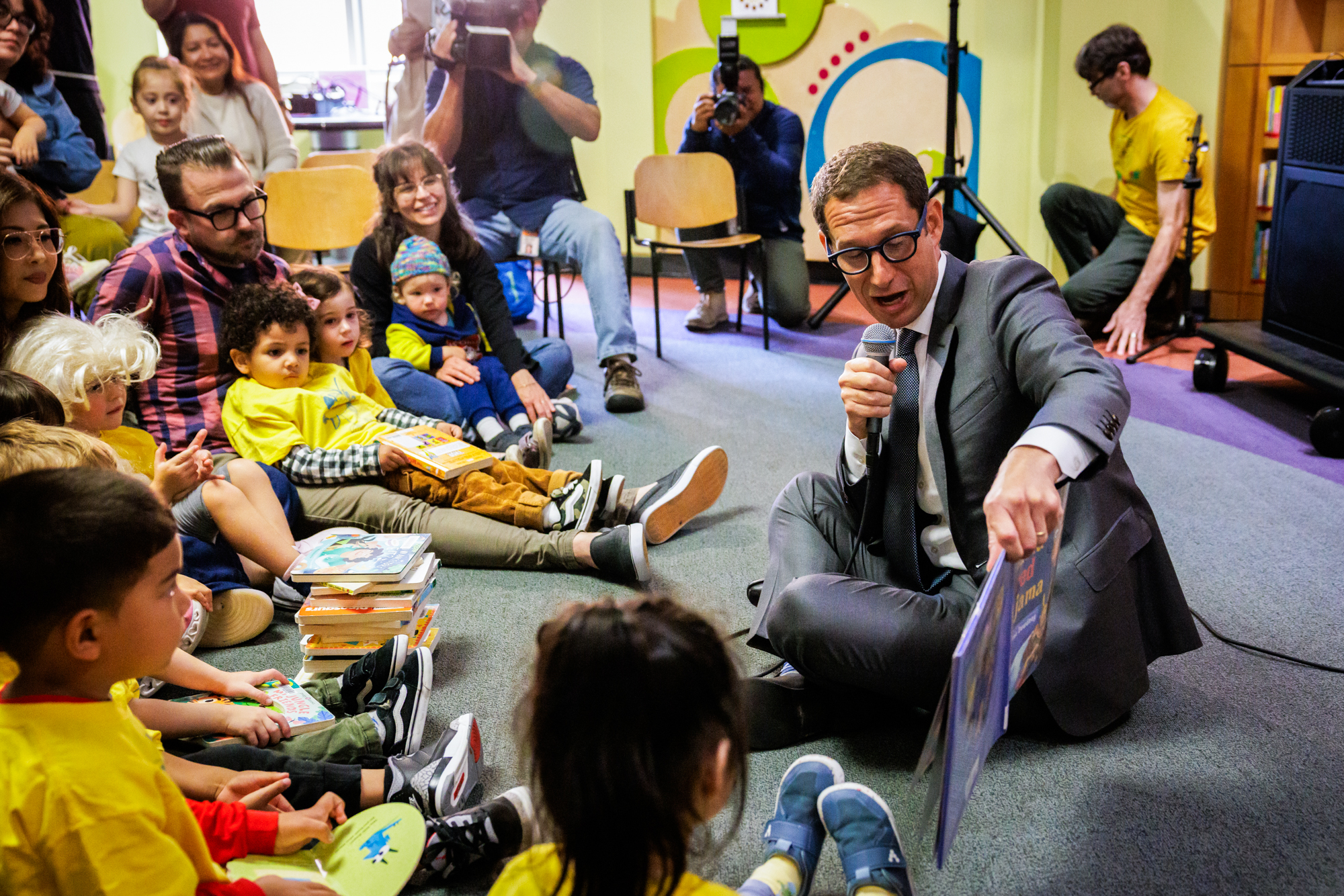
Dolly Parton’s Imagination Library Launches in San Francisco
Barnes & Noble Buys Beloved Bay Area Chain Books Inc. for $3.25 Million
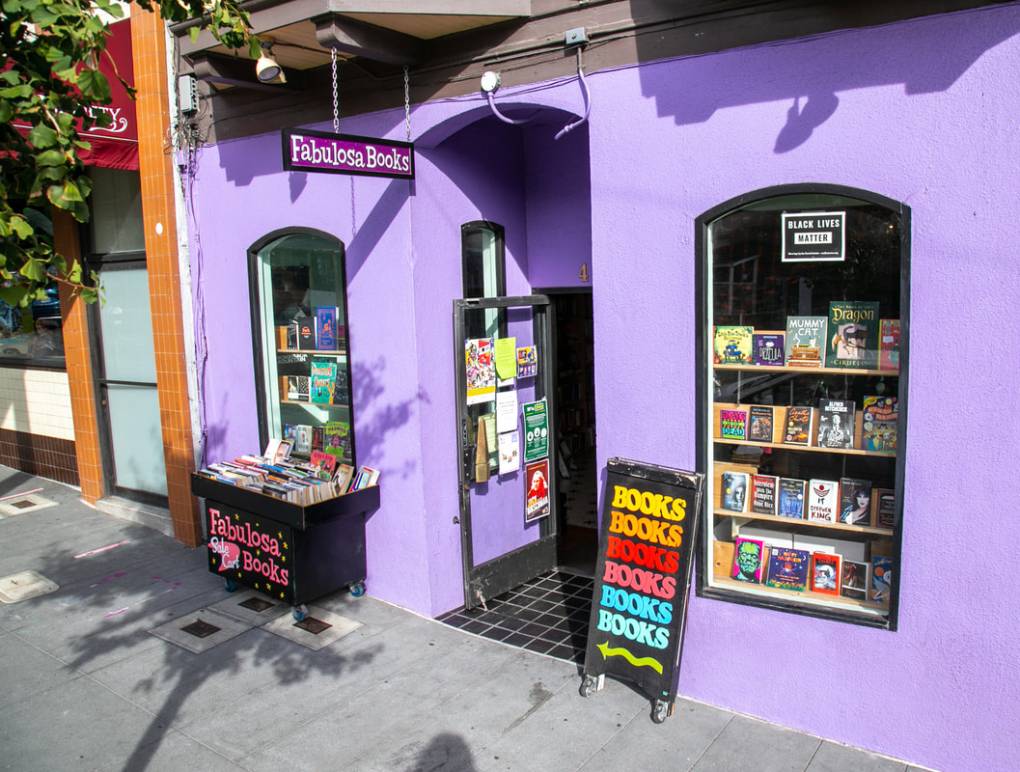
A San Francisco Bookstore Is Shipping LGBTQ+ Books to States Where They Are Banned
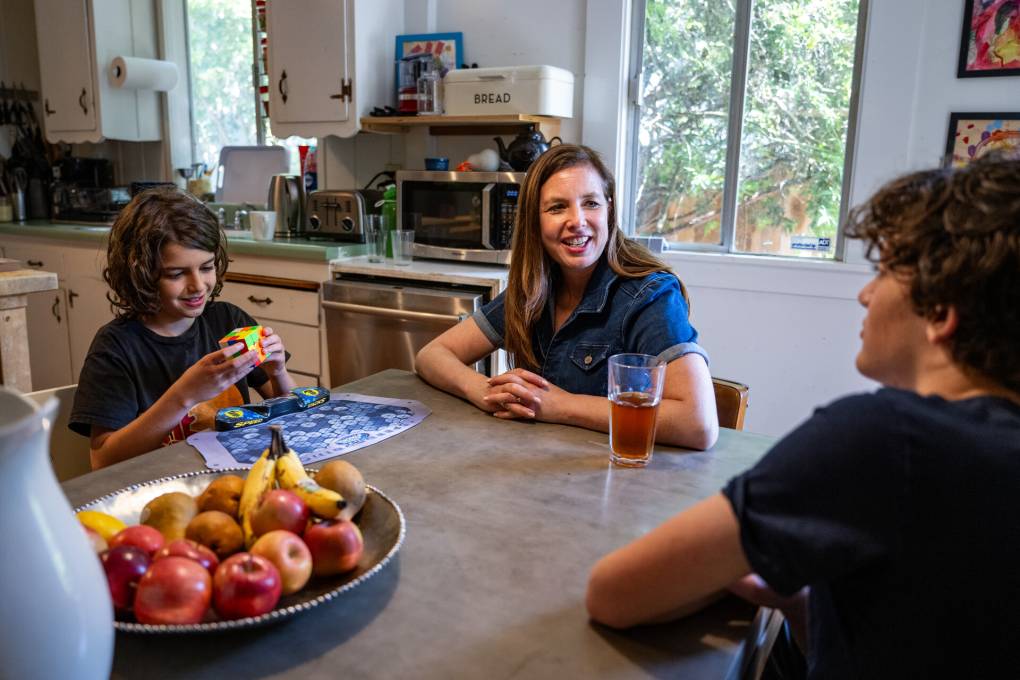
A Berkeley Mother's Memoir Offers a Candid Commentary on the Crisis of Masculinity
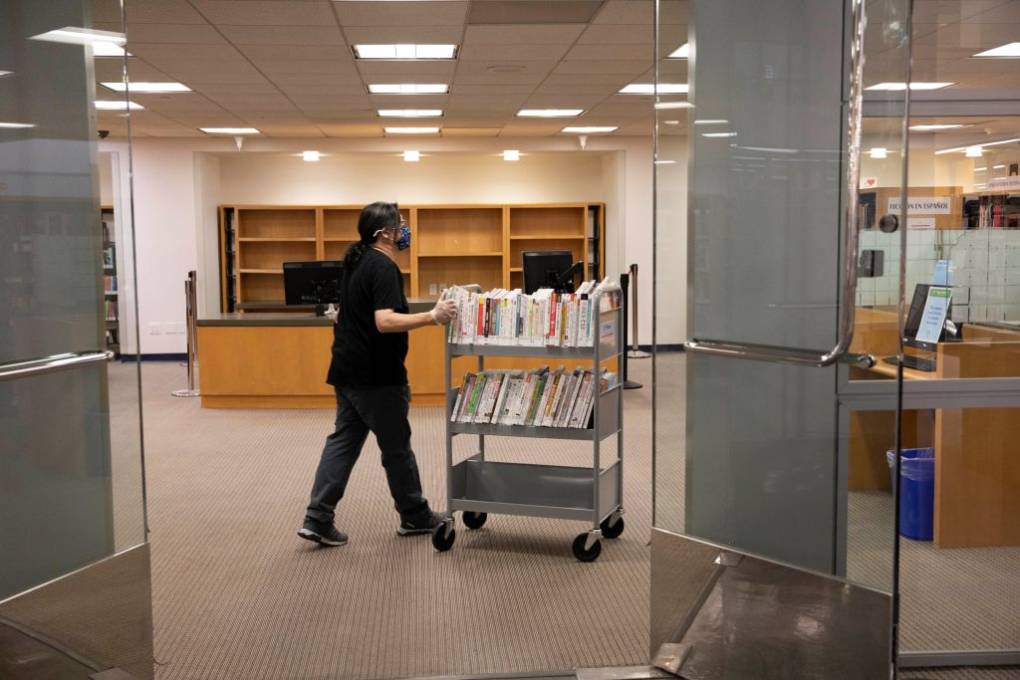
SF Officials Want to Provide Free Drug Recovery Books at Public Libraries
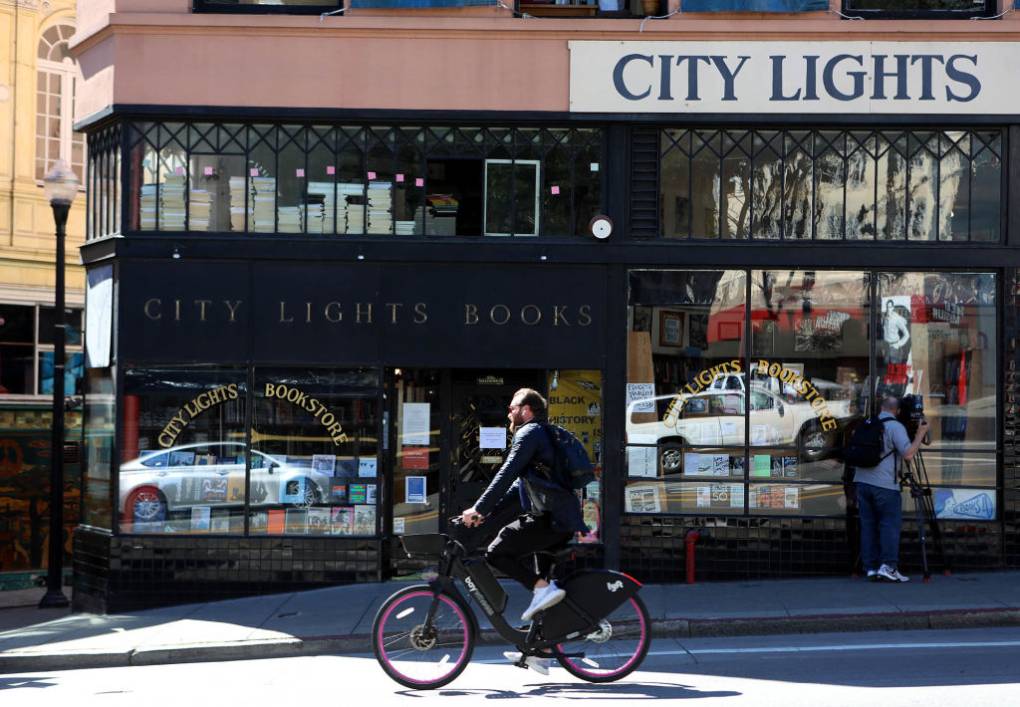
San Francisco's City Lights Employees Join Union, Bookstore Recognizes It
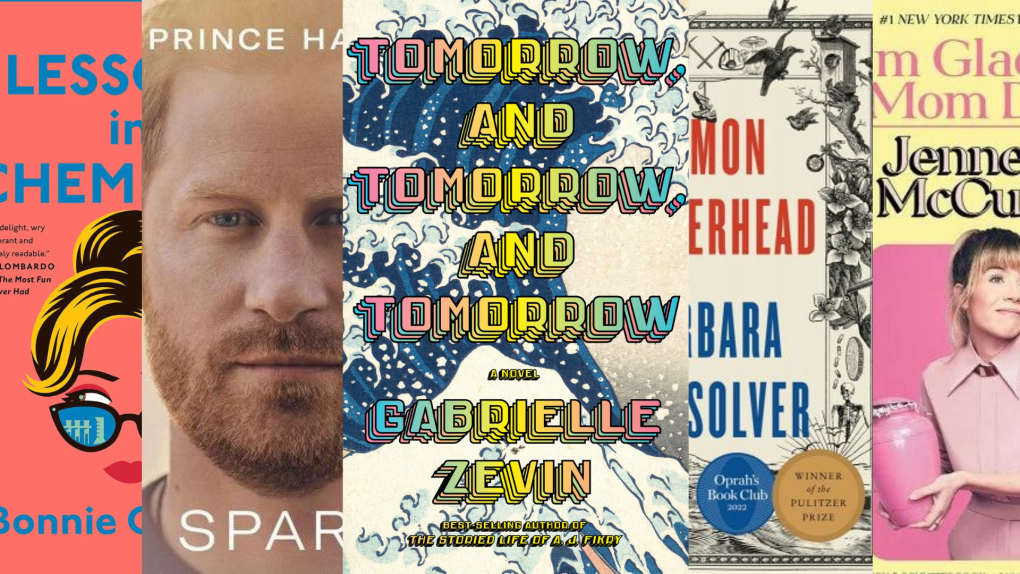
Top 5 Books, Vinyl Records San Franciscans Checked Out at Libraries in 2023
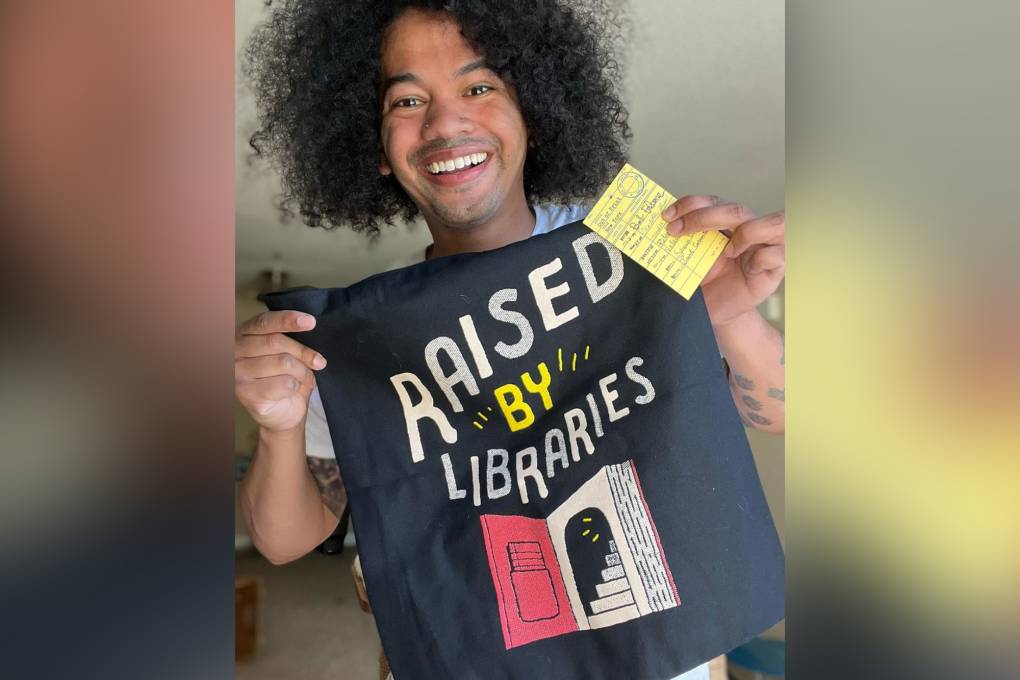
Amid Book Bans, This Bay Area Librarian Is Focusing on Book Joy
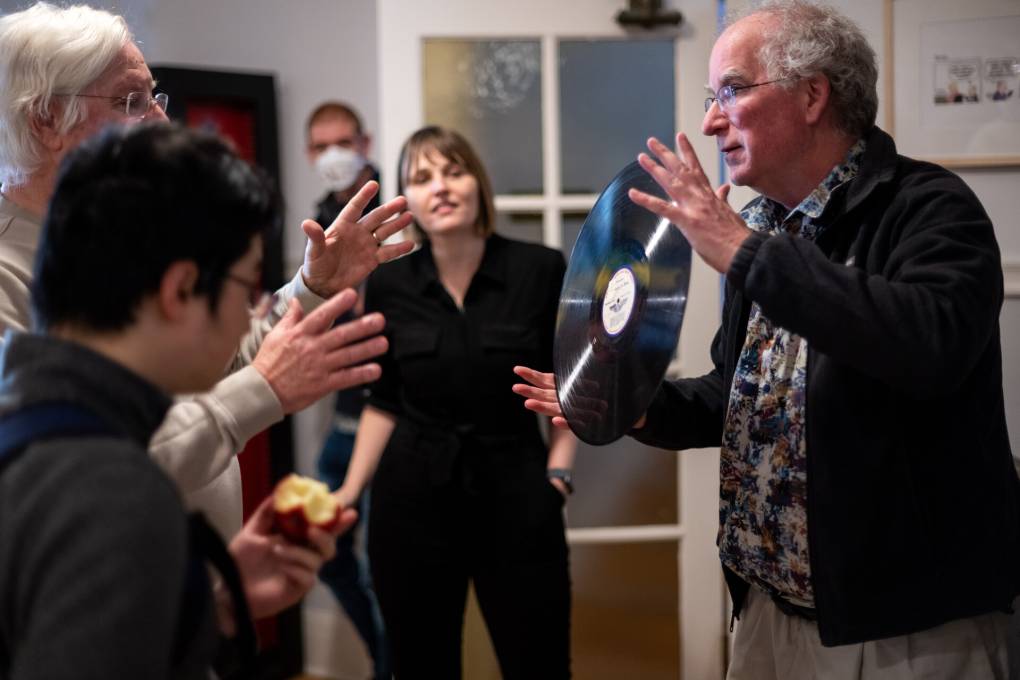
SF-Based Internet Archive Is Fighting a Ruling That Could Change the Future of Digital Libraries
Sponsored
Player sponsored by
window.__IS_SSR__=true
window.__INITIAL_STATE__={
"attachmentsReducer": {
"audio_0": {
"type": "attachments",
"id": "audio_0",
"imgSizes": {
"kqedFullSize": {
"file": "https://ww2.kqed.org/news/wp-content/themes/KQED-unified/img/audio_bgs/background0.jpg"
}
}
},
"audio_1": {
"type": "attachments",
"id": "audio_1",
"imgSizes": {
"kqedFullSize": {
"file": "https://ww2.kqed.org/news/wp-content/themes/KQED-unified/img/audio_bgs/background1.jpg"
}
}
},
"audio_2": {
"type": "attachments",
"id": "audio_2",
"imgSizes": {
"kqedFullSize": {
"file": "https://ww2.kqed.org/news/wp-content/themes/KQED-unified/img/audio_bgs/background2.jpg"
}
}
},
"audio_3": {
"type": "attachments",
"id": "audio_3",
"imgSizes": {
"kqedFullSize": {
"file": "https://ww2.kqed.org/news/wp-content/themes/KQED-unified/img/audio_bgs/background3.jpg"
}
}
},
"audio_4": {
"type": "attachments",
"id": "audio_4",
"imgSizes": {
"kqedFullSize": {
"file": "https://ww2.kqed.org/news/wp-content/themes/KQED-unified/img/audio_bgs/background4.jpg"
}
}
},
"placeholder": {
"type": "attachments",
"id": "placeholder",
"imgSizes": {
"thumbnail": {
"file": "https://cdn.kqed.org/wp-content/uploads/2024/12/KQED-Default-Image-816638274-2000x1333-1-160x107.jpg",
"width": 160,
"height": 107,
"mimeType": "image/jpeg"
},
"medium": {
"file": "https://cdn.kqed.org/wp-content/uploads/2024/12/KQED-Default-Image-816638274-2000x1333-1-800x533.jpg",
"width": 800,
"height": 533,
"mimeType": "image/jpeg"
},
"medium_large": {
"file": "https://cdn.kqed.org/wp-content/uploads/2024/12/KQED-Default-Image-816638274-2000x1333-1-768x512.jpg",
"width": 768,
"height": 512,
"mimeType": "image/jpeg"
},
"large": {
"file": "https://cdn.kqed.org/wp-content/uploads/2024/12/KQED-Default-Image-816638274-2000x1333-1-1020x680.jpg",
"width": 1020,
"height": 680,
"mimeType": "image/jpeg"
},
"1536x1536": {
"file": "https://cdn.kqed.org/wp-content/uploads/2024/12/KQED-Default-Image-816638274-2000x1333-1-1536x1024.jpg",
"width": 1536,
"height": 1024,
"mimeType": "image/jpeg"
},
"fd-lrg": {
"file": "https://cdn.kqed.org/wp-content/uploads/2024/12/KQED-Default-Image-816638274-2000x1333-1-1536x1024.jpg",
"width": 1536,
"height": 1024,
"mimeType": "image/jpeg"
},
"fd-med": {
"file": "https://cdn.kqed.org/wp-content/uploads/2024/12/KQED-Default-Image-816638274-2000x1333-1-1020x680.jpg",
"width": 1020,
"height": 680,
"mimeType": "image/jpeg"
},
"fd-sm": {
"file": "https://cdn.kqed.org/wp-content/uploads/2024/12/KQED-Default-Image-816638274-2000x1333-1-800x533.jpg",
"width": 800,
"height": 533,
"mimeType": "image/jpeg"
},
"post-thumbnail": {
"file": "https://cdn.kqed.org/wp-content/uploads/2024/12/KQED-Default-Image-816638274-2000x1333-1-672x372.jpg",
"width": 672,
"height": 372,
"mimeType": "image/jpeg"
},
"twentyfourteen-full-width": {
"file": "https://cdn.kqed.org/wp-content/uploads/2024/12/KQED-Default-Image-816638274-2000x1333-1-1038x576.jpg",
"width": 1038,
"height": 576,
"mimeType": "image/jpeg"
},
"xxsmall": {
"file": "https://cdn.kqed.org/wp-content/uploads/2024/12/KQED-Default-Image-816638274-2000x1333-1-160x107.jpg",
"width": 160,
"height": 107,
"mimeType": "image/jpeg"
},
"xsmall": {
"file": "https://cdn.kqed.org/wp-content/uploads/2024/12/KQED-Default-Image-816638274-2000x1333-1-672x372.jpg",
"width": 672,
"height": 372,
"mimeType": "image/jpeg"
},
"small": {
"file": "https://cdn.kqed.org/wp-content/uploads/2024/12/KQED-Default-Image-816638274-2000x1333-1-672x372.jpg",
"width": 672,
"height": 372,
"mimeType": "image/jpeg"
},
"xlarge": {
"file": "https://cdn.kqed.org/wp-content/uploads/2024/12/KQED-Default-Image-816638274-2000x1333-1-1020x680.jpg",
"width": 1020,
"height": 680,
"mimeType": "image/jpeg"
},
"full-width": {
"file": "https://cdn.kqed.org/wp-content/uploads/2024/12/KQED-Default-Image-816638274-2000x1333-1-1920x1280.jpg",
"width": 1920,
"height": 1280,
"mimeType": "image/jpeg"
},
"guest-author-32": {
"file": "https://cdn.kqed.org/wp-content/uploads/2025/01/KQED-Default-Image-816638274-1333x1333-1-160x160.jpg",
"width": 32,
"height": 32,
"mimeType": "image/jpeg"
},
"guest-author-50": {
"file": "https://cdn.kqed.org/wp-content/uploads/2025/01/KQED-Default-Image-816638274-1333x1333-1-160x160.jpg",
"width": 50,
"height": 50,
"mimeType": "image/jpeg"
},
"guest-author-64": {
"file": "https://cdn.kqed.org/wp-content/uploads/2025/01/KQED-Default-Image-816638274-1333x1333-1-160x160.jpg",
"width": 64,
"height": 64,
"mimeType": "image/jpeg"
},
"guest-author-96": {
"file": "https://cdn.kqed.org/wp-content/uploads/2025/01/KQED-Default-Image-816638274-1333x1333-1-160x160.jpg",
"width": 96,
"height": 96,
"mimeType": "image/jpeg"
},
"guest-author-128": {
"file": "https://cdn.kqed.org/wp-content/uploads/2025/01/KQED-Default-Image-816638274-1333x1333-1-160x160.jpg",
"width": 128,
"height": 128,
"mimeType": "image/jpeg"
},
"detail": {
"file": "https://cdn.kqed.org/wp-content/uploads/2025/01/KQED-Default-Image-816638274-1333x1333-1-160x160.jpg",
"width": 160,
"height": 160,
"mimeType": "image/jpeg"
},
"kqedFullSize": {
"file": "https://cdn.kqed.org/wp-content/uploads/2024/12/KQED-Default-Image-816638274-2000x1333-1.jpg",
"width": 2000,
"height": 1333
}
}
},
"news_12055839": {
"type": "attachments",
"id": "news_12055839",
"meta": {
"index": "attachments_1716263798",
"site": "news",
"id": "12055839",
"found": true
},
"title": "250912-FREE BOOKS FROM DOLLY PARTON-MD-08-KQED-1",
"publishDate": 1757717558,
"status": "inherit",
"parent": 0,
"modified": 1757717569,
"caption": "Mayor Daniel Lurie reads a children's book to a group of children at the Main Library in San Francisco at an event celebrating a new partnership between city officials and Dolly Parton’s Imagination Library on Sept. 12, 2025.",
"credit": "Martin do Nascimento/KQED",
"altTag": null,
"description": null,
"imgSizes": {
"thumbnail": {
"file": "https://cdn.kqed.org/wp-content/uploads/sites/10/2025/09/250912-FREE-BOOKS-FROM-DOLLY-PARTON-MD-08-KQED-1-160x107.jpg",
"width": 160,
"height": 107,
"mimeType": "image/jpeg"
},
"1536x1536": {
"file": "https://cdn.kqed.org/wp-content/uploads/sites/10/2025/09/250912-FREE-BOOKS-FROM-DOLLY-PARTON-MD-08-KQED-1-1536x1025.jpg",
"width": 1536,
"height": 1025,
"mimeType": "image/jpeg"
},
"post-thumbnail": {
"file": "https://cdn.kqed.org/wp-content/uploads/sites/10/2025/09/250912-FREE-BOOKS-FROM-DOLLY-PARTON-MD-08-KQED-1-672x372.jpg",
"width": 672,
"height": 372,
"mimeType": "image/jpeg"
},
"twentyfourteen-full-width": {
"file": "https://cdn.kqed.org/wp-content/uploads/sites/10/2025/09/250912-FREE-BOOKS-FROM-DOLLY-PARTON-MD-08-KQED-1-1038x576.jpg",
"width": 1038,
"height": 576,
"mimeType": "image/jpeg"
},
"kqedFullSize": {
"file": "https://cdn.kqed.org/wp-content/uploads/sites/10/2025/09/250912-FREE-BOOKS-FROM-DOLLY-PARTON-MD-08-KQED-1.jpg",
"width": 2000,
"height": 1334
}
},
"fetchFailed": false,
"isLoading": false
},
"news_12054621": {
"type": "attachments",
"id": "news_12054621",
"meta": {
"index": "attachments_1716263798",
"site": "news",
"id": "12054621",
"found": true
},
"title": "Sign at the entrance to the Barnes & Noble store in Midtown",
"publishDate": 1757008147,
"status": "inherit",
"parent": 12054603,
"modified": 1757008232,
"caption": "The entrance to the Barnes & Noble store in Midtown Manhattan in New York on June 9, 2025.",
"credit": "Erik McGregor/LightRocket via Getty Images",
"altTag": null,
"description": null,
"imgSizes": {
"thumbnail": {
"file": "https://cdn.kqed.org/wp-content/uploads/sites/10/2025/09/BarnesNobleGetty-160x107.jpg",
"width": 160,
"height": 107,
"mimeType": "image/jpeg"
},
"1536x1536": {
"file": "https://cdn.kqed.org/wp-content/uploads/sites/10/2025/09/BarnesNobleGetty-1536x1024.jpg",
"width": 1536,
"height": 1024,
"mimeType": "image/jpeg"
},
"post-thumbnail": {
"file": "https://cdn.kqed.org/wp-content/uploads/sites/10/2025/09/BarnesNobleGetty-672x372.jpg",
"width": 672,
"height": 372,
"mimeType": "image/jpeg"
},
"twentyfourteen-full-width": {
"file": "https://cdn.kqed.org/wp-content/uploads/sites/10/2025/09/BarnesNobleGetty-1038x576.jpg",
"width": 1038,
"height": 576,
"mimeType": "image/jpeg"
},
"kqedFullSize": {
"file": "https://cdn.kqed.org/wp-content/uploads/sites/10/2025/09/BarnesNobleGetty.jpg",
"width": 2000,
"height": 1333
}
},
"fetchFailed": false,
"isLoading": false
},
"news_11992582": {
"type": "attachments",
"id": "news_11992582",
"meta": {
"index": "attachments_1716263798",
"site": "news",
"id": "11992582",
"found": true
},
"title": "img-2878-web_orig",
"publishDate": 1719689118,
"status": "inherit",
"parent": 11992568,
"modified": 1719689700,
"caption": "Fabulosa Books in San Francisco's Castro District started sending books in May and has mailed over 700 books to places where LGBTQ book bans have been implemented.",
"credit": "Courtesy of Fabulosa Books",
"altTag": null,
"description": null,
"imgSizes": {
"medium": {
"file": "https://cdn.kqed.org/wp-content/uploads/sites/10/2024/07/img-2878-web_orig-800x605.jpg",
"width": 800,
"height": 605,
"mimeType": "image/jpeg"
},
"large": {
"file": "https://cdn.kqed.org/wp-content/uploads/sites/10/2024/07/img-2878-web_orig-1020x772.jpg",
"width": 1020,
"height": 772,
"mimeType": "image/jpeg"
},
"thumbnail": {
"file": "https://cdn.kqed.org/wp-content/uploads/sites/10/2024/07/img-2878-web_orig-160x121.jpg",
"width": 160,
"height": 121,
"mimeType": "image/jpeg"
},
"post-thumbnail": {
"file": "https://cdn.kqed.org/wp-content/uploads/sites/10/2024/07/img-2878-web_orig-672x372.jpg",
"width": 672,
"height": 372,
"mimeType": "image/jpeg"
},
"twentyfourteen-full-width": {
"file": "https://cdn.kqed.org/wp-content/uploads/sites/10/2024/07/img-2878-web_orig-1038x576.jpg",
"width": 1038,
"height": 576,
"mimeType": "image/jpeg"
},
"kqedFullSize": {
"file": "https://cdn.kqed.org/wp-content/uploads/sites/10/2024/07/img-2878-web_orig.jpg",
"width": 1057,
"height": 800
}
},
"fetchFailed": false,
"isLoading": false
},
"news_11987770": {
"type": "attachments",
"id": "news_11987770",
"meta": {
"index": "attachments_1716263798",
"site": "news",
"id": "11987770",
"found": true
},
"title": "240522-BoyMom-18-BL_qut",
"publishDate": 1716593520,
"status": "inherit",
"parent": 0,
"modified": 1716593588,
"caption": "Ruth Whippman sits with her sons Zephy, 10, and Solly, 13, at their home in Berkeley on May 22.",
"credit": "Beth LaBerge/KQED",
"altTag": null,
"description": null,
"imgSizes": {
"medium": {
"file": "https://cdn.kqed.org/wp-content/uploads/sites/10/2024/05/240522-BoyMom-18-BL_qut-800x533.jpg",
"width": 800,
"height": 533,
"mimeType": "image/jpeg"
},
"large": {
"file": "https://cdn.kqed.org/wp-content/uploads/sites/10/2024/05/240522-BoyMom-18-BL_qut-1020x680.jpg",
"width": 1020,
"height": 680,
"mimeType": "image/jpeg"
},
"thumbnail": {
"file": "https://cdn.kqed.org/wp-content/uploads/sites/10/2024/05/240522-BoyMom-18-BL_qut-160x107.jpg",
"width": 160,
"height": 107,
"mimeType": "image/jpeg"
},
"1536x1536": {
"file": "https://cdn.kqed.org/wp-content/uploads/sites/10/2024/05/240522-BoyMom-18-BL_qut-1536x1024.jpg",
"width": 1536,
"height": 1024,
"mimeType": "image/jpeg"
},
"post-thumbnail": {
"file": "https://cdn.kqed.org/wp-content/uploads/sites/10/2024/05/240522-BoyMom-18-BL_qut-672x372.jpg",
"width": 672,
"height": 372,
"mimeType": "image/jpeg"
},
"twentyfourteen-full-width": {
"file": "https://cdn.kqed.org/wp-content/uploads/sites/10/2024/05/240522-BoyMom-18-BL_qut-1038x576.jpg",
"width": 1038,
"height": 576,
"mimeType": "image/jpeg"
},
"kqedFullSize": {
"file": "https://cdn.kqed.org/wp-content/uploads/sites/10/2024/05/240522-BoyMom-18-BL_qut.jpg",
"width": 1920,
"height": 1280
}
},
"fetchFailed": false,
"isLoading": false
},
"news_11976543": {
"type": "attachments",
"id": "news_11976543",
"meta": {
"index": "attachments_1716263798",
"site": "news",
"id": "11976543",
"found": true
},
"parent": 11976518,
"imgSizes": {
"twentyfourteen-full-width": {
"file": "https://cdn.kqed.org/wp-content/uploads/sites/10/2024/02/GettyImages-1232683537-1024x576.jpg",
"width": 1024,
"mimeType": "image/jpeg",
"height": 576
},
"thumbnail": {
"file": "https://cdn.kqed.org/wp-content/uploads/sites/10/2024/02/GettyImages-1232683537-160x107.jpg",
"width": 160,
"mimeType": "image/jpeg",
"height": 107
},
"post-thumbnail": {
"file": "https://cdn.kqed.org/wp-content/uploads/sites/10/2024/02/GettyImages-1232683537-672x372.jpg",
"width": 672,
"mimeType": "image/jpeg",
"height": 372
},
"kqedFullSize": {
"file": "https://cdn.kqed.org/wp-content/uploads/sites/10/2024/02/GettyImages-1232683537.jpg",
"width": 1024,
"height": 683
},
"large": {
"file": "https://cdn.kqed.org/wp-content/uploads/sites/10/2024/02/GettyImages-1232683537-1020x680.jpg",
"width": 1020,
"mimeType": "image/jpeg",
"height": 680
},
"medium": {
"file": "https://cdn.kqed.org/wp-content/uploads/sites/10/2024/02/GettyImages-1232683537-800x534.jpg",
"width": 800,
"mimeType": "image/jpeg",
"height": 534
}
},
"publishDate": 1708543319,
"modified": 1708546435,
"caption": "A staff member works at the San Francisco Public Library in San Francisco on May 3, 2021. The most stolen books from San Francisco public libraries' shelves are books about recovering from addiction.",
"description": null,
"title": "U.S.-SAN FRANCISCO-LIBRARY-REOPEN",
"credit": "Li Jianguo/Xinhua via Getty) (Xinhua/Li Jianguo via Getty Images",
"status": "inherit",
"altTag": "A woman pushes a book cart in a part of a library.",
"fetchFailed": false,
"isLoading": false
},
"news_11973947": {
"type": "attachments",
"id": "news_11973947",
"meta": {
"index": "attachments_1716263798",
"site": "news",
"id": "11973947",
"found": true
},
"parent": 11973939,
"imgSizes": {
"twentyfourteen-full-width": {
"file": "https://cdn.kqed.org/wp-content/uploads/sites/10/2024/01/GettyImages-1303902147-1024x576.jpg",
"width": 1024,
"mimeType": "image/jpeg",
"height": 576
},
"thumbnail": {
"file": "https://cdn.kqed.org/wp-content/uploads/sites/10/2024/01/GettyImages-1303902147-160x111.jpg",
"width": 160,
"mimeType": "image/jpeg",
"height": 111
},
"post-thumbnail": {
"file": "https://cdn.kqed.org/wp-content/uploads/sites/10/2024/01/GettyImages-1303902147-672x372.jpg",
"width": 672,
"mimeType": "image/jpeg",
"height": 372
},
"kqedFullSize": {
"file": "https://cdn.kqed.org/wp-content/uploads/sites/10/2024/01/GettyImages-1303902147.jpg",
"width": 1024,
"height": 710
},
"large": {
"file": "https://cdn.kqed.org/wp-content/uploads/sites/10/2024/01/GettyImages-1303902147-1020x707.jpg",
"width": 1020,
"mimeType": "image/jpeg",
"height": 707
},
"medium": {
"file": "https://cdn.kqed.org/wp-content/uploads/sites/10/2024/01/GettyImages-1303902147-800x555.jpg",
"width": 800,
"mimeType": "image/jpeg",
"height": 555
}
},
"publishDate": 1706321002,
"modified": 1706323602,
"caption": "A bicyclist passes by the City Lights bookstore on Tuesday, Jan. 23, 2021, in San Francisco.",
"description": null,
"title": "Lawrence Ferlinghetti Death - Response at City Lights",
"credit": "Yalonda M. James/The San Francisco Chronicle via Getty Images",
"status": "inherit",
"altTag": null,
"fetchFailed": false,
"isLoading": false
},
"news_11971156": {
"type": "attachments",
"id": "news_11971156",
"meta": {
"index": "attachments_1716263798",
"site": "news",
"id": "11971156",
"found": true
},
"parent": 11971136,
"imgSizes": {
"twentyfourteen-full-width": {
"file": "https://cdn.kqed.org/wp-content/uploads/sites/10/2023/12/Books_SFPL2-1038x576.png",
"width": 1038,
"mimeType": "image/png",
"height": 576
},
"thumbnail": {
"file": "https://cdn.kqed.org/wp-content/uploads/sites/10/2023/12/Books_SFPL2-160x90.png",
"width": 160,
"mimeType": "image/png",
"height": 90
},
"post-thumbnail": {
"file": "https://cdn.kqed.org/wp-content/uploads/sites/10/2023/12/Books_SFPL2-672x372.png",
"width": 672,
"mimeType": "image/png",
"height": 372
},
"kqedFullSize": {
"file": "https://cdn.kqed.org/wp-content/uploads/sites/10/2023/12/Books_SFPL2.png",
"width": 1920,
"height": 1080
},
"large": {
"file": "https://cdn.kqed.org/wp-content/uploads/sites/10/2023/12/Books_SFPL2-1020x574.png",
"width": 1020,
"mimeType": "image/png",
"height": 574
},
"1536x1536": {
"file": "https://cdn.kqed.org/wp-content/uploads/sites/10/2023/12/Books_SFPL2-1536x864.png",
"width": 1536,
"mimeType": "image/png",
"height": 864
},
"medium": {
"file": "https://cdn.kqed.org/wp-content/uploads/sites/10/2023/12/Books_SFPL2-800x450.png",
"width": 800,
"mimeType": "image/png",
"height": 450
}
},
"publishDate": 1703883365,
"modified": 1703886479,
"caption": "The top five most circulated books in 2023 at the San Francisco Public Library.",
"description": null,
"title": "Books_SFPL2",
"credit": "Collage by Lakshmi Sarah",
"status": "inherit",
"altTag": "Collage with five book covers side by side.",
"fetchFailed": false,
"isLoading": false
},
"news_11963415": {
"type": "attachments",
"id": "news_11963415",
"meta": {
"index": "attachments_1716263798",
"site": "news",
"id": "11963415",
"found": true
},
"parent": 0,
"imgSizes": {
"twentyfourteen-full-width": {
"file": "https://ww2.kqed.org/app/uploads/sites/10/2023/10/231004-Mychal-Threets-01-KQED-1038x576.jpg",
"width": 1038,
"mimeType": "image/jpeg",
"height": 576
},
"thumbnail": {
"file": "https://ww2.kqed.org/app/uploads/sites/10/2023/10/231004-Mychal-Threets-01-KQED-160x107.jpg",
"width": 160,
"mimeType": "image/jpeg",
"height": 107
},
"post-thumbnail": {
"file": "https://ww2.kqed.org/app/uploads/sites/10/2023/10/231004-Mychal-Threets-01-KQED-672x372.jpg",
"width": 672,
"mimeType": "image/jpeg",
"height": 372
},
"kqedFullSize": {
"file": "https://ww2.kqed.org/app/uploads/sites/10/2023/10/231004-Mychal-Threets-01-KQED.jpg",
"width": 2000,
"height": 1333
},
"large": {
"file": "https://ww2.kqed.org/app/uploads/sites/10/2023/10/231004-Mychal-Threets-01-KQED-1020x680.jpg",
"width": 1020,
"mimeType": "image/jpeg",
"height": 680
},
"1536x1536": {
"file": "https://ww2.kqed.org/app/uploads/sites/10/2023/10/231004-Mychal-Threets-01-KQED-1536x1024.jpg",
"width": 1536,
"mimeType": "image/jpeg",
"height": 1024
},
"full-width": {
"file": "https://ww2.kqed.org/app/uploads/sites/10/2023/10/231004-Mychal-Threets-01-KQED-1920x1280.jpg",
"width": 1920,
"mimeType": "image/jpeg",
"height": 1280
},
"medium": {
"file": "https://ww2.kqed.org/app/uploads/sites/10/2023/10/231004-Mychal-Threets-01-KQED-800x533.jpg",
"width": 800,
"mimeType": "image/jpeg",
"height": 533
}
},
"publishDate": 1696445984,
"modified": 1696520351,
"caption": "A photo from Mychal Threets's Instagram account posted for National Library Week on April 23, 2023.",
"description": null,
"title": "231004-Mychal Threets-01-KQED",
"credit": "Photo via Instagram",
"status": "inherit",
"altTag": "A person holds up a tote bag that reads \"Raised by libraries\" and smiles at the camera.",
"fetchFailed": false,
"isLoading": false
},
"news_11945648": {
"type": "attachments",
"id": "news_11945648",
"meta": {
"index": "attachments_1716263798",
"site": "news",
"id": "11945648",
"found": true
},
"parent": 11945533,
"imgSizes": {
"twentyfourteen-full-width": {
"file": "https://ww2.kqed.org/app/uploads/sites/10/2023/04/RS64115_012_KQED_InternetArchiveOffices_03242023-qut-1038x576.jpg",
"width": 1038,
"mimeType": "image/jpeg",
"height": 576
},
"thumbnail": {
"file": "https://ww2.kqed.org/app/uploads/sites/10/2023/04/RS64115_012_KQED_InternetArchiveOffices_03242023-qut-160x107.jpg",
"width": 160,
"mimeType": "image/jpeg",
"height": 107
},
"post-thumbnail": {
"file": "https://ww2.kqed.org/app/uploads/sites/10/2023/04/RS64115_012_KQED_InternetArchiveOffices_03242023-qut-672x372.jpg",
"width": 672,
"mimeType": "image/jpeg",
"height": 372
},
"kqedFullSize": {
"file": "https://ww2.kqed.org/app/uploads/sites/10/2023/04/RS64115_012_KQED_InternetArchiveOffices_03242023-qut.jpg",
"width": 1920,
"height": 1280
},
"large": {
"file": "https://ww2.kqed.org/app/uploads/sites/10/2023/04/RS64115_012_KQED_InternetArchiveOffices_03242023-qut-1020x680.jpg",
"width": 1020,
"mimeType": "image/jpeg",
"height": 680
},
"1536x1536": {
"file": "https://ww2.kqed.org/app/uploads/sites/10/2023/04/RS64115_012_KQED_InternetArchiveOffices_03242023-qut-1536x1024.jpg",
"width": 1536,
"mimeType": "image/jpeg",
"height": 1024
},
"medium": {
"file": "https://ww2.kqed.org/app/uploads/sites/10/2023/04/RS64115_012_KQED_InternetArchiveOffices_03242023-qut-800x533.jpg",
"width": 800,
"mimeType": "image/jpeg",
"height": 533
}
},
"publishDate": 1680635149,
"modified": 1680636124,
"caption": "Internet Archive founder Brewster Kahle (right) speaks to guests, volunteers and staff at one of the Archive's public lunches at its location in San Francisco's Richmond District on March 24.",
"description": null,
"title": "RS64115_012_KQED_InternetArchiveOffices_03242023-qut",
"credit": "Beth LaBerge/KQED",
"status": "inherit",
"altTag": "A middle-aged white man wearing glasses and an intense expression holds up a vinyl record while engaging in what appears to be an intense conversation with another man who is gesturing with his hands, while in the distance a white woman wearing a black dress looks on - others whose faces aren't visible are gathered around",
"fetchFailed": false,
"isLoading": false
}
},
"audioPlayerReducer": {
"postId": "stream_live",
"isPaused": true,
"isPlaying": false,
"pfsActive": false,
"pledgeModalIsOpen": true,
"playerDrawerIsOpen": false
},
"authorsReducer": {
"byline_news_11992568": {
"type": "authors",
"id": "byline_news_11992568",
"meta": {
"override": true
},
"slug": "byline_news_11992568",
"name": "Jaimie Ding and Haven Daley, Associated Press",
"isLoading": false
},
"byline_news_11976518": {
"type": "authors",
"id": "byline_news_11976518",
"meta": {
"override": true
},
"slug": "byline_news_11976518",
"name": "Olga R. Rodriguez\u003cbr>The Associated Press",
"isLoading": false
},
"fjhabvala": {
"type": "authors",
"id": "8659",
"meta": {
"index": "authors_1716337520",
"id": "8659",
"found": true
},
"name": "Farida Jhabvala Romero",
"firstName": "Farida",
"lastName": "Jhabvala Romero",
"slug": "fjhabvala",
"email": "fjhabvala@kqed.org",
"display_author_email": true,
"staff_mastheads": [
"news"
],
"title": "KQED Contributor",
"bio": "\u003cspan style=\"font-weight: 400;\">Farida Jhabvala Romero is a Labor Correspondent for KQED. She previously covered immigration. Farida was \u003ca href=\"https://www.ccnma.org/2022-most-influential-latina-journalists\">named\u003c/a> one of the 10 Most Influential Latina Journalists in California in 2022 by the California Chicano News Media Association. Her work has won awards from the Society of Professional Journalists (Northern California), as well as a national and regional Edward M. Murrow Award for the collaborative reporting projects “Dangerous Air” and “Graying California.” \u003c/span>\u003cspan style=\"font-weight: 400;\">Before joining KQED, Farida worked as a producer at Radio Bilingüe, a national public radio network. Farida earned her master’s degree in journalism from Stanford University.\u003c/span>",
"avatar": "https://secure.gravatar.com/avatar/c3ab27c5554b67b478f80971e515aa02?s=600&d=blank&r=g",
"twitter": "FaridaJhabvala",
"facebook": null,
"instagram": null,
"linkedin": "https://www.linkedin.com/in/faridajhabvala/",
"sites": [
{
"site": "news",
"roles": [
"editor"
]
},
{
"site": "stateofhealth",
"roles": [
"author"
]
}
],
"headData": {
"title": "Farida Jhabvala Romero | KQED",
"description": "KQED Contributor",
"ogImgSrc": "https://secure.gravatar.com/avatar/c3ab27c5554b67b478f80971e515aa02?s=600&d=blank&r=g",
"twImgSrc": "https://secure.gravatar.com/avatar/c3ab27c5554b67b478f80971e515aa02?s=600&d=blank&r=g"
},
"isLoading": false,
"link": "/author/fjhabvala"
},
"bwatt": {
"type": "authors",
"id": "11238",
"meta": {
"index": "authors_1716337520",
"id": "11238",
"found": true
},
"name": "Brian Watt",
"firstName": "Brian",
"lastName": "Watt",
"slug": "bwatt",
"email": "bwatt@KQED.org",
"display_author_email": false,
"staff_mastheads": [
"news"
],
"title": "Morning News Anchor",
"bio": "Brian Watt is KQED's morning radio news anchor. He joined the KQED News team in April of 2016. Prior to that, he worked as a Reporter for KPCC in Los Angeles and a producer at \u003cem>Marketplace.\u003c/em>\r\n\r\nDuring eight years at KPCC, Brian covered business and economics, and his work won several awards. In 2008, he won the Los Angeles Press Club’s first-place award for Business and Financial Reporting, Broadcast. He’s also received honorable mention and been first runner up for the Press Club’s Radio Journalist of the Year. He won two Golden Mike awards from the Radio and TV News Association of Southern California.\r\n\r\nBrian holds degrees in theater from Yale University and the Sorbonne, and has worked as an actor in France, Italy, Brazil, Hungary and . . . Hollywood. He appeared in a few television shows, including \u003cem>The West Wing, Judging Amy\u003c/em> and \u003cem>The District.\u003c/em>\r\n\r\nEmail: bwatt@KQED.org Twitter: @RadioBWatt",
"avatar": "https://secure.gravatar.com/avatar/55393ff57ed34e2be773ba4789dd6a19?s=600&d=blank&r=g",
"twitter": "@RadioBWatt",
"facebook": null,
"instagram": null,
"linkedin": null,
"sites": [
{
"site": "arts",
"roles": [
"contributor"
]
},
{
"site": "news",
"roles": [
"editor"
]
}
],
"headData": {
"title": "Brian Watt | KQED",
"description": "Morning News Anchor",
"ogImgSrc": "https://secure.gravatar.com/avatar/55393ff57ed34e2be773ba4789dd6a19?s=600&d=blank&r=g",
"twImgSrc": "https://secure.gravatar.com/avatar/55393ff57ed34e2be773ba4789dd6a19?s=600&d=blank&r=g"
},
"isLoading": false,
"link": "/author/bwatt"
},
"lsarah": {
"type": "authors",
"id": "11626",
"meta": {
"index": "authors_1716337520",
"id": "11626",
"found": true
},
"name": "Lakshmi Sarah",
"firstName": "Lakshmi",
"lastName": "Sarah",
"slug": "lsarah",
"email": "lsarah@kqed.org",
"display_author_email": false,
"staff_mastheads": [],
"title": "Digital Producer",
"bio": "Lakshmi Sarah is an educator, author and journalist with a focus on innovative storytelling. She has worked with newspapers, radio and magazines from Ahmedabad, India to Los Angeles, California. She has written and produced for Die Zeit, Global Voices, AJ+, KQED, Fusion Media Group and the New York Times.",
"avatar": "https://secure.gravatar.com/avatar/652dcaecd8b28826fc17a8b2d6bb4e93?s=600&d=blank&r=g",
"twitter": "lakitalki",
"facebook": null,
"instagram": "https://www.instagram.com/laki.talki/",
"linkedin": "https://www.linkedin.com/in/lakisarah/",
"sites": [
{
"site": "arts",
"roles": []
},
{
"site": "news",
"roles": []
},
{
"site": "bayareabites",
"roles": []
},
{
"site": "science",
"roles": []
}
],
"headData": {
"title": "Lakshmi Sarah | KQED",
"description": "Digital Producer",
"ogImgSrc": "https://secure.gravatar.com/avatar/652dcaecd8b28826fc17a8b2d6bb4e93?s=600&d=blank&r=g",
"twImgSrc": "https://secure.gravatar.com/avatar/652dcaecd8b28826fc17a8b2d6bb4e93?s=600&d=blank&r=g"
},
"isLoading": false,
"link": "/author/lsarah"
},
"agonzalez": {
"type": "authors",
"id": "11724",
"meta": {
"index": "authors_1716337520",
"id": "11724",
"found": true
},
"name": "Alexander Gonzalez",
"firstName": "Alexander",
"lastName": "Gonzalez",
"slug": "agonzalez",
"email": "AlexanderGonzalez@KQED.org",
"display_author_email": false,
"staff_mastheads": [
"news"
],
"title": "KQED Contributor",
"bio": null,
"avatar": "https://secure.gravatar.com/avatar/63d43593dd7ebcafcd638e851a9bce5a?s=600&d=blank&r=g",
"twitter": null,
"facebook": null,
"instagram": null,
"linkedin": null,
"sites": [
{
"site": "arts",
"roles": [
"editor"
]
},
{
"site": "news",
"roles": [
"editor"
]
}
],
"headData": {
"title": "Alexander Gonzalez | KQED",
"description": "KQED Contributor",
"ogImgSrc": "https://secure.gravatar.com/avatar/63d43593dd7ebcafcd638e851a9bce5a?s=600&d=blank&r=g",
"twImgSrc": "https://secure.gravatar.com/avatar/63d43593dd7ebcafcd638e851a9bce5a?s=600&d=blank&r=g"
},
"isLoading": false,
"link": "/author/agonzalez"
},
"otaylor": {
"type": "authors",
"id": "11770",
"meta": {
"index": "authors_1716337520",
"id": "11770",
"found": true
},
"name": "Otis R. Taylor Jr.",
"firstName": "Otis R.",
"lastName": "Taylor Jr.",
"slug": "otaylor",
"email": "otaylor@kqed.org",
"display_author_email": false,
"staff_mastheads": [
"news"
],
"title": "KQED Editor",
"bio": null,
"avatar": "https://secure.gravatar.com/avatar/a72379d683a1df5129082b6b808c6073?s=600&d=blank&r=g",
"twitter": "otisrtaylorjr",
"facebook": null,
"instagram": null,
"linkedin": null,
"sites": [
{
"site": "arts",
"roles": [
"editor"
]
},
{
"site": "news",
"roles": [
"editor"
]
},
{
"site": "science",
"roles": [
"editor"
]
},
{
"site": "liveblog",
"roles": [
"editor"
]
}
],
"headData": {
"title": "Otis R. Taylor Jr. | KQED",
"description": "KQED Editor",
"ogImgSrc": "https://secure.gravatar.com/avatar/a72379d683a1df5129082b6b808c6073?s=600&d=blank&r=g",
"twImgSrc": "https://secure.gravatar.com/avatar/a72379d683a1df5129082b6b808c6073?s=600&d=blank&r=g"
},
"isLoading": false,
"link": "/author/otaylor"
},
"daisynguyen": {
"type": "authors",
"id": "11829",
"meta": {
"index": "authors_1716337520",
"id": "11829",
"found": true
},
"name": "Daisy Nguyen",
"firstName": "Daisy",
"lastName": "Nguyen",
"slug": "daisynguyen",
"email": "daisynguyen@kqed.org",
"display_author_email": true,
"staff_mastheads": [
"news"
],
"title": "KQED Contributor",
"bio": "Daisy Nguyen covers early childhood education and care. She focuses on the shortage of child care and how that affect families and the economy; and solutions to the problem. Before joining KQED in 2022, she covered breaking news throughout California for The Associated Press. She grew up in San Francisco and lives in Oakland with her family.",
"avatar": "https://secure.gravatar.com/avatar/2da2127c27f7143b53ebd419800fd55f?s=600&d=blank&r=g",
"twitter": "@daisynguyen",
"facebook": null,
"instagram": null,
"linkedin": null,
"sites": [
{
"site": "news",
"roles": [
"author"
]
}
],
"headData": {
"title": "Daisy Nguyen | KQED",
"description": "KQED Contributor",
"ogImgSrc": "https://secure.gravatar.com/avatar/2da2127c27f7143b53ebd419800fd55f?s=600&d=blank&r=g",
"twImgSrc": "https://secure.gravatar.com/avatar/2da2127c27f7143b53ebd419800fd55f?s=600&d=blank&r=g"
},
"isLoading": false,
"link": "/author/daisynguyen"
},
"sjohnson": {
"type": "authors",
"id": "11840",
"meta": {
"index": "authors_1716337520",
"id": "11840",
"found": true
},
"name": "Sydney Johnson",
"firstName": "Sydney",
"lastName": "Johnson",
"slug": "sjohnson",
"email": "sjohnson@kqed.org",
"display_author_email": false,
"staff_mastheads": [
"news"
],
"title": "KQED Reporter",
"bio": "Sydney Johnson is a general assignment reporter at KQED. She previously reported on public health and city government at the San Francisco Examiner, and before that, she covered statewide education policy for EdSource. Her reporting has won multiple local, state and national awards. Sydney is a graduate of the University of California, Berkeley and lives in San Francisco.",
"avatar": "https://secure.gravatar.com/avatar/97855f2719b72ad6190b7c535fe642c8?s=600&d=blank&r=g",
"twitter": "sydneyfjohnson",
"facebook": null,
"instagram": null,
"linkedin": null,
"sites": [
{
"site": "news",
"roles": [
"editor"
]
}
],
"headData": {
"title": "Sydney Johnson | KQED",
"description": "KQED Reporter",
"ogImgSrc": "https://secure.gravatar.com/avatar/97855f2719b72ad6190b7c535fe642c8?s=600&d=blank&r=g",
"twImgSrc": "https://secure.gravatar.com/avatar/97855f2719b72ad6190b7c535fe642c8?s=600&d=blank&r=g"
},
"isLoading": false,
"link": "/author/sjohnson"
},
"kdebenedetti": {
"type": "authors",
"id": "11913",
"meta": {
"index": "authors_1716337520",
"id": "11913",
"found": true
},
"name": "Katie DeBenedetti",
"firstName": "Katie",
"lastName": "DeBenedetti",
"slug": "kdebenedetti",
"email": "kdebenedetti@kqed.org",
"display_author_email": false,
"staff_mastheads": [
"news",
"science"
],
"title": "KQED Contributor",
"bio": "Katie DeBenedetti is a digital reporter covering daily news for the Express Desk. Prior to joining KQED as a culture reporting intern in January 2024, she covered education and city government for the Napa Valley Register.",
"avatar": "https://secure.gravatar.com/avatar/6e31073cb8f7e4214ab03f42771d0f45?s=600&d=blank&r=g",
"twitter": null,
"facebook": null,
"instagram": null,
"linkedin": null,
"sites": [
{
"site": "news",
"roles": [
"author"
]
},
{
"site": "science",
"roles": [
"author"
]
},
{
"site": "liveblog",
"roles": [
"author"
]
}
],
"headData": {
"title": "Katie DeBenedetti | KQED",
"description": "KQED Contributor",
"ogImgSrc": "https://secure.gravatar.com/avatar/6e31073cb8f7e4214ab03f42771d0f45?s=600&d=blank&r=g",
"twImgSrc": "https://secure.gravatar.com/avatar/6e31073cb8f7e4214ab03f42771d0f45?s=600&d=blank&r=g"
},
"isLoading": false,
"link": "/author/kdebenedetti"
}
},
"breakingNewsReducer": {},
"pagesReducer": {},
"postsReducer": {
"stream_live": {
"type": "live",
"id": "stream_live",
"audioUrl": "https://streams.kqed.org/kqedradio",
"title": "Live Stream",
"excerpt": "Live Stream information currently unavailable.",
"link": "/radio",
"featImg": "",
"label": {
"name": "KQED Live",
"link": "/"
}
},
"stream_kqedNewscast": {
"type": "posts",
"id": "stream_kqedNewscast",
"audioUrl": "https://www.kqed.org/.stream/anon/radio/RDnews/newscast.mp3?_=1",
"title": "KQED Newscast",
"featImg": "",
"label": {
"name": "88.5 FM",
"link": "/"
}
},
"news_12055693": {
"type": "posts",
"id": "news_12055693",
"meta": {
"index": "posts_1716263798",
"site": "news",
"id": "12055693",
"score": null,
"sort": [
1757718944000
]
},
"guestAuthors": [],
"slug": "dolly-partons-imagination-library-launches-in-san-francisco",
"title": "Dolly Parton’s Imagination Library Launches in San Francisco",
"publishDate": 1757718944,
"format": "standard",
"headTitle": "Dolly Parton’s Imagination Library Launches in San Francisco | KQED",
"labelTerm": {
"site": "news"
},
"content": "\u003cp>Any San Francisco kid under the age of 5 can get a free book mailed to them every month under a new partnership announced Friday by city officials and Dolly Parton’s Imagination Library.\u003c/p>\n\u003cp>To promote the city’s participation in the country star’s popular book gifting program, Mayor Daniel Lurie got on the floor of the central library’s children’s book room and read \u003cem>Llama Llama Red Pajama\u003c/em> to a group of preschoolers.\u003c/p>\n\u003cp>“We know that when a child has access to even one book, their chance of being on track in literacy almost doubles,” he told the children, their parents and teachers who gathered to hear the announcement.\u003c/p>\n\u003cp>[ad fullwidth]\u003c/p>\n\u003cp>\u003cstrong>“\u003c/strong>We want them to discover reading early and to build a foundation that will carry them through school and through life,” he said. “With the Imagination Library, each book represents possibility. Each book moves a child closer to success.”\u003c/p>\n\u003cp>Dolly Parton launched the program 30 years ago to inspire children to read as early as possible. The program has expanded to every state in the nation, and overseas to Canada, Australia and the U.K.\u003c/p>\n\u003cfigure id=\"attachment_12055818\" class=\"wp-caption aligncenter\" style=\"max-width: 2000px\">\u003ca href=\"https://cdn.kqed.org/wp-content/uploads/sites/10/2025/09/250912-FREE-BOOKS-FROM-DOLLY-PARTON-MD-01-KQED.jpg\">\u003cimg loading=\"lazy\" decoding=\"async\" class=\"size-full wp-image-12055818\" src=\"https://cdn.kqed.org/wp-content/uploads/sites/10/2025/09/250912-FREE-BOOKS-FROM-DOLLY-PARTON-MD-01-KQED.jpg\" alt=\"\" width=\"2000\" height=\"1334\" srcset=\"https://cdn.kqed.org/wp-content/uploads/sites/10/2025/09/250912-FREE-BOOKS-FROM-DOLLY-PARTON-MD-01-KQED.jpg 2000w, https://cdn.kqed.org/wp-content/uploads/sites/10/2025/09/250912-FREE-BOOKS-FROM-DOLLY-PARTON-MD-01-KQED-160x107.jpg 160w, https://cdn.kqed.org/wp-content/uploads/sites/10/2025/09/250912-FREE-BOOKS-FROM-DOLLY-PARTON-MD-01-KQED-1536x1025.jpg 1536w\" sizes=\"auto, (max-width: 2000px) 100vw, 2000px\">\u003c/a>\u003cfigcaption class=\"wp-caption-text\">A lifesized cutout of Dolly Parton at the Main Library in San Francisco at an event celebrating a new partnership between city officials and Dolly Parton’s Imagination Library on Sept. 12, 2025. \u003ccite>(Martin do Nascimento/KQED)\u003c/cite>\u003c/figcaption>\u003c/figure>\n\u003cp>In 2022, California lawmakers approved spending $68 million to establish the Imagination Library in every county in the state. The fund covers 50% of the costs for purchasing and mailing the books, while local partners — in this case, San Francisco’s public library and Department of Early Childhood — cover the other portion. The city and county will spend $1 million to serve about 60,000 children over the next five years.\u003c/p>\n\u003cp>The Dollywood Foundation manages the ordering system, negotiates wholesale prices for the books and passes the discount on to participating programs. That means in California, it costs $15.50 per year to mail books to each child, according to Hallie Anderson, community engagement coordinator for Dolly Parton’s Imagination Library in California.\u003c/p>\n\u003cp>Anderson said California has more than 2 million children under the age of 5, making it a massive undertaking to try to reach every child. San Francisco is the 41st of 58 California counties to partner with Parton’s nonprofit, and Anderson hopes to grow the program. Usually, when the books reach kids in every county in a state, Parton shows up in person to celebrate.[aside postID=news_12053877 hero='https://cdn.kqed.org/wp-content/uploads/sites/10/2025/08/250827-CLIMATERESILIENTCHILDCARECENTER-04-BL-KQED.jpg']“We are eagerly working to make that happen and have Dolly here in California,” she said.\u003c/p>\n\u003cp>California is also the first state in the Imagination Library’s network to offer books in English and Spanish. Michael Lambert, San Francisco’s Librarian, said he wants to add books in Chinese, Tagalog and other languages to reflect the city’s diverse population.\u003c/p>\n\u003cp>A panel of early childhood literacy experts chooses books that correspond with the child’s age. Kids under one receive sturdy board books with nursery rhymes, while those about to turn 2 might get books that focus on colors, letters and numbers.\u003c/p>\n\u003cp>The first book that all children will receive in the mail, addressed to them, is \u003cem>The Little Engine That Could.\u003c/em>\u003c/p>\n\u003cp>“It’s a classic,” Anderson said, “and it really sets the tone for the program, which is exploring a whole new world of reading and believing in that journey, ‘I think I can, I think I can, I think I can.’”\u003c/p>\n\u003cp>When kids are about to turn 5, the last book sent to them will be \u003cem>Look Out Kindergarten, Here I Come!\u003c/em> to mark the next chapter of their learning journey.\u003c/p>\n\u003cp>To begin receiving free books, families can enroll at their local public library branch or \u003ca href=\"https://sfdec.org/imagination-library/\">online\u003c/a>.\u003c/p>\n\u003cp>\u003c/p>\n",
"blocks": [],
"excerpt": "Dolly Parton launched the program 30 years ago to inspire children to read as early as possible, and it has expanded to every state in the nation.",
"status": "publish",
"parent": 0,
"modified": 1757792321,
"stats": {
"hasAudio": false,
"hasVideo": false,
"hasChartOrMap": false,
"iframeSrcs": [],
"hasGoogleForm": false,
"hasGallery": false,
"hasHearkenModule": false,
"hasPolis": false,
"paragraphCount": 16,
"wordCount": 675
},
"headData": {
"title": "Dolly Parton’s Imagination Library Launches in San Francisco | KQED",
"description": "Dolly Parton launched the program 30 years ago to inspire children to read as early as possible, and it has expanded to every state in the nation.",
"ogTitle": "",
"ogDescription": "",
"ogImgId": "",
"twTitle": "",
"twDescription": "",
"twImgId": "",
"schema": {
"@context": "https://schema.org",
"@type": "NewsArticle",
"headline": "Dolly Parton’s Imagination Library Launches in San Francisco",
"datePublished": "2025-09-12T16:15:44-07:00",
"dateModified": "2025-09-13T12:38:41-07:00",
"image": "https://cdn.kqed.org/wp-content/uploads/2020/02/KQED-OG-Image@1x.png",
"isAccessibleForFree": "True",
"publisher": {
"@type": "NewsMediaOrganization",
"@id": "https://www.kqed.org/#organization",
"name": "KQED",
"logo": "https://cdn.kqed.org/wp-content/uploads/2020/02/KQED-OG-Image@1x.png",
"url": "https://www.kqed.org",
"sameAs": [
"https://www.facebook.com/KQED",
"https://twitter.com/KQED",
"https://www.instagram.com/kqed/",
"https://www.tiktok.com/@kqedofficial",
"https://www.linkedin.com/company/kqed",
"https://www.youtube.com/channel/UCeC0IOo7i1P_61zVUWbJ4nw"
]
}
}
},
"primaryCategory": {
"termId": 18540,
"slug": "education",
"name": "Education"
},
"sticky": false,
"nprStoryId": "kqed-12055693",
"templateType": "standard",
"featuredImageType": "standard",
"excludeFromSiteSearch": "Include",
"articleAge": "0",
"path": "/news/12055693/dolly-partons-imagination-library-launches-in-san-francisco",
"audioTrackLength": null,
"parsedContent": [
{
"type": "contentString",
"content": "\u003cdiv class=\"post-body\">\u003cp>\u003cp>Any San Francisco kid under the age of 5 can get a free book mailed to them every month under a new partnership announced Friday by city officials and Dolly Parton’s Imagination Library.\u003c/p>\n\u003cp>To promote the city’s participation in the country star’s popular book gifting program, Mayor Daniel Lurie got on the floor of the central library’s children’s book room and read \u003cem>Llama Llama Red Pajama\u003c/em> to a group of preschoolers.\u003c/p>\n\u003cp>“We know that when a child has access to even one book, their chance of being on track in literacy almost doubles,” he told the children, their parents and teachers who gathered to hear the announcement.\u003c/p>\n\u003cp>\u003c/p>\u003c/div>",
"attributes": {
"named": {},
"numeric": []
}
},
{
"type": "component",
"content": "",
"name": "ad",
"attributes": {
"named": {
"label": "fullwidth"
},
"numeric": [
"fullwidth"
]
}
},
{
"type": "contentString",
"content": "\u003cdiv class=\"post-body\">\u003cp>\u003c/p>\n\u003cp>\u003cstrong>“\u003c/strong>We want them to discover reading early and to build a foundation that will carry them through school and through life,” he said. “With the Imagination Library, each book represents possibility. Each book moves a child closer to success.”\u003c/p>\n\u003cp>Dolly Parton launched the program 30 years ago to inspire children to read as early as possible. The program has expanded to every state in the nation, and overseas to Canada, Australia and the U.K.\u003c/p>\n\u003cfigure id=\"attachment_12055818\" class=\"wp-caption aligncenter\" style=\"max-width: 2000px\">\u003ca href=\"https://cdn.kqed.org/wp-content/uploads/sites/10/2025/09/250912-FREE-BOOKS-FROM-DOLLY-PARTON-MD-01-KQED.jpg\">\u003cimg loading=\"lazy\" decoding=\"async\" class=\"size-full wp-image-12055818\" src=\"https://cdn.kqed.org/wp-content/uploads/sites/10/2025/09/250912-FREE-BOOKS-FROM-DOLLY-PARTON-MD-01-KQED.jpg\" alt=\"\" width=\"2000\" height=\"1334\" srcset=\"https://cdn.kqed.org/wp-content/uploads/sites/10/2025/09/250912-FREE-BOOKS-FROM-DOLLY-PARTON-MD-01-KQED.jpg 2000w, https://cdn.kqed.org/wp-content/uploads/sites/10/2025/09/250912-FREE-BOOKS-FROM-DOLLY-PARTON-MD-01-KQED-160x107.jpg 160w, https://cdn.kqed.org/wp-content/uploads/sites/10/2025/09/250912-FREE-BOOKS-FROM-DOLLY-PARTON-MD-01-KQED-1536x1025.jpg 1536w\" sizes=\"auto, (max-width: 2000px) 100vw, 2000px\">\u003c/a>\u003cfigcaption class=\"wp-caption-text\">A lifesized cutout of Dolly Parton at the Main Library in San Francisco at an event celebrating a new partnership between city officials and Dolly Parton’s Imagination Library on Sept. 12, 2025. \u003ccite>(Martin do Nascimento/KQED)\u003c/cite>\u003c/figcaption>\u003c/figure>\n\u003cp>In 2022, California lawmakers approved spending $68 million to establish the Imagination Library in every county in the state. The fund covers 50% of the costs for purchasing and mailing the books, while local partners — in this case, San Francisco’s public library and Department of Early Childhood — cover the other portion. The city and county will spend $1 million to serve about 60,000 children over the next five years.\u003c/p>\n\u003cp>The Dollywood Foundation manages the ordering system, negotiates wholesale prices for the books and passes the discount on to participating programs. That means in California, it costs $15.50 per year to mail books to each child, according to Hallie Anderson, community engagement coordinator for Dolly Parton’s Imagination Library in California.\u003c/p>\n\u003cp>Anderson said California has more than 2 million children under the age of 5, making it a massive undertaking to try to reach every child. San Francisco is the 41st of 58 California counties to partner with Parton’s nonprofit, and Anderson hopes to grow the program. Usually, when the books reach kids in every county in a state, Parton shows up in person to celebrate.\u003c/p>\u003c/div>",
"attributes": {
"named": {},
"numeric": []
}
},
{
"type": "component",
"content": "",
"name": "aside",
"attributes": {
"named": {
"postid": "news_12053877",
"hero": "https://cdn.kqed.org/wp-content/uploads/sites/10/2025/08/250827-CLIMATERESILIENTCHILDCARECENTER-04-BL-KQED.jpg",
"label": ""
},
"numeric": []
}
},
{
"type": "contentString",
"content": "\u003cdiv class=\"post-body\">\u003cp>“We are eagerly working to make that happen and have Dolly here in California,” she said.\u003c/p>\n\u003cp>California is also the first state in the Imagination Library’s network to offer books in English and Spanish. Michael Lambert, San Francisco’s Librarian, said he wants to add books in Chinese, Tagalog and other languages to reflect the city’s diverse population.\u003c/p>\n\u003cp>A panel of early childhood literacy experts chooses books that correspond with the child’s age. Kids under one receive sturdy board books with nursery rhymes, while those about to turn 2 might get books that focus on colors, letters and numbers.\u003c/p>\n\u003cp>The first book that all children will receive in the mail, addressed to them, is \u003cem>The Little Engine That Could.\u003c/em>\u003c/p>\n\u003cp>“It’s a classic,” Anderson said, “and it really sets the tone for the program, which is exploring a whole new world of reading and believing in that journey, ‘I think I can, I think I can, I think I can.’”\u003c/p>\n\u003cp>When kids are about to turn 5, the last book sent to them will be \u003cem>Look Out Kindergarten, Here I Come!\u003c/em> to mark the next chapter of their learning journey.\u003c/p>\n\u003cp>To begin receiving free books, families can enroll at their local public library branch or \u003ca href=\"https://sfdec.org/imagination-library/\">online\u003c/a>.\u003c/p>\n\u003cp>\u003c/p>\n\u003c/div>\u003c/p>",
"attributes": {
"named": {},
"numeric": []
}
}
],
"link": "/news/12055693/dolly-partons-imagination-library-launches-in-san-francisco",
"authors": [
"11829"
],
"categories": [
"news_31795",
"news_18540",
"news_8"
],
"tags": [
"news_18880",
"news_2043",
"news_32102",
"news_32928",
"news_20013",
"news_22557",
"news_38"
],
"featImg": "news_12055839",
"label": "news"
},
"news_12054603": {
"type": "posts",
"id": "news_12054603",
"meta": {
"index": "posts_1716263798",
"site": "news",
"id": "12054603",
"score": null,
"sort": [
1757097366000
]
},
"guestAuthors": [],
"slug": "barnes-noble-buys-beloved-bay-area-chain-books-inc-for-3-25-million",
"title": "Barnes & Noble Buys Beloved Bay Area Chain Books Inc. for $3.25 Million",
"publishDate": 1757097366,
"format": "standard",
"headTitle": "Barnes & Noble Buys Beloved Bay Area Chain Books Inc. for $3.25 Million | KQED",
"labelTerm": {
"site": "news"
},
"content": "\u003cp>A longtime \u003ca href=\"https://www.kqed.org/news/tag/bay-area\">Bay Area\u003c/a> bookseller announced Wednesday that it would be acquired by bookstore giant Barnes & Noble, allowing it to keep its nine stores open after filing for bankruptcy earlier this year.\u003c/p>\n\u003cp>Books Inc., which has been a staple brick-and-morter bookstore in the Bay Area for more than 150 years, asked the U.S. Bankruptcy Court for the Northern District of California to approve its sale to BI Acquisition Co., a Barnes and Noble affiliate, for $3.25 million.\u003c/p>\n\u003cp>If the deal is approved, Books Inc. stores in San Francisco, the East Bay and on the Peninsula will get to keep their recognizable name, but have the resources of the larger corporation, according to CEO Andy Perham.\u003c/p>\n\u003cp>[ad fullwidth]\u003c/p>\n\u003cp>“This agreement will ensure that Book Inc.’s legacy will continue for the foreseeable future,” Perham said in a statement. “With Barnes & Noble’s deep resources and world-class support, Books Inc. will be able to quickly modernize its operations so we can focus on what we do best: connecting people with books, ideas and each other.”\u003c/p>\n\u003cp>Like many indie bookstores, Books Inc. has struggled to remain profitable as online booksellers like Amazon entered the market, offering faster delivery, lower prices and more convenience. In January, the company filed for Chapter 11 bankruptcy, citing revenue losses from rising operating costs and changing consumer habits during the COVID-19 pandemic, which shifted even more shopping online.\u003c/p>\n\u003cp>“Retail patterns have changed a lot since COVID,” said Vanessa Martini, who works as the head buyer for San Francisco’s Green Apple Books. “[Books Inc.] had locations like in places that were heavily dependent on commuting workers that don’t really shop in those areas anymore.”[aside postID=news_12051278 hero='https://cdn.kqed.org/wp-content/uploads/sites/10/2025/08/PhilzCoffeeGetty.jpg']Martini said she lives near the Books Inc. at Opera Plaza on Van Ness Avenue, which is “definitely an area that just simply sees fewer people coming in.”\u003c/p>\n\u003cp>She said the initial news that Books Inc. had filed for bankruptcy was “crushing,” but the announcement that it would be bought by Barnes & Noble felt more bittersweet.\u003c/p>\n\u003cp>“It is … disappointing to lose what was an indie bookstore to something that’s no longer indie,” she said, but added that the stores remaining open is a definite upside.\u003c/p>\n\u003cp>Another positive Martini sees in the deal is that Barnes & Noble is investing in the indie model — “they’re seeing where the money can actually be made,” she said.\u003c/p>\n\u003cp>In 2024, Barnes & Noble purchased Denver-based Tattered Cover’s book stores after it filed for Chapter 11 bankruptcy. The chain has also been opening smaller stores that feel more local and personable, Martini said.\u003c/p>\n\u003cp>“When you go into the newly opened Barnes & Noble that they are positioning, there are smaller footprints, they have much more obvious staff involvement, like handwritten shelf talkers, which didn’t used to be the case,” she told KQED. “They have front table displays that are definitely modeled after the indie selections.”\u003c/p>\n\u003cp>That’s because even as in-person book shopping declines, she said, indie bookstores offer a purchasing experience that’s different from Amazon, or even Barnes & Noble. At those neighborhood stores, she said, people are more often introduced to new authors or titles, and more likely to pick up a book in a genre they wouldn’t usually because it’s on one of their aesthetic display tables.\u003c/p>\n\u003cp>“What an indie bookstore does is [say] ‘OK, here’s the thing that you know about and have heard about, but here’s something else that you never would have picked up without somebody who’s plumbed through all of the thousands of pieces of publisher catalog copy to find the most interesting thing for you,’” Martini said. “The power of discovery is still what indie bookstores do best.”\u003c/p>\n\u003cp>\u003cem>KQED’s \u003c/em>\u003ca href=\"https://www.kqed.org/author/rachael-myrow\">\u003cem>Rachael Myrow\u003c/em>\u003c/a>\u003cem> contributed to this report. \u003c/em>\u003c/p>\n\u003cp>\u003c/p>\n",
"blocks": [],
"excerpt": "If the deal is approved, the book stores scattered across the Bay Area will get to keep their recognizable name, Books Inc. CEO Andy Perham said. ",
"status": "publish",
"parent": 0,
"modified": 1757101553,
"stats": {
"hasAudio": false,
"hasVideo": false,
"hasChartOrMap": false,
"iframeSrcs": [],
"hasGoogleForm": false,
"hasGallery": false,
"hasHearkenModule": false,
"hasPolis": false,
"paragraphCount": 16,
"wordCount": 699
},
"headData": {
"title": "Barnes & Noble Buys Beloved Bay Area Chain Books Inc. for $3.25 Million | KQED",
"description": "If the deal is approved, the book stores scattered across the Bay Area will get to keep their recognizable name, Books Inc. CEO Andy Perham said. ",
"ogTitle": "",
"ogDescription": "",
"ogImgId": "",
"twTitle": "",
"twDescription": "",
"twImgId": "",
"schema": {
"@context": "https://schema.org",
"@type": "NewsArticle",
"headline": "Barnes & Noble Buys Beloved Bay Area Chain Books Inc. for $3.25 Million",
"datePublished": "2025-09-05T11:36:06-07:00",
"dateModified": "2025-09-05T12:45:53-07:00",
"image": "https://cdn.kqed.org/wp-content/uploads/2020/02/KQED-OG-Image@1x.png",
"isAccessibleForFree": "True",
"publisher": {
"@type": "NewsMediaOrganization",
"@id": "https://www.kqed.org/#organization",
"name": "KQED",
"logo": "https://cdn.kqed.org/wp-content/uploads/2020/02/KQED-OG-Image@1x.png",
"url": "https://www.kqed.org",
"sameAs": [
"https://www.facebook.com/KQED",
"https://twitter.com/KQED",
"https://www.instagram.com/kqed/",
"https://www.tiktok.com/@kqedofficial",
"https://www.linkedin.com/company/kqed",
"https://www.youtube.com/channel/UCeC0IOo7i1P_61zVUWbJ4nw"
]
}
}
},
"primaryCategory": {
"termId": 28250,
"slug": "local",
"name": "Local"
},
"sticky": false,
"nprStoryId": "kqed-12054603",
"templateType": "standard",
"featuredImageType": "standard",
"excludeFromSiteSearch": "Include",
"articleAge": "0",
"path": "/news/12054603/barnes-noble-buys-beloved-bay-area-chain-books-inc-for-3-25-million",
"audioTrackLength": null,
"parsedContent": [
{
"type": "contentString",
"content": "\u003cdiv class=\"post-body\">\u003cp>\u003cp>A longtime \u003ca href=\"https://www.kqed.org/news/tag/bay-area\">Bay Area\u003c/a> bookseller announced Wednesday that it would be acquired by bookstore giant Barnes & Noble, allowing it to keep its nine stores open after filing for bankruptcy earlier this year.\u003c/p>\n\u003cp>Books Inc., which has been a staple brick-and-morter bookstore in the Bay Area for more than 150 years, asked the U.S. Bankruptcy Court for the Northern District of California to approve its sale to BI Acquisition Co., a Barnes and Noble affiliate, for $3.25 million.\u003c/p>\n\u003cp>If the deal is approved, Books Inc. stores in San Francisco, the East Bay and on the Peninsula will get to keep their recognizable name, but have the resources of the larger corporation, according to CEO Andy Perham.\u003c/p>\n\u003cp>\u003c/p>\u003c/div>",
"attributes": {
"named": {},
"numeric": []
}
},
{
"type": "component",
"content": "",
"name": "ad",
"attributes": {
"named": {
"label": "fullwidth"
},
"numeric": [
"fullwidth"
]
}
},
{
"type": "contentString",
"content": "\u003cdiv class=\"post-body\">\u003cp>\u003c/p>\n\u003cp>“This agreement will ensure that Book Inc.’s legacy will continue for the foreseeable future,” Perham said in a statement. “With Barnes & Noble’s deep resources and world-class support, Books Inc. will be able to quickly modernize its operations so we can focus on what we do best: connecting people with books, ideas and each other.”\u003c/p>\n\u003cp>Like many indie bookstores, Books Inc. has struggled to remain profitable as online booksellers like Amazon entered the market, offering faster delivery, lower prices and more convenience. In January, the company filed for Chapter 11 bankruptcy, citing revenue losses from rising operating costs and changing consumer habits during the COVID-19 pandemic, which shifted even more shopping online.\u003c/p>\n\u003cp>“Retail patterns have changed a lot since COVID,” said Vanessa Martini, who works as the head buyer for San Francisco’s Green Apple Books. “[Books Inc.] had locations like in places that were heavily dependent on commuting workers that don’t really shop in those areas anymore.”\u003c/p>\u003c/div>",
"attributes": {
"named": {},
"numeric": []
}
},
{
"type": "component",
"content": "",
"name": "aside",
"attributes": {
"named": {
"postid": "news_12051278",
"hero": "https://cdn.kqed.org/wp-content/uploads/sites/10/2025/08/PhilzCoffeeGetty.jpg",
"label": ""
},
"numeric": []
}
},
{
"type": "contentString",
"content": "\u003cdiv class=\"post-body\">\u003cp>Martini said she lives near the Books Inc. at Opera Plaza on Van Ness Avenue, which is “definitely an area that just simply sees fewer people coming in.”\u003c/p>\n\u003cp>She said the initial news that Books Inc. had filed for bankruptcy was “crushing,” but the announcement that it would be bought by Barnes & Noble felt more bittersweet.\u003c/p>\n\u003cp>“It is … disappointing to lose what was an indie bookstore to something that’s no longer indie,” she said, but added that the stores remaining open is a definite upside.\u003c/p>\n\u003cp>Another positive Martini sees in the deal is that Barnes & Noble is investing in the indie model — “they’re seeing where the money can actually be made,” she said.\u003c/p>\n\u003cp>In 2024, Barnes & Noble purchased Denver-based Tattered Cover’s book stores after it filed for Chapter 11 bankruptcy. The chain has also been opening smaller stores that feel more local and personable, Martini said.\u003c/p>\n\u003cp>“When you go into the newly opened Barnes & Noble that they are positioning, there are smaller footprints, they have much more obvious staff involvement, like handwritten shelf talkers, which didn’t used to be the case,” she told KQED. “They have front table displays that are definitely modeled after the indie selections.”\u003c/p>\n\u003cp>That’s because even as in-person book shopping declines, she said, indie bookstores offer a purchasing experience that’s different from Amazon, or even Barnes & Noble. At those neighborhood stores, she said, people are more often introduced to new authors or titles, and more likely to pick up a book in a genre they wouldn’t usually because it’s on one of their aesthetic display tables.\u003c/p>\n\u003cp>“What an indie bookstore does is [say] ‘OK, here’s the thing that you know about and have heard about, but here’s something else that you never would have picked up without somebody who’s plumbed through all of the thousands of pieces of publisher catalog copy to find the most interesting thing for you,’” Martini said. “The power of discovery is still what indie bookstores do best.”\u003c/p>\n\u003cp>\u003cem>KQED’s \u003c/em>\u003ca href=\"https://www.kqed.org/author/rachael-myrow\">\u003cem>Rachael Myrow\u003c/em>\u003c/a>\u003cem> contributed to this report. \u003c/em>\u003c/p>\n\u003cp>\u003c/p>\n\u003c/div>\u003c/p>",
"attributes": {
"named": {},
"numeric": []
}
}
],
"link": "/news/12054603/barnes-noble-buys-beloved-bay-area-chain-books-inc-for-3-25-million",
"authors": [
"11913"
],
"categories": [
"news_29992",
"news_34551",
"news_28250",
"news_8"
],
"tags": [
"news_1386",
"news_129",
"news_18880",
"news_35063",
"news_19904",
"news_38"
],
"featImg": "news_12054621",
"label": "news"
},
"news_11992568": {
"type": "posts",
"id": "news_11992568",
"meta": {
"index": "posts_1716263798",
"site": "news",
"id": "11992568",
"score": null,
"sort": [
1719690056000
]
},
"guestAuthors": [],
"slug": "a-san-francisco-bookstore-is-shipping-lgbtq-books-to-states-where-they-are-banned",
"title": "A San Francisco Bookstore Is Shipping LGBTQ+ Books to States Where They Are Banned",
"publishDate": 1719690056,
"format": "standard",
"headTitle": "A San Francisco Bookstore Is Shipping LGBTQ+ Books to States Where They Are Banned | KQED",
"labelTerm": {
"site": "news"
},
"content": "\u003cp>In an increasingly divisive political sphere, Becka Robbins focuses on what she knows best — books.\u003c/p>\n\u003cp>Operating out of a tiny room in Fabulosa Books in San Francisco’s Castro District, one of the oldest gay neighborhoods in the United States, Robbins uses donations from customers to ship boxes of books across the country to groups that want them.\u003c/p>\n\u003cp>In an effort she calls “Books Not Bans,” she sends titles about queer history, sexuality, romance and more — many of which are increasingly hard to come by in the face of a rapidly growing movement by conservative advocacy groups and lawmakers to ban them from public schools and libraries.\u003c/p>\n\u003cp>[ad fullwidth]\u003c/p>\n\u003cp>“The book bans are awful, the attempt at erasure,” Robbins said. She asked herself how she could get these books into the hands of the people who need them the most.\u003c/p>\n\u003cp>Beginning last May, she started raising money and looking for recipients. Her books have gone to places like a pride center in West Texas and an LGBTQ-friendly high school in Alabama.\u003c/p>\n\u003cp>Customers are especially enthusiastic about helping Robbins send books to states like Florida, Texas and Oklahoma, often writing notes of support to include in the packages. Over 40% of all book bans from July 2022 to June 2023 were in Florida, more than any other state. Behind Florida are Texas and Missouri, according to a report by PEN America, a nonprofit literature advocacy group.\u003c/p>\n\u003cp>Book bans and attempted bans \u003ca href=\"https://apnews.com/article/book-bans-american-library-association-f84ac6fe3f8e3238fc54931bc1a5e054\">have been hitting record highs\u003c/a>, according to the \u003ca href=\"https://www.ala.org/\">American Library Association\u003c/a>. And the efforts now extend as much to public libraries as school-based libraries. Because the totals are based on media accounts and reports submitted by librarians, the association regards its numbers as snapshots, with many bans left unrecorded.\u003c/p>\n\u003cfigure id=\"attachment_11992581\" class=\"wp-caption alignnone\" style=\"max-width: 800px\">\u003cimg loading=\"lazy\" decoding=\"async\" src=\"https://cdn.kqed.org/wp-content/uploads/sites/10/2024/07/img-3040-web_orig-800x532.jpg\" alt=\"\" width=\"800\" height=\"532\" class=\"size-medium wp-image-11992581\" srcset=\"https://cdn.kqed.org/wp-content/uploads/sites/10/2024/07/img-3040-web_orig-800x532.jpg 800w, https://cdn.kqed.org/wp-content/uploads/sites/10/2024/07/img-3040-web_orig-1020x679.jpg 1020w, https://cdn.kqed.org/wp-content/uploads/sites/10/2024/07/img-3040-web_orig-160x106.jpg 160w, https://cdn.kqed.org/wp-content/uploads/sites/10/2024/07/img-3040-web_orig.jpg 1100w\" sizes=\"(max-width: 800px) 100vw, 800px\">\u003cfigcaption class=\"wp-caption-text\">Outside shot of Fabulosa Books in San Francisco’s Castro District. \u003ccite>(Courtesy of Fabulosa Books)\u003c/cite>\u003c/figcaption>\u003c/figure>\n\u003cp>PEN America’s report said 30% of the bans include characters of color or discuss race and racism, and 30% have LGBTQ+ characters or themes.\u003c/p>\n\u003cp>The most sweeping challenges often originate with conservative organizations, such as \u003ca href=\"https://apnews.com/article/moms-for-liberty-2024-election-republican-candidates-f46500e0e17761a7e6a3c02b61a3d229\">Moms for Liberty\u003c/a>, which has organized banning efforts nationwide and called for more parental control over books available to children.\u003c/p>\n\u003cp>Moms for Liberty is not anti-LGBTQ+, co-founder Tiffany Justice \u003ca href=\"https://apnews.com/article/lgbtq-librarians-library-workers-gender-queer-book-bans-4ac552901f7ab0eca3a9dcf070b24350\">has told The Associated Press\u003c/a>. But about 38% of book challenges that “directly originated” from the group have LGBTQ+ themes, according to the library association’s Office for Intellectual Freedom. Justice said Moms for Liberty challenges books that are sexually explicit, not because they cover LGBTQ+ topics.\u003c/p>\n\u003cp>[aside label=\"Related Stories\" postID=\"news_11992129,forum_2010101895142,news_11989910\"]Among those topping banned lists have been Maia Kobabe’s \u003cem>Gender Queer\u003c/em>, George Johnson’s \u003cem>All Boys Aren’t Blue\u003c/em> and Nobel laureate Toni Morrison’s \u003cem>The Bluest Eye\u003c/em>.\u003c/p>\n\u003cp>Robbins said it’s more important than ever to makes these kinds of books available to everyone.\u003c/p>\n\u003cp>“Fiction teaches us how to dream,” Robbins said. “It teaches us how to connect with people who are not like ourselves, it teaches us how to listen and emphasize.”\u003c/p>\n\u003cp>She’s sent 740 books so far, with each box worth $300 to $400, depending on the titles.\u003c/p>\n\u003cp>At the new Rose Dynasty Center in Lakeland, Florida, the books donated by Fabulosa are already on the shelves, said Jason DeShazo, a drag queen known as Momma Ashley Rose who runs the LGBTQ+ community center.\u003c/p>\n\u003cp>DeShazo is a family-friendly drag performer and has long hosted drag story times to promote literacy. He uses puppets to address themes of being kind, dealing with bullies and giving back to the community.\u003c/p>\n\u003cfigure id=\"attachment_11992583\" class=\"wp-caption alignnone\" style=\"max-width: 800px\">\u003cimg loading=\"lazy\" decoding=\"async\" src=\"https://cdn.kqed.org/wp-content/uploads/sites/10/2024/07/img-2930-web_orig-800x534.jpg\" alt=\"\" width=\"800\" height=\"534\" class=\"size-medium wp-image-11992583\" srcset=\"https://cdn.kqed.org/wp-content/uploads/sites/10/2024/07/img-2930-web_orig-800x534.jpg 800w, https://cdn.kqed.org/wp-content/uploads/sites/10/2024/07/img-2930-web_orig-1020x681.jpg 1020w, https://cdn.kqed.org/wp-content/uploads/sites/10/2024/07/img-2930-web_orig-160x107.jpg 160w, https://cdn.kqed.org/wp-content/uploads/sites/10/2024/07/img-2930-web_orig.jpg 1100w\" sizes=\"(max-width: 800px) 100vw, 800px\">\u003cfigcaption class=\"wp-caption-text\">Fabulosa Books in San Francisco’s Castro District. \u003ccite>(Courtesy of Fabulosa Books)\u003c/cite>\u003c/figcaption>\u003c/figure>\n\u003cp>DeShazo hopes to provide a safe space for events, support groups, and health clinics, and build a library of banned books.\u003c/p>\n\u003cp>“I don’t think a person of color should have to search so hard for an amazing book about history of what our Black community has gone through,” DeShazo said. “Or for someone who is queer to find a book that represents them.”\u003c/p>\n\u003cp>Robbins’ favorite books to send are youth adult queer romances, a rapidly growing genre as conversations about LGBTQ+ issues have become much more mainstream than a decade ago.\u003c/p>\n\u003cp>“The characters are just like regular kids — regular people who are also queer, but they also get to fall in love and be happy,” Robbins said.\u003c/p>\n\u003cp>\u003c/p>\n",
"blocks": [],
"excerpt": "Fabulosa Books in San Francisco is sending boxes of LGBTQ+ books to parts of the country where they are banned, including states like Florida, Texas and Missouri. ",
"status": "publish",
"parent": 0,
"modified": 1719690600,
"stats": {
"hasAudio": false,
"hasVideo": false,
"hasChartOrMap": false,
"iframeSrcs": [],
"hasGoogleForm": false,
"hasGallery": false,
"hasHearkenModule": false,
"hasPolis": false,
"paragraphCount": 22,
"wordCount": 758
},
"headData": {
"title": "A San Francisco Bookstore Is Shipping LGBTQ+ Books to States Where They Are Banned | KQED",
"description": "Fabulosa Books in San Francisco is sending boxes of LGBTQ+ books to parts of the country where they are banned, including states like Florida, Texas and Missouri. ",
"ogTitle": "",
"ogDescription": "",
"ogImgId": "",
"twTitle": "",
"twDescription": "",
"twImgId": "",
"schema": {
"@context": "https://schema.org",
"@type": "NewsArticle",
"headline": "A San Francisco Bookstore Is Shipping LGBTQ+ Books to States Where They Are Banned",
"datePublished": "2024-06-29T12:40:56-07:00",
"dateModified": "2024-06-29T12:50:00-07:00",
"image": "https://cdn.kqed.org/wp-content/uploads/2020/02/KQED-OG-Image@1x.png",
"isAccessibleForFree": "True",
"publisher": {
"@type": "NewsMediaOrganization",
"@id": "https://www.kqed.org/#organization",
"name": "KQED",
"logo": "https://cdn.kqed.org/wp-content/uploads/2020/02/KQED-OG-Image@1x.png",
"url": "https://www.kqed.org",
"sameAs": [
"https://www.facebook.com/KQED",
"https://twitter.com/KQED",
"https://www.instagram.com/kqed/",
"https://www.tiktok.com/@kqedofficial",
"https://www.linkedin.com/company/kqed",
"https://www.youtube.com/channel/UCeC0IOo7i1P_61zVUWbJ4nw"
]
}
}
},
"sticky": false,
"nprByline": "Jaimie Ding and Haven Daley, Associated Press",
"nprStoryId": "kqed-11992568",
"excludeFromSiteSearch": "Include",
"showOnAuthorArchivePages": "No",
"articleAge": "0",
"path": "/news/11992568/a-san-francisco-bookstore-is-shipping-lgbtq-books-to-states-where-they-are-banned",
"audioTrackLength": null,
"parsedContent": [
{
"type": "contentString",
"content": "\u003cdiv class=\"post-body\">\u003cp>\u003cp>In an increasingly divisive political sphere, Becka Robbins focuses on what she knows best — books.\u003c/p>\n\u003cp>Operating out of a tiny room in Fabulosa Books in San Francisco’s Castro District, one of the oldest gay neighborhoods in the United States, Robbins uses donations from customers to ship boxes of books across the country to groups that want them.\u003c/p>\n\u003cp>In an effort she calls “Books Not Bans,” she sends titles about queer history, sexuality, romance and more — many of which are increasingly hard to come by in the face of a rapidly growing movement by conservative advocacy groups and lawmakers to ban them from public schools and libraries.\u003c/p>\n\u003cp>\u003c/p>\u003c/div>",
"attributes": {
"named": {},
"numeric": []
}
},
{
"type": "component",
"content": "",
"name": "ad",
"attributes": {
"named": {
"label": "fullwidth"
},
"numeric": [
"fullwidth"
]
}
},
{
"type": "contentString",
"content": "\u003cdiv class=\"post-body\">\u003cp>\u003c/p>\n\u003cp>“The book bans are awful, the attempt at erasure,” Robbins said. She asked herself how she could get these books into the hands of the people who need them the most.\u003c/p>\n\u003cp>Beginning last May, she started raising money and looking for recipients. Her books have gone to places like a pride center in West Texas and an LGBTQ-friendly high school in Alabama.\u003c/p>\n\u003cp>Customers are especially enthusiastic about helping Robbins send books to states like Florida, Texas and Oklahoma, often writing notes of support to include in the packages. Over 40% of all book bans from July 2022 to June 2023 were in Florida, more than any other state. Behind Florida are Texas and Missouri, according to a report by PEN America, a nonprofit literature advocacy group.\u003c/p>\n\u003cp>Book bans and attempted bans \u003ca href=\"https://apnews.com/article/book-bans-american-library-association-f84ac6fe3f8e3238fc54931bc1a5e054\">have been hitting record highs\u003c/a>, according to the \u003ca href=\"https://www.ala.org/\">American Library Association\u003c/a>. And the efforts now extend as much to public libraries as school-based libraries. Because the totals are based on media accounts and reports submitted by librarians, the association regards its numbers as snapshots, with many bans left unrecorded.\u003c/p>\n\u003cfigure id=\"attachment_11992581\" class=\"wp-caption alignnone\" style=\"max-width: 800px\">\u003cimg loading=\"lazy\" decoding=\"async\" src=\"https://cdn.kqed.org/wp-content/uploads/sites/10/2024/07/img-3040-web_orig-800x532.jpg\" alt=\"\" width=\"800\" height=\"532\" class=\"size-medium wp-image-11992581\" srcset=\"https://cdn.kqed.org/wp-content/uploads/sites/10/2024/07/img-3040-web_orig-800x532.jpg 800w, https://cdn.kqed.org/wp-content/uploads/sites/10/2024/07/img-3040-web_orig-1020x679.jpg 1020w, https://cdn.kqed.org/wp-content/uploads/sites/10/2024/07/img-3040-web_orig-160x106.jpg 160w, https://cdn.kqed.org/wp-content/uploads/sites/10/2024/07/img-3040-web_orig.jpg 1100w\" sizes=\"(max-width: 800px) 100vw, 800px\">\u003cfigcaption class=\"wp-caption-text\">Outside shot of Fabulosa Books in San Francisco’s Castro District. \u003ccite>(Courtesy of Fabulosa Books)\u003c/cite>\u003c/figcaption>\u003c/figure>\n\u003cp>PEN America’s report said 30% of the bans include characters of color or discuss race and racism, and 30% have LGBTQ+ characters or themes.\u003c/p>\n\u003cp>The most sweeping challenges often originate with conservative organizations, such as \u003ca href=\"https://apnews.com/article/moms-for-liberty-2024-election-republican-candidates-f46500e0e17761a7e6a3c02b61a3d229\">Moms for Liberty\u003c/a>, which has organized banning efforts nationwide and called for more parental control over books available to children.\u003c/p>\n\u003cp>Moms for Liberty is not anti-LGBTQ+, co-founder Tiffany Justice \u003ca href=\"https://apnews.com/article/lgbtq-librarians-library-workers-gender-queer-book-bans-4ac552901f7ab0eca3a9dcf070b24350\">has told The Associated Press\u003c/a>. But about 38% of book challenges that “directly originated” from the group have LGBTQ+ themes, according to the library association’s Office for Intellectual Freedom. Justice said Moms for Liberty challenges books that are sexually explicit, not because they cover LGBTQ+ topics.\u003c/p>\n\u003cp>\u003c/p>\u003c/div>",
"attributes": {
"named": {},
"numeric": []
}
},
{
"type": "component",
"content": "",
"name": "aside",
"attributes": {
"named": {
"label": "Related Stories ",
"postid": "news_11992129,forum_2010101895142,news_11989910"
},
"numeric": []
}
},
{
"type": "contentString",
"content": "\u003cdiv class=\"post-body\">\u003cp>Among those topping banned lists have been Maia Kobabe’s \u003cem>Gender Queer\u003c/em>, George Johnson’s \u003cem>All Boys Aren’t Blue\u003c/em> and Nobel laureate Toni Morrison’s \u003cem>The Bluest Eye\u003c/em>.\u003c/p>\n\u003cp>Robbins said it’s more important than ever to makes these kinds of books available to everyone.\u003c/p>\n\u003cp>“Fiction teaches us how to dream,” Robbins said. “It teaches us how to connect with people who are not like ourselves, it teaches us how to listen and emphasize.”\u003c/p>\n\u003cp>She’s sent 740 books so far, with each box worth $300 to $400, depending on the titles.\u003c/p>\n\u003cp>At the new Rose Dynasty Center in Lakeland, Florida, the books donated by Fabulosa are already on the shelves, said Jason DeShazo, a drag queen known as Momma Ashley Rose who runs the LGBTQ+ community center.\u003c/p>\n\u003cp>DeShazo is a family-friendly drag performer and has long hosted drag story times to promote literacy. He uses puppets to address themes of being kind, dealing with bullies and giving back to the community.\u003c/p>\n\u003cfigure id=\"attachment_11992583\" class=\"wp-caption alignnone\" style=\"max-width: 800px\">\u003cimg loading=\"lazy\" decoding=\"async\" src=\"https://cdn.kqed.org/wp-content/uploads/sites/10/2024/07/img-2930-web_orig-800x534.jpg\" alt=\"\" width=\"800\" height=\"534\" class=\"size-medium wp-image-11992583\" srcset=\"https://cdn.kqed.org/wp-content/uploads/sites/10/2024/07/img-2930-web_orig-800x534.jpg 800w, https://cdn.kqed.org/wp-content/uploads/sites/10/2024/07/img-2930-web_orig-1020x681.jpg 1020w, https://cdn.kqed.org/wp-content/uploads/sites/10/2024/07/img-2930-web_orig-160x107.jpg 160w, https://cdn.kqed.org/wp-content/uploads/sites/10/2024/07/img-2930-web_orig.jpg 1100w\" sizes=\"(max-width: 800px) 100vw, 800px\">\u003cfigcaption class=\"wp-caption-text\">Fabulosa Books in San Francisco’s Castro District. \u003ccite>(Courtesy of Fabulosa Books)\u003c/cite>\u003c/figcaption>\u003c/figure>\n\u003cp>DeShazo hopes to provide a safe space for events, support groups, and health clinics, and build a library of banned books.\u003c/p>\n\u003cp>“I don’t think a person of color should have to search so hard for an amazing book about history of what our Black community has gone through,” DeShazo said. “Or for someone who is queer to find a book that represents them.”\u003c/p>\n\u003cp>Robbins’ favorite books to send are youth adult queer romances, a rapidly growing genre as conversations about LGBTQ+ issues have become much more mainstream than a decade ago.\u003c/p>\n\u003cp>“The characters are just like regular kids — regular people who are also queer, but they also get to fall in love and be happy,” Robbins said.\u003c/p>\n\u003cp>\u003c/p>\n\u003c/div>\u003c/p>",
"attributes": {
"named": {},
"numeric": []
}
}
],
"link": "/news/11992568/a-san-francisco-bookstore-is-shipping-lgbtq-books-to-states-where-they-are-banned",
"authors": [
"byline_news_11992568"
],
"categories": [
"news_8"
],
"tags": [
"news_18880",
"news_4750",
"news_27626",
"news_4691",
"news_20004"
],
"featImg": "news_11992582",
"label": "news"
},
"news_11990257": {
"type": "posts",
"id": "news_11990257",
"meta": {
"index": "posts_1716263798",
"site": "news",
"id": "11990257",
"score": null,
"sort": [
1718362838000
]
},
"guestAuthors": [],
"slug": "a-berkeley-mothers-memoir-offers-a-candid-commentary-on-the-crisis-of-masculinity",
"title": "A Berkeley Mother's Memoir Offers a Candid Commentary on the Crisis of Masculinity",
"publishDate": 1718362838,
"format": "standard",
"headTitle": "A Berkeley Mother’s Memoir Offers a Candid Commentary on the Crisis of Masculinity | KQED",
"labelTerm": {
"site": "news"
},
"content": "\u003cp>I went to Ruth Whippman’s Berkeley home for tea in early May because it was time for my anxiety check.\u003c/p>\n\u003cp>When I arrived, I realized that my appointments with Whippman, a \u003ca href=\"https://www.nytimes.com/2024/06/05/opinion/boys-parenting-loneliness.html\">British author and cultural critic\u003c/a>, were aligned with presidential election cycles. I find Whippman’s candor refreshing and rational. She doesn’t sugarcoat but adds sugar to the tea that she serves.\u003c/p>\n\u003cp>Whippman’s husband, Neil Levine, was working downstairs and Zephy, 10, was at band practice. Solly, 13, breezed through the kitchen on his way out the door to play Dungeons & Dragons at Games of Berkeley. As he held the toy leaf blower he was delivering to his 6-year-old brother, Abe, we briefly talked about game strategy. He flinched when Whippman lifted her light blue mug, which was the same color as her phone case.\u003c/p>\n\u003cp>[ad fullwidth]\u003c/p>\n\u003cp>Last week, Whippman published \u003cem>BoyMom: Reimagining Boyhood in the Age of Impossible Masculinity\u003c/em>, a treatise on the difficult challenge of raising decent men in an era when masculinity is weaponized.\u003c/p>\n\u003cp>\u003cem>BoyMom\u003c/em> is a memoir of a six-year stretch that included the election of a rapacious, misogynistic and xenophobic president, the #MeToo movement, the rise of the masculinity influencer and the isolation of the pandemic. Whippman, a mother of three boys, was concerned about raising her sons alongside a generation of boys that insecure tough guys are exploiting.\u003c/p>\n\u003cp>Using reporting and analysis, she interrogated the toxic patterns in boys and men. In the book, you’ll meet insecure teenage boys. You’ll meet hopeless incels — the portmanteau of “involuntary celibate” — who are susceptible to the agitators who play on the fears of white male emasculation for likes. You’ll also meet fathers, mothers and therapists who are battling the invisible ways we separate boys from their humanity.\u003c/p>\n\u003cp>Wait a minute, how did we get here?\u003c/p>\n\u003cp>Let’s go back to 2017, when women began using a hashtag to shine awareness on sexual abuse, sexual harassment and rape.\u003c/p>\n\u003cfigure id=\"attachment_11987769\" class=\"wp-caption aligncenter\" style=\"max-width: 1920px\">\u003cimg loading=\"lazy\" decoding=\"async\" class=\"size-full wp-image-11987769\" src=\"https://cdn.kqed.org/wp-content/uploads/sites/10/2024/05/240522-BoyMom-10-BL_qut.jpg\" alt=\"\" width=\"1920\" height=\"1280\" srcset=\"https://cdn.kqed.org/wp-content/uploads/sites/10/2024/05/240522-BoyMom-10-BL_qut.jpg 1920w, https://cdn.kqed.org/wp-content/uploads/sites/10/2024/05/240522-BoyMom-10-BL_qut-800x533.jpg 800w, https://cdn.kqed.org/wp-content/uploads/sites/10/2024/05/240522-BoyMom-10-BL_qut-1020x680.jpg 1020w, https://cdn.kqed.org/wp-content/uploads/sites/10/2024/05/240522-BoyMom-10-BL_qut-160x107.jpg 160w, https://cdn.kqed.org/wp-content/uploads/sites/10/2024/05/240522-BoyMom-10-BL_qut-1536x1024.jpg 1536w\" sizes=\"(max-width: 1920px) 100vw, 1920px\">\u003cfigcaption class=\"wp-caption-text\">Ruth Whippman poses for a photo at her home in Berkeley on May 22. \u003ccite>(Beth LaBerge/KQED)\u003c/cite>\u003c/figcaption>\u003c/figure>\n\u003cp>“As much as it was a revelation of substance, #MeToo was a revolution of storytelling,” Whippman writes in \u003cem>BoyMom\u003c/em>. “Perhaps the ultimate power available to any human being is to have control of the narrative.”\u003c/p>\n\u003cp>#MeToo exposed men who used privilege, power and wealth to assault women and dodge consequences. The left branded masculinity as toxic, while the right, if you will, leaned in and packaged toxic masculinity, as Whippman writes, “the answer to all our problems, both politicians and online influencers peddling a new brand of wounded, furious manhood, drawn from a combination of superhero fantasies and defensive rage.”\u003c/p>\n\u003cp>Oh boy, we are in trouble.\u003c/p>\n\u003cp>According to Whippman’s reporting, boys mature more slowly than girls socially, cognitively and physically, and are about 10 times more likely than girls to develop into antisocial adolescents. But what is less well known is that boys are more vulnerable emotionally.\u003c/p>\n\u003cp>“The sad irony is that while masculinity norms push boys to be tough — to squash their feelings and hide their weaknesses, right from birth and throughout childhood — young boys are actually more sensitive and emotionally fragile than young girls,” Whippman writes.\u003c/p>\n\u003cp>Because society expects rigid stoicism from men, mental health for boys often goes undetected, Whippman posits. Instead of emotional support, boys are getting infected by men who project an impossible standard of masculinity. To some, men are supposed to be without flaws, feelings or vulnerabilities.\u003c/p>\n\u003cp>Just last month, Jerry Seinfeld said he \u003ca href=\"https://www.nbcnews.com/pop-culture/pop-culture-news/-real-man-jerry-seinfeld-says-misses-dominant-masculinity-rcna154708\">missed dominant masculinity\u003c/a>. Andrew Tate spews toxic, misogynistic commentary that is parroted by YouTubers, podcasters and social media influencers who get rich by preaching about alpha male achievements. They want you to believe that masculinity is under attack and only a strongman — you know, the kind anointed to sell Bibles for 60 bucks — is capable of making manhood great again.\u003c/p>\n\u003cfigure id=\"attachment_11987768\" class=\"wp-caption aligncenter\" style=\"max-width: 1920px\">\u003cimg loading=\"lazy\" decoding=\"async\" class=\"size-full wp-image-11987768\" src=\"https://cdn.kqed.org/wp-content/uploads/sites/10/2024/05/240522-BoyMom-12-BL_qut.jpg\" alt=\"\" width=\"1920\" height=\"1280\" srcset=\"https://cdn.kqed.org/wp-content/uploads/sites/10/2024/05/240522-BoyMom-12-BL_qut.jpg 1920w, https://cdn.kqed.org/wp-content/uploads/sites/10/2024/05/240522-BoyMom-12-BL_qut-800x533.jpg 800w, https://cdn.kqed.org/wp-content/uploads/sites/10/2024/05/240522-BoyMom-12-BL_qut-1020x680.jpg 1020w, https://cdn.kqed.org/wp-content/uploads/sites/10/2024/05/240522-BoyMom-12-BL_qut-160x107.jpg 160w, https://cdn.kqed.org/wp-content/uploads/sites/10/2024/05/240522-BoyMom-12-BL_qut-1536x1024.jpg 1536w\" sizes=\"(max-width: 1920px) 100vw, 1920px\">\u003cfigcaption class=\"wp-caption-text\">Ruth Whippman writes notes in her office at her home in Berkeley on May 22. \u003ccite>(Beth LaBerge/KQED)\u003c/cite>\u003c/figcaption>\u003c/figure>\n\u003cp>“For something that is supposed to be so innate, masculinity sure seems to take a lot of hard work,” Whippman quips in the book.\u003c/p>\n\u003cp>To understand the “scripts of masculinity,” Whippman went to Iron Gate, a therapeutic center for adolescent boys and young men in southern Utah. When I first met Whippman in 2016, the pursuit of happiness had prompted her to visit happy Mormons in Utah to report for \u003cem>America the Anxious: How Our Pursuit of Happiness Is Creating a Nation of Nervous Wrecks\u003c/em>, her book about how our cultural obsession with happiness made us crazy. I was then a columnist at the \u003cem>San Francisco Chronicle\u003c/em> and, over tea, we talked about the multibillion-dollar self-improvement industry that sold everything but happiness.\u003c/p>\n\u003cp>My \u003ca href=\"https://www.sfchronicle.com/news/article/Author-finds-happiness-not-misery-loves-company-9961102.php\">column\u003c/a> was published two days after America became familiar with how a certain presidential candidate \u003ca href=\"https://www.washingtonpost.com/politics/trump-recorded-having-extremely-lewd-conversation-about-women-in-2005/2016/10/07/3b9ce776-8cb4-11e6-bf8a-3d26847eeed4_story.html\">talks in locker rooms\u003c/a>.\u003c/p>\n\u003cp>For \u003cem>BoyMom\u003c/em>, Whippman also traveled to New York to an exclusive, all-boys private school that boasts politicians, journalists and banking executives as alumni to sit in on Modern Masculinities, a class that challenges toxic masculinity. In the Los Angeles area, she attended Guys Group, a therapy and social group for teen boys.\u003c/p>\n\u003cp>Boys are at a social disadvantage because we have failed to model more intimate friendships, according to Whippman. “Online life can open up new worlds and perspectives that might otherwise be closed off to them,” she writes.\u003c/p>\n\u003cp>Boys have retreated online to play video games and mingle virtually on communication platforms such as Discord and Telegram, where they are exposed to racism and hate. They socialize less because they don’t have the real-world friendships and relationships they crave. They are isolated. Worse, they are lonely.\u003c/p>\n\u003cp>“It’s just easier to just retreat into a screen when they feel like nobody cares about them,” Whippman told me as we sat at her kitchen table. “Everyone thinks they’re terrible. Everyone thinks they’re predators.”\u003c/p>\n\u003cfigure id=\"attachment_11987771\" class=\"wp-caption aligncenter\" style=\"max-width: 1920px\">\u003cimg loading=\"lazy\" decoding=\"async\" class=\"size-full wp-image-11987771\" src=\"https://cdn.kqed.org/wp-content/uploads/sites/10/2024/05/240522-BoyMom-17-BL_qut.jpg\" alt=\"\" width=\"1920\" height=\"1280\" srcset=\"https://cdn.kqed.org/wp-content/uploads/sites/10/2024/05/240522-BoyMom-17-BL_qut.jpg 1920w, https://cdn.kqed.org/wp-content/uploads/sites/10/2024/05/240522-BoyMom-17-BL_qut-800x533.jpg 800w, https://cdn.kqed.org/wp-content/uploads/sites/10/2024/05/240522-BoyMom-17-BL_qut-1020x680.jpg 1020w, https://cdn.kqed.org/wp-content/uploads/sites/10/2024/05/240522-BoyMom-17-BL_qut-160x107.jpg 160w, https://cdn.kqed.org/wp-content/uploads/sites/10/2024/05/240522-BoyMom-17-BL_qut-1536x1024.jpg 1536w\" sizes=\"(max-width: 1920px) 100vw, 1920px\">\u003cfigcaption class=\"wp-caption-text\">Ruth Whippman sits with her husband, Neil Levine, and sons Abe, 6, Zephy, 10, and Solly, 13, at their home in Berkeley on May 22. \u003ccite>(Beth LaBerge/KQED)\u003c/cite>\u003c/figcaption>\u003c/figure>\n\u003cp>Whippman’s most illuminative reporting is reserved for the back half of the book. She ventured into the online forums where right-leaning and alt-right people congregate on 4chan, 8chan and other violent communities. It’s where the aggrieved find solace among others who share a deep hatred of women. The spaces are where incels, an online subculture of men frustrated with a lack of sexual experiences, are accepted.\u003c/p>\n\u003cp>“There is a notorious overlap between misogyny, white supremacy, homophobia and anti-semiticism in online spaces,” Whippman writes.\u003c/p>\n\u003cp>There aren’t many interviews with incels about their personal perspectives and experiences. Whippman went beneath surface-level reporting to examine the emotional and psychological triggers that were driving boys and young men to such intolerant spaces. In the book, she shares the stories of young men she interviewed.\u003c/p>\n\u003cp>We must understand the path that leads to hatred if we’re going to offer a course correction.\u003c/p>\n\u003cp>“What I wanted to do was to not give them a platform for their opinions. They absolutely don’t need that,” she told me. “And I in no way wanted to promote these toxic opinions, but I wanted to listen to the feelings that were driving them,” \u003ca href=\"https://www.kqed.org/forum/2010101905968/how-to-raise-sons-in-the-age-of-impossible-masculinity\">she said last week in an interview at KQED after appearing on Forum\u003c/a>.\u003c/p>\n\u003cp>“Everybody’s going to feel some sense of inadequacy or shame that they have to make up for in some way,” she continued. “It’s not their masculinity that makes them violent. It’s the shame that they’re not masculine enough, that they’re not meeting the standard. That’s where the violence is. That’s where the toxicity is. It’s those feelings of shame.”\u003c/p>\n\u003cp>Last month, a petulant former president who, I imagine, abhors accountability as much as he does facts, was \u003ca href=\"https://www.npr.org/2024/05/30/g-s1-1848/trump-hush-money-trial-34-counts\">convicted of 34 felony counts of falsified business records\u003c/a>. He still faces indictments for election inference, hoarding national security documents and for attempting to overturn election results. He’s been whining about getting the conviction overturned while obsessively wailing about the election he fairly lost.\u003c/p>\n\u003cp>Someone should tell the walking tough guy meme that boys don’t cry.\u003c/p>\n\u003cp>[ad floatright]\u003c/p>\n",
"blocks": [],
"excerpt": "KQED's Otis R. Taylor Jr. on Ruth Whippman, the Berkeley author and mother who puts his anxiety in check every four years. Her memoir 'BoyMom: Reimagining Boyhood in the Age of Impossible Masculinity' published in June.",
"status": "publish",
"parent": 0,
"modified": 1725490848,
"stats": {
"hasAudio": false,
"hasVideo": false,
"hasChartOrMap": false,
"iframeSrcs": [],
"hasGoogleForm": false,
"hasGallery": false,
"hasHearkenModule": false,
"hasPolis": false,
"paragraphCount": 32,
"wordCount": 1441
},
"headData": {
"title": "A Berkeley Mother's Memoir Offers a Candid Commentary on the Crisis of Masculinity | KQED",
"description": "KQED's Otis R. Taylor Jr. on Ruth Whippman, the Berkeley author and mother who puts his anxiety in check every four years. Her memoir 'BoyMom: Reimagining Boyhood in the Age of Impossible Masculinity' published in June.",
"ogTitle": "",
"ogDescription": "",
"ogImgId": "",
"twTitle": "",
"twDescription": "",
"twImgId": "",
"schema": {
"@context": "https://schema.org",
"@type": "NewsArticle",
"headline": "A Berkeley Mother's Memoir Offers a Candid Commentary on the Crisis of Masculinity",
"datePublished": "2024-06-14T04:00:38-07:00",
"dateModified": "2024-09-04T16:00:48-07:00",
"image": "https://cdn.kqed.org/wp-content/uploads/2020/02/KQED-OG-Image@1x.png",
"isAccessibleForFree": "True",
"publisher": {
"@type": "NewsMediaOrganization",
"@id": "https://www.kqed.org/#organization",
"name": "KQED",
"logo": "https://cdn.kqed.org/wp-content/uploads/2020/02/KQED-OG-Image@1x.png",
"url": "https://www.kqed.org",
"sameAs": [
"https://www.facebook.com/KQED",
"https://twitter.com/KQED",
"https://www.instagram.com/kqed/",
"https://www.tiktok.com/@kqedofficial",
"https://www.linkedin.com/company/kqed",
"https://www.youtube.com/channel/UCeC0IOo7i1P_61zVUWbJ4nw"
]
}
}
},
"audioUrl": "https://dcs.megaphone.fm/KQINC5023243330.mp3?key=88f353c8c12d2e85c336396143d5de2b&request_event_id=8455d865-e9d1-4818-bbbd-6323c73f6ee8",
"sticky": false,
"nprStoryId": "kqed-11990257",
"excludeFromSiteSearch": "Include",
"articleAge": "0",
"path": "/news/11990257/a-berkeley-mothers-memoir-offers-a-candid-commentary-on-the-crisis-of-masculinity",
"audioTrackLength": null,
"parsedContent": [
{
"type": "contentString",
"content": "\u003cdiv class=\"post-body\">\u003cp>\u003cp>I went to Ruth Whippman’s Berkeley home for tea in early May because it was time for my anxiety check.\u003c/p>\n\u003cp>When I arrived, I realized that my appointments with Whippman, a \u003ca href=\"https://www.nytimes.com/2024/06/05/opinion/boys-parenting-loneliness.html\">British author and cultural critic\u003c/a>, were aligned with presidential election cycles. I find Whippman’s candor refreshing and rational. She doesn’t sugarcoat but adds sugar to the tea that she serves.\u003c/p>\n\u003cp>Whippman’s husband, Neil Levine, was working downstairs and Zephy, 10, was at band practice. Solly, 13, breezed through the kitchen on his way out the door to play Dungeons & Dragons at Games of Berkeley. As he held the toy leaf blower he was delivering to his 6-year-old brother, Abe, we briefly talked about game strategy. He flinched when Whippman lifted her light blue mug, which was the same color as her phone case.\u003c/p>\n\u003cp>\u003c/p>\u003c/div>",
"attributes": {
"named": {},
"numeric": []
}
},
{
"type": "component",
"content": "",
"name": "ad",
"attributes": {
"named": {
"label": "fullwidth"
},
"numeric": [
"fullwidth"
]
}
},
{
"type": "contentString",
"content": "\u003cdiv class=\"post-body\">\u003cp>\u003c/p>\n\u003cp>Last week, Whippman published \u003cem>BoyMom: Reimagining Boyhood in the Age of Impossible Masculinity\u003c/em>, a treatise on the difficult challenge of raising decent men in an era when masculinity is weaponized.\u003c/p>\n\u003cp>\u003cem>BoyMom\u003c/em> is a memoir of a six-year stretch that included the election of a rapacious, misogynistic and xenophobic president, the #MeToo movement, the rise of the masculinity influencer and the isolation of the pandemic. Whippman, a mother of three boys, was concerned about raising her sons alongside a generation of boys that insecure tough guys are exploiting.\u003c/p>\n\u003cp>Using reporting and analysis, she interrogated the toxic patterns in boys and men. In the book, you’ll meet insecure teenage boys. You’ll meet hopeless incels — the portmanteau of “involuntary celibate” — who are susceptible to the agitators who play on the fears of white male emasculation for likes. You’ll also meet fathers, mothers and therapists who are battling the invisible ways we separate boys from their humanity.\u003c/p>\n\u003cp>Wait a minute, how did we get here?\u003c/p>\n\u003cp>Let’s go back to 2017, when women began using a hashtag to shine awareness on sexual abuse, sexual harassment and rape.\u003c/p>\n\u003cfigure id=\"attachment_11987769\" class=\"wp-caption aligncenter\" style=\"max-width: 1920px\">\u003cimg loading=\"lazy\" decoding=\"async\" class=\"size-full wp-image-11987769\" src=\"https://cdn.kqed.org/wp-content/uploads/sites/10/2024/05/240522-BoyMom-10-BL_qut.jpg\" alt=\"\" width=\"1920\" height=\"1280\" srcset=\"https://cdn.kqed.org/wp-content/uploads/sites/10/2024/05/240522-BoyMom-10-BL_qut.jpg 1920w, https://cdn.kqed.org/wp-content/uploads/sites/10/2024/05/240522-BoyMom-10-BL_qut-800x533.jpg 800w, https://cdn.kqed.org/wp-content/uploads/sites/10/2024/05/240522-BoyMom-10-BL_qut-1020x680.jpg 1020w, https://cdn.kqed.org/wp-content/uploads/sites/10/2024/05/240522-BoyMom-10-BL_qut-160x107.jpg 160w, https://cdn.kqed.org/wp-content/uploads/sites/10/2024/05/240522-BoyMom-10-BL_qut-1536x1024.jpg 1536w\" sizes=\"(max-width: 1920px) 100vw, 1920px\">\u003cfigcaption class=\"wp-caption-text\">Ruth Whippman poses for a photo at her home in Berkeley on May 22. \u003ccite>(Beth LaBerge/KQED)\u003c/cite>\u003c/figcaption>\u003c/figure>\n\u003cp>“As much as it was a revelation of substance, #MeToo was a revolution of storytelling,” Whippman writes in \u003cem>BoyMom\u003c/em>. “Perhaps the ultimate power available to any human being is to have control of the narrative.”\u003c/p>\n\u003cp>#MeToo exposed men who used privilege, power and wealth to assault women and dodge consequences. The left branded masculinity as toxic, while the right, if you will, leaned in and packaged toxic masculinity, as Whippman writes, “the answer to all our problems, both politicians and online influencers peddling a new brand of wounded, furious manhood, drawn from a combination of superhero fantasies and defensive rage.”\u003c/p>\n\u003cp>Oh boy, we are in trouble.\u003c/p>\n\u003cp>According to Whippman’s reporting, boys mature more slowly than girls socially, cognitively and physically, and are about 10 times more likely than girls to develop into antisocial adolescents. But what is less well known is that boys are more vulnerable emotionally.\u003c/p>\n\u003cp>“The sad irony is that while masculinity norms push boys to be tough — to squash their feelings and hide their weaknesses, right from birth and throughout childhood — young boys are actually more sensitive and emotionally fragile than young girls,” Whippman writes.\u003c/p>\n\u003cp>Because society expects rigid stoicism from men, mental health for boys often goes undetected, Whippman posits. Instead of emotional support, boys are getting infected by men who project an impossible standard of masculinity. To some, men are supposed to be without flaws, feelings or vulnerabilities.\u003c/p>\n\u003cp>Just last month, Jerry Seinfeld said he \u003ca href=\"https://www.nbcnews.com/pop-culture/pop-culture-news/-real-man-jerry-seinfeld-says-misses-dominant-masculinity-rcna154708\">missed dominant masculinity\u003c/a>. Andrew Tate spews toxic, misogynistic commentary that is parroted by YouTubers, podcasters and social media influencers who get rich by preaching about alpha male achievements. They want you to believe that masculinity is under attack and only a strongman — you know, the kind anointed to sell Bibles for 60 bucks — is capable of making manhood great again.\u003c/p>\n\u003cfigure id=\"attachment_11987768\" class=\"wp-caption aligncenter\" style=\"max-width: 1920px\">\u003cimg loading=\"lazy\" decoding=\"async\" class=\"size-full wp-image-11987768\" src=\"https://cdn.kqed.org/wp-content/uploads/sites/10/2024/05/240522-BoyMom-12-BL_qut.jpg\" alt=\"\" width=\"1920\" height=\"1280\" srcset=\"https://cdn.kqed.org/wp-content/uploads/sites/10/2024/05/240522-BoyMom-12-BL_qut.jpg 1920w, https://cdn.kqed.org/wp-content/uploads/sites/10/2024/05/240522-BoyMom-12-BL_qut-800x533.jpg 800w, https://cdn.kqed.org/wp-content/uploads/sites/10/2024/05/240522-BoyMom-12-BL_qut-1020x680.jpg 1020w, https://cdn.kqed.org/wp-content/uploads/sites/10/2024/05/240522-BoyMom-12-BL_qut-160x107.jpg 160w, https://cdn.kqed.org/wp-content/uploads/sites/10/2024/05/240522-BoyMom-12-BL_qut-1536x1024.jpg 1536w\" sizes=\"(max-width: 1920px) 100vw, 1920px\">\u003cfigcaption class=\"wp-caption-text\">Ruth Whippman writes notes in her office at her home in Berkeley on May 22. \u003ccite>(Beth LaBerge/KQED)\u003c/cite>\u003c/figcaption>\u003c/figure>\n\u003cp>“For something that is supposed to be so innate, masculinity sure seems to take a lot of hard work,” Whippman quips in the book.\u003c/p>\n\u003cp>To understand the “scripts of masculinity,” Whippman went to Iron Gate, a therapeutic center for adolescent boys and young men in southern Utah. When I first met Whippman in 2016, the pursuit of happiness had prompted her to visit happy Mormons in Utah to report for \u003cem>America the Anxious: How Our Pursuit of Happiness Is Creating a Nation of Nervous Wrecks\u003c/em>, her book about how our cultural obsession with happiness made us crazy. I was then a columnist at the \u003cem>San Francisco Chronicle\u003c/em> and, over tea, we talked about the multibillion-dollar self-improvement industry that sold everything but happiness.\u003c/p>\n\u003cp>My \u003ca href=\"https://www.sfchronicle.com/news/article/Author-finds-happiness-not-misery-loves-company-9961102.php\">column\u003c/a> was published two days after America became familiar with how a certain presidential candidate \u003ca href=\"https://www.washingtonpost.com/politics/trump-recorded-having-extremely-lewd-conversation-about-women-in-2005/2016/10/07/3b9ce776-8cb4-11e6-bf8a-3d26847eeed4_story.html\">talks in locker rooms\u003c/a>.\u003c/p>\n\u003cp>For \u003cem>BoyMom\u003c/em>, Whippman also traveled to New York to an exclusive, all-boys private school that boasts politicians, journalists and banking executives as alumni to sit in on Modern Masculinities, a class that challenges toxic masculinity. In the Los Angeles area, she attended Guys Group, a therapy and social group for teen boys.\u003c/p>\n\u003cp>Boys are at a social disadvantage because we have failed to model more intimate friendships, according to Whippman. “Online life can open up new worlds and perspectives that might otherwise be closed off to them,” she writes.\u003c/p>\n\u003cp>Boys have retreated online to play video games and mingle virtually on communication platforms such as Discord and Telegram, where they are exposed to racism and hate. They socialize less because they don’t have the real-world friendships and relationships they crave. They are isolated. Worse, they are lonely.\u003c/p>\n\u003cp>“It’s just easier to just retreat into a screen when they feel like nobody cares about them,” Whippman told me as we sat at her kitchen table. “Everyone thinks they’re terrible. Everyone thinks they’re predators.”\u003c/p>\n\u003cfigure id=\"attachment_11987771\" class=\"wp-caption aligncenter\" style=\"max-width: 1920px\">\u003cimg loading=\"lazy\" decoding=\"async\" class=\"size-full wp-image-11987771\" src=\"https://cdn.kqed.org/wp-content/uploads/sites/10/2024/05/240522-BoyMom-17-BL_qut.jpg\" alt=\"\" width=\"1920\" height=\"1280\" srcset=\"https://cdn.kqed.org/wp-content/uploads/sites/10/2024/05/240522-BoyMom-17-BL_qut.jpg 1920w, https://cdn.kqed.org/wp-content/uploads/sites/10/2024/05/240522-BoyMom-17-BL_qut-800x533.jpg 800w, https://cdn.kqed.org/wp-content/uploads/sites/10/2024/05/240522-BoyMom-17-BL_qut-1020x680.jpg 1020w, https://cdn.kqed.org/wp-content/uploads/sites/10/2024/05/240522-BoyMom-17-BL_qut-160x107.jpg 160w, https://cdn.kqed.org/wp-content/uploads/sites/10/2024/05/240522-BoyMom-17-BL_qut-1536x1024.jpg 1536w\" sizes=\"(max-width: 1920px) 100vw, 1920px\">\u003cfigcaption class=\"wp-caption-text\">Ruth Whippman sits with her husband, Neil Levine, and sons Abe, 6, Zephy, 10, and Solly, 13, at their home in Berkeley on May 22. \u003ccite>(Beth LaBerge/KQED)\u003c/cite>\u003c/figcaption>\u003c/figure>\n\u003cp>Whippman’s most illuminative reporting is reserved for the back half of the book. She ventured into the online forums where right-leaning and alt-right people congregate on 4chan, 8chan and other violent communities. It’s where the aggrieved find solace among others who share a deep hatred of women. The spaces are where incels, an online subculture of men frustrated with a lack of sexual experiences, are accepted.\u003c/p>\n\u003cp>“There is a notorious overlap between misogyny, white supremacy, homophobia and anti-semiticism in online spaces,” Whippman writes.\u003c/p>\n\u003cp>There aren’t many interviews with incels about their personal perspectives and experiences. Whippman went beneath surface-level reporting to examine the emotional and psychological triggers that were driving boys and young men to such intolerant spaces. In the book, she shares the stories of young men she interviewed.\u003c/p>\n\u003cp>We must understand the path that leads to hatred if we’re going to offer a course correction.\u003c/p>\n\u003cp>“What I wanted to do was to not give them a platform for their opinions. They absolutely don’t need that,” she told me. “And I in no way wanted to promote these toxic opinions, but I wanted to listen to the feelings that were driving them,” \u003ca href=\"https://www.kqed.org/forum/2010101905968/how-to-raise-sons-in-the-age-of-impossible-masculinity\">she said last week in an interview at KQED after appearing on Forum\u003c/a>.\u003c/p>\n\u003cp>“Everybody’s going to feel some sense of inadequacy or shame that they have to make up for in some way,” she continued. “It’s not their masculinity that makes them violent. It’s the shame that they’re not masculine enough, that they’re not meeting the standard. That’s where the violence is. That’s where the toxicity is. It’s those feelings of shame.”\u003c/p>\n\u003cp>Last month, a petulant former president who, I imagine, abhors accountability as much as he does facts, was \u003ca href=\"https://www.npr.org/2024/05/30/g-s1-1848/trump-hush-money-trial-34-counts\">convicted of 34 felony counts of falsified business records\u003c/a>. He still faces indictments for election inference, hoarding national security documents and for attempting to overturn election results. He’s been whining about getting the conviction overturned while obsessively wailing about the election he fairly lost.\u003c/p>\n\u003cp>Someone should tell the walking tough guy meme that boys don’t cry.\u003c/p>\n\u003cp>\u003c/p>\u003c/div>",
"attributes": {
"named": {},
"numeric": []
}
},
{
"type": "component",
"content": "",
"name": "ad",
"attributes": {
"named": {
"label": "floatright"
},
"numeric": [
"floatright"
]
}
},
{
"type": "contentString",
"content": "\u003cdiv class=\"post-body\">\u003cp>\u003c/p>\n\u003c/div>\u003c/p>",
"attributes": {
"named": {},
"numeric": []
}
}
],
"link": "/news/11990257/a-berkeley-mothers-memoir-offers-a-candid-commentary-on-the-crisis-of-masculinity",
"authors": [
"11770"
],
"categories": [
"news_8"
],
"tags": [
"news_32662",
"news_1386",
"news_129",
"news_18880",
"news_31116",
"news_22973",
"news_2109",
"news_17968",
"news_29111"
],
"featImg": "news_11987770",
"label": "news"
},
"news_11976518": {
"type": "posts",
"id": "news_11976518",
"meta": {
"index": "posts_1716263798",
"site": "news",
"id": "11976518",
"score": null,
"sort": [
1708545603000
]
},
"parent": 0,
"labelTerm": {
"site": "news"
},
"blocks": [],
"publishDate": 1708545603,
"format": "standard",
"title": "SF Officials Want to Provide Free Drug Recovery Books at Public Libraries",
"headTitle": "SF Officials Want to Provide Free Drug Recovery Books at Public Libraries | KQED",
"content": "\u003cp>The most stolen books from San Francisco public libraries’ shelves are not the hottest new novels or juicy memoirs; they are books about recovering from addiction. Now, city officials want to provide universal access to free drug recovery books, including Alcoholics Anonymous’ 12-step recovery book.\u003c/p>\n\u003cp>San Francisco City Supervisor Matt Dorsey on Tuesday introduced legislation to expand a pilot program to distribute addiction recovery books for free at the city’s 28 public libraries. A record 806 people died of a drug overdose in the city last year.\u003c/p>\n\u003cp>If approved, San Francisco would be the first city in the nation to do so as communities coast to coast confront an unprecedented fentanyl crisis.\u003c/p>\n\u003cfigure id=\"attachment_11976544\" class=\"wp-caption alignright\" style=\"max-width: 2560px\">\u003cimg loading=\"lazy\" decoding=\"async\" class=\"size-full wp-image-11976544\" src=\"https://cdn.kqed.org/wp-content/uploads/sites/10/2024/02/AP24051729195638-scaled.jpg\" alt=\"A white man with a dark gray suit and tie speaks into a mic in a large conference hall.\" width=\"2560\" height=\"1707\" srcset=\"https://cdn.kqed.org/wp-content/uploads/sites/10/2024/02/AP24051729195638-scaled.jpg 2560w, https://cdn.kqed.org/wp-content/uploads/sites/10/2024/02/AP24051729195638-800x533.jpg 800w, https://cdn.kqed.org/wp-content/uploads/sites/10/2024/02/AP24051729195638-1020x680.jpg 1020w, https://cdn.kqed.org/wp-content/uploads/sites/10/2024/02/AP24051729195638-160x107.jpg 160w, https://cdn.kqed.org/wp-content/uploads/sites/10/2024/02/AP24051729195638-1536x1024.jpg 1536w, https://cdn.kqed.org/wp-content/uploads/sites/10/2024/02/AP24051729195638-2048x1366.jpg 2048w, https://cdn.kqed.org/wp-content/uploads/sites/10/2024/02/AP24051729195638-1920x1280.jpg 1920w\" sizes=\"(max-width: 2560px) 100vw, 2560px\">\u003cfigcaption class=\"wp-caption-text\">Supervisor Matt Dorsey speaks during a San Francisco Board of Supervisors meeting in San Francisco on Jan. 9, 2024. \u003ccite>(Jeff Chiu/AP Photo)\u003c/cite>\u003c/figcaption>\u003c/figure>\n\u003cp>The library launched a pilot program last April to distribute such materials at the main library and two branches. Since then, they have distributed more than 3,200 books about beating addiction.\u003c/p>\n\u003cp>City librarian Michael Lambert said the library has spent about $40,000 on the pilot program so far.\u003c/p>\n\u003cp>“The city and county of San Francisco, like many urban environments, is seeing a lot of individuals who are struggling with addiction, substance abuse disorder, so we recognize there was an opportunity for the public library to do our part,” he said.\u003c/p>\n\u003cp>Lambert said the three libraries in the pilot program have about 75 substance use recovery books available at any given time. The two branches ask for more every few months, but the main library has to replenish them every six weeks.\u003c/p>\n\u003cp>The main library is near the city’s Tenderloin and South of Market neighborhoods, which are rife with public drug use and dealing and are frequented by unhoused people looking for a safe space.\u003c/p>\n\u003cp>[pullquote align=\"right\" size=\"medium\" citation=\"Michael Lambert, city librarian\"]‘The city and county of San Francisco, like many urban environments, is seeing a lot of individuals who are struggling with addiction, substance abuse disorder, so we recognize there was an opportunity for the public library to do our part.’[/pullquote]The program comes after library workers noticed they had to keep replenishing books about recovering from substance abuse, especially Alcoholics Anonymous’ 12-step program, known as the “Big Book.”\u003c/p>\n\u003cp>“Drug and alcohol treatment can certainly save lives, but recovery programs are what truly change lives for the long term,” said Dorsey, a recovering meth addict.\u003c/p>\n\u003cp>Sue Betts, who is in her fifth year of sobriety from meth and alcohol, said the first step in her recovery journey started after she bought a workbook from LifeRing Secular Recovery, a Bay Area substance use recovery organization.\u003c/p>\n\u003cp>“When you read a book, it’s a private and very personal time when you can be honest with yourself,” said Betts, who is now LifeRing’s interim executive director. “Meetings are great, but going into a meeting is definitely more intrusive.”\u003c/p>\n\u003cp>The workbook that helped Betts is already being offered as part of the library’s pilot program and other titles her organization publishes may be available there soon, she said.\u003c/p>\n\u003cp>[aside label=\"Related Stories\" postID=\"news_11959733,news_11972898,news_11975973,arts_13938083\"]Other books that will be offered include AA’s 12-step program, first released in 1939, as well as publications by Narcotics Anonymous and Crystal Meth Anonymous and many other substance use recovery programs. The texts will be offered in all available languages, and those who want them won’t be required to have a library card, according to Dorsey’s proposed legislation.\u003c/p>\n\u003cp>People with drug addiction in San Francisco have access to free life-saving Narcan, clean syringes and other drug paraphernalia to prevent the transmission of diseases.\u003c/p>\n\u003cp>But having access to recovery literature could be an entry point to one of the dozens of in-person recovery programs offered in San Francisco, where there are more than 560 weekly AA meetings and dozens of weekly Narcotics Anonymous and other meetings, experts said.\u003c/p>\n\u003cp>“For some addicted people, reading a recovery book can be the first time they feel understood, the first time they feel some hope,” said Keith Humphreys, professor of psychiatry at Stanford University and former White House Senior Drug Policy Advisor in the Obama Administration.\u003c/p>\n\u003cp>“It can be hard to get into treatment; maybe there is a waiting list, but this is something anybody can access right away,” he said.\u003c/p>\n\u003cp>[ad fullwidth]\u003c/p>\n\u003cp>\u003c/p>\n",
"stats": {
"hasVideo": false,
"hasChartOrMap": false,
"hasAudio": false,
"hasPolis": false,
"wordCount": 762,
"hasGoogleForm": false,
"hasGallery": false,
"hasHearkenModule": false,
"iframeSrcs": [],
"paragraphCount": 20
},
"modified": 1708546442,
"excerpt": "Supervisor Matt Dorsey introduced legislation to provide universal access to free drug recovery and Alcoholics Anonymous books at the city's 28 public libraries. A record 806 people died of a drug overdose in the city last year.",
"headData": {
"twImgId": "",
"twTitle": "",
"ogTitle": "",
"ogImgId": "",
"twDescription": "",
"description": "Supervisor Matt Dorsey introduced legislation to provide universal access to free drug recovery and Alcoholics Anonymous books at the city's 28 public libraries. A record 806 people died of a drug overdose in the city last year.",
"title": "SF Officials Want to Provide Free Drug Recovery Books at Public Libraries | KQED",
"ogDescription": "",
"schema": {
"@context": "https://schema.org",
"@type": "NewsArticle",
"headline": "SF Officials Want to Provide Free Drug Recovery Books at Public Libraries",
"datePublished": "2024-02-21T12:00:03-08:00",
"dateModified": "2024-02-21T12:14:02-08:00",
"image": "https://cdn.kqed.org/wp-content/uploads/2020/02/KQED-OG-Image@1x.png",
"isAccessibleForFree": "True",
"publisher": {
"@type": "NewsMediaOrganization",
"@id": "https://www.kqed.org/#organization",
"name": "KQED",
"logo": "https://cdn.kqed.org/wp-content/uploads/2020/02/KQED-OG-Image@1x.png",
"url": "https://www.kqed.org",
"sameAs": [
"https://www.facebook.com/KQED",
"https://twitter.com/KQED",
"https://www.instagram.com/kqed/",
"https://www.tiktok.com/@kqedofficial",
"https://www.linkedin.com/company/kqed",
"https://www.youtube.com/channel/UCeC0IOo7i1P_61zVUWbJ4nw"
]
}
}
},
"guestAuthors": [],
"slug": "sf-officials-want-to-provide-free-drug-recovery-books-at-public-libraries",
"status": "publish",
"nprByline": "Olga R. Rodriguez\u003cbr>The Associated Press",
"excludeFromSiteSearch": "Include",
"sticky": false,
"showOnAuthorArchivePages": "No",
"articleAge": "0",
"path": "/news/11976518/sf-officials-want-to-provide-free-drug-recovery-books-at-public-libraries",
"audioTrackLength": null,
"parsedContent": [
{
"type": "contentString",
"content": "\u003cdiv class=\"post-body\">\u003cp>\u003cp>The most stolen books from San Francisco public libraries’ shelves are not the hottest new novels or juicy memoirs; they are books about recovering from addiction. Now, city officials want to provide universal access to free drug recovery books, including Alcoholics Anonymous’ 12-step recovery book.\u003c/p>\n\u003cp>San Francisco City Supervisor Matt Dorsey on Tuesday introduced legislation to expand a pilot program to distribute addiction recovery books for free at the city’s 28 public libraries. A record 806 people died of a drug overdose in the city last year.\u003c/p>\n\u003cp>If approved, San Francisco would be the first city in the nation to do so as communities coast to coast confront an unprecedented fentanyl crisis.\u003c/p>\n\u003cfigure id=\"attachment_11976544\" class=\"wp-caption alignright\" style=\"max-width: 2560px\">\u003cimg loading=\"lazy\" decoding=\"async\" class=\"size-full wp-image-11976544\" src=\"https://cdn.kqed.org/wp-content/uploads/sites/10/2024/02/AP24051729195638-scaled.jpg\" alt=\"A white man with a dark gray suit and tie speaks into a mic in a large conference hall.\" width=\"2560\" height=\"1707\" srcset=\"https://cdn.kqed.org/wp-content/uploads/sites/10/2024/02/AP24051729195638-scaled.jpg 2560w, https://cdn.kqed.org/wp-content/uploads/sites/10/2024/02/AP24051729195638-800x533.jpg 800w, https://cdn.kqed.org/wp-content/uploads/sites/10/2024/02/AP24051729195638-1020x680.jpg 1020w, https://cdn.kqed.org/wp-content/uploads/sites/10/2024/02/AP24051729195638-160x107.jpg 160w, https://cdn.kqed.org/wp-content/uploads/sites/10/2024/02/AP24051729195638-1536x1024.jpg 1536w, https://cdn.kqed.org/wp-content/uploads/sites/10/2024/02/AP24051729195638-2048x1366.jpg 2048w, https://cdn.kqed.org/wp-content/uploads/sites/10/2024/02/AP24051729195638-1920x1280.jpg 1920w\" sizes=\"(max-width: 2560px) 100vw, 2560px\">\u003cfigcaption class=\"wp-caption-text\">Supervisor Matt Dorsey speaks during a San Francisco Board of Supervisors meeting in San Francisco on Jan. 9, 2024. \u003ccite>(Jeff Chiu/AP Photo)\u003c/cite>\u003c/figcaption>\u003c/figure>\n\u003cp>The library launched a pilot program last April to distribute such materials at the main library and two branches. Since then, they have distributed more than 3,200 books about beating addiction.\u003c/p>\n\u003cp>City librarian Michael Lambert said the library has spent about $40,000 on the pilot program so far.\u003c/p>\n\u003cp>“The city and county of San Francisco, like many urban environments, is seeing a lot of individuals who are struggling with addiction, substance abuse disorder, so we recognize there was an opportunity for the public library to do our part,” he said.\u003c/p>\n\u003cp>Lambert said the three libraries in the pilot program have about 75 substance use recovery books available at any given time. The two branches ask for more every few months, but the main library has to replenish them every six weeks.\u003c/p>\n\u003cp>The main library is near the city’s Tenderloin and South of Market neighborhoods, which are rife with public drug use and dealing and are frequented by unhoused people looking for a safe space.\u003c/p>\n\u003cp>\u003c/p>\u003c/div>",
"attributes": {
"named": {},
"numeric": []
}
},
{
"type": "component",
"content": "‘The city and county of San Francisco, like many urban environments, is seeing a lot of individuals who are struggling with addiction, substance abuse disorder, so we recognize there was an opportunity for the public library to do our part.’",
"name": "pullquote",
"attributes": {
"named": {
"align": "right",
"size": "medium",
"citation": "Michael Lambert, city librarian",
"label": ""
},
"numeric": []
}
},
{
"type": "contentString",
"content": "\u003cdiv class=\"post-body\">\u003cp>The program comes after library workers noticed they had to keep replenishing books about recovering from substance abuse, especially Alcoholics Anonymous’ 12-step program, known as the “Big Book.”\u003c/p>\n\u003cp>“Drug and alcohol treatment can certainly save lives, but recovery programs are what truly change lives for the long term,” said Dorsey, a recovering meth addict.\u003c/p>\n\u003cp>Sue Betts, who is in her fifth year of sobriety from meth and alcohol, said the first step in her recovery journey started after she bought a workbook from LifeRing Secular Recovery, a Bay Area substance use recovery organization.\u003c/p>\n\u003cp>“When you read a book, it’s a private and very personal time when you can be honest with yourself,” said Betts, who is now LifeRing’s interim executive director. “Meetings are great, but going into a meeting is definitely more intrusive.”\u003c/p>\n\u003cp>The workbook that helped Betts is already being offered as part of the library’s pilot program and other titles her organization publishes may be available there soon, she said.\u003c/p>\n\u003cp>\u003c/p>\u003c/div>",
"attributes": {
"named": {},
"numeric": []
}
},
{
"type": "component",
"content": "",
"name": "aside",
"attributes": {
"named": {
"label": "Related Stories ",
"postid": "news_11959733,news_11972898,news_11975973,arts_13938083"
},
"numeric": []
}
},
{
"type": "contentString",
"content": "\u003cdiv class=\"post-body\">\u003cp>Other books that will be offered include AA’s 12-step program, first released in 1939, as well as publications by Narcotics Anonymous and Crystal Meth Anonymous and many other substance use recovery programs. The texts will be offered in all available languages, and those who want them won’t be required to have a library card, according to Dorsey’s proposed legislation.\u003c/p>\n\u003cp>People with drug addiction in San Francisco have access to free life-saving Narcan, clean syringes and other drug paraphernalia to prevent the transmission of diseases.\u003c/p>\n\u003cp>But having access to recovery literature could be an entry point to one of the dozens of in-person recovery programs offered in San Francisco, where there are more than 560 weekly AA meetings and dozens of weekly Narcotics Anonymous and other meetings, experts said.\u003c/p>\n\u003cp>“For some addicted people, reading a recovery book can be the first time they feel understood, the first time they feel some hope,” said Keith Humphreys, professor of psychiatry at Stanford University and former White House Senior Drug Policy Advisor in the Obama Administration.\u003c/p>\n\u003cp>“It can be hard to get into treatment; maybe there is a waiting list, but this is something anybody can access right away,” he said.\u003c/p>\n\u003cp>\u003c/p>\u003c/div>",
"attributes": {
"named": {},
"numeric": []
}
},
{
"type": "component",
"content": "",
"name": "ad",
"attributes": {
"named": {
"label": "fullwidth"
},
"numeric": [
"fullwidth"
]
}
},
{
"type": "contentString",
"content": "\u003cdiv class=\"post-body\">\u003cp>\u003c/p>\n\u003cp>\u003c/p>\n\u003c/div>\u003c/p>",
"attributes": {
"named": {},
"numeric": []
}
}
],
"link": "/news/11976518/sf-officials-want-to-provide-free-drug-recovery-books-at-public-libraries",
"authors": [
"byline_news_11976518"
],
"categories": [
"news_8"
],
"tags": [
"news_18880",
"news_25968",
"news_2587",
"news_27626",
"news_23243"
],
"featImg": "news_11976543",
"label": "news"
},
"news_11973939": {
"type": "posts",
"id": "news_11973939",
"meta": {
"index": "posts_1716263798",
"site": "news",
"id": "11973939",
"score": null,
"sort": [
1706360404000
]
},
"guestAuthors": [],
"slug": "employees-at-san-franciscos-landmark-city-lights-join-union-bookstore-intends-to-recognize-it",
"title": "San Francisco's City Lights Employees Join Union, Bookstore Recognizes It",
"publishDate": 1706360404,
"format": "standard",
"headTitle": "San Francisco’s City Lights Employees Join Union, Bookstore Recognizes It | KQED",
"labelTerm": {
"site": "news"
},
"content": "\u003cp>\u003cem>Updated 5:00 p.m. Monday\u003c/em>\u003c/p>\n\u003cp>City Lights management has officially recognized its first employee union, confirmed Stacey Lewis, vice president and director of publicity, marketing and sales at the world-famous independent bookstore and publishing house.\u003c/p>\n\u003cp>The move paves the way for booksellers and other eligible employees, who formed City Lights Workers Union, to begin collective bargaining with representation from Industrial Workers of the World, Local 660.\u003c/p>\n\u003cp>“I feel happy that we are now one step closer to bargaining for a better, more equitable workplace,” said Joan Toledo, 35, a worker organizer at City Lights. “I imagine that all my co-workers feel the same way because, who doesn’t want to work in a better workplace?”\u003c/p>\n\u003cp>In a statement, City Lights said managers will work with union representatives to create a “more sustainable future” for staffers.\u003c/p>\n\u003cp>\u003cstrong>Original Story\u003c/strong>\u003c/p>\n\u003cp>Workers at the celebrated \u003ca href=\"https://www.kqed.org/arts/tag/city-lights\">City Lights Booksellers & Publishers\u003c/a> in San Francisco have chosen to unionize, KQED has learned.\u003c/p>\n\u003cp>Most of the 16 or so eligible employees recently signed union-authorization cards and joined the \u003ca href=\"https://www.iww.org/\">Industrial Workers of the World\u003c/a> Local 660. The labor organization, established in 1905, represents nearly 9,000 workers across North America.\u003c/p>\n\u003cp>Booksellers at City Lights told KQED that some of the top goals for workers are raising “abysmal” pay, establishing a formal process to address grievances and increasing job security for part-time workers.\u003c/p>\n\u003cp>[pullquote align=\"right\" size=\"medium\" citation=\"Decca Muldowney, employee, City Lights\"]‘We think that the union is a way to protect City Lights for the future and to help further the original radical vision of the bookstore and the publishing house.’[/pullquote]“What we want more than anything is for City Lights to be a sustainable, thriving community,” said Decca Muldowney, 34, who makes San Francisco’s minimum wage of $18.07 per hour. “We think that the union is a way to protect City Lights for the future and to help further the original radical vision of the bookstore and the publishing house.”\u003c/p>\n\u003cp>City Lights was \u003ca href=\"https://citylights.com/our-story/a-short-history-of-city-lights/\">co-founded\u003c/a> in 1953 by acclaimed poet and activist \u003ca href=\"https://www.kqed.org/arts/13893125/lawrence-ferlinghetti-beat-poet-and-small-press-publisher-dies-at-101\">Lawrence Ferlinghetti\u003c/a> as a literary meeting place. The cultural institution, perhaps best known for first publishing Allen Ginsburg’s \u003ca href=\"https://citylights.com/pocket-poets-series/howl-other-poems-pocket-poets-4/\">\u003cem>Howl and Other Poems\u003c/em>\u003c/a> and its ensuing \u003ca href=\"https://www.aclunc.org/blog/fighting-censorship-victories-1957-2017-aclutimemachine\">battle for freedom of speech\u003c/a> with the state, was named a historic landmark in 2001.\u003c/p>\n\u003cp>Workers have the right to\u003ca href=\"https://www.nlrb.gov/about-nlrb/rights-we-protect/the-law/employees/your-right-to-form-a-union#:~:text=If%20a%20majority%20of%20workers,NLRB%20will%20conduct%20an%20election.\"> start their own unions or join one\u003c/a>. But if their employer refuses to recognize it as their representative for collective bargaining, workers may turn to the National Labor Relations Board to hold an election and certify the vote results.\u003c/p>\n\u003cp>[ad fullwidth]\u003c/p>\n\u003cp>Recent \u003ca href=\"https://www.npr.org/2023/08/30/1196712525/the-latest-gallop-poll-finds-two-thirds-of-americans-approve-of-unions\">polls\u003c/a> suggest most Americans approve of unions. But only \u003ca href=\"https://www.bls.gov/news.release/pdf/union2.pdf\">10% (PDF)\u003c/a> of wage and salaried workers in the U.S. were members last year, down from 20% in 1983, according to the U.S. Bureau of Labor Statistics. Still, Noah Ross, a delegate with the IWW said union interest is high among bookstores, nonprofits and businesses in the Bay Area.\u003c/p>\n\u003cp>“We are at a moment in labor at large where people want more voice in their contracts. They want a seat at the table in negotiating how they are treated at their workplace,” said Ross, who previously worked at Moe’s Books in Berkeley, which also joined the IWW.\u003c/p>\n\u003cp>City Lights bargaining collectively would be “huge for the larger bookstore union wave we’ve seen and also for Labor,” he added.\u003c/p>\n\u003cp>[pullquote align=\"right\" size=\"medium\" citation=\"Elaine Katzenberger, executive director, City Lights\"]‘If unionization can provide us with new tools for helping us to better achieve these ideals, we absolutely welcome them.’[/pullquote]Previous efforts to unionize workers at the bookstore fizzled, said Muldowney, a writer and freelance journalist who previously worked at The Daily Beast.\u003c/p>\n\u003cp>But this time, a months-long effort to organize has led to workers asking management to voluntarily \u003ca href=\"https://www.nlrb.gov/about-nlrb/rights-we-protect/the-law/employees/your-right-to-form-a-union#:~:text=If%20a%20majority%20of%20workers,NLRB%20will%20conduct%20an%20election.\">recognize\u003c/a> their union, with a decision expected by next Tuesday at noon.\u003c/p>\n\u003cp>“We do intend to recognize this union,” City Lights Executive Director Elaine Katzenberger wrote in an email to KQED.\u003c/p>\n\u003cp>“City Lights has always been actively engaged in the project of creating and evolving a fulfilling, equitable, and humane workplace. This is a key to our institutional philosophy, and it has informed our practice from the beginning,” said Katzenberger. “If unionization can provide us with new tools for helping us to better achieve these ideals, we absolutely welcome them.”\u003c/p>\n\u003cp>\u003c/p>\n",
"blocks": [],
"excerpt": "Most eligible City Lights employees joined Industrial Workers of the World, Local 660 after a months-long organizing campaign. Management at the world-famous independent bookstore agreed to voluntarily recognize the union, in response to a recent employee request.",
"status": "publish",
"parent": 0,
"modified": 1740699820,
"stats": {
"hasAudio": false,
"hasVideo": false,
"hasChartOrMap": false,
"iframeSrcs": [],
"hasGoogleForm": false,
"hasGallery": false,
"hasHearkenModule": false,
"hasPolis": false,
"paragraphCount": 21,
"wordCount": 758
},
"headData": {
"title": "San Francisco's City Lights Employees Join Union, Bookstore Recognizes It | KQED",
"description": "Most eligible City Lights employees joined Industrial Workers of the World, Local 660 after a months-long organizing campaign. Management at the world-famous independent bookstore agreed to voluntarily recognize the union, in response to a recent employee request.",
"ogTitle": "",
"ogDescription": "",
"ogImgId": "",
"twTitle": "",
"twDescription": "",
"twImgId": "",
"schema": {
"@context": "https://schema.org",
"@type": "NewsArticle",
"headline": "San Francisco's City Lights Employees Join Union, Bookstore Recognizes It",
"datePublished": "2024-01-27T05:00:04-08:00",
"dateModified": "2025-02-27T15:43:40-08:00",
"image": "https://cdn.kqed.org/wp-content/uploads/2020/02/KQED-OG-Image@1x.png",
"isAccessibleForFree": "True",
"publisher": {
"@type": "NewsMediaOrganization",
"@id": "https://www.kqed.org/#organization",
"name": "KQED",
"logo": "https://cdn.kqed.org/wp-content/uploads/2020/02/KQED-OG-Image@1x.png",
"url": "https://www.kqed.org",
"sameAs": [
"https://www.facebook.com/KQED",
"https://twitter.com/KQED",
"https://www.instagram.com/kqed/",
"https://www.tiktok.com/@kqedofficial",
"https://www.linkedin.com/company/kqed",
"https://www.youtube.com/channel/UCeC0IOo7i1P_61zVUWbJ4nw"
]
}
}
},
"sticky": false,
"excludeFromSiteSearch": "Include",
"articleAge": "0",
"path": "/news/11973939/employees-at-san-franciscos-landmark-city-lights-join-union-bookstore-intends-to-recognize-it",
"audioTrackLength": null,
"parsedContent": [
{
"type": "contentString",
"content": "\u003cdiv class=\"post-body\">\u003cp>\u003cp>\u003cem>Updated 5:00 p.m. Monday\u003c/em>\u003c/p>\n\u003cp>City Lights management has officially recognized its first employee union, confirmed Stacey Lewis, vice president and director of publicity, marketing and sales at the world-famous independent bookstore and publishing house.\u003c/p>\n\u003cp>The move paves the way for booksellers and other eligible employees, who formed City Lights Workers Union, to begin collective bargaining with representation from Industrial Workers of the World, Local 660.\u003c/p>\n\u003cp>“I feel happy that we are now one step closer to bargaining for a better, more equitable workplace,” said Joan Toledo, 35, a worker organizer at City Lights. “I imagine that all my co-workers feel the same way because, who doesn’t want to work in a better workplace?”\u003c/p>\n\u003cp>In a statement, City Lights said managers will work with union representatives to create a “more sustainable future” for staffers.\u003c/p>\n\u003cp>\u003cstrong>Original Story\u003c/strong>\u003c/p>\n\u003cp>Workers at the celebrated \u003ca href=\"https://www.kqed.org/arts/tag/city-lights\">City Lights Booksellers & Publishers\u003c/a> in San Francisco have chosen to unionize, KQED has learned.\u003c/p>\n\u003cp>Most of the 16 or so eligible employees recently signed union-authorization cards and joined the \u003ca href=\"https://www.iww.org/\">Industrial Workers of the World\u003c/a> Local 660. The labor organization, established in 1905, represents nearly 9,000 workers across North America.\u003c/p>\n\u003cp>Booksellers at City Lights told KQED that some of the top goals for workers are raising “abysmal” pay, establishing a formal process to address grievances and increasing job security for part-time workers.\u003c/p>\n\u003cp>\u003c/p>\u003c/div>",
"attributes": {
"named": {},
"numeric": []
}
},
{
"type": "component",
"content": "‘We think that the union is a way to protect City Lights for the future and to help further the original radical vision of the bookstore and the publishing house.’",
"name": "pullquote",
"attributes": {
"named": {
"align": "right",
"size": "medium",
"citation": "Decca Muldowney, employee, City Lights",
"label": ""
},
"numeric": []
}
},
{
"type": "contentString",
"content": "\u003cdiv class=\"post-body\">\u003cp>“What we want more than anything is for City Lights to be a sustainable, thriving community,” said Decca Muldowney, 34, who makes San Francisco’s minimum wage of $18.07 per hour. “We think that the union is a way to protect City Lights for the future and to help further the original radical vision of the bookstore and the publishing house.”\u003c/p>\n\u003cp>City Lights was \u003ca href=\"https://citylights.com/our-story/a-short-history-of-city-lights/\">co-founded\u003c/a> in 1953 by acclaimed poet and activist \u003ca href=\"https://www.kqed.org/arts/13893125/lawrence-ferlinghetti-beat-poet-and-small-press-publisher-dies-at-101\">Lawrence Ferlinghetti\u003c/a> as a literary meeting place. The cultural institution, perhaps best known for first publishing Allen Ginsburg’s \u003ca href=\"https://citylights.com/pocket-poets-series/howl-other-poems-pocket-poets-4/\">\u003cem>Howl and Other Poems\u003c/em>\u003c/a> and its ensuing \u003ca href=\"https://www.aclunc.org/blog/fighting-censorship-victories-1957-2017-aclutimemachine\">battle for freedom of speech\u003c/a> with the state, was named a historic landmark in 2001.\u003c/p>\n\u003cp>Workers have the right to\u003ca href=\"https://www.nlrb.gov/about-nlrb/rights-we-protect/the-law/employees/your-right-to-form-a-union#:~:text=If%20a%20majority%20of%20workers,NLRB%20will%20conduct%20an%20election.\"> start their own unions or join one\u003c/a>. But if their employer refuses to recognize it as their representative for collective bargaining, workers may turn to the National Labor Relations Board to hold an election and certify the vote results.\u003c/p>\n\u003cp>\u003c/p>\u003c/div>",
"attributes": {
"named": {},
"numeric": []
}
},
{
"type": "component",
"content": "",
"name": "ad",
"attributes": {
"named": {
"label": "fullwidth"
},
"numeric": [
"fullwidth"
]
}
},
{
"type": "contentString",
"content": "\u003cdiv class=\"post-body\">\u003cp>\u003c/p>\n\u003cp>Recent \u003ca href=\"https://www.npr.org/2023/08/30/1196712525/the-latest-gallop-poll-finds-two-thirds-of-americans-approve-of-unions\">polls\u003c/a> suggest most Americans approve of unions. But only \u003ca href=\"https://www.bls.gov/news.release/pdf/union2.pdf\">10% (PDF)\u003c/a> of wage and salaried workers in the U.S. were members last year, down from 20% in 1983, according to the U.S. Bureau of Labor Statistics. Still, Noah Ross, a delegate with the IWW said union interest is high among bookstores, nonprofits and businesses in the Bay Area.\u003c/p>\n\u003cp>“We are at a moment in labor at large where people want more voice in their contracts. They want a seat at the table in negotiating how they are treated at their workplace,” said Ross, who previously worked at Moe’s Books in Berkeley, which also joined the IWW.\u003c/p>\n\u003cp>City Lights bargaining collectively would be “huge for the larger bookstore union wave we’ve seen and also for Labor,” he added.\u003c/p>\n\u003cp>\u003c/p>\u003c/div>",
"attributes": {
"named": {},
"numeric": []
}
},
{
"type": "component",
"content": "‘If unionization can provide us with new tools for helping us to better achieve these ideals, we absolutely welcome them.’",
"name": "pullquote",
"attributes": {
"named": {
"align": "right",
"size": "medium",
"citation": "Elaine Katzenberger, executive director, City Lights",
"label": ""
},
"numeric": []
}
},
{
"type": "contentString",
"content": "\u003cdiv class=\"post-body\">\u003cp>Previous efforts to unionize workers at the bookstore fizzled, said Muldowney, a writer and freelance journalist who previously worked at The Daily Beast.\u003c/p>\n\u003cp>But this time, a months-long effort to organize has led to workers asking management to voluntarily \u003ca href=\"https://www.nlrb.gov/about-nlrb/rights-we-protect/the-law/employees/your-right-to-form-a-union#:~:text=If%20a%20majority%20of%20workers,NLRB%20will%20conduct%20an%20election.\">recognize\u003c/a> their union, with a decision expected by next Tuesday at noon.\u003c/p>\n\u003cp>“We do intend to recognize this union,” City Lights Executive Director Elaine Katzenberger wrote in an email to KQED.\u003c/p>\n\u003cp>“City Lights has always been actively engaged in the project of creating and evolving a fulfilling, equitable, and humane workplace. This is a key to our institutional philosophy, and it has informed our practice from the beginning,” said Katzenberger. “If unionization can provide us with new tools for helping us to better achieve these ideals, we absolutely welcome them.”\u003c/p>\n\u003cp>\u003c/p>\n\u003c/div>\u003c/p>",
"attributes": {
"named": {},
"numeric": []
}
}
],
"link": "/news/11973939/employees-at-san-franciscos-landmark-city-lights-join-union-bookstore-intends-to-recognize-it",
"authors": [
"8659"
],
"categories": [
"news_223",
"news_8"
],
"tags": [
"news_19133",
"news_18880",
"news_17611",
"news_22973",
"news_794"
],
"featImg": "news_11973947",
"label": "news"
},
"news_11971136": {
"type": "posts",
"id": "news_11971136",
"meta": {
"index": "posts_1716263798",
"site": "news",
"id": "11971136",
"score": null,
"sort": [
1703966433000
]
},
"parent": 0,
"labelTerm": {
"site": "news"
},
"blocks": [],
"publishDate": 1703966433,
"format": "standard",
"title": "Top 5 Books, Vinyl Records San Franciscans Checked Out at Libraries in 2023",
"headTitle": "Top 5 Books, Vinyl Records San Franciscans Checked Out at Libraries in 2023 | KQED",
"content": "\u003cp>Earlier this month, the San Francisco Public Library shared a list of \u003ca href=\"https://sfpl.org/releases/2023/11/22/books-you-loved-heres-what-san-francisco-was-reading-and-listening-2023\">the top fiction and nonfiction books read by library patrons this year\u003c/a>.\u003c/p>\n\u003cp>\u003cstrong>“\u003c/strong>Dysfunctional family memoirs,” said Jaime Wong, deputy director of communications, was one of the themes. “That speaks to people wanting to read about the experience of someone who has trials and tribulations but also demonstrates a strength to overcome.”\u003c/p>\n\u003cp>\u003cstrong>Jump straight to:\u003c/strong>\u003c/p>\n\u003cul>\n\u003cli>\u003cstrong>\u003ca href=\"#TopPrintFiction\">Top Print Fiction\u003c/a>\u003c/strong>\u003c/li>\n\u003cli>\u003cstrong>\u003ca href=\"#TopeBooksFiction\">Top eBooks Fiction\u003c/a>\u003c/strong>\u003c/li>\n\u003cli>\u003cstrong>\u003ca href=\"#TopPrintNonfiction\">Top Print Nonfiction\u003c/a>\u003c/strong>\u003c/li>\n\u003cli>\u003cstrong>\u003ca href=\"#TopeBookNonfiction\">Top eBook Nonfiction\u003c/a>\u003c/strong>\u003c/li>\n\u003cli>\u003cstrong>\u003ca href=\"#TopTeenFiction\">Top Teen Fiction\u003c/a>\u003c/strong>\u003c/li>\n\u003cli>\u003cstrong>\u003ca href=\"#TopVinyl\">Top Vinyl\u003c/a>\u003c/strong>\u003c/li>\n\u003c/ul>\n\u003cp>So, what were the top five most-read books across all formats, including fiction and nonfiction?\u003c/p>\n\u003col>\n\u003cli>\u003cem>Tomorrow, and Tomorrow, and Tomorrow —\u003c/em> Zevin, Gabrielle (14083)\u003c/li>\n\u003cli>\u003cem>Lessons in Chemistry\u003c/em> — Garmus, Bonnie (12314)\u003c/li>\n\u003cli>\u003cem>Spare\u003c/em> — Prince Harry (11936)\u003c/li>\n\u003cli>\u003cem>I’m Glad My Mom Died\u003c/em> — McCurdy, Jennette (10195)\u003c/li>\n\u003cli>\u003cem>Demon Copperhead\u003c/em> — Kingsolver, Barbara (9179)\u003c/li>\n\u003c/ol>\n\u003cp>All are bestsellers published in the last couple of years that received national recognition. The top books show that San Franciscans are “tapped into a bigger conversation about books and want to be a part of the cultural discourse,” Wong said.\u003c/p>\n\u003cp>While the books cover different topics, from the struggle with addiction and poverty in Appalachia to the dysfunction of the British royal family, Wong says they all have “a riveting storyline, and they allow readers to step into the shoes of someone else and experience, just for a moment, another life.”\u003c/p>\n\u003cp>In addition to books, the library also included the top vinyl albums of the year, according to library circulation. “The love of vinyl is absolutely in line with San Francisco’s legendary music history,” Wong said. The library saw a rise in vinyl checkouts during the pandemic, and in 2022, they increased the collection by more than 50%, adding thousands of albums, including both contemporary and classic music. In fiscal year 2019, Wong said they circulated 7,226 records, and in fiscal year 2023, the circulation increased to 17,076, up 136%.\u003c/p>\n\u003cp>[ad fullwidth]\u003c/p>\n\u003cp>Wong, an avid reader and someone who loves being surrounded by books for her job, “It’s like being in a candy store all day,” often recommends Gabrielle Zevin’s \u003cem>Tomorrow, and Tomorrow, and Tomorrow \u003c/em>and\u003cem> This Is Ear Hustle: Unflinching Stories of Everyday Prison Life \u003c/em>by Bay Area authors Nigel Poor and Earlonne Woods\u003cem>. \u003c/em>The book is based on the story of the first podcast created entirely inside a prison. “You will come out of that book with an entirely new understanding of America’s carceral system,” Wong said.\u003c/p>\n\u003cp>Wong says the library has begun tracking data more closely over the past couple of years and is able to respond to demand from patrons.\u003c/p>\n\u003cp>“San Franciscans read quality books,” she said. “It’s a city deeply committed to a rich literary heritage.”\u003c/p>\n\u003cp>\u003cem>Here are the full lists by category, including links to KQED coverage:\u003c/em>\u003c/p>\n\u003cp>\u003cstrong>\u003ca id=\"TopPrintFiction\">\u003c/a>Top Print Fiction\u003c/strong>\u003c/p>\n\u003col>\n\u003cli>\u003cem>When No One Is Watching\u003c/em> by Alyssa Cole\u003c/li>\n\u003cli>\u003cem>Lessons in Chemistry\u003c/em> by Bonnie Garmus\u003c/li>\n\u003cli>\u003cem>Demon Copperhead\u003c/em> by Barbara Kingsolver (\u003ca href=\"https://www.kqed.org/forum/2010101894520/barbara-kingsolver-on-her-great-appalachian-novel-demon-copperhead\">Featured on KQED Forum\u003c/a>)\u003c/li>\n\u003cli>\u003cem>Tomorrow, and Tomorrow, and Tomorrow\u003c/em> by Gabrielle Zevin (\u003ca href=\"https://www.kqed.org/forum/2010101891916/video-games-friendship-and-renewal-light-tomorrow-and-tomorrow-and-tomorrow\">Featured on KQED Forum\u003c/a>)\u003c/li>\n\u003cli>\u003cem>The Covenant of Water\u003c/em> by Abraham Verghese\u003c/li>\n\u003cli>\u003cem>Our Missing Hearts\u003c/em> by Celeste Ng (\u003ca href=\"https://www.npr.org/2022/10/13/1128629001/celeste-ngs-our-missing-hearts-explores-a-new-dystopia-through-a-teenagers-eyes\">Featured on NPR\u003c/a>)\u003c/li>\n\u003cli>\u003cem>When We Were Sisters\u003c/em> by Fatimah Asghar (\u003ca href=\"https://www.npr.org/2022/10/15/1129295163/poet-and-filmmaker-fatimah-asghars-debut-novel-is-when-we-were-sisters\">Featured on NPR\u003c/a>)\u003c/li>\n\u003cli>\u003cem>Dry\u003c/em> by Neal Shusterman\u003c/li>\n\u003cli>\u003cem>Happy Place\u003c/em> by Emily Henry\u003c/li>\n\u003cli>\u003cem>Hello Beautiful\u003c/em> by Ann Napolitano\u003c/li>\n\u003c/ol>\n\u003cp>\u003cstrong>\u003ca id=\"TopeBooksFiction\">\u003c/a>Top eBooks Fiction\u003c/strong>\u003c/p>\n\u003col>\n\u003cli>\u003cem>Tomorrow, and Tomorrow, and Tomorrow\u003c/em> by Gabrielle Zevin\u003c/li>\n\u003cli>\u003cem>Lessons in Chemistry\u003c/em> by Bonnie Garmus\u003c/li>\n\u003cli>\u003cem>Happy Place\u003c/em> by Emily Henry\u003c/li>\n\u003cli>\u003cem>Demon Copperhead\u003c/em> by Barbara Kingsolver\u003c/li>\n\u003cli>\u003cem>Verity\u003c/em> by Colleen Hoover\u003c/li>\n\u003cli>\u003cem>Our Missing Hearts\u003c/em> by Celeste Ng\u003c/li>\n\u003cli>\u003cem>Cloud Cuckoo Land\u003c/em> by Anthony Doerr\u003c/li>\n\u003cli>\u003cem>The Paris Apartment\u003c/em> by Lucy Foley\u003c/li>\n\u003cli>\u003cem>It Starts With Us\u003c/em> by Colleen Hoover\u003c/li>\n\u003cli>\u003cem>Book Lovers\u003c/em> by Emily Henry\u003c/li>\n\u003c/ol>\n\u003cp>\u003cstrong>\u003ca id=\"TopPrintNonfiction\">\u003c/a>Top Print Nonfiction\u003c/strong>\u003c/p>\n\u003col>\n\u003cli>\u003cem>Spare\u003c/em> by Harry\u003c/li>\n\u003cli>\u003cem>The Light We Carry: Overcoming in Uncertain Times\u003c/em> by Michelle Obama\u003c/li>\n\u003cli>\u003cem>This Is Ear Hustle: Unflinching Stories of Everyday Prison Life\u003c/em> by Nigel Poor and Earlonne Woods (\u003ca href=\"https://www.npr.org/2022/10/15/1129295163/poet-and-filmmaker-fatimah-asghars-debut-novel-is-when-we-were-sisters\">Featured on KQED Forum\u003c/a>)\u003c/li>\n\u003cli>\u003cem>Solito\u003c/em> by Javier Zamora (\u003ca href=\"https://www.kqed.org/forum/2010101890526/at-age-9-poet-javier-zamora-migrated-from-el-salvador-alone-in-solito-he-tells-that-story\">Featured on KQED Forum\u003c/a>)\u003c/li>\n\u003cli>\u003cem>I’m Glad My Mom Died\u003c/em> by Jennette McCurdy\u003c/li>\n\u003cli>\u003cem>Crying in H Mart\u003c/em> by Michelle Zauner (\u003ca href=\"https://www.kqed.org/forum/2010101883227/michelle-zauner\">Featured on KQED Forum\u003c/a>)\u003c/li>\n\u003cli>\u003cem>Long Live the Tribe of Fatherless Girls\u003c/em> by T Kira Madden\u003c/li>\n\u003cli>\u003cem>Stay True\u003c/em> by Hua Hsu (\u003ca href=\"https://www.kqed.org/forum/2010101891144/with-zines-and-mixtapes-writer-hua-hsu-found-identity-friendship-and-consolation\">Featured on KQED Forum\u003c/a>)\u003c/li>\n\u003cli>\u003cem>Why We Swim\u003c/em> by Bonnie Tsui (\u003ca href=\"https://www.kqed.org/forum/2010101882936/the-psychological-historical-and-personal-reasons-why-we-swim\">Featured on KQED Forum\u003c/a>)\u003c/li>\n\u003cli>\u003cem>Poverty, by America\u003c/em> by Matthew Desmond (\u003ca href=\"https://www.kqed.org/forum/2010101892632/how-to-become-a-poverty-abolitionist\">Featured on KQED Forum\u003c/a>)\u003c/li>\n\u003c/ol>\n\u003cp>\u003cstrong>\u003ca id=\"TopeBookNonfiction\">\u003c/a>Top eBook Nonfiction\u003c/strong>\u003c/p>\n\u003col>\n\u003cli>\u003cem>Spare\u003c/em> by Prince Harry\u003c/li>\n\u003cli>\u003cem>I’m Glad My Mom Died\u003c/em> by Jennette McCurdy\u003c/li>\n\u003cli>\u003cem>Maybe You Should Talk to Someone: A Therapist, HER Therapist, and Our Lives Revealed\u003c/em> by Lori Gottlieb\u003c/li>\n\u003cli>\u003cem>Braiding Sweetgrass: Indigenous Wisdom, Scientific Knowledge and the Teachings of Plants\u003c/em> by Robin Wall Kimmerer\u003c/li>\n\u003cli>\u003cem>Crying in H Mart\u003c/em> by Michelle Zauner\u003c/li>\n\u003cli>\u003cem>Stay True\u003c/em> by Hua Hsu\u003c/li>\n\u003cli>\u003cem>The Light We Carry: Overcoming in Uncertain Times\u003c/em> by Michelle Obama\u003c/li>\n\u003cli>\u003cem>Outlive: The Science and Art of Longevity\u003c/em> by Peter Attia\u003c/li>\n\u003cli>\u003cem>How to Do Nothing: Resisting the Attention Economy\u003c/em> by Jenny Odell (\u003ca href=\"https://www.kqed.org/forum/2010101892445/jenny-odell-saves-time-and-herself-by-living-beyond-the-clock\">Featured on KQED Forum\u003c/a>)\u003c/li>\n\u003cli>\u003cem>Adult Children of Emotionally Immature Parents: How to Heal from Distant, Rejecting, or Self-Involved Parents\u003c/em> by Lindsay C. Gibson\u003c/li>\n\u003c/ol>\n\u003cp>\u003cstrong>\u003ca id=\"TopTeenFiction\">\u003c/a>Top Teen Fiction\u003c/strong>\u003c/p>\n\u003col>\n\u003cli>\u003cem>A Court of Thorns and Roses\u003c/em> by Sarah J. Maas\u003c/li>\n\u003cli>\u003cem>The Summer I Turned Pretty\u003c/em> by Jenny Han\u003c/li>\n\u003cli>\u003cem>The Hunger Games\u003c/em> by Suzanne Collins\u003c/li>\n\u003cli>\u003cem>Six of Crows\u003c/em> by Leigh Bardugo\u003c/li>\n\u003cli>\u003cem>Heartstopper, Volume 1\u003c/em> by Alice Oseman\u003c/li>\n\u003cli>\u003cem>Catching Fire\u003c/em> by Suzanne Collins\u003c/li>\n\u003cli>\u003cem>American Born Chinese\u003c/em> by Gene Luen Yang\u003c/li>\n\u003cli>\u003cem>Last Night at the Telegraph Club\u003c/em> by Malinda Lo\u003c/li>\n\u003cli>\u003cem>A Good Girl’s Guide to Murder\u003c/em> by Holly Jackson\u003c/li>\n\u003cli>\u003cem>One of Us Is Lying\u003c/em> by Karen M. McManus\u003c/li>\n\u003c/ol>\n\u003cp>\u003cstrong>\u003ca id=\"TopVinyl\">\u003c/a>Top Vinyl\u003c/strong>\u003c/p>\n\u003col>\n\u003cli>\u003cem>Kind of Blue\u003c/em> by Miles Davis\u003c/li>\n\u003cli>\u003cem>The Dark Side of the Moon\u003c/em> by Pink Floyd\u003c/li>\n\u003cli>\u003cem>Evermore\u003c/em> by Taylor Swift\u003c/li>\n\u003cli>\u003cem>Abbey Road\u003c/em> by The Beatles\u003c/li>\n\u003cli>\u003cem>An Evening with Silk Sonic\u003c/em> by Thundercat\u003c/li>\n\u003cli>\u003cem>Purple Rain\u003c/em> by Prince\u003c/li>\n\u003cli>\u003cem>Folklore\u003c/em> by Taylor Swift\u003c/li>\n\u003cli>\u003cem>Fine Line\u003c/em> by Harry Styles\u003c/li>\n\u003cli>\u003cem>A Love Supreme\u003c/em> by John Coltrane\u003c/li>\n\u003cli>\u003cem>Thriller 25\u003c/em> by Michael Jackson\u003c/li>\n\u003c/ol>\n\u003cp>\u003c/p>\n",
"stats": {
"hasVideo": false,
"hasChartOrMap": false,
"hasAudio": false,
"hasPolis": false,
"wordCount": 991,
"hasGoogleForm": false,
"hasGallery": false,
"hasHearkenModule": false,
"iframeSrcs": [],
"paragraphCount": 19
},
"modified": 1703979408,
"excerpt": "What was everyone reading and listening to around you? Here are the lists.",
"headData": {
"twImgId": "",
"twTitle": "",
"ogTitle": "",
"ogImgId": "",
"twDescription": "",
"description": "What was everyone reading and listening to around you? Here are the lists.",
"title": "Top 5 Books, Vinyl Records San Franciscans Checked Out at Libraries in 2023 | KQED",
"ogDescription": "",
"schema": {
"@context": "https://schema.org",
"@type": "NewsArticle",
"headline": "Top 5 Books, Vinyl Records San Franciscans Checked Out at Libraries in 2023",
"datePublished": "2023-12-30T12:00:33-08:00",
"dateModified": "2023-12-30T15:36:48-08:00",
"image": "https://cdn.kqed.org/wp-content/uploads/2020/02/KQED-OG-Image@1x.png",
"isAccessibleForFree": "True",
"publisher": {
"@type": "NewsMediaOrganization",
"@id": "https://www.kqed.org/#organization",
"name": "KQED",
"logo": "https://cdn.kqed.org/wp-content/uploads/2020/02/KQED-OG-Image@1x.png",
"url": "https://www.kqed.org",
"sameAs": [
"https://www.facebook.com/KQED",
"https://twitter.com/KQED",
"https://www.instagram.com/kqed/",
"https://www.tiktok.com/@kqedofficial",
"https://www.linkedin.com/company/kqed",
"https://www.youtube.com/channel/UCeC0IOo7i1P_61zVUWbJ4nw"
]
}
}
},
"guestAuthors": [],
"slug": "top-books-and-vinyls-san-franciscans-checked-out-in-2023",
"status": "publish",
"excludeFromSiteSearch": "Include",
"sticky": false,
"articleAge": "0",
"path": "/news/11971136/top-books-and-vinyls-san-franciscans-checked-out-in-2023",
"audioTrackLength": null,
"parsedContent": [
{
"type": "contentString",
"content": "\u003cdiv class=\"post-body\">\u003cp>\u003cp>Earlier this month, the San Francisco Public Library shared a list of \u003ca href=\"https://sfpl.org/releases/2023/11/22/books-you-loved-heres-what-san-francisco-was-reading-and-listening-2023\">the top fiction and nonfiction books read by library patrons this year\u003c/a>.\u003c/p>\n\u003cp>\u003cstrong>“\u003c/strong>Dysfunctional family memoirs,” said Jaime Wong, deputy director of communications, was one of the themes. “That speaks to people wanting to read about the experience of someone who has trials and tribulations but also demonstrates a strength to overcome.”\u003c/p>\n\u003cp>\u003cstrong>Jump straight to:\u003c/strong>\u003c/p>\n\u003cul>\n\u003cli>\u003cstrong>\u003ca href=\"#TopPrintFiction\">Top Print Fiction\u003c/a>\u003c/strong>\u003c/li>\n\u003cli>\u003cstrong>\u003ca href=\"#TopeBooksFiction\">Top eBooks Fiction\u003c/a>\u003c/strong>\u003c/li>\n\u003cli>\u003cstrong>\u003ca href=\"#TopPrintNonfiction\">Top Print Nonfiction\u003c/a>\u003c/strong>\u003c/li>\n\u003cli>\u003cstrong>\u003ca href=\"#TopeBookNonfiction\">Top eBook Nonfiction\u003c/a>\u003c/strong>\u003c/li>\n\u003cli>\u003cstrong>\u003ca href=\"#TopTeenFiction\">Top Teen Fiction\u003c/a>\u003c/strong>\u003c/li>\n\u003cli>\u003cstrong>\u003ca href=\"#TopVinyl\">Top Vinyl\u003c/a>\u003c/strong>\u003c/li>\n\u003c/ul>\n\u003cp>So, what were the top five most-read books across all formats, including fiction and nonfiction?\u003c/p>\n\u003col>\n\u003cli>\u003cem>Tomorrow, and Tomorrow, and Tomorrow —\u003c/em> Zevin, Gabrielle (14083)\u003c/li>\n\u003cli>\u003cem>Lessons in Chemistry\u003c/em> — Garmus, Bonnie (12314)\u003c/li>\n\u003cli>\u003cem>Spare\u003c/em> — Prince Harry (11936)\u003c/li>\n\u003cli>\u003cem>I’m Glad My Mom Died\u003c/em> — McCurdy, Jennette (10195)\u003c/li>\n\u003cli>\u003cem>Demon Copperhead\u003c/em> — Kingsolver, Barbara (9179)\u003c/li>\n\u003c/ol>\n\u003cp>All are bestsellers published in the last couple of years that received national recognition. The top books show that San Franciscans are “tapped into a bigger conversation about books and want to be a part of the cultural discourse,” Wong said.\u003c/p>\n\u003cp>While the books cover different topics, from the struggle with addiction and poverty in Appalachia to the dysfunction of the British royal family, Wong says they all have “a riveting storyline, and they allow readers to step into the shoes of someone else and experience, just for a moment, another life.”\u003c/p>\n\u003cp>In addition to books, the library also included the top vinyl albums of the year, according to library circulation. “The love of vinyl is absolutely in line with San Francisco’s legendary music history,” Wong said. The library saw a rise in vinyl checkouts during the pandemic, and in 2022, they increased the collection by more than 50%, adding thousands of albums, including both contemporary and classic music. In fiscal year 2019, Wong said they circulated 7,226 records, and in fiscal year 2023, the circulation increased to 17,076, up 136%.\u003c/p>\n\u003cp>\u003c/p>\u003c/div>",
"attributes": {
"named": {},
"numeric": []
}
},
{
"type": "component",
"content": "",
"name": "ad",
"attributes": {
"named": {
"label": "fullwidth"
},
"numeric": [
"fullwidth"
]
}
},
{
"type": "contentString",
"content": "\u003cdiv class=\"post-body\">\u003cp>\u003c/p>\n\u003cp>Wong, an avid reader and someone who loves being surrounded by books for her job, “It’s like being in a candy store all day,” often recommends Gabrielle Zevin’s \u003cem>Tomorrow, and Tomorrow, and Tomorrow \u003c/em>and\u003cem> This Is Ear Hustle: Unflinching Stories of Everyday Prison Life \u003c/em>by Bay Area authors Nigel Poor and Earlonne Woods\u003cem>. \u003c/em>The book is based on the story of the first podcast created entirely inside a prison. “You will come out of that book with an entirely new understanding of America’s carceral system,” Wong said.\u003c/p>\n\u003cp>Wong says the library has begun tracking data more closely over the past couple of years and is able to respond to demand from patrons.\u003c/p>\n\u003cp>“San Franciscans read quality books,” she said. “It’s a city deeply committed to a rich literary heritage.”\u003c/p>\n\u003cp>\u003cem>Here are the full lists by category, including links to KQED coverage:\u003c/em>\u003c/p>\n\u003cp>\u003cstrong>\u003ca id=\"TopPrintFiction\">\u003c/a>Top Print Fiction\u003c/strong>\u003c/p>\n\u003col>\n\u003cli>\u003cem>When No One Is Watching\u003c/em> by Alyssa Cole\u003c/li>\n\u003cli>\u003cem>Lessons in Chemistry\u003c/em> by Bonnie Garmus\u003c/li>\n\u003cli>\u003cem>Demon Copperhead\u003c/em> by Barbara Kingsolver (\u003ca href=\"https://www.kqed.org/forum/2010101894520/barbara-kingsolver-on-her-great-appalachian-novel-demon-copperhead\">Featured on KQED Forum\u003c/a>)\u003c/li>\n\u003cli>\u003cem>Tomorrow, and Tomorrow, and Tomorrow\u003c/em> by Gabrielle Zevin (\u003ca href=\"https://www.kqed.org/forum/2010101891916/video-games-friendship-and-renewal-light-tomorrow-and-tomorrow-and-tomorrow\">Featured on KQED Forum\u003c/a>)\u003c/li>\n\u003cli>\u003cem>The Covenant of Water\u003c/em> by Abraham Verghese\u003c/li>\n\u003cli>\u003cem>Our Missing Hearts\u003c/em> by Celeste Ng (\u003ca href=\"https://www.npr.org/2022/10/13/1128629001/celeste-ngs-our-missing-hearts-explores-a-new-dystopia-through-a-teenagers-eyes\">Featured on NPR\u003c/a>)\u003c/li>\n\u003cli>\u003cem>When We Were Sisters\u003c/em> by Fatimah Asghar (\u003ca href=\"https://www.npr.org/2022/10/15/1129295163/poet-and-filmmaker-fatimah-asghars-debut-novel-is-when-we-were-sisters\">Featured on NPR\u003c/a>)\u003c/li>\n\u003cli>\u003cem>Dry\u003c/em> by Neal Shusterman\u003c/li>\n\u003cli>\u003cem>Happy Place\u003c/em> by Emily Henry\u003c/li>\n\u003cli>\u003cem>Hello Beautiful\u003c/em> by Ann Napolitano\u003c/li>\n\u003c/ol>\n\u003cp>\u003cstrong>\u003ca id=\"TopeBooksFiction\">\u003c/a>Top eBooks Fiction\u003c/strong>\u003c/p>\n\u003col>\n\u003cli>\u003cem>Tomorrow, and Tomorrow, and Tomorrow\u003c/em> by Gabrielle Zevin\u003c/li>\n\u003cli>\u003cem>Lessons in Chemistry\u003c/em> by Bonnie Garmus\u003c/li>\n\u003cli>\u003cem>Happy Place\u003c/em> by Emily Henry\u003c/li>\n\u003cli>\u003cem>Demon Copperhead\u003c/em> by Barbara Kingsolver\u003c/li>\n\u003cli>\u003cem>Verity\u003c/em> by Colleen Hoover\u003c/li>\n\u003cli>\u003cem>Our Missing Hearts\u003c/em> by Celeste Ng\u003c/li>\n\u003cli>\u003cem>Cloud Cuckoo Land\u003c/em> by Anthony Doerr\u003c/li>\n\u003cli>\u003cem>The Paris Apartment\u003c/em> by Lucy Foley\u003c/li>\n\u003cli>\u003cem>It Starts With Us\u003c/em> by Colleen Hoover\u003c/li>\n\u003cli>\u003cem>Book Lovers\u003c/em> by Emily Henry\u003c/li>\n\u003c/ol>\n\u003cp>\u003cstrong>\u003ca id=\"TopPrintNonfiction\">\u003c/a>Top Print Nonfiction\u003c/strong>\u003c/p>\n\u003col>\n\u003cli>\u003cem>Spare\u003c/em> by Harry\u003c/li>\n\u003cli>\u003cem>The Light We Carry: Overcoming in Uncertain Times\u003c/em> by Michelle Obama\u003c/li>\n\u003cli>\u003cem>This Is Ear Hustle: Unflinching Stories of Everyday Prison Life\u003c/em> by Nigel Poor and Earlonne Woods (\u003ca href=\"https://www.npr.org/2022/10/15/1129295163/poet-and-filmmaker-fatimah-asghars-debut-novel-is-when-we-were-sisters\">Featured on KQED Forum\u003c/a>)\u003c/li>\n\u003cli>\u003cem>Solito\u003c/em> by Javier Zamora (\u003ca href=\"https://www.kqed.org/forum/2010101890526/at-age-9-poet-javier-zamora-migrated-from-el-salvador-alone-in-solito-he-tells-that-story\">Featured on KQED Forum\u003c/a>)\u003c/li>\n\u003cli>\u003cem>I’m Glad My Mom Died\u003c/em> by Jennette McCurdy\u003c/li>\n\u003cli>\u003cem>Crying in H Mart\u003c/em> by Michelle Zauner (\u003ca href=\"https://www.kqed.org/forum/2010101883227/michelle-zauner\">Featured on KQED Forum\u003c/a>)\u003c/li>\n\u003cli>\u003cem>Long Live the Tribe of Fatherless Girls\u003c/em> by T Kira Madden\u003c/li>\n\u003cli>\u003cem>Stay True\u003c/em> by Hua Hsu (\u003ca href=\"https://www.kqed.org/forum/2010101891144/with-zines-and-mixtapes-writer-hua-hsu-found-identity-friendship-and-consolation\">Featured on KQED Forum\u003c/a>)\u003c/li>\n\u003cli>\u003cem>Why We Swim\u003c/em> by Bonnie Tsui (\u003ca href=\"https://www.kqed.org/forum/2010101882936/the-psychological-historical-and-personal-reasons-why-we-swim\">Featured on KQED Forum\u003c/a>)\u003c/li>\n\u003cli>\u003cem>Poverty, by America\u003c/em> by Matthew Desmond (\u003ca href=\"https://www.kqed.org/forum/2010101892632/how-to-become-a-poverty-abolitionist\">Featured on KQED Forum\u003c/a>)\u003c/li>\n\u003c/ol>\n\u003cp>\u003cstrong>\u003ca id=\"TopeBookNonfiction\">\u003c/a>Top eBook Nonfiction\u003c/strong>\u003c/p>\n\u003col>\n\u003cli>\u003cem>Spare\u003c/em> by Prince Harry\u003c/li>\n\u003cli>\u003cem>I’m Glad My Mom Died\u003c/em> by Jennette McCurdy\u003c/li>\n\u003cli>\u003cem>Maybe You Should Talk to Someone: A Therapist, HER Therapist, and Our Lives Revealed\u003c/em> by Lori Gottlieb\u003c/li>\n\u003cli>\u003cem>Braiding Sweetgrass: Indigenous Wisdom, Scientific Knowledge and the Teachings of Plants\u003c/em> by Robin Wall Kimmerer\u003c/li>\n\u003cli>\u003cem>Crying in H Mart\u003c/em> by Michelle Zauner\u003c/li>\n\u003cli>\u003cem>Stay True\u003c/em> by Hua Hsu\u003c/li>\n\u003cli>\u003cem>The Light We Carry: Overcoming in Uncertain Times\u003c/em> by Michelle Obama\u003c/li>\n\u003cli>\u003cem>Outlive: The Science and Art of Longevity\u003c/em> by Peter Attia\u003c/li>\n\u003cli>\u003cem>How to Do Nothing: Resisting the Attention Economy\u003c/em> by Jenny Odell (\u003ca href=\"https://www.kqed.org/forum/2010101892445/jenny-odell-saves-time-and-herself-by-living-beyond-the-clock\">Featured on KQED Forum\u003c/a>)\u003c/li>\n\u003cli>\u003cem>Adult Children of Emotionally Immature Parents: How to Heal from Distant, Rejecting, or Self-Involved Parents\u003c/em> by Lindsay C. Gibson\u003c/li>\n\u003c/ol>\n\u003cp>\u003cstrong>\u003ca id=\"TopTeenFiction\">\u003c/a>Top Teen Fiction\u003c/strong>\u003c/p>\n\u003col>\n\u003cli>\u003cem>A Court of Thorns and Roses\u003c/em> by Sarah J. Maas\u003c/li>\n\u003cli>\u003cem>The Summer I Turned Pretty\u003c/em> by Jenny Han\u003c/li>\n\u003cli>\u003cem>The Hunger Games\u003c/em> by Suzanne Collins\u003c/li>\n\u003cli>\u003cem>Six of Crows\u003c/em> by Leigh Bardugo\u003c/li>\n\u003cli>\u003cem>Heartstopper, Volume 1\u003c/em> by Alice Oseman\u003c/li>\n\u003cli>\u003cem>Catching Fire\u003c/em> by Suzanne Collins\u003c/li>\n\u003cli>\u003cem>American Born Chinese\u003c/em> by Gene Luen Yang\u003c/li>\n\u003cli>\u003cem>Last Night at the Telegraph Club\u003c/em> by Malinda Lo\u003c/li>\n\u003cli>\u003cem>A Good Girl’s Guide to Murder\u003c/em> by Holly Jackson\u003c/li>\n\u003cli>\u003cem>One of Us Is Lying\u003c/em> by Karen M. McManus\u003c/li>\n\u003c/ol>\n\u003cp>\u003cstrong>\u003ca id=\"TopVinyl\">\u003c/a>Top Vinyl\u003c/strong>\u003c/p>\n\u003col>\n\u003cli>\u003cem>Kind of Blue\u003c/em> by Miles Davis\u003c/li>\n\u003cli>\u003cem>The Dark Side of the Moon\u003c/em> by Pink Floyd\u003c/li>\n\u003cli>\u003cem>Evermore\u003c/em> by Taylor Swift\u003c/li>\n\u003cli>\u003cem>Abbey Road\u003c/em> by The Beatles\u003c/li>\n\u003cli>\u003cem>An Evening with Silk Sonic\u003c/em> by Thundercat\u003c/li>\n\u003cli>\u003cem>Purple Rain\u003c/em> by Prince\u003c/li>\n\u003cli>\u003cem>Folklore\u003c/em> by Taylor Swift\u003c/li>\n\u003cli>\u003cem>Fine Line\u003c/em> by Harry Styles\u003c/li>\n\u003cli>\u003cem>A Love Supreme\u003c/em> by John Coltrane\u003c/li>\n\u003cli>\u003cem>Thriller 25\u003c/em> by Michael Jackson\u003c/li>\n\u003c/ol>\n\u003cp>\u003c/p>\n\u003c/div>\u003c/p>",
"attributes": {
"named": {},
"numeric": []
}
}
],
"link": "/news/11971136/top-books-and-vinyls-san-franciscans-checked-out-in-2023",
"authors": [
"11626"
],
"categories": [
"news_223",
"news_8"
],
"tags": [
"news_32662",
"news_18880",
"news_27626",
"news_30705",
"news_18500",
"news_23243"
],
"featImg": "news_11971156",
"label": "news"
},
"news_11963461": {
"type": "posts",
"id": "news_11963461",
"meta": {
"index": "posts_1716263798",
"site": "news",
"id": "11963461",
"score": null,
"sort": [
1696516229000
]
},
"guestAuthors": [],
"slug": "this-solano-county-librarian-draws-on-his-viral-social-media-posts-to-promote-book-freedom",
"title": "Amid Book Bans, This Bay Area Librarian Is Focusing on Book Joy",
"publishDate": 1696516229,
"format": "standard",
"headTitle": "Amid Book Bans, This Bay Area Librarian Is Focusing on Book Joy | KQED",
"labelTerm": {
"site": "news"
},
"content": "\u003cp>Many librarians like Mychal Threets have rallied together in support of book freedom, as school districts and state legislatures across the country have attempted to establish book bans of themes related to race and gender.\u003c/p>\n\u003cp>“Books must be accessible. Books are joy,” said Threets, who works at the Fairfield Civic Center branch in Solano County, in a social media video amplified by Gov. Gavin Newsom’s office recently. “Students deserve to see themselves represented on school bookshelves, on library bookshelves, to see their friends, families and classmates represented.”\u003c/p>\n\u003cp>https://www.instagram.com/reel/CxtbM38Sure/?utm_source=ig_web_copy_link&igshid=MzRlODBiNWFlZA==\u003c/p>\n\u003cp>Last week, Newsom signed a bill into law that will block school boards from banning certain textbooks for trying to be inclusive of race and LGBTQ topics. The proposal is meant in part to address situations like one over the summer when the Temecula Valley Unified School District’s school board \u003ca href=\"https://www.kqed.org/news/11953735/task-force-says-california-textbooks-should-reflect-states-diversity\">rejected\u003c/a> a social studies curriculum for elementary students that addressed Harvey Milk — who became the first openly gay man elected to public office in California on San Francisco’s Board of Supervisors.\u003c/p>\n\u003cp>[aside postID=\"forum_2010101893478,news_11961363\" label=\"Related Posts\"]“This banning binge, this cultural purge that we’re experiencing all throughout America and increasingly here in the state of California where we have school districts large and small, banning books, banning free speech, criminalizing librarians and teachers, and we want to do more than just push back rhetorically,” Newsom said in the bill signing posted on social media.\u003c/p>\n\u003cp>The politics have been in the spotlight just as libraries around the country mark the annual Banned Books Week campaign, which runs Oct. 1–7 and highlights the historical and current efforts to censor books.\u003c/p>\n\u003cp>The American Library Association has been tracking attempted book bans for over 20 years, and its Office of Intellectual Freedom recorded nearly 1,270 attempted book bans last year — the highest number since the ALA began compiling this kind of \u003ca href=\"https://www.ala.org/advocacy/bbooks/book-ban-data\">data\u003c/a>.\u003c/p>\n\u003cp>For librarians, like Threets, who are caught in the middle of divisive politics, they see their mission just as vital now. He talked about all this and what libraries have meant to him with KQED’s Brian Watt.\u003c/p>\n\u003cp>Here’s an excerpt of their interview which has been edited for brevity and clarity.\u003c/p>\n\u003cp>\u003cstrong>BRIAN WATT: You have taken your love of books and the library online. You have a huge social media following with over half a million followers combined across Instagram and Tik Tok. What made you want to do this?\u003c/strong>\u003c/p>\n\u003cp>\u003cstrong>MYCHAL THREETS:\u003c/strong> When I first started posting those videos, I was hoping for a thousand views. I think the first one that went “viral” was about a library kid coming up to me at the children’s desk. They said, “Is it … is it a boy librarian or is it a girl librarian?”\u003c/p>\n\u003cp>https://www.instagram.com/reel/Cqo3bETAXot/\u003c/p>\n\u003cp>You could just see, the mom’s eyes widened. I said, “I’m a boy librarian.” And that story just shook up my heart, shook up my soul. I was like, “That was a funny, honest encounter; let me share it with the world. Maybe a thousand people will see it.” It took off. Millions of people saw it. From then on, I started sharing more stories on a weekly basis.\u003c/p>\n\u003cp>\u003cstrong>You work at the same library that you grew up going to. What does it mean to see families coming in and asking for the same books that you once asked for as a kid?\u003c/strong>\u003c/p>\n\u003cp>I was a very shy kid, stricken by anxiety. I’m not as shy as an adult, but I’m still crippled by anxiety and other mental health things. Books and libraries, ever since I can remember, have been my first friends. They’ve been the way that I’ve made friends [and] connections. I feel like when I get around books, get around libraries, I become a whole different person. They just bring out whatever light is inside of me. Those books and libraries have the power to pull it out.\u003c/p>\n\u003cp>Like you said, I got my first library card at the Fairfield Civic Center Library when I was 5 years old. That’s where I got my first library job. It’s where I’m now the supervisor. So to be able to see kids come in and ask for books by Louis Sachar and Beverly Cleary, or they want to check out \u003cem>Encyclopedia Brown\u003c/em>, it’s like a dream come true. It’s a full circle moment for me.\u003c/p>\n\u003cp>[ad fullwidth]\u003c/p>\n\u003cp>\u003cstrong>Let’s talk about the politics. Politicians in the U.S. arguing for banning books is nothing new. That’s been happening for decades now, but this issue has heated up in the last couple of years. So I’m curious to know what you’ve been making of this from where you stand as a librarian.\u003c/strong>\u003c/p>\n\u003cp>From my perspective, as a librarian, what you just asked is just so difficult. So books should not be something that is political. I always go on and on about the joy of books. We should just be talking about putting as many books as possible in the arms, in the backpacks and on the house shelves.\u003c/p>\n\u003cp>\u003cstrong>How has this manifested in your library branch? This uptick in the tension in the issue of banning books.\u003c/strong>\u003c/p>\n\u003cp>It’s rare for my library system. Solano County is one of the most diverse counties in the United States, but we still have issues there. A couple of years ago, we did a Banned Books Month celebration instead of Ban Books Week, where we were encouraging people to exercise their freedom to read. And that meant that we put the banned books on display in the library front and center. Many of the themes of banned books are people of color, LGBTQIA+ themes, and those are all things that people simply \u003cem>are\u003c/em>. And more often than not, we just got words of encouragement. But there were still instances where you could see people shake their head and say under their breath, “Not one of those books I know. I don’t know if the kids should be reading those books.”\u003c/p>\n\u003cp>So for me, fellow like-minded library workers, we’re all just trying to do what we can to ensure that kids, teens, grownups, everybody continues to have access to all the beautiful books that are being created.\u003c/p>\n\u003cp>People are people of color, they are LGBTQ+, and there’s nothing wrong with that. And when I hear books being banned, books being challenged, that is what you’re essentially telling kids, telling teens that there’s something wrong with what they’re reading about, especially in an age where in the last three or four years, libraries, schools have seen an uptick of authors of color, illustrators of color.\u003c/p>\n\u003cp>[ad floatright]\u003c/p>\n",
"blocks": [],
"excerpt": "Mychal Threets has garnered a big following on social media, sharing personal stories and supporting fellow librarians caught in the middle of divisive politics.",
"status": "publish",
"parent": 0,
"modified": 1721118968,
"stats": {
"hasAudio": false,
"hasVideo": false,
"hasChartOrMap": false,
"iframeSrcs": [],
"hasGoogleForm": false,
"hasGallery": false,
"hasHearkenModule": false,
"hasPolis": false,
"paragraphCount": 22,
"wordCount": 1189
},
"headData": {
"title": "Amid Book Bans, This Bay Area Librarian Is Focusing on Book Joy | KQED",
"description": "Mychal Threets has garnered a big following on social media, sharing personal stories and supporting fellow librarians caught in the middle of divisive politics.",
"ogTitle": "",
"ogDescription": "",
"ogImgId": "",
"twTitle": "",
"twDescription": "",
"twImgId": "",
"schema": {
"@context": "https://schema.org",
"@type": "NewsArticle",
"headline": "Amid Book Bans, This Bay Area Librarian Is Focusing on Book Joy",
"datePublished": "2023-10-05T07:30:29-07:00",
"dateModified": "2024-07-16T01:36:08-07:00",
"image": "https://cdn.kqed.org/wp-content/uploads/2020/02/KQED-OG-Image@1x.png",
"isAccessibleForFree": "True",
"publisher": {
"@type": "NewsMediaOrganization",
"@id": "https://www.kqed.org/#organization",
"name": "KQED",
"logo": "https://cdn.kqed.org/wp-content/uploads/2020/02/KQED-OG-Image@1x.png",
"url": "https://www.kqed.org",
"sameAs": [
"https://www.facebook.com/KQED",
"https://twitter.com/KQED",
"https://www.instagram.com/kqed/",
"https://www.tiktok.com/@kqedofficial",
"https://www.linkedin.com/company/kqed",
"https://www.youtube.com/channel/UCeC0IOo7i1P_61zVUWbJ4nw"
]
}
}
},
"audioUrl": "https://ww2.kqed.org/app/uploads/sites/10/2023/10/Bay-Area-Libraries-Celebrate-Banned-Books-Week.mp3",
"sticky": false,
"excludeFromSiteSearch": "Include",
"articleAge": "0",
"path": "/news/11963461/this-solano-county-librarian-draws-on-his-viral-social-media-posts-to-promote-book-freedom",
"audioTrackLength": null,
"parsedContent": [
{
"type": "contentString",
"content": "\u003cdiv class=\"post-body\">\u003cp>\u003cp>Many librarians like Mychal Threets have rallied together in support of book freedom, as school districts and state legislatures across the country have attempted to establish book bans of themes related to race and gender.\u003c/p>\n\u003cp>“Books must be accessible. Books are joy,” said Threets, who works at the Fairfield Civic Center branch in Solano County, in a social media video amplified by Gov. Gavin Newsom’s office recently. “Students deserve to see themselves represented on school bookshelves, on library bookshelves, to see their friends, families and classmates represented.”\u003c/p>\u003c/p>\u003c/div>",
"attributes": {
"named": {},
"numeric": []
}
},
{
"type": "component",
"content": "",
"name": "instagramLink",
"attributes": {
"named": {
"instagramUrl": "https://www.instagram.com/reel/CxtbM38Sure/?utm_source=ig_web_copy_link&igshid=MzRlODBiNWFlZA=="
},
"numeric": []
}
},
{
"type": "contentString",
"content": "\u003cdiv class=\"post-body\">\u003cp>\u003cp>Last week, Newsom signed a bill into law that will block school boards from banning certain textbooks for trying to be inclusive of race and LGBTQ topics. The proposal is meant in part to address situations like one over the summer when the Temecula Valley Unified School District’s school board \u003ca href=\"https://www.kqed.org/news/11953735/task-force-says-california-textbooks-should-reflect-states-diversity\">rejected\u003c/a> a social studies curriculum for elementary students that addressed Harvey Milk — who became the first openly gay man elected to public office in California on San Francisco’s Board of Supervisors.\u003c/p>\n\u003cp>\u003c/p>\u003c/div>",
"attributes": {
"named": {},
"numeric": []
}
},
{
"type": "component",
"content": "",
"name": "aside",
"attributes": {
"named": {
"postid": "forum_2010101893478,news_11961363",
"label": "Related Posts "
},
"numeric": []
}
},
{
"type": "contentString",
"content": "\u003cdiv class=\"post-body\">\u003cp>“This banning binge, this cultural purge that we’re experiencing all throughout America and increasingly here in the state of California where we have school districts large and small, banning books, banning free speech, criminalizing librarians and teachers, and we want to do more than just push back rhetorically,” Newsom said in the bill signing posted on social media.\u003c/p>\n\u003cp>The politics have been in the spotlight just as libraries around the country mark the annual Banned Books Week campaign, which runs Oct. 1–7 and highlights the historical and current efforts to censor books.\u003c/p>\n\u003cp>The American Library Association has been tracking attempted book bans for over 20 years, and its Office of Intellectual Freedom recorded nearly 1,270 attempted book bans last year — the highest number since the ALA began compiling this kind of \u003ca href=\"https://www.ala.org/advocacy/bbooks/book-ban-data\">data\u003c/a>.\u003c/p>\n\u003cp>For librarians, like Threets, who are caught in the middle of divisive politics, they see their mission just as vital now. He talked about all this and what libraries have meant to him with KQED’s Brian Watt.\u003c/p>\n\u003cp>Here’s an excerpt of their interview which has been edited for brevity and clarity.\u003c/p>\n\u003cp>\u003cstrong>BRIAN WATT: You have taken your love of books and the library online. You have a huge social media following with over half a million followers combined across Instagram and Tik Tok. What made you want to do this?\u003c/strong>\u003c/p>\n\u003cp>\u003cstrong>MYCHAL THREETS:\u003c/strong> When I first started posting those videos, I was hoping for a thousand views. I think the first one that went “viral” was about a library kid coming up to me at the children’s desk. They said, “Is it … is it a boy librarian or is it a girl librarian?”\u003c/p>\u003c/p>\u003c/div>",
"attributes": {
"named": {},
"numeric": []
}
},
{
"type": "component",
"content": "",
"name": "instagramLink",
"attributes": {
"named": {
"instagramUrl": "https://www.instagram.com/reel/Cqo3bETAXot/"
},
"numeric": []
}
},
{
"type": "contentString",
"content": "\u003cdiv class=\"post-body\">\u003cp>\u003cp>You could just see, the mom’s eyes widened. I said, “I’m a boy librarian.” And that story just shook up my heart, shook up my soul. I was like, “That was a funny, honest encounter; let me share it with the world. Maybe a thousand people will see it.” It took off. Millions of people saw it. From then on, I started sharing more stories on a weekly basis.\u003c/p>\n\u003cp>\u003cstrong>You work at the same library that you grew up going to. What does it mean to see families coming in and asking for the same books that you once asked for as a kid?\u003c/strong>\u003c/p>\n\u003cp>I was a very shy kid, stricken by anxiety. I’m not as shy as an adult, but I’m still crippled by anxiety and other mental health things. Books and libraries, ever since I can remember, have been my first friends. They’ve been the way that I’ve made friends [and] connections. I feel like when I get around books, get around libraries, I become a whole different person. They just bring out whatever light is inside of me. Those books and libraries have the power to pull it out.\u003c/p>\n\u003cp>Like you said, I got my first library card at the Fairfield Civic Center Library when I was 5 years old. That’s where I got my first library job. It’s where I’m now the supervisor. So to be able to see kids come in and ask for books by Louis Sachar and Beverly Cleary, or they want to check out \u003cem>Encyclopedia Brown\u003c/em>, it’s like a dream come true. It’s a full circle moment for me.\u003c/p>\n\u003cp>\u003c/p>\u003c/div>",
"attributes": {
"named": {},
"numeric": []
}
},
{
"type": "component",
"content": "",
"name": "ad",
"attributes": {
"named": {
"label": "fullwidth"
},
"numeric": [
"fullwidth"
]
}
},
{
"type": "contentString",
"content": "\u003cdiv class=\"post-body\">\u003cp>\u003c/p>\n\u003cp>\u003cstrong>Let’s talk about the politics. Politicians in the U.S. arguing for banning books is nothing new. That’s been happening for decades now, but this issue has heated up in the last couple of years. So I’m curious to know what you’ve been making of this from where you stand as a librarian.\u003c/strong>\u003c/p>\n\u003cp>From my perspective, as a librarian, what you just asked is just so difficult. So books should not be something that is political. I always go on and on about the joy of books. We should just be talking about putting as many books as possible in the arms, in the backpacks and on the house shelves.\u003c/p>\n\u003cp>\u003cstrong>How has this manifested in your library branch? This uptick in the tension in the issue of banning books.\u003c/strong>\u003c/p>\n\u003cp>It’s rare for my library system. Solano County is one of the most diverse counties in the United States, but we still have issues there. A couple of years ago, we did a Banned Books Month celebration instead of Ban Books Week, where we were encouraging people to exercise their freedom to read. And that meant that we put the banned books on display in the library front and center. Many of the themes of banned books are people of color, LGBTQIA+ themes, and those are all things that people simply \u003cem>are\u003c/em>. And more often than not, we just got words of encouragement. But there were still instances where you could see people shake their head and say under their breath, “Not one of those books I know. I don’t know if the kids should be reading those books.”\u003c/p>\n\u003cp>So for me, fellow like-minded library workers, we’re all just trying to do what we can to ensure that kids, teens, grownups, everybody continues to have access to all the beautiful books that are being created.\u003c/p>\n\u003cp>People are people of color, they are LGBTQ+, and there’s nothing wrong with that. And when I hear books being banned, books being challenged, that is what you’re essentially telling kids, telling teens that there’s something wrong with what they’re reading about, especially in an age where in the last three or four years, libraries, schools have seen an uptick of authors of color, illustrators of color.\u003c/p>\n\u003cp>\u003c/p>\u003c/div>",
"attributes": {
"named": {},
"numeric": []
}
},
{
"type": "component",
"content": "",
"name": "ad",
"attributes": {
"named": {
"label": "floatright"
},
"numeric": [
"floatright"
]
}
},
{
"type": "contentString",
"content": "\u003cdiv class=\"post-body\">\u003cp>\u003c/p>\n\u003c/div>\u003c/p>",
"attributes": {
"named": {},
"numeric": []
}
}
],
"link": "/news/11963461/this-solano-county-librarian-draws-on-his-viral-social-media-posts-to-promote-book-freedom",
"authors": [
"11724",
"11238"
],
"categories": [
"news_8"
],
"tags": [
"news_31484",
"news_18880",
"news_20013",
"news_33293",
"news_18179",
"news_23938"
],
"featImg": "news_11963415",
"label": "news"
},
"news_11945533": {
"type": "posts",
"id": "news_11945533",
"meta": {
"index": "posts_1716263798",
"site": "news",
"id": "11945533",
"score": null,
"sort": [
1680699710000
]
},
"guestAuthors": [],
"slug": "sf-based-internet-archive-is-fighting-a-ruling-that-could-change-the-future-of-digital-libraries",
"title": "SF-Based Internet Archive Is Fighting a Ruling That Could Change the Future of Digital Libraries",
"publishDate": 1680699710,
"format": "standard",
"headTitle": "SF-Based Internet Archive Is Fighting a Ruling That Could Change the Future of Digital Libraries | KQED",
"labelTerm": {
"site": "news"
},
"content": "\u003cp>[dropcap]F[/dropcap]or 26 years, a San Francisco-based digital library has stood in stark opposition to today’s commercial information ecosystem, hallmarked by paywalled periodicals, pricey books and advertisement-driven media.\u003c/p>\n\u003cp>Inside the Internet Archive’s massive warehouse, with towers of books new and old, it begins to sink in just how ambitious the nonprofit organization’s mission is: to preserve millions of texts and lend them freely online.\u003c/p>\n\u003cp>But the library’s philosophy is now being tried in court, as a \u003ca href=\"https://arstechnica.com/tech-policy/2023/03/publishers-beat-internet-archive-as-judge-rules-e-book-lending-violates-copyright/\">ruling in a major lawsuit against the Internet Archive\u003c/a> not only threatens to remove many of the free books from the Internet Archive’s website, but also could set the tone for digital libraries across the country.\u003c/p>\n\u003cp>“The idea was to try to fulfill the dream of the internet, of a universal library, and of universal access to all knowledge. A digital Library of Alexandria,” Brewster Kahle, founder and digital librarian for the Internet Archive, told KQED, referencing one of the world’s \u003ca href=\"https://time.com/5912689/library-of-alexandria-burning/\">earliest and most storied libraries\u003c/a>. “The San Francisco Public Library, the Burlingame Public Library and many libraries around the Bay Area donate books when they don’t need them anymore to the Internet Archive rather than, say, landfill.”\u003c/p>\n\u003cp>[ad fullwidth]\u003c/p>\n\u003cp>E-book lending is used across libraries and publishing houses, and often libraries will license those digital books from publishers. Through its \u003ca href=\"https://archive.org/details/ol_data\">Open Library\u003c/a>, the Internet Archive maintains that it uses a model known as “controlled digital lending,” where a library owns a book, scans it digitally and loans the digital copy to one user at a time.\u003c/p>\n\u003cp>But in March 2020, when physical libraries were closed due to the pandemic and students were learning from home, the Internet Archive temporarily removed waitlists so anyone could access the books online, calling the initiative the National Emergency Library.\u003c/p>\n\u003cfigure id=\"attachment_11945692\" class=\"wp-caption aligncenter\" style=\"max-width: 1920px\">\u003cimg loading=\"lazy\" decoding=\"async\" class=\"size-full wp-image-11945692\" src=\"https://ww2.kqed.org/app/uploads/sites/10/2023/04/021_KQED_InternetArchiveWarehouse_03302023.jpg\" alt=\"An older white man with grey-white hair wearing a dark sweater reaches out to close a grey metallic door as huge cardboard boxes labeled as containing books sit in the background\" width=\"1920\" height=\"1280\" srcset=\"https://cdn.kqed.org/wp-content/uploads/sites/10/2023/04/021_KQED_InternetArchiveWarehouse_03302023.jpg 1920w, https://cdn.kqed.org/wp-content/uploads/sites/10/2023/04/021_KQED_InternetArchiveWarehouse_03302023-800x533.jpg 800w, https://cdn.kqed.org/wp-content/uploads/sites/10/2023/04/021_KQED_InternetArchiveWarehouse_03302023-1020x680.jpg 1020w, https://cdn.kqed.org/wp-content/uploads/sites/10/2023/04/021_KQED_InternetArchiveWarehouse_03302023-160x107.jpg 160w, https://cdn.kqed.org/wp-content/uploads/sites/10/2023/04/021_KQED_InternetArchiveWarehouse_03302023-1536x1024.jpg 1536w\" sizes=\"(max-width: 1920px) 100vw, 1920px\">\u003cfigcaption class=\"wp-caption-text\">Brewster Kahle closes a storage container with books labeled from “Allen County Public Library’’ at an Internet Archive storage facility in Richmond on March 30. \u003ccite>(Beth LaBerge/KQED)\u003c/cite>\u003c/figcaption>\u003c/figure>\n\u003cp>The Archive stopped the program and returned to its regular lending practices in June 2020, the same month that Hachette Book Group and other major publishers hit the Internet Archive with a multimillion-dollar lawsuit alleging copyright infringement.\u003c/p>\n\u003cp>This month, a federal judge in New York sided with the publishers, which include Penguin Random House, Wiley and HarperCollins, ruling that the Internet Archive violated copyright infringement laws through both the Open Library and the National Emergency Library.\u003c/p>\n\u003cp>[pullquote size=\"medium\" align=\"right\" citation=\"Brewster Kahle, Internet Archive founder\"]‘The publishers demanded that we destroy millions of digitized books and stop lending, and they sued us for tens of millions of dollars. That was the publishers’ response when libraries closed, was to sue libraries.’[/pullquote]In its \u003ca href=\"https://www.eff.org/document/complaint-50\">lawsuit\u003c/a>, Hachette Group argued that the Internet Archive “badly misleads the public and boldly misappropriates the goodwill that libraries enjoy and have legitimately earned.”\u003c/p>\n\u003cp>The publishers specifically complained about \u003ca href=\"https://storage.courtlistener.com/recap/gov.uscourts.nysd.537900/gov.uscourts.nysd.537900.1.1.pdf\">127 books not under public domain (PDF)\u003c/a> that are stored and offered freely on the Archive, by authors such as Sylvia Plath, Jon Krakauer, Toni Morrison, Malcolm Gladwell, C.S. Lewis and J.D. Salinger.\u003c/p>\n\u003cp>Publishers say Open Library flouts licensing fees libraries are supposed to pay them. But because libraries already paid licensing fees for the print books that the Internet Archive scans as part of the Open Library project, the nonprofit asserts that their one-to-one lending system constitutes fair use.\u003c/p>\n\u003cp>“IA’s fair use defense rests on the notion that lawfully acquiring a copyrighted print book entitles the recipient to make an unauthorized copy and distribute it in place of the print book, so long as it does not simultaneously lend the print book,” the Southern District of New York Judge John Koeltl \u003ca href=\"https://storage.courtlistener.com/recap/gov.uscourts.nysd.537900/gov.uscourts.nysd.537900.188.0.pdf\">stated in his ruling (PDF)\u003c/a>. “But no case or legal principle supports that notion. Every authority points the other direction.”\u003c/p>\n\u003cfigure id=\"attachment_11945701\" class=\"wp-caption aligncenter\" style=\"max-width: 1920px\">\u003cimg loading=\"lazy\" decoding=\"async\" class=\"size-full wp-image-11945701\" src=\"https://ww2.kqed.org/app/uploads/sites/10/2023/04/018_KQED_InternetArchiveWarehouse_03302023.jpg\" alt=\"A man in the distance stands in a walkway between two huge walls of grey storage containers stacked on top of each other inside what appears to be a massive warehouse\" width=\"1920\" height=\"1280\" srcset=\"https://cdn.kqed.org/wp-content/uploads/sites/10/2023/04/018_KQED_InternetArchiveWarehouse_03302023.jpg 1920w, https://cdn.kqed.org/wp-content/uploads/sites/10/2023/04/018_KQED_InternetArchiveWarehouse_03302023-800x533.jpg 800w, https://cdn.kqed.org/wp-content/uploads/sites/10/2023/04/018_KQED_InternetArchiveWarehouse_03302023-1020x680.jpg 1020w, https://cdn.kqed.org/wp-content/uploads/sites/10/2023/04/018_KQED_InternetArchiveWarehouse_03302023-160x107.jpg 160w, https://cdn.kqed.org/wp-content/uploads/sites/10/2023/04/018_KQED_InternetArchiveWarehouse_03302023-1536x1024.jpg 1536w\" sizes=\"(max-width: 1920px) 100vw, 1920px\">\u003cfigcaption class=\"wp-caption-text\">Matthew Soper, physical warehouse manager and archivist, walks alongside storage containers at the Internet Archive storage facility in Richmond on March 30. \u003ccite>(Beth LaBerge/KQED)\u003c/cite>\u003c/figcaption>\u003c/figure>\n\u003cp>The fight is not over, though. The Archive, with support from its fandom of technologists, librarians, researchers, authors and digital rights activists, \u003ca href=\"http://blog.archive.org/2023/03/25/the-fight-continues/\">plans to appeal the ruling\u003c/a>.\u003c/p>\n\u003cp>“The publishers demanded that we destroy millions of digitized books and stop lending, and they sued us for tens of millions of dollars. That was the publishers’ response when libraries closed, was to sue libraries,” said Kahle. “I don’t think it was very good behavior. In fact, it’s horrendous.”\u003c/p>\n\u003ch2>Built in the Bay\u003c/h2>\n\u003cp>The Archive is rooted in the Bay Area, spiritually with its high-tech-meets-open-access ethos, and physically, in the form of a Greek-columned, former Christian Science church-turned media museum in San Francisco’s Richmond District.\u003c/p>\n\u003cfigure id=\"attachment_11945689\" class=\"wp-caption aligncenter\" style=\"max-width: 1920px\">\u003cimg loading=\"lazy\" decoding=\"async\" class=\"size-full wp-image-11945689\" src=\"https://ww2.kqed.org/app/uploads/sites/10/2023/04/054_KQED_InternetArchiveOffices_03242023.jpg\" alt=\"Close-up photo of a shiny metallic plaque with text on it below a columned icon which is the symbol of the Internet Archive\" width=\"1920\" height=\"1280\" srcset=\"https://cdn.kqed.org/wp-content/uploads/sites/10/2023/04/054_KQED_InternetArchiveOffices_03242023.jpg 1920w, https://cdn.kqed.org/wp-content/uploads/sites/10/2023/04/054_KQED_InternetArchiveOffices_03242023-800x533.jpg 800w, https://cdn.kqed.org/wp-content/uploads/sites/10/2023/04/054_KQED_InternetArchiveOffices_03242023-1020x680.jpg 1020w, https://cdn.kqed.org/wp-content/uploads/sites/10/2023/04/054_KQED_InternetArchiveOffices_03242023-160x107.jpg 160w, https://cdn.kqed.org/wp-content/uploads/sites/10/2023/04/054_KQED_InternetArchiveOffices_03242023-1536x1024.jpg 1536w\" sizes=\"(max-width: 1920px) 100vw, 1920px\">\u003cfigcaption class=\"wp-caption-text\">A sign at the Internet Archive’s offices in San Francisco reads, ‘Universal access to all knowledge.’ \u003ccite>(Beth LaBerge/KQED)\u003c/cite>\u003c/figcaption>\u003c/figure>\n\u003cp>Inside its warehouse in the city of Richmond, just across the bay, rows of shipping containers hold meticulously organized boxes of books donated from places like the California State Library, the University of Florida, UC Riverside, the San Francisco Public Library and many other institutions the Archive helps to digitize books for.\u003c/p>\n\u003cp>The collection also includes an entire section of books that are banned, as well as books that legislators across the U.S. are actively attempting to ban. Nationwide, attempts to ban books nearly doubled from 2021 to 2022, reaching the highest point ever recorded at \u003ca href=\"https://www.ala.org/news/press-releases/2023/03/record-book-bans-2022\">1,269 demands to censor library books and resources in 2022\u003c/a>, according to an analysis by the American Library Association, which began tracking the data nearly 20 years ago.\u003c/p>\n\u003cfigure id=\"attachment_11945707\" class=\"wp-caption aligncenter\" style=\"max-width: 1920px\">\u003cimg loading=\"lazy\" decoding=\"async\" class=\"size-full wp-image-11945707\" src=\"https://ww2.kqed.org/app/uploads/sites/10/2023/04/016_KQED_InternetArchiveOffices_03242023.jpg\" alt=\"Someone wearing a bright orange hoodie sits at an archiving station holding an open book and facing a computer screen\" width=\"1920\" height=\"1280\" srcset=\"https://cdn.kqed.org/wp-content/uploads/sites/10/2023/04/016_KQED_InternetArchiveOffices_03242023.jpg 1920w, https://cdn.kqed.org/wp-content/uploads/sites/10/2023/04/016_KQED_InternetArchiveOffices_03242023-800x533.jpg 800w, https://cdn.kqed.org/wp-content/uploads/sites/10/2023/04/016_KQED_InternetArchiveOffices_03242023-1020x680.jpg 1020w, https://cdn.kqed.org/wp-content/uploads/sites/10/2023/04/016_KQED_InternetArchiveOffices_03242023-160x107.jpg 160w, https://cdn.kqed.org/wp-content/uploads/sites/10/2023/04/016_KQED_InternetArchiveOffices_03242023-1536x1024.jpg 1536w\" sizes=\"(max-width: 1920px) 100vw, 1920px\">\u003cfigcaption class=\"wp-caption-text\">Eliza Zhang scans books at the Internet Archive offices in San Francisco. \u003ccite>(Beth LaBerge/KQED)\u003c/cite>\u003c/figcaption>\u003c/figure>\n\u003cp>On any given day, staff with the Archive can be found tucked away at its San Francisco-based library scanning physical books, many of which are donated by local public libraries and university libraries, as well as individuals.\u003c/p>\n\u003cp>Amsterdam-based novelist Bette Adriaanse has used the Internet Archive for her work and was a fan from afar until she visited the Archive’s Richmond District location on a recent sunny Friday afternoon, when it hosts lunches open to the community.\u003c/p>\n\u003cp>“I was looking for this very obscure book on art and I couldn’t find it anywhere, not in libraries or bookstores. And then I found it on the Archive and I read it online and borrowed it,” said Adriaanse. “Since then I’ve been borrowing books from them that I can’t find in the library. And if I want to buy a book to support a book, I buy it.”\u003c/p>\n\u003cfigure id=\"attachment_11945695\" class=\"wp-caption aligncenter\" style=\"max-width: 1920px\">\u003cimg loading=\"lazy\" decoding=\"async\" class=\"size-full wp-image-11945695\" src=\"https://ww2.kqed.org/app/uploads/sites/10/2023/04/021_KQED_InternetArchiveOffices_03242023.jpg\" alt=\"A white woman with short brown hair stands facing a middle-aged white man, both smiling and engaged in conversation, with an old time record player in the background within a corridor which appears to be lined with vinyl records\" width=\"1920\" height=\"1280\" srcset=\"https://cdn.kqed.org/wp-content/uploads/sites/10/2023/04/021_KQED_InternetArchiveOffices_03242023.jpg 1920w, https://cdn.kqed.org/wp-content/uploads/sites/10/2023/04/021_KQED_InternetArchiveOffices_03242023-800x533.jpg 800w, https://cdn.kqed.org/wp-content/uploads/sites/10/2023/04/021_KQED_InternetArchiveOffices_03242023-1020x680.jpg 1020w, https://cdn.kqed.org/wp-content/uploads/sites/10/2023/04/021_KQED_InternetArchiveOffices_03242023-160x107.jpg 160w, https://cdn.kqed.org/wp-content/uploads/sites/10/2023/04/021_KQED_InternetArchiveOffices_03242023-1536x1024.jpg 1536w\" sizes=\"(max-width: 1920px) 100vw, 1920px\">\u003cfigcaption class=\"wp-caption-text\">Brewster Kahle shows Amsterdam-based novelist Bette Adriaanse an early record player at the Internet Archive offices in San Francisco. \u003ccite>(Beth LaBerge/KQED)\u003c/cite>\u003c/figcaption>\u003c/figure>\n\u003cp>She was among about two dozen people who stopped by the Archive recently for its Friday lunches, during which Kahle is often around providing tours. On this particular Friday, the tour group was made up of fans visiting from out of the country, filmmakers, academics, archival vigilantes who scan the internet for websites to save, and video game designers in town for a conference.\u003c/p>\n\u003cp>In black socks with no shoes, Kahle dazzled the group with stories of the early internet days in the Archive’s common space. Then he laced up for a tour to the main attraction, a stained-glass chapel bordered with 3-foot-tall figures of people who are part of the Archive’s history and present.\u003c/p>\n\u003cfigure id=\"attachment_11945697\" class=\"wp-caption aligncenter\" style=\"max-width: 1920px\">\u003cimg loading=\"lazy\" decoding=\"async\" class=\"size-full wp-image-11945697\" src=\"https://ww2.kqed.org/app/uploads/sites/10/2023/04/042_KQED_InternetArchiveOffices_03242023.jpg\" alt=\"A photo of what appear to be dozens of clay figurines which are delicately painted and apparently standing near church pews\" width=\"1920\" height=\"1280\" srcset=\"https://cdn.kqed.org/wp-content/uploads/sites/10/2023/04/042_KQED_InternetArchiveOffices_03242023.jpg 1920w, https://cdn.kqed.org/wp-content/uploads/sites/10/2023/04/042_KQED_InternetArchiveOffices_03242023-800x533.jpg 800w, https://cdn.kqed.org/wp-content/uploads/sites/10/2023/04/042_KQED_InternetArchiveOffices_03242023-1020x680.jpg 1020w, https://cdn.kqed.org/wp-content/uploads/sites/10/2023/04/042_KQED_InternetArchiveOffices_03242023-160x107.jpg 160w, https://cdn.kqed.org/wp-content/uploads/sites/10/2023/04/042_KQED_InternetArchiveOffices_03242023-1536x1024.jpg 1536w\" sizes=\"(max-width: 1920px) 100vw, 1920px\">\u003cfigcaption class=\"wp-caption-text\">Statues of the Internet Archive staff, including founder Brewster Kahle, line church pews at the former church-turned-offices in San Francisco. Kahle explained that his idea was to create Terracotta Archivists after he saw the Terracotta Army in China. If you work for the Internet Archive for three years, a statue of you is made. \u003ccite>(Beth LaBerge/KQED)\u003c/cite>\u003c/figcaption>\u003c/figure>\n\u003cp>At the pulpit there’s a tower of computer screens scrolling through bygone pages of the earliest days of the internet. The Internet Archive also runs the \u003ca href=\"https://archive.org/web/\">Wayback Machine\u003c/a>, a digital archive of more than 800 billion webpages and counting, ranging from early ’90s blogs to news websites and Donald Trump’s tweets.\u003c/p>\n\u003cp>Behind the rows of pews, a giant server studded with lights that flash every time something is uploaded to the Archive twinkles like a technologic starry sky.\u003c/p>\n\u003cp>Local musician and filmmaker Rohit Rao regularly works out of the space, which offers free public Wi-Fi.\u003c/p>\n\u003cp>“I was drawn to it for nostalgia at first. But more recently, I’ve been uploading my films to the Archive. I had a bunch of these hard drives with films on there and I wanted to store them online,” said Rao, hunched over a keyboard in the Archive’s living room. “Lately, they’ve been giving me space to work. I might track my entire record here if they’re cool with it.”\u003c/p>\n\u003ch2>The future of digital libraries\u003c/h2>\n\u003cp>Whichever way the Archive’s appeal in the publishers’ lawsuit ultimately goes, some librarians and authors say it could set the stage for what book lending looks like in an increasingly digital era.\u003c/p>\n\u003cp>Some books could altogether disappear, advocates of the Archive say.\u003c/p>\n\u003cp>Laura Gibbs, who taught folklore and mythology online for the University of Oklahoma for more than 20 years, frequently used the Archive with her students. In more recent years, she has been dedicated to uploading and preserving some of the rare texts she works with, which are often hard to access elsewhere.\u003c/p>\n\u003cp>“This completely changed my research, and I do all my reading via the Internet Archive now,” said Gibbs, who was on the tour. “It just feels like the most important thing I’ve ever done. This is the future of education.”\u003c/p>\n\u003cfigure id=\"attachment_11945699\" class=\"wp-caption aligncenter\" style=\"max-width: 1920px\">\u003cimg loading=\"lazy\" decoding=\"async\" class=\"size-full wp-image-11945699\" src=\"https://ww2.kqed.org/app/uploads/sites/10/2023/04/031_KQED_InternetArchiveOffices_03242023.jpg\" alt=\"A middle-aged white woman with glasses and grey hair stands in front of what appears to be a large shelving unit full of memorabilia in a large, clean, well lit room\" width=\"1920\" height=\"1280\" srcset=\"https://cdn.kqed.org/wp-content/uploads/sites/10/2023/04/031_KQED_InternetArchiveOffices_03242023.jpg 1920w, https://cdn.kqed.org/wp-content/uploads/sites/10/2023/04/031_KQED_InternetArchiveOffices_03242023-800x533.jpg 800w, https://cdn.kqed.org/wp-content/uploads/sites/10/2023/04/031_KQED_InternetArchiveOffices_03242023-1020x680.jpg 1020w, https://cdn.kqed.org/wp-content/uploads/sites/10/2023/04/031_KQED_InternetArchiveOffices_03242023-160x107.jpg 160w, https://cdn.kqed.org/wp-content/uploads/sites/10/2023/04/031_KQED_InternetArchiveOffices_03242023-1536x1024.jpg 1536w\" sizes=\"(max-width: 1920px) 100vw, 1920px\">\u003cfigcaption class=\"wp-caption-text\">Laura Gibbs looks at memorabilia at the Internet Archive offices in San Francisco. \u003ccite>(Beth LaBerge/KQED)\u003c/cite>\u003c/figcaption>\u003c/figure>\n\u003cp>Controlled digital lending “enables many authors to reach more readers than they could otherwise, and authors like our members who write to be read would not be served if fewer readers could access their books,” the \u003ca href=\"https://www.authorsalliance.org/about/\">Authors Alliance\u003c/a> wrote in response to the recent ruling. The Alliance is a broad coalition of librarians, writers, academics and copyright attorneys who advocate for wider public access to books and knowledge.\u003c/p>\n\u003cp>The Internet Archive case also arrives as more libraries are digitizing their books to meet new customer demands and technological shifts.\u003c/p>\n\u003cp>“The argument that the Internet Archive isn’t a library is wrong. If this argument is accepted, the results would jeopardize the future development of digital libraries nationwide. The Internet Archive is the most significant specialized library to emerge in decades,” \u003ca href=\"https://www.insidehighered.com/views/2023/03/17/librarians-should-stand-internet-archive-opinion\">a group of eight librarians from MIT, UC Berkeley and other prominent institutions recently wrote in an op-ed for Inside Higher Education\u003c/a>.\u003c/p>\n\u003cfigure id=\"attachment_11945709\" class=\"wp-caption aligncenter\" style=\"max-width: 1920px\">\u003cimg loading=\"lazy\" decoding=\"async\" class=\"size-full wp-image-11945709\" src=\"https://ww2.kqed.org/app/uploads/sites/10/2023/04/004_KQED_InternetArchiveOffices_03242023.jpg\" alt=\"A middle aged white man standing up gestures intensely as he speaks with the backs of audience members listening blurred in the foreground\" width=\"1920\" height=\"1280\" srcset=\"https://cdn.kqed.org/wp-content/uploads/sites/10/2023/04/004_KQED_InternetArchiveOffices_03242023.jpg 1920w, https://cdn.kqed.org/wp-content/uploads/sites/10/2023/04/004_KQED_InternetArchiveOffices_03242023-800x533.jpg 800w, https://cdn.kqed.org/wp-content/uploads/sites/10/2023/04/004_KQED_InternetArchiveOffices_03242023-1020x680.jpg 1020w, https://cdn.kqed.org/wp-content/uploads/sites/10/2023/04/004_KQED_InternetArchiveOffices_03242023-160x107.jpg 160w, https://cdn.kqed.org/wp-content/uploads/sites/10/2023/04/004_KQED_InternetArchiveOffices_03242023-1536x1024.jpg 1536w\" sizes=\"(max-width: 1920px) 100vw, 1920px\">\u003cfigcaption class=\"wp-caption-text\">Brewster Kahle speaks to guests, volunteers and staff at the Internet Archive offices in San Francisco on March 24. \u003ccite>(Beth LaBerge/KQED)\u003c/cite>\u003c/figcaption>\u003c/figure>\n\u003cp>The Internet Archive says that it is, in fact, a modern-day library, pointing out that it has received government dollars earmarked for libraries, including from \u003ca href=\"https://www.fcc.gov/consumers/guides/universal-service-program-schools-and-libraries-e-rate\">the federal E-Rate program\u003c/a>, which provides funds and discounts on internet connection for schools and libraries.\u003c/p>\n\u003cp>Authors like Adriaanse understand the tough reality of making it financially as a writer, and that publishers need to make money to stay afloat.\u003c/p>\n\u003cp>But she was pleasantly surprised to find her own books on the Archive, as well as other free digital lending services at her local Dutch library system during the pandemic for people who didn’t have a library card.\u003c/p>\n\u003cp>“I got a lot more readers, so that tells you there are a lot of people out there who want to read but don’t have a library card or money to buy books,” Adriaanse said. “It is inspiring. It makes me think we can have universal access to knowledge.”\u003c/p>\n\u003cp>[ad floatright]\u003c/p>\n",
"blocks": [],
"excerpt": "A judge recently ruled in favor of publishers in a lawsuit against San Francisco-based Internet Archive, demanding the nonprofit's online library remove e-books. The Archive will appeal.",
"status": "publish",
"parent": 0,
"modified": 1729027534,
"stats": {
"hasAudio": false,
"hasVideo": false,
"hasChartOrMap": false,
"iframeSrcs": [],
"hasGoogleForm": false,
"hasGallery": false,
"hasHearkenModule": false,
"hasPolis": false,
"paragraphCount": 39,
"wordCount": 2043
},
"headData": {
"title": "SF-Based Internet Archive Is Fighting a Ruling That Could Change the Future of Digital Libraries | KQED",
"description": "A judge recently ruled in favor of publishers in a lawsuit against San Francisco-based Internet Archive, demanding the nonprofit's online library remove e-books. The Archive will appeal.",
"ogTitle": "",
"ogDescription": "",
"ogImgId": "",
"twTitle": "",
"twDescription": "",
"twImgId": "",
"schema": {
"@context": "https://schema.org",
"@type": "NewsArticle",
"headline": "SF-Based Internet Archive Is Fighting a Ruling That Could Change the Future of Digital Libraries",
"datePublished": "2023-04-05T06:01:50-07:00",
"dateModified": "2024-10-15T14:25:34-07:00",
"image": "https://cdn.kqed.org/wp-content/uploads/2020/02/KQED-OG-Image@1x.png",
"isAccessibleForFree": "True",
"publisher": {
"@type": "NewsMediaOrganization",
"@id": "https://www.kqed.org/#organization",
"name": "KQED",
"logo": "https://cdn.kqed.org/wp-content/uploads/2020/02/KQED-OG-Image@1x.png",
"url": "https://www.kqed.org",
"sameAs": [
"https://www.facebook.com/KQED",
"https://twitter.com/KQED",
"https://www.instagram.com/kqed/",
"https://www.tiktok.com/@kqedofficial",
"https://www.linkedin.com/company/kqed",
"https://www.youtube.com/channel/UCeC0IOo7i1P_61zVUWbJ4nw"
]
}
}
},
"sticky": false,
"excludeFromSiteSearch": "Include",
"articleAge": "0",
"path": "/news/11945533/sf-based-internet-archive-is-fighting-a-ruling-that-could-change-the-future-of-digital-libraries",
"audioTrackLength": null,
"parsedContent": [
{
"type": "contentString",
"content": "\u003cdiv class=\"post-body\">\u003cp>\u003cp>\u003c/p>\u003cp>\u003cspan class=\"utils-parseShortcode-shortcodes-__dropcapShortcode__dropcap\">F\u003c/span>\u003c/p>\u003cp>or 26 years, a San Francisco-based digital library has stood in stark opposition to today’s commercial information ecosystem, hallmarked by paywalled periodicals, pricey books and advertisement-driven media.\u003c/p>\n\u003cp>Inside the Internet Archive’s massive warehouse, with towers of books new and old, it begins to sink in just how ambitious the nonprofit organization’s mission is: to preserve millions of texts and lend them freely online.\u003c/p>\n\u003cp>But the library’s philosophy is now being tried in court, as a \u003ca href=\"https://arstechnica.com/tech-policy/2023/03/publishers-beat-internet-archive-as-judge-rules-e-book-lending-violates-copyright/\">ruling in a major lawsuit against the Internet Archive\u003c/a> not only threatens to remove many of the free books from the Internet Archive’s website, but also could set the tone for digital libraries across the country.\u003c/p>\n\u003cp>“The idea was to try to fulfill the dream of the internet, of a universal library, and of universal access to all knowledge. A digital Library of Alexandria,” Brewster Kahle, founder and digital librarian for the Internet Archive, told KQED, referencing one of the world’s \u003ca href=\"https://time.com/5912689/library-of-alexandria-burning/\">earliest and most storied libraries\u003c/a>. “The San Francisco Public Library, the Burlingame Public Library and many libraries around the Bay Area donate books when they don’t need them anymore to the Internet Archive rather than, say, landfill.”\u003c/p>\n\u003cp>\u003c/p>\u003c/div>",
"attributes": {
"named": {},
"numeric": []
}
},
{
"type": "component",
"content": "",
"name": "ad",
"attributes": {
"named": {
"label": "fullwidth"
},
"numeric": [
"fullwidth"
]
}
},
{
"type": "contentString",
"content": "\u003cdiv class=\"post-body\">\u003cp>\u003c/p>\n\u003cp>E-book lending is used across libraries and publishing houses, and often libraries will license those digital books from publishers. Through its \u003ca href=\"https://archive.org/details/ol_data\">Open Library\u003c/a>, the Internet Archive maintains that it uses a model known as “controlled digital lending,” where a library owns a book, scans it digitally and loans the digital copy to one user at a time.\u003c/p>\n\u003cp>But in March 2020, when physical libraries were closed due to the pandemic and students were learning from home, the Internet Archive temporarily removed waitlists so anyone could access the books online, calling the initiative the National Emergency Library.\u003c/p>\n\u003cfigure id=\"attachment_11945692\" class=\"wp-caption aligncenter\" style=\"max-width: 1920px\">\u003cimg loading=\"lazy\" decoding=\"async\" class=\"size-full wp-image-11945692\" src=\"https://ww2.kqed.org/app/uploads/sites/10/2023/04/021_KQED_InternetArchiveWarehouse_03302023.jpg\" alt=\"An older white man with grey-white hair wearing a dark sweater reaches out to close a grey metallic door as huge cardboard boxes labeled as containing books sit in the background\" width=\"1920\" height=\"1280\" srcset=\"https://cdn.kqed.org/wp-content/uploads/sites/10/2023/04/021_KQED_InternetArchiveWarehouse_03302023.jpg 1920w, https://cdn.kqed.org/wp-content/uploads/sites/10/2023/04/021_KQED_InternetArchiveWarehouse_03302023-800x533.jpg 800w, https://cdn.kqed.org/wp-content/uploads/sites/10/2023/04/021_KQED_InternetArchiveWarehouse_03302023-1020x680.jpg 1020w, https://cdn.kqed.org/wp-content/uploads/sites/10/2023/04/021_KQED_InternetArchiveWarehouse_03302023-160x107.jpg 160w, https://cdn.kqed.org/wp-content/uploads/sites/10/2023/04/021_KQED_InternetArchiveWarehouse_03302023-1536x1024.jpg 1536w\" sizes=\"(max-width: 1920px) 100vw, 1920px\">\u003cfigcaption class=\"wp-caption-text\">Brewster Kahle closes a storage container with books labeled from “Allen County Public Library’’ at an Internet Archive storage facility in Richmond on March 30. \u003ccite>(Beth LaBerge/KQED)\u003c/cite>\u003c/figcaption>\u003c/figure>\n\u003cp>The Archive stopped the program and returned to its regular lending practices in June 2020, the same month that Hachette Book Group and other major publishers hit the Internet Archive with a multimillion-dollar lawsuit alleging copyright infringement.\u003c/p>\n\u003cp>This month, a federal judge in New York sided with the publishers, which include Penguin Random House, Wiley and HarperCollins, ruling that the Internet Archive violated copyright infringement laws through both the Open Library and the National Emergency Library.\u003c/p>\n\u003cp>\u003c/p>\u003c/div>",
"attributes": {
"named": {},
"numeric": []
}
},
{
"type": "component",
"content": "‘The publishers demanded that we destroy millions of digitized books and stop lending, and they sued us for tens of millions of dollars. That was the publishers’ response when libraries closed, was to sue libraries.’",
"name": "pullquote",
"attributes": {
"named": {
"size": "medium",
"align": "right",
"citation": "Brewster Kahle, Internet Archive founder",
"label": ""
},
"numeric": []
}
},
{
"type": "contentString",
"content": "\u003cdiv class=\"post-body\">\u003cp>In its \u003ca href=\"https://www.eff.org/document/complaint-50\">lawsuit\u003c/a>, Hachette Group argued that the Internet Archive “badly misleads the public and boldly misappropriates the goodwill that libraries enjoy and have legitimately earned.”\u003c/p>\n\u003cp>The publishers specifically complained about \u003ca href=\"https://storage.courtlistener.com/recap/gov.uscourts.nysd.537900/gov.uscourts.nysd.537900.1.1.pdf\">127 books not under public domain (PDF)\u003c/a> that are stored and offered freely on the Archive, by authors such as Sylvia Plath, Jon Krakauer, Toni Morrison, Malcolm Gladwell, C.S. Lewis and J.D. Salinger.\u003c/p>\n\u003cp>Publishers say Open Library flouts licensing fees libraries are supposed to pay them. But because libraries already paid licensing fees for the print books that the Internet Archive scans as part of the Open Library project, the nonprofit asserts that their one-to-one lending system constitutes fair use.\u003c/p>\n\u003cp>“IA’s fair use defense rests on the notion that lawfully acquiring a copyrighted print book entitles the recipient to make an unauthorized copy and distribute it in place of the print book, so long as it does not simultaneously lend the print book,” the Southern District of New York Judge John Koeltl \u003ca href=\"https://storage.courtlistener.com/recap/gov.uscourts.nysd.537900/gov.uscourts.nysd.537900.188.0.pdf\">stated in his ruling (PDF)\u003c/a>. “But no case or legal principle supports that notion. Every authority points the other direction.”\u003c/p>\n\u003cfigure id=\"attachment_11945701\" class=\"wp-caption aligncenter\" style=\"max-width: 1920px\">\u003cimg loading=\"lazy\" decoding=\"async\" class=\"size-full wp-image-11945701\" src=\"https://ww2.kqed.org/app/uploads/sites/10/2023/04/018_KQED_InternetArchiveWarehouse_03302023.jpg\" alt=\"A man in the distance stands in a walkway between two huge walls of grey storage containers stacked on top of each other inside what appears to be a massive warehouse\" width=\"1920\" height=\"1280\" srcset=\"https://cdn.kqed.org/wp-content/uploads/sites/10/2023/04/018_KQED_InternetArchiveWarehouse_03302023.jpg 1920w, https://cdn.kqed.org/wp-content/uploads/sites/10/2023/04/018_KQED_InternetArchiveWarehouse_03302023-800x533.jpg 800w, https://cdn.kqed.org/wp-content/uploads/sites/10/2023/04/018_KQED_InternetArchiveWarehouse_03302023-1020x680.jpg 1020w, https://cdn.kqed.org/wp-content/uploads/sites/10/2023/04/018_KQED_InternetArchiveWarehouse_03302023-160x107.jpg 160w, https://cdn.kqed.org/wp-content/uploads/sites/10/2023/04/018_KQED_InternetArchiveWarehouse_03302023-1536x1024.jpg 1536w\" sizes=\"(max-width: 1920px) 100vw, 1920px\">\u003cfigcaption class=\"wp-caption-text\">Matthew Soper, physical warehouse manager and archivist, walks alongside storage containers at the Internet Archive storage facility in Richmond on March 30. \u003ccite>(Beth LaBerge/KQED)\u003c/cite>\u003c/figcaption>\u003c/figure>\n\u003cp>The fight is not over, though. The Archive, with support from its fandom of technologists, librarians, researchers, authors and digital rights activists, \u003ca href=\"http://blog.archive.org/2023/03/25/the-fight-continues/\">plans to appeal the ruling\u003c/a>.\u003c/p>\n\u003cp>“The publishers demanded that we destroy millions of digitized books and stop lending, and they sued us for tens of millions of dollars. That was the publishers’ response when libraries closed, was to sue libraries,” said Kahle. “I don’t think it was very good behavior. In fact, it’s horrendous.”\u003c/p>\n\u003ch2>Built in the Bay\u003c/h2>\n\u003cp>The Archive is rooted in the Bay Area, spiritually with its high-tech-meets-open-access ethos, and physically, in the form of a Greek-columned, former Christian Science church-turned media museum in San Francisco’s Richmond District.\u003c/p>\n\u003cfigure id=\"attachment_11945689\" class=\"wp-caption aligncenter\" style=\"max-width: 1920px\">\u003cimg loading=\"lazy\" decoding=\"async\" class=\"size-full wp-image-11945689\" src=\"https://ww2.kqed.org/app/uploads/sites/10/2023/04/054_KQED_InternetArchiveOffices_03242023.jpg\" alt=\"Close-up photo of a shiny metallic plaque with text on it below a columned icon which is the symbol of the Internet Archive\" width=\"1920\" height=\"1280\" srcset=\"https://cdn.kqed.org/wp-content/uploads/sites/10/2023/04/054_KQED_InternetArchiveOffices_03242023.jpg 1920w, https://cdn.kqed.org/wp-content/uploads/sites/10/2023/04/054_KQED_InternetArchiveOffices_03242023-800x533.jpg 800w, https://cdn.kqed.org/wp-content/uploads/sites/10/2023/04/054_KQED_InternetArchiveOffices_03242023-1020x680.jpg 1020w, https://cdn.kqed.org/wp-content/uploads/sites/10/2023/04/054_KQED_InternetArchiveOffices_03242023-160x107.jpg 160w, https://cdn.kqed.org/wp-content/uploads/sites/10/2023/04/054_KQED_InternetArchiveOffices_03242023-1536x1024.jpg 1536w\" sizes=\"(max-width: 1920px) 100vw, 1920px\">\u003cfigcaption class=\"wp-caption-text\">A sign at the Internet Archive’s offices in San Francisco reads, ‘Universal access to all knowledge.’ \u003ccite>(Beth LaBerge/KQED)\u003c/cite>\u003c/figcaption>\u003c/figure>\n\u003cp>Inside its warehouse in the city of Richmond, just across the bay, rows of shipping containers hold meticulously organized boxes of books donated from places like the California State Library, the University of Florida, UC Riverside, the San Francisco Public Library and many other institutions the Archive helps to digitize books for.\u003c/p>\n\u003cp>The collection also includes an entire section of books that are banned, as well as books that legislators across the U.S. are actively attempting to ban. Nationwide, attempts to ban books nearly doubled from 2021 to 2022, reaching the highest point ever recorded at \u003ca href=\"https://www.ala.org/news/press-releases/2023/03/record-book-bans-2022\">1,269 demands to censor library books and resources in 2022\u003c/a>, according to an analysis by the American Library Association, which began tracking the data nearly 20 years ago.\u003c/p>\n\u003cfigure id=\"attachment_11945707\" class=\"wp-caption aligncenter\" style=\"max-width: 1920px\">\u003cimg loading=\"lazy\" decoding=\"async\" class=\"size-full wp-image-11945707\" src=\"https://ww2.kqed.org/app/uploads/sites/10/2023/04/016_KQED_InternetArchiveOffices_03242023.jpg\" alt=\"Someone wearing a bright orange hoodie sits at an archiving station holding an open book and facing a computer screen\" width=\"1920\" height=\"1280\" srcset=\"https://cdn.kqed.org/wp-content/uploads/sites/10/2023/04/016_KQED_InternetArchiveOffices_03242023.jpg 1920w, https://cdn.kqed.org/wp-content/uploads/sites/10/2023/04/016_KQED_InternetArchiveOffices_03242023-800x533.jpg 800w, https://cdn.kqed.org/wp-content/uploads/sites/10/2023/04/016_KQED_InternetArchiveOffices_03242023-1020x680.jpg 1020w, https://cdn.kqed.org/wp-content/uploads/sites/10/2023/04/016_KQED_InternetArchiveOffices_03242023-160x107.jpg 160w, https://cdn.kqed.org/wp-content/uploads/sites/10/2023/04/016_KQED_InternetArchiveOffices_03242023-1536x1024.jpg 1536w\" sizes=\"(max-width: 1920px) 100vw, 1920px\">\u003cfigcaption class=\"wp-caption-text\">Eliza Zhang scans books at the Internet Archive offices in San Francisco. \u003ccite>(Beth LaBerge/KQED)\u003c/cite>\u003c/figcaption>\u003c/figure>\n\u003cp>On any given day, staff with the Archive can be found tucked away at its San Francisco-based library scanning physical books, many of which are donated by local public libraries and university libraries, as well as individuals.\u003c/p>\n\u003cp>Amsterdam-based novelist Bette Adriaanse has used the Internet Archive for her work and was a fan from afar until she visited the Archive’s Richmond District location on a recent sunny Friday afternoon, when it hosts lunches open to the community.\u003c/p>\n\u003cp>“I was looking for this very obscure book on art and I couldn’t find it anywhere, not in libraries or bookstores. And then I found it on the Archive and I read it online and borrowed it,” said Adriaanse. “Since then I’ve been borrowing books from them that I can’t find in the library. And if I want to buy a book to support a book, I buy it.”\u003c/p>\n\u003cfigure id=\"attachment_11945695\" class=\"wp-caption aligncenter\" style=\"max-width: 1920px\">\u003cimg loading=\"lazy\" decoding=\"async\" class=\"size-full wp-image-11945695\" src=\"https://ww2.kqed.org/app/uploads/sites/10/2023/04/021_KQED_InternetArchiveOffices_03242023.jpg\" alt=\"A white woman with short brown hair stands facing a middle-aged white man, both smiling and engaged in conversation, with an old time record player in the background within a corridor which appears to be lined with vinyl records\" width=\"1920\" height=\"1280\" srcset=\"https://cdn.kqed.org/wp-content/uploads/sites/10/2023/04/021_KQED_InternetArchiveOffices_03242023.jpg 1920w, https://cdn.kqed.org/wp-content/uploads/sites/10/2023/04/021_KQED_InternetArchiveOffices_03242023-800x533.jpg 800w, https://cdn.kqed.org/wp-content/uploads/sites/10/2023/04/021_KQED_InternetArchiveOffices_03242023-1020x680.jpg 1020w, https://cdn.kqed.org/wp-content/uploads/sites/10/2023/04/021_KQED_InternetArchiveOffices_03242023-160x107.jpg 160w, https://cdn.kqed.org/wp-content/uploads/sites/10/2023/04/021_KQED_InternetArchiveOffices_03242023-1536x1024.jpg 1536w\" sizes=\"(max-width: 1920px) 100vw, 1920px\">\u003cfigcaption class=\"wp-caption-text\">Brewster Kahle shows Amsterdam-based novelist Bette Adriaanse an early record player at the Internet Archive offices in San Francisco. \u003ccite>(Beth LaBerge/KQED)\u003c/cite>\u003c/figcaption>\u003c/figure>\n\u003cp>She was among about two dozen people who stopped by the Archive recently for its Friday lunches, during which Kahle is often around providing tours. On this particular Friday, the tour group was made up of fans visiting from out of the country, filmmakers, academics, archival vigilantes who scan the internet for websites to save, and video game designers in town for a conference.\u003c/p>\n\u003cp>In black socks with no shoes, Kahle dazzled the group with stories of the early internet days in the Archive’s common space. Then he laced up for a tour to the main attraction, a stained-glass chapel bordered with 3-foot-tall figures of people who are part of the Archive’s history and present.\u003c/p>\n\u003cfigure id=\"attachment_11945697\" class=\"wp-caption aligncenter\" style=\"max-width: 1920px\">\u003cimg loading=\"lazy\" decoding=\"async\" class=\"size-full wp-image-11945697\" src=\"https://ww2.kqed.org/app/uploads/sites/10/2023/04/042_KQED_InternetArchiveOffices_03242023.jpg\" alt=\"A photo of what appear to be dozens of clay figurines which are delicately painted and apparently standing near church pews\" width=\"1920\" height=\"1280\" srcset=\"https://cdn.kqed.org/wp-content/uploads/sites/10/2023/04/042_KQED_InternetArchiveOffices_03242023.jpg 1920w, https://cdn.kqed.org/wp-content/uploads/sites/10/2023/04/042_KQED_InternetArchiveOffices_03242023-800x533.jpg 800w, https://cdn.kqed.org/wp-content/uploads/sites/10/2023/04/042_KQED_InternetArchiveOffices_03242023-1020x680.jpg 1020w, https://cdn.kqed.org/wp-content/uploads/sites/10/2023/04/042_KQED_InternetArchiveOffices_03242023-160x107.jpg 160w, https://cdn.kqed.org/wp-content/uploads/sites/10/2023/04/042_KQED_InternetArchiveOffices_03242023-1536x1024.jpg 1536w\" sizes=\"(max-width: 1920px) 100vw, 1920px\">\u003cfigcaption class=\"wp-caption-text\">Statues of the Internet Archive staff, including founder Brewster Kahle, line church pews at the former church-turned-offices in San Francisco. Kahle explained that his idea was to create Terracotta Archivists after he saw the Terracotta Army in China. If you work for the Internet Archive for three years, a statue of you is made. \u003ccite>(Beth LaBerge/KQED)\u003c/cite>\u003c/figcaption>\u003c/figure>\n\u003cp>At the pulpit there’s a tower of computer screens scrolling through bygone pages of the earliest days of the internet. The Internet Archive also runs the \u003ca href=\"https://archive.org/web/\">Wayback Machine\u003c/a>, a digital archive of more than 800 billion webpages and counting, ranging from early ’90s blogs to news websites and Donald Trump’s tweets.\u003c/p>\n\u003cp>Behind the rows of pews, a giant server studded with lights that flash every time something is uploaded to the Archive twinkles like a technologic starry sky.\u003c/p>\n\u003cp>Local musician and filmmaker Rohit Rao regularly works out of the space, which offers free public Wi-Fi.\u003c/p>\n\u003cp>“I was drawn to it for nostalgia at first. But more recently, I’ve been uploading my films to the Archive. I had a bunch of these hard drives with films on there and I wanted to store them online,” said Rao, hunched over a keyboard in the Archive’s living room. “Lately, they’ve been giving me space to work. I might track my entire record here if they’re cool with it.”\u003c/p>\n\u003ch2>The future of digital libraries\u003c/h2>\n\u003cp>Whichever way the Archive’s appeal in the publishers’ lawsuit ultimately goes, some librarians and authors say it could set the stage for what book lending looks like in an increasingly digital era.\u003c/p>\n\u003cp>Some books could altogether disappear, advocates of the Archive say.\u003c/p>\n\u003cp>Laura Gibbs, who taught folklore and mythology online for the University of Oklahoma for more than 20 years, frequently used the Archive with her students. In more recent years, she has been dedicated to uploading and preserving some of the rare texts she works with, which are often hard to access elsewhere.\u003c/p>\n\u003cp>“This completely changed my research, and I do all my reading via the Internet Archive now,” said Gibbs, who was on the tour. “It just feels like the most important thing I’ve ever done. This is the future of education.”\u003c/p>\n\u003cfigure id=\"attachment_11945699\" class=\"wp-caption aligncenter\" style=\"max-width: 1920px\">\u003cimg loading=\"lazy\" decoding=\"async\" class=\"size-full wp-image-11945699\" src=\"https://ww2.kqed.org/app/uploads/sites/10/2023/04/031_KQED_InternetArchiveOffices_03242023.jpg\" alt=\"A middle-aged white woman with glasses and grey hair stands in front of what appears to be a large shelving unit full of memorabilia in a large, clean, well lit room\" width=\"1920\" height=\"1280\" srcset=\"https://cdn.kqed.org/wp-content/uploads/sites/10/2023/04/031_KQED_InternetArchiveOffices_03242023.jpg 1920w, https://cdn.kqed.org/wp-content/uploads/sites/10/2023/04/031_KQED_InternetArchiveOffices_03242023-800x533.jpg 800w, https://cdn.kqed.org/wp-content/uploads/sites/10/2023/04/031_KQED_InternetArchiveOffices_03242023-1020x680.jpg 1020w, https://cdn.kqed.org/wp-content/uploads/sites/10/2023/04/031_KQED_InternetArchiveOffices_03242023-160x107.jpg 160w, https://cdn.kqed.org/wp-content/uploads/sites/10/2023/04/031_KQED_InternetArchiveOffices_03242023-1536x1024.jpg 1536w\" sizes=\"(max-width: 1920px) 100vw, 1920px\">\u003cfigcaption class=\"wp-caption-text\">Laura Gibbs looks at memorabilia at the Internet Archive offices in San Francisco. \u003ccite>(Beth LaBerge/KQED)\u003c/cite>\u003c/figcaption>\u003c/figure>\n\u003cp>Controlled digital lending “enables many authors to reach more readers than they could otherwise, and authors like our members who write to be read would not be served if fewer readers could access their books,” the \u003ca href=\"https://www.authorsalliance.org/about/\">Authors Alliance\u003c/a> wrote in response to the recent ruling. The Alliance is a broad coalition of librarians, writers, academics and copyright attorneys who advocate for wider public access to books and knowledge.\u003c/p>\n\u003cp>The Internet Archive case also arrives as more libraries are digitizing their books to meet new customer demands and technological shifts.\u003c/p>\n\u003cp>“The argument that the Internet Archive isn’t a library is wrong. If this argument is accepted, the results would jeopardize the future development of digital libraries nationwide. The Internet Archive is the most significant specialized library to emerge in decades,” \u003ca href=\"https://www.insidehighered.com/views/2023/03/17/librarians-should-stand-internet-archive-opinion\">a group of eight librarians from MIT, UC Berkeley and other prominent institutions recently wrote in an op-ed for Inside Higher Education\u003c/a>.\u003c/p>\n\u003cfigure id=\"attachment_11945709\" class=\"wp-caption aligncenter\" style=\"max-width: 1920px\">\u003cimg loading=\"lazy\" decoding=\"async\" class=\"size-full wp-image-11945709\" src=\"https://ww2.kqed.org/app/uploads/sites/10/2023/04/004_KQED_InternetArchiveOffices_03242023.jpg\" alt=\"A middle aged white man standing up gestures intensely as he speaks with the backs of audience members listening blurred in the foreground\" width=\"1920\" height=\"1280\" srcset=\"https://cdn.kqed.org/wp-content/uploads/sites/10/2023/04/004_KQED_InternetArchiveOffices_03242023.jpg 1920w, https://cdn.kqed.org/wp-content/uploads/sites/10/2023/04/004_KQED_InternetArchiveOffices_03242023-800x533.jpg 800w, https://cdn.kqed.org/wp-content/uploads/sites/10/2023/04/004_KQED_InternetArchiveOffices_03242023-1020x680.jpg 1020w, https://cdn.kqed.org/wp-content/uploads/sites/10/2023/04/004_KQED_InternetArchiveOffices_03242023-160x107.jpg 160w, https://cdn.kqed.org/wp-content/uploads/sites/10/2023/04/004_KQED_InternetArchiveOffices_03242023-1536x1024.jpg 1536w\" sizes=\"(max-width: 1920px) 100vw, 1920px\">\u003cfigcaption class=\"wp-caption-text\">Brewster Kahle speaks to guests, volunteers and staff at the Internet Archive offices in San Francisco on March 24. \u003ccite>(Beth LaBerge/KQED)\u003c/cite>\u003c/figcaption>\u003c/figure>\n\u003cp>The Internet Archive says that it is, in fact, a modern-day library, pointing out that it has received government dollars earmarked for libraries, including from \u003ca href=\"https://www.fcc.gov/consumers/guides/universal-service-program-schools-and-libraries-e-rate\">the federal E-Rate program\u003c/a>, which provides funds and discounts on internet connection for schools and libraries.\u003c/p>\n\u003cp>Authors like Adriaanse understand the tough reality of making it financially as a writer, and that publishers need to make money to stay afloat.\u003c/p>\n\u003cp>But she was pleasantly surprised to find her own books on the Archive, as well as other free digital lending services at her local Dutch library system during the pandemic for people who didn’t have a library card.\u003c/p>\n\u003cp>“I got a lot more readers, so that tells you there are a lot of people out there who want to read but don’t have a library card or money to buy books,” Adriaanse said. “It is inspiring. It makes me think we can have universal access to knowledge.”\u003c/p>\n\u003cp>\u003c/p>\u003c/div>",
"attributes": {
"named": {},
"numeric": []
}
},
{
"type": "component",
"content": "",
"name": "ad",
"attributes": {
"named": {
"label": "floatright"
},
"numeric": [
"floatright"
]
}
},
{
"type": "contentString",
"content": "\u003cdiv class=\"post-body\">\u003cp>\u003c/p>\n\u003c/div>\u003c/p>",
"attributes": {
"named": {},
"numeric": []
}
}
],
"link": "/news/11945533/sf-based-internet-archive-is-fighting-a-ruling-that-could-change-the-future-of-digital-libraries",
"authors": [
"11840"
],
"categories": [
"news_223",
"news_8",
"news_248"
],
"tags": [
"news_18880",
"news_27626",
"news_18179",
"news_28147",
"news_579",
"news_38",
"news_1631"
],
"featImg": "news_11945648",
"label": "news"
}
},
"programsReducer": {
"all-things-considered": {
"id": "all-things-considered",
"title": "All Things Considered",
"info": "Every weekday, \u003cem>All Things Considered\u003c/em> hosts Robert Siegel, Audie Cornish, Ari Shapiro, and Kelly McEvers present the program's trademark mix of news, interviews, commentaries, reviews, and offbeat features. Michel Martin hosts on the weekends.",
"airtime": "MON-FRI 1pm-2pm, 4:30pm-6:30pm\u003cbr />SAT-SUN 5pm-6pm",
"imageSrc": "https://cdn.kqed.org/wp-content/uploads/2024/04/All-Things-Considered-Podcast-Tile-360x360-1.jpg",
"officialWebsiteLink": "https://www.npr.org/programs/all-things-considered/",
"meta": {
"site": "news",
"source": "npr"
},
"link": "/radio/program/all-things-considered"
},
"american-suburb-podcast": {
"id": "american-suburb-podcast",
"title": "American Suburb: The Podcast",
"tagline": "The flip side of gentrification, told through one town",
"info": "Gentrification is changing cities across America, forcing people from neighborhoods they have long called home. Call them the displaced. Now those priced out of the Bay Area are looking for a better life in an unlikely place. American Suburb follows this migration to one California town along the Delta, 45 miles from San Francisco. But is this once sleepy suburb ready for them?",
"imageSrc": "https://cdn.kqed.org/wp-content/uploads/2024/04/American-Suburb-Podcast-Tile-703x703-1.jpg",
"officialWebsiteLink": "/news/series/american-suburb-podcast",
"meta": {
"site": "news",
"source": "kqed",
"order": 19
},
"link": "/news/series/american-suburb-podcast/",
"subscribe": {
"npr": "https://rpb3r.app.goo.gl/RBrW",
"apple": "https://itunes.apple.com/WebObjects/MZStore.woa/wa/viewPodcast?mt=2&id=1287748328",
"tuneIn": "https://tunein.com/radio/American-Suburb-p1086805/",
"rss": "https://ww2.kqed.org/news/series/american-suburb-podcast/feed/podcast",
"google": "https://podcasts.google.com/feed/aHR0cHM6Ly9mZWVkcy5tZWdhcGhvbmUuZm0vS1FJTkMzMDExODgxNjA5"
}
},
"baycurious": {
"id": "baycurious",
"title": "Bay Curious",
"tagline": "Exploring the Bay Area, one question at a time",
"info": "KQED’s new podcast, Bay Curious, gets to the bottom of the mysteries — both profound and peculiar — that give the Bay Area its unique identity. And we’ll do it with your help! You ask the questions. You decide what Bay Curious investigates. And you join us on the journey to find the answers.",
"imageSrc": "https://cdn.kqed.org/wp-content/uploads/2024/04/Bay-Curious-Podcast-Tile-703x703-1.jpg",
"imageAlt": "\"KQED Bay Curious",
"officialWebsiteLink": "/news/series/baycurious",
"meta": {
"site": "news",
"source": "kqed",
"order": 3
},
"link": "/podcasts/baycurious",
"subscribe": {
"apple": "https://podcasts.apple.com/us/podcast/bay-curious/id1172473406",
"npr": "https://www.npr.org/podcasts/500557090/bay-curious",
"rss": "https://ww2.kqed.org/news/category/bay-curious-podcast/feed/podcast",
"google": "https://podcasts.google.com/feed/aHR0cHM6Ly93dzIua3FlZC5vcmcvbmV3cy9jYXRlZ29yeS9iYXktY3VyaW91cy1wb2RjYXN0L2ZlZWQvcG9kY2FzdA",
"stitcher": "https://www.stitcher.com/podcast/kqed/bay-curious",
"spotify": "https://open.spotify.com/show/6O76IdmhixfijmhTZLIJ8k"
}
},
"bbc-world-service": {
"id": "bbc-world-service",
"title": "BBC World Service",
"info": "The day's top stories from BBC News compiled twice daily in the week, once at weekends.",
"airtime": "MON-FRI 9pm-10pm, TUE-FRI 1am-2am",
"imageSrc": "https://cdn.kqed.org/wp-content/uploads/2024/04/BBC-World-Service-Podcast-Tile-360x360-1.jpg",
"officialWebsiteLink": "https://www.bbc.co.uk/sounds/play/live:bbc_world_service",
"meta": {
"site": "news",
"source": "BBC World Service"
},
"link": "/radio/program/bbc-world-service",
"subscribe": {
"apple": "https://itunes.apple.com/us/podcast/global-news-podcast/id135067274?mt=2",
"tuneIn": "https://tunein.com/radio/BBC-World-Service-p455581/",
"rss": "https://podcasts.files.bbci.co.uk/p02nq0gn.rss"
}
},
"californiareport": {
"id": "californiareport",
"title": "The California Report",
"tagline": "California, day by day",
"info": "KQED’s statewide radio news program providing daily coverage of issues, trends and public policy decisions.",
"imageSrc": "https://cdn.kqed.org/wp-content/uploads/2024/04/The-California-Report-Podcast-Tile-703x703-1.jpg",
"imageAlt": "KQED The California Report",
"officialWebsiteLink": "/californiareport",
"meta": {
"site": "news",
"source": "kqed",
"order": 8
},
"link": "/californiareport",
"subscribe": {
"apple": "https://podcasts.apple.com/us/podcast/kqeds-the-california-report/id79681292",
"google": "https://podcasts.google.com/feed/aHR0cHM6Ly9mZWVkcy5tZWdhcGhvbmUuZm0vS1FJTkM1MDAyODE4NTgz",
"npr": "https://www.npr.org/podcasts/432285393/the-california-report",
"stitcher": "https://www.stitcher.com/podcast/kqedfm-kqeds-the-california-report-podcast-8838",
"rss": "https://ww2.kqed.org/news/tag/tcram/feed/podcast"
}
},
"californiareportmagazine": {
"id": "californiareportmagazine",
"title": "The California Report Magazine",
"tagline": "Your state, your stories",
"info": "Every week, The California Report Magazine takes you on a road trip for the ears: to visit the places and meet the people who make California unique. The in-depth storytelling podcast from the California Report.",
"airtime": "FRI 4:30pm-5pm, 6:30pm-7pm, 11pm-11:30pm",
"imageSrc": "https://cdn.kqed.org/wp-content/uploads/2024/04/The-California-Report-Magazine-Podcast-Tile-703x703-1.jpg",
"imageAlt": "KQED The California Report Magazine",
"officialWebsiteLink": "/californiareportmagazine",
"meta": {
"site": "news",
"source": "kqed",
"order": 10
},
"link": "/californiareportmagazine",
"subscribe": {
"apple": "https://podcasts.apple.com/us/podcast/the-california-report-magazine/id1314750545",
"google": "https://podcasts.google.com/feed/aHR0cHM6Ly9mZWVkcy5tZWdhcGhvbmUuZm0vS1FJTkM3NjkwNjk1OTAz",
"npr": "https://www.npr.org/podcasts/564733126/the-california-report-magazine",
"stitcher": "https://www.stitcher.com/podcast/kqed/the-california-report-magazine",
"rss": "https://ww2.kqed.org/news/tag/tcrmag/feed/podcast"
}
},
"city-arts": {
"id": "city-arts",
"title": "City Arts & Lectures",
"info": "A one-hour radio program to hear celebrated writers, artists and thinkers address contemporary ideas and values, often discussing the creative process. Please note: tapes or transcripts are not available",
"imageSrc": "https://ww2.kqed.org/radio/wp-content/uploads/sites/50/2018/05/cityartsandlecture-300x300.jpg",
"officialWebsiteLink": "https://www.cityarts.net/",
"airtime": "SUN 1pm-2pm, TUE 10pm, WED 1am",
"meta": {
"site": "news",
"source": "City Arts & Lectures"
},
"link": "https://www.cityarts.net",
"subscribe": {
"tuneIn": "https://tunein.com/radio/City-Arts-and-Lectures-p692/",
"rss": "https://www.cityarts.net/feed/"
}
},
"closealltabs": {
"id": "closealltabs",
"title": "Close All Tabs",
"tagline": "Your irreverent guide to the trends redefining our world",
"info": "Close All Tabs breaks down how digital culture shapes our world through thoughtful insights and irreverent humor.",
"imageSrc": "https://cdn.kqed.org/wp-content/uploads/2025/02/CAT_2_Tile-scaled.jpg",
"imageAlt": "\"KQED Close All Tabs",
"officialWebsiteLink": "/podcasts/closealltabs",
"meta": {
"site": "news",
"source": "kqed",
"order": 1
},
"link": "/podcasts/closealltabs",
"subscribe": {
"apple": "https://podcasts.apple.com/us/podcast/close-all-tabs/id214663465",
"rss": "https://feeds.megaphone.fm/KQINC6993880386",
"amazon": "https://music.amazon.com/podcasts/92d9d4ac-67a3-4eed-b10a-fb45d45b1ef2/close-all-tabs",
"spotify": "https://open.spotify.com/show/6LAJFHnGK1pYXYzv6SIol6?si=deb0cae19813417c"
}
},
"code-switch-life-kit": {
"id": "code-switch-life-kit",
"title": "Code Switch / Life Kit",
"info": "\u003cem>Code Switch\u003c/em>, which listeners will hear in the first part of the hour, has fearless and much-needed conversations about race. Hosted by journalists of color, the show tackles the subject of race head-on, exploring how it impacts every part of society — from politics and pop culture to history, sports and more.\u003cbr />\u003cbr />\u003cem>Life Kit\u003c/em>, which will be in the second part of the hour, guides you through spaces and feelings no one prepares you for — from finances to mental health, from workplace microaggressions to imposter syndrome, from relationships to parenting. The show features experts with real world experience and shares their knowledge. Because everyone needs a little help being human.\u003cbr />\u003cbr />\u003ca href=\"https://www.npr.org/podcasts/510312/codeswitch\">\u003cem>Code Switch\u003c/em> offical site and podcast\u003c/a>\u003cbr />\u003ca href=\"https://www.npr.org/lifekit\">\u003cem>Life Kit\u003c/em> offical site and podcast\u003c/a>\u003cbr />",
"airtime": "SUN 9pm-10pm",
"imageSrc": "https://cdn.kqed.org/wp-content/uploads/2024/04/Code-Switch-Life-Kit-Podcast-Tile-360x360-1.jpg",
"meta": {
"site": "radio",
"source": "npr"
},
"link": "/radio/program/code-switch-life-kit",
"subscribe": {
"apple": "https://podcasts.apple.com/podcast/1112190608?mt=2&at=11l79Y&ct=nprdirectory",
"google": "https://podcasts.google.com/feed/aHR0cHM6Ly93d3cubnByLm9yZy9yc3MvcG9kY2FzdC5waHA_aWQ9NTEwMzEy",
"spotify": "https://open.spotify.com/show/3bExJ9JQpkwNhoHvaIIuyV",
"rss": "https://feeds.npr.org/510312/podcast.xml"
}
},
"commonwealth-club": {
"id": "commonwealth-club",
"title": "Commonwealth Club of California Podcast",
"info": "The Commonwealth Club of California is the nation's oldest and largest public affairs forum. As a non-partisan forum, The Club brings to the public airwaves diverse viewpoints on important topics. The Club's weekly radio broadcast - the oldest in the U.S., dating back to 1924 - is carried across the nation on public radio stations and is now podcasting. Our website archive features audio of our recent programs, as well as selected speeches from our long and distinguished history. This podcast feed is usually updated twice a week and is always un-edited.",
"airtime": "THU 10pm, FRI 1am",
"imageSrc": "https://cdn.kqed.org/wp-content/uploads/2024/04/Commonwealth-Club-Podcast-Tile-360x360-1.jpg",
"officialWebsiteLink": "https://www.commonwealthclub.org/podcasts",
"meta": {
"site": "news",
"source": "Commonwealth Club of California"
},
"link": "/radio/program/commonwealth-club",
"subscribe": {
"apple": "https://itunes.apple.com/us/podcast/commonwealth-club-of-california-podcast/id976334034?mt=2",
"google": "https://podcasts.google.com/feed/aHR0cDovL3d3dy5jb21tb253ZWFsdGhjbHViLm9yZy9hdWRpby9wb2RjYXN0L3dlZWtseS54bWw",
"tuneIn": "https://tunein.com/radio/Commonwealth-Club-of-California-p1060/"
}
},
"forum": {
"id": "forum",
"title": "Forum",
"tagline": "The conversation starts here",
"info": "KQED’s live call-in program discussing local, state, national and international issues, as well as in-depth interviews.",
"airtime": "MON-FRI 9am-11am, 10pm-11pm",
"imageSrc": "https://cdn.kqed.org/wp-content/uploads/2024/04/Forum-Podcast-Tile-703x703-1.jpg",
"imageAlt": "KQED Forum with Mina Kim and Alexis Madrigal",
"officialWebsiteLink": "/forum",
"meta": {
"site": "news",
"source": "kqed",
"order": 9
},
"link": "/forum",
"subscribe": {
"apple": "https://podcasts.apple.com/us/podcast/kqeds-forum/id73329719",
"google": "https://podcasts.google.com/feed/aHR0cHM6Ly9mZWVkcy5tZWdhcGhvbmUuZm0vS1FJTkM5NTU3MzgxNjMz",
"npr": "https://www.npr.org/podcasts/432307980/forum",
"stitcher": "https://www.stitcher.com/podcast/kqedfm-kqeds-forum-podcast",
"rss": "https://feeds.megaphone.fm/KQINC9557381633"
}
},
"freakonomics-radio": {
"id": "freakonomics-radio",
"title": "Freakonomics Radio",
"info": "Freakonomics Radio is a one-hour award-winning podcast and public-radio project hosted by Stephen Dubner, with co-author Steve Levitt as a regular guest. It is produced in partnership with WNYC.",
"imageSrc": "https://ww2.kqed.org/news/wp-content/uploads/sites/10/2018/05/freakonomicsRadio.png",
"officialWebsiteLink": "http://freakonomics.com/",
"airtime": "SUN 1am-2am, SAT 3pm-4pm",
"meta": {
"site": "radio",
"source": "WNYC"
},
"link": "/radio/program/freakonomics-radio",
"subscribe": {
"npr": "https://rpb3r.app.goo.gl/4s8b",
"apple": "https://itunes.apple.com/us/podcast/freakonomics-radio/id354668519",
"tuneIn": "https://tunein.com/podcasts/WNYC-Podcasts/Freakonomics-Radio-p272293/",
"rss": "https://feeds.feedburner.com/freakonomicsradio"
}
},
"fresh-air": {
"id": "fresh-air",
"title": "Fresh Air",
"info": "Hosted by Terry Gross, \u003cem>Fresh Air from WHYY\u003c/em> is the Peabody Award-winning weekday magazine of contemporary arts and issues. One of public radio's most popular programs, Fresh Air features intimate conversations with today's biggest luminaries.",
"airtime": "MON-FRI 7pm-8pm",
"imageSrc": "https://cdn.kqed.org/wp-content/uploads/2024/04/Fresh-Air-Podcast-Tile-360x360-1.jpg",
"officialWebsiteLink": "https://www.npr.org/programs/fresh-air/",
"meta": {
"site": "radio",
"source": "npr"
},
"link": "/radio/program/fresh-air",
"subscribe": {
"npr": "https://rpb3r.app.goo.gl/4s8b",
"apple": "https://itunes.apple.com/WebObjects/MZStore.woa/wa/viewPodcast?s=143441&mt=2&id=214089682&at=11l79Y&ct=nprdirectory",
"tuneIn": "https://tunein.com/radio/Fresh-Air-p17/",
"rss": "https://feeds.npr.org/381444908/podcast.xml"
}
},
"here-and-now": {
"id": "here-and-now",
"title": "Here & Now",
"info": "A live production of NPR and WBUR Boston, in collaboration with stations across the country, Here & Now reflects the fluid world of news as it's happening in the middle of the day, with timely, in-depth news, interviews and conversation. Hosted by Robin Young, Jeremy Hobson and Tonya Mosley.",
"airtime": "MON-THU 11am-12pm",
"imageSrc": "https://cdn.kqed.org/wp-content/uploads/2024/04/Here-And-Now-Podcast-Tile-360x360-1.jpg",
"officialWebsiteLink": "http://www.wbur.org/hereandnow",
"meta": {
"site": "news",
"source": "npr"
},
"link": "/radio/program/here-and-now",
"subsdcribe": {
"apple": "https://itunes.apple.com/WebObjects/MZStore.woa/wa/viewPodcast?mt=2&id=426698661",
"tuneIn": "https://tunein.com/radio/Here--Now-p211/",
"rss": "https://feeds.npr.org/510051/podcast.xml"
}
},
"hidden-brain": {
"id": "hidden-brain",
"title": "Hidden Brain",
"info": "Shankar Vedantam uses science and storytelling to reveal the unconscious patterns that drive human behavior, shape our choices and direct our relationships.",
"imageSrc": "https://ww2.kqed.org/radio/wp-content/uploads/sites/50/2018/05/hiddenbrain.jpg",
"officialWebsiteLink": "https://www.npr.org/series/423302056/hidden-brain",
"airtime": "SUN 7pm-8pm",
"meta": {
"site": "news",
"source": "NPR"
},
"link": "/radio/program/hidden-brain",
"subscribe": {
"apple": "https://itunes.apple.com/us/podcast/hidden-brain/id1028908750?mt=2",
"tuneIn": "https://tunein.com/podcasts/Science-Podcasts/Hidden-Brain-p787503/",
"rss": "https://feeds.npr.org/510308/podcast.xml"
}
},
"how-i-built-this": {
"id": "how-i-built-this",
"title": "How I Built This with Guy Raz",
"info": "Guy Raz dives into the stories behind some of the world's best known companies. How I Built This weaves a narrative journey about innovators, entrepreneurs and idealists—and the movements they built.",
"imageSrc": "https://ww2.kqed.org/news/wp-content/uploads/sites/10/2018/05/howIBuiltThis.png",
"officialWebsiteLink": "https://www.npr.org/podcasts/510313/how-i-built-this",
"airtime": "SUN 7:30pm-8pm",
"meta": {
"site": "news",
"source": "npr"
},
"link": "/radio/program/how-i-built-this",
"subscribe": {
"npr": "https://rpb3r.app.goo.gl/3zxy",
"apple": "https://itunes.apple.com/us/podcast/how-i-built-this-with-guy-raz/id1150510297?mt=2",
"tuneIn": "https://tunein.com/podcasts/Arts--Culture-Podcasts/How-I-Built-This-p910896/",
"rss": "https://feeds.npr.org/510313/podcast.xml"
}
},
"hyphenacion": {
"id": "hyphenacion",
"title": "Hyphenación",
"tagline": "Where conversation and cultura meet",
"info": "What kind of no sabo word is Hyphenación? For us, it’s about living within a hyphenation. Like being a third-gen Mexican-American from the Texas border now living that Bay Area Chicano life. Like Xorje! Each week we bring together a couple of hyphenated Latinos to talk all about personal life choices: family, careers, relationships, belonging … everything is on the table. ",
"imageSrc": "https://cdn.kqed.org/wp-content/uploads/2025/03/Hyphenacion_FinalAssets_PodcastTile.png",
"imageAlt": "KQED Hyphenación",
"officialWebsiteLink": "/podcasts/hyphenacion",
"meta": {
"site": "news",
"source": "kqed",
"order": 15
},
"link": "/podcasts/hyphenacion",
"subscribe": {
"apple": "https://podcasts.apple.com/us/podcast/hyphenaci%C3%B3n/id1191591838",
"spotify": "https://open.spotify.com/show/2p3Fifq96nw9BPcmFdIq0o?si=39209f7b25774f38",
"youtube": "https://www.youtube.com/c/kqedarts",
"amazon": "https://music.amazon.com/podcasts/6c3dd23c-93fb-4aab-97ba-1725fa6315f1/hyphenaci%C3%B3n",
"rss": "https://feeds.megaphone.fm/KQINC2275451163"
}
},
"jerrybrown": {
"id": "jerrybrown",
"title": "The Political Mind of Jerry Brown",
"tagline": "Lessons from a lifetime in politics",
"info": "The Political Mind of Jerry Brown brings listeners the wisdom of the former Governor, Mayor, and presidential candidate. Scott Shafer interviewed Brown for more than 40 hours, covering the former governor's life and half-century in the political game – and Brown has some lessons he'd like to share. ",
"imageSrc": "https://cdn.kqed.org/wp-content/uploads/2024/04/The-Political-Mind-of-Jerry-Brown-Podcast-Tile-703x703-1.jpg",
"imageAlt": "KQED The Political Mind of Jerry Brown",
"officialWebsiteLink": "/podcasts/jerrybrown",
"meta": {
"site": "news",
"source": "kqed",
"order": 18
},
"link": "/podcasts/jerrybrown",
"subscribe": {
"npr": "https://www.npr.org/podcasts/790253322/the-political-mind-of-jerry-brown",
"apple": "https://itunes.apple.com/us/podcast/id1492194549",
"rss": "https://ww2.kqed.org/news/series/jerrybrown/feed/podcast/",
"tuneIn": "http://tun.in/pjGcK",
"stitcher": "https://www.stitcher.com/podcast/kqed/the-political-mind-of-jerry-brown",
"spotify": "https://open.spotify.com/show/54C1dmuyFyKMFttY6X2j6r?si=K8SgRCoISNK6ZbjpXrX5-w",
"google": "https://podcasts.google.com/feed/aHR0cHM6Ly93dzIua3FlZC5vcmcvbmV3cy9zZXJpZXMvamVycnlicm93bi9mZWVkL3BvZGNhc3Qv"
}
},
"latino-usa": {
"id": "latino-usa",
"title": "Latino USA",
"airtime": "MON 1am-2am, SUN 6pm-7pm",
"info": "Latino USA, the radio journal of news and culture, is the only national, English-language radio program produced from a Latino perspective.",
"imageSrc": "https://ww2.kqed.org/radio/wp-content/uploads/sites/50/2018/04/latinoUsa.jpg",
"officialWebsiteLink": "http://latinousa.org/",
"meta": {
"site": "news",
"source": "npr"
},
"link": "/radio/program/latino-usa",
"subscribe": {
"npr": "https://rpb3r.app.goo.gl/xtTd",
"apple": "https://itunes.apple.com/WebObjects/MZStore.woa/wa/viewPodcast?s=143441&mt=2&id=79681317&at=11l79Y&ct=nprdirectory",
"tuneIn": "https://tunein.com/radio/Latino-USA-p621/",
"rss": "https://feeds.npr.org/510016/podcast.xml"
}
},
"marketplace": {
"id": "marketplace",
"title": "Marketplace",
"info": "Our flagship program, helmed by Kai Ryssdal, examines what the day in money delivered, through stories, conversations, newsworthy numbers and more. Updated Monday through Friday at about 3:30 p.m. PT.",
"airtime": "MON-FRI 4pm-4:30pm, MON-WED 6:30pm-7pm",
"imageSrc": "https://cdn.kqed.org/wp-content/uploads/2024/04/Marketplace-Podcast-Tile-360x360-1.jpg",
"officialWebsiteLink": "https://www.marketplace.org/",
"meta": {
"site": "news",
"source": "American Public Media"
},
"link": "/radio/program/marketplace",
"subscribe": {
"apple": "https://itunes.apple.com/WebObjects/MZStore.woa/wa/viewPodcast?s=143441&mt=2&id=201853034&at=11l79Y&ct=nprdirectory",
"tuneIn": "https://tunein.com/radio/APM-Marketplace-p88/",
"rss": "https://feeds.publicradio.org/public_feeds/marketplace-pm/rss/rss"
}
},
"masters-of-scale": {
"id": "masters-of-scale",
"title": "Masters of Scale",
"info": "Masters of Scale is an original podcast in which LinkedIn co-founder and Greylock Partner Reid Hoffman sets out to describe and prove theories that explain how great entrepreneurs take their companies from zero to a gazillion in ingenious fashion.",
"airtime": "Every other Wednesday June 12 through October 16 at 8pm (repeats Thursdays at 2am)",
"imageSrc": "https://cdn.kqed.org/wp-content/uploads/2024/04/Masters-of-Scale-Podcast-Tile-360x360-1.jpg",
"officialWebsiteLink": "https://mastersofscale.com/",
"meta": {
"site": "radio",
"source": "WaitWhat"
},
"link": "/radio/program/masters-of-scale",
"subscribe": {
"apple": "http://mastersofscale.app.link/",
"rss": "https://rss.art19.com/masters-of-scale"
}
},
"mindshift": {
"id": "mindshift",
"title": "MindShift",
"tagline": "A podcast about the future of learning and how we raise our kids",
"info": "The MindShift podcast explores the innovations in education that are shaping how kids learn. Hosts Ki Sung and Katrina Schwartz introduce listeners to educators, researchers, parents and students who are developing effective ways to improve how kids learn. We cover topics like how fed-up administrators are developing surprising tactics to deal with classroom disruptions; how listening to podcasts are helping kids develop reading skills; the consequences of overparenting; and why interdisciplinary learning can engage students on all ends of the traditional achievement spectrum. This podcast is part of the MindShift education site, a division of KQED News. KQED is an NPR/PBS member station based in San Francisco. You can also visit the MindShift website for episodes and supplemental blog posts or tweet us \u003ca href=\"https://twitter.com/MindShiftKQED\">@MindShiftKQED\u003c/a> or visit us at \u003ca href=\"/mindshift\">MindShift.KQED.org\u003c/a>",
"imageSrc": "https://cdn.kqed.org/wp-content/uploads/2024/04/Mindshift-Podcast-Tile-703x703-1.jpg",
"imageAlt": "KQED MindShift: How We Will Learn",
"officialWebsiteLink": "/mindshift/",
"meta": {
"site": "news",
"source": "kqed",
"order": 12
},
"link": "/podcasts/mindshift",
"subscribe": {
"apple": "https://podcasts.apple.com/us/podcast/mindshift-podcast/id1078765985",
"google": "https://podcasts.google.com/feed/aHR0cHM6Ly9mZWVkcy5tZWdhcGhvbmUuZm0vS1FJTkM1NzY0NjAwNDI5",
"npr": "https://www.npr.org/podcasts/464615685/mind-shift-podcast",
"stitcher": "https://www.stitcher.com/podcast/kqed/stories-teachers-share",
"spotify": "https://open.spotify.com/show/0MxSpNYZKNprFLCl7eEtyx"
}
},
"morning-edition": {
"id": "morning-edition",
"title": "Morning Edition",
"info": "\u003cem>Morning Edition\u003c/em> takes listeners around the country and the world with multi-faceted stories and commentaries every weekday. Hosts Steve Inskeep, David Greene and Rachel Martin bring you the latest breaking news and features to prepare you for the day.",
"airtime": "MON-FRI 3am-9am",
"imageSrc": "https://cdn.kqed.org/wp-content/uploads/2024/04/Morning-Edition-Podcast-Tile-360x360-1.jpg",
"officialWebsiteLink": "https://www.npr.org/programs/morning-edition/",
"meta": {
"site": "news",
"source": "npr"
},
"link": "/radio/program/morning-edition"
},
"onourwatch": {
"id": "onourwatch",
"title": "On Our Watch",
"tagline": "Deeply-reported investigative journalism",
"info": "For decades, the process for how police police themselves has been inconsistent – if not opaque. In some states, like California, these proceedings were completely hidden. After a new police transparency law unsealed scores of internal affairs files, our reporters set out to examine these cases and the shadow world of police discipline. On Our Watch brings listeners into the rooms where officers are questioned and witnesses are interrogated to find out who this system is really protecting. Is it the officers, or the public they've sworn to serve?",
"imageSrc": "https://cdn.kqed.org/wp-content/uploads/2024/04/On-Our-Watch-Podcast-Tile-703x703-1.jpg",
"imageAlt": "On Our Watch from NPR and KQED",
"officialWebsiteLink": "/podcasts/onourwatch",
"meta": {
"site": "news",
"source": "kqed",
"order": 11
},
"link": "/podcasts/onourwatch",
"subscribe": {
"apple": "https://podcasts.apple.com/podcast/id1567098962",
"google": "https://podcasts.google.com/feed/aHR0cHM6Ly9mZWVkcy5ucHIub3JnLzUxMDM2MC9wb2RjYXN0LnhtbD9zYz1nb29nbGVwb2RjYXN0cw",
"npr": "https://rpb3r.app.goo.gl/onourwatch",
"spotify": "https://open.spotify.com/show/0OLWoyizopu6tY1XiuX70x",
"tuneIn": "https://tunein.com/radio/On-Our-Watch-p1436229/",
"stitcher": "https://www.stitcher.com/show/on-our-watch",
"rss": "https://feeds.npr.org/510360/podcast.xml"
}
},
"on-the-media": {
"id": "on-the-media",
"title": "On The Media",
"info": "Our weekly podcast explores how the media 'sausage' is made, casts an incisive eye on fluctuations in the marketplace of ideas, and examines threats to the freedom of information and expression in America and abroad. For one hour a week, the show tries to lift the veil from the process of \"making media,\" especially news media, because it's through that lens that we see the world and the world sees us",
"airtime": "SUN 2pm-3pm, MON 12am-1am",
"imageSrc": "https://ww2.kqed.org/radio/wp-content/uploads/sites/50/2018/04/onTheMedia.png",
"officialWebsiteLink": "https://www.wnycstudios.org/shows/otm",
"meta": {
"site": "news",
"source": "wnyc"
},
"link": "/radio/program/on-the-media",
"subscribe": {
"apple": "https://itunes.apple.com/us/podcast/on-the-media/id73330715?mt=2",
"tuneIn": "https://tunein.com/radio/On-the-Media-p69/",
"rss": "http://feeds.wnyc.org/onthemedia"
}
},
"pbs-newshour": {
"id": "pbs-newshour",
"title": "PBS NewsHour",
"info": "Analysis, background reports and updates from the PBS NewsHour putting today's news in context.",
"airtime": "MON-FRI 3pm-4pm",
"imageSrc": "https://cdn.kqed.org/wp-content/uploads/2024/04/PBS-News-Hour-Podcast-Tile-360x360-1.jpg",
"officialWebsiteLink": "https://www.pbs.org/newshour/",
"meta": {
"site": "news",
"source": "pbs"
},
"link": "/radio/program/pbs-newshour",
"subscribe": {
"apple": "https://itunes.apple.com/us/podcast/pbs-newshour-full-show/id394432287?mt=2",
"tuneIn": "https://tunein.com/radio/PBS-NewsHour---Full-Show-p425698/",
"rss": "https://www.pbs.org/newshour/feeds/rss/podcasts/show"
}
},
"perspectives": {
"id": "perspectives",
"title": "Perspectives",
"tagline": "KQED's series of daily listener commentaries since 1991",
"info": "KQED's series of daily listener commentaries since 1991.",
"imageSrc": "https://cdn.kqed.org/wp-content/uploads/2025/01/Perspectives_Tile_Final.jpg",
"officialWebsiteLink": "/perspectives/",
"meta": {
"site": "radio",
"source": "kqed",
"order": 14
},
"link": "/perspectives",
"subscribe": {
"apple": "https://podcasts.apple.com/us/podcast/id73801135",
"npr": "https://www.npr.org/podcasts/432309616/perspectives",
"rss": "https://ww2.kqed.org/perspectives/category/perspectives/feed/",
"google": "https://podcasts.google.com/feed/aHR0cHM6Ly93dzIua3FlZC5vcmcvcGVyc3BlY3RpdmVzL2NhdGVnb3J5L3BlcnNwZWN0aXZlcy9mZWVkLw"
}
},
"planet-money": {
"id": "planet-money",
"title": "Planet Money",
"info": "The economy explained. Imagine you could call up a friend and say, Meet me at the bar and tell me what's going on with the economy. Now imagine that's actually a fun evening.",
"airtime": "SUN 3pm-4pm",
"imageSrc": "https://ww2.kqed.org/radio/wp-content/uploads/sites/50/2018/04/planetmoney.jpg",
"officialWebsiteLink": "https://www.npr.org/sections/money/",
"meta": {
"site": "news",
"source": "npr"
},
"link": "/radio/program/planet-money",
"subscribe": {
"npr": "https://rpb3r.app.goo.gl/M4f5",
"apple": "https://itunes.apple.com/us/podcast/planet-money/id290783428?mt=2",
"tuneIn": "https://tunein.com/podcasts/Business--Economics-Podcasts/Planet-Money-p164680/",
"rss": "https://feeds.npr.org/510289/podcast.xml"
}
},
"politicalbreakdown": {
"id": "politicalbreakdown",
"title": "Political Breakdown",
"tagline": "Politics from a personal perspective",
"info": "Political Breakdown is a new series that explores the political intersection of California and the nation. Each week hosts Scott Shafer and Marisa Lagos are joined with a new special guest to unpack politics -- with personality — and offer an insider’s glimpse at how politics happens.",
"airtime": "THU 6:30pm-7pm",
"imageSrc": "https://cdn.kqed.org/wp-content/uploads/2024/04/Political-Breakdown-2024-Podcast-Tile-703x703-1.jpg",
"imageAlt": "KQED Political Breakdown",
"officialWebsiteLink": "/podcasts/politicalbreakdown",
"meta": {
"site": "radio",
"source": "kqed",
"order": 5
},
"link": "/podcasts/politicalbreakdown",
"subscribe": {
"apple": "https://podcasts.apple.com/us/podcast/political-breakdown/id1327641087",
"google": "https://podcasts.google.com/feed/aHR0cHM6Ly9mZWVkcy5tZWdhcGhvbmUuZm0vS1FJTkM5Nzk2MzI2MTEx",
"npr": "https://www.npr.org/podcasts/572155894/political-breakdown",
"stitcher": "https://www.stitcher.com/podcast/kqed/political-breakdown",
"spotify": "https://open.spotify.com/show/07RVyIjIdk2WDuVehvBMoN",
"rss": "https://ww2.kqed.org/news/tag/political-breakdown/feed/podcast"
}
},
"possible": {
"id": "possible",
"title": "Possible",
"info": "Possible is hosted by entrepreneur Reid Hoffman and writer Aria Finger. Together in Possible, Hoffman and Finger lead enlightening discussions about building a brighter collective future. The show features interviews with visionary guests like Trevor Noah, Sam Altman and Janette Sadik-Khan. Possible paints an optimistic portrait of the world we can create through science, policy, business, art and our shared humanity. It asks: What if everything goes right for once? How can we get there? Each episode also includes a short fiction story generated by advanced AI GPT-4, serving as a thought-provoking springboard to speculate how humanity could leverage technology for good.",
"airtime": "SUN 2pm",
"imageSrc": "https://cdn.kqed.org/wp-content/uploads/2024/04/Possible-Podcast-Tile-360x360-1.jpg",
"officialWebsiteLink": "https://www.possible.fm/",
"meta": {
"site": "news",
"source": "Possible"
},
"link": "/radio/program/possible",
"subscribe": {
"apple": "https://podcasts.apple.com/us/podcast/possible/id1677184070",
"spotify": "https://open.spotify.com/show/730YpdUSNlMyPQwNnyjp4k"
}
},
"pri-the-world": {
"id": "pri-the-world",
"title": "PRI's The World: Latest Edition",
"info": "Each weekday, host Marco Werman and his team of producers bring you the world's most interesting stories in an hour of radio that reminds us just how small our planet really is.",
"airtime": "MON-FRI 2pm-3pm",
"imageSrc": "https://cdn.kqed.org/wp-content/uploads/2024/04/The-World-Podcast-Tile-360x360-1.jpg",
"officialWebsiteLink": "https://www.pri.org/programs/the-world",
"meta": {
"site": "news",
"source": "PRI"
},
"link": "/radio/program/pri-the-world",
"subscribe": {
"apple": "https://itunes.apple.com/us/podcast/pris-the-world-latest-edition/id278196007?mt=2",
"tuneIn": "https://tunein.com/podcasts/News--Politics-Podcasts/PRIs-The-World-p24/",
"rss": "http://feeds.feedburner.com/pri/theworld"
}
},
"radiolab": {
"id": "radiolab",
"title": "Radiolab",
"info": "A two-time Peabody Award-winner, Radiolab is an investigation told through sounds and stories, and centered around one big idea. In the Radiolab world, information sounds like music and science and culture collide. Hosted by Jad Abumrad and Robert Krulwich, the show is designed for listeners who demand skepticism, but appreciate wonder. WNYC Studios is the producer of other leading podcasts including Freakonomics Radio, Death, Sex & Money, On the Media and many more.",
"airtime": "SUN 12am-1am, SAT 2pm-3pm",
"imageSrc": "https://ww2.kqed.org/radio/wp-content/uploads/sites/50/2018/04/radiolab1400.png",
"officialWebsiteLink": "https://www.wnycstudios.org/shows/radiolab/",
"meta": {
"site": "science",
"source": "WNYC"
},
"link": "/radio/program/radiolab",
"subscribe": {
"apple": "https://itunes.apple.com/us/podcast/radiolab/id152249110?mt=2",
"tuneIn": "https://tunein.com/radio/RadioLab-p68032/",
"rss": "https://feeds.wnyc.org/radiolab"
}
},
"reveal": {
"id": "reveal",
"title": "Reveal",
"info": "Created by The Center for Investigative Reporting and PRX, Reveal is public radios first one-hour weekly radio show and podcast dedicated to investigative reporting. Credible, fact based and without a partisan agenda, Reveal combines the power and artistry of driveway moment storytelling with data-rich reporting on critically important issues. The result is stories that inform and inspire, arming our listeners with information to right injustices, hold the powerful accountable and improve lives.Reveal is hosted by Al Letson and showcases the award-winning work of CIR and newsrooms large and small across the nation. In a radio and podcast market crowded with choices, Reveal focuses on important and often surprising stories that illuminate the world for our listeners.",
"airtime": "SAT 4pm-5pm",
"imageSrc": "https://ww2.kqed.org/radio/wp-content/uploads/sites/50/2018/04/reveal300px.png",
"officialWebsiteLink": "https://www.revealnews.org/episodes/",
"meta": {
"site": "news",
"source": "npr"
},
"link": "/radio/program/reveal",
"subscribe": {
"apple": "https://itunes.apple.com/us/podcast/reveal/id886009669",
"tuneIn": "https://tunein.com/radio/Reveal-p679597/",
"rss": "http://feeds.revealradio.org/revealpodcast"
}
},
"rightnowish": {
"id": "rightnowish",
"title": "Rightnowish",
"tagline": "Art is where you find it",
"info": "Rightnowish digs into life in the Bay Area right now… ish. Journalist Pendarvis Harshaw takes us to galleries painted on the sides of liquor stores in West Oakland. We'll dance in warehouses in the Bayview, make smoothies with kids in South Berkeley, and listen to classical music in a 1984 Cutlass Supreme in Richmond. Every week, Pen talks to movers and shakers about how the Bay Area shapes what they create, and how they shape the place we call home.",
"imageSrc": "https://cdn.kqed.org/wp-content/uploads/2024/04/Rightnowish-Podcast-Tile-500x500-1.jpg",
"imageAlt": "KQED Rightnowish with Pendarvis Harshaw",
"officialWebsiteLink": "/podcasts/rightnowish",
"meta": {
"site": "arts",
"source": "kqed",
"order": 16
},
"link": "/podcasts/rightnowish",
"subscribe": {
"npr": "https://www.npr.org/podcasts/721590300/rightnowish",
"rss": "https://ww2.kqed.org/arts/programs/rightnowish/feed/podcast",
"apple": "https://podcasts.apple.com/us/podcast/rightnowish/id1482187648",
"stitcher": "https://www.stitcher.com/podcast/kqed/rightnowish",
"google": "https://podcasts.google.com/feed/aHR0cHM6Ly9mZWVkcy5tZWdhcGhvbmUuZm0vS1FJTkMxMjU5MTY3NDc4",
"spotify": "https://open.spotify.com/show/7kEJuafTzTVan7B78ttz1I"
}
},
"science-friday": {
"id": "science-friday",
"title": "Science Friday",
"info": "Science Friday is a weekly science talk show, broadcast live over public radio stations nationwide. Each week, the show focuses on science topics that are in the news and tries to bring an educated, balanced discussion to bear on the scientific issues at hand. Panels of expert guests join host Ira Flatow, a veteran science journalist, to discuss science and to take questions from listeners during the call-in portion of the program.",
"airtime": "FRI 11am-1pm",
"imageSrc": "https://cdn.kqed.org/wp-content/uploads/2024/04/Science-Friday-Podcast-Tile-360x360-1.jpg",
"officialWebsiteLink": "https://www.wnycstudios.org/shows/science-friday",
"meta": {
"site": "news",
"source": "npr"
},
"link": "/radio/program/science-friday",
"subscribe": {
"apple": "https://itunes.apple.com/WebObjects/MZStore.woa/wa/viewPodcast?s=143441&mt=2&id=73329284&at=11l79Y&ct=nprdirectory",
"tuneIn": "https://tunein.com/radio/Science-Friday-p394/",
"rss": "http://feeds.wnyc.org/science-friday"
}
},
"snap-judgment": {
"id": "snap-judgment",
"title": "Snap Judgment",
"tagline": "Real stories with killer beats",
"info": "The Snap Judgment radio show and podcast mixes real stories with killer beats to produce cinematic, dramatic radio. Snap's musical brand of storytelling dares listeners to see the world through the eyes of another. This is storytelling... with a BEAT!! Snap first aired on public radio stations nationwide in July 2010. Today, Snap Judgment airs on over 450 public radio stations and is brought to the airwaves by KQED & PRX.",
"airtime": "SAT 1pm-2pm, 9pm-10pm",
"imageSrc": "https://cdn.kqed.org/wp-content/uploads/2024/05/Snap-Judgment-Podcast-Tile-703x703-1.jpg",
"officialWebsiteLink": "https://snapjudgment.org",
"meta": {
"site": "arts",
"source": "kqed",
"order": 4
},
"link": "https://snapjudgment.org",
"subscribe": {
"apple": "https://podcasts.apple.com/us/podcast/snap-judgment/id283657561",
"npr": "https://www.npr.org/podcasts/449018144/snap-judgment",
"stitcher": "https://www.pandora.com/podcast/snap-judgment/PC:241?source=stitcher-sunset",
"spotify": "https://open.spotify.com/show/3Cct7ZWmxHNAtLgBTqjC5v",
"rss": "https://snap.feed.snapjudgment.org/"
}
},
"soldout": {
"id": "soldout",
"title": "SOLD OUT: Rethinking Housing in America",
"tagline": "A new future for housing",
"info": "Sold Out: Rethinking Housing in America",
"imageSrc": "https://cdn.kqed.org/wp-content/uploads/2024/04/Sold-Out-Podcast-Tile-703x703-1.jpg",
"imageAlt": "KQED Sold Out: Rethinking Housing in America",
"officialWebsiteLink": "/podcasts/soldout",
"meta": {
"site": "news",
"source": "kqed",
"order": 13
},
"link": "/podcasts/soldout",
"subscribe": {
"npr": "https://www.npr.org/podcasts/911586047/s-o-l-d-o-u-t-a-new-future-for-housing",
"apple": "https://podcasts.apple.com/us/podcast/introducing-sold-out-rethinking-housing-in-america/id1531354937",
"rss": "https://feeds.megaphone.fm/soldout",
"spotify": "https://open.spotify.com/show/38dTBSk2ISFoPiyYNoKn1X",
"stitcher": "https://www.stitcher.com/podcast/kqed/sold-out-rethinking-housing-in-america",
"tunein": "https://tunein.com/radio/SOLD-OUT-Rethinking-Housing-in-America-p1365871/",
"google": "https://podcasts.google.com/feed/aHR0cHM6Ly9mZWVkcy5tZWdhcGhvbmUuZm0vc29sZG91dA"
}
},
"spooked": {
"id": "spooked",
"title": "Spooked",
"tagline": "True-life supernatural stories",
"info": "",
"imageSrc": "https://cdn.kqed.org/wp-content/uploads/2024/10/Spooked-Podcast-Tile-703x703-1.jpg",
"imageAlt": "",
"officialWebsiteLink": "https://spookedpodcast.org/",
"meta": {
"site": "news",
"source": "kqed",
"order": 7
},
"link": "https://spookedpodcast.org/",
"subscribe": {
"apple": "https://podcasts.apple.com/us/podcast/spooked/id1279361017",
"npr": "https://www.npr.org/podcasts/549547848/snap-judgment-presents-spooked",
"spotify": "https://open.spotify.com/show/76571Rfl3m7PLJQZKQIGCT",
"rss": "https://feeds.simplecast.com/TBotaapn"
}
},
"tech-nation": {
"id": "tech-nation",
"title": "Tech Nation Radio Podcast",
"info": "Tech Nation is a weekly public radio program, hosted by Dr. Moira Gunn. Founded in 1993, it has grown from a simple interview show to a multi-faceted production, featuring conversations with noted technology and science leaders, and a weekly science and technology-related commentary.",
"airtime": "FRI 10pm",
"imageSrc": "https://cdn.kqed.org/wp-content/uploads/2024/04/Tech-Nation-Radio-Podcast-Tile-360x360-1.jpg",
"officialWebsiteLink": "http://technation.podomatic.com/",
"meta": {
"site": "science",
"source": "Tech Nation Media"
},
"link": "/radio/program/tech-nation",
"subscribe": {
"rss": "https://technation.podomatic.com/rss2.xml"
}
},
"ted-radio-hour": {
"id": "ted-radio-hour",
"title": "TED Radio Hour",
"info": "The TED Radio Hour is a journey through fascinating ideas, astonishing inventions, fresh approaches to old problems, and new ways to think and create.",
"airtime": "SUN 3pm-4pm, SAT 10pm-11pm",
"imageSrc": "https://ww2.kqed.org/radio/wp-content/uploads/sites/50/2018/04/tedRadioHour.jpg",
"officialWebsiteLink": "https://www.npr.org/programs/ted-radio-hour/?showDate=2018-06-22",
"meta": {
"site": "news",
"source": "npr"
},
"link": "/radio/program/ted-radio-hour",
"subscribe": {
"npr": "https://rpb3r.app.goo.gl/8vsS",
"apple": "https://itunes.apple.com/WebObjects/MZStore.woa/wa/viewPodcast?s=143441&mt=2&id=523121474&at=11l79Y&ct=nprdirectory",
"tuneIn": "https://tunein.com/radio/TED-Radio-Hour-p418021/",
"rss": "https://feeds.npr.org/510298/podcast.xml"
}
},
"thebay": {
"id": "thebay",
"title": "The Bay",
"tagline": "Local news to keep you rooted",
"info": "Host Devin Katayama walks you through the biggest story of the day with reporters and newsmakers.",
"imageSrc": "https://cdn.kqed.org/wp-content/uploads/2024/04/The-Bay-Podcast-Tile-703x703-1.jpg",
"imageAlt": "KQED The Bay",
"officialWebsiteLink": "/podcasts/thebay",
"meta": {
"site": "radio",
"source": "kqed",
"order": 2
},
"link": "/podcasts/thebay",
"subscribe": {
"apple": "https://podcasts.apple.com/us/podcast/the-bay/id1350043452",
"google": "https://podcasts.google.com/feed/aHR0cHM6Ly9mZWVkcy5tZWdhcGhvbmUuZm0vS1FJTkM4MjU5Nzg2MzI3",
"npr": "https://www.npr.org/podcasts/586725995/the-bay",
"stitcher": "https://www.stitcher.com/podcast/kqed/the-bay",
"spotify": "https://open.spotify.com/show/4BIKBKIujizLHlIlBNaAqQ",
"rss": "https://feeds.megaphone.fm/KQINC8259786327"
}
},
"thelatest": {
"id": "thelatest",
"title": "The Latest",
"tagline": "Trusted local news in real time",
"info": "",
"imageSrc": "https://cdn.kqed.org/wp-content/uploads/2025/05/The-Latest-2025-Podcast-Tile-703x703-1.jpg",
"imageAlt": "KQED The Latest",
"officialWebsiteLink": "/thelatest",
"meta": {
"site": "news",
"source": "kqed",
"order": 6
},
"link": "/thelatest",
"subscribe": {
"apple": "https://podcasts.apple.com/us/podcast/the-latest-from-kqed/id1197721799",
"npr": "https://www.npr.org/podcasts/1257949365/the-latest-from-k-q-e-d",
"spotify": "https://open.spotify.com/show/5KIIXMgM9GTi5AepwOYvIZ?si=bd3053fec7244dba",
"rss": "https://feeds.megaphone.fm/KQINC9137121918"
}
},
"theleap": {
"id": "theleap",
"title": "The Leap",
"tagline": "What if you closed your eyes, and jumped?",
"info": "Stories about people making dramatic, risky changes, told by award-winning public radio reporter Judy Campbell.",
"imageSrc": "https://cdn.kqed.org/wp-content/uploads/2024/04/The-Leap-Podcast-Tile-703x703-1.jpg",
"imageAlt": "KQED The Leap",
"officialWebsiteLink": "/podcasts/theleap",
"meta": {
"site": "news",
"source": "kqed",
"order": 17
},
"link": "/podcasts/theleap",
"subscribe": {
"apple": "https://podcasts.apple.com/us/podcast/the-leap/id1046668171",
"google": "https://podcasts.google.com/feed/aHR0cHM6Ly9mZWVkcy5tZWdhcGhvbmUuZm0vS1FJTkM0NTcwODQ2MjY2",
"npr": "https://www.npr.org/podcasts/447248267/the-leap",
"stitcher": "https://www.stitcher.com/podcast/kqed/the-leap",
"spotify": "https://open.spotify.com/show/3sSlVHHzU0ytLwuGs1SD1U",
"rss": "https://ww2.kqed.org/news/programs/the-leap/feed/podcast"
}
},
"the-moth-radio-hour": {
"id": "the-moth-radio-hour",
"title": "The Moth Radio Hour",
"info": "Since its launch in 1997, The Moth has presented thousands of true stories, told live and without notes, to standing-room-only crowds worldwide. Moth storytellers stand alone, under a spotlight, with only a microphone and a roomful of strangers. The storyteller and the audience embark on a high-wire act of shared experience which is both terrifying and exhilarating. Since 2008, The Moth podcast has featured many of our favorite stories told live on Moth stages around the country. For information on all of our programs and live events, visit themoth.org.",
"airtime": "SAT 8pm-9pm and SUN 11am-12pm",
"imageSrc": "https://ww2.kqed.org/radio/wp-content/uploads/sites/50/2018/04/theMoth.jpg",
"officialWebsiteLink": "https://themoth.org/",
"meta": {
"site": "arts",
"source": "prx"
},
"link": "/radio/program/the-moth-radio-hour",
"subscribe": {
"apple": "https://itunes.apple.com/us/podcast/the-moth-podcast/id275699983?mt=2",
"tuneIn": "https://tunein.com/radio/The-Moth-p273888/",
"rss": "http://feeds.themoth.org/themothpodcast"
}
},
"the-new-yorker-radio-hour": {
"id": "the-new-yorker-radio-hour",
"title": "The New Yorker Radio Hour",
"info": "The New Yorker Radio Hour is a weekly program presented by the magazine's editor, David Remnick, and produced by WNYC Studios and The New Yorker. Each episode features a diverse mix of interviews, profiles, storytelling, and an occasional burst of humor inspired by the magazine, and shaped by its writers, artists, and editors. This isn't a radio version of a magazine, but something all its own, reflecting the rich possibilities of audio storytelling and conversation. Theme music for the show was composed and performed by Merrill Garbus of tUnE-YArDs.",
"airtime": "SAT 10am-11am",
"imageSrc": "https://cdn.kqed.org/wp-content/uploads/2024/04/The-New-Yorker-Podcast-Tile-360x360-1.jpg",
"officialWebsiteLink": "https://www.wnycstudios.org/shows/tnyradiohour",
"meta": {
"site": "arts",
"source": "WNYC"
},
"link": "/radio/program/the-new-yorker-radio-hour",
"subscribe": {
"apple": "https://itunes.apple.com/us/podcast/id1050430296",
"tuneIn": "https://tunein.com/podcasts/WNYC-Podcasts/New-Yorker-Radio-Hour-p803804/",
"rss": "https://feeds.feedburner.com/newyorkerradiohour"
}
},
"the-sam-sanders-show": {
"id": "the-sam-sanders-show",
"title": "The Sam Sanders Show",
"info": "One of public radio's most dynamic voices, Sam Sanders helped launch The NPR Politics Podcast and hosted NPR's hit show It's Been A Minute. Now, the award-winning host returns with something brand new, The Sam Sanders Show. Every week, Sam Sanders and friends dig into the culture that shapes our lives: what's driving the biggest trends, how artists really think, and even the memes you can't stop scrolling past. Sam is beloved for his way of unpacking the world and bringing you up close to fresh currents and engaging conversations. The Sam Sanders Show is smart, funny and always a good time.",
"airtime": "FRI 12-1pm AND SAT 11am-12pm",
"imageSrc": "https://cdn.kqed.org/wp-content/uploads/2025/11/The-Sam-Sanders-Show-Podcast-Tile-400x400-1.jpg",
"officialWebsiteLink": "https://www.kcrw.com/shows/the-sam-sanders-show/latest",
"meta": {
"site": "arts",
"source": "KCRW"
},
"link": "https://www.kcrw.com/shows/the-sam-sanders-show/latest",
"subscribe": {
"rss": "https://feed.cdnstream1.com/zjb/feed/download/ac/28/59/ac28594c-e1d0-4231-8728-61865cdc80e8.xml"
}
},
"the-splendid-table": {
"id": "the-splendid-table",
"title": "The Splendid Table",
"info": "\u003cem>The Splendid Table\u003c/em> hosts our nation's conversations about cooking, sustainability and food culture.",
"imageSrc": "https://cdn.kqed.org/wp-content/uploads/2024/04/The-Splendid-Table-Podcast-Tile-360x360-1.jpg",
"officialWebsiteLink": "https://www.splendidtable.org/",
"airtime": "SUN 10-11 pm",
"meta": {
"site": "radio",
"source": "npr"
},
"link": "/radio/program/the-splendid-table"
},
"this-american-life": {
"id": "this-american-life",
"title": "This American Life",
"info": "This American Life is a weekly public radio show, heard by 2.2 million people on more than 500 stations. Another 2.5 million people download the weekly podcast. It is hosted by Ira Glass, produced in collaboration with Chicago Public Media, delivered to stations by PRX The Public Radio Exchange, and has won all of the major broadcasting awards.",
"airtime": "SAT 12pm-1pm, 7pm-8pm",
"imageSrc": "https://ww2.kqed.org/radio/wp-content/uploads/sites/50/2018/04/thisAmericanLife.png",
"officialWebsiteLink": "https://www.thisamericanlife.org/",
"meta": {
"site": "news",
"source": "wbez"
},
"link": "/radio/program/this-american-life",
"subscribe": {
"apple": "https://itunes.apple.com/WebObjects/MZStore.woa/wa/viewPodcast?s=143441&mt=2&id=201671138&at=11l79Y&ct=nprdirectory",
"rss": "https://www.thisamericanlife.org/podcast/rss.xml"
}
},
"tinydeskradio": {
"id": "tinydeskradio",
"title": "Tiny Desk Radio",
"info": "We're bringing the best of Tiny Desk to the airwaves, only on public radio.",
"airtime": "SUN 8pm and SAT 9pm",
"imageSrc": "https://cdn.kqed.org/wp-content/uploads/2025/04/300x300-For-Member-Station-Logo-Tiny-Desk-Radio-@2x.png",
"officialWebsiteLink": "https://www.npr.org/series/g-s1-52030/tiny-desk-radio",
"meta": {
"site": "news",
"source": "npr"
},
"link": "/radio/program/tinydeskradio",
"subscribe": {
"rss": "https://feeds.npr.org/g-s1-52030/rss.xml"
}
},
"wait-wait-dont-tell-me": {
"id": "wait-wait-dont-tell-me",
"title": "Wait Wait... Don't Tell Me!",
"info": "Peter Sagal and Bill Kurtis host the weekly NPR News quiz show alongside some of the best and brightest news and entertainment personalities.",
"airtime": "SUN 10am-11am, SAT 11am-12pm, SAT 6pm-7pm",
"imageSrc": "https://cdn.kqed.org/wp-content/uploads/2024/04/Wait-Wait-Podcast-Tile-300x300-1.jpg",
"officialWebsiteLink": "https://www.npr.org/programs/wait-wait-dont-tell-me/",
"meta": {
"site": "news",
"source": "npr"
},
"link": "/radio/program/wait-wait-dont-tell-me",
"subscribe": {
"npr": "https://rpb3r.app.goo.gl/Xogv",
"apple": "https://itunes.apple.com/WebObjects/MZStore.woa/wa/viewPodcast?s=143441&mt=2&id=121493804&at=11l79Y&ct=nprdirectory",
"tuneIn": "https://tunein.com/radio/Wait-Wait-Dont-Tell-Me-p46/",
"rss": "https://feeds.npr.org/344098539/podcast.xml"
}
},
"weekend-edition-saturday": {
"id": "weekend-edition-saturday",
"title": "Weekend Edition Saturday",
"info": "Weekend Edition Saturday wraps up the week's news and offers a mix of analysis and features on a wide range of topics, including arts, sports, entertainment, and human interest stories. The two-hour program is hosted by NPR's Peabody Award-winning Scott Simon.",
"airtime": "SAT 5am-10am",
"imageSrc": "https://cdn.kqed.org/wp-content/uploads/2024/04/Weekend-Edition-Podcast-Tile-360x360-1.jpg",
"officialWebsiteLink": "https://www.npr.org/programs/weekend-edition-saturday/",
"meta": {
"site": "news",
"source": "npr"
},
"link": "/radio/program/weekend-edition-saturday"
},
"weekend-edition-sunday": {
"id": "weekend-edition-sunday",
"title": "Weekend Edition Sunday",
"info": "Weekend Edition Sunday features interviews with newsmakers, artists, scientists, politicians, musicians, writers, theologians and historians. The program has covered news events from Nelson Mandela's 1990 release from a South African prison to the capture of Saddam Hussein.",
"airtime": "SUN 5am-10am",
"imageSrc": "https://cdn.kqed.org/wp-content/uploads/2024/04/Weekend-Edition-Podcast-Tile-360x360-1.jpg",
"officialWebsiteLink": "https://www.npr.org/programs/weekend-edition-sunday/",
"meta": {
"site": "news",
"source": "npr"
},
"link": "/radio/program/weekend-edition-sunday"
}
},
"racesReducer": {},
"racesGenElectionReducer": {},
"radioSchedulesReducer": {},
"listsReducer": {
"posts/news?tag=books": {
"isFetching": false,
"latestQuery": {
"from": 0,
"postsToRender": 9
},
"tag": null,
"vitalsOnly": true,
"totalRequested": 9,
"isLoading": false,
"isLoadingMore": true,
"total": {
"value": 49,
"relation": "eq"
},
"items": [
"news_12055693",
"news_12054603",
"news_11992568",
"news_11990257",
"news_11976518",
"news_11973939",
"news_11971136",
"news_11963461",
"news_11945533"
]
}
},
"recallGuideReducer": {
"intros": {},
"policy": {},
"candidates": {}
},
"savedArticleReducer": {
"articles": [],
"status": {}
},
"pfsSessionReducer": {},
"subscriptionsReducer": {},
"termsReducer": {
"about": {
"name": "About",
"type": "terms",
"id": "about",
"slug": "about",
"link": "/about",
"taxonomy": "site"
},
"arts": {
"name": "Arts & Culture",
"grouping": [
"arts",
"pop",
"trulyca"
],
"description": "KQED Arts provides daily in-depth coverage of the Bay Area's music, art, film, performing arts, literature and arts news, as well as cultural commentary and criticism.",
"type": "terms",
"id": "arts",
"slug": "arts",
"link": "/arts",
"taxonomy": "site"
},
"artschool": {
"name": "Art School",
"parent": "arts",
"type": "terms",
"id": "artschool",
"slug": "artschool",
"link": "/artschool",
"taxonomy": "site"
},
"bayareabites": {
"name": "KQED food",
"grouping": [
"food",
"bayareabites",
"checkplease"
],
"parent": "food",
"type": "terms",
"id": "bayareabites",
"slug": "bayareabites",
"link": "/food",
"taxonomy": "site"
},
"bayareahiphop": {
"name": "Bay Area Hiphop",
"type": "terms",
"id": "bayareahiphop",
"slug": "bayareahiphop",
"link": "/bayareahiphop",
"taxonomy": "site"
},
"campaign21": {
"name": "Campaign 21",
"type": "terms",
"id": "campaign21",
"slug": "campaign21",
"link": "/campaign21",
"taxonomy": "site"
},
"checkplease": {
"name": "KQED food",
"grouping": [
"food",
"bayareabites",
"checkplease"
],
"parent": "food",
"type": "terms",
"id": "checkplease",
"slug": "checkplease",
"link": "/food",
"taxonomy": "site"
},
"education": {
"name": "Education",
"grouping": [
"education"
],
"type": "terms",
"id": "education",
"slug": "education",
"link": "/education",
"taxonomy": "site"
},
"elections": {
"name": "Elections",
"type": "terms",
"id": "elections",
"slug": "elections",
"link": "/elections",
"taxonomy": "site"
},
"events": {
"name": "Events",
"type": "terms",
"id": "events",
"slug": "events",
"link": "/events",
"taxonomy": "site"
},
"event": {
"name": "Event",
"alias": "events",
"type": "terms",
"id": "event",
"slug": "event",
"link": "/event",
"taxonomy": "site"
},
"filmschoolshorts": {
"name": "Film School Shorts",
"type": "terms",
"id": "filmschoolshorts",
"slug": "filmschoolshorts",
"link": "/filmschoolshorts",
"taxonomy": "site"
},
"food": {
"name": "KQED food",
"grouping": [
"food",
"bayareabites",
"checkplease"
],
"type": "terms",
"id": "food",
"slug": "food",
"link": "/food",
"taxonomy": "site"
},
"forum": {
"name": "Forum",
"relatedContentQuery": "posts/forum?",
"parent": "news",
"type": "terms",
"id": "forum",
"slug": "forum",
"link": "/forum",
"taxonomy": "site"
},
"futureofyou": {
"name": "Future of You",
"grouping": [
"science",
"futureofyou"
],
"parent": "science",
"type": "terms",
"id": "futureofyou",
"slug": "futureofyou",
"link": "/futureofyou",
"taxonomy": "site"
},
"jpepinheart": {
"name": "KQED food",
"relatedContentQuery": "posts/food,bayareabites,checkplease",
"parent": "food",
"type": "terms",
"id": "jpepinheart",
"slug": "jpepinheart",
"link": "/food",
"taxonomy": "site"
},
"liveblog": {
"name": "Live Blog",
"type": "terms",
"id": "liveblog",
"slug": "liveblog",
"link": "/liveblog",
"taxonomy": "site"
},
"livetv": {
"name": "Live TV",
"parent": "tv",
"type": "terms",
"id": "livetv",
"slug": "livetv",
"link": "/livetv",
"taxonomy": "site"
},
"lowdown": {
"name": "The Lowdown",
"relatedContentQuery": "posts/lowdown?",
"parent": "news",
"type": "terms",
"id": "lowdown",
"slug": "lowdown",
"link": "/lowdown",
"taxonomy": "site"
},
"mindshift": {
"name": "Mindshift",
"parent": "news",
"description": "MindShift explores the future of education by highlighting the innovative – and sometimes counterintuitive – ways educators and parents are helping all children succeed.",
"type": "terms",
"id": "mindshift",
"slug": "mindshift",
"link": "/mindshift",
"taxonomy": "site"
},
"news": {
"name": "News",
"grouping": [
"news",
"forum"
],
"type": "terms",
"id": "news",
"slug": "news",
"link": "/news",
"taxonomy": "site"
},
"perspectives": {
"name": "Perspectives",
"parent": "radio",
"type": "terms",
"id": "perspectives",
"slug": "perspectives",
"link": "/perspectives",
"taxonomy": "site"
},
"podcasts": {
"name": "Podcasts",
"type": "terms",
"id": "podcasts",
"slug": "podcasts",
"link": "/podcasts",
"taxonomy": "site"
},
"pop": {
"name": "Pop",
"parent": "arts",
"type": "terms",
"id": "pop",
"slug": "pop",
"link": "/pop",
"taxonomy": "site"
},
"pressroom": {
"name": "Pressroom",
"type": "terms",
"id": "pressroom",
"slug": "pressroom",
"link": "/pressroom",
"taxonomy": "site"
},
"quest": {
"name": "Quest",
"parent": "science",
"type": "terms",
"id": "quest",
"slug": "quest",
"link": "/quest",
"taxonomy": "site"
},
"radio": {
"name": "Radio",
"grouping": [
"forum",
"perspectives"
],
"description": "Listen to KQED Public Radio – home of Forum and The California Report – on 88.5 FM in San Francisco, 89.3 FM in Sacramento, 88.3 FM in Santa Rosa and 88.1 FM in Martinez.",
"type": "terms",
"id": "radio",
"slug": "radio",
"link": "/radio",
"taxonomy": "site"
},
"root": {
"name": "KQED",
"image": "https://ww2.kqed.org/app/uploads/2020/02/KQED-OG-Image@1x.png",
"imageWidth": 1200,
"imageHeight": 630,
"headData": {
"title": "KQED | News, Radio, Podcasts, TV | Public Media for Northern California",
"description": "KQED provides public radio, television, and independent reporting on issues that matter to the Bay Area. We’re the NPR and PBS member station for Northern California."
},
"type": "terms",
"id": "root",
"slug": "root",
"link": "/root",
"taxonomy": "site"
},
"science": {
"name": "Science",
"grouping": [
"science",
"futureofyou"
],
"description": "KQED Science brings you award-winning science and environment coverage from the Bay Area and beyond.",
"type": "terms",
"id": "science",
"slug": "science",
"link": "/science",
"taxonomy": "site"
},
"stateofhealth": {
"name": "State of Health",
"parent": "science",
"type": "terms",
"id": "stateofhealth",
"slug": "stateofhealth",
"link": "/stateofhealth",
"taxonomy": "site"
},
"support": {
"name": "Support",
"type": "terms",
"id": "support",
"slug": "support",
"link": "/support",
"taxonomy": "site"
},
"thedolist": {
"name": "The Do List",
"parent": "arts",
"type": "terms",
"id": "thedolist",
"slug": "thedolist",
"link": "/thedolist",
"taxonomy": "site"
},
"trulyca": {
"name": "Truly CA",
"grouping": [
"arts",
"pop",
"trulyca"
],
"parent": "arts",
"type": "terms",
"id": "trulyca",
"slug": "trulyca",
"link": "/trulyca",
"taxonomy": "site"
},
"tv": {
"name": "TV",
"type": "terms",
"id": "tv",
"slug": "tv",
"link": "/tv",
"taxonomy": "site"
},
"voterguide": {
"name": "Voter Guide",
"parent": "elections",
"alias": "elections",
"type": "terms",
"id": "voterguide",
"slug": "voterguide",
"link": "/voterguide",
"taxonomy": "site"
},
"guiaelectoral": {
"name": "Guia Electoral",
"parent": "elections",
"alias": "elections",
"type": "terms",
"id": "guiaelectoral",
"slug": "guiaelectoral",
"link": "/guiaelectoral",
"taxonomy": "site"
},
"news_18880": {
"type": "terms",
"id": "news_18880",
"meta": {
"index": "terms_1716263798",
"site": "news",
"id": "18880",
"found": true
},
"relationships": {},
"featImg": null,
"name": "books",
"description": null,
"taxonomy": "tag",
"headData": {
"twImgId": null,
"twTitle": null,
"ogTitle": null,
"ogImgId": null,
"twDescription": null,
"description": null,
"title": "books Archives | KQED News",
"ogDescription": null,
"imageData": {
"ogImageSize": {
"file": "https://cdn.kqed.org/wp-content/uploads/2020/02/KQED-OG-Image@1x.png",
"width": 1200,
"height": 630
},
"twImageSize": {
"file": "https://cdn.kqed.org/wp-content/uploads/2020/02/KQED-OG-Image@1x.png"
},
"twitterCard": "summary_large_image"
}
},
"ttid": 18897,
"slug": "books",
"isLoading": false,
"link": "/news/tag/books"
},
"news_31795": {
"type": "terms",
"id": "news_31795",
"meta": {
"index": "terms_1716263798",
"site": "news",
"id": "31795",
"found": true
},
"relationships": {},
"featImg": null,
"name": "California",
"description": null,
"taxonomy": "category",
"headData": {
"twImgId": null,
"twTitle": null,
"ogTitle": null,
"ogImgId": null,
"twDescription": null,
"description": null,
"title": "California Archives | KQED News",
"ogDescription": null
},
"ttid": 31812,
"slug": "california",
"isLoading": false,
"link": "/news/category/california"
},
"news_18540": {
"type": "terms",
"id": "news_18540",
"meta": {
"index": "terms_1716263798",
"site": "news",
"id": "18540",
"found": true
},
"relationships": {},
"featImg": null,
"name": "Education",
"description": null,
"taxonomy": "category",
"headData": {
"twImgId": null,
"twTitle": null,
"ogTitle": null,
"ogImgId": null,
"twDescription": null,
"description": null,
"title": "Education Archives | KQED News",
"ogDescription": null
},
"ttid": 2595,
"slug": "education",
"isLoading": false,
"link": "/news/category/education"
},
"news_8": {
"type": "terms",
"id": "news_8",
"meta": {
"index": "terms_1716263798",
"site": "news",
"id": "8",
"found": true
},
"relationships": {},
"featImg": null,
"name": "News",
"description": null,
"taxonomy": "category",
"headData": {
"twImgId": null,
"twTitle": null,
"ogTitle": null,
"ogImgId": null,
"twDescription": null,
"description": null,
"title": "News Archives | KQED News",
"ogDescription": null
},
"ttid": 8,
"slug": "news",
"isLoading": false,
"link": "/news/category/news"
},
"news_2043": {
"type": "terms",
"id": "news_2043",
"meta": {
"index": "terms_1716263798",
"site": "news",
"id": "2043",
"found": true
},
"relationships": {},
"featImg": null,
"name": "children",
"description": null,
"taxonomy": "tag",
"headData": {
"twImgId": null,
"twTitle": null,
"ogTitle": null,
"ogImgId": null,
"twDescription": null,
"description": null,
"title": "children Archives | KQED News",
"ogDescription": null
},
"ttid": 2058,
"slug": "children",
"isLoading": false,
"link": "/news/tag/children"
},
"news_32102": {
"type": "terms",
"id": "news_32102",
"meta": {
"index": "terms_1716263798",
"site": "news",
"id": "32102",
"found": true
},
"relationships": {},
"featImg": null,
"name": "early childhood education and care",
"description": null,
"taxonomy": "tag",
"headData": {
"twImgId": null,
"twTitle": null,
"ogTitle": null,
"ogImgId": null,
"twDescription": null,
"description": null,
"title": "early childhood education and care Archives | KQED News",
"ogDescription": null
},
"ttid": 32119,
"slug": "early-childhood-education-and-care",
"isLoading": false,
"link": "/news/tag/early-childhood-education-and-care"
},
"news_32928": {
"type": "terms",
"id": "news_32928",
"meta": {
"index": "terms_1716263798",
"site": "news",
"id": "32928",
"found": true
},
"relationships": {},
"featImg": null,
"name": "early childhood services",
"description": null,
"taxonomy": "tag",
"headData": {
"twImgId": null,
"twTitle": null,
"ogTitle": null,
"ogImgId": null,
"twDescription": null,
"description": null,
"title": "early childhood services Archives | KQED News",
"ogDescription": null
},
"ttid": 32945,
"slug": "early-childhood-services",
"isLoading": false,
"link": "/news/tag/early-childhood-services"
},
"news_20013": {
"type": "terms",
"id": "news_20013",
"meta": {
"index": "terms_1716263798",
"site": "news",
"id": "20013",
"found": true
},
"relationships": {},
"featImg": null,
"name": "education",
"description": null,
"taxonomy": "tag",
"headData": {
"twImgId": null,
"twTitle": null,
"ogTitle": null,
"ogImgId": null,
"twDescription": null,
"description": null,
"title": "education Archives | KQED News",
"ogDescription": null
},
"ttid": 20030,
"slug": "education",
"isLoading": false,
"link": "/news/tag/education"
},
"news_22557": {
"type": "terms",
"id": "news_22557",
"meta": {
"index": "terms_1716263798",
"site": "news",
"id": "22557",
"found": true
},
"relationships": {},
"featImg": null,
"name": "Literature",
"description": null,
"taxonomy": "tag",
"headData": {
"twImgId": null,
"twTitle": null,
"ogTitle": null,
"ogImgId": null,
"twDescription": null,
"description": null,
"title": "Literature Archives | KQED News",
"ogDescription": null
},
"ttid": 22574,
"slug": "literature",
"isLoading": false,
"link": "/news/tag/literature"
},
"news_38": {
"type": "terms",
"id": "news_38",
"meta": {
"index": "terms_1716263798",
"site": "news",
"id": "38",
"found": true
},
"relationships": {},
"featImg": null,
"name": "San Francisco",
"description": null,
"taxonomy": "tag",
"headData": {
"twImgId": null,
"twTitle": null,
"ogTitle": null,
"ogImgId": null,
"twDescription": null,
"description": null,
"title": "San Francisco Archives | KQED News",
"ogDescription": null
},
"ttid": 58,
"slug": "san-francisco",
"isLoading": false,
"link": "/news/tag/san-francisco"
},
"news_33746": {
"type": "terms",
"id": "news_33746",
"meta": {
"index": "terms_1716263798",
"site": "news",
"id": "33746",
"found": true
},
"relationships": {},
"featImg": null,
"name": "Education",
"description": null,
"taxonomy": "interest",
"headData": {
"twImgId": null,
"twTitle": null,
"ogTitle": null,
"ogImgId": null,
"twDescription": null,
"description": null,
"title": "Education Archives | KQED News",
"ogDescription": null
},
"ttid": 33763,
"slug": "education",
"isLoading": false,
"link": "/news/interest/education"
},
"news_33733": {
"type": "terms",
"id": "news_33733",
"meta": {
"index": "terms_1716263798",
"site": "news",
"id": "33733",
"found": true
},
"relationships": {},
"featImg": null,
"name": "News",
"description": null,
"taxonomy": "interest",
"headData": {
"twImgId": null,
"twTitle": null,
"ogTitle": null,
"ogImgId": null,
"twDescription": null,
"description": null,
"title": "News Archives | KQED News",
"ogDescription": null
},
"ttid": 33750,
"slug": "news",
"isLoading": false,
"link": "/news/interest/news"
},
"news_33729": {
"type": "terms",
"id": "news_33729",
"meta": {
"index": "terms_1716263798",
"site": "news",
"id": "33729",
"found": true
},
"relationships": {},
"featImg": null,
"name": "San Francisco",
"description": null,
"taxonomy": "interest",
"headData": {
"twImgId": null,
"twTitle": null,
"ogTitle": null,
"ogImgId": null,
"twDescription": null,
"description": null,
"title": "San Francisco Archives | KQED News",
"ogDescription": null
},
"ttid": 33746,
"slug": "san-francisco",
"isLoading": false,
"link": "/news/interest/san-francisco"
},
"news_29992": {
"type": "terms",
"id": "news_29992",
"meta": {
"index": "terms_1716263798",
"site": "news",
"id": "29992",
"found": true
},
"relationships": {},
"featImg": null,
"name": "Arts",
"description": null,
"taxonomy": "category",
"headData": {
"twImgId": null,
"twTitle": null,
"ogTitle": null,
"ogImgId": null,
"twDescription": null,
"description": null,
"title": "Arts Archives | KQED News",
"ogDescription": null
},
"ttid": 30009,
"slug": "arts",
"isLoading": false,
"link": "/news/category/arts"
},
"news_34551": {
"type": "terms",
"id": "news_34551",
"meta": {
"index": "terms_1716263798",
"site": "news",
"id": "34551",
"found": true
},
"relationships": {},
"name": "Labor",
"slug": "labor",
"taxonomy": "category",
"description": "We examine worker safety, workplace regulation, employment trends and union organizing.",
"featImg": null,
"headData": {
"title": "Labor | KQED News",
"description": "We examine worker safety, workplace regulation, employment trends and union organizing.",
"ogTitle": null,
"ogDescription": null,
"ogImgId": null,
"twTitle": null,
"twDescription": null,
"twImgId": null
},
"ttid": 34568,
"isLoading": false,
"link": "/news/category/labor"
},
"news_28250": {
"type": "terms",
"id": "news_28250",
"meta": {
"index": "terms_1716263798",
"site": "news",
"id": "28250",
"found": true
},
"relationships": {},
"featImg": null,
"name": "Local",
"description": null,
"taxonomy": "category",
"headData": {
"twImgId": null,
"twTitle": null,
"ogTitle": null,
"ogImgId": null,
"twDescription": null,
"description": null,
"title": "Local Archives | KQED News",
"ogDescription": null
},
"ttid": 28267,
"slug": "local",
"isLoading": false,
"link": "/news/category/local"
},
"news_1386": {
"type": "terms",
"id": "news_1386",
"meta": {
"index": "terms_1716263798",
"site": "news",
"id": "1386",
"found": true
},
"relationships": {},
"featImg": null,
"name": "Bay Area",
"description": null,
"taxonomy": "tag",
"headData": {
"twImgId": null,
"twTitle": null,
"ogTitle": null,
"ogImgId": null,
"twDescription": null,
"description": null,
"title": "Bay Area Archives | KQED News",
"ogDescription": null
},
"ttid": 1398,
"slug": "bay-area",
"isLoading": false,
"link": "/news/tag/bay-area"
},
"news_129": {
"type": "terms",
"id": "news_129",
"meta": {
"index": "terms_1716263798",
"site": "news",
"id": "129",
"found": true
},
"relationships": {},
"featImg": null,
"name": "Berkeley",
"description": null,
"taxonomy": "tag",
"headData": {
"twImgId": null,
"twTitle": null,
"ogTitle": null,
"ogImgId": null,
"twDescription": null,
"description": null,
"title": "Berkeley Archives | KQED News",
"ogDescription": null
},
"ttid": 133,
"slug": "berkeley",
"isLoading": false,
"link": "/news/tag/berkeley"
},
"news_35063": {
"type": "terms",
"id": "news_35063",
"meta": {
"index": "terms_1716263798",
"site": "news",
"id": "35063",
"found": true
},
"relationships": {},
"name": "federal funding",
"slug": "federal-funding",
"taxonomy": "tag",
"description": null,
"featImg": null,
"headData": {
"title": "federal funding | KQED News",
"description": null,
"ogTitle": null,
"ogDescription": null,
"ogImgId": null,
"twTitle": null,
"twDescription": null,
"twImgId": null
},
"ttid": 35080,
"isLoading": false,
"link": "/news/tag/federal-funding"
},
"news_19904": {
"type": "terms",
"id": "news_19904",
"meta": {
"index": "terms_1716263798",
"site": "news",
"id": "19904",
"found": true
},
"relationships": {},
"name": "Labor",
"slug": "labor",
"taxonomy": "tag",
"description": null,
"featImg": null,
"headData": {
"title": "Labor | KQED News",
"description": null,
"ogTitle": null,
"ogDescription": null,
"ogImgId": null,
"twTitle": null,
"twDescription": null,
"twImgId": null
},
"ttid": 19921,
"isLoading": false,
"link": "/news/tag/labor"
},
"news_33742": {
"type": "terms",
"id": "news_33742",
"meta": {
"index": "terms_1716263798",
"site": "news",
"id": "33742",
"found": true
},
"relationships": {},
"featImg": null,
"name": "Berkeley",
"description": null,
"taxonomy": "interest",
"headData": {
"twImgId": null,
"twTitle": null,
"ogTitle": null,
"ogImgId": null,
"twDescription": null,
"description": null,
"title": "Berkeley Archives | KQED News",
"ogDescription": null
},
"ttid": 33759,
"slug": "berkeley",
"isLoading": false,
"link": "/news/interest/berkeley"
},
"news_4750": {
"type": "terms",
"id": "news_4750",
"meta": {
"index": "terms_1716263798",
"site": "news",
"id": "4750",
"found": true
},
"relationships": {},
"featImg": null,
"name": "civil rights",
"description": null,
"taxonomy": "tag",
"headData": {
"twImgId": null,
"twTitle": null,
"ogTitle": null,
"ogImgId": null,
"twDescription": null,
"description": null,
"title": "civil rights Archives | KQED News",
"ogDescription": null
},
"ttid": 4769,
"slug": "civil-rights",
"isLoading": false,
"link": "/news/tag/civil-rights"
},
"news_27626": {
"type": "terms",
"id": "news_27626",
"meta": {
"index": "terms_1716263798",
"site": "news",
"id": "27626",
"found": true
},
"relationships": {},
"featImg": null,
"name": "featured-news",
"description": null,
"taxonomy": "tag",
"headData": {
"twImgId": null,
"twTitle": null,
"ogTitle": null,
"ogImgId": null,
"twDescription": null,
"description": null,
"title": "featured-news Archives | KQED News",
"ogDescription": null
},
"ttid": 27643,
"slug": "featured-news",
"isLoading": false,
"link": "/news/tag/featured-news"
},
"news_4691": {
"type": "terms",
"id": "news_4691",
"meta": {
"index": "terms_1716263798",
"site": "news",
"id": "4691",
"found": true
},
"relationships": {},
"featImg": null,
"name": "human rights",
"description": null,
"taxonomy": "tag",
"headData": {
"twImgId": null,
"twTitle": null,
"ogTitle": null,
"ogImgId": null,
"twDescription": null,
"description": null,
"title": "human rights Archives | KQED News",
"ogDescription": null
},
"ttid": 4710,
"slug": "human-rights-2",
"isLoading": false,
"link": "/news/tag/human-rights-2"
},
"news_20004": {
"type": "terms",
"id": "news_20004",
"meta": {
"index": "terms_1716263798",
"site": "news",
"id": "20004",
"found": true
},
"relationships": {},
"featImg": null,
"name": "LGBTQ",
"description": null,
"taxonomy": "tag",
"headData": {
"twImgId": null,
"twTitle": null,
"ogTitle": null,
"ogImgId": null,
"twDescription": null,
"description": null,
"title": "LGBTQ Archives | KQED News",
"ogDescription": null
},
"ttid": 20021,
"slug": "lgbtq",
"isLoading": false,
"link": "/news/tag/lgbtq"
},
"news_33736": {
"type": "terms",
"id": "news_33736",
"meta": {
"index": "terms_1716263798",
"site": "news",
"id": "33736",
"found": true
},
"relationships": {},
"featImg": null,
"name": "Arts and Culture",
"description": null,
"taxonomy": "interest",
"headData": {
"twImgId": null,
"twTitle": null,
"ogTitle": null,
"ogImgId": null,
"twDescription": null,
"description": null,
"title": "Arts and Culture Archives | KQED News",
"ogDescription": null
},
"ttid": 33753,
"slug": "arts-and-culture",
"isLoading": false,
"link": "/news/interest/arts-and-culture"
},
"news_33738": {
"type": "terms",
"id": "news_33738",
"meta": {
"index": "terms_1716263798",
"site": "news",
"id": "33738",
"found": true
},
"relationships": {},
"featImg": null,
"name": "California",
"description": null,
"taxonomy": "interest",
"headData": {
"twImgId": null,
"twTitle": null,
"ogTitle": null,
"ogImgId": null,
"twDescription": null,
"description": null,
"title": "California Archives | KQED News",
"ogDescription": null
},
"ttid": 33755,
"slug": "california",
"isLoading": false,
"link": "/news/interest/california"
},
"news_32662": {
"type": "terms",
"id": "news_32662",
"meta": {
"index": "terms_1716263798",
"site": "news",
"id": "32662",
"found": true
},
"relationships": {},
"featImg": null,
"name": "arts and culture",
"description": null,
"taxonomy": "tag",
"headData": {
"twImgId": null,
"twTitle": null,
"ogTitle": null,
"ogImgId": null,
"twDescription": null,
"description": null,
"title": "arts and culture Archives | KQED News",
"ogDescription": null
},
"ttid": 32679,
"slug": "arts-and-culture",
"isLoading": false,
"link": "/news/tag/arts-and-culture"
},
"news_31116": {
"type": "terms",
"id": "news_31116",
"meta": {
"index": "terms_1716263798",
"site": "news",
"id": "31116",
"found": true
},
"relationships": {},
"featImg": null,
"name": "commentary",
"description": null,
"taxonomy": "tag",
"headData": {
"twImgId": null,
"twTitle": null,
"ogTitle": null,
"ogImgId": null,
"twDescription": null,
"description": null,
"title": "commentary Archives | KQED News",
"ogDescription": null
},
"ttid": 31133,
"slug": "commentary",
"isLoading": false,
"link": "/news/tag/commentary"
},
"news_22973": {
"type": "terms",
"id": "news_22973",
"meta": {
"index": "terms_1716263798",
"site": "news",
"id": "22973",
"found": true
},
"relationships": {},
"featImg": null,
"name": "culture",
"description": null,
"taxonomy": "tag",
"headData": {
"twImgId": null,
"twTitle": null,
"ogTitle": null,
"ogImgId": null,
"twDescription": null,
"description": null,
"title": "culture Archives | KQED News",
"ogDescription": null
},
"ttid": 22990,
"slug": "culture",
"isLoading": false,
"link": "/news/tag/culture"
},
"news_2109": {
"type": "terms",
"id": "news_2109",
"meta": {
"index": "terms_1716263798",
"site": "news",
"id": "2109",
"found": true
},
"relationships": {},
"featImg": null,
"name": "mental health",
"description": null,
"taxonomy": "tag",
"headData": {
"twImgId": null,
"twTitle": null,
"ogTitle": null,
"ogImgId": null,
"twDescription": null,
"description": null,
"title": "mental health Archives | KQED News",
"ogDescription": null
},
"ttid": 2124,
"slug": "mental-health",
"isLoading": false,
"link": "/news/tag/mental-health"
},
"news_17968": {
"type": "terms",
"id": "news_17968",
"meta": {
"index": "terms_1716263798",
"site": "news",
"id": "17968",
"found": true
},
"relationships": {},
"name": "Politics",
"slug": "politics",
"taxonomy": "tag",
"description": null,
"featImg": null,
"headData": {
"title": "Politics | KQED News",
"description": null,
"ogTitle": null,
"ogDescription": null,
"ogImgId": null,
"twTitle": null,
"twDescription": null,
"twImgId": null
},
"ttid": 18002,
"isLoading": false,
"link": "/news/tag/politics"
},
"news_29111": {
"type": "terms",
"id": "news_29111",
"meta": {
"index": "terms_1716263798",
"site": "news",
"id": "29111",
"found": true
},
"relationships": {},
"name": "Presidential Election",
"slug": "presidential-election",
"taxonomy": "tag",
"description": null,
"featImg": null,
"headData": {
"title": "Presidential Election Archives | KQED News",
"description": null,
"ogTitle": null,
"ogDescription": null,
"ogImgId": null,
"twTitle": null,
"twDescription": null,
"twImgId": null
},
"ttid": 29128,
"isLoading": false,
"link": "/news/tag/presidential-election"
},
"news_25968": {
"type": "terms",
"id": "news_25968",
"meta": {
"index": "terms_1716263798",
"site": "news",
"id": "25968",
"found": true
},
"relationships": {},
"featImg": null,
"name": "drug addiction",
"description": null,
"taxonomy": "tag",
"headData": {
"twImgId": null,
"twTitle": null,
"ogTitle": null,
"ogImgId": null,
"twDescription": null,
"description": null,
"title": "drug addiction Archives | KQED News",
"ogDescription": null
},
"ttid": 25985,
"slug": "drug-addiction",
"isLoading": false,
"link": "/news/tag/drug-addiction"
},
"news_2587": {
"type": "terms",
"id": "news_2587",
"meta": {
"index": "terms_1716263798",
"site": "news",
"id": "2587",
"found": true
},
"relationships": {},
"featImg": null,
"name": "drugs",
"description": null,
"taxonomy": "tag",
"headData": {
"twImgId": null,
"twTitle": null,
"ogTitle": null,
"ogImgId": null,
"twDescription": null,
"description": null,
"title": "drugs Archives | KQED News",
"ogDescription": null
},
"ttid": 2603,
"slug": "drugs",
"isLoading": false,
"link": "/news/tag/drugs"
},
"news_23243": {
"type": "terms",
"id": "news_23243",
"meta": {
"index": "terms_1716263798",
"site": "news",
"id": "23243",
"found": true
},
"relationships": {},
"featImg": null,
"name": "San Francisco Public Library",
"description": null,
"taxonomy": "tag",
"headData": {
"twImgId": null,
"twTitle": null,
"ogTitle": null,
"ogImgId": null,
"twDescription": null,
"description": null,
"title": "San Francisco Public Library Archives | KQED News",
"ogDescription": null
},
"ttid": 23260,
"slug": "san-francisco-public-library",
"isLoading": false,
"link": "/news/tag/san-francisco-public-library"
},
"news_223": {
"type": "terms",
"id": "news_223",
"meta": {
"index": "terms_1716263798",
"site": "news",
"id": "223",
"found": true
},
"relationships": {},
"featImg": null,
"name": "Arts and Culture",
"description": null,
"taxonomy": "category",
"headData": {
"twImgId": null,
"twTitle": null,
"ogTitle": null,
"ogImgId": null,
"twDescription": null,
"description": null,
"title": "Arts and Culture Archives | KQED News",
"ogDescription": null
},
"ttid": 231,
"slug": "arts-and-culture",
"isLoading": false,
"link": "/news/category/arts-and-culture"
},
"news_19133": {
"type": "terms",
"id": "news_19133",
"meta": {
"index": "terms_1716263798",
"site": "news",
"id": "19133",
"found": true
},
"relationships": {},
"featImg": null,
"name": "Arts",
"description": null,
"taxonomy": "tag",
"headData": {
"twImgId": null,
"twTitle": null,
"ogTitle": null,
"ogImgId": null,
"twDescription": null,
"description": null,
"title": "Arts Archives | KQED News",
"ogDescription": null
},
"ttid": 19150,
"slug": "arts",
"isLoading": false,
"link": "/news/tag/arts"
},
"news_17611": {
"type": "terms",
"id": "news_17611",
"meta": {
"index": "terms_1716263798",
"site": "news",
"id": "17611",
"found": true
},
"relationships": {},
"featImg": null,
"name": "business",
"description": null,
"taxonomy": "tag",
"headData": {
"twImgId": null,
"twTitle": null,
"ogTitle": null,
"ogImgId": null,
"twDescription": null,
"description": null,
"title": "business Archives | KQED News",
"ogDescription": null
},
"ttid": 17645,
"slug": "business",
"isLoading": false,
"link": "/news/tag/business"
},
"news_794": {
"type": "terms",
"id": "news_794",
"meta": {
"index": "terms_1716263798",
"site": "news",
"id": "794",
"found": true
},
"relationships": {},
"name": "Unions",
"slug": "unions",
"taxonomy": "tag",
"description": null,
"featImg": null,
"headData": {
"title": "Unions | KQED News",
"description": null,
"ogTitle": null,
"ogDescription": null,
"ogImgId": null,
"twTitle": null,
"twDescription": null,
"twImgId": null
},
"ttid": 804,
"isLoading": false,
"link": "/news/tag/unions"
},
"news_30705": {
"type": "terms",
"id": "news_30705",
"meta": {
"index": "terms_1716263798",
"site": "news",
"id": "30705",
"found": true
},
"relationships": {},
"name": "fiction",
"slug": "fiction",
"taxonomy": "tag",
"description": null,
"featImg": null,
"headData": {
"title": "fiction | KQED News",
"description": null,
"ogTitle": null,
"ogDescription": null,
"ogImgId": null,
"twTitle": null,
"twDescription": null,
"twImgId": null,
"metaRobotsNoIndex": "noindex"
},
"ttid": 30722,
"isLoading": false,
"link": "/news/tag/fiction"
},
"news_18500": {
"type": "terms",
"id": "news_18500",
"meta": {
"index": "terms_1716263798",
"site": "news",
"id": "18500",
"found": true
},
"relationships": {},
"featImg": null,
"name": "reading",
"description": null,
"taxonomy": "tag",
"headData": {
"twImgId": null,
"twTitle": null,
"ogTitle": null,
"ogImgId": null,
"twDescription": null,
"description": null,
"title": "reading Archives | KQED News",
"ogDescription": null
},
"ttid": 18534,
"slug": "reading",
"isLoading": false,
"link": "/news/tag/reading"
},
"news_31484": {
"type": "terms",
"id": "news_31484",
"meta": {
"index": "terms_1716263798",
"site": "news",
"id": "31484",
"found": true
},
"relationships": {},
"name": "book bans",
"slug": "book-bans",
"taxonomy": "tag",
"description": null,
"featImg": null,
"headData": {
"title": "book bans | KQED News",
"description": null,
"ogTitle": null,
"ogDescription": null,
"ogImgId": null,
"twTitle": null,
"twDescription": null,
"twImgId": null,
"metaRobotsNoIndex": "noindex"
},
"ttid": 31501,
"isLoading": false,
"link": "/news/tag/book-bans"
},
"news_33293": {
"type": "terms",
"id": "news_33293",
"meta": {
"index": "terms_1716263798",
"site": "news",
"id": "33293",
"found": true
},
"relationships": {},
"featImg": null,
"name": "Fairfield Civic Center Library",
"description": null,
"taxonomy": "tag",
"headData": {
"twImgId": null,
"twTitle": null,
"ogTitle": null,
"ogImgId": null,
"twDescription": null,
"description": null,
"title": "Fairfield Civic Center Library Archives | KQED News",
"ogDescription": null
},
"ttid": 33310,
"slug": "fairfield-civic-center-library",
"isLoading": false,
"link": "/news/tag/fairfield-civic-center-library"
},
"news_18179": {
"type": "terms",
"id": "news_18179",
"meta": {
"index": "terms_1716263798",
"site": "news",
"id": "18179",
"found": true
},
"relationships": {},
"featImg": null,
"name": "libraries",
"description": null,
"taxonomy": "tag",
"headData": {
"twImgId": null,
"twTitle": null,
"ogTitle": null,
"ogImgId": null,
"twDescription": null,
"description": null,
"title": "libraries Archives | KQED News",
"ogDescription": null
},
"ttid": 18213,
"slug": "libraries",
"isLoading": false,
"link": "/news/tag/libraries"
},
"news_23938": {
"type": "terms",
"id": "news_23938",
"meta": {
"index": "terms_1716263798",
"site": "news",
"id": "23938",
"found": true
},
"relationships": {},
"featImg": null,
"name": "Solano County",
"description": null,
"taxonomy": "tag",
"headData": {
"twImgId": null,
"twTitle": null,
"ogTitle": null,
"ogImgId": null,
"twDescription": null,
"description": null,
"title": "Solano County Archives | KQED News",
"ogDescription": null
},
"ttid": 23955,
"slug": "solano-county",
"isLoading": false,
"link": "/news/tag/solano-county"
},
"news_248": {
"type": "terms",
"id": "news_248",
"meta": {
"index": "terms_1716263798",
"site": "news",
"id": "248",
"found": true
},
"relationships": {},
"featImg": null,
"name": "Technology",
"description": null,
"taxonomy": "category",
"headData": {
"twImgId": null,
"twTitle": null,
"ogTitle": null,
"ogImgId": null,
"twDescription": null,
"description": null,
"title": "Technology Archives | KQED News",
"ogDescription": null
},
"ttid": 256,
"slug": "technology",
"isLoading": false,
"link": "/news/category/technology"
},
"news_28147": {
"type": "terms",
"id": "news_28147",
"meta": {
"index": "terms_1716263798",
"site": "news",
"id": "28147",
"found": true
},
"relationships": {},
"featImg": null,
"name": "library",
"description": null,
"taxonomy": "tag",
"headData": {
"twImgId": null,
"twTitle": null,
"ogTitle": null,
"ogImgId": null,
"twDescription": null,
"description": null,
"title": "library Archives | KQED News",
"ogDescription": null
},
"ttid": 28164,
"slug": "library",
"isLoading": false,
"link": "/news/tag/library"
},
"news_579": {
"type": "terms",
"id": "news_579",
"meta": {
"index": "terms_1716263798",
"site": "news",
"id": "579",
"found": true
},
"relationships": {},
"featImg": null,
"name": "Richmond",
"description": null,
"taxonomy": "tag",
"headData": {
"twImgId": null,
"twTitle": null,
"ogTitle": null,
"ogImgId": null,
"twDescription": null,
"description": null,
"title": "Richmond Archives | KQED News",
"ogDescription": null
},
"ttid": 2717,
"slug": "richmond",
"isLoading": false,
"link": "/news/tag/richmond"
},
"news_1631": {
"type": "terms",
"id": "news_1631",
"meta": {
"index": "terms_1716263798",
"site": "news",
"id": "1631",
"found": true
},
"relationships": {},
"name": "Technology",
"slug": "technology",
"taxonomy": "tag",
"description": null,
"featImg": null,
"headData": {
"title": "Technology | KQED News",
"description": null,
"ogTitle": null,
"ogDescription": null,
"ogImgId": null,
"twTitle": null,
"twDescription": null,
"twImgId": null
},
"ttid": 1643,
"isLoading": false,
"link": "/news/tag/technology"
}
},
"userAgentReducer": {
"userAgent": "Mozilla/5.0 AppleWebKit/537.36 (KHTML, like Gecko; compatible; ClaudeBot/1.0; +claudebot@anthropic.com)",
"isBot": true
},
"userPermissionsReducer": {
"wpLoggedIn": false
},
"localStorageReducer": {},
"browserHistoryReducer": [],
"eventsReducer": {},
"fssReducer": {},
"tvDailyScheduleReducer": {},
"tvWeeklyScheduleReducer": {},
"tvPrimetimeScheduleReducer": {},
"tvMonthlyScheduleReducer": {},
"userAccountReducer": {
"user": {
"email": null,
"emailStatus": "EMAIL_UNVALIDATED",
"loggedStatus": "LOGGED_OUT",
"loggingChecked": false,
"articles": [],
"firstName": null,
"lastName": null,
"phoneNumber": null,
"fetchingMembership": false,
"membershipError": false,
"memberships": [
{
"id": null,
"startDate": null,
"firstName": null,
"lastName": null,
"familyNumber": null,
"memberNumber": null,
"memberSince": null,
"expirationDate": null,
"pfsEligible": false,
"isSustaining": false,
"membershipLevel": "Prospect",
"membershipStatus": "Non Member",
"lastGiftDate": null,
"renewalDate": null,
"lastDonationAmount": null
}
]
},
"authModal": {
"isOpen": false,
"view": "LANDING_VIEW"
},
"error": null
},
"youthMediaReducer": {},
"checkPleaseReducer": {
"filterData": {},
"restaurantData": []
},
"location": {
"pathname": "/news/tag/books",
"previousPathname": "/"
}
}