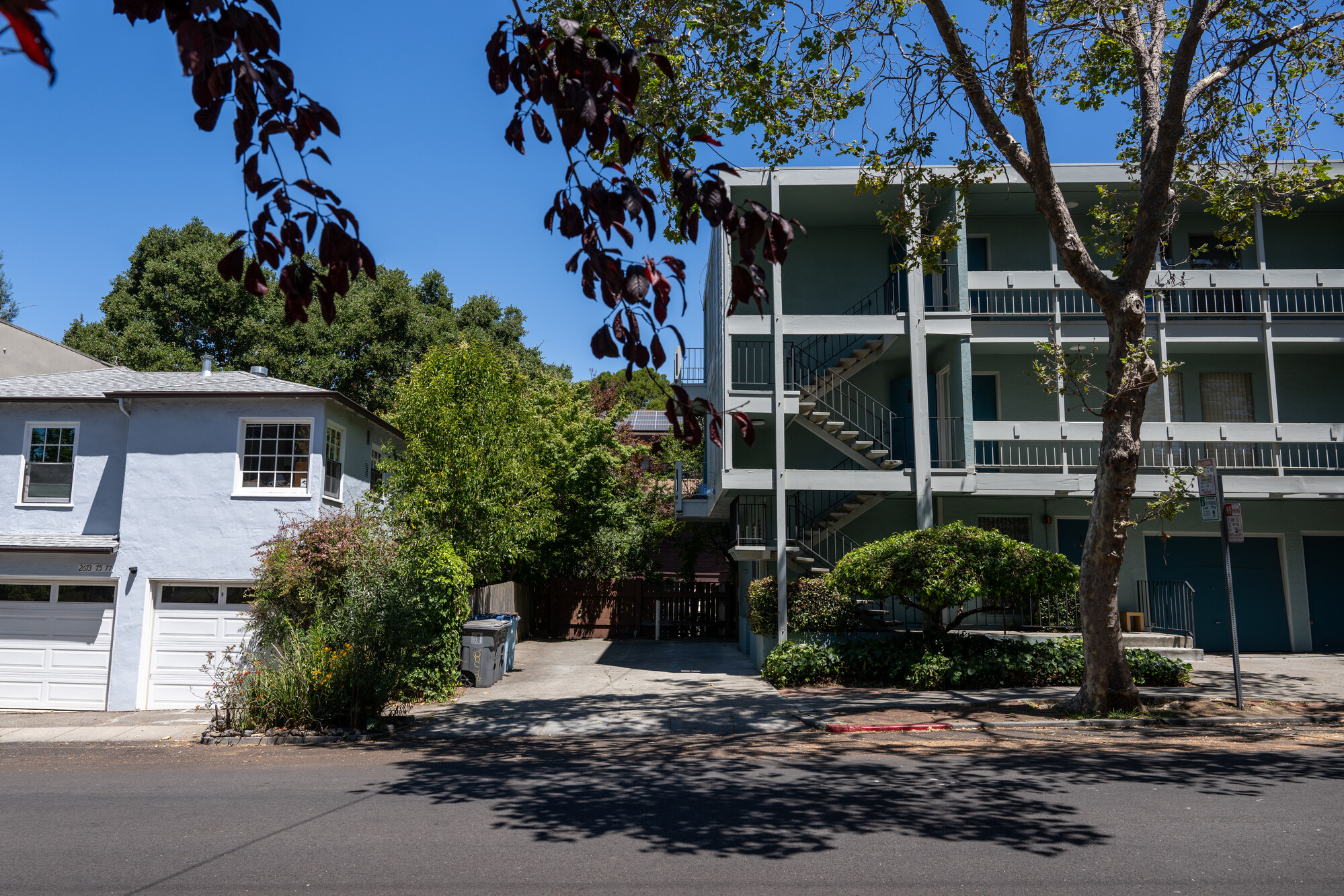
Berkeley Council OKs Zoning Overhaul, Allows Small Apartments Across Most of City
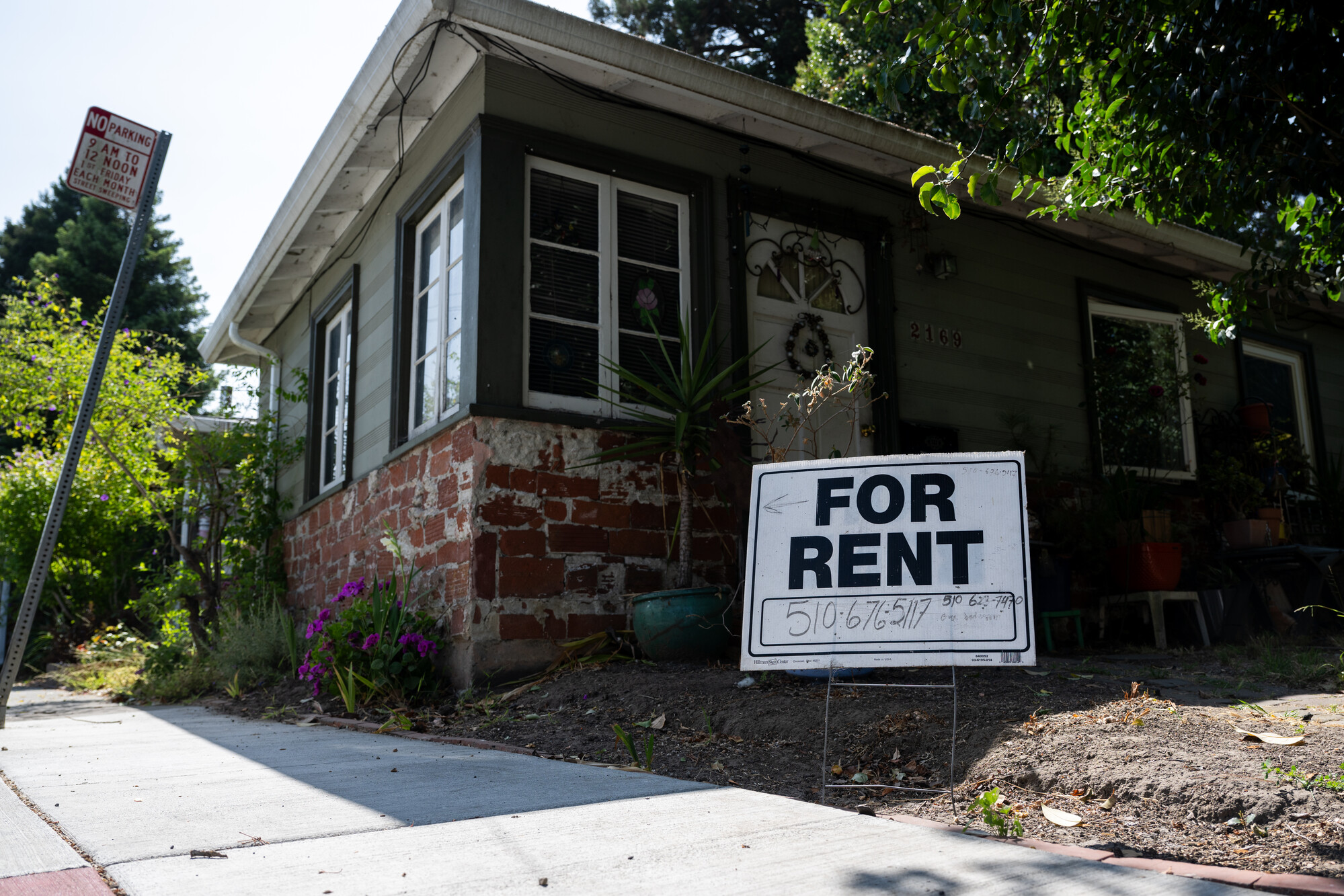
Facing Costly Lawsuit, Berkeley Pauses Its Ban on Rent-Setting Algorithms
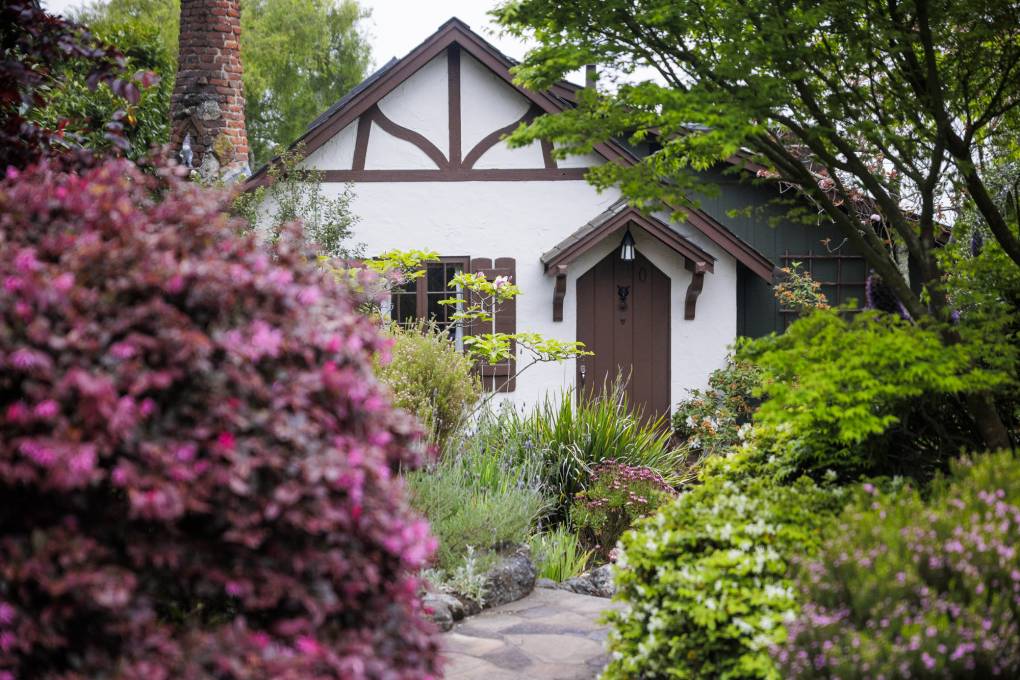
Berkeley Moves to Require Vegetation Removal Near Homes in Fire Zones
Adena Ishii, a City Hall Outsider, Wins Berkeley Mayor's Race
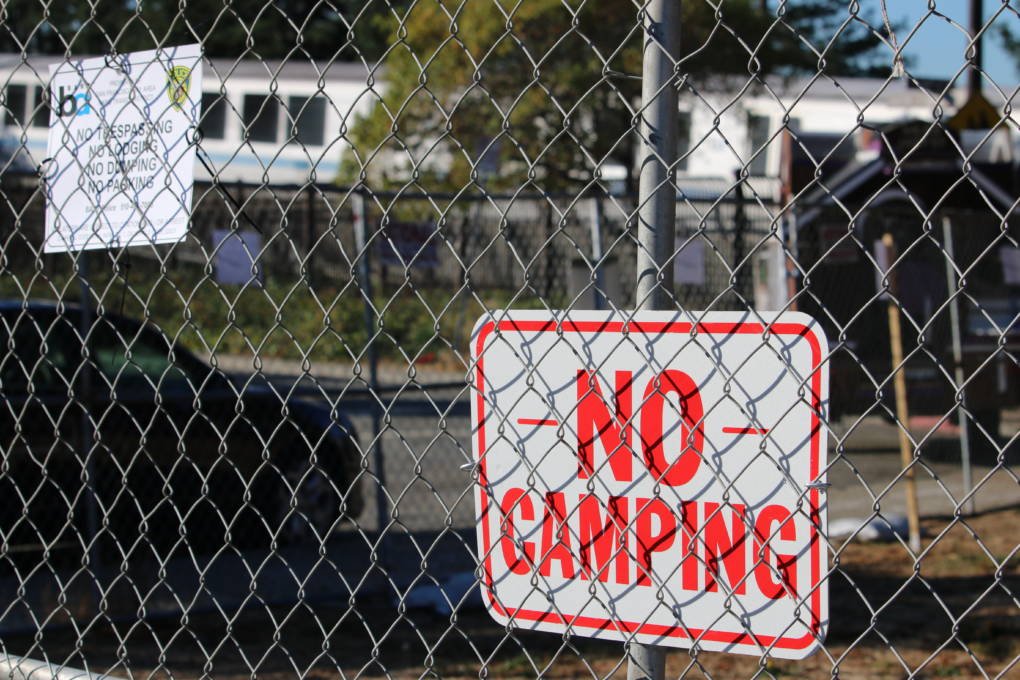
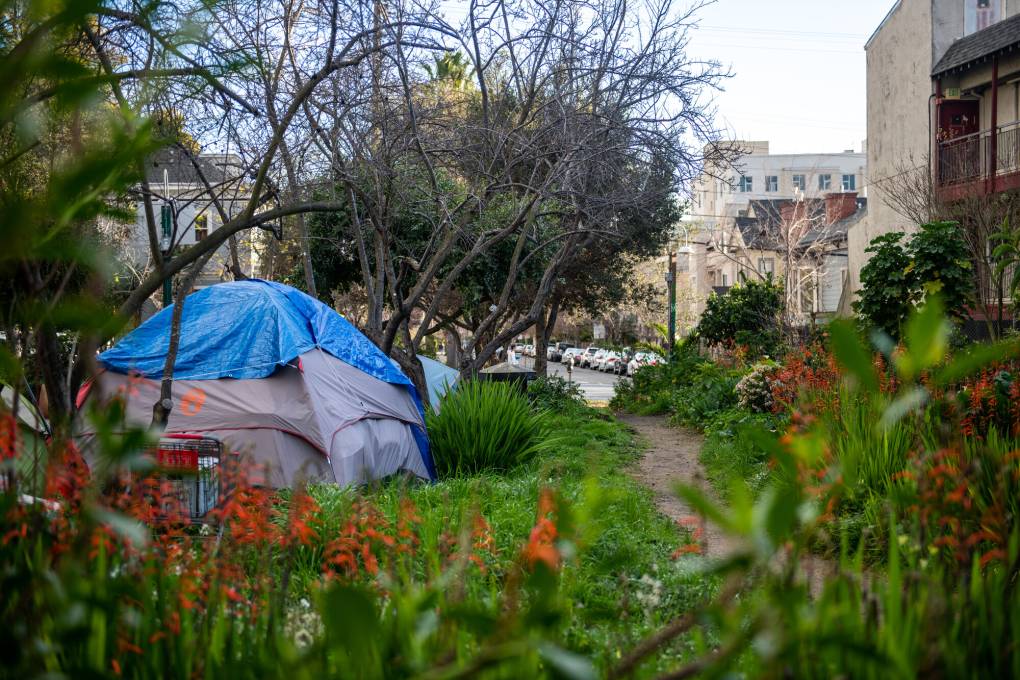
Still Progressive? Berkeley Sticks to New Tough Stance on Homeless Encampments
In Berkeley Mayor’s Race, City Hall Veteran Leads Government Critic
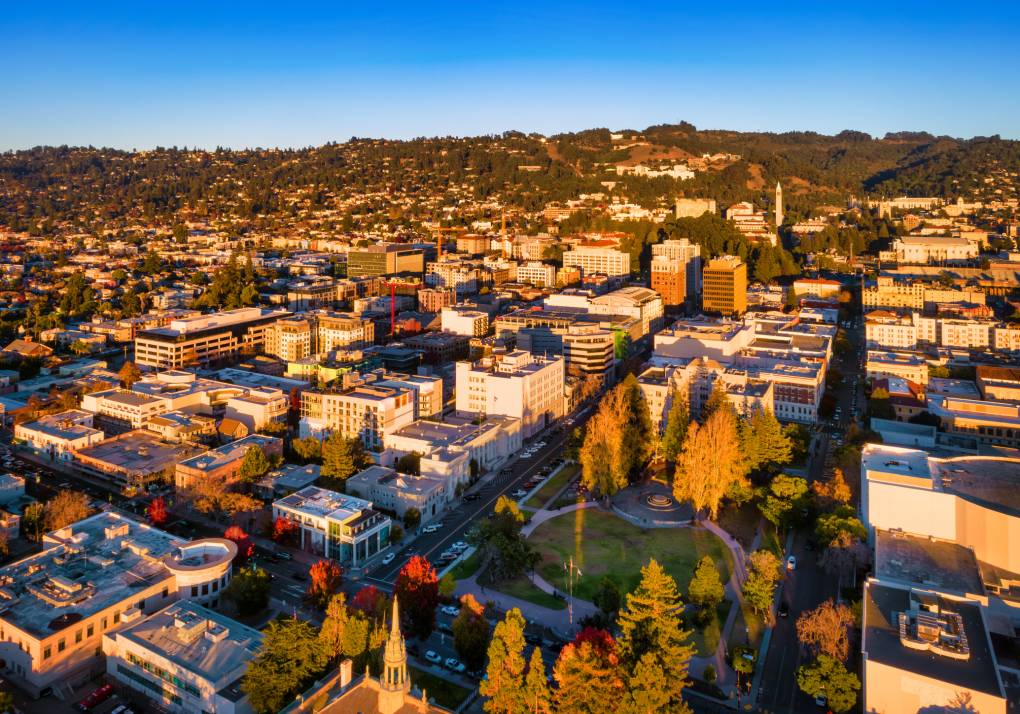
Berkeley City Council Expected to Reject Measure Giving Tenants Priority to Buy Buildings
Berkeley Moves to Expand Homeless Encampment Sweeps in More Aggressive Approach
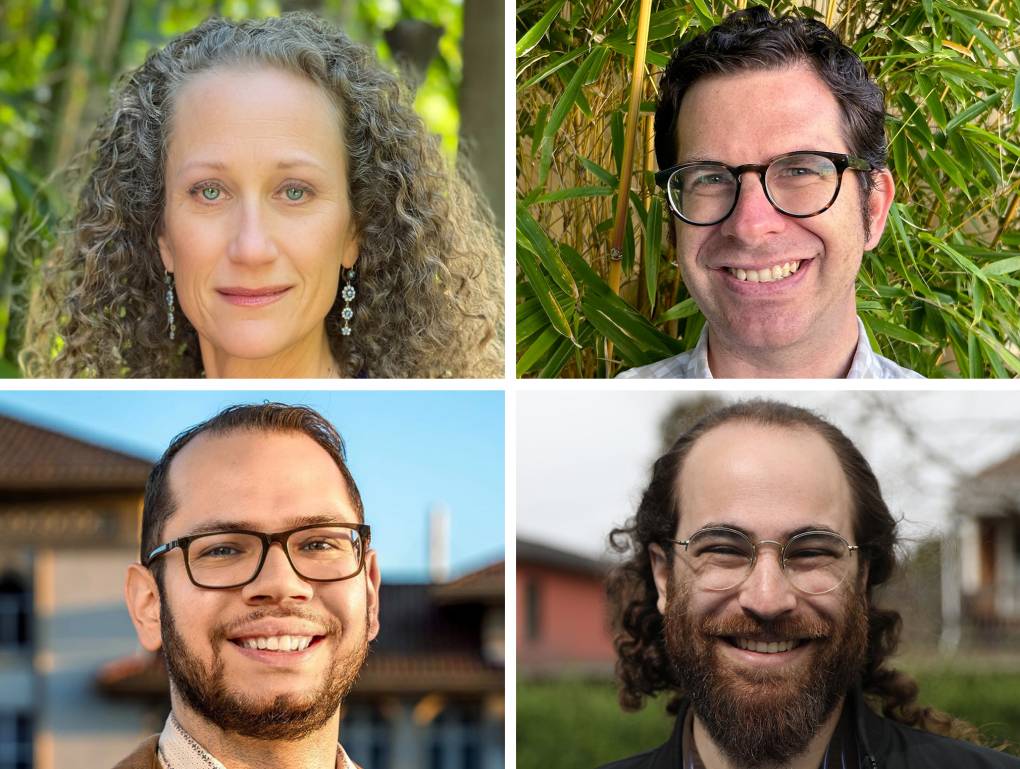
4 Progressives Go Head to Head in Heated Race for Berkeley City Council Seat
Sponsored
Player sponsored by
window.__IS_SSR__=true
window.__INITIAL_STATE__={
"attachmentsReducer": {
"audio_0": {
"type": "attachments",
"id": "audio_0",
"imgSizes": {
"kqedFullSize": {
"file": "https://ww2.kqed.org/news/wp-content/themes/KQED-unified/img/audio_bgs/background0.jpg"
}
}
},
"audio_1": {
"type": "attachments",
"id": "audio_1",
"imgSizes": {
"kqedFullSize": {
"file": "https://ww2.kqed.org/news/wp-content/themes/KQED-unified/img/audio_bgs/background1.jpg"
}
}
},
"audio_2": {
"type": "attachments",
"id": "audio_2",
"imgSizes": {
"kqedFullSize": {
"file": "https://ww2.kqed.org/news/wp-content/themes/KQED-unified/img/audio_bgs/background2.jpg"
}
}
},
"audio_3": {
"type": "attachments",
"id": "audio_3",
"imgSizes": {
"kqedFullSize": {
"file": "https://ww2.kqed.org/news/wp-content/themes/KQED-unified/img/audio_bgs/background3.jpg"
}
}
},
"audio_4": {
"type": "attachments",
"id": "audio_4",
"imgSizes": {
"kqedFullSize": {
"file": "https://ww2.kqed.org/news/wp-content/themes/KQED-unified/img/audio_bgs/background4.jpg"
}
}
},
"placeholder": {
"type": "attachments",
"id": "placeholder",
"imgSizes": {
"thumbnail": {
"file": "https://cdn.kqed.org/wp-content/uploads/2024/12/KQED-Default-Image-816638274-2000x1333-1-160x107.jpg",
"width": 160,
"height": 107,
"mimeType": "image/jpeg"
},
"medium": {
"file": "https://cdn.kqed.org/wp-content/uploads/2024/12/KQED-Default-Image-816638274-2000x1333-1-800x533.jpg",
"width": 800,
"height": 533,
"mimeType": "image/jpeg"
},
"medium_large": {
"file": "https://cdn.kqed.org/wp-content/uploads/2024/12/KQED-Default-Image-816638274-2000x1333-1-768x512.jpg",
"width": 768,
"height": 512,
"mimeType": "image/jpeg"
},
"large": {
"file": "https://cdn.kqed.org/wp-content/uploads/2024/12/KQED-Default-Image-816638274-2000x1333-1-1020x680.jpg",
"width": 1020,
"height": 680,
"mimeType": "image/jpeg"
},
"1536x1536": {
"file": "https://cdn.kqed.org/wp-content/uploads/2024/12/KQED-Default-Image-816638274-2000x1333-1-1536x1024.jpg",
"width": 1536,
"height": 1024,
"mimeType": "image/jpeg"
},
"fd-lrg": {
"file": "https://cdn.kqed.org/wp-content/uploads/2024/12/KQED-Default-Image-816638274-2000x1333-1-1536x1024.jpg",
"width": 1536,
"height": 1024,
"mimeType": "image/jpeg"
},
"fd-med": {
"file": "https://cdn.kqed.org/wp-content/uploads/2024/12/KQED-Default-Image-816638274-2000x1333-1-1020x680.jpg",
"width": 1020,
"height": 680,
"mimeType": "image/jpeg"
},
"fd-sm": {
"file": "https://cdn.kqed.org/wp-content/uploads/2024/12/KQED-Default-Image-816638274-2000x1333-1-800x533.jpg",
"width": 800,
"height": 533,
"mimeType": "image/jpeg"
},
"post-thumbnail": {
"file": "https://cdn.kqed.org/wp-content/uploads/2024/12/KQED-Default-Image-816638274-2000x1333-1-672x372.jpg",
"width": 672,
"height": 372,
"mimeType": "image/jpeg"
},
"twentyfourteen-full-width": {
"file": "https://cdn.kqed.org/wp-content/uploads/2024/12/KQED-Default-Image-816638274-2000x1333-1-1038x576.jpg",
"width": 1038,
"height": 576,
"mimeType": "image/jpeg"
},
"xxsmall": {
"file": "https://cdn.kqed.org/wp-content/uploads/2024/12/KQED-Default-Image-816638274-2000x1333-1-160x107.jpg",
"width": 160,
"height": 107,
"mimeType": "image/jpeg"
},
"xsmall": {
"file": "https://cdn.kqed.org/wp-content/uploads/2024/12/KQED-Default-Image-816638274-2000x1333-1-672x372.jpg",
"width": 672,
"height": 372,
"mimeType": "image/jpeg"
},
"small": {
"file": "https://cdn.kqed.org/wp-content/uploads/2024/12/KQED-Default-Image-816638274-2000x1333-1-672x372.jpg",
"width": 672,
"height": 372,
"mimeType": "image/jpeg"
},
"xlarge": {
"file": "https://cdn.kqed.org/wp-content/uploads/2024/12/KQED-Default-Image-816638274-2000x1333-1-1020x680.jpg",
"width": 1020,
"height": 680,
"mimeType": "image/jpeg"
},
"full-width": {
"file": "https://cdn.kqed.org/wp-content/uploads/2024/12/KQED-Default-Image-816638274-2000x1333-1-1920x1280.jpg",
"width": 1920,
"height": 1280,
"mimeType": "image/jpeg"
},
"guest-author-32": {
"file": "https://cdn.kqed.org/wp-content/uploads/2025/01/KQED-Default-Image-816638274-1333x1333-1-160x160.jpg",
"width": 32,
"height": 32,
"mimeType": "image/jpeg"
},
"guest-author-50": {
"file": "https://cdn.kqed.org/wp-content/uploads/2025/01/KQED-Default-Image-816638274-1333x1333-1-160x160.jpg",
"width": 50,
"height": 50,
"mimeType": "image/jpeg"
},
"guest-author-64": {
"file": "https://cdn.kqed.org/wp-content/uploads/2025/01/KQED-Default-Image-816638274-1333x1333-1-160x160.jpg",
"width": 64,
"height": 64,
"mimeType": "image/jpeg"
},
"guest-author-96": {
"file": "https://cdn.kqed.org/wp-content/uploads/2025/01/KQED-Default-Image-816638274-1333x1333-1-160x160.jpg",
"width": 96,
"height": 96,
"mimeType": "image/jpeg"
},
"guest-author-128": {
"file": "https://cdn.kqed.org/wp-content/uploads/2025/01/KQED-Default-Image-816638274-1333x1333-1-160x160.jpg",
"width": 128,
"height": 128,
"mimeType": "image/jpeg"
},
"detail": {
"file": "https://cdn.kqed.org/wp-content/uploads/2025/01/KQED-Default-Image-816638274-1333x1333-1-160x160.jpg",
"width": 160,
"height": 160,
"mimeType": "image/jpeg"
},
"kqedFullSize": {
"file": "https://cdn.kqed.org/wp-content/uploads/2024/12/KQED-Default-Image-816638274-2000x1333-1.jpg",
"width": 2000,
"height": 1333
}
}
},
"news_12046294": {
"type": "attachments",
"id": "news_12046294",
"meta": {
"index": "attachments_1716263798",
"site": "news",
"id": "12046294",
"found": true
},
"title": "An apartment building in the Elmwood neighborhood of Berkeley on July 18, 2024.",
"publishDate": 1751044475,
"status": "inherit",
"parent": 12046283,
"modified": 1751044490,
"caption": "An apartment building in the Elmwood neighborhood of Berkeley on July 18, 2024. Berkeley, the first city in the nation to adopt single-family zoning, will now allow small apartment buildings in most neighborhoods.",
"credit": "Beth LaBerge/KQED",
"altTag": null,
"description": null,
"imgSizes": {
"thumbnail": {
"file": "https://cdn.kqed.org/wp-content/uploads/sites/10/2025/06/240718-BerkeleyMissingMiddleHousing-24-BL_qed-160x107.jpg",
"width": 160,
"height": 107,
"mimeType": "image/jpeg"
},
"1536x1536": {
"file": "https://cdn.kqed.org/wp-content/uploads/sites/10/2025/06/240718-BerkeleyMissingMiddleHousing-24-BL_qed-1536x1024.jpg",
"width": 1536,
"height": 1024,
"mimeType": "image/jpeg"
},
"post-thumbnail": {
"file": "https://cdn.kqed.org/wp-content/uploads/sites/10/2025/06/240718-BerkeleyMissingMiddleHousing-24-BL_qed-672x372.jpg",
"width": 672,
"height": 372,
"mimeType": "image/jpeg"
},
"twentyfourteen-full-width": {
"file": "https://cdn.kqed.org/wp-content/uploads/sites/10/2025/06/240718-BerkeleyMissingMiddleHousing-24-BL_qed-1038x576.jpg",
"width": 1038,
"height": 576,
"mimeType": "image/jpeg"
},
"kqedFullSize": {
"file": "https://cdn.kqed.org/wp-content/uploads/sites/10/2025/06/240718-BerkeleyMissingMiddleHousing-24-BL_qed.jpg",
"width": 1999,
"height": 1333
}
},
"fetchFailed": false,
"isLoading": false
},
"news_12045711": {
"type": "attachments",
"id": "news_12045711",
"meta": {
"index": "attachments_1716263798",
"site": "news",
"id": "12045711",
"found": true
},
"title": "A 'For Rent' sign in Berkeley on June 23, 2025.",
"publishDate": 1750790413,
"status": "inherit",
"parent": 12045703,
"modified": 1750790430,
"caption": "A \"For Rent\" sign in Berkeley on June 23, 2025.",
"credit": "Beth LaBerge/KQED",
"altTag": null,
"description": null,
"imgSizes": {
"thumbnail": {
"file": "https://cdn.kqed.org/wp-content/uploads/sites/10/2025/06/250623-BerkeleyMiddleHousing-18-BL_qed-160x107.jpg",
"width": 160,
"height": 107,
"mimeType": "image/jpeg"
},
"1536x1536": {
"file": "https://cdn.kqed.org/wp-content/uploads/sites/10/2025/06/250623-BerkeleyMiddleHousing-18-BL_qed-1536x1024.jpg",
"width": 1536,
"height": 1024,
"mimeType": "image/jpeg"
},
"post-thumbnail": {
"file": "https://cdn.kqed.org/wp-content/uploads/sites/10/2025/06/250623-BerkeleyMiddleHousing-18-BL_qed-672x372.jpg",
"width": 672,
"height": 372,
"mimeType": "image/jpeg"
},
"twentyfourteen-full-width": {
"file": "https://cdn.kqed.org/wp-content/uploads/sites/10/2025/06/250623-BerkeleyMiddleHousing-18-BL_qed-1038x576.jpg",
"width": 1038,
"height": 576,
"mimeType": "image/jpeg"
},
"kqedFullSize": {
"file": "https://cdn.kqed.org/wp-content/uploads/sites/10/2025/06/250623-BerkeleyMiddleHousing-18-BL_qed.jpg",
"width": 1999,
"height": 1333
}
},
"fetchFailed": false,
"isLoading": false
},
"news_12036043": {
"type": "attachments",
"id": "news_12036043",
"meta": {
"index": "attachments_1716263798",
"site": "news",
"id": "12036043",
"found": true
},
"title": "A home in the Berkeley hills on April 15, 2025.",
"publishDate": 1744743884,
"status": "inherit",
"parent": 0,
"modified": 1744744011,
"caption": "A home in the Berkeley Hills on April 15, 2025.",
"credit": "Martin do Nascimento/KQED",
"altTag": null,
"description": null,
"imgSizes": {
"medium": {
"file": "https://cdn.kqed.org/wp-content/uploads/sites/10/2025/04/250415-BERKELEY-PLANTS-MD-04-KQED-800x533.jpg",
"width": 800,
"height": 533,
"mimeType": "image/jpeg"
},
"large": {
"file": "https://cdn.kqed.org/wp-content/uploads/sites/10/2025/04/250415-BERKELEY-PLANTS-MD-04-KQED-1020x680.jpg",
"width": 1020,
"height": 680,
"mimeType": "image/jpeg"
},
"thumbnail": {
"file": "https://cdn.kqed.org/wp-content/uploads/sites/10/2025/04/250415-BERKELEY-PLANTS-MD-04-KQED-160x107.jpg",
"width": 160,
"height": 107,
"mimeType": "image/jpeg"
},
"1536x1536": {
"file": "https://cdn.kqed.org/wp-content/uploads/sites/10/2025/04/250415-BERKELEY-PLANTS-MD-04-KQED-1536x1024.jpg",
"width": 1536,
"height": 1024,
"mimeType": "image/jpeg"
},
"post-thumbnail": {
"file": "https://cdn.kqed.org/wp-content/uploads/sites/10/2025/04/250415-BERKELEY-PLANTS-MD-04-KQED-672x372.jpg",
"width": 672,
"height": 372,
"mimeType": "image/jpeg"
},
"twentyfourteen-full-width": {
"file": "https://cdn.kqed.org/wp-content/uploads/sites/10/2025/04/250415-BERKELEY-PLANTS-MD-04-KQED-1038x576.jpg",
"width": 1038,
"height": 576,
"mimeType": "image/jpeg"
},
"full-width": {
"file": "https://cdn.kqed.org/wp-content/uploads/sites/10/2025/04/250415-BERKELEY-PLANTS-MD-04-KQED-1920x1280.jpg",
"width": 1920,
"height": 1280,
"mimeType": "image/jpeg"
},
"kqedFullSize": {
"file": "https://cdn.kqed.org/wp-content/uploads/sites/10/2025/04/250415-BERKELEY-PLANTS-MD-04-KQED.jpg",
"width": 2000,
"height": 1333
}
},
"fetchFailed": false,
"isLoading": false
},
"news_12015248": {
"type": "attachments",
"id": "news_12015248",
"meta": {
"index": "attachments_1716263798",
"site": "news",
"id": "12015248",
"found": true
},
"title": "459596481_510570205034259_7309282541546135836_n",
"publishDate": 1732161808,
"status": "inherit",
"parent": 12015247,
"modified": 1732163849,
"caption": "Adena Ishii, a civic organizer and education consultant, narrowly defeated longtime Councilmember Sophie Hahn in the race for Berkeley mayor.",
"credit": "Courtesy of Adena Ishii for Mayor",
"altTag": "A young Asian woman stands in front of a table.",
"description": null,
"imgSizes": {
"medium": {
"file": "https://cdn.kqed.org/wp-content/uploads/sites/10/2024/11/459596481_510570205034259_7309282541546135836_n-800x527.jpg",
"width": 800,
"height": 527,
"mimeType": "image/jpeg"
},
"thumbnail": {
"file": "https://cdn.kqed.org/wp-content/uploads/sites/10/2024/11/459596481_510570205034259_7309282541546135836_n-160x105.jpg",
"width": 160,
"height": 105,
"mimeType": "image/jpeg"
},
"post-thumbnail": {
"file": "https://cdn.kqed.org/wp-content/uploads/sites/10/2024/11/459596481_510570205034259_7309282541546135836_n-672x372.jpg",
"width": 672,
"height": 372,
"mimeType": "image/jpeg"
},
"twentyfourteen-full-width": {
"file": "https://cdn.kqed.org/wp-content/uploads/sites/10/2024/11/459596481_510570205034259_7309282541546135836_n-917x576.jpg",
"width": 917,
"height": 576,
"mimeType": "image/jpeg"
},
"kqedFullSize": {
"file": "https://cdn.kqed.org/wp-content/uploads/sites/10/2024/11/459596481_510570205034259_7309282541546135836_n.jpg",
"width": 917,
"height": 604
}
},
"fetchFailed": false,
"isLoading": false
},
"news_11625989": {
"type": "attachments",
"id": "news_11625989",
"meta": {
"index": "attachments_1716263798",
"site": "news",
"id": "11625989",
"found": true
},
"title": "IMG_2943",
"publishDate": 1508967483,
"status": "inherit",
"parent": 11625944,
"modified": 1509056856,
"caption": "BART cleared a homeless encampment and fenced off property in South Berkeley on Oct. 25, 2017.",
"credit": "Devin Katayama/KQED",
"altTag": null,
"description": null,
"imgSizes": {
"thumbnail": {
"file": "https://cdn.kqed.org/wp-content/uploads/sites/10/2017/10/IMG_2943-160x107.jpg",
"width": 160,
"height": 107,
"mimeType": "image/jpeg"
},
"medium": {
"file": "https://cdn.kqed.org/wp-content/uploads/sites/10/2017/10/IMG_2943-800x533.jpg",
"width": 800,
"height": 533,
"mimeType": "image/jpeg"
},
"large": {
"file": "https://cdn.kqed.org/wp-content/uploads/sites/10/2017/10/IMG_2943-1020x680.jpg",
"width": 1020,
"height": 680,
"mimeType": "image/jpeg"
},
"fd-lrg": {
"file": "https://cdn.kqed.org/wp-content/uploads/sites/10/2017/10/IMG_2943-1920x1280.jpg",
"width": 1920,
"height": 1280,
"mimeType": "image/jpeg"
},
"fd-med": {
"file": "https://cdn.kqed.org/wp-content/uploads/sites/10/2017/10/IMG_2943-1180x787.jpg",
"width": 1180,
"height": 787,
"mimeType": "image/jpeg"
},
"fd-sm": {
"file": "https://cdn.kqed.org/wp-content/uploads/sites/10/2017/10/IMG_2943-960x640.jpg",
"width": 960,
"height": 640,
"mimeType": "image/jpeg"
},
"post-thumbnail": {
"file": "https://cdn.kqed.org/wp-content/uploads/sites/10/2017/10/IMG_2943-672x372.jpg",
"width": 672,
"height": 372,
"mimeType": "image/jpeg"
},
"twentyfourteen-full-width": {
"file": "https://cdn.kqed.org/wp-content/uploads/sites/10/2017/10/IMG_2943-1038x576.jpg",
"width": 1038,
"height": 576,
"mimeType": "image/jpeg"
},
"xxsmall": {
"file": "https://cdn.kqed.org/wp-content/uploads/sites/10/2017/10/IMG_2943-240x160.jpg",
"width": 240,
"height": 160,
"mimeType": "image/jpeg"
},
"xsmall": {
"file": "https://cdn.kqed.org/wp-content/uploads/sites/10/2017/10/IMG_2943-375x250.jpg",
"width": 375,
"height": 250,
"mimeType": "image/jpeg"
},
"small": {
"file": "https://cdn.kqed.org/wp-content/uploads/sites/10/2017/10/IMG_2943-520x347.jpg",
"width": 520,
"height": 347,
"mimeType": "image/jpeg"
},
"xlarge": {
"file": "https://cdn.kqed.org/wp-content/uploads/sites/10/2017/10/IMG_2943-1180x787.jpg",
"width": 1180,
"height": 787,
"mimeType": "image/jpeg"
},
"full-width": {
"file": "https://cdn.kqed.org/wp-content/uploads/sites/10/2017/10/IMG_2943-1920x1280.jpg",
"width": 1920,
"height": 1280,
"mimeType": "image/jpeg"
},
"guest-author-32": {
"file": "https://cdn.kqed.org/wp-content/uploads/sites/10/2017/10/IMG_2943-32x32.jpg",
"width": 32,
"height": 32,
"mimeType": "image/jpeg"
},
"guest-author-50": {
"file": "https://cdn.kqed.org/wp-content/uploads/sites/10/2017/10/IMG_2943-50x50.jpg",
"width": 50,
"height": 50,
"mimeType": "image/jpeg"
},
"guest-author-64": {
"file": "https://cdn.kqed.org/wp-content/uploads/sites/10/2017/10/IMG_2943-64x64.jpg",
"width": 64,
"height": 64,
"mimeType": "image/jpeg"
},
"guest-author-96": {
"file": "https://cdn.kqed.org/wp-content/uploads/sites/10/2017/10/IMG_2943-96x96.jpg",
"width": 96,
"height": 96,
"mimeType": "image/jpeg"
},
"guest-author-128": {
"file": "https://cdn.kqed.org/wp-content/uploads/sites/10/2017/10/IMG_2943-128x128.jpg",
"width": 128,
"height": 128,
"mimeType": "image/jpeg"
},
"detail": {
"file": "https://cdn.kqed.org/wp-content/uploads/sites/10/2017/10/IMG_2943-150x150.jpg",
"width": 150,
"height": 150,
"mimeType": "image/jpeg"
},
"kqedFullSize": {
"file": "https://cdn.kqed.org/wp-content/uploads/sites/10/2017/10/IMG_2943-e1731527667984.jpg",
"width": 2000,
"height": 1333
}
},
"fetchFailed": false,
"isLoading": false
},
"news_12013289": {
"type": "attachments",
"id": "news_12013289",
"meta": {
"index": "attachments_1716263798",
"site": "news",
"id": "12013289",
"found": true
},
"title": "Early Voting Begins In North Carolina",
"publishDate": 1730937692,
"status": "inherit",
"parent": 12013236,
"modified": 1730937747,
"caption": "Councilmember Sophie Hahn leads in early returns in Berkeley over Kate Harrison, who quit the council this year after criticizing its “broken” decision-making.",
"credit": "Sara D. Davis/Getty Images",
"altTag": null,
"description": null,
"imgSizes": {
"medium": {
"file": "https://cdn.kqed.org/wp-content/uploads/sites/10/2024/11/voter2024-800x602.jpg",
"width": 800,
"height": 602,
"mimeType": "image/jpeg"
},
"large": {
"file": "https://cdn.kqed.org/wp-content/uploads/sites/10/2024/11/voter2024-1020x768.jpg",
"width": 1020,
"height": 768,
"mimeType": "image/jpeg"
},
"thumbnail": {
"file": "https://cdn.kqed.org/wp-content/uploads/sites/10/2024/11/voter2024-160x120.jpg",
"width": 160,
"height": 120,
"mimeType": "image/jpeg"
},
"1536x1536": {
"file": "https://cdn.kqed.org/wp-content/uploads/sites/10/2024/11/voter2024-1536x1156.jpg",
"width": 1536,
"height": 1156,
"mimeType": "image/jpeg"
},
"post-thumbnail": {
"file": "https://cdn.kqed.org/wp-content/uploads/sites/10/2024/11/voter2024-672x372.jpg",
"width": 672,
"height": 372,
"mimeType": "image/jpeg"
},
"twentyfourteen-full-width": {
"file": "https://cdn.kqed.org/wp-content/uploads/sites/10/2024/11/voter2024-1038x576.jpg",
"width": 1038,
"height": 576,
"mimeType": "image/jpeg"
},
"full-width": {
"file": "https://cdn.kqed.org/wp-content/uploads/sites/10/2024/11/voter2024-1920x1445.jpg",
"width": 1920,
"height": 1445,
"mimeType": "image/jpeg"
},
"kqedFullSize": {
"file": "https://cdn.kqed.org/wp-content/uploads/sites/10/2024/11/voter2024.jpg",
"width": 2000,
"height": 1505
}
},
"fetchFailed": false,
"isLoading": false
},
"news_12007051": {
"type": "attachments",
"id": "news_12007051",
"meta": {
"index": "attachments_1716263798",
"site": "news",
"id": "12007051",
"found": true
},
"title": "Berkeley Downtown Aerial During The Golden Hour",
"publishDate": 1727637332,
"status": "inherit",
"parent": 12007048,
"modified": 1727637976,
"caption": "Property owners and realtors associations in Berkeley oppose the policy, arguing that it adds delay for property owners who are eager to sell. ",
"credit": "Davel5957/Getty Images",
"altTag": null,
"description": null,
"imgSizes": {
"medium": {
"file": "https://cdn.kqed.org/wp-content/uploads/sites/10/2024/09/GettyImages-2152399268-800x560.jpg",
"width": 800,
"height": 560,
"mimeType": "image/jpeg"
},
"large": {
"file": "https://cdn.kqed.org/wp-content/uploads/sites/10/2024/09/GettyImages-2152399268-1020x714.jpg",
"width": 1020,
"height": 714,
"mimeType": "image/jpeg"
},
"thumbnail": {
"file": "https://cdn.kqed.org/wp-content/uploads/sites/10/2024/09/GettyImages-2152399268-160x112.jpg",
"width": 160,
"height": 112,
"mimeType": "image/jpeg"
},
"1536x1536": {
"file": "https://cdn.kqed.org/wp-content/uploads/sites/10/2024/09/GettyImages-2152399268-1536x1076.jpg",
"width": 1536,
"height": 1076,
"mimeType": "image/jpeg"
},
"2048x2048": {
"file": "https://cdn.kqed.org/wp-content/uploads/sites/10/2024/09/GettyImages-2152399268-2048x1434.jpg",
"width": 2048,
"height": 1434,
"mimeType": "image/jpeg"
},
"post-thumbnail": {
"file": "https://cdn.kqed.org/wp-content/uploads/sites/10/2024/09/GettyImages-2152399268-672x372.jpg",
"width": 672,
"height": 372,
"mimeType": "image/jpeg"
},
"twentyfourteen-full-width": {
"file": "https://cdn.kqed.org/wp-content/uploads/sites/10/2024/09/GettyImages-2152399268-1038x576.jpg",
"width": 1038,
"height": 576,
"mimeType": "image/jpeg"
},
"full-width": {
"file": "https://cdn.kqed.org/wp-content/uploads/sites/10/2024/09/GettyImages-2152399268-1920x1345.jpg",
"width": 1920,
"height": 1345,
"mimeType": "image/jpeg"
},
"kqedFullSize": {
"file": "https://cdn.kqed.org/wp-content/uploads/sites/10/2024/09/GettyImages-2152399268.jpg",
"width": 2069,
"height": 1449
}
},
"fetchFailed": false,
"isLoading": false
},
"news_12004356": {
"type": "attachments",
"id": "news_12004356",
"meta": {
"index": "attachments_1716263798",
"site": "news",
"id": "12004356",
"found": true
},
"title": "People's Park in Berkeley on Feb. 19, 2021.",
"publishDate": 1726078158,
"status": "inherit",
"parent": 12004348,
"modified": 1726078180,
"caption": "People's Park in Berkeley on Feb. 19, 2021.",
"credit": "Beth LaBerge/KQED",
"altTag": null,
"description": null,
"imgSizes": {
"medium": {
"file": "https://cdn.kqed.org/wp-content/uploads/sites/10/2024/09/026_Berkeley_PeoplesPark_02192021_qed-800x533.jpg",
"width": 800,
"height": 533,
"mimeType": "image/jpeg"
},
"large": {
"file": "https://cdn.kqed.org/wp-content/uploads/sites/10/2024/09/026_Berkeley_PeoplesPark_02192021_qed-1020x680.jpg",
"width": 1020,
"height": 680,
"mimeType": "image/jpeg"
},
"thumbnail": {
"file": "https://cdn.kqed.org/wp-content/uploads/sites/10/2024/09/026_Berkeley_PeoplesPark_02192021_qed-160x107.jpg",
"width": 160,
"height": 107,
"mimeType": "image/jpeg"
},
"1536x1536": {
"file": "https://cdn.kqed.org/wp-content/uploads/sites/10/2024/09/026_Berkeley_PeoplesPark_02192021_qed-1536x1024.jpg",
"width": 1536,
"height": 1024,
"mimeType": "image/jpeg"
},
"post-thumbnail": {
"file": "https://cdn.kqed.org/wp-content/uploads/sites/10/2024/09/026_Berkeley_PeoplesPark_02192021_qed-672x372.jpg",
"width": 672,
"height": 372,
"mimeType": "image/jpeg"
},
"twentyfourteen-full-width": {
"file": "https://cdn.kqed.org/wp-content/uploads/sites/10/2024/09/026_Berkeley_PeoplesPark_02192021_qed-1038x576.jpg",
"width": 1038,
"height": 576,
"mimeType": "image/jpeg"
},
"full-width": {
"file": "https://cdn.kqed.org/wp-content/uploads/sites/10/2024/09/026_Berkeley_PeoplesPark_02192021_qed-1920x1280.jpg",
"width": 1920,
"height": 1280,
"mimeType": "image/jpeg"
},
"kqedFullSize": {
"file": "https://cdn.kqed.org/wp-content/uploads/sites/10/2024/09/026_Berkeley_PeoplesPark_02192021_qed.jpg",
"width": 2000,
"height": 1333
}
},
"fetchFailed": false,
"isLoading": false
},
"news_11987236": {
"type": "attachments",
"id": "news_11987236",
"meta": {
"index": "attachments_1716263798",
"site": "news",
"id": "11987236",
"found": true
},
"title": "D4 Candidates",
"publishDate": 1716335783,
"status": "inherit",
"parent": 11987224,
"modified": 1716412888,
"caption": "Berkeley District 4 City Council candidates (clockwise from top left) Elana Auerbach, Igor Tregub, Soli Alpert and Ruben Hernandez Story.",
"credit": "Courtesy of each candidate//Collage by Matthew Green of KQED",
"altTag": "Headshots of the four candidates.",
"description": null,
"imgSizes": {
"medium": {
"file": "https://cdn.kqed.org/wp-content/uploads/sites/10/2024/05/D4-Candidates-800x603.jpg",
"width": 800,
"height": 603,
"mimeType": "image/jpeg"
},
"large": {
"file": "https://cdn.kqed.org/wp-content/uploads/sites/10/2024/05/D4-Candidates-1020x769.jpg",
"width": 1020,
"height": 769,
"mimeType": "image/jpeg"
},
"thumbnail": {
"file": "https://cdn.kqed.org/wp-content/uploads/sites/10/2024/05/D4-Candidates-160x121.jpg",
"width": 160,
"height": 121,
"mimeType": "image/jpeg"
},
"1536x1536": {
"file": "https://cdn.kqed.org/wp-content/uploads/sites/10/2024/05/D4-Candidates-1536x1158.jpg",
"width": 1536,
"height": 1158,
"mimeType": "image/jpeg"
},
"post-thumbnail": {
"file": "https://cdn.kqed.org/wp-content/uploads/sites/10/2024/05/D4-Candidates-672x372.jpg",
"width": 672,
"height": 372,
"mimeType": "image/jpeg"
},
"twentyfourteen-full-width": {
"file": "https://cdn.kqed.org/wp-content/uploads/sites/10/2024/05/D4-Candidates-1038x576.jpg",
"width": 1038,
"height": 576,
"mimeType": "image/jpeg"
},
"full-width": {
"file": "https://cdn.kqed.org/wp-content/uploads/sites/10/2024/05/D4-Candidates-1920x1448.jpg",
"width": 1920,
"height": 1448,
"mimeType": "image/jpeg"
},
"kqedFullSize": {
"file": "https://cdn.kqed.org/wp-content/uploads/sites/10/2024/05/D4-Candidates.jpg",
"width": 2020,
"height": 1523
}
},
"fetchFailed": false,
"isLoading": false
}
},
"audioPlayerReducer": {
"postId": "stream_live",
"isPaused": true,
"isPlaying": false,
"pfsActive": false,
"pledgeModalIsOpen": true,
"playerDrawerIsOpen": false
},
"authorsReducer": {
"byline_news_11987224": {
"type": "authors",
"id": "byline_news_11987224",
"meta": {
"override": true
},
"slug": "byline_news_11987224",
"name": "Grace Marion, Bay City News",
"isLoading": false
},
"danbrekke": {
"type": "authors",
"id": "222",
"meta": {
"index": "authors_1716337520",
"id": "222",
"found": true
},
"name": "Dan Brekke",
"firstName": "Dan",
"lastName": "Brekke",
"slug": "danbrekke",
"email": "dbrekke@kqed.org",
"display_author_email": true,
"staff_mastheads": [
"news",
"science"
],
"title": "KQED Editor and Reporter",
"bio": "Dan Brekke is a reporter and editor for KQED News, responsible for coverage of topics ranging from California water issues to the Bay Area's transportation challenges. In a newsroom career that began in Chicago in 1972, Dan has worked for \u003cem>The San Francisco Examiner,\u003c/em> Wired and TechTV and has been published in The New York Times, The New York Times Magazine, Business 2.0, Salon and elsewhere.\r\n\r\nSince joining KQED in 2007, Dan has reported, edited and produced both radio and online features and breaking news pieces. He has shared as both editor and reporter in four Society of Professional Journalists Norcal Excellence in Journalism awards and one Edward R. Murrow regional award. He was chosen for a spring 2017 residency at the Mesa Refuge to advance his research on California salmon.\r\n\r\nEmail Dan at: \u003ca href=\"mailto:dbrekke@kqed.org\">dbrekke@kqed.org\u003c/a>\r\n\r\n\u003cstrong>Twitter:\u003c/strong> \u003ca href=\"https://twitter.com/danbrekke\" rel=\"noopener noreferrer\">twitter.com/danbrekke\u003c/a>\r\n\u003cstrong>Facebook:\u003c/strong> \u003ca href=\"https://www.facebook.com/danbrekke\" rel=\"noopener noreferrer\">www.facebook.com/danbrekke\u003c/a>\r\n\u003cstrong>LinkedIn:\u003c/strong> \u003ca href=\"https://www.linkedin.com/in/danbrekke\" rel=\"noopener noreferrer\">www.linkedin.com/in/danbrekke\u003c/a>",
"avatar": "https://secure.gravatar.com/avatar/c8126230345efca3f7aa89b1a402be45?s=600&d=mm&r=g",
"twitter": "danbrekke",
"facebook": null,
"instagram": "https://www.instagram.com/dan.brekke/",
"linkedin": "https://www.linkedin.com/in/danbrekke/",
"sites": [
{
"site": "news",
"roles": [
"administrator",
"create_posts"
]
},
{
"site": "stateofhealth",
"roles": [
"editor"
]
},
{
"site": "science",
"roles": [
"editor"
]
},
{
"site": "quest",
"roles": [
"contributor"
]
},
{
"site": "food",
"roles": [
"contributor"
]
},
{
"site": "forum",
"roles": [
"contributor"
]
},
{
"site": "liveblog",
"roles": [
"editor"
]
}
],
"headData": {
"title": "Dan Brekke | KQED",
"description": "KQED Editor and Reporter",
"ogImgSrc": "https://secure.gravatar.com/avatar/c8126230345efca3f7aa89b1a402be45?s=600&d=mm&r=g",
"twImgSrc": "https://secure.gravatar.com/avatar/c8126230345efca3f7aa89b1a402be45?s=600&d=mm&r=g"
},
"isLoading": false,
"link": "/author/danbrekke"
},
"matthewgreen": {
"type": "authors",
"id": "1263",
"meta": {
"index": "authors_1716337520",
"id": "1263",
"found": true
},
"name": "Matthew Green",
"firstName": "Matthew",
"lastName": "Green",
"slug": "matthewgreen",
"email": "mgreen@kqed.org",
"display_author_email": false,
"staff_mastheads": [],
"title": "KQED Editor/Reporter",
"bio": "Matthew Green is a digital media producer for KQED News. He previously produced \u003ca href=\"http://www.kqed.org/lowdown\">The Lowdown\u003c/a>, KQED’s multimedia news education blog. Matthew's written for numerous Bay Area publications, including the Oakland Tribune and San Francisco Chronicle. He also taught journalism classes at Fremont High School in East Oakland.\r\n\r\nEmail: mgreen@kqed.org; Twitter: @MGreenKQED",
"avatar": "https://secure.gravatar.com/avatar/3bf498d1267ca02c8494f33d8cfc575e?s=600&d=blank&r=g",
"twitter": "MGreenKQED",
"facebook": null,
"instagram": null,
"linkedin": null,
"sites": [
{
"site": "news",
"roles": []
},
{
"site": "lowdown",
"roles": []
},
{
"site": "science",
"roles": []
},
{
"site": "education",
"roles": []
},
{
"site": "quest",
"roles": []
},
{
"site": "liveblog",
"roles": []
}
],
"headData": {
"title": "Matthew Green | KQED",
"description": "KQED Editor/Reporter",
"ogImgSrc": "https://secure.gravatar.com/avatar/3bf498d1267ca02c8494f33d8cfc575e?s=600&d=blank&r=g",
"twImgSrc": "https://secure.gravatar.com/avatar/3bf498d1267ca02c8494f33d8cfc575e?s=600&d=blank&r=g"
},
"isLoading": false,
"link": "/author/matthewgreen"
},
"vrancano": {
"type": "authors",
"id": "11276",
"meta": {
"index": "authors_1716337520",
"id": "11276",
"found": true
},
"name": "Vanessa Rancaño",
"firstName": "Vanessa",
"lastName": "Rancaño",
"slug": "vrancano",
"email": "vrancano@kqed.org",
"display_author_email": false,
"staff_mastheads": [
"news"
],
"title": "Reporter, Housing",
"bio": "Vanessa Rancaño reports on housing and homelessness for KQED. She’s also covered education for the station and reported from the Central Valley. Her work has aired across public radio, from flagship national news shows to longform narrative podcasts. Before taking up a mic, she worked as a freelance print journalist. She’s been recognized with a number of national and regional awards. Vanessa grew up in California's Central Valley. She's a former NPR Kroc Fellow, and a graduate of the UC Berkeley Graduate School of Journalism.",
"avatar": "https://secure.gravatar.com/avatar/f6c0fc5d391c78710bcfc723f0636ef6?s=600&d=blank&r=g",
"twitter": "vanessarancano",
"facebook": null,
"instagram": null,
"linkedin": null,
"sites": [
{
"site": "arts",
"roles": [
"editor"
]
},
{
"site": "news",
"roles": [
"editor"
]
}
],
"headData": {
"title": "Vanessa Rancaño | KQED",
"description": "Reporter, Housing",
"ogImgSrc": "https://secure.gravatar.com/avatar/f6c0fc5d391c78710bcfc723f0636ef6?s=600&d=blank&r=g",
"twImgSrc": "https://secure.gravatar.com/avatar/f6c0fc5d391c78710bcfc723f0636ef6?s=600&d=blank&r=g"
},
"isLoading": false,
"link": "/author/vrancano"
},
"ebaldassari": {
"type": "authors",
"id": "11652",
"meta": {
"index": "authors_1716337520",
"id": "11652",
"found": true
},
"name": "Erin Baldassari",
"firstName": "Erin",
"lastName": "Baldassari",
"slug": "ebaldassari",
"email": "ebaldassari@KQED.org",
"display_author_email": true,
"staff_mastheads": [
"news"
],
"title": "Staff Writer",
"bio": "Erin Baldassari covers housing for KQED. She's a former print journalist and most recently worked as the transportation reporter for the \u003cem>Mercury News\u003c/em> and \u003cem>East Bay Times. \u003c/em>There, she focused on how the Bay Area’s housing shortage has changed the way people move around the region. She also served on the \u003cem>East Bay Times\u003c/em>’ 2017 Pulitzer Prize-winning team for coverage of the Ghost Ship Fire in Oakland. Prior to that, Erin worked as a breaking news and general assignment reporter for a variety of outlets in the Bay Area and the greater Boston area. A Tufts University alumna, Erin grew up in the foothills of the Sierra Nevada mountains and in Sonoma County. She is a life-long KQED listener.",
"avatar": "https://secure.gravatar.com/avatar/660ce35d088ca54ad606d7e941abc652?s=600&d=mm&r=g",
"twitter": "e_baldi",
"facebook": null,
"instagram": null,
"linkedin": null,
"sites": [
{
"site": "news",
"roles": [
"edit_others_posts",
"editor"
]
},
{
"site": "science",
"roles": [
"editor"
]
},
{
"site": "liveblog",
"roles": [
"editor"
]
}
],
"headData": {
"title": "Erin Baldassari | KQED",
"description": "Staff Writer",
"ogImgSrc": "https://secure.gravatar.com/avatar/660ce35d088ca54ad606d7e941abc652?s=600&d=mm&r=g",
"twImgSrc": "https://secure.gravatar.com/avatar/660ce35d088ca54ad606d7e941abc652?s=600&d=mm&r=g"
},
"isLoading": false,
"link": "/author/ebaldassari"
},
"rcooke": {
"type": "authors",
"id": "11921",
"meta": {
"index": "authors_1716337520",
"id": "11921",
"found": true
},
"name": "Riley Cooke",
"firstName": "Riley",
"lastName": "Cooke",
"slug": "rcooke",
"email": "rcooke@kqed.org",
"display_author_email": true,
"staff_mastheads": [
"news"
],
"title": "KQED Contributor",
"bio": "Riley is a senior at UC Berkeley, where she studies political science and journalism. Her work has appeared in SFGate, NBC Bay Area, Local News Matters and more. She enjoys reporting on politics, housing and homelessness — and using as many em dashes as her editors will allow.",
"avatar": "https://secure.gravatar.com/avatar/792f98c126cc5e270a8a96f77f7224ea?s=600&d=blank&r=g",
"twitter": "rrileycooke",
"facebook": null,
"instagram": null,
"linkedin": null,
"sites": [
{
"site": "arts",
"roles": [
"author"
]
},
{
"site": "news",
"roles": [
"author"
]
}
],
"headData": {
"title": "Riley Cooke | KQED",
"description": "KQED Contributor",
"ogImgSrc": "https://secure.gravatar.com/avatar/792f98c126cc5e270a8a96f77f7224ea?s=600&d=blank&r=g",
"twImgSrc": "https://secure.gravatar.com/avatar/792f98c126cc5e270a8a96f77f7224ea?s=600&d=blank&r=g"
},
"isLoading": false,
"link": "/author/rcooke"
}
},
"breakingNewsReducer": {},
"pagesReducer": {},
"postsReducer": {
"stream_live": {
"type": "live",
"id": "stream_live",
"audioUrl": "https://streams.kqed.org/kqedradio",
"title": "Live Stream",
"excerpt": "Live Stream information currently unavailable.",
"link": "/radio",
"featImg": "",
"label": {
"name": "KQED Live",
"link": "/"
}
},
"stream_kqedNewscast": {
"type": "posts",
"id": "stream_kqedNewscast",
"audioUrl": "https://www.kqed.org/.stream/anon/radio/RDnews/newscast.mp3?_=1",
"title": "KQED Newscast",
"featImg": "",
"label": {
"name": "88.5 FM",
"link": "/"
}
},
"news_12046283": {
"type": "posts",
"id": "news_12046283",
"meta": {
"index": "posts_1716263798",
"site": "news",
"id": "12046283",
"score": null,
"sort": [
1751045131000
]
},
"guestAuthors": [],
"slug": "berkeley-council-oks-zoning-overhaul-allows-small-apartments-across-most-of-city",
"title": "Berkeley Council OKs Zoning Overhaul, Allows Small Apartments Across Most of City",
"publishDate": 1751045131,
"format": "standard",
"headTitle": "Berkeley Council OKs Zoning Overhaul, Allows Small Apartments Across Most of City | KQED",
"labelTerm": {
"site": "news"
},
"content": "\u003cp>Amid a generationally divided debate, the \u003ca href=\"https://www.kqed.org/news/tag/berkeley\">Berkeley\u003c/a> City Council on Thursday unanimously voted to overturn a more-than-century-old housing policy, allowing small apartment buildings in most of the city.\u003c/p>\n\u003cp>The \u003ca href=\"https://www.kqed.org/news/12045685/berkeley-considers-middle-housing-plan-that-could-reshape-neighborhoods\">Middle Housing ordinance\u003c/a> will permit three-story buildings with up to eight units on a typical 5,000-square-foot lot, not including accessory dwelling units. The actual number will vary on lot size. The changes will apply citywide, except in Berkeley’s hills neighborhoods, which were excluded while the city studies evacuation routes in the high fire-risk zone.\u003c/p>\n\u003cp>The proposal must come back to the council for a second reading in July and is expected to be implemented in November. It comes four years after former Councilmember Lori Droste introduced a resolution to \u003ca href=\"https://berkeleyca.gov/sites/default/files/2022-02/2021-02-23%20Item%2029%20Resolution%20to%20End%20Exclusionary.pdf\" target=\"_blank\" rel=\"noopener\">end exclusionary zoning\u003c/a> in the city that came in the \u003ca href=\"https://www.kqed.org/news/11996229/berkeley-first-city-to-sanctify-single-family-zoning-considers-historic-reversal-allowing-small-apartments\">wake of George Floyd’s murder\u003c/a> and a nationwide \u003ca href=\"https://www.kqed.org/forum/2010101910087/remembering-george-floyd-and-the-racial-reckoning-he-sparked\">racial reckoning\u003c/a> that followed.\u003c/p>\n\u003cp>[ad fullwidth]\u003c/p>\n\u003cp>Councilmember Rashi Kesarwani, who has championed the \u003ca href=\"https://berkeleyca.gov/sites/default/files/documents/2025-06-26%20Special%20Item%2001%20Zoning%20Ordinance%20and%20General%20Plan.pdf\" target=\"_blank\" rel=\"noopener\">current proposal\u003c/a>, said the changes would allow more opportunities for young people, families and middle-income residents to live in Berkeley.\u003c/p>\n\u003cp>“We are actually trying to create more starter-home opportunities for middle-class workers, for people of color, for people who have historically not had an opportunity to own a home and build multi-generational wealth,” Kesarwani said. “That is actually at the root of what I believe we are striving for with this entire ordinance.”\u003c/p>\n\u003cp>The unanimous vote, just before midnight, followed a nearly six-hour meeting punctuated by a sometimes raucous crowd. More than 100 people spoke during public comment, with opinions split roughly 60–40 in support.\u003c/p>\n\u003cfigure id=\"attachment_12046296\" class=\"wp-caption aligncenter\" style=\"max-width: 1999px\">\u003cimg loading=\"lazy\" decoding=\"async\" class=\"size-full wp-image-12046296\" src=\"https://cdn.kqed.org/wp-content/uploads/sites/10/2025/06/250623-BerkeleyMiddleHousing-33-BL_qed.jpg\" alt=\"\" width=\"1999\" height=\"1333\" srcset=\"https://cdn.kqed.org/wp-content/uploads/sites/10/2025/06/250623-BerkeleyMiddleHousing-33-BL_qed.jpg 1999w, https://cdn.kqed.org/wp-content/uploads/sites/10/2025/06/250623-BerkeleyMiddleHousing-33-BL_qed-160x107.jpg 160w, https://cdn.kqed.org/wp-content/uploads/sites/10/2025/06/250623-BerkeleyMiddleHousing-33-BL_qed-1536x1024.jpg 1536w\" sizes=\"auto, (max-width: 1999px) 100vw, 1999px\">\u003cfigcaption class=\"wp-caption-text\">Housing in Berkeley on June 23, 2025. \u003ccite>(Beth LaBerge/KQED)\u003c/cite>\u003c/figcaption>\u003c/figure>\n\u003cp>Supporters included students, renters, parents with small children in tow and millennials, who advocated for more diverse housing options to meet the needs of young people and families trying to gain or keep a toehold in Berkeley.\u003c/p>\n\u003cp>“Not everyone wants to or can live in a single-family home,” said Nina Ichikawa, who identified herself as a third-generation Cal grad. “By just sticking to one type of housing, we’re limiting what Berkeley has to offer.”\u003c/p>\n\u003cp>They confronted a group composed largely of homeowners, who had bought into Berkeley decades ago and were worried the proposal would have the opposite of its intended effect, driving out more working families and changing the city beyond recognition.\u003c/p>\n\u003cp>“[In] 1973, Berkeley citizens passed the neighborhood preservation ordinance,” said resident Clifford Fred. “Now, 52 years later, you’re poised to pass the neighborhood destruction ordinance, I’m afraid to say.”[aside postID=news_12045685 hero='https://cdn.kqed.org/wp-content/uploads/sites/10/2025/06/250623-BERKELEYMIDDLEHOUSING-03-BL-KQED.jpg']But hills resident Andrea Horbinski said the city shouldn’t be frozen in amber and should be allowed to grow.\u003c/p>\n\u003cp>“There are a lot of people who want to keep it as a necropolis for current homeowners, people who bought in the ’60s and ’70s,” Horbinski said. “Is it a tomb or is it a living community? A living community is what we want.”\u003c/p>\n\u003cp>Advocates also pointed to Berkeley’s role in \u003ca href=\"https://belonging.berkeley.edu/rootsraceplace\">pioneering exclusionary zoning\u003c/a> as a driver of manufactured housing scarcity and rising costs. In 1916, the city became the first in the country \u003ca href=\"https://babel.hathitrust.org/cgi/pt?id=uc1.c044977650&seq=9&q1=dance\">to adopt single-family zoning\u003c/a>, which was designed to protect property values from a perceived “\u003ca href=\"https://www.google.com/books/edition/Berkeley_Civic_Bulletin/u0reKZelu2MC?hl=en&gbpv=1&dq=elmwood&pg=RA2-PA105&printsec=frontcover\">invasion\u003c/a>” of lower-cost housing — and \u003ca href=\"https://escholarship.org/uc/item/26b8d8zh\">the people who lived there\u003c/a> — that would devalue homeowners’ investments.\u003c/p>\n\u003cp>Reforming exclusionary zoning, said Councilmember Ben Bartlett, a co-author of the Middle Housing proposal, is “the equity issue of our time.”\u003c/p>\n\u003cp>“We cannot keep deluding ourselves that we don’t have a scarcity problem,” Bartlett said. “You have to realize land is the foundation of wealth. And yet it remains out of reach due to the same scarcity that we prescribed, that we invented in our zoning code here.”\u003c/p>\n\u003cp>As of May, the “\u003ca href=\"https://www.zillow.com/research/data/\">typical\u003c/a>” Berkeley home sold for $1.4 million, according to Zillow, up more than 270% from a quarter-century ago. As home prices have risen, racial segregation in housing \u003ca href=\"https://belonging.berkeley.edu/bay-segregation-map\">has persisted\u003c/a>. In Berkeley, the portion of Black residents has dropped from \u003ca href=\"https://census.bayareametro.gov/historical-data/1970/berkeley\">24% in 1970\u003c/a> to around \u003ca href=\"https://www.census.gov/quickfacts/fact/table/berkeleycitycalifornia/PST045223\">7% last year\u003c/a>.\u003c/p>\n\u003cfigure id=\"attachment_12045599\" class=\"wp-caption aligncenter\" style=\"max-width: 2000px\">\u003cimg loading=\"lazy\" decoding=\"async\" class=\"size-full wp-image-12045599\" src=\"https://cdn.kqed.org/wp-content/uploads/sites/10/2025/06/250623-BERKELEYMIDDLEHOUSING-14-BL-KQED.jpg\" alt=\"\" width=\"2000\" height=\"1333\" srcset=\"https://cdn.kqed.org/wp-content/uploads/sites/10/2025/06/250623-BERKELEYMIDDLEHOUSING-14-BL-KQED.jpg 2000w, https://cdn.kqed.org/wp-content/uploads/sites/10/2025/06/250623-BERKELEYMIDDLEHOUSING-14-BL-KQED-160x107.jpg 160w, https://cdn.kqed.org/wp-content/uploads/sites/10/2025/06/250623-BERKELEYMIDDLEHOUSING-14-BL-KQED-1536x1024.jpg 1536w\" sizes=\"auto, (max-width: 2000px) 100vw, 2000px\">\u003cfigcaption class=\"wp-caption-text\">An apartment building in Berkeley on June 23, 2025. \u003ccite>(Beth LaBerge/KQED)\u003c/cite>\u003c/figcaption>\u003c/figure>\n\u003cp>Many opponents, however, refuted the idea that Middle Housing would lead to greater diversity and criticized the lack of any dedicated, affordable housing in the proposal — though projects would be subject to the \u003ca href=\"https://berkeleyca.gov/sites/default/files/documents/2025-02-25%20Item%2014%20Inclusionary%20Housing%20Ordinance.pdf\" target=\"_blank\" rel=\"noopener\">affordable housing impact fees\u003c/a> that apply to all residential developments over 5,000 square feet.\u003c/p>\n\u003cp>“There’s no affordability in your plan. There’s no Section 8 support in your plan. There’s no guarantee of rent control in your plans, although many of these lots have houses on them,” said Negeene Mosaed, chair of the Berkeley Tenant Union. “You are not protecting the community. You are destroying it.”\u003c/p>\n\u003cp>Mosaed pointed to a \u003ca href=\"https://rentboard.berkeleyca.gov/sites/default/files/2022-05/Anti-Eviction%20Mapping%20Project_UpzoningReport_REV_FINAL_03-22-2022.pdf\" target=\"_blank\" rel=\"noopener\">2022 study\u003c/a> by the Anti-Eviction Mapping Project that found allowing more development could lead to “speculation, increased land values, and displacement.”\u003c/p>\n\u003cp>By expanding the buildable potential of properties in Berkeley, resident Janis Ching said it would incentivize developers to outbid would-be homeowners.\u003c/p>\n\u003cfigure id=\"attachment_12045600\" class=\"wp-caption aligncenter\" style=\"max-width: 2000px\">\u003cimg loading=\"lazy\" decoding=\"async\" class=\"size-full wp-image-12045600\" src=\"https://cdn.kqed.org/wp-content/uploads/sites/10/2025/06/250623-BERKELEYMIDDLEHOUSING-21-BL-KQED.jpg\" alt=\"\" width=\"2000\" height=\"1333\" srcset=\"https://cdn.kqed.org/wp-content/uploads/sites/10/2025/06/250623-BERKELEYMIDDLEHOUSING-21-BL-KQED.jpg 2000w, https://cdn.kqed.org/wp-content/uploads/sites/10/2025/06/250623-BERKELEYMIDDLEHOUSING-21-BL-KQED-160x107.jpg 160w, https://cdn.kqed.org/wp-content/uploads/sites/10/2025/06/250623-BERKELEYMIDDLEHOUSING-21-BL-KQED-1536x1024.jpg 1536w\" sizes=\"auto, (max-width: 2000px) 100vw, 2000px\">\u003cfigcaption class=\"wp-caption-text\">A house for sale in Berkeley on June 23, 2025. \u003ccite>(Beth LaBerge/KQED)\u003c/cite>\u003c/figcaption>\u003c/figure>\n\u003cp>“This ordinance is going to commodify our land,” she said. “It’s going to make it difficult for homebuyers to compete with developers who want to build different types of housing, and also, it’s going to put pressure on people to sell and leave.”\u003c/p>\n\u003cp>Cheryl Davila, a former city council member, called the proposal and its promises for greater equity a “facade.”\u003c/p>\n\u003cp>“So this is all a fake,” she said. “People are going to get displaced and what’s going to be left? A white Berkeley or a Berkeley of billionaires.”\u003c/p>\n\u003cp>Other opponents pointed to the loss of open space, trees and other natural habitats for urban animals, along with concerns that three-story buildings would shade solar panels on single-story rooftops.[aside postID=news_12045703 hero='https://cdn.kqed.org/wp-content/uploads/sites/10/2025/06/250623-BerkeleyMiddleHousing-18-BL_qed.jpg']The ordinance allows buildings to cover 60% of the lot in most districts. It also requires the building height to step down to 22 feet in the rear of the property, partly, staff said, to address concerns about loss of light on neighbors’ properties.\u003c/p>\n\u003cp>But Councilmember Mark Humbert acknowledged some tradeoffs would have to be made.\u003c/p>\n\u003cp>“What is a bigger hit to our quality of life: losing a few hours of direct sunlight in the winter or losing our children to another state when they can’t afford a home in California?” he asked. “What really makes life in Berkeley less pleasant: a few more cars parked on the streets — hopefully more bicycles in foyers — or seeing more and more human beings forced to sleep on our streets?”\u003c/p>\n\u003cp>And even Duncan McDuffie, a real estate developer and \u003ca href=\"https://escholarship.org/uc/item/26b8d8zh\">key architect of Berkeley’s original plan\u003c/a>, recognized that eventually, the zoning would need to change to reflect the city’s changing needs. At an annual dinner in the banquet room of the Hotel Shattuck \u003ca href=\"https://www.google.com/books/edition/Berkeley_Civic_Bulletin/u0reKZelu2MC?hl=en&gbpv=1&dq=elmwood&pg=RA2-PA105&printsec=frontcover\">on Jan. 21, 1916\u003c/a>, he said city planning “must be rigid enough to direct the growth of the community and elastic enough to meet changing conditions. It should be a living thing — never fully completed but always being realized.”\u003c/p>\n\u003cp>The council directed staff to develop objective design standards and to return with a report two years after adoption or after 25 applications for Middle Housing projects have been filed, whichever comes first. The report is expected to assess the ordinance’s effectiveness and impact on equity, among other factors.\u003c/p>\n\u003cp>[ad floatright]\u003c/p>\n",
"blocks": [],
"excerpt": "Berkeley, the first city in the nation to adopt single-family zoning, will now allow small apartment buildings in most neighborhoods.",
"status": "publish",
"parent": 0,
"modified": 1751054756,
"stats": {
"hasAudio": false,
"hasVideo": false,
"hasChartOrMap": false,
"iframeSrcs": [],
"hasGoogleForm": false,
"hasGallery": false,
"hasHearkenModule": false,
"hasPolis": false,
"paragraphCount": 29,
"wordCount": 1356
},
"headData": {
"title": "Berkeley Council OKs Zoning Overhaul, Allows Small Apartments Across Most of City | KQED",
"description": "Berkeley, the first city in the nation to adopt single-family zoning, will now allow small apartment buildings in most neighborhoods.",
"ogTitle": "",
"ogDescription": "",
"ogImgId": "",
"twTitle": "",
"twDescription": "",
"twImgId": "",
"schema": {
"@context": "https://schema.org",
"@type": "NewsArticle",
"headline": "Berkeley Council OKs Zoning Overhaul, Allows Small Apartments Across Most of City",
"datePublished": "2025-06-27T10:25:31-07:00",
"dateModified": "2025-06-27T13:05:56-07:00",
"image": "https://cdn.kqed.org/wp-content/uploads/2020/02/KQED-OG-Image@1x.png",
"isAccessibleForFree": "True",
"publisher": {
"@type": "NewsMediaOrganization",
"@id": "https://www.kqed.org/#organization",
"name": "KQED",
"logo": "https://cdn.kqed.org/wp-content/uploads/2020/02/KQED-OG-Image@1x.png",
"url": "https://www.kqed.org",
"sameAs": [
"https://www.facebook.com/KQED",
"https://twitter.com/KQED",
"https://www.instagram.com/kqed/",
"https://www.tiktok.com/@kqedofficial",
"https://www.linkedin.com/company/kqed",
"https://www.youtube.com/channel/UCeC0IOo7i1P_61zVUWbJ4nw"
]
}
}
},
"primaryCategory": {
"termId": 8,
"slug": "news",
"name": "News"
},
"sticky": false,
"nprStoryId": "kqed-12046283",
"templateType": "standard",
"featuredImageType": "standard",
"excludeFromSiteSearch": "Include",
"articleAge": "0",
"path": "/news/12046283/berkeley-council-oks-zoning-overhaul-allows-small-apartments-across-most-of-city",
"audioTrackLength": null,
"parsedContent": [
{
"type": "contentString",
"content": "\u003cdiv class=\"post-body\">\u003cp>\u003cp>Amid a generationally divided debate, the \u003ca href=\"https://www.kqed.org/news/tag/berkeley\">Berkeley\u003c/a> City Council on Thursday unanimously voted to overturn a more-than-century-old housing policy, allowing small apartment buildings in most of the city.\u003c/p>\n\u003cp>The \u003ca href=\"https://www.kqed.org/news/12045685/berkeley-considers-middle-housing-plan-that-could-reshape-neighborhoods\">Middle Housing ordinance\u003c/a> will permit three-story buildings with up to eight units on a typical 5,000-square-foot lot, not including accessory dwelling units. The actual number will vary on lot size. The changes will apply citywide, except in Berkeley’s hills neighborhoods, which were excluded while the city studies evacuation routes in the high fire-risk zone.\u003c/p>\n\u003cp>The proposal must come back to the council for a second reading in July and is expected to be implemented in November. It comes four years after former Councilmember Lori Droste introduced a resolution to \u003ca href=\"https://berkeleyca.gov/sites/default/files/2022-02/2021-02-23%20Item%2029%20Resolution%20to%20End%20Exclusionary.pdf\" target=\"_blank\" rel=\"noopener\">end exclusionary zoning\u003c/a> in the city that came in the \u003ca href=\"https://www.kqed.org/news/11996229/berkeley-first-city-to-sanctify-single-family-zoning-considers-historic-reversal-allowing-small-apartments\">wake of George Floyd’s murder\u003c/a> and a nationwide \u003ca href=\"https://www.kqed.org/forum/2010101910087/remembering-george-floyd-and-the-racial-reckoning-he-sparked\">racial reckoning\u003c/a> that followed.\u003c/p>\n\u003cp>\u003c/p>\u003c/div>",
"attributes": {
"named": {},
"numeric": []
}
},
{
"type": "component",
"content": "",
"name": "ad",
"attributes": {
"named": {
"label": "fullwidth"
},
"numeric": [
"fullwidth"
]
}
},
{
"type": "contentString",
"content": "\u003cdiv class=\"post-body\">\u003cp>\u003c/p>\n\u003cp>Councilmember Rashi Kesarwani, who has championed the \u003ca href=\"https://berkeleyca.gov/sites/default/files/documents/2025-06-26%20Special%20Item%2001%20Zoning%20Ordinance%20and%20General%20Plan.pdf\" target=\"_blank\" rel=\"noopener\">current proposal\u003c/a>, said the changes would allow more opportunities for young people, families and middle-income residents to live in Berkeley.\u003c/p>\n\u003cp>“We are actually trying to create more starter-home opportunities for middle-class workers, for people of color, for people who have historically not had an opportunity to own a home and build multi-generational wealth,” Kesarwani said. “That is actually at the root of what I believe we are striving for with this entire ordinance.”\u003c/p>\n\u003cp>The unanimous vote, just before midnight, followed a nearly six-hour meeting punctuated by a sometimes raucous crowd. More than 100 people spoke during public comment, with opinions split roughly 60–40 in support.\u003c/p>\n\u003cfigure id=\"attachment_12046296\" class=\"wp-caption aligncenter\" style=\"max-width: 1999px\">\u003cimg loading=\"lazy\" decoding=\"async\" class=\"size-full wp-image-12046296\" src=\"https://cdn.kqed.org/wp-content/uploads/sites/10/2025/06/250623-BerkeleyMiddleHousing-33-BL_qed.jpg\" alt=\"\" width=\"1999\" height=\"1333\" srcset=\"https://cdn.kqed.org/wp-content/uploads/sites/10/2025/06/250623-BerkeleyMiddleHousing-33-BL_qed.jpg 1999w, https://cdn.kqed.org/wp-content/uploads/sites/10/2025/06/250623-BerkeleyMiddleHousing-33-BL_qed-160x107.jpg 160w, https://cdn.kqed.org/wp-content/uploads/sites/10/2025/06/250623-BerkeleyMiddleHousing-33-BL_qed-1536x1024.jpg 1536w\" sizes=\"auto, (max-width: 1999px) 100vw, 1999px\">\u003cfigcaption class=\"wp-caption-text\">Housing in Berkeley on June 23, 2025. \u003ccite>(Beth LaBerge/KQED)\u003c/cite>\u003c/figcaption>\u003c/figure>\n\u003cp>Supporters included students, renters, parents with small children in tow and millennials, who advocated for more diverse housing options to meet the needs of young people and families trying to gain or keep a toehold in Berkeley.\u003c/p>\n\u003cp>“Not everyone wants to or can live in a single-family home,” said Nina Ichikawa, who identified herself as a third-generation Cal grad. “By just sticking to one type of housing, we’re limiting what Berkeley has to offer.”\u003c/p>\n\u003cp>They confronted a group composed largely of homeowners, who had bought into Berkeley decades ago and were worried the proposal would have the opposite of its intended effect, driving out more working families and changing the city beyond recognition.\u003c/p>\n\u003cp>“[In] 1973, Berkeley citizens passed the neighborhood preservation ordinance,” said resident Clifford Fred. “Now, 52 years later, you’re poised to pass the neighborhood destruction ordinance, I’m afraid to say.”\u003c/p>\u003c/div>",
"attributes": {
"named": {},
"numeric": []
}
},
{
"type": "component",
"content": "",
"name": "aside",
"attributes": {
"named": {
"postid": "news_12045685",
"hero": "https://cdn.kqed.org/wp-content/uploads/sites/10/2025/06/250623-BERKELEYMIDDLEHOUSING-03-BL-KQED.jpg",
"label": ""
},
"numeric": []
}
},
{
"type": "contentString",
"content": "\u003cdiv class=\"post-body\">\u003cp>But hills resident Andrea Horbinski said the city shouldn’t be frozen in amber and should be allowed to grow.\u003c/p>\n\u003cp>“There are a lot of people who want to keep it as a necropolis for current homeowners, people who bought in the ’60s and ’70s,” Horbinski said. “Is it a tomb or is it a living community? A living community is what we want.”\u003c/p>\n\u003cp>Advocates also pointed to Berkeley’s role in \u003ca href=\"https://belonging.berkeley.edu/rootsraceplace\">pioneering exclusionary zoning\u003c/a> as a driver of manufactured housing scarcity and rising costs. In 1916, the city became the first in the country \u003ca href=\"https://babel.hathitrust.org/cgi/pt?id=uc1.c044977650&seq=9&q1=dance\">to adopt single-family zoning\u003c/a>, which was designed to protect property values from a perceived “\u003ca href=\"https://www.google.com/books/edition/Berkeley_Civic_Bulletin/u0reKZelu2MC?hl=en&gbpv=1&dq=elmwood&pg=RA2-PA105&printsec=frontcover\">invasion\u003c/a>” of lower-cost housing — and \u003ca href=\"https://escholarship.org/uc/item/26b8d8zh\">the people who lived there\u003c/a> — that would devalue homeowners’ investments.\u003c/p>\n\u003cp>Reforming exclusionary zoning, said Councilmember Ben Bartlett, a co-author of the Middle Housing proposal, is “the equity issue of our time.”\u003c/p>\n\u003cp>“We cannot keep deluding ourselves that we don’t have a scarcity problem,” Bartlett said. “You have to realize land is the foundation of wealth. And yet it remains out of reach due to the same scarcity that we prescribed, that we invented in our zoning code here.”\u003c/p>\n\u003cp>As of May, the “\u003ca href=\"https://www.zillow.com/research/data/\">typical\u003c/a>” Berkeley home sold for $1.4 million, according to Zillow, up more than 270% from a quarter-century ago. As home prices have risen, racial segregation in housing \u003ca href=\"https://belonging.berkeley.edu/bay-segregation-map\">has persisted\u003c/a>. In Berkeley, the portion of Black residents has dropped from \u003ca href=\"https://census.bayareametro.gov/historical-data/1970/berkeley\">24% in 1970\u003c/a> to around \u003ca href=\"https://www.census.gov/quickfacts/fact/table/berkeleycitycalifornia/PST045223\">7% last year\u003c/a>.\u003c/p>\n\u003cfigure id=\"attachment_12045599\" class=\"wp-caption aligncenter\" style=\"max-width: 2000px\">\u003cimg loading=\"lazy\" decoding=\"async\" class=\"size-full wp-image-12045599\" src=\"https://cdn.kqed.org/wp-content/uploads/sites/10/2025/06/250623-BERKELEYMIDDLEHOUSING-14-BL-KQED.jpg\" alt=\"\" width=\"2000\" height=\"1333\" srcset=\"https://cdn.kqed.org/wp-content/uploads/sites/10/2025/06/250623-BERKELEYMIDDLEHOUSING-14-BL-KQED.jpg 2000w, https://cdn.kqed.org/wp-content/uploads/sites/10/2025/06/250623-BERKELEYMIDDLEHOUSING-14-BL-KQED-160x107.jpg 160w, https://cdn.kqed.org/wp-content/uploads/sites/10/2025/06/250623-BERKELEYMIDDLEHOUSING-14-BL-KQED-1536x1024.jpg 1536w\" sizes=\"auto, (max-width: 2000px) 100vw, 2000px\">\u003cfigcaption class=\"wp-caption-text\">An apartment building in Berkeley on June 23, 2025. \u003ccite>(Beth LaBerge/KQED)\u003c/cite>\u003c/figcaption>\u003c/figure>\n\u003cp>Many opponents, however, refuted the idea that Middle Housing would lead to greater diversity and criticized the lack of any dedicated, affordable housing in the proposal — though projects would be subject to the \u003ca href=\"https://berkeleyca.gov/sites/default/files/documents/2025-02-25%20Item%2014%20Inclusionary%20Housing%20Ordinance.pdf\" target=\"_blank\" rel=\"noopener\">affordable housing impact fees\u003c/a> that apply to all residential developments over 5,000 square feet.\u003c/p>\n\u003cp>“There’s no affordability in your plan. There’s no Section 8 support in your plan. There’s no guarantee of rent control in your plans, although many of these lots have houses on them,” said Negeene Mosaed, chair of the Berkeley Tenant Union. “You are not protecting the community. You are destroying it.”\u003c/p>\n\u003cp>Mosaed pointed to a \u003ca href=\"https://rentboard.berkeleyca.gov/sites/default/files/2022-05/Anti-Eviction%20Mapping%20Project_UpzoningReport_REV_FINAL_03-22-2022.pdf\" target=\"_blank\" rel=\"noopener\">2022 study\u003c/a> by the Anti-Eviction Mapping Project that found allowing more development could lead to “speculation, increased land values, and displacement.”\u003c/p>\n\u003cp>By expanding the buildable potential of properties in Berkeley, resident Janis Ching said it would incentivize developers to outbid would-be homeowners.\u003c/p>\n\u003cfigure id=\"attachment_12045600\" class=\"wp-caption aligncenter\" style=\"max-width: 2000px\">\u003cimg loading=\"lazy\" decoding=\"async\" class=\"size-full wp-image-12045600\" src=\"https://cdn.kqed.org/wp-content/uploads/sites/10/2025/06/250623-BERKELEYMIDDLEHOUSING-21-BL-KQED.jpg\" alt=\"\" width=\"2000\" height=\"1333\" srcset=\"https://cdn.kqed.org/wp-content/uploads/sites/10/2025/06/250623-BERKELEYMIDDLEHOUSING-21-BL-KQED.jpg 2000w, https://cdn.kqed.org/wp-content/uploads/sites/10/2025/06/250623-BERKELEYMIDDLEHOUSING-21-BL-KQED-160x107.jpg 160w, https://cdn.kqed.org/wp-content/uploads/sites/10/2025/06/250623-BERKELEYMIDDLEHOUSING-21-BL-KQED-1536x1024.jpg 1536w\" sizes=\"auto, (max-width: 2000px) 100vw, 2000px\">\u003cfigcaption class=\"wp-caption-text\">A house for sale in Berkeley on June 23, 2025. \u003ccite>(Beth LaBerge/KQED)\u003c/cite>\u003c/figcaption>\u003c/figure>\n\u003cp>“This ordinance is going to commodify our land,” she said. “It’s going to make it difficult for homebuyers to compete with developers who want to build different types of housing, and also, it’s going to put pressure on people to sell and leave.”\u003c/p>\n\u003cp>Cheryl Davila, a former city council member, called the proposal and its promises for greater equity a “facade.”\u003c/p>\n\u003cp>“So this is all a fake,” she said. “People are going to get displaced and what’s going to be left? A white Berkeley or a Berkeley of billionaires.”\u003c/p>\n\u003cp>Other opponents pointed to the loss of open space, trees and other natural habitats for urban animals, along with concerns that three-story buildings would shade solar panels on single-story rooftops.\u003c/p>\u003c/div>",
"attributes": {
"named": {},
"numeric": []
}
},
{
"type": "component",
"content": "",
"name": "aside",
"attributes": {
"named": {
"postid": "news_12045703",
"hero": "https://cdn.kqed.org/wp-content/uploads/sites/10/2025/06/250623-BerkeleyMiddleHousing-18-BL_qed.jpg",
"label": ""
},
"numeric": []
}
},
{
"type": "contentString",
"content": "\u003cdiv class=\"post-body\">\u003cp>The ordinance allows buildings to cover 60% of the lot in most districts. It also requires the building height to step down to 22 feet in the rear of the property, partly, staff said, to address concerns about loss of light on neighbors’ properties.\u003c/p>\n\u003cp>But Councilmember Mark Humbert acknowledged some tradeoffs would have to be made.\u003c/p>\n\u003cp>“What is a bigger hit to our quality of life: losing a few hours of direct sunlight in the winter or losing our children to another state when they can’t afford a home in California?” he asked. “What really makes life in Berkeley less pleasant: a few more cars parked on the streets — hopefully more bicycles in foyers — or seeing more and more human beings forced to sleep on our streets?”\u003c/p>\n\u003cp>And even Duncan McDuffie, a real estate developer and \u003ca href=\"https://escholarship.org/uc/item/26b8d8zh\">key architect of Berkeley’s original plan\u003c/a>, recognized that eventually, the zoning would need to change to reflect the city’s changing needs. At an annual dinner in the banquet room of the Hotel Shattuck \u003ca href=\"https://www.google.com/books/edition/Berkeley_Civic_Bulletin/u0reKZelu2MC?hl=en&gbpv=1&dq=elmwood&pg=RA2-PA105&printsec=frontcover\">on Jan. 21, 1916\u003c/a>, he said city planning “must be rigid enough to direct the growth of the community and elastic enough to meet changing conditions. It should be a living thing — never fully completed but always being realized.”\u003c/p>\n\u003cp>The council directed staff to develop objective design standards and to return with a report two years after adoption or after 25 applications for Middle Housing projects have been filed, whichever comes first. The report is expected to assess the ordinance’s effectiveness and impact on equity, among other factors.\u003c/p>\n\u003cp>\u003c/p>\u003c/div>",
"attributes": {
"named": {},
"numeric": []
}
},
{
"type": "component",
"content": "",
"name": "ad",
"attributes": {
"named": {
"label": "floatright"
},
"numeric": [
"floatright"
]
}
},
{
"type": "contentString",
"content": "\u003cdiv class=\"post-body\">\u003cp>\u003c/p>\n\u003c/div>\u003c/p>",
"attributes": {
"named": {},
"numeric": []
}
}
],
"link": "/news/12046283/berkeley-council-oks-zoning-overhaul-allows-small-apartments-across-most-of-city",
"authors": [
"11652"
],
"categories": [
"news_31795",
"news_6266",
"news_28250",
"news_8"
],
"tags": [
"news_3921",
"news_129",
"news_673",
"news_18352",
"news_1775",
"news_27208"
],
"featImg": "news_12046294",
"label": "news"
},
"news_12045703": {
"type": "posts",
"id": "news_12045703",
"meta": {
"index": "posts_1716263798",
"site": "news",
"id": "12045703",
"score": null,
"sort": [
1750879006000
]
},
"guestAuthors": [],
"slug": "facing-costly-lawsuit-berkeley-likely-to-pause-ban-on-rent-setting-algorithms",
"title": "Facing Costly Lawsuit, Berkeley Pauses Its Ban on Rent-Setting Algorithms",
"publishDate": 1750879006,
"format": "standard",
"headTitle": "Facing Costly Lawsuit, Berkeley Pauses Its Ban on Rent-Setting Algorithms | KQED",
"labelTerm": {
"site": "news"
},
"content": "\u003cp>\u003cem>Updated 12:15 p.m. Wednesday\u003c/em>\u003c/p>\n\u003cp>Berkeley postponed its recent ban on \u003ca href=\"https://www.kqed.org/news/11995878/ai-raising-the-rent-san-francisco-could-be-the-first-city-to-ban-the-practice\">rent-setting algorithms\u003c/a>, several months after a leading property management software company \u003ca href=\"https://www.berkeleyside.org/2025/04/03/realpage-sues-berkeley-over-impending-ban-on-rent-pricing-algorithms\">sued \u003c/a>the city in federal court.\u003c/p>\n\u003cp>The City Council voted unanimously Tuesday evening to push back the ban — originally intended to go into effect this spring — in an effort to avoid a costly legal battle with RealPage, the Texas-based company that filed suit in April, arguing the ban violates its First Amendment rights.\u003c/p>\n\u003cp>The deferral, to March 2026, follows \u003ca href=\"https://berkeleyca.gov/sites/default/files/documents/2025-03-11%20Item%2018%20Adopt%20an%20Ordinance%20to%20Prohibit.pdf\">a warning from\u003c/a> City Attorney Farimah Brown that the pending litigation poses “significant costs for the City,” which already faces \u003ca href=\"https://www.berkeleyside.org/2025/04/24/berkeley-budget-deficit-spending-cut-hiring-freeze\">a $27 million budget deficit\u003c/a>. RealPage has tentatively agreed to suspend its lawsuit if the city repeals the ban or delays enforcement of it, she said.\u003c/p>\n\u003cp>[ad fullwidth]\u003c/p>\n\u003cp>“The postponement action is intended to give the Council time to facilitate a resolution of the RealPage litigation and to determine a path forward for the ordinance without the time pressure imposed by litigation deadlines,” Brown told KQED in an email. “Council will likely be debating a range of possible next steps in the months to come.”\u003c/p>\n\u003cp>The ordinance, which the council overwhelmingly approved in March, would bar landlords from using the algorithmic software sold by companies like RealPage that offer pricing and occupancy recommendations based on proprietary rental data. Tenants’ advocates argue the tools allow landlords to collude on pricing decisions, driving up rents and vacancy rates.\u003c/p>\n\u003cp>“These recommendations allow landlords to manipulate the market and the practice amounts to illegal price-fixing,” the city’s Housing Advisory Commission, which sponsored the ordinance, wrote in its \u003ca href=\"https://berkeleyca.gov/sites/default/files/documents/2025-03-11%20Item%2018%20Adopt%20an%20Ordinance%20to%20Prohibit.pdf\">March report\u003c/a> to the council.\u003c/p>\n\u003cfigure id=\"attachment_12035868\" class=\"wp-caption aligncenter\" style=\"max-width: 1999px\">\u003cimg loading=\"lazy\" decoding=\"async\" class=\"size-full wp-image-12035868\" src=\"https://cdn.kqed.org/wp-content/uploads/sites/10/2025/04/240718-BerkeleyMissingMiddleHousing-45-BL_qed.jpg\" alt=\"\" width=\"1999\" height=\"1333\" srcset=\"https://cdn.kqed.org/wp-content/uploads/sites/10/2025/04/240718-BerkeleyMissingMiddleHousing-45-BL_qed.jpg 1999w, https://cdn.kqed.org/wp-content/uploads/sites/10/2025/04/240718-BerkeleyMissingMiddleHousing-45-BL_qed-800x533.jpg 800w, https://cdn.kqed.org/wp-content/uploads/sites/10/2025/04/240718-BerkeleyMissingMiddleHousing-45-BL_qed-1020x680.jpg 1020w, https://cdn.kqed.org/wp-content/uploads/sites/10/2025/04/240718-BerkeleyMissingMiddleHousing-45-BL_qed-160x107.jpg 160w, https://cdn.kqed.org/wp-content/uploads/sites/10/2025/04/240718-BerkeleyMissingMiddleHousing-45-BL_qed-1536x1024.jpg 1536w, https://cdn.kqed.org/wp-content/uploads/sites/10/2025/04/240718-BerkeleyMissingMiddleHousing-45-BL_qed-1920x1280.jpg 1920w\" sizes=\"auto, (max-width: 1999px) 100vw, 1999px\">\u003cfigcaption class=\"wp-caption-text\">Single-family homes line Claremont Boulevard in the Claremont neighborhood of Berkeley on July 18, 2024. \u003ccite>(Beth LaBerge/KQED)\u003c/cite>\u003c/figcaption>\u003c/figure>\n\u003cp>“The use of algorithmic devices in setting rents and occupancy levels contributes to double-digit rent increases, increased rates of eviction, and artificial housing scarcity.”\u003c/p>\n\u003cp>Nearly 60% of Berkeley’s residents are renters, over half of whom are considered lower income and pay a significant portion of their income on rent, according to the commission.\u003c/p>\n\u003cp>“The use of these algorithmic devices is widespread in markets throughout the country and has helped fuel the national housing affordability crisis,” the commission wrote.\u003c/p>\n\u003cp>Berkeley is the first city to be sued by RealPage over such a prohibition, even though similar bans have recently been adopted in a growing number of cities across the country, including \u003ca href=\"https://www.kqed.org/news/11995878/ai-raising-the-rent-san-francisco-could-be-the-first-city-to-ban-the-practice\">San Francisco\u003c/a>, which led the charge last year, followed by \u003ca href=\"https://stateline.org/2025/03/28/cities-lead-bans-on-algorithmic-rent-hikes-as-states-lag-behind/\">Philadelphia, Minneapolis\u003c/a> and \u003ca href=\"https://www.nbcsandiego.com/news/local/san-diego-bans-algorithmic-rent-price-fixing/3825140/\">San Diego\u003c/a>.\u003c/p>\n\u003cp>RealPage did not respond to KQED’s questions about the litigation, and specifically why it sued Berkeley and not other larger, more well-resourced cities.[aside postID=news_11995878 hero='https://cdn.kqed.org/wp-content/uploads/sites/10/2024/07/008_SanFrancisco_Housing_07292021_qed-1020x680.jpg']In its lawsuit, the company contends that Berkeley’s ban is based on “misinformation” and illegally prevents the company from communicating data-driven pricing recommendations to its clients.\u003c/p>\n\u003cp>On its website, it argues that the “misguided” ordinance could ultimately have a “detrimental” impact on housing in the city.\u003c/p>\n\u003cp>RealPage’s software is simply intended “to optimize revenue — not to maximize rents,” the company said. “It makes rental price recommendations in all directions: higher, lower, or at the current rent price.”\u003c/p>\n\u003cp>More than 30 class-action lawsuits have been filed in recent years against RealPage and landlords who use the software, including a \u003ca href=\"https://www.courthousenews.com/wp-content/uploads/2025/04/realpage-v-berkeley-northern-district-california-free-speech-landlords.pdf\">2022 suit\u003c/a> accusing nearly 50 trade associations — including the East Bay Rental Housing Association and the Berkeley Property Owners Association — of serving as “conduits of the cartel.”\u003c/p>\n\u003cp>Six major real estate firms named in lawsuits over the software own over 1,300 apartments in Berkeley, the city’s housing commission reported.\u003c/p>\n\u003cp>Last year, the Biden administration’s Justice Department — joined by California and seven other states — \u003ca href=\"https://www.justice.gov/archives/opa/pr/justice-department-sues-realpage-algorithmic-pricing-scheme-harms-millions-american-renters\">sued the company\u003c/a> “for its unlawful scheme to decrease competition among landlords in apartment pricing,” accusing it of scheming to “monopolize the market.” The suit is moving forward under the Trump administration.\u003c/p>\n\u003cp>“By feeding sensitive data into a sophisticated algorithm powered by artificial intelligence, RealPage has found a modern way to violate a century-old law through systematic coordination of rental housing prices — undermining competition and fairness for consumers in the process,” former Deputy Attorney General Lisa Monaco said in a statement last August announcing the suit. “Training a machine to break the law is still breaking the law.”\u003c/p>\n\u003cp>\u003c/p>\n",
"blocks": [],
"excerpt": "After it was sued by a major property management software company, the city postponed its recent prohibition on rent-setting algorithms to March 2026.",
"status": "publish",
"parent": 0,
"modified": 1750890828,
"stats": {
"hasAudio": false,
"hasVideo": false,
"hasChartOrMap": false,
"iframeSrcs": [],
"hasGoogleForm": false,
"hasGallery": false,
"hasHearkenModule": false,
"hasPolis": false,
"paragraphCount": 20,
"wordCount": 779
},
"headData": {
"title": "Facing Costly Lawsuit, Berkeley Pauses Its Ban on Rent-Setting Algorithms | KQED",
"description": "After it was sued by a major property management software company, the city postponed its recent prohibition on rent-setting algorithms to March 2026.",
"ogTitle": "",
"ogDescription": "",
"ogImgId": "",
"twTitle": "",
"twDescription": "",
"twImgId": "",
"schema": {
"@context": "https://schema.org",
"@type": "NewsArticle",
"headline": "Facing Costly Lawsuit, Berkeley Pauses Its Ban on Rent-Setting Algorithms",
"datePublished": "2025-06-25T12:16:46-07:00",
"dateModified": "2025-06-25T15:33:48-07:00",
"image": "https://cdn.kqed.org/wp-content/uploads/2020/02/KQED-OG-Image@1x.png",
"isAccessibleForFree": "True",
"publisher": {
"@type": "NewsMediaOrganization",
"@id": "https://www.kqed.org/#organization",
"name": "KQED",
"logo": "https://cdn.kqed.org/wp-content/uploads/2020/02/KQED-OG-Image@1x.png",
"url": "https://www.kqed.org",
"sameAs": [
"https://www.facebook.com/KQED",
"https://twitter.com/KQED",
"https://www.instagram.com/kqed/",
"https://www.tiktok.com/@kqedofficial",
"https://www.linkedin.com/company/kqed",
"https://www.youtube.com/channel/UCeC0IOo7i1P_61zVUWbJ4nw"
]
}
}
},
"primaryCategory": {
"termId": 8,
"slug": "news",
"name": "News"
},
"sticky": false,
"nprStoryId": "kqed-12045703",
"templateType": "standard",
"featuredImageType": "standard",
"excludeFromSiteSearch": "Include",
"articleAge": "0",
"path": "/news/12045703/facing-costly-lawsuit-berkeley-likely-to-pause-ban-on-rent-setting-algorithms",
"audioTrackLength": null,
"parsedContent": [
{
"type": "contentString",
"content": "\u003cdiv class=\"post-body\">\u003cp>\u003cp>\u003cem>Updated 12:15 p.m. Wednesday\u003c/em>\u003c/p>\n\u003cp>Berkeley postponed its recent ban on \u003ca href=\"https://www.kqed.org/news/11995878/ai-raising-the-rent-san-francisco-could-be-the-first-city-to-ban-the-practice\">rent-setting algorithms\u003c/a>, several months after a leading property management software company \u003ca href=\"https://www.berkeleyside.org/2025/04/03/realpage-sues-berkeley-over-impending-ban-on-rent-pricing-algorithms\">sued \u003c/a>the city in federal court.\u003c/p>\n\u003cp>The City Council voted unanimously Tuesday evening to push back the ban — originally intended to go into effect this spring — in an effort to avoid a costly legal battle with RealPage, the Texas-based company that filed suit in April, arguing the ban violates its First Amendment rights.\u003c/p>\n\u003cp>The deferral, to March 2026, follows \u003ca href=\"https://berkeleyca.gov/sites/default/files/documents/2025-03-11%20Item%2018%20Adopt%20an%20Ordinance%20to%20Prohibit.pdf\">a warning from\u003c/a> City Attorney Farimah Brown that the pending litigation poses “significant costs for the City,” which already faces \u003ca href=\"https://www.berkeleyside.org/2025/04/24/berkeley-budget-deficit-spending-cut-hiring-freeze\">a $27 million budget deficit\u003c/a>. RealPage has tentatively agreed to suspend its lawsuit if the city repeals the ban or delays enforcement of it, she said.\u003c/p>\n\u003cp>\u003c/p>\u003c/div>",
"attributes": {
"named": {},
"numeric": []
}
},
{
"type": "component",
"content": "",
"name": "ad",
"attributes": {
"named": {
"label": "fullwidth"
},
"numeric": [
"fullwidth"
]
}
},
{
"type": "contentString",
"content": "\u003cdiv class=\"post-body\">\u003cp>\u003c/p>\n\u003cp>“The postponement action is intended to give the Council time to facilitate a resolution of the RealPage litigation and to determine a path forward for the ordinance without the time pressure imposed by litigation deadlines,” Brown told KQED in an email. “Council will likely be debating a range of possible next steps in the months to come.”\u003c/p>\n\u003cp>The ordinance, which the council overwhelmingly approved in March, would bar landlords from using the algorithmic software sold by companies like RealPage that offer pricing and occupancy recommendations based on proprietary rental data. Tenants’ advocates argue the tools allow landlords to collude on pricing decisions, driving up rents and vacancy rates.\u003c/p>\n\u003cp>“These recommendations allow landlords to manipulate the market and the practice amounts to illegal price-fixing,” the city’s Housing Advisory Commission, which sponsored the ordinance, wrote in its \u003ca href=\"https://berkeleyca.gov/sites/default/files/documents/2025-03-11%20Item%2018%20Adopt%20an%20Ordinance%20to%20Prohibit.pdf\">March report\u003c/a> to the council.\u003c/p>\n\u003cfigure id=\"attachment_12035868\" class=\"wp-caption aligncenter\" style=\"max-width: 1999px\">\u003cimg loading=\"lazy\" decoding=\"async\" class=\"size-full wp-image-12035868\" src=\"https://cdn.kqed.org/wp-content/uploads/sites/10/2025/04/240718-BerkeleyMissingMiddleHousing-45-BL_qed.jpg\" alt=\"\" width=\"1999\" height=\"1333\" srcset=\"https://cdn.kqed.org/wp-content/uploads/sites/10/2025/04/240718-BerkeleyMissingMiddleHousing-45-BL_qed.jpg 1999w, https://cdn.kqed.org/wp-content/uploads/sites/10/2025/04/240718-BerkeleyMissingMiddleHousing-45-BL_qed-800x533.jpg 800w, https://cdn.kqed.org/wp-content/uploads/sites/10/2025/04/240718-BerkeleyMissingMiddleHousing-45-BL_qed-1020x680.jpg 1020w, https://cdn.kqed.org/wp-content/uploads/sites/10/2025/04/240718-BerkeleyMissingMiddleHousing-45-BL_qed-160x107.jpg 160w, https://cdn.kqed.org/wp-content/uploads/sites/10/2025/04/240718-BerkeleyMissingMiddleHousing-45-BL_qed-1536x1024.jpg 1536w, https://cdn.kqed.org/wp-content/uploads/sites/10/2025/04/240718-BerkeleyMissingMiddleHousing-45-BL_qed-1920x1280.jpg 1920w\" sizes=\"auto, (max-width: 1999px) 100vw, 1999px\">\u003cfigcaption class=\"wp-caption-text\">Single-family homes line Claremont Boulevard in the Claremont neighborhood of Berkeley on July 18, 2024. \u003ccite>(Beth LaBerge/KQED)\u003c/cite>\u003c/figcaption>\u003c/figure>\n\u003cp>“The use of algorithmic devices in setting rents and occupancy levels contributes to double-digit rent increases, increased rates of eviction, and artificial housing scarcity.”\u003c/p>\n\u003cp>Nearly 60% of Berkeley’s residents are renters, over half of whom are considered lower income and pay a significant portion of their income on rent, according to the commission.\u003c/p>\n\u003cp>“The use of these algorithmic devices is widespread in markets throughout the country and has helped fuel the national housing affordability crisis,” the commission wrote.\u003c/p>\n\u003cp>Berkeley is the first city to be sued by RealPage over such a prohibition, even though similar bans have recently been adopted in a growing number of cities across the country, including \u003ca href=\"https://www.kqed.org/news/11995878/ai-raising-the-rent-san-francisco-could-be-the-first-city-to-ban-the-practice\">San Francisco\u003c/a>, which led the charge last year, followed by \u003ca href=\"https://stateline.org/2025/03/28/cities-lead-bans-on-algorithmic-rent-hikes-as-states-lag-behind/\">Philadelphia, Minneapolis\u003c/a> and \u003ca href=\"https://www.nbcsandiego.com/news/local/san-diego-bans-algorithmic-rent-price-fixing/3825140/\">San Diego\u003c/a>.\u003c/p>\n\u003cp>RealPage did not respond to KQED’s questions about the litigation, and specifically why it sued Berkeley and not other larger, more well-resourced cities.\u003c/p>\u003c/div>",
"attributes": {
"named": {},
"numeric": []
}
},
{
"type": "component",
"content": "",
"name": "aside",
"attributes": {
"named": {
"postid": "news_11995878",
"hero": "https://cdn.kqed.org/wp-content/uploads/sites/10/2024/07/008_SanFrancisco_Housing_07292021_qed-1020x680.jpg",
"label": ""
},
"numeric": []
}
},
{
"type": "contentString",
"content": "\u003cdiv class=\"post-body\">\u003cp>In its lawsuit, the company contends that Berkeley’s ban is based on “misinformation” and illegally prevents the company from communicating data-driven pricing recommendations to its clients.\u003c/p>\n\u003cp>On its website, it argues that the “misguided” ordinance could ultimately have a “detrimental” impact on housing in the city.\u003c/p>\n\u003cp>RealPage’s software is simply intended “to optimize revenue — not to maximize rents,” the company said. “It makes rental price recommendations in all directions: higher, lower, or at the current rent price.”\u003c/p>\n\u003cp>More than 30 class-action lawsuits have been filed in recent years against RealPage and landlords who use the software, including a \u003ca href=\"https://www.courthousenews.com/wp-content/uploads/2025/04/realpage-v-berkeley-northern-district-california-free-speech-landlords.pdf\">2022 suit\u003c/a> accusing nearly 50 trade associations — including the East Bay Rental Housing Association and the Berkeley Property Owners Association — of serving as “conduits of the cartel.”\u003c/p>\n\u003cp>Six major real estate firms named in lawsuits over the software own over 1,300 apartments in Berkeley, the city’s housing commission reported.\u003c/p>\n\u003cp>Last year, the Biden administration’s Justice Department — joined by California and seven other states — \u003ca href=\"https://www.justice.gov/archives/opa/pr/justice-department-sues-realpage-algorithmic-pricing-scheme-harms-millions-american-renters\">sued the company\u003c/a> “for its unlawful scheme to decrease competition among landlords in apartment pricing,” accusing it of scheming to “monopolize the market.” The suit is moving forward under the Trump administration.\u003c/p>\n\u003cp>“By feeding sensitive data into a sophisticated algorithm powered by artificial intelligence, RealPage has found a modern way to violate a century-old law through systematic coordination of rental housing prices — undermining competition and fairness for consumers in the process,” former Deputy Attorney General Lisa Monaco said in a statement last August announcing the suit. “Training a machine to break the law is still breaking the law.”\u003c/p>\n\u003cp>\u003c/p>\n\u003c/div>\u003c/p>",
"attributes": {
"named": {},
"numeric": []
}
}
],
"link": "/news/12045703/facing-costly-lawsuit-berkeley-likely-to-pause-ban-on-rent-setting-algorithms",
"authors": [
"1263"
],
"categories": [
"news_6266",
"news_28250",
"news_8"
],
"tags": [
"news_3921",
"news_25184",
"news_34755",
"news_32945",
"news_129",
"news_673",
"news_18352",
"news_1775",
"news_20967",
"news_3924"
],
"featImg": "news_12045711",
"label": "news"
},
"news_12035866": {
"type": "posts",
"id": "news_12035866",
"meta": {
"index": "posts_1716263798",
"site": "news",
"id": "12035866",
"score": null,
"sort": [
1744846253000
]
},
"guestAuthors": [],
"slug": "berkeley-considers-controversial-plan-require-vegetation-removal-near-homes-fire-zones",
"title": "Berkeley Moves to Require Vegetation Removal Near Homes in Fire Zones",
"publishDate": 1744846253,
"format": "standard",
"headTitle": "Berkeley Moves to Require Vegetation Removal Near Homes in Fire Zones | KQED",
"labelTerm": {
"site": "news"
},
"content": "\u003cp>\u003cem>Updated at 4:15 p.m. April 16\u003c/em>\u003c/p>\n\u003cp>The \u003ca href=\"https://www.kqed.org/news/tag/berkeley\">Berkeley\u003c/a> City Council unanimously approved a proposal Tuesday night to require a 5-foot buffer zone around houses, decks and outbuildings in a section of the Berkeley Hills with the highest wildfire risk — making it one of the first cities in the state to adopt such stringent landscaping rules.\u003c/p>\n\u003cp>If the council signs off on the second and final reading of the ordinance next month, which is all be assured, some 900 hundred homes in neighborhoods bordering Tilden Regional Park will have to remove nearly all vegetation and other flammable materials from their immediate perimeters by January, when the new rules take effect.\u003c/p>\n\u003cp>Contrary to the expectations of many observers — this reporter included — the meeting remained largely positive and non-confrontational, with most public commenters voicing support for the proposed rules.\u003c/p>\n\u003cp>Under what’s known as the \u003ca href=\"https://berkeleyca.gov/sites/default/files/city-council-meetings/2025-04-15%20Special%20Agenda%20Packet%20-%20Council%20-%20WEB.pdf\" target=\"_blank\" rel=\"noopener\">EMBER proposal\u003c/a>, drafted by the city’s fire department, Berkeley would change its fire code to require residents living in areas with the highest fire risk to remove most vegetation within 5 feet of their homes.\u003c/p>\n\u003cp>The proposed rules, prompted by the \u003ca href=\"https://www.kqed.org/news/tag/eaton-fire\" target=\"_blank\" rel=\"noopener\">catastrophic fires\u003c/a> in Los Angeles in January, would initially apply to homes mostly between Grizzly Peak Boulevard and Wildcat Canyon Road, as well as the Panoramic Hill neighborhood. The rules would also likely extend in the coming year to adjacent neighborhoods a bit further down the hill.\u003c/p>\n\u003cp>[ad fullwidth]\u003c/p>\n\u003cp>Supporters argue the 5-foot buffer zone — referred to as “zone zero” — is essential to help prevent embers from igniting homes during the kind of wind-driven wildfires that incinerated LA’s Pacific Palisades and Altadena communities.\u003c/p>\n\u003cp>“We’re trying to prevent the embers that fly out in these ember storms from igniting anything near your house that will then catch the house on fire and create a structure-to-structure fire,” said Brent Blackaby, a Berkeley City Council member who worked closely with the city’s fire department on the ordinance.\u003c/p>\n\u003cp>He noted that wildfire danger in the area has grown dramatically in recent decades amid a longer, hotter dry season and the rapid accumulation of fuels in the neighboring forest.\u003c/p>\n\u003cfigure id=\"attachment_12036096\" class=\"wp-caption aligncenter\" style=\"max-width: 2000px\">\u003cimg loading=\"lazy\" decoding=\"async\" class=\"wp-image-12036096 size-full\" src=\"https://cdn.kqed.org/wp-content/uploads/sites/10/2025/04/250415-BERKELEY-PLANTS-MD-01-KQED-2.jpg\" alt=\"\" width=\"2000\" height=\"1333\" srcset=\"https://cdn.kqed.org/wp-content/uploads/sites/10/2025/04/250415-BERKELEY-PLANTS-MD-01-KQED-2.jpg 2000w, https://cdn.kqed.org/wp-content/uploads/sites/10/2025/04/250415-BERKELEY-PLANTS-MD-01-KQED-2-800x533.jpg 800w, https://cdn.kqed.org/wp-content/uploads/sites/10/2025/04/250415-BERKELEY-PLANTS-MD-01-KQED-2-1020x680.jpg 1020w, https://cdn.kqed.org/wp-content/uploads/sites/10/2025/04/250415-BERKELEY-PLANTS-MD-01-KQED-2-160x107.jpg 160w, https://cdn.kqed.org/wp-content/uploads/sites/10/2025/04/250415-BERKELEY-PLANTS-MD-01-KQED-2-1536x1024.jpg 1536w, https://cdn.kqed.org/wp-content/uploads/sites/10/2025/04/250415-BERKELEY-PLANTS-MD-01-KQED-2-1920x1280.jpg 1920w\" sizes=\"auto, (max-width: 2000px) 100vw, 2000px\">\u003cfigcaption class=\"wp-caption-text\">Berkeley City Councilmember Brent Blackaby in front of Berkeley City Hall on April 15, 2025. \u003ccite>(Martin do Nascimento/KQED)\u003c/cite>\u003c/figcaption>\u003c/figure>\n\u003cp>“The reality has changed,” Blackaby told KQED. “The facts of where we are in terms of climate change are not going to change. The only thing that can change is our response and our preparedness to it.”\u003c/p>\n\u003cp>The latest version of the proposal, introduced last week, would also require homeowners in the area to remove all combustible materials within zone zero, including wood or vinyl fences, playsets, trellises, trash bins and attached window boxes. Trees in the zone would also have to be torn out unless they are taller than the house and their lowest branches are at least 10 feet above the roof.\u003c/p>\n\u003cp>Berkeley Fire Chief David Sprague called the proposal a science-based, “holistic community” approach to reducing the risk of wind-blown embers igniting combustible material.\u003c/p>\n\u003cp>“When those receptive fuel beds have connectivity to a structure, the structure is far more likely to burn,” he said in a statement to KQED, citing separate \u003ca href=\"https://ibhs.org/wildfire/near-building-noncombustible-zone/\" target=\"_blank\" rel=\"noopener\">wildfire-mitigation studies.\u003c/a>\u003c/p>\n\u003cfigure id=\"attachment_12036033\" class=\"wp-caption aligncenter\" style=\"max-width: 2000px\">\u003cimg loading=\"lazy\" decoding=\"async\" class=\"size-full wp-image-12036033\" src=\"https://cdn.kqed.org/wp-content/uploads/sites/10/2025/04/Fire-map-2.png\" alt=\"\" width=\"2000\" height=\"1386\" srcset=\"https://cdn.kqed.org/wp-content/uploads/sites/10/2025/04/Fire-map-2.png 2000w, https://cdn.kqed.org/wp-content/uploads/sites/10/2025/04/Fire-map-2-800x554.png 800w, https://cdn.kqed.org/wp-content/uploads/sites/10/2025/04/Fire-map-2-1020x707.png 1020w, https://cdn.kqed.org/wp-content/uploads/sites/10/2025/04/Fire-map-2-160x111.png 160w, https://cdn.kqed.org/wp-content/uploads/sites/10/2025/04/Fire-map-2-1536x1064.png 1536w, https://cdn.kqed.org/wp-content/uploads/sites/10/2025/04/Fire-map-2-1920x1331.png 1920w\" sizes=\"auto, (max-width: 2000px) 100vw, 2000px\">\u003cfigcaption class=\"wp-caption-text\">Under proposed fire safety rules, about 900 homes in Berkeley Hills’ highest fire risk zone (shown in red) would be required to clear most vegetation within 5 feet of their structures. The regulations are set to take effect in January, with similar measures expected for adjacent zones in the future. \u003ccite>(Courtesy of the city of Berkeley)\u003c/cite>\u003c/figcaption>\u003c/figure>\n\u003cp>In a \u003ca href=\"https://berkeleyca.gov/sites/default/files/documents/2025-02-11%20Special%20Item%2001a%20Effective%20Mitigations%20for%20Berkeley%E2%80%99s%20Ember%20-%20Fire%20Code.pdf\" target=\"_blank\" rel=\"noopener\">previous draft \u003c/a>(PDF) of the proposal, Sprague said the city had “a moral imperative to shift our focus away from only the response,” noting that the hills around Berkeley experience a “significant wildfire” about once every 20 years — and are well past due for another.\u003c/p>\n\u003cp>“It is time to voraciously engage with what we know will save homes and lives,” he wrote.\u003c/p>\n\u003cp>The proposed new rules would go into effect next January, with the city offering some financial and physical assistance to help lower-income residents comply, Blackaby added.\u003c/p>\n\u003cp>“The great part is if we pass this here, we’ve got at least six months of preparation time and ramp-up time until the new standards officially go into place. I think of this more about providing lots of carrots as opposed to sticks,” he said. “Yes, there will be enforcement … yes, there will be fines. But my hope is that we don’t get to that point.”\u003c/p>\n\u003cp>But that comes as cold comfort to some residents in the high-risk zone, many of whom have lived there for decades and lovingly nurtured the bougainvillea vines, camellia trees and other foliage that fringe the homes of their leafy, affluent neighborhoods.\u003c/p>\n\u003cfigure id=\"attachment_12036044\" class=\"wp-caption aligncenter\" style=\"max-width: 2000px\">\u003cimg loading=\"lazy\" decoding=\"async\" class=\"size-full wp-image-12036044\" src=\"https://cdn.kqed.org/wp-content/uploads/sites/10/2025/04/250415-BERKELEY-PLANTS-MD-05-KQED.jpg\" alt=\"\" width=\"2000\" height=\"1333\" srcset=\"https://cdn.kqed.org/wp-content/uploads/sites/10/2025/04/250415-BERKELEY-PLANTS-MD-05-KQED.jpg 2000w, https://cdn.kqed.org/wp-content/uploads/sites/10/2025/04/250415-BERKELEY-PLANTS-MD-05-KQED-800x533.jpg 800w, https://cdn.kqed.org/wp-content/uploads/sites/10/2025/04/250415-BERKELEY-PLANTS-MD-05-KQED-1020x680.jpg 1020w, https://cdn.kqed.org/wp-content/uploads/sites/10/2025/04/250415-BERKELEY-PLANTS-MD-05-KQED-160x107.jpg 160w, https://cdn.kqed.org/wp-content/uploads/sites/10/2025/04/250415-BERKELEY-PLANTS-MD-05-KQED-1536x1024.jpg 1536w, https://cdn.kqed.org/wp-content/uploads/sites/10/2025/04/250415-BERKELEY-PLANTS-MD-05-KQED-1920x1280.jpg 1920w\" sizes=\"auto, (max-width: 2000px) 100vw, 2000px\">\u003cfigcaption class=\"wp-caption-text\">Homes in the Berkeley Hills on April 15, 2025. \u003ccite>(Martin do Nascimento/KQED)\u003c/cite>\u003c/figcaption>\u003c/figure>\n\u003cp>Ruth Langridge was among the slew of residents who wrote letters to the City Council opposing the proposal. The focus, she argued, should be on “not letting the fire happen in the first place” through better fire management in Tilden and more brush removal near power lines.\u003c/p>\n\u003cp>“If my wonderful pear tree remains in zone 0 and next to a stucco wall (a tree that I have nurtured for over 20 years and supplies me with abundant delicious pears each year), it will not be the cause of my house burning down in a fire,” she wrote.\u003c/p>\n\u003cp>Janice Thomas, vice president of the Panoramic Hill Association, said the proposal was developed without adequate public input and goes well beyond what’s required in the state fire code.[aside postID=news_12035344 hero='https://cdn.kqed.org/wp-content/uploads/sites/10/2025/04/250408-CAL-TECH-TESTING-113-ZS-KQED-1020x680.jpg']“This is really extreme,” she told KQED, arguing that stripping out vegetation in the 5-foot zone would also create serious drainage issues.\u003c/p>\n\u003cp>“We’re a hillside neighborhood. And if you have no vegetation 5 feet from the house, there’s a real concern about where that water will go and how it flows and what you have to do to capture it,” she said.\u003c/p>\n\u003cp>However, Cindy Rosenthal, who lives in nearby Park Hills and is president of its neighborhood association, said she supports the proposal because the situation calls for collective action, no matter how unpleasant that may be.\u003c/p>\n\u003cp>“The reality is that we can do everything possible to try to protect our homes, but if our neighbors are not also doing the things that they need to do to mitigate risk, then no one is safe,” she said.\u003c/p>\n\u003cp>Henry DeNero, president of the Berkeley FireSafe Council, whose group has agreed to help some residents remove their plants, said the proposed rules are essential first steps in a longer series of actions to manage vegetation and harden homes in the highest-risk neighborhoods.\u003c/p>\n\u003cfigure id=\"attachment_12036042\" class=\"wp-caption aligncenter\" style=\"max-width: 2000px\">\u003cimg loading=\"lazy\" decoding=\"async\" class=\"wp-image-12036042 size-full\" src=\"https://cdn.kqed.org/wp-content/uploads/sites/10/2025/04/250415-BERKELEY-PLANTS-MD-03-KQED.jpg\" alt=\"\" width=\"2000\" height=\"1333\" srcset=\"https://cdn.kqed.org/wp-content/uploads/sites/10/2025/04/250415-BERKELEY-PLANTS-MD-03-KQED.jpg 2000w, https://cdn.kqed.org/wp-content/uploads/sites/10/2025/04/250415-BERKELEY-PLANTS-MD-03-KQED-800x533.jpg 800w, https://cdn.kqed.org/wp-content/uploads/sites/10/2025/04/250415-BERKELEY-PLANTS-MD-03-KQED-1020x680.jpg 1020w, https://cdn.kqed.org/wp-content/uploads/sites/10/2025/04/250415-BERKELEY-PLANTS-MD-03-KQED-160x107.jpg 160w, https://cdn.kqed.org/wp-content/uploads/sites/10/2025/04/250415-BERKELEY-PLANTS-MD-03-KQED-1536x1024.jpg 1536w, https://cdn.kqed.org/wp-content/uploads/sites/10/2025/04/250415-BERKELEY-PLANTS-MD-03-KQED-1920x1280.jpg 1920w\" sizes=\"auto, (max-width: 2000px) 100vw, 2000px\">\u003cfigcaption class=\"wp-caption-text\">A home in the Berkeley Hills on April 15, 2025. \u003ccite>(Martin do Nascimento/KQED)\u003c/cite>\u003c/figcaption>\u003c/figure>\n\u003cp>“One of the number one causes of a structure igniting is vegetation burning right next to the structure that eventually ignites the structure,” said DeNero, who lives in the hills just below the targeted zone. “It’s the most important element to prevent houses from igniting in an ember storm, which is what happened in Altadena and Pacific Palisades.”\u003c/p>\n\u003cp>And regardless, DeNero added, insurance companies may soon insist that homeowners do it anyway if they want to keep their policies.\u003c/p>\n\u003cp>“It’s highly likely that these measures will be required in order to maintain your insurance in the near future,” he said. “That’s one of the things I think people aren’t thinking about. The Berkeley Fire Department’s trying to get out ahead of this, and I applaud them for that.”\u003c/p>\n\u003cp>Blackaby is hardly surprised by the opposition the proposal has generated, particularly in a city where many residents are \u003ca href=\"https://www.wbur.org/hereandnow/2018/08/08/yimby-bay-area-housing-regulations\" target=\"_blank\" rel=\"noopener\">passionate about their flora\u003c/a>.\u003c/p>\n\u003cp>“I mean, look, this is a hard ask. I get it,” he said. “I’ve lived in the same home for 20 years. I’m in this zone, so I’ll have to be doing the same kind of defensible space work around my home.\u003c/p>\n\u003cp>“Sometimes, change is hard.”\u003c/p>\n\u003cp>\u003cem>KQED’s \u003c/em>\u003ca href=\"https://www.kqed.org/author/skennedy?gad_source=1&gbraid=0AAAAACreV8g5aIxmhJvUk7AZMatAGIv0X&gclid=Cj0KCQjwh_i_BhCzARIsANimeoHs2shckqVFGJjLR4jomGmlKiW5KGyHTMdNCkarfqkuvYswkpL5UcsaAvLBEALw_wcB\" target=\"_blank\" rel=\"noopener\">\u003cem>Samantha Kennedy\u003c/em>\u003c/a>\u003cem> contributed reporting.\u003c/em>\u003c/p>\n\u003cp>[ad floatright]\u003c/p>\n",
"blocks": [],
"excerpt": "The proposal, prompted by January’s catastrophic fires in Los Angeles, won unanimous support Tuesday night and will initially apply to about 900 homes near Tilden Regional Park — pending final approval next month.",
"status": "publish",
"parent": 0,
"modified": 1745536784,
"stats": {
"hasAudio": false,
"hasVideo": false,
"hasChartOrMap": false,
"iframeSrcs": [],
"hasGoogleForm": false,
"hasGallery": false,
"hasHearkenModule": false,
"hasPolis": false,
"paragraphCount": 34,
"wordCount": 1442
},
"headData": {
"title": "Berkeley Moves to Require Vegetation Removal Near Homes in Fire Zones | KQED",
"description": "The proposal, prompted by January’s catastrophic fires in Los Angeles, won unanimous support Tuesday night and will initially apply to about 900 homes near Tilden Regional Park — pending final approval next month.",
"ogTitle": "",
"ogDescription": "",
"ogImgId": "",
"twTitle": "",
"twDescription": "",
"twImgId": "",
"schema": {
"@context": "https://schema.org",
"@type": "NewsArticle",
"headline": "Berkeley Moves to Require Vegetation Removal Near Homes in Fire Zones",
"datePublished": "2025-04-16T16:30:53-07:00",
"dateModified": "2025-04-24T16:19:44-07:00",
"image": "https://cdn.kqed.org/wp-content/uploads/2020/02/KQED-OG-Image@1x.png",
"isAccessibleForFree": "True",
"publisher": {
"@type": "NewsMediaOrganization",
"@id": "https://www.kqed.org/#organization",
"name": "KQED",
"logo": "https://cdn.kqed.org/wp-content/uploads/2020/02/KQED-OG-Image@1x.png",
"url": "https://www.kqed.org",
"sameAs": [
"https://www.facebook.com/KQED",
"https://twitter.com/KQED",
"https://www.instagram.com/kqed/",
"https://www.tiktok.com/@kqedofficial",
"https://www.linkedin.com/company/kqed",
"https://www.youtube.com/channel/UCeC0IOo7i1P_61zVUWbJ4nw"
]
}
}
},
"audioUrl": "https://traffic.omny.fm/d/clips/0af137ef-751e-4b19-a055-aaef00d2d578/ffca7e9f-6831-41c5-bcaf-aaef00f5a073/a8393ef8-1813-4823-9fa2-b2c9010336e1/audio.mp3",
"sticky": false,
"nprStoryId": "kqed-12035866",
"templateType": "standard",
"featuredImageType": "standard",
"excludeFromSiteSearch": "Include",
"articleAge": "0",
"path": "/news/12035866/berkeley-considers-controversial-plan-require-vegetation-removal-near-homes-fire-zones",
"audioTrackLength": null,
"parsedContent": [
{
"type": "contentString",
"content": "\u003cdiv class=\"post-body\">\u003cp>\u003cp>\u003cem>Updated at 4:15 p.m. April 16\u003c/em>\u003c/p>\n\u003cp>The \u003ca href=\"https://www.kqed.org/news/tag/berkeley\">Berkeley\u003c/a> City Council unanimously approved a proposal Tuesday night to require a 5-foot buffer zone around houses, decks and outbuildings in a section of the Berkeley Hills with the highest wildfire risk — making it one of the first cities in the state to adopt such stringent landscaping rules.\u003c/p>\n\u003cp>If the council signs off on the second and final reading of the ordinance next month, which is all be assured, some 900 hundred homes in neighborhoods bordering Tilden Regional Park will have to remove nearly all vegetation and other flammable materials from their immediate perimeters by January, when the new rules take effect.\u003c/p>\n\u003cp>Contrary to the expectations of many observers — this reporter included — the meeting remained largely positive and non-confrontational, with most public commenters voicing support for the proposed rules.\u003c/p>\n\u003cp>Under what’s known as the \u003ca href=\"https://berkeleyca.gov/sites/default/files/city-council-meetings/2025-04-15%20Special%20Agenda%20Packet%20-%20Council%20-%20WEB.pdf\" target=\"_blank\" rel=\"noopener\">EMBER proposal\u003c/a>, drafted by the city’s fire department, Berkeley would change its fire code to require residents living in areas with the highest fire risk to remove most vegetation within 5 feet of their homes.\u003c/p>\n\u003cp>The proposed rules, prompted by the \u003ca href=\"https://www.kqed.org/news/tag/eaton-fire\" target=\"_blank\" rel=\"noopener\">catastrophic fires\u003c/a> in Los Angeles in January, would initially apply to homes mostly between Grizzly Peak Boulevard and Wildcat Canyon Road, as well as the Panoramic Hill neighborhood. The rules would also likely extend in the coming year to adjacent neighborhoods a bit further down the hill.\u003c/p>\n\u003cp>\u003c/p>\u003c/div>",
"attributes": {
"named": {},
"numeric": []
}
},
{
"type": "component",
"content": "",
"name": "ad",
"attributes": {
"named": {
"label": "fullwidth"
},
"numeric": [
"fullwidth"
]
}
},
{
"type": "contentString",
"content": "\u003cdiv class=\"post-body\">\u003cp>\u003c/p>\n\u003cp>Supporters argue the 5-foot buffer zone — referred to as “zone zero” — is essential to help prevent embers from igniting homes during the kind of wind-driven wildfires that incinerated LA’s Pacific Palisades and Altadena communities.\u003c/p>\n\u003cp>“We’re trying to prevent the embers that fly out in these ember storms from igniting anything near your house that will then catch the house on fire and create a structure-to-structure fire,” said Brent Blackaby, a Berkeley City Council member who worked closely with the city’s fire department on the ordinance.\u003c/p>\n\u003cp>He noted that wildfire danger in the area has grown dramatically in recent decades amid a longer, hotter dry season and the rapid accumulation of fuels in the neighboring forest.\u003c/p>\n\u003cfigure id=\"attachment_12036096\" class=\"wp-caption aligncenter\" style=\"max-width: 2000px\">\u003cimg loading=\"lazy\" decoding=\"async\" class=\"wp-image-12036096 size-full\" src=\"https://cdn.kqed.org/wp-content/uploads/sites/10/2025/04/250415-BERKELEY-PLANTS-MD-01-KQED-2.jpg\" alt=\"\" width=\"2000\" height=\"1333\" srcset=\"https://cdn.kqed.org/wp-content/uploads/sites/10/2025/04/250415-BERKELEY-PLANTS-MD-01-KQED-2.jpg 2000w, https://cdn.kqed.org/wp-content/uploads/sites/10/2025/04/250415-BERKELEY-PLANTS-MD-01-KQED-2-800x533.jpg 800w, https://cdn.kqed.org/wp-content/uploads/sites/10/2025/04/250415-BERKELEY-PLANTS-MD-01-KQED-2-1020x680.jpg 1020w, https://cdn.kqed.org/wp-content/uploads/sites/10/2025/04/250415-BERKELEY-PLANTS-MD-01-KQED-2-160x107.jpg 160w, https://cdn.kqed.org/wp-content/uploads/sites/10/2025/04/250415-BERKELEY-PLANTS-MD-01-KQED-2-1536x1024.jpg 1536w, https://cdn.kqed.org/wp-content/uploads/sites/10/2025/04/250415-BERKELEY-PLANTS-MD-01-KQED-2-1920x1280.jpg 1920w\" sizes=\"auto, (max-width: 2000px) 100vw, 2000px\">\u003cfigcaption class=\"wp-caption-text\">Berkeley City Councilmember Brent Blackaby in front of Berkeley City Hall on April 15, 2025. \u003ccite>(Martin do Nascimento/KQED)\u003c/cite>\u003c/figcaption>\u003c/figure>\n\u003cp>“The reality has changed,” Blackaby told KQED. “The facts of where we are in terms of climate change are not going to change. The only thing that can change is our response and our preparedness to it.”\u003c/p>\n\u003cp>The latest version of the proposal, introduced last week, would also require homeowners in the area to remove all combustible materials within zone zero, including wood or vinyl fences, playsets, trellises, trash bins and attached window boxes. Trees in the zone would also have to be torn out unless they are taller than the house and their lowest branches are at least 10 feet above the roof.\u003c/p>\n\u003cp>Berkeley Fire Chief David Sprague called the proposal a science-based, “holistic community” approach to reducing the risk of wind-blown embers igniting combustible material.\u003c/p>\n\u003cp>“When those receptive fuel beds have connectivity to a structure, the structure is far more likely to burn,” he said in a statement to KQED, citing separate \u003ca href=\"https://ibhs.org/wildfire/near-building-noncombustible-zone/\" target=\"_blank\" rel=\"noopener\">wildfire-mitigation studies.\u003c/a>\u003c/p>\n\u003cfigure id=\"attachment_12036033\" class=\"wp-caption aligncenter\" style=\"max-width: 2000px\">\u003cimg loading=\"lazy\" decoding=\"async\" class=\"size-full wp-image-12036033\" src=\"https://cdn.kqed.org/wp-content/uploads/sites/10/2025/04/Fire-map-2.png\" alt=\"\" width=\"2000\" height=\"1386\" srcset=\"https://cdn.kqed.org/wp-content/uploads/sites/10/2025/04/Fire-map-2.png 2000w, https://cdn.kqed.org/wp-content/uploads/sites/10/2025/04/Fire-map-2-800x554.png 800w, https://cdn.kqed.org/wp-content/uploads/sites/10/2025/04/Fire-map-2-1020x707.png 1020w, https://cdn.kqed.org/wp-content/uploads/sites/10/2025/04/Fire-map-2-160x111.png 160w, https://cdn.kqed.org/wp-content/uploads/sites/10/2025/04/Fire-map-2-1536x1064.png 1536w, https://cdn.kqed.org/wp-content/uploads/sites/10/2025/04/Fire-map-2-1920x1331.png 1920w\" sizes=\"auto, (max-width: 2000px) 100vw, 2000px\">\u003cfigcaption class=\"wp-caption-text\">Under proposed fire safety rules, about 900 homes in Berkeley Hills’ highest fire risk zone (shown in red) would be required to clear most vegetation within 5 feet of their structures. The regulations are set to take effect in January, with similar measures expected for adjacent zones in the future. \u003ccite>(Courtesy of the city of Berkeley)\u003c/cite>\u003c/figcaption>\u003c/figure>\n\u003cp>In a \u003ca href=\"https://berkeleyca.gov/sites/default/files/documents/2025-02-11%20Special%20Item%2001a%20Effective%20Mitigations%20for%20Berkeley%E2%80%99s%20Ember%20-%20Fire%20Code.pdf\" target=\"_blank\" rel=\"noopener\">previous draft \u003c/a>(PDF) of the proposal, Sprague said the city had “a moral imperative to shift our focus away from only the response,” noting that the hills around Berkeley experience a “significant wildfire” about once every 20 years — and are well past due for another.\u003c/p>\n\u003cp>“It is time to voraciously engage with what we know will save homes and lives,” he wrote.\u003c/p>\n\u003cp>The proposed new rules would go into effect next January, with the city offering some financial and physical assistance to help lower-income residents comply, Blackaby added.\u003c/p>\n\u003cp>“The great part is if we pass this here, we’ve got at least six months of preparation time and ramp-up time until the new standards officially go into place. I think of this more about providing lots of carrots as opposed to sticks,” he said. “Yes, there will be enforcement … yes, there will be fines. But my hope is that we don’t get to that point.”\u003c/p>\n\u003cp>But that comes as cold comfort to some residents in the high-risk zone, many of whom have lived there for decades and lovingly nurtured the bougainvillea vines, camellia trees and other foliage that fringe the homes of their leafy, affluent neighborhoods.\u003c/p>\n\u003cfigure id=\"attachment_12036044\" class=\"wp-caption aligncenter\" style=\"max-width: 2000px\">\u003cimg loading=\"lazy\" decoding=\"async\" class=\"size-full wp-image-12036044\" src=\"https://cdn.kqed.org/wp-content/uploads/sites/10/2025/04/250415-BERKELEY-PLANTS-MD-05-KQED.jpg\" alt=\"\" width=\"2000\" height=\"1333\" srcset=\"https://cdn.kqed.org/wp-content/uploads/sites/10/2025/04/250415-BERKELEY-PLANTS-MD-05-KQED.jpg 2000w, https://cdn.kqed.org/wp-content/uploads/sites/10/2025/04/250415-BERKELEY-PLANTS-MD-05-KQED-800x533.jpg 800w, https://cdn.kqed.org/wp-content/uploads/sites/10/2025/04/250415-BERKELEY-PLANTS-MD-05-KQED-1020x680.jpg 1020w, https://cdn.kqed.org/wp-content/uploads/sites/10/2025/04/250415-BERKELEY-PLANTS-MD-05-KQED-160x107.jpg 160w, https://cdn.kqed.org/wp-content/uploads/sites/10/2025/04/250415-BERKELEY-PLANTS-MD-05-KQED-1536x1024.jpg 1536w, https://cdn.kqed.org/wp-content/uploads/sites/10/2025/04/250415-BERKELEY-PLANTS-MD-05-KQED-1920x1280.jpg 1920w\" sizes=\"auto, (max-width: 2000px) 100vw, 2000px\">\u003cfigcaption class=\"wp-caption-text\">Homes in the Berkeley Hills on April 15, 2025. \u003ccite>(Martin do Nascimento/KQED)\u003c/cite>\u003c/figcaption>\u003c/figure>\n\u003cp>Ruth Langridge was among the slew of residents who wrote letters to the City Council opposing the proposal. The focus, she argued, should be on “not letting the fire happen in the first place” through better fire management in Tilden and more brush removal near power lines.\u003c/p>\n\u003cp>“If my wonderful pear tree remains in zone 0 and next to a stucco wall (a tree that I have nurtured for over 20 years and supplies me with abundant delicious pears each year), it will not be the cause of my house burning down in a fire,” she wrote.\u003c/p>\n\u003cp>Janice Thomas, vice president of the Panoramic Hill Association, said the proposal was developed without adequate public input and goes well beyond what’s required in the state fire code.\u003c/p>\u003c/div>",
"attributes": {
"named": {},
"numeric": []
}
},
{
"type": "component",
"content": "",
"name": "aside",
"attributes": {
"named": {
"postid": "news_12035344",
"hero": "https://cdn.kqed.org/wp-content/uploads/sites/10/2025/04/250408-CAL-TECH-TESTING-113-ZS-KQED-1020x680.jpg",
"label": ""
},
"numeric": []
}
},
{
"type": "contentString",
"content": "\u003cdiv class=\"post-body\">\u003cp>“This is really extreme,” she told KQED, arguing that stripping out vegetation in the 5-foot zone would also create serious drainage issues.\u003c/p>\n\u003cp>“We’re a hillside neighborhood. And if you have no vegetation 5 feet from the house, there’s a real concern about where that water will go and how it flows and what you have to do to capture it,” she said.\u003c/p>\n\u003cp>However, Cindy Rosenthal, who lives in nearby Park Hills and is president of its neighborhood association, said she supports the proposal because the situation calls for collective action, no matter how unpleasant that may be.\u003c/p>\n\u003cp>“The reality is that we can do everything possible to try to protect our homes, but if our neighbors are not also doing the things that they need to do to mitigate risk, then no one is safe,” she said.\u003c/p>\n\u003cp>Henry DeNero, president of the Berkeley FireSafe Council, whose group has agreed to help some residents remove their plants, said the proposed rules are essential first steps in a longer series of actions to manage vegetation and harden homes in the highest-risk neighborhoods.\u003c/p>\n\u003cfigure id=\"attachment_12036042\" class=\"wp-caption aligncenter\" style=\"max-width: 2000px\">\u003cimg loading=\"lazy\" decoding=\"async\" class=\"wp-image-12036042 size-full\" src=\"https://cdn.kqed.org/wp-content/uploads/sites/10/2025/04/250415-BERKELEY-PLANTS-MD-03-KQED.jpg\" alt=\"\" width=\"2000\" height=\"1333\" srcset=\"https://cdn.kqed.org/wp-content/uploads/sites/10/2025/04/250415-BERKELEY-PLANTS-MD-03-KQED.jpg 2000w, https://cdn.kqed.org/wp-content/uploads/sites/10/2025/04/250415-BERKELEY-PLANTS-MD-03-KQED-800x533.jpg 800w, https://cdn.kqed.org/wp-content/uploads/sites/10/2025/04/250415-BERKELEY-PLANTS-MD-03-KQED-1020x680.jpg 1020w, https://cdn.kqed.org/wp-content/uploads/sites/10/2025/04/250415-BERKELEY-PLANTS-MD-03-KQED-160x107.jpg 160w, https://cdn.kqed.org/wp-content/uploads/sites/10/2025/04/250415-BERKELEY-PLANTS-MD-03-KQED-1536x1024.jpg 1536w, https://cdn.kqed.org/wp-content/uploads/sites/10/2025/04/250415-BERKELEY-PLANTS-MD-03-KQED-1920x1280.jpg 1920w\" sizes=\"auto, (max-width: 2000px) 100vw, 2000px\">\u003cfigcaption class=\"wp-caption-text\">A home in the Berkeley Hills on April 15, 2025. \u003ccite>(Martin do Nascimento/KQED)\u003c/cite>\u003c/figcaption>\u003c/figure>\n\u003cp>“One of the number one causes of a structure igniting is vegetation burning right next to the structure that eventually ignites the structure,” said DeNero, who lives in the hills just below the targeted zone. “It’s the most important element to prevent houses from igniting in an ember storm, which is what happened in Altadena and Pacific Palisades.”\u003c/p>\n\u003cp>And regardless, DeNero added, insurance companies may soon insist that homeowners do it anyway if they want to keep their policies.\u003c/p>\n\u003cp>“It’s highly likely that these measures will be required in order to maintain your insurance in the near future,” he said. “That’s one of the things I think people aren’t thinking about. The Berkeley Fire Department’s trying to get out ahead of this, and I applaud them for that.”\u003c/p>\n\u003cp>Blackaby is hardly surprised by the opposition the proposal has generated, particularly in a city where many residents are \u003ca href=\"https://www.wbur.org/hereandnow/2018/08/08/yimby-bay-area-housing-regulations\" target=\"_blank\" rel=\"noopener\">passionate about their flora\u003c/a>.\u003c/p>\n\u003cp>“I mean, look, this is a hard ask. I get it,” he said. “I’ve lived in the same home for 20 years. I’m in this zone, so I’ll have to be doing the same kind of defensible space work around my home.\u003c/p>\n\u003cp>“Sometimes, change is hard.”\u003c/p>\n\u003cp>\u003cem>KQED’s \u003c/em>\u003ca href=\"https://www.kqed.org/author/skennedy?gad_source=1&gbraid=0AAAAACreV8g5aIxmhJvUk7AZMatAGIv0X&gclid=Cj0KCQjwh_i_BhCzARIsANimeoHs2shckqVFGJjLR4jomGmlKiW5KGyHTMdNCkarfqkuvYswkpL5UcsaAvLBEALw_wcB\" target=\"_blank\" rel=\"noopener\">\u003cem>Samantha Kennedy\u003c/em>\u003c/a>\u003cem> contributed reporting.\u003c/em>\u003c/p>\n\u003cp>\u003c/p>\u003c/div>",
"attributes": {
"named": {},
"numeric": []
}
},
{
"type": "component",
"content": "",
"name": "ad",
"attributes": {
"named": {
"label": "floatright"
},
"numeric": [
"floatright"
]
}
},
{
"type": "contentString",
"content": "\u003cdiv class=\"post-body\">\u003cp>\u003c/p>\n\u003c/div>\u003c/p>",
"attributes": {
"named": {},
"numeric": []
}
}
],
"link": "/news/12035866/berkeley-considers-controversial-plan-require-vegetation-removal-near-homes-fire-zones",
"authors": [
"1263"
],
"categories": [
"news_34165",
"news_19906",
"news_8"
],
"tags": [
"news_129",
"news_673",
"news_18538",
"news_18352",
"news_23518",
"news_2595",
"news_4463",
"news_20730"
],
"featImg": "news_12036043",
"label": "news"
},
"news_12015247": {
"type": "posts",
"id": "news_12015247",
"meta": {
"index": "posts_1716263798",
"site": "news",
"id": "12015247",
"score": null,
"sort": [
1732163854000
]
},
"guestAuthors": [],
"slug": "adena-ishii-a-city-hall-outsider-wins-berkeley-mayors-race",
"title": "Adena Ishii, a City Hall Outsider, Wins Berkeley Mayor's Race",
"publishDate": 1732163854,
"format": "standard",
"headTitle": "Adena Ishii, a City Hall Outsider, Wins Berkeley Mayor’s Race | KQED",
"labelTerm": {
"site": "news"
},
"content": "\u003cp>Adena Ishii, a civic organizer who had never run for or held elected office, has won the tightly contested race for Berkeley mayor, narrowly ousting City Council veteran Sophie Hahn.\u003c/p>\n\u003cp>Ishii on Wednesday said she’s ready to get to work on an agenda that will focus on building more housing and making progress on the city’s perennial challenges with homelessness.\u003c/p>\n\u003cp>A nonprofit education consultant and former president of a local League of Women Voters chapter, Ishii defeated Hahn by 51% to 49%, according to nearly final returns released by Alameda County election officials late Wednesday.\u003c/p>\n\u003cp>Ishii said her upset victory — by just 1,039 votes in a ranked choice “instant runoff” — owed a lot to voter dissatisfaction with infighting on the City Council. The nine-member body has been the scene of loud disagreements involving the war in Gaza, the future of People’s Park and the council’s recent move to take \u003ca href=\"https://www.kqed.org/news/12004348/berkeley-moves-to-expand-homeless-encampment-sweeps-in-more-aggressive-approach\" target=\"_blank\" rel=\"noopener\">a more aggressive stance\u003c/a> toward large encampments of unhoused people.\u003c/p>\n\u003cp>“My message in this campaign was that we needed a reset at City Hall, that we had had two City Council members resign, citing that city politics had become broken and toxic,” Ishii said. “We needed someone who was going to be focused on the issues.”\u003c/p>\n\u003cp>[ad fullwidth]\u003c/p>\n\u003cp>Despite her lack of experience, Ishii won endorsements from several big names in local politics, including state Sen. Nancy Skinner, Assemblymember Buffy Wicks and former Berkeley mayor and longtime state legislator Tom Bates.\u003c/p>\n\u003cp>Ishii said she plans to quickly start building her team, meet with city officials, “and really start getting to work.”\u003c/p>\n\u003cp>“Homelessness has been a priority throughout my entire campaign, and it will continue to be a priority for me, especially as the weather is getting cold and wet,” she added.\u003c/p>\n\u003cp>In an email to supporters Wednesday evening, Hahn conceded the race.\u003c/p>\n\u003cp>“The results of this race are clear: Adena Ishii has been chosen by the people of Berkeley to be your next mayor,” Hahn wrote. “Just a few moments ago I called to congratulate her and wish her the very best as she navigates our city through what are likely to be challenging times for our country and our community.”\u003c/p>\n\u003cp>Ishii’s opponents in the campaign also included former City Councilmember Kate Harrison — one of the two members who \u003ca href=\"https://www.kqed.org/news/11974504/second-berkeley-city-council-resignation-this-month-highlights-discord-among-members\">abruptly quit the council early this year\u003c/a>. Harrison finished a distant third in the ranked choice contest.\u003c/p>\n\u003cp>\u003c/p>\n\u003cp>Ishii, who will become Berkeley’s first Asian American mayor, will be sworn in next month. She succeeds Jesse Arreguín, who was \u003ca href=\"https://www.berkeleyside.org/2024/11/15/jesse-arreguin-district-7-update-winner-jovanka-beckles\">just elected\u003c/a> to the state Senate.\u003c/p>\n\n",
"blocks": [],
"excerpt": "A civic organizer who had never run for or held elected office, Ishii narrowly defeated City Council veteran Sophie Hahn, after calling for a 'reset at City Hall.' She will become Berkeley's first Asian American mayor.",
"status": "publish",
"parent": 0,
"modified": 1732213535,
"stats": {
"hasAudio": false,
"hasVideo": false,
"hasChartOrMap": false,
"iframeSrcs": [],
"hasGoogleForm": false,
"hasGallery": false,
"hasHearkenModule": false,
"hasPolis": false,
"paragraphCount": 14,
"wordCount": 455
},
"headData": {
"title": "Adena Ishii, a City Hall Outsider, Wins Berkeley Mayor's Race | KQED",
"description": "A civic organizer who had never run for or held elected office, Ishii narrowly defeated City Council veteran Sophie Hahn, after calling for a 'reset at City Hall.' She will become Berkeley's first Asian American mayor.",
"ogTitle": "",
"ogDescription": "",
"ogImgId": "",
"twTitle": "",
"twDescription": "",
"twImgId": "",
"schema": {
"@context": "https://schema.org",
"@type": "NewsArticle",
"headline": "Adena Ishii, a City Hall Outsider, Wins Berkeley Mayor's Race",
"datePublished": "2024-11-20T20:37:34-08:00",
"dateModified": "2024-11-21T10:25:35-08:00",
"image": "https://cdn.kqed.org/wp-content/uploads/2020/02/KQED-OG-Image@1x.png",
"isAccessibleForFree": "True",
"publisher": {
"@type": "NewsMediaOrganization",
"@id": "https://www.kqed.org/#organization",
"name": "KQED",
"logo": "https://cdn.kqed.org/wp-content/uploads/2020/02/KQED-OG-Image@1x.png",
"url": "https://www.kqed.org",
"sameAs": [
"https://www.facebook.com/KQED",
"https://twitter.com/KQED",
"https://www.instagram.com/kqed/",
"https://www.tiktok.com/@kqedofficial",
"https://www.linkedin.com/company/kqed",
"https://www.youtube.com/channel/UCeC0IOo7i1P_61zVUWbJ4nw"
]
}
}
},
"sticky": false,
"nprStoryId": "kqed-12015247",
"excludeFromSiteSearch": "Include",
"articleAge": "0",
"path": "/news/12015247/adena-ishii-a-city-hall-outsider-wins-berkeley-mayors-race",
"audioTrackLength": null,
"parsedContent": [
{
"type": "contentString",
"content": "\u003cdiv class=\"post-body\">\u003cp>\u003cp>Adena Ishii, a civic organizer who had never run for or held elected office, has won the tightly contested race for Berkeley mayor, narrowly ousting City Council veteran Sophie Hahn.\u003c/p>\n\u003cp>Ishii on Wednesday said she’s ready to get to work on an agenda that will focus on building more housing and making progress on the city’s perennial challenges with homelessness.\u003c/p>\n\u003cp>A nonprofit education consultant and former president of a local League of Women Voters chapter, Ishii defeated Hahn by 51% to 49%, according to nearly final returns released by Alameda County election officials late Wednesday.\u003c/p>\n\u003cp>Ishii said her upset victory — by just 1,039 votes in a ranked choice “instant runoff” — owed a lot to voter dissatisfaction with infighting on the City Council. The nine-member body has been the scene of loud disagreements involving the war in Gaza, the future of People’s Park and the council’s recent move to take \u003ca href=\"https://www.kqed.org/news/12004348/berkeley-moves-to-expand-homeless-encampment-sweeps-in-more-aggressive-approach\" target=\"_blank\" rel=\"noopener\">a more aggressive stance\u003c/a> toward large encampments of unhoused people.\u003c/p>\n\u003cp>“My message in this campaign was that we needed a reset at City Hall, that we had had two City Council members resign, citing that city politics had become broken and toxic,” Ishii said. “We needed someone who was going to be focused on the issues.”\u003c/p>\n\u003cp>\u003c/p>\u003c/div>",
"attributes": {
"named": {},
"numeric": []
}
},
{
"type": "component",
"content": "",
"name": "ad",
"attributes": {
"named": {
"label": "fullwidth"
},
"numeric": [
"fullwidth"
]
}
},
{
"type": "contentString",
"content": "\u003cdiv class=\"post-body\">\u003cp>\u003c/p>\n\u003cp>Despite her lack of experience, Ishii won endorsements from several big names in local politics, including state Sen. Nancy Skinner, Assemblymember Buffy Wicks and former Berkeley mayor and longtime state legislator Tom Bates.\u003c/p>\n\u003cp>Ishii said she plans to quickly start building her team, meet with city officials, “and really start getting to work.”\u003c/p>\n\u003cp>“Homelessness has been a priority throughout my entire campaign, and it will continue to be a priority for me, especially as the weather is getting cold and wet,” she added.\u003c/p>\n\u003cp>In an email to supporters Wednesday evening, Hahn conceded the race.\u003c/p>\n\u003cp>“The results of this race are clear: Adena Ishii has been chosen by the people of Berkeley to be your next mayor,” Hahn wrote. “Just a few moments ago I called to congratulate her and wish her the very best as she navigates our city through what are likely to be challenging times for our country and our community.”\u003c/p>\n\u003cp>Ishii’s opponents in the campaign also included former City Councilmember Kate Harrison — one of the two members who \u003ca href=\"https://www.kqed.org/news/11974504/second-berkeley-city-council-resignation-this-month-highlights-discord-among-members\">abruptly quit the council early this year\u003c/a>. Harrison finished a distant third in the ranked choice contest.\u003c/p>\n\u003cp>\u003c/p>\n\u003cp>Ishii, who will become Berkeley’s first Asian American mayor, will be sworn in next month. She succeeds Jesse Arreguín, who was \u003ca href=\"https://www.berkeleyside.org/2024/11/15/jesse-arreguin-district-7-update-winner-jovanka-beckles\">just elected\u003c/a> to the state Senate.\u003c/p>\n\n\u003c/div>\u003c/p>",
"attributes": {
"named": {},
"numeric": []
}
}
],
"link": "/news/12015247/adena-ishii-a-city-hall-outsider-wins-berkeley-mayors-race",
"authors": [
"222"
],
"categories": [
"news_8"
],
"tags": [
"news_129",
"news_673",
"news_32839"
],
"featImg": "news_12015248",
"label": "news"
},
"news_12014227": {
"type": "posts",
"id": "news_12014227",
"meta": {
"index": "posts_1716263798",
"site": "news",
"id": "12014227",
"score": null,
"sort": [
1731529125000
]
},
"guestAuthors": [],
"slug": "progressive-berkeley-new-tough-stance-homeless-encampments",
"title": "Still Progressive? Berkeley Sticks to New Tough Stance on Homeless Encampments",
"publishDate": 1731529125,
"format": "standard",
"headTitle": "Still Progressive? Berkeley Sticks to New Tough Stance on Homeless Encampments | KQED",
"labelTerm": {
"site": "news"
},
"content": "\u003cp>Advocates for unhoused residents in \u003ca href=\"https://www.kqed.org/news/tag/berkeley\">Berkeley\u003c/a> are reckoning with the limits of their famously progressive city’s liberalism after council members Tuesday night dismissed a resolution to oppose the “criminalization of poverty and homelessness.”\u003c/p>\n\u003cp>The resolution from the city’s Peace and Justice Commission called on Berkeley to rebuke both Gov. Gavin Newsom’s \u003ca href=\"https://www.gov.ca.gov/wp-content/uploads/2024/07/2024-Encampments-EO-7-24.pdf\">July executive order\u003c/a> urging cities to clear encampments and a \u003ca href=\"https://www.kqed.org/news/11991340/supreme-court-says-laws-criminalizing-homeless-camping-do-not-violate-constitution\">June Supreme Court decision\u003c/a> that granted cities greater power to police homelessness.\u003c/p>\n\u003cp>Champions of the measure said it would have reined in Berkeley’s \u003ca href=\"https://www.kqed.org/news/12004348/berkeley-moves-to-expand-homeless-encampment-sweeps-in-more-aggressive-approach\">newly aggressive approach\u003c/a> to policing homelessness, though city officials disagreed with their assessment, \u003ca href=\"https://berkeleyca.gov/sites/default/files/documents/2024-11-12%20Item%2018b%20Companion%20Report%20Resolution%20Opposing.pdf\">arguing existing policy is already consistent with this approach\u003c/a>.\u003c/p>\n\u003cp>[ad fullwidth]\u003c/p>\n\u003cp>The council took no action on the resolution, marking the second time in five months that Berkeley leaders opted not to take a stand against punitive strategies to address homelessness. It followed a resolution this summer from \u003ca href=\"https://berkeleyca.gov/sites/default/files/documents/UrgentItem-GrantsPass.pdf\">Councilmember Cecilia Lunaparra\u003c/a> calling for a similar action that was also scuttled.\u003c/p>\n\u003cp>For advocates, however, Tuesday’s decision took on new meaning after the election of former President Donald Trump, as several invoked what they expected to be a \u003ca href=\"https://www.kqed.org/news/12013983/how-another-trump-presidency-could-impact-housing-in-california\">draconian federal homelessness agenda\u003c/a>.\u003c/p>\n\u003cfigure id=\"attachment_12003055\" class=\"wp-caption aligncenter\" style=\"max-width: 2000px\">\u003cimg loading=\"lazy\" decoding=\"async\" class=\"size-full wp-image-12003055\" src=\"https://cdn.kqed.org/wp-content/uploads/sites/10/2024/09/011_KQED_Berkeley_Homelessness_03192020_9408_qed.jpg\" alt=\"\" width=\"2000\" height=\"1333\" srcset=\"https://cdn.kqed.org/wp-content/uploads/sites/10/2024/09/011_KQED_Berkeley_Homelessness_03192020_9408_qed.jpg 2000w, https://cdn.kqed.org/wp-content/uploads/sites/10/2024/09/011_KQED_Berkeley_Homelessness_03192020_9408_qed-800x533.jpg 800w, https://cdn.kqed.org/wp-content/uploads/sites/10/2024/09/011_KQED_Berkeley_Homelessness_03192020_9408_qed-1020x680.jpg 1020w, https://cdn.kqed.org/wp-content/uploads/sites/10/2024/09/011_KQED_Berkeley_Homelessness_03192020_9408_qed-160x107.jpg 160w, https://cdn.kqed.org/wp-content/uploads/sites/10/2024/09/011_KQED_Berkeley_Homelessness_03192020_9408_qed-1536x1024.jpg 1536w, https://cdn.kqed.org/wp-content/uploads/sites/10/2024/09/011_KQED_Berkeley_Homelessness_03192020_9408_qed-1920x1280.jpg 1920w\" sizes=\"auto, (max-width: 2000px) 100vw, 2000px\">\u003cfigcaption class=\"wp-caption-text\">A tent encampment under a freeway overpass in Berkeley on March 19, 2020. \u003ccite>(Beth LaBerge/KQED)\u003c/cite>\u003c/figcaption>\u003c/figure>\n\u003cp>George Lippman, vice chair of the Peace and Justice Commission, which advises the City Council on social justice issues, said the resolution was a “referendum on who we are and our values,” adding the city “should take a moral stance of upholding a stronger standard.”\u003c/p>\n\u003cp>“That doesn’t end after Election Day,” he said.\u003c/p>\n\u003cp>In September, Berkeley surprised observers \u003ca href=\"https://www.kqed.org/news/12004348/berkeley-moves-to-expand-homeless-encampment-sweeps-in-more-aggressive-approach\">by joining the growing list\u003c/a> of cities embracing stronger enforcement tools to crack down on encampments in the wake of the Supreme Court’s ruling. Some two dozen cities and counties across the state have enacted or begun enforcing anti-camping laws, including \u003ca href=\"https://www.kqed.org/news/12006541/sfs-homeless-sweeps-have-cleared-over-1200-tents-where-are-people-going\">San Francisco\u003c/a> and \u003ca href=\"https://oaklandside.org/2024/09/23/sheng-thao-homeless-camps-order-grants-pass/\">Oakland\u003c/a>.\u003c/p>\n\u003cp>Under \u003ca href=\"https://www.documentcloud.org/documents/25291291-9_10_2024-clk-resolution-city-council-71513-encampment-policy-resolution-to-promote-healthy-and-safe-neighborhoods?responsive=1&title=1\">Berkeley’s new policy\u003c/a>, workers will continue to offer shelter “whenever practicable” before closing encampments, but there are now several exceptions. City workers can clear tents and cite and arrest unhoused people if an encampment is determined to be a health or fire hazard, public nuisance, too close to traffic or near a construction zone.\u003c/p>\n\u003cp>Peter Radu, assistant to the city manager, emphasized that \u003ca href=\"https://berkeleyca.gov/sites/default/files/documents/2024-10-7%20Implementation%20of%20Berkeley%E2%80%99s%20New%20Encampment%20Policy.pdf\">the policy’s exceptions are narrow\u003c/a>.\u003c/p>\n\u003cp>[aside postID=news_12013983 hero='https://cdn.kqed.org/wp-content/uploads/sites/10/2024/11/GettyImages-2176495054-1020x574.jpg']\u003c/p>\n\u003cp>“It’s a high bar,” he said. “We need to get them out of a dangerous situation now, or we need to accommodate some urgent operations or construction schedule now. And sometimes it’s just as simple as asking them and working with them to move across the street to accommodate that while we continue the hard work of getting them connected to resources that will end their homelessness.”\u003c/p>\n\u003cp>So far, Radu said, the city has twice taken advantage of its new authority to ask people to move without offering shelter: to clear Civic Center Park for a construction project and to remove someone encamped on a center median on University Avenue.\u003c/p>\n\u003cp>Radu, who manages the division that oversees the city’s homeless response team, said no one was cited or arrested during the operations.\u003c/p>\n\u003cp>“We’re not interested in criminalizing homelessness,” he said. “We want to end it.”\u003c/p>\n\u003cp>However, advocates like attorney Andrea Henson argue that the policy’s exceptions are overly broad.\u003c/p>\n\u003cp>“They’re not narrow exceptions,” she said. “To be in proximity to traffic — every homeless encampment is in proximity to traffic.”\u003c/p>\n\u003cp>Henson said unhoused residents are rattled by the shift toward more aggressive enforcement at the state and local level, and Trump’s election has only exacerbated that.\u003c/p>\n\u003cp>“People are really scared,” she said. “They’re very scared because of what’s happening, because of the election, because of the language that they’re hearing.”\u003c/p>\n\u003cp>She was among those who invoked the incoming federal administration at the City Council meeting and urged leaders to take a stand against it.\u003c/p>\n\u003cp>“We have a decision to make here in Berkeley, and it’s the same decision that people need to make in this country,” she said. “Either you’re with our new government, which is quickly becoming very fascist … or you take a firm stand. Because the line has been drawn.”\u003c/p>\n\u003cp>\u003c/p>\n",
"blocks": [],
"excerpt": "After the Berkeley City Council took no action on a resolution decrying the criminalization of homelessness, advocates are questioning how progressive their city really is. ",
"status": "publish",
"parent": 0,
"modified": 1740527412,
"stats": {
"hasAudio": false,
"hasVideo": false,
"hasChartOrMap": false,
"iframeSrcs": [],
"hasGoogleForm": false,
"hasGallery": false,
"hasHearkenModule": false,
"hasPolis": false,
"paragraphCount": 23,
"wordCount": 770
},
"headData": {
"title": "Still Progressive? Berkeley Sticks to New Tough Stance on Homeless Encampments | KQED",
"description": "After the Berkeley City Council took no action on a resolution decrying the criminalization of homelessness, advocates are questioning how progressive their city really is. ",
"ogTitle": "",
"ogDescription": "",
"ogImgId": "",
"twTitle": "",
"twDescription": "",
"twImgId": "",
"schema": {
"@context": "https://schema.org",
"@type": "NewsArticle",
"headline": "Still Progressive? Berkeley Sticks to New Tough Stance on Homeless Encampments",
"datePublished": "2024-11-13T12:18:45-08:00",
"dateModified": "2025-02-25T15:50:12-08:00",
"image": "https://cdn.kqed.org/wp-content/uploads/2020/02/KQED-OG-Image@1x.png",
"isAccessibleForFree": "True",
"publisher": {
"@type": "NewsMediaOrganization",
"@id": "https://www.kqed.org/#organization",
"name": "KQED",
"logo": "https://cdn.kqed.org/wp-content/uploads/2020/02/KQED-OG-Image@1x.png",
"url": "https://www.kqed.org",
"sameAs": [
"https://www.facebook.com/KQED",
"https://twitter.com/KQED",
"https://www.instagram.com/kqed/",
"https://www.tiktok.com/@kqedofficial",
"https://www.linkedin.com/company/kqed",
"https://www.youtube.com/channel/UCeC0IOo7i1P_61zVUWbJ4nw"
]
}
}
},
"sticky": false,
"nprStoryId": "kqed-12014227",
"excludeFromSiteSearch": "Include",
"articleAge": "0",
"path": "/news/12014227/progressive-berkeley-new-tough-stance-homeless-encampments",
"audioTrackLength": null,
"parsedContent": [
{
"type": "contentString",
"content": "\u003cdiv class=\"post-body\">\u003cp>\u003cp>Advocates for unhoused residents in \u003ca href=\"https://www.kqed.org/news/tag/berkeley\">Berkeley\u003c/a> are reckoning with the limits of their famously progressive city’s liberalism after council members Tuesday night dismissed a resolution to oppose the “criminalization of poverty and homelessness.”\u003c/p>\n\u003cp>The resolution from the city’s Peace and Justice Commission called on Berkeley to rebuke both Gov. Gavin Newsom’s \u003ca href=\"https://www.gov.ca.gov/wp-content/uploads/2024/07/2024-Encampments-EO-7-24.pdf\">July executive order\u003c/a> urging cities to clear encampments and a \u003ca href=\"https://www.kqed.org/news/11991340/supreme-court-says-laws-criminalizing-homeless-camping-do-not-violate-constitution\">June Supreme Court decision\u003c/a> that granted cities greater power to police homelessness.\u003c/p>\n\u003cp>Champions of the measure said it would have reined in Berkeley’s \u003ca href=\"https://www.kqed.org/news/12004348/berkeley-moves-to-expand-homeless-encampment-sweeps-in-more-aggressive-approach\">newly aggressive approach\u003c/a> to policing homelessness, though city officials disagreed with their assessment, \u003ca href=\"https://berkeleyca.gov/sites/default/files/documents/2024-11-12%20Item%2018b%20Companion%20Report%20Resolution%20Opposing.pdf\">arguing existing policy is already consistent with this approach\u003c/a>.\u003c/p>\n\u003cp>\u003c/p>\u003c/div>",
"attributes": {
"named": {},
"numeric": []
}
},
{
"type": "component",
"content": "",
"name": "ad",
"attributes": {
"named": {
"label": "fullwidth"
},
"numeric": [
"fullwidth"
]
}
},
{
"type": "contentString",
"content": "\u003cdiv class=\"post-body\">\u003cp>\u003c/p>\n\u003cp>The council took no action on the resolution, marking the second time in five months that Berkeley leaders opted not to take a stand against punitive strategies to address homelessness. It followed a resolution this summer from \u003ca href=\"https://berkeleyca.gov/sites/default/files/documents/UrgentItem-GrantsPass.pdf\">Councilmember Cecilia Lunaparra\u003c/a> calling for a similar action that was also scuttled.\u003c/p>\n\u003cp>For advocates, however, Tuesday’s decision took on new meaning after the election of former President Donald Trump, as several invoked what they expected to be a \u003ca href=\"https://www.kqed.org/news/12013983/how-another-trump-presidency-could-impact-housing-in-california\">draconian federal homelessness agenda\u003c/a>.\u003c/p>\n\u003cfigure id=\"attachment_12003055\" class=\"wp-caption aligncenter\" style=\"max-width: 2000px\">\u003cimg loading=\"lazy\" decoding=\"async\" class=\"size-full wp-image-12003055\" src=\"https://cdn.kqed.org/wp-content/uploads/sites/10/2024/09/011_KQED_Berkeley_Homelessness_03192020_9408_qed.jpg\" alt=\"\" width=\"2000\" height=\"1333\" srcset=\"https://cdn.kqed.org/wp-content/uploads/sites/10/2024/09/011_KQED_Berkeley_Homelessness_03192020_9408_qed.jpg 2000w, https://cdn.kqed.org/wp-content/uploads/sites/10/2024/09/011_KQED_Berkeley_Homelessness_03192020_9408_qed-800x533.jpg 800w, https://cdn.kqed.org/wp-content/uploads/sites/10/2024/09/011_KQED_Berkeley_Homelessness_03192020_9408_qed-1020x680.jpg 1020w, https://cdn.kqed.org/wp-content/uploads/sites/10/2024/09/011_KQED_Berkeley_Homelessness_03192020_9408_qed-160x107.jpg 160w, https://cdn.kqed.org/wp-content/uploads/sites/10/2024/09/011_KQED_Berkeley_Homelessness_03192020_9408_qed-1536x1024.jpg 1536w, https://cdn.kqed.org/wp-content/uploads/sites/10/2024/09/011_KQED_Berkeley_Homelessness_03192020_9408_qed-1920x1280.jpg 1920w\" sizes=\"auto, (max-width: 2000px) 100vw, 2000px\">\u003cfigcaption class=\"wp-caption-text\">A tent encampment under a freeway overpass in Berkeley on March 19, 2020. \u003ccite>(Beth LaBerge/KQED)\u003c/cite>\u003c/figcaption>\u003c/figure>\n\u003cp>George Lippman, vice chair of the Peace and Justice Commission, which advises the City Council on social justice issues, said the resolution was a “referendum on who we are and our values,” adding the city “should take a moral stance of upholding a stronger standard.”\u003c/p>\n\u003cp>“That doesn’t end after Election Day,” he said.\u003c/p>\n\u003cp>In September, Berkeley surprised observers \u003ca href=\"https://www.kqed.org/news/12004348/berkeley-moves-to-expand-homeless-encampment-sweeps-in-more-aggressive-approach\">by joining the growing list\u003c/a> of cities embracing stronger enforcement tools to crack down on encampments in the wake of the Supreme Court’s ruling. Some two dozen cities and counties across the state have enacted or begun enforcing anti-camping laws, including \u003ca href=\"https://www.kqed.org/news/12006541/sfs-homeless-sweeps-have-cleared-over-1200-tents-where-are-people-going\">San Francisco\u003c/a> and \u003ca href=\"https://oaklandside.org/2024/09/23/sheng-thao-homeless-camps-order-grants-pass/\">Oakland\u003c/a>.\u003c/p>\n\u003cp>Under \u003ca href=\"https://www.documentcloud.org/documents/25291291-9_10_2024-clk-resolution-city-council-71513-encampment-policy-resolution-to-promote-healthy-and-safe-neighborhoods?responsive=1&title=1\">Berkeley’s new policy\u003c/a>, workers will continue to offer shelter “whenever practicable” before closing encampments, but there are now several exceptions. City workers can clear tents and cite and arrest unhoused people if an encampment is determined to be a health or fire hazard, public nuisance, too close to traffic or near a construction zone.\u003c/p>\n\u003cp>Peter Radu, assistant to the city manager, emphasized that \u003ca href=\"https://berkeleyca.gov/sites/default/files/documents/2024-10-7%20Implementation%20of%20Berkeley%E2%80%99s%20New%20Encampment%20Policy.pdf\">the policy’s exceptions are narrow\u003c/a>.\u003c/p>\n\u003cp>\u003c/p>\u003c/div>",
"attributes": {
"named": {},
"numeric": []
}
},
{
"type": "component",
"content": "",
"name": "aside",
"attributes": {
"named": {
"postid": "news_12013983",
"hero": "https://cdn.kqed.org/wp-content/uploads/sites/10/2024/11/GettyImages-2176495054-1020x574.jpg",
"label": ""
},
"numeric": []
}
},
{
"type": "contentString",
"content": "\u003cdiv class=\"post-body\">\u003cp>\u003c/p>\n\u003cp>“It’s a high bar,” he said. “We need to get them out of a dangerous situation now, or we need to accommodate some urgent operations or construction schedule now. And sometimes it’s just as simple as asking them and working with them to move across the street to accommodate that while we continue the hard work of getting them connected to resources that will end their homelessness.”\u003c/p>\n\u003cp>So far, Radu said, the city has twice taken advantage of its new authority to ask people to move without offering shelter: to clear Civic Center Park for a construction project and to remove someone encamped on a center median on University Avenue.\u003c/p>\n\u003cp>Radu, who manages the division that oversees the city’s homeless response team, said no one was cited or arrested during the operations.\u003c/p>\n\u003cp>“We’re not interested in criminalizing homelessness,” he said. “We want to end it.”\u003c/p>\n\u003cp>However, advocates like attorney Andrea Henson argue that the policy’s exceptions are overly broad.\u003c/p>\n\u003cp>“They’re not narrow exceptions,” she said. “To be in proximity to traffic — every homeless encampment is in proximity to traffic.”\u003c/p>\n\u003cp>Henson said unhoused residents are rattled by the shift toward more aggressive enforcement at the state and local level, and Trump’s election has only exacerbated that.\u003c/p>\n\u003cp>“People are really scared,” she said. “They’re very scared because of what’s happening, because of the election, because of the language that they’re hearing.”\u003c/p>\n\u003cp>She was among those who invoked the incoming federal administration at the City Council meeting and urged leaders to take a stand against it.\u003c/p>\n\u003cp>“We have a decision to make here in Berkeley, and it’s the same decision that people need to make in this country,” she said. “Either you’re with our new government, which is quickly becoming very fascist … or you take a firm stand. Because the line has been drawn.”\u003c/p>\n\u003cp>\u003c/p>\n\u003c/div>\u003c/p>",
"attributes": {
"named": {},
"numeric": []
}
}
],
"link": "/news/12014227/progressive-berkeley-new-tough-stance-homeless-encampments",
"authors": [
"11276"
],
"categories": [
"news_31795",
"news_6266",
"news_8"
],
"tags": [
"news_3921",
"news_1386",
"news_129",
"news_673",
"news_18538",
"news_27626",
"news_21214",
"news_4020",
"news_1775"
],
"featImg": "news_11625989",
"label": "news"
},
"news_12013236": {
"type": "posts",
"id": "news_12013236",
"meta": {
"index": "posts_1716263798",
"site": "news",
"id": "12013236",
"score": null,
"sort": [
1730938037000
]
},
"guestAuthors": [],
"slug": "in-berkeley-mayors-race-city-hall-veteran-leads-government-critic",
"title": "In Berkeley Mayor’s Race, City Hall Veteran Leads Government Critic",
"publishDate": 1730938037,
"format": "standard",
"headTitle": "In Berkeley Mayor’s Race, City Hall Veteran Leads Government Critic | KQED",
"labelTerm": {
"site": "news"
},
"content": "\u003cp>The Berkeley mayor’s race has come down to a ranked choice contest between a veteran of City Hall and a first-time candidate who ran on a message of overcoming what critics have called a “toxic” atmosphere in city government.\u003c/p>\n\u003cp>\u003ca href=\"https://www.kqed.org/elections/results/alameda/berkeley\">Results early Wednesday\u003c/a> showed Councilmember Sophie Hahn leading a five-candidate pack with 39.4% of first-choice votes, followed by community activist Adena Ishii with 34.8%. Kate Harrison, who quit the City Council in January after blasting Berkeley’s decision-making process as “broken,” was third with 23.3%. Two other candidates followed with just over 1% of the vote each.\u003c/p>\n\u003cp>After running the ranked choice system’s automatic runoff, Harrison and the others were eliminated, and Hahn led Ishii by 53% to 47%.\u003c/p>\n\u003cp>[ad fullwidth]\u003c/p>\n\u003cp>Wednesday, both Ishii and Hahn acknowledged that the current results reflect only about 30% of the votes likely cast in the race, based on past Berkeley elections.\u003c/p>\n\u003cp>Nonetheless, Hahn said in an emailed statement she was “very optimistic this margin will hold — and possibly increase.”\u003c/p>\n\u003cp>Ishii said in an interview that she’s optimistic that her campaign’s year of effort will be rewarded with a victory in the race. “Honestly, I’m just so proud of our team that we’ve put in so much work over this last year and knocked on over 20,000 doors,” she said.\u003c/p>\n\u003cp>Also on Tuesday’s ballot were four City Council races:\u003c/p>\n\u003cul>\n\u003cli style=\"list-style-type: none\">\n\u003cul>\n\u003cli>\u003cstrong>In District 2,\u003c/strong> southwest Berkeley, incumbent Terry Taplin holds a 70% to 30% advantage over challenger Jenny Guarino, a UC Berkeley union organizer and grad student at the Goldman School of Public Policy.\u003c/li>\n\u003c/ul>\n\u003c/li>\n\u003c/ul>\n\u003cul>\n\u003cli style=\"list-style-type: none\">\n\u003cul>\n\u003cli>\u003cstrong>In District 3,\u003c/strong> South Berkeley, incumbent Ben Bartlett leads with 53% of first-choice votes over two opponents: Deborah Matthews, a longtime community activist, and Chip Moore, who has served on several city bodies, including the Planning Commission and Police Accountability Board. The ranked choice runoff currently eliminates Moore and gives Bartlett a 68% to 32% lead over Matthews.\u003c/li>\n\u003c/ul>\n\u003c/li>\n\u003c/ul>\n\u003cul>\n\u003cli style=\"list-style-type: none\">\n\u003cul>\n\u003cli>\u003cstrong>The race in District 5, \u003c/strong>North Berkeley, is Hahn’s former seat and features three first-time candidates. Shoshana O’Keefe, a teacher at Berkeley High School and longtime member of the city’s Zoning Adjustments Board, leads with 67% of first-choice votes over Todd Andrew, a real estate agent and member of the city’s Homeless Commission, and Nilang Gor, a scientist in the field of infectious and genetic diseases and also a Homeless Commission member. The ranked choice runoff currently eliminates Gor and gives O’Keefe a 76% to 24% edge over Andrew.\u003c/li>\n\u003c/ul>\n\u003c/li>\n\u003c/ul>\n\u003cul>\n\u003cli style=\"list-style-type: none\">\n\u003cul>\n\u003cli>\u003cstrong>In District 6,\u003c/strong> the Berkeley Hills, first-time candidate Brent Blackaby, an entrepreneur and civic volunteer, leads East Bay Municipal Utility District board member Andy Katz 63% to 37%.\u003c/li>\n\u003c/ul>\n\u003c/li>\n\u003c/ul>\n\u003cp>\u003c/p>\n",
"blocks": [],
"excerpt": "Councilmember Sophie Hahn leads in early returns in Berkeley over Kate Harrison, who quit the council this year after criticizing its “broken” decision-making.",
"status": "publish",
"parent": 0,
"modified": 1730942255,
"stats": {
"hasAudio": false,
"hasVideo": false,
"hasChartOrMap": false,
"iframeSrcs": [],
"hasGoogleForm": false,
"hasGallery": false,
"hasHearkenModule": false,
"hasPolis": false,
"paragraphCount": 9,
"wordCount": 478
},
"headData": {
"title": "In Berkeley Mayor’s Race, City Hall Veteran Leads Government Critic | KQED",
"description": "Councilmember Sophie Hahn leads in early returns in Berkeley over Kate Harrison, who quit the council this year after criticizing its “broken” decision-making.",
"ogTitle": "",
"ogDescription": "",
"ogImgId": "",
"twTitle": "",
"twDescription": "",
"twImgId": "",
"schema": {
"@context": "https://schema.org",
"@type": "NewsArticle",
"headline": "In Berkeley Mayor’s Race, City Hall Veteran Leads Government Critic",
"datePublished": "2024-11-06T16:07:17-08:00",
"dateModified": "2024-11-06T17:17:35-08:00",
"image": "https://cdn.kqed.org/wp-content/uploads/2020/02/KQED-OG-Image@1x.png",
"isAccessibleForFree": "True",
"publisher": {
"@type": "NewsMediaOrganization",
"@id": "https://www.kqed.org/#organization",
"name": "KQED",
"logo": "https://cdn.kqed.org/wp-content/uploads/2020/02/KQED-OG-Image@1x.png",
"url": "https://www.kqed.org",
"sameAs": [
"https://www.facebook.com/KQED",
"https://twitter.com/KQED",
"https://www.instagram.com/kqed/",
"https://www.tiktok.com/@kqedofficial",
"https://www.linkedin.com/company/kqed",
"https://www.youtube.com/channel/UCeC0IOo7i1P_61zVUWbJ4nw"
]
}
}
},
"sticky": false,
"nprStoryId": "kqed-12013236",
"excludeFromSiteSearch": "Include",
"articleAge": "0",
"path": "/news/12013236/in-berkeley-mayors-race-city-hall-veteran-leads-government-critic",
"audioTrackLength": null,
"parsedContent": [
{
"type": "contentString",
"content": "\u003cdiv class=\"post-body\">\u003cp>\u003cp>The Berkeley mayor’s race has come down to a ranked choice contest between a veteran of City Hall and a first-time candidate who ran on a message of overcoming what critics have called a “toxic” atmosphere in city government.\u003c/p>\n\u003cp>\u003ca href=\"https://www.kqed.org/elections/results/alameda/berkeley\">Results early Wednesday\u003c/a> showed Councilmember Sophie Hahn leading a five-candidate pack with 39.4% of first-choice votes, followed by community activist Adena Ishii with 34.8%. Kate Harrison, who quit the City Council in January after blasting Berkeley’s decision-making process as “broken,” was third with 23.3%. Two other candidates followed with just over 1% of the vote each.\u003c/p>\n\u003cp>After running the ranked choice system’s automatic runoff, Harrison and the others were eliminated, and Hahn led Ishii by 53% to 47%.\u003c/p>\n\u003cp>\u003c/p>\u003c/div>",
"attributes": {
"named": {},
"numeric": []
}
},
{
"type": "component",
"content": "",
"name": "ad",
"attributes": {
"named": {
"label": "fullwidth"
},
"numeric": [
"fullwidth"
]
}
},
{
"type": "contentString",
"content": "\u003cdiv class=\"post-body\">\u003cp>\u003c/p>\n\u003cp>Wednesday, both Ishii and Hahn acknowledged that the current results reflect only about 30% of the votes likely cast in the race, based on past Berkeley elections.\u003c/p>\n\u003cp>Nonetheless, Hahn said in an emailed statement she was “very optimistic this margin will hold — and possibly increase.”\u003c/p>\n\u003cp>Ishii said in an interview that she’s optimistic that her campaign’s year of effort will be rewarded with a victory in the race. “Honestly, I’m just so proud of our team that we’ve put in so much work over this last year and knocked on over 20,000 doors,” she said.\u003c/p>\n\u003cp>Also on Tuesday’s ballot were four City Council races:\u003c/p>\n\u003cul>\n\u003cli style=\"list-style-type: none\">\n\u003cul>\n\u003cli>\u003cstrong>In District 2,\u003c/strong> southwest Berkeley, incumbent Terry Taplin holds a 70% to 30% advantage over challenger Jenny Guarino, a UC Berkeley union organizer and grad student at the Goldman School of Public Policy.\u003c/li>\n\u003c/ul>\n\u003c/li>\n\u003c/ul>\n\u003cul>\n\u003cli style=\"list-style-type: none\">\n\u003cul>\n\u003cli>\u003cstrong>In District 3,\u003c/strong> South Berkeley, incumbent Ben Bartlett leads with 53% of first-choice votes over two opponents: Deborah Matthews, a longtime community activist, and Chip Moore, who has served on several city bodies, including the Planning Commission and Police Accountability Board. The ranked choice runoff currently eliminates Moore and gives Bartlett a 68% to 32% lead over Matthews.\u003c/li>\n\u003c/ul>\n\u003c/li>\n\u003c/ul>\n\u003cul>\n\u003cli style=\"list-style-type: none\">\n\u003cul>\n\u003cli>\u003cstrong>The race in District 5, \u003c/strong>North Berkeley, is Hahn’s former seat and features three first-time candidates. Shoshana O’Keefe, a teacher at Berkeley High School and longtime member of the city’s Zoning Adjustments Board, leads with 67% of first-choice votes over Todd Andrew, a real estate agent and member of the city’s Homeless Commission, and Nilang Gor, a scientist in the field of infectious and genetic diseases and also a Homeless Commission member. The ranked choice runoff currently eliminates Gor and gives O’Keefe a 76% to 24% edge over Andrew.\u003c/li>\n\u003c/ul>\n\u003c/li>\n\u003c/ul>\n\u003cul>\n\u003cli style=\"list-style-type: none\">\n\u003cul>\n\u003cli>\u003cstrong>In District 6,\u003c/strong> the Berkeley Hills, first-time candidate Brent Blackaby, an entrepreneur and civic volunteer, leads East Bay Municipal Utility District board member Andy Katz 63% to 37%.\u003c/li>\n\u003c/ul>\n\u003c/li>\n\u003c/ul>\n\u003cp>\u003c/p>\n\u003c/div>\u003c/p>",
"attributes": {
"named": {},
"numeric": []
}
}
],
"link": "/news/12013236/in-berkeley-mayors-race-city-hall-veteran-leads-government-critic",
"authors": [
"222"
],
"categories": [
"news_31795",
"news_8",
"news_13"
],
"tags": [
"news_129",
"news_673",
"news_32839",
"news_34377",
"news_17968"
],
"featImg": "news_12013289",
"label": "news"
},
"news_12007048": {
"type": "posts",
"id": "news_12007048",
"meta": {
"index": "posts_1716263798",
"site": "news",
"id": "12007048",
"score": null,
"sort": [
1727704814000
]
},
"guestAuthors": [],
"slug": "berkeley-city-council-expected-to-reject-measure-giving-tenants-priority-to-buy-buildings",
"title": "Berkeley City Council Expected to Reject Measure Giving Tenants Priority to Buy Buildings",
"publishDate": 1727704814,
"format": "standard",
"headTitle": "Berkeley City Council Expected to Reject Measure Giving Tenants Priority to Buy Buildings | KQED",
"labelTerm": {
"site": "news"
},
"content": "\u003cp>The Berkeley City Council is scheduled to vote Monday on a long-debated proposal to give tenants first dibs on buying their building from their landlord, but the council is expected to reject it.\u003c/p>\n\u003cp>The measure’s primary sponsor, Councilmember Kate Harrison, resigned earlier this year, leaving it without anyone on the council to advocate for it.\u003c/p>\n\u003cp>Few of the remaining council members appear to be in support. When the legislation went to a policy committee in July, two of the three committee members — Councilmembers Susan Wengraf and Mark Humbert — recommended that the full council reject it. But Councilmember Cecilia Lunaparra, who voted against Wengraf and Humbert in committee, said she plans to revive the proposal if it fails tonight.\u003c/p>\n\u003cp>[ad fullwidth]\u003c/p>\n\u003cp>The legislation is formally called the Community/Tenant Opportunity to Purchase Act or COPA/TOPA. It would allow tenants or a community land trust acting in their interest to make an offer on a building before the landlord puts it on the market. The owner may choose to reject the offer but can receive a tax break if they accept it.\u003c/p>\n\u003cp>“It’s basically on an honor system,” said Tracy Parent, the director of the Bay Area Community Land Trust, which is one of the groups backing the proposal. “There’s no funding attached to it. So it really is just a law that sellers have to abide by with their realtors, and it’s up to tenants or the community organizations to blow the whistle in the event that we see an instance of noncompliance.”\u003c/p>\n\u003cp>Parent said Berkeley’s not the first city to consider the idea; San Francisco adopted similar legislation a few years ago, which inspired the coalition’s advocacy.\u003c/p>\n\u003cp>Property owners and realtors associations oppose the policy, arguing that it adds delay for property owners who are eager to sell. According to the legislation text, the waiting period could be up to six months for a building with 10 or more units. That includes time for the tenants to be notified of the sale and come up with an offer.\u003c/p>\n\u003cp>[aside label=\"Related Stories\" postID=\"news_11996949,news_12004348,news_12002901\"]\u003c/p>\n\u003cp>“TOPA is an inefficient and expensive approach to promoting tenant home ownership,” said Krista Gulbransen, executive director of the Berkeley Property Owners Association, in a statement. “The legislation complicates and prolongs the sales process for any residential rental property in Berkeley.”\u003c/p>\n\u003cp>But Parent said the process of selling a tenant-occupied property is already lengthy, and COPA/TOPA is expected to add only an additional two months to the sale process for multi-unit buildings.\u003c/p>\n\u003cp>Among council members, another point of contention is that the proposal allows tenants themselves to make an offer on their building. Wengraf, who recommended rejecting the proposal, called the name TOPA a “misnomer.”\u003c/p>\n\u003cp>“It’s very unlikely in this market that tenants, especially low-income tenants, would be able to get a loan to purchase a multi-unit property,” she said. “I see that as aspirational, but I don’t see it as practical.”\u003c/p>\n\u003cp>But Harrison and other advocates believe that it’s important to include anyway — even if it’s an unlikely scenario. And though she’s no longer on the council, she said they should continue discussing the issue in committee.\u003c/p>\n\u003cp>“I don’t think it should be passed right this second,” Harrison said. “I think it needed to have real hearings. I find this whole situation like it’s a ‘Yes/No’ question very frustrating.”\u003c/p>\n\u003cp>\u003c/p>\n",
"blocks": [],
"excerpt": "The legislation takes inspiration from San Francisco, but the primary sponsor resigned from the council months ago.",
"status": "publish",
"parent": 0,
"modified": 1738783789,
"stats": {
"hasAudio": false,
"hasVideo": false,
"hasChartOrMap": false,
"iframeSrcs": [],
"hasGoogleForm": false,
"hasGallery": false,
"hasHearkenModule": false,
"hasPolis": false,
"paragraphCount": 16,
"wordCount": 613
},
"headData": {
"title": "Berkeley City Council Expected to Reject Measure Giving Tenants Priority to Buy Buildings | KQED",
"description": "The legislation takes inspiration from San Francisco, but the primary sponsor resigned from the council months ago.",
"ogTitle": "",
"ogDescription": "",
"ogImgId": "",
"twTitle": "",
"twDescription": "",
"twImgId": "",
"schema": {
"@context": "https://schema.org",
"@type": "NewsArticle",
"headline": "Berkeley City Council Expected to Reject Measure Giving Tenants Priority to Buy Buildings",
"datePublished": "2024-09-30T07:00:14-07:00",
"dateModified": "2025-02-05T11:29:49-08:00",
"image": "https://cdn.kqed.org/wp-content/uploads/2020/02/KQED-OG-Image@1x.png",
"isAccessibleForFree": "True",
"publisher": {
"@type": "NewsMediaOrganization",
"@id": "https://www.kqed.org/#organization",
"name": "KQED",
"logo": "https://cdn.kqed.org/wp-content/uploads/2020/02/KQED-OG-Image@1x.png",
"url": "https://www.kqed.org",
"sameAs": [
"https://www.facebook.com/KQED",
"https://twitter.com/KQED",
"https://www.instagram.com/kqed/",
"https://www.tiktok.com/@kqedofficial",
"https://www.linkedin.com/company/kqed",
"https://www.youtube.com/channel/UCeC0IOo7i1P_61zVUWbJ4nw"
]
}
}
},
"sticky": false,
"nprStoryId": "kqed-12007048",
"excludeFromSiteSearch": "Include",
"articleAge": "0",
"path": "/news/12007048/berkeley-city-council-expected-to-reject-measure-giving-tenants-priority-to-buy-buildings",
"audioTrackLength": null,
"parsedContent": [
{
"type": "contentString",
"content": "\u003cdiv class=\"post-body\">\u003cp>\u003cp>The Berkeley City Council is scheduled to vote Monday on a long-debated proposal to give tenants first dibs on buying their building from their landlord, but the council is expected to reject it.\u003c/p>\n\u003cp>The measure’s primary sponsor, Councilmember Kate Harrison, resigned earlier this year, leaving it without anyone on the council to advocate for it.\u003c/p>\n\u003cp>Few of the remaining council members appear to be in support. When the legislation went to a policy committee in July, two of the three committee members — Councilmembers Susan Wengraf and Mark Humbert — recommended that the full council reject it. But Councilmember Cecilia Lunaparra, who voted against Wengraf and Humbert in committee, said she plans to revive the proposal if it fails tonight.\u003c/p>\n\u003cp>\u003c/p>\u003c/div>",
"attributes": {
"named": {},
"numeric": []
}
},
{
"type": "component",
"content": "",
"name": "ad",
"attributes": {
"named": {
"label": "fullwidth"
},
"numeric": [
"fullwidth"
]
}
},
{
"type": "contentString",
"content": "\u003cdiv class=\"post-body\">\u003cp>\u003c/p>\n\u003cp>The legislation is formally called the Community/Tenant Opportunity to Purchase Act or COPA/TOPA. It would allow tenants or a community land trust acting in their interest to make an offer on a building before the landlord puts it on the market. The owner may choose to reject the offer but can receive a tax break if they accept it.\u003c/p>\n\u003cp>“It’s basically on an honor system,” said Tracy Parent, the director of the Bay Area Community Land Trust, which is one of the groups backing the proposal. “There’s no funding attached to it. So it really is just a law that sellers have to abide by with their realtors, and it’s up to tenants or the community organizations to blow the whistle in the event that we see an instance of noncompliance.”\u003c/p>\n\u003cp>Parent said Berkeley’s not the first city to consider the idea; San Francisco adopted similar legislation a few years ago, which inspired the coalition’s advocacy.\u003c/p>\n\u003cp>Property owners and realtors associations oppose the policy, arguing that it adds delay for property owners who are eager to sell. According to the legislation text, the waiting period could be up to six months for a building with 10 or more units. That includes time for the tenants to be notified of the sale and come up with an offer.\u003c/p>\n\u003cp>\u003c/p>\u003c/div>",
"attributes": {
"named": {},
"numeric": []
}
},
{
"type": "component",
"content": "",
"name": "aside",
"attributes": {
"named": {
"label": "Related Stories ",
"postid": "news_11996949,news_12004348,news_12002901"
},
"numeric": []
}
},
{
"type": "contentString",
"content": "\u003cdiv class=\"post-body\">\u003cp>\u003c/p>\n\u003cp>“TOPA is an inefficient and expensive approach to promoting tenant home ownership,” said Krista Gulbransen, executive director of the Berkeley Property Owners Association, in a statement. “The legislation complicates and prolongs the sales process for any residential rental property in Berkeley.”\u003c/p>\n\u003cp>But Parent said the process of selling a tenant-occupied property is already lengthy, and COPA/TOPA is expected to add only an additional two months to the sale process for multi-unit buildings.\u003c/p>\n\u003cp>Among council members, another point of contention is that the proposal allows tenants themselves to make an offer on their building. Wengraf, who recommended rejecting the proposal, called the name TOPA a “misnomer.”\u003c/p>\n\u003cp>“It’s very unlikely in this market that tenants, especially low-income tenants, would be able to get a loan to purchase a multi-unit property,” she said. “I see that as aspirational, but I don’t see it as practical.”\u003c/p>\n\u003cp>But Harrison and other advocates believe that it’s important to include anyway — even if it’s an unlikely scenario. And though she’s no longer on the council, she said they should continue discussing the issue in committee.\u003c/p>\n\u003cp>“I don’t think it should be passed right this second,” Harrison said. “I think it needed to have real hearings. I find this whole situation like it’s a ‘Yes/No’ question very frustrating.”\u003c/p>\n\u003cp>\u003c/p>\n\u003c/div>\u003c/p>",
"attributes": {
"named": {},
"numeric": []
}
}
],
"link": "/news/12007048/berkeley-city-council-expected-to-reject-measure-giving-tenants-priority-to-buy-buildings",
"authors": [
"11921"
],
"categories": [
"news_6266",
"news_8"
],
"tags": [
"news_673",
"news_27626",
"news_1775",
"news_28957",
"news_27707"
],
"featImg": "news_12007051",
"label": "news"
},
"news_12004348": {
"type": "posts",
"id": "news_12004348",
"meta": {
"index": "posts_1716263798",
"site": "news",
"id": "12004348",
"score": null,
"sort": [
1726097381000
]
},
"guestAuthors": [],
"slug": "berkeley-moves-to-expand-homeless-encampment-sweeps-in-more-aggressive-approach",
"title": "Berkeley Moves to Expand Homeless Encampment Sweeps in More Aggressive Approach",
"publishDate": 1726097381,
"format": "standard",
"headTitle": "Berkeley Moves to Expand Homeless Encampment Sweeps in More Aggressive Approach | KQED",
"labelTerm": {
"site": "news"
},
"content": "\u003cp>\u003ca href=\"https://www.kqed.org/news/tag/berkeley\">Berkeley\u003c/a> is set to take a more aggressive approach to homeless encampments as soon as next month after the City Council approved legislation on Tuesday allowing sweeps even when shelter isn’t available.\u003c/p>\n\u003cp>Councilmember Rashi Kesarwani, who represents northwest Berkeley, authored the resolution in response to two persistent homeless encampments in her district. It passed on an 8-1 vote, with only Councilmember Cecilia Lunaparra opposed.\u003c/p>\n\u003cp>“This is not a camping ban citywide,” Kesarwani said. “It is saying that we will enforce specific encampments when they pose a fire, serious health or safety risk. And we had to put forward a policy if we want our city staff to have the direction that they need.”\u003c/p>\n\u003cp>However, when asked during the meeting, homeless services coordinator Peter Radu said there is nowhere in Berkeley where camping would be legal under the resolution language.\u003c/p>\n\u003cp>[ad fullwidth]\u003c/p>\n\u003cp>Kesarwani’s proposal allows the city to authorize sweeps without shelter offers if an encampment poses a fire or health hazard or sits in the way of traffic or maintenance work. Previously, Berkeley had to provide shelter before being able to clear an encampment.\u003c/p>\n\u003cp>The vote came just hours after attorneys for a group of businesses and property owners filed \u003ca href=\"https://s3.documentcloud.org/documents/25119695/fieldwork-et-al-v-city-of-berkeley-street-camp-lawsuit.pdf\">a lawsuit\u003c/a> alleging the city has created a public nuisance by allowing several large encampments in West Berkeley — including those cited by Kesarwani in introducing her legislation.\u003c/p>\n\u003cp>It responds directly to a \u003ca href=\"https://www.kqed.org/news/11991340/supreme-court-says-laws-criminalizing-homeless-camping-do-not-violate-constitution\">recent Supreme Court decision\u003c/a> that allows cities greater leeway to \u003ca href=\"https://www.kqed.org/news/11983492/how-a-pivotal-case-on-homelessness-could-redefine-policies-in-california-and-the-nation\">fine or jail people\u003c/a> for camping on public property, even if there isn’t enough shelter available. While the number of shelter beds in Berkeley fluctuates, Radu said there were fewer than 20 available beds as of Tuesday morning.\u003c/p>\n\u003cfigure id=\"attachment_11970748\" class=\"wp-caption aligncenter\" style=\"max-width: 1024px\">\u003cimg loading=\"lazy\" decoding=\"async\" class=\"size-full wp-image-11970748\" src=\"https://cdn.kqed.org/wp-content/uploads/sites/10/2023/12/GettyImages-1502059460.jpg\" alt=\"tents along a street\" width=\"1024\" height=\"698\" srcset=\"https://cdn.kqed.org/wp-content/uploads/sites/10/2023/12/GettyImages-1502059460.jpg 1024w, https://cdn.kqed.org/wp-content/uploads/sites/10/2023/12/GettyImages-1502059460-800x545.jpg 800w, https://cdn.kqed.org/wp-content/uploads/sites/10/2023/12/GettyImages-1502059460-1020x695.jpg 1020w, https://cdn.kqed.org/wp-content/uploads/sites/10/2023/12/GettyImages-1502059460-160x109.jpg 160w\" sizes=\"auto, (max-width: 1024px) 100vw, 1024px\">\u003cfigcaption class=\"wp-caption-text\">Tents on 8th Street at a homeless encampment near Harrison Street in Berkeley in June 2023. \u003ccite>(Jane Tyska/Digital First Media/East Bay Times via Getty Images)\u003c/cite>\u003c/figcaption>\u003c/figure>\n\u003cp>Around \u003ca href=\"https://everyonehome.org/main/continuum-of-care/point-in-time-count-2024/\">450 Berkeley residents\u003c/a> remain unsheltered in 2024, according to the resolution.\u003c/p>\n\u003cp>Kesarwani amended a portion of the resolution on Tuesday night to remove language that explicitly refers to arrests and citations of unhoused individuals — though those options are still available.\u003c/p>\n\u003cp>“I would not support arresting or citing people for sleeping on the street, but I do believe we should hold everyone to the same standards,” said Councilmember Igor Tregub, who voted in favor of the resolution. He added that experiencing homelessness doesn’t automatically shield someone “from the consequences of unlawful behavior.”\u003c/p>\n\u003cp>The near-unanimous vote came over the fierce opposition of dozens of unhoused residents and their advocates, who condemned the council’s actions as essentially criminalizing sleeping outside. Berkeley Homeless Union officers Yesica Prado and Gordon Gilmore said they plan to take legal action against the city.\u003c/p>\n\u003cp>[aside postID=news_12003051 hero='https://cdn.kqed.org/wp-content/uploads/sites/10/2024/09/011_KQED_Berkeley_Homelessness_03192020_9408_qed-1020x680.jpg']\u003c/p>\n\u003cp>“The conditions you describe in this resolution will simply be recreated in a new place,” said Olivia deBree, a nurse who provides medical care to Berkeley’s two largest encampments.\u003c/p>\n\u003cp>In its lawsuit against the city, nine West Berkeley businesses and landlords pointed directly to lawsuits from advocates for people experiencing homelessness as one reason the city has failed to act.\u003c/p>\n\u003cp>“It was time to even the playing field and to put pressure from the other direction,” said Ilan Wurman, an attorney for the plaintiffs. “We wanted them to know that this lawsuit was going to happen and that we expect more than just talk for a change, but actual results.”\u003c/p>\n\u003cp>The timing of the suit — filed just as the City Council took up Kesarwani’s proposal — was no accident, he said.\u003c/p>\n\u003cp>It seeks an injunction requiring the city to clear three camps: one in the Harrison Street corridor, one along Codornices Creek and a third on the west end of Dwight Way.\u003c/p>\n\u003cp>The suit relies largely on the city’s own reports to argue that the camp in the Harrison Street area has, in the words of Berkeley’s city manager, “posed both very dangerous living conditions for the people living in them, and serious impacts to the neighboring businesses, residents, and general public.”\u003c/p>\n\u003cp>According to an August 2023 report from the city manager’s office, those hazards included discarded hypodermic needles, dead animals, spoiled food, human feces, bottles of urine, “and other unidentifiable liquid and waste products.” City inspectors also noted that camp structures and debris blocked sidewalks and extended into the street.\u003c/p>\n\u003cp>In addition to having to confront the conditions described in the city’s reports, the plaintiffs cite safety concerns arising from encounters with people living in the encampments.\u003c/p>\n\u003cp>“In one recent incident, a woman came into the (Fieldwork) brewery asking for free food,” the complaint reads. “When the manager on duty offered help, she left only to return two minutes later with a 10-foot metal pole swinging it at customers and employees; she was chased out of the building by customers and ultimately arrested by police.”\u003c/p>\n\u003cp>Wurman said the city has all the authority needed to take action, “and all that is missing is political will.”\u003c/p>\n\u003cp>\u003c/p>\n",
"blocks": [],
"excerpt": "The Berkeley City Council voted to allow sweeps even when shelter isn’t available, which came the same day as a lawsuit against the city over several large encampments.",
"status": "publish",
"parent": 0,
"modified": 1740527438,
"stats": {
"hasAudio": false,
"hasVideo": false,
"hasChartOrMap": false,
"iframeSrcs": [],
"hasGoogleForm": false,
"hasGallery": false,
"hasHearkenModule": false,
"hasPolis": false,
"paragraphCount": 24,
"wordCount": 880
},
"headData": {
"title": "Berkeley Moves to Expand Homeless Encampment Sweeps in More Aggressive Approach | KQED",
"description": "The Berkeley City Council voted to allow sweeps even when shelter isn’t available, which came the same day as a lawsuit against the city over several large encampments.",
"ogTitle": "",
"ogDescription": "",
"ogImgId": "",
"twTitle": "",
"twDescription": "",
"twImgId": "",
"schema": {
"@context": "https://schema.org",
"@type": "NewsArticle",
"headline": "Berkeley Moves to Expand Homeless Encampment Sweeps in More Aggressive Approach",
"datePublished": "2024-09-11T16:29:41-07:00",
"dateModified": "2025-02-25T15:50:38-08:00",
"image": "https://cdn.kqed.org/wp-content/uploads/2020/02/KQED-OG-Image@1x.png",
"isAccessibleForFree": "True",
"publisher": {
"@type": "NewsMediaOrganization",
"@id": "https://www.kqed.org/#organization",
"name": "KQED",
"logo": "https://cdn.kqed.org/wp-content/uploads/2020/02/KQED-OG-Image@1x.png",
"url": "https://www.kqed.org",
"sameAs": [
"https://www.facebook.com/KQED",
"https://twitter.com/KQED",
"https://www.instagram.com/kqed/",
"https://www.tiktok.com/@kqedofficial",
"https://www.linkedin.com/company/kqed",
"https://www.youtube.com/channel/UCeC0IOo7i1P_61zVUWbJ4nw"
]
}
}
},
"sticky": false,
"nprStoryId": "kqed-12004348",
"excludeFromSiteSearch": "Include",
"articleAge": "0",
"path": "/news/12004348/berkeley-moves-to-expand-homeless-encampment-sweeps-in-more-aggressive-approach",
"audioTrackLength": null,
"parsedContent": [
{
"type": "contentString",
"content": "\u003cdiv class=\"post-body\">\u003cp>\u003cp>\u003ca href=\"https://www.kqed.org/news/tag/berkeley\">Berkeley\u003c/a> is set to take a more aggressive approach to homeless encampments as soon as next month after the City Council approved legislation on Tuesday allowing sweeps even when shelter isn’t available.\u003c/p>\n\u003cp>Councilmember Rashi Kesarwani, who represents northwest Berkeley, authored the resolution in response to two persistent homeless encampments in her district. It passed on an 8-1 vote, with only Councilmember Cecilia Lunaparra opposed.\u003c/p>\n\u003cp>“This is not a camping ban citywide,” Kesarwani said. “It is saying that we will enforce specific encampments when they pose a fire, serious health or safety risk. And we had to put forward a policy if we want our city staff to have the direction that they need.”\u003c/p>\n\u003cp>However, when asked during the meeting, homeless services coordinator Peter Radu said there is nowhere in Berkeley where camping would be legal under the resolution language.\u003c/p>\n\u003cp>\u003c/p>\u003c/div>",
"attributes": {
"named": {},
"numeric": []
}
},
{
"type": "component",
"content": "",
"name": "ad",
"attributes": {
"named": {
"label": "fullwidth"
},
"numeric": [
"fullwidth"
]
}
},
{
"type": "contentString",
"content": "\u003cdiv class=\"post-body\">\u003cp>\u003c/p>\n\u003cp>Kesarwani’s proposal allows the city to authorize sweeps without shelter offers if an encampment poses a fire or health hazard or sits in the way of traffic or maintenance work. Previously, Berkeley had to provide shelter before being able to clear an encampment.\u003c/p>\n\u003cp>The vote came just hours after attorneys for a group of businesses and property owners filed \u003ca href=\"https://s3.documentcloud.org/documents/25119695/fieldwork-et-al-v-city-of-berkeley-street-camp-lawsuit.pdf\">a lawsuit\u003c/a> alleging the city has created a public nuisance by allowing several large encampments in West Berkeley — including those cited by Kesarwani in introducing her legislation.\u003c/p>\n\u003cp>It responds directly to a \u003ca href=\"https://www.kqed.org/news/11991340/supreme-court-says-laws-criminalizing-homeless-camping-do-not-violate-constitution\">recent Supreme Court decision\u003c/a> that allows cities greater leeway to \u003ca href=\"https://www.kqed.org/news/11983492/how-a-pivotal-case-on-homelessness-could-redefine-policies-in-california-and-the-nation\">fine or jail people\u003c/a> for camping on public property, even if there isn’t enough shelter available. While the number of shelter beds in Berkeley fluctuates, Radu said there were fewer than 20 available beds as of Tuesday morning.\u003c/p>\n\u003cfigure id=\"attachment_11970748\" class=\"wp-caption aligncenter\" style=\"max-width: 1024px\">\u003cimg loading=\"lazy\" decoding=\"async\" class=\"size-full wp-image-11970748\" src=\"https://cdn.kqed.org/wp-content/uploads/sites/10/2023/12/GettyImages-1502059460.jpg\" alt=\"tents along a street\" width=\"1024\" height=\"698\" srcset=\"https://cdn.kqed.org/wp-content/uploads/sites/10/2023/12/GettyImages-1502059460.jpg 1024w, https://cdn.kqed.org/wp-content/uploads/sites/10/2023/12/GettyImages-1502059460-800x545.jpg 800w, https://cdn.kqed.org/wp-content/uploads/sites/10/2023/12/GettyImages-1502059460-1020x695.jpg 1020w, https://cdn.kqed.org/wp-content/uploads/sites/10/2023/12/GettyImages-1502059460-160x109.jpg 160w\" sizes=\"auto, (max-width: 1024px) 100vw, 1024px\">\u003cfigcaption class=\"wp-caption-text\">Tents on 8th Street at a homeless encampment near Harrison Street in Berkeley in June 2023. \u003ccite>(Jane Tyska/Digital First Media/East Bay Times via Getty Images)\u003c/cite>\u003c/figcaption>\u003c/figure>\n\u003cp>Around \u003ca href=\"https://everyonehome.org/main/continuum-of-care/point-in-time-count-2024/\">450 Berkeley residents\u003c/a> remain unsheltered in 2024, according to the resolution.\u003c/p>\n\u003cp>Kesarwani amended a portion of the resolution on Tuesday night to remove language that explicitly refers to arrests and citations of unhoused individuals — though those options are still available.\u003c/p>\n\u003cp>“I would not support arresting or citing people for sleeping on the street, but I do believe we should hold everyone to the same standards,” said Councilmember Igor Tregub, who voted in favor of the resolution. He added that experiencing homelessness doesn’t automatically shield someone “from the consequences of unlawful behavior.”\u003c/p>\n\u003cp>The near-unanimous vote came over the fierce opposition of dozens of unhoused residents and their advocates, who condemned the council’s actions as essentially criminalizing sleeping outside. Berkeley Homeless Union officers Yesica Prado and Gordon Gilmore said they plan to take legal action against the city.\u003c/p>\n\u003cp>\u003c/p>\u003c/div>",
"attributes": {
"named": {},
"numeric": []
}
},
{
"type": "component",
"content": "",
"name": "aside",
"attributes": {
"named": {
"postid": "news_12003051",
"hero": "https://cdn.kqed.org/wp-content/uploads/sites/10/2024/09/011_KQED_Berkeley_Homelessness_03192020_9408_qed-1020x680.jpg",
"label": ""
},
"numeric": []
}
},
{
"type": "contentString",
"content": "\u003cdiv class=\"post-body\">\u003cp>\u003c/p>\n\u003cp>“The conditions you describe in this resolution will simply be recreated in a new place,” said Olivia deBree, a nurse who provides medical care to Berkeley’s two largest encampments.\u003c/p>\n\u003cp>In its lawsuit against the city, nine West Berkeley businesses and landlords pointed directly to lawsuits from advocates for people experiencing homelessness as one reason the city has failed to act.\u003c/p>\n\u003cp>“It was time to even the playing field and to put pressure from the other direction,” said Ilan Wurman, an attorney for the plaintiffs. “We wanted them to know that this lawsuit was going to happen and that we expect more than just talk for a change, but actual results.”\u003c/p>\n\u003cp>The timing of the suit — filed just as the City Council took up Kesarwani’s proposal — was no accident, he said.\u003c/p>\n\u003cp>It seeks an injunction requiring the city to clear three camps: one in the Harrison Street corridor, one along Codornices Creek and a third on the west end of Dwight Way.\u003c/p>\n\u003cp>The suit relies largely on the city’s own reports to argue that the camp in the Harrison Street area has, in the words of Berkeley’s city manager, “posed both very dangerous living conditions for the people living in them, and serious impacts to the neighboring businesses, residents, and general public.”\u003c/p>\n\u003cp>According to an August 2023 report from the city manager’s office, those hazards included discarded hypodermic needles, dead animals, spoiled food, human feces, bottles of urine, “and other unidentifiable liquid and waste products.” City inspectors also noted that camp structures and debris blocked sidewalks and extended into the street.\u003c/p>\n\u003cp>In addition to having to confront the conditions described in the city’s reports, the plaintiffs cite safety concerns arising from encounters with people living in the encampments.\u003c/p>\n\u003cp>“In one recent incident, a woman came into the (Fieldwork) brewery asking for free food,” the complaint reads. “When the manager on duty offered help, she left only to return two minutes later with a 10-foot metal pole swinging it at customers and employees; she was chased out of the building by customers and ultimately arrested by police.”\u003c/p>\n\u003cp>Wurman said the city has all the authority needed to take action, “and all that is missing is political will.”\u003c/p>\n\u003cp>\u003c/p>\n\u003c/div>\u003c/p>",
"attributes": {
"named": {},
"numeric": []
}
}
],
"link": "/news/12004348/berkeley-moves-to-expand-homeless-encampment-sweeps-in-more-aggressive-approach",
"authors": [
"11921",
"222"
],
"categories": [
"news_31795",
"news_6266",
"news_8"
],
"tags": [
"news_3921",
"news_129",
"news_673",
"news_27626",
"news_21214",
"news_1775"
],
"featImg": "news_12004356",
"label": "news"
},
"news_11987224": {
"type": "posts",
"id": "news_11987224",
"meta": {
"index": "posts_1716263798",
"site": "news",
"id": "11987224",
"score": null,
"sort": [
1716388219000
]
},
"guestAuthors": [],
"slug": "berkeley-chooses-new-city-council-member-in-special-election-after-councilmember-resigns",
"title": "4 Progressives Go Head to Head in Heated Race for Berkeley City Council Seat",
"publishDate": 1716388219,
"format": "standard",
"headTitle": "4 Progressives Go Head to Head in Heated Race for Berkeley City Council Seat | KQED",
"labelTerm": {
"site": "news"
},
"content": "\u003cp>Four progressive candidates, all with a few years to two decades of experience in public service, are vying for Berkeley’s District 4 City Council seat next week after Councilmember Kate Harrison announced her resignation from the seat in late January.\u003c/p>\n\u003cp>Soli Alpert, Elana Auerbach, Ruben Hernandez Story and Igor Tregub are registered for the race set for May 28.\u003c/p>\n\u003cp>District 4 includes Berkeley’s downtown district and several blocks of residential streets between Oxford Way and Sacramento Street. The L-shaped district has a population of about 15,700 residents as of the 2020 U.S. Census.\u003c/p>\n\u003cp>The four candidates are using the city’s generous public financing program, which allows them to each receive a 6-to-1 match on donations to their campaign, up to $60. (So if someone donates $60 to a candidate, that candidate receives $360 in public matching funds. The city will contribute a maximum of $49,000 per candidate.)\u003c/p>\n\u003cp>Those rules have resulted in fairly significant war chests for all four candidates. As of the week before the election, Hernandez Story led the pack with $49,000 in matching funds from the city, followed by Auerbach’s $41,994, Alpert’s $40,050 and Tregub’s $37,728, \u003ca href=\"https://berkeleyca.gov/sites/default/files/documents/PubFi%20Tracking%20-%202024%20Special%20Election%20%28MAY%29_2.pdf\">according to city public finance records\u003c/a>. And that’s not including the individual campaign donations that triggered those matching funds from the city.\u003c/p>\n\u003cp>All four candidates spoke with \u003cem>Bay City News\u003c/em> about their positions on the issues they see as most important to their community.\u003cbr>\n[ad fullwidth]\u003c/p>\n\u003ch2>Harrison’s resignation\u003c/h2>\n\u003cp>Harrison announced her resignation during a Jan. 30 City Council meeting, citing dysfunction in the city’s bureaucracy, among other local issues.\u003c/p>\n\u003cp>“Berkeley’s processes are broken, and I cannot in good conscience continue to serve on this body,” Harrison said during her resignation speech.\u003c/p>\n\u003ch2>Accountability and transparency\u003c/h2>\n\u003cp>Like Harrison, the district’s candidates expressed concerns about the city of Berkeley’s functionality. Alpert, Tregub, and Auerbach listed transparency and accountability for the City Council and management among their top five concerns for this election.\u003c/p>\n\u003cp>“I’ve seen a really big problem with the culture of City Hall, both from the City Council and senior management, that basically views the public and public processes as a distraction from their more enlightened work, rather than as like the fundamental job of the city,” said Alpert, who served as Harrison’s campaign manager for the Berkeley mayoral race.\u003c/p>\n\u003cp>Alpert is the current vice chair of the Berkeley Rent Stabilization Board and has worked as a legislative assistant in Berkeley since before earning his undergraduate degree.\u003c/p>\n\u003cp>Like Alpert and Auerbach, if elected, Tregub plans to prioritize having a transparent, accountable, participatory process around Berkeley’s city governance and management to ensure that the city’s government is fulfilling the will of its citizens.\u003c/p>\n\u003cp>Tregub served on Berkeley’s Rent Board, Zoning Adjustments Board, and its Environment and Climate Commission and is currently the chair of a local Sierra Club chapter. His professional background centers around green energy and, more recently, consulting.\u003c/p>\n\u003cp>“We [could] be darn sure that the budgets that we approve as a city are truly a reflection of our holistic community values because we [would] have heard from as many members of the community as we could,” Tregub said.\u003c/p>\n\u003ch2>Mass surveillance and public safety\u003c/h2>\n\u003cp>Former councilmember Harrison’s resignation was announced during a council discussion of the potential of implementing mass surveillance technology in the city.\u003c/p>\n\u003cp>The city is considering adding six new general surveillance cameras across the city, although the two-year pilot program for existing license plate cameras hasn’t yet been completed, meaning full data on the effectiveness of cameras on crime isn’t yet available.[aside tag=\"berkeley-city-council\" label=\"Related Coverage\"]Auerbach stressed her confusion of a pilot program’s purpose if its data will not be available in the consideration of a more permanent program. Auerbach previously served on Berkeley’s Tenants Union and volunteers at the group Berkeley Copwatch; her professional background is in finance and mediation.\u003c/p>\n\u003cp>Hernandez Story and Tregub both voiced support for the program as a potential solution to a rise in property crimes in the area in recent years. Hernandez Story currently works as Berkeley District 2 councilmember Terry Taplin’s chief of staff and previously worked for former Richmond Mayor Tom Butt for four years. He worked in the Ohio Legislature as a college student.\u003c/p>\n\u003cp>All four candidates want to focus on reducing what they see as the core causes of crime. They identified unaffordable housing, homelessness and mental health crises as major contributors to public safety concerns in their district.\u003c/p>\n\u003cp>The candidates endorsed the expansion of Berkeley’s Specialized Care Unit, a non-police response force for residents experiencing mental health crises, to a 24/7 service and ending outsourcing of the program. Auerbach is one of several Berkeley residents who contributed to establishing the Specialized Care Unit, she said.\u003c/p>\n\u003cp>Alpert, Tregub and Auerbach all listed non-police response to non-criminal crises in the city as a potential solution to slow response times and understaffing issues within the Berkeley Police Department.\u003c/p>\n\u003ch2>Housing and homelessness\u003c/h2>\n\u003cp>Alpert and Auerbach both see corporate-owned housing projects — both for-profit and non-profit — as one of the major obstacles to affordable housing in the area.\u003c/p>\n\u003cp>“Every tenant deserves rights, but these big venture capital, corporate owners are much more committed to trying to squeeze things dry,” Alpert said.\u003c/p>\n\u003cp>The city of Berkeley allows housing developers to avoid installing mandatory affordable housing units by contributing to an in-lieu affordable housing fund in its place. Auerbach wants to see an end to this loophole.\u003c/p>\n\u003cp>“This is detrimental to bridging the divides of class and race that permeate our city,” Auerbach said. “And not only that, but it also doesn’t create actual affordable housing, so we need to mandate that developers build those units.”\u003c/p>\n\u003cp>Hernandez sees building starter homes — like duplexes and triplexes — alongside other housing as a potential solution to part of the housing crisis, while Tregub pointed more toward apartments.\u003c/p>\n\u003ch2>Revitalizing downtown and supporting small businesses\u003c/h2>\n\u003cp>Alpert said that landlords pricing small businesses out of their stores is the primary cause of vacant storefronts throughout Berkeley’s Downtown district and called for a commercial vacancy tax—much like the residential vacancy tax already imposed—to encourage commercial landlords to rent out their spaces at rates affordable to local businesses.\u003c/p>\n\u003cp>Hernandez Story and Auerbach both want to encourage pop-up events, performances and businesses downtown to revitalize the area. Hernandez Story also suggested shutting down the portion of Center Street that is often closed for events to be used as a permanent pedestrian plaza.\u003c/p>\n\u003cp>Tregub wants a sustainable fund to support small businesses and a streamlined permitting process to cut through red tape for business owners, while Auerbach thinks the city should invest in low- and no-interest loans for small businesses in the area, investing in a future return in sales taxes.\u003c/p>\n\u003cp>All candidates pointed to making the downtown area a more enjoyable public space to revitalize it economically. They pointed to recent installations of wooden benches at bus stops by community members as evidence of the lack of public spaces and seating throughout the city.\u003c/p>\n\u003cp>“This should not be in the community’s wheelbarrow,” Hernandez Story said. “They should be able to enjoy public spaces.”\u003c/p>\n\u003cp>[ad floatright]\u003c/p>\n",
"blocks": [],
"excerpt": "The candidates are vying for Berkeley's District 4 City Council seat in a special election following Councilmember Kate Harrison's surprise resignation in late January.",
"status": "publish",
"parent": 0,
"modified": 1716596468,
"stats": {
"hasAudio": false,
"hasVideo": false,
"hasChartOrMap": false,
"iframeSrcs": [],
"hasGoogleForm": false,
"hasGallery": false,
"hasHearkenModule": false,
"hasPolis": false,
"paragraphCount": 31,
"wordCount": 1273
},
"headData": {
"title": "4 Progressives Go Head to Head in Heated Race for Berkeley City Council Seat | KQED",
"description": "The candidates are vying for Berkeley's District 4 City Council seat in a special election following Councilmember Kate Harrison's surprise resignation in late January.",
"ogTitle": "",
"ogDescription": "",
"ogImgId": "",
"twTitle": "",
"twDescription": "",
"twImgId": "",
"schema": {
"@context": "https://schema.org",
"@type": "NewsArticle",
"headline": "4 Progressives Go Head to Head in Heated Race for Berkeley City Council Seat",
"datePublished": "2024-05-22T07:30:19-07:00",
"dateModified": "2024-05-24T17:21:08-07:00",
"image": "https://cdn.kqed.org/wp-content/uploads/2020/02/KQED-OG-Image@1x.png",
"isAccessibleForFree": "True",
"publisher": {
"@type": "NewsMediaOrganization",
"@id": "https://www.kqed.org/#organization",
"name": "KQED",
"logo": "https://cdn.kqed.org/wp-content/uploads/2020/02/KQED-OG-Image@1x.png",
"url": "https://www.kqed.org",
"sameAs": [
"https://www.facebook.com/KQED",
"https://twitter.com/KQED",
"https://www.instagram.com/kqed/",
"https://www.tiktok.com/@kqedofficial",
"https://www.linkedin.com/company/kqed",
"https://www.youtube.com/channel/UCeC0IOo7i1P_61zVUWbJ4nw"
]
}
}
},
"sticky": false,
"nprByline": "Grace Marion, Bay City News",
"nprStoryId": "kqed-11987224",
"templateType": "standard",
"featuredImageType": "standard",
"excludeFromSiteSearch": "Include",
"showOnAuthorArchivePages": "No",
"articleAge": "0",
"path": "/news/11987224/berkeley-chooses-new-city-council-member-in-special-election-after-councilmember-resigns",
"audioTrackLength": null,
"parsedContent": [
{
"type": "contentString",
"content": "\u003cdiv class=\"post-body\">\u003cp>\u003cp>Four progressive candidates, all with a few years to two decades of experience in public service, are vying for Berkeley’s District 4 City Council seat next week after Councilmember Kate Harrison announced her resignation from the seat in late January.\u003c/p>\n\u003cp>Soli Alpert, Elana Auerbach, Ruben Hernandez Story and Igor Tregub are registered for the race set for May 28.\u003c/p>\n\u003cp>District 4 includes Berkeley’s downtown district and several blocks of residential streets between Oxford Way and Sacramento Street. The L-shaped district has a population of about 15,700 residents as of the 2020 U.S. Census.\u003c/p>\n\u003cp>The four candidates are using the city’s generous public financing program, which allows them to each receive a 6-to-1 match on donations to their campaign, up to $60. (So if someone donates $60 to a candidate, that candidate receives $360 in public matching funds. The city will contribute a maximum of $49,000 per candidate.)\u003c/p>\n\u003cp>Those rules have resulted in fairly significant war chests for all four candidates. As of the week before the election, Hernandez Story led the pack with $49,000 in matching funds from the city, followed by Auerbach’s $41,994, Alpert’s $40,050 and Tregub’s $37,728, \u003ca href=\"https://berkeleyca.gov/sites/default/files/documents/PubFi%20Tracking%20-%202024%20Special%20Election%20%28MAY%29_2.pdf\">according to city public finance records\u003c/a>. And that’s not including the individual campaign donations that triggered those matching funds from the city.\u003c/p>\n\u003cp>All four candidates spoke with \u003cem>Bay City News\u003c/em> about their positions on the issues they see as most important to their community.\u003cbr>\n\u003c/p>\u003c/div>",
"attributes": {
"named": {},
"numeric": []
}
},
{
"type": "component",
"content": "",
"name": "ad",
"attributes": {
"named": {
"label": "fullwidth"
},
"numeric": [
"fullwidth"
]
}
},
{
"type": "contentString",
"content": "\u003cdiv class=\"post-body\">\u003cp>\u003c/p>\n\u003ch2>Harrison’s resignation\u003c/h2>\n\u003cp>Harrison announced her resignation during a Jan. 30 City Council meeting, citing dysfunction in the city’s bureaucracy, among other local issues.\u003c/p>\n\u003cp>“Berkeley’s processes are broken, and I cannot in good conscience continue to serve on this body,” Harrison said during her resignation speech.\u003c/p>\n\u003ch2>Accountability and transparency\u003c/h2>\n\u003cp>Like Harrison, the district’s candidates expressed concerns about the city of Berkeley’s functionality. Alpert, Tregub, and Auerbach listed transparency and accountability for the City Council and management among their top five concerns for this election.\u003c/p>\n\u003cp>“I’ve seen a really big problem with the culture of City Hall, both from the City Council and senior management, that basically views the public and public processes as a distraction from their more enlightened work, rather than as like the fundamental job of the city,” said Alpert, who served as Harrison’s campaign manager for the Berkeley mayoral race.\u003c/p>\n\u003cp>Alpert is the current vice chair of the Berkeley Rent Stabilization Board and has worked as a legislative assistant in Berkeley since before earning his undergraduate degree.\u003c/p>\n\u003cp>Like Alpert and Auerbach, if elected, Tregub plans to prioritize having a transparent, accountable, participatory process around Berkeley’s city governance and management to ensure that the city’s government is fulfilling the will of its citizens.\u003c/p>\n\u003cp>Tregub served on Berkeley’s Rent Board, Zoning Adjustments Board, and its Environment and Climate Commission and is currently the chair of a local Sierra Club chapter. His professional background centers around green energy and, more recently, consulting.\u003c/p>\n\u003cp>“We [could] be darn sure that the budgets that we approve as a city are truly a reflection of our holistic community values because we [would] have heard from as many members of the community as we could,” Tregub said.\u003c/p>\n\u003ch2>Mass surveillance and public safety\u003c/h2>\n\u003cp>Former councilmember Harrison’s resignation was announced during a council discussion of the potential of implementing mass surveillance technology in the city.\u003c/p>\n\u003cp>The city is considering adding six new general surveillance cameras across the city, although the two-year pilot program for existing license plate cameras hasn’t yet been completed, meaning full data on the effectiveness of cameras on crime isn’t yet available.\u003c/p>\u003c/div>",
"attributes": {
"named": {},
"numeric": []
}
},
{
"type": "component",
"content": "",
"name": "aside",
"attributes": {
"named": {
"tag": "berkeley-city-council",
"label": "Related Coverage "
},
"numeric": []
}
},
{
"type": "contentString",
"content": "\u003cdiv class=\"post-body\">\u003cp>Auerbach stressed her confusion of a pilot program’s purpose if its data will not be available in the consideration of a more permanent program. Auerbach previously served on Berkeley’s Tenants Union and volunteers at the group Berkeley Copwatch; her professional background is in finance and mediation.\u003c/p>\n\u003cp>Hernandez Story and Tregub both voiced support for the program as a potential solution to a rise in property crimes in the area in recent years. Hernandez Story currently works as Berkeley District 2 councilmember Terry Taplin’s chief of staff and previously worked for former Richmond Mayor Tom Butt for four years. He worked in the Ohio Legislature as a college student.\u003c/p>\n\u003cp>All four candidates want to focus on reducing what they see as the core causes of crime. They identified unaffordable housing, homelessness and mental health crises as major contributors to public safety concerns in their district.\u003c/p>\n\u003cp>The candidates endorsed the expansion of Berkeley’s Specialized Care Unit, a non-police response force for residents experiencing mental health crises, to a 24/7 service and ending outsourcing of the program. Auerbach is one of several Berkeley residents who contributed to establishing the Specialized Care Unit, she said.\u003c/p>\n\u003cp>Alpert, Tregub and Auerbach all listed non-police response to non-criminal crises in the city as a potential solution to slow response times and understaffing issues within the Berkeley Police Department.\u003c/p>\n\u003ch2>Housing and homelessness\u003c/h2>\n\u003cp>Alpert and Auerbach both see corporate-owned housing projects — both for-profit and non-profit — as one of the major obstacles to affordable housing in the area.\u003c/p>\n\u003cp>“Every tenant deserves rights, but these big venture capital, corporate owners are much more committed to trying to squeeze things dry,” Alpert said.\u003c/p>\n\u003cp>The city of Berkeley allows housing developers to avoid installing mandatory affordable housing units by contributing to an in-lieu affordable housing fund in its place. Auerbach wants to see an end to this loophole.\u003c/p>\n\u003cp>“This is detrimental to bridging the divides of class and race that permeate our city,” Auerbach said. “And not only that, but it also doesn’t create actual affordable housing, so we need to mandate that developers build those units.”\u003c/p>\n\u003cp>Hernandez sees building starter homes — like duplexes and triplexes — alongside other housing as a potential solution to part of the housing crisis, while Tregub pointed more toward apartments.\u003c/p>\n\u003ch2>Revitalizing downtown and supporting small businesses\u003c/h2>\n\u003cp>Alpert said that landlords pricing small businesses out of their stores is the primary cause of vacant storefronts throughout Berkeley’s Downtown district and called for a commercial vacancy tax—much like the residential vacancy tax already imposed—to encourage commercial landlords to rent out their spaces at rates affordable to local businesses.\u003c/p>\n\u003cp>Hernandez Story and Auerbach both want to encourage pop-up events, performances and businesses downtown to revitalize the area. Hernandez Story also suggested shutting down the portion of Center Street that is often closed for events to be used as a permanent pedestrian plaza.\u003c/p>\n\u003cp>Tregub wants a sustainable fund to support small businesses and a streamlined permitting process to cut through red tape for business owners, while Auerbach thinks the city should invest in low- and no-interest loans for small businesses in the area, investing in a future return in sales taxes.\u003c/p>\n\u003cp>All candidates pointed to making the downtown area a more enjoyable public space to revitalize it economically. They pointed to recent installations of wooden benches at bus stops by community members as evidence of the lack of public spaces and seating throughout the city.\u003c/p>\n\u003cp>“This should not be in the community’s wheelbarrow,” Hernandez Story said. “They should be able to enjoy public spaces.”\u003c/p>\n\u003cp>\u003c/p>\u003c/div>",
"attributes": {
"named": {},
"numeric": []
}
},
{
"type": "component",
"content": "",
"name": "ad",
"attributes": {
"named": {
"label": "floatright"
},
"numeric": [
"floatright"
]
}
},
{
"type": "contentString",
"content": "\u003cdiv class=\"post-body\">\u003cp>\u003c/p>\n\u003c/div>\u003c/p>",
"attributes": {
"named": {},
"numeric": []
}
}
],
"link": "/news/11987224/berkeley-chooses-new-city-council-member-in-special-election-after-councilmember-resigns",
"authors": [
"byline_news_11987224"
],
"categories": [
"news_31795",
"news_28250",
"news_8"
],
"tags": [
"news_673",
"news_17968"
],
"featImg": "news_11987236",
"label": "news"
}
},
"programsReducer": {
"all-things-considered": {
"id": "all-things-considered",
"title": "All Things Considered",
"info": "Every weekday, \u003cem>All Things Considered\u003c/em> hosts Robert Siegel, Audie Cornish, Ari Shapiro, and Kelly McEvers present the program's trademark mix of news, interviews, commentaries, reviews, and offbeat features. Michel Martin hosts on the weekends.",
"airtime": "MON-FRI 1pm-2pm, 4:30pm-6:30pm\u003cbr />SAT-SUN 5pm-6pm",
"imageSrc": "https://cdn.kqed.org/wp-content/uploads/2024/04/All-Things-Considered-Podcast-Tile-360x360-1.jpg",
"officialWebsiteLink": "https://www.npr.org/programs/all-things-considered/",
"meta": {
"site": "news",
"source": "npr"
},
"link": "/radio/program/all-things-considered"
},
"american-suburb-podcast": {
"id": "american-suburb-podcast",
"title": "American Suburb: The Podcast",
"tagline": "The flip side of gentrification, told through one town",
"info": "Gentrification is changing cities across America, forcing people from neighborhoods they have long called home. Call them the displaced. Now those priced out of the Bay Area are looking for a better life in an unlikely place. American Suburb follows this migration to one California town along the Delta, 45 miles from San Francisco. But is this once sleepy suburb ready for them?",
"imageSrc": "https://cdn.kqed.org/wp-content/uploads/2024/04/American-Suburb-Podcast-Tile-703x703-1.jpg",
"officialWebsiteLink": "/news/series/american-suburb-podcast",
"meta": {
"site": "news",
"source": "kqed",
"order": 19
},
"link": "/news/series/american-suburb-podcast/",
"subscribe": {
"npr": "https://rpb3r.app.goo.gl/RBrW",
"apple": "https://itunes.apple.com/WebObjects/MZStore.woa/wa/viewPodcast?mt=2&id=1287748328",
"tuneIn": "https://tunein.com/radio/American-Suburb-p1086805/",
"rss": "https://ww2.kqed.org/news/series/american-suburb-podcast/feed/podcast",
"google": "https://podcasts.google.com/feed/aHR0cHM6Ly9mZWVkcy5tZWdhcGhvbmUuZm0vS1FJTkMzMDExODgxNjA5"
}
},
"baycurious": {
"id": "baycurious",
"title": "Bay Curious",
"tagline": "Exploring the Bay Area, one question at a time",
"info": "KQED’s new podcast, Bay Curious, gets to the bottom of the mysteries — both profound and peculiar — that give the Bay Area its unique identity. And we’ll do it with your help! You ask the questions. You decide what Bay Curious investigates. And you join us on the journey to find the answers.",
"imageSrc": "https://cdn.kqed.org/wp-content/uploads/2024/04/Bay-Curious-Podcast-Tile-703x703-1.jpg",
"imageAlt": "\"KQED Bay Curious",
"officialWebsiteLink": "/news/series/baycurious",
"meta": {
"site": "news",
"source": "kqed",
"order": 3
},
"link": "/podcasts/baycurious",
"subscribe": {
"apple": "https://podcasts.apple.com/us/podcast/bay-curious/id1172473406",
"npr": "https://www.npr.org/podcasts/500557090/bay-curious",
"rss": "https://ww2.kqed.org/news/category/bay-curious-podcast/feed/podcast",
"google": "https://podcasts.google.com/feed/aHR0cHM6Ly93dzIua3FlZC5vcmcvbmV3cy9jYXRlZ29yeS9iYXktY3VyaW91cy1wb2RjYXN0L2ZlZWQvcG9kY2FzdA",
"stitcher": "https://www.stitcher.com/podcast/kqed/bay-curious",
"spotify": "https://open.spotify.com/show/6O76IdmhixfijmhTZLIJ8k"
}
},
"bbc-world-service": {
"id": "bbc-world-service",
"title": "BBC World Service",
"info": "The day's top stories from BBC News compiled twice daily in the week, once at weekends.",
"airtime": "MON-FRI 9pm-10pm, TUE-FRI 1am-2am",
"imageSrc": "https://cdn.kqed.org/wp-content/uploads/2024/04/BBC-World-Service-Podcast-Tile-360x360-1.jpg",
"officialWebsiteLink": "https://www.bbc.co.uk/sounds/play/live:bbc_world_service",
"meta": {
"site": "news",
"source": "BBC World Service"
},
"link": "/radio/program/bbc-world-service",
"subscribe": {
"apple": "https://itunes.apple.com/us/podcast/global-news-podcast/id135067274?mt=2",
"tuneIn": "https://tunein.com/radio/BBC-World-Service-p455581/",
"rss": "https://podcasts.files.bbci.co.uk/p02nq0gn.rss"
}
},
"californiareport": {
"id": "californiareport",
"title": "The California Report",
"tagline": "California, day by day",
"info": "KQED’s statewide radio news program providing daily coverage of issues, trends and public policy decisions.",
"imageSrc": "https://cdn.kqed.org/wp-content/uploads/2024/04/The-California-Report-Podcast-Tile-703x703-1.jpg",
"imageAlt": "KQED The California Report",
"officialWebsiteLink": "/californiareport",
"meta": {
"site": "news",
"source": "kqed",
"order": 8
},
"link": "/californiareport",
"subscribe": {
"apple": "https://podcasts.apple.com/us/podcast/kqeds-the-california-report/id79681292",
"google": "https://podcasts.google.com/feed/aHR0cHM6Ly9mZWVkcy5tZWdhcGhvbmUuZm0vS1FJTkM1MDAyODE4NTgz",
"npr": "https://www.npr.org/podcasts/432285393/the-california-report",
"stitcher": "https://www.stitcher.com/podcast/kqedfm-kqeds-the-california-report-podcast-8838",
"rss": "https://ww2.kqed.org/news/tag/tcram/feed/podcast"
}
},
"californiareportmagazine": {
"id": "californiareportmagazine",
"title": "The California Report Magazine",
"tagline": "Your state, your stories",
"info": "Every week, The California Report Magazine takes you on a road trip for the ears: to visit the places and meet the people who make California unique. The in-depth storytelling podcast from the California Report.",
"airtime": "FRI 4:30pm-5pm, 6:30pm-7pm, 11pm-11:30pm",
"imageSrc": "https://cdn.kqed.org/wp-content/uploads/2024/04/The-California-Report-Magazine-Podcast-Tile-703x703-1.jpg",
"imageAlt": "KQED The California Report Magazine",
"officialWebsiteLink": "/californiareportmagazine",
"meta": {
"site": "news",
"source": "kqed",
"order": 10
},
"link": "/californiareportmagazine",
"subscribe": {
"apple": "https://podcasts.apple.com/us/podcast/the-california-report-magazine/id1314750545",
"google": "https://podcasts.google.com/feed/aHR0cHM6Ly9mZWVkcy5tZWdhcGhvbmUuZm0vS1FJTkM3NjkwNjk1OTAz",
"npr": "https://www.npr.org/podcasts/564733126/the-california-report-magazine",
"stitcher": "https://www.stitcher.com/podcast/kqed/the-california-report-magazine",
"rss": "https://ww2.kqed.org/news/tag/tcrmag/feed/podcast"
}
},
"city-arts": {
"id": "city-arts",
"title": "City Arts & Lectures",
"info": "A one-hour radio program to hear celebrated writers, artists and thinkers address contemporary ideas and values, often discussing the creative process. Please note: tapes or transcripts are not available",
"imageSrc": "https://ww2.kqed.org/radio/wp-content/uploads/sites/50/2018/05/cityartsandlecture-300x300.jpg",
"officialWebsiteLink": "https://www.cityarts.net/",
"airtime": "SUN 1pm-2pm, TUE 10pm, WED 1am",
"meta": {
"site": "news",
"source": "City Arts & Lectures"
},
"link": "https://www.cityarts.net",
"subscribe": {
"tuneIn": "https://tunein.com/radio/City-Arts-and-Lectures-p692/",
"rss": "https://www.cityarts.net/feed/"
}
},
"closealltabs": {
"id": "closealltabs",
"title": "Close All Tabs",
"tagline": "Your irreverent guide to the trends redefining our world",
"info": "Close All Tabs breaks down how digital culture shapes our world through thoughtful insights and irreverent humor.",
"imageSrc": "https://cdn.kqed.org/wp-content/uploads/2025/02/CAT_2_Tile-scaled.jpg",
"imageAlt": "\"KQED Close All Tabs",
"officialWebsiteLink": "/podcasts/closealltabs",
"meta": {
"site": "news",
"source": "kqed",
"order": 1
},
"link": "/podcasts/closealltabs",
"subscribe": {
"apple": "https://podcasts.apple.com/us/podcast/close-all-tabs/id214663465",
"rss": "https://feeds.megaphone.fm/KQINC6993880386",
"amazon": "https://music.amazon.com/podcasts/92d9d4ac-67a3-4eed-b10a-fb45d45b1ef2/close-all-tabs",
"spotify": "https://open.spotify.com/show/6LAJFHnGK1pYXYzv6SIol6?si=deb0cae19813417c"
}
},
"code-switch-life-kit": {
"id": "code-switch-life-kit",
"title": "Code Switch / Life Kit",
"info": "\u003cem>Code Switch\u003c/em>, which listeners will hear in the first part of the hour, has fearless and much-needed conversations about race. Hosted by journalists of color, the show tackles the subject of race head-on, exploring how it impacts every part of society — from politics and pop culture to history, sports and more.\u003cbr />\u003cbr />\u003cem>Life Kit\u003c/em>, which will be in the second part of the hour, guides you through spaces and feelings no one prepares you for — from finances to mental health, from workplace microaggressions to imposter syndrome, from relationships to parenting. The show features experts with real world experience and shares their knowledge. Because everyone needs a little help being human.\u003cbr />\u003cbr />\u003ca href=\"https://www.npr.org/podcasts/510312/codeswitch\">\u003cem>Code Switch\u003c/em> offical site and podcast\u003c/a>\u003cbr />\u003ca href=\"https://www.npr.org/lifekit\">\u003cem>Life Kit\u003c/em> offical site and podcast\u003c/a>\u003cbr />",
"airtime": "SUN 9pm-10pm",
"imageSrc": "https://cdn.kqed.org/wp-content/uploads/2024/04/Code-Switch-Life-Kit-Podcast-Tile-360x360-1.jpg",
"meta": {
"site": "radio",
"source": "npr"
},
"link": "/radio/program/code-switch-life-kit",
"subscribe": {
"apple": "https://podcasts.apple.com/podcast/1112190608?mt=2&at=11l79Y&ct=nprdirectory",
"google": "https://podcasts.google.com/feed/aHR0cHM6Ly93d3cubnByLm9yZy9yc3MvcG9kY2FzdC5waHA_aWQ9NTEwMzEy",
"spotify": "https://open.spotify.com/show/3bExJ9JQpkwNhoHvaIIuyV",
"rss": "https://feeds.npr.org/510312/podcast.xml"
}
},
"commonwealth-club": {
"id": "commonwealth-club",
"title": "Commonwealth Club of California Podcast",
"info": "The Commonwealth Club of California is the nation's oldest and largest public affairs forum. As a non-partisan forum, The Club brings to the public airwaves diverse viewpoints on important topics. The Club's weekly radio broadcast - the oldest in the U.S., dating back to 1924 - is carried across the nation on public radio stations and is now podcasting. Our website archive features audio of our recent programs, as well as selected speeches from our long and distinguished history. This podcast feed is usually updated twice a week and is always un-edited.",
"airtime": "THU 10pm, FRI 1am",
"imageSrc": "https://cdn.kqed.org/wp-content/uploads/2024/04/Commonwealth-Club-Podcast-Tile-360x360-1.jpg",
"officialWebsiteLink": "https://www.commonwealthclub.org/podcasts",
"meta": {
"site": "news",
"source": "Commonwealth Club of California"
},
"link": "/radio/program/commonwealth-club",
"subscribe": {
"apple": "https://itunes.apple.com/us/podcast/commonwealth-club-of-california-podcast/id976334034?mt=2",
"google": "https://podcasts.google.com/feed/aHR0cDovL3d3dy5jb21tb253ZWFsdGhjbHViLm9yZy9hdWRpby9wb2RjYXN0L3dlZWtseS54bWw",
"tuneIn": "https://tunein.com/radio/Commonwealth-Club-of-California-p1060/"
}
},
"forum": {
"id": "forum",
"title": "Forum",
"tagline": "The conversation starts here",
"info": "KQED’s live call-in program discussing local, state, national and international issues, as well as in-depth interviews.",
"airtime": "MON-FRI 9am-11am, 10pm-11pm",
"imageSrc": "https://cdn.kqed.org/wp-content/uploads/2024/04/Forum-Podcast-Tile-703x703-1.jpg",
"imageAlt": "KQED Forum with Mina Kim and Alexis Madrigal",
"officialWebsiteLink": "/forum",
"meta": {
"site": "news",
"source": "kqed",
"order": 9
},
"link": "/forum",
"subscribe": {
"apple": "https://podcasts.apple.com/us/podcast/kqeds-forum/id73329719",
"google": "https://podcasts.google.com/feed/aHR0cHM6Ly9mZWVkcy5tZWdhcGhvbmUuZm0vS1FJTkM5NTU3MzgxNjMz",
"npr": "https://www.npr.org/podcasts/432307980/forum",
"stitcher": "https://www.stitcher.com/podcast/kqedfm-kqeds-forum-podcast",
"rss": "https://feeds.megaphone.fm/KQINC9557381633"
}
},
"freakonomics-radio": {
"id": "freakonomics-radio",
"title": "Freakonomics Radio",
"info": "Freakonomics Radio is a one-hour award-winning podcast and public-radio project hosted by Stephen Dubner, with co-author Steve Levitt as a regular guest. It is produced in partnership with WNYC.",
"imageSrc": "https://ww2.kqed.org/news/wp-content/uploads/sites/10/2018/05/freakonomicsRadio.png",
"officialWebsiteLink": "http://freakonomics.com/",
"airtime": "SUN 1am-2am, SAT 3pm-4pm",
"meta": {
"site": "radio",
"source": "WNYC"
},
"link": "/radio/program/freakonomics-radio",
"subscribe": {
"npr": "https://rpb3r.app.goo.gl/4s8b",
"apple": "https://itunes.apple.com/us/podcast/freakonomics-radio/id354668519",
"tuneIn": "https://tunein.com/podcasts/WNYC-Podcasts/Freakonomics-Radio-p272293/",
"rss": "https://feeds.feedburner.com/freakonomicsradio"
}
},
"fresh-air": {
"id": "fresh-air",
"title": "Fresh Air",
"info": "Hosted by Terry Gross, \u003cem>Fresh Air from WHYY\u003c/em> is the Peabody Award-winning weekday magazine of contemporary arts and issues. One of public radio's most popular programs, Fresh Air features intimate conversations with today's biggest luminaries.",
"airtime": "MON-FRI 7pm-8pm",
"imageSrc": "https://cdn.kqed.org/wp-content/uploads/2024/04/Fresh-Air-Podcast-Tile-360x360-1.jpg",
"officialWebsiteLink": "https://www.npr.org/programs/fresh-air/",
"meta": {
"site": "radio",
"source": "npr"
},
"link": "/radio/program/fresh-air",
"subscribe": {
"npr": "https://rpb3r.app.goo.gl/4s8b",
"apple": "https://itunes.apple.com/WebObjects/MZStore.woa/wa/viewPodcast?s=143441&mt=2&id=214089682&at=11l79Y&ct=nprdirectory",
"tuneIn": "https://tunein.com/radio/Fresh-Air-p17/",
"rss": "https://feeds.npr.org/381444908/podcast.xml"
}
},
"here-and-now": {
"id": "here-and-now",
"title": "Here & Now",
"info": "A live production of NPR and WBUR Boston, in collaboration with stations across the country, Here & Now reflects the fluid world of news as it's happening in the middle of the day, with timely, in-depth news, interviews and conversation. Hosted by Robin Young, Jeremy Hobson and Tonya Mosley.",
"airtime": "MON-THU 11am-12pm",
"imageSrc": "https://cdn.kqed.org/wp-content/uploads/2024/04/Here-And-Now-Podcast-Tile-360x360-1.jpg",
"officialWebsiteLink": "http://www.wbur.org/hereandnow",
"meta": {
"site": "news",
"source": "npr"
},
"link": "/radio/program/here-and-now",
"subsdcribe": {
"apple": "https://itunes.apple.com/WebObjects/MZStore.woa/wa/viewPodcast?mt=2&id=426698661",
"tuneIn": "https://tunein.com/radio/Here--Now-p211/",
"rss": "https://feeds.npr.org/510051/podcast.xml"
}
},
"hidden-brain": {
"id": "hidden-brain",
"title": "Hidden Brain",
"info": "Shankar Vedantam uses science and storytelling to reveal the unconscious patterns that drive human behavior, shape our choices and direct our relationships.",
"imageSrc": "https://ww2.kqed.org/radio/wp-content/uploads/sites/50/2018/05/hiddenbrain.jpg",
"officialWebsiteLink": "https://www.npr.org/series/423302056/hidden-brain",
"airtime": "SUN 7pm-8pm",
"meta": {
"site": "news",
"source": "NPR"
},
"link": "/radio/program/hidden-brain",
"subscribe": {
"apple": "https://itunes.apple.com/us/podcast/hidden-brain/id1028908750?mt=2",
"tuneIn": "https://tunein.com/podcasts/Science-Podcasts/Hidden-Brain-p787503/",
"rss": "https://feeds.npr.org/510308/podcast.xml"
}
},
"how-i-built-this": {
"id": "how-i-built-this",
"title": "How I Built This with Guy Raz",
"info": "Guy Raz dives into the stories behind some of the world's best known companies. How I Built This weaves a narrative journey about innovators, entrepreneurs and idealists—and the movements they built.",
"imageSrc": "https://ww2.kqed.org/news/wp-content/uploads/sites/10/2018/05/howIBuiltThis.png",
"officialWebsiteLink": "https://www.npr.org/podcasts/510313/how-i-built-this",
"airtime": "SUN 7:30pm-8pm",
"meta": {
"site": "news",
"source": "npr"
},
"link": "/radio/program/how-i-built-this",
"subscribe": {
"npr": "https://rpb3r.app.goo.gl/3zxy",
"apple": "https://itunes.apple.com/us/podcast/how-i-built-this-with-guy-raz/id1150510297?mt=2",
"tuneIn": "https://tunein.com/podcasts/Arts--Culture-Podcasts/How-I-Built-This-p910896/",
"rss": "https://feeds.npr.org/510313/podcast.xml"
}
},
"hyphenacion": {
"id": "hyphenacion",
"title": "Hyphenación",
"tagline": "Where conversation and cultura meet",
"info": "What kind of no sabo word is Hyphenación? For us, it’s about living within a hyphenation. Like being a third-gen Mexican-American from the Texas border now living that Bay Area Chicano life. Like Xorje! Each week we bring together a couple of hyphenated Latinos to talk all about personal life choices: family, careers, relationships, belonging … everything is on the table. ",
"imageSrc": "https://cdn.kqed.org/wp-content/uploads/2025/03/Hyphenacion_FinalAssets_PodcastTile.png",
"imageAlt": "KQED Hyphenación",
"officialWebsiteLink": "/podcasts/hyphenacion",
"meta": {
"site": "news",
"source": "kqed",
"order": 15
},
"link": "/podcasts/hyphenacion",
"subscribe": {
"apple": "https://podcasts.apple.com/us/podcast/hyphenaci%C3%B3n/id1191591838",
"spotify": "https://open.spotify.com/show/2p3Fifq96nw9BPcmFdIq0o?si=39209f7b25774f38",
"youtube": "https://www.youtube.com/c/kqedarts",
"amazon": "https://music.amazon.com/podcasts/6c3dd23c-93fb-4aab-97ba-1725fa6315f1/hyphenaci%C3%B3n",
"rss": "https://feeds.megaphone.fm/KQINC2275451163"
}
},
"jerrybrown": {
"id": "jerrybrown",
"title": "The Political Mind of Jerry Brown",
"tagline": "Lessons from a lifetime in politics",
"info": "The Political Mind of Jerry Brown brings listeners the wisdom of the former Governor, Mayor, and presidential candidate. Scott Shafer interviewed Brown for more than 40 hours, covering the former governor's life and half-century in the political game – and Brown has some lessons he'd like to share. ",
"imageSrc": "https://cdn.kqed.org/wp-content/uploads/2024/04/The-Political-Mind-of-Jerry-Brown-Podcast-Tile-703x703-1.jpg",
"imageAlt": "KQED The Political Mind of Jerry Brown",
"officialWebsiteLink": "/podcasts/jerrybrown",
"meta": {
"site": "news",
"source": "kqed",
"order": 18
},
"link": "/podcasts/jerrybrown",
"subscribe": {
"npr": "https://www.npr.org/podcasts/790253322/the-political-mind-of-jerry-brown",
"apple": "https://itunes.apple.com/us/podcast/id1492194549",
"rss": "https://ww2.kqed.org/news/series/jerrybrown/feed/podcast/",
"tuneIn": "http://tun.in/pjGcK",
"stitcher": "https://www.stitcher.com/podcast/kqed/the-political-mind-of-jerry-brown",
"spotify": "https://open.spotify.com/show/54C1dmuyFyKMFttY6X2j6r?si=K8SgRCoISNK6ZbjpXrX5-w",
"google": "https://podcasts.google.com/feed/aHR0cHM6Ly93dzIua3FlZC5vcmcvbmV3cy9zZXJpZXMvamVycnlicm93bi9mZWVkL3BvZGNhc3Qv"
}
},
"latino-usa": {
"id": "latino-usa",
"title": "Latino USA",
"airtime": "MON 1am-2am, SUN 6pm-7pm",
"info": "Latino USA, the radio journal of news and culture, is the only national, English-language radio program produced from a Latino perspective.",
"imageSrc": "https://ww2.kqed.org/radio/wp-content/uploads/sites/50/2018/04/latinoUsa.jpg",
"officialWebsiteLink": "http://latinousa.org/",
"meta": {
"site": "news",
"source": "npr"
},
"link": "/radio/program/latino-usa",
"subscribe": {
"npr": "https://rpb3r.app.goo.gl/xtTd",
"apple": "https://itunes.apple.com/WebObjects/MZStore.woa/wa/viewPodcast?s=143441&mt=2&id=79681317&at=11l79Y&ct=nprdirectory",
"tuneIn": "https://tunein.com/radio/Latino-USA-p621/",
"rss": "https://feeds.npr.org/510016/podcast.xml"
}
},
"marketplace": {
"id": "marketplace",
"title": "Marketplace",
"info": "Our flagship program, helmed by Kai Ryssdal, examines what the day in money delivered, through stories, conversations, newsworthy numbers and more. Updated Monday through Friday at about 3:30 p.m. PT.",
"airtime": "MON-FRI 4pm-4:30pm, MON-WED 6:30pm-7pm",
"imageSrc": "https://cdn.kqed.org/wp-content/uploads/2024/04/Marketplace-Podcast-Tile-360x360-1.jpg",
"officialWebsiteLink": "https://www.marketplace.org/",
"meta": {
"site": "news",
"source": "American Public Media"
},
"link": "/radio/program/marketplace",
"subscribe": {
"apple": "https://itunes.apple.com/WebObjects/MZStore.woa/wa/viewPodcast?s=143441&mt=2&id=201853034&at=11l79Y&ct=nprdirectory",
"tuneIn": "https://tunein.com/radio/APM-Marketplace-p88/",
"rss": "https://feeds.publicradio.org/public_feeds/marketplace-pm/rss/rss"
}
},
"masters-of-scale": {
"id": "masters-of-scale",
"title": "Masters of Scale",
"info": "Masters of Scale is an original podcast in which LinkedIn co-founder and Greylock Partner Reid Hoffman sets out to describe and prove theories that explain how great entrepreneurs take their companies from zero to a gazillion in ingenious fashion.",
"airtime": "Every other Wednesday June 12 through October 16 at 8pm (repeats Thursdays at 2am)",
"imageSrc": "https://cdn.kqed.org/wp-content/uploads/2024/04/Masters-of-Scale-Podcast-Tile-360x360-1.jpg",
"officialWebsiteLink": "https://mastersofscale.com/",
"meta": {
"site": "radio",
"source": "WaitWhat"
},
"link": "/radio/program/masters-of-scale",
"subscribe": {
"apple": "http://mastersofscale.app.link/",
"rss": "https://rss.art19.com/masters-of-scale"
}
},
"mindshift": {
"id": "mindshift",
"title": "MindShift",
"tagline": "A podcast about the future of learning and how we raise our kids",
"info": "The MindShift podcast explores the innovations in education that are shaping how kids learn. Hosts Ki Sung and Katrina Schwartz introduce listeners to educators, researchers, parents and students who are developing effective ways to improve how kids learn. We cover topics like how fed-up administrators are developing surprising tactics to deal with classroom disruptions; how listening to podcasts are helping kids develop reading skills; the consequences of overparenting; and why interdisciplinary learning can engage students on all ends of the traditional achievement spectrum. This podcast is part of the MindShift education site, a division of KQED News. KQED is an NPR/PBS member station based in San Francisco. You can also visit the MindShift website for episodes and supplemental blog posts or tweet us \u003ca href=\"https://twitter.com/MindShiftKQED\">@MindShiftKQED\u003c/a> or visit us at \u003ca href=\"/mindshift\">MindShift.KQED.org\u003c/a>",
"imageSrc": "https://cdn.kqed.org/wp-content/uploads/2024/04/Mindshift-Podcast-Tile-703x703-1.jpg",
"imageAlt": "KQED MindShift: How We Will Learn",
"officialWebsiteLink": "/mindshift/",
"meta": {
"site": "news",
"source": "kqed",
"order": 12
},
"link": "/podcasts/mindshift",
"subscribe": {
"apple": "https://podcasts.apple.com/us/podcast/mindshift-podcast/id1078765985",
"google": "https://podcasts.google.com/feed/aHR0cHM6Ly9mZWVkcy5tZWdhcGhvbmUuZm0vS1FJTkM1NzY0NjAwNDI5",
"npr": "https://www.npr.org/podcasts/464615685/mind-shift-podcast",
"stitcher": "https://www.stitcher.com/podcast/kqed/stories-teachers-share",
"spotify": "https://open.spotify.com/show/0MxSpNYZKNprFLCl7eEtyx"
}
},
"morning-edition": {
"id": "morning-edition",
"title": "Morning Edition",
"info": "\u003cem>Morning Edition\u003c/em> takes listeners around the country and the world with multi-faceted stories and commentaries every weekday. Hosts Steve Inskeep, David Greene and Rachel Martin bring you the latest breaking news and features to prepare you for the day.",
"airtime": "MON-FRI 3am-9am",
"imageSrc": "https://cdn.kqed.org/wp-content/uploads/2024/04/Morning-Edition-Podcast-Tile-360x360-1.jpg",
"officialWebsiteLink": "https://www.npr.org/programs/morning-edition/",
"meta": {
"site": "news",
"source": "npr"
},
"link": "/radio/program/morning-edition"
},
"onourwatch": {
"id": "onourwatch",
"title": "On Our Watch",
"tagline": "Deeply-reported investigative journalism",
"info": "For decades, the process for how police police themselves has been inconsistent – if not opaque. In some states, like California, these proceedings were completely hidden. After a new police transparency law unsealed scores of internal affairs files, our reporters set out to examine these cases and the shadow world of police discipline. On Our Watch brings listeners into the rooms where officers are questioned and witnesses are interrogated to find out who this system is really protecting. Is it the officers, or the public they've sworn to serve?",
"imageSrc": "https://cdn.kqed.org/wp-content/uploads/2024/04/On-Our-Watch-Podcast-Tile-703x703-1.jpg",
"imageAlt": "On Our Watch from NPR and KQED",
"officialWebsiteLink": "/podcasts/onourwatch",
"meta": {
"site": "news",
"source": "kqed",
"order": 11
},
"link": "/podcasts/onourwatch",
"subscribe": {
"apple": "https://podcasts.apple.com/podcast/id1567098962",
"google": "https://podcasts.google.com/feed/aHR0cHM6Ly9mZWVkcy5ucHIub3JnLzUxMDM2MC9wb2RjYXN0LnhtbD9zYz1nb29nbGVwb2RjYXN0cw",
"npr": "https://rpb3r.app.goo.gl/onourwatch",
"spotify": "https://open.spotify.com/show/0OLWoyizopu6tY1XiuX70x",
"tuneIn": "https://tunein.com/radio/On-Our-Watch-p1436229/",
"stitcher": "https://www.stitcher.com/show/on-our-watch",
"rss": "https://feeds.npr.org/510360/podcast.xml"
}
},
"on-the-media": {
"id": "on-the-media",
"title": "On The Media",
"info": "Our weekly podcast explores how the media 'sausage' is made, casts an incisive eye on fluctuations in the marketplace of ideas, and examines threats to the freedom of information and expression in America and abroad. For one hour a week, the show tries to lift the veil from the process of \"making media,\" especially news media, because it's through that lens that we see the world and the world sees us",
"airtime": "SUN 2pm-3pm, MON 12am-1am",
"imageSrc": "https://ww2.kqed.org/radio/wp-content/uploads/sites/50/2018/04/onTheMedia.png",
"officialWebsiteLink": "https://www.wnycstudios.org/shows/otm",
"meta": {
"site": "news",
"source": "wnyc"
},
"link": "/radio/program/on-the-media",
"subscribe": {
"apple": "https://itunes.apple.com/us/podcast/on-the-media/id73330715?mt=2",
"tuneIn": "https://tunein.com/radio/On-the-Media-p69/",
"rss": "http://feeds.wnyc.org/onthemedia"
}
},
"pbs-newshour": {
"id": "pbs-newshour",
"title": "PBS NewsHour",
"info": "Analysis, background reports and updates from the PBS NewsHour putting today's news in context.",
"airtime": "MON-FRI 3pm-4pm",
"imageSrc": "https://cdn.kqed.org/wp-content/uploads/2024/04/PBS-News-Hour-Podcast-Tile-360x360-1.jpg",
"officialWebsiteLink": "https://www.pbs.org/newshour/",
"meta": {
"site": "news",
"source": "pbs"
},
"link": "/radio/program/pbs-newshour",
"subscribe": {
"apple": "https://itunes.apple.com/us/podcast/pbs-newshour-full-show/id394432287?mt=2",
"tuneIn": "https://tunein.com/radio/PBS-NewsHour---Full-Show-p425698/",
"rss": "https://www.pbs.org/newshour/feeds/rss/podcasts/show"
}
},
"perspectives": {
"id": "perspectives",
"title": "Perspectives",
"tagline": "KQED's series of daily listener commentaries since 1991",
"info": "KQED's series of daily listener commentaries since 1991.",
"imageSrc": "https://cdn.kqed.org/wp-content/uploads/2025/01/Perspectives_Tile_Final.jpg",
"officialWebsiteLink": "/perspectives/",
"meta": {
"site": "radio",
"source": "kqed",
"order": 14
},
"link": "/perspectives",
"subscribe": {
"apple": "https://podcasts.apple.com/us/podcast/id73801135",
"npr": "https://www.npr.org/podcasts/432309616/perspectives",
"rss": "https://ww2.kqed.org/perspectives/category/perspectives/feed/",
"google": "https://podcasts.google.com/feed/aHR0cHM6Ly93dzIua3FlZC5vcmcvcGVyc3BlY3RpdmVzL2NhdGVnb3J5L3BlcnNwZWN0aXZlcy9mZWVkLw"
}
},
"planet-money": {
"id": "planet-money",
"title": "Planet Money",
"info": "The economy explained. Imagine you could call up a friend and say, Meet me at the bar and tell me what's going on with the economy. Now imagine that's actually a fun evening.",
"airtime": "SUN 3pm-4pm",
"imageSrc": "https://ww2.kqed.org/radio/wp-content/uploads/sites/50/2018/04/planetmoney.jpg",
"officialWebsiteLink": "https://www.npr.org/sections/money/",
"meta": {
"site": "news",
"source": "npr"
},
"link": "/radio/program/planet-money",
"subscribe": {
"npr": "https://rpb3r.app.goo.gl/M4f5",
"apple": "https://itunes.apple.com/us/podcast/planet-money/id290783428?mt=2",
"tuneIn": "https://tunein.com/podcasts/Business--Economics-Podcasts/Planet-Money-p164680/",
"rss": "https://feeds.npr.org/510289/podcast.xml"
}
},
"politicalbreakdown": {
"id": "politicalbreakdown",
"title": "Political Breakdown",
"tagline": "Politics from a personal perspective",
"info": "Political Breakdown is a new series that explores the political intersection of California and the nation. Each week hosts Scott Shafer and Marisa Lagos are joined with a new special guest to unpack politics -- with personality — and offer an insider’s glimpse at how politics happens.",
"airtime": "THU 6:30pm-7pm",
"imageSrc": "https://cdn.kqed.org/wp-content/uploads/2024/04/Political-Breakdown-2024-Podcast-Tile-703x703-1.jpg",
"imageAlt": "KQED Political Breakdown",
"officialWebsiteLink": "/podcasts/politicalbreakdown",
"meta": {
"site": "radio",
"source": "kqed",
"order": 5
},
"link": "/podcasts/politicalbreakdown",
"subscribe": {
"apple": "https://podcasts.apple.com/us/podcast/political-breakdown/id1327641087",
"google": "https://podcasts.google.com/feed/aHR0cHM6Ly9mZWVkcy5tZWdhcGhvbmUuZm0vS1FJTkM5Nzk2MzI2MTEx",
"npr": "https://www.npr.org/podcasts/572155894/political-breakdown",
"stitcher": "https://www.stitcher.com/podcast/kqed/political-breakdown",
"spotify": "https://open.spotify.com/show/07RVyIjIdk2WDuVehvBMoN",
"rss": "https://ww2.kqed.org/news/tag/political-breakdown/feed/podcast"
}
},
"possible": {
"id": "possible",
"title": "Possible",
"info": "Possible is hosted by entrepreneur Reid Hoffman and writer Aria Finger. Together in Possible, Hoffman and Finger lead enlightening discussions about building a brighter collective future. The show features interviews with visionary guests like Trevor Noah, Sam Altman and Janette Sadik-Khan. Possible paints an optimistic portrait of the world we can create through science, policy, business, art and our shared humanity. It asks: What if everything goes right for once? How can we get there? Each episode also includes a short fiction story generated by advanced AI GPT-4, serving as a thought-provoking springboard to speculate how humanity could leverage technology for good.",
"airtime": "SUN 2pm",
"imageSrc": "https://cdn.kqed.org/wp-content/uploads/2024/04/Possible-Podcast-Tile-360x360-1.jpg",
"officialWebsiteLink": "https://www.possible.fm/",
"meta": {
"site": "news",
"source": "Possible"
},
"link": "/radio/program/possible",
"subscribe": {
"apple": "https://podcasts.apple.com/us/podcast/possible/id1677184070",
"spotify": "https://open.spotify.com/show/730YpdUSNlMyPQwNnyjp4k"
}
},
"pri-the-world": {
"id": "pri-the-world",
"title": "PRI's The World: Latest Edition",
"info": "Each weekday, host Marco Werman and his team of producers bring you the world's most interesting stories in an hour of radio that reminds us just how small our planet really is.",
"airtime": "MON-FRI 2pm-3pm",
"imageSrc": "https://cdn.kqed.org/wp-content/uploads/2024/04/The-World-Podcast-Tile-360x360-1.jpg",
"officialWebsiteLink": "https://www.pri.org/programs/the-world",
"meta": {
"site": "news",
"source": "PRI"
},
"link": "/radio/program/pri-the-world",
"subscribe": {
"apple": "https://itunes.apple.com/us/podcast/pris-the-world-latest-edition/id278196007?mt=2",
"tuneIn": "https://tunein.com/podcasts/News--Politics-Podcasts/PRIs-The-World-p24/",
"rss": "http://feeds.feedburner.com/pri/theworld"
}
},
"radiolab": {
"id": "radiolab",
"title": "Radiolab",
"info": "A two-time Peabody Award-winner, Radiolab is an investigation told through sounds and stories, and centered around one big idea. In the Radiolab world, information sounds like music and science and culture collide. Hosted by Jad Abumrad and Robert Krulwich, the show is designed for listeners who demand skepticism, but appreciate wonder. WNYC Studios is the producer of other leading podcasts including Freakonomics Radio, Death, Sex & Money, On the Media and many more.",
"airtime": "SUN 12am-1am, SAT 2pm-3pm",
"imageSrc": "https://ww2.kqed.org/radio/wp-content/uploads/sites/50/2018/04/radiolab1400.png",
"officialWebsiteLink": "https://www.wnycstudios.org/shows/radiolab/",
"meta": {
"site": "science",
"source": "WNYC"
},
"link": "/radio/program/radiolab",
"subscribe": {
"apple": "https://itunes.apple.com/us/podcast/radiolab/id152249110?mt=2",
"tuneIn": "https://tunein.com/radio/RadioLab-p68032/",
"rss": "https://feeds.wnyc.org/radiolab"
}
},
"reveal": {
"id": "reveal",
"title": "Reveal",
"info": "Created by The Center for Investigative Reporting and PRX, Reveal is public radios first one-hour weekly radio show and podcast dedicated to investigative reporting. Credible, fact based and without a partisan agenda, Reveal combines the power and artistry of driveway moment storytelling with data-rich reporting on critically important issues. The result is stories that inform and inspire, arming our listeners with information to right injustices, hold the powerful accountable and improve lives.Reveal is hosted by Al Letson and showcases the award-winning work of CIR and newsrooms large and small across the nation. In a radio and podcast market crowded with choices, Reveal focuses on important and often surprising stories that illuminate the world for our listeners.",
"airtime": "SAT 4pm-5pm",
"imageSrc": "https://ww2.kqed.org/radio/wp-content/uploads/sites/50/2018/04/reveal300px.png",
"officialWebsiteLink": "https://www.revealnews.org/episodes/",
"meta": {
"site": "news",
"source": "npr"
},
"link": "/radio/program/reveal",
"subscribe": {
"apple": "https://itunes.apple.com/us/podcast/reveal/id886009669",
"tuneIn": "https://tunein.com/radio/Reveal-p679597/",
"rss": "http://feeds.revealradio.org/revealpodcast"
}
},
"rightnowish": {
"id": "rightnowish",
"title": "Rightnowish",
"tagline": "Art is where you find it",
"info": "Rightnowish digs into life in the Bay Area right now… ish. Journalist Pendarvis Harshaw takes us to galleries painted on the sides of liquor stores in West Oakland. We'll dance in warehouses in the Bayview, make smoothies with kids in South Berkeley, and listen to classical music in a 1984 Cutlass Supreme in Richmond. Every week, Pen talks to movers and shakers about how the Bay Area shapes what they create, and how they shape the place we call home.",
"imageSrc": "https://cdn.kqed.org/wp-content/uploads/2024/04/Rightnowish-Podcast-Tile-500x500-1.jpg",
"imageAlt": "KQED Rightnowish with Pendarvis Harshaw",
"officialWebsiteLink": "/podcasts/rightnowish",
"meta": {
"site": "arts",
"source": "kqed",
"order": 16
},
"link": "/podcasts/rightnowish",
"subscribe": {
"npr": "https://www.npr.org/podcasts/721590300/rightnowish",
"rss": "https://ww2.kqed.org/arts/programs/rightnowish/feed/podcast",
"apple": "https://podcasts.apple.com/us/podcast/rightnowish/id1482187648",
"stitcher": "https://www.stitcher.com/podcast/kqed/rightnowish",
"google": "https://podcasts.google.com/feed/aHR0cHM6Ly9mZWVkcy5tZWdhcGhvbmUuZm0vS1FJTkMxMjU5MTY3NDc4",
"spotify": "https://open.spotify.com/show/7kEJuafTzTVan7B78ttz1I"
}
},
"science-friday": {
"id": "science-friday",
"title": "Science Friday",
"info": "Science Friday is a weekly science talk show, broadcast live over public radio stations nationwide. Each week, the show focuses on science topics that are in the news and tries to bring an educated, balanced discussion to bear on the scientific issues at hand. Panels of expert guests join host Ira Flatow, a veteran science journalist, to discuss science and to take questions from listeners during the call-in portion of the program.",
"airtime": "FRI 11am-1pm",
"imageSrc": "https://cdn.kqed.org/wp-content/uploads/2024/04/Science-Friday-Podcast-Tile-360x360-1.jpg",
"officialWebsiteLink": "https://www.wnycstudios.org/shows/science-friday",
"meta": {
"site": "news",
"source": "npr"
},
"link": "/radio/program/science-friday",
"subscribe": {
"apple": "https://itunes.apple.com/WebObjects/MZStore.woa/wa/viewPodcast?s=143441&mt=2&id=73329284&at=11l79Y&ct=nprdirectory",
"tuneIn": "https://tunein.com/radio/Science-Friday-p394/",
"rss": "http://feeds.wnyc.org/science-friday"
}
},
"snap-judgment": {
"id": "snap-judgment",
"title": "Snap Judgment",
"tagline": "Real stories with killer beats",
"info": "The Snap Judgment radio show and podcast mixes real stories with killer beats to produce cinematic, dramatic radio. Snap's musical brand of storytelling dares listeners to see the world through the eyes of another. This is storytelling... with a BEAT!! Snap first aired on public radio stations nationwide in July 2010. Today, Snap Judgment airs on over 450 public radio stations and is brought to the airwaves by KQED & PRX.",
"airtime": "SAT 1pm-2pm, 9pm-10pm",
"imageSrc": "https://cdn.kqed.org/wp-content/uploads/2024/05/Snap-Judgment-Podcast-Tile-703x703-1.jpg",
"officialWebsiteLink": "https://snapjudgment.org",
"meta": {
"site": "arts",
"source": "kqed",
"order": 4
},
"link": "https://snapjudgment.org",
"subscribe": {
"apple": "https://podcasts.apple.com/us/podcast/snap-judgment/id283657561",
"npr": "https://www.npr.org/podcasts/449018144/snap-judgment",
"stitcher": "https://www.pandora.com/podcast/snap-judgment/PC:241?source=stitcher-sunset",
"spotify": "https://open.spotify.com/show/3Cct7ZWmxHNAtLgBTqjC5v",
"rss": "https://snap.feed.snapjudgment.org/"
}
},
"soldout": {
"id": "soldout",
"title": "SOLD OUT: Rethinking Housing in America",
"tagline": "A new future for housing",
"info": "Sold Out: Rethinking Housing in America",
"imageSrc": "https://cdn.kqed.org/wp-content/uploads/2024/04/Sold-Out-Podcast-Tile-703x703-1.jpg",
"imageAlt": "KQED Sold Out: Rethinking Housing in America",
"officialWebsiteLink": "/podcasts/soldout",
"meta": {
"site": "news",
"source": "kqed",
"order": 13
},
"link": "/podcasts/soldout",
"subscribe": {
"npr": "https://www.npr.org/podcasts/911586047/s-o-l-d-o-u-t-a-new-future-for-housing",
"apple": "https://podcasts.apple.com/us/podcast/introducing-sold-out-rethinking-housing-in-america/id1531354937",
"rss": "https://feeds.megaphone.fm/soldout",
"spotify": "https://open.spotify.com/show/38dTBSk2ISFoPiyYNoKn1X",
"stitcher": "https://www.stitcher.com/podcast/kqed/sold-out-rethinking-housing-in-america",
"tunein": "https://tunein.com/radio/SOLD-OUT-Rethinking-Housing-in-America-p1365871/",
"google": "https://podcasts.google.com/feed/aHR0cHM6Ly9mZWVkcy5tZWdhcGhvbmUuZm0vc29sZG91dA"
}
},
"spooked": {
"id": "spooked",
"title": "Spooked",
"tagline": "True-life supernatural stories",
"info": "",
"imageSrc": "https://cdn.kqed.org/wp-content/uploads/2024/10/Spooked-Podcast-Tile-703x703-1.jpg",
"imageAlt": "",
"officialWebsiteLink": "https://spookedpodcast.org/",
"meta": {
"site": "news",
"source": "kqed",
"order": 7
},
"link": "https://spookedpodcast.org/",
"subscribe": {
"apple": "https://podcasts.apple.com/us/podcast/spooked/id1279361017",
"npr": "https://www.npr.org/podcasts/549547848/snap-judgment-presents-spooked",
"spotify": "https://open.spotify.com/show/76571Rfl3m7PLJQZKQIGCT",
"rss": "https://feeds.simplecast.com/TBotaapn"
}
},
"tech-nation": {
"id": "tech-nation",
"title": "Tech Nation Radio Podcast",
"info": "Tech Nation is a weekly public radio program, hosted by Dr. Moira Gunn. Founded in 1993, it has grown from a simple interview show to a multi-faceted production, featuring conversations with noted technology and science leaders, and a weekly science and technology-related commentary.",
"airtime": "FRI 10pm",
"imageSrc": "https://cdn.kqed.org/wp-content/uploads/2024/04/Tech-Nation-Radio-Podcast-Tile-360x360-1.jpg",
"officialWebsiteLink": "http://technation.podomatic.com/",
"meta": {
"site": "science",
"source": "Tech Nation Media"
},
"link": "/radio/program/tech-nation",
"subscribe": {
"rss": "https://technation.podomatic.com/rss2.xml"
}
},
"ted-radio-hour": {
"id": "ted-radio-hour",
"title": "TED Radio Hour",
"info": "The TED Radio Hour is a journey through fascinating ideas, astonishing inventions, fresh approaches to old problems, and new ways to think and create.",
"airtime": "SUN 3pm-4pm, SAT 10pm-11pm",
"imageSrc": "https://ww2.kqed.org/radio/wp-content/uploads/sites/50/2018/04/tedRadioHour.jpg",
"officialWebsiteLink": "https://www.npr.org/programs/ted-radio-hour/?showDate=2018-06-22",
"meta": {
"site": "news",
"source": "npr"
},
"link": "/radio/program/ted-radio-hour",
"subscribe": {
"npr": "https://rpb3r.app.goo.gl/8vsS",
"apple": "https://itunes.apple.com/WebObjects/MZStore.woa/wa/viewPodcast?s=143441&mt=2&id=523121474&at=11l79Y&ct=nprdirectory",
"tuneIn": "https://tunein.com/radio/TED-Radio-Hour-p418021/",
"rss": "https://feeds.npr.org/510298/podcast.xml"
}
},
"thebay": {
"id": "thebay",
"title": "The Bay",
"tagline": "Local news to keep you rooted",
"info": "Host Devin Katayama walks you through the biggest story of the day with reporters and newsmakers.",
"imageSrc": "https://cdn.kqed.org/wp-content/uploads/2024/04/The-Bay-Podcast-Tile-703x703-1.jpg",
"imageAlt": "KQED The Bay",
"officialWebsiteLink": "/podcasts/thebay",
"meta": {
"site": "radio",
"source": "kqed",
"order": 2
},
"link": "/podcasts/thebay",
"subscribe": {
"apple": "https://podcasts.apple.com/us/podcast/the-bay/id1350043452",
"google": "https://podcasts.google.com/feed/aHR0cHM6Ly9mZWVkcy5tZWdhcGhvbmUuZm0vS1FJTkM4MjU5Nzg2MzI3",
"npr": "https://www.npr.org/podcasts/586725995/the-bay",
"stitcher": "https://www.stitcher.com/podcast/kqed/the-bay",
"spotify": "https://open.spotify.com/show/4BIKBKIujizLHlIlBNaAqQ",
"rss": "https://feeds.megaphone.fm/KQINC8259786327"
}
},
"thelatest": {
"id": "thelatest",
"title": "The Latest",
"tagline": "Trusted local news in real time",
"info": "",
"imageSrc": "https://cdn.kqed.org/wp-content/uploads/2025/05/The-Latest-2025-Podcast-Tile-703x703-1.jpg",
"imageAlt": "KQED The Latest",
"officialWebsiteLink": "/thelatest",
"meta": {
"site": "news",
"source": "kqed",
"order": 6
},
"link": "/thelatest",
"subscribe": {
"apple": "https://podcasts.apple.com/us/podcast/the-latest-from-kqed/id1197721799",
"npr": "https://www.npr.org/podcasts/1257949365/the-latest-from-k-q-e-d",
"spotify": "https://open.spotify.com/show/5KIIXMgM9GTi5AepwOYvIZ?si=bd3053fec7244dba",
"rss": "https://feeds.megaphone.fm/KQINC9137121918"
}
},
"theleap": {
"id": "theleap",
"title": "The Leap",
"tagline": "What if you closed your eyes, and jumped?",
"info": "Stories about people making dramatic, risky changes, told by award-winning public radio reporter Judy Campbell.",
"imageSrc": "https://cdn.kqed.org/wp-content/uploads/2024/04/The-Leap-Podcast-Tile-703x703-1.jpg",
"imageAlt": "KQED The Leap",
"officialWebsiteLink": "/podcasts/theleap",
"meta": {
"site": "news",
"source": "kqed",
"order": 17
},
"link": "/podcasts/theleap",
"subscribe": {
"apple": "https://podcasts.apple.com/us/podcast/the-leap/id1046668171",
"google": "https://podcasts.google.com/feed/aHR0cHM6Ly9mZWVkcy5tZWdhcGhvbmUuZm0vS1FJTkM0NTcwODQ2MjY2",
"npr": "https://www.npr.org/podcasts/447248267/the-leap",
"stitcher": "https://www.stitcher.com/podcast/kqed/the-leap",
"spotify": "https://open.spotify.com/show/3sSlVHHzU0ytLwuGs1SD1U",
"rss": "https://ww2.kqed.org/news/programs/the-leap/feed/podcast"
}
},
"the-moth-radio-hour": {
"id": "the-moth-radio-hour",
"title": "The Moth Radio Hour",
"info": "Since its launch in 1997, The Moth has presented thousands of true stories, told live and without notes, to standing-room-only crowds worldwide. Moth storytellers stand alone, under a spotlight, with only a microphone and a roomful of strangers. The storyteller and the audience embark on a high-wire act of shared experience which is both terrifying and exhilarating. Since 2008, The Moth podcast has featured many of our favorite stories told live on Moth stages around the country. For information on all of our programs and live events, visit themoth.org.",
"airtime": "SAT 8pm-9pm and SUN 11am-12pm",
"imageSrc": "https://ww2.kqed.org/radio/wp-content/uploads/sites/50/2018/04/theMoth.jpg",
"officialWebsiteLink": "https://themoth.org/",
"meta": {
"site": "arts",
"source": "prx"
},
"link": "/radio/program/the-moth-radio-hour",
"subscribe": {
"apple": "https://itunes.apple.com/us/podcast/the-moth-podcast/id275699983?mt=2",
"tuneIn": "https://tunein.com/radio/The-Moth-p273888/",
"rss": "http://feeds.themoth.org/themothpodcast"
}
},
"the-new-yorker-radio-hour": {
"id": "the-new-yorker-radio-hour",
"title": "The New Yorker Radio Hour",
"info": "The New Yorker Radio Hour is a weekly program presented by the magazine's editor, David Remnick, and produced by WNYC Studios and The New Yorker. Each episode features a diverse mix of interviews, profiles, storytelling, and an occasional burst of humor inspired by the magazine, and shaped by its writers, artists, and editors. This isn't a radio version of a magazine, but something all its own, reflecting the rich possibilities of audio storytelling and conversation. Theme music for the show was composed and performed by Merrill Garbus of tUnE-YArDs.",
"airtime": "SAT 10am-11am",
"imageSrc": "https://cdn.kqed.org/wp-content/uploads/2024/04/The-New-Yorker-Podcast-Tile-360x360-1.jpg",
"officialWebsiteLink": "https://www.wnycstudios.org/shows/tnyradiohour",
"meta": {
"site": "arts",
"source": "WNYC"
},
"link": "/radio/program/the-new-yorker-radio-hour",
"subscribe": {
"apple": "https://itunes.apple.com/us/podcast/id1050430296",
"tuneIn": "https://tunein.com/podcasts/WNYC-Podcasts/New-Yorker-Radio-Hour-p803804/",
"rss": "https://feeds.feedburner.com/newyorkerradiohour"
}
},
"the-sam-sanders-show": {
"id": "the-sam-sanders-show",
"title": "The Sam Sanders Show",
"info": "One of public radio's most dynamic voices, Sam Sanders helped launch The NPR Politics Podcast and hosted NPR's hit show It's Been A Minute. Now, the award-winning host returns with something brand new, The Sam Sanders Show. Every week, Sam Sanders and friends dig into the culture that shapes our lives: what's driving the biggest trends, how artists really think, and even the memes you can't stop scrolling past. Sam is beloved for his way of unpacking the world and bringing you up close to fresh currents and engaging conversations. The Sam Sanders Show is smart, funny and always a good time.",
"airtime": "FRI 12-1pm AND SAT 11am-12pm",
"imageSrc": "https://cdn.kqed.org/wp-content/uploads/2025/11/The-Sam-Sanders-Show-Podcast-Tile-400x400-1.jpg",
"officialWebsiteLink": "https://www.kcrw.com/shows/the-sam-sanders-show/latest",
"meta": {
"site": "arts",
"source": "KCRW"
},
"link": "https://www.kcrw.com/shows/the-sam-sanders-show/latest",
"subscribe": {
"rss": "https://feed.cdnstream1.com/zjb/feed/download/ac/28/59/ac28594c-e1d0-4231-8728-61865cdc80e8.xml"
}
},
"the-splendid-table": {
"id": "the-splendid-table",
"title": "The Splendid Table",
"info": "\u003cem>The Splendid Table\u003c/em> hosts our nation's conversations about cooking, sustainability and food culture.",
"imageSrc": "https://cdn.kqed.org/wp-content/uploads/2024/04/The-Splendid-Table-Podcast-Tile-360x360-1.jpg",
"officialWebsiteLink": "https://www.splendidtable.org/",
"airtime": "SUN 10-11 pm",
"meta": {
"site": "radio",
"source": "npr"
},
"link": "/radio/program/the-splendid-table"
},
"this-american-life": {
"id": "this-american-life",
"title": "This American Life",
"info": "This American Life is a weekly public radio show, heard by 2.2 million people on more than 500 stations. Another 2.5 million people download the weekly podcast. It is hosted by Ira Glass, produced in collaboration with Chicago Public Media, delivered to stations by PRX The Public Radio Exchange, and has won all of the major broadcasting awards.",
"airtime": "SAT 12pm-1pm, 7pm-8pm",
"imageSrc": "https://ww2.kqed.org/radio/wp-content/uploads/sites/50/2018/04/thisAmericanLife.png",
"officialWebsiteLink": "https://www.thisamericanlife.org/",
"meta": {
"site": "news",
"source": "wbez"
},
"link": "/radio/program/this-american-life",
"subscribe": {
"apple": "https://itunes.apple.com/WebObjects/MZStore.woa/wa/viewPodcast?s=143441&mt=2&id=201671138&at=11l79Y&ct=nprdirectory",
"rss": "https://www.thisamericanlife.org/podcast/rss.xml"
}
},
"tinydeskradio": {
"id": "tinydeskradio",
"title": "Tiny Desk Radio",
"info": "We're bringing the best of Tiny Desk to the airwaves, only on public radio.",
"airtime": "SUN 8pm and SAT 9pm",
"imageSrc": "https://cdn.kqed.org/wp-content/uploads/2025/04/300x300-For-Member-Station-Logo-Tiny-Desk-Radio-@2x.png",
"officialWebsiteLink": "https://www.npr.org/series/g-s1-52030/tiny-desk-radio",
"meta": {
"site": "news",
"source": "npr"
},
"link": "/radio/program/tinydeskradio",
"subscribe": {
"rss": "https://feeds.npr.org/g-s1-52030/rss.xml"
}
},
"wait-wait-dont-tell-me": {
"id": "wait-wait-dont-tell-me",
"title": "Wait Wait... Don't Tell Me!",
"info": "Peter Sagal and Bill Kurtis host the weekly NPR News quiz show alongside some of the best and brightest news and entertainment personalities.",
"airtime": "SUN 10am-11am, SAT 11am-12pm, SAT 6pm-7pm",
"imageSrc": "https://cdn.kqed.org/wp-content/uploads/2024/04/Wait-Wait-Podcast-Tile-300x300-1.jpg",
"officialWebsiteLink": "https://www.npr.org/programs/wait-wait-dont-tell-me/",
"meta": {
"site": "news",
"source": "npr"
},
"link": "/radio/program/wait-wait-dont-tell-me",
"subscribe": {
"npr": "https://rpb3r.app.goo.gl/Xogv",
"apple": "https://itunes.apple.com/WebObjects/MZStore.woa/wa/viewPodcast?s=143441&mt=2&id=121493804&at=11l79Y&ct=nprdirectory",
"tuneIn": "https://tunein.com/radio/Wait-Wait-Dont-Tell-Me-p46/",
"rss": "https://feeds.npr.org/344098539/podcast.xml"
}
},
"weekend-edition-saturday": {
"id": "weekend-edition-saturday",
"title": "Weekend Edition Saturday",
"info": "Weekend Edition Saturday wraps up the week's news and offers a mix of analysis and features on a wide range of topics, including arts, sports, entertainment, and human interest stories. The two-hour program is hosted by NPR's Peabody Award-winning Scott Simon.",
"airtime": "SAT 5am-10am",
"imageSrc": "https://cdn.kqed.org/wp-content/uploads/2024/04/Weekend-Edition-Podcast-Tile-360x360-1.jpg",
"officialWebsiteLink": "https://www.npr.org/programs/weekend-edition-saturday/",
"meta": {
"site": "news",
"source": "npr"
},
"link": "/radio/program/weekend-edition-saturday"
},
"weekend-edition-sunday": {
"id": "weekend-edition-sunday",
"title": "Weekend Edition Sunday",
"info": "Weekend Edition Sunday features interviews with newsmakers, artists, scientists, politicians, musicians, writers, theologians and historians. The program has covered news events from Nelson Mandela's 1990 release from a South African prison to the capture of Saddam Hussein.",
"airtime": "SUN 5am-10am",
"imageSrc": "https://cdn.kqed.org/wp-content/uploads/2024/04/Weekend-Edition-Podcast-Tile-360x360-1.jpg",
"officialWebsiteLink": "https://www.npr.org/programs/weekend-edition-sunday/",
"meta": {
"site": "news",
"source": "npr"
},
"link": "/radio/program/weekend-edition-sunday"
}
},
"racesReducer": {},
"racesGenElectionReducer": {},
"radioSchedulesReducer": {},
"listsReducer": {
"posts/news?tag=berkeley-city-council": {
"isFetching": false,
"latestQuery": {
"from": 0,
"postsToRender": 9
},
"tag": null,
"vitalsOnly": true,
"totalRequested": 9,
"isLoading": false,
"isLoadingMore": true,
"total": {
"value": 27,
"relation": "eq"
},
"items": [
"news_12046283",
"news_12045703",
"news_12035866",
"news_12015247",
"news_12014227",
"news_12013236",
"news_12007048",
"news_12004348",
"news_11987224"
]
}
},
"recallGuideReducer": {
"intros": {},
"policy": {},
"candidates": {}
},
"savedArticleReducer": {
"articles": [],
"status": {}
},
"pfsSessionReducer": {},
"subscriptionsReducer": {},
"termsReducer": {
"about": {
"name": "About",
"type": "terms",
"id": "about",
"slug": "about",
"link": "/about",
"taxonomy": "site"
},
"arts": {
"name": "Arts & Culture",
"grouping": [
"arts",
"pop",
"trulyca"
],
"description": "KQED Arts provides daily in-depth coverage of the Bay Area's music, art, film, performing arts, literature and arts news, as well as cultural commentary and criticism.",
"type": "terms",
"id": "arts",
"slug": "arts",
"link": "/arts",
"taxonomy": "site"
},
"artschool": {
"name": "Art School",
"parent": "arts",
"type": "terms",
"id": "artschool",
"slug": "artschool",
"link": "/artschool",
"taxonomy": "site"
},
"bayareabites": {
"name": "KQED food",
"grouping": [
"food",
"bayareabites",
"checkplease"
],
"parent": "food",
"type": "terms",
"id": "bayareabites",
"slug": "bayareabites",
"link": "/food",
"taxonomy": "site"
},
"bayareahiphop": {
"name": "Bay Area Hiphop",
"type": "terms",
"id": "bayareahiphop",
"slug": "bayareahiphop",
"link": "/bayareahiphop",
"taxonomy": "site"
},
"campaign21": {
"name": "Campaign 21",
"type": "terms",
"id": "campaign21",
"slug": "campaign21",
"link": "/campaign21",
"taxonomy": "site"
},
"checkplease": {
"name": "KQED food",
"grouping": [
"food",
"bayareabites",
"checkplease"
],
"parent": "food",
"type": "terms",
"id": "checkplease",
"slug": "checkplease",
"link": "/food",
"taxonomy": "site"
},
"education": {
"name": "Education",
"grouping": [
"education"
],
"type": "terms",
"id": "education",
"slug": "education",
"link": "/education",
"taxonomy": "site"
},
"elections": {
"name": "Elections",
"type": "terms",
"id": "elections",
"slug": "elections",
"link": "/elections",
"taxonomy": "site"
},
"events": {
"name": "Events",
"type": "terms",
"id": "events",
"slug": "events",
"link": "/events",
"taxonomy": "site"
},
"event": {
"name": "Event",
"alias": "events",
"type": "terms",
"id": "event",
"slug": "event",
"link": "/event",
"taxonomy": "site"
},
"filmschoolshorts": {
"name": "Film School Shorts",
"type": "terms",
"id": "filmschoolshorts",
"slug": "filmschoolshorts",
"link": "/filmschoolshorts",
"taxonomy": "site"
},
"food": {
"name": "KQED food",
"grouping": [
"food",
"bayareabites",
"checkplease"
],
"type": "terms",
"id": "food",
"slug": "food",
"link": "/food",
"taxonomy": "site"
},
"forum": {
"name": "Forum",
"relatedContentQuery": "posts/forum?",
"parent": "news",
"type": "terms",
"id": "forum",
"slug": "forum",
"link": "/forum",
"taxonomy": "site"
},
"futureofyou": {
"name": "Future of You",
"grouping": [
"science",
"futureofyou"
],
"parent": "science",
"type": "terms",
"id": "futureofyou",
"slug": "futureofyou",
"link": "/futureofyou",
"taxonomy": "site"
},
"jpepinheart": {
"name": "KQED food",
"relatedContentQuery": "posts/food,bayareabites,checkplease",
"parent": "food",
"type": "terms",
"id": "jpepinheart",
"slug": "jpepinheart",
"link": "/food",
"taxonomy": "site"
},
"liveblog": {
"name": "Live Blog",
"type": "terms",
"id": "liveblog",
"slug": "liveblog",
"link": "/liveblog",
"taxonomy": "site"
},
"livetv": {
"name": "Live TV",
"parent": "tv",
"type": "terms",
"id": "livetv",
"slug": "livetv",
"link": "/livetv",
"taxonomy": "site"
},
"lowdown": {
"name": "The Lowdown",
"relatedContentQuery": "posts/lowdown?",
"parent": "news",
"type": "terms",
"id": "lowdown",
"slug": "lowdown",
"link": "/lowdown",
"taxonomy": "site"
},
"mindshift": {
"name": "Mindshift",
"parent": "news",
"description": "MindShift explores the future of education by highlighting the innovative – and sometimes counterintuitive – ways educators and parents are helping all children succeed.",
"type": "terms",
"id": "mindshift",
"slug": "mindshift",
"link": "/mindshift",
"taxonomy": "site"
},
"news": {
"name": "News",
"grouping": [
"news",
"forum"
],
"type": "terms",
"id": "news",
"slug": "news",
"link": "/news",
"taxonomy": "site"
},
"perspectives": {
"name": "Perspectives",
"parent": "radio",
"type": "terms",
"id": "perspectives",
"slug": "perspectives",
"link": "/perspectives",
"taxonomy": "site"
},
"podcasts": {
"name": "Podcasts",
"type": "terms",
"id": "podcasts",
"slug": "podcasts",
"link": "/podcasts",
"taxonomy": "site"
},
"pop": {
"name": "Pop",
"parent": "arts",
"type": "terms",
"id": "pop",
"slug": "pop",
"link": "/pop",
"taxonomy": "site"
},
"pressroom": {
"name": "Pressroom",
"type": "terms",
"id": "pressroom",
"slug": "pressroom",
"link": "/pressroom",
"taxonomy": "site"
},
"quest": {
"name": "Quest",
"parent": "science",
"type": "terms",
"id": "quest",
"slug": "quest",
"link": "/quest",
"taxonomy": "site"
},
"radio": {
"name": "Radio",
"grouping": [
"forum",
"perspectives"
],
"description": "Listen to KQED Public Radio – home of Forum and The California Report – on 88.5 FM in San Francisco, 89.3 FM in Sacramento, 88.3 FM in Santa Rosa and 88.1 FM in Martinez.",
"type": "terms",
"id": "radio",
"slug": "radio",
"link": "/radio",
"taxonomy": "site"
},
"root": {
"name": "KQED",
"image": "https://ww2.kqed.org/app/uploads/2020/02/KQED-OG-Image@1x.png",
"imageWidth": 1200,
"imageHeight": 630,
"headData": {
"title": "KQED | News, Radio, Podcasts, TV | Public Media for Northern California",
"description": "KQED provides public radio, television, and independent reporting on issues that matter to the Bay Area. We’re the NPR and PBS member station for Northern California."
},
"type": "terms",
"id": "root",
"slug": "root",
"link": "/root",
"taxonomy": "site"
},
"science": {
"name": "Science",
"grouping": [
"science",
"futureofyou"
],
"description": "KQED Science brings you award-winning science and environment coverage from the Bay Area and beyond.",
"type": "terms",
"id": "science",
"slug": "science",
"link": "/science",
"taxonomy": "site"
},
"stateofhealth": {
"name": "State of Health",
"parent": "science",
"type": "terms",
"id": "stateofhealth",
"slug": "stateofhealth",
"link": "/stateofhealth",
"taxonomy": "site"
},
"support": {
"name": "Support",
"type": "terms",
"id": "support",
"slug": "support",
"link": "/support",
"taxonomy": "site"
},
"thedolist": {
"name": "The Do List",
"parent": "arts",
"type": "terms",
"id": "thedolist",
"slug": "thedolist",
"link": "/thedolist",
"taxonomy": "site"
},
"trulyca": {
"name": "Truly CA",
"grouping": [
"arts",
"pop",
"trulyca"
],
"parent": "arts",
"type": "terms",
"id": "trulyca",
"slug": "trulyca",
"link": "/trulyca",
"taxonomy": "site"
},
"tv": {
"name": "TV",
"type": "terms",
"id": "tv",
"slug": "tv",
"link": "/tv",
"taxonomy": "site"
},
"voterguide": {
"name": "Voter Guide",
"parent": "elections",
"alias": "elections",
"type": "terms",
"id": "voterguide",
"slug": "voterguide",
"link": "/voterguide",
"taxonomy": "site"
},
"guiaelectoral": {
"name": "Guia Electoral",
"parent": "elections",
"alias": "elections",
"type": "terms",
"id": "guiaelectoral",
"slug": "guiaelectoral",
"link": "/guiaelectoral",
"taxonomy": "site"
},
"news_673": {
"type": "terms",
"id": "news_673",
"meta": {
"index": "terms_1716263798",
"site": "news",
"id": "673",
"found": true
},
"relationships": {},
"featImg": null,
"name": "Berkeley City Council",
"description": null,
"taxonomy": "tag",
"headData": {
"twImgId": null,
"twTitle": null,
"ogTitle": null,
"ogImgId": null,
"twDescription": null,
"description": null,
"title": "Berkeley City Council Archives | KQED News",
"ogDescription": null,
"imageData": {
"ogImageSize": {
"file": "https://cdn.kqed.org/wp-content/uploads/2020/02/KQED-OG-Image@1x.png",
"width": 1200,
"height": 630
},
"twImageSize": {
"file": "https://cdn.kqed.org/wp-content/uploads/2020/02/KQED-OG-Image@1x.png"
},
"twitterCard": "summary_large_image"
}
},
"ttid": 682,
"slug": "berkeley-city-council",
"isLoading": false,
"link": "/news/tag/berkeley-city-council"
},
"news_31795": {
"type": "terms",
"id": "news_31795",
"meta": {
"index": "terms_1716263798",
"site": "news",
"id": "31795",
"found": true
},
"relationships": {},
"featImg": null,
"name": "California",
"description": null,
"taxonomy": "category",
"headData": {
"twImgId": null,
"twTitle": null,
"ogTitle": null,
"ogImgId": null,
"twDescription": null,
"description": null,
"title": "California Archives | KQED News",
"ogDescription": null
},
"ttid": 31812,
"slug": "california",
"isLoading": false,
"link": "/news/category/california"
},
"news_6266": {
"type": "terms",
"id": "news_6266",
"meta": {
"index": "terms_1716263798",
"site": "news",
"id": "6266",
"found": true
},
"relationships": {},
"featImg": null,
"name": "Housing",
"description": null,
"taxonomy": "category",
"headData": {
"twImgId": null,
"twTitle": null,
"ogTitle": null,
"ogImgId": null,
"twDescription": null,
"description": null,
"title": "Housing Archives | KQED News",
"ogDescription": null
},
"ttid": 6290,
"slug": "housing",
"isLoading": false,
"link": "/news/category/housing"
},
"news_28250": {
"type": "terms",
"id": "news_28250",
"meta": {
"index": "terms_1716263798",
"site": "news",
"id": "28250",
"found": true
},
"relationships": {},
"featImg": null,
"name": "Local",
"description": null,
"taxonomy": "category",
"headData": {
"twImgId": null,
"twTitle": null,
"ogTitle": null,
"ogImgId": null,
"twDescription": null,
"description": null,
"title": "Local Archives | KQED News",
"ogDescription": null
},
"ttid": 28267,
"slug": "local",
"isLoading": false,
"link": "/news/category/local"
},
"news_8": {
"type": "terms",
"id": "news_8",
"meta": {
"index": "terms_1716263798",
"site": "news",
"id": "8",
"found": true
},
"relationships": {},
"featImg": null,
"name": "News",
"description": null,
"taxonomy": "category",
"headData": {
"twImgId": null,
"twTitle": null,
"ogTitle": null,
"ogImgId": null,
"twDescription": null,
"description": null,
"title": "News Archives | KQED News",
"ogDescription": null
},
"ttid": 8,
"slug": "news",
"isLoading": false,
"link": "/news/category/news"
},
"news_3921": {
"type": "terms",
"id": "news_3921",
"meta": {
"index": "terms_1716263798",
"site": "news",
"id": "3921",
"found": true
},
"relationships": {},
"featImg": null,
"name": "affordable housing",
"description": null,
"taxonomy": "tag",
"headData": {
"twImgId": null,
"twTitle": null,
"ogTitle": null,
"ogImgId": null,
"twDescription": null,
"description": null,
"title": "affordable housing Archives | KQED News",
"ogDescription": null
},
"ttid": 3940,
"slug": "affordable-housing",
"isLoading": false,
"link": "/news/tag/affordable-housing"
},
"news_129": {
"type": "terms",
"id": "news_129",
"meta": {
"index": "terms_1716263798",
"site": "news",
"id": "129",
"found": true
},
"relationships": {},
"featImg": null,
"name": "Berkeley",
"description": null,
"taxonomy": "tag",
"headData": {
"twImgId": null,
"twTitle": null,
"ogTitle": null,
"ogImgId": null,
"twDescription": null,
"description": null,
"title": "Berkeley Archives | KQED News",
"ogDescription": null
},
"ttid": 133,
"slug": "berkeley",
"isLoading": false,
"link": "/news/tag/berkeley"
},
"news_18352": {
"type": "terms",
"id": "news_18352",
"meta": {
"index": "terms_1716263798",
"site": "news",
"id": "18352",
"found": true
},
"relationships": {},
"featImg": null,
"name": "East Bay",
"description": null,
"taxonomy": "tag",
"headData": {
"twImgId": null,
"twTitle": null,
"ogTitle": null,
"ogImgId": null,
"twDescription": null,
"description": null,
"title": "East Bay Archives | KQED News",
"ogDescription": null
},
"ttid": 18386,
"slug": "east-bay",
"isLoading": false,
"link": "/news/tag/east-bay"
},
"news_1775": {
"type": "terms",
"id": "news_1775",
"meta": {
"index": "terms_1716263798",
"site": "news",
"id": "1775",
"found": true
},
"relationships": {},
"featImg": null,
"name": "housing",
"description": null,
"taxonomy": "tag",
"headData": {
"twImgId": null,
"twTitle": null,
"ogTitle": null,
"ogImgId": null,
"twDescription": null,
"description": null,
"title": "housing Archives | KQED News",
"ogDescription": null
},
"ttid": 1790,
"slug": "housing",
"isLoading": false,
"link": "/news/tag/housing"
},
"news_27208": {
"type": "terms",
"id": "news_27208",
"meta": {
"index": "terms_1716263798",
"site": "news",
"id": "27208",
"found": true
},
"relationships": {},
"featImg": null,
"name": "housing affordability",
"description": null,
"taxonomy": "tag",
"headData": {
"twImgId": null,
"twTitle": null,
"ogTitle": null,
"ogImgId": null,
"twDescription": null,
"description": null,
"title": "housing affordability Archives | KQED News",
"ogDescription": null
},
"ttid": 27225,
"slug": "housing-affordability",
"isLoading": false,
"link": "/news/tag/housing-affordability"
},
"news_33741": {
"type": "terms",
"id": "news_33741",
"meta": {
"index": "terms_1716263798",
"site": "news",
"id": "33741",
"found": true
},
"relationships": {},
"featImg": null,
"name": "East Bay",
"description": null,
"taxonomy": "interest",
"headData": {
"twImgId": null,
"twTitle": null,
"ogTitle": null,
"ogImgId": null,
"twDescription": null,
"description": null,
"title": "East Bay Archives | KQED News",
"ogDescription": null
},
"ttid": 33758,
"slug": "east-bay",
"isLoading": false,
"link": "/news/interest/east-bay"
},
"news_33739": {
"type": "terms",
"id": "news_33739",
"meta": {
"index": "terms_1716263798",
"site": "news",
"id": "33739",
"found": true
},
"relationships": {},
"featImg": null,
"name": "Housing",
"description": null,
"taxonomy": "interest",
"headData": {
"twImgId": null,
"twTitle": null,
"ogTitle": null,
"ogImgId": null,
"twDescription": null,
"description": null,
"title": "Housing Archives | KQED News",
"ogDescription": null
},
"ttid": 33756,
"slug": "housing",
"isLoading": false,
"link": "/news/interest/housing"
},
"news_33733": {
"type": "terms",
"id": "news_33733",
"meta": {
"index": "terms_1716263798",
"site": "news",
"id": "33733",
"found": true
},
"relationships": {},
"featImg": null,
"name": "News",
"description": null,
"taxonomy": "interest",
"headData": {
"twImgId": null,
"twTitle": null,
"ogTitle": null,
"ogImgId": null,
"twDescription": null,
"description": null,
"title": "News Archives | KQED News",
"ogDescription": null
},
"ttid": 33750,
"slug": "news",
"isLoading": false,
"link": "/news/interest/news"
},
"news_25184": {
"type": "terms",
"id": "news_25184",
"meta": {
"index": "terms_1716263798",
"site": "news",
"id": "25184",
"found": true
},
"relationships": {},
"featImg": null,
"name": "AI",
"description": null,
"taxonomy": "tag",
"headData": {
"twImgId": null,
"twTitle": null,
"ogTitle": null,
"ogImgId": null,
"twDescription": null,
"description": null,
"title": "AI Archives | KQED News",
"ogDescription": null
},
"ttid": 25201,
"slug": "ai",
"isLoading": false,
"link": "/news/tag/ai"
},
"news_34755": {
"type": "terms",
"id": "news_34755",
"meta": {
"index": "terms_1716263798",
"site": "news",
"id": "34755",
"found": true
},
"relationships": {},
"name": "artificial intelligence",
"slug": "artificial-intelligence",
"taxonomy": "tag",
"description": null,
"featImg": null,
"headData": {
"title": "artificial intelligence | KQED News",
"description": null,
"ogTitle": null,
"ogDescription": null,
"ogImgId": null,
"twTitle": null,
"twDescription": null,
"twImgId": null
},
"ttid": 34772,
"isLoading": false,
"link": "/news/tag/artificial-intelligence"
},
"news_32945": {
"type": "terms",
"id": "news_32945",
"meta": {
"index": "terms_1716263798",
"site": "news",
"id": "32945",
"found": true
},
"relationships": {},
"featImg": null,
"name": "bay area housing",
"description": null,
"taxonomy": "tag",
"headData": {
"twImgId": null,
"twTitle": null,
"ogTitle": null,
"ogImgId": null,
"twDescription": null,
"description": null,
"title": "bay area housing Archives | KQED News",
"ogDescription": null
},
"ttid": 32962,
"slug": "bay-area-housing",
"isLoading": false,
"link": "/news/tag/bay-area-housing"
},
"news_20967": {
"type": "terms",
"id": "news_20967",
"meta": {
"index": "terms_1716263798",
"site": "news",
"id": "20967",
"found": true
},
"relationships": {},
"featImg": null,
"name": "Rent",
"description": null,
"taxonomy": "tag",
"headData": {
"twImgId": null,
"twTitle": null,
"ogTitle": null,
"ogImgId": null,
"twDescription": null,
"description": null,
"title": "Rent Archives | KQED News",
"ogDescription": null
},
"ttid": 20984,
"slug": "rent",
"isLoading": false,
"link": "/news/tag/rent"
},
"news_3924": {
"type": "terms",
"id": "news_3924",
"meta": {
"index": "terms_1716263798",
"site": "news",
"id": "3924",
"found": true
},
"relationships": {},
"name": "Rent Control",
"slug": "rent-control",
"taxonomy": "tag",
"description": null,
"featImg": null,
"headData": {
"title": "Rent Control | KQED News",
"description": null,
"ogTitle": null,
"ogDescription": null,
"ogImgId": null,
"twTitle": null,
"twDescription": null,
"twImgId": null
},
"ttid": 3943,
"isLoading": false,
"link": "/news/tag/rent-control"
},
"news_33742": {
"type": "terms",
"id": "news_33742",
"meta": {
"index": "terms_1716263798",
"site": "news",
"id": "33742",
"found": true
},
"relationships": {},
"featImg": null,
"name": "Berkeley",
"description": null,
"taxonomy": "interest",
"headData": {
"twImgId": null,
"twTitle": null,
"ogTitle": null,
"ogImgId": null,
"twDescription": null,
"description": null,
"title": "Berkeley Archives | KQED News",
"ogDescription": null
},
"ttid": 33759,
"slug": "berkeley",
"isLoading": false,
"link": "/news/interest/berkeley"
},
"news_34165": {
"type": "terms",
"id": "news_34165",
"meta": {
"index": "terms_1716263798",
"site": "news",
"id": "34165",
"found": true
},
"relationships": {},
"name": "Climate",
"slug": "climate",
"taxonomy": "category",
"description": null,
"featImg": null,
"headData": {
"title": "Climate Archives | KQED News",
"description": null,
"ogTitle": null,
"ogDescription": null,
"ogImgId": null,
"twTitle": null,
"twDescription": null,
"twImgId": null
},
"ttid": 34182,
"isLoading": false,
"link": "/news/category/climate"
},
"news_19906": {
"type": "terms",
"id": "news_19906",
"meta": {
"index": "terms_1716263798",
"site": "news",
"id": "19906",
"found": true
},
"relationships": {},
"featImg": null,
"name": "Environment",
"description": null,
"taxonomy": "category",
"headData": {
"twImgId": null,
"twTitle": null,
"ogTitle": null,
"ogImgId": null,
"twDescription": null,
"description": null,
"title": "Environment Archives | KQED News",
"ogDescription": null
},
"ttid": 19923,
"slug": "environment",
"isLoading": false,
"link": "/news/category/environment"
},
"news_18538": {
"type": "terms",
"id": "news_18538",
"meta": {
"index": "terms_1716263798",
"site": "news",
"id": "18538",
"found": true
},
"relationships": {},
"featImg": null,
"name": "California",
"description": null,
"taxonomy": "tag",
"headData": {
"twImgId": null,
"twTitle": null,
"ogTitle": null,
"ogImgId": null,
"twDescription": null,
"description": null,
"title": "California Archives | KQED News",
"ogDescription": null
},
"ttid": 31,
"slug": "california",
"isLoading": false,
"link": "/news/tag/california"
},
"news_23518": {
"type": "terms",
"id": "news_23518",
"meta": {
"index": "terms_1716263798",
"site": "news",
"id": "23518",
"found": true
},
"relationships": {},
"featImg": null,
"name": "plants",
"description": null,
"taxonomy": "tag",
"headData": {
"twImgId": null,
"twTitle": null,
"ogTitle": null,
"ogImgId": null,
"twDescription": null,
"description": null,
"title": "plants Archives | KQED News",
"ogDescription": null
},
"ttid": 23535,
"slug": "plants",
"isLoading": false,
"link": "/news/tag/plants"
},
"news_2595": {
"type": "terms",
"id": "news_2595",
"meta": {
"index": "terms_1716263798",
"site": "news",
"id": "2595",
"found": true
},
"relationships": {},
"featImg": null,
"name": "trees",
"description": null,
"taxonomy": "tag",
"headData": {
"twImgId": null,
"twTitle": null,
"ogTitle": null,
"ogImgId": null,
"twDescription": null,
"description": null,
"title": "trees Archives | KQED News",
"ogDescription": null
},
"ttid": 2611,
"slug": "trees",
"isLoading": false,
"link": "/news/tag/trees"
},
"news_4463": {
"type": "terms",
"id": "news_4463",
"meta": {
"index": "terms_1716263798",
"site": "news",
"id": "4463",
"found": true
},
"relationships": {},
"featImg": null,
"name": "wildfires",
"description": null,
"taxonomy": "tag",
"headData": {
"twImgId": null,
"twTitle": null,
"ogTitle": null,
"ogImgId": null,
"twDescription": null,
"description": null,
"title": "wildfires Archives | KQED News",
"ogDescription": null
},
"ttid": 4482,
"slug": "wildfires",
"isLoading": false,
"link": "/news/tag/wildfires"
},
"news_20730": {
"type": "terms",
"id": "news_20730",
"meta": {
"index": "terms_1716263798",
"site": "news",
"id": "20730",
"found": true
},
"relationships": {},
"featImg": null,
"name": "wildflowers",
"description": null,
"taxonomy": "tag",
"headData": {
"twImgId": null,
"twTitle": null,
"ogTitle": null,
"ogImgId": null,
"twDescription": null,
"description": null,
"title": "wildflowers Archives | KQED News",
"ogDescription": null
},
"ttid": 20747,
"slug": "wildflowers",
"isLoading": false,
"link": "/news/tag/wildflowers"
},
"news_33750": {
"type": "terms",
"id": "news_33750",
"meta": {
"index": "terms_1716263798",
"site": "news",
"id": "33750",
"found": true
},
"relationships": {},
"featImg": null,
"name": "Climate",
"description": null,
"taxonomy": "interest",
"headData": {
"twImgId": null,
"twTitle": null,
"ogTitle": null,
"ogImgId": null,
"twDescription": null,
"description": null,
"title": "Climate Archives | KQED News",
"ogDescription": null
},
"ttid": 33767,
"slug": "climate",
"isLoading": false,
"link": "/news/interest/climate"
},
"news_32839": {
"type": "terms",
"id": "news_32839",
"meta": {
"index": "terms_1716263798",
"site": "news",
"id": "32839",
"found": true
},
"relationships": {},
"featImg": null,
"name": "Election 2024",
"description": null,
"taxonomy": "tag",
"headData": {
"twImgId": null,
"twTitle": null,
"ogTitle": null,
"ogImgId": null,
"twDescription": null,
"description": null,
"title": "Election 2024 Archives | KQED News",
"ogDescription": null
},
"ttid": 32856,
"slug": "election-2024",
"isLoading": false,
"link": "/news/tag/election-2024"
},
"news_1386": {
"type": "terms",
"id": "news_1386",
"meta": {
"index": "terms_1716263798",
"site": "news",
"id": "1386",
"found": true
},
"relationships": {},
"featImg": null,
"name": "Bay Area",
"description": null,
"taxonomy": "tag",
"headData": {
"twImgId": null,
"twTitle": null,
"ogTitle": null,
"ogImgId": null,
"twDescription": null,
"description": null,
"title": "Bay Area Archives | KQED News",
"ogDescription": null
},
"ttid": 1398,
"slug": "bay-area",
"isLoading": false,
"link": "/news/tag/bay-area"
},
"news_27626": {
"type": "terms",
"id": "news_27626",
"meta": {
"index": "terms_1716263798",
"site": "news",
"id": "27626",
"found": true
},
"relationships": {},
"featImg": null,
"name": "featured-news",
"description": null,
"taxonomy": "tag",
"headData": {
"twImgId": null,
"twTitle": null,
"ogTitle": null,
"ogImgId": null,
"twDescription": null,
"description": null,
"title": "featured-news Archives | KQED News",
"ogDescription": null
},
"ttid": 27643,
"slug": "featured-news",
"isLoading": false,
"link": "/news/tag/featured-news"
},
"news_21214": {
"type": "terms",
"id": "news_21214",
"meta": {
"index": "terms_1716263798",
"site": "news",
"id": "21214",
"found": true
},
"relationships": {},
"featImg": null,
"name": "homeless encampments",
"description": null,
"taxonomy": "tag",
"headData": {
"twImgId": null,
"twTitle": null,
"ogTitle": null,
"ogImgId": null,
"twDescription": null,
"description": null,
"title": "homeless encampments Archives | KQED News",
"ogDescription": null
},
"ttid": 21231,
"slug": "homeless-encampments",
"isLoading": false,
"link": "/news/tag/homeless-encampments"
},
"news_4020": {
"type": "terms",
"id": "news_4020",
"meta": {
"index": "terms_1716263798",
"site": "news",
"id": "4020",
"found": true
},
"relationships": {},
"name": "Homelessness",
"slug": "homelessness",
"taxonomy": "tag",
"description": null,
"featImg": null,
"headData": {
"title": "Homelessness | KQED News",
"description": null,
"ogTitle": null,
"ogDescription": null,
"ogImgId": null,
"twTitle": null,
"twDescription": null,
"twImgId": null,
"metaRobotsNoIndex": "index"
},
"ttid": 4039,
"isLoading": false,
"link": "/news/tag/homelessness"
},
"news_13": {
"type": "terms",
"id": "news_13",
"meta": {
"index": "terms_1716263798",
"site": "news",
"id": "13",
"found": true
},
"relationships": {},
"name": "Politics",
"slug": "politics",
"taxonomy": "category",
"description": null,
"featImg": null,
"headData": {
"title": "Politics | KQED News",
"description": null,
"ogTitle": null,
"ogDescription": null,
"ogImgId": null,
"twTitle": null,
"twDescription": null,
"twImgId": null
},
"ttid": 13,
"isLoading": false,
"link": "/news/category/politics"
},
"news_34377": {
"type": "terms",
"id": "news_34377",
"meta": {
"index": "terms_1716263798",
"site": "news",
"id": "34377",
"found": true
},
"relationships": {},
"name": "featured-politics",
"slug": "featured-politics",
"taxonomy": "tag",
"description": null,
"featImg": null,
"headData": {
"title": "featured-politics Archives | KQED News",
"description": null,
"ogTitle": null,
"ogDescription": null,
"ogImgId": null,
"twTitle": null,
"twDescription": null,
"twImgId": null
},
"ttid": 34394,
"isLoading": false,
"link": "/news/tag/featured-politics"
},
"news_17968": {
"type": "terms",
"id": "news_17968",
"meta": {
"index": "terms_1716263798",
"site": "news",
"id": "17968",
"found": true
},
"relationships": {},
"name": "Politics",
"slug": "politics",
"taxonomy": "tag",
"description": null,
"featImg": null,
"headData": {
"title": "Politics | KQED News",
"description": null,
"ogTitle": null,
"ogDescription": null,
"ogImgId": null,
"twTitle": null,
"twDescription": null,
"twImgId": null
},
"ttid": 18002,
"isLoading": false,
"link": "/news/tag/politics"
},
"news_33734": {
"type": "terms",
"id": "news_33734",
"meta": {
"index": "terms_1716263798",
"site": "news",
"id": "33734",
"found": true
},
"relationships": {},
"featImg": null,
"name": "Local Politics",
"description": null,
"taxonomy": "interest",
"headData": {
"twImgId": null,
"twTitle": null,
"ogTitle": null,
"ogImgId": null,
"twDescription": null,
"description": null,
"title": "Local Politics Archives | KQED News",
"ogDescription": null
},
"ttid": 33751,
"slug": "local-politics",
"isLoading": false,
"link": "/news/interest/local-politics"
},
"news_28957": {
"type": "terms",
"id": "news_28957",
"meta": {
"index": "terms_1716263798",
"site": "news",
"id": "28957",
"found": true
},
"relationships": {},
"featImg": null,
"name": "landlords",
"description": null,
"taxonomy": "tag",
"headData": {
"twImgId": null,
"twTitle": null,
"ogTitle": null,
"ogImgId": null,
"twDescription": null,
"description": null,
"title": "landlords Archives | KQED News",
"ogDescription": null
},
"ttid": 28974,
"slug": "landlords",
"isLoading": false,
"link": "/news/tag/landlords"
},
"news_27707": {
"type": "terms",
"id": "news_27707",
"meta": {
"index": "terms_1716263798",
"site": "news",
"id": "27707",
"found": true
},
"relationships": {},
"featImg": null,
"name": "tenants",
"description": null,
"taxonomy": "tag",
"headData": {
"twImgId": null,
"twTitle": null,
"ogTitle": null,
"ogImgId": null,
"twDescription": null,
"description": null,
"title": "tenants Archives | KQED News",
"ogDescription": null
},
"ttid": 27724,
"slug": "tenants",
"isLoading": false,
"link": "/news/tag/tenants"
},
"news_33738": {
"type": "terms",
"id": "news_33738",
"meta": {
"index": "terms_1716263798",
"site": "news",
"id": "33738",
"found": true
},
"relationships": {},
"featImg": null,
"name": "California",
"description": null,
"taxonomy": "interest",
"headData": {
"twImgId": null,
"twTitle": null,
"ogTitle": null,
"ogImgId": null,
"twDescription": null,
"description": null,
"title": "California Archives | KQED News",
"ogDescription": null
},
"ttid": 33755,
"slug": "california",
"isLoading": false,
"link": "/news/interest/california"
}
},
"userAgentReducer": {
"userAgent": "Mozilla/5.0 AppleWebKit/537.36 (KHTML, like Gecko; compatible; ClaudeBot/1.0; +claudebot@anthropic.com)",
"isBot": true
},
"userPermissionsReducer": {
"wpLoggedIn": false
},
"localStorageReducer": {},
"browserHistoryReducer": [],
"eventsReducer": {},
"fssReducer": {},
"tvDailyScheduleReducer": {},
"tvWeeklyScheduleReducer": {},
"tvPrimetimeScheduleReducer": {},
"tvMonthlyScheduleReducer": {},
"userAccountReducer": {
"user": {
"email": null,
"emailStatus": "EMAIL_UNVALIDATED",
"loggedStatus": "LOGGED_OUT",
"loggingChecked": false,
"articles": [],
"firstName": null,
"lastName": null,
"phoneNumber": null,
"fetchingMembership": false,
"membershipError": false,
"memberships": [
{
"id": null,
"startDate": null,
"firstName": null,
"lastName": null,
"familyNumber": null,
"memberNumber": null,
"memberSince": null,
"expirationDate": null,
"pfsEligible": false,
"isSustaining": false,
"membershipLevel": "Prospect",
"membershipStatus": "Non Member",
"lastGiftDate": null,
"renewalDate": null,
"lastDonationAmount": null
}
]
},
"authModal": {
"isOpen": false,
"view": "LANDING_VIEW"
},
"error": null
},
"youthMediaReducer": {},
"checkPleaseReducer": {
"filterData": {},
"restaurantData": []
},
"location": {
"pathname": "/news/tag/berkeley-city-council",
"previousPathname": "/"
}
}