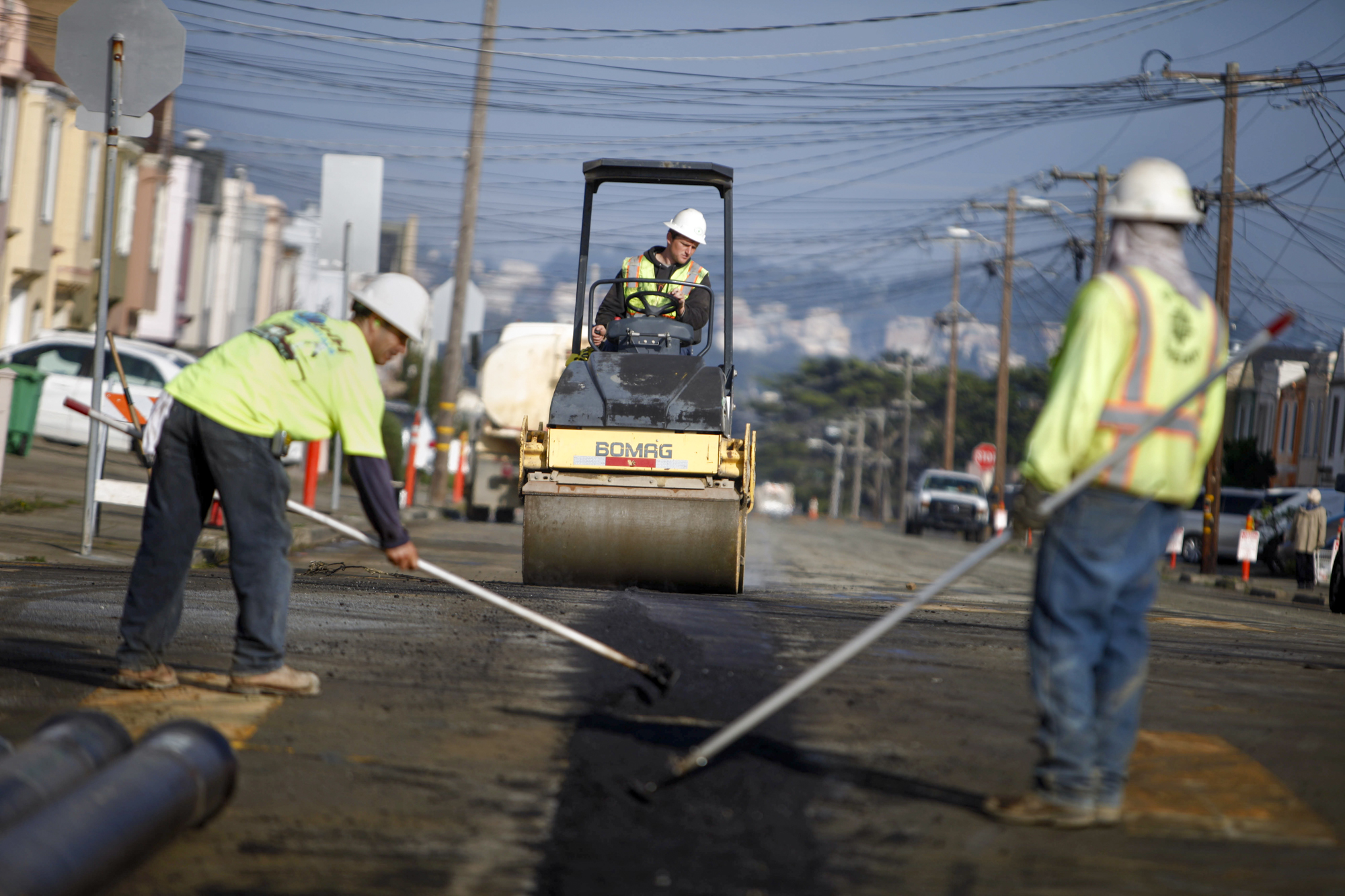
19th Avenue Closure: What to Know About Travel Through San Francisco This Weekend
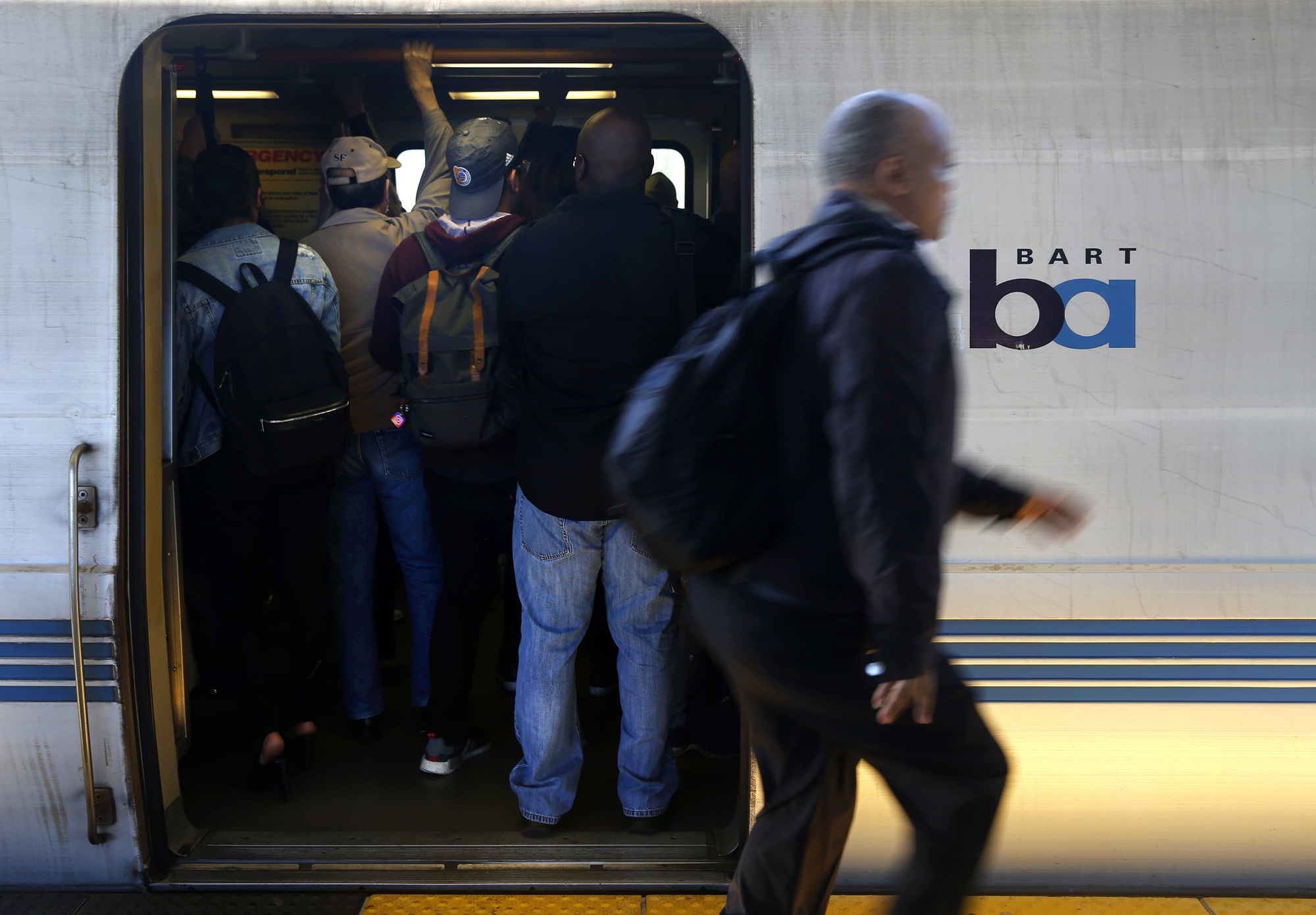
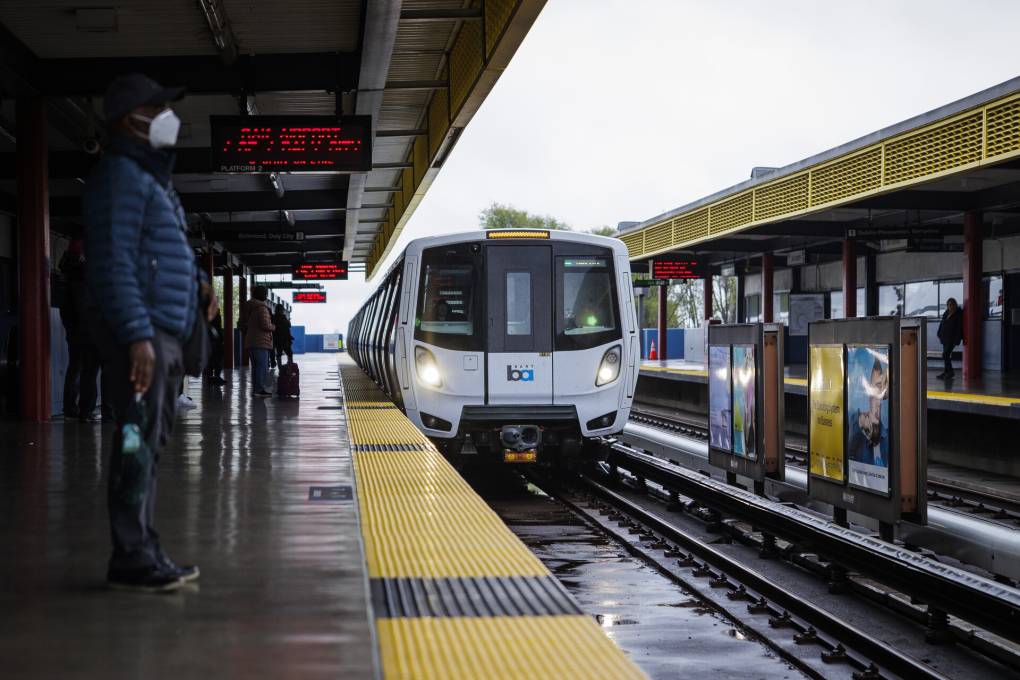
BART Ridership Surged While I-80 Was Closed Through San Francisco
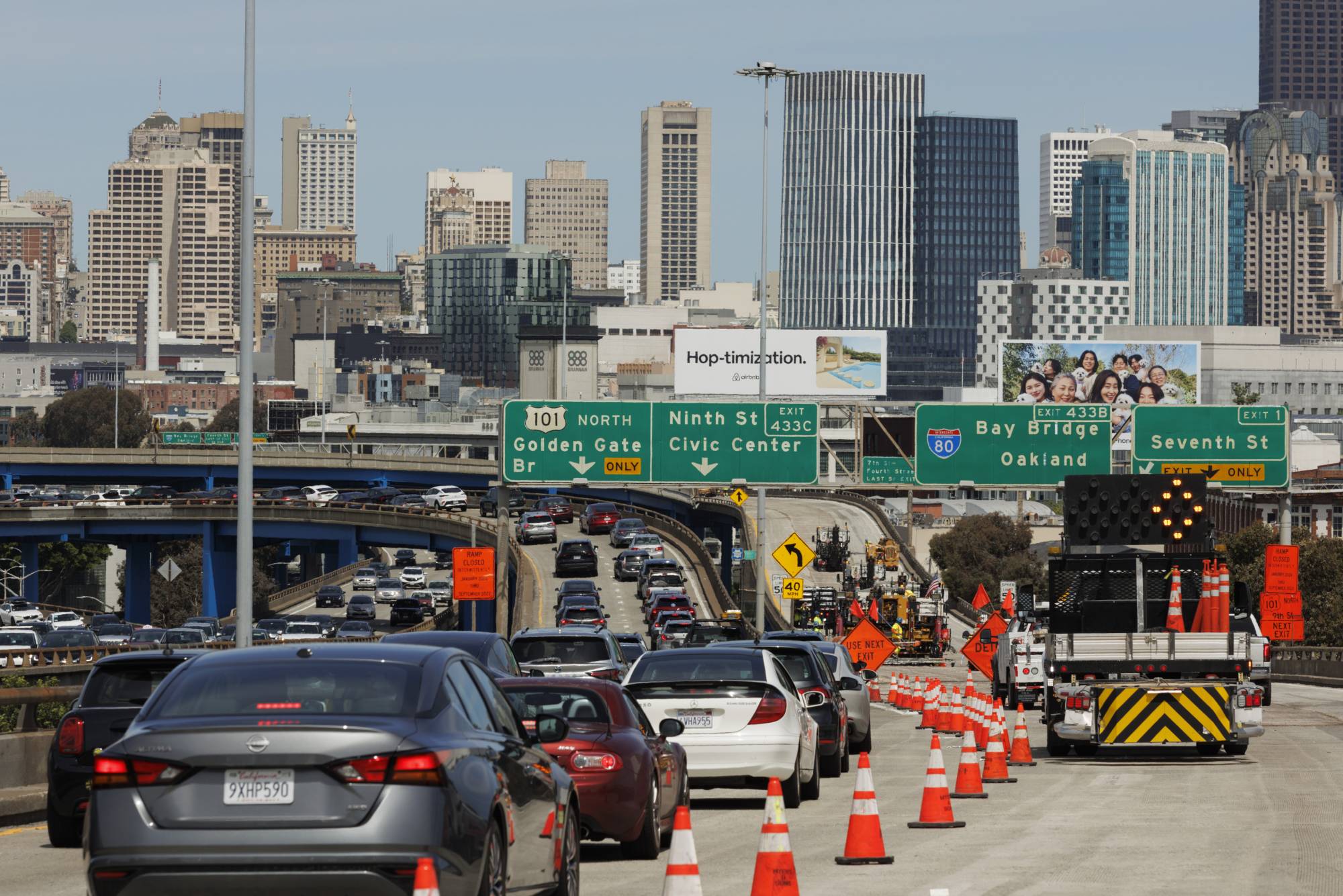
Empty I-80 Allows Caltrans to Repair Key San Francisco Bay Bridge Connector
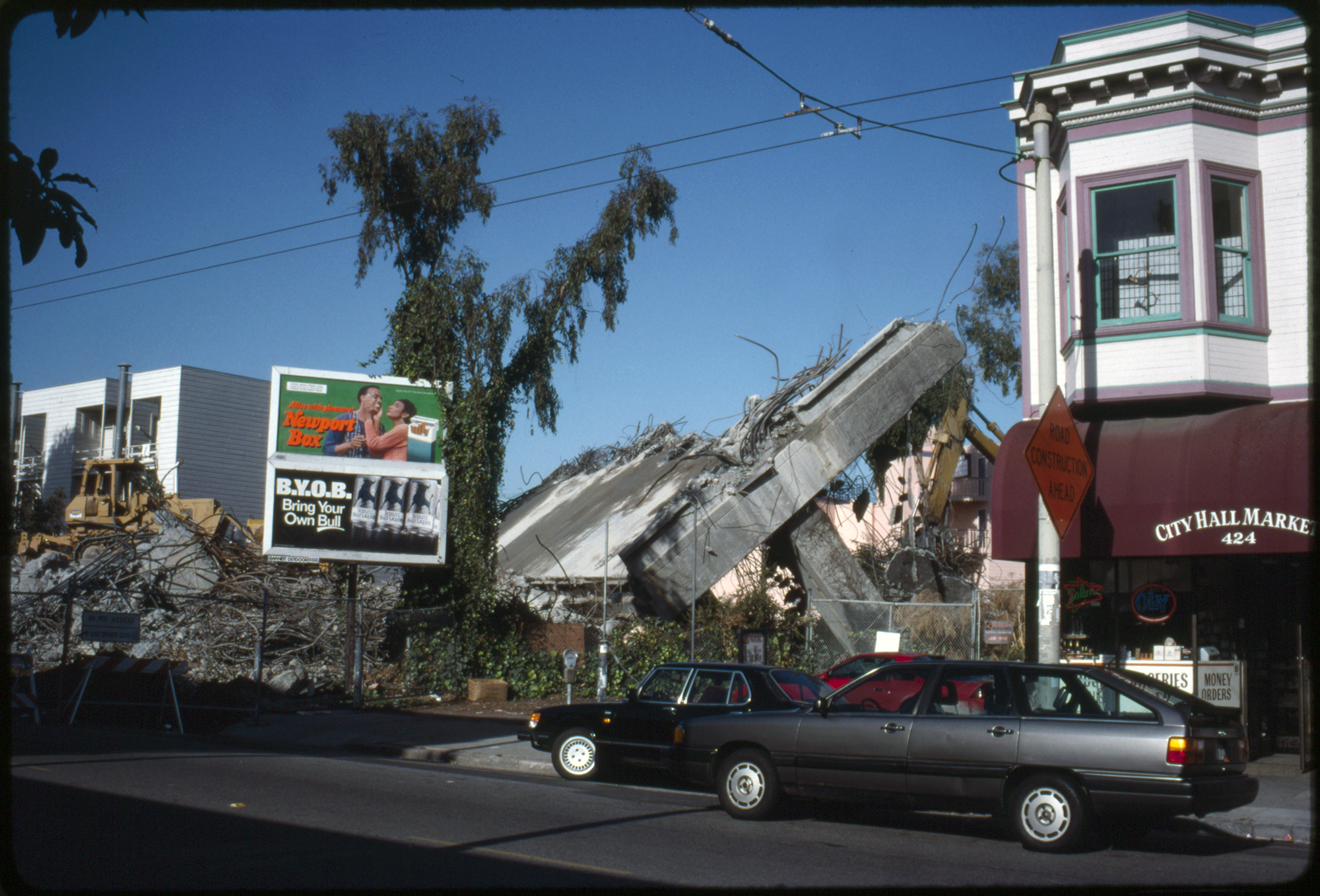
What’s the Deal With I-80 and SF’s Central Freeway? Here’s a Brief History
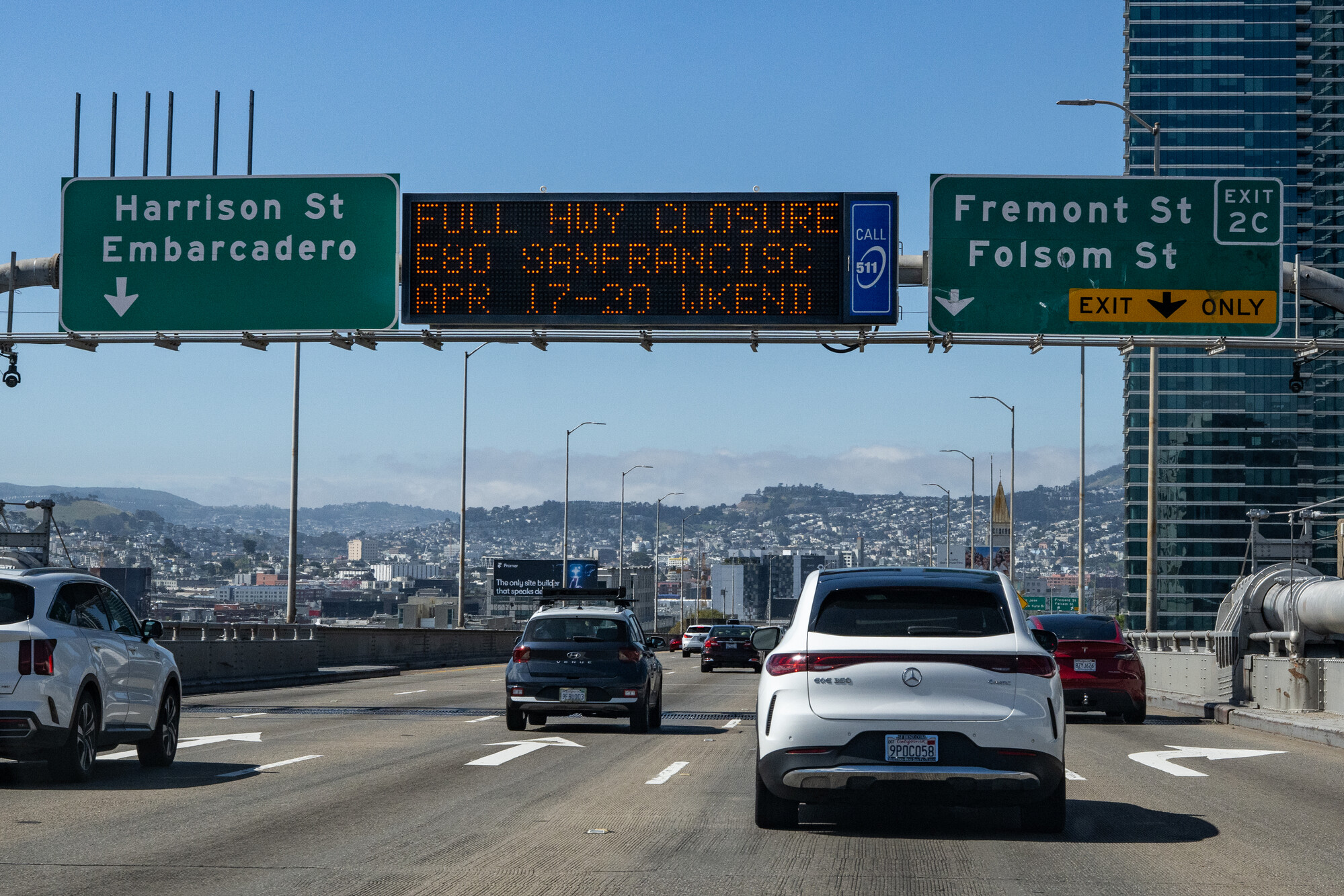
I-80 Closure: What to Know About Travel Through San Francisco This Weekend
Newsom Will Not Provide Stopgap Loan In Time to Prevent Cuts to Bay Area Transit, Lawmakers Say
Fiery Cybertruck Crash Kills 3, Injures 1 in East Bay
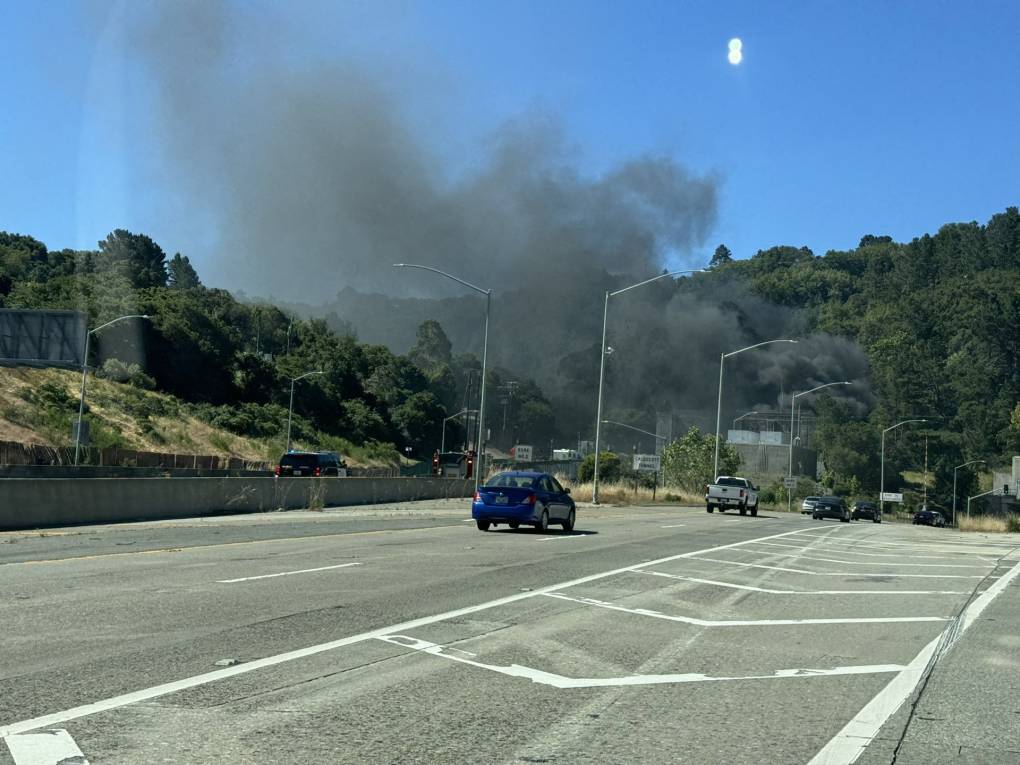
Highway 24 Reopens After Vehicle Fire Closed Part of Caldecott Tunnel
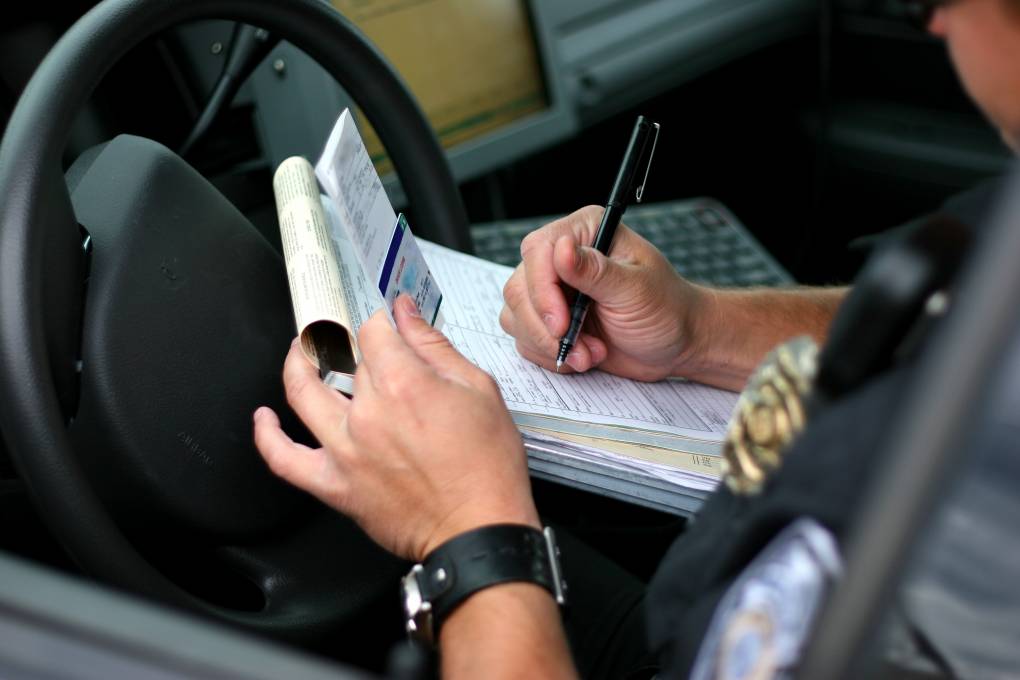
California May Chop Late Fees That Add Hundreds of Dollars to Traffic Tickets
Player sponsored by
window.__IS_SSR__=true
window.__INITIAL_STATE__={
"attachmentsReducer": {
"audio_0": {
"type": "attachments",
"id": "audio_0",
"imgSizes": {
"kqedFullSize": {
"file": "https://ww2.kqed.org/news/wp-content/themes/KQED-unified/img/audio_bgs/background0.jpg"
}
}
},
"audio_1": {
"type": "attachments",
"id": "audio_1",
"imgSizes": {
"kqedFullSize": {
"file": "https://ww2.kqed.org/news/wp-content/themes/KQED-unified/img/audio_bgs/background1.jpg"
}
}
},
"audio_2": {
"type": "attachments",
"id": "audio_2",
"imgSizes": {
"kqedFullSize": {
"file": "https://ww2.kqed.org/news/wp-content/themes/KQED-unified/img/audio_bgs/background2.jpg"
}
}
},
"audio_3": {
"type": "attachments",
"id": "audio_3",
"imgSizes": {
"kqedFullSize": {
"file": "https://ww2.kqed.org/news/wp-content/themes/KQED-unified/img/audio_bgs/background3.jpg"
}
}
},
"audio_4": {
"type": "attachments",
"id": "audio_4",
"imgSizes": {
"kqedFullSize": {
"file": "https://ww2.kqed.org/news/wp-content/themes/KQED-unified/img/audio_bgs/background4.jpg"
}
}
},
"placeholder": {
"type": "attachments",
"id": "placeholder",
"imgSizes": {
"thumbnail": {
"file": "https://cdn.kqed.org/wp-content/uploads/2024/12/KQED-Default-Image-816638274-2000x1333-1-160x107.jpg",
"width": 160,
"height": 107,
"mimeType": "image/jpeg"
},
"medium": {
"file": "https://cdn.kqed.org/wp-content/uploads/2024/12/KQED-Default-Image-816638274-2000x1333-1-800x533.jpg",
"width": 800,
"height": 533,
"mimeType": "image/jpeg"
},
"medium_large": {
"file": "https://cdn.kqed.org/wp-content/uploads/2024/12/KQED-Default-Image-816638274-2000x1333-1-768x512.jpg",
"width": 768,
"height": 512,
"mimeType": "image/jpeg"
},
"large": {
"file": "https://cdn.kqed.org/wp-content/uploads/2024/12/KQED-Default-Image-816638274-2000x1333-1-1020x680.jpg",
"width": 1020,
"height": 680,
"mimeType": "image/jpeg"
},
"1536x1536": {
"file": "https://cdn.kqed.org/wp-content/uploads/2024/12/KQED-Default-Image-816638274-2000x1333-1-1536x1024.jpg",
"width": 1536,
"height": 1024,
"mimeType": "image/jpeg"
},
"fd-lrg": {
"file": "https://cdn.kqed.org/wp-content/uploads/2024/12/KQED-Default-Image-816638274-2000x1333-1-1536x1024.jpg",
"width": 1536,
"height": 1024,
"mimeType": "image/jpeg"
},
"fd-med": {
"file": "https://cdn.kqed.org/wp-content/uploads/2024/12/KQED-Default-Image-816638274-2000x1333-1-1020x680.jpg",
"width": 1020,
"height": 680,
"mimeType": "image/jpeg"
},
"fd-sm": {
"file": "https://cdn.kqed.org/wp-content/uploads/2024/12/KQED-Default-Image-816638274-2000x1333-1-800x533.jpg",
"width": 800,
"height": 533,
"mimeType": "image/jpeg"
},
"post-thumbnail": {
"file": "https://cdn.kqed.org/wp-content/uploads/2024/12/KQED-Default-Image-816638274-2000x1333-1-672x372.jpg",
"width": 672,
"height": 372,
"mimeType": "image/jpeg"
},
"twentyfourteen-full-width": {
"file": "https://cdn.kqed.org/wp-content/uploads/2024/12/KQED-Default-Image-816638274-2000x1333-1-1038x576.jpg",
"width": 1038,
"height": 576,
"mimeType": "image/jpeg"
},
"xxsmall": {
"file": "https://cdn.kqed.org/wp-content/uploads/2024/12/KQED-Default-Image-816638274-2000x1333-1-160x107.jpg",
"width": 160,
"height": 107,
"mimeType": "image/jpeg"
},
"xsmall": {
"file": "https://cdn.kqed.org/wp-content/uploads/2024/12/KQED-Default-Image-816638274-2000x1333-1-672x372.jpg",
"width": 672,
"height": 372,
"mimeType": "image/jpeg"
},
"small": {
"file": "https://cdn.kqed.org/wp-content/uploads/2024/12/KQED-Default-Image-816638274-2000x1333-1-672x372.jpg",
"width": 672,
"height": 372,
"mimeType": "image/jpeg"
},
"xlarge": {
"file": "https://cdn.kqed.org/wp-content/uploads/2024/12/KQED-Default-Image-816638274-2000x1333-1-1020x680.jpg",
"width": 1020,
"height": 680,
"mimeType": "image/jpeg"
},
"full-width": {
"file": "https://cdn.kqed.org/wp-content/uploads/2024/12/KQED-Default-Image-816638274-2000x1333-1-1920x1280.jpg",
"width": 1920,
"height": 1280,
"mimeType": "image/jpeg"
},
"guest-author-32": {
"file": "https://cdn.kqed.org/wp-content/uploads/2025/01/KQED-Default-Image-816638274-1333x1333-1-160x160.jpg",
"width": 32,
"height": 32,
"mimeType": "image/jpeg"
},
"guest-author-50": {
"file": "https://cdn.kqed.org/wp-content/uploads/2025/01/KQED-Default-Image-816638274-1333x1333-1-160x160.jpg",
"width": 50,
"height": 50,
"mimeType": "image/jpeg"
},
"guest-author-64": {
"file": "https://cdn.kqed.org/wp-content/uploads/2025/01/KQED-Default-Image-816638274-1333x1333-1-160x160.jpg",
"width": 64,
"height": 64,
"mimeType": "image/jpeg"
},
"guest-author-96": {
"file": "https://cdn.kqed.org/wp-content/uploads/2025/01/KQED-Default-Image-816638274-1333x1333-1-160x160.jpg",
"width": 96,
"height": 96,
"mimeType": "image/jpeg"
},
"guest-author-128": {
"file": "https://cdn.kqed.org/wp-content/uploads/2025/01/KQED-Default-Image-816638274-1333x1333-1-160x160.jpg",
"width": 128,
"height": 128,
"mimeType": "image/jpeg"
},
"detail": {
"file": "https://cdn.kqed.org/wp-content/uploads/2025/01/KQED-Default-Image-816638274-1333x1333-1-160x160.jpg",
"width": 160,
"height": 160,
"mimeType": "image/jpeg"
},
"kqedFullSize": {
"file": "https://cdn.kqed.org/wp-content/uploads/2024/12/KQED-Default-Image-816638274-2000x1333-1.jpg",
"width": 2000,
"height": 1333
}
}
},
"news_12081202": {
"type": "attachments",
"id": "news_12081202",
"meta": {
"index": "attachments_1716263798",
"site": "news",
"id": "12081202",
"found": true
},
"title": "Mauricio Martinez (left), laborer Ranger Pipelines, Inc. and Jose Ochoa (right), laborer Ranger Pipelines, Inc., sweep asphalt as Dan Durkan, operating engineer Ranger Pipelines, Inc., works on a roller while they work near the intersection of 41st Avenue",
"publishDate": 1776984383,
"status": "inherit",
"parent": 0,
"modified": 1776984532,
"caption": "Crews perform road work near the intersection of 41st Avenue and Santiago Street in San Francisco on Nov. 21, 2014. Caltrans is partially closing a major west side artery and Golden Gate Bridge connector for repairs for a second weekend. Here’s what to know about traffic and detours. ",
"credit": "Lea Suzuki/The San Francisco Chronicle via Getty Images",
"altTag": null,
"description": null,
"imgSizes": {
"thumbnail": {
"file": "https://cdn.kqed.org/wp-content/uploads/sites/10/2026/04/GETTYIMAGES-1322128240-KQED-160x107.jpg",
"width": 160,
"height": 107,
"mimeType": "image/jpeg"
},
"1536x1536": {
"file": "https://cdn.kqed.org/wp-content/uploads/sites/10/2026/04/GETTYIMAGES-1322128240-KQED-1536x1024.jpg",
"width": 1536,
"height": 1024,
"mimeType": "image/jpeg"
},
"post-thumbnail": {
"file": "https://cdn.kqed.org/wp-content/uploads/sites/10/2026/04/GETTYIMAGES-1322128240-KQED-672x372.jpg",
"width": 672,
"height": 372,
"mimeType": "image/jpeg"
},
"twentyfourteen-full-width": {
"file": "https://cdn.kqed.org/wp-content/uploads/sites/10/2026/04/GETTYIMAGES-1322128240-KQED-1038x576.jpg",
"width": 1038,
"height": 576,
"mimeType": "image/jpeg"
},
"npr-cds-wide": {
"file": "https://cdn.kqed.org/wp-content/uploads/sites/10/2026/04/GETTYIMAGES-1322128240-KQED-1200x675.jpg",
"width": 1200,
"height": 675,
"mimeType": "image/jpeg"
},
"npr-cds-square": {
"file": "https://cdn.kqed.org/wp-content/uploads/sites/10/2026/04/GETTYIMAGES-1322128240-KQED-600x600.jpg",
"width": 600,
"height": 600,
"mimeType": "image/jpeg"
},
"kqedFullSize": {
"file": "https://cdn.kqed.org/wp-content/uploads/sites/10/2026/04/GETTYIMAGES-1322128240-KQED.jpg",
"width": 2000,
"height": 1333
}
},
"isLoading": false,
"fetchFailed": false
},
"news_12080719": {
"type": "attachments",
"id": "news_12080719",
"meta": {
"index": "attachments_1716263798",
"site": "news",
"id": "12080719",
"found": true
},
"title": "A commuter looks for a less crowded section of a westbound BART train at the West Oakland station in Oakland, Calif. on Friday, Feb. 16, 2018. BART officials will begin a study on the feasibility of a second transbay tube",
"publishDate": 1776797943,
"status": "inherit",
"parent": 12080707,
"modified": 1776799298,
"caption": "A commuter looks for a less crowded section of a westbound BART train at the West Oakland station in Oakland, California, on Friday, Feb. 16, 2018. BART officials will begin a study on the feasibility of a second transbay tube. ",
"credit": "Paul Chinn/The San Francisco Chronicle via Getty Images",
"altTag": null,
"description": null,
"imgSizes": {
"thumbnail": {
"file": "https://cdn.kqed.org/wp-content/uploads/sites/10/2026/04/BARTSFGetty-160x111.jpg",
"width": 160,
"height": 111,
"mimeType": "image/jpeg"
},
"1536x1536": {
"file": "https://cdn.kqed.org/wp-content/uploads/sites/10/2026/04/BARTSFGetty-1536x1068.jpg",
"width": 1536,
"height": 1068,
"mimeType": "image/jpeg"
},
"post-thumbnail": {
"file": "https://cdn.kqed.org/wp-content/uploads/sites/10/2026/04/BARTSFGetty-672x372.jpg",
"width": 672,
"height": 372,
"mimeType": "image/jpeg"
},
"twentyfourteen-full-width": {
"file": "https://cdn.kqed.org/wp-content/uploads/sites/10/2026/04/BARTSFGetty-1038x576.jpg",
"width": 1038,
"height": 576,
"mimeType": "image/jpeg"
},
"npr-cds-wide": {
"file": "https://cdn.kqed.org/wp-content/uploads/sites/10/2026/04/BARTSFGetty-1200x675.jpg",
"width": 1200,
"height": 675,
"mimeType": "image/jpeg"
},
"npr-cds-square": {
"file": "https://cdn.kqed.org/wp-content/uploads/sites/10/2026/04/BARTSFGetty-600x600.jpg",
"width": 600,
"height": 600,
"mimeType": "image/jpeg"
},
"kqedFullSize": {
"file": "https://cdn.kqed.org/wp-content/uploads/sites/10/2026/04/BARTSFGetty.jpg",
"width": 2000,
"height": 1391
}
},
"isLoading": false,
"fetchFailed": false
},
"news_12080559": {
"type": "attachments",
"id": "news_12080559",
"meta": {
"index": "attachments_1716263798",
"site": "news",
"id": "12080559",
"found": true
},
"title": "041826-I80Closure-JY-13",
"publishDate": 1776625760,
"status": "inherit",
"parent": 12080542,
"modified": 1776707566,
"caption": "Traffic is rerouted from I-80 eastbound to U.S. 101 as Caltrans performs construction in San Francisco on Saturday, April 18, 2026. Throughout the weekend, Caltrans is repairing viaducts and performing necessary repairs, prompting a stretch of I-80 to be closed until early Monday morning.",
"credit": "Juliana Yamada for KQED",
"altTag": null,
"description": null,
"imgSizes": {
"medium": {
"file": "https://cdn.kqed.org/wp-content/uploads/sites/10/2026/04/041826-I80Closure-JY-13-2000x1335.jpg",
"width": 2000,
"height": 1335,
"mimeType": "image/jpeg"
},
"large": {
"file": "https://cdn.kqed.org/wp-content/uploads/sites/10/2026/04/041826-I80Closure-JY-13-2000x1335.jpg",
"width": 2000,
"height": 1335,
"mimeType": "image/jpeg"
},
"thumbnail": {
"file": "https://cdn.kqed.org/wp-content/uploads/sites/10/2026/04/041826-I80Closure-JY-13-160x107.jpg",
"width": 160,
"height": 107,
"mimeType": "image/jpeg"
},
"1536x1536": {
"file": "https://cdn.kqed.org/wp-content/uploads/sites/10/2026/04/041826-I80Closure-JY-13-1536x1025.jpg",
"width": 1536,
"height": 1025,
"mimeType": "image/jpeg"
},
"2048x2048": {
"file": "https://cdn.kqed.org/wp-content/uploads/sites/10/2026/04/041826-I80Closure-JY-13-2048x1367.jpg",
"width": 2048,
"height": 1367,
"mimeType": "image/jpeg"
},
"post-thumbnail": {
"file": "https://cdn.kqed.org/wp-content/uploads/sites/10/2026/04/041826-I80Closure-JY-13-672x372.jpg",
"width": 672,
"height": 372,
"mimeType": "image/jpeg"
},
"twentyfourteen-full-width": {
"file": "https://cdn.kqed.org/wp-content/uploads/sites/10/2026/04/041826-I80Closure-JY-13-1038x576.jpg",
"width": 1038,
"height": 576,
"mimeType": "image/jpeg"
},
"full-width": {
"file": "https://cdn.kqed.org/wp-content/uploads/sites/10/2026/04/041826-I80Closure-JY-13-2000x1335.jpg",
"width": 2000,
"height": 1335,
"mimeType": "image/jpeg"
},
"npr-cds-wide": {
"file": "https://cdn.kqed.org/wp-content/uploads/sites/10/2026/04/041826-I80Closure-JY-13-1200x675.jpg",
"width": 1200,
"height": 675,
"mimeType": "image/jpeg"
},
"npr-cds-square": {
"file": "https://cdn.kqed.org/wp-content/uploads/sites/10/2026/04/041826-I80Closure-JY-13-600x600.jpg",
"width": 600,
"height": 600,
"mimeType": "image/jpeg"
},
"kqedFullSize": {
"file": "https://cdn.kqed.org/wp-content/uploads/sites/10/2026/04/041826-I80Closure-JY-13-scaled.jpg",
"width": 2560,
"height": 1709
}
},
"isLoading": false,
"fetchFailed": false
},
"news_12080244": {
"type": "attachments",
"id": "news_12080244",
"meta": {
"index": "attachments_1716263798",
"site": "news",
"id": "12080244",
"found": true
},
"title": "260416-Central Freeway History-SFPL-01-KQED",
"publishDate": 1776360471,
"status": "inherit",
"parent": 0,
"modified": 1776360501,
"caption": "Central Freeway demolition at Hayes Street on Dec. 9, 1991.",
"credit": "Courtesy of Robert Durden Color Slide Collection, SAN FRANCISCO HISTORY CENTER, SAN FRANCISCO PUBLIC LIBRARY",
"altTag": null,
"description": null,
"imgSizes": {
"thumbnail": {
"file": "https://cdn.kqed.org/wp-content/uploads/sites/10/2026/04/260416-Central-Freeway-History-SFPL-01-KQED-160x109.jpg",
"width": 160,
"height": 109,
"mimeType": "image/jpeg"
},
"1536x1536": {
"file": "https://cdn.kqed.org/wp-content/uploads/sites/10/2026/04/260416-Central-Freeway-History-SFPL-01-KQED-1536x1043.jpg",
"width": 1536,
"height": 1043,
"mimeType": "image/jpeg"
},
"post-thumbnail": {
"file": "https://cdn.kqed.org/wp-content/uploads/sites/10/2026/04/260416-Central-Freeway-History-SFPL-01-KQED-672x372.jpg",
"width": 672,
"height": 372,
"mimeType": "image/jpeg"
},
"twentyfourteen-full-width": {
"file": "https://cdn.kqed.org/wp-content/uploads/sites/10/2026/04/260416-Central-Freeway-History-SFPL-01-KQED-1038x576.jpg",
"width": 1038,
"height": 576,
"mimeType": "image/jpeg"
},
"npr-cds-wide": {
"file": "https://cdn.kqed.org/wp-content/uploads/sites/10/2026/04/260416-Central-Freeway-History-SFPL-01-KQED-1200x675.jpg",
"width": 1200,
"height": 675,
"mimeType": "image/jpeg"
},
"npr-cds-square": {
"file": "https://cdn.kqed.org/wp-content/uploads/sites/10/2026/04/260416-Central-Freeway-History-SFPL-01-KQED-600x600.jpg",
"width": 600,
"height": 600,
"mimeType": "image/jpeg"
},
"kqedFullSize": {
"file": "https://cdn.kqed.org/wp-content/uploads/sites/10/2026/04/260416-Central-Freeway-History-SFPL-01-KQED.jpg",
"width": 2000,
"height": 1358
}
},
"isLoading": false,
"fetchFailed": false
},
"news_12079178": {
"type": "attachments",
"id": "news_12079178",
"meta": {
"index": "attachments_1716263798",
"site": "news",
"id": "12079178",
"found": true
},
"title": "260408-I80Closure-11-BL_qed",
"publishDate": 1775691060,
"status": "inherit",
"parent": 12079845,
"modified": 1776359876,
"caption": "A sign announces a closure on I-80 on April 8, 2026. Eastbound lanes are scheduled to close from 11 p.m. April 17 to 6 a.m. April 20 for planned construction work, with detours in place during the closure.",
"credit": "Beth LaBerge/KQED",
"altTag": null,
"description": null,
"imgSizes": {
"thumbnail": {
"file": "https://cdn.kqed.org/wp-content/uploads/sites/10/2026/04/260408-I80Closure-11-BL_qed-160x107.jpg",
"width": 160,
"height": 107,
"mimeType": "image/jpeg"
},
"1536x1536": {
"file": "https://cdn.kqed.org/wp-content/uploads/sites/10/2026/04/260408-I80Closure-11-BL_qed-1536x1024.jpg",
"width": 1536,
"height": 1024,
"mimeType": "image/jpeg"
},
"post-thumbnail": {
"file": "https://cdn.kqed.org/wp-content/uploads/sites/10/2026/04/260408-I80Closure-11-BL_qed-672x372.jpg",
"width": 672,
"height": 372,
"mimeType": "image/jpeg"
},
"twentyfourteen-full-width": {
"file": "https://cdn.kqed.org/wp-content/uploads/sites/10/2026/04/260408-I80Closure-11-BL_qed-1038x576.jpg",
"width": 1038,
"height": 576,
"mimeType": "image/jpeg"
},
"npr-cds-wide": {
"file": "https://cdn.kqed.org/wp-content/uploads/sites/10/2026/04/260408-I80Closure-11-BL_qed-1200x675.jpg",
"width": 1200,
"height": 675,
"mimeType": "image/jpeg"
},
"npr-cds-square": {
"file": "https://cdn.kqed.org/wp-content/uploads/sites/10/2026/04/260408-I80Closure-11-BL_qed-600x600.jpg",
"width": 600,
"height": 600,
"mimeType": "image/jpeg"
},
"kqedFullSize": {
"file": "https://cdn.kqed.org/wp-content/uploads/sites/10/2026/04/260408-I80Closure-11-BL_qed.jpg",
"width": 1999,
"height": 1333
}
},
"isLoading": false,
"fetchFailed": false
},
"news_11999606": {
"type": "attachments",
"id": "news_11999606",
"meta": {
"index": "attachments_1716263798",
"site": "news",
"id": "11999606",
"found": true
},
"title": "240313-BART-Train-arrives",
"publishDate": 1723226703,
"status": "inherit",
"parent": 11999596,
"modified": 1746824991,
"caption": "A BART train approaches a station on March 13, 2024. ",
"credit": "Martin do Nascimento/KQED",
"altTag": null,
"description": null,
"imgSizes": {
"medium": {
"file": "https://cdn.kqed.org/wp-content/uploads/sites/10/2024/08/240313-BART-Train-arrives-800x533.jpg",
"width": 800,
"height": 533,
"mimeType": "image/jpeg"
},
"large": {
"file": "https://cdn.kqed.org/wp-content/uploads/sites/10/2024/08/240313-BART-Train-arrives-1020x680.jpg",
"width": 1020,
"height": 680,
"mimeType": "image/jpeg"
},
"thumbnail": {
"file": "https://cdn.kqed.org/wp-content/uploads/sites/10/2024/08/240313-BART-Train-arrives-160x107.jpg",
"width": 160,
"height": 107,
"mimeType": "image/jpeg"
},
"1536x1536": {
"file": "https://cdn.kqed.org/wp-content/uploads/sites/10/2024/08/240313-BART-Train-arrives-1536x1024.jpg",
"width": 1536,
"height": 1024,
"mimeType": "image/jpeg"
},
"post-thumbnail": {
"file": "https://cdn.kqed.org/wp-content/uploads/sites/10/2024/08/240313-BART-Train-arrives-672x372.jpg",
"width": 672,
"height": 372,
"mimeType": "image/jpeg"
},
"twentyfourteen-full-width": {
"file": "https://cdn.kqed.org/wp-content/uploads/sites/10/2024/08/240313-BART-Train-arrives-1038x576.jpg",
"width": 1038,
"height": 576,
"mimeType": "image/jpeg"
},
"kqedFullSize": {
"file": "https://cdn.kqed.org/wp-content/uploads/sites/10/2024/08/240313-BART-Train-arrives.jpg",
"width": 1920,
"height": 1280
}
},
"isLoading": false,
"fetchFailed": false
},
"news_12016082": {
"type": "attachments",
"id": "news_12016082",
"meta": {
"index": "attachments_1716263798",
"site": "news",
"id": "12016082",
"found": true
},
"title": "Police tape and crime scene",
"publishDate": 1732727273,
"status": "inherit",
"parent": 12016081,
"modified": 1732727319,
"caption": "Police tape stretching across a road in front of a crime scene.",
"credit": "Ajax9/Getty Images",
"altTag": null,
"description": null,
"imgSizes": {
"medium": {
"file": "https://cdn.kqed.org/wp-content/uploads/sites/10/2024/11/GettyImages-1889004792-800x533.jpg",
"width": 800,
"height": 533,
"mimeType": "image/jpeg"
},
"large": {
"file": "https://cdn.kqed.org/wp-content/uploads/sites/10/2024/11/GettyImages-1889004792-1020x680.jpg",
"width": 1020,
"height": 680,
"mimeType": "image/jpeg"
},
"thumbnail": {
"file": "https://cdn.kqed.org/wp-content/uploads/sites/10/2024/11/GettyImages-1889004792-160x107.jpg",
"width": 160,
"height": 107,
"mimeType": "image/jpeg"
},
"1536x1536": {
"file": "https://cdn.kqed.org/wp-content/uploads/sites/10/2024/11/GettyImages-1889004792-1536x1024.jpg",
"width": 1536,
"height": 1024,
"mimeType": "image/jpeg"
},
"post-thumbnail": {
"file": "https://cdn.kqed.org/wp-content/uploads/sites/10/2024/11/GettyImages-1889004792-672x372.jpg",
"width": 672,
"height": 372,
"mimeType": "image/jpeg"
},
"twentyfourteen-full-width": {
"file": "https://cdn.kqed.org/wp-content/uploads/sites/10/2024/11/GettyImages-1889004792-1038x576.jpg",
"width": 1038,
"height": 576,
"mimeType": "image/jpeg"
},
"full-width": {
"file": "https://cdn.kqed.org/wp-content/uploads/sites/10/2024/11/GettyImages-1889004792-1920x1280.jpg",
"width": 1920,
"height": 1280,
"mimeType": "image/jpeg"
},
"kqedFullSize": {
"file": "https://cdn.kqed.org/wp-content/uploads/sites/10/2024/11/GettyImages-1889004792.jpg",
"width": 2000,
"height": 1333
}
},
"isLoading": false,
"fetchFailed": false
},
"news_11988924": {
"type": "attachments",
"id": "news_11988924",
"meta": {
"index": "attachments_1716263798",
"site": "news",
"id": "11988924",
"found": true
},
"title": "caldecott tunnel fire",
"publishDate": 1717530310,
"status": "inherit",
"parent": 11988923,
"modified": 1717531039,
"caption": "A vehicle fire in one of the two eastbound bores of the Caldecott Tunnel closed Highway 24 into Orinda for hours on June 4, 2024.",
"credit": "Courtesy of Brad Gessler",
"altTag": "Smoke rises from a highway tunnel.",
"description": null,
"imgSizes": {
"medium": {
"file": "https://cdn.kqed.org/wp-content/uploads/sites/10/2024/06/caldecott-tunnel-fire-800x600.jpg",
"width": 800,
"height": 600,
"mimeType": "image/jpeg"
},
"large": {
"file": "https://cdn.kqed.org/wp-content/uploads/sites/10/2024/06/caldecott-tunnel-fire-1020x765.jpg",
"width": 1020,
"height": 765,
"mimeType": "image/jpeg"
},
"thumbnail": {
"file": "https://cdn.kqed.org/wp-content/uploads/sites/10/2024/06/caldecott-tunnel-fire-160x120.jpg",
"width": 160,
"height": 120,
"mimeType": "image/jpeg"
},
"1536x1536": {
"file": "https://cdn.kqed.org/wp-content/uploads/sites/10/2024/06/caldecott-tunnel-fire-1536x1152.jpg",
"width": 1536,
"height": 1152,
"mimeType": "image/jpeg"
},
"post-thumbnail": {
"file": "https://cdn.kqed.org/wp-content/uploads/sites/10/2024/06/caldecott-tunnel-fire-672x372.jpg",
"width": 672,
"height": 372,
"mimeType": "image/jpeg"
},
"twentyfourteen-full-width": {
"file": "https://cdn.kqed.org/wp-content/uploads/sites/10/2024/06/caldecott-tunnel-fire-1038x576.jpg",
"width": 1038,
"height": 576,
"mimeType": "image/jpeg"
},
"kqedFullSize": {
"file": "https://cdn.kqed.org/wp-content/uploads/sites/10/2024/06/caldecott-tunnel-fire.jpg",
"width": 1920,
"height": 1440
}
},
"isLoading": false,
"fetchFailed": false
},
"news_11913702": {
"type": "attachments",
"id": "news_11913702",
"meta": {
"index": "attachments_1716263798",
"site": "news",
"id": "11913702",
"found": true
},
"parent": 11913701,
"imgSizes": {
"twentyfourteen-full-width": {
"file": "https://ww2.kqed.org/app/uploads/sites/10/2022/05/GettyImages-157284610-1038x576.jpg",
"width": 1038,
"mimeType": "image/jpeg",
"height": 576
},
"thumbnail": {
"file": "https://ww2.kqed.org/app/uploads/sites/10/2022/05/GettyImages-157284610-160x107.jpg",
"width": 160,
"mimeType": "image/jpeg",
"height": 107
},
"post-thumbnail": {
"file": "https://ww2.kqed.org/app/uploads/sites/10/2022/05/GettyImages-157284610-672x372.jpg",
"width": 672,
"mimeType": "image/jpeg",
"height": 372
},
"kqedFullSize": {
"file": "https://ww2.kqed.org/app/uploads/sites/10/2022/05/GettyImages-157284610-scaled.jpg",
"width": 2560,
"height": 1707
},
"2048x2048": {
"file": "https://ww2.kqed.org/app/uploads/sites/10/2022/05/GettyImages-157284610-2048x1365.jpg",
"width": 2048,
"mimeType": "image/jpeg",
"height": 1365
},
"large": {
"file": "https://ww2.kqed.org/app/uploads/sites/10/2022/05/GettyImages-157284610-1020x680.jpg",
"width": 1020,
"mimeType": "image/jpeg",
"height": 680
},
"1536x1536": {
"file": "https://ww2.kqed.org/app/uploads/sites/10/2022/05/GettyImages-157284610-1536x1024.jpg",
"width": 1536,
"mimeType": "image/jpeg",
"height": 1024
},
"full-width": {
"file": "https://ww2.kqed.org/app/uploads/sites/10/2022/05/GettyImages-157284610-1920x1280.jpg",
"width": 1920,
"mimeType": "image/jpeg",
"height": 1280
},
"medium": {
"file": "https://ww2.kqed.org/app/uploads/sites/10/2022/05/GettyImages-157284610-800x533.jpg",
"width": 800,
"mimeType": "image/jpeg",
"height": 533
}
},
"publishDate": 1652208625,
"modified": 1652233183,
"caption": "California lawmakers aim to eliminate so-called \"hidden\" court fees, but Gavin Newsom only wants them reduced.",
"description": null,
"title": "GettyImages-157284610",
"credit": "ftwitty via Getty Images",
"status": "inherit",
"altTag": null,
"isLoading": false,
"fetchFailed": false
}
},
"audioPlayerReducer": {
"postId": "stream_live",
"isPaused": true,
"isPlaying": false,
"pfsActive": false,
"pledgeModalIsOpen": true,
"playerDrawerIsOpen": false
},
"authorsReducer": {
"byline_news_11913701": {
"type": "authors",
"id": "byline_news_11913701",
"meta": {
"override": true
},
"slug": "byline_news_11913701",
"name": "\u003ca>Jeanne Kuang\u003c/a>",
"isLoading": false
},
"danbrekke": {
"type": "authors",
"id": "222",
"meta": {
"index": "authors_1716337520",
"id": "222",
"found": true
},
"name": "Dan Brekke",
"firstName": "Dan",
"lastName": "Brekke",
"slug": "danbrekke",
"email": "dbrekke@kqed.org",
"display_author_email": true,
"staff_mastheads": [
"news",
"science"
],
"title": "KQED Editor and Reporter",
"bio": "Dan Brekke is a reporter and editor for KQED News, responsible for coverage of topics ranging from California water issues to the Bay Area's transportation challenges. In a newsroom career that began in Chicago in 1972, Dan has worked for \u003cem>The San Francisco Examiner,\u003c/em> Wired and TechTV and has been published in The New York Times, The New York Times Magazine, Business 2.0, Salon and elsewhere.\r\n\r\nSince joining KQED in 2007, Dan has reported, edited and produced both radio and online features and breaking news pieces. He has shared as both editor and reporter in four Society of Professional Journalists Norcal Excellence in Journalism awards and one Edward R. Murrow regional award. He was chosen for a spring 2017 residency at the Mesa Refuge to advance his research on California salmon.\r\n\r\nEmail Dan at: \u003ca href=\"mailto:dbrekke@kqed.org\">dbrekke@kqed.org\u003c/a>\r\n\r\n\u003cstrong>Twitter:\u003c/strong> \u003ca href=\"https://twitter.com/danbrekke\" rel=\"noopener noreferrer\">twitter.com/danbrekke\u003c/a>\r\n\u003cstrong>Facebook:\u003c/strong> \u003ca href=\"https://www.facebook.com/danbrekke\" rel=\"noopener noreferrer\">www.facebook.com/danbrekke\u003c/a>\r\n\u003cstrong>LinkedIn:\u003c/strong> \u003ca href=\"https://www.linkedin.com/in/danbrekke\" rel=\"noopener noreferrer\">www.linkedin.com/in/danbrekke\u003c/a>",
"avatar": "https://secure.gravatar.com/avatar/c8126230345efca3f7aa89b1a402be45?s=600&d=mm&r=g",
"twitter": "danbrekke",
"facebook": null,
"instagram": "https://www.instagram.com/dan.brekke/",
"linkedin": "https://www.linkedin.com/in/danbrekke/",
"sites": [
{
"site": "news",
"roles": [
"administrator",
"create_posts"
]
},
{
"site": "stateofhealth",
"roles": [
"editor"
]
},
{
"site": "science",
"roles": [
"editor"
]
},
{
"site": "quest",
"roles": [
"contributor"
]
},
{
"site": "food",
"roles": [
"contributor"
]
},
{
"site": "forum",
"roles": [
"contributor"
]
},
{
"site": "liveblog",
"roles": [
"editor"
]
}
],
"headData": {
"title": "Dan Brekke | KQED",
"description": "KQED Editor and Reporter",
"ogImgSrc": "https://secure.gravatar.com/avatar/c8126230345efca3f7aa89b1a402be45?s=600&d=mm&r=g",
"twImgSrc": "https://secure.gravatar.com/avatar/c8126230345efca3f7aa89b1a402be45?s=600&d=mm&r=g"
},
"isLoading": false,
"link": "/author/danbrekke"
},
"bwatt": {
"type": "authors",
"id": "11238",
"meta": {
"index": "authors_1716337520",
"id": "11238",
"found": true
},
"name": "Brian Watt",
"firstName": "Brian",
"lastName": "Watt",
"slug": "bwatt",
"email": "bwatt@KQED.org",
"display_author_email": false,
"staff_mastheads": [
"news"
],
"title": "Morning News Anchor",
"bio": "Brian Watt is KQED's morning radio news anchor. He joined the KQED News team in April of 2016. Prior to that, he worked as a Reporter for KPCC in Los Angeles and a producer at \u003cem>Marketplace.\u003c/em>\r\n\r\nDuring eight years at KPCC, Brian covered business and economics, and his work won several awards. In 2008, he won the Los Angeles Press Club’s first-place award for Business and Financial Reporting, Broadcast. He’s also received honorable mention and been first runner up for the Press Club’s Radio Journalist of the Year. He won two Golden Mike awards from the Radio and TV News Association of Southern California.\r\n\r\nBrian holds degrees in theater from Yale University and the Sorbonne, and has worked as an actor in France, Italy, Brazil, Hungary and . . . Hollywood. He appeared in a few television shows, including \u003cem>The West Wing, Judging Amy\u003c/em> and \u003cem>The District.\u003c/em>\r\n\r\nEmail: bwatt@KQED.org Twitter: @RadioBWatt",
"avatar": "https://secure.gravatar.com/avatar/55393ff57ed34e2be773ba4789dd6a19?s=600&d=blank&r=g",
"twitter": "@RadioBWatt",
"facebook": null,
"instagram": null,
"linkedin": null,
"sites": [
{
"site": "arts",
"roles": [
"contributor"
]
},
{
"site": "news",
"roles": [
"editor"
]
}
],
"headData": {
"title": "Brian Watt | KQED",
"description": "Morning News Anchor",
"ogImgSrc": "https://secure.gravatar.com/avatar/55393ff57ed34e2be773ba4789dd6a19?s=600&d=blank&r=g",
"twImgSrc": "https://secure.gravatar.com/avatar/55393ff57ed34e2be773ba4789dd6a19?s=600&d=blank&r=g"
},
"isLoading": false,
"link": "/author/bwatt"
},
"agonzalez": {
"type": "authors",
"id": "11724",
"meta": {
"index": "authors_1716337520",
"id": "11724",
"found": true
},
"name": "Alexander Gonzalez",
"firstName": "Alexander",
"lastName": "Gonzalez",
"slug": "agonzalez",
"email": "AlexanderGonzalez@KQED.org",
"display_author_email": false,
"staff_mastheads": [
"news"
],
"title": "KQED Contributor",
"bio": null,
"avatar": "https://secure.gravatar.com/avatar/9e291ed34e154df4c662edf858b641d70b4859939bfe40be478408f9dfd057d2?s=600&d=blank&r=g",
"twitter": null,
"bluesky": null,
"facebook": null,
"instagram": null,
"linkedin": null,
"sites": [
{
"site": "arts",
"roles": [
"editor"
]
},
{
"site": "news",
"roles": [
"editor"
]
},
{
"site": "science",
"roles": [
"editor"
]
}
],
"headData": {
"title": "Alexander Gonzalez | KQED",
"description": "KQED Contributor",
"ogImgSrc": "https://secure.gravatar.com/avatar/9e291ed34e154df4c662edf858b641d70b4859939bfe40be478408f9dfd057d2?s=600&d=blank&r=g",
"twImgSrc": "https://secure.gravatar.com/avatar/9e291ed34e154df4c662edf858b641d70b4859939bfe40be478408f9dfd057d2?s=600&d=blank&r=g"
},
"isLoading": false,
"link": "/author/agonzalez"
},
"jlara": {
"type": "authors",
"id": "11761",
"meta": {
"index": "authors_1716337520",
"id": "11761",
"found": true
},
"name": "Juan Carlos Lara",
"firstName": "Juan Carlos",
"lastName": "Lara",
"slug": "jlara",
"email": "jlara@kqed.org",
"display_author_email": false,
"staff_mastheads": [],
"title": "KQED Contributor",
"bio": null,
"avatar": "https://secure.gravatar.com/avatar/19e2052b9b05657c5ff2af2121846e9c?s=600&d=blank&r=g",
"twitter": null,
"facebook": null,
"instagram": null,
"linkedin": null,
"sites": [
{
"site": "arts",
"roles": [
"editor"
]
},
{
"site": "news",
"roles": [
"editor"
]
},
{
"site": "forum",
"roles": [
"editor"
]
},
{
"site": "liveblog",
"roles": [
"contributor"
]
}
],
"headData": {
"title": "Juan Carlos Lara | KQED",
"description": "KQED Contributor",
"ogImgSrc": "https://secure.gravatar.com/avatar/19e2052b9b05657c5ff2af2121846e9c?s=600&d=blank&r=g",
"twImgSrc": "https://secure.gravatar.com/avatar/19e2052b9b05657c5ff2af2121846e9c?s=600&d=blank&r=g"
},
"isLoading": false,
"link": "/author/jlara"
},
"adahlstromeckman": {
"type": "authors",
"id": "11785",
"meta": {
"index": "authors_1716337520",
"id": "11785",
"found": true
},
"name": "Azul Dahlstrom-Eckman",
"firstName": "Azul",
"lastName": "Dahlstrom-Eckman",
"slug": "adahlstromeckman",
"email": "adahlstrom-eckman@kqed.org",
"display_author_email": true,
"staff_mastheads": [],
"title": "Reporter",
"bio": "Azul is a reporter for KQED focusing on transportation and features. He joined KQED in 2021 as an alumna of KALW's Audio Academy radio journalism training program.",
"avatar": "https://secure.gravatar.com/avatar/9cb750298435add7815a777f55bf1f46845c1386bb8452555c60a7b820b5aba3?s=600&d=blank&r=g",
"twitter": "@zuliemann",
"bluesky": "@azul415.bsky.social",
"facebook": null,
"instagram": null,
"linkedin": null,
"sites": [
{
"site": "arts",
"roles": [
"editor"
]
},
{
"site": "news",
"roles": [
"editor"
]
},
{
"site": "science",
"roles": [
"editor"
]
},
{
"site": "liveblog",
"roles": [
"author"
]
}
],
"headData": {
"title": "Azul Dahlstrom-Eckman | KQED",
"description": "Reporter",
"ogImgSrc": "https://secure.gravatar.com/avatar/9cb750298435add7815a777f55bf1f46845c1386bb8452555c60a7b820b5aba3?s=600&d=blank&r=g",
"twImgSrc": "https://secure.gravatar.com/avatar/9cb750298435add7815a777f55bf1f46845c1386bb8452555c60a7b820b5aba3?s=600&d=blank&r=g"
},
"isLoading": false,
"link": "/author/adahlstromeckman"
},
"wcruz": {
"type": "authors",
"id": "11877",
"meta": {
"index": "authors_1716337520",
"id": "11877",
"found": true
},
"name": "Billy Cruz",
"firstName": "Billy",
"lastName": "Cruz",
"slug": "wcruz",
"email": "wcruz@KQED.org",
"display_author_email": false,
"staff_mastheads": [
"news"
],
"title": null,
"bio": null,
"avatar": "https://secure.gravatar.com/avatar/efb9f03fbae607d3633ff94bb902e942?s=600&d=blank&r=g",
"twitter": null,
"bluesky": null,
"facebook": null,
"instagram": null,
"linkedin": null,
"sites": [
{
"site": "news",
"roles": [
"editor"
]
}
],
"headData": {
"title": "Billy Cruz | KQED",
"description": null,
"ogImgSrc": "https://secure.gravatar.com/avatar/efb9f03fbae607d3633ff94bb902e942?s=600&d=blank&r=g",
"twImgSrc": "https://secure.gravatar.com/avatar/efb9f03fbae607d3633ff94bb902e942?s=600&d=blank&r=g"
},
"isLoading": false,
"link": "/author/wcruz"
},
"kdebenedetti": {
"type": "authors",
"id": "11913",
"meta": {
"index": "authors_1716337520",
"id": "11913",
"found": true
},
"name": "Katie DeBenedetti",
"firstName": "Katie",
"lastName": "DeBenedetti",
"slug": "kdebenedetti",
"email": "kdebenedetti@kqed.org",
"display_author_email": false,
"staff_mastheads": [
"news",
"science"
],
"title": "KQED Contributor",
"bio": "Katie DeBenedetti is a digital reporter covering daily news for the Express Desk. Prior to joining KQED as a culture reporting intern in January 2024, she covered education and city government for the Napa Valley Register.",
"avatar": "https://secure.gravatar.com/avatar/6e31073cb8f7e4214ab03f42771d0f45?s=600&d=blank&r=g",
"twitter": null,
"facebook": null,
"instagram": null,
"linkedin": null,
"sites": [
{
"site": "news",
"roles": [
"author"
]
},
{
"site": "science",
"roles": [
"author"
]
},
{
"site": "liveblog",
"roles": [
"author"
]
}
],
"headData": {
"title": "Katie DeBenedetti | KQED",
"description": "KQED Contributor",
"ogImgSrc": "https://secure.gravatar.com/avatar/6e31073cb8f7e4214ab03f42771d0f45?s=600&d=blank&r=g",
"twImgSrc": "https://secure.gravatar.com/avatar/6e31073cb8f7e4214ab03f42771d0f45?s=600&d=blank&r=g"
},
"isLoading": false,
"link": "/author/kdebenedetti"
},
"emanoukian": {
"type": "authors",
"id": "11925",
"meta": {
"index": "authors_1716337520",
"id": "11925",
"found": true
},
"name": "Elize Manoukian",
"firstName": "Elize",
"lastName": "Manoukian",
"slug": "emanoukian",
"email": "emanoukian@KQED.org",
"display_author_email": false,
"staff_mastheads": [
"news"
],
"title": "Digital Producer",
"bio": null,
"avatar": "https://secure.gravatar.com/avatar/4525f1a8e46ccb30933b32653d9772064cfefe3fa655eb45b3b3a80341f6bdad?s=600&d=blank&r=g",
"twitter": null,
"bluesky": null,
"facebook": null,
"instagram": null,
"linkedin": null,
"sites": [
{
"site": "arts",
"roles": [
"editor"
]
},
{
"site": "news",
"roles": [
"editor"
]
},
{
"site": "science",
"roles": [
"editor"
]
}
],
"headData": {
"title": "Elize Manoukian | KQED",
"description": "Digital Producer",
"ogImgSrc": "https://secure.gravatar.com/avatar/4525f1a8e46ccb30933b32653d9772064cfefe3fa655eb45b3b3a80341f6bdad?s=600&d=blank&r=g",
"twImgSrc": "https://secure.gravatar.com/avatar/4525f1a8e46ccb30933b32653d9772064cfefe3fa655eb45b3b3a80341f6bdad?s=600&d=blank&r=g"
},
"isLoading": false,
"link": "/author/emanoukian"
}
},
"breakingNewsReducer": {},
"pagesReducer": {},
"postsReducer": {
"stream_live": {
"type": "live",
"id": "stream_live",
"audioUrl": "https://streams.kqed.org/kqedradio",
"title": "Live Stream",
"excerpt": "Live Stream information currently unavailable.",
"link": "/radio",
"featImg": "",
"label": {
"name": "KQED Live",
"link": "/"
}
},
"stream_kqedNewscast": {
"type": "posts",
"id": "stream_kqedNewscast",
"audioUrl": "https://www.kqed.org/.stream/anon/radio/RDnews/newscast.mp3?_=1",
"title": "KQED Newscast",
"featImg": "",
"label": {
"name": "88.5 FM",
"link": "/"
}
},
"news_12081109": {
"type": "posts",
"id": "news_12081109",
"meta": {
"index": "posts_1716263798",
"site": "news",
"id": "12081109",
"score": null,
"sort": [
1778144633000
]
},
"guestAuthors": [],
"slug": "19th-ave-closure-san-francisco-april-24-27-golden-gate-bridge-caltrans",
"title": "19th Avenue Closure: What to Know About Travel Through San Francisco This Weekend",
"publishDate": 1778144633,
"format": "standard",
"headTitle": "19th Avenue Closure: What to Know About Travel Through San Francisco This Weekend | KQED",
"labelTerm": {
"site": "news"
},
"content": "\u003cp>People passing through \u003ca href=\"https://www.kqed.org/news/tag/san-francisco\">San Francisco\u003c/a> will face another traffic test as Caltrans rolls out its latest planned weekend closure of a major artery near Golden Gate Park.\u003c/p>\n\u003cp>From Friday to Monday, Caltrans will close two lanes of southbound 19th Avenue from Lincoln Way to Sloat Boulevard for asphalt resurfacing work, following an initial weekend-long closure at the end of April.\u003c/p>\n\u003cp>[ad fullwidth]\u003c/p>\n\u003cp>The artery doubles as State Highway 1 and is a primary way for drivers to access the Golden Gate Bridge from the south.\u003c/p>\n\u003cp>Keep reading for what to know about the 19th Avenue closure and how it could affect your weekend.\u003c/p>\n\u003ch2>What part of 19th Avenue will be closed this weekend?\u003c/h2>\n\u003cp>\u003cspan style=\"font-weight: 400\">Matt O’Donnell, a spokesperson for Caltrans, said crews will pave the southbound lanes of 19th Avenue during the 74-hour closure, after repairing northbound lanes at the end of April.\u003c/span>\u003c/p>\n\u003cp>https://www.youtube.com/watch?v=X_jGlcUAMVs\u003c/p>\n\u003cp>\u003cspan style=\"font-weight: 400\">Crews will start at Lincoln Way and then head south to Sloat Boulevard by Stonestown Galleria.\u003c/span>\u003c/p>\n\u003cp>\u003cspan style=\"font-weight: 400\">O’Donnell said additional crews will be deployed this weekend to ensure maintenance is as “efficient as possible.”\u003c/span>\u003c/p>\n\u003cp>\u003cspan style=\"font-weight: 400\">One lane will remain open on 19th Avenue for public transit, emergency responders and local access. Parking on 19th Avenue will also be restricted in work zones. \u003c/span>\u003c/p>\n\u003cfigure id=\"attachment_12082801\" class=\"wp-caption alignleft\" style=\"max-width: 619px\">\u003cimg loading=\"lazy\" decoding=\"async\" class=\"size-full wp-image-12082801\" src=\"https://cdn.kqed.org/wp-content/uploads/sites/10/2026/04/traffic-advisory-2026-05-04-19th_ave_repaving_work_detour_map.jpeg\" alt=\"\" width=\"619\" height=\"801\" srcset=\"https://cdn.kqed.org/wp-content/uploads/sites/10/2026/04/traffic-advisory-2026-05-04-19th_ave_repaving_work_detour_map.jpeg 619w, https://cdn.kqed.org/wp-content/uploads/sites/10/2026/04/traffic-advisory-2026-05-04-19th_ave_repaving_work_detour_map-160x207.jpeg 160w\" sizes=\"auto, (max-width: 619px) 100vw, 619px\">\u003cfigcaption class=\"wp-caption-text\">Caltrans suggested a detour route for drivers navigating the southbound 19th Avenue partial closure. \u003ccite>(Courtesy of Caltrans)\u003c/cite>\u003c/figcaption>\u003c/figure>\n\u003cp>\u003cspan style=\"font-weight: 400\">“ This is a really busy area in San Francisco. There’s a lot going on,” O’Donnell said, adding that Caltrans has canvassed the area to alert residents and businesses of the upcoming work.\u003c/span>\u003c/p>\n\u003ch2>When exactly will the 19th Avenue closure start and end?\u003c/h2>\n\u003cp>\u003cspan style=\"font-weight: 400\">This weekend’s closure will start at 3 a.m. Friday, May 8, and end at 5:00 a.m. Monday, May 11.\u003c/span>\u003c/p>\n\u003ch2>What detours and alternative routes are recommended during the 19th Avenue closure?\u003c/h2>\n\u003cp>\u003cspan style=\"font-weight: 400\">Caltrans recommended three main alternate routes for circumventing the lane shutdowns, each using Sunset Boulevard. \u003c/span>\u003c/p>\n\u003cp>\u003cspan style=\"font-weight: 400\">“One of the things we found last time was the traffic [on Sunset] was really flowing very, very well,” O’Donnell said. “So that’s a very good way to get around the closure.”\u003c/span>\u003c/p>\n\u003cp>\u003cspan style=\"font-weight: 400\">Caltrans said the work is needed to improve driver safety, upgrade facilities to the Americans with Disabilities Act standards and extend the life of the existing pavement. \u003c/span>\u003c/p>\n\u003ch2>\u003cspan style=\"font-size: 24px\">Will this 19th Avenue closure end this weekend?\u003c/span>\u003c/h2>\n\u003cp>\u003cspan style=\"font-weight: 400\">No: This weekend’s work is the second of three planned weekend closures on 19th Avenue over roughly the next month. A final closure is planned for Memorial Day weekend. \u003c/span>\u003c/p>\n\u003cp>\u003cspan style=\"font-weight: 400\">When completed, Caltrans said it will have repaved more than 18 lane miles of 19th Avenue, stretching from Lincoln Way to Holloway Avenue, by San Francisco State University.\u003c/span>\u003c/p>\n\u003ch2>\u003cspan style=\"font-size: 24px\">Will public transit be affected by the 19th Avenue closure?\u003c/span>\u003c/h2>\n\u003cp>\u003cspan style=\"font-weight: 400\">San Francisco Municipal Transportation Agency Director Julie Kirschbaum said in April that the agency worked with Caltrans to schedule the work over three long weekends, dramatically shortening the timeline for completion from an estimated 40 days to nine.\u003c/span>\u003c/p>\n\u003cp>\u003cspan style=\"font-weight: 400\">During the repaving work, the SFMTA is \u003c/span>\u003ca href=\"https://www.sfmta.com/travel-updates/northbound-19th-avenue-repaving-friday-april-24-monday-april-27-2026\">\u003cspan style=\"font-weight: 400\">adjusting \u003c/span>\u003c/a>\u003cspan style=\"font-weight: 400\">stops for the 28, 28R, 48, 66, and 91 Muni routes and said the 7, 29, L-Owl, N-Owl, N Bus, L Taraval, and N Judah may experience delays. \u003c/span>\u003c/p>\n\u003cfigure id=\"attachment_12060014\" class=\"wp-caption aligncenter\" style=\"max-width: 2000px\">\u003cimg loading=\"lazy\" decoding=\"async\" class=\"size-full wp-image-12060014\" src=\"https://cdn.kqed.org/wp-content/uploads/sites/10/2025/10/20231128-Muni-025-JY_qed.jpg\" alt=\"\" width=\"2000\" height=\"1333\" srcset=\"https://cdn.kqed.org/wp-content/uploads/sites/10/2025/10/20231128-Muni-025-JY_qed.jpg 2000w, https://cdn.kqed.org/wp-content/uploads/sites/10/2025/10/20231128-Muni-025-JY_qed-160x107.jpg 160w, https://cdn.kqed.org/wp-content/uploads/sites/10/2025/10/20231128-Muni-025-JY_qed-1536x1024.jpg 1536w\" sizes=\"auto, (max-width: 2000px) 100vw, 2000px\">\u003cfigcaption class=\"wp-caption-text\">Muni riders wait for the bus outside West Portal Station in San Francisco on Tuesday, Nov. 28, 2023. \u003ccite>(Juliana Yamada/KQED)\u003c/cite>\u003c/figcaption>\u003c/figure>\n\u003cp>\u003cspan style=\"font-weight: 400\">At the time, Kirschbaum said she expected travel to be slow on the corridor during construction.\u003c/span>\u003c/p>\n\u003cp>\u003cspan style=\"font-weight: 400\">“This is a major construction project, and it will inconvenience people who travel on 19th Avenue,” Kirschbaum said. “We know Muni riders and drivers will appreciate the smooth ride they’ll experience after the repaving work is done.”\u003c/span>\u003c/p>\n\u003cp>\u003cspan style=\"font-weight: 400\">The 19th Avenue repaving project is part of Caltrans’ “Fab 4 Rehab,” four \u003ca href=\"https://dot.ca.gov/caltrans-near-me/district-4/d4-projects/d4-san-francisco-freeway-and-road-rehabilitation/d4-fab-4-rehabilitation-projects-toolkit\">major\u003c/a> road rehabilitation projects in San Francisco County that are planned or currently underway.\u003c/span>\u003c/p>\n\u003ch2>Will the Golden Gate Bridge be affected by the 19th Avenue closure?\u003c/h2>\n\u003cp>\u003cspan style=\"font-weight: 400\">O’Donnell said that travelers who typically use the thoroughfare to access the Golden Gate Bridge and the North Bay should “stay off of 19th Avenue, use the alternate routes.”\u003c/span>\u003c/p>\n\u003cp>\u003cspan style=\"font-weight: 400\">The Golden Gate Bridge, Highway and Transportation District said in April it does not anticipate major traffic impacts due to the closure, but said it will be ready to respond if the need arises. \u003c/span>\u003c/p>\n\u003cp>\u003cspan style=\"font-weight: 400\">Residents can reach out to Caltrans at the project’s hotline at 510-286-0319 to ask questions and share feedback. \u003c/span>\u003c/p>\n\u003cp>\u003ci>\u003cspan style=\"font-weight: 400\">KQED’s \u003c/span>\u003c/i>\u003ca href=\"https://www.kqed.org/author/aemslie\">\u003ci>\u003cspan style=\"font-weight: 400\">Alex Emslie\u003c/span>\u003c/i>\u003c/a>\u003ci>\u003cspan style=\"font-weight: 400\"> and \u003c/span>\u003c/i>\u003ca href=\"https://www.kqed.org/author/emanoukian\">\u003ci>\u003cspan style=\"font-weight: 400\">Elize Manoukian\u003c/span>\u003c/i>\u003c/a>\u003ci>\u003cspan style=\"font-weight: 400\"> contributed to this report. \u003c/span>\u003c/i>\u003c/p>\n\u003cp>\u003c/p>\n",
"blocks": [],
"excerpt": "Caltrans is partially closing a major west side artery and Golden Gate Bridge connector for repairs for a second weekend. Here’s what to know about traffic and detours. ",
"status": "publish",
"parent": 0,
"modified": 1778188021,
"stats": {
"hasAudio": false,
"hasVideo": true,
"hasChartOrMap": false,
"iframeSrcs": [],
"hasGoogleForm": false,
"hasGallery": false,
"hasHearkenModule": false,
"hasPolis": false,
"paragraphCount": 26,
"wordCount": 785
},
"headData": {
"title": "19th Avenue Closure: What to Know About Travel Through San Francisco This Weekend | KQED",
"description": "Caltrans is partially closing a major west side artery and Golden Gate Bridge connector for repairs for a second weekend. Here’s what to know about traffic and detours. ",
"ogTitle": "",
"ogDescription": "",
"ogImgId": "",
"twTitle": "",
"twDescription": "",
"twImgId": "",
"schema": {
"@context": "https://schema.org",
"@type": "NewsArticle",
"headline": "19th Avenue Closure: What to Know About Travel Through San Francisco This Weekend",
"datePublished": "2026-05-07T02:03:53-07:00",
"dateModified": "2026-05-07T14:07:01-07:00",
"image": "https://cdn.kqed.org/wp-content/uploads/2020/02/KQED-OG-Image@1x.png",
"isAccessibleForFree": "True",
"publisher": {
"@type": "NewsMediaOrganization",
"@id": "https://www.kqed.org/#organization",
"name": "KQED",
"logo": "https://cdn.kqed.org/wp-content/uploads/2020/02/KQED-OG-Image@1x.png",
"url": "https://www.kqed.org",
"sameAs": [
"https://www.facebook.com/KQED",
"https://twitter.com/KQED",
"https://www.instagram.com/kqed/",
"https://www.tiktok.com/@kqedofficial",
"https://www.linkedin.com/company/kqed",
"https://www.youtube.com/channel/UCeC0IOo7i1P_61zVUWbJ4nw"
]
}
}
},
"primaryCategory": {
"termId": 1397,
"slug": "transportation",
"name": "Transportation"
},
"sticky": false,
"nprStoryId": "kqed-12081109",
"templateType": "standard",
"featuredImageType": "standard",
"excludeFromSiteSearch": "Include",
"articleAge": "0",
"path": "/news/12081109/19th-ave-closure-san-francisco-april-24-27-golden-gate-bridge-caltrans",
"audioTrackLength": null,
"parsedContent": [
{
"type": "contentString",
"content": "\u003cdiv class=\"post-body\">\u003cp>\u003cp>People passing through \u003ca href=\"https://www.kqed.org/news/tag/san-francisco\">San Francisco\u003c/a> will face another traffic test as Caltrans rolls out its latest planned weekend closure of a major artery near Golden Gate Park.\u003c/p>\n\u003cp>From Friday to Monday, Caltrans will close two lanes of southbound 19th Avenue from Lincoln Way to Sloat Boulevard for asphalt resurfacing work, following an initial weekend-long closure at the end of April.\u003c/p>\n\u003cp>\u003c/p>\u003c/div>",
"attributes": {
"named": {},
"numeric": []
}
},
{
"type": "component",
"content": "",
"name": "ad",
"attributes": {
"named": {
"label": "fullwidth"
},
"numeric": [
"fullwidth"
]
}
},
{
"type": "contentString",
"content": "\u003cdiv class=\"post-body\">\u003cp>\u003c/p>\n\u003cp>The artery doubles as State Highway 1 and is a primary way for drivers to access the Golden Gate Bridge from the south.\u003c/p>\n\u003cp>Keep reading for what to know about the 19th Avenue closure and how it could affect your weekend.\u003c/p>\n\u003ch2>What part of 19th Avenue will be closed this weekend?\u003c/h2>\n\u003cp>\u003cspan style=\"font-weight: 400\">Matt O’Donnell, a spokesperson for Caltrans, said crews will pave the southbound lanes of 19th Avenue during the 74-hour closure, after repairing northbound lanes at the end of April.\u003c/span>\u003c/p>\u003c/p>\u003cp>\u003cspan class='utils-parseShortcode-shortcodes-__youtubeShortcode__embedYoutube'>\n \u003cspan class='utils-parseShortcode-shortcodes-__youtubeShortcode__embedYoutubeInside'>\n \u003ciframe\n loading='lazy'\n class='utils-parseShortcode-shortcodes-__youtubeShortcode__youtubePlayer'\n type='text/html'\n src='//www.youtube.com/embed/X_jGlcUAMVs'\n title='//www.youtube.com/embed/X_jGlcUAMVs'\n allowfullscreen='true'\n style='border:0;'>\u003c/iframe>\n \u003c/span>\n \u003c/span>\u003c/p>\u003cp>\u003cp>\u003cspan style=\"font-weight: 400\">Crews will start at Lincoln Way and then head south to Sloat Boulevard by Stonestown Galleria.\u003c/span>\u003c/p>\n\u003cp>\u003cspan style=\"font-weight: 400\">O’Donnell said additional crews will be deployed this weekend to ensure maintenance is as “efficient as possible.”\u003c/span>\u003c/p>\n\u003cp>\u003cspan style=\"font-weight: 400\">One lane will remain open on 19th Avenue for public transit, emergency responders and local access. Parking on 19th Avenue will also be restricted in work zones. \u003c/span>\u003c/p>\n\u003cfigure id=\"attachment_12082801\" class=\"wp-caption alignleft\" style=\"max-width: 619px\">\u003cimg loading=\"lazy\" decoding=\"async\" class=\"size-full wp-image-12082801\" src=\"https://cdn.kqed.org/wp-content/uploads/sites/10/2026/04/traffic-advisory-2026-05-04-19th_ave_repaving_work_detour_map.jpeg\" alt=\"\" width=\"619\" height=\"801\" srcset=\"https://cdn.kqed.org/wp-content/uploads/sites/10/2026/04/traffic-advisory-2026-05-04-19th_ave_repaving_work_detour_map.jpeg 619w, https://cdn.kqed.org/wp-content/uploads/sites/10/2026/04/traffic-advisory-2026-05-04-19th_ave_repaving_work_detour_map-160x207.jpeg 160w\" sizes=\"auto, (max-width: 619px) 100vw, 619px\">\u003cfigcaption class=\"wp-caption-text\">Caltrans suggested a detour route for drivers navigating the southbound 19th Avenue partial closure. \u003ccite>(Courtesy of Caltrans)\u003c/cite>\u003c/figcaption>\u003c/figure>\n\u003cp>\u003cspan style=\"font-weight: 400\">“ This is a really busy area in San Francisco. There’s a lot going on,” O’Donnell said, adding that Caltrans has canvassed the area to alert residents and businesses of the upcoming work.\u003c/span>\u003c/p>\n\u003ch2>When exactly will the 19th Avenue closure start and end?\u003c/h2>\n\u003cp>\u003cspan style=\"font-weight: 400\">This weekend’s closure will start at 3 a.m. Friday, May 8, and end at 5:00 a.m. Monday, May 11.\u003c/span>\u003c/p>\n\u003ch2>What detours and alternative routes are recommended during the 19th Avenue closure?\u003c/h2>\n\u003cp>\u003cspan style=\"font-weight: 400\">Caltrans recommended three main alternate routes for circumventing the lane shutdowns, each using Sunset Boulevard. \u003c/span>\u003c/p>\n\u003cp>\u003cspan style=\"font-weight: 400\">“One of the things we found last time was the traffic [on Sunset] was really flowing very, very well,” O’Donnell said. “So that’s a very good way to get around the closure.”\u003c/span>\u003c/p>\n\u003cp>\u003cspan style=\"font-weight: 400\">Caltrans said the work is needed to improve driver safety, upgrade facilities to the Americans with Disabilities Act standards and extend the life of the existing pavement. \u003c/span>\u003c/p>\n\u003ch2>\u003cspan style=\"font-size: 24px\">Will this 19th Avenue closure end this weekend?\u003c/span>\u003c/h2>\n\u003cp>\u003cspan style=\"font-weight: 400\">No: This weekend’s work is the second of three planned weekend closures on 19th Avenue over roughly the next month. A final closure is planned for Memorial Day weekend. \u003c/span>\u003c/p>\n\u003cp>\u003cspan style=\"font-weight: 400\">When completed, Caltrans said it will have repaved more than 18 lane miles of 19th Avenue, stretching from Lincoln Way to Holloway Avenue, by San Francisco State University.\u003c/span>\u003c/p>\n\u003ch2>\u003cspan style=\"font-size: 24px\">Will public transit be affected by the 19th Avenue closure?\u003c/span>\u003c/h2>\n\u003cp>\u003cspan style=\"font-weight: 400\">San Francisco Municipal Transportation Agency Director Julie Kirschbaum said in April that the agency worked with Caltrans to schedule the work over three long weekends, dramatically shortening the timeline for completion from an estimated 40 days to nine.\u003c/span>\u003c/p>\n\u003cp>\u003cspan style=\"font-weight: 400\">During the repaving work, the SFMTA is \u003c/span>\u003ca href=\"https://www.sfmta.com/travel-updates/northbound-19th-avenue-repaving-friday-april-24-monday-april-27-2026\">\u003cspan style=\"font-weight: 400\">adjusting \u003c/span>\u003c/a>\u003cspan style=\"font-weight: 400\">stops for the 28, 28R, 48, 66, and 91 Muni routes and said the 7, 29, L-Owl, N-Owl, N Bus, L Taraval, and N Judah may experience delays. \u003c/span>\u003c/p>\n\u003cfigure id=\"attachment_12060014\" class=\"wp-caption aligncenter\" style=\"max-width: 2000px\">\u003cimg loading=\"lazy\" decoding=\"async\" class=\"size-full wp-image-12060014\" src=\"https://cdn.kqed.org/wp-content/uploads/sites/10/2025/10/20231128-Muni-025-JY_qed.jpg\" alt=\"\" width=\"2000\" height=\"1333\" srcset=\"https://cdn.kqed.org/wp-content/uploads/sites/10/2025/10/20231128-Muni-025-JY_qed.jpg 2000w, https://cdn.kqed.org/wp-content/uploads/sites/10/2025/10/20231128-Muni-025-JY_qed-160x107.jpg 160w, https://cdn.kqed.org/wp-content/uploads/sites/10/2025/10/20231128-Muni-025-JY_qed-1536x1024.jpg 1536w\" sizes=\"auto, (max-width: 2000px) 100vw, 2000px\">\u003cfigcaption class=\"wp-caption-text\">Muni riders wait for the bus outside West Portal Station in San Francisco on Tuesday, Nov. 28, 2023. \u003ccite>(Juliana Yamada/KQED)\u003c/cite>\u003c/figcaption>\u003c/figure>\n\u003cp>\u003cspan style=\"font-weight: 400\">At the time, Kirschbaum said she expected travel to be slow on the corridor during construction.\u003c/span>\u003c/p>\n\u003cp>\u003cspan style=\"font-weight: 400\">“This is a major construction project, and it will inconvenience people who travel on 19th Avenue,” Kirschbaum said. “We know Muni riders and drivers will appreciate the smooth ride they’ll experience after the repaving work is done.”\u003c/span>\u003c/p>\n\u003cp>\u003cspan style=\"font-weight: 400\">The 19th Avenue repaving project is part of Caltrans’ “Fab 4 Rehab,” four \u003ca href=\"https://dot.ca.gov/caltrans-near-me/district-4/d4-projects/d4-san-francisco-freeway-and-road-rehabilitation/d4-fab-4-rehabilitation-projects-toolkit\">major\u003c/a> road rehabilitation projects in San Francisco County that are planned or currently underway.\u003c/span>\u003c/p>\n\u003ch2>Will the Golden Gate Bridge be affected by the 19th Avenue closure?\u003c/h2>\n\u003cp>\u003cspan style=\"font-weight: 400\">O’Donnell said that travelers who typically use the thoroughfare to access the Golden Gate Bridge and the North Bay should “stay off of 19th Avenue, use the alternate routes.”\u003c/span>\u003c/p>\n\u003cp>\u003cspan style=\"font-weight: 400\">The Golden Gate Bridge, Highway and Transportation District said in April it does not anticipate major traffic impacts due to the closure, but said it will be ready to respond if the need arises. \u003c/span>\u003c/p>\n\u003cp>\u003cspan style=\"font-weight: 400\">Residents can reach out to Caltrans at the project’s hotline at 510-286-0319 to ask questions and share feedback. \u003c/span>\u003c/p>\n\u003cp>\u003ci>\u003cspan style=\"font-weight: 400\">KQED’s \u003c/span>\u003c/i>\u003ca href=\"https://www.kqed.org/author/aemslie\">\u003ci>\u003cspan style=\"font-weight: 400\">Alex Emslie\u003c/span>\u003c/i>\u003c/a>\u003ci>\u003cspan style=\"font-weight: 400\"> and \u003c/span>\u003c/i>\u003ca href=\"https://www.kqed.org/author/emanoukian\">\u003ci>\u003cspan style=\"font-weight: 400\">Elize Manoukian\u003c/span>\u003c/i>\u003c/a>\u003ci>\u003cspan style=\"font-weight: 400\"> contributed to this report. \u003c/span>\u003c/i>\u003c/p>\n\u003cp>\u003c/p>\n\u003c/div>\u003c/p>",
"attributes": {
"named": {},
"numeric": []
}
}
],
"link": "/news/12081109/19th-ave-closure-san-francisco-april-24-27-golden-gate-bridge-caltrans",
"authors": [
"11785"
],
"categories": [
"news_34168",
"news_28250",
"news_8",
"news_1397"
],
"tags": [
"news_32707",
"news_1386",
"news_4090",
"news_943",
"news_17768",
"news_31012",
"news_38",
"news_92",
"news_4520",
"news_20517"
],
"featImg": "news_12081202",
"label": "news"
},
"news_12080707": {
"type": "posts",
"id": "news_12080707",
"meta": {
"index": "posts_1716263798",
"site": "news",
"id": "12080707",
"score": null,
"sort": [
1776799142000
]
},
"guestAuthors": [],
"slug": "bart-ridership-surged-while-i-80-was-closed-through-san-francisco",
"title": "BART Ridership Surged While I-80 Was Closed Through San Francisco",
"publishDate": 1776799142,
"format": "standard",
"headTitle": "BART Ridership Surged While I-80 Was Closed Through San Francisco | KQED",
"labelTerm": {
"site": "news"
},
"content": "\u003cp>\u003ca href=\"https://www.kqed.org/news/tag/bart\">BART\u003c/a> ridership surged over the weekend amid a major freeway closure through San Francisco that rerouted traffic heading toward the Bay Bridge.\u003c/p>\n\u003cp>The transit agency recorded a 46% increase on both Saturday and Sunday compared to the same days the previous weekend. It saw a smaller boost, about 16%, on Friday. Eastbound Interstate 80 through San Francisco \u003ca href=\"https://www.kqed.org/news/12080542/empty-i-80-allows-caltrans-to-repair-key-san-francisco-bay-bridge-connector\">was closed\u003c/a> for about 48 hours beginning at 11 p.m. Friday.\u003c/p>\n\u003cp>Officials said the boost shows that BART is still vital to the Bay Area’s transportation network, as it faces a major budget shortfall and possible drastic service cuts while it struggles to recover from pandemic ridership losses.\u003c/p>\n\u003cp>[ad fullwidth]\u003c/p>\n\u003cp>“The sharp increases underscore BART’s critical role in keeping the region moving when major infrastructure is out of commission,” the agency said in a press release.\u003c/p>\n\u003cp>Local transportation officials had\u003ca href=\"https://www.kqed.org/news/12078991/i80-101-closure-san-francisco-weekend-april-17-18-19-bay-bridge-detour-traffic-alternative-route\"> warned drivers to avoid the area\u003c/a> around the eastbound I-80 closure, which extended about 1.6 miles from 17th Street to 4th Street. The connector ramps from northbound and southbound U.S. 101 were also closed.\u003c/p>\n\u003cfigure id=\"attachment_12079174\" class=\"wp-caption aligncenter\" style=\"max-width: 2000px\">\u003ca href=\"https://cdn.kqed.org/wp-content/uploads/sites/10/2026/04/260408-I80Closure-01-BL_qed.jpg\">\u003cimg loading=\"lazy\" decoding=\"async\" class=\"size-full wp-image-12079174\" src=\"https://cdn.kqed.org/wp-content/uploads/sites/10/2026/04/260408-I80Closure-01-BL_qed.jpg\" alt=\"\" width=\"2000\" height=\"1333\" srcset=\"https://cdn.kqed.org/wp-content/uploads/sites/10/2026/04/260408-I80Closure-01-BL_qed.jpg 2000w, https://cdn.kqed.org/wp-content/uploads/sites/10/2026/04/260408-I80Closure-01-BL_qed-160x107.jpg 160w, https://cdn.kqed.org/wp-content/uploads/sites/10/2026/04/260408-I80Closure-01-BL_qed-1536x1024.jpg 1536w\" sizes=\"auto, (max-width: 2000px) 100vw, 2000px\">\u003c/a>\u003cfigcaption class=\"wp-caption-text\">A sign for eastbound I-80 and the Bay Bridge on April 8, 2026. Eastbound lanes are scheduled to close from 11 p.m. April 17 to 6 a.m. April 20 for planned construction work, with detours in place during the closure. \u003ccite>(Beth LaBerge/KQED)\u003c/cite>\u003c/figcaption>\u003c/figure>\n\u003cp>Caltrans urged motorists to use alternative routes or ditch their cars entirely in favor of public transit to avoid delays — and it seems many did.\u003c/p>\n\u003cp>As BART ridership increased, vehicle traffic over the Bay Bridge into San Francisco dipped about 7% on Saturday compared to the previous week, according to preliminary data from the Bay Area Toll Authority. Traffic was down 16% compared to the same weekend last year. While the toll authority only tracks bridge trips in the westbound direction, which was unaffected by the closure, John Goodwin, a spokesperson for the agency, said it usually assumes that traffic numbers will be roughly the same in the opposite direction.\u003c/p>\n\u003cp>The toll authority data showed little impact on vehicle traffic Sunday, with about 150 more cars crossing the Bay Bridge than the previous week, though traffic was down 15% compared to the same weekend last year.\u003c/p>\n\u003cp>Separate from the road closure, BART numbers have been increasing in recent months, with the agency recording its highest post-COVID-19 ridership levels in March. April ridership so far is up 10% compared to last year.\u003c/p>\n\u003cp>The agency saw a major drop-off during the pandemic, when significantly fewer Bay Area residents were commuting into the city for work. Lasting shifts toward more hybrid and remote work, and companies moving out of downtown, have made it difficult for BART to recoup ridership in recent years, contributing to what it’s called a “fiscal cliff.” [aside postID=news_12078991 hero='https://cdn.kqed.org/wp-content/uploads/sites/10/2026/04/260408-I80Closure-11-BL_qed.jpg'] The agency is currently lobbying for additional funding in the coming November election, warning that without new revenue, it could make major service cuts.\u003c/p>\n\u003cp>A coalition of transit advocates, led by state Sens. Scott Wiener and Jesse Arreguín, is campaigning for a ballot measure called the \u003ca href=\"https://www.kqed.org/news/12070685/campaign-to-avert-bay-area-public-transit-death-spiral-gets-underway\">Connect Bay Area Act\u003c/a>, a regional sales tax that would generate around $1 billion annually for BART, Muni, AC Transit, Caltrain and other regional transit agencies.\u003c/p>\n\u003cp>BART has \u003ca href=\"https://www.sfchronicle.com/bayarea/article/bart-doomsday-station-closures-21944447.php\">approved a plan\u003c/a> that could close 10 to 15 stations, eliminate the Red and Green lines or cut late night service beginning next year if the Connect Bay Area Act isn’t passed. The \u003ca href=\"https://www.kqed.org/forum/2010101912988/bart-proposes-station-closures-and-fare-hikes-to-deal-with-massive-budget-shortfall\">“doomsday” plan\u003c/a> would reduce service by more than 60% to stave off a $376 million budget deficit.\u003c/p>\n\u003cp>BART representatives have previously warned weekend service could be cut to help close the budget deficit.\u003c/p>\n\u003cp>The agency said its capacity to accommodate increased ridership needs over the weekend while I-80 was closed came “while running standard 5-line weekend service.”\u003c/p>\n\u003cp>“BART will continue to play a vital role in supporting the Bay Area during major events, infrastructure projects, and other moments when reliable transit is needed most,” the agency said in its press release.\u003c/p>\n\u003cp>\u003c/p>\n",
"blocks": [],
"excerpt": "The Bay Area transit agency said a nearly 50% increase in ridership over the prior weekend underscores the critical role it plays in the region’s transportation network.",
"status": "publish",
"parent": 0,
"modified": 1776803518,
"stats": {
"hasAudio": false,
"hasVideo": false,
"hasChartOrMap": false,
"iframeSrcs": [],
"hasGoogleForm": false,
"hasGallery": false,
"hasHearkenModule": false,
"hasPolis": false,
"paragraphCount": 17,
"wordCount": 702
},
"headData": {
"title": "BART Ridership Surged While I-80 Was Closed Through San Francisco | KQED",
"description": "The Bay Area transit agency said a nearly 50% increase in ridership over the prior weekend underscores the critical role it plays in the region’s transportation network.",
"ogTitle": "",
"ogDescription": "",
"ogImgId": "",
"twTitle": "",
"twDescription": "",
"twImgId": "",
"schema": {
"@context": "https://schema.org",
"@type": "NewsArticle",
"headline": "BART Ridership Surged While I-80 Was Closed Through San Francisco",
"datePublished": "2026-04-21T12:19:02-07:00",
"dateModified": "2026-04-21T13:31:58-07:00",
"image": "https://cdn.kqed.org/wp-content/uploads/2020/02/KQED-OG-Image@1x.png",
"isAccessibleForFree": "True",
"publisher": {
"@type": "NewsMediaOrganization",
"@id": "https://www.kqed.org/#organization",
"name": "KQED",
"logo": "https://cdn.kqed.org/wp-content/uploads/2020/02/KQED-OG-Image@1x.png",
"url": "https://www.kqed.org",
"sameAs": [
"https://www.facebook.com/KQED",
"https://twitter.com/KQED",
"https://www.instagram.com/kqed/",
"https://www.tiktok.com/@kqedofficial",
"https://www.linkedin.com/company/kqed",
"https://www.youtube.com/channel/UCeC0IOo7i1P_61zVUWbJ4nw"
]
}
}
},
"primaryCategory": {
"termId": 1397,
"slug": "transportation",
"name": "Transportation"
},
"sticky": false,
"nprStoryId": "kqed-12080707",
"templateType": "standard",
"featuredImageType": "standard",
"excludeFromSiteSearch": "Include",
"articleAge": "0",
"path": "/news/12080707/bart-ridership-surged-while-i-80-was-closed-through-san-francisco",
"audioTrackLength": null,
"parsedContent": [
{
"type": "contentString",
"content": "\u003cdiv class=\"post-body\">\u003cp>\u003cp>\u003ca href=\"https://www.kqed.org/news/tag/bart\">BART\u003c/a> ridership surged over the weekend amid a major freeway closure through San Francisco that rerouted traffic heading toward the Bay Bridge.\u003c/p>\n\u003cp>The transit agency recorded a 46% increase on both Saturday and Sunday compared to the same days the previous weekend. It saw a smaller boost, about 16%, on Friday. Eastbound Interstate 80 through San Francisco \u003ca href=\"https://www.kqed.org/news/12080542/empty-i-80-allows-caltrans-to-repair-key-san-francisco-bay-bridge-connector\">was closed\u003c/a> for about 48 hours beginning at 11 p.m. Friday.\u003c/p>\n\u003cp>Officials said the boost shows that BART is still vital to the Bay Area’s transportation network, as it faces a major budget shortfall and possible drastic service cuts while it struggles to recover from pandemic ridership losses.\u003c/p>\n\u003cp>\u003c/p>\u003c/div>",
"attributes": {
"named": {},
"numeric": []
}
},
{
"type": "component",
"content": "",
"name": "ad",
"attributes": {
"named": {
"label": "fullwidth"
},
"numeric": [
"fullwidth"
]
}
},
{
"type": "contentString",
"content": "\u003cdiv class=\"post-body\">\u003cp>\u003c/p>\n\u003cp>“The sharp increases underscore BART’s critical role in keeping the region moving when major infrastructure is out of commission,” the agency said in a press release.\u003c/p>\n\u003cp>Local transportation officials had\u003ca href=\"https://www.kqed.org/news/12078991/i80-101-closure-san-francisco-weekend-april-17-18-19-bay-bridge-detour-traffic-alternative-route\"> warned drivers to avoid the area\u003c/a> around the eastbound I-80 closure, which extended about 1.6 miles from 17th Street to 4th Street. The connector ramps from northbound and southbound U.S. 101 were also closed.\u003c/p>\n\u003cfigure id=\"attachment_12079174\" class=\"wp-caption aligncenter\" style=\"max-width: 2000px\">\u003ca href=\"https://cdn.kqed.org/wp-content/uploads/sites/10/2026/04/260408-I80Closure-01-BL_qed.jpg\">\u003cimg loading=\"lazy\" decoding=\"async\" class=\"size-full wp-image-12079174\" src=\"https://cdn.kqed.org/wp-content/uploads/sites/10/2026/04/260408-I80Closure-01-BL_qed.jpg\" alt=\"\" width=\"2000\" height=\"1333\" srcset=\"https://cdn.kqed.org/wp-content/uploads/sites/10/2026/04/260408-I80Closure-01-BL_qed.jpg 2000w, https://cdn.kqed.org/wp-content/uploads/sites/10/2026/04/260408-I80Closure-01-BL_qed-160x107.jpg 160w, https://cdn.kqed.org/wp-content/uploads/sites/10/2026/04/260408-I80Closure-01-BL_qed-1536x1024.jpg 1536w\" sizes=\"auto, (max-width: 2000px) 100vw, 2000px\">\u003c/a>\u003cfigcaption class=\"wp-caption-text\">A sign for eastbound I-80 and the Bay Bridge on April 8, 2026. Eastbound lanes are scheduled to close from 11 p.m. April 17 to 6 a.m. April 20 for planned construction work, with detours in place during the closure. \u003ccite>(Beth LaBerge/KQED)\u003c/cite>\u003c/figcaption>\u003c/figure>\n\u003cp>Caltrans urged motorists to use alternative routes or ditch their cars entirely in favor of public transit to avoid delays — and it seems many did.\u003c/p>\n\u003cp>As BART ridership increased, vehicle traffic over the Bay Bridge into San Francisco dipped about 7% on Saturday compared to the previous week, according to preliminary data from the Bay Area Toll Authority. Traffic was down 16% compared to the same weekend last year. While the toll authority only tracks bridge trips in the westbound direction, which was unaffected by the closure, John Goodwin, a spokesperson for the agency, said it usually assumes that traffic numbers will be roughly the same in the opposite direction.\u003c/p>\n\u003cp>The toll authority data showed little impact on vehicle traffic Sunday, with about 150 more cars crossing the Bay Bridge than the previous week, though traffic was down 15% compared to the same weekend last year.\u003c/p>\n\u003cp>Separate from the road closure, BART numbers have been increasing in recent months, with the agency recording its highest post-COVID-19 ridership levels in March. April ridership so far is up 10% compared to last year.\u003c/p>\n\u003cp>The agency saw a major drop-off during the pandemic, when significantly fewer Bay Area residents were commuting into the city for work. Lasting shifts toward more hybrid and remote work, and companies moving out of downtown, have made it difficult for BART to recoup ridership in recent years, contributing to what it’s called a “fiscal cliff.” \u003c/p>\u003c/div>",
"attributes": {
"named": {},
"numeric": []
}
},
{
"type": "component",
"content": "",
"name": "aside",
"attributes": {
"named": {
"postid": "news_12078991",
"hero": "https://cdn.kqed.org/wp-content/uploads/sites/10/2026/04/260408-I80Closure-11-BL_qed.jpg",
"label": ""
},
"numeric": []
}
},
{
"type": "contentString",
"content": "\u003cdiv class=\"post-body\">\u003cp> The agency is currently lobbying for additional funding in the coming November election, warning that without new revenue, it could make major service cuts.\u003c/p>\n\u003cp>A coalition of transit advocates, led by state Sens. Scott Wiener and Jesse Arreguín, is campaigning for a ballot measure called the \u003ca href=\"https://www.kqed.org/news/12070685/campaign-to-avert-bay-area-public-transit-death-spiral-gets-underway\">Connect Bay Area Act\u003c/a>, a regional sales tax that would generate around $1 billion annually for BART, Muni, AC Transit, Caltrain and other regional transit agencies.\u003c/p>\n\u003cp>BART has \u003ca href=\"https://www.sfchronicle.com/bayarea/article/bart-doomsday-station-closures-21944447.php\">approved a plan\u003c/a> that could close 10 to 15 stations, eliminate the Red and Green lines or cut late night service beginning next year if the Connect Bay Area Act isn’t passed. The \u003ca href=\"https://www.kqed.org/forum/2010101912988/bart-proposes-station-closures-and-fare-hikes-to-deal-with-massive-budget-shortfall\">“doomsday” plan\u003c/a> would reduce service by more than 60% to stave off a $376 million budget deficit.\u003c/p>\n\u003cp>BART representatives have previously warned weekend service could be cut to help close the budget deficit.\u003c/p>\n\u003cp>The agency said its capacity to accommodate increased ridership needs over the weekend while I-80 was closed came “while running standard 5-line weekend service.”\u003c/p>\n\u003cp>“BART will continue to play a vital role in supporting the Bay Area during major events, infrastructure projects, and other moments when reliable transit is needed most,” the agency said in its press release.\u003c/p>\n\u003cp>\u003c/p>\n\u003c/div>\u003c/p>",
"attributes": {
"named": {},
"numeric": []
}
}
],
"link": "/news/12080707/bart-ridership-surged-while-i-80-was-closed-through-san-francisco",
"authors": [
"11913"
],
"categories": [
"news_28250",
"news_8",
"news_1397"
],
"tags": [
"news_4090",
"news_17768",
"news_2480",
"news_38",
"news_92",
"news_4520",
"news_20517"
],
"featImg": "news_12080719",
"label": "news"
},
"news_12080542": {
"type": "posts",
"id": "news_12080542",
"meta": {
"index": "posts_1716263798",
"site": "news",
"id": "12080542",
"score": null,
"sort": [
1776626998000
]
},
"guestAuthors": [],
"slug": "empty-i-80-allows-caltrans-to-repair-key-san-francisco-bay-bridge-connector",
"title": "Empty I-80 Allows Caltrans to Repair Key San Francisco Bay Bridge Connector",
"publishDate": 1776626998,
"format": "standard",
"headTitle": "Empty I-80 Allows Caltrans to Repair Key San Francisco Bay Bridge Connector | KQED",
"labelTerm": {
"site": "news"
},
"content": "\u003cp>Eastbound Interstate 80 was largely empty Saturday, a rare break in traffic that allowed crews to take over one of the \u003ca href=\"https://www.kqed.org/news/tag/bay-area\">Bay Area’\u003c/a>s busiest corridors.\u003c/p>\n\u003cp>More than 100 workers with Caltrans spread out across the closed lanes, working around the clock to resurface a section of roadway leading to the Bay Bridge. The weekend closure halted traffic along the connector between U.S. Highway 101 and Interstate 80, a key route for commuters.\u003c/p>\n\u003cp>On an overpass above the work zone, crews in hard hats and high-visibility vests prepared the surface for a new layer designed to extend the life of the bridge deck. Below, a staging area held trucks, equipment and materials.\u003c/p>\n\u003cp>[ad fullwidth]\u003c/p>\n\u003cp>“It requires a huge crew to make it happen,” Caltrans spokesperson Lori Shepherd said. “And it really requires that the public stay out of the area if they can.”\u003c/p>\n\u003cp>Shepherd said the agency is asking people to take public transportation during the closure.\u003c/p>\n\u003cp>\u003ca href=\"https://www.kqed.org/news/12078991/i80-101-closure-san-francisco-weekend-april-17-18-19-bay-bridge-detour-traffic-alternative-route\">Previous KQED reporting noted\u003c/a> that traffic was expected to shift onto city streets and other highways during the shutdown.\u003c/p>\n\u003cfigure id=\"attachment_12080551\" class=\"wp-caption aligncenter\" style=\"max-width: 2560px\">\u003cimg loading=\"lazy\" decoding=\"async\" class=\"size-full wp-image-12080551\" src=\"https://cdn.kqed.org/wp-content/uploads/sites/10/2026/04/041826-I80Closure-JY-05-scaled.jpg\" alt=\"\" width=\"2560\" height=\"1707\" srcset=\"https://cdn.kqed.org/wp-content/uploads/sites/10/2026/04/041826-I80Closure-JY-05-scaled.jpg 2560w, https://cdn.kqed.org/wp-content/uploads/sites/10/2026/04/041826-I80Closure-JY-05-2000x1334.jpg 2000w, https://cdn.kqed.org/wp-content/uploads/sites/10/2026/04/041826-I80Closure-JY-05-160x107.jpg 160w, https://cdn.kqed.org/wp-content/uploads/sites/10/2026/04/041826-I80Closure-JY-05-1536x1024.jpg 1536w, https://cdn.kqed.org/wp-content/uploads/sites/10/2026/04/041826-I80Closure-JY-05-2048x1366.jpg 2048w\" sizes=\"auto, (max-width: 2560px) 100vw, 2560px\">\u003cfigcaption class=\"wp-caption-text\">\u003cspan class=\"hover:entity-accent entity-underline inline cursor-pointer align-baseline\">\u003cspan class=\"whitespace-normal\">Caltrans\u003c/span>\u003c/span> crews perform construction on eastbound Interstate 80 in San Francisco on Saturday, April 18, 2026. Workers are repairing viaducts where I-80 intersects with U.S. Highway 101 near the Bay Bridge, prompting closures through early Monday morning. \u003ccite>(Juliana Yamada for KQED)\u003c/cite>\u003c/figcaption>\u003c/figure>\n\u003cp>Pedro Quintana, a Caltrans communications manager for the Bay Area, said crews are applying what is known as a poly-overlay — an additional layer of material about an inch thick placed on top of the existing surface.\u003c/p>\n\u003cp>“We have crews right now getting ready to do another poly-overlay,” Quintana said. He described it as “an extra layer, an inch of layer onto the bridge deck.”\u003c/p>\n\u003cp>“This is going to definitely help revive the bridge deck for the next 10 years,” Quintana said. “You’re not going to experience those potholes, those cracks in the cement at all.”\u003c/p>\n\u003cfigure id=\"attachment_12080548\" class=\"wp-caption aligncenter\" style=\"max-width: 2560px\">\u003cimg loading=\"lazy\" decoding=\"async\" class=\"size-full wp-image-12080548\" src=\"https://cdn.kqed.org/wp-content/uploads/sites/10/2026/04/041826-I80Closure-JY-02-scaled.jpg\" alt=\"\" width=\"2560\" height=\"1706\" srcset=\"https://cdn.kqed.org/wp-content/uploads/sites/10/2026/04/041826-I80Closure-JY-02-scaled.jpg 2560w, https://cdn.kqed.org/wp-content/uploads/sites/10/2026/04/041826-I80Closure-JY-02-2000x1333.jpg 2000w, https://cdn.kqed.org/wp-content/uploads/sites/10/2026/04/041826-I80Closure-JY-02-160x107.jpg 160w, https://cdn.kqed.org/wp-content/uploads/sites/10/2026/04/041826-I80Closure-JY-02-1536x1024.jpg 1536w, https://cdn.kqed.org/wp-content/uploads/sites/10/2026/04/041826-I80Closure-JY-02-2048x1365.jpg 2048w\" sizes=\"auto, (max-width: 2560px) 100vw, 2560px\">\u003cfigcaption class=\"wp-caption-text\">\u003cspan class=\"hover:entity-accent entity-underline inline cursor-pointer align-baseline\">\u003cspan class=\"whitespace-normal\">Caltrans\u003c/span>\u003c/span> Public Information Officer Lori Shepherd speaks with \u003cspan class=\"hover:entity-accent entity-underline inline cursor-pointer align-baseline\">\u003cspan class=\"whitespace-normal\">KQED\u003c/span>\u003c/span> reporter Billy Cruz about the “Fab Rehab” of eastbound Interstate 80 in San Francisco on April 18, 2026. Caltrans crews are repairing viaducts where I-80 intersects with U.S. 101 near the Bay Bridge, prompting closures through early Monday morning. \u003ccite>(Juliana Yamada for KQED)\u003c/cite>\u003c/figcaption>\u003c/figure>\n\u003cp>On Saturday, workers operated machinery, inspected sections of roadway and coordinated tasks across the site without traffic moving through the area.\u003c/p>\n\u003cp>The closure is expected to last through the weekend, with lanes reopening once the resurfacing work is complete.\u003c/p>\n\u003cp>“We’re asking people to take public transportation this weekend, if possible,” Shepherd said.\u003c/p>\n\u003cp>\u003cem>KQED’s \u003ca href=\"https://www.kqed.org/author/otaylor\">Otis R. Taylor Jr.\u003c/a> contributed to this story\u003c/em>.\u003c/p>\n\u003cp>\u003c/p>\n",
"blocks": [],
"excerpt": "Caltrans crews shut down eastbound I-80 in San Francisco to resurface the Bay Bridge approach, redirecting traffic and urging drivers to use public transit during the weekend closure.",
"status": "publish",
"parent": 0,
"modified": 1776708790,
"stats": {
"hasAudio": false,
"hasVideo": false,
"hasChartOrMap": false,
"iframeSrcs": [],
"hasGoogleForm": false,
"hasGallery": false,
"hasHearkenModule": false,
"hasPolis": false,
"paragraphCount": 15,
"wordCount": 457
},
"headData": {
"title": "Empty I-80 Allows Caltrans to Repair Key San Francisco Bay Bridge Connector | KQED",
"description": "Caltrans crews shut down eastbound I-80 in San Francisco to resurface the Bay Bridge approach, redirecting traffic and urging drivers to use public transit during the weekend closure.",
"ogTitle": "",
"ogDescription": "",
"ogImgId": "",
"twTitle": "",
"twDescription": "",
"twImgId": "",
"schema": {
"@context": "https://schema.org",
"@type": "NewsArticle",
"headline": "Empty I-80 Allows Caltrans to Repair Key San Francisco Bay Bridge Connector",
"datePublished": "2026-04-19T12:29:58-07:00",
"dateModified": "2026-04-20T11:13:10-07:00",
"image": "https://cdn.kqed.org/wp-content/uploads/2020/02/KQED-OG-Image@1x.png",
"isAccessibleForFree": "True",
"publisher": {
"@type": "NewsMediaOrganization",
"@id": "https://www.kqed.org/#organization",
"name": "KQED",
"logo": "https://cdn.kqed.org/wp-content/uploads/2020/02/KQED-OG-Image@1x.png",
"url": "https://www.kqed.org",
"sameAs": [
"https://www.facebook.com/KQED",
"https://twitter.com/KQED",
"https://www.instagram.com/kqed/",
"https://www.tiktok.com/@kqedofficial",
"https://www.linkedin.com/company/kqed",
"https://www.youtube.com/channel/UCeC0IOo7i1P_61zVUWbJ4nw"
]
}
}
},
"primaryCategory": {
"termId": 1397,
"slug": "transportation",
"name": "Transportation"
},
"sticky": false,
"nprStoryId": "kqed-12080542",
"templateType": "standard",
"featuredImageType": "standard",
"excludeFromSiteSearch": "Include",
"articleAge": "0",
"path": "/news/12080542/empty-i-80-allows-caltrans-to-repair-key-san-francisco-bay-bridge-connector",
"audioTrackLength": null,
"parsedContent": [
{
"type": "contentString",
"content": "\u003cdiv class=\"post-body\">\u003cp>\u003cp>Eastbound Interstate 80 was largely empty Saturday, a rare break in traffic that allowed crews to take over one of the \u003ca href=\"https://www.kqed.org/news/tag/bay-area\">Bay Area’\u003c/a>s busiest corridors.\u003c/p>\n\u003cp>More than 100 workers with Caltrans spread out across the closed lanes, working around the clock to resurface a section of roadway leading to the Bay Bridge. The weekend closure halted traffic along the connector between U.S. Highway 101 and Interstate 80, a key route for commuters.\u003c/p>\n\u003cp>On an overpass above the work zone, crews in hard hats and high-visibility vests prepared the surface for a new layer designed to extend the life of the bridge deck. Below, a staging area held trucks, equipment and materials.\u003c/p>\n\u003cp>\u003c/p>\u003c/div>",
"attributes": {
"named": {},
"numeric": []
}
},
{
"type": "component",
"content": "",
"name": "ad",
"attributes": {
"named": {
"label": "fullwidth"
},
"numeric": [
"fullwidth"
]
}
},
{
"type": "contentString",
"content": "\u003cdiv class=\"post-body\">\u003cp>\u003c/p>\n\u003cp>“It requires a huge crew to make it happen,” Caltrans spokesperson Lori Shepherd said. “And it really requires that the public stay out of the area if they can.”\u003c/p>\n\u003cp>Shepherd said the agency is asking people to take public transportation during the closure.\u003c/p>\n\u003cp>\u003ca href=\"https://www.kqed.org/news/12078991/i80-101-closure-san-francisco-weekend-april-17-18-19-bay-bridge-detour-traffic-alternative-route\">Previous KQED reporting noted\u003c/a> that traffic was expected to shift onto city streets and other highways during the shutdown.\u003c/p>\n\u003cfigure id=\"attachment_12080551\" class=\"wp-caption aligncenter\" style=\"max-width: 2560px\">\u003cimg loading=\"lazy\" decoding=\"async\" class=\"size-full wp-image-12080551\" src=\"https://cdn.kqed.org/wp-content/uploads/sites/10/2026/04/041826-I80Closure-JY-05-scaled.jpg\" alt=\"\" width=\"2560\" height=\"1707\" srcset=\"https://cdn.kqed.org/wp-content/uploads/sites/10/2026/04/041826-I80Closure-JY-05-scaled.jpg 2560w, https://cdn.kqed.org/wp-content/uploads/sites/10/2026/04/041826-I80Closure-JY-05-2000x1334.jpg 2000w, https://cdn.kqed.org/wp-content/uploads/sites/10/2026/04/041826-I80Closure-JY-05-160x107.jpg 160w, https://cdn.kqed.org/wp-content/uploads/sites/10/2026/04/041826-I80Closure-JY-05-1536x1024.jpg 1536w, https://cdn.kqed.org/wp-content/uploads/sites/10/2026/04/041826-I80Closure-JY-05-2048x1366.jpg 2048w\" sizes=\"auto, (max-width: 2560px) 100vw, 2560px\">\u003cfigcaption class=\"wp-caption-text\">\u003cspan class=\"hover:entity-accent entity-underline inline cursor-pointer align-baseline\">\u003cspan class=\"whitespace-normal\">Caltrans\u003c/span>\u003c/span> crews perform construction on eastbound Interstate 80 in San Francisco on Saturday, April 18, 2026. Workers are repairing viaducts where I-80 intersects with U.S. Highway 101 near the Bay Bridge, prompting closures through early Monday morning. \u003ccite>(Juliana Yamada for KQED)\u003c/cite>\u003c/figcaption>\u003c/figure>\n\u003cp>Pedro Quintana, a Caltrans communications manager for the Bay Area, said crews are applying what is known as a poly-overlay — an additional layer of material about an inch thick placed on top of the existing surface.\u003c/p>\n\u003cp>“We have crews right now getting ready to do another poly-overlay,” Quintana said. He described it as “an extra layer, an inch of layer onto the bridge deck.”\u003c/p>\n\u003cp>“This is going to definitely help revive the bridge deck for the next 10 years,” Quintana said. “You’re not going to experience those potholes, those cracks in the cement at all.”\u003c/p>\n\u003cfigure id=\"attachment_12080548\" class=\"wp-caption aligncenter\" style=\"max-width: 2560px\">\u003cimg loading=\"lazy\" decoding=\"async\" class=\"size-full wp-image-12080548\" src=\"https://cdn.kqed.org/wp-content/uploads/sites/10/2026/04/041826-I80Closure-JY-02-scaled.jpg\" alt=\"\" width=\"2560\" height=\"1706\" srcset=\"https://cdn.kqed.org/wp-content/uploads/sites/10/2026/04/041826-I80Closure-JY-02-scaled.jpg 2560w, https://cdn.kqed.org/wp-content/uploads/sites/10/2026/04/041826-I80Closure-JY-02-2000x1333.jpg 2000w, https://cdn.kqed.org/wp-content/uploads/sites/10/2026/04/041826-I80Closure-JY-02-160x107.jpg 160w, https://cdn.kqed.org/wp-content/uploads/sites/10/2026/04/041826-I80Closure-JY-02-1536x1024.jpg 1536w, https://cdn.kqed.org/wp-content/uploads/sites/10/2026/04/041826-I80Closure-JY-02-2048x1365.jpg 2048w\" sizes=\"auto, (max-width: 2560px) 100vw, 2560px\">\u003cfigcaption class=\"wp-caption-text\">\u003cspan class=\"hover:entity-accent entity-underline inline cursor-pointer align-baseline\">\u003cspan class=\"whitespace-normal\">Caltrans\u003c/span>\u003c/span> Public Information Officer Lori Shepherd speaks with \u003cspan class=\"hover:entity-accent entity-underline inline cursor-pointer align-baseline\">\u003cspan class=\"whitespace-normal\">KQED\u003c/span>\u003c/span> reporter Billy Cruz about the “Fab Rehab” of eastbound Interstate 80 in San Francisco on April 18, 2026. Caltrans crews are repairing viaducts where I-80 intersects with U.S. 101 near the Bay Bridge, prompting closures through early Monday morning. \u003ccite>(Juliana Yamada for KQED)\u003c/cite>\u003c/figcaption>\u003c/figure>\n\u003cp>On Saturday, workers operated machinery, inspected sections of roadway and coordinated tasks across the site without traffic moving through the area.\u003c/p>\n\u003cp>The closure is expected to last through the weekend, with lanes reopening once the resurfacing work is complete.\u003c/p>\n\u003cp>“We’re asking people to take public transportation this weekend, if possible,” Shepherd said.\u003c/p>\n\u003cp>\u003cem>KQED’s \u003ca href=\"https://www.kqed.org/author/otaylor\">Otis R. Taylor Jr.\u003c/a> contributed to this story\u003c/em>.\u003c/p>\n\u003cp>\u003c/p>\n\u003c/div>\u003c/p>",
"attributes": {
"named": {},
"numeric": []
}
}
],
"link": "/news/12080542/empty-i-80-allows-caltrans-to-repair-key-san-francisco-bay-bridge-connector",
"authors": [
"11877"
],
"categories": [
"news_28250",
"news_8",
"news_1397"
],
"tags": [
"news_269",
"news_1386",
"news_4090",
"news_27626",
"news_2480",
"news_34054",
"news_1533",
"news_38",
"news_20517"
],
"featImg": "news_12080559",
"label": "news"
},
"news_12080206": {
"type": "posts",
"id": "news_12080206",
"meta": {
"index": "posts_1716263798",
"site": "news",
"id": "12080206",
"score": null,
"sort": [
1776371314000
]
},
"guestAuthors": [],
"slug": "whats-the-deal-with-i-80-and-sfs-central-freeway-heres-a-brief-history",
"title": "What’s the Deal With I-80 and SF’s Central Freeway? Here’s a Brief History",
"publishDate": 1776371314,
"format": "standard",
"headTitle": "What’s the Deal With I-80 and SF’s Central Freeway? Here’s a Brief History | KQED",
"labelTerm": {
"site": "news"
},
"content": "\u003cp>The health of a major artery in the \u003ca href=\"https://www.kqed.org/news/tag/bay-area\">Bay Area\u003c/a>’s freeway system can be measured by the weight of tens of thousands of cars that have shuttled over it daily. Multiply this by nearly 70 years, as in the case of parts of the Central and Bayshore freeways, and history takes a toll.\u003c/p>\n\u003cp>The long view of road design and what it means today is top of mind for Jason Henderson, geography professor at San Francisco State University, as Caltrans is set to \u003ca href=\"https://www.kqed.org/news/12078991/i80-101-closure-san-francisco-weekend-april-17-18-19-bay-bridge-detour-traffic-alternative-route\">close a critical junction of eastbound Interstate 80\u003c/a> between 17th and Fourth streets and connectors from U.S. Highway 101 beginning Friday night for major repairs.\u003c/p>\n\u003cp>“With the right messaging, it probably shouldn’t amount to a ‘Carmageddon,’” said Henderson, who has researched the history of the Central Freeway — part of U.S. 101 that connects to I-80 in San Francisco. “In 1996, the Central Freeway was completely shut down for an extended amount of time. There was a tremendous public relations campaign. To the surprise of many, there was a huge diversion of traffic away from the area.”\u003c/p>\n\u003cp>[ad fullwidth]\u003c/p>\n\u003cp>Speaking with KQED morning host Brian Watt, Henderson described the story of this freeway as the result of not only physical engineering but also years of politically motivated decisions throughout the 20th century.\u003c/p>\n\u003cp>Here’s an excerpt of their conversation, which is edited for brevity and clarity.\u003c/p>\n\u003cp>\u003cstrong>Brian Watt: How much of a big deal is this closure from your vantage point?\u003c/strong>\u003c/p>\n\u003cp>Jason Henderson: Yes, if you think about the geography, the 101 is coming up from the south, and it hits a junction with the Bay Bridge viaduct. They come together, and then, there’s the third leg of what’s called the Central Freeway.\u003c/p>\n\u003cp>It has its name because in the early planning stages for freeways in San Francisco, there was this idea of a central freeway that orbited around the urban core of San Francisco — all these different freeways that were never built.\u003c/p>\n\u003cfigure id=\"attachment_105325\" class=\"wp-caption alignleft\" style=\"max-width: 1181px\">\u003cimg loading=\"lazy\" decoding=\"async\" class=\"size-full wp-image-105325\" src=\"https://cdn.kqed.org/wp-content/uploads/sites/10/2013/08/1948-San-Francisco-Highway-Plan.jpg\" alt=\"\" width=\"1181\" height=\"1331\">\u003cfigcaption class=\"wp-caption-text\">A 1948 San Francisco Planning Department map proposes 10 freeways to crisscross the city. \u003ccite>(Eric Fischer/Flickr)\u003c/cite>\u003c/figcaption>\u003c/figure>\n\u003cp>\u003cstrong>Let’s get more into this history. How did the Central Freeway get like this in the first place?\u003c/strong>\u003c/p>\n\u003cp>As far back as the mid-1930s, the city of San Francisco, with financial support from the Works Progress Administration from the New Deal, had commissioned studies for a network of elevated roadways that would encircle the core of San Francisco.\u003c/p>\n\u003cp>The Bay Bridge had also been completed by the mid and late ’30s, and it had a touchdown on Fifth [Street] in South of Market, and so there was planning for elevated freeways encircling the core that included using the Bay Bridge viaduct, linking it to the 101.\u003c/p>\n\u003cp>World War II interrupted all of that conversation, and then after the war, traffic gradually picked up, and pressure for some revisiting this idea of a kind of an elevated, limited-access highway reemerged. There was postwar planning for elevated freeways encircling the core that included using the Bay Bridge viaduct.\u003c/p>\n\u003cp>And as [this] Central Freeway, which radiated off of that Bay Bridge-101 junction, as it extended into denser residential areas, more politically connected residents and officials began to object. So the freeway made it as far as Turk [Street] and Golden Gate [Avenue]. The original stretches of this were built through industrial areas and residential areas with very little political power at the time.\u003c/p>\n\u003cp>\u003cstrong>This is so interesting. What happened in the decades that followed?\u003c/strong>\u003c/p>\n\u003cp>The 1956 Interstate Highway Act accelerated funding for highways, so you had a very contentious, almost decadeslong political debate in San Francisco about a network of freeways crisscrossing the city. Much of it was defeated by 1966.[aside postID=news_12078991 hero='https://cdn.kqed.org/wp-content/uploads/sites/10/2026/04/260408-I80Closure-11-BL_qed.jpg']Before that \u003ca href=\"https://www.kqed.org/news/105321/what-would-san-francisco-have-looked-like-without-the-freeway-revolt\">freeway revolt\u003c/a>, you just got a notice on the front door that said you have 30 days to leave. And after the freeway revolt, Congress required environmental studies and public meetings for anything that was federally funded.\u003c/p>\n\u003cp>\u003cstrong>I imagine that the Loma Prieta earthquake in 1989 had some real impact, too.\u003c/strong>\u003c/p>\n\u003cp>It absolutely did. It led to a whole movement within San Francisco to remove segments of urban freeways that went through dense neighborhoods. We’re talking now about the 1990s, when we had massive highway widenings all over the country.\u003c/p>\n\u003cp>A protracted battle occurred in San Francisco — the \u003ca href=\"https://www.foundsf.org/Conservative_Fight_to_Save_Central_Freeway\">second freeway revolt\u003c/a>, if you will — over the Central Freeway and where it would touch down. Eventually, it went to the ballot three times, and in 1999, the prevailing voter sentiment in San Francisco was to remove the Central Freeway somewhere south of Market [Street]. Eventually, we [now] have that Octavia Boulevard and the touchdown of the freeway at Market.\u003c/p>\n\u003cp>\u003cstrong>Caltrans says the traffic jams for this closure could be significant. Maybe even a “Carmageddon,” like what happened in \u003c/strong>\u003ca href=\"https://www.kcrw.com/shows/greater-la/stories/remembering-when-the-405-freeway-was-shut-down\">\u003cstrong>Los Angeles\u003c/strong>\u003c/a>\u003cstrong> in 2011. I was there and covered that.\u003c/strong>\u003c/p>\n\u003cp>A lot has changed in terms of automobile patterns since the pandemic. There’s less peak-time weekday car traffic and more both peak and off-peak gig delivery traffic.\u003c/p>\n\u003cp>We have people who are coming into the city by the thousands to bring things to people, to their door, you know, Amazon, DoorDash. The congestion is not in the downtown core. It is circumventing the downtown core for all kinds of non-work purposes.\u003c/p>\n\u003cp>\u003c/p>\n",
"blocks": [],
"excerpt": "Politics and earthquakes have shaped this key Bay Area thoroughfare, a geography professor at San Francisco State University says ahead of this weekend’s big closure.",
"status": "publish",
"parent": 0,
"modified": 1776372506,
"stats": {
"hasAudio": false,
"hasVideo": false,
"hasChartOrMap": false,
"iframeSrcs": [],
"hasGoogleForm": false,
"hasGallery": false,
"hasHearkenModule": false,
"hasPolis": false,
"paragraphCount": 23,
"wordCount": 927
},
"headData": {
"title": "What’s the Deal With I-80 and SF’s Central Freeway? Here’s a Brief History | KQED",
"description": "Politics and earthquakes have shaped this key Bay Area thoroughfare, a geography professor at San Francisco State University says ahead of this weekend’s big closure.",
"ogTitle": "",
"ogDescription": "",
"ogImgId": "",
"twTitle": "",
"twDescription": "",
"twImgId": "",
"schema": {
"@context": "https://schema.org",
"@type": "NewsArticle",
"headline": "What’s the Deal With I-80 and SF’s Central Freeway? Here’s a Brief History",
"datePublished": "2026-04-16T13:28:34-07:00",
"dateModified": "2026-04-16T13:48:26-07:00",
"image": "https://cdn.kqed.org/wp-content/uploads/2020/02/KQED-OG-Image@1x.png",
"isAccessibleForFree": "True",
"publisher": {
"@type": "NewsMediaOrganization",
"@id": "https://www.kqed.org/#organization",
"name": "KQED",
"logo": "https://cdn.kqed.org/wp-content/uploads/2020/02/KQED-OG-Image@1x.png",
"url": "https://www.kqed.org",
"sameAs": [
"https://www.facebook.com/KQED",
"https://twitter.com/KQED",
"https://www.instagram.com/kqed/",
"https://www.tiktok.com/@kqedofficial",
"https://www.linkedin.com/company/kqed",
"https://www.youtube.com/channel/UCeC0IOo7i1P_61zVUWbJ4nw"
]
}
}
},
"primaryCategory": {
"termId": 1397,
"slug": "transportation",
"name": "Transportation"
},
"audioUrl": "https://traffic.omny.fm/d/clips/0af137ef-751e-4b19-a055-aaef00d2d578/ffca7e9f-6831-41c5-bcaf-aaef00f5a073/d85ab33d-6611-4cff-a63b-b42e01136d17/audio.mp3",
"sticky": false,
"nprStoryId": "kqed-12080206",
"templateType": "standard",
"featuredImageType": "standard",
"excludeFromSiteSearch": "Include",
"articleAge": "0",
"path": "/news/12080206/whats-the-deal-with-i-80-and-sfs-central-freeway-heres-a-brief-history",
"audioTrackLength": null,
"parsedContent": [
{
"type": "contentString",
"content": "\u003cdiv class=\"post-body\">\u003cp>\u003cp>The health of a major artery in the \u003ca href=\"https://www.kqed.org/news/tag/bay-area\">Bay Area\u003c/a>’s freeway system can be measured by the weight of tens of thousands of cars that have shuttled over it daily. Multiply this by nearly 70 years, as in the case of parts of the Central and Bayshore freeways, and history takes a toll.\u003c/p>\n\u003cp>The long view of road design and what it means today is top of mind for Jason Henderson, geography professor at San Francisco State University, as Caltrans is set to \u003ca href=\"https://www.kqed.org/news/12078991/i80-101-closure-san-francisco-weekend-april-17-18-19-bay-bridge-detour-traffic-alternative-route\">close a critical junction of eastbound Interstate 80\u003c/a> between 17th and Fourth streets and connectors from U.S. Highway 101 beginning Friday night for major repairs.\u003c/p>\n\u003cp>“With the right messaging, it probably shouldn’t amount to a ‘Carmageddon,’” said Henderson, who has researched the history of the Central Freeway — part of U.S. 101 that connects to I-80 in San Francisco. “In 1996, the Central Freeway was completely shut down for an extended amount of time. There was a tremendous public relations campaign. To the surprise of many, there was a huge diversion of traffic away from the area.”\u003c/p>\n\u003cp>\u003c/p>\u003c/div>",
"attributes": {
"named": {},
"numeric": []
}
},
{
"type": "component",
"content": "",
"name": "ad",
"attributes": {
"named": {
"label": "fullwidth"
},
"numeric": [
"fullwidth"
]
}
},
{
"type": "contentString",
"content": "\u003cdiv class=\"post-body\">\u003cp>\u003c/p>\n\u003cp>Speaking with KQED morning host Brian Watt, Henderson described the story of this freeway as the result of not only physical engineering but also years of politically motivated decisions throughout the 20th century.\u003c/p>\n\u003cp>Here’s an excerpt of their conversation, which is edited for brevity and clarity.\u003c/p>\n\u003cp>\u003cstrong>Brian Watt: How much of a big deal is this closure from your vantage point?\u003c/strong>\u003c/p>\n\u003cp>Jason Henderson: Yes, if you think about the geography, the 101 is coming up from the south, and it hits a junction with the Bay Bridge viaduct. They come together, and then, there’s the third leg of what’s called the Central Freeway.\u003c/p>\n\u003cp>It has its name because in the early planning stages for freeways in San Francisco, there was this idea of a central freeway that orbited around the urban core of San Francisco — all these different freeways that were never built.\u003c/p>\n\u003cfigure id=\"attachment_105325\" class=\"wp-caption alignleft\" style=\"max-width: 1181px\">\u003cimg loading=\"lazy\" decoding=\"async\" class=\"size-full wp-image-105325\" src=\"https://cdn.kqed.org/wp-content/uploads/sites/10/2013/08/1948-San-Francisco-Highway-Plan.jpg\" alt=\"\" width=\"1181\" height=\"1331\">\u003cfigcaption class=\"wp-caption-text\">A 1948 San Francisco Planning Department map proposes 10 freeways to crisscross the city. \u003ccite>(Eric Fischer/Flickr)\u003c/cite>\u003c/figcaption>\u003c/figure>\n\u003cp>\u003cstrong>Let’s get more into this history. How did the Central Freeway get like this in the first place?\u003c/strong>\u003c/p>\n\u003cp>As far back as the mid-1930s, the city of San Francisco, with financial support from the Works Progress Administration from the New Deal, had commissioned studies for a network of elevated roadways that would encircle the core of San Francisco.\u003c/p>\n\u003cp>The Bay Bridge had also been completed by the mid and late ’30s, and it had a touchdown on Fifth [Street] in South of Market, and so there was planning for elevated freeways encircling the core that included using the Bay Bridge viaduct, linking it to the 101.\u003c/p>\n\u003cp>World War II interrupted all of that conversation, and then after the war, traffic gradually picked up, and pressure for some revisiting this idea of a kind of an elevated, limited-access highway reemerged. There was postwar planning for elevated freeways encircling the core that included using the Bay Bridge viaduct.\u003c/p>\n\u003cp>And as [this] Central Freeway, which radiated off of that Bay Bridge-101 junction, as it extended into denser residential areas, more politically connected residents and officials began to object. So the freeway made it as far as Turk [Street] and Golden Gate [Avenue]. The original stretches of this were built through industrial areas and residential areas with very little political power at the time.\u003c/p>\n\u003cp>\u003cstrong>This is so interesting. What happened in the decades that followed?\u003c/strong>\u003c/p>\n\u003cp>The 1956 Interstate Highway Act accelerated funding for highways, so you had a very contentious, almost decadeslong political debate in San Francisco about a network of freeways crisscrossing the city. Much of it was defeated by 1966.\u003c/p>\u003c/div>",
"attributes": {
"named": {},
"numeric": []
}
},
{
"type": "component",
"content": "",
"name": "aside",
"attributes": {
"named": {
"postid": "news_12078991",
"hero": "https://cdn.kqed.org/wp-content/uploads/sites/10/2026/04/260408-I80Closure-11-BL_qed.jpg",
"label": ""
},
"numeric": []
}
},
{
"type": "contentString",
"content": "\u003cdiv class=\"post-body\">\u003cp>Before that \u003ca href=\"https://www.kqed.org/news/105321/what-would-san-francisco-have-looked-like-without-the-freeway-revolt\">freeway revolt\u003c/a>, you just got a notice on the front door that said you have 30 days to leave. And after the freeway revolt, Congress required environmental studies and public meetings for anything that was federally funded.\u003c/p>\n\u003cp>\u003cstrong>I imagine that the Loma Prieta earthquake in 1989 had some real impact, too.\u003c/strong>\u003c/p>\n\u003cp>It absolutely did. It led to a whole movement within San Francisco to remove segments of urban freeways that went through dense neighborhoods. We’re talking now about the 1990s, when we had massive highway widenings all over the country.\u003c/p>\n\u003cp>A protracted battle occurred in San Francisco — the \u003ca href=\"https://www.foundsf.org/Conservative_Fight_to_Save_Central_Freeway\">second freeway revolt\u003c/a>, if you will — over the Central Freeway and where it would touch down. Eventually, it went to the ballot three times, and in 1999, the prevailing voter sentiment in San Francisco was to remove the Central Freeway somewhere south of Market [Street]. Eventually, we [now] have that Octavia Boulevard and the touchdown of the freeway at Market.\u003c/p>\n\u003cp>\u003cstrong>Caltrans says the traffic jams for this closure could be significant. Maybe even a “Carmageddon,” like what happened in \u003c/strong>\u003ca href=\"https://www.kcrw.com/shows/greater-la/stories/remembering-when-the-405-freeway-was-shut-down\">\u003cstrong>Los Angeles\u003c/strong>\u003c/a>\u003cstrong> in 2011. I was there and covered that.\u003c/strong>\u003c/p>\n\u003cp>A lot has changed in terms of automobile patterns since the pandemic. There’s less peak-time weekday car traffic and more both peak and off-peak gig delivery traffic.\u003c/p>\n\u003cp>We have people who are coming into the city by the thousands to bring things to people, to their door, you know, Amazon, DoorDash. The congestion is not in the downtown core. It is circumventing the downtown core for all kinds of non-work purposes.\u003c/p>\n\u003cp>\u003c/p>\n\u003c/div>\u003c/p>",
"attributes": {
"named": {},
"numeric": []
}
}
],
"link": "/news/12080206/whats-the-deal-with-i-80-and-sfs-central-freeway-heres-a-brief-history",
"authors": [
"11724",
"11238"
],
"categories": [
"news_28250",
"news_8",
"news_1397"
],
"tags": [
"news_1386",
"news_4090",
"news_17768",
"news_2480",
"news_38",
"news_92",
"news_4520",
"news_20517"
],
"featImg": "news_12080244",
"label": "news"
},
"news_12078991": {
"type": "posts",
"id": "news_12078991",
"meta": {
"index": "posts_1716263798",
"site": "news",
"id": "12078991",
"score": null,
"sort": [
1776268811000
]
},
"guestAuthors": [],
"slug": "i80-101-closure-san-francisco-weekend-april-17-18-19-bay-bridge-detour-traffic-alternative-route",
"title": "I-80 Closure: What to Know About Travel Through San Francisco This Weekend",
"publishDate": 1776268811,
"format": "standard",
"headTitle": "I-80 Closure: What to Know About Travel Through San Francisco This Weekend | KQED",
"labelTerm": {
"site": "news"
},
"content": "\u003cp>\u003ca href=\"https://www.kqed.org/news/tag/bay-area\">Bay Area\u003c/a> residents hoping to cruise through the city to Oakland this weekend may want to ditch their cars and hop on public transit, as a key stretch of eastbound Interstate 80 through San Francisco will be closed to traffic from Friday night through early Monday.\u003c/p>\n\u003cp>Motorists are strongly advised to avoid the area around I-80 in San Francisco and the interchange with U.S. Highway 101 for the entire weekend of April 17–19. For those committed to driving, expect heavy delays and budget extra travel time, \u003ca href=\"https://dot.ca.gov/caltrans-near-me/district-4/d4-news/2026-03-19-i80-eb-bayshore-weekend-closure\">Caltrans \u003c/a>said.\u003c/p>\n\u003cp>“We are trying to get the motorists to just avoid that area and choose not to drive. And if they do drive, to use one of the detours,” said Lori Shepherd, Caltrans’ public information officer for San Francisco County. “That would be really a great way to save themselves a lot of headaches.”\u003c/p>\n\u003cp>[ad fullwidth]\u003c/p>\n\u003cp>The closures are part of what Caltrans calls “The Fab Rehab,” the agency’s ongoing \u003ca href=\"https://dot.ca.gov/caltrans-near-me/district-4/d4-projects/d4-san-francisco-freeway-and-road-rehabilitation/d4-central-freeway-viaduct-rehab\">repair \u003c/a>of crucial viaducts near downtown, where I-80 intersects with U.S. 101 near the San Francisco–Oakland Bay Bridge.\u003c/p>\n\u003cp>Keep reading for what to know about the I-80 closure and how it could affect your weekend.\u003c/p>\n\u003cul>\n\u003cli>\u003cstrong>Jump straight to: \u003ca href=\"#HowmuchcouldtheBayBridgebeaffectedbytheI80closure\"> How could the Bay Bridge be affected by the I-80 closure?\u003c/a>\u003c/strong>\u003c/li>\n\u003c/ul>\n\u003ch2>What part of I-80 will be closed this weekend?\u003c/h2>\n\u003cp>Caltrans has planned a full weekend closure of about 1.6 miles of eastbound I-80, from 17th Street to 4th Street.\u003c/p>\n\u003cp>The connector ramps from northbound U.S. 101 at 17th Street and southbound U.S. 101 near Bryant Street will also be closed.\u003c/p>\n\u003cfigure id=\"attachment_12080104\" class=\"wp-caption aligncenter\" style=\"max-width: 1920px\">\u003cimg loading=\"lazy\" decoding=\"async\" class=\"size-full wp-image-12080104\" src=\"https://cdn.kqed.org/wp-content/uploads/sites/10/2026/04/I-80-Closure_3-1.jpg\" alt=\"\" width=\"1920\" height=\"1240\" srcset=\"https://cdn.kqed.org/wp-content/uploads/sites/10/2026/04/I-80-Closure_3-1.jpg 1920w, https://cdn.kqed.org/wp-content/uploads/sites/10/2026/04/I-80-Closure_3-1-160x103.jpg 160w, https://cdn.kqed.org/wp-content/uploads/sites/10/2026/04/I-80-Closure_3-1-1536x992.jpg 1536w\" sizes=\"auto, (max-width: 1920px) 100vw, 1920px\">\u003cfigcaption class=\"wp-caption-text\">The stretch of I-80 through San Francisco which will be closed this weekend. \u003ccite>(Darren Tu/KQED)\u003c/cite>\u003c/figcaption>\u003c/figure>\n\u003cp>For motorists traveling north on U.S. 101 through San Francisco, approaching the I-80 connector, Vermont Street will be the final exit.\u003c/p>\n\u003cp>Those who miss Vermont will be directed to take the 9th Street off-ramp and redirected through Bryant Street to reenter eastbound I-80 at the 5th Street on-ramp.\u003c/p>\n\u003cp>(Drivers should only take the 5th Street on-ramp if they wish to get onto the Bay Bridge, as there are no more exits to San Francisco on this part of eastbound I-80.)\u003c/p>\n\u003ch2>When exactly will the I-80 closure start and end?\u003c/h2>\n\u003cp>The 55-hour closure will start at 11:00 p.m. Friday, April 17, and end at 6:00 a.m. Monday, April 20.\u003c/p>\n\u003cp>While you may see trucks and maintenance crews entering the site beforehand, work doesn’t begin until the posted time, Shepherd said.\u003c/p>\n\u003cblockquote class=\"tiktok-embed\" style=\"max-width: 605px; min-width: 325px;\" cite=\"https://www.tiktok.com/@kqednews/video/7629799718335417631\" data-video-id=\"7629799718335417631\">\n\u003csection>\u003ca title=\"@kqednews\" href=\"https://www.tiktok.com/@kqednews?refer=embed\" target=\"_blank\" rel=\"noopener\">@kqednews\u003c/a>Bay Area residents hoping to cruise through the city to Oakland this weekend may want to ditch their cars and hop on public transit, as a key stretch of eastbound Interstate 80 through San Francisco will be closed to traffic from Friday night through early Monday. Motorists are strongly advised to avoid the area around I-80 in San Francisco and the interchange with U.S. Highway 101 for the entire weekend of April 17–19. For those committed to driving, expect heavy delays and budget extra travel time, Caltrans said. “We are trying to get the motorists to just avoid that area and choose not to drive. And if they do drive, to use one of the detours,” said Lori Shepherd, Caltrans’ public information officer for San Francisco County. “That would be really a great way to save themselves a lot of headaches.” The closures are part of what Caltrans calls “The Fab Rehab,” the agency’s ongoing repair of crucial viaducts near downtown, where I-80 intersects with U.S. 101 near the San Francisco–Oakland Bay Bridge. For the full guide on the closure, visit kqed.org.\u003ca title=\"♬ original sound - KQED News\" href=\"https://www.tiktok.com/music/original-sound-7629799749847206687?refer=embed\" target=\"_blank\" rel=\"noopener\">♬ original sound – KQED News\u003c/a>\n\u003c/section>\n\u003c/blockquote>\n\u003cp>[tiktok]\u003c/p>\n\u003ch2>\u003ca id=\"HowmuchcouldtheBayBridgebeaffectedbytheI80closure\">\u003c/a>How much could the Bay Bridge be affected by the I-80 closure?\u003c/h2>\n\u003cp>To be clear, the Bay Bridge will be open — but getting \u003cem>to \u003c/em>it through San Francisco will be a traffic nightmare.\u003c/p>\n\u003cp>Westbound I-80 will not be closed, so although people exiting the Bay Bridge into San Francisco will not have their routes affected by the closure, they’re still likely to face increased traffic in the area.\u003c/p>\n\u003ch2>What detours and alternative routes are recommended during the I-80 closure?\u003c/h2>\n\u003cp>https://www.youtube.com/watch?v=FkDZn-lpB0E\u003c/p>\n\u003cp>For a detour from southbound U.S. 101 to eastbound I-80, people can take Folsom Street through SoMa to the Essex Street eastbound I-80 on-ramp.\u003c/p>\n\u003cp>From northbound U.S. 101, take the 9th Street-Civic Center exit. Continue straight onto Bryant Street, then take the 5th Street eastbound I-80 on-ramp onto the Bay Bridge.\u003c/p>\n\u003ch2>Who will be most affected by the I-80 closure?\u003c/h2>\n\u003cp>Caltrans said roughly 55,000 cars typically use that stretch of freeway during peak weekend hours, from 10 a.m. to 6 p.m.\u003c/p>\n\u003cfigure id=\"attachment_12079179\" class=\"wp-caption aligncenter\" style=\"max-width: 2000px\">\u003cimg loading=\"lazy\" decoding=\"async\" class=\"size-full wp-image-12079179\" src=\"https://cdn.kqed.org/wp-content/uploads/sites/10/2026/04/260408-I80Closure-14-BL_qed.jpg\" alt=\"\" width=\"2000\" height=\"1333\" srcset=\"https://cdn.kqed.org/wp-content/uploads/sites/10/2026/04/260408-I80Closure-14-BL_qed.jpg 2000w, https://cdn.kqed.org/wp-content/uploads/sites/10/2026/04/260408-I80Closure-14-BL_qed-160x107.jpg 160w, https://cdn.kqed.org/wp-content/uploads/sites/10/2026/04/260408-I80Closure-14-BL_qed-1536x1024.jpg 1536w\" sizes=\"auto, (max-width: 2000px) 100vw, 2000px\">\u003cfigcaption class=\"wp-caption-text\">A sign announces a closure on I-80 on April 8, 2026. Eastbound lanes are scheduled to close from 11 p.m. April 17 to 6 a.m. April 20 for planned construction work, with detours in place during the closure. \u003ccite>(Beth LaBerge/KQED)\u003c/cite>\u003c/figcaption>\u003c/figure>\n\u003cp>While Shepherd emphasized that everyone driving into San Francisco and using its high-traffic arteries south of Market Street that weekend will run into detours and heavy traffic, he said the following travelers will likely be most affected:\u003c/p>\n\u003cul>\n\u003cli>People coming up from the Peninsula and the South Bay\u003c/li>\n\u003cli>Those heading across the Bay Bridge\u003c/li>\n\u003cli>Travelers heading north from San Francisco International Airport\u003c/li>\n\u003c/ul>\n\u003cp>Since the eastbound I-80 closure will last until 6 a.m. Monday, April 20, the earliest commuters traveling on the Bay Bridge and through the city that morning could find themselves affected by the final hours of the closure.\u003c/p>\n\u003ch2>Will public transit be affected by the I-80 closure?\u003c/h2>\n\u003cp>No, public transit will not be affected, although BART, Caltrain, Muni and SamTrans could see higher-than-usual ridership with drivers avoiding the roads that weekend.\u003c/p>\n\u003cp>Michael Roccaforte, a spokesperson for the San Francisco Municipal Transportation Agency, emphasized that Muni Metro will be travelers’ best option for a “fast and easy trip” through SoMa, using the T Third/Central Subway or N Judah lines between the Caltrain depot at 4th and King streets, and the Market Street Subway.\u003c/p>\n\u003cfigure id=\"attachment_12065067\" class=\"wp-caption aligncenter\" style=\"max-width: 2000px\">\u003cimg loading=\"lazy\" decoding=\"async\" class=\"size-full wp-image-12065067\" src=\"https://cdn.kqed.org/wp-content/uploads/sites/10/2025/11/20241204-BART-JY-032_qed.jpg\" alt=\"\" width=\"2000\" height=\"1333\" srcset=\"https://cdn.kqed.org/wp-content/uploads/sites/10/2025/11/20241204-BART-JY-032_qed.jpg 2000w, https://cdn.kqed.org/wp-content/uploads/sites/10/2025/11/20241204-BART-JY-032_qed-160x107.jpg 160w, https://cdn.kqed.org/wp-content/uploads/sites/10/2025/11/20241204-BART-JY-032_qed-1536x1024.jpg 1536w\" sizes=\"auto, (max-width: 2000px) 100vw, 2000px\">\u003cfigcaption class=\"wp-caption-text\">A passenger walks through the fare gate at Montgomery BART Station in San Francisco, on Dec. 4, 2024. \u003ccite>(Juliana Yamada/KQED)\u003c/cite>\u003c/figcaption>\u003c/figure>\n\u003cp>“The SFMTA will be ready to support people traveling in the city during the Caltrans closures,” Roccaforte said. “SFMTA parking control officers will be out directing traffic to keep pedestrians and traffic moving safely.”\u003c/p>\n\u003cp>BART also canceled planned single-tracking scheduled to replace lighting in order to open up trains for travelers who decide to commute in and out of the city that weekend, spokesperson Anna Duckworth said.\u003c/p>\n\u003cp>Randol White, a SamTrans spokesperson, said the closures are not expected to affect any weekend routes. However, “diversions from the closures could cause heavy traffic for our Route 292, which follows Mission Street through the affected area. Folsom Street is the suggested detour for drivers, but some of that extra surface street traffic could spill over to Mission.”\u003c/p>\n\u003ch2>What parts of San Francisco will be most affected by traffic from the I-80 closure detours? How bad could traffic get?\u003c/h2>\n\u003cp>Significant congestion and heavy travel delays are expected across SoMa, Mission Bay and surrounding corridors.\u003c/p>\n\u003cp>The severity of those delays, Shepherd warned, will depend on how many people choose to drive and use the detours — “which is why we’re really, really urging motorists that weekend not to be in that area and to use public transportation.”\u003c/p>\n\u003cp>“We’ve got a wonderful public transportation system, with BART and Bay ferries and Muni,” Shepherd said.\u003c/p>\n\u003ch2>What public events are happening in the Bay Area that weekend that could be affected by the I-80 closure?\u003c/h2>\n\u003cp>While there are no home games for the Giants, Warriors or Valkyries that weekend, there are a host of other events that could draw major crowds.\u003c/p>\n\u003cp>It’s the last weekend of the beloved\u003ca href=\"https://sfcherryblossom.org/\"> Northern California Cherry Blossom Festival\u003c/a> in Japantown, including the Sunday grand parade. At the same time, San Francisco will host the \u003ca href=\"https://sanfranciscoartfair.com/\">annual Art Fair\u003c/a> at Fort Mason.\u003c/p>\n\u003cfigure id=\"attachment_12036759\" class=\"wp-caption aligncenter\" style=\"max-width: 2560px\">\u003cimg loading=\"lazy\" decoding=\"async\" class=\"size-full wp-image-12036759\" src=\"https://cdn.kqed.org/wp-content/uploads/sites/10/2025/04/sf-art-fair-4-17-25-drew-bird-086-scaled.jpg\" alt=\"\" width=\"2560\" height=\"1708\" srcset=\"https://cdn.kqed.org/wp-content/uploads/sites/10/2025/04/sf-art-fair-4-17-25-drew-bird-086-scaled.jpg 2560w, https://cdn.kqed.org/wp-content/uploads/sites/10/2025/04/sf-art-fair-4-17-25-drew-bird-086-800x534.jpg 800w, https://cdn.kqed.org/wp-content/uploads/sites/10/2025/04/sf-art-fair-4-17-25-drew-bird-086-1020x680.jpg 1020w, https://cdn.kqed.org/wp-content/uploads/sites/10/2025/04/sf-art-fair-4-17-25-drew-bird-086-160x107.jpg 160w, https://cdn.kqed.org/wp-content/uploads/sites/10/2025/04/sf-art-fair-4-17-25-drew-bird-086-1536x1025.jpg 1536w, https://cdn.kqed.org/wp-content/uploads/sites/10/2025/04/sf-art-fair-4-17-25-drew-bird-086-2048x1366.jpg 2048w, https://cdn.kqed.org/wp-content/uploads/sites/10/2025/04/sf-art-fair-4-17-25-drew-bird-086-1920x1281.jpg 1920w\" sizes=\"auto, (max-width: 2560px) 100vw, 2560px\">\u003cfigcaption class=\"wp-caption-text\">The San Francisco Art Fair at the Fort Mason Festival Pavilion. \u003ccite>(Photography by Drew Bird, Courtesy of Art Market Productions.)\u003c/cite>\u003c/figcaption>\u003c/figure>\n\u003cp>And while San Francisco’s official 4/20 celebration on Hippie Hill has been canceled for the third year in a row, the party is far from over — the city has reintroduced the festivities as\u003ca href=\"https://sfspacewalk.com/\"> SF Space Walk\u003c/a>, a week of events culminating with a celebration at Divisadero Street dispensary Basa SF and an afterparty at barcade Emporium on Monday.\u003c/p>\n\u003ch2>What’s the reason for the closure?\u003c/h2>\n\u003cp>Maintenance crews will place polyester overlays and a new bridge joint onto the viaducts, which were originally built 71 years ago.\u003c/p>\n\u003cp>The project is part of a larger series of renovations Caltrans is spearheading throughout San Francisco, which began in October 2025.\u003c/p>\n\u003cp>These include four major corridors:\u003c/p>\n\u003cul>\n\u003cli>19th Avenue Repave: Rehabilitation of the entire length of pavement along 19th Avenue from Golden Gate Park to San Francisco State University, and upgrading facilities to ADA standards.\u003c/li>\n\u003cli>U.S. 101 Bayshore Rehabilitation Project: Improvements to the drainage systems; lane replacement with reinforced concrete paving and paving of freeway shoulder, ramps and mainline; and addition of new signage/striping/safety devices.\u003c/li>\n\u003cli>I-80 Central Freeway/U.S. 101 Viaduct Project: An overhaul of freeway decks and bridge rails, reconstruction of joints and addition of polyester overlay.\u003c/li>\n\u003cli>I-280 at Farallones Street Pedestrian Overcrossing Rehabilitation: Construction of a new pedestrian overcrossing at Interstate 280 near Cayuga Park.\u003c/li>\n\u003c/ul>\n\u003cfigure id=\"attachment_12079175\" class=\"wp-caption aligncenter\" style=\"max-width: 2000px\">\u003cimg loading=\"lazy\" decoding=\"async\" class=\"size-full wp-image-12079175\" src=\"https://cdn.kqed.org/wp-content/uploads/sites/10/2026/04/260408-I80Closure-02-BL_qed.jpg\" alt=\"\" width=\"2000\" height=\"1333\" srcset=\"https://cdn.kqed.org/wp-content/uploads/sites/10/2026/04/260408-I80Closure-02-BL_qed.jpg 2000w, https://cdn.kqed.org/wp-content/uploads/sites/10/2026/04/260408-I80Closure-02-BL_qed-160x107.jpg 160w, https://cdn.kqed.org/wp-content/uploads/sites/10/2026/04/260408-I80Closure-02-BL_qed-1536x1024.jpg 1536w\" sizes=\"auto, (max-width: 2000px) 100vw, 2000px\">\u003cfigcaption class=\"wp-caption-text\">The 9th Street onramp for eastbound I-80 in San Francisco on April 8, 2026. Eastbound lanes are scheduled to close from 11 p.m. April 17 to 6 a.m. April 20 for planned construction work, with detours in place during the closure. \u003ccite>(Beth LaBerge/KQED)\u003c/cite>\u003c/figcaption>\u003c/figure>\n\u003cp>Shepherd said the projects are necessary to make the structures usable for the next half-century.\u003c/p>\n\u003cp>“These are all … desperately needed to bring these structures up to code,” Shepherd said. “They’ve been strong and reliable for many, many years, but it’s time now to go and make sure that they’re rehabilitated.”\u003c/p>\n\u003cp>The first two projects are already underway, and the closures next weekend kick off the reconstruction of the viaduct project. The pedestrian overpass reconstruction is expected to start later this year.\u003c/p>\n\u003cp>As part of these improvements, overnight lane closures will continue through October 2026 on U.S. 101 and I-80.\u003c/p>\n\u003cp>Work is scheduled nightly from 10:00 p.m. to 6 a.m. During those hours, lanes 1 and 2 between U.S. 101 and the 4th Street/Bryant off-ramp will be closed, leaving one lane open for traffic. Drivers should expect reduced speeds, possible delays and shifting traffic patterns through the work zone.\u003c/p>\n\u003ch2>Why is this closure taking place over this weekend?\u003c/h2>\n\u003cp>Shepherd said Caltrans considered high-traffic events, school holidays and weather forecasts to determine a time when travelers would be least affected by the closure.\u003c/p>\n\u003cp>“Everyone loves San Francisco, so people are coming here all the time,” Shepherd said. “We just want them to be aware for this particular weekend to consider public transportation and consider another way to get in and get around.”\u003c/p>\n\u003cp>\u003cem>KQED’s \u003c/em>\u003ca href=\"https://www.kqed.org/author/tgoldberg\">\u003cem>Ted Goldberg\u003c/em>\u003c/a>\u003cem>, \u003c/em>\u003ca href=\"https://www.kqed.org/author/carlysevern\">\u003cem>Carly Severn\u003c/em>\u003c/a>\u003cem>, \u003c/em>\u003ca href=\"https://www.kqed.org/author/aaliahmad\">\u003cem>Ayah Ali-Ahmad\u003c/em>\u003c/a>\u003cem> and \u003c/em>\u003ca href=\"https://www.kqed.org/author/adahlstromeckman\">\u003cem>Azul Dahlstrom-Eckman\u003c/em>\u003c/a>\u003cem> contributed to this report.\u003c/em>\u003c/p>\n\u003cp>[ad floatright]\u003c/p>\n",
"blocks": [],
"excerpt": "Almost 2 miles of Interstate 80 will be closed on the weekend of April 17-19. Here’s what to know about the closure, traffic and detours.",
"status": "publish",
"parent": 0,
"modified": 1776626355,
"stats": {
"hasAudio": false,
"hasVideo": true,
"hasChartOrMap": false,
"iframeSrcs": [],
"hasGoogleForm": false,
"hasGallery": false,
"hasHearkenModule": false,
"hasPolis": false,
"paragraphCount": 44,
"wordCount": 1965
},
"headData": {
"title": "I-80 Closure: What to Know About Travel Through San Francisco This Weekend | KQED",
"description": "Almost 2 miles of Interstate 80 will be closed on the weekend of April 17-19. Here’s what to know about the closure, traffic and detours.",
"ogTitle": "",
"ogDescription": "",
"ogImgId": "",
"twTitle": "",
"twDescription": "",
"twImgId": "",
"schema": {
"@context": "https://schema.org",
"@type": "NewsArticle",
"headline": "I-80 Closure: What to Know About Travel Through San Francisco This Weekend",
"datePublished": "2026-04-15T09:00:11-07:00",
"dateModified": "2026-04-19T12:19:15-07:00",
"image": "https://cdn.kqed.org/wp-content/uploads/2020/02/KQED-OG-Image@1x.png",
"isAccessibleForFree": "True",
"publisher": {
"@type": "NewsMediaOrganization",
"@id": "https://www.kqed.org/#organization",
"name": "KQED",
"logo": "https://cdn.kqed.org/wp-content/uploads/2020/02/KQED-OG-Image@1x.png",
"url": "https://www.kqed.org",
"sameAs": [
"https://www.facebook.com/KQED",
"https://twitter.com/KQED",
"https://www.instagram.com/kqed/",
"https://www.tiktok.com/@kqedofficial",
"https://www.linkedin.com/company/kqed",
"https://www.youtube.com/channel/UCeC0IOo7i1P_61zVUWbJ4nw"
]
}
}
},
"primaryCategory": {
"termId": 1397,
"slug": "transportation",
"name": "Transportation"
},
"sticky": false,
"nprStoryId": "kqed-12078991",
"templateType": "standard",
"featuredImageType": "standard",
"excludeFromSiteSearch": "Include",
"articleAge": "0",
"path": "/news/12078991/i80-101-closure-san-francisco-weekend-april-17-18-19-bay-bridge-detour-traffic-alternative-route",
"audioTrackLength": null,
"parsedContent": [
{
"type": "contentString",
"content": "\u003cdiv class=\"post-body\">\u003cp>\u003cp>\u003ca href=\"https://www.kqed.org/news/tag/bay-area\">Bay Area\u003c/a> residents hoping to cruise through the city to Oakland this weekend may want to ditch their cars and hop on public transit, as a key stretch of eastbound Interstate 80 through San Francisco will be closed to traffic from Friday night through early Monday.\u003c/p>\n\u003cp>Motorists are strongly advised to avoid the area around I-80 in San Francisco and the interchange with U.S. Highway 101 for the entire weekend of April 17–19. For those committed to driving, expect heavy delays and budget extra travel time, \u003ca href=\"https://dot.ca.gov/caltrans-near-me/district-4/d4-news/2026-03-19-i80-eb-bayshore-weekend-closure\">Caltrans \u003c/a>said.\u003c/p>\n\u003cp>“We are trying to get the motorists to just avoid that area and choose not to drive. And if they do drive, to use one of the detours,” said Lori Shepherd, Caltrans’ public information officer for San Francisco County. “That would be really a great way to save themselves a lot of headaches.”\u003c/p>\n\u003cp>\u003c/p>\u003c/div>",
"attributes": {
"named": {},
"numeric": []
}
},
{
"type": "component",
"content": "",
"name": "ad",
"attributes": {
"named": {
"label": "fullwidth"
},
"numeric": [
"fullwidth"
]
}
},
{
"type": "contentString",
"content": "\u003cdiv class=\"post-body\">\u003cp>\u003c/p>\n\u003cp>The closures are part of what Caltrans calls “The Fab Rehab,” the agency’s ongoing \u003ca href=\"https://dot.ca.gov/caltrans-near-me/district-4/d4-projects/d4-san-francisco-freeway-and-road-rehabilitation/d4-central-freeway-viaduct-rehab\">repair \u003c/a>of crucial viaducts near downtown, where I-80 intersects with U.S. 101 near the San Francisco–Oakland Bay Bridge.\u003c/p>\n\u003cp>Keep reading for what to know about the I-80 closure and how it could affect your weekend.\u003c/p>\n\u003cul>\n\u003cli>\u003cstrong>Jump straight to: \u003ca href=\"#HowmuchcouldtheBayBridgebeaffectedbytheI80closure\"> How could the Bay Bridge be affected by the I-80 closure?\u003c/a>\u003c/strong>\u003c/li>\n\u003c/ul>\n\u003ch2>What part of I-80 will be closed this weekend?\u003c/h2>\n\u003cp>Caltrans has planned a full weekend closure of about 1.6 miles of eastbound I-80, from 17th Street to 4th Street.\u003c/p>\n\u003cp>The connector ramps from northbound U.S. 101 at 17th Street and southbound U.S. 101 near Bryant Street will also be closed.\u003c/p>\n\u003cfigure id=\"attachment_12080104\" class=\"wp-caption aligncenter\" style=\"max-width: 1920px\">\u003cimg loading=\"lazy\" decoding=\"async\" class=\"size-full wp-image-12080104\" src=\"https://cdn.kqed.org/wp-content/uploads/sites/10/2026/04/I-80-Closure_3-1.jpg\" alt=\"\" width=\"1920\" height=\"1240\" srcset=\"https://cdn.kqed.org/wp-content/uploads/sites/10/2026/04/I-80-Closure_3-1.jpg 1920w, https://cdn.kqed.org/wp-content/uploads/sites/10/2026/04/I-80-Closure_3-1-160x103.jpg 160w, https://cdn.kqed.org/wp-content/uploads/sites/10/2026/04/I-80-Closure_3-1-1536x992.jpg 1536w\" sizes=\"auto, (max-width: 1920px) 100vw, 1920px\">\u003cfigcaption class=\"wp-caption-text\">The stretch of I-80 through San Francisco which will be closed this weekend. \u003ccite>(Darren Tu/KQED)\u003c/cite>\u003c/figcaption>\u003c/figure>\n\u003cp>For motorists traveling north on U.S. 101 through San Francisco, approaching the I-80 connector, Vermont Street will be the final exit.\u003c/p>\n\u003cp>Those who miss Vermont will be directed to take the 9th Street off-ramp and redirected through Bryant Street to reenter eastbound I-80 at the 5th Street on-ramp.\u003c/p>\n\u003cp>(Drivers should only take the 5th Street on-ramp if they wish to get onto the Bay Bridge, as there are no more exits to San Francisco on this part of eastbound I-80.)\u003c/p>\n\u003ch2>When exactly will the I-80 closure start and end?\u003c/h2>\n\u003cp>The 55-hour closure will start at 11:00 p.m. Friday, April 17, and end at 6:00 a.m. Monday, April 20.\u003c/p>\n\u003cp>While you may see trucks and maintenance crews entering the site beforehand, work doesn’t begin until the posted time, Shepherd said.\u003c/p>\n\u003cblockquote class=\"tiktok-embed\" style=\"max-width: 605px; min-width: 325px;\" cite=\"https://www.tiktok.com/@kqednews/video/7629799718335417631\" data-video-id=\"7629799718335417631\">\n\u003csection>\u003ca title=\"@kqednews\" href=\"https://www.tiktok.com/@kqednews?refer=embed\" target=\"_blank\" rel=\"noopener\">@kqednews\u003c/a>Bay Area residents hoping to cruise through the city to Oakland this weekend may want to ditch their cars and hop on public transit, as a key stretch of eastbound Interstate 80 through San Francisco will be closed to traffic from Friday night through early Monday. Motorists are strongly advised to avoid the area around I-80 in San Francisco and the interchange with U.S. Highway 101 for the entire weekend of April 17–19. For those committed to driving, expect heavy delays and budget extra travel time, Caltrans said. “We are trying to get the motorists to just avoid that area and choose not to drive. And if they do drive, to use one of the detours,” said Lori Shepherd, Caltrans’ public information officer for San Francisco County. “That would be really a great way to save themselves a lot of headaches.” The closures are part of what Caltrans calls “The Fab Rehab,” the agency’s ongoing repair of crucial viaducts near downtown, where I-80 intersects with U.S. 101 near the San Francisco–Oakland Bay Bridge. For the full guide on the closure, visit kqed.org.\u003ca title=\"♬ original sound - KQED News\" href=\"https://www.tiktok.com/music/original-sound-7629799749847206687?refer=embed\" target=\"_blank\" rel=\"noopener\">♬ original sound – KQED News\u003c/a>\n\u003c/section>\n\u003c/blockquote>\n\u003cp>\u003c/p>\u003c/div>",
"attributes": {
"named": {},
"numeric": []
}
},
{
"type": "component",
"content": "",
"name": "tiktok",
"attributes": {
"named": {
"label": ""
},
"numeric": []
}
},
{
"type": "contentString",
"content": "\u003cdiv class=\"post-body\">\u003cp>\u003c/p>\n\u003ch2>\u003ca id=\"HowmuchcouldtheBayBridgebeaffectedbytheI80closure\">\u003c/a>How much could the Bay Bridge be affected by the I-80 closure?\u003c/h2>\n\u003cp>To be clear, the Bay Bridge will be open — but getting \u003cem>to \u003c/em>it through San Francisco will be a traffic nightmare.\u003c/p>\n\u003cp>Westbound I-80 will not be closed, so although people exiting the Bay Bridge into San Francisco will not have their routes affected by the closure, they’re still likely to face increased traffic in the area.\u003c/p>\n\u003ch2>What detours and alternative routes are recommended during the I-80 closure?\u003c/h2>\u003c/p>\u003cp>\u003cspan class='utils-parseShortcode-shortcodes-__youtubeShortcode__embedYoutube'>\n \u003cspan class='utils-parseShortcode-shortcodes-__youtubeShortcode__embedYoutubeInside'>\n \u003ciframe\n loading='lazy'\n class='utils-parseShortcode-shortcodes-__youtubeShortcode__youtubePlayer'\n type='text/html'\n src='//www.youtube.com/embed/FkDZn-lpB0E'\n title='//www.youtube.com/embed/FkDZn-lpB0E'\n allowfullscreen='true'\n style='border:0;'>\u003c/iframe>\n \u003c/span>\n \u003c/span>\u003c/p>\u003cp>\u003cp>For a detour from southbound U.S. 101 to eastbound I-80, people can take Folsom Street through SoMa to the Essex Street eastbound I-80 on-ramp.\u003c/p>\n\u003cp>From northbound U.S. 101, take the 9th Street-Civic Center exit. Continue straight onto Bryant Street, then take the 5th Street eastbound I-80 on-ramp onto the Bay Bridge.\u003c/p>\n\u003ch2>Who will be most affected by the I-80 closure?\u003c/h2>\n\u003cp>Caltrans said roughly 55,000 cars typically use that stretch of freeway during peak weekend hours, from 10 a.m. to 6 p.m.\u003c/p>\n\u003cfigure id=\"attachment_12079179\" class=\"wp-caption aligncenter\" style=\"max-width: 2000px\">\u003cimg loading=\"lazy\" decoding=\"async\" class=\"size-full wp-image-12079179\" src=\"https://cdn.kqed.org/wp-content/uploads/sites/10/2026/04/260408-I80Closure-14-BL_qed.jpg\" alt=\"\" width=\"2000\" height=\"1333\" srcset=\"https://cdn.kqed.org/wp-content/uploads/sites/10/2026/04/260408-I80Closure-14-BL_qed.jpg 2000w, https://cdn.kqed.org/wp-content/uploads/sites/10/2026/04/260408-I80Closure-14-BL_qed-160x107.jpg 160w, https://cdn.kqed.org/wp-content/uploads/sites/10/2026/04/260408-I80Closure-14-BL_qed-1536x1024.jpg 1536w\" sizes=\"auto, (max-width: 2000px) 100vw, 2000px\">\u003cfigcaption class=\"wp-caption-text\">A sign announces a closure on I-80 on April 8, 2026. Eastbound lanes are scheduled to close from 11 p.m. April 17 to 6 a.m. April 20 for planned construction work, with detours in place during the closure. \u003ccite>(Beth LaBerge/KQED)\u003c/cite>\u003c/figcaption>\u003c/figure>\n\u003cp>While Shepherd emphasized that everyone driving into San Francisco and using its high-traffic arteries south of Market Street that weekend will run into detours and heavy traffic, he said the following travelers will likely be most affected:\u003c/p>\n\u003cul>\n\u003cli>People coming up from the Peninsula and the South Bay\u003c/li>\n\u003cli>Those heading across the Bay Bridge\u003c/li>\n\u003cli>Travelers heading north from San Francisco International Airport\u003c/li>\n\u003c/ul>\n\u003cp>Since the eastbound I-80 closure will last until 6 a.m. Monday, April 20, the earliest commuters traveling on the Bay Bridge and through the city that morning could find themselves affected by the final hours of the closure.\u003c/p>\n\u003ch2>Will public transit be affected by the I-80 closure?\u003c/h2>\n\u003cp>No, public transit will not be affected, although BART, Caltrain, Muni and SamTrans could see higher-than-usual ridership with drivers avoiding the roads that weekend.\u003c/p>\n\u003cp>Michael Roccaforte, a spokesperson for the San Francisco Municipal Transportation Agency, emphasized that Muni Metro will be travelers’ best option for a “fast and easy trip” through SoMa, using the T Third/Central Subway or N Judah lines between the Caltrain depot at 4th and King streets, and the Market Street Subway.\u003c/p>\n\u003cfigure id=\"attachment_12065067\" class=\"wp-caption aligncenter\" style=\"max-width: 2000px\">\u003cimg loading=\"lazy\" decoding=\"async\" class=\"size-full wp-image-12065067\" src=\"https://cdn.kqed.org/wp-content/uploads/sites/10/2025/11/20241204-BART-JY-032_qed.jpg\" alt=\"\" width=\"2000\" height=\"1333\" srcset=\"https://cdn.kqed.org/wp-content/uploads/sites/10/2025/11/20241204-BART-JY-032_qed.jpg 2000w, https://cdn.kqed.org/wp-content/uploads/sites/10/2025/11/20241204-BART-JY-032_qed-160x107.jpg 160w, https://cdn.kqed.org/wp-content/uploads/sites/10/2025/11/20241204-BART-JY-032_qed-1536x1024.jpg 1536w\" sizes=\"auto, (max-width: 2000px) 100vw, 2000px\">\u003cfigcaption class=\"wp-caption-text\">A passenger walks through the fare gate at Montgomery BART Station in San Francisco, on Dec. 4, 2024. \u003ccite>(Juliana Yamada/KQED)\u003c/cite>\u003c/figcaption>\u003c/figure>\n\u003cp>“The SFMTA will be ready to support people traveling in the city during the Caltrans closures,” Roccaforte said. “SFMTA parking control officers will be out directing traffic to keep pedestrians and traffic moving safely.”\u003c/p>\n\u003cp>BART also canceled planned single-tracking scheduled to replace lighting in order to open up trains for travelers who decide to commute in and out of the city that weekend, spokesperson Anna Duckworth said.\u003c/p>\n\u003cp>Randol White, a SamTrans spokesperson, said the closures are not expected to affect any weekend routes. However, “diversions from the closures could cause heavy traffic for our Route 292, which follows Mission Street through the affected area. Folsom Street is the suggested detour for drivers, but some of that extra surface street traffic could spill over to Mission.”\u003c/p>\n\u003ch2>What parts of San Francisco will be most affected by traffic from the I-80 closure detours? How bad could traffic get?\u003c/h2>\n\u003cp>Significant congestion and heavy travel delays are expected across SoMa, Mission Bay and surrounding corridors.\u003c/p>\n\u003cp>The severity of those delays, Shepherd warned, will depend on how many people choose to drive and use the detours — “which is why we’re really, really urging motorists that weekend not to be in that area and to use public transportation.”\u003c/p>\n\u003cp>“We’ve got a wonderful public transportation system, with BART and Bay ferries and Muni,” Shepherd said.\u003c/p>\n\u003ch2>What public events are happening in the Bay Area that weekend that could be affected by the I-80 closure?\u003c/h2>\n\u003cp>While there are no home games for the Giants, Warriors or Valkyries that weekend, there are a host of other events that could draw major crowds.\u003c/p>\n\u003cp>It’s the last weekend of the beloved\u003ca href=\"https://sfcherryblossom.org/\"> Northern California Cherry Blossom Festival\u003c/a> in Japantown, including the Sunday grand parade. At the same time, San Francisco will host the \u003ca href=\"https://sanfranciscoartfair.com/\">annual Art Fair\u003c/a> at Fort Mason.\u003c/p>\n\u003cfigure id=\"attachment_12036759\" class=\"wp-caption aligncenter\" style=\"max-width: 2560px\">\u003cimg loading=\"lazy\" decoding=\"async\" class=\"size-full wp-image-12036759\" src=\"https://cdn.kqed.org/wp-content/uploads/sites/10/2025/04/sf-art-fair-4-17-25-drew-bird-086-scaled.jpg\" alt=\"\" width=\"2560\" height=\"1708\" srcset=\"https://cdn.kqed.org/wp-content/uploads/sites/10/2025/04/sf-art-fair-4-17-25-drew-bird-086-scaled.jpg 2560w, https://cdn.kqed.org/wp-content/uploads/sites/10/2025/04/sf-art-fair-4-17-25-drew-bird-086-800x534.jpg 800w, https://cdn.kqed.org/wp-content/uploads/sites/10/2025/04/sf-art-fair-4-17-25-drew-bird-086-1020x680.jpg 1020w, https://cdn.kqed.org/wp-content/uploads/sites/10/2025/04/sf-art-fair-4-17-25-drew-bird-086-160x107.jpg 160w, https://cdn.kqed.org/wp-content/uploads/sites/10/2025/04/sf-art-fair-4-17-25-drew-bird-086-1536x1025.jpg 1536w, https://cdn.kqed.org/wp-content/uploads/sites/10/2025/04/sf-art-fair-4-17-25-drew-bird-086-2048x1366.jpg 2048w, https://cdn.kqed.org/wp-content/uploads/sites/10/2025/04/sf-art-fair-4-17-25-drew-bird-086-1920x1281.jpg 1920w\" sizes=\"auto, (max-width: 2560px) 100vw, 2560px\">\u003cfigcaption class=\"wp-caption-text\">The San Francisco Art Fair at the Fort Mason Festival Pavilion. \u003ccite>(Photography by Drew Bird, Courtesy of Art Market Productions.)\u003c/cite>\u003c/figcaption>\u003c/figure>\n\u003cp>And while San Francisco’s official 4/20 celebration on Hippie Hill has been canceled for the third year in a row, the party is far from over — the city has reintroduced the festivities as\u003ca href=\"https://sfspacewalk.com/\"> SF Space Walk\u003c/a>, a week of events culminating with a celebration at Divisadero Street dispensary Basa SF and an afterparty at barcade Emporium on Monday.\u003c/p>\n\u003ch2>What’s the reason for the closure?\u003c/h2>\n\u003cp>Maintenance crews will place polyester overlays and a new bridge joint onto the viaducts, which were originally built 71 years ago.\u003c/p>\n\u003cp>The project is part of a larger series of renovations Caltrans is spearheading throughout San Francisco, which began in October 2025.\u003c/p>\n\u003cp>These include four major corridors:\u003c/p>\n\u003cul>\n\u003cli>19th Avenue Repave: Rehabilitation of the entire length of pavement along 19th Avenue from Golden Gate Park to San Francisco State University, and upgrading facilities to ADA standards.\u003c/li>\n\u003cli>U.S. 101 Bayshore Rehabilitation Project: Improvements to the drainage systems; lane replacement with reinforced concrete paving and paving of freeway shoulder, ramps and mainline; and addition of new signage/striping/safety devices.\u003c/li>\n\u003cli>I-80 Central Freeway/U.S. 101 Viaduct Project: An overhaul of freeway decks and bridge rails, reconstruction of joints and addition of polyester overlay.\u003c/li>\n\u003cli>I-280 at Farallones Street Pedestrian Overcrossing Rehabilitation: Construction of a new pedestrian overcrossing at Interstate 280 near Cayuga Park.\u003c/li>\n\u003c/ul>\n\u003cfigure id=\"attachment_12079175\" class=\"wp-caption aligncenter\" style=\"max-width: 2000px\">\u003cimg loading=\"lazy\" decoding=\"async\" class=\"size-full wp-image-12079175\" src=\"https://cdn.kqed.org/wp-content/uploads/sites/10/2026/04/260408-I80Closure-02-BL_qed.jpg\" alt=\"\" width=\"2000\" height=\"1333\" srcset=\"https://cdn.kqed.org/wp-content/uploads/sites/10/2026/04/260408-I80Closure-02-BL_qed.jpg 2000w, https://cdn.kqed.org/wp-content/uploads/sites/10/2026/04/260408-I80Closure-02-BL_qed-160x107.jpg 160w, https://cdn.kqed.org/wp-content/uploads/sites/10/2026/04/260408-I80Closure-02-BL_qed-1536x1024.jpg 1536w\" sizes=\"auto, (max-width: 2000px) 100vw, 2000px\">\u003cfigcaption class=\"wp-caption-text\">The 9th Street onramp for eastbound I-80 in San Francisco on April 8, 2026. Eastbound lanes are scheduled to close from 11 p.m. April 17 to 6 a.m. April 20 for planned construction work, with detours in place during the closure. \u003ccite>(Beth LaBerge/KQED)\u003c/cite>\u003c/figcaption>\u003c/figure>\n\u003cp>Shepherd said the projects are necessary to make the structures usable for the next half-century.\u003c/p>\n\u003cp>“These are all … desperately needed to bring these structures up to code,” Shepherd said. “They’ve been strong and reliable for many, many years, but it’s time now to go and make sure that they’re rehabilitated.”\u003c/p>\n\u003cp>The first two projects are already underway, and the closures next weekend kick off the reconstruction of the viaduct project. The pedestrian overpass reconstruction is expected to start later this year.\u003c/p>\n\u003cp>As part of these improvements, overnight lane closures will continue through October 2026 on U.S. 101 and I-80.\u003c/p>\n\u003cp>Work is scheduled nightly from 10:00 p.m. to 6 a.m. During those hours, lanes 1 and 2 between U.S. 101 and the 4th Street/Bryant off-ramp will be closed, leaving one lane open for traffic. Drivers should expect reduced speeds, possible delays and shifting traffic patterns through the work zone.\u003c/p>\n\u003ch2>Why is this closure taking place over this weekend?\u003c/h2>\n\u003cp>Shepherd said Caltrans considered high-traffic events, school holidays and weather forecasts to determine a time when travelers would be least affected by the closure.\u003c/p>\n\u003cp>“Everyone loves San Francisco, so people are coming here all the time,” Shepherd said. “We just want them to be aware for this particular weekend to consider public transportation and consider another way to get in and get around.”\u003c/p>\n\u003cp>\u003cem>KQED’s \u003c/em>\u003ca href=\"https://www.kqed.org/author/tgoldberg\">\u003cem>Ted Goldberg\u003c/em>\u003c/a>\u003cem>, \u003c/em>\u003ca href=\"https://www.kqed.org/author/carlysevern\">\u003cem>Carly Severn\u003c/em>\u003c/a>\u003cem>, \u003c/em>\u003ca href=\"https://www.kqed.org/author/aaliahmad\">\u003cem>Ayah Ali-Ahmad\u003c/em>\u003c/a>\u003cem> and \u003c/em>\u003ca href=\"https://www.kqed.org/author/adahlstromeckman\">\u003cem>Azul Dahlstrom-Eckman\u003c/em>\u003c/a>\u003cem> contributed to this report.\u003c/em>\u003c/p>\n\u003cp>\u003c/p>\u003c/div>",
"attributes": {
"named": {},
"numeric": []
}
},
{
"type": "component",
"content": "",
"name": "ad",
"attributes": {
"named": {
"label": "floatright"
},
"numeric": [
"floatright"
]
}
},
{
"type": "contentString",
"content": "\u003cdiv class=\"post-body\">\u003cp>\u003c/p>\n\u003c/div>\u003c/p>",
"attributes": {
"named": {},
"numeric": []
}
}
],
"link": "/news/12078991/i80-101-closure-san-francisco-weekend-april-17-18-19-bay-bridge-detour-traffic-alternative-route",
"authors": [
"11925"
],
"categories": [
"news_34168",
"news_28250",
"news_8",
"news_1397"
],
"tags": [
"news_32707",
"news_269",
"news_1386",
"news_4090",
"news_17768",
"news_35888",
"news_22417",
"news_2480",
"news_1764",
"news_1533",
"news_31012",
"news_38",
"news_21285",
"news_92",
"news_4520",
"news_20517"
],
"featImg": "news_12079178",
"label": "news"
},
"news_12054992": {
"type": "posts",
"id": "news_12054992",
"meta": {
"index": "posts_1716263798",
"site": "news",
"id": "12054992",
"score": null,
"sort": [
1757194251000
]
},
"guestAuthors": [],
"slug": "newsom-will-not-provide-stopgap-loan-to-prevent-cuts-to-bay-area-transit-lawmakers-say",
"title": "Newsom Will Not Provide Stopgap Loan In Time to Prevent Cuts to Bay Area Transit, Lawmakers Say",
"publishDate": 1757194251,
"format": "standard",
"headTitle": "Newsom Will Not Provide Stopgap Loan In Time to Prevent Cuts to Bay Area Transit, Lawmakers Say | KQED",
"labelTerm": {
"site": "news"
},
"content": "\u003cp>\u003cstrong>Updated, 1:30 p.m. Sunday\u003c/strong>\u003c/p>\n\u003cp>Gov. Gavin Newsom’s office has signaled it will not provide stopgap funding for Bay Area transit agencies facing budget shortfalls before next week’s legislative deadline, according to lawmakers, raising concerns about steep service cuts to BART and other Bay Area public transportation.\u003c/p>\n\u003cp>State Sens. Scott Wiener, D-San Francisco, and Jesse Arreguín, D-Oakland, who have been negotiating the terms of a $750 million loan with the governor’s office, released a joint statement on Saturday responding to what they called the Department of Finance’s “decision to stop [the] Bay Area transit funding agreement.”\u003c/p>\n\u003cp>[ad fullwidth]\u003c/p>\n\u003cp>“The Governor’s Department of Finance informed lawmakers it will not be finalizing a critical bridge loan to prevent serious service cuts to BART, Muni, AC Transit and other Bay Area public transit operators next year,” the senators said.\u003c/p>\n\u003cp>Wiener clarified in a call to KQED that the department has not stopped the funding agreement entirely, but merely seeks to extend talks.\u003c/p>\n\u003cp>“The Department of Finance has indicated that they want to keep working on it over the fall, potentially for action next January,” Wiener said. “And that’s a problem because if our transit systems don’t have confidence that the money and financial support are coming, they’re going to have to start making cuts to service and that would be terrible for the Bay Area.”\u003c/p>\n\u003cp>But Newsom’s Department of Finance pushed back on the idea that delaying the deal would lead to immediate service cuts, saying it was the department’s understanding that local transit agencies don’t need backfill funding until the middle of 2026 at the earliest. That, the department argued, still leaves time for the deal to be finalized next year.\u003c/p>\n\u003cp>Newsom and state lawmakers agreed to the loan earlier this summer and have been working ever since to finalize its terms. The legislature faces a Sept. 12 deadline to pass bills during this session.\u003c/p>\n\u003cp>[aside postID=news_12043556 hero='https://cdn.kqed.org/wp-content/uploads/sites/10/2025/06/20241204-BART-JY-003_qed.jpg']\u003c/p>\n\u003cp>“It’s essential that this loan happen,” Wiener and Arreguín wrote in the joint statement on Saturday. “The state needs to step up and ensure we don’t see debilitating service cuts at BART, Muni, Caltrain, AC Transit, and other operators.”\u003c/p>\n\u003cp>The senators have been working to put a regional funding ballot measure before voters during the November 2026 election. But even if approved, that funding would not begin until 2027 — the state loan was meant to help bridge that gap.\u003c/p>\n\u003cp>In the Saturday afternoon interview, Wiener declined to comment on the specifics of his conversations with state officials.\u003c/p>\n\u003cp>“There’s not a specific sticking point; this is about just having the will to get it done this coming week,” Wiener said.\u003c/p>\n\u003cp>In a statement, a spokesperson for the Department of Finance said the department hasn’t had enough time to review the legislature’s latest proposal.\u003c/p>\n\u003cp>“Although their need for financial assistance in the 2026–27 budget year has been known for months, the Administration only received an outline of proposed loan terms from the Legislature two days ago — still short of a legislative proposal that is necessary to resolve this issue,” the spokesperson wrote. “We’re committed to developing solutions that will support riders and transit agencies alike in a timely manner.”\u003c/p>\n\u003cp>BART officials have warned of drastic cuts without the temporary funding, saying they face a $350 to $400 million annual deficit beginning in the 2027 fiscal year.\u003c/p>\n\u003cp>“Were we not able to secure the $750 million temporary loan, we could see two of BART’s five lines cancelled. We could see stations closed,” BART board of directors member Edward Wright told KQED on Friday. “We could see a dramatic reduction in our service hours and a dramatic reduction in service frequency.”\u003c/p>\n\u003cp>Wiener and Arreguín pointed to a systemwide BART outage on Friday morning as an example of what residents might expect from a future with reduced services.\u003c/p>\n\u003cp>“Even on a Friday, when fewer people commute to the office, BART service shutting down meant our roads were choked with bumper-to-bumper traffic throughout the day, children and working people lost access to school and work, and our air got more polluted,” the senators said.\u003c/p>\n\u003cp>BART’s current financial troubles mirror those of other local agencies. Officials say emergency funding implemented in response to the COVID-19 pandemic will run out next year, but ridership rates never fully recovered as many employers embraced remote work.\u003c/p>\n\u003cp>For some transit agency officials, the larger concern is not the immediate potential cuts, but rather the cascading impacts down the road.\u003c/p>\n\u003cp>“The real fear is, aside from the degree to which that will provide an incredibly bad experience for people who rely on transit, it also could trigger what’s been referred to as a doom loop,” Wright said. “The worse our service becomes, the less people will want to ride it. The less people ride it, the less we’re gaining in fare revenue and the bigger our deficit grows.”\u003c/p>\n\u003cp>\u003cem>Clarification: This story has been updated to reflect new comments from state Sen. Scott Wiener clarifying that state finance officials have not fully ended talks over the bridge loan, but instead want to extend negotiations beyond this legislative session. \u003c/em>\u003c/p>\n\u003cp>\u003c/p>\n",
"blocks": [],
"excerpt": "State Sens. Wiener and Arreguín say the Newsom administration has told lawmakers it will not finalize a loan in time to prevent steep service cuts for Bay Area transit agencies.",
"status": "publish",
"parent": 0,
"modified": 1757364221,
"stats": {
"hasAudio": false,
"hasVideo": false,
"hasChartOrMap": false,
"iframeSrcs": [],
"hasGoogleForm": false,
"hasGallery": false,
"hasHearkenModule": false,
"hasPolis": false,
"paragraphCount": 25,
"wordCount": 944
},
"headData": {
"title": "Newsom Will Not Provide Stopgap Loan In Time to Prevent Cuts to Bay Area Transit, Lawmakers Say | KQED",
"description": "State Sens. Wiener and Arreguín say the Newsom administration has told lawmakers it will not finalize a loan in time to prevent steep service cuts for Bay Area transit agencies.",
"ogTitle": "",
"ogDescription": "",
"ogImgId": "",
"twTitle": "",
"twDescription": "",
"twImgId": "",
"schema": {
"@context": "https://schema.org",
"@type": "NewsArticle",
"headline": "Newsom Will Not Provide Stopgap Loan In Time to Prevent Cuts to Bay Area Transit, Lawmakers Say",
"datePublished": "2025-09-06T14:30:51-07:00",
"dateModified": "2025-09-08T13:43:41-07:00",
"image": "https://cdn.kqed.org/wp-content/uploads/2020/02/KQED-OG-Image@1x.png",
"isAccessibleForFree": "True",
"publisher": {
"@type": "NewsMediaOrganization",
"@id": "https://www.kqed.org/#organization",
"name": "KQED",
"logo": "https://cdn.kqed.org/wp-content/uploads/2020/02/KQED-OG-Image@1x.png",
"url": "https://www.kqed.org",
"sameAs": [
"https://www.facebook.com/KQED",
"https://twitter.com/KQED",
"https://www.instagram.com/kqed/",
"https://www.tiktok.com/@kqedofficial",
"https://www.linkedin.com/company/kqed",
"https://www.youtube.com/channel/UCeC0IOo7i1P_61zVUWbJ4nw"
]
}
}
},
"primaryCategory": {
"termId": 8,
"slug": "news",
"name": "News"
},
"sticky": false,
"nprStoryId": "kqed-12054992",
"templateType": "standard",
"featuredImageType": "standard",
"excludeFromSiteSearch": "Include",
"articleAge": "0",
"path": "/news/12054992/newsom-will-not-provide-stopgap-loan-to-prevent-cuts-to-bay-area-transit-lawmakers-say",
"audioTrackLength": null,
"parsedContent": [
{
"type": "contentString",
"content": "\u003cdiv class=\"post-body\">\u003cp>\u003cp>\u003cstrong>Updated, 1:30 p.m. Sunday\u003c/strong>\u003c/p>\n\u003cp>Gov. Gavin Newsom’s office has signaled it will not provide stopgap funding for Bay Area transit agencies facing budget shortfalls before next week’s legislative deadline, according to lawmakers, raising concerns about steep service cuts to BART and other Bay Area public transportation.\u003c/p>\n\u003cp>State Sens. Scott Wiener, D-San Francisco, and Jesse Arreguín, D-Oakland, who have been negotiating the terms of a $750 million loan with the governor’s office, released a joint statement on Saturday responding to what they called the Department of Finance’s “decision to stop [the] Bay Area transit funding agreement.”\u003c/p>\n\u003cp>\u003c/p>\u003c/div>",
"attributes": {
"named": {},
"numeric": []
}
},
{
"type": "component",
"content": "",
"name": "ad",
"attributes": {
"named": {
"label": "fullwidth"
},
"numeric": [
"fullwidth"
]
}
},
{
"type": "contentString",
"content": "\u003cdiv class=\"post-body\">\u003cp>\u003c/p>\n\u003cp>“The Governor’s Department of Finance informed lawmakers it will not be finalizing a critical bridge loan to prevent serious service cuts to BART, Muni, AC Transit and other Bay Area public transit operators next year,” the senators said.\u003c/p>\n\u003cp>Wiener clarified in a call to KQED that the department has not stopped the funding agreement entirely, but merely seeks to extend talks.\u003c/p>\n\u003cp>“The Department of Finance has indicated that they want to keep working on it over the fall, potentially for action next January,” Wiener said. “And that’s a problem because if our transit systems don’t have confidence that the money and financial support are coming, they’re going to have to start making cuts to service and that would be terrible for the Bay Area.”\u003c/p>\n\u003cp>But Newsom’s Department of Finance pushed back on the idea that delaying the deal would lead to immediate service cuts, saying it was the department’s understanding that local transit agencies don’t need backfill funding until the middle of 2026 at the earliest. That, the department argued, still leaves time for the deal to be finalized next year.\u003c/p>\n\u003cp>Newsom and state lawmakers agreed to the loan earlier this summer and have been working ever since to finalize its terms. The legislature faces a Sept. 12 deadline to pass bills during this session.\u003c/p>\n\u003cp>\u003c/p>\u003c/div>",
"attributes": {
"named": {},
"numeric": []
}
},
{
"type": "component",
"content": "",
"name": "aside",
"attributes": {
"named": {
"postid": "news_12043556",
"hero": "https://cdn.kqed.org/wp-content/uploads/sites/10/2025/06/20241204-BART-JY-003_qed.jpg",
"label": ""
},
"numeric": []
}
},
{
"type": "contentString",
"content": "\u003cdiv class=\"post-body\">\u003cp>\u003c/p>\n\u003cp>“It’s essential that this loan happen,” Wiener and Arreguín wrote in the joint statement on Saturday. “The state needs to step up and ensure we don’t see debilitating service cuts at BART, Muni, Caltrain, AC Transit, and other operators.”\u003c/p>\n\u003cp>The senators have been working to put a regional funding ballot measure before voters during the November 2026 election. But even if approved, that funding would not begin until 2027 — the state loan was meant to help bridge that gap.\u003c/p>\n\u003cp>In the Saturday afternoon interview, Wiener declined to comment on the specifics of his conversations with state officials.\u003c/p>\n\u003cp>“There’s not a specific sticking point; this is about just having the will to get it done this coming week,” Wiener said.\u003c/p>\n\u003cp>In a statement, a spokesperson for the Department of Finance said the department hasn’t had enough time to review the legislature’s latest proposal.\u003c/p>\n\u003cp>“Although their need for financial assistance in the 2026–27 budget year has been known for months, the Administration only received an outline of proposed loan terms from the Legislature two days ago — still short of a legislative proposal that is necessary to resolve this issue,” the spokesperson wrote. “We’re committed to developing solutions that will support riders and transit agencies alike in a timely manner.”\u003c/p>\n\u003cp>BART officials have warned of drastic cuts without the temporary funding, saying they face a $350 to $400 million annual deficit beginning in the 2027 fiscal year.\u003c/p>\n\u003cp>“Were we not able to secure the $750 million temporary loan, we could see two of BART’s five lines cancelled. We could see stations closed,” BART board of directors member Edward Wright told KQED on Friday. “We could see a dramatic reduction in our service hours and a dramatic reduction in service frequency.”\u003c/p>\n\u003cp>Wiener and Arreguín pointed to a systemwide BART outage on Friday morning as an example of what residents might expect from a future with reduced services.\u003c/p>\n\u003cp>“Even on a Friday, when fewer people commute to the office, BART service shutting down meant our roads were choked with bumper-to-bumper traffic throughout the day, children and working people lost access to school and work, and our air got more polluted,” the senators said.\u003c/p>\n\u003cp>BART’s current financial troubles mirror those of other local agencies. Officials say emergency funding implemented in response to the COVID-19 pandemic will run out next year, but ridership rates never fully recovered as many employers embraced remote work.\u003c/p>\n\u003cp>For some transit agency officials, the larger concern is not the immediate potential cuts, but rather the cascading impacts down the road.\u003c/p>\n\u003cp>“The real fear is, aside from the degree to which that will provide an incredibly bad experience for people who rely on transit, it also could trigger what’s been referred to as a doom loop,” Wright said. “The worse our service becomes, the less people will want to ride it. The less people ride it, the less we’re gaining in fare revenue and the bigger our deficit grows.”\u003c/p>\n\u003cp>\u003cem>Clarification: This story has been updated to reflect new comments from state Sen. Scott Wiener clarifying that state finance officials have not fully ended talks over the bridge loan, but instead want to extend negotiations beyond this legislative session. \u003c/em>\u003c/p>\n\u003cp>\u003c/p>\n\u003c/div>\u003c/p>",
"attributes": {
"named": {},
"numeric": []
}
}
],
"link": "/news/12054992/newsom-will-not-provide-stopgap-loan-to-prevent-cuts-to-bay-area-transit-lawmakers-say",
"authors": [
"11761"
],
"categories": [
"news_31795",
"news_28250",
"news_8",
"news_1397"
],
"tags": [
"news_2505",
"news_269",
"news_4090",
"news_27626",
"news_16",
"news_1764",
"news_1217"
],
"featImg": "news_11999606",
"label": "news"
},
"news_12016081": {
"type": "posts",
"id": "news_12016081",
"meta": {
"index": "posts_1716263798",
"site": "news",
"id": "12016081",
"score": null,
"sort": [
1732727699000
]
},
"guestAuthors": [],
"slug": "fiery-cybertruck-crash-kills-3-injures-1-in-east-bay",
"title": "Fiery Cybertruck Crash Kills 3, Injures 1 in East Bay",
"publishDate": 1732727699,
"format": "standard",
"headTitle": "Fiery Cybertruck Crash Kills 3, Injures 1 in East Bay | KQED",
"labelTerm": {
"site": "news"
},
"content": "\u003cp>Three people were killed and one injured when a \u003ca href=\"https://www.kqed.org/news/tag/tesla\">Tesla\u003c/a> Cybertruck crashed and caught fire in \u003ca href=\"https://www.kqed.org/news/tag/piedmont\">Piedmont\u003c/a> early Wednesday, according to police.\u003c/p>\n\u003cp>Shortly after 3 a.m., the vehicle jumped a curb and collided into a retaining wall on Hampton Road at King Avenue.\u003c/p>\n\u003cp>The truck wedged between the wall and a tree and caught fire, according to Piedmont Police Captain Chris Monahan. The vehicle called 911 and alerted police of the incident, along with a neighbor who heard the crash and informed police that the vehicle was on fire.\u003c/p>\n\u003cp>[ad fullwidth]\u003c/p>\n\u003cp>Monahan said that when police and fire units arrived, they found the car engulfed in flames.\u003c/p>\n\u003cp>The three victims inside the vehicle died at the scene. A fourth person was pulled out of the car by another driver, who arrived shortly after the crash occurred and taken to a nearby hospital. That person is in stable condition.\u003c/p>\n\u003cp>The cause of the crash was not immediately clear.\u003c/p>\n\u003cp>The identities of the victims are unknown, and the California Highway Patrol will be taking the lead in investigating the incident.\u003c/p>\n\u003cp>Monahan expected the residential road to remain closed past 9 a.m.\u003c/p>\n\u003cp>\u003c/p>\n",
"blocks": [],
"excerpt": "Shortly after 3 a.m. Wednesday, the Tesla Cybertruck jumped a curb and crashed into a retaining wall in Piedmont, then caught fire, police said.",
"status": "publish",
"parent": 0,
"modified": 1732731169,
"stats": {
"hasAudio": false,
"hasVideo": false,
"hasChartOrMap": false,
"iframeSrcs": [],
"hasGoogleForm": false,
"hasGallery": false,
"hasHearkenModule": false,
"hasPolis": false,
"paragraphCount": 10,
"wordCount": 191
},
"headData": {
"title": "Fiery Cybertruck Crash Kills 3, Injures 1 in East Bay | KQED",
"description": "Shortly after 3 a.m. Wednesday, the Tesla Cybertruck jumped a curb and crashed into a retaining wall in Piedmont, then caught fire, police said.",
"ogTitle": "",
"ogDescription": "",
"ogImgId": "",
"twTitle": "",
"twDescription": "",
"twImgId": "",
"schema": {
"@context": "https://schema.org",
"@type": "NewsArticle",
"headline": "Fiery Cybertruck Crash Kills 3, Injures 1 in East Bay",
"datePublished": "2024-11-27T09:14:59-08:00",
"dateModified": "2024-11-27T10:12:49-08:00",
"image": "https://cdn.kqed.org/wp-content/uploads/2020/02/KQED-OG-Image@1x.png",
"isAccessibleForFree": "True",
"publisher": {
"@type": "NewsMediaOrganization",
"@id": "https://www.kqed.org/#organization",
"name": "KQED",
"logo": "https://cdn.kqed.org/wp-content/uploads/2020/02/KQED-OG-Image@1x.png",
"url": "https://www.kqed.org",
"sameAs": [
"https://www.facebook.com/KQED",
"https://twitter.com/KQED",
"https://www.instagram.com/kqed/",
"https://www.tiktok.com/@kqedofficial",
"https://www.linkedin.com/company/kqed",
"https://www.youtube.com/channel/UCeC0IOo7i1P_61zVUWbJ4nw"
]
}
}
},
"sticky": false,
"nprStoryId": "kqed-12016081",
"excludeFromSiteSearch": "Include",
"articleAge": "0",
"path": "/news/12016081/fiery-cybertruck-crash-kills-3-injures-1-in-east-bay",
"audioTrackLength": null,
"parsedContent": [
{
"type": "contentString",
"content": "\u003cdiv class=\"post-body\">\u003cp>\u003cp>Three people were killed and one injured when a \u003ca href=\"https://www.kqed.org/news/tag/tesla\">Tesla\u003c/a> Cybertruck crashed and caught fire in \u003ca href=\"https://www.kqed.org/news/tag/piedmont\">Piedmont\u003c/a> early Wednesday, according to police.\u003c/p>\n\u003cp>Shortly after 3 a.m., the vehicle jumped a curb and collided into a retaining wall on Hampton Road at King Avenue.\u003c/p>\n\u003cp>The truck wedged between the wall and a tree and caught fire, according to Piedmont Police Captain Chris Monahan. The vehicle called 911 and alerted police of the incident, along with a neighbor who heard the crash and informed police that the vehicle was on fire.\u003c/p>\n\u003cp>\u003c/p>\u003c/div>",
"attributes": {
"named": {},
"numeric": []
}
},
{
"type": "component",
"content": "",
"name": "ad",
"attributes": {
"named": {
"label": "fullwidth"
},
"numeric": [
"fullwidth"
]
}
},
{
"type": "contentString",
"content": "\u003cdiv class=\"post-body\">\u003cp>\u003c/p>\n\u003cp>Monahan said that when police and fire units arrived, they found the car engulfed in flames.\u003c/p>\n\u003cp>The three victims inside the vehicle died at the scene. A fourth person was pulled out of the car by another driver, who arrived shortly after the crash occurred and taken to a nearby hospital. That person is in stable condition.\u003c/p>\n\u003cp>The cause of the crash was not immediately clear.\u003c/p>\n\u003cp>The identities of the victims are unknown, and the California Highway Patrol will be taking the lead in investigating the incident.\u003c/p>\n\u003cp>Monahan expected the residential road to remain closed past 9 a.m.\u003c/p>\n\u003cp>\u003c/p>\n\u003c/div>\u003c/p>",
"attributes": {
"named": {},
"numeric": []
}
}
],
"link": "/news/12016081/fiery-cybertruck-crash-kills-3-injures-1-in-east-bay",
"authors": [
"11913"
],
"categories": [
"news_31795",
"news_28250",
"news_8",
"news_1397"
],
"tags": [
"news_4090",
"news_1573",
"news_57"
],
"featImg": "news_12016082",
"label": "news"
},
"news_11988923": {
"type": "posts",
"id": "news_11988923",
"meta": {
"index": "posts_1716263798",
"site": "news",
"id": "11988923",
"score": null,
"sort": [
1717530868000
]
},
"guestAuthors": [],
"slug": "highway-24-reopens-after-vehicle-fire-closed-part-of-caldecott-tunnel",
"title": "Highway 24 Reopens After Vehicle Fire Closed Part of Caldecott Tunnel",
"publishDate": 1717530868,
"format": "standard",
"headTitle": "Highway 24 Reopens After Vehicle Fire Closed Part of Caldecott Tunnel | KQED",
"labelTerm": {
"site": "news"
},
"content": "\u003cp>A vehicle fire in one of the two eastbound bores of the Caldecott Tunnel closed Highway 24 from Oakland into Orinda for hours on Tuesday.\u003c/p>\n\u003cp>No injuries were reported in the incident, which reportedly involved a pickup truck, and was first reported to the California Highway Patrol about 9:50 a.m.\u003c/p>\n\u003cp>Caltrans reopened the No. 1, right-hand bore of the tunnel shortly before 11 a.m. The No. 2 bore, where the fire broke out, reopened by 12:45 p.m. after crews cleared wreckage and assessed damage, the agency said.\u003c/p>\n\u003cp>CHP and Caltrans crews helped 20 to 30 vehicles stranded in the tunnel behind the fire turn around and exit. Efforts to clear the scene were delayed because the vehicle involved in the fire was too badly damaged for a tow truck to remove.\u003c/p>\n\u003cp>The Caldecott Tunnel was the scene of \u003ca href=\"https://www.mercurynews.com/2013/10/29/anatomy-of-a-disaster-the-1982-caldecott-tunnel-fire-that-killed-seven/\">one of the Bay Area’s deadliest traffic disasters\u003c/a> in the early morning hours of April 7, 1982.\u003c/p>\n\u003cp>[ad fullwidth]\u003c/p>\n\u003cp>Shortly after midnight on that date, an eastbound gasoline tanker truck hit a car stopped in the No. 3 bore and then exploded. Seven people, including an AC Transit bus driver, were killed. The incident led to new restrictions for transporting hazardous materials through the state’s highway tunnels.\u003c/p>\n\u003cp>\u003c/p>\n\u003cp>In \u003ca href=\"https://www.kqed.org/news/10457372/caldecott-tunnel-car-fire-forces-partial-closure\">March 201\u003c/a>5, dozens of eastbound drivers were forced to abandon their cars in the No. 1 bore after a series of crashes and a car fire.\u003c/p>\n\n",
"blocks": [],
"excerpt": "A vehicle fire in one of the two eastbound bores of the Caldecott Tunnel closed Highway 24 from Oakland into Orinda for hours on Tuesday.",
"status": "publish",
"parent": 0,
"modified": 1717531575,
"stats": {
"hasAudio": false,
"hasVideo": false,
"hasChartOrMap": false,
"iframeSrcs": [],
"hasGoogleForm": false,
"hasGallery": false,
"hasHearkenModule": false,
"hasPolis": false,
"paragraphCount": 9,
"wordCount": 242
},
"headData": {
"title": "Highway 24 Reopens After Vehicle Fire Closed Part of Caldecott Tunnel | KQED",
"description": "A vehicle fire in one of the two eastbound bores of the Caldecott Tunnel closed Highway 24 from Oakland into Orinda for hours on Tuesday.",
"ogTitle": "",
"ogDescription": "",
"ogImgId": "",
"twTitle": "",
"twDescription": "",
"twImgId": "",
"schema": {
"@context": "https://schema.org",
"@type": "NewsArticle",
"headline": "Highway 24 Reopens After Vehicle Fire Closed Part of Caldecott Tunnel",
"datePublished": "2024-06-04T12:54:28-07:00",
"dateModified": "2024-06-04T13:06:15-07:00",
"image": "https://cdn.kqed.org/wp-content/uploads/2020/02/KQED-OG-Image@1x.png",
"isAccessibleForFree": "True",
"publisher": {
"@type": "NewsMediaOrganization",
"@id": "https://www.kqed.org/#organization",
"name": "KQED",
"logo": "https://cdn.kqed.org/wp-content/uploads/2020/02/KQED-OG-Image@1x.png",
"url": "https://www.kqed.org",
"sameAs": [
"https://www.facebook.com/KQED",
"https://twitter.com/KQED",
"https://www.instagram.com/kqed/",
"https://www.tiktok.com/@kqedofficial",
"https://www.linkedin.com/company/kqed",
"https://www.youtube.com/channel/UCeC0IOo7i1P_61zVUWbJ4nw"
]
}
}
},
"sticky": false,
"nprStoryId": "kqed-11988923",
"excludeFromSiteSearch": "Include",
"articleAge": "0",
"path": "/news/11988923/highway-24-reopens-after-vehicle-fire-closed-part-of-caldecott-tunnel",
"audioTrackLength": null,
"parsedContent": [
{
"type": "contentString",
"content": "\u003cdiv class=\"post-body\">\u003cp>\u003cp>A vehicle fire in one of the two eastbound bores of the Caldecott Tunnel closed Highway 24 from Oakland into Orinda for hours on Tuesday.\u003c/p>\n\u003cp>No injuries were reported in the incident, which reportedly involved a pickup truck, and was first reported to the California Highway Patrol about 9:50 a.m.\u003c/p>\n\u003cp>Caltrans reopened the No. 1, right-hand bore of the tunnel shortly before 11 a.m. The No. 2 bore, where the fire broke out, reopened by 12:45 p.m. after crews cleared wreckage and assessed damage, the agency said.\u003c/p>\n\u003cp>CHP and Caltrans crews helped 20 to 30 vehicles stranded in the tunnel behind the fire turn around and exit. Efforts to clear the scene were delayed because the vehicle involved in the fire was too badly damaged for a tow truck to remove.\u003c/p>\n\u003cp>The Caldecott Tunnel was the scene of \u003ca href=\"https://www.mercurynews.com/2013/10/29/anatomy-of-a-disaster-the-1982-caldecott-tunnel-fire-that-killed-seven/\">one of the Bay Area’s deadliest traffic disasters\u003c/a> in the early morning hours of April 7, 1982.\u003c/p>\n\u003cp>\u003c/p>\u003c/div>",
"attributes": {
"named": {},
"numeric": []
}
},
{
"type": "component",
"content": "",
"name": "ad",
"attributes": {
"named": {
"label": "fullwidth"
},
"numeric": [
"fullwidth"
]
}
},
{
"type": "contentString",
"content": "\u003cdiv class=\"post-body\">\u003cp>\u003c/p>\n\u003cp>Shortly after midnight on that date, an eastbound gasoline tanker truck hit a car stopped in the No. 3 bore and then exploded. Seven people, including an AC Transit bus driver, were killed. The incident led to new restrictions for transporting hazardous materials through the state’s highway tunnels.\u003c/p>\n\u003cp>\u003c/p>\n\u003cp>In \u003ca href=\"https://www.kqed.org/news/10457372/caldecott-tunnel-car-fire-forces-partial-closure\">March 201\u003c/a>5, dozens of eastbound drivers were forced to abandon their cars in the No. 1 bore after a series of crashes and a car fire.\u003c/p>\n\n\u003c/div>\u003c/p>",
"attributes": {
"named": {},
"numeric": []
}
}
],
"link": "/news/11988923/highway-24-reopens-after-vehicle-fire-closed-part-of-caldecott-tunnel",
"authors": [
"222"
],
"categories": [
"news_8"
],
"tags": [
"news_4090",
"news_34054",
"news_26944",
"news_92"
],
"featImg": "news_11988924",
"label": "news"
},
"news_11913701": {
"type": "posts",
"id": "news_11913701",
"meta": {
"index": "posts_1716263798",
"site": "news",
"id": "11913701",
"score": null,
"sort": [
1652214648000
]
},
"guestAuthors": [],
"slug": "california-may-chop-late-fees-that-add-hundreds-of-dollars-to-traffic-tickets",
"title": "California May Chop Late Fees That Add Hundreds of Dollars to Traffic Tickets",
"publishDate": 1652214648,
"format": "standard",
"headTitle": "California May Chop Late Fees That Add Hundreds of Dollars to Traffic Tickets | KQED",
"labelTerm": {},
"content": "\u003cp>California is poised this year to make changes to what some call “hidden” court fees: hundreds of dollars often tacked onto traffic tickets and minor violations that can increase their cost nearly tenfold. But so far, state officials disagree on how far to go.\u003c/p>\n\u003cp>Known as civil assessments, the fees are imposed on hundreds of thousands of Californians as a penalty for failing to pay a ticket by a deadline or failing to appear in court on a charge.\u003c/p>\n\u003cp>The vast majority of the fees are issued in traffic or infraction cases. A fine can be imposed each time a deadline is missed.\u003c/p>\n\u003cp>A $300 maximum fine can be added for violations as minor as jaywalking and on tickets that originally cost as little as $35, according to Debt Free Justice California, a coalition of organizations, policy experts and legal advocates opposing “unfair ways the criminal legal system drains wealth from vulnerable communities.”[aside label=\"More Stories on Traffic Fees\" postID=\"news_11913570,news_11895338\"]California has one of the highest late fees in the nation, the coalition says. The group says the fees trap lower-income Californians in a cycle of ballooning debt to the courts.\u003c/p>\n\u003cp>Money collected from the extra charges bolsters court coffers, leading advocates to accuse the state of paying for its judicial system by charging those who can least afford it.\u003c/p>\n\u003cp>The fees generate nearly $100 million annually, and the courts retain more than half.\u003c/p>\n\u003cp>In Riverside County, the fees that the court system kept made up 14% of its budget, according to a report published by the coalition this year.\u003c/p>\n\u003cp>The report gave as an example a San Lorenzo resident who is a CalWorks recipient and mother who could not afford to pay for traffic violations. She was charged late fees on traffic citations five times since 2009, amounting to more than $1,500 of debt, about double the cost of the original tickets.\u003c/p>\n\u003cp>It made her ineligible for a driver’s license for 13 years, the report said.\u003c/p>\n\u003cp>“They were trying to take all of this money away from us,” she said, “but we didn’t have any in the first place.”\u003c/p>\n\u003cp>Civil assessment fees are disproportionately borne by people of color, who are overrepresented in traffic stops compared to their share of the population, the report said.\u003c/p>\n\u003cp>In January advocates sued San Mateo County Superior Court, challenging its practice of automatically charging the $300 maximum fee in all traffic cases with a missed deadline.\u003c/p>\n\u003cp>Gov. Gavin Newsom in his January budget proposed halving the fees, to a maximum of $150, and spending $50 million to backfill court budgets.\u003c/p>\n\u003cp>The proposal by some lawmakers and the Debt Free Justice coalition to eliminate the fees entirely could cost about twice as much. Senate leaders endorsed that plan in their budget proposals last month, as they announced an unprecedented $68 billion projected budget surplus.\u003c/p>\n\u003cp>[ad fullwidth]\u003c/p>\n\u003ch2>Too poor for tickets\u003c/h2>\n\u003cp>The coalition said it hopes Newsom will back full elimination of fees when he unveils his revised budget proposal this week. H.D. Palmer, a spokesperson for Newsom’s Department of Finance, declined to comment.\u003c/p>\n\u003cp>The Judicial Council, which governs the court system, has supported making changes to civil assessments. In a 2017 report, a commission of court officials recommended limiting the use of civil assessments or letting fines be converted to community service.\u003c/p>\n\u003cp>“We’re grateful for the efforts of both the Governor’s administration and the Legislature to reform the system and provide necessary backfill funding for the judicial branch,” said Martin Hoshino, administrative director of the Judicial Council, in an email. “We support the Governor’s proposal and are committed to working with him and with legislative leaders in the coming weeks as they finalize the state budget.”\u003c/p>\n\u003cp>The proposals come after the state eliminated dozens of court fines and fees over the past two years that advocates said disproportionately affected lower-income criminal defendants. The state repealed charges such as the cost of a public defender, drug testing, and probation and supervision services.\u003c/p>\n\u003cp>Newsom also signed a law last year that limits the state’s use of wage garnishments to claw back those debts and another that expanded a pilot program allowing Californians to ask the courts to reduce ticket fines they can’t afford to pay.\u003c/p>\n\u003cp>Last year a bill to eliminate civil assessments passed the state Senate but was gutted in the Assembly. The Debt Free Justice coalition said at the time it couldn’t get Newsom to agree to a deal to eliminate the fees.\u003c/p>\n\u003cp>Newsom’s administration told lawmakers the fee should be reduced but remain to motivate defendants to come to court.\u003c/p>\n\u003cp>“We feel the 50% reduction strikes a balance of providing immediate fiscal relief for all Californians and also preserving the viability of the civil assessment being used as a tool to keep individuals accountable, to compel individuals to appear in court proceedings,” Mark Jimenez, principal program budget analyst at the Department of Finance, told a Senate budget subcommittee in February.\u003c/p>\n\u003cp>Jimenez said the penalties are an alternative to issuing warrants to demand court attendance.[pullquote size=\"medium\" align=\"right\" citation=\"San José Sen. Dave Cortese\"]‘If they don’t have the money … how is that any incentive to come in?’[/pullquote]But senators were unconvinced that the fees were an effective motivator for those too poor to pay traffic tickets.\u003c/p>\n\u003cp>“If they don’t have the money … how is that any incentive to come in?” said Sen. Dave Cortese, a Democrat representing San José. “You either have it or you don’t.”\u003c/p>\n\u003cp>The coalition surveyed 200 Californians with recent traffic citations for its report; seventy-three percent said they did not know they would be issued a late fee for failing to appear or to pay, and 38% said extra fees would not have helped them make a timely payment.\u003c/p>\n\u003cp>Advocates suggested text messages would be more effective at getting defendants with demanding work schedules to court.\u003c/p>\n\u003cp>\u003cem>This article is part of the California Divide project, a collaboration among newsrooms examining income inequality and economic survival in California.\u003c/em>\u003c/p>\n\u003cp>\u003c/p>\n",
"blocks": [],
"excerpt": "Gov. Gavin Newsom wants to reduce by half a $300 penalty California courts tack onto traffic and minor citations — but lawmakers want it gone completely.",
"status": "publish",
"parent": 0,
"modified": 1721125663,
"stats": {
"hasAudio": false,
"hasVideo": false,
"hasChartOrMap": false,
"iframeSrcs": [],
"hasGoogleForm": false,
"hasGallery": false,
"hasHearkenModule": false,
"hasPolis": false,
"paragraphCount": 29,
"wordCount": 1049
},
"headData": {
"title": "California May Chop Late Fees That Add Hundreds of Dollars to Traffic Tickets | KQED",
"description": "Gov. Gavin Newsom wants to reduce by half a $300 penalty California courts tack onto traffic and minor citations — but lawmakers want it gone completely.",
"ogTitle": "",
"ogDescription": "",
"ogImgId": "",
"twTitle": "",
"twDescription": "",
"twImgId": "",
"schema": {
"@context": "https://schema.org",
"@type": "NewsArticle",
"headline": "California May Chop Late Fees That Add Hundreds of Dollars to Traffic Tickets",
"datePublished": "2022-05-10T13:30:48-07:00",
"dateModified": "2024-07-16T03:27:43-07:00",
"image": "https://cdn.kqed.org/wp-content/uploads/2020/02/KQED-OG-Image@1x.png",
"isAccessibleForFree": "True",
"publisher": {
"@type": "NewsMediaOrganization",
"@id": "https://www.kqed.org/#organization",
"name": "KQED",
"logo": "https://cdn.kqed.org/wp-content/uploads/2020/02/KQED-OG-Image@1x.png",
"url": "https://www.kqed.org",
"sameAs": [
"https://www.facebook.com/KQED",
"https://twitter.com/KQED",
"https://www.instagram.com/kqed/",
"https://www.tiktok.com/@kqedofficial",
"https://www.linkedin.com/company/kqed",
"https://www.youtube.com/channel/UCeC0IOo7i1P_61zVUWbJ4nw"
]
}
}
},
"source": "CALMATTERS",
"sourceUrl": "https://calmatters.org/",
"sticky": false,
"nprByline": "\u003ca>Jeanne Kuang\u003c/a>",
"excludeFromSiteSearch": "Include",
"showOnAuthorArchivePages": "No",
"path": "/news/11913701/california-may-chop-late-fees-that-add-hundreds-of-dollars-to-traffic-tickets",
"audioTrackLength": null,
"parsedContent": [
{
"type": "contentString",
"content": "\u003cdiv class=\"post-body\">\u003cp>\u003cp>California is poised this year to make changes to what some call “hidden” court fees: hundreds of dollars often tacked onto traffic tickets and minor violations that can increase their cost nearly tenfold. But so far, state officials disagree on how far to go.\u003c/p>\n\u003cp>Known as civil assessments, the fees are imposed on hundreds of thousands of Californians as a penalty for failing to pay a ticket by a deadline or failing to appear in court on a charge.\u003c/p>\n\u003cp>The vast majority of the fees are issued in traffic or infraction cases. A fine can be imposed each time a deadline is missed.\u003c/p>\n\u003cp>A $300 maximum fine can be added for violations as minor as jaywalking and on tickets that originally cost as little as $35, according to Debt Free Justice California, a coalition of organizations, policy experts and legal advocates opposing “unfair ways the criminal legal system drains wealth from vulnerable communities.”\u003c/p>\u003c/div>",
"attributes": {
"named": {},
"numeric": []
}
},
{
"type": "component",
"content": "",
"name": "aside",
"attributes": {
"named": {
"label": "More Stories on Traffic Fees ",
"postid": "news_11913570,news_11895338"
},
"numeric": []
}
},
{
"type": "contentString",
"content": "\u003cdiv class=\"post-body\">\u003cp>California has one of the highest late fees in the nation, the coalition says. The group says the fees trap lower-income Californians in a cycle of ballooning debt to the courts.\u003c/p>\n\u003cp>Money collected from the extra charges bolsters court coffers, leading advocates to accuse the state of paying for its judicial system by charging those who can least afford it.\u003c/p>\n\u003cp>The fees generate nearly $100 million annually, and the courts retain more than half.\u003c/p>\n\u003cp>In Riverside County, the fees that the court system kept made up 14% of its budget, according to a report published by the coalition this year.\u003c/p>\n\u003cp>The report gave as an example a San Lorenzo resident who is a CalWorks recipient and mother who could not afford to pay for traffic violations. She was charged late fees on traffic citations five times since 2009, amounting to more than $1,500 of debt, about double the cost of the original tickets.\u003c/p>\n\u003cp>It made her ineligible for a driver’s license for 13 years, the report said.\u003c/p>\n\u003cp>“They were trying to take all of this money away from us,” she said, “but we didn’t have any in the first place.”\u003c/p>\n\u003cp>Civil assessment fees are disproportionately borne by people of color, who are overrepresented in traffic stops compared to their share of the population, the report said.\u003c/p>\n\u003cp>In January advocates sued San Mateo County Superior Court, challenging its practice of automatically charging the $300 maximum fee in all traffic cases with a missed deadline.\u003c/p>\n\u003cp>Gov. Gavin Newsom in his January budget proposed halving the fees, to a maximum of $150, and spending $50 million to backfill court budgets.\u003c/p>\n\u003cp>The proposal by some lawmakers and the Debt Free Justice coalition to eliminate the fees entirely could cost about twice as much. Senate leaders endorsed that plan in their budget proposals last month, as they announced an unprecedented $68 billion projected budget surplus.\u003c/p>\n\u003cp>\u003c/p>\u003c/div>",
"attributes": {
"named": {},
"numeric": []
}
},
{
"type": "component",
"content": "",
"name": "ad",
"attributes": {
"named": {
"label": "fullwidth"
},
"numeric": [
"fullwidth"
]
}
},
{
"type": "contentString",
"content": "\u003cdiv class=\"post-body\">\u003cp>\u003c/p>\n\u003ch2>Too poor for tickets\u003c/h2>\n\u003cp>The coalition said it hopes Newsom will back full elimination of fees when he unveils his revised budget proposal this week. H.D. Palmer, a spokesperson for Newsom’s Department of Finance, declined to comment.\u003c/p>\n\u003cp>The Judicial Council, which governs the court system, has supported making changes to civil assessments. In a 2017 report, a commission of court officials recommended limiting the use of civil assessments or letting fines be converted to community service.\u003c/p>\n\u003cp>“We’re grateful for the efforts of both the Governor’s administration and the Legislature to reform the system and provide necessary backfill funding for the judicial branch,” said Martin Hoshino, administrative director of the Judicial Council, in an email. “We support the Governor’s proposal and are committed to working with him and with legislative leaders in the coming weeks as they finalize the state budget.”\u003c/p>\n\u003cp>The proposals come after the state eliminated dozens of court fines and fees over the past two years that advocates said disproportionately affected lower-income criminal defendants. The state repealed charges such as the cost of a public defender, drug testing, and probation and supervision services.\u003c/p>\n\u003cp>Newsom also signed a law last year that limits the state’s use of wage garnishments to claw back those debts and another that expanded a pilot program allowing Californians to ask the courts to reduce ticket fines they can’t afford to pay.\u003c/p>\n\u003cp>Last year a bill to eliminate civil assessments passed the state Senate but was gutted in the Assembly. The Debt Free Justice coalition said at the time it couldn’t get Newsom to agree to a deal to eliminate the fees.\u003c/p>\n\u003cp>Newsom’s administration told lawmakers the fee should be reduced but remain to motivate defendants to come to court.\u003c/p>\n\u003cp>“We feel the 50% reduction strikes a balance of providing immediate fiscal relief for all Californians and also preserving the viability of the civil assessment being used as a tool to keep individuals accountable, to compel individuals to appear in court proceedings,” Mark Jimenez, principal program budget analyst at the Department of Finance, told a Senate budget subcommittee in February.\u003c/p>\n\u003cp>Jimenez said the penalties are an alternative to issuing warrants to demand court attendance.\u003c/p>\u003c/div>",
"attributes": {
"named": {},
"numeric": []
}
},
{
"type": "component",
"content": "‘If they don’t have the money … how is that any incentive to come in?’",
"name": "pullquote",
"attributes": {
"named": {
"size": "medium",
"align": "right",
"citation": "San José Sen. Dave Cortese",
"label": ""
},
"numeric": []
}
},
{
"type": "contentString",
"content": "\u003cdiv class=\"post-body\">\u003cp>But senators were unconvinced that the fees were an effective motivator for those too poor to pay traffic tickets.\u003c/p>\n\u003cp>“If they don’t have the money … how is that any incentive to come in?” said Sen. Dave Cortese, a Democrat representing San José. “You either have it or you don’t.”\u003c/p>\n\u003cp>The coalition surveyed 200 Californians with recent traffic citations for its report; seventy-three percent said they did not know they would be issued a late fee for failing to appear or to pay, and 38% said extra fees would not have helped them make a timely payment.\u003c/p>\n\u003cp>Advocates suggested text messages would be more effective at getting defendants with demanding work schedules to court.\u003c/p>\n\u003cp>\u003cem>This article is part of the California Divide project, a collaboration among newsrooms examining income inequality and economic survival in California.\u003c/em>\u003c/p>\n\u003cp>\u003c/p>\n\u003c/div>\u003c/p>",
"attributes": {
"named": {},
"numeric": []
}
}
],
"link": "/news/11913701/california-may-chop-late-fees-that-add-hundreds-of-dollars-to-traffic-tickets",
"authors": [
"byline_news_11913701"
],
"categories": [
"news_8"
],
"tags": [
"news_4090",
"news_22772",
"news_6412",
"news_16",
"news_20517"
],
"affiliates": [
"news_18481"
],
"featImg": "news_11913702",
"label": "source_news_11913701"
}
},
"programsReducer": {
"all-things-considered": {
"id": "all-things-considered",
"title": "All Things Considered",
"info": "Every weekday, \u003cem>All Things Considered\u003c/em> hosts Robert Siegel, Audie Cornish, Ari Shapiro, and Kelly McEvers present the program's trademark mix of news, interviews, commentaries, reviews, and offbeat features. Michel Martin hosts on the weekends.",
"airtime": "MON-FRI 1pm-2pm, 4:30pm-6:30pm\u003cbr />SAT-SUN 5pm-6pm",
"imageSrc": "https://cdn.kqed.org/wp-content/uploads/2024/04/All-Things-Considered-Podcast-Tile-360x360-1.jpg",
"officialWebsiteLink": "https://www.npr.org/programs/all-things-considered/",
"meta": {
"site": "news",
"source": "npr"
},
"link": "/radio/program/all-things-considered"
},
"american-suburb-podcast": {
"id": "american-suburb-podcast",
"title": "American Suburb: The Podcast",
"tagline": "The flip side of gentrification, told through one town",
"info": "Gentrification is changing cities across America, forcing people from neighborhoods they have long called home. Call them the displaced. Now those priced out of the Bay Area are looking for a better life in an unlikely place. American Suburb follows this migration to one California town along the Delta, 45 miles from San Francisco. But is this once sleepy suburb ready for them?",
"imageSrc": "https://cdn.kqed.org/wp-content/uploads/2024/04/American-Suburb-Podcast-Tile-703x703-1.jpg",
"officialWebsiteLink": "/news/series/american-suburb-podcast",
"meta": {
"site": "news",
"source": "kqed",
"order": 19
},
"link": "/news/series/american-suburb-podcast/",
"subscribe": {
"npr": "https://rpb3r.app.goo.gl/RBrW",
"apple": "https://itunes.apple.com/WebObjects/MZStore.woa/wa/viewPodcast?mt=2&id=1287748328",
"tuneIn": "https://tunein.com/radio/American-Suburb-p1086805/",
"rss": "https://ww2.kqed.org/news/series/american-suburb-podcast/feed/podcast",
"google": "https://podcasts.google.com/feed/aHR0cHM6Ly9mZWVkcy5tZWdhcGhvbmUuZm0vS1FJTkMzMDExODgxNjA5"
}
},
"baycurious": {
"id": "baycurious",
"title": "Bay Curious",
"tagline": "Exploring the Bay Area, one question at a time",
"info": "KQED’s new podcast, Bay Curious, gets to the bottom of the mysteries — both profound and peculiar — that give the Bay Area its unique identity. And we’ll do it with your help! You ask the questions. You decide what Bay Curious investigates. And you join us on the journey to find the answers.",
"imageSrc": "https://cdn.kqed.org/wp-content/uploads/2024/04/Bay-Curious-Podcast-Tile-703x703-1.jpg",
"imageAlt": "KQED Bay Curious",
"officialWebsiteLink": "/news/series/baycurious",
"meta": {
"site": "news",
"source": "kqed",
"order": 3
},
"link": "/podcasts/baycurious",
"subscribe": {
"apple": "https://podcasts.apple.com/us/podcast/bay-curious/id1172473406",
"npr": "https://www.npr.org/podcasts/500557090/bay-curious",
"rss": "https://ww2.kqed.org/news/category/bay-curious-podcast/feed/podcast",
"amazon": "https://music.amazon.com/podcasts/9a90d476-aa04-455d-9a4c-0871ed6216d4/bay-curious",
"stitcher": "https://www.stitcher.com/podcast/kqed/bay-curious",
"spotify": "https://open.spotify.com/show/6O76IdmhixfijmhTZLIJ8k"
}
},
"bbc-world-service": {
"id": "bbc-world-service",
"title": "BBC World Service",
"info": "The day's top stories from BBC News compiled twice daily in the week, once at weekends.",
"airtime": "MON-FRI 9pm-10pm, TUE-FRI 1am-2am",
"imageSrc": "https://cdn.kqed.org/wp-content/uploads/2024/04/BBC-World-Service-Podcast-Tile-360x360-1.jpg",
"officialWebsiteLink": "https://www.bbc.co.uk/sounds/play/live:bbc_world_service",
"meta": {
"site": "news",
"source": "BBC World Service"
},
"link": "/radio/program/bbc-world-service",
"subscribe": {
"apple": "https://itunes.apple.com/us/podcast/global-news-podcast/id135067274?mt=2",
"tuneIn": "https://tunein.com/radio/BBC-World-Service-p455581/",
"rss": "https://podcasts.files.bbci.co.uk/p02nq0gn.rss"
}
},
"californiareport": {
"id": "californiareport",
"title": "The California Report",
"tagline": "California, day by day",
"info": "KQED’s statewide radio news program providing daily coverage of issues, trends and public policy decisions.",
"imageSrc": "https://cdn.kqed.org/wp-content/uploads/2024/04/The-California-Report-Podcast-Tile-703x703-1.jpg",
"imageAlt": "KQED The California Report",
"officialWebsiteLink": "/californiareport",
"meta": {
"site": "news",
"source": "kqed",
"order": 8
},
"link": "/californiareport",
"subscribe": {
"apple": "https://podcasts.apple.com/us/podcast/kqeds-the-california-report/id79681292",
"amazon": "https://music.amazon.com/podcasts/26099305-72af-4542-9dde-ac1807fe36d5/kqed-s-the-california-report",
"npr": "https://www.npr.org/podcasts/432285393/the-california-report",
"stitcher": "https://www.stitcher.com/podcast/kqedfm-kqeds-the-california-report-podcast-8838",
"rss": "https://ww2.kqed.org/news/tag/tcram/feed/podcast"
}
},
"californiareportmagazine": {
"id": "californiareportmagazine",
"title": "The California Report Magazine",
"tagline": "Your state, your stories",
"info": "Every week, The California Report Magazine takes you on a road trip for the ears: to visit the places and meet the people who make California unique. The in-depth storytelling podcast from the California Report.",
"airtime": "FRI 4:30pm-5pm, 6:30pm-7pm, 11pm-11:30pm",
"imageSrc": "https://cdn.kqed.org/wp-content/uploads/2024/04/The-California-Report-Magazine-Podcast-Tile-703x703-1.jpg",
"imageAlt": "KQED The California Report Magazine",
"officialWebsiteLink": "/californiareportmagazine",
"meta": {
"site": "news",
"source": "kqed",
"order": 10
},
"link": "/californiareportmagazine",
"subscribe": {
"apple": "https://podcasts.apple.com/us/podcast/the-california-report-magazine/id1314750545",
"google": "https://podcasts.google.com/feed/aHR0cHM6Ly9mZWVkcy5tZWdhcGhvbmUuZm0vS1FJTkM3NjkwNjk1OTAz",
"npr": "https://www.npr.org/podcasts/564733126/the-california-report-magazine",
"stitcher": "https://www.stitcher.com/podcast/kqed/the-california-report-magazine",
"rss": "https://ww2.kqed.org/news/tag/tcrmag/feed/podcast"
}
},
"city-arts": {
"id": "city-arts",
"title": "City Arts & Lectures",
"info": "A one-hour radio program to hear celebrated writers, artists and thinkers address contemporary ideas and values, often discussing the creative process. Please note: tapes or transcripts are not available",
"imageSrc": "https://ww2.kqed.org/radio/wp-content/uploads/sites/50/2018/05/cityartsandlecture-300x300.jpg",
"officialWebsiteLink": "https://www.cityarts.net/",
"airtime": "SUN 1pm-2pm, TUE 10pm, WED 1am",
"meta": {
"site": "news",
"source": "City Arts & Lectures"
},
"link": "https://www.cityarts.net",
"subscribe": {
"tuneIn": "https://tunein.com/radio/City-Arts-and-Lectures-p692/",
"rss": "https://www.cityarts.net/feed/"
}
},
"closealltabs": {
"id": "closealltabs",
"title": "Close All Tabs",
"tagline": "Your irreverent guide to the trends redefining our world",
"info": "Close All Tabs breaks down how digital culture shapes our world through thoughtful insights and irreverent humor.",
"imageSrc": "https://cdn.kqed.org/wp-content/uploads/2025/02/CAT_2_Tile-scaled.jpg",
"imageAlt": "KQED Close All Tabs",
"officialWebsiteLink": "/podcasts/closealltabs",
"meta": {
"site": "news",
"source": "kqed",
"order": 1
},
"link": "/podcasts/closealltabs",
"subscribe": {
"apple": "https://podcasts.apple.com/us/podcast/close-all-tabs/id214663465",
"rss": "https://feeds.megaphone.fm/KQINC6993880386",
"amazon": "https://music.amazon.com/podcasts/92d9d4ac-67a3-4eed-b10a-fb45d45b1ef2/close-all-tabs",
"spotify": "https://open.spotify.com/show/6LAJFHnGK1pYXYzv6SIol6?si=deb0cae19813417c"
}
},
"code-switch-life-kit": {
"id": "code-switch-life-kit",
"title": "Code Switch / Life Kit",
"info": "\u003cem>Code Switch\u003c/em>, which listeners will hear in the first part of the hour, has fearless and much-needed conversations about race. Hosted by journalists of color, the show tackles the subject of race head-on, exploring how it impacts every part of society — from politics and pop culture to history, sports and more.\u003cbr />\u003cbr />\u003cem>Life Kit\u003c/em>, which will be in the second part of the hour, guides you through spaces and feelings no one prepares you for — from finances to mental health, from workplace microaggressions to imposter syndrome, from relationships to parenting. The show features experts with real world experience and shares their knowledge. Because everyone needs a little help being human.\u003cbr />\u003cbr />\u003ca href=\"https://www.npr.org/podcasts/510312/codeswitch\">\u003cem>Code Switch\u003c/em> offical site and podcast\u003c/a>\u003cbr />\u003ca href=\"https://www.npr.org/lifekit\">\u003cem>Life Kit\u003c/em> offical site and podcast\u003c/a>\u003cbr />",
"airtime": "SUN 9pm-10pm",
"imageSrc": "https://cdn.kqed.org/wp-content/uploads/2024/04/Code-Switch-Life-Kit-Podcast-Tile-360x360-1.jpg",
"meta": {
"site": "radio",
"source": "npr"
},
"link": "/radio/program/code-switch-life-kit",
"subscribe": {
"apple": "https://podcasts.apple.com/podcast/1112190608?mt=2&at=11l79Y&ct=nprdirectory",
"google": "https://podcasts.google.com/feed/aHR0cHM6Ly93d3cubnByLm9yZy9yc3MvcG9kY2FzdC5waHA_aWQ9NTEwMzEy",
"spotify": "https://open.spotify.com/show/3bExJ9JQpkwNhoHvaIIuyV",
"rss": "https://feeds.npr.org/510312/podcast.xml"
}
},
"commonwealth-club": {
"id": "commonwealth-club",
"title": "Commonwealth Club of California Podcast",
"info": "The Commonwealth Club of California is the nation's oldest and largest public affairs forum. As a non-partisan forum, The Club brings to the public airwaves diverse viewpoints on important topics. The Club's weekly radio broadcast - the oldest in the U.S., dating back to 1924 - is carried across the nation on public radio stations and is now podcasting. Our website archive features audio of our recent programs, as well as selected speeches from our long and distinguished history. This podcast feed is usually updated twice a week and is always un-edited.",
"airtime": "THU 10pm, FRI 1am",
"imageSrc": "https://cdn.kqed.org/wp-content/uploads/2024/04/Commonwealth-Club-Podcast-Tile-360x360-1.jpg",
"officialWebsiteLink": "https://www.commonwealthclub.org/podcasts",
"meta": {
"site": "news",
"source": "Commonwealth Club of California"
},
"link": "/radio/program/commonwealth-club",
"subscribe": {
"apple": "https://itunes.apple.com/us/podcast/commonwealth-club-of-california-podcast/id976334034?mt=2",
"google": "https://podcasts.google.com/feed/aHR0cDovL3d3dy5jb21tb253ZWFsdGhjbHViLm9yZy9hdWRpby9wb2RjYXN0L3dlZWtseS54bWw",
"tuneIn": "https://tunein.com/radio/Commonwealth-Club-of-California-p1060/"
}
},
"forum": {
"id": "forum",
"title": "Forum",
"tagline": "The conversation starts here",
"info": "KQED’s live call-in program discussing local, state, national and international issues, as well as in-depth interviews.",
"airtime": "MON-FRI 9am-11am, 10pm-11pm",
"imageSrc": "https://cdn.kqed.org/wp-content/uploads/2024/04/Forum-Podcast-Tile-703x703-1.jpg",
"imageAlt": "KQED Forum with Mina Kim and Alexis Madrigal",
"officialWebsiteLink": "/forum",
"meta": {
"site": "news",
"source": "kqed",
"order": 9
},
"link": "/forum",
"subscribe": {
"apple": "https://podcasts.apple.com/us/podcast/kqeds-forum/id73329719",
"google": "https://podcasts.google.com/feed/aHR0cHM6Ly9mZWVkcy5tZWdhcGhvbmUuZm0vS1FJTkM5NTU3MzgxNjMz",
"npr": "https://www.npr.org/podcasts/432307980/forum",
"stitcher": "https://www.stitcher.com/podcast/kqedfm-kqeds-forum-podcast",
"rss": "https://feeds.megaphone.fm/KQINC9557381633"
}
},
"freakonomics-radio": {
"id": "freakonomics-radio",
"title": "Freakonomics Radio",
"info": "Freakonomics Radio is a one-hour award-winning podcast and public-radio project hosted by Stephen Dubner, with co-author Steve Levitt as a regular guest. It is produced in partnership with WNYC.",
"imageSrc": "https://ww2.kqed.org/news/wp-content/uploads/sites/10/2018/05/freakonomicsRadio.png",
"officialWebsiteLink": "http://freakonomics.com/",
"airtime": "SUN 1am-2am, SAT 3pm-4pm",
"meta": {
"site": "radio",
"source": "WNYC"
},
"link": "/radio/program/freakonomics-radio",
"subscribe": {
"npr": "https://rpb3r.app.goo.gl/4s8b",
"apple": "https://itunes.apple.com/us/podcast/freakonomics-radio/id354668519",
"tuneIn": "https://tunein.com/podcasts/WNYC-Podcasts/Freakonomics-Radio-p272293/",
"rss": "https://feeds.feedburner.com/freakonomicsradio"
}
},
"fresh-air": {
"id": "fresh-air",
"title": "Fresh Air",
"info": "Hosted by Terry Gross, \u003cem>Fresh Air from WHYY\u003c/em> is the Peabody Award-winning weekday magazine of contemporary arts and issues. One of public radio's most popular programs, Fresh Air features intimate conversations with today's biggest luminaries.",
"airtime": "MON-FRI 7pm-8pm",
"imageSrc": "https://cdn.kqed.org/wp-content/uploads/2024/04/Fresh-Air-Podcast-Tile-360x360-1.jpg",
"officialWebsiteLink": "https://www.npr.org/programs/fresh-air/",
"meta": {
"site": "radio",
"source": "npr"
},
"link": "/radio/program/fresh-air",
"subscribe": {
"npr": "https://rpb3r.app.goo.gl/4s8b",
"apple": "https://itunes.apple.com/WebObjects/MZStore.woa/wa/viewPodcast?s=143441&mt=2&id=214089682&at=11l79Y&ct=nprdirectory",
"tuneIn": "https://tunein.com/radio/Fresh-Air-p17/",
"rss": "https://feeds.npr.org/381444908/podcast.xml"
}
},
"here-and-now": {
"id": "here-and-now",
"title": "Here & Now",
"info": "A live production of NPR and WBUR Boston, in collaboration with stations across the country, Here & Now reflects the fluid world of news as it's happening in the middle of the day, with timely, in-depth news, interviews and conversation. Hosted by Robin Young, Jeremy Hobson and Tonya Mosley.",
"airtime": "MON-THU 11am-12pm",
"imageSrc": "https://cdn.kqed.org/wp-content/uploads/2024/04/Here-And-Now-Podcast-Tile-360x360-1.jpg",
"officialWebsiteLink": "http://www.wbur.org/hereandnow",
"meta": {
"site": "news",
"source": "npr"
},
"link": "/radio/program/here-and-now",
"subsdcribe": {
"apple": "https://itunes.apple.com/WebObjects/MZStore.woa/wa/viewPodcast?mt=2&id=426698661",
"tuneIn": "https://tunein.com/radio/Here--Now-p211/",
"rss": "https://feeds.npr.org/510051/podcast.xml"
}
},
"hidden-brain": {
"id": "hidden-brain",
"title": "Hidden Brain",
"info": "Shankar Vedantam uses science and storytelling to reveal the unconscious patterns that drive human behavior, shape our choices and direct our relationships.",
"imageSrc": "https://ww2.kqed.org/radio/wp-content/uploads/sites/50/2018/05/hiddenbrain.jpg",
"officialWebsiteLink": "https://www.npr.org/series/423302056/hidden-brain",
"airtime": "SUN 7pm-8pm",
"meta": {
"site": "news",
"source": "NPR"
},
"link": "/radio/program/hidden-brain",
"subscribe": {
"apple": "https://itunes.apple.com/us/podcast/hidden-brain/id1028908750?mt=2",
"tuneIn": "https://tunein.com/podcasts/Science-Podcasts/Hidden-Brain-p787503/",
"rss": "https://feeds.npr.org/510308/podcast.xml"
}
},
"how-i-built-this": {
"id": "how-i-built-this",
"title": "How I Built This with Guy Raz",
"info": "Guy Raz dives into the stories behind some of the world's best known companies. How I Built This weaves a narrative journey about innovators, entrepreneurs and idealists—and the movements they built.",
"imageSrc": "https://ww2.kqed.org/news/wp-content/uploads/sites/10/2018/05/howIBuiltThis.png",
"officialWebsiteLink": "https://www.npr.org/podcasts/510313/how-i-built-this",
"airtime": "SUN 7:30pm-8pm",
"meta": {
"site": "news",
"source": "npr"
},
"link": "/radio/program/how-i-built-this",
"subscribe": {
"npr": "https://rpb3r.app.goo.gl/3zxy",
"apple": "https://itunes.apple.com/us/podcast/how-i-built-this-with-guy-raz/id1150510297?mt=2",
"tuneIn": "https://tunein.com/podcasts/Arts--Culture-Podcasts/How-I-Built-This-p910896/",
"rss": "https://feeds.npr.org/510313/podcast.xml"
}
},
"hyphenacion": {
"id": "hyphenacion",
"title": "Hyphenación",
"tagline": "Where conversation and cultura meet",
"info": "What kind of no sabo word is Hyphenación? For us, it’s about living within a hyphenation. Like being a third-gen Mexican-American from the Texas border now living that Bay Area Chicano life. Like Xorje! Each week we bring together a couple of hyphenated Latinos to talk all about personal life choices: family, careers, relationships, belonging … everything is on the table. ",
"imageSrc": "https://cdn.kqed.org/wp-content/uploads/2025/03/Hyphenacion_FinalAssets_PodcastTile.png",
"imageAlt": "KQED Hyphenación",
"officialWebsiteLink": "/podcasts/hyphenacion",
"meta": {
"site": "news",
"source": "kqed",
"order": 15
},
"link": "/podcasts/hyphenacion",
"subscribe": {
"apple": "https://podcasts.apple.com/us/podcast/hyphenaci%C3%B3n/id1191591838",
"spotify": "https://open.spotify.com/show/2p3Fifq96nw9BPcmFdIq0o?si=39209f7b25774f38",
"youtube": "https://www.youtube.com/c/kqedarts",
"amazon": "https://music.amazon.com/podcasts/6c3dd23c-93fb-4aab-97ba-1725fa6315f1/hyphenaci%C3%B3n",
"rss": "https://feeds.megaphone.fm/KQINC2275451163"
}
},
"jerrybrown": {
"id": "jerrybrown",
"title": "The Political Mind of Jerry Brown",
"tagline": "Lessons from a lifetime in politics",
"info": "The Political Mind of Jerry Brown brings listeners the wisdom of the former Governor, Mayor, and presidential candidate. Scott Shafer interviewed Brown for more than 40 hours, covering the former governor's life and half-century in the political game – and Brown has some lessons he'd like to share. ",
"imageSrc": "https://cdn.kqed.org/wp-content/uploads/2024/04/The-Political-Mind-of-Jerry-Brown-Podcast-Tile-703x703-1.jpg",
"imageAlt": "KQED The Political Mind of Jerry Brown",
"officialWebsiteLink": "/podcasts/jerrybrown",
"meta": {
"site": "news",
"source": "kqed",
"order": 18
},
"link": "/podcasts/jerrybrown",
"subscribe": {
"npr": "https://www.npr.org/podcasts/790253322/the-political-mind-of-jerry-brown",
"apple": "https://itunes.apple.com/us/podcast/id1492194549",
"rss": "https://ww2.kqed.org/news/series/jerrybrown/feed/podcast/",
"tuneIn": "http://tun.in/pjGcK",
"stitcher": "https://www.stitcher.com/podcast/kqed/the-political-mind-of-jerry-brown",
"spotify": "https://open.spotify.com/show/54C1dmuyFyKMFttY6X2j6r?si=K8SgRCoISNK6ZbjpXrX5-w",
"amazon": "https://music.amazon.com/podcasts/44420f75-3b0e-4301-ab3b-16da6b09e543/the-political-mind-of-jerry-brown"
}
},
"latino-usa": {
"id": "latino-usa",
"title": "Latino USA",
"airtime": "MON 1am-2am, SUN 6pm-7pm",
"info": "Latino USA, the radio journal of news and culture, is the only national, English-language radio program produced from a Latino perspective.",
"imageSrc": "https://ww2.kqed.org/radio/wp-content/uploads/sites/50/2018/04/latinoUsa.jpg",
"officialWebsiteLink": "http://latinousa.org/",
"meta": {
"site": "news",
"source": "npr"
},
"link": "/radio/program/latino-usa",
"subscribe": {
"npr": "https://rpb3r.app.goo.gl/xtTd",
"apple": "https://itunes.apple.com/WebObjects/MZStore.woa/wa/viewPodcast?s=143441&mt=2&id=79681317&at=11l79Y&ct=nprdirectory",
"tuneIn": "https://tunein.com/radio/Latino-USA-p621/",
"rss": "https://feeds.npr.org/510016/podcast.xml"
}
},
"marketplace": {
"id": "marketplace",
"title": "Marketplace",
"info": "Our flagship program, helmed by Kai Ryssdal, examines what the day in money delivered, through stories, conversations, newsworthy numbers and more. Updated Monday through Friday at about 3:30 p.m. PT.",
"airtime": "MON-FRI 4pm-4:30pm, MON-WED 6:30pm-7pm",
"imageSrc": "https://cdn.kqed.org/wp-content/uploads/2024/04/Marketplace-Podcast-Tile-360x360-1.jpg",
"officialWebsiteLink": "https://www.marketplace.org/",
"meta": {
"site": "news",
"source": "American Public Media"
},
"link": "/radio/program/marketplace",
"subscribe": {
"apple": "https://itunes.apple.com/WebObjects/MZStore.woa/wa/viewPodcast?s=143441&mt=2&id=201853034&at=11l79Y&ct=nprdirectory",
"tuneIn": "https://tunein.com/radio/APM-Marketplace-p88/",
"rss": "https://feeds.publicradio.org/public_feeds/marketplace-pm/rss/rss"
}
},
"masters-of-scale": {
"id": "masters-of-scale",
"title": "Masters of Scale",
"info": "Masters of Scale is an original podcast in which LinkedIn co-founder and Greylock Partner Reid Hoffman sets out to describe and prove theories that explain how great entrepreneurs take their companies from zero to a gazillion in ingenious fashion.",
"airtime": "Every other Wednesday June 12 through October 16 at 8pm (repeats Thursdays at 2am)",
"imageSrc": "https://cdn.kqed.org/wp-content/uploads/2024/04/Masters-of-Scale-Podcast-Tile-360x360-1.jpg",
"officialWebsiteLink": "https://mastersofscale.com/",
"meta": {
"site": "radio",
"source": "WaitWhat"
},
"link": "/radio/program/masters-of-scale",
"subscribe": {
"apple": "http://mastersofscale.app.link/",
"rss": "https://rss.art19.com/masters-of-scale"
}
},
"mindshift": {
"id": "mindshift",
"title": "MindShift",
"tagline": "A podcast about the future of learning and how we raise our kids",
"info": "The MindShift podcast explores the innovations in education that are shaping how kids learn. Hosts Ki Sung and Katrina Schwartz introduce listeners to educators, researchers, parents and students who are developing effective ways to improve how kids learn. We cover topics like how fed-up administrators are developing surprising tactics to deal with classroom disruptions; how listening to podcasts are helping kids develop reading skills; the consequences of overparenting; and why interdisciplinary learning can engage students on all ends of the traditional achievement spectrum. This podcast is part of the MindShift education site, a division of KQED News. KQED is an NPR/PBS member station based in San Francisco. You can also visit the MindShift website for episodes and supplemental blog posts or tweet us \u003ca href=\"https://twitter.com/MindShiftKQED\">@MindShiftKQED\u003c/a> or visit us at \u003ca href=\"/mindshift\">MindShift.KQED.org\u003c/a>",
"imageSrc": "https://cdn.kqed.org/wp-content/uploads/2024/04/Mindshift-Podcast-Tile-703x703-1.jpg",
"imageAlt": "KQED MindShift: How We Will Learn",
"officialWebsiteLink": "/mindshift/",
"meta": {
"site": "news",
"source": "kqed",
"order": 12
},
"link": "/podcasts/mindshift",
"subscribe": {
"apple": "https://podcasts.apple.com/us/podcast/mindshift-podcast/id1078765985",
"google": "https://podcasts.google.com/feed/aHR0cHM6Ly9mZWVkcy5tZWdhcGhvbmUuZm0vS1FJTkM1NzY0NjAwNDI5",
"npr": "https://www.npr.org/podcasts/464615685/mind-shift-podcast",
"stitcher": "https://www.stitcher.com/podcast/kqed/stories-teachers-share",
"spotify": "https://open.spotify.com/show/0MxSpNYZKNprFLCl7eEtyx"
}
},
"morning-edition": {
"id": "morning-edition",
"title": "Morning Edition",
"info": "\u003cem>Morning Edition\u003c/em> takes listeners around the country and the world with multi-faceted stories and commentaries every weekday. Hosts Steve Inskeep, David Greene and Rachel Martin bring you the latest breaking news and features to prepare you for the day.",
"airtime": "MON-FRI 3am-9am",
"imageSrc": "https://cdn.kqed.org/wp-content/uploads/2024/04/Morning-Edition-Podcast-Tile-360x360-1.jpg",
"officialWebsiteLink": "https://www.npr.org/programs/morning-edition/",
"meta": {
"site": "news",
"source": "npr"
},
"link": "/radio/program/morning-edition"
},
"onourwatch": {
"id": "onourwatch",
"title": "On Our Watch",
"tagline": "Deeply-reported investigative journalism",
"info": "For decades, the process for how police police themselves has been inconsistent – if not opaque. In some states, like California, these proceedings were completely hidden. After a new police transparency law unsealed scores of internal affairs files, our reporters set out to examine these cases and the shadow world of police discipline. On Our Watch brings listeners into the rooms where officers are questioned and witnesses are interrogated to find out who this system is really protecting. Is it the officers, or the public they've sworn to serve?",
"imageSrc": "https://cdn.kqed.org/wp-content/uploads/2024/04/On-Our-Watch-Podcast-Tile-703x703-1.jpg",
"imageAlt": "On Our Watch from NPR and KQED",
"officialWebsiteLink": "/podcasts/onourwatch",
"meta": {
"site": "news",
"source": "kqed",
"order": 11
},
"link": "/podcasts/onourwatch",
"subscribe": {
"apple": "https://podcasts.apple.com/podcast/id1567098962",
"google": "https://podcasts.google.com/feed/aHR0cHM6Ly9mZWVkcy5ucHIub3JnLzUxMDM2MC9wb2RjYXN0LnhtbD9zYz1nb29nbGVwb2RjYXN0cw",
"npr": "https://rpb3r.app.goo.gl/onourwatch",
"spotify": "https://open.spotify.com/show/0OLWoyizopu6tY1XiuX70x",
"tuneIn": "https://tunein.com/radio/On-Our-Watch-p1436229/",
"stitcher": "https://www.stitcher.com/show/on-our-watch",
"rss": "https://feeds.npr.org/510360/podcast.xml"
}
},
"on-the-media": {
"id": "on-the-media",
"title": "On The Media",
"info": "Our weekly podcast explores how the media 'sausage' is made, casts an incisive eye on fluctuations in the marketplace of ideas, and examines threats to the freedom of information and expression in America and abroad. For one hour a week, the show tries to lift the veil from the process of \"making media,\" especially news media, because it's through that lens that we see the world and the world sees us",
"airtime": "SUN 2pm-3pm, MON 12am-1am",
"imageSrc": "https://ww2.kqed.org/radio/wp-content/uploads/sites/50/2018/04/onTheMedia.png",
"officialWebsiteLink": "https://www.wnycstudios.org/shows/otm",
"meta": {
"site": "news",
"source": "wnyc"
},
"link": "/radio/program/on-the-media",
"subscribe": {
"apple": "https://itunes.apple.com/us/podcast/on-the-media/id73330715?mt=2",
"tuneIn": "https://tunein.com/radio/On-the-Media-p69/",
"rss": "http://feeds.wnyc.org/onthemedia"
}
},
"pbs-newshour": {
"id": "pbs-newshour",
"title": "PBS NewsHour",
"info": "Analysis, background reports and updates from the PBS NewsHour putting today's news in context.",
"airtime": "MON-FRI 3pm-4pm",
"imageSrc": "https://cdn.kqed.org/wp-content/uploads/2024/04/PBS-News-Hour-Podcast-Tile-360x360-1.jpg",
"officialWebsiteLink": "https://www.pbs.org/newshour/",
"meta": {
"site": "news",
"source": "pbs"
},
"link": "/radio/program/pbs-newshour",
"subscribe": {
"apple": "https://itunes.apple.com/us/podcast/pbs-newshour-full-show/id394432287?mt=2",
"tuneIn": "https://tunein.com/radio/PBS-NewsHour---Full-Show-p425698/",
"rss": "https://www.pbs.org/newshour/feeds/rss/podcasts/show"
}
},
"perspectives": {
"id": "perspectives",
"title": "Perspectives",
"tagline": "KQED's series of daily listener commentaries since 1991",
"info": "KQED's series of daily listener commentaries since 1991.",
"imageSrc": "https://cdn.kqed.org/wp-content/uploads/2025/01/Perspectives_Tile_Final.jpg",
"imageAlt": "KQED Perspectives",
"officialWebsiteLink": "/perspectives/",
"meta": {
"site": "radio",
"source": "kqed",
"order": 14
},
"link": "/perspectives",
"subscribe": {
"apple": "https://podcasts.apple.com/us/podcast/id73801135",
"npr": "https://www.npr.org/podcasts/432309616/perspectives",
"rss": "https://ww2.kqed.org/perspectives/category/perspectives/feed/",
"google": "https://podcasts.google.com/feed/aHR0cHM6Ly93dzIua3FlZC5vcmcvcGVyc3BlY3RpdmVzL2NhdGVnb3J5L3BlcnNwZWN0aXZlcy9mZWVkLw"
}
},
"planet-money": {
"id": "planet-money",
"title": "Planet Money",
"info": "The economy explained. Imagine you could call up a friend and say, Meet me at the bar and tell me what's going on with the economy. Now imagine that's actually a fun evening.",
"airtime": "SUN 3pm-4pm",
"imageSrc": "https://ww2.kqed.org/radio/wp-content/uploads/sites/50/2018/04/planetmoney.jpg",
"officialWebsiteLink": "https://www.npr.org/sections/money/",
"meta": {
"site": "news",
"source": "npr"
},
"link": "/radio/program/planet-money",
"subscribe": {
"npr": "https://rpb3r.app.goo.gl/M4f5",
"apple": "https://itunes.apple.com/us/podcast/planet-money/id290783428?mt=2",
"tuneIn": "https://tunein.com/podcasts/Business--Economics-Podcasts/Planet-Money-p164680/",
"rss": "https://feeds.npr.org/510289/podcast.xml"
}
},
"politicalbreakdown": {
"id": "politicalbreakdown",
"title": "Political Breakdown",
"tagline": "Politics from a personal perspective",
"info": "Political Breakdown is a new series that explores the political intersection of California and the nation. Each week hosts Scott Shafer and Marisa Lagos are joined with a new special guest to unpack politics -- with personality — and offer an insider’s glimpse at how politics happens.",
"airtime": "THU 6:30pm-7pm",
"imageSrc": "https://cdn.kqed.org/wp-content/uploads/2024/04/Political-Breakdown-2024-Podcast-Tile-703x703-1.jpg",
"imageAlt": "KQED Political Breakdown",
"officialWebsiteLink": "/podcasts/politicalbreakdown",
"meta": {
"site": "radio",
"source": "kqed",
"order": 5
},
"link": "/podcasts/politicalbreakdown",
"subscribe": {
"apple": "https://podcasts.apple.com/us/podcast/political-breakdown/id1327641087",
"amazon": "https://music.amazon.com/podcasts/e0c2d153-ad36-4c8d-901d-f1da6a724824/political-breakdown",
"npr": "https://www.npr.org/podcasts/572155894/political-breakdown",
"stitcher": "https://www.stitcher.com/podcast/kqed/political-breakdown",
"spotify": "https://open.spotify.com/show/07RVyIjIdk2WDuVehvBMoN",
"rss": "https://ww2.kqed.org/news/tag/political-breakdown/feed/podcast"
}
},
"possible": {
"id": "possible",
"title": "Possible",
"info": "Possible is hosted by entrepreneur Reid Hoffman and writer Aria Finger. Together in Possible, Hoffman and Finger lead enlightening discussions about building a brighter collective future. The show features interviews with visionary guests like Trevor Noah, Sam Altman and Janette Sadik-Khan. Possible paints an optimistic portrait of the world we can create through science, policy, business, art and our shared humanity. It asks: What if everything goes right for once? How can we get there? Each episode also includes a short fiction story generated by advanced AI GPT-4, serving as a thought-provoking springboard to speculate how humanity could leverage technology for good.",
"airtime": "SUN 2pm",
"imageSrc": "https://cdn.kqed.org/wp-content/uploads/2024/04/Possible-Podcast-Tile-360x360-1.jpg",
"officialWebsiteLink": "https://www.possible.fm/",
"meta": {
"site": "news",
"source": "Possible"
},
"link": "/radio/program/possible",
"subscribe": {
"apple": "https://podcasts.apple.com/us/podcast/possible/id1677184070",
"spotify": "https://open.spotify.com/show/730YpdUSNlMyPQwNnyjp4k"
}
},
"pri-the-world": {
"id": "pri-the-world",
"title": "PRI's The World: Latest Edition",
"info": "Each weekday, host Marco Werman and his team of producers bring you the world's most interesting stories in an hour of radio that reminds us just how small our planet really is.",
"airtime": "MON-FRI 2pm-3pm",
"imageSrc": "https://cdn.kqed.org/wp-content/uploads/2024/04/The-World-Podcast-Tile-360x360-1.jpg",
"officialWebsiteLink": "https://www.pri.org/programs/the-world",
"meta": {
"site": "news",
"source": "PRI"
},
"link": "/radio/program/pri-the-world",
"subscribe": {
"apple": "https://itunes.apple.com/us/podcast/pris-the-world-latest-edition/id278196007?mt=2",
"tuneIn": "https://tunein.com/podcasts/News--Politics-Podcasts/PRIs-The-World-p24/",
"rss": "http://feeds.feedburner.com/pri/theworld"
}
},
"radiolab": {
"id": "radiolab",
"title": "Radiolab",
"info": "A two-time Peabody Award-winner, Radiolab is an investigation told through sounds and stories, and centered around one big idea. In the Radiolab world, information sounds like music and science and culture collide. Hosted by Jad Abumrad and Robert Krulwich, the show is designed for listeners who demand skepticism, but appreciate wonder. WNYC Studios is the producer of other leading podcasts including Freakonomics Radio, Death, Sex & Money, On the Media and many more.",
"airtime": "SUN 12am-1am, SAT 2pm-3pm",
"imageSrc": "https://ww2.kqed.org/radio/wp-content/uploads/sites/50/2018/04/radiolab1400.png",
"officialWebsiteLink": "https://www.wnycstudios.org/shows/radiolab/",
"meta": {
"site": "science",
"source": "WNYC"
},
"link": "/radio/program/radiolab",
"subscribe": {
"apple": "https://itunes.apple.com/us/podcast/radiolab/id152249110?mt=2",
"tuneIn": "https://tunein.com/radio/RadioLab-p68032/",
"rss": "https://feeds.wnyc.org/radiolab"
}
},
"reveal": {
"id": "reveal",
"title": "Reveal",
"info": "Created by The Center for Investigative Reporting and PRX, Reveal is public radios first one-hour weekly radio show and podcast dedicated to investigative reporting. Credible, fact based and without a partisan agenda, Reveal combines the power and artistry of driveway moment storytelling with data-rich reporting on critically important issues. The result is stories that inform and inspire, arming our listeners with information to right injustices, hold the powerful accountable and improve lives.Reveal is hosted by Al Letson and showcases the award-winning work of CIR and newsrooms large and small across the nation. In a radio and podcast market crowded with choices, Reveal focuses on important and often surprising stories that illuminate the world for our listeners.",
"airtime": "SAT 4pm-5pm",
"imageSrc": "https://ww2.kqed.org/radio/wp-content/uploads/sites/50/2018/04/reveal300px.png",
"officialWebsiteLink": "https://www.revealnews.org/episodes/",
"meta": {
"site": "news",
"source": "npr"
},
"link": "/radio/program/reveal",
"subscribe": {
"apple": "https://itunes.apple.com/us/podcast/reveal/id886009669",
"tuneIn": "https://tunein.com/radio/Reveal-p679597/",
"rss": "http://feeds.revealradio.org/revealpodcast"
}
},
"rightnowish": {
"id": "rightnowish",
"title": "Rightnowish",
"tagline": "Art is where you find it",
"info": "Rightnowish digs into life in the Bay Area right now… ish. Journalist Pendarvis Harshaw takes us to galleries painted on the sides of liquor stores in West Oakland. We'll dance in warehouses in the Bayview, make smoothies with kids in South Berkeley, and listen to classical music in a 1984 Cutlass Supreme in Richmond. Every week, Pen talks to movers and shakers about how the Bay Area shapes what they create, and how they shape the place we call home.",
"imageSrc": "https://cdn.kqed.org/wp-content/uploads/2024/04/Rightnowish-Podcast-Tile-500x500-1.jpg",
"imageAlt": "KQED Rightnowish with Pendarvis Harshaw",
"officialWebsiteLink": "/podcasts/rightnowish",
"meta": {
"site": "arts",
"source": "kqed",
"order": 16
},
"link": "/podcasts/rightnowish",
"subscribe": {
"npr": "https://www.npr.org/podcasts/721590300/rightnowish",
"rss": "https://ww2.kqed.org/arts/programs/rightnowish/feed/podcast",
"apple": "https://podcasts.apple.com/us/podcast/rightnowish/id1482187648",
"stitcher": "https://www.stitcher.com/podcast/kqed/rightnowish",
"google": "https://podcasts.google.com/feed/aHR0cHM6Ly9mZWVkcy5tZWdhcGhvbmUuZm0vS1FJTkMxMjU5MTY3NDc4",
"spotify": "https://open.spotify.com/show/7kEJuafTzTVan7B78ttz1I"
}
},
"science-friday": {
"id": "science-friday",
"title": "Science Friday",
"info": "Science Friday is a weekly science talk show, broadcast live over public radio stations nationwide. Each week, the show focuses on science topics that are in the news and tries to bring an educated, balanced discussion to bear on the scientific issues at hand. Panels of expert guests join host Ira Flatow, a veteran science journalist, to discuss science and to take questions from listeners during the call-in portion of the program.",
"airtime": "FRI 11am-1pm",
"imageSrc": "https://cdn.kqed.org/wp-content/uploads/2024/04/Science-Friday-Podcast-Tile-360x360-1.jpg",
"officialWebsiteLink": "https://www.wnycstudios.org/shows/science-friday",
"meta": {
"site": "news",
"source": "npr"
},
"link": "/radio/program/science-friday",
"subscribe": {
"apple": "https://itunes.apple.com/WebObjects/MZStore.woa/wa/viewPodcast?s=143441&mt=2&id=73329284&at=11l79Y&ct=nprdirectory",
"tuneIn": "https://tunein.com/radio/Science-Friday-p394/",
"rss": "http://feeds.wnyc.org/science-friday"
}
},
"snap-judgment": {
"id": "snap-judgment",
"title": "Snap Judgment",
"tagline": "Real stories with killer beats",
"info": "The Snap Judgment radio show and podcast mixes real stories with killer beats to produce cinematic, dramatic radio. Snap's musical brand of storytelling dares listeners to see the world through the eyes of another. This is storytelling... with a BEAT!! Snap first aired on public radio stations nationwide in July 2010. Today, Snap Judgment airs on over 450 public radio stations and is brought to the airwaves by KQED & PRX.",
"airtime": "SAT 1pm-2pm, 9pm-10pm",
"imageSrc": "https://cdn.kqed.org/wp-content/uploads/2024/05/Snap-Judgment-Podcast-Tile-703x703-1.jpg",
"imageAlt": "KQED Snap Judgment",
"officialWebsiteLink": "https://snapjudgment.org",
"meta": {
"site": "arts",
"source": "kqed",
"order": 4
},
"link": "https://snapjudgment.org",
"subscribe": {
"apple": "https://podcasts.apple.com/us/podcast/snap-judgment/id283657561",
"npr": "https://www.npr.org/podcasts/449018144/snap-judgment",
"stitcher": "https://www.pandora.com/podcast/snap-judgment/PC:241?source=stitcher-sunset",
"spotify": "https://open.spotify.com/show/3Cct7ZWmxHNAtLgBTqjC5v",
"rss": "https://snap.feed.snapjudgment.org/"
}
},
"soldout": {
"id": "soldout",
"title": "SOLD OUT: Rethinking Housing in America",
"tagline": "A new future for housing",
"info": "Sold Out: Rethinking Housing in America",
"imageSrc": "https://cdn.kqed.org/wp-content/uploads/2024/04/Sold-Out-Podcast-Tile-703x703-1.jpg",
"imageAlt": "KQED Sold Out: Rethinking Housing in America",
"officialWebsiteLink": "/podcasts/soldout",
"meta": {
"site": "news",
"source": "kqed",
"order": 13
},
"link": "/podcasts/soldout",
"subscribe": {
"npr": "https://www.npr.org/podcasts/911586047/s-o-l-d-o-u-t-a-new-future-for-housing",
"apple": "https://podcasts.apple.com/us/podcast/introducing-sold-out-rethinking-housing-in-america/id1531354937",
"rss": "https://feeds.megaphone.fm/soldout",
"spotify": "https://open.spotify.com/show/38dTBSk2ISFoPiyYNoKn1X",
"stitcher": "https://www.stitcher.com/podcast/kqed/sold-out-rethinking-housing-in-america",
"tunein": "https://tunein.com/radio/SOLD-OUT-Rethinking-Housing-in-America-p1365871/"
}
},
"spooked": {
"id": "spooked",
"title": "Spooked",
"tagline": "True-life supernatural stories",
"info": "",
"imageSrc": "https://cdn.kqed.org/wp-content/uploads/2024/10/Spooked-Podcast-Tile-703x703-1.jpg",
"imageAlt": "KQED Spooked",
"officialWebsiteLink": "https://spookedpodcast.org/",
"meta": {
"site": "news",
"source": "kqed",
"order": 7
},
"link": "https://spookedpodcast.org/",
"subscribe": {
"apple": "https://podcasts.apple.com/us/podcast/spooked/id1279361017",
"npr": "https://www.npr.org/podcasts/549547848/snap-judgment-presents-spooked",
"spotify": "https://open.spotify.com/show/76571Rfl3m7PLJQZKQIGCT",
"rss": "https://feeds.simplecast.com/TBotaapn"
}
},
"tech-nation": {
"id": "tech-nation",
"title": "Tech Nation Radio Podcast",
"info": "Tech Nation is a weekly public radio program, hosted by Dr. Moira Gunn. Founded in 1993, it has grown from a simple interview show to a multi-faceted production, featuring conversations with noted technology and science leaders, and a weekly science and technology-related commentary.",
"airtime": "FRI 10pm",
"imageSrc": "https://cdn.kqed.org/wp-content/uploads/2024/04/Tech-Nation-Radio-Podcast-Tile-360x360-1.jpg",
"officialWebsiteLink": "http://technation.podomatic.com/",
"meta": {
"site": "science",
"source": "Tech Nation Media"
},
"link": "/radio/program/tech-nation",
"subscribe": {
"rss": "https://technation.podomatic.com/rss2.xml"
}
},
"ted-radio-hour": {
"id": "ted-radio-hour",
"title": "TED Radio Hour",
"info": "The TED Radio Hour is a journey through fascinating ideas, astonishing inventions, fresh approaches to old problems, and new ways to think and create.",
"airtime": "SUN 3pm-4pm, SAT 10pm-11pm",
"imageSrc": "https://ww2.kqed.org/radio/wp-content/uploads/sites/50/2018/04/tedRadioHour.jpg",
"officialWebsiteLink": "https://www.npr.org/programs/ted-radio-hour/?showDate=2018-06-22",
"meta": {
"site": "news",
"source": "npr"
},
"link": "/radio/program/ted-radio-hour",
"subscribe": {
"npr": "https://rpb3r.app.goo.gl/8vsS",
"apple": "https://itunes.apple.com/WebObjects/MZStore.woa/wa/viewPodcast?s=143441&mt=2&id=523121474&at=11l79Y&ct=nprdirectory",
"tuneIn": "https://tunein.com/radio/TED-Radio-Hour-p418021/",
"rss": "https://feeds.npr.org/510298/podcast.xml"
}
},
"thebay": {
"id": "thebay",
"title": "The Bay",
"tagline": "Local news to keep you rooted",
"info": "Host Devin Katayama walks you through the biggest story of the day with reporters and newsmakers.",
"imageSrc": "https://cdn.kqed.org/wp-content/uploads/2024/04/The-Bay-Podcast-Tile-703x703-1.jpg",
"imageAlt": "KQED The Bay",
"officialWebsiteLink": "/podcasts/thebay",
"meta": {
"site": "radio",
"source": "kqed",
"order": 2
},
"link": "/podcasts/thebay",
"subscribe": {
"apple": "https://podcasts.apple.com/us/podcast/the-bay/id1350043452",
"amazon": "https://music.amazon.com/podcasts/d800ea4c-7a2c-42f2-b861-edaf78a5db0b/the-bay",
"npr": "https://www.npr.org/podcasts/586725995/the-bay",
"stitcher": "https://www.stitcher.com/podcast/kqed/the-bay",
"spotify": "https://open.spotify.com/show/4BIKBKIujizLHlIlBNaAqQ",
"rss": "https://feeds.megaphone.fm/KQINC8259786327"
}
},
"thelatest": {
"id": "thelatest",
"title": "The Latest",
"tagline": "Trusted local news in real time",
"info": "",
"imageSrc": "https://cdn.kqed.org/wp-content/uploads/2025/05/The-Latest-2025-Podcast-Tile-703x703-1.jpg",
"imageAlt": "KQED The Latest",
"officialWebsiteLink": "/thelatest",
"meta": {
"site": "news",
"source": "kqed",
"order": 6
},
"link": "/thelatest",
"subscribe": {
"apple": "https://podcasts.apple.com/us/podcast/the-latest-from-kqed/id1197721799",
"npr": "https://www.npr.org/podcasts/1257949365/the-latest-from-k-q-e-d",
"spotify": "https://open.spotify.com/show/5KIIXMgM9GTi5AepwOYvIZ?si=bd3053fec7244dba",
"rss": "https://feeds.megaphone.fm/KQINC9137121918"
}
},
"theleap": {
"id": "theleap",
"title": "The Leap",
"tagline": "What if you closed your eyes, and jumped?",
"info": "Stories about people making dramatic, risky changes, told by award-winning public radio reporter Judy Campbell.",
"imageSrc": "https://cdn.kqed.org/wp-content/uploads/2024/04/The-Leap-Podcast-Tile-703x703-1.jpg",
"imageAlt": "KQED The Leap",
"officialWebsiteLink": "/podcasts/theleap",
"meta": {
"site": "news",
"source": "kqed",
"order": 17
},
"link": "/podcasts/theleap",
"subscribe": {
"apple": "https://podcasts.apple.com/us/podcast/the-leap/id1046668171",
"npr": "https://www.npr.org/podcasts/447248267/the-leap",
"stitcher": "https://www.stitcher.com/podcast/kqed/the-leap",
"spotify": "https://open.spotify.com/show/3sSlVHHzU0ytLwuGs1SD1U",
"rss": "https://ww2.kqed.org/news/programs/the-leap/feed/podcast"
}
},
"the-moth-radio-hour": {
"id": "the-moth-radio-hour",
"title": "The Moth Radio Hour",
"info": "Since its launch in 1997, The Moth has presented thousands of true stories, told live and without notes, to standing-room-only crowds worldwide. Moth storytellers stand alone, under a spotlight, with only a microphone and a roomful of strangers. The storyteller and the audience embark on a high-wire act of shared experience which is both terrifying and exhilarating. Since 2008, The Moth podcast has featured many of our favorite stories told live on Moth stages around the country. For information on all of our programs and live events, visit themoth.org.",
"airtime": "SAT 8pm-9pm and SUN 11am-12pm",
"imageSrc": "https://ww2.kqed.org/radio/wp-content/uploads/sites/50/2018/04/theMoth.jpg",
"officialWebsiteLink": "https://themoth.org/",
"meta": {
"site": "arts",
"source": "prx"
},
"link": "/radio/program/the-moth-radio-hour",
"subscribe": {
"apple": "https://itunes.apple.com/us/podcast/the-moth-podcast/id275699983?mt=2",
"tuneIn": "https://tunein.com/radio/The-Moth-p273888/",
"rss": "http://feeds.themoth.org/themothpodcast"
}
},
"the-new-yorker-radio-hour": {
"id": "the-new-yorker-radio-hour",
"title": "The New Yorker Radio Hour",
"info": "The New Yorker Radio Hour is a weekly program presented by the magazine's editor, David Remnick, and produced by WNYC Studios and The New Yorker. Each episode features a diverse mix of interviews, profiles, storytelling, and an occasional burst of humor inspired by the magazine, and shaped by its writers, artists, and editors. This isn't a radio version of a magazine, but something all its own, reflecting the rich possibilities of audio storytelling and conversation. Theme music for the show was composed and performed by Merrill Garbus of tUnE-YArDs.",
"airtime": "SAT 10am-11am",
"imageSrc": "https://cdn.kqed.org/wp-content/uploads/2024/04/The-New-Yorker-Podcast-Tile-360x360-1.jpg",
"officialWebsiteLink": "https://www.wnycstudios.org/shows/tnyradiohour",
"meta": {
"site": "arts",
"source": "WNYC"
},
"link": "/radio/program/the-new-yorker-radio-hour",
"subscribe": {
"apple": "https://itunes.apple.com/us/podcast/id1050430296",
"tuneIn": "https://tunein.com/podcasts/WNYC-Podcasts/New-Yorker-Radio-Hour-p803804/",
"rss": "https://feeds.feedburner.com/newyorkerradiohour"
}
},
"the-sam-sanders-show": {
"id": "the-sam-sanders-show",
"title": "The Sam Sanders Show",
"info": "One of public radio's most dynamic voices, Sam Sanders helped launch The NPR Politics Podcast and hosted NPR's hit show It's Been A Minute. Now, the award-winning host returns with something brand new, The Sam Sanders Show. Every week, Sam Sanders and friends dig into the culture that shapes our lives: what's driving the biggest trends, how artists really think, and even the memes you can't stop scrolling past. Sam is beloved for his way of unpacking the world and bringing you up close to fresh currents and engaging conversations. The Sam Sanders Show is smart, funny and always a good time.",
"airtime": "FRI 12-1pm AND SAT 11am-12pm",
"imageSrc": "https://cdn.kqed.org/wp-content/uploads/2025/11/The-Sam-Sanders-Show-Podcast-Tile-400x400-1.jpg",
"officialWebsiteLink": "https://www.kcrw.com/shows/the-sam-sanders-show/latest",
"meta": {
"site": "arts",
"source": "KCRW"
},
"link": "https://www.kcrw.com/shows/the-sam-sanders-show/latest",
"subscribe": {
"rss": "https://feed.cdnstream1.com/zjb/feed/download/ac/28/59/ac28594c-e1d0-4231-8728-61865cdc80e8.xml"
}
},
"the-splendid-table": {
"id": "the-splendid-table",
"title": "The Splendid Table",
"info": "\u003cem>The Splendid Table\u003c/em> hosts our nation's conversations about cooking, sustainability and food culture.",
"imageSrc": "https://cdn.kqed.org/wp-content/uploads/2024/04/The-Splendid-Table-Podcast-Tile-360x360-1.jpg",
"officialWebsiteLink": "https://www.splendidtable.org/",
"airtime": "SUN 10-11 pm",
"meta": {
"site": "radio",
"source": "npr"
},
"link": "/radio/program/the-splendid-table"
},
"this-american-life": {
"id": "this-american-life",
"title": "This American Life",
"info": "This American Life is a weekly public radio show, heard by 2.2 million people on more than 500 stations. Another 2.5 million people download the weekly podcast. It is hosted by Ira Glass, produced in collaboration with Chicago Public Media, delivered to stations by PRX The Public Radio Exchange, and has won all of the major broadcasting awards.",
"airtime": "SAT 12pm-1pm, 7pm-8pm",
"imageSrc": "https://ww2.kqed.org/radio/wp-content/uploads/sites/50/2018/04/thisAmericanLife.png",
"officialWebsiteLink": "https://www.thisamericanlife.org/",
"meta": {
"site": "news",
"source": "wbez"
},
"link": "/radio/program/this-american-life",
"subscribe": {
"apple": "https://itunes.apple.com/WebObjects/MZStore.woa/wa/viewPodcast?s=143441&mt=2&id=201671138&at=11l79Y&ct=nprdirectory",
"rss": "https://www.thisamericanlife.org/podcast/rss.xml"
}
},
"tinydeskradio": {
"id": "tinydeskradio",
"title": "Tiny Desk Radio",
"info": "We're bringing the best of Tiny Desk to the airwaves, only on public radio.",
"airtime": "SUN 8pm and SAT 9pm",
"imageSrc": "https://cdn.kqed.org/wp-content/uploads/2025/04/300x300-For-Member-Station-Logo-Tiny-Desk-Radio-@2x.png",
"officialWebsiteLink": "https://www.npr.org/series/g-s1-52030/tiny-desk-radio",
"meta": {
"site": "news",
"source": "npr"
},
"link": "/radio/program/tinydeskradio",
"subscribe": {
"rss": "https://feeds.npr.org/g-s1-52030/rss.xml"
}
},
"wait-wait-dont-tell-me": {
"id": "wait-wait-dont-tell-me",
"title": "Wait Wait... Don't Tell Me!",
"info": "Peter Sagal and Bill Kurtis host the weekly NPR News quiz show alongside some of the best and brightest news and entertainment personalities.",
"airtime": "SUN 10am-11am, SAT 11am-12pm, SAT 6pm-7pm",
"imageSrc": "https://cdn.kqed.org/wp-content/uploads/2024/04/Wait-Wait-Podcast-Tile-300x300-1.jpg",
"officialWebsiteLink": "https://www.npr.org/programs/wait-wait-dont-tell-me/",
"meta": {
"site": "news",
"source": "npr"
},
"link": "/radio/program/wait-wait-dont-tell-me",
"subscribe": {
"npr": "https://rpb3r.app.goo.gl/Xogv",
"apple": "https://itunes.apple.com/WebObjects/MZStore.woa/wa/viewPodcast?s=143441&mt=2&id=121493804&at=11l79Y&ct=nprdirectory",
"tuneIn": "https://tunein.com/radio/Wait-Wait-Dont-Tell-Me-p46/",
"rss": "https://feeds.npr.org/344098539/podcast.xml"
}
},
"weekend-edition-saturday": {
"id": "weekend-edition-saturday",
"title": "Weekend Edition Saturday",
"info": "Weekend Edition Saturday wraps up the week's news and offers a mix of analysis and features on a wide range of topics, including arts, sports, entertainment, and human interest stories. The two-hour program is hosted by NPR's Peabody Award-winning Scott Simon.",
"airtime": "SAT 5am-10am",
"imageSrc": "https://cdn.kqed.org/wp-content/uploads/2024/04/Weekend-Edition-Podcast-Tile-360x360-1.jpg",
"officialWebsiteLink": "https://www.npr.org/programs/weekend-edition-saturday/",
"meta": {
"site": "news",
"source": "npr"
},
"link": "/radio/program/weekend-edition-saturday"
},
"weekend-edition-sunday": {
"id": "weekend-edition-sunday",
"title": "Weekend Edition Sunday",
"info": "Weekend Edition Sunday features interviews with newsmakers, artists, scientists, politicians, musicians, writers, theologians and historians. The program has covered news events from Nelson Mandela's 1990 release from a South African prison to the capture of Saddam Hussein.",
"airtime": "SUN 5am-10am",
"imageSrc": "https://cdn.kqed.org/wp-content/uploads/2024/04/Weekend-Edition-Podcast-Tile-360x360-1.jpg",
"officialWebsiteLink": "https://www.npr.org/programs/weekend-edition-sunday/",
"meta": {
"site": "news",
"source": "npr"
},
"link": "/radio/program/weekend-edition-sunday"
}
},
"racesReducer": {},
"racesGenElectionReducer": {},
"racesGenElection2026Reducer": {},
"radioSchedulesReducer": {},
"listsReducer": {
"posts/news?tag=bay-area-traffic": {
"isFetching": false,
"latestQuery": {
"from": 0,
"postsToRender": 9
},
"tag": null,
"vitalsOnly": true,
"totalRequested": 9,
"isLoading": false,
"isLoadingMore": true,
"total": {
"value": 20,
"relation": "eq"
},
"items": [
"news_12081109",
"news_12080707",
"news_12080542",
"news_12080206",
"news_12078991",
"news_12054992",
"news_12016081",
"news_11988923",
"news_11913701"
]
}
},
"recallGuideReducer": {
"intros": {},
"policy": {},
"candidates": {}
},
"savedArticleReducer": {
"articles": [],
"status": {}
},
"pfsSessionReducer": {},
"subscriptionsReducer": {},
"termsReducer": {
"about": {
"name": "About",
"type": "terms",
"id": "about",
"slug": "about",
"link": "/about",
"taxonomy": "site"
},
"arts": {
"name": "Arts & Culture",
"grouping": [
"arts",
"pop",
"trulyca"
],
"description": "KQED Arts provides daily in-depth coverage of the Bay Area's music, art, film, performing arts, literature and arts news, as well as cultural commentary and criticism.",
"type": "terms",
"id": "arts",
"slug": "arts",
"link": "/arts",
"taxonomy": "site"
},
"artschool": {
"name": "Art School",
"parent": "arts",
"type": "terms",
"id": "artschool",
"slug": "artschool",
"link": "/artschool",
"taxonomy": "site"
},
"bayareabites": {
"name": "KQED food",
"grouping": [
"food",
"bayareabites",
"checkplease"
],
"parent": "food",
"type": "terms",
"id": "bayareabites",
"slug": "bayareabites",
"link": "/food",
"taxonomy": "site"
},
"bayareahiphop": {
"name": "Bay Area Hiphop",
"type": "terms",
"id": "bayareahiphop",
"slug": "bayareahiphop",
"link": "/bayareahiphop",
"taxonomy": "site"
},
"campaign21": {
"name": "Campaign 21",
"type": "terms",
"id": "campaign21",
"slug": "campaign21",
"link": "/campaign21",
"taxonomy": "site"
},
"checkplease": {
"name": "KQED food",
"grouping": [
"food",
"bayareabites",
"checkplease"
],
"parent": "food",
"type": "terms",
"id": "checkplease",
"slug": "checkplease",
"link": "/food",
"taxonomy": "site"
},
"education": {
"name": "Education",
"grouping": [
"education"
],
"type": "terms",
"id": "education",
"slug": "education",
"link": "/education",
"taxonomy": "site"
},
"elections": {
"name": "Elections",
"type": "terms",
"id": "elections",
"slug": "elections",
"link": "/elections",
"taxonomy": "site"
},
"events": {
"name": "Events",
"type": "terms",
"id": "events",
"slug": "events",
"link": "/events",
"taxonomy": "site"
},
"event": {
"name": "Event",
"alias": "events",
"type": "terms",
"id": "event",
"slug": "event",
"link": "/event",
"taxonomy": "site"
},
"filmschoolshorts": {
"name": "Film School Shorts",
"type": "terms",
"id": "filmschoolshorts",
"slug": "filmschoolshorts",
"link": "/filmschoolshorts",
"taxonomy": "site"
},
"food": {
"name": "KQED food",
"grouping": [
"food",
"bayareabites",
"checkplease"
],
"type": "terms",
"id": "food",
"slug": "food",
"link": "/food",
"taxonomy": "site"
},
"forum": {
"name": "Forum",
"relatedContentQuery": "posts/forum?",
"parent": "news",
"type": "terms",
"id": "forum",
"slug": "forum",
"link": "/forum",
"taxonomy": "site"
},
"futureofyou": {
"name": "Future of You",
"grouping": [
"science",
"futureofyou"
],
"parent": "science",
"type": "terms",
"id": "futureofyou",
"slug": "futureofyou",
"link": "/futureofyou",
"taxonomy": "site"
},
"jpepinheart": {
"name": "KQED food",
"relatedContentQuery": "posts/food,bayareabites,checkplease",
"parent": "food",
"type": "terms",
"id": "jpepinheart",
"slug": "jpepinheart",
"link": "/food",
"taxonomy": "site"
},
"liveblog": {
"name": "Live Blog",
"type": "terms",
"id": "liveblog",
"slug": "liveblog",
"link": "/liveblog",
"taxonomy": "site"
},
"livetv": {
"name": "Live TV",
"parent": "tv",
"type": "terms",
"id": "livetv",
"slug": "livetv",
"link": "/livetv",
"taxonomy": "site"
},
"lowdown": {
"name": "The Lowdown",
"relatedContentQuery": "posts/lowdown?",
"parent": "news",
"type": "terms",
"id": "lowdown",
"slug": "lowdown",
"link": "/lowdown",
"taxonomy": "site"
},
"mindshift": {
"name": "Mindshift",
"parent": "news",
"description": "MindShift explores the future of education by highlighting the innovative – and sometimes counterintuitive – ways educators and parents are helping all children succeed.",
"type": "terms",
"id": "mindshift",
"slug": "mindshift",
"link": "/mindshift",
"taxonomy": "site"
},
"news": {
"name": "News",
"grouping": [
"news",
"forum"
],
"type": "terms",
"id": "news",
"slug": "news",
"link": "/news",
"taxonomy": "site"
},
"perspectives": {
"name": "Perspectives",
"parent": "radio",
"type": "terms",
"id": "perspectives",
"slug": "perspectives",
"link": "/perspectives",
"taxonomy": "site"
},
"podcasts": {
"name": "Podcasts",
"type": "terms",
"id": "podcasts",
"slug": "podcasts",
"link": "/podcasts",
"taxonomy": "site"
},
"pop": {
"name": "Pop",
"parent": "arts",
"type": "terms",
"id": "pop",
"slug": "pop",
"link": "/pop",
"taxonomy": "site"
},
"pressroom": {
"name": "Pressroom",
"type": "terms",
"id": "pressroom",
"slug": "pressroom",
"link": "/pressroom",
"taxonomy": "site"
},
"quest": {
"name": "Quest",
"parent": "science",
"type": "terms",
"id": "quest",
"slug": "quest",
"link": "/quest",
"taxonomy": "site"
},
"radio": {
"name": "Radio",
"grouping": [
"forum",
"perspectives"
],
"description": "Listen to KQED Public Radio – home of Forum and The California Report – on 88.5 FM in San Francisco, 89.3 FM in Sacramento, 88.3 FM in Santa Rosa and 88.1 FM in Martinez.",
"type": "terms",
"id": "radio",
"slug": "radio",
"link": "/radio",
"taxonomy": "site"
},
"root": {
"name": "KQED",
"image": "https://ww2.kqed.org/app/uploads/2020/02/KQED-OG-Image@1x.png",
"imageWidth": 1200,
"imageHeight": 630,
"headData": {
"title": "KQED | News, Radio, Podcasts, TV | Public Media for Northern California",
"description": "KQED provides public radio, television, and independent reporting on issues that matter to the Bay Area. We’re the NPR and PBS member station for Northern California."
},
"type": "terms",
"id": "root",
"slug": "root",
"link": "/root",
"taxonomy": "site"
},
"science": {
"name": "Science",
"grouping": [
"science",
"futureofyou"
],
"description": "KQED Science brings you award-winning science and environment coverage from the Bay Area and beyond.",
"type": "terms",
"id": "science",
"slug": "science",
"link": "/science",
"taxonomy": "site"
},
"stateofhealth": {
"name": "State of Health",
"parent": "science",
"type": "terms",
"id": "stateofhealth",
"slug": "stateofhealth",
"link": "/stateofhealth",
"taxonomy": "site"
},
"support": {
"name": "Support",
"type": "terms",
"id": "support",
"slug": "support",
"link": "/support",
"taxonomy": "site"
},
"thedolist": {
"name": "The Do List",
"parent": "arts",
"type": "terms",
"id": "thedolist",
"slug": "thedolist",
"link": "/thedolist",
"taxonomy": "site"
},
"trulyca": {
"name": "Truly CA",
"grouping": [
"arts",
"pop",
"trulyca"
],
"parent": "arts",
"type": "terms",
"id": "trulyca",
"slug": "trulyca",
"link": "/trulyca",
"taxonomy": "site"
},
"tv": {
"name": "TV",
"type": "terms",
"id": "tv",
"slug": "tv",
"link": "/tv",
"taxonomy": "site"
},
"voterguide": {
"name": "Voter Guide",
"parent": "elections",
"alias": "elections",
"type": "terms",
"id": "voterguide",
"slug": "voterguide",
"link": "/voterguide",
"taxonomy": "site"
},
"guiaelectoral": {
"name": "Guia Electoral",
"parent": "elections",
"alias": "elections",
"type": "terms",
"id": "guiaelectoral",
"slug": "guiaelectoral",
"link": "/guiaelectoral",
"taxonomy": "site"
},
"news_4090": {
"type": "terms",
"id": "news_4090",
"meta": {
"index": "terms_1716263798",
"site": "news",
"id": "4090",
"found": true
},
"relationships": {},
"featImg": null,
"name": "Bay Area Traffic",
"description": null,
"taxonomy": "tag",
"headData": {
"twImgId": null,
"twTitle": null,
"ogTitle": null,
"ogImgId": null,
"twDescription": null,
"description": "KQED's Bay Area Traffic is your go-to source for the latest updates on traffic conditions. We share real-time traffic reports to help commuters stay informed.",
"title": "Bay Area Traffic Archives | KQED News",
"ogDescription": null,
"imageData": {
"ogImageSize": {
"file": "https://cdn.kqed.org/wp-content/uploads/2020/02/KQED-OG-Image@1x.png",
"width": 1200,
"height": 630
},
"twImageSize": {
"file": "https://cdn.kqed.org/wp-content/uploads/2020/02/KQED-OG-Image@1x.png"
},
"twitterCard": "summary_large_image"
}
},
"ttid": 4109,
"slug": "bay-area-traffic",
"isLoading": false,
"link": "/news/tag/bay-area-traffic"
},
"source_news_11913701": {
"type": "terms",
"id": "source_news_11913701",
"meta": {
"override": true
},
"name": "CALMATTERS",
"link": "https://calmatters.org/",
"isLoading": false
},
"news_34168": {
"type": "terms",
"id": "news_34168",
"meta": {
"index": "terms_1716263798",
"site": "news",
"id": "34168",
"found": true
},
"relationships": {},
"name": "Guides and Explainers",
"slug": "guides-and-explainers",
"taxonomy": "category",
"description": null,
"featImg": null,
"headData": {
"title": "Guides and Explainers Archives | KQED News",
"description": null,
"ogTitle": null,
"ogDescription": null,
"ogImgId": null,
"twTitle": null,
"twDescription": null,
"twImgId": null
},
"ttid": 34185,
"isLoading": false,
"link": "/news/category/guides-and-explainers"
},
"news_28250": {
"type": "terms",
"id": "news_28250",
"meta": {
"index": "terms_1716263798",
"site": "news",
"id": "28250",
"found": true
},
"relationships": {},
"featImg": null,
"name": "Local",
"description": null,
"taxonomy": "category",
"headData": {
"twImgId": null,
"twTitle": null,
"ogTitle": null,
"ogImgId": null,
"twDescription": null,
"description": null,
"title": "Local Archives | KQED News",
"ogDescription": null
},
"ttid": 28267,
"slug": "local",
"isLoading": false,
"link": "/news/category/local"
},
"news_8": {
"type": "terms",
"id": "news_8",
"meta": {
"index": "terms_1716263798",
"site": "news",
"id": "8",
"found": true
},
"relationships": {},
"featImg": null,
"name": "News",
"description": null,
"taxonomy": "category",
"headData": {
"twImgId": null,
"twTitle": null,
"ogTitle": null,
"ogImgId": null,
"twDescription": null,
"description": null,
"title": "News Archives | KQED News",
"ogDescription": null
},
"ttid": 8,
"slug": "news",
"isLoading": false,
"link": "/news/category/news"
},
"news_1397": {
"type": "terms",
"id": "news_1397",
"meta": {
"index": "terms_1716263798",
"site": "news",
"id": "1397",
"found": true
},
"relationships": {},
"featImg": null,
"name": "Transportation",
"description": null,
"taxonomy": "category",
"headData": {
"twImgId": null,
"twTitle": null,
"ogTitle": null,
"ogImgId": null,
"twDescription": null,
"description": null,
"title": "Transportation Archives | KQED News",
"ogDescription": null
},
"ttid": 1409,
"slug": "transportation",
"isLoading": false,
"link": "/news/category/transportation"
},
"news_32707": {
"type": "terms",
"id": "news_32707",
"meta": {
"index": "terms_1716263798",
"site": "news",
"id": "32707",
"found": true
},
"relationships": {},
"featImg": null,
"name": "audience-news",
"description": null,
"taxonomy": "tag",
"headData": {
"twImgId": null,
"twTitle": null,
"ogTitle": null,
"ogImgId": null,
"twDescription": null,
"description": null,
"title": "audience-news Archives | KQED News",
"ogDescription": null
},
"ttid": 32724,
"slug": "audience-news",
"isLoading": false,
"link": "/news/tag/audience-news"
},
"news_1386": {
"type": "terms",
"id": "news_1386",
"meta": {
"index": "terms_1716263798",
"site": "news",
"id": "1386",
"found": true
},
"relationships": {},
"featImg": null,
"name": "Bay Area",
"description": null,
"taxonomy": "tag",
"headData": {
"twImgId": null,
"twTitle": null,
"ogTitle": null,
"ogImgId": null,
"twDescription": null,
"description": null,
"title": "Bay Area Archives | KQED News",
"ogDescription": null
},
"ttid": 1398,
"slug": "bay-area",
"isLoading": false,
"link": "/news/tag/bay-area"
},
"news_943": {
"type": "terms",
"id": "news_943",
"meta": {
"index": "terms_1716263798",
"site": "news",
"id": "943",
"found": true
},
"relationships": {},
"featImg": null,
"name": "Caltrans",
"description": null,
"taxonomy": "tag",
"headData": {
"twImgId": null,
"twTitle": null,
"ogTitle": null,
"ogImgId": null,
"twDescription": null,
"description": null,
"title": "Caltrans Archives | KQED News",
"ogDescription": null
},
"ttid": 953,
"slug": "caltrans",
"isLoading": false,
"link": "/news/tag/caltrans"
},
"news_17768": {
"type": "terms",
"id": "news_17768",
"meta": {
"index": "terms_1716263798",
"site": "news",
"id": "17768",
"found": true
},
"relationships": {},
"featImg": null,
"name": "commuting",
"description": null,
"taxonomy": "tag",
"headData": {
"twImgId": null,
"twTitle": null,
"ogTitle": null,
"ogImgId": null,
"twDescription": null,
"description": null,
"title": "commuting Archives | KQED News",
"ogDescription": null
},
"ttid": 17802,
"slug": "commuting",
"isLoading": false,
"link": "/news/tag/commuting"
},
"news_31012": {
"type": "terms",
"id": "news_31012",
"meta": {
"index": "terms_1716263798",
"site": "news",
"id": "31012",
"found": true
},
"relationships": {},
"name": "road closure",
"slug": "road-closure",
"taxonomy": "tag",
"description": null,
"featImg": null,
"headData": {
"title": "road closure | KQED News",
"description": null,
"ogTitle": null,
"ogDescription": null,
"ogImgId": null,
"twTitle": null,
"twDescription": null,
"twImgId": null,
"metaRobotsNoIndex": "noindex"
},
"ttid": 31029,
"isLoading": false,
"link": "/news/tag/road-closure"
},
"news_38": {
"type": "terms",
"id": "news_38",
"meta": {
"index": "terms_1716263798",
"site": "news",
"id": "38",
"found": true
},
"relationships": {},
"featImg": null,
"name": "San Francisco",
"description": null,
"taxonomy": "tag",
"headData": {
"twImgId": null,
"twTitle": null,
"ogTitle": null,
"ogImgId": null,
"twDescription": null,
"description": null,
"title": "San Francisco Archives | KQED News",
"ogDescription": null
},
"ttid": 58,
"slug": "san-francisco",
"isLoading": false,
"link": "/news/tag/san-francisco"
},
"news_92": {
"type": "terms",
"id": "news_92",
"meta": {
"index": "terms_1716263798",
"site": "news",
"id": "92",
"found": true
},
"relationships": {},
"featImg": null,
"name": "traffic",
"description": null,
"taxonomy": "tag",
"headData": {
"twImgId": null,
"twTitle": null,
"ogTitle": null,
"ogImgId": null,
"twDescription": null,
"description": null,
"title": "traffic Archives | KQED News",
"ogDescription": null
},
"ttid": 95,
"slug": "traffic",
"isLoading": false,
"link": "/news/tag/traffic"
},
"news_4520": {
"type": "terms",
"id": "news_4520",
"meta": {
"index": "terms_1716263798",
"site": "news",
"id": "4520",
"found": true
},
"relationships": {},
"featImg": null,
"name": "traffic congestion",
"description": null,
"taxonomy": "tag",
"headData": {
"twImgId": null,
"twTitle": null,
"ogTitle": null,
"ogImgId": null,
"twDescription": null,
"description": null,
"title": "traffic congestion Archives | KQED News",
"ogDescription": null
},
"ttid": 4539,
"slug": "traffic-congestion",
"isLoading": false,
"link": "/news/tag/traffic-congestion"
},
"news_20517": {
"type": "terms",
"id": "news_20517",
"meta": {
"index": "terms_1716263798",
"site": "news",
"id": "20517",
"found": true
},
"relationships": {},
"featImg": null,
"name": "transportation",
"description": null,
"taxonomy": "tag",
"headData": {
"twImgId": null,
"twTitle": null,
"ogTitle": null,
"ogImgId": null,
"twDescription": null,
"description": null,
"title": "transportation Archives | KQED News",
"ogDescription": null
},
"ttid": 20534,
"slug": "transportation",
"isLoading": false,
"link": "/news/tag/transportation"
},
"news_33733": {
"type": "terms",
"id": "news_33733",
"meta": {
"index": "terms_1716263798",
"site": "news",
"id": "33733",
"found": true
},
"relationships": {},
"featImg": null,
"name": "News",
"description": null,
"taxonomy": "interest",
"headData": {
"twImgId": null,
"twTitle": null,
"ogTitle": null,
"ogImgId": null,
"twDescription": null,
"description": null,
"title": "News Archives | KQED News",
"ogDescription": null
},
"ttid": 33750,
"slug": "news",
"isLoading": false,
"link": "/news/interest/news"
},
"news_33729": {
"type": "terms",
"id": "news_33729",
"meta": {
"index": "terms_1716263798",
"site": "news",
"id": "33729",
"found": true
},
"relationships": {},
"featImg": null,
"name": "San Francisco",
"description": null,
"taxonomy": "interest",
"headData": {
"twImgId": null,
"twTitle": null,
"ogTitle": null,
"ogImgId": null,
"twDescription": null,
"description": null,
"title": "San Francisco Archives | KQED News",
"ogDescription": null
},
"ttid": 33746,
"slug": "san-francisco",
"isLoading": false,
"link": "/news/interest/san-francisco"
},
"news_2480": {
"type": "terms",
"id": "news_2480",
"meta": {
"index": "terms_1716263798",
"site": "news",
"id": "2480",
"found": true
},
"relationships": {},
"featImg": null,
"name": "I-80",
"description": null,
"taxonomy": "tag",
"headData": {
"twImgId": null,
"twTitle": null,
"ogTitle": null,
"ogImgId": null,
"twDescription": null,
"description": null,
"title": "I-80 Archives | KQED News",
"ogDescription": null
},
"ttid": 2495,
"slug": "i-80",
"isLoading": false,
"link": "/news/tag/i-80"
},
"news_33741": {
"type": "terms",
"id": "news_33741",
"meta": {
"index": "terms_1716263798",
"site": "news",
"id": "33741",
"found": true
},
"relationships": {},
"featImg": null,
"name": "East Bay",
"description": null,
"taxonomy": "interest",
"headData": {
"twImgId": null,
"twTitle": null,
"ogTitle": null,
"ogImgId": null,
"twDescription": null,
"description": null,
"title": "East Bay Archives | KQED News",
"ogDescription": null
},
"ttid": 33758,
"slug": "east-bay",
"isLoading": false,
"link": "/news/interest/east-bay"
},
"news_269": {
"type": "terms",
"id": "news_269",
"meta": {
"index": "terms_1716263798",
"site": "news",
"id": "269",
"found": true
},
"relationships": {},
"featImg": null,
"name": "BART",
"description": null,
"taxonomy": "tag",
"headData": {
"twImgId": null,
"twTitle": null,
"ogTitle": null,
"ogImgId": null,
"twDescription": null,
"description": null,
"title": "BART Archives | KQED News",
"ogDescription": null
},
"ttid": 277,
"slug": "bart",
"isLoading": false,
"link": "/news/tag/bart"
},
"news_27626": {
"type": "terms",
"id": "news_27626",
"meta": {
"index": "terms_1716263798",
"site": "news",
"id": "27626",
"found": true
},
"relationships": {},
"featImg": null,
"name": "featured-news",
"description": null,
"taxonomy": "tag",
"headData": {
"twImgId": null,
"twTitle": null,
"ogTitle": null,
"ogImgId": null,
"twDescription": null,
"description": null,
"title": "featured-news Archives | KQED News",
"ogDescription": null
},
"ttid": 27643,
"slug": "featured-news",
"isLoading": false,
"link": "/news/tag/featured-news"
},
"news_34054": {
"type": "terms",
"id": "news_34054",
"meta": {
"index": "terms_1716263798",
"site": "news",
"id": "34054",
"found": true
},
"relationships": {},
"featImg": null,
"name": "oakland",
"description": null,
"taxonomy": "tag",
"headData": {
"twImgId": null,
"twTitle": null,
"ogTitle": null,
"ogImgId": null,
"twDescription": null,
"description": null,
"title": "oakland Archives | KQED News",
"ogDescription": null
},
"ttid": 34071,
"slug": "oakland",
"isLoading": false,
"link": "/news/tag/oakland"
},
"news_1533": {
"type": "terms",
"id": "news_1533",
"meta": {
"index": "terms_1716263798",
"site": "news",
"id": "1533",
"found": true
},
"relationships": {},
"featImg": null,
"name": "public transportation",
"description": null,
"taxonomy": "tag",
"headData": {
"twImgId": null,
"twTitle": null,
"ogTitle": null,
"ogImgId": null,
"twDescription": null,
"description": null,
"title": "public transportation Archives | KQED News",
"ogDescription": null
},
"ttid": 1545,
"slug": "public-transportation",
"isLoading": false,
"link": "/news/tag/public-transportation"
},
"news_35888": {
"type": "terms",
"id": "news_35888",
"meta": {
"index": "terms_1716263798",
"site": "news",
"id": "35888",
"found": true
},
"relationships": {},
"name": "featured-audience-news",
"slug": "featured-audience-news",
"taxonomy": "tag",
"description": null,
"featImg": null,
"headData": {
"title": "featured-audience-news | KQED News",
"description": null,
"ogTitle": null,
"ogDescription": null,
"ogImgId": null,
"twTitle": null,
"twDescription": null,
"twImgId": null
},
"ttid": 35905,
"isLoading": false,
"link": "/news/tag/featured-audience-news"
},
"news_22417": {
"type": "terms",
"id": "news_22417",
"meta": {
"index": "terms_1716263798",
"site": "news",
"id": "22417",
"found": true
},
"relationships": {},
"name": "Highway 101",
"slug": "highway-101",
"taxonomy": "tag",
"description": null,
"featImg": null,
"headData": {
"title": "Highway 101 | KQED News",
"description": null,
"ogTitle": null,
"ogDescription": null,
"ogImgId": null,
"twTitle": null,
"twDescription": null,
"twImgId": null,
"metaRobotsNoIndex": "noindex"
},
"ttid": 22434,
"isLoading": false,
"link": "/news/tag/highway-101"
},
"news_1764": {
"type": "terms",
"id": "news_1764",
"meta": {
"index": "terms_1716263798",
"site": "news",
"id": "1764",
"found": true
},
"relationships": {},
"featImg": null,
"name": "public transit",
"description": null,
"taxonomy": "tag",
"headData": {
"twImgId": null,
"twTitle": null,
"ogTitle": null,
"ogImgId": null,
"twDescription": null,
"description": null,
"title": "public transit Archives | KQED News",
"ogDescription": null
},
"ttid": 1777,
"slug": "public-transit",
"isLoading": false,
"link": "/news/tag/public-transit"
},
"news_21285": {
"type": "terms",
"id": "news_21285",
"meta": {
"index": "terms_1716263798",
"site": "news",
"id": "21285",
"found": true
},
"relationships": {},
"featImg": null,
"name": "South Bay",
"description": null,
"taxonomy": "tag",
"headData": {
"twImgId": null,
"twTitle": null,
"ogTitle": null,
"ogImgId": null,
"twDescription": null,
"description": null,
"title": "South Bay Archives | KQED News",
"ogDescription": null
},
"ttid": 21302,
"slug": "south-bay",
"isLoading": false,
"link": "/news/tag/south-bay"
},
"news_33731": {
"type": "terms",
"id": "news_33731",
"meta": {
"index": "terms_1716263798",
"site": "news",
"id": "33731",
"found": true
},
"relationships": {},
"featImg": null,
"name": "South Bay",
"description": null,
"taxonomy": "interest",
"headData": {
"twImgId": null,
"twTitle": null,
"ogTitle": null,
"ogImgId": null,
"twDescription": null,
"description": null,
"title": "South Bay Archives | KQED News",
"ogDescription": null
},
"ttid": 33748,
"slug": "south-bay",
"isLoading": false,
"link": "/news/interest/south-bay"
},
"news_31795": {
"type": "terms",
"id": "news_31795",
"meta": {
"index": "terms_1716263798",
"site": "news",
"id": "31795",
"found": true
},
"relationships": {},
"featImg": null,
"name": "California",
"description": null,
"taxonomy": "category",
"headData": {
"twImgId": null,
"twTitle": null,
"ogTitle": null,
"ogImgId": null,
"twDescription": null,
"description": null,
"title": "California Archives | KQED News",
"ogDescription": null
},
"ttid": 31812,
"slug": "california",
"isLoading": false,
"link": "/news/category/california"
},
"news_2505": {
"type": "terms",
"id": "news_2505",
"meta": {
"index": "terms_1716263798",
"site": "news",
"id": "2505",
"found": true
},
"relationships": {},
"featImg": null,
"name": "AC Transit",
"description": null,
"taxonomy": "tag",
"headData": {
"twImgId": null,
"twTitle": null,
"ogTitle": null,
"ogImgId": null,
"twDescription": null,
"description": null,
"title": "AC Transit Archives | KQED News",
"ogDescription": null
},
"ttid": 2520,
"slug": "ac-transit",
"isLoading": false,
"link": "/news/tag/ac-transit"
},
"news_16": {
"type": "terms",
"id": "news_16",
"meta": {
"index": "terms_1716263798",
"site": "news",
"id": "16",
"found": true
},
"relationships": {},
"featImg": null,
"name": "Gavin Newsom",
"description": null,
"taxonomy": "tag",
"headData": {
"twImgId": null,
"twTitle": null,
"ogTitle": null,
"ogImgId": null,
"twDescription": null,
"description": null,
"title": "Gavin Newsom Archives | KQED News",
"ogDescription": null
},
"ttid": 16,
"slug": "gavin-newsom",
"isLoading": false,
"link": "/news/tag/gavin-newsom"
},
"news_1217": {
"type": "terms",
"id": "news_1217",
"meta": {
"index": "terms_1716263798",
"site": "news",
"id": "1217",
"found": true
},
"relationships": {},
"featImg": null,
"name": "Scott Wiener",
"description": null,
"taxonomy": "tag",
"headData": {
"twImgId": null,
"twTitle": null,
"ogTitle": null,
"ogImgId": null,
"twDescription": null,
"description": null,
"title": "Scott Wiener Archives | KQED News",
"ogDescription": null
},
"ttid": 1229,
"slug": "scott-wiener",
"isLoading": false,
"link": "/news/tag/scott-wiener"
},
"news_33738": {
"type": "terms",
"id": "news_33738",
"meta": {
"index": "terms_1716263798",
"site": "news",
"id": "33738",
"found": true
},
"relationships": {},
"featImg": null,
"name": "California",
"description": null,
"taxonomy": "interest",
"headData": {
"twImgId": null,
"twTitle": null,
"ogTitle": null,
"ogImgId": null,
"twDescription": null,
"description": null,
"title": "California Archives | KQED News",
"ogDescription": null
},
"ttid": 33755,
"slug": "california",
"isLoading": false,
"link": "/news/interest/california"
},
"news_1573": {
"type": "terms",
"id": "news_1573",
"meta": {
"index": "terms_1716263798",
"site": "news",
"id": "1573",
"found": true
},
"relationships": {},
"name": "Piedmont",
"slug": "piedmont",
"taxonomy": "tag",
"description": null,
"featImg": null,
"headData": {
"title": "Piedmont | KQED News",
"description": null,
"ogTitle": null,
"ogDescription": null,
"ogImgId": null,
"twTitle": null,
"twDescription": null,
"twImgId": null,
"metaRobotsNoIndex": "noindex"
},
"ttid": 1585,
"isLoading": false,
"link": "/news/tag/piedmont"
},
"news_57": {
"type": "terms",
"id": "news_57",
"meta": {
"index": "terms_1716263798",
"site": "news",
"id": "57",
"found": true
},
"relationships": {},
"featImg": null,
"name": "Tesla",
"description": null,
"taxonomy": "tag",
"headData": {
"twImgId": null,
"twTitle": null,
"ogTitle": null,
"ogImgId": null,
"twDescription": null,
"description": null,
"title": "Tesla Archives | KQED News",
"ogDescription": null
},
"ttid": 57,
"slug": "tesla",
"isLoading": false,
"link": "/news/tag/tesla"
},
"news_26944": {
"type": "terms",
"id": "news_26944",
"meta": {
"index": "terms_1716263798",
"site": "news",
"id": "26944",
"found": true
},
"relationships": {},
"featImg": null,
"name": "Orinda",
"description": null,
"taxonomy": "tag",
"headData": {
"twImgId": null,
"twTitle": null,
"ogTitle": null,
"ogImgId": null,
"twDescription": null,
"description": null,
"title": "Orinda Archives | KQED News",
"ogDescription": null
},
"ttid": 26961,
"slug": "orinda",
"isLoading": false,
"link": "/news/tag/orinda"
},
"news_33730": {
"type": "terms",
"id": "news_33730",
"meta": {
"index": "terms_1716263798",
"site": "news",
"id": "33730",
"found": true
},
"relationships": {},
"featImg": null,
"name": "Oakland",
"description": null,
"taxonomy": "interest",
"headData": {
"twImgId": null,
"twTitle": null,
"ogTitle": null,
"ogImgId": null,
"twDescription": null,
"description": null,
"title": "Oakland Archives | KQED News",
"ogDescription": null
},
"ttid": 33747,
"slug": "oakland",
"isLoading": false,
"link": "/news/interest/oakland"
},
"news_22772": {
"type": "terms",
"id": "news_22772",
"meta": {
"index": "terms_1716263798",
"site": "news",
"id": "22772",
"found": true
},
"relationships": {},
"featImg": null,
"name": "CALmatters",
"description": null,
"taxonomy": "tag",
"headData": {
"twImgId": null,
"twTitle": null,
"ogTitle": null,
"ogImgId": null,
"twDescription": null,
"description": null,
"title": "CALmatters Archives | KQED News",
"ogDescription": null
},
"ttid": 22789,
"slug": "calmatters",
"isLoading": false,
"link": "/news/tag/calmatters"
},
"news_6412": {
"type": "terms",
"id": "news_6412",
"meta": {
"index": "terms_1716263798",
"site": "news",
"id": "6412",
"found": true
},
"relationships": {},
"featImg": null,
"name": "Dave Cortese",
"description": null,
"taxonomy": "tag",
"headData": {
"twImgId": null,
"twTitle": null,
"ogTitle": null,
"ogImgId": null,
"twDescription": null,
"description": null,
"title": "Dave Cortese Archives | KQED News",
"ogDescription": null
},
"ttid": 6436,
"slug": "dave-cortese",
"isLoading": false,
"link": "/news/tag/dave-cortese"
},
"news_18481": {
"type": "terms",
"id": "news_18481",
"meta": {
"index": "terms_1716263798",
"site": "news",
"id": "18481",
"found": true
},
"relationships": {},
"featImg": null,
"name": "CALmatters",
"description": null,
"taxonomy": "affiliate",
"headData": {
"twImgId": null,
"twTitle": null,
"ogTitle": null,
"ogImgId": null,
"twDescription": null,
"description": null,
"title": "CALmatters Archives | KQED Arts",
"ogDescription": null
},
"ttid": 18515,
"slug": "calmatters",
"isLoading": false,
"link": "/news/affiliate/calmatters"
}
},
"userAgentReducer": {
"userAgent": "Mozilla/5.0 AppleWebKit/537.36 (KHTML, like Gecko; compatible; ClaudeBot/1.0; +claudebot@anthropic.com)",
"isBot": true
},
"userPermissionsReducer": {
"wpLoggedIn": false
},
"localStorageReducer": {},
"browserHistoryReducer": [],
"eventsReducer": {},
"fssReducer": {},
"tvDailyScheduleReducer": {},
"tvWeeklyScheduleReducer": {},
"tvPrimetimeScheduleReducer": {},
"tvMonthlyScheduleReducer": {},
"userAccountReducer": {
"user": {
"email": null,
"emailStatus": "EMAIL_UNVALIDATED",
"loggedStatus": "LOGGED_OUT",
"loggingChecked": false,
"articles": [],
"firstName": null,
"lastName": null,
"phoneNumber": null,
"fetchingMembership": false,
"membershipError": false,
"memberships": [
{
"id": null,
"startDate": null,
"firstName": null,
"lastName": null,
"familyNumber": null,
"memberNumber": null,
"memberSince": null,
"expirationDate": null,
"pfsEligible": false,
"isSustaining": false,
"membershipLevel": "Prospect",
"membershipStatus": "Non Member",
"lastGiftDate": null,
"renewalDate": null,
"lastDonationAmount": null
}
]
},
"authModal": {
"isOpen": false,
"view": "LANDING_VIEW"
},
"error": null
},
"youthMediaReducer": {},
"checkPleaseReducer": {
"filterData": {
"region": {
"key": "Restaurant Region",
"filters": [
"Any Region"
]
},
"cuisine": {
"key": "Restaurant Cuisine",
"filters": [
"Any Cuisine"
]
}
},
"restaurantDataById": {},
"restaurantIdsSorted": [],
"error": null
},
"location": {
"pathname": "/news/tag/bay-area-traffic",
"previousPathname": "/"
}
}