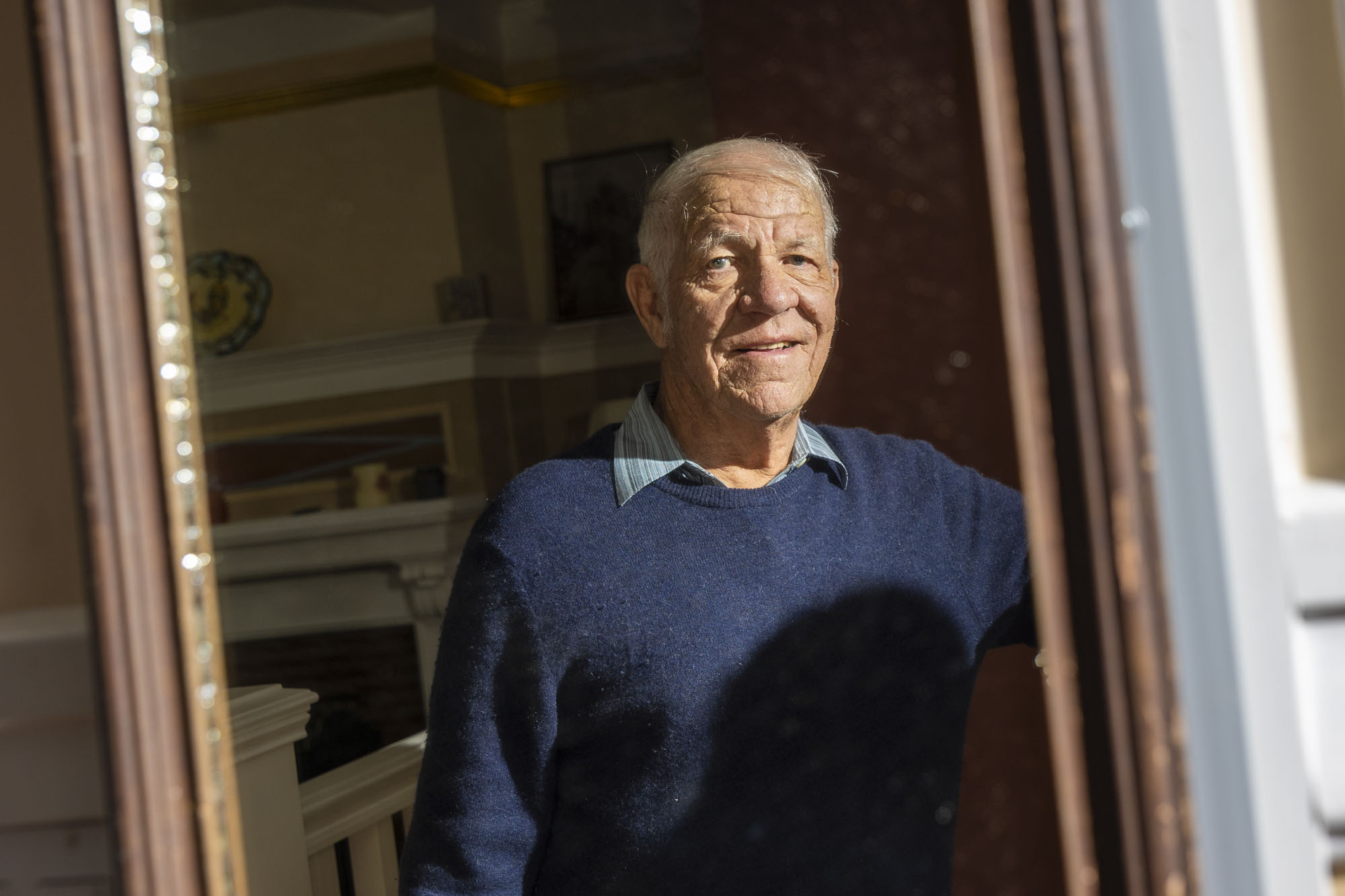
He’s Painted Thousands of San Francisco’s Iconic Victorian Homes. Meet Dr. Color
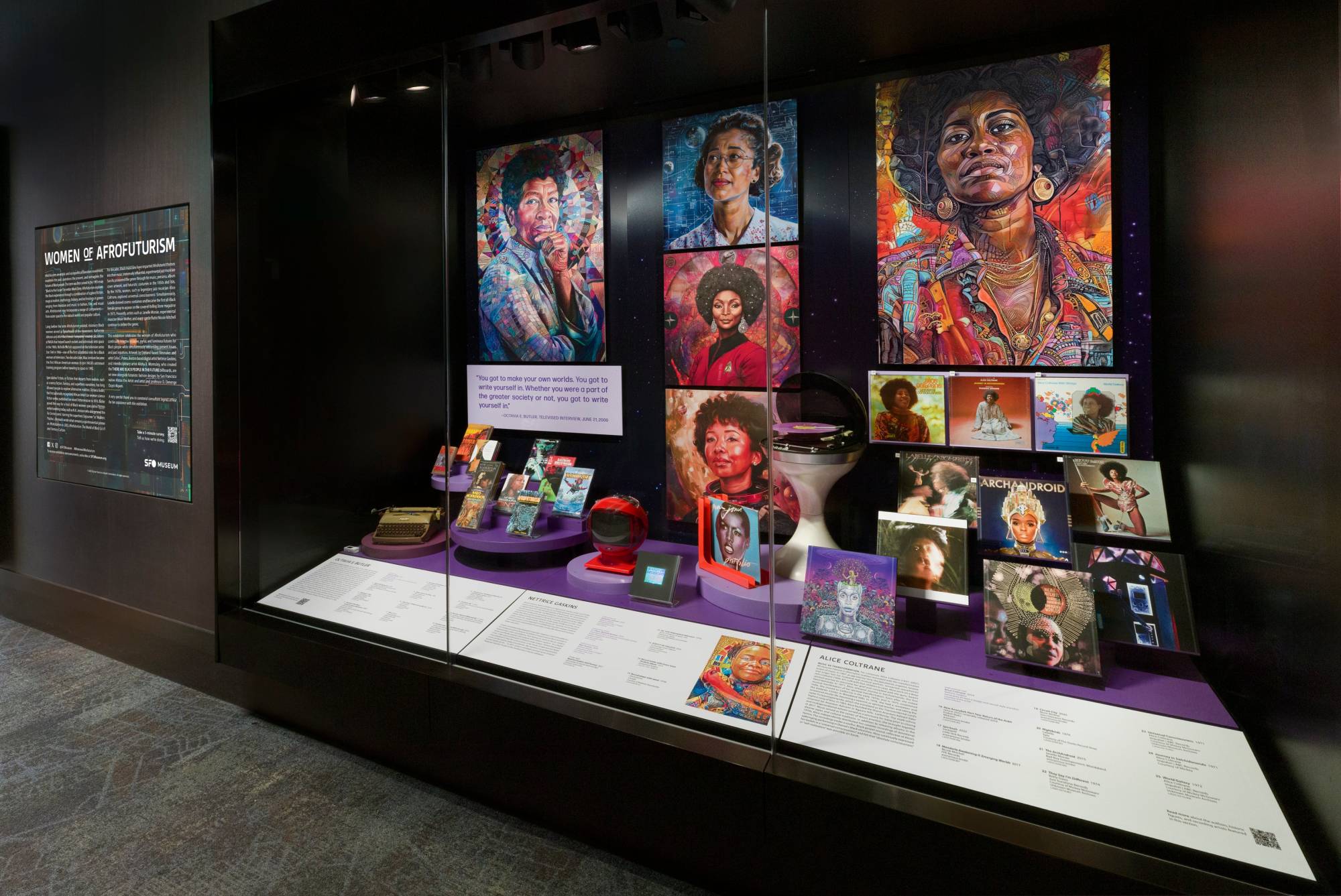
Traveling Through SFO Airport? Check Out the Art Museum
AI-Generated Music Is Here. How Are Artists Adapting?
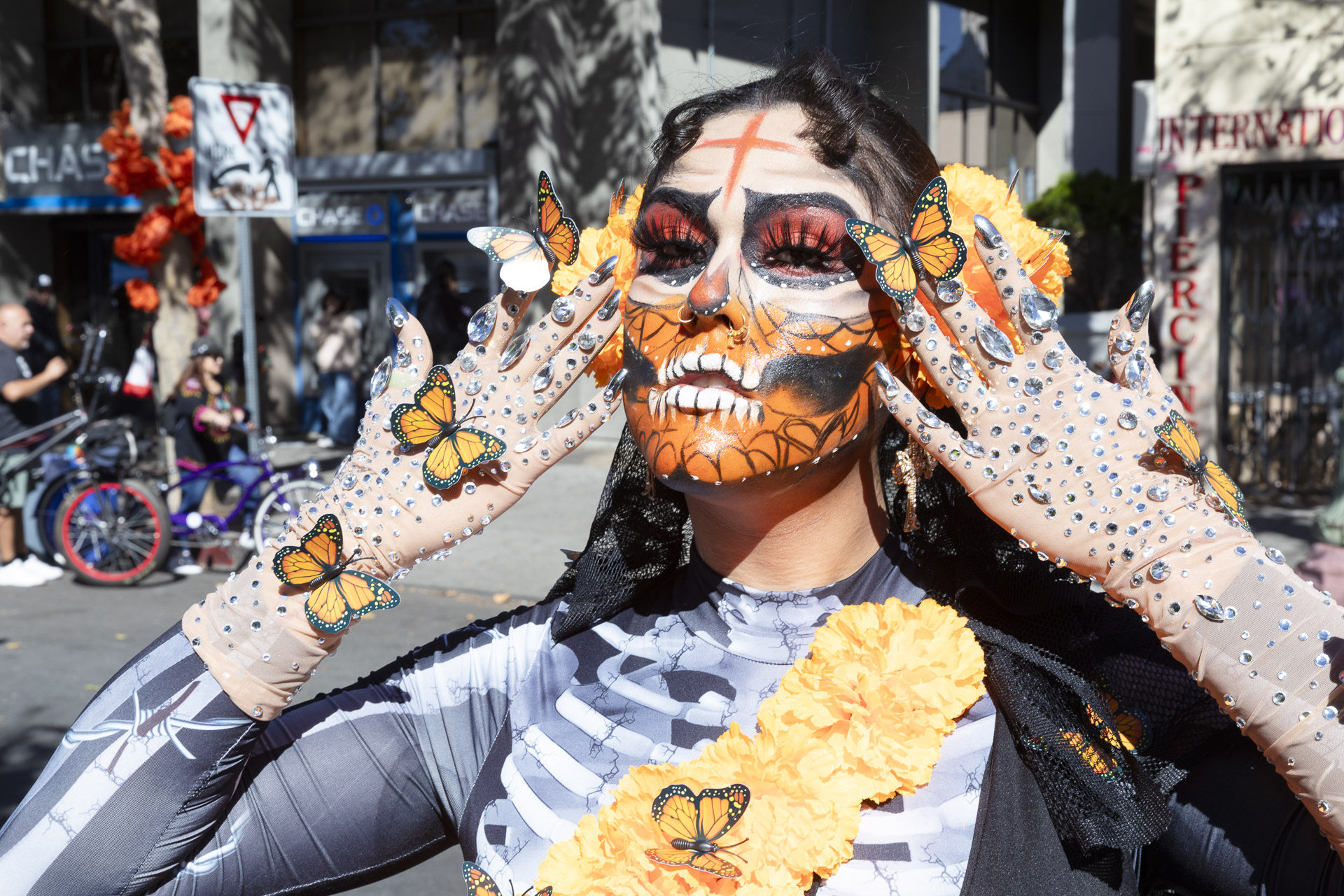
How Californians Are Reclaiming Día De Los Muertos as an Act of Cultural Resistance
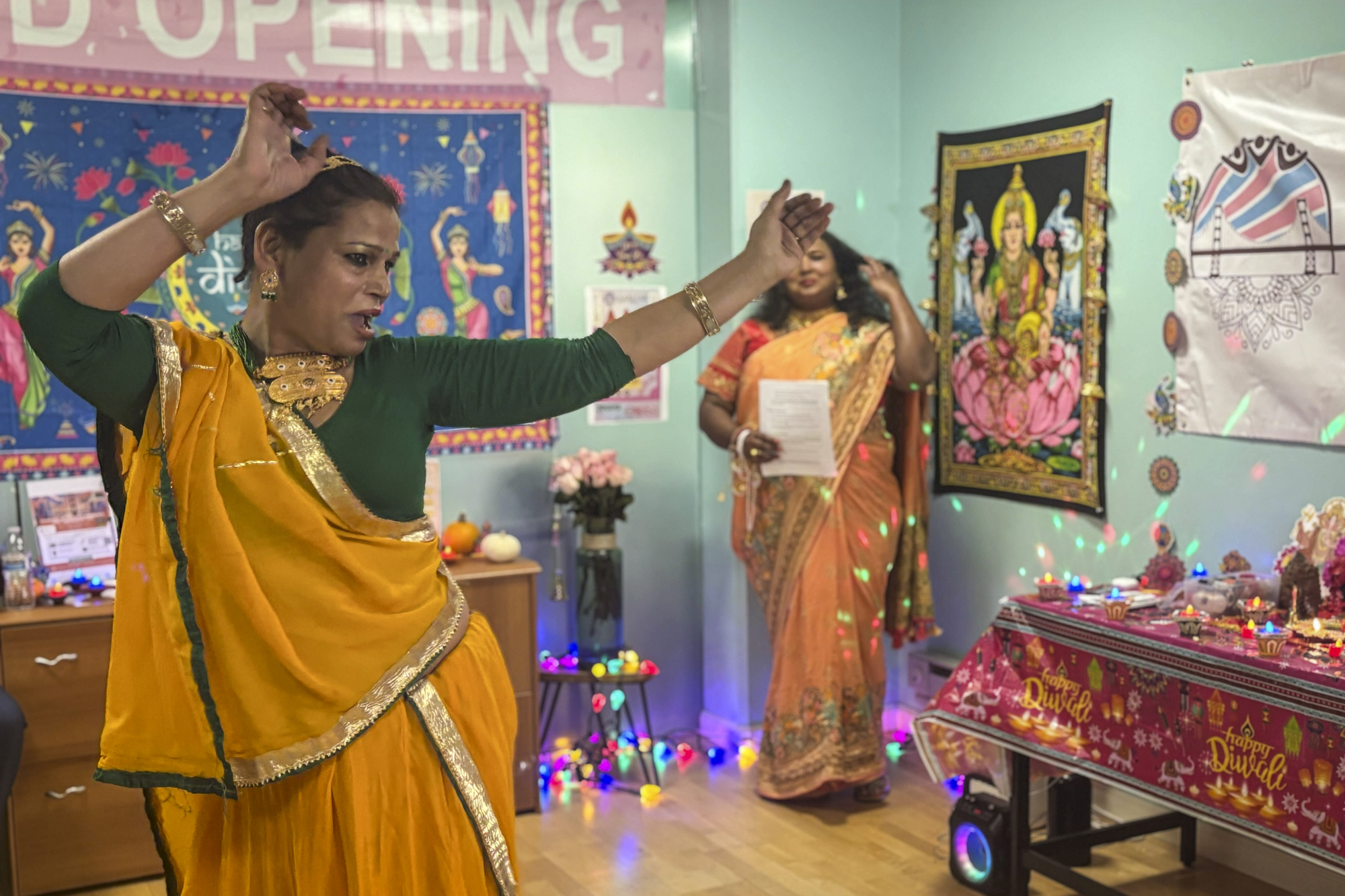
‘We Are Home.’ Center Supporting Transgender Immigrants Opens in SF During Diwali
Lots of New Public Art Is Coming to San Francisco — Whether You Like It or Not
Monterey Bay Aquarium Revives 30-Year-Old Otter Tee Worn by Taylor Swift
Seeing Lorde at the Greek Theatre This Weekend? From Bag Policy to Parking, What to Know
Diwali 2025: Where to Celebrate in the Bay Area
Sponsored
Player sponsored by
window.__IS_SSR__=true
window.__INITIAL_STATE__={
"attachmentsReducer": {
"audio_0": {
"type": "attachments",
"id": "audio_0",
"imgSizes": {
"kqedFullSize": {
"file": "https://ww2.kqed.org/news/wp-content/themes/KQED-unified/img/audio_bgs/background0.jpg"
}
}
},
"audio_1": {
"type": "attachments",
"id": "audio_1",
"imgSizes": {
"kqedFullSize": {
"file": "https://ww2.kqed.org/news/wp-content/themes/KQED-unified/img/audio_bgs/background1.jpg"
}
}
},
"audio_2": {
"type": "attachments",
"id": "audio_2",
"imgSizes": {
"kqedFullSize": {
"file": "https://ww2.kqed.org/news/wp-content/themes/KQED-unified/img/audio_bgs/background2.jpg"
}
}
},
"audio_3": {
"type": "attachments",
"id": "audio_3",
"imgSizes": {
"kqedFullSize": {
"file": "https://ww2.kqed.org/news/wp-content/themes/KQED-unified/img/audio_bgs/background3.jpg"
}
}
},
"audio_4": {
"type": "attachments",
"id": "audio_4",
"imgSizes": {
"kqedFullSize": {
"file": "https://ww2.kqed.org/news/wp-content/themes/KQED-unified/img/audio_bgs/background4.jpg"
}
}
},
"placeholder": {
"type": "attachments",
"id": "placeholder",
"imgSizes": {
"thumbnail": {
"file": "https://cdn.kqed.org/wp-content/uploads/2024/12/KQED-Default-Image-816638274-2000x1333-1-160x107.jpg",
"width": 160,
"height": 107,
"mimeType": "image/jpeg"
},
"medium": {
"file": "https://cdn.kqed.org/wp-content/uploads/2024/12/KQED-Default-Image-816638274-2000x1333-1-800x533.jpg",
"width": 800,
"height": 533,
"mimeType": "image/jpeg"
},
"medium_large": {
"file": "https://cdn.kqed.org/wp-content/uploads/2024/12/KQED-Default-Image-816638274-2000x1333-1-768x512.jpg",
"width": 768,
"height": 512,
"mimeType": "image/jpeg"
},
"large": {
"file": "https://cdn.kqed.org/wp-content/uploads/2024/12/KQED-Default-Image-816638274-2000x1333-1-1020x680.jpg",
"width": 1020,
"height": 680,
"mimeType": "image/jpeg"
},
"1536x1536": {
"file": "https://cdn.kqed.org/wp-content/uploads/2024/12/KQED-Default-Image-816638274-2000x1333-1-1536x1024.jpg",
"width": 1536,
"height": 1024,
"mimeType": "image/jpeg"
},
"fd-lrg": {
"file": "https://cdn.kqed.org/wp-content/uploads/2024/12/KQED-Default-Image-816638274-2000x1333-1-1536x1024.jpg",
"width": 1536,
"height": 1024,
"mimeType": "image/jpeg"
},
"fd-med": {
"file": "https://cdn.kqed.org/wp-content/uploads/2024/12/KQED-Default-Image-816638274-2000x1333-1-1020x680.jpg",
"width": 1020,
"height": 680,
"mimeType": "image/jpeg"
},
"fd-sm": {
"file": "https://cdn.kqed.org/wp-content/uploads/2024/12/KQED-Default-Image-816638274-2000x1333-1-800x533.jpg",
"width": 800,
"height": 533,
"mimeType": "image/jpeg"
},
"post-thumbnail": {
"file": "https://cdn.kqed.org/wp-content/uploads/2024/12/KQED-Default-Image-816638274-2000x1333-1-672x372.jpg",
"width": 672,
"height": 372,
"mimeType": "image/jpeg"
},
"twentyfourteen-full-width": {
"file": "https://cdn.kqed.org/wp-content/uploads/2024/12/KQED-Default-Image-816638274-2000x1333-1-1038x576.jpg",
"width": 1038,
"height": 576,
"mimeType": "image/jpeg"
},
"xxsmall": {
"file": "https://cdn.kqed.org/wp-content/uploads/2024/12/KQED-Default-Image-816638274-2000x1333-1-160x107.jpg",
"width": 160,
"height": 107,
"mimeType": "image/jpeg"
},
"xsmall": {
"file": "https://cdn.kqed.org/wp-content/uploads/2024/12/KQED-Default-Image-816638274-2000x1333-1-672x372.jpg",
"width": 672,
"height": 372,
"mimeType": "image/jpeg"
},
"small": {
"file": "https://cdn.kqed.org/wp-content/uploads/2024/12/KQED-Default-Image-816638274-2000x1333-1-672x372.jpg",
"width": 672,
"height": 372,
"mimeType": "image/jpeg"
},
"xlarge": {
"file": "https://cdn.kqed.org/wp-content/uploads/2024/12/KQED-Default-Image-816638274-2000x1333-1-1020x680.jpg",
"width": 1020,
"height": 680,
"mimeType": "image/jpeg"
},
"full-width": {
"file": "https://cdn.kqed.org/wp-content/uploads/2024/12/KQED-Default-Image-816638274-2000x1333-1-1920x1280.jpg",
"width": 1920,
"height": 1280,
"mimeType": "image/jpeg"
},
"guest-author-32": {
"file": "https://cdn.kqed.org/wp-content/uploads/2025/01/KQED-Default-Image-816638274-1333x1333-1-160x160.jpg",
"width": 32,
"height": 32,
"mimeType": "image/jpeg"
},
"guest-author-50": {
"file": "https://cdn.kqed.org/wp-content/uploads/2025/01/KQED-Default-Image-816638274-1333x1333-1-160x160.jpg",
"width": 50,
"height": 50,
"mimeType": "image/jpeg"
},
"guest-author-64": {
"file": "https://cdn.kqed.org/wp-content/uploads/2025/01/KQED-Default-Image-816638274-1333x1333-1-160x160.jpg",
"width": 64,
"height": 64,
"mimeType": "image/jpeg"
},
"guest-author-96": {
"file": "https://cdn.kqed.org/wp-content/uploads/2025/01/KQED-Default-Image-816638274-1333x1333-1-160x160.jpg",
"width": 96,
"height": 96,
"mimeType": "image/jpeg"
},
"guest-author-128": {
"file": "https://cdn.kqed.org/wp-content/uploads/2025/01/KQED-Default-Image-816638274-1333x1333-1-160x160.jpg",
"width": 128,
"height": 128,
"mimeType": "image/jpeg"
},
"detail": {
"file": "https://cdn.kqed.org/wp-content/uploads/2025/01/KQED-Default-Image-816638274-1333x1333-1-160x160.jpg",
"width": 160,
"height": 160,
"mimeType": "image/jpeg"
},
"kqedFullSize": {
"file": "https://cdn.kqed.org/wp-content/uploads/2024/12/KQED-Default-Image-816638274-2000x1333-1.jpg",
"width": 2000,
"height": 1333
}
}
},
"news_12058982": {
"type": "attachments",
"id": "news_12058982",
"meta": {
"index": "attachments_1716263798",
"site": "news",
"id": "12058982",
"found": true
},
"title": "251002-DRCOLOR_00168_TV-KQED",
"publishDate": 1759868987,
"status": "inherit",
"parent": 0,
"modified": 1760040948,
"caption": "Bob Buckter poses for a portrait in his home in the Mission district in San Francisco on Oct. 2, 2025. Buckter, aka Dr. Color, has contributed to the city’s colorful architectural backdrop for decades, and continues to draw people to the City by the Bay.\r\n",
"credit": "Tâm Vũ/KQED",
"altTag": null,
"description": null,
"imgSizes": {
"thumbnail": {
"file": "https://cdn.kqed.org/wp-content/uploads/sites/10/2025/10/251002-DRCOLOR_00168_TV-KQED-160x107.jpg",
"width": 160,
"height": 107,
"mimeType": "image/jpeg"
},
"1536x1536": {
"file": "https://cdn.kqed.org/wp-content/uploads/sites/10/2025/10/251002-DRCOLOR_00168_TV-KQED-1536x1024.jpg",
"width": 1536,
"height": 1024,
"mimeType": "image/jpeg"
},
"post-thumbnail": {
"file": "https://cdn.kqed.org/wp-content/uploads/sites/10/2025/10/251002-DRCOLOR_00168_TV-KQED-672x372.jpg",
"width": 672,
"height": 372,
"mimeType": "image/jpeg"
},
"twentyfourteen-full-width": {
"file": "https://cdn.kqed.org/wp-content/uploads/sites/10/2025/10/251002-DRCOLOR_00168_TV-KQED-1038x576.jpg",
"width": 1038,
"height": 576,
"mimeType": "image/jpeg"
},
"kqedFullSize": {
"file": "https://cdn.kqed.org/wp-content/uploads/sites/10/2025/10/251002-DRCOLOR_00168_TV-KQED.jpg",
"width": 2000,
"height": 1333
}
},
"fetchFailed": false,
"isLoading": false
},
"news_12065084": {
"type": "attachments",
"id": "news_12065084",
"meta": {
"index": "attachments_1716263798",
"site": "news",
"id": "12065084",
"found": true
},
"title": "wmn-afrofuturism-gallery-03",
"publishDate": 1763755144,
"status": "inherit",
"parent": 12065083,
"modified": 1763755185,
"caption": null,
"credit": "Courtesy of SFO Museum",
"altTag": null,
"description": null,
"imgSizes": {
"medium": {
"file": "https://cdn.kqed.org/wp-content/uploads/sites/10/2025/11/wmn-afrofuturism-gallery-03-2000x1337.jpg",
"width": 2000,
"height": 1337,
"mimeType": "image/jpeg"
},
"large": {
"file": "https://cdn.kqed.org/wp-content/uploads/sites/10/2025/11/wmn-afrofuturism-gallery-03-2000x1337.jpg",
"width": 2000,
"height": 1337,
"mimeType": "image/jpeg"
},
"thumbnail": {
"file": "https://cdn.kqed.org/wp-content/uploads/sites/10/2025/11/wmn-afrofuturism-gallery-03-160x107.jpg",
"width": 160,
"height": 107,
"mimeType": "image/jpeg"
},
"1536x1536": {
"file": "https://cdn.kqed.org/wp-content/uploads/sites/10/2025/11/wmn-afrofuturism-gallery-03-1536x1027.jpg",
"width": 1536,
"height": 1027,
"mimeType": "image/jpeg"
},
"2048x2048": {
"file": "https://cdn.kqed.org/wp-content/uploads/sites/10/2025/11/wmn-afrofuturism-gallery-03-2048x1369.jpg",
"width": 2048,
"height": 1369,
"mimeType": "image/jpeg"
},
"post-thumbnail": {
"file": "https://cdn.kqed.org/wp-content/uploads/sites/10/2025/11/wmn-afrofuturism-gallery-03-672x372.jpg",
"width": 672,
"height": 372,
"mimeType": "image/jpeg"
},
"twentyfourteen-full-width": {
"file": "https://cdn.kqed.org/wp-content/uploads/sites/10/2025/11/wmn-afrofuturism-gallery-03-1038x576.jpg",
"width": 1038,
"height": 576,
"mimeType": "image/jpeg"
},
"full-width": {
"file": "https://cdn.kqed.org/wp-content/uploads/sites/10/2025/11/wmn-afrofuturism-gallery-03-2000x1337.jpg",
"width": 2000,
"height": 1337,
"mimeType": "image/jpeg"
},
"npr-cds-wide": {
"file": "https://cdn.kqed.org/wp-content/uploads/sites/10/2025/11/wmn-afrofuturism-gallery-03-1200x675.jpg",
"width": 1200,
"height": 675,
"mimeType": "image/jpeg"
},
"kqedFullSize": {
"file": "https://cdn.kqed.org/wp-content/uploads/sites/10/2025/11/wmn-afrofuturism-gallery-03-scaled-e1763755167409.jpg",
"width": 1600,
"height": 1069
}
},
"fetchFailed": false,
"isLoading": false
},
"news_12064092": {
"type": "attachments",
"id": "news_12064092",
"meta": {
"index": "attachments_1716263798",
"site": "news",
"id": "12064092",
"found": true
},
"title": "woman choosing music on her cell phone to listen to on her smart speaker",
"publishDate": 1763083071,
"status": "inherit",
"parent": 12064091,
"modified": 1763083094,
"caption": "woman sitting on the sofa choosing music on her cell phone to listen to on her smart speaker at home",
"credit": "David Espejo/Getty Images",
"altTag": null,
"description": null,
"imgSizes": {
"medium": {
"file": "https://cdn.kqed.org/wp-content/uploads/sites/10/2025/11/GettyImages-1320549811-2000x1335.jpg",
"width": 2000,
"height": 1335,
"mimeType": "image/jpeg"
},
"large": {
"file": "https://cdn.kqed.org/wp-content/uploads/sites/10/2025/11/GettyImages-1320549811-2000x1335.jpg",
"width": 2000,
"height": 1335,
"mimeType": "image/jpeg"
},
"thumbnail": {
"file": "https://cdn.kqed.org/wp-content/uploads/sites/10/2025/11/GettyImages-1320549811-160x107.jpg",
"width": 160,
"height": 107,
"mimeType": "image/jpeg"
},
"1536x1536": {
"file": "https://cdn.kqed.org/wp-content/uploads/sites/10/2025/11/GettyImages-1320549811-1536x1025.jpg",
"width": 1536,
"height": 1025,
"mimeType": "image/jpeg"
},
"2048x2048": {
"file": "https://cdn.kqed.org/wp-content/uploads/sites/10/2025/11/GettyImages-1320549811-2048x1367.jpg",
"width": 2048,
"height": 1367,
"mimeType": "image/jpeg"
},
"post-thumbnail": {
"file": "https://cdn.kqed.org/wp-content/uploads/sites/10/2025/11/GettyImages-1320549811-672x372.jpg",
"width": 672,
"height": 372,
"mimeType": "image/jpeg"
},
"twentyfourteen-full-width": {
"file": "https://cdn.kqed.org/wp-content/uploads/sites/10/2025/11/GettyImages-1320549811-1038x576.jpg",
"width": 1038,
"height": 576,
"mimeType": "image/jpeg"
},
"full-width": {
"file": "https://cdn.kqed.org/wp-content/uploads/sites/10/2025/11/GettyImages-1320549811-2000x1335.jpg",
"width": 2000,
"height": 1335,
"mimeType": "image/jpeg"
},
"npr-cds-wide": {
"file": "https://cdn.kqed.org/wp-content/uploads/sites/10/2025/11/GettyImages-1320549811-1200x675.jpg",
"width": 1200,
"height": 675,
"mimeType": "image/jpeg"
},
"kqedFullSize": {
"file": "https://cdn.kqed.org/wp-content/uploads/sites/10/2025/11/GettyImages-1320549811.jpg",
"width": 2119,
"height": 1414
}
},
"fetchFailed": false,
"isLoading": false
},
"news_12063629": {
"type": "attachments",
"id": "news_12063629",
"meta": {
"index": "attachments_1716263798",
"site": "news",
"id": "12063629",
"found": true
},
"title": "231029_OAKDiadelosMuertosFestival_EG-38",
"publishDate": 1762806227,
"status": "inherit",
"parent": 12062734,
"modified": 1762974661,
"caption": "Xol Venegas wears handmade butterfly gloves to the Oakland Día de los Muertos Festival in Fruitvale on Sunday, Oct. 29, 2023. Día de los Muertos is her favorite holiday. \"It's about that nobody gets forgotten in the end. That everybody feels a sense of community,\" she said.",
"credit": "Estefany Gonzalez for KQED",
"altTag": null,
"description": null,
"imgSizes": {
"thumbnail": {
"file": "https://cdn.kqed.org/wp-content/uploads/sites/10/2025/11/231029_OAKDiadelosMuertosFestival_EG-38-160x107.jpg",
"width": 160,
"height": 107,
"mimeType": "image/jpeg"
},
"1536x1536": {
"file": "https://cdn.kqed.org/wp-content/uploads/sites/10/2025/11/231029_OAKDiadelosMuertosFestival_EG-38-1536x1024.jpg",
"width": 1536,
"height": 1024,
"mimeType": "image/jpeg"
},
"post-thumbnail": {
"file": "https://cdn.kqed.org/wp-content/uploads/sites/10/2025/11/231029_OAKDiadelosMuertosFestival_EG-38-672x372.jpg",
"width": 672,
"height": 372,
"mimeType": "image/jpeg"
},
"twentyfourteen-full-width": {
"file": "https://cdn.kqed.org/wp-content/uploads/sites/10/2025/11/231029_OAKDiadelosMuertosFestival_EG-38-1038x576.jpg",
"width": 1038,
"height": 576,
"mimeType": "image/jpeg"
},
"npr-cds-wide": {
"file": "https://cdn.kqed.org/wp-content/uploads/sites/10/2025/11/231029_OAKDiadelosMuertosFestival_EG-38-1200x675.jpg",
"width": 1200,
"height": 675,
"mimeType": "image/jpeg"
},
"kqedFullSize": {
"file": "https://cdn.kqed.org/wp-content/uploads/sites/10/2025/11/231029_OAKDiadelosMuertosFestival_EG-38.jpg",
"width": 1920,
"height": 1280
}
},
"fetchFailed": false,
"isLoading": false
},
"news_12060836": {
"type": "attachments",
"id": "news_12060836",
"meta": {
"index": "attachments_1716263798",
"site": "news",
"id": "12060836",
"found": true
},
"title": "251021-DIWALI PARIVAR-NK-04-KQED",
"publishDate": 1761068607,
"status": "inherit",
"parent": 0,
"modified": 1761069354,
"caption": "Kaj (left) dances during the Diwali celebrations at Parivar Bay Area in San Francisco on Oct. 20, 2025.",
"credit": "Nisa Khan/KQED",
"altTag": null,
"description": null,
"imgSizes": {
"thumbnail": {
"file": "https://cdn.kqed.org/wp-content/uploads/sites/10/2025/10/251021-DIWALI-PARIVAR-NK-04-KQED-160x107.jpg",
"width": 160,
"height": 107,
"mimeType": "image/jpeg"
},
"1536x1536": {
"file": "https://cdn.kqed.org/wp-content/uploads/sites/10/2025/10/251021-DIWALI-PARIVAR-NK-04-KQED-1536x1024.jpg",
"width": 1536,
"height": 1024,
"mimeType": "image/jpeg"
},
"post-thumbnail": {
"file": "https://cdn.kqed.org/wp-content/uploads/sites/10/2025/10/251021-DIWALI-PARIVAR-NK-04-KQED-672x372.jpg",
"width": 672,
"height": 372,
"mimeType": "image/jpeg"
},
"twentyfourteen-full-width": {
"file": "https://cdn.kqed.org/wp-content/uploads/sites/10/2025/10/251021-DIWALI-PARIVAR-NK-04-KQED-1038x576.jpg",
"width": 1038,
"height": 576,
"mimeType": "image/jpeg"
},
"kqedFullSize": {
"file": "https://cdn.kqed.org/wp-content/uploads/sites/10/2025/10/251021-DIWALI-PARIVAR-NK-04-KQED.jpg",
"width": 2000,
"height": 1333
}
},
"fetchFailed": false,
"isLoading": false
},
"news_12060180": {
"type": "attachments",
"id": "news_12060180",
"meta": {
"index": "attachments_1716263798",
"site": "news",
"id": "12060180",
"found": true
},
"title": "20240410_GiantNakedLadyEmbarcadero_GC-10_qed-1536x1024",
"publishDate": 1760647632,
"status": "inherit",
"parent": 12060178,
"modified": 1760647646,
"caption": null,
"credit": null,
"altTag": null,
"description": "People gather for the April 10, 2025 press preview of ‘R-Evolution, a 45-foot metal statue created by Petaluma artist Marco Cochrane, installed at Embarcadero Plaza in San Francisco. (Gina Castro/KQED)",
"imgSizes": {
"thumbnail": {
"file": "https://cdn.kqed.org/wp-content/uploads/sites/10/2025/10/20240410_GiantNakedLadyEmbarcadero_GC-10_qed-1536x1024-1-160x107.jpg",
"width": 160,
"height": 107,
"mimeType": "image/jpeg"
},
"post-thumbnail": {
"file": "https://cdn.kqed.org/wp-content/uploads/sites/10/2025/10/20240410_GiantNakedLadyEmbarcadero_GC-10_qed-1536x1024-1-672x372.jpg",
"width": 672,
"height": 372,
"mimeType": "image/jpeg"
},
"twentyfourteen-full-width": {
"file": "https://cdn.kqed.org/wp-content/uploads/sites/10/2025/10/20240410_GiantNakedLadyEmbarcadero_GC-10_qed-1536x1024-1-1038x576.jpg",
"width": 1038,
"height": 576,
"mimeType": "image/jpeg"
},
"kqedFullSize": {
"file": "https://cdn.kqed.org/wp-content/uploads/sites/10/2025/10/20240410_GiantNakedLadyEmbarcadero_GC-10_qed-1536x1024-1.jpg",
"width": 1536,
"height": 1024
}
},
"fetchFailed": false,
"isLoading": false
},
"news_12059994": {
"type": "attachments",
"id": "news_12059994",
"meta": {
"index": "attachments_1716263798",
"site": "news",
"id": "12059994",
"found": true
},
"title": "OtterMontereyBayAquarium1",
"publishDate": 1760553491,
"status": "inherit",
"parent": 12059734,
"modified": 1760553524,
"caption": "Southern sea otter Ivy eating in the Sea Otter exhibit. The aquarium reissued the T-shirt worn by Taylor Swift ahead of a new campaign to raise awareness about otter habitat restoration. ",
"credit": "Courtesy of the Monterey Bay Aquarium",
"altTag": null,
"description": null,
"imgSizes": {
"thumbnail": {
"file": "https://cdn.kqed.org/wp-content/uploads/sites/10/2025/10/OtterMontereyBayAquarium1-160x107.jpg",
"width": 160,
"height": 107,
"mimeType": "image/jpeg"
},
"1536x1536": {
"file": "https://cdn.kqed.org/wp-content/uploads/sites/10/2025/10/OtterMontereyBayAquarium1-1536x1024.jpg",
"width": 1536,
"height": 1024,
"mimeType": "image/jpeg"
},
"post-thumbnail": {
"file": "https://cdn.kqed.org/wp-content/uploads/sites/10/2025/10/OtterMontereyBayAquarium1-672x372.jpg",
"width": 672,
"height": 372,
"mimeType": "image/jpeg"
},
"twentyfourteen-full-width": {
"file": "https://cdn.kqed.org/wp-content/uploads/sites/10/2025/10/OtterMontereyBayAquarium1-1038x576.jpg",
"width": 1038,
"height": 576,
"mimeType": "image/jpeg"
},
"kqedFullSize": {
"file": "https://cdn.kqed.org/wp-content/uploads/sites/10/2025/10/OtterMontereyBayAquarium1.jpg",
"width": 2000,
"height": 1333
}
},
"fetchFailed": false,
"isLoading": false
},
"news_12059671": {
"type": "attachments",
"id": "news_12059671",
"meta": {
"index": "attachments_1716263798",
"site": "news",
"id": "12059671",
"found": true
},
"title": "Glastonbury Festival 2025 - Day Three",
"publishDate": 1760376720,
"status": "inherit",
"parent": 12059653,
"modified": 1760380535,
"caption": "Lorde performs during day three of Glastonbury Festival 2025 at Worthy Farm, Pilton, on June 27, 2025, in Glastonbury, England. ",
"credit": "Joseph Okpako/WireImage via Getty Images",
"altTag": null,
"description": null,
"imgSizes": {
"thumbnail": {
"file": "https://cdn.kqed.org/wp-content/uploads/sites/10/2025/10/LordeGetty-160x106.jpg",
"width": 160,
"height": 106,
"mimeType": "image/jpeg"
},
"1536x1536": {
"file": "https://cdn.kqed.org/wp-content/uploads/sites/10/2025/10/LordeGetty-1536x1022.jpg",
"width": 1536,
"height": 1022,
"mimeType": "image/jpeg"
},
"post-thumbnail": {
"file": "https://cdn.kqed.org/wp-content/uploads/sites/10/2025/10/LordeGetty-672x372.jpg",
"width": 672,
"height": 372,
"mimeType": "image/jpeg"
},
"twentyfourteen-full-width": {
"file": "https://cdn.kqed.org/wp-content/uploads/sites/10/2025/10/LordeGetty-1038x576.jpg",
"width": 1038,
"height": 576,
"mimeType": "image/jpeg"
},
"kqedFullSize": {
"file": "https://cdn.kqed.org/wp-content/uploads/sites/10/2025/10/LordeGetty.jpg",
"width": 2000,
"height": 1331
}
},
"fetchFailed": false,
"isLoading": false
},
"news_12058901": {
"type": "attachments",
"id": "news_12058901",
"meta": {
"index": "attachments_1716263798",
"site": "news",
"id": "12058901",
"found": true
},
"title": "Diwali Festival In Mumbai",
"publishDate": 1759856606,
"status": "inherit",
"parent": 12058893,
"modified": 1759856640,
"caption": "Children play with firecrackers during Diwali, the Hindu festival of lights, in Mumbai, India, on Oct. 31, 2024.",
"credit": "Indranil Aditya/NurPhoto via Getty Images",
"altTag": null,
"description": null,
"imgSizes": {
"thumbnail": {
"file": "https://cdn.kqed.org/wp-content/uploads/sites/10/2025/10/DiwaliIndiaGetty1-160x105.jpg",
"width": 160,
"height": 105,
"mimeType": "image/jpeg"
},
"1536x1536": {
"file": "https://cdn.kqed.org/wp-content/uploads/sites/10/2025/10/DiwaliIndiaGetty1-1536x1011.jpg",
"width": 1536,
"height": 1011,
"mimeType": "image/jpeg"
},
"post-thumbnail": {
"file": "https://cdn.kqed.org/wp-content/uploads/sites/10/2025/10/DiwaliIndiaGetty1-672x372.jpg",
"width": 672,
"height": 372,
"mimeType": "image/jpeg"
},
"twentyfourteen-full-width": {
"file": "https://cdn.kqed.org/wp-content/uploads/sites/10/2025/10/DiwaliIndiaGetty1-1038x576.jpg",
"width": 1038,
"height": 576,
"mimeType": "image/jpeg"
},
"kqedFullSize": {
"file": "https://cdn.kqed.org/wp-content/uploads/sites/10/2025/10/DiwaliIndiaGetty1.jpg",
"width": 2000,
"height": 1317
}
},
"fetchFailed": false,
"isLoading": false
}
},
"audioPlayerReducer": {
"postId": "stream_live",
"isPaused": true,
"isPlaying": false,
"pfsActive": false,
"pledgeModalIsOpen": true,
"playerDrawerIsOpen": false
},
"authorsReducer": {
"shotchkiss": {
"type": "authors",
"id": "61",
"meta": {
"index": "authors_1716337520",
"id": "61",
"found": true
},
"name": "Sarah Hotchkiss",
"firstName": "Sarah",
"lastName": "Hotchkiss",
"slug": "shotchkiss",
"email": "shotchkiss@kqed.org",
"display_author_email": true,
"staff_mastheads": [
"arts"
],
"title": "Senior Editor",
"bio": "Sarah Hotchkiss is a San Francisco \u003ca href=\"http://www.sarahhotchkiss.com\">artist\u003c/a> and arts writer. In 2019, she received the Dorothea & Leo Rabkin Foundation grant for visual art journalism and in 2020 she received a Society of Professional Journalists, Northern California award for excellence in arts and culture reporting.",
"avatar": "https://secure.gravatar.com/avatar/ca38c7f54590856cd4947d26274f8a90?s=600&d=blank&r=g",
"twitter": null,
"facebook": null,
"instagram": null,
"linkedin": null,
"sites": [
{
"site": "",
"roles": [
"editor"
]
},
{
"site": "arts",
"roles": [
"Contributor",
"administrator"
]
},
{
"site": "artschool",
"roles": [
"administrator"
]
},
{
"site": "news",
"roles": [
"editor"
]
},
{
"site": "pop",
"roles": [
"administrator"
]
},
{
"site": "bayareabites",
"roles": [
"editor"
]
},
{
"site": "spark",
"roles": [
"editor"
]
},
{
"site": "checkplease",
"roles": [
"editor"
]
}
],
"headData": {
"title": "Sarah Hotchkiss | KQED",
"description": "Senior Editor",
"ogImgSrc": "https://secure.gravatar.com/avatar/ca38c7f54590856cd4947d26274f8a90?s=600&d=blank&r=g",
"twImgSrc": "https://secure.gravatar.com/avatar/ca38c7f54590856cd4947d26274f8a90?s=600&d=blank&r=g"
},
"isLoading": false,
"link": "/author/shotchkiss"
},
"ecruzguevarra": {
"type": "authors",
"id": "8654",
"meta": {
"index": "authors_1716337520",
"id": "8654",
"found": true
},
"name": "Ericka Cruz Guevarra",
"firstName": "Ericka",
"lastName": "Cruz Guevarra",
"slug": "ecruzguevarra",
"email": "ecruzguevarra@kqed.org",
"display_author_email": true,
"staff_mastheads": [
"news"
],
"title": "Producer, The Bay Podcast",
"bio": "Ericka Cruz Guevarra is host of \u003ca href=\"https://www.kqed.org/podcasts/thebay\">\u003cem>The Bay\u003c/em>\u003c/a> podcast at KQED. Before host, she was the show’s producer. Her work in that capacity includes a three-part reported series on policing in Vallejo, which won a 2020 excellence in journalism award from the Society of Professional Journalists. Ericka has worked as a breaking news reporter at Oregon Public Broadcasting, helped produce the Code Switch podcast, and was KQED’s inaugural Raul Ramirez Diversity Fund intern. She’s also an alumna of NPR’s Next Generation Radio program. Send her an email if you have strong feelings about whether Fairfield and Suisun City are the Bay. Ericka is represented by SAG-AFTRA.",
"avatar": "https://secure.gravatar.com/avatar/25e5ab8d3d53fad2dcc7bb2b5c506b1a?s=600&d=blank&r=g",
"twitter": "NotoriousECG",
"facebook": null,
"instagram": null,
"linkedin": null,
"sites": [
{
"site": "arts",
"roles": [
"subscriber"
]
},
{
"site": "news",
"roles": [
"editor",
"manage_categories"
]
},
{
"site": "futureofyou",
"roles": [
"subscriber"
]
},
{
"site": "stateofhealth",
"roles": [
"subscriber"
]
},
{
"site": "science",
"roles": [
"editor"
]
},
{
"site": "forum",
"roles": [
"subscriber"
]
}
],
"headData": {
"title": "Ericka Cruz Guevarra | KQED",
"description": "Producer, The Bay Podcast",
"ogImgSrc": "https://secure.gravatar.com/avatar/25e5ab8d3d53fad2dcc7bb2b5c506b1a?s=600&d=blank&r=g",
"twImgSrc": "https://secure.gravatar.com/avatar/25e5ab8d3d53fad2dcc7bb2b5c506b1a?s=600&d=blank&r=g"
},
"isLoading": false,
"link": "/author/ecruzguevarra"
},
"nvoynovskaya": {
"type": "authors",
"id": "11387",
"meta": {
"index": "authors_1716337520",
"id": "11387",
"found": true
},
"name": "Nastia Voynovskaya",
"firstName": "Nastia",
"lastName": "Voynovskaya",
"slug": "nvoynovskaya",
"email": "nvoynovskaya@kqed.org",
"display_author_email": false,
"staff_mastheads": [
"arts"
],
"title": "Editor and reporter",
"bio": "Nastia Voynovskaya is a reporter and editor at KQED Arts & Culture. She's been covering the arts in the Bay Area for over a decade, with a focus on music, queer culture, labor issues and grassroots organizing. She has edited KQED story series such as Trans Bay: A History of San Francisco's Gender-Diverse Community, and co-created KQED's Bay Area hip-hop history project, That's My Word. Nastia's work has been recognized by the Society of Professional Journalists and San Francisco Press Club. She holds a BA in comparative literature from UC Berkeley.",
"avatar": "https://secure.gravatar.com/avatar/310649817772dd2a98e5dfecb6b24842?s=600&d=blank&r=g",
"twitter": null,
"facebook": null,
"instagram": "https://www.instagram.com/nananastia/",
"linkedin": null,
"sites": [
{
"site": "arts",
"roles": [
"administrator"
]
},
{
"site": "news",
"roles": [
"editor"
]
},
{
"site": "pop",
"roles": [
"administrator"
]
},
{
"site": "bayareabites",
"roles": [
"editor"
]
},
{
"site": "podcasts",
"roles": [
"editor"
]
},
{
"site": "hiphop",
"roles": [
"editor"
]
}
],
"headData": {
"title": "Nastia Voynovskaya | KQED",
"description": "Editor and reporter",
"ogImgSrc": "https://secure.gravatar.com/avatar/310649817772dd2a98e5dfecb6b24842?s=600&d=blank&r=g",
"twImgSrc": "https://secure.gravatar.com/avatar/310649817772dd2a98e5dfecb6b24842?s=600&d=blank&r=g"
},
"isLoading": false,
"link": "/author/nvoynovskaya"
},
"amontecillo": {
"type": "authors",
"id": "11649",
"meta": {
"index": "authors_1716337520",
"id": "11649",
"found": true
},
"name": "Alan Montecillo",
"firstName": "Alan",
"lastName": "Montecillo",
"slug": "amontecillo",
"email": "amontecillo@kqed.org",
"display_author_email": false,
"staff_mastheads": [
"news"
],
"title": "KQED Contributor",
"bio": "Alan Montecillo is the senior editor of \u003cem>\u003ca href=\"http://kqed.org/thebay\">The Bay\u003c/a>, \u003c/em> KQED's local news podcast. Before moving to the Bay Area, he worked as a senior talk show producer for WILL in Champaign-Urbana, Illinois and at Oregon Public Broadcasting in Portland, Oregon. He has won journalism awards from the Society of Professional Journalists Northern California, the Public Media Journalists Association, The Signal Awards, and has also received a regional Edward R. Murrow award. Alan is a Filipino American from Hong Kong and a graduate of Reed College.",
"avatar": "https://secure.gravatar.com/avatar/d5e4e7a76481969ccba76f4e2b5ccabc?s=600&d=blank&r=g",
"twitter": "alanmontecillo",
"facebook": null,
"instagram": null,
"linkedin": null,
"sites": [
{
"site": "",
"roles": [
"editor"
]
},
{
"site": "news",
"roles": [
"editor",
"manage_categories"
]
}
],
"headData": {
"title": "Alan Montecillo | KQED",
"description": "KQED Contributor",
"ogImgSrc": "https://secure.gravatar.com/avatar/d5e4e7a76481969ccba76f4e2b5ccabc?s=600&d=blank&r=g",
"twImgSrc": "https://secure.gravatar.com/avatar/d5e4e7a76481969ccba76f4e2b5ccabc?s=600&d=blank&r=g"
},
"isLoading": false,
"link": "/author/amontecillo"
},
"btorres": {
"type": "authors",
"id": "11666",
"meta": {
"index": "authors_1716337520",
"id": "11666",
"found": true
},
"name": "Blanca Torres",
"firstName": "Blanca",
"lastName": "Torres",
"slug": "btorres",
"email": "btorres@kqed.org",
"display_author_email": true,
"staff_mastheads": [
"news"
],
"title": "Producer, Forum",
"bio": "Blanca Torres brings sharp news judgement and keen sense of lively conversation to her work as producer for Forum. She loves producing shows that leave listeners feeling like they heard distinctive voices, learned something new and gained a fresh perspective.\r\n\r\nShe joined KQED in January of 2020 after 16 years of working as a newspaper reporter most recently at the \u003cem>San Francisco Business Times,\u003c/em> where she wrote about real estate and economic development. Before that, she covered a variety of beats including crime, education, retail, workplace, the economy, consumer issues, and small business for the \u003cem>Contra Costa Times, Baltimore Sun\u003c/em> and\u003cem> The Seattle Times\u003c/em>. In addition to reporting, she worked as an editorial writer and columnist for the \u003cem>Seattle Times\u003c/em>. From 2017 to 2020, Blanca won a total of ten awards from the National Association of Real Estate Editors and won first place for land use reporting from the California News Publishers Association two years in a row. She is also a member and former board member for the National Association of Hispanic Journalists.\r\n\r\nA native of the Pacific Northwest, Blanca earned her bachelor's degree from Vanderbilt University in Nashville and a master's in fine arts in creative writing at Mills College. She lives in the East Bay with her family.",
"avatar": "https://secure.gravatar.com/avatar/f2322ff46076d337f7ba731ee6068cb1?s=600&d=blank&r=g",
"twitter": "@blancawrites",
"facebook": null,
"instagram": null,
"linkedin": null,
"sites": [
{
"site": "arts",
"roles": [
"editor"
]
},
{
"site": "news",
"roles": [
"editor"
]
},
{
"site": "forum",
"roles": [
"editor"
]
}
],
"headData": {
"title": "Blanca Torres | KQED",
"description": "Producer, Forum",
"ogImgSrc": "https://secure.gravatar.com/avatar/f2322ff46076d337f7ba731ee6068cb1?s=600&d=blank&r=g",
"twImgSrc": "https://secure.gravatar.com/avatar/f2322ff46076d337f7ba731ee6068cb1?s=600&d=blank&r=g"
},
"isLoading": false,
"link": "/author/btorres"
},
"jessicakariisa": {
"type": "authors",
"id": "11831",
"meta": {
"index": "authors_1716337520",
"id": "11831",
"found": true
},
"name": "Jessica Kariisa",
"firstName": "Jessica",
"lastName": "Kariisa",
"slug": "jessicakariisa",
"email": "jkariisa@kqed.org",
"display_author_email": false,
"staff_mastheads": [
"news"
],
"title": "Producer, The Bay",
"bio": "Jessica Kariisa is the producer of The Bay. She first joined KQED as an intern for The California Report Magazine, after which she became an on-call producer. She reported a Bay Curious episode on the use of rap lyrics in criminal trials which won a Society of Professional Journalists award in 2023 for Excellence in Features Journalism and the 2023 Signal Award for Best Conversation Starter. She’s worked on podcasts for Snap Judgment and American Public Media. Before embarking on her audio career, she was a music journalist.\r\n\r\nJessica Kariisa is represented by SAG-AFTRA.",
"avatar": "https://secure.gravatar.com/avatar/4afd355fd24f5515aeab77fd6c72b671?s=600&d=blank&r=g",
"twitter": null,
"facebook": null,
"instagram": null,
"linkedin": null,
"sites": [
{
"site": "arts",
"roles": [
"author"
]
},
{
"site": "news",
"roles": [
"editor",
"manage_categories"
]
}
],
"headData": {
"title": "Jessica Kariisa | KQED",
"description": "Producer, The Bay",
"ogImgSrc": "https://secure.gravatar.com/avatar/4afd355fd24f5515aeab77fd6c72b671?s=600&d=blank&r=g",
"twImgSrc": "https://secure.gravatar.com/avatar/4afd355fd24f5515aeab77fd6c72b671?s=600&d=blank&r=g"
},
"isLoading": false,
"link": "/author/jessicakariisa"
},
"sjohnson": {
"type": "authors",
"id": "11840",
"meta": {
"index": "authors_1716337520",
"id": "11840",
"found": true
},
"name": "Sydney Johnson",
"firstName": "Sydney",
"lastName": "Johnson",
"slug": "sjohnson",
"email": "sjohnson@kqed.org",
"display_author_email": false,
"staff_mastheads": [
"news"
],
"title": "KQED Reporter",
"bio": "Sydney Johnson is a general assignment reporter at KQED. She previously reported on public health and city government at the San Francisco Examiner, and before that, she covered statewide education policy for EdSource. Her reporting has won multiple local, state and national awards. Sydney is a graduate of the University of California, Berkeley and lives in San Francisco.",
"avatar": "https://secure.gravatar.com/avatar/97855f2719b72ad6190b7c535fe642c8?s=600&d=blank&r=g",
"twitter": "sydneyfjohnson",
"facebook": null,
"instagram": null,
"linkedin": null,
"sites": [
{
"site": "news",
"roles": [
"editor"
]
}
],
"headData": {
"title": "Sydney Johnson | KQED",
"description": "KQED Reporter",
"ogImgSrc": "https://secure.gravatar.com/avatar/97855f2719b72ad6190b7c535fe642c8?s=600&d=blank&r=g",
"twImgSrc": "https://secure.gravatar.com/avatar/97855f2719b72ad6190b7c535fe642c8?s=600&d=blank&r=g"
},
"isLoading": false,
"link": "/author/sjohnson"
},
"nkhan": {
"type": "authors",
"id": "11867",
"meta": {
"index": "authors_1716337520",
"id": "11867",
"found": true
},
"name": "Nisa Khan",
"firstName": "Nisa",
"lastName": "Khan",
"slug": "nkhan",
"email": "nkhan@kqed.org",
"display_author_email": false,
"staff_mastheads": [],
"title": "KQED Contributor",
"bio": "Nisa Khan is a reporter for KQED's Audience News Desk. She was formerly a data reporter at Michigan Radio. She earned a Bachelor of Science in Information from the University of Michigan and a Master of Arts in Communication from Stanford University.",
"avatar": "https://secure.gravatar.com/avatar/a3bf1efcfbe7658d13a434cc54d0b2e3?s=600&d=blank&r=g",
"twitter": "mnisakhan",
"facebook": null,
"instagram": null,
"linkedin": null,
"sites": [
{
"site": "arts",
"roles": [
"editor"
]
},
{
"site": "news",
"roles": [
"editor"
]
},
{
"site": "forum",
"roles": [
"editor"
]
},
{
"site": "liveblog",
"roles": [
"contributor"
]
}
],
"headData": {
"title": "Nisa Khan | KQED",
"description": "KQED Contributor",
"ogImgSrc": "https://secure.gravatar.com/avatar/a3bf1efcfbe7658d13a434cc54d0b2e3?s=600&d=blank&r=g",
"twImgSrc": "https://secure.gravatar.com/avatar/a3bf1efcfbe7658d13a434cc54d0b2e3?s=600&d=blank&r=g"
},
"isLoading": false,
"link": "/author/nkhan"
}
},
"breakingNewsReducer": {},
"pagesReducer": {},
"postsReducer": {
"stream_live": {
"type": "live",
"id": "stream_live",
"audioUrl": "https://streams.kqed.org/kqedradio",
"title": "Live Stream",
"excerpt": "Live Stream information currently unavailable.",
"link": "/radio",
"featImg": "",
"label": {
"name": "KQED Live",
"link": "/"
}
},
"stream_kqedNewscast": {
"type": "posts",
"id": "stream_kqedNewscast",
"audioUrl": "https://www.kqed.org/.stream/anon/radio/RDnews/newscast.mp3?_=1",
"title": "KQED Newscast",
"featImg": "",
"label": {
"name": "88.5 FM",
"link": "/"
}
},
"news_12059299": {
"type": "posts",
"id": "news_12059299",
"meta": {
"index": "posts_1716263798",
"site": "news",
"id": "12059299",
"score": null,
"sort": [
1764791431000
]
},
"guestAuthors": [],
"slug": "hes-painted-thousands-of-san-franciscos-iconic-victorian-homes-meet-dr-color",
"title": "He’s Painted Thousands of San Francisco’s Iconic Victorian Homes. Meet Dr. Color",
"publishDate": 1764791431,
"format": "standard",
"headTitle": "He’s Painted Thousands of San Francisco’s Iconic Victorian Homes. Meet Dr. Color | KQED",
"labelTerm": {
"site": "news"
},
"content": "\u003cp>A hot pink nail salon. A yellow taqueria. A periwinkle Edwardian with red trim.\u003c/p>\n\u003cp>Block after block along \u003ca href=\"https://www.kqed.org/news/tag/san-francisco\">San Francisco\u003c/a>’s bustling 24th Street, architectural gems mimic the vibrant papel picado strung up in windowfronts across the historic \u003ca href=\"https://www.kqed.org/news/tag/mission-district\">Mission District\u003c/a> corridor.\u003c/p>\n\u003cp>Less eye-catching, however, are the small signs affixed to the sides of these buildings, an understated acknowledgment of the man who painted thousands of technicolor buildings and helped shape the city’s iconic skyline in the process: Bob Buckter, better known as Dr. Color.\u003c/p>\n\u003cp>[ad fullwidth]\u003c/p>\n\u003cp>San Francisco is widely known for its colorful architectural landscape, particularly the rainbow of Victorians dotting its hillsides. Much of it can be attributed to Buckter, who has painted and consulted on color design for tens of thousands of Victorian homes, churches, commercial buildings and more for nearly 60 years.\u003c/p>\n\u003cp>“There’s another job with my sign on it,” Buckter said on a recent fall afternoon, gesturing to the left as he drove down 24th Street in his royal blue pickup truck, a license plate that reads “DRCOLOR” on the back bumper.\u003c/p>\n\u003cp>“The guy wanted the wildest pink I could come up with, and there it is,” Buckter said.\u003c/p>\n\u003cfigure id=\"attachment_12059298\" class=\"wp-caption aligncenter\" style=\"max-width: 2000px\">\u003cimg loading=\"lazy\" decoding=\"async\" class=\"size-full wp-image-12059298\" src=\"https://cdn.kqed.org/wp-content/uploads/sites/10/2025/10/251008-drcolor_01283_TV_qed.jpg\" alt=\"\" width=\"2000\" height=\"1333\" srcset=\"https://cdn.kqed.org/wp-content/uploads/sites/10/2025/10/251008-drcolor_01283_TV_qed.jpg 2000w, https://cdn.kqed.org/wp-content/uploads/sites/10/2025/10/251008-drcolor_01283_TV_qed-160x107.jpg 160w, https://cdn.kqed.org/wp-content/uploads/sites/10/2025/10/251008-drcolor_01283_TV_qed-1536x1024.jpg 1536w\" sizes=\"auto, (max-width: 2000px) 100vw, 2000px\">\u003cfigcaption class=\"wp-caption-text\">A building painted by Bob Buckter, also known as Dr. Color, is seen at 1102 Treat Ave., in San Francisco’s Mission District on Oct. 8, 2025. Buckter has designed and painted more than 23,000 homes, along with other projects in San Francisco and beyond. \u003ccite>(Tâm Vũ/KQED)\u003c/cite>\u003c/figcaption>\u003c/figure>\n\u003cp>The 78-year-old’s work uses different colors to highlight the ornate details of a building’s facade, generating the polychromatic architectural backdrop that draws so many people to the City by the Bay.\u003c/p>\n\u003cp>“San Francisco is the leader of the identity of Victorian architecture across the West Coast. I would probably venture to say even across the nation,” said Clark Thenhaus, associate professor of architecture at California College of the Arts in San Francisco.\u003c/p>\n\u003cp>Victorian-style architecture in the United States was first popularized on the East Coast, where these homes were constructed with natural materials like stone and brick, giving them more neutral earth-tone colors, like softer grays and browns.[aside postID=news_12057037 hero='https://cdn.kqed.org/wp-content/uploads/sites/10/2025/09/250904_K-ONDA-SEPTEMBER-NAIL-ARTIST-_GH-2-KQED.jpg']As the style moved toward the West Coast, timber became the primary building material for Victorians. Wood exterior made a better canvas for paint, and soon the multicolored facades could be found across California, from Santa Cruz to Nevada City in the Sierra foothills and Eureka along the coast in Humboldt County.\u003c/p>\n\u003cp>“What you find is actually a whole new way of thinking about color, because now it’s not derivative of a specific material. It’s actually applied to something,” Thenhaus said. “That’s when you start to see the Victorians kind of change their clothing from this earthen material to something that’s much more vibrant and bright.”\u003c/p>\n\u003cp>Buckter started painting houses in the 1970s after graduating from San Francisco State University with a degree in social sciences and a minor in business, cultivating his passion at the cusp of the city’s psychedelic era. After doing a couple of paint jobs for a friend, he placed an ad in a local newspaper offering house painting services to earn some extra cash while pursuing a career in real estate.\u003c/p>\n\u003cp>He never completed any formal art or color theory training, but after he landed his first home painting gig, clients kept coming. After retiring from painting homes himself in his thirties, color consulting became his full-time work.\u003c/p>\n\u003cfigure id=\"attachment_12058967\" class=\"wp-caption aligncenter\" style=\"max-width: 2500px\">\u003cimg loading=\"lazy\" decoding=\"async\" class=\"size-full wp-image-12058967\" src=\"https://cdn.kqed.org/wp-content/uploads/sites/10/2025/10/251002-drcolor_DIPTYCH-01_TV.jpg\" alt=\"\" width=\"2500\" height=\"840\" srcset=\"https://cdn.kqed.org/wp-content/uploads/sites/10/2025/10/251002-drcolor_DIPTYCH-01_TV.jpg 2500w, https://cdn.kqed.org/wp-content/uploads/sites/10/2025/10/251002-drcolor_DIPTYCH-01_TV-2000x672.jpg 2000w, https://cdn.kqed.org/wp-content/uploads/sites/10/2025/10/251002-drcolor_DIPTYCH-01_TV-160x54.jpg 160w, https://cdn.kqed.org/wp-content/uploads/sites/10/2025/10/251002-drcolor_DIPTYCH-01_TV-1536x516.jpg 1536w, https://cdn.kqed.org/wp-content/uploads/sites/10/2025/10/251002-drcolor_DIPTYCH-01_TV-2048x688.jpg 2048w\" sizes=\"auto, (max-width: 2500px) 100vw, 2500px\">\u003cfigcaption class=\"wp-caption-text\">A home Bob Buckler painted is located in the Dolores Heights neighborhood in San Francisco on Oct. 2, 2025. \u003ccite>(Tâm Vũ/KQED)\u003c/cite>\u003c/figcaption>\u003c/figure>\n\u003cp>“I just learned everything the hard way,” Buckter said. “I made sure people would be happy, even when I was trying new things, and I learned a lot doing that.”\u003c/p>\n\u003cp>Maria Diaz Bobillo, who lives in a yellow accessory dwelling unit that Buckter designed across from Dolores Park, chose the unit specifically for its sunny hues.\u003c/p>\n\u003cp>“A friend sent me the Craigslist ad, and she was like, ‘It speaks to you, it has your colors,” she said. “It has this deep yellow, and I had friends who used to call me Yellow Maria because my whole wardrobe was yellow. It was meant to be, you know? And it’s very beautiful.”\u003c/p>\n\u003cp>In front of her cottage stands another one of Buckter’s jewels, a three-story Victorian that features 11 colors in total. A yellow and gold face with blue, green and purple trimmings, plus a stained glass feature next to the front staircase.\u003c/p>\n\u003cfigure id=\"attachment_12059318\" class=\"wp-caption aligncenter\" style=\"max-width: 2000px\">\u003cimg loading=\"lazy\" decoding=\"async\" class=\"size-full wp-image-12059318\" src=\"https://cdn.kqed.org/wp-content/uploads/sites/10/2025/10/251002-drcolor_00466_TV_qed.jpg\" alt=\"\" width=\"2000\" height=\"1333\" srcset=\"https://cdn.kqed.org/wp-content/uploads/sites/10/2025/10/251002-drcolor_00466_TV_qed.jpg 2000w, https://cdn.kqed.org/wp-content/uploads/sites/10/2025/10/251002-drcolor_00466_TV_qed-160x107.jpg 160w, https://cdn.kqed.org/wp-content/uploads/sites/10/2025/10/251002-drcolor_00466_TV_qed-1536x1024.jpg 1536w\" sizes=\"auto, (max-width: 2000px) 100vw, 2000px\">\u003cfigcaption class=\"wp-caption-text\">A molding design adorned with gold leaf, a decorative style specialized by Bob Buckter, stands in the Dolores Heights neighborhood on Oct. 2, 2025. \u003ccite>(Tâm Vũ/KQED)\u003c/cite>\u003c/figcaption>\u003c/figure>\n\u003cp>“This is a big part of my life, this building,” Buckter said, using a green laser pointer to identify elements of the design.\u003c/p>\n\u003cp>Dr. Color himself lived in the building before moving to his current residence, a periwinkle Edwardian with gold leaf finish on Vermont Street. And he remembers every detail that went into both homes.\u003c/p>\n\u003cp>“I rigged this whole thing with my own scaffolding, you know, a plank that goes all the way across with hooks and ropes, and I did all the work up there myself,” he said, pointing to a hand-stenciled ribbon feature lining the top of his yellow building at Dolores Park.\u003c/p>\n\u003cp>Buckter rattled off memories of living there, like hot tub ragers on the roof overlooking the city’s skyline. “Lots of parties, and before all those buildings were built, this had a view of the Bay Bridge,” he said, pointing to Salesforce Tower in the distance. “Now you can’t see it, but what am I going to do? Just enjoy it, I guess.”\u003c/p>\n\u003cfigure id=\"attachment_12058968\" class=\"wp-caption aligncenter\" style=\"max-width: 2500px\">\u003cimg loading=\"lazy\" decoding=\"async\" class=\"size-full wp-image-12058968\" src=\"https://cdn.kqed.org/wp-content/uploads/sites/10/2025/10/251002-drcolor_DIPTYCH-02_TV.jpg\" alt=\"\" width=\"2500\" height=\"840\" srcset=\"https://cdn.kqed.org/wp-content/uploads/sites/10/2025/10/251002-drcolor_DIPTYCH-02_TV.jpg 2500w, https://cdn.kqed.org/wp-content/uploads/sites/10/2025/10/251002-drcolor_DIPTYCH-02_TV-2000x672.jpg 2000w, https://cdn.kqed.org/wp-content/uploads/sites/10/2025/10/251002-drcolor_DIPTYCH-02_TV-160x54.jpg 160w, https://cdn.kqed.org/wp-content/uploads/sites/10/2025/10/251002-drcolor_DIPTYCH-02_TV-1536x516.jpg 1536w, https://cdn.kqed.org/wp-content/uploads/sites/10/2025/10/251002-drcolor_DIPTYCH-02_TV-2048x688.jpg 2048w\" sizes=\"auto, (max-width: 2500px) 100vw, 2500px\">\u003cfigcaption class=\"wp-caption-text\">Bob Buckler’s home is located in the Mission District in San Francisco on Oct. 2, 2025. \u003ccite>(Tâm Vũ/KQED)\u003c/cite>\u003c/figcaption>\u003c/figure>\n\u003cp>For many years, Buckter, a second-generation San Franciscan who was born in the Mission District and grew up in the Sunset District, worked right alongside the painting crew on scaffolds, highlighting all the nooks and crannies with multiple colors that make it impossible not to stop and stare.\u003c/p>\n\u003cp>They never had a major accident, but they did take a few chances.\u003c/p>\n\u003cp>“One day, one of the guys that put the hooks up on the building for the plants said, ‘Hey, there’s a bunch of marijuana on this roof drying out. Send me up a brown paper bag.’ So I sent that up, we smoked it and this stuff was out of this world,” he laughed. “In retrospect, it might’ve been mixed with some bad stuff, but the good thing is everyone is still alive and healthy. So we had a lot of fun.”\u003c/p>\n\u003cp>Several artists and other “colorists” began experimenting with home exterior colors in the 1960s, inspiring one another’s work. Buckter himself did the color for two of the best-known Victorians on Steiner Street overlooking Alamo Square Park, called the “Painted Ladies,” but those have since been repainted. His work is mentioned throughout the 1978 book, \u003cem>Painted Ladies – San Francisco’s Resplendent Victorians\u003c/em>, which coined the term.\u003c/p>\n\u003cfigure id=\"attachment_12058963\" class=\"wp-caption aligncenter\" style=\"max-width: 2000px\">\u003cimg loading=\"lazy\" decoding=\"async\" class=\"wp-image-12058963 size-full\" src=\"https://cdn.kqed.org/wp-content/uploads/sites/10/2025/10/251002-DRCOLOR_00228_TV-KQED.jpg\" alt=\"\" width=\"2000\" height=\"1333\" srcset=\"https://cdn.kqed.org/wp-content/uploads/sites/10/2025/10/251002-DRCOLOR_00228_TV-KQED.jpg 2000w, https://cdn.kqed.org/wp-content/uploads/sites/10/2025/10/251002-DRCOLOR_00228_TV-KQED-160x107.jpg 160w, https://cdn.kqed.org/wp-content/uploads/sites/10/2025/10/251002-DRCOLOR_00228_TV-KQED-1536x1024.jpg 1536w\" sizes=\"auto, (max-width: 2000px) 100vw, 2000px\">\u003cfigcaption class=\"wp-caption-text\">Bob Buckter’s color swatches for a new project sit on his desk in his home in the Mission District in San Francisco on Oct. 2, 2025. \u003ccite>(Tâm Vũ/KQED)\u003c/cite>\u003c/figcaption>\u003c/figure>\n\u003cp>These days, Buckter primarily provides color consulting services where he’ll advise clients on palettes and types of paint for homes and businesses across the country.\u003c/p>\n\u003cp>He recently released his own book, which he said is his first and last, on all of the signature work he’s done in the city and beyond.\u003c/p>\n\u003cp>“I’m still doing commercial and industrial work; however, my labor of love and what I really enjoy best is historic homes,” Buckter said.\u003c/p>\n\u003cp>Victorians are more than just a pretty sidewalk attraction, though, Thenhaus said. They represent eras of history, social movements and changes across the city at large.\u003c/p>\n\u003cp>In the 1960s and ’70s, “most of the Victorians were more like a commune back in the day. These were like sex, drug and rock ‘n’ roll places. There were a lot of people living there, and they were inexpensive at that time,” Thenhaus said.\u003c/p>\n\u003cfigure id=\"attachment_12059296\" class=\"wp-caption aligncenter\" style=\"max-width: 2000px\">\u003cimg loading=\"lazy\" decoding=\"async\" class=\"size-full wp-image-12059296\" src=\"https://cdn.kqed.org/wp-content/uploads/sites/10/2025/10/251008-drcolor_01126_TV_qed.jpg\" alt=\"\" width=\"2000\" height=\"1333\" srcset=\"https://cdn.kqed.org/wp-content/uploads/sites/10/2025/10/251008-drcolor_01126_TV_qed.jpg 2000w, https://cdn.kqed.org/wp-content/uploads/sites/10/2025/10/251008-drcolor_01126_TV_qed-160x107.jpg 160w, https://cdn.kqed.org/wp-content/uploads/sites/10/2025/10/251008-drcolor_01126_TV_qed-1536x1024.jpg 1536w\" sizes=\"auto, (max-width: 2000px) 100vw, 2000px\">\u003cfigcaption class=\"wp-caption-text\">A building Bob Buckter painted is located in the Mission District at 3033 24th Street in San Francisco on Oct. 8, 2025. \u003ccite>(Tâm Vũ/KQED)\u003c/cite>\u003c/figcaption>\u003c/figure>\n\u003cp>Former homes of groups like the Cockettes, an avant-garde theater and drag group, or the Grateful Dead, still draw crowds of tourists to this day. The groovy ethos of those eras inspired their colors, but they were also a visual tool of the counter-cultural and civil rights movements of their time.\u003c/p>\n\u003cp>Brightly colored Victorians in the Castro, for example, signaled safe spaces for thousands of gay men who moved to San Francisco during World War II, after being discharged and denied G.I. benefits from the U.S. military due to their sexuality.\u003c/p>\n\u003cp>These homes also serve as a marker of some of the city’s darker histories, like the numerous Victorian homes that were placed on trucks and physically moved out of the historically African American Fillmore District and into other neighborhoods like Pacific Heights around the 1970s, displacing thousands of Black residents.\u003c/p>\n\u003cp>Today, efforts to preserve the city’s Victorian image in some ways belie the history that made them so culturally significant.\u003c/p>\n\u003cp>“They’re often now the most expensive real estate in the city, and often they are single-family homes or carved up into apartments,” Thenhaus said. “In a way, it is just preserving an image of them, but not necessarily with the kind of counter-cultural revolution that came with what led to them being so brightly painted and ornate.”\u003c/p>\n\u003cfigure id=\"attachment_12058966\" class=\"wp-caption aligncenter\" style=\"max-width: 2000px\">\u003cimg loading=\"lazy\" decoding=\"async\" class=\"size-full wp-image-12058966\" src=\"https://cdn.kqed.org/wp-content/uploads/sites/10/2025/10/251002-DRCOLOR_00383_TV-KQED.jpg\" alt=\"\" width=\"2000\" height=\"1333\" srcset=\"https://cdn.kqed.org/wp-content/uploads/sites/10/2025/10/251002-DRCOLOR_00383_TV-KQED.jpg 2000w, https://cdn.kqed.org/wp-content/uploads/sites/10/2025/10/251002-DRCOLOR_00383_TV-KQED-160x107.jpg 160w, https://cdn.kqed.org/wp-content/uploads/sites/10/2025/10/251002-DRCOLOR_00383_TV-KQED-1536x1024.jpg 1536w\" sizes=\"auto, (max-width: 2000px) 100vw, 2000px\">\u003cfigcaption class=\"wp-caption-text\">A home Bob Buckler painted is located in the Dolores Heights neighborhood in San Francisco on Oct. 2, 2025. \u003ccite>(Tâm Vũ/KQED)\u003c/cite>\u003c/figcaption>\u003c/figure>\n\u003cp>As the city faces a pressing housing crisis, pouring money, time and effort into preserving Victorians strikes some as out of line with residents’ more utilitarian need for shelter.\u003c/p>\n\u003cp>“You have this real conflict of what is the priority from a city planning standpoint: the imageability of the city and its popular appeal for tourism to see these houses juxtaposed by the growing need for more housing, probably better housing, and ways of thinking about the kind of equitable structure of the housing market,” Thenhaus said.\u003c/p>\n\u003cp>Nevertheless, Victorians have stood tall throughout the city’s many boom and bust cycles. Clients still come to Dr. Color with their own ideas and preferences, and he steers people toward combinations he thinks will bring out the best of the building’s architecture, drawing on elements of the surrounding area and environment.\u003c/p>\n\u003cp>Color fads also come and go. One trend you won’t see Buckter getting enthusiastic over is monochrome, such as the all-black or all-white Victorians some homeowners are going with these days.\u003c/p>\n\u003cfigure id=\"attachment_12059320\" class=\"wp-caption aligncenter\" style=\"max-width: 2000px\">\u003cimg loading=\"lazy\" decoding=\"async\" class=\"size-full wp-image-12059320\" src=\"https://cdn.kqed.org/wp-content/uploads/sites/10/2025/10/251008-drcolor_01180_TV_qed.jpg\" alt=\"\" width=\"2000\" height=\"1333\" srcset=\"https://cdn.kqed.org/wp-content/uploads/sites/10/2025/10/251008-drcolor_01180_TV_qed.jpg 2000w, https://cdn.kqed.org/wp-content/uploads/sites/10/2025/10/251008-drcolor_01180_TV_qed-160x107.jpg 160w, https://cdn.kqed.org/wp-content/uploads/sites/10/2025/10/251008-drcolor_01180_TV_qed-1536x1024.jpg 1536w\" sizes=\"auto, (max-width: 2000px) 100vw, 2000px\">\u003cfigcaption class=\"wp-caption-text\">A building Bob Buckter painted is located in the Mission District at 3033 24th St., in San Francisco, on Oct. 8, 2025. \u003ccite>(Tâm Vũ/KQED)\u003c/cite>\u003c/figcaption>\u003c/figure>\n\u003cp>“In my opinion, that is an ignorant approach to decorating your facade, because the owners are ignoring the architecture. They aren’t paying attention to what the building has. I do,” he said.\u003c/p>\n\u003cp>Thenhaus said the single-color approach is part of a wider trend in fashion, a sort of “clean girl” aesthetic that’s crept into architecture and design. But it also harkens back to some of the city’s earliest Victorian homes, like the Queen Annes erected in San Francisco after the Gold Rush, which were often painted all white to cover up their wooden exterior.\u003c/p>\n\u003cp>“We’ve seen it where a lot of fashion went to a kind of monochrome. I don’t know that I read it at this point anyway as being a political statement or reaction or anything like that,” the architecture professor said. “My take on it is it’s actually a way of differentiating from the plethora of colors out there, like, here’s an all-black, here’s an all-white.”\u003c/p>\n\u003cp>Buckter has had more freedom to be creative in San Francisco than he would in many other places. City officials say they rarely step in to regulate a building’s color. Some exceptions include if a building is a designated landmark or located in certain areas like the Jackson Square Historic District, downtown’s conservation district or the Northeast Waterfront Historic District.\u003c/p>\n\u003cfigure id=\"attachment_12058964\" class=\"wp-caption aligncenter\" style=\"max-width: 2000px\">\u003cimg loading=\"lazy\" decoding=\"async\" class=\"size-full wp-image-12058964\" src=\"https://cdn.kqed.org/wp-content/uploads/sites/10/2025/10/251002-DRCOLOR_00257_TV-KQED.jpg\" alt=\"\" width=\"2000\" height=\"1333\" srcset=\"https://cdn.kqed.org/wp-content/uploads/sites/10/2025/10/251002-DRCOLOR_00257_TV-KQED.jpg 2000w, https://cdn.kqed.org/wp-content/uploads/sites/10/2025/10/251002-DRCOLOR_00257_TV-KQED-160x107.jpg 160w, https://cdn.kqed.org/wp-content/uploads/sites/10/2025/10/251002-DRCOLOR_00257_TV-KQED-1536x1024.jpg 1536w\" sizes=\"auto, (max-width: 2000px) 100vw, 2000px\">\u003cfigcaption class=\"wp-caption-text\">Bob Buckter poses for a portrait at his home in the Mission District in San Francisco on Oct. 2, 2025. \u003ccite>(Tâm Vũ/KQED)\u003c/cite>\u003c/figcaption>\u003c/figure>\n\u003cp>Buckter is well known around town. When this reporter contacted the Planning Department for information on color regulations, the response was immediate.\u003c/p>\n\u003cp>“You wouldn’t be talking about Bob Buckter by any chance, would you? Only asking because his name is the one that came to mind,” Daniel Sider, chief of staff for San Francisco Planning, wrote in an email to KQED. “I’m familiar with him because — to be totally honest — my HOA hired him when we repainted my building.”\u003c/p>\n\u003cp>Sider’s building went with a sky blue face with white, beige and navy blue details — Dr. Color’s personal favorites.\u003c/p>\n\u003cp>“I like blue,” Buckter said. “My truck is blue and I’ve got a couple old Mercedes-Benz collector cars that are also blue and gray.”\u003c/p>\n\u003cp>But most anything goes for Dr. Color, if it’s what the client wants. His approach and inspiration, he said, “is to have people happy about what I’m doing, something they personally like, and that will appeal to the widest range of people so they can look up and see something that is in very good taste.”\u003c/p>\n\u003cp>[ad floatright]\u003c/p>\n",
"blocks": [],
"excerpt": "Bob Buckter has contributed to the city’s colorful architectural backdrop for decades, and continues to draw people to the City by the Bay.",
"status": "publish",
"parent": 0,
"modified": 1764791416,
"stats": {
"hasAudio": false,
"hasVideo": false,
"hasChartOrMap": false,
"iframeSrcs": [],
"hasGoogleForm": false,
"hasGallery": false,
"hasHearkenModule": false,
"hasPolis": false,
"paragraphCount": 49,
"wordCount": 2453
},
"headData": {
"title": "He’s Painted Thousands of San Francisco’s Iconic Victorian Homes. Meet Dr. Color | KQED",
"description": "Bob Buckter has contributed to the city’s colorful architectural backdrop for decades, and continues to draw people to the City by the Bay.",
"ogTitle": "",
"ogDescription": "",
"ogImgId": "",
"twTitle": "",
"twDescription": "",
"twImgId": "",
"schema": {
"@context": "https://schema.org",
"@type": "NewsArticle",
"headline": "He’s Painted Thousands of San Francisco’s Iconic Victorian Homes. Meet Dr. Color",
"datePublished": "2025-12-03T11:50:31-08:00",
"dateModified": "2025-12-03T11:50:16-08:00",
"image": "https://cdn.kqed.org/wp-content/uploads/2020/02/KQED-OG-Image@1x.png",
"isAccessibleForFree": "True",
"publisher": {
"@type": "NewsMediaOrganization",
"@id": "https://www.kqed.org/#organization",
"name": "KQED",
"logo": "https://cdn.kqed.org/wp-content/uploads/2020/02/KQED-OG-Image@1x.png",
"url": "https://www.kqed.org",
"sameAs": [
"https://www.facebook.com/KQED",
"https://twitter.com/KQED",
"https://www.instagram.com/kqed/",
"https://www.tiktok.com/@kqedofficial",
"https://www.linkedin.com/company/kqed",
"https://www.youtube.com/channel/UCeC0IOo7i1P_61zVUWbJ4nw"
]
}
}
},
"primaryCategory": {
"termId": 29992,
"slug": "arts",
"name": "Arts"
},
"audioUrl": "https://traffic.omny.fm/d/clips/0af137ef-751e-4b19-a055-aaef00d2d578/ffca7e9f-6831-41c5-bcaf-aaef00f5a073/ab4b7e37-1928-4489-959d-b3a8011e6c89/audio.mp3",
"sticky": false,
"nprStoryId": "kqed-12059299",
"templateType": "standard",
"featuredImageType": "standard",
"excludeFromSiteSearch": "Include",
"articleAge": "0",
"path": "/news/12059299/hes-painted-thousands-of-san-franciscos-iconic-victorian-homes-meet-dr-color",
"audioTrackLength": null,
"parsedContent": [
{
"type": "contentString",
"content": "\u003cdiv class=\"post-body\">\u003cp>\u003cp>A hot pink nail salon. A yellow taqueria. A periwinkle Edwardian with red trim.\u003c/p>\n\u003cp>Block after block along \u003ca href=\"https://www.kqed.org/news/tag/san-francisco\">San Francisco\u003c/a>’s bustling 24th Street, architectural gems mimic the vibrant papel picado strung up in windowfronts across the historic \u003ca href=\"https://www.kqed.org/news/tag/mission-district\">Mission District\u003c/a> corridor.\u003c/p>\n\u003cp>Less eye-catching, however, are the small signs affixed to the sides of these buildings, an understated acknowledgment of the man who painted thousands of technicolor buildings and helped shape the city’s iconic skyline in the process: Bob Buckter, better known as Dr. Color.\u003c/p>\n\u003cp>\u003c/p>\u003c/div>",
"attributes": {
"named": {},
"numeric": []
}
},
{
"type": "component",
"content": "",
"name": "ad",
"attributes": {
"named": {
"label": "fullwidth"
},
"numeric": [
"fullwidth"
]
}
},
{
"type": "contentString",
"content": "\u003cdiv class=\"post-body\">\u003cp>\u003c/p>\n\u003cp>San Francisco is widely known for its colorful architectural landscape, particularly the rainbow of Victorians dotting its hillsides. Much of it can be attributed to Buckter, who has painted and consulted on color design for tens of thousands of Victorian homes, churches, commercial buildings and more for nearly 60 years.\u003c/p>\n\u003cp>“There’s another job with my sign on it,” Buckter said on a recent fall afternoon, gesturing to the left as he drove down 24th Street in his royal blue pickup truck, a license plate that reads “DRCOLOR” on the back bumper.\u003c/p>\n\u003cp>“The guy wanted the wildest pink I could come up with, and there it is,” Buckter said.\u003c/p>\n\u003cfigure id=\"attachment_12059298\" class=\"wp-caption aligncenter\" style=\"max-width: 2000px\">\u003cimg loading=\"lazy\" decoding=\"async\" class=\"size-full wp-image-12059298\" src=\"https://cdn.kqed.org/wp-content/uploads/sites/10/2025/10/251008-drcolor_01283_TV_qed.jpg\" alt=\"\" width=\"2000\" height=\"1333\" srcset=\"https://cdn.kqed.org/wp-content/uploads/sites/10/2025/10/251008-drcolor_01283_TV_qed.jpg 2000w, https://cdn.kqed.org/wp-content/uploads/sites/10/2025/10/251008-drcolor_01283_TV_qed-160x107.jpg 160w, https://cdn.kqed.org/wp-content/uploads/sites/10/2025/10/251008-drcolor_01283_TV_qed-1536x1024.jpg 1536w\" sizes=\"auto, (max-width: 2000px) 100vw, 2000px\">\u003cfigcaption class=\"wp-caption-text\">A building painted by Bob Buckter, also known as Dr. Color, is seen at 1102 Treat Ave., in San Francisco’s Mission District on Oct. 8, 2025. Buckter has designed and painted more than 23,000 homes, along with other projects in San Francisco and beyond. \u003ccite>(Tâm Vũ/KQED)\u003c/cite>\u003c/figcaption>\u003c/figure>\n\u003cp>The 78-year-old’s work uses different colors to highlight the ornate details of a building’s facade, generating the polychromatic architectural backdrop that draws so many people to the City by the Bay.\u003c/p>\n\u003cp>“San Francisco is the leader of the identity of Victorian architecture across the West Coast. I would probably venture to say even across the nation,” said Clark Thenhaus, associate professor of architecture at California College of the Arts in San Francisco.\u003c/p>\n\u003cp>Victorian-style architecture in the United States was first popularized on the East Coast, where these homes were constructed with natural materials like stone and brick, giving them more neutral earth-tone colors, like softer grays and browns.\u003c/p>\u003c/div>",
"attributes": {
"named": {},
"numeric": []
}
},
{
"type": "component",
"content": "",
"name": "aside",
"attributes": {
"named": {
"postid": "news_12057037",
"hero": "https://cdn.kqed.org/wp-content/uploads/sites/10/2025/09/250904_K-ONDA-SEPTEMBER-NAIL-ARTIST-_GH-2-KQED.jpg",
"label": ""
},
"numeric": []
}
},
{
"type": "contentString",
"content": "\u003cdiv class=\"post-body\">\u003cp>As the style moved toward the West Coast, timber became the primary building material for Victorians. Wood exterior made a better canvas for paint, and soon the multicolored facades could be found across California, from Santa Cruz to Nevada City in the Sierra foothills and Eureka along the coast in Humboldt County.\u003c/p>\n\u003cp>“What you find is actually a whole new way of thinking about color, because now it’s not derivative of a specific material. It’s actually applied to something,” Thenhaus said. “That’s when you start to see the Victorians kind of change their clothing from this earthen material to something that’s much more vibrant and bright.”\u003c/p>\n\u003cp>Buckter started painting houses in the 1970s after graduating from San Francisco State University with a degree in social sciences and a minor in business, cultivating his passion at the cusp of the city’s psychedelic era. After doing a couple of paint jobs for a friend, he placed an ad in a local newspaper offering house painting services to earn some extra cash while pursuing a career in real estate.\u003c/p>\n\u003cp>He never completed any formal art or color theory training, but after he landed his first home painting gig, clients kept coming. After retiring from painting homes himself in his thirties, color consulting became his full-time work.\u003c/p>\n\u003cfigure id=\"attachment_12058967\" class=\"wp-caption aligncenter\" style=\"max-width: 2500px\">\u003cimg loading=\"lazy\" decoding=\"async\" class=\"size-full wp-image-12058967\" src=\"https://cdn.kqed.org/wp-content/uploads/sites/10/2025/10/251002-drcolor_DIPTYCH-01_TV.jpg\" alt=\"\" width=\"2500\" height=\"840\" srcset=\"https://cdn.kqed.org/wp-content/uploads/sites/10/2025/10/251002-drcolor_DIPTYCH-01_TV.jpg 2500w, https://cdn.kqed.org/wp-content/uploads/sites/10/2025/10/251002-drcolor_DIPTYCH-01_TV-2000x672.jpg 2000w, https://cdn.kqed.org/wp-content/uploads/sites/10/2025/10/251002-drcolor_DIPTYCH-01_TV-160x54.jpg 160w, https://cdn.kqed.org/wp-content/uploads/sites/10/2025/10/251002-drcolor_DIPTYCH-01_TV-1536x516.jpg 1536w, https://cdn.kqed.org/wp-content/uploads/sites/10/2025/10/251002-drcolor_DIPTYCH-01_TV-2048x688.jpg 2048w\" sizes=\"auto, (max-width: 2500px) 100vw, 2500px\">\u003cfigcaption class=\"wp-caption-text\">A home Bob Buckler painted is located in the Dolores Heights neighborhood in San Francisco on Oct. 2, 2025. \u003ccite>(Tâm Vũ/KQED)\u003c/cite>\u003c/figcaption>\u003c/figure>\n\u003cp>“I just learned everything the hard way,” Buckter said. “I made sure people would be happy, even when I was trying new things, and I learned a lot doing that.”\u003c/p>\n\u003cp>Maria Diaz Bobillo, who lives in a yellow accessory dwelling unit that Buckter designed across from Dolores Park, chose the unit specifically for its sunny hues.\u003c/p>\n\u003cp>“A friend sent me the Craigslist ad, and she was like, ‘It speaks to you, it has your colors,” she said. “It has this deep yellow, and I had friends who used to call me Yellow Maria because my whole wardrobe was yellow. It was meant to be, you know? And it’s very beautiful.”\u003c/p>\n\u003cp>In front of her cottage stands another one of Buckter’s jewels, a three-story Victorian that features 11 colors in total. A yellow and gold face with blue, green and purple trimmings, plus a stained glass feature next to the front staircase.\u003c/p>\n\u003cfigure id=\"attachment_12059318\" class=\"wp-caption aligncenter\" style=\"max-width: 2000px\">\u003cimg loading=\"lazy\" decoding=\"async\" class=\"size-full wp-image-12059318\" src=\"https://cdn.kqed.org/wp-content/uploads/sites/10/2025/10/251002-drcolor_00466_TV_qed.jpg\" alt=\"\" width=\"2000\" height=\"1333\" srcset=\"https://cdn.kqed.org/wp-content/uploads/sites/10/2025/10/251002-drcolor_00466_TV_qed.jpg 2000w, https://cdn.kqed.org/wp-content/uploads/sites/10/2025/10/251002-drcolor_00466_TV_qed-160x107.jpg 160w, https://cdn.kqed.org/wp-content/uploads/sites/10/2025/10/251002-drcolor_00466_TV_qed-1536x1024.jpg 1536w\" sizes=\"auto, (max-width: 2000px) 100vw, 2000px\">\u003cfigcaption class=\"wp-caption-text\">A molding design adorned with gold leaf, a decorative style specialized by Bob Buckter, stands in the Dolores Heights neighborhood on Oct. 2, 2025. \u003ccite>(Tâm Vũ/KQED)\u003c/cite>\u003c/figcaption>\u003c/figure>\n\u003cp>“This is a big part of my life, this building,” Buckter said, using a green laser pointer to identify elements of the design.\u003c/p>\n\u003cp>Dr. Color himself lived in the building before moving to his current residence, a periwinkle Edwardian with gold leaf finish on Vermont Street. And he remembers every detail that went into both homes.\u003c/p>\n\u003cp>“I rigged this whole thing with my own scaffolding, you know, a plank that goes all the way across with hooks and ropes, and I did all the work up there myself,” he said, pointing to a hand-stenciled ribbon feature lining the top of his yellow building at Dolores Park.\u003c/p>\n\u003cp>Buckter rattled off memories of living there, like hot tub ragers on the roof overlooking the city’s skyline. “Lots of parties, and before all those buildings were built, this had a view of the Bay Bridge,” he said, pointing to Salesforce Tower in the distance. “Now you can’t see it, but what am I going to do? Just enjoy it, I guess.”\u003c/p>\n\u003cfigure id=\"attachment_12058968\" class=\"wp-caption aligncenter\" style=\"max-width: 2500px\">\u003cimg loading=\"lazy\" decoding=\"async\" class=\"size-full wp-image-12058968\" src=\"https://cdn.kqed.org/wp-content/uploads/sites/10/2025/10/251002-drcolor_DIPTYCH-02_TV.jpg\" alt=\"\" width=\"2500\" height=\"840\" srcset=\"https://cdn.kqed.org/wp-content/uploads/sites/10/2025/10/251002-drcolor_DIPTYCH-02_TV.jpg 2500w, https://cdn.kqed.org/wp-content/uploads/sites/10/2025/10/251002-drcolor_DIPTYCH-02_TV-2000x672.jpg 2000w, https://cdn.kqed.org/wp-content/uploads/sites/10/2025/10/251002-drcolor_DIPTYCH-02_TV-160x54.jpg 160w, https://cdn.kqed.org/wp-content/uploads/sites/10/2025/10/251002-drcolor_DIPTYCH-02_TV-1536x516.jpg 1536w, https://cdn.kqed.org/wp-content/uploads/sites/10/2025/10/251002-drcolor_DIPTYCH-02_TV-2048x688.jpg 2048w\" sizes=\"auto, (max-width: 2500px) 100vw, 2500px\">\u003cfigcaption class=\"wp-caption-text\">Bob Buckler’s home is located in the Mission District in San Francisco on Oct. 2, 2025. \u003ccite>(Tâm Vũ/KQED)\u003c/cite>\u003c/figcaption>\u003c/figure>\n\u003cp>For many years, Buckter, a second-generation San Franciscan who was born in the Mission District and grew up in the Sunset District, worked right alongside the painting crew on scaffolds, highlighting all the nooks and crannies with multiple colors that make it impossible not to stop and stare.\u003c/p>\n\u003cp>They never had a major accident, but they did take a few chances.\u003c/p>\n\u003cp>“One day, one of the guys that put the hooks up on the building for the plants said, ‘Hey, there’s a bunch of marijuana on this roof drying out. Send me up a brown paper bag.’ So I sent that up, we smoked it and this stuff was out of this world,” he laughed. “In retrospect, it might’ve been mixed with some bad stuff, but the good thing is everyone is still alive and healthy. So we had a lot of fun.”\u003c/p>\n\u003cp>Several artists and other “colorists” began experimenting with home exterior colors in the 1960s, inspiring one another’s work. Buckter himself did the color for two of the best-known Victorians on Steiner Street overlooking Alamo Square Park, called the “Painted Ladies,” but those have since been repainted. His work is mentioned throughout the 1978 book, \u003cem>Painted Ladies – San Francisco’s Resplendent Victorians\u003c/em>, which coined the term.\u003c/p>\n\u003cfigure id=\"attachment_12058963\" class=\"wp-caption aligncenter\" style=\"max-width: 2000px\">\u003cimg loading=\"lazy\" decoding=\"async\" class=\"wp-image-12058963 size-full\" src=\"https://cdn.kqed.org/wp-content/uploads/sites/10/2025/10/251002-DRCOLOR_00228_TV-KQED.jpg\" alt=\"\" width=\"2000\" height=\"1333\" srcset=\"https://cdn.kqed.org/wp-content/uploads/sites/10/2025/10/251002-DRCOLOR_00228_TV-KQED.jpg 2000w, https://cdn.kqed.org/wp-content/uploads/sites/10/2025/10/251002-DRCOLOR_00228_TV-KQED-160x107.jpg 160w, https://cdn.kqed.org/wp-content/uploads/sites/10/2025/10/251002-DRCOLOR_00228_TV-KQED-1536x1024.jpg 1536w\" sizes=\"auto, (max-width: 2000px) 100vw, 2000px\">\u003cfigcaption class=\"wp-caption-text\">Bob Buckter’s color swatches for a new project sit on his desk in his home in the Mission District in San Francisco on Oct. 2, 2025. \u003ccite>(Tâm Vũ/KQED)\u003c/cite>\u003c/figcaption>\u003c/figure>\n\u003cp>These days, Buckter primarily provides color consulting services where he’ll advise clients on palettes and types of paint for homes and businesses across the country.\u003c/p>\n\u003cp>He recently released his own book, which he said is his first and last, on all of the signature work he’s done in the city and beyond.\u003c/p>\n\u003cp>“I’m still doing commercial and industrial work; however, my labor of love and what I really enjoy best is historic homes,” Buckter said.\u003c/p>\n\u003cp>Victorians are more than just a pretty sidewalk attraction, though, Thenhaus said. They represent eras of history, social movements and changes across the city at large.\u003c/p>\n\u003cp>In the 1960s and ’70s, “most of the Victorians were more like a commune back in the day. These were like sex, drug and rock ‘n’ roll places. There were a lot of people living there, and they were inexpensive at that time,” Thenhaus said.\u003c/p>\n\u003cfigure id=\"attachment_12059296\" class=\"wp-caption aligncenter\" style=\"max-width: 2000px\">\u003cimg loading=\"lazy\" decoding=\"async\" class=\"size-full wp-image-12059296\" src=\"https://cdn.kqed.org/wp-content/uploads/sites/10/2025/10/251008-drcolor_01126_TV_qed.jpg\" alt=\"\" width=\"2000\" height=\"1333\" srcset=\"https://cdn.kqed.org/wp-content/uploads/sites/10/2025/10/251008-drcolor_01126_TV_qed.jpg 2000w, https://cdn.kqed.org/wp-content/uploads/sites/10/2025/10/251008-drcolor_01126_TV_qed-160x107.jpg 160w, https://cdn.kqed.org/wp-content/uploads/sites/10/2025/10/251008-drcolor_01126_TV_qed-1536x1024.jpg 1536w\" sizes=\"auto, (max-width: 2000px) 100vw, 2000px\">\u003cfigcaption class=\"wp-caption-text\">A building Bob Buckter painted is located in the Mission District at 3033 24th Street in San Francisco on Oct. 8, 2025. \u003ccite>(Tâm Vũ/KQED)\u003c/cite>\u003c/figcaption>\u003c/figure>\n\u003cp>Former homes of groups like the Cockettes, an avant-garde theater and drag group, or the Grateful Dead, still draw crowds of tourists to this day. The groovy ethos of those eras inspired their colors, but they were also a visual tool of the counter-cultural and civil rights movements of their time.\u003c/p>\n\u003cp>Brightly colored Victorians in the Castro, for example, signaled safe spaces for thousands of gay men who moved to San Francisco during World War II, after being discharged and denied G.I. benefits from the U.S. military due to their sexuality.\u003c/p>\n\u003cp>These homes also serve as a marker of some of the city’s darker histories, like the numerous Victorian homes that were placed on trucks and physically moved out of the historically African American Fillmore District and into other neighborhoods like Pacific Heights around the 1970s, displacing thousands of Black residents.\u003c/p>\n\u003cp>Today, efforts to preserve the city’s Victorian image in some ways belie the history that made them so culturally significant.\u003c/p>\n\u003cp>“They’re often now the most expensive real estate in the city, and often they are single-family homes or carved up into apartments,” Thenhaus said. “In a way, it is just preserving an image of them, but not necessarily with the kind of counter-cultural revolution that came with what led to them being so brightly painted and ornate.”\u003c/p>\n\u003cfigure id=\"attachment_12058966\" class=\"wp-caption aligncenter\" style=\"max-width: 2000px\">\u003cimg loading=\"lazy\" decoding=\"async\" class=\"size-full wp-image-12058966\" src=\"https://cdn.kqed.org/wp-content/uploads/sites/10/2025/10/251002-DRCOLOR_00383_TV-KQED.jpg\" alt=\"\" width=\"2000\" height=\"1333\" srcset=\"https://cdn.kqed.org/wp-content/uploads/sites/10/2025/10/251002-DRCOLOR_00383_TV-KQED.jpg 2000w, https://cdn.kqed.org/wp-content/uploads/sites/10/2025/10/251002-DRCOLOR_00383_TV-KQED-160x107.jpg 160w, https://cdn.kqed.org/wp-content/uploads/sites/10/2025/10/251002-DRCOLOR_00383_TV-KQED-1536x1024.jpg 1536w\" sizes=\"auto, (max-width: 2000px) 100vw, 2000px\">\u003cfigcaption class=\"wp-caption-text\">A home Bob Buckler painted is located in the Dolores Heights neighborhood in San Francisco on Oct. 2, 2025. \u003ccite>(Tâm Vũ/KQED)\u003c/cite>\u003c/figcaption>\u003c/figure>\n\u003cp>As the city faces a pressing housing crisis, pouring money, time and effort into preserving Victorians strikes some as out of line with residents’ more utilitarian need for shelter.\u003c/p>\n\u003cp>“You have this real conflict of what is the priority from a city planning standpoint: the imageability of the city and its popular appeal for tourism to see these houses juxtaposed by the growing need for more housing, probably better housing, and ways of thinking about the kind of equitable structure of the housing market,” Thenhaus said.\u003c/p>\n\u003cp>Nevertheless, Victorians have stood tall throughout the city’s many boom and bust cycles. Clients still come to Dr. Color with their own ideas and preferences, and he steers people toward combinations he thinks will bring out the best of the building’s architecture, drawing on elements of the surrounding area and environment.\u003c/p>\n\u003cp>Color fads also come and go. One trend you won’t see Buckter getting enthusiastic over is monochrome, such as the all-black or all-white Victorians some homeowners are going with these days.\u003c/p>\n\u003cfigure id=\"attachment_12059320\" class=\"wp-caption aligncenter\" style=\"max-width: 2000px\">\u003cimg loading=\"lazy\" decoding=\"async\" class=\"size-full wp-image-12059320\" src=\"https://cdn.kqed.org/wp-content/uploads/sites/10/2025/10/251008-drcolor_01180_TV_qed.jpg\" alt=\"\" width=\"2000\" height=\"1333\" srcset=\"https://cdn.kqed.org/wp-content/uploads/sites/10/2025/10/251008-drcolor_01180_TV_qed.jpg 2000w, https://cdn.kqed.org/wp-content/uploads/sites/10/2025/10/251008-drcolor_01180_TV_qed-160x107.jpg 160w, https://cdn.kqed.org/wp-content/uploads/sites/10/2025/10/251008-drcolor_01180_TV_qed-1536x1024.jpg 1536w\" sizes=\"auto, (max-width: 2000px) 100vw, 2000px\">\u003cfigcaption class=\"wp-caption-text\">A building Bob Buckter painted is located in the Mission District at 3033 24th St., in San Francisco, on Oct. 8, 2025. \u003ccite>(Tâm Vũ/KQED)\u003c/cite>\u003c/figcaption>\u003c/figure>\n\u003cp>“In my opinion, that is an ignorant approach to decorating your facade, because the owners are ignoring the architecture. They aren’t paying attention to what the building has. I do,” he said.\u003c/p>\n\u003cp>Thenhaus said the single-color approach is part of a wider trend in fashion, a sort of “clean girl” aesthetic that’s crept into architecture and design. But it also harkens back to some of the city’s earliest Victorian homes, like the Queen Annes erected in San Francisco after the Gold Rush, which were often painted all white to cover up their wooden exterior.\u003c/p>\n\u003cp>“We’ve seen it where a lot of fashion went to a kind of monochrome. I don’t know that I read it at this point anyway as being a political statement or reaction or anything like that,” the architecture professor said. “My take on it is it’s actually a way of differentiating from the plethora of colors out there, like, here’s an all-black, here’s an all-white.”\u003c/p>\n\u003cp>Buckter has had more freedom to be creative in San Francisco than he would in many other places. City officials say they rarely step in to regulate a building’s color. Some exceptions include if a building is a designated landmark or located in certain areas like the Jackson Square Historic District, downtown’s conservation district or the Northeast Waterfront Historic District.\u003c/p>\n\u003cfigure id=\"attachment_12058964\" class=\"wp-caption aligncenter\" style=\"max-width: 2000px\">\u003cimg loading=\"lazy\" decoding=\"async\" class=\"size-full wp-image-12058964\" src=\"https://cdn.kqed.org/wp-content/uploads/sites/10/2025/10/251002-DRCOLOR_00257_TV-KQED.jpg\" alt=\"\" width=\"2000\" height=\"1333\" srcset=\"https://cdn.kqed.org/wp-content/uploads/sites/10/2025/10/251002-DRCOLOR_00257_TV-KQED.jpg 2000w, https://cdn.kqed.org/wp-content/uploads/sites/10/2025/10/251002-DRCOLOR_00257_TV-KQED-160x107.jpg 160w, https://cdn.kqed.org/wp-content/uploads/sites/10/2025/10/251002-DRCOLOR_00257_TV-KQED-1536x1024.jpg 1536w\" sizes=\"auto, (max-width: 2000px) 100vw, 2000px\">\u003cfigcaption class=\"wp-caption-text\">Bob Buckter poses for a portrait at his home in the Mission District in San Francisco on Oct. 2, 2025. \u003ccite>(Tâm Vũ/KQED)\u003c/cite>\u003c/figcaption>\u003c/figure>\n\u003cp>Buckter is well known around town. When this reporter contacted the Planning Department for information on color regulations, the response was immediate.\u003c/p>\n\u003cp>“You wouldn’t be talking about Bob Buckter by any chance, would you? Only asking because his name is the one that came to mind,” Daniel Sider, chief of staff for San Francisco Planning, wrote in an email to KQED. “I’m familiar with him because — to be totally honest — my HOA hired him when we repainted my building.”\u003c/p>\n\u003cp>Sider’s building went with a sky blue face with white, beige and navy blue details — Dr. Color’s personal favorites.\u003c/p>\n\u003cp>“I like blue,” Buckter said. “My truck is blue and I’ve got a couple old Mercedes-Benz collector cars that are also blue and gray.”\u003c/p>\n\u003cp>But most anything goes for Dr. Color, if it’s what the client wants. His approach and inspiration, he said, “is to have people happy about what I’m doing, something they personally like, and that will appeal to the widest range of people so they can look up and see something that is in very good taste.”\u003c/p>\n\u003cp>\u003c/p>\u003c/div>",
"attributes": {
"named": {},
"numeric": []
}
},
{
"type": "component",
"content": "",
"name": "ad",
"attributes": {
"named": {
"label": "floatright"
},
"numeric": [
"floatright"
]
}
},
{
"type": "contentString",
"content": "\u003cdiv class=\"post-body\">\u003cp>\u003c/p>\n\u003c/div>\u003c/p>",
"attributes": {
"named": {},
"numeric": []
}
}
],
"link": "/news/12059299/hes-painted-thousands-of-san-franciscos-iconic-victorian-homes-meet-dr-color",
"authors": [
"11840"
],
"categories": [
"news_29992",
"news_223",
"news_31795",
"news_6266",
"news_28250",
"news_8"
],
"tags": [
"news_17657",
"news_19133",
"news_32662",
"news_1386",
"news_27626",
"news_1775",
"news_5270",
"news_2672",
"news_38",
"news_6627"
],
"featImg": "news_12058982",
"label": "news"
},
"news_12065083": {
"type": "posts",
"id": "news_12065083",
"meta": {
"index": "posts_1716263798",
"site": "news",
"id": "12065083",
"score": null,
"sort": [
1763982020000
]
},
"guestAuthors": [],
"slug": "traveling-through-sfo-airport-check-out-the-art-museum",
"title": "Traveling Through SFO Airport? Check Out the Art Museum",
"publishDate": 1763982020,
"format": "audio",
"headTitle": "Traveling Through SFO Airport? Check Out the Art Museum | KQED",
"labelTerm": {},
"content": "\u003cp>An estimated 6.3 million travelers are expected to pass through San Francisco International Airport between Thanksgiving and New Year’s. If you’re one of them, you can spend some time visiting the SFO Museum, the only airport museum accredited by the American Alliance of Museums. Today, we take you on a tour of some of the exhibits and meet the curators behind them.\u003c/p>\n\u003cp>\u003cb>Links:\u003c/b>\u003c/p>\n\u003cul>\n\u003cli>If you’re interested in scheduling a free tour of SFO Museum, whether or not you’re flying, email \u003ca href=\"mailto:curator@flysfo.com\">curator@flysfo.com\u003c/a>\u003c/li>\n\u003c/ul>\n\u003cp>\u003c!-- iframe plugin v.4.3 wordpress.org/plugins/iframe/ -->\u003cbr>\n\u003ciframe loading=\"lazy\" frameborder=\"0\" height=\"200\" scrolling=\"no\" src=\"https://playlist.megaphone.fm?e=KQINC8701699800\" width=\"100%\" class=\"iframe-class\">\u003c/iframe>\u003c/p>\n\u003cp>\u003ci>Some members of the KQED podcast team are represented by The Screen Actors Guild, American Federation of Television and Radio Artists, San Francisco-Northern California Local.\u003c/i>\u003c/p>\n\u003cp>\u003cem>This transcript is computer-generated. While our team has reviewed it, there may be errors.\u003c/em>\u003c/p>\n\u003cp>[ad fullwidth]\u003c/p>\n\u003cp>\u003cstrong>Ericka Cruz Guevarra \u003c/strong>[00:00:00] I’m Ericka Cruz Guevarra and welcome to The Bay, local news to keep you rooted. So earlier this month, me and the rest of the Bay team were at San Francisco International Airport. But we weren’t flying anywhere. We were there to check out all the really cool art exhibits at the airport.\u003c/p>\n\u003cp>\u003cstrong>Bao Li \u003c/strong>[00:00:22] So we are now in Harvey Milk Terminal 1, and SFO Museum does have a permanent installation dedicated to the life of Harvey Milk.\u003c/p>\n\u003cp>\u003cstrong>Ericka Cruz Guevarra \u003c/strong>[00:00:31] Past the security gates, there’s a wall of archival photos of Harvey Milk’s time and work in San Francisco. There are also newspaper clippings and speech drafts.\u003c/p>\n\u003cp>\u003cstrong>Bao Li \u003c/strong>[00:00:44] I think we are the first and only terminal in the world that has a terminal dedicated to an LGBT activist, which is important because we are celebrating San Francisco history.\u003c/p>\n\u003cp>\u003cstrong>Ericka Cruz Guevarra \u003c/strong>[00:00:54] Yeah, makes sense.\u003c/p>\n\u003cp>\u003cstrong>Ericka Cruz Guevarra \u003c/strong>[00:00:59] The Harvey Milk exhibit is just one of several exhibits at SFO, which also happens to be the only airport museum accredited by the American Alliance of Museums. And if you’ll be one of the 6.3 million passengers expected to move through SFO between Thanksgiving and New Year’s, the curators of the SFO Museum hope to showcase work that gets you to look up from your phone. And stay a while.\u003c/p>\n\u003cp>\u003cstrong>Daniel Calderon \u003c/strong>[00:01:32] We want to try to catch people’s attention, maybe get them to peel off for a few minutes and take some of the exhibitions in, read a little bit. Hopefully not so much that they miss their flight. I’m sure that’s happened. Exhibitions are that good.\u003c/p>\n\u003cp>\u003cstrong>Ericka Cruz Guevarra \u003c/strong>[00:01:47] Today we take you to the SFO Art Museum and meet its carriers. I’m here at San Francisco International Airport in front of the Aviation Museum and Library.\u003c/p>\n\u003cp>\u003cstrong>Ericka Cruz Guevarra \u003c/strong>[00:02:19] Daniel, can you introduce yourself for me and tell me what you do here?\u003c/p>\n\u003cp>\u003cstrong>Daniel Calderon \u003c/strong>[00:02:22] Sure, Daniel Calderon, one of the exhibition curators at SFO Museum.\u003c/p>\n\u003cp>\u003cstrong>Ericka Cruz Guevarra \u003c/strong>[00:02:28] And I’m also here with Nicole. Nicole, would you mind introducing yourself as well?\u003c/p>\n\u003cp>\u003cstrong>Nicole Mullen \u003c/strong>[00:02:32] My name is Nicole Mullen and I’m curator in charge of exhibitions at SFO Museum at the San Francisco International Airport.\u003c/p>\n\u003cp>\u003cstrong>Ericka Cruz Guevarra \u003c/strong>[00:02:41] Can you talk a little bit more maybe, Daniel, about the specific work that you do as a curator for an airport?\u003c/p>\n\u003cp>\u003cstrong>Daniel Calderon \u003c/strong>[00:02:48] Sure. Currently we have 25 sites throughout the airport terminals. Nicole and I are among an excess of 30 to 40 full-time staff here at SFO Museum, involved in all aspects of production. And our role is to really drive the content of these exhibitions. So not having a real permanent collection to draw from, Nicole and are always on out for exciting, engaging collections, things to represent at SFO Museum. You know, we do have exhibitions that are pre-security, but with some advanced notice we can accommodate tours post-security like we’ll do today.\u003c/p>\n\u003cp>\u003cstrong>Nicole Mullen \u003c/strong>[00:03:29] Our program was created in 1980. We are the only museum in an airport accredited by the American Alliance of Museums. So everything from vintage telephones to women in Afrofuturism to Chinese ceramics and Chinese basketry you can see right now on display.\u003c/p>\n\u003cp>\u003cstrong>Ericka Cruz Guevarra \u003c/strong>[00:03:53] Well, Daniel, I know you’re going to take us over to the first exhibition that we’re going to look at, and I believe it’s the one that you curated, right? Can you tell us a little bit about where we’re heading and what we’re about to go check out?\u003c/p>\n\u003cp>\u003cstrong>Daniel Calderon \u003c/strong>[00:04:07] Sure, we’re in the International Terminal main hall. We’re going to walk along the back of the main hall to the middle of the hall. We have the AIDS Memorial Quilt installed there.\u003c/p>\n\u003cp>\u003cstrong>Ericka Cruz Guevarra \u003c/strong>[00:04:17] Great, let’s go ahead and take a look.\u003c/p>\n\u003cp>\u003cstrong>Ericka Cruz Guevarra \u003c/strong>[00:04:27] I was actually traveling earlier this year, Daniel, and I stopped by this area, the AIDS Memorial Quilt exhibition. Can you tell us a little bit about what’s in here?\u003c/p>\n\u003cp>\u003cstrong>Daniel Calderon \u003c/strong>[00:04:43] We have these two huge galleries, about 50 feet long each. The quilt was born in 1987 here in San Francisco. Only six blocks of the quilt are on display out of more than 6,000 that actually make up the quilt. Each block is 12 foot square, 12 foot by 12 foot, made from panels that are three by six feet. And the three by 6 foot dimension was decided upon… Because that was the approximate size of human grave. At that point the federal government had decided essentially to turn a blind eye on the AIDS epidemic and you can imagine living in San Francisco then, you know, seeing your friends and family members dying all around you. Cleve Jones, Gert McMullin, other members of the NAMES project were just, they were fed up, they’re frustrated, they are angry. And in 1987, starting in the spring… And working up to October of that year, they created 1,920 panels that were sewn into these 12-foot blocks. They all piled in a van that somebody donated into a box truck, and they drove to D.C. And they covered a good portion of the National Mall in protest. There are more than 50,000 panels in the quilt now, and over 6,000 blocks, 110,000 names are represented. It’s just a drop in the bucket, the millions of people who have died from HIV and AIDS-related illness.\u003c/p>\n\u003cp>\u003cstrong>Ericka Cruz Guevarra \u003c/strong>[00:06:28] Sort of a range, like some of them are really intricate, like this one that we’re looking at right here has painted hands, I mean like paint all over it, but also some really intricate stitching, and I mean this one here has names spelled out with like individual buttons.\u003c/p>\n\u003cp>\u003cstrong>Daniel Calderon \u003c/strong>[00:06:48] With buttons. So now, you know, now we’re at a panel that was made in 1993 and by this time the quilt has grown. So now you’re seeing that. You’re seeing traditional quilt making techniques in addition to the buttons that you noticed. And that is one panel that we have some information on. It was made for Margaret Janet Emmett by her daughter. And she recalled her mother as being… Someone who was very, very eccentric in a good way. She took the family to museums, she loved to craft, she loved make things, and her daughter wrote that she felt rendering her names in buttons sort of conveyed, at least to her, that eccentricity in a very positive way.\u003c/p>\n\u003cp>\u003cstrong>Ericka Cruz Guevarra \u003c/strong>[00:07:38] There’s a nice variety of buttons sort of represented there. And then it also says 1931 to 1985, my mother, my friend, I love you forever. You mentioned earlier, Daniel, that one of the things that you aim to do when you’re picking what you curate for the museum is you want things to be very colorful. And I feel like this exhibition is definitely representative of that. There’s lot of really bright. Beautiful color, very eye-catching in this otherwise very gray building. What do you want people to feel when they see this and come across this?\u003c/p>\n\u003cp>\u003cstrong>Daniel Calderon \u003c/strong>[00:08:17] I hope that being so visually beautiful, I hope they would be drawn in. Younger people now don’t even know what the AIDS Memorial Quilt is, having that distance from the onset of the epidemic, right? But as they read and they learn, potentially draw an inspiration from that. So, it’s a very important exhibition.\u003c/p>\n\u003cp>\u003cstrong>Daniel Calderon \u003c/strong>[00:08:41] We’re currently walking past the AIDS Memorial Quilt Exhibition in the International Terminal Main Hall towards the A Gates, International Terminals A Gates on the departures level. So that we can go through the security checkpoint there to view an exhibition in Harvey Milk Terminal One on women of Afrofuturism.\u003c/p>\n\u003cp>\u003cstrong>Bao Li \u003c/strong>[00:09:05] So we’re going to go through security, we’re gonna go through security just like any normal passenger would. My name is Bao Li, I’m the associate curator of public engagement at SFO Museum. I run tours for the post security exhibitions at SFO Museum. We have scheduled tours once a week, however we do have unscheduled tours if people can’t make the time that the scheduled tours occur. They are free, although they do require a bit of paperwork. And so there is a bit of a process that you need to go through to be able to come through TSA security without a valid flight ticket.\u003c/p>\n\u003cp>\u003cstrong>Bao Li \u003c/strong>[00:09:45] Everything goes in the gray bin, you do not need to take off your shoes anymore. What we will do is that this first person in line will just want to see that you have a badge, so just show them your badge. The second person at the security line will ask for both your badge and your ID. They will look at your badge, look at you ID, look your face, scan your badge look at the ID, your face and then scan your bag a second time. After that, we’ll go to the place with the gray bins. Everything goes in the gray bin except for your badge. Keep your badge on at all times. Okay, perfect.\u003c/p>\n\u003cp>\u003cstrong>Bao Li \u003c/strong>[00:10:25] In the fiscal year of June 2024 to June 2025, the airport had 54 million passengers arrive and depart from the airport. And the other thing is that the airport is never not open, so we are open 24 hours a day, seven days a week, which means that pieces of art are actually blasted with light levels. 24 hours day, 7 days a weak, and they are potentially touched by 54 million of passengers. We have a lot of mosaics because they are very robust, they are resilient, they are easy to clean. Much more than paintings or anything like that and so we actually are going to have more public art in the new Terminal 3 and what has been pitched has been a lot more mosaics because they are very easy to clean.\u003c/p>\n\u003cp>\u003cstrong>Ericka Cruz Guevarra \u003c/strong>[00:11:10] Now we are walking past security to see the Women in Afrofuturism exhibit that Nicole curated.\u003c/p>\n\u003cp>\u003cstrong>Nicole Mullen \u003c/strong>[00:11:20] Just past security and Harvey Milk Terminal 1, we are standing outside of Green Apple Books and Ritual Coffee. And in between those two vendors, you have a beautiful, intimate space where we’re currently featuring women of Afrofuturism.\u003c/p>\n\u003cp>\u003cstrong>Ericka Cruz Guevarra \u003c/strong>[00:11:44] It is nice to know that there are these little corners of the airport that you can escape to after a stressful walk through security.\u003c/p>\n\u003cp>\u003cstrong>Nicole Mullen \u003c/strong>[00:11:54] Absolutely. You know, when we opened the space we were worried that people would just pass right by, but really people are intrigued and they’re lured into the space. And this is really fun because when you first step into the exhibition you see local Oakland Bay area based artist, Celia C. Peters, who is a filmmaker and artist. So we’re showing her proof-of-concept godspeed, you and see that. Animation and you can also interact with her lenticular print.\u003c/p>\n\u003cp>\u003cstrong>Ericka Cruz Guevarra \u003c/strong>[00:12:29] And it’s this, like, woman who’s sort of looking over her shoulder, she’s sort of blue in color, has blue lipstick, and is wearing very, like futuristic, like aluminum sort of-looking clothing.\u003c/p>\n\u003cp>\u003cstrong>Nicole Mullen \u003c/strong>[00:12:43] And very confident and welcoming you into the space. So it’s a special print made on plastic and it has three changes. So if you start here, you see the woman with her eyes open and if you look a little further, she turns green and gold with a pink background. So it changes a little bit. Yes, and then step again and you’ll see her. With a little bit of a smile now, and she suggested the idea to start the show like this with this strong woman in space.\u003c/p>\n\u003cp>\u003cstrong>Ericka Cruz Guevarra \u003c/strong>[00:13:25] Maybe Nicole, if you could explain this specific corner of the exhibition.\u003c/p>\n\u003cp>\u003cstrong>Nicole Mullen \u003c/strong>[00:13:31] Right now we’re looking at futuristic fashion design in the last bay of the exhibition and what you’re seeing here is work done by Afatasi The Artist. She is a local San Francisco based artist, born and raised here. She currently resides in Bayview. She’s created these kind of space helmets in a way, but you’re looking really bright red and yellow flowers that she’s created into a space helmet.\u003c/p>\n\u003cp>\u003cstrong>Ericka Cruz Guevarra \u003c/strong>[00:13:59] I wonder as the person who curated this exhibit, why was it important for you to really show and highlight Afrofuturism at SFO?\u003c/p>\n\u003cp>\u003cstrong>Nicole Mullen \u003c/strong>[00:14:10] Well, I really thought it would be wonderful for our audience. You know, when you’re talking about Afrofuturism, this is a social, political, and artistic movement. It examines the past. It questions the present. And it looks at how we can re-sculpt futures, both real and imagined. And I think doing that through the eyes of black women, especially, and their role in the movement, as Ingrid LaFleur had said, it really is like a warm hug. You know, when you come in here and you get to celebrate all these women.\u003c/p>\n\u003cp>\u003cstrong>Ericka Cruz Guevarra \u003c/strong>[00:14:44] And as we’re walking through here, it’s, I mean, a pretty short-ish, I feel like it takes you from one end of the airport to another end of the airport. You see people, some people just sort of walking through. But you also see, I see someone who’s stopping and really looking at the stuff. What is it like for you when you see people coming into this hallway and looking at the things you’ve curated?\u003c/p>\n\u003cp>\u003cstrong>Nicole Mullen \u003c/strong>[00:15:10] It’s really amazing and it’s really an honor to be able to bring this type of material to the public. We have a QR code to a visitor survey and so we get responses from the public all the time and a lot of people have been very moved by this exhibition and you don’t have to know a lot about the subject matter. You don’t need to pay a ticket to go see a museum exhibition and a lotta times people. You know, they may have not thought about it and they stumble upon our exhibition and they feel drawn to it or excited by it. And so being able to reach that vast general audience is what I really love about the job.\u003c/p>\n\u003cp>\u003cstrong>Ericka Cruz Guevarra \u003c/strong>[00:15:58] Well, Daniel, Nicole, and Bao, thank you so much for for walking us through this. This is really fun.\u003c/p>\n\u003cp>\u003cstrong>Daniel Calderon \u003c/strong>[00:16:05] You’re so welcome. Glad to have you.\u003c/p>\n\u003cp>\u003cstrong>Nicole Mullen \u003c/strong>[00:16:08] Thank you so much for coming out.\u003c/p>\n\u003cp>[ad floatright]\u003c/p>\n\u003cp>\u003cstrong>Bao Li \u003c/strong>[00:16:09] Thank you for featuring us.\u003c/p>\n\n",
"blocks": [],
"excerpt": "Today, we take you on a tour the SFO Museum and meet the curators.",
"status": "publish",
"parent": 0,
"modified": 1764014345,
"stats": {
"hasAudio": true,
"hasVideo": false,
"hasChartOrMap": false,
"iframeSrcs": [],
"hasGoogleForm": false,
"hasGallery": false,
"hasHearkenModule": false,
"hasPolis": false,
"paragraphCount": 51,
"wordCount": 2830
},
"headData": {
"title": "Traveling Through SFO Airport? Check Out the Art Museum | KQED",
"description": "Today, we take you on a tour the SFO Museum and meet the curators.",
"ogTitle": "",
"ogDescription": "",
"ogImgId": "",
"twTitle": "",
"twDescription": "",
"twImgId": "",
"schema": {
"@context": "https://schema.org",
"@type": "NewsArticle",
"headline": "Traveling Through SFO Airport? Check Out the Art Museum",
"datePublished": "2025-11-24T03:00:20-08:00",
"dateModified": "2025-11-24T11:59:05-08:00",
"image": "https://cdn.kqed.org/wp-content/uploads/2020/02/KQED-OG-Image@1x.png",
"isAccessibleForFree": "True",
"publisher": {
"@type": "NewsMediaOrganization",
"@id": "https://www.kqed.org/#organization",
"name": "KQED",
"logo": "https://cdn.kqed.org/wp-content/uploads/2020/02/KQED-OG-Image@1x.png",
"url": "https://www.kqed.org",
"sameAs": [
"https://www.facebook.com/KQED",
"https://twitter.com/KQED",
"https://www.instagram.com/kqed/",
"https://www.tiktok.com/@kqedofficial",
"https://www.linkedin.com/company/kqed",
"https://www.youtube.com/channel/UCeC0IOo7i1P_61zVUWbJ4nw"
]
}
}
},
"primaryCategory": {
"termId": 8,
"slug": "news",
"name": "News"
},
"source": "The Bay",
"sourceUrl": "https://www.kqed.org/podcasts/thebay",
"audioUrl": "https://www.podtrac.com/pts/redirect.mp3/chrt.fm/track/G6C7C3/traffic.megaphone.fm/KQINC8701699800.mp3",
"sticky": false,
"nprStoryId": "kqed-12065083",
"templateType": "standard",
"featuredImageType": "standard",
"excludeFromSiteSearch": "Include",
"articleAge": "0",
"path": "/news/12065083/traveling-through-sfo-airport-check-out-the-art-museum",
"audioTrackLength": null,
"parsedContent": [
{
"type": "contentString",
"content": "\u003cdiv class=\"post-body\">\u003cp>\u003cp>An estimated 6.3 million travelers are expected to pass through San Francisco International Airport between Thanksgiving and New Year’s. If you’re one of them, you can spend some time visiting the SFO Museum, the only airport museum accredited by the American Alliance of Museums. Today, we take you on a tour of some of the exhibits and meet the curators behind them.\u003c/p>\n\u003cp>\u003cb>Links:\u003c/b>\u003c/p>\n\u003cul>\n\u003cli>If you’re interested in scheduling a free tour of SFO Museum, whether or not you’re flying, email \u003ca href=\"mailto:curator@flysfo.com\">curator@flysfo.com\u003c/a>\u003c/li>\n\u003c/ul>\n\u003cp>\u003c!-- iframe plugin v.4.3 wordpress.org/plugins/iframe/ -->\u003cbr>\n\u003ciframe loading=\"lazy\" frameborder=\"0\" height=\"200\" scrolling=\"no\" src=\"https://playlist.megaphone.fm?e=KQINC8701699800\" width=\"100%\" class=\"iframe-class\">\u003c/iframe>\u003c/p>\n\u003cp>\u003ci>Some members of the KQED podcast team are represented by The Screen Actors Guild, American Federation of Television and Radio Artists, San Francisco-Northern California Local.\u003c/i>\u003c/p>\n\u003cp>\u003cem>This transcript is computer-generated. While our team has reviewed it, there may be errors.\u003c/em>\u003c/p>\n\u003cp>\u003c/p>\u003c/div>",
"attributes": {
"named": {},
"numeric": []
}
},
{
"type": "component",
"content": "",
"name": "ad",
"attributes": {
"named": {
"label": "fullwidth"
},
"numeric": [
"fullwidth"
]
}
},
{
"type": "contentString",
"content": "\u003cdiv class=\"post-body\">\u003cp>\u003c/p>\n\u003cp>\u003cstrong>Ericka Cruz Guevarra \u003c/strong>[00:00:00] I’m Ericka Cruz Guevarra and welcome to The Bay, local news to keep you rooted. So earlier this month, me and the rest of the Bay team were at San Francisco International Airport. But we weren’t flying anywhere. We were there to check out all the really cool art exhibits at the airport.\u003c/p>\n\u003cp>\u003cstrong>Bao Li \u003c/strong>[00:00:22] So we are now in Harvey Milk Terminal 1, and SFO Museum does have a permanent installation dedicated to the life of Harvey Milk.\u003c/p>\n\u003cp>\u003cstrong>Ericka Cruz Guevarra \u003c/strong>[00:00:31] Past the security gates, there’s a wall of archival photos of Harvey Milk’s time and work in San Francisco. There are also newspaper clippings and speech drafts.\u003c/p>\n\u003cp>\u003cstrong>Bao Li \u003c/strong>[00:00:44] I think we are the first and only terminal in the world that has a terminal dedicated to an LGBT activist, which is important because we are celebrating San Francisco history.\u003c/p>\n\u003cp>\u003cstrong>Ericka Cruz Guevarra \u003c/strong>[00:00:54] Yeah, makes sense.\u003c/p>\n\u003cp>\u003cstrong>Ericka Cruz Guevarra \u003c/strong>[00:00:59] The Harvey Milk exhibit is just one of several exhibits at SFO, which also happens to be the only airport museum accredited by the American Alliance of Museums. And if you’ll be one of the 6.3 million passengers expected to move through SFO between Thanksgiving and New Year’s, the curators of the SFO Museum hope to showcase work that gets you to look up from your phone. And stay a while.\u003c/p>\n\u003cp>\u003cstrong>Daniel Calderon \u003c/strong>[00:01:32] We want to try to catch people’s attention, maybe get them to peel off for a few minutes and take some of the exhibitions in, read a little bit. Hopefully not so much that they miss their flight. I’m sure that’s happened. Exhibitions are that good.\u003c/p>\n\u003cp>\u003cstrong>Ericka Cruz Guevarra \u003c/strong>[00:01:47] Today we take you to the SFO Art Museum and meet its carriers. I’m here at San Francisco International Airport in front of the Aviation Museum and Library.\u003c/p>\n\u003cp>\u003cstrong>Ericka Cruz Guevarra \u003c/strong>[00:02:19] Daniel, can you introduce yourself for me and tell me what you do here?\u003c/p>\n\u003cp>\u003cstrong>Daniel Calderon \u003c/strong>[00:02:22] Sure, Daniel Calderon, one of the exhibition curators at SFO Museum.\u003c/p>\n\u003cp>\u003cstrong>Ericka Cruz Guevarra \u003c/strong>[00:02:28] And I’m also here with Nicole. Nicole, would you mind introducing yourself as well?\u003c/p>\n\u003cp>\u003cstrong>Nicole Mullen \u003c/strong>[00:02:32] My name is Nicole Mullen and I’m curator in charge of exhibitions at SFO Museum at the San Francisco International Airport.\u003c/p>\n\u003cp>\u003cstrong>Ericka Cruz Guevarra \u003c/strong>[00:02:41] Can you talk a little bit more maybe, Daniel, about the specific work that you do as a curator for an airport?\u003c/p>\n\u003cp>\u003cstrong>Daniel Calderon \u003c/strong>[00:02:48] Sure. Currently we have 25 sites throughout the airport terminals. Nicole and I are among an excess of 30 to 40 full-time staff here at SFO Museum, involved in all aspects of production. And our role is to really drive the content of these exhibitions. So not having a real permanent collection to draw from, Nicole and are always on out for exciting, engaging collections, things to represent at SFO Museum. You know, we do have exhibitions that are pre-security, but with some advanced notice we can accommodate tours post-security like we’ll do today.\u003c/p>\n\u003cp>\u003cstrong>Nicole Mullen \u003c/strong>[00:03:29] Our program was created in 1980. We are the only museum in an airport accredited by the American Alliance of Museums. So everything from vintage telephones to women in Afrofuturism to Chinese ceramics and Chinese basketry you can see right now on display.\u003c/p>\n\u003cp>\u003cstrong>Ericka Cruz Guevarra \u003c/strong>[00:03:53] Well, Daniel, I know you’re going to take us over to the first exhibition that we’re going to look at, and I believe it’s the one that you curated, right? Can you tell us a little bit about where we’re heading and what we’re about to go check out?\u003c/p>\n\u003cp>\u003cstrong>Daniel Calderon \u003c/strong>[00:04:07] Sure, we’re in the International Terminal main hall. We’re going to walk along the back of the main hall to the middle of the hall. We have the AIDS Memorial Quilt installed there.\u003c/p>\n\u003cp>\u003cstrong>Ericka Cruz Guevarra \u003c/strong>[00:04:17] Great, let’s go ahead and take a look.\u003c/p>\n\u003cp>\u003cstrong>Ericka Cruz Guevarra \u003c/strong>[00:04:27] I was actually traveling earlier this year, Daniel, and I stopped by this area, the AIDS Memorial Quilt exhibition. Can you tell us a little bit about what’s in here?\u003c/p>\n\u003cp>\u003cstrong>Daniel Calderon \u003c/strong>[00:04:43] We have these two huge galleries, about 50 feet long each. The quilt was born in 1987 here in San Francisco. Only six blocks of the quilt are on display out of more than 6,000 that actually make up the quilt. Each block is 12 foot square, 12 foot by 12 foot, made from panels that are three by six feet. And the three by 6 foot dimension was decided upon… Because that was the approximate size of human grave. At that point the federal government had decided essentially to turn a blind eye on the AIDS epidemic and you can imagine living in San Francisco then, you know, seeing your friends and family members dying all around you. Cleve Jones, Gert McMullin, other members of the NAMES project were just, they were fed up, they’re frustrated, they are angry. And in 1987, starting in the spring… And working up to October of that year, they created 1,920 panels that were sewn into these 12-foot blocks. They all piled in a van that somebody donated into a box truck, and they drove to D.C. And they covered a good portion of the National Mall in protest. There are more than 50,000 panels in the quilt now, and over 6,000 blocks, 110,000 names are represented. It’s just a drop in the bucket, the millions of people who have died from HIV and AIDS-related illness.\u003c/p>\n\u003cp>\u003cstrong>Ericka Cruz Guevarra \u003c/strong>[00:06:28] Sort of a range, like some of them are really intricate, like this one that we’re looking at right here has painted hands, I mean like paint all over it, but also some really intricate stitching, and I mean this one here has names spelled out with like individual buttons.\u003c/p>\n\u003cp>\u003cstrong>Daniel Calderon \u003c/strong>[00:06:48] With buttons. So now, you know, now we’re at a panel that was made in 1993 and by this time the quilt has grown. So now you’re seeing that. You’re seeing traditional quilt making techniques in addition to the buttons that you noticed. And that is one panel that we have some information on. It was made for Margaret Janet Emmett by her daughter. And she recalled her mother as being… Someone who was very, very eccentric in a good way. She took the family to museums, she loved to craft, she loved make things, and her daughter wrote that she felt rendering her names in buttons sort of conveyed, at least to her, that eccentricity in a very positive way.\u003c/p>\n\u003cp>\u003cstrong>Ericka Cruz Guevarra \u003c/strong>[00:07:38] There’s a nice variety of buttons sort of represented there. And then it also says 1931 to 1985, my mother, my friend, I love you forever. You mentioned earlier, Daniel, that one of the things that you aim to do when you’re picking what you curate for the museum is you want things to be very colorful. And I feel like this exhibition is definitely representative of that. There’s lot of really bright. Beautiful color, very eye-catching in this otherwise very gray building. What do you want people to feel when they see this and come across this?\u003c/p>\n\u003cp>\u003cstrong>Daniel Calderon \u003c/strong>[00:08:17] I hope that being so visually beautiful, I hope they would be drawn in. Younger people now don’t even know what the AIDS Memorial Quilt is, having that distance from the onset of the epidemic, right? But as they read and they learn, potentially draw an inspiration from that. So, it’s a very important exhibition.\u003c/p>\n\u003cp>\u003cstrong>Daniel Calderon \u003c/strong>[00:08:41] We’re currently walking past the AIDS Memorial Quilt Exhibition in the International Terminal Main Hall towards the A Gates, International Terminals A Gates on the departures level. So that we can go through the security checkpoint there to view an exhibition in Harvey Milk Terminal One on women of Afrofuturism.\u003c/p>\n\u003cp>\u003cstrong>Bao Li \u003c/strong>[00:09:05] So we’re going to go through security, we’re gonna go through security just like any normal passenger would. My name is Bao Li, I’m the associate curator of public engagement at SFO Museum. I run tours for the post security exhibitions at SFO Museum. We have scheduled tours once a week, however we do have unscheduled tours if people can’t make the time that the scheduled tours occur. They are free, although they do require a bit of paperwork. And so there is a bit of a process that you need to go through to be able to come through TSA security without a valid flight ticket.\u003c/p>\n\u003cp>\u003cstrong>Bao Li \u003c/strong>[00:09:45] Everything goes in the gray bin, you do not need to take off your shoes anymore. What we will do is that this first person in line will just want to see that you have a badge, so just show them your badge. The second person at the security line will ask for both your badge and your ID. They will look at your badge, look at you ID, look your face, scan your badge look at the ID, your face and then scan your bag a second time. After that, we’ll go to the place with the gray bins. Everything goes in the gray bin except for your badge. Keep your badge on at all times. Okay, perfect.\u003c/p>\n\u003cp>\u003cstrong>Bao Li \u003c/strong>[00:10:25] In the fiscal year of June 2024 to June 2025, the airport had 54 million passengers arrive and depart from the airport. And the other thing is that the airport is never not open, so we are open 24 hours a day, seven days a week, which means that pieces of art are actually blasted with light levels. 24 hours day, 7 days a weak, and they are potentially touched by 54 million of passengers. We have a lot of mosaics because they are very robust, they are resilient, they are easy to clean. Much more than paintings or anything like that and so we actually are going to have more public art in the new Terminal 3 and what has been pitched has been a lot more mosaics because they are very easy to clean.\u003c/p>\n\u003cp>\u003cstrong>Ericka Cruz Guevarra \u003c/strong>[00:11:10] Now we are walking past security to see the Women in Afrofuturism exhibit that Nicole curated.\u003c/p>\n\u003cp>\u003cstrong>Nicole Mullen \u003c/strong>[00:11:20] Just past security and Harvey Milk Terminal 1, we are standing outside of Green Apple Books and Ritual Coffee. And in between those two vendors, you have a beautiful, intimate space where we’re currently featuring women of Afrofuturism.\u003c/p>\n\u003cp>\u003cstrong>Ericka Cruz Guevarra \u003c/strong>[00:11:44] It is nice to know that there are these little corners of the airport that you can escape to after a stressful walk through security.\u003c/p>\n\u003cp>\u003cstrong>Nicole Mullen \u003c/strong>[00:11:54] Absolutely. You know, when we opened the space we were worried that people would just pass right by, but really people are intrigued and they’re lured into the space. And this is really fun because when you first step into the exhibition you see local Oakland Bay area based artist, Celia C. Peters, who is a filmmaker and artist. So we’re showing her proof-of-concept godspeed, you and see that. Animation and you can also interact with her lenticular print.\u003c/p>\n\u003cp>\u003cstrong>Ericka Cruz Guevarra \u003c/strong>[00:12:29] And it’s this, like, woman who’s sort of looking over her shoulder, she’s sort of blue in color, has blue lipstick, and is wearing very, like futuristic, like aluminum sort of-looking clothing.\u003c/p>\n\u003cp>\u003cstrong>Nicole Mullen \u003c/strong>[00:12:43] And very confident and welcoming you into the space. So it’s a special print made on plastic and it has three changes. So if you start here, you see the woman with her eyes open and if you look a little further, she turns green and gold with a pink background. So it changes a little bit. Yes, and then step again and you’ll see her. With a little bit of a smile now, and she suggested the idea to start the show like this with this strong woman in space.\u003c/p>\n\u003cp>\u003cstrong>Ericka Cruz Guevarra \u003c/strong>[00:13:25] Maybe Nicole, if you could explain this specific corner of the exhibition.\u003c/p>\n\u003cp>\u003cstrong>Nicole Mullen \u003c/strong>[00:13:31] Right now we’re looking at futuristic fashion design in the last bay of the exhibition and what you’re seeing here is work done by Afatasi The Artist. She is a local San Francisco based artist, born and raised here. She currently resides in Bayview. She’s created these kind of space helmets in a way, but you’re looking really bright red and yellow flowers that she’s created into a space helmet.\u003c/p>\n\u003cp>\u003cstrong>Ericka Cruz Guevarra \u003c/strong>[00:13:59] I wonder as the person who curated this exhibit, why was it important for you to really show and highlight Afrofuturism at SFO?\u003c/p>\n\u003cp>\u003cstrong>Nicole Mullen \u003c/strong>[00:14:10] Well, I really thought it would be wonderful for our audience. You know, when you’re talking about Afrofuturism, this is a social, political, and artistic movement. It examines the past. It questions the present. And it looks at how we can re-sculpt futures, both real and imagined. And I think doing that through the eyes of black women, especially, and their role in the movement, as Ingrid LaFleur had said, it really is like a warm hug. You know, when you come in here and you get to celebrate all these women.\u003c/p>\n\u003cp>\u003cstrong>Ericka Cruz Guevarra \u003c/strong>[00:14:44] And as we’re walking through here, it’s, I mean, a pretty short-ish, I feel like it takes you from one end of the airport to another end of the airport. You see people, some people just sort of walking through. But you also see, I see someone who’s stopping and really looking at the stuff. What is it like for you when you see people coming into this hallway and looking at the things you’ve curated?\u003c/p>\n\u003cp>\u003cstrong>Nicole Mullen \u003c/strong>[00:15:10] It’s really amazing and it’s really an honor to be able to bring this type of material to the public. We have a QR code to a visitor survey and so we get responses from the public all the time and a lot of people have been very moved by this exhibition and you don’t have to know a lot about the subject matter. You don’t need to pay a ticket to go see a museum exhibition and a lotta times people. You know, they may have not thought about it and they stumble upon our exhibition and they feel drawn to it or excited by it. And so being able to reach that vast general audience is what I really love about the job.\u003c/p>\n\u003cp>\u003cstrong>Ericka Cruz Guevarra \u003c/strong>[00:15:58] Well, Daniel, Nicole, and Bao, thank you so much for for walking us through this. This is really fun.\u003c/p>\n\u003cp>\u003cstrong>Daniel Calderon \u003c/strong>[00:16:05] You’re so welcome. Glad to have you.\u003c/p>\n\u003cp>\u003cstrong>Nicole Mullen \u003c/strong>[00:16:08] Thank you so much for coming out.\u003c/p>\n\u003cp>\u003c/p>\u003c/div>",
"attributes": {
"named": {},
"numeric": []
}
},
{
"type": "component",
"content": "",
"name": "ad",
"attributes": {
"named": {
"label": "floatright"
},
"numeric": [
"floatright"
]
}
},
{
"type": "contentString",
"content": "\u003cdiv class=\"post-body\">\u003cp>\u003c/p>\n\u003cp>\u003cstrong>Bao Li \u003c/strong>[00:16:09] Thank you for featuring us.\u003c/p>\n\n\u003c/div>\u003c/p>",
"attributes": {
"named": {},
"numeric": []
}
}
],
"link": "/news/12065083/traveling-through-sfo-airport-check-out-the-art-museum",
"authors": [
"8654",
"11831",
"11649"
],
"categories": [
"news_29992",
"news_8"
],
"tags": [
"news_20281",
"news_32662",
"news_33812",
"news_639",
"news_2767",
"news_451",
"news_22598",
"news_20517"
],
"featImg": "news_12065084",
"label": "source_news_12065083"
},
"news_12064091": {
"type": "posts",
"id": "news_12064091",
"meta": {
"index": "posts_1716263798",
"site": "news",
"id": "12064091",
"score": null,
"sort": [
1763118038000
]
},
"guestAuthors": [],
"slug": "ai-generated-music-is-here-how-are-artists-adapting",
"title": "AI-Generated Music Is Here. How Are Artists Adapting?",
"publishDate": 1763118038,
"format": "audio",
"headTitle": "AI-Generated Music Is Here. How Are Artists Adapting? | KQED",
"labelTerm": {},
"content": "\u003cp>AI-generated music and artists are now getting record deals and top spots on Billboard charts, with big implications for labor in the music industry. So how are human artists adapting to this rapidly changing landscape?\u003c/p>\n\u003cp>\u003c!-- iframe plugin v.4.3 wordpress.org/plugins/iframe/ -->\u003cbr>\n\u003ciframe loading=\"lazy\" frameborder=\"0\" height=\"200\" scrolling=\"no\" src=\"https://playlist.megaphone.fm?e=KQINC9189662895\" width=\"100%\" class=\"iframe-class\">\u003c/iframe>\u003c/p>\n\u003cp>\u003cstrong>Links:\u003c/strong>\u003c/p>\n\u003cul>\n\u003cli>\u003ca href=\"https://www.kqed.org/arts/13982572/ai-is-coming-for-the-music-industry-how-will-artists-adapt\">AI Is Coming for the Music Industry. How Will Artists Adapt?\u003c/a>\u003c/li>\n\u003c/ul>\n\u003cp>\u003ci>Some members of the KQED podcast team are represented by The Screen Actors Guild, American Federation of Television and Radio Artists, San Francisco-Northern California Local.\u003c/i>\u003c/p>\n\u003cp>\u003cstrong>Ericka Cruz Guevarra \u003c/strong>[00:01:49] Nastia, before we get into the AI-generated music of today, I wonder if you could tell us about the early days of AI in the music industry. I understand it actually goes back to about 2017, which I hadn’t actually realized.\u003c/p>\n\u003cp>[ad fullwidth]\u003c/p>\n\u003cp>\u003cstrong>Nastia Voynovskaya \u003c/strong>[00:02:07] Yeah, absolutely. So Dr. Maya Ackerman is an academic and she was an early innovator in the generative AI space.\u003c/p>\n\u003cp>\u003cstrong>Maya Ackerman \u003c/strong>[00:02:18] So I joined the space commercially in late 2017, but it was only in late 2022 when investors essentially woke up to gen AI being the next hot thing.\u003c/p>\n\u003cp>\u003cstrong>Nastia Voynovskaya \u003c/strong>[00:02:32] She’s a musician and she created this company called Wave AI and they make a software called Lyric Studio that basically gives you writing prompts and helps you build upon lyrical concepts that you’re already working on by giving them prompts and generating next lines and giving them rhyme scheme suggestions.\u003c/p>\n\u003cp>\u003cstrong>Maya Ackerman \u003c/strong>[00:02:51] It kind of invites you to write your own stuff, and whenever you’re stuck, you can get ideas for the next line. It’s not about giving you the answer. It’s about intentionally going to new places.\u003c/p>\n\u003cp>\u003cstrong>Nastia Voynovskaya \u003c/strong>[00:03:01] I interviewed her and she said that about 10 years ago, this was a very niche academic discipline with about 100 researchers experimenting in it, but the trend that she’s seen in the last several years has been that the powerful investors that really have the money to make something happen are throwing their capital behind software that increasingly cuts the out of the creative process.\u003c/p>\n\u003cp>\u003cstrong>Maya Ackerman \u003c/strong>[00:03:35] Starting in 2017, investors didn’t care about it. It’s like, they didn’t think it was real, they didn’t think it would ever gonna catch on. We got to millions of users with Lyric Studios, which is a system that helps people write lyrics. But then once investors realized that it’s real, they wanted to replace musicians.\u003c/p>\n\u003cp>\u003cstrong>Nastia Voynovskaya \u003c/strong>[00:03:52] So the two biggest AI music companies are Suno and Udio, and they both trained their models on all the recorded music that exists on the internet. And music made by both of these softwares has actually charted on Billboard.\u003c/p>\n\u003cp>\u003cstrong>Maya Ackerman \u003c/strong>[00:04:14] And so that’s what our discomfort around it, the sense that it’s here to take over artists, is because that’s where it was designed for, not because that what AI has to be, but that’s why this particular AI was designed to be. So yeah, it’s very unsettling, of course.\u003c/p>\n\u003cp>\u003cstrong>Ericka Cruz Guevarra \u003c/strong>[00:04:31] It’s wild to think about that we sort of went from a time when AI was seen as more of a tool to sort of help artists and musicians and now it’s just doing the work. When did you first start to see AI trickling into the music industry?\u003c/p>\n\u003cp>\u003cstrong>Nastia Voynovskaya \u003c/strong>[00:04:52] I first heard of AI seriously making an impact in the music industry when this completely fictional AI-generated R&B singer named Xania Monet, quote unquote, signed, her creator signed a $3 million record deal.\u003c/p>\n\u003cp>\u003cstrong>Xania Monet \u003c/strong>[00:05:11] Did her best but she can’t teach what it feels like when a father speaks so i took every i love you too\u003c/p>\n\u003cp>\u003cstrong>Nastia Voynovskaya \u003c/strong>[00:05:21] And that was in September, and this was the first AI-generated artist to actually get a recording contract.\u003c/p>\n\u003cp>\u003cstrong>Xania Monet \u003c/strong>[00:05:30] That he never showed me what felt right How was I supposed to set the bar When I ain’t never seen no man fight for my heart\u003c/p>\n\u003cp>\u003cstrong>Ericka Cruz Guevarra \u003c/strong>[00:05:41] There’s a poet behind this AI-generated musician. Her name is Talisha Jones. She contributed to the creation of Xania Monet. How is that different from how humans usually make music?\u003c/p>\n\u003cp>\u003cstrong>Nastia Voynovskaya \u003c/strong>[00:05:58] The creator of Xania Monet, Talisha Jones, just did an interview with CBS.\u003c/p>\n\u003cp>\u003cstrong>Talisha Jones \u003c/strong>[00:06:04] I wanted to reveal myself because I wanted people to know there was a real person behind Xania.\u003c/p>\n\u003cp>\u003cstrong>Nastia Voynovskaya \u003c/strong>[00:06:10] She said, you know, technology is changing. These are just new tools, and people are always resistant to technology.\u003c/p>\n\u003cp>\u003cstrong>Talisha Jones \u003c/strong>[00:06:17] And anytime something… New comes about and it challenges the norm and challenges what we’re used to, you’re going to get strong reactions behind it. And I just feel like AI is the new era.\u003c/p>\n\u003cp>\u003cstrong>Nastia Voynovskaya \u003c/strong>[00:06:29] Talisha Jones says that she writes all the lyrics herself without any assistance from AI. And then she goes into the software called Suno and she puts her lyrics in it and then she just gives it a text prompt. So she will say something like, slow tempo R&B with light guitar and heavy drums. And then so the software spits out. Bunch of options for songs and then she can give additional prompts to kind of help tweak it and then, she arrives at a final product. That’s very different from someone writing the lyrics and then you know singing it and composing a melody and then composing different instrumental parts then you know perhaps editing them on a software like Ableton and arriving at a final product And if you listen to Xania Monet, although the music has resonated with listeners, I can’t say there’s anything original sounding about it.\u003c/p>\n\u003cp>\u003cstrong>Kadhja Bonet \u003c/strong>[00:07:34] Being chosen if he stayed in the hurt was worth holding i called settling a sign of love…\u003c/p>\n\u003cp>\u003cstrong>Nastia Voynovskaya \u003c/strong>[00:07:45] I mean, people have compared her to R&B singers like Keyshia Cole and K. Michelle, and these are people that have spent their entire life training and honing their vocal gifts. What this AI model does is just take that and then learn to reproduce something very similar.\u003c/p>\n\u003cp>\u003cstrong>Ericka Cruz Guevarra \u003c/strong>[00:08:06] I will say it sounds very generic. It doesn’t sound like not a real person, but it sounds really generic. I feel like AI can never do love by Keyshia Cole, you know?\u003c/p>\n\u003cp>\u003cstrong>Nastia Voynovskaya \u003c/strong>[00:08:19] Yeah, or at least not something that would have the impact that it did when it came out.\u003c/p>\n\u003cp>\u003cstrong>Ericka Cruz Guevarra \u003c/strong>[00:08:23] Exactly.\u003c/p>\n\u003cp>\u003cstrong>Nastia Voynovskaya \u003c/strong>[00:08:24] That’s what we think now, but who knows?\u003c/p>\n\u003cp>\u003cstrong>Ericka Cruz Guevarra \u003c/strong>[00:08:47] We’re sort of at a point where AI-generated music is already gaining popularity. What did you hear from the folks that you spoke with about their fears around the economic impact of AI on artists?\u003c/p>\n\u003cp>\u003cstrong>Nastia Voynovskaya \u003c/strong>[00:09:05] I spoke with Joey La Neve DeFrancesco and he is a member of the punk band Downtown Boys and he also is a co-founder of an advocacy group called United Musicians and Allied Workers.\u003c/p>\n\u003cp>\u003cstrong>Joey DeFrancesco \u003c/strong>[00:09:19] Our position is not that technology itself is bad, it’s who owns it, how it’s being implemented.\u003c/p>\n\u003cp>\u003cstrong>Nastia Voynovskaya \u003c/strong>[00:09:25] In his view, it’s the goal of record labels and companies like Spotify to take human artists out of the creative process as much as possible because then they have fewer rights holders to pay for their music. So he really sees this as the end game of the music industry.\u003c/p>\n\u003cp>\u003cstrong>Joey DeFrancesco \u003c/strong>[00:09:44] But yeah, they want an AI artist because they don’t have to pay them, but also the AI artist doesn’t complain. The AI artist can’t unionize, the AI artists can’t do anything.\u003c/p>\n\u003cp>\u003cstrong>Nastia Voynovskaya \u003c/strong>[00:09:57] He talked about how the very origins of the music industry in large part are founded in racism. The music industry going back to 100 years ago has profited tremendously from the creative innovations of black artists that were never properly compensated for their craft. These tools make it very, very easy for companies to further take black sounds and black esthetics and not compensate the people or communities that are driving that creativity.\u003c/p>\n\u003cp>\u003cstrong>Joey DeFrancesco \u003c/strong>[00:10:34] Since there’s been a music industry, the corporations that have profited from musicians have always been trying to devalue musicians’ labor to take the artists out of the picture as much as possible.\u003c/p>\n\u003cp>\u003cstrong>Ericka Cruz Guevarra \u003c/strong>[00:10:51] For Joey DeFrancesco and other critics, huge streaming services like Spotify have a lot to gain from AI. For years, Spotify has padded playlists with AI-generated music, which reduces the royalties it pays out to human artists. And so far, there’s no way for listeners to really distinguish between AI and human-made music. Joey’s advocacy group, United Musicians and Allied Workers, recently collaborated with Congresswoman Rashida Tlaib on the Living Wage for Musicians Act, which would ensure that money only goes to human creators. Spotify says it’s working on responsible AI tools and disclosures for AI-generated music. In a statement, the company said, quote, We want to build this future hand-in-hand with the music industry, guided by clear principles and deep respect for creators. Suno and Udio, two of the most dominant AI music companies, did not respond to KQED’s request for comment.\u003c/p>\n\u003cp>\u003cstrong>Ericka Cruz Guevarra \u003c/strong>[00:12:06] Did you talk to any artists in the Bay Area about concerns around just the heart and the soul of music that just gets lost when it’s AI-generated?\u003c/p>\n\u003cp>\u003cstrong>Nastia Voynovskaya \u003c/strong>[00:12:16] Absolutely, that was a very common concern the artists raised.\u003c/p>\n\u003cp>\u003cstrong>Kadhja Bonet \u003c/strong>[00:12:21] I’m an AI hater. I would put myself like pretty much as far as you can be on the AI hate train.\u003c/p>\n\u003cp>\u003cstrong>Nastia Voynovskaya \u003c/strong>[00:12:28] One person I talked to in particular, Bay Area-raised Toronto-based singer Kadjha Bonet, talked about how when they write music, it’s not just influenced by things they’ve listened to recently or what they want to talk about in that moment. It’s the whole wealth of life experience or the experience of those around them. When I’m writing a song\u003c/p>\n\u003cp>\u003cstrong>Kadhja Bonet \u003c/strong>[00:12:49] I’m influenced by art I’ve consumed. I’m influence by movies and books I’ve read. I’m in influenced by conversations I’ve had recently. I’m I’m, influenced by the walk I had this morning. There’s so much that goes into how I show up to express myself in a day that I think we’re like, we can’t scratch the surface of by putting in like three of your favorite songs and seeing what comes out.\u003c/p>\n\u003cp>\u003cstrong>Nastia Voynovskaya \u003c/strong>[00:13:15] They worry that if lyrics can just be made with the click of a button, then yeah, music will lose its heart. People wanna connect to another human when they listen to music.\u003c/p>\n\u003cp>\u003cstrong>Ericka Cruz Guevarra \u003c/strong>[00:13:25] There’s also like the role of the artist beyond the art. You know, we’ve seen artists play really important roles in social justice movements. Does Kadhja worry about that getting lost with AI artists as well?\u003c/p>\n\u003cp>\u003cstrong>Kadhja Bonet \u003c/strong>[00:13:39] Yeah, absolutely. Like, whoa, what if we can have this Black artist that we know will never stand up for Black rights, right? That we know we’ll never speak up for Palestine.\u003c/p>\n\u003cp>\u003cstrong>Nastia Voynovskaya \u003c/strong>[00:13:49] It’s very, very convenient for record labels and tech companies to have these artists that can just generate profit and that will never speak out about anything controversial.\u003c/p>\n\u003cp>\u003cstrong>Kadhja Bonet \u003c/strong>[00:14:00] For them, it’s incredible. For us as a culture, we lose tremendously.\u003c/p>\n\u003cp>\u003cstrong>Nastia Voynovskaya \u003c/strong>[00:14:05] They and a number of artists have already taken their music off Spotify because of AI, not just AI-generated music, but the fact that the CEO, Daniel Ek, became the chairman of an AI weapons company. Kadhja pointed to emerging smaller platforms. There’s one called Subvert that models itself after Bandcamp, but it’s a collectively owned platform that is democratically governed by artists. And there are other smaller platforms that people are developing. So I know a lot of us have been conditioned to have access to all recorded music at our fingertips on big streaming services like Spotify, but I think there’s a bit more of a splintering now because of these concerns.\u003c/p>\n\u003cp>\u003cstrong>Ericka Cruz Guevarra \u003c/strong>[00:14:58] Well, it seems like, Nastia, whether we like it or not, we are already seeing AI-generated music being rewarded, being celebrated with deals and number one spots on charts. I’m curious if you talked with any artists who are excited about AI and its potential.\u003c/p>\n\u003cp>\u003cstrong>Nastia Voynovskaya \u003c/strong>[00:15:23] I talked to Kaila Love, who’s a hip hop artist from Richmond and a technologist and a tech educator.\u003c/p>\n\u003cp>\u003cstrong>Kaila Love \u003c/strong>[00:15:32] We need to use AI to apply our creativity and build businesses around our music.\u003c/p>\n\u003cp>\u003cstrong>Nastia Voynovskaya \u003c/strong>[00:15:39] She was not excited about AI-generated artists taking the place of human artists, but she does see a lot of potential for AI to serve human musicians by freeing them up from more menial tasks.\u003c/p>\n\u003cp>\u003cstrong>Kaila Love \u003c/strong>[00:15:54] The same things that we’ve had to do as independent artists, which is like book our own shows, plan our own tours, make our own content, find our own network and fan base and be able to contact them directly without the need of a third party.\u003c/p>\n\u003cp>\u003cstrong>Nastia Voynovskaya \u003c/strong>[00:16:08] So she created this company called Goalgetters AI, and it’s more of a marketing services company. So it can help artists generate electronic press kits and create marketing funnels for people to download and purchase their music. So she really sees it as a great tool for the business aspect.\u003c/p>\n\u003cp>\u003cstrong>Kaila Love \u003c/strong>[00:16:31] I’m going direct to consumer, I’m building my own platforms. That’s the way that AI should be used, not to create these clown ass artists. I think it’s just a big distraction on the possibilities of how we can actually use it in a way more meaningful way that creates sustainable futures and upward economic mobility and collaboration.\u003c/p>\n\u003cp>\u003cstrong>Ericka Cruz Guevarra \u003c/strong>[00:16:59] What does this mean for consumers? I mean, do you think people care where this music comes from or do you just think that they care that it sounds good?\u003c/p>\n\u003cp>[ad floatright]\u003c/p>\n\u003cp>\u003cstrong>Nastia Voynovskaya \u003c/strong>[00:17:10] I think it really depends on the consumer. There are some people that are true lovers of the craft behind music, and you know, I think for those people it may not be good enough or satisfying to listen to, but then there are plenty of people that will put on music just as background and not really pay attention to it. There was this AI-generated band called the Velvet Sundown that made headlines this summer for getting over a million Spotify plays, and Their monthly listeners have dropped off significantly since then, so it remains to be seen whether these AI-generated artists will really captivate listeners’ attention in the long term. For now, I don’t think AI can replace the human-to-human connection of seeing your favorite artist live at a show and for them to really sing their heart out or play their instruments and have that positive energy exchange with the audience. So I don’t think that real human-made music is going anywhere for now, but I do think that the advent of these AI-generated artists is making it a lot more difficult for human musicians who are already. Struggling in an industry that has increasingly taken out the sort of middle class and working class of musicians.\u003c/p>\n\n",
"blocks": [],
"excerpt": "AI-generated music and artists are now getting record deals and top spots on Billboard charts, with big implications for labor in the music industry. So how are human artists adapting to this rapidly changing landscape?",
"status": "publish",
"parent": 0,
"modified": 1763155118,
"stats": {
"hasAudio": true,
"hasVideo": false,
"hasChartOrMap": false,
"iframeSrcs": [],
"hasGoogleForm": false,
"hasGallery": false,
"hasHearkenModule": false,
"hasPolis": false,
"paragraphCount": 60,
"wordCount": 2854
},
"headData": {
"title": "AI-Generated Music Is Here. How Are Artists Adapting? | KQED",
"description": "AI-generated music and artists are now getting record deals and top spots on Billboard charts, with big implications for labor in the music industry. So how are human artists adapting to this rapidly changing landscape?",
"ogTitle": "",
"ogDescription": "",
"ogImgId": "",
"twTitle": "",
"twDescription": "",
"twImgId": "",
"schema": {
"@context": "https://schema.org",
"@type": "NewsArticle",
"headline": "AI-Generated Music Is Here. How Are Artists Adapting?",
"datePublished": "2025-11-14T03:00:38-08:00",
"dateModified": "2025-11-14T13:18:38-08:00",
"image": "https://cdn.kqed.org/wp-content/uploads/2020/02/KQED-OG-Image@1x.png",
"isAccessibleForFree": "True",
"publisher": {
"@type": "NewsMediaOrganization",
"@id": "https://www.kqed.org/#organization",
"name": "KQED",
"logo": "https://cdn.kqed.org/wp-content/uploads/2020/02/KQED-OG-Image@1x.png",
"url": "https://www.kqed.org",
"sameAs": [
"https://www.facebook.com/KQED",
"https://twitter.com/KQED",
"https://www.instagram.com/kqed/",
"https://www.tiktok.com/@kqedofficial",
"https://www.linkedin.com/company/kqed",
"https://www.youtube.com/channel/UCeC0IOo7i1P_61zVUWbJ4nw"
]
}
}
},
"primaryCategory": {
"termId": 8,
"slug": "news",
"name": "News"
},
"source": "The Bay",
"sourceUrl": "https://www.kqed.org/podcasts/thebay",
"audioUrl": "https://www.podtrac.com/pts/redirect.mp3/chrt.fm/track/G6C7C3/traffic.megaphone.fm/KQINC9189662895.mp3",
"sticky": false,
"nprStoryId": "kqed-12064091",
"templateType": "standard",
"featuredImageType": "standard",
"excludeFromSiteSearch": "Include",
"articleAge": "0",
"path": "/news/12064091/ai-generated-music-is-here-how-are-artists-adapting",
"audioTrackLength": null,
"parsedContent": [
{
"type": "contentString",
"content": "\u003cdiv class=\"post-body\">\u003cp>\u003cp>AI-generated music and artists are now getting record deals and top spots on Billboard charts, with big implications for labor in the music industry. So how are human artists adapting to this rapidly changing landscape?\u003c/p>\n\u003cp>\u003c!-- iframe plugin v.4.3 wordpress.org/plugins/iframe/ -->\u003cbr>\n\u003ciframe loading=\"lazy\" frameborder=\"0\" height=\"200\" scrolling=\"no\" src=\"https://playlist.megaphone.fm?e=KQINC9189662895\" width=\"100%\" class=\"iframe-class\">\u003c/iframe>\u003c/p>\n\u003cp>\u003cstrong>Links:\u003c/strong>\u003c/p>\n\u003cul>\n\u003cli>\u003ca href=\"https://www.kqed.org/arts/13982572/ai-is-coming-for-the-music-industry-how-will-artists-adapt\">AI Is Coming for the Music Industry. How Will Artists Adapt?\u003c/a>\u003c/li>\n\u003c/ul>\n\u003cp>\u003ci>Some members of the KQED podcast team are represented by The Screen Actors Guild, American Federation of Television and Radio Artists, San Francisco-Northern California Local.\u003c/i>\u003c/p>\n\u003cp>\u003cstrong>Ericka Cruz Guevarra \u003c/strong>[00:01:49] Nastia, before we get into the AI-generated music of today, I wonder if you could tell us about the early days of AI in the music industry. I understand it actually goes back to about 2017, which I hadn’t actually realized.\u003c/p>\n\u003cp>\u003c/p>\u003c/div>",
"attributes": {
"named": {},
"numeric": []
}
},
{
"type": "component",
"content": "",
"name": "ad",
"attributes": {
"named": {
"label": "fullwidth"
},
"numeric": [
"fullwidth"
]
}
},
{
"type": "contentString",
"content": "\u003cdiv class=\"post-body\">\u003cp>\u003c/p>\n\u003cp>\u003cstrong>Nastia Voynovskaya \u003c/strong>[00:02:07] Yeah, absolutely. So Dr. Maya Ackerman is an academic and she was an early innovator in the generative AI space.\u003c/p>\n\u003cp>\u003cstrong>Maya Ackerman \u003c/strong>[00:02:18] So I joined the space commercially in late 2017, but it was only in late 2022 when investors essentially woke up to gen AI being the next hot thing.\u003c/p>\n\u003cp>\u003cstrong>Nastia Voynovskaya \u003c/strong>[00:02:32] She’s a musician and she created this company called Wave AI and they make a software called Lyric Studio that basically gives you writing prompts and helps you build upon lyrical concepts that you’re already working on by giving them prompts and generating next lines and giving them rhyme scheme suggestions.\u003c/p>\n\u003cp>\u003cstrong>Maya Ackerman \u003c/strong>[00:02:51] It kind of invites you to write your own stuff, and whenever you’re stuck, you can get ideas for the next line. It’s not about giving you the answer. It’s about intentionally going to new places.\u003c/p>\n\u003cp>\u003cstrong>Nastia Voynovskaya \u003c/strong>[00:03:01] I interviewed her and she said that about 10 years ago, this was a very niche academic discipline with about 100 researchers experimenting in it, but the trend that she’s seen in the last several years has been that the powerful investors that really have the money to make something happen are throwing their capital behind software that increasingly cuts the out of the creative process.\u003c/p>\n\u003cp>\u003cstrong>Maya Ackerman \u003c/strong>[00:03:35] Starting in 2017, investors didn’t care about it. It’s like, they didn’t think it was real, they didn’t think it would ever gonna catch on. We got to millions of users with Lyric Studios, which is a system that helps people write lyrics. But then once investors realized that it’s real, they wanted to replace musicians.\u003c/p>\n\u003cp>\u003cstrong>Nastia Voynovskaya \u003c/strong>[00:03:52] So the two biggest AI music companies are Suno and Udio, and they both trained their models on all the recorded music that exists on the internet. And music made by both of these softwares has actually charted on Billboard.\u003c/p>\n\u003cp>\u003cstrong>Maya Ackerman \u003c/strong>[00:04:14] And so that’s what our discomfort around it, the sense that it’s here to take over artists, is because that’s where it was designed for, not because that what AI has to be, but that’s why this particular AI was designed to be. So yeah, it’s very unsettling, of course.\u003c/p>\n\u003cp>\u003cstrong>Ericka Cruz Guevarra \u003c/strong>[00:04:31] It’s wild to think about that we sort of went from a time when AI was seen as more of a tool to sort of help artists and musicians and now it’s just doing the work. When did you first start to see AI trickling into the music industry?\u003c/p>\n\u003cp>\u003cstrong>Nastia Voynovskaya \u003c/strong>[00:04:52] I first heard of AI seriously making an impact in the music industry when this completely fictional AI-generated R&B singer named Xania Monet, quote unquote, signed, her creator signed a $3 million record deal.\u003c/p>\n\u003cp>\u003cstrong>Xania Monet \u003c/strong>[00:05:11] Did her best but she can’t teach what it feels like when a father speaks so i took every i love you too\u003c/p>\n\u003cp>\u003cstrong>Nastia Voynovskaya \u003c/strong>[00:05:21] And that was in September, and this was the first AI-generated artist to actually get a recording contract.\u003c/p>\n\u003cp>\u003cstrong>Xania Monet \u003c/strong>[00:05:30] That he never showed me what felt right How was I supposed to set the bar When I ain’t never seen no man fight for my heart\u003c/p>\n\u003cp>\u003cstrong>Ericka Cruz Guevarra \u003c/strong>[00:05:41] There’s a poet behind this AI-generated musician. Her name is Talisha Jones. She contributed to the creation of Xania Monet. How is that different from how humans usually make music?\u003c/p>\n\u003cp>\u003cstrong>Nastia Voynovskaya \u003c/strong>[00:05:58] The creator of Xania Monet, Talisha Jones, just did an interview with CBS.\u003c/p>\n\u003cp>\u003cstrong>Talisha Jones \u003c/strong>[00:06:04] I wanted to reveal myself because I wanted people to know there was a real person behind Xania.\u003c/p>\n\u003cp>\u003cstrong>Nastia Voynovskaya \u003c/strong>[00:06:10] She said, you know, technology is changing. These are just new tools, and people are always resistant to technology.\u003c/p>\n\u003cp>\u003cstrong>Talisha Jones \u003c/strong>[00:06:17] And anytime something… New comes about and it challenges the norm and challenges what we’re used to, you’re going to get strong reactions behind it. And I just feel like AI is the new era.\u003c/p>\n\u003cp>\u003cstrong>Nastia Voynovskaya \u003c/strong>[00:06:29] Talisha Jones says that she writes all the lyrics herself without any assistance from AI. And then she goes into the software called Suno and she puts her lyrics in it and then she just gives it a text prompt. So she will say something like, slow tempo R&B with light guitar and heavy drums. And then so the software spits out. Bunch of options for songs and then she can give additional prompts to kind of help tweak it and then, she arrives at a final product. That’s very different from someone writing the lyrics and then you know singing it and composing a melody and then composing different instrumental parts then you know perhaps editing them on a software like Ableton and arriving at a final product And if you listen to Xania Monet, although the music has resonated with listeners, I can’t say there’s anything original sounding about it.\u003c/p>\n\u003cp>\u003cstrong>Kadhja Bonet \u003c/strong>[00:07:34] Being chosen if he stayed in the hurt was worth holding i called settling a sign of love…\u003c/p>\n\u003cp>\u003cstrong>Nastia Voynovskaya \u003c/strong>[00:07:45] I mean, people have compared her to R&B singers like Keyshia Cole and K. Michelle, and these are people that have spent their entire life training and honing their vocal gifts. What this AI model does is just take that and then learn to reproduce something very similar.\u003c/p>\n\u003cp>\u003cstrong>Ericka Cruz Guevarra \u003c/strong>[00:08:06] I will say it sounds very generic. It doesn’t sound like not a real person, but it sounds really generic. I feel like AI can never do love by Keyshia Cole, you know?\u003c/p>\n\u003cp>\u003cstrong>Nastia Voynovskaya \u003c/strong>[00:08:19] Yeah, or at least not something that would have the impact that it did when it came out.\u003c/p>\n\u003cp>\u003cstrong>Ericka Cruz Guevarra \u003c/strong>[00:08:23] Exactly.\u003c/p>\n\u003cp>\u003cstrong>Nastia Voynovskaya \u003c/strong>[00:08:24] That’s what we think now, but who knows?\u003c/p>\n\u003cp>\u003cstrong>Ericka Cruz Guevarra \u003c/strong>[00:08:47] We’re sort of at a point where AI-generated music is already gaining popularity. What did you hear from the folks that you spoke with about their fears around the economic impact of AI on artists?\u003c/p>\n\u003cp>\u003cstrong>Nastia Voynovskaya \u003c/strong>[00:09:05] I spoke with Joey La Neve DeFrancesco and he is a member of the punk band Downtown Boys and he also is a co-founder of an advocacy group called United Musicians and Allied Workers.\u003c/p>\n\u003cp>\u003cstrong>Joey DeFrancesco \u003c/strong>[00:09:19] Our position is not that technology itself is bad, it’s who owns it, how it’s being implemented.\u003c/p>\n\u003cp>\u003cstrong>Nastia Voynovskaya \u003c/strong>[00:09:25] In his view, it’s the goal of record labels and companies like Spotify to take human artists out of the creative process as much as possible because then they have fewer rights holders to pay for their music. So he really sees this as the end game of the music industry.\u003c/p>\n\u003cp>\u003cstrong>Joey DeFrancesco \u003c/strong>[00:09:44] But yeah, they want an AI artist because they don’t have to pay them, but also the AI artist doesn’t complain. The AI artist can’t unionize, the AI artists can’t do anything.\u003c/p>\n\u003cp>\u003cstrong>Nastia Voynovskaya \u003c/strong>[00:09:57] He talked about how the very origins of the music industry in large part are founded in racism. The music industry going back to 100 years ago has profited tremendously from the creative innovations of black artists that were never properly compensated for their craft. These tools make it very, very easy for companies to further take black sounds and black esthetics and not compensate the people or communities that are driving that creativity.\u003c/p>\n\u003cp>\u003cstrong>Joey DeFrancesco \u003c/strong>[00:10:34] Since there’s been a music industry, the corporations that have profited from musicians have always been trying to devalue musicians’ labor to take the artists out of the picture as much as possible.\u003c/p>\n\u003cp>\u003cstrong>Ericka Cruz Guevarra \u003c/strong>[00:10:51] For Joey DeFrancesco and other critics, huge streaming services like Spotify have a lot to gain from AI. For years, Spotify has padded playlists with AI-generated music, which reduces the royalties it pays out to human artists. And so far, there’s no way for listeners to really distinguish between AI and human-made music. Joey’s advocacy group, United Musicians and Allied Workers, recently collaborated with Congresswoman Rashida Tlaib on the Living Wage for Musicians Act, which would ensure that money only goes to human creators. Spotify says it’s working on responsible AI tools and disclosures for AI-generated music. In a statement, the company said, quote, We want to build this future hand-in-hand with the music industry, guided by clear principles and deep respect for creators. Suno and Udio, two of the most dominant AI music companies, did not respond to KQED’s request for comment.\u003c/p>\n\u003cp>\u003cstrong>Ericka Cruz Guevarra \u003c/strong>[00:12:06] Did you talk to any artists in the Bay Area about concerns around just the heart and the soul of music that just gets lost when it’s AI-generated?\u003c/p>\n\u003cp>\u003cstrong>Nastia Voynovskaya \u003c/strong>[00:12:16] Absolutely, that was a very common concern the artists raised.\u003c/p>\n\u003cp>\u003cstrong>Kadhja Bonet \u003c/strong>[00:12:21] I’m an AI hater. I would put myself like pretty much as far as you can be on the AI hate train.\u003c/p>\n\u003cp>\u003cstrong>Nastia Voynovskaya \u003c/strong>[00:12:28] One person I talked to in particular, Bay Area-raised Toronto-based singer Kadjha Bonet, talked about how when they write music, it’s not just influenced by things they’ve listened to recently or what they want to talk about in that moment. It’s the whole wealth of life experience or the experience of those around them. When I’m writing a song\u003c/p>\n\u003cp>\u003cstrong>Kadhja Bonet \u003c/strong>[00:12:49] I’m influenced by art I’ve consumed. I’m influence by movies and books I’ve read. I’m in influenced by conversations I’ve had recently. I’m I’m, influenced by the walk I had this morning. There’s so much that goes into how I show up to express myself in a day that I think we’re like, we can’t scratch the surface of by putting in like three of your favorite songs and seeing what comes out.\u003c/p>\n\u003cp>\u003cstrong>Nastia Voynovskaya \u003c/strong>[00:13:15] They worry that if lyrics can just be made with the click of a button, then yeah, music will lose its heart. People wanna connect to another human when they listen to music.\u003c/p>\n\u003cp>\u003cstrong>Ericka Cruz Guevarra \u003c/strong>[00:13:25] There’s also like the role of the artist beyond the art. You know, we’ve seen artists play really important roles in social justice movements. Does Kadhja worry about that getting lost with AI artists as well?\u003c/p>\n\u003cp>\u003cstrong>Kadhja Bonet \u003c/strong>[00:13:39] Yeah, absolutely. Like, whoa, what if we can have this Black artist that we know will never stand up for Black rights, right? That we know we’ll never speak up for Palestine.\u003c/p>\n\u003cp>\u003cstrong>Nastia Voynovskaya \u003c/strong>[00:13:49] It’s very, very convenient for record labels and tech companies to have these artists that can just generate profit and that will never speak out about anything controversial.\u003c/p>\n\u003cp>\u003cstrong>Kadhja Bonet \u003c/strong>[00:14:00] For them, it’s incredible. For us as a culture, we lose tremendously.\u003c/p>\n\u003cp>\u003cstrong>Nastia Voynovskaya \u003c/strong>[00:14:05] They and a number of artists have already taken their music off Spotify because of AI, not just AI-generated music, but the fact that the CEO, Daniel Ek, became the chairman of an AI weapons company. Kadhja pointed to emerging smaller platforms. There’s one called Subvert that models itself after Bandcamp, but it’s a collectively owned platform that is democratically governed by artists. And there are other smaller platforms that people are developing. So I know a lot of us have been conditioned to have access to all recorded music at our fingertips on big streaming services like Spotify, but I think there’s a bit more of a splintering now because of these concerns.\u003c/p>\n\u003cp>\u003cstrong>Ericka Cruz Guevarra \u003c/strong>[00:14:58] Well, it seems like, Nastia, whether we like it or not, we are already seeing AI-generated music being rewarded, being celebrated with deals and number one spots on charts. I’m curious if you talked with any artists who are excited about AI and its potential.\u003c/p>\n\u003cp>\u003cstrong>Nastia Voynovskaya \u003c/strong>[00:15:23] I talked to Kaila Love, who’s a hip hop artist from Richmond and a technologist and a tech educator.\u003c/p>\n\u003cp>\u003cstrong>Kaila Love \u003c/strong>[00:15:32] We need to use AI to apply our creativity and build businesses around our music.\u003c/p>\n\u003cp>\u003cstrong>Nastia Voynovskaya \u003c/strong>[00:15:39] She was not excited about AI-generated artists taking the place of human artists, but she does see a lot of potential for AI to serve human musicians by freeing them up from more menial tasks.\u003c/p>\n\u003cp>\u003cstrong>Kaila Love \u003c/strong>[00:15:54] The same things that we’ve had to do as independent artists, which is like book our own shows, plan our own tours, make our own content, find our own network and fan base and be able to contact them directly without the need of a third party.\u003c/p>\n\u003cp>\u003cstrong>Nastia Voynovskaya \u003c/strong>[00:16:08] So she created this company called Goalgetters AI, and it’s more of a marketing services company. So it can help artists generate electronic press kits and create marketing funnels for people to download and purchase their music. So she really sees it as a great tool for the business aspect.\u003c/p>\n\u003cp>\u003cstrong>Kaila Love \u003c/strong>[00:16:31] I’m going direct to consumer, I’m building my own platforms. That’s the way that AI should be used, not to create these clown ass artists. I think it’s just a big distraction on the possibilities of how we can actually use it in a way more meaningful way that creates sustainable futures and upward economic mobility and collaboration.\u003c/p>\n\u003cp>\u003cstrong>Ericka Cruz Guevarra \u003c/strong>[00:16:59] What does this mean for consumers? I mean, do you think people care where this music comes from or do you just think that they care that it sounds good?\u003c/p>\n\u003cp>\u003c/p>\u003c/div>",
"attributes": {
"named": {},
"numeric": []
}
},
{
"type": "component",
"content": "",
"name": "ad",
"attributes": {
"named": {
"label": "floatright"
},
"numeric": [
"floatright"
]
}
},
{
"type": "contentString",
"content": "\u003cdiv class=\"post-body\">\u003cp>\u003c/p>\n\u003cp>\u003cstrong>Nastia Voynovskaya \u003c/strong>[00:17:10] I think it really depends on the consumer. There are some people that are true lovers of the craft behind music, and you know, I think for those people it may not be good enough or satisfying to listen to, but then there are plenty of people that will put on music just as background and not really pay attention to it. There was this AI-generated band called the Velvet Sundown that made headlines this summer for getting over a million Spotify plays, and Their monthly listeners have dropped off significantly since then, so it remains to be seen whether these AI-generated artists will really captivate listeners’ attention in the long term. For now, I don’t think AI can replace the human-to-human connection of seeing your favorite artist live at a show and for them to really sing their heart out or play their instruments and have that positive energy exchange with the audience. So I don’t think that real human-made music is going anywhere for now, but I do think that the advent of these AI-generated artists is making it a lot more difficult for human musicians who are already. Struggling in an industry that has increasingly taken out the sort of middle class and working class of musicians.\u003c/p>\n\n\u003c/div>\u003c/p>",
"attributes": {
"named": {},
"numeric": []
}
}
],
"link": "/news/12064091/ai-generated-music-is-here-how-are-artists-adapting",
"authors": [
"8654",
"11387",
"11831",
"11649"
],
"categories": [
"news_8"
],
"tags": [
"news_25184",
"news_32662",
"news_33812",
"news_1425",
"news_1631",
"news_22598"
],
"featImg": "news_12064092",
"label": "source_news_12064091"
},
"news_12062734": {
"type": "posts",
"id": "news_12062734",
"meta": {
"index": "posts_1716263798",
"site": "news",
"id": "12062734",
"score": null,
"sort": [
1762957857000
]
},
"guestAuthors": [],
"slug": "how-californians-are-reclaiming-dia-de-los-muertos-as-an-act-of-cultural-resistance",
"title": "How Californians Are Reclaiming Día De Los Muertos as an Act of Cultural Resistance",
"publishDate": 1762957857,
"format": "standard",
"headTitle": "How Californians Are Reclaiming Día De Los Muertos as an Act of Cultural Resistance | KQED",
"labelTerm": {},
"content": "\u003cp>\u003cem>This story was reported for K Onda KQED, a monthly newsletter focused on the Bay Area’s Latinx community. \u003ca href=\"https://www.kqed.org/newsletters/k-onda\">Click here to subscribe\u003c/a>.\u003c/em>\u003c/p>\n\u003cp>I had planned to spend Nov. 1, a Saturday, cleaning and organizing my house. Then my friend Susie Sanchez-Young, owner of The Designing Chica, texted me to suggest I come to a Día de los Muertos event in Lafayette, a mere 15 minutes from my home.\u003c/p>\n\u003cp>That afternoon, my kids and I drove up a windy hill to find parking in Oakmont Cemetery, which sits on a serene and picturesque hill offering amazing views of the north Interstate 680 corridor. We were there not to visit a particular departed loved one, but all of them — the dead.\u003c/p>\n\u003cp>The event featured some elements I’ve come to expect from a Mexican-themed lineup: performances by a mariachi, a folkloric dance company and traditional Aztec dancers.\u003cbr>\nIt was lively without feeling overly cheery, which I appreciated because it provided a sense of community among everyone who wanted to soak in culture, tradition and sacred rituals of mourning.\u003c/p>\n\u003cp>[ad fullwidth]\u003c/p>\n\u003cp>I did not grow up observing Día de los Muertos as anything more than the Mexican version of All Saints Day, a holy day of obligation for Catholics. I don’t build an elaborate altar. But this year, I found myself leaning into Día de los Muertos as an act of honoring loved ones as well as resisting assimilation, embracing artistic expression and reclaiming my Indigenous heritage.\u003c/p>\n\u003cp>The practice of honoring the deceased stretches back thousands of years to the Indigenous peoples of Mexico. Yet the rituals and iconography associated with this observation have modern roots in California.\u003c/p>\n\u003cp>San Francisco artist and curator \u003ca href=\"https://rioyanez.com/\">Rio Yañez\u003c/a> grew up immersed in Día de los Muertos. His father, the late Rene Yañez, co-founded the altar exhibits and procession in San Francisco’s Mission District in the 1970s and ‘80s that are credited with starting the Día de los Muertos celebrations on the West Coast.\u003c/p>\n\u003cfigure id=\"attachment_12063630\" class=\"wp-caption aligncenter\" style=\"max-width: 1920px\">\u003cimg loading=\"lazy\" decoding=\"async\" class=\"size-full wp-image-12063630\" src=\"https://cdn.kqed.org/wp-content/uploads/sites/10/2025/11/231029_OAKDiadelosMuertosFestival_EG-2.jpg\" alt=\"\" width=\"1920\" height=\"1280\" srcset=\"https://cdn.kqed.org/wp-content/uploads/sites/10/2025/11/231029_OAKDiadelosMuertosFestival_EG-2.jpg 1920w, https://cdn.kqed.org/wp-content/uploads/sites/10/2025/11/231029_OAKDiadelosMuertosFestival_EG-2-160x107.jpg 160w, https://cdn.kqed.org/wp-content/uploads/sites/10/2025/11/231029_OAKDiadelosMuertosFestival_EG-2-1536x1024.jpg 1536w\" sizes=\"auto, (max-width: 1920px) 100vw, 1920px\">\u003cfigcaption class=\"wp-caption-text\">Yobani Nava Chavez made an altar for her son, Eduardo Yobani Nava Chavez, a former teacher, at the Oakland Día de los Muertos Festival in Fruitvale in 2023. The altar is decorated with masks that his former students made by hand. \u003ccite>(Estefany Gonzalez for KQED)\u003c/cite>\u003c/figcaption>\u003c/figure>\n\u003cp>The holiday became a touchstone for the Chicano movement as a way to assert cultural identity and resistance. Still, Rio Yañez said his father, who was born in Mexico, was called out for not being Chicano enough and for reimagining traditions.\u003c/p>\n\u003cp>“I grew up with my dad being constantly reminded that he was failing a purity test for Day of the Dead,” he said during \u003ca href=\"https://www.kqed.org/forum/2010101911846/how-dia-de-los-muertos-continues-to-evolve\">a show I produced for KQED’s Forum\u003c/a>. “As a Chicano, as a Mexican American, adaptation, reinvention, reinterpretation — that is always what (Día de los Muertos) has been about.”\u003c/p>\n\u003cp>Yañez co-curated an exhibit at SOMArts called Día de Los Muertos 2025: We Love You that featured female and nonbinary artists presenting different interpretations of an altar. He noted that altars for public view often include political statements, call attention to issues and challenge the status quo.[aside postID=news_12059504 hero='https://cdn.kqed.org/wp-content/uploads/sites/10/2025/10/20250930_HISPANICSERVINGINSTITUTIONS_GC-7-KQED.jpg']I’m now used to seeing jack-o’-lanterns next to Catrinas in many American homes, signaling the holiday’s place in mainstream America. The irony is that while many non-Latinos now embrace Día de los Muertos, they often focus more on the aesthetics and festive aspects instead of seeing it as a channel for grief, remembrance and connection.\u003c/p>\n\u003cp>“We can stop Mattel from making Catrina Barbies,” Yañez told me. “Where we can make a difference and have some control is in what we can do as a community and for each other and how we engage with each other.”\u003c/p>\n\u003cp>Día de los Muertos has turned into a cultural phenomenon because it’s a rare opportunity to talk about the dead outside of a funeral context, said Luisa Navarro, a Texas native who runs a blog and gift shop in Brooklyn called \u003ca href=\"https://mexicoinmypocket.com/\">Mexico in My Pocket\u003c/a> and recently released a book titled Mexico’s Day of the Dead.\u003c/p>\n\u003cp>“We are a very inviting culture. We have room at the table for everyone, but it’s important to educate yourself and understand the holiday,” she told me. “I try to avoid shaming people and policing people who don’t understand. Instead, I tell stories and educate people about the meaning and origin.”\u003c/p>\n\u003cp>The essence of the holiday remains remembering deceased loved ones, but observing this practice has also served as an act of resistance and resilience since the time Spanish colonizers failed to stamp it out.\u003c/p>\n\u003cp>“I’m on this mission to share our stories, to spread awareness because there’s so many misconceptions and stereotypes about our culture,” Navarro said. “It is so, so, so beautiful how the Chicano movement and how our community has continued to amplify our stories, to keep our traditions alive and to keep our duality alive. And I’m so so proud of that.”\u003c/p>\n\u003cfigure id=\"attachment_12063326\" class=\"wp-caption aligncenter\" style=\"max-width: 2000px\">\u003cimg loading=\"lazy\" decoding=\"async\" class=\"size-full wp-image-12063326\" src=\"https://cdn.kqed.org/wp-content/uploads/sites/10/2025/11/20251106_ICE-VIGIL_GH-15-KQED.jpg\" alt=\"\" width=\"2000\" height=\"1333\" srcset=\"https://cdn.kqed.org/wp-content/uploads/sites/10/2025/11/20251106_ICE-VIGIL_GH-15-KQED.jpg 2000w, https://cdn.kqed.org/wp-content/uploads/sites/10/2025/11/20251106_ICE-VIGIL_GH-15-KQED-160x107.jpg 160w, https://cdn.kqed.org/wp-content/uploads/sites/10/2025/11/20251106_ICE-VIGIL_GH-15-KQED-1536x1024.jpg 1536w\" sizes=\"auto, (max-width: 2000px) 100vw, 2000px\">\u003cfigcaption class=\"wp-caption-text\">A demonstrator holds a sign reading “Santuario: Manteniendo Familias Unidas” (“Sanctuary: Keeping Families United”) during the Faith in Action “Walking Our Faith” vigil outside the San Francisco Immigration Court on Nov. 6, 2025. \u003ccite>(Gustavo Hernandez/KQED)\u003c/cite>\u003c/figcaption>\u003c/figure>\n\u003cp>This year has been a psychologically difficult year for immigrant communities that are under attack by the Trump administration, which has used brutal tactics to detain immigrants.\u003c/p>\n\u003cp>As I reflected on this, I thought of how Belinda Hernandez-Arriaga, founder and CEO of Ayudando Latinos A Soñar, a nonprofit that \u003ca href=\"https://www.kqed.org/news/12021877/california-nonprofit-empowers-half-moon-bay-farmworkers-healing-resources\">serves the immigrant community\u003c/a> in Half Moon Bay, uses culture as a cure.\u003c/p>\n\u003cp>“It’s been especially important during the last couple of years of COVID, where there was a lot of loss. And with our recent, two years ago, the mass shooting of our seven farm workers, the Día de los Muertos and the altar gave us a place to come together as a community to grieve and to remember and to not forget,” she said during the Forum show. “It’s a portal for mental health. It’s also a portal for well-being and resistance and community.”\u003c/p>\n\u003cp>Back at Oakmont Cemetery, I stood in a long line with my 6-year-old daughter, who waited patiently for close to an hour to have her face painted in the Catrina style.\u003c/p>\n\u003cp>We watched the Aztec dancers light copal, a tree resin that has been used for rituals for thousands of years, and perform a ceremonial dance. I explained that the Indigenous people have populated Mexico for centuries and started the very practice we took part in that day. I then explained that after the Spanish arrived, the cultures mixed, and continue evolving into the version we have today.\u003c/p>\n\u003cp>Later that evening, we lit a candle in front of a display of photographs of deceased loved ones and talked about who they were. Among the collection are \u003ca href=\"https://ww2.kqed.org/arts/2021/12/15/how-vicente-fernandez-earned-appreciation-for-rancheros-like-my-dad/\">photos of my dad\u003c/a>, the only grandparent my children have not met because he passed away before they were born.\u003c/p>\n\u003cp>They asked me about his favorite foods and what he was like. It was a simple observation of Día de los Muertos, and one small way to keep his memory alive for the next generation.\u003c/p>\n\u003cp>[ad floatright]\u003c/p>\n",
"blocks": [],
"excerpt": "Across California, Día de los Muertos events unite families in honoring the dead through art, tradition and the enduring strength of Mexican and Chicano culture.",
"status": "publish",
"parent": 0,
"modified": 1762982187,
"stats": {
"hasAudio": false,
"hasVideo": false,
"hasChartOrMap": false,
"iframeSrcs": [],
"hasGoogleForm": false,
"hasGallery": false,
"hasHearkenModule": false,
"hasPolis": false,
"paragraphCount": 24,
"wordCount": 1304
},
"headData": {
"title": "How Californians Are Reclaiming Día De Los Muertos as an Act of Cultural Resistance | KQED",
"description": "Across California, Día de los Muertos events unite families in honoring the dead through art, tradition and the enduring strength of Mexican and Chicano culture.",
"ogTitle": "",
"ogDescription": "",
"ogImgId": "",
"twTitle": "",
"twDescription": "",
"twImgId": "",
"schema": {
"@context": "https://schema.org",
"@type": "NewsArticle",
"headline": "How Californians Are Reclaiming Día De Los Muertos as an Act of Cultural Resistance",
"datePublished": "2025-11-12T06:30:57-08:00",
"dateModified": "2025-11-12T13:16:27-08:00",
"image": "https://cdn.kqed.org/wp-content/uploads/2020/02/KQED-OG-Image@1x.png",
"isAccessibleForFree": "True",
"publisher": {
"@type": "NewsMediaOrganization",
"@id": "https://www.kqed.org/#organization",
"name": "KQED",
"logo": "https://cdn.kqed.org/wp-content/uploads/2020/02/KQED-OG-Image@1x.png",
"url": "https://www.kqed.org",
"sameAs": [
"https://www.facebook.com/KQED",
"https://twitter.com/KQED",
"https://www.instagram.com/kqed/",
"https://www.tiktok.com/@kqedofficial",
"https://www.linkedin.com/company/kqed",
"https://www.youtube.com/channel/UCeC0IOo7i1P_61zVUWbJ4nw"
]
}
}
},
"primaryCategory": {
"termId": 34169,
"slug": "cultural-commentary",
"name": "Cultural Commentary"
},
"source": "COMMENTARY",
"sticky": false,
"nprStoryId": "kqed-12062734",
"templateType": "standard",
"featuredImageType": "standard",
"excludeFromSiteSearch": "Include",
"articleAge": "0",
"path": "/news/12062734/how-californians-are-reclaiming-dia-de-los-muertos-as-an-act-of-cultural-resistance",
"audioTrackLength": null,
"parsedContent": [
{
"type": "contentString",
"content": "\u003cdiv class=\"post-body\">\u003cp>\u003cp>\u003cem>This story was reported for K Onda KQED, a monthly newsletter focused on the Bay Area’s Latinx community. \u003ca href=\"https://www.kqed.org/newsletters/k-onda\">Click here to subscribe\u003c/a>.\u003c/em>\u003c/p>\n\u003cp>I had planned to spend Nov. 1, a Saturday, cleaning and organizing my house. Then my friend Susie Sanchez-Young, owner of The Designing Chica, texted me to suggest I come to a Día de los Muertos event in Lafayette, a mere 15 minutes from my home.\u003c/p>\n\u003cp>That afternoon, my kids and I drove up a windy hill to find parking in Oakmont Cemetery, which sits on a serene and picturesque hill offering amazing views of the north Interstate 680 corridor. We were there not to visit a particular departed loved one, but all of them — the dead.\u003c/p>\n\u003cp>The event featured some elements I’ve come to expect from a Mexican-themed lineup: performances by a mariachi, a folkloric dance company and traditional Aztec dancers.\u003cbr>\nIt was lively without feeling overly cheery, which I appreciated because it provided a sense of community among everyone who wanted to soak in culture, tradition and sacred rituals of mourning.\u003c/p>\n\u003cp>\u003c/p>\u003c/div>",
"attributes": {
"named": {},
"numeric": []
}
},
{
"type": "component",
"content": "",
"name": "ad",
"attributes": {
"named": {
"label": "fullwidth"
},
"numeric": [
"fullwidth"
]
}
},
{
"type": "contentString",
"content": "\u003cdiv class=\"post-body\">\u003cp>\u003c/p>\n\u003cp>I did not grow up observing Día de los Muertos as anything more than the Mexican version of All Saints Day, a holy day of obligation for Catholics. I don’t build an elaborate altar. But this year, I found myself leaning into Día de los Muertos as an act of honoring loved ones as well as resisting assimilation, embracing artistic expression and reclaiming my Indigenous heritage.\u003c/p>\n\u003cp>The practice of honoring the deceased stretches back thousands of years to the Indigenous peoples of Mexico. Yet the rituals and iconography associated with this observation have modern roots in California.\u003c/p>\n\u003cp>San Francisco artist and curator \u003ca href=\"https://rioyanez.com/\">Rio Yañez\u003c/a> grew up immersed in Día de los Muertos. His father, the late Rene Yañez, co-founded the altar exhibits and procession in San Francisco’s Mission District in the 1970s and ‘80s that are credited with starting the Día de los Muertos celebrations on the West Coast.\u003c/p>\n\u003cfigure id=\"attachment_12063630\" class=\"wp-caption aligncenter\" style=\"max-width: 1920px\">\u003cimg loading=\"lazy\" decoding=\"async\" class=\"size-full wp-image-12063630\" src=\"https://cdn.kqed.org/wp-content/uploads/sites/10/2025/11/231029_OAKDiadelosMuertosFestival_EG-2.jpg\" alt=\"\" width=\"1920\" height=\"1280\" srcset=\"https://cdn.kqed.org/wp-content/uploads/sites/10/2025/11/231029_OAKDiadelosMuertosFestival_EG-2.jpg 1920w, https://cdn.kqed.org/wp-content/uploads/sites/10/2025/11/231029_OAKDiadelosMuertosFestival_EG-2-160x107.jpg 160w, https://cdn.kqed.org/wp-content/uploads/sites/10/2025/11/231029_OAKDiadelosMuertosFestival_EG-2-1536x1024.jpg 1536w\" sizes=\"auto, (max-width: 1920px) 100vw, 1920px\">\u003cfigcaption class=\"wp-caption-text\">Yobani Nava Chavez made an altar for her son, Eduardo Yobani Nava Chavez, a former teacher, at the Oakland Día de los Muertos Festival in Fruitvale in 2023. The altar is decorated with masks that his former students made by hand. \u003ccite>(Estefany Gonzalez for KQED)\u003c/cite>\u003c/figcaption>\u003c/figure>\n\u003cp>The holiday became a touchstone for the Chicano movement as a way to assert cultural identity and resistance. Still, Rio Yañez said his father, who was born in Mexico, was called out for not being Chicano enough and for reimagining traditions.\u003c/p>\n\u003cp>“I grew up with my dad being constantly reminded that he was failing a purity test for Day of the Dead,” he said during \u003ca href=\"https://www.kqed.org/forum/2010101911846/how-dia-de-los-muertos-continues-to-evolve\">a show I produced for KQED’s Forum\u003c/a>. “As a Chicano, as a Mexican American, adaptation, reinvention, reinterpretation — that is always what (Día de los Muertos) has been about.”\u003c/p>\n\u003cp>Yañez co-curated an exhibit at SOMArts called Día de Los Muertos 2025: We Love You that featured female and nonbinary artists presenting different interpretations of an altar. He noted that altars for public view often include political statements, call attention to issues and challenge the status quo.\u003c/p>\u003c/div>",
"attributes": {
"named": {},
"numeric": []
}
},
{
"type": "component",
"content": "",
"name": "aside",
"attributes": {
"named": {
"postid": "news_12059504",
"hero": "https://cdn.kqed.org/wp-content/uploads/sites/10/2025/10/20250930_HISPANICSERVINGINSTITUTIONS_GC-7-KQED.jpg",
"label": ""
},
"numeric": []
}
},
{
"type": "contentString",
"content": "\u003cdiv class=\"post-body\">\u003cp>I’m now used to seeing jack-o’-lanterns next to Catrinas in many American homes, signaling the holiday’s place in mainstream America. The irony is that while many non-Latinos now embrace Día de los Muertos, they often focus more on the aesthetics and festive aspects instead of seeing it as a channel for grief, remembrance and connection.\u003c/p>\n\u003cp>“We can stop Mattel from making Catrina Barbies,” Yañez told me. “Where we can make a difference and have some control is in what we can do as a community and for each other and how we engage with each other.”\u003c/p>\n\u003cp>Día de los Muertos has turned into a cultural phenomenon because it’s a rare opportunity to talk about the dead outside of a funeral context, said Luisa Navarro, a Texas native who runs a blog and gift shop in Brooklyn called \u003ca href=\"https://mexicoinmypocket.com/\">Mexico in My Pocket\u003c/a> and recently released a book titled Mexico’s Day of the Dead.\u003c/p>\n\u003cp>“We are a very inviting culture. We have room at the table for everyone, but it’s important to educate yourself and understand the holiday,” she told me. “I try to avoid shaming people and policing people who don’t understand. Instead, I tell stories and educate people about the meaning and origin.”\u003c/p>\n\u003cp>The essence of the holiday remains remembering deceased loved ones, but observing this practice has also served as an act of resistance and resilience since the time Spanish colonizers failed to stamp it out.\u003c/p>\n\u003cp>“I’m on this mission to share our stories, to spread awareness because there’s so many misconceptions and stereotypes about our culture,” Navarro said. “It is so, so, so beautiful how the Chicano movement and how our community has continued to amplify our stories, to keep our traditions alive and to keep our duality alive. And I’m so so proud of that.”\u003c/p>\n\u003cfigure id=\"attachment_12063326\" class=\"wp-caption aligncenter\" style=\"max-width: 2000px\">\u003cimg loading=\"lazy\" decoding=\"async\" class=\"size-full wp-image-12063326\" src=\"https://cdn.kqed.org/wp-content/uploads/sites/10/2025/11/20251106_ICE-VIGIL_GH-15-KQED.jpg\" alt=\"\" width=\"2000\" height=\"1333\" srcset=\"https://cdn.kqed.org/wp-content/uploads/sites/10/2025/11/20251106_ICE-VIGIL_GH-15-KQED.jpg 2000w, https://cdn.kqed.org/wp-content/uploads/sites/10/2025/11/20251106_ICE-VIGIL_GH-15-KQED-160x107.jpg 160w, https://cdn.kqed.org/wp-content/uploads/sites/10/2025/11/20251106_ICE-VIGIL_GH-15-KQED-1536x1024.jpg 1536w\" sizes=\"auto, (max-width: 2000px) 100vw, 2000px\">\u003cfigcaption class=\"wp-caption-text\">A demonstrator holds a sign reading “Santuario: Manteniendo Familias Unidas” (“Sanctuary: Keeping Families United”) during the Faith in Action “Walking Our Faith” vigil outside the San Francisco Immigration Court on Nov. 6, 2025. \u003ccite>(Gustavo Hernandez/KQED)\u003c/cite>\u003c/figcaption>\u003c/figure>\n\u003cp>This year has been a psychologically difficult year for immigrant communities that are under attack by the Trump administration, which has used brutal tactics to detain immigrants.\u003c/p>\n\u003cp>As I reflected on this, I thought of how Belinda Hernandez-Arriaga, founder and CEO of Ayudando Latinos A Soñar, a nonprofit that \u003ca href=\"https://www.kqed.org/news/12021877/california-nonprofit-empowers-half-moon-bay-farmworkers-healing-resources\">serves the immigrant community\u003c/a> in Half Moon Bay, uses culture as a cure.\u003c/p>\n\u003cp>“It’s been especially important during the last couple of years of COVID, where there was a lot of loss. And with our recent, two years ago, the mass shooting of our seven farm workers, the Día de los Muertos and the altar gave us a place to come together as a community to grieve and to remember and to not forget,” she said during the Forum show. “It’s a portal for mental health. It’s also a portal for well-being and resistance and community.”\u003c/p>\n\u003cp>Back at Oakmont Cemetery, I stood in a long line with my 6-year-old daughter, who waited patiently for close to an hour to have her face painted in the Catrina style.\u003c/p>\n\u003cp>We watched the Aztec dancers light copal, a tree resin that has been used for rituals for thousands of years, and perform a ceremonial dance. I explained that the Indigenous people have populated Mexico for centuries and started the very practice we took part in that day. I then explained that after the Spanish arrived, the cultures mixed, and continue evolving into the version we have today.\u003c/p>\n\u003cp>Later that evening, we lit a candle in front of a display of photographs of deceased loved ones and talked about who they were. Among the collection are \u003ca href=\"https://ww2.kqed.org/arts/2021/12/15/how-vicente-fernandez-earned-appreciation-for-rancheros-like-my-dad/\">photos of my dad\u003c/a>, the only grandparent my children have not met because he passed away before they were born.\u003c/p>\n\u003cp>They asked me about his favorite foods and what he was like. It was a simple observation of Día de los Muertos, and one small way to keep his memory alive for the next generation.\u003c/p>\n\u003cp>\u003c/p>\u003c/div>",
"attributes": {
"named": {},
"numeric": []
}
},
{
"type": "component",
"content": "",
"name": "ad",
"attributes": {
"named": {
"label": "floatright"
},
"numeric": [
"floatright"
]
}
},
{
"type": "contentString",
"content": "\u003cdiv class=\"post-body\">\u003cp>\u003c/p>\n\u003c/div>\u003c/p>",
"attributes": {
"named": {},
"numeric": []
}
}
],
"link": "/news/12062734/how-californians-are-reclaiming-dia-de-los-muertos-as-an-act-of-cultural-resistance",
"authors": [
"11666"
],
"categories": [
"news_223",
"news_31795",
"news_34169",
"news_1169",
"news_8"
],
"tags": [
"news_19133",
"news_32662",
"news_18538",
"news_20132",
"news_27626",
"news_20605",
"news_25409"
],
"featImg": "news_12063629",
"label": "source_news_12062734"
},
"news_12060818": {
"type": "posts",
"id": "news_12060818",
"meta": {
"index": "posts_1716263798",
"site": "news",
"id": "12060818",
"score": null,
"sort": [
1761073616000
]
},
"guestAuthors": [],
"slug": "we-are-home-center-supporting-transgender-immigrants-opens-in-sf-during-diwali",
"title": "‘We Are Home.’ Center Supporting Transgender Immigrants Opens in SF During Diwali",
"publishDate": 1761073616,
"format": "standard",
"headTitle": "‘We Are Home.’ Center Supporting Transgender Immigrants Opens in SF During Diwali | KQED",
"labelTerm": {
"site": "news"
},
"content": "\u003cp>Throughout the night, Anjali Rimi held back tears.\u003c/p>\n\u003cp>For six years, she has led Parivar Bay Area, an organization centered on and supporting \u003ca href=\"https://link.ucop.edu/2019/10/14/exploring-the-history-of-gender-expression/\">Hijrah and Kinnar \u003c/a>people in the United States and across the globe.\u003c/p>\n\u003cp>On Oct. 20, during \u003ca href=\"https://www.kqed.org/news/12058893/happy-diwali-2025-events-san-francisco-bay-area-parties\">Diwali\u003c/a> and in a packed, brightly decorated office full of long-time friends, family and supporters, Rimi was able to cut the ribbon and officially open a physical space that Parivar can call home.\u003c/p>\n\u003cp>[ad fullwidth]\u003c/p>\n\u003cp>“I’m feeling very grateful,” she said to KQED. “We have tried many times to see if we can actually have a place where we can belong, we can be ourselves. And being in this physical space, it gives us that rooting.”\u003c/p>\n\u003cp>“It also looks at our existence as one that is formidable when we are being erased as human beings.”\u003c/p>\n\u003cp>Parivar \u003ca href=\"https://www.parivarbayarea.net/\">describes itself\u003c/a> as the nation’s first and only trans-led organization centering Indian, South Asian and Global South transgender, gender-diverse and intersex immigrants and asylees.\u003c/p>\n\u003cfigure id=\"attachment_12060833\" class=\"wp-caption aligncenter\" style=\"max-width: 2000px\">\u003cimg loading=\"lazy\" decoding=\"async\" class=\"size-full wp-image-12060833\" src=\"https://cdn.kqed.org/wp-content/uploads/sites/10/2025/10/251021-DIWALI-PARIVAR-NK-01-KQED.jpg\" alt=\"\" width=\"2000\" height=\"1333\" srcset=\"https://cdn.kqed.org/wp-content/uploads/sites/10/2025/10/251021-DIWALI-PARIVAR-NK-01-KQED.jpg 2000w, https://cdn.kqed.org/wp-content/uploads/sites/10/2025/10/251021-DIWALI-PARIVAR-NK-01-KQED-160x107.jpg 160w, https://cdn.kqed.org/wp-content/uploads/sites/10/2025/10/251021-DIWALI-PARIVAR-NK-01-KQED-1536x1024.jpg 1536w\" sizes=\"auto, (max-width: 2000px) 100vw, 2000px\">\u003cfigcaption class=\"wp-caption-text\">Parivar Bay Area, an organization centering Indian, South Asian and Global South transgender, gender-diverse and intersex immigrants and asylees, opens its doors in San Francisco on Oct. 20, during Diwali. \u003ccite>(Nisa Khan/KQED)\u003c/cite>\u003c/figcaption>\u003c/figure>\n\u003cp>The center aims to provide resources like legal assistance and \u003ca href=\"https://www.parivarbayarea.net/community-building\">leadership training\u003c/a>. Parivar’s long-term goal is to become an official nonprofit.\u003c/p>\n\u003cp>Parivar’s Director of Strategy Phanny Lun said it is “difficult for anyone right now to be transgender.” While right-leaning figures have been targeting transgender people for years, the Trump administration has intensified\u003ca href=\"https://www.kqed.org/arts/13977169/transgender-history-bay-area-san-francisco-lgbtq-trans-bay\"> anti-trans policies\u003c/a> on \u003ca href=\"https://www.kqed.org/news/12050945/dangerous-how-a-top-civil-rights-attorney-describes-attack-on-trans-health-care\">a federal level\u003c/a>.\u003c/p>\n\u003cp>Shortly after his inauguration, President Donald Trump issued \u003ca href=\"https://www.whitehouse.gov/presidential-actions/2025/01/defending-women-from-gender-ideology-extremism-and-restoring-biological-truth-to-the-federal-government/\">an executive order\u003c/a> stating that it “is the policy of the United States to recognize two sexes, male and female.”[aside postID=news_12058893 hero='https://cdn.kqed.org/wp-content/uploads/sites/10/2025/10/DiwaliIndiaGetty1.jpg']It’s why — in the midst of a politically turbulent time — a space like Parivar is “refreshing.”\u003c/p>\n\u003cp>“It’s knowing that there’s community and support. That’s a really big thing — and making sure that our community knows that there are services out there for us,” Lun said. “Not just doom and gloom, based on what the media and those who are anti-trans [are saying.]”\u003c/p>\n\u003cp>“The conversation is very, ‘There’s nothing for you. There’s nothing.’ That’s not true … It’s very important for those who are immigrants and trans to know that they have a place and a group that will be of assistance to them.”\u003c/p>\n\u003cp>The new office is located near downtown San Francisco, close to City Hall, and its grand opening on Monday was attended by a host of public officials, like District 8 Supervisor Rafael Mandelman, director of the city’s Office of Transgender Initiatives, Honey Mahogany and representatives from the office of District 5 Supervisor Bilal Mahmood and Mayor Daniel Lurie.\u003c/p>\n\u003cp>“[Rimi has] always brought more depth to our board,” said Suzanne Ford, executive director of San Francisco Pride, at Parivar’s Diwali debut. “We’ve been in this fight together for a long time.”\u003c/p>\n\u003ch2>Addressing a broad need\u003c/h2>\n\u003cp>Rimi, who herself immigrated from India, emphasized that the center offers legal support for immigrants from any country — especially those who are in the gender minority and have had difficulty accessing culturally knowledgeable services.\u003c/p>\n\u003cp>A lack of translation services is a common challenge. But sometimes there is “the lawyer himself or herself or themselves having transphobia that’s inherent” that can prevent transgender immigrants from having their case “be presented powerfully and strongly for approvals.’\u003c/p>\n\u003cfigure id=\"attachment_12060834\" class=\"wp-caption aligncenter\" style=\"max-width: 2000px\">\u003cimg loading=\"lazy\" decoding=\"async\" class=\"wp-image-12060834 size-full\" src=\"https://cdn.kqed.org/wp-content/uploads/sites/10/2025/10/251021-DIWALI-PARIVAR-NK-02-KQED.jpg\" alt=\"\" width=\"2000\" height=\"1333\" srcset=\"https://cdn.kqed.org/wp-content/uploads/sites/10/2025/10/251021-DIWALI-PARIVAR-NK-02-KQED.jpg 2000w, https://cdn.kqed.org/wp-content/uploads/sites/10/2025/10/251021-DIWALI-PARIVAR-NK-02-KQED-160x107.jpg 160w, https://cdn.kqed.org/wp-content/uploads/sites/10/2025/10/251021-DIWALI-PARIVAR-NK-02-KQED-1536x1024.jpg 1536w\" sizes=\"auto, (max-width: 2000px) 100vw, 2000px\">\u003cfigcaption class=\"wp-caption-text\">Public officials participate in a ribbon-cutting ceremony for Parivar’s grand opening in San Francisco on Oct. 20. \u003ccite>(Nisa Khan/KQED)\u003c/cite>\u003c/figcaption>\u003c/figure>\n\u003cp>Parivar strives to fill those gaps by centering a legal network of pro or low-bono services — like immigration-focused firm \u003ca href=\"https://okanlaw.com/\">Okan Law\u003c/a> — that can assist trans immigrants in citizenship, green card and work permit cases.\u003c/p>\n\u003cp>“Literally two blocks from here, I was homeless for [3 to 4] months, and then I became stateless, and then I ended up leaving the country,” Rimi said. “I built myself up, and through legal immigration, I came back into the country.”\u003c/p>\n\u003cp>Rimi explained that her story proves that there is “a broad need for our transgender immigrants and asylees that is literally not met.”[aside postID=news_12058796 hero='https://cdn.kqed.org/wp-content/uploads/sites/10/2025/09/250913-NIMISHAAUNTY00688_TV-KQED.jpg']The mission to center trans and gender-diverse immigrants especially resonated with J Jha, who was granted asylum in 2017. They said that San Francisco was their “city of refuge.”\u003c/p>\n\u003cp>“I didn’t come to America as a trans person. America allowed me to blossom into my full, authentic self, and realized this imagination can be brought to reality because I am safe here.”\u003c/p>\n\u003cp>Jha said it made them angry to see “any immigrant of any class or race being mistreated.”\u003c/p>\n\u003cp>The need for support is even greater, following the Trump administration’s ramped-up immigration enforcement in the country, which has especially targeted undocumented individuals.\u003c/p>\n\u003cp>Among his actions are announcing \u003ca href=\"https://www.kqed.org/news/12058586/silicon-valley-dreams-at-risk-current-h-1bs-sidestep-trumps-100k-fee-for-now\">exorbitant fees on H1-B visa holders\u003c/a>, allowing \u003ca href=\"https://www.kqed.org/news/12055606/how-ice-is-using-your-data-and-what-you-can-do-about-it\">data to be shared across agencies\u003c/a> and \u003ca href=\"https://www.kqed.org/news/12059894/alameda-county-approves-3-5-million-to-scale-up-immigrant-defense-amid-ice-surge\">bolstering the budget\u003c/a> of Immigration and Customs Enforcement. ICE arrests have sparked a wildfire of fear across the country, especially with circulating reports of \u003ca href=\"https://www.kqed.org/news/12060135/families-once-torn-apart-at-border-face-renewed-threat-of-separation\">families being torn apart\u003c/a>, \u003ca href=\"https://www.kqed.org/news/12058936/masking-bill-fuels-california-legal-battle-over-federal-immigration-agents\">masked officers\u003c/a>, potential due process \u003ca href=\"https://www.msnbc.com/opinion/msnbc-opinion/ice-memo-deportation-due-process-six-hours-rcna218745\">violations\u003c/a> and the detention of \u003ca href=\"https://www.propublica.org/article/immigration-dhs-american-citizens-arrested-detained-against-will\">U.S. citizens\u003c/a>.\u003c/p>\n\u003cp>“It is really important that while we advocate for immigrant rights, we also look at immigrant care,” Jha said. “What happens when the battle for legal status is going on? How do we nourish our folks?”\u003c/p>\n\u003cp>These are “hugely important” aspects to keep in mind for people who are “fighting for their life … with immigration, with the society and with their own self.”\u003c/p>\n\u003ch2>Celebrating togetherness\u003c/h2>\n\u003cp>For Rimi, Parivar is rooted in Indian and South Asian culture.\u003c/p>\n\u003cp>“You will see me in TL with my bindi, with my sari and all of that because I believe that’s how it can inspire others to be themselves,” Rimi said.\u003c/p>\n\u003cp>And she couldn’t think of a better way to open the space than during Diwali — the Festival of Lights observed by Hindus, Jains, Sikhs and Buddhists.\u003c/p>\n\u003cfigure id=\"attachment_12060835\" class=\"wp-caption aligncenter\" style=\"max-width: 2000px\">\u003cimg loading=\"lazy\" decoding=\"async\" class=\"size-full wp-image-12060835\" src=\"https://cdn.kqed.org/wp-content/uploads/sites/10/2025/10/251021-DIWALI-PARIVAR-NK-03-KQED.jpg\" alt=\"\" width=\"2000\" height=\"1333\" srcset=\"https://cdn.kqed.org/wp-content/uploads/sites/10/2025/10/251021-DIWALI-PARIVAR-NK-03-KQED.jpg 2000w, https://cdn.kqed.org/wp-content/uploads/sites/10/2025/10/251021-DIWALI-PARIVAR-NK-03-KQED-160x107.jpg 160w, https://cdn.kqed.org/wp-content/uploads/sites/10/2025/10/251021-DIWALI-PARIVAR-NK-03-KQED-1536x1024.jpg 1536w\" sizes=\"auto, (max-width: 2000px) 100vw, 2000px\">\u003cfigcaption class=\"wp-caption-text\">Berkeley resident Alfred Twu lights a candle during the Diwali celebration at Parivar Bay Area in San Francisco on Oct. 20, 2025. \u003ccite>(Nisa Khan/KQED)\u003c/cite>\u003c/figcaption>\u003c/figure>\n\u003cp>Earlier this month, California became \u003ca href=\"https://www.kqed.org/news/12058893/happy-diwali-2025-events-san-francisco-bay-area-parties\">the third state in the nation\u003c/a> to officially recognize Diwali as a state holiday. The bill, signed by Gov. Gavin Newsom, would allow community colleges and public schools to close for the holiday. State employees can also take paid time off.\u003c/p>\n\u003cp>A resolution is also being presented to the San Francisco Board of Supervisors on Tuesday to \u003ca href=\"https://sfgov.legistar.com/LegislationDetail.aspx?ID=7697879&GUID=BCDDEC82-CFE1-4746-BCFD-D6872F944D1C\">celebrate Diwali\u003c/a> in the city.\u003c/p>\n\u003cp>“Diwali to me is togetherness,” Rimi said. “It is also devotion, rooted in connecting back to the feminine energy.”\u003c/p>\n\u003cp>“That is the energy that has helped us be ourselves.”\u003c/p>\n\u003cp>[ad floatright]\u003c/p>\n",
"blocks": [],
"excerpt": "Parivar Bay Area, a transgender-led organization that supports gender-diverse immigrants, opened in downtown San Francisco during Diwali. ",
"status": "publish",
"parent": 0,
"modified": 1761076443,
"stats": {
"hasAudio": false,
"hasVideo": false,
"hasChartOrMap": false,
"iframeSrcs": [],
"hasGoogleForm": false,
"hasGallery": false,
"hasHearkenModule": false,
"hasPolis": false,
"paragraphCount": 33,
"wordCount": 1242
},
"headData": {
"title": "‘We Are Home.’ Center Supporting Transgender Immigrants Opens in SF During Diwali | KQED",
"description": "Parivar Bay Area, a transgender-led organization that supports gender-diverse immigrants, opened in downtown San Francisco during Diwali. ",
"ogTitle": "",
"ogDescription": "",
"ogImgId": "",
"twTitle": "",
"twDescription": "",
"twImgId": "",
"schema": {
"@context": "https://schema.org",
"@type": "NewsArticle",
"headline": "‘We Are Home.’ Center Supporting Transgender Immigrants Opens in SF During Diwali",
"datePublished": "2025-10-21T12:06:56-07:00",
"dateModified": "2025-10-21T12:54:03-07:00",
"image": "https://cdn.kqed.org/wp-content/uploads/2020/02/KQED-OG-Image@1x.png",
"isAccessibleForFree": "True",
"publisher": {
"@type": "NewsMediaOrganization",
"@id": "https://www.kqed.org/#organization",
"name": "KQED",
"logo": "https://cdn.kqed.org/wp-content/uploads/2020/02/KQED-OG-Image@1x.png",
"url": "https://www.kqed.org",
"sameAs": [
"https://www.facebook.com/KQED",
"https://twitter.com/KQED",
"https://www.instagram.com/kqed/",
"https://www.tiktok.com/@kqedofficial",
"https://www.linkedin.com/company/kqed",
"https://www.youtube.com/channel/UCeC0IOo7i1P_61zVUWbJ4nw"
]
}
}
},
"primaryCategory": {
"termId": 223,
"slug": "arts-and-culture",
"name": "Arts and Culture"
},
"sticky": false,
"nprStoryId": "kqed-12060818",
"templateType": "standard",
"featuredImageType": "standard",
"excludeFromSiteSearch": "Include",
"articleAge": "0",
"path": "/news/12060818/we-are-home-center-supporting-transgender-immigrants-opens-in-sf-during-diwali",
"audioTrackLength": null,
"parsedContent": [
{
"type": "contentString",
"content": "\u003cdiv class=\"post-body\">\u003cp>\u003cp>Throughout the night, Anjali Rimi held back tears.\u003c/p>\n\u003cp>For six years, she has led Parivar Bay Area, an organization centered on and supporting \u003ca href=\"https://link.ucop.edu/2019/10/14/exploring-the-history-of-gender-expression/\">Hijrah and Kinnar \u003c/a>people in the United States and across the globe.\u003c/p>\n\u003cp>On Oct. 20, during \u003ca href=\"https://www.kqed.org/news/12058893/happy-diwali-2025-events-san-francisco-bay-area-parties\">Diwali\u003c/a> and in a packed, brightly decorated office full of long-time friends, family and supporters, Rimi was able to cut the ribbon and officially open a physical space that Parivar can call home.\u003c/p>\n\u003cp>\u003c/p>\u003c/div>",
"attributes": {
"named": {},
"numeric": []
}
},
{
"type": "component",
"content": "",
"name": "ad",
"attributes": {
"named": {
"label": "fullwidth"
},
"numeric": [
"fullwidth"
]
}
},
{
"type": "contentString",
"content": "\u003cdiv class=\"post-body\">\u003cp>\u003c/p>\n\u003cp>“I’m feeling very grateful,” she said to KQED. “We have tried many times to see if we can actually have a place where we can belong, we can be ourselves. And being in this physical space, it gives us that rooting.”\u003c/p>\n\u003cp>“It also looks at our existence as one that is formidable when we are being erased as human beings.”\u003c/p>\n\u003cp>Parivar \u003ca href=\"https://www.parivarbayarea.net/\">describes itself\u003c/a> as the nation’s first and only trans-led organization centering Indian, South Asian and Global South transgender, gender-diverse and intersex immigrants and asylees.\u003c/p>\n\u003cfigure id=\"attachment_12060833\" class=\"wp-caption aligncenter\" style=\"max-width: 2000px\">\u003cimg loading=\"lazy\" decoding=\"async\" class=\"size-full wp-image-12060833\" src=\"https://cdn.kqed.org/wp-content/uploads/sites/10/2025/10/251021-DIWALI-PARIVAR-NK-01-KQED.jpg\" alt=\"\" width=\"2000\" height=\"1333\" srcset=\"https://cdn.kqed.org/wp-content/uploads/sites/10/2025/10/251021-DIWALI-PARIVAR-NK-01-KQED.jpg 2000w, https://cdn.kqed.org/wp-content/uploads/sites/10/2025/10/251021-DIWALI-PARIVAR-NK-01-KQED-160x107.jpg 160w, https://cdn.kqed.org/wp-content/uploads/sites/10/2025/10/251021-DIWALI-PARIVAR-NK-01-KQED-1536x1024.jpg 1536w\" sizes=\"auto, (max-width: 2000px) 100vw, 2000px\">\u003cfigcaption class=\"wp-caption-text\">Parivar Bay Area, an organization centering Indian, South Asian and Global South transgender, gender-diverse and intersex immigrants and asylees, opens its doors in San Francisco on Oct. 20, during Diwali. \u003ccite>(Nisa Khan/KQED)\u003c/cite>\u003c/figcaption>\u003c/figure>\n\u003cp>The center aims to provide resources like legal assistance and \u003ca href=\"https://www.parivarbayarea.net/community-building\">leadership training\u003c/a>. Parivar’s long-term goal is to become an official nonprofit.\u003c/p>\n\u003cp>Parivar’s Director of Strategy Phanny Lun said it is “difficult for anyone right now to be transgender.” While right-leaning figures have been targeting transgender people for years, the Trump administration has intensified\u003ca href=\"https://www.kqed.org/arts/13977169/transgender-history-bay-area-san-francisco-lgbtq-trans-bay\"> anti-trans policies\u003c/a> on \u003ca href=\"https://www.kqed.org/news/12050945/dangerous-how-a-top-civil-rights-attorney-describes-attack-on-trans-health-care\">a federal level\u003c/a>.\u003c/p>\n\u003cp>Shortly after his inauguration, President Donald Trump issued \u003ca href=\"https://www.whitehouse.gov/presidential-actions/2025/01/defending-women-from-gender-ideology-extremism-and-restoring-biological-truth-to-the-federal-government/\">an executive order\u003c/a> stating that it “is the policy of the United States to recognize two sexes, male and female.”\u003c/p>\u003c/div>",
"attributes": {
"named": {},
"numeric": []
}
},
{
"type": "component",
"content": "",
"name": "aside",
"attributes": {
"named": {
"postid": "news_12058893",
"hero": "https://cdn.kqed.org/wp-content/uploads/sites/10/2025/10/DiwaliIndiaGetty1.jpg",
"label": ""
},
"numeric": []
}
},
{
"type": "contentString",
"content": "\u003cdiv class=\"post-body\">\u003cp>It’s why — in the midst of a politically turbulent time — a space like Parivar is “refreshing.”\u003c/p>\n\u003cp>“It’s knowing that there’s community and support. That’s a really big thing — and making sure that our community knows that there are services out there for us,” Lun said. “Not just doom and gloom, based on what the media and those who are anti-trans [are saying.]”\u003c/p>\n\u003cp>“The conversation is very, ‘There’s nothing for you. There’s nothing.’ That’s not true … It’s very important for those who are immigrants and trans to know that they have a place and a group that will be of assistance to them.”\u003c/p>\n\u003cp>The new office is located near downtown San Francisco, close to City Hall, and its grand opening on Monday was attended by a host of public officials, like District 8 Supervisor Rafael Mandelman, director of the city’s Office of Transgender Initiatives, Honey Mahogany and representatives from the office of District 5 Supervisor Bilal Mahmood and Mayor Daniel Lurie.\u003c/p>\n\u003cp>“[Rimi has] always brought more depth to our board,” said Suzanne Ford, executive director of San Francisco Pride, at Parivar’s Diwali debut. “We’ve been in this fight together for a long time.”\u003c/p>\n\u003ch2>Addressing a broad need\u003c/h2>\n\u003cp>Rimi, who herself immigrated from India, emphasized that the center offers legal support for immigrants from any country — especially those who are in the gender minority and have had difficulty accessing culturally knowledgeable services.\u003c/p>\n\u003cp>A lack of translation services is a common challenge. But sometimes there is “the lawyer himself or herself or themselves having transphobia that’s inherent” that can prevent transgender immigrants from having their case “be presented powerfully and strongly for approvals.’\u003c/p>\n\u003cfigure id=\"attachment_12060834\" class=\"wp-caption aligncenter\" style=\"max-width: 2000px\">\u003cimg loading=\"lazy\" decoding=\"async\" class=\"wp-image-12060834 size-full\" src=\"https://cdn.kqed.org/wp-content/uploads/sites/10/2025/10/251021-DIWALI-PARIVAR-NK-02-KQED.jpg\" alt=\"\" width=\"2000\" height=\"1333\" srcset=\"https://cdn.kqed.org/wp-content/uploads/sites/10/2025/10/251021-DIWALI-PARIVAR-NK-02-KQED.jpg 2000w, https://cdn.kqed.org/wp-content/uploads/sites/10/2025/10/251021-DIWALI-PARIVAR-NK-02-KQED-160x107.jpg 160w, https://cdn.kqed.org/wp-content/uploads/sites/10/2025/10/251021-DIWALI-PARIVAR-NK-02-KQED-1536x1024.jpg 1536w\" sizes=\"auto, (max-width: 2000px) 100vw, 2000px\">\u003cfigcaption class=\"wp-caption-text\">Public officials participate in a ribbon-cutting ceremony for Parivar’s grand opening in San Francisco on Oct. 20. \u003ccite>(Nisa Khan/KQED)\u003c/cite>\u003c/figcaption>\u003c/figure>\n\u003cp>Parivar strives to fill those gaps by centering a legal network of pro or low-bono services — like immigration-focused firm \u003ca href=\"https://okanlaw.com/\">Okan Law\u003c/a> — that can assist trans immigrants in citizenship, green card and work permit cases.\u003c/p>\n\u003cp>“Literally two blocks from here, I was homeless for [3 to 4] months, and then I became stateless, and then I ended up leaving the country,” Rimi said. “I built myself up, and through legal immigration, I came back into the country.”\u003c/p>\n\u003cp>Rimi explained that her story proves that there is “a broad need for our transgender immigrants and asylees that is literally not met.”\u003c/p>\u003c/div>",
"attributes": {
"named": {},
"numeric": []
}
},
{
"type": "component",
"content": "",
"name": "aside",
"attributes": {
"named": {
"postid": "news_12058796",
"hero": "https://cdn.kqed.org/wp-content/uploads/sites/10/2025/09/250913-NIMISHAAUNTY00688_TV-KQED.jpg",
"label": ""
},
"numeric": []
}
},
{
"type": "contentString",
"content": "\u003cdiv class=\"post-body\">\u003cp>The mission to center trans and gender-diverse immigrants especially resonated with J Jha, who was granted asylum in 2017. They said that San Francisco was their “city of refuge.”\u003c/p>\n\u003cp>“I didn’t come to America as a trans person. America allowed me to blossom into my full, authentic self, and realized this imagination can be brought to reality because I am safe here.”\u003c/p>\n\u003cp>Jha said it made them angry to see “any immigrant of any class or race being mistreated.”\u003c/p>\n\u003cp>The need for support is even greater, following the Trump administration’s ramped-up immigration enforcement in the country, which has especially targeted undocumented individuals.\u003c/p>\n\u003cp>Among his actions are announcing \u003ca href=\"https://www.kqed.org/news/12058586/silicon-valley-dreams-at-risk-current-h-1bs-sidestep-trumps-100k-fee-for-now\">exorbitant fees on H1-B visa holders\u003c/a>, allowing \u003ca href=\"https://www.kqed.org/news/12055606/how-ice-is-using-your-data-and-what-you-can-do-about-it\">data to be shared across agencies\u003c/a> and \u003ca href=\"https://www.kqed.org/news/12059894/alameda-county-approves-3-5-million-to-scale-up-immigrant-defense-amid-ice-surge\">bolstering the budget\u003c/a> of Immigration and Customs Enforcement. ICE arrests have sparked a wildfire of fear across the country, especially with circulating reports of \u003ca href=\"https://www.kqed.org/news/12060135/families-once-torn-apart-at-border-face-renewed-threat-of-separation\">families being torn apart\u003c/a>, \u003ca href=\"https://www.kqed.org/news/12058936/masking-bill-fuels-california-legal-battle-over-federal-immigration-agents\">masked officers\u003c/a>, potential due process \u003ca href=\"https://www.msnbc.com/opinion/msnbc-opinion/ice-memo-deportation-due-process-six-hours-rcna218745\">violations\u003c/a> and the detention of \u003ca href=\"https://www.propublica.org/article/immigration-dhs-american-citizens-arrested-detained-against-will\">U.S. citizens\u003c/a>.\u003c/p>\n\u003cp>“It is really important that while we advocate for immigrant rights, we also look at immigrant care,” Jha said. “What happens when the battle for legal status is going on? How do we nourish our folks?”\u003c/p>\n\u003cp>These are “hugely important” aspects to keep in mind for people who are “fighting for their life … with immigration, with the society and with their own self.”\u003c/p>\n\u003ch2>Celebrating togetherness\u003c/h2>\n\u003cp>For Rimi, Parivar is rooted in Indian and South Asian culture.\u003c/p>\n\u003cp>“You will see me in TL with my bindi, with my sari and all of that because I believe that’s how it can inspire others to be themselves,” Rimi said.\u003c/p>\n\u003cp>And she couldn’t think of a better way to open the space than during Diwali — the Festival of Lights observed by Hindus, Jains, Sikhs and Buddhists.\u003c/p>\n\u003cfigure id=\"attachment_12060835\" class=\"wp-caption aligncenter\" style=\"max-width: 2000px\">\u003cimg loading=\"lazy\" decoding=\"async\" class=\"size-full wp-image-12060835\" src=\"https://cdn.kqed.org/wp-content/uploads/sites/10/2025/10/251021-DIWALI-PARIVAR-NK-03-KQED.jpg\" alt=\"\" width=\"2000\" height=\"1333\" srcset=\"https://cdn.kqed.org/wp-content/uploads/sites/10/2025/10/251021-DIWALI-PARIVAR-NK-03-KQED.jpg 2000w, https://cdn.kqed.org/wp-content/uploads/sites/10/2025/10/251021-DIWALI-PARIVAR-NK-03-KQED-160x107.jpg 160w, https://cdn.kqed.org/wp-content/uploads/sites/10/2025/10/251021-DIWALI-PARIVAR-NK-03-KQED-1536x1024.jpg 1536w\" sizes=\"auto, (max-width: 2000px) 100vw, 2000px\">\u003cfigcaption class=\"wp-caption-text\">Berkeley resident Alfred Twu lights a candle during the Diwali celebration at Parivar Bay Area in San Francisco on Oct. 20, 2025. \u003ccite>(Nisa Khan/KQED)\u003c/cite>\u003c/figcaption>\u003c/figure>\n\u003cp>Earlier this month, California became \u003ca href=\"https://www.kqed.org/news/12058893/happy-diwali-2025-events-san-francisco-bay-area-parties\">the third state in the nation\u003c/a> to officially recognize Diwali as a state holiday. The bill, signed by Gov. Gavin Newsom, would allow community colleges and public schools to close for the holiday. State employees can also take paid time off.\u003c/p>\n\u003cp>A resolution is also being presented to the San Francisco Board of Supervisors on Tuesday to \u003ca href=\"https://sfgov.legistar.com/LegislationDetail.aspx?ID=7697879&GUID=BCDDEC82-CFE1-4746-BCFD-D6872F944D1C\">celebrate Diwali\u003c/a> in the city.\u003c/p>\n\u003cp>“Diwali to me is togetherness,” Rimi said. “It is also devotion, rooted in connecting back to the feminine energy.”\u003c/p>\n\u003cp>“That is the energy that has helped us be ourselves.”\u003c/p>\n\u003cp>\u003c/p>\u003c/div>",
"attributes": {
"named": {},
"numeric": []
}
},
{
"type": "component",
"content": "",
"name": "ad",
"attributes": {
"named": {
"label": "floatright"
},
"numeric": [
"floatright"
]
}
},
{
"type": "contentString",
"content": "\u003cdiv class=\"post-body\">\u003cp>\u003c/p>\n\u003c/div>\u003c/p>",
"attributes": {
"named": {},
"numeric": []
}
}
],
"link": "/news/12060818/we-are-home-center-supporting-transgender-immigrants-opens-in-sf-during-diwali",
"authors": [
"11867"
],
"categories": [
"news_29992",
"news_223",
"news_34168",
"news_28250",
"news_8"
],
"tags": [
"news_19133",
"news_32662",
"news_1386",
"news_35951"
],
"featImg": "news_12060836",
"label": "news"
},
"news_12060178": {
"type": "posts",
"id": "news_12060178",
"meta": {
"index": "posts_1716263798",
"site": "news",
"id": "12060178",
"score": null,
"sort": [
1760695226000
]
},
"guestAuthors": [],
"slug": "lots-of-new-public-art-is-coming-to-san-francisco-whether-you-like-it-or-not",
"title": "Lots of New Public Art Is Coming to San Francisco — Whether You Like It or Not",
"publishDate": 1760695226,
"format": "audio",
"headTitle": "Lots of New Public Art Is Coming to San Francisco — Whether You Like It or Not | KQED",
"labelTerm": {},
"content": "\u003cp>San Franciscans can expect to see up to 100 new, large temporary art installations around the city over the next three years, thanks to a billionaire-backed foundation’s project known as the \u003ca href=\"https://www.bigartloop.org/\">Big Art Loop\u003c/a>. These pieces are also being set up much faster — and with less public oversight — than most public art pieces in San Francisco.\u003c/p>\n\u003cp>\u003c!-- iframe plugin v.4.3 wordpress.org/plugins/iframe/ -->\u003cbr>\n\u003ciframe loading=\"lazy\" frameborder=\"0\" height=\"200\" scrolling=\"no\" src=\"https://playlist.megaphone.fm?e=KQINC1317293787\" width=\"100%\" class=\"iframe-class\">\u003c/iframe>\u003c/p>\n\u003cp>\u003cb>Links:\u003c/b>\u003c/p>\n\u003cul>\n\u003cli>\u003ca href=\"https://www.kqed.org/arts/13982175/big-art-loop-sijbrandij-foundation-san-francisco-public-art\">Who Has a Say in the Flood of Public Art Coming to San Francisco?\u003c/a>\u003c/li>\n\u003c/ul>\n\u003cp>\u003cem>This is a computer-generated transcript. While our team has reviewed it, there may be errors.\u003c/em>\u003c/p>\n\u003cp>\u003cem>An earlier version of this episode misstated the name of Sid Sijbrandij’s wife. It has since been corrected.\u003c/em>\u003c/p>\n\u003cp>[ad fullwidth]\u003c/p>\n\u003cp>\u003cb>Ericka Cruz Guevarra: \u003c/b>\u003cem>[00:00:47] \u003c/em>I’m Ericka Cruz-Gavara and welcome to The Bay. Local news to keep you rooted. So there’s this very large public art installation that’s become a staple of my commute to and from work. It’s this 45 foot tall metal statue of a woman, a very fit and naked woman called R-Evolution, which was installed in front of the Ferry Building in San Francisco in April. Turns out, it’s part of a billionaire-backed effort to install 100 temporary large-scale art pieces like this around the city in the next three years.\u003c/p>\n\u003cp>\u003cb>Sarah Hotchkiss: \u003c/b>\u003cem>[00:01:36] \u003c/em>I cannot overstate how much more public art that would be than we would normally see. Essentially what we’re seeing is our public space being leased out to someone who can afford to fill that space and choose the art that goes into it.\u003c/p>\n\u003cp>\u003cb>Ericka Cruz Guevarra: \u003c/b>\u003cem>[00:01:58] \u003c/em>Today, the flood of public art that’s coming to San Francisco, whether you like it or not.\u003c/p>\n\u003cp>\u003cb>Ericka Cruz Guevarra: \u003c/b>\u003cem>[00:02:14] \u003c/em>Sarah, I feel like people may have noticed a lot of new public art popping up around San Francisco. Can you walk me through some of the examples of that that you’ve been seeing in the past year?\u003c/p>\n\u003cp>\u003cb>Sarah Hotchkiss: \u003c/b>\u003cem>[00:02:26] \u003c/em>We can start at the southern end of the Great Highway, where there are now two tall metal giraffes. That’s a new piece of temporary public art.\u003c/p>\n\u003cp>\u003cb>Ericka Cruz Guevarra: \u003c/b>\u003cem>[00:02:38] \u003c/em>Sarah Hotchkiss is senior editor of Arts and Culture for KQED.\u003c/p>\n\u003cp>\u003cb>Sarah Hotchkiss: \u003c/b>\u003cem>[00:02:44] \u003c/em>If you move up the Great Highway, there is a 10-ton spinning rock in the center of what used to be the highway. Then if you went through Golden Gate Park, there’s a ton of new stuff. The latest and the biggest is Naga, which is this sea serpent that’s installed in Rainbow Falls Pond along JFK Drive. And then if you went to the ferry building you would see this 45 foot tall mesh statue of a nude woman called Revolution that stands there in Embarcadero Plaza. And the latest is a 18-foot-long mermaid statue that is installed just next to the Ferry Building at Pier One Half that was made by Dana Albany. It’s made out of recycled metal and glass.\u003c/p>\n\u003cp>\u003cb>Ericka Cruz Guevarra: \u003c/b>\u003cem>[00:03:36] \u003c/em>What do these pieces of artwork have in common, would you say?\u003c/p>\n\u003cp>\u003cb>Sarah Hotchkiss: \u003c/b>\u003cem>[00:03:39] \u003c/em>They are all enormous. Some are bigger than others, obviously 45 feet. Tall is quite large. Naga, I believe, is 100 feet long. So that’s quite large, but yeah, they’re all at least over 10 feet in one direction.\u003c/p>\n\u003cp>\u003cb>Ericka Cruz Guevarra: \u003c/b>\u003cem>[00:03:56] \u003c/em>And I guess what has the reaction to these artworks been?\u003c/p>\n\u003cp>\u003cb>Sarah Hotchkiss: \u003c/b>\u003cem>[00:04:03] \u003c/em>The reaction has been very mixed. Some people are very excited, especially people who may have seen this work before. Some of it has been at Burning Man. They’ve seen it on the Playa. They’re very excited to see it again. I’ve heard that Naga in Golden Gate Park is a real hit with the kids. But then there are people who are like, hey, why, how did this end up in my public space? This is not my idea of site-specific artwork. It has no relationship to the setting that it is now in. And I also heard nothing about this happening before it arrived here.\u003c/p>\n\u003cp>\u003cb>Ericka Cruz Guevarra: \u003c/b>\u003cem>[00:04:44] \u003c/em>Yeah, let’s get into that a little bit more, Sarah, because that really has been the, it seems like the driving questions of your reporting. What exactly is driving all these new installations that we’re seeing around the city?\u003c/p>\n\u003cp>\u003cb>Sarah Hotchkiss: \u003c/b>\u003cem>[00:04:57] \u003c/em>Yeah, so everything I mentioned was funded either totally or in part by the Sijbrandij Foundation, which is a private philanthropic organization founded by Sid Sebrandy and his wife. Sid was the former CEO of GitLab, and I believe he is a billionaire. The Sijbrandij Foundation has spent $2 million so far to place eight pieces of public art, large-scale temporary art, in spots around San Francisco. The city is not paying for this. The Sijbrandij foundation leases the art and pays to install and eventually, I assume, de-install it.\u003c/p>\n\u003cp>\u003cb>Ericka Cruz Guevarra: \u003c/b>\u003cem>[00:05:42] \u003c/em>And this is all part of a project that they’re calling the Big Art Loop. How do they talk about the rationale behind this project?\u003c/p>\n\u003cp>\u003cb>Sarah Hotchkiss: \u003c/b>\u003cem>[00:05:51] \u003c/em>The Big Art Loop is a name that came out with the installation of The Mermaid, the Dana Albany piece, and the idea is to place up to a hundred pieces of big art, that’s what they call it, so over ten feet in one direction, around the city of San Francisco over the next three years. It’s an enormous project. Literally. In all directions. They’ve done eight so far. There’s another 12 planned to be installed along the city’s waterfront before the end of 2025. So that’ll bring us to 20. And then they’re going to continue working their way around the city.\u003c/p>\n\u003cp>\u003cb>Daniel Lurie: \u003c/b>\u003cem>[00:06:31] \u003c/em>All right, we’re here at the big art loop. We have eight pieces up. There’s going to be 100 around the city in the coming.\u003c/p>\n\u003cp>\u003cb>Sarah Hotchkiss: \u003c/b>\u003cem>[00:06:38] \u003c/em>Mayor Daniel Lurie is very excited about this. He joined on with the announcement of the mermaid on the waterfront and he thinks that arts and culture is gonna bring San Francisco back.\u003c/p>\n\u003cp>\u003cb>Daniel Lurie: \u003c/b>\u003cem>[00:06:51] \u003c/em>We’re going to continue to lean into our arts and culture, because that is driving our comeback here in San Francisco. Let’s go, San Francisco!\u003c/p>\n\u003cp>\u003cb>Ericka Cruz Guevarra: \u003c/b>\u003cem>[00:07:00] \u003c/em>Why do this, Sarah, and why do these art pieces have to be so big?\u003c/p>\n\u003cp>\u003cb>Sarah Hotchkiss: \u003c/b>\u003cem>[00:07:07] \u003c/em>So Sid Sijbrandij has spoken about why big art and he really wants to interrupt the urban landscape and create something that is going to draw people in specifically for selfie opportunities.\u003c/p>\n\u003cp>\u003cb>Sid Sijbrandij: \u003c/b>\u003cem>[00:07:22] \u003c/em>Social media has become the new passport stamp. You used to show people where you went with your passport, maybe your luggage tags. Today, you post on Instagram.\u003c/p>\n\u003cp>\u003cb>Sarah Hotchkiss: \u003c/b>\u003cem>[00:07:32] \u003c/em>He talks about the being in Chicago that is such a great representation of what you can achieve with large scale art. And he’s really looking at scale as a way to monopolize space.\u003c/p>\n\u003cp>\u003cb>Sid Sijbrandij: \u003c/b>\u003cem>[00:07:52] \u003c/em>We think that big art can help people to know about a place and want to visit it, making a place more visually desirable and exciting.\u003c/p>\n\u003cp>\u003cb>Ericka Cruz Guevarra: \u003c/b>\u003cem>[00:08:07] \u003c/em>We’ll have more with KQED’s Sarah Hotchkiss right after this. Stay with us.\u003c/p>\n\u003cp>\u003cb>Ericka Cruz Guevarra: \u003c/b>\u003cem>[00:08:50] \u003c/em>Sarah, how different is what the Sijbrandij Foundation is doing? How different is this process from how public art usually gets installed in San Francisco?\u003c/p>\n\u003cp>\u003cb>Sarah Hotchkiss: \u003c/b>\u003cem>[00:09:02] \u003c/em>So the main difference between what the Big Art Loop is and what the city usually does is that these are temporary installations. They are not short-term though, so they’re looking to install these pieces for a year, usually at minimum. Our evolution or revolution at the Ferry Building has just been extended until March, 2026 and could be extended for longer. Sijbrandij Foundation and the Bigart Loop, they’re are looking for pre-existing works. So someone had the ability to make a 45 foot tall sculpture, whether from their own funds or from fundraising, but they had access to those resources. So that is a major difference. You’re drawing from a finite pool of people who make big art. And often in the Bay Area, the people making big art are making it for Burning Man. That is not exclusively where this art is coming from, but it is a measure factor in what’s showing up in our spaces. And the way that they are able to place these in public space is that because they’re paying for it, because it’s temporary, they go through agencies like the Port of San Francisco, which has control over the waterfront, or Recreation and Parks, which governs our parks. And they offer those agencies these pieces of art, and those agencies say, sounds great, we don’t have to pay for it. Beautiful things that will draw people, great. Which is. Very different from how we would usually see public art appear. It would go through an open call process. There would be an ad hoc review committee that was made up of various stakeholders, maybe neighborhood residents, someone from the Public Utilities Commission, arts professionals. And then there would be a period of public feedback.\u003c/p>\n\u003cp>\u003cb>Ericka Cruz Guevarra: \u003c/b>\u003cem>[00:10:57] \u003c/em>It sounds like that’s a huge part of what makes what the Sobrandi Foundation is doing so different is that that lack of public input. And I know you talked with an artist who went the traditional way and it took him a long time to put his art in public. Can you tell me a little bit more about Jesse?\u003c/p>\n\u003cp>\u003cb>Sarah Hotchkiss: \u003c/b>\u003cem>[00:11:18] \u003c/em>I talked to an artist named Jesse Schlesinger about his experience of installing permanent public artwork in the outer sunset.\u003c/p>\n\u003cp>\u003cb>Jesse Schlesinger: \u003c/b>\u003cem>[00:11:25] \u003c/em>To start with the positive, the benefits are really that there was ample opportunity for input from the public.\u003c/p>\n\u003cp>\u003cb>Sarah Hotchkiss: \u003c/b>\u003cem>[00:11:34] \u003c/em>He had a piece that was finally installed this year, but it was an eight year long project.\u003c/p>\n\u003cp>\u003cb>Jesse Schlesinger: \u003c/b>\u003cem>[00:11:41] \u003c/em>As challenging as those eight years were and they were on occasion like sort of pushed the limits of my patience in the end and what kept me at it was the possibility that I would be able to make a work of this scale.\u003c/p>\n\u003cp>\u003cb>Sarah Hotchkiss: \u003c/b>\u003cem>[00:11:56] \u003c/em>He was originally commissioned to make a piece of public art that could serve as seating at the end due to turnaround in the outer sunset. But over the years, street planning didn’t happen the way it was supposed to. Different schedules conflicted, and so it really took him and the Arts Commission and then everyone who had gotten really invested in this project, like the local businesses and the neighbors, to push it through.\u003c/p>\n\u003cp>\u003cb>Jesse Schlesinger: \u003c/b>\u003cem>[00:12:22] \u003c/em>Walking the neighborhood where my work would be installed and introducing it to all of the businesses and telling them about the project. And partially as a consequence of that process, it felt like there was real buy-in from the neighborhood.\u003c/p>\n\u003cp>\u003cb>Sarah Hotchkiss: \u003c/b>\u003cem>[00:12:38] \u003c/em>It ultimately became slightly different from his original plan, but we now have this piece of beautiful permanent public art in the outer sunset.\u003c/p>\n\u003cp>\u003cb>Jesse Schlesinger: \u003c/b>\u003cem>[00:12:49] \u003c/em>It really does feel immensely rewarding to see children interacting with the work out there and people walk by it. After all of those efforts, having it realized in that way is really a gift.\u003c/p>\n\u003cp>\u003cb>Ericka Cruz Guevarra: \u003c/b>\u003cem>[00:13:07] \u003c/em>That makes me really curious then about what Jesse thinks, about what the Sibrandi Foundation is doing and what they’re able to do.\u003c/p>\n\u003cp>\u003cb>Sarah Hotchkiss: \u003c/b>\u003cem>[00:13:16] \u003c/em>Yeah, Jesse, even though he went through this eight-year-long process to achieve his public art, thinks that some of the same rigor and vetting should be applied to the artwork that we’re starting to see with the big art loop. And I think it’s a matter of the time frame, like this is all happening so quickly, and the scale. A hundred pieces.\u003c/p>\n\u003cp>\u003cb>Jesse Schlesinger: \u003c/b>\u003cem>[00:13:40] \u003c/em>I think that if like real care and consideration is applied to the process that it can really benefit the city and I think stop-gap solutions like this maybe are not the optimal approach to that.\u003c/p>\n\u003cp>\u003cb>Ericka Cruz Guevarra: \u003c/b>\u003cem>[00:13:57] \u003c/em>I guess, do you think then that this should just all be done differently?\u003c/p>\n\u003cp>\u003cb>Sarah Hotchkiss: \u003c/b>\u003cem>[00:14:02] \u003c/em>Personally, yes, from my very opinionated point of view, I believe there needs to be public oversight for a project of this scale. Essentially what we’re seeing is public space being leased out to someone who can afford to fill that space. With the Big Art Loop, we’re not really getting any information about how they’re choosing these pieces, how they are addressing issues of diversity, either in the mediums that are being shown, the content, the esthetics, the diversity of the artists being represented. They do have some stats about, you know, local versus international, men and women. But when you’re talking about a hundred pieces, it’d be nice to know what is your rationale for choosing these pieces. Can we see that up front? I do recognize that this is a gift. It’s meant very generously. But I think that there’s a little bit of what we’ve seen in other parts of San Francisco where someone comes in to supposedly fix a problem, hurries something through, we become the beta testing ground of that product, whether it’s a piece of technology or something that’s gonna shake up our infrastructure.\u003c/p>\n\u003cp>\u003cb>Ericka Cruz Guevarra: \u003c/b>\u003cem>[00:15:29] \u003c/em>A driverless car.\u003c/p>\n\u003cp>\u003cb>Sarah Hotchkiss: \u003c/b>\u003cem>[00:15:30] \u003c/em>Perhaps, and then it doesn’t work, and they’re kind of problem solving on the ground, and we are experiencing the herky-jerky-ness of them figuring that out in real time. And I just think the stated goal of 100 pieces, I cannot overstate how much more public art that would be than we would normally see.\u003c/p>\n\u003cp>\u003cb>Ericka Cruz Guevarra: \u003c/b>\u003cem>[00:15:54] \u003c/em>Which, I guess to play devil’s advocate Sarah, is that such a bad thing that there is more public art around the city?\u003c/p>\n\u003cp>\u003cb>Sarah Hotchkiss: \u003c/b>\u003cem>[00:16:05] \u003c/em>Yes and no, I mean, it could be amazing. I think my personal esthetic tastes are not necessarily aligned with what I’ve seen so far from this project, but that is just me. I think what I’m really worried about and I want us to pay attention to is that what appears in our public space in the form of statues, monuments, memorials, has a real effect on how we see ourselves as a people, as a city, how we represent our history. And so many of the truly problematic ones, those were mostly donated by outside groups. Hmm. They were not necessarily commissioned by the city. And I just think we’ve learned that, and we should be careful about what we allow to occupy our public space because it affects who we are as a city. Well, Sarah, thank you so much.\u003c/p>\n\u003cp>\u003cb>Sarah Hotchkiss: \u003c/b>\u003cem>[00:17:04] \u003c/em>Thank you for having me.\u003c/p>\n\u003cp>[ad floatright]\u003c/p>\n\u003cp>\u003cem>\u003ci>Some members of the KQED podcast team are represented by The Screen Actors Guild, American Federation of Television and Radio Artists. San Francisco Northern California Local.\u003c/i>\u003c/em>\u003c/p>\n\n",
"blocks": [],
"excerpt": null,
"status": "publish",
"parent": 0,
"modified": 1761005145,
"stats": {
"hasAudio": true,
"hasVideo": false,
"hasChartOrMap": false,
"iframeSrcs": [],
"hasGoogleForm": false,
"hasGallery": false,
"hasHearkenModule": false,
"hasPolis": false,
"paragraphCount": 53,
"wordCount": 2744
},
"headData": {
"title": "Lots of New Public Art Is Coming to San Francisco — Whether You Like It or Not | KQED",
"description": "San Franciscans can expect to see up to 100 new, large temporary art installations around the city over the next three years, thanks to a billionaire-backed foundation’s project known as the Big Art Loop. These pieces are also being set up much faster — and with less public oversight — than most public art pieces in San Francisco. Links: Who Has a Say in the Flood of Public Art Coming to San Francisco? This is a computer-generated transcript. While our team has reviewed it, there may be errors. An earlier version of this episode misstated the name of Sid Sijbrandij's",
"ogTitle": "",
"ogDescription": "",
"ogImgId": "",
"twTitle": "",
"twDescription": "",
"twImgId": "",
"schema": {
"@context": "https://schema.org",
"@type": "NewsArticle",
"headline": "Lots of New Public Art Is Coming to San Francisco — Whether You Like It or Not",
"datePublished": "2025-10-17T03:00:26-07:00",
"dateModified": "2025-10-20T17:05:45-07:00",
"image": "https://cdn.kqed.org/wp-content/uploads/2020/02/KQED-OG-Image@1x.png",
"isAccessibleForFree": "True",
"publisher": {
"@type": "NewsMediaOrganization",
"@id": "https://www.kqed.org/#organization",
"name": "KQED",
"logo": "https://cdn.kqed.org/wp-content/uploads/2020/02/KQED-OG-Image@1x.png",
"url": "https://www.kqed.org",
"sameAs": [
"https://www.facebook.com/KQED",
"https://twitter.com/KQED",
"https://www.instagram.com/kqed/",
"https://www.tiktok.com/@kqedofficial",
"https://www.linkedin.com/company/kqed",
"https://www.youtube.com/channel/UCeC0IOo7i1P_61zVUWbJ4nw"
]
}
}
},
"primaryCategory": {
"termId": 8,
"slug": "news",
"name": "News"
},
"source": "The Bay",
"sourceUrl": "https://www.kqed.org/podcasts/thebay",
"audioUrl": "https://www.podtrac.com/pts/redirect.mp3/chrt.fm/track/G6C7C3/traffic.megaphone.fm/KQINC1317293787.mp3",
"sticky": false,
"nprStoryId": "kqed-12060178",
"templateType": "standard",
"featuredImageType": "standard",
"excludeFromSiteSearch": "Include",
"articleAge": "0",
"path": "/news/12060178/lots-of-new-public-art-is-coming-to-san-francisco-whether-you-like-it-or-not",
"audioTrackLength": null,
"parsedContent": [
{
"type": "contentString",
"content": "\u003cdiv class=\"post-body\">\u003cp>\u003cp>San Franciscans can expect to see up to 100 new, large temporary art installations around the city over the next three years, thanks to a billionaire-backed foundation’s project known as the \u003ca href=\"https://www.bigartloop.org/\">Big Art Loop\u003c/a>. These pieces are also being set up much faster — and with less public oversight — than most public art pieces in San Francisco.\u003c/p>\n\u003cp>\u003c!-- iframe plugin v.4.3 wordpress.org/plugins/iframe/ -->\u003cbr>\n\u003ciframe loading=\"lazy\" frameborder=\"0\" height=\"200\" scrolling=\"no\" src=\"https://playlist.megaphone.fm?e=KQINC1317293787\" width=\"100%\" class=\"iframe-class\">\u003c/iframe>\u003c/p>\n\u003cp>\u003cb>Links:\u003c/b>\u003c/p>\n\u003cul>\n\u003cli>\u003ca href=\"https://www.kqed.org/arts/13982175/big-art-loop-sijbrandij-foundation-san-francisco-public-art\">Who Has a Say in the Flood of Public Art Coming to San Francisco?\u003c/a>\u003c/li>\n\u003c/ul>\n\u003cp>\u003cem>This is a computer-generated transcript. While our team has reviewed it, there may be errors.\u003c/em>\u003c/p>\n\u003cp>\u003cem>An earlier version of this episode misstated the name of Sid Sijbrandij’s wife. It has since been corrected.\u003c/em>\u003c/p>\n\u003cp>\u003c/p>\u003c/div>",
"attributes": {
"named": {},
"numeric": []
}
},
{
"type": "component",
"content": "",
"name": "ad",
"attributes": {
"named": {
"label": "fullwidth"
},
"numeric": [
"fullwidth"
]
}
},
{
"type": "contentString",
"content": "\u003cdiv class=\"post-body\">\u003cp>\u003c/p>\n\u003cp>\u003cb>Ericka Cruz Guevarra: \u003c/b>\u003cem>[00:00:47] \u003c/em>I’m Ericka Cruz-Gavara and welcome to The Bay. Local news to keep you rooted. So there’s this very large public art installation that’s become a staple of my commute to and from work. It’s this 45 foot tall metal statue of a woman, a very fit and naked woman called R-Evolution, which was installed in front of the Ferry Building in San Francisco in April. Turns out, it’s part of a billionaire-backed effort to install 100 temporary large-scale art pieces like this around the city in the next three years.\u003c/p>\n\u003cp>\u003cb>Sarah Hotchkiss: \u003c/b>\u003cem>[00:01:36] \u003c/em>I cannot overstate how much more public art that would be than we would normally see. Essentially what we’re seeing is our public space being leased out to someone who can afford to fill that space and choose the art that goes into it.\u003c/p>\n\u003cp>\u003cb>Ericka Cruz Guevarra: \u003c/b>\u003cem>[00:01:58] \u003c/em>Today, the flood of public art that’s coming to San Francisco, whether you like it or not.\u003c/p>\n\u003cp>\u003cb>Ericka Cruz Guevarra: \u003c/b>\u003cem>[00:02:14] \u003c/em>Sarah, I feel like people may have noticed a lot of new public art popping up around San Francisco. Can you walk me through some of the examples of that that you’ve been seeing in the past year?\u003c/p>\n\u003cp>\u003cb>Sarah Hotchkiss: \u003c/b>\u003cem>[00:02:26] \u003c/em>We can start at the southern end of the Great Highway, where there are now two tall metal giraffes. That’s a new piece of temporary public art.\u003c/p>\n\u003cp>\u003cb>Ericka Cruz Guevarra: \u003c/b>\u003cem>[00:02:38] \u003c/em>Sarah Hotchkiss is senior editor of Arts and Culture for KQED.\u003c/p>\n\u003cp>\u003cb>Sarah Hotchkiss: \u003c/b>\u003cem>[00:02:44] \u003c/em>If you move up the Great Highway, there is a 10-ton spinning rock in the center of what used to be the highway. Then if you went through Golden Gate Park, there’s a ton of new stuff. The latest and the biggest is Naga, which is this sea serpent that’s installed in Rainbow Falls Pond along JFK Drive. And then if you went to the ferry building you would see this 45 foot tall mesh statue of a nude woman called Revolution that stands there in Embarcadero Plaza. And the latest is a 18-foot-long mermaid statue that is installed just next to the Ferry Building at Pier One Half that was made by Dana Albany. It’s made out of recycled metal and glass.\u003c/p>\n\u003cp>\u003cb>Ericka Cruz Guevarra: \u003c/b>\u003cem>[00:03:36] \u003c/em>What do these pieces of artwork have in common, would you say?\u003c/p>\n\u003cp>\u003cb>Sarah Hotchkiss: \u003c/b>\u003cem>[00:03:39] \u003c/em>They are all enormous. Some are bigger than others, obviously 45 feet. Tall is quite large. Naga, I believe, is 100 feet long. So that’s quite large, but yeah, they’re all at least over 10 feet in one direction.\u003c/p>\n\u003cp>\u003cb>Ericka Cruz Guevarra: \u003c/b>\u003cem>[00:03:56] \u003c/em>And I guess what has the reaction to these artworks been?\u003c/p>\n\u003cp>\u003cb>Sarah Hotchkiss: \u003c/b>\u003cem>[00:04:03] \u003c/em>The reaction has been very mixed. Some people are very excited, especially people who may have seen this work before. Some of it has been at Burning Man. They’ve seen it on the Playa. They’re very excited to see it again. I’ve heard that Naga in Golden Gate Park is a real hit with the kids. But then there are people who are like, hey, why, how did this end up in my public space? This is not my idea of site-specific artwork. It has no relationship to the setting that it is now in. And I also heard nothing about this happening before it arrived here.\u003c/p>\n\u003cp>\u003cb>Ericka Cruz Guevarra: \u003c/b>\u003cem>[00:04:44] \u003c/em>Yeah, let’s get into that a little bit more, Sarah, because that really has been the, it seems like the driving questions of your reporting. What exactly is driving all these new installations that we’re seeing around the city?\u003c/p>\n\u003cp>\u003cb>Sarah Hotchkiss: \u003c/b>\u003cem>[00:04:57] \u003c/em>Yeah, so everything I mentioned was funded either totally or in part by the Sijbrandij Foundation, which is a private philanthropic organization founded by Sid Sebrandy and his wife. Sid was the former CEO of GitLab, and I believe he is a billionaire. The Sijbrandij Foundation has spent $2 million so far to place eight pieces of public art, large-scale temporary art, in spots around San Francisco. The city is not paying for this. The Sijbrandij foundation leases the art and pays to install and eventually, I assume, de-install it.\u003c/p>\n\u003cp>\u003cb>Ericka Cruz Guevarra: \u003c/b>\u003cem>[00:05:42] \u003c/em>And this is all part of a project that they’re calling the Big Art Loop. How do they talk about the rationale behind this project?\u003c/p>\n\u003cp>\u003cb>Sarah Hotchkiss: \u003c/b>\u003cem>[00:05:51] \u003c/em>The Big Art Loop is a name that came out with the installation of The Mermaid, the Dana Albany piece, and the idea is to place up to a hundred pieces of big art, that’s what they call it, so over ten feet in one direction, around the city of San Francisco over the next three years. It’s an enormous project. Literally. In all directions. They’ve done eight so far. There’s another 12 planned to be installed along the city’s waterfront before the end of 2025. So that’ll bring us to 20. And then they’re going to continue working their way around the city.\u003c/p>\n\u003cp>\u003cb>Daniel Lurie: \u003c/b>\u003cem>[00:06:31] \u003c/em>All right, we’re here at the big art loop. We have eight pieces up. There’s going to be 100 around the city in the coming.\u003c/p>\n\u003cp>\u003cb>Sarah Hotchkiss: \u003c/b>\u003cem>[00:06:38] \u003c/em>Mayor Daniel Lurie is very excited about this. He joined on with the announcement of the mermaid on the waterfront and he thinks that arts and culture is gonna bring San Francisco back.\u003c/p>\n\u003cp>\u003cb>Daniel Lurie: \u003c/b>\u003cem>[00:06:51] \u003c/em>We’re going to continue to lean into our arts and culture, because that is driving our comeback here in San Francisco. Let’s go, San Francisco!\u003c/p>\n\u003cp>\u003cb>Ericka Cruz Guevarra: \u003c/b>\u003cem>[00:07:00] \u003c/em>Why do this, Sarah, and why do these art pieces have to be so big?\u003c/p>\n\u003cp>\u003cb>Sarah Hotchkiss: \u003c/b>\u003cem>[00:07:07] \u003c/em>So Sid Sijbrandij has spoken about why big art and he really wants to interrupt the urban landscape and create something that is going to draw people in specifically for selfie opportunities.\u003c/p>\n\u003cp>\u003cb>Sid Sijbrandij: \u003c/b>\u003cem>[00:07:22] \u003c/em>Social media has become the new passport stamp. You used to show people where you went with your passport, maybe your luggage tags. Today, you post on Instagram.\u003c/p>\n\u003cp>\u003cb>Sarah Hotchkiss: \u003c/b>\u003cem>[00:07:32] \u003c/em>He talks about the being in Chicago that is such a great representation of what you can achieve with large scale art. And he’s really looking at scale as a way to monopolize space.\u003c/p>\n\u003cp>\u003cb>Sid Sijbrandij: \u003c/b>\u003cem>[00:07:52] \u003c/em>We think that big art can help people to know about a place and want to visit it, making a place more visually desirable and exciting.\u003c/p>\n\u003cp>\u003cb>Ericka Cruz Guevarra: \u003c/b>\u003cem>[00:08:07] \u003c/em>We’ll have more with KQED’s Sarah Hotchkiss right after this. Stay with us.\u003c/p>\n\u003cp>\u003cb>Ericka Cruz Guevarra: \u003c/b>\u003cem>[00:08:50] \u003c/em>Sarah, how different is what the Sijbrandij Foundation is doing? How different is this process from how public art usually gets installed in San Francisco?\u003c/p>\n\u003cp>\u003cb>Sarah Hotchkiss: \u003c/b>\u003cem>[00:09:02] \u003c/em>So the main difference between what the Big Art Loop is and what the city usually does is that these are temporary installations. They are not short-term though, so they’re looking to install these pieces for a year, usually at minimum. Our evolution or revolution at the Ferry Building has just been extended until March, 2026 and could be extended for longer. Sijbrandij Foundation and the Bigart Loop, they’re are looking for pre-existing works. So someone had the ability to make a 45 foot tall sculpture, whether from their own funds or from fundraising, but they had access to those resources. So that is a major difference. You’re drawing from a finite pool of people who make big art. And often in the Bay Area, the people making big art are making it for Burning Man. That is not exclusively where this art is coming from, but it is a measure factor in what’s showing up in our spaces. And the way that they are able to place these in public space is that because they’re paying for it, because it’s temporary, they go through agencies like the Port of San Francisco, which has control over the waterfront, or Recreation and Parks, which governs our parks. And they offer those agencies these pieces of art, and those agencies say, sounds great, we don’t have to pay for it. Beautiful things that will draw people, great. Which is. Very different from how we would usually see public art appear. It would go through an open call process. There would be an ad hoc review committee that was made up of various stakeholders, maybe neighborhood residents, someone from the Public Utilities Commission, arts professionals. And then there would be a period of public feedback.\u003c/p>\n\u003cp>\u003cb>Ericka Cruz Guevarra: \u003c/b>\u003cem>[00:10:57] \u003c/em>It sounds like that’s a huge part of what makes what the Sobrandi Foundation is doing so different is that that lack of public input. And I know you talked with an artist who went the traditional way and it took him a long time to put his art in public. Can you tell me a little bit more about Jesse?\u003c/p>\n\u003cp>\u003cb>Sarah Hotchkiss: \u003c/b>\u003cem>[00:11:18] \u003c/em>I talked to an artist named Jesse Schlesinger about his experience of installing permanent public artwork in the outer sunset.\u003c/p>\n\u003cp>\u003cb>Jesse Schlesinger: \u003c/b>\u003cem>[00:11:25] \u003c/em>To start with the positive, the benefits are really that there was ample opportunity for input from the public.\u003c/p>\n\u003cp>\u003cb>Sarah Hotchkiss: \u003c/b>\u003cem>[00:11:34] \u003c/em>He had a piece that was finally installed this year, but it was an eight year long project.\u003c/p>\n\u003cp>\u003cb>Jesse Schlesinger: \u003c/b>\u003cem>[00:11:41] \u003c/em>As challenging as those eight years were and they were on occasion like sort of pushed the limits of my patience in the end and what kept me at it was the possibility that I would be able to make a work of this scale.\u003c/p>\n\u003cp>\u003cb>Sarah Hotchkiss: \u003c/b>\u003cem>[00:11:56] \u003c/em>He was originally commissioned to make a piece of public art that could serve as seating at the end due to turnaround in the outer sunset. But over the years, street planning didn’t happen the way it was supposed to. Different schedules conflicted, and so it really took him and the Arts Commission and then everyone who had gotten really invested in this project, like the local businesses and the neighbors, to push it through.\u003c/p>\n\u003cp>\u003cb>Jesse Schlesinger: \u003c/b>\u003cem>[00:12:22] \u003c/em>Walking the neighborhood where my work would be installed and introducing it to all of the businesses and telling them about the project. And partially as a consequence of that process, it felt like there was real buy-in from the neighborhood.\u003c/p>\n\u003cp>\u003cb>Sarah Hotchkiss: \u003c/b>\u003cem>[00:12:38] \u003c/em>It ultimately became slightly different from his original plan, but we now have this piece of beautiful permanent public art in the outer sunset.\u003c/p>\n\u003cp>\u003cb>Jesse Schlesinger: \u003c/b>\u003cem>[00:12:49] \u003c/em>It really does feel immensely rewarding to see children interacting with the work out there and people walk by it. After all of those efforts, having it realized in that way is really a gift.\u003c/p>\n\u003cp>\u003cb>Ericka Cruz Guevarra: \u003c/b>\u003cem>[00:13:07] \u003c/em>That makes me really curious then about what Jesse thinks, about what the Sibrandi Foundation is doing and what they’re able to do.\u003c/p>\n\u003cp>\u003cb>Sarah Hotchkiss: \u003c/b>\u003cem>[00:13:16] \u003c/em>Yeah, Jesse, even though he went through this eight-year-long process to achieve his public art, thinks that some of the same rigor and vetting should be applied to the artwork that we’re starting to see with the big art loop. And I think it’s a matter of the time frame, like this is all happening so quickly, and the scale. A hundred pieces.\u003c/p>\n\u003cp>\u003cb>Jesse Schlesinger: \u003c/b>\u003cem>[00:13:40] \u003c/em>I think that if like real care and consideration is applied to the process that it can really benefit the city and I think stop-gap solutions like this maybe are not the optimal approach to that.\u003c/p>\n\u003cp>\u003cb>Ericka Cruz Guevarra: \u003c/b>\u003cem>[00:13:57] \u003c/em>I guess, do you think then that this should just all be done differently?\u003c/p>\n\u003cp>\u003cb>Sarah Hotchkiss: \u003c/b>\u003cem>[00:14:02] \u003c/em>Personally, yes, from my very opinionated point of view, I believe there needs to be public oversight for a project of this scale. Essentially what we’re seeing is public space being leased out to someone who can afford to fill that space. With the Big Art Loop, we’re not really getting any information about how they’re choosing these pieces, how they are addressing issues of diversity, either in the mediums that are being shown, the content, the esthetics, the diversity of the artists being represented. They do have some stats about, you know, local versus international, men and women. But when you’re talking about a hundred pieces, it’d be nice to know what is your rationale for choosing these pieces. Can we see that up front? I do recognize that this is a gift. It’s meant very generously. But I think that there’s a little bit of what we’ve seen in other parts of San Francisco where someone comes in to supposedly fix a problem, hurries something through, we become the beta testing ground of that product, whether it’s a piece of technology or something that’s gonna shake up our infrastructure.\u003c/p>\n\u003cp>\u003cb>Ericka Cruz Guevarra: \u003c/b>\u003cem>[00:15:29] \u003c/em>A driverless car.\u003c/p>\n\u003cp>\u003cb>Sarah Hotchkiss: \u003c/b>\u003cem>[00:15:30] \u003c/em>Perhaps, and then it doesn’t work, and they’re kind of problem solving on the ground, and we are experiencing the herky-jerky-ness of them figuring that out in real time. And I just think the stated goal of 100 pieces, I cannot overstate how much more public art that would be than we would normally see.\u003c/p>\n\u003cp>\u003cb>Ericka Cruz Guevarra: \u003c/b>\u003cem>[00:15:54] \u003c/em>Which, I guess to play devil’s advocate Sarah, is that such a bad thing that there is more public art around the city?\u003c/p>\n\u003cp>\u003cb>Sarah Hotchkiss: \u003c/b>\u003cem>[00:16:05] \u003c/em>Yes and no, I mean, it could be amazing. I think my personal esthetic tastes are not necessarily aligned with what I’ve seen so far from this project, but that is just me. I think what I’m really worried about and I want us to pay attention to is that what appears in our public space in the form of statues, monuments, memorials, has a real effect on how we see ourselves as a people, as a city, how we represent our history. And so many of the truly problematic ones, those were mostly donated by outside groups. Hmm. They were not necessarily commissioned by the city. And I just think we’ve learned that, and we should be careful about what we allow to occupy our public space because it affects who we are as a city. Well, Sarah, thank you so much.\u003c/p>\n\u003cp>\u003cb>Sarah Hotchkiss: \u003c/b>\u003cem>[00:17:04] \u003c/em>Thank you for having me.\u003c/p>\n\u003cp>\u003c/p>\u003c/div>",
"attributes": {
"named": {},
"numeric": []
}
},
{
"type": "component",
"content": "",
"name": "ad",
"attributes": {
"named": {
"label": "floatright"
},
"numeric": [
"floatright"
]
}
},
{
"type": "contentString",
"content": "\u003cdiv class=\"post-body\">\u003cp>\u003c/p>\n\u003cp>\u003cem>\u003ci>Some members of the KQED podcast team are represented by The Screen Actors Guild, American Federation of Television and Radio Artists. San Francisco Northern California Local.\u003c/i>\u003c/em>\u003c/p>\n\n\u003c/div>\u003c/p>",
"attributes": {
"named": {},
"numeric": []
}
}
],
"link": "/news/12060178/lots-of-new-public-art-is-coming-to-san-francisco-whether-you-like-it-or-not",
"authors": [
"8654",
"61",
"11831",
"11649"
],
"categories": [
"news_8"
],
"tags": [
"news_20257",
"news_32662",
"news_34061",
"news_33812",
"news_38",
"news_22598"
],
"featImg": "news_12060180",
"label": "source_news_12060178"
},
"news_12059734": {
"type": "posts",
"id": "news_12059734",
"meta": {
"index": "posts_1716263798",
"site": "news",
"id": "12059734",
"score": null,
"sort": [
1760391717000
]
},
"guestAuthors": [],
"slug": "monterey-bay-aquarium-revives-30-year-old-otter-tee-worn-by-taylor-swift",
"title": "Monterey Bay Aquarium Revives 30-Year-Old Otter Tee Worn by Taylor Swift",
"publishDate": 1760391717,
"format": "standard",
"headTitle": "Monterey Bay Aquarium Revives 30-Year-Old Otter Tee Worn by Taylor Swift | KQED",
"labelTerm": {
"site": "news"
},
"content": "\u003cp>\u003cem>(Update on Oct. 16 at 10:30 a.m.: The campaign featuring the otter shirts \u003ca href=\"https://tiltify.com/monterey-bay-aquarium/sea-otter-shirt-reprint\">is now live\u003c/a>. The aquarium’s goal is $1.3 million. )\u003c/em>\u003c/p>\n\u003cp>When Pleasanton resident Stephanie Haller settled in for a showing of \u003ca href=\"http://kqed.org/arts/tag/taylor-swift\">Taylor Swift’s\u003c/a> new movie, she didn’t expect to get hit with a wave of nostalgia.\u003c/p>\n\u003cp>The movie featured behind-the-scenes footage of Swift directing a music video for a song off \u003ca href=\"https://www.youtube.com/watch?v=ko70cExuzZM&list=RDko70cExuzZM&start_radio=1&pp=ygUWdGhlIGxpZmUgb2YgYSBzaG93Z2lybKAHAQ%3D%3D\">her new album \u003cem>The Life of a Showgirl\u003c/em>\u003c/a>, all while donning \u003ca href=\"https://www.youtube.com/shorts/y7aKqgNMbpk\">a vintage otter T-shirt\u003c/a> from the Monterey Bay Aquarium.\u003c/p>\n\u003cp>As a born-and-raised Bay Area kid, Haller immediately recognized the shirt.\u003c/p>\n\u003cp>[ad fullwidth]\u003c/p>\n\u003cp>“I was taken back to the ’90s,” Haller said. “I’m pretty sure I had that shirt originally. I had to ask my mom, actually, and be like, ‘Did I have that?’”\u003c/p>\n\u003cp>Fans online became enamored with the shirt featuring an \u003ca href=\"https://www.instagram.com/p/DPXzZ6zAJGU/\">illustration\u003c/a> of two otters floating in the water side-by-side, especially since it ties into Swift’s personal love for the animal, shared by her fiancé and Kansas City Chiefs football player Travis Kelce.\u003c/p>\n\u003cp>“All I use the Internet for is sourdough and when Travis sends videos of otters on his Instagram,” she recently said on \u003ca href=\"https://www.youtube.com/shorts/eZH1orsrfJw\">Kelce’s podcast\u003c/a>\u003cem>. \u003c/em>\u003c/p>\n\u003cp>https://twitter.com/whattaylorwears/status/1974241581898060082?s=46&t=7BBzFwo6eYLzJIVfAlumEQ\u003c/p>\n\u003cp>But the viral shirt has a special connection in the Bay.\u003c/p>\n\u003cp>“We also heard from a couple of friends that here, in some of the local movie theaters, people actually cheered when they saw that it was an aquarium shirt,” said Liz MacDonald, the director of content strategy at the Monterey Bay Aquarium.\u003c/p>\n\u003cp>MacDonald said after the movie premiered on Oct. 3, the aquarium started receiving a plethora of fan messages alerting them about Swift’s shirt and saw “a wave of $13 donations.” 13 is Swift’s favorite number.\u003c/p>\n\u003cp>“There definitely were some folks who were like, ‘Huh, what’s up with this?’” MacDonald said of the $13 donations. “But we do have enough Swifties on the team.”\u003c/p>\n\u003cp>Amid all of the love, MacDonald knew that Monterey Bay Aquarium had to find the shirt.\u003c/p>\n\u003ch2>A scramble for otters\u003c/h2>\n\u003cp>The movie — which earned \u003ca href=\"https://www.cbsnews.com/news/taylor-swift-life-of-a-showgirl-movie-33-million-box-office/\">$34 million\u003c/a> at the domestic box office — sparked a search for the artwork almost immediately.\u003c/p>\n\u003cp>The biggest hurdle, MacDonald said, was that the shirt was made in 1993 and the aquarium didn’t have the digital files to “pull up right away.”\u003c/p>\n\u003cp>“It became sort of a huge team effort between both us at the aquarium and the Swifties online [who] were also doing a lot of their own sleuthing and pinging us about what they were finding,” she said. “Some of our long-term staff members were reaching out to former employees, former vendors. It really was anyone at the aquarium who had a lead.”\u003c/p>\n\u003cfigure id=\"attachment_12050890\" class=\"wp-caption aligncenter\" style=\"max-width: 2000px\">\u003cimg loading=\"lazy\" decoding=\"async\" class=\"wp-image-12050890 size-full\" src=\"https://cdn.kqed.org/wp-content/uploads/sites/10/2025/08/250804-BC-BIODIVERSITY-07-KQED.jpg\" alt=\"Southern Sea otter on a beach\" width=\"2000\" height=\"1333\" srcset=\"https://cdn.kqed.org/wp-content/uploads/sites/10/2025/08/250804-BC-BIODIVERSITY-07-KQED.jpg 2000w, https://cdn.kqed.org/wp-content/uploads/sites/10/2025/08/250804-BC-BIODIVERSITY-07-KQED-160x107.jpg 160w, https://cdn.kqed.org/wp-content/uploads/sites/10/2025/08/250804-BC-BIODIVERSITY-07-KQED-1536x1024.jpg 1536w\" sizes=\"auto, (max-width: 2000px) 100vw, 2000px\">\u003cfigcaption class=\"wp-caption-text\">A surrogate-reared otter, No. 696, is released back to the wild as part of the Monterey Bay Aquarium’s Sea Otter Research and Conservation study. \u003ccite>(Courtesy of Monterey Bay Aquarium)\u003c/cite>\u003c/figcaption>\u003c/figure>\n\u003cp>MacDonald said the aquarium’s art director started going through physical file boxes to find leads on the artwork. Eventually, he found the original invoices between the aquarium and the company that produced the shirt.\u003c/p>\n\u003cp>The company is now called \u003ca href=\"https://www.instagram.com/libertygraphicstees/\">Liberty Graphics\u003c/a>, based in Maine. Monterey Bay Aquarium successfully got in contact with them two days later, on Monday.\u003c/p>\n\u003cp>Inspired by this search, Monterey Bay Aquarium and Liberty Graphics will be issuing a reprint of the otter T-shirts. MacDonald emphasized \u003ca href=\"https://www.montereybayaquarium.org/stories/taylor-swift-travis-kelce-an-easter-egg-hunt?utm_source=threads&utm_medium=organic_post&utm_campaign=otter_shirt&utm_term=&utm_content=_316\">the eco-friendly nature\u003c/a> of the shirts, which will use “water-based ink” and “100% cotton materials” that won’t “shed microplastics.\u003c/p>\n\u003cfigure id=\"attachment_11965327\" class=\"wp-caption aligncenter\" style=\"max-width: 2000px\">\u003cimg loading=\"lazy\" decoding=\"async\" class=\"size-full wp-image-11965327\" src=\"https://cdn.kqed.org/wp-content/uploads/sites/10/2023/10/20231013-Swifties-008-JY-KQED.jpg\" alt=\"A persons wrists wear eight different bracelets with letters and bright beads on them. The person also holds a carribeaner with dozens more bracelets.\" width=\"2000\" height=\"1333\" srcset=\"https://cdn.kqed.org/wp-content/uploads/sites/10/2023/10/20231013-Swifties-008-JY-KQED.jpg 2000w, https://cdn.kqed.org/wp-content/uploads/sites/10/2023/10/20231013-Swifties-008-JY-KQED-800x533.jpg 800w, https://cdn.kqed.org/wp-content/uploads/sites/10/2023/10/20231013-Swifties-008-JY-KQED-1020x680.jpg 1020w, https://cdn.kqed.org/wp-content/uploads/sites/10/2023/10/20231013-Swifties-008-JY-KQED-160x107.jpg 160w, https://cdn.kqed.org/wp-content/uploads/sites/10/2023/10/20231013-Swifties-008-JY-KQED-1536x1024.jpg 1536w, https://cdn.kqed.org/wp-content/uploads/sites/10/2023/10/20231013-Swifties-008-JY-KQED-1920x1280.jpg 1920w\" sizes=\"auto, (max-width: 2000px) 100vw, 2000px\">\u003cfigcaption class=\"wp-caption-text\">A fan shows off her carabiner of friendship bracelets to trade while waiting in line for merch before seeing “Taylor Swift The Eras Tour” at AMC Kabuki in Japantown, San Francisco, on Friday, Oct. 13, 2023. \u003ccite>(Juliana Yamada/KQED)\u003c/cite>\u003c/figcaption>\u003c/figure>\n\u003cp>“The way that these shirts are produced is also intended to be really long-lasting,” she said. “A lot of times when we talk about fast fashion, there are things that are produced very quickly that go in and out of style very quickly. And they kind of start to fall apart and can’t even be worn after a couple times.”\u003c/p>\n\u003cp>It’s an opportunity, she said, for people to “think about how clothing is made.”\u003c/p>\n\u003cp>The shirts will be part of a campaign to support the \u003ca href=\"https://www.montereybayaquarium.org/animals/sea-otter-program-timeline\">Monterey Bay Aquarium’s Sea Otter Program\u003c/a>. Fans would have to donate $65.13 or more to the campaign to get the option to receive the shirt.\u003c/p>\n\u003ch2>An important species\u003c/h2>\n\u003cp>California’s sea otters were nearly \u003ca href=\"https://www.npr.org/2024/02/08/1229808022/california-sea-otters-nearly-went-extinct-now-theyre-rescuing-their-coastal-habi\">hunted\u003c/a> to the brink of extinction in the 1800s due to a booming fur trade. In fact, they were considered to be extinct entirely until 1938, when around \u003ca href=\"https://www.montereybayaquarium.org/animals/animals-a-to-z/sea-otter\">50 sea otters \u003c/a>were found off the coast of Big Sur.\u003cem> \u003c/em>\u003c/p>\n\u003cp>Restoration efforts have allowed sea otters to make something of a comeback, with many of \u003ca href=\"https://www.kqed.org/news/12052889/healthy-otters-lead-to-a-happy-ecosystem-in-monterey-countys-elkhorn-slough\">California’s sea otters gathering at Elkhorn Slough\u003c/a>, a body of water between Santa Cruz and Monterey.\u003c/p>\n\u003cp>Sea otters are still considered an \u003ca class=\"c-link\" href=\"https://iucn.org/sites/default/files/import/downloads/sea_otter_factsheet_29_07_2011.pdf\" target=\"_blank\" rel=\"noopener noreferrer\" data-stringify-link=\"https://iucn.org/sites/default/files/import/downloads/sea_otter_factsheet_29_07_2011.pdf\" data-sk=\"tooltip_parent\">endangered\u003c/a> species by the International Union for Conservation of Nature, with around \u003ca class=\"c-link\" href=\"https://www.montereybayaquarium.org/animals/animals-a-to-z/sea-otter\" target=\"_blank\" rel=\"noopener noreferrer\" data-stringify-link=\"https://www.montereybayaquarium.org/animals/animals-a-to-z/sea-otter\" data-sk=\"tooltip_parent\">3,000 southern sea otters in California\u003c/a>.[aside postID=news_12052889 hero='https://cdn.kqed.org/wp-content/uploads/sites/10/2025/08/9_Opt2-2000x1388.jpeg']“They’re a really important species,” MacDonald said. “They really help make kelp forests a healthier, more resilient forest. And that provides habitat to hundreds of other species of fish and invertebrates. It also really helps the coastline because when you have a healthy kelp forest off the coast, that’s protecting the coastline from storm surges.”\u003c/p>\n\u003cp>Sea otters are protected by federal law, which was established in the early ’70s.\u003c/p>\n\u003cp>However, those rules may be subject to change, as the Trump administration \u003ca href=\"https://www.kqed.org/news/12059633/proposed-change-to-endangered-species-act-threatens-californias-sea-otter-haven\">proposes a change\u003c/a> to the Endangered Species Act that would make it so that destroying an animal’s natural habitat would not be considered committing “harm” to the species. This would allow for things like mining, drilling and tree cutting.\u003c/p>\n\u003cp>The support for the aquarium work sparked by the otter shirt was “probably the best part of this whole thing,” MacDonald said, especially since the aquarium had been taking care of baby sea otters before it even fully opened its doors in 1984. “The attention it’s bringing to sea otters and the aquarium’s work, restoring and recovering the southern sea otter as a species.”\u003c/p>\n\u003cp>[ad floatright]\u003c/p>\n",
"blocks": [],
"excerpt": "The aquarium reissued the T-shirt worn by Swift ahead of a new campaign to raise awareness about otter habitat restoration. ",
"status": "publish",
"parent": 0,
"modified": 1760732303,
"stats": {
"hasAudio": false,
"hasVideo": false,
"hasChartOrMap": false,
"iframeSrcs": [],
"hasGoogleForm": false,
"hasGallery": false,
"hasHearkenModule": false,
"hasPolis": false,
"paragraphCount": 29,
"wordCount": 1150
},
"headData": {
"title": "Monterey Bay Aquarium Revives 30-Year-Old Otter Tee Worn by Taylor Swift | KQED",
"description": "The aquarium reissued the T-shirt worn by Swift ahead of a new campaign to raise awareness about otter habitat restoration. ",
"ogTitle": "",
"ogDescription": "",
"ogImgId": "",
"twTitle": "",
"twDescription": "",
"twImgId": "",
"schema": {
"@context": "https://schema.org",
"@type": "NewsArticle",
"headline": "Monterey Bay Aquarium Revives 30-Year-Old Otter Tee Worn by Taylor Swift",
"datePublished": "2025-10-13T14:41:57-07:00",
"dateModified": "2025-10-17T13:18:23-07:00",
"image": "https://cdn.kqed.org/wp-content/uploads/2020/02/KQED-OG-Image@1x.png",
"isAccessibleForFree": "True",
"publisher": {
"@type": "NewsMediaOrganization",
"@id": "https://www.kqed.org/#organization",
"name": "KQED",
"logo": "https://cdn.kqed.org/wp-content/uploads/2020/02/KQED-OG-Image@1x.png",
"url": "https://www.kqed.org",
"sameAs": [
"https://www.facebook.com/KQED",
"https://twitter.com/KQED",
"https://www.instagram.com/kqed/",
"https://www.tiktok.com/@kqedofficial",
"https://www.linkedin.com/company/kqed",
"https://www.youtube.com/channel/UCeC0IOo7i1P_61zVUWbJ4nw"
]
}
}
},
"primaryCategory": {
"termId": 223,
"slug": "arts-and-culture",
"name": "Arts and Culture"
},
"audioUrl": "https://traffic.omny.fm/d/clips/0af137ef-751e-4b19-a055-aaef00d2d578/ffca7e9f-6831-41c5-bcaf-aaef00f5a073/2d7c027e-35a5-4cc0-abe5-b37501529a5a/audio.mp3",
"sticky": false,
"nprStoryId": "kqed-12059734",
"templateType": "standard",
"featuredImageType": "standard",
"excludeFromSiteSearch": "Include",
"articleAge": "0",
"path": "/news/12059734/monterey-bay-aquarium-revives-30-year-old-otter-tee-worn-by-taylor-swift",
"audioTrackLength": null,
"parsedContent": [
{
"type": "contentString",
"content": "\u003cdiv class=\"post-body\">\u003cp>\u003cp>\u003cem>(Update on Oct. 16 at 10:30 a.m.: The campaign featuring the otter shirts \u003ca href=\"https://tiltify.com/monterey-bay-aquarium/sea-otter-shirt-reprint\">is now live\u003c/a>. The aquarium’s goal is $1.3 million. )\u003c/em>\u003c/p>\n\u003cp>When Pleasanton resident Stephanie Haller settled in for a showing of \u003ca href=\"http://kqed.org/arts/tag/taylor-swift\">Taylor Swift’s\u003c/a> new movie, she didn’t expect to get hit with a wave of nostalgia.\u003c/p>\n\u003cp>The movie featured behind-the-scenes footage of Swift directing a music video for a song off \u003ca href=\"https://www.youtube.com/watch?v=ko70cExuzZM&list=RDko70cExuzZM&start_radio=1&pp=ygUWdGhlIGxpZmUgb2YgYSBzaG93Z2lybKAHAQ%3D%3D\">her new album \u003cem>The Life of a Showgirl\u003c/em>\u003c/a>, all while donning \u003ca href=\"https://www.youtube.com/shorts/y7aKqgNMbpk\">a vintage otter T-shirt\u003c/a> from the Monterey Bay Aquarium.\u003c/p>\n\u003cp>As a born-and-raised Bay Area kid, Haller immediately recognized the shirt.\u003c/p>\n\u003cp>\u003c/p>\u003c/div>",
"attributes": {
"named": {},
"numeric": []
}
},
{
"type": "component",
"content": "",
"name": "ad",
"attributes": {
"named": {
"label": "fullwidth"
},
"numeric": [
"fullwidth"
]
}
},
{
"type": "contentString",
"content": "\u003cdiv class=\"post-body\">\u003cp>\u003c/p>\n\u003cp>“I was taken back to the ’90s,” Haller said. “I’m pretty sure I had that shirt originally. I had to ask my mom, actually, and be like, ‘Did I have that?’”\u003c/p>\n\u003cp>Fans online became enamored with the shirt featuring an \u003ca href=\"https://www.instagram.com/p/DPXzZ6zAJGU/\">illustration\u003c/a> of two otters floating in the water side-by-side, especially since it ties into Swift’s personal love for the animal, shared by her fiancé and Kansas City Chiefs football player Travis Kelce.\u003c/p>\n\u003cp>“All I use the Internet for is sourdough and when Travis sends videos of otters on his Instagram,” she recently said on \u003ca href=\"https://www.youtube.com/shorts/eZH1orsrfJw\">Kelce’s podcast\u003c/a>\u003cem>. \u003c/em>\u003c/p>\u003c/p>\u003c/div>",
"attributes": {
"named": {},
"numeric": []
}
},
{
"type": "component",
"content": "",
"name": "singleTwitterStatus",
"attributes": {
"named": {
"id": "1974241581898060082"
},
"numeric": []
}
},
{
"type": "contentString",
"content": "\u003cdiv class=\"post-body\">\u003cp>\n\u003cp>But the viral shirt has a special connection in the Bay.\u003c/p>\n\u003cp>“We also heard from a couple of friends that here, in some of the local movie theaters, people actually cheered when they saw that it was an aquarium shirt,” said Liz MacDonald, the director of content strategy at the Monterey Bay Aquarium.\u003c/p>\n\u003cp>MacDonald said after the movie premiered on Oct. 3, the aquarium started receiving a plethora of fan messages alerting them about Swift’s shirt and saw “a wave of $13 donations.” 13 is Swift’s favorite number.\u003c/p>\n\u003cp>“There definitely were some folks who were like, ‘Huh, what’s up with this?’” MacDonald said of the $13 donations. “But we do have enough Swifties on the team.”\u003c/p>\n\u003cp>Amid all of the love, MacDonald knew that Monterey Bay Aquarium had to find the shirt.\u003c/p>\n\u003ch2>A scramble for otters\u003c/h2>\n\u003cp>The movie — which earned \u003ca href=\"https://www.cbsnews.com/news/taylor-swift-life-of-a-showgirl-movie-33-million-box-office/\">$34 million\u003c/a> at the domestic box office — sparked a search for the artwork almost immediately.\u003c/p>\n\u003cp>The biggest hurdle, MacDonald said, was that the shirt was made in 1993 and the aquarium didn’t have the digital files to “pull up right away.”\u003c/p>\n\u003cp>“It became sort of a huge team effort between both us at the aquarium and the Swifties online [who] were also doing a lot of their own sleuthing and pinging us about what they were finding,” she said. “Some of our long-term staff members were reaching out to former employees, former vendors. It really was anyone at the aquarium who had a lead.”\u003c/p>\n\u003cfigure id=\"attachment_12050890\" class=\"wp-caption aligncenter\" style=\"max-width: 2000px\">\u003cimg loading=\"lazy\" decoding=\"async\" class=\"wp-image-12050890 size-full\" src=\"https://cdn.kqed.org/wp-content/uploads/sites/10/2025/08/250804-BC-BIODIVERSITY-07-KQED.jpg\" alt=\"Southern Sea otter on a beach\" width=\"2000\" height=\"1333\" srcset=\"https://cdn.kqed.org/wp-content/uploads/sites/10/2025/08/250804-BC-BIODIVERSITY-07-KQED.jpg 2000w, https://cdn.kqed.org/wp-content/uploads/sites/10/2025/08/250804-BC-BIODIVERSITY-07-KQED-160x107.jpg 160w, https://cdn.kqed.org/wp-content/uploads/sites/10/2025/08/250804-BC-BIODIVERSITY-07-KQED-1536x1024.jpg 1536w\" sizes=\"auto, (max-width: 2000px) 100vw, 2000px\">\u003cfigcaption class=\"wp-caption-text\">A surrogate-reared otter, No. 696, is released back to the wild as part of the Monterey Bay Aquarium’s Sea Otter Research and Conservation study. \u003ccite>(Courtesy of Monterey Bay Aquarium)\u003c/cite>\u003c/figcaption>\u003c/figure>\n\u003cp>MacDonald said the aquarium’s art director started going through physical file boxes to find leads on the artwork. Eventually, he found the original invoices between the aquarium and the company that produced the shirt.\u003c/p>\n\u003cp>The company is now called \u003ca href=\"https://www.instagram.com/libertygraphicstees/\">Liberty Graphics\u003c/a>, based in Maine. Monterey Bay Aquarium successfully got in contact with them two days later, on Monday.\u003c/p>\n\u003cp>Inspired by this search, Monterey Bay Aquarium and Liberty Graphics will be issuing a reprint of the otter T-shirts. MacDonald emphasized \u003ca href=\"https://www.montereybayaquarium.org/stories/taylor-swift-travis-kelce-an-easter-egg-hunt?utm_source=threads&utm_medium=organic_post&utm_campaign=otter_shirt&utm_term=&utm_content=_316\">the eco-friendly nature\u003c/a> of the shirts, which will use “water-based ink” and “100% cotton materials” that won’t “shed microplastics.\u003c/p>\n\u003cfigure id=\"attachment_11965327\" class=\"wp-caption aligncenter\" style=\"max-width: 2000px\">\u003cimg loading=\"lazy\" decoding=\"async\" class=\"size-full wp-image-11965327\" src=\"https://cdn.kqed.org/wp-content/uploads/sites/10/2023/10/20231013-Swifties-008-JY-KQED.jpg\" alt=\"A persons wrists wear eight different bracelets with letters and bright beads on them. The person also holds a carribeaner with dozens more bracelets.\" width=\"2000\" height=\"1333\" srcset=\"https://cdn.kqed.org/wp-content/uploads/sites/10/2023/10/20231013-Swifties-008-JY-KQED.jpg 2000w, https://cdn.kqed.org/wp-content/uploads/sites/10/2023/10/20231013-Swifties-008-JY-KQED-800x533.jpg 800w, https://cdn.kqed.org/wp-content/uploads/sites/10/2023/10/20231013-Swifties-008-JY-KQED-1020x680.jpg 1020w, https://cdn.kqed.org/wp-content/uploads/sites/10/2023/10/20231013-Swifties-008-JY-KQED-160x107.jpg 160w, https://cdn.kqed.org/wp-content/uploads/sites/10/2023/10/20231013-Swifties-008-JY-KQED-1536x1024.jpg 1536w, https://cdn.kqed.org/wp-content/uploads/sites/10/2023/10/20231013-Swifties-008-JY-KQED-1920x1280.jpg 1920w\" sizes=\"auto, (max-width: 2000px) 100vw, 2000px\">\u003cfigcaption class=\"wp-caption-text\">A fan shows off her carabiner of friendship bracelets to trade while waiting in line for merch before seeing “Taylor Swift The Eras Tour” at AMC Kabuki in Japantown, San Francisco, on Friday, Oct. 13, 2023. \u003ccite>(Juliana Yamada/KQED)\u003c/cite>\u003c/figcaption>\u003c/figure>\n\u003cp>“The way that these shirts are produced is also intended to be really long-lasting,” she said. “A lot of times when we talk about fast fashion, there are things that are produced very quickly that go in and out of style very quickly. And they kind of start to fall apart and can’t even be worn after a couple times.”\u003c/p>\n\u003cp>It’s an opportunity, she said, for people to “think about how clothing is made.”\u003c/p>\n\u003cp>The shirts will be part of a campaign to support the \u003ca href=\"https://www.montereybayaquarium.org/animals/sea-otter-program-timeline\">Monterey Bay Aquarium’s Sea Otter Program\u003c/a>. Fans would have to donate $65.13 or more to the campaign to get the option to receive the shirt.\u003c/p>\n\u003ch2>An important species\u003c/h2>\n\u003cp>California’s sea otters were nearly \u003ca href=\"https://www.npr.org/2024/02/08/1229808022/california-sea-otters-nearly-went-extinct-now-theyre-rescuing-their-coastal-habi\">hunted\u003c/a> to the brink of extinction in the 1800s due to a booming fur trade. In fact, they were considered to be extinct entirely until 1938, when around \u003ca href=\"https://www.montereybayaquarium.org/animals/animals-a-to-z/sea-otter\">50 sea otters \u003c/a>were found off the coast of Big Sur.\u003cem> \u003c/em>\u003c/p>\n\u003cp>Restoration efforts have allowed sea otters to make something of a comeback, with many of \u003ca href=\"https://www.kqed.org/news/12052889/healthy-otters-lead-to-a-happy-ecosystem-in-monterey-countys-elkhorn-slough\">California’s sea otters gathering at Elkhorn Slough\u003c/a>, a body of water between Santa Cruz and Monterey.\u003c/p>\n\u003cp>Sea otters are still considered an \u003ca class=\"c-link\" href=\"https://iucn.org/sites/default/files/import/downloads/sea_otter_factsheet_29_07_2011.pdf\" target=\"_blank\" rel=\"noopener noreferrer\" data-stringify-link=\"https://iucn.org/sites/default/files/import/downloads/sea_otter_factsheet_29_07_2011.pdf\" data-sk=\"tooltip_parent\">endangered\u003c/a> species by the International Union for Conservation of Nature, with around \u003ca class=\"c-link\" href=\"https://www.montereybayaquarium.org/animals/animals-a-to-z/sea-otter\" target=\"_blank\" rel=\"noopener noreferrer\" data-stringify-link=\"https://www.montereybayaquarium.org/animals/animals-a-to-z/sea-otter\" data-sk=\"tooltip_parent\">3,000 southern sea otters in California\u003c/a>.\u003c/p>\u003c/div>",
"attributes": {
"named": {},
"numeric": []
}
},
{
"type": "component",
"content": "",
"name": "aside",
"attributes": {
"named": {
"postid": "news_12052889",
"hero": "https://cdn.kqed.org/wp-content/uploads/sites/10/2025/08/9_Opt2-2000x1388.jpeg",
"label": ""
},
"numeric": []
}
},
{
"type": "contentString",
"content": "\u003cdiv class=\"post-body\">\u003cp>“They’re a really important species,” MacDonald said. “They really help make kelp forests a healthier, more resilient forest. And that provides habitat to hundreds of other species of fish and invertebrates. It also really helps the coastline because when you have a healthy kelp forest off the coast, that’s protecting the coastline from storm surges.”\u003c/p>\n\u003cp>Sea otters are protected by federal law, which was established in the early ’70s.\u003c/p>\n\u003cp>However, those rules may be subject to change, as the Trump administration \u003ca href=\"https://www.kqed.org/news/12059633/proposed-change-to-endangered-species-act-threatens-californias-sea-otter-haven\">proposes a change\u003c/a> to the Endangered Species Act that would make it so that destroying an animal’s natural habitat would not be considered committing “harm” to the species. This would allow for things like mining, drilling and tree cutting.\u003c/p>\n\u003cp>The support for the aquarium work sparked by the otter shirt was “probably the best part of this whole thing,” MacDonald said, especially since the aquarium had been taking care of baby sea otters before it even fully opened its doors in 1984. “The attention it’s bringing to sea otters and the aquarium’s work, restoring and recovering the southern sea otter as a species.”\u003c/p>\n\u003cp>\u003c/p>\u003c/div>",
"attributes": {
"named": {},
"numeric": []
}
},
{
"type": "component",
"content": "",
"name": "ad",
"attributes": {
"named": {
"label": "floatright"
},
"numeric": [
"floatright"
]
}
},
{
"type": "contentString",
"content": "\u003cdiv class=\"post-body\">\u003cp>\u003c/p>\n\u003c/div>\u003c/p>",
"attributes": {
"named": {},
"numeric": []
}
}
],
"link": "/news/12059734/monterey-bay-aquarium-revives-30-year-old-otter-tee-worn-by-taylor-swift",
"authors": [
"11867"
],
"categories": [
"news_29992",
"news_223",
"news_31795",
"news_28250",
"news_8",
"news_356"
],
"tags": [
"news_19133",
"news_32662",
"news_32707",
"news_1386",
"news_34429",
"news_4084",
"news_22531",
"news_35972",
"news_3187",
"news_34428",
"news_32936"
],
"featImg": "news_12059994",
"label": "news"
},
"news_12059653": {
"type": "posts",
"id": "news_12059653",
"meta": {
"index": "posts_1716263798",
"site": "news",
"id": "12059653",
"score": null,
"sort": [
1760378426000
]
},
"guestAuthors": [],
"slug": "seeing-lorde-at-the-greek-theatre-this-weekend-from-bag-policy-to-parking-what-to-know",
"title": "Seeing Lorde at the Greek Theatre This Weekend? From Bag Policy to Parking, What to Know",
"publishDate": 1760378426,
"format": "standard",
"headTitle": "Seeing Lorde at the Greek Theatre This Weekend? From Bag Policy to Parking, What to Know | KQED",
"labelTerm": {
"site": "news"
},
"content": "\u003cp>The Lorde has risen, and she’s coming to Berkeley’s \u003ca href=\"https://thegreekberkeley.com/events/lorde-251019\">Greek Theatre\u003c/a> for one night on Sunday.\u003c/p>\n\u003cp>The pop star — best known for her raw, poetic ballads — is visiting the Bay Area on the Ultrasound Tour, which centers on her latest album \u003cem>Virgin\u003c/em>.\u003c/p>\n\u003cp>\u003cem>Virgin \u003c/em>is Lorde’s \u003ca href=\"https://www.npr.org/2025/06/27/g-s1-74782/lorde-virgin-review\">most uninhibited work yet\u003c/a>, exploring the artist’s relationship to\u003ca href=\"https://www.billboard.com/music/pop/lorde-body-image-issues-1235960209/\"> identity, gender and her body\u003c/a>.\u003c/p>\n\u003cp>“This album is a byproduct of that process of fully coming into my body and feeling the fullness of my power,” Lorde said \u003ca href=\"https://www.documentjournal.com/2025/05/the-magic-lives-close-to-the-edge-lorde-and-artist-martine-syms-on-the-beauty-of-the-self/\">in a recent interview\u003c/a>. “I’m not hiding from myself.”\u003c/p>\n\u003cp>[ad fullwidth]\u003c/p>\n\u003cp>If you got tickets to this sold-out date on the Ultrasound Tour, they were likely \u003ca href=\"https://www.reddit.com/r/lorde/comments/1kno4d1/concert_ticket_megathread_share_your_gripes_and/\">hard-won\u003c/a>, especially considering the often-\u003ca href=\"https://www.rollingstone.com/music/music-news/ftc-sues-live-nation-ticketmaster-scalpers-1235430610/\">chaotic state\u003c/a> of \u003ca href=\"https://www.vice.com/en/article/concert-tickets-arent-expensive-enough-actually-says-live-nation-ceo/\">concert ticket acquisition\u003c/a>.\u003c/p>\n\u003cp>So you can just enjoy the music and not worry about logistics, keep reading for our guide to how to navigate the Greek Theatre in Berkeley, including the bag policy, parking and public transportation options.\u003c/p>\n\u003cp>\u003cstrong>Jump straight to: \u003c/strong>\u003c/p>\n\u003cul>\n\u003cli>\u003cstrong>\u003ca href=\"#WhattimeistheLordeUltrasoundshowonSunday\">What time is the Lorde Ultrasound show on Sunday?\u003c/a>\u003c/strong>\u003c/li>\n\u003cli>\u003cstrong>\u003ca href=\"#WherecanIfindparkingneartheGreekTheatre\">Where can I find parking near the Greek Theatre?\u003c/a>\u003c/strong>\u003c/li>\n\u003cli>\u003cstrong>\u003ca href=\"#WhatcantIbringintothevenue\">What can’t I bring into the venue?\u003c/a>\u003cbr>\n\u003c/strong>\u003c/li>\n\u003cli>\u003cstrong>\u003ca href=\"#CanIstillgetLordeUltrasoundticketsfortheBerkeleyshow\">Can I still get Lorde Ultrasound tickets for the Berkeley show?\u003cbr>\n\u003c/a>\u003c/strong>\u003c/li>\n\u003c/ul>\n\u003ch2>What should I expect from a Lorde show?\u003c/h2>\n\u003cp>If this is your first Lorde show, or first concert ever, in this reporter’s humble opinion, you’re in for a very powerful performance.\u003c/p>\n\u003cp>While there will be some excellent production and a few backup dancers, the real main attraction will be Lorde and her voice. Lorde throws herself into her performances, strutting on stage and cracking smiles during her most beloved choruses that the audience will be \u003cem>screaming \u003c/em>along to.\u003c/p>\n\u003cblockquote class=\"tiktok-embed\" style=\"max-width: 605px;min-width: 325px\" cite=\"https://www.tiktok.com/@anthonyhaynes9/video/7529668736639323414\" data-video-id=\"7529668736639323414\">\n\u003csection>\u003ca title=\"@anthonyhaynes9\" href=\"https://www.tiktok.com/@anthonyhaynes9?refer=embed\" target=\"_blank\" rel=\"noopener\">@anthonyhaynes9\u003c/a>\u003ca title=\"♬ David - Lorde\" href=\"https://www.tiktok.com/music/David-7520211959529179137?refer=embed\" target=\"_blank\" rel=\"noopener\">♬ David – Lorde\u003c/a>\u003c/section>\n\u003c/blockquote>\n\u003cp>[tiktok]\u003c/p>\n\u003cp>In short, Lorde is clearly having a good time during her shows, and this reporter thinks you should consider embracing that unbridled energy, too.\u003c/p>\n\u003cp>While the Ultrasound Tour will center around \u003cem>Virgin\u003c/em>, new and veteran fans can be assured that Lorde will be playing the hits from \u003cem>Melodrama \u003c/em>and \u003cem>Pure Heroine\u003c/em>.\u003c/p>\n\u003cblockquote class=\"tiktok-embed\" style=\"max-width: 605px;min-width: 325px\" cite=\"https://www.tiktok.com/@noellemcdye/video/7552555166390668565\" data-video-id=\"7552555166390668565\">\n\u003csection>\u003ca title=\"@noellemcdye\" href=\"https://www.tiktok.com/@noellemcdye?refer=embed\" target=\"_blank\" rel=\"noopener\">@noellemcdye\u003c/a> i’m obsessed🩻🩻🩻🩻 stay tuned for the outfit \u003ca title=\"lorde\" href=\"https://www.tiktok.com/tag/lorde?refer=embed\" target=\"_blank\" rel=\"noopener\">#lorde\u003c/a> \u003ca title=\"♬ Green Light - Lorde\" href=\"https://www.tiktok.com/music/Green-Light-222446812845273088?refer=embed\" target=\"_blank\" rel=\"noopener\">♬ Green Light – Lorde\u003c/a>\u003c/section>\n\u003c/blockquote>\n\u003cp>[tiktok]\u003c/p>\n\u003cp>And even though her third album, \u003cem>Solar Power, \u003c/em>is a bit of an unloved child in the Lorde fandom, a few of those songs will make it through, too. If you don’t mind spoilers, you can \u003ca href=\"https://www.billboard.com/lists/lorde-setlist-ultrasound-world-tour-songs-night-1/\">check out the entire Ultrasound set on \u003cem>Billboard’s website, \u003c/em>\u003c/a>although the setlist is always \u003ca href=\"https://www.reddit.com/r/lorde/comments/1njy3b2/ultrasound_tour_setlist/\">subject to change\u003c/a>.\u003c/p>\n\u003cp>There is no real dress code for a Lorde concert, but many fans choose to embrace the artist’s own minimalist style of a plain white tee and jeans. Bonus points if you cut out \u003ca href=\"https://www.youtube.com/watch?v=b7pE8AG1jjE\">ribs\u003c/a> in the back of the shirt. Alternatively, you can pick up \u003ca href=\"https://www.instagram.com/p/DOt80ErjnH8/?hl=en&img_index=2\">merch at the concert itself\u003c/a>.\u003c/p>\n\u003ch2>\u003ca id=\"WhattimeistheLordeUltrasoundshowonSunday\">\u003c/a>What time is the Lorde show in Berkeley?\u003c/h2>\n\u003cp>Doors are \u003ca href=\"https://thegreekberkeley.com/events/lorde-251019\">slated to open\u003c/a> at 4:30 p.m., with the show starting at 6 p.m.\u003c/p>\n\u003cp>However, Lorde has two opening acts lined up for her Berkeley stop, The Japanese House and Empress Of, so she’ll likely arrive on stage closer to 9 p.m.\u003c/p>\n\u003cp>The Ultrasound show is around \u003ca href=\"https://www.yahoo.com/entertainment/articles/lorde-ultrasound-2025-tour-tickets-141727866.html\">two hours long\u003c/a>.\u003c/p>\n\u003ch2>\u003ca id=\"WhatcantIbringintothevenue\">\u003c/a>What is the bag policy at the Greek?\u003c/h2>\n\u003cp>Unlike some larger stadium venues, the Greek Theatre does allow you to bring a small personal bag and backpacks (and there are no specific dimension requirements, a representative for the venue confirmed to KQED by email). You \u003ca href=\"https://thegreekberkeley.com/faq/\">can also bring\u003c/a>:\u003c/p>\n\u003cul>\n\u003cli>Personal seat cushions (no legs)\u003c/li>\n\u003cli>Small blankets under 40” x 60”\u003c/li>\n\u003cli>Small food items (there is also \u003ca href=\"https://thegreekberkeley.com/wp-content/uploads/sites/2/2025/04/RESMap_MASTER_2025.v2.png\">food available at the theater\u003c/a>)\u003c/li>\n\u003cli>Sealed water bottles and empty refillable bottles (there are water refill stations in the theater)\u003c/li>\n\u003c/ul>\n\u003cp>\u003cimg loading=\"lazy\" decoding=\"async\" class=\"aligncenter size-full wp-image-12059663\" src=\"https://cdn.kqed.org/wp-content/uploads/sites/10/2025/10/GreekTheatreLF.jpg\" alt=\"\" width=\"2000\" height=\"2000\" srcset=\"https://cdn.kqed.org/wp-content/uploads/sites/10/2025/10/GreekTheatreLF.jpg 2000w, https://cdn.kqed.org/wp-content/uploads/sites/10/2025/10/GreekTheatreLF-160x160.jpg 160w, https://cdn.kqed.org/wp-content/uploads/sites/10/2025/10/GreekTheatreLF-1536x1536.jpg 1536w\" sizes=\"auto, (max-width: 2000px) 100vw, 2000px\">\u003c/p>\n\u003cp>You \u003ca href=\"https://thegreekberkeley.com/faq/\">cannot bring items\u003c/a> like:\u003c/p>\n\u003cul>\n\u003cli>Structured stadium chairs and lawn furniture\u003c/li>\n\u003cli>Strollers\u003c/li>\n\u003cli>Large backpacks\u003c/li>\n\u003cli>Flags\u003c/li>\n\u003cli>Tobacco products\u003c/li>\n\u003cli>Alcohol\u003c/li>\n\u003cli>Large banners or posters\u003c/li>\n\u003cli>Pets (excepting service animals)\u003c/li>\n\u003c/ul>\n\u003cp>There is \u003ca href=\"https://thegreekberkeley.com/faq/\">no coat check\u003c/a> at the Greek Theater, so plan accordingly.\u003c/p>\n\u003ch2>What will the weather be like in Berkeley?\u003c/h2>\n\u003cp>The Greek Theatre is \u003ca href=\"https://thegreekberkeley.com/\">an open venue\u003c/a>, meaning it is exposed to the sky like an amphitheater.\u003c/p>\n\u003cp>So you should keep your \u003ca href=\"https://forecast.weather.gov/MapClick.php?lat=37.86988000000008&lon=-122.27053999999998\">eye on the forecast\u003c/a> before going, and expect chilly October temperatures in the evening. The venue itself encourages fans to layer up.\u003c/p>\n\u003cp>According to the Greek’s website, the show will continue \u003ca href=\"https://thegreekberkeley.com/faq/\">“rain or shine.”\u003c/a> And while their bag policy said you can’t bring umbrellas, you \u003cem>can\u003c/em> wear a waterproof poncho.\u003c/p>\n\u003ch2>\u003ca id=\"WherecanIfindparkingneartheGreekTheatre\">\u003c/a>What should I know about parking at the Greek Theatre for the Lorde show?\u003c/h2>\n\u003cp>Parking at the Greek Theatre will be difficult, and \u003ca href=\"https://thegreekberkeley.com/venue-info/parking-and-directions/\">the venue “highly” recommends\u003c/a> the use of public transportation.\u003c/p>\n\u003cp>There are limited parking spots around the theater, so make sure you arrive early if you’re determined to drive.[aside postID=news_12052690 hero='https://cdn.kqed.org/wp-content/uploads/sites/10/2025/08/20241204-BART-JY-023_qed.jpg']The two closest parking lots to the theater are \u003ca href=\"https://www.google.com/maps/place/Lower+Hearst+Parking+Structure,+2451+Hearst+Ave,+Berkeley,+CA+94709/@37.8757097,-122.2577096,127m/data=!3m1!1e3!4m6!3m5!1s0x80857c210bb41b1b:0x2a15b3fe4c02b880!8m2!3d37.8751922!4d-122.2614698!16s%2Fg%2F12hkr37x6?entry=ttu&g_ep=EgoyMDI1MTAwNy4wIKXMDSoASAFQAw%3D%3D\">Lower Hearst\u003c/a> and \u003ca href=\"https://www.google.com/maps/place/2701+Hearst+Ave+Upper+Hearst+Parking+Structure,+Berkeley,+CA+94709/@37.8757097,-122.2571624,127m/data=!3m1!1e3!4m6!3m5!1s0x80857c23a1428b99:0x65311ec13ec2a7e0!8m2!3d37.8757097!4d-122.2571624!16s%2Fg%2F12hp6vpzq?entry=ttu&g_ep=EgoyMDI1MTAwNy4wIKXMDSoASAFQAw%3D%3D\">Upper Hearst\u003c/a>, both of which don’t open until 5 p.m., according to \u003ca href=\"https://thegreekberkeley.com/venue-info/parking-and-directions/\">the venue’s website\u003c/a>. There is accessible parking available in the Upper Hearst lot.\u003c/p>\n\u003cp>Other \u003ca href=\"https://www.google.com/maps/d/viewer?mid=17p2WVqgjYvDBX5kql3qgM036TkzfVs8&ll=37.86722259999998%2C-122.2594535&z=16\">parking locations \u003c/a>include:\u003c/p>\n\u003cul>\n\u003cli>The Telegraph/Channing Garage (2450 Durant Ave.)\u003c/li>\n\u003cli>Underground parking (2580 Bancroft Way and 2308 Bowditch St.)\u003c/li>\n\u003cli>The Oxford Parking Garage (Oxford Street between Allston Way & Kittredge Street)\u003c/li>\n\u003cli>Standard parking (2020 Kittredge St.)\u003c/li>\n\u003c/ul>\n\u003cp>You can also check out \u003ca href=\"https://spothero.com/destination/oakland/berkeley-parking\">third-party parking websites like SpotHero\u003c/a> if you’d like to buy a spot ahead of time.\u003c/p>\n\u003cp>But the venue \u003ca href=\"https://app.hive.co/email/489263/view/public?hash=9507b07cfde40b2\">warns\u003c/a> that “Stubhub or third-party parking passes are not valid and we can’t assist in any refunds or facilitating communications with these companies, unfortunately.”\u003c/p>\n\u003ch2>What’s the best way to take public transit to the Ultrasound show?\u003c/h2>\n\u003cp>You can \u003ca href=\"https://www.bart.gov/planner\">plan your trip using BART’s Trip Planner\u003c/a> or \u003ca href=\"http://www.511.org/\">use 511\u003c/a>.\u003c/p>\n\u003cp>The \u003ca href=\"https://thegreekberkeley.com/venue-info/parking-and-directions/\">closest BART station\u003c/a> to the Greek Theatre is the Downtown Berkeley stop, located at Center and Shattuck.\u003c/p>\n\u003cfigure id=\"attachment_11932691\" class=\"wp-caption aligncenter\" style=\"max-width: 1920px\">\u003cimg loading=\"lazy\" decoding=\"async\" class=\"size-full wp-image-11932691\" src=\"https://cdn.kqed.org/wp-content/uploads/sites/10/2022/11/BART-train-san-francisco-background.jpg\" alt=\"A BART train stops at an above ground station with San Francisco looming in the background\" width=\"1920\" height=\"1440\" srcset=\"https://cdn.kqed.org/wp-content/uploads/sites/10/2022/11/BART-train-san-francisco-background.jpg 1920w, https://cdn.kqed.org/wp-content/uploads/sites/10/2022/11/BART-train-san-francisco-background-800x600.jpg 800w, https://cdn.kqed.org/wp-content/uploads/sites/10/2022/11/BART-train-san-francisco-background-1020x765.jpg 1020w, https://cdn.kqed.org/wp-content/uploads/sites/10/2022/11/BART-train-san-francisco-background-160x120.jpg 160w, https://cdn.kqed.org/wp-content/uploads/sites/10/2022/11/BART-train-san-francisco-background-1536x1152.jpg 1536w\" sizes=\"auto, (max-width: 1920px) 100vw, 1920px\">\u003cfigcaption class=\"wp-caption-text\">A Bay Area Rapid Transit (BART) train pulls away from the Rockridge station on Aug. 2, 2013, in Oakland, California. \u003ccite>(Justin Sullivan/Getty Images)\u003c/cite>\u003c/figcaption>\u003c/figure>\n\u003cp>\u003ca href=\"https://thegreekberkeley.com/venue-info/parking-and-directions/\">See the Greek Theatre’s advice for connecting \u003c/a>between BART and AC transit to reach the venue.\u003c/p>\n\u003cp>The theater is part of UC Berkeley, so a walkable campus surrounds it and is about a 25-minute trek.\u003c/p>\n\u003cp>There are also \u003ca href=\"https://thegreekberkeley.com/venue-info/parking-and-directions/\">bike racks\u003c/a> in front of the theater, if you want to bike to the venue.\u003c/p>\n\u003ch2>What should I know about accessibility for the Lorde show?\u003c/h2>\n\u003cp>There is accessible parking available \u003ca href=\"https://thegreekberkeley.com/venue-info/parking-and-directions/\">a block away from the Greek Theatre\u003c/a> in Upper Hearst, which is at the corner of Hearst Ave and Gayley Road.\u003c/p>\n\u003cp>“Please note that there is a curbside drop-off area on Gayley Road just north of the Greek Theatre entrance for passengers with mobility disabilities who prefer to minimize the travel distance to the Greek Theatre,” the website reads.\u003c/p>\n\u003cp>The venue also \u003ca href=\"https://thegreekberkeley.com/ada-accessibility/\">encourages\u003c/a> people to reach out directly to “make requests for special accommodations or needs for any event at any venue we present.” You can reach out through 1-510-548-3010 or email contact@anotherplanetent.com.\u003c/p>\n\u003ch2>\u003ca id=\"CanIstillgetLordeUltrasoundticketsfortheBerkeleyshow\">\u003c/a>Can I still get tickets for Lorde’s Berkeley show?\u003c/h2>\n\u003cp>Sorry: According to Ticketmaster, \u003ca href=\"https://www.ticketmaster.com/lorde-berkeley-california-10-19-2025/event/1C0062A7A2B12817\">the show is sold out\u003c/a>.\u003c/p>\n\u003cp>You could try your luck with resale websites like \u003ca href=\"https://www.stubhub.com/lorde-berkeley-tickets-10-19-2025/event/158207355/\">StubHub\u003c/a> or \u003ca href=\"https://seatgeek.com/lorde-tickets/berkeley-california-the-greek-theatre-at-u-c-berkeley-2025-10-19-6-pm/concert/17514929\">SeatGeek\u003c/a>, with the costs starting at a cool $339.\u003c/p>\n\u003cp>Fans also often try to sell or trade tickets on social media, and sometimes this method does work out. However, the \u003ca href=\"https://www.kqed.org/news/11956083/taylor-swift-levis-stadium-eras-santa-clara-tickets#taylorswifttickets\">Better Business Bureau issued a warning\u003c/a> about resale scams during Taylor Swift’s \u003cem>Eras \u003c/em>tour, with many people discovering after sending the money through apps like Venmo or Zelle that these “tickets” never existed. So, check out the person’s profile and their past posting history to see if it seems real.\u003c/p>\n\u003cp>And if you do choose to buy a resale, use your credit card, the BBB said. This at least provides some protection for you if the deal was fake.\u003c/p>\n\u003cp>[ad floatright]\u003c/p>\n",
"blocks": [],
"excerpt": "What to expect from Lorde’s Berkeley date on her Ultrasound tour on Sunday, from what you can bring into the venue to where to find parking nearby. ",
"status": "publish",
"parent": 0,
"modified": 1760381427,
"stats": {
"hasAudio": false,
"hasVideo": false,
"hasChartOrMap": false,
"iframeSrcs": [],
"hasGoogleForm": false,
"hasGallery": false,
"hasHearkenModule": false,
"hasPolis": false,
"paragraphCount": 44,
"wordCount": 1361
},
"headData": {
"title": "Seeing Lorde at the Greek Theatre This Weekend? From Bag Policy to Parking, What to Know | KQED",
"description": "What to expect from Lorde’s Berkeley date on her Ultrasound tour on Sunday, from what you can bring into the venue to where to find parking nearby. ",
"ogTitle": "",
"ogDescription": "",
"ogImgId": "",
"twTitle": "",
"twDescription": "",
"twImgId": "",
"schema": {
"@context": "https://schema.org",
"@type": "NewsArticle",
"headline": "Seeing Lorde at the Greek Theatre This Weekend? From Bag Policy to Parking, What to Know",
"datePublished": "2025-10-13T11:00:26-07:00",
"dateModified": "2025-10-13T11:50:27-07:00",
"image": "https://cdn.kqed.org/wp-content/uploads/2020/02/KQED-OG-Image@1x.png",
"isAccessibleForFree": "True",
"publisher": {
"@type": "NewsMediaOrganization",
"@id": "https://www.kqed.org/#organization",
"name": "KQED",
"logo": "https://cdn.kqed.org/wp-content/uploads/2020/02/KQED-OG-Image@1x.png",
"url": "https://www.kqed.org",
"sameAs": [
"https://www.facebook.com/KQED",
"https://twitter.com/KQED",
"https://www.instagram.com/kqed/",
"https://www.tiktok.com/@kqedofficial",
"https://www.linkedin.com/company/kqed",
"https://www.youtube.com/channel/UCeC0IOo7i1P_61zVUWbJ4nw"
]
}
}
},
"primaryCategory": {
"termId": 34168,
"slug": "guides-and-explainers",
"name": "Guides and Explainers"
},
"sticky": false,
"nprStoryId": "kqed-12059653",
"templateType": "standard",
"featuredImageType": "standard",
"excludeFromSiteSearch": "Include",
"articleAge": "0",
"path": "/news/12059653/seeing-lorde-at-the-greek-theatre-this-weekend-from-bag-policy-to-parking-what-to-know",
"audioTrackLength": null,
"parsedContent": [
{
"type": "contentString",
"content": "\u003cdiv class=\"post-body\">\u003cp>\u003cp>The Lorde has risen, and she’s coming to Berkeley’s \u003ca href=\"https://thegreekberkeley.com/events/lorde-251019\">Greek Theatre\u003c/a> for one night on Sunday.\u003c/p>\n\u003cp>The pop star — best known for her raw, poetic ballads — is visiting the Bay Area on the Ultrasound Tour, which centers on her latest album \u003cem>Virgin\u003c/em>.\u003c/p>\n\u003cp>\u003cem>Virgin \u003c/em>is Lorde’s \u003ca href=\"https://www.npr.org/2025/06/27/g-s1-74782/lorde-virgin-review\">most uninhibited work yet\u003c/a>, exploring the artist’s relationship to\u003ca href=\"https://www.billboard.com/music/pop/lorde-body-image-issues-1235960209/\"> identity, gender and her body\u003c/a>.\u003c/p>\n\u003cp>“This album is a byproduct of that process of fully coming into my body and feeling the fullness of my power,” Lorde said \u003ca href=\"https://www.documentjournal.com/2025/05/the-magic-lives-close-to-the-edge-lorde-and-artist-martine-syms-on-the-beauty-of-the-self/\">in a recent interview\u003c/a>. “I’m not hiding from myself.”\u003c/p>\n\u003cp>\u003c/p>\u003c/div>",
"attributes": {
"named": {},
"numeric": []
}
},
{
"type": "component",
"content": "",
"name": "ad",
"attributes": {
"named": {
"label": "fullwidth"
},
"numeric": [
"fullwidth"
]
}
},
{
"type": "contentString",
"content": "\u003cdiv class=\"post-body\">\u003cp>\u003c/p>\n\u003cp>If you got tickets to this sold-out date on the Ultrasound Tour, they were likely \u003ca href=\"https://www.reddit.com/r/lorde/comments/1kno4d1/concert_ticket_megathread_share_your_gripes_and/\">hard-won\u003c/a>, especially considering the often-\u003ca href=\"https://www.rollingstone.com/music/music-news/ftc-sues-live-nation-ticketmaster-scalpers-1235430610/\">chaotic state\u003c/a> of \u003ca href=\"https://www.vice.com/en/article/concert-tickets-arent-expensive-enough-actually-says-live-nation-ceo/\">concert ticket acquisition\u003c/a>.\u003c/p>\n\u003cp>So you can just enjoy the music and not worry about logistics, keep reading for our guide to how to navigate the Greek Theatre in Berkeley, including the bag policy, parking and public transportation options.\u003c/p>\n\u003cp>\u003cstrong>Jump straight to: \u003c/strong>\u003c/p>\n\u003cul>\n\u003cli>\u003cstrong>\u003ca href=\"#WhattimeistheLordeUltrasoundshowonSunday\">What time is the Lorde Ultrasound show on Sunday?\u003c/a>\u003c/strong>\u003c/li>\n\u003cli>\u003cstrong>\u003ca href=\"#WherecanIfindparkingneartheGreekTheatre\">Where can I find parking near the Greek Theatre?\u003c/a>\u003c/strong>\u003c/li>\n\u003cli>\u003cstrong>\u003ca href=\"#WhatcantIbringintothevenue\">What can’t I bring into the venue?\u003c/a>\u003cbr>\n\u003c/strong>\u003c/li>\n\u003cli>\u003cstrong>\u003ca href=\"#CanIstillgetLordeUltrasoundticketsfortheBerkeleyshow\">Can I still get Lorde Ultrasound tickets for the Berkeley show?\u003cbr>\n\u003c/a>\u003c/strong>\u003c/li>\n\u003c/ul>\n\u003ch2>What should I expect from a Lorde show?\u003c/h2>\n\u003cp>If this is your first Lorde show, or first concert ever, in this reporter’s humble opinion, you’re in for a very powerful performance.\u003c/p>\n\u003cp>While there will be some excellent production and a few backup dancers, the real main attraction will be Lorde and her voice. Lorde throws herself into her performances, strutting on stage and cracking smiles during her most beloved choruses that the audience will be \u003cem>screaming \u003c/em>along to.\u003c/p>\n\u003cblockquote class=\"tiktok-embed\" style=\"max-width: 605px;min-width: 325px\" cite=\"https://www.tiktok.com/@anthonyhaynes9/video/7529668736639323414\" data-video-id=\"7529668736639323414\">\n\u003csection>\u003ca title=\"@anthonyhaynes9\" href=\"https://www.tiktok.com/@anthonyhaynes9?refer=embed\" target=\"_blank\" rel=\"noopener\">@anthonyhaynes9\u003c/a>\u003ca title=\"♬ David - Lorde\" href=\"https://www.tiktok.com/music/David-7520211959529179137?refer=embed\" target=\"_blank\" rel=\"noopener\">♬ David – Lorde\u003c/a>\u003c/section>\n\u003c/blockquote>\n\u003cp>\u003c/p>\u003c/div>",
"attributes": {
"named": {},
"numeric": []
}
},
{
"type": "component",
"content": "",
"name": "tiktok",
"attributes": {
"named": {
"label": ""
},
"numeric": []
}
},
{
"type": "contentString",
"content": "\u003cdiv class=\"post-body\">\u003cp>\u003c/p>\n\u003cp>In short, Lorde is clearly having a good time during her shows, and this reporter thinks you should consider embracing that unbridled energy, too.\u003c/p>\n\u003cp>While the Ultrasound Tour will center around \u003cem>Virgin\u003c/em>, new and veteran fans can be assured that Lorde will be playing the hits from \u003cem>Melodrama \u003c/em>and \u003cem>Pure Heroine\u003c/em>.\u003c/p>\n\u003cblockquote class=\"tiktok-embed\" style=\"max-width: 605px;min-width: 325px\" cite=\"https://www.tiktok.com/@noellemcdye/video/7552555166390668565\" data-video-id=\"7552555166390668565\">\n\u003csection>\u003ca title=\"@noellemcdye\" href=\"https://www.tiktok.com/@noellemcdye?refer=embed\" target=\"_blank\" rel=\"noopener\">@noellemcdye\u003c/a> i’m obsessed🩻🩻🩻🩻 stay tuned for the outfit \u003ca title=\"lorde\" href=\"https://www.tiktok.com/tag/lorde?refer=embed\" target=\"_blank\" rel=\"noopener\">#lorde\u003c/a> \u003ca title=\"♬ Green Light - Lorde\" href=\"https://www.tiktok.com/music/Green-Light-222446812845273088?refer=embed\" target=\"_blank\" rel=\"noopener\">♬ Green Light – Lorde\u003c/a>\u003c/section>\n\u003c/blockquote>\n\u003cp>\u003c/p>\u003c/div>",
"attributes": {
"named": {},
"numeric": []
}
},
{
"type": "component",
"content": "",
"name": "tiktok",
"attributes": {
"named": {
"label": ""
},
"numeric": []
}
},
{
"type": "contentString",
"content": "\u003cdiv class=\"post-body\">\u003cp>\u003c/p>\n\u003cp>And even though her third album, \u003cem>Solar Power, \u003c/em>is a bit of an unloved child in the Lorde fandom, a few of those songs will make it through, too. If you don’t mind spoilers, you can \u003ca href=\"https://www.billboard.com/lists/lorde-setlist-ultrasound-world-tour-songs-night-1/\">check out the entire Ultrasound set on \u003cem>Billboard’s website, \u003c/em>\u003c/a>although the setlist is always \u003ca href=\"https://www.reddit.com/r/lorde/comments/1njy3b2/ultrasound_tour_setlist/\">subject to change\u003c/a>.\u003c/p>\n\u003cp>There is no real dress code for a Lorde concert, but many fans choose to embrace the artist’s own minimalist style of a plain white tee and jeans. Bonus points if you cut out \u003ca href=\"https://www.youtube.com/watch?v=b7pE8AG1jjE\">ribs\u003c/a> in the back of the shirt. Alternatively, you can pick up \u003ca href=\"https://www.instagram.com/p/DOt80ErjnH8/?hl=en&img_index=2\">merch at the concert itself\u003c/a>.\u003c/p>\n\u003ch2>\u003ca id=\"WhattimeistheLordeUltrasoundshowonSunday\">\u003c/a>What time is the Lorde show in Berkeley?\u003c/h2>\n\u003cp>Doors are \u003ca href=\"https://thegreekberkeley.com/events/lorde-251019\">slated to open\u003c/a> at 4:30 p.m., with the show starting at 6 p.m.\u003c/p>\n\u003cp>However, Lorde has two opening acts lined up for her Berkeley stop, The Japanese House and Empress Of, so she’ll likely arrive on stage closer to 9 p.m.\u003c/p>\n\u003cp>The Ultrasound show is around \u003ca href=\"https://www.yahoo.com/entertainment/articles/lorde-ultrasound-2025-tour-tickets-141727866.html\">two hours long\u003c/a>.\u003c/p>\n\u003ch2>\u003ca id=\"WhatcantIbringintothevenue\">\u003c/a>What is the bag policy at the Greek?\u003c/h2>\n\u003cp>Unlike some larger stadium venues, the Greek Theatre does allow you to bring a small personal bag and backpacks (and there are no specific dimension requirements, a representative for the venue confirmed to KQED by email). You \u003ca href=\"https://thegreekberkeley.com/faq/\">can also bring\u003c/a>:\u003c/p>\n\u003cul>\n\u003cli>Personal seat cushions (no legs)\u003c/li>\n\u003cli>Small blankets under 40” x 60”\u003c/li>\n\u003cli>Small food items (there is also \u003ca href=\"https://thegreekberkeley.com/wp-content/uploads/sites/2/2025/04/RESMap_MASTER_2025.v2.png\">food available at the theater\u003c/a>)\u003c/li>\n\u003cli>Sealed water bottles and empty refillable bottles (there are water refill stations in the theater)\u003c/li>\n\u003c/ul>\n\u003cp>\u003cimg loading=\"lazy\" decoding=\"async\" class=\"aligncenter size-full wp-image-12059663\" src=\"https://cdn.kqed.org/wp-content/uploads/sites/10/2025/10/GreekTheatreLF.jpg\" alt=\"\" width=\"2000\" height=\"2000\" srcset=\"https://cdn.kqed.org/wp-content/uploads/sites/10/2025/10/GreekTheatreLF.jpg 2000w, https://cdn.kqed.org/wp-content/uploads/sites/10/2025/10/GreekTheatreLF-160x160.jpg 160w, https://cdn.kqed.org/wp-content/uploads/sites/10/2025/10/GreekTheatreLF-1536x1536.jpg 1536w\" sizes=\"auto, (max-width: 2000px) 100vw, 2000px\">\u003c/p>\n\u003cp>You \u003ca href=\"https://thegreekberkeley.com/faq/\">cannot bring items\u003c/a> like:\u003c/p>\n\u003cul>\n\u003cli>Structured stadium chairs and lawn furniture\u003c/li>\n\u003cli>Strollers\u003c/li>\n\u003cli>Large backpacks\u003c/li>\n\u003cli>Flags\u003c/li>\n\u003cli>Tobacco products\u003c/li>\n\u003cli>Alcohol\u003c/li>\n\u003cli>Large banners or posters\u003c/li>\n\u003cli>Pets (excepting service animals)\u003c/li>\n\u003c/ul>\n\u003cp>There is \u003ca href=\"https://thegreekberkeley.com/faq/\">no coat check\u003c/a> at the Greek Theater, so plan accordingly.\u003c/p>\n\u003ch2>What will the weather be like in Berkeley?\u003c/h2>\n\u003cp>The Greek Theatre is \u003ca href=\"https://thegreekberkeley.com/\">an open venue\u003c/a>, meaning it is exposed to the sky like an amphitheater.\u003c/p>\n\u003cp>So you should keep your \u003ca href=\"https://forecast.weather.gov/MapClick.php?lat=37.86988000000008&lon=-122.27053999999998\">eye on the forecast\u003c/a> before going, and expect chilly October temperatures in the evening. The venue itself encourages fans to layer up.\u003c/p>\n\u003cp>According to the Greek’s website, the show will continue \u003ca href=\"https://thegreekberkeley.com/faq/\">“rain or shine.”\u003c/a> And while their bag policy said you can’t bring umbrellas, you \u003cem>can\u003c/em> wear a waterproof poncho.\u003c/p>\n\u003ch2>\u003ca id=\"WherecanIfindparkingneartheGreekTheatre\">\u003c/a>What should I know about parking at the Greek Theatre for the Lorde show?\u003c/h2>\n\u003cp>Parking at the Greek Theatre will be difficult, and \u003ca href=\"https://thegreekberkeley.com/venue-info/parking-and-directions/\">the venue “highly” recommends\u003c/a> the use of public transportation.\u003c/p>\n\u003cp>There are limited parking spots around the theater, so make sure you arrive early if you’re determined to drive.\u003c/p>\u003c/div>",
"attributes": {
"named": {},
"numeric": []
}
},
{
"type": "component",
"content": "",
"name": "aside",
"attributes": {
"named": {
"postid": "news_12052690",
"hero": "https://cdn.kqed.org/wp-content/uploads/sites/10/2025/08/20241204-BART-JY-023_qed.jpg",
"label": ""
},
"numeric": []
}
},
{
"type": "contentString",
"content": "\u003cdiv class=\"post-body\">\u003cp>The two closest parking lots to the theater are \u003ca href=\"https://www.google.com/maps/place/Lower+Hearst+Parking+Structure,+2451+Hearst+Ave,+Berkeley,+CA+94709/@37.8757097,-122.2577096,127m/data=!3m1!1e3!4m6!3m5!1s0x80857c210bb41b1b:0x2a15b3fe4c02b880!8m2!3d37.8751922!4d-122.2614698!16s%2Fg%2F12hkr37x6?entry=ttu&g_ep=EgoyMDI1MTAwNy4wIKXMDSoASAFQAw%3D%3D\">Lower Hearst\u003c/a> and \u003ca href=\"https://www.google.com/maps/place/2701+Hearst+Ave+Upper+Hearst+Parking+Structure,+Berkeley,+CA+94709/@37.8757097,-122.2571624,127m/data=!3m1!1e3!4m6!3m5!1s0x80857c23a1428b99:0x65311ec13ec2a7e0!8m2!3d37.8757097!4d-122.2571624!16s%2Fg%2F12hp6vpzq?entry=ttu&g_ep=EgoyMDI1MTAwNy4wIKXMDSoASAFQAw%3D%3D\">Upper Hearst\u003c/a>, both of which don’t open until 5 p.m., according to \u003ca href=\"https://thegreekberkeley.com/venue-info/parking-and-directions/\">the venue’s website\u003c/a>. There is accessible parking available in the Upper Hearst lot.\u003c/p>\n\u003cp>Other \u003ca href=\"https://www.google.com/maps/d/viewer?mid=17p2WVqgjYvDBX5kql3qgM036TkzfVs8&ll=37.86722259999998%2C-122.2594535&z=16\">parking locations \u003c/a>include:\u003c/p>\n\u003cul>\n\u003cli>The Telegraph/Channing Garage (2450 Durant Ave.)\u003c/li>\n\u003cli>Underground parking (2580 Bancroft Way and 2308 Bowditch St.)\u003c/li>\n\u003cli>The Oxford Parking Garage (Oxford Street between Allston Way & Kittredge Street)\u003c/li>\n\u003cli>Standard parking (2020 Kittredge St.)\u003c/li>\n\u003c/ul>\n\u003cp>You can also check out \u003ca href=\"https://spothero.com/destination/oakland/berkeley-parking\">third-party parking websites like SpotHero\u003c/a> if you’d like to buy a spot ahead of time.\u003c/p>\n\u003cp>But the venue \u003ca href=\"https://app.hive.co/email/489263/view/public?hash=9507b07cfde40b2\">warns\u003c/a> that “Stubhub or third-party parking passes are not valid and we can’t assist in any refunds or facilitating communications with these companies, unfortunately.”\u003c/p>\n\u003ch2>What’s the best way to take public transit to the Ultrasound show?\u003c/h2>\n\u003cp>You can \u003ca href=\"https://www.bart.gov/planner\">plan your trip using BART’s Trip Planner\u003c/a> or \u003ca href=\"http://www.511.org/\">use 511\u003c/a>.\u003c/p>\n\u003cp>The \u003ca href=\"https://thegreekberkeley.com/venue-info/parking-and-directions/\">closest BART station\u003c/a> to the Greek Theatre is the Downtown Berkeley stop, located at Center and Shattuck.\u003c/p>\n\u003cfigure id=\"attachment_11932691\" class=\"wp-caption aligncenter\" style=\"max-width: 1920px\">\u003cimg loading=\"lazy\" decoding=\"async\" class=\"size-full wp-image-11932691\" src=\"https://cdn.kqed.org/wp-content/uploads/sites/10/2022/11/BART-train-san-francisco-background.jpg\" alt=\"A BART train stops at an above ground station with San Francisco looming in the background\" width=\"1920\" height=\"1440\" srcset=\"https://cdn.kqed.org/wp-content/uploads/sites/10/2022/11/BART-train-san-francisco-background.jpg 1920w, https://cdn.kqed.org/wp-content/uploads/sites/10/2022/11/BART-train-san-francisco-background-800x600.jpg 800w, https://cdn.kqed.org/wp-content/uploads/sites/10/2022/11/BART-train-san-francisco-background-1020x765.jpg 1020w, https://cdn.kqed.org/wp-content/uploads/sites/10/2022/11/BART-train-san-francisco-background-160x120.jpg 160w, https://cdn.kqed.org/wp-content/uploads/sites/10/2022/11/BART-train-san-francisco-background-1536x1152.jpg 1536w\" sizes=\"auto, (max-width: 1920px) 100vw, 1920px\">\u003cfigcaption class=\"wp-caption-text\">A Bay Area Rapid Transit (BART) train pulls away from the Rockridge station on Aug. 2, 2013, in Oakland, California. \u003ccite>(Justin Sullivan/Getty Images)\u003c/cite>\u003c/figcaption>\u003c/figure>\n\u003cp>\u003ca href=\"https://thegreekberkeley.com/venue-info/parking-and-directions/\">See the Greek Theatre’s advice for connecting \u003c/a>between BART and AC transit to reach the venue.\u003c/p>\n\u003cp>The theater is part of UC Berkeley, so a walkable campus surrounds it and is about a 25-minute trek.\u003c/p>\n\u003cp>There are also \u003ca href=\"https://thegreekberkeley.com/venue-info/parking-and-directions/\">bike racks\u003c/a> in front of the theater, if you want to bike to the venue.\u003c/p>\n\u003ch2>What should I know about accessibility for the Lorde show?\u003c/h2>\n\u003cp>There is accessible parking available \u003ca href=\"https://thegreekberkeley.com/venue-info/parking-and-directions/\">a block away from the Greek Theatre\u003c/a> in Upper Hearst, which is at the corner of Hearst Ave and Gayley Road.\u003c/p>\n\u003cp>“Please note that there is a curbside drop-off area on Gayley Road just north of the Greek Theatre entrance for passengers with mobility disabilities who prefer to minimize the travel distance to the Greek Theatre,” the website reads.\u003c/p>\n\u003cp>The venue also \u003ca href=\"https://thegreekberkeley.com/ada-accessibility/\">encourages\u003c/a> people to reach out directly to “make requests for special accommodations or needs for any event at any venue we present.” You can reach out through 1-510-548-3010 or email contact@anotherplanetent.com.\u003c/p>\n\u003ch2>\u003ca id=\"CanIstillgetLordeUltrasoundticketsfortheBerkeleyshow\">\u003c/a>Can I still get tickets for Lorde’s Berkeley show?\u003c/h2>\n\u003cp>Sorry: According to Ticketmaster, \u003ca href=\"https://www.ticketmaster.com/lorde-berkeley-california-10-19-2025/event/1C0062A7A2B12817\">the show is sold out\u003c/a>.\u003c/p>\n\u003cp>You could try your luck with resale websites like \u003ca href=\"https://www.stubhub.com/lorde-berkeley-tickets-10-19-2025/event/158207355/\">StubHub\u003c/a> or \u003ca href=\"https://seatgeek.com/lorde-tickets/berkeley-california-the-greek-theatre-at-u-c-berkeley-2025-10-19-6-pm/concert/17514929\">SeatGeek\u003c/a>, with the costs starting at a cool $339.\u003c/p>\n\u003cp>Fans also often try to sell or trade tickets on social media, and sometimes this method does work out. However, the \u003ca href=\"https://www.kqed.org/news/11956083/taylor-swift-levis-stadium-eras-santa-clara-tickets#taylorswifttickets\">Better Business Bureau issued a warning\u003c/a> about resale scams during Taylor Swift’s \u003cem>Eras \u003c/em>tour, with many people discovering after sending the money through apps like Venmo or Zelle that these “tickets” never existed. So, check out the person’s profile and their past posting history to see if it seems real.\u003c/p>\n\u003cp>And if you do choose to buy a resale, use your credit card, the BBB said. This at least provides some protection for you if the deal was fake.\u003c/p>\n\u003cp>\u003c/p>\u003c/div>",
"attributes": {
"named": {},
"numeric": []
}
},
{
"type": "component",
"content": "",
"name": "ad",
"attributes": {
"named": {
"label": "floatright"
},
"numeric": [
"floatright"
]
}
},
{
"type": "contentString",
"content": "\u003cdiv class=\"post-body\">\u003cp>\u003c/p>\n\u003c/div>\u003c/p>",
"attributes": {
"named": {},
"numeric": []
}
}
],
"link": "/news/12059653/seeing-lorde-at-the-greek-theatre-this-weekend-from-bag-policy-to-parking-what-to-know",
"authors": [
"11867"
],
"categories": [
"news_29992",
"news_223",
"news_34168",
"news_28250",
"news_8"
],
"tags": [
"news_19133",
"news_32662",
"news_32707",
"news_129",
"news_3772",
"news_18352",
"news_29577",
"news_1425"
],
"featImg": "news_12059671",
"label": "news"
},
"news_12058893": {
"type": "posts",
"id": "news_12058893",
"meta": {
"index": "posts_1716263798",
"site": "news",
"id": "12058893",
"score": null,
"sort": [
1760007633000
]
},
"guestAuthors": [],
"slug": "happy-diwali-2025-events-san-francisco-bay-area-parties",
"title": "Diwali 2025: Where to Celebrate in the Bay Area",
"publishDate": 1760007633,
"format": "standard",
"headTitle": "Diwali 2025: Where to Celebrate in the Bay Area | KQED",
"labelTerm": {
"site": "news"
},
"content": "\u003cp>Diwali — or Deepawali — is approaching this month, on Oct. 20. And the \u003ca href=\"https://www.kqed.org/news/tag/bay-area\">Bay Area\u003c/a> has a host of events honoring \u003ca href=\"https://www.rmg.co.uk/stories/time/when-diwali\">the festival\u003c/a> observed by Hindus, Jains, Sikhs and Buddhists.\u003c/p>\n\u003cp>Diwali, also known as the Festival of Lights, is a five-day event, with \u003ca href=\"https://www.kqed.org/bayareabites/135190/how-the-bay-areas-south-asian-diaspora-explores-diwalis-multiplicity\">particular celebrations on the third day\u003c/a>. As Urmila Ramakrishnan wrote for\u003ca href=\"https://www.kqed.org/bayareabites/139532/thalai-deepavali-and-new-traditions-in-the-time-of-coronavirus\"> KQED in 2020\u003c/a>, the holiday is a “celebration of light over darkness, unity over conflict.”\u003c/p>\n\u003cp>As of this week, California is the \u003ca href=\"https://www.sfgate.com/bayarea/article/california-officially-recognizes-religious-holiday-21091407.php\">third\u003c/a> state in the nation to officially recognize Diwali as a state holiday. The \u003ca href=\"https://legiscan.com/CA/text/AB268/id/3174480\">bill\u003c/a>, signed by Gov. Gavin Newsom, allows community colleges and public schools to close for the holiday. State employees may also take paid time off. Diwali is described in the bill as “the 15th day of the month of Kartik in the Hindu lunar calendar of each year.”\u003c/p>\n\u003cp>\u003cstrong>Jump straight to Diwali events in:\u003c/strong>\u003c/p>\n\u003cul>\n\u003cli>\u003cstrong>\u003ca href=\"#SanFrancisco\">San Francisco\u003c/a>\u003c/strong>\u003c/li>\n\u003cli>\u003cstrong>\u003ca href=\"#EastBay\">East Bay\u003c/a>\u003c/strong>\u003c/li>\n\u003cli>\u003cstrong>\u003ca href=\"#NorthBay\">North Bay\u003c/a>\u003c/strong>\u003c/li>\n\u003cli>\u003cstrong>\u003ca href=\"#SouthBay\">South Bay\u003c/a>\u003c/strong>\u003c/li>\n\u003c/ul>\n\u003cp>The Bay Area is home to some of \u003ca href=\"https://www.thearda.com/us-religion/statistics/rankings?typ=2&u=1&cod=9\">the largest \u003c/a>\u003ca href=\"https://www.thearda.com/us-religion/statistics/rankings?typ=1&u=1&cod=109\">Hindu populations\u003c/a> in the country, and the San Francisco-Oakland-Berkeley metro area has \u003ca href=\"https://www.thearda.com/us-religion/statistics/rankings?typ=0&u=1&cod=252\">the third-highest number\u003c/a> of Hindu congregations in the nation, according to 2020 data from the U.S. Religion Census.\u003c/p>\n\u003cp>[ad fullwidth]\u003c/p>\n\u003cp>But Diwali is also celebrated by a diverse range of people and cultures. (If you’re looking for ways to wish someone a happy Diwali this year, you’ll find \u003ca href=\"https://www.simonandsimon.co.uk/blog/say-happy-diwali-in-hindi-with-these-diwali-wishes\">helpful guidance online\u003c/a> for Diwali greetings in different languages – but remember, “Happy Diwali!” works too.)\u003c/p>\n\u003cp>Ramakrishnan herself wrote that she blended “both Bengali and Tamilian traditions” in her Diwali observations. “I grew up oscillating between my mother’s Bengali traditions of Kali Puja and lighting the kuthu vilaku oil lamp with my father,” she wrote. “The women would light tea candles around the house to welcome the goddess of wealth, Lakshmi, into the home.”\u003c/p>\n\u003cfigure id=\"attachment_12058903\" class=\"wp-caption aligncenter\" style=\"max-width: 2000px\">\u003cimg loading=\"lazy\" decoding=\"async\" class=\"size-full wp-image-12058903\" src=\"https://cdn.kqed.org/wp-content/uploads/sites/10/2025/10/DiwaliIndiaGetty2.jpg\" alt=\"\" width=\"2000\" height=\"1312\" srcset=\"https://cdn.kqed.org/wp-content/uploads/sites/10/2025/10/DiwaliIndiaGetty2.jpg 2000w, https://cdn.kqed.org/wp-content/uploads/sites/10/2025/10/DiwaliIndiaGetty2-160x105.jpg 160w, https://cdn.kqed.org/wp-content/uploads/sites/10/2025/10/DiwaliIndiaGetty2-1536x1008.jpg 1536w\" sizes=\"auto, (max-width: 2000px) 100vw, 2000px\">\u003cfigcaption class=\"wp-caption-text\">Older women at Pramod Talukdar Memorial Old Age Home light Diya oil lamps as they celebrate Diwali in Guwahati, India, on Nov. 1, 2024. Diwali, also known as the Festival of Lights, is one of the most widely celebrated Hindu festivals, symbolizing the victory of light over darkness and good over evil. \u003ccite>(David Talukdar/NurPhoto via Getty Images)\u003c/cite>\u003c/figcaption>\u003c/figure>\n\u003cp>There’s no shortage of major Bay Area Diwali events throughout October and early November this year, including a \u003ca href=\"https://www.eventbrite.ca/e/bhangra-beats-night-market-2nd-official-city-of-sf-diwali-celebration-tickets-1534154640829?aff=ebdssbdestsearch&keep_tld=1\">Bhangra and Beats Night Market\u003c/a> hosted by the City of San Francisco.\u003c/p>\n\u003cp>Another standout will be the Oct. 20 grand opening of \u003ca href=\"https://www.parivarbayarea.net/\">Parivar Bay Area’s new office\u003c/a> in San Francisco. Parivar, an organization that centers trans and gender-diverse immigrants, will be offering a Diwali dinner to celebrate its new space.\u003c/p>\n\u003cp>“This isn’t just an office,” Parivar’s \u003ca href=\"https://www.instagram.com/accounts/login/?next=%2Fparivarbayarea%2F&source=omni_redirect\">social media post\u003c/a> reads. “It’s our home of cultural pride, immigrant and asylum togetherness, and intersectional unity.”\u003c/p>\n\u003cp>Read more to see what other events and celebrations are happening in the region.\u003c/p>\n\u003cfigure id=\"attachment_12058923\" class=\"wp-caption aligncenter\" style=\"max-width: 2000px\">\u003cimg loading=\"lazy\" decoding=\"async\" class=\"size-full wp-image-12058923\" src=\"https://cdn.kqed.org/wp-content/uploads/sites/10/2025/10/bhangra-beats-lead.jpg\" alt=\"\" width=\"2000\" height=\"1124\" srcset=\"https://cdn.kqed.org/wp-content/uploads/sites/10/2025/10/bhangra-beats-lead.jpg 2000w, https://cdn.kqed.org/wp-content/uploads/sites/10/2025/10/bhangra-beats-lead-160x90.jpg 160w, https://cdn.kqed.org/wp-content/uploads/sites/10/2025/10/bhangra-beats-lead-1536x863.jpg 1536w\" sizes=\"auto, (max-width: 2000px) 100vw, 2000px\">\u003cfigcaption class=\"wp-caption-text\">Bhangra and Beats brings bhangra dancing and South Asian street food to downtown San Francisco. \u003ccite>(Courtesy of Bhangra and Beats)\u003c/cite>\u003c/figcaption>\u003c/figure>\n\u003ch2>\u003ca id=\"SanFrancisco\">\u003c/a>2025 Diwali celebrations in San Francisco\u003c/h2>\n\u003cul>\n\u003cli>\u003cstrong>Saturday, Oct. 11\u003c/strong>: Celebration at \u003ca href=\"https://www.eventbrite.ca/e/diwali-festival-of-lights-celebration-its-about-time-tickets-1749766180749?aff=ebdssbdestsearch&keep_tld=1\">\u003cstrong>the Brahma Kumaris Meditation Center\u003c/strong>\u003c/a>. Free.\u003c/li>\n\u003cli>\u003cstrong>Wednesday, Oct. 15 to Sunday, Oct. 19: \u003ca href=\"https://www.instagram.com/p/DOsEZMmDrQ-/\">Diwali dinner\u003c/a>\u003c/strong> at Besharam. $95 per guest.\u003c/li>\n\u003cli>\u003cstrong>Saturday, Oct. 18: \u003ca href=\"https://www.eventbrite.ca/e/sf-queer-diwali-2025-tickets-1666130915419?aff=ebdssbdestsearch&keep_tld=1\">Queer Diawli celebration\u003c/a>\u003c/strong> at El Rio. Tickets cost $20.\u003c/li>\n\u003cli>\u003cstrong>Saturday, Oct. 18: \u003ca href=\"https://www.eventbrite.ca/e/singles-diwali-speed-dating-ages-21-49-oct-18-430-pm-rm-212-sf-tickets-1758468188689?aff=ebdssbdestsearch&keep_tld=1\">Singles’ Diwali Speed Dating\u003c/a>\u003c/strong> at \u003cstrong>\u003ca href=\"https://www.eventbrite.ca/e/singles-diwali-mixer-ages-21-49-oct-18-330-pm-rm-212-sf-tickets-1758460836699?aff=ebdssbdestsearch&keep_tld=1\">RM 212\u003c/a>\u003c/strong>. Tickets cost $12.51.\u003c/li>\n\u003cli>\u003cstrong>Monday, Oct. 20: \u003ca href=\"https://www.eventbrite.ca/e/diwali-utsav-our-grand-opening-tickets-1735004066869?aff=ebdssbdestsearch&keep_tld=1\">Grand opening\u003c/a>\u003c/strong> of \u003cstrong>\u003ca href=\"https://www.instagram.com/parivarbayarea/?hl=en\">Parivar’s San Francisco office\u003c/a>\u003c/strong> for Diwali. Free.\u003c/li>\n\u003cli data-stringify-indent=\"0\" data-stringify-border=\"0\">\u003cb data-stringify-type=\"bold\">Monday, Oct. 20: \u003c/b>\u003cstrong>\u003ca class=\"c-link\" href=\"https://www.eventbrite.com/e/diwali-in-castro-office-opening-after-party-tickets-1783352237549\" target=\"_blank\" rel=\"noopener noreferrer\" data-stringify-link=\"https://www.eventbrite.com/e/diwali-in-castro-office-opening-after-party-tickets-1783352237549\" data-sk=\"tooltip_parent\">Diwali in the Castro\u003c/a>\u003c/strong> at QBar. Free.\u003c/li>\n\u003cli>\u003cstrong>Tuesday, Oct. 28: \u003ca href=\"https://www.eventbrite.ca/e/diwali-bollywood-class-and-party-tickets-1358251610129?aff=ebdssbdestsearch&keep_tld=1\">Bollywood dancing class\u003c/a>\u003c/strong> and party. Free.\u003c/li>\n\u003c/ul>\n\u003cp>\u003cem>For children and families\u003c/em>\u003c/p>\n\u003cul>\n\u003cli>\u003cstrong>Sunday, Oct. 19: \u003ca href=\"https://www.instagram.com/p/DPRtp9jks2U/?igsh=NTc4MTIwNjQ2YQ%3D%3D\">Diwali celebration\u003c/a>\u003c/strong> at the Outer Sunset Farmers Market and Mercantile on Ortega Street.\u003c/li>\n\u003cli>\u003cstrong>Friday, Oct. 24: \u003ca href=\"https://www.eventbrite.ca/e/bhangra-beats-night-market-2nd-official-city-of-sf-diwali-celebration-tickets-1534154640829?aff=ebdssbdestsearch&keep_tld=1\">Bhangra and Beats Night Market\u003c/a>\u003c/strong> hosted by the City of San Francisco. Free.\u003c/li>\n\u003cli>\u003cstrong>Sunday, Oct. 26:\u003c/strong> \u003ca href=\"https://www.eventbrite.com/e/sf-diwali-festival-of-lights-and-kids-diwali-celebration-tickets-1825858705539?aff=erelexpmlt\">\u003cstrong>Diwali celebration\u003c/strong>\u003c/a> at BAPS Shri Swaminarayan Mandir. Free.\u003c/li>\n\u003cli>\u003cstrong>Sunday, Nov. 1: \u003ca href=\"https://www.eventbrite.ca/e/dia-de-los-muertos-diwali-celebration-in-the-presidio-tickets-1716495737959?aff=ebdssbdestsearch&keep_tld=1\">Día de los Muertos & Diwali\u003c/a>\u003c/strong> celebration at the Presidio Tunnel Tops park. Free.\u003c/li>\n\u003c/ul>\n\u003cfigure id=\"attachment_12058899\" class=\"wp-caption aligncenter\" style=\"max-width: 2000px\">\u003cimg loading=\"lazy\" decoding=\"async\" class=\"wp-image-12058899 size-full\" src=\"https://cdn.kqed.org/wp-content/uploads/sites/10/2025/10/DiwaliSanRamonGetty.jpg\" alt=\"\" width=\"2000\" height=\"1332\" srcset=\"https://cdn.kqed.org/wp-content/uploads/sites/10/2025/10/DiwaliSanRamonGetty.jpg 2000w, https://cdn.kqed.org/wp-content/uploads/sites/10/2025/10/DiwaliSanRamonGetty-160x107.jpg 160w, https://cdn.kqed.org/wp-content/uploads/sites/10/2025/10/DiwaliSanRamonGetty-1536x1023.jpg 1536w\" sizes=\"auto, (max-width: 2000px) 100vw, 2000px\">\u003cfigcaption class=\"wp-caption-text\">Rangoli, a colorful form of Indian folk art celebrating art, beauty and culture, is seen drawn on the sidewalks of Bishop Ranch City Center to celebrate the Hindu holiday Diwali in San Ramon, California, on Nov. 14, 2020. \u003ccite>(Jessica Christian/The San Francisco Chronicle via Getty Images)\u003c/cite>\u003c/figcaption>\u003c/figure>\n\u003ch2>\u003ca id=\"EastBay\">\u003c/a>2025 Diwali celebrations in East Bay\u003c/h2>\n\u003cul>\n\u003cli>\u003cstrong>Multiple dates: \u003ca href=\"https://www.eventbrite.ca/e/delicious-diwali-fare-cooking-class-by-cozymealtm-tickets-1725188277579?aff=ebdssbdestsearch&keep_tld=1\">Cooking classes\u003c/a>\u003c/strong> in Union City. Tickets cost $97.87.\u003c/li>\n\u003cli>\u003cstrong>Friday, Oct. 17: \u003ca href=\"https://www.eventbrite.ca/e/diwali-hungama-tickets-1723067143209?aff=ebdssbdestsearch&keep_tld=1\">Party\u003c/a>\u003c/strong> at Little India Restaurant & Bar in Livermore. Early tickets cost $12.51, standard tickets are $15.00, with discounts for couples and groups.\u003c/li>\n\u003cli>\u003cstrong>Friday, Oct. 24: \u003ca href=\"https://danterobere.com/event/diwali-night/\">Diwali Night\u003c/a>\u003c/strong> at Dante Robere Vineyards in Livermore. Tickets range from $188.58 to $209.93.\u003c/li>\n\u003cli>\u003cstrong>Sunday, Nov. 2: \u003ca href=\"https://www.eventbrite.ca/e/kartik-maas-deep-daan-includes-dinner-prashaad-deep-daan-kit-tickets-1712540788599?aff=ebdssbdestsearch&keep_tld=1\">Dinner and dancing\u003c/a>\u003c/strong> at Pleasanton Senior Center in Pleasanton. General admission tickets cost $12.51.\u003c/li>\n\u003c/ul>\n\u003cfigure id=\"attachment_12058906\" class=\"wp-caption aligncenter\" style=\"max-width: 2000px\">\u003cimg loading=\"lazy\" decoding=\"async\" class=\"size-full wp-image-12058906\" src=\"https://cdn.kqed.org/wp-content/uploads/sites/10/2025/10/002_KQED_MilanSweetsCenterMilpitas_04272022_qed.jpg\" alt=\"\" width=\"2000\" height=\"1333\" srcset=\"https://cdn.kqed.org/wp-content/uploads/sites/10/2025/10/002_KQED_MilanSweetsCenterMilpitas_04272022_qed.jpg 2000w, https://cdn.kqed.org/wp-content/uploads/sites/10/2025/10/002_KQED_MilanSweetsCenterMilpitas_04272022_qed-160x107.jpg 160w, https://cdn.kqed.org/wp-content/uploads/sites/10/2025/10/002_KQED_MilanSweetsCenterMilpitas_04272022_qed-1536x1024.jpg 1536w\" sizes=\"auto, (max-width: 2000px) 100vw, 2000px\">\u003cfigcaption class=\"wp-caption-text\">Sweets fill the counter at Milan Sweet Center, serving vegetarian Indian dishes, in Milpitas on April 27, 2022. \u003ccite>(Beth LaBerge/KQED)\u003c/cite>\u003c/figcaption>\u003c/figure>\n\u003cp>\u003cem>For children and families\u003c/em>\u003c/p>\n\u003cul>\n\u003cli>\u003cstrong>Saturday, Oct. 11: \u003ca href=\"https://www.aiaevents.org/#events\">Festival of Lights and Fireworks\u003c/a>\u003c/strong> at the Alameda County Fairgrounds. Tickets cost $10.38.\u003c/li>\n\u003cli>\u003cstrong>Saturday, Oct. 18: \u003ca href=\"https://www.eventbrite.ca/e/diwali-annakut-celebration-2025-with-kids-carnival-and-food-festival-tickets-1770794105839?aff=ebdssbdestsearch&keep_tld=1\">Diwali and Annakut celebration\u003c/a>\u003c/strong> at SMVS Shri Swaminarayan Mandir in Newark. Free.\u003c/li>\n\u003cli>\u003cstrong>Saturday, Oct. 18: \u003ca href=\"https://www.eventbrite.ca/e/dublin-diwali-mela-tickets-1625808530079?aff=ebdssbdestsearch&keep_tld=1\">Diwali celebration\u003c/a>\u003c/strong> at Emerald Glen Park in Dublin. Free.\u003c/li>\n\u003cli>\u003cstrong>Friday, Oct. 24: \u003ca href=\"https://www.eventbrite.ca/e/oakland-diwali-2025-tickets-1665489637339?aff=ebdssbdestsearch&keep_tld=1\">Diwali celebration\u003c/a>\u003c/strong> at BLOC15 in Oakland. Free.\u003c/li>\n\u003c/ul>\n\u003ch2>\u003ca id=\"NorthBay\">\u003c/a>2025 Diwali celebrations in North Bay\u003c/h2>\n\u003cp>\u003cem>For children and families\u003c/em>\u003c/p>\n\u003cul>\n\u003cli>\u003cstrong>Saturday, Oct. 18: \u003ca href=\"https://www.eventbrite.ca/e/diwali-celebration-2025-fairfield-ca-by-bhf-tickets-1740958386399?aff=ebdssbdestsearch&keep_tld=1\">Diwali celebration\u003c/a>\u003c/strong> at Oakbrook Academy of the Arts in Fairfield. Free.\u003c/li>\n\u003cli>\u003cstrong>Friday, Oct. 24: \u003ca href=\"https://millvalleylibrary.libcal.com/event/15454086\">Diwali celebration\u003c/a>\u003c/strong> for children at the Mill Valley Public Library. Free.\u003c/li>\n\u003c/ul>\n\u003cfigure id=\"attachment_12058914\" class=\"wp-caption aligncenter\" style=\"max-width: 2000px\">\u003cimg loading=\"lazy\" decoding=\"async\" class=\"size-full wp-image-12058914\" src=\"https://cdn.kqed.org/wp-content/uploads/sites/10/2025/10/DiwaliIndiaGetty3.jpg\" alt=\"\" width=\"2000\" height=\"1335\" srcset=\"https://cdn.kqed.org/wp-content/uploads/sites/10/2025/10/DiwaliIndiaGetty3.jpg 2000w, https://cdn.kqed.org/wp-content/uploads/sites/10/2025/10/DiwaliIndiaGetty3-160x107.jpg 160w, https://cdn.kqed.org/wp-content/uploads/sites/10/2025/10/DiwaliIndiaGetty3-1536x1025.jpg 1536w\" sizes=\"auto, (max-width: 2000px) 100vw, 2000px\">\u003cfigcaption class=\"wp-caption-text\">A student from a Hindu religious school lights earthen lamps in front of Mani Mandir during the celebrations to mark Diwali, the Hindu festival of lights, in Varanasi on Oct. 31, 2024. \u003ccite>(Niharika Kulkarni/AFP via Getty Images)\u003c/cite>\u003c/figcaption>\u003c/figure>\n\u003ch2>\u003ca id=\"SouthBay\">\u003c/a>2025 Diwali celebrations in South Bay\u003c/h2>\n\u003cul>\n\u003cli>\u003cstrong>Friday, Oct. 10: \u003ca href=\"https://www.eventbrite.ca/e/desi-heat-diwali-nach-oct-10-friday-opal-night-club-tickets-1647467241869?aff=ebdssbdestsearch&keep_tld=1\">DJ Diwali party\u003c/a>\u003c/strong> at Opal in Mountain View. General admission online costs $19.99.\u003c/li>\n\u003cli>\u003cstrong>Sunday, Oct. 12: \u003ca href=\"https://www.eventbrite.ca/e/milpitas-bollywood-diwali-dandiya-2025-rotary-club-of-silicon-andhra-tickets-1604379816219?aff=ebdssbdestsearch&keep_tld=1\">Bollywood \u003c/a>\u003ca href=\"https://www.eventbrite.ca/e/bollywood-diwali-party-myth-san-jose-oct-17th-tickets-1755522969459?aff=ebdssbdestsearch&keep_tld=1\">Dandiya \u003c/a>\u003ca href=\"https://www.eventbrite.ca/e/milpitas-bollywood-diwali-dandiya-2025-rotary-club-of-silicon-andhra-tickets-1604379816219?aff=ebdssbdestsearch&keep_tld=1\">dance party\u003c/a>\u003c/strong> at Aria University in Milpitas. Early general admission tickets cost $25.31.\u003c/li>\n\u003cli>\u003cstrong>Friday, Oct. 17: \u003ca href=\"https://www.eventbrite.ca/e/bollywood-diwali-party-myth-san-jose-oct-17th-tickets-1755522969459?aff=ebdssbdestsearch&keep_tld=1\">Bollywood Diwali party\u003c/a>\u003c/strong> at Myth Lounge in San José. Early tickets cost $7.18.\u003c/li>\n\u003cli>\u003cstrong>Friday, Oct. 17: \u003ca href=\"https://www.eventbrite.ca/e/diwali-game-night-tickets-1752443127569?aff=ebdssbdestsearch&keep_tld=1\">Diwali game night\u003c/a>\u003c/strong> at Next Level Board Game Cafe in Mountain View. Free.\u003c/li>\n\u003cli>\u003cstrong>Saturday, Oct. 18: \u003ca href=\"https://www.eventbrite.ca/e/stanford-diwalifest-2025-tickets-1722566836779?aff=ebdssbdestsearch&keep_tld=1\">DiwaliFest\u003c/a>\u003c/strong> by Stanford students on campus. General admission tickets cost $10.\u003c/li>\n\u003cli>\u003cstrong>Sunday, Oct. 19: \u003ca href=\"https://www.eventbrite.ca/e/singles-diwali-speed-datingages-40s-50s-oct-19-5pm-ac-hotel-san-jose-dt-tickets-1755434936149?aff=ebdssbdestsearch&keep_tld=1\">Singles’ Diwali\u003c/a>\u003c/strong> at \u003cstrong>\u003ca href=\"https://www.eventbrite.ca/e/singles-diwali-mixer-ages-20s-50s-oct-19-4pm-ac-hotel-san-jose-dt-tickets-1755404043749?aff=ebdssbdestsearch&keep_tld=1\">AC Hotel\u003c/a>\u003c/strong> in San José. Tickets cost $15.\u003c/li>\n\u003cli>\u003cstrong>Saturday and Sunday, Oct. 18 and 19: \u003ca href=\"https://www.instagram.com/ettanrestaurant/p/DPPQS1_EauV/\">Diwali brunch\u003c/a>\u003c/strong> at Ettan in Palo Alto. The vegetarian menu is $75 per person. Non-vegetarian is $85. For children aged 5–10, the cost is $45.\u003c/li>\n\u003cli>\u003cstrong>Sunday, Oct. 26: \u003ca href=\"https://www.eventbrite.ca/e/morgan-hill-bollywood-diwali-neon-dandiya-night-2025-tickets-1685847458129?aff=ebdssbdestsearch&keep_tld=1\">Neon Bollywood party\u003c/a>\u003c/strong> at Morgan Hill Community and Cultural Center in Morgan Hill. Early bird admission tickets cost $25.31.\u003c/li>\n\u003c/ul>\n\u003cp>\u003cem>For children and families\u003c/em>\u003c/p>\n\u003cul>\n\u003cli style=\"list-style-type: none\">\n\u003cul>\n\u003cli>\u003cstrong>Saturday, Oct. 11: \u003ca href=\"https://cupertino-chamber.org/bay-area-diwali/\">Diwali Festival\u003c/a>\u003c/strong> at Memorial Park in Cupertino. Free.\u003c/li>\n\u003cli>\u003cstrong>Tuesday, Oct. 14: \u003ca href=\"https://www.instagram.com/reel/DOXrqZkDgCX/\">Diwali Mela\u003c/a>\u003c/strong> at ICC Milpitas. Free.\u003c/li>\n\u003cli>\u003cstrong>Saturday, Oct. 18: \u003ca href=\"https://www.eventbrite.ca/e/campbell-desis-diwali-2025-tickets-1738545078129?aff=ebdssbdestsearch&keep_tld=1\">Diwali celebration\u003c/a>\u003c/strong> at Westmont High School in Campbell. Free. Tickets cost $12.51.\u003c/li>\n\u003c/ul>\n\u003c/li>\n\u003c/ul>\n\u003cp>[ad floatright]\u003c/p>\n",
"blocks": [],
"excerpt": "Trying to find a spot to celebrate Diwali in the Bay Area? KQED has a roundup of festivals, parties and dinners in the region for Diwali 2025. ",
"status": "publish",
"parent": 0,
"modified": 1760568733,
"stats": {
"hasAudio": false,
"hasVideo": false,
"hasChartOrMap": false,
"iframeSrcs": [],
"hasGoogleForm": false,
"hasGallery": false,
"hasHearkenModule": false,
"hasPolis": false,
"paragraphCount": 17,
"wordCount": 1168
},
"headData": {
"title": "Diwali 2025: Where to Celebrate in the Bay Area | KQED",
"description": "Trying to find a spot to celebrate Diwali in the Bay Area? KQED has a roundup of festivals, parties and dinners in the region for Diwali 2025. ",
"ogTitle": "",
"ogDescription": "",
"ogImgId": "",
"twTitle": "",
"twDescription": "",
"twImgId": "",
"schema": {
"@context": "https://schema.org",
"@type": "NewsArticle",
"headline": "Diwali 2025: Where to Celebrate in the Bay Area",
"datePublished": "2025-10-09T04:00:33-07:00",
"dateModified": "2025-10-15T15:52:13-07:00",
"image": "https://cdn.kqed.org/wp-content/uploads/2020/02/KQED-OG-Image@1x.png",
"isAccessibleForFree": "True",
"publisher": {
"@type": "NewsMediaOrganization",
"@id": "https://www.kqed.org/#organization",
"name": "KQED",
"logo": "https://cdn.kqed.org/wp-content/uploads/2020/02/KQED-OG-Image@1x.png",
"url": "https://www.kqed.org",
"sameAs": [
"https://www.facebook.com/KQED",
"https://twitter.com/KQED",
"https://www.instagram.com/kqed/",
"https://www.tiktok.com/@kqedofficial",
"https://www.linkedin.com/company/kqed",
"https://www.youtube.com/channel/UCeC0IOo7i1P_61zVUWbJ4nw"
]
}
}
},
"primaryCategory": {
"termId": 34168,
"slug": "guides-and-explainers",
"name": "Guides and Explainers"
},
"sticky": false,
"nprStoryId": "kqed-12058893",
"templateType": "standard",
"featuredImageType": "standard",
"excludeFromSiteSearch": "Include",
"articleAge": "0",
"path": "/news/12058893/happy-diwali-2025-events-san-francisco-bay-area-parties",
"audioTrackLength": null,
"parsedContent": [
{
"type": "contentString",
"content": "\u003cdiv class=\"post-body\">\u003cp>\u003cp>Diwali — or Deepawali — is approaching this month, on Oct. 20. And the \u003ca href=\"https://www.kqed.org/news/tag/bay-area\">Bay Area\u003c/a> has a host of events honoring \u003ca href=\"https://www.rmg.co.uk/stories/time/when-diwali\">the festival\u003c/a> observed by Hindus, Jains, Sikhs and Buddhists.\u003c/p>\n\u003cp>Diwali, also known as the Festival of Lights, is a five-day event, with \u003ca href=\"https://www.kqed.org/bayareabites/135190/how-the-bay-areas-south-asian-diaspora-explores-diwalis-multiplicity\">particular celebrations on the third day\u003c/a>. As Urmila Ramakrishnan wrote for\u003ca href=\"https://www.kqed.org/bayareabites/139532/thalai-deepavali-and-new-traditions-in-the-time-of-coronavirus\"> KQED in 2020\u003c/a>, the holiday is a “celebration of light over darkness, unity over conflict.”\u003c/p>\n\u003cp>As of this week, California is the \u003ca href=\"https://www.sfgate.com/bayarea/article/california-officially-recognizes-religious-holiday-21091407.php\">third\u003c/a> state in the nation to officially recognize Diwali as a state holiday. The \u003ca href=\"https://legiscan.com/CA/text/AB268/id/3174480\">bill\u003c/a>, signed by Gov. Gavin Newsom, allows community colleges and public schools to close for the holiday. State employees may also take paid time off. Diwali is described in the bill as “the 15th day of the month of Kartik in the Hindu lunar calendar of each year.”\u003c/p>\n\u003cp>\u003cstrong>Jump straight to Diwali events in:\u003c/strong>\u003c/p>\n\u003cul>\n\u003cli>\u003cstrong>\u003ca href=\"#SanFrancisco\">San Francisco\u003c/a>\u003c/strong>\u003c/li>\n\u003cli>\u003cstrong>\u003ca href=\"#EastBay\">East Bay\u003c/a>\u003c/strong>\u003c/li>\n\u003cli>\u003cstrong>\u003ca href=\"#NorthBay\">North Bay\u003c/a>\u003c/strong>\u003c/li>\n\u003cli>\u003cstrong>\u003ca href=\"#SouthBay\">South Bay\u003c/a>\u003c/strong>\u003c/li>\n\u003c/ul>\n\u003cp>The Bay Area is home to some of \u003ca href=\"https://www.thearda.com/us-religion/statistics/rankings?typ=2&u=1&cod=9\">the largest \u003c/a>\u003ca href=\"https://www.thearda.com/us-religion/statistics/rankings?typ=1&u=1&cod=109\">Hindu populations\u003c/a> in the country, and the San Francisco-Oakland-Berkeley metro area has \u003ca href=\"https://www.thearda.com/us-religion/statistics/rankings?typ=0&u=1&cod=252\">the third-highest number\u003c/a> of Hindu congregations in the nation, according to 2020 data from the U.S. Religion Census.\u003c/p>\n\u003cp>\u003c/p>\u003c/div>",
"attributes": {
"named": {},
"numeric": []
}
},
{
"type": "component",
"content": "",
"name": "ad",
"attributes": {
"named": {
"label": "fullwidth"
},
"numeric": [
"fullwidth"
]
}
},
{
"type": "contentString",
"content": "\u003cdiv class=\"post-body\">\u003cp>\u003c/p>\n\u003cp>But Diwali is also celebrated by a diverse range of people and cultures. (If you’re looking for ways to wish someone a happy Diwali this year, you’ll find \u003ca href=\"https://www.simonandsimon.co.uk/blog/say-happy-diwali-in-hindi-with-these-diwali-wishes\">helpful guidance online\u003c/a> for Diwali greetings in different languages – but remember, “Happy Diwali!” works too.)\u003c/p>\n\u003cp>Ramakrishnan herself wrote that she blended “both Bengali and Tamilian traditions” in her Diwali observations. “I grew up oscillating between my mother’s Bengali traditions of Kali Puja and lighting the kuthu vilaku oil lamp with my father,” she wrote. “The women would light tea candles around the house to welcome the goddess of wealth, Lakshmi, into the home.”\u003c/p>\n\u003cfigure id=\"attachment_12058903\" class=\"wp-caption aligncenter\" style=\"max-width: 2000px\">\u003cimg loading=\"lazy\" decoding=\"async\" class=\"size-full wp-image-12058903\" src=\"https://cdn.kqed.org/wp-content/uploads/sites/10/2025/10/DiwaliIndiaGetty2.jpg\" alt=\"\" width=\"2000\" height=\"1312\" srcset=\"https://cdn.kqed.org/wp-content/uploads/sites/10/2025/10/DiwaliIndiaGetty2.jpg 2000w, https://cdn.kqed.org/wp-content/uploads/sites/10/2025/10/DiwaliIndiaGetty2-160x105.jpg 160w, https://cdn.kqed.org/wp-content/uploads/sites/10/2025/10/DiwaliIndiaGetty2-1536x1008.jpg 1536w\" sizes=\"auto, (max-width: 2000px) 100vw, 2000px\">\u003cfigcaption class=\"wp-caption-text\">Older women at Pramod Talukdar Memorial Old Age Home light Diya oil lamps as they celebrate Diwali in Guwahati, India, on Nov. 1, 2024. Diwali, also known as the Festival of Lights, is one of the most widely celebrated Hindu festivals, symbolizing the victory of light over darkness and good over evil. \u003ccite>(David Talukdar/NurPhoto via Getty Images)\u003c/cite>\u003c/figcaption>\u003c/figure>\n\u003cp>There’s no shortage of major Bay Area Diwali events throughout October and early November this year, including a \u003ca href=\"https://www.eventbrite.ca/e/bhangra-beats-night-market-2nd-official-city-of-sf-diwali-celebration-tickets-1534154640829?aff=ebdssbdestsearch&keep_tld=1\">Bhangra and Beats Night Market\u003c/a> hosted by the City of San Francisco.\u003c/p>\n\u003cp>Another standout will be the Oct. 20 grand opening of \u003ca href=\"https://www.parivarbayarea.net/\">Parivar Bay Area’s new office\u003c/a> in San Francisco. Parivar, an organization that centers trans and gender-diverse immigrants, will be offering a Diwali dinner to celebrate its new space.\u003c/p>\n\u003cp>“This isn’t just an office,” Parivar’s \u003ca href=\"https://www.instagram.com/accounts/login/?next=%2Fparivarbayarea%2F&source=omni_redirect\">social media post\u003c/a> reads. “It’s our home of cultural pride, immigrant and asylum togetherness, and intersectional unity.”\u003c/p>\n\u003cp>Read more to see what other events and celebrations are happening in the region.\u003c/p>\n\u003cfigure id=\"attachment_12058923\" class=\"wp-caption aligncenter\" style=\"max-width: 2000px\">\u003cimg loading=\"lazy\" decoding=\"async\" class=\"size-full wp-image-12058923\" src=\"https://cdn.kqed.org/wp-content/uploads/sites/10/2025/10/bhangra-beats-lead.jpg\" alt=\"\" width=\"2000\" height=\"1124\" srcset=\"https://cdn.kqed.org/wp-content/uploads/sites/10/2025/10/bhangra-beats-lead.jpg 2000w, https://cdn.kqed.org/wp-content/uploads/sites/10/2025/10/bhangra-beats-lead-160x90.jpg 160w, https://cdn.kqed.org/wp-content/uploads/sites/10/2025/10/bhangra-beats-lead-1536x863.jpg 1536w\" sizes=\"auto, (max-width: 2000px) 100vw, 2000px\">\u003cfigcaption class=\"wp-caption-text\">Bhangra and Beats brings bhangra dancing and South Asian street food to downtown San Francisco. \u003ccite>(Courtesy of Bhangra and Beats)\u003c/cite>\u003c/figcaption>\u003c/figure>\n\u003ch2>\u003ca id=\"SanFrancisco\">\u003c/a>2025 Diwali celebrations in San Francisco\u003c/h2>\n\u003cul>\n\u003cli>\u003cstrong>Saturday, Oct. 11\u003c/strong>: Celebration at \u003ca href=\"https://www.eventbrite.ca/e/diwali-festival-of-lights-celebration-its-about-time-tickets-1749766180749?aff=ebdssbdestsearch&keep_tld=1\">\u003cstrong>the Brahma Kumaris Meditation Center\u003c/strong>\u003c/a>. Free.\u003c/li>\n\u003cli>\u003cstrong>Wednesday, Oct. 15 to Sunday, Oct. 19: \u003ca href=\"https://www.instagram.com/p/DOsEZMmDrQ-/\">Diwali dinner\u003c/a>\u003c/strong> at Besharam. $95 per guest.\u003c/li>\n\u003cli>\u003cstrong>Saturday, Oct. 18: \u003ca href=\"https://www.eventbrite.ca/e/sf-queer-diwali-2025-tickets-1666130915419?aff=ebdssbdestsearch&keep_tld=1\">Queer Diawli celebration\u003c/a>\u003c/strong> at El Rio. Tickets cost $20.\u003c/li>\n\u003cli>\u003cstrong>Saturday, Oct. 18: \u003ca href=\"https://www.eventbrite.ca/e/singles-diwali-speed-dating-ages-21-49-oct-18-430-pm-rm-212-sf-tickets-1758468188689?aff=ebdssbdestsearch&keep_tld=1\">Singles’ Diwali Speed Dating\u003c/a>\u003c/strong> at \u003cstrong>\u003ca href=\"https://www.eventbrite.ca/e/singles-diwali-mixer-ages-21-49-oct-18-330-pm-rm-212-sf-tickets-1758460836699?aff=ebdssbdestsearch&keep_tld=1\">RM 212\u003c/a>\u003c/strong>. Tickets cost $12.51.\u003c/li>\n\u003cli>\u003cstrong>Monday, Oct. 20: \u003ca href=\"https://www.eventbrite.ca/e/diwali-utsav-our-grand-opening-tickets-1735004066869?aff=ebdssbdestsearch&keep_tld=1\">Grand opening\u003c/a>\u003c/strong> of \u003cstrong>\u003ca href=\"https://www.instagram.com/parivarbayarea/?hl=en\">Parivar’s San Francisco office\u003c/a>\u003c/strong> for Diwali. Free.\u003c/li>\n\u003cli data-stringify-indent=\"0\" data-stringify-border=\"0\">\u003cb data-stringify-type=\"bold\">Monday, Oct. 20: \u003c/b>\u003cstrong>\u003ca class=\"c-link\" href=\"https://www.eventbrite.com/e/diwali-in-castro-office-opening-after-party-tickets-1783352237549\" target=\"_blank\" rel=\"noopener noreferrer\" data-stringify-link=\"https://www.eventbrite.com/e/diwali-in-castro-office-opening-after-party-tickets-1783352237549\" data-sk=\"tooltip_parent\">Diwali in the Castro\u003c/a>\u003c/strong> at QBar. Free.\u003c/li>\n\u003cli>\u003cstrong>Tuesday, Oct. 28: \u003ca href=\"https://www.eventbrite.ca/e/diwali-bollywood-class-and-party-tickets-1358251610129?aff=ebdssbdestsearch&keep_tld=1\">Bollywood dancing class\u003c/a>\u003c/strong> and party. Free.\u003c/li>\n\u003c/ul>\n\u003cp>\u003cem>For children and families\u003c/em>\u003c/p>\n\u003cul>\n\u003cli>\u003cstrong>Sunday, Oct. 19: \u003ca href=\"https://www.instagram.com/p/DPRtp9jks2U/?igsh=NTc4MTIwNjQ2YQ%3D%3D\">Diwali celebration\u003c/a>\u003c/strong> at the Outer Sunset Farmers Market and Mercantile on Ortega Street.\u003c/li>\n\u003cli>\u003cstrong>Friday, Oct. 24: \u003ca href=\"https://www.eventbrite.ca/e/bhangra-beats-night-market-2nd-official-city-of-sf-diwali-celebration-tickets-1534154640829?aff=ebdssbdestsearch&keep_tld=1\">Bhangra and Beats Night Market\u003c/a>\u003c/strong> hosted by the City of San Francisco. Free.\u003c/li>\n\u003cli>\u003cstrong>Sunday, Oct. 26:\u003c/strong> \u003ca href=\"https://www.eventbrite.com/e/sf-diwali-festival-of-lights-and-kids-diwali-celebration-tickets-1825858705539?aff=erelexpmlt\">\u003cstrong>Diwali celebration\u003c/strong>\u003c/a> at BAPS Shri Swaminarayan Mandir. Free.\u003c/li>\n\u003cli>\u003cstrong>Sunday, Nov. 1: \u003ca href=\"https://www.eventbrite.ca/e/dia-de-los-muertos-diwali-celebration-in-the-presidio-tickets-1716495737959?aff=ebdssbdestsearch&keep_tld=1\">Día de los Muertos & Diwali\u003c/a>\u003c/strong> celebration at the Presidio Tunnel Tops park. Free.\u003c/li>\n\u003c/ul>\n\u003cfigure id=\"attachment_12058899\" class=\"wp-caption aligncenter\" style=\"max-width: 2000px\">\u003cimg loading=\"lazy\" decoding=\"async\" class=\"wp-image-12058899 size-full\" src=\"https://cdn.kqed.org/wp-content/uploads/sites/10/2025/10/DiwaliSanRamonGetty.jpg\" alt=\"\" width=\"2000\" height=\"1332\" srcset=\"https://cdn.kqed.org/wp-content/uploads/sites/10/2025/10/DiwaliSanRamonGetty.jpg 2000w, https://cdn.kqed.org/wp-content/uploads/sites/10/2025/10/DiwaliSanRamonGetty-160x107.jpg 160w, https://cdn.kqed.org/wp-content/uploads/sites/10/2025/10/DiwaliSanRamonGetty-1536x1023.jpg 1536w\" sizes=\"auto, (max-width: 2000px) 100vw, 2000px\">\u003cfigcaption class=\"wp-caption-text\">Rangoli, a colorful form of Indian folk art celebrating art, beauty and culture, is seen drawn on the sidewalks of Bishop Ranch City Center to celebrate the Hindu holiday Diwali in San Ramon, California, on Nov. 14, 2020. \u003ccite>(Jessica Christian/The San Francisco Chronicle via Getty Images)\u003c/cite>\u003c/figcaption>\u003c/figure>\n\u003ch2>\u003ca id=\"EastBay\">\u003c/a>2025 Diwali celebrations in East Bay\u003c/h2>\n\u003cul>\n\u003cli>\u003cstrong>Multiple dates: \u003ca href=\"https://www.eventbrite.ca/e/delicious-diwali-fare-cooking-class-by-cozymealtm-tickets-1725188277579?aff=ebdssbdestsearch&keep_tld=1\">Cooking classes\u003c/a>\u003c/strong> in Union City. Tickets cost $97.87.\u003c/li>\n\u003cli>\u003cstrong>Friday, Oct. 17: \u003ca href=\"https://www.eventbrite.ca/e/diwali-hungama-tickets-1723067143209?aff=ebdssbdestsearch&keep_tld=1\">Party\u003c/a>\u003c/strong> at Little India Restaurant & Bar in Livermore. Early tickets cost $12.51, standard tickets are $15.00, with discounts for couples and groups.\u003c/li>\n\u003cli>\u003cstrong>Friday, Oct. 24: \u003ca href=\"https://danterobere.com/event/diwali-night/\">Diwali Night\u003c/a>\u003c/strong> at Dante Robere Vineyards in Livermore. Tickets range from $188.58 to $209.93.\u003c/li>\n\u003cli>\u003cstrong>Sunday, Nov. 2: \u003ca href=\"https://www.eventbrite.ca/e/kartik-maas-deep-daan-includes-dinner-prashaad-deep-daan-kit-tickets-1712540788599?aff=ebdssbdestsearch&keep_tld=1\">Dinner and dancing\u003c/a>\u003c/strong> at Pleasanton Senior Center in Pleasanton. General admission tickets cost $12.51.\u003c/li>\n\u003c/ul>\n\u003cfigure id=\"attachment_12058906\" class=\"wp-caption aligncenter\" style=\"max-width: 2000px\">\u003cimg loading=\"lazy\" decoding=\"async\" class=\"size-full wp-image-12058906\" src=\"https://cdn.kqed.org/wp-content/uploads/sites/10/2025/10/002_KQED_MilanSweetsCenterMilpitas_04272022_qed.jpg\" alt=\"\" width=\"2000\" height=\"1333\" srcset=\"https://cdn.kqed.org/wp-content/uploads/sites/10/2025/10/002_KQED_MilanSweetsCenterMilpitas_04272022_qed.jpg 2000w, https://cdn.kqed.org/wp-content/uploads/sites/10/2025/10/002_KQED_MilanSweetsCenterMilpitas_04272022_qed-160x107.jpg 160w, https://cdn.kqed.org/wp-content/uploads/sites/10/2025/10/002_KQED_MilanSweetsCenterMilpitas_04272022_qed-1536x1024.jpg 1536w\" sizes=\"auto, (max-width: 2000px) 100vw, 2000px\">\u003cfigcaption class=\"wp-caption-text\">Sweets fill the counter at Milan Sweet Center, serving vegetarian Indian dishes, in Milpitas on April 27, 2022. \u003ccite>(Beth LaBerge/KQED)\u003c/cite>\u003c/figcaption>\u003c/figure>\n\u003cp>\u003cem>For children and families\u003c/em>\u003c/p>\n\u003cul>\n\u003cli>\u003cstrong>Saturday, Oct. 11: \u003ca href=\"https://www.aiaevents.org/#events\">Festival of Lights and Fireworks\u003c/a>\u003c/strong> at the Alameda County Fairgrounds. Tickets cost $10.38.\u003c/li>\n\u003cli>\u003cstrong>Saturday, Oct. 18: \u003ca href=\"https://www.eventbrite.ca/e/diwali-annakut-celebration-2025-with-kids-carnival-and-food-festival-tickets-1770794105839?aff=ebdssbdestsearch&keep_tld=1\">Diwali and Annakut celebration\u003c/a>\u003c/strong> at SMVS Shri Swaminarayan Mandir in Newark. Free.\u003c/li>\n\u003cli>\u003cstrong>Saturday, Oct. 18: \u003ca href=\"https://www.eventbrite.ca/e/dublin-diwali-mela-tickets-1625808530079?aff=ebdssbdestsearch&keep_tld=1\">Diwali celebration\u003c/a>\u003c/strong> at Emerald Glen Park in Dublin. Free.\u003c/li>\n\u003cli>\u003cstrong>Friday, Oct. 24: \u003ca href=\"https://www.eventbrite.ca/e/oakland-diwali-2025-tickets-1665489637339?aff=ebdssbdestsearch&keep_tld=1\">Diwali celebration\u003c/a>\u003c/strong> at BLOC15 in Oakland. Free.\u003c/li>\n\u003c/ul>\n\u003ch2>\u003ca id=\"NorthBay\">\u003c/a>2025 Diwali celebrations in North Bay\u003c/h2>\n\u003cp>\u003cem>For children and families\u003c/em>\u003c/p>\n\u003cul>\n\u003cli>\u003cstrong>Saturday, Oct. 18: \u003ca href=\"https://www.eventbrite.ca/e/diwali-celebration-2025-fairfield-ca-by-bhf-tickets-1740958386399?aff=ebdssbdestsearch&keep_tld=1\">Diwali celebration\u003c/a>\u003c/strong> at Oakbrook Academy of the Arts in Fairfield. Free.\u003c/li>\n\u003cli>\u003cstrong>Friday, Oct. 24: \u003ca href=\"https://millvalleylibrary.libcal.com/event/15454086\">Diwali celebration\u003c/a>\u003c/strong> for children at the Mill Valley Public Library. Free.\u003c/li>\n\u003c/ul>\n\u003cfigure id=\"attachment_12058914\" class=\"wp-caption aligncenter\" style=\"max-width: 2000px\">\u003cimg loading=\"lazy\" decoding=\"async\" class=\"size-full wp-image-12058914\" src=\"https://cdn.kqed.org/wp-content/uploads/sites/10/2025/10/DiwaliIndiaGetty3.jpg\" alt=\"\" width=\"2000\" height=\"1335\" srcset=\"https://cdn.kqed.org/wp-content/uploads/sites/10/2025/10/DiwaliIndiaGetty3.jpg 2000w, https://cdn.kqed.org/wp-content/uploads/sites/10/2025/10/DiwaliIndiaGetty3-160x107.jpg 160w, https://cdn.kqed.org/wp-content/uploads/sites/10/2025/10/DiwaliIndiaGetty3-1536x1025.jpg 1536w\" sizes=\"auto, (max-width: 2000px) 100vw, 2000px\">\u003cfigcaption class=\"wp-caption-text\">A student from a Hindu religious school lights earthen lamps in front of Mani Mandir during the celebrations to mark Diwali, the Hindu festival of lights, in Varanasi on Oct. 31, 2024. \u003ccite>(Niharika Kulkarni/AFP via Getty Images)\u003c/cite>\u003c/figcaption>\u003c/figure>\n\u003ch2>\u003ca id=\"SouthBay\">\u003c/a>2025 Diwali celebrations in South Bay\u003c/h2>\n\u003cul>\n\u003cli>\u003cstrong>Friday, Oct. 10: \u003ca href=\"https://www.eventbrite.ca/e/desi-heat-diwali-nach-oct-10-friday-opal-night-club-tickets-1647467241869?aff=ebdssbdestsearch&keep_tld=1\">DJ Diwali party\u003c/a>\u003c/strong> at Opal in Mountain View. General admission online costs $19.99.\u003c/li>\n\u003cli>\u003cstrong>Sunday, Oct. 12: \u003ca href=\"https://www.eventbrite.ca/e/milpitas-bollywood-diwali-dandiya-2025-rotary-club-of-silicon-andhra-tickets-1604379816219?aff=ebdssbdestsearch&keep_tld=1\">Bollywood \u003c/a>\u003ca href=\"https://www.eventbrite.ca/e/bollywood-diwali-party-myth-san-jose-oct-17th-tickets-1755522969459?aff=ebdssbdestsearch&keep_tld=1\">Dandiya \u003c/a>\u003ca href=\"https://www.eventbrite.ca/e/milpitas-bollywood-diwali-dandiya-2025-rotary-club-of-silicon-andhra-tickets-1604379816219?aff=ebdssbdestsearch&keep_tld=1\">dance party\u003c/a>\u003c/strong> at Aria University in Milpitas. Early general admission tickets cost $25.31.\u003c/li>\n\u003cli>\u003cstrong>Friday, Oct. 17: \u003ca href=\"https://www.eventbrite.ca/e/bollywood-diwali-party-myth-san-jose-oct-17th-tickets-1755522969459?aff=ebdssbdestsearch&keep_tld=1\">Bollywood Diwali party\u003c/a>\u003c/strong> at Myth Lounge in San José. Early tickets cost $7.18.\u003c/li>\n\u003cli>\u003cstrong>Friday, Oct. 17: \u003ca href=\"https://www.eventbrite.ca/e/diwali-game-night-tickets-1752443127569?aff=ebdssbdestsearch&keep_tld=1\">Diwali game night\u003c/a>\u003c/strong> at Next Level Board Game Cafe in Mountain View. Free.\u003c/li>\n\u003cli>\u003cstrong>Saturday, Oct. 18: \u003ca href=\"https://www.eventbrite.ca/e/stanford-diwalifest-2025-tickets-1722566836779?aff=ebdssbdestsearch&keep_tld=1\">DiwaliFest\u003c/a>\u003c/strong> by Stanford students on campus. General admission tickets cost $10.\u003c/li>\n\u003cli>\u003cstrong>Sunday, Oct. 19: \u003ca href=\"https://www.eventbrite.ca/e/singles-diwali-speed-datingages-40s-50s-oct-19-5pm-ac-hotel-san-jose-dt-tickets-1755434936149?aff=ebdssbdestsearch&keep_tld=1\">Singles’ Diwali\u003c/a>\u003c/strong> at \u003cstrong>\u003ca href=\"https://www.eventbrite.ca/e/singles-diwali-mixer-ages-20s-50s-oct-19-4pm-ac-hotel-san-jose-dt-tickets-1755404043749?aff=ebdssbdestsearch&keep_tld=1\">AC Hotel\u003c/a>\u003c/strong> in San José. Tickets cost $15.\u003c/li>\n\u003cli>\u003cstrong>Saturday and Sunday, Oct. 18 and 19: \u003ca href=\"https://www.instagram.com/ettanrestaurant/p/DPPQS1_EauV/\">Diwali brunch\u003c/a>\u003c/strong> at Ettan in Palo Alto. The vegetarian menu is $75 per person. Non-vegetarian is $85. For children aged 5–10, the cost is $45.\u003c/li>\n\u003cli>\u003cstrong>Sunday, Oct. 26: \u003ca href=\"https://www.eventbrite.ca/e/morgan-hill-bollywood-diwali-neon-dandiya-night-2025-tickets-1685847458129?aff=ebdssbdestsearch&keep_tld=1\">Neon Bollywood party\u003c/a>\u003c/strong> at Morgan Hill Community and Cultural Center in Morgan Hill. Early bird admission tickets cost $25.31.\u003c/li>\n\u003c/ul>\n\u003cp>\u003cem>For children and families\u003c/em>\u003c/p>\n\u003cul>\n\u003cli style=\"list-style-type: none\">\n\u003cul>\n\u003cli>\u003cstrong>Saturday, Oct. 11: \u003ca href=\"https://cupertino-chamber.org/bay-area-diwali/\">Diwali Festival\u003c/a>\u003c/strong> at Memorial Park in Cupertino. Free.\u003c/li>\n\u003cli>\u003cstrong>Tuesday, Oct. 14: \u003ca href=\"https://www.instagram.com/reel/DOXrqZkDgCX/\">Diwali Mela\u003c/a>\u003c/strong> at ICC Milpitas. Free.\u003c/li>\n\u003cli>\u003cstrong>Saturday, Oct. 18: \u003ca href=\"https://www.eventbrite.ca/e/campbell-desis-diwali-2025-tickets-1738545078129?aff=ebdssbdestsearch&keep_tld=1\">Diwali celebration\u003c/a>\u003c/strong> at Westmont High School in Campbell. Free. Tickets cost $12.51.\u003c/li>\n\u003c/ul>\n\u003c/li>\n\u003c/ul>\n\u003cp>\u003c/p>\u003c/div>",
"attributes": {
"named": {},
"numeric": []
}
},
{
"type": "component",
"content": "",
"name": "ad",
"attributes": {
"named": {
"label": "floatright"
},
"numeric": [
"floatright"
]
}
},
{
"type": "contentString",
"content": "\u003cdiv class=\"post-body\">\u003cp>\u003c/p>\n\u003c/div>\u003c/p>",
"attributes": {
"named": {},
"numeric": []
}
}
],
"link": "/news/12058893/happy-diwali-2025-events-san-francisco-bay-area-parties",
"authors": [
"11867"
],
"categories": [
"news_29992",
"news_223",
"news_34168",
"news_28250",
"news_8"
],
"tags": [
"news_19133",
"news_32662",
"news_32707",
"news_1386",
"news_2975",
"news_1620",
"news_22973",
"news_35951",
"news_35888",
"news_27626",
"news_31316",
"news_20056"
],
"featImg": "news_12058901",
"label": "news"
}
},
"programsReducer": {
"all-things-considered": {
"id": "all-things-considered",
"title": "All Things Considered",
"info": "Every weekday, \u003cem>All Things Considered\u003c/em> hosts Robert Siegel, Audie Cornish, Ari Shapiro, and Kelly McEvers present the program's trademark mix of news, interviews, commentaries, reviews, and offbeat features. Michel Martin hosts on the weekends.",
"airtime": "MON-FRI 1pm-2pm, 4:30pm-6:30pm\u003cbr />SAT-SUN 5pm-6pm",
"imageSrc": "https://cdn.kqed.org/wp-content/uploads/2024/04/All-Things-Considered-Podcast-Tile-360x360-1.jpg",
"officialWebsiteLink": "https://www.npr.org/programs/all-things-considered/",
"meta": {
"site": "news",
"source": "npr"
},
"link": "/radio/program/all-things-considered"
},
"american-suburb-podcast": {
"id": "american-suburb-podcast",
"title": "American Suburb: The Podcast",
"tagline": "The flip side of gentrification, told through one town",
"info": "Gentrification is changing cities across America, forcing people from neighborhoods they have long called home. Call them the displaced. Now those priced out of the Bay Area are looking for a better life in an unlikely place. American Suburb follows this migration to one California town along the Delta, 45 miles from San Francisco. But is this once sleepy suburb ready for them?",
"imageSrc": "https://cdn.kqed.org/wp-content/uploads/2024/04/American-Suburb-Podcast-Tile-703x703-1.jpg",
"officialWebsiteLink": "/news/series/american-suburb-podcast",
"meta": {
"site": "news",
"source": "kqed",
"order": 19
},
"link": "/news/series/american-suburb-podcast/",
"subscribe": {
"npr": "https://rpb3r.app.goo.gl/RBrW",
"apple": "https://itunes.apple.com/WebObjects/MZStore.woa/wa/viewPodcast?mt=2&id=1287748328",
"tuneIn": "https://tunein.com/radio/American-Suburb-p1086805/",
"rss": "https://ww2.kqed.org/news/series/american-suburb-podcast/feed/podcast",
"google": "https://podcasts.google.com/feed/aHR0cHM6Ly9mZWVkcy5tZWdhcGhvbmUuZm0vS1FJTkMzMDExODgxNjA5"
}
},
"baycurious": {
"id": "baycurious",
"title": "Bay Curious",
"tagline": "Exploring the Bay Area, one question at a time",
"info": "KQED’s new podcast, Bay Curious, gets to the bottom of the mysteries — both profound and peculiar — that give the Bay Area its unique identity. And we’ll do it with your help! You ask the questions. You decide what Bay Curious investigates. And you join us on the journey to find the answers.",
"imageSrc": "https://cdn.kqed.org/wp-content/uploads/2024/04/Bay-Curious-Podcast-Tile-703x703-1.jpg",
"imageAlt": "\"KQED Bay Curious",
"officialWebsiteLink": "/news/series/baycurious",
"meta": {
"site": "news",
"source": "kqed",
"order": 3
},
"link": "/podcasts/baycurious",
"subscribe": {
"apple": "https://podcasts.apple.com/us/podcast/bay-curious/id1172473406",
"npr": "https://www.npr.org/podcasts/500557090/bay-curious",
"rss": "https://ww2.kqed.org/news/category/bay-curious-podcast/feed/podcast",
"google": "https://podcasts.google.com/feed/aHR0cHM6Ly93dzIua3FlZC5vcmcvbmV3cy9jYXRlZ29yeS9iYXktY3VyaW91cy1wb2RjYXN0L2ZlZWQvcG9kY2FzdA",
"stitcher": "https://www.stitcher.com/podcast/kqed/bay-curious",
"spotify": "https://open.spotify.com/show/6O76IdmhixfijmhTZLIJ8k"
}
},
"bbc-world-service": {
"id": "bbc-world-service",
"title": "BBC World Service",
"info": "The day's top stories from BBC News compiled twice daily in the week, once at weekends.",
"airtime": "MON-FRI 9pm-10pm, TUE-FRI 1am-2am",
"imageSrc": "https://cdn.kqed.org/wp-content/uploads/2024/04/BBC-World-Service-Podcast-Tile-360x360-1.jpg",
"officialWebsiteLink": "https://www.bbc.co.uk/sounds/play/live:bbc_world_service",
"meta": {
"site": "news",
"source": "BBC World Service"
},
"link": "/radio/program/bbc-world-service",
"subscribe": {
"apple": "https://itunes.apple.com/us/podcast/global-news-podcast/id135067274?mt=2",
"tuneIn": "https://tunein.com/radio/BBC-World-Service-p455581/",
"rss": "https://podcasts.files.bbci.co.uk/p02nq0gn.rss"
}
},
"californiareport": {
"id": "californiareport",
"title": "The California Report",
"tagline": "California, day by day",
"info": "KQED’s statewide radio news program providing daily coverage of issues, trends and public policy decisions.",
"imageSrc": "https://cdn.kqed.org/wp-content/uploads/2024/04/The-California-Report-Podcast-Tile-703x703-1.jpg",
"imageAlt": "KQED The California Report",
"officialWebsiteLink": "/californiareport",
"meta": {
"site": "news",
"source": "kqed",
"order": 8
},
"link": "/californiareport",
"subscribe": {
"apple": "https://podcasts.apple.com/us/podcast/kqeds-the-california-report/id79681292",
"google": "https://podcasts.google.com/feed/aHR0cHM6Ly9mZWVkcy5tZWdhcGhvbmUuZm0vS1FJTkM1MDAyODE4NTgz",
"npr": "https://www.npr.org/podcasts/432285393/the-california-report",
"stitcher": "https://www.stitcher.com/podcast/kqedfm-kqeds-the-california-report-podcast-8838",
"rss": "https://ww2.kqed.org/news/tag/tcram/feed/podcast"
}
},
"californiareportmagazine": {
"id": "californiareportmagazine",
"title": "The California Report Magazine",
"tagline": "Your state, your stories",
"info": "Every week, The California Report Magazine takes you on a road trip for the ears: to visit the places and meet the people who make California unique. The in-depth storytelling podcast from the California Report.",
"airtime": "FRI 4:30pm-5pm, 6:30pm-7pm, 11pm-11:30pm",
"imageSrc": "https://cdn.kqed.org/wp-content/uploads/2024/04/The-California-Report-Magazine-Podcast-Tile-703x703-1.jpg",
"imageAlt": "KQED The California Report Magazine",
"officialWebsiteLink": "/californiareportmagazine",
"meta": {
"site": "news",
"source": "kqed",
"order": 10
},
"link": "/californiareportmagazine",
"subscribe": {
"apple": "https://podcasts.apple.com/us/podcast/the-california-report-magazine/id1314750545",
"google": "https://podcasts.google.com/feed/aHR0cHM6Ly9mZWVkcy5tZWdhcGhvbmUuZm0vS1FJTkM3NjkwNjk1OTAz",
"npr": "https://www.npr.org/podcasts/564733126/the-california-report-magazine",
"stitcher": "https://www.stitcher.com/podcast/kqed/the-california-report-magazine",
"rss": "https://ww2.kqed.org/news/tag/tcrmag/feed/podcast"
}
},
"city-arts": {
"id": "city-arts",
"title": "City Arts & Lectures",
"info": "A one-hour radio program to hear celebrated writers, artists and thinkers address contemporary ideas and values, often discussing the creative process. Please note: tapes or transcripts are not available",
"imageSrc": "https://ww2.kqed.org/radio/wp-content/uploads/sites/50/2018/05/cityartsandlecture-300x300.jpg",
"officialWebsiteLink": "https://www.cityarts.net/",
"airtime": "SUN 1pm-2pm, TUE 10pm, WED 1am",
"meta": {
"site": "news",
"source": "City Arts & Lectures"
},
"link": "https://www.cityarts.net",
"subscribe": {
"tuneIn": "https://tunein.com/radio/City-Arts-and-Lectures-p692/",
"rss": "https://www.cityarts.net/feed/"
}
},
"closealltabs": {
"id": "closealltabs",
"title": "Close All Tabs",
"tagline": "Your irreverent guide to the trends redefining our world",
"info": "Close All Tabs breaks down how digital culture shapes our world through thoughtful insights and irreverent humor.",
"imageSrc": "https://cdn.kqed.org/wp-content/uploads/2025/02/CAT_2_Tile-scaled.jpg",
"imageAlt": "\"KQED Close All Tabs",
"officialWebsiteLink": "/podcasts/closealltabs",
"meta": {
"site": "news",
"source": "kqed",
"order": 1
},
"link": "/podcasts/closealltabs",
"subscribe": {
"apple": "https://podcasts.apple.com/us/podcast/close-all-tabs/id214663465",
"rss": "https://feeds.megaphone.fm/KQINC6993880386",
"amazon": "https://music.amazon.com/podcasts/92d9d4ac-67a3-4eed-b10a-fb45d45b1ef2/close-all-tabs",
"spotify": "https://open.spotify.com/show/6LAJFHnGK1pYXYzv6SIol6?si=deb0cae19813417c"
}
},
"code-switch-life-kit": {
"id": "code-switch-life-kit",
"title": "Code Switch / Life Kit",
"info": "\u003cem>Code Switch\u003c/em>, which listeners will hear in the first part of the hour, has fearless and much-needed conversations about race. Hosted by journalists of color, the show tackles the subject of race head-on, exploring how it impacts every part of society — from politics and pop culture to history, sports and more.\u003cbr />\u003cbr />\u003cem>Life Kit\u003c/em>, which will be in the second part of the hour, guides you through spaces and feelings no one prepares you for — from finances to mental health, from workplace microaggressions to imposter syndrome, from relationships to parenting. The show features experts with real world experience and shares their knowledge. Because everyone needs a little help being human.\u003cbr />\u003cbr />\u003ca href=\"https://www.npr.org/podcasts/510312/codeswitch\">\u003cem>Code Switch\u003c/em> offical site and podcast\u003c/a>\u003cbr />\u003ca href=\"https://www.npr.org/lifekit\">\u003cem>Life Kit\u003c/em> offical site and podcast\u003c/a>\u003cbr />",
"airtime": "SUN 9pm-10pm",
"imageSrc": "https://cdn.kqed.org/wp-content/uploads/2024/04/Code-Switch-Life-Kit-Podcast-Tile-360x360-1.jpg",
"meta": {
"site": "radio",
"source": "npr"
},
"link": "/radio/program/code-switch-life-kit",
"subscribe": {
"apple": "https://podcasts.apple.com/podcast/1112190608?mt=2&at=11l79Y&ct=nprdirectory",
"google": "https://podcasts.google.com/feed/aHR0cHM6Ly93d3cubnByLm9yZy9yc3MvcG9kY2FzdC5waHA_aWQ9NTEwMzEy",
"spotify": "https://open.spotify.com/show/3bExJ9JQpkwNhoHvaIIuyV",
"rss": "https://feeds.npr.org/510312/podcast.xml"
}
},
"commonwealth-club": {
"id": "commonwealth-club",
"title": "Commonwealth Club of California Podcast",
"info": "The Commonwealth Club of California is the nation's oldest and largest public affairs forum. As a non-partisan forum, The Club brings to the public airwaves diverse viewpoints on important topics. The Club's weekly radio broadcast - the oldest in the U.S., dating back to 1924 - is carried across the nation on public radio stations and is now podcasting. Our website archive features audio of our recent programs, as well as selected speeches from our long and distinguished history. This podcast feed is usually updated twice a week and is always un-edited.",
"airtime": "THU 10pm, FRI 1am",
"imageSrc": "https://cdn.kqed.org/wp-content/uploads/2024/04/Commonwealth-Club-Podcast-Tile-360x360-1.jpg",
"officialWebsiteLink": "https://www.commonwealthclub.org/podcasts",
"meta": {
"site": "news",
"source": "Commonwealth Club of California"
},
"link": "/radio/program/commonwealth-club",
"subscribe": {
"apple": "https://itunes.apple.com/us/podcast/commonwealth-club-of-california-podcast/id976334034?mt=2",
"google": "https://podcasts.google.com/feed/aHR0cDovL3d3dy5jb21tb253ZWFsdGhjbHViLm9yZy9hdWRpby9wb2RjYXN0L3dlZWtseS54bWw",
"tuneIn": "https://tunein.com/radio/Commonwealth-Club-of-California-p1060/"
}
},
"forum": {
"id": "forum",
"title": "Forum",
"tagline": "The conversation starts here",
"info": "KQED’s live call-in program discussing local, state, national and international issues, as well as in-depth interviews.",
"airtime": "MON-FRI 9am-11am, 10pm-11pm",
"imageSrc": "https://cdn.kqed.org/wp-content/uploads/2024/04/Forum-Podcast-Tile-703x703-1.jpg",
"imageAlt": "KQED Forum with Mina Kim and Alexis Madrigal",
"officialWebsiteLink": "/forum",
"meta": {
"site": "news",
"source": "kqed",
"order": 9
},
"link": "/forum",
"subscribe": {
"apple": "https://podcasts.apple.com/us/podcast/kqeds-forum/id73329719",
"google": "https://podcasts.google.com/feed/aHR0cHM6Ly9mZWVkcy5tZWdhcGhvbmUuZm0vS1FJTkM5NTU3MzgxNjMz",
"npr": "https://www.npr.org/podcasts/432307980/forum",
"stitcher": "https://www.stitcher.com/podcast/kqedfm-kqeds-forum-podcast",
"rss": "https://feeds.megaphone.fm/KQINC9557381633"
}
},
"freakonomics-radio": {
"id": "freakonomics-radio",
"title": "Freakonomics Radio",
"info": "Freakonomics Radio is a one-hour award-winning podcast and public-radio project hosted by Stephen Dubner, with co-author Steve Levitt as a regular guest. It is produced in partnership with WNYC.",
"imageSrc": "https://ww2.kqed.org/news/wp-content/uploads/sites/10/2018/05/freakonomicsRadio.png",
"officialWebsiteLink": "http://freakonomics.com/",
"airtime": "SUN 1am-2am, SAT 3pm-4pm",
"meta": {
"site": "radio",
"source": "WNYC"
},
"link": "/radio/program/freakonomics-radio",
"subscribe": {
"npr": "https://rpb3r.app.goo.gl/4s8b",
"apple": "https://itunes.apple.com/us/podcast/freakonomics-radio/id354668519",
"tuneIn": "https://tunein.com/podcasts/WNYC-Podcasts/Freakonomics-Radio-p272293/",
"rss": "https://feeds.feedburner.com/freakonomicsradio"
}
},
"fresh-air": {
"id": "fresh-air",
"title": "Fresh Air",
"info": "Hosted by Terry Gross, \u003cem>Fresh Air from WHYY\u003c/em> is the Peabody Award-winning weekday magazine of contemporary arts and issues. One of public radio's most popular programs, Fresh Air features intimate conversations with today's biggest luminaries.",
"airtime": "MON-FRI 7pm-8pm",
"imageSrc": "https://cdn.kqed.org/wp-content/uploads/2024/04/Fresh-Air-Podcast-Tile-360x360-1.jpg",
"officialWebsiteLink": "https://www.npr.org/programs/fresh-air/",
"meta": {
"site": "radio",
"source": "npr"
},
"link": "/radio/program/fresh-air",
"subscribe": {
"npr": "https://rpb3r.app.goo.gl/4s8b",
"apple": "https://itunes.apple.com/WebObjects/MZStore.woa/wa/viewPodcast?s=143441&mt=2&id=214089682&at=11l79Y&ct=nprdirectory",
"tuneIn": "https://tunein.com/radio/Fresh-Air-p17/",
"rss": "https://feeds.npr.org/381444908/podcast.xml"
}
},
"here-and-now": {
"id": "here-and-now",
"title": "Here & Now",
"info": "A live production of NPR and WBUR Boston, in collaboration with stations across the country, Here & Now reflects the fluid world of news as it's happening in the middle of the day, with timely, in-depth news, interviews and conversation. Hosted by Robin Young, Jeremy Hobson and Tonya Mosley.",
"airtime": "MON-THU 11am-12pm",
"imageSrc": "https://cdn.kqed.org/wp-content/uploads/2024/04/Here-And-Now-Podcast-Tile-360x360-1.jpg",
"officialWebsiteLink": "http://www.wbur.org/hereandnow",
"meta": {
"site": "news",
"source": "npr"
},
"link": "/radio/program/here-and-now",
"subsdcribe": {
"apple": "https://itunes.apple.com/WebObjects/MZStore.woa/wa/viewPodcast?mt=2&id=426698661",
"tuneIn": "https://tunein.com/radio/Here--Now-p211/",
"rss": "https://feeds.npr.org/510051/podcast.xml"
}
},
"hidden-brain": {
"id": "hidden-brain",
"title": "Hidden Brain",
"info": "Shankar Vedantam uses science and storytelling to reveal the unconscious patterns that drive human behavior, shape our choices and direct our relationships.",
"imageSrc": "https://ww2.kqed.org/radio/wp-content/uploads/sites/50/2018/05/hiddenbrain.jpg",
"officialWebsiteLink": "https://www.npr.org/series/423302056/hidden-brain",
"airtime": "SUN 7pm-8pm",
"meta": {
"site": "news",
"source": "NPR"
},
"link": "/radio/program/hidden-brain",
"subscribe": {
"apple": "https://itunes.apple.com/us/podcast/hidden-brain/id1028908750?mt=2",
"tuneIn": "https://tunein.com/podcasts/Science-Podcasts/Hidden-Brain-p787503/",
"rss": "https://feeds.npr.org/510308/podcast.xml"
}
},
"how-i-built-this": {
"id": "how-i-built-this",
"title": "How I Built This with Guy Raz",
"info": "Guy Raz dives into the stories behind some of the world's best known companies. How I Built This weaves a narrative journey about innovators, entrepreneurs and idealists—and the movements they built.",
"imageSrc": "https://ww2.kqed.org/news/wp-content/uploads/sites/10/2018/05/howIBuiltThis.png",
"officialWebsiteLink": "https://www.npr.org/podcasts/510313/how-i-built-this",
"airtime": "SUN 7:30pm-8pm",
"meta": {
"site": "news",
"source": "npr"
},
"link": "/radio/program/how-i-built-this",
"subscribe": {
"npr": "https://rpb3r.app.goo.gl/3zxy",
"apple": "https://itunes.apple.com/us/podcast/how-i-built-this-with-guy-raz/id1150510297?mt=2",
"tuneIn": "https://tunein.com/podcasts/Arts--Culture-Podcasts/How-I-Built-This-p910896/",
"rss": "https://feeds.npr.org/510313/podcast.xml"
}
},
"hyphenacion": {
"id": "hyphenacion",
"title": "Hyphenación",
"tagline": "Where conversation and cultura meet",
"info": "What kind of no sabo word is Hyphenación? For us, it’s about living within a hyphenation. Like being a third-gen Mexican-American from the Texas border now living that Bay Area Chicano life. Like Xorje! Each week we bring together a couple of hyphenated Latinos to talk all about personal life choices: family, careers, relationships, belonging … everything is on the table. ",
"imageSrc": "https://cdn.kqed.org/wp-content/uploads/2025/03/Hyphenacion_FinalAssets_PodcastTile.png",
"imageAlt": "KQED Hyphenación",
"officialWebsiteLink": "/podcasts/hyphenacion",
"meta": {
"site": "news",
"source": "kqed",
"order": 15
},
"link": "/podcasts/hyphenacion",
"subscribe": {
"apple": "https://podcasts.apple.com/us/podcast/hyphenaci%C3%B3n/id1191591838",
"spotify": "https://open.spotify.com/show/2p3Fifq96nw9BPcmFdIq0o?si=39209f7b25774f38",
"youtube": "https://www.youtube.com/c/kqedarts",
"amazon": "https://music.amazon.com/podcasts/6c3dd23c-93fb-4aab-97ba-1725fa6315f1/hyphenaci%C3%B3n",
"rss": "https://feeds.megaphone.fm/KQINC2275451163"
}
},
"jerrybrown": {
"id": "jerrybrown",
"title": "The Political Mind of Jerry Brown",
"tagline": "Lessons from a lifetime in politics",
"info": "The Political Mind of Jerry Brown brings listeners the wisdom of the former Governor, Mayor, and presidential candidate. Scott Shafer interviewed Brown for more than 40 hours, covering the former governor's life and half-century in the political game – and Brown has some lessons he'd like to share. ",
"imageSrc": "https://cdn.kqed.org/wp-content/uploads/2024/04/The-Political-Mind-of-Jerry-Brown-Podcast-Tile-703x703-1.jpg",
"imageAlt": "KQED The Political Mind of Jerry Brown",
"officialWebsiteLink": "/podcasts/jerrybrown",
"meta": {
"site": "news",
"source": "kqed",
"order": 18
},
"link": "/podcasts/jerrybrown",
"subscribe": {
"npr": "https://www.npr.org/podcasts/790253322/the-political-mind-of-jerry-brown",
"apple": "https://itunes.apple.com/us/podcast/id1492194549",
"rss": "https://ww2.kqed.org/news/series/jerrybrown/feed/podcast/",
"tuneIn": "http://tun.in/pjGcK",
"stitcher": "https://www.stitcher.com/podcast/kqed/the-political-mind-of-jerry-brown",
"spotify": "https://open.spotify.com/show/54C1dmuyFyKMFttY6X2j6r?si=K8SgRCoISNK6ZbjpXrX5-w",
"google": "https://podcasts.google.com/feed/aHR0cHM6Ly93dzIua3FlZC5vcmcvbmV3cy9zZXJpZXMvamVycnlicm93bi9mZWVkL3BvZGNhc3Qv"
}
},
"latino-usa": {
"id": "latino-usa",
"title": "Latino USA",
"airtime": "MON 1am-2am, SUN 6pm-7pm",
"info": "Latino USA, the radio journal of news and culture, is the only national, English-language radio program produced from a Latino perspective.",
"imageSrc": "https://ww2.kqed.org/radio/wp-content/uploads/sites/50/2018/04/latinoUsa.jpg",
"officialWebsiteLink": "http://latinousa.org/",
"meta": {
"site": "news",
"source": "npr"
},
"link": "/radio/program/latino-usa",
"subscribe": {
"npr": "https://rpb3r.app.goo.gl/xtTd",
"apple": "https://itunes.apple.com/WebObjects/MZStore.woa/wa/viewPodcast?s=143441&mt=2&id=79681317&at=11l79Y&ct=nprdirectory",
"tuneIn": "https://tunein.com/radio/Latino-USA-p621/",
"rss": "https://feeds.npr.org/510016/podcast.xml"
}
},
"marketplace": {
"id": "marketplace",
"title": "Marketplace",
"info": "Our flagship program, helmed by Kai Ryssdal, examines what the day in money delivered, through stories, conversations, newsworthy numbers and more. Updated Monday through Friday at about 3:30 p.m. PT.",
"airtime": "MON-FRI 4pm-4:30pm, MON-WED 6:30pm-7pm",
"imageSrc": "https://cdn.kqed.org/wp-content/uploads/2024/04/Marketplace-Podcast-Tile-360x360-1.jpg",
"officialWebsiteLink": "https://www.marketplace.org/",
"meta": {
"site": "news",
"source": "American Public Media"
},
"link": "/radio/program/marketplace",
"subscribe": {
"apple": "https://itunes.apple.com/WebObjects/MZStore.woa/wa/viewPodcast?s=143441&mt=2&id=201853034&at=11l79Y&ct=nprdirectory",
"tuneIn": "https://tunein.com/radio/APM-Marketplace-p88/",
"rss": "https://feeds.publicradio.org/public_feeds/marketplace-pm/rss/rss"
}
},
"masters-of-scale": {
"id": "masters-of-scale",
"title": "Masters of Scale",
"info": "Masters of Scale is an original podcast in which LinkedIn co-founder and Greylock Partner Reid Hoffman sets out to describe and prove theories that explain how great entrepreneurs take their companies from zero to a gazillion in ingenious fashion.",
"airtime": "Every other Wednesday June 12 through October 16 at 8pm (repeats Thursdays at 2am)",
"imageSrc": "https://cdn.kqed.org/wp-content/uploads/2024/04/Masters-of-Scale-Podcast-Tile-360x360-1.jpg",
"officialWebsiteLink": "https://mastersofscale.com/",
"meta": {
"site": "radio",
"source": "WaitWhat"
},
"link": "/radio/program/masters-of-scale",
"subscribe": {
"apple": "http://mastersofscale.app.link/",
"rss": "https://rss.art19.com/masters-of-scale"
}
},
"mindshift": {
"id": "mindshift",
"title": "MindShift",
"tagline": "A podcast about the future of learning and how we raise our kids",
"info": "The MindShift podcast explores the innovations in education that are shaping how kids learn. Hosts Ki Sung and Katrina Schwartz introduce listeners to educators, researchers, parents and students who are developing effective ways to improve how kids learn. We cover topics like how fed-up administrators are developing surprising tactics to deal with classroom disruptions; how listening to podcasts are helping kids develop reading skills; the consequences of overparenting; and why interdisciplinary learning can engage students on all ends of the traditional achievement spectrum. This podcast is part of the MindShift education site, a division of KQED News. KQED is an NPR/PBS member station based in San Francisco. You can also visit the MindShift website for episodes and supplemental blog posts or tweet us \u003ca href=\"https://twitter.com/MindShiftKQED\">@MindShiftKQED\u003c/a> or visit us at \u003ca href=\"/mindshift\">MindShift.KQED.org\u003c/a>",
"imageSrc": "https://cdn.kqed.org/wp-content/uploads/2024/04/Mindshift-Podcast-Tile-703x703-1.jpg",
"imageAlt": "KQED MindShift: How We Will Learn",
"officialWebsiteLink": "/mindshift/",
"meta": {
"site": "news",
"source": "kqed",
"order": 12
},
"link": "/podcasts/mindshift",
"subscribe": {
"apple": "https://podcasts.apple.com/us/podcast/mindshift-podcast/id1078765985",
"google": "https://podcasts.google.com/feed/aHR0cHM6Ly9mZWVkcy5tZWdhcGhvbmUuZm0vS1FJTkM1NzY0NjAwNDI5",
"npr": "https://www.npr.org/podcasts/464615685/mind-shift-podcast",
"stitcher": "https://www.stitcher.com/podcast/kqed/stories-teachers-share",
"spotify": "https://open.spotify.com/show/0MxSpNYZKNprFLCl7eEtyx"
}
},
"morning-edition": {
"id": "morning-edition",
"title": "Morning Edition",
"info": "\u003cem>Morning Edition\u003c/em> takes listeners around the country and the world with multi-faceted stories and commentaries every weekday. Hosts Steve Inskeep, David Greene and Rachel Martin bring you the latest breaking news and features to prepare you for the day.",
"airtime": "MON-FRI 3am-9am",
"imageSrc": "https://cdn.kqed.org/wp-content/uploads/2024/04/Morning-Edition-Podcast-Tile-360x360-1.jpg",
"officialWebsiteLink": "https://www.npr.org/programs/morning-edition/",
"meta": {
"site": "news",
"source": "npr"
},
"link": "/radio/program/morning-edition"
},
"onourwatch": {
"id": "onourwatch",
"title": "On Our Watch",
"tagline": "Deeply-reported investigative journalism",
"info": "For decades, the process for how police police themselves has been inconsistent – if not opaque. In some states, like California, these proceedings were completely hidden. After a new police transparency law unsealed scores of internal affairs files, our reporters set out to examine these cases and the shadow world of police discipline. On Our Watch brings listeners into the rooms where officers are questioned and witnesses are interrogated to find out who this system is really protecting. Is it the officers, or the public they've sworn to serve?",
"imageSrc": "https://cdn.kqed.org/wp-content/uploads/2024/04/On-Our-Watch-Podcast-Tile-703x703-1.jpg",
"imageAlt": "On Our Watch from NPR and KQED",
"officialWebsiteLink": "/podcasts/onourwatch",
"meta": {
"site": "news",
"source": "kqed",
"order": 11
},
"link": "/podcasts/onourwatch",
"subscribe": {
"apple": "https://podcasts.apple.com/podcast/id1567098962",
"google": "https://podcasts.google.com/feed/aHR0cHM6Ly9mZWVkcy5ucHIub3JnLzUxMDM2MC9wb2RjYXN0LnhtbD9zYz1nb29nbGVwb2RjYXN0cw",
"npr": "https://rpb3r.app.goo.gl/onourwatch",
"spotify": "https://open.spotify.com/show/0OLWoyizopu6tY1XiuX70x",
"tuneIn": "https://tunein.com/radio/On-Our-Watch-p1436229/",
"stitcher": "https://www.stitcher.com/show/on-our-watch",
"rss": "https://feeds.npr.org/510360/podcast.xml"
}
},
"on-the-media": {
"id": "on-the-media",
"title": "On The Media",
"info": "Our weekly podcast explores how the media 'sausage' is made, casts an incisive eye on fluctuations in the marketplace of ideas, and examines threats to the freedom of information and expression in America and abroad. For one hour a week, the show tries to lift the veil from the process of \"making media,\" especially news media, because it's through that lens that we see the world and the world sees us",
"airtime": "SUN 2pm-3pm, MON 12am-1am",
"imageSrc": "https://ww2.kqed.org/radio/wp-content/uploads/sites/50/2018/04/onTheMedia.png",
"officialWebsiteLink": "https://www.wnycstudios.org/shows/otm",
"meta": {
"site": "news",
"source": "wnyc"
},
"link": "/radio/program/on-the-media",
"subscribe": {
"apple": "https://itunes.apple.com/us/podcast/on-the-media/id73330715?mt=2",
"tuneIn": "https://tunein.com/radio/On-the-Media-p69/",
"rss": "http://feeds.wnyc.org/onthemedia"
}
},
"pbs-newshour": {
"id": "pbs-newshour",
"title": "PBS NewsHour",
"info": "Analysis, background reports and updates from the PBS NewsHour putting today's news in context.",
"airtime": "MON-FRI 3pm-4pm",
"imageSrc": "https://cdn.kqed.org/wp-content/uploads/2024/04/PBS-News-Hour-Podcast-Tile-360x360-1.jpg",
"officialWebsiteLink": "https://www.pbs.org/newshour/",
"meta": {
"site": "news",
"source": "pbs"
},
"link": "/radio/program/pbs-newshour",
"subscribe": {
"apple": "https://itunes.apple.com/us/podcast/pbs-newshour-full-show/id394432287?mt=2",
"tuneIn": "https://tunein.com/radio/PBS-NewsHour---Full-Show-p425698/",
"rss": "https://www.pbs.org/newshour/feeds/rss/podcasts/show"
}
},
"perspectives": {
"id": "perspectives",
"title": "Perspectives",
"tagline": "KQED's series of daily listener commentaries since 1991",
"info": "KQED's series of daily listener commentaries since 1991.",
"imageSrc": "https://cdn.kqed.org/wp-content/uploads/2025/01/Perspectives_Tile_Final.jpg",
"officialWebsiteLink": "/perspectives/",
"meta": {
"site": "radio",
"source": "kqed",
"order": 14
},
"link": "/perspectives",
"subscribe": {
"apple": "https://podcasts.apple.com/us/podcast/id73801135",
"npr": "https://www.npr.org/podcasts/432309616/perspectives",
"rss": "https://ww2.kqed.org/perspectives/category/perspectives/feed/",
"google": "https://podcasts.google.com/feed/aHR0cHM6Ly93dzIua3FlZC5vcmcvcGVyc3BlY3RpdmVzL2NhdGVnb3J5L3BlcnNwZWN0aXZlcy9mZWVkLw"
}
},
"planet-money": {
"id": "planet-money",
"title": "Planet Money",
"info": "The economy explained. Imagine you could call up a friend and say, Meet me at the bar and tell me what's going on with the economy. Now imagine that's actually a fun evening.",
"airtime": "SUN 3pm-4pm",
"imageSrc": "https://ww2.kqed.org/radio/wp-content/uploads/sites/50/2018/04/planetmoney.jpg",
"officialWebsiteLink": "https://www.npr.org/sections/money/",
"meta": {
"site": "news",
"source": "npr"
},
"link": "/radio/program/planet-money",
"subscribe": {
"npr": "https://rpb3r.app.goo.gl/M4f5",
"apple": "https://itunes.apple.com/us/podcast/planet-money/id290783428?mt=2",
"tuneIn": "https://tunein.com/podcasts/Business--Economics-Podcasts/Planet-Money-p164680/",
"rss": "https://feeds.npr.org/510289/podcast.xml"
}
},
"politicalbreakdown": {
"id": "politicalbreakdown",
"title": "Political Breakdown",
"tagline": "Politics from a personal perspective",
"info": "Political Breakdown is a new series that explores the political intersection of California and the nation. Each week hosts Scott Shafer and Marisa Lagos are joined with a new special guest to unpack politics -- with personality — and offer an insider’s glimpse at how politics happens.",
"airtime": "THU 6:30pm-7pm",
"imageSrc": "https://cdn.kqed.org/wp-content/uploads/2024/04/Political-Breakdown-2024-Podcast-Tile-703x703-1.jpg",
"imageAlt": "KQED Political Breakdown",
"officialWebsiteLink": "/podcasts/politicalbreakdown",
"meta": {
"site": "radio",
"source": "kqed",
"order": 5
},
"link": "/podcasts/politicalbreakdown",
"subscribe": {
"apple": "https://podcasts.apple.com/us/podcast/political-breakdown/id1327641087",
"google": "https://podcasts.google.com/feed/aHR0cHM6Ly9mZWVkcy5tZWdhcGhvbmUuZm0vS1FJTkM5Nzk2MzI2MTEx",
"npr": "https://www.npr.org/podcasts/572155894/political-breakdown",
"stitcher": "https://www.stitcher.com/podcast/kqed/political-breakdown",
"spotify": "https://open.spotify.com/show/07RVyIjIdk2WDuVehvBMoN",
"rss": "https://ww2.kqed.org/news/tag/political-breakdown/feed/podcast"
}
},
"possible": {
"id": "possible",
"title": "Possible",
"info": "Possible is hosted by entrepreneur Reid Hoffman and writer Aria Finger. Together in Possible, Hoffman and Finger lead enlightening discussions about building a brighter collective future. The show features interviews with visionary guests like Trevor Noah, Sam Altman and Janette Sadik-Khan. Possible paints an optimistic portrait of the world we can create through science, policy, business, art and our shared humanity. It asks: What if everything goes right for once? How can we get there? Each episode also includes a short fiction story generated by advanced AI GPT-4, serving as a thought-provoking springboard to speculate how humanity could leverage technology for good.",
"airtime": "SUN 2pm",
"imageSrc": "https://cdn.kqed.org/wp-content/uploads/2024/04/Possible-Podcast-Tile-360x360-1.jpg",
"officialWebsiteLink": "https://www.possible.fm/",
"meta": {
"site": "news",
"source": "Possible"
},
"link": "/radio/program/possible",
"subscribe": {
"apple": "https://podcasts.apple.com/us/podcast/possible/id1677184070",
"spotify": "https://open.spotify.com/show/730YpdUSNlMyPQwNnyjp4k"
}
},
"pri-the-world": {
"id": "pri-the-world",
"title": "PRI's The World: Latest Edition",
"info": "Each weekday, host Marco Werman and his team of producers bring you the world's most interesting stories in an hour of radio that reminds us just how small our planet really is.",
"airtime": "MON-FRI 2pm-3pm",
"imageSrc": "https://cdn.kqed.org/wp-content/uploads/2024/04/The-World-Podcast-Tile-360x360-1.jpg",
"officialWebsiteLink": "https://www.pri.org/programs/the-world",
"meta": {
"site": "news",
"source": "PRI"
},
"link": "/radio/program/pri-the-world",
"subscribe": {
"apple": "https://itunes.apple.com/us/podcast/pris-the-world-latest-edition/id278196007?mt=2",
"tuneIn": "https://tunein.com/podcasts/News--Politics-Podcasts/PRIs-The-World-p24/",
"rss": "http://feeds.feedburner.com/pri/theworld"
}
},
"radiolab": {
"id": "radiolab",
"title": "Radiolab",
"info": "A two-time Peabody Award-winner, Radiolab is an investigation told through sounds and stories, and centered around one big idea. In the Radiolab world, information sounds like music and science and culture collide. Hosted by Jad Abumrad and Robert Krulwich, the show is designed for listeners who demand skepticism, but appreciate wonder. WNYC Studios is the producer of other leading podcasts including Freakonomics Radio, Death, Sex & Money, On the Media and many more.",
"airtime": "SUN 12am-1am, SAT 2pm-3pm",
"imageSrc": "https://ww2.kqed.org/radio/wp-content/uploads/sites/50/2018/04/radiolab1400.png",
"officialWebsiteLink": "https://www.wnycstudios.org/shows/radiolab/",
"meta": {
"site": "science",
"source": "WNYC"
},
"link": "/radio/program/radiolab",
"subscribe": {
"apple": "https://itunes.apple.com/us/podcast/radiolab/id152249110?mt=2",
"tuneIn": "https://tunein.com/radio/RadioLab-p68032/",
"rss": "https://feeds.wnyc.org/radiolab"
}
},
"reveal": {
"id": "reveal",
"title": "Reveal",
"info": "Created by The Center for Investigative Reporting and PRX, Reveal is public radios first one-hour weekly radio show and podcast dedicated to investigative reporting. Credible, fact based and without a partisan agenda, Reveal combines the power and artistry of driveway moment storytelling with data-rich reporting on critically important issues. The result is stories that inform and inspire, arming our listeners with information to right injustices, hold the powerful accountable and improve lives.Reveal is hosted by Al Letson and showcases the award-winning work of CIR and newsrooms large and small across the nation. In a radio and podcast market crowded with choices, Reveal focuses on important and often surprising stories that illuminate the world for our listeners.",
"airtime": "SAT 4pm-5pm",
"imageSrc": "https://ww2.kqed.org/radio/wp-content/uploads/sites/50/2018/04/reveal300px.png",
"officialWebsiteLink": "https://www.revealnews.org/episodes/",
"meta": {
"site": "news",
"source": "npr"
},
"link": "/radio/program/reveal",
"subscribe": {
"apple": "https://itunes.apple.com/us/podcast/reveal/id886009669",
"tuneIn": "https://tunein.com/radio/Reveal-p679597/",
"rss": "http://feeds.revealradio.org/revealpodcast"
}
},
"rightnowish": {
"id": "rightnowish",
"title": "Rightnowish",
"tagline": "Art is where you find it",
"info": "Rightnowish digs into life in the Bay Area right now… ish. Journalist Pendarvis Harshaw takes us to galleries painted on the sides of liquor stores in West Oakland. We'll dance in warehouses in the Bayview, make smoothies with kids in South Berkeley, and listen to classical music in a 1984 Cutlass Supreme in Richmond. Every week, Pen talks to movers and shakers about how the Bay Area shapes what they create, and how they shape the place we call home.",
"imageSrc": "https://cdn.kqed.org/wp-content/uploads/2024/04/Rightnowish-Podcast-Tile-500x500-1.jpg",
"imageAlt": "KQED Rightnowish with Pendarvis Harshaw",
"officialWebsiteLink": "/podcasts/rightnowish",
"meta": {
"site": "arts",
"source": "kqed",
"order": 16
},
"link": "/podcasts/rightnowish",
"subscribe": {
"npr": "https://www.npr.org/podcasts/721590300/rightnowish",
"rss": "https://ww2.kqed.org/arts/programs/rightnowish/feed/podcast",
"apple": "https://podcasts.apple.com/us/podcast/rightnowish/id1482187648",
"stitcher": "https://www.stitcher.com/podcast/kqed/rightnowish",
"google": "https://podcasts.google.com/feed/aHR0cHM6Ly9mZWVkcy5tZWdhcGhvbmUuZm0vS1FJTkMxMjU5MTY3NDc4",
"spotify": "https://open.spotify.com/show/7kEJuafTzTVan7B78ttz1I"
}
},
"science-friday": {
"id": "science-friday",
"title": "Science Friday",
"info": "Science Friday is a weekly science talk show, broadcast live over public radio stations nationwide. Each week, the show focuses on science topics that are in the news and tries to bring an educated, balanced discussion to bear on the scientific issues at hand. Panels of expert guests join host Ira Flatow, a veteran science journalist, to discuss science and to take questions from listeners during the call-in portion of the program.",
"airtime": "FRI 11am-1pm",
"imageSrc": "https://cdn.kqed.org/wp-content/uploads/2024/04/Science-Friday-Podcast-Tile-360x360-1.jpg",
"officialWebsiteLink": "https://www.wnycstudios.org/shows/science-friday",
"meta": {
"site": "news",
"source": "npr"
},
"link": "/radio/program/science-friday",
"subscribe": {
"apple": "https://itunes.apple.com/WebObjects/MZStore.woa/wa/viewPodcast?s=143441&mt=2&id=73329284&at=11l79Y&ct=nprdirectory",
"tuneIn": "https://tunein.com/radio/Science-Friday-p394/",
"rss": "http://feeds.wnyc.org/science-friday"
}
},
"snap-judgment": {
"id": "snap-judgment",
"title": "Snap Judgment",
"tagline": "Real stories with killer beats",
"info": "The Snap Judgment radio show and podcast mixes real stories with killer beats to produce cinematic, dramatic radio. Snap's musical brand of storytelling dares listeners to see the world through the eyes of another. This is storytelling... with a BEAT!! Snap first aired on public radio stations nationwide in July 2010. Today, Snap Judgment airs on over 450 public radio stations and is brought to the airwaves by KQED & PRX.",
"airtime": "SAT 1pm-2pm, 9pm-10pm",
"imageSrc": "https://cdn.kqed.org/wp-content/uploads/2024/05/Snap-Judgment-Podcast-Tile-703x703-1.jpg",
"officialWebsiteLink": "https://snapjudgment.org",
"meta": {
"site": "arts",
"source": "kqed",
"order": 4
},
"link": "https://snapjudgment.org",
"subscribe": {
"apple": "https://podcasts.apple.com/us/podcast/snap-judgment/id283657561",
"npr": "https://www.npr.org/podcasts/449018144/snap-judgment",
"stitcher": "https://www.pandora.com/podcast/snap-judgment/PC:241?source=stitcher-sunset",
"spotify": "https://open.spotify.com/show/3Cct7ZWmxHNAtLgBTqjC5v",
"rss": "https://snap.feed.snapjudgment.org/"
}
},
"soldout": {
"id": "soldout",
"title": "SOLD OUT: Rethinking Housing in America",
"tagline": "A new future for housing",
"info": "Sold Out: Rethinking Housing in America",
"imageSrc": "https://cdn.kqed.org/wp-content/uploads/2024/04/Sold-Out-Podcast-Tile-703x703-1.jpg",
"imageAlt": "KQED Sold Out: Rethinking Housing in America",
"officialWebsiteLink": "/podcasts/soldout",
"meta": {
"site": "news",
"source": "kqed",
"order": 13
},
"link": "/podcasts/soldout",
"subscribe": {
"npr": "https://www.npr.org/podcasts/911586047/s-o-l-d-o-u-t-a-new-future-for-housing",
"apple": "https://podcasts.apple.com/us/podcast/introducing-sold-out-rethinking-housing-in-america/id1531354937",
"rss": "https://feeds.megaphone.fm/soldout",
"spotify": "https://open.spotify.com/show/38dTBSk2ISFoPiyYNoKn1X",
"stitcher": "https://www.stitcher.com/podcast/kqed/sold-out-rethinking-housing-in-america",
"tunein": "https://tunein.com/radio/SOLD-OUT-Rethinking-Housing-in-America-p1365871/",
"google": "https://podcasts.google.com/feed/aHR0cHM6Ly9mZWVkcy5tZWdhcGhvbmUuZm0vc29sZG91dA"
}
},
"spooked": {
"id": "spooked",
"title": "Spooked",
"tagline": "True-life supernatural stories",
"info": "",
"imageSrc": "https://cdn.kqed.org/wp-content/uploads/2024/10/Spooked-Podcast-Tile-703x703-1.jpg",
"imageAlt": "",
"officialWebsiteLink": "https://spookedpodcast.org/",
"meta": {
"site": "news",
"source": "kqed",
"order": 7
},
"link": "https://spookedpodcast.org/",
"subscribe": {
"apple": "https://podcasts.apple.com/us/podcast/spooked/id1279361017",
"npr": "https://www.npr.org/podcasts/549547848/snap-judgment-presents-spooked",
"spotify": "https://open.spotify.com/show/76571Rfl3m7PLJQZKQIGCT",
"rss": "https://feeds.simplecast.com/TBotaapn"
}
},
"tech-nation": {
"id": "tech-nation",
"title": "Tech Nation Radio Podcast",
"info": "Tech Nation is a weekly public radio program, hosted by Dr. Moira Gunn. Founded in 1993, it has grown from a simple interview show to a multi-faceted production, featuring conversations with noted technology and science leaders, and a weekly science and technology-related commentary.",
"airtime": "FRI 10pm",
"imageSrc": "https://cdn.kqed.org/wp-content/uploads/2024/04/Tech-Nation-Radio-Podcast-Tile-360x360-1.jpg",
"officialWebsiteLink": "http://technation.podomatic.com/",
"meta": {
"site": "science",
"source": "Tech Nation Media"
},
"link": "/radio/program/tech-nation",
"subscribe": {
"rss": "https://technation.podomatic.com/rss2.xml"
}
},
"ted-radio-hour": {
"id": "ted-radio-hour",
"title": "TED Radio Hour",
"info": "The TED Radio Hour is a journey through fascinating ideas, astonishing inventions, fresh approaches to old problems, and new ways to think and create.",
"airtime": "SUN 3pm-4pm, SAT 10pm-11pm",
"imageSrc": "https://ww2.kqed.org/radio/wp-content/uploads/sites/50/2018/04/tedRadioHour.jpg",
"officialWebsiteLink": "https://www.npr.org/programs/ted-radio-hour/?showDate=2018-06-22",
"meta": {
"site": "news",
"source": "npr"
},
"link": "/radio/program/ted-radio-hour",
"subscribe": {
"npr": "https://rpb3r.app.goo.gl/8vsS",
"apple": "https://itunes.apple.com/WebObjects/MZStore.woa/wa/viewPodcast?s=143441&mt=2&id=523121474&at=11l79Y&ct=nprdirectory",
"tuneIn": "https://tunein.com/radio/TED-Radio-Hour-p418021/",
"rss": "https://feeds.npr.org/510298/podcast.xml"
}
},
"thebay": {
"id": "thebay",
"title": "The Bay",
"tagline": "Local news to keep you rooted",
"info": "Host Devin Katayama walks you through the biggest story of the day with reporters and newsmakers.",
"imageSrc": "https://cdn.kqed.org/wp-content/uploads/2024/04/The-Bay-Podcast-Tile-703x703-1.jpg",
"imageAlt": "KQED The Bay",
"officialWebsiteLink": "/podcasts/thebay",
"meta": {
"site": "radio",
"source": "kqed",
"order": 2
},
"link": "/podcasts/thebay",
"subscribe": {
"apple": "https://podcasts.apple.com/us/podcast/the-bay/id1350043452",
"google": "https://podcasts.google.com/feed/aHR0cHM6Ly9mZWVkcy5tZWdhcGhvbmUuZm0vS1FJTkM4MjU5Nzg2MzI3",
"npr": "https://www.npr.org/podcasts/586725995/the-bay",
"stitcher": "https://www.stitcher.com/podcast/kqed/the-bay",
"spotify": "https://open.spotify.com/show/4BIKBKIujizLHlIlBNaAqQ",
"rss": "https://feeds.megaphone.fm/KQINC8259786327"
}
},
"thelatest": {
"id": "thelatest",
"title": "The Latest",
"tagline": "Trusted local news in real time",
"info": "",
"imageSrc": "https://cdn.kqed.org/wp-content/uploads/2025/05/The-Latest-2025-Podcast-Tile-703x703-1.jpg",
"imageAlt": "KQED The Latest",
"officialWebsiteLink": "/thelatest",
"meta": {
"site": "news",
"source": "kqed",
"order": 6
},
"link": "/thelatest",
"subscribe": {
"apple": "https://podcasts.apple.com/us/podcast/the-latest-from-kqed/id1197721799",
"npr": "https://www.npr.org/podcasts/1257949365/the-latest-from-k-q-e-d",
"spotify": "https://open.spotify.com/show/5KIIXMgM9GTi5AepwOYvIZ?si=bd3053fec7244dba",
"rss": "https://feeds.megaphone.fm/KQINC9137121918"
}
},
"theleap": {
"id": "theleap",
"title": "The Leap",
"tagline": "What if you closed your eyes, and jumped?",
"info": "Stories about people making dramatic, risky changes, told by award-winning public radio reporter Judy Campbell.",
"imageSrc": "https://cdn.kqed.org/wp-content/uploads/2024/04/The-Leap-Podcast-Tile-703x703-1.jpg",
"imageAlt": "KQED The Leap",
"officialWebsiteLink": "/podcasts/theleap",
"meta": {
"site": "news",
"source": "kqed",
"order": 17
},
"link": "/podcasts/theleap",
"subscribe": {
"apple": "https://podcasts.apple.com/us/podcast/the-leap/id1046668171",
"google": "https://podcasts.google.com/feed/aHR0cHM6Ly9mZWVkcy5tZWdhcGhvbmUuZm0vS1FJTkM0NTcwODQ2MjY2",
"npr": "https://www.npr.org/podcasts/447248267/the-leap",
"stitcher": "https://www.stitcher.com/podcast/kqed/the-leap",
"spotify": "https://open.spotify.com/show/3sSlVHHzU0ytLwuGs1SD1U",
"rss": "https://ww2.kqed.org/news/programs/the-leap/feed/podcast"
}
},
"the-moth-radio-hour": {
"id": "the-moth-radio-hour",
"title": "The Moth Radio Hour",
"info": "Since its launch in 1997, The Moth has presented thousands of true stories, told live and without notes, to standing-room-only crowds worldwide. Moth storytellers stand alone, under a spotlight, with only a microphone and a roomful of strangers. The storyteller and the audience embark on a high-wire act of shared experience which is both terrifying and exhilarating. Since 2008, The Moth podcast has featured many of our favorite stories told live on Moth stages around the country. For information on all of our programs and live events, visit themoth.org.",
"airtime": "SAT 8pm-9pm and SUN 11am-12pm",
"imageSrc": "https://ww2.kqed.org/radio/wp-content/uploads/sites/50/2018/04/theMoth.jpg",
"officialWebsiteLink": "https://themoth.org/",
"meta": {
"site": "arts",
"source": "prx"
},
"link": "/radio/program/the-moth-radio-hour",
"subscribe": {
"apple": "https://itunes.apple.com/us/podcast/the-moth-podcast/id275699983?mt=2",
"tuneIn": "https://tunein.com/radio/The-Moth-p273888/",
"rss": "http://feeds.themoth.org/themothpodcast"
}
},
"the-new-yorker-radio-hour": {
"id": "the-new-yorker-radio-hour",
"title": "The New Yorker Radio Hour",
"info": "The New Yorker Radio Hour is a weekly program presented by the magazine's editor, David Remnick, and produced by WNYC Studios and The New Yorker. Each episode features a diverse mix of interviews, profiles, storytelling, and an occasional burst of humor inspired by the magazine, and shaped by its writers, artists, and editors. This isn't a radio version of a magazine, but something all its own, reflecting the rich possibilities of audio storytelling and conversation. Theme music for the show was composed and performed by Merrill Garbus of tUnE-YArDs.",
"airtime": "SAT 10am-11am",
"imageSrc": "https://cdn.kqed.org/wp-content/uploads/2024/04/The-New-Yorker-Podcast-Tile-360x360-1.jpg",
"officialWebsiteLink": "https://www.wnycstudios.org/shows/tnyradiohour",
"meta": {
"site": "arts",
"source": "WNYC"
},
"link": "/radio/program/the-new-yorker-radio-hour",
"subscribe": {
"apple": "https://itunes.apple.com/us/podcast/id1050430296",
"tuneIn": "https://tunein.com/podcasts/WNYC-Podcasts/New-Yorker-Radio-Hour-p803804/",
"rss": "https://feeds.feedburner.com/newyorkerradiohour"
}
},
"the-sam-sanders-show": {
"id": "the-sam-sanders-show",
"title": "The Sam Sanders Show",
"info": "One of public radio's most dynamic voices, Sam Sanders helped launch The NPR Politics Podcast and hosted NPR's hit show It's Been A Minute. Now, the award-winning host returns with something brand new, The Sam Sanders Show. Every week, Sam Sanders and friends dig into the culture that shapes our lives: what's driving the biggest trends, how artists really think, and even the memes you can't stop scrolling past. Sam is beloved for his way of unpacking the world and bringing you up close to fresh currents and engaging conversations. The Sam Sanders Show is smart, funny and always a good time.",
"airtime": "FRI 12-1pm AND SAT 11am-12pm",
"imageSrc": "https://cdn.kqed.org/wp-content/uploads/2025/11/The-Sam-Sanders-Show-Podcast-Tile-400x400-1.jpg",
"officialWebsiteLink": "https://www.kcrw.com/shows/the-sam-sanders-show/latest",
"meta": {
"site": "arts",
"source": "KCRW"
},
"link": "https://www.kcrw.com/shows/the-sam-sanders-show/latest",
"subscribe": {
"rss": "https://feed.cdnstream1.com/zjb/feed/download/ac/28/59/ac28594c-e1d0-4231-8728-61865cdc80e8.xml"
}
},
"the-splendid-table": {
"id": "the-splendid-table",
"title": "The Splendid Table",
"info": "\u003cem>The Splendid Table\u003c/em> hosts our nation's conversations about cooking, sustainability and food culture.",
"imageSrc": "https://cdn.kqed.org/wp-content/uploads/2024/04/The-Splendid-Table-Podcast-Tile-360x360-1.jpg",
"officialWebsiteLink": "https://www.splendidtable.org/",
"airtime": "SUN 10-11 pm",
"meta": {
"site": "radio",
"source": "npr"
},
"link": "/radio/program/the-splendid-table"
},
"this-american-life": {
"id": "this-american-life",
"title": "This American Life",
"info": "This American Life is a weekly public radio show, heard by 2.2 million people on more than 500 stations. Another 2.5 million people download the weekly podcast. It is hosted by Ira Glass, produced in collaboration with Chicago Public Media, delivered to stations by PRX The Public Radio Exchange, and has won all of the major broadcasting awards.",
"airtime": "SAT 12pm-1pm, 7pm-8pm",
"imageSrc": "https://ww2.kqed.org/radio/wp-content/uploads/sites/50/2018/04/thisAmericanLife.png",
"officialWebsiteLink": "https://www.thisamericanlife.org/",
"meta": {
"site": "news",
"source": "wbez"
},
"link": "/radio/program/this-american-life",
"subscribe": {
"apple": "https://itunes.apple.com/WebObjects/MZStore.woa/wa/viewPodcast?s=143441&mt=2&id=201671138&at=11l79Y&ct=nprdirectory",
"rss": "https://www.thisamericanlife.org/podcast/rss.xml"
}
},
"tinydeskradio": {
"id": "tinydeskradio",
"title": "Tiny Desk Radio",
"info": "We're bringing the best of Tiny Desk to the airwaves, only on public radio.",
"airtime": "SUN 8pm and SAT 9pm",
"imageSrc": "https://cdn.kqed.org/wp-content/uploads/2025/04/300x300-For-Member-Station-Logo-Tiny-Desk-Radio-@2x.png",
"officialWebsiteLink": "https://www.npr.org/series/g-s1-52030/tiny-desk-radio",
"meta": {
"site": "news",
"source": "npr"
},
"link": "/radio/program/tinydeskradio",
"subscribe": {
"rss": "https://feeds.npr.org/g-s1-52030/rss.xml"
}
},
"wait-wait-dont-tell-me": {
"id": "wait-wait-dont-tell-me",
"title": "Wait Wait... Don't Tell Me!",
"info": "Peter Sagal and Bill Kurtis host the weekly NPR News quiz show alongside some of the best and brightest news and entertainment personalities.",
"airtime": "SUN 10am-11am, SAT 11am-12pm, SAT 6pm-7pm",
"imageSrc": "https://cdn.kqed.org/wp-content/uploads/2024/04/Wait-Wait-Podcast-Tile-300x300-1.jpg",
"officialWebsiteLink": "https://www.npr.org/programs/wait-wait-dont-tell-me/",
"meta": {
"site": "news",
"source": "npr"
},
"link": "/radio/program/wait-wait-dont-tell-me",
"subscribe": {
"npr": "https://rpb3r.app.goo.gl/Xogv",
"apple": "https://itunes.apple.com/WebObjects/MZStore.woa/wa/viewPodcast?s=143441&mt=2&id=121493804&at=11l79Y&ct=nprdirectory",
"tuneIn": "https://tunein.com/radio/Wait-Wait-Dont-Tell-Me-p46/",
"rss": "https://feeds.npr.org/344098539/podcast.xml"
}
},
"weekend-edition-saturday": {
"id": "weekend-edition-saturday",
"title": "Weekend Edition Saturday",
"info": "Weekend Edition Saturday wraps up the week's news and offers a mix of analysis and features on a wide range of topics, including arts, sports, entertainment, and human interest stories. The two-hour program is hosted by NPR's Peabody Award-winning Scott Simon.",
"airtime": "SAT 5am-10am",
"imageSrc": "https://cdn.kqed.org/wp-content/uploads/2024/04/Weekend-Edition-Podcast-Tile-360x360-1.jpg",
"officialWebsiteLink": "https://www.npr.org/programs/weekend-edition-saturday/",
"meta": {
"site": "news",
"source": "npr"
},
"link": "/radio/program/weekend-edition-saturday"
},
"weekend-edition-sunday": {
"id": "weekend-edition-sunday",
"title": "Weekend Edition Sunday",
"info": "Weekend Edition Sunday features interviews with newsmakers, artists, scientists, politicians, musicians, writers, theologians and historians. The program has covered news events from Nelson Mandela's 1990 release from a South African prison to the capture of Saddam Hussein.",
"airtime": "SUN 5am-10am",
"imageSrc": "https://cdn.kqed.org/wp-content/uploads/2024/04/Weekend-Edition-Podcast-Tile-360x360-1.jpg",
"officialWebsiteLink": "https://www.npr.org/programs/weekend-edition-sunday/",
"meta": {
"site": "news",
"source": "npr"
},
"link": "/radio/program/weekend-edition-sunday"
}
},
"racesReducer": {},
"racesGenElectionReducer": {},
"radioSchedulesReducer": {},
"listsReducer": {
"posts/news?tag=arts-and-culture": {
"isFetching": false,
"latestQuery": {
"from": 0,
"postsToRender": 9
},
"tag": null,
"vitalsOnly": true,
"totalRequested": 9,
"isLoading": false,
"isLoadingMore": true,
"total": {
"value": 71,
"relation": "eq"
},
"items": [
"news_12059299",
"news_12065083",
"news_12064091",
"news_12062734",
"news_12060818",
"news_12060178",
"news_12059734",
"news_12059653",
"news_12058893"
]
}
},
"recallGuideReducer": {
"intros": {},
"policy": {},
"candidates": {}
},
"savedArticleReducer": {
"articles": [],
"status": {}
},
"pfsSessionReducer": {},
"subscriptionsReducer": {},
"termsReducer": {
"about": {
"name": "About",
"type": "terms",
"id": "about",
"slug": "about",
"link": "/about",
"taxonomy": "site"
},
"arts": {
"name": "Arts & Culture",
"grouping": [
"arts",
"pop",
"trulyca"
],
"description": "KQED Arts provides daily in-depth coverage of the Bay Area's music, art, film, performing arts, literature and arts news, as well as cultural commentary and criticism.",
"type": "terms",
"id": "arts",
"slug": "arts",
"link": "/arts",
"taxonomy": "site"
},
"artschool": {
"name": "Art School",
"parent": "arts",
"type": "terms",
"id": "artschool",
"slug": "artschool",
"link": "/artschool",
"taxonomy": "site"
},
"bayareabites": {
"name": "KQED food",
"grouping": [
"food",
"bayareabites",
"checkplease"
],
"parent": "food",
"type": "terms",
"id": "bayareabites",
"slug": "bayareabites",
"link": "/food",
"taxonomy": "site"
},
"bayareahiphop": {
"name": "Bay Area Hiphop",
"type": "terms",
"id": "bayareahiphop",
"slug": "bayareahiphop",
"link": "/bayareahiphop",
"taxonomy": "site"
},
"campaign21": {
"name": "Campaign 21",
"type": "terms",
"id": "campaign21",
"slug": "campaign21",
"link": "/campaign21",
"taxonomy": "site"
},
"checkplease": {
"name": "KQED food",
"grouping": [
"food",
"bayareabites",
"checkplease"
],
"parent": "food",
"type": "terms",
"id": "checkplease",
"slug": "checkplease",
"link": "/food",
"taxonomy": "site"
},
"education": {
"name": "Education",
"grouping": [
"education"
],
"type": "terms",
"id": "education",
"slug": "education",
"link": "/education",
"taxonomy": "site"
},
"elections": {
"name": "Elections",
"type": "terms",
"id": "elections",
"slug": "elections",
"link": "/elections",
"taxonomy": "site"
},
"events": {
"name": "Events",
"type": "terms",
"id": "events",
"slug": "events",
"link": "/events",
"taxonomy": "site"
},
"event": {
"name": "Event",
"alias": "events",
"type": "terms",
"id": "event",
"slug": "event",
"link": "/event",
"taxonomy": "site"
},
"filmschoolshorts": {
"name": "Film School Shorts",
"type": "terms",
"id": "filmschoolshorts",
"slug": "filmschoolshorts",
"link": "/filmschoolshorts",
"taxonomy": "site"
},
"food": {
"name": "KQED food",
"grouping": [
"food",
"bayareabites",
"checkplease"
],
"type": "terms",
"id": "food",
"slug": "food",
"link": "/food",
"taxonomy": "site"
},
"forum": {
"name": "Forum",
"relatedContentQuery": "posts/forum?",
"parent": "news",
"type": "terms",
"id": "forum",
"slug": "forum",
"link": "/forum",
"taxonomy": "site"
},
"futureofyou": {
"name": "Future of You",
"grouping": [
"science",
"futureofyou"
],
"parent": "science",
"type": "terms",
"id": "futureofyou",
"slug": "futureofyou",
"link": "/futureofyou",
"taxonomy": "site"
},
"jpepinheart": {
"name": "KQED food",
"relatedContentQuery": "posts/food,bayareabites,checkplease",
"parent": "food",
"type": "terms",
"id": "jpepinheart",
"slug": "jpepinheart",
"link": "/food",
"taxonomy": "site"
},
"liveblog": {
"name": "Live Blog",
"type": "terms",
"id": "liveblog",
"slug": "liveblog",
"link": "/liveblog",
"taxonomy": "site"
},
"livetv": {
"name": "Live TV",
"parent": "tv",
"type": "terms",
"id": "livetv",
"slug": "livetv",
"link": "/livetv",
"taxonomy": "site"
},
"lowdown": {
"name": "The Lowdown",
"relatedContentQuery": "posts/lowdown?",
"parent": "news",
"type": "terms",
"id": "lowdown",
"slug": "lowdown",
"link": "/lowdown",
"taxonomy": "site"
},
"mindshift": {
"name": "Mindshift",
"parent": "news",
"description": "MindShift explores the future of education by highlighting the innovative – and sometimes counterintuitive – ways educators and parents are helping all children succeed.",
"type": "terms",
"id": "mindshift",
"slug": "mindshift",
"link": "/mindshift",
"taxonomy": "site"
},
"news": {
"name": "News",
"grouping": [
"news",
"forum"
],
"type": "terms",
"id": "news",
"slug": "news",
"link": "/news",
"taxonomy": "site"
},
"perspectives": {
"name": "Perspectives",
"parent": "radio",
"type": "terms",
"id": "perspectives",
"slug": "perspectives",
"link": "/perspectives",
"taxonomy": "site"
},
"podcasts": {
"name": "Podcasts",
"type": "terms",
"id": "podcasts",
"slug": "podcasts",
"link": "/podcasts",
"taxonomy": "site"
},
"pop": {
"name": "Pop",
"parent": "arts",
"type": "terms",
"id": "pop",
"slug": "pop",
"link": "/pop",
"taxonomy": "site"
},
"pressroom": {
"name": "Pressroom",
"type": "terms",
"id": "pressroom",
"slug": "pressroom",
"link": "/pressroom",
"taxonomy": "site"
},
"quest": {
"name": "Quest",
"parent": "science",
"type": "terms",
"id": "quest",
"slug": "quest",
"link": "/quest",
"taxonomy": "site"
},
"radio": {
"name": "Radio",
"grouping": [
"forum",
"perspectives"
],
"description": "Listen to KQED Public Radio – home of Forum and The California Report – on 88.5 FM in San Francisco, 89.3 FM in Sacramento, 88.3 FM in Santa Rosa and 88.1 FM in Martinez.",
"type": "terms",
"id": "radio",
"slug": "radio",
"link": "/radio",
"taxonomy": "site"
},
"root": {
"name": "KQED",
"image": "https://ww2.kqed.org/app/uploads/2020/02/KQED-OG-Image@1x.png",
"imageWidth": 1200,
"imageHeight": 630,
"headData": {
"title": "KQED | News, Radio, Podcasts, TV | Public Media for Northern California",
"description": "KQED provides public radio, television, and independent reporting on issues that matter to the Bay Area. We’re the NPR and PBS member station for Northern California."
},
"type": "terms",
"id": "root",
"slug": "root",
"link": "/root",
"taxonomy": "site"
},
"science": {
"name": "Science",
"grouping": [
"science",
"futureofyou"
],
"description": "KQED Science brings you award-winning science and environment coverage from the Bay Area and beyond.",
"type": "terms",
"id": "science",
"slug": "science",
"link": "/science",
"taxonomy": "site"
},
"stateofhealth": {
"name": "State of Health",
"parent": "science",
"type": "terms",
"id": "stateofhealth",
"slug": "stateofhealth",
"link": "/stateofhealth",
"taxonomy": "site"
},
"support": {
"name": "Support",
"type": "terms",
"id": "support",
"slug": "support",
"link": "/support",
"taxonomy": "site"
},
"thedolist": {
"name": "The Do List",
"parent": "arts",
"type": "terms",
"id": "thedolist",
"slug": "thedolist",
"link": "/thedolist",
"taxonomy": "site"
},
"trulyca": {
"name": "Truly CA",
"grouping": [
"arts",
"pop",
"trulyca"
],
"parent": "arts",
"type": "terms",
"id": "trulyca",
"slug": "trulyca",
"link": "/trulyca",
"taxonomy": "site"
},
"tv": {
"name": "TV",
"type": "terms",
"id": "tv",
"slug": "tv",
"link": "/tv",
"taxonomy": "site"
},
"voterguide": {
"name": "Voter Guide",
"parent": "elections",
"alias": "elections",
"type": "terms",
"id": "voterguide",
"slug": "voterguide",
"link": "/voterguide",
"taxonomy": "site"
},
"guiaelectoral": {
"name": "Guia Electoral",
"parent": "elections",
"alias": "elections",
"type": "terms",
"id": "guiaelectoral",
"slug": "guiaelectoral",
"link": "/guiaelectoral",
"taxonomy": "site"
},
"news_32662": {
"type": "terms",
"id": "news_32662",
"meta": {
"index": "terms_1716263798",
"site": "news",
"id": "32662",
"found": true
},
"relationships": {},
"featImg": null,
"name": "arts and culture",
"description": null,
"taxonomy": "tag",
"headData": {
"twImgId": null,
"twTitle": null,
"ogTitle": null,
"ogImgId": null,
"twDescription": null,
"description": null,
"title": "arts and culture Archives | KQED News",
"ogDescription": null,
"imageData": {
"ogImageSize": {
"file": "https://cdn.kqed.org/wp-content/uploads/2020/02/KQED-OG-Image@1x.png",
"width": 1200,
"height": 630
},
"twImageSize": {
"file": "https://cdn.kqed.org/wp-content/uploads/2020/02/KQED-OG-Image@1x.png"
},
"twitterCard": "summary_large_image"
}
},
"ttid": 32679,
"slug": "arts-and-culture",
"isLoading": false,
"link": "/news/tag/arts-and-culture"
},
"source_news_12065083": {
"type": "terms",
"id": "source_news_12065083",
"meta": {
"override": true
},
"name": "The Bay",
"link": "https://www.kqed.org/podcasts/thebay",
"isLoading": false
},
"source_news_12064091": {
"type": "terms",
"id": "source_news_12064091",
"meta": {
"override": true
},
"name": "The Bay",
"link": "https://www.kqed.org/podcasts/thebay",
"isLoading": false
},
"source_news_12062734": {
"type": "terms",
"id": "source_news_12062734",
"meta": {
"override": true
},
"name": "COMMENTARY",
"isLoading": false
},
"source_news_12060178": {
"type": "terms",
"id": "source_news_12060178",
"meta": {
"override": true
},
"name": "The Bay",
"link": "https://www.kqed.org/podcasts/thebay",
"isLoading": false
},
"news_29992": {
"type": "terms",
"id": "news_29992",
"meta": {
"index": "terms_1716263798",
"site": "news",
"id": "29992",
"found": true
},
"relationships": {},
"featImg": null,
"name": "Arts",
"description": null,
"taxonomy": "category",
"headData": {
"twImgId": null,
"twTitle": null,
"ogTitle": null,
"ogImgId": null,
"twDescription": null,
"description": null,
"title": "Arts Archives | KQED News",
"ogDescription": null
},
"ttid": 30009,
"slug": "arts",
"isLoading": false,
"link": "/news/category/arts"
},
"news_223": {
"type": "terms",
"id": "news_223",
"meta": {
"index": "terms_1716263798",
"site": "news",
"id": "223",
"found": true
},
"relationships": {},
"featImg": null,
"name": "Arts and Culture",
"description": null,
"taxonomy": "category",
"headData": {
"twImgId": null,
"twTitle": null,
"ogTitle": null,
"ogImgId": null,
"twDescription": null,
"description": null,
"title": "Arts and Culture Archives | KQED News",
"ogDescription": null
},
"ttid": 231,
"slug": "arts-and-culture",
"isLoading": false,
"link": "/news/category/arts-and-culture"
},
"news_31795": {
"type": "terms",
"id": "news_31795",
"meta": {
"index": "terms_1716263798",
"site": "news",
"id": "31795",
"found": true
},
"relationships": {},
"featImg": null,
"name": "California",
"description": null,
"taxonomy": "category",
"headData": {
"twImgId": null,
"twTitle": null,
"ogTitle": null,
"ogImgId": null,
"twDescription": null,
"description": null,
"title": "California Archives | KQED News",
"ogDescription": null
},
"ttid": 31812,
"slug": "california",
"isLoading": false,
"link": "/news/category/california"
},
"news_6266": {
"type": "terms",
"id": "news_6266",
"meta": {
"index": "terms_1716263798",
"site": "news",
"id": "6266",
"found": true
},
"relationships": {},
"featImg": null,
"name": "Housing",
"description": null,
"taxonomy": "category",
"headData": {
"twImgId": null,
"twTitle": null,
"ogTitle": null,
"ogImgId": null,
"twDescription": null,
"description": null,
"title": "Housing Archives | KQED News",
"ogDescription": null
},
"ttid": 6290,
"slug": "housing",
"isLoading": false,
"link": "/news/category/housing"
},
"news_28250": {
"type": "terms",
"id": "news_28250",
"meta": {
"index": "terms_1716263798",
"site": "news",
"id": "28250",
"found": true
},
"relationships": {},
"featImg": null,
"name": "Local",
"description": null,
"taxonomy": "category",
"headData": {
"twImgId": null,
"twTitle": null,
"ogTitle": null,
"ogImgId": null,
"twDescription": null,
"description": null,
"title": "Local Archives | KQED News",
"ogDescription": null
},
"ttid": 28267,
"slug": "local",
"isLoading": false,
"link": "/news/category/local"
},
"news_8": {
"type": "terms",
"id": "news_8",
"meta": {
"index": "terms_1716263798",
"site": "news",
"id": "8",
"found": true
},
"relationships": {},
"featImg": null,
"name": "News",
"description": null,
"taxonomy": "category",
"headData": {
"twImgId": null,
"twTitle": null,
"ogTitle": null,
"ogImgId": null,
"twDescription": null,
"description": null,
"title": "News Archives | KQED News",
"ogDescription": null
},
"ttid": 8,
"slug": "news",
"isLoading": false,
"link": "/news/category/news"
},
"news_17657": {
"type": "terms",
"id": "news_17657",
"meta": {
"index": "terms_1716263798",
"site": "news",
"id": "17657",
"found": true
},
"relationships": {},
"featImg": null,
"name": "architecture",
"description": null,
"taxonomy": "tag",
"headData": {
"twImgId": null,
"twTitle": null,
"ogTitle": null,
"ogImgId": null,
"twDescription": null,
"description": null,
"title": "architecture Archives | KQED News",
"ogDescription": null
},
"ttid": 17691,
"slug": "architecture",
"isLoading": false,
"link": "/news/tag/architecture"
},
"news_19133": {
"type": "terms",
"id": "news_19133",
"meta": {
"index": "terms_1716263798",
"site": "news",
"id": "19133",
"found": true
},
"relationships": {},
"featImg": null,
"name": "Arts",
"description": null,
"taxonomy": "tag",
"headData": {
"twImgId": null,
"twTitle": null,
"ogTitle": null,
"ogImgId": null,
"twDescription": null,
"description": null,
"title": "Arts Archives | KQED News",
"ogDescription": null
},
"ttid": 19150,
"slug": "arts",
"isLoading": false,
"link": "/news/tag/arts"
},
"news_1386": {
"type": "terms",
"id": "news_1386",
"meta": {
"index": "terms_1716263798",
"site": "news",
"id": "1386",
"found": true
},
"relationships": {},
"featImg": null,
"name": "Bay Area",
"description": null,
"taxonomy": "tag",
"headData": {
"twImgId": null,
"twTitle": null,
"ogTitle": null,
"ogImgId": null,
"twDescription": null,
"description": null,
"title": "Bay Area Archives | KQED News",
"ogDescription": null
},
"ttid": 1398,
"slug": "bay-area",
"isLoading": false,
"link": "/news/tag/bay-area"
},
"news_27626": {
"type": "terms",
"id": "news_27626",
"meta": {
"index": "terms_1716263798",
"site": "news",
"id": "27626",
"found": true
},
"relationships": {},
"featImg": null,
"name": "featured-news",
"description": null,
"taxonomy": "tag",
"headData": {
"twImgId": null,
"twTitle": null,
"ogTitle": null,
"ogImgId": null,
"twDescription": null,
"description": null,
"title": "featured-news Archives | KQED News",
"ogDescription": null
},
"ttid": 27643,
"slug": "featured-news",
"isLoading": false,
"link": "/news/tag/featured-news"
},
"news_1775": {
"type": "terms",
"id": "news_1775",
"meta": {
"index": "terms_1716263798",
"site": "news",
"id": "1775",
"found": true
},
"relationships": {},
"featImg": null,
"name": "housing",
"description": null,
"taxonomy": "tag",
"headData": {
"twImgId": null,
"twTitle": null,
"ogTitle": null,
"ogImgId": null,
"twDescription": null,
"description": null,
"title": "housing Archives | KQED News",
"ogDescription": null
},
"ttid": 1790,
"slug": "housing",
"isLoading": false,
"link": "/news/tag/housing"
},
"news_5270": {
"type": "terms",
"id": "news_5270",
"meta": {
"index": "terms_1716263798",
"site": "news",
"id": "5270",
"found": true
},
"relationships": {},
"featImg": null,
"name": "Mission District",
"description": null,
"taxonomy": "tag",
"headData": {
"twImgId": null,
"twTitle": null,
"ogTitle": null,
"ogImgId": null,
"twDescription": null,
"description": null,
"title": "Mission District Archives | KQED News",
"ogDescription": null
},
"ttid": 5292,
"slug": "mission-district",
"isLoading": false,
"link": "/news/tag/mission-district"
},
"news_2672": {
"type": "terms",
"id": "news_2672",
"meta": {
"index": "terms_1716263798",
"site": "news",
"id": "2672",
"found": true
},
"relationships": {},
"featImg": null,
"name": "Photography",
"description": "Witness the Bay Area through captivating images and compelling narratives. Explore the latest visually-driven storytelling by KQED and immerse yourself in the heart of our community.",
"taxonomy": "tag",
"headData": {
"twImgId": null,
"twTitle": null,
"ogTitle": null,
"ogImgId": null,
"twDescription": null,
"description": "Witness the Bay Area through captivating images and compelling narratives. Explore the latest visually-driven storytelling by KQED and immerse yourself in the heart of our community.",
"title": "Photography Archives | KQED News",
"ogDescription": null
},
"ttid": 2689,
"slug": "photography",
"isLoading": false,
"link": "/news/tag/photography"
},
"news_38": {
"type": "terms",
"id": "news_38",
"meta": {
"index": "terms_1716263798",
"site": "news",
"id": "38",
"found": true
},
"relationships": {},
"featImg": null,
"name": "San Francisco",
"description": null,
"taxonomy": "tag",
"headData": {
"twImgId": null,
"twTitle": null,
"ogTitle": null,
"ogImgId": null,
"twDescription": null,
"description": null,
"title": "San Francisco Archives | KQED News",
"ogDescription": null
},
"ttid": 58,
"slug": "san-francisco",
"isLoading": false,
"link": "/news/tag/san-francisco"
},
"news_6627": {
"type": "terms",
"id": "news_6627",
"meta": {
"index": "terms_1716263798",
"site": "news",
"id": "6627",
"found": true
},
"relationships": {},
"featImg": null,
"name": "San Francisco history",
"description": null,
"taxonomy": "tag",
"headData": {
"twImgId": null,
"twTitle": null,
"ogTitle": null,
"ogImgId": null,
"twDescription": null,
"description": null,
"title": "San Francisco history Archives | KQED News",
"ogDescription": null
},
"ttid": 6651,
"slug": "san-francisco-history",
"isLoading": false,
"link": "/news/tag/san-francisco-history"
},
"news_33736": {
"type": "terms",
"id": "news_33736",
"meta": {
"index": "terms_1716263798",
"site": "news",
"id": "33736",
"found": true
},
"relationships": {},
"featImg": null,
"name": "Arts and Culture",
"description": null,
"taxonomy": "interest",
"headData": {
"twImgId": null,
"twTitle": null,
"ogTitle": null,
"ogImgId": null,
"twDescription": null,
"description": null,
"title": "Arts and Culture Archives | KQED News",
"ogDescription": null
},
"ttid": 33753,
"slug": "arts-and-culture",
"isLoading": false,
"link": "/news/interest/arts-and-culture"
},
"news_33733": {
"type": "terms",
"id": "news_33733",
"meta": {
"index": "terms_1716263798",
"site": "news",
"id": "33733",
"found": true
},
"relationships": {},
"featImg": null,
"name": "News",
"description": null,
"taxonomy": "interest",
"headData": {
"twImgId": null,
"twTitle": null,
"ogTitle": null,
"ogImgId": null,
"twDescription": null,
"description": null,
"title": "News Archives | KQED News",
"ogDescription": null
},
"ttid": 33750,
"slug": "news",
"isLoading": false,
"link": "/news/interest/news"
},
"news_33729": {
"type": "terms",
"id": "news_33729",
"meta": {
"index": "terms_1716263798",
"site": "news",
"id": "33729",
"found": true
},
"relationships": {},
"featImg": null,
"name": "San Francisco",
"description": null,
"taxonomy": "interest",
"headData": {
"twImgId": null,
"twTitle": null,
"ogTitle": null,
"ogImgId": null,
"twDescription": null,
"description": null,
"title": "San Francisco Archives | KQED News",
"ogDescription": null
},
"ttid": 33746,
"slug": "san-francisco",
"isLoading": false,
"link": "/news/interest/san-francisco"
},
"news_20281": {
"type": "terms",
"id": "news_20281",
"meta": {
"index": "terms_1716263798",
"site": "news",
"id": "20281",
"found": true
},
"relationships": {},
"featImg": null,
"name": "air travel",
"description": null,
"taxonomy": "tag",
"headData": {
"twImgId": null,
"twTitle": null,
"ogTitle": null,
"ogImgId": null,
"twDescription": null,
"description": null,
"title": "air travel Archives | KQED News",
"ogDescription": null
},
"ttid": 20298,
"slug": "air-travel",
"isLoading": false,
"link": "/news/tag/air-travel"
},
"news_33812": {
"type": "terms",
"id": "news_33812",
"meta": {
"index": "terms_1716263798",
"site": "news",
"id": "33812",
"found": true
},
"relationships": {},
"featImg": null,
"name": "Interests",
"description": null,
"taxonomy": "tag",
"headData": {
"twImgId": null,
"twTitle": null,
"ogTitle": null,
"ogImgId": null,
"twDescription": null,
"description": null,
"title": "Interests Archives | KQED News",
"ogDescription": null
},
"ttid": 33829,
"slug": "interests",
"isLoading": false,
"link": "/news/tag/interests"
},
"news_639": {
"type": "terms",
"id": "news_639",
"meta": {
"index": "terms_1716263798",
"site": "news",
"id": "639",
"found": true
},
"relationships": {},
"featImg": null,
"name": "museums",
"description": null,
"taxonomy": "tag",
"headData": {
"twImgId": null,
"twTitle": null,
"ogTitle": null,
"ogImgId": null,
"twDescription": null,
"description": null,
"title": "museums Archives | KQED News",
"ogDescription": null
},
"ttid": 648,
"slug": "museums",
"isLoading": false,
"link": "/news/tag/museums"
},
"news_2767": {
"type": "terms",
"id": "news_2767",
"meta": {
"index": "terms_1716263798",
"site": "news",
"id": "2767",
"found": true
},
"relationships": {},
"featImg": null,
"name": "San Francisco international Airport",
"description": null,
"taxonomy": "tag",
"headData": {
"twImgId": null,
"twTitle": null,
"ogTitle": null,
"ogImgId": null,
"twDescription": null,
"description": null,
"title": "San Francisco international Airport Archives | KQED News",
"ogDescription": null
},
"ttid": 2785,
"slug": "san-francisco-international-airport",
"isLoading": false,
"link": "/news/tag/san-francisco-international-airport"
},
"news_451": {
"type": "terms",
"id": "news_451",
"meta": {
"index": "terms_1716263798",
"site": "news",
"id": "451",
"found": true
},
"relationships": {},
"featImg": null,
"name": "SFO",
"description": null,
"taxonomy": "tag",
"headData": {
"twImgId": null,
"twTitle": null,
"ogTitle": null,
"ogImgId": null,
"twDescription": null,
"description": null,
"title": "SFO Archives | KQED News",
"ogDescription": null
},
"ttid": 460,
"slug": "sfo",
"isLoading": false,
"link": "/news/tag/sfo"
},
"news_22598": {
"type": "terms",
"id": "news_22598",
"meta": {
"index": "terms_1716263798",
"site": "news",
"id": "22598",
"found": true
},
"relationships": {},
"featImg": null,
"name": "The Bay",
"description": "\u003cimg class=\"alignnone size-medium wp-image-11638190\" src=\"https://ww2.kqed.org/news/wp-content/uploads/sites/10/2018/02/TheBay_1200x6301.png\" alt=\"\" />\r\n\u003cbr/>\r\n\r\nEvery good story starts local. So that’s where we start. \u003ci>The Bay\u003c/i> is storytelling for daily news. KQED host Devin Katayama talks with reporters to help us make sense of what’s happening in the Bay Area. One story. One conversation. One idea.\r\n\r\n\u003cstrong>Subscribe to The Bay:\u003c/strong>\r\n\r\n\u003ca href=\"https://itunes.apple.com/us/podcast/the-bay/id1350043452?mt=2\">\u003cimg src=\"https://ww2.kqed.org/news/wp-content/uploads/sites/10/2018/01/Listen_on_Apple_Podcasts_sRGB_US-e1515635079510.png\" />\u003c/a>",
"taxonomy": "tag",
"headData": {
"twImgId": null,
"twTitle": null,
"ogTitle": null,
"ogImgId": null,
"twDescription": null,
"description": "Every good story starts local. So that’s where we start. The Bay is storytelling for daily news. KQED host Devin Katayama talks with reporters to help us make sense of what’s happening in the Bay Area. One story. One conversation. One idea. Subscribe to The Bay:",
"title": "The Bay Archives | KQED News",
"ogDescription": null
},
"ttid": 22615,
"slug": "the-bay",
"isLoading": false,
"link": "/news/tag/the-bay"
},
"news_20517": {
"type": "terms",
"id": "news_20517",
"meta": {
"index": "terms_1716263798",
"site": "news",
"id": "20517",
"found": true
},
"relationships": {},
"featImg": null,
"name": "transportation",
"description": null,
"taxonomy": "tag",
"headData": {
"twImgId": null,
"twTitle": null,
"ogTitle": null,
"ogImgId": null,
"twDescription": null,
"description": null,
"title": "transportation Archives | KQED News",
"ogDescription": null
},
"ttid": 20534,
"slug": "transportation",
"isLoading": false,
"link": "/news/tag/transportation"
},
"news_25184": {
"type": "terms",
"id": "news_25184",
"meta": {
"index": "terms_1716263798",
"site": "news",
"id": "25184",
"found": true
},
"relationships": {},
"featImg": null,
"name": "AI",
"description": null,
"taxonomy": "tag",
"headData": {
"twImgId": null,
"twTitle": null,
"ogTitle": null,
"ogImgId": null,
"twDescription": null,
"description": null,
"title": "AI Archives | KQED News",
"ogDescription": null
},
"ttid": 25201,
"slug": "ai",
"isLoading": false,
"link": "/news/tag/ai"
},
"news_1425": {
"type": "terms",
"id": "news_1425",
"meta": {
"index": "terms_1716263798",
"site": "news",
"id": "1425",
"found": true
},
"relationships": {},
"featImg": null,
"name": "music",
"description": null,
"taxonomy": "tag",
"headData": {
"twImgId": null,
"twTitle": null,
"ogTitle": null,
"ogImgId": null,
"twDescription": null,
"description": null,
"title": "music Archives | KQED News",
"ogDescription": null
},
"ttid": 1437,
"slug": "music",
"isLoading": false,
"link": "/news/tag/music"
},
"news_1631": {
"type": "terms",
"id": "news_1631",
"meta": {
"index": "terms_1716263798",
"site": "news",
"id": "1631",
"found": true
},
"relationships": {},
"name": "Technology",
"slug": "technology",
"taxonomy": "tag",
"description": null,
"featImg": null,
"headData": {
"title": "Technology | KQED News",
"description": null,
"ogTitle": null,
"ogDescription": null,
"ogImgId": null,
"twTitle": null,
"twDescription": null,
"twImgId": null
},
"ttid": 1643,
"isLoading": false,
"link": "/news/tag/technology"
},
"news_34169": {
"type": "terms",
"id": "news_34169",
"meta": {
"index": "terms_1716263798",
"site": "news",
"id": "34169",
"found": true
},
"relationships": {},
"name": "Cultural Commentary",
"slug": "cultural-commentary",
"taxonomy": "category",
"description": null,
"featImg": null,
"headData": {
"title": "Cultural Commentary Archives | KQED News",
"description": null,
"ogTitle": null,
"ogDescription": null,
"ogImgId": null,
"twTitle": null,
"twDescription": null,
"twImgId": null
},
"ttid": 34186,
"isLoading": false,
"link": "/news/category/cultural-commentary"
},
"news_1169": {
"type": "terms",
"id": "news_1169",
"meta": {
"index": "terms_1716263798",
"site": "news",
"id": "1169",
"found": true
},
"relationships": {},
"featImg": null,
"name": "Immigration",
"description": null,
"taxonomy": "category",
"headData": {
"twImgId": null,
"twTitle": null,
"ogTitle": null,
"ogImgId": null,
"twDescription": null,
"description": null,
"title": "Immigration Archives | KQED News",
"ogDescription": null
},
"ttid": 1180,
"slug": "immigration",
"isLoading": false,
"link": "/news/category/immigration"
},
"news_18538": {
"type": "terms",
"id": "news_18538",
"meta": {
"index": "terms_1716263798",
"site": "news",
"id": "18538",
"found": true
},
"relationships": {},
"featImg": null,
"name": "California",
"description": null,
"taxonomy": "tag",
"headData": {
"twImgId": null,
"twTitle": null,
"ogTitle": null,
"ogImgId": null,
"twDescription": null,
"description": null,
"title": "California Archives | KQED News",
"ogDescription": null
},
"ttid": 31,
"slug": "california",
"isLoading": false,
"link": "/news/tag/california"
},
"news_20132": {
"type": "terms",
"id": "news_20132",
"meta": {
"index": "terms_1716263798",
"site": "news",
"id": "20132",
"found": true
},
"relationships": {},
"featImg": null,
"name": "Dia de Los Muertos",
"description": null,
"taxonomy": "tag",
"headData": {
"twImgId": null,
"twTitle": null,
"ogTitle": null,
"ogImgId": null,
"twDescription": null,
"description": null,
"title": "Dia de Los Muertos Archives | KQED News",
"ogDescription": null
},
"ttid": 20149,
"slug": "dia-de-los-muertos",
"isLoading": false,
"link": "/news/tag/dia-de-los-muertos"
},
"news_20605": {
"type": "terms",
"id": "news_20605",
"meta": {
"index": "terms_1716263798",
"site": "news",
"id": "20605",
"found": true
},
"relationships": {},
"featImg": null,
"name": "Latino",
"description": null,
"taxonomy": "tag",
"headData": {
"twImgId": null,
"twTitle": null,
"ogTitle": null,
"ogImgId": null,
"twDescription": null,
"description": null,
"title": "Latino Archives | KQED News",
"ogDescription": null
},
"ttid": 20622,
"slug": "latino",
"isLoading": false,
"link": "/news/tag/latino"
},
"news_25409": {
"type": "terms",
"id": "news_25409",
"meta": {
"index": "terms_1716263798",
"site": "news",
"id": "25409",
"found": true
},
"relationships": {},
"featImg": null,
"name": "Latinx",
"description": null,
"taxonomy": "tag",
"headData": {
"twImgId": null,
"twTitle": null,
"ogTitle": null,
"ogImgId": null,
"twDescription": null,
"description": null,
"title": "Latinx Archives | KQED News",
"ogDescription": null
},
"ttid": 25426,
"slug": "latinx",
"isLoading": false,
"link": "/news/tag/latinx"
},
"news_33730": {
"type": "terms",
"id": "news_33730",
"meta": {
"index": "terms_1716263798",
"site": "news",
"id": "33730",
"found": true
},
"relationships": {},
"featImg": null,
"name": "Oakland",
"description": null,
"taxonomy": "interest",
"headData": {
"twImgId": null,
"twTitle": null,
"ogTitle": null,
"ogImgId": null,
"twDescription": null,
"description": null,
"title": "Oakland Archives | KQED News",
"ogDescription": null
},
"ttid": 33747,
"slug": "oakland",
"isLoading": false,
"link": "/news/interest/oakland"
},
"news_34168": {
"type": "terms",
"id": "news_34168",
"meta": {
"index": "terms_1716263798",
"site": "news",
"id": "34168",
"found": true
},
"relationships": {},
"name": "Guides and Explainers",
"slug": "guides-and-explainers",
"taxonomy": "category",
"description": null,
"featImg": null,
"headData": {
"title": "Guides and Explainers Archives | KQED News",
"description": null,
"ogTitle": null,
"ogDescription": null,
"ogImgId": null,
"twTitle": null,
"twDescription": null,
"twImgId": null
},
"ttid": 34185,
"isLoading": false,
"link": "/news/category/guides-and-explainers"
},
"news_35951": {
"type": "terms",
"id": "news_35951",
"meta": {
"index": "terms_1716263798",
"site": "news",
"id": "35951",
"found": true
},
"relationships": {},
"name": "Diwali",
"slug": "diwali",
"taxonomy": "tag",
"description": null,
"featImg": null,
"headData": {
"title": "Diwali | KQED News",
"description": null,
"ogTitle": null,
"ogDescription": null,
"ogImgId": null,
"twTitle": null,
"twDescription": null,
"twImgId": null
},
"ttid": 35968,
"isLoading": false,
"link": "/news/tag/diwali"
},
"news_33740": {
"type": "terms",
"id": "news_33740",
"meta": {
"index": "terms_1716263798",
"site": "news",
"id": "33740",
"found": true
},
"relationships": {},
"featImg": null,
"name": "Events",
"description": null,
"taxonomy": "interest",
"headData": {
"twImgId": null,
"twTitle": null,
"ogTitle": null,
"ogImgId": null,
"twDescription": null,
"description": null,
"title": "Events Archives | KQED News",
"ogDescription": null
},
"ttid": 33757,
"slug": "events",
"isLoading": false,
"link": "/news/interest/events"
},
"news_20257": {
"type": "terms",
"id": "news_20257",
"meta": {
"index": "terms_1716263798",
"site": "news",
"id": "20257",
"found": true
},
"relationships": {},
"featImg": null,
"name": "art",
"description": null,
"taxonomy": "tag",
"headData": {
"twImgId": null,
"twTitle": null,
"ogTitle": null,
"ogImgId": null,
"twDescription": null,
"description": null,
"title": "art Archives | KQED News",
"ogDescription": null
},
"ttid": 20274,
"slug": "art",
"isLoading": false,
"link": "/news/tag/art"
},
"news_34061": {
"type": "terms",
"id": "news_34061",
"meta": {
"index": "terms_1716263798",
"site": "news",
"id": "34061",
"found": true
},
"relationships": {},
"featImg": null,
"name": "billionaires",
"description": null,
"taxonomy": "tag",
"headData": {
"twImgId": null,
"twTitle": null,
"ogTitle": null,
"ogImgId": null,
"twDescription": null,
"description": null,
"title": "billionaires Archives | KQED News",
"ogDescription": null
},
"ttid": 34078,
"slug": "billionaires",
"isLoading": false,
"link": "/news/tag/billionaires"
},
"news_356": {
"type": "terms",
"id": "news_356",
"meta": {
"index": "terms_1716263798",
"site": "news",
"id": "356",
"found": true
},
"relationships": {},
"featImg": null,
"name": "Science",
"description": null,
"taxonomy": "category",
"headData": {
"twImgId": null,
"twTitle": null,
"ogTitle": null,
"ogImgId": null,
"twDescription": null,
"description": null,
"title": "Science Archives | KQED News",
"ogDescription": null
},
"ttid": 364,
"slug": "science",
"isLoading": false,
"link": "/news/category/science"
},
"news_32707": {
"type": "terms",
"id": "news_32707",
"meta": {
"index": "terms_1716263798",
"site": "news",
"id": "32707",
"found": true
},
"relationships": {},
"featImg": null,
"name": "audience-news",
"description": null,
"taxonomy": "tag",
"headData": {
"twImgId": null,
"twTitle": null,
"ogTitle": null,
"ogImgId": null,
"twDescription": null,
"description": null,
"title": "audience-news Archives | KQED News",
"ogDescription": null
},
"ttid": 32724,
"slug": "audience-news",
"isLoading": false,
"link": "/news/tag/audience-news"
},
"news_34429": {
"type": "terms",
"id": "news_34429",
"meta": {
"index": "terms_1716263798",
"site": "news",
"id": "34429",
"found": true
},
"relationships": {},
"name": "Monterey bay",
"slug": "monterey-bay",
"taxonomy": "tag",
"description": null,
"featImg": null,
"headData": {
"title": "Monterey bay | KQED News",
"description": null,
"ogTitle": null,
"ogDescription": null,
"ogImgId": null,
"twTitle": null,
"twDescription": null,
"twImgId": null
},
"ttid": 34446,
"isLoading": false,
"link": "/news/tag/monterey-bay"
},
"news_4084": {
"type": "terms",
"id": "news_4084",
"meta": {
"index": "terms_1716263798",
"site": "news",
"id": "4084",
"found": true
},
"relationships": {},
"featImg": null,
"name": "Monterey County",
"description": null,
"taxonomy": "tag",
"headData": {
"twImgId": null,
"twTitle": null,
"ogTitle": null,
"ogImgId": null,
"twDescription": null,
"description": null,
"title": "Monterey County Archives | KQED News",
"ogDescription": null
},
"ttid": 4103,
"slug": "monterey-county",
"isLoading": false,
"link": "/news/tag/monterey-county"
},
"news_22531": {
"type": "terms",
"id": "news_22531",
"meta": {
"index": "terms_1716263798",
"site": "news",
"id": "22531",
"found": true
},
"relationships": {},
"featImg": null,
"name": "oceans",
"description": null,
"taxonomy": "tag",
"headData": {
"twImgId": null,
"twTitle": null,
"ogTitle": null,
"ogImgId": null,
"twDescription": null,
"description": null,
"title": "oceans Archives | KQED News",
"ogDescription": null
},
"ttid": 22548,
"slug": "oceans",
"isLoading": false,
"link": "/news/tag/oceans"
},
"news_35972": {
"type": "terms",
"id": "news_35972",
"meta": {
"index": "terms_1716263798",
"site": "news",
"id": "35972",
"found": true
},
"relationships": {},
"name": "otters",
"slug": "otters",
"taxonomy": "tag",
"description": null,
"featImg": null,
"headData": {
"title": "otters | KQED News",
"description": null,
"ogTitle": null,
"ogDescription": null,
"ogImgId": null,
"twTitle": null,
"twDescription": null,
"twImgId": null
},
"ttid": 35989,
"isLoading": false,
"link": "/news/tag/otters"
},
"news_3187": {
"type": "terms",
"id": "news_3187",
"meta": {
"index": "terms_1716263798",
"site": "news",
"id": "3187",
"found": true
},
"relationships": {},
"featImg": null,
"name": "science",
"description": null,
"taxonomy": "tag",
"headData": {
"twImgId": null,
"twTitle": null,
"ogTitle": null,
"ogImgId": null,
"twDescription": null,
"description": null,
"title": "science Archives | KQED News",
"ogDescription": null
},
"ttid": 3205,
"slug": "science-2",
"isLoading": false,
"link": "/news/tag/science-2"
},
"news_34428": {
"type": "terms",
"id": "news_34428",
"meta": {
"index": "terms_1716263798",
"site": "news",
"id": "34428",
"found": true
},
"relationships": {},
"name": "sea otters",
"slug": "sea-otters",
"taxonomy": "tag",
"description": null,
"featImg": null,
"headData": {
"title": "sea otters | KQED News",
"description": null,
"ogTitle": null,
"ogDescription": null,
"ogImgId": null,
"twTitle": null,
"twDescription": null,
"twImgId": null,
"metaRobotsNoIndex": "noindex"
},
"ttid": 34445,
"isLoading": false,
"link": "/news/tag/sea-otters"
},
"news_32936": {
"type": "terms",
"id": "news_32936",
"meta": {
"index": "terms_1716263798",
"site": "news",
"id": "32936",
"found": true
},
"relationships": {},
"name": "taylor swift",
"slug": "taylor-swift",
"taxonomy": "tag",
"description": null,
"featImg": null,
"headData": {
"title": "taylor swift | KQED News",
"description": null,
"ogTitle": null,
"ogDescription": null,
"ogImgId": null,
"twTitle": null,
"twDescription": null,
"twImgId": null,
"metaRobotsNoIndex": "noindex"
},
"ttid": 32953,
"isLoading": false,
"link": "/news/tag/taylor-swift"
},
"news_33738": {
"type": "terms",
"id": "news_33738",
"meta": {
"index": "terms_1716263798",
"site": "news",
"id": "33738",
"found": true
},
"relationships": {},
"featImg": null,
"name": "California",
"description": null,
"taxonomy": "interest",
"headData": {
"twImgId": null,
"twTitle": null,
"ogTitle": null,
"ogImgId": null,
"twDescription": null,
"description": null,
"title": "California Archives | KQED News",
"ogDescription": null
},
"ttid": 33755,
"slug": "california",
"isLoading": false,
"link": "/news/interest/california"
},
"news_33749": {
"type": "terms",
"id": "news_33749",
"meta": {
"index": "terms_1716263798",
"site": "news",
"id": "33749",
"found": true
},
"relationships": {},
"featImg": null,
"name": "Entertainment",
"description": null,
"taxonomy": "interest",
"headData": {
"twImgId": null,
"twTitle": null,
"ogTitle": null,
"ogImgId": null,
"twDescription": null,
"description": null,
"title": "Entertainment Archives | KQED News",
"ogDescription": null
},
"ttid": 33766,
"slug": "entertainment",
"isLoading": false,
"link": "/news/interest/entertainment"
},
"news_129": {
"type": "terms",
"id": "news_129",
"meta": {
"index": "terms_1716263798",
"site": "news",
"id": "129",
"found": true
},
"relationships": {},
"featImg": null,
"name": "Berkeley",
"description": null,
"taxonomy": "tag",
"headData": {
"twImgId": null,
"twTitle": null,
"ogTitle": null,
"ogImgId": null,
"twDescription": null,
"description": null,
"title": "Berkeley Archives | KQED News",
"ogDescription": null
},
"ttid": 133,
"slug": "berkeley",
"isLoading": false,
"link": "/news/tag/berkeley"
},
"news_3772": {
"type": "terms",
"id": "news_3772",
"meta": {
"index": "terms_1716263798",
"site": "news",
"id": "3772",
"found": true
},
"relationships": {},
"featImg": null,
"name": "concert",
"description": null,
"taxonomy": "tag",
"headData": {
"twImgId": null,
"twTitle": null,
"ogTitle": null,
"ogImgId": null,
"twDescription": null,
"description": null,
"title": "concert Archives | KQED News",
"ogDescription": null
},
"ttid": 3790,
"slug": "concert",
"isLoading": false,
"link": "/news/tag/concert"
},
"news_18352": {
"type": "terms",
"id": "news_18352",
"meta": {
"index": "terms_1716263798",
"site": "news",
"id": "18352",
"found": true
},
"relationships": {},
"featImg": null,
"name": "East Bay",
"description": null,
"taxonomy": "tag",
"headData": {
"twImgId": null,
"twTitle": null,
"ogTitle": null,
"ogImgId": null,
"twDescription": null,
"description": null,
"title": "East Bay Archives | KQED News",
"ogDescription": null
},
"ttid": 18386,
"slug": "east-bay",
"isLoading": false,
"link": "/news/tag/east-bay"
},
"news_29577": {
"type": "terms",
"id": "news_29577",
"meta": {
"index": "terms_1716263798",
"site": "news",
"id": "29577",
"found": true
},
"relationships": {},
"featImg": null,
"name": "Live Music",
"description": null,
"taxonomy": "tag",
"headData": {
"twImgId": null,
"twTitle": null,
"ogTitle": null,
"ogImgId": null,
"twDescription": null,
"description": null,
"title": "Live Music Archives | KQED News",
"ogDescription": null
},
"ttid": 29594,
"slug": "live-music",
"isLoading": false,
"link": "/news/tag/live-music"
},
"news_2975": {
"type": "terms",
"id": "news_2975",
"meta": {
"index": "terms_1716263798",
"site": "news",
"id": "2975",
"found": true
},
"relationships": {},
"name": "Buddhism",
"slug": "buddhism",
"taxonomy": "tag",
"description": null,
"featImg": null,
"headData": {
"title": "Buddhism | KQED News",
"description": null,
"ogTitle": null,
"ogDescription": null,
"ogImgId": null,
"twTitle": null,
"twDescription": null,
"twImgId": null,
"metaRobotsNoIndex": "noindex"
},
"ttid": 2993,
"isLoading": false,
"link": "/news/tag/buddhism"
},
"news_1620": {
"type": "terms",
"id": "news_1620",
"meta": {
"index": "terms_1716263798",
"site": "news",
"id": "1620",
"found": true
},
"relationships": {},
"featImg": null,
"name": "celebrations",
"description": null,
"taxonomy": "tag",
"headData": {
"twImgId": null,
"twTitle": null,
"ogTitle": null,
"ogImgId": null,
"twDescription": null,
"description": null,
"title": "celebrations Archives | KQED News",
"ogDescription": null
},
"ttid": 1632,
"slug": "celebrations",
"isLoading": false,
"link": "/news/tag/celebrations"
},
"news_22973": {
"type": "terms",
"id": "news_22973",
"meta": {
"index": "terms_1716263798",
"site": "news",
"id": "22973",
"found": true
},
"relationships": {},
"featImg": null,
"name": "culture",
"description": null,
"taxonomy": "tag",
"headData": {
"twImgId": null,
"twTitle": null,
"ogTitle": null,
"ogImgId": null,
"twDescription": null,
"description": null,
"title": "culture Archives | KQED News",
"ogDescription": null
},
"ttid": 22990,
"slug": "culture",
"isLoading": false,
"link": "/news/tag/culture"
},
"news_35888": {
"type": "terms",
"id": "news_35888",
"meta": {
"index": "terms_1716263798",
"site": "news",
"id": "35888",
"found": true
},
"relationships": {},
"name": "featured-audience-news",
"slug": "featured-audience-news",
"taxonomy": "tag",
"description": null,
"featImg": null,
"headData": {
"title": "featured-audience-news | KQED News",
"description": null,
"ogTitle": null,
"ogDescription": null,
"ogImgId": null,
"twTitle": null,
"twDescription": null,
"twImgId": null
},
"ttid": 35905,
"isLoading": false,
"link": "/news/tag/featured-audience-news"
},
"news_31316": {
"type": "terms",
"id": "news_31316",
"meta": {
"index": "terms_1716263798",
"site": "news",
"id": "31316",
"found": true
},
"relationships": {},
"featImg": null,
"name": "Hindu",
"description": null,
"taxonomy": "tag",
"headData": {
"twImgId": null,
"twTitle": null,
"ogTitle": null,
"ogImgId": null,
"twDescription": null,
"description": null,
"title": "Hindu Archives | KQED News",
"ogDescription": null
},
"ttid": 31333,
"slug": "hindu",
"isLoading": false,
"link": "/news/tag/hindu"
},
"news_20056": {
"type": "terms",
"id": "news_20056",
"meta": {
"index": "terms_1716263798",
"site": "news",
"id": "20056",
"found": true
},
"relationships": {},
"featImg": null,
"name": "Sikh Community",
"description": null,
"taxonomy": "tag",
"headData": {
"twImgId": null,
"twTitle": null,
"ogTitle": null,
"ogImgId": null,
"twDescription": null,
"description": null,
"title": "Sikh Community Archives | KQED News",
"ogDescription": null
},
"ttid": 20073,
"slug": "sikh-community",
"isLoading": false,
"link": "/news/tag/sikh-community"
}
},
"userAgentReducer": {
"userAgent": "Mozilla/5.0 AppleWebKit/537.36 (KHTML, like Gecko; compatible; ClaudeBot/1.0; +claudebot@anthropic.com)",
"isBot": true
},
"userPermissionsReducer": {
"wpLoggedIn": false
},
"localStorageReducer": {},
"browserHistoryReducer": [],
"eventsReducer": {},
"fssReducer": {},
"tvDailyScheduleReducer": {},
"tvWeeklyScheduleReducer": {},
"tvPrimetimeScheduleReducer": {},
"tvMonthlyScheduleReducer": {},
"userAccountReducer": {
"user": {
"email": null,
"emailStatus": "EMAIL_UNVALIDATED",
"loggedStatus": "LOGGED_OUT",
"loggingChecked": false,
"articles": [],
"firstName": null,
"lastName": null,
"phoneNumber": null,
"fetchingMembership": false,
"membershipError": false,
"memberships": [
{
"id": null,
"startDate": null,
"firstName": null,
"lastName": null,
"familyNumber": null,
"memberNumber": null,
"memberSince": null,
"expirationDate": null,
"pfsEligible": false,
"isSustaining": false,
"membershipLevel": "Prospect",
"membershipStatus": "Non Member",
"lastGiftDate": null,
"renewalDate": null,
"lastDonationAmount": null
}
]
},
"authModal": {
"isOpen": false,
"view": "LANDING_VIEW"
},
"error": null
},
"youthMediaReducer": {},
"checkPleaseReducer": {
"filterData": {},
"restaurantData": []
},
"location": {
"pathname": "/news/tag/arts-and-culture",
"previousPathname": "/"
}
}