window.__IS_SSR__=true
window.__INITIAL_STATE__={
"attachmentsReducer": {
"audio_0": {
"type": "attachments",
"id": "audio_0",
"imgSizes": {
"kqedFullSize": {
"file": "https://ww2.kqed.org/news/wp-content/themes/KQED-unified/img/audio_bgs/background0.jpg"
}
}
},
"audio_1": {
"type": "attachments",
"id": "audio_1",
"imgSizes": {
"kqedFullSize": {
"file": "https://ww2.kqed.org/news/wp-content/themes/KQED-unified/img/audio_bgs/background1.jpg"
}
}
},
"audio_2": {
"type": "attachments",
"id": "audio_2",
"imgSizes": {
"kqedFullSize": {
"file": "https://ww2.kqed.org/news/wp-content/themes/KQED-unified/img/audio_bgs/background2.jpg"
}
}
},
"audio_3": {
"type": "attachments",
"id": "audio_3",
"imgSizes": {
"kqedFullSize": {
"file": "https://ww2.kqed.org/news/wp-content/themes/KQED-unified/img/audio_bgs/background3.jpg"
}
}
},
"audio_4": {
"type": "attachments",
"id": "audio_4",
"imgSizes": {
"kqedFullSize": {
"file": "https://ww2.kqed.org/news/wp-content/themes/KQED-unified/img/audio_bgs/background4.jpg"
}
}
},
"placeholder": {
"type": "attachments",
"id": "placeholder",
"imgSizes": {
"thumbnail": {
"file": "https://cdn.kqed.org/wp-content/uploads/2024/12/KQED-Default-Image-816638274-2000x1333-1-160x107.jpg",
"width": 160,
"height": 107,
"mimeType": "image/jpeg"
},
"medium": {
"file": "https://cdn.kqed.org/wp-content/uploads/2024/12/KQED-Default-Image-816638274-2000x1333-1-800x533.jpg",
"width": 800,
"height": 533,
"mimeType": "image/jpeg"
},
"medium_large": {
"file": "https://cdn.kqed.org/wp-content/uploads/2024/12/KQED-Default-Image-816638274-2000x1333-1-768x512.jpg",
"width": 768,
"height": 512,
"mimeType": "image/jpeg"
},
"large": {
"file": "https://cdn.kqed.org/wp-content/uploads/2024/12/KQED-Default-Image-816638274-2000x1333-1-1020x680.jpg",
"width": 1020,
"height": 680,
"mimeType": "image/jpeg"
},
"1536x1536": {
"file": "https://cdn.kqed.org/wp-content/uploads/2024/12/KQED-Default-Image-816638274-2000x1333-1-1536x1024.jpg",
"width": 1536,
"height": 1024,
"mimeType": "image/jpeg"
},
"fd-lrg": {
"file": "https://cdn.kqed.org/wp-content/uploads/2024/12/KQED-Default-Image-816638274-2000x1333-1-1536x1024.jpg",
"width": 1536,
"height": 1024,
"mimeType": "image/jpeg"
},
"fd-med": {
"file": "https://cdn.kqed.org/wp-content/uploads/2024/12/KQED-Default-Image-816638274-2000x1333-1-1020x680.jpg",
"width": 1020,
"height": 680,
"mimeType": "image/jpeg"
},
"fd-sm": {
"file": "https://cdn.kqed.org/wp-content/uploads/2024/12/KQED-Default-Image-816638274-2000x1333-1-800x533.jpg",
"width": 800,
"height": 533,
"mimeType": "image/jpeg"
},
"post-thumbnail": {
"file": "https://cdn.kqed.org/wp-content/uploads/2024/12/KQED-Default-Image-816638274-2000x1333-1-672x372.jpg",
"width": 672,
"height": 372,
"mimeType": "image/jpeg"
},
"twentyfourteen-full-width": {
"file": "https://cdn.kqed.org/wp-content/uploads/2024/12/KQED-Default-Image-816638274-2000x1333-1-1038x576.jpg",
"width": 1038,
"height": 576,
"mimeType": "image/jpeg"
},
"xxsmall": {
"file": "https://cdn.kqed.org/wp-content/uploads/2024/12/KQED-Default-Image-816638274-2000x1333-1-160x107.jpg",
"width": 160,
"height": 107,
"mimeType": "image/jpeg"
},
"xsmall": {
"file": "https://cdn.kqed.org/wp-content/uploads/2024/12/KQED-Default-Image-816638274-2000x1333-1-672x372.jpg",
"width": 672,
"height": 372,
"mimeType": "image/jpeg"
},
"small": {
"file": "https://cdn.kqed.org/wp-content/uploads/2024/12/KQED-Default-Image-816638274-2000x1333-1-672x372.jpg",
"width": 672,
"height": 372,
"mimeType": "image/jpeg"
},
"xlarge": {
"file": "https://cdn.kqed.org/wp-content/uploads/2024/12/KQED-Default-Image-816638274-2000x1333-1-1020x680.jpg",
"width": 1020,
"height": 680,
"mimeType": "image/jpeg"
},
"full-width": {
"file": "https://cdn.kqed.org/wp-content/uploads/2024/12/KQED-Default-Image-816638274-2000x1333-1-1920x1280.jpg",
"width": 1920,
"height": 1280,
"mimeType": "image/jpeg"
},
"guest-author-32": {
"file": "https://cdn.kqed.org/wp-content/uploads/2025/01/KQED-Default-Image-816638274-1333x1333-1-160x160.jpg",
"width": 32,
"height": 32,
"mimeType": "image/jpeg"
},
"guest-author-50": {
"file": "https://cdn.kqed.org/wp-content/uploads/2025/01/KQED-Default-Image-816638274-1333x1333-1-160x160.jpg",
"width": 50,
"height": 50,
"mimeType": "image/jpeg"
},
"guest-author-64": {
"file": "https://cdn.kqed.org/wp-content/uploads/2025/01/KQED-Default-Image-816638274-1333x1333-1-160x160.jpg",
"width": 64,
"height": 64,
"mimeType": "image/jpeg"
},
"guest-author-96": {
"file": "https://cdn.kqed.org/wp-content/uploads/2025/01/KQED-Default-Image-816638274-1333x1333-1-160x160.jpg",
"width": 96,
"height": 96,
"mimeType": "image/jpeg"
},
"guest-author-128": {
"file": "https://cdn.kqed.org/wp-content/uploads/2025/01/KQED-Default-Image-816638274-1333x1333-1-160x160.jpg",
"width": 128,
"height": 128,
"mimeType": "image/jpeg"
},
"detail": {
"file": "https://cdn.kqed.org/wp-content/uploads/2025/01/KQED-Default-Image-816638274-1333x1333-1-160x160.jpg",
"width": 160,
"height": 160,
"mimeType": "image/jpeg"
},
"kqedFullSize": {
"file": "https://cdn.kqed.org/wp-content/uploads/2024/12/KQED-Default-Image-816638274-2000x1333-1.jpg",
"width": 2000,
"height": 1333
}
}
},
"news_12014523": {
"type": "attachments",
"id": "news_12014523",
"meta": {
"index": "attachments_1716263798",
"site": "news",
"id": "12014523",
"found": true
},
"title": "240903-OverdoseResponse-44-BL_qed",
"publishDate": 1731628013,
"status": "inherit",
"parent": 12014459,
"modified": 1785342588,
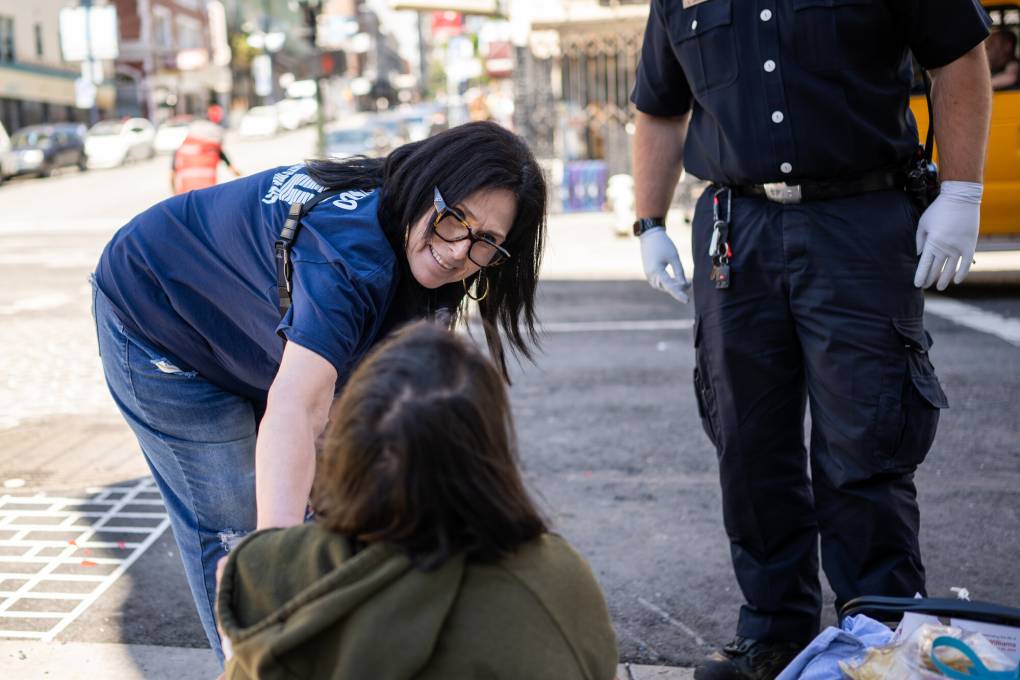
"caption": "Counselor Chantel Hernandez-Wood (left) and paramedic Isaac James, members of the Street Overdose Response Team, speak with a woman sitting in the Tenderloin in San Francisco on Sept. 3, 2024.",
"credit": "Beth LaBerge/KQED",
"altTag": null,
"description": null,
"imgSizes": {
"medium": {
"file": "https://cdn.kqed.org/wp-content/uploads/sites/10/2024/11/240903-OverdoseResponse-44-BL_qed-800x533.jpg",
"width": 800,
"height": 533,
"mimeType": "image/jpeg"
},
"large": {
"file": "https://cdn.kqed.org/wp-content/uploads/sites/10/2024/11/240903-OverdoseResponse-44-BL_qed-1020x680.jpg",
"width": 1020,
"height": 680,
"mimeType": "image/jpeg"
},
"thumbnail": {
"file": "https://cdn.kqed.org/wp-content/uploads/sites/10/2024/11/240903-OverdoseResponse-44-BL_qed-160x107.jpg",
"width": 160,
"height": 107,
"mimeType": "image/jpeg"
},
"1536x1536": {
"file": "https://cdn.kqed.org/wp-content/uploads/sites/10/2024/11/240903-OverdoseResponse-44-BL_qed-1536x1024.jpg",
"width": 1536,
"height": 1024,
"mimeType": "image/jpeg"
},
"post-thumbnail": {
"file": "https://cdn.kqed.org/wp-content/uploads/sites/10/2024/11/240903-OverdoseResponse-44-BL_qed-672x372.jpg",
"width": 672,
"height": 372,
"mimeType": "image/jpeg"
},
"twentyfourteen-full-width": {
"file": "https://cdn.kqed.org/wp-content/uploads/sites/10/2024/11/240903-OverdoseResponse-44-BL_qed-1038x576.jpg",
"width": 1038,
"height": 576,
"mimeType": "image/jpeg"
},
"full-width": {
"file": "https://cdn.kqed.org/wp-content/uploads/sites/10/2024/11/240903-OverdoseResponse-44-BL_qed-1920x1280.jpg",
"width": 1920,
"height": 1280,
"mimeType": "image/jpeg"
},
"kqedFullSize": {
"file": "https://cdn.kqed.org/wp-content/uploads/sites/10/2024/11/240903-OverdoseResponse-44-BL_qed.jpg",
"width": 2000,
"height": 1333
}
},
"isLoading": false,
"fetchFailed": false
},
"news_12064539": {
"type": "attachments",
"id": "news_12064539",
"meta": {
"index": "attachments_1716263798",
"site": "news",
"id": "12064539",
"found": true
},
"title": "US-HEALTH-VIRUS",
"publishDate": 1763476113,
"status": "inherit",
"parent": 12064538,
"modified": 1763476181,
"caption": "A man jogs past a row of telephone booths in front of the LA County Men's Central Jail on May 11, 2020 in Los Angeles, California.",
"credit": "Photo by Frederic J. BROWN / AFP via Getty Images",
"altTag": null,
"description": null,
"imgSizes": {
"medium": {
"file": "https://cdn.kqed.org/wp-content/uploads/sites/10/2025/11/GettyImages-1212731101-2000x1116.jpg",
"width": 2000,
"height": 1116,
"mimeType": "image/jpeg"
},
"large": {
"file": "https://cdn.kqed.org/wp-content/uploads/sites/10/2025/11/GettyImages-1212731101-2000x1116.jpg",
"width": 2000,
"height": 1116,
"mimeType": "image/jpeg"
},
"thumbnail": {
"file": "https://cdn.kqed.org/wp-content/uploads/sites/10/2025/11/GettyImages-1212731101-160x89.jpg",
"width": 160,
"height": 89,
"mimeType": "image/jpeg"
},
"1536x1536": {
"file": "https://cdn.kqed.org/wp-content/uploads/sites/10/2025/11/GettyImages-1212731101-1536x857.jpg",
"width": 1536,
"height": 857,
"mimeType": "image/jpeg"
},
"2048x2048": {
"file": "https://cdn.kqed.org/wp-content/uploads/sites/10/2025/11/GettyImages-1212731101-2048x1143.jpg",
"width": 2048,
"height": 1143,
"mimeType": "image/jpeg"
},
"post-thumbnail": {
"file": "https://cdn.kqed.org/wp-content/uploads/sites/10/2025/11/GettyImages-1212731101-672x372.jpg",
"width": 672,
"height": 372,
"mimeType": "image/jpeg"
},
"twentyfourteen-full-width": {
"file": "https://cdn.kqed.org/wp-content/uploads/sites/10/2025/11/GettyImages-1212731101-1038x576.jpg",
"width": 1038,
"height": 576,
"mimeType": "image/jpeg"
},
"full-width": {
"file": "https://cdn.kqed.org/wp-content/uploads/sites/10/2025/11/GettyImages-1212731101-2000x1116.jpg",
"width": 2000,
"height": 1116,
"mimeType": "image/jpeg"
},
"npr-cds-wide": {
"file": "https://cdn.kqed.org/wp-content/uploads/sites/10/2025/11/GettyImages-1212731101-1200x675.jpg",
"width": 1200,
"height": 675,
"mimeType": "image/jpeg"
},
"kqedFullSize": {
"file": "https://cdn.kqed.org/wp-content/uploads/sites/10/2025/11/GettyImages-1212731101-scaled.jpg",
"width": 2560,
"height": 1429
}
},
"isLoading": false,
"fetchFailed": false
},
"news_12053921": {
"type": "attachments",
"id": "news_12053921",
"meta": {
"index": "attachments_1716263798",
"site": "news",
"id": "12053921",
"found": true
},
"title": "250826_SFHARMREDUCTION00437_TV-KQED-1",
"publishDate": 1756325702,
"status": "inherit",
"parent": 0,
"modified": 1756326063,
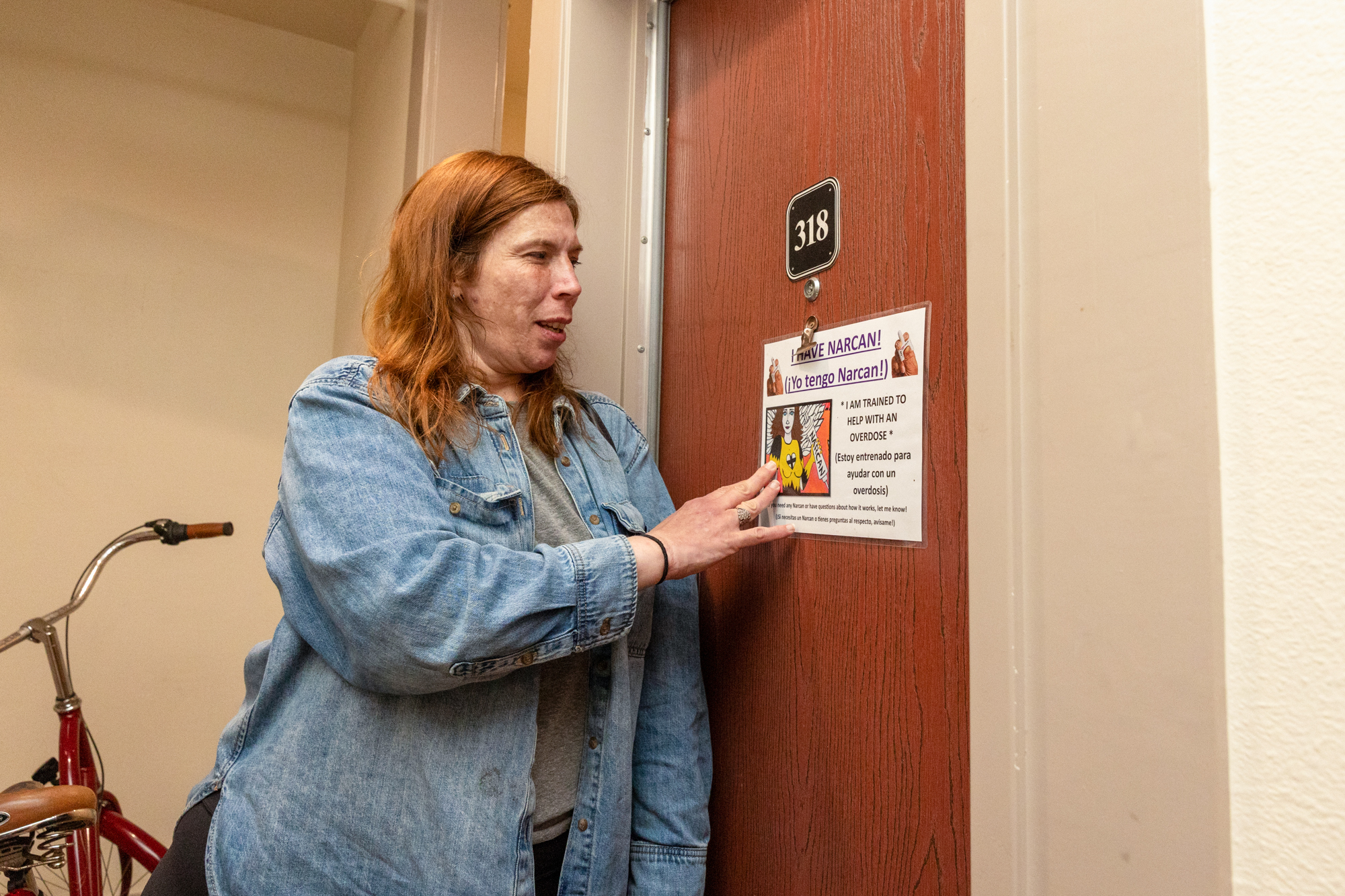
"caption": "Nicole Flores, a peer responder for Delivering Innovation in Supportive Housing, stands outside her unit at The Auburn in San Francisco on Aug. 20, 2025. San Francisco has scaled back harm reduction programs, but in housing units such as The Margot, the city is expanding access to harm reduction efforts.",
"credit": "Tâm Vũ/KQED",
"altTag": null,
"description": null,
"imgSizes": {
"thumbnail": {
"file": "https://cdn.kqed.org/wp-content/uploads/sites/10/2025/08/250826_SFHARMREDUCTION00437_TV-KQED-1-160x107.jpg",
"width": 160,
"height": 107,
"mimeType": "image/jpeg"
},
"1536x1536": {
"file": "https://cdn.kqed.org/wp-content/uploads/sites/10/2025/08/250826_SFHARMREDUCTION00437_TV-KQED-1-1536x1024.jpg",
"width": 1536,
"height": 1024,
"mimeType": "image/jpeg"
},
"post-thumbnail": {
"file": "https://cdn.kqed.org/wp-content/uploads/sites/10/2025/08/250826_SFHARMREDUCTION00437_TV-KQED-1-672x372.jpg",
"width": 672,
"height": 372,
"mimeType": "image/jpeg"
},
"twentyfourteen-full-width": {
"file": "https://cdn.kqed.org/wp-content/uploads/sites/10/2025/08/250826_SFHARMREDUCTION00437_TV-KQED-1-1038x576.jpg",
"width": 1038,
"height": 576,
"mimeType": "image/jpeg"
},
"kqedFullSize": {
"file": "https://cdn.kqed.org/wp-content/uploads/sites/10/2025/08/250826_SFHARMREDUCTION00437_TV-KQED-1.jpg",
"width": 2000,
"height": 1333
}
},
"isLoading": false,
"fetchFailed": false
},
"news_12036369": {
"type": "attachments",
"id": "news_12036369",
"meta": {
"index": "attachments_1716263798",
"site": "news",
"id": "12036369",
"found": true
},
"title": "019_KQED_EmbarcaderoNavigationCenter_01302020_7872_qed",
"publishDate": 1744846730,
"status": "inherit",
"parent": 12036307,
"modified": 1744846814,
"caption": "The dormitory at the Embarcadero SAFE Navigation Center at the corner of Embarcadero and Beale Street in San Francisco on Jan. 30, 2020. San Francisco plans to expand a program pairing shelter beds at the Adante Hotel on Geary Street in Lower Nob Hill with access to addiction treatment, to intervene in the city’s drug crisis. ",
"credit": "Beth LaBerge/KQED",
"altTag": null,
"description": null,
"imgSizes": {
"medium": {
"file": "https://cdn.kqed.org/wp-content/uploads/sites/10/2025/04/019_KQED_EmbarcaderoNavigationCenter_01302020_7872_qed-800x532.jpg",
"width": 800,
"height": 532,
"mimeType": "image/jpeg"
},
"large": {
"file": "https://cdn.kqed.org/wp-content/uploads/sites/10/2025/04/019_KQED_EmbarcaderoNavigationCenter_01302020_7872_qed-1020x679.jpg",
"width": 1020,
"height": 679,
"mimeType": "image/jpeg"
},
"thumbnail": {
"file": "https://cdn.kqed.org/wp-content/uploads/sites/10/2025/04/019_KQED_EmbarcaderoNavigationCenter_01302020_7872_qed-160x106.jpg",
"width": 160,
"height": 106,
"mimeType": "image/jpeg"
},
"1536x1536": {
"file": "https://cdn.kqed.org/wp-content/uploads/sites/10/2025/04/019_KQED_EmbarcaderoNavigationCenter_01302020_7872_qed-1536x1022.jpg",
"width": 1536,
"height": 1022,
"mimeType": "image/jpeg"
},
"post-thumbnail": {
"file": "https://cdn.kqed.org/wp-content/uploads/sites/10/2025/04/019_KQED_EmbarcaderoNavigationCenter_01302020_7872_qed-672x372.jpg",
"width": 672,
"height": 372,
"mimeType": "image/jpeg"
},
"twentyfourteen-full-width": {
"file": "https://cdn.kqed.org/wp-content/uploads/sites/10/2025/04/019_KQED_EmbarcaderoNavigationCenter_01302020_7872_qed-1038x576.jpg",
"width": 1038,
"height": 576,
"mimeType": "image/jpeg"
},
"full-width": {
"file": "https://cdn.kqed.org/wp-content/uploads/sites/10/2025/04/019_KQED_EmbarcaderoNavigationCenter_01302020_7872_qed-1920x1278.jpg",
"width": 1920,
"height": 1278,
"mimeType": "image/jpeg"
},
"kqedFullSize": {
"file": "https://cdn.kqed.org/wp-content/uploads/sites/10/2025/04/019_KQED_EmbarcaderoNavigationCenter_01302020_7872_qed.jpg",
"width": 2000,
"height": 1331
}
},
"isLoading": false,
"fetchFailed": false
},
"news_12019192": {
"type": "attachments",
"id": "news_12019192",
"meta": {
"index": "attachments_1716263798",
"site": "news",
"id": "12019192",
"found": true
},
"title": "103124-Nursing-Rehab-MO-CM-07 copy",
"publishDate": 1734651404,
"status": "inherit",
"parent": 12019189,
"modified": 1734651446,
"caption": "Former vocational nurse Bobbie Sage got a DUI while fleeing domestic abuse and was forced into a program for California nurses with addictions. She had to surrender her nursing license after a car accident left her medically disabled and unable to pay for testing, probation fines and fees. Pleasanton, on Oct. 31, 2024.",
"credit": "Manuel Orbegozo for CalMatters",
"altTag": null,
"description": null,
"imgSizes": {
"medium": {
"file": "https://cdn.kqed.org/wp-content/uploads/sites/10/2024/12/103124-Nursing-Rehab-MO-CM-07-copy-800x533.jpg",
"width": 800,
"height": 533,
"mimeType": "image/jpeg"
},
"large": {
"file": "https://cdn.kqed.org/wp-content/uploads/sites/10/2024/12/103124-Nursing-Rehab-MO-CM-07-copy-1020x680.jpg",
"width": 1020,
"height": 680,
"mimeType": "image/jpeg"
},
"thumbnail": {
"file": "https://cdn.kqed.org/wp-content/uploads/sites/10/2024/12/103124-Nursing-Rehab-MO-CM-07-copy-160x107.jpg",
"width": 160,
"height": 107,
"mimeType": "image/jpeg"
},
"1536x1536": {
"file": "https://cdn.kqed.org/wp-content/uploads/sites/10/2024/12/103124-Nursing-Rehab-MO-CM-07-copy-1536x1024.jpg",
"width": 1536,
"height": 1024,
"mimeType": "image/jpeg"
},
"post-thumbnail": {
"file": "https://cdn.kqed.org/wp-content/uploads/sites/10/2024/12/103124-Nursing-Rehab-MO-CM-07-copy-672x372.jpg",
"width": 672,
"height": 372,
"mimeType": "image/jpeg"
},
"twentyfourteen-full-width": {
"file": "https://cdn.kqed.org/wp-content/uploads/sites/10/2024/12/103124-Nursing-Rehab-MO-CM-07-copy-1038x576.jpg",
"width": 1038,
"height": 576,
"mimeType": "image/jpeg"
},
"full-width": {
"file": "https://cdn.kqed.org/wp-content/uploads/sites/10/2024/12/103124-Nursing-Rehab-MO-CM-07-copy-1920x1280.jpg",
"width": 1920,
"height": 1280,
"mimeType": "image/jpeg"
},
"kqedFullSize": {
"file": "https://cdn.kqed.org/wp-content/uploads/sites/10/2024/12/103124-Nursing-Rehab-MO-CM-07-copy.jpg",
"width": 2000,
"height": 1333
}
},
"isLoading": false,
"fetchFailed": false
},
"news_11959780": {
"type": "attachments",
"id": "news_11959780",
"meta": {
"index": "attachments_1716263798",
"site": "news",
"id": "11959780",
"found": true
},
"parent": 11959803,
"imgSizes": {
"twentyfourteen-full-width": {
"file": "https://ww2.kqed.org/app/uploads/sites/10/2023/08/230831-SAFE-USE-POP-UP-MD-04-KQED-1038x576.jpg",
"width": 1038,
"mimeType": "image/jpeg",
"height": 576
},
"thumbnail": {
"file": "https://ww2.kqed.org/app/uploads/sites/10/2023/08/230831-SAFE-USE-POP-UP-MD-04-KQED-160x107.jpg",
"width": 160,
"mimeType": "image/jpeg",
"height": 107
},
"post-thumbnail": {
"file": "https://ww2.kqed.org/app/uploads/sites/10/2023/08/230831-SAFE-USE-POP-UP-MD-04-KQED-672x372.jpg",
"width": 672,
"mimeType": "image/jpeg",
"height": 372
},
"kqedFullSize": {
"file": "https://ww2.kqed.org/app/uploads/sites/10/2023/08/230831-SAFE-USE-POP-UP-MD-04-KQED.jpg",
"width": 2000,
"height": 1333
},
"large": {
"file": "https://ww2.kqed.org/app/uploads/sites/10/2023/08/230831-SAFE-USE-POP-UP-MD-04-KQED-1020x680.jpg",
"width": 1020,
"mimeType": "image/jpeg",
"height": 680
},
"1536x1536": {
"file": "https://ww2.kqed.org/app/uploads/sites/10/2023/08/230831-SAFE-USE-POP-UP-MD-04-KQED-1536x1024.jpg",
"width": 1536,
"mimeType": "image/jpeg",
"height": 1024
},
"full-width": {
"file": "https://ww2.kqed.org/app/uploads/sites/10/2023/08/230831-SAFE-USE-POP-UP-MD-04-KQED-1920x1280.jpg",
"width": 1920,
"mimeType": "image/jpeg",
"height": 1280
},
"medium": {
"file": "https://ww2.kqed.org/app/uploads/sites/10/2023/08/230831-SAFE-USE-POP-UP-MD-04-KQED-800x533.jpg",
"width": 800,
"mimeType": "image/jpeg",
"height": 533
}
},
"publishDate": 1693512316,
"modified": 1693525051,
"caption": "Michael Scarce (second from left), a Concerned Public Response member, greets a community member visiting a safe drug consumption site in San Francisco on Aug. 31, 2023.",
"description": null,
"title": "230831-SAFE USE POP UP-MD-04-KQED",
"credit": "Martin do Nascimento/KQED",
"status": "inherit",
"altTag": "A group of people congregate around a table in an outdoor setting.",
"isLoading": false,
"fetchFailed": false
},
"news_11995962": {
"type": "attachments",
"id": "news_11995962",
"meta": {
"index": "attachments_1716263798",
"site": "news",
"id": "11995962",
"found": true
},
"title": "Drug releated deaths are up on the West Coast",
"publishDate": 1721172938,
"status": "inherit",
"parent": 11995842,
"modified": 1721174861,
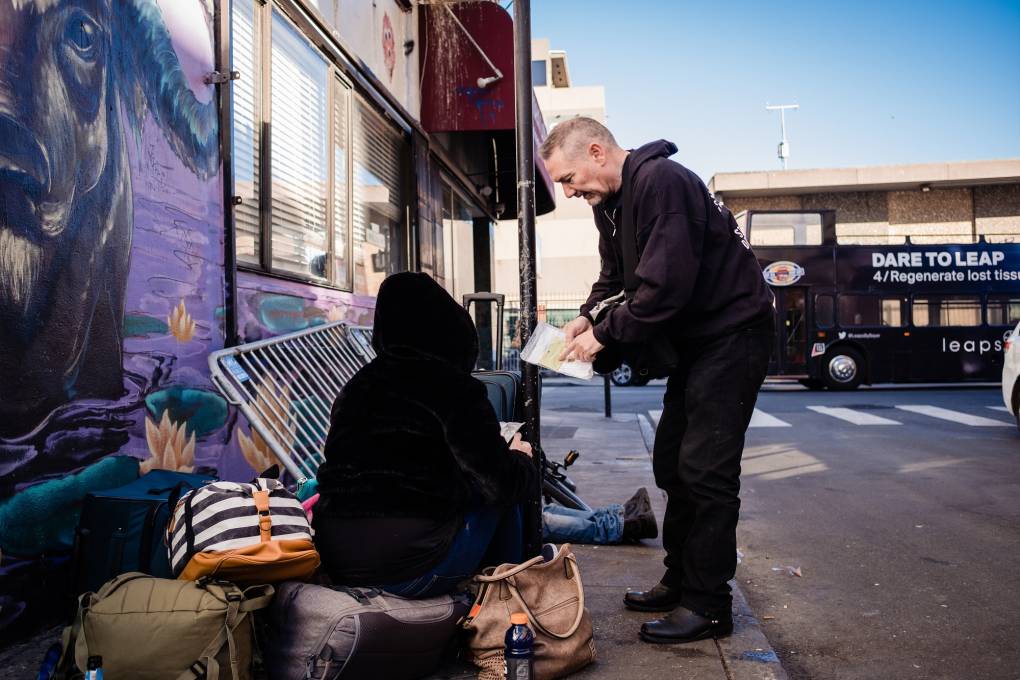
"caption": "A harm reduction program representative speaks with people on a popular alleyway in the Tenderloin neighborhood to hand out Narcan, fentanyl detection packets and tinfoil to those who need them as a part of drug addiction outreach in San Francisco.",
"credit": "Nick Otto/Washington Post via Getty Images",
"altTag": null,
"description": null,
"imgSizes": {
"medium": {
"file": "https://cdn.kqed.org/wp-content/uploads/sites/10/2024/07/SFOverdoseDeathDecline-800x533.jpg",
"width": 800,
"height": 533,
"mimeType": "image/jpeg"
},
"large": {
"file": "https://cdn.kqed.org/wp-content/uploads/sites/10/2024/07/SFOverdoseDeathDecline-1020x680.jpg",
"width": 1020,
"height": 680,
"mimeType": "image/jpeg"
},
"thumbnail": {
"file": "https://cdn.kqed.org/wp-content/uploads/sites/10/2024/07/SFOverdoseDeathDecline-160x107.jpg",
"width": 160,
"height": 107,
"mimeType": "image/jpeg"
},
"1536x1536": {
"file": "https://cdn.kqed.org/wp-content/uploads/sites/10/2024/07/SFOverdoseDeathDecline-1536x1024.jpg",
"width": 1536,
"height": 1024,
"mimeType": "image/jpeg"
},
"post-thumbnail": {
"file": "https://cdn.kqed.org/wp-content/uploads/sites/10/2024/07/SFOverdoseDeathDecline-672x372.jpg",
"width": 672,
"height": 372,
"mimeType": "image/jpeg"
},
"twentyfourteen-full-width": {
"file": "https://cdn.kqed.org/wp-content/uploads/sites/10/2024/07/SFOverdoseDeathDecline-1038x576.jpg",
"width": 1038,
"height": 576,
"mimeType": "image/jpeg"
},
"full-width": {
"file": "https://cdn.kqed.org/wp-content/uploads/sites/10/2024/07/SFOverdoseDeathDecline-1920x1280.jpg",
"width": 1920,
"height": 1280,
"mimeType": "image/jpeg"
},
"kqedFullSize": {
"file": "https://cdn.kqed.org/wp-content/uploads/sites/10/2024/07/SFOverdoseDeathDecline.jpg",
"width": 2000,
"height": 1333
}
},
"isLoading": false,
"fetchFailed": false
},
"news_11992370": {
"type": "attachments",
"id": "news_11992370",
"meta": {
"index": "attachments_1716263798",
"site": "news",
"id": "11992370",
"found": true
},
"title": "Purdue Pharma Still Faces Hundreds Of Lawsuits Related To OxyContin",
"publishDate": 1719592999,
"status": "inherit",
"parent": 11992365,
"modified": 1737657926,
"caption": "Purdue Pharma headquarters in Stamford, Connecticut. Purdue Pharma, the maker of OxyContin, and its owners, the Sackler family, are facing hundreds of lawsuits across the country for the company's alleged role in the opioid epidemic that has killed more than 200,000 Americans over the past 20 years. ",
"credit": "Drew Angerer/Getty Images",
"altTag": null,
"description": null,
"imgSizes": {
"medium": {
"file": "https://cdn.kqed.org/wp-content/uploads/sites/10/2024/06/PurduePharmaHeadquarters01-800x533.jpg",
"width": 800,
"height": 533,
"mimeType": "image/jpeg"
},
"large": {
"file": "https://cdn.kqed.org/wp-content/uploads/sites/10/2024/06/PurduePharmaHeadquarters01-1020x680.jpg",
"width": 1020,
"height": 680,
"mimeType": "image/jpeg"
},
"thumbnail": {
"file": "https://cdn.kqed.org/wp-content/uploads/sites/10/2024/06/PurduePharmaHeadquarters01-160x107.jpg",
"width": 160,
"height": 107,
"mimeType": "image/jpeg"
},
"1536x1536": {
"file": "https://cdn.kqed.org/wp-content/uploads/sites/10/2024/06/PurduePharmaHeadquarters01-1536x1024.jpg",
"width": 1536,
"height": 1024,
"mimeType": "image/jpeg"
},
"post-thumbnail": {
"file": "https://cdn.kqed.org/wp-content/uploads/sites/10/2024/06/PurduePharmaHeadquarters01-672x372.jpg",
"width": 672,
"height": 372,
"mimeType": "image/jpeg"
},
"twentyfourteen-full-width": {
"file": "https://cdn.kqed.org/wp-content/uploads/sites/10/2024/06/PurduePharmaHeadquarters01-1038x576.jpg",
"width": 1038,
"height": 576,
"mimeType": "image/jpeg"
},
"kqedFullSize": {
"file": "https://cdn.kqed.org/wp-content/uploads/sites/10/2024/06/PurduePharmaHeadquarters01.jpg",
"width": 1920,
"height": 1280
}
},
"isLoading": false,
"fetchFailed": false
},
"news_11990724": {
"type": "attachments",
"id": "news_11990724",
"meta": {
"index": "attachments_1716263798",
"site": "news",
"id": "11990724",
"found": true
},
"title": "DrugFreeRecoveryHousing01",
"publishDate": 1718651960,
"status": "inherit",
"parent": 11990693,
"modified": 1718665035,
"caption": "San Francisco Supervisor Matt Dorsey (top-center) speaks from a podium at City Hall on June 17. Together, he and Supervisor Rafael Mandelman announced their new legislation to prioritize drug-free recovery housing in front of advocates and the community.",
"credit": "Katherine Monahan/KQED",
"altTag": null,
"description": null,
"imgSizes": {
"medium": {
"file": "https://cdn.kqed.org/wp-content/uploads/sites/10/2024/06/DrugFreeRecoveryHousing01-800x600.jpg",
"width": 800,
"height": 600,
"mimeType": "image/jpeg"
},
"large": {
"file": "https://cdn.kqed.org/wp-content/uploads/sites/10/2024/06/DrugFreeRecoveryHousing01-1020x765.jpg",
"width": 1020,
"height": 765,
"mimeType": "image/jpeg"
},
"thumbnail": {
"file": "https://cdn.kqed.org/wp-content/uploads/sites/10/2024/06/DrugFreeRecoveryHousing01-160x120.jpg",
"width": 160,
"height": 120,
"mimeType": "image/jpeg"
},
"1536x1536": {
"file": "https://cdn.kqed.org/wp-content/uploads/sites/10/2024/06/DrugFreeRecoveryHousing01-1536x1152.jpg",
"width": 1536,
"height": 1152,
"mimeType": "image/jpeg"
},
"post-thumbnail": {
"file": "https://cdn.kqed.org/wp-content/uploads/sites/10/2024/06/DrugFreeRecoveryHousing01-672x372.jpg",
"width": 672,
"height": 372,
"mimeType": "image/jpeg"
},
"twentyfourteen-full-width": {
"file": "https://cdn.kqed.org/wp-content/uploads/sites/10/2024/06/DrugFreeRecoveryHousing01-1038x576.jpg",
"width": 1038,
"height": 576,
"mimeType": "image/jpeg"
},
"kqedFullSize": {
"file": "https://cdn.kqed.org/wp-content/uploads/sites/10/2024/06/DrugFreeRecoveryHousing01.jpg",
"width": 1920,
"height": 1440
}
},
"isLoading": false,
"fetchFailed": false
},
"news_11970625": {
"type": "attachments",
"id": "news_11970625",
"meta": {
"index": "attachments_1716263798",
"site": "news",
"id": "11970625",
"found": true
},
"parent": 0,
"imgSizes": {
"twentyfourteen-full-width": {
"file": "https://cdn.kqed.org/wp-content/uploads/sites/10/2023/12/231220-TIRECOVERY-10-BL-KQED-1038x576.jpg",
"width": 1038,
"mimeType": "image/jpeg",
"height": 576
},
"thumbnail": {
"file": "https://cdn.kqed.org/wp-content/uploads/sites/10/2023/12/231220-TIRECOVERY-10-BL-KQED-160x107.jpg",
"width": 160,
"mimeType": "image/jpeg",
"height": 107
},
"post-thumbnail": {
"file": "https://cdn.kqed.org/wp-content/uploads/sites/10/2023/12/231220-TIRECOVERY-10-BL-KQED-672x372.jpg",
"width": 672,
"mimeType": "image/jpeg",
"height": 372
},
"kqedFullSize": {
"file": "https://cdn.kqed.org/wp-content/uploads/sites/10/2023/12/231220-TIRECOVERY-10-BL-KQED.jpg",
"width": 2000,
"height": 1333
},
"large": {
"file": "https://cdn.kqed.org/wp-content/uploads/sites/10/2023/12/231220-TIRECOVERY-10-BL-KQED-1020x680.jpg",
"width": 1020,
"mimeType": "image/jpeg",
"height": 680
},
"1536x1536": {
"file": "https://cdn.kqed.org/wp-content/uploads/sites/10/2023/12/231220-TIRECOVERY-10-BL-KQED-1536x1024.jpg",
"width": 1536,
"mimeType": "image/jpeg",
"height": 1024
},
"full-width": {
"file": "https://cdn.kqed.org/wp-content/uploads/sites/10/2023/12/231220-TIRECOVERY-10-BL-KQED-1920x1280.jpg",
"width": 1920,
"mimeType": "image/jpeg",
"height": 1280
},
"medium": {
"file": "https://cdn.kqed.org/wp-content/uploads/sites/10/2023/12/231220-TIRECOVERY-10-BL-KQED-800x533.jpg",
"width": 800,
"mimeType": "image/jpeg",
"height": 533
}
},
"publishDate": 1703183222,
"modified": 1703205795,
"caption": "De'Andre Devereaux stands outside a holiday party at HealthRight 360's Recovery Residence program on Treasure Island on Dec. 20, 2023.",
"description": null,
"title": "231220-TIRECOVERY-10-BL-KQED",
"credit": "Beth LaBerge/KQED",
"status": "inherit",
"altTag": "A person with a bald head stands in front of a building in a residential area.",
"isLoading": false,
"fetchFailed": false
},
"news_11959604": {
"type": "attachments",
"id": "news_11959604",
"meta": {
"index": "attachments_1716263798",
"site": "news",
"id": "11959604",
"found": true
},
"parent": 0,
"imgSizes": {
"twentyfourteen-full-width": {
"file": "https://ww2.kqed.org/app/uploads/sites/10/2023/08/RS68436_230829-ODAwareness-26-BL-KQED-1038x576.jpg",
"width": 1038,
"mimeType": "image/jpeg",
"height": 576
},
"thumbnail": {
"file": "https://ww2.kqed.org/app/uploads/sites/10/2023/08/RS68436_230829-ODAwareness-26-BL-KQED-160x107.jpg",
"width": 160,
"mimeType": "image/jpeg",
"height": 107
},
"post-thumbnail": {
"file": "https://ww2.kqed.org/app/uploads/sites/10/2023/08/RS68436_230829-ODAwareness-26-BL-KQED-672x372.jpg",
"width": 672,
"mimeType": "image/jpeg",
"height": 372
},
"kqedFullSize": {
"file": "https://ww2.kqed.org/app/uploads/sites/10/2023/08/RS68436_230829-ODAwareness-26-BL-KQED.jpg",
"width": 2000,
"height": 1333
},
"large": {
"file": "https://ww2.kqed.org/app/uploads/sites/10/2023/08/RS68436_230829-ODAwareness-26-BL-KQED-1020x680.jpg",
"width": 1020,
"mimeType": "image/jpeg",
"height": 680
},
"1536x1536": {
"file": "https://ww2.kqed.org/app/uploads/sites/10/2023/08/RS68436_230829-ODAwareness-26-BL-KQED-1536x1024.jpg",
"width": 1536,
"mimeType": "image/jpeg",
"height": 1024
},
"full-width": {
"file": "https://ww2.kqed.org/app/uploads/sites/10/2023/08/RS68436_230829-ODAwareness-26-BL-KQED-1920x1280.jpg",
"width": 1920,
"mimeType": "image/jpeg",
"height": 1280
},
"medium": {
"file": "https://ww2.kqed.org/app/uploads/sites/10/2023/08/RS68436_230829-ODAwareness-26-BL-KQED-800x533.jpg",
"width": 800,
"mimeType": "image/jpeg",
"height": 533
}
},
"publishDate": 1693420588,
"modified": 1693422074,
"caption": "Jean, 60, sits outside of the Opiate Treatment Outpatient Program (OTOP) at Zuckerberg San Francisco General Hospital in San Francisco on Aug. 29, 2023.",
"description": null,
"title": "RS68436_230829-ODAwareness-26-BL-KQED",
"credit": "Beth LaBerge/KQED",
"status": "inherit",
"altTag": "A person sits on a bench outdoors and looks at the camera.",
"isLoading": false,
"fetchFailed": false
},
"news_11924205": {
"type": "attachments",
"id": "news_11924205",
"meta": {
"index": "attachments_1716263798",
"site": "news",
"id": "11924205",
"found": true
},
"parent": 11924117,
"imgSizes": {
"twentyfourteen-full-width": {
"file": "https://ww2.kqed.org/app/uploads/sites/10/2022/08/RS58238_GettyImages-1238594058-qut-1038x576.jpg",
"width": 1038,
"mimeType": "image/jpeg",
"height": 576
},
"thumbnail": {
"file": "https://ww2.kqed.org/app/uploads/sites/10/2022/08/RS58238_GettyImages-1238594058-qut-160x107.jpg",
"width": 160,
"mimeType": "image/jpeg",
"height": 107
},
"post-thumbnail": {
"file": "https://ww2.kqed.org/app/uploads/sites/10/2022/08/RS58238_GettyImages-1238594058-qut-672x372.jpg",
"width": 672,
"mimeType": "image/jpeg",
"height": 372
},
"kqedFullSize": {
"file": "https://ww2.kqed.org/app/uploads/sites/10/2022/08/RS58238_GettyImages-1238594058-qut.jpg",
"width": 1920,
"height": 1280
},
"large": {
"file": "https://ww2.kqed.org/app/uploads/sites/10/2022/08/RS58238_GettyImages-1238594058-qut-1020x680.jpg",
"width": 1020,
"mimeType": "image/jpeg",
"height": 680
},
"1536x1536": {
"file": "https://ww2.kqed.org/app/uploads/sites/10/2022/08/RS58238_GettyImages-1238594058-qut-1536x1024.jpg",
"width": 1536,
"mimeType": "image/jpeg",
"height": 1024
},
"medium": {
"file": "https://ww2.kqed.org/app/uploads/sites/10/2022/08/RS58238_GettyImages-1238594058-qut-800x533.jpg",
"width": 800,
"mimeType": "image/jpeg",
"height": 533
}
},
"publishDate": 1661963945,
"modified": 1685626707,
"caption": "Gov. Gavin Newsom signs legislation to institute CARE Court, his plan to overhaul the state's approach to mental health care for people diagnosed with schizophrenia and other psychotic disorders.",
"description": null,
"title": "Governor Gavin Newsom speaks during a press conference to unveil the next phase of California's pandemic response",
"credit": "Allen J. Schaben/Los Angeles Times via Getty Images",
"status": "inherit",
"altTag": "Gavin Newsom speaks at a press conference",
"isLoading": false,
"fetchFailed": false
}
},
"audioPlayerReducer": {
"postId": "stream_live",
"isPaused": true,
"isPlaying": false,
"pfsActive": false,
"pledgeModalIsOpen": true,
"playerDrawerIsOpen": false,
"liveAudioPlayStartedAt": 0,
"liveAudioPlayContext": ""
},
"authorsReducer": {
"byline_news_12019189": {
"type": "authors",
"id": "byline_news_12019189",
"meta": {
"override": true
},
"slug": "byline_news_12019189",
"name": "\u003ca href=\"https://calmatters.org/author/kristen-hwang/\">Kristen Hwang\u003c/a>, CalMatters",
"isLoading": false
},
"scottshafer": {
"type": "authors",
"id": "255",
"meta": {
"index": "authors_1716337520",
"id": "255",
"found": true
},
"name": "Scott Shafer",
"firstName": "Scott",
"lastName": "Shafer",
"slug": "scottshafer",
"email": "sshafer@kqed.org",
"display_author_email": false,
"staff_mastheads": [
"news"
],
"title": "KQED Contributor",
"bio": "Scott Shafer is a senior editor with the KQED Politics and Government desk. He is co-host of Political Breakdown, the award-winning radio show and podcast with a personal take on the world of politics. Scott came to KQED in 1998 to host the statewide\u003cem> California Report\u003c/em>. Prior to that he had extended stints in politics and government\u003cem>.\u003c/em> He uses that inside experience at KQED in his, reporting, hosting and analysis for the politics desk. Scott collaborated \u003cem>Political Breakdown a\u003c/em>nd on \u003cem>The Political Mind of Jerry Brown, \u003c/em>an eight-part series about the life and extraordinary political career of the former governor. For fun, he plays water polo with the San Francisco Tsunami.",
"avatar": "https://secure.gravatar.com/avatar/a62ebae45b79d7aed1a39a0e3bf68104?s=600&d=blank&r=g",
"twitter": "scottshafer",
"bluesky": null,
"facebook": null,
"instagram": null,
"linkedin": null,
"sites": [
{
"site": "news",
"roles": [
"editor"
]
},
{
"site": "stateofhealth",
"roles": [
"author"
]
},
{
"site": "science",
"roles": [
"author"
]
},
{
"site": "forum",
"roles": [
"subscriber"
]
},
{
"site": "liveblog",
"roles": [
"author"
]
}
],
"headData": {
"title": "Scott Shafer | KQED",
"description": "KQED Contributor",
"ogImgSrc": "https://secure.gravatar.com/avatar/a62ebae45b79d7aed1a39a0e3bf68104?s=600&d=blank&r=g",
"twImgSrc": "https://secure.gravatar.com/avatar/a62ebae45b79d7aed1a39a0e3bf68104?s=600&d=blank&r=g"
},
"isLoading": false,
"link": "/author/scottshafer"
},
"ecruzguevarra": {
"type": "authors",
"id": "8654",
"meta": {
"index": "authors_1716337520",
"id": "8654",
"found": true
},
"name": "Ericka Cruz Guevarra",
"firstName": "Ericka",
"lastName": "Cruz Guevarra",
"slug": "ecruzguevarra",
"email": "ecruzguevarra@kqed.org",
"display_author_email": true,
"staff_mastheads": [
"news"
],
"title": "Producer, The Bay Podcast",
"bio": "Ericka Cruz Guevarra is host of \u003ca href=\"https://www.kqed.org/podcasts/thebay\">\u003cem>The Bay\u003c/em>\u003c/a> podcast at KQED. Before host, she was the show’s producer. Her work in that capacity includes a three-part reported series on policing in Vallejo, which won a 2020 excellence in journalism award from the Society of Professional Journalists. Ericka has worked as a breaking news reporter at Oregon Public Broadcasting, helped produce the Code Switch podcast, and was KQED’s inaugural Raul Ramirez Diversity Fund intern. She’s also an alumna of NPR’s Next Generation Radio program. Send her an email if you have strong feelings about whether Fairfield and Suisun City are the Bay. Ericka is represented by SAG-AFTRA.",
"avatar": "https://secure.gravatar.com/avatar/accefc1de4bafc7e234b69bcb9b6f6536c130fd84709bc3069ef11a78787e1bb?s=600&d=blank&r=g",
"twitter": "NotoriousECG",
"bluesky": null,
"facebook": null,
"instagram": null,
"linkedin": null,
"sites": [
{
"site": "arts",
"roles": [
"subscriber"
]
},
{
"site": "news",
"roles": [
"editor",
"manage_categories"
]
},
{
"site": "futureofyou",
"roles": [
"subscriber"
]
},
{
"site": "stateofhealth",
"roles": [
"subscriber"
]
},
{
"site": "science",
"roles": [
"editor"
]
},
{
"site": "forum",
"roles": [
"subscriber"
]
}
],
"headData": {
"title": "Ericka Cruz Guevarra | KQED",
"description": "Producer, The Bay Podcast",
"ogImgSrc": "https://secure.gravatar.com/avatar/accefc1de4bafc7e234b69bcb9b6f6536c130fd84709bc3069ef11a78787e1bb?s=600&d=blank&r=g",
"twImgSrc": "https://secure.gravatar.com/avatar/accefc1de4bafc7e234b69bcb9b6f6536c130fd84709bc3069ef11a78787e1bb?s=600&d=blank&r=g"
},
"isLoading": false,
"link": "/author/ecruzguevarra"
},
"lesleymcclurg": {
"type": "authors",
"id": "11229",
"meta": {
"index": "authors_1716337520",
"id": "11229",
"found": true
},
"name": "Lesley McClurg",
"firstName": "Lesley",
"lastName": "McClurg",
"slug": "lesleymcclurg",
"email": "lmcclurg@KQED.org",
"display_author_email": false,
"staff_mastheads": [
"news",
"science"
],
"title": "KQED Health Correspondent",
"bio": "Lesley McClurg is a health correspondent and fill-in host whose work is regularly rebroadcast on NPR and PBS programs. She’s earned multiple regional Emmy awards, a national and a regional Edward R. Murrow award, and was named Best Beat Reporter by the Association of Health Care Journalists. The Society of Professional Journalists has recognized her work several times, and the Society of Environmental Journalists spotlighted her coverage of California’s historic drought.\r\n\r\nBefore joining KQED in 2016, Lesley covered food and sustainability for Capital Public Radio, environmental issues for Colorado Public Radio, and reported for KUOW and KCTS 9 in Seattle. Away from the newsroom, she loves skiing with her daughter, mountain biking with her partner, and playing with Ollie, the family’s goldendoodle. On deadline, she runs almost entirely on chocolate chips.\r\n\r\n ",
"avatar": "https://secure.gravatar.com/avatar/bab49e972ea10c774fe0f5e29dba1722b158f7c0d58a360923d1389d380b2978?s=600&d=blank&r=g",
"twitter": "lesleywmcclurg",
"bluesky": null,
"facebook": null,
"instagram": null,
"linkedin": null,
"sites": [
{
"site": "arts",
"roles": [
"author"
]
},
{
"site": "news",
"roles": [
"editor"
]
},
{
"site": "futureofyou",
"roles": [
"editor"
]
},
{
"site": "stateofhealth",
"roles": [
"author"
]
},
{
"site": "science",
"roles": [
"editor"
]
},
{
"site": "quest",
"roles": [
"subscriber"
]
},
{
"site": "forum",
"roles": [
"administrator"
]
},
{
"site": "liveblog",
"roles": [
"author"
]
}
],
"headData": {
"title": "Lesley McClurg | KQED",
"description": "KQED Health Correspondent",
"ogImgSrc": "https://secure.gravatar.com/avatar/bab49e972ea10c774fe0f5e29dba1722b158f7c0d58a360923d1389d380b2978?s=600&d=blank&r=g",
"twImgSrc": "https://secure.gravatar.com/avatar/bab49e972ea10c774fe0f5e29dba1722b158f7c0d58a360923d1389d380b2978?s=600&d=blank&r=g"
},
"isLoading": false,
"link": "/author/lesleymcclurg"
},
"amontecillo": {
"type": "authors",
"id": "11649",
"meta": {
"index": "authors_1716337520",
"id": "11649",
"found": true
},
"name": "Alan Montecillo",
"firstName": "Alan",
"lastName": "Montecillo",
"slug": "amontecillo",
"email": "amontecillo@kqed.org",
"display_author_email": false,
"staff_mastheads": [
"news"
],
"title": "KQED Contributor",
"bio": "Alan Montecillo is the senior editor of \u003cem>\u003ca href=\"http://kqed.org/thebay\">The Bay\u003c/a>, \u003c/em> KQED's local news podcast. Before moving to the Bay Area, he worked as a senior talk show producer for WILL in Champaign-Urbana, Illinois and at Oregon Public Broadcasting in Portland, Oregon. He has won journalism awards from the Society of Professional Journalists Northern California, the Public Media Journalists Association, The Signal Awards, and has also received a regional Edward R. Murrow award. Alan is a Filipino American from Hong Kong and a graduate of Reed College.",
"avatar": "https://secure.gravatar.com/avatar/268f53a2066899ea9efdd8a5900218b17c822d9862cbc9326cccec53ef41d349?s=600&d=blank&r=g",
"twitter": "alanmontecillo",
"bluesky": null,
"facebook": null,
"instagram": null,
"linkedin": null,
"sites": [
{
"site": "",
"roles": [
"editor"
]
},
{
"site": "news",
"roles": [
"editor",
"manage_categories"
]
}
],
"headData": {
"title": "Alan Montecillo | KQED",
"description": "KQED Contributor",
"ogImgSrc": "https://secure.gravatar.com/avatar/268f53a2066899ea9efdd8a5900218b17c822d9862cbc9326cccec53ef41d349?s=600&d=blank&r=g",
"twImgSrc": "https://secure.gravatar.com/avatar/268f53a2066899ea9efdd8a5900218b17c822d9862cbc9326cccec53ef41d349?s=600&d=blank&r=g"
},
"isLoading": false,
"link": "/author/amontecillo"
},
"kmizuguchi": {
"type": "authors",
"id": "11739",
"meta": {
"index": "authors_1716337520",
"id": "11739",
"found": true
},
"name": "Keith Mizuguchi",
"firstName": "Keith",
"lastName": "Mizuguchi",
"slug": "kmizuguchi",
"email": "kmizuguchi@kqed.org",
"display_author_email": false,
"staff_mastheads": [],
"title": "KQED Contributor",
"bio": null,
"avatar": "https://secure.gravatar.com/avatar/64d8a7de0723d4099b9fe4e915136103febcc20809abce228ee4415bcb237023?s=600&d=blank&r=g",
"twitter": null,
"bluesky": null,
"facebook": null,
"instagram": null,
"linkedin": null,
"sites": [
{
"site": "news",
"roles": [
"editor"
]
},
{
"site": "science",
"roles": [
"editor"
]
}
],
"headData": {
"title": "Keith Mizuguchi | KQED",
"description": "KQED Contributor",
"ogImgSrc": "https://secure.gravatar.com/avatar/64d8a7de0723d4099b9fe4e915136103febcc20809abce228ee4415bcb237023?s=600&d=blank&r=g",
"twImgSrc": "https://secure.gravatar.com/avatar/64d8a7de0723d4099b9fe4e915136103febcc20809abce228ee4415bcb237023?s=600&d=blank&r=g"
},
"isLoading": false,
"link": "/author/kmizuguchi"
},
"mesquinca": {
"type": "authors",
"id": "11802",
"meta": {
"index": "authors_1716337520",
"id": "11802",
"found": true
},
"name": "Maria Esquinca",
"firstName": "Maria",
"lastName": "Esquinca",
"slug": "mesquinca",
"email": "mesquinca@kqed.org",
"display_author_email": false,
"staff_mastheads": [],
"title": "Producer, The Bay",
"bio": "María Esquinca is a producer of The Bay. Before that, she was a New York Women’s Foundation IGNITE Fellow at Latino USA. She worked at Radio Bilingue where she covered the San Joaquin Valley. Maria has interned at WLRN, News 21, The New York Times Student Journalism Institute and at Crain’s Detroit Business as a Dow Jones News Fund Business Reporting Intern. She is an MFA graduate from the University of Miami. In 2017, she graduated from the Walter Cronkite School of Journalism and Mass Communication with a Master of Mass Communication. A fronteriza, she was born in Ciudad Juárez, Chihuahua, Mexico and grew up in El Paso, Texas.",
"avatar": "https://secure.gravatar.com/avatar/77cedba18aae91da775038ba06dcd8d0?s=600&d=blank&r=g",
"twitter": "@m_esquinca",
"facebook": null,
"instagram": null,
"linkedin": null,
"sites": [
{
"site": "news",
"roles": []
}
],
"headData": {
"title": "Maria Esquinca | KQED",
"description": "Producer, The Bay",
"ogImgSrc": "https://secure.gravatar.com/avatar/77cedba18aae91da775038ba06dcd8d0?s=600&d=blank&r=g",
"twImgSrc": "https://secure.gravatar.com/avatar/77cedba18aae91da775038ba06dcd8d0?s=600&d=blank&r=g"
},
"isLoading": false,
"link": "/author/mesquinca"
},
"sjohnson": {
"type": "authors",
"id": "11840",
"meta": {
"index": "authors_1716337520",
"id": "11840",
"found": true
},
"name": "Sydney Johnson",
"firstName": "Sydney",
"lastName": "Johnson",
"slug": "sjohnson",
"email": "sjohnson@kqed.org",
"display_author_email": false,
"staff_mastheads": [
"news"
],
"title": "KQED Reporter",
"bio": "Sydney Johnson is a general assignment reporter at KQED. She previously reported on public health and city government at the San Francisco Examiner, and before that, she covered statewide education policy for EdSource. Her reporting has won multiple local, state and national awards. Sydney is a graduate of the University of California, Berkeley and lives in San Francisco.",
"avatar": "https://secure.gravatar.com/avatar/97855f2719b72ad6190b7c535fe642c8?s=600&d=blank&r=g",
"twitter": "sydneyfjohnson",
"facebook": null,
"instagram": null,
"linkedin": null,
"sites": [
{
"site": "news",
"roles": [
"editor"
]
}
],
"headData": {
"title": "Sydney Johnson | KQED",
"description": "KQED Reporter",
"ogImgSrc": "https://secure.gravatar.com/avatar/97855f2719b72ad6190b7c535fe642c8?s=600&d=blank&r=g",
"twImgSrc": "https://secure.gravatar.com/avatar/97855f2719b72ad6190b7c535fe642c8?s=600&d=blank&r=g"
},
"isLoading": false,
"link": "/author/sjohnson"
},
"kdebenedetti": {
"type": "authors",
"id": "11913",
"meta": {
"index": "authors_1716337520",
"id": "11913",
"found": true
},
"name": "Katie DeBenedetti",
"firstName": "Katie",
"lastName": "DeBenedetti",
"slug": "kdebenedetti",
"email": "kdebenedetti@kqed.org",
"display_author_email": false,
"staff_mastheads": [
"news",
"science"
],
"title": "KQED Contributor",
"bio": "Katie DeBenedetti is a digital reporter covering daily news for the Express Desk. Prior to joining KQED as a culture reporting intern in January 2024, she covered education and city government for the Napa Valley Register.",
"avatar": "https://secure.gravatar.com/avatar/6e31073cb8f7e4214ab03f42771d0f45?s=600&d=blank&r=g",
"twitter": null,
"facebook": null,
"instagram": null,
"linkedin": null,
"sites": [
{
"site": "news",
"roles": [
"author"
]
},
{
"site": "science",
"roles": [
"author"
]
},
{
"site": "liveblog",
"roles": [
"author"
]
}
],
"headData": {
"title": "Katie DeBenedetti | KQED",
"description": "KQED Contributor",
"ogImgSrc": "https://secure.gravatar.com/avatar/6e31073cb8f7e4214ab03f42771d0f45?s=600&d=blank&r=g",
"twImgSrc": "https://secure.gravatar.com/avatar/6e31073cb8f7e4214ab03f42771d0f45?s=600&d=blank&r=g"
},
"isLoading": false,
"link": "/author/kdebenedetti"
},
"rcooke": {
"type": "authors",
"id": "11921",
"meta": {
"index": "authors_1716337520",
"id": "11921",
"found": true
},
"name": "Riley Cooke",
"firstName": "Riley",
"lastName": "Cooke",
"slug": "rcooke",
"email": "rcooke@kqed.org",
"display_author_email": true,
"staff_mastheads": [
"news"
],
"title": "KQED Contributor",
"bio": "Riley is a senior at UC Berkeley, where she studies political science and journalism. Her work has appeared in SFGate, NBC Bay Area, Local News Matters and more. She enjoys reporting on politics, housing and homelessness — and using as many em dashes as her editors will allow.",
"avatar": "https://secure.gravatar.com/avatar/792f98c126cc5e270a8a96f77f7224ea?s=600&d=blank&r=g",
"twitter": "rrileycooke",
"facebook": null,
"instagram": null,
"linkedin": null,
"sites": [
{
"site": "arts",
"roles": [
"author"
]
},
{
"site": "news",
"roles": [
"author"
]
}
],
"headData": {
"title": "Riley Cooke | KQED",
"description": "KQED Contributor",
"ogImgSrc": "https://secure.gravatar.com/avatar/792f98c126cc5e270a8a96f77f7224ea?s=600&d=blank&r=g",
"twImgSrc": "https://secure.gravatar.com/avatar/792f98c126cc5e270a8a96f77f7224ea?s=600&d=blank&r=g"
},
"isLoading": false,
"link": "/author/rcooke"
}
},
"pagesReducer": {
"news_tag_addiction-treatment": {
"type": "terms",
"id": "news_28991",
"meta": {
"index": "terms_1716263798",
"site": "news",
"id": "28991",
"score": 10.40499
},
"featImg": null,
"name": "addiction treatment",
"description": null,
"taxonomy": "tag",
"headData": {
"twImgId": null,
"twTitle": null,
"ogTitle": null,
"ogImgId": null,
"twDescription": null,
"description": null,
"title": "addiction treatment Archives | KQED News",
"ogDescription": null
},
"ttid": 29008,
"slug": "addiction-treatment",
"isLoading": false,
"title": "addiction treatment",
"pageMeta": {
"site": "news",
"WpPageTemplate": "page-topic-editorial",
"currentPage": 1
},
"blocks": [
{
"blockName": "kqed/post-list",
"attrs": {
"layout": "cardArticle2",
"query": "posts/news?tag=addiction-treatment",
"seeMore": false,
"paginated": true,
"page": 1
}
},
{
"blockName": "kqed/ad"
}
]
}
},
"pfsSessionReducer": {},
"postsReducer": {
"stream_live": {
"type": "live",
"id": "stream_live",
"audioUrl": "https://streams.kqed.org/kqedradio",
"title": "Live Stream",
"excerpt": "Live Stream information currently unavailable.",
"link": "/radio",
"featImg": "",
"label": {
"name": "KQED Live",
"link": "/"
}
},
"stream_kqedNewscast": {
"type": "posts",
"id": "stream_kqedNewscast",
"audioUrl": "https://www.kqed.org/.stream/anon/radio/RDnews/newscast.mp3?_=1",
"title": "KQED Newscast",
"featImg": "",
"label": {
"name": "88.5 FM",
"link": "/"
}
},
"news_12092836": {
"type": "posts",
"id": "news_12092836",
"meta": {
"index": "posts_1716263798",
"site": "news",
"id": "12092836",
"score": null,
"sort": [
1785343464000
]
},
"guestAuthors": [],
"slug": "these-peers-provided-alternative-911-responders-san-francisco-is-removing-them",
"title": "These Peers Provided Alternative 911 Responders. San Francisco Is Removing Them",
"publishDate": 1785343464,
"format": "standard",
"headTitle": "These Peers Provided Alternative 911 Responders. San Francisco Is Removing Them | KQED",
"labelTerm": {
"site": "news"
},
"content": "\u003cp>After losing her job because of substance abuse, Chantel Hernandez-Wood was living \u003ca href=\"https://www.kqed.org/science/1994288/you-mean-something-to-someone-overcoming-homelessness-and-addiction-this-san-francisco-woman-now-helps-others-heal\">on the streets of San Francisco\u003c/a> when she saw a red van parked nearby one day in 2022. It was the city’s former Street Overdose Response Team, and she flagged them down for help. \u003c/p>\n\n\n\n\u003cp>Equipped with a peer counselor trained to connect with people in crisis, the crew drove her to a recovery center, where she received medication to assist with alcohol withdrawal and entered a 90-day recovery program. While there, she decided she wanted to do the same kind of work as the people who came to her rescue. \u003c/p>\n\n\n\n\u003cp>“It felt like I meant something to someone. They went above and beyond to help get me off the streets,” Hernandez-Wood told KQED. “I thought, ‘I’d love to do that, I want to give back.’”\u003c/p>\n\n\n\n\u003cp>After successfully finishing the recovery program, Hernandez-Wood completed training to become a certified peer support specialist, learning techniques to engage with vulnerable populations and navigate social services. She started working at the nonprofit Glide, helping people who struggle with drug use, went on to work on the city’s \u003ca href=\"https://www.kqed.org/science/1994288/you-mean-something-to-someone-overcoming-homelessness-and-addiction-this-san-francisco-woman-now-helps-others-heal\">Street Overdose Response Team\u003c/a>, and later stepped into her current role as a peer responder on the Street Crisis Response Team. Peer responders currently pair with fire department paramedics to respond to some calls together. \u003c/p>\n\n\n\n\u003cfigure class=\"wp-block-image size-full\">\u003cimg loading=\"lazy\" decoding=\"async\" width=\"1999\" height=\"1333\" src=\"https://cdn.kqed.org/wp-content/uploads/sites/10/2024/11/240903-OverdoseResponse-48-BL_qed-1.jpg\" alt=\"A middle-aged woman stands in front of a red van labeled 'Street Overdose Response Team'\" class=\"wp-image-12014173\" srcset=\"https://cdn.kqed.org/wp-content/uploads/sites/10/2024/11/240903-OverdoseResponse-48-BL_qed-1.jpg 1999w, https://cdn.kqed.org/wp-content/uploads/sites/10/2024/11/240903-OverdoseResponse-48-BL_qed-1-800x533.jpg 800w, https://cdn.kqed.org/wp-content/uploads/sites/10/2024/11/240903-OverdoseResponse-48-BL_qed-1-1020x680.jpg 1020w, https://cdn.kqed.org/wp-content/uploads/sites/10/2024/11/240903-OverdoseResponse-48-BL_qed-1-160x107.jpg 160w, https://cdn.kqed.org/wp-content/uploads/sites/10/2024/11/240903-OverdoseResponse-48-BL_qed-1-1536x1024.jpg 1536w, https://cdn.kqed.org/wp-content/uploads/sites/10/2024/11/240903-OverdoseResponse-48-BL_qed-1-1920x1280.jpg 1920w\" sizes=\"auto, (max-width: 1999px) 100vw, 1999px\">\u003cfigcaption class=\"wp-element-caption\">Counselor Chantel Hernandez-Wood, member of the Street Overdose Response Team, gets supplies from her van after speaking with two people sitting on the street in the South of Market neighborhood in San Francisco on Sept. 3, 2024. (Beth LaBerge/KQED)\u003c/figcaption>\u003c/figure>\n\n\n\n\u003cp>“It was so surreal, because I was working on the same type of team that helped me when I needed help the most,” she said. \u003c/p>\n\n\n\n\u003cp>[ad fullwidth]\u003c/p>\n\u003cp>But now, San Francisco is quietly shifting its emergency response networks and the roles that peers with lived experience have within them. The fire department is planning to remove peer specialists from its 911 response this summer, setting off alarms for peer advocates who say the decision is a regressive step in the city’s approach to mental and behavioral health emergencies.\u003c/p>\n\n\n\n\u003cp>“It’s just an incredible disservice to the community,” Hernandez-Wood said. “I feel blindsided.”\u003c/p>\n\n\n\n\u003cp>Fire department officials said the move to pull peers off of the Street Crisis Response Team came after “careful consideration,” and cited challenges with scheduling that made picking up the peer responders before calls difficult. \u003c/p>\n\n\n\n\u003cp>“This decision was not made lightly and reflects the evolving needs and direction of crisis response within the larger 911 system,” a spokesperson for the fire department said in an email. “We believe that by working together within the Street Response framework, SFFD can ensure those we serve continue to receive the appropriate response.”\u003c/p>\n\n\n\n\n\n\u003cp>Widespread protests against police brutality in 2020 sparked national discussions around how first responders can better serve people experiencing a mental health crisis, overdose or other behavioral health issues. In the wake of those conversations, the city did not decrease its police budget, but instead created new teams to respond to people in crisis, including the Street Crisis Response Team.\u003c/p>\n\n\n\n\u003cp>The peer responders are not fire department employees, but are contracted through the nonprofit RAMS, which the Department of Public Health administers. Others are specialists with the San Francisco Homeless Outreach Team. The Department of Public Health declined to comment on the staffing changes, saying the Street Crisis Response Team is under the fire department’s purview. \u003c/p>\n\n\n\n\u003cp>Peer responders with the Street Crisis Response Team help address issues ranging from a street-level overdose to a domestic dispute in a penthouse, offering support for de-escalation, navigating social services and sometimes bringing lived experiences to a crew of medical and safety professionals. \u003c/p>\n\n\n\n\u003cp>“Over the years, I’ve noticed that a lot of people will look to their peers for guidance or answers because we’re not in uniform,” Hernandez-Wood said. “A lot of unhoused folks that have substance use disorders, they don’t want to talk to anybody in uniform, they just feel more comfortable and less intimidated.” \u003c/p>\n\n\n\n\u003cp>San Francisco has served as a model for other cities and jurisdictions looking to improve the way that they address complicated 911 emergency calls. A 2024 \u003ca href=\"https://static1.squarespace.com/static/58a33e881b631bc60d4f8b31/t/668d922525a2bc711295fe86/1720554079016/San+Francisco%27s+Public+Safety+System\">report\u003c/a> by the Policing Project at New York University found that the city’s programs “saved law enforcement resources, freeing up the police for other more pressing work.”\u003c/p>\n\n\n\n\u003cfigure class=\"wp-block-image size-full\">\u003cimg loading=\"lazy\" decoding=\"async\" width=\"2000\" height=\"1333\" src=\"https://cdn.kqed.org/wp-content/uploads/sites/10/2026/07/San-Francisco-Fire-Dept-Getty.jpg\" alt=\"\" class=\"wp-image-12092840\" srcset=\"https://cdn.kqed.org/wp-content/uploads/sites/10/2026/07/San-Francisco-Fire-Dept-Getty.jpg 2000w, https://cdn.kqed.org/wp-content/uploads/sites/10/2026/07/San-Francisco-Fire-Dept-Getty-160x107.jpg 160w, https://cdn.kqed.org/wp-content/uploads/sites/10/2026/07/San-Francisco-Fire-Dept-Getty-1536x1024.jpg 1536w\" sizes=\"auto, (max-width: 2000px) 100vw, 2000px\">\u003cfigcaption class=\"wp-element-caption\">A San Francisco fire engine on March 25, 2026. (Smith Collection/Gado via Getty Images)\u003c/figcaption>\u003c/figure>\n\n\n\n\u003cp>But the novel approach presented challenges. \u003c/p>\n\n\n\n\u003cp>According to the report, “911 dispatchers are stretched thin and struggle with the scripted protocols they must use to assess call eligibility, in particular because those protocols may not always resolve the calls they receive. There still is some confusion among frontline workers about responsibilities of each at the scene of an incident. And many community members and some call takers are disappointed that alternative responses are not solving complex social problems.”\u003c/p>\n\n\n\n\u003cp>The San Francisco Fire Department has meanwhile been developing its Community Paramedicine team, whose members have training in trauma-informed care and resource navigation, to more appropriately respond to people struggling with substance use, mental health crises, homelessness and other behavioral health challenges. \u003c/p>\n\n\n\n\u003cp>The community paramedics have more training in emergency medicine, and they arrive in uniform and steel-toed boots, unlike the peer specialists, who work in regular street clothes, a small but important detail that can signal a more relatable helper for some 911 callers.\u003c/p>\n\n\n\n\u003cp>The last day on the Street Crisis Response rigs for peer responders, who say their lived experience is central to their expertise, is Aug. 14.\u003c/p>\n\n\n\n\u003cp>Amelia Harmon, who works with peer responders on the Street Crisis Response Team, has been advocating to keep the positions within the fire department at public health and law enforcement commission meetings, as well as urging city supervisors to step in to reverse the decision. \u003c/p>\n\n\n\n\n\n\u003cp>She said it’s especially urgent after behavioral health clinicians were removed from the Street Crisis Response Team in 2023. Pulling peer responders off of 911 responses is further “chipping away” at the work that she and others have spent the last five years building, she said. \u003cbr>\u003cbr>“Removing peers doesn’t cut costs, it moves costs to the most expensive part of the system,” said Harmon, a peer supervisor with RAMS. “Why would we forfeit high-quality care that has mechanisms for federal and state reimbursement in this budget climate?”\u003c/p>\n\n\n\n\u003cp>The decision to remove peer specialists from 911 responses is also drawing wider criticism from other workers in the city’s homelessness response system and public safety. \u003c/p>\n\n\n\n\u003cp>“I have personal experience with crisis, and I would rather speak to a non-uniformed peer,” said Joshua Cantero, a case manager at a San Francisco homeless shelter, in a letter to the Board of Supervisors. A peer counselor, Cantero wrote, “makes the clients feel more comfortable and assists with getting them into shelters and making them feel safe.”\u003c/p>\n\n\n\n\u003cp>It’s not yet clear what will happen next to the peer responders. They have not received layoff notices and could be reassigned to different street teams. Fire department officials said they will continue to refer people to experts with lived experience when it’s appropriate. \u003c/p>\n\n\n\n\u003cp>Harmon is desperate to keep the peer responders on 911 calls, saying she’s seen firsthand how their approach can be both life-saving and ease the burden for other first responders. \u003c/p>\n\n\n\n\u003cp>[ad floatright]\u003c/p>\n\u003cp>“Why would you cut out the heart and soul of the program,” she said, “and risk burning out your own people?”\u003c/p>\n\n",
"blocks": [
{
"blockName": "core/paragraph",
"attrs": [],
"innerHTML": "\n\u003cp>After losing her job because of substance abuse, Chantel Hernandez-Wood was living \u003ca href=\"https://www.kqed.org/science/1994288/you-mean-something-to-someone-overcoming-homelessness-and-addiction-this-san-francisco-woman-now-helps-others-heal\">on the streets of San Francisco\u003c/a> when she saw a red van parked nearby one day in 2022. It was the city’s former Street Overdose Response Team, and she flagged them down for help. \u003c/p>\n",
"innerContent": [
"\n\u003cp>After losing her job because of substance abuse, Chantel Hernandez-Wood was living \u003ca href=\"https://www.kqed.org/science/1994288/you-mean-something-to-someone-overcoming-homelessness-and-addiction-this-san-francisco-woman-now-helps-others-heal\">on the streets of San Francisco\u003c/a> when she saw a red van parked nearby one day in 2022. It was the city’s former Street Overdose Response Team, and she flagged them down for help. \u003c/p>\n"
],
"innerBlocks": []
},
{
"blockName": "core/paragraph",
"attrs": [],
"innerHTML": "\n\u003cp>Equipped with a peer counselor trained to connect with people in crisis, the crew drove her to a recovery center, where she received medication to assist with alcohol withdrawal and entered a 90-day recovery program. While there, she decided she wanted to do the same kind of work as the people who came to her rescue. \u003c/p>\n",
"innerContent": [
"\n\u003cp>Equipped with a peer counselor trained to connect with people in crisis, the crew drove her to a recovery center, where she received medication to assist with alcohol withdrawal and entered a 90-day recovery program. While there, she decided she wanted to do the same kind of work as the people who came to her rescue. \u003c/p>\n"
],
"innerBlocks": []
},
{
"blockName": "core/paragraph",
"attrs": [],
"innerHTML": "\n\u003cp>“It felt like I meant something to someone. They went above and beyond to help get me off the streets,” Hernandez-Wood told KQED. “I thought, ‘I’d love to do that, I want to give back.’”\u003c/p>\n",
"innerContent": [
"\n\u003cp>“It felt like I meant something to someone. They went above and beyond to help get me off the streets,” Hernandez-Wood told KQED. “I thought, ‘I’d love to do that, I want to give back.’”\u003c/p>\n"
],
"innerBlocks": []
},
{
"blockName": "core/paragraph",
"attrs": [],
"innerHTML": "\n\u003cp>After successfully finishing the recovery program, Hernandez-Wood completed training to become a certified peer support specialist, learning techniques to engage with vulnerable populations and navigate social services. She started working at the nonprofit Glide, helping people who struggle with drug use, went on to work on the city’s \u003ca href=\"https://www.kqed.org/science/1994288/you-mean-something-to-someone-overcoming-homelessness-and-addiction-this-san-francisco-woman-now-helps-others-heal\">Street Overdose Response Team\u003c/a>, and later stepped into her current role as a peer responder on the Street Crisis Response Team. Peer responders currently pair with fire department paramedics to respond to some calls together. \u003c/p>\n",
"innerContent": [
"\n\u003cp>After successfully finishing the recovery program, Hernandez-Wood completed training to become a certified peer support specialist, learning techniques to engage with vulnerable populations and navigate social services. She started working at the nonprofit Glide, helping people who struggle with drug use, went on to work on the city’s \u003ca href=\"https://www.kqed.org/science/1994288/you-mean-something-to-someone-overcoming-homelessness-and-addiction-this-san-francisco-woman-now-helps-others-heal\">Street Overdose Response Team\u003c/a>, and later stepped into her current role as a peer responder on the Street Crisis Response Team. Peer responders currently pair with fire department paramedics to respond to some calls together. \u003c/p>\n"
],
"innerBlocks": []
},
{
"blockName": "core/image",
"attrs": {
"id": 12014173,
"sizeSlug": "full",
"linkDestination": "none",
"imageCredit": "Beth LaBerge/KQED",
"srcset": "https://cdn.kqed.org/wp-content/uploads/sites/10/2024/11/240903-OverdoseResponse-48-BL_qed-1.jpg 1999w, https://cdn.kqed.org/wp-content/uploads/sites/10/2024/11/240903-OverdoseResponse-48-BL_qed-1-800x533.jpg 800w, https://cdn.kqed.org/wp-content/uploads/sites/10/2024/11/240903-OverdoseResponse-48-BL_qed-1-1020x680.jpg 1020w, https://cdn.kqed.org/wp-content/uploads/sites/10/2024/11/240903-OverdoseResponse-48-BL_qed-1-160x107.jpg 160w, https://cdn.kqed.org/wp-content/uploads/sites/10/2024/11/240903-OverdoseResponse-48-BL_qed-1-1536x1024.jpg 1536w, https://cdn.kqed.org/wp-content/uploads/sites/10/2024/11/240903-OverdoseResponse-48-BL_qed-1-1920x1280.jpg 1920w",
"sizes": "(min-width: 992px) min(100vw, 1536px), (min-width: 768px) min(100vw, 1280px), min(100vw, 1020px)"
},
"innerHTML": "\n\u003cfigure class=\"wp-block-image size-full\">\u003cimg src=\"https://cdn.kqed.org/wp-content/uploads/sites/10/2024/11/240903-OverdoseResponse-48-BL_qed-1.jpg\" alt=\"A middle-aged woman stands in front of a red van labeled 'Street Overdose Response Team'\" class=\"wp-image-12014173\" srcset=\"https://cdn.kqed.org/wp-content/uploads/sites/10/2024/11/240903-OverdoseResponse-48-BL_qed-1.jpg 1999w, https://cdn.kqed.org/wp-content/uploads/sites/10/2024/11/240903-OverdoseResponse-48-BL_qed-1-800x533.jpg 800w, https://cdn.kqed.org/wp-content/uploads/sites/10/2024/11/240903-OverdoseResponse-48-BL_qed-1-1020x680.jpg 1020w, https://cdn.kqed.org/wp-content/uploads/sites/10/2024/11/240903-OverdoseResponse-48-BL_qed-1-160x107.jpg 160w, https://cdn.kqed.org/wp-content/uploads/sites/10/2024/11/240903-OverdoseResponse-48-BL_qed-1-1536x1024.jpg 1536w, https://cdn.kqed.org/wp-content/uploads/sites/10/2024/11/240903-OverdoseResponse-48-BL_qed-1-1920x1280.jpg 1920w\" sizes=\"(min-width: 992px) min(100vw, 1536px), (min-width: 768px) min(100vw, 1280px), min(100vw, 1020px)\" />\u003cfigcaption class=\"wp-element-caption\">Counselor Chantel Hernandez-Wood, member of the Street Overdose Response Team, gets supplies from her van after speaking with two people sitting on the street in the South of Market neighborhood in San Francisco on Sept. 3, 2024.\u003c/figcaption>\u003c/figure>\n",
"innerContent": [
"\n\u003cfigure class=\"wp-block-image size-full\">\u003cimg src=\"https://cdn.kqed.org/wp-content/uploads/sites/10/2024/11/240903-OverdoseResponse-48-BL_qed-1.jpg\" alt=\"A middle-aged woman stands in front of a red van labeled 'Street Overdose Response Team'\" class=\"wp-image-12014173\" />\u003cfigcaption class=\"wp-element-caption\">Counselor Chantel Hernandez-Wood, member of the Street Overdose Response Team, gets supplies from her van after speaking with two people sitting on the street in the South of Market neighborhood in San Francisco on Sept. 3, 2024.\u003c/figcaption>\u003c/figure>\n"
],
"innerBlocks": []
},
{
"blockName": "core/paragraph",
"attrs": [],
"innerHTML": "\n\u003cp>“It was so surreal, because I was working on the same type of team that helped me when I needed help the most,” she said. \u003c/p>\n",
"innerContent": [
"\n\u003cp>“It was so surreal, because I was working on the same type of team that helped me when I needed help the most,” she said. \u003c/p>\n"
],
"innerBlocks": []
},
{
"blockName": "kqed/ad",
"attrs": {
"format": "fullwidth"
},
"innerBlocks": [],
"innerHTML": "",
"innerContent": []
},
{
"blockName": "core/paragraph",
"attrs": [],
"innerHTML": "\n\u003cp>But now, San Francisco is quietly shifting its emergency response networks and the roles that peers with lived experience have within them. The fire department is planning to remove peer specialists from its 911 response this summer, setting off alarms for peer advocates who say the decision is a regressive step in the city’s approach to mental and behavioral health emergencies.\u003c/p>\n",
"innerContent": [
"\n\u003cp>But now, San Francisco is quietly shifting its emergency response networks and the roles that peers with lived experience have within them. The fire department is planning to remove peer specialists from its 911 response this summer, setting off alarms for peer advocates who say the decision is a regressive step in the city’s approach to mental and behavioral health emergencies.\u003c/p>\n"
],
"innerBlocks": []
},
{
"blockName": "core/paragraph",
"attrs": [],
"innerHTML": "\n\u003cp>“It’s just an incredible disservice to the community,” Hernandez-Wood said. “I feel blindsided.”\u003c/p>\n",
"innerContent": [
"\n\u003cp>“It’s just an incredible disservice to the community,” Hernandez-Wood said. “I feel blindsided.”\u003c/p>\n"
],
"innerBlocks": []
},
{
"blockName": "core/paragraph",
"attrs": [],
"innerHTML": "\n\u003cp>Fire department officials said the move to pull peers off of the Street Crisis Response Team came after “careful consideration,” and cited challenges with scheduling that made picking up the peer responders before calls difficult. \u003c/p>\n",
"innerContent": [
"\n\u003cp>Fire department officials said the move to pull peers off of the Street Crisis Response Team came after “careful consideration,” and cited challenges with scheduling that made picking up the peer responders before calls difficult. \u003c/p>\n"
],
"innerBlocks": []
},
{
"blockName": "core/paragraph",
"attrs": [],
"innerHTML": "\n\u003cp>“This decision was not made lightly and reflects the evolving needs and direction of crisis response within the larger 911 system,” a spokesperson for the fire department said in an email. “We believe that by working together within the Street Response framework, SFFD can ensure those we serve continue to receive the appropriate response.”\u003c/p>\n",
"innerContent": [
"\n\u003cp>“This decision was not made lightly and reflects the evolving needs and direction of crisis response within the larger 911 system,” a spokesperson for the fire department said in an email. “We believe that by working together within the Street Response framework, SFFD can ensure those we serve continue to receive the appropriate response.”\u003c/p>\n"
],
"innerBlocks": []
},
{
"blockName": "kqed-v2/related-articles",
"attrs": {
"postIds": [
"news_12091922"
],
"label": "Related Articles",
"maxPosts": 1,
"showImages": false,
"heroImage": "https://cdn.kqed.org/wp-content/uploads/sites/10/2026/07/260721-PARIVAR-FUNDING-MD-02-KQED.jpg"
},
"innerHTML": "",
"innerContent": [],
"innerBlocks": []
},
{
"blockName": "core/paragraph",
"attrs": [],
"innerHTML": "\n\u003cp>Widespread protests against police brutality in 2020 sparked national discussions around how first responders can better serve people experiencing a mental health crisis, overdose or other behavioral health issues. In the wake of those conversations, the city did not decrease its police budget, but instead created new teams to respond to people in crisis, including the Street Crisis Response Team.\u003c/p>\n",
"innerContent": [
"\n\u003cp>Widespread protests against police brutality in 2020 sparked national discussions around how first responders can better serve people experiencing a mental health crisis, overdose or other behavioral health issues. In the wake of those conversations, the city did not decrease its police budget, but instead created new teams to respond to people in crisis, including the Street Crisis Response Team.\u003c/p>\n"
],
"innerBlocks": []
},
{
"blockName": "core/paragraph",
"attrs": [],
"innerHTML": "\n\u003cp>The peer responders are not fire department employees, but are contracted through the nonprofit RAMS, which the Department of Public Health administers. Others are specialists with the San Francisco Homeless Outreach Team. The Department of Public Health declined to comment on the staffing changes, saying the Street Crisis Response Team is under the fire department’s purview. \u003c/p>\n",
"innerContent": [
"\n\u003cp>The peer responders are not fire department employees, but are contracted through the nonprofit RAMS, which the Department of Public Health administers. Others are specialists with the San Francisco Homeless Outreach Team. The Department of Public Health declined to comment on the staffing changes, saying the Street Crisis Response Team is under the fire department’s purview. \u003c/p>\n"
],
"innerBlocks": []
},
{
"blockName": "core/paragraph",
"attrs": [],
"innerHTML": "\n\u003cp>Peer responders with the Street Crisis Response Team help address issues ranging from a street-level overdose to a domestic dispute in a penthouse, offering support for de-escalation, navigating social services and sometimes bringing lived experiences to a crew of medical and safety professionals. \u003c/p>\n",
"innerContent": [
"\n\u003cp>Peer responders with the Street Crisis Response Team help address issues ranging from a street-level overdose to a domestic dispute in a penthouse, offering support for de-escalation, navigating social services and sometimes bringing lived experiences to a crew of medical and safety professionals. \u003c/p>\n"
],
"innerBlocks": []
},
{
"blockName": "core/paragraph",
"attrs": [],
"innerHTML": "\n\u003cp>“Over the years, I’ve noticed that a lot of people will look to their peers for guidance or answers because we’re not in uniform,” Hernandez-Wood said. “A lot of unhoused folks that have substance use disorders, they don’t want to talk to anybody in uniform, they just feel more comfortable and less intimidated.” \u003c/p>\n",
"innerContent": [
"\n\u003cp>“Over the years, I’ve noticed that a lot of people will look to their peers for guidance or answers because we’re not in uniform,” Hernandez-Wood said. “A lot of unhoused folks that have substance use disorders, they don’t want to talk to anybody in uniform, they just feel more comfortable and less intimidated.” \u003c/p>\n"
],
"innerBlocks": []
},
{
"blockName": "core/paragraph",
"attrs": [],
"innerHTML": "\n\u003cp>San Francisco has served as a model for other cities and jurisdictions looking to improve the way that they address complicated 911 emergency calls. A 2024 \u003ca href=\"https://static1.squarespace.com/static/58a33e881b631bc60d4f8b31/t/668d922525a2bc711295fe86/1720554079016/San+Francisco%27s+Public+Safety+System\">report\u003c/a> by the Policing Project at New York University found that the city’s programs “saved law enforcement resources, freeing up the police for other more pressing work.”\u003c/p>\n",
"innerContent": [
"\n\u003cp>San Francisco has served as a model for other cities and jurisdictions looking to improve the way that they address complicated 911 emergency calls. A 2024 \u003ca href=\"https://static1.squarespace.com/static/58a33e881b631bc60d4f8b31/t/668d922525a2bc711295fe86/1720554079016/San+Francisco%27s+Public+Safety+System\">report\u003c/a> by the Policing Project at New York University found that the city’s programs “saved law enforcement resources, freeing up the police for other more pressing work.”\u003c/p>\n"
],
"innerBlocks": []
},
{
"blockName": "core/image",
"attrs": {
"id": 12092840,
"sizeSlug": "full",
"linkDestination": "none",
"imageCredit": "Smith Collection/Gado via Getty Images",
"srcset": "https://cdn.kqed.org/wp-content/uploads/sites/10/2026/07/San-Francisco-Fire-Dept-Getty.jpg 2000w, https://cdn.kqed.org/wp-content/uploads/sites/10/2026/07/San-Francisco-Fire-Dept-Getty-160x107.jpg 160w, https://cdn.kqed.org/wp-content/uploads/sites/10/2026/07/San-Francisco-Fire-Dept-Getty-1536x1024.jpg 1536w",
"sizes": "(min-width: 992px) min(100vw, 1536px), (min-width: 768px) min(100vw, 1280px), min(100vw, 1020px)"
},
"innerHTML": "\n\u003cfigure class=\"wp-block-image size-full\">\u003cimg src=\"https://cdn.kqed.org/wp-content/uploads/sites/10/2026/07/San-Francisco-Fire-Dept-Getty.jpg\" alt=\"\" class=\"wp-image-12092840\" srcset=\"https://cdn.kqed.org/wp-content/uploads/sites/10/2026/07/San-Francisco-Fire-Dept-Getty.jpg 2000w, https://cdn.kqed.org/wp-content/uploads/sites/10/2026/07/San-Francisco-Fire-Dept-Getty-160x107.jpg 160w, https://cdn.kqed.org/wp-content/uploads/sites/10/2026/07/San-Francisco-Fire-Dept-Getty-1536x1024.jpg 1536w\" sizes=\"(min-width: 992px) min(100vw, 1536px), (min-width: 768px) min(100vw, 1280px), min(100vw, 1020px)\" />\u003cfigcaption class=\"wp-element-caption\">A San Francisco fire engine on March 25, 2026. \u003c/figcaption>\u003c/figure>\n",
"innerContent": [
"\n\u003cfigure class=\"wp-block-image size-full\">\u003cimg src=\"https://cdn.kqed.org/wp-content/uploads/sites/10/2026/07/San-Francisco-Fire-Dept-Getty.jpg\" alt=\"\" class=\"wp-image-12092840\" />\u003cfigcaption class=\"wp-element-caption\">A San Francisco fire engine on March 25, 2026. \u003c/figcaption>\u003c/figure>\n"
],
"innerBlocks": []
},
{
"blockName": "core/paragraph",
"attrs": [],
"innerHTML": "\n\u003cp>But the novel approach presented challenges. \u003c/p>\n",
"innerContent": [
"\n\u003cp>But the novel approach presented challenges. \u003c/p>\n"
],
"innerBlocks": []
},
{
"blockName": "core/paragraph",
"attrs": [],
"innerHTML": "\n\u003cp>According to the report, “911 dispatchers are stretched thin and struggle with the scripted protocols they must use to assess call eligibility, in particular because those protocols may not always resolve the calls they receive. There still is some confusion among frontline workers about responsibilities of each at the scene of an incident. And many community members and some call takers are disappointed that alternative responses are not solving complex social problems.”\u003c/p>\n",
"innerContent": [
"\n\u003cp>According to the report, “911 dispatchers are stretched thin and struggle with the scripted protocols they must use to assess call eligibility, in particular because those protocols may not always resolve the calls they receive. There still is some confusion among frontline workers about responsibilities of each at the scene of an incident. And many community members and some call takers are disappointed that alternative responses are not solving complex social problems.”\u003c/p>\n"
],
"innerBlocks": []
},
{
"blockName": "core/paragraph",
"attrs": [],
"innerHTML": "\n\u003cp>The San Francisco Fire Department has meanwhile been developing its Community Paramedicine team, whose members have training in trauma-informed care and resource navigation, to more appropriately respond to people struggling with substance use, mental health crises, homelessness and other behavioral health challenges. \u003c/p>\n",
"innerContent": [
"\n\u003cp>The San Francisco Fire Department has meanwhile been developing its Community Paramedicine team, whose members have training in trauma-informed care and resource navigation, to more appropriately respond to people struggling with substance use, mental health crises, homelessness and other behavioral health challenges. \u003c/p>\n"
],
"innerBlocks": []
},
{
"blockName": "core/paragraph",
"attrs": [],
"innerHTML": "\n\u003cp>The community paramedics have more training in emergency medicine, and they arrive in uniform and steel-toed boots, unlike the peer specialists, who work in regular street clothes, a small but important detail that can signal a more relatable helper for some 911 callers.\u003c/p>\n",
"innerContent": [
"\n\u003cp>The community paramedics have more training in emergency medicine, and they arrive in uniform and steel-toed boots, unlike the peer specialists, who work in regular street clothes, a small but important detail that can signal a more relatable helper for some 911 callers.\u003c/p>\n"
],
"innerBlocks": []
},
{
"blockName": "core/paragraph",
"attrs": [],
"innerHTML": "\n\u003cp>The last day on the Street Crisis Response rigs for peer responders, who say their lived experience is central to their expertise, is Aug. 14.\u003c/p>\n",
"innerContent": [
"\n\u003cp>The last day on the Street Crisis Response rigs for peer responders, who say their lived experience is central to their expertise, is Aug. 14.\u003c/p>\n"
],
"innerBlocks": []
},
{
"blockName": "core/paragraph",
"attrs": [],
"innerHTML": "\n\u003cp>Amelia Harmon, who works with peer responders on the Street Crisis Response Team, has been advocating to keep the positions within the fire department at public health and law enforcement commission meetings, as well as urging city supervisors to step in to reverse the decision. \u003c/p>\n",
"innerContent": [
"\n\u003cp>Amelia Harmon, who works with peer responders on the Street Crisis Response Team, has been advocating to keep the positions within the fire department at public health and law enforcement commission meetings, as well as urging city supervisors to step in to reverse the decision. \u003c/p>\n"
],
"innerBlocks": []
},
{
"blockName": "kqed-v2/related-articles",
"attrs": {
"postIds": [
"news_12082404"
],
"label": "Related Articles",
"maxPosts": 1,
"showImages": false,
"heroImage": "https://cdn.kqed.org/wp-content/uploads/sites/10/2023/08/RS68208_230822-SafeStreetsProtest-18-BL-KQED.jpg"
},
"innerHTML": "",
"innerContent": [],
"innerBlocks": []
},
{
"blockName": "core/paragraph",
"attrs": [],
"innerHTML": "\n\u003cp>She said it’s especially urgent after behavioral health clinicians were removed from the Street Crisis Response Team in 2023. Pulling peer responders off of 911 responses is further “chipping away” at the work that she and others have spent the last five years building, she said. \u003cbr>\u003cbr>“Removing peers doesn’t cut costs, it moves costs to the most expensive part of the system,” said Harmon, a peer supervisor with RAMS. “Why would we forfeit high-quality care that has mechanisms for federal and state reimbursement in this budget climate?”\u003c/p>\n",
"innerContent": [
"\n\u003cp>She said it’s especially urgent after behavioral health clinicians were removed from the Street Crisis Response Team in 2023. Pulling peer responders off of 911 responses is further “chipping away” at the work that she and others have spent the last five years building, she said. \u003cbr>\u003cbr>“Removing peers doesn’t cut costs, it moves costs to the most expensive part of the system,” said Harmon, a peer supervisor with RAMS. “Why would we forfeit high-quality care that has mechanisms for federal and state reimbursement in this budget climate?”\u003c/p>\n"
],
"innerBlocks": []
},
{
"blockName": "core/paragraph",
"attrs": [],
"innerHTML": "\n\u003cp>The decision to remove peer specialists from 911 responses is also drawing wider criticism from other workers in the city’s homelessness response system and public safety. \u003c/p>\n",
"innerContent": [
"\n\u003cp>The decision to remove peer specialists from 911 responses is also drawing wider criticism from other workers in the city’s homelessness response system and public safety. \u003c/p>\n"
],
"innerBlocks": []
},
{
"blockName": "core/paragraph",
"attrs": [],
"innerHTML": "\n\u003cp>“I have personal experience with crisis, and I would rather speak to a non-uniformed peer,” said Joshua Cantero, a case manager at a San Francisco homeless shelter, in a letter to the Board of Supervisors. A peer counselor, Cantero wrote, “makes the clients feel more comfortable and assists with getting them into shelters and making them feel safe.”\u003c/p>\n",
"innerContent": [
"\n\u003cp>“I have personal experience with crisis, and I would rather speak to a non-uniformed peer,” said Joshua Cantero, a case manager at a San Francisco homeless shelter, in a letter to the Board of Supervisors. A peer counselor, Cantero wrote, “makes the clients feel more comfortable and assists with getting them into shelters and making them feel safe.”\u003c/p>\n"
],
"innerBlocks": []
},
{
"blockName": "core/paragraph",
"attrs": [],
"innerHTML": "\n\u003cp>It’s not yet clear what will happen next to the peer responders. They have not received layoff notices and could be reassigned to different street teams. Fire department officials said they will continue to refer people to experts with lived experience when it’s appropriate. \u003c/p>\n",
"innerContent": [
"\n\u003cp>It’s not yet clear what will happen next to the peer responders. They have not received layoff notices and could be reassigned to different street teams. Fire department officials said they will continue to refer people to experts with lived experience when it’s appropriate. \u003c/p>\n"
],
"innerBlocks": []
},
{
"blockName": "core/paragraph",
"attrs": [],
"innerHTML": "\n\u003cp>Harmon is desperate to keep the peer responders on 911 calls, saying she’s seen firsthand how their approach can be both life-saving and ease the burden for other first responders. \u003c/p>\n",
"innerContent": [
"\n\u003cp>Harmon is desperate to keep the peer responders on 911 calls, saying she’s seen firsthand how their approach can be both life-saving and ease the burden for other first responders. \u003c/p>\n"
],
"innerBlocks": []
},
{
"blockName": "kqed/ad",
"attrs": {
"format": "floatright"
},
"innerBlocks": [],
"innerHTML": "",
"innerContent": []
},
{
"blockName": "core/paragraph",
"attrs": [],
"innerHTML": "\n\u003cp>“Why would you cut out the heart and soul of the program,” she said, “and risk burning out your own people?”\u003c/p>\n",
"innerContent": [
"\n\u003cp>“Why would you cut out the heart and soul of the program,” she said, “and risk burning out your own people?”\u003c/p>\n"
],
"innerBlocks": []
}
],
"excerpt": "Advocates say the decision is a regressive step in the city’s approach to mental and behavioral health crises.",
"status": "publish",
"parent": 0,
"modified": 1785347764,
"stats": {
"hasAudio": false,
"hasVideo": false,
"hasChartOrMap": false,
"iframeSrcs": [],
"hasGoogleForm": false,
"hasGallery": false,
"hasHearkenModule": false,
"hasPolis": false,
"paragraphCount": 28,
"wordCount": 1332
},
"headData": {
"title": "These Peers Provided Alternative 911 Responders. San Francisco Is Removing Them | KQED",
"description": "Advocates say the decision is a regressive step in the city’s approach to mental and behavioral health crises.",
"ogTitle": "",
"ogDescription": "",
"ogImgId": "",
"twTitle": "",
"twDescription": "",
"twImgId": "",
"schema": {
"@context": "https://schema.org",
"@type": "NewsArticle",
"headline": "These Peers Provided Alternative 911 Responders. San Francisco Is Removing Them",
"datePublished": "2026-07-29T09:44:24-07:00",
"dateModified": "2026-07-29T10:56:04-07:00",
"image": "https://cdn.kqed.org/wp-content/uploads/2020/02/KQED-OG-Image@1x.png",
"isAccessibleForFree": "True",
"publisher": {
"@type": "NewsMediaOrganization",
"@id": "https://www.kqed.org/#organization",
"name": "KQED",
"logo": "https://cdn.kqed.org/wp-content/uploads/2020/02/KQED-OG-Image@1x.png",
"url": "https://www.kqed.org",
"sameAs": [
"https://www.facebook.com/KQED",
"https://twitter.com/KQED",
"https://www.instagram.com/kqed/",
"https://www.tiktok.com/@kqedofficial",
"https://www.linkedin.com/company/kqed",
"https://www.youtube.com/channel/UCeC0IOo7i1P_61zVUWbJ4nw"
]
}
}
},
"primaryCategory": {
"termId": 28250,
"slug": "local",
"name": "Local"
},
"sticky": false,
"nprStoryId": "kqed-12092836",
"templateType": "standard",
"featuredImageType": "standard",
"excludeFromSiteSearch": "Include",
"articleAge": "0",
"path": "/news/12092836/these-peers-provided-alternative-911-responders-san-francisco-is-removing-them",
"audioTrackLength": null,
"parsedContent": [
{
"type": "contentString",
"content": "\u003cdiv class=\"post-body\">\u003cp>\u003cp>After losing her job because of substance abuse, Chantel Hernandez-Wood was living \u003ca href=\"https://www.kqed.org/science/1994288/you-mean-something-to-someone-overcoming-homelessness-and-addiction-this-san-francisco-woman-now-helps-others-heal\">on the streets of San Francisco\u003c/a> when she saw a red van parked nearby one day in 2022. It was the city’s former Street Overdose Response Team, and she flagged them down for help. \u003c/p>\n\n\n\n\u003cp>Equipped with a peer counselor trained to connect with people in crisis, the crew drove her to a recovery center, where she received medication to assist with alcohol withdrawal and entered a 90-day recovery program. While there, she decided she wanted to do the same kind of work as the people who came to her rescue. \u003c/p>\n\n\n\n\u003cp>“It felt like I meant something to someone. They went above and beyond to help get me off the streets,” Hernandez-Wood told KQED. “I thought, ‘I’d love to do that, I want to give back.’”\u003c/p>\n\n\n\n\u003cp>After successfully finishing the recovery program, Hernandez-Wood completed training to become a certified peer support specialist, learning techniques to engage with vulnerable populations and navigate social services. She started working at the nonprofit Glide, helping people who struggle with drug use, went on to work on the city’s \u003ca href=\"https://www.kqed.org/science/1994288/you-mean-something-to-someone-overcoming-homelessness-and-addiction-this-san-francisco-woman-now-helps-others-heal\">Street Overdose Response Team\u003c/a>, and later stepped into her current role as a peer responder on the Street Crisis Response Team. Peer responders currently pair with fire department paramedics to respond to some calls together. \u003c/p>\n\n\n\n\u003cfigure class=\"wp-block-image size-full\">\u003cimg loading=\"lazy\" decoding=\"async\" width=\"1999\" height=\"1333\" src=\"https://cdn.kqed.org/wp-content/uploads/sites/10/2024/11/240903-OverdoseResponse-48-BL_qed-1.jpg\" alt=\"A middle-aged woman stands in front of a red van labeled 'Street Overdose Response Team'\" class=\"wp-image-12014173\" srcset=\"https://cdn.kqed.org/wp-content/uploads/sites/10/2024/11/240903-OverdoseResponse-48-BL_qed-1.jpg 1999w, https://cdn.kqed.org/wp-content/uploads/sites/10/2024/11/240903-OverdoseResponse-48-BL_qed-1-800x533.jpg 800w, https://cdn.kqed.org/wp-content/uploads/sites/10/2024/11/240903-OverdoseResponse-48-BL_qed-1-1020x680.jpg 1020w, https://cdn.kqed.org/wp-content/uploads/sites/10/2024/11/240903-OverdoseResponse-48-BL_qed-1-160x107.jpg 160w, https://cdn.kqed.org/wp-content/uploads/sites/10/2024/11/240903-OverdoseResponse-48-BL_qed-1-1536x1024.jpg 1536w, https://cdn.kqed.org/wp-content/uploads/sites/10/2024/11/240903-OverdoseResponse-48-BL_qed-1-1920x1280.jpg 1920w\" sizes=\"auto, (max-width: 1999px) 100vw, 1999px\">\u003cfigcaption class=\"wp-element-caption\">Counselor Chantel Hernandez-Wood, member of the Street Overdose Response Team, gets supplies from her van after speaking with two people sitting on the street in the South of Market neighborhood in San Francisco on Sept. 3, 2024. (Beth LaBerge/KQED)\u003c/figcaption>\u003c/figure>\n\n\n\n\u003cp>“It was so surreal, because I was working on the same type of team that helped me when I needed help the most,” she said. \u003c/p>\n\n\n\n\u003cp>\u003c/p>\u003c/div>",
"attributes": {
"named": {},
"numeric": []
}
},
{
"type": "component",
"content": "",
"name": "ad",
"attributes": {
"named": {
"label": "fullwidth"
},
"numeric": [
"fullwidth"
]
}
},
{
"type": "contentString",
"content": "\u003cdiv class=\"post-body\">\u003cp>\u003c/p>\n\u003cp>But now, San Francisco is quietly shifting its emergency response networks and the roles that peers with lived experience have within them. The fire department is planning to remove peer specialists from its 911 response this summer, setting off alarms for peer advocates who say the decision is a regressive step in the city’s approach to mental and behavioral health emergencies.\u003c/p>\n\n\n\n\u003cp>“It’s just an incredible disservice to the community,” Hernandez-Wood said. “I feel blindsided.”\u003c/p>\n\n\n\n\u003cp>Fire department officials said the move to pull peers off of the Street Crisis Response Team came after “careful consideration,” and cited challenges with scheduling that made picking up the peer responders before calls difficult. \u003c/p>\n\n\n\n\u003cp>“This decision was not made lightly and reflects the evolving needs and direction of crisis response within the larger 911 system,” a spokesperson for the fire department said in an email. “We believe that by working together within the Street Response framework, SFFD can ensure those we serve continue to receive the appropriate response.”\u003c/p>\n\n\n\n\n\n\u003cp>Widespread protests against police brutality in 2020 sparked national discussions around how first responders can better serve people experiencing a mental health crisis, overdose or other behavioral health issues. In the wake of those conversations, the city did not decrease its police budget, but instead created new teams to respond to people in crisis, including the Street Crisis Response Team.\u003c/p>\n\n\n\n\u003cp>The peer responders are not fire department employees, but are contracted through the nonprofit RAMS, which the Department of Public Health administers. Others are specialists with the San Francisco Homeless Outreach Team. The Department of Public Health declined to comment on the staffing changes, saying the Street Crisis Response Team is under the fire department’s purview. \u003c/p>\n\n\n\n\u003cp>Peer responders with the Street Crisis Response Team help address issues ranging from a street-level overdose to a domestic dispute in a penthouse, offering support for de-escalation, navigating social services and sometimes bringing lived experiences to a crew of medical and safety professionals. \u003c/p>\n\n\n\n\u003cp>“Over the years, I’ve noticed that a lot of people will look to their peers for guidance or answers because we’re not in uniform,” Hernandez-Wood said. “A lot of unhoused folks that have substance use disorders, they don’t want to talk to anybody in uniform, they just feel more comfortable and less intimidated.” \u003c/p>\n\n\n\n\u003cp>San Francisco has served as a model for other cities and jurisdictions looking to improve the way that they address complicated 911 emergency calls. A 2024 \u003ca href=\"https://static1.squarespace.com/static/58a33e881b631bc60d4f8b31/t/668d922525a2bc711295fe86/1720554079016/San+Francisco%27s+Public+Safety+System\">report\u003c/a> by the Policing Project at New York University found that the city’s programs “saved law enforcement resources, freeing up the police for other more pressing work.”\u003c/p>\n\n\n\n\u003cfigure class=\"wp-block-image size-full\">\u003cimg loading=\"lazy\" decoding=\"async\" width=\"2000\" height=\"1333\" src=\"https://cdn.kqed.org/wp-content/uploads/sites/10/2026/07/San-Francisco-Fire-Dept-Getty.jpg\" alt=\"\" class=\"wp-image-12092840\" srcset=\"https://cdn.kqed.org/wp-content/uploads/sites/10/2026/07/San-Francisco-Fire-Dept-Getty.jpg 2000w, https://cdn.kqed.org/wp-content/uploads/sites/10/2026/07/San-Francisco-Fire-Dept-Getty-160x107.jpg 160w, https://cdn.kqed.org/wp-content/uploads/sites/10/2026/07/San-Francisco-Fire-Dept-Getty-1536x1024.jpg 1536w\" sizes=\"auto, (max-width: 2000px) 100vw, 2000px\">\u003cfigcaption class=\"wp-element-caption\">A San Francisco fire engine on March 25, 2026. (Smith Collection/Gado via Getty Images)\u003c/figcaption>\u003c/figure>\n\n\n\n\u003cp>But the novel approach presented challenges. \u003c/p>\n\n\n\n\u003cp>According to the report, “911 dispatchers are stretched thin and struggle with the scripted protocols they must use to assess call eligibility, in particular because those protocols may not always resolve the calls they receive. There still is some confusion among frontline workers about responsibilities of each at the scene of an incident. And many community members and some call takers are disappointed that alternative responses are not solving complex social problems.”\u003c/p>\n\n\n\n\u003cp>The San Francisco Fire Department has meanwhile been developing its Community Paramedicine team, whose members have training in trauma-informed care and resource navigation, to more appropriately respond to people struggling with substance use, mental health crises, homelessness and other behavioral health challenges. \u003c/p>\n\n\n\n\u003cp>The community paramedics have more training in emergency medicine, and they arrive in uniform and steel-toed boots, unlike the peer specialists, who work in regular street clothes, a small but important detail that can signal a more relatable helper for some 911 callers.\u003c/p>\n\n\n\n\u003cp>The last day on the Street Crisis Response rigs for peer responders, who say their lived experience is central to their expertise, is Aug. 14.\u003c/p>\n\n\n\n\u003cp>Amelia Harmon, who works with peer responders on the Street Crisis Response Team, has been advocating to keep the positions within the fire department at public health and law enforcement commission meetings, as well as urging city supervisors to step in to reverse the decision. \u003c/p>\n\n\n\n\n\n\u003cp>She said it’s especially urgent after behavioral health clinicians were removed from the Street Crisis Response Team in 2023. Pulling peer responders off of 911 responses is further “chipping away” at the work that she and others have spent the last five years building, she said. \u003cbr>\u003cbr>“Removing peers doesn’t cut costs, it moves costs to the most expensive part of the system,” said Harmon, a peer supervisor with RAMS. “Why would we forfeit high-quality care that has mechanisms for federal and state reimbursement in this budget climate?”\u003c/p>\n\n\n\n\u003cp>The decision to remove peer specialists from 911 responses is also drawing wider criticism from other workers in the city’s homelessness response system and public safety. \u003c/p>\n\n\n\n\u003cp>“I have personal experience with crisis, and I would rather speak to a non-uniformed peer,” said Joshua Cantero, a case manager at a San Francisco homeless shelter, in a letter to the Board of Supervisors. A peer counselor, Cantero wrote, “makes the clients feel more comfortable and assists with getting them into shelters and making them feel safe.”\u003c/p>\n\n\n\n\u003cp>It’s not yet clear what will happen next to the peer responders. They have not received layoff notices and could be reassigned to different street teams. Fire department officials said they will continue to refer people to experts with lived experience when it’s appropriate. \u003c/p>\n\n\n\n\u003cp>Harmon is desperate to keep the peer responders on 911 calls, saying she’s seen firsthand how their approach can be both life-saving and ease the burden for other first responders. \u003c/p>\n\n\n\n\u003cp>\u003c/p>\u003c/div>",
"attributes": {
"named": {},
"numeric": []
}
},
{
"type": "component",
"content": "",
"name": "ad",
"attributes": {
"named": {
"label": "floatright"
},
"numeric": [
"floatright"
]
}
},
{
"type": "contentString",
"content": "\u003cdiv class=\"post-body\">\u003cp>\u003c/p>\n\u003cp>“Why would you cut out the heart and soul of the program,” she said, “and risk burning out your own people?”\u003c/p>\n\n\u003c/div>\u003c/p>",
"attributes": {
"named": {},
"numeric": []
}
}
],
"link": "/news/12092836/these-peers-provided-alternative-911-responders-san-francisco-is-removing-them",
"authors": [
"11840"
],
"categories": [
"news_457",
"news_34551",
"news_28250",
"news_8",
"news_13"
],
"tags": [
"news_28991",
"news_25959",
"news_27626",
"news_18543",
"news_19904",
"news_17968",
"news_38",
"news_196"
],
"featImg": "news_12014523",
"label": "news"
},
"news_12064538": {
"type": "posts",
"id": "news_12064538",
"meta": {
"index": "posts_1716263798",
"site": "news",
"id": "12064538",
"score": null,
"sort": [
1763495602000
]
},
"guestAuthors": [],
"slug": "la-jails-scale-back-opioid-addiction-treatment",
"title": "LA Jails Scale Back Opioid Addiction Treatment",
"publishDate": 1763495602,
"format": "audio",
"headTitle": "LA Jails Scale Back Opioid Addiction Treatment | KQED",
"labelTerm": {},
"content": "\u003cp>\u003cb>Here are the morning’s top stories on Tuesday, November 18, 2025…\u003c/b>\u003c/p>\n\u003cul>\n\u003cli style=\"font-weight: 400\">\u003cspan style=\"font-weight: 400\">Los Angeles County’s jail system is in the middle of one of its deadliest years on record. According to the L.A. County Sheriff’s Department, there have been more than three dozen in-custody deaths so far this year, and many have involved overdoses. Now, \u003c/span>\u003ca href=\"https://calmatters.org/justice/2025/11/la-jail-opioid-treatment/\">\u003cspan style=\"font-weight: 400\">new reporting from CalMatters\u003c/span>\u003c/a>\u003cspan style=\"font-weight: 400\"> reveals that access to critical opioid addiction treatment has been quietly scaled back. \u003c/span>\u003c/li>\n\u003cli style=\"font-weight: 400\">\u003cspan style=\"font-weight: 400\">The Trump administration \u003c/span>\u003ca href=\"https://apnews.com/article/federal-agents-ice-mask-lawsuit-immigration-97bd5027946c677badfc78ba2d85c71a\">\u003cspan style=\"font-weight: 400\">is suing California\u003c/span>\u003c/a>\u003cspan style=\"font-weight: 400\"> over a new law that bars local and federal law enforcement from wearing masks while on duty. \u003c/span>\u003c/li>\n\u003cli>\u003ca href=\"https://laist.com/news/lawsuit-claims-company-behind-eaton-fire-evacuation-warnings-was-negligent\">Another lawsuit has been filed\u003c/a> against Southern California Edison by victims of the Eaton Fire. But this time, the lawsuit also includes Genasys Inc., the company hired by Los Angeles County to provide evacuation warnings.\u003c/li>\n\u003c/ul>\n\u003ch2 class=\"entry-title \">\u003ca href=\"https://calmatters.org/justice/2025/11/la-jail-opioid-treatment/\">\u003cstrong>LA Jails Scale Back Opioid Addiction Treatment As Fatal Overdoses Continue\u003c/strong>\u003c/a>\u003c/h2>\n\u003cp>Los Angeles County jails pared back access to life-saving \u003ca href=\"https://calmatters.org/explainers/california-opioid-crisis/\" target=\"_blank\" rel=\"noreferrer noopener\">opioid addiction\u003c/a> treatment this fall during one of the system’s deadliest years on record, according to records obtained by CalMatters and interviews with staff.\u003c/p>\n\u003cp>The policy change came one week after Attorney General Rob Bonta \u003ca href=\"https://calmatters.org/justice/2025/09/los-angeles-jail-lawsuit/\" target=\"_blank\" rel=\"noreferrer noopener\">filed a lawsuit against the county\u003c/a> over “inhumane” conditions across its jail system, citing a “shocking rate of deaths,” including overdoses. In interviews with CalMatters, two Correctional Health Services physicians expressed alarm over the reductions, saying that even the slightest delay in treatment is “wildly dangerous” and can lead to more fatal overdoses. “Patients are begging me for help,” said a physician who spoke with CalMatters on the condition of anonymity because of fear of professional retaliation. “I’m on edge, waiting to see if someone is going to die.”\u003c/p>\n\u003cp>The reduction in treatment also comes as the jails hold about 700 more people every day as a result of a tough-on-crime ballot measure voters approved last year. \u003ca href=\"https://calmatters.org/justice/2025/10/proposition-36-treatment-study/\" target=\"_blank\" rel=\"noreferrer noopener\">Proposition 36 increased sentences\u003c/a> for certain drug and theft crimes, leading to a surge in jail populations and straining county resources, according to a Sept. 10 Correctional Health Services memo to the Board of Supervisors.\u003c/p>\n\u003cp>Los Angeles County allocates roughly $25 million annually for the treatment program. County supervisors this year gave the program an additional $8 million from opioid lawsuit settlements. That sum ultimately did not increase funding for treatment because the county shifted an equivalent amount of money to a different need, according to a statement from the Los Angeles County Department of Health Services. “The overall (medication-assisted treatment) program funding remained the same” despite the extra money the department received, the statement reads. In a Sept. 16 memo obtained by CalMatters, Chief Medical Officer Sean Henderson said Correctional Health Services “will be taking a pause on primary care in ordering buprenorphine.” The medication reduces cravings and prevents overdoses.\u003c/p>\n\u003cp>[ad fullwidth]\u003c/p>\n\u003cp>The new mandate restricts how quickly and broadly Correctional Health Services physicians can prescribe the medication. Priority will be given to people when they first enter the jail system — the largest in California — which houses roughly 13,000 people across nine main facilities. Everyone else who wants medication will be placed on a waitlist. “It’s misleading because we just put people on this list and then they stay on the list,” said a physician. That means that if someone does not accept treatment upon arrival, they won’t be able to access it during the remainder of their incarceration, even if they change their mind, said both physicians who spoke with CalMatters.\u003c/p>\n\u003ch2 class=\"Page-headline\">\u003ca href=\"https://apnews.com/article/federal-agents-ice-mask-lawsuit-immigration-97bd5027946c677badfc78ba2d85c71a\">\u003cstrong>Trump Administration Sues California Over Law Banning Masked Federal Agents\u003c/strong>\u003c/a>\u003c/h2>\n\u003cp>The Trump administration filed a lawsuit Monday over California’s new laws banning federal agents from wearing masks and requiring them to have identification while conducting operations in the state.\u003c/p>\n\u003cp>The federal government has argued the laws threaten the safety of officers who are facing “unprecedented” harassment, doxing, and violence and said it will not comply with them.\u003c/p>\n\u003cp>California became the first state to ban most law enforcement officers, including federal immigration agents, from \u003cspan class=\"LinkEnhancement\">\u003ca class=\"Link AnClick-LinkEnhancement\" href=\"https://apnews.com/article/ice-masks-immigration-enforcement-policing-aacbb45b9eca804c2295f52a33a2a0fd\" data-gtm-enhancement-style=\"LinkEnhancementA\">covering their faces\u003c/a>\u003c/span> while conducting official business under a bill that was \u003cspan class=\"LinkEnhancement\">\u003ca class=\"Link AnClick-LinkEnhancement\" href=\"https://apnews.com/article/california-ice-agents-immigration-raids-masks-ban-97936f70699b75d8b483a850967c2e42\" data-gtm-enhancement-style=\"LinkEnhancementA\">signed in September\u003c/a>\u003c/span> by Gov. Gavin Newsom. The law prohibits neck gaiters, ski masks and other facial coverings for local and federal officers, including immigration enforcement agents, while they conduct official business. It makes exceptions for undercover agents, protective equipment like N95 respirators or tactical gear, and it does not apply to state police.\u003c/p>\n\u003cp>“California’s anti-law enforcement policies discriminate against the federal government and are designed to create risk for our agents. These laws cannot stand,” U.S. Attorney General Pam Bondi said in a press release.\u003c/p>\n\u003ch2 class=\"ArticlePage-headline\">\u003ca href=\"https://laist.com/news/lawsuit-claims-company-behind-eaton-fire-evacuation-warnings-was-negligent\">\u003cstrong>Lawsuit Claims Company Behind Eaton Fire Evacuation Warnings Was Negligent\u003c/strong>\u003c/a>\u003c/h2>\n\u003cp>Attorneys representing Eaton Fire survivors filed a lawsuit Monday against Southern California Edison and Genasys Inc. over the death of a woman who died in Altadena. The lawsuit accuses the utility of igniting the blaze and Genasys of failing to issue evacuation warnings in her neighborhood.\u003c/p>\n\u003cp>The family of Stacey Darden accuses Genasys, hired by L.A. County to provide evacuation warnings, of being negligent the night of the fire. Lawyers for the family said while the company provided warnings in enough time to the houses on the east of Lake Avenue, they came too late for those on the west. 18 of the 19 deaths in the fire were people who lived west of Lake Avenue in Altadena.\u003c/p>\n\u003cp>On the evening of January 7, and into the early morning hours of January 8, Darden and her sister Gerry consistently monitored the news for the evacuation zones for the Eaton Fire to confirm that Stacey and her home were safe for her to remain in.\u003c/p>\n\u003cp>\u003c/p>\n\u003cp>Stacey Darden’s last cellphone activity is believed to have been around 3:30 a.m. Jan. 8. Attorneys alleged the one and only communication regarding an evacuation order she received was not until 5:43 a.m. that same day. This is the first lawsuit targeting the alerts system in Altadena.\u003c/p>\n\n",
"blocks": [],
"excerpt": "It comes as LA County jails are in the middle of one of its deadliest years on record.",
"status": "publish",
"parent": 0,
"modified": 1763495602,
"stats": {
"hasAudio": false,
"hasVideo": false,
"hasChartOrMap": false,
"iframeSrcs": [],
"hasGoogleForm": false,
"hasGallery": false,
"hasHearkenModule": false,
"hasPolis": false,
"paragraphCount": 16,
"wordCount": 1041
},
"headData": {
"title": "LA Jails Scale Back Opioid Addiction Treatment | KQED",
"description": "It comes as LA County jails are in the middle of one of its deadliest years on record.",
"ogTitle": "",
"ogDescription": "",
"ogImgId": "",
"twTitle": "",
"twDescription": "",
"twImgId": "",
"schema": {
"@context": "https://schema.org",
"@type": "NewsArticle",
"headline": "LA Jails Scale Back Opioid Addiction Treatment",
"datePublished": "2025-11-18T11:53:22-08:00",
"dateModified": "2025-11-18T11:53:22-08:00",
"image": "https://cdn.kqed.org/wp-content/uploads/2020/02/KQED-OG-Image@1x.png",
"isAccessibleForFree": "True",
"publisher": {
"@type": "NewsMediaOrganization",
"@id": "https://www.kqed.org/#organization",
"name": "KQED",
"logo": "https://cdn.kqed.org/wp-content/uploads/2020/02/KQED-OG-Image@1x.png",
"url": "https://www.kqed.org",
"sameAs": [
"https://www.facebook.com/KQED",
"https://twitter.com/KQED",
"https://www.instagram.com/kqed/",
"https://www.tiktok.com/@kqedofficial",
"https://www.linkedin.com/company/kqed",
"https://www.youtube.com/channel/UCeC0IOo7i1P_61zVUWbJ4nw"
]
}
}
},
"primaryCategory": {
"termId": 33520,
"slug": "podcast",
"name": "Podcast"
},
"source": "The California Report",
"sourceUrl": "https://www.kqed.org/news/tag/tcrarchive/",
"audioUrl": "https://www.podtrac.com/pts/redirect.mp3/chrt.fm/track/G6C7C3/traffic.megaphone.fm/KQINC3850725430.mp3?updated=1763477382",
"sticky": false,
"nprStoryId": "kqed-12064538",
"templateType": "standard",
"featuredImageType": "standard",
"excludeFromSiteSearch": "Include",
"articleAge": "0",
"path": "/news/12064538/la-jails-scale-back-opioid-addiction-treatment",
"audioTrackLength": null,
"parsedContent": [
{
"type": "contentString",
"content": "\u003cdiv class=\"post-body\">\u003cp>\u003cp>\u003cb>Here are the morning’s top stories on Tuesday, November 18, 2025…\u003c/b>\u003c/p>\n\u003cul>\n\u003cli style=\"font-weight: 400\">\u003cspan style=\"font-weight: 400\">Los Angeles County’s jail system is in the middle of one of its deadliest years on record. According to the L.A. County Sheriff’s Department, there have been more than three dozen in-custody deaths so far this year, and many have involved overdoses. Now, \u003c/span>\u003ca href=\"https://calmatters.org/justice/2025/11/la-jail-opioid-treatment/\">\u003cspan style=\"font-weight: 400\">new reporting from CalMatters\u003c/span>\u003c/a>\u003cspan style=\"font-weight: 400\"> reveals that access to critical opioid addiction treatment has been quietly scaled back. \u003c/span>\u003c/li>\n\u003cli style=\"font-weight: 400\">\u003cspan style=\"font-weight: 400\">The Trump administration \u003c/span>\u003ca href=\"https://apnews.com/article/federal-agents-ice-mask-lawsuit-immigration-97bd5027946c677badfc78ba2d85c71a\">\u003cspan style=\"font-weight: 400\">is suing California\u003c/span>\u003c/a>\u003cspan style=\"font-weight: 400\"> over a new law that bars local and federal law enforcement from wearing masks while on duty. \u003c/span>\u003c/li>\n\u003cli>\u003ca href=\"https://laist.com/news/lawsuit-claims-company-behind-eaton-fire-evacuation-warnings-was-negligent\">Another lawsuit has been filed\u003c/a> against Southern California Edison by victims of the Eaton Fire. But this time, the lawsuit also includes Genasys Inc., the company hired by Los Angeles County to provide evacuation warnings.\u003c/li>\n\u003c/ul>\n\u003ch2 class=\"entry-title \">\u003ca href=\"https://calmatters.org/justice/2025/11/la-jail-opioid-treatment/\">\u003cstrong>LA Jails Scale Back Opioid Addiction Treatment As Fatal Overdoses Continue\u003c/strong>\u003c/a>\u003c/h2>\n\u003cp>Los Angeles County jails pared back access to life-saving \u003ca href=\"https://calmatters.org/explainers/california-opioid-crisis/\" target=\"_blank\" rel=\"noreferrer noopener\">opioid addiction\u003c/a> treatment this fall during one of the system’s deadliest years on record, according to records obtained by CalMatters and interviews with staff.\u003c/p>\n\u003cp>The policy change came one week after Attorney General Rob Bonta \u003ca href=\"https://calmatters.org/justice/2025/09/los-angeles-jail-lawsuit/\" target=\"_blank\" rel=\"noreferrer noopener\">filed a lawsuit against the county\u003c/a> over “inhumane” conditions across its jail system, citing a “shocking rate of deaths,” including overdoses. In interviews with CalMatters, two Correctional Health Services physicians expressed alarm over the reductions, saying that even the slightest delay in treatment is “wildly dangerous” and can lead to more fatal overdoses. “Patients are begging me for help,” said a physician who spoke with CalMatters on the condition of anonymity because of fear of professional retaliation. “I’m on edge, waiting to see if someone is going to die.”\u003c/p>\n\u003cp>The reduction in treatment also comes as the jails hold about 700 more people every day as a result of a tough-on-crime ballot measure voters approved last year. \u003ca href=\"https://calmatters.org/justice/2025/10/proposition-36-treatment-study/\" target=\"_blank\" rel=\"noreferrer noopener\">Proposition 36 increased sentences\u003c/a> for certain drug and theft crimes, leading to a surge in jail populations and straining county resources, according to a Sept. 10 Correctional Health Services memo to the Board of Supervisors.\u003c/p>\n\u003cp>Los Angeles County allocates roughly $25 million annually for the treatment program. County supervisors this year gave the program an additional $8 million from opioid lawsuit settlements. That sum ultimately did not increase funding for treatment because the county shifted an equivalent amount of money to a different need, according to a statement from the Los Angeles County Department of Health Services. “The overall (medication-assisted treatment) program funding remained the same” despite the extra money the department received, the statement reads. In a Sept. 16 memo obtained by CalMatters, Chief Medical Officer Sean Henderson said Correctional Health Services “will be taking a pause on primary care in ordering buprenorphine.” The medication reduces cravings and prevents overdoses.\u003c/p>\n\u003cp>\u003c/p>\u003c/div>",
"attributes": {
"named": {},
"numeric": []
}
},
{
"type": "component",
"content": "",
"name": "ad",
"attributes": {
"named": {
"label": "fullwidth"
},
"numeric": [
"fullwidth"
]
}
},
{
"type": "contentString",
"content": "\u003cdiv class=\"post-body\">\u003cp>\u003c/p>\n\u003cp>The new mandate restricts how quickly and broadly Correctional Health Services physicians can prescribe the medication. Priority will be given to people when they first enter the jail system — the largest in California — which houses roughly 13,000 people across nine main facilities. Everyone else who wants medication will be placed on a waitlist. “It’s misleading because we just put people on this list and then they stay on the list,” said a physician. That means that if someone does not accept treatment upon arrival, they won’t be able to access it during the remainder of their incarceration, even if they change their mind, said both physicians who spoke with CalMatters.\u003c/p>\n\u003ch2 class=\"Page-headline\">\u003ca href=\"https://apnews.com/article/federal-agents-ice-mask-lawsuit-immigration-97bd5027946c677badfc78ba2d85c71a\">\u003cstrong>Trump Administration Sues California Over Law Banning Masked Federal Agents\u003c/strong>\u003c/a>\u003c/h2>\n\u003cp>The Trump administration filed a lawsuit Monday over California’s new laws banning federal agents from wearing masks and requiring them to have identification while conducting operations in the state.\u003c/p>\n\u003cp>The federal government has argued the laws threaten the safety of officers who are facing “unprecedented” harassment, doxing, and violence and said it will not comply with them.\u003c/p>\n\u003cp>California became the first state to ban most law enforcement officers, including federal immigration agents, from \u003cspan class=\"LinkEnhancement\">\u003ca class=\"Link AnClick-LinkEnhancement\" href=\"https://apnews.com/article/ice-masks-immigration-enforcement-policing-aacbb45b9eca804c2295f52a33a2a0fd\" data-gtm-enhancement-style=\"LinkEnhancementA\">covering their faces\u003c/a>\u003c/span> while conducting official business under a bill that was \u003cspan class=\"LinkEnhancement\">\u003ca class=\"Link AnClick-LinkEnhancement\" href=\"https://apnews.com/article/california-ice-agents-immigration-raids-masks-ban-97936f70699b75d8b483a850967c2e42\" data-gtm-enhancement-style=\"LinkEnhancementA\">signed in September\u003c/a>\u003c/span> by Gov. Gavin Newsom. The law prohibits neck gaiters, ski masks and other facial coverings for local and federal officers, including immigration enforcement agents, while they conduct official business. It makes exceptions for undercover agents, protective equipment like N95 respirators or tactical gear, and it does not apply to state police.\u003c/p>\n\u003cp>“California’s anti-law enforcement policies discriminate against the federal government and are designed to create risk for our agents. These laws cannot stand,” U.S. Attorney General Pam Bondi said in a press release.\u003c/p>\n\u003ch2 class=\"ArticlePage-headline\">\u003ca href=\"https://laist.com/news/lawsuit-claims-company-behind-eaton-fire-evacuation-warnings-was-negligent\">\u003cstrong>Lawsuit Claims Company Behind Eaton Fire Evacuation Warnings Was Negligent\u003c/strong>\u003c/a>\u003c/h2>\n\u003cp>Attorneys representing Eaton Fire survivors filed a lawsuit Monday against Southern California Edison and Genasys Inc. over the death of a woman who died in Altadena. The lawsuit accuses the utility of igniting the blaze and Genasys of failing to issue evacuation warnings in her neighborhood.\u003c/p>\n\u003cp>The family of Stacey Darden accuses Genasys, hired by L.A. County to provide evacuation warnings, of being negligent the night of the fire. Lawyers for the family said while the company provided warnings in enough time to the houses on the east of Lake Avenue, they came too late for those on the west. 18 of the 19 deaths in the fire were people who lived west of Lake Avenue in Altadena.\u003c/p>\n\u003cp>On the evening of January 7, and into the early morning hours of January 8, Darden and her sister Gerry consistently monitored the news for the evacuation zones for the Eaton Fire to confirm that Stacey and her home were safe for her to remain in.\u003c/p>\n\u003cp>\u003c/p>\n\u003cp>Stacey Darden’s last cellphone activity is believed to have been around 3:30 a.m. Jan. 8. Attorneys alleged the one and only communication regarding an evacuation order she received was not until 5:43 a.m. that same day. This is the first lawsuit targeting the alerts system in Altadena.\u003c/p>\n\n\u003c/div>\u003c/p>",
"attributes": {
"named": {},
"numeric": []
}
}
],
"link": "/news/12064538/la-jails-scale-back-opioid-addiction-treatment",
"authors": [
"11739"
],
"programs": [
"news_72"
],
"categories": [
"news_33520",
"news_34018"
],
"tags": [
"news_28991",
"news_34878",
"news_36115",
"news_36003",
"news_36116",
"news_20199",
"news_27651",
"news_22774",
"news_29747",
"news_21998",
"news_21268"
],
"featImg": "news_12064539",
"label": "source_news_12064538"
},
"news_12057616": {
"type": "posts",
"id": "news_12057616",
"meta": {
"index": "posts_1716263798",
"site": "news",
"id": "12057616",
"score": null,
"sort": [
1759154407000
]
},
"guestAuthors": [],
"slug": "how-san-francisco-harm-reduction-strategies-are-changing-under-mayor-lurie",
"title": "How San Francisco's Harm Reduction Strategies Are Changing Under Mayor Lurie",
"publishDate": 1759154407,
"format": "standard",
"headTitle": "How San Francisco’s Harm Reduction Strategies Are Changing Under Mayor Lurie | KQED",
"labelTerm": {
"site": "news"
},
"content": "\u003cp>Dimitri Clark is everywhere in his South of Market apartment building. Greeting residents in the lobby, checking in on floormates and keeping a door open for others to come by the tiny studio he shares with two affectionate terriers, Porcupine and Panda.\u003c/p>\n\u003cp>He’s doing it all to promote safer drug use and reduce overdoses as part of a broader public health program that the city is now expanding within permanent supportive housing buildings. But it comes as San Francisco is \u003ca href=\"https://www.kqed.org/news/12032239/overdoses-climb-lurie-orders-scaling-back-harm-reduction-programs\">scaling back other harm reduction programs\u003c/a>, and as high overdose rates in the city persist.\u003c/p>\n\u003cp>Nearly 460 people died of overdose from January to August 2025, according to the most recently available \u003ca href=\"https://www.sf.gov/data--preliminary-unintentional-drug-overdose-deaths\">public data\u003c/a>, putting the city on pace to exceed last year’s total.\u003c/p>\n\u003cp>[ad fullwidth]\u003c/p>\n\u003cp>“There are people who use drugs—that’s just part of human nature—and a lot of people want to isolate themselves, and that’s often when they’ll experience an overdose,” said Clark, who has been in recovery for about a year. “We talk to people about it, take the shame away.”\u003c/p>\n\u003cp>The city’s Public Health Department recently gave the peer responder program Clark is part of a boost: $600,000 over the next five years to expand its work in San Francisco.\u003c/p>\n\u003cfigure id=\"attachment_12053915\" class=\"wp-caption aligncenter\" style=\"max-width: 2000px\">\u003cimg loading=\"lazy\" decoding=\"async\" class=\"wp-image-12053915 size-full\" src=\"https://cdn.kqed.org/wp-content/uploads/sites/10/2025/08/250826_SFHARMREDUCTION00371_TV-KQED.jpg\" alt=\"\" width=\"2000\" height=\"1333\" srcset=\"https://cdn.kqed.org/wp-content/uploads/sites/10/2025/08/250826_SFHARMREDUCTION00371_TV-KQED.jpg 2000w, https://cdn.kqed.org/wp-content/uploads/sites/10/2025/08/250826_SFHARMREDUCTION00371_TV-KQED-160x107.jpg 160w, https://cdn.kqed.org/wp-content/uploads/sites/10/2025/08/250826_SFHARMREDUCTION00371_TV-KQED-1536x1024.jpg 1536w\" sizes=\"auto, (max-width: 2000px) 100vw, 2000px\">\u003cfigcaption class=\"wp-caption-text\">Dimitri Clark, a peer responder for Delivering Innovation in Supportive Housing, hugs his dog in his room at The Margot in San Francisco on Aug. 20, 2025. \u003ccite>(Tâm Vũ/KQED)\u003c/cite>\u003c/figcaption>\u003c/figure>\n\u003cp>As a peer responder, Clark guides neighbors through safer drug use practices and ways to prevent an overdose. For a couple of hours each week, he posts up in his building lobby to talk about overdose prevention and hands out safety supplies like oxygen masks, sanitizing wipes and information on how to get help for anyone ready—or even just curious—about quitting. He also frequently gives out \u003ca href=\"https://www.kqed.org/news/11947448/there-to-save-a-life-san-francisco-bars-fight-fentanyl-overdoses-with-narcan\">drug test kits and the opioid overdose-reversal medicine naloxone\u003c/a>.\u003c/p>\n\u003cp>The program started in 2021 with five people, including Clark, at his former South of Market residence, the Minna Lee. Overdoses were soaring during the pandemic, so the building’s service provider, a nonprofit called Delivering Innovation in Supportive Housing (DISH SF), decided to train residents with experience using drugs on life-saving strategies to help their neighbors.\u003c/p>\n\u003cp>Suddenly, overdoses at the Minna Lee began dropping.[aside postID=news_12038907 hero='https://cdn.kqed.org/wp-content/uploads/sites/10/2025/05/240109-SFCeasefireVote-10-BL_qed-1020x680.jpg']“We had multiple years of zero fatal overdoses at the Minna Lee, specifically due to, I would argue, that intervention,” said Mattie Loyce, senior manager of community development at DISH SF.\u003c/p>\n\u003cp>DISH SF has been training more peer responders ever since. This spring, 25 peer responders graduated from the program that is now operating in seven permanent supportive housing buildings.\u003c/p>\n\u003cp>To help incentivize residents to join, the program offers peer responders a $600 stipend. It’s hardly enough to cover a single month’s rent, but several members said the 14-week training program provided tools to change their own relationship to substances, help others and build confidence in other areas of their lives.\u003c/p>\n\u003cp>During the three-month training program, participants take classes on everything from how to respond to an overdose to where to direct people for treatment, as well as different substances’ potencies and effects on the mind and body.\u003c/p>\n\u003cp>“I actually didn’t know before I started this program how many overdoses were happening in our buildings,” said Nicole Flores, another peer responder in the program, who said she is still navigating her own relationship with drugs. “A lot of these resources I didn’t know were available, not just harm reduction supplies, but also wound care and other programs for our community.”\u003c/p>\n\u003cfigure id=\"attachment_12057624\" class=\"wp-caption aligncenter\" style=\"max-width: 2000px\">\u003cimg loading=\"lazy\" decoding=\"async\" class=\"size-full wp-image-12057624\" src=\"https://cdn.kqed.org/wp-content/uploads/sites/10/2025/09/250826_sfharmreduction00450_TV_qed.jpg\" alt=\"\" width=\"2000\" height=\"1333\" srcset=\"https://cdn.kqed.org/wp-content/uploads/sites/10/2025/09/250826_sfharmreduction00450_TV_qed.jpg 2000w, https://cdn.kqed.org/wp-content/uploads/sites/10/2025/09/250826_sfharmreduction00450_TV_qed-160x107.jpg 160w, https://cdn.kqed.org/wp-content/uploads/sites/10/2025/09/250826_sfharmreduction00450_TV_qed-1536x1024.jpg 1536w\" sizes=\"auto, (max-width: 2000px) 100vw, 2000px\">\u003cfigcaption class=\"wp-caption-text\">Nicole Flores, a peer responder for Delivering Innovation in Supportive Housing, stands outside her unit at The Auburn in San Francisco on Aug. 20, 2025. \u003ccite>(Tâm Vũ/KQED)\u003c/cite>\u003c/figcaption>\u003c/figure>\n\u003cp>Peer responders have crafted overdose prevention safety plans with dozens of residents already. Harm reduction, a method backed by \u003ca href=\"https://www.cdc.gov/overdose-prevention/media/pdfs/OD2A-Case-Studies-Harm-Reduction-508.pdf\">scientific research\u003c/a> to reduce overdose risk and other negative consequences of drug use, is just one element of the city’s approach. San Francisco also sends medical professionals into supportive housing buildings to \u003ca href=\"https://www.kqed.org/news/11945418/san-francisco-has-doubled-participants-of-this-opioid-treatment-heres-why\">deliver drug treatment\u003c/a> options like buprenorphine, a medication that can reduce opioid cravings and withdrawal.\u003c/p>\n\u003cp>“I would like for people to start looking at this community and seeing an asset, instead of seeing a problem, because there’s a lot of potential,” said Katie O’Bryant, manager of the peer responder program. “There’s lot of transferable skills that people learn in this lifestyle that can be replicated for all kinds of good in other instances.”\u003c/p>\n\u003cp>Mayor Daniel Lurie made reducing overdoses, and particularly the most visible street-level drug use and dealing, a central part of his campaign. As part of the mayor’s “Breaking the Cycle” initiative, the city has opened a stabilization center at \u003ca href=\"https://www.kqed.org/news/12038376/tenderloin-welcomes-mental-health-clinic-demands-broader-city-action-on-homelessness\">822 Geary\u003c/a> St., reorganized street response teams and increased policing of outdoor drug use and dealing.[aside postID=news_12034214 hero='https://cdn.kqed.org/wp-content/uploads/sites/10/2025/04/250218-SFDowntown-07-BL_qed-1020x680.jpg']Last spring, Lurie \u003ca href=\"https://www.kqed.org/news/12034214/san-francisco-ends-health-programs-for-drug-users-not-active-in-treatment\">controversially ended public health programs\u003c/a> that handed out clean smoking supplies to drug users on the street, and the city now requires people to participate in counseling in order to obtain any safer drug use supplies, like clean needles, from city-funded public health providers.\u003c/p>\n\u003cp>Critics of the city’s approach to harm reduction applauded the shift, including Stanford professor Keith Humphreys, \u003ca href=\"https://www.kqed.org/forum/2010101909499/san-francisco-scales-back-harm-reduction-policy\">who told KQED\u003c/a> it previously had not done enough to connect people to treatment.\u003c/p>\n\u003cp>One group of anonymous residents is \u003ca href=\"https://storage.courtlistener.com/recap/gov.uscourts.cand.426452/gov.uscourts.cand.426452.101.0.pdf\">suing the city\u003c/a> over its harm reduction practices, saying they have led to litter and concentration of dangerous drug activity in neighborhoods like the Tenderloin.\u003c/p>\n\u003cp>Other addiction experts like Tyler TerMeer, who leads the San Francisco Aids Foundation, \u003ca href=\"https://www.kqed.org/forum/2010101909499/san-francisco-scales-back-harm-reduction-policy\">raised concern over the change\u003c/a>, however. He warned it could strip medically vulnerable people of connections to health workers and push drug users toward tainted supplies, increasing chances of disease spread, riskier use, like injection, or overdose.\u003c/p>\n\u003cp>Fatal overdoses have slightly decreased in recent months, after several months of increasing, according to \u003ca href=\"https://www.sf.gov/data--preliminary-unintentional-drug-overdose-deaths\">city data\u003c/a>. It’s good news, yet addiction treatment providers are raising concerns about other changes they’re noticing after the city cut back on outdoor harm reduction efforts.\u003c/p>\n\u003cfigure id=\"attachment_12053919\" class=\"wp-caption aligncenter\" style=\"max-width: 2000px\">\u003cimg loading=\"lazy\" decoding=\"async\" class=\"size-full wp-image-12053919\" src=\"https://cdn.kqed.org/wp-content/uploads/sites/10/2025/08/250826_SFHARMREDUCTION00459_TV-KQED.jpg\" alt=\"\" width=\"2000\" height=\"1333\" srcset=\"https://cdn.kqed.org/wp-content/uploads/sites/10/2025/08/250826_SFHARMREDUCTION00459_TV-KQED.jpg 2000w, https://cdn.kqed.org/wp-content/uploads/sites/10/2025/08/250826_SFHARMREDUCTION00459_TV-KQED-160x107.jpg 160w, https://cdn.kqed.org/wp-content/uploads/sites/10/2025/08/250826_SFHARMREDUCTION00459_TV-KQED-1536x1024.jpg 1536w\" sizes=\"auto, (max-width: 2000px) 100vw, 2000px\">\u003cfigcaption class=\"wp-caption-text\">Opioid emergency kits containing Narcan are placed throughout The Auburn in San Francisco on Aug. 20, 2025. \u003ccite>(Tâm Vũ/KQED)\u003c/cite>\u003c/figcaption>\u003c/figure>\n\u003cp>“Our clients are letting us know that when it’s harder to get smoking supplies, they feel a pressure to inject or share equipment. It’s not large numbers, but we have been hearing that,” said Anna Berg, director of the Harm Reduction Therapy Center. She said the center is also handing out far less naloxone now that they distribute at fewer street-based sites following the policy change.\u003c/p>\n\u003cp>The residential peer responder program happens mostly indoors and is one area where San Francisco is investing more in harm reduction.\u003c/p>\n\u003cp>Berg has clients in treatment who are also participants in the city’s peer responder program, who tell her it works.\u003c/p>\n\u003cp>“They really take it seriously,” Berg said. “These are the kinds of interventions that really work; you need community and to lead with care and support in as many places as possible.”\u003c/p>\n\u003cp>For Flores, who has been in and out of rehabilitation programs, \u003ca href=\"https://www.kqed.org/news/12034006/san-francisco-mans-housing-struggle-relapse-put-him-back-on-streets\">strict abstinence-based requirements made it harder\u003c/a> to work through already difficult relapse periods. Having access to housing allowed her to stabilize, something she said was positively life-changing, but it didn’t wipe away her challenges with drug use.\u003c/p>\n\u003cfigure id=\"attachment_12053920\" class=\"wp-caption aligncenter\" style=\"max-width: 2000px\">\u003cimg loading=\"lazy\" decoding=\"async\" class=\"size-full wp-image-12053920\" src=\"https://cdn.kqed.org/wp-content/uploads/sites/10/2025/08/250826_SFHARMREDUCTION00466_TV-KQED.jpg\" alt=\"\" width=\"2000\" height=\"1333\" srcset=\"https://cdn.kqed.org/wp-content/uploads/sites/10/2025/08/250826_SFHARMREDUCTION00466_TV-KQED.jpg 2000w, https://cdn.kqed.org/wp-content/uploads/sites/10/2025/08/250826_SFHARMREDUCTION00466_TV-KQED-160x107.jpg 160w, https://cdn.kqed.org/wp-content/uploads/sites/10/2025/08/250826_SFHARMREDUCTION00466_TV-KQED-1536x1024.jpg 1536w\" sizes=\"auto, (max-width: 2000px) 100vw, 2000px\">\u003cfigcaption class=\"wp-caption-text\">The Auburn, a housing project under Delivering Innovation in Supportive Housing, is located in SoMa in San Francisco on Aug. 20, 2025. San Francisco has scaled back harm reduction programs, but in housing units such as The Margot, the city is expanding access to harm reduction efforts. \u003ccite>(Tâm Vũ/KQED)\u003c/cite>\u003c/figcaption>\u003c/figure>\n\u003cp>“Abstinence-based programs don’t make it easy for people to reach out,” during a relapse, Flores said. “And I think that this peer responder program does make it feel very safe to reach out in those circumstances, to just come hang out in the same room so that somebody’s there if they overdose.”\u003c/p>\n\u003cp>Rob Hoffman of the city’s Office of Overdose Prevention said the goal of growing the peer responder program is “to leverage the community to connect with other people and break down isolation.”\u003c/p>\n\u003cp>That’s already beginning to happen, and people like Flores and Clark are saving lives.\u003c/p>\n\u003cp>“I know of two of our clients who have successfully reversed overdoses as part of that program,” Berg said.\u003c/p>\n\u003cp>Flores met one of her floormates after stepping into the role. She’s helped treat his wounds and said she’ll sometimes go over to his room while he is using drugs to offer support if something goes awry.\u003c/p>\n\u003cfigure id=\"attachment_12053916\" class=\"wp-caption aligncenter\" style=\"max-width: 2000px\">\u003cimg loading=\"lazy\" decoding=\"async\" class=\"size-full wp-image-12053916\" src=\"https://cdn.kqed.org/wp-content/uploads/sites/10/2025/08/250826_SFHARMREDUCTION00397_TV-KQED.jpg\" alt=\"\" width=\"2000\" height=\"1333\" srcset=\"https://cdn.kqed.org/wp-content/uploads/sites/10/2025/08/250826_SFHARMREDUCTION00397_TV-KQED.jpg 2000w, https://cdn.kqed.org/wp-content/uploads/sites/10/2025/08/250826_SFHARMREDUCTION00397_TV-KQED-160x107.jpg 160w, https://cdn.kqed.org/wp-content/uploads/sites/10/2025/08/250826_SFHARMREDUCTION00397_TV-KQED-1536x1024.jpg 1536w\" sizes=\"auto, (max-width: 2000px) 100vw, 2000px\">\u003cfigcaption class=\"wp-caption-text\">The Minna Lee, a housing project under Delivering Innovation in Supportive Housing, is located in SoMa in San Francisco on Aug. 20, 2025. \u003ccite>(Tâm Vũ/KQED)\u003c/cite>\u003c/figcaption>\u003c/figure>\n\u003cp>“He has vision problems and other health problems, and just the knowledge that I’ve gained from helping him has been helpful in other areas of my life, too,” Flores said. “It means a lot to me that people trust me enough to come in. I would consider him one of my best friends now.”\u003c/p>\n\u003cp>Clark has occasionally given out clean needles when someone needs them. But due to legal and political challenges, the peer responder program does not fund the distribution of safe-use supplies like needles and does not describe its work as drug-use supervision. Peers themselves entirely lead those efforts..\u003c/p>\n\u003cp>“This program focuses specifically on overdose prevention, and the supplies we give out are CPR masks, naloxone and linkage to care. But the safer-use supplies, that is, the direct advocacy of peers themselves,” said Loyce, with DISH SF. “We don’t give that out, but you know we also support their inclination toward whatever types of resources they want to carry for themselves.”\u003c/p>\n\u003cp>Lurie’s changes this year aren’t the first time the city has pulled back on harm reduction, an approach pioneered in San Francisco during the AIDS crisis. In 2021, the city pulled the plug on a \u003ca href=\"https://www.kqed.org/news/11915870/inside-san-franciscos-tenderloin-center-that-serves-hundreds-every-day\">safe consumption site\u003c/a> following legal concerns and complaints from neighbors and local businesses over long lines outside the facility, which was located in United Nations Plaza.\u003c/p>\n\u003cfigure id=\"attachment_12053923\" class=\"wp-caption aligncenter\" style=\"max-width: 2000px\">\u003cimg loading=\"lazy\" decoding=\"async\" class=\"size-full wp-image-12053923\" src=\"https://cdn.kqed.org/wp-content/uploads/sites/10/2025/08/250826_SFHARMREDUCTION00241_TV-KQED.jpg\" alt=\"\" width=\"2000\" height=\"1333\" srcset=\"https://cdn.kqed.org/wp-content/uploads/sites/10/2025/08/250826_SFHARMREDUCTION00241_TV-KQED.jpg 2000w, https://cdn.kqed.org/wp-content/uploads/sites/10/2025/08/250826_SFHARMREDUCTION00241_TV-KQED-160x107.jpg 160w, https://cdn.kqed.org/wp-content/uploads/sites/10/2025/08/250826_SFHARMREDUCTION00241_TV-KQED-1536x1024.jpg 1536w\" sizes=\"auto, (max-width: 2000px) 100vw, 2000px\">\u003cfigcaption class=\"wp-caption-text\">Dimitri Clark, a peer responder for Delivering Innovation in Supportive Housing, sets up his distribution station at The Margot in San Francisco on Aug. 20, 2025. \u003ccite>(Tâm Vũ/KQED)\u003c/cite>\u003c/figcaption>\u003c/figure>\n\u003cp>Thousands of people visited the site for support. More than 300 overdoses were reversed at the facility, and no one died of an overdose on site during the program’s nearly 10-month run.\u003c/p>\n\u003cp>Berg said the disparity between what peer responders are allowed to do with the program and what neighbors come to them needing reveals a gap in the continuum of care.\u003c/p>\n\u003cp>“We have safe consumption sites all over the place, they’re just not necessarily sanctioned. It is things like neighbors looking out for each other. That is not a new concept. And the reason it sticks around is that it works,” Berg said. “What would it be like to allow people to do things that work? How many people are we losing every month in San Francisco? How many of those folks, if they had somebody there, could have a different outcome?”\u003c/p>\n\u003cp>For Clark, a simple tool is being around when someone needs him.\u003c/p>\n\u003cp>“What’s so nice about this is it’s not forceful,” Clark said. “It’s the isolation, you know, and fundamentally we have to overcome that.”\u003c/p>\n\u003cp>[ad floatright]\u003c/p>\n",
"blocks": [],
"excerpt": "San Francisco is expanding a harm reduction program inside permanent supportive housing while cutting back on street-level safe supply distribution. ",
"status": "publish",
"parent": 0,
"modified": 1759167906,
"stats": {
"hasAudio": false,
"hasVideo": false,
"hasChartOrMap": false,
"iframeSrcs": [],
"hasGoogleForm": false,
"hasGallery": false,
"hasHearkenModule": false,
"hasPolis": false,
"paragraphCount": 40,
"wordCount": 2066
},
"headData": {
"title": "How San Francisco's Harm Reduction Strategies Are Changing Under Mayor Lurie | KQED",
"description": "San Francisco is expanding a harm reduction program inside permanent supportive housing while cutting back on street-level safe supply distribution. ",
"ogTitle": "",
"ogDescription": "",
"ogImgId": "",
"twTitle": "",
"twDescription": "",
"twImgId": "",
"schema": {
"@context": "https://schema.org",
"@type": "NewsArticle",
"headline": "How San Francisco's Harm Reduction Strategies Are Changing Under Mayor Lurie",
"datePublished": "2025-09-29T07:00:07-07:00",
"dateModified": "2025-09-29T10:45:06-07:00",
"image": "https://cdn.kqed.org/wp-content/uploads/2020/02/KQED-OG-Image@1x.png",
"isAccessibleForFree": "True",
"publisher": {
"@type": "NewsMediaOrganization",
"@id": "https://www.kqed.org/#organization",
"name": "KQED",
"logo": "https://cdn.kqed.org/wp-content/uploads/2020/02/KQED-OG-Image@1x.png",
"url": "https://www.kqed.org",
"sameAs": [
"https://www.facebook.com/KQED",
"https://twitter.com/KQED",
"https://www.instagram.com/kqed/",
"https://www.tiktok.com/@kqedofficial",
"https://www.linkedin.com/company/kqed",
"https://www.youtube.com/channel/UCeC0IOo7i1P_61zVUWbJ4nw"
]
}
}
},
"primaryCategory": {
"termId": 457,
"slug": "health",
"name": "Health"
},
"audioUrl": "https://traffic.omny.fm/d/clips/0af137ef-751e-4b19-a055-aaef00d2d578/ffca7e9f-6831-41c5-bcaf-aaef00f5a073/018d1e6a-bb1b-4c79-86dc-b3670109646b/audio.mp3",
"sticky": false,
"nprStoryId": "kqed-12057616",
"templateType": "standard",
"featuredImageType": "standard",
"excludeFromSiteSearch": "Include",
"articleAge": "0",
"path": "/news/12057616/how-san-francisco-harm-reduction-strategies-are-changing-under-mayor-lurie",
"audioTrackLength": null,
"parsedContent": [
{
"type": "contentString",
"content": "\u003cdiv class=\"post-body\">\u003cp>\u003cp>Dimitri Clark is everywhere in his South of Market apartment building. Greeting residents in the lobby, checking in on floormates and keeping a door open for others to come by the tiny studio he shares with two affectionate terriers, Porcupine and Panda.\u003c/p>\n\u003cp>He’s doing it all to promote safer drug use and reduce overdoses as part of a broader public health program that the city is now expanding within permanent supportive housing buildings. But it comes as San Francisco is \u003ca href=\"https://www.kqed.org/news/12032239/overdoses-climb-lurie-orders-scaling-back-harm-reduction-programs\">scaling back other harm reduction programs\u003c/a>, and as high overdose rates in the city persist.\u003c/p>\n\u003cp>Nearly 460 people died of overdose from January to August 2025, according to the most recently available \u003ca href=\"https://www.sf.gov/data--preliminary-unintentional-drug-overdose-deaths\">public data\u003c/a>, putting the city on pace to exceed last year’s total.\u003c/p>\n\u003cp>\u003c/p>\u003c/div>",
"attributes": {
"named": {},
"numeric": []
}
},
{
"type": "component",
"content": "",
"name": "ad",
"attributes": {
"named": {
"label": "fullwidth"
},
"numeric": [
"fullwidth"
]
}
},
{
"type": "contentString",
"content": "\u003cdiv class=\"post-body\">\u003cp>\u003c/p>\n\u003cp>“There are people who use drugs—that’s just part of human nature—and a lot of people want to isolate themselves, and that’s often when they’ll experience an overdose,” said Clark, who has been in recovery for about a year. “We talk to people about it, take the shame away.”\u003c/p>\n\u003cp>The city’s Public Health Department recently gave the peer responder program Clark is part of a boost: $600,000 over the next five years to expand its work in San Francisco.\u003c/p>\n\u003cfigure id=\"attachment_12053915\" class=\"wp-caption aligncenter\" style=\"max-width: 2000px\">\u003cimg loading=\"lazy\" decoding=\"async\" class=\"wp-image-12053915 size-full\" src=\"https://cdn.kqed.org/wp-content/uploads/sites/10/2025/08/250826_SFHARMREDUCTION00371_TV-KQED.jpg\" alt=\"\" width=\"2000\" height=\"1333\" srcset=\"https://cdn.kqed.org/wp-content/uploads/sites/10/2025/08/250826_SFHARMREDUCTION00371_TV-KQED.jpg 2000w, https://cdn.kqed.org/wp-content/uploads/sites/10/2025/08/250826_SFHARMREDUCTION00371_TV-KQED-160x107.jpg 160w, https://cdn.kqed.org/wp-content/uploads/sites/10/2025/08/250826_SFHARMREDUCTION00371_TV-KQED-1536x1024.jpg 1536w\" sizes=\"auto, (max-width: 2000px) 100vw, 2000px\">\u003cfigcaption class=\"wp-caption-text\">Dimitri Clark, a peer responder for Delivering Innovation in Supportive Housing, hugs his dog in his room at The Margot in San Francisco on Aug. 20, 2025. \u003ccite>(Tâm Vũ/KQED)\u003c/cite>\u003c/figcaption>\u003c/figure>\n\u003cp>As a peer responder, Clark guides neighbors through safer drug use practices and ways to prevent an overdose. For a couple of hours each week, he posts up in his building lobby to talk about overdose prevention and hands out safety supplies like oxygen masks, sanitizing wipes and information on how to get help for anyone ready—or even just curious—about quitting. He also frequently gives out \u003ca href=\"https://www.kqed.org/news/11947448/there-to-save-a-life-san-francisco-bars-fight-fentanyl-overdoses-with-narcan\">drug test kits and the opioid overdose-reversal medicine naloxone\u003c/a>.\u003c/p>\n\u003cp>The program started in 2021 with five people, including Clark, at his former South of Market residence, the Minna Lee. Overdoses were soaring during the pandemic, so the building’s service provider, a nonprofit called Delivering Innovation in Supportive Housing (DISH SF), decided to train residents with experience using drugs on life-saving strategies to help their neighbors.\u003c/p>\n\u003cp>Suddenly, overdoses at the Minna Lee began dropping.\u003c/p>\u003c/div>",
"attributes": {
"named": {},
"numeric": []
}
},
{
"type": "component",
"content": "",
"name": "aside",
"attributes": {
"named": {
"postid": "news_12038907",
"hero": "https://cdn.kqed.org/wp-content/uploads/sites/10/2025/05/240109-SFCeasefireVote-10-BL_qed-1020x680.jpg",
"label": ""
},
"numeric": []
}
},
{
"type": "contentString",
"content": "\u003cdiv class=\"post-body\">\u003cp>“We had multiple years of zero fatal overdoses at the Minna Lee, specifically due to, I would argue, that intervention,” said Mattie Loyce, senior manager of community development at DISH SF.\u003c/p>\n\u003cp>DISH SF has been training more peer responders ever since. This spring, 25 peer responders graduated from the program that is now operating in seven permanent supportive housing buildings.\u003c/p>\n\u003cp>To help incentivize residents to join, the program offers peer responders a $600 stipend. It’s hardly enough to cover a single month’s rent, but several members said the 14-week training program provided tools to change their own relationship to substances, help others and build confidence in other areas of their lives.\u003c/p>\n\u003cp>During the three-month training program, participants take classes on everything from how to respond to an overdose to where to direct people for treatment, as well as different substances’ potencies and effects on the mind and body.\u003c/p>\n\u003cp>“I actually didn’t know before I started this program how many overdoses were happening in our buildings,” said Nicole Flores, another peer responder in the program, who said she is still navigating her own relationship with drugs. “A lot of these resources I didn’t know were available, not just harm reduction supplies, but also wound care and other programs for our community.”\u003c/p>\n\u003cfigure id=\"attachment_12057624\" class=\"wp-caption aligncenter\" style=\"max-width: 2000px\">\u003cimg loading=\"lazy\" decoding=\"async\" class=\"size-full wp-image-12057624\" src=\"https://cdn.kqed.org/wp-content/uploads/sites/10/2025/09/250826_sfharmreduction00450_TV_qed.jpg\" alt=\"\" width=\"2000\" height=\"1333\" srcset=\"https://cdn.kqed.org/wp-content/uploads/sites/10/2025/09/250826_sfharmreduction00450_TV_qed.jpg 2000w, https://cdn.kqed.org/wp-content/uploads/sites/10/2025/09/250826_sfharmreduction00450_TV_qed-160x107.jpg 160w, https://cdn.kqed.org/wp-content/uploads/sites/10/2025/09/250826_sfharmreduction00450_TV_qed-1536x1024.jpg 1536w\" sizes=\"auto, (max-width: 2000px) 100vw, 2000px\">\u003cfigcaption class=\"wp-caption-text\">Nicole Flores, a peer responder for Delivering Innovation in Supportive Housing, stands outside her unit at The Auburn in San Francisco on Aug. 20, 2025. \u003ccite>(Tâm Vũ/KQED)\u003c/cite>\u003c/figcaption>\u003c/figure>\n\u003cp>Peer responders have crafted overdose prevention safety plans with dozens of residents already. Harm reduction, a method backed by \u003ca href=\"https://www.cdc.gov/overdose-prevention/media/pdfs/OD2A-Case-Studies-Harm-Reduction-508.pdf\">scientific research\u003c/a> to reduce overdose risk and other negative consequences of drug use, is just one element of the city’s approach. San Francisco also sends medical professionals into supportive housing buildings to \u003ca href=\"https://www.kqed.org/news/11945418/san-francisco-has-doubled-participants-of-this-opioid-treatment-heres-why\">deliver drug treatment\u003c/a> options like buprenorphine, a medication that can reduce opioid cravings and withdrawal.\u003c/p>\n\u003cp>“I would like for people to start looking at this community and seeing an asset, instead of seeing a problem, because there’s a lot of potential,” said Katie O’Bryant, manager of the peer responder program. “There’s lot of transferable skills that people learn in this lifestyle that can be replicated for all kinds of good in other instances.”\u003c/p>\n\u003cp>Mayor Daniel Lurie made reducing overdoses, and particularly the most visible street-level drug use and dealing, a central part of his campaign. As part of the mayor’s “Breaking the Cycle” initiative, the city has opened a stabilization center at \u003ca href=\"https://www.kqed.org/news/12038376/tenderloin-welcomes-mental-health-clinic-demands-broader-city-action-on-homelessness\">822 Geary\u003c/a> St., reorganized street response teams and increased policing of outdoor drug use and dealing.\u003c/p>\u003c/div>",
"attributes": {
"named": {},
"numeric": []
}
},
{
"type": "component",
"content": "",
"name": "aside",
"attributes": {
"named": {
"postid": "news_12034214",
"hero": "https://cdn.kqed.org/wp-content/uploads/sites/10/2025/04/250218-SFDowntown-07-BL_qed-1020x680.jpg",
"label": ""
},
"numeric": []
}
},
{
"type": "contentString",
"content": "\u003cdiv class=\"post-body\">\u003cp>Last spring, Lurie \u003ca href=\"https://www.kqed.org/news/12034214/san-francisco-ends-health-programs-for-drug-users-not-active-in-treatment\">controversially ended public health programs\u003c/a> that handed out clean smoking supplies to drug users on the street, and the city now requires people to participate in counseling in order to obtain any safer drug use supplies, like clean needles, from city-funded public health providers.\u003c/p>\n\u003cp>Critics of the city’s approach to harm reduction applauded the shift, including Stanford professor Keith Humphreys, \u003ca href=\"https://www.kqed.org/forum/2010101909499/san-francisco-scales-back-harm-reduction-policy\">who told KQED\u003c/a> it previously had not done enough to connect people to treatment.\u003c/p>\n\u003cp>One group of anonymous residents is \u003ca href=\"https://storage.courtlistener.com/recap/gov.uscourts.cand.426452/gov.uscourts.cand.426452.101.0.pdf\">suing the city\u003c/a> over its harm reduction practices, saying they have led to litter and concentration of dangerous drug activity in neighborhoods like the Tenderloin.\u003c/p>\n\u003cp>Other addiction experts like Tyler TerMeer, who leads the San Francisco Aids Foundation, \u003ca href=\"https://www.kqed.org/forum/2010101909499/san-francisco-scales-back-harm-reduction-policy\">raised concern over the change\u003c/a>, however. He warned it could strip medically vulnerable people of connections to health workers and push drug users toward tainted supplies, increasing chances of disease spread, riskier use, like injection, or overdose.\u003c/p>\n\u003cp>Fatal overdoses have slightly decreased in recent months, after several months of increasing, according to \u003ca href=\"https://www.sf.gov/data--preliminary-unintentional-drug-overdose-deaths\">city data\u003c/a>. It’s good news, yet addiction treatment providers are raising concerns about other changes they’re noticing after the city cut back on outdoor harm reduction efforts.\u003c/p>\n\u003cfigure id=\"attachment_12053919\" class=\"wp-caption aligncenter\" style=\"max-width: 2000px\">\u003cimg loading=\"lazy\" decoding=\"async\" class=\"size-full wp-image-12053919\" src=\"https://cdn.kqed.org/wp-content/uploads/sites/10/2025/08/250826_SFHARMREDUCTION00459_TV-KQED.jpg\" alt=\"\" width=\"2000\" height=\"1333\" srcset=\"https://cdn.kqed.org/wp-content/uploads/sites/10/2025/08/250826_SFHARMREDUCTION00459_TV-KQED.jpg 2000w, https://cdn.kqed.org/wp-content/uploads/sites/10/2025/08/250826_SFHARMREDUCTION00459_TV-KQED-160x107.jpg 160w, https://cdn.kqed.org/wp-content/uploads/sites/10/2025/08/250826_SFHARMREDUCTION00459_TV-KQED-1536x1024.jpg 1536w\" sizes=\"auto, (max-width: 2000px) 100vw, 2000px\">\u003cfigcaption class=\"wp-caption-text\">Opioid emergency kits containing Narcan are placed throughout The Auburn in San Francisco on Aug. 20, 2025. \u003ccite>(Tâm Vũ/KQED)\u003c/cite>\u003c/figcaption>\u003c/figure>\n\u003cp>“Our clients are letting us know that when it’s harder to get smoking supplies, they feel a pressure to inject or share equipment. It’s not large numbers, but we have been hearing that,” said Anna Berg, director of the Harm Reduction Therapy Center. She said the center is also handing out far less naloxone now that they distribute at fewer street-based sites following the policy change.\u003c/p>\n\u003cp>The residential peer responder program happens mostly indoors and is one area where San Francisco is investing more in harm reduction.\u003c/p>\n\u003cp>Berg has clients in treatment who are also participants in the city’s peer responder program, who tell her it works.\u003c/p>\n\u003cp>“They really take it seriously,” Berg said. “These are the kinds of interventions that really work; you need community and to lead with care and support in as many places as possible.”\u003c/p>\n\u003cp>For Flores, who has been in and out of rehabilitation programs, \u003ca href=\"https://www.kqed.org/news/12034006/san-francisco-mans-housing-struggle-relapse-put-him-back-on-streets\">strict abstinence-based requirements made it harder\u003c/a> to work through already difficult relapse periods. Having access to housing allowed her to stabilize, something she said was positively life-changing, but it didn’t wipe away her challenges with drug use.\u003c/p>\n\u003cfigure id=\"attachment_12053920\" class=\"wp-caption aligncenter\" style=\"max-width: 2000px\">\u003cimg loading=\"lazy\" decoding=\"async\" class=\"size-full wp-image-12053920\" src=\"https://cdn.kqed.org/wp-content/uploads/sites/10/2025/08/250826_SFHARMREDUCTION00466_TV-KQED.jpg\" alt=\"\" width=\"2000\" height=\"1333\" srcset=\"https://cdn.kqed.org/wp-content/uploads/sites/10/2025/08/250826_SFHARMREDUCTION00466_TV-KQED.jpg 2000w, https://cdn.kqed.org/wp-content/uploads/sites/10/2025/08/250826_SFHARMREDUCTION00466_TV-KQED-160x107.jpg 160w, https://cdn.kqed.org/wp-content/uploads/sites/10/2025/08/250826_SFHARMREDUCTION00466_TV-KQED-1536x1024.jpg 1536w\" sizes=\"auto, (max-width: 2000px) 100vw, 2000px\">\u003cfigcaption class=\"wp-caption-text\">The Auburn, a housing project under Delivering Innovation in Supportive Housing, is located in SoMa in San Francisco on Aug. 20, 2025. San Francisco has scaled back harm reduction programs, but in housing units such as The Margot, the city is expanding access to harm reduction efforts. \u003ccite>(Tâm Vũ/KQED)\u003c/cite>\u003c/figcaption>\u003c/figure>\n\u003cp>“Abstinence-based programs don’t make it easy for people to reach out,” during a relapse, Flores said. “And I think that this peer responder program does make it feel very safe to reach out in those circumstances, to just come hang out in the same room so that somebody’s there if they overdose.”\u003c/p>\n\u003cp>Rob Hoffman of the city’s Office of Overdose Prevention said the goal of growing the peer responder program is “to leverage the community to connect with other people and break down isolation.”\u003c/p>\n\u003cp>That’s already beginning to happen, and people like Flores and Clark are saving lives.\u003c/p>\n\u003cp>“I know of two of our clients who have successfully reversed overdoses as part of that program,” Berg said.\u003c/p>\n\u003cp>Flores met one of her floormates after stepping into the role. She’s helped treat his wounds and said she’ll sometimes go over to his room while he is using drugs to offer support if something goes awry.\u003c/p>\n\u003cfigure id=\"attachment_12053916\" class=\"wp-caption aligncenter\" style=\"max-width: 2000px\">\u003cimg loading=\"lazy\" decoding=\"async\" class=\"size-full wp-image-12053916\" src=\"https://cdn.kqed.org/wp-content/uploads/sites/10/2025/08/250826_SFHARMREDUCTION00397_TV-KQED.jpg\" alt=\"\" width=\"2000\" height=\"1333\" srcset=\"https://cdn.kqed.org/wp-content/uploads/sites/10/2025/08/250826_SFHARMREDUCTION00397_TV-KQED.jpg 2000w, https://cdn.kqed.org/wp-content/uploads/sites/10/2025/08/250826_SFHARMREDUCTION00397_TV-KQED-160x107.jpg 160w, https://cdn.kqed.org/wp-content/uploads/sites/10/2025/08/250826_SFHARMREDUCTION00397_TV-KQED-1536x1024.jpg 1536w\" sizes=\"auto, (max-width: 2000px) 100vw, 2000px\">\u003cfigcaption class=\"wp-caption-text\">The Minna Lee, a housing project under Delivering Innovation in Supportive Housing, is located in SoMa in San Francisco on Aug. 20, 2025. \u003ccite>(Tâm Vũ/KQED)\u003c/cite>\u003c/figcaption>\u003c/figure>\n\u003cp>“He has vision problems and other health problems, and just the knowledge that I’ve gained from helping him has been helpful in other areas of my life, too,” Flores said. “It means a lot to me that people trust me enough to come in. I would consider him one of my best friends now.”\u003c/p>\n\u003cp>Clark has occasionally given out clean needles when someone needs them. But due to legal and political challenges, the peer responder program does not fund the distribution of safe-use supplies like needles and does not describe its work as drug-use supervision. Peers themselves entirely lead those efforts..\u003c/p>\n\u003cp>“This program focuses specifically on overdose prevention, and the supplies we give out are CPR masks, naloxone and linkage to care. But the safer-use supplies, that is, the direct advocacy of peers themselves,” said Loyce, with DISH SF. “We don’t give that out, but you know we also support their inclination toward whatever types of resources they want to carry for themselves.”\u003c/p>\n\u003cp>Lurie’s changes this year aren’t the first time the city has pulled back on harm reduction, an approach pioneered in San Francisco during the AIDS crisis. In 2021, the city pulled the plug on a \u003ca href=\"https://www.kqed.org/news/11915870/inside-san-franciscos-tenderloin-center-that-serves-hundreds-every-day\">safe consumption site\u003c/a> following legal concerns and complaints from neighbors and local businesses over long lines outside the facility, which was located in United Nations Plaza.\u003c/p>\n\u003cfigure id=\"attachment_12053923\" class=\"wp-caption aligncenter\" style=\"max-width: 2000px\">\u003cimg loading=\"lazy\" decoding=\"async\" class=\"size-full wp-image-12053923\" src=\"https://cdn.kqed.org/wp-content/uploads/sites/10/2025/08/250826_SFHARMREDUCTION00241_TV-KQED.jpg\" alt=\"\" width=\"2000\" height=\"1333\" srcset=\"https://cdn.kqed.org/wp-content/uploads/sites/10/2025/08/250826_SFHARMREDUCTION00241_TV-KQED.jpg 2000w, https://cdn.kqed.org/wp-content/uploads/sites/10/2025/08/250826_SFHARMREDUCTION00241_TV-KQED-160x107.jpg 160w, https://cdn.kqed.org/wp-content/uploads/sites/10/2025/08/250826_SFHARMREDUCTION00241_TV-KQED-1536x1024.jpg 1536w\" sizes=\"auto, (max-width: 2000px) 100vw, 2000px\">\u003cfigcaption class=\"wp-caption-text\">Dimitri Clark, a peer responder for Delivering Innovation in Supportive Housing, sets up his distribution station at The Margot in San Francisco on Aug. 20, 2025. \u003ccite>(Tâm Vũ/KQED)\u003c/cite>\u003c/figcaption>\u003c/figure>\n\u003cp>Thousands of people visited the site for support. More than 300 overdoses were reversed at the facility, and no one died of an overdose on site during the program’s nearly 10-month run.\u003c/p>\n\u003cp>Berg said the disparity between what peer responders are allowed to do with the program and what neighbors come to them needing reveals a gap in the continuum of care.\u003c/p>\n\u003cp>“We have safe consumption sites all over the place, they’re just not necessarily sanctioned. It is things like neighbors looking out for each other. That is not a new concept. And the reason it sticks around is that it works,” Berg said. “What would it be like to allow people to do things that work? How many people are we losing every month in San Francisco? How many of those folks, if they had somebody there, could have a different outcome?”\u003c/p>\n\u003cp>For Clark, a simple tool is being around when someone needs him.\u003c/p>\n\u003cp>“What’s so nice about this is it’s not forceful,” Clark said. “It’s the isolation, you know, and fundamentally we have to overcome that.”\u003c/p>\n\u003cp>\u003c/p>\u003c/div>",
"attributes": {
"named": {},
"numeric": []
}
},
{
"type": "component",
"content": "",
"name": "ad",
"attributes": {
"named": {
"label": "floatright"
},
"numeric": [
"floatright"
]
}
},
{
"type": "contentString",
"content": "\u003cdiv class=\"post-body\">\u003cp>\u003c/p>\n\u003c/div>\u003c/p>",
"attributes": {
"named": {},
"numeric": []
}
}
],
"link": "/news/12057616/how-san-francisco-harm-reduction-strategies-are-changing-under-mayor-lurie",
"authors": [
"11840"
],
"categories": [
"news_457",
"news_28250",
"news_8",
"news_13"
],
"tags": [
"news_21434",
"news_28991",
"news_1386",
"news_34055",
"news_27626",
"news_34377",
"news_34405",
"news_18543",
"news_17968",
"news_19960",
"news_38"
],
"featImg": "news_12053921",
"label": "news"
},
"news_12036307": {
"type": "posts",
"id": "news_12036307",
"meta": {
"index": "posts_1716263798",
"site": "news",
"id": "12036307",
"score": null,
"sort": [
1744894859000
]
},
"guestAuthors": [],
"slug": "sf-expand-combination-shelter-opioid-treatment-program-homeless-residents",
"title": "SF to Expand Combination Shelter-Opioid Treatment Program for Homeless Residents",
"publishDate": 1744894859,
"format": "standard",
"headTitle": "SF to Expand Combination Shelter-Opioid Treatment Program for Homeless Residents | KQED",
"labelTerm": {
"site": "news"
},
"content": "\u003cp>As part of efforts to treat the \u003ca href=\"https://www.kqed.org/news/12033622/sf-is-moving-away-from-harm-reduction-in-its-drug-crackdown-doctors-are-concerned\">city’s drug crisis\u003c/a>, San Francisco’s Department of Public Health is expanding a program for unhoused people that combines a shelter bed with opioid addiction treatment under one roof.\u003c/p>\n\u003cp>RESTORE — which stands for Rapid Engagement Shelter and Treatment for Opioid Recovery — currently operates 35 beds at the Adante Hotel on Geary Street in Lower Nob Hill. Officials will soon double the number of beds, with the hope of operating up to 200 across the city.\u003c/p>\n\u003cp>The expansion comes as the Office of the Chief Medical Examiner released its latest \u003ca href=\"https://media.api.sf.gov/documents/2025_04_OCME_Overdose_Report.pdf\">data \u003c/a>showing 65 accidental overdose deaths in March 2025, including 52 cases involving fentanyl. Public Health Director Daniel Tsai said the goal of RESTORE is to initiate treatment as soon as someone is off the streets to better transition them to long-term care.\u003c/p>\n\u003cp>[ad fullwidth]\u003c/p>\n\u003cp>“I can think of very few interventions that we have from a public health standpoint where we’re getting people plugged into a bed and initiating treatment literally immediately,” Tsai said at a press conference on Wednesday. “We will do telehealth prescribing to start someone on medications for opioid use disorder that same day.”\u003c/p>\n\u003cp>Potential clients will be required to engage with a case manager daily and agree to an opioid or mental health treatment plan to secure their stay.\u003c/p>\n\u003cp>RESTORE started as a pilot program over the past 12 months and saw success rates “unlike anything we have ever seen,” Tsai added, although he did not disclose the specific numbers.\u003c/p>\n\u003cfigure id=\"attachment_12021632\" class=\"wp-caption aligncenter\" style=\"max-width: 2000px\">\u003cimg loading=\"lazy\" decoding=\"async\" class=\"size-full wp-image-12021632\" src=\"https://cdn.kqed.org/wp-content/uploads/sites/10/2025/01/SFDepartmentPublicHealth.jpg\" alt=\"\" width=\"2000\" height=\"1500\" srcset=\"https://cdn.kqed.org/wp-content/uploads/sites/10/2025/01/SFDepartmentPublicHealth.jpg 2000w, https://cdn.kqed.org/wp-content/uploads/sites/10/2025/01/SFDepartmentPublicHealth-800x600.jpg 800w, https://cdn.kqed.org/wp-content/uploads/sites/10/2025/01/SFDepartmentPublicHealth-1020x765.jpg 1020w, https://cdn.kqed.org/wp-content/uploads/sites/10/2025/01/SFDepartmentPublicHealth-160x120.jpg 160w, https://cdn.kqed.org/wp-content/uploads/sites/10/2025/01/SFDepartmentPublicHealth-1536x1152.jpg 1536w, https://cdn.kqed.org/wp-content/uploads/sites/10/2025/01/SFDepartmentPublicHealth-1920x1440.jpg 1920w\" sizes=\"auto, (max-width: 2000px) 100vw, 2000px\">\u003cfigcaption class=\"wp-caption-text\">The San Francisco Department of Public Health on Feb. 6, 2014. \u003ccite>(Getty Images)\u003c/cite>\u003c/figcaption>\u003c/figure>\n\u003cp>“When you talk to our teams on the street, they will tell you that the availability of a RESTORE bed completely changes the type of discussion they can have with a client,” Tsai said.\u003c/p>\n\u003cp>The shelter beds offered in the program are non-congregate and stays are short-term: usually between one and two weeks. These factors lower the barrier of entry for unhoused people, Tsai said. Additionally, the combination of a bed and treatment plan means that clients don’t have to coordinate the two themselves.\u003c/p>\n\u003cp>The brief stay is meant to stabilize clients and put them on the path to recovery, which varies significantly from person to person.[aside postID=news_12035625 hero='https://cdn.kqed.org/wp-content/uploads/sites/10/2024/05/023_KQED_OBICBuprenorphineClinic_03292023_qut-1020x680.jpg']Keith Humphreys, a Stanford University professor and addiction policy researcher, said even one or two weeks could provide a “time-out” that is long enough to get people back on their feet.\u003c/p>\n\u003cp>“It is a period of stability where they can stop taking any substances that they’re taking, start taking any medications they should be taking for their mental illness or for their addiction and have a sort of headspace to make good decisions about their future,” he said.\u003c/p>\n\u003cp>Tsai said the biggest problem is capacity.\u003c/p>\n\u003cp>“One of our biggest barriers is we only have 35 beds, and there are people on the street who are willing to start treatment in this sort of setting,” he said.\u003c/p>\n\u003cp>But in light of the upcoming expansion, Humphreys noted that scaling services like those offered through RESTORE can quickly run into quality issues, too.\u003c/p>\n\u003cp>He pointed to HealthRIGHT 360, the city’s largest, publicly-funded addiction treatment provider, which saw five \u003ca href=\"https://www.sfchronicle.com/sf/article/healthright-360-drug-overdoses-19897492.php\">fatal overdoses\u003c/a> in 13 months. Wesley Saver, director of policy & public affairs for HealthRIGHT 360, said in a statement that it is “encouraging” to see the Department of Public Health scale programs like RESTORE.\u003c/p>\n\u003cfigure id=\"attachment_11995962\" class=\"wp-caption aligncenter\" style=\"max-width: 2000px\">\u003cimg loading=\"lazy\" decoding=\"async\" class=\"size-full wp-image-11995962\" src=\"https://cdn.kqed.org/wp-content/uploads/sites/10/2024/07/SFOverdoseDeathDecline.jpg\" alt=\"\" width=\"2000\" height=\"1333\" srcset=\"https://cdn.kqed.org/wp-content/uploads/sites/10/2024/07/SFOverdoseDeathDecline.jpg 2000w, https://cdn.kqed.org/wp-content/uploads/sites/10/2024/07/SFOverdoseDeathDecline-800x533.jpg 800w, https://cdn.kqed.org/wp-content/uploads/sites/10/2024/07/SFOverdoseDeathDecline-1020x680.jpg 1020w, https://cdn.kqed.org/wp-content/uploads/sites/10/2024/07/SFOverdoseDeathDecline-160x107.jpg 160w, https://cdn.kqed.org/wp-content/uploads/sites/10/2024/07/SFOverdoseDeathDecline-1536x1024.jpg 1536w, https://cdn.kqed.org/wp-content/uploads/sites/10/2024/07/SFOverdoseDeathDecline-1920x1280.jpg 1920w\" sizes=\"auto, (max-width: 2000px) 100vw, 2000px\">\u003cfigcaption class=\"wp-caption-text\">A harm reduction program representative speaks with people on a popular alleyway in the Tenderloin neighborhood to hand out Narcan, fentanyl detection packets and tinfoil to those who need them as a part of drug addiction outreach in San Francisco. \u003ccite>(Nick Otto/Washington Post via Getty Images)\u003c/cite>\u003c/figcaption>\u003c/figure>\n\u003cp>“A lot of life, particularly street life, is lived in five-minute intervals,” Humphreys said. “Just to have the time-out to say, OK, you’re stable, you’re safe, you don’t have to survive, you’ve got food, you’ve got shelter. Let’s talk about where you want to be in a month or six months, as opposed to where you want to be in five minutes.”\u003c/p>\n\u003cp>The expansion of RESTORE follows a slight decrease in accidental overdose deaths, down from 68 overdose deaths in February, breaking a \u003ca href=\"https://www.kqed.org/news/12031847/sf-sees-decline-in-overdose-deaths-but-fentanyl-remains-a-major-threat\">trend of monthly increases since October\u003c/a>. Of the 192 total deaths from January through March of this year, the vast majority are fentanyl-related.\u003c/p>\n\u003cp>That translates to an average of at least two deaths per day, Tsai noted.\u003c/p>\n\u003cp>“Every overdose death we have here in the city and county of San Francisco is preventable, and it’s unacceptable, and it’s tragic,” Tsai said. “The current approach of what we’ve done historically here has not delivered the results that we need.”\u003c/p>\n\u003cp>\u003c/p>\n",
"blocks": [],
"excerpt": "San Francisco plans to expand a program pairing shelter beds with access to addiction treatment, to intervene in the city’s drug crisis. ",
"status": "publish",
"parent": 0,
"modified": 1745007239,
"stats": {
"hasAudio": false,
"hasVideo": false,
"hasChartOrMap": false,
"iframeSrcs": [],
"hasGoogleForm": false,
"hasGallery": false,
"hasHearkenModule": false,
"hasPolis": false,
"paragraphCount": 20,
"wordCount": 850
},
"headData": {
"title": "SF to Expand Combination Shelter-Opioid Treatment Program for Homeless Residents | KQED",
"description": "San Francisco plans to expand a program pairing shelter beds with access to addiction treatment, to intervene in the city’s drug crisis. ",
"ogTitle": "",
"ogDescription": "",
"ogImgId": "",
"twTitle": "",
"twDescription": "",
"twImgId": "",
"schema": {
"@context": "https://schema.org",
"@type": "NewsArticle",
"headline": "SF to Expand Combination Shelter-Opioid Treatment Program for Homeless Residents",
"datePublished": "2025-04-17T06:00:59-07:00",
"dateModified": "2025-04-18T13:13:59-07:00",
"image": "https://cdn.kqed.org/wp-content/uploads/2020/02/KQED-OG-Image@1x.png",
"isAccessibleForFree": "True",
"publisher": {
"@type": "NewsMediaOrganization",
"@id": "https://www.kqed.org/#organization",
"name": "KQED",
"logo": "https://cdn.kqed.org/wp-content/uploads/2020/02/KQED-OG-Image@1x.png",
"url": "https://www.kqed.org",
"sameAs": [
"https://www.facebook.com/KQED",
"https://twitter.com/KQED",
"https://www.instagram.com/kqed/",
"https://www.tiktok.com/@kqedofficial",
"https://www.linkedin.com/company/kqed",
"https://www.youtube.com/channel/UCeC0IOo7i1P_61zVUWbJ4nw"
]
}
}
},
"sticky": false,
"nprStoryId": "kqed-12036307",
"templateType": "standard",
"featuredImageType": "standard",
"excludeFromSiteSearch": "Include",
"articleAge": "0",
"path": "/news/12036307/sf-expand-combination-shelter-opioid-treatment-program-homeless-residents",
"audioTrackLength": null,
"parsedContent": [
{
"type": "contentString",
"content": "\u003cdiv class=\"post-body\">\u003cp>\u003cp>As part of efforts to treat the \u003ca href=\"https://www.kqed.org/news/12033622/sf-is-moving-away-from-harm-reduction-in-its-drug-crackdown-doctors-are-concerned\">city’s drug crisis\u003c/a>, San Francisco’s Department of Public Health is expanding a program for unhoused people that combines a shelter bed with opioid addiction treatment under one roof.\u003c/p>\n\u003cp>RESTORE — which stands for Rapid Engagement Shelter and Treatment for Opioid Recovery — currently operates 35 beds at the Adante Hotel on Geary Street in Lower Nob Hill. Officials will soon double the number of beds, with the hope of operating up to 200 across the city.\u003c/p>\n\u003cp>The expansion comes as the Office of the Chief Medical Examiner released its latest \u003ca href=\"https://media.api.sf.gov/documents/2025_04_OCME_Overdose_Report.pdf\">data \u003c/a>showing 65 accidental overdose deaths in March 2025, including 52 cases involving fentanyl. Public Health Director Daniel Tsai said the goal of RESTORE is to initiate treatment as soon as someone is off the streets to better transition them to long-term care.\u003c/p>\n\u003cp>\u003c/p>\u003c/div>",
"attributes": {
"named": {},
"numeric": []
}
},
{
"type": "component",
"content": "",
"name": "ad",
"attributes": {
"named": {
"label": "fullwidth"
},
"numeric": [
"fullwidth"
]
}
},
{
"type": "contentString",
"content": "\u003cdiv class=\"post-body\">\u003cp>\u003c/p>\n\u003cp>“I can think of very few interventions that we have from a public health standpoint where we’re getting people plugged into a bed and initiating treatment literally immediately,” Tsai said at a press conference on Wednesday. “We will do telehealth prescribing to start someone on medications for opioid use disorder that same day.”\u003c/p>\n\u003cp>Potential clients will be required to engage with a case manager daily and agree to an opioid or mental health treatment plan to secure their stay.\u003c/p>\n\u003cp>RESTORE started as a pilot program over the past 12 months and saw success rates “unlike anything we have ever seen,” Tsai added, although he did not disclose the specific numbers.\u003c/p>\n\u003cfigure id=\"attachment_12021632\" class=\"wp-caption aligncenter\" style=\"max-width: 2000px\">\u003cimg loading=\"lazy\" decoding=\"async\" class=\"size-full wp-image-12021632\" src=\"https://cdn.kqed.org/wp-content/uploads/sites/10/2025/01/SFDepartmentPublicHealth.jpg\" alt=\"\" width=\"2000\" height=\"1500\" srcset=\"https://cdn.kqed.org/wp-content/uploads/sites/10/2025/01/SFDepartmentPublicHealth.jpg 2000w, https://cdn.kqed.org/wp-content/uploads/sites/10/2025/01/SFDepartmentPublicHealth-800x600.jpg 800w, https://cdn.kqed.org/wp-content/uploads/sites/10/2025/01/SFDepartmentPublicHealth-1020x765.jpg 1020w, https://cdn.kqed.org/wp-content/uploads/sites/10/2025/01/SFDepartmentPublicHealth-160x120.jpg 160w, https://cdn.kqed.org/wp-content/uploads/sites/10/2025/01/SFDepartmentPublicHealth-1536x1152.jpg 1536w, https://cdn.kqed.org/wp-content/uploads/sites/10/2025/01/SFDepartmentPublicHealth-1920x1440.jpg 1920w\" sizes=\"auto, (max-width: 2000px) 100vw, 2000px\">\u003cfigcaption class=\"wp-caption-text\">The San Francisco Department of Public Health on Feb. 6, 2014. \u003ccite>(Getty Images)\u003c/cite>\u003c/figcaption>\u003c/figure>\n\u003cp>“When you talk to our teams on the street, they will tell you that the availability of a RESTORE bed completely changes the type of discussion they can have with a client,” Tsai said.\u003c/p>\n\u003cp>The shelter beds offered in the program are non-congregate and stays are short-term: usually between one and two weeks. These factors lower the barrier of entry for unhoused people, Tsai said. Additionally, the combination of a bed and treatment plan means that clients don’t have to coordinate the two themselves.\u003c/p>\n\u003cp>The brief stay is meant to stabilize clients and put them on the path to recovery, which varies significantly from person to person.\u003c/p>\u003c/div>",
"attributes": {
"named": {},
"numeric": []
}
},
{
"type": "component",
"content": "",
"name": "aside",
"attributes": {
"named": {
"postid": "news_12035625",
"hero": "https://cdn.kqed.org/wp-content/uploads/sites/10/2024/05/023_KQED_OBICBuprenorphineClinic_03292023_qut-1020x680.jpg",
"label": ""
},
"numeric": []
}
},
{
"type": "contentString",
"content": "\u003cdiv class=\"post-body\">\u003cp>Keith Humphreys, a Stanford University professor and addiction policy researcher, said even one or two weeks could provide a “time-out” that is long enough to get people back on their feet.\u003c/p>\n\u003cp>“It is a period of stability where they can stop taking any substances that they’re taking, start taking any medications they should be taking for their mental illness or for their addiction and have a sort of headspace to make good decisions about their future,” he said.\u003c/p>\n\u003cp>Tsai said the biggest problem is capacity.\u003c/p>\n\u003cp>“One of our biggest barriers is we only have 35 beds, and there are people on the street who are willing to start treatment in this sort of setting,” he said.\u003c/p>\n\u003cp>But in light of the upcoming expansion, Humphreys noted that scaling services like those offered through RESTORE can quickly run into quality issues, too.\u003c/p>\n\u003cp>He pointed to HealthRIGHT 360, the city’s largest, publicly-funded addiction treatment provider, which saw five \u003ca href=\"https://www.sfchronicle.com/sf/article/healthright-360-drug-overdoses-19897492.php\">fatal overdoses\u003c/a> in 13 months. Wesley Saver, director of policy & public affairs for HealthRIGHT 360, said in a statement that it is “encouraging” to see the Department of Public Health scale programs like RESTORE.\u003c/p>\n\u003cfigure id=\"attachment_11995962\" class=\"wp-caption aligncenter\" style=\"max-width: 2000px\">\u003cimg loading=\"lazy\" decoding=\"async\" class=\"size-full wp-image-11995962\" src=\"https://cdn.kqed.org/wp-content/uploads/sites/10/2024/07/SFOverdoseDeathDecline.jpg\" alt=\"\" width=\"2000\" height=\"1333\" srcset=\"https://cdn.kqed.org/wp-content/uploads/sites/10/2024/07/SFOverdoseDeathDecline.jpg 2000w, https://cdn.kqed.org/wp-content/uploads/sites/10/2024/07/SFOverdoseDeathDecline-800x533.jpg 800w, https://cdn.kqed.org/wp-content/uploads/sites/10/2024/07/SFOverdoseDeathDecline-1020x680.jpg 1020w, https://cdn.kqed.org/wp-content/uploads/sites/10/2024/07/SFOverdoseDeathDecline-160x107.jpg 160w, https://cdn.kqed.org/wp-content/uploads/sites/10/2024/07/SFOverdoseDeathDecline-1536x1024.jpg 1536w, https://cdn.kqed.org/wp-content/uploads/sites/10/2024/07/SFOverdoseDeathDecline-1920x1280.jpg 1920w\" sizes=\"auto, (max-width: 2000px) 100vw, 2000px\">\u003cfigcaption class=\"wp-caption-text\">A harm reduction program representative speaks with people on a popular alleyway in the Tenderloin neighborhood to hand out Narcan, fentanyl detection packets and tinfoil to those who need them as a part of drug addiction outreach in San Francisco. \u003ccite>(Nick Otto/Washington Post via Getty Images)\u003c/cite>\u003c/figcaption>\u003c/figure>\n\u003cp>“A lot of life, particularly street life, is lived in five-minute intervals,” Humphreys said. “Just to have the time-out to say, OK, you’re stable, you’re safe, you don’t have to survive, you’ve got food, you’ve got shelter. Let’s talk about where you want to be in a month or six months, as opposed to where you want to be in five minutes.”\u003c/p>\n\u003cp>The expansion of RESTORE follows a slight decrease in accidental overdose deaths, down from 68 overdose deaths in February, breaking a \u003ca href=\"https://www.kqed.org/news/12031847/sf-sees-decline-in-overdose-deaths-but-fentanyl-remains-a-major-threat\">trend of monthly increases since October\u003c/a>. Of the 192 total deaths from January through March of this year, the vast majority are fentanyl-related.\u003c/p>\n\u003cp>That translates to an average of at least two deaths per day, Tsai noted.\u003c/p>\n\u003cp>“Every overdose death we have here in the city and county of San Francisco is preventable, and it’s unacceptable, and it’s tragic,” Tsai said. “The current approach of what we’ve done historically here has not delivered the results that we need.”\u003c/p>\n\u003cp>\u003c/p>\n\u003c/div>\u003c/p>",
"attributes": {
"named": {},
"numeric": []
}
}
],
"link": "/news/12036307/sf-expand-combination-shelter-opioid-treatment-program-homeless-residents",
"authors": [
"11921"
],
"categories": [
"news_457",
"news_28250",
"news_8"
],
"tags": [
"news_28991",
"news_1386",
"news_25968",
"news_18543",
"news_22774",
"news_19960",
"news_38",
"news_26203"
],
"featImg": "news_12036369",
"label": "news"
},
"news_12019189": {
"type": "posts",
"id": "news_12019189",
"meta": {
"index": "posts_1716263798",
"site": "news",
"id": "12019189",
"score": null,
"sort": [
1734717631000
]
},
"guestAuthors": [],
"slug": "its-living-hell-nurses-say-a-california-addiction-recovery-program-ended-their-careers",
"title": "'It's Living Hell': Nurses Say a California Addiction Recovery Program Ended Their Careers",
"publishDate": 1734717631,
"format": "standard",
"headTitle": "‘It’s Living Hell’: Nurses Say a California Addiction Recovery Program Ended Their Careers | KQED",
"labelTerm": {
"term": 18481,
"site": "news"
},
"content": "\u003cp>Bobbie Sage thought nursing would be her salvation. She was trapped in an abusive relationship with four kids and looking for a steady income. The day she graduated vocational nursing school, she took the kids and left their father.\u003c/p>\n\u003cp>Five years later, a DUI ruined her carefully crafted stability. Sage was waiting for a taxi outside a bar with another partner when he began hitting her, she said. She fled in her own car. A mistake with enduring consequences.\u003c/p>\n\u003cp>Sage was charged with a misdemeanor for driving under the influence of alcohol in 2014. She paid a fine and completed three years of criminal probation without incident, according to court documents. She thought that tumultuous period of her life was over until her state licensing board ordered her to complete an additional probation program for health professionals with substance use problems.\u003c/p>\n\u003cp>Sage couldn’t afford the drug tests at $300 a month or a fine of $3,140. She dropped out. She surrendered her vocational nursing license in 2019 and blames the program for ending her career.\u003c/p>\n\u003cp>[ad fullwidth]\u003c/p>\n\u003cp>Now, Sage is among dozens of health care workers who allege they’ve been mistreated under a California law governing workers with addiction and mental health problems. They say state regulations are needlessly punitive, overly bureaucratic and based on faulty addiction science. They call it a trap that prevents them from working and leaves many of them with thousands of dollars of debt.\u003c/p>\n\u003cp>“One misdemeanor is costing my entire life,” Sage said. “Punish me for something with my (nursing) license that I’ve done with my license.”\u003c/p>\n\u003cp>The 2008 law was supposed to protect patients after a series of audits and legislative hearings suggested licensing boards were doing a poor job of keeping impaired health workers off the job. It created uniform regulations for each board to follow that stipulate exactly how to deal with these workers, including extensive drug testing, travel restrictions and psychiatric evaluations meant to catch anyone who relapsed.\u003c/p>\n\u003cp>Some boards created recovery programs as an alternative to discipline. Workers could volunteer to join as a step toward their recovery or be asked to join by their licensing board as a substitute for public punishment. Others, including Sage, were ordered into a parallel probation program after an incident such as a DUI or other licensing violation.\u003c/p>\n\u003cp>Nurses say those provisions have become so burdensome and expensive that health care workers avoid the recovery program outright unless a licensing board asks them to join. As a result, the state is monitoring fewer workers than ever. Fewer than 400 people are enrolled, down from a peak of more than 900 in 2010.\u003c/p>\n\u003cp>The recovery program \u003ca href=\"https://calmatters.org/health/2024/12/medical-board-addiction-recovery/\">has never included doctors\u003c/a>, whose lobby resisted it because members believed it was too punitive, according to Gail Jara, executive director of \u003ca href=\"https://cppph.org/\">California Public Protection and Physician Health\u003c/a>, an organization dedicated to creating a new recovery program for doctors. The California Medical Board, which licenses most doctors, plans to push for an alternative program in the Legislature in the coming year.\u003c/p>\n\u003cp>“It’s living hell,” said an emergency room nurse interviewed by CalMatters who joined voluntarily. The nurse asked for confidentiality because she could lose her license for speaking out under the terms of her contract.\u003c/p>\n\u003cp>The nurse has been unable to find a job that meets the program’s strict work limitations for nearly two years despite clean tests. She has spent more than $8,000 on drug tests, according to receipts, several thousand more on medical and psychological evaluations, and more than $20,000 paying for health insurance because she lost her work insurance.\u003c/p>\n\u003cp>Dentists, physical therapists, veterinarians and other health workers whose professional licensing boards are overseen by the California Department of Consumer Affairs are subject to the state law. Nurses make up the majority of the participants, and complaints about the program have erupted at recent Board of Registered Nurses meetings.\u003c/p>\n\u003cp>Many say they’ve followed all the rules and still see no way out, even after years of demonstrated sobriety.\u003c/p>\n\u003cp>Officials at those meetings faulted minor changes they made to increase oversight, suggesting they went too far. Participants and addiction experts interviewed by CalMatters, however, say the law itself is the root of the issue.\u003c/p>\n\u003cp>“We’ve built systems that are completely onerous and agnostic of the value of a human life,” said \u003ca href=\"https://bouve.northeastern.edu/directory/amanda-choflet/\">Amanda Choflet\u003c/a>, dean of nursing at Northeastern University in Boston and an expert in nursing addiction programs. “It’s not even that the systems themselves are actively trying to keep people from being able to recover. It’s that the systems aren’t built for humans. They’re built in order to enact legislation.”\u003c/p>\n\u003cp>A group of consumer advocates that pushed for the law argues that it is doing exactly what it is meant to do — impose consequences on workers who can’t stay sober. Michele Monserratt-Ramos, a patient advocate with Consumer Watchdog, said licensing boards’ first duty is to protect the public, not shield health workers with substance use or mental health disorders.\u003c/p>\n\u003cp>Many of the requirements that nurses and other workers say are intolerable, such as work prohibitions, were designed to protect patients, said Monserratt-Ramos, whose fiancé died after an operation with a doctor who had a history of substance abuse. If health workers know addictive behaviors and other impairments will be scrutinized by their licensing boards, they’ll be less likely to do something harmful, she said.\u003c/p>\n\u003cp>“The safety net now is the consequences,” Monserratt-Ramos said.\u003c/p>\n\u003cp>The Department of Consumer Affairs did not make anyone available for an interview, stating that the regulations governing the program were written by a committee years ago and no experts were available. In a statement, the department said each health care board is independently responsible for implementing the program, and eight boards contract with an outside vendor, Maximus Inc., to do so.\u003c/p>\n\u003cp>The Board of Registered Nursing refused several times to make executive staff or board members available for an interview to address participants’ complaints. Individual board members also failed to return calls or emails from CalMatters. In a statement to CalMatters, board staff said they have already addressed such complaints and are working to address more.\u003c/p>\n\u003cp>Maximus, a publicly traded company worth $4.5 billion, did not respond to several interview requests. The vendor’s $12.4 million state contract expires at the end of December. The company did not bid for a new contract, and the Department of Consumer Affairs did not provide a reason why.\u003c/p>\n\u003cp>Sage says she worked hard to transform her life and move on from past abuse. She’s a licensed esthetician now and runs a successful studio in the Bay Area. Family and colleagues describe her as a hard worker, a natural caregiver and someone who doesn’t complain.\u003c/p>\n\u003cfigure id=\"attachment_12019194\" class=\"wp-caption aligncenter\" style=\"max-width: 1568px\">\u003cimg loading=\"lazy\" decoding=\"async\" class=\"size-full wp-image-12019194\" src=\"https://cdn.kqed.org/wp-content/uploads/sites/10/2024/12/103124-Nursing-Rehab-MO-CM-13-copy.jpg\" alt=\"\" width=\"1568\" height=\"1045\" srcset=\"https://cdn.kqed.org/wp-content/uploads/sites/10/2024/12/103124-Nursing-Rehab-MO-CM-13-copy.jpg 1568w, https://cdn.kqed.org/wp-content/uploads/sites/10/2024/12/103124-Nursing-Rehab-MO-CM-13-copy-800x533.jpg 800w, https://cdn.kqed.org/wp-content/uploads/sites/10/2024/12/103124-Nursing-Rehab-MO-CM-13-copy-1020x680.jpg 1020w, https://cdn.kqed.org/wp-content/uploads/sites/10/2024/12/103124-Nursing-Rehab-MO-CM-13-copy-160x107.jpg 160w, https://cdn.kqed.org/wp-content/uploads/sites/10/2024/12/103124-Nursing-Rehab-MO-CM-13-copy-1536x1024.jpg 1536w\" sizes=\"auto, (max-width: 1568px) 100vw, 1568px\">\u003cfigcaption class=\"wp-caption-text\">Former vocational nurse Bobbie Sage reviews her case files in the lobby of her aesthetics studio in Pleasanton. Sage has kept the files after years of trying to navigate a disciplinary program for nurses with addictions that she was forced to attend. \u003ccite>(Manuel Orbegozo for CalMatters)\u003c/cite>\u003c/figcaption>\u003c/figure>\n\u003cp>She admits she made a mistake but says she never had an addiction problem. CalMatters reviewed a letter Sage provided from a doctor confirming that she did not meet the criteria for alcoholism and has never been diagnosed as an alcoholic. Under state law, any medical professional with a DUI is presumed to have a \u003ca href=\"https://casetext.com/regulation/california-code-of-regulations/title-16-professional-and-vocational-regulations/division-25-board-of-vocational-nurse-and-psychiatric-technician-examiners-of-the-state-of-california/chapter-1-vocational-nurses/article-4-licenses/section-2524-disciplinary-guidelines-and-uniform-standards-regarding-substance-abusing-licensees\">substance abuse\u003c/a> problem, even if it is a one-time offense. The Department of Consumer Affairs said the Board of Vocational Nursing and Psychiatric Technicians, which oversees Sage’s license, does not offer a recovery program, only a disciplinary track.\u003c/p>\n\u003cp>“I haven’t been a perfect person in my life, but I’ve been a good person,” Sage said. “I’ve taken full responsibility, and I don’t believe we should keep punishing someone for a misdemeanor that happened 10 years ago.”\u003c/p>\n\u003ch2>Nurse demand changes at board meetings\u003c/h2>\n\u003cp>CalMatters spoke with six nurses in the recovery program, all of whom asked not to be named for fear of retaliation from their case managers and the Board of Registered Nursing, which authorizes their licenses. The nurses said while some of the policies they regarded as arbitrary have been rolled back — including a requirement to administer narcotics to patients — many of the problems are longstanding and systemic.\u003c/p>\n\u003cp>The nurses provided documents that supported their descriptions, including their contract agreements, medical records, and recordings of individual meetings with enforcement committees.\u003c/p>\n\u003cp>Common problems outlined by interviewed nurses include:\u003c/p>\n\u003cul class=\"wp-block-list\">\n\u003cli>Moving goal posts — All of the nurses interviewed by CalMatters said the requirements to complete the program kept changing, including work requirements and the need for clinical evaluations that could take months for the board to review, prolonging their time in the program. “I felt like I was going to be in this program indefinitely,” said a former acute care nurse who dropped out with what she says were five years of sobriety.\u003c/li>\n\u003c/ul>\n\u003cul class=\"wp-block-list\">\n\u003cli>Retaliation — Nurses said they felt like they were constantly in trouble and forced to stay silent for fear of losing their licenses. They were not allowed to travel to see family or attend their children’s sports games without approval from case managers. They would be held liable if no testing centers were open, even on holidays and weekends, and the inability to pay for a drug test counted as a positive result. “I felt so small. I didn’t feel supported. Every time I saw my case manager calling me, I felt like I was going to throw up,” a second nurse interviewed by CalMatters said.\u003c/li>\n\u003c/ul>\n\u003cul class=\"wp-block-list\">\n\u003cli>Forced attendance at religious recovery meetings — A third nurse who started using drugs after escaping a religious cult said her case manager made her go to a faith-based 12-step meeting despite state law prohibiting such a requirement. “I go. I sit on a church pew. I feel like I’m back in my church, and I have palpitations,” she said.\u003c/li>\n\u003c/ul>\n\u003cul class=\"wp-block-list\">\n\u003cli>Interference with personal medical decisions — A fourth nurse who was admitted to the program for alcohol and mental health struggles said she was prohibited from taking prescribed medication for attention-deficit disorder despite demonstrated sobriety and a medical evaluation showing her cognitive performance improved with medication. Another who was prescribed suboxone, a drug commonly used to treat people with opioid dependency, said she was forced to stop by program officials against the advice of her doctor.\u003c/li>\n\u003c/ul>\n\u003cul class=\"wp-block-list\">\n\u003cli>“Cookie-cutter” requirements — A sixth nurse who was addicted to opiates said it took two and a half years for a complaint about her drug use to be processed by the nursing board. In the meantime, she put herself through rehab and stayed sober. The board told her to “voluntarily” join the recovery program or be stripped of her license despite letters from her addiction specialist, the nurse said. According to documents reviewed by CalMatters, the frequency of her random drug testing and other restrictions were substantially similar to requirements imposed on nurses who were not sober at the time of joining the program.\u003c/li>\n\u003c/ul>\n\u003cp>In May, when nurses began flooding board meetings with sweeping allegations of mistreatment, Executive Director Loretta Melby said, “What you heard from Maximus today is there’s, you know, about 250 participants in that program. We don’t have 250 people in public comment.”\u003c/p>\n\u003cp>But as more nurses called in to raise issues, other board members registered concern. “It sounds like collectively, we the board made, and this program made some errors,” board member Alison Cormack said during a June meeting. In August, the nursing board voted to rescind program changes made by Melby and chief enforcement officer Shannon Johnson, including a requirement that nurses work directly with patients and administer narcotics.\u003c/p>\n\u003cp>In response to what nurses told CalMatters about ongoing problems with enforcement committees and employees of Maximus, the board’s staff sent this unsigned statement: “Board staff actively works with the vendor to address all concerns that are brought forth by participants.”\u003c/p>\n\u003cp>The statement added that “each participant is individually evaluated on a case-by-case basis” to determine the requirements of their recovery contracts, however the unsigned statement also acknowledged that previous participant contracts may not have accounted for an individual’s case history. Case managers and enforcement committee members must now examine each individual participant’s compliance with the program before making changes to their contracts, the statement said.\u003c/p>\n\u003cfigure id=\"attachment_12019196\" class=\"wp-caption aligncenter\" style=\"max-width: 1568px\">\u003cimg loading=\"lazy\" decoding=\"async\" class=\"size-full wp-image-12019196\" src=\"https://cdn.kqed.org/wp-content/uploads/sites/10/2024/12/103124-Nursing-Rehab-MO-CM-12-copy.jpg\" alt=\"\" width=\"1568\" height=\"1045\" srcset=\"https://cdn.kqed.org/wp-content/uploads/sites/10/2024/12/103124-Nursing-Rehab-MO-CM-12-copy.jpg 1568w, https://cdn.kqed.org/wp-content/uploads/sites/10/2024/12/103124-Nursing-Rehab-MO-CM-12-copy-800x533.jpg 800w, https://cdn.kqed.org/wp-content/uploads/sites/10/2024/12/103124-Nursing-Rehab-MO-CM-12-copy-1020x680.jpg 1020w, https://cdn.kqed.org/wp-content/uploads/sites/10/2024/12/103124-Nursing-Rehab-MO-CM-12-copy-160x107.jpg 160w, https://cdn.kqed.org/wp-content/uploads/sites/10/2024/12/103124-Nursing-Rehab-MO-CM-12-copy-1536x1024.jpg 1536w\" sizes=\"auto, (max-width: 1568px) 100vw, 1568px\">\u003cfigcaption class=\"wp-caption-text\">Former vocational nurse Bobbie Sage reviews a requirement plan that she was forced to complete while part of a disciplinary program designed for nurses with addiction, in Pleasanton, on Oct. 31, 2024. \u003ccite>(Manuel Orbegozo for CalMatters)\u003c/cite>\u003c/figcaption>\u003c/figure>\n\u003cp>During a board meeting, Maximus, the program vendor, denied that its staff forced participants to attend religiously based meetings, an objection raised by several people during public comment. In a statement to CalMatters, board staff also denied there was such a requirement.\u003c/p>\n\u003cp>However, the nursing board’s \u003ca href=\"https://www.rn.ca.gov/intervention/intreq.shtml\">own website\u003c/a> denotes “12-Step Group Attendance” as a program requirement. The 12-step structure was created by Alcoholics Anonymous, and several steps reference God. Recovery agreements provided to CalMatters by participants say they can attend groups other than Alcoholics Anonymous, but program participants say they can’t find non-religious or non-spiritual alternatives that meet the board’s requirements, which also include finding a sponsor, another Alcoholics Anonymous rule.\u003c/p>\n\u003cp>Program regulations also stipulate that positive drug tests are not dismissed even if they are the result of a valid prescription. Regulations mandate that an approved physician submit monitoring plans for participants to take prescription medication even for chronic conditions such as high blood pressure and diabetes. Some nurses said they avoid medical care outright because of the bureaucratic hoops they are required to jump through.\u003c/p>\n\u003ch2>Workers with addiction avoid program\u003c/h2>\n\u003cp>The majority of recovery program participants, 250, are nurses, Maximus Director of Clinical Services Ginny Matthews testified during a recent nursing board meeting. That means the state nursing board is monitoring less than 0.05% of its roughly 537,000 nurses. Other licensing boards are tracking far less.\u003c/p>\n\u003cp>The state does not track how many health professionals are disciplined and ordered to probation like Sage because of a drug or mental health impairment, but only 0.1% of the health care workforce is disciplined annually for any reason. Research shows between 10% to 12% of medical professionals will develop a substance use disorder during their lifetime.\u003c/p>\n\u003cp>That means the vast majority of health workers with addictions are flying under the radar, multiple addiction experts interviewed by CalMatters said.\u003c/p>\n\u003cp>“Where are all of the people who we know should be getting into these programs, and why aren’t they turning to our programs for help?” said Choflet, the Northeastern dean of nursing. “That’s the thing that should be the most concerning to these state boards.”\u003c/p>\n\u003cp>Dr. Karen Miotto, a long-time specialist in substance use disorders and treatment for physicians, said protecting patients should be everyone’s primary concern, but programs that lean heavily on punishment rather than recovery tend to discourage participation. When that happens, regulators are left in the dark.\u003c/p>\n\u003cp>“If you create it so that no one will come … then you can’t argue we’re doing the safest thing,” Miotto said.\u003c/p>\n\u003cp>In a 2018 presentation to the nursing board, Matthews of Maximus attributed the decline in participation, which began in 2010, to a drastic drop in self-referrals after the state implemented the current law designed to increase oversight of professionals struggling with addiction or mental health issues.\u003c/p>\n\u003cp>In a statement to CalMatters, Board of Registered Nursing staff said it “cannot speculate as to the reason(s) that enrollment is low,” but some nurses “may not want to participate in this specific program because it is overseen by their licensing agency, entails worksite monitoring, and there are costs associated with it.”\u003c/p>\n\u003cp>Nurses say the reason why numbers are dropping is obvious — the program is so intolerable that current participants tell their colleagues with addiction to stay invisible.\u003c/p>\n\u003cp>“We’re only the tip of the iceberg. When you become an addict, you recognize other people,” a nurse who spent three years in the program told CalMatters.\u003c/p>\n\u003ch2>What does evidence-based recovery look like?\u003c/h2>\n\u003cp>Rigorous monitoring and drug testing can be effective even if they are intrusive and inconvenient, experts on health care worker addiction told CalMatters.\u003c/p>\n\u003cp>Research shows that daily check-ins, random drug tests, attending recovery meetings, and years of monitoring all help health workers stay sober and care for patients safely. Requiring a professional to adhere to these conditions in exchange for keeping their license is known as leveraged treatment — the point being to balance recovery with public safety.[aside label=\"Related Stories\" postID=\"news_11983752,news_11987204,news_11957005\"]“Leveraged treatment, we know, is enormously successful,” Miotto said.\u003c/p>\n\u003cp>Some studies suggest more than 90% of health workers who complete recovery and monitoring programs are sober and working five years later. In comparison, about 75% of the general population will recover from addiction. Success among health workers corresponds with random drug tests and lengthier program requirements.\u003c/p>\n\u003cp>But there are limits to what is effective.\u003c/p>\n\u003cp>Participants are the most successful with daily check-ins, weekly group meetings such as those held by Alcoholics Anonymous, twice monthly drug testing and nurse support meetings, and at least three years of monitoring, according to the \u003ca href=\"https://www.ncsbn.org/public-files/OutcomesofSubstanceUseDisorderMonitoringProgramsforNursesJNR.pdf\">only study to assess nurse monitoring program characteristics\u003c/a>.\u003c/p>\n\u003cp>Requiring nurses to do more did not yield better results, according to the study, which assessed 14 state programs, not including California.\u003c/p>\n\u003cp>In comparison, California’s requirements are far more stringent.\u003c/p>\n\u003cp>\u003ca href=\"https://www.dca.ca.gov/enforcement/uniform_standards_4_2021.pdf\">State law\u003c/a> requires all health care professionals to be tested once per week the first year in the program. Minimum test requirements drop in ensuing years but still average three times per month.\u003c/p>\n\u003cp>Regulations allow an average annual maximum of two tests per week, and many nurses interviewed by CalMatters said they had been subject to two or three tests within a 10-day period despite spending years in the program without violations.\u003c/p>\n\u003cp>Recovery agreements reviewed by CalMatters also showed that they required nurses to attend chemical dependency support groups several times per week, as often as daily, even after years of proven sobriety.\u003c/p>\n\u003ch2>‘One paycheck away from disaster’\u003c/h2>\n\u003cp>Shortly after receiving the terms of her probation, which included random drug testing and daily check-ins, Sage was injured in a car accident that prevented her from working for a year. She had three kids at home, and her disability checks didn’t stretch far enough to cover the drug tests. In an email to her probation officer, Sage wrote that she wanted to comply and asked if there were other options available.\u003c/p>\n\u003cp>“It’s either put a roof over my head or pee for a drug test for something that happened four years ago,” Sage wrote to her probation officer in 2018.\u003c/p>\n\u003cp>It didn’t matter.\u003c/p>\n\u003cp>“Failure to submit biological fluid testing will be considered the same as a positive test and will be a violation of probation. There are no other options,” the probation officer responded via email.\u003c/p>\n\u003cfigure id=\"attachment_12019197\" class=\"wp-caption aligncenter\" style=\"max-width: 1568px\">\u003cimg loading=\"lazy\" decoding=\"async\" class=\"size-full wp-image-12019197\" src=\"https://cdn.kqed.org/wp-content/uploads/sites/10/2024/12/103124-Nursing-Rehab-MO-CM-04-copy.jpg\" alt=\"\" width=\"1568\" height=\"1045\" srcset=\"https://cdn.kqed.org/wp-content/uploads/sites/10/2024/12/103124-Nursing-Rehab-MO-CM-04-copy.jpg 1568w, https://cdn.kqed.org/wp-content/uploads/sites/10/2024/12/103124-Nursing-Rehab-MO-CM-04-copy-800x533.jpg 800w, https://cdn.kqed.org/wp-content/uploads/sites/10/2024/12/103124-Nursing-Rehab-MO-CM-04-copy-1020x680.jpg 1020w, https://cdn.kqed.org/wp-content/uploads/sites/10/2024/12/103124-Nursing-Rehab-MO-CM-04-copy-160x107.jpg 160w, https://cdn.kqed.org/wp-content/uploads/sites/10/2024/12/103124-Nursing-Rehab-MO-CM-04-copy-1536x1024.jpg 1536w\" sizes=\"auto, (max-width: 1568px) 100vw, 1568px\">\u003cfigcaption class=\"wp-caption-text\">Former vocational nurse Bobbie Sage is petitioning the state to regain her professional license. \u003ccite>(Manuel Orbegozo for CalMatters)\u003c/cite>\u003c/figcaption>\u003c/figure>\n\u003cp>Sage testified under oath at an administrative hearing that her probation officer verbally told her to give up her house and live in her car if that was the only way to pay for the terms of her probation. During the eight months she was in the program, Sage said she became suicidal.\u003c/p>\n\u003cp>“I called my own family and wanted them to take my kids because I didn’t feel like I could take care of them,” she said. “I felt so horribly defeated and desperate by how I was treated.”\u003c/p>\n\u003cp>Her probation officer listed 148 failures to check in and 15 missed drug tests as part of the reason to revoke Sage’s license. Emails show that all of the violations on Sage’s record happened after she notified her probation officer that she couldn’t afford the costs.\u003c/p>\n\u003cp>“Most American families are one paycheck away from disaster. The board was perfectly fine to tell me to live out of my car, which I find disgusting,” Sage said.\u003c/p>\n\u003cp>This year, Sage petitioned to have her license reinstated. During a reinstatement hearing, Sage testified that she did not have a pattern of substance abuse, and instead, the 2014 DUI represented the worst of two very difficult years of her life as she tried to escape an abusive relationship.\u003c/p>\n\u003cp>“I just want to say that I have spent my life trying to change since that day,” Sage testified.\u003c/p>\n\u003cp>On Monday, the Board of Vocational Nursing and Psychiatric Technicians notified Sage that her license could be reinstated only if she resumed probation for three years and paid an additional $600 processing fee.\u003c/p>\n\u003cp>“I wish that somebody who has the ability to make a change will look at the whole program and say it’s time to revisit this and make some changes,” Sage said.\u003c/p>\n\u003cp>\u003cem>Supported by the California Health Care Foundation (CHCF), which works to ensure that people have access to the care they need, when they need it, at a price they can afford. Visit www.chcf.org to learn more.\u003c/em>\u003c/p>\n\u003cp>[ad floatright]\u003c/p>\n",
"blocks": [],
"excerpt": "California nurses say an addiction recovery program managed by their licensing board has become a trap that drives them out of their careers and leaves them in debt.",
"status": "publish",
"parent": 0,
"modified": 1734658047,
"stats": {
"hasAudio": false,
"hasVideo": false,
"hasChartOrMap": false,
"iframeSrcs": [],
"hasGoogleForm": false,
"hasGallery": false,
"hasHearkenModule": false,
"hasPolis": false,
"paragraphCount": 70,
"wordCount": 3661
},
"headData": {
"title": "'It's Living Hell': Nurses Say a California Addiction Recovery Program Ended Their Careers | KQED",
"description": "California nurses say an addiction recovery program managed by their licensing board has become a trap that drives them out of their careers and leaves them in debt.",
"ogTitle": "",
"ogDescription": "",
"ogImgId": "",
"twTitle": "",
"twDescription": "",
"twImgId": "",
"schema": {
"@context": "https://schema.org",
"@type": "NewsArticle",
"headline": "'It's Living Hell': Nurses Say a California Addiction Recovery Program Ended Their Careers",
"datePublished": "2024-12-20T10:00:31-08:00",
"dateModified": "2024-12-19T17:27:27-08:00",
"image": "https://cdn.kqed.org/wp-content/uploads/2020/02/KQED-OG-Image@1x.png",
"isAccessibleForFree": "True",
"publisher": {
"@type": "NewsMediaOrganization",
"@id": "https://www.kqed.org/#organization",
"name": "KQED",
"logo": "https://cdn.kqed.org/wp-content/uploads/2020/02/KQED-OG-Image@1x.png",
"url": "https://www.kqed.org",
"sameAs": [
"https://www.facebook.com/KQED",
"https://twitter.com/KQED",
"https://www.instagram.com/kqed/",
"https://www.tiktok.com/@kqedofficial",
"https://www.linkedin.com/company/kqed",
"https://www.youtube.com/channel/UCeC0IOo7i1P_61zVUWbJ4nw"
]
}
}
},
"sticky": false,
"nprByline": "\u003ca href=\"https://calmatters.org/author/kristen-hwang/\">Kristen Hwang\u003c/a>, CalMatters",
"excludeFromSiteSearch": "Include",
"showOnAuthorArchivePages": "No",
"articleAge": "0",
"path": "/news/12019189/its-living-hell-nurses-say-a-california-addiction-recovery-program-ended-their-careers",
"audioTrackLength": null,
"parsedContent": [
{
"type": "contentString",
"content": "\u003cdiv class=\"post-body\">\u003cp>\u003cp>Bobbie Sage thought nursing would be her salvation. She was trapped in an abusive relationship with four kids and looking for a steady income. The day she graduated vocational nursing school, she took the kids and left their father.\u003c/p>\n\u003cp>Five years later, a DUI ruined her carefully crafted stability. Sage was waiting for a taxi outside a bar with another partner when he began hitting her, she said. She fled in her own car. A mistake with enduring consequences.\u003c/p>\n\u003cp>Sage was charged with a misdemeanor for driving under the influence of alcohol in 2014. She paid a fine and completed three years of criminal probation without incident, according to court documents. She thought that tumultuous period of her life was over until her state licensing board ordered her to complete an additional probation program for health professionals with substance use problems.\u003c/p>\n\u003cp>Sage couldn’t afford the drug tests at $300 a month or a fine of $3,140. She dropped out. She surrendered her vocational nursing license in 2019 and blames the program for ending her career.\u003c/p>\n\u003cp>\u003c/p>\u003c/div>",
"attributes": {
"named": {},
"numeric": []
}
},
{
"type": "component",
"content": "",
"name": "ad",
"attributes": {
"named": {
"label": "fullwidth"
},
"numeric": [
"fullwidth"
]
}
},
{
"type": "contentString",
"content": "\u003cdiv class=\"post-body\">\u003cp>\u003c/p>\n\u003cp>Now, Sage is among dozens of health care workers who allege they’ve been mistreated under a California law governing workers with addiction and mental health problems. They say state regulations are needlessly punitive, overly bureaucratic and based on faulty addiction science. They call it a trap that prevents them from working and leaves many of them with thousands of dollars of debt.\u003c/p>\n\u003cp>“One misdemeanor is costing my entire life,” Sage said. “Punish me for something with my (nursing) license that I’ve done with my license.”\u003c/p>\n\u003cp>The 2008 law was supposed to protect patients after a series of audits and legislative hearings suggested licensing boards were doing a poor job of keeping impaired health workers off the job. It created uniform regulations for each board to follow that stipulate exactly how to deal with these workers, including extensive drug testing, travel restrictions and psychiatric evaluations meant to catch anyone who relapsed.\u003c/p>\n\u003cp>Some boards created recovery programs as an alternative to discipline. Workers could volunteer to join as a step toward their recovery or be asked to join by their licensing board as a substitute for public punishment. Others, including Sage, were ordered into a parallel probation program after an incident such as a DUI or other licensing violation.\u003c/p>\n\u003cp>Nurses say those provisions have become so burdensome and expensive that health care workers avoid the recovery program outright unless a licensing board asks them to join. As a result, the state is monitoring fewer workers than ever. Fewer than 400 people are enrolled, down from a peak of more than 900 in 2010.\u003c/p>\n\u003cp>The recovery program \u003ca href=\"https://calmatters.org/health/2024/12/medical-board-addiction-recovery/\">has never included doctors\u003c/a>, whose lobby resisted it because members believed it was too punitive, according to Gail Jara, executive director of \u003ca href=\"https://cppph.org/\">California Public Protection and Physician Health\u003c/a>, an organization dedicated to creating a new recovery program for doctors. The California Medical Board, which licenses most doctors, plans to push for an alternative program in the Legislature in the coming year.\u003c/p>\n\u003cp>“It’s living hell,” said an emergency room nurse interviewed by CalMatters who joined voluntarily. The nurse asked for confidentiality because she could lose her license for speaking out under the terms of her contract.\u003c/p>\n\u003cp>The nurse has been unable to find a job that meets the program’s strict work limitations for nearly two years despite clean tests. She has spent more than $8,000 on drug tests, according to receipts, several thousand more on medical and psychological evaluations, and more than $20,000 paying for health insurance because she lost her work insurance.\u003c/p>\n\u003cp>Dentists, physical therapists, veterinarians and other health workers whose professional licensing boards are overseen by the California Department of Consumer Affairs are subject to the state law. Nurses make up the majority of the participants, and complaints about the program have erupted at recent Board of Registered Nurses meetings.\u003c/p>\n\u003cp>Many say they’ve followed all the rules and still see no way out, even after years of demonstrated sobriety.\u003c/p>\n\u003cp>Officials at those meetings faulted minor changes they made to increase oversight, suggesting they went too far. Participants and addiction experts interviewed by CalMatters, however, say the law itself is the root of the issue.\u003c/p>\n\u003cp>“We’ve built systems that are completely onerous and agnostic of the value of a human life,” said \u003ca href=\"https://bouve.northeastern.edu/directory/amanda-choflet/\">Amanda Choflet\u003c/a>, dean of nursing at Northeastern University in Boston and an expert in nursing addiction programs. “It’s not even that the systems themselves are actively trying to keep people from being able to recover. It’s that the systems aren’t built for humans. They’re built in order to enact legislation.”\u003c/p>\n\u003cp>A group of consumer advocates that pushed for the law argues that it is doing exactly what it is meant to do — impose consequences on workers who can’t stay sober. Michele Monserratt-Ramos, a patient advocate with Consumer Watchdog, said licensing boards’ first duty is to protect the public, not shield health workers with substance use or mental health disorders.\u003c/p>\n\u003cp>Many of the requirements that nurses and other workers say are intolerable, such as work prohibitions, were designed to protect patients, said Monserratt-Ramos, whose fiancé died after an operation with a doctor who had a history of substance abuse. If health workers know addictive behaviors and other impairments will be scrutinized by their licensing boards, they’ll be less likely to do something harmful, she said.\u003c/p>\n\u003cp>“The safety net now is the consequences,” Monserratt-Ramos said.\u003c/p>\n\u003cp>The Department of Consumer Affairs did not make anyone available for an interview, stating that the regulations governing the program were written by a committee years ago and no experts were available. In a statement, the department said each health care board is independently responsible for implementing the program, and eight boards contract with an outside vendor, Maximus Inc., to do so.\u003c/p>\n\u003cp>The Board of Registered Nursing refused several times to make executive staff or board members available for an interview to address participants’ complaints. Individual board members also failed to return calls or emails from CalMatters. In a statement to CalMatters, board staff said they have already addressed such complaints and are working to address more.\u003c/p>\n\u003cp>Maximus, a publicly traded company worth $4.5 billion, did not respond to several interview requests. The vendor’s $12.4 million state contract expires at the end of December. The company did not bid for a new contract, and the Department of Consumer Affairs did not provide a reason why.\u003c/p>\n\u003cp>Sage says she worked hard to transform her life and move on from past abuse. She’s a licensed esthetician now and runs a successful studio in the Bay Area. Family and colleagues describe her as a hard worker, a natural caregiver and someone who doesn’t complain.\u003c/p>\n\u003cfigure id=\"attachment_12019194\" class=\"wp-caption aligncenter\" style=\"max-width: 1568px\">\u003cimg loading=\"lazy\" decoding=\"async\" class=\"size-full wp-image-12019194\" src=\"https://cdn.kqed.org/wp-content/uploads/sites/10/2024/12/103124-Nursing-Rehab-MO-CM-13-copy.jpg\" alt=\"\" width=\"1568\" height=\"1045\" srcset=\"https://cdn.kqed.org/wp-content/uploads/sites/10/2024/12/103124-Nursing-Rehab-MO-CM-13-copy.jpg 1568w, https://cdn.kqed.org/wp-content/uploads/sites/10/2024/12/103124-Nursing-Rehab-MO-CM-13-copy-800x533.jpg 800w, https://cdn.kqed.org/wp-content/uploads/sites/10/2024/12/103124-Nursing-Rehab-MO-CM-13-copy-1020x680.jpg 1020w, https://cdn.kqed.org/wp-content/uploads/sites/10/2024/12/103124-Nursing-Rehab-MO-CM-13-copy-160x107.jpg 160w, https://cdn.kqed.org/wp-content/uploads/sites/10/2024/12/103124-Nursing-Rehab-MO-CM-13-copy-1536x1024.jpg 1536w\" sizes=\"auto, (max-width: 1568px) 100vw, 1568px\">\u003cfigcaption class=\"wp-caption-text\">Former vocational nurse Bobbie Sage reviews her case files in the lobby of her aesthetics studio in Pleasanton. Sage has kept the files after years of trying to navigate a disciplinary program for nurses with addictions that she was forced to attend. \u003ccite>(Manuel Orbegozo for CalMatters)\u003c/cite>\u003c/figcaption>\u003c/figure>\n\u003cp>She admits she made a mistake but says she never had an addiction problem. CalMatters reviewed a letter Sage provided from a doctor confirming that she did not meet the criteria for alcoholism and has never been diagnosed as an alcoholic. Under state law, any medical professional with a DUI is presumed to have a \u003ca href=\"https://casetext.com/regulation/california-code-of-regulations/title-16-professional-and-vocational-regulations/division-25-board-of-vocational-nurse-and-psychiatric-technician-examiners-of-the-state-of-california/chapter-1-vocational-nurses/article-4-licenses/section-2524-disciplinary-guidelines-and-uniform-standards-regarding-substance-abusing-licensees\">substance abuse\u003c/a> problem, even if it is a one-time offense. The Department of Consumer Affairs said the Board of Vocational Nursing and Psychiatric Technicians, which oversees Sage’s license, does not offer a recovery program, only a disciplinary track.\u003c/p>\n\u003cp>“I haven’t been a perfect person in my life, but I’ve been a good person,” Sage said. “I’ve taken full responsibility, and I don’t believe we should keep punishing someone for a misdemeanor that happened 10 years ago.”\u003c/p>\n\u003ch2>Nurse demand changes at board meetings\u003c/h2>\n\u003cp>CalMatters spoke with six nurses in the recovery program, all of whom asked not to be named for fear of retaliation from their case managers and the Board of Registered Nursing, which authorizes their licenses. The nurses said while some of the policies they regarded as arbitrary have been rolled back — including a requirement to administer narcotics to patients — many of the problems are longstanding and systemic.\u003c/p>\n\u003cp>The nurses provided documents that supported their descriptions, including their contract agreements, medical records, and recordings of individual meetings with enforcement committees.\u003c/p>\n\u003cp>Common problems outlined by interviewed nurses include:\u003c/p>\n\u003cul class=\"wp-block-list\">\n\u003cli>Moving goal posts — All of the nurses interviewed by CalMatters said the requirements to complete the program kept changing, including work requirements and the need for clinical evaluations that could take months for the board to review, prolonging their time in the program. “I felt like I was going to be in this program indefinitely,” said a former acute care nurse who dropped out with what she says were five years of sobriety.\u003c/li>\n\u003c/ul>\n\u003cul class=\"wp-block-list\">\n\u003cli>Retaliation — Nurses said they felt like they were constantly in trouble and forced to stay silent for fear of losing their licenses. They were not allowed to travel to see family or attend their children’s sports games without approval from case managers. They would be held liable if no testing centers were open, even on holidays and weekends, and the inability to pay for a drug test counted as a positive result. “I felt so small. I didn’t feel supported. Every time I saw my case manager calling me, I felt like I was going to throw up,” a second nurse interviewed by CalMatters said.\u003c/li>\n\u003c/ul>\n\u003cul class=\"wp-block-list\">\n\u003cli>Forced attendance at religious recovery meetings — A third nurse who started using drugs after escaping a religious cult said her case manager made her go to a faith-based 12-step meeting despite state law prohibiting such a requirement. “I go. I sit on a church pew. I feel like I’m back in my church, and I have palpitations,” she said.\u003c/li>\n\u003c/ul>\n\u003cul class=\"wp-block-list\">\n\u003cli>Interference with personal medical decisions — A fourth nurse who was admitted to the program for alcohol and mental health struggles said she was prohibited from taking prescribed medication for attention-deficit disorder despite demonstrated sobriety and a medical evaluation showing her cognitive performance improved with medication. Another who was prescribed suboxone, a drug commonly used to treat people with opioid dependency, said she was forced to stop by program officials against the advice of her doctor.\u003c/li>\n\u003c/ul>\n\u003cul class=\"wp-block-list\">\n\u003cli>“Cookie-cutter” requirements — A sixth nurse who was addicted to opiates said it took two and a half years for a complaint about her drug use to be processed by the nursing board. In the meantime, she put herself through rehab and stayed sober. The board told her to “voluntarily” join the recovery program or be stripped of her license despite letters from her addiction specialist, the nurse said. According to documents reviewed by CalMatters, the frequency of her random drug testing and other restrictions were substantially similar to requirements imposed on nurses who were not sober at the time of joining the program.\u003c/li>\n\u003c/ul>\n\u003cp>In May, when nurses began flooding board meetings with sweeping allegations of mistreatment, Executive Director Loretta Melby said, “What you heard from Maximus today is there’s, you know, about 250 participants in that program. We don’t have 250 people in public comment.”\u003c/p>\n\u003cp>But as more nurses called in to raise issues, other board members registered concern. “It sounds like collectively, we the board made, and this program made some errors,” board member Alison Cormack said during a June meeting. In August, the nursing board voted to rescind program changes made by Melby and chief enforcement officer Shannon Johnson, including a requirement that nurses work directly with patients and administer narcotics.\u003c/p>\n\u003cp>In response to what nurses told CalMatters about ongoing problems with enforcement committees and employees of Maximus, the board’s staff sent this unsigned statement: “Board staff actively works with the vendor to address all concerns that are brought forth by participants.”\u003c/p>\n\u003cp>The statement added that “each participant is individually evaluated on a case-by-case basis” to determine the requirements of their recovery contracts, however the unsigned statement also acknowledged that previous participant contracts may not have accounted for an individual’s case history. Case managers and enforcement committee members must now examine each individual participant’s compliance with the program before making changes to their contracts, the statement said.\u003c/p>\n\u003cfigure id=\"attachment_12019196\" class=\"wp-caption aligncenter\" style=\"max-width: 1568px\">\u003cimg loading=\"lazy\" decoding=\"async\" class=\"size-full wp-image-12019196\" src=\"https://cdn.kqed.org/wp-content/uploads/sites/10/2024/12/103124-Nursing-Rehab-MO-CM-12-copy.jpg\" alt=\"\" width=\"1568\" height=\"1045\" srcset=\"https://cdn.kqed.org/wp-content/uploads/sites/10/2024/12/103124-Nursing-Rehab-MO-CM-12-copy.jpg 1568w, https://cdn.kqed.org/wp-content/uploads/sites/10/2024/12/103124-Nursing-Rehab-MO-CM-12-copy-800x533.jpg 800w, https://cdn.kqed.org/wp-content/uploads/sites/10/2024/12/103124-Nursing-Rehab-MO-CM-12-copy-1020x680.jpg 1020w, https://cdn.kqed.org/wp-content/uploads/sites/10/2024/12/103124-Nursing-Rehab-MO-CM-12-copy-160x107.jpg 160w, https://cdn.kqed.org/wp-content/uploads/sites/10/2024/12/103124-Nursing-Rehab-MO-CM-12-copy-1536x1024.jpg 1536w\" sizes=\"auto, (max-width: 1568px) 100vw, 1568px\">\u003cfigcaption class=\"wp-caption-text\">Former vocational nurse Bobbie Sage reviews a requirement plan that she was forced to complete while part of a disciplinary program designed for nurses with addiction, in Pleasanton, on Oct. 31, 2024. \u003ccite>(Manuel Orbegozo for CalMatters)\u003c/cite>\u003c/figcaption>\u003c/figure>\n\u003cp>During a board meeting, Maximus, the program vendor, denied that its staff forced participants to attend religiously based meetings, an objection raised by several people during public comment. In a statement to CalMatters, board staff also denied there was such a requirement.\u003c/p>\n\u003cp>However, the nursing board’s \u003ca href=\"https://www.rn.ca.gov/intervention/intreq.shtml\">own website\u003c/a> denotes “12-Step Group Attendance” as a program requirement. The 12-step structure was created by Alcoholics Anonymous, and several steps reference God. Recovery agreements provided to CalMatters by participants say they can attend groups other than Alcoholics Anonymous, but program participants say they can’t find non-religious or non-spiritual alternatives that meet the board’s requirements, which also include finding a sponsor, another Alcoholics Anonymous rule.\u003c/p>\n\u003cp>Program regulations also stipulate that positive drug tests are not dismissed even if they are the result of a valid prescription. Regulations mandate that an approved physician submit monitoring plans for participants to take prescription medication even for chronic conditions such as high blood pressure and diabetes. Some nurses said they avoid medical care outright because of the bureaucratic hoops they are required to jump through.\u003c/p>\n\u003ch2>Workers with addiction avoid program\u003c/h2>\n\u003cp>The majority of recovery program participants, 250, are nurses, Maximus Director of Clinical Services Ginny Matthews testified during a recent nursing board meeting. That means the state nursing board is monitoring less than 0.05% of its roughly 537,000 nurses. Other licensing boards are tracking far less.\u003c/p>\n\u003cp>The state does not track how many health professionals are disciplined and ordered to probation like Sage because of a drug or mental health impairment, but only 0.1% of the health care workforce is disciplined annually for any reason. Research shows between 10% to 12% of medical professionals will develop a substance use disorder during their lifetime.\u003c/p>\n\u003cp>That means the vast majority of health workers with addictions are flying under the radar, multiple addiction experts interviewed by CalMatters said.\u003c/p>\n\u003cp>“Where are all of the people who we know should be getting into these programs, and why aren’t they turning to our programs for help?” said Choflet, the Northeastern dean of nursing. “That’s the thing that should be the most concerning to these state boards.”\u003c/p>\n\u003cp>Dr. Karen Miotto, a long-time specialist in substance use disorders and treatment for physicians, said protecting patients should be everyone’s primary concern, but programs that lean heavily on punishment rather than recovery tend to discourage participation. When that happens, regulators are left in the dark.\u003c/p>\n\u003cp>“If you create it so that no one will come … then you can’t argue we’re doing the safest thing,” Miotto said.\u003c/p>\n\u003cp>In a 2018 presentation to the nursing board, Matthews of Maximus attributed the decline in participation, which began in 2010, to a drastic drop in self-referrals after the state implemented the current law designed to increase oversight of professionals struggling with addiction or mental health issues.\u003c/p>\n\u003cp>In a statement to CalMatters, Board of Registered Nursing staff said it “cannot speculate as to the reason(s) that enrollment is low,” but some nurses “may not want to participate in this specific program because it is overseen by their licensing agency, entails worksite monitoring, and there are costs associated with it.”\u003c/p>\n\u003cp>Nurses say the reason why numbers are dropping is obvious — the program is so intolerable that current participants tell their colleagues with addiction to stay invisible.\u003c/p>\n\u003cp>“We’re only the tip of the iceberg. When you become an addict, you recognize other people,” a nurse who spent three years in the program told CalMatters.\u003c/p>\n\u003ch2>What does evidence-based recovery look like?\u003c/h2>\n\u003cp>Rigorous monitoring and drug testing can be effective even if they are intrusive and inconvenient, experts on health care worker addiction told CalMatters.\u003c/p>\n\u003cp>Research shows that daily check-ins, random drug tests, attending recovery meetings, and years of monitoring all help health workers stay sober and care for patients safely. Requiring a professional to adhere to these conditions in exchange for keeping their license is known as leveraged treatment — the point being to balance recovery with public safety.\u003c/p>\u003c/div>",
"attributes": {
"named": {},
"numeric": []
}
},
{
"type": "component",
"content": "",
"name": "aside",
"attributes": {
"named": {
"label": "Related Stories ",
"postid": "news_11983752,news_11987204,news_11957005"
},
"numeric": []
}
},
{
"type": "contentString",
"content": "\u003cdiv class=\"post-body\">\u003cp>“Leveraged treatment, we know, is enormously successful,” Miotto said.\u003c/p>\n\u003cp>Some studies suggest more than 90% of health workers who complete recovery and monitoring programs are sober and working five years later. In comparison, about 75% of the general population will recover from addiction. Success among health workers corresponds with random drug tests and lengthier program requirements.\u003c/p>\n\u003cp>But there are limits to what is effective.\u003c/p>\n\u003cp>Participants are the most successful with daily check-ins, weekly group meetings such as those held by Alcoholics Anonymous, twice monthly drug testing and nurse support meetings, and at least three years of monitoring, according to the \u003ca href=\"https://www.ncsbn.org/public-files/OutcomesofSubstanceUseDisorderMonitoringProgramsforNursesJNR.pdf\">only study to assess nurse monitoring program characteristics\u003c/a>.\u003c/p>\n\u003cp>Requiring nurses to do more did not yield better results, according to the study, which assessed 14 state programs, not including California.\u003c/p>\n\u003cp>In comparison, California’s requirements are far more stringent.\u003c/p>\n\u003cp>\u003ca href=\"https://www.dca.ca.gov/enforcement/uniform_standards_4_2021.pdf\">State law\u003c/a> requires all health care professionals to be tested once per week the first year in the program. Minimum test requirements drop in ensuing years but still average three times per month.\u003c/p>\n\u003cp>Regulations allow an average annual maximum of two tests per week, and many nurses interviewed by CalMatters said they had been subject to two or three tests within a 10-day period despite spending years in the program without violations.\u003c/p>\n\u003cp>Recovery agreements reviewed by CalMatters also showed that they required nurses to attend chemical dependency support groups several times per week, as often as daily, even after years of proven sobriety.\u003c/p>\n\u003ch2>‘One paycheck away from disaster’\u003c/h2>\n\u003cp>Shortly after receiving the terms of her probation, which included random drug testing and daily check-ins, Sage was injured in a car accident that prevented her from working for a year. She had three kids at home, and her disability checks didn’t stretch far enough to cover the drug tests. In an email to her probation officer, Sage wrote that she wanted to comply and asked if there were other options available.\u003c/p>\n\u003cp>“It’s either put a roof over my head or pee for a drug test for something that happened four years ago,” Sage wrote to her probation officer in 2018.\u003c/p>\n\u003cp>It didn’t matter.\u003c/p>\n\u003cp>“Failure to submit biological fluid testing will be considered the same as a positive test and will be a violation of probation. There are no other options,” the probation officer responded via email.\u003c/p>\n\u003cfigure id=\"attachment_12019197\" class=\"wp-caption aligncenter\" style=\"max-width: 1568px\">\u003cimg loading=\"lazy\" decoding=\"async\" class=\"size-full wp-image-12019197\" src=\"https://cdn.kqed.org/wp-content/uploads/sites/10/2024/12/103124-Nursing-Rehab-MO-CM-04-copy.jpg\" alt=\"\" width=\"1568\" height=\"1045\" srcset=\"https://cdn.kqed.org/wp-content/uploads/sites/10/2024/12/103124-Nursing-Rehab-MO-CM-04-copy.jpg 1568w, https://cdn.kqed.org/wp-content/uploads/sites/10/2024/12/103124-Nursing-Rehab-MO-CM-04-copy-800x533.jpg 800w, https://cdn.kqed.org/wp-content/uploads/sites/10/2024/12/103124-Nursing-Rehab-MO-CM-04-copy-1020x680.jpg 1020w, https://cdn.kqed.org/wp-content/uploads/sites/10/2024/12/103124-Nursing-Rehab-MO-CM-04-copy-160x107.jpg 160w, https://cdn.kqed.org/wp-content/uploads/sites/10/2024/12/103124-Nursing-Rehab-MO-CM-04-copy-1536x1024.jpg 1536w\" sizes=\"auto, (max-width: 1568px) 100vw, 1568px\">\u003cfigcaption class=\"wp-caption-text\">Former vocational nurse Bobbie Sage is petitioning the state to regain her professional license. \u003ccite>(Manuel Orbegozo for CalMatters)\u003c/cite>\u003c/figcaption>\u003c/figure>\n\u003cp>Sage testified under oath at an administrative hearing that her probation officer verbally told her to give up her house and live in her car if that was the only way to pay for the terms of her probation. During the eight months she was in the program, Sage said she became suicidal.\u003c/p>\n\u003cp>“I called my own family and wanted them to take my kids because I didn’t feel like I could take care of them,” she said. “I felt so horribly defeated and desperate by how I was treated.”\u003c/p>\n\u003cp>Her probation officer listed 148 failures to check in and 15 missed drug tests as part of the reason to revoke Sage’s license. Emails show that all of the violations on Sage’s record happened after she notified her probation officer that she couldn’t afford the costs.\u003c/p>\n\u003cp>“Most American families are one paycheck away from disaster. The board was perfectly fine to tell me to live out of my car, which I find disgusting,” Sage said.\u003c/p>\n\u003cp>This year, Sage petitioned to have her license reinstated. During a reinstatement hearing, Sage testified that she did not have a pattern of substance abuse, and instead, the 2014 DUI represented the worst of two very difficult years of her life as she tried to escape an abusive relationship.\u003c/p>\n\u003cp>“I just want to say that I have spent my life trying to change since that day,” Sage testified.\u003c/p>\n\u003cp>On Monday, the Board of Vocational Nursing and Psychiatric Technicians notified Sage that her license could be reinstated only if she resumed probation for three years and paid an additional $600 processing fee.\u003c/p>\n\u003cp>“I wish that somebody who has the ability to make a change will look at the whole program and say it’s time to revisit this and make some changes,” Sage said.\u003c/p>\n\u003cp>\u003cem>Supported by the California Health Care Foundation (CHCF), which works to ensure that people have access to the care they need, when they need it, at a price they can afford. Visit www.chcf.org to learn more.\u003c/em>\u003c/p>\n\u003cp>\u003c/p>\u003c/div>",
"attributes": {
"named": {},
"numeric": []
}
},
{
"type": "component",
"content": "",
"name": "ad",
"attributes": {
"named": {
"label": "floatright"
},
"numeric": [
"floatright"
]
}
},
{
"type": "contentString",
"content": "\u003cdiv class=\"post-body\">\u003cp>\u003c/p>\n\u003c/div>\u003c/p>",
"attributes": {
"named": {},
"numeric": []
}
}
],
"link": "/news/12019189/its-living-hell-nurses-say-a-california-addiction-recovery-program-ended-their-careers",
"authors": [
"byline_news_12019189"
],
"categories": [
"news_31795",
"news_457",
"news_34551",
"news_8"
],
"tags": [
"news_21434",
"news_28991",
"news_24939",
"news_21789"
],
"affiliates": [
"news_18481"
],
"featImg": "news_12019192",
"label": "news_18481"
},
"news_11997957": {
"type": "posts",
"id": "news_11997957",
"meta": {
"index": "posts_1716263798",
"site": "news",
"id": "11997957",
"score": null,
"sort": [
1722436228000
]
},
"guestAuthors": [],
"slug": "heres-why-some-san-francisco-nonprofits-give-foil-and-pipes-to-drug-users",
"title": "Here's Why Some San Francisco Nonprofits Give Foil and Pipes to Drug Users",
"publishDate": 1722436228,
"format": "standard",
"headTitle": "Here’s Why Some San Francisco Nonprofits Give Foil and Pipes to Drug Users | KQED",
"labelTerm": {
"site": "news"
},
"content": "\u003cp>Critics of San Francisco’s approach to the \u003ca href=\"https://www.kqed.org/news/tag/overdose-crisis\">overdose crisis\u003c/a> are pointing to a handful of nonprofits that give out aluminum foil, pipes and other supplies to drug users, arguing that they’re only making the problem worse. However, the programs, while they might seem counterintuitive, represent a key strategy for reducing harm and guiding people toward recovery, nonprofit leaders and health experts said.\u003c/p>\n\u003cp>Harm-reduction programs such as supervised consumption sites and needle exchanges have come under fire in the past. Last week, a report from the \u003cem>San Francisco Chronicle\u003c/em> drew attention to the Tenderloin’s Glide Foundation and other city-funded nonprofits for supplying people with foil, pipes and other materials used for smoking drugs such as fentanyl.\u003c/p>\n\u003cp>People who visit Glide can request these materials during its Syringe Access and Health Hub hours and at its mobile clinics, according to Glide’s senior director of health access services, Mike Discepola.\u003c/p>\n\u003cp>Once people are there, Glide CEO Gina Fromer said, they have access to recovery services, including a peer-led 12-step program, referrals to detox and inpatient treatment beds, medically assisted treatment options like methadone, and educational materials. In October, the nonprofit plans to open a mental health services clinic.\u003c/p>\n\u003cp>[ad fullwidth]\u003c/p>\n\u003cp>“Maybe you yesterday said, ‘I’m going to start recovery,’ and you didn’t because addiction is strong, addiction is a disease, it takes a lot to get to a place where you’re ready to get on that recovery spectrum,” Fromer said. “But we want to make sure when you’re ready, you have what you need.”\u003c/p>\n\u003cp>She told KQED that Glide’s decision to offer foil and other supplies “is really about saving lives and preventing disease, but also creating opportunities for recovery.”\u003c/p>\n\u003cp>Dr. Amer Raheemullah, the director of the Inpatient Addiction Medicine Service at Stanford Hospital, said such harm-reduction strategies not only make drug users safer but also can urge them to turn to treatment options when made available at the same location as other recovery services.\u003c/p>\n\u003cfigure id=\"attachment_11998108\" class=\"wp-caption aligncenter\" style=\"max-width: 1999px\">\u003cimg loading=\"lazy\" decoding=\"async\" class=\"size-full wp-image-11998108\" src=\"https://cdn.kqed.org/wp-content/uploads/sites/10/2024/07/240617-SyringeExchange-35-BL_qed.jpg\" alt=\"\" width=\"1999\" height=\"1333\" srcset=\"https://cdn.kqed.org/wp-content/uploads/sites/10/2024/07/240617-SyringeExchange-35-BL_qed.jpg 1999w, https://cdn.kqed.org/wp-content/uploads/sites/10/2024/07/240617-SyringeExchange-35-BL_qed-800x533.jpg 800w, https://cdn.kqed.org/wp-content/uploads/sites/10/2024/07/240617-SyringeExchange-35-BL_qed-1020x680.jpg 1020w, https://cdn.kqed.org/wp-content/uploads/sites/10/2024/07/240617-SyringeExchange-35-BL_qed-160x107.jpg 160w, https://cdn.kqed.org/wp-content/uploads/sites/10/2024/07/240617-SyringeExchange-35-BL_qed-1536x1024.jpg 1536w, https://cdn.kqed.org/wp-content/uploads/sites/10/2024/07/240617-SyringeExchange-35-BL_qed-1920x1280.jpg 1920w\" sizes=\"auto, (max-width: 1999px) 100vw, 1999px\">\u003cfigcaption class=\"wp-caption-text\">Contents of a harm reduction kit on June 17, 2024. The kit includes new syringes, fentanyl test strips and Narcan. \u003ccite>(Beth LaBerge/KQED)\u003c/cite>\u003c/figcaption>\u003c/figure>\n\u003cp>“The idea is to reduce harm, but then also have this interaction with somebody who’s actively using to slowly nudge them toward treatment,” he told KQED. “That can be through counseling, like a skilled counseling interview that’s been shown to be effective, but it can also simply be by co-locating treatment in the same place that they’re getting these needles or these other harm reduction tools.”\u003c/p>\n\u003cp>One way to think about harm reduction, Raheemullah said, is to consider those struggling with addiction as having a neurological deficit.\u003c/p>\n\u003cp>Take someone with Parkinson’s disease, for example — “They might have an increased risk of falls. So, in order to reduce harm, we pad their house; we may make adjustments in their living situation, not to encourage falls, but to reduce the damage of falls if or when they occur. It’s the same with substance use,” he said.\u003c/p>\n\u003cp>Sharing and reusing needles can increase the risk of contracting HIV and Hepatitis C, which can lead to illness and, in some cases, death.\u003c/p>\n\u003cfigure id=\"attachment_11998115\" class=\"wp-caption aligncenter\" style=\"max-width: 2000px\">\u003cimg loading=\"lazy\" decoding=\"async\" class=\"size-full wp-image-11998115\" src=\"https://cdn.kqed.org/wp-content/uploads/sites/10/2024/07/001_KQED_SOMABuprenorphineDelivery_03232023_qed.jpg\" alt=\"\" width=\"2000\" height=\"1333\" srcset=\"https://cdn.kqed.org/wp-content/uploads/sites/10/2024/07/001_KQED_SOMABuprenorphineDelivery_03232023_qed.jpg 2000w, https://cdn.kqed.org/wp-content/uploads/sites/10/2024/07/001_KQED_SOMABuprenorphineDelivery_03232023_qed-800x533.jpg 800w, https://cdn.kqed.org/wp-content/uploads/sites/10/2024/07/001_KQED_SOMABuprenorphineDelivery_03232023_qed-1020x680.jpg 1020w, https://cdn.kqed.org/wp-content/uploads/sites/10/2024/07/001_KQED_SOMABuprenorphineDelivery_03232023_qed-160x107.jpg 160w, https://cdn.kqed.org/wp-content/uploads/sites/10/2024/07/001_KQED_SOMABuprenorphineDelivery_03232023_qed-1536x1024.jpg 1536w, https://cdn.kqed.org/wp-content/uploads/sites/10/2024/07/001_KQED_SOMABuprenorphineDelivery_03232023_qed-1920x1280.jpg 1920w\" sizes=\"auto, (max-width: 2000px) 100vw, 2000px\">\u003cfigcaption class=\"wp-caption-text\">A psychiatric clinical pharmacist with the San Francisco Department of Public Health packs a backpack with harm reduction supplies before making deliveries to SROs and Permanent Supportive Housing in San Francisco on March 23, 2023. \u003ccite>(Beth LaBerge/KQED)\u003c/cite>\u003c/figcaption>\u003c/figure>\n\u003cp>“The higher objective is to just reduce this harm that’s occurring, preserve life and not do too much damage for later down the line when people eventually accept treatment,” Raheemullah said.\u003c/p>\n\u003cp>There is also no proof that administering needles or other safe injection supplies increases the use of illegal drugs, he told KQED.\u003c/p>\n\u003cp>A randomized study of 600 people who injected cocaine, morphine and/or amphetamines found “no difference in the number of injections over time” for people supplied with sterile needles compared to those taught how to purchase them, according to the 2003 report out of the University of Alaska Anchorage.\u003c/p>\n\u003cp>The Center for Disease Control also said in a February 2024 report that 30 years of research has shown programs that provide access to sterile injection equipment “do not increase illegal drug use.”\u003c/p>\n\u003cp>Fromer said that Glide’s distribution of safer drug-use materials is one of the nonprofit’s many programs geared toward helping drug users — whether they have chosen recovery or not.[aside postID=news_11995842 hero='https://cdn.kqed.org/wp-content/uploads/sites/10/2024/07/SFOverdoseDeathDecline-1020x680.jpg']“Anybody walking through our door, we want to have resources and information available to them so they can decide what their recovery journey might look like,” she said. “Or, It might start next week, and we’re going to make sure that you’re not going to die in that week or catch HIV or Hepatitis C in that week.”\u003c/p>\n\u003cp>Providing clean materials lessens infectious disease spread and decreases overdose risk, Discepola said — if someone were to pick up used foil from the ground or borrow a pipe, they might not know what substances have come in contact with it.\u003c/p>\n\u003cp>“There could be very small quantities of fentanyl in a device, and if someone doesn’t know it and they think they’re smoking something else, then they could actually overdose and die,” he said.\u003c/p>\n\u003cp>Handing out clean foil or pipes can also encourage people to smoke instead of injecting drugs, which can be less dangerous because it doesn’t have the same disease transmission risks, Raheemullah told KQED. But there can be a risk in administering foil or pipes to people who have previously used drugs by snorting them, which is considered less addicting than smoking or injecting, he explained.\u003c/p>\n\u003cp>In general, providing sterile drug supplies is an important tool for addressing the opioid epidemic, he said.\u003c/p>\n\u003cp>Fromer said that Glide will continue to provide access to those materials — and encourage people to recover.\u003c/p>\n\u003cp>“We’re going to be talking to them about recovery; we’re going to hint toward recovery,” she said. “Every time you walk into Glide, you’re going to learn about recovery.”\u003c/p>\n\u003cp>[ad floatright]\u003c/p>\n",
"blocks": [],
"excerpt": "Providing supplies, while it might seem counterintuitive, can reduce harm and guide people toward treatment, nonprofit leaders and health experts said.",
"status": "publish",
"parent": 0,
"modified": 1738095851,
"stats": {
"hasAudio": false,
"hasVideo": false,
"hasChartOrMap": false,
"iframeSrcs": [],
"hasGoogleForm": false,
"hasGallery": false,
"hasHearkenModule": false,
"hasPolis": false,
"paragraphCount": 24,
"wordCount": 1084
},
"headData": {
"title": "Here's Why Some San Francisco Nonprofits Give Foil and Pipes to Drug Users | KQED",
"description": "Providing supplies, while it might seem counterintuitive, can reduce harm and guide people toward treatment, nonprofit leaders and health experts said.",
"ogTitle": "",
"ogDescription": "",
"ogImgId": "",
"twTitle": "",
"twDescription": "",
"twImgId": "",
"schema": {
"@context": "https://schema.org",
"@type": "NewsArticle",
"headline": "Here's Why Some San Francisco Nonprofits Give Foil and Pipes to Drug Users",
"datePublished": "2024-07-31T07:30:28-07:00",
"dateModified": "2025-01-28T12:24:11-08:00",
"image": "https://cdn.kqed.org/wp-content/uploads/2020/02/KQED-OG-Image@1x.png",
"isAccessibleForFree": "True",
"publisher": {
"@type": "NewsMediaOrganization",
"@id": "https://www.kqed.org/#organization",
"name": "KQED",
"logo": "https://cdn.kqed.org/wp-content/uploads/2020/02/KQED-OG-Image@1x.png",
"url": "https://www.kqed.org",
"sameAs": [
"https://www.facebook.com/KQED",
"https://twitter.com/KQED",
"https://www.instagram.com/kqed/",
"https://www.tiktok.com/@kqedofficial",
"https://www.linkedin.com/company/kqed",
"https://www.youtube.com/channel/UCeC0IOo7i1P_61zVUWbJ4nw"
]
}
}
},
"sticky": false,
"nprStoryId": "kqed-11997957",
"excludeFromSiteSearch": "Include",
"articleAge": "0",
"path": "/news/11997957/heres-why-some-san-francisco-nonprofits-give-foil-and-pipes-to-drug-users",
"audioTrackLength": null,
"parsedContent": [
{
"type": "contentString",
"content": "\u003cdiv class=\"post-body\">\u003cp>\u003cp>Critics of San Francisco’s approach to the \u003ca href=\"https://www.kqed.org/news/tag/overdose-crisis\">overdose crisis\u003c/a> are pointing to a handful of nonprofits that give out aluminum foil, pipes and other supplies to drug users, arguing that they’re only making the problem worse. However, the programs, while they might seem counterintuitive, represent a key strategy for reducing harm and guiding people toward recovery, nonprofit leaders and health experts said.\u003c/p>\n\u003cp>Harm-reduction programs such as supervised consumption sites and needle exchanges have come under fire in the past. Last week, a report from the \u003cem>San Francisco Chronicle\u003c/em> drew attention to the Tenderloin’s Glide Foundation and other city-funded nonprofits for supplying people with foil, pipes and other materials used for smoking drugs such as fentanyl.\u003c/p>\n\u003cp>People who visit Glide can request these materials during its Syringe Access and Health Hub hours and at its mobile clinics, according to Glide’s senior director of health access services, Mike Discepola.\u003c/p>\n\u003cp>Once people are there, Glide CEO Gina Fromer said, they have access to recovery services, including a peer-led 12-step program, referrals to detox and inpatient treatment beds, medically assisted treatment options like methadone, and educational materials. In October, the nonprofit plans to open a mental health services clinic.\u003c/p>\n\u003cp>\u003c/p>\u003c/div>",
"attributes": {
"named": {},
"numeric": []
}
},
{
"type": "component",
"content": "",
"name": "ad",
"attributes": {
"named": {
"label": "fullwidth"
},
"numeric": [
"fullwidth"
]
}
},
{
"type": "contentString",
"content": "\u003cdiv class=\"post-body\">\u003cp>\u003c/p>\n\u003cp>“Maybe you yesterday said, ‘I’m going to start recovery,’ and you didn’t because addiction is strong, addiction is a disease, it takes a lot to get to a place where you’re ready to get on that recovery spectrum,” Fromer said. “But we want to make sure when you’re ready, you have what you need.”\u003c/p>\n\u003cp>She told KQED that Glide’s decision to offer foil and other supplies “is really about saving lives and preventing disease, but also creating opportunities for recovery.”\u003c/p>\n\u003cp>Dr. Amer Raheemullah, the director of the Inpatient Addiction Medicine Service at Stanford Hospital, said such harm-reduction strategies not only make drug users safer but also can urge them to turn to treatment options when made available at the same location as other recovery services.\u003c/p>\n\u003cfigure id=\"attachment_11998108\" class=\"wp-caption aligncenter\" style=\"max-width: 1999px\">\u003cimg loading=\"lazy\" decoding=\"async\" class=\"size-full wp-image-11998108\" src=\"https://cdn.kqed.org/wp-content/uploads/sites/10/2024/07/240617-SyringeExchange-35-BL_qed.jpg\" alt=\"\" width=\"1999\" height=\"1333\" srcset=\"https://cdn.kqed.org/wp-content/uploads/sites/10/2024/07/240617-SyringeExchange-35-BL_qed.jpg 1999w, https://cdn.kqed.org/wp-content/uploads/sites/10/2024/07/240617-SyringeExchange-35-BL_qed-800x533.jpg 800w, https://cdn.kqed.org/wp-content/uploads/sites/10/2024/07/240617-SyringeExchange-35-BL_qed-1020x680.jpg 1020w, https://cdn.kqed.org/wp-content/uploads/sites/10/2024/07/240617-SyringeExchange-35-BL_qed-160x107.jpg 160w, https://cdn.kqed.org/wp-content/uploads/sites/10/2024/07/240617-SyringeExchange-35-BL_qed-1536x1024.jpg 1536w, https://cdn.kqed.org/wp-content/uploads/sites/10/2024/07/240617-SyringeExchange-35-BL_qed-1920x1280.jpg 1920w\" sizes=\"auto, (max-width: 1999px) 100vw, 1999px\">\u003cfigcaption class=\"wp-caption-text\">Contents of a harm reduction kit on June 17, 2024. The kit includes new syringes, fentanyl test strips and Narcan. \u003ccite>(Beth LaBerge/KQED)\u003c/cite>\u003c/figcaption>\u003c/figure>\n\u003cp>“The idea is to reduce harm, but then also have this interaction with somebody who’s actively using to slowly nudge them toward treatment,” he told KQED. “That can be through counseling, like a skilled counseling interview that’s been shown to be effective, but it can also simply be by co-locating treatment in the same place that they’re getting these needles or these other harm reduction tools.”\u003c/p>\n\u003cp>One way to think about harm reduction, Raheemullah said, is to consider those struggling with addiction as having a neurological deficit.\u003c/p>\n\u003cp>Take someone with Parkinson’s disease, for example — “They might have an increased risk of falls. So, in order to reduce harm, we pad their house; we may make adjustments in their living situation, not to encourage falls, but to reduce the damage of falls if or when they occur. It’s the same with substance use,” he said.\u003c/p>\n\u003cp>Sharing and reusing needles can increase the risk of contracting HIV and Hepatitis C, which can lead to illness and, in some cases, death.\u003c/p>\n\u003cfigure id=\"attachment_11998115\" class=\"wp-caption aligncenter\" style=\"max-width: 2000px\">\u003cimg loading=\"lazy\" decoding=\"async\" class=\"size-full wp-image-11998115\" src=\"https://cdn.kqed.org/wp-content/uploads/sites/10/2024/07/001_KQED_SOMABuprenorphineDelivery_03232023_qed.jpg\" alt=\"\" width=\"2000\" height=\"1333\" srcset=\"https://cdn.kqed.org/wp-content/uploads/sites/10/2024/07/001_KQED_SOMABuprenorphineDelivery_03232023_qed.jpg 2000w, https://cdn.kqed.org/wp-content/uploads/sites/10/2024/07/001_KQED_SOMABuprenorphineDelivery_03232023_qed-800x533.jpg 800w, https://cdn.kqed.org/wp-content/uploads/sites/10/2024/07/001_KQED_SOMABuprenorphineDelivery_03232023_qed-1020x680.jpg 1020w, https://cdn.kqed.org/wp-content/uploads/sites/10/2024/07/001_KQED_SOMABuprenorphineDelivery_03232023_qed-160x107.jpg 160w, https://cdn.kqed.org/wp-content/uploads/sites/10/2024/07/001_KQED_SOMABuprenorphineDelivery_03232023_qed-1536x1024.jpg 1536w, https://cdn.kqed.org/wp-content/uploads/sites/10/2024/07/001_KQED_SOMABuprenorphineDelivery_03232023_qed-1920x1280.jpg 1920w\" sizes=\"auto, (max-width: 2000px) 100vw, 2000px\">\u003cfigcaption class=\"wp-caption-text\">A psychiatric clinical pharmacist with the San Francisco Department of Public Health packs a backpack with harm reduction supplies before making deliveries to SROs and Permanent Supportive Housing in San Francisco on March 23, 2023. \u003ccite>(Beth LaBerge/KQED)\u003c/cite>\u003c/figcaption>\u003c/figure>\n\u003cp>“The higher objective is to just reduce this harm that’s occurring, preserve life and not do too much damage for later down the line when people eventually accept treatment,” Raheemullah said.\u003c/p>\n\u003cp>There is also no proof that administering needles or other safe injection supplies increases the use of illegal drugs, he told KQED.\u003c/p>\n\u003cp>A randomized study of 600 people who injected cocaine, morphine and/or amphetamines found “no difference in the number of injections over time” for people supplied with sterile needles compared to those taught how to purchase them, according to the 2003 report out of the University of Alaska Anchorage.\u003c/p>\n\u003cp>The Center for Disease Control also said in a February 2024 report that 30 years of research has shown programs that provide access to sterile injection equipment “do not increase illegal drug use.”\u003c/p>\n\u003cp>Fromer said that Glide’s distribution of safer drug-use materials is one of the nonprofit’s many programs geared toward helping drug users — whether they have chosen recovery or not.\u003c/p>\u003c/div>",
"attributes": {
"named": {},
"numeric": []
}
},
{
"type": "component",
"content": "",
"name": "aside",
"attributes": {
"named": {
"postid": "news_11995842",
"hero": "https://cdn.kqed.org/wp-content/uploads/sites/10/2024/07/SFOverdoseDeathDecline-1020x680.jpg",
"label": ""
},
"numeric": []
}
},
{
"type": "contentString",
"content": "\u003cdiv class=\"post-body\">\u003cp>“Anybody walking through our door, we want to have resources and information available to them so they can decide what their recovery journey might look like,” she said. “Or, It might start next week, and we’re going to make sure that you’re not going to die in that week or catch HIV or Hepatitis C in that week.”\u003c/p>\n\u003cp>Providing clean materials lessens infectious disease spread and decreases overdose risk, Discepola said — if someone were to pick up used foil from the ground or borrow a pipe, they might not know what substances have come in contact with it.\u003c/p>\n\u003cp>“There could be very small quantities of fentanyl in a device, and if someone doesn’t know it and they think they’re smoking something else, then they could actually overdose and die,” he said.\u003c/p>\n\u003cp>Handing out clean foil or pipes can also encourage people to smoke instead of injecting drugs, which can be less dangerous because it doesn’t have the same disease transmission risks, Raheemullah told KQED. But there can be a risk in administering foil or pipes to people who have previously used drugs by snorting them, which is considered less addicting than smoking or injecting, he explained.\u003c/p>\n\u003cp>In general, providing sterile drug supplies is an important tool for addressing the opioid epidemic, he said.\u003c/p>\n\u003cp>Fromer said that Glide will continue to provide access to those materials — and encourage people to recover.\u003c/p>\n\u003cp>“We’re going to be talking to them about recovery; we’re going to hint toward recovery,” she said. “Every time you walk into Glide, you’re going to learn about recovery.”\u003c/p>\n\u003cp>\u003c/p>\u003c/div>",
"attributes": {
"named": {},
"numeric": []
}
},
{
"type": "component",
"content": "",
"name": "ad",
"attributes": {
"named": {
"label": "floatright"
},
"numeric": [
"floatright"
]
}
},
{
"type": "contentString",
"content": "\u003cdiv class=\"post-body\">\u003cp>\u003c/p>\n\u003c/div>\u003c/p>",
"attributes": {
"named": {},
"numeric": []
}
}
],
"link": "/news/11997957/heres-why-some-san-francisco-nonprofits-give-foil-and-pipes-to-drug-users",
"authors": [
"11913"
],
"categories": [
"news_457",
"news_8"
],
"tags": [
"news_28991",
"news_25959",
"news_18543",
"news_22774",
"news_19960",
"news_22456",
"news_38",
"news_33251"
],
"featImg": "news_11959780",
"label": "news"
},
"news_11995842": {
"type": "posts",
"id": "news_11995842",
"meta": {
"index": "posts_1716263798",
"site": "news",
"id": "11995842",
"score": null,
"sort": [
1721214045000
]
},
"guestAuthors": [],
"slug": "san-francisco-overdose-deaths-are-at-nearly-2-year-low-whats-behind-the-decline",
"title": "San Francisco Overdose Deaths Are At Nearly 2-Year Low. What’s Behind the Decline?",
"publishDate": 1721214045,
"format": "standard",
"headTitle": "San Francisco Overdose Deaths Are At Nearly 2-Year Low. What’s Behind the Decline? | KQED",
"labelTerm": {
"site": "news"
},
"content": "\u003cp>San Francisco saw its lowest monthly number of fatal overdoses in nearly two years in June, officials announced Monday, offering slight good news as the city \u003ca href=\"https://www.kqed.org/news/11991538/san-francisco-attributes-lower-drug-deaths-to-microdosing-addiction-medication\">battles a severe overdose crisis\u003c/a>.\u003c/p>\n\u003cp>According to preliminary data \u003ca href=\"https://www.sf.gov/sites/default/files/2024-07/2024%2007_OCME%20Overdose%20Report.pdf\">from the medical examiner’s office\u003c/a>, 48 people died of accidental overdoses last month. That’s down more than 15% from 57 deaths in June of last year, and it represents the lowest monthly total since July 2022, when the city reported 43 overdose deaths.\u003c/p>\n\u003cp>The data also show a decrease in overdose deaths in the first half of the year compared to 2023. While public health officials say the “heartening” numbers could result from citywide programs, a policy expert said wider drug use trends are likely making the difference.\u003c/p>\n\u003cp>Dr. Hillary Kunins, the director of behavioral health at the San Francisco Department of Public Health, spoke about the city’s increased access in recent months to the overdose-reversing medicine Narcan, as well as more street care teams and both telehealth and in-person treatment while announcing the June overdose data on Monday.\u003c/p>\n\u003cp>[ad fullwidth]\u003c/p>\n\u003cp>However, Keith Humphreys, a drug policy expert and professor at Stanford University, believes that the downward trend likely has little to do with citywide policies.\u003c/p>\n\u003cp>“There’s certainly some sensible things going on — the biggest one: making anti-overdose medication widely available to as many people as possible,” he told KQED. “We’ve been doing that for years at a pretty high level — the good that did was baked in already, so I don’t think that would explain a change like this.”\u003c/p>\n\u003cp>Instead, Humphreys said, the trajectory mirrors \u003ca href=\"https://www.cdc.gov/nchs/pressroom/nchs_press_releases/2024/20240515.htm#:~:text=Provisional%20data%20from%20CDC's%20National,111%2C029%20deaths%20estimated%20in%202022.\">national data\u003c/a> and likely suggests that more people who are using fentanyl are doing so knowingly rather than suffering “surprise overdoses” when they thought they were using another drug.\u003c/p>\n\u003cp>He pointed to a spike in overdose deaths that began around the time of the COVID-19 pandemic. In 2020, the city saw a then-record 726 deaths, according to data from the office of the medical examiner. That number dipped a bit in 2021 and 2022, though overdoses remained above pre-pandemic levels, and last year surpassed 2020 as the city’s \u003ca href=\"https://www.kqed.org/news/11972898/2023-was-san-franciscos-deadliest-year-for-drug-overdoses-new-data-confirms\">deadliest year\u003c/a> on record with 810 deaths.\u003c/p>\n\u003cp>\u003c!-- iframe plugin v.4.3 wordpress.org/plugins/iframe/ -->\u003cbr>\n\u003ciframe loading=\"lazy\" title=\"SF drug overdose deaths, Jan.-June 2023/2024 \" aria-label=\"Grouped Columns\" id=\"datawrapper-chart-tGJps\" src=\"https://datawrapper.dwcdn.net/tGJps/1/\" scrolling=\"no\" frameborder=\"0\" style=\"border: none;\" width=\"800\" height=\"547\" data-external=\"1\" class=\"iframe-class\">\u003c/iframe>\u003c/p>\n\u003cp>So far, there have been 374 overdose-related deaths in 2024. The figure is slightly lower than the number of deaths recorded during the same period in 2023, but it is still on track to come close to the year’s staggering total.\u003c/p>\n\u003cp>Humphreys said that the small reduction was not surprising, given that pandemic restrictions — \u003ca href=\"https://www.kqed.org/news/11973108/how-long-to-isolate-with-covid-in-2024-california-now-says-that-depends-on-symptoms\">though not COVID-19 infections\u003c/a> — have all but completely wound down. Nationwide, annual overdose deaths decreased last year for the first time since 2018.\u003c/p>\n\u003cp>“During the pandemic, we had increases [in overdoses] beyond anything we’ve had in the history of our country,” he said. “Which I think said a lot about the impact of isolation, stress, the destruction of social opportunities, the loss of jobs, all those kinds of things. Now, we’re getting the other side of it … the restoration of all those things is going to be good for human health,” including drug use and overdose.\u003c/p>\n\u003cp>Kunins agreed that the pandemic led to a spike in overdose deaths and “worsened health outcomes.”\u003c/p>\n\u003cp>The hopeful trajectory is also likely a reflection of heroin’s diminished presence in the illicit drug market, according to Humphreys. High numbers of heroin users suffered accidental fentanyl overdoses in recent years, according to Humphreys.\u003c/p>\n\u003cp>“When heroin is completely gone, people will know that what is being bought and sold is fentanyl,” he told KQED, noting that San Francisco is not at that point yet.\u003c/p>\n\u003cp>“We had a lot of surprise overdoses three years ago in San Francisco, a lot of people who didn’t think they were going to be exposed but were. Now we’re getting to a point where almost no one is surprised, and that should reduce overdoses.”[aside postID=news_11991538 hero='https://cdn.kqed.org/wp-content/uploads/sites/10/2024/06/GettyImages-955608454-1020x680.jpg']Fentanyl entered the drug market on the West Coast just before the pandemic, Kunins said. In the following years, heroin has made up a shrinking portion of overall overdose deaths. In 2020, 93 of the overdoses reported by the city involved heroin, nearly 12%. So far, in 2024, 20 overdoses included opioids, making up only about 5% of the total.\u003c/p>\n\u003cp>Despite the slight downturn in overall deaths, Kunins said overdose “is very much a crisis in our city and our country.”\u003c/p>\n\u003cp>How officials want to handle the crisis is expected to play a large role in city elections this fall. Three leading mayoral candidates — Mayor London Breed, former Mayor Mark Farrell and Levi Strauss heir Daniel Lurie — have all supported tougher policies surrounding drug use.\u003c/p>\n\u003cp>Farrell previously called for California National Guard members to be deployed in highly trafficked areas, like the Tenderloin and SoMa neighborhoods, and Lurie has expressed support for compelling drug users to enter treatment. In March, Breed placed two measures on citywide ballots expanding police powers and increasing screening and treatment requirements for drug users receiving welfare and touted increased drug-related arrests in May.\u003c/p>\n\u003cp>Both Humphreys and Kunins cautioned against implementing harsher policies. Humphreys said bringing in outside law enforcement likely wouldn’t be effective, while Kunins said that DPH’s priority is expanding treatment, not limiting it.\u003c/p>\n\u003cp>“Many of the regulations and structures surrounding access to medications for addiction treatment that are at the federal and state level really serve to limit access to treatments,” Kunins said. “Our goal is to decrease barriers into care, make it easier and more appealing for people to get into treatment, and to reach our overall goal of saving lives and supporting people to get into recovery.”\u003c/p>\n\u003cp>\u003c/p>\n",
"blocks": [],
"excerpt": "San Francisco reported 48 accidental overdose deaths in June. Though public health officials cited citywide programs, an expert says wider drug use trends are likely at play.",
"status": "publish",
"parent": 0,
"modified": 1738095854,
"stats": {
"hasAudio": false,
"hasVideo": false,
"hasChartOrMap": true,
"iframeSrcs": [
"https://datawrapper.dwcdn.net/tGJps/1/"
],
"hasGoogleForm": false,
"hasGallery": false,
"hasHearkenModule": false,
"hasPolis": false,
"paragraphCount": 23,
"wordCount": 1007
},
"headData": {
"title": "San Francisco Overdose Deaths Are At Nearly 2-Year Low. What’s Behind the Decline? | KQED",
"description": "San Francisco reported 48 accidental overdose deaths in June. Though public health officials cited citywide programs, an expert says wider drug use trends are likely at play.",
"ogTitle": "",
"ogDescription": "",
"ogImgId": "",
"twTitle": "",
"twDescription": "",
"twImgId": "",
"schema": {
"@context": "https://schema.org",
"@type": "NewsArticle",
"headline": "San Francisco Overdose Deaths Are At Nearly 2-Year Low. What’s Behind the Decline?",
"datePublished": "2024-07-17T04:00:45-07:00",
"dateModified": "2025-01-28T12:24:14-08:00",
"image": "https://cdn.kqed.org/wp-content/uploads/2020/02/KQED-OG-Image@1x.png",
"isAccessibleForFree": "True",
"publisher": {
"@type": "NewsMediaOrganization",
"@id": "https://www.kqed.org/#organization",
"name": "KQED",
"logo": "https://cdn.kqed.org/wp-content/uploads/2020/02/KQED-OG-Image@1x.png",
"url": "https://www.kqed.org",
"sameAs": [
"https://www.facebook.com/KQED",
"https://twitter.com/KQED",
"https://www.instagram.com/kqed/",
"https://www.tiktok.com/@kqedofficial",
"https://www.linkedin.com/company/kqed",
"https://www.youtube.com/channel/UCeC0IOo7i1P_61zVUWbJ4nw"
]
}
}
},
"sticky": false,
"nprStoryId": "kqed-11995842",
"excludeFromSiteSearch": "Include",
"articleAge": "0",
"path": "/news/11995842/san-francisco-overdose-deaths-are-at-nearly-2-year-low-whats-behind-the-decline",
"audioTrackLength": null,
"parsedContent": [
{
"type": "contentString",
"content": "\u003cdiv class=\"post-body\">\u003cp>\u003cp>San Francisco saw its lowest monthly number of fatal overdoses in nearly two years in June, officials announced Monday, offering slight good news as the city \u003ca href=\"https://www.kqed.org/news/11991538/san-francisco-attributes-lower-drug-deaths-to-microdosing-addiction-medication\">battles a severe overdose crisis\u003c/a>.\u003c/p>\n\u003cp>According to preliminary data \u003ca href=\"https://www.sf.gov/sites/default/files/2024-07/2024%2007_OCME%20Overdose%20Report.pdf\">from the medical examiner’s office\u003c/a>, 48 people died of accidental overdoses last month. That’s down more than 15% from 57 deaths in June of last year, and it represents the lowest monthly total since July 2022, when the city reported 43 overdose deaths.\u003c/p>\n\u003cp>The data also show a decrease in overdose deaths in the first half of the year compared to 2023. While public health officials say the “heartening” numbers could result from citywide programs, a policy expert said wider drug use trends are likely making the difference.\u003c/p>\n\u003cp>Dr. Hillary Kunins, the director of behavioral health at the San Francisco Department of Public Health, spoke about the city’s increased access in recent months to the overdose-reversing medicine Narcan, as well as more street care teams and both telehealth and in-person treatment while announcing the June overdose data on Monday.\u003c/p>\n\u003cp>\u003c/p>\u003c/div>",
"attributes": {
"named": {},
"numeric": []
}
},
{
"type": "component",
"content": "",
"name": "ad",
"attributes": {
"named": {
"label": "fullwidth"
},
"numeric": [
"fullwidth"
]
}
},
{
"type": "contentString",
"content": "\u003cdiv class=\"post-body\">\u003cp>\u003c/p>\n\u003cp>However, Keith Humphreys, a drug policy expert and professor at Stanford University, believes that the downward trend likely has little to do with citywide policies.\u003c/p>\n\u003cp>“There’s certainly some sensible things going on — the biggest one: making anti-overdose medication widely available to as many people as possible,” he told KQED. “We’ve been doing that for years at a pretty high level — the good that did was baked in already, so I don’t think that would explain a change like this.”\u003c/p>\n\u003cp>Instead, Humphreys said, the trajectory mirrors \u003ca href=\"https://www.cdc.gov/nchs/pressroom/nchs_press_releases/2024/20240515.htm#:~:text=Provisional%20data%20from%20CDC's%20National,111%2C029%20deaths%20estimated%20in%202022.\">national data\u003c/a> and likely suggests that more people who are using fentanyl are doing so knowingly rather than suffering “surprise overdoses” when they thought they were using another drug.\u003c/p>\n\u003cp>He pointed to a spike in overdose deaths that began around the time of the COVID-19 pandemic. In 2020, the city saw a then-record 726 deaths, according to data from the office of the medical examiner. That number dipped a bit in 2021 and 2022, though overdoses remained above pre-pandemic levels, and last year surpassed 2020 as the city’s \u003ca href=\"https://www.kqed.org/news/11972898/2023-was-san-franciscos-deadliest-year-for-drug-overdoses-new-data-confirms\">deadliest year\u003c/a> on record with 810 deaths.\u003c/p>\n\u003cp>\u003c!-- iframe plugin v.4.3 wordpress.org/plugins/iframe/ -->\u003cbr>\n\u003ciframe loading=\"lazy\" title=\"SF drug overdose deaths, Jan.-June 2023/2024 \" aria-label=\"Grouped Columns\" id=\"datawrapper-chart-tGJps\" src=\"https://datawrapper.dwcdn.net/tGJps/1/\" scrolling=\"no\" frameborder=\"0\" style=\"border: none;\" width=\"800\" height=\"547\" data-external=\"1\" class=\"iframe-class\">\u003c/iframe>\u003c/p>\n\u003cp>So far, there have been 374 overdose-related deaths in 2024. The figure is slightly lower than the number of deaths recorded during the same period in 2023, but it is still on track to come close to the year’s staggering total.\u003c/p>\n\u003cp>Humphreys said that the small reduction was not surprising, given that pandemic restrictions — \u003ca href=\"https://www.kqed.org/news/11973108/how-long-to-isolate-with-covid-in-2024-california-now-says-that-depends-on-symptoms\">though not COVID-19 infections\u003c/a> — have all but completely wound down. Nationwide, annual overdose deaths decreased last year for the first time since 2018.\u003c/p>\n\u003cp>“During the pandemic, we had increases [in overdoses] beyond anything we’ve had in the history of our country,” he said. “Which I think said a lot about the impact of isolation, stress, the destruction of social opportunities, the loss of jobs, all those kinds of things. Now, we’re getting the other side of it … the restoration of all those things is going to be good for human health,” including drug use and overdose.\u003c/p>\n\u003cp>Kunins agreed that the pandemic led to a spike in overdose deaths and “worsened health outcomes.”\u003c/p>\n\u003cp>The hopeful trajectory is also likely a reflection of heroin’s diminished presence in the illicit drug market, according to Humphreys. High numbers of heroin users suffered accidental fentanyl overdoses in recent years, according to Humphreys.\u003c/p>\n\u003cp>“When heroin is completely gone, people will know that what is being bought and sold is fentanyl,” he told KQED, noting that San Francisco is not at that point yet.\u003c/p>\n\u003cp>“We had a lot of surprise overdoses three years ago in San Francisco, a lot of people who didn’t think they were going to be exposed but were. Now we’re getting to a point where almost no one is surprised, and that should reduce overdoses.”\u003c/p>\u003c/div>",
"attributes": {
"named": {},
"numeric": []
}
},
{
"type": "component",
"content": "",
"name": "aside",
"attributes": {
"named": {
"postid": "news_11991538",
"hero": "https://cdn.kqed.org/wp-content/uploads/sites/10/2024/06/GettyImages-955608454-1020x680.jpg",
"label": ""
},
"numeric": []
}
},
{
"type": "contentString",
"content": "\u003cdiv class=\"post-body\">\u003cp>Fentanyl entered the drug market on the West Coast just before the pandemic, Kunins said. In the following years, heroin has made up a shrinking portion of overall overdose deaths. In 2020, 93 of the overdoses reported by the city involved heroin, nearly 12%. So far, in 2024, 20 overdoses included opioids, making up only about 5% of the total.\u003c/p>\n\u003cp>Despite the slight downturn in overall deaths, Kunins said overdose “is very much a crisis in our city and our country.”\u003c/p>\n\u003cp>How officials want to handle the crisis is expected to play a large role in city elections this fall. Three leading mayoral candidates — Mayor London Breed, former Mayor Mark Farrell and Levi Strauss heir Daniel Lurie — have all supported tougher policies surrounding drug use.\u003c/p>\n\u003cp>Farrell previously called for California National Guard members to be deployed in highly trafficked areas, like the Tenderloin and SoMa neighborhoods, and Lurie has expressed support for compelling drug users to enter treatment. In March, Breed placed two measures on citywide ballots expanding police powers and increasing screening and treatment requirements for drug users receiving welfare and touted increased drug-related arrests in May.\u003c/p>\n\u003cp>Both Humphreys and Kunins cautioned against implementing harsher policies. Humphreys said bringing in outside law enforcement likely wouldn’t be effective, while Kunins said that DPH’s priority is expanding treatment, not limiting it.\u003c/p>\n\u003cp>“Many of the regulations and structures surrounding access to medications for addiction treatment that are at the federal and state level really serve to limit access to treatments,” Kunins said. “Our goal is to decrease barriers into care, make it easier and more appealing for people to get into treatment, and to reach our overall goal of saving lives and supporting people to get into recovery.”\u003c/p>\n\u003cp>\u003c/p>\n\u003c/div>\u003c/p>",
"attributes": {
"named": {},
"numeric": []
}
}
],
"link": "/news/11995842/san-francisco-overdose-deaths-are-at-nearly-2-year-low-whats-behind-the-decline",
"authors": [
"11913"
],
"categories": [
"news_457",
"news_8"
],
"tags": [
"news_28991",
"news_18543",
"news_22774",
"news_29747",
"news_19960",
"news_38"
],
"featImg": "news_11995962",
"label": "news"
},
"news_11992365": {
"type": "posts",
"id": "news_11992365",
"meta": {
"index": "posts_1716263798",
"site": "news",
"id": "11992365",
"score": null,
"sort": [
1719671448000
]
},
"guestAuthors": [],
"slug": "money-for-californias-opioid-fight-in-limbo-after-u-s-supreme-court-ruling",
"title": "Money for California's Opioid Fight in Limbo After US Supreme Court Ruling",
"publishDate": 1719671448,
"format": "standard",
"headTitle": "Money for California’s Opioid Fight in Limbo After US Supreme Court Ruling | KQED",
"labelTerm": {
"site": "news"
},
"content": "\u003cp>After a Supreme Court’s decision this week jeopardized a massive nationwide settlement over Purdue Pharma’s role in the U.S. opioid epidemic, hundreds of millions of dollars that the deal earmarked for addiction treatment in California could be in limbo.\u003c/p>\n\u003cp>Some of the funds allocated for the state would go to services in San Francisco, which previously brought its own lawsuit against Purdue Pharma, best known as the manufacturer of OxyContin, and the billionaire Sackler family that owns it.\u003c/p>\n\u003cp>San Francisco’s case was put on pause when Purdue filed for bankruptcy in 2019 — launching settlement negotiations between the company and thousands of plaintiffs, including California. Under the settlement deal that was eventually struck in bankruptcy court, Purdue was dissolved, the Sacklers agreed to pay billions toward addressing the opioid crisis, and members of the family — among the wealthiest in the U.S. — were shielded from future liability. It was that last provision underpinning the deal that the \u003ca href=\"https://www.supremecourt.gov/opinions/23pdf/23-124new_nkp1.pdf\">Supreme Court majority took issue with (PDF)\u003c/a>, given that the Sacklers had never filed for bankruptcy.\u003c/p>\n\u003cp>[ad fullwidth]\u003c/p>\n\u003cp>San Francisco would have only been eligible for funds through the state, which was in line for $486 million, according to Attorney General Rob Bonta. How those funds would be distributed to cities like San Francisco had not yet been determined.\u003c/p>\n\u003cp>What comes next for San Francisco and the thousands of cities, states, tribes and individuals with cases against Purdue and the Sacklers is still up in the air, according to UC Davis law professor John Hunt.\u003c/p>\n\u003cp>The bankruptcy court’s stay on these cases appears to still be in place, he said, and a renegotiation process could happen.\u003c/p>\n\u003cp>If these negotiations fall apart, Hunt said, the Sackler family might declare bankruptcy themselves, which would allow them to enter into a new settlement negotiation with plaintiffs. Otherwise, cases like San Francisco’s could be handled individually.\u003c/p>\n\u003cp>“I would expect that if they’re facing 2,600 individual plaintiffs, plus large cities, I think it’s pretty likely they would go into bankruptcy — that’s kind of what bankruptcy is to deal with,” he said. “On the other hand, they might fight it; they have the means.”\u003c/p>\n\u003cp>Whether entities would get larger payouts from individual cases could vary, Hunt said.\u003c/p>\n\u003cp>The San Francisco city attorney’s office is figuring out what will come next for its case, according to spokesperson Jen Kwart.\u003c/p>\n\u003cp>“We are still evaluating the decision, but it is unlikely to have an immediate impact on San Francisco’s case against Purdue Pharma or the Sackler defendants,” she said. “San Francisco’s case against Purdue and the Sacklers is pending before Judge Charles Breyer.”\u003c/p>\n\u003cp>In the past, money allocated to California in other major opioid settlement cases has been \u003ca href=\"https://californiaopioidresponse.org/opioid-settlements/state-funded-projects/\">used for \u003c/a>distributing naloxone, opioid education training and overdose prevention and harm reduction efforts, among other initiatives.\u003c/p>\n\u003cp>San Francisco has approved opioid abatement \u003ca href=\"https://www.sfcityattorney.org/2023/05/17/san-francisco-city-attorney-announces-230-million-settlement-with-walgreens-after-victory-in-opioid-litigation/\">settlements\u003c/a> with other drug manufacturing and distributing companies totaling more than $350 million. In 2023, the city won a $230 million settlement from Walgreens after a federal judge ruled the pharmacy chain could be held liable for filling hundreds of thousands of “red flag” prescriptions without investigation. The funds gained through that settlement are set to go to addressing the city’s opioid crisis.\u003c/p>\n\u003cp>While the Supreme Court’s decision means settlement negotiations in the Purdue Pharma case could continue and money to plaintiffs will be further delayed, Bonta said the ruling could be a good thing.\u003c/p>\n\u003cp>“Today’s decision will allow those that have suffered at the hands of the Sacklers to hold them accountable for their greed and willful misconduct,” the attorney general said in a statement on Thursday.\u003c/p>\n\u003cp>Last September, he and the attorneys general of Oregon and Connecticut filed a \u003ca href=\"https://oag.ca.gov/system/files/attachments/press-docs/23-124%20Letter%20of%20California%20et%20al.pdf\">letter (PDF)\u003c/a> with the Supreme Court saying they believed nonconsensual third party releases in the Purdue case would be unlawful.\u003c/p>\n\u003cp>\u003c/p>\n",
"blocks": [],
"excerpt": "The Supreme Court struck down a key provision in a massive nationwide settlement over Purdue Pharma’s role in the opioid crisis.",
"status": "publish",
"parent": 0,
"modified": 1738095860,
"stats": {
"hasAudio": false,
"hasVideo": false,
"hasChartOrMap": false,
"iframeSrcs": [],
"hasGoogleForm": false,
"hasGallery": false,
"hasHearkenModule": false,
"hasPolis": false,
"paragraphCount": 18,
"wordCount": 675
},
"headData": {
"title": "Money for California's Opioid Fight in Limbo After US Supreme Court Ruling | KQED",
"description": "The Supreme Court struck down a key provision in a massive nationwide settlement over Purdue Pharma’s role in the opioid crisis.",
"ogTitle": "",
"ogDescription": "",
"ogImgId": "",
"twTitle": "",
"twDescription": "",
"twImgId": "",
"schema": {
"@context": "https://schema.org",
"@type": "NewsArticle",
"headline": "Money for California's Opioid Fight in Limbo After US Supreme Court Ruling",
"datePublished": "2024-06-29T07:30:48-07:00",
"dateModified": "2025-01-28T12:24:20-08:00",
"image": "https://cdn.kqed.org/wp-content/uploads/2020/02/KQED-OG-Image@1x.png",
"isAccessibleForFree": "True",
"publisher": {
"@type": "NewsMediaOrganization",
"@id": "https://www.kqed.org/#organization",
"name": "KQED",
"logo": "https://cdn.kqed.org/wp-content/uploads/2020/02/KQED-OG-Image@1x.png",
"url": "https://www.kqed.org",
"sameAs": [
"https://www.facebook.com/KQED",
"https://twitter.com/KQED",
"https://www.instagram.com/kqed/",
"https://www.tiktok.com/@kqedofficial",
"https://www.linkedin.com/company/kqed",
"https://www.youtube.com/channel/UCeC0IOo7i1P_61zVUWbJ4nw"
]
}
}
},
"sticky": false,
"nprStoryId": "kqed-11992365",
"excludeFromSiteSearch": "Include",
"articleAge": "0",
"path": "/news/11992365/money-for-californias-opioid-fight-in-limbo-after-u-s-supreme-court-ruling",
"audioTrackLength": null,
"parsedContent": [
{
"type": "contentString",
"content": "\u003cdiv class=\"post-body\">\u003cp>\u003cp>After a Supreme Court’s decision this week jeopardized a massive nationwide settlement over Purdue Pharma’s role in the U.S. opioid epidemic, hundreds of millions of dollars that the deal earmarked for addiction treatment in California could be in limbo.\u003c/p>\n\u003cp>Some of the funds allocated for the state would go to services in San Francisco, which previously brought its own lawsuit against Purdue Pharma, best known as the manufacturer of OxyContin, and the billionaire Sackler family that owns it.\u003c/p>\n\u003cp>San Francisco’s case was put on pause when Purdue filed for bankruptcy in 2019 — launching settlement negotiations between the company and thousands of plaintiffs, including California. Under the settlement deal that was eventually struck in bankruptcy court, Purdue was dissolved, the Sacklers agreed to pay billions toward addressing the opioid crisis, and members of the family — among the wealthiest in the U.S. — were shielded from future liability. It was that last provision underpinning the deal that the \u003ca href=\"https://www.supremecourt.gov/opinions/23pdf/23-124new_nkp1.pdf\">Supreme Court majority took issue with (PDF)\u003c/a>, given that the Sacklers had never filed for bankruptcy.\u003c/p>\n\u003cp>\u003c/p>\u003c/div>",
"attributes": {
"named": {},
"numeric": []
}
},
{
"type": "component",
"content": "",
"name": "ad",
"attributes": {
"named": {
"label": "fullwidth"
},
"numeric": [
"fullwidth"
]
}
},
{
"type": "contentString",
"content": "\u003cdiv class=\"post-body\">\u003cp>\u003c/p>\n\u003cp>San Francisco would have only been eligible for funds through the state, which was in line for $486 million, according to Attorney General Rob Bonta. How those funds would be distributed to cities like San Francisco had not yet been determined.\u003c/p>\n\u003cp>What comes next for San Francisco and the thousands of cities, states, tribes and individuals with cases against Purdue and the Sacklers is still up in the air, according to UC Davis law professor John Hunt.\u003c/p>\n\u003cp>The bankruptcy court’s stay on these cases appears to still be in place, he said, and a renegotiation process could happen.\u003c/p>\n\u003cp>If these negotiations fall apart, Hunt said, the Sackler family might declare bankruptcy themselves, which would allow them to enter into a new settlement negotiation with plaintiffs. Otherwise, cases like San Francisco’s could be handled individually.\u003c/p>\n\u003cp>“I would expect that if they’re facing 2,600 individual plaintiffs, plus large cities, I think it’s pretty likely they would go into bankruptcy — that’s kind of what bankruptcy is to deal with,” he said. “On the other hand, they might fight it; they have the means.”\u003c/p>\n\u003cp>Whether entities would get larger payouts from individual cases could vary, Hunt said.\u003c/p>\n\u003cp>The San Francisco city attorney’s office is figuring out what will come next for its case, according to spokesperson Jen Kwart.\u003c/p>\n\u003cp>“We are still evaluating the decision, but it is unlikely to have an immediate impact on San Francisco’s case against Purdue Pharma or the Sackler defendants,” she said. “San Francisco’s case against Purdue and the Sacklers is pending before Judge Charles Breyer.”\u003c/p>\n\u003cp>In the past, money allocated to California in other major opioid settlement cases has been \u003ca href=\"https://californiaopioidresponse.org/opioid-settlements/state-funded-projects/\">used for \u003c/a>distributing naloxone, opioid education training and overdose prevention and harm reduction efforts, among other initiatives.\u003c/p>\n\u003cp>San Francisco has approved opioid abatement \u003ca href=\"https://www.sfcityattorney.org/2023/05/17/san-francisco-city-attorney-announces-230-million-settlement-with-walgreens-after-victory-in-opioid-litigation/\">settlements\u003c/a> with other drug manufacturing and distributing companies totaling more than $350 million. In 2023, the city won a $230 million settlement from Walgreens after a federal judge ruled the pharmacy chain could be held liable for filling hundreds of thousands of “red flag” prescriptions without investigation. The funds gained through that settlement are set to go to addressing the city’s opioid crisis.\u003c/p>\n\u003cp>While the Supreme Court’s decision means settlement negotiations in the Purdue Pharma case could continue and money to plaintiffs will be further delayed, Bonta said the ruling could be a good thing.\u003c/p>\n\u003cp>“Today’s decision will allow those that have suffered at the hands of the Sacklers to hold them accountable for their greed and willful misconduct,” the attorney general said in a statement on Thursday.\u003c/p>\n\u003cp>Last September, he and the attorneys general of Oregon and Connecticut filed a \u003ca href=\"https://oag.ca.gov/system/files/attachments/press-docs/23-124%20Letter%20of%20California%20et%20al.pdf\">letter (PDF)\u003c/a> with the Supreme Court saying they believed nonconsensual third party releases in the Purdue case would be unlawful.\u003c/p>\n\u003cp>\u003c/p>\n\u003c/div>\u003c/p>",
"attributes": {
"named": {},
"numeric": []
}
}
],
"link": "/news/11992365/money-for-californias-opioid-fight-in-limbo-after-u-s-supreme-court-ruling",
"authors": [
"11913"
],
"categories": [
"news_457",
"news_8"
],
"tags": [
"news_28991",
"news_18538",
"news_18543",
"news_22774",
"news_201"
],
"featImg": "news_11992370",
"label": "news"
},
"news_11990693": {
"type": "posts",
"id": "news_11990693",
"meta": {
"index": "posts_1716263798",
"site": "news",
"id": "11990693",
"score": null,
"sort": [
1718665152000
]
},
"guestAuthors": [],
"slug": "san-francisco-lawmakers-want-sober-housing-to-be-part-of-homelessness-plan",
"title": "San Francisco Lawmakers Want Sober Housing to Be Part of Homelessness Plan",
"publishDate": 1718665152,
"format": "standard",
"headTitle": "San Francisco Lawmakers Want Sober Housing to Be Part of Homelessness Plan | KQED",
"labelTerm": {
"site": "news"
},
"content": "\u003cp>A pair of \u003ca href=\"https://www.kqed.org/news/tag/san-francisco\">San Francisco\u003c/a> lawmakers on Monday outlined their plans to require the city to create more drug-free recovery housing in its push to house the unhoused population, building on a growing movement toward establishing sober housing for people trying to exit homelessness while struggling with addiction.\u003c/p>\n\u003cp>The legislation that San Francisco Supervisors Matt Dorsey and Rafael Mandelman plan to introduce Tuesday acknowledges that some permanent supportive housing projects are legally restricted to “drug-permissive,” harm-reduction approaches, which means they are required to accept applicants regardless of their sobriety and cannot evict residents solely for the use of illicit drugs.\u003c/p>\n\u003cp>Any unrestricted funding, however, would be required to go toward drug-free or “recovery-oriented” housing until at least 25% of units in the city’s broader initiative to provide permanent housing for the homeless population are drug-free.\u003c/p>\n\u003cp>[ad fullwidth]\u003c/p>\n\u003cp>Under California’s “Housing First” policy, there are no drug-free public housing options, a void that advocates argue is critical to fill.\u003c/p>\n\u003cp>“It’s not enough to get folks indoors and keep them alive until they die of overdose. The point is to get them indoors so we can support them in living long and full and productive lives,” Mandelman said at a news conference on Monday at City Hall announcing the legislation.\u003c/p>\n\u003cp>Joshua Brathwaite, a San Francisco-based recovery advocate, highlighted the urgency of the situation in a recent \u003ca href=\"https://a17.asmdc.org/press-releases/20240415-new-bill-ends-californias-ban-funding-drug-free-recovery-housing\">press release\u003c/a> from a California legislator aiming to allow state housing funds to go toward sober housing.\u003c/p>\n\u003cp>“I’ve been sober for 16 months, but I can’t find any available drug-free housing that can give me the programming and support I need to continue being sober,” Brathwaite said. “I’m in danger of relapsing and falling back into a cycle I fought so hard to get out of.”\u003c/p>\n\u003cp>California’s \u003ca href=\"https://www.hcd.ca.gov/grants-funding/active-funding/docs/housing-first-fact-sheet.pdf\">Housing First policy\u003c/a>, enacted in 2016, prioritizes rapid rehousing without prerequisites such as credit checks, criminal background reviews, income verification, or sobriety, with the goal of quickly moving people into housing before following up with addiction treatment, healthcare, mental health services and job training. Crucially, the policy prohibits state funding for sober housing.\u003c/p>\n\u003cp>As \u003ca href=\"https://www.cdph.ca.gov/Programs/CCDPHP/sapb/CDPH%20Document%20Library/2020-Overdose-Mortality-Data-Brief_ADA.pdf\">fentanyl use\u003c/a> surged nationwide, critics have argued that the state’s policy is too restrictive, limiting housing options for those attempting to avoid drugs. Addiction specialists contend that living in environments permeated by drug use can derail recovery efforts, even for highly motivated individuals.[aside postID=news_11990665 hero='https://cdn.kqed.org/wp-content/uploads/sites/10/2024/06/240405-District5BOSRedistricting-003-BL_qut-1020x680.jpg']“San Francisco needs different kinds of supportive housing for the diverse range of people who are homeless, including recovery-oriented housing for people with addictions,” Keith Humphreys, a Stanford psychology professor who served as senior drug policy advisor in the Obama administration, said Monday in a news release from Dorsey’s office. “Research shows that recovery housing helps residents cease substance use, find a job and stay out of jail.”\u003c/p>\n\u003cp>Although federal housing officials \u003ca href=\"https://www.usich.gov/sites/default/files/document/All_In.pdf\">revised their Housing First guidelines\u003c/a> to include provisions for drug-free recovery housing in 2022, California has yet to adopt similar measures, leaving a gap in support for those in recovery.\u003c/p>\n\u003cp>Assemblymember Matt Haney (D-San Francisco) is leading efforts to amend state law. His proposed bill, \u003ca href=\"https://legiscan.com/CA/text/AB2479/id/2927209\">AB 2479\u003c/a>, would allocate up to 25% of state housing funds for drug-free housing. The bill has passed the state Assembly and is now under consideration by the state Senate.\u003c/p>\n\u003cp>“Many people seeking recovery don’t want to live next to others who are still using drugs, and they shouldn’t be forced to. These drug-free recovery models allow for a community of people who are all on a journey to be fully sober to help keep each other accountable and make sure that they have the support needed to not fall back into drug use or homelessness,” Haney said in a \u003ca href=\"https://a17.asmdc.org/press-releases/20240415-new-bill-ends-californias-ban-funding-drug-free-recovery-housing\">press release\u003c/a>.\u003c/p>\n\u003cp>Meanwhile, some conservative groups and Republican lawmakers are advocating for the repeal of California’s Housing First policy, arguing that it has not effectively reduced homelessness. Assemblymember Josh Hoover (D-Folsom) has introduced \u003ca href=\"https://leginfo.legislature.ca.gov/faces/billNavClient.xhtml?bill_id=202320240AB2417\">AB 2417\u003c/a>, which seeks to dismantle Housing First policies. The bill has yet to be heard by a committee and is unlikely to advance this year.\u003c/p>\n\u003cp>\u003cem>KQED’s \u003c/em>\u003ca href=\"https://www.kqed.org/author/kmonahan\">\u003cem>Katherine Monahan\u003c/em>\u003c/a>\u003cem> contributed to this report.\u003c/em>\u003c/p>\n\u003cp>\u003c/p>\n",
"blocks": [],
"excerpt": "The proposed legislation would require the city to create more drug-free recovery housing in its push to provide permanent housing for the homeless population.",
"status": "publish",
"parent": 0,
"modified": 1738095868,
"stats": {
"hasAudio": false,
"hasVideo": false,
"hasChartOrMap": false,
"iframeSrcs": [],
"hasGoogleForm": false,
"hasGallery": false,
"hasHearkenModule": false,
"hasPolis": false,
"paragraphCount": 16,
"wordCount": 751
},
"headData": {
"title": "San Francisco Lawmakers Want Sober Housing to Be Part of Homelessness Plan | KQED",
"description": "The proposed legislation would require the city to create more drug-free recovery housing in its push to provide permanent housing for the homeless population.",
"ogTitle": "",
"ogDescription": "",
"ogImgId": "",
"twTitle": "",
"twDescription": "",
"twImgId": "",
"schema": {
"@context": "https://schema.org",
"@type": "NewsArticle",
"headline": "San Francisco Lawmakers Want Sober Housing to Be Part of Homelessness Plan",
"datePublished": "2024-06-17T15:59:12-07:00",
"dateModified": "2025-01-28T12:24:28-08:00",
"image": "https://cdn.kqed.org/wp-content/uploads/2020/02/KQED-OG-Image@1x.png",
"isAccessibleForFree": "True",
"publisher": {
"@type": "NewsMediaOrganization",
"@id": "https://www.kqed.org/#organization",
"name": "KQED",
"logo": "https://cdn.kqed.org/wp-content/uploads/2020/02/KQED-OG-Image@1x.png",
"url": "https://www.kqed.org",
"sameAs": [
"https://www.facebook.com/KQED",
"https://twitter.com/KQED",
"https://www.instagram.com/kqed/",
"https://www.tiktok.com/@kqedofficial",
"https://www.linkedin.com/company/kqed",
"https://www.youtube.com/channel/UCeC0IOo7i1P_61zVUWbJ4nw"
]
}
}
},
"sticky": false,
"nprStoryId": "kqed-11990693",
"excludeFromSiteSearch": "Include",
"articleAge": "0",
"path": "/news/11990693/san-francisco-lawmakers-want-sober-housing-to-be-part-of-homelessness-plan",
"audioTrackLength": null,
"parsedContent": [
{
"type": "contentString",
"content": "\u003cdiv class=\"post-body\">\u003cp>\u003cp>A pair of \u003ca href=\"https://www.kqed.org/news/tag/san-francisco\">San Francisco\u003c/a> lawmakers on Monday outlined their plans to require the city to create more drug-free recovery housing in its push to house the unhoused population, building on a growing movement toward establishing sober housing for people trying to exit homelessness while struggling with addiction.\u003c/p>\n\u003cp>The legislation that San Francisco Supervisors Matt Dorsey and Rafael Mandelman plan to introduce Tuesday acknowledges that some permanent supportive housing projects are legally restricted to “drug-permissive,” harm-reduction approaches, which means they are required to accept applicants regardless of their sobriety and cannot evict residents solely for the use of illicit drugs.\u003c/p>\n\u003cp>Any unrestricted funding, however, would be required to go toward drug-free or “recovery-oriented” housing until at least 25% of units in the city’s broader initiative to provide permanent housing for the homeless population are drug-free.\u003c/p>\n\u003cp>\u003c/p>\u003c/div>",
"attributes": {
"named": {},
"numeric": []
}
},
{
"type": "component",
"content": "",
"name": "ad",
"attributes": {
"named": {
"label": "fullwidth"
},
"numeric": [
"fullwidth"
]
}
},
{
"type": "contentString",
"content": "\u003cdiv class=\"post-body\">\u003cp>\u003c/p>\n\u003cp>Under California’s “Housing First” policy, there are no drug-free public housing options, a void that advocates argue is critical to fill.\u003c/p>\n\u003cp>“It’s not enough to get folks indoors and keep them alive until they die of overdose. The point is to get them indoors so we can support them in living long and full and productive lives,” Mandelman said at a news conference on Monday at City Hall announcing the legislation.\u003c/p>\n\u003cp>Joshua Brathwaite, a San Francisco-based recovery advocate, highlighted the urgency of the situation in a recent \u003ca href=\"https://a17.asmdc.org/press-releases/20240415-new-bill-ends-californias-ban-funding-drug-free-recovery-housing\">press release\u003c/a> from a California legislator aiming to allow state housing funds to go toward sober housing.\u003c/p>\n\u003cp>“I’ve been sober for 16 months, but I can’t find any available drug-free housing that can give me the programming and support I need to continue being sober,” Brathwaite said. “I’m in danger of relapsing and falling back into a cycle I fought so hard to get out of.”\u003c/p>\n\u003cp>California’s \u003ca href=\"https://www.hcd.ca.gov/grants-funding/active-funding/docs/housing-first-fact-sheet.pdf\">Housing First policy\u003c/a>, enacted in 2016, prioritizes rapid rehousing without prerequisites such as credit checks, criminal background reviews, income verification, or sobriety, with the goal of quickly moving people into housing before following up with addiction treatment, healthcare, mental health services and job training. Crucially, the policy prohibits state funding for sober housing.\u003c/p>\n\u003cp>As \u003ca href=\"https://www.cdph.ca.gov/Programs/CCDPHP/sapb/CDPH%20Document%20Library/2020-Overdose-Mortality-Data-Brief_ADA.pdf\">fentanyl use\u003c/a> surged nationwide, critics have argued that the state’s policy is too restrictive, limiting housing options for those attempting to avoid drugs. Addiction specialists contend that living in environments permeated by drug use can derail recovery efforts, even for highly motivated individuals.\u003c/p>\u003c/div>",
"attributes": {
"named": {},
"numeric": []
}
},
{
"type": "component",
"content": "",
"name": "aside",
"attributes": {
"named": {
"postid": "news_11990665",
"hero": "https://cdn.kqed.org/wp-content/uploads/sites/10/2024/06/240405-District5BOSRedistricting-003-BL_qut-1020x680.jpg",
"label": ""
},
"numeric": []
}
},
{
"type": "contentString",
"content": "\u003cdiv class=\"post-body\">\u003cp>“San Francisco needs different kinds of supportive housing for the diverse range of people who are homeless, including recovery-oriented housing for people with addictions,” Keith Humphreys, a Stanford psychology professor who served as senior drug policy advisor in the Obama administration, said Monday in a news release from Dorsey’s office. “Research shows that recovery housing helps residents cease substance use, find a job and stay out of jail.”\u003c/p>\n\u003cp>Although federal housing officials \u003ca href=\"https://www.usich.gov/sites/default/files/document/All_In.pdf\">revised their Housing First guidelines\u003c/a> to include provisions for drug-free recovery housing in 2022, California has yet to adopt similar measures, leaving a gap in support for those in recovery.\u003c/p>\n\u003cp>Assemblymember Matt Haney (D-San Francisco) is leading efforts to amend state law. His proposed bill, \u003ca href=\"https://legiscan.com/CA/text/AB2479/id/2927209\">AB 2479\u003c/a>, would allocate up to 25% of state housing funds for drug-free housing. The bill has passed the state Assembly and is now under consideration by the state Senate.\u003c/p>\n\u003cp>“Many people seeking recovery don’t want to live next to others who are still using drugs, and they shouldn’t be forced to. These drug-free recovery models allow for a community of people who are all on a journey to be fully sober to help keep each other accountable and make sure that they have the support needed to not fall back into drug use or homelessness,” Haney said in a \u003ca href=\"https://a17.asmdc.org/press-releases/20240415-new-bill-ends-californias-ban-funding-drug-free-recovery-housing\">press release\u003c/a>.\u003c/p>\n\u003cp>Meanwhile, some conservative groups and Republican lawmakers are advocating for the repeal of California’s Housing First policy, arguing that it has not effectively reduced homelessness. Assemblymember Josh Hoover (D-Folsom) has introduced \u003ca href=\"https://leginfo.legislature.ca.gov/faces/billNavClient.xhtml?bill_id=202320240AB2417\">AB 2417\u003c/a>, which seeks to dismantle Housing First policies. The bill has yet to be heard by a committee and is unlikely to advance this year.\u003c/p>\n\u003cp>\u003cem>KQED’s \u003c/em>\u003ca href=\"https://www.kqed.org/author/kmonahan\">\u003cem>Katherine Monahan\u003c/em>\u003c/a>\u003cem> contributed to this report.\u003c/em>\u003c/p>\n\u003cp>\u003c/p>\n\u003c/div>\u003c/p>",
"attributes": {
"named": {},
"numeric": []
}
}
],
"link": "/news/11990693/san-francisco-lawmakers-want-sober-housing-to-be-part-of-homelessness-plan",
"authors": [
"11229"
],
"categories": [
"news_457",
"news_6266",
"news_8"
],
"tags": [
"news_28991",
"news_3921",
"news_25968",
"news_27626",
"news_18543",
"news_1775",
"news_6553",
"news_22774",
"news_17968",
"news_25113",
"news_38"
],
"featImg": "news_11990724",
"label": "news"
},
"news_11970663": {
"type": "posts",
"id": "news_11970663",
"meta": {
"index": "posts_1716263798",
"site": "news",
"id": "11970663",
"score": null,
"sort": [
1703246454000
]
},
"guestAuthors": [],
"slug": "san-franciscos-hope-for-expanding-supportive-housing-treasure-island",
"title": "San Francisco's Hope for Expanding Supportive Housing? Treasure Island",
"publishDate": 1703246454,
"format": "standard",
"headTitle": "San Francisco’s Hope for Expanding Supportive Housing? Treasure Island | KQED",
"labelTerm": {
"site": "news"
},
"content": "\u003cp>Oakland native De’andre Devereaux is no stranger to Treasure Island, a former military base along the Bay Bridge, halfway between Oakland and San Francisco. Up until about a year ago, he was unhoused, and the 55-year-old would spend afternoons on the quiet island panhandling for food and cash.\u003c/p>\n\u003cp>Devereaux now lives on the island, but his life couldn’t look more different. After choosing to enter treatment for a substance-use disorder last winter, he’s now living at a 70-bed sober, supportive living community that opened on Treasure Island in April. [pullquote size=\"medium\" align=\"right\" citation=\"De’andre Devereaux, resident of a HealthRight 360 program on Treasure Island\"]‘I’ve been in and out of rehabs since I was like 24 because I wasn’t ready to get my life together. I finally got tired, and I haven’t looked back … this changed my life.’[/pullquote]“I’ve been in and out of rehabs since I was like 24 because I wasn’t ready to get my life together,” Devereaux told KQED at a holiday party for residents in the program in December. “I finally got tired and I haven’t looked back, and I’m happy for that because this changed my life.”\u003c/p>\n\u003cp>Residents can enter the step-down program after completing a separate rehabilitation program and live there between nine months and two years. They are also connected with recovery coaches who assist with job readiness and navigating public benefits and medications. Everyone in the program simultaneously participates in outpatient recovery services.\u003c/p>\n\u003cp>The program helped Devereaux line up a job as an in-home service provider for older people and those with disabilities — a job he said he loves.\u003c/p>\n\u003cp>“It feels good doing that, giving back,” he said as holiday music played and neighbors mingled at the facility on Gateview Avenue. The Department of Public Health and HealthRight 360 operates the community, a statewide health care nonprofit that provides substance-use treatment.\u003c/p>\n\u003cp>[ad fullwidth]\u003c/p>\n\u003cp>For most residents who spoke to KQED, having a safe place to call home and a supportive environment to help navigate the ups and downs of recovery has made the biggest difference in their journey with sobriety.\u003c/p>\n\u003cp>“The real thing is getting people off the streets and into a place where the fog can lift, you know? Because when you’re in a sober mind, and you finally do kick that drug, that’s a major thing,” said William Pecknold Jr., another resident. “I don’t know if everybody wants help, you know, but for those who do, this is where you can get it.”\u003c/p>\n\u003cfigure id=\"attachment_11970626\" class=\"wp-caption aligncenter\" style=\"max-width: 2000px\">\u003cimg loading=\"lazy\" decoding=\"async\" class=\"size-full wp-image-11970626\" src=\"https://cdn.kqed.org/wp-content/uploads/sites/10/2023/12/231220-TIRECOVERY-11-BL-KQED.jpg\" alt=\"A person wearing a hood stands beside a fence in a residential area.\" width=\"2000\" height=\"1333\" srcset=\"https://cdn.kqed.org/wp-content/uploads/sites/10/2023/12/231220-TIRECOVERY-11-BL-KQED.jpg 2000w, https://cdn.kqed.org/wp-content/uploads/sites/10/2023/12/231220-TIRECOVERY-11-BL-KQED-800x533.jpg 800w, https://cdn.kqed.org/wp-content/uploads/sites/10/2023/12/231220-TIRECOVERY-11-BL-KQED-1020x680.jpg 1020w, https://cdn.kqed.org/wp-content/uploads/sites/10/2023/12/231220-TIRECOVERY-11-BL-KQED-160x107.jpg 160w, https://cdn.kqed.org/wp-content/uploads/sites/10/2023/12/231220-TIRECOVERY-11-BL-KQED-1536x1024.jpg 1536w, https://cdn.kqed.org/wp-content/uploads/sites/10/2023/12/231220-TIRECOVERY-11-BL-KQED-1920x1280.jpg 1920w\" sizes=\"auto, (max-width: 2000px) 100vw, 2000px\">\u003cfigcaption class=\"wp-caption-text\">William Pecknold Jr. stands in the backyard of HealthRight 360’s Recovery Residence program. \u003ccite>(Beth LaBerge/KQED)\u003c/cite>\u003c/figcaption>\u003c/figure>\n\u003cp>As an ironworker, Pecknold has helped build the literal framework for prominent Bay Area structures like 131 Fremont Street in San Francisco. However, he struggled with alcohol addiction and later turned to methamphetamine when he was unhoused.\u003c/p>\n\u003cp>He got sober during a stay in prison, then quickly entered drug treatment programs after his release last December. The experience sent him down a new path, but, he said, everyone’s journey looks different. [pullquote size=\"medium\" align=\"right\" citation=\"William Pecknold Jr., resident of a HealthRight 360 program on Treasure Island\"]‘I don’t think it’s anyone else’s decision but the individual. I just know one thing for a fact. This place saved my life. It really did.’[/pullquote]“I don’t think it’s anyone else’s decision but the individual,” Pecknold said. “I just know one thing for a fact. This place saved my life. It really did.”\u003c/p>\n\u003cp>The residential step-down program is part of the city’s ongoing effort to increase the number of behavioral health care beds by 400, or 20% — a goal determined by the City’s \u003ca href=\"https://www.sfdph.org/dph/files/MHR/SFDPH_Behavioral_Health_Bed_Optimization_Report_FINAL.pdf\">Behavioral Health Bed Optimization Report\u003c/a> released in 2020.\u003c/p>\n\u003cp>The site is part of a broader behavioral health program that collectively currently offers 128 beds across the island. The step-down facility is scheduled to be rebuilt by 2028 as part of a multistory building with health services and housing overseen by the Department of Public Health.\u003c/p>\n\u003cp>Still, the program is not running at full capacity yet due to a lack of trained staff. As of Thursday, 87 people were using the broader program’s 128 beds. At the Gateview site, in particular, it has just over half of the staff it needs and only 39 residents for its 70 beds so far, according to officials at HealthRight 360. [aside label='More Stories on Housing' tag='housing']San Francisco is set to open three more projects across the city next year as part of the \u003ca href=\"https://www.sf.gov/sites/default/files/2022-06/SFDPH%20Bed%20Expansion%20Dashboard%206.22.22%20Final.pdf.pdf\">bed expansion\u003c/a>. That includes a 30-bed care facility for people with mental health and substance-use issues, a 10-person mental health program for transitional-age youth, and a 16-bed urgent care facility.\u003c/p>\n\u003cp>But the city’s goal to add more beds is an ever-moving target. While more beds have been added, \u003ca href=\"https://missionlocal.org/2022/08/despite-rosy-press-board-and-cares-continue-to-go-quietly/\">other behavioral health facilities and beds across the city’s network have shuttered\u003c/a> as the overdose epidemic and housing crisis collide.\u003c/p>\n\u003cp>Residents in the step-down program are encouraged and supported to move out after a period of time. However, some housing and healthcare advocates argue that temporary programs can destabilize residents who have to move frequently from place to place. Many point to permanent supportive housing as the ultimate north star for making a dent in the housing and addiction crisis. [pullquote size=\"medium\" align=\"right\" citation=\"Vitka Eisen, CEO, HealthRight 360\"]‘Our hope is that they can build their support in the earliest part of their recovery journey and their journey post-treatment.’[/pullquote]Eisen has been through residential treatment and said she views the issue as a “both-and,” arguing that there is a need for housing where people exiting drug detoxification or inpatient programs can build community, find work and secure longer-term housing.\u003c/p>\n\u003cp>“If we can develop permanent housing and affordable housing for people, that is the most important thing to do. But these services are unique. When people are just leaving intensive residential treatment, they’re less likely to be isolated here,” said Vitka Eisen, CEO of HealthRight 360. “Our hope is that they can build their support in the earliest part of their recovery journey and their journey post-treatment.”\u003c/p>\n\u003cp>\u003ci>Information on publicly available substance-use treatment in San Francisco and how to get care for yourself or a loved one can be found at \u003ca href=\"https://findtreatment-sf.org/\">findtreatment-sf.org\u003c/a>.\u003c/i>\u003c/p>\n\u003cp>[ad floatright]\u003c/p>\n",
"blocks": [],
"excerpt": "Residents at San Francisco’s residential step-down treatment say housing makes all the difference in recovery. \r\n",
"status": "publish",
"parent": 0,
"modified": 1738095662,
"stats": {
"hasAudio": false,
"hasVideo": false,
"hasChartOrMap": false,
"iframeSrcs": [],
"hasGoogleForm": false,
"hasGallery": false,
"hasHearkenModule": false,
"hasPolis": false,
"paragraphCount": 18,
"wordCount": 1151
},
"headData": {
"title": "San Francisco's Hope for Expanding Supportive Housing? Treasure Island | KQED",
"description": "Residents at San Francisco’s residential step-down treatment say housing makes all the difference in recovery. \r\n",
"ogTitle": "",
"ogDescription": "",
"ogImgId": "",
"twTitle": "",
"twDescription": "",
"twImgId": "",
"schema": {
"@context": "https://schema.org",
"@type": "NewsArticle",
"headline": "San Francisco's Hope for Expanding Supportive Housing? Treasure Island",
"datePublished": "2023-12-22T04:00:54-08:00",
"dateModified": "2025-01-28T12:21:02-08:00",
"image": "https://cdn.kqed.org/wp-content/uploads/2020/02/KQED-OG-Image@1x.png",
"isAccessibleForFree": "True",
"publisher": {
"@type": "NewsMediaOrganization",
"@id": "https://www.kqed.org/#organization",
"name": "KQED",
"logo": "https://cdn.kqed.org/wp-content/uploads/2020/02/KQED-OG-Image@1x.png",
"url": "https://www.kqed.org",
"sameAs": [
"https://www.facebook.com/KQED",
"https://twitter.com/KQED",
"https://www.instagram.com/kqed/",
"https://www.tiktok.com/@kqedofficial",
"https://www.linkedin.com/company/kqed",
"https://www.youtube.com/channel/UCeC0IOo7i1P_61zVUWbJ4nw"
]
}
}
},
"sticky": false,
"excludeFromSiteSearch": "Include",
"articleAge": "0",
"path": "/news/11970663/san-franciscos-hope-for-expanding-supportive-housing-treasure-island",
"audioTrackLength": null,
"parsedContent": [
{
"type": "contentString",
"content": "\u003cdiv class=\"post-body\">\u003cp>\u003cp>Oakland native De’andre Devereaux is no stranger to Treasure Island, a former military base along the Bay Bridge, halfway between Oakland and San Francisco. Up until about a year ago, he was unhoused, and the 55-year-old would spend afternoons on the quiet island panhandling for food and cash.\u003c/p>\n\u003cp>Devereaux now lives on the island, but his life couldn’t look more different. After choosing to enter treatment for a substance-use disorder last winter, he’s now living at a 70-bed sober, supportive living community that opened on Treasure Island in April. \u003c/p>\u003c/div>",
"attributes": {
"named": {},
"numeric": []
}
},
{
"type": "component",
"content": "‘I’ve been in and out of rehabs since I was like 24 because I wasn’t ready to get my life together. I finally got tired, and I haven’t looked back … this changed my life.’",
"name": "pullquote",
"attributes": {
"named": {
"size": "medium",
"align": "right",
"citation": "De’andre Devereaux, resident of a HealthRight 360 program on Treasure Island",
"label": ""
},
"numeric": []
}
},
{
"type": "contentString",
"content": "\u003cdiv class=\"post-body\">\u003cp>“I’ve been in and out of rehabs since I was like 24 because I wasn’t ready to get my life together,” Devereaux told KQED at a holiday party for residents in the program in December. “I finally got tired and I haven’t looked back, and I’m happy for that because this changed my life.”\u003c/p>\n\u003cp>Residents can enter the step-down program after completing a separate rehabilitation program and live there between nine months and two years. They are also connected with recovery coaches who assist with job readiness and navigating public benefits and medications. Everyone in the program simultaneously participates in outpatient recovery services.\u003c/p>\n\u003cp>The program helped Devereaux line up a job as an in-home service provider for older people and those with disabilities — a job he said he loves.\u003c/p>\n\u003cp>“It feels good doing that, giving back,” he said as holiday music played and neighbors mingled at the facility on Gateview Avenue. The Department of Public Health and HealthRight 360 operates the community, a statewide health care nonprofit that provides substance-use treatment.\u003c/p>\n\u003cp>\u003c/p>\u003c/div>",
"attributes": {
"named": {},
"numeric": []
}
},
{
"type": "component",
"content": "",
"name": "ad",
"attributes": {
"named": {
"label": "fullwidth"
},
"numeric": [
"fullwidth"
]
}
},
{
"type": "contentString",
"content": "\u003cdiv class=\"post-body\">\u003cp>\u003c/p>\n\u003cp>For most residents who spoke to KQED, having a safe place to call home and a supportive environment to help navigate the ups and downs of recovery has made the biggest difference in their journey with sobriety.\u003c/p>\n\u003cp>“The real thing is getting people off the streets and into a place where the fog can lift, you know? Because when you’re in a sober mind, and you finally do kick that drug, that’s a major thing,” said William Pecknold Jr., another resident. “I don’t know if everybody wants help, you know, but for those who do, this is where you can get it.”\u003c/p>\n\u003cfigure id=\"attachment_11970626\" class=\"wp-caption aligncenter\" style=\"max-width: 2000px\">\u003cimg loading=\"lazy\" decoding=\"async\" class=\"size-full wp-image-11970626\" src=\"https://cdn.kqed.org/wp-content/uploads/sites/10/2023/12/231220-TIRECOVERY-11-BL-KQED.jpg\" alt=\"A person wearing a hood stands beside a fence in a residential area.\" width=\"2000\" height=\"1333\" srcset=\"https://cdn.kqed.org/wp-content/uploads/sites/10/2023/12/231220-TIRECOVERY-11-BL-KQED.jpg 2000w, https://cdn.kqed.org/wp-content/uploads/sites/10/2023/12/231220-TIRECOVERY-11-BL-KQED-800x533.jpg 800w, https://cdn.kqed.org/wp-content/uploads/sites/10/2023/12/231220-TIRECOVERY-11-BL-KQED-1020x680.jpg 1020w, https://cdn.kqed.org/wp-content/uploads/sites/10/2023/12/231220-TIRECOVERY-11-BL-KQED-160x107.jpg 160w, https://cdn.kqed.org/wp-content/uploads/sites/10/2023/12/231220-TIRECOVERY-11-BL-KQED-1536x1024.jpg 1536w, https://cdn.kqed.org/wp-content/uploads/sites/10/2023/12/231220-TIRECOVERY-11-BL-KQED-1920x1280.jpg 1920w\" sizes=\"auto, (max-width: 2000px) 100vw, 2000px\">\u003cfigcaption class=\"wp-caption-text\">William Pecknold Jr. stands in the backyard of HealthRight 360’s Recovery Residence program. \u003ccite>(Beth LaBerge/KQED)\u003c/cite>\u003c/figcaption>\u003c/figure>\n\u003cp>As an ironworker, Pecknold has helped build the literal framework for prominent Bay Area structures like 131 Fremont Street in San Francisco. However, he struggled with alcohol addiction and later turned to methamphetamine when he was unhoused.\u003c/p>\n\u003cp>He got sober during a stay in prison, then quickly entered drug treatment programs after his release last December. The experience sent him down a new path, but, he said, everyone’s journey looks different. \u003c/p>\u003c/div>",
"attributes": {
"named": {},
"numeric": []
}
},
{
"type": "component",
"content": "‘I don’t think it’s anyone else’s decision but the individual. I just know one thing for a fact. This place saved my life. It really did.’",
"name": "pullquote",
"attributes": {
"named": {
"size": "medium",
"align": "right",
"citation": "William Pecknold Jr., resident of a HealthRight 360 program on Treasure Island",
"label": ""
},
"numeric": []
}
},
{
"type": "contentString",
"content": "\u003cdiv class=\"post-body\">\u003cp>“I don’t think it’s anyone else’s decision but the individual,” Pecknold said. “I just know one thing for a fact. This place saved my life. It really did.”\u003c/p>\n\u003cp>The residential step-down program is part of the city’s ongoing effort to increase the number of behavioral health care beds by 400, or 20% — a goal determined by the City’s \u003ca href=\"https://www.sfdph.org/dph/files/MHR/SFDPH_Behavioral_Health_Bed_Optimization_Report_FINAL.pdf\">Behavioral Health Bed Optimization Report\u003c/a> released in 2020.\u003c/p>\n\u003cp>The site is part of a broader behavioral health program that collectively currently offers 128 beds across the island. The step-down facility is scheduled to be rebuilt by 2028 as part of a multistory building with health services and housing overseen by the Department of Public Health.\u003c/p>\n\u003cp>Still, the program is not running at full capacity yet due to a lack of trained staff. As of Thursday, 87 people were using the broader program’s 128 beds. At the Gateview site, in particular, it has just over half of the staff it needs and only 39 residents for its 70 beds so far, according to officials at HealthRight 360. \u003c/p>\u003c/div>",
"attributes": {
"named": {},
"numeric": []
}
},
{
"type": "component",
"content": "",
"name": "aside",
"attributes": {
"named": {
"label": "More Stories on Housing ",
"tag": "housing"
},
"numeric": []
}
},
{
"type": "contentString",
"content": "\u003cdiv class=\"post-body\">\u003cp>San Francisco is set to open three more projects across the city next year as part of the \u003ca href=\"https://www.sf.gov/sites/default/files/2022-06/SFDPH%20Bed%20Expansion%20Dashboard%206.22.22%20Final.pdf.pdf\">bed expansion\u003c/a>. That includes a 30-bed care facility for people with mental health and substance-use issues, a 10-person mental health program for transitional-age youth, and a 16-bed urgent care facility.\u003c/p>\n\u003cp>But the city’s goal to add more beds is an ever-moving target. While more beds have been added, \u003ca href=\"https://missionlocal.org/2022/08/despite-rosy-press-board-and-cares-continue-to-go-quietly/\">other behavioral health facilities and beds across the city’s network have shuttered\u003c/a> as the overdose epidemic and housing crisis collide.\u003c/p>\n\u003cp>Residents in the step-down program are encouraged and supported to move out after a period of time. However, some housing and healthcare advocates argue that temporary programs can destabilize residents who have to move frequently from place to place. Many point to permanent supportive housing as the ultimate north star for making a dent in the housing and addiction crisis. \u003c/p>\u003c/div>",
"attributes": {
"named": {},
"numeric": []
}
},
{
"type": "component",
"content": "‘Our hope is that they can build their support in the earliest part of their recovery journey and their journey post-treatment.’",
"name": "pullquote",
"attributes": {
"named": {
"size": "medium",
"align": "right",
"citation": "Vitka Eisen, CEO, HealthRight 360",
"label": ""
},
"numeric": []
}
},
{
"type": "contentString",
"content": "\u003cdiv class=\"post-body\">\u003cp>Eisen has been through residential treatment and said she views the issue as a “both-and,” arguing that there is a need for housing where people exiting drug detoxification or inpatient programs can build community, find work and secure longer-term housing.\u003c/p>\n\u003cp>“If we can develop permanent housing and affordable housing for people, that is the most important thing to do. But these services are unique. When people are just leaving intensive residential treatment, they’re less likely to be isolated here,” said Vitka Eisen, CEO of HealthRight 360. “Our hope is that they can build their support in the earliest part of their recovery journey and their journey post-treatment.”\u003c/p>\n\u003cp>\u003ci>Information on publicly available substance-use treatment in San Francisco and how to get care for yourself or a loved one can be found at \u003ca href=\"https://findtreatment-sf.org/\">findtreatment-sf.org\u003c/a>.\u003c/i>\u003c/p>\n\u003cp>\u003c/p>\u003c/div>",
"attributes": {
"named": {},
"numeric": []
}
},
{
"type": "component",
"content": "",
"name": "ad",
"attributes": {
"named": {
"label": "floatright"
},
"numeric": [
"floatright"
]
}
},
{
"type": "contentString",
"content": "\u003cdiv class=\"post-body\">\u003cp>\u003c/p>\n\u003c/div>\u003c/p>",
"attributes": {
"named": {},
"numeric": []
}
}
],
"link": "/news/11970663/san-franciscos-hope-for-expanding-supportive-housing-treasure-island",
"authors": [
"11840"
],
"categories": [
"news_457",
"news_6266",
"news_8"
],
"tags": [
"news_21434",
"news_28991",
"news_25968",
"news_25959",
"news_27626",
"news_18543",
"news_1775",
"news_22774",
"news_1279"
],
"featImg": "news_11970625",
"label": "news"
},
"news_11959733": {
"type": "posts",
"id": "news_11959733",
"meta": {
"index": "posts_1716263798",
"site": "news",
"id": "11959733",
"score": null,
"sort": [
1693518864000
]
},
"guestAuthors": [],
"slug": "san-franciscans-want-you-to-know-recovery-is-possible",
"title": "These San Franciscans Say Recovery From Drug Addiction Is Possible",
"publishDate": 1693518864,
"format": "standard",
"headTitle": "These San Franciscans Say Recovery From Drug Addiction Is Possible | KQED",
"labelTerm": {
"site": "news"
},
"content": "\u003cp>In the first half of 2023, 473 people — at least — died from accidental drug overdose in San Francisco, according to the medical examiner’s office.\u003c/p>\n\u003cp>The majority (80%) of those deaths involved\u003ca href=\"https://www.kqed.org/news/tag/fentanyl\"> fentanyl\u003c/a>, an opioid 50 times stronger than heroin. This year, the overdose rate is currently on pace to be the highest for overdose deaths in the city’s history, exceeding the record set in 2020 when 725 people died due to drug overdose.\u003c/p>\n\u003cp>The overdose epidemic in San Francisco has continued to escalate despite attempts from city leaders to expand access to treatment and \u003ca href=\"https://www.kqed.org/news/11948062/newsom-taps-chp-national-guard-to-fight-san-franciscos-fentanyl-crisis\">tap the National Guard\u003c/a> to throttle drug supply trafficking.\u003c/p>\n\u003cp>The situation is bleak, but it’s not without hope. Recovery is possible.\u003c/p>\n\u003cp>What follows is the story of three San Francisco residents, who share their journey through recovery and life beyond drug addiction.\u003c/p>\n\u003cp>KQED is publishing these stories on Aug. 31, International Overdose Awareness Day, and the week the Biden administration has designated to “honor and remember those who have lost their lives to the drug overdose epidemic.”\u003c/p>\n\u003cp>[ad fullwidth]\u003c/p>\n\u003ch2>Jean\u003c/h2>\n\u003cp>San Francisco has long been a city where people come to reinvent themselves. Sometimes, it just takes a little while.\u003c/p>\n\u003cp>Take Jean, now 60, a mother and longtime San Francisco resident.\u003c/p>\n\u003cp>Jean, who is not using her last name to protect her privacy, grew up in Berkeley and faced numerous traumatizing experiences, including abuse at a young age. She started consuming drugs at just 9 years old to cope with feelings and cover up shame. Over the years, Jean developed addictions to cocaine, alcohol and heroin.[pullquote size=\"medium\" align=\"right\" citation=\"Jean, San Francisco resident in recovery\"]‘I sought help because I knew that I couldn’t get out of my drug addiction by myself. … It can be a new beginning, and the energy you put into that, you’re going to get back.’[/pullquote]“I basically did a lot of things in order to support a heroin habit and a cocaine habit and alcohol. And it just got progressively worse,” Jean told KQED of her experience with addiction.\u003c/p>\n\u003cp>When she was diagnosed with cancer later on in her life, she thought she might not make it.\u003c/p>\n\u003cp>But Jean defied the odds she gave herself and beat cancer. Armed with a new perspective, she decided it was time to fight her addiction, too.\u003c/p>\n\u003cp>She started by going to Zuckerberg San Francisco General Hospital and asking for help. There, she got connected to an \u003ca href=\"https://dsaam.org/otop/\">outpatient treatment program\u003c/a>.\u003c/p>\n\u003cp>“I sought help because I knew that I couldn’t get out of my drug addiction by myself,” she said. “I got help and throughout that process. I learned about addiction. I learned that it’s a disease, it’s something that you can work through and that doesn’t have to take all your life away. It can be a new beginning, and the energy you put into that, you’re going to get back.”\u003c/p>\n\u003cp>Through her treatment, Jean was connected to substance-use counselors like Louie Ramos and had access to medications that helped ease cravings and withdrawal. She also participated in a detox program at \u003ca href=\"https://www.healthright360.org/\">HealthRight360\u003c/a>, a nonprofit that provides mental health therapy and substance-use treatment for extremely low-income residents in San Francisco and other parts of California.\u003c/p>\n\u003cp>Today, Jean is living a life she once couldn’t imagine: sober and living on her own in an apartment near the Giants’ baseball stadium. She’s established a new community of friends who support her changes and understand the challenges she faces.\u003c/p>\n\u003cp>She wants other people in similar positions to know they can do the same.\u003c/p>\n\u003cfigure id=\"attachment_11959603\" class=\"wp-caption aligncenter\" style=\"max-width: 2000px\">\u003cimg loading=\"lazy\" decoding=\"async\" class=\"size-full wp-image-11959603\" src=\"https://ww2.kqed.org/app/uploads/sites/10/2023/08/RS68433_230829-ODAwareness-22-BL-KQED.jpg\" alt='Two people walk down a hallway beneath a banner that reads \"Welcome to OTOP.\"' width=\"2000\" height=\"1333\" srcset=\"https://cdn.kqed.org/wp-content/uploads/sites/10/2023/08/RS68433_230829-ODAwareness-22-BL-KQED.jpg 2000w, https://cdn.kqed.org/wp-content/uploads/sites/10/2023/08/RS68433_230829-ODAwareness-22-BL-KQED-800x533.jpg 800w, https://cdn.kqed.org/wp-content/uploads/sites/10/2023/08/RS68433_230829-ODAwareness-22-BL-KQED-1020x680.jpg 1020w, https://cdn.kqed.org/wp-content/uploads/sites/10/2023/08/RS68433_230829-ODAwareness-22-BL-KQED-160x107.jpg 160w, https://cdn.kqed.org/wp-content/uploads/sites/10/2023/08/RS68433_230829-ODAwareness-22-BL-KQED-1536x1024.jpg 1536w, https://cdn.kqed.org/wp-content/uploads/sites/10/2023/08/RS68433_230829-ODAwareness-22-BL-KQED-1920x1280.jpg 1920w\" sizes=\"auto, (max-width: 2000px) 100vw, 2000px\">\u003cfigcaption class=\"wp-caption-text\">Jean, 60, walks with counselor Louie Ramos, UCSF/OTOP clinical supervisor, through the Opiate Treatment Outpatient Program (OTOP) at Zuckerberg San Francisco General Hospital in San Francisco on Aug. 29, 2023. \u003ccite>(Beth LaBerge/KQED)\u003c/cite>\u003c/figcaption>\u003c/figure>\n\u003cp>“There is a way out. There is freedom from addiction. It’s possible to come out from under fentanyl. You really just have to keep putting your best foot forward,” Jean said.\u003c/p>\n\u003cp>While Jean walked into San Francisco General on her own, San Francisco has a handful of teams that respond to overdoses and drug-related medical problems on the street. They include the \u003ca href=\"https://sf.gov/street-overdose-response-team\">Street Overdose Response Team\u003c/a>, Post Overdose Engagement Team, and the Bridge and Engagement Services Team Neighborhoods program, which aims to identify individuals who may be in crisis and connect them to long-term behavioral health services.\u003c/p>\n\u003cp>Getting connected to methadone, a medication that can help relieve addiction cravings and withdrawal symptoms, was a crucial stepping stone in recovering from addiction, Jean said.[pullquote size=\"medium\" align=\"right\" citation=\"Louie Ramos, substance-use counselor, Zuckerberg San Francisco General Hospital\"]‘I’ve been doing this job for many years, and I just want people to know that recovery is very possible. Treatment is accessible.’[/pullquote]San Francisco has been simultaneously working to expand ways people can get connected to methadone and other medication-assisted treatments for drug addiction, through \u003ca href=\"https://www.kqed.org/news/11941618/sfs-mobile-clinics-made-opioid-treatment-more-accessible-during-the-pandemic-but-will-they-stay\">mobile clinics\u003c/a>, longer open hours at brick-and-mortar clinics in the city and even \u003ca href=\"https://www.kqed.org/news/11945418/san-francisco-has-doubled-participants-of-this-opioid-treatment-heres-why\">delivery services in supportive housing buildings\u003c/a>.\u003c/p>\n\u003cp>“I’ve been doing this job for many years, and I just want people to know that recovery is very possible. Treatment is accessible,” said Ramos, who is a clinical site supervisor for one of San Francisco General’s mobile methadone clinics in the Bayview. “A lot of people are reluctant to seek services, and you don’t want to force or impose. It takes a while to build trust and not everybody is able to do everything at once. You have to walk with them continuously, through the ups and downs, [and] let them know they are not being judged.”\u003c/p>\n\u003cp>It wasn’t a linear path to where she is today. At several points since deciding she wanted to quit using, Jean relapsed. One time, it happened after someone she knew sexually assaulted her.\u003c/p>\n\u003cp>“I went towards street drugs to ease my pain instead of reaching out to the recovery community, so it led me down a path that took a long time to come out of,” Jean said, after an appointment with her counselor on a recent Wednesday afternoon. “But I did.”\u003c/p>\n\u003ch2>Juliana and Michael\u003c/h2>\n\u003cp>Juliana, 29, and her partner Michael, 31, fell in love dancing at raves and music festivals in their early 20s. Michael worked up the courage to talk to her at a show in Las Vegas, and the two kept in touch at various music events. The two made their relationship official after attending the Coachella Valley Music and Arts Festival in Indio, California.\u003c/p>\n\u003cp>“She was super beautiful, and I just knew that she was really cool. She liked the same things as me,” Michael said. “After Coachella, I was like, I got to make her my girlfriend.”[pullquote size=\"medium\" align=\"right\" citation=\"Juliana, San Francisco resident in recovery\"]‘The three things we always made sure we had were a car, a hotel and drugs, always.’[/pullquote]The duo had fun getting lost in the music together. But drugs were common in the festival scene, and Michael already struggled with an addiction to smoking oxycontin when they met.\u003c/p>\n\u003cp>Juliana eventually consumed harder drugs with Michael, including heroin and fentanyl, and the two spent several years drifting between family members’ houses in San José and Santa Rosa, and many nights in and out of jail for drug use and shoplifting. They talked about getting help and quitting drugs, but it still felt too far off, and too expensive, so they delayed.\u003c/p>\n\u003cp>“The three things we always made sure we had were a car, a hotel and drugs, always,” Juliana said.\u003c/p>\n\u003cp>During the pandemic, they stayed in hotels in San Francisco. But their lives suddenly changed one day in 2021.\u003c/p>\n\u003cp>Juliana felt an extremely sharp pain in her abdomen and checked into the hospital. There, she discovered that she not only was pregnant, but was in labor and about to give birth.\u003c/p>\n\u003cp>“She wasn’t active in my stomach, and I didn’t have morning sickness. I didn’t really have the regular pregnancy signs,” said Juliana, referring to her baby girl.\u003c/p>\n\u003cp>Michael was equally shocked.\u003c/p>\n\u003cfigure id=\"attachment_11959601\" class=\"wp-caption aligncenter\" style=\"max-width: 2000px\">\u003cimg loading=\"lazy\" decoding=\"async\" class=\"size-full wp-image-11959601\" src=\"https://ww2.kqed.org/app/uploads/sites/10/2023/08/RS68426_230829-ODAwareness-14-BL-KQED.jpg\" alt=\"Two adults and one infant sit on the floor and play together with blocks.\" width=\"2000\" height=\"1333\" srcset=\"https://cdn.kqed.org/wp-content/uploads/sites/10/2023/08/RS68426_230829-ODAwareness-14-BL-KQED.jpg 2000w, https://cdn.kqed.org/wp-content/uploads/sites/10/2023/08/RS68426_230829-ODAwareness-14-BL-KQED-800x533.jpg 800w, https://cdn.kqed.org/wp-content/uploads/sites/10/2023/08/RS68426_230829-ODAwareness-14-BL-KQED-1020x680.jpg 1020w, https://cdn.kqed.org/wp-content/uploads/sites/10/2023/08/RS68426_230829-ODAwareness-14-BL-KQED-160x107.jpg 160w, https://cdn.kqed.org/wp-content/uploads/sites/10/2023/08/RS68426_230829-ODAwareness-14-BL-KQED-1536x1024.jpg 1536w, https://cdn.kqed.org/wp-content/uploads/sites/10/2023/08/RS68426_230829-ODAwareness-14-BL-KQED-1920x1280.jpg 1920w\" sizes=\"auto, (max-width: 2000px) 100vw, 2000px\">\u003cfigcaption class=\"wp-caption-text\">Juliana and Michael play blocks with their daughter Paloma at their home in San Francisco on Aug. 29, 2023. \u003ccite>(Beth LaBerge/KQED)\u003c/cite>\u003c/figcaption>\u003c/figure>\n\u003cp>“If we had known that we were having a baby, I would have been too scared to be a father. I wasn’t ready. But it just happened all of the sudden. They let me in and said, congratulations, you have a daughter. I felt a connection immediately, her smile, I was like, ‘Oh my God, I have a daughter.’”\u003c/p>\n\u003cp>Child protective services and Family Treatment Court quickly approached them, helping create a plan for how they would re-establish their lives together and welcome home their baby.\u003c/p>\n\u003cp>Juliana and Michael entered treatment and joined groups to help them in their recovery. That included living at \u003ca href=\"https://www.hamiltonfamilies.org/\">Hamilton Families\u003c/a>, a transitional housing program where they stayed while starting their recovery journey.[pullquote size=\"medium\" align=\"right\" citation=\"Michael, San Francisco resident in recovery\"]‘We basically had to learn how to be a couple again, without the drugs, because that was part of our relationship for so long. We had to relearn how to be a normal couple, and not only that, but parents.’[/pullquote]Meanwhile, Juliana worked with \u003ca href=\"https://obgyn.ucsf.edu/san-francisco-general-hospital/team-lily\">Team Lily, a group at San Francisco General Hospital\u003c/a> that supports pregnant people and new parents who are experiencing homelessness, substance-use disorders, incarceration and other challenges.\u003c/p>\n\u003cp>Just like Jean, Michael and Juliana relapsed during their effort to stay sober. They separated for a short period of time during their treatment programs and used again after reuniting.\u003c/p>\n\u003cp>“It was a problem of not being able to set boundaries with each other,” Juliana said.\u003c/p>\n\u003cp>Michael agrees.\u003c/p>\n\u003cp>“We basically had to learn how to be a couple again, without the drugs, because that was part of our relationship for so long,” he said. “We had to relearn how to be a normal couple, and not only that, but parents.”\u003c/p>\n\u003cfigure id=\"attachment_11959600\" class=\"wp-caption aligncenter\" style=\"max-width: 2000px\">\u003cimg loading=\"lazy\" decoding=\"async\" class=\"size-full wp-image-11959600\" src=\"https://ww2.kqed.org/app/uploads/sites/10/2023/08/RS68420_230829-ODAwareness-09-BL-KQED.jpg\" alt=\"A framed photo of a group of people in an official looking setting.\" width=\"2000\" height=\"1333\" srcset=\"https://cdn.kqed.org/wp-content/uploads/sites/10/2023/08/RS68420_230829-ODAwareness-09-BL-KQED.jpg 2000w, https://cdn.kqed.org/wp-content/uploads/sites/10/2023/08/RS68420_230829-ODAwareness-09-BL-KQED-800x533.jpg 800w, https://cdn.kqed.org/wp-content/uploads/sites/10/2023/08/RS68420_230829-ODAwareness-09-BL-KQED-1020x680.jpg 1020w, https://cdn.kqed.org/wp-content/uploads/sites/10/2023/08/RS68420_230829-ODAwareness-09-BL-KQED-160x107.jpg 160w, https://cdn.kqed.org/wp-content/uploads/sites/10/2023/08/RS68420_230829-ODAwareness-09-BL-KQED-1536x1024.jpg 1536w, https://cdn.kqed.org/wp-content/uploads/sites/10/2023/08/RS68420_230829-ODAwareness-09-BL-KQED-1920x1280.jpg 1920w\" sizes=\"auto, (max-width: 2000px) 100vw, 2000px\">\u003cfigcaption class=\"wp-caption-text\">A photo sits on a shelf from a graduation ceremony for the San Francisco Family Treatment Court at the home of Juliana and Michael in San Francisco on Aug. 29, 2023. \u003ccite>(Beth LaBerge/KQED)\u003c/cite>\u003c/figcaption>\u003c/figure>\n\u003cp>With help from their case manager, the two were able to get back on track and hold on to the progress they made, including their housing and future as a family together.\u003c/p>\n\u003cp>Juliana added that the city’s prenatal program for those experiencing homelessness “connected us with a bunch of things that helped us get back on our feet, like health insurance, and just showed us a lot of options that were available to us that we didn’t know about.”\u003c/p>\n\u003cp>Methadone has been a big part of their recovery. Each month, Juliana will visit an outpatient treatment program to refill her prescription of opioid addiction medication and take a drug test before meeting with a counselor.[aside postID=news_11954871 hero='https://ww2.kqed.org/app/uploads/sites/10/2023/07/RS66620_20230623-SFAIDSFoundation-004-BL-KQED-1020x680.jpg']“Some people look at methadone in a bad light. But honestly, it’s the only thing that helps me stop smoking. My life is so much better and I’m happy and able to have a family and be a father. All this just wouldn’t be possible without it,” Michael said.\u003c/p>\n\u003cp>Today, the couple is raising their baby, Paloma, in a bright apartment in the Richmond District, while continuing to meet with recovery groups and other programs that have supported their journey.\u003c/p>\n\u003cp>Michael is leading a group for fathers within the prenatal program that helped his family. He’s also taking a course on mental health and substance abuse to further his training in counseling facilitation. Juliana has plans to someday return to hairstyling and has maintained a cosmetology license.\u003c/p>\n\u003cp>It’s not always an easy journey, but it’s given the two more faith in what they can overcome.\u003c/p>\n\u003cp>“If you can find an addiction together,” Michael said, “you can find recovery together.”\u003c/p>\n\u003cp>[ad floatright]\u003c/p>\n",
"blocks": [],
"excerpt": "Three San Francisco residents share their journey through recovery and life beyond drug addiction.",
"status": "publish",
"parent": 0,
"modified": 1738095680,
"stats": {
"hasAudio": false,
"hasVideo": false,
"hasChartOrMap": false,
"iframeSrcs": [],
"hasGoogleForm": false,
"hasGallery": false,
"hasHearkenModule": false,
"hasPolis": false,
"paragraphCount": 46,
"wordCount": 2104
},
"headData": {
"title": "These San Franciscans Say Recovery From Drug Addiction Is Possible | KQED",
"description": "Three San Francisco residents share their journey through recovery and life beyond drug addiction.",
"ogTitle": "",
"ogDescription": "",
"ogImgId": "",
"twTitle": "",
"twDescription": "",
"twImgId": "",
"schema": {
"@context": "https://schema.org",
"@type": "NewsArticle",
"headline": "These San Franciscans Say Recovery From Drug Addiction Is Possible",
"datePublished": "2023-08-31T14:54:24-07:00",
"dateModified": "2025-01-28T12:21:20-08:00",
"image": "https://cdn.kqed.org/wp-content/uploads/2020/02/KQED-OG-Image@1x.png",
"isAccessibleForFree": "True",
"publisher": {
"@type": "NewsMediaOrganization",
"@id": "https://www.kqed.org/#organization",
"name": "KQED",
"logo": "https://cdn.kqed.org/wp-content/uploads/2020/02/KQED-OG-Image@1x.png",
"url": "https://www.kqed.org",
"sameAs": [
"https://www.facebook.com/KQED",
"https://twitter.com/KQED",
"https://www.instagram.com/kqed/",
"https://www.tiktok.com/@kqedofficial",
"https://www.linkedin.com/company/kqed",
"https://www.youtube.com/channel/UCeC0IOo7i1P_61zVUWbJ4nw"
]
}
}
},
"sticky": false,
"excludeFromSiteSearch": "Include",
"articleAge": "0",
"path": "/news/11959733/san-franciscans-want-you-to-know-recovery-is-possible",
"audioTrackLength": null,
"parsedContent": [
{
"type": "contentString",
"content": "\u003cdiv class=\"post-body\">\u003cp>\u003cp>In the first half of 2023, 473 people — at least — died from accidental drug overdose in San Francisco, according to the medical examiner’s office.\u003c/p>\n\u003cp>The majority (80%) of those deaths involved\u003ca href=\"https://www.kqed.org/news/tag/fentanyl\"> fentanyl\u003c/a>, an opioid 50 times stronger than heroin. This year, the overdose rate is currently on pace to be the highest for overdose deaths in the city’s history, exceeding the record set in 2020 when 725 people died due to drug overdose.\u003c/p>\n\u003cp>The overdose epidemic in San Francisco has continued to escalate despite attempts from city leaders to expand access to treatment and \u003ca href=\"https://www.kqed.org/news/11948062/newsom-taps-chp-national-guard-to-fight-san-franciscos-fentanyl-crisis\">tap the National Guard\u003c/a> to throttle drug supply trafficking.\u003c/p>\n\u003cp>The situation is bleak, but it’s not without hope. Recovery is possible.\u003c/p>\n\u003cp>What follows is the story of three San Francisco residents, who share their journey through recovery and life beyond drug addiction.\u003c/p>\n\u003cp>KQED is publishing these stories on Aug. 31, International Overdose Awareness Day, and the week the Biden administration has designated to “honor and remember those who have lost their lives to the drug overdose epidemic.”\u003c/p>\n\u003cp>\u003c/p>\u003c/div>",
"attributes": {
"named": {},
"numeric": []
}
},
{
"type": "component",
"content": "",
"name": "ad",
"attributes": {
"named": {
"label": "fullwidth"
},
"numeric": [
"fullwidth"
]
}
},
{
"type": "contentString",
"content": "\u003cdiv class=\"post-body\">\u003cp>\u003c/p>\n\u003ch2>Jean\u003c/h2>\n\u003cp>San Francisco has long been a city where people come to reinvent themselves. Sometimes, it just takes a little while.\u003c/p>\n\u003cp>Take Jean, now 60, a mother and longtime San Francisco resident.\u003c/p>\n\u003cp>Jean, who is not using her last name to protect her privacy, grew up in Berkeley and faced numerous traumatizing experiences, including abuse at a young age. She started consuming drugs at just 9 years old to cope with feelings and cover up shame. Over the years, Jean developed addictions to cocaine, alcohol and heroin.\u003c/p>\u003c/div>",
"attributes": {
"named": {},
"numeric": []
}
},
{
"type": "component",
"content": "‘I sought help because I knew that I couldn’t get out of my drug addiction by myself. … It can be a new beginning, and the energy you put into that, you’re going to get back.’",
"name": "pullquote",
"attributes": {
"named": {
"size": "medium",
"align": "right",
"citation": "Jean, San Francisco resident in recovery",
"label": ""
},
"numeric": []
}
},
{
"type": "contentString",
"content": "\u003cdiv class=\"post-body\">\u003cp>“I basically did a lot of things in order to support a heroin habit and a cocaine habit and alcohol. And it just got progressively worse,” Jean told KQED of her experience with addiction.\u003c/p>\n\u003cp>When she was diagnosed with cancer later on in her life, she thought she might not make it.\u003c/p>\n\u003cp>But Jean defied the odds she gave herself and beat cancer. Armed with a new perspective, she decided it was time to fight her addiction, too.\u003c/p>\n\u003cp>She started by going to Zuckerberg San Francisco General Hospital and asking for help. There, she got connected to an \u003ca href=\"https://dsaam.org/otop/\">outpatient treatment program\u003c/a>.\u003c/p>\n\u003cp>“I sought help because I knew that I couldn’t get out of my drug addiction by myself,” she said. “I got help and throughout that process. I learned about addiction. I learned that it’s a disease, it’s something that you can work through and that doesn’t have to take all your life away. It can be a new beginning, and the energy you put into that, you’re going to get back.”\u003c/p>\n\u003cp>Through her treatment, Jean was connected to substance-use counselors like Louie Ramos and had access to medications that helped ease cravings and withdrawal. She also participated in a detox program at \u003ca href=\"https://www.healthright360.org/\">HealthRight360\u003c/a>, a nonprofit that provides mental health therapy and substance-use treatment for extremely low-income residents in San Francisco and other parts of California.\u003c/p>\n\u003cp>Today, Jean is living a life she once couldn’t imagine: sober and living on her own in an apartment near the Giants’ baseball stadium. She’s established a new community of friends who support her changes and understand the challenges she faces.\u003c/p>\n\u003cp>She wants other people in similar positions to know they can do the same.\u003c/p>\n\u003cfigure id=\"attachment_11959603\" class=\"wp-caption aligncenter\" style=\"max-width: 2000px\">\u003cimg loading=\"lazy\" decoding=\"async\" class=\"size-full wp-image-11959603\" src=\"https://ww2.kqed.org/app/uploads/sites/10/2023/08/RS68433_230829-ODAwareness-22-BL-KQED.jpg\" alt='Two people walk down a hallway beneath a banner that reads \"Welcome to OTOP.\"' width=\"2000\" height=\"1333\" srcset=\"https://cdn.kqed.org/wp-content/uploads/sites/10/2023/08/RS68433_230829-ODAwareness-22-BL-KQED.jpg 2000w, https://cdn.kqed.org/wp-content/uploads/sites/10/2023/08/RS68433_230829-ODAwareness-22-BL-KQED-800x533.jpg 800w, https://cdn.kqed.org/wp-content/uploads/sites/10/2023/08/RS68433_230829-ODAwareness-22-BL-KQED-1020x680.jpg 1020w, https://cdn.kqed.org/wp-content/uploads/sites/10/2023/08/RS68433_230829-ODAwareness-22-BL-KQED-160x107.jpg 160w, https://cdn.kqed.org/wp-content/uploads/sites/10/2023/08/RS68433_230829-ODAwareness-22-BL-KQED-1536x1024.jpg 1536w, https://cdn.kqed.org/wp-content/uploads/sites/10/2023/08/RS68433_230829-ODAwareness-22-BL-KQED-1920x1280.jpg 1920w\" sizes=\"auto, (max-width: 2000px) 100vw, 2000px\">\u003cfigcaption class=\"wp-caption-text\">Jean, 60, walks with counselor Louie Ramos, UCSF/OTOP clinical supervisor, through the Opiate Treatment Outpatient Program (OTOP) at Zuckerberg San Francisco General Hospital in San Francisco on Aug. 29, 2023. \u003ccite>(Beth LaBerge/KQED)\u003c/cite>\u003c/figcaption>\u003c/figure>\n\u003cp>“There is a way out. There is freedom from addiction. It’s possible to come out from under fentanyl. You really just have to keep putting your best foot forward,” Jean said.\u003c/p>\n\u003cp>While Jean walked into San Francisco General on her own, San Francisco has a handful of teams that respond to overdoses and drug-related medical problems on the street. They include the \u003ca href=\"https://sf.gov/street-overdose-response-team\">Street Overdose Response Team\u003c/a>, Post Overdose Engagement Team, and the Bridge and Engagement Services Team Neighborhoods program, which aims to identify individuals who may be in crisis and connect them to long-term behavioral health services.\u003c/p>\n\u003cp>Getting connected to methadone, a medication that can help relieve addiction cravings and withdrawal symptoms, was a crucial stepping stone in recovering from addiction, Jean said.\u003c/p>\u003c/div>",
"attributes": {
"named": {},
"numeric": []
}
},
{
"type": "component",
"content": "‘I’ve been doing this job for many years, and I just want people to know that recovery is very possible. Treatment is accessible.’",
"name": "pullquote",
"attributes": {
"named": {
"size": "medium",
"align": "right",
"citation": "Louie Ramos, substance-use counselor, Zuckerberg San Francisco General Hospital",
"label": ""
},
"numeric": []
}
},
{
"type": "contentString",
"content": "\u003cdiv class=\"post-body\">\u003cp>San Francisco has been simultaneously working to expand ways people can get connected to methadone and other medication-assisted treatments for drug addiction, through \u003ca href=\"https://www.kqed.org/news/11941618/sfs-mobile-clinics-made-opioid-treatment-more-accessible-during-the-pandemic-but-will-they-stay\">mobile clinics\u003c/a>, longer open hours at brick-and-mortar clinics in the city and even \u003ca href=\"https://www.kqed.org/news/11945418/san-francisco-has-doubled-participants-of-this-opioid-treatment-heres-why\">delivery services in supportive housing buildings\u003c/a>.\u003c/p>\n\u003cp>“I’ve been doing this job for many years, and I just want people to know that recovery is very possible. Treatment is accessible,” said Ramos, who is a clinical site supervisor for one of San Francisco General’s mobile methadone clinics in the Bayview. “A lot of people are reluctant to seek services, and you don’t want to force or impose. It takes a while to build trust and not everybody is able to do everything at once. You have to walk with them continuously, through the ups and downs, [and] let them know they are not being judged.”\u003c/p>\n\u003cp>It wasn’t a linear path to where she is today. At several points since deciding she wanted to quit using, Jean relapsed. One time, it happened after someone she knew sexually assaulted her.\u003c/p>\n\u003cp>“I went towards street drugs to ease my pain instead of reaching out to the recovery community, so it led me down a path that took a long time to come out of,” Jean said, after an appointment with her counselor on a recent Wednesday afternoon. “But I did.”\u003c/p>\n\u003ch2>Juliana and Michael\u003c/h2>\n\u003cp>Juliana, 29, and her partner Michael, 31, fell in love dancing at raves and music festivals in their early 20s. Michael worked up the courage to talk to her at a show in Las Vegas, and the two kept in touch at various music events. The two made their relationship official after attending the Coachella Valley Music and Arts Festival in Indio, California.\u003c/p>\n\u003cp>“She was super beautiful, and I just knew that she was really cool. She liked the same things as me,” Michael said. “After Coachella, I was like, I got to make her my girlfriend.”\u003c/p>\u003c/div>",
"attributes": {
"named": {},
"numeric": []
}
},
{
"type": "component",
"content": "‘The three things we always made sure we had were a car, a hotel and drugs, always.’",
"name": "pullquote",
"attributes": {
"named": {
"size": "medium",
"align": "right",
"citation": "Juliana, San Francisco resident in recovery",
"label": ""
},
"numeric": []
}
},
{
"type": "contentString",
"content": "\u003cdiv class=\"post-body\">\u003cp>The duo had fun getting lost in the music together. But drugs were common in the festival scene, and Michael already struggled with an addiction to smoking oxycontin when they met.\u003c/p>\n\u003cp>Juliana eventually consumed harder drugs with Michael, including heroin and fentanyl, and the two spent several years drifting between family members’ houses in San José and Santa Rosa, and many nights in and out of jail for drug use and shoplifting. They talked about getting help and quitting drugs, but it still felt too far off, and too expensive, so they delayed.\u003c/p>\n\u003cp>“The three things we always made sure we had were a car, a hotel and drugs, always,” Juliana said.\u003c/p>\n\u003cp>During the pandemic, they stayed in hotels in San Francisco. But their lives suddenly changed one day in 2021.\u003c/p>\n\u003cp>Juliana felt an extremely sharp pain in her abdomen and checked into the hospital. There, she discovered that she not only was pregnant, but was in labor and about to give birth.\u003c/p>\n\u003cp>“She wasn’t active in my stomach, and I didn’t have morning sickness. I didn’t really have the regular pregnancy signs,” said Juliana, referring to her baby girl.\u003c/p>\n\u003cp>Michael was equally shocked.\u003c/p>\n\u003cfigure id=\"attachment_11959601\" class=\"wp-caption aligncenter\" style=\"max-width: 2000px\">\u003cimg loading=\"lazy\" decoding=\"async\" class=\"size-full wp-image-11959601\" src=\"https://ww2.kqed.org/app/uploads/sites/10/2023/08/RS68426_230829-ODAwareness-14-BL-KQED.jpg\" alt=\"Two adults and one infant sit on the floor and play together with blocks.\" width=\"2000\" height=\"1333\" srcset=\"https://cdn.kqed.org/wp-content/uploads/sites/10/2023/08/RS68426_230829-ODAwareness-14-BL-KQED.jpg 2000w, https://cdn.kqed.org/wp-content/uploads/sites/10/2023/08/RS68426_230829-ODAwareness-14-BL-KQED-800x533.jpg 800w, https://cdn.kqed.org/wp-content/uploads/sites/10/2023/08/RS68426_230829-ODAwareness-14-BL-KQED-1020x680.jpg 1020w, https://cdn.kqed.org/wp-content/uploads/sites/10/2023/08/RS68426_230829-ODAwareness-14-BL-KQED-160x107.jpg 160w, https://cdn.kqed.org/wp-content/uploads/sites/10/2023/08/RS68426_230829-ODAwareness-14-BL-KQED-1536x1024.jpg 1536w, https://cdn.kqed.org/wp-content/uploads/sites/10/2023/08/RS68426_230829-ODAwareness-14-BL-KQED-1920x1280.jpg 1920w\" sizes=\"auto, (max-width: 2000px) 100vw, 2000px\">\u003cfigcaption class=\"wp-caption-text\">Juliana and Michael play blocks with their daughter Paloma at their home in San Francisco on Aug. 29, 2023. \u003ccite>(Beth LaBerge/KQED)\u003c/cite>\u003c/figcaption>\u003c/figure>\n\u003cp>“If we had known that we were having a baby, I would have been too scared to be a father. I wasn’t ready. But it just happened all of the sudden. They let me in and said, congratulations, you have a daughter. I felt a connection immediately, her smile, I was like, ‘Oh my God, I have a daughter.’”\u003c/p>\n\u003cp>Child protective services and Family Treatment Court quickly approached them, helping create a plan for how they would re-establish their lives together and welcome home their baby.\u003c/p>\n\u003cp>Juliana and Michael entered treatment and joined groups to help them in their recovery. That included living at \u003ca href=\"https://www.hamiltonfamilies.org/\">Hamilton Families\u003c/a>, a transitional housing program where they stayed while starting their recovery journey.\u003c/p>\u003c/div>",
"attributes": {
"named": {},
"numeric": []
}
},
{
"type": "component",
"content": "‘We basically had to learn how to be a couple again, without the drugs, because that was part of our relationship for so long. We had to relearn how to be a normal couple, and not only that, but parents.’",
"name": "pullquote",
"attributes": {
"named": {
"size": "medium",
"align": "right",
"citation": "Michael, San Francisco resident in recovery",
"label": ""
},
"numeric": []
}
},
{
"type": "contentString",
"content": "\u003cdiv class=\"post-body\">\u003cp>Meanwhile, Juliana worked with \u003ca href=\"https://obgyn.ucsf.edu/san-francisco-general-hospital/team-lily\">Team Lily, a group at San Francisco General Hospital\u003c/a> that supports pregnant people and new parents who are experiencing homelessness, substance-use disorders, incarceration and other challenges.\u003c/p>\n\u003cp>Just like Jean, Michael and Juliana relapsed during their effort to stay sober. They separated for a short period of time during their treatment programs and used again after reuniting.\u003c/p>\n\u003cp>“It was a problem of not being able to set boundaries with each other,” Juliana said.\u003c/p>\n\u003cp>Michael agrees.\u003c/p>\n\u003cp>“We basically had to learn how to be a couple again, without the drugs, because that was part of our relationship for so long,” he said. “We had to relearn how to be a normal couple, and not only that, but parents.”\u003c/p>\n\u003cfigure id=\"attachment_11959600\" class=\"wp-caption aligncenter\" style=\"max-width: 2000px\">\u003cimg loading=\"lazy\" decoding=\"async\" class=\"size-full wp-image-11959600\" src=\"https://ww2.kqed.org/app/uploads/sites/10/2023/08/RS68420_230829-ODAwareness-09-BL-KQED.jpg\" alt=\"A framed photo of a group of people in an official looking setting.\" width=\"2000\" height=\"1333\" srcset=\"https://cdn.kqed.org/wp-content/uploads/sites/10/2023/08/RS68420_230829-ODAwareness-09-BL-KQED.jpg 2000w, https://cdn.kqed.org/wp-content/uploads/sites/10/2023/08/RS68420_230829-ODAwareness-09-BL-KQED-800x533.jpg 800w, https://cdn.kqed.org/wp-content/uploads/sites/10/2023/08/RS68420_230829-ODAwareness-09-BL-KQED-1020x680.jpg 1020w, https://cdn.kqed.org/wp-content/uploads/sites/10/2023/08/RS68420_230829-ODAwareness-09-BL-KQED-160x107.jpg 160w, https://cdn.kqed.org/wp-content/uploads/sites/10/2023/08/RS68420_230829-ODAwareness-09-BL-KQED-1536x1024.jpg 1536w, https://cdn.kqed.org/wp-content/uploads/sites/10/2023/08/RS68420_230829-ODAwareness-09-BL-KQED-1920x1280.jpg 1920w\" sizes=\"auto, (max-width: 2000px) 100vw, 2000px\">\u003cfigcaption class=\"wp-caption-text\">A photo sits on a shelf from a graduation ceremony for the San Francisco Family Treatment Court at the home of Juliana and Michael in San Francisco on Aug. 29, 2023. \u003ccite>(Beth LaBerge/KQED)\u003c/cite>\u003c/figcaption>\u003c/figure>\n\u003cp>With help from their case manager, the two were able to get back on track and hold on to the progress they made, including their housing and future as a family together.\u003c/p>\n\u003cp>Juliana added that the city’s prenatal program for those experiencing homelessness “connected us with a bunch of things that helped us get back on our feet, like health insurance, and just showed us a lot of options that were available to us that we didn’t know about.”\u003c/p>\n\u003cp>Methadone has been a big part of their recovery. Each month, Juliana will visit an outpatient treatment program to refill her prescription of opioid addiction medication and take a drug test before meeting with a counselor.\u003c/p>\u003c/div>",
"attributes": {
"named": {},
"numeric": []
}
},
{
"type": "component",
"content": "",
"name": "aside",
"attributes": {
"named": {
"postid": "news_11954871",
"hero": "https://ww2.kqed.org/app/uploads/sites/10/2023/07/RS66620_20230623-SFAIDSFoundation-004-BL-KQED-1020x680.jpg",
"label": ""
},
"numeric": []
}
},
{
"type": "contentString",
"content": "\u003cdiv class=\"post-body\">\u003cp>“Some people look at methadone in a bad light. But honestly, it’s the only thing that helps me stop smoking. My life is so much better and I’m happy and able to have a family and be a father. All this just wouldn’t be possible without it,” Michael said.\u003c/p>\n\u003cp>Today, the couple is raising their baby, Paloma, in a bright apartment in the Richmond District, while continuing to meet with recovery groups and other programs that have supported their journey.\u003c/p>\n\u003cp>Michael is leading a group for fathers within the prenatal program that helped his family. He’s also taking a course on mental health and substance abuse to further his training in counseling facilitation. Juliana has plans to someday return to hairstyling and has maintained a cosmetology license.\u003c/p>\n\u003cp>It’s not always an easy journey, but it’s given the two more faith in what they can overcome.\u003c/p>\n\u003cp>“If you can find an addiction together,” Michael said, “you can find recovery together.”\u003c/p>\n\u003cp>\u003c/p>\u003c/div>",
"attributes": {
"named": {},
"numeric": []
}
},
{
"type": "component",
"content": "",
"name": "ad",
"attributes": {
"named": {
"label": "floatright"
},
"numeric": [
"floatright"
]
}
},
{
"type": "contentString",
"content": "\u003cdiv class=\"post-body\">\u003cp>\u003c/p>\n\u003c/div>\u003c/p>",
"attributes": {
"named": {},
"numeric": []
}
}
],
"link": "/news/11959733/san-franciscans-want-you-to-know-recovery-is-possible",
"authors": [
"11840"
],
"categories": [
"news_457",
"news_8"
],
"tags": [
"news_28991",
"news_25968",
"news_27626",
"news_18543",
"news_22774",
"news_29051",
"news_38"
],
"featImg": "news_11959604",
"label": "news"
},
"news_11951103": {
"type": "posts",
"id": "news_11951103",
"meta": {
"index": "posts_1716263798",
"site": "news",
"id": "11951103",
"score": null,
"sort": [
1685527258000
]
},
"guestAuthors": [],
"slug": "san-francisco-prepares-to-roll-out-care-court",
"title": "San Francisco Prepares to Roll Out CARE Court",
"publishDate": 1685527258,
"format": "audio",
"headTitle": "San Francisco Prepares to Roll Out CARE Court | KQED",
"labelTerm": {},
"content": "\u003cp>\u003cspan style=\"font-weight: 400\">Gov. Gavin Newsom has been talking a big game about CARE (Community Assistance, Recovery and Empowerment) Court, the state’s new plan for treating people with severe mental illness. CARE Court, which every county in California will have to implement by next year, focuses on steering people suffering from severe psychosis, such as schizophrenia, and addiction into treatment. It will allow first responders, family members, clinicians and others to ask a judge to order treatment plans for unhoused people with severe psychotic disorders.\u003c/span>\u003c/p>\n\u003cp>\u003cspan style=\"font-weight: 400\">San Francisco is gearing up to launch this program by Oct. 1. Can CARE Court actually deliver what the governor promises?\u003c/span>\u003c/p>\n\u003cp>\u003ca href=\"https://bit.ly/42AlWVW\">\u003cem>Episode transcript\u003c/em>\u003c/a>\u003c/p>\n\u003cp>\u003cb>Guest: \u003c/b>\u003ca href=\"https://twitter.com/scottshafer\">\u003cspan style=\"font-weight: 400\">Scott Shafer\u003c/span>\u003c/a>\u003cspan style=\"font-weight: 400\">, senior editor of KQED’s Politics and Government Desk\u003c/span>\u003c/p>\n\u003cp id=\"embed-code\" class=\"inconsolata\">\n\u003c!-- iframe plugin v.4.3 wordpress.org/plugins/iframe/ -->\u003cbr>\n\u003ciframe loading=\"lazy\" frameborder=\"0\" height=\"200\" scrolling=\"no\" src=\"https://playlist.megaphone.fm/?e=KQINC5972549195&light=true\" width=\"100%\" class=\"iframe-class\">\u003c/iframe>\u003c/p>\n\u003cp>[ad fullwidth]\u003c/p>\u003cp>\u003c/p>\n",
"blocks": [],
"excerpt": "San Francisco is gearing up to launch its CARE (Community Assistance, Recovery and Empowerment) Court program, the state’s new plan for treating people with severe mental illness.\r\n",
"status": "publish",
"parent": 0,
"modified": 1726004929,
"stats": {
"hasAudio": true,
"hasVideo": false,
"hasChartOrMap": false,
"iframeSrcs": [],
"hasGoogleForm": false,
"hasGallery": false,
"hasHearkenModule": false,
"hasPolis": false,
"paragraphCount": 6,
"wordCount": 122
},
"headData": {
"title": "San Francisco Prepares to Roll Out CARE Court | KQED",
"description": "San Francisco is gearing up to launch its CARE (Community Assistance, Recovery and Empowerment) Court program, the state’s new plan for treating people with severe mental illness.\r\n",
"ogTitle": "",
"ogDescription": "",
"ogImgId": "",
"twTitle": "",
"twDescription": "",
"twImgId": "",
"schema": {
"@context": "https://schema.org",
"@type": "NewsArticle",
"headline": "San Francisco Prepares to Roll Out CARE Court",
"datePublished": "2023-05-31T03:00:58-07:00",
"dateModified": "2024-09-10T14:48:49-07:00",
"image": "https://cdn.kqed.org/wp-content/uploads/2020/02/KQED-OG-Image@1x.png",
"isAccessibleForFree": "True",
"publisher": {
"@type": "NewsMediaOrganization",
"@id": "https://www.kqed.org/#organization",
"name": "KQED",
"logo": "https://cdn.kqed.org/wp-content/uploads/2020/02/KQED-OG-Image@1x.png",
"url": "https://www.kqed.org",
"sameAs": [
"https://www.facebook.com/KQED",
"https://twitter.com/KQED",
"https://www.instagram.com/kqed/",
"https://www.tiktok.com/@kqedofficial",
"https://www.linkedin.com/company/kqed",
"https://www.youtube.com/channel/UCeC0IOo7i1P_61zVUWbJ4nw"
]
}
}
},
"source": "The Bay",
"sourceUrl": "https://www.kqed.org/podcasts/thebay",
"audioUrl": "https://www.podtrac.com/pts/redirect.mp3/chrt.fm/track/G6C7C3/traffic.megaphone.fm/KQINC5972549195.mp3?updated=1685480019",
"sticky": false,
"excludeFromSiteSearch": "Include",
"articleAge": "0",
"path": "/news/11951103/san-francisco-prepares-to-roll-out-care-court",
"audioTrackLength": null,
"parsedContent": [
{
"type": "contentString",
"content": "\u003cdiv class=\"post-body\">\u003cp>\u003cp>\u003cspan style=\"font-weight: 400\">Gov. Gavin Newsom has been talking a big game about CARE (Community Assistance, Recovery and Empowerment) Court, the state’s new plan for treating people with severe mental illness. CARE Court, which every county in California will have to implement by next year, focuses on steering people suffering from severe psychosis, such as schizophrenia, and addiction into treatment. It will allow first responders, family members, clinicians and others to ask a judge to order treatment plans for unhoused people with severe psychotic disorders.\u003c/span>\u003c/p>\n\u003cp>\u003cspan style=\"font-weight: 400\">San Francisco is gearing up to launch this program by Oct. 1. Can CARE Court actually deliver what the governor promises?\u003c/span>\u003c/p>\n\u003cp>\u003ca href=\"https://bit.ly/42AlWVW\">\u003cem>Episode transcript\u003c/em>\u003c/a>\u003c/p>\n\u003cp>\u003cb>Guest: \u003c/b>\u003ca href=\"https://twitter.com/scottshafer\">\u003cspan style=\"font-weight: 400\">Scott Shafer\u003c/span>\u003c/a>\u003cspan style=\"font-weight: 400\">, senior editor of KQED’s Politics and Government Desk\u003c/span>\u003c/p>\n\u003cp id=\"embed-code\" class=\"inconsolata\">\n\u003c!-- iframe plugin v.4.3 wordpress.org/plugins/iframe/ -->\u003cbr>\n\u003ciframe loading=\"lazy\" frameborder=\"0\" height=\"200\" scrolling=\"no\" src=\"https://playlist.megaphone.fm/?e=KQINC5972549195&light=true\" width=\"100%\" class=\"iframe-class\">\u003c/iframe>\u003c/p>\n\u003cp>\u003c/p>\u003c/div>",
"attributes": {
"named": {},
"numeric": []
}
},
{
"type": "component",
"content": "",
"name": "ad",
"attributes": {
"named": {
"label": "fullwidth"
},
"numeric": [
"fullwidth"
]
}
},
{
"type": "contentString",
"content": "\u003cdiv class=\"post-body\">\u003cp>\u003c/p>\u003cp>\u003c/p>\n\u003c/div>\u003c/p>",
"attributes": {
"named": {},
"numeric": []
}
}
],
"link": "/news/11951103/san-francisco-prepares-to-roll-out-care-court",
"authors": [
"8654",
"11649",
"11802",
"255"
],
"programs": [
"news_28779"
],
"categories": [
"news_457",
"news_8",
"news_33520"
],
"tags": [
"news_28991",
"news_31336",
"news_16",
"news_18543",
"news_22598"
],
"featImg": "news_11924205",
"label": "source_news_11951103"
}
},
"podcastsReducer": {
"isFetching": false,
"fetchFailed": false,
"hasFetched": false,
"podcasts": {}
},
"radioProgramsReducer": {
"isFetching": false,
"fetchFailed": false,
"hasFetched": false,
"radioPrograms": {}
},
"radioSearchSegmentsReducer": {},
"programsReducer": {
"all-things-considered": {
"id": "all-things-considered",
"title": "All Things Considered",
"info": "Every weekday, \u003cem>All Things Considered\u003c/em> hosts Robert Siegel, Audie Cornish, Ari Shapiro, and Kelly McEvers present the program's trademark mix of news, interviews, commentaries, reviews, and offbeat features. Michel Martin hosts on the weekends.",
"airtime": "MON-FRI 1pm-2pm, 4:30pm-6:30pm\u003cbr />SAT-SUN 5pm-6pm",
"imageSrc": "https://cdn.kqed.org/wp-content/uploads/2024/04/All-Things-Considered-Podcast-Tile-360x360-1.jpg",
"officialWebsiteLink": "https://www.npr.org/programs/all-things-considered/",
"meta": {
"site": "news",
"source": "npr"
},
"link": "/radio/program/all-things-considered"
},
"american-suburb-podcast": {
"id": "american-suburb-podcast",
"title": "American Suburb: The Podcast",
"tagline": "The flip side of gentrification, told through one town",
"info": "Gentrification is changing cities across America, forcing people from neighborhoods they have long called home. Call them the displaced. Now those priced out of the Bay Area are looking for a better life in an unlikely place. American Suburb follows this migration to one California town along the Delta, 45 miles from San Francisco. But is this once sleepy suburb ready for them?",
"imageSrc": "https://cdn.kqed.org/wp-content/uploads/2024/04/American-Suburb-Podcast-Tile-703x703-1.jpg",
"officialWebsiteLink": "/news/series/american-suburb-podcast",
"meta": {
"site": "news",
"source": "kqed",
"order": 19
},
"link": "/news/series/american-suburb-podcast/",
"subscribe": {
"npr": "https://rpb3r.app.goo.gl/RBrW",
"apple": "https://itunes.apple.com/WebObjects/MZStore.woa/wa/viewPodcast?mt=2&id=1287748328",
"tuneIn": "https://tunein.com/radio/American-Suburb-p1086805/",
"rss": "https://ww2.kqed.org/news/series/american-suburb-podcast/feed/podcast",
"google": "https://podcasts.google.com/feed/aHR0cHM6Ly9mZWVkcy5tZWdhcGhvbmUuZm0vS1FJTkMzMDExODgxNjA5"
}
},
"baycurious": {
"id": "baycurious",
"title": "Bay Curious",
"tagline": "Exploring the Bay Area, one question at a time",
"info": "KQED’s new podcast, Bay Curious, gets to the bottom of the mysteries — both profound and peculiar — that give the Bay Area its unique identity. And we’ll do it with your help! You ask the questions. You decide what Bay Curious investigates. And you join us on the journey to find the answers.",
"imageSrc": "https://cdn.kqed.org/wp-content/uploads/2024/04/Bay-Curious-Podcast-Tile-703x703-1.jpg",
"imageAlt": "KQED Bay Curious",
"officialWebsiteLink": "/news/series/baycurious",
"meta": {
"site": "news",
"source": "kqed",
"order": 3
},
"link": "/podcasts/baycurious",
"subscribe": {
"apple": "https://podcasts.apple.com/us/podcast/bay-curious/id1172473406",
"npr": "https://www.npr.org/podcasts/500557090/bay-curious",
"rss": "https://ww2.kqed.org/news/category/bay-curious-podcast/feed/podcast",
"amazon": "https://music.amazon.com/podcasts/9a90d476-aa04-455d-9a4c-0871ed6216d4/bay-curious",
"stitcher": "https://www.stitcher.com/podcast/kqed/bay-curious",
"spotify": "https://open.spotify.com/show/6O76IdmhixfijmhTZLIJ8k"
}
},
"bbc-world-service": {
"id": "bbc-world-service",
"title": "BBC World Service",
"info": "The day's top stories from BBC News compiled twice daily in the week, once at weekends.",
"airtime": "MON-FRI 9pm-10pm, TUE-FRI 1am-2am",
"imageSrc": "https://cdn.kqed.org/wp-content/uploads/2024/04/BBC-World-Service-Podcast-Tile-360x360-1.jpg",
"officialWebsiteLink": "https://www.bbc.co.uk/sounds/play/live:bbc_world_service",
"meta": {
"site": "news",
"source": "BBC World Service"
},
"link": "/radio/program/bbc-world-service",
"subscribe": {
"apple": "https://itunes.apple.com/us/podcast/global-news-podcast/id135067274?mt=2",
"tuneIn": "https://tunein.com/radio/BBC-World-Service-p455581/",
"rss": "https://podcasts.files.bbci.co.uk/p02nq0gn.rss"
}
},
"californiareport": {
"id": "californiareport",
"title": "The California Report",
"tagline": "California, day by day",
"info": "KQED’s statewide radio news program providing daily coverage of issues, trends and public policy decisions.",
"imageSrc": "https://cdn.kqed.org/wp-content/uploads/2024/04/The-California-Report-Podcast-Tile-703x703-1.jpg",
"imageAlt": "KQED The California Report",
"officialWebsiteLink": "/californiareport",
"meta": {
"site": "news",
"source": "kqed",
"order": 8
},
"link": "/californiareport",
"subscribe": {
"apple": "https://podcasts.apple.com/us/podcast/kqeds-the-california-report/id79681292",
"amazon": "https://music.amazon.com/podcasts/26099305-72af-4542-9dde-ac1807fe36d5/kqed-s-the-california-report",
"npr": "https://www.npr.org/podcasts/432285393/the-california-report",
"stitcher": "https://www.stitcher.com/podcast/kqedfm-kqeds-the-california-report-podcast-8838",
"rss": "https://ww2.kqed.org/news/tag/tcram/feed/podcast"
}
},
"californiareportmagazine": {
"id": "californiareportmagazine",
"title": "The California Report Magazine",
"tagline": "Your state, your stories",
"info": "Every week, The California Report Magazine takes you on a road trip for the ears: to visit the places and meet the people who make California unique. The in-depth storytelling podcast from the California Report.",
"airtime": "FRI 4:30pm-5pm, 6:30pm-7pm, 11pm-11:30pm",
"imageSrc": "https://cdn.kqed.org/wp-content/uploads/2024/04/The-California-Report-Magazine-Podcast-Tile-703x703-1.jpg",
"imageAlt": "KQED The California Report Magazine",
"officialWebsiteLink": "/californiareportmagazine",
"meta": {
"site": "news",
"source": "kqed",
"order": 10
},
"link": "/californiareportmagazine",
"subscribe": {
"apple": "https://podcasts.apple.com/us/podcast/the-california-report-magazine/id1314750545",
"google": "https://podcasts.google.com/feed/aHR0cHM6Ly9mZWVkcy5tZWdhcGhvbmUuZm0vS1FJTkM3NjkwNjk1OTAz",
"npr": "https://www.npr.org/podcasts/564733126/the-california-report-magazine",
"stitcher": "https://www.stitcher.com/podcast/kqed/the-california-report-magazine",
"rss": "https://ww2.kqed.org/news/tag/tcrmag/feed/podcast"
}
},
"city-arts": {
"id": "city-arts",
"title": "City Arts & Lectures",
"info": "A one-hour radio program to hear celebrated writers, artists and thinkers address contemporary ideas and values, often discussing the creative process. Please note: tapes or transcripts are not available",
"imageSrc": "https://ww2.kqed.org/radio/wp-content/uploads/sites/50/2018/05/cityartsandlecture-300x300.jpg",
"officialWebsiteLink": "https://www.cityarts.net/",
"airtime": "SUN 1pm-2pm, TUE 10pm, WED 1am",
"meta": {
"site": "news",
"source": "City Arts & Lectures"
},
"link": "https://www.cityarts.net",
"subscribe": {
"tuneIn": "https://tunein.com/radio/City-Arts-and-Lectures-p692/",
"rss": "https://www.cityarts.net/feed/"
}
},
"closealltabs": {
"id": "closealltabs",
"title": "Close All Tabs",
"tagline": "Your irreverent guide to the trends redefining our world",
"info": "Close All Tabs breaks down how digital culture shapes our world through thoughtful insights and irreverent humor.",
"imageSrc": "https://cdn.kqed.org/wp-content/uploads/2025/02/CAT_2_Tile-scaled.jpg",
"imageAlt": "KQED Close All Tabs",
"officialWebsiteLink": "/podcasts/closealltabs",
"meta": {
"site": "news",
"source": "kqed",
"order": 1
},
"link": "/podcasts/closealltabs",
"subscribe": {
"apple": "https://podcasts.apple.com/us/podcast/close-all-tabs/id214663465",
"rss": "https://feeds.megaphone.fm/KQINC6993880386",
"amazon": "https://music.amazon.com/podcasts/92d9d4ac-67a3-4eed-b10a-fb45d45b1ef2/close-all-tabs",
"spotify": "https://open.spotify.com/show/6LAJFHnGK1pYXYzv6SIol6?si=deb0cae19813417c"
}
},
"code-switch-life-kit": {
"id": "code-switch-life-kit",
"title": "Code Switch / Life Kit",
"info": "\u003cem>Code Switch\u003c/em>, which listeners will hear in the first part of the hour, has fearless and much-needed conversations about race. Hosted by journalists of color, the show tackles the subject of race head-on, exploring how it impacts every part of society — from politics and pop culture to history, sports and more.\u003cbr />\u003cbr />\u003cem>Life Kit\u003c/em>, which will be in the second part of the hour, guides you through spaces and feelings no one prepares you for — from finances to mental health, from workplace microaggressions to imposter syndrome, from relationships to parenting. The show features experts with real world experience and shares their knowledge. Because everyone needs a little help being human.\u003cbr />\u003cbr />\u003ca href=\"https://www.npr.org/podcasts/510312/codeswitch\">\u003cem>Code Switch\u003c/em> offical site and podcast\u003c/a>\u003cbr />\u003ca href=\"https://www.npr.org/lifekit\">\u003cem>Life Kit\u003c/em> offical site and podcast\u003c/a>\u003cbr />",
"airtime": "SUN 9pm-10pm",
"imageSrc": "https://cdn.kqed.org/wp-content/uploads/2024/04/Code-Switch-Life-Kit-Podcast-Tile-360x360-1.jpg",
"meta": {
"site": "radio",
"source": "npr"
},
"link": "/radio/program/code-switch-life-kit",
"subscribe": {
"apple": "https://podcasts.apple.com/podcast/1112190608?mt=2&at=11l79Y&ct=nprdirectory",
"google": "https://podcasts.google.com/feed/aHR0cHM6Ly93d3cubnByLm9yZy9yc3MvcG9kY2FzdC5waHA_aWQ9NTEwMzEy",
"spotify": "https://open.spotify.com/show/3bExJ9JQpkwNhoHvaIIuyV",
"rss": "https://feeds.npr.org/510312/podcast.xml"
}
},
"commonwealth-club": {
"id": "commonwealth-club",
"title": "Commonwealth Club of California Podcast",
"info": "The Commonwealth Club of California is the nation's oldest and largest public affairs forum. As a non-partisan forum, The Club brings to the public airwaves diverse viewpoints on important topics. The Club's weekly radio broadcast - the oldest in the U.S., dating back to 1924 - is carried across the nation on public radio stations and is now podcasting. Our website archive features audio of our recent programs, as well as selected speeches from our long and distinguished history. This podcast feed is usually updated twice a week and is always un-edited.",
"airtime": "THU 10pm, FRI 1am",
"imageSrc": "https://cdn.kqed.org/wp-content/uploads/2024/04/Commonwealth-Club-Podcast-Tile-360x360-1.jpg",
"officialWebsiteLink": "https://www.commonwealthclub.org/podcasts",
"meta": {
"site": "news",
"source": "Commonwealth Club of California"
},
"link": "/radio/program/commonwealth-club",
"subscribe": {
"apple": "https://itunes.apple.com/us/podcast/commonwealth-club-of-california-podcast/id976334034?mt=2",
"google": "https://podcasts.google.com/feed/aHR0cDovL3d3dy5jb21tb253ZWFsdGhjbHViLm9yZy9hdWRpby9wb2RjYXN0L3dlZWtseS54bWw",
"tuneIn": "https://tunein.com/radio/Commonwealth-Club-of-California-p1060/"
}
},
"forum": {
"id": "forum",
"title": "Forum",
"tagline": "The conversation starts here",
"info": "KQED’s live call-in program discussing local, state, national and international issues, as well as in-depth interviews.",
"airtime": "MON-FRI 9am-11am, 10pm-11pm",
"imageSrc": "https://cdn.kqed.org/wp-content/uploads/2024/04/Forum-Podcast-Tile-703x703-1.jpg",
"imageAlt": "KQED Forum with Mina Kim and Alexis Madrigal",
"officialWebsiteLink": "/forum",
"meta": {
"site": "news",
"source": "kqed",
"order": 9
},
"link": "/forum",
"subscribe": {
"apple": "https://podcasts.apple.com/us/podcast/kqeds-forum/id73329719",
"google": "https://podcasts.google.com/feed/aHR0cHM6Ly9mZWVkcy5tZWdhcGhvbmUuZm0vS1FJTkM5NTU3MzgxNjMz",
"npr": "https://www.npr.org/podcasts/432307980/forum",
"stitcher": "https://www.stitcher.com/podcast/kqedfm-kqeds-forum-podcast",
"rss": "https://feeds.megaphone.fm/KQINC9557381633"
}
},
"freakonomics-radio": {
"id": "freakonomics-radio",
"title": "Freakonomics Radio",
"info": "Freakonomics Radio is a one-hour award-winning podcast and public-radio project hosted by Stephen Dubner, with co-author Steve Levitt as a regular guest. It is produced in partnership with WNYC.",
"imageSrc": "https://ww2.kqed.org/news/wp-content/uploads/sites/10/2018/05/freakonomicsRadio.png",
"officialWebsiteLink": "http://freakonomics.com/",
"airtime": "SUN 1am-2am, SAT 3pm-4pm",
"meta": {
"site": "radio",
"source": "WNYC"
},
"link": "/radio/program/freakonomics-radio",
"subscribe": {
"npr": "https://rpb3r.app.goo.gl/4s8b",
"apple": "https://itunes.apple.com/us/podcast/freakonomics-radio/id354668519",
"tuneIn": "https://tunein.com/podcasts/WNYC-Podcasts/Freakonomics-Radio-p272293/",
"rss": "https://feeds.feedburner.com/freakonomicsradio"
}
},
"fresh-air": {
"id": "fresh-air",
"title": "Fresh Air",
"info": "Hosted by Terry Gross, \u003cem>Fresh Air from WHYY\u003c/em> is the Peabody Award-winning weekday magazine of contemporary arts and issues. One of public radio's most popular programs, Fresh Air features intimate conversations with today's biggest luminaries.",
"airtime": "MON-FRI 7pm-8pm",
"imageSrc": "https://cdn.kqed.org/wp-content/uploads/2024/04/Fresh-Air-Podcast-Tile-360x360-1.jpg",
"officialWebsiteLink": "https://www.npr.org/programs/fresh-air/",
"meta": {
"site": "radio",
"source": "npr"
},
"link": "/radio/program/fresh-air",
"subscribe": {
"npr": "https://rpb3r.app.goo.gl/4s8b",
"apple": "https://itunes.apple.com/WebObjects/MZStore.woa/wa/viewPodcast?s=143441&mt=2&id=214089682&at=11l79Y&ct=nprdirectory",
"tuneIn": "https://tunein.com/radio/Fresh-Air-p17/",
"rss": "https://feeds.npr.org/381444908/podcast.xml"
}
},
"here-and-now": {
"id": "here-and-now",
"title": "Here & Now",
"info": "A live production of NPR and WBUR Boston, in collaboration with stations across the country, Here & Now reflects the fluid world of news as it's happening in the middle of the day, with timely, in-depth news, interviews and conversation. Hosted by Robin Young, Jeremy Hobson and Tonya Mosley.",
"airtime": "MON-THU 11am-12pm",
"imageSrc": "https://cdn.kqed.org/wp-content/uploads/2024/04/Here-And-Now-Podcast-Tile-360x360-1.jpg",
"officialWebsiteLink": "http://www.wbur.org/hereandnow",
"meta": {
"site": "news",
"source": "npr"
},
"link": "/radio/program/here-and-now",
"subsdcribe": {
"apple": "https://itunes.apple.com/WebObjects/MZStore.woa/wa/viewPodcast?mt=2&id=426698661",
"tuneIn": "https://tunein.com/radio/Here--Now-p211/",
"rss": "https://feeds.npr.org/510051/podcast.xml"
}
},
"hidden-brain": {
"id": "hidden-brain",
"title": "Hidden Brain",
"info": "Shankar Vedantam uses science and storytelling to reveal the unconscious patterns that drive human behavior, shape our choices and direct our relationships.",
"imageSrc": "https://ww2.kqed.org/radio/wp-content/uploads/sites/50/2018/05/hiddenbrain.jpg",
"officialWebsiteLink": "https://www.npr.org/series/423302056/hidden-brain",
"airtime": "SUN 7pm-8pm",
"meta": {
"site": "news",
"source": "NPR"
},
"link": "/radio/program/hidden-brain",
"subscribe": {
"apple": "https://itunes.apple.com/us/podcast/hidden-brain/id1028908750?mt=2",
"tuneIn": "https://tunein.com/podcasts/Science-Podcasts/Hidden-Brain-p787503/",
"rss": "https://feeds.npr.org/510308/podcast.xml"
}
},
"how-i-built-this": {
"id": "how-i-built-this",
"title": "How I Built This with Guy Raz",
"info": "Guy Raz dives into the stories behind some of the world's best known companies. How I Built This weaves a narrative journey about innovators, entrepreneurs and idealists—and the movements they built.",
"imageSrc": "https://ww2.kqed.org/news/wp-content/uploads/sites/10/2018/05/howIBuiltThis.png",
"officialWebsiteLink": "https://www.npr.org/podcasts/510313/how-i-built-this",
"airtime": "SUN 7:30pm-8pm",
"meta": {
"site": "news",
"source": "npr"
},
"link": "/radio/program/how-i-built-this",
"subscribe": {
"npr": "https://rpb3r.app.goo.gl/3zxy",
"apple": "https://itunes.apple.com/us/podcast/how-i-built-this-with-guy-raz/id1150510297?mt=2",
"tuneIn": "https://tunein.com/podcasts/Arts--Culture-Podcasts/How-I-Built-This-p910896/",
"rss": "https://feeds.npr.org/510313/podcast.xml"
}
},
"hyphenacion": {
"id": "hyphenacion",
"title": "Hyphenación",
"tagline": "Where conversation and cultura meet",
"info": "What kind of no sabo word is Hyphenación? For us, it’s about living within a hyphenation. Like being a third-gen Mexican-American from the Texas border now living that Bay Area Chicano life. Like Xorje! Each week we bring together a couple of hyphenated Latinos to talk all about personal life choices: family, careers, relationships, belonging … everything is on the table. ",
"imageSrc": "https://cdn.kqed.org/wp-content/uploads/2025/03/Hyphenacion_FinalAssets_PodcastTile.png",
"imageAlt": "KQED Hyphenación",
"officialWebsiteLink": "/podcasts/hyphenacion",
"meta": {
"site": "news",
"source": "kqed",
"order": 15
},
"link": "/podcasts/hyphenacion",
"subscribe": {
"apple": "https://podcasts.apple.com/us/podcast/hyphenaci%C3%B3n/id1191591838",
"spotify": "https://open.spotify.com/show/2p3Fifq96nw9BPcmFdIq0o?si=39209f7b25774f38",
"youtube": "https://www.youtube.com/c/kqedarts",
"amazon": "https://music.amazon.com/podcasts/6c3dd23c-93fb-4aab-97ba-1725fa6315f1/hyphenaci%C3%B3n",
"rss": "https://feeds.megaphone.fm/KQINC2275451163"
}
},
"jerrybrown": {
"id": "jerrybrown",
"title": "The Political Mind of Jerry Brown",
"tagline": "Lessons from a lifetime in politics",
"info": "The Political Mind of Jerry Brown brings listeners the wisdom of the former Governor, Mayor, and presidential candidate. Scott Shafer interviewed Brown for more than 40 hours, covering the former governor's life and half-century in the political game – and Brown has some lessons he'd like to share. ",
"imageSrc": "https://cdn.kqed.org/wp-content/uploads/2024/04/The-Political-Mind-of-Jerry-Brown-Podcast-Tile-703x703-1.jpg",
"imageAlt": "KQED The Political Mind of Jerry Brown",
"officialWebsiteLink": "/podcasts/jerrybrown",
"meta": {
"site": "news",
"source": "kqed",
"order": 18
},
"link": "/podcasts/jerrybrown",
"subscribe": {
"npr": "https://www.npr.org/podcasts/790253322/the-political-mind-of-jerry-brown",
"apple": "https://itunes.apple.com/us/podcast/id1492194549",
"rss": "https://ww2.kqed.org/news/series/jerrybrown/feed/podcast/",
"tuneIn": "http://tun.in/pjGcK",
"stitcher": "https://www.stitcher.com/podcast/kqed/the-political-mind-of-jerry-brown",
"spotify": "https://open.spotify.com/show/54C1dmuyFyKMFttY6X2j6r?si=K8SgRCoISNK6ZbjpXrX5-w",
"amazon": "https://music.amazon.com/podcasts/44420f75-3b0e-4301-ab3b-16da6b09e543/the-political-mind-of-jerry-brown"
}
},
"latino-usa": {
"id": "latino-usa",
"title": "Latino USA",
"airtime": "MON 1am-2am, SUN 6pm-7pm",
"info": "Latino USA, the radio journal of news and culture, is the only national, English-language radio program produced from a Latino perspective.",
"imageSrc": "https://ww2.kqed.org/radio/wp-content/uploads/sites/50/2018/04/latinoUsa.jpg",
"officialWebsiteLink": "http://latinousa.org/",
"meta": {
"site": "news",
"source": "npr"
},
"link": "/radio/program/latino-usa",
"subscribe": {
"npr": "https://rpb3r.app.goo.gl/xtTd",
"apple": "https://itunes.apple.com/WebObjects/MZStore.woa/wa/viewPodcast?s=143441&mt=2&id=79681317&at=11l79Y&ct=nprdirectory",
"tuneIn": "https://tunein.com/radio/Latino-USA-p621/",
"rss": "https://feeds.npr.org/510016/podcast.xml"
}
},
"marketplace": {
"id": "marketplace",
"title": "Marketplace",
"info": "Our flagship program, helmed by Kai Ryssdal, examines what the day in money delivered, through stories, conversations, newsworthy numbers and more. Updated Monday through Friday at about 3:30 p.m. PT.",
"airtime": "MON-FRI 4pm-4:30pm, MON-WED 6:30pm-7pm",
"imageSrc": "https://cdn.kqed.org/wp-content/uploads/2024/04/Marketplace-Podcast-Tile-360x360-1.jpg",
"officialWebsiteLink": "https://www.marketplace.org/",
"meta": {
"site": "news",
"source": "American Public Media"
},
"link": "/radio/program/marketplace",
"subscribe": {
"apple": "https://itunes.apple.com/WebObjects/MZStore.woa/wa/viewPodcast?s=143441&mt=2&id=201853034&at=11l79Y&ct=nprdirectory",
"tuneIn": "https://tunein.com/radio/APM-Marketplace-p88/",
"rss": "https://feeds.publicradio.org/public_feeds/marketplace-pm/rss/rss"
}
},
"masters-of-scale": {
"id": "masters-of-scale",
"title": "Masters of Scale",
"info": "Masters of Scale is an original podcast in which LinkedIn co-founder and Greylock Partner Reid Hoffman sets out to describe and prove theories that explain how great entrepreneurs take their companies from zero to a gazillion in ingenious fashion.",
"airtime": "Every other Wednesday June 12 through October 16 at 8pm (repeats Thursdays at 2am)",
"imageSrc": "https://cdn.kqed.org/wp-content/uploads/2024/04/Masters-of-Scale-Podcast-Tile-360x360-1.jpg",
"officialWebsiteLink": "https://mastersofscale.com/",
"meta": {
"site": "radio",
"source": "WaitWhat"
},
"link": "/radio/program/masters-of-scale",
"subscribe": {
"apple": "http://mastersofscale.app.link/",
"rss": "https://rss.art19.com/masters-of-scale"
}
},
"mindshift": {
"id": "mindshift",
"title": "MindShift",
"tagline": "A podcast about the future of learning and how we raise our kids",
"info": "The MindShift podcast explores the innovations in education that are shaping how kids learn. Hosts Ki Sung and Katrina Schwartz introduce listeners to educators, researchers, parents and students who are developing effective ways to improve how kids learn. We cover topics like how fed-up administrators are developing surprising tactics to deal with classroom disruptions; how listening to podcasts are helping kids develop reading skills; the consequences of overparenting; and why interdisciplinary learning can engage students on all ends of the traditional achievement spectrum. This podcast is part of the MindShift education site, a division of KQED News. KQED is an NPR/PBS member station based in San Francisco. You can also visit the MindShift website for episodes and supplemental blog posts or tweet us \u003ca href=\"https://twitter.com/MindShiftKQED\">@MindShiftKQED\u003c/a> or visit us at \u003ca href=\"/mindshift\">MindShift.KQED.org\u003c/a>",
"imageSrc": "https://cdn.kqed.org/wp-content/uploads/2024/04/Mindshift-Podcast-Tile-703x703-1.jpg",
"imageAlt": "KQED MindShift: How We Will Learn",
"officialWebsiteLink": "/mindshift/",
"meta": {
"site": "news",
"source": "kqed",
"order": 12
},
"link": "/podcasts/mindshift",
"subscribe": {
"apple": "https://podcasts.apple.com/us/podcast/mindshift-podcast/id1078765985",
"google": "https://podcasts.google.com/feed/aHR0cHM6Ly9mZWVkcy5tZWdhcGhvbmUuZm0vS1FJTkM1NzY0NjAwNDI5",
"npr": "https://www.npr.org/podcasts/464615685/mind-shift-podcast",
"stitcher": "https://www.stitcher.com/podcast/kqed/stories-teachers-share",
"spotify": "https://open.spotify.com/show/0MxSpNYZKNprFLCl7eEtyx"
}
},
"morning-edition": {
"id": "morning-edition",
"title": "Morning Edition",
"info": "\u003cem>Morning Edition\u003c/em> takes listeners around the country and the world with multi-faceted stories and commentaries every weekday. Hosts Steve Inskeep, David Greene and Rachel Martin bring you the latest breaking news and features to prepare you for the day.",
"airtime": "MON-FRI 3am-9am",
"imageSrc": "https://cdn.kqed.org/wp-content/uploads/2024/04/Morning-Edition-Podcast-Tile-360x360-1.jpg",
"officialWebsiteLink": "https://www.npr.org/programs/morning-edition/",
"meta": {
"site": "news",
"source": "npr"
},
"link": "/radio/program/morning-edition"
},
"onourwatch": {
"id": "onourwatch",
"title": "On Our Watch",
"tagline": "Deeply-reported investigative journalism",
"info": "For decades, the process for how police police themselves has been inconsistent – if not opaque. In some states, like California, these proceedings were completely hidden. After a new police transparency law unsealed scores of internal affairs files, our reporters set out to examine these cases and the shadow world of police discipline. On Our Watch brings listeners into the rooms where officers are questioned and witnesses are interrogated to find out who this system is really protecting. Is it the officers, or the public they've sworn to serve?",
"imageSrc": "https://cdn.kqed.org/wp-content/uploads/2024/04/On-Our-Watch-Podcast-Tile-703x703-1.jpg",
"imageAlt": "On Our Watch from NPR and KQED",
"officialWebsiteLink": "/podcasts/onourwatch",
"meta": {
"site": "news",
"source": "kqed",
"order": 11
},
"link": "/podcasts/onourwatch",
"subscribe": {
"apple": "https://podcasts.apple.com/podcast/id1567098962",
"google": "https://podcasts.google.com/feed/aHR0cHM6Ly9mZWVkcy5ucHIub3JnLzUxMDM2MC9wb2RjYXN0LnhtbD9zYz1nb29nbGVwb2RjYXN0cw",
"npr": "https://rpb3r.app.goo.gl/onourwatch",
"spotify": "https://open.spotify.com/show/0OLWoyizopu6tY1XiuX70x",
"tuneIn": "https://tunein.com/radio/On-Our-Watch-p1436229/",
"stitcher": "https://www.stitcher.com/show/on-our-watch",
"rss": "https://feeds.npr.org/510360/podcast.xml"
}
},
"on-the-media": {
"id": "on-the-media",
"title": "On The Media",
"info": "Our weekly podcast explores how the media 'sausage' is made, casts an incisive eye on fluctuations in the marketplace of ideas, and examines threats to the freedom of information and expression in America and abroad. For one hour a week, the show tries to lift the veil from the process of \"making media,\" especially news media, because it's through that lens that we see the world and the world sees us",
"airtime": "SUN 2pm-3pm, MON 12am-1am",
"imageSrc": "https://ww2.kqed.org/radio/wp-content/uploads/sites/50/2018/04/onTheMedia.png",
"officialWebsiteLink": "https://www.wnycstudios.org/shows/otm",
"meta": {
"site": "news",
"source": "wnyc"
},
"link": "/radio/program/on-the-media",
"subscribe": {
"apple": "https://itunes.apple.com/us/podcast/on-the-media/id73330715?mt=2",
"tuneIn": "https://tunein.com/radio/On-the-Media-p69/",
"rss": "http://feeds.wnyc.org/onthemedia"
}
},
"pbs-newshour": {
"id": "pbs-newshour",
"title": "PBS NewsHour",
"info": "Analysis, background reports and updates from the PBS NewsHour putting today's news in context.",
"airtime": "MON-FRI 3pm-4pm",
"imageSrc": "https://cdn.kqed.org/wp-content/uploads/2024/04/PBS-News-Hour-Podcast-Tile-360x360-1.jpg",
"officialWebsiteLink": "https://www.pbs.org/newshour/",
"meta": {
"site": "news",
"source": "pbs"
},
"link": "/radio/program/pbs-newshour",
"subscribe": {
"apple": "https://itunes.apple.com/us/podcast/pbs-newshour-full-show/id394432287?mt=2",
"tuneIn": "https://tunein.com/radio/PBS-NewsHour---Full-Show-p425698/",
"rss": "https://www.pbs.org/newshour/feeds/rss/podcasts/show"
}
},
"perspectives": {
"id": "perspectives",
"title": "Perspectives",
"tagline": "KQED's series of daily listener commentaries since 1991",
"info": "KQED's series of daily listener commentaries since 1991.",
"imageSrc": "https://cdn.kqed.org/wp-content/uploads/2025/01/Perspectives_Tile_Final.jpg",
"imageAlt": "KQED Perspectives",
"officialWebsiteLink": "/perspectives/",
"meta": {
"site": "radio",
"source": "kqed",
"order": 14
},
"link": "/perspectives",
"subscribe": {
"apple": "https://podcasts.apple.com/us/podcast/id73801135",
"npr": "https://www.npr.org/podcasts/432309616/perspectives",
"rss": "https://ww2.kqed.org/perspectives/category/perspectives/feed/",
"google": "https://podcasts.google.com/feed/aHR0cHM6Ly93dzIua3FlZC5vcmcvcGVyc3BlY3RpdmVzL2NhdGVnb3J5L3BlcnNwZWN0aXZlcy9mZWVkLw"
}
},
"planet-money": {
"id": "planet-money",
"title": "Planet Money",
"info": "The economy explained. Imagine you could call up a friend and say, Meet me at the bar and tell me what's going on with the economy. Now imagine that's actually a fun evening.",
"airtime": "SUN 3pm-4pm",
"imageSrc": "https://ww2.kqed.org/radio/wp-content/uploads/sites/50/2018/04/planetmoney.jpg",
"officialWebsiteLink": "https://www.npr.org/sections/money/",
"meta": {
"site": "news",
"source": "npr"
},
"link": "/radio/program/planet-money",
"subscribe": {
"npr": "https://rpb3r.app.goo.gl/M4f5",
"apple": "https://itunes.apple.com/us/podcast/planet-money/id290783428?mt=2",
"tuneIn": "https://tunein.com/podcasts/Business--Economics-Podcasts/Planet-Money-p164680/",
"rss": "https://feeds.npr.org/510289/podcast.xml"
}
},
"politicalbreakdown": {
"id": "politicalbreakdown",
"title": "Political Breakdown",
"tagline": "Politics from a personal perspective",
"info": "Political Breakdown is a new series that explores the political intersection of California and the nation. Each week hosts Scott Shafer and Marisa Lagos are joined with a new special guest to unpack politics -- with personality — and offer an insider’s glimpse at how politics happens.",
"airtime": "THU 6:30pm-7pm",
"imageSrc": "https://cdn.kqed.org/wp-content/uploads/2024/04/Political-Breakdown-2024-Podcast-Tile-703x703-1.jpg",
"imageAlt": "KQED Political Breakdown",
"officialWebsiteLink": "/podcasts/politicalbreakdown",
"meta": {
"site": "radio",
"source": "kqed",
"order": 5
},
"link": "/podcasts/politicalbreakdown",
"subscribe": {
"apple": "https://podcasts.apple.com/us/podcast/political-breakdown/id1327641087",
"amazon": "https://music.amazon.com/podcasts/e0c2d153-ad36-4c8d-901d-f1da6a724824/political-breakdown",
"npr": "https://www.npr.org/podcasts/572155894/political-breakdown",
"stitcher": "https://www.stitcher.com/podcast/kqed/political-breakdown",
"spotify": "https://open.spotify.com/show/07RVyIjIdk2WDuVehvBMoN",
"rss": "https://ww2.kqed.org/news/tag/political-breakdown/feed/podcast"
}
},
"possible": {
"id": "possible",
"title": "Possible",
"info": "Possible is hosted by entrepreneur Reid Hoffman and writer Aria Finger. Together in Possible, Hoffman and Finger lead enlightening discussions about building a brighter collective future. The show features interviews with visionary guests like Trevor Noah, Sam Altman and Janette Sadik-Khan. Possible paints an optimistic portrait of the world we can create through science, policy, business, art and our shared humanity. It asks: What if everything goes right for once? How can we get there? Each episode also includes a short fiction story generated by advanced AI GPT-4, serving as a thought-provoking springboard to speculate how humanity could leverage technology for good.",
"airtime": "SUN 2pm",
"imageSrc": "https://cdn.kqed.org/wp-content/uploads/2024/04/Possible-Podcast-Tile-360x360-1.jpg",
"officialWebsiteLink": "https://www.possible.fm/",
"meta": {
"site": "news",
"source": "Possible"
},
"link": "/radio/program/possible",
"subscribe": {
"apple": "https://podcasts.apple.com/us/podcast/possible/id1677184070",
"spotify": "https://open.spotify.com/show/730YpdUSNlMyPQwNnyjp4k"
}
},
"pri-the-world": {
"id": "pri-the-world",
"title": "PRI's The World: Latest Edition",
"info": "Each weekday, host Marco Werman and his team of producers bring you the world's most interesting stories in an hour of radio that reminds us just how small our planet really is.",
"airtime": "MON-FRI 2pm-3pm",
"imageSrc": "https://cdn.kqed.org/wp-content/uploads/2024/04/The-World-Podcast-Tile-360x360-1.jpg",
"officialWebsiteLink": "https://www.pri.org/programs/the-world",
"meta": {
"site": "news",
"source": "PRI"
},
"link": "/radio/program/pri-the-world",
"subscribe": {
"apple": "https://itunes.apple.com/us/podcast/pris-the-world-latest-edition/id278196007?mt=2",
"tuneIn": "https://tunein.com/podcasts/News--Politics-Podcasts/PRIs-The-World-p24/",
"rss": "http://feeds.feedburner.com/pri/theworld"
}
},
"radiolab": {
"id": "radiolab",
"title": "Radiolab",
"info": "A two-time Peabody Award-winner, Radiolab is an investigation told through sounds and stories, and centered around one big idea. In the Radiolab world, information sounds like music and science and culture collide. Hosted by Jad Abumrad and Robert Krulwich, the show is designed for listeners who demand skepticism, but appreciate wonder. WNYC Studios is the producer of other leading podcasts including Freakonomics Radio, Death, Sex & Money, On the Media and many more.",
"airtime": "SUN 12am-1am, SAT 2pm-3pm",
"imageSrc": "https://ww2.kqed.org/radio/wp-content/uploads/sites/50/2018/04/radiolab1400.png",
"officialWebsiteLink": "https://www.wnycstudios.org/shows/radiolab/",
"meta": {
"site": "science",
"source": "WNYC"
},
"link": "/radio/program/radiolab",
"subscribe": {
"apple": "https://itunes.apple.com/us/podcast/radiolab/id152249110?mt=2",
"tuneIn": "https://tunein.com/radio/RadioLab-p68032/",
"rss": "https://feeds.wnyc.org/radiolab"
}
},
"reveal": {
"id": "reveal",
"title": "Reveal",
"info": "Created by The Center for Investigative Reporting and PRX, Reveal is public radios first one-hour weekly radio show and podcast dedicated to investigative reporting. Credible, fact based and without a partisan agenda, Reveal combines the power and artistry of driveway moment storytelling with data-rich reporting on critically important issues. The result is stories that inform and inspire, arming our listeners with information to right injustices, hold the powerful accountable and improve lives.Reveal is hosted by Al Letson and showcases the award-winning work of CIR and newsrooms large and small across the nation. In a radio and podcast market crowded with choices, Reveal focuses on important and often surprising stories that illuminate the world for our listeners.",
"airtime": "SAT 4pm-5pm",
"imageSrc": "https://ww2.kqed.org/radio/wp-content/uploads/sites/50/2018/04/reveal300px.png",
"officialWebsiteLink": "https://www.revealnews.org/episodes/",
"meta": {
"site": "news",
"source": "npr"
},
"link": "/radio/program/reveal",
"subscribe": {
"apple": "https://itunes.apple.com/us/podcast/reveal/id886009669",
"tuneIn": "https://tunein.com/radio/Reveal-p679597/",
"rss": "http://feeds.revealradio.org/revealpodcast"
}
},
"rightnowish": {
"id": "rightnowish",
"title": "Rightnowish",
"tagline": "Art is where you find it",
"info": "Rightnowish digs into life in the Bay Area right now… ish. Journalist Pendarvis Harshaw takes us to galleries painted on the sides of liquor stores in West Oakland. We'll dance in warehouses in the Bayview, make smoothies with kids in South Berkeley, and listen to classical music in a 1984 Cutlass Supreme in Richmond. Every week, Pen talks to movers and shakers about how the Bay Area shapes what they create, and how they shape the place we call home.",
"imageSrc": "https://cdn.kqed.org/wp-content/uploads/2024/04/Rightnowish-Podcast-Tile-500x500-1.jpg",
"imageAlt": "KQED Rightnowish with Pendarvis Harshaw",
"officialWebsiteLink": "/podcasts/rightnowish",
"meta": {
"site": "arts",
"source": "kqed",
"order": 16
},
"link": "/podcasts/rightnowish",
"subscribe": {
"npr": "https://www.npr.org/podcasts/721590300/rightnowish",
"rss": "https://ww2.kqed.org/arts/programs/rightnowish/feed/podcast",
"apple": "https://podcasts.apple.com/us/podcast/rightnowish/id1482187648",
"stitcher": "https://www.stitcher.com/podcast/kqed/rightnowish",
"google": "https://podcasts.google.com/feed/aHR0cHM6Ly9mZWVkcy5tZWdhcGhvbmUuZm0vS1FJTkMxMjU5MTY3NDc4",
"spotify": "https://open.spotify.com/show/7kEJuafTzTVan7B78ttz1I"
}
},
"science-friday": {
"id": "science-friday",
"title": "Science Friday",
"info": "Science Friday is a weekly science talk show, broadcast live over public radio stations nationwide. Each week, the show focuses on science topics that are in the news and tries to bring an educated, balanced discussion to bear on the scientific issues at hand. Panels of expert guests join host Ira Flatow, a veteran science journalist, to discuss science and to take questions from listeners during the call-in portion of the program.",
"airtime": "FRI 11am-1pm",
"imageSrc": "https://cdn.kqed.org/wp-content/uploads/2024/04/Science-Friday-Podcast-Tile-360x360-1.jpg",
"officialWebsiteLink": "https://www.wnycstudios.org/shows/science-friday",
"meta": {
"site": "news",
"source": "npr"
},
"link": "/radio/program/science-friday",
"subscribe": {
"apple": "https://itunes.apple.com/WebObjects/MZStore.woa/wa/viewPodcast?s=143441&mt=2&id=73329284&at=11l79Y&ct=nprdirectory",
"tuneIn": "https://tunein.com/radio/Science-Friday-p394/",
"rss": "http://feeds.wnyc.org/science-friday"
}
},
"snap-judgment": {
"id": "snap-judgment",
"title": "Snap Judgment",
"tagline": "Real stories with killer beats",
"info": "The Snap Judgment radio show and podcast mixes real stories with killer beats to produce cinematic, dramatic radio. Snap's musical brand of storytelling dares listeners to see the world through the eyes of another. This is storytelling... with a BEAT!! Snap first aired on public radio stations nationwide in July 2010. Today, Snap Judgment airs on over 450 public radio stations and is brought to the airwaves by KQED & PRX.",
"airtime": "SAT 1pm-2pm, 9pm-10pm",
"imageSrc": "https://cdn.kqed.org/wp-content/uploads/2024/05/Snap-Judgment-Podcast-Tile-703x703-1.jpg",
"imageAlt": "KQED Snap Judgment",
"officialWebsiteLink": "https://snapjudgment.org",
"meta": {
"site": "arts",
"source": "kqed",
"order": 4
},
"link": "https://snapjudgment.org",
"subscribe": {
"apple": "https://podcasts.apple.com/us/podcast/snap-judgment/id283657561",
"npr": "https://www.npr.org/podcasts/449018144/snap-judgment",
"stitcher": "https://www.pandora.com/podcast/snap-judgment/PC:241?source=stitcher-sunset",
"spotify": "https://open.spotify.com/show/3Cct7ZWmxHNAtLgBTqjC5v",
"rss": "https://snap.feed.snapjudgment.org/"
}
},
"soldout": {
"id": "soldout",
"title": "SOLD OUT: Rethinking Housing in America",
"tagline": "A new future for housing",
"info": "Sold Out: Rethinking Housing in America",
"imageSrc": "https://cdn.kqed.org/wp-content/uploads/2024/04/Sold-Out-Podcast-Tile-703x703-1.jpg",
"imageAlt": "KQED Sold Out: Rethinking Housing in America",
"officialWebsiteLink": "/podcasts/soldout",
"meta": {
"site": "news",
"source": "kqed",
"order": 13
},
"link": "/podcasts/soldout",
"subscribe": {
"npr": "https://www.npr.org/podcasts/911586047/s-o-l-d-o-u-t-a-new-future-for-housing",
"apple": "https://podcasts.apple.com/us/podcast/introducing-sold-out-rethinking-housing-in-america/id1531354937",
"rss": "https://feeds.megaphone.fm/soldout",
"spotify": "https://open.spotify.com/show/38dTBSk2ISFoPiyYNoKn1X",
"stitcher": "https://www.stitcher.com/podcast/kqed/sold-out-rethinking-housing-in-america",
"tunein": "https://tunein.com/radio/SOLD-OUT-Rethinking-Housing-in-America-p1365871/"
}
},
"spooked": {
"id": "spooked",
"title": "Spooked",
"tagline": "True-life supernatural stories",
"info": "",
"imageSrc": "https://cdn.kqed.org/wp-content/uploads/2024/10/Spooked-Podcast-Tile-703x703-1.jpg",
"imageAlt": "KQED Spooked",
"officialWebsiteLink": "https://spookedpodcast.org/",
"meta": {
"site": "news",
"source": "kqed",
"order": 7
},
"link": "https://spookedpodcast.org/",
"subscribe": {
"apple": "https://podcasts.apple.com/us/podcast/spooked/id1279361017",
"npr": "https://www.npr.org/podcasts/549547848/snap-judgment-presents-spooked",
"spotify": "https://open.spotify.com/show/76571Rfl3m7PLJQZKQIGCT",
"rss": "https://feeds.simplecast.com/TBotaapn"
}
},
"tech-nation": {
"id": "tech-nation",
"title": "Tech Nation Radio Podcast",
"info": "Tech Nation is a weekly public radio program, hosted by Dr. Moira Gunn. Founded in 1993, it has grown from a simple interview show to a multi-faceted production, featuring conversations with noted technology and science leaders, and a weekly science and technology-related commentary.",
"airtime": "FRI 10pm",
"imageSrc": "https://cdn.kqed.org/wp-content/uploads/2024/04/Tech-Nation-Radio-Podcast-Tile-360x360-1.jpg",
"officialWebsiteLink": "http://technation.podomatic.com/",
"meta": {
"site": "science",
"source": "Tech Nation Media"
},
"link": "/radio/program/tech-nation",
"subscribe": {
"rss": "https://technation.podomatic.com/rss2.xml"
}
},
"ted-radio-hour": {
"id": "ted-radio-hour",
"title": "TED Radio Hour",
"info": "The TED Radio Hour is a journey through fascinating ideas, astonishing inventions, fresh approaches to old problems, and new ways to think and create.",
"airtime": "SUN 3pm-4pm, SAT 10pm-11pm",
"imageSrc": "https://ww2.kqed.org/radio/wp-content/uploads/sites/50/2018/04/tedRadioHour.jpg",
"officialWebsiteLink": "https://www.npr.org/programs/ted-radio-hour/?showDate=2018-06-22",
"meta": {
"site": "news",
"source": "npr"
},
"link": "/radio/program/ted-radio-hour",
"subscribe": {
"npr": "https://rpb3r.app.goo.gl/8vsS",
"apple": "https://itunes.apple.com/WebObjects/MZStore.woa/wa/viewPodcast?s=143441&mt=2&id=523121474&at=11l79Y&ct=nprdirectory",
"tuneIn": "https://tunein.com/radio/TED-Radio-Hour-p418021/",
"rss": "https://feeds.npr.org/510298/podcast.xml"
}
},
"thebay": {
"id": "thebay",
"title": "The Bay",
"tagline": "Local news to keep you rooted",
"info": "Host Devin Katayama walks you through the biggest story of the day with reporters and newsmakers.",
"imageSrc": "https://cdn.kqed.org/wp-content/uploads/2024/04/The-Bay-Podcast-Tile-703x703-1.jpg",
"imageAlt": "KQED The Bay",
"officialWebsiteLink": "/podcasts/thebay",
"meta": {
"site": "radio",
"source": "kqed",
"order": 2
},
"link": "/podcasts/thebay",
"subscribe": {
"apple": "https://podcasts.apple.com/us/podcast/the-bay/id1350043452",
"amazon": "https://music.amazon.com/podcasts/d800ea4c-7a2c-42f2-b861-edaf78a5db0b/the-bay",
"npr": "https://www.npr.org/podcasts/586725995/the-bay",
"stitcher": "https://www.stitcher.com/podcast/kqed/the-bay",
"spotify": "https://open.spotify.com/show/4BIKBKIujizLHlIlBNaAqQ",
"rss": "https://feeds.megaphone.fm/KQINC8259786327"
}
},
"thelatest": {
"id": "thelatest",
"title": "The Latest",
"tagline": "Trusted local news in real time",
"info": "",
"imageSrc": "https://cdn.kqed.org/wp-content/uploads/2025/05/The-Latest-2025-Podcast-Tile-703x703-1.jpg",
"imageAlt": "KQED The Latest",
"officialWebsiteLink": "/thelatest",
"meta": {
"site": "news",
"source": "kqed",
"order": 6
},
"link": "/thelatest",
"subscribe": {
"apple": "https://podcasts.apple.com/us/podcast/the-latest-from-kqed/id1197721799",
"npr": "https://www.npr.org/podcasts/1257949365/the-latest-from-k-q-e-d",
"spotify": "https://open.spotify.com/show/5KIIXMgM9GTi5AepwOYvIZ?si=bd3053fec7244dba",
"rss": "https://feeds.megaphone.fm/KQINC9137121918"
}
},
"theleap": {
"id": "theleap",
"title": "The Leap",
"tagline": "What if you closed your eyes, and jumped?",
"info": "Stories about people making dramatic, risky changes, told by award-winning public radio reporter Judy Campbell.",
"imageSrc": "https://cdn.kqed.org/wp-content/uploads/2024/04/The-Leap-Podcast-Tile-703x703-1.jpg",
"imageAlt": "KQED The Leap",
"officialWebsiteLink": "/podcasts/theleap",
"meta": {
"site": "news",
"source": "kqed",
"order": 17
},
"link": "/podcasts/theleap",
"subscribe": {
"apple": "https://podcasts.apple.com/us/podcast/the-leap/id1046668171",
"npr": "https://www.npr.org/podcasts/447248267/the-leap",
"stitcher": "https://www.stitcher.com/podcast/kqed/the-leap",
"spotify": "https://open.spotify.com/show/3sSlVHHzU0ytLwuGs1SD1U",
"rss": "https://ww2.kqed.org/news/programs/the-leap/feed/podcast"
}
},
"the-moth-radio-hour": {
"id": "the-moth-radio-hour",
"title": "The Moth Radio Hour",
"info": "Since its launch in 1997, The Moth has presented thousands of true stories, told live and without notes, to standing-room-only crowds worldwide. Moth storytellers stand alone, under a spotlight, with only a microphone and a roomful of strangers. The storyteller and the audience embark on a high-wire act of shared experience which is both terrifying and exhilarating. Since 2008, The Moth podcast has featured many of our favorite stories told live on Moth stages around the country. For information on all of our programs and live events, visit themoth.org.",
"airtime": "SAT 8pm-9pm and SUN 11am-12pm",
"imageSrc": "https://ww2.kqed.org/radio/wp-content/uploads/sites/50/2018/04/theMoth.jpg",
"officialWebsiteLink": "https://themoth.org/",
"meta": {
"site": "arts",
"source": "prx"
},
"link": "/radio/program/the-moth-radio-hour",
"subscribe": {
"apple": "https://itunes.apple.com/us/podcast/the-moth-podcast/id275699983?mt=2",
"tuneIn": "https://tunein.com/radio/The-Moth-p273888/",
"rss": "http://feeds.themoth.org/themothpodcast"
}
},
"the-new-yorker-radio-hour": {
"id": "the-new-yorker-radio-hour",
"title": "The New Yorker Radio Hour",
"info": "The New Yorker Radio Hour is a weekly program presented by the magazine's editor, David Remnick, and produced by WNYC Studios and The New Yorker. Each episode features a diverse mix of interviews, profiles, storytelling, and an occasional burst of humor inspired by the magazine, and shaped by its writers, artists, and editors. This isn't a radio version of a magazine, but something all its own, reflecting the rich possibilities of audio storytelling and conversation. Theme music for the show was composed and performed by Merrill Garbus of tUnE-YArDs.",
"airtime": "SAT 10am-11am",
"imageSrc": "https://cdn.kqed.org/wp-content/uploads/2024/04/The-New-Yorker-Podcast-Tile-360x360-1.jpg",
"officialWebsiteLink": "https://www.wnycstudios.org/shows/tnyradiohour",
"meta": {
"site": "arts",
"source": "WNYC"
},
"link": "/radio/program/the-new-yorker-radio-hour",
"subscribe": {
"apple": "https://itunes.apple.com/us/podcast/id1050430296",
"tuneIn": "https://tunein.com/podcasts/WNYC-Podcasts/New-Yorker-Radio-Hour-p803804/",
"rss": "https://feeds.feedburner.com/newyorkerradiohour"
}
},
"the-sam-sanders-show": {
"id": "the-sam-sanders-show",
"title": "The Sam Sanders Show",
"info": "One of public radio's most dynamic voices, Sam Sanders helped launch The NPR Politics Podcast and hosted NPR's hit show It's Been A Minute. Now, the award-winning host returns with something brand new, The Sam Sanders Show. Every week, Sam Sanders and friends dig into the culture that shapes our lives: what's driving the biggest trends, how artists really think, and even the memes you can't stop scrolling past. Sam is beloved for his way of unpacking the world and bringing you up close to fresh currents and engaging conversations. The Sam Sanders Show is smart, funny and always a good time.",
"airtime": "FRI 12-1pm AND SAT 11am-12pm",
"imageSrc": "https://cdn.kqed.org/wp-content/uploads/2025/11/The-Sam-Sanders-Show-Podcast-Tile-400x400-1.jpg",
"officialWebsiteLink": "https://www.kcrw.com/shows/the-sam-sanders-show/latest",
"meta": {
"site": "arts",
"source": "KCRW"
},
"link": "https://www.kcrw.com/shows/the-sam-sanders-show/latest",
"subscribe": {
"rss": "https://feed.cdnstream1.com/zjb/feed/download/ac/28/59/ac28594c-e1d0-4231-8728-61865cdc80e8.xml"
}
},
"the-splendid-table": {
"id": "the-splendid-table",
"title": "The Splendid Table",
"info": "\u003cem>The Splendid Table\u003c/em> hosts our nation's conversations about cooking, sustainability and food culture.",
"imageSrc": "https://cdn.kqed.org/wp-content/uploads/2024/04/The-Splendid-Table-Podcast-Tile-360x360-1.jpg",
"officialWebsiteLink": "https://www.splendidtable.org/",
"airtime": "SUN 10-11 pm",
"meta": {
"site": "radio",
"source": "npr"
},
"link": "/radio/program/the-splendid-table"
},
"this-american-life": {
"id": "this-american-life",
"title": "This American Life",
"info": "This American Life is a weekly public radio show, heard by 2.2 million people on more than 500 stations. Another 2.5 million people download the weekly podcast. It is hosted by Ira Glass, produced in collaboration with Chicago Public Media, delivered to stations by PRX The Public Radio Exchange, and has won all of the major broadcasting awards.",
"airtime": "SAT 12pm-1pm, 7pm-8pm",
"imageSrc": "https://ww2.kqed.org/radio/wp-content/uploads/sites/50/2018/04/thisAmericanLife.png",
"officialWebsiteLink": "https://www.thisamericanlife.org/",
"meta": {
"site": "news",
"source": "wbez"
},
"link": "/radio/program/this-american-life",
"subscribe": {
"apple": "https://itunes.apple.com/WebObjects/MZStore.woa/wa/viewPodcast?s=143441&mt=2&id=201671138&at=11l79Y&ct=nprdirectory",
"rss": "https://www.thisamericanlife.org/podcast/rss.xml"
}
},
"tinydeskradio": {
"id": "tinydeskradio",
"title": "Tiny Desk Radio",
"info": "We're bringing the best of Tiny Desk to the airwaves, only on public radio.",
"airtime": "SUN 8pm and SAT 9pm",
"imageSrc": "https://cdn.kqed.org/wp-content/uploads/2025/04/300x300-For-Member-Station-Logo-Tiny-Desk-Radio-@2x.png",
"officialWebsiteLink": "https://www.npr.org/series/g-s1-52030/tiny-desk-radio",
"meta": {
"site": "news",
"source": "npr"
},
"link": "/radio/program/tinydeskradio",
"subscribe": {
"rss": "https://feeds.npr.org/g-s1-52030/rss.xml"
}
},
"wait-wait-dont-tell-me": {
"id": "wait-wait-dont-tell-me",
"title": "Wait Wait... Don't Tell Me!",
"info": "Peter Sagal and Bill Kurtis host the weekly NPR News quiz show alongside some of the best and brightest news and entertainment personalities.",
"airtime": "SUN 10am-11am, SAT 11am-12pm, SAT 6pm-7pm",
"imageSrc": "https://cdn.kqed.org/wp-content/uploads/2024/04/Wait-Wait-Podcast-Tile-300x300-1.jpg",
"officialWebsiteLink": "https://www.npr.org/programs/wait-wait-dont-tell-me/",
"meta": {
"site": "news",
"source": "npr"
},
"link": "/radio/program/wait-wait-dont-tell-me",
"subscribe": {
"npr": "https://rpb3r.app.goo.gl/Xogv",
"apple": "https://itunes.apple.com/WebObjects/MZStore.woa/wa/viewPodcast?s=143441&mt=2&id=121493804&at=11l79Y&ct=nprdirectory",
"tuneIn": "https://tunein.com/radio/Wait-Wait-Dont-Tell-Me-p46/",
"rss": "https://feeds.npr.org/344098539/podcast.xml"
}
},
"weekend-edition-saturday": {
"id": "weekend-edition-saturday",
"title": "Weekend Edition Saturday",
"info": "Weekend Edition Saturday wraps up the week's news and offers a mix of analysis and features on a wide range of topics, including arts, sports, entertainment, and human interest stories. The two-hour program is hosted by NPR's Peabody Award-winning Scott Simon.",
"airtime": "SAT 5am-10am",
"imageSrc": "https://cdn.kqed.org/wp-content/uploads/2024/04/Weekend-Edition-Podcast-Tile-360x360-1.jpg",
"officialWebsiteLink": "https://www.npr.org/programs/weekend-edition-saturday/",
"meta": {
"site": "news",
"source": "npr"
},
"link": "/radio/program/weekend-edition-saturday"
},
"weekend-edition-sunday": {
"id": "weekend-edition-sunday",
"title": "Weekend Edition Sunday",
"info": "Weekend Edition Sunday features interviews with newsmakers, artists, scientists, politicians, musicians, writers, theologians and historians. The program has covered news events from Nelson Mandela's 1990 release from a South African prison to the capture of Saddam Hussein.",
"airtime": "SUN 5am-10am",
"imageSrc": "https://cdn.kqed.org/wp-content/uploads/2024/04/Weekend-Edition-Podcast-Tile-360x360-1.jpg",
"officialWebsiteLink": "https://www.npr.org/programs/weekend-edition-sunday/",
"meta": {
"site": "news",
"source": "npr"
},
"link": "/radio/program/weekend-edition-sunday"
}
},
"racesReducer": {},
"racesGenElectionReducer": {},
"racesGenElection2026Reducer": {},
"racesGenElection2026PresidentialReducer": {},
"radioSchedulesReducer": {},
"listsReducer": {
"posts/news?tag=addiction-treatment": {
"isFetching": false,
"latestQuery": {
"from": 0,
"size": 12
},
"vitalsOnly": false,
"totalRequested": 12,
"isLoading": false,
"isLoadingMore": true,
"total": {
"value": 18,
"relation": "eq"
},
"items": [
"news_12092836",
"news_12064538",
"news_12057616",
"news_12036307",
"news_12019189",
"news_11997957",
"news_11995842",
"news_11992365",
"news_11990693",
"news_11970663",
"news_11959733",
"news_11951103"
],
"complete": true
}
},
"recallGuideReducer": {
"intros": {},
"policy": {},
"candidates": {}
},
"savedArticleReducer": {
"articles": [],
"status": {}
},
"newslettersReducer": {
"isFetching": false,
"fetchFailed": false,
"hasFetched": false,
"newsletters": {},
"isSubscribing": false,
"isUnsubscribing": false,
"subscribedNewsletters": {}
},
"termsReducer": {
"about": {
"name": "About",
"type": "terms",
"id": "about",
"slug": "about",
"link": "/about",
"taxonomy": "site"
},
"arts": {
"name": "Arts & Culture",
"grouping": [
"arts",
"pop",
"trulyca"
],
"description": "KQED Arts provides daily in-depth coverage of the Bay Area's music, art, film, performing arts, literature and arts news, as well as cultural commentary and criticism.",
"type": "terms",
"id": "arts",
"slug": "arts",
"link": "/arts",
"taxonomy": "site"
},
"artschool": {
"name": "Art School",
"parent": "arts",
"type": "terms",
"id": "artschool",
"slug": "artschool",
"link": "/artschool",
"taxonomy": "site"
},
"bayareabites": {
"name": "KQED food",
"grouping": [
"food",
"bayareabites",
"checkplease"
],
"parent": "food",
"type": "terms",
"id": "bayareabites",
"slug": "bayareabites",
"link": "/food",
"taxonomy": "site"
},
"bayareahiphop": {
"name": "Bay Area Hiphop",
"type": "terms",
"id": "bayareahiphop",
"slug": "bayareahiphop",
"link": "/bayareahiphop",
"taxonomy": "site"
},
"campaign21": {
"name": "Campaign 21",
"type": "terms",
"id": "campaign21",
"slug": "campaign21",
"link": "/campaign21",
"taxonomy": "site"
},
"careers": {
"name": "Careers",
"type": "terms",
"id": "careers",
"slug": "careers",
"link": "/careers",
"taxonomy": "site"
},
"checkplease": {
"name": "KQED food",
"grouping": [
"food",
"bayareabites",
"checkplease"
],
"parent": "food",
"type": "terms",
"id": "checkplease",
"slug": "checkplease",
"link": "/food",
"taxonomy": "site"
},
"education": {
"name": "Education",
"grouping": [
"education"
],
"type": "terms",
"id": "education",
"slug": "education",
"link": "/education",
"taxonomy": "site"
},
"elections": {
"name": "Elections",
"type": "terms",
"id": "elections",
"slug": "elections",
"link": "/elections",
"taxonomy": "site"
},
"events": {
"name": "Events",
"type": "terms",
"id": "events",
"slug": "events",
"link": "/events",
"taxonomy": "site"
},
"event": {
"name": "Event",
"alias": "events",
"type": "terms",
"id": "event",
"slug": "event",
"link": "/event",
"taxonomy": "site"
},
"filmschoolshorts": {
"name": "Film School Shorts",
"type": "terms",
"id": "filmschoolshorts",
"slug": "filmschoolshorts",
"link": "/filmschoolshorts",
"taxonomy": "site"
},
"food": {
"name": "KQED food",
"grouping": [
"food",
"bayareabites",
"checkplease"
],
"type": "terms",
"id": "food",
"slug": "food",
"link": "/food",
"taxonomy": "site"
},
"forum": {
"name": "Forum",
"relatedContentQuery": "posts/forum?",
"parent": "news",
"type": "terms",
"id": "forum",
"slug": "forum",
"link": "/forum",
"taxonomy": "site"
},
"futureofyou": {
"name": "Future of You",
"grouping": [
"science",
"futureofyou"
],
"parent": "science",
"type": "terms",
"id": "futureofyou",
"slug": "futureofyou",
"link": "/futureofyou",
"taxonomy": "site"
},
"jpepinheart": {
"name": "KQED food",
"relatedContentQuery": "posts/food,bayareabites,checkplease",
"parent": "food",
"type": "terms",
"id": "jpepinheart",
"slug": "jpepinheart",
"link": "/food",
"taxonomy": "site"
},
"liveblog": {
"name": "Live Blog",
"type": "terms",
"id": "liveblog",
"slug": "liveblog",
"link": "/liveblog",
"taxonomy": "site"
},
"livetv": {
"name": "Live TV",
"parent": "tv",
"type": "terms",
"id": "livetv",
"slug": "livetv",
"link": "/livetv",
"taxonomy": "site"
},
"lowdown": {
"name": "The Lowdown",
"relatedContentQuery": "posts/lowdown?",
"parent": "news",
"type": "terms",
"id": "lowdown",
"slug": "lowdown",
"link": "/lowdown",
"taxonomy": "site"
},
"mindshift": {
"name": "Mindshift",
"parent": "news",
"description": "MindShift explores the future of education by highlighting the innovative – and sometimes counterintuitive – ways educators and parents are helping all children succeed.",
"type": "terms",
"id": "mindshift",
"slug": "mindshift",
"link": "/mindshift",
"taxonomy": "site"
},
"news": {
"name": "News",
"grouping": [
"news",
"forum"
],
"type": "terms",
"id": "news",
"slug": "news",
"link": "/news",
"taxonomy": "site"
},
"newsletters": {
"name": "newsletters",
"type": "terms",
"id": "newsletters",
"slug": "newsletters",
"link": "/newsletters",
"taxonomy": "site"
},
"perspectives": {
"name": "Perspectives",
"parent": "radio",
"type": "terms",
"id": "perspectives",
"slug": "perspectives",
"link": "/perspectives",
"taxonomy": "site"
},
"podcasts": {
"name": "Podcasts",
"type": "terms",
"id": "podcasts",
"slug": "podcasts",
"link": "/podcasts",
"taxonomy": "site"
},
"pop": {
"name": "Pop",
"parent": "arts",
"type": "terms",
"id": "pop",
"slug": "pop",
"link": "/pop",
"taxonomy": "site"
},
"pressroom": {
"name": "Pressroom",
"type": "terms",
"id": "pressroom",
"slug": "pressroom",
"link": "/pressroom",
"taxonomy": "site"
},
"quest": {
"name": "Quest",
"parent": "science",
"type": "terms",
"id": "quest",
"slug": "quest",
"link": "/quest",
"taxonomy": "site"
},
"radio": {
"name": "Radio",
"grouping": [
"forum",
"perspectives"
],
"description": "Listen to KQED Public Radio – home of Forum and The California Report – on 88.5 FM in San Francisco, 89.3 FM in Sacramento, 88.3 FM in Santa Rosa and 88.1 FM in Martinez.",
"type": "terms",
"id": "radio",
"slug": "radio",
"link": "/radio",
"taxonomy": "site"
},
"root": {
"name": "KQED",
"image": "https://ww2.kqed.org/app/uploads/2020/02/KQED-OG-Image@1x.png",
"imageWidth": 1200,
"imageHeight": 630,
"headData": {
"title": "KQED | News, Radio, Podcasts, TV | Public Media for Northern California",
"description": "KQED provides public radio, television, and independent reporting on issues that matter to the Bay Area. We’re the NPR and PBS member station for Northern California."
},
"type": "terms",
"id": "root",
"slug": "root",
"link": "/root",
"taxonomy": "site"
},
"science": {
"name": "Science",
"grouping": [
"science",
"futureofyou"
],
"description": "KQED Science brings you award-winning science and environment coverage from the Bay Area and beyond.",
"type": "terms",
"id": "science",
"slug": "science",
"link": "/science",
"taxonomy": "site"
},
"stateofhealth": {
"name": "State of Health",
"parent": "science",
"type": "terms",
"id": "stateofhealth",
"slug": "stateofhealth",
"link": "/stateofhealth",
"taxonomy": "site"
},
"support": {
"name": "Support",
"type": "terms",
"id": "support",
"slug": "support",
"link": "/support",
"taxonomy": "site"
},
"thedolist": {
"name": "The Do List",
"parent": "arts",
"type": "terms",
"id": "thedolist",
"slug": "thedolist",
"link": "/thedolist",
"taxonomy": "site"
},
"trulyca": {
"name": "Truly CA",
"grouping": [
"arts",
"pop",
"trulyca"
],
"parent": "arts",
"type": "terms",
"id": "trulyca",
"slug": "trulyca",
"link": "/trulyca",
"taxonomy": "site"
},
"tv": {
"name": "TV",
"type": "terms",
"id": "tv",
"slug": "tv",
"link": "/tv",
"taxonomy": "site"
},
"voterguide": {
"name": "Voter Guide",
"parent": "elections",
"alias": "elections",
"type": "terms",
"id": "voterguide",
"slug": "voterguide",
"link": "/voterguide",
"taxonomy": "site"
},
"guiaelectoral": {
"name": "Guia Electoral",
"parent": "elections",
"alias": "elections",
"type": "terms",
"id": "guiaelectoral",
"slug": "guiaelectoral",
"link": "/guiaelectoral",
"taxonomy": "site"
},
"news_tag_addiction-treatment": {
"isLoading": true
},
"news_28991": {
"type": "terms",
"id": "news_28991",
"meta": {
"index": "terms_1716263798",
"site": "news",
"id": "28991",
"found": true
},
"relationships": {},
"featImg": null,
"name": "addiction treatment",
"description": null,
"taxonomy": "tag",
"headData": {
"twImgId": null,
"twTitle": null,
"ogTitle": null,
"ogImgId": null,
"twDescription": null,
"description": null,
"title": "addiction treatment Archives | KQED News",
"ogDescription": null
},
"ttid": 29008,
"slug": "addiction-treatment",
"isLoading": false,
"link": "/news/tag/addiction-treatment"
},
"source_news_12064538": {
"type": "terms",
"id": "source_news_12064538",
"meta": {
"override": true
},
"name": "The California Report",
"link": "https://www.kqed.org/news/tag/tcrarchive/",
"isLoading": false
},
"source_news_11951103": {
"type": "terms",
"id": "source_news_11951103",
"meta": {
"override": true
},
"name": "The Bay",
"link": "https://www.kqed.org/podcasts/thebay",
"isLoading": false
},
"news_457": {
"type": "terms",
"id": "news_457",
"meta": {
"index": "terms_1716263798",
"site": "news",
"id": "457",
"found": true
},
"relationships": {},
"featImg": null,
"name": "Health",
"description": null,
"taxonomy": "category",
"headData": {
"twImgId": null,
"twTitle": null,
"ogTitle": null,
"ogImgId": null,
"twDescription": null,
"description": null,
"title": "Health Archives | KQED News",
"ogDescription": null
},
"ttid": 16998,
"slug": "health",
"isLoading": false,
"link": "/news/category/health"
},
"news_34551": {
"type": "terms",
"id": "news_34551",
"meta": {
"index": "terms_1716263798",
"site": "news",
"id": "34551",
"found": true
},
"relationships": {},
"name": "Labor",
"slug": "labor",
"taxonomy": "category",
"description": "We examine worker safety, workplace regulation, employment trends and union organizing.",
"featImg": null,
"headData": {
"title": "Labor | KQED News",
"description": "We examine worker safety, workplace regulation, employment trends and union organizing.",
"ogTitle": null,
"ogDescription": null,
"ogImgId": null,
"twTitle": null,
"twDescription": null,
"twImgId": null
},
"ttid": 34568,
"isLoading": false,
"link": "/news/category/labor"
},
"news_28250": {
"type": "terms",
"id": "news_28250",
"meta": {
"index": "terms_1716263798",
"site": "news",
"id": "28250",
"found": true
},
"relationships": {},
"featImg": null,
"name": "Local",
"description": null,
"taxonomy": "category",
"headData": {
"twImgId": null,
"twTitle": null,
"ogTitle": null,
"ogImgId": null,
"twDescription": null,
"description": null,
"title": "Local Archives | KQED News",
"ogDescription": null
},
"ttid": 28267,
"slug": "local",
"isLoading": false,
"link": "/news/category/local"
},
"news_8": {
"type": "terms",
"id": "news_8",
"meta": {
"index": "terms_1716263798",
"site": "news",
"id": "8",
"found": true
},
"relationships": {},
"featImg": null,
"name": "News",
"description": null,
"taxonomy": "category",
"headData": {
"twImgId": null,
"twTitle": null,
"ogTitle": null,
"ogImgId": null,
"twDescription": null,
"description": null,
"title": "News Archives | KQED News",
"ogDescription": null
},
"ttid": 8,
"slug": "news",
"isLoading": false,
"link": "/news/category/news"
},
"news_13": {
"type": "terms",
"id": "news_13",
"meta": {
"index": "terms_1716263798",
"site": "news",
"id": "13",
"found": true
},
"relationships": {},
"name": "Politics",
"slug": "politics",
"taxonomy": "category",
"description": null,
"featImg": null,
"headData": {
"title": "Politics | KQED News",
"description": null,
"ogTitle": null,
"ogDescription": null,
"ogImgId": null,
"twTitle": null,
"twDescription": null,
"twImgId": null
},
"ttid": 13,
"isLoading": false,
"link": "/news/category/politics"
},
"news_25959": {
"type": "terms",
"id": "news_25959",
"meta": {
"index": "terms_1716263798",
"site": "news",
"id": "25959",
"found": true
},
"relationships": {},
"featImg": null,
"name": "drug treatment",
"description": null,
"taxonomy": "tag",
"headData": {
"twImgId": null,
"twTitle": null,
"ogTitle": null,
"ogImgId": null,
"twDescription": null,
"description": null,
"title": "drug treatment Archives | KQED News",
"ogDescription": null
},
"ttid": 25976,
"slug": "drug-treatment",
"isLoading": false,
"link": "/news/tag/drug-treatment"
},
"news_27626": {
"type": "terms",
"id": "news_27626",
"meta": {
"index": "terms_1716263798",
"site": "news",
"id": "27626",
"found": true
},
"relationships": {},
"featImg": null,
"name": "featured-news",
"description": null,
"taxonomy": "tag",
"headData": {
"twImgId": null,
"twTitle": null,
"ogTitle": null,
"ogImgId": null,
"twDescription": null,
"description": null,
"title": "featured-news Archives | KQED News",
"ogDescription": null
},
"ttid": 27643,
"slug": "featured-news",
"isLoading": false,
"link": "/news/tag/featured-news"
},
"news_18543": {
"type": "terms",
"id": "news_18543",
"meta": {
"index": "terms_1716263798",
"site": "news",
"id": "18543",
"found": true
},
"relationships": {},
"featImg": null,
"name": "Health",
"description": null,
"taxonomy": "tag",
"headData": {
"twImgId": null,
"twTitle": null,
"ogTitle": null,
"ogImgId": null,
"twDescription": null,
"description": null,
"title": "Health Archives | KQED News",
"ogDescription": null
},
"ttid": 466,
"slug": "health",
"isLoading": false,
"link": "/news/tag/health"
},
"news_19904": {
"type": "terms",
"id": "news_19904",
"meta": {
"index": "terms_1716263798",
"site": "news",
"id": "19904",
"found": true
},
"relationships": {},
"name": "Labor",
"slug": "labor",
"taxonomy": "tag",
"description": null,
"featImg": null,
"headData": {
"title": "Labor | KQED News",
"description": null,
"ogTitle": null,
"ogDescription": null,
"ogImgId": null,
"twTitle": null,
"twDescription": null,
"twImgId": null
},
"ttid": 19921,
"isLoading": false,
"link": "/news/tag/labor"
},
"news_17968": {
"type": "terms",
"id": "news_17968",
"meta": {
"index": "terms_1716263798",
"site": "news",
"id": "17968",
"found": true
},
"relationships": {},
"name": "Politics",
"slug": "politics",
"taxonomy": "tag",
"description": null,
"featImg": null,
"headData": {
"title": "Politics | KQED News",
"description": null,
"ogTitle": null,
"ogDescription": null,
"ogImgId": null,
"twTitle": null,
"twDescription": null,
"twImgId": null
},
"ttid": 18002,
"isLoading": false,
"link": "/news/tag/politics"
},
"news_38": {
"type": "terms",
"id": "news_38",
"meta": {
"index": "terms_1716263798",
"site": "news",
"id": "38",
"found": true
},
"relationships": {},
"featImg": null,
"name": "San Francisco",
"description": null,
"taxonomy": "tag",
"headData": {
"twImgId": null,
"twTitle": null,
"ogTitle": null,
"ogImgId": null,
"twDescription": null,
"description": null,
"title": "San Francisco Archives | KQED News",
"ogDescription": null
},
"ttid": 58,
"slug": "san-francisco",
"isLoading": false,
"link": "/news/tag/san-francisco"
},
"news_196": {
"type": "terms",
"id": "news_196",
"meta": {
"index": "terms_1716263798",
"site": "news",
"id": "196",
"found": true
},
"relationships": {},
"featImg": null,
"name": "San Francisco Board of Supervisors",
"description": null,
"taxonomy": "tag",
"headData": {
"twImgId": null,
"twTitle": null,
"ogTitle": null,
"ogImgId": null,
"twDescription": null,
"description": null,
"title": "San Francisco Board of Supervisors Archives | KQED News",
"ogDescription": null
},
"ttid": 204,
"slug": "san-francisco-board-of-supervisors",
"isLoading": false,
"link": "/news/tag/san-francisco-board-of-supervisors"
},
"news_33747": {
"type": "terms",
"id": "news_33747",
"meta": {
"index": "terms_1716263798",
"site": "news",
"id": "33747",
"found": true
},
"relationships": {},
"featImg": null,
"name": "Health",
"description": null,
"taxonomy": "interest",
"headData": {
"twImgId": null,
"twTitle": null,
"ogTitle": null,
"ogImgId": null,
"twDescription": null,
"description": null,
"title": "Health Archives | KQED News",
"ogDescription": null
},
"ttid": 33764,
"slug": "health",
"isLoading": false,
"link": "/news/interest/health"
},
"news_33733": {
"type": "terms",
"id": "news_33733",
"meta": {
"index": "terms_1716263798",
"site": "news",
"id": "33733",
"found": true
},
"relationships": {},
"featImg": null,
"name": "News",
"description": null,
"taxonomy": "interest",
"headData": {
"twImgId": null,
"twTitle": null,
"ogTitle": null,
"ogImgId": null,
"twDescription": null,
"description": null,
"title": "News Archives | KQED News",
"ogDescription": null
},
"ttid": 33750,
"slug": "news",
"isLoading": false,
"link": "/news/interest/news"
},
"news_33729": {
"type": "terms",
"id": "news_33729",
"meta": {
"index": "terms_1716263798",
"site": "news",
"id": "33729",
"found": true
},
"relationships": {},
"featImg": null,
"name": "San Francisco",
"description": null,
"taxonomy": "interest",
"headData": {
"twImgId": null,
"twTitle": null,
"ogTitle": null,
"ogImgId": null,
"twDescription": null,
"description": null,
"title": "San Francisco Archives | KQED News",
"ogDescription": null
},
"ttid": 33746,
"slug": "san-francisco",
"isLoading": false,
"link": "/news/interest/san-francisco"
},
"news_72": {
"type": "terms",
"id": "news_72",
"meta": {
"index": "terms_1716263798",
"site": "news",
"id": "72",
"found": true
},
"relationships": {},
"featImg": "https://ww2.kqed.org/app/uploads/sites/10/2014/10/TCR-2-Logo-Web-Banners-03.png",
"name": "The California Report",
"description": null,
"taxonomy": "program",
"headData": {
"twImgId": null,
"twTitle": null,
"ogTitle": null,
"ogImgId": null,
"twDescription": null,
"description": null,
"title": "The California Report Archives | KQED News",
"ogDescription": null
},
"ttid": 6969,
"slug": "the-california-report",
"isLoading": false,
"link": "/news/program/the-california-report"
},
"news_33520": {
"type": "terms",
"id": "news_33520",
"meta": {
"index": "terms_1716263798",
"site": "news",
"id": "33520",
"found": true
},
"relationships": {},
"featImg": null,
"name": "Podcast",
"description": null,
"taxonomy": "category",
"headData": {
"twImgId": null,
"twTitle": null,
"ogTitle": null,
"ogImgId": null,
"twDescription": null,
"description": null,
"title": "Podcast Archives | KQED News",
"ogDescription": null
},
"ttid": 33537,
"slug": "podcast",
"isLoading": false,
"link": "/news/category/podcast"
},
"news_34018": {
"type": "terms",
"id": "news_34018",
"meta": {
"index": "terms_1716263798",
"site": "news",
"id": "34018",
"found": true
},
"relationships": {},
"featImg": null,
"name": "tcr",
"description": null,
"taxonomy": "category",
"headData": {
"twImgId": null,
"twTitle": null,
"ogTitle": null,
"ogImgId": null,
"twDescription": null,
"description": null,
"title": "tcr Archives | KQED News",
"ogDescription": null
},
"ttid": 34035,
"slug": "tcr",
"isLoading": false,
"link": "/news/category/tcr"
},
"news_34878": {
"type": "terms",
"id": "news_34878",
"meta": {
"index": "terms_1716263798",
"site": "news",
"id": "34878",
"found": true
},
"relationships": {},
"name": "Eaton Fire",
"slug": "eaton-fire",
"taxonomy": "tag",
"description": null,
"featImg": null,
"headData": {
"title": "Eaton Fire | KQED News",
"description": null,
"ogTitle": null,
"ogDescription": null,
"ogImgId": null,
"twTitle": null,
"twDescription": null,
"twImgId": null
},
"ttid": 34895,
"isLoading": false,
"link": "/news/tag/eaton-fire"
},
"news_36115": {
"type": "terms",
"id": "news_36115",
"meta": {
"index": "terms_1716263798",
"site": "news",
"id": "36115",
"found": true
},
"relationships": {},
"name": "evacuation warnings",
"slug": "evacuation-warnings",
"taxonomy": "tag",
"description": null,
"featImg": null,
"headData": {
"title": "evacuation warnings | KQED News",
"description": null,
"ogTitle": null,
"ogDescription": null,
"ogImgId": null,
"twTitle": null,
"twDescription": null,
"twImgId": null
},
"ttid": 36132,
"isLoading": false,
"link": "/news/tag/evacuation-warnings"
},
"news_36003": {
"type": "terms",
"id": "news_36003",
"meta": {
"index": "terms_1716263798",
"site": "news",
"id": "36003",
"found": true
},
"relationships": {},
"name": "federal agents",
"slug": "federal-agents",
"taxonomy": "tag",
"description": null,
"featImg": null,
"headData": {
"title": "federal agents | KQED News",
"description": null,
"ogTitle": null,
"ogDescription": null,
"ogImgId": null,
"twTitle": null,
"twDescription": null,
"twImgId": null
},
"ttid": 36020,
"isLoading": false,
"link": "/news/tag/federal-agents"
},
"news_36116": {
"type": "terms",
"id": "news_36116",
"meta": {
"index": "terms_1716263798",
"site": "news",
"id": "36116",
"found": true
},
"relationships": {},
"name": "LA County jails",
"slug": "la-county-jails",
"taxonomy": "tag",
"description": null,
"featImg": null,
"headData": {
"title": "LA County jails | KQED News",
"description": null,
"ogTitle": null,
"ogDescription": null,
"ogImgId": null,
"twTitle": null,
"twDescription": null,
"twImgId": null
},
"ttid": 36133,
"isLoading": false,
"link": "/news/tag/la-county-jails"
},
"news_20199": {
"type": "terms",
"id": "news_20199",
"meta": {
"index": "terms_1716263798",
"site": "news",
"id": "20199",
"found": true
},
"relationships": {},
"featImg": null,
"name": "lawsuit",
"description": null,
"taxonomy": "tag",
"headData": {
"twImgId": null,
"twTitle": null,
"ogTitle": null,
"ogImgId": null,
"twDescription": null,
"description": null,
"title": "lawsuit Archives | KQED News",
"ogDescription": null
},
"ttid": 20216,
"slug": "lawsuit",
"isLoading": false,
"link": "/news/tag/lawsuit"
},
"news_27651": {
"type": "terms",
"id": "news_27651",
"meta": {
"index": "terms_1716263798",
"site": "news",
"id": "27651",
"found": true
},
"relationships": {},
"featImg": null,
"name": "masks",
"description": null,
"taxonomy": "tag",
"headData": {
"twImgId": null,
"twTitle": null,
"ogTitle": null,
"ogImgId": null,
"twDescription": null,
"description": null,
"title": "masks Archives | KQED News",
"ogDescription": null
},
"ttid": 27668,
"slug": "masks",
"isLoading": false,
"link": "/news/tag/masks"
},
"news_22774": {
"type": "terms",
"id": "news_22774",
"meta": {
"index": "terms_1716263798",
"site": "news",
"id": "22774",
"found": true
},
"relationships": {},
"featImg": null,
"name": "opioids",
"description": null,
"taxonomy": "tag",
"headData": {
"twImgId": null,
"twTitle": null,
"ogTitle": null,
"ogImgId": null,
"twDescription": null,
"description": null,
"title": "opioids Archives | KQED News",
"ogDescription": null
},
"ttid": 22791,
"slug": "opioids",
"isLoading": false,
"link": "/news/tag/opioids"
},
"news_29747": {
"type": "terms",
"id": "news_29747",
"meta": {
"index": "terms_1716263798",
"site": "news",
"id": "29747",
"found": true
},
"relationships": {},
"featImg": null,
"name": "overdose deaths",
"description": null,
"taxonomy": "tag",
"headData": {
"twImgId": null,
"twTitle": null,
"ogTitle": null,
"ogImgId": null,
"twDescription": null,
"description": null,
"title": "overdose deaths Archives | KQED News",
"ogDescription": null
},
"ttid": 29764,
"slug": "overdose-deaths",
"isLoading": false,
"link": "/news/tag/overdose-deaths"
},
"news_21998": {
"type": "terms",
"id": "news_21998",
"meta": {
"index": "terms_1716263798",
"site": "news",
"id": "21998",
"found": true
},
"relationships": {},
"featImg": null,
"name": "TCRAM",
"description": null,
"taxonomy": "tag",
"headData": {
"twImgId": null,
"twTitle": null,
"ogTitle": null,
"ogImgId": null,
"twDescription": null,
"description": null,
"title": "TCRAM Archives | KQED News",
"ogDescription": null
},
"ttid": 22015,
"slug": "tcram",
"isLoading": false,
"link": "/news/tag/tcram"
},
"news_21268": {
"type": "terms",
"id": "news_21268",
"meta": {
"index": "terms_1716263798",
"site": "news",
"id": "21268",
"found": true
},
"relationships": {},
"featImg": null,
"name": "tcrarchive",
"description": null,
"taxonomy": "tag",
"headData": {
"twImgId": null,
"twTitle": null,
"ogTitle": null,
"ogImgId": null,
"twDescription": null,
"description": null,
"title": "tcrarchive Archives | KQED News",
"ogDescription": null
},
"ttid": 21285,
"slug": "tcrarchive",
"isLoading": false,
"link": "/news/tag/tcrarchive"
},
"news_21434": {
"type": "terms",
"id": "news_21434",
"meta": {
"index": "terms_1716263798",
"site": "news",
"id": "21434",
"found": true
},
"relationships": {},
"featImg": null,
"name": "addiction",
"description": null,
"taxonomy": "tag",
"headData": {
"twImgId": null,
"twTitle": null,
"ogTitle": null,
"ogImgId": null,
"twDescription": null,
"description": null,
"title": "addiction Archives | KQED News",
"ogDescription": null
},
"ttid": 21451,
"slug": "addiction",
"isLoading": false,
"link": "/news/tag/addiction"
},
"news_1386": {
"type": "terms",
"id": "news_1386",
"meta": {
"index": "terms_1716263798",
"site": "news",
"id": "1386",
"found": true
},
"relationships": {},
"featImg": null,
"name": "Bay Area",
"description": null,
"taxonomy": "tag",
"headData": {
"twImgId": null,
"twTitle": null,
"ogTitle": null,
"ogImgId": null,
"twDescription": null,
"description": null,
"title": "Bay Area Archives | KQED News",
"ogDescription": null
},
"ttid": 1398,
"slug": "bay-area",
"isLoading": false,
"link": "/news/tag/bay-area"
},
"news_34055": {
"type": "terms",
"id": "news_34055",
"meta": {
"index": "terms_1716263798",
"site": "news",
"id": "34055",
"found": true
},
"relationships": {},
"name": "Daniel Lurie",
"slug": "daniel-lurie",
"taxonomy": "tag",
"description": null,
"featImg": null,
"headData": {
"title": "Daniel Lurie | KQED News",
"description": null,
"ogTitle": null,
"ogDescription": null,
"ogImgId": null,
"twTitle": null,
"twDescription": null,
"twImgId": null
},
"ttid": 34072,
"isLoading": false,
"link": "/news/tag/daniel-lurie"
},
"news_34377": {
"type": "terms",
"id": "news_34377",
"meta": {
"index": "terms_1716263798",
"site": "news",
"id": "34377",
"found": true
},
"relationships": {},
"name": "featured-politics",
"slug": "featured-politics",
"taxonomy": "tag",
"description": null,
"featImg": null,
"headData": {
"title": "featured-politics Archives | KQED News",
"description": null,
"ogTitle": null,
"ogDescription": null,
"ogImgId": null,
"twTitle": null,
"twDescription": null,
"twImgId": null
},
"ttid": 34394,
"isLoading": false,
"link": "/news/tag/featured-politics"
},
"news_34405": {
"type": "terms",
"id": "news_34405",
"meta": {
"index": "terms_1716263798",
"site": "news",
"id": "34405",
"found": true
},
"relationships": {},
"name": "harm reduction",
"slug": "harm-reduction",
"taxonomy": "tag",
"description": null,
"featImg": null,
"headData": {
"title": "harm reduction Archives | KQED News",
"description": null,
"ogTitle": null,
"ogDescription": null,
"ogImgId": null,
"twTitle": null,
"twDescription": null,
"twImgId": null
},
"ttid": 34422,
"isLoading": false,
"link": "/news/tag/harm-reduction"
},
"news_19960": {
"type": "terms",
"id": "news_19960",
"meta": {
"index": "terms_1716263798",
"site": "news",
"id": "19960",
"found": true
},
"relationships": {},
"featImg": null,
"name": "public health",
"description": null,
"taxonomy": "tag",
"headData": {
"twImgId": null,
"twTitle": null,
"ogTitle": null,
"ogImgId": null,
"twDescription": null,
"description": null,
"title": "public health Archives | KQED News",
"ogDescription": null
},
"ttid": 19977,
"slug": "public-health",
"isLoading": false,
"link": "/news/tag/public-health"
},
"news_33734": {
"type": "terms",
"id": "news_33734",
"meta": {
"index": "terms_1716263798",
"site": "news",
"id": "33734",
"found": true
},
"relationships": {},
"featImg": null,
"name": "Local Politics",
"description": null,
"taxonomy": "interest",
"headData": {
"twImgId": null,
"twTitle": null,
"ogTitle": null,
"ogImgId": null,
"twDescription": null,
"description": null,
"title": "Local Politics Archives | KQED News",
"ogDescription": null
},
"ttid": 33751,
"slug": "local-politics",
"isLoading": false,
"link": "/news/interest/local-politics"
},
"news_25968": {
"type": "terms",
"id": "news_25968",
"meta": {
"index": "terms_1716263798",
"site": "news",
"id": "25968",
"found": true
},
"relationships": {},
"featImg": null,
"name": "drug addiction",
"description": null,
"taxonomy": "tag",
"headData": {
"twImgId": null,
"twTitle": null,
"ogTitle": null,
"ogImgId": null,
"twDescription": null,
"description": null,
"title": "drug addiction Archives | KQED News",
"ogDescription": null
},
"ttid": 25985,
"slug": "drug-addiction",
"isLoading": false,
"link": "/news/tag/drug-addiction"
},
"news_26203": {
"type": "terms",
"id": "news_26203",
"meta": {
"index": "terms_1716263798",
"site": "news",
"id": "26203",
"found": true
},
"relationships": {},
"featImg": null,
"name": "San Francisco Department of Public Health",
"description": null,
"taxonomy": "tag",
"headData": {
"twImgId": null,
"twTitle": null,
"ogTitle": null,
"ogImgId": null,
"twDescription": null,
"description": null,
"title": "San Francisco Department of Public Health Archives | KQED News",
"ogDescription": null
},
"ttid": 26220,
"slug": "san-francisco-department-of-public-health",
"isLoading": false,
"link": "/news/tag/san-francisco-department-of-public-health"
},
"news_31795": {
"type": "terms",
"id": "news_31795",
"meta": {
"index": "terms_1716263798",
"site": "news",
"id": "31795",
"found": true
},
"relationships": {},
"featImg": null,
"name": "California",
"description": null,
"taxonomy": "category",
"headData": {
"twImgId": null,
"twTitle": null,
"ogTitle": null,
"ogImgId": null,
"twDescription": null,
"description": null,
"title": "California Archives | KQED News",
"ogDescription": null
},
"ttid": 31812,
"slug": "california",
"isLoading": false,
"link": "/news/category/california"
},
"news_24939": {
"type": "terms",
"id": "news_24939",
"meta": {
"index": "terms_1716263798",
"site": "news",
"id": "24939",
"found": true
},
"relationships": {},
"featImg": null,
"name": "health care workers",
"description": null,
"taxonomy": "tag",
"headData": {
"twImgId": null,
"twTitle": null,
"ogTitle": null,
"ogImgId": null,
"twDescription": null,
"description": null,
"title": "health care workers Archives | KQED News",
"ogDescription": null
},
"ttid": 24956,
"slug": "health-care-workers",
"isLoading": false,
"link": "/news/tag/health-care-workers"
},
"news_21789": {
"type": "terms",
"id": "news_21789",
"meta": {
"index": "terms_1716263798",
"site": "news",
"id": "21789",
"found": true
},
"relationships": {},
"featImg": null,
"name": "nurses",
"description": null,
"taxonomy": "tag",
"headData": {
"twImgId": null,
"twTitle": null,
"ogTitle": null,
"ogImgId": null,
"twDescription": null,
"description": null,
"title": "nurses Archives | KQED News",
"ogDescription": null
},
"ttid": 21806,
"slug": "nurses",
"isLoading": false,
"link": "/news/tag/nurses"
},
"news_18481": {
"type": "terms",
"id": "news_18481",
"meta": {
"index": "terms_1716263798",
"site": "news",
"id": "18481",
"found": true
},
"relationships": {},
"featImg": null,
"name": "CALmatters",
"description": null,
"taxonomy": "affiliate",
"headData": {
"twImgId": null,
"twTitle": null,
"ogTitle": null,
"ogImgId": null,
"twDescription": null,
"description": null,
"title": "CALmatters Archives | KQED Arts",
"ogDescription": null
},
"ttid": 18515,
"slug": "calmatters",
"isLoading": false,
"link": "/news/affiliate/calmatters"
},
"news_33738": {
"type": "terms",
"id": "news_33738",
"meta": {
"index": "terms_1716263798",
"site": "news",
"id": "33738",
"found": true
},
"relationships": {},
"featImg": null,
"name": "California",
"description": null,
"taxonomy": "interest",
"headData": {
"twImgId": null,
"twTitle": null,
"ogTitle": null,
"ogImgId": null,
"twDescription": null,
"description": null,
"title": "California Archives | KQED News",
"ogDescription": null
},
"ttid": 33755,
"slug": "california",
"isLoading": false,
"link": "/news/interest/california"
},
"news_22456": {
"type": "terms",
"id": "news_22456",
"meta": {
"index": "terms_1716263798",
"site": "news",
"id": "22456",
"found": true
},
"relationships": {},
"featImg": null,
"name": "public safety",
"description": null,
"taxonomy": "tag",
"headData": {
"twImgId": null,
"twTitle": null,
"ogTitle": null,
"ogImgId": null,
"twDescription": null,
"description": null,
"title": "public safety Archives | KQED News",
"ogDescription": null
},
"ttid": 22473,
"slug": "public-safety",
"isLoading": false,
"link": "/news/tag/public-safety"
},
"news_33251": {
"type": "terms",
"id": "news_33251",
"meta": {
"index": "terms_1716263798",
"site": "news",
"id": "33251",
"found": true
},
"relationships": {},
"featImg": null,
"name": "san francisco drug use",
"description": null,
"taxonomy": "tag",
"headData": {
"twImgId": null,
"twTitle": null,
"ogTitle": null,
"ogImgId": null,
"twDescription": null,
"description": null,
"title": "san francisco drug use Archives | KQED News",
"ogDescription": null
},
"ttid": 33268,
"slug": "san-francisco-drug-use",
"isLoading": false,
"link": "/news/tag/san-francisco-drug-use"
},
"news_18538": {
"type": "terms",
"id": "news_18538",
"meta": {
"index": "terms_1716263798",
"site": "news",
"id": "18538",
"found": true
},
"relationships": {},
"featImg": null,
"name": "California",
"description": null,
"taxonomy": "tag",
"headData": {
"twImgId": null,
"twTitle": null,
"ogTitle": null,
"ogImgId": null,
"twDescription": null,
"description": null,
"title": "California Archives | KQED News",
"ogDescription": null
},
"ttid": 31,
"slug": "california",
"isLoading": false,
"link": "/news/tag/california"
},
"news_201": {
"type": "terms",
"id": "news_201",
"meta": {
"index": "terms_1716263798",
"site": "news",
"id": "201",
"found": true
},
"relationships": {},
"featImg": null,
"name": "SCOTUS",
"description": null,
"taxonomy": "tag",
"headData": {
"twImgId": null,
"twTitle": null,
"ogTitle": null,
"ogImgId": null,
"twDescription": null,
"description": null,
"title": "SCOTUS Archives | KQED News",
"ogDescription": null
},
"ttid": 209,
"slug": "scotus",
"isLoading": false,
"link": "/news/tag/scotus"
},
"news_6266": {
"type": "terms",
"id": "news_6266",
"meta": {
"index": "terms_1716263798",
"site": "news",
"id": "6266",
"found": true
},
"relationships": {},
"featImg": null,
"name": "Housing",
"description": null,
"taxonomy": "category",
"headData": {
"twImgId": null,
"twTitle": null,
"ogTitle": null,
"ogImgId": null,
"twDescription": null,
"description": null,
"title": "Housing Archives | KQED News",
"ogDescription": null
},
"ttid": 6290,
"slug": "housing",
"isLoading": false,
"link": "/news/category/housing"
},
"news_3921": {
"type": "terms",
"id": "news_3921",
"meta": {
"index": "terms_1716263798",
"site": "news",
"id": "3921",
"found": true
},
"relationships": {},
"featImg": null,
"name": "affordable housing",
"description": null,
"taxonomy": "tag",
"headData": {
"twImgId": null,
"twTitle": null,
"ogTitle": null,
"ogImgId": null,
"twDescription": null,
"description": null,
"title": "affordable housing Archives | KQED News",
"ogDescription": null
},
"ttid": 3940,
"slug": "affordable-housing",
"isLoading": false,
"link": "/news/tag/affordable-housing"
},
"news_1775": {
"type": "terms",
"id": "news_1775",
"meta": {
"index": "terms_1716263798",
"site": "news",
"id": "1775",
"found": true
},
"relationships": {},
"featImg": null,
"name": "housing",
"description": null,
"taxonomy": "tag",
"headData": {
"twImgId": null,
"twTitle": null,
"ogTitle": null,
"ogImgId": null,
"twDescription": null,
"description": null,
"title": "housing Archives | KQED News",
"ogDescription": null
},
"ttid": 1790,
"slug": "housing",
"isLoading": false,
"link": "/news/tag/housing"
},
"news_6553": {
"type": "terms",
"id": "news_6553",
"meta": {
"index": "terms_1716263798",
"site": "news",
"id": "6553",
"found": true
},
"relationships": {},
"featImg": null,
"name": "Matt Dorsey",
"description": null,
"taxonomy": "tag",
"headData": {
"twImgId": null,
"twTitle": null,
"ogTitle": null,
"ogImgId": null,
"twDescription": null,
"description": null,
"title": "Matt Dorsey Archives | KQED News",
"ogDescription": null
},
"ttid": 6577,
"slug": "matt-dorsey",
"isLoading": false,
"link": "/news/tag/matt-dorsey"
},
"news_25113": {
"type": "terms",
"id": "news_25113",
"meta": {
"index": "terms_1716263798",
"site": "news",
"id": "25113",
"found": true
},
"relationships": {},
"featImg": null,
"name": "Rafael Mandelman",
"description": null,
"taxonomy": "tag",
"headData": {
"twImgId": null,
"twTitle": null,
"ogTitle": null,
"ogImgId": null,
"twDescription": null,
"description": null,
"title": "Rafael Mandelman Archives | KQED News",
"ogDescription": null
},
"ttid": 25130,
"slug": "rafael-mandelman",
"isLoading": false,
"link": "/news/tag/rafael-mandelman"
},
"news_33739": {
"type": "terms",
"id": "news_33739",
"meta": {
"index": "terms_1716263798",
"site": "news",
"id": "33739",
"found": true
},
"relationships": {},
"featImg": null,
"name": "Housing",
"description": null,
"taxonomy": "interest",
"headData": {
"twImgId": null,
"twTitle": null,
"ogTitle": null,
"ogImgId": null,
"twDescription": null,
"description": null,
"title": "Housing Archives | KQED News",
"ogDescription": null
},
"ttid": 33756,
"slug": "housing",
"isLoading": false,
"link": "/news/interest/housing"
},
"news_1279": {
"type": "terms",
"id": "news_1279",
"meta": {
"index": "terms_1716263798",
"site": "news",
"id": "1279",
"found": true
},
"relationships": {},
"featImg": null,
"name": "Treasure Island",
"description": null,
"taxonomy": "tag",
"headData": {
"twImgId": null,
"twTitle": null,
"ogTitle": null,
"ogImgId": null,
"twDescription": null,
"description": null,
"title": "Treasure Island Archives | KQED News",
"ogDescription": null
},
"ttid": 1291,
"slug": "treasure-island",
"isLoading": false,
"link": "/news/tag/treasure-island"
},
"news_29051": {
"type": "terms",
"id": "news_29051",
"meta": {
"index": "terms_1716263798",
"site": "news",
"id": "29051",
"found": true
},
"relationships": {},
"featImg": null,
"name": "recovery",
"description": null,
"taxonomy": "tag",
"headData": {
"twImgId": null,
"twTitle": null,
"ogTitle": null,
"ogImgId": null,
"twDescription": null,
"description": null,
"title": "recovery Archives | KQED News",
"ogDescription": null
},
"ttid": 29068,
"slug": "recovery",
"isLoading": false,
"link": "/news/tag/recovery"
},
"news_28779": {
"type": "terms",
"id": "news_28779",
"meta": {
"index": "terms_1716263798",
"site": "news",
"id": "28779",
"found": true
},
"relationships": {},
"featImg": null,
"name": "The Bay",
"description": null,
"taxonomy": "program",
"headData": {
"twImgId": null,
"twTitle": null,
"ogTitle": null,
"ogImgId": null,
"twDescription": null,
"description": "The Bay is a daily news and culture program from KQED that covers the latest headlines, trends, and stories that matter to the Bay Area.",
"title": "The Bay Area Archives | KQED",
"ogDescription": null
},
"ttid": 28796,
"slug": "the-bay",
"isLoading": false,
"link": "/news/program/the-bay"
},
"news_31336": {
"type": "terms",
"id": "news_31336",
"meta": {
"index": "terms_1716263798",
"site": "news",
"id": "31336",
"found": true
},
"relationships": {},
"featImg": null,
"name": "CARE court",
"description": null,
"taxonomy": "tag",
"headData": {
"twImgId": null,
"twTitle": null,
"ogTitle": null,
"ogImgId": null,
"twDescription": null,
"description": null,
"title": "CARE court Archives | KQED News",
"ogDescription": null
},
"ttid": 31353,
"slug": "care-court",
"isLoading": false,
"link": "/news/tag/care-court"
},
"news_16": {
"type": "terms",
"id": "news_16",
"meta": {
"index": "terms_1716263798",
"site": "news",
"id": "16",
"found": true
},
"relationships": {},
"featImg": null,
"name": "Gavin Newsom",
"description": null,
"taxonomy": "tag",
"headData": {
"twImgId": null,
"twTitle": null,
"ogTitle": null,
"ogImgId": null,
"twDescription": null,
"description": null,
"title": "Gavin Newsom Archives | KQED News",
"ogDescription": null
},
"ttid": 16,
"slug": "gavin-newsom",
"isLoading": false,
"link": "/news/tag/gavin-newsom"
},
"news_22598": {
"type": "terms",
"id": "news_22598",
"meta": {
"index": "terms_1716263798",
"site": "news",
"id": "22598",
"found": true
},
"relationships": {},
"featImg": null,
"name": "The Bay",
"description": "\u003cimg class=\"alignnone size-medium wp-image-11638190\" src=\"https://ww2.kqed.org/news/wp-content/uploads/sites/10/2018/02/TheBay_1200x6301.png\" alt=\"\" />\r\n\u003cbr/>\r\n\r\nEvery good story starts local. So that’s where we start. \u003ci>The Bay\u003c/i> is storytelling for daily news. KQED host Devin Katayama talks with reporters to help us make sense of what’s happening in the Bay Area. One story. One conversation. One idea.\r\n\r\n\u003cstrong>Subscribe to The Bay:\u003c/strong>\r\n\r\n\u003ca href=\"https://itunes.apple.com/us/podcast/the-bay/id1350043452?mt=2\">\u003cimg src=\"https://ww2.kqed.org/news/wp-content/uploads/sites/10/2018/01/Listen_on_Apple_Podcasts_sRGB_US-e1515635079510.png\" />\u003c/a>",
"taxonomy": "tag",
"headData": {
"twImgId": null,
"twTitle": null,
"ogTitle": null,
"ogImgId": null,
"twDescription": null,
"description": "Every good story starts local. So that’s where we start. The Bay is storytelling for daily news. KQED host Devin Katayama talks with reporters to help us make sense of what’s happening in the Bay Area. One story. One conversation. One idea. Subscribe to The Bay:",
"title": "The Bay Archives | KQED News",
"ogDescription": null
},
"ttid": 22615,
"slug": "the-bay",
"isLoading": false,
"link": "/news/tag/the-bay"
}
},
"userPermissionsReducer": {
"wpLoggedIn": false
},
"eventsReducer": {},
"fssReducer": {},
"tvDailyScheduleReducer": {},
"tvWeeklyScheduleReducer": {},
"tvPrimetimeScheduleReducer": {},
"tvMonthlyScheduleReducer": {},
"userAccountReducer": {
"user": {
"email": null,
"emailStatus": "EMAIL_UNVALIDATED",
"loggedStatus": "LOGGED_OUT",
"loggingChecked": false,
"articles": [],
"firstName": null,
"lastName": null,
"phoneNumber": null,
"fetchingMembership": false,
"membershipError": false,
"memberships": [
{
"id": null,
"startDate": null,
"firstName": null,
"lastName": null,
"familyNumber": null,
"memberNumber": null,
"memberSince": null,
"expirationDate": null,
"pfsEligible": false,
"isSustaining": false,
"membershipLevel": "Prospect",
"membershipStatus": "Non Member",
"lastGiftDate": null,
"renewalDate": null,
"lastDonationAmount": null
}
]
},
"authModal": {
"isOpen": false,
"view": "LANDING_VIEW"
},
"error": null
},
"youthMediaReducer": {},
"checkPleaseReducer": {
"filterData": {
"region": {
"key": "Restaurant Region",
"filters": [
"Any Region"
]
},
"cuisine": {
"key": "Restaurant Cuisine",
"filters": [
"Any Cuisine"
]
}
},
"restaurantDataById": {},
"restaurantIdsSorted": [],
"error": null
},
"userAgentReducer": {
"userAgent": "Mozilla/5.0 AppleWebKit/537.36 (KHTML, like Gecko; compatible; ClaudeBot/1.0; +claudebot@anthropic.com)",
"isBot": true
},
"requestOutcomesReducer": {
"notFound": []
}
}