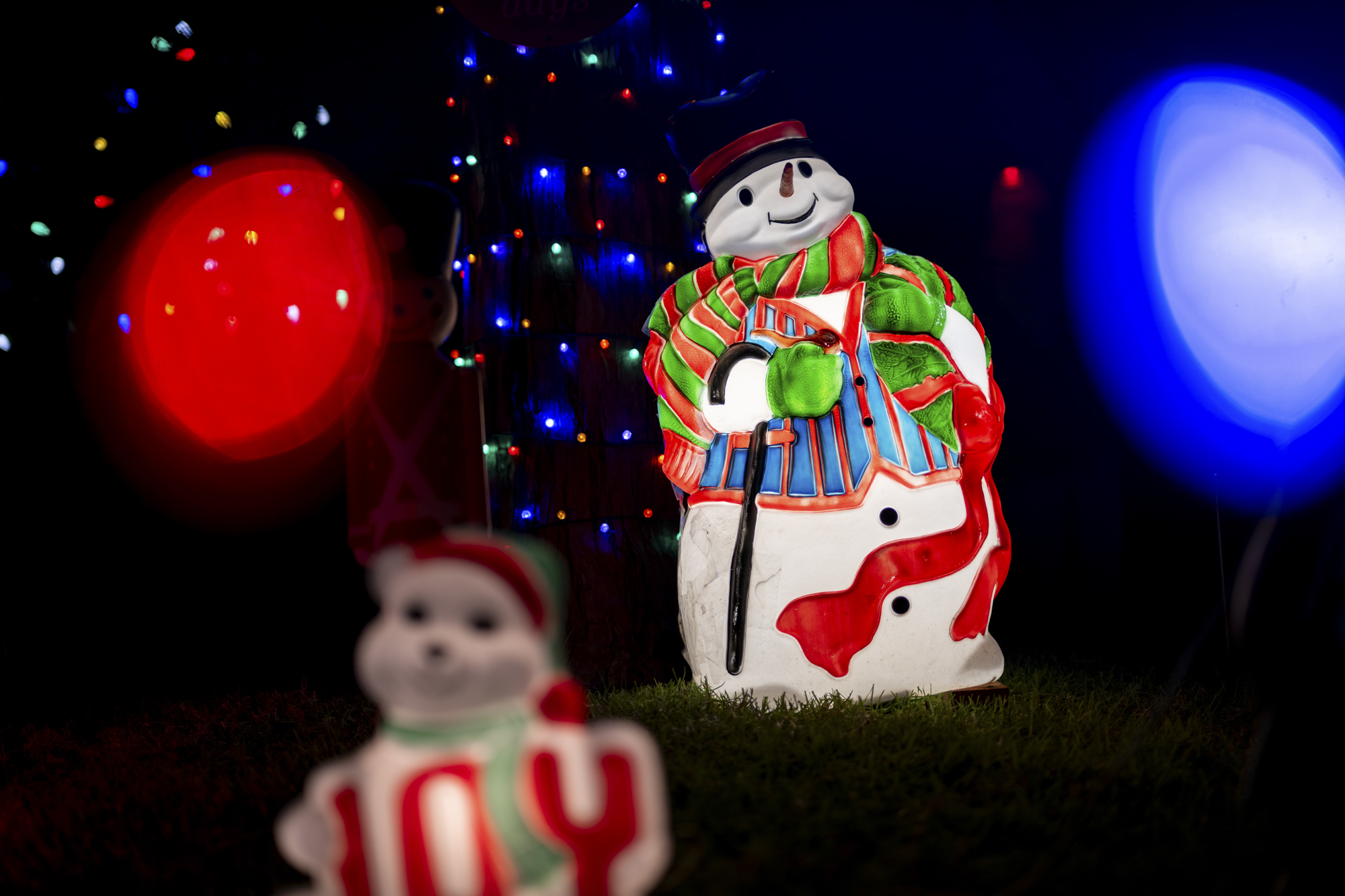
Get in the Holiday Spirit by Visiting These Bay Area Christmas Tree Lanes
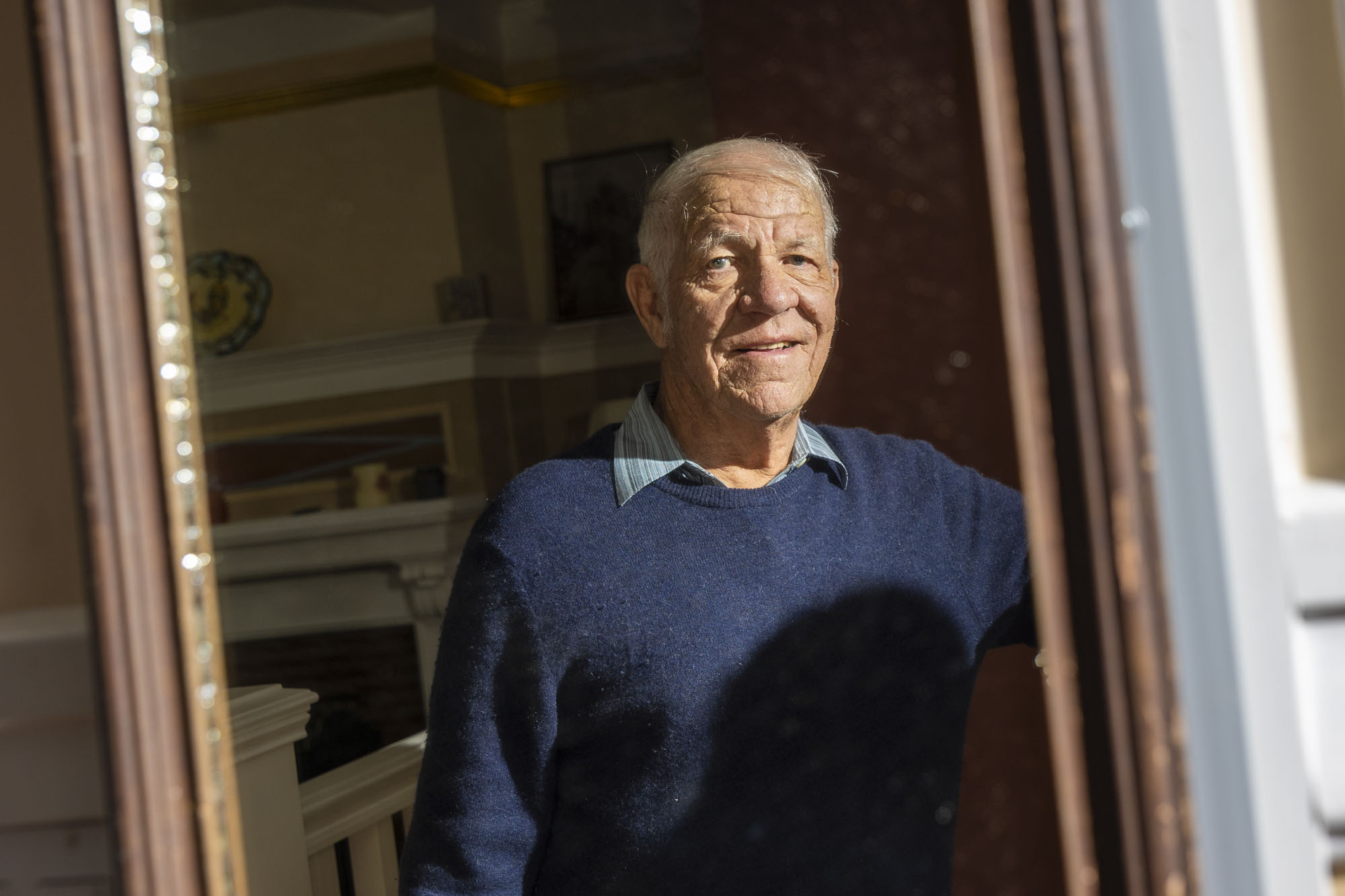
He’s Painted Thousands of San Francisco’s Iconic Victorian Homes. Meet Dr. Color
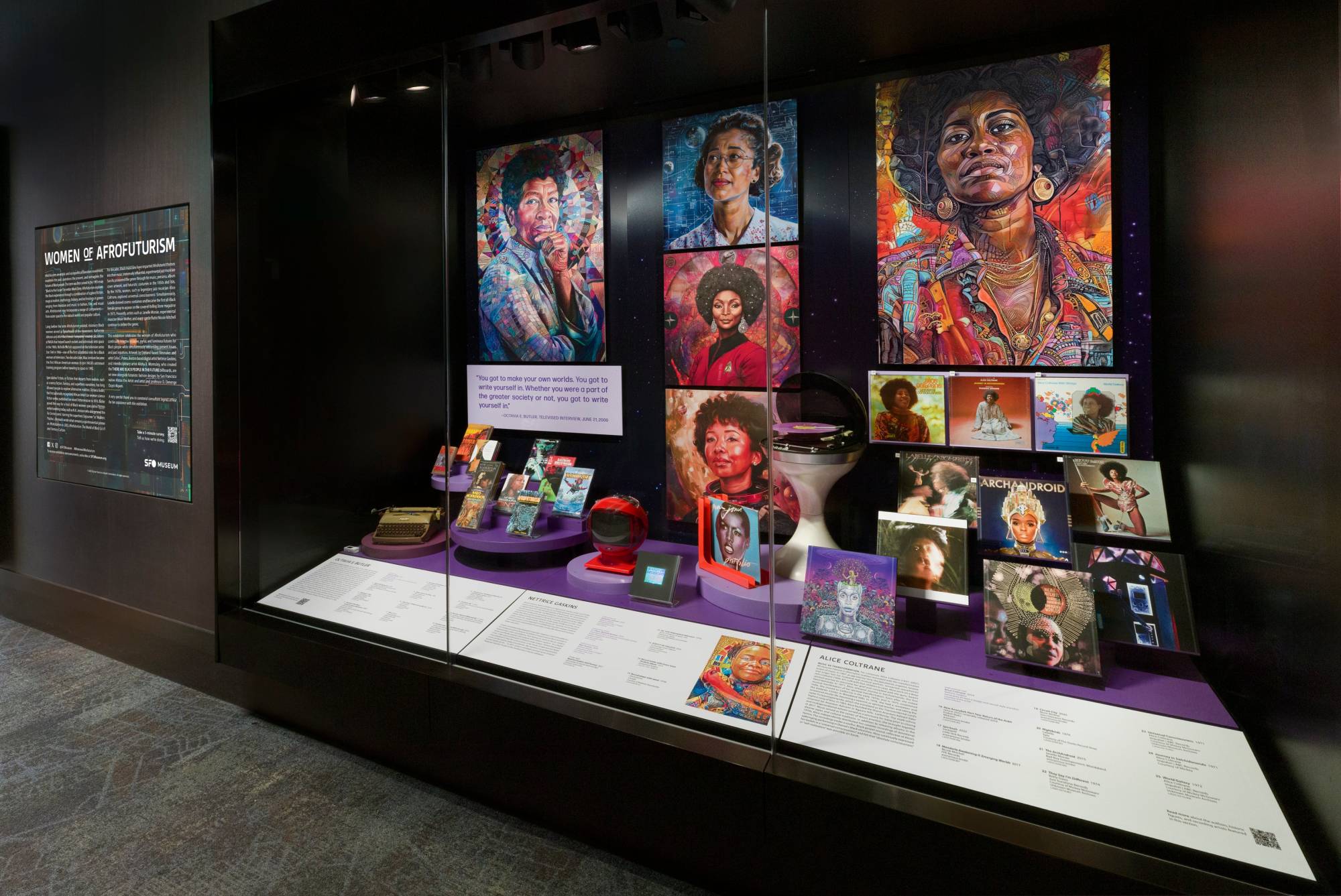
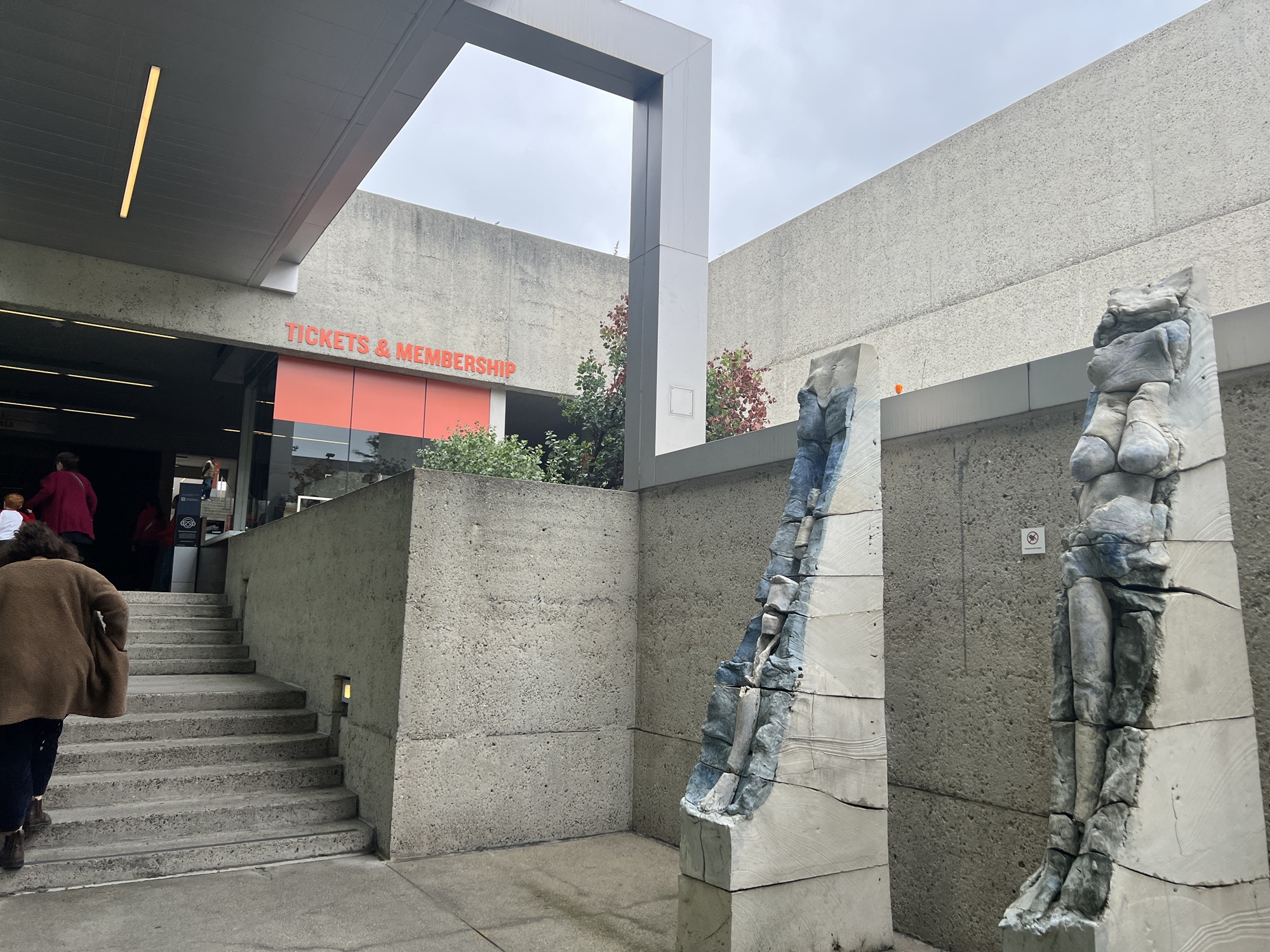
Traveling Through SFO Airport? Check Out the Art Museum
Indigo Elephant: 'Marble Statue'
NFL Unveils Super Bowl LX Events Spanning San Francisco, San José and East Bay
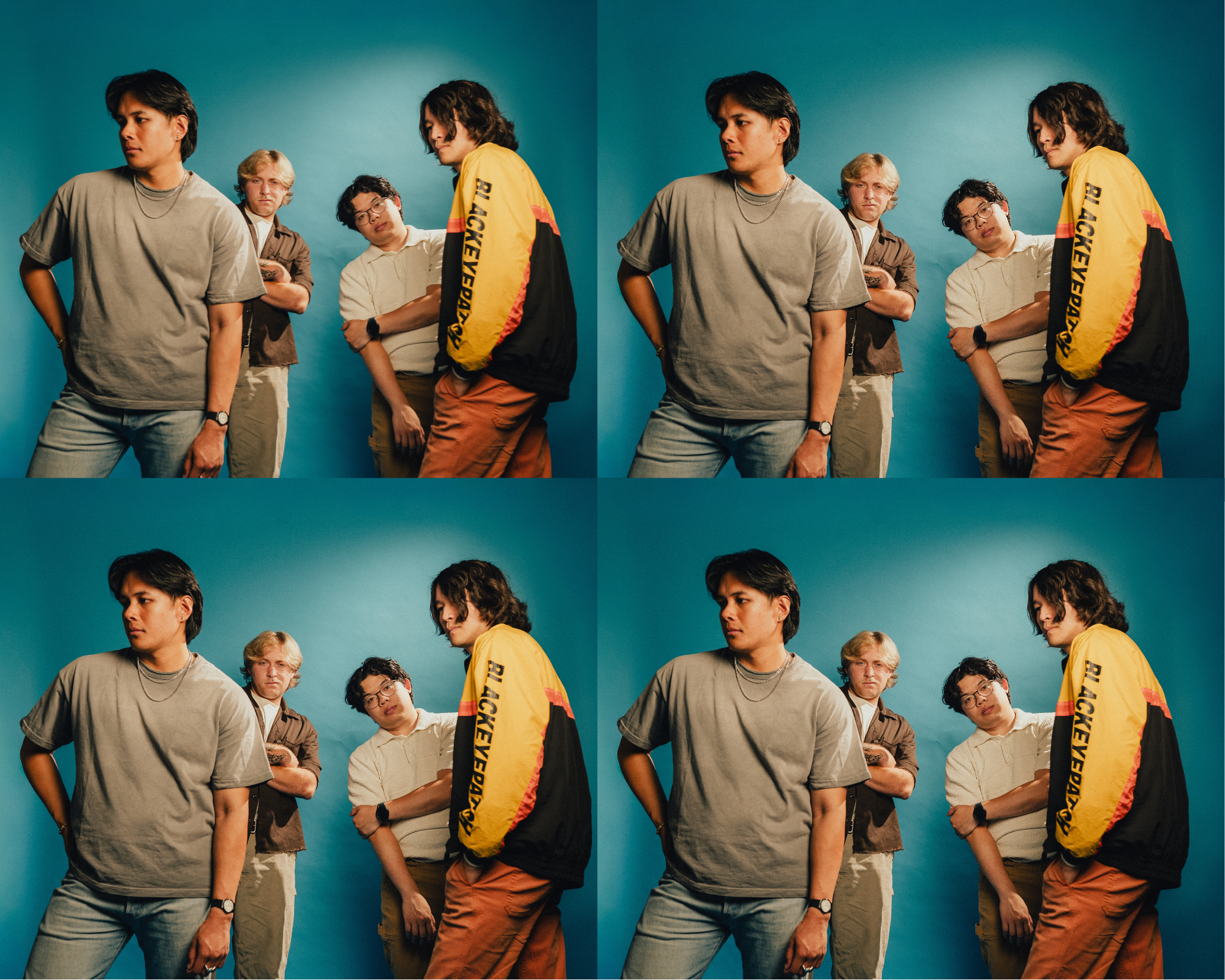
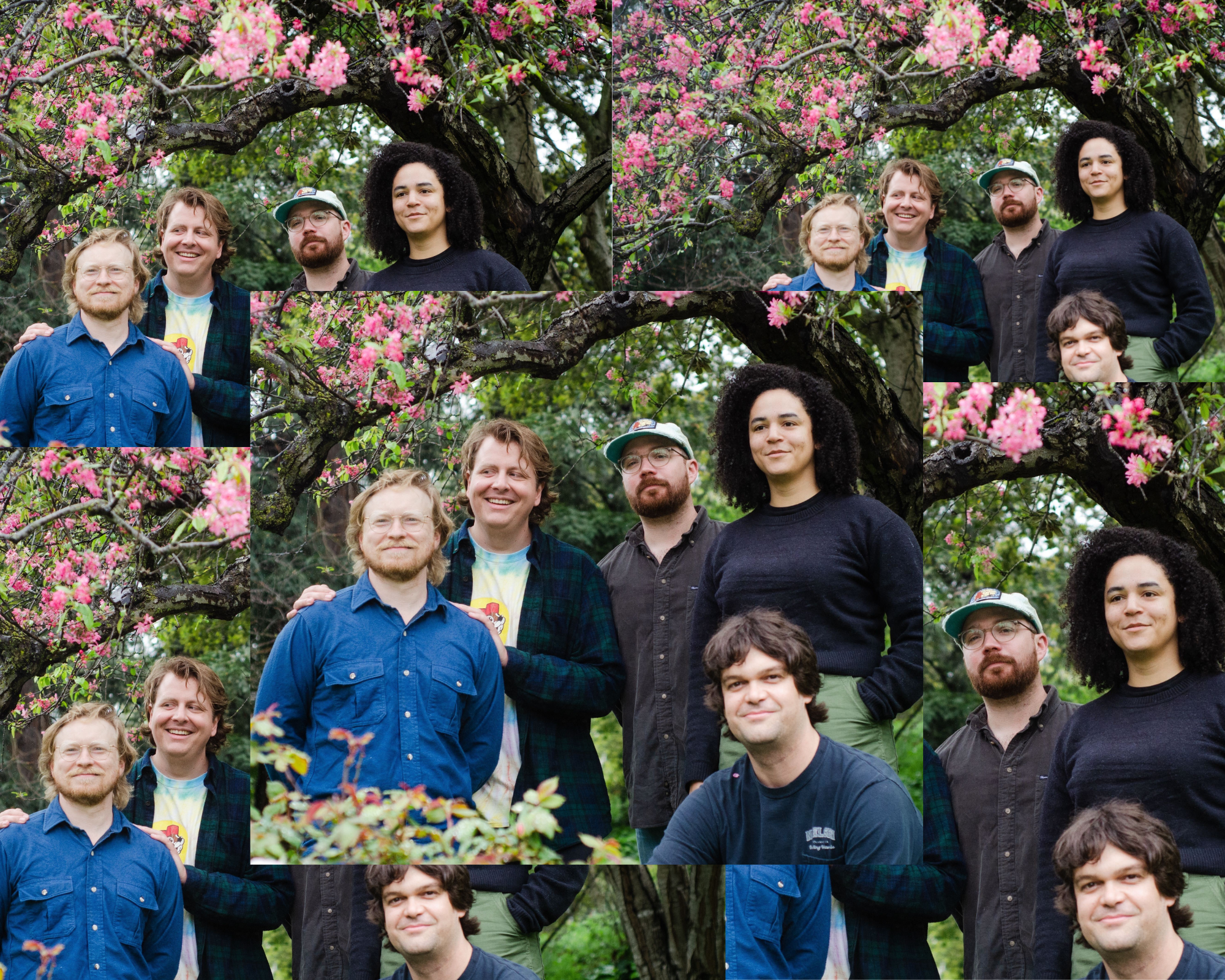
Half Stack: 'Diamond Dancer'
Days Before the Louvre Jewel Heist, the Oakland Museum Suffers Its Own Massive Art Theft
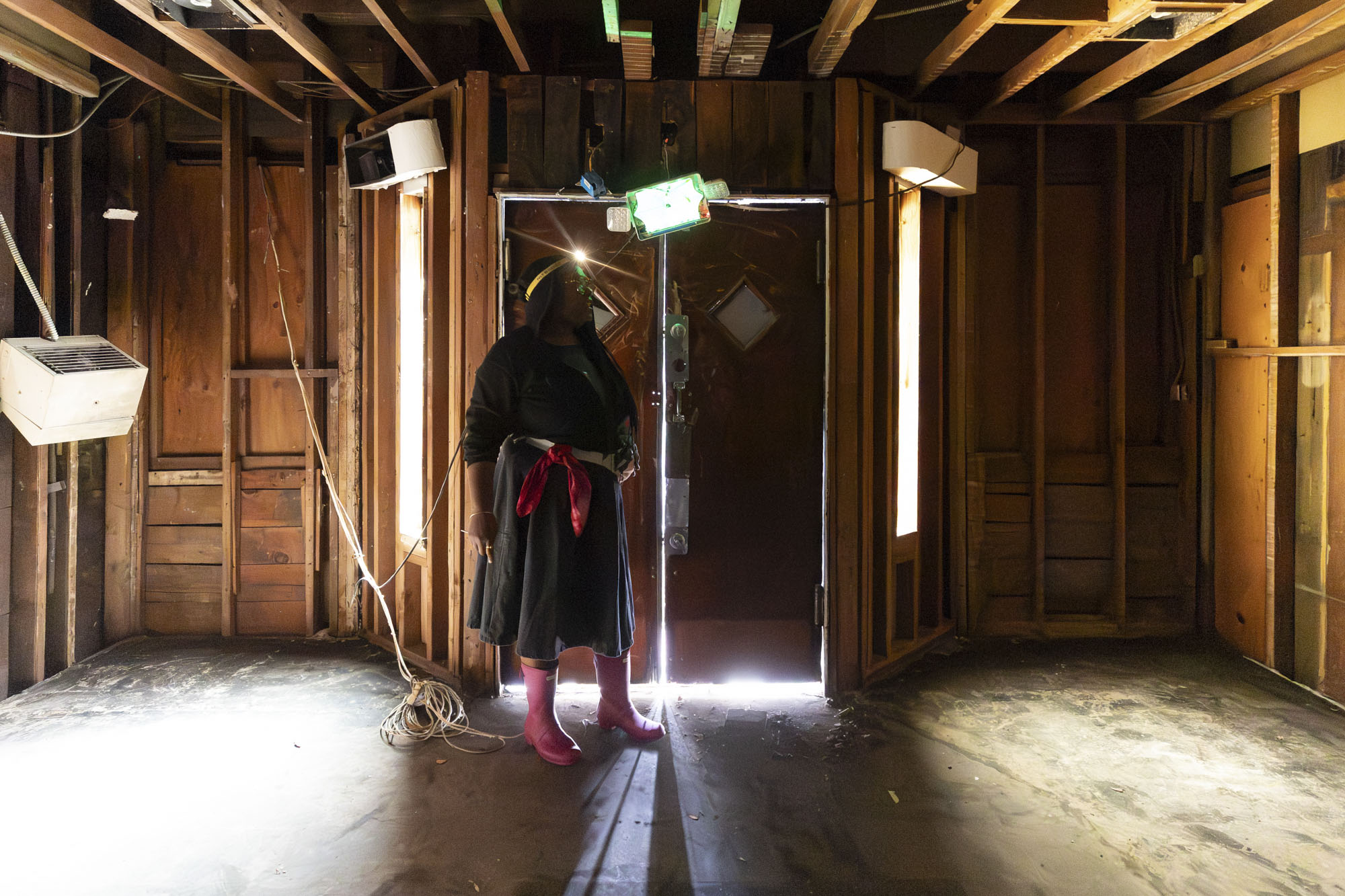
Historic West Oakland Blues Club’s Restoration Reveals Layers of Hidden History
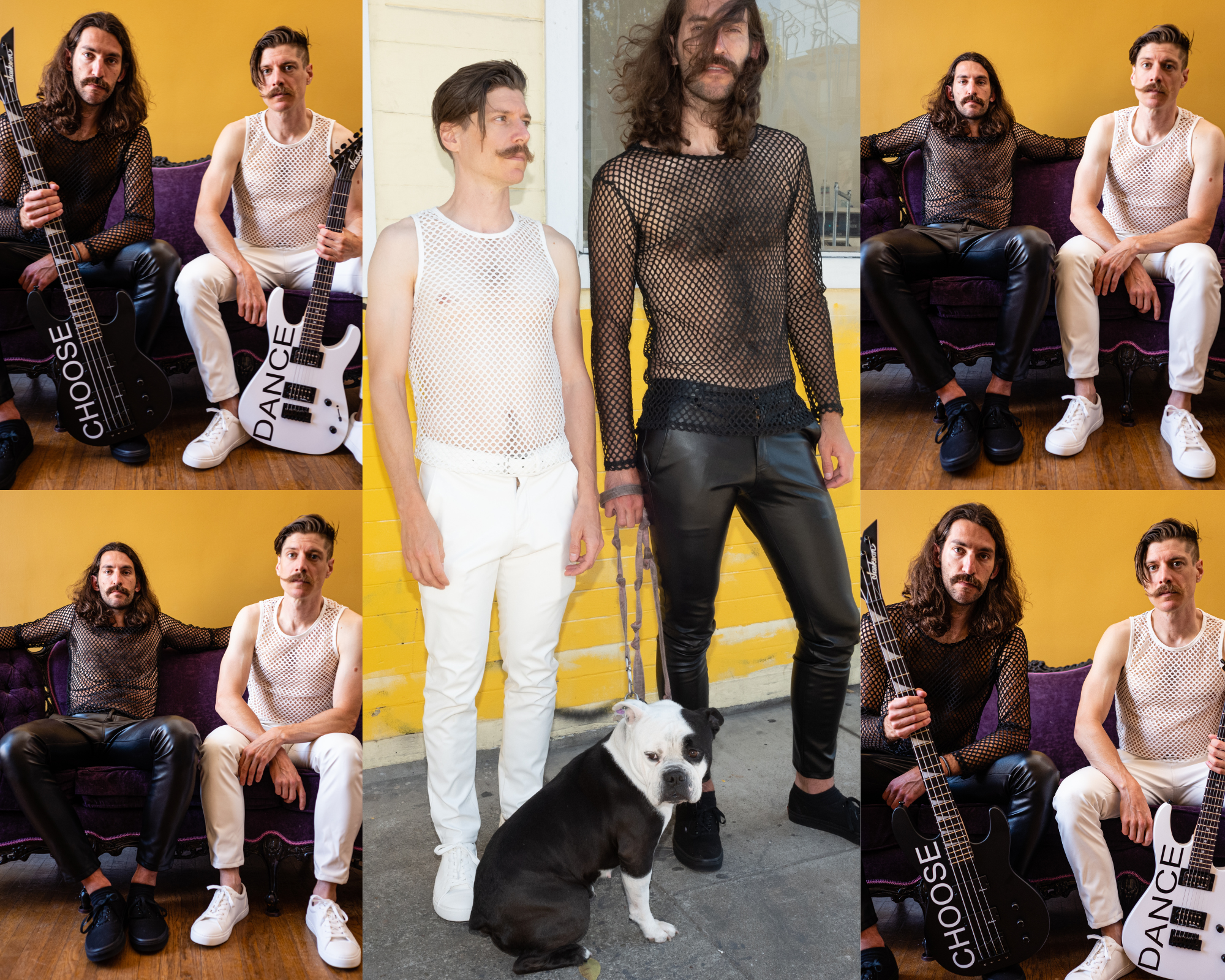
Top Secret Robot Alliance: 'Dance Friends 2 the End'
Sponsored
Player sponsored by
window.__IS_SSR__=true
window.__INITIAL_STATE__={
"attachmentsReducer": {
"audio_0": {
"type": "attachments",
"id": "audio_0",
"imgSizes": {
"kqedFullSize": {
"file": "https://ww2.kqed.org/news/wp-content/themes/KQED-unified/img/audio_bgs/background0.jpg"
}
}
},
"audio_1": {
"type": "attachments",
"id": "audio_1",
"imgSizes": {
"kqedFullSize": {
"file": "https://ww2.kqed.org/news/wp-content/themes/KQED-unified/img/audio_bgs/background1.jpg"
}
}
},
"audio_2": {
"type": "attachments",
"id": "audio_2",
"imgSizes": {
"kqedFullSize": {
"file": "https://ww2.kqed.org/news/wp-content/themes/KQED-unified/img/audio_bgs/background2.jpg"
}
}
},
"audio_3": {
"type": "attachments",
"id": "audio_3",
"imgSizes": {
"kqedFullSize": {
"file": "https://ww2.kqed.org/news/wp-content/themes/KQED-unified/img/audio_bgs/background3.jpg"
}
}
},
"audio_4": {
"type": "attachments",
"id": "audio_4",
"imgSizes": {
"kqedFullSize": {
"file": "https://ww2.kqed.org/news/wp-content/themes/KQED-unified/img/audio_bgs/background4.jpg"
}
}
},
"placeholder": {
"type": "attachments",
"id": "placeholder",
"imgSizes": {
"thumbnail": {
"file": "https://cdn.kqed.org/wp-content/uploads/2024/12/KQED-Default-Image-816638274-2000x1333-1-160x107.jpg",
"width": 160,
"height": 107,
"mimeType": "image/jpeg"
},
"medium": {
"file": "https://cdn.kqed.org/wp-content/uploads/2024/12/KQED-Default-Image-816638274-2000x1333-1-800x533.jpg",
"width": 800,
"height": 533,
"mimeType": "image/jpeg"
},
"medium_large": {
"file": "https://cdn.kqed.org/wp-content/uploads/2024/12/KQED-Default-Image-816638274-2000x1333-1-768x512.jpg",
"width": 768,
"height": 512,
"mimeType": "image/jpeg"
},
"large": {
"file": "https://cdn.kqed.org/wp-content/uploads/2024/12/KQED-Default-Image-816638274-2000x1333-1-1020x680.jpg",
"width": 1020,
"height": 680,
"mimeType": "image/jpeg"
},
"1536x1536": {
"file": "https://cdn.kqed.org/wp-content/uploads/2024/12/KQED-Default-Image-816638274-2000x1333-1-1536x1024.jpg",
"width": 1536,
"height": 1024,
"mimeType": "image/jpeg"
},
"fd-lrg": {
"file": "https://cdn.kqed.org/wp-content/uploads/2024/12/KQED-Default-Image-816638274-2000x1333-1-1536x1024.jpg",
"width": 1536,
"height": 1024,
"mimeType": "image/jpeg"
},
"fd-med": {
"file": "https://cdn.kqed.org/wp-content/uploads/2024/12/KQED-Default-Image-816638274-2000x1333-1-1020x680.jpg",
"width": 1020,
"height": 680,
"mimeType": "image/jpeg"
},
"fd-sm": {
"file": "https://cdn.kqed.org/wp-content/uploads/2024/12/KQED-Default-Image-816638274-2000x1333-1-800x533.jpg",
"width": 800,
"height": 533,
"mimeType": "image/jpeg"
},
"post-thumbnail": {
"file": "https://cdn.kqed.org/wp-content/uploads/2024/12/KQED-Default-Image-816638274-2000x1333-1-672x372.jpg",
"width": 672,
"height": 372,
"mimeType": "image/jpeg"
},
"twentyfourteen-full-width": {
"file": "https://cdn.kqed.org/wp-content/uploads/2024/12/KQED-Default-Image-816638274-2000x1333-1-1038x576.jpg",
"width": 1038,
"height": 576,
"mimeType": "image/jpeg"
},
"xxsmall": {
"file": "https://cdn.kqed.org/wp-content/uploads/2024/12/KQED-Default-Image-816638274-2000x1333-1-160x107.jpg",
"width": 160,
"height": 107,
"mimeType": "image/jpeg"
},
"xsmall": {
"file": "https://cdn.kqed.org/wp-content/uploads/2024/12/KQED-Default-Image-816638274-2000x1333-1-672x372.jpg",
"width": 672,
"height": 372,
"mimeType": "image/jpeg"
},
"small": {
"file": "https://cdn.kqed.org/wp-content/uploads/2024/12/KQED-Default-Image-816638274-2000x1333-1-672x372.jpg",
"width": 672,
"height": 372,
"mimeType": "image/jpeg"
},
"xlarge": {
"file": "https://cdn.kqed.org/wp-content/uploads/2024/12/KQED-Default-Image-816638274-2000x1333-1-1020x680.jpg",
"width": 1020,
"height": 680,
"mimeType": "image/jpeg"
},
"full-width": {
"file": "https://cdn.kqed.org/wp-content/uploads/2024/12/KQED-Default-Image-816638274-2000x1333-1-1920x1280.jpg",
"width": 1920,
"height": 1280,
"mimeType": "image/jpeg"
},
"guest-author-32": {
"file": "https://cdn.kqed.org/wp-content/uploads/2025/01/KQED-Default-Image-816638274-1333x1333-1-160x160.jpg",
"width": 32,
"height": 32,
"mimeType": "image/jpeg"
},
"guest-author-50": {
"file": "https://cdn.kqed.org/wp-content/uploads/2025/01/KQED-Default-Image-816638274-1333x1333-1-160x160.jpg",
"width": 50,
"height": 50,
"mimeType": "image/jpeg"
},
"guest-author-64": {
"file": "https://cdn.kqed.org/wp-content/uploads/2025/01/KQED-Default-Image-816638274-1333x1333-1-160x160.jpg",
"width": 64,
"height": 64,
"mimeType": "image/jpeg"
},
"guest-author-96": {
"file": "https://cdn.kqed.org/wp-content/uploads/2025/01/KQED-Default-Image-816638274-1333x1333-1-160x160.jpg",
"width": 96,
"height": 96,
"mimeType": "image/jpeg"
},
"guest-author-128": {
"file": "https://cdn.kqed.org/wp-content/uploads/2025/01/KQED-Default-Image-816638274-1333x1333-1-160x160.jpg",
"width": 128,
"height": 128,
"mimeType": "image/jpeg"
},
"detail": {
"file": "https://cdn.kqed.org/wp-content/uploads/2025/01/KQED-Default-Image-816638274-1333x1333-1-160x160.jpg",
"width": 160,
"height": 160,
"mimeType": "image/jpeg"
},
"kqedFullSize": {
"file": "https://cdn.kqed.org/wp-content/uploads/2024/12/KQED-Default-Image-816638274-2000x1333-1.jpg",
"width": 2000,
"height": 1333
}
}
},
"news_12066798": {
"type": "attachments",
"id": "news_12066798",
"meta": {
"index": "attachments_1716263798",
"site": "news",
"id": "12066798",
"found": true
},
"title": "251210-HOLIDAYLIGHTS-26-BL-KQED",
"publishDate": 1765484750,
"status": "inherit",
"parent": 0,
"modified": 1765486229,
"caption": "A holiday display sits in front of a home on Christmas Tree Lane on the 3200 block of Thompson Avenue in Alameda on Dec. 10, 2025. The tradition of holiday displays here dates back to the early 1930s.",
"credit": "Beth LaBerge/KQED",
"altTag": null,
"description": null,
"imgSizes": {
"thumbnail": {
"file": "https://cdn.kqed.org/wp-content/uploads/sites/10/2025/12/251210-HOLIDAYLIGHTS-26-BL-KQED-160x107.jpg",
"width": 160,
"height": 107,
"mimeType": "image/jpeg"
},
"1536x1536": {
"file": "https://cdn.kqed.org/wp-content/uploads/sites/10/2025/12/251210-HOLIDAYLIGHTS-26-BL-KQED-1536x1024.jpg",
"width": 1536,
"height": 1024,
"mimeType": "image/jpeg"
},
"post-thumbnail": {
"file": "https://cdn.kqed.org/wp-content/uploads/sites/10/2025/12/251210-HOLIDAYLIGHTS-26-BL-KQED-672x372.jpg",
"width": 672,
"height": 372,
"mimeType": "image/jpeg"
},
"twentyfourteen-full-width": {
"file": "https://cdn.kqed.org/wp-content/uploads/sites/10/2025/12/251210-HOLIDAYLIGHTS-26-BL-KQED-1038x576.jpg",
"width": 1038,
"height": 576,
"mimeType": "image/jpeg"
},
"npr-cds-wide": {
"file": "https://cdn.kqed.org/wp-content/uploads/sites/10/2025/12/251210-HOLIDAYLIGHTS-26-BL-KQED-1200x675.jpg",
"width": 1200,
"height": 675,
"mimeType": "image/jpeg"
},
"kqedFullSize": {
"file": "https://cdn.kqed.org/wp-content/uploads/sites/10/2025/12/251210-HOLIDAYLIGHTS-26-BL-KQED.jpg",
"width": 2000,
"height": 1333
}
},
"fetchFailed": false,
"isLoading": false
},
"news_12058982": {
"type": "attachments",
"id": "news_12058982",
"meta": {
"index": "attachments_1716263798",
"site": "news",
"id": "12058982",
"found": true
},
"title": "251002-DRCOLOR_00168_TV-KQED",
"publishDate": 1759868987,
"status": "inherit",
"parent": 0,
"modified": 1760040948,
"caption": "Bob Buckter poses for a portrait in his home in the Mission district in San Francisco on Oct. 2, 2025. Buckter, aka Dr. Color, has designed and painted more than 23,000 homes in San Francisco and other projects in the city and beyond.",
"credit": "Tâm Vũ/KQED",
"altTag": null,
"description": null,
"imgSizes": {
"thumbnail": {
"file": "https://cdn.kqed.org/wp-content/uploads/sites/10/2025/10/251002-DRCOLOR_00168_TV-KQED-160x107.jpg",
"width": 160,
"height": 107,
"mimeType": "image/jpeg"
},
"1536x1536": {
"file": "https://cdn.kqed.org/wp-content/uploads/sites/10/2025/10/251002-DRCOLOR_00168_TV-KQED-1536x1024.jpg",
"width": 1536,
"height": 1024,
"mimeType": "image/jpeg"
},
"post-thumbnail": {
"file": "https://cdn.kqed.org/wp-content/uploads/sites/10/2025/10/251002-DRCOLOR_00168_TV-KQED-672x372.jpg",
"width": 672,
"height": 372,
"mimeType": "image/jpeg"
},
"twentyfourteen-full-width": {
"file": "https://cdn.kqed.org/wp-content/uploads/sites/10/2025/10/251002-DRCOLOR_00168_TV-KQED-1038x576.jpg",
"width": 1038,
"height": 576,
"mimeType": "image/jpeg"
},
"kqedFullSize": {
"file": "https://cdn.kqed.org/wp-content/uploads/sites/10/2025/10/251002-DRCOLOR_00168_TV-KQED.jpg",
"width": 2000,
"height": 1333
}
},
"fetchFailed": false,
"isLoading": false
},
"news_12065084": {
"type": "attachments",
"id": "news_12065084",
"meta": {
"index": "attachments_1716263798",
"site": "news",
"id": "12065084",
"found": true
},
"title": "wmn-afrofuturism-gallery-03",
"publishDate": 1763755144,
"status": "inherit",
"parent": 12065083,
"modified": 1763755185,
"caption": null,
"credit": "Courtesy of SFO Museum",
"altTag": null,
"description": null,
"imgSizes": {
"medium": {
"file": "https://cdn.kqed.org/wp-content/uploads/sites/10/2025/11/wmn-afrofuturism-gallery-03-2000x1337.jpg",
"width": 2000,
"height": 1337,
"mimeType": "image/jpeg"
},
"large": {
"file": "https://cdn.kqed.org/wp-content/uploads/sites/10/2025/11/wmn-afrofuturism-gallery-03-2000x1337.jpg",
"width": 2000,
"height": 1337,
"mimeType": "image/jpeg"
},
"thumbnail": {
"file": "https://cdn.kqed.org/wp-content/uploads/sites/10/2025/11/wmn-afrofuturism-gallery-03-160x107.jpg",
"width": 160,
"height": 107,
"mimeType": "image/jpeg"
},
"1536x1536": {
"file": "https://cdn.kqed.org/wp-content/uploads/sites/10/2025/11/wmn-afrofuturism-gallery-03-1536x1027.jpg",
"width": 1536,
"height": 1027,
"mimeType": "image/jpeg"
},
"2048x2048": {
"file": "https://cdn.kqed.org/wp-content/uploads/sites/10/2025/11/wmn-afrofuturism-gallery-03-2048x1369.jpg",
"width": 2048,
"height": 1369,
"mimeType": "image/jpeg"
},
"post-thumbnail": {
"file": "https://cdn.kqed.org/wp-content/uploads/sites/10/2025/11/wmn-afrofuturism-gallery-03-672x372.jpg",
"width": 672,
"height": 372,
"mimeType": "image/jpeg"
},
"twentyfourteen-full-width": {
"file": "https://cdn.kqed.org/wp-content/uploads/sites/10/2025/11/wmn-afrofuturism-gallery-03-1038x576.jpg",
"width": 1038,
"height": 576,
"mimeType": "image/jpeg"
},
"full-width": {
"file": "https://cdn.kqed.org/wp-content/uploads/sites/10/2025/11/wmn-afrofuturism-gallery-03-2000x1337.jpg",
"width": 2000,
"height": 1337,
"mimeType": "image/jpeg"
},
"npr-cds-wide": {
"file": "https://cdn.kqed.org/wp-content/uploads/sites/10/2025/11/wmn-afrofuturism-gallery-03-1200x675.jpg",
"width": 1200,
"height": 675,
"mimeType": "image/jpeg"
},
"kqedFullSize": {
"file": "https://cdn.kqed.org/wp-content/uploads/sites/10/2025/11/wmn-afrofuturism-gallery-03-scaled-e1763755167409.jpg",
"width": 1600,
"height": 1069
}
},
"fetchFailed": false,
"isLoading": false
},
"news_12063583": {
"type": "attachments",
"id": "news_12063583",
"meta": {
"index": "attachments_1716263798",
"site": "news",
"id": "12063583",
"found": true
},
"title": "Sunday Music Drop Photo Collages-24",
"publishDate": 1762710704,
"status": "inherit",
"parent": 12063578,
"modified": 1762710776,
"caption": null,
"credit": "Photo courtesy of Gianpaolo Pabros/Collage by Spencer Whitney of KQED",
"altTag": "A collage of four images showing four people standing near each other striking different poses.",
"description": null,
"imgSizes": {
"thumbnail": {
"file": "https://cdn.kqed.org/wp-content/uploads/sites/10/2025/11/Sunday-Music-Drop-Photo-Collages-24-160x128.png",
"width": 160,
"height": 128,
"mimeType": "image/png"
},
"1536x1536": {
"file": "https://cdn.kqed.org/wp-content/uploads/sites/10/2025/11/Sunday-Music-Drop-Photo-Collages-24-1536x1229.png",
"width": 1536,
"height": 1229,
"mimeType": "image/png"
},
"post-thumbnail": {
"file": "https://cdn.kqed.org/wp-content/uploads/sites/10/2025/11/Sunday-Music-Drop-Photo-Collages-24-672x372.png",
"width": 672,
"height": 372,
"mimeType": "image/png"
},
"twentyfourteen-full-width": {
"file": "https://cdn.kqed.org/wp-content/uploads/sites/10/2025/11/Sunday-Music-Drop-Photo-Collages-24-1038x576.png",
"width": 1038,
"height": 576,
"mimeType": "image/png"
},
"npr-cds-wide": {
"file": "https://cdn.kqed.org/wp-content/uploads/sites/10/2025/11/Sunday-Music-Drop-Photo-Collages-24-1200x675.png",
"width": 1200,
"height": 675,
"mimeType": "image/png"
},
"kqedFullSize": {
"file": "https://cdn.kqed.org/wp-content/uploads/sites/10/2025/11/Sunday-Music-Drop-Photo-Collages-24.png",
"width": 2000,
"height": 1600
}
},
"fetchFailed": false,
"isLoading": false
},
"news_12062832": {
"type": "attachments",
"id": "news_12062832",
"meta": {
"index": "attachments_1716263798",
"site": "news",
"id": "12062832",
"found": true
},
"title": "23_Middleton20240211_KQEDSuperBowl_00461_qed",
"publishDate": 1762287356,
"status": "inherit",
"parent": 0,
"modified": 1762287386,
"caption": "A crowd cheers during the San Francisco 49ers vs. the Kansas City Chiefs NFL Super Bowl LVIII game inside Connecticut Yankee in San Francisco, California, on Sunday, Feb. 11, 2024.",
"credit": "Florence Middleton for KQED",
"altTag": null,
"description": null,
"imgSizes": {
"thumbnail": {
"file": "https://cdn.kqed.org/wp-content/uploads/sites/10/2025/11/23_Middleton20240211_KQEDSuperBowl_00461_qed-160x107.jpg",
"width": 160,
"height": 107,
"mimeType": "image/jpeg"
},
"1536x1536": {
"file": "https://cdn.kqed.org/wp-content/uploads/sites/10/2025/11/23_Middleton20240211_KQEDSuperBowl_00461_qed-1536x1025.jpg",
"width": 1536,
"height": 1025,
"mimeType": "image/jpeg"
},
"post-thumbnail": {
"file": "https://cdn.kqed.org/wp-content/uploads/sites/10/2025/11/23_Middleton20240211_KQEDSuperBowl_00461_qed-672x372.jpg",
"width": 672,
"height": 372,
"mimeType": "image/jpeg"
},
"twentyfourteen-full-width": {
"file": "https://cdn.kqed.org/wp-content/uploads/sites/10/2025/11/23_Middleton20240211_KQEDSuperBowl_00461_qed-1038x576.jpg",
"width": 1038,
"height": 576,
"mimeType": "image/jpeg"
},
"npr-cds-wide": {
"file": "https://cdn.kqed.org/wp-content/uploads/sites/10/2025/11/23_Middleton20240211_KQEDSuperBowl_00461_qed-1200x675.jpg",
"width": 1200,
"height": 675,
"mimeType": "image/jpeg"
},
"kqedFullSize": {
"file": "https://cdn.kqed.org/wp-content/uploads/sites/10/2025/11/23_Middleton20240211_KQEDSuperBowl_00461_qed.jpg",
"width": 1998,
"height": 1333
}
},
"fetchFailed": false,
"isLoading": false
},
"news_12062624": {
"type": "attachments",
"id": "news_12062624",
"meta": {
"index": "attachments_1716263798",
"site": "news",
"id": "12062624",
"found": true
},
"title": "Sunday Music Drop Photo Collages-21",
"publishDate": 1762114580,
"status": "inherit",
"parent": 12062620,
"modified": 1762114629,
"caption": null,
"credit": "Photo courtesy of Julie Juarez/Collage by Spencer Whitney of KQED",
"altTag": null,
"description": null,
"imgSizes": {
"thumbnail": {
"file": "https://cdn.kqed.org/wp-content/uploads/sites/10/2025/11/Sunday-Music-Drop-Photo-Collages-21-160x128.png",
"width": 160,
"height": 128,
"mimeType": "image/png"
},
"1536x1536": {
"file": "https://cdn.kqed.org/wp-content/uploads/sites/10/2025/11/Sunday-Music-Drop-Photo-Collages-21-1536x1229.png",
"width": 1536,
"height": 1229,
"mimeType": "image/png"
},
"post-thumbnail": {
"file": "https://cdn.kqed.org/wp-content/uploads/sites/10/2025/11/Sunday-Music-Drop-Photo-Collages-21-672x372.png",
"width": 672,
"height": 372,
"mimeType": "image/png"
},
"twentyfourteen-full-width": {
"file": "https://cdn.kqed.org/wp-content/uploads/sites/10/2025/11/Sunday-Music-Drop-Photo-Collages-21-1038x576.png",
"width": 1038,
"height": 576,
"mimeType": "image/png"
},
"npr-cds-wide": {
"file": "https://cdn.kqed.org/wp-content/uploads/sites/10/2025/11/Sunday-Music-Drop-Photo-Collages-21-1200x675.png",
"width": 1200,
"height": 675,
"mimeType": "image/png"
},
"kqedFullSize": {
"file": "https://cdn.kqed.org/wp-content/uploads/sites/10/2025/11/Sunday-Music-Drop-Photo-Collages-21.png",
"width": 2000,
"height": 1600
}
},
"fetchFailed": false,
"isLoading": false
},
"news_12062307": {
"type": "attachments",
"id": "news_12062307",
"meta": {
"index": "attachments_1716263798",
"site": "news",
"id": "12062307",
"found": true
},
"title": "Oakland Museum Entrance",
"publishDate": 1761852175,
"status": "inherit",
"parent": 12062303,
"modified": 1761852218,
"caption": "Entrance to the Oakland Museum of California in Oakland, California, on April 3, 2024. ",
"credit": "Smith Collection/Gado/Getty Images",
"altTag": null,
"description": null,
"imgSizes": {
"thumbnail": {
"file": "https://cdn.kqed.org/wp-content/uploads/sites/10/2025/10/Oakland-Museum-of-California-Getty-160x120.jpg",
"width": 160,
"height": 120,
"mimeType": "image/jpeg"
},
"1536x1536": {
"file": "https://cdn.kqed.org/wp-content/uploads/sites/10/2025/10/Oakland-Museum-of-California-Getty-1536x1152.jpg",
"width": 1536,
"height": 1152,
"mimeType": "image/jpeg"
},
"post-thumbnail": {
"file": "https://cdn.kqed.org/wp-content/uploads/sites/10/2025/10/Oakland-Museum-of-California-Getty-672x372.jpg",
"width": 672,
"height": 372,
"mimeType": "image/jpeg"
},
"twentyfourteen-full-width": {
"file": "https://cdn.kqed.org/wp-content/uploads/sites/10/2025/10/Oakland-Museum-of-California-Getty-1038x576.jpg",
"width": 1038,
"height": 576,
"mimeType": "image/jpeg"
},
"npr-cds-wide": {
"file": "https://cdn.kqed.org/wp-content/uploads/sites/10/2025/10/Oakland-Museum-of-California-Getty-1600x900.jpg",
"width": 1600,
"height": 900,
"mimeType": "image/jpeg"
},
"kqedFullSize": {
"file": "https://cdn.kqed.org/wp-content/uploads/sites/10/2025/10/Oakland-Museum-of-California-Getty.jpg",
"width": 2000,
"height": 1500
}
},
"fetchFailed": false,
"isLoading": false
},
"news_12058754": {
"type": "attachments",
"id": "news_12058754",
"meta": {
"index": "attachments_1716263798",
"site": "news",
"id": "12058754",
"found": true
},
"title": "251003_ORBIT_ROOM-_-19-KQED",
"publishDate": 1759765403,
"status": "inherit",
"parent": 0,
"modified": 1759765584,
"caption": "Noni Session stands near the front doors of Esther’s Orbit Room as daylight streams into the building under renovation in Oakland on Oct. 2, 2025.",
"credit": "Gustavo Hernandez/KQED",
"altTag": null,
"description": null,
"imgSizes": {
"thumbnail": {
"file": "https://cdn.kqed.org/wp-content/uploads/sites/10/2025/10/251003_ORBIT_ROOM-_-19-KQED-160x107.jpg",
"width": 160,
"height": 107,
"mimeType": "image/jpeg"
},
"1536x1536": {
"file": "https://cdn.kqed.org/wp-content/uploads/sites/10/2025/10/251003_ORBIT_ROOM-_-19-KQED-1536x1024.jpg",
"width": 1536,
"height": 1024,
"mimeType": "image/jpeg"
},
"post-thumbnail": {
"file": "https://cdn.kqed.org/wp-content/uploads/sites/10/2025/10/251003_ORBIT_ROOM-_-19-KQED-672x372.jpg",
"width": 672,
"height": 372,
"mimeType": "image/jpeg"
},
"twentyfourteen-full-width": {
"file": "https://cdn.kqed.org/wp-content/uploads/sites/10/2025/10/251003_ORBIT_ROOM-_-19-KQED-1038x576.jpg",
"width": 1038,
"height": 576,
"mimeType": "image/jpeg"
},
"kqedFullSize": {
"file": "https://cdn.kqed.org/wp-content/uploads/sites/10/2025/10/251003_ORBIT_ROOM-_-19-KQED.jpg",
"width": 2000,
"height": 1333
}
},
"fetchFailed": false,
"isLoading": false
},
"news_12061668": {
"type": "attachments",
"id": "news_12061668",
"meta": {
"index": "attachments_1716263798",
"site": "news",
"id": "12061668",
"found": true
},
"title": "Top Secret Robot Alliance",
"publishDate": 1761506052,
"status": "inherit",
"parent": 12061666,
"modified": 1761506243,
"caption": null,
"credit": "Photos courtesy of Top Secret Robot Alliance/Collage by Spencer Whitney of KQED",
"altTag": "A collage of five images. The image in the middle features two people dressed in white (Left) and black (Right) clothing while holding a leash for a dog. The images on the top left and bottom right show the same people sitting on a couch and holding guitars.",
"description": null,
"imgSizes": {
"thumbnail": {
"file": "https://cdn.kqed.org/wp-content/uploads/sites/10/2025/10/Sunday-Music-Drop-Photo-Collages-20-160x128.png",
"width": 160,
"height": 128,
"mimeType": "image/png"
},
"1536x1536": {
"file": "https://cdn.kqed.org/wp-content/uploads/sites/10/2025/10/Sunday-Music-Drop-Photo-Collages-20-1536x1229.png",
"width": 1536,
"height": 1229,
"mimeType": "image/png"
},
"post-thumbnail": {
"file": "https://cdn.kqed.org/wp-content/uploads/sites/10/2025/10/Sunday-Music-Drop-Photo-Collages-20-672x372.png",
"width": 672,
"height": 372,
"mimeType": "image/png"
},
"twentyfourteen-full-width": {
"file": "https://cdn.kqed.org/wp-content/uploads/sites/10/2025/10/Sunday-Music-Drop-Photo-Collages-20-1038x576.png",
"width": 1038,
"height": 576,
"mimeType": "image/png"
},
"npr-cds-wide": {
"file": "https://cdn.kqed.org/wp-content/uploads/sites/10/2025/10/Sunday-Music-Drop-Photo-Collages-20-1600x900.png",
"width": 1600,
"height": 900,
"mimeType": "image/png"
},
"kqedFullSize": {
"file": "https://cdn.kqed.org/wp-content/uploads/sites/10/2025/10/Sunday-Music-Drop-Photo-Collages-20.png",
"width": 2000,
"height": 1600
}
},
"fetchFailed": false,
"isLoading": false
}
},
"audioPlayerReducer": {
"postId": "stream_live",
"isPaused": true,
"isPlaying": false,
"pfsActive": false,
"pledgeModalIsOpen": true,
"playerDrawerIsOpen": false
},
"authorsReducer": {
"ecruzguevarra": {
"type": "authors",
"id": "8654",
"meta": {
"index": "authors_1716337520",
"id": "8654",
"found": true
},
"name": "Ericka Cruz Guevarra",
"firstName": "Ericka",
"lastName": "Cruz Guevarra",
"slug": "ecruzguevarra",
"email": "ecruzguevarra@kqed.org",
"display_author_email": true,
"staff_mastheads": [
"news"
],
"title": "Producer, The Bay Podcast",
"bio": "Ericka Cruz Guevarra is host of \u003ca href=\"https://www.kqed.org/podcasts/thebay\">\u003cem>The Bay\u003c/em>\u003c/a> podcast at KQED. Before host, she was the show’s producer. Her work in that capacity includes a three-part reported series on policing in Vallejo, which won a 2020 excellence in journalism award from the Society of Professional Journalists. Ericka has worked as a breaking news reporter at Oregon Public Broadcasting, helped produce the Code Switch podcast, and was KQED’s inaugural Raul Ramirez Diversity Fund intern. She’s also an alumna of NPR’s Next Generation Radio program. Send her an email if you have strong feelings about whether Fairfield and Suisun City are the Bay. Ericka is represented by SAG-AFTRA.",
"avatar": "https://secure.gravatar.com/avatar/25e5ab8d3d53fad2dcc7bb2b5c506b1a?s=600&d=blank&r=g",
"twitter": "NotoriousECG",
"facebook": null,
"instagram": null,
"linkedin": null,
"sites": [
{
"site": "arts",
"roles": [
"subscriber"
]
},
{
"site": "news",
"roles": [
"editor",
"manage_categories"
]
},
{
"site": "futureofyou",
"roles": [
"subscriber"
]
},
{
"site": "stateofhealth",
"roles": [
"subscriber"
]
},
{
"site": "science",
"roles": [
"editor"
]
},
{
"site": "forum",
"roles": [
"subscriber"
]
}
],
"headData": {
"title": "Ericka Cruz Guevarra | KQED",
"description": "Producer, The Bay Podcast",
"ogImgSrc": "https://secure.gravatar.com/avatar/25e5ab8d3d53fad2dcc7bb2b5c506b1a?s=600&d=blank&r=g",
"twImgSrc": "https://secure.gravatar.com/avatar/25e5ab8d3d53fad2dcc7bb2b5c506b1a?s=600&d=blank&r=g"
},
"isLoading": false,
"link": "/author/ecruzguevarra"
},
"jasminegarnett": {
"type": "authors",
"id": "11530",
"meta": {
"index": "authors_1716337520",
"id": "11530",
"found": true
},
"name": "Jasmine Garnett",
"firstName": "Jasmine",
"lastName": "Garnett",
"slug": "jasminegarnett",
"email": "JGarnett@KQED.org",
"display_author_email": false,
"staff_mastheads": [
"news"
],
"title": "Senior Engagement Platforms Producer",
"bio": "Jasmine is a Senior Engagement Platforms Producer on the KQED News team. She is also a freelance writer, with work appearing in KQED, Bitch Media, and Kotaku among others. Jasmine graduated from UC Berkeley with a degree in Media Studies, where she was also an Arts and Entertainment reporter at the Daily Californian.",
"avatar": "https://secure.gravatar.com/avatar/a6ea8b0641874311533b7401bee15c8e?s=600&d=blank&r=g",
"twitter": "JFLGarnett",
"facebook": null,
"instagram": null,
"linkedin": null,
"sites": [
{
"site": "arts",
"roles": [
"author"
]
},
{
"site": "news",
"roles": [
"editor"
]
},
{
"site": "about",
"roles": [
"editor"
]
},
{
"site": "science",
"roles": [
"editor"
]
},
{
"site": "forum",
"roles": [
"editor"
]
},
{
"site": "pressroom",
"roles": [
"editor"
]
}
],
"headData": {
"title": "Jasmine Garnett | KQED",
"description": "Senior Engagement Platforms Producer",
"ogImgSrc": "https://secure.gravatar.com/avatar/a6ea8b0641874311533b7401bee15c8e?s=600&d=blank&r=g",
"twImgSrc": "https://secure.gravatar.com/avatar/a6ea8b0641874311533b7401bee15c8e?s=600&d=blank&r=g"
},
"isLoading": false,
"link": "/author/jasminegarnett"
},
"amontecillo": {
"type": "authors",
"id": "11649",
"meta": {
"index": "authors_1716337520",
"id": "11649",
"found": true
},
"name": "Alan Montecillo",
"firstName": "Alan",
"lastName": "Montecillo",
"slug": "amontecillo",
"email": "amontecillo@kqed.org",
"display_author_email": false,
"staff_mastheads": [
"news"
],
"title": "KQED Contributor",
"bio": "Alan Montecillo is the senior editor of \u003cem>\u003ca href=\"http://kqed.org/thebay\">The Bay\u003c/a>, \u003c/em> KQED's local news podcast. Before moving to the Bay Area, he worked as a senior talk show producer for WILL in Champaign-Urbana, Illinois and at Oregon Public Broadcasting in Portland, Oregon. He has won journalism awards from the Society of Professional Journalists Northern California, the Public Media Journalists Association, The Signal Awards, and has also received a regional Edward R. Murrow award. Alan is a Filipino American from Hong Kong and a graduate of Reed College.",
"avatar": "https://secure.gravatar.com/avatar/d5e4e7a76481969ccba76f4e2b5ccabc?s=600&d=blank&r=g",
"twitter": "alanmontecillo",
"facebook": null,
"instagram": null,
"linkedin": null,
"sites": [
{
"site": "",
"roles": [
"editor"
]
},
{
"site": "news",
"roles": [
"editor",
"manage_categories"
]
}
],
"headData": {
"title": "Alan Montecillo | KQED",
"description": "KQED Contributor",
"ogImgSrc": "https://secure.gravatar.com/avatar/d5e4e7a76481969ccba76f4e2b5ccabc?s=600&d=blank&r=g",
"twImgSrc": "https://secure.gravatar.com/avatar/d5e4e7a76481969ccba76f4e2b5ccabc?s=600&d=blank&r=g"
},
"isLoading": false,
"link": "/author/amontecillo"
},
"ebaldassari": {
"type": "authors",
"id": "11652",
"meta": {
"index": "authors_1716337520",
"id": "11652",
"found": true
},
"name": "Erin Baldassari",
"firstName": "Erin",
"lastName": "Baldassari",
"slug": "ebaldassari",
"email": "ebaldassari@KQED.org",
"display_author_email": true,
"staff_mastheads": [
"news"
],
"title": "Staff Writer",
"bio": "Erin Baldassari covers housing for KQED. She's a former print journalist and most recently worked as the transportation reporter for the \u003cem>Mercury News\u003c/em> and \u003cem>East Bay Times. \u003c/em>There, she focused on how the Bay Area’s housing shortage has changed the way people move around the region. She also served on the \u003cem>East Bay Times\u003c/em>’ 2017 Pulitzer Prize-winning team for coverage of the Ghost Ship Fire in Oakland. Prior to that, Erin worked as a breaking news and general assignment reporter for a variety of outlets in the Bay Area and the greater Boston area. A Tufts University alumna, Erin grew up in the foothills of the Sierra Nevada mountains and in Sonoma County. She is a life-long KQED listener.",
"avatar": "https://secure.gravatar.com/avatar/660ce35d088ca54ad606d7e941abc652?s=600&d=mm&r=g",
"twitter": "e_baldi",
"facebook": null,
"instagram": null,
"linkedin": null,
"sites": [
{
"site": "news",
"roles": [
"edit_others_posts",
"editor"
]
},
{
"site": "science",
"roles": [
"editor"
]
},
{
"site": "liveblog",
"roles": [
"editor"
]
}
],
"headData": {
"title": "Erin Baldassari | KQED",
"description": "Staff Writer",
"ogImgSrc": "https://secure.gravatar.com/avatar/660ce35d088ca54ad606d7e941abc652?s=600&d=mm&r=g",
"twImgSrc": "https://secure.gravatar.com/avatar/660ce35d088ca54ad606d7e941abc652?s=600&d=mm&r=g"
},
"isLoading": false,
"link": "/author/ebaldassari"
},
"jessicakariisa": {
"type": "authors",
"id": "11831",
"meta": {
"index": "authors_1716337520",
"id": "11831",
"found": true
},
"name": "Jessica Kariisa",
"firstName": "Jessica",
"lastName": "Kariisa",
"slug": "jessicakariisa",
"email": "jkariisa@kqed.org",
"display_author_email": false,
"staff_mastheads": [
"news"
],
"title": "Producer, The Bay",
"bio": "Jessica Kariisa is the producer of The Bay. She first joined KQED as an intern for The California Report Magazine, after which she became an on-call producer. She reported a Bay Curious episode on the use of rap lyrics in criminal trials which won a Society of Professional Journalists award in 2023 for Excellence in Features Journalism and the 2023 Signal Award for Best Conversation Starter. She’s worked on podcasts for Snap Judgment and American Public Media. Before embarking on her audio career, she was a music journalist.\r\n\r\nJessica Kariisa is represented by SAG-AFTRA.",
"avatar": "https://secure.gravatar.com/avatar/4afd355fd24f5515aeab77fd6c72b671?s=600&d=blank&r=g",
"twitter": null,
"facebook": null,
"instagram": null,
"linkedin": null,
"sites": [
{
"site": "arts",
"roles": [
"author"
]
},
{
"site": "news",
"roles": [
"editor",
"manage_categories"
]
}
],
"headData": {
"title": "Jessica Kariisa | KQED",
"description": "Producer, The Bay",
"ogImgSrc": "https://secure.gravatar.com/avatar/4afd355fd24f5515aeab77fd6c72b671?s=600&d=blank&r=g",
"twImgSrc": "https://secure.gravatar.com/avatar/4afd355fd24f5515aeab77fd6c72b671?s=600&d=blank&r=g"
},
"isLoading": false,
"link": "/author/jessicakariisa"
},
"sjohnson": {
"type": "authors",
"id": "11840",
"meta": {
"index": "authors_1716337520",
"id": "11840",
"found": true
},
"name": "Sydney Johnson",
"firstName": "Sydney",
"lastName": "Johnson",
"slug": "sjohnson",
"email": "sjohnson@kqed.org",
"display_author_email": false,
"staff_mastheads": [
"news"
],
"title": "KQED Reporter",
"bio": "Sydney Johnson is a general assignment reporter at KQED. She previously reported on public health and city government at the San Francisco Examiner, and before that, she covered statewide education policy for EdSource. Her reporting has won multiple local, state and national awards. Sydney is a graduate of the University of California, Berkeley and lives in San Francisco.",
"avatar": "https://secure.gravatar.com/avatar/97855f2719b72ad6190b7c535fe642c8?s=600&d=blank&r=g",
"twitter": "sydneyfjohnson",
"facebook": null,
"instagram": null,
"linkedin": null,
"sites": [
{
"site": "news",
"roles": [
"editor"
]
}
],
"headData": {
"title": "Sydney Johnson | KQED",
"description": "KQED Reporter",
"ogImgSrc": "https://secure.gravatar.com/avatar/97855f2719b72ad6190b7c535fe642c8?s=600&d=blank&r=g",
"twImgSrc": "https://secure.gravatar.com/avatar/97855f2719b72ad6190b7c535fe642c8?s=600&d=blank&r=g"
},
"isLoading": false,
"link": "/author/sjohnson"
},
"udursun": {
"type": "authors",
"id": "11883",
"meta": {
"index": "authors_1716337520",
"id": "11883",
"found": true
},
"name": "Ugur Dursun",
"firstName": "Ugur",
"lastName": "Dursun",
"slug": "udursun",
"email": "udursun@kqed.org",
"display_author_email": true,
"staff_mastheads": [
"arts"
],
"title": "Engagement Producer, KQED Arts & Culture",
"bio": "Ugur Dursun is a reporter and audience engagement producer for KQED Arts. Previously, her reporting has appeared on SFGate, East Bay Times, The Mercury News, KTVU, NBC Bay Area, The Stanford Daily, and other Bay Area local news outlets. In 2023, she was a recipient of Online News Association's \u003ca href=\"https://journalists.org/programs/mj-bear-fellowship/\">MJ Bear Fellowship\u003c/a>, which honors six standout journalists under the age of 30 who are pushing innovation in digital news.",
"avatar": "https://secure.gravatar.com/avatar/5275bbdc74da8a8845f2b9f9f7d94a5f?s=600&d=blank&r=g",
"twitter": null,
"facebook": null,
"instagram": null,
"linkedin": null,
"sites": [
{
"site": "arts",
"roles": [
"editor"
]
},
{
"site": "news",
"roles": [
"editor"
]
}
],
"headData": {
"title": "Ugur Dursun | KQED",
"description": "Engagement Producer, KQED Arts & Culture",
"ogImgSrc": "https://secure.gravatar.com/avatar/5275bbdc74da8a8845f2b9f9f7d94a5f?s=600&d=blank&r=g",
"twImgSrc": "https://secure.gravatar.com/avatar/5275bbdc74da8a8845f2b9f9f7d94a5f?s=600&d=blank&r=g"
},
"isLoading": false,
"link": "/author/udursun"
},
"adriennelee": {
"type": "authors",
"id": "11891",
"meta": {
"index": "authors_1716337520",
"id": "11891",
"found": true
},
"name": "Adrienne Lee",
"firstName": "Adrienne",
"lastName": "Lee",
"slug": "adriennelee",
"email": "adriennelee@kqed.org",
"display_author_email": false,
"staff_mastheads": [],
"title": "Newsletter & Platforms Engagement Producer",
"bio": null,
"avatar": "https://secure.gravatar.com/avatar/1bfb43d0957aced3c8b16b3ea06dd041?s=600&d=blank&r=g",
"twitter": null,
"facebook": null,
"instagram": null,
"linkedin": null,
"sites": [
{
"site": "news",
"roles": [
"editor"
]
}
],
"headData": {
"title": "Adrienne Lee | KQED",
"description": "Newsletter & Platforms Engagement Producer",
"ogImgSrc": "https://secure.gravatar.com/avatar/1bfb43d0957aced3c8b16b3ea06dd041?s=600&d=blank&r=g",
"twImgSrc": "https://secure.gravatar.com/avatar/1bfb43d0957aced3c8b16b3ea06dd041?s=600&d=blank&r=g"
},
"isLoading": false,
"link": "/author/adriennelee"
},
"kdebenedetti": {
"type": "authors",
"id": "11913",
"meta": {
"index": "authors_1716337520",
"id": "11913",
"found": true
},
"name": "Katie DeBenedetti",
"firstName": "Katie",
"lastName": "DeBenedetti",
"slug": "kdebenedetti",
"email": "kdebenedetti@kqed.org",
"display_author_email": false,
"staff_mastheads": [
"news",
"science"
],
"title": "KQED Contributor",
"bio": "Katie DeBenedetti is a digital reporter covering daily news for the Express Desk. Prior to joining KQED as a culture reporting intern in January 2024, she covered education and city government for the Napa Valley Register.",
"avatar": "https://secure.gravatar.com/avatar/6e31073cb8f7e4214ab03f42771d0f45?s=600&d=blank&r=g",
"twitter": null,
"facebook": null,
"instagram": null,
"linkedin": null,
"sites": [
{
"site": "news",
"roles": [
"author"
]
},
{
"site": "science",
"roles": [
"author"
]
},
{
"site": "liveblog",
"roles": [
"author"
]
}
],
"headData": {
"title": "Katie DeBenedetti | KQED",
"description": "KQED Contributor",
"ogImgSrc": "https://secure.gravatar.com/avatar/6e31073cb8f7e4214ab03f42771d0f45?s=600&d=blank&r=g",
"twImgSrc": "https://secure.gravatar.com/avatar/6e31073cb8f7e4214ab03f42771d0f45?s=600&d=blank&r=g"
},
"isLoading": false,
"link": "/author/kdebenedetti"
},
"sarahwright": {
"type": "authors",
"id": "11956",
"meta": {
"index": "authors_1716337520",
"id": "11956",
"found": true
},
"name": "Sarah Wright",
"firstName": "Sarah",
"lastName": "Wright",
"slug": "sarahwright",
"email": "swright@kqed.org",
"display_author_email": true,
"staff_mastheads": [],
"title": "Outdoors Engagement Reporter",
"bio": "Sarah Wright is KQED's Outdoors Engagement Reporter. Originally from Lake Tahoe, she completed a thru-hike of the Pacific Crest Trail in 2019 and was a U.S. Fulbright Program grantee to Argentina in 2023. Her journalism has appeared in The Guardian, The San Francisco Standard, The Palo Alto Weekly and the Half Moon Bay Review.",
"avatar": "https://secure.gravatar.com/avatar/585b7a53f459b86d1d3ca1561541ab4b?s=600&d=blank&r=g",
"twitter": null,
"facebook": null,
"instagram": null,
"linkedin": null,
"sites": [
{
"site": "arts",
"roles": [
"editor"
]
},
{
"site": "news",
"roles": [
"editor"
]
},
{
"site": "science",
"roles": [
"contributor",
"author"
]
},
{
"site": "forum",
"roles": [
"editor"
]
}
],
"headData": {
"title": "Sarah Wright | KQED",
"description": "Outdoors Engagement Reporter",
"ogImgSrc": "https://secure.gravatar.com/avatar/585b7a53f459b86d1d3ca1561541ab4b?s=600&d=blank&r=g",
"twImgSrc": "https://secure.gravatar.com/avatar/585b7a53f459b86d1d3ca1561541ab4b?s=600&d=blank&r=g"
},
"isLoading": false,
"link": "/author/sarahwright"
},
"aaliahmad": {
"type": "authors",
"id": "11986",
"meta": {
"index": "authors_1716337520",
"id": "11986",
"found": true
},
"name": "Ayah Ali-Ahmad",
"firstName": "Ayah",
"lastName": "Ali-Ahmad",
"slug": "aaliahmad",
"email": "aaliahmad@KQED.org",
"display_author_email": false,
"staff_mastheads": [],
"title": "KQED Contributor",
"bio": null,
"avatar": "https://secure.gravatar.com/avatar/7f340465c69a2c816f6c07000137a3ee?s=600&d=blank&r=g",
"twitter": null,
"facebook": null,
"instagram": null,
"linkedin": null,
"sites": [
{
"site": "news",
"roles": [
"author"
]
}
],
"headData": {
"title": "Ayah Ali-Ahmad | KQED",
"description": "KQED Contributor",
"ogImgSrc": "https://secure.gravatar.com/avatar/7f340465c69a2c816f6c07000137a3ee?s=600&d=blank&r=g",
"twImgSrc": "https://secure.gravatar.com/avatar/7f340465c69a2c816f6c07000137a3ee?s=600&d=blank&r=g"
},
"isLoading": false,
"link": "/author/aaliahmad"
}
},
"breakingNewsReducer": {},
"pagesReducer": {},
"postsReducer": {
"stream_live": {
"type": "live",
"id": "stream_live",
"audioUrl": "https://streams.kqed.org/kqedradio",
"title": "Live Stream",
"excerpt": "Live Stream information currently unavailable.",
"link": "/radio",
"featImg": "",
"label": {
"name": "KQED Live",
"link": "/"
}
},
"stream_kqedNewscast": {
"type": "posts",
"id": "stream_kqedNewscast",
"audioUrl": "https://www.kqed.org/.stream/anon/radio/RDnews/newscast.mp3?_=1",
"title": "KQED Newscast",
"featImg": "",
"label": {
"name": "88.5 FM",
"link": "/"
}
},
"news_12067283": {
"type": "posts",
"id": "news_12067283",
"meta": {
"index": "posts_1716263798",
"site": "news",
"id": "12067283",
"score": null,
"sort": [
1765897221000
]
},
"guestAuthors": [],
"slug": "get-in-the-holiday-spirit-by-visiting-these-bay-area-christmas-tree-lanes",
"title": "Get in the Holiday Spirit by Visiting These Bay Area Christmas Tree Lanes",
"publishDate": 1765897221,
"format": "standard",
"headTitle": "Get in the Holiday Spirit by Visiting These Bay Area Christmas Tree Lanes | KQED",
"labelTerm": {
"site": "news"
},
"content": "\u003cp>Mike Martin and his family were looking for their next home in the \u003ca href=\"https://www.kqed.org/news/tag/east-bay\">East Bay\u003c/a> when a listing came open on Thompson Avenue, \u003ca href=\"https://www.kqed.org/news/tag/alameda\">Alameda\u003c/a>’s “Christmas Tree Lane.”\u003c/p>\n\u003cp>Martin had long been taking his kids to the residential street, which has been going all-out on Christmas decorations since 1938.\u003c/p>\n\u003cp>“We were like, ‘Oh my goodness, are we up for this?’” he said.\u003c/p>\n\u003cp>As it turns out, they were.\u003c/p>\n\u003cp>[ad fullwidth]\u003c/p>\n\u003cp>Twenty years later, Martin’s decorative toy factory — the “Wrap-O-Matic,” which shuttles toy parts to be assembled and then wrapped in a magic box and ready for Santa’s delivery — is an Alameda Christmas Tree Lane staple.\u003c/p>\n\u003cp>This neighborhood is among a handful in the Bay Area that will be lit up all month long for the holiday season, welcoming those looking to get into the Christmas spirit to come on by.\u003c/p>\n\u003cfigure id=\"attachment_12066791\" class=\"wp-caption aligncenter\" style=\"max-width: 2000px\">\u003cimg loading=\"lazy\" decoding=\"async\" class=\"size-full wp-image-12066791\" src=\"https://cdn.kqed.org/wp-content/uploads/sites/10/2025/12/251210-HOLIDAYLIGHTS-05-BL-KQED.jpg\" alt=\"\" width=\"2000\" height=\"1333\" srcset=\"https://cdn.kqed.org/wp-content/uploads/sites/10/2025/12/251210-HOLIDAYLIGHTS-05-BL-KQED.jpg 2000w, https://cdn.kqed.org/wp-content/uploads/sites/10/2025/12/251210-HOLIDAYLIGHTS-05-BL-KQED-160x107.jpg 160w, https://cdn.kqed.org/wp-content/uploads/sites/10/2025/12/251210-HOLIDAYLIGHTS-05-BL-KQED-1536x1024.jpg 1536w\" sizes=\"auto, (max-width: 2000px) 100vw, 2000px\">\u003cfigcaption class=\"wp-caption-text\">Michael Martin sits with his handmade Wrap-o-Matic holiday display in front of his home on Christmas Tree Lane on the 3200 block of Thompson Avenue in Alameda on Dec. 10, 2025. \u003ccite>(Beth LaBerge/KQED)\u003c/cite>\u003c/figcaption>\u003c/figure>\n\u003cp>“Being able to share this with thousands of people that come through the street is really special,” Martin said.\u003c/p>\n\u003cp>It takes a village to keep the Christmas spirit alive on these festive streets, and that includes those who visit to enjoy the experience. Read on for some helpful suggestions, and depending on the night you drop by, you may even get to meet Santa Claus.\u003c/p>\n\u003cp>Just remember: Drive slowly and expect traffic along the holiday-themed streets.\u003c/p>\n\u003ch2>Christmas Tree Lane in Alameda\u003c/h2>\n\u003cp>\u003cem>Thompson Avenue\u003c/em>\u003c/p>\n\u003cp>Martin and his neighbors decorate their houses independently, but he said they do get together to make sure they all turn on their lights on the same day.\u003c/p>\n\u003cp>He said they also coordinate with Santa, who sits in his red sleigh in the road’s median every night from 6:30 to 8:30 p.m. until Dec. 23.\u003c/p>\n\u003cfigure id=\"attachment_12066790\" class=\"wp-caption aligncenter\" style=\"max-width: 2000px\">\u003cimg loading=\"lazy\" decoding=\"async\" class=\"size-full wp-image-12066790\" src=\"https://cdn.kqed.org/wp-content/uploads/sites/10/2025/12/251210-HOLIDAYLIGHTS-04-BL-KQED.jpg\" alt=\"\" width=\"2000\" height=\"1333\" srcset=\"https://cdn.kqed.org/wp-content/uploads/sites/10/2025/12/251210-HOLIDAYLIGHTS-04-BL-KQED.jpg 2000w, https://cdn.kqed.org/wp-content/uploads/sites/10/2025/12/251210-HOLIDAYLIGHTS-04-BL-KQED-160x107.jpg 160w, https://cdn.kqed.org/wp-content/uploads/sites/10/2025/12/251210-HOLIDAYLIGHTS-04-BL-KQED-1536x1024.jpg 1536w\" sizes=\"auto, (max-width: 2000px) 100vw, 2000px\">\u003cfigcaption class=\"wp-caption-text\">Holiday lights cover a home on Christmas Tree Lane on the 3200 block of Thompson Avenue in Alameda on Dec. 10, 2025. \u003ccite>(Beth LaBerge/KQED)\u003c/cite>\u003c/figcaption>\u003c/figure>\n\u003cp>While greeting families and handing out candy canes, Santa said his elves are “hard at work” at the North Pole.\u003c/p>\n\u003cp>“Those elves pulled together,” he said. “We’ve got Christmas in the bag.”\u003c/p>\n\u003cfigure id=\"attachment_12066793\" class=\"wp-caption aligncenter\" style=\"max-width: 2000px\">\u003cimg loading=\"lazy\" decoding=\"async\" class=\"size-full wp-image-12066793\" src=\"https://cdn.kqed.org/wp-content/uploads/sites/10/2025/12/251210-HOLIDAYLIGHTS-14-BL-KQED.jpg\" alt=\"\" width=\"2000\" height=\"1333\" srcset=\"https://cdn.kqed.org/wp-content/uploads/sites/10/2025/12/251210-HOLIDAYLIGHTS-14-BL-KQED.jpg 2000w, https://cdn.kqed.org/wp-content/uploads/sites/10/2025/12/251210-HOLIDAYLIGHTS-14-BL-KQED-160x107.jpg 160w, https://cdn.kqed.org/wp-content/uploads/sites/10/2025/12/251210-HOLIDAYLIGHTS-14-BL-KQED-1536x1024.jpg 1536w\" sizes=\"auto, (max-width: 2000px) 100vw, 2000px\">\u003cfigcaption class=\"wp-caption-text\">A holiday display sits in front of a home on Christmas Tree Lane on the 3200 block of Thompson Avenue in Alameda on Dec. 10, 2025. \u003ccite>(Beth LaBerge/KQED)\u003c/cite>\u003c/figcaption>\u003c/figure>\n\u003cp>But he won’t be there to hand out candy canes on Christmas Eve. “Of course, the 24th, he is too busy,” Martin said.\u003c/p>\n\u003cp>Martin said the street’s business ramps up significantly as Christmas Day nears, so come soon if you’re hoping for a quieter visit — or delay until the week before the holiday to join in on the busiest, most festive time of year.\u003c/p>\n\u003ch2>Christmas Tree Lane in Santa Rosa\u003c/h2>\n\u003cp>\u003cem>Hermit Way and Hartley Drive\u003c/em>\u003c/p>\n\u003cp>As far as Mark Gibbons knows, the two streets that comprise Santa Rosa’s Christmas Tree Lane have been in the holiday spirit since they were first built in the ’50s.\u003c/p>\n\u003cp>“When you purchase a house on these two streets here, you’ll typically find the previous person’s decorations for outside,” Gibbons said.\u003c/p>\n\u003cfigure id=\"attachment_12066792\" class=\"wp-caption aligncenter\" style=\"max-width: 2000px\">\u003cimg loading=\"lazy\" decoding=\"async\" class=\"size-full wp-image-12066792\" src=\"https://cdn.kqed.org/wp-content/uploads/sites/10/2025/12/251210-HOLIDAYLIGHTS-08-BL-KQED.jpg\" alt=\"\" width=\"2000\" height=\"1333\" srcset=\"https://cdn.kqed.org/wp-content/uploads/sites/10/2025/12/251210-HOLIDAYLIGHTS-08-BL-KQED.jpg 2000w, https://cdn.kqed.org/wp-content/uploads/sites/10/2025/12/251210-HOLIDAYLIGHTS-08-BL-KQED-160x107.jpg 160w, https://cdn.kqed.org/wp-content/uploads/sites/10/2025/12/251210-HOLIDAYLIGHTS-08-BL-KQED-1536x1024.jpg 1536w\" sizes=\"auto, (max-width: 2000px) 100vw, 2000px\">\u003cfigcaption class=\"wp-caption-text\">Members of the Tagle Family meet Santa Claus on Christmas Tree Lane on the 3200 block of Thompson Avenue in Alameda on Dec. 10, 2025. \u003ccite>(Beth LaBerge/KQED)\u003c/cite>\u003c/figcaption>\u003c/figure>\n\u003cp>When he moved in, he found a bunch of deer and a large Santa wooden cutout, the former of which they still have and display today.\u003c/p>\n\u003cp>But the real event is Gibbons’ commitment to playing Santa — after he moved to the area and realized that the former Santa had moved on to other commitments.\u003c/p>\n\u003cfigure id=\"attachment_12066794\" class=\"wp-caption aligncenter\" style=\"max-width: 2000px\">\u003cimg loading=\"lazy\" decoding=\"async\" class=\"size-full wp-image-12066794\" src=\"https://cdn.kqed.org/wp-content/uploads/sites/10/2025/12/251210-HOLIDAYLIGHTS-15-BL-KQED.jpg\" alt=\"\" width=\"2000\" height=\"1333\" srcset=\"https://cdn.kqed.org/wp-content/uploads/sites/10/2025/12/251210-HOLIDAYLIGHTS-15-BL-KQED.jpg 2000w, https://cdn.kqed.org/wp-content/uploads/sites/10/2025/12/251210-HOLIDAYLIGHTS-15-BL-KQED-160x107.jpg 160w, https://cdn.kqed.org/wp-content/uploads/sites/10/2025/12/251210-HOLIDAYLIGHTS-15-BL-KQED-1536x1024.jpg 1536w\" sizes=\"auto, (max-width: 2000px) 100vw, 2000px\">\u003cfigcaption class=\"wp-caption-text\">A Menorah sits inside a gingerbread house on Christmas Tree Lane on the 3200 block of Thompson Avenue in Alameda on Dec. 10, 2025. \u003ccite>(Beth LaBerge/KQED)\u003c/cite>\u003c/figcaption>\u003c/figure>\n\u003cp>“My father in the UK has for many, many years portrayed Santa at Christmastime, and so I just thought: ‘Why not take on the mantle of doing it and bring it back?’” he said.\u003c/p>\n\u003cp>This year, Gibbons said he’ll be out as Santa on Dec. 19 and 20.\u003c/p>\n\u003ch2>More festive neighborhoods in the Bay Area\u003c/h2>\n\u003cp>\u003ca href=\"http://crippsmasplace.org/\">\u003cstrong>Crippsmas Place\u003c/strong>\u003c/a>\u003cstrong> in Fremont\u003c/strong>\u003c/p>\n\u003cp>Candy canes will be handed out nightly from 6 to 10 p.m. until Dec. 27. A full schedule of events, including appearances from Santa and Mrs. Claus, is available \u003ca href=\"https://www.crippsmasplace.org/vip-visitors-to-crippsmas-place/\">here\u003c/a>. Carolers are welcome.\u003c/p>\n\u003cfigure id=\"attachment_12066799\" class=\"wp-caption aligncenter\" style=\"max-width: 2000px\">\u003cimg loading=\"lazy\" decoding=\"async\" class=\"size-full wp-image-12066799\" src=\"https://cdn.kqed.org/wp-content/uploads/sites/10/2025/12/251210-HOLIDAYLIGHTS-29-BL-KQED.jpg\" alt=\"\" width=\"2000\" height=\"1333\" srcset=\"https://cdn.kqed.org/wp-content/uploads/sites/10/2025/12/251210-HOLIDAYLIGHTS-29-BL-KQED.jpg 2000w, https://cdn.kqed.org/wp-content/uploads/sites/10/2025/12/251210-HOLIDAYLIGHTS-29-BL-KQED-160x107.jpg 160w, https://cdn.kqed.org/wp-content/uploads/sites/10/2025/12/251210-HOLIDAYLIGHTS-29-BL-KQED-1536x1024.jpg 1536w\" sizes=\"auto, (max-width: 2000px) 100vw, 2000px\">\u003cfigcaption class=\"wp-caption-text\">A holiday Charlie Brown display sits in front of a home on Christmas Tree Lane on the 3200 block of Thompson Avenue in Alameda on Dec. 10, 2025. \u003ccite>(Beth LaBerge/KQED)\u003c/cite>\u003c/figcaption>\u003c/figure>\n\u003cp>\u003ca href=\"https://casadelpomba.com/\">\u003cstrong>Deacon Dave’s\u003c/strong>\u003c/a>\u003cstrong> in Livermore\u003c/strong>\u003c/p>\n\u003cp>This year’s theme is “Storyland Christmas.” The display is open weeknights 6 to 9 p.m. and weekends 6 to 10 p.m. There are no public restrooms.\u003c/p>\n\u003cp>\u003ca href=\"https://www.cityofsancarlos.org/community/eucalyptus_ave_holiday_lights.php\">\u003cstrong>Christmas Tree Lane\u003c/strong>\u003c/a>\u003cstrong> in San Carlos\u003c/strong>\u003c/p>\n\u003cp>One-way traffic is in place on Eucalyptus Avenue between Dec. 2 and Dec. 26.\u003c/p>\n\u003cp>Overflow parking is available every weekend in December at Arroyo School at 1710 Arroyo Ave. Security will be present on the street.\u003c/p>\n\u003cp>\u003c/p>\n",
"blocks": [],
"excerpt": "Swing by any evening this month, and you may even catch a glimpse of Santa Claus himself.\r\n",
"status": "publish",
"parent": 0,
"modified": 1765905548,
"stats": {
"hasAudio": false,
"hasVideo": false,
"hasChartOrMap": false,
"iframeSrcs": [],
"hasGoogleForm": false,
"hasGallery": false,
"hasHearkenModule": false,
"hasPolis": false,
"paragraphCount": 32,
"wordCount": 900
},
"headData": {
"title": "Get in the Holiday Spirit by Visiting These Bay Area Christmas Tree Lanes | KQED",
"description": "Swing by any evening this month, and you may even catch a glimpse of Santa Claus himself.\r\n",
"ogTitle": "",
"ogDescription": "",
"ogImgId": "",
"twTitle": "",
"twDescription": "",
"twImgId": "",
"schema": {
"@context": "https://schema.org",
"@type": "NewsArticle",
"headline": "Get in the Holiday Spirit by Visiting These Bay Area Christmas Tree Lanes",
"datePublished": "2025-12-16T07:00:21-08:00",
"dateModified": "2025-12-16T09:19:08-08:00",
"image": "https://cdn.kqed.org/wp-content/uploads/2020/02/KQED-OG-Image@1x.png",
"isAccessibleForFree": "True",
"publisher": {
"@type": "NewsMediaOrganization",
"@id": "https://www.kqed.org/#organization",
"name": "KQED",
"logo": "https://cdn.kqed.org/wp-content/uploads/2020/02/KQED-OG-Image@1x.png",
"url": "https://www.kqed.org",
"sameAs": [
"https://www.facebook.com/KQED",
"https://twitter.com/KQED",
"https://www.instagram.com/kqed/",
"https://www.tiktok.com/@kqedofficial",
"https://www.linkedin.com/company/kqed",
"https://www.youtube.com/channel/UCeC0IOo7i1P_61zVUWbJ4nw"
]
}
}
},
"primaryCategory": {
"termId": 34168,
"slug": "guides-and-explainers",
"name": "Guides and Explainers"
},
"sticky": false,
"nprStoryId": "kqed-12067283",
"templateType": "standard",
"featuredImageType": "standard",
"excludeFromSiteSearch": "Include",
"articleAge": "0",
"path": "/news/12067283/get-in-the-holiday-spirit-by-visiting-these-bay-area-christmas-tree-lanes",
"audioTrackLength": null,
"parsedContent": [
{
"type": "contentString",
"content": "\u003cdiv class=\"post-body\">\u003cp>\u003cp>Mike Martin and his family were looking for their next home in the \u003ca href=\"https://www.kqed.org/news/tag/east-bay\">East Bay\u003c/a> when a listing came open on Thompson Avenue, \u003ca href=\"https://www.kqed.org/news/tag/alameda\">Alameda\u003c/a>’s “Christmas Tree Lane.”\u003c/p>\n\u003cp>Martin had long been taking his kids to the residential street, which has been going all-out on Christmas decorations since 1938.\u003c/p>\n\u003cp>“We were like, ‘Oh my goodness, are we up for this?’” he said.\u003c/p>\n\u003cp>As it turns out, they were.\u003c/p>\n\u003cp>\u003c/p>\u003c/div>",
"attributes": {
"named": {},
"numeric": []
}
},
{
"type": "component",
"content": "",
"name": "ad",
"attributes": {
"named": {
"label": "fullwidth"
},
"numeric": [
"fullwidth"
]
}
},
{
"type": "contentString",
"content": "\u003cdiv class=\"post-body\">\u003cp>\u003c/p>\n\u003cp>Twenty years later, Martin’s decorative toy factory — the “Wrap-O-Matic,” which shuttles toy parts to be assembled and then wrapped in a magic box and ready for Santa’s delivery — is an Alameda Christmas Tree Lane staple.\u003c/p>\n\u003cp>This neighborhood is among a handful in the Bay Area that will be lit up all month long for the holiday season, welcoming those looking to get into the Christmas spirit to come on by.\u003c/p>\n\u003cfigure id=\"attachment_12066791\" class=\"wp-caption aligncenter\" style=\"max-width: 2000px\">\u003cimg loading=\"lazy\" decoding=\"async\" class=\"size-full wp-image-12066791\" src=\"https://cdn.kqed.org/wp-content/uploads/sites/10/2025/12/251210-HOLIDAYLIGHTS-05-BL-KQED.jpg\" alt=\"\" width=\"2000\" height=\"1333\" srcset=\"https://cdn.kqed.org/wp-content/uploads/sites/10/2025/12/251210-HOLIDAYLIGHTS-05-BL-KQED.jpg 2000w, https://cdn.kqed.org/wp-content/uploads/sites/10/2025/12/251210-HOLIDAYLIGHTS-05-BL-KQED-160x107.jpg 160w, https://cdn.kqed.org/wp-content/uploads/sites/10/2025/12/251210-HOLIDAYLIGHTS-05-BL-KQED-1536x1024.jpg 1536w\" sizes=\"auto, (max-width: 2000px) 100vw, 2000px\">\u003cfigcaption class=\"wp-caption-text\">Michael Martin sits with his handmade Wrap-o-Matic holiday display in front of his home on Christmas Tree Lane on the 3200 block of Thompson Avenue in Alameda on Dec. 10, 2025. \u003ccite>(Beth LaBerge/KQED)\u003c/cite>\u003c/figcaption>\u003c/figure>\n\u003cp>“Being able to share this with thousands of people that come through the street is really special,” Martin said.\u003c/p>\n\u003cp>It takes a village to keep the Christmas spirit alive on these festive streets, and that includes those who visit to enjoy the experience. Read on for some helpful suggestions, and depending on the night you drop by, you may even get to meet Santa Claus.\u003c/p>\n\u003cp>Just remember: Drive slowly and expect traffic along the holiday-themed streets.\u003c/p>\n\u003ch2>Christmas Tree Lane in Alameda\u003c/h2>\n\u003cp>\u003cem>Thompson Avenue\u003c/em>\u003c/p>\n\u003cp>Martin and his neighbors decorate their houses independently, but he said they do get together to make sure they all turn on their lights on the same day.\u003c/p>\n\u003cp>He said they also coordinate with Santa, who sits in his red sleigh in the road’s median every night from 6:30 to 8:30 p.m. until Dec. 23.\u003c/p>\n\u003cfigure id=\"attachment_12066790\" class=\"wp-caption aligncenter\" style=\"max-width: 2000px\">\u003cimg loading=\"lazy\" decoding=\"async\" class=\"size-full wp-image-12066790\" src=\"https://cdn.kqed.org/wp-content/uploads/sites/10/2025/12/251210-HOLIDAYLIGHTS-04-BL-KQED.jpg\" alt=\"\" width=\"2000\" height=\"1333\" srcset=\"https://cdn.kqed.org/wp-content/uploads/sites/10/2025/12/251210-HOLIDAYLIGHTS-04-BL-KQED.jpg 2000w, https://cdn.kqed.org/wp-content/uploads/sites/10/2025/12/251210-HOLIDAYLIGHTS-04-BL-KQED-160x107.jpg 160w, https://cdn.kqed.org/wp-content/uploads/sites/10/2025/12/251210-HOLIDAYLIGHTS-04-BL-KQED-1536x1024.jpg 1536w\" sizes=\"auto, (max-width: 2000px) 100vw, 2000px\">\u003cfigcaption class=\"wp-caption-text\">Holiday lights cover a home on Christmas Tree Lane on the 3200 block of Thompson Avenue in Alameda on Dec. 10, 2025. \u003ccite>(Beth LaBerge/KQED)\u003c/cite>\u003c/figcaption>\u003c/figure>\n\u003cp>While greeting families and handing out candy canes, Santa said his elves are “hard at work” at the North Pole.\u003c/p>\n\u003cp>“Those elves pulled together,” he said. “We’ve got Christmas in the bag.”\u003c/p>\n\u003cfigure id=\"attachment_12066793\" class=\"wp-caption aligncenter\" style=\"max-width: 2000px\">\u003cimg loading=\"lazy\" decoding=\"async\" class=\"size-full wp-image-12066793\" src=\"https://cdn.kqed.org/wp-content/uploads/sites/10/2025/12/251210-HOLIDAYLIGHTS-14-BL-KQED.jpg\" alt=\"\" width=\"2000\" height=\"1333\" srcset=\"https://cdn.kqed.org/wp-content/uploads/sites/10/2025/12/251210-HOLIDAYLIGHTS-14-BL-KQED.jpg 2000w, https://cdn.kqed.org/wp-content/uploads/sites/10/2025/12/251210-HOLIDAYLIGHTS-14-BL-KQED-160x107.jpg 160w, https://cdn.kqed.org/wp-content/uploads/sites/10/2025/12/251210-HOLIDAYLIGHTS-14-BL-KQED-1536x1024.jpg 1536w\" sizes=\"auto, (max-width: 2000px) 100vw, 2000px\">\u003cfigcaption class=\"wp-caption-text\">A holiday display sits in front of a home on Christmas Tree Lane on the 3200 block of Thompson Avenue in Alameda on Dec. 10, 2025. \u003ccite>(Beth LaBerge/KQED)\u003c/cite>\u003c/figcaption>\u003c/figure>\n\u003cp>But he won’t be there to hand out candy canes on Christmas Eve. “Of course, the 24th, he is too busy,” Martin said.\u003c/p>\n\u003cp>Martin said the street’s business ramps up significantly as Christmas Day nears, so come soon if you’re hoping for a quieter visit — or delay until the week before the holiday to join in on the busiest, most festive time of year.\u003c/p>\n\u003ch2>Christmas Tree Lane in Santa Rosa\u003c/h2>\n\u003cp>\u003cem>Hermit Way and Hartley Drive\u003c/em>\u003c/p>\n\u003cp>As far as Mark Gibbons knows, the two streets that comprise Santa Rosa’s Christmas Tree Lane have been in the holiday spirit since they were first built in the ’50s.\u003c/p>\n\u003cp>“When you purchase a house on these two streets here, you’ll typically find the previous person’s decorations for outside,” Gibbons said.\u003c/p>\n\u003cfigure id=\"attachment_12066792\" class=\"wp-caption aligncenter\" style=\"max-width: 2000px\">\u003cimg loading=\"lazy\" decoding=\"async\" class=\"size-full wp-image-12066792\" src=\"https://cdn.kqed.org/wp-content/uploads/sites/10/2025/12/251210-HOLIDAYLIGHTS-08-BL-KQED.jpg\" alt=\"\" width=\"2000\" height=\"1333\" srcset=\"https://cdn.kqed.org/wp-content/uploads/sites/10/2025/12/251210-HOLIDAYLIGHTS-08-BL-KQED.jpg 2000w, https://cdn.kqed.org/wp-content/uploads/sites/10/2025/12/251210-HOLIDAYLIGHTS-08-BL-KQED-160x107.jpg 160w, https://cdn.kqed.org/wp-content/uploads/sites/10/2025/12/251210-HOLIDAYLIGHTS-08-BL-KQED-1536x1024.jpg 1536w\" sizes=\"auto, (max-width: 2000px) 100vw, 2000px\">\u003cfigcaption class=\"wp-caption-text\">Members of the Tagle Family meet Santa Claus on Christmas Tree Lane on the 3200 block of Thompson Avenue in Alameda on Dec. 10, 2025. \u003ccite>(Beth LaBerge/KQED)\u003c/cite>\u003c/figcaption>\u003c/figure>\n\u003cp>When he moved in, he found a bunch of deer and a large Santa wooden cutout, the former of which they still have and display today.\u003c/p>\n\u003cp>But the real event is Gibbons’ commitment to playing Santa — after he moved to the area and realized that the former Santa had moved on to other commitments.\u003c/p>\n\u003cfigure id=\"attachment_12066794\" class=\"wp-caption aligncenter\" style=\"max-width: 2000px\">\u003cimg loading=\"lazy\" decoding=\"async\" class=\"size-full wp-image-12066794\" src=\"https://cdn.kqed.org/wp-content/uploads/sites/10/2025/12/251210-HOLIDAYLIGHTS-15-BL-KQED.jpg\" alt=\"\" width=\"2000\" height=\"1333\" srcset=\"https://cdn.kqed.org/wp-content/uploads/sites/10/2025/12/251210-HOLIDAYLIGHTS-15-BL-KQED.jpg 2000w, https://cdn.kqed.org/wp-content/uploads/sites/10/2025/12/251210-HOLIDAYLIGHTS-15-BL-KQED-160x107.jpg 160w, https://cdn.kqed.org/wp-content/uploads/sites/10/2025/12/251210-HOLIDAYLIGHTS-15-BL-KQED-1536x1024.jpg 1536w\" sizes=\"auto, (max-width: 2000px) 100vw, 2000px\">\u003cfigcaption class=\"wp-caption-text\">A Menorah sits inside a gingerbread house on Christmas Tree Lane on the 3200 block of Thompson Avenue in Alameda on Dec. 10, 2025. \u003ccite>(Beth LaBerge/KQED)\u003c/cite>\u003c/figcaption>\u003c/figure>\n\u003cp>“My father in the UK has for many, many years portrayed Santa at Christmastime, and so I just thought: ‘Why not take on the mantle of doing it and bring it back?’” he said.\u003c/p>\n\u003cp>This year, Gibbons said he’ll be out as Santa on Dec. 19 and 20.\u003c/p>\n\u003ch2>More festive neighborhoods in the Bay Area\u003c/h2>\n\u003cp>\u003ca href=\"http://crippsmasplace.org/\">\u003cstrong>Crippsmas Place\u003c/strong>\u003c/a>\u003cstrong> in Fremont\u003c/strong>\u003c/p>\n\u003cp>Candy canes will be handed out nightly from 6 to 10 p.m. until Dec. 27. A full schedule of events, including appearances from Santa and Mrs. Claus, is available \u003ca href=\"https://www.crippsmasplace.org/vip-visitors-to-crippsmas-place/\">here\u003c/a>. Carolers are welcome.\u003c/p>\n\u003cfigure id=\"attachment_12066799\" class=\"wp-caption aligncenter\" style=\"max-width: 2000px\">\u003cimg loading=\"lazy\" decoding=\"async\" class=\"size-full wp-image-12066799\" src=\"https://cdn.kqed.org/wp-content/uploads/sites/10/2025/12/251210-HOLIDAYLIGHTS-29-BL-KQED.jpg\" alt=\"\" width=\"2000\" height=\"1333\" srcset=\"https://cdn.kqed.org/wp-content/uploads/sites/10/2025/12/251210-HOLIDAYLIGHTS-29-BL-KQED.jpg 2000w, https://cdn.kqed.org/wp-content/uploads/sites/10/2025/12/251210-HOLIDAYLIGHTS-29-BL-KQED-160x107.jpg 160w, https://cdn.kqed.org/wp-content/uploads/sites/10/2025/12/251210-HOLIDAYLIGHTS-29-BL-KQED-1536x1024.jpg 1536w\" sizes=\"auto, (max-width: 2000px) 100vw, 2000px\">\u003cfigcaption class=\"wp-caption-text\">A holiday Charlie Brown display sits in front of a home on Christmas Tree Lane on the 3200 block of Thompson Avenue in Alameda on Dec. 10, 2025. \u003ccite>(Beth LaBerge/KQED)\u003c/cite>\u003c/figcaption>\u003c/figure>\n\u003cp>\u003ca href=\"https://casadelpomba.com/\">\u003cstrong>Deacon Dave’s\u003c/strong>\u003c/a>\u003cstrong> in Livermore\u003c/strong>\u003c/p>\n\u003cp>This year’s theme is “Storyland Christmas.” The display is open weeknights 6 to 9 p.m. and weekends 6 to 10 p.m. There are no public restrooms.\u003c/p>\n\u003cp>\u003ca href=\"https://www.cityofsancarlos.org/community/eucalyptus_ave_holiday_lights.php\">\u003cstrong>Christmas Tree Lane\u003c/strong>\u003c/a>\u003cstrong> in San Carlos\u003c/strong>\u003c/p>\n\u003cp>One-way traffic is in place on Eucalyptus Avenue between Dec. 2 and Dec. 26.\u003c/p>\n\u003cp>Overflow parking is available every weekend in December at Arroyo School at 1710 Arroyo Ave. Security will be present on the street.\u003c/p>\n\u003cp>\u003c/p>\n\u003c/div>\u003c/p>",
"attributes": {
"named": {},
"numeric": []
}
}
],
"link": "/news/12067283/get-in-the-holiday-spirit-by-visiting-these-bay-area-christmas-tree-lanes",
"authors": [
"11956"
],
"categories": [
"news_29992",
"news_223",
"news_31795",
"news_34168",
"news_28250",
"news_8"
],
"tags": [
"news_18848",
"news_32707",
"news_1386",
"news_129",
"news_18909",
"news_18352",
"news_35888",
"news_27626",
"news_66",
"news_20138",
"news_804",
"news_34054",
"news_2672",
"news_1269",
"news_38",
"news_474"
],
"featImg": "news_12066798",
"label": "news"
},
"news_12059299": {
"type": "posts",
"id": "news_12059299",
"meta": {
"index": "posts_1716263798",
"site": "news",
"id": "12059299",
"score": null,
"sort": [
1764791431000
]
},
"guestAuthors": [],
"slug": "hes-painted-thousands-of-san-franciscos-iconic-victorian-homes-meet-dr-color",
"title": "He’s Painted Thousands of San Francisco’s Iconic Victorian Homes. Meet Dr. Color",
"publishDate": 1764791431,
"format": "standard",
"headTitle": "He’s Painted Thousands of San Francisco’s Iconic Victorian Homes. Meet Dr. Color | KQED",
"labelTerm": {
"site": "news"
},
"content": "\u003cp>A hot pink nail salon. A yellow taqueria. A periwinkle Edwardian with red trim.\u003c/p>\n\u003cp>Block after block along \u003ca href=\"https://www.kqed.org/news/tag/san-francisco\">San Francisco\u003c/a>’s bustling 24th Street, architectural gems mimic the vibrant papel picado strung up in windowfronts across the historic \u003ca href=\"https://www.kqed.org/news/tag/mission-district\">Mission District\u003c/a> corridor.\u003c/p>\n\u003cp>Less eye-catching, however, are the small signs affixed to the sides of these buildings, an understated acknowledgment of the man who painted thousands of technicolor buildings and helped shape the city’s iconic skyline in the process: Bob Buckter, better known as Dr. Color.\u003c/p>\n\u003cp>[ad fullwidth]\u003c/p>\n\u003cp>San Francisco is widely known for its colorful architectural landscape, particularly the rainbow of Victorians dotting its hillsides. Much of it can be attributed to Buckter, who has painted and consulted on color design for tens of thousands of Victorian homes, churches, commercial buildings and more for nearly 60 years.\u003c/p>\n\u003cp>“There’s another job with my sign on it,” Buckter said on a recent fall afternoon, gesturing to the left as he drove down 24th Street in his royal blue pickup truck, a license plate that reads “DRCOLOR” on the back bumper.\u003c/p>\n\u003cp>“The guy wanted the wildest pink I could come up with, and there it is,” Buckter said.\u003c/p>\n\u003cfigure id=\"attachment_12059298\" class=\"wp-caption aligncenter\" style=\"max-width: 2000px\">\u003cimg loading=\"lazy\" decoding=\"async\" class=\"size-full wp-image-12059298\" src=\"https://cdn.kqed.org/wp-content/uploads/sites/10/2025/10/251008-drcolor_01283_TV_qed.jpg\" alt=\"\" width=\"2000\" height=\"1333\" srcset=\"https://cdn.kqed.org/wp-content/uploads/sites/10/2025/10/251008-drcolor_01283_TV_qed.jpg 2000w, https://cdn.kqed.org/wp-content/uploads/sites/10/2025/10/251008-drcolor_01283_TV_qed-160x107.jpg 160w, https://cdn.kqed.org/wp-content/uploads/sites/10/2025/10/251008-drcolor_01283_TV_qed-1536x1024.jpg 1536w\" sizes=\"auto, (max-width: 2000px) 100vw, 2000px\">\u003cfigcaption class=\"wp-caption-text\">A building painted by Bob Buckter, also known as Dr. Color, is seen at 1102 Treat Ave., in San Francisco’s Mission District on Oct. 8, 2025. Buckter has designed and painted more than 23,000 homes, along with other projects in San Francisco and beyond. \u003ccite>(Tâm Vũ/KQED)\u003c/cite>\u003c/figcaption>\u003c/figure>\n\u003cp>The 78-year-old’s work uses different colors to highlight the ornate details of a building’s facade, generating the polychromatic architectural backdrop that draws so many people to the City by the Bay.\u003c/p>\n\u003cp>“San Francisco is the leader of the identity of Victorian architecture across the West Coast. I would probably venture to say even across the nation,” said Clark Thenhaus, associate professor of architecture at California College of the Arts in San Francisco.\u003c/p>\n\u003cp>Victorian-style architecture in the United States was first popularized on the East Coast, where these homes were constructed with natural materials like stone and brick, giving them more neutral earth-tone colors, like softer grays and browns.[aside postID=news_12057037 hero='https://cdn.kqed.org/wp-content/uploads/sites/10/2025/09/250904_K-ONDA-SEPTEMBER-NAIL-ARTIST-_GH-2-KQED.jpg']As the style moved toward the West Coast, timber became the primary building material for Victorians. Wood exterior made a better canvas for paint, and soon the multicolored facades could be found across California, from Santa Cruz to Nevada City in the Sierra foothills and Eureka along the coast in Humboldt County.\u003c/p>\n\u003cp>“What you find is actually a whole new way of thinking about color, because now it’s not derivative of a specific material. It’s actually applied to something,” Thenhaus said. “That’s when you start to see the Victorians kind of change their clothing from this earthen material to something that’s much more vibrant and bright.”\u003c/p>\n\u003cp>Buckter started painting houses in the 1970s after graduating from San Francisco State University with a degree in social sciences and a minor in business, cultivating his passion at the cusp of the city’s psychedelic era. After doing a couple of paint jobs for a friend, he placed an ad in a local newspaper offering house painting services to earn some extra cash while pursuing a career in real estate.\u003c/p>\n\u003cp>He never completed any formal art or color theory training, but after he landed his first home painting gig, clients kept coming. After retiring from painting homes himself in his thirties, color consulting became his full-time work.\u003c/p>\n\u003cfigure id=\"attachment_12058967\" class=\"wp-caption aligncenter\" style=\"max-width: 2500px\">\u003cimg loading=\"lazy\" decoding=\"async\" class=\"size-full wp-image-12058967\" src=\"https://cdn.kqed.org/wp-content/uploads/sites/10/2025/10/251002-drcolor_DIPTYCH-01_TV.jpg\" alt=\"\" width=\"2500\" height=\"840\" srcset=\"https://cdn.kqed.org/wp-content/uploads/sites/10/2025/10/251002-drcolor_DIPTYCH-01_TV.jpg 2500w, https://cdn.kqed.org/wp-content/uploads/sites/10/2025/10/251002-drcolor_DIPTYCH-01_TV-2000x672.jpg 2000w, https://cdn.kqed.org/wp-content/uploads/sites/10/2025/10/251002-drcolor_DIPTYCH-01_TV-160x54.jpg 160w, https://cdn.kqed.org/wp-content/uploads/sites/10/2025/10/251002-drcolor_DIPTYCH-01_TV-1536x516.jpg 1536w, https://cdn.kqed.org/wp-content/uploads/sites/10/2025/10/251002-drcolor_DIPTYCH-01_TV-2048x688.jpg 2048w\" sizes=\"auto, (max-width: 2500px) 100vw, 2500px\">\u003cfigcaption class=\"wp-caption-text\">A home Bob Buckler painted is located in the Dolores Heights neighborhood in San Francisco on Oct. 2, 2025. \u003ccite>(Tâm Vũ/KQED)\u003c/cite>\u003c/figcaption>\u003c/figure>\n\u003cp>“I just learned everything the hard way,” Buckter said. “I made sure people would be happy, even when I was trying new things, and I learned a lot doing that.”\u003c/p>\n\u003cp>Maria Diaz Bobillo, who lives in a yellow accessory dwelling unit that Buckter designed across from Dolores Park, chose the unit specifically for its sunny hues.\u003c/p>\n\u003cp>“A friend sent me the Craigslist ad, and she was like, ‘It speaks to you, it has your colors,” she said. “It has this deep yellow, and I had friends who used to call me Yellow Maria because my whole wardrobe was yellow. It was meant to be, you know? And it’s very beautiful.”\u003c/p>\n\u003cp>In front of her cottage stands another one of Buckter’s jewels, a three-story Victorian that features 11 colors in total. A yellow and gold face with blue, green and purple trimmings, plus a stained glass feature next to the front staircase.\u003c/p>\n\u003cfigure id=\"attachment_12059318\" class=\"wp-caption aligncenter\" style=\"max-width: 2000px\">\u003cimg loading=\"lazy\" decoding=\"async\" class=\"size-full wp-image-12059318\" src=\"https://cdn.kqed.org/wp-content/uploads/sites/10/2025/10/251002-drcolor_00466_TV_qed.jpg\" alt=\"\" width=\"2000\" height=\"1333\" srcset=\"https://cdn.kqed.org/wp-content/uploads/sites/10/2025/10/251002-drcolor_00466_TV_qed.jpg 2000w, https://cdn.kqed.org/wp-content/uploads/sites/10/2025/10/251002-drcolor_00466_TV_qed-160x107.jpg 160w, https://cdn.kqed.org/wp-content/uploads/sites/10/2025/10/251002-drcolor_00466_TV_qed-1536x1024.jpg 1536w\" sizes=\"auto, (max-width: 2000px) 100vw, 2000px\">\u003cfigcaption class=\"wp-caption-text\">A molding design adorned with gold leaf, a decorative style specialized by Bob Buckter, stands in the Dolores Heights neighborhood on Oct. 2, 2025. \u003ccite>(Tâm Vũ/KQED)\u003c/cite>\u003c/figcaption>\u003c/figure>\n\u003cp>“This is a big part of my life, this building,” Buckter said, using a green laser pointer to identify elements of the design.\u003c/p>\n\u003cp>Dr. Color himself lived in the building before moving to his current residence, a periwinkle Edwardian with gold leaf finish on Vermont Street. And he remembers every detail that went into both homes.\u003c/p>\n\u003cp>“I rigged this whole thing with my own scaffolding, you know, a plank that goes all the way across with hooks and ropes, and I did all the work up there myself,” he said, pointing to a hand-stenciled ribbon feature lining the top of his yellow building at Dolores Park.\u003c/p>\n\u003cp>Buckter rattled off memories of living there, like hot tub ragers on the roof overlooking the city’s skyline. “Lots of parties, and before all those buildings were built, this had a view of the Bay Bridge,” he said, pointing to Salesforce Tower in the distance. “Now you can’t see it, but what am I going to do? Just enjoy it, I guess.”\u003c/p>\n\u003cfigure id=\"attachment_12058968\" class=\"wp-caption aligncenter\" style=\"max-width: 2500px\">\u003cimg loading=\"lazy\" decoding=\"async\" class=\"size-full wp-image-12058968\" src=\"https://cdn.kqed.org/wp-content/uploads/sites/10/2025/10/251002-drcolor_DIPTYCH-02_TV.jpg\" alt=\"\" width=\"2500\" height=\"840\" srcset=\"https://cdn.kqed.org/wp-content/uploads/sites/10/2025/10/251002-drcolor_DIPTYCH-02_TV.jpg 2500w, https://cdn.kqed.org/wp-content/uploads/sites/10/2025/10/251002-drcolor_DIPTYCH-02_TV-2000x672.jpg 2000w, https://cdn.kqed.org/wp-content/uploads/sites/10/2025/10/251002-drcolor_DIPTYCH-02_TV-160x54.jpg 160w, https://cdn.kqed.org/wp-content/uploads/sites/10/2025/10/251002-drcolor_DIPTYCH-02_TV-1536x516.jpg 1536w, https://cdn.kqed.org/wp-content/uploads/sites/10/2025/10/251002-drcolor_DIPTYCH-02_TV-2048x688.jpg 2048w\" sizes=\"auto, (max-width: 2500px) 100vw, 2500px\">\u003cfigcaption class=\"wp-caption-text\">Bob Buckler’s home is located in the Mission District in San Francisco on Oct. 2, 2025. \u003ccite>(Tâm Vũ/KQED)\u003c/cite>\u003c/figcaption>\u003c/figure>\n\u003cp>For many years, Buckter, a second-generation San Franciscan who was born in the Mission District and grew up in the Sunset District, worked right alongside the painting crew on scaffolds, highlighting all the nooks and crannies with multiple colors that make it impossible not to stop and stare.\u003c/p>\n\u003cp>They never had a major accident, but they did take a few chances.\u003c/p>\n\u003cp>“One day, one of the guys that put the hooks up on the building for the plants said, ‘Hey, there’s a bunch of marijuana on this roof drying out. Send me up a brown paper bag.’ So I sent that up, we smoked it and this stuff was out of this world,” he laughed. “In retrospect, it might’ve been mixed with some bad stuff, but the good thing is everyone is still alive and healthy. So we had a lot of fun.”\u003c/p>\n\u003cp>Several artists and other “colorists” began experimenting with home exterior colors in the 1960s, inspiring one another’s work. Buckter himself did the color for two of the best-known Victorians on Steiner Street overlooking Alamo Square Park, called the “Painted Ladies,” but those have since been repainted. His work is mentioned throughout the 1978 book, \u003cem>Painted Ladies – San Francisco’s Resplendent Victorians\u003c/em>, which coined the term.\u003c/p>\n\u003cfigure id=\"attachment_12058963\" class=\"wp-caption aligncenter\" style=\"max-width: 2000px\">\u003cimg loading=\"lazy\" decoding=\"async\" class=\"wp-image-12058963 size-full\" src=\"https://cdn.kqed.org/wp-content/uploads/sites/10/2025/10/251002-DRCOLOR_00228_TV-KQED.jpg\" alt=\"\" width=\"2000\" height=\"1333\" srcset=\"https://cdn.kqed.org/wp-content/uploads/sites/10/2025/10/251002-DRCOLOR_00228_TV-KQED.jpg 2000w, https://cdn.kqed.org/wp-content/uploads/sites/10/2025/10/251002-DRCOLOR_00228_TV-KQED-160x107.jpg 160w, https://cdn.kqed.org/wp-content/uploads/sites/10/2025/10/251002-DRCOLOR_00228_TV-KQED-1536x1024.jpg 1536w\" sizes=\"auto, (max-width: 2000px) 100vw, 2000px\">\u003cfigcaption class=\"wp-caption-text\">Bob Buckter’s color swatches for a new project sit on his desk in his home in the Mission District in San Francisco on Oct. 2, 2025. \u003ccite>(Tâm Vũ/KQED)\u003c/cite>\u003c/figcaption>\u003c/figure>\n\u003cp>These days, Buckter primarily provides color consulting services where he’ll advise clients on palettes and types of paint for homes and businesses across the country.\u003c/p>\n\u003cp>He recently released his own book, which he said is his first and last, on all of the signature work he’s done in the city and beyond.\u003c/p>\n\u003cp>“I’m still doing commercial and industrial work; however, my labor of love and what I really enjoy best is historic homes,” Buckter said.\u003c/p>\n\u003cp>Victorians are more than just a pretty sidewalk attraction, though, Thenhaus said. They represent eras of history, social movements and changes across the city at large.\u003c/p>\n\u003cp>In the 1960s and ’70s, “most of the Victorians were more like a commune back in the day. These were like sex, drug and rock ‘n’ roll places. There were a lot of people living there, and they were inexpensive at that time,” Thenhaus said.\u003c/p>\n\u003cfigure id=\"attachment_12059296\" class=\"wp-caption aligncenter\" style=\"max-width: 2000px\">\u003cimg loading=\"lazy\" decoding=\"async\" class=\"size-full wp-image-12059296\" src=\"https://cdn.kqed.org/wp-content/uploads/sites/10/2025/10/251008-drcolor_01126_TV_qed.jpg\" alt=\"\" width=\"2000\" height=\"1333\" srcset=\"https://cdn.kqed.org/wp-content/uploads/sites/10/2025/10/251008-drcolor_01126_TV_qed.jpg 2000w, https://cdn.kqed.org/wp-content/uploads/sites/10/2025/10/251008-drcolor_01126_TV_qed-160x107.jpg 160w, https://cdn.kqed.org/wp-content/uploads/sites/10/2025/10/251008-drcolor_01126_TV_qed-1536x1024.jpg 1536w\" sizes=\"auto, (max-width: 2000px) 100vw, 2000px\">\u003cfigcaption class=\"wp-caption-text\">A building Bob Buckter painted is located in the Mission District at 3033 24th Street in San Francisco on Oct. 8, 2025. \u003ccite>(Tâm Vũ/KQED)\u003c/cite>\u003c/figcaption>\u003c/figure>\n\u003cp>Former homes of groups like the Cockettes, an avant-garde theater and drag group, or the Grateful Dead, still draw crowds of tourists to this day. The groovy ethos of those eras inspired their colors, but they were also a visual tool of the counter-cultural and civil rights movements of their time.\u003c/p>\n\u003cp>Brightly colored Victorians in the Castro, for example, signaled safe spaces for thousands of gay men who moved to San Francisco during World War II, after being discharged and denied G.I. benefits from the U.S. military due to their sexuality.\u003c/p>\n\u003cp>These homes also serve as a marker of some of the city’s darker histories, like the numerous Victorian homes that were placed on trucks and physically moved out of the historically African American Fillmore District and into other neighborhoods like Pacific Heights around the 1970s, displacing thousands of Black residents.\u003c/p>\n\u003cp>Today, efforts to preserve the city’s Victorian image in some ways belie the history that made them so culturally significant.\u003c/p>\n\u003cp>“They’re often now the most expensive real estate in the city, and often they are single-family homes or carved up into apartments,” Thenhaus said. “In a way, it is just preserving an image of them, but not necessarily with the kind of counter-cultural revolution that came with what led to them being so brightly painted and ornate.”\u003c/p>\n\u003cfigure id=\"attachment_12058966\" class=\"wp-caption aligncenter\" style=\"max-width: 2000px\">\u003cimg loading=\"lazy\" decoding=\"async\" class=\"size-full wp-image-12058966\" src=\"https://cdn.kqed.org/wp-content/uploads/sites/10/2025/10/251002-DRCOLOR_00383_TV-KQED.jpg\" alt=\"\" width=\"2000\" height=\"1333\" srcset=\"https://cdn.kqed.org/wp-content/uploads/sites/10/2025/10/251002-DRCOLOR_00383_TV-KQED.jpg 2000w, https://cdn.kqed.org/wp-content/uploads/sites/10/2025/10/251002-DRCOLOR_00383_TV-KQED-160x107.jpg 160w, https://cdn.kqed.org/wp-content/uploads/sites/10/2025/10/251002-DRCOLOR_00383_TV-KQED-1536x1024.jpg 1536w\" sizes=\"auto, (max-width: 2000px) 100vw, 2000px\">\u003cfigcaption class=\"wp-caption-text\">A home Bob Buckler painted is located in the Dolores Heights neighborhood in San Francisco on Oct. 2, 2025. \u003ccite>(Tâm Vũ/KQED)\u003c/cite>\u003c/figcaption>\u003c/figure>\n\u003cp>As the city faces a pressing housing crisis, pouring money, time and effort into preserving Victorians strikes some as out of line with residents’ more utilitarian need for shelter.\u003c/p>\n\u003cp>“You have this real conflict of what is the priority from a city planning standpoint: the imageability of the city and its popular appeal for tourism to see these houses juxtaposed by the growing need for more housing, probably better housing, and ways of thinking about the kind of equitable structure of the housing market,” Thenhaus said.\u003c/p>\n\u003cp>Nevertheless, Victorians have stood tall throughout the city’s many boom and bust cycles. Clients still come to Dr. Color with their own ideas and preferences, and he steers people toward combinations he thinks will bring out the best of the building’s architecture, drawing on elements of the surrounding area and environment.\u003c/p>\n\u003cp>Color fads also come and go. One trend you won’t see Buckter getting enthusiastic over is monochrome, such as the all-black or all-white Victorians some homeowners are going with these days.\u003c/p>\n\u003cfigure id=\"attachment_12059320\" class=\"wp-caption aligncenter\" style=\"max-width: 2000px\">\u003cimg loading=\"lazy\" decoding=\"async\" class=\"size-full wp-image-12059320\" src=\"https://cdn.kqed.org/wp-content/uploads/sites/10/2025/10/251008-drcolor_01180_TV_qed.jpg\" alt=\"\" width=\"2000\" height=\"1333\" srcset=\"https://cdn.kqed.org/wp-content/uploads/sites/10/2025/10/251008-drcolor_01180_TV_qed.jpg 2000w, https://cdn.kqed.org/wp-content/uploads/sites/10/2025/10/251008-drcolor_01180_TV_qed-160x107.jpg 160w, https://cdn.kqed.org/wp-content/uploads/sites/10/2025/10/251008-drcolor_01180_TV_qed-1536x1024.jpg 1536w\" sizes=\"auto, (max-width: 2000px) 100vw, 2000px\">\u003cfigcaption class=\"wp-caption-text\">A building Bob Buckter painted is located in the Mission District at 3033 24th St., in San Francisco, on Oct. 8, 2025. \u003ccite>(Tâm Vũ/KQED)\u003c/cite>\u003c/figcaption>\u003c/figure>\n\u003cp>“In my opinion, that is an ignorant approach to decorating your facade, because the owners are ignoring the architecture. They aren’t paying attention to what the building has. I do,” he said.\u003c/p>\n\u003cp>Thenhaus said the single-color approach is part of a wider trend in fashion, a sort of “clean girl” aesthetic that’s crept into architecture and design. But it also harkens back to some of the city’s earliest Victorian homes, like the Queen Annes erected in San Francisco after the Gold Rush, which were often painted all white to cover up their wooden exterior.\u003c/p>\n\u003cp>“We’ve seen it where a lot of fashion went to a kind of monochrome. I don’t know that I read it at this point anyway as being a political statement or reaction or anything like that,” the architecture professor said. “My take on it is it’s actually a way of differentiating from the plethora of colors out there, like, here’s an all-black, here’s an all-white.”\u003c/p>\n\u003cp>Buckter has had more freedom to be creative in San Francisco than he would in many other places. City officials say they rarely step in to regulate a building’s color. Some exceptions include if a building is a designated landmark or located in certain areas like the Jackson Square Historic District, downtown’s conservation district or the Northeast Waterfront Historic District.\u003c/p>\n\u003cfigure id=\"attachment_12058964\" class=\"wp-caption aligncenter\" style=\"max-width: 2000px\">\u003cimg loading=\"lazy\" decoding=\"async\" class=\"size-full wp-image-12058964\" src=\"https://cdn.kqed.org/wp-content/uploads/sites/10/2025/10/251002-DRCOLOR_00257_TV-KQED.jpg\" alt=\"\" width=\"2000\" height=\"1333\" srcset=\"https://cdn.kqed.org/wp-content/uploads/sites/10/2025/10/251002-DRCOLOR_00257_TV-KQED.jpg 2000w, https://cdn.kqed.org/wp-content/uploads/sites/10/2025/10/251002-DRCOLOR_00257_TV-KQED-160x107.jpg 160w, https://cdn.kqed.org/wp-content/uploads/sites/10/2025/10/251002-DRCOLOR_00257_TV-KQED-1536x1024.jpg 1536w\" sizes=\"auto, (max-width: 2000px) 100vw, 2000px\">\u003cfigcaption class=\"wp-caption-text\">Bob Buckter poses for a portrait at his home in the Mission District in San Francisco on Oct. 2, 2025. \u003ccite>(Tâm Vũ/KQED)\u003c/cite>\u003c/figcaption>\u003c/figure>\n\u003cp>Buckter is well known around town. When this reporter contacted the Planning Department for information on color regulations, the response was immediate.\u003c/p>\n\u003cp>“You wouldn’t be talking about Bob Buckter by any chance, would you? Only asking because his name is the one that came to mind,” Daniel Sider, chief of staff for San Francisco Planning, wrote in an email to KQED. “I’m familiar with him because — to be totally honest — my HOA hired him when we repainted my building.”\u003c/p>\n\u003cp>Sider’s building went with a sky blue face with white, beige and navy blue details — Dr. Color’s personal favorites.\u003c/p>\n\u003cp>“I like blue,” Buckter said. “My truck is blue and I’ve got a couple old Mercedes-Benz collector cars that are also blue and gray.”\u003c/p>\n\u003cp>But most anything goes for Dr. Color, if it’s what the client wants. His approach and inspiration, he said, “is to have people happy about what I’m doing, something they personally like, and that will appeal to the widest range of people so they can look up and see something that is in very good taste.”\u003c/p>\n\u003cp>[ad floatright]\u003c/p>\n",
"blocks": [],
"excerpt": "Bob Buckter has contributed to the city’s colorful architectural backdrop for decades, and continues to draw people to the City by the Bay.",
"status": "publish",
"parent": 0,
"modified": 1764791416,
"stats": {
"hasAudio": false,
"hasVideo": false,
"hasChartOrMap": false,
"iframeSrcs": [],
"hasGoogleForm": false,
"hasGallery": false,
"hasHearkenModule": false,
"hasPolis": false,
"paragraphCount": 49,
"wordCount": 2453
},
"headData": {
"title": "He’s Painted Thousands of San Francisco’s Iconic Victorian Homes. Meet Dr. Color | KQED",
"description": "Bob Buckter has contributed to the city’s colorful architectural backdrop for decades, and continues to draw people to the City by the Bay.",
"ogTitle": "",
"ogDescription": "",
"ogImgId": "",
"twTitle": "",
"twDescription": "",
"twImgId": "",
"schema": {
"@context": "https://schema.org",
"@type": "NewsArticle",
"headline": "He’s Painted Thousands of San Francisco’s Iconic Victorian Homes. Meet Dr. Color",
"datePublished": "2025-12-03T11:50:31-08:00",
"dateModified": "2025-12-03T11:50:16-08:00",
"image": "https://cdn.kqed.org/wp-content/uploads/2020/02/KQED-OG-Image@1x.png",
"isAccessibleForFree": "True",
"publisher": {
"@type": "NewsMediaOrganization",
"@id": "https://www.kqed.org/#organization",
"name": "KQED",
"logo": "https://cdn.kqed.org/wp-content/uploads/2020/02/KQED-OG-Image@1x.png",
"url": "https://www.kqed.org",
"sameAs": [
"https://www.facebook.com/KQED",
"https://twitter.com/KQED",
"https://www.instagram.com/kqed/",
"https://www.tiktok.com/@kqedofficial",
"https://www.linkedin.com/company/kqed",
"https://www.youtube.com/channel/UCeC0IOo7i1P_61zVUWbJ4nw"
]
}
}
},
"primaryCategory": {
"termId": 29992,
"slug": "arts",
"name": "Arts"
},
"audioUrl": "https://traffic.omny.fm/d/clips/0af137ef-751e-4b19-a055-aaef00d2d578/ffca7e9f-6831-41c5-bcaf-aaef00f5a073/ab4b7e37-1928-4489-959d-b3a8011e6c89/audio.mp3",
"sticky": false,
"nprStoryId": "kqed-12059299",
"templateType": "standard",
"featuredImageType": "standard",
"excludeFromSiteSearch": "Include",
"articleAge": "0",
"path": "/news/12059299/hes-painted-thousands-of-san-franciscos-iconic-victorian-homes-meet-dr-color",
"audioTrackLength": null,
"parsedContent": [
{
"type": "contentString",
"content": "\u003cdiv class=\"post-body\">\u003cp>\u003cp>A hot pink nail salon. A yellow taqueria. A periwinkle Edwardian with red trim.\u003c/p>\n\u003cp>Block after block along \u003ca href=\"https://www.kqed.org/news/tag/san-francisco\">San Francisco\u003c/a>’s bustling 24th Street, architectural gems mimic the vibrant papel picado strung up in windowfronts across the historic \u003ca href=\"https://www.kqed.org/news/tag/mission-district\">Mission District\u003c/a> corridor.\u003c/p>\n\u003cp>Less eye-catching, however, are the small signs affixed to the sides of these buildings, an understated acknowledgment of the man who painted thousands of technicolor buildings and helped shape the city’s iconic skyline in the process: Bob Buckter, better known as Dr. Color.\u003c/p>\n\u003cp>\u003c/p>\u003c/div>",
"attributes": {
"named": {},
"numeric": []
}
},
{
"type": "component",
"content": "",
"name": "ad",
"attributes": {
"named": {
"label": "fullwidth"
},
"numeric": [
"fullwidth"
]
}
},
{
"type": "contentString",
"content": "\u003cdiv class=\"post-body\">\u003cp>\u003c/p>\n\u003cp>San Francisco is widely known for its colorful architectural landscape, particularly the rainbow of Victorians dotting its hillsides. Much of it can be attributed to Buckter, who has painted and consulted on color design for tens of thousands of Victorian homes, churches, commercial buildings and more for nearly 60 years.\u003c/p>\n\u003cp>“There’s another job with my sign on it,” Buckter said on a recent fall afternoon, gesturing to the left as he drove down 24th Street in his royal blue pickup truck, a license plate that reads “DRCOLOR” on the back bumper.\u003c/p>\n\u003cp>“The guy wanted the wildest pink I could come up with, and there it is,” Buckter said.\u003c/p>\n\u003cfigure id=\"attachment_12059298\" class=\"wp-caption aligncenter\" style=\"max-width: 2000px\">\u003cimg loading=\"lazy\" decoding=\"async\" class=\"size-full wp-image-12059298\" src=\"https://cdn.kqed.org/wp-content/uploads/sites/10/2025/10/251008-drcolor_01283_TV_qed.jpg\" alt=\"\" width=\"2000\" height=\"1333\" srcset=\"https://cdn.kqed.org/wp-content/uploads/sites/10/2025/10/251008-drcolor_01283_TV_qed.jpg 2000w, https://cdn.kqed.org/wp-content/uploads/sites/10/2025/10/251008-drcolor_01283_TV_qed-160x107.jpg 160w, https://cdn.kqed.org/wp-content/uploads/sites/10/2025/10/251008-drcolor_01283_TV_qed-1536x1024.jpg 1536w\" sizes=\"auto, (max-width: 2000px) 100vw, 2000px\">\u003cfigcaption class=\"wp-caption-text\">A building painted by Bob Buckter, also known as Dr. Color, is seen at 1102 Treat Ave., in San Francisco’s Mission District on Oct. 8, 2025. Buckter has designed and painted more than 23,000 homes, along with other projects in San Francisco and beyond. \u003ccite>(Tâm Vũ/KQED)\u003c/cite>\u003c/figcaption>\u003c/figure>\n\u003cp>The 78-year-old’s work uses different colors to highlight the ornate details of a building’s facade, generating the polychromatic architectural backdrop that draws so many people to the City by the Bay.\u003c/p>\n\u003cp>“San Francisco is the leader of the identity of Victorian architecture across the West Coast. I would probably venture to say even across the nation,” said Clark Thenhaus, associate professor of architecture at California College of the Arts in San Francisco.\u003c/p>\n\u003cp>Victorian-style architecture in the United States was first popularized on the East Coast, where these homes were constructed with natural materials like stone and brick, giving them more neutral earth-tone colors, like softer grays and browns.\u003c/p>\u003c/div>",
"attributes": {
"named": {},
"numeric": []
}
},
{
"type": "component",
"content": "",
"name": "aside",
"attributes": {
"named": {
"postid": "news_12057037",
"hero": "https://cdn.kqed.org/wp-content/uploads/sites/10/2025/09/250904_K-ONDA-SEPTEMBER-NAIL-ARTIST-_GH-2-KQED.jpg",
"label": ""
},
"numeric": []
}
},
{
"type": "contentString",
"content": "\u003cdiv class=\"post-body\">\u003cp>As the style moved toward the West Coast, timber became the primary building material for Victorians. Wood exterior made a better canvas for paint, and soon the multicolored facades could be found across California, from Santa Cruz to Nevada City in the Sierra foothills and Eureka along the coast in Humboldt County.\u003c/p>\n\u003cp>“What you find is actually a whole new way of thinking about color, because now it’s not derivative of a specific material. It’s actually applied to something,” Thenhaus said. “That’s when you start to see the Victorians kind of change their clothing from this earthen material to something that’s much more vibrant and bright.”\u003c/p>\n\u003cp>Buckter started painting houses in the 1970s after graduating from San Francisco State University with a degree in social sciences and a minor in business, cultivating his passion at the cusp of the city’s psychedelic era. After doing a couple of paint jobs for a friend, he placed an ad in a local newspaper offering house painting services to earn some extra cash while pursuing a career in real estate.\u003c/p>\n\u003cp>He never completed any formal art or color theory training, but after he landed his first home painting gig, clients kept coming. After retiring from painting homes himself in his thirties, color consulting became his full-time work.\u003c/p>\n\u003cfigure id=\"attachment_12058967\" class=\"wp-caption aligncenter\" style=\"max-width: 2500px\">\u003cimg loading=\"lazy\" decoding=\"async\" class=\"size-full wp-image-12058967\" src=\"https://cdn.kqed.org/wp-content/uploads/sites/10/2025/10/251002-drcolor_DIPTYCH-01_TV.jpg\" alt=\"\" width=\"2500\" height=\"840\" srcset=\"https://cdn.kqed.org/wp-content/uploads/sites/10/2025/10/251002-drcolor_DIPTYCH-01_TV.jpg 2500w, https://cdn.kqed.org/wp-content/uploads/sites/10/2025/10/251002-drcolor_DIPTYCH-01_TV-2000x672.jpg 2000w, https://cdn.kqed.org/wp-content/uploads/sites/10/2025/10/251002-drcolor_DIPTYCH-01_TV-160x54.jpg 160w, https://cdn.kqed.org/wp-content/uploads/sites/10/2025/10/251002-drcolor_DIPTYCH-01_TV-1536x516.jpg 1536w, https://cdn.kqed.org/wp-content/uploads/sites/10/2025/10/251002-drcolor_DIPTYCH-01_TV-2048x688.jpg 2048w\" sizes=\"auto, (max-width: 2500px) 100vw, 2500px\">\u003cfigcaption class=\"wp-caption-text\">A home Bob Buckler painted is located in the Dolores Heights neighborhood in San Francisco on Oct. 2, 2025. \u003ccite>(Tâm Vũ/KQED)\u003c/cite>\u003c/figcaption>\u003c/figure>\n\u003cp>“I just learned everything the hard way,” Buckter said. “I made sure people would be happy, even when I was trying new things, and I learned a lot doing that.”\u003c/p>\n\u003cp>Maria Diaz Bobillo, who lives in a yellow accessory dwelling unit that Buckter designed across from Dolores Park, chose the unit specifically for its sunny hues.\u003c/p>\n\u003cp>“A friend sent me the Craigslist ad, and she was like, ‘It speaks to you, it has your colors,” she said. “It has this deep yellow, and I had friends who used to call me Yellow Maria because my whole wardrobe was yellow. It was meant to be, you know? And it’s very beautiful.”\u003c/p>\n\u003cp>In front of her cottage stands another one of Buckter’s jewels, a three-story Victorian that features 11 colors in total. A yellow and gold face with blue, green and purple trimmings, plus a stained glass feature next to the front staircase.\u003c/p>\n\u003cfigure id=\"attachment_12059318\" class=\"wp-caption aligncenter\" style=\"max-width: 2000px\">\u003cimg loading=\"lazy\" decoding=\"async\" class=\"size-full wp-image-12059318\" src=\"https://cdn.kqed.org/wp-content/uploads/sites/10/2025/10/251002-drcolor_00466_TV_qed.jpg\" alt=\"\" width=\"2000\" height=\"1333\" srcset=\"https://cdn.kqed.org/wp-content/uploads/sites/10/2025/10/251002-drcolor_00466_TV_qed.jpg 2000w, https://cdn.kqed.org/wp-content/uploads/sites/10/2025/10/251002-drcolor_00466_TV_qed-160x107.jpg 160w, https://cdn.kqed.org/wp-content/uploads/sites/10/2025/10/251002-drcolor_00466_TV_qed-1536x1024.jpg 1536w\" sizes=\"auto, (max-width: 2000px) 100vw, 2000px\">\u003cfigcaption class=\"wp-caption-text\">A molding design adorned with gold leaf, a decorative style specialized by Bob Buckter, stands in the Dolores Heights neighborhood on Oct. 2, 2025. \u003ccite>(Tâm Vũ/KQED)\u003c/cite>\u003c/figcaption>\u003c/figure>\n\u003cp>“This is a big part of my life, this building,” Buckter said, using a green laser pointer to identify elements of the design.\u003c/p>\n\u003cp>Dr. Color himself lived in the building before moving to his current residence, a periwinkle Edwardian with gold leaf finish on Vermont Street. And he remembers every detail that went into both homes.\u003c/p>\n\u003cp>“I rigged this whole thing with my own scaffolding, you know, a plank that goes all the way across with hooks and ropes, and I did all the work up there myself,” he said, pointing to a hand-stenciled ribbon feature lining the top of his yellow building at Dolores Park.\u003c/p>\n\u003cp>Buckter rattled off memories of living there, like hot tub ragers on the roof overlooking the city’s skyline. “Lots of parties, and before all those buildings were built, this had a view of the Bay Bridge,” he said, pointing to Salesforce Tower in the distance. “Now you can’t see it, but what am I going to do? Just enjoy it, I guess.”\u003c/p>\n\u003cfigure id=\"attachment_12058968\" class=\"wp-caption aligncenter\" style=\"max-width: 2500px\">\u003cimg loading=\"lazy\" decoding=\"async\" class=\"size-full wp-image-12058968\" src=\"https://cdn.kqed.org/wp-content/uploads/sites/10/2025/10/251002-drcolor_DIPTYCH-02_TV.jpg\" alt=\"\" width=\"2500\" height=\"840\" srcset=\"https://cdn.kqed.org/wp-content/uploads/sites/10/2025/10/251002-drcolor_DIPTYCH-02_TV.jpg 2500w, https://cdn.kqed.org/wp-content/uploads/sites/10/2025/10/251002-drcolor_DIPTYCH-02_TV-2000x672.jpg 2000w, https://cdn.kqed.org/wp-content/uploads/sites/10/2025/10/251002-drcolor_DIPTYCH-02_TV-160x54.jpg 160w, https://cdn.kqed.org/wp-content/uploads/sites/10/2025/10/251002-drcolor_DIPTYCH-02_TV-1536x516.jpg 1536w, https://cdn.kqed.org/wp-content/uploads/sites/10/2025/10/251002-drcolor_DIPTYCH-02_TV-2048x688.jpg 2048w\" sizes=\"auto, (max-width: 2500px) 100vw, 2500px\">\u003cfigcaption class=\"wp-caption-text\">Bob Buckler’s home is located in the Mission District in San Francisco on Oct. 2, 2025. \u003ccite>(Tâm Vũ/KQED)\u003c/cite>\u003c/figcaption>\u003c/figure>\n\u003cp>For many years, Buckter, a second-generation San Franciscan who was born in the Mission District and grew up in the Sunset District, worked right alongside the painting crew on scaffolds, highlighting all the nooks and crannies with multiple colors that make it impossible not to stop and stare.\u003c/p>\n\u003cp>They never had a major accident, but they did take a few chances.\u003c/p>\n\u003cp>“One day, one of the guys that put the hooks up on the building for the plants said, ‘Hey, there’s a bunch of marijuana on this roof drying out. Send me up a brown paper bag.’ So I sent that up, we smoked it and this stuff was out of this world,” he laughed. “In retrospect, it might’ve been mixed with some bad stuff, but the good thing is everyone is still alive and healthy. So we had a lot of fun.”\u003c/p>\n\u003cp>Several artists and other “colorists” began experimenting with home exterior colors in the 1960s, inspiring one another’s work. Buckter himself did the color for two of the best-known Victorians on Steiner Street overlooking Alamo Square Park, called the “Painted Ladies,” but those have since been repainted. His work is mentioned throughout the 1978 book, \u003cem>Painted Ladies – San Francisco’s Resplendent Victorians\u003c/em>, which coined the term.\u003c/p>\n\u003cfigure id=\"attachment_12058963\" class=\"wp-caption aligncenter\" style=\"max-width: 2000px\">\u003cimg loading=\"lazy\" decoding=\"async\" class=\"wp-image-12058963 size-full\" src=\"https://cdn.kqed.org/wp-content/uploads/sites/10/2025/10/251002-DRCOLOR_00228_TV-KQED.jpg\" alt=\"\" width=\"2000\" height=\"1333\" srcset=\"https://cdn.kqed.org/wp-content/uploads/sites/10/2025/10/251002-DRCOLOR_00228_TV-KQED.jpg 2000w, https://cdn.kqed.org/wp-content/uploads/sites/10/2025/10/251002-DRCOLOR_00228_TV-KQED-160x107.jpg 160w, https://cdn.kqed.org/wp-content/uploads/sites/10/2025/10/251002-DRCOLOR_00228_TV-KQED-1536x1024.jpg 1536w\" sizes=\"auto, (max-width: 2000px) 100vw, 2000px\">\u003cfigcaption class=\"wp-caption-text\">Bob Buckter’s color swatches for a new project sit on his desk in his home in the Mission District in San Francisco on Oct. 2, 2025. \u003ccite>(Tâm Vũ/KQED)\u003c/cite>\u003c/figcaption>\u003c/figure>\n\u003cp>These days, Buckter primarily provides color consulting services where he’ll advise clients on palettes and types of paint for homes and businesses across the country.\u003c/p>\n\u003cp>He recently released his own book, which he said is his first and last, on all of the signature work he’s done in the city and beyond.\u003c/p>\n\u003cp>“I’m still doing commercial and industrial work; however, my labor of love and what I really enjoy best is historic homes,” Buckter said.\u003c/p>\n\u003cp>Victorians are more than just a pretty sidewalk attraction, though, Thenhaus said. They represent eras of history, social movements and changes across the city at large.\u003c/p>\n\u003cp>In the 1960s and ’70s, “most of the Victorians were more like a commune back in the day. These were like sex, drug and rock ‘n’ roll places. There were a lot of people living there, and they were inexpensive at that time,” Thenhaus said.\u003c/p>\n\u003cfigure id=\"attachment_12059296\" class=\"wp-caption aligncenter\" style=\"max-width: 2000px\">\u003cimg loading=\"lazy\" decoding=\"async\" class=\"size-full wp-image-12059296\" src=\"https://cdn.kqed.org/wp-content/uploads/sites/10/2025/10/251008-drcolor_01126_TV_qed.jpg\" alt=\"\" width=\"2000\" height=\"1333\" srcset=\"https://cdn.kqed.org/wp-content/uploads/sites/10/2025/10/251008-drcolor_01126_TV_qed.jpg 2000w, https://cdn.kqed.org/wp-content/uploads/sites/10/2025/10/251008-drcolor_01126_TV_qed-160x107.jpg 160w, https://cdn.kqed.org/wp-content/uploads/sites/10/2025/10/251008-drcolor_01126_TV_qed-1536x1024.jpg 1536w\" sizes=\"auto, (max-width: 2000px) 100vw, 2000px\">\u003cfigcaption class=\"wp-caption-text\">A building Bob Buckter painted is located in the Mission District at 3033 24th Street in San Francisco on Oct. 8, 2025. \u003ccite>(Tâm Vũ/KQED)\u003c/cite>\u003c/figcaption>\u003c/figure>\n\u003cp>Former homes of groups like the Cockettes, an avant-garde theater and drag group, or the Grateful Dead, still draw crowds of tourists to this day. The groovy ethos of those eras inspired their colors, but they were also a visual tool of the counter-cultural and civil rights movements of their time.\u003c/p>\n\u003cp>Brightly colored Victorians in the Castro, for example, signaled safe spaces for thousands of gay men who moved to San Francisco during World War II, after being discharged and denied G.I. benefits from the U.S. military due to their sexuality.\u003c/p>\n\u003cp>These homes also serve as a marker of some of the city’s darker histories, like the numerous Victorian homes that were placed on trucks and physically moved out of the historically African American Fillmore District and into other neighborhoods like Pacific Heights around the 1970s, displacing thousands of Black residents.\u003c/p>\n\u003cp>Today, efforts to preserve the city’s Victorian image in some ways belie the history that made them so culturally significant.\u003c/p>\n\u003cp>“They’re often now the most expensive real estate in the city, and often they are single-family homes or carved up into apartments,” Thenhaus said. “In a way, it is just preserving an image of them, but not necessarily with the kind of counter-cultural revolution that came with what led to them being so brightly painted and ornate.”\u003c/p>\n\u003cfigure id=\"attachment_12058966\" class=\"wp-caption aligncenter\" style=\"max-width: 2000px\">\u003cimg loading=\"lazy\" decoding=\"async\" class=\"size-full wp-image-12058966\" src=\"https://cdn.kqed.org/wp-content/uploads/sites/10/2025/10/251002-DRCOLOR_00383_TV-KQED.jpg\" alt=\"\" width=\"2000\" height=\"1333\" srcset=\"https://cdn.kqed.org/wp-content/uploads/sites/10/2025/10/251002-DRCOLOR_00383_TV-KQED.jpg 2000w, https://cdn.kqed.org/wp-content/uploads/sites/10/2025/10/251002-DRCOLOR_00383_TV-KQED-160x107.jpg 160w, https://cdn.kqed.org/wp-content/uploads/sites/10/2025/10/251002-DRCOLOR_00383_TV-KQED-1536x1024.jpg 1536w\" sizes=\"auto, (max-width: 2000px) 100vw, 2000px\">\u003cfigcaption class=\"wp-caption-text\">A home Bob Buckler painted is located in the Dolores Heights neighborhood in San Francisco on Oct. 2, 2025. \u003ccite>(Tâm Vũ/KQED)\u003c/cite>\u003c/figcaption>\u003c/figure>\n\u003cp>As the city faces a pressing housing crisis, pouring money, time and effort into preserving Victorians strikes some as out of line with residents’ more utilitarian need for shelter.\u003c/p>\n\u003cp>“You have this real conflict of what is the priority from a city planning standpoint: the imageability of the city and its popular appeal for tourism to see these houses juxtaposed by the growing need for more housing, probably better housing, and ways of thinking about the kind of equitable structure of the housing market,” Thenhaus said.\u003c/p>\n\u003cp>Nevertheless, Victorians have stood tall throughout the city’s many boom and bust cycles. Clients still come to Dr. Color with their own ideas and preferences, and he steers people toward combinations he thinks will bring out the best of the building’s architecture, drawing on elements of the surrounding area and environment.\u003c/p>\n\u003cp>Color fads also come and go. One trend you won’t see Buckter getting enthusiastic over is monochrome, such as the all-black or all-white Victorians some homeowners are going with these days.\u003c/p>\n\u003cfigure id=\"attachment_12059320\" class=\"wp-caption aligncenter\" style=\"max-width: 2000px\">\u003cimg loading=\"lazy\" decoding=\"async\" class=\"size-full wp-image-12059320\" src=\"https://cdn.kqed.org/wp-content/uploads/sites/10/2025/10/251008-drcolor_01180_TV_qed.jpg\" alt=\"\" width=\"2000\" height=\"1333\" srcset=\"https://cdn.kqed.org/wp-content/uploads/sites/10/2025/10/251008-drcolor_01180_TV_qed.jpg 2000w, https://cdn.kqed.org/wp-content/uploads/sites/10/2025/10/251008-drcolor_01180_TV_qed-160x107.jpg 160w, https://cdn.kqed.org/wp-content/uploads/sites/10/2025/10/251008-drcolor_01180_TV_qed-1536x1024.jpg 1536w\" sizes=\"auto, (max-width: 2000px) 100vw, 2000px\">\u003cfigcaption class=\"wp-caption-text\">A building Bob Buckter painted is located in the Mission District at 3033 24th St., in San Francisco, on Oct. 8, 2025. \u003ccite>(Tâm Vũ/KQED)\u003c/cite>\u003c/figcaption>\u003c/figure>\n\u003cp>“In my opinion, that is an ignorant approach to decorating your facade, because the owners are ignoring the architecture. They aren’t paying attention to what the building has. I do,” he said.\u003c/p>\n\u003cp>Thenhaus said the single-color approach is part of a wider trend in fashion, a sort of “clean girl” aesthetic that’s crept into architecture and design. But it also harkens back to some of the city’s earliest Victorian homes, like the Queen Annes erected in San Francisco after the Gold Rush, which were often painted all white to cover up their wooden exterior.\u003c/p>\n\u003cp>“We’ve seen it where a lot of fashion went to a kind of monochrome. I don’t know that I read it at this point anyway as being a political statement or reaction or anything like that,” the architecture professor said. “My take on it is it’s actually a way of differentiating from the plethora of colors out there, like, here’s an all-black, here’s an all-white.”\u003c/p>\n\u003cp>Buckter has had more freedom to be creative in San Francisco than he would in many other places. City officials say they rarely step in to regulate a building’s color. Some exceptions include if a building is a designated landmark or located in certain areas like the Jackson Square Historic District, downtown’s conservation district or the Northeast Waterfront Historic District.\u003c/p>\n\u003cfigure id=\"attachment_12058964\" class=\"wp-caption aligncenter\" style=\"max-width: 2000px\">\u003cimg loading=\"lazy\" decoding=\"async\" class=\"size-full wp-image-12058964\" src=\"https://cdn.kqed.org/wp-content/uploads/sites/10/2025/10/251002-DRCOLOR_00257_TV-KQED.jpg\" alt=\"\" width=\"2000\" height=\"1333\" srcset=\"https://cdn.kqed.org/wp-content/uploads/sites/10/2025/10/251002-DRCOLOR_00257_TV-KQED.jpg 2000w, https://cdn.kqed.org/wp-content/uploads/sites/10/2025/10/251002-DRCOLOR_00257_TV-KQED-160x107.jpg 160w, https://cdn.kqed.org/wp-content/uploads/sites/10/2025/10/251002-DRCOLOR_00257_TV-KQED-1536x1024.jpg 1536w\" sizes=\"auto, (max-width: 2000px) 100vw, 2000px\">\u003cfigcaption class=\"wp-caption-text\">Bob Buckter poses for a portrait at his home in the Mission District in San Francisco on Oct. 2, 2025. \u003ccite>(Tâm Vũ/KQED)\u003c/cite>\u003c/figcaption>\u003c/figure>\n\u003cp>Buckter is well known around town. When this reporter contacted the Planning Department for information on color regulations, the response was immediate.\u003c/p>\n\u003cp>“You wouldn’t be talking about Bob Buckter by any chance, would you? Only asking because his name is the one that came to mind,” Daniel Sider, chief of staff for San Francisco Planning, wrote in an email to KQED. “I’m familiar with him because — to be totally honest — my HOA hired him when we repainted my building.”\u003c/p>\n\u003cp>Sider’s building went with a sky blue face with white, beige and navy blue details — Dr. Color’s personal favorites.\u003c/p>\n\u003cp>“I like blue,” Buckter said. “My truck is blue and I’ve got a couple old Mercedes-Benz collector cars that are also blue and gray.”\u003c/p>\n\u003cp>But most anything goes for Dr. Color, if it’s what the client wants. His approach and inspiration, he said, “is to have people happy about what I’m doing, something they personally like, and that will appeal to the widest range of people so they can look up and see something that is in very good taste.”\u003c/p>\n\u003cp>\u003c/p>\u003c/div>",
"attributes": {
"named": {},
"numeric": []
}
},
{
"type": "component",
"content": "",
"name": "ad",
"attributes": {
"named": {
"label": "floatright"
},
"numeric": [
"floatright"
]
}
},
{
"type": "contentString",
"content": "\u003cdiv class=\"post-body\">\u003cp>\u003c/p>\n\u003c/div>\u003c/p>",
"attributes": {
"named": {},
"numeric": []
}
}
],
"link": "/news/12059299/hes-painted-thousands-of-san-franciscos-iconic-victorian-homes-meet-dr-color",
"authors": [
"11840"
],
"categories": [
"news_29992",
"news_223",
"news_31795",
"news_6266",
"news_28250",
"news_8"
],
"tags": [
"news_17657",
"news_19133",
"news_32662",
"news_1386",
"news_27626",
"news_1775",
"news_5270",
"news_2672",
"news_38",
"news_6627"
],
"featImg": "news_12058982",
"label": "news"
},
"news_12065083": {
"type": "posts",
"id": "news_12065083",
"meta": {
"index": "posts_1716263798",
"site": "news",
"id": "12065083",
"score": null,
"sort": [
1763982020000
]
},
"guestAuthors": [],
"slug": "traveling-through-sfo-airport-check-out-the-art-museum",
"title": "Traveling Through SFO Airport? Check Out the Art Museum",
"publishDate": 1763982020,
"format": "audio",
"headTitle": "Traveling Through SFO Airport? Check Out the Art Museum | KQED",
"labelTerm": {},
"content": "\u003cp>An estimated 6.3 million travelers are expected to pass through San Francisco International Airport between Thanksgiving and New Year’s. If you’re one of them, you can spend some time visiting the SFO Museum, the only airport museum accredited by the American Alliance of Museums. Today, we take you on a tour of some of the exhibits and meet the curators behind them.\u003c/p>\n\u003cp>\u003cb>Links:\u003c/b>\u003c/p>\n\u003cul>\n\u003cli>If you’re interested in scheduling a free tour of SFO Museum, whether or not you’re flying, email \u003ca href=\"mailto:curator@flysfo.com\">curator@flysfo.com\u003c/a>\u003c/li>\n\u003c/ul>\n\u003cp>\u003c!-- iframe plugin v.4.3 wordpress.org/plugins/iframe/ -->\u003cbr>\n\u003ciframe loading=\"lazy\" frameborder=\"0\" height=\"200\" scrolling=\"no\" src=\"https://playlist.megaphone.fm?e=KQINC8701699800\" width=\"100%\" class=\"iframe-class\">\u003c/iframe>\u003c/p>\n\u003cp>\u003ci>Some members of the KQED podcast team are represented by The Screen Actors Guild, American Federation of Television and Radio Artists, San Francisco-Northern California Local.\u003c/i>\u003c/p>\n\u003cp>\u003cem>This transcript is computer-generated. While our team has reviewed it, there may be errors.\u003c/em>\u003c/p>\n\u003cp>[ad fullwidth]\u003c/p>\n\u003cp>\u003cstrong>Ericka Cruz Guevarra \u003c/strong>[00:00:00] I’m Ericka Cruz Guevarra and welcome to The Bay, local news to keep you rooted. So earlier this month, me and the rest of the Bay team were at San Francisco International Airport. But we weren’t flying anywhere. We were there to check out all the really cool art exhibits at the airport.\u003c/p>\n\u003cp>\u003cstrong>Bao Li \u003c/strong>[00:00:22] So we are now in Harvey Milk Terminal 1, and SFO Museum does have a permanent installation dedicated to the life of Harvey Milk.\u003c/p>\n\u003cp>\u003cstrong>Ericka Cruz Guevarra \u003c/strong>[00:00:31] Past the security gates, there’s a wall of archival photos of Harvey Milk’s time and work in San Francisco. There are also newspaper clippings and speech drafts.\u003c/p>\n\u003cp>\u003cstrong>Bao Li \u003c/strong>[00:00:44] I think we are the first and only terminal in the world that has a terminal dedicated to an LGBT activist, which is important because we are celebrating San Francisco history.\u003c/p>\n\u003cp>\u003cstrong>Ericka Cruz Guevarra \u003c/strong>[00:00:54] Yeah, makes sense.\u003c/p>\n\u003cp>\u003cstrong>Ericka Cruz Guevarra \u003c/strong>[00:00:59] The Harvey Milk exhibit is just one of several exhibits at SFO, which also happens to be the only airport museum accredited by the American Alliance of Museums. And if you’ll be one of the 6.3 million passengers expected to move through SFO between Thanksgiving and New Year’s, the curators of the SFO Museum hope to showcase work that gets you to look up from your phone. And stay a while.\u003c/p>\n\u003cp>\u003cstrong>Daniel Calderon \u003c/strong>[00:01:32] We want to try to catch people’s attention, maybe get them to peel off for a few minutes and take some of the exhibitions in, read a little bit. Hopefully not so much that they miss their flight. I’m sure that’s happened. Exhibitions are that good.\u003c/p>\n\u003cp>\u003cstrong>Ericka Cruz Guevarra \u003c/strong>[00:01:47] Today we take you to the SFO Art Museum and meet its carriers. I’m here at San Francisco International Airport in front of the Aviation Museum and Library.\u003c/p>\n\u003cp>\u003cstrong>Ericka Cruz Guevarra \u003c/strong>[00:02:19] Daniel, can you introduce yourself for me and tell me what you do here?\u003c/p>\n\u003cp>\u003cstrong>Daniel Calderon \u003c/strong>[00:02:22] Sure, Daniel Calderon, one of the exhibition curators at SFO Museum.\u003c/p>\n\u003cp>\u003cstrong>Ericka Cruz Guevarra \u003c/strong>[00:02:28] And I’m also here with Nicole. Nicole, would you mind introducing yourself as well?\u003c/p>\n\u003cp>\u003cstrong>Nicole Mullen \u003c/strong>[00:02:32] My name is Nicole Mullen and I’m curator in charge of exhibitions at SFO Museum at the San Francisco International Airport.\u003c/p>\n\u003cp>\u003cstrong>Ericka Cruz Guevarra \u003c/strong>[00:02:41] Can you talk a little bit more maybe, Daniel, about the specific work that you do as a curator for an airport?\u003c/p>\n\u003cp>\u003cstrong>Daniel Calderon \u003c/strong>[00:02:48] Sure. Currently we have 25 sites throughout the airport terminals. Nicole and I are among an excess of 30 to 40 full-time staff here at SFO Museum, involved in all aspects of production. And our role is to really drive the content of these exhibitions. So not having a real permanent collection to draw from, Nicole and are always on out for exciting, engaging collections, things to represent at SFO Museum. You know, we do have exhibitions that are pre-security, but with some advanced notice we can accommodate tours post-security like we’ll do today.\u003c/p>\n\u003cp>\u003cstrong>Nicole Mullen \u003c/strong>[00:03:29] Our program was created in 1980. We are the only museum in an airport accredited by the American Alliance of Museums. So everything from vintage telephones to women in Afrofuturism to Chinese ceramics and Chinese basketry you can see right now on display.\u003c/p>\n\u003cp>\u003cstrong>Ericka Cruz Guevarra \u003c/strong>[00:03:53] Well, Daniel, I know you’re going to take us over to the first exhibition that we’re going to look at, and I believe it’s the one that you curated, right? Can you tell us a little bit about where we’re heading and what we’re about to go check out?\u003c/p>\n\u003cp>\u003cstrong>Daniel Calderon \u003c/strong>[00:04:07] Sure, we’re in the International Terminal main hall. We’re going to walk along the back of the main hall to the middle of the hall. We have the AIDS Memorial Quilt installed there.\u003c/p>\n\u003cp>\u003cstrong>Ericka Cruz Guevarra \u003c/strong>[00:04:17] Great, let’s go ahead and take a look.\u003c/p>\n\u003cp>\u003cstrong>Ericka Cruz Guevarra \u003c/strong>[00:04:27] I was actually traveling earlier this year, Daniel, and I stopped by this area, the AIDS Memorial Quilt exhibition. Can you tell us a little bit about what’s in here?\u003c/p>\n\u003cp>\u003cstrong>Daniel Calderon \u003c/strong>[00:04:43] We have these two huge galleries, about 50 feet long each. The quilt was born in 1987 here in San Francisco. Only six blocks of the quilt are on display out of more than 6,000 that actually make up the quilt. Each block is 12 foot square, 12 foot by 12 foot, made from panels that are three by six feet. And the three by 6 foot dimension was decided upon… Because that was the approximate size of human grave. At that point the federal government had decided essentially to turn a blind eye on the AIDS epidemic and you can imagine living in San Francisco then, you know, seeing your friends and family members dying all around you. Cleve Jones, Gert McMullin, other members of the NAMES project were just, they were fed up, they’re frustrated, they are angry. And in 1987, starting in the spring… And working up to October of that year, they created 1,920 panels that were sewn into these 12-foot blocks. They all piled in a van that somebody donated into a box truck, and they drove to D.C. And they covered a good portion of the National Mall in protest. There are more than 50,000 panels in the quilt now, and over 6,000 blocks, 110,000 names are represented. It’s just a drop in the bucket, the millions of people who have died from HIV and AIDS-related illness.\u003c/p>\n\u003cp>\u003cstrong>Ericka Cruz Guevarra \u003c/strong>[00:06:28] Sort of a range, like some of them are really intricate, like this one that we’re looking at right here has painted hands, I mean like paint all over it, but also some really intricate stitching, and I mean this one here has names spelled out with like individual buttons.\u003c/p>\n\u003cp>\u003cstrong>Daniel Calderon \u003c/strong>[00:06:48] With buttons. So now, you know, now we’re at a panel that was made in 1993 and by this time the quilt has grown. So now you’re seeing that. You’re seeing traditional quilt making techniques in addition to the buttons that you noticed. And that is one panel that we have some information on. It was made for Margaret Janet Emmett by her daughter. And she recalled her mother as being… Someone who was very, very eccentric in a good way. She took the family to museums, she loved to craft, she loved make things, and her daughter wrote that she felt rendering her names in buttons sort of conveyed, at least to her, that eccentricity in a very positive way.\u003c/p>\n\u003cp>\u003cstrong>Ericka Cruz Guevarra \u003c/strong>[00:07:38] There’s a nice variety of buttons sort of represented there. And then it also says 1931 to 1985, my mother, my friend, I love you forever. You mentioned earlier, Daniel, that one of the things that you aim to do when you’re picking what you curate for the museum is you want things to be very colorful. And I feel like this exhibition is definitely representative of that. There’s lot of really bright. Beautiful color, very eye-catching in this otherwise very gray building. What do you want people to feel when they see this and come across this?\u003c/p>\n\u003cp>\u003cstrong>Daniel Calderon \u003c/strong>[00:08:17] I hope that being so visually beautiful, I hope they would be drawn in. Younger people now don’t even know what the AIDS Memorial Quilt is, having that distance from the onset of the epidemic, right? But as they read and they learn, potentially draw an inspiration from that. So, it’s a very important exhibition.\u003c/p>\n\u003cp>\u003cstrong>Daniel Calderon \u003c/strong>[00:08:41] We’re currently walking past the AIDS Memorial Quilt Exhibition in the International Terminal Main Hall towards the A Gates, International Terminals A Gates on the departures level. So that we can go through the security checkpoint there to view an exhibition in Harvey Milk Terminal One on women of Afrofuturism.\u003c/p>\n\u003cp>\u003cstrong>Bao Li \u003c/strong>[00:09:05] So we’re going to go through security, we’re gonna go through security just like any normal passenger would. My name is Bao Li, I’m the associate curator of public engagement at SFO Museum. I run tours for the post security exhibitions at SFO Museum. We have scheduled tours once a week, however we do have unscheduled tours if people can’t make the time that the scheduled tours occur. They are free, although they do require a bit of paperwork. And so there is a bit of a process that you need to go through to be able to come through TSA security without a valid flight ticket.\u003c/p>\n\u003cp>\u003cstrong>Bao Li \u003c/strong>[00:09:45] Everything goes in the gray bin, you do not need to take off your shoes anymore. What we will do is that this first person in line will just want to see that you have a badge, so just show them your badge. The second person at the security line will ask for both your badge and your ID. They will look at your badge, look at you ID, look your face, scan your badge look at the ID, your face and then scan your bag a second time. After that, we’ll go to the place with the gray bins. Everything goes in the gray bin except for your badge. Keep your badge on at all times. Okay, perfect.\u003c/p>\n\u003cp>\u003cstrong>Bao Li \u003c/strong>[00:10:25] In the fiscal year of June 2024 to June 2025, the airport had 54 million passengers arrive and depart from the airport. And the other thing is that the airport is never not open, so we are open 24 hours a day, seven days a week, which means that pieces of art are actually blasted with light levels. 24 hours day, 7 days a weak, and they are potentially touched by 54 million of passengers. We have a lot of mosaics because they are very robust, they are resilient, they are easy to clean. Much more than paintings or anything like that and so we actually are going to have more public art in the new Terminal 3 and what has been pitched has been a lot more mosaics because they are very easy to clean.\u003c/p>\n\u003cp>\u003cstrong>Ericka Cruz Guevarra \u003c/strong>[00:11:10] Now we are walking past security to see the Women in Afrofuturism exhibit that Nicole curated.\u003c/p>\n\u003cp>\u003cstrong>Nicole Mullen \u003c/strong>[00:11:20] Just past security and Harvey Milk Terminal 1, we are standing outside of Green Apple Books and Ritual Coffee. And in between those two vendors, you have a beautiful, intimate space where we’re currently featuring women of Afrofuturism.\u003c/p>\n\u003cp>\u003cstrong>Ericka Cruz Guevarra \u003c/strong>[00:11:44] It is nice to know that there are these little corners of the airport that you can escape to after a stressful walk through security.\u003c/p>\n\u003cp>\u003cstrong>Nicole Mullen \u003c/strong>[00:11:54] Absolutely. You know, when we opened the space we were worried that people would just pass right by, but really people are intrigued and they’re lured into the space. And this is really fun because when you first step into the exhibition you see local Oakland Bay area based artist, Celia C. Peters, who is a filmmaker and artist. So we’re showing her proof-of-concept godspeed, you and see that. Animation and you can also interact with her lenticular print.\u003c/p>\n\u003cp>\u003cstrong>Ericka Cruz Guevarra \u003c/strong>[00:12:29] And it’s this, like, woman who’s sort of looking over her shoulder, she’s sort of blue in color, has blue lipstick, and is wearing very, like futuristic, like aluminum sort of-looking clothing.\u003c/p>\n\u003cp>\u003cstrong>Nicole Mullen \u003c/strong>[00:12:43] And very confident and welcoming you into the space. So it’s a special print made on plastic and it has three changes. So if you start here, you see the woman with her eyes open and if you look a little further, she turns green and gold with a pink background. So it changes a little bit. Yes, and then step again and you’ll see her. With a little bit of a smile now, and she suggested the idea to start the show like this with this strong woman in space.\u003c/p>\n\u003cp>\u003cstrong>Ericka Cruz Guevarra \u003c/strong>[00:13:25] Maybe Nicole, if you could explain this specific corner of the exhibition.\u003c/p>\n\u003cp>\u003cstrong>Nicole Mullen \u003c/strong>[00:13:31] Right now we’re looking at futuristic fashion design in the last bay of the exhibition and what you’re seeing here is work done by Afatasi The Artist. She is a local San Francisco based artist, born and raised here. She currently resides in Bayview. She’s created these kind of space helmets in a way, but you’re looking really bright red and yellow flowers that she’s created into a space helmet.\u003c/p>\n\u003cp>\u003cstrong>Ericka Cruz Guevarra \u003c/strong>[00:13:59] I wonder as the person who curated this exhibit, why was it important for you to really show and highlight Afrofuturism at SFO?\u003c/p>\n\u003cp>\u003cstrong>Nicole Mullen \u003c/strong>[00:14:10] Well, I really thought it would be wonderful for our audience. You know, when you’re talking about Afrofuturism, this is a social, political, and artistic movement. It examines the past. It questions the present. And it looks at how we can re-sculpt futures, both real and imagined. And I think doing that through the eyes of black women, especially, and their role in the movement, as Ingrid LaFleur had said, it really is like a warm hug. You know, when you come in here and you get to celebrate all these women.\u003c/p>\n\u003cp>\u003cstrong>Ericka Cruz Guevarra \u003c/strong>[00:14:44] And as we’re walking through here, it’s, I mean, a pretty short-ish, I feel like it takes you from one end of the airport to another end of the airport. You see people, some people just sort of walking through. But you also see, I see someone who’s stopping and really looking at the stuff. What is it like for you when you see people coming into this hallway and looking at the things you’ve curated?\u003c/p>\n\u003cp>\u003cstrong>Nicole Mullen \u003c/strong>[00:15:10] It’s really amazing and it’s really an honor to be able to bring this type of material to the public. We have a QR code to a visitor survey and so we get responses from the public all the time and a lot of people have been very moved by this exhibition and you don’t have to know a lot about the subject matter. You don’t need to pay a ticket to go see a museum exhibition and a lotta times people. You know, they may have not thought about it and they stumble upon our exhibition and they feel drawn to it or excited by it. And so being able to reach that vast general audience is what I really love about the job.\u003c/p>\n\u003cp>\u003cstrong>Ericka Cruz Guevarra \u003c/strong>[00:15:58] Well, Daniel, Nicole, and Bao, thank you so much for for walking us through this. This is really fun.\u003c/p>\n\u003cp>\u003cstrong>Daniel Calderon \u003c/strong>[00:16:05] You’re so welcome. Glad to have you.\u003c/p>\n\u003cp>\u003cstrong>Nicole Mullen \u003c/strong>[00:16:08] Thank you so much for coming out.\u003c/p>\n\u003cp>[ad floatright]\u003c/p>\n\u003cp>\u003cstrong>Bao Li \u003c/strong>[00:16:09] Thank you for featuring us.\u003c/p>\n\n",
"blocks": [],
"excerpt": "Today, we take you on a tour the SFO Museum and meet the curators.",
"status": "publish",
"parent": 0,
"modified": 1764014345,
"stats": {
"hasAudio": true,
"hasVideo": false,
"hasChartOrMap": false,
"iframeSrcs": [],
"hasGoogleForm": false,
"hasGallery": false,
"hasHearkenModule": false,
"hasPolis": false,
"paragraphCount": 51,
"wordCount": 2830
},
"headData": {
"title": "Traveling Through SFO Airport? Check Out the Art Museum | KQED",
"description": "Today, we take you on a tour the SFO Museum and meet the curators.",
"ogTitle": "",
"ogDescription": "",
"ogImgId": "",
"twTitle": "",
"twDescription": "",
"twImgId": "",
"schema": {
"@context": "https://schema.org",
"@type": "NewsArticle",
"headline": "Traveling Through SFO Airport? Check Out the Art Museum",
"datePublished": "2025-11-24T03:00:20-08:00",
"dateModified": "2025-11-24T11:59:05-08:00",
"image": "https://cdn.kqed.org/wp-content/uploads/2020/02/KQED-OG-Image@1x.png",
"isAccessibleForFree": "True",
"publisher": {
"@type": "NewsMediaOrganization",
"@id": "https://www.kqed.org/#organization",
"name": "KQED",
"logo": "https://cdn.kqed.org/wp-content/uploads/2020/02/KQED-OG-Image@1x.png",
"url": "https://www.kqed.org",
"sameAs": [
"https://www.facebook.com/KQED",
"https://twitter.com/KQED",
"https://www.instagram.com/kqed/",
"https://www.tiktok.com/@kqedofficial",
"https://www.linkedin.com/company/kqed",
"https://www.youtube.com/channel/UCeC0IOo7i1P_61zVUWbJ4nw"
]
}
}
},
"primaryCategory": {
"termId": 8,
"slug": "news",
"name": "News"
},
"source": "The Bay",
"sourceUrl": "https://www.kqed.org/podcasts/thebay",
"audioUrl": "https://www.podtrac.com/pts/redirect.mp3/chrt.fm/track/G6C7C3/traffic.megaphone.fm/KQINC8701699800.mp3",
"sticky": false,
"nprStoryId": "kqed-12065083",
"templateType": "standard",
"featuredImageType": "standard",
"excludeFromSiteSearch": "Include",
"articleAge": "0",
"path": "/news/12065083/traveling-through-sfo-airport-check-out-the-art-museum",
"audioTrackLength": null,
"parsedContent": [
{
"type": "contentString",
"content": "\u003cdiv class=\"post-body\">\u003cp>\u003cp>An estimated 6.3 million travelers are expected to pass through San Francisco International Airport between Thanksgiving and New Year’s. If you’re one of them, you can spend some time visiting the SFO Museum, the only airport museum accredited by the American Alliance of Museums. Today, we take you on a tour of some of the exhibits and meet the curators behind them.\u003c/p>\n\u003cp>\u003cb>Links:\u003c/b>\u003c/p>\n\u003cul>\n\u003cli>If you’re interested in scheduling a free tour of SFO Museum, whether or not you’re flying, email \u003ca href=\"mailto:curator@flysfo.com\">curator@flysfo.com\u003c/a>\u003c/li>\n\u003c/ul>\n\u003cp>\u003c!-- iframe plugin v.4.3 wordpress.org/plugins/iframe/ -->\u003cbr>\n\u003ciframe loading=\"lazy\" frameborder=\"0\" height=\"200\" scrolling=\"no\" src=\"https://playlist.megaphone.fm?e=KQINC8701699800\" width=\"100%\" class=\"iframe-class\">\u003c/iframe>\u003c/p>\n\u003cp>\u003ci>Some members of the KQED podcast team are represented by The Screen Actors Guild, American Federation of Television and Radio Artists, San Francisco-Northern California Local.\u003c/i>\u003c/p>\n\u003cp>\u003cem>This transcript is computer-generated. While our team has reviewed it, there may be errors.\u003c/em>\u003c/p>\n\u003cp>\u003c/p>\u003c/div>",
"attributes": {
"named": {},
"numeric": []
}
},
{
"type": "component",
"content": "",
"name": "ad",
"attributes": {
"named": {
"label": "fullwidth"
},
"numeric": [
"fullwidth"
]
}
},
{
"type": "contentString",
"content": "\u003cdiv class=\"post-body\">\u003cp>\u003c/p>\n\u003cp>\u003cstrong>Ericka Cruz Guevarra \u003c/strong>[00:00:00] I’m Ericka Cruz Guevarra and welcome to The Bay, local news to keep you rooted. So earlier this month, me and the rest of the Bay team were at San Francisco International Airport. But we weren’t flying anywhere. We were there to check out all the really cool art exhibits at the airport.\u003c/p>\n\u003cp>\u003cstrong>Bao Li \u003c/strong>[00:00:22] So we are now in Harvey Milk Terminal 1, and SFO Museum does have a permanent installation dedicated to the life of Harvey Milk.\u003c/p>\n\u003cp>\u003cstrong>Ericka Cruz Guevarra \u003c/strong>[00:00:31] Past the security gates, there’s a wall of archival photos of Harvey Milk’s time and work in San Francisco. There are also newspaper clippings and speech drafts.\u003c/p>\n\u003cp>\u003cstrong>Bao Li \u003c/strong>[00:00:44] I think we are the first and only terminal in the world that has a terminal dedicated to an LGBT activist, which is important because we are celebrating San Francisco history.\u003c/p>\n\u003cp>\u003cstrong>Ericka Cruz Guevarra \u003c/strong>[00:00:54] Yeah, makes sense.\u003c/p>\n\u003cp>\u003cstrong>Ericka Cruz Guevarra \u003c/strong>[00:00:59] The Harvey Milk exhibit is just one of several exhibits at SFO, which also happens to be the only airport museum accredited by the American Alliance of Museums. And if you’ll be one of the 6.3 million passengers expected to move through SFO between Thanksgiving and New Year’s, the curators of the SFO Museum hope to showcase work that gets you to look up from your phone. And stay a while.\u003c/p>\n\u003cp>\u003cstrong>Daniel Calderon \u003c/strong>[00:01:32] We want to try to catch people’s attention, maybe get them to peel off for a few minutes and take some of the exhibitions in, read a little bit. Hopefully not so much that they miss their flight. I’m sure that’s happened. Exhibitions are that good.\u003c/p>\n\u003cp>\u003cstrong>Ericka Cruz Guevarra \u003c/strong>[00:01:47] Today we take you to the SFO Art Museum and meet its carriers. I’m here at San Francisco International Airport in front of the Aviation Museum and Library.\u003c/p>\n\u003cp>\u003cstrong>Ericka Cruz Guevarra \u003c/strong>[00:02:19] Daniel, can you introduce yourself for me and tell me what you do here?\u003c/p>\n\u003cp>\u003cstrong>Daniel Calderon \u003c/strong>[00:02:22] Sure, Daniel Calderon, one of the exhibition curators at SFO Museum.\u003c/p>\n\u003cp>\u003cstrong>Ericka Cruz Guevarra \u003c/strong>[00:02:28] And I’m also here with Nicole. Nicole, would you mind introducing yourself as well?\u003c/p>\n\u003cp>\u003cstrong>Nicole Mullen \u003c/strong>[00:02:32] My name is Nicole Mullen and I’m curator in charge of exhibitions at SFO Museum at the San Francisco International Airport.\u003c/p>\n\u003cp>\u003cstrong>Ericka Cruz Guevarra \u003c/strong>[00:02:41] Can you talk a little bit more maybe, Daniel, about the specific work that you do as a curator for an airport?\u003c/p>\n\u003cp>\u003cstrong>Daniel Calderon \u003c/strong>[00:02:48] Sure. Currently we have 25 sites throughout the airport terminals. Nicole and I are among an excess of 30 to 40 full-time staff here at SFO Museum, involved in all aspects of production. And our role is to really drive the content of these exhibitions. So not having a real permanent collection to draw from, Nicole and are always on out for exciting, engaging collections, things to represent at SFO Museum. You know, we do have exhibitions that are pre-security, but with some advanced notice we can accommodate tours post-security like we’ll do today.\u003c/p>\n\u003cp>\u003cstrong>Nicole Mullen \u003c/strong>[00:03:29] Our program was created in 1980. We are the only museum in an airport accredited by the American Alliance of Museums. So everything from vintage telephones to women in Afrofuturism to Chinese ceramics and Chinese basketry you can see right now on display.\u003c/p>\n\u003cp>\u003cstrong>Ericka Cruz Guevarra \u003c/strong>[00:03:53] Well, Daniel, I know you’re going to take us over to the first exhibition that we’re going to look at, and I believe it’s the one that you curated, right? Can you tell us a little bit about where we’re heading and what we’re about to go check out?\u003c/p>\n\u003cp>\u003cstrong>Daniel Calderon \u003c/strong>[00:04:07] Sure, we’re in the International Terminal main hall. We’re going to walk along the back of the main hall to the middle of the hall. We have the AIDS Memorial Quilt installed there.\u003c/p>\n\u003cp>\u003cstrong>Ericka Cruz Guevarra \u003c/strong>[00:04:17] Great, let’s go ahead and take a look.\u003c/p>\n\u003cp>\u003cstrong>Ericka Cruz Guevarra \u003c/strong>[00:04:27] I was actually traveling earlier this year, Daniel, and I stopped by this area, the AIDS Memorial Quilt exhibition. Can you tell us a little bit about what’s in here?\u003c/p>\n\u003cp>\u003cstrong>Daniel Calderon \u003c/strong>[00:04:43] We have these two huge galleries, about 50 feet long each. The quilt was born in 1987 here in San Francisco. Only six blocks of the quilt are on display out of more than 6,000 that actually make up the quilt. Each block is 12 foot square, 12 foot by 12 foot, made from panels that are three by six feet. And the three by 6 foot dimension was decided upon… Because that was the approximate size of human grave. At that point the federal government had decided essentially to turn a blind eye on the AIDS epidemic and you can imagine living in San Francisco then, you know, seeing your friends and family members dying all around you. Cleve Jones, Gert McMullin, other members of the NAMES project were just, they were fed up, they’re frustrated, they are angry. And in 1987, starting in the spring… And working up to October of that year, they created 1,920 panels that were sewn into these 12-foot blocks. They all piled in a van that somebody donated into a box truck, and they drove to D.C. And they covered a good portion of the National Mall in protest. There are more than 50,000 panels in the quilt now, and over 6,000 blocks, 110,000 names are represented. It’s just a drop in the bucket, the millions of people who have died from HIV and AIDS-related illness.\u003c/p>\n\u003cp>\u003cstrong>Ericka Cruz Guevarra \u003c/strong>[00:06:28] Sort of a range, like some of them are really intricate, like this one that we’re looking at right here has painted hands, I mean like paint all over it, but also some really intricate stitching, and I mean this one here has names spelled out with like individual buttons.\u003c/p>\n\u003cp>\u003cstrong>Daniel Calderon \u003c/strong>[00:06:48] With buttons. So now, you know, now we’re at a panel that was made in 1993 and by this time the quilt has grown. So now you’re seeing that. You’re seeing traditional quilt making techniques in addition to the buttons that you noticed. And that is one panel that we have some information on. It was made for Margaret Janet Emmett by her daughter. And she recalled her mother as being… Someone who was very, very eccentric in a good way. She took the family to museums, she loved to craft, she loved make things, and her daughter wrote that she felt rendering her names in buttons sort of conveyed, at least to her, that eccentricity in a very positive way.\u003c/p>\n\u003cp>\u003cstrong>Ericka Cruz Guevarra \u003c/strong>[00:07:38] There’s a nice variety of buttons sort of represented there. And then it also says 1931 to 1985, my mother, my friend, I love you forever. You mentioned earlier, Daniel, that one of the things that you aim to do when you’re picking what you curate for the museum is you want things to be very colorful. And I feel like this exhibition is definitely representative of that. There’s lot of really bright. Beautiful color, very eye-catching in this otherwise very gray building. What do you want people to feel when they see this and come across this?\u003c/p>\n\u003cp>\u003cstrong>Daniel Calderon \u003c/strong>[00:08:17] I hope that being so visually beautiful, I hope they would be drawn in. Younger people now don’t even know what the AIDS Memorial Quilt is, having that distance from the onset of the epidemic, right? But as they read and they learn, potentially draw an inspiration from that. So, it’s a very important exhibition.\u003c/p>\n\u003cp>\u003cstrong>Daniel Calderon \u003c/strong>[00:08:41] We’re currently walking past the AIDS Memorial Quilt Exhibition in the International Terminal Main Hall towards the A Gates, International Terminals A Gates on the departures level. So that we can go through the security checkpoint there to view an exhibition in Harvey Milk Terminal One on women of Afrofuturism.\u003c/p>\n\u003cp>\u003cstrong>Bao Li \u003c/strong>[00:09:05] So we’re going to go through security, we’re gonna go through security just like any normal passenger would. My name is Bao Li, I’m the associate curator of public engagement at SFO Museum. I run tours for the post security exhibitions at SFO Museum. We have scheduled tours once a week, however we do have unscheduled tours if people can’t make the time that the scheduled tours occur. They are free, although they do require a bit of paperwork. And so there is a bit of a process that you need to go through to be able to come through TSA security without a valid flight ticket.\u003c/p>\n\u003cp>\u003cstrong>Bao Li \u003c/strong>[00:09:45] Everything goes in the gray bin, you do not need to take off your shoes anymore. What we will do is that this first person in line will just want to see that you have a badge, so just show them your badge. The second person at the security line will ask for both your badge and your ID. They will look at your badge, look at you ID, look your face, scan your badge look at the ID, your face and then scan your bag a second time. After that, we’ll go to the place with the gray bins. Everything goes in the gray bin except for your badge. Keep your badge on at all times. Okay, perfect.\u003c/p>\n\u003cp>\u003cstrong>Bao Li \u003c/strong>[00:10:25] In the fiscal year of June 2024 to June 2025, the airport had 54 million passengers arrive and depart from the airport. And the other thing is that the airport is never not open, so we are open 24 hours a day, seven days a week, which means that pieces of art are actually blasted with light levels. 24 hours day, 7 days a weak, and they are potentially touched by 54 million of passengers. We have a lot of mosaics because they are very robust, they are resilient, they are easy to clean. Much more than paintings or anything like that and so we actually are going to have more public art in the new Terminal 3 and what has been pitched has been a lot more mosaics because they are very easy to clean.\u003c/p>\n\u003cp>\u003cstrong>Ericka Cruz Guevarra \u003c/strong>[00:11:10] Now we are walking past security to see the Women in Afrofuturism exhibit that Nicole curated.\u003c/p>\n\u003cp>\u003cstrong>Nicole Mullen \u003c/strong>[00:11:20] Just past security and Harvey Milk Terminal 1, we are standing outside of Green Apple Books and Ritual Coffee. And in between those two vendors, you have a beautiful, intimate space where we’re currently featuring women of Afrofuturism.\u003c/p>\n\u003cp>\u003cstrong>Ericka Cruz Guevarra \u003c/strong>[00:11:44] It is nice to know that there are these little corners of the airport that you can escape to after a stressful walk through security.\u003c/p>\n\u003cp>\u003cstrong>Nicole Mullen \u003c/strong>[00:11:54] Absolutely. You know, when we opened the space we were worried that people would just pass right by, but really people are intrigued and they’re lured into the space. And this is really fun because when you first step into the exhibition you see local Oakland Bay area based artist, Celia C. Peters, who is a filmmaker and artist. So we’re showing her proof-of-concept godspeed, you and see that. Animation and you can also interact with her lenticular print.\u003c/p>\n\u003cp>\u003cstrong>Ericka Cruz Guevarra \u003c/strong>[00:12:29] And it’s this, like, woman who’s sort of looking over her shoulder, she’s sort of blue in color, has blue lipstick, and is wearing very, like futuristic, like aluminum sort of-looking clothing.\u003c/p>\n\u003cp>\u003cstrong>Nicole Mullen \u003c/strong>[00:12:43] And very confident and welcoming you into the space. So it’s a special print made on plastic and it has three changes. So if you start here, you see the woman with her eyes open and if you look a little further, she turns green and gold with a pink background. So it changes a little bit. Yes, and then step again and you’ll see her. With a little bit of a smile now, and she suggested the idea to start the show like this with this strong woman in space.\u003c/p>\n\u003cp>\u003cstrong>Ericka Cruz Guevarra \u003c/strong>[00:13:25] Maybe Nicole, if you could explain this specific corner of the exhibition.\u003c/p>\n\u003cp>\u003cstrong>Nicole Mullen \u003c/strong>[00:13:31] Right now we’re looking at futuristic fashion design in the last bay of the exhibition and what you’re seeing here is work done by Afatasi The Artist. She is a local San Francisco based artist, born and raised here. She currently resides in Bayview. She’s created these kind of space helmets in a way, but you’re looking really bright red and yellow flowers that she’s created into a space helmet.\u003c/p>\n\u003cp>\u003cstrong>Ericka Cruz Guevarra \u003c/strong>[00:13:59] I wonder as the person who curated this exhibit, why was it important for you to really show and highlight Afrofuturism at SFO?\u003c/p>\n\u003cp>\u003cstrong>Nicole Mullen \u003c/strong>[00:14:10] Well, I really thought it would be wonderful for our audience. You know, when you’re talking about Afrofuturism, this is a social, political, and artistic movement. It examines the past. It questions the present. And it looks at how we can re-sculpt futures, both real and imagined. And I think doing that through the eyes of black women, especially, and their role in the movement, as Ingrid LaFleur had said, it really is like a warm hug. You know, when you come in here and you get to celebrate all these women.\u003c/p>\n\u003cp>\u003cstrong>Ericka Cruz Guevarra \u003c/strong>[00:14:44] And as we’re walking through here, it’s, I mean, a pretty short-ish, I feel like it takes you from one end of the airport to another end of the airport. You see people, some people just sort of walking through. But you also see, I see someone who’s stopping and really looking at the stuff. What is it like for you when you see people coming into this hallway and looking at the things you’ve curated?\u003c/p>\n\u003cp>\u003cstrong>Nicole Mullen \u003c/strong>[00:15:10] It’s really amazing and it’s really an honor to be able to bring this type of material to the public. We have a QR code to a visitor survey and so we get responses from the public all the time and a lot of people have been very moved by this exhibition and you don’t have to know a lot about the subject matter. You don’t need to pay a ticket to go see a museum exhibition and a lotta times people. You know, they may have not thought about it and they stumble upon our exhibition and they feel drawn to it or excited by it. And so being able to reach that vast general audience is what I really love about the job.\u003c/p>\n\u003cp>\u003cstrong>Ericka Cruz Guevarra \u003c/strong>[00:15:58] Well, Daniel, Nicole, and Bao, thank you so much for for walking us through this. This is really fun.\u003c/p>\n\u003cp>\u003cstrong>Daniel Calderon \u003c/strong>[00:16:05] You’re so welcome. Glad to have you.\u003c/p>\n\u003cp>\u003cstrong>Nicole Mullen \u003c/strong>[00:16:08] Thank you so much for coming out.\u003c/p>\n\u003cp>\u003c/p>\u003c/div>",
"attributes": {
"named": {},
"numeric": []
}
},
{
"type": "component",
"content": "",
"name": "ad",
"attributes": {
"named": {
"label": "floatright"
},
"numeric": [
"floatright"
]
}
},
{
"type": "contentString",
"content": "\u003cdiv class=\"post-body\">\u003cp>\u003c/p>\n\u003cp>\u003cstrong>Bao Li \u003c/strong>[00:16:09] Thank you for featuring us.\u003c/p>\n\n\u003c/div>\u003c/p>",
"attributes": {
"named": {},
"numeric": []
}
}
],
"link": "/news/12065083/traveling-through-sfo-airport-check-out-the-art-museum",
"authors": [
"8654",
"11831",
"11649"
],
"categories": [
"news_29992",
"news_8"
],
"tags": [
"news_20281",
"news_32662",
"news_33812",
"news_639",
"news_2767",
"news_451",
"news_22598",
"news_20517"
],
"featImg": "news_12065084",
"label": "source_news_12065083"
},
"news_12063578": {
"type": "posts",
"id": "news_12063578",
"meta": {
"index": "posts_1716263798",
"site": "news",
"id": "12063578",
"score": null,
"sort": [
1762734604000
]
},
"guestAuthors": [],
"slug": "indigo-elephant-marble-statue",
"title": "Indigo Elephant: 'Marble Statue'",
"publishDate": 1762734604,
"format": "standard",
"headTitle": "Indigo Elephant: ‘Marble Statue’ | KQED",
"labelTerm": {},
"content": "\u003cp>\u003cem>\u003ca href=\"https://www.kqed.org/sundaymusicdrop\">The Sunday Music Drop is a weekly radio series hosted by the KQED weekend news team.\u003c/a> In each segment, we feature a song from a local musician or band with an upcoming show and hear about what inspires their music.\u003c/em>\u003c/p>\n\u003cp>On a summer day last year, Julius Pasion was feeling particularly demoralized.\u003c/p>\n\u003cp>The drummer and co-vocalist of Indigo Elephant was practicing on his kit, ruminating on the Bay Area indie pop band’s show the night before.\u003c/p>\n\u003cp>“The turnout was not great,” he said. “I was feeling down with the band as a whole… what was I doing in the studio practicing when I feel so low about the band right now?”\u003c/p>\n\u003cp>Pasion then decided to bike over to a nearby brewery and pen down his emotions over a beer. These pangs of self-doubt and inadequacy eventually found their home in “Marble Statue,” one of the singles from Indigo Elephant’s new album \u003cem>The Art of Erosion\u003c/em>.\u003c/p>\n\u003cp>[ad fullwidth]\u003c/p>\n\u003cp>“Marble Statue” is swirling and melancholic, a cocoon embracing listeners with a gentle reminder to let go of perfection. It starts off with a dreamy trumpet line (video game fans might be able to hear a layered trumpet sample from Disco Elysium) that intentionally echoes Pasion’s vulnerable lyrics.\u003c/p>\n\u003cp>“When we thought of the melody and the chords, the trumpet part came to try to symbolize that longing, spiraling feeling,” said guitarist and co-vocalist Brenden Phung. “Blending that was a way to bring our sound forward while also continuing to experiment.”\u003c/p>\n\u003cp>Another new direction the band took was recording in a professional studio for the first time. Armed with demos they first ideated in their practice space, the group recorded at Tiny Telephone in Oakland to bring their material to life.\u003c/p>\n\u003cp>“[With] ‘Marble Statue,’ having all of us play in the same room really helped us practice for that studio session,” said guitarist and bassist Cliff Yang. “We were so laser focused on all the different tiny sections in songs where things have to be locked in.”\u003c/p>\n\u003cp>Working with the producers at Tiny Telephone also helped achieve a sense of cohesion for \u003cem>The Art of Erosion\u003c/em> as a whole.\u003c/p>\n\u003cp>“[Tiny Telephone] really helped tie these 11 separate songs into, I think, a really solid album that is trying to take the listener on a journey of what it’s like when you feel a relationship slowly starting to wear away and all its nuances and different situations,” said Phung. “I hope that for anyone checking out \u003cem>The Art of Erosion\u003c/em>, they can really feel this sense of universalness about these tough situations.”\u003c/p>\n\u003cp>\u003c/p>\n\u003cp>Indigo Elephant’s new album \u003cem>The Art of Erosion\u003c/em> is out now. The band is performing at \u003ca href=\"https://dice.fm/event/92gmk7-saturday-matinee-show-featuring-indigo-elephant-kiroshi-downbydawn-granny-nix-15th-nov-the-knockout-san-francisco-tickets?pid=YUCBDJYJ&_branch_match_id=1482798793074668333&utm_medium=partners_api&_branch_referrer=H4sIAAAAAAAAA8soKSkottLXz8nMy9ZLyUxO1UvL1U9PMrFIMrcwNUxJSrIvyEyxjQx1dnLxivRSqytKTUstKsrMS49PKsovL04tsnXOKMrPTQUAxxeRAUgAAAA%3D\">The Knockout\u003c/a> in San Francisco on Nov. 15.\u003c/p>\n\n",
"blocks": [],
"excerpt": "In this episode of the Sunday Music Drop, the Bay Area indie pop band Indigo Elephant shares the song 'Marble Statue' from their new album \"The Art of Erosion.\"",
"status": "publish",
"parent": 0,
"modified": 1762819769,
"stats": {
"hasAudio": false,
"hasVideo": false,
"hasChartOrMap": false,
"iframeSrcs": [],
"hasGoogleForm": false,
"hasGallery": false,
"hasHearkenModule": false,
"hasPolis": false,
"paragraphCount": 14,
"wordCount": 487
},
"headData": {
"title": "Indigo Elephant: 'Marble Statue' | KQED",
"description": "In this episode of the Sunday Music Drop, the Bay Area indie pop band Indigo Elephant shares the song 'Marble Statue' from their new album "The Art of Erosion."",
"ogTitle": "",
"ogDescription": "",
"ogImgId": "",
"twTitle": "",
"twDescription": "",
"twImgId": "",
"schema": {
"@context": "https://schema.org",
"@type": "NewsArticle",
"headline": "Indigo Elephant: 'Marble Statue'",
"datePublished": "2025-11-09T16:30:04-08:00",
"dateModified": "2025-11-10T16:09:29-08:00",
"image": "https://cdn.kqed.org/wp-content/uploads/2020/02/KQED-OG-Image@1x.png",
"isAccessibleForFree": "True",
"publisher": {
"@type": "NewsMediaOrganization",
"@id": "https://www.kqed.org/#organization",
"name": "KQED",
"logo": "https://cdn.kqed.org/wp-content/uploads/2020/02/KQED-OG-Image@1x.png",
"url": "https://www.kqed.org",
"sameAs": [
"https://www.facebook.com/KQED",
"https://twitter.com/KQED",
"https://www.instagram.com/kqed/",
"https://www.tiktok.com/@kqedofficial",
"https://www.linkedin.com/company/kqed",
"https://www.youtube.com/channel/UCeC0IOo7i1P_61zVUWbJ4nw"
]
}
}
},
"primaryCategory": {
"termId": 29992,
"slug": "arts",
"name": "Arts"
},
"source": "Sunday Music Drop",
"sourceUrl": "https://www.kqed.org/news/program/sunday-music-drop",
"audioUrl": "https://cdn.kqed.org/wp-content/uploads/sites/10/2025/11/SMD_Indigo-Elephant_CJBv1.mp3",
"sticky": false,
"nprStoryId": "kqed-12063578",
"templateType": "standard",
"featuredImageType": "standard",
"excludeFromSiteSearch": "Include",
"articleAge": "0",
"path": "/news/12063578/indigo-elephant-marble-statue",
"audioTrackLength": null,
"parsedContent": [
{
"type": "contentString",
"content": "\u003cdiv class=\"post-body\">\u003cp>\u003cp>\u003cem>\u003ca href=\"https://www.kqed.org/sundaymusicdrop\">The Sunday Music Drop is a weekly radio series hosted by the KQED weekend news team.\u003c/a> In each segment, we feature a song from a local musician or band with an upcoming show and hear about what inspires their music.\u003c/em>\u003c/p>\n\u003cp>On a summer day last year, Julius Pasion was feeling particularly demoralized.\u003c/p>\n\u003cp>The drummer and co-vocalist of Indigo Elephant was practicing on his kit, ruminating on the Bay Area indie pop band’s show the night before.\u003c/p>\n\u003cp>“The turnout was not great,” he said. “I was feeling down with the band as a whole… what was I doing in the studio practicing when I feel so low about the band right now?”\u003c/p>\n\u003cp>Pasion then decided to bike over to a nearby brewery and pen down his emotions over a beer. These pangs of self-doubt and inadequacy eventually found their home in “Marble Statue,” one of the singles from Indigo Elephant’s new album \u003cem>The Art of Erosion\u003c/em>.\u003c/p>\n\u003cp>\u003c/p>\u003c/div>",
"attributes": {
"named": {},
"numeric": []
}
},
{
"type": "component",
"content": "",
"name": "ad",
"attributes": {
"named": {
"label": "fullwidth"
},
"numeric": [
"fullwidth"
]
}
},
{
"type": "contentString",
"content": "\u003cdiv class=\"post-body\">\u003cp>\u003c/p>\n\u003cp>“Marble Statue” is swirling and melancholic, a cocoon embracing listeners with a gentle reminder to let go of perfection. It starts off with a dreamy trumpet line (video game fans might be able to hear a layered trumpet sample from Disco Elysium) that intentionally echoes Pasion’s vulnerable lyrics.\u003c/p>\n\u003cp>“When we thought of the melody and the chords, the trumpet part came to try to symbolize that longing, spiraling feeling,” said guitarist and co-vocalist Brenden Phung. “Blending that was a way to bring our sound forward while also continuing to experiment.”\u003c/p>\n\u003cp>Another new direction the band took was recording in a professional studio for the first time. Armed with demos they first ideated in their practice space, the group recorded at Tiny Telephone in Oakland to bring their material to life.\u003c/p>\n\u003cp>“[With] ‘Marble Statue,’ having all of us play in the same room really helped us practice for that studio session,” said guitarist and bassist Cliff Yang. “We were so laser focused on all the different tiny sections in songs where things have to be locked in.”\u003c/p>\n\u003cp>Working with the producers at Tiny Telephone also helped achieve a sense of cohesion for \u003cem>The Art of Erosion\u003c/em> as a whole.\u003c/p>\n\u003cp>“[Tiny Telephone] really helped tie these 11 separate songs into, I think, a really solid album that is trying to take the listener on a journey of what it’s like when you feel a relationship slowly starting to wear away and all its nuances and different situations,” said Phung. “I hope that for anyone checking out \u003cem>The Art of Erosion\u003c/em>, they can really feel this sense of universalness about these tough situations.”\u003c/p>\n\u003cp>\u003c/p>\n\u003cp>Indigo Elephant’s new album \u003cem>The Art of Erosion\u003c/em> is out now. The band is performing at \u003ca href=\"https://dice.fm/event/92gmk7-saturday-matinee-show-featuring-indigo-elephant-kiroshi-downbydawn-granny-nix-15th-nov-the-knockout-san-francisco-tickets?pid=YUCBDJYJ&_branch_match_id=1482798793074668333&utm_medium=partners_api&_branch_referrer=H4sIAAAAAAAAA8soKSkottLXz8nMy9ZLyUxO1UvL1U9PMrFIMrcwNUxJSrIvyEyxjQx1dnLxivRSqytKTUstKsrMS49PKsovL04tsnXOKMrPTQUAxxeRAUgAAAA%3D\">The Knockout\u003c/a> in San Francisco on Nov. 15.\u003c/p>\n\n\u003c/div>\u003c/p>",
"attributes": {
"named": {},
"numeric": []
}
}
],
"link": "/news/12063578/indigo-elephant-marble-statue",
"authors": [
"11891",
"11530"
],
"programs": [
"news_34370"
],
"categories": [
"news_29992",
"news_223",
"news_8"
],
"tags": [
"news_31662",
"news_31663"
],
"featImg": "news_12063583",
"label": "source_news_12063578"
},
"news_12062767": {
"type": "posts",
"id": "news_12062767",
"meta": {
"index": "posts_1716263798",
"site": "news",
"id": "12062767",
"score": null,
"sort": [
1762290993000
]
},
"guestAuthors": [],
"slug": "nfl-unveils-super-bowl-lx-events-spanning-san-francisco-san-jose-and-east-bay",
"title": "NFL Unveils Super Bowl LX Events Spanning San Francisco, San José and East Bay",
"publishDate": 1762290993,
"format": "standard",
"headTitle": "NFL Unveils Super Bowl LX Events Spanning San Francisco, San José and East Bay | KQED",
"labelTerm": {
"site": "news"
},
"content": "\u003cp>The NFL and the Bay Area Host Committee, or BAHC, announced the official \u003ca href=\"https://bayareahostcommittee.com/newsroom/official-lineup-of-super-bowl-lx-events-and-venues-revealed\">lineup of events \u003c/a>for Super Bowl LX on Monday, detailing a weeklong celebration centered in both San Francisco and San José, with partnerships extending into the East Bay.\u003c/p>\n\u003cp>The week, which kicks off Feb. 2, will feature several new activations. For the first time, the 2026 Pro Bowl Games will be relocated to Super Bowl week, taking place at San Francisco’s Moscone Center. A new Super Bowl LX Innovation Summit focused on technology will also be held at SFMOMA during the week.\u003c/p>\n\u003cp>“As we return to the Bay Area for Super Bowl LX, a decade after Super Bowl 50, we’re fully embracing the region’s unique energy and building something that feels true to the Bay,” said Peter O’Reilly, the NFL’s executive vice president of club business, major events and international, in a statement.\u003c/p>\n\u003cp>[ad fullwidth]\u003c/p>\n\u003cp>That energy, according to BAHC President and CEO Zaileen Janmohamed, comes from the region’s distinct character.\u003c/p>\n\u003cp>“The Bay Area is made up of nine counties … All counties have their own vibe, culture, and way that they behave every single day,” Janmohamed said at a virtual press conference on Monday. “And our job is to showcase that out to the world and then to bring the Super Bowl in to unite the region through that event.”\u003c/p>\n\u003cfigure id=\"attachment_12062834\" class=\"wp-caption aligncenter\" style=\"max-width: 1999px\">\u003cimg loading=\"lazy\" decoding=\"async\" class=\"size-full wp-image-12062834\" src=\"https://cdn.kqed.org/wp-content/uploads/sites/10/2025/11/006_KQED_SuperBowl_AlabamaSt_02022020_1255_qed.jpg\" alt=\"\" width=\"1999\" height=\"1333\" srcset=\"https://cdn.kqed.org/wp-content/uploads/sites/10/2025/11/006_KQED_SuperBowl_AlabamaSt_02022020_1255_qed.jpg 1999w, https://cdn.kqed.org/wp-content/uploads/sites/10/2025/11/006_KQED_SuperBowl_AlabamaSt_02022020_1255_qed-160x107.jpg 160w, https://cdn.kqed.org/wp-content/uploads/sites/10/2025/11/006_KQED_SuperBowl_AlabamaSt_02022020_1255_qed-1536x1024.jpg 1536w\" sizes=\"auto, (max-width: 1999px) 100vw, 1999px\">\u003cfigcaption class=\"wp-caption-text\">49ers fans at Pops Bar during the Super Bowl on Sunday in San Francisco’s Mission District. \u003ccite>(Beth LaBerge/KQED)\u003c/cite>\u003c/figcaption>\u003c/figure>\n\u003cp>O’Reilly called the Pro Bowl Games at Moscone a “significant deal” that serves as a major community engagement opportunity. The event will bring 88 of the NFL’s top players to the region to participate in a multi-day skills competition and a 7-on-7 flag football game, rather than a traditional tackle game.\u003c/p>\n\u003cp>O’Reilly emphasized the value of having that level of “star power” concentrated in the Bay, actively engaging in both fan activities and community events.\u003c/p>\n\u003cp>“At the heart of that Pro Bowl Games decision is all the momentum that exists around flag football,” he said.\u003c/p>\n\u003cp>That focus on broad fan access extends to the week’s other main events. The Super Bowl Experience at the Moscone Center from Feb. 3–7, which O’Reilly called an “NFL theme park,” will be free for kids 12 and under. The week will also feature multiple music events, including the BAHC Live! Concert Series at the Bill Graham Civic Auditorium and On Location’s Studio 60 Concert Series at the Palace of Fine Arts.[aside postID=news_11975357 hero='https://cdn.kqed.org/wp-content/uploads/sites/10/2024/02/240210-NANCY-PELOSI-SEATMATE-MD-01-KQED-1020x680.jpg']While San Francisco will host the main fan festival, the week’s festivities will officially begin in the South Bay. Super Bowl Opening Night is set for the San José Convention Center on Feb. 2. Janmohamed called this a deliberate “decision of inclusivity across the region.”\u003c/p>\n\u003cp>The decision was also logistical. John Poch, executive director of the San José Sports Authority, confirmed that both participating teams will be practicing in the South Bay.\u003c/p>\n\u003cp>“By having it here in San José makes it very accessible for both teams,” Poch said, adding it’s a “five-minute walk” for one team. He said the goal is to “create a Super Bowl experience for those that can’t go to the game.”\u003c/p>\n\u003cp>Beyond fan events, Janmohamed said the committee is leaning into the region’s identity as the “innovation capital of the world.” She noted that the Innovation Summit at SFMOMA was a foundational idea for the bid. “You can’t come into the Bay Area and not talk about technology innovation,” she said.\u003c/p>\n\u003cp>Though primary events are concentrated in San José and San Francisco, the BAHC has partnered with Visit Oakland and an East Bay Coalition representing Berkeley, Pleasant Hill, the Tri-Valley and Walnut Creek. Organizers confirmed that specific East Bay events are still being finalized and will be announced later.\u003c/p>\n\u003cfigure id=\"attachment_12015107\" class=\"wp-caption aligncenter\" style=\"max-width: 2000px\">\u003cimg loading=\"lazy\" decoding=\"async\" class=\"wp-image-12015107 size-full\" src=\"https://cdn.kqed.org/wp-content/uploads/sites/10/2024/11/OaklandGetty.jpg\" alt=\"\" width=\"2000\" height=\"1123\" srcset=\"https://cdn.kqed.org/wp-content/uploads/sites/10/2024/11/OaklandGetty.jpg 2000w, https://cdn.kqed.org/wp-content/uploads/sites/10/2024/11/OaklandGetty-800x449.jpg 800w, https://cdn.kqed.org/wp-content/uploads/sites/10/2024/11/OaklandGetty-1020x573.jpg 1020w, https://cdn.kqed.org/wp-content/uploads/sites/10/2024/11/OaklandGetty-160x90.jpg 160w, https://cdn.kqed.org/wp-content/uploads/sites/10/2024/11/OaklandGetty-1536x862.jpg 1536w, https://cdn.kqed.org/wp-content/uploads/sites/10/2024/11/OaklandGetty-1920x1078.jpg 1920w\" sizes=\"auto, (max-width: 2000px) 100vw, 2000px\">\u003cfigcaption class=\"wp-caption-text\">While most primary events will take place in San José and San Francisco, the BAHC is also collaborating with Visit Oakland and an East Bay coalition representing Berkeley, Pleasant Hill, the Tri-Valley and Walnut Creek. Details on East Bay events will be announced soon. \u003ccite>(Joe Sohm/Visions of America/Universal Images Group via Getty Images)\u003c/cite>\u003c/figcaption>\u003c/figure>\n\u003cp>Peter Gamez, president and CEO of Visit Oakland, said he anticipates a 20% increase in hotel occupancy for the city.\u003c/p>\n\u003cp>“Our city knows that when one section of the Bay Area is host to these major sporting events — we all rise because of it,” Gamez said in a statement.\u003c/p>\n\u003cp>The host committee also highlighted its community legacy projects, including the Bridge to Work workforce equity program and the Sports for All initiative. The latter is currently refurbishing a field in East Palo Alto, which Janmohamed described as “very much outdated” and in an area that “desperately needs support.”\u003c/p>\n\u003cp>The full schedule, including the NFL Culture Club and Taste of the NFL, will be available on the NFL OnePass app.\u003c/p>\n\u003cp>“When you touch down at San Jose Mineta International Airport, you’ll be just ten minutes from Levi’s Stadium and the NFL’s Opening Night,” San José Mayor Matt Mahan said in a statement. “We’re also organizing world-class concerts, drone shows and culinary experiences walking distance from Downtown so residents and visitors alike have an unforgettable Super Bowl experience right here in San Jose.”\u003c/p>\n\u003cp>\u003c/p>\n",
"blocks": [],
"excerpt": "Super Bowl LX organizers revealed new events for 2026, from Pro Bowl Games in San Francisco to concerts and community programs throughout the Bay Area. ",
"status": "publish",
"parent": 0,
"modified": 1763421630,
"stats": {
"hasAudio": false,
"hasVideo": false,
"hasChartOrMap": false,
"iframeSrcs": [],
"hasGoogleForm": false,
"hasGallery": false,
"hasHearkenModule": false,
"hasPolis": false,
"paragraphCount": 20,
"wordCount": 980
},
"headData": {
"title": "NFL Unveils Super Bowl LX Events Spanning San Francisco, San José and East Bay | KQED",
"description": "Super Bowl LX organizers revealed new events for 2026, from Pro Bowl Games in San Francisco to concerts and community programs throughout the Bay Area. ",
"ogTitle": "",
"ogDescription": "",
"ogImgId": "",
"twTitle": "",
"twDescription": "",
"twImgId": "",
"schema": {
"@context": "https://schema.org",
"@type": "NewsArticle",
"headline": "NFL Unveils Super Bowl LX Events Spanning San Francisco, San José and East Bay",
"datePublished": "2025-11-04T13:16:33-08:00",
"dateModified": "2025-11-17T15:20:30-08:00",
"image": "https://cdn.kqed.org/wp-content/uploads/2020/02/KQED-OG-Image@1x.png",
"isAccessibleForFree": "True",
"publisher": {
"@type": "NewsMediaOrganization",
"@id": "https://www.kqed.org/#organization",
"name": "KQED",
"logo": "https://cdn.kqed.org/wp-content/uploads/2020/02/KQED-OG-Image@1x.png",
"url": "https://www.kqed.org",
"sameAs": [
"https://www.facebook.com/KQED",
"https://twitter.com/KQED",
"https://www.instagram.com/kqed/",
"https://www.tiktok.com/@kqedofficial",
"https://www.linkedin.com/company/kqed",
"https://www.youtube.com/channel/UCeC0IOo7i1P_61zVUWbJ4nw"
]
}
}
},
"primaryCategory": {
"termId": 10,
"slug": "sports",
"name": "Sports"
},
"sticky": false,
"nprStoryId": "kqed-12062767",
"templateType": "standard",
"featuredImageType": "standard",
"excludeFromSiteSearch": "Include",
"showOnAuthorArchivePages": "No",
"articleAge": "0",
"path": "/news/12062767/nfl-unveils-super-bowl-lx-events-spanning-san-francisco-san-jose-and-east-bay",
"audioTrackLength": null,
"parsedContent": [
{
"type": "contentString",
"content": "\u003cdiv class=\"post-body\">\u003cp>\u003cp>The NFL and the Bay Area Host Committee, or BAHC, announced the official \u003ca href=\"https://bayareahostcommittee.com/newsroom/official-lineup-of-super-bowl-lx-events-and-venues-revealed\">lineup of events \u003c/a>for Super Bowl LX on Monday, detailing a weeklong celebration centered in both San Francisco and San José, with partnerships extending into the East Bay.\u003c/p>\n\u003cp>The week, which kicks off Feb. 2, will feature several new activations. For the first time, the 2026 Pro Bowl Games will be relocated to Super Bowl week, taking place at San Francisco’s Moscone Center. A new Super Bowl LX Innovation Summit focused on technology will also be held at SFMOMA during the week.\u003c/p>\n\u003cp>“As we return to the Bay Area for Super Bowl LX, a decade after Super Bowl 50, we’re fully embracing the region’s unique energy and building something that feels true to the Bay,” said Peter O’Reilly, the NFL’s executive vice president of club business, major events and international, in a statement.\u003c/p>\n\u003cp>\u003c/p>\u003c/div>",
"attributes": {
"named": {},
"numeric": []
}
},
{
"type": "component",
"content": "",
"name": "ad",
"attributes": {
"named": {
"label": "fullwidth"
},
"numeric": [
"fullwidth"
]
}
},
{
"type": "contentString",
"content": "\u003cdiv class=\"post-body\">\u003cp>\u003c/p>\n\u003cp>That energy, according to BAHC President and CEO Zaileen Janmohamed, comes from the region’s distinct character.\u003c/p>\n\u003cp>“The Bay Area is made up of nine counties … All counties have their own vibe, culture, and way that they behave every single day,” Janmohamed said at a virtual press conference on Monday. “And our job is to showcase that out to the world and then to bring the Super Bowl in to unite the region through that event.”\u003c/p>\n\u003cfigure id=\"attachment_12062834\" class=\"wp-caption aligncenter\" style=\"max-width: 1999px\">\u003cimg loading=\"lazy\" decoding=\"async\" class=\"size-full wp-image-12062834\" src=\"https://cdn.kqed.org/wp-content/uploads/sites/10/2025/11/006_KQED_SuperBowl_AlabamaSt_02022020_1255_qed.jpg\" alt=\"\" width=\"1999\" height=\"1333\" srcset=\"https://cdn.kqed.org/wp-content/uploads/sites/10/2025/11/006_KQED_SuperBowl_AlabamaSt_02022020_1255_qed.jpg 1999w, https://cdn.kqed.org/wp-content/uploads/sites/10/2025/11/006_KQED_SuperBowl_AlabamaSt_02022020_1255_qed-160x107.jpg 160w, https://cdn.kqed.org/wp-content/uploads/sites/10/2025/11/006_KQED_SuperBowl_AlabamaSt_02022020_1255_qed-1536x1024.jpg 1536w\" sizes=\"auto, (max-width: 1999px) 100vw, 1999px\">\u003cfigcaption class=\"wp-caption-text\">49ers fans at Pops Bar during the Super Bowl on Sunday in San Francisco’s Mission District. \u003ccite>(Beth LaBerge/KQED)\u003c/cite>\u003c/figcaption>\u003c/figure>\n\u003cp>O’Reilly called the Pro Bowl Games at Moscone a “significant deal” that serves as a major community engagement opportunity. The event will bring 88 of the NFL’s top players to the region to participate in a multi-day skills competition and a 7-on-7 flag football game, rather than a traditional tackle game.\u003c/p>\n\u003cp>O’Reilly emphasized the value of having that level of “star power” concentrated in the Bay, actively engaging in both fan activities and community events.\u003c/p>\n\u003cp>“At the heart of that Pro Bowl Games decision is all the momentum that exists around flag football,” he said.\u003c/p>\n\u003cp>That focus on broad fan access extends to the week’s other main events. The Super Bowl Experience at the Moscone Center from Feb. 3–7, which O’Reilly called an “NFL theme park,” will be free for kids 12 and under. The week will also feature multiple music events, including the BAHC Live! Concert Series at the Bill Graham Civic Auditorium and On Location’s Studio 60 Concert Series at the Palace of Fine Arts.\u003c/p>\u003c/div>",
"attributes": {
"named": {},
"numeric": []
}
},
{
"type": "component",
"content": "",
"name": "aside",
"attributes": {
"named": {
"postid": "news_11975357",
"hero": "https://cdn.kqed.org/wp-content/uploads/sites/10/2024/02/240210-NANCY-PELOSI-SEATMATE-MD-01-KQED-1020x680.jpg",
"label": ""
},
"numeric": []
}
},
{
"type": "contentString",
"content": "\u003cdiv class=\"post-body\">\u003cp>While San Francisco will host the main fan festival, the week’s festivities will officially begin in the South Bay. Super Bowl Opening Night is set for the San José Convention Center on Feb. 2. Janmohamed called this a deliberate “decision of inclusivity across the region.”\u003c/p>\n\u003cp>The decision was also logistical. John Poch, executive director of the San José Sports Authority, confirmed that both participating teams will be practicing in the South Bay.\u003c/p>\n\u003cp>“By having it here in San José makes it very accessible for both teams,” Poch said, adding it’s a “five-minute walk” for one team. He said the goal is to “create a Super Bowl experience for those that can’t go to the game.”\u003c/p>\n\u003cp>Beyond fan events, Janmohamed said the committee is leaning into the region’s identity as the “innovation capital of the world.” She noted that the Innovation Summit at SFMOMA was a foundational idea for the bid. “You can’t come into the Bay Area and not talk about technology innovation,” she said.\u003c/p>\n\u003cp>Though primary events are concentrated in San José and San Francisco, the BAHC has partnered with Visit Oakland and an East Bay Coalition representing Berkeley, Pleasant Hill, the Tri-Valley and Walnut Creek. Organizers confirmed that specific East Bay events are still being finalized and will be announced later.\u003c/p>\n\u003cfigure id=\"attachment_12015107\" class=\"wp-caption aligncenter\" style=\"max-width: 2000px\">\u003cimg loading=\"lazy\" decoding=\"async\" class=\"wp-image-12015107 size-full\" src=\"https://cdn.kqed.org/wp-content/uploads/sites/10/2024/11/OaklandGetty.jpg\" alt=\"\" width=\"2000\" height=\"1123\" srcset=\"https://cdn.kqed.org/wp-content/uploads/sites/10/2024/11/OaklandGetty.jpg 2000w, https://cdn.kqed.org/wp-content/uploads/sites/10/2024/11/OaklandGetty-800x449.jpg 800w, https://cdn.kqed.org/wp-content/uploads/sites/10/2024/11/OaklandGetty-1020x573.jpg 1020w, https://cdn.kqed.org/wp-content/uploads/sites/10/2024/11/OaklandGetty-160x90.jpg 160w, https://cdn.kqed.org/wp-content/uploads/sites/10/2024/11/OaklandGetty-1536x862.jpg 1536w, https://cdn.kqed.org/wp-content/uploads/sites/10/2024/11/OaklandGetty-1920x1078.jpg 1920w\" sizes=\"auto, (max-width: 2000px) 100vw, 2000px\">\u003cfigcaption class=\"wp-caption-text\">While most primary events will take place in San José and San Francisco, the BAHC is also collaborating with Visit Oakland and an East Bay coalition representing Berkeley, Pleasant Hill, the Tri-Valley and Walnut Creek. Details on East Bay events will be announced soon. \u003ccite>(Joe Sohm/Visions of America/Universal Images Group via Getty Images)\u003c/cite>\u003c/figcaption>\u003c/figure>\n\u003cp>Peter Gamez, president and CEO of Visit Oakland, said he anticipates a 20% increase in hotel occupancy for the city.\u003c/p>\n\u003cp>“Our city knows that when one section of the Bay Area is host to these major sporting events — we all rise because of it,” Gamez said in a statement.\u003c/p>\n\u003cp>The host committee also highlighted its community legacy projects, including the Bridge to Work workforce equity program and the Sports for All initiative. The latter is currently refurbishing a field in East Palo Alto, which Janmohamed described as “very much outdated” and in an area that “desperately needs support.”\u003c/p>\n\u003cp>The full schedule, including the NFL Culture Club and Taste of the NFL, will be available on the NFL OnePass app.\u003c/p>\n\u003cp>“When you touch down at San Jose Mineta International Airport, you’ll be just ten minutes from Levi’s Stadium and the NFL’s Opening Night,” San José Mayor Matt Mahan said in a statement. “We’re also organizing world-class concerts, drone shows and culinary experiences walking distance from Downtown so residents and visitors alike have an unforgettable Super Bowl experience right here in San Jose.”\u003c/p>\n\u003cp>\u003c/p>\n\u003c/div>\u003c/p>",
"attributes": {
"named": {},
"numeric": []
}
}
],
"link": "/news/12062767/nfl-unveils-super-bowl-lx-events-spanning-san-francisco-san-jose-and-east-bay",
"authors": [
"11986"
],
"categories": [
"news_29992",
"news_223",
"news_28250",
"news_8",
"news_10"
],
"tags": [
"news_1386",
"news_18538",
"news_18352",
"news_2231",
"news_499",
"news_1749",
"news_21285",
"news_783"
],
"featImg": "news_12062832",
"label": "news"
},
"news_12062620": {
"type": "posts",
"id": "news_12062620",
"meta": {
"index": "posts_1716263798",
"site": "news",
"id": "12062620",
"score": null,
"sort": [
1762123711000
]
},
"guestAuthors": [],
"slug": "half-stack-diamond-dancer",
"title": "Half Stack: 'Diamond Dancer'",
"publishDate": 1762123711,
"format": "standard",
"headTitle": "Half Stack: ‘Diamond Dancer’ | KQED",
"labelTerm": {},
"content": "\u003cp>\u003cem>\u003ca href=\"https://www.kqed.org/sundaymusicdrop\">The Sunday Music Drop is a weekly radio series hosted by the KQED weekend news team.\u003c/a> In each segment, we feature a song from a local musician or band with an upcoming show and hear about what inspires their music.\u003c/em>\u003c/p>\n\u003cp>The core members of Half Stack originally met at UC Santa Cruz.\u003c/p>\n\u003cp>“We’re all banana slugs,” the band’s singer and guitarist, Peter Kegler, says.\u003c/p>\n\u003cp>But it wasn’t until they moved to the Bay Area that Half Stack was born.\u003c/p>\n\u003cp>In the eight years since it started to release music, Half Stack recruited many Bay Area musicians to play with the band.\u003c/p>\n\u003cp>[ad fullwidth]\u003c/p>\n\u003cp>“Half of the Bay Area music scene has played in Half Stack at one point or another,” Kegler says.\u003c/p>\n\u003cp>Kegler works as a scientist during the day, doing biology research. Making music as a full-time job is “a difficult thing to pull off in the Bay Area,” he says. “Music is not how I make my living, but it’s my life.”\u003c/p>\n\u003cp>“Diamond Dancer,” one of the tracks off the band’s new LP titled \u003ca href=\"https://halfstack.bandcamp.com/album/sitting-pretty\">Sitting Pretty\u003c/a>, was written during the COVID-19 pandemic while Kegler and his wife were driving around the Northern California coast. “It’s about hitting the road to figure out some stuff during a time of uncertainty,” he says.\u003c/p>\n\u003cp>It’s one of the band’s more upbeat songs, with an instrumental outro. “It’s a lot of fun every time we play it, because the band can really open up and get into jamming and rocking,” Kegler says.\u003c/p>\n\u003cp>\u003c/p>\n\u003cp>Half Stack will perform live at 8 p.m. on Tuesday, Nov. 4, at Bottom of the Hill in San Francisco, opening for East Coast country band Florry. For details and tickets, \u003ca href=\"https://www.bottomofthehill.com/20251104.html\">click here\u003c/a>.\u003c/p>\n\n",
"blocks": [],
"excerpt": "In this episode of the Sunday Music Drop, Oakland-based band Half Stack shares their single \"Diamond Dancer\" from their new LP called 'Sitting Pretty.' ",
"status": "publish",
"parent": 0,
"modified": 1762195660,
"stats": {
"hasAudio": false,
"hasVideo": false,
"hasChartOrMap": false,
"iframeSrcs": [],
"hasGoogleForm": false,
"hasGallery": false,
"hasHearkenModule": false,
"hasPolis": false,
"paragraphCount": 12,
"wordCount": 318
},
"headData": {
"title": "Half Stack: 'Diamond Dancer' | KQED",
"description": "In this episode of the Sunday Music Drop, Oakland-based band Half Stack shares their single "Diamond Dancer" from their new LP called 'Sitting Pretty.' ",
"ogTitle": "",
"ogDescription": "",
"ogImgId": "",
"twTitle": "",
"twDescription": "",
"twImgId": "",
"schema": {
"@context": "https://schema.org",
"@type": "NewsArticle",
"headline": "Half Stack: 'Diamond Dancer'",
"datePublished": "2025-11-02T14:48:31-08:00",
"dateModified": "2025-11-03T10:47:40-08:00",
"image": "https://cdn.kqed.org/wp-content/uploads/2020/02/KQED-OG-Image@1x.png",
"isAccessibleForFree": "True",
"publisher": {
"@type": "NewsMediaOrganization",
"@id": "https://www.kqed.org/#organization",
"name": "KQED",
"logo": "https://cdn.kqed.org/wp-content/uploads/2020/02/KQED-OG-Image@1x.png",
"url": "https://www.kqed.org",
"sameAs": [
"https://www.facebook.com/KQED",
"https://twitter.com/KQED",
"https://www.instagram.com/kqed/",
"https://www.tiktok.com/@kqedofficial",
"https://www.linkedin.com/company/kqed",
"https://www.youtube.com/channel/UCeC0IOo7i1P_61zVUWbJ4nw"
]
}
}
},
"primaryCategory": {
"termId": 8,
"slug": "news",
"name": "News"
},
"source": "Sunday Music Drop",
"sourceUrl": "https://www.kqed.org/news/program/sunday-music-drop",
"audioUrl": "https://cdn.kqed.org/wp-content/uploads/sites/10/2025/11/Sunday-Music-Drop-Half-Stack-POD.mp3",
"sticky": false,
"nprStoryId": "kqed-12062620",
"templateType": "standard",
"featuredImageType": "standard",
"excludeFromSiteSearch": "Include",
"articleAge": "0",
"path": "/news/12062620/half-stack-diamond-dancer",
"audioTrackLength": null,
"parsedContent": [
{
"type": "contentString",
"content": "\u003cdiv class=\"post-body\">\u003cp>\u003cp>\u003cem>\u003ca href=\"https://www.kqed.org/sundaymusicdrop\">The Sunday Music Drop is a weekly radio series hosted by the KQED weekend news team.\u003c/a> In each segment, we feature a song from a local musician or band with an upcoming show and hear about what inspires their music.\u003c/em>\u003c/p>\n\u003cp>The core members of Half Stack originally met at UC Santa Cruz.\u003c/p>\n\u003cp>“We’re all banana slugs,” the band’s singer and guitarist, Peter Kegler, says.\u003c/p>\n\u003cp>But it wasn’t until they moved to the Bay Area that Half Stack was born.\u003c/p>\n\u003cp>In the eight years since it started to release music, Half Stack recruited many Bay Area musicians to play with the band.\u003c/p>\n\u003cp>\u003c/p>\u003c/div>",
"attributes": {
"named": {},
"numeric": []
}
},
{
"type": "component",
"content": "",
"name": "ad",
"attributes": {
"named": {
"label": "fullwidth"
},
"numeric": [
"fullwidth"
]
}
},
{
"type": "contentString",
"content": "\u003cdiv class=\"post-body\">\u003cp>\u003c/p>\n\u003cp>“Half of the Bay Area music scene has played in Half Stack at one point or another,” Kegler says.\u003c/p>\n\u003cp>Kegler works as a scientist during the day, doing biology research. Making music as a full-time job is “a difficult thing to pull off in the Bay Area,” he says. “Music is not how I make my living, but it’s my life.”\u003c/p>\n\u003cp>“Diamond Dancer,” one of the tracks off the band’s new LP titled \u003ca href=\"https://halfstack.bandcamp.com/album/sitting-pretty\">Sitting Pretty\u003c/a>, was written during the COVID-19 pandemic while Kegler and his wife were driving around the Northern California coast. “It’s about hitting the road to figure out some stuff during a time of uncertainty,” he says.\u003c/p>\n\u003cp>It’s one of the band’s more upbeat songs, with an instrumental outro. “It’s a lot of fun every time we play it, because the band can really open up and get into jamming and rocking,” Kegler says.\u003c/p>\n\u003cp>\u003c/p>\n\u003cp>Half Stack will perform live at 8 p.m. on Tuesday, Nov. 4, at Bottom of the Hill in San Francisco, opening for East Coast country band Florry. For details and tickets, \u003ca href=\"https://www.bottomofthehill.com/20251104.html\">click here\u003c/a>.\u003c/p>\n\n\u003c/div>\u003c/p>",
"attributes": {
"named": {},
"numeric": []
}
}
],
"link": "/news/12062620/half-stack-diamond-dancer",
"authors": [
"11883"
],
"programs": [
"news_34370"
],
"categories": [
"news_29992",
"news_223",
"news_8"
],
"tags": [
"news_31662",
"news_31663"
],
"featImg": "news_12062624",
"label": "source_news_12062620"
},
"news_12062303": {
"type": "posts",
"id": "news_12062303",
"meta": {
"index": "posts_1716263798",
"site": "news",
"id": "12062303",
"score": null,
"sort": [
1761852453000
]
},
"guestAuthors": [],
"slug": "days-before-the-louvre-jewel-heist-the-oakland-museum-suffers-its-own-massive-art-theft",
"title": "Days Before the Louvre Jewel Heist, the Oakland Museum Suffers Its Own Massive Art Theft",
"publishDate": 1761852453,
"format": "standard",
"headTitle": "Days Before the Louvre Jewel Heist, the Oakland Museum Suffers Its Own Massive Art Theft | KQED",
"labelTerm": {
"site": "news"
},
"content": "\u003cp>Days before a jewelry heist at the Louvre captured national attention, \u003ca href=\"https://www.kqed.org/arts/tag/oakland-museum-of-california\">a longstanding Bay Area museum\u003c/a> experienced a major theft of its own.\u003c/p>\n\u003cp>On Oct. 15, burglars stole more than 1,000 items from the Oakland Museum of California, including “Native American baskets, jewelry, laptops, and other historic artifacts,” Oakland’s police department said in a press release this week.\u003c/p>\n\u003cp>While the items taken in Oakland may not shine as brightly as the \u003ca href=\"https://www.npr.org/2025/10/19/nx-s1-5579509/thieves-steal-priceless-jewels-louvre\">French crown jewels\u003c/a> stolen from the iconic Paris gallery, Oakland Museum Director and CEO Lori Fogarty said the political pins, military memorabilia, Native baskets and scrimshaw artifacts now missing from the museum’s vast collection also have a priceless history.\u003c/p>\n\u003cp>[ad fullwidth]\u003c/p>\n\u003cp>“Our mission is to tell the broad story of California in all of its diversity, especially highlighting the story of everyday people, everyday life,” she told KQED. “We think of ourselves as stewards, not as owners, of that kind of cultural heritage.\u003c/p>\n\u003cp>“It feels like an attack on our community and on our cultural heritage, and for our staff who devote their full careers to caring for and preserving our collections, it’s truly heartbreaking,” she continued.\u003c/p>\n\u003cp>The theft occurred overnight on Oct. 15 at the museum’s off-site storage facility in Oakland, according to Oakland Police. Fogarty said that when museum staff arrived the following morning, it was evident there had been a break-in at the warehouse, where hundreds of thousands of its collection items are held when not on display.\u003c/p>\n\u003cfigure id=\"attachment_12048969\" class=\"wp-caption aligncenter\" style=\"max-width: 1900px\">\u003cimg loading=\"lazy\" decoding=\"async\" class=\"size-full wp-image-12048969\" src=\"https://cdn.kqed.org/wp-content/uploads/sites/10/2025/07/OaklandPoliceCar_qed.jpg\" alt=\"\" width=\"1900\" height=\"1333\" srcset=\"https://cdn.kqed.org/wp-content/uploads/sites/10/2025/07/OaklandPoliceCar_qed.jpg 1900w, https://cdn.kqed.org/wp-content/uploads/sites/10/2025/07/OaklandPoliceCar_qed-160x112.jpg 160w, https://cdn.kqed.org/wp-content/uploads/sites/10/2025/07/OaklandPoliceCar_qed-1536x1078.jpg 1536w\" sizes=\"auto, (max-width: 1900px) 100vw, 1900px\">\u003cfigcaption class=\"wp-caption-text\">An Oakland Police officer walks by patrol cars at the Oakland Police headquarters on Dec. 6, 2012, in Oakland, California. \u003ccite>(Justin Sullivan/Getty Images)\u003c/cite>\u003c/figcaption>\u003c/figure>\n\u003cp>“They saw right away that there had been an intrusion … and that a significant number of items were stolen,” Fogarty said.\u003c/p>\n\u003cp>In the weeks since, museum staff have been taking inventory to identify what’s missing and working with insurance brokers and the city of Oakland, which owns the collection, to determine the monetary value of the pieces.\u003c/p>\n\u003cp>The most valuable, and most likely to turn up at a pawn shop or flea market, are several baskets made by a Northern California Native tribe, a collection of metal and stone jewelry pieces from a California artist and a number of scrimshaw artifacts, according to Fogarty.\u003c/p>\n\u003cp>“We share a sense of responsibility for the public, but also for the Indigenous people of California for stewarding those collections,” Fogarty told KQED.[aside postID=news_12062057 hero='https://cdn.kqed.org/wp-content/uploads/sites/10/2025/10/251003_ORBIT_ROOM-_-19-KQED.jpg']“For me and for a number of our collection staff, it’s the loss of the Native baskets that really hits home the hardest,” she continued, noting that much of the museum’s basket collection dates back to the early 1900s.\u003c/p>\n\u003cp>Oakland’s museum boasts the largest collection of California art history and natural science anywhere, including more than two million artworks, artifacts and specimens collected over the last 115 years, Fogarty said.\u003c/p>\n\u003cp>Its current site next to Lake Merritt opened in 1969, but was born from three predecessor institutions, including the Oakland History Museum, which was founded in 1910.\u003c/p>\n\u003cp>The Oakland Museum experienced a \u003ca href=\"https://www.eastbaytimes.com/2012/11/13/police-artifacts-pilfered-in-break-in-at-oakland-museum/\">series of break-ins\u003c/a> in 2012 and 2013, when thieves stole gold nuggets and other Gold Rush-era artifacts from its main site. An Oakland man was sentenced to four years in prison in 2014 for thieving the most high-profile of those goods: a jewelry box made of California gold and adorned with gold-veined quartz, \u003ca href=\"https://www.sfgate.com/crime/article/invaluable-item-stolen-from-oakland-museum-4177973.php\">valued at up to $800,000\u003c/a>. The box was ultimately returned.\u003c/p>\n\u003cp>“We are very much hoping that we will have a similar outcome here,” Fogarty said.\u003c/p>\n\u003cp>She said the museum took additional security precautions immediately following the break-in, and is working with OPD and the city to identify ways to bolster protections in the future.\u003c/p>\n\u003cp>OPD and the FBI’s Art Crime Team are co-leading an ongoing investigation into the incident, and have asked people to notify them if they see any items that resemble the stolen goods at local pawn shops, antique stores or flea markets.\u003c/p>\n\u003cp>\u003cem>KQED’s \u003c/em>\u003ca href=\"https://www.kqed.org/author/wcruz\">\u003cem>Billy Cruz\u003c/em>\u003c/a>\u003cem> contributed to this report. \u003c/em>\u003c/p>\n\u003cp>\u003c/p>\n",
"blocks": [],
"excerpt": "Burglars stole more than 1,000 \"priceless\" historical artifacts from the Oakland Museum of California earlier this month, the director said. ",
"status": "publish",
"parent": 0,
"modified": 1761867071,
"stats": {
"hasAudio": false,
"hasVideo": false,
"hasChartOrMap": false,
"iframeSrcs": [],
"hasGoogleForm": false,
"hasGallery": false,
"hasHearkenModule": false,
"hasPolis": false,
"paragraphCount": 19,
"wordCount": 718
},
"headData": {
"title": "Days Before the Louvre Jewel Heist, the Oakland Museum Suffers Its Own Massive Art Theft | KQED",
"description": "Burglars stole more than 1,000 "priceless" historical artifacts from the Oakland Museum of California earlier this month, the director said. ",
"ogTitle": "",
"ogDescription": "",
"ogImgId": "",
"twTitle": "",
"twDescription": "",
"twImgId": "",
"schema": {
"@context": "https://schema.org",
"@type": "NewsArticle",
"headline": "Days Before the Louvre Jewel Heist, the Oakland Museum Suffers Its Own Massive Art Theft",
"datePublished": "2025-10-30T12:27:33-07:00",
"dateModified": "2025-10-30T16:31:11-07:00",
"image": "https://cdn.kqed.org/wp-content/uploads/2020/02/KQED-OG-Image@1x.png",
"isAccessibleForFree": "True",
"publisher": {
"@type": "NewsMediaOrganization",
"@id": "https://www.kqed.org/#organization",
"name": "KQED",
"logo": "https://cdn.kqed.org/wp-content/uploads/2020/02/KQED-OG-Image@1x.png",
"url": "https://www.kqed.org",
"sameAs": [
"https://www.facebook.com/KQED",
"https://twitter.com/KQED",
"https://www.instagram.com/kqed/",
"https://www.tiktok.com/@kqedofficial",
"https://www.linkedin.com/company/kqed",
"https://www.youtube.com/channel/UCeC0IOo7i1P_61zVUWbJ4nw"
]
}
}
},
"primaryCategory": {
"termId": 34167,
"slug": "criminal-justice",
"name": "Criminal Justice"
},
"sticky": false,
"nprStoryId": "kqed-12062303",
"templateType": "standard",
"featuredImageType": "standard",
"excludeFromSiteSearch": "Include",
"articleAge": "0",
"path": "/news/12062303/days-before-the-louvre-jewel-heist-the-oakland-museum-suffers-its-own-massive-art-theft",
"audioTrackLength": null,
"parsedContent": [
{
"type": "contentString",
"content": "\u003cdiv class=\"post-body\">\u003cp>\u003cp>Days before a jewelry heist at the Louvre captured national attention, \u003ca href=\"https://www.kqed.org/arts/tag/oakland-museum-of-california\">a longstanding Bay Area museum\u003c/a> experienced a major theft of its own.\u003c/p>\n\u003cp>On Oct. 15, burglars stole more than 1,000 items from the Oakland Museum of California, including “Native American baskets, jewelry, laptops, and other historic artifacts,” Oakland’s police department said in a press release this week.\u003c/p>\n\u003cp>While the items taken in Oakland may not shine as brightly as the \u003ca href=\"https://www.npr.org/2025/10/19/nx-s1-5579509/thieves-steal-priceless-jewels-louvre\">French crown jewels\u003c/a> stolen from the iconic Paris gallery, Oakland Museum Director and CEO Lori Fogarty said the political pins, military memorabilia, Native baskets and scrimshaw artifacts now missing from the museum’s vast collection also have a priceless history.\u003c/p>\n\u003cp>\u003c/p>\u003c/div>",
"attributes": {
"named": {},
"numeric": []
}
},
{
"type": "component",
"content": "",
"name": "ad",
"attributes": {
"named": {
"label": "fullwidth"
},
"numeric": [
"fullwidth"
]
}
},
{
"type": "contentString",
"content": "\u003cdiv class=\"post-body\">\u003cp>\u003c/p>\n\u003cp>“Our mission is to tell the broad story of California in all of its diversity, especially highlighting the story of everyday people, everyday life,” she told KQED. “We think of ourselves as stewards, not as owners, of that kind of cultural heritage.\u003c/p>\n\u003cp>“It feels like an attack on our community and on our cultural heritage, and for our staff who devote their full careers to caring for and preserving our collections, it’s truly heartbreaking,” she continued.\u003c/p>\n\u003cp>The theft occurred overnight on Oct. 15 at the museum’s off-site storage facility in Oakland, according to Oakland Police. Fogarty said that when museum staff arrived the following morning, it was evident there had been a break-in at the warehouse, where hundreds of thousands of its collection items are held when not on display.\u003c/p>\n\u003cfigure id=\"attachment_12048969\" class=\"wp-caption aligncenter\" style=\"max-width: 1900px\">\u003cimg loading=\"lazy\" decoding=\"async\" class=\"size-full wp-image-12048969\" src=\"https://cdn.kqed.org/wp-content/uploads/sites/10/2025/07/OaklandPoliceCar_qed.jpg\" alt=\"\" width=\"1900\" height=\"1333\" srcset=\"https://cdn.kqed.org/wp-content/uploads/sites/10/2025/07/OaklandPoliceCar_qed.jpg 1900w, https://cdn.kqed.org/wp-content/uploads/sites/10/2025/07/OaklandPoliceCar_qed-160x112.jpg 160w, https://cdn.kqed.org/wp-content/uploads/sites/10/2025/07/OaklandPoliceCar_qed-1536x1078.jpg 1536w\" sizes=\"auto, (max-width: 1900px) 100vw, 1900px\">\u003cfigcaption class=\"wp-caption-text\">An Oakland Police officer walks by patrol cars at the Oakland Police headquarters on Dec. 6, 2012, in Oakland, California. \u003ccite>(Justin Sullivan/Getty Images)\u003c/cite>\u003c/figcaption>\u003c/figure>\n\u003cp>“They saw right away that there had been an intrusion … and that a significant number of items were stolen,” Fogarty said.\u003c/p>\n\u003cp>In the weeks since, museum staff have been taking inventory to identify what’s missing and working with insurance brokers and the city of Oakland, which owns the collection, to determine the monetary value of the pieces.\u003c/p>\n\u003cp>The most valuable, and most likely to turn up at a pawn shop or flea market, are several baskets made by a Northern California Native tribe, a collection of metal and stone jewelry pieces from a California artist and a number of scrimshaw artifacts, according to Fogarty.\u003c/p>\n\u003cp>“We share a sense of responsibility for the public, but also for the Indigenous people of California for stewarding those collections,” Fogarty told KQED.\u003c/p>\u003c/div>",
"attributes": {
"named": {},
"numeric": []
}
},
{
"type": "component",
"content": "",
"name": "aside",
"attributes": {
"named": {
"postid": "news_12062057",
"hero": "https://cdn.kqed.org/wp-content/uploads/sites/10/2025/10/251003_ORBIT_ROOM-_-19-KQED.jpg",
"label": ""
},
"numeric": []
}
},
{
"type": "contentString",
"content": "\u003cdiv class=\"post-body\">\u003cp>“For me and for a number of our collection staff, it’s the loss of the Native baskets that really hits home the hardest,” she continued, noting that much of the museum’s basket collection dates back to the early 1900s.\u003c/p>\n\u003cp>Oakland’s museum boasts the largest collection of California art history and natural science anywhere, including more than two million artworks, artifacts and specimens collected over the last 115 years, Fogarty said.\u003c/p>\n\u003cp>Its current site next to Lake Merritt opened in 1969, but was born from three predecessor institutions, including the Oakland History Museum, which was founded in 1910.\u003c/p>\n\u003cp>The Oakland Museum experienced a \u003ca href=\"https://www.eastbaytimes.com/2012/11/13/police-artifacts-pilfered-in-break-in-at-oakland-museum/\">series of break-ins\u003c/a> in 2012 and 2013, when thieves stole gold nuggets and other Gold Rush-era artifacts from its main site. An Oakland man was sentenced to four years in prison in 2014 for thieving the most high-profile of those goods: a jewelry box made of California gold and adorned with gold-veined quartz, \u003ca href=\"https://www.sfgate.com/crime/article/invaluable-item-stolen-from-oakland-museum-4177973.php\">valued at up to $800,000\u003c/a>. The box was ultimately returned.\u003c/p>\n\u003cp>“We are very much hoping that we will have a similar outcome here,” Fogarty said.\u003c/p>\n\u003cp>She said the museum took additional security precautions immediately following the break-in, and is working with OPD and the city to identify ways to bolster protections in the future.\u003c/p>\n\u003cp>OPD and the FBI’s Art Crime Team are co-leading an ongoing investigation into the incident, and have asked people to notify them if they see any items that resemble the stolen goods at local pawn shops, antique stores or flea markets.\u003c/p>\n\u003cp>\u003cem>KQED’s \u003c/em>\u003ca href=\"https://www.kqed.org/author/wcruz\">\u003cem>Billy Cruz\u003c/em>\u003c/a>\u003cem> contributed to this report. \u003c/em>\u003c/p>\n\u003cp>\u003c/p>\n\u003c/div>\u003c/p>",
"attributes": {
"named": {},
"numeric": []
}
}
],
"link": "/news/12062303/days-before-the-louvre-jewel-heist-the-oakland-museum-suffers-its-own-massive-art-theft",
"authors": [
"11913"
],
"categories": [
"news_29992",
"news_34167",
"news_28250",
"news_8"
],
"tags": [
"news_17626",
"news_17725",
"news_34054",
"news_2501",
"news_4500"
],
"featImg": "news_12062307",
"label": "news"
},
"news_12062057": {
"type": "posts",
"id": "news_12062057",
"meta": {
"index": "posts_1716263798",
"site": "news",
"id": "12062057",
"score": null,
"sort": [
1761832838000
]
},
"guestAuthors": [],
"slug": "historic-west-oakland-blues-clubs-restoration-reveals-layers-of-hidden-history",
"title": "Historic West Oakland Blues Club’s Restoration Reveals Layers of Hidden History",
"publishDate": 1761832838,
"format": "standard",
"headTitle": "Historic West Oakland Blues Club’s Restoration Reveals Layers of Hidden History | KQED",
"labelTerm": {
"site": "news"
},
"content": "\u003cp>When Noni Session first imagined reopening Esther’s Orbit Room, she saw a gleaming new building that would serve as an anchor for a reinvigorated cultural and commercial corridor.\u003c/p>\n\u003cp>For Session, who was born and raised in \u003ca href=\"https://www.kqed.org/news/tag/west-oakland\">West Oakland\u003c/a> and is the executive director of the \u003ca href=\"https://ebprec.org/\">East Bay Permanent Real Estate Cooperative\u003c/a>, or EBPREC, renovating Esther’s was a chance at a fresh start.\u003c/p>\n\u003cp>The former blues club had been a staple of the historic Seventh Street district, called the “Harlem of the West,” serving as the center of Black life in West Oakland for roughly half a century. While a series of policy decisions decimated the strip, with dozens of businesses and thousands of homes razed, Esther’s had remained the lone holdout, keeping its \u003ca href=\"https://www.kqed.org/arts/13809453/evolutionary-blues-resurrects-west-oaklands-musical-legacy\">doors open until 2011\u003c/a>.\u003c/p>\n\u003cp>[ad fullwidth]\u003c/p>\n\u003cp>The building had sat vacant for around a decade by the time it came to EBPREC’s attention. But the decision to reopen it as a performance venue, bar and eatery seemed self-evident, Session said. She and her team at the developer co-op purchased the building and planned contemporary additions, including a wellness studio, working and living spaces for artists and an outdoor patio.\u003c/p>\n\u003cp>They released renderings of the proposed upgrades: new balconies, murals, and a bold new sign replacing the rough faux-stone facade in favor of a fresh, modern aesthetic.\u003c/p>\n\u003cp>“We thought we were doing West Oakland a favor by getting rid of the sniff of the trauma and the lack of resources, right? You know, new facade, new bar, new vibe, new day,” Session said.\u003c/p>\n\u003cfigure id=\"attachment_12062061\" class=\"wp-caption aligncenter\" style=\"max-width: 2000px\">\u003cimg loading=\"lazy\" decoding=\"async\" class=\"wp-image-12062061 size-full\" src=\"https://cdn.kqed.org/wp-content/uploads/sites/10/2025/10/Esthers-Orbit-Room-1.jpg\" alt=\"\" width=\"2000\" height=\"1514\" srcset=\"https://cdn.kqed.org/wp-content/uploads/sites/10/2025/10/Esthers-Orbit-Room-1.jpg 2000w, https://cdn.kqed.org/wp-content/uploads/sites/10/2025/10/Esthers-Orbit-Room-1-160x121.jpg 160w, https://cdn.kqed.org/wp-content/uploads/sites/10/2025/10/Esthers-Orbit-Room-1-1536x1163.jpg 1536w\" sizes=\"auto, (max-width: 2000px) 100vw, 2000px\">\u003cfigcaption class=\"wp-caption-text\">Esther’s Orbit Room photographed in 1987. \u003ccite>(Courtesy of the African American Museum & Library at Oakland)\u003c/cite>\u003c/figcaption>\u003c/figure>\n\u003cp>And then came the outcry.\u003c/p>\n\u003cp>“Some of the old men in the neighborhood — on public record — were like, ‘That’s cultural genocide,’” Session recalled.\u003c/p>\n\u003cp>She and her colleagues at EBPREC were already having some misgivings about the proposed design and had resolved to change it. But the criticism still threw Session for a loop.\u003c/p>\n\u003cp>“And then after some time sitting with it, looking at it, we realized you couldn’t really see West Oakland in that rendering,” she said. “It was only really then that I understood what they meant by cultural genocide, that they could not see their story on the surfaces of these buildings that we were calling assets, but not treating like assets.”[aside postID=forum_2010101895065 hero='https://ww2.kqed.org/app/uploads/sites/43/2023/11/010_KQED_AlamedaAffordableHousing_01122023-qut-1020x680.jpg']Now, instead of a ground-breaking ceremony, planned for later this year, there will be a rock-breaking ceremony. With help from professional masons, volunteers will painstakingly remove the building’s original fabricated stones from the exterior so \u003ca href=\"https://www.instagram.com/p/DLa2PyfBllH/?utm_source=ig_web_copy_link&igsh=MzRlODBiNWFlZA==\">they can be reconstructed\u003c/a> when the restoration is complete.\u003c/p>\n\u003cp>For some of West Oakland’s older generation, who experienced Seventh Street in its heyday, the decision to restore — rather than remodel — is one step toward repairing what was lost.\u003c/p>\n\u003cp>“It is sort of a love letter to a legacy,” said Cheryl Fabio, whose documentary film, \u003cem>Evolutionary Blues: West Oakland’s Music Legacy\u003c/em>, recounts the area’s musical history. “It is some repair — not enough repair — but some repair for what was stolen in places like Seventh Street.”\u003c/p>\n\u003cp>Inside, Session said EBPREC plans to repurpose the building’s original wooden walls, painted yellow and orange and long hidden beneath a layer of sheetrock, to use as a decorative backing for the bar and stage. The bar’s antique safe, rolltop desks and other furniture will feature prominently. “So that everywhere you turn, you see the authentic textures of this historical space.”\u003c/p>\n\u003cp>In a true act of serendipity, Session said, they uncovered Esther’s original stage lights, hidden behind an artificial wall and perfectly positioned where a new stage had already been planned. Standing inside the blackened room with only a headlamp to see by, Session pointed to the conical spotlight covers, their bulbs removed, nestled into the ceiling.\u003c/p>\n\u003cp>“We were just dumbfounded,” she said. “What we’ve realized we need to do is, in some ways — this is a made-up word — but that we need to museumize the whole space.”\u003c/p>\n\u003ch2>‘The place to be’\u003c/h2>\n\u003cp>At its height in the middle of the 20th Century, Seventh Street was not only a prime entertainment district drawing national acts — such as B.B. King, Al Green, Aretha Franklin, Big Mama Thornton and other blues greats — but the locus of civic and community life. There were banks and lawyers’ offices, barber shops and grocery stores, a record store and recording studio, pharmacies, clothing stores, a bowling alley, theaters, and plenty of eateries.\u003c/p>\n\u003cp>Esther Mabry, the Orbit Room’s namesake, founder and operator for more than a half-century, first came to Seventh Street during WWII, drawn from her hometown of Palestine, Texas, by the promise of good pay, she said in a \u003ca href=\"https://californiarevealed.org/do/97295ae0-188e-425d-96ca-264375d3b633\">2002 interview\u003c/a> with the African American Museum and Library at Oakland, or AAMLO.\u003c/p>\n\u003cfigure id=\"attachment_12062065\" class=\"wp-caption aligncenter\" style=\"max-width: 2000px\">\u003cimg loading=\"lazy\" decoding=\"async\" class=\"size-full wp-image-12062065\" src=\"https://cdn.kqed.org/wp-content/uploads/sites/10/2025/10/Esthers-Orbit-Room-3.jpg\" alt=\"\" width=\"2000\" height=\"2471\" srcset=\"https://cdn.kqed.org/wp-content/uploads/sites/10/2025/10/Esthers-Orbit-Room-3.jpg 2000w, https://cdn.kqed.org/wp-content/uploads/sites/10/2025/10/Esthers-Orbit-Room-3-160x198.jpg 160w, https://cdn.kqed.org/wp-content/uploads/sites/10/2025/10/Esthers-Orbit-Room-3-1243x1536.jpg 1243w, https://cdn.kqed.org/wp-content/uploads/sites/10/2025/10/Esthers-Orbit-Room-3-1658x2048.jpg 1658w\" sizes=\"auto, (max-width: 2000px) 100vw, 2000px\">\u003cfigcaption class=\"wp-caption-text\">Two men stand shaking hands on the sidewalk underneath Elsie’s neon sign on Seventh Street, circa the 1950s. \u003ccite>(Courtesy of the African American Museum & Library at Oakland)\u003c/cite>\u003c/figcaption>\u003c/figure>\n\u003cp>“Everybody was making good money, and they were talking about how much money they were making,” she said.\u003c/p>\n\u003cp>By that time, West Oakland, the terminus of the transcontinental railroad, had already become a magnet for working-class people of all ethnicities, said Mitchell Schwarzer, an architectural historian and author of the book, \u003ca href=\"https://www.ucpress.edu/books/hella-town/paper\">\u003cem>Hella Town: Oakland’s History of Development and Disruption\u003c/em>\u003c/a>. But, he said, it had a particular pull for Black transplants as the West Coast headquarters of the \u003ca href=\"https://oaklandlibrary.org/content/oaklands-pullman-porters/\">Brotherhood of Sleeping Car Porters\u003c/a>, a large and influential union representing Black workers.\u003c/p>\n\u003cp>“The Porters became the genesis of a larger black community. They were kind of the foundation because they had decent-paying jobs at the time,” Schwarzer said. “And for Black people, this was probably one of the best jobs you could get until the war industries.”\u003c/p>\n\u003cp>Mabry herself worked for the Southern Pacific Railroad when she first arrived in West Oakland, she told AAMLO.\u003c/p>\n\u003cp>“I sold tickets and made sandwiches — they had boxed lunches — and just did it all,” she said. “It was the place to be.”\u003c/p>\n\u003cfigure id=\"attachment_12058750\" class=\"wp-caption aligncenter\" style=\"max-width: 2000px\">\u003cimg loading=\"lazy\" decoding=\"async\" class=\"size-full wp-image-12058750\" src=\"https://cdn.kqed.org/wp-content/uploads/sites/10/2025/10/251003_ORBIT_ROOM-_-3-KQED.jpg\" alt=\"\" width=\"2000\" height=\"1333\" srcset=\"https://cdn.kqed.org/wp-content/uploads/sites/10/2025/10/251003_ORBIT_ROOM-_-3-KQED.jpg 2000w, https://cdn.kqed.org/wp-content/uploads/sites/10/2025/10/251003_ORBIT_ROOM-_-3-KQED-160x107.jpg 160w, https://cdn.kqed.org/wp-content/uploads/sites/10/2025/10/251003_ORBIT_ROOM-_-3-KQED-1536x1024.jpg 1536w\" sizes=\"auto, (max-width: 2000px) 100vw, 2000px\">\u003cfigcaption class=\"wp-caption-text\">The exterior of Esther’s Orbit Room, a historic former jazz club on Seventh Street in Oakland, on Oct. 2, 2025. Once a hub for music legends such as BB King and Etta James, the building is being renovated by the East Bay Permanent Real Estate Cooperative. \u003ccite>(Gustavo Hernandez/KQED)\u003c/cite>\u003c/figcaption>\u003c/figure>\n\u003cp>And Mabry was at the center of it. She told AAMLO she first opened Esther’s Breakfast Club, located across the street from the Orbit Room’s current location, in 1950.\u003c/p>\n\u003cp>By then, Schwarzer said West Oakland was well on its way to becoming a majority Black neighborhood, in part because racial covenants prevented Black residents from owning property in other parts of the city, and the \u003ca href=\"https://dsl.richmond.edu/panorama/redlining/map/CA/Oakland/context#loc=11/37.8099/-122.2263\">federal government’s policy\u003c/a> of redlining made buying and improving properties in most Black neighborhoods very difficult. So, working-class residents mingled with their wealthier neighbors in West Oakland, providing a diverse economic base that allowed businesses to thrive.\u003c/p>\n\u003cp>And they all frequented Esther’s. “The pimps and prostitutes, they’d be up all night, and they would be ready to come in and eat and drink,” Mabry told AAMLO, adding that Sunday dinners were a different crowd, “All the attorneys and the judges and doctors, they all came.”\u003c/p>\n\u003cp>“All walks of life,” she said.\u003c/p>\n\u003cp>She and her husband, William Mabry, bought the building in 1959 and expanded it to include cocktails and live music in 1961, according to the \u003ca href=\"https://www.eastbaytimes.com/2010/06/01/esther-mabry-owner-of-esthers-orbit-room-in-west-oakland-dies-at-90/\">East Bay Times.\u003c/a> In 1963, the couple opened Esther’s Orbit Room, at 1753 Seventh St., with a dance hall that could \u003ca href=\"https://cdnc.ucr.edu/?a=d&d=OT19850729.1.7&srpos=8&e=-------en--20--1-byDA-txt-txIN-%22Esther+Mabry%22-------\">host some 300 guests\u003c/a> and Harry “Daddy O” Gibson and Jay Payton headlining, according to a \u003ca href=\"https://cdnc.ucr.edu/?a=d&d=OT19631105.1.40&srpos=6&e=-------en--20--1--txt-txIN-%22Esther%27s+Orbit+Room%22-------\">notice\u003c/a> in the Oakland Tribune.\u003c/p>\n\u003cfigure id=\"attachment_12058753\" class=\"wp-caption aligncenter\" style=\"max-width: 2000px\">\u003cimg loading=\"lazy\" decoding=\"async\" class=\"wp-image-12058753 size-full\" src=\"https://cdn.kqed.org/wp-content/uploads/sites/10/2025/10/251003_ORBIT_ROOM-_-17-KQED.jpg\" alt=\"\" width=\"2000\" height=\"1333\" srcset=\"https://cdn.kqed.org/wp-content/uploads/sites/10/2025/10/251003_ORBIT_ROOM-_-17-KQED.jpg 2000w, https://cdn.kqed.org/wp-content/uploads/sites/10/2025/10/251003_ORBIT_ROOM-_-17-KQED-160x107.jpg 160w, https://cdn.kqed.org/wp-content/uploads/sites/10/2025/10/251003_ORBIT_ROOM-_-17-KQED-1536x1024.jpg 1536w\" sizes=\"auto, (max-width: 2000px) 100vw, 2000px\">\u003cfigcaption class=\"wp-caption-text\">An old safe was discovered inside Esther’s Orbit Room with plans to be made into a liquor cabinet during renovations in Oakland on Oct. 2, 2025. \u003ccite>(Gustavo Hernandez/KQED)\u003c/cite>\u003c/figcaption>\u003c/figure>\n\u003cp>Patrons came as much for the performers as for her down-home Southern food.\u003c/p>\n\u003cp>“Chitlins,” Mabry told AAMLO. “That was my thing that kept me in business was chitlins. Nobody had chitlins but me; I started everybody having chitlins.”\u003c/p>\n\u003cp>But Mabry did more than serve food. She often connected her patrons in need of work with available jobs or served as the conduit between employers and their employees.\u003c/p>\n\u003cp>She told AAMLO, “They’d come there to look for somebody, and I’d find them for them. I knew just about where to get in contact with somebody, where they’d be playing cards or something, and go and tell them that they’ve got a job for them this evening. That would work out real good.”\u003c/p>\n\u003cp>And Esther’s served a civic function, hosting meetings for the East Bay Democratic Club, \u003ca href=\"https://cdnc.ucr.edu/?a=d&d=OT19660603.1.5&srpos=4&e=-------en--20--1--txt-txIN-%22Esther%27s+Orbit+Room%22-------\">political forums\u003c/a> and city council \u003ca href=\"https://cdnc.ucr.edu/?a=d&d=OT19670405.1.31&srpos=5&e=-------en--20--1--txt-txIN-%22Esther%27s+Orbit+Room%22-------\">candidates’ fundraisers\u003c/a>; it was even visited \u003ca href=\"https://cdnc.ucr.edu/?a=d&d=OT19701208.1.19&srpos=1&e=-------en--20--1--txt-txIN-%22Esther%27s+Breakfast+Club%22-------\">by Ethel Kennedy\u003c/a>, the widow of Robert F. Kennedy, on a tour of West Oakland in 1970.\u003c/p>\n\u003ch2>‘We always come back’\u003c/h2>\n\u003cp>By then, massive developments were well underway, Schwarzer said. And a series of governmental policy decisions had, over several decades, hastened the hollowing out of Seventh Street.\u003c/p>\n\u003cp>The first was the construction, during the mid-1950s, of the Cypress Street Viaduct, a freeway that tore through the middle of West Oakland, along with the city’s Chinatown, Japantown and Mexican communities, \u003ca href=\"https://archive.ph/20250111235351/https:/www.fhwa.dot.gov/environment/environmental_justice/case_studies/case5.cfm\">uprooting some 600 families\u003c/a> and dozens of businesses.\u003c/p>\n\u003cp>“So you have a freeway that takes its route through the primary minority communities in Oakland, and disrupts them dramatically,” he said. “That’s the first big change. This was called the Cypress Viaduct, and it went right through the middle of West Oakland — a two-level concrete structure.”\u003c/p>\n\u003cfigure id=\"attachment_12062064\" class=\"wp-caption aligncenter\" style=\"max-width: 2000px\">\u003cimg loading=\"lazy\" decoding=\"async\" class=\"size-full wp-image-12062064\" src=\"https://cdn.kqed.org/wp-content/uploads/sites/10/2025/10/Esthers-Orbit-Room-2.jpg\" alt=\"\" width=\"2000\" height=\"1416\" srcset=\"https://cdn.kqed.org/wp-content/uploads/sites/10/2025/10/Esthers-Orbit-Room-2.jpg 2000w, https://cdn.kqed.org/wp-content/uploads/sites/10/2025/10/Esthers-Orbit-Room-2-160x113.jpg 160w, https://cdn.kqed.org/wp-content/uploads/sites/10/2025/10/Esthers-Orbit-Room-2-1536x1087.jpg 1536w\" sizes=\"auto, (max-width: 2000px) 100vw, 2000px\">\u003cfigcaption class=\"wp-caption-text\">In an Oakland Post story from Sept. 25, 1963, the newspaper reports on the status of the new Oakland Main Post Office development: “Weeds are over nine feet high. This is an insult to the Negro community. In the background are businesses on Seventh St. This area was sold to the federal government for an alleged Post Office. Over 500 homes were destroyed, to create this blight.” \u003ccite>(Courtesy of the African American Museum & Library at Oakland)\u003c/cite>\u003c/figcaption>\u003c/figure>\n\u003cp>Then came what politicians called “slum clearing” for the \u003ca href=\"https://www.oaklandca.gov/files/assets/city/v/1/city-administrator/documents/archive-oakland-redevelopment-agency/redevelopment-plan.pdf\">Acorn Urban Renewal Plan\u003c/a>, Schwarzer said, and a new Oakland Main Post Office and distribution center. Demolition for that began in 1960, when a contractor used a \u003ca href=\"https://cdnc.ucr.edu/?a=d&d=OT19600816.1.13&srpos=4&e=------196-en--20-OT-1--txt-txIN-%22sherman+tank%22-------\">surplus WWII Sherman Tank\u003c/a> to plow through hundreds of homes. “The elapsed time from the first resounding snap to the last dusty roar was 10 minutes,” an Oakland Tribune article from the time stated. But despite the expediency of demolition, construction was slow, and the new post office didn’t open \u003ca href=\"https://cdnc.ucr.edu/?a=d&d=OT19691017.1.17&srpos=1&e=01-01-1969-01-12-1970--en--20-OT-1--txt-txIN-Oakland+post+office-------\">until 1969\u003c/a>.\u003c/p>\n\u003cp>Esther’s Orbit Room, which was located next to the new post office, eventually had to move to make way for its parking lot, and Mabry relocated across the street to its current location.[aside postID=news_11823182 hero='https://cdn.kqed.org/wp-content/uploads/sites/10/2020/06/002_KQED_Oakland_GeorgeFloydProtest_06032020-672x372.jpg']But the real death knell for Seventh Street, said Ronnie Stewart, executive director of the Bay Area Blues Society, was the construction of the West Oakland BART Station, with its elevated tracks running down the middle of the street. To accommodate them, businesses along one side of the street were leveled. For those that remained, there were years of construction to contend with, Stewart said.\u003c/p>\n\u003cp>“During the process … they parked bulldozers and tractors and earth-moving equipment. They put that in front of all the different clubs. Cars couldn’t park. You couldn’t even hardly go down Seventh Street,” Stewart said. “And so consequently, that destroyed it.”\u003c/p>\n\u003cp>Esther’s and a neighboring restaurant, The Barn, which also served Southern cuisine, continued operating in large part because they received patrons from the post office, Stewart said. But many of the other businesses “just died on the vine.” And while Esther’s still had live music, the rumble of passing BART trains would interrupt it, shaking the walls, rattling glassware and setting lights to flicker, he said.\u003c/p>\n\u003cp>Residents displaced by the redevelopment or who left voluntarily moved to North Oakland and West Berkeley, to the Oakland hills if they could afford it, and to East Oakland, Schwarzer said.\u003c/p>\n\u003cfigure id=\"attachment_12058749\" class=\"wp-caption aligncenter\" style=\"max-width: 2000px\">\u003cimg loading=\"lazy\" decoding=\"async\" class=\"size-full wp-image-12058749\" src=\"https://cdn.kqed.org/wp-content/uploads/sites/10/2025/10/251003_ORBIT_ROOM-_-2-KQED.jpg\" alt=\"\" width=\"2000\" height=\"1333\" srcset=\"https://cdn.kqed.org/wp-content/uploads/sites/10/2025/10/251003_ORBIT_ROOM-_-2-KQED.jpg 2000w, https://cdn.kqed.org/wp-content/uploads/sites/10/2025/10/251003_ORBIT_ROOM-_-2-KQED-160x107.jpg 160w, https://cdn.kqed.org/wp-content/uploads/sites/10/2025/10/251003_ORBIT_ROOM-_-2-KQED-1536x1024.jpg 1536w\" sizes=\"auto, (max-width: 2000px) 100vw, 2000px\">\u003cfigcaption class=\"wp-caption-text\">Noni Session, executive director of the East Bay Permanent Real Estate Cooperative, stands in front of the Barn next to Esther’s Orbit Room on Seventh Street in Oakland, part of plans to revive the corridor with a community café, meeting, and maker space, on Oct. 2, 2025. \u003ccite>(Gustavo Hernandez/KQED)\u003c/cite>\u003c/figcaption>\u003c/figure>\n\u003cp>“So there’s a segmentation which hadn’t been present as much before 1960 because the community was so jammed into West Oakland,” he said. “Dispersal of the Black community into segmental class groups starts to weaken the older commercial districts.”\u003c/p>\n\u003cp>But Fabio said that mass displacement had a deeper, psychological impact on the people who lived it.\u003c/p>\n\u003cp>“So all of those homes they took out also removed all of those voices, right?” she said. “The impact is devastating.”\u003c/p>\n\u003cp>By 1985, when the Oakland Tribune \u003ca href=\"https://cdnc.ucr.edu/?a=d&d=OT19850729.1.7&srpos=8&e=-------en--20--1-byDA-txt-txIN-%22Esther+Mabry%22-------\">profiled Esther and her Orbit Room\u003c/a>, West Oakland featured “mostly boarded-up shops, liquor stores, vacant lots and a fried chicken outlet.” Still, Mabry remained, serving as “a sort of neighborhood update service, a place where people who used to live around Seventh Street go to look up old pals who are still there.”\u003c/p>\n\u003cp>Customer Betty Johnson commented to the Tribune, “It seems like, regardless of where we go, we always come back to Esther’s.”\u003c/p>\n\u003ch2>‘Back like it was before’\u003c/h2>\n\u003cp>Mabry’s business persisted past the turn of the century as the “Grand Lady of Seventh Street” and the last remaining testament to the storied strip. When Mabry’s health began to fail, her nephew took over operations. Mabry \u003ca href=\"https://www.eastbaytimes.com/2010/06/01/esther-mabry-owner-of-esthers-orbit-room-in-west-oakland-dies-at-90/\">died in 2010\u003c/a>, and the bar closed the following year.\u003c/p>\n\u003cp>To Stewart, it’s vital the building — and Mabry’s legacy — is preserved, and he’s grateful EBPREC listened to his and other community members’ feedback, urging them to keep that history alive.\u003c/p>\n\u003cfigure id=\"attachment_12058748\" class=\"wp-caption aligncenter\" style=\"max-width: 2000px\">\u003cimg loading=\"lazy\" decoding=\"async\" class=\"wp-image-12058748 size-full\" src=\"https://cdn.kqed.org/wp-content/uploads/sites/10/2025/10/251003_ORBIT_ROOM-_-1-KQED.jpg\" alt=\"\" width=\"2000\" height=\"1333\" srcset=\"https://cdn.kqed.org/wp-content/uploads/sites/10/2025/10/251003_ORBIT_ROOM-_-1-KQED.jpg 2000w, https://cdn.kqed.org/wp-content/uploads/sites/10/2025/10/251003_ORBIT_ROOM-_-1-KQED-160x107.jpg 160w, https://cdn.kqed.org/wp-content/uploads/sites/10/2025/10/251003_ORBIT_ROOM-_-1-KQED-1536x1024.jpg 1536w\" sizes=\"auto, (max-width: 2000px) 100vw, 2000px\">\u003cfigcaption class=\"wp-caption-text\">The Barn, next to Esther’s Orbit Room on Seventh Street in West Oakland, is part of efforts to revive the corridor as a community café, meeting and maker space in Oakland on Oct. 2, 2025. \u003ccite>(Gustavo Hernandez/KQED)\u003c/cite>\u003c/figcaption>\u003c/figure>\n\u003cp>“[Seventh Street] was the center of Black life. And we think it’s very important to have that remembrance,” Stewart said, “And we feel that the community should have some sort of an iconic symbol of where it used to be.”\u003c/p>\n\u003cp>The building next to Esther’s, which held The Barn and where EBPREC now has its headquarters, will house a new museum to recount the story of Seventh Street, complete with oral histories, archival photos and other memorabilia, Session said. Some of Esther’s original furniture, gambling gear, signage, a clock — even one of Mabry’s hats — will be housed inside the Orbit Room.\u003c/p>\n\u003cp>EBPREC hopes the roughly $9 million restoration will become the cornerstone of a plan to revitalize the entire 13 blocks of the historic stretch in an initiative called \u003ca href=\"https://www.7thstreetoakland.com/\">7th Street Thrives\u003c/a>, which includes a coalition of other area residents, business and property owners and city officials.\u003c/p>\n\u003cp>The vision is to have “every commercial space leased up, the lights turned back on, the trash picked up regularly, and foot traffic and business at increasing levels,” Session said.\u003c/p>\n\u003cfigure id=\"attachment_12058751\" class=\"wp-caption aligncenter\" style=\"max-width: 2000px\">\u003cimg loading=\"lazy\" decoding=\"async\" class=\"size-full wp-image-12058751\" src=\"https://cdn.kqed.org/wp-content/uploads/sites/10/2025/10/251003_ORBIT_ROOM-_-5-KQED.jpg\" alt=\"\" width=\"2000\" height=\"1333\" srcset=\"https://cdn.kqed.org/wp-content/uploads/sites/10/2025/10/251003_ORBIT_ROOM-_-5-KQED.jpg 2000w, https://cdn.kqed.org/wp-content/uploads/sites/10/2025/10/251003_ORBIT_ROOM-_-5-KQED-160x107.jpg 160w, https://cdn.kqed.org/wp-content/uploads/sites/10/2025/10/251003_ORBIT_ROOM-_-5-KQED-1536x1024.jpg 1536w\" sizes=\"auto, (max-width: 2000px) 100vw, 2000px\">\u003cfigcaption class=\"wp-caption-text\">Noni Session points to the spot where the first brick was removed from Esther’s Orbit Room during renovations on Seventh Street in Oakland on Oct. 2, 2025. The cooperative is seeking skilled masons to help preserve its original stone facade. \u003ccite>(Gustavo Hernandez/KQED)\u003c/cite>\u003c/figcaption>\u003c/figure>\n\u003cp>But more than that, she said it’s also about retaining community control of the corridor’s future and ensuring existing and returning residents can benefit from it.\u003c/p>\n\u003cp>“People don’t want something new,” Session said. “They want to recover what was lost.”\u003c/p>\n\u003cp>To her dying day, that’s what Mabry wanted, too, Stewart said. In her 2002 conversation with AAMLO, Mabry told her interviewers it was her “greatest ambition” to see Seventh Street, and all of West Oakland, revitalized.\u003c/p>\n\u003cp>After all, she told the Tribune in 1985, “This is where people’s roots are. We just try to take care of ‘em.”\u003c/p>\n\u003cp>[ad floatright]\u003c/p>\n",
"blocks": [],
"excerpt": "The restoration of Esther’s Orbit Room, a historic blues club in West Oakland, will include a performance venue and bar, artist spaces, food and more.",
"status": "publish",
"parent": 0,
"modified": 1763754059,
"stats": {
"hasAudio": false,
"hasVideo": false,
"hasChartOrMap": false,
"iframeSrcs": [],
"hasGoogleForm": false,
"hasGallery": false,
"hasHearkenModule": false,
"hasPolis": false,
"paragraphCount": 57,
"wordCount": 2905
},
"headData": {
"title": "Historic West Oakland Blues Club’s Restoration Reveals Layers of Hidden History | KQED",
"description": "The restoration of Esther’s Orbit Room, a historic blues club in West Oakland, will include a performance venue and bar, artist spaces, food and more.",
"ogTitle": "",
"ogDescription": "",
"ogImgId": "",
"twTitle": "",
"twDescription": "",
"twImgId": "",
"schema": {
"@context": "https://schema.org",
"@type": "NewsArticle",
"headline": "Historic West Oakland Blues Club’s Restoration Reveals Layers of Hidden History",
"datePublished": "2025-10-30T07:00:38-07:00",
"dateModified": "2025-11-21T11:40:59-08:00",
"image": "https://cdn.kqed.org/wp-content/uploads/2020/02/KQED-OG-Image@1x.png",
"isAccessibleForFree": "True",
"publisher": {
"@type": "NewsMediaOrganization",
"@id": "https://www.kqed.org/#organization",
"name": "KQED",
"logo": "https://cdn.kqed.org/wp-content/uploads/2020/02/KQED-OG-Image@1x.png",
"url": "https://www.kqed.org",
"sameAs": [
"https://www.facebook.com/KQED",
"https://twitter.com/KQED",
"https://www.instagram.com/kqed/",
"https://www.tiktok.com/@kqedofficial",
"https://www.linkedin.com/company/kqed",
"https://www.youtube.com/channel/UCeC0IOo7i1P_61zVUWbJ4nw"
]
}
}
},
"primaryCategory": {
"termId": 28250,
"slug": "local",
"name": "Local"
},
"audioUrl": "https://traffic.omny.fm/d/clips/0af137ef-751e-4b19-a055-aaef00d2d578/ffca7e9f-6831-41c5-bcaf-aaef00f5a073/45f49640-59fd-4083-ba66-b39c01260b74/audio.mp3",
"sticky": false,
"nprStoryId": "kqed-12062057",
"templateType": "standard",
"featuredImageType": "standard",
"excludeFromSiteSearch": "Include",
"articleAge": "0",
"path": "/news/12062057/historic-west-oakland-blues-clubs-restoration-reveals-layers-of-hidden-history",
"audioTrackLength": null,
"parsedContent": [
{
"type": "contentString",
"content": "\u003cdiv class=\"post-body\">\u003cp>\u003cp>When Noni Session first imagined reopening Esther’s Orbit Room, she saw a gleaming new building that would serve as an anchor for a reinvigorated cultural and commercial corridor.\u003c/p>\n\u003cp>For Session, who was born and raised in \u003ca href=\"https://www.kqed.org/news/tag/west-oakland\">West Oakland\u003c/a> and is the executive director of the \u003ca href=\"https://ebprec.org/\">East Bay Permanent Real Estate Cooperative\u003c/a>, or EBPREC, renovating Esther’s was a chance at a fresh start.\u003c/p>\n\u003cp>The former blues club had been a staple of the historic Seventh Street district, called the “Harlem of the West,” serving as the center of Black life in West Oakland for roughly half a century. While a series of policy decisions decimated the strip, with dozens of businesses and thousands of homes razed, Esther’s had remained the lone holdout, keeping its \u003ca href=\"https://www.kqed.org/arts/13809453/evolutionary-blues-resurrects-west-oaklands-musical-legacy\">doors open until 2011\u003c/a>.\u003c/p>\n\u003cp>\u003c/p>\u003c/div>",
"attributes": {
"named": {},
"numeric": []
}
},
{
"type": "component",
"content": "",
"name": "ad",
"attributes": {
"named": {
"label": "fullwidth"
},
"numeric": [
"fullwidth"
]
}
},
{
"type": "contentString",
"content": "\u003cdiv class=\"post-body\">\u003cp>\u003c/p>\n\u003cp>The building had sat vacant for around a decade by the time it came to EBPREC’s attention. But the decision to reopen it as a performance venue, bar and eatery seemed self-evident, Session said. She and her team at the developer co-op purchased the building and planned contemporary additions, including a wellness studio, working and living spaces for artists and an outdoor patio.\u003c/p>\n\u003cp>They released renderings of the proposed upgrades: new balconies, murals, and a bold new sign replacing the rough faux-stone facade in favor of a fresh, modern aesthetic.\u003c/p>\n\u003cp>“We thought we were doing West Oakland a favor by getting rid of the sniff of the trauma and the lack of resources, right? You know, new facade, new bar, new vibe, new day,” Session said.\u003c/p>\n\u003cfigure id=\"attachment_12062061\" class=\"wp-caption aligncenter\" style=\"max-width: 2000px\">\u003cimg loading=\"lazy\" decoding=\"async\" class=\"wp-image-12062061 size-full\" src=\"https://cdn.kqed.org/wp-content/uploads/sites/10/2025/10/Esthers-Orbit-Room-1.jpg\" alt=\"\" width=\"2000\" height=\"1514\" srcset=\"https://cdn.kqed.org/wp-content/uploads/sites/10/2025/10/Esthers-Orbit-Room-1.jpg 2000w, https://cdn.kqed.org/wp-content/uploads/sites/10/2025/10/Esthers-Orbit-Room-1-160x121.jpg 160w, https://cdn.kqed.org/wp-content/uploads/sites/10/2025/10/Esthers-Orbit-Room-1-1536x1163.jpg 1536w\" sizes=\"auto, (max-width: 2000px) 100vw, 2000px\">\u003cfigcaption class=\"wp-caption-text\">Esther’s Orbit Room photographed in 1987. \u003ccite>(Courtesy of the African American Museum & Library at Oakland)\u003c/cite>\u003c/figcaption>\u003c/figure>\n\u003cp>And then came the outcry.\u003c/p>\n\u003cp>“Some of the old men in the neighborhood — on public record — were like, ‘That’s cultural genocide,’” Session recalled.\u003c/p>\n\u003cp>She and her colleagues at EBPREC were already having some misgivings about the proposed design and had resolved to change it. But the criticism still threw Session for a loop.\u003c/p>\n\u003cp>“And then after some time sitting with it, looking at it, we realized you couldn’t really see West Oakland in that rendering,” she said. “It was only really then that I understood what they meant by cultural genocide, that they could not see their story on the surfaces of these buildings that we were calling assets, but not treating like assets.”\u003c/p>\u003c/div>",
"attributes": {
"named": {},
"numeric": []
}
},
{
"type": "component",
"content": "",
"name": "aside",
"attributes": {
"named": {
"postid": "forum_2010101895065",
"hero": "https://ww2.kqed.org/app/uploads/sites/43/2023/11/010_KQED_AlamedaAffordableHousing_01122023-qut-1020x680.jpg",
"label": ""
},
"numeric": []
}
},
{
"type": "contentString",
"content": "\u003cdiv class=\"post-body\">\u003cp>Now, instead of a ground-breaking ceremony, planned for later this year, there will be a rock-breaking ceremony. With help from professional masons, volunteers will painstakingly remove the building’s original fabricated stones from the exterior so \u003ca href=\"https://www.instagram.com/p/DLa2PyfBllH/?utm_source=ig_web_copy_link&igsh=MzRlODBiNWFlZA==\">they can be reconstructed\u003c/a> when the restoration is complete.\u003c/p>\n\u003cp>For some of West Oakland’s older generation, who experienced Seventh Street in its heyday, the decision to restore — rather than remodel — is one step toward repairing what was lost.\u003c/p>\n\u003cp>“It is sort of a love letter to a legacy,” said Cheryl Fabio, whose documentary film, \u003cem>Evolutionary Blues: West Oakland’s Music Legacy\u003c/em>, recounts the area’s musical history. “It is some repair — not enough repair — but some repair for what was stolen in places like Seventh Street.”\u003c/p>\n\u003cp>Inside, Session said EBPREC plans to repurpose the building’s original wooden walls, painted yellow and orange and long hidden beneath a layer of sheetrock, to use as a decorative backing for the bar and stage. The bar’s antique safe, rolltop desks and other furniture will feature prominently. “So that everywhere you turn, you see the authentic textures of this historical space.”\u003c/p>\n\u003cp>In a true act of serendipity, Session said, they uncovered Esther’s original stage lights, hidden behind an artificial wall and perfectly positioned where a new stage had already been planned. Standing inside the blackened room with only a headlamp to see by, Session pointed to the conical spotlight covers, their bulbs removed, nestled into the ceiling.\u003c/p>\n\u003cp>“We were just dumbfounded,” she said. “What we’ve realized we need to do is, in some ways — this is a made-up word — but that we need to museumize the whole space.”\u003c/p>\n\u003ch2>‘The place to be’\u003c/h2>\n\u003cp>At its height in the middle of the 20th Century, Seventh Street was not only a prime entertainment district drawing national acts — such as B.B. King, Al Green, Aretha Franklin, Big Mama Thornton and other blues greats — but the locus of civic and community life. There were banks and lawyers’ offices, barber shops and grocery stores, a record store and recording studio, pharmacies, clothing stores, a bowling alley, theaters, and plenty of eateries.\u003c/p>\n\u003cp>Esther Mabry, the Orbit Room’s namesake, founder and operator for more than a half-century, first came to Seventh Street during WWII, drawn from her hometown of Palestine, Texas, by the promise of good pay, she said in a \u003ca href=\"https://californiarevealed.org/do/97295ae0-188e-425d-96ca-264375d3b633\">2002 interview\u003c/a> with the African American Museum and Library at Oakland, or AAMLO.\u003c/p>\n\u003cfigure id=\"attachment_12062065\" class=\"wp-caption aligncenter\" style=\"max-width: 2000px\">\u003cimg loading=\"lazy\" decoding=\"async\" class=\"size-full wp-image-12062065\" src=\"https://cdn.kqed.org/wp-content/uploads/sites/10/2025/10/Esthers-Orbit-Room-3.jpg\" alt=\"\" width=\"2000\" height=\"2471\" srcset=\"https://cdn.kqed.org/wp-content/uploads/sites/10/2025/10/Esthers-Orbit-Room-3.jpg 2000w, https://cdn.kqed.org/wp-content/uploads/sites/10/2025/10/Esthers-Orbit-Room-3-160x198.jpg 160w, https://cdn.kqed.org/wp-content/uploads/sites/10/2025/10/Esthers-Orbit-Room-3-1243x1536.jpg 1243w, https://cdn.kqed.org/wp-content/uploads/sites/10/2025/10/Esthers-Orbit-Room-3-1658x2048.jpg 1658w\" sizes=\"auto, (max-width: 2000px) 100vw, 2000px\">\u003cfigcaption class=\"wp-caption-text\">Two men stand shaking hands on the sidewalk underneath Elsie’s neon sign on Seventh Street, circa the 1950s. \u003ccite>(Courtesy of the African American Museum & Library at Oakland)\u003c/cite>\u003c/figcaption>\u003c/figure>\n\u003cp>“Everybody was making good money, and they were talking about how much money they were making,” she said.\u003c/p>\n\u003cp>By that time, West Oakland, the terminus of the transcontinental railroad, had already become a magnet for working-class people of all ethnicities, said Mitchell Schwarzer, an architectural historian and author of the book, \u003ca href=\"https://www.ucpress.edu/books/hella-town/paper\">\u003cem>Hella Town: Oakland’s History of Development and Disruption\u003c/em>\u003c/a>. But, he said, it had a particular pull for Black transplants as the West Coast headquarters of the \u003ca href=\"https://oaklandlibrary.org/content/oaklands-pullman-porters/\">Brotherhood of Sleeping Car Porters\u003c/a>, a large and influential union representing Black workers.\u003c/p>\n\u003cp>“The Porters became the genesis of a larger black community. They were kind of the foundation because they had decent-paying jobs at the time,” Schwarzer said. “And for Black people, this was probably one of the best jobs you could get until the war industries.”\u003c/p>\n\u003cp>Mabry herself worked for the Southern Pacific Railroad when she first arrived in West Oakland, she told AAMLO.\u003c/p>\n\u003cp>“I sold tickets and made sandwiches — they had boxed lunches — and just did it all,” she said. “It was the place to be.”\u003c/p>\n\u003cfigure id=\"attachment_12058750\" class=\"wp-caption aligncenter\" style=\"max-width: 2000px\">\u003cimg loading=\"lazy\" decoding=\"async\" class=\"size-full wp-image-12058750\" src=\"https://cdn.kqed.org/wp-content/uploads/sites/10/2025/10/251003_ORBIT_ROOM-_-3-KQED.jpg\" alt=\"\" width=\"2000\" height=\"1333\" srcset=\"https://cdn.kqed.org/wp-content/uploads/sites/10/2025/10/251003_ORBIT_ROOM-_-3-KQED.jpg 2000w, https://cdn.kqed.org/wp-content/uploads/sites/10/2025/10/251003_ORBIT_ROOM-_-3-KQED-160x107.jpg 160w, https://cdn.kqed.org/wp-content/uploads/sites/10/2025/10/251003_ORBIT_ROOM-_-3-KQED-1536x1024.jpg 1536w\" sizes=\"auto, (max-width: 2000px) 100vw, 2000px\">\u003cfigcaption class=\"wp-caption-text\">The exterior of Esther’s Orbit Room, a historic former jazz club on Seventh Street in Oakland, on Oct. 2, 2025. Once a hub for music legends such as BB King and Etta James, the building is being renovated by the East Bay Permanent Real Estate Cooperative. \u003ccite>(Gustavo Hernandez/KQED)\u003c/cite>\u003c/figcaption>\u003c/figure>\n\u003cp>And Mabry was at the center of it. She told AAMLO she first opened Esther’s Breakfast Club, located across the street from the Orbit Room’s current location, in 1950.\u003c/p>\n\u003cp>By then, Schwarzer said West Oakland was well on its way to becoming a majority Black neighborhood, in part because racial covenants prevented Black residents from owning property in other parts of the city, and the \u003ca href=\"https://dsl.richmond.edu/panorama/redlining/map/CA/Oakland/context#loc=11/37.8099/-122.2263\">federal government’s policy\u003c/a> of redlining made buying and improving properties in most Black neighborhoods very difficult. So, working-class residents mingled with their wealthier neighbors in West Oakland, providing a diverse economic base that allowed businesses to thrive.\u003c/p>\n\u003cp>And they all frequented Esther’s. “The pimps and prostitutes, they’d be up all night, and they would be ready to come in and eat and drink,” Mabry told AAMLO, adding that Sunday dinners were a different crowd, “All the attorneys and the judges and doctors, they all came.”\u003c/p>\n\u003cp>“All walks of life,” she said.\u003c/p>\n\u003cp>She and her husband, William Mabry, bought the building in 1959 and expanded it to include cocktails and live music in 1961, according to the \u003ca href=\"https://www.eastbaytimes.com/2010/06/01/esther-mabry-owner-of-esthers-orbit-room-in-west-oakland-dies-at-90/\">East Bay Times.\u003c/a> In 1963, the couple opened Esther’s Orbit Room, at 1753 Seventh St., with a dance hall that could \u003ca href=\"https://cdnc.ucr.edu/?a=d&d=OT19850729.1.7&srpos=8&e=-------en--20--1-byDA-txt-txIN-%22Esther+Mabry%22-------\">host some 300 guests\u003c/a> and Harry “Daddy O” Gibson and Jay Payton headlining, according to a \u003ca href=\"https://cdnc.ucr.edu/?a=d&d=OT19631105.1.40&srpos=6&e=-------en--20--1--txt-txIN-%22Esther%27s+Orbit+Room%22-------\">notice\u003c/a> in the Oakland Tribune.\u003c/p>\n\u003cfigure id=\"attachment_12058753\" class=\"wp-caption aligncenter\" style=\"max-width: 2000px\">\u003cimg loading=\"lazy\" decoding=\"async\" class=\"wp-image-12058753 size-full\" src=\"https://cdn.kqed.org/wp-content/uploads/sites/10/2025/10/251003_ORBIT_ROOM-_-17-KQED.jpg\" alt=\"\" width=\"2000\" height=\"1333\" srcset=\"https://cdn.kqed.org/wp-content/uploads/sites/10/2025/10/251003_ORBIT_ROOM-_-17-KQED.jpg 2000w, https://cdn.kqed.org/wp-content/uploads/sites/10/2025/10/251003_ORBIT_ROOM-_-17-KQED-160x107.jpg 160w, https://cdn.kqed.org/wp-content/uploads/sites/10/2025/10/251003_ORBIT_ROOM-_-17-KQED-1536x1024.jpg 1536w\" sizes=\"auto, (max-width: 2000px) 100vw, 2000px\">\u003cfigcaption class=\"wp-caption-text\">An old safe was discovered inside Esther’s Orbit Room with plans to be made into a liquor cabinet during renovations in Oakland on Oct. 2, 2025. \u003ccite>(Gustavo Hernandez/KQED)\u003c/cite>\u003c/figcaption>\u003c/figure>\n\u003cp>Patrons came as much for the performers as for her down-home Southern food.\u003c/p>\n\u003cp>“Chitlins,” Mabry told AAMLO. “That was my thing that kept me in business was chitlins. Nobody had chitlins but me; I started everybody having chitlins.”\u003c/p>\n\u003cp>But Mabry did more than serve food. She often connected her patrons in need of work with available jobs or served as the conduit between employers and their employees.\u003c/p>\n\u003cp>She told AAMLO, “They’d come there to look for somebody, and I’d find them for them. I knew just about where to get in contact with somebody, where they’d be playing cards or something, and go and tell them that they’ve got a job for them this evening. That would work out real good.”\u003c/p>\n\u003cp>And Esther’s served a civic function, hosting meetings for the East Bay Democratic Club, \u003ca href=\"https://cdnc.ucr.edu/?a=d&d=OT19660603.1.5&srpos=4&e=-------en--20--1--txt-txIN-%22Esther%27s+Orbit+Room%22-------\">political forums\u003c/a> and city council \u003ca href=\"https://cdnc.ucr.edu/?a=d&d=OT19670405.1.31&srpos=5&e=-------en--20--1--txt-txIN-%22Esther%27s+Orbit+Room%22-------\">candidates’ fundraisers\u003c/a>; it was even visited \u003ca href=\"https://cdnc.ucr.edu/?a=d&d=OT19701208.1.19&srpos=1&e=-------en--20--1--txt-txIN-%22Esther%27s+Breakfast+Club%22-------\">by Ethel Kennedy\u003c/a>, the widow of Robert F. Kennedy, on a tour of West Oakland in 1970.\u003c/p>\n\u003ch2>‘We always come back’\u003c/h2>\n\u003cp>By then, massive developments were well underway, Schwarzer said. And a series of governmental policy decisions had, over several decades, hastened the hollowing out of Seventh Street.\u003c/p>\n\u003cp>The first was the construction, during the mid-1950s, of the Cypress Street Viaduct, a freeway that tore through the middle of West Oakland, along with the city’s Chinatown, Japantown and Mexican communities, \u003ca href=\"https://archive.ph/20250111235351/https:/www.fhwa.dot.gov/environment/environmental_justice/case_studies/case5.cfm\">uprooting some 600 families\u003c/a> and dozens of businesses.\u003c/p>\n\u003cp>“So you have a freeway that takes its route through the primary minority communities in Oakland, and disrupts them dramatically,” he said. “That’s the first big change. This was called the Cypress Viaduct, and it went right through the middle of West Oakland — a two-level concrete structure.”\u003c/p>\n\u003cfigure id=\"attachment_12062064\" class=\"wp-caption aligncenter\" style=\"max-width: 2000px\">\u003cimg loading=\"lazy\" decoding=\"async\" class=\"size-full wp-image-12062064\" src=\"https://cdn.kqed.org/wp-content/uploads/sites/10/2025/10/Esthers-Orbit-Room-2.jpg\" alt=\"\" width=\"2000\" height=\"1416\" srcset=\"https://cdn.kqed.org/wp-content/uploads/sites/10/2025/10/Esthers-Orbit-Room-2.jpg 2000w, https://cdn.kqed.org/wp-content/uploads/sites/10/2025/10/Esthers-Orbit-Room-2-160x113.jpg 160w, https://cdn.kqed.org/wp-content/uploads/sites/10/2025/10/Esthers-Orbit-Room-2-1536x1087.jpg 1536w\" sizes=\"auto, (max-width: 2000px) 100vw, 2000px\">\u003cfigcaption class=\"wp-caption-text\">In an Oakland Post story from Sept. 25, 1963, the newspaper reports on the status of the new Oakland Main Post Office development: “Weeds are over nine feet high. This is an insult to the Negro community. In the background are businesses on Seventh St. This area was sold to the federal government for an alleged Post Office. Over 500 homes were destroyed, to create this blight.” \u003ccite>(Courtesy of the African American Museum & Library at Oakland)\u003c/cite>\u003c/figcaption>\u003c/figure>\n\u003cp>Then came what politicians called “slum clearing” for the \u003ca href=\"https://www.oaklandca.gov/files/assets/city/v/1/city-administrator/documents/archive-oakland-redevelopment-agency/redevelopment-plan.pdf\">Acorn Urban Renewal Plan\u003c/a>, Schwarzer said, and a new Oakland Main Post Office and distribution center. Demolition for that began in 1960, when a contractor used a \u003ca href=\"https://cdnc.ucr.edu/?a=d&d=OT19600816.1.13&srpos=4&e=------196-en--20-OT-1--txt-txIN-%22sherman+tank%22-------\">surplus WWII Sherman Tank\u003c/a> to plow through hundreds of homes. “The elapsed time from the first resounding snap to the last dusty roar was 10 minutes,” an Oakland Tribune article from the time stated. But despite the expediency of demolition, construction was slow, and the new post office didn’t open \u003ca href=\"https://cdnc.ucr.edu/?a=d&d=OT19691017.1.17&srpos=1&e=01-01-1969-01-12-1970--en--20-OT-1--txt-txIN-Oakland+post+office-------\">until 1969\u003c/a>.\u003c/p>\n\u003cp>Esther’s Orbit Room, which was located next to the new post office, eventually had to move to make way for its parking lot, and Mabry relocated across the street to its current location.\u003c/p>\u003c/div>",
"attributes": {
"named": {},
"numeric": []
}
},
{
"type": "component",
"content": "",
"name": "aside",
"attributes": {
"named": {
"postid": "news_11823182",
"hero": "https://cdn.kqed.org/wp-content/uploads/sites/10/2020/06/002_KQED_Oakland_GeorgeFloydProtest_06032020-672x372.jpg",
"label": ""
},
"numeric": []
}
},
{
"type": "contentString",
"content": "\u003cdiv class=\"post-body\">\u003cp>But the real death knell for Seventh Street, said Ronnie Stewart, executive director of the Bay Area Blues Society, was the construction of the West Oakland BART Station, with its elevated tracks running down the middle of the street. To accommodate them, businesses along one side of the street were leveled. For those that remained, there were years of construction to contend with, Stewart said.\u003c/p>\n\u003cp>“During the process … they parked bulldozers and tractors and earth-moving equipment. They put that in front of all the different clubs. Cars couldn’t park. You couldn’t even hardly go down Seventh Street,” Stewart said. “And so consequently, that destroyed it.”\u003c/p>\n\u003cp>Esther’s and a neighboring restaurant, The Barn, which also served Southern cuisine, continued operating in large part because they received patrons from the post office, Stewart said. But many of the other businesses “just died on the vine.” And while Esther’s still had live music, the rumble of passing BART trains would interrupt it, shaking the walls, rattling glassware and setting lights to flicker, he said.\u003c/p>\n\u003cp>Residents displaced by the redevelopment or who left voluntarily moved to North Oakland and West Berkeley, to the Oakland hills if they could afford it, and to East Oakland, Schwarzer said.\u003c/p>\n\u003cfigure id=\"attachment_12058749\" class=\"wp-caption aligncenter\" style=\"max-width: 2000px\">\u003cimg loading=\"lazy\" decoding=\"async\" class=\"size-full wp-image-12058749\" src=\"https://cdn.kqed.org/wp-content/uploads/sites/10/2025/10/251003_ORBIT_ROOM-_-2-KQED.jpg\" alt=\"\" width=\"2000\" height=\"1333\" srcset=\"https://cdn.kqed.org/wp-content/uploads/sites/10/2025/10/251003_ORBIT_ROOM-_-2-KQED.jpg 2000w, https://cdn.kqed.org/wp-content/uploads/sites/10/2025/10/251003_ORBIT_ROOM-_-2-KQED-160x107.jpg 160w, https://cdn.kqed.org/wp-content/uploads/sites/10/2025/10/251003_ORBIT_ROOM-_-2-KQED-1536x1024.jpg 1536w\" sizes=\"auto, (max-width: 2000px) 100vw, 2000px\">\u003cfigcaption class=\"wp-caption-text\">Noni Session, executive director of the East Bay Permanent Real Estate Cooperative, stands in front of the Barn next to Esther’s Orbit Room on Seventh Street in Oakland, part of plans to revive the corridor with a community café, meeting, and maker space, on Oct. 2, 2025. \u003ccite>(Gustavo Hernandez/KQED)\u003c/cite>\u003c/figcaption>\u003c/figure>\n\u003cp>“So there’s a segmentation which hadn’t been present as much before 1960 because the community was so jammed into West Oakland,” he said. “Dispersal of the Black community into segmental class groups starts to weaken the older commercial districts.”\u003c/p>\n\u003cp>But Fabio said that mass displacement had a deeper, psychological impact on the people who lived it.\u003c/p>\n\u003cp>“So all of those homes they took out also removed all of those voices, right?” she said. “The impact is devastating.”\u003c/p>\n\u003cp>By 1985, when the Oakland Tribune \u003ca href=\"https://cdnc.ucr.edu/?a=d&d=OT19850729.1.7&srpos=8&e=-------en--20--1-byDA-txt-txIN-%22Esther+Mabry%22-------\">profiled Esther and her Orbit Room\u003c/a>, West Oakland featured “mostly boarded-up shops, liquor stores, vacant lots and a fried chicken outlet.” Still, Mabry remained, serving as “a sort of neighborhood update service, a place where people who used to live around Seventh Street go to look up old pals who are still there.”\u003c/p>\n\u003cp>Customer Betty Johnson commented to the Tribune, “It seems like, regardless of where we go, we always come back to Esther’s.”\u003c/p>\n\u003ch2>‘Back like it was before’\u003c/h2>\n\u003cp>Mabry’s business persisted past the turn of the century as the “Grand Lady of Seventh Street” and the last remaining testament to the storied strip. When Mabry’s health began to fail, her nephew took over operations. Mabry \u003ca href=\"https://www.eastbaytimes.com/2010/06/01/esther-mabry-owner-of-esthers-orbit-room-in-west-oakland-dies-at-90/\">died in 2010\u003c/a>, and the bar closed the following year.\u003c/p>\n\u003cp>To Stewart, it’s vital the building — and Mabry’s legacy — is preserved, and he’s grateful EBPREC listened to his and other community members’ feedback, urging them to keep that history alive.\u003c/p>\n\u003cfigure id=\"attachment_12058748\" class=\"wp-caption aligncenter\" style=\"max-width: 2000px\">\u003cimg loading=\"lazy\" decoding=\"async\" class=\"wp-image-12058748 size-full\" src=\"https://cdn.kqed.org/wp-content/uploads/sites/10/2025/10/251003_ORBIT_ROOM-_-1-KQED.jpg\" alt=\"\" width=\"2000\" height=\"1333\" srcset=\"https://cdn.kqed.org/wp-content/uploads/sites/10/2025/10/251003_ORBIT_ROOM-_-1-KQED.jpg 2000w, https://cdn.kqed.org/wp-content/uploads/sites/10/2025/10/251003_ORBIT_ROOM-_-1-KQED-160x107.jpg 160w, https://cdn.kqed.org/wp-content/uploads/sites/10/2025/10/251003_ORBIT_ROOM-_-1-KQED-1536x1024.jpg 1536w\" sizes=\"auto, (max-width: 2000px) 100vw, 2000px\">\u003cfigcaption class=\"wp-caption-text\">The Barn, next to Esther’s Orbit Room on Seventh Street in West Oakland, is part of efforts to revive the corridor as a community café, meeting and maker space in Oakland on Oct. 2, 2025. \u003ccite>(Gustavo Hernandez/KQED)\u003c/cite>\u003c/figcaption>\u003c/figure>\n\u003cp>“[Seventh Street] was the center of Black life. And we think it’s very important to have that remembrance,” Stewart said, “And we feel that the community should have some sort of an iconic symbol of where it used to be.”\u003c/p>\n\u003cp>The building next to Esther’s, which held The Barn and where EBPREC now has its headquarters, will house a new museum to recount the story of Seventh Street, complete with oral histories, archival photos and other memorabilia, Session said. Some of Esther’s original furniture, gambling gear, signage, a clock — even one of Mabry’s hats — will be housed inside the Orbit Room.\u003c/p>\n\u003cp>EBPREC hopes the roughly $9 million restoration will become the cornerstone of a plan to revitalize the entire 13 blocks of the historic stretch in an initiative called \u003ca href=\"https://www.7thstreetoakland.com/\">7th Street Thrives\u003c/a>, which includes a coalition of other area residents, business and property owners and city officials.\u003c/p>\n\u003cp>The vision is to have “every commercial space leased up, the lights turned back on, the trash picked up regularly, and foot traffic and business at increasing levels,” Session said.\u003c/p>\n\u003cfigure id=\"attachment_12058751\" class=\"wp-caption aligncenter\" style=\"max-width: 2000px\">\u003cimg loading=\"lazy\" decoding=\"async\" class=\"size-full wp-image-12058751\" src=\"https://cdn.kqed.org/wp-content/uploads/sites/10/2025/10/251003_ORBIT_ROOM-_-5-KQED.jpg\" alt=\"\" width=\"2000\" height=\"1333\" srcset=\"https://cdn.kqed.org/wp-content/uploads/sites/10/2025/10/251003_ORBIT_ROOM-_-5-KQED.jpg 2000w, https://cdn.kqed.org/wp-content/uploads/sites/10/2025/10/251003_ORBIT_ROOM-_-5-KQED-160x107.jpg 160w, https://cdn.kqed.org/wp-content/uploads/sites/10/2025/10/251003_ORBIT_ROOM-_-5-KQED-1536x1024.jpg 1536w\" sizes=\"auto, (max-width: 2000px) 100vw, 2000px\">\u003cfigcaption class=\"wp-caption-text\">Noni Session points to the spot where the first brick was removed from Esther’s Orbit Room during renovations on Seventh Street in Oakland on Oct. 2, 2025. The cooperative is seeking skilled masons to help preserve its original stone facade. \u003ccite>(Gustavo Hernandez/KQED)\u003c/cite>\u003c/figcaption>\u003c/figure>\n\u003cp>But more than that, she said it’s also about retaining community control of the corridor’s future and ensuring existing and returning residents can benefit from it.\u003c/p>\n\u003cp>“People don’t want something new,” Session said. “They want to recover what was lost.”\u003c/p>\n\u003cp>To her dying day, that’s what Mabry wanted, too, Stewart said. In her 2002 conversation with AAMLO, Mabry told her interviewers it was her “greatest ambition” to see Seventh Street, and all of West Oakland, revitalized.\u003c/p>\n\u003cp>After all, she told the Tribune in 1985, “This is where people’s roots are. We just try to take care of ‘em.”\u003c/p>\n\u003cp>\u003c/p>\u003c/div>",
"attributes": {
"named": {},
"numeric": []
}
},
{
"type": "component",
"content": "",
"name": "ad",
"attributes": {
"named": {
"label": "floatright"
},
"numeric": [
"floatright"
]
}
},
{
"type": "contentString",
"content": "\u003cdiv class=\"post-body\">\u003cp>\u003c/p>\n\u003c/div>\u003c/p>",
"attributes": {
"named": {},
"numeric": []
}
}
],
"link": "/news/12062057/historic-west-oakland-blues-clubs-restoration-reveals-layers-of-hidden-history",
"authors": [
"11652"
],
"categories": [
"news_29992",
"news_223",
"news_6266",
"news_28250",
"news_8"
],
"tags": [
"news_3921",
"news_5241",
"news_19133",
"news_29600",
"news_22960",
"news_22973",
"news_18352",
"news_27626",
"news_1775",
"news_1425",
"news_34054",
"news_2266",
"news_2318"
],
"featImg": "news_12058754",
"label": "news"
},
"news_12061666": {
"type": "posts",
"id": "news_12061666",
"meta": {
"index": "posts_1716263798",
"site": "news",
"id": "12061666",
"score": null,
"sort": [
1761519613000
]
},
"guestAuthors": [],
"slug": "top-secret-robot-alliance-dance-friends-2-the-end",
"title": "Top Secret Robot Alliance: 'Dance Friends 2 the End'",
"publishDate": 1761519613,
"format": "standard",
"headTitle": "Top Secret Robot Alliance: ‘Dance Friends 2 the End’ | KQED",
"labelTerm": {},
"content": "\u003cp>\u003cem>\u003ca href=\"https://www.kqed.org/sundaymusicdrop\">The Sunday Music Drop is a weekly radio series hosted by the KQED weekend news team.\u003c/a> In each segment, we feature a song from a local musician or band with an upcoming show and hear about what inspires their music.\u003c/em>\u003c/p>\n\u003cp>Dion Thünder and Lucious Sandstone are the stage monikers for the two San Francisco artists that make up the dance music duo Top Secret Robot Alliance.\u003c/p>\n\u003cp>Formed in 2006 as the two members were at school in Michigan, at a time when the idea of a “secret robot alliance” sounded more playful and less evil than it does today, the band “united for the sole purpose of creating dance songs about dancing.” That mission is still alive and present in their music and performances.\u003c/p>\n\u003cp>[ad fullwidth]\u003c/p>\n\u003cp>With “Dance Friends 2 the End,” their latest single from a two-volume EP they released earlier this month, the duo want listeners to do the most rebellious thing against the unease and tension that has taken over the world: “to dance on the dance floor with your dance pals.”\u003c/p>\n\u003cp>“What would \u003ca href=\"https://www.youtube.com/watch?v=CcNo07Xp8aQ\">Robyn\u003c/a> do?” is a guiding question for Top Secret Robot Alliance’s writing sessions. “That solves a lot of the disagreements we might have based on our personal tastes … that’s the one common place we can always meet,” Sandstone says.\u003c/p>\n\u003cp>Even though they identify as “full-time dancers,” the duo work regular full-time jobs in addition to pursuing their passion for dance music. “We wrote this record while our kids are sleeping, between 10 p.m. and midnight,” Thünder highlights, “while we’re exhausted, and it’s impossible to afford anything.” Still, living in San Francisco has fueled their creativity more than anything.\u003c/p>\n\u003cp>Top Secret Robot Alliance will co-headline a show at \u003ca href=\"https://www.bottomofthehill.com/20251101.html\">Bottom of the Hill\u003c/a> in San Francisco alongside Vancouver pop-rock band Fionn on Saturday, Nov. 1. Their latest EPs, \u003ca href=\"https://topsecretrobotalliance.bandcamp.com/album/gods-gift-iv-dance-book-i\">\u003ci>God’s Gift IV Dance — Books I & II\u003c/i>\u003c/a> are available to buy and stream on Bandcamp.\u003c/p>\n\u003cp>\u003c/p>\n",
"blocks": [],
"excerpt": "In this week's Sunday Music Drop, San Francisco music duo Top Secret Robot Alliance shares their latest single \"Dance Friends 2 the End.\"",
"status": "publish",
"parent": 0,
"modified": 1761584353,
"stats": {
"hasAudio": false,
"hasVideo": false,
"hasChartOrMap": false,
"iframeSrcs": [],
"hasGoogleForm": false,
"hasGallery": false,
"hasHearkenModule": false,
"hasPolis": false,
"paragraphCount": 9,
"wordCount": 359
},
"headData": {
"title": "Top Secret Robot Alliance: 'Dance Friends 2 the End' | KQED",
"description": "In this week's Sunday Music Drop, San Francisco music duo Top Secret Robot Alliance shares their latest single "Dance Friends 2 the End."",
"ogTitle": "",
"ogDescription": "",
"ogImgId": "",
"twTitle": "",
"twDescription": "",
"twImgId": "",
"schema": {
"@context": "https://schema.org",
"@type": "NewsArticle",
"headline": "Top Secret Robot Alliance: 'Dance Friends 2 the End'",
"datePublished": "2025-10-26T16:00:13-07:00",
"dateModified": "2025-10-27T09:59:13-07:00",
"image": "https://cdn.kqed.org/wp-content/uploads/2020/02/KQED-OG-Image@1x.png",
"isAccessibleForFree": "True",
"publisher": {
"@type": "NewsMediaOrganization",
"@id": "https://www.kqed.org/#organization",
"name": "KQED",
"logo": "https://cdn.kqed.org/wp-content/uploads/2020/02/KQED-OG-Image@1x.png",
"url": "https://www.kqed.org",
"sameAs": [
"https://www.facebook.com/KQED",
"https://twitter.com/KQED",
"https://www.instagram.com/kqed/",
"https://www.tiktok.com/@kqedofficial",
"https://www.linkedin.com/company/kqed",
"https://www.youtube.com/channel/UCeC0IOo7i1P_61zVUWbJ4nw"
]
}
}
},
"primaryCategory": {
"termId": 8,
"slug": "news",
"name": "News"
},
"source": "Sunday Music Drop",
"sourceUrl": "https://www.kqed.org/news/program/sunday-music-drop",
"audioUrl": "https://cdn.kqed.org/wp-content/uploads/sites/10/2025/10/TSRA-x-Ugur-Dursun-SMD-10-26-25_BD_mixdown.mp3",
"sticky": false,
"nprStoryId": "kqed-12061666",
"templateType": "standard",
"featuredImageType": "standard",
"excludeFromSiteSearch": "Include",
"articleAge": "0",
"path": "/news/12061666/top-secret-robot-alliance-dance-friends-2-the-end",
"audioTrackLength": null,
"parsedContent": [
{
"type": "contentString",
"content": "\u003cdiv class=\"post-body\">\u003cp>\u003cp>\u003cem>\u003ca href=\"https://www.kqed.org/sundaymusicdrop\">The Sunday Music Drop is a weekly radio series hosted by the KQED weekend news team.\u003c/a> In each segment, we feature a song from a local musician or band with an upcoming show and hear about what inspires their music.\u003c/em>\u003c/p>\n\u003cp>Dion Thünder and Lucious Sandstone are the stage monikers for the two San Francisco artists that make up the dance music duo Top Secret Robot Alliance.\u003c/p>\n\u003cp>Formed in 2006 as the two members were at school in Michigan, at a time when the idea of a “secret robot alliance” sounded more playful and less evil than it does today, the band “united for the sole purpose of creating dance songs about dancing.” That mission is still alive and present in their music and performances.\u003c/p>\n\u003cp>\u003c/p>\u003c/div>",
"attributes": {
"named": {},
"numeric": []
}
},
{
"type": "component",
"content": "",
"name": "ad",
"attributes": {
"named": {
"label": "fullwidth"
},
"numeric": [
"fullwidth"
]
}
},
{
"type": "contentString",
"content": "\u003cdiv class=\"post-body\">\u003cp>\u003c/p>\n\u003cp>With “Dance Friends 2 the End,” their latest single from a two-volume EP they released earlier this month, the duo want listeners to do the most rebellious thing against the unease and tension that has taken over the world: “to dance on the dance floor with your dance pals.”\u003c/p>\n\u003cp>“What would \u003ca href=\"https://www.youtube.com/watch?v=CcNo07Xp8aQ\">Robyn\u003c/a> do?” is a guiding question for Top Secret Robot Alliance’s writing sessions. “That solves a lot of the disagreements we might have based on our personal tastes … that’s the one common place we can always meet,” Sandstone says.\u003c/p>\n\u003cp>Even though they identify as “full-time dancers,” the duo work regular full-time jobs in addition to pursuing their passion for dance music. “We wrote this record while our kids are sleeping, between 10 p.m. and midnight,” Thünder highlights, “while we’re exhausted, and it’s impossible to afford anything.” Still, living in San Francisco has fueled their creativity more than anything.\u003c/p>\n\u003cp>Top Secret Robot Alliance will co-headline a show at \u003ca href=\"https://www.bottomofthehill.com/20251101.html\">Bottom of the Hill\u003c/a> in San Francisco alongside Vancouver pop-rock band Fionn on Saturday, Nov. 1. Their latest EPs, \u003ca href=\"https://topsecretrobotalliance.bandcamp.com/album/gods-gift-iv-dance-book-i\">\u003ci>God’s Gift IV Dance — Books I & II\u003c/i>\u003c/a> are available to buy and stream on Bandcamp.\u003c/p>\n\u003cp>\u003c/p>\n\u003c/div>\u003c/p>",
"attributes": {
"named": {},
"numeric": []
}
}
],
"link": "/news/12061666/top-secret-robot-alliance-dance-friends-2-the-end",
"authors": [
"11883",
"11530"
],
"programs": [
"news_34370"
],
"categories": [
"news_29992",
"news_223",
"news_8"
],
"tags": [
"news_31662",
"news_31663"
],
"featImg": "news_12061668",
"label": "source_news_12061666"
}
},
"programsReducer": {
"all-things-considered": {
"id": "all-things-considered",
"title": "All Things Considered",
"info": "Every weekday, \u003cem>All Things Considered\u003c/em> hosts Robert Siegel, Audie Cornish, Ari Shapiro, and Kelly McEvers present the program's trademark mix of news, interviews, commentaries, reviews, and offbeat features. Michel Martin hosts on the weekends.",
"airtime": "MON-FRI 1pm-2pm, 4:30pm-6:30pm\u003cbr />SAT-SUN 5pm-6pm",
"imageSrc": "https://cdn.kqed.org/wp-content/uploads/2024/04/All-Things-Considered-Podcast-Tile-360x360-1.jpg",
"officialWebsiteLink": "https://www.npr.org/programs/all-things-considered/",
"meta": {
"site": "news",
"source": "npr"
},
"link": "/radio/program/all-things-considered"
},
"american-suburb-podcast": {
"id": "american-suburb-podcast",
"title": "American Suburb: The Podcast",
"tagline": "The flip side of gentrification, told through one town",
"info": "Gentrification is changing cities across America, forcing people from neighborhoods they have long called home. Call them the displaced. Now those priced out of the Bay Area are looking for a better life in an unlikely place. American Suburb follows this migration to one California town along the Delta, 45 miles from San Francisco. But is this once sleepy suburb ready for them?",
"imageSrc": "https://cdn.kqed.org/wp-content/uploads/2024/04/American-Suburb-Podcast-Tile-703x703-1.jpg",
"officialWebsiteLink": "/news/series/american-suburb-podcast",
"meta": {
"site": "news",
"source": "kqed",
"order": 19
},
"link": "/news/series/american-suburb-podcast/",
"subscribe": {
"npr": "https://rpb3r.app.goo.gl/RBrW",
"apple": "https://itunes.apple.com/WebObjects/MZStore.woa/wa/viewPodcast?mt=2&id=1287748328",
"tuneIn": "https://tunein.com/radio/American-Suburb-p1086805/",
"rss": "https://ww2.kqed.org/news/series/american-suburb-podcast/feed/podcast",
"google": "https://podcasts.google.com/feed/aHR0cHM6Ly9mZWVkcy5tZWdhcGhvbmUuZm0vS1FJTkMzMDExODgxNjA5"
}
},
"baycurious": {
"id": "baycurious",
"title": "Bay Curious",
"tagline": "Exploring the Bay Area, one question at a time",
"info": "KQED’s new podcast, Bay Curious, gets to the bottom of the mysteries — both profound and peculiar — that give the Bay Area its unique identity. And we’ll do it with your help! You ask the questions. You decide what Bay Curious investigates. And you join us on the journey to find the answers.",
"imageSrc": "https://cdn.kqed.org/wp-content/uploads/2024/04/Bay-Curious-Podcast-Tile-703x703-1.jpg",
"imageAlt": "\"KQED Bay Curious",
"officialWebsiteLink": "/news/series/baycurious",
"meta": {
"site": "news",
"source": "kqed",
"order": 3
},
"link": "/podcasts/baycurious",
"subscribe": {
"apple": "https://podcasts.apple.com/us/podcast/bay-curious/id1172473406",
"npr": "https://www.npr.org/podcasts/500557090/bay-curious",
"rss": "https://ww2.kqed.org/news/category/bay-curious-podcast/feed/podcast",
"google": "https://podcasts.google.com/feed/aHR0cHM6Ly93dzIua3FlZC5vcmcvbmV3cy9jYXRlZ29yeS9iYXktY3VyaW91cy1wb2RjYXN0L2ZlZWQvcG9kY2FzdA",
"stitcher": "https://www.stitcher.com/podcast/kqed/bay-curious",
"spotify": "https://open.spotify.com/show/6O76IdmhixfijmhTZLIJ8k"
}
},
"bbc-world-service": {
"id": "bbc-world-service",
"title": "BBC World Service",
"info": "The day's top stories from BBC News compiled twice daily in the week, once at weekends.",
"airtime": "MON-FRI 9pm-10pm, TUE-FRI 1am-2am",
"imageSrc": "https://cdn.kqed.org/wp-content/uploads/2024/04/BBC-World-Service-Podcast-Tile-360x360-1.jpg",
"officialWebsiteLink": "https://www.bbc.co.uk/sounds/play/live:bbc_world_service",
"meta": {
"site": "news",
"source": "BBC World Service"
},
"link": "/radio/program/bbc-world-service",
"subscribe": {
"apple": "https://itunes.apple.com/us/podcast/global-news-podcast/id135067274?mt=2",
"tuneIn": "https://tunein.com/radio/BBC-World-Service-p455581/",
"rss": "https://podcasts.files.bbci.co.uk/p02nq0gn.rss"
}
},
"californiareport": {
"id": "californiareport",
"title": "The California Report",
"tagline": "California, day by day",
"info": "KQED’s statewide radio news program providing daily coverage of issues, trends and public policy decisions.",
"imageSrc": "https://cdn.kqed.org/wp-content/uploads/2024/04/The-California-Report-Podcast-Tile-703x703-1.jpg",
"imageAlt": "KQED The California Report",
"officialWebsiteLink": "/californiareport",
"meta": {
"site": "news",
"source": "kqed",
"order": 8
},
"link": "/californiareport",
"subscribe": {
"apple": "https://podcasts.apple.com/us/podcast/kqeds-the-california-report/id79681292",
"google": "https://podcasts.google.com/feed/aHR0cHM6Ly9mZWVkcy5tZWdhcGhvbmUuZm0vS1FJTkM1MDAyODE4NTgz",
"npr": "https://www.npr.org/podcasts/432285393/the-california-report",
"stitcher": "https://www.stitcher.com/podcast/kqedfm-kqeds-the-california-report-podcast-8838",
"rss": "https://ww2.kqed.org/news/tag/tcram/feed/podcast"
}
},
"californiareportmagazine": {
"id": "californiareportmagazine",
"title": "The California Report Magazine",
"tagline": "Your state, your stories",
"info": "Every week, The California Report Magazine takes you on a road trip for the ears: to visit the places and meet the people who make California unique. The in-depth storytelling podcast from the California Report.",
"airtime": "FRI 4:30pm-5pm, 6:30pm-7pm, 11pm-11:30pm",
"imageSrc": "https://cdn.kqed.org/wp-content/uploads/2024/04/The-California-Report-Magazine-Podcast-Tile-703x703-1.jpg",
"imageAlt": "KQED The California Report Magazine",
"officialWebsiteLink": "/californiareportmagazine",
"meta": {
"site": "news",
"source": "kqed",
"order": 10
},
"link": "/californiareportmagazine",
"subscribe": {
"apple": "https://podcasts.apple.com/us/podcast/the-california-report-magazine/id1314750545",
"google": "https://podcasts.google.com/feed/aHR0cHM6Ly9mZWVkcy5tZWdhcGhvbmUuZm0vS1FJTkM3NjkwNjk1OTAz",
"npr": "https://www.npr.org/podcasts/564733126/the-california-report-magazine",
"stitcher": "https://www.stitcher.com/podcast/kqed/the-california-report-magazine",
"rss": "https://ww2.kqed.org/news/tag/tcrmag/feed/podcast"
}
},
"city-arts": {
"id": "city-arts",
"title": "City Arts & Lectures",
"info": "A one-hour radio program to hear celebrated writers, artists and thinkers address contemporary ideas and values, often discussing the creative process. Please note: tapes or transcripts are not available",
"imageSrc": "https://ww2.kqed.org/radio/wp-content/uploads/sites/50/2018/05/cityartsandlecture-300x300.jpg",
"officialWebsiteLink": "https://www.cityarts.net/",
"airtime": "SUN 1pm-2pm, TUE 10pm, WED 1am",
"meta": {
"site": "news",
"source": "City Arts & Lectures"
},
"link": "https://www.cityarts.net",
"subscribe": {
"tuneIn": "https://tunein.com/radio/City-Arts-and-Lectures-p692/",
"rss": "https://www.cityarts.net/feed/"
}
},
"closealltabs": {
"id": "closealltabs",
"title": "Close All Tabs",
"tagline": "Your irreverent guide to the trends redefining our world",
"info": "Close All Tabs breaks down how digital culture shapes our world through thoughtful insights and irreverent humor.",
"imageSrc": "https://cdn.kqed.org/wp-content/uploads/2025/02/CAT_2_Tile-scaled.jpg",
"imageAlt": "\"KQED Close All Tabs",
"officialWebsiteLink": "/podcasts/closealltabs",
"meta": {
"site": "news",
"source": "kqed",
"order": 1
},
"link": "/podcasts/closealltabs",
"subscribe": {
"apple": "https://podcasts.apple.com/us/podcast/close-all-tabs/id214663465",
"rss": "https://feeds.megaphone.fm/KQINC6993880386",
"amazon": "https://music.amazon.com/podcasts/92d9d4ac-67a3-4eed-b10a-fb45d45b1ef2/close-all-tabs",
"spotify": "https://open.spotify.com/show/6LAJFHnGK1pYXYzv6SIol6?si=deb0cae19813417c"
}
},
"code-switch-life-kit": {
"id": "code-switch-life-kit",
"title": "Code Switch / Life Kit",
"info": "\u003cem>Code Switch\u003c/em>, which listeners will hear in the first part of the hour, has fearless and much-needed conversations about race. Hosted by journalists of color, the show tackles the subject of race head-on, exploring how it impacts every part of society — from politics and pop culture to history, sports and more.\u003cbr />\u003cbr />\u003cem>Life Kit\u003c/em>, which will be in the second part of the hour, guides you through spaces and feelings no one prepares you for — from finances to mental health, from workplace microaggressions to imposter syndrome, from relationships to parenting. The show features experts with real world experience and shares their knowledge. Because everyone needs a little help being human.\u003cbr />\u003cbr />\u003ca href=\"https://www.npr.org/podcasts/510312/codeswitch\">\u003cem>Code Switch\u003c/em> offical site and podcast\u003c/a>\u003cbr />\u003ca href=\"https://www.npr.org/lifekit\">\u003cem>Life Kit\u003c/em> offical site and podcast\u003c/a>\u003cbr />",
"airtime": "SUN 9pm-10pm",
"imageSrc": "https://cdn.kqed.org/wp-content/uploads/2024/04/Code-Switch-Life-Kit-Podcast-Tile-360x360-1.jpg",
"meta": {
"site": "radio",
"source": "npr"
},
"link": "/radio/program/code-switch-life-kit",
"subscribe": {
"apple": "https://podcasts.apple.com/podcast/1112190608?mt=2&at=11l79Y&ct=nprdirectory",
"google": "https://podcasts.google.com/feed/aHR0cHM6Ly93d3cubnByLm9yZy9yc3MvcG9kY2FzdC5waHA_aWQ9NTEwMzEy",
"spotify": "https://open.spotify.com/show/3bExJ9JQpkwNhoHvaIIuyV",
"rss": "https://feeds.npr.org/510312/podcast.xml"
}
},
"commonwealth-club": {
"id": "commonwealth-club",
"title": "Commonwealth Club of California Podcast",
"info": "The Commonwealth Club of California is the nation's oldest and largest public affairs forum. As a non-partisan forum, The Club brings to the public airwaves diverse viewpoints on important topics. The Club's weekly radio broadcast - the oldest in the U.S., dating back to 1924 - is carried across the nation on public radio stations and is now podcasting. Our website archive features audio of our recent programs, as well as selected speeches from our long and distinguished history. This podcast feed is usually updated twice a week and is always un-edited.",
"airtime": "THU 10pm, FRI 1am",
"imageSrc": "https://cdn.kqed.org/wp-content/uploads/2024/04/Commonwealth-Club-Podcast-Tile-360x360-1.jpg",
"officialWebsiteLink": "https://www.commonwealthclub.org/podcasts",
"meta": {
"site": "news",
"source": "Commonwealth Club of California"
},
"link": "/radio/program/commonwealth-club",
"subscribe": {
"apple": "https://itunes.apple.com/us/podcast/commonwealth-club-of-california-podcast/id976334034?mt=2",
"google": "https://podcasts.google.com/feed/aHR0cDovL3d3dy5jb21tb253ZWFsdGhjbHViLm9yZy9hdWRpby9wb2RjYXN0L3dlZWtseS54bWw",
"tuneIn": "https://tunein.com/radio/Commonwealth-Club-of-California-p1060/"
}
},
"forum": {
"id": "forum",
"title": "Forum",
"tagline": "The conversation starts here",
"info": "KQED’s live call-in program discussing local, state, national and international issues, as well as in-depth interviews.",
"airtime": "MON-FRI 9am-11am, 10pm-11pm",
"imageSrc": "https://cdn.kqed.org/wp-content/uploads/2024/04/Forum-Podcast-Tile-703x703-1.jpg",
"imageAlt": "KQED Forum with Mina Kim and Alexis Madrigal",
"officialWebsiteLink": "/forum",
"meta": {
"site": "news",
"source": "kqed",
"order": 9
},
"link": "/forum",
"subscribe": {
"apple": "https://podcasts.apple.com/us/podcast/kqeds-forum/id73329719",
"google": "https://podcasts.google.com/feed/aHR0cHM6Ly9mZWVkcy5tZWdhcGhvbmUuZm0vS1FJTkM5NTU3MzgxNjMz",
"npr": "https://www.npr.org/podcasts/432307980/forum",
"stitcher": "https://www.stitcher.com/podcast/kqedfm-kqeds-forum-podcast",
"rss": "https://feeds.megaphone.fm/KQINC9557381633"
}
},
"freakonomics-radio": {
"id": "freakonomics-radio",
"title": "Freakonomics Radio",
"info": "Freakonomics Radio is a one-hour award-winning podcast and public-radio project hosted by Stephen Dubner, with co-author Steve Levitt as a regular guest. It is produced in partnership with WNYC.",
"imageSrc": "https://ww2.kqed.org/news/wp-content/uploads/sites/10/2018/05/freakonomicsRadio.png",
"officialWebsiteLink": "http://freakonomics.com/",
"airtime": "SUN 1am-2am, SAT 3pm-4pm",
"meta": {
"site": "radio",
"source": "WNYC"
},
"link": "/radio/program/freakonomics-radio",
"subscribe": {
"npr": "https://rpb3r.app.goo.gl/4s8b",
"apple": "https://itunes.apple.com/us/podcast/freakonomics-radio/id354668519",
"tuneIn": "https://tunein.com/podcasts/WNYC-Podcasts/Freakonomics-Radio-p272293/",
"rss": "https://feeds.feedburner.com/freakonomicsradio"
}
},
"fresh-air": {
"id": "fresh-air",
"title": "Fresh Air",
"info": "Hosted by Terry Gross, \u003cem>Fresh Air from WHYY\u003c/em> is the Peabody Award-winning weekday magazine of contemporary arts and issues. One of public radio's most popular programs, Fresh Air features intimate conversations with today's biggest luminaries.",
"airtime": "MON-FRI 7pm-8pm",
"imageSrc": "https://cdn.kqed.org/wp-content/uploads/2024/04/Fresh-Air-Podcast-Tile-360x360-1.jpg",
"officialWebsiteLink": "https://www.npr.org/programs/fresh-air/",
"meta": {
"site": "radio",
"source": "npr"
},
"link": "/radio/program/fresh-air",
"subscribe": {
"npr": "https://rpb3r.app.goo.gl/4s8b",
"apple": "https://itunes.apple.com/WebObjects/MZStore.woa/wa/viewPodcast?s=143441&mt=2&id=214089682&at=11l79Y&ct=nprdirectory",
"tuneIn": "https://tunein.com/radio/Fresh-Air-p17/",
"rss": "https://feeds.npr.org/381444908/podcast.xml"
}
},
"here-and-now": {
"id": "here-and-now",
"title": "Here & Now",
"info": "A live production of NPR and WBUR Boston, in collaboration with stations across the country, Here & Now reflects the fluid world of news as it's happening in the middle of the day, with timely, in-depth news, interviews and conversation. Hosted by Robin Young, Jeremy Hobson and Tonya Mosley.",
"airtime": "MON-THU 11am-12pm",
"imageSrc": "https://cdn.kqed.org/wp-content/uploads/2024/04/Here-And-Now-Podcast-Tile-360x360-1.jpg",
"officialWebsiteLink": "http://www.wbur.org/hereandnow",
"meta": {
"site": "news",
"source": "npr"
},
"link": "/radio/program/here-and-now",
"subsdcribe": {
"apple": "https://itunes.apple.com/WebObjects/MZStore.woa/wa/viewPodcast?mt=2&id=426698661",
"tuneIn": "https://tunein.com/radio/Here--Now-p211/",
"rss": "https://feeds.npr.org/510051/podcast.xml"
}
},
"hidden-brain": {
"id": "hidden-brain",
"title": "Hidden Brain",
"info": "Shankar Vedantam uses science and storytelling to reveal the unconscious patterns that drive human behavior, shape our choices and direct our relationships.",
"imageSrc": "https://ww2.kqed.org/radio/wp-content/uploads/sites/50/2018/05/hiddenbrain.jpg",
"officialWebsiteLink": "https://www.npr.org/series/423302056/hidden-brain",
"airtime": "SUN 7pm-8pm",
"meta": {
"site": "news",
"source": "NPR"
},
"link": "/radio/program/hidden-brain",
"subscribe": {
"apple": "https://itunes.apple.com/us/podcast/hidden-brain/id1028908750?mt=2",
"tuneIn": "https://tunein.com/podcasts/Science-Podcasts/Hidden-Brain-p787503/",
"rss": "https://feeds.npr.org/510308/podcast.xml"
}
},
"how-i-built-this": {
"id": "how-i-built-this",
"title": "How I Built This with Guy Raz",
"info": "Guy Raz dives into the stories behind some of the world's best known companies. How I Built This weaves a narrative journey about innovators, entrepreneurs and idealists—and the movements they built.",
"imageSrc": "https://ww2.kqed.org/news/wp-content/uploads/sites/10/2018/05/howIBuiltThis.png",
"officialWebsiteLink": "https://www.npr.org/podcasts/510313/how-i-built-this",
"airtime": "SUN 7:30pm-8pm",
"meta": {
"site": "news",
"source": "npr"
},
"link": "/radio/program/how-i-built-this",
"subscribe": {
"npr": "https://rpb3r.app.goo.gl/3zxy",
"apple": "https://itunes.apple.com/us/podcast/how-i-built-this-with-guy-raz/id1150510297?mt=2",
"tuneIn": "https://tunein.com/podcasts/Arts--Culture-Podcasts/How-I-Built-This-p910896/",
"rss": "https://feeds.npr.org/510313/podcast.xml"
}
},
"hyphenacion": {
"id": "hyphenacion",
"title": "Hyphenación",
"tagline": "Where conversation and cultura meet",
"info": "What kind of no sabo word is Hyphenación? For us, it’s about living within a hyphenation. Like being a third-gen Mexican-American from the Texas border now living that Bay Area Chicano life. Like Xorje! Each week we bring together a couple of hyphenated Latinos to talk all about personal life choices: family, careers, relationships, belonging … everything is on the table. ",
"imageSrc": "https://cdn.kqed.org/wp-content/uploads/2025/03/Hyphenacion_FinalAssets_PodcastTile.png",
"imageAlt": "KQED Hyphenación",
"officialWebsiteLink": "/podcasts/hyphenacion",
"meta": {
"site": "news",
"source": "kqed",
"order": 15
},
"link": "/podcasts/hyphenacion",
"subscribe": {
"apple": "https://podcasts.apple.com/us/podcast/hyphenaci%C3%B3n/id1191591838",
"spotify": "https://open.spotify.com/show/2p3Fifq96nw9BPcmFdIq0o?si=39209f7b25774f38",
"youtube": "https://www.youtube.com/c/kqedarts",
"amazon": "https://music.amazon.com/podcasts/6c3dd23c-93fb-4aab-97ba-1725fa6315f1/hyphenaci%C3%B3n",
"rss": "https://feeds.megaphone.fm/KQINC2275451163"
}
},
"jerrybrown": {
"id": "jerrybrown",
"title": "The Political Mind of Jerry Brown",
"tagline": "Lessons from a lifetime in politics",
"info": "The Political Mind of Jerry Brown brings listeners the wisdom of the former Governor, Mayor, and presidential candidate. Scott Shafer interviewed Brown for more than 40 hours, covering the former governor's life and half-century in the political game – and Brown has some lessons he'd like to share. ",
"imageSrc": "https://cdn.kqed.org/wp-content/uploads/2024/04/The-Political-Mind-of-Jerry-Brown-Podcast-Tile-703x703-1.jpg",
"imageAlt": "KQED The Political Mind of Jerry Brown",
"officialWebsiteLink": "/podcasts/jerrybrown",
"meta": {
"site": "news",
"source": "kqed",
"order": 18
},
"link": "/podcasts/jerrybrown",
"subscribe": {
"npr": "https://www.npr.org/podcasts/790253322/the-political-mind-of-jerry-brown",
"apple": "https://itunes.apple.com/us/podcast/id1492194549",
"rss": "https://ww2.kqed.org/news/series/jerrybrown/feed/podcast/",
"tuneIn": "http://tun.in/pjGcK",
"stitcher": "https://www.stitcher.com/podcast/kqed/the-political-mind-of-jerry-brown",
"spotify": "https://open.spotify.com/show/54C1dmuyFyKMFttY6X2j6r?si=K8SgRCoISNK6ZbjpXrX5-w",
"google": "https://podcasts.google.com/feed/aHR0cHM6Ly93dzIua3FlZC5vcmcvbmV3cy9zZXJpZXMvamVycnlicm93bi9mZWVkL3BvZGNhc3Qv"
}
},
"latino-usa": {
"id": "latino-usa",
"title": "Latino USA",
"airtime": "MON 1am-2am, SUN 6pm-7pm",
"info": "Latino USA, the radio journal of news and culture, is the only national, English-language radio program produced from a Latino perspective.",
"imageSrc": "https://ww2.kqed.org/radio/wp-content/uploads/sites/50/2018/04/latinoUsa.jpg",
"officialWebsiteLink": "http://latinousa.org/",
"meta": {
"site": "news",
"source": "npr"
},
"link": "/radio/program/latino-usa",
"subscribe": {
"npr": "https://rpb3r.app.goo.gl/xtTd",
"apple": "https://itunes.apple.com/WebObjects/MZStore.woa/wa/viewPodcast?s=143441&mt=2&id=79681317&at=11l79Y&ct=nprdirectory",
"tuneIn": "https://tunein.com/radio/Latino-USA-p621/",
"rss": "https://feeds.npr.org/510016/podcast.xml"
}
},
"marketplace": {
"id": "marketplace",
"title": "Marketplace",
"info": "Our flagship program, helmed by Kai Ryssdal, examines what the day in money delivered, through stories, conversations, newsworthy numbers and more. Updated Monday through Friday at about 3:30 p.m. PT.",
"airtime": "MON-FRI 4pm-4:30pm, MON-WED 6:30pm-7pm",
"imageSrc": "https://cdn.kqed.org/wp-content/uploads/2024/04/Marketplace-Podcast-Tile-360x360-1.jpg",
"officialWebsiteLink": "https://www.marketplace.org/",
"meta": {
"site": "news",
"source": "American Public Media"
},
"link": "/radio/program/marketplace",
"subscribe": {
"apple": "https://itunes.apple.com/WebObjects/MZStore.woa/wa/viewPodcast?s=143441&mt=2&id=201853034&at=11l79Y&ct=nprdirectory",
"tuneIn": "https://tunein.com/radio/APM-Marketplace-p88/",
"rss": "https://feeds.publicradio.org/public_feeds/marketplace-pm/rss/rss"
}
},
"masters-of-scale": {
"id": "masters-of-scale",
"title": "Masters of Scale",
"info": "Masters of Scale is an original podcast in which LinkedIn co-founder and Greylock Partner Reid Hoffman sets out to describe and prove theories that explain how great entrepreneurs take their companies from zero to a gazillion in ingenious fashion.",
"airtime": "Every other Wednesday June 12 through October 16 at 8pm (repeats Thursdays at 2am)",
"imageSrc": "https://cdn.kqed.org/wp-content/uploads/2024/04/Masters-of-Scale-Podcast-Tile-360x360-1.jpg",
"officialWebsiteLink": "https://mastersofscale.com/",
"meta": {
"site": "radio",
"source": "WaitWhat"
},
"link": "/radio/program/masters-of-scale",
"subscribe": {
"apple": "http://mastersofscale.app.link/",
"rss": "https://rss.art19.com/masters-of-scale"
}
},
"mindshift": {
"id": "mindshift",
"title": "MindShift",
"tagline": "A podcast about the future of learning and how we raise our kids",
"info": "The MindShift podcast explores the innovations in education that are shaping how kids learn. Hosts Ki Sung and Katrina Schwartz introduce listeners to educators, researchers, parents and students who are developing effective ways to improve how kids learn. We cover topics like how fed-up administrators are developing surprising tactics to deal with classroom disruptions; how listening to podcasts are helping kids develop reading skills; the consequences of overparenting; and why interdisciplinary learning can engage students on all ends of the traditional achievement spectrum. This podcast is part of the MindShift education site, a division of KQED News. KQED is an NPR/PBS member station based in San Francisco. You can also visit the MindShift website for episodes and supplemental blog posts or tweet us \u003ca href=\"https://twitter.com/MindShiftKQED\">@MindShiftKQED\u003c/a> or visit us at \u003ca href=\"/mindshift\">MindShift.KQED.org\u003c/a>",
"imageSrc": "https://cdn.kqed.org/wp-content/uploads/2024/04/Mindshift-Podcast-Tile-703x703-1.jpg",
"imageAlt": "KQED MindShift: How We Will Learn",
"officialWebsiteLink": "/mindshift/",
"meta": {
"site": "news",
"source": "kqed",
"order": 12
},
"link": "/podcasts/mindshift",
"subscribe": {
"apple": "https://podcasts.apple.com/us/podcast/mindshift-podcast/id1078765985",
"google": "https://podcasts.google.com/feed/aHR0cHM6Ly9mZWVkcy5tZWdhcGhvbmUuZm0vS1FJTkM1NzY0NjAwNDI5",
"npr": "https://www.npr.org/podcasts/464615685/mind-shift-podcast",
"stitcher": "https://www.stitcher.com/podcast/kqed/stories-teachers-share",
"spotify": "https://open.spotify.com/show/0MxSpNYZKNprFLCl7eEtyx"
}
},
"morning-edition": {
"id": "morning-edition",
"title": "Morning Edition",
"info": "\u003cem>Morning Edition\u003c/em> takes listeners around the country and the world with multi-faceted stories and commentaries every weekday. Hosts Steve Inskeep, David Greene and Rachel Martin bring you the latest breaking news and features to prepare you for the day.",
"airtime": "MON-FRI 3am-9am",
"imageSrc": "https://cdn.kqed.org/wp-content/uploads/2024/04/Morning-Edition-Podcast-Tile-360x360-1.jpg",
"officialWebsiteLink": "https://www.npr.org/programs/morning-edition/",
"meta": {
"site": "news",
"source": "npr"
},
"link": "/radio/program/morning-edition"
},
"onourwatch": {
"id": "onourwatch",
"title": "On Our Watch",
"tagline": "Deeply-reported investigative journalism",
"info": "For decades, the process for how police police themselves has been inconsistent – if not opaque. In some states, like California, these proceedings were completely hidden. After a new police transparency law unsealed scores of internal affairs files, our reporters set out to examine these cases and the shadow world of police discipline. On Our Watch brings listeners into the rooms where officers are questioned and witnesses are interrogated to find out who this system is really protecting. Is it the officers, or the public they've sworn to serve?",
"imageSrc": "https://cdn.kqed.org/wp-content/uploads/2024/04/On-Our-Watch-Podcast-Tile-703x703-1.jpg",
"imageAlt": "On Our Watch from NPR and KQED",
"officialWebsiteLink": "/podcasts/onourwatch",
"meta": {
"site": "news",
"source": "kqed",
"order": 11
},
"link": "/podcasts/onourwatch",
"subscribe": {
"apple": "https://podcasts.apple.com/podcast/id1567098962",
"google": "https://podcasts.google.com/feed/aHR0cHM6Ly9mZWVkcy5ucHIub3JnLzUxMDM2MC9wb2RjYXN0LnhtbD9zYz1nb29nbGVwb2RjYXN0cw",
"npr": "https://rpb3r.app.goo.gl/onourwatch",
"spotify": "https://open.spotify.com/show/0OLWoyizopu6tY1XiuX70x",
"tuneIn": "https://tunein.com/radio/On-Our-Watch-p1436229/",
"stitcher": "https://www.stitcher.com/show/on-our-watch",
"rss": "https://feeds.npr.org/510360/podcast.xml"
}
},
"on-the-media": {
"id": "on-the-media",
"title": "On The Media",
"info": "Our weekly podcast explores how the media 'sausage' is made, casts an incisive eye on fluctuations in the marketplace of ideas, and examines threats to the freedom of information and expression in America and abroad. For one hour a week, the show tries to lift the veil from the process of \"making media,\" especially news media, because it's through that lens that we see the world and the world sees us",
"airtime": "SUN 2pm-3pm, MON 12am-1am",
"imageSrc": "https://ww2.kqed.org/radio/wp-content/uploads/sites/50/2018/04/onTheMedia.png",
"officialWebsiteLink": "https://www.wnycstudios.org/shows/otm",
"meta": {
"site": "news",
"source": "wnyc"
},
"link": "/radio/program/on-the-media",
"subscribe": {
"apple": "https://itunes.apple.com/us/podcast/on-the-media/id73330715?mt=2",
"tuneIn": "https://tunein.com/radio/On-the-Media-p69/",
"rss": "http://feeds.wnyc.org/onthemedia"
}
},
"pbs-newshour": {
"id": "pbs-newshour",
"title": "PBS NewsHour",
"info": "Analysis, background reports and updates from the PBS NewsHour putting today's news in context.",
"airtime": "MON-FRI 3pm-4pm",
"imageSrc": "https://cdn.kqed.org/wp-content/uploads/2024/04/PBS-News-Hour-Podcast-Tile-360x360-1.jpg",
"officialWebsiteLink": "https://www.pbs.org/newshour/",
"meta": {
"site": "news",
"source": "pbs"
},
"link": "/radio/program/pbs-newshour",
"subscribe": {
"apple": "https://itunes.apple.com/us/podcast/pbs-newshour-full-show/id394432287?mt=2",
"tuneIn": "https://tunein.com/radio/PBS-NewsHour---Full-Show-p425698/",
"rss": "https://www.pbs.org/newshour/feeds/rss/podcasts/show"
}
},
"perspectives": {
"id": "perspectives",
"title": "Perspectives",
"tagline": "KQED's series of daily listener commentaries since 1991",
"info": "KQED's series of daily listener commentaries since 1991.",
"imageSrc": "https://cdn.kqed.org/wp-content/uploads/2025/01/Perspectives_Tile_Final.jpg",
"officialWebsiteLink": "/perspectives/",
"meta": {
"site": "radio",
"source": "kqed",
"order": 14
},
"link": "/perspectives",
"subscribe": {
"apple": "https://podcasts.apple.com/us/podcast/id73801135",
"npr": "https://www.npr.org/podcasts/432309616/perspectives",
"rss": "https://ww2.kqed.org/perspectives/category/perspectives/feed/",
"google": "https://podcasts.google.com/feed/aHR0cHM6Ly93dzIua3FlZC5vcmcvcGVyc3BlY3RpdmVzL2NhdGVnb3J5L3BlcnNwZWN0aXZlcy9mZWVkLw"
}
},
"planet-money": {
"id": "planet-money",
"title": "Planet Money",
"info": "The economy explained. Imagine you could call up a friend and say, Meet me at the bar and tell me what's going on with the economy. Now imagine that's actually a fun evening.",
"airtime": "SUN 3pm-4pm",
"imageSrc": "https://ww2.kqed.org/radio/wp-content/uploads/sites/50/2018/04/planetmoney.jpg",
"officialWebsiteLink": "https://www.npr.org/sections/money/",
"meta": {
"site": "news",
"source": "npr"
},
"link": "/radio/program/planet-money",
"subscribe": {
"npr": "https://rpb3r.app.goo.gl/M4f5",
"apple": "https://itunes.apple.com/us/podcast/planet-money/id290783428?mt=2",
"tuneIn": "https://tunein.com/podcasts/Business--Economics-Podcasts/Planet-Money-p164680/",
"rss": "https://feeds.npr.org/510289/podcast.xml"
}
},
"politicalbreakdown": {
"id": "politicalbreakdown",
"title": "Political Breakdown",
"tagline": "Politics from a personal perspective",
"info": "Political Breakdown is a new series that explores the political intersection of California and the nation. Each week hosts Scott Shafer and Marisa Lagos are joined with a new special guest to unpack politics -- with personality — and offer an insider’s glimpse at how politics happens.",
"airtime": "THU 6:30pm-7pm",
"imageSrc": "https://cdn.kqed.org/wp-content/uploads/2024/04/Political-Breakdown-2024-Podcast-Tile-703x703-1.jpg",
"imageAlt": "KQED Political Breakdown",
"officialWebsiteLink": "/podcasts/politicalbreakdown",
"meta": {
"site": "radio",
"source": "kqed",
"order": 5
},
"link": "/podcasts/politicalbreakdown",
"subscribe": {
"apple": "https://podcasts.apple.com/us/podcast/political-breakdown/id1327641087",
"google": "https://podcasts.google.com/feed/aHR0cHM6Ly9mZWVkcy5tZWdhcGhvbmUuZm0vS1FJTkM5Nzk2MzI2MTEx",
"npr": "https://www.npr.org/podcasts/572155894/political-breakdown",
"stitcher": "https://www.stitcher.com/podcast/kqed/political-breakdown",
"spotify": "https://open.spotify.com/show/07RVyIjIdk2WDuVehvBMoN",
"rss": "https://ww2.kqed.org/news/tag/political-breakdown/feed/podcast"
}
},
"possible": {
"id": "possible",
"title": "Possible",
"info": "Possible is hosted by entrepreneur Reid Hoffman and writer Aria Finger. Together in Possible, Hoffman and Finger lead enlightening discussions about building a brighter collective future. The show features interviews with visionary guests like Trevor Noah, Sam Altman and Janette Sadik-Khan. Possible paints an optimistic portrait of the world we can create through science, policy, business, art and our shared humanity. It asks: What if everything goes right for once? How can we get there? Each episode also includes a short fiction story generated by advanced AI GPT-4, serving as a thought-provoking springboard to speculate how humanity could leverage technology for good.",
"airtime": "SUN 2pm",
"imageSrc": "https://cdn.kqed.org/wp-content/uploads/2024/04/Possible-Podcast-Tile-360x360-1.jpg",
"officialWebsiteLink": "https://www.possible.fm/",
"meta": {
"site": "news",
"source": "Possible"
},
"link": "/radio/program/possible",
"subscribe": {
"apple": "https://podcasts.apple.com/us/podcast/possible/id1677184070",
"spotify": "https://open.spotify.com/show/730YpdUSNlMyPQwNnyjp4k"
}
},
"pri-the-world": {
"id": "pri-the-world",
"title": "PRI's The World: Latest Edition",
"info": "Each weekday, host Marco Werman and his team of producers bring you the world's most interesting stories in an hour of radio that reminds us just how small our planet really is.",
"airtime": "MON-FRI 2pm-3pm",
"imageSrc": "https://cdn.kqed.org/wp-content/uploads/2024/04/The-World-Podcast-Tile-360x360-1.jpg",
"officialWebsiteLink": "https://www.pri.org/programs/the-world",
"meta": {
"site": "news",
"source": "PRI"
},
"link": "/radio/program/pri-the-world",
"subscribe": {
"apple": "https://itunes.apple.com/us/podcast/pris-the-world-latest-edition/id278196007?mt=2",
"tuneIn": "https://tunein.com/podcasts/News--Politics-Podcasts/PRIs-The-World-p24/",
"rss": "http://feeds.feedburner.com/pri/theworld"
}
},
"radiolab": {
"id": "radiolab",
"title": "Radiolab",
"info": "A two-time Peabody Award-winner, Radiolab is an investigation told through sounds and stories, and centered around one big idea. In the Radiolab world, information sounds like music and science and culture collide. Hosted by Jad Abumrad and Robert Krulwich, the show is designed for listeners who demand skepticism, but appreciate wonder. WNYC Studios is the producer of other leading podcasts including Freakonomics Radio, Death, Sex & Money, On the Media and many more.",
"airtime": "SUN 12am-1am, SAT 2pm-3pm",
"imageSrc": "https://ww2.kqed.org/radio/wp-content/uploads/sites/50/2018/04/radiolab1400.png",
"officialWebsiteLink": "https://www.wnycstudios.org/shows/radiolab/",
"meta": {
"site": "science",
"source": "WNYC"
},
"link": "/radio/program/radiolab",
"subscribe": {
"apple": "https://itunes.apple.com/us/podcast/radiolab/id152249110?mt=2",
"tuneIn": "https://tunein.com/radio/RadioLab-p68032/",
"rss": "https://feeds.wnyc.org/radiolab"
}
},
"reveal": {
"id": "reveal",
"title": "Reveal",
"info": "Created by The Center for Investigative Reporting and PRX, Reveal is public radios first one-hour weekly radio show and podcast dedicated to investigative reporting. Credible, fact based and without a partisan agenda, Reveal combines the power and artistry of driveway moment storytelling with data-rich reporting on critically important issues. The result is stories that inform and inspire, arming our listeners with information to right injustices, hold the powerful accountable and improve lives.Reveal is hosted by Al Letson and showcases the award-winning work of CIR and newsrooms large and small across the nation. In a radio and podcast market crowded with choices, Reveal focuses on important and often surprising stories that illuminate the world for our listeners.",
"airtime": "SAT 4pm-5pm",
"imageSrc": "https://ww2.kqed.org/radio/wp-content/uploads/sites/50/2018/04/reveal300px.png",
"officialWebsiteLink": "https://www.revealnews.org/episodes/",
"meta": {
"site": "news",
"source": "npr"
},
"link": "/radio/program/reveal",
"subscribe": {
"apple": "https://itunes.apple.com/us/podcast/reveal/id886009669",
"tuneIn": "https://tunein.com/radio/Reveal-p679597/",
"rss": "http://feeds.revealradio.org/revealpodcast"
}
},
"rightnowish": {
"id": "rightnowish",
"title": "Rightnowish",
"tagline": "Art is where you find it",
"info": "Rightnowish digs into life in the Bay Area right now… ish. Journalist Pendarvis Harshaw takes us to galleries painted on the sides of liquor stores in West Oakland. We'll dance in warehouses in the Bayview, make smoothies with kids in South Berkeley, and listen to classical music in a 1984 Cutlass Supreme in Richmond. Every week, Pen talks to movers and shakers about how the Bay Area shapes what they create, and how they shape the place we call home.",
"imageSrc": "https://cdn.kqed.org/wp-content/uploads/2024/04/Rightnowish-Podcast-Tile-500x500-1.jpg",
"imageAlt": "KQED Rightnowish with Pendarvis Harshaw",
"officialWebsiteLink": "/podcasts/rightnowish",
"meta": {
"site": "arts",
"source": "kqed",
"order": 16
},
"link": "/podcasts/rightnowish",
"subscribe": {
"npr": "https://www.npr.org/podcasts/721590300/rightnowish",
"rss": "https://ww2.kqed.org/arts/programs/rightnowish/feed/podcast",
"apple": "https://podcasts.apple.com/us/podcast/rightnowish/id1482187648",
"stitcher": "https://www.stitcher.com/podcast/kqed/rightnowish",
"google": "https://podcasts.google.com/feed/aHR0cHM6Ly9mZWVkcy5tZWdhcGhvbmUuZm0vS1FJTkMxMjU5MTY3NDc4",
"spotify": "https://open.spotify.com/show/7kEJuafTzTVan7B78ttz1I"
}
},
"science-friday": {
"id": "science-friday",
"title": "Science Friday",
"info": "Science Friday is a weekly science talk show, broadcast live over public radio stations nationwide. Each week, the show focuses on science topics that are in the news and tries to bring an educated, balanced discussion to bear on the scientific issues at hand. Panels of expert guests join host Ira Flatow, a veteran science journalist, to discuss science and to take questions from listeners during the call-in portion of the program.",
"airtime": "FRI 11am-1pm",
"imageSrc": "https://cdn.kqed.org/wp-content/uploads/2024/04/Science-Friday-Podcast-Tile-360x360-1.jpg",
"officialWebsiteLink": "https://www.wnycstudios.org/shows/science-friday",
"meta": {
"site": "news",
"source": "npr"
},
"link": "/radio/program/science-friday",
"subscribe": {
"apple": "https://itunes.apple.com/WebObjects/MZStore.woa/wa/viewPodcast?s=143441&mt=2&id=73329284&at=11l79Y&ct=nprdirectory",
"tuneIn": "https://tunein.com/radio/Science-Friday-p394/",
"rss": "http://feeds.wnyc.org/science-friday"
}
},
"snap-judgment": {
"id": "snap-judgment",
"title": "Snap Judgment",
"tagline": "Real stories with killer beats",
"info": "The Snap Judgment radio show and podcast mixes real stories with killer beats to produce cinematic, dramatic radio. Snap's musical brand of storytelling dares listeners to see the world through the eyes of another. This is storytelling... with a BEAT!! Snap first aired on public radio stations nationwide in July 2010. Today, Snap Judgment airs on over 450 public radio stations and is brought to the airwaves by KQED & PRX.",
"airtime": "SAT 1pm-2pm, 9pm-10pm",
"imageSrc": "https://cdn.kqed.org/wp-content/uploads/2024/05/Snap-Judgment-Podcast-Tile-703x703-1.jpg",
"officialWebsiteLink": "https://snapjudgment.org",
"meta": {
"site": "arts",
"source": "kqed",
"order": 4
},
"link": "https://snapjudgment.org",
"subscribe": {
"apple": "https://podcasts.apple.com/us/podcast/snap-judgment/id283657561",
"npr": "https://www.npr.org/podcasts/449018144/snap-judgment",
"stitcher": "https://www.pandora.com/podcast/snap-judgment/PC:241?source=stitcher-sunset",
"spotify": "https://open.spotify.com/show/3Cct7ZWmxHNAtLgBTqjC5v",
"rss": "https://snap.feed.snapjudgment.org/"
}
},
"soldout": {
"id": "soldout",
"title": "SOLD OUT: Rethinking Housing in America",
"tagline": "A new future for housing",
"info": "Sold Out: Rethinking Housing in America",
"imageSrc": "https://cdn.kqed.org/wp-content/uploads/2024/04/Sold-Out-Podcast-Tile-703x703-1.jpg",
"imageAlt": "KQED Sold Out: Rethinking Housing in America",
"officialWebsiteLink": "/podcasts/soldout",
"meta": {
"site": "news",
"source": "kqed",
"order": 13
},
"link": "/podcasts/soldout",
"subscribe": {
"npr": "https://www.npr.org/podcasts/911586047/s-o-l-d-o-u-t-a-new-future-for-housing",
"apple": "https://podcasts.apple.com/us/podcast/introducing-sold-out-rethinking-housing-in-america/id1531354937",
"rss": "https://feeds.megaphone.fm/soldout",
"spotify": "https://open.spotify.com/show/38dTBSk2ISFoPiyYNoKn1X",
"stitcher": "https://www.stitcher.com/podcast/kqed/sold-out-rethinking-housing-in-america",
"tunein": "https://tunein.com/radio/SOLD-OUT-Rethinking-Housing-in-America-p1365871/",
"google": "https://podcasts.google.com/feed/aHR0cHM6Ly9mZWVkcy5tZWdhcGhvbmUuZm0vc29sZG91dA"
}
},
"spooked": {
"id": "spooked",
"title": "Spooked",
"tagline": "True-life supernatural stories",
"info": "",
"imageSrc": "https://cdn.kqed.org/wp-content/uploads/2024/10/Spooked-Podcast-Tile-703x703-1.jpg",
"imageAlt": "",
"officialWebsiteLink": "https://spookedpodcast.org/",
"meta": {
"site": "news",
"source": "kqed",
"order": 7
},
"link": "https://spookedpodcast.org/",
"subscribe": {
"apple": "https://podcasts.apple.com/us/podcast/spooked/id1279361017",
"npr": "https://www.npr.org/podcasts/549547848/snap-judgment-presents-spooked",
"spotify": "https://open.spotify.com/show/76571Rfl3m7PLJQZKQIGCT",
"rss": "https://feeds.simplecast.com/TBotaapn"
}
},
"tech-nation": {
"id": "tech-nation",
"title": "Tech Nation Radio Podcast",
"info": "Tech Nation is a weekly public radio program, hosted by Dr. Moira Gunn. Founded in 1993, it has grown from a simple interview show to a multi-faceted production, featuring conversations with noted technology and science leaders, and a weekly science and technology-related commentary.",
"airtime": "FRI 10pm",
"imageSrc": "https://cdn.kqed.org/wp-content/uploads/2024/04/Tech-Nation-Radio-Podcast-Tile-360x360-1.jpg",
"officialWebsiteLink": "http://technation.podomatic.com/",
"meta": {
"site": "science",
"source": "Tech Nation Media"
},
"link": "/radio/program/tech-nation",
"subscribe": {
"rss": "https://technation.podomatic.com/rss2.xml"
}
},
"ted-radio-hour": {
"id": "ted-radio-hour",
"title": "TED Radio Hour",
"info": "The TED Radio Hour is a journey through fascinating ideas, astonishing inventions, fresh approaches to old problems, and new ways to think and create.",
"airtime": "SUN 3pm-4pm, SAT 10pm-11pm",
"imageSrc": "https://ww2.kqed.org/radio/wp-content/uploads/sites/50/2018/04/tedRadioHour.jpg",
"officialWebsiteLink": "https://www.npr.org/programs/ted-radio-hour/?showDate=2018-06-22",
"meta": {
"site": "news",
"source": "npr"
},
"link": "/radio/program/ted-radio-hour",
"subscribe": {
"npr": "https://rpb3r.app.goo.gl/8vsS",
"apple": "https://itunes.apple.com/WebObjects/MZStore.woa/wa/viewPodcast?s=143441&mt=2&id=523121474&at=11l79Y&ct=nprdirectory",
"tuneIn": "https://tunein.com/radio/TED-Radio-Hour-p418021/",
"rss": "https://feeds.npr.org/510298/podcast.xml"
}
},
"thebay": {
"id": "thebay",
"title": "The Bay",
"tagline": "Local news to keep you rooted",
"info": "Host Devin Katayama walks you through the biggest story of the day with reporters and newsmakers.",
"imageSrc": "https://cdn.kqed.org/wp-content/uploads/2024/04/The-Bay-Podcast-Tile-703x703-1.jpg",
"imageAlt": "KQED The Bay",
"officialWebsiteLink": "/podcasts/thebay",
"meta": {
"site": "radio",
"source": "kqed",
"order": 2
},
"link": "/podcasts/thebay",
"subscribe": {
"apple": "https://podcasts.apple.com/us/podcast/the-bay/id1350043452",
"google": "https://podcasts.google.com/feed/aHR0cHM6Ly9mZWVkcy5tZWdhcGhvbmUuZm0vS1FJTkM4MjU5Nzg2MzI3",
"npr": "https://www.npr.org/podcasts/586725995/the-bay",
"stitcher": "https://www.stitcher.com/podcast/kqed/the-bay",
"spotify": "https://open.spotify.com/show/4BIKBKIujizLHlIlBNaAqQ",
"rss": "https://feeds.megaphone.fm/KQINC8259786327"
}
},
"thelatest": {
"id": "thelatest",
"title": "The Latest",
"tagline": "Trusted local news in real time",
"info": "",
"imageSrc": "https://cdn.kqed.org/wp-content/uploads/2025/05/The-Latest-2025-Podcast-Tile-703x703-1.jpg",
"imageAlt": "KQED The Latest",
"officialWebsiteLink": "/thelatest",
"meta": {
"site": "news",
"source": "kqed",
"order": 6
},
"link": "/thelatest",
"subscribe": {
"apple": "https://podcasts.apple.com/us/podcast/the-latest-from-kqed/id1197721799",
"npr": "https://www.npr.org/podcasts/1257949365/the-latest-from-k-q-e-d",
"spotify": "https://open.spotify.com/show/5KIIXMgM9GTi5AepwOYvIZ?si=bd3053fec7244dba",
"rss": "https://feeds.megaphone.fm/KQINC9137121918"
}
},
"theleap": {
"id": "theleap",
"title": "The Leap",
"tagline": "What if you closed your eyes, and jumped?",
"info": "Stories about people making dramatic, risky changes, told by award-winning public radio reporter Judy Campbell.",
"imageSrc": "https://cdn.kqed.org/wp-content/uploads/2024/04/The-Leap-Podcast-Tile-703x703-1.jpg",
"imageAlt": "KQED The Leap",
"officialWebsiteLink": "/podcasts/theleap",
"meta": {
"site": "news",
"source": "kqed",
"order": 17
},
"link": "/podcasts/theleap",
"subscribe": {
"apple": "https://podcasts.apple.com/us/podcast/the-leap/id1046668171",
"google": "https://podcasts.google.com/feed/aHR0cHM6Ly9mZWVkcy5tZWdhcGhvbmUuZm0vS1FJTkM0NTcwODQ2MjY2",
"npr": "https://www.npr.org/podcasts/447248267/the-leap",
"stitcher": "https://www.stitcher.com/podcast/kqed/the-leap",
"spotify": "https://open.spotify.com/show/3sSlVHHzU0ytLwuGs1SD1U",
"rss": "https://ww2.kqed.org/news/programs/the-leap/feed/podcast"
}
},
"the-moth-radio-hour": {
"id": "the-moth-radio-hour",
"title": "The Moth Radio Hour",
"info": "Since its launch in 1997, The Moth has presented thousands of true stories, told live and without notes, to standing-room-only crowds worldwide. Moth storytellers stand alone, under a spotlight, with only a microphone and a roomful of strangers. The storyteller and the audience embark on a high-wire act of shared experience which is both terrifying and exhilarating. Since 2008, The Moth podcast has featured many of our favorite stories told live on Moth stages around the country. For information on all of our programs and live events, visit themoth.org.",
"airtime": "SAT 8pm-9pm and SUN 11am-12pm",
"imageSrc": "https://ww2.kqed.org/radio/wp-content/uploads/sites/50/2018/04/theMoth.jpg",
"officialWebsiteLink": "https://themoth.org/",
"meta": {
"site": "arts",
"source": "prx"
},
"link": "/radio/program/the-moth-radio-hour",
"subscribe": {
"apple": "https://itunes.apple.com/us/podcast/the-moth-podcast/id275699983?mt=2",
"tuneIn": "https://tunein.com/radio/The-Moth-p273888/",
"rss": "http://feeds.themoth.org/themothpodcast"
}
},
"the-new-yorker-radio-hour": {
"id": "the-new-yorker-radio-hour",
"title": "The New Yorker Radio Hour",
"info": "The New Yorker Radio Hour is a weekly program presented by the magazine's editor, David Remnick, and produced by WNYC Studios and The New Yorker. Each episode features a diverse mix of interviews, profiles, storytelling, and an occasional burst of humor inspired by the magazine, and shaped by its writers, artists, and editors. This isn't a radio version of a magazine, but something all its own, reflecting the rich possibilities of audio storytelling and conversation. Theme music for the show was composed and performed by Merrill Garbus of tUnE-YArDs.",
"airtime": "SAT 10am-11am",
"imageSrc": "https://cdn.kqed.org/wp-content/uploads/2024/04/The-New-Yorker-Podcast-Tile-360x360-1.jpg",
"officialWebsiteLink": "https://www.wnycstudios.org/shows/tnyradiohour",
"meta": {
"site": "arts",
"source": "WNYC"
},
"link": "/radio/program/the-new-yorker-radio-hour",
"subscribe": {
"apple": "https://itunes.apple.com/us/podcast/id1050430296",
"tuneIn": "https://tunein.com/podcasts/WNYC-Podcasts/New-Yorker-Radio-Hour-p803804/",
"rss": "https://feeds.feedburner.com/newyorkerradiohour"
}
},
"the-sam-sanders-show": {
"id": "the-sam-sanders-show",
"title": "The Sam Sanders Show",
"info": "One of public radio's most dynamic voices, Sam Sanders helped launch The NPR Politics Podcast and hosted NPR's hit show It's Been A Minute. Now, the award-winning host returns with something brand new, The Sam Sanders Show. Every week, Sam Sanders and friends dig into the culture that shapes our lives: what's driving the biggest trends, how artists really think, and even the memes you can't stop scrolling past. Sam is beloved for his way of unpacking the world and bringing you up close to fresh currents and engaging conversations. The Sam Sanders Show is smart, funny and always a good time.",
"airtime": "FRI 12-1pm AND SAT 11am-12pm",
"imageSrc": "https://cdn.kqed.org/wp-content/uploads/2025/11/The-Sam-Sanders-Show-Podcast-Tile-400x400-1.jpg",
"officialWebsiteLink": "https://www.kcrw.com/shows/the-sam-sanders-show/latest",
"meta": {
"site": "arts",
"source": "KCRW"
},
"link": "https://www.kcrw.com/shows/the-sam-sanders-show/latest",
"subscribe": {
"rss": "https://feed.cdnstream1.com/zjb/feed/download/ac/28/59/ac28594c-e1d0-4231-8728-61865cdc80e8.xml"
}
},
"the-splendid-table": {
"id": "the-splendid-table",
"title": "The Splendid Table",
"info": "\u003cem>The Splendid Table\u003c/em> hosts our nation's conversations about cooking, sustainability and food culture.",
"imageSrc": "https://cdn.kqed.org/wp-content/uploads/2024/04/The-Splendid-Table-Podcast-Tile-360x360-1.jpg",
"officialWebsiteLink": "https://www.splendidtable.org/",
"airtime": "SUN 10-11 pm",
"meta": {
"site": "radio",
"source": "npr"
},
"link": "/radio/program/the-splendid-table"
},
"this-american-life": {
"id": "this-american-life",
"title": "This American Life",
"info": "This American Life is a weekly public radio show, heard by 2.2 million people on more than 500 stations. Another 2.5 million people download the weekly podcast. It is hosted by Ira Glass, produced in collaboration with Chicago Public Media, delivered to stations by PRX The Public Radio Exchange, and has won all of the major broadcasting awards.",
"airtime": "SAT 12pm-1pm, 7pm-8pm",
"imageSrc": "https://ww2.kqed.org/radio/wp-content/uploads/sites/50/2018/04/thisAmericanLife.png",
"officialWebsiteLink": "https://www.thisamericanlife.org/",
"meta": {
"site": "news",
"source": "wbez"
},
"link": "/radio/program/this-american-life",
"subscribe": {
"apple": "https://itunes.apple.com/WebObjects/MZStore.woa/wa/viewPodcast?s=143441&mt=2&id=201671138&at=11l79Y&ct=nprdirectory",
"rss": "https://www.thisamericanlife.org/podcast/rss.xml"
}
},
"tinydeskradio": {
"id": "tinydeskradio",
"title": "Tiny Desk Radio",
"info": "We're bringing the best of Tiny Desk to the airwaves, only on public radio.",
"airtime": "SUN 8pm and SAT 9pm",
"imageSrc": "https://cdn.kqed.org/wp-content/uploads/2025/04/300x300-For-Member-Station-Logo-Tiny-Desk-Radio-@2x.png",
"officialWebsiteLink": "https://www.npr.org/series/g-s1-52030/tiny-desk-radio",
"meta": {
"site": "news",
"source": "npr"
},
"link": "/radio/program/tinydeskradio",
"subscribe": {
"rss": "https://feeds.npr.org/g-s1-52030/rss.xml"
}
},
"wait-wait-dont-tell-me": {
"id": "wait-wait-dont-tell-me",
"title": "Wait Wait... Don't Tell Me!",
"info": "Peter Sagal and Bill Kurtis host the weekly NPR News quiz show alongside some of the best and brightest news and entertainment personalities.",
"airtime": "SUN 10am-11am, SAT 11am-12pm, SAT 6pm-7pm",
"imageSrc": "https://cdn.kqed.org/wp-content/uploads/2024/04/Wait-Wait-Podcast-Tile-300x300-1.jpg",
"officialWebsiteLink": "https://www.npr.org/programs/wait-wait-dont-tell-me/",
"meta": {
"site": "news",
"source": "npr"
},
"link": "/radio/program/wait-wait-dont-tell-me",
"subscribe": {
"npr": "https://rpb3r.app.goo.gl/Xogv",
"apple": "https://itunes.apple.com/WebObjects/MZStore.woa/wa/viewPodcast?s=143441&mt=2&id=121493804&at=11l79Y&ct=nprdirectory",
"tuneIn": "https://tunein.com/radio/Wait-Wait-Dont-Tell-Me-p46/",
"rss": "https://feeds.npr.org/344098539/podcast.xml"
}
},
"weekend-edition-saturday": {
"id": "weekend-edition-saturday",
"title": "Weekend Edition Saturday",
"info": "Weekend Edition Saturday wraps up the week's news and offers a mix of analysis and features on a wide range of topics, including arts, sports, entertainment, and human interest stories. The two-hour program is hosted by NPR's Peabody Award-winning Scott Simon.",
"airtime": "SAT 5am-10am",
"imageSrc": "https://cdn.kqed.org/wp-content/uploads/2024/04/Weekend-Edition-Podcast-Tile-360x360-1.jpg",
"officialWebsiteLink": "https://www.npr.org/programs/weekend-edition-saturday/",
"meta": {
"site": "news",
"source": "npr"
},
"link": "/radio/program/weekend-edition-saturday"
},
"weekend-edition-sunday": {
"id": "weekend-edition-sunday",
"title": "Weekend Edition Sunday",
"info": "Weekend Edition Sunday features interviews with newsmakers, artists, scientists, politicians, musicians, writers, theologians and historians. The program has covered news events from Nelson Mandela's 1990 release from a South African prison to the capture of Saddam Hussein.",
"airtime": "SUN 5am-10am",
"imageSrc": "https://cdn.kqed.org/wp-content/uploads/2024/04/Weekend-Edition-Podcast-Tile-360x360-1.jpg",
"officialWebsiteLink": "https://www.npr.org/programs/weekend-edition-sunday/",
"meta": {
"site": "news",
"source": "npr"
},
"link": "/radio/program/weekend-edition-sunday"
}
},
"racesReducer": {},
"racesGenElectionReducer": {},
"radioSchedulesReducer": {},
"listsReducer": {
"posts/news?category=arts": {
"isFetching": false,
"latestQuery": {
"from": 0,
"postsToRender": 9
},
"tag": null,
"vitalsOnly": true,
"totalRequested": 9,
"isLoading": false,
"isLoadingMore": true,
"total": {
"value": 206,
"relation": "eq"
},
"items": [
"news_12067283",
"news_12059299",
"news_12065083",
"news_12063578",
"news_12062767",
"news_12062620",
"news_12062303",
"news_12062057",
"news_12061666"
]
}
},
"recallGuideReducer": {
"intros": {},
"policy": {},
"candidates": {}
},
"savedArticleReducer": {
"articles": [],
"status": {}
},
"pfsSessionReducer": {},
"subscriptionsReducer": {},
"termsReducer": {
"about": {
"name": "About",
"type": "terms",
"id": "about",
"slug": "about",
"link": "/about",
"taxonomy": "site"
},
"arts": {
"name": "Arts & Culture",
"grouping": [
"arts",
"pop",
"trulyca"
],
"description": "KQED Arts provides daily in-depth coverage of the Bay Area's music, art, film, performing arts, literature and arts news, as well as cultural commentary and criticism.",
"type": "terms",
"id": "arts",
"slug": "arts",
"link": "/arts",
"taxonomy": "site"
},
"artschool": {
"name": "Art School",
"parent": "arts",
"type": "terms",
"id": "artschool",
"slug": "artschool",
"link": "/artschool",
"taxonomy": "site"
},
"bayareabites": {
"name": "KQED food",
"grouping": [
"food",
"bayareabites",
"checkplease"
],
"parent": "food",
"type": "terms",
"id": "bayareabites",
"slug": "bayareabites",
"link": "/food",
"taxonomy": "site"
},
"bayareahiphop": {
"name": "Bay Area Hiphop",
"type": "terms",
"id": "bayareahiphop",
"slug": "bayareahiphop",
"link": "/bayareahiphop",
"taxonomy": "site"
},
"campaign21": {
"name": "Campaign 21",
"type": "terms",
"id": "campaign21",
"slug": "campaign21",
"link": "/campaign21",
"taxonomy": "site"
},
"checkplease": {
"name": "KQED food",
"grouping": [
"food",
"bayareabites",
"checkplease"
],
"parent": "food",
"type": "terms",
"id": "checkplease",
"slug": "checkplease",
"link": "/food",
"taxonomy": "site"
},
"education": {
"name": "Education",
"grouping": [
"education"
],
"type": "terms",
"id": "education",
"slug": "education",
"link": "/education",
"taxonomy": "site"
},
"elections": {
"name": "Elections",
"type": "terms",
"id": "elections",
"slug": "elections",
"link": "/elections",
"taxonomy": "site"
},
"events": {
"name": "Events",
"type": "terms",
"id": "events",
"slug": "events",
"link": "/events",
"taxonomy": "site"
},
"event": {
"name": "Event",
"alias": "events",
"type": "terms",
"id": "event",
"slug": "event",
"link": "/event",
"taxonomy": "site"
},
"filmschoolshorts": {
"name": "Film School Shorts",
"type": "terms",
"id": "filmschoolshorts",
"slug": "filmschoolshorts",
"link": "/filmschoolshorts",
"taxonomy": "site"
},
"food": {
"name": "KQED food",
"grouping": [
"food",
"bayareabites",
"checkplease"
],
"type": "terms",
"id": "food",
"slug": "food",
"link": "/food",
"taxonomy": "site"
},
"forum": {
"name": "Forum",
"relatedContentQuery": "posts/forum?",
"parent": "news",
"type": "terms",
"id": "forum",
"slug": "forum",
"link": "/forum",
"taxonomy": "site"
},
"futureofyou": {
"name": "Future of You",
"grouping": [
"science",
"futureofyou"
],
"parent": "science",
"type": "terms",
"id": "futureofyou",
"slug": "futureofyou",
"link": "/futureofyou",
"taxonomy": "site"
},
"jpepinheart": {
"name": "KQED food",
"relatedContentQuery": "posts/food,bayareabites,checkplease",
"parent": "food",
"type": "terms",
"id": "jpepinheart",
"slug": "jpepinheart",
"link": "/food",
"taxonomy": "site"
},
"liveblog": {
"name": "Live Blog",
"type": "terms",
"id": "liveblog",
"slug": "liveblog",
"link": "/liveblog",
"taxonomy": "site"
},
"livetv": {
"name": "Live TV",
"parent": "tv",
"type": "terms",
"id": "livetv",
"slug": "livetv",
"link": "/livetv",
"taxonomy": "site"
},
"lowdown": {
"name": "The Lowdown",
"relatedContentQuery": "posts/lowdown?",
"parent": "news",
"type": "terms",
"id": "lowdown",
"slug": "lowdown",
"link": "/lowdown",
"taxonomy": "site"
},
"mindshift": {
"name": "Mindshift",
"parent": "news",
"description": "MindShift explores the future of education by highlighting the innovative – and sometimes counterintuitive – ways educators and parents are helping all children succeed.",
"type": "terms",
"id": "mindshift",
"slug": "mindshift",
"link": "/mindshift",
"taxonomy": "site"
},
"news": {
"name": "News",
"grouping": [
"news",
"forum"
],
"type": "terms",
"id": "news",
"slug": "news",
"link": "/news",
"taxonomy": "site"
},
"perspectives": {
"name": "Perspectives",
"parent": "radio",
"type": "terms",
"id": "perspectives",
"slug": "perspectives",
"link": "/perspectives",
"taxonomy": "site"
},
"podcasts": {
"name": "Podcasts",
"type": "terms",
"id": "podcasts",
"slug": "podcasts",
"link": "/podcasts",
"taxonomy": "site"
},
"pop": {
"name": "Pop",
"parent": "arts",
"type": "terms",
"id": "pop",
"slug": "pop",
"link": "/pop",
"taxonomy": "site"
},
"pressroom": {
"name": "Pressroom",
"type": "terms",
"id": "pressroom",
"slug": "pressroom",
"link": "/pressroom",
"taxonomy": "site"
},
"quest": {
"name": "Quest",
"parent": "science",
"type": "terms",
"id": "quest",
"slug": "quest",
"link": "/quest",
"taxonomy": "site"
},
"radio": {
"name": "Radio",
"grouping": [
"forum",
"perspectives"
],
"description": "Listen to KQED Public Radio – home of Forum and The California Report – on 88.5 FM in San Francisco, 89.3 FM in Sacramento, 88.3 FM in Santa Rosa and 88.1 FM in Martinez.",
"type": "terms",
"id": "radio",
"slug": "radio",
"link": "/radio",
"taxonomy": "site"
},
"root": {
"name": "KQED",
"image": "https://ww2.kqed.org/app/uploads/2020/02/KQED-OG-Image@1x.png",
"imageWidth": 1200,
"imageHeight": 630,
"headData": {
"title": "KQED | News, Radio, Podcasts, TV | Public Media for Northern California",
"description": "KQED provides public radio, television, and independent reporting on issues that matter to the Bay Area. We’re the NPR and PBS member station for Northern California."
},
"type": "terms",
"id": "root",
"slug": "root",
"link": "/root",
"taxonomy": "site"
},
"science": {
"name": "Science",
"grouping": [
"science",
"futureofyou"
],
"description": "KQED Science brings you award-winning science and environment coverage from the Bay Area and beyond.",
"type": "terms",
"id": "science",
"slug": "science",
"link": "/science",
"taxonomy": "site"
},
"stateofhealth": {
"name": "State of Health",
"parent": "science",
"type": "terms",
"id": "stateofhealth",
"slug": "stateofhealth",
"link": "/stateofhealth",
"taxonomy": "site"
},
"support": {
"name": "Support",
"type": "terms",
"id": "support",
"slug": "support",
"link": "/support",
"taxonomy": "site"
},
"thedolist": {
"name": "The Do List",
"parent": "arts",
"type": "terms",
"id": "thedolist",
"slug": "thedolist",
"link": "/thedolist",
"taxonomy": "site"
},
"trulyca": {
"name": "Truly CA",
"grouping": [
"arts",
"pop",
"trulyca"
],
"parent": "arts",
"type": "terms",
"id": "trulyca",
"slug": "trulyca",
"link": "/trulyca",
"taxonomy": "site"
},
"tv": {
"name": "TV",
"type": "terms",
"id": "tv",
"slug": "tv",
"link": "/tv",
"taxonomy": "site"
},
"voterguide": {
"name": "Voter Guide",
"parent": "elections",
"alias": "elections",
"type": "terms",
"id": "voterguide",
"slug": "voterguide",
"link": "/voterguide",
"taxonomy": "site"
},
"guiaelectoral": {
"name": "Guia Electoral",
"parent": "elections",
"alias": "elections",
"type": "terms",
"id": "guiaelectoral",
"slug": "guiaelectoral",
"link": "/guiaelectoral",
"taxonomy": "site"
},
"news_29992": {
"type": "terms",
"id": "news_29992",
"meta": {
"index": "terms_1716263798",
"site": "news",
"id": "29992",
"found": true
},
"relationships": {},
"featImg": null,
"name": "Arts",
"description": null,
"taxonomy": "category",
"headData": {
"twImgId": null,
"twTitle": null,
"ogTitle": null,
"ogImgId": null,
"twDescription": null,
"description": null,
"title": "Arts Archives | KQED News",
"ogDescription": null,
"imageData": {
"ogImageSize": {
"file": "https://cdn.kqed.org/wp-content/uploads/2020/02/KQED-OG-Image@1x.png",
"width": 1200,
"height": 630
},
"twImageSize": {
"file": "https://cdn.kqed.org/wp-content/uploads/2020/02/KQED-OG-Image@1x.png"
},
"twitterCard": "summary_large_image"
}
},
"ttid": 30009,
"slug": "arts",
"isLoading": false,
"link": "/news/category/arts"
},
"source_news_12065083": {
"type": "terms",
"id": "source_news_12065083",
"meta": {
"override": true
},
"name": "The Bay",
"link": "https://www.kqed.org/podcasts/thebay",
"isLoading": false
},
"source_news_12063578": {
"type": "terms",
"id": "source_news_12063578",
"meta": {
"override": true
},
"name": "Sunday Music Drop",
"link": "https://www.kqed.org/news/program/sunday-music-drop",
"isLoading": false
},
"source_news_12062620": {
"type": "terms",
"id": "source_news_12062620",
"meta": {
"override": true
},
"name": "Sunday Music Drop",
"link": "https://www.kqed.org/news/program/sunday-music-drop",
"isLoading": false
},
"source_news_12061666": {
"type": "terms",
"id": "source_news_12061666",
"meta": {
"override": true
},
"name": "Sunday Music Drop",
"link": "https://www.kqed.org/news/program/sunday-music-drop",
"isLoading": false
},
"news_223": {
"type": "terms",
"id": "news_223",
"meta": {
"index": "terms_1716263798",
"site": "news",
"id": "223",
"found": true
},
"relationships": {},
"featImg": null,
"name": "Arts and Culture",
"description": null,
"taxonomy": "category",
"headData": {
"twImgId": null,
"twTitle": null,
"ogTitle": null,
"ogImgId": null,
"twDescription": null,
"description": null,
"title": "Arts and Culture Archives | KQED News",
"ogDescription": null
},
"ttid": 231,
"slug": "arts-and-culture",
"isLoading": false,
"link": "/news/category/arts-and-culture"
},
"news_31795": {
"type": "terms",
"id": "news_31795",
"meta": {
"index": "terms_1716263798",
"site": "news",
"id": "31795",
"found": true
},
"relationships": {},
"featImg": null,
"name": "California",
"description": null,
"taxonomy": "category",
"headData": {
"twImgId": null,
"twTitle": null,
"ogTitle": null,
"ogImgId": null,
"twDescription": null,
"description": null,
"title": "California Archives | KQED News",
"ogDescription": null
},
"ttid": 31812,
"slug": "california",
"isLoading": false,
"link": "/news/category/california"
},
"news_34168": {
"type": "terms",
"id": "news_34168",
"meta": {
"index": "terms_1716263798",
"site": "news",
"id": "34168",
"found": true
},
"relationships": {},
"name": "Guides and Explainers",
"slug": "guides-and-explainers",
"taxonomy": "category",
"description": null,
"featImg": null,
"headData": {
"title": "Guides and Explainers Archives | KQED News",
"description": null,
"ogTitle": null,
"ogDescription": null,
"ogImgId": null,
"twTitle": null,
"twDescription": null,
"twImgId": null
},
"ttid": 34185,
"isLoading": false,
"link": "/news/category/guides-and-explainers"
},
"news_28250": {
"type": "terms",
"id": "news_28250",
"meta": {
"index": "terms_1716263798",
"site": "news",
"id": "28250",
"found": true
},
"relationships": {},
"featImg": null,
"name": "Local",
"description": null,
"taxonomy": "category",
"headData": {
"twImgId": null,
"twTitle": null,
"ogTitle": null,
"ogImgId": null,
"twDescription": null,
"description": null,
"title": "Local Archives | KQED News",
"ogDescription": null
},
"ttid": 28267,
"slug": "local",
"isLoading": false,
"link": "/news/category/local"
},
"news_8": {
"type": "terms",
"id": "news_8",
"meta": {
"index": "terms_1716263798",
"site": "news",
"id": "8",
"found": true
},
"relationships": {},
"featImg": null,
"name": "News",
"description": null,
"taxonomy": "category",
"headData": {
"twImgId": null,
"twTitle": null,
"ogTitle": null,
"ogImgId": null,
"twDescription": null,
"description": null,
"title": "News Archives | KQED News",
"ogDescription": null
},
"ttid": 8,
"slug": "news",
"isLoading": false,
"link": "/news/category/news"
},
"news_18848": {
"type": "terms",
"id": "news_18848",
"meta": {
"index": "terms_1716263798",
"site": "news",
"id": "18848",
"found": true
},
"relationships": {},
"featImg": null,
"name": "Alameda",
"description": null,
"taxonomy": "tag",
"headData": {
"twImgId": null,
"twTitle": null,
"ogTitle": null,
"ogImgId": null,
"twDescription": null,
"description": null,
"title": "Alameda Archives | KQED News",
"ogDescription": null
},
"ttid": 18865,
"slug": "alameda",
"isLoading": false,
"link": "/news/tag/alameda"
},
"news_32707": {
"type": "terms",
"id": "news_32707",
"meta": {
"index": "terms_1716263798",
"site": "news",
"id": "32707",
"found": true
},
"relationships": {},
"featImg": null,
"name": "audience-news",
"description": null,
"taxonomy": "tag",
"headData": {
"twImgId": null,
"twTitle": null,
"ogTitle": null,
"ogImgId": null,
"twDescription": null,
"description": null,
"title": "audience-news Archives | KQED News",
"ogDescription": null
},
"ttid": 32724,
"slug": "audience-news",
"isLoading": false,
"link": "/news/tag/audience-news"
},
"news_1386": {
"type": "terms",
"id": "news_1386",
"meta": {
"index": "terms_1716263798",
"site": "news",
"id": "1386",
"found": true
},
"relationships": {},
"featImg": null,
"name": "Bay Area",
"description": null,
"taxonomy": "tag",
"headData": {
"twImgId": null,
"twTitle": null,
"ogTitle": null,
"ogImgId": null,
"twDescription": null,
"description": null,
"title": "Bay Area Archives | KQED News",
"ogDescription": null
},
"ttid": 1398,
"slug": "bay-area",
"isLoading": false,
"link": "/news/tag/bay-area"
},
"news_129": {
"type": "terms",
"id": "news_129",
"meta": {
"index": "terms_1716263798",
"site": "news",
"id": "129",
"found": true
},
"relationships": {},
"featImg": null,
"name": "Berkeley",
"description": null,
"taxonomy": "tag",
"headData": {
"twImgId": null,
"twTitle": null,
"ogTitle": null,
"ogImgId": null,
"twDescription": null,
"description": null,
"title": "Berkeley Archives | KQED News",
"ogDescription": null
},
"ttid": 133,
"slug": "berkeley",
"isLoading": false,
"link": "/news/tag/berkeley"
},
"news_18909": {
"type": "terms",
"id": "news_18909",
"meta": {
"index": "terms_1716263798",
"site": "news",
"id": "18909",
"found": true
},
"relationships": {},
"featImg": null,
"name": "Christmas",
"description": null,
"taxonomy": "tag",
"headData": {
"twImgId": null,
"twTitle": null,
"ogTitle": null,
"ogImgId": null,
"twDescription": null,
"description": null,
"title": "Christmas Archives | KQED News",
"ogDescription": null
},
"ttid": 18926,
"slug": "christmas",
"isLoading": false,
"link": "/news/tag/christmas"
},
"news_18352": {
"type": "terms",
"id": "news_18352",
"meta": {
"index": "terms_1716263798",
"site": "news",
"id": "18352",
"found": true
},
"relationships": {},
"featImg": null,
"name": "East Bay",
"description": null,
"taxonomy": "tag",
"headData": {
"twImgId": null,
"twTitle": null,
"ogTitle": null,
"ogImgId": null,
"twDescription": null,
"description": null,
"title": "East Bay Archives | KQED News",
"ogDescription": null
},
"ttid": 18386,
"slug": "east-bay",
"isLoading": false,
"link": "/news/tag/east-bay"
},
"news_35888": {
"type": "terms",
"id": "news_35888",
"meta": {
"index": "terms_1716263798",
"site": "news",
"id": "35888",
"found": true
},
"relationships": {},
"name": "featured-audience-news",
"slug": "featured-audience-news",
"taxonomy": "tag",
"description": null,
"featImg": null,
"headData": {
"title": "featured-audience-news | KQED News",
"description": null,
"ogTitle": null,
"ogDescription": null,
"ogImgId": null,
"twTitle": null,
"twDescription": null,
"twImgId": null
},
"ttid": 35905,
"isLoading": false,
"link": "/news/tag/featured-audience-news"
},
"news_27626": {
"type": "terms",
"id": "news_27626",
"meta": {
"index": "terms_1716263798",
"site": "news",
"id": "27626",
"found": true
},
"relationships": {},
"featImg": null,
"name": "featured-news",
"description": null,
"taxonomy": "tag",
"headData": {
"twImgId": null,
"twTitle": null,
"ogTitle": null,
"ogImgId": null,
"twDescription": null,
"description": null,
"title": "featured-news Archives | KQED News",
"ogDescription": null
},
"ttid": 27643,
"slug": "featured-news",
"isLoading": false,
"link": "/news/tag/featured-news"
},
"news_66": {
"type": "terms",
"id": "news_66",
"meta": {
"index": "terms_1716263798",
"site": "news",
"id": "66",
"found": true
},
"relationships": {},
"featImg": null,
"name": "Fremont",
"description": null,
"taxonomy": "tag",
"headData": {
"twImgId": null,
"twTitle": null,
"ogTitle": null,
"ogImgId": null,
"twDescription": null,
"description": null,
"title": "Fremont Archives | KQED News",
"ogDescription": null
},
"ttid": 67,
"slug": "fremont",
"isLoading": false,
"link": "/news/tag/fremont"
},
"news_20138": {
"type": "terms",
"id": "news_20138",
"meta": {
"index": "terms_1716263798",
"site": "news",
"id": "20138",
"found": true
},
"relationships": {},
"featImg": null,
"name": "holidays",
"description": null,
"taxonomy": "tag",
"headData": {
"twImgId": null,
"twTitle": null,
"ogTitle": null,
"ogImgId": null,
"twDescription": null,
"description": null,
"title": "holidays Archives | KQED News",
"ogDescription": null
},
"ttid": 20155,
"slug": "holidays",
"isLoading": false,
"link": "/news/tag/holidays"
},
"news_804": {
"type": "terms",
"id": "news_804",
"meta": {
"index": "terms_1716263798",
"site": "news",
"id": "804",
"found": true
},
"relationships": {},
"featImg": null,
"name": "Livermore",
"description": null,
"taxonomy": "tag",
"headData": {
"twImgId": null,
"twTitle": null,
"ogTitle": null,
"ogImgId": null,
"twDescription": null,
"description": null,
"title": "Livermore Archives | KQED News",
"ogDescription": null
},
"ttid": 814,
"slug": "livermore",
"isLoading": false,
"link": "/news/tag/livermore"
},
"news_34054": {
"type": "terms",
"id": "news_34054",
"meta": {
"index": "terms_1716263798",
"site": "news",
"id": "34054",
"found": true
},
"relationships": {},
"featImg": null,
"name": "oakland",
"description": null,
"taxonomy": "tag",
"headData": {
"twImgId": null,
"twTitle": null,
"ogTitle": null,
"ogImgId": null,
"twDescription": null,
"description": null,
"title": "oakland Archives | KQED News",
"ogDescription": null
},
"ttid": 34071,
"slug": "oakland",
"isLoading": false,
"link": "/news/tag/oakland"
},
"news_2672": {
"type": "terms",
"id": "news_2672",
"meta": {
"index": "terms_1716263798",
"site": "news",
"id": "2672",
"found": true
},
"relationships": {},
"featImg": null,
"name": "Photography",
"description": "Witness the Bay Area through captivating images and compelling narratives. Explore the latest visually-driven storytelling by KQED and immerse yourself in the heart of our community.",
"taxonomy": "tag",
"headData": {
"twImgId": null,
"twTitle": null,
"ogTitle": null,
"ogImgId": null,
"twDescription": null,
"description": "Witness the Bay Area through captivating images and compelling narratives. Explore the latest visually-driven storytelling by KQED and immerse yourself in the heart of our community.",
"title": "Photography Archives | KQED News",
"ogDescription": null
},
"ttid": 2689,
"slug": "photography",
"isLoading": false,
"link": "/news/tag/photography"
},
"news_1269": {
"type": "terms",
"id": "news_1269",
"meta": {
"index": "terms_1716263798",
"site": "news",
"id": "1269",
"found": true
},
"relationships": {},
"name": "San Carlos",
"slug": "san-carlos",
"taxonomy": "tag",
"description": null,
"featImg": null,
"headData": {
"title": "San Carlos | KQED News",
"description": null,
"ogTitle": null,
"ogDescription": null,
"ogImgId": null,
"twTitle": null,
"twDescription": null,
"twImgId": null,
"metaRobotsNoIndex": "noindex"
},
"ttid": 1281,
"isLoading": false,
"link": "/news/tag/san-carlos"
},
"news_38": {
"type": "terms",
"id": "news_38",
"meta": {
"index": "terms_1716263798",
"site": "news",
"id": "38",
"found": true
},
"relationships": {},
"featImg": null,
"name": "San Francisco",
"description": null,
"taxonomy": "tag",
"headData": {
"twImgId": null,
"twTitle": null,
"ogTitle": null,
"ogImgId": null,
"twDescription": null,
"description": null,
"title": "San Francisco Archives | KQED News",
"ogDescription": null
},
"ttid": 58,
"slug": "san-francisco",
"isLoading": false,
"link": "/news/tag/san-francisco"
},
"news_474": {
"type": "terms",
"id": "news_474",
"meta": {
"index": "terms_1716263798",
"site": "news",
"id": "474",
"found": true
},
"relationships": {},
"featImg": null,
"name": "Santa Rosa",
"description": null,
"taxonomy": "tag",
"headData": {
"twImgId": null,
"twTitle": null,
"ogTitle": null,
"ogImgId": null,
"twDescription": null,
"description": null,
"title": "Santa Rosa Archives | KQED News",
"ogDescription": null
},
"ttid": 483,
"slug": "santa-rosa",
"isLoading": false,
"link": "/news/tag/santa-rosa"
},
"news_33741": {
"type": "terms",
"id": "news_33741",
"meta": {
"index": "terms_1716263798",
"site": "news",
"id": "33741",
"found": true
},
"relationships": {},
"featImg": null,
"name": "East Bay",
"description": null,
"taxonomy": "interest",
"headData": {
"twImgId": null,
"twTitle": null,
"ogTitle": null,
"ogImgId": null,
"twDescription": null,
"description": null,
"title": "East Bay Archives | KQED News",
"ogDescription": null
},
"ttid": 33758,
"slug": "east-bay",
"isLoading": false,
"link": "/news/interest/east-bay"
},
"news_33749": {
"type": "terms",
"id": "news_33749",
"meta": {
"index": "terms_1716263798",
"site": "news",
"id": "33749",
"found": true
},
"relationships": {},
"featImg": null,
"name": "Entertainment",
"description": null,
"taxonomy": "interest",
"headData": {
"twImgId": null,
"twTitle": null,
"ogTitle": null,
"ogImgId": null,
"twDescription": null,
"description": null,
"title": "Entertainment Archives | KQED News",
"ogDescription": null
},
"ttid": 33766,
"slug": "entertainment",
"isLoading": false,
"link": "/news/interest/entertainment"
},
"news_33733": {
"type": "terms",
"id": "news_33733",
"meta": {
"index": "terms_1716263798",
"site": "news",
"id": "33733",
"found": true
},
"relationships": {},
"featImg": null,
"name": "News",
"description": null,
"taxonomy": "interest",
"headData": {
"twImgId": null,
"twTitle": null,
"ogTitle": null,
"ogImgId": null,
"twDescription": null,
"description": null,
"title": "News Archives | KQED News",
"ogDescription": null
},
"ttid": 33750,
"slug": "news",
"isLoading": false,
"link": "/news/interest/news"
},
"news_6266": {
"type": "terms",
"id": "news_6266",
"meta": {
"index": "terms_1716263798",
"site": "news",
"id": "6266",
"found": true
},
"relationships": {},
"featImg": null,
"name": "Housing",
"description": null,
"taxonomy": "category",
"headData": {
"twImgId": null,
"twTitle": null,
"ogTitle": null,
"ogImgId": null,
"twDescription": null,
"description": null,
"title": "Housing Archives | KQED News",
"ogDescription": null
},
"ttid": 6290,
"slug": "housing",
"isLoading": false,
"link": "/news/category/housing"
},
"news_17657": {
"type": "terms",
"id": "news_17657",
"meta": {
"index": "terms_1716263798",
"site": "news",
"id": "17657",
"found": true
},
"relationships": {},
"featImg": null,
"name": "architecture",
"description": null,
"taxonomy": "tag",
"headData": {
"twImgId": null,
"twTitle": null,
"ogTitle": null,
"ogImgId": null,
"twDescription": null,
"description": null,
"title": "architecture Archives | KQED News",
"ogDescription": null
},
"ttid": 17691,
"slug": "architecture",
"isLoading": false,
"link": "/news/tag/architecture"
},
"news_19133": {
"type": "terms",
"id": "news_19133",
"meta": {
"index": "terms_1716263798",
"site": "news",
"id": "19133",
"found": true
},
"relationships": {},
"featImg": null,
"name": "Arts",
"description": null,
"taxonomy": "tag",
"headData": {
"twImgId": null,
"twTitle": null,
"ogTitle": null,
"ogImgId": null,
"twDescription": null,
"description": null,
"title": "Arts Archives | KQED News",
"ogDescription": null
},
"ttid": 19150,
"slug": "arts",
"isLoading": false,
"link": "/news/tag/arts"
},
"news_32662": {
"type": "terms",
"id": "news_32662",
"meta": {
"index": "terms_1716263798",
"site": "news",
"id": "32662",
"found": true
},
"relationships": {},
"featImg": null,
"name": "arts and culture",
"description": null,
"taxonomy": "tag",
"headData": {
"twImgId": null,
"twTitle": null,
"ogTitle": null,
"ogImgId": null,
"twDescription": null,
"description": null,
"title": "arts and culture Archives | KQED News",
"ogDescription": null
},
"ttid": 32679,
"slug": "arts-and-culture",
"isLoading": false,
"link": "/news/tag/arts-and-culture"
},
"news_1775": {
"type": "terms",
"id": "news_1775",
"meta": {
"index": "terms_1716263798",
"site": "news",
"id": "1775",
"found": true
},
"relationships": {},
"featImg": null,
"name": "housing",
"description": null,
"taxonomy": "tag",
"headData": {
"twImgId": null,
"twTitle": null,
"ogTitle": null,
"ogImgId": null,
"twDescription": null,
"description": null,
"title": "housing Archives | KQED News",
"ogDescription": null
},
"ttid": 1790,
"slug": "housing",
"isLoading": false,
"link": "/news/tag/housing"
},
"news_5270": {
"type": "terms",
"id": "news_5270",
"meta": {
"index": "terms_1716263798",
"site": "news",
"id": "5270",
"found": true
},
"relationships": {},
"featImg": null,
"name": "Mission District",
"description": null,
"taxonomy": "tag",
"headData": {
"twImgId": null,
"twTitle": null,
"ogTitle": null,
"ogImgId": null,
"twDescription": null,
"description": null,
"title": "Mission District Archives | KQED News",
"ogDescription": null
},
"ttid": 5292,
"slug": "mission-district",
"isLoading": false,
"link": "/news/tag/mission-district"
},
"news_6627": {
"type": "terms",
"id": "news_6627",
"meta": {
"index": "terms_1716263798",
"site": "news",
"id": "6627",
"found": true
},
"relationships": {},
"featImg": null,
"name": "San Francisco history",
"description": null,
"taxonomy": "tag",
"headData": {
"twImgId": null,
"twTitle": null,
"ogTitle": null,
"ogImgId": null,
"twDescription": null,
"description": null,
"title": "San Francisco history Archives | KQED News",
"ogDescription": null
},
"ttid": 6651,
"slug": "san-francisco-history",
"isLoading": false,
"link": "/news/tag/san-francisco-history"
},
"news_33736": {
"type": "terms",
"id": "news_33736",
"meta": {
"index": "terms_1716263798",
"site": "news",
"id": "33736",
"found": true
},
"relationships": {},
"featImg": null,
"name": "Arts and Culture",
"description": null,
"taxonomy": "interest",
"headData": {
"twImgId": null,
"twTitle": null,
"ogTitle": null,
"ogImgId": null,
"twDescription": null,
"description": null,
"title": "Arts and Culture Archives | KQED News",
"ogDescription": null
},
"ttid": 33753,
"slug": "arts-and-culture",
"isLoading": false,
"link": "/news/interest/arts-and-culture"
},
"news_33729": {
"type": "terms",
"id": "news_33729",
"meta": {
"index": "terms_1716263798",
"site": "news",
"id": "33729",
"found": true
},
"relationships": {},
"featImg": null,
"name": "San Francisco",
"description": null,
"taxonomy": "interest",
"headData": {
"twImgId": null,
"twTitle": null,
"ogTitle": null,
"ogImgId": null,
"twDescription": null,
"description": null,
"title": "San Francisco Archives | KQED News",
"ogDescription": null
},
"ttid": 33746,
"slug": "san-francisco",
"isLoading": false,
"link": "/news/interest/san-francisco"
},
"news_20281": {
"type": "terms",
"id": "news_20281",
"meta": {
"index": "terms_1716263798",
"site": "news",
"id": "20281",
"found": true
},
"relationships": {},
"featImg": null,
"name": "air travel",
"description": null,
"taxonomy": "tag",
"headData": {
"twImgId": null,
"twTitle": null,
"ogTitle": null,
"ogImgId": null,
"twDescription": null,
"description": null,
"title": "air travel Archives | KQED News",
"ogDescription": null
},
"ttid": 20298,
"slug": "air-travel",
"isLoading": false,
"link": "/news/tag/air-travel"
},
"news_33812": {
"type": "terms",
"id": "news_33812",
"meta": {
"index": "terms_1716263798",
"site": "news",
"id": "33812",
"found": true
},
"relationships": {},
"featImg": null,
"name": "Interests",
"description": null,
"taxonomy": "tag",
"headData": {
"twImgId": null,
"twTitle": null,
"ogTitle": null,
"ogImgId": null,
"twDescription": null,
"description": null,
"title": "Interests Archives | KQED News",
"ogDescription": null
},
"ttid": 33829,
"slug": "interests",
"isLoading": false,
"link": "/news/tag/interests"
},
"news_639": {
"type": "terms",
"id": "news_639",
"meta": {
"index": "terms_1716263798",
"site": "news",
"id": "639",
"found": true
},
"relationships": {},
"featImg": null,
"name": "museums",
"description": null,
"taxonomy": "tag",
"headData": {
"twImgId": null,
"twTitle": null,
"ogTitle": null,
"ogImgId": null,
"twDescription": null,
"description": null,
"title": "museums Archives | KQED News",
"ogDescription": null
},
"ttid": 648,
"slug": "museums",
"isLoading": false,
"link": "/news/tag/museums"
},
"news_2767": {
"type": "terms",
"id": "news_2767",
"meta": {
"index": "terms_1716263798",
"site": "news",
"id": "2767",
"found": true
},
"relationships": {},
"featImg": null,
"name": "San Francisco international Airport",
"description": null,
"taxonomy": "tag",
"headData": {
"twImgId": null,
"twTitle": null,
"ogTitle": null,
"ogImgId": null,
"twDescription": null,
"description": null,
"title": "San Francisco international Airport Archives | KQED News",
"ogDescription": null
},
"ttid": 2785,
"slug": "san-francisco-international-airport",
"isLoading": false,
"link": "/news/tag/san-francisco-international-airport"
},
"news_451": {
"type": "terms",
"id": "news_451",
"meta": {
"index": "terms_1716263798",
"site": "news",
"id": "451",
"found": true
},
"relationships": {},
"featImg": null,
"name": "SFO",
"description": null,
"taxonomy": "tag",
"headData": {
"twImgId": null,
"twTitle": null,
"ogTitle": null,
"ogImgId": null,
"twDescription": null,
"description": null,
"title": "SFO Archives | KQED News",
"ogDescription": null
},
"ttid": 460,
"slug": "sfo",
"isLoading": false,
"link": "/news/tag/sfo"
},
"news_22598": {
"type": "terms",
"id": "news_22598",
"meta": {
"index": "terms_1716263798",
"site": "news",
"id": "22598",
"found": true
},
"relationships": {},
"featImg": null,
"name": "The Bay",
"description": "\u003cimg class=\"alignnone size-medium wp-image-11638190\" src=\"https://ww2.kqed.org/news/wp-content/uploads/sites/10/2018/02/TheBay_1200x6301.png\" alt=\"\" />\r\n\u003cbr/>\r\n\r\nEvery good story starts local. So that’s where we start. \u003ci>The Bay\u003c/i> is storytelling for daily news. KQED host Devin Katayama talks with reporters to help us make sense of what’s happening in the Bay Area. One story. One conversation. One idea.\r\n\r\n\u003cstrong>Subscribe to The Bay:\u003c/strong>\r\n\r\n\u003ca href=\"https://itunes.apple.com/us/podcast/the-bay/id1350043452?mt=2\">\u003cimg src=\"https://ww2.kqed.org/news/wp-content/uploads/sites/10/2018/01/Listen_on_Apple_Podcasts_sRGB_US-e1515635079510.png\" />\u003c/a>",
"taxonomy": "tag",
"headData": {
"twImgId": null,
"twTitle": null,
"ogTitle": null,
"ogImgId": null,
"twDescription": null,
"description": "Every good story starts local. So that’s where we start. The Bay is storytelling for daily news. KQED host Devin Katayama talks with reporters to help us make sense of what’s happening in the Bay Area. One story. One conversation. One idea. Subscribe to The Bay:",
"title": "The Bay Archives | KQED News",
"ogDescription": null
},
"ttid": 22615,
"slug": "the-bay",
"isLoading": false,
"link": "/news/tag/the-bay"
},
"news_20517": {
"type": "terms",
"id": "news_20517",
"meta": {
"index": "terms_1716263798",
"site": "news",
"id": "20517",
"found": true
},
"relationships": {},
"featImg": null,
"name": "transportation",
"description": null,
"taxonomy": "tag",
"headData": {
"twImgId": null,
"twTitle": null,
"ogTitle": null,
"ogImgId": null,
"twDescription": null,
"description": null,
"title": "transportation Archives | KQED News",
"ogDescription": null
},
"ttid": 20534,
"slug": "transportation",
"isLoading": false,
"link": "/news/tag/transportation"
},
"news_34370": {
"type": "terms",
"id": "news_34370",
"meta": {
"index": "terms_1716263798",
"site": "news",
"id": "34370",
"found": true
},
"relationships": {},
"name": "Sunday Music Drop",
"slug": "sunday-music-drop",
"taxonomy": "program",
"description": "\u003cdiv id=\"message-list_1746471329.235059\" class=\"c-virtual_list__item\" role=\"listitem\" data-qa=\"virtual-list-item\" data-item-key=\"1746471329.235059\">\r\n\u003cdiv class=\"c-message_kit__background c-message_kit__background--hovered p-message_pane_message__message c-message_kit__message\" role=\"presentation\" data-qa=\"message_container\" data-qa-unprocessed=\"false\" data-qa-placeholder=\"false\">\r\n\u003cdiv class=\"c-message_kit__hover c-message_kit__hover--hovered\" role=\"document\" data-qa-hover=\"true\">\r\n\u003cdiv class=\"c-message_kit__actions c-message_kit__actions--default\">\r\n\u003cdiv class=\"c-message_kit__gutter\">\r\n\u003cdiv class=\"c-message_kit__gutter__right\" role=\"presentation\" data-qa=\"message_content\">\r\n\u003cdiv class=\"c-message_kit__blocks c-message_kit__blocks--rich_text\">\r\n\u003cdiv class=\"c-message__message_blocks c-message__message_blocks--rich_text\" data-qa=\"message-text\">\r\n\u003cdiv class=\"p-block_kit_renderer\" data-qa=\"block-kit-renderer\">\r\n\u003cdiv class=\"p-block_kit_renderer__block_wrapper p-block_kit_renderer__block_wrapper--first\">\r\n\u003cdiv class=\"p-rich_text_block\" dir=\"auto\">\r\n\u003cdiv class=\"p-rich_text_section\">The Sunday Music Drop is a weekly radio series hosted by the KQED News team that airs on Sunday evenings. In each segment, we feature a song from a local musician with an upcoming show or new song and hear about what inspires their music. Do you or somebody you know want to be featured? Fill out \u003ca class=\"c-link\" href=\"https://docs.google.com/forms/d/e/1FAIpQLSeaF8UqQVzcPqHf1yTwFoWwdHjn59CJErrGf9KHQ_W3acjMfQ/viewform?usp=header\" target=\"_blank\" rel=\"noopener noreferrer\" data-stringify-link=\"https://docs.google.com/forms/d/e/1FAIpQLSeaF8UqQVzcPqHf1yTwFoWwdHjn59CJErrGf9KHQ_W3acjMfQ/viewform?usp=header\" data-sk=\"tooltip_parent\">this form\u003c/a> and our team will contact you if it’s a good fit!\u003c/div>\r\n\u003c/div>\r\n\u003c/div>\r\n\u003c/div>\r\n\u003c/div>\r\n\u003c/div>\r\n\u003c/div>\r\n\u003c/div>\r\n\u003c/div>\r\n\u003c/div>\r\n\u003c/div>\r\n\u003c/div>",
"featImg": null,
"headData": {
"title": "Sunday Music Drop | KQED News",
"description": "The Sunday Music Drop is a weekly radio series hosted by the KQED News team that airs on Sunday evenings. In each segment, we feature a song from a local musician with an upcoming show or new song and hear about what inspires their music. Do you or somebody you know want to be featured? Fill out this form and our team will contact you if it’s a good fit!",
"ogTitle": null,
"ogDescription": null,
"ogImgId": null,
"twTitle": null,
"twDescription": null,
"twImgId": null
},
"ttid": 34387,
"isLoading": false,
"link": "/news/program/sunday-music-drop"
},
"news_31662": {
"type": "terms",
"id": "news_31662",
"meta": {
"index": "terms_1716263798",
"site": "news",
"id": "31662",
"found": true
},
"relationships": {},
"featImg": null,
"name": "Sunday Music Drop",
"description": null,
"taxonomy": "tag",
"headData": {
"twImgId": null,
"twTitle": null,
"ogTitle": null,
"ogImgId": null,
"twDescription": null,
"description": null,
"title": "Sunday Music Drop Archives | KQED News",
"ogDescription": null
},
"ttid": 31679,
"slug": "sunday-music-drop",
"isLoading": false,
"link": "/news/tag/sunday-music-drop"
},
"news_31663": {
"type": "terms",
"id": "news_31663",
"meta": {
"index": "terms_1716263798",
"site": "news",
"id": "31663",
"found": true
},
"relationships": {},
"featImg": null,
"name": "sundaymusicdrop",
"description": null,
"taxonomy": "tag",
"headData": {
"twImgId": null,
"twTitle": null,
"ogTitle": null,
"ogImgId": null,
"twDescription": null,
"description": null,
"title": "sundaymusicdrop Archives | KQED News",
"ogDescription": null
},
"ttid": 31680,
"slug": "sundaymusicdrop",
"isLoading": false,
"link": "/news/tag/sundaymusicdrop"
},
"news_10": {
"type": "terms",
"id": "news_10",
"meta": {
"index": "terms_1716263798",
"site": "news",
"id": "10",
"found": true
},
"relationships": {},
"featImg": null,
"name": "Sports",
"description": null,
"taxonomy": "category",
"headData": {
"twImgId": null,
"twTitle": null,
"ogTitle": null,
"ogImgId": null,
"twDescription": null,
"description": null,
"title": "Sports Archives | KQED News",
"ogDescription": null
},
"ttid": 10,
"slug": "sports",
"isLoading": false,
"link": "/news/category/sports"
},
"news_18538": {
"type": "terms",
"id": "news_18538",
"meta": {
"index": "terms_1716263798",
"site": "news",
"id": "18538",
"found": true
},
"relationships": {},
"featImg": null,
"name": "California",
"description": null,
"taxonomy": "tag",
"headData": {
"twImgId": null,
"twTitle": null,
"ogTitle": null,
"ogImgId": null,
"twDescription": null,
"description": null,
"title": "California Archives | KQED News",
"ogDescription": null
},
"ttid": 31,
"slug": "california",
"isLoading": false,
"link": "/news/tag/california"
},
"news_2231": {
"type": "terms",
"id": "news_2231",
"meta": {
"index": "terms_1716263798",
"site": "news",
"id": "2231",
"found": true
},
"relationships": {},
"featImg": null,
"name": "Football",
"description": null,
"taxonomy": "tag",
"headData": {
"twImgId": null,
"twTitle": null,
"ogTitle": null,
"ogImgId": null,
"twDescription": null,
"description": null,
"title": "Football Archives | KQED News",
"ogDescription": null
},
"ttid": 2246,
"slug": "football",
"isLoading": false,
"link": "/news/tag/football"
},
"news_499": {
"type": "terms",
"id": "news_499",
"meta": {
"index": "terms_1716263798",
"site": "news",
"id": "499",
"found": true
},
"relationships": {},
"featImg": null,
"name": "NFL",
"description": null,
"taxonomy": "tag",
"headData": {
"twImgId": null,
"twTitle": null,
"ogTitle": null,
"ogImgId": null,
"twDescription": null,
"description": null,
"title": "NFL Archives | KQED News",
"ogDescription": null
},
"ttid": 508,
"slug": "nfl",
"isLoading": false,
"link": "/news/tag/nfl"
},
"news_1749": {
"type": "terms",
"id": "news_1749",
"meta": {
"index": "terms_1716263798",
"site": "news",
"id": "1749",
"found": true
},
"relationships": {},
"featImg": null,
"name": "Santa Clara",
"description": null,
"taxonomy": "tag",
"headData": {
"twImgId": null,
"twTitle": null,
"ogTitle": null,
"ogImgId": null,
"twDescription": null,
"description": null,
"title": "Santa Clara Archives | KQED News",
"ogDescription": null
},
"ttid": 1761,
"slug": "santa-clara",
"isLoading": false,
"link": "/news/tag/santa-clara"
},
"news_21285": {
"type": "terms",
"id": "news_21285",
"meta": {
"index": "terms_1716263798",
"site": "news",
"id": "21285",
"found": true
},
"relationships": {},
"featImg": null,
"name": "South Bay",
"description": null,
"taxonomy": "tag",
"headData": {
"twImgId": null,
"twTitle": null,
"ogTitle": null,
"ogImgId": null,
"twDescription": null,
"description": null,
"title": "South Bay Archives | KQED News",
"ogDescription": null
},
"ttid": 21302,
"slug": "south-bay",
"isLoading": false,
"link": "/news/tag/south-bay"
},
"news_783": {
"type": "terms",
"id": "news_783",
"meta": {
"index": "terms_1716263798",
"site": "news",
"id": "783",
"found": true
},
"relationships": {},
"featImg": null,
"name": "Super Bowl",
"description": null,
"taxonomy": "tag",
"headData": {
"twImgId": null,
"twTitle": null,
"ogTitle": null,
"ogImgId": null,
"twDescription": null,
"description": null,
"title": "Super Bowl Archives | KQED News",
"ogDescription": null
},
"ttid": 792,
"slug": "super-bowl",
"isLoading": false,
"link": "/news/tag/super-bowl"
},
"news_33731": {
"type": "terms",
"id": "news_33731",
"meta": {
"index": "terms_1716263798",
"site": "news",
"id": "33731",
"found": true
},
"relationships": {},
"featImg": null,
"name": "South Bay",
"description": null,
"taxonomy": "interest",
"headData": {
"twImgId": null,
"twTitle": null,
"ogTitle": null,
"ogImgId": null,
"twDescription": null,
"description": null,
"title": "South Bay Archives | KQED News",
"ogDescription": null
},
"ttid": 33748,
"slug": "south-bay",
"isLoading": false,
"link": "/news/interest/south-bay"
},
"news_34167": {
"type": "terms",
"id": "news_34167",
"meta": {
"index": "terms_1716263798",
"site": "news",
"id": "34167",
"found": true
},
"relationships": {},
"name": "Criminal Justice",
"slug": "criminal-justice",
"taxonomy": "category",
"description": null,
"featImg": null,
"headData": {
"title": "Criminal Justice Archives | KQED News",
"description": null,
"ogTitle": null,
"ogDescription": null,
"ogImgId": null,
"twTitle": null,
"twDescription": null,
"twImgId": null
},
"ttid": 34184,
"isLoading": false,
"link": "/news/category/criminal-justice"
},
"news_17626": {
"type": "terms",
"id": "news_17626",
"meta": {
"index": "terms_1716263798",
"site": "news",
"id": "17626",
"found": true
},
"relationships": {},
"featImg": null,
"name": "crime",
"description": null,
"taxonomy": "tag",
"headData": {
"twImgId": null,
"twTitle": null,
"ogTitle": null,
"ogImgId": null,
"twDescription": null,
"description": null,
"title": "crime Archives | KQED News",
"ogDescription": null
},
"ttid": 17660,
"slug": "crime",
"isLoading": false,
"link": "/news/tag/crime"
},
"news_17725": {
"type": "terms",
"id": "news_17725",
"meta": {
"index": "terms_1716263798",
"site": "news",
"id": "17725",
"found": true
},
"relationships": {},
"featImg": null,
"name": "criminal justice",
"description": null,
"taxonomy": "tag",
"headData": {
"twImgId": null,
"twTitle": null,
"ogTitle": null,
"ogImgId": null,
"twDescription": null,
"description": null,
"title": "criminal justice Archives | KQED News",
"ogDescription": null
},
"ttid": 17759,
"slug": "criminal-justice",
"isLoading": false,
"link": "/news/tag/criminal-justice"
},
"news_2501": {
"type": "terms",
"id": "news_2501",
"meta": {
"index": "terms_1716263798",
"site": "news",
"id": "2501",
"found": true
},
"relationships": {},
"featImg": null,
"name": "Oakland Museum of California",
"description": null,
"taxonomy": "tag",
"headData": {
"twImgId": null,
"twTitle": null,
"ogTitle": null,
"ogImgId": null,
"twDescription": null,
"description": null,
"title": "Oakland Museum of California Archives | KQED News",
"ogDescription": null
},
"ttid": 2516,
"slug": "oakland-museum-of-california",
"isLoading": false,
"link": "/news/tag/oakland-museum-of-california"
},
"news_4500": {
"type": "terms",
"id": "news_4500",
"meta": {
"index": "terms_1716263798",
"site": "news",
"id": "4500",
"found": true
},
"relationships": {},
"featImg": null,
"name": "theft",
"description": null,
"taxonomy": "tag",
"headData": {
"twImgId": null,
"twTitle": null,
"ogTitle": null,
"ogImgId": null,
"twDescription": null,
"description": null,
"title": "theft Archives | KQED News",
"ogDescription": null
},
"ttid": 4519,
"slug": "theft",
"isLoading": false,
"link": "/news/tag/theft"
},
"news_33745": {
"type": "terms",
"id": "news_33745",
"meta": {
"index": "terms_1716263798",
"site": "news",
"id": "33745",
"found": true
},
"relationships": {},
"featImg": null,
"name": "Criminal Justice",
"description": null,
"taxonomy": "interest",
"headData": {
"twImgId": null,
"twTitle": null,
"ogTitle": null,
"ogImgId": null,
"twDescription": null,
"description": null,
"title": "Criminal Justice Archives | KQED News",
"ogDescription": null
},
"ttid": 33762,
"slug": "criminal-justice",
"isLoading": false,
"link": "/news/interest/criminal-justice"
},
"news_33730": {
"type": "terms",
"id": "news_33730",
"meta": {
"index": "terms_1716263798",
"site": "news",
"id": "33730",
"found": true
},
"relationships": {},
"featImg": null,
"name": "Oakland",
"description": null,
"taxonomy": "interest",
"headData": {
"twImgId": null,
"twTitle": null,
"ogTitle": null,
"ogImgId": null,
"twDescription": null,
"description": null,
"title": "Oakland Archives | KQED News",
"ogDescription": null
},
"ttid": 33747,
"slug": "oakland",
"isLoading": false,
"link": "/news/interest/oakland"
},
"news_3921": {
"type": "terms",
"id": "news_3921",
"meta": {
"index": "terms_1716263798",
"site": "news",
"id": "3921",
"found": true
},
"relationships": {},
"featImg": null,
"name": "affordable housing",
"description": null,
"taxonomy": "tag",
"headData": {
"twImgId": null,
"twTitle": null,
"ogTitle": null,
"ogImgId": null,
"twDescription": null,
"description": null,
"title": "affordable housing Archives | KQED News",
"ogDescription": null
},
"ttid": 3940,
"slug": "affordable-housing",
"isLoading": false,
"link": "/news/tag/affordable-housing"
},
"news_5241": {
"type": "terms",
"id": "news_5241",
"meta": {
"index": "terms_1716263798",
"site": "news",
"id": "5241",
"found": true
},
"relationships": {},
"featImg": null,
"name": "African-American history",
"description": null,
"taxonomy": "tag",
"headData": {
"twImgId": null,
"twTitle": null,
"ogTitle": null,
"ogImgId": null,
"twDescription": null,
"description": null,
"title": "African-American history Archives | KQED News",
"ogDescription": null
},
"ttid": 5263,
"slug": "african-american-history",
"isLoading": false,
"link": "/news/tag/african-american-history"
},
"news_29600": {
"type": "terms",
"id": "news_29600",
"meta": {
"index": "terms_1716263798",
"site": "news",
"id": "29600",
"found": true
},
"relationships": {},
"featImg": null,
"name": "black history",
"description": null,
"taxonomy": "tag",
"headData": {
"twImgId": null,
"twTitle": null,
"ogTitle": null,
"ogImgId": null,
"twDescription": null,
"description": null,
"title": "black history Archives | KQED News",
"ogDescription": null
},
"ttid": 29617,
"slug": "black-history",
"isLoading": false,
"link": "/news/tag/black-history"
},
"news_22960": {
"type": "terms",
"id": "news_22960",
"meta": {
"index": "terms_1716263798",
"site": "news",
"id": "22960",
"found": true
},
"relationships": {},
"featImg": null,
"name": "community",
"description": null,
"taxonomy": "tag",
"headData": {
"twImgId": null,
"twTitle": null,
"ogTitle": null,
"ogImgId": null,
"twDescription": null,
"description": null,
"title": "community Archives | KQED News",
"ogDescription": null
},
"ttid": 22977,
"slug": "community",
"isLoading": false,
"link": "/news/tag/community"
},
"news_22973": {
"type": "terms",
"id": "news_22973",
"meta": {
"index": "terms_1716263798",
"site": "news",
"id": "22973",
"found": true
},
"relationships": {},
"featImg": null,
"name": "culture",
"description": null,
"taxonomy": "tag",
"headData": {
"twImgId": null,
"twTitle": null,
"ogTitle": null,
"ogImgId": null,
"twDescription": null,
"description": null,
"title": "culture Archives | KQED News",
"ogDescription": null
},
"ttid": 22990,
"slug": "culture",
"isLoading": false,
"link": "/news/tag/culture"
},
"news_1425": {
"type": "terms",
"id": "news_1425",
"meta": {
"index": "terms_1716263798",
"site": "news",
"id": "1425",
"found": true
},
"relationships": {},
"featImg": null,
"name": "music",
"description": null,
"taxonomy": "tag",
"headData": {
"twImgId": null,
"twTitle": null,
"ogTitle": null,
"ogImgId": null,
"twDescription": null,
"description": null,
"title": "music Archives | KQED News",
"ogDescription": null
},
"ttid": 1437,
"slug": "music",
"isLoading": false,
"link": "/news/tag/music"
},
"news_2266": {
"type": "terms",
"id": "news_2266",
"meta": {
"index": "terms_1716263798",
"site": "news",
"id": "2266",
"found": true
},
"relationships": {},
"featImg": null,
"name": "Oakland history",
"description": null,
"taxonomy": "tag",
"headData": {
"twImgId": null,
"twTitle": null,
"ogTitle": null,
"ogImgId": null,
"twDescription": null,
"description": null,
"title": "Oakland history Archives | KQED News",
"ogDescription": null
},
"ttid": 2281,
"slug": "oakland-history",
"isLoading": false,
"link": "/news/tag/oakland-history"
},
"news_2318": {
"type": "terms",
"id": "news_2318",
"meta": {
"index": "terms_1716263798",
"site": "news",
"id": "2318",
"found": true
},
"relationships": {},
"featImg": null,
"name": "West Oakland",
"description": null,
"taxonomy": "tag",
"headData": {
"twImgId": null,
"twTitle": null,
"ogTitle": null,
"ogImgId": null,
"twDescription": null,
"description": null,
"title": "West Oakland Archives | KQED News",
"ogDescription": null
},
"ttid": 2333,
"slug": "west-oakland",
"isLoading": false,
"link": "/news/tag/west-oakland"
}
},
"userAgentReducer": {
"userAgent": "Mozilla/5.0 AppleWebKit/537.36 (KHTML, like Gecko; compatible; ClaudeBot/1.0; +claudebot@anthropic.com)",
"isBot": true
},
"userPermissionsReducer": {
"wpLoggedIn": false
},
"localStorageReducer": {},
"browserHistoryReducer": [],
"eventsReducer": {},
"fssReducer": {},
"tvDailyScheduleReducer": {},
"tvWeeklyScheduleReducer": {},
"tvPrimetimeScheduleReducer": {},
"tvMonthlyScheduleReducer": {},
"userAccountReducer": {
"user": {
"email": null,
"emailStatus": "EMAIL_UNVALIDATED",
"loggedStatus": "LOGGED_OUT",
"loggingChecked": false,
"articles": [],
"firstName": null,
"lastName": null,
"phoneNumber": null,
"fetchingMembership": false,
"membershipError": false,
"memberships": [
{
"id": null,
"startDate": null,
"firstName": null,
"lastName": null,
"familyNumber": null,
"memberNumber": null,
"memberSince": null,
"expirationDate": null,
"pfsEligible": false,
"isSustaining": false,
"membershipLevel": "Prospect",
"membershipStatus": "Non Member",
"lastGiftDate": null,
"renewalDate": null,
"lastDonationAmount": null
}
]
},
"authModal": {
"isOpen": false,
"view": "LANDING_VIEW"
},
"error": null
},
"youthMediaReducer": {},
"checkPleaseReducer": {
"filterData": {},
"restaurantData": []
},
"location": {
"pathname": "/news/category/arts",
"previousPathname": "/"
}
}