upper waypoint

California Students Left in Dark Trying to Contact Relatives in Iran

The Iranian government won’t fully restore the internet until the war ends.
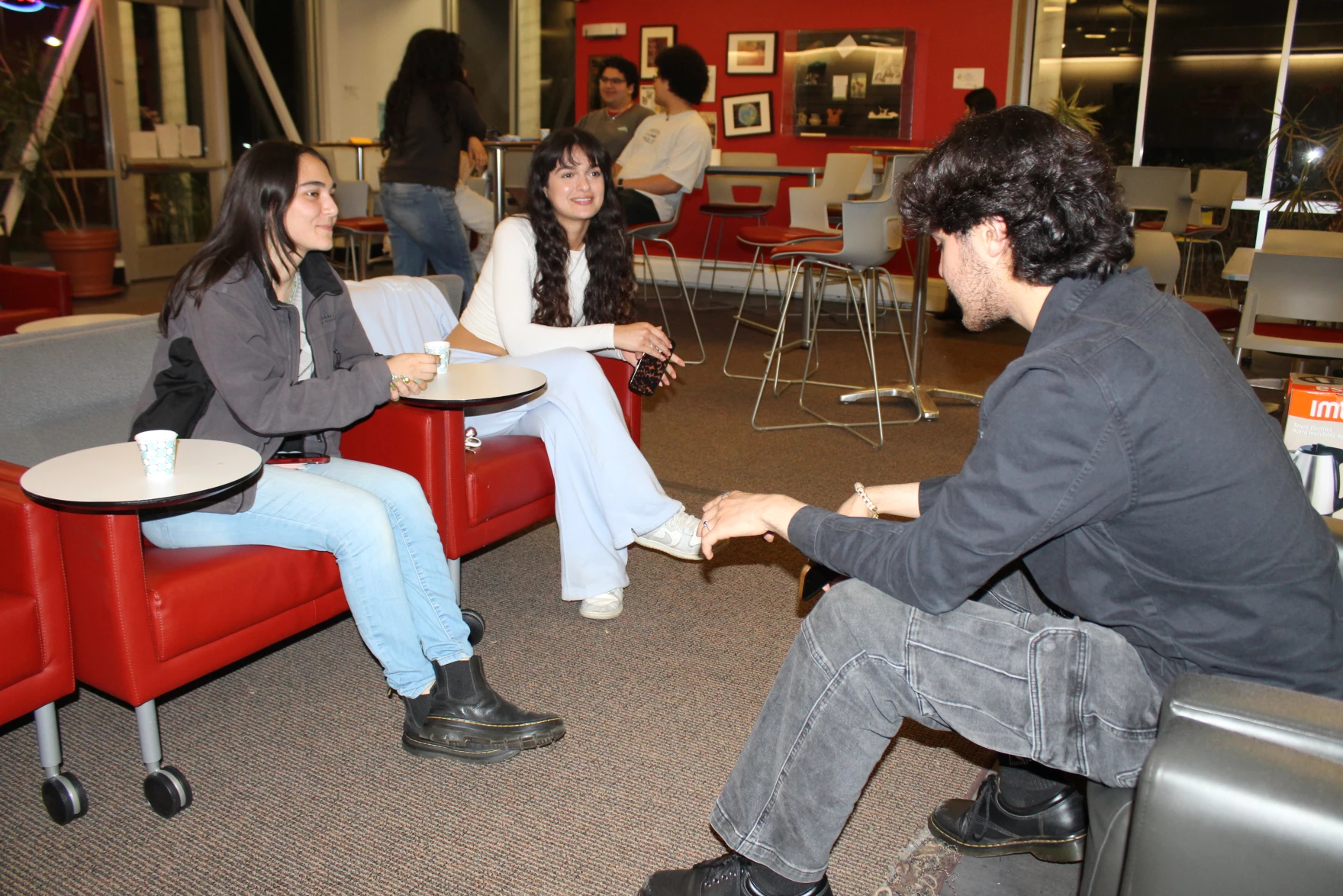
Members of the Iranian Student Union at UC Santa Cruz gather on campus for a regular meeting on May 5, 2026. (Elena Neale-Sacks/KAZU News)

Here are the morning’s top stories on Thursday, May 21, 2026

  • For the past four months, many people with friends and family in Iran haven’t known if their loved ones are safe. The Iranian government cut off internet access inside the country on January 8 amid widespread protests. There were moments in the weeks that followed when Iranians could access the outside world. But when the U.S. and Israel attacked the country in late February, the blackout resumed.  Now, despite the fragile ceasefire, many Americans of Iranian descent are left in limbo, including students at UC Santa Cruz. 
  • The First Amendment Coalition is suing Los Angeles Unified, accusing the second largest school district in the country of concealing teacher misconduct records. 
  • Immigrant detainees at a detention center in the Mojave Desert are staging a hunger and economic strike.

War and midterms—Persian students at UC Santa Cruz navigate internet blackout in Iran

About 10 students gather in a common room at UC Santa Cruz on a Tuesday evening in May. These meetings—of the Iranian Student Union—occur every other week. For a few minutes, folks chat as everyone settles in with a tiny cup of tea. Then, Ali, a leader of ISU, kicks things off with some announcements. (KAZU is using the pseudonym Ali to protect his family in Iran.)

“We have the beach barbecue,” Ali tells the other students. “We’re gonna be cooking up Joojeh kabab.” At first, the announcements and conversation seem typical of any student club on a college campus. A club leader asks people to vote on merch designs for new hoodies, and the students talk about midterms for classes that are very Santa Cruz.

But it’s a strange time for these students. For the past four months, many people with friends and family in Iran haven’t known if their loved ones are safe. The Iranian government cut off internet access inside the country on Jan. 8 amid widespread protests. There were moments in the weeks that followed when Iranians could access the outside world. But, when the U.S. and Israel attacked Iran on Feb. 28, the blackout resumed.  Now, despite the fragile ceasefire, many Americans of Iranian descent are left in limbo. Students in ISU are hanging out with friends and going to classes, but they’re also trying to make sense of what’s happening for their relatives thousands of miles away in Iran. “I guess you could say I’m two generations removed,” says one 19-year-old student, who KAZU is referring to by his first initial, A. “It was a little weird, my relationship with being Persian. Because, especially [being] born [in] 2006, it was about five years after 9/11, the racism against Middle Eastern people was very much still present.”

When the Iranian government violently cracked down on protesters in January, A. worried for his grandmother, who lives there. “The blackout of communication, it had me pretty worried for a good amount of days until she called us and she’s like, ‘I got the last plane to…’ like she got a small apartment in Dubai or something like that,” he said.

The Iranian government has been gradually expanding access to an expensive internet service available to certain professionals and business owners. But it won’t fully restore the internet until the war ends, and there’s no clear sign of when that will happen.

Lawsuit alleges LA Unified hid records related to teacher misconduct

The First Amendment Coalition is suing Los Angeles Unified School District for unlawfully withholding public records related to teacher and school employee misconduct.

That includes sexual misconduct. The organization said this violates the California Public Records Act, and that the district concealed many of the requested documents for nearly two years, stonewalling the public’s fundamental right to government transparency and accountability.

KQED Reporter Holly J. McDede  is being represented by the coalition. She said nearly two years ago, she made a public records request to LA Unified for misconduct complaints against educators, and related records. In May 2025, the district said it would charge $8,000 in fees to “approximately 2,500 potentially responsive personnel files.” Since then, the district has only provided records of certain settlement agreements.

Among the records McDede requested in June 2024 were records related to claims of misconduct against teachers or other school employees, including allegations, investigatory reports, settlement agreements, termination or transfer papers, employment reclassification documents, records of disciplinary actions, and referrals to law enforcement . A second, still-outstanding public records request made in October 2025 seeks similar records specifically related to claims of sexual misconduct. The district said it does not comment on pending or ongoing litigation.

Immigrants at ICE facility launch hunger strike over detention conditions

Immigrants at a detention center near Victorville have launched a hunger and economic strike to protest what they describe as harsh conditions inside the facility, according to immigrant rights advocates.

About 20 detainees at the Desert View Annex facility — one of three facilities operated by ICE and the GEO Group in Adelanto — began the strike Tuesday by refusing meals, avoiding commissary purchases and limiting phone calls, advocates with the Shutdown Adelanto Coalition said. The coalition also said the strike is intended to boycott the private prison operator GEO Group, which runs the facility under federal contract.

Eva said her husband is among the detainees participating in the strike. She refused to provide her name out of concern for her safety. “They’re willing to do this to raise their voice, even though they’re afraid, they’re intimidated, they’re yelled at,” Eva said. “They’re willing to do that.”

Caleb Soto, an attorney with the National Day Laborer Organizing Network, said detainees turned to the strike after what he described as repeated complaints about conditions. Soto said detainees have reported inedible food, unsafe drinking water, delayed medical care and high bond amounts that he believes makes release difficult or impossible. He also said medical visits are often brief and result in minimal treatment.

lower waypoint
next waypoint
Player sponsored by