upper waypoint

Volunteer Helps With Monitoring Sea Otters in Monterey County

Save ArticleSave Article
Failed to save article

Please try again

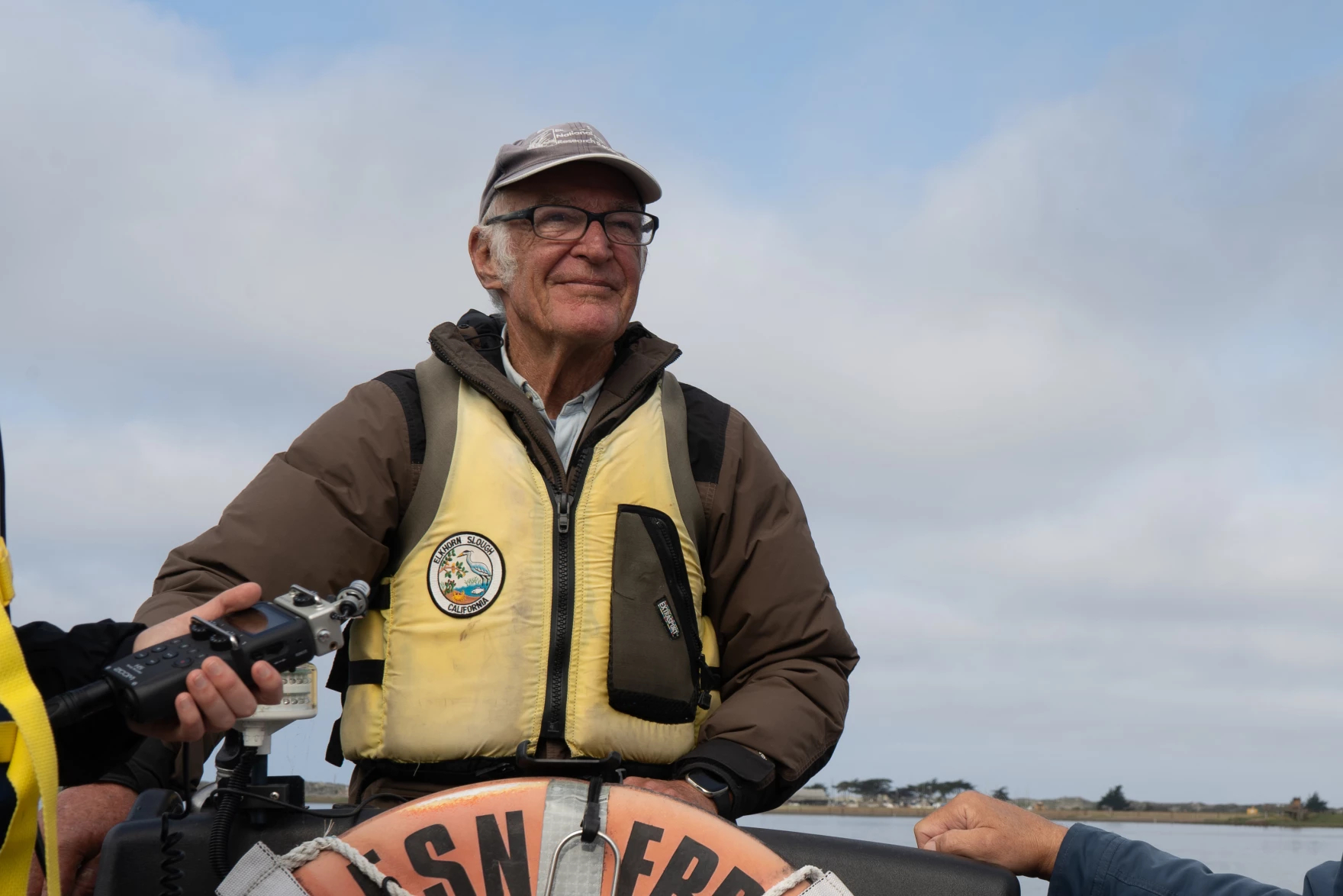
Elkhorn Slough National Estuarine Research Reserve volunteer Ron Eby on an otter monitoring boat ride on April 1, 2026. (Jerimiah Oetting/KAZU)

Here are the morning’s top stories on Friday, May 8, 2026

  • Ron Eby spent 20 years in the Navy before he retired from his role as a commander.  But after a while, he got bored – so he signed up for a new covert mission. Looking for otters. Not enemy warships, but threatened sea otters, as a volunteer with the Elkhorn Slough Reserve in Moss Landing. 
  • U.S. Senator Adam Schiff and Central Coast Congressman Salud Carbajal joined Chumash Coastal Band leaders and environmental groups on the Central Coast Thursday. They criticized the Trump administration’s support for restarting an oil pipeline linked to the 2015 Refugio spill. 

A retired Navy commander, a stakeout, and a new understanding of sea otters in Elkhorn Slough

On a cloudy morning in early April, Ron Eby and a couple other volunteers from the Elkhorn Slough National Estuarine Research Reserve (ESNERR) head out into the calm, blue waters of Elkhorn Slough in a very quiet electric boat.

Immediately, they’re surrounded by wildlife—a pile of barking sea lions, an eared grebe, harbor seals. Then, after just a few minutes, the main attraction. “There’s the otter right in front of us,” Eby says as he slows the boat.

A furry brown southern sea otter splashes around in the estuary. Eby spent 20 years in the Navy before he retired from his role as a commander. But after a while, he got bored. So he signed up for a new covert mission. “To go out there in the middle of the night, park, turn the lights off, kind of hide,” Eby said. And look for otters. Not enemy warships—but threatened sea otters.

All that surveillance led to new understandings about the marine mammals once hunted nearly to extinction for their uniquely warm coats. Twenty years ago, scientists thought these otters typically lived in the ocean. But Eby and his friend Robert Scoles, a retired sheriff’s deputy, weren’t so sure. “We would see things that didn’t fit what they were saying,” Eby said. Like otter footprints and scat on the Elkhorn Slough shore. And that made them curious. They’d just started volunteering at the estuary, and they wondered—if the otters mostly just visited, why were there so many footprints? “After all my time in the Navy and Robert’s time as a sheriff, you kind of like to check things out,” Eby said.

For two years, twice a month, Eby and Scoles staked out the otters overnight. No one had ever monitored the animals like this. The pair discovered that many of the otters scientists thought were visiting the estuary were actually residents. And the otters did something called “hauling out”—when they scoot out of the water and onto land as a way to rest and warm up. “And we found that otters here in Elkhorn Slough were healthier by far than all the otters along the coast,” Eby said, because they don’t have to worry about predators, and food is abundant. “So that really was a breakthrough.”

All the monitoring by Eby and Scoles changed scientists’ understanding of otters. For example, they realized that the estuary—which is quiet and undeveloped, unlike a lot of California’s coastline—gave the otters more opportunities to haul out. This discovery led to other research showing that not only do otters thrive in estuaries, but they’re part of an important food chain that helps the rest of the ecosystem thrive, too.

Lawmakers, environmental activists denounce restart of pipeline

U.S. Senator Adam Schiff and Central Coast Congressman Salud Carbajal joined Chumash Coastal Band leaders and environmental groups on the Central Coast Thursday. They criticized the Trump administration’s support for restarting an oil pipeline linked to the 2015 Refugio spill.

Speakers at a Santa Barbara rally accused the Trump administration and Sable Offshore Corporation of bypassing California environmental protections to restart the aging pipeline system. The pipeline was shut down after the 2015 spill released more than 100,000 gallons of crude oil along the Santa Barbara County coast.

Schiff said the issue goes beyond politics. “President Nixon himself,  and this shows you how far the Republican Party has moved from those roots, spoke of the obligation that we had to protect the environment and how this was not just a California or a Santa Barbara issue. This is really a national issue,” he said.

Sable said the pipeline is safe. However, environmental groups and Chumash Coastal Band tribal leaders warned another spill could threaten marine ecosystems, fisheries, and coastal communities statewide.

lower waypoint
next waypoint
Player sponsored by