After Sentencing of Ex-Rohnert Park Cops Who Stole Marijuana, Questions Still Remain
Former Rohnert Park police officers Brendon Jacy Tatum and Joseph Huffaker were sentenced to prison in a federal cannabis corruption case involving stolen marijuana, fake reports, illegal Highway 101 traffic stops and questions about FBI and law enforcement oversight in Northern California.
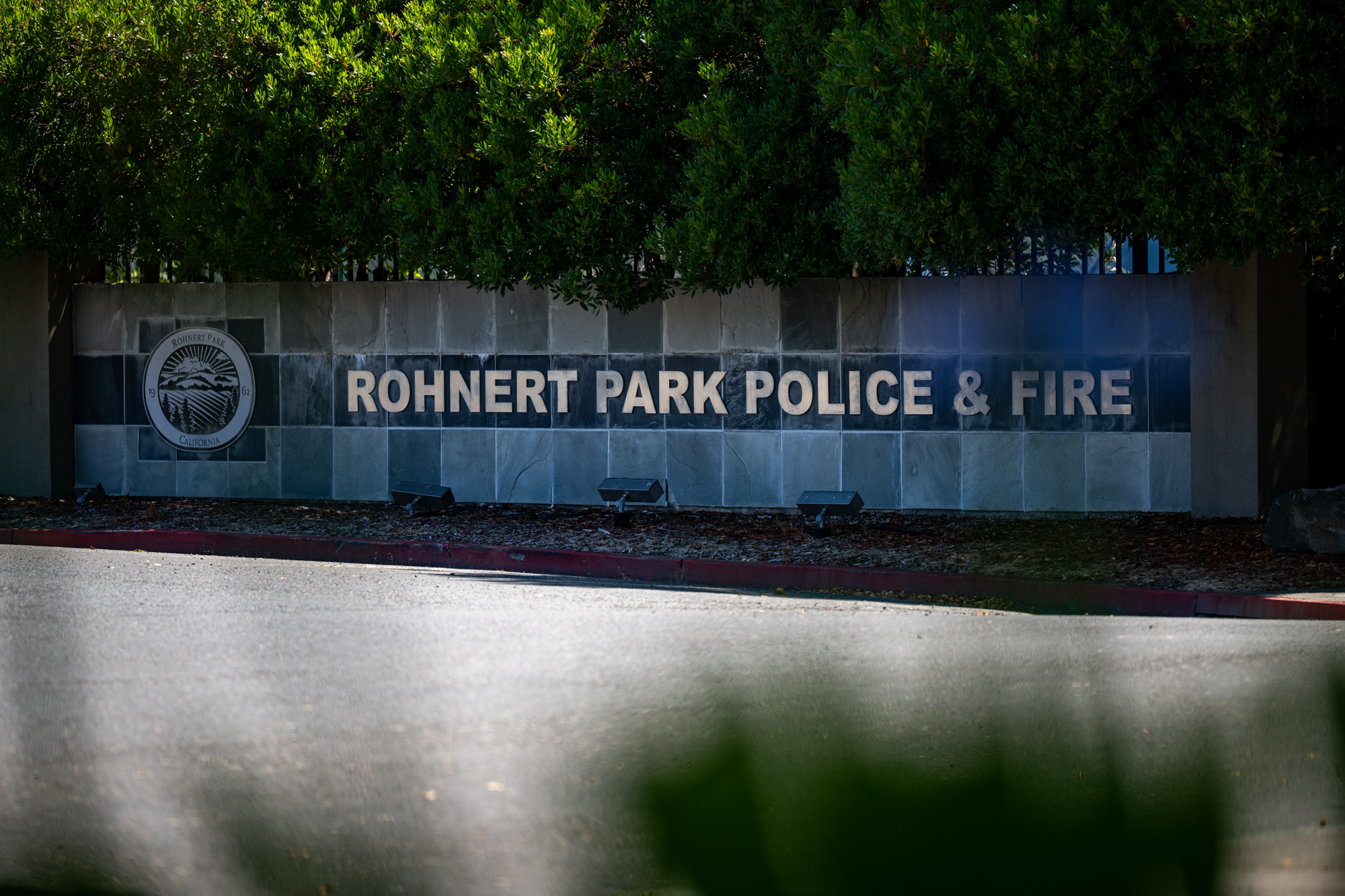
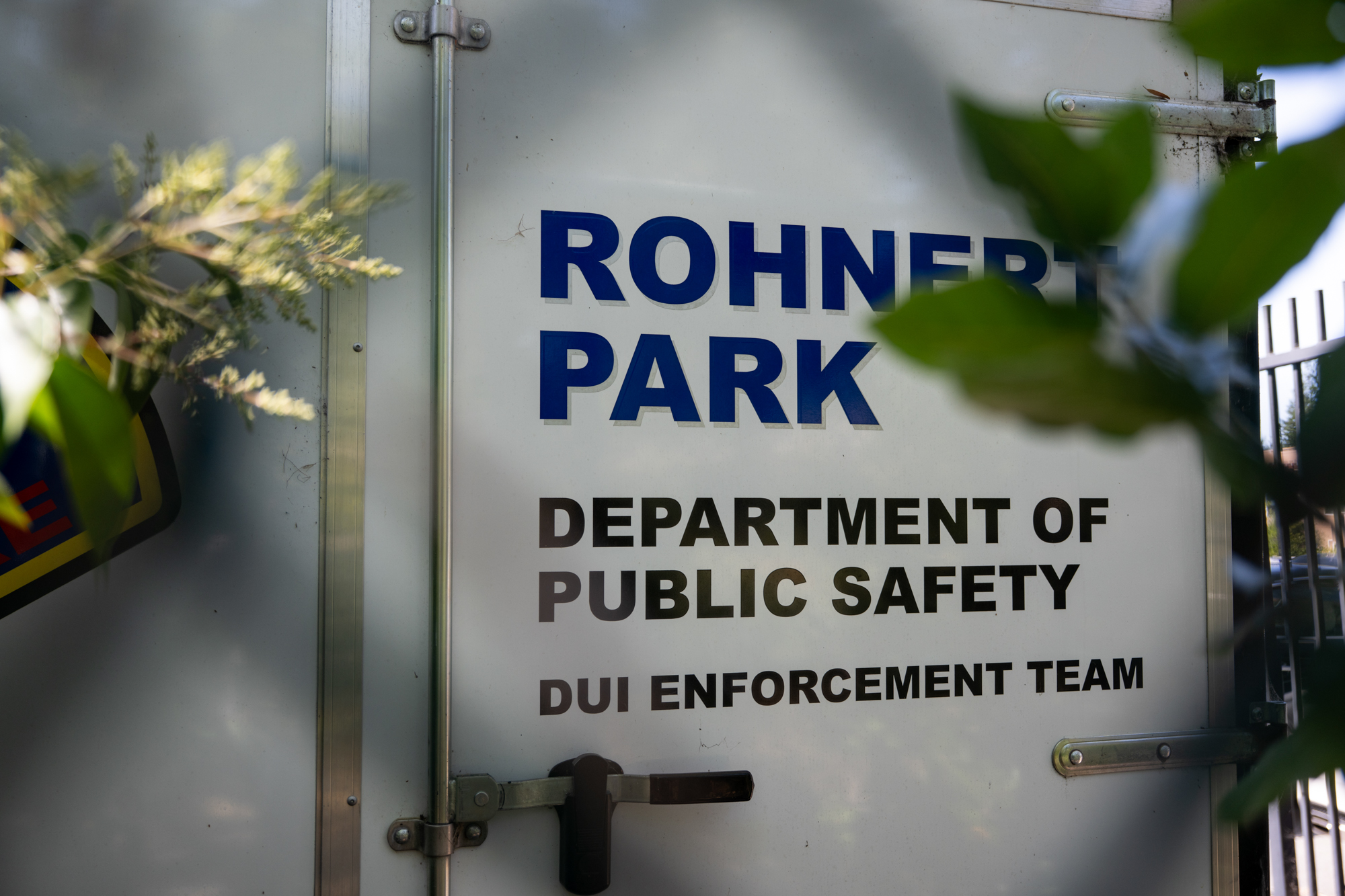
A sign for the Rohnert Park Police Station on July 2, 2025. Former Sgt. Brendon "Jacy" Tatum and former officer Joseph Huffaker face sentencing in a federal cannabis corruption case involving stolen marijuana, fake reports, illegal Highway 101 traffic stops and questions about FBI and law enforcement oversight in Northern California.
(Beth LaBerge/KQED)
The federal sentencing Wednesday of two former Rohnert Park police officers involved in a scheme to steal and resell marijuana marked the end of a yearslong legal battle, but it closes only part of a scandal that exposed broader failures in Northern California law enforcement during the final years of marijuana prohibition.
KQED first reported in 2018 on allegations from drivers who said Rohnert Park officers had stolen marijuana from them during traffic stops well outside city limits. In 2020, the city paid out more than $1.8 million to settle lawsuits filed by the victims of these officers.
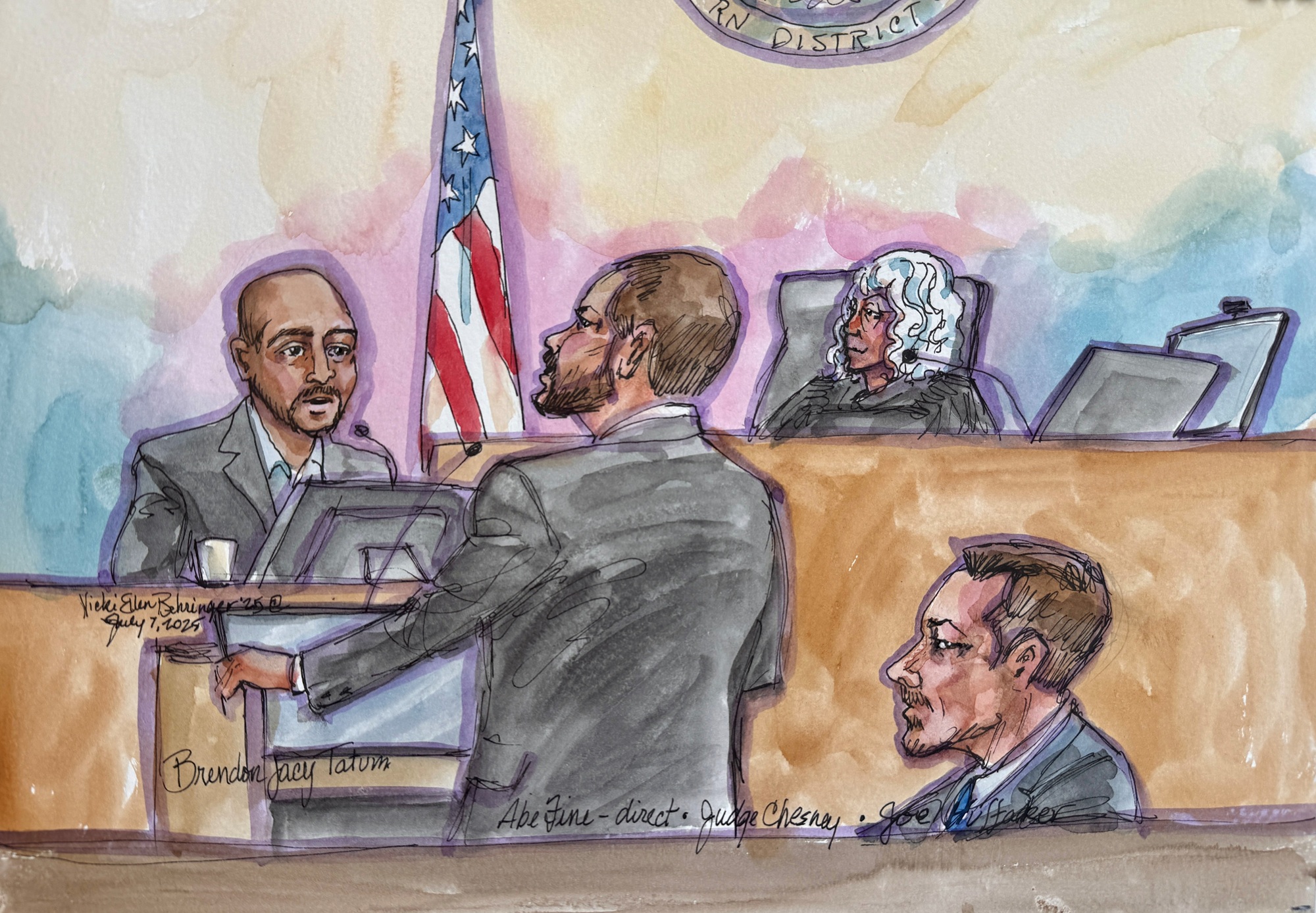
Tatum spent three days on the witness stand describing how he used his role leading the department’s interdiction team to steal hundreds of pounds of cannabis during traffic stops between 2014 and 2018, bringing Huffaker into the scheme in late 2017.
But trial testimony, public records and interviews revealed questions about how supervisors, investigators and outside agencies failed to stop — or fully investigate — officers who allegedly robbed drivers along Highway 101.
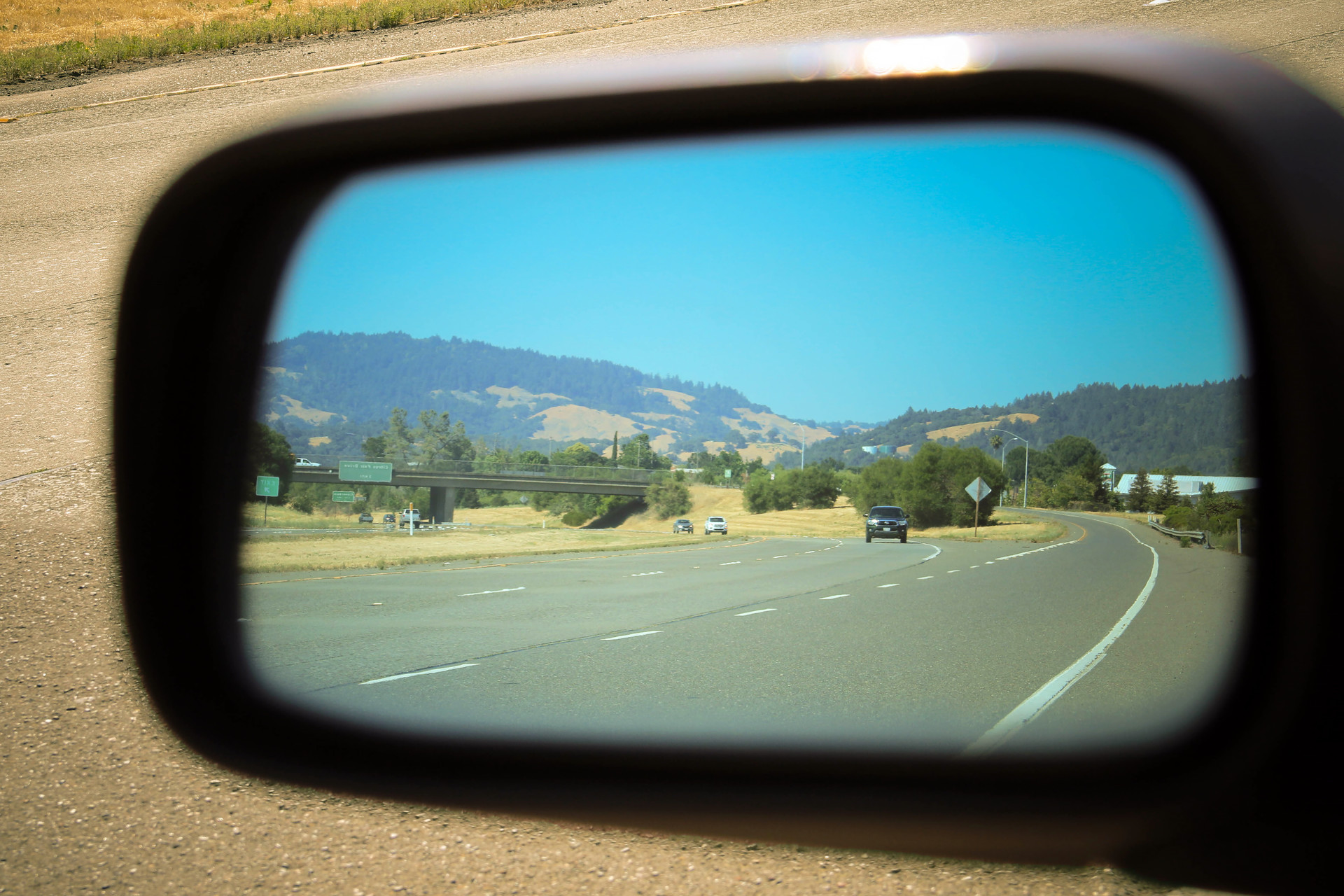
Former Sgt. Brendon Jacy Tatum and former officer Joseph Huffaker face sentencing in a federal cannabis corruption case involving stolen marijuana, fake reports, illegal Highway 101 traffic stops and questions about FBI and law enforcement oversight in Northern California. (Adam Grossberg/KQED)
“It kind of bewilders me why there was only two officers that were prosecuted,” said Texas resident Zeke Flatten, a former undercover officer, private investigator and filmmaker.
Flatten was among the first people to report being robbed by officers, but eight years later, no one has been prosecuted in his case.
Who stole from Zeke Flatten?
On Dec. 5, 2017, Flatten said he was driving south on Highway 101 in Mendocino County in a rented Kia when he was pulled over by an unmarked SUV. Two white men wearing green tactical pants and black vests marked “police” approached him.
“Immediately, things were not feeling right to me,” said Flatten, who honed his intuition working undercover in the 1990s. He said he began noticing other details: the officers were not wearing badges, name tags or insignia that identified the department they worked for.
The men asked for his license and the rental agreement, but did not explain why they had stopped him. In interviews with KQED, Flatten said they asked him to get out of the vehicle, patted him down and asked if there were any “money, guns or drugs” in the car.
Flatten said he told them he had a medical marijuana license.
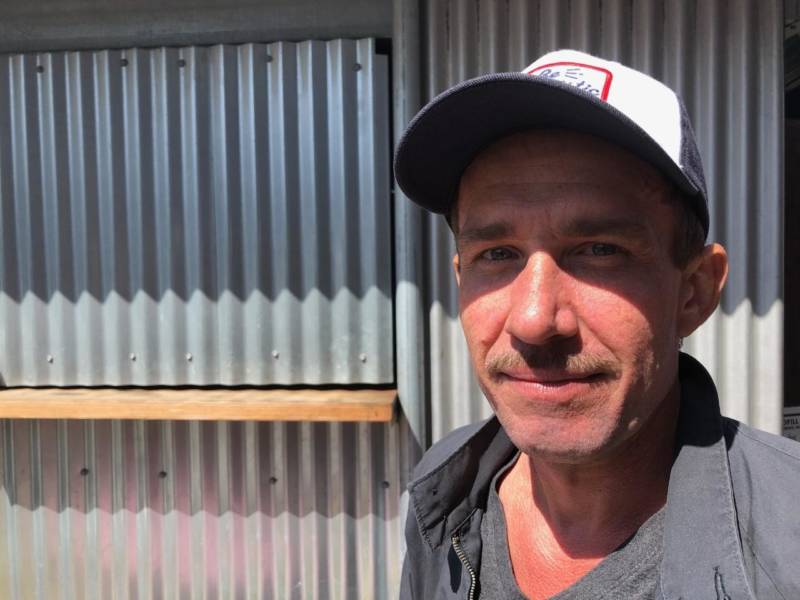
Zeke Flatten in San Francisco on Aug. 16, 2018 (Sukey Lewis/KQED)
“He [the officer] immediately opened the hatchback of the vehicle, went for a box that I had in the back,” Flatten said. The officers found three pounds of marijuana that Flatten said he was taking to Santa Rosa for lab testing.
The men identified themselves as agents with the Bureau of Alcohol, Tobacco, Firearms and Explosives, according to Flatten.
“ Marijuana is taking over in California, like cigarettes. You may get a letter from Washington,” Flatten recalled one of the officers saying as they handed him back his license and rental agreement.
They kept the cannabis.
“ I knew at that moment that I had been robbed,” Flatten said.
Flatten filed complaints with the ATF, the FBI and Mendocino County authorities.
FBI Special Agent Jeremy Heinrich testified at Huffaker’s trial that he received Flatten’s complaint on Dec. 11, 2017, and contacted local law enforcement agencies in Mendocino County.
Those calls went nowhere, Heinrich testified, and he closed the case eight days later.
Even now, the FBI has not identified or arrested the men who stopped Flatten. Flatten said he is certain that Tatum was not involved because both men who stopped him were white and Tatum is Black. Flatten believes Huffaker was involved, though Huffaker has denied it.
The U.S. Department of Justice declined to answer questions about the case and denied KQED’s Freedom of Information Act request for documents related to the timeline of their investigation, citing privacy exemptions. KQED appealed the denial.
Flatten’s complaint, however, would become key in exposing the scheme.
Barron Lutz
About two weeks after Flatten was robbed, Humboldt County resident Barron Lutz was also driving south on Highway 101 when he was pulled over by two officers in an unmarked black SUV who identified themselves as ATF agents. They seized 23 pounds of cannabis from Lutz and refused to provide an inventory receipt.
“I wasn’t sure if I was being robbed or I was being arrested,” Lutz said on the stand.
The stop was nearly identical to Flatten’s, with one key difference: California Highway Patrol officers stopped to ask if the officers needed assistance. The CHP’s Scott Baker testified that he recognized Tatum from working with him on a joint narcotics operation in Mendocino County.
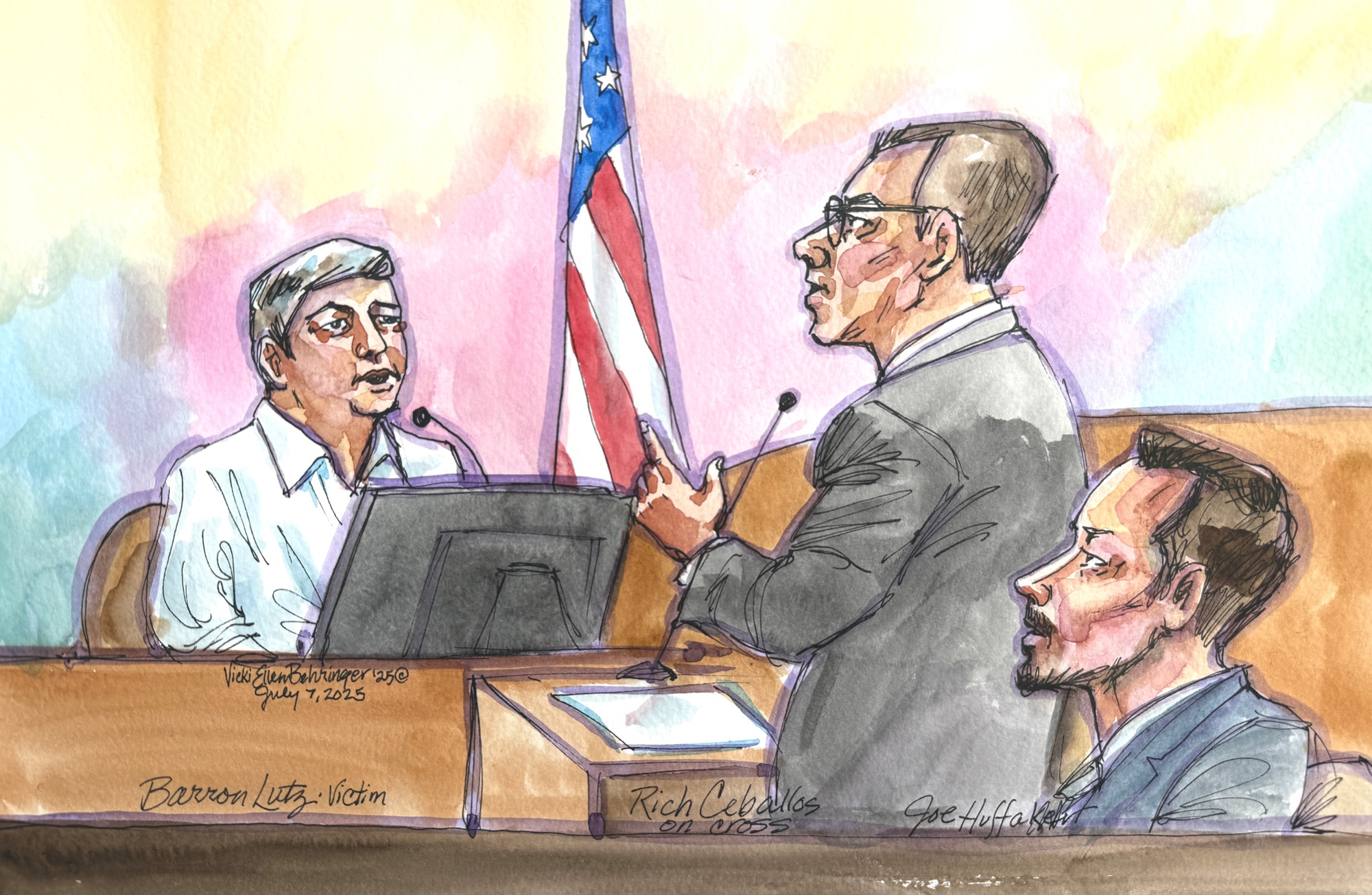
Barron Lutz, a victim, takes the stand during the criminal trial of former Rohnert Park police officer Joseph Huffaker in San Francisco federal court on Monday, July 7, 2025. (Vicki Behringer for KQED)
Lutz contacted the Mendocino County Sheriff’s Office the next day, asking whether it had a record of the stop.
“They said they would get back to me, and nobody ever got back to me,” Lutz testified.
According to Tatum’s testimony, a Mendocino County major crimes sergeant called him later that day about a civilian complaint.
“He talked to CHP, and CHP remembered seeing Joe and I up there,” Tatum testified.
Rohnert Park is in Sonoma County, about an hour south of where Lutz was pulled over. Tatum told the sergeant the stop was legitimate.
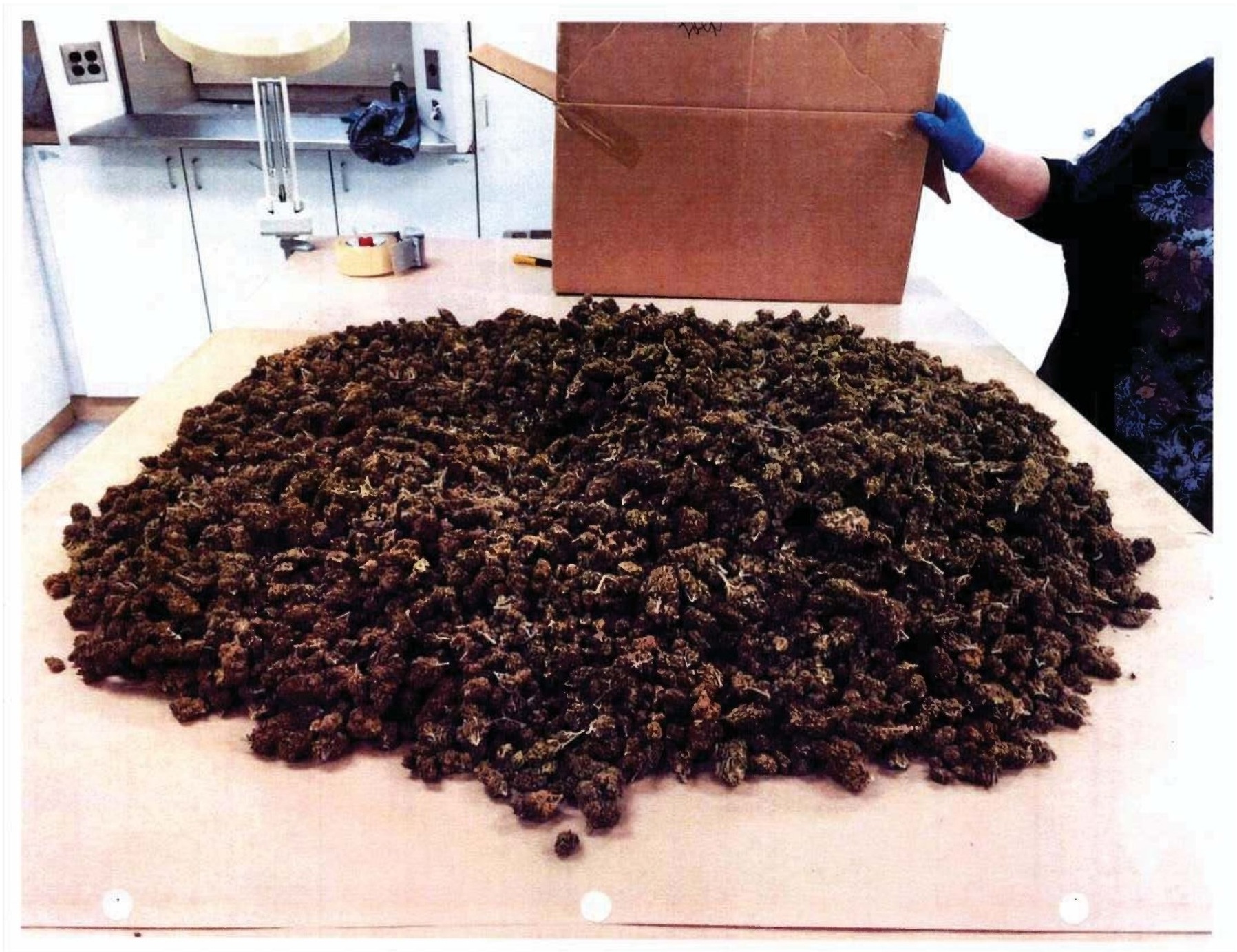
Afterward, Tatum said, he began trying to cover his tracks: obtaining an incident number and booking a cardboard box of loose marijuana buds into evidence.
Two former Rohnert Park police officers, Joseph Huffaker and Jacy Tatum, are set to be sentenced in federal court after a yearslong legal battle over a scheme to steal and resell marijuana seized during traffic stops along Highway 101. This evidence photo from a court filing shows a cardboard box filled with loose marijuana buds. (Courtesy of Rohnert Park Department of Public Safety)
The 23 pounds of cannabis he and Huffaker took from Lutz, including designer strains such as Agent Orange and Serendipity, had already been handed off to Tatum’s “broker” and friend, Billy Timmins. Tatum said Timmins paid about $27,000 for the stolen marijuana, which the officers split and spent on high-end hunting rifles, scopes and ammunition.
On Feb. 13, 2018, Tatum received a call from Mendocino County Sheriff Tom Allman.
“He called me for a favor,” Tatum testified. “He [Allman] was getting a lot of media press and was pissed off because his department was getting blamed for our traffic stop.”
The coverage Allman told Tatum about appeared on the community news site Redheaded Blackbelt. On Feb. 11, 2018, the site’s owner, Kym Kemp, published articles detailing Flatten’s allegations.
When Flatten first called her, she had trouble believing his story.
“To be honest, if he hadn’t been someone that knew people I knew, which is the way Southern Humboldt works, I probably would not have taken him seriously,” she said.
But the deeper she dug into Flatten’s allegations, the more credible his complaints appeared. And the story struck a nerve among residents who had long suspected law enforcement abuses during marijuana prohibition, Kemp said.
False reports
Tatum testified that after receiving that call from the sheriff, he contacted Huffaker, and together, they drafted a press release taking responsibility for the stop. The release referenced an unspecified stop “in December,” and included the same case number tied to the marijuana Tatum had booked into evidence.
“We were both scared and thought that we’d got away with this,” Tatum testified. “But here we are, two months later, having to deal with it again.”
Former Rohnert Park Police Sgt. Brendon “Jacy” Tatum, who worked with Joseph Huffaker, takes the stand in San Francisco federal court on Monday, July 7, 2025. (Vicki Behringer for KQED)
Once the Mendocino County Sheriff’s Office received the press release, officials forwarded it to the FBI and Kemp.
Special Agent Heinrich then asked Tatum for the incident report connected to Flatten’s complaint.
But there was no report. Tatum testified that he and Huffaker did not know the driver’s name or the exact stop date. Heinrich, however, had shared those details from the complaint he had received: Zeke Flatten on Dec. 5, 2017.
“We just went with that date based upon what the FBI guy — the date that the FBI guy gave us,” Tatum said.
Related Article
But in writing the report, Tatum said he and Huffaker drew on the details they could remember for the illegal stop of Lutz, not realizing they were conflating two different stops.
After receiving the report, Heinrich took no further action, despite contradictions with Flatten’s complaint. The FBI declined to answer questions about Heinrich’s handling of the case.
Kemp, however, noticed discrepancies in the report after obtaining it through a public records request, including the date, vehicle description, the amount of cannabis seized and the presence of the CHP officer.
In April 2018, she published another story, showing that Flatten’s stop and the stop described in the report were different incidents.
By then, Rohnert Park officials had realized they had a problem.
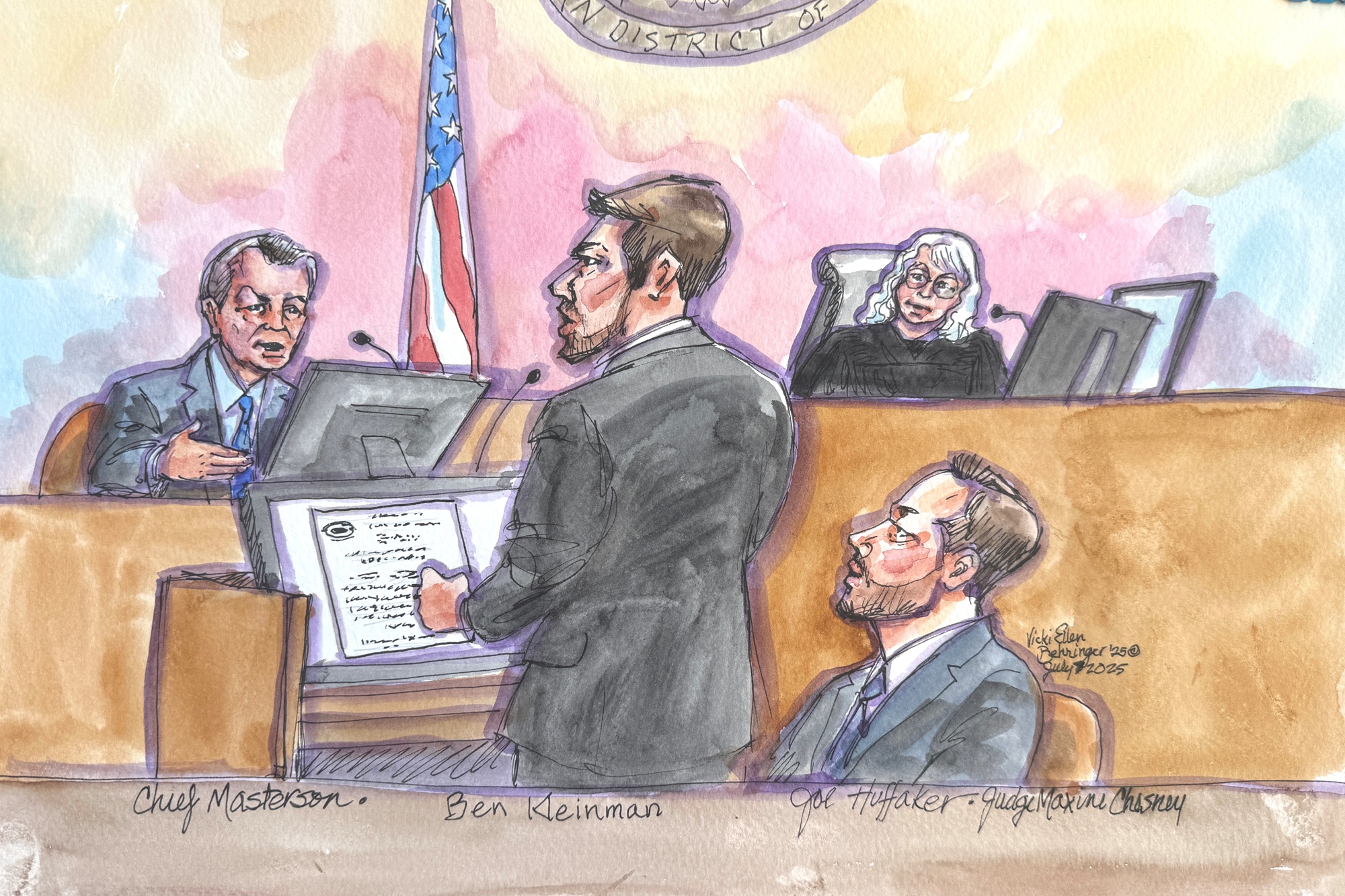
“There were numerous things in the press release that gave me heartburn,” former Police Chief Brian Masterson testified.
He placed Huffaker and Tatum on administrative leave and hired an outside investigator.
A pattern emerges
In the days after Kemp’s reporting, KQED received a tip from another driver who said they had also been robbed by Tatum.
In June, KQED, in partnership with Kemp and the North Coast Journal, published a joint investigation examining allegations from eight drivers and the role asset forfeiture played in funding the department.
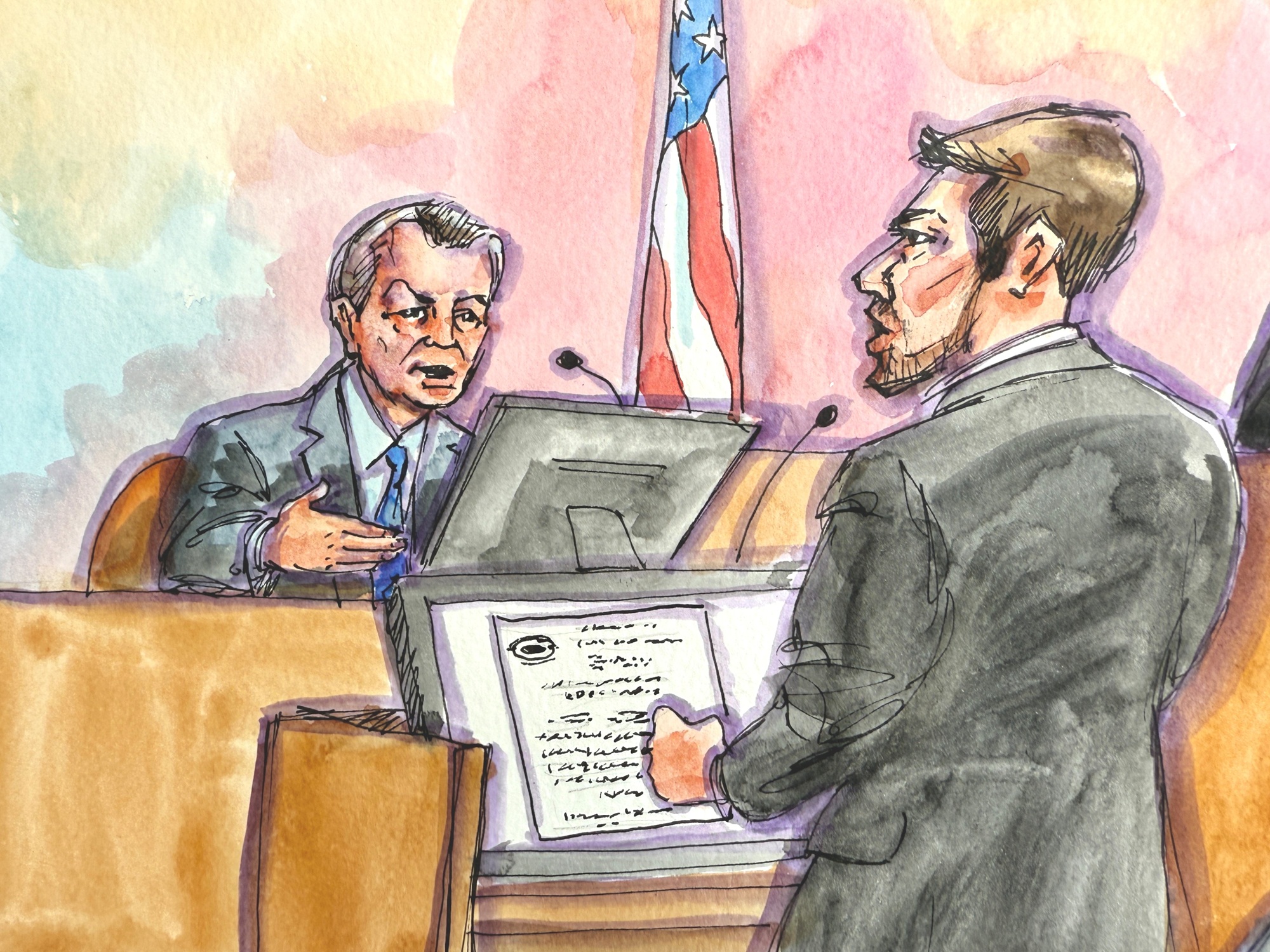
Brian Masterson, former chief of the Rohnert Park Department of Public Safety, takes the stand as a witness for the prosecution during the criminal trial of former Rohnert Park police officer Joseph Huffaker in San Francisco federal court on Monday, July 7, 2025. (Vicki Behringer for KQED)
Within weeks, Tatum left the Rohnert Park Department of Public Safety. The city moved to fire Huffaker, but he fought back, ultimately securing a $75,000 payout to resign.
At trial, Tatum testified that officers initially used an official foundry based in San Joaquin to incinerate the excess cannabis. But sometime around 2015, they changed that policy. Instead, they began taking the hundreds of pounds of marijuana to a local farm where they would bury it in the ground.
Related Article
“We took pictures of Joe on the backhoe digging the holes for the marijuana,” Tatum said, referring to Huffaker.
At some point, Tatum testified, he began taking the marijuana home to sell instead of burying it. Investigators never searched the farm, according to testimony from a special agent.
“The more drivers I stopped, or we stopped, the more chances we had to steal marijuana,” he testified.
Tatum testified that he initially sold the weed through his wife’s uncle Joe Porcaro, splitting the proceeds before the two had a falling out. Porcaro strongly denied any involvement, calling Tatum an “unremorseful, pathological liar” in an email to KQED.
Porcaro said he spoke with the FBI, but was never questioned about Tatum’s allegations. Federal prosecutors declined to answer questions about how they verified Tatum’s testimony or why Porcaro was never pursued as a potential accomplice.
‘Robin Hood’
Sometime in 2016, Tatum said he began selling marijuana through his childhood friend Billy Timmins, who later testified against Huffaker in exchange for immunity.
Timmins said he initially believed Tatum was growing the marijuana himself, but later realized the volume was too large.
“I knew that it wasn’t out of his garage,” Timmins testified. Tatum told him he was “getting it off the highway.”
Police vehicles are parked in a lot at the Rohnert Park Police Station in Rohnert Park on July 2, 2025. (Beth LaBerge/KQED)
Tatum said he gave drivers an ultimatum: disclaim ownership of the cannabis or face arrest. If drivers denied ownership, he could classify it as found property.
For several years, Tatum testified, the scheme operated without detection.
“It was almost like a Robin Hood story,” Timmins testified. “These guys are scumbags, and I’m going to take their weed and that’s that.”
In 2017, with legalization approaching under Proposition 64, the chief shut down the interdiction team.
Huffaker
Tatum testified that he and Huffaker became close friends. Their wives got along, and they spent time together after work. Tatum said that in late 2017, over drinks, they joked about the potential profits they could make from seizing marijuana.
“We decided that we’d tell people we were the ATF,” Tatum testified. “And not draw attention to the DEA or somebody locally they could complain to or that it could get back to.” Tatum did not tell Huffaker that he had already been stealing for years.
In December 2017, Tatum said the pair carried out several illegal stops.
Former Rohnert Park police officer Joseph Huffaker (right) during his trial in San Francisco federal court on Monday, July 7, 2025. (Vicki Behringer for KQED)
Phone records place Tatum and Huffaker in the Hopland area on Dec. 6. Tatum testified they were conducting what he called “illegal interdiction,” stopping drivers and seizing cannabis. He said they met Timmins off Highway 101 near the Commisky exit, where they transferred about eight large trash bags full of marijuana into Timmins’ car so the officers could continue making stops.
In late 2023, Tatum told Timmins, his friend of more than three decades, that he planned to implicate him with the FBI. Timmins said he was furious that Tatum had dragged him into his “mess.”
Both men said that was the last time they spoke.
Shortly before trial, Timmins agreed to cooperate with federal prosecutors.
Rohnert Park Department of Public Safety today
At least six of the peace officers who either worked alongside Tatum and Huffaker or supervised interdiction operations remain in law enforcement, including five with the Rohnert Park Department of Public Safety and one with the Sonoma County Sheriff’s Office.
However, incident reports and court filings show that when Tatum broke departmental policies in front of them — giving drivers ultimatums, refusing to give property receipts and issuing citations for felonies — they did not stop him.
At trial, Huffaker’s attorney asked Tatum whether supervisors ever reviewed body camera footage that captured seizures of large amounts of marijuana and cash. Tatum said they did not.
Police vehicles are parked in a lot at the Rohnert Park Police Station in Rohnert Park on July 2, 2025. (Beth LaBerge/KQED)
Tim Mattos, who became chief of the Rohnert Park Department of Public Safety after the scandal, said in a recent interview that the officers were cleared by internal investigations and the FBI.
Mattos said the department has since expanded oversight, implemented a new evidence auditing system, added GPS tracking to vehicles and changed procedures for destroying contraband.
“ Let’s not even let this creep into people’s mind because they’re just not gonna be able to do it,” he said.
Mattos said the department has spent years “living under this cloud” and hopes the sentencing will allow the city to move forward.
Kemp said the case carried significance for cannabis growers who long feared driving their harvest through “the gauntlet” along Highway 101. But there still has not been a full reckoning with police abuses during prohibition.
“It wasn’t just those two officers,” Kemp said. “And it wasn’t just Rohnert Park. It was spread throughout the Emerald Triangle. And how bad was it? We may never know.”
Flatten is still waiting for justice. He believes that at least one of the men who robbed him remains in law enforcement.
lower waypointnext waypoint
Player sponsored by
window.__IS_SSR__=true
window.__INITIAL_STATE__={
"attachmentsReducer": {
"audio_0": {
"type": "attachments",
"id": "audio_0",
"imgSizes": {
"kqedFullSize": {
"file": "https://ww2.kqed.org/news/wp-content/themes/KQED-unified/img/audio_bgs/background0.jpg"
}
}
},
"audio_1": {
"type": "attachments",
"id": "audio_1",
"imgSizes": {
"kqedFullSize": {
"file": "https://ww2.kqed.org/news/wp-content/themes/KQED-unified/img/audio_bgs/background1.jpg"
}
}
},
"audio_2": {
"type": "attachments",
"id": "audio_2",
"imgSizes": {
"kqedFullSize": {
"file": "https://ww2.kqed.org/news/wp-content/themes/KQED-unified/img/audio_bgs/background2.jpg"
}
}
},
"audio_3": {
"type": "attachments",
"id": "audio_3",
"imgSizes": {
"kqedFullSize": {
"file": "https://ww2.kqed.org/news/wp-content/themes/KQED-unified/img/audio_bgs/background3.jpg"
}
}
},
"audio_4": {
"type": "attachments",
"id": "audio_4",
"imgSizes": {
"kqedFullSize": {
"file": "https://ww2.kqed.org/news/wp-content/themes/KQED-unified/img/audio_bgs/background4.jpg"
}
}
},
"placeholder": {
"type": "attachments",
"id": "placeholder",
"imgSizes": {
"thumbnail": {
"file": "https://cdn.kqed.org/wp-content/uploads/2024/12/KQED-Default-Image-816638274-2000x1333-1-160x107.jpg",
"width": 160,
"height": 107,
"mimeType": "image/jpeg"
},
"medium": {
"file": "https://cdn.kqed.org/wp-content/uploads/2024/12/KQED-Default-Image-816638274-2000x1333-1-800x533.jpg",
"width": 800,
"height": 533,
"mimeType": "image/jpeg"
},
"medium_large": {
"file": "https://cdn.kqed.org/wp-content/uploads/2024/12/KQED-Default-Image-816638274-2000x1333-1-768x512.jpg",
"width": 768,
"height": 512,
"mimeType": "image/jpeg"
},
"large": {
"file": "https://cdn.kqed.org/wp-content/uploads/2024/12/KQED-Default-Image-816638274-2000x1333-1-1020x680.jpg",
"width": 1020,
"height": 680,
"mimeType": "image/jpeg"
},
"1536x1536": {
"file": "https://cdn.kqed.org/wp-content/uploads/2024/12/KQED-Default-Image-816638274-2000x1333-1-1536x1024.jpg",
"width": 1536,
"height": 1024,
"mimeType": "image/jpeg"
},
"fd-lrg": {
"file": "https://cdn.kqed.org/wp-content/uploads/2024/12/KQED-Default-Image-816638274-2000x1333-1-1536x1024.jpg",
"width": 1536,
"height": 1024,
"mimeType": "image/jpeg"
},
"fd-med": {
"file": "https://cdn.kqed.org/wp-content/uploads/2024/12/KQED-Default-Image-816638274-2000x1333-1-1020x680.jpg",
"width": 1020,
"height": 680,
"mimeType": "image/jpeg"
},
"fd-sm": {
"file": "https://cdn.kqed.org/wp-content/uploads/2024/12/KQED-Default-Image-816638274-2000x1333-1-800x533.jpg",
"width": 800,
"height": 533,
"mimeType": "image/jpeg"
},
"post-thumbnail": {
"file": "https://cdn.kqed.org/wp-content/uploads/2024/12/KQED-Default-Image-816638274-2000x1333-1-672x372.jpg",
"width": 672,
"height": 372,
"mimeType": "image/jpeg"
},
"twentyfourteen-full-width": {
"file": "https://cdn.kqed.org/wp-content/uploads/2024/12/KQED-Default-Image-816638274-2000x1333-1-1038x576.jpg",
"width": 1038,
"height": 576,
"mimeType": "image/jpeg"
},
"xxsmall": {
"file": "https://cdn.kqed.org/wp-content/uploads/2024/12/KQED-Default-Image-816638274-2000x1333-1-160x107.jpg",
"width": 160,
"height": 107,
"mimeType": "image/jpeg"
},
"xsmall": {
"file": "https://cdn.kqed.org/wp-content/uploads/2024/12/KQED-Default-Image-816638274-2000x1333-1-672x372.jpg",
"width": 672,
"height": 372,
"mimeType": "image/jpeg"
},
"small": {
"file": "https://cdn.kqed.org/wp-content/uploads/2024/12/KQED-Default-Image-816638274-2000x1333-1-672x372.jpg",
"width": 672,
"height": 372,
"mimeType": "image/jpeg"
},
"xlarge": {
"file": "https://cdn.kqed.org/wp-content/uploads/2024/12/KQED-Default-Image-816638274-2000x1333-1-1020x680.jpg",
"width": 1020,
"height": 680,
"mimeType": "image/jpeg"
},
"full-width": {
"file": "https://cdn.kqed.org/wp-content/uploads/2024/12/KQED-Default-Image-816638274-2000x1333-1-1920x1280.jpg",
"width": 1920,
"height": 1280,
"mimeType": "image/jpeg"
},
"guest-author-32": {
"file": "https://cdn.kqed.org/wp-content/uploads/2025/01/KQED-Default-Image-816638274-1333x1333-1-160x160.jpg",
"width": 32,
"height": 32,
"mimeType": "image/jpeg"
},
"guest-author-50": {
"file": "https://cdn.kqed.org/wp-content/uploads/2025/01/KQED-Default-Image-816638274-1333x1333-1-160x160.jpg",
"width": 50,
"height": 50,
"mimeType": "image/jpeg"
},
"guest-author-64": {
"file": "https://cdn.kqed.org/wp-content/uploads/2025/01/KQED-Default-Image-816638274-1333x1333-1-160x160.jpg",
"width": 64,
"height": 64,
"mimeType": "image/jpeg"
},
"guest-author-96": {
"file": "https://cdn.kqed.org/wp-content/uploads/2025/01/KQED-Default-Image-816638274-1333x1333-1-160x160.jpg",
"width": 96,
"height": 96,
"mimeType": "image/jpeg"
},
"guest-author-128": {
"file": "https://cdn.kqed.org/wp-content/uploads/2025/01/KQED-Default-Image-816638274-1333x1333-1-160x160.jpg",
"width": 128,
"height": 128,
"mimeType": "image/jpeg"
},
"detail": {
"file": "https://cdn.kqed.org/wp-content/uploads/2025/01/KQED-Default-Image-816638274-1333x1333-1-160x160.jpg",
"width": 160,
"height": 160,
"mimeType": "image/jpeg"
},
"kqedFullSize": {
"file": "https://cdn.kqed.org/wp-content/uploads/2024/12/KQED-Default-Image-816638274-2000x1333-1.jpg",
"width": 2000,
"height": 1333
}
}
},
"news_12046903": {
"type": "attachments",
"id": "news_12046903",
"meta": {
"index": "attachments_1716263798",
"site": "news",
"id": "12046903",
"found": true
},
"title": "A sign for the Rohnert Park Police Station on July 2, 2025.",
"publishDate": 1751492712,
"status": "inherit",
"parent": 12046733,
"modified": 1751495354,
"caption": "A sign for the Rohnert Park Police Station on July 2, 2025. Former Sgt. Brendon \"Jacy\" Tatum and former officer Joseph Huffaker face sentencing in a federal cannabis corruption case involving stolen marijuana, fake reports, illegal Highway 101 traffic stops and questions about FBI and law enforcement oversight in Northern California.\r\n\r\n",
"credit": "Beth LaBerge/KQED",
"altTag": null,
"description": null,
"imgSizes": {
"thumbnail": {
"file": "https://cdn.kqed.org/wp-content/uploads/sites/10/2025/07/250702-JOSEPHHUFFAKERTRIAL-05-BL-KQED-160x107.jpg",
"width": 160,
"height": 107,
"mimeType": "image/jpeg"
},
"1536x1536": {
"file": "https://cdn.kqed.org/wp-content/uploads/sites/10/2025/07/250702-JOSEPHHUFFAKERTRIAL-05-BL-KQED-1536x1024.jpg",
"width": 1536,
"height": 1024,
"mimeType": "image/jpeg"
},
"post-thumbnail": {
"file": "https://cdn.kqed.org/wp-content/uploads/sites/10/2025/07/250702-JOSEPHHUFFAKERTRIAL-05-BL-KQED-672x372.jpg",
"width": 672,
"height": 372,
"mimeType": "image/jpeg"
},
"twentyfourteen-full-width": {
"file": "https://cdn.kqed.org/wp-content/uploads/sites/10/2025/07/250702-JOSEPHHUFFAKERTRIAL-05-BL-KQED-1038x576.jpg",
"width": 1038,
"height": 576,
"mimeType": "image/jpeg"
},
"kqedFullSize": {
"file": "https://cdn.kqed.org/wp-content/uploads/sites/10/2025/07/250702-JOSEPHHUFFAKERTRIAL-05-BL-KQED.jpg",
"width": 2000,
"height": 1333
}
},
"isLoading": false,
"fetchFailed": false
}
},
"audioPlayerReducer": {
"postId": "stream_live",
"isPaused": true,
"isPlaying": false,
"pfsActive": false,
"pledgeModalIsOpen": true,
"playerDrawerIsOpen": false,
"liveAudioPlayStartedAt": 0,
"liveAudioPlayContext": ""
},
"authorsReducer": {
"slewis": {
"type": "authors",
"id": "8676",
"meta": {
"index": "authors_1716337520",
"id": "8676",
"found": true
},
"name": "Sukey Lewis",
"firstName": "Sukey",
"lastName": "Lewis",
"slug": "slewis",
"email": "slewis@kqed.org",
"display_author_email": true,
"staff_mastheads": [
"news"
],
"title": "KQED Contributor",
"bio": "Sukey Lewis is a criminal justice reporter and host of \u003cem>On Our Watch\u003c/em>, a new podcast from NPR and KQED about the shadow world of police discipline. In 2018, she co-founded the California Reporting Project, a coalition of newsrooms across the state focused on obtaining previously sealed internal affairs records from law enforcement. In addition to her reporting on police accountability, Sukey has investigated the bail bonds industry, California's wildfires and the high cost of prison phone calls. Sukey earned a master's degree in journalism from the University of California at Berkeley. Send news tips to slewis@kqed.org.",
"avatar": "https://secure.gravatar.com/avatar/03fd6b21024f99d8b0a1966654586de7?s=600&d=blank&r=g",
"twitter": "SukeyLewis",
"facebook": null,
"instagram": null,
"linkedin": null,
"sites": [
{
"site": "news",
"roles": [
"author",
"edit_others_posts"
]
}
],
"headData": {
"title": "Sukey Lewis | KQED",
"description": "KQED Contributor",
"ogImgSrc": "https://secure.gravatar.com/avatar/03fd6b21024f99d8b0a1966654586de7?s=600&d=blank&r=g",
"twImgSrc": "https://secure.gravatar.com/avatar/03fd6b21024f99d8b0a1966654586de7?s=600&d=blank&r=g"
},
"isLoading": false,
"link": "/author/slewis"
}
},
"pagesReducer": {},
"pfsSessionReducer": {},
"postsReducer": {
"stream_live": {
"type": "live",
"id": "stream_live",
"audioUrl": "https://streams.kqed.org/kqedradio",
"title": "Live Stream",
"excerpt": "Live Stream information currently unavailable.",
"link": "/radio",
"featImg": "",
"label": {
"name": "KQED Live",
"link": "/"
}
},
"stream_kqedNewscast": {
"type": "posts",
"id": "stream_kqedNewscast",
"audioUrl": "https://www.kqed.org/.stream/anon/radio/RDnews/newscast.mp3?_=1",
"title": "KQED Newscast",
"featImg": "",
"label": {
"name": "88.5 FM",
"link": "/"
}
},
"news_12082387": {
"type": "posts",
"id": "news_12082387",
"meta": {
"index": "posts_1716263798",
"site": "news",
"id": "12082387",
"found": true
},
"articlePosition": 0,
"guestAuthors": [],
"slug": "former-rohnert-park-officers-who-stole-marijuana-face-federal-sentencing",
"title": "After Sentencing of Ex-Rohnert Park Cops Who Stole Marijuana, Questions Still Remain",
"publishDate": 1778119532,
"format": "standard",
"headTitle": "After Sentencing of Ex-Rohnert Park Cops Who Stole Marijuana, Questions Still Remain | KQED",
"labelTerm": {
"site": "news"
},
"content": "\u003cp>\u003cspan style=\"font-weight: 400\">The \u003ca href=\"https://www.kqed.org/news/12070600/former-bay-area-officers-sentenced-in-scheme-to-steal-weed-during-traffic-stops\">federal sentencing\u003c/a> Wednesday of t\u003c/span>wo former \u003ca href=\"https://www.kqed.org/news/tag/rohnert-park\">Rohnert Park\u003c/a> police officers \u003cspan style=\"font-weight: 400\">involved in \u003c/span>a scheme to steal and resell marijuana \u003cspan style=\"font-weight: 400\">marked the end of a yearslong legal battle, but it closes only p\u003c/span>\u003cspan style=\"font-weight: 400\">art of a scandal that exposed broader failures in Northern California law enforcement during the final years of marijuana prohibition\u003c/span>.\u003c/p>\n\u003cp>KQED \u003ca href=\"https://www.kqed.org/news/11673412/highway-robbery-drivers-allege-rohnert-park-police-illegally-seized-cannabis-cash\">first reported in 2018\u003c/a> on allegations from drivers who said Rohnert Park officers had stolen marijuana from them during traffic stops well outside city limits. In 2020, the city paid out more than \u003ca href=\"https://www.kqed.org/news/11802870/rohnert-park-payouts-set-to-top-1-8-million-over-\">$1.8 million\u003c/a> to settle lawsuits filed by the victims of these officers.\u003c/p>\n\u003cp>In 2021, a federal \u003ca href=\"https://www.kqed.org/news/11889861/ex-rohnert-park-cops-indicted-on-federal-extortion-conspiracy-charges-linked-to-marijuana-seizures\">grand jury indicted \u003c/a>the two officers. Tatum pleaded guilty shortly thereafter and agreed to cooperate with federal prosecutors. Huffaker fought the charges, \u003ca href=\"https://www.kqed.org/news/12046733/trial-begins-for-ex-rohnert-park-officer-accused-of-seizing-marijuana-from-drivers\">but was found guilty by a jury last summer\u003c/a>.\u003c/p>\n\u003cp>[ad fullwidth]\u003c/p>\n\u003cp>Tatum spent three days on the witness stand describing how he used his role leading the department’s interdiction team to steal hundreds of pounds of cannabis during traffic stops between 2014 and 2018, bringing Huffaker into the scheme in late 2017.\u003c/p>\n\u003cp>But trial testimony, public records and interviews revealed questions about how supervisors, investigators and outside agencies failed to stop — or fully investigate — officers who allegedly robbed drivers along Highway 101.\u003c/p>\n\u003cfigure id=\"attachment_11802872\" class=\"wp-caption aligncenter\" style=\"max-width: 1920px\">\u003cimg loading=\"lazy\" decoding=\"async\" class=\"wp-image-11802872 size-full\" src=\"https://cdn.kqed.org/wp-content/uploads/sites/10/2020/02/Rohnert-Park-Jacy-Tatum-Questionable-Marijaua-Cash-Seizures-Highway-101.jpg\" alt=\"Rear-view mirror along Highway 101 near Cloverdale, California.\" width=\"1920\" height=\"1280\" srcset=\"https://cdn.kqed.org/wp-content/uploads/sites/10/2020/02/Rohnert-Park-Jacy-Tatum-Questionable-Marijaua-Cash-Seizures-Highway-101.jpg 1920w, https://cdn.kqed.org/wp-content/uploads/sites/10/2020/02/Rohnert-Park-Jacy-Tatum-Questionable-Marijaua-Cash-Seizures-Highway-101-160x107.jpg 160w, https://cdn.kqed.org/wp-content/uploads/sites/10/2020/02/Rohnert-Park-Jacy-Tatum-Questionable-Marijaua-Cash-Seizures-Highway-101-800x533.jpg 800w, https://cdn.kqed.org/wp-content/uploads/sites/10/2020/02/Rohnert-Park-Jacy-Tatum-Questionable-Marijaua-Cash-Seizures-Highway-101-1020x680.jpg 1020w\" sizes=\"auto, (max-width: 1920px) 100vw, 1920px\">\u003cfigcaption class=\"wp-caption-text\">Former Sgt. Brendon Jacy Tatum and former officer Joseph Huffaker face sentencing in a federal cannabis corruption case involving stolen marijuana, fake reports, illegal Highway 101 traffic stops and questions about FBI and law enforcement oversight in Northern California. \u003ccite>(Adam Grossberg/KQED)\u003c/cite>\u003c/figcaption>\u003c/figure>\n\u003cp>“It kind of bewilders me why there was only two officers that were prosecuted,” said Texas resident Zeke Flatten, a former undercover officer, private investigator and filmmaker.\u003c/p>\n\u003cp>Flatten was among the first people to report being robbed by officers, but eight years later, no one has been prosecuted in his case.\u003c/p>\n\u003ch2>Who stole from Zeke Flatten?\u003c/h2>\n\u003cp>On Dec. 5, 2017, Flatten said he was driving south on Highway 101 in Mendocino County in a rented Kia when he was pulled over by an unmarked SUV. Two white men wearing green tactical pants and black vests marked “police” approached him.\u003c/p>\n\u003cp>“Immediately, things were not feeling right to me,” said Flatten, who honed his intuition working undercover in the 1990s. He said he began noticing other details: the officers were not wearing badges, name tags or insignia that identified the department they worked for.\u003c/p>\n\u003cp>The men asked for his license and the rental agreement, but did not explain why they had stopped him. In interviews with KQED, Flatten said they asked him to get out of the vehicle, patted him down and asked if there were any “money, guns or drugs” in the car.\u003c/p>\n\u003cp>Flatten said he told them he had a medical marijuana license.\u003c/p>\n\u003cfigure id=\"attachment_11706933\" class=\"wp-caption alignleft\" style=\"max-width: 800px\">\u003cimg loading=\"lazy\" decoding=\"async\" class=\"wp-image-11706933 size-medium\" src=\"https://cdn.kqed.org/wp-content/uploads/sites/10/2018/11/RS33972_10643-qut-800x600.jpg\" alt=\"Zeke Flatten in San Francisco on Aug. 16.\" width=\"800\" height=\"600\" srcset=\"https://cdn.kqed.org/wp-content/uploads/sites/10/2018/11/RS33972_10643-qut-800x600.jpg 800w, https://cdn.kqed.org/wp-content/uploads/sites/10/2018/11/RS33972_10643-qut-160x120.jpg 160w, https://cdn.kqed.org/wp-content/uploads/sites/10/2018/11/RS33972_10643-qut-1020x765.jpg 1020w, https://cdn.kqed.org/wp-content/uploads/sites/10/2018/11/RS33972_10643-qut-1200x900.jpg 1200w, https://cdn.kqed.org/wp-content/uploads/sites/10/2018/11/RS33972_10643-qut.jpg 1280w\" sizes=\"auto, (max-width: 800px) 100vw, 800px\">\u003cfigcaption class=\"wp-caption-text\">Zeke Flatten in San Francisco on Aug. 16, 2018 \u003ccite>(Sukey Lewis/KQED)\u003c/cite>\u003c/figcaption>\u003c/figure>\n\u003cp>“He [the officer] immediately opened the hatchback of the vehicle, went for a box that I had in the back,” Flatten said. The officers found three pounds of marijuana that Flatten said he was taking to Santa Rosa for lab testing.\u003c/p>\n\u003cp>The men identified themselves as agents with the Bureau of Alcohol, Tobacco, Firearms and Explosives, according to Flatten.\u003c/p>\n\u003cp>“ Marijuana is taking over in California, like cigarettes. You may get a letter from Washington,” Flatten recalled one of the officers saying as they handed him back his license and rental agreement.\u003c/p>\n\u003cp>They kept the cannabis.\u003c/p>\n\u003cp>“ I knew at that moment that I had been robbed,” Flatten said.\u003c/p>\n\u003cp>Flatten filed complaints with the ATF, the FBI and Mendocino County authorities.\u003c/p>\n\u003cp>FBI Special Agent Jeremy Heinrich testified at Huffaker’s trial that he received Flatten’s complaint on Dec. 11, 2017, and contacted local law enforcement agencies in Mendocino County.\u003c/p>\n\u003cp>Those calls went nowhere, Heinrich testified, and he closed the case eight days later.\u003c/p>\n\u003cp>Even now, the FBI has not identified or arrested the men who stopped Flatten. Flatten said he is certain that Tatum was not involved because both men who stopped him were white and Tatum is Black. Flatten believes Huffaker was involved, though Huffaker has denied it.\u003c/p>\n\u003cp>The U.S. Department of Justice declined to answer questions about the case and denied KQED’s Freedom of Information Act request for documents related to the timeline of their investigation, citing privacy exemptions. KQED appealed the denial.\u003c/p>\n\u003cp>Flatten’s complaint, however, would become key in exposing the scheme.\u003c/p>\n\u003ch2>Barron Lutz\u003c/h2>\n\u003cp>About two weeks after Flatten was robbed, Humboldt County resident Barron Lutz was also driving south on Highway 101 when he was pulled over by two officers in an unmarked black SUV who identified themselves as ATF agents. They seized 23 pounds of cannabis from Lutz and refused to provide an inventory receipt.\u003c/p>\n\u003cp>“I wasn’t sure if I was being robbed or I was being arrested,” Lutz said on the stand.\u003c/p>\n\u003cp>The stop was nearly identical to Flatten’s, with one key difference: California Highway Patrol officers stopped to ask if the officers needed assistance. The CHP’s Scott Baker testified that he recognized Tatum from working with him on a joint narcotics operation in Mendocino County.\u003c/p>\n\u003cfigure id=\"attachment_12047329\" class=\"wp-caption aligncenter\" style=\"max-width: 2000px\">\u003cimg loading=\"lazy\" decoding=\"async\" class=\"size-full wp-image-12047329\" src=\"https://cdn.kqed.org/wp-content/uploads/sites/10/2025/07/JHuffakerTrial9.jpg\" alt=\"\" width=\"2000\" height=\"1305\" srcset=\"https://cdn.kqed.org/wp-content/uploads/sites/10/2025/07/JHuffakerTrial9.jpg 2000w, https://cdn.kqed.org/wp-content/uploads/sites/10/2025/07/JHuffakerTrial9-160x104.jpg 160w, https://cdn.kqed.org/wp-content/uploads/sites/10/2025/07/JHuffakerTrial9-1536x1002.jpg 1536w\" sizes=\"auto, (max-width: 2000px) 100vw, 2000px\">\u003cfigcaption class=\"wp-caption-text\">Barron Lutz, a victim, takes the stand during the criminal trial of former Rohnert Park police officer Joseph Huffaker in San Francisco federal court on Monday, July 7, 2025. \u003ccite>(Vicki Behringer for KQED)\u003c/cite>\u003c/figcaption>\u003c/figure>\n\u003cp>Lutz contacted the Mendocino County Sheriff’s Office the next day, asking whether it had a record of the stop.\u003c/p>\n\u003cp>“They said they would get back to me, and nobody ever got back to me,” Lutz testified.\u003c/p>\n\u003cp>According to Tatum’s testimony, a Mendocino County major crimes sergeant called him later that day about a civilian complaint.\u003c/p>\n\u003cp>“He talked to CHP, and CHP remembered seeing Joe and I up there,” Tatum testified.\u003c/p>\n\u003cp>Rohnert Park is in Sonoma County, about an hour south of where Lutz was pulled over. Tatum told the sergeant the stop was legitimate.\u003c/p>\n\u003cp>Afterward, Tatum said, he began trying to cover his tracks: obtaining an incident number and booking a cardboard box of loose marijuana buds into evidence.\u003c/p>\n\u003cfigure id=\"attachment_12082507\" class=\"wp-caption aligncenter\" style=\"max-width: 1797px\">\u003cimg loading=\"lazy\" decoding=\"async\" class=\"size-full wp-image-12082507\" src=\"https://cdn.kqed.org/wp-content/uploads/sites/10/2026/05/TatumHuffakerPg11.jpg\" alt=\"\" width=\"1797\" height=\"1383\" srcset=\"https://cdn.kqed.org/wp-content/uploads/sites/10/2026/05/TatumHuffakerPg11.jpg 1797w, https://cdn.kqed.org/wp-content/uploads/sites/10/2026/05/TatumHuffakerPg11-160x123.jpg 160w, https://cdn.kqed.org/wp-content/uploads/sites/10/2026/05/TatumHuffakerPg11-1536x1182.jpg 1536w\" sizes=\"auto, (max-width: 1797px) 100vw, 1797px\">\u003cfigcaption class=\"wp-caption-text\">Two former Rohnert Park police officers, Joseph Huffaker and Jacy Tatum, are set to be sentenced in federal court after a yearslong legal battle over a scheme to steal and resell marijuana seized during traffic stops along Highway 101. This evidence photo from a court filing shows a cardboard box filled with loose marijuana buds. \u003ccite>(Courtesy of Rohnert Park Department of Public Safety)\u003c/cite>\u003c/figcaption>\u003c/figure>\n\u003cp>The 23 pounds of cannabis he and Huffaker took from Lutz, including designer strains such as Agent Orange and Serendipity, had already been handed off to Tatum’s “broker” and friend, Billy Timmins. Tatum said Timmins paid about $27,000 for the stolen marijuana, which the officers split and spent on high-end hunting rifles, scopes and ammunition.\u003c/p>\n\u003cp>On Feb. 13, 2018, Tatum received a call from Mendocino County Sheriff Tom Allman.\u003c/p>\n\u003cp>“He called me for a favor,” Tatum testified. “He [Allman] was getting a lot of media press and was pissed off because his department was getting blamed for our traffic stop.”\u003c/p>\n\u003cp>The coverage Allman told Tatum about appeared on the community news site \u003ca href=\"https://kymkemp.com/\">\u003cem>Redheaded Blackbelt\u003c/em>\u003c/a>. On Feb. 11, 2018, the site’s owner, Kym Kemp, published \u003ca href=\"https://kymkemp.com/2018/02/11/former-undercover-officer-involved-in-developing-cannabis-products-accuses-hopland-police-chief-of-theft-corruption-and-civil-rights-violations/\">articles\u003c/a> detailing Flatten’s \u003ca href=\"https://kymkemp.com/2018/02/11/former-undercover-officer-involved-in-developing-cannabis-products-accuses-hopland-police-chief-of-theft-corruption-and-civil-rights-violations/\">allegations\u003c/a>.\u003c/p>\n\u003cp>When Flatten first called her, she had trouble believing his story.\u003c/p>\n\u003cp>“To be honest, if he hadn’t been someone that knew people I knew, which is the way Southern Humboldt works, I probably would not have taken him seriously,” she said.\u003c/p>\n\u003cp>But the deeper she dug into Flatten’s allegations, the more credible his complaints appeared. And the story struck a nerve among residents who had long suspected law enforcement abuses during marijuana prohibition, Kemp said.\u003c/p>\n\u003ch2>False reports\u003c/h2>\n\u003cp>Tatum testified that after receiving that call from the sheriff, he contacted Huffaker, and together, they drafted a \u003ca href=\"https://journaliststudio.google.com/pinpoint/document-view?collection=b770269f56edcc0b&p=1&docid=fd386e41b0df5f08_b770269f56edcc0b&utm_source=highlight_deep_link&tab=documents&dapvm=1&highlight=bbe0056d3298ee94\">press release\u003c/a> taking responsibility for the stop. The release referenced an unspecified stop “in December,” and included the same case number tied to the marijuana Tatum had booked into evidence.\u003c/p>\n\u003cp>“We were both scared and thought that we’d got away with this,” Tatum testified. “But here we are, two months later, having to deal with it again.”\u003c/p>\n\u003cfigure id=\"attachment_12047327\" class=\"wp-caption aligncenter\" style=\"max-width: 2000px\">\u003cimg loading=\"lazy\" decoding=\"async\" class=\"wp-image-12047327 size-full\" src=\"https://cdn.kqed.org/wp-content/uploads/sites/10/2025/07/JHuffakerTrial7.jpg\" alt=\"\" width=\"2000\" height=\"1388\" srcset=\"https://cdn.kqed.org/wp-content/uploads/sites/10/2025/07/JHuffakerTrial7.jpg 2000w, https://cdn.kqed.org/wp-content/uploads/sites/10/2025/07/JHuffakerTrial7-160x111.jpg 160w, https://cdn.kqed.org/wp-content/uploads/sites/10/2025/07/JHuffakerTrial7-1536x1066.jpg 1536w\" sizes=\"auto, (max-width: 2000px) 100vw, 2000px\">\u003cfigcaption class=\"wp-caption-text\">Former Rohnert Park Police Sgt. Brendon “Jacy” Tatum, who worked with Joseph Huffaker, takes the stand in San Francisco federal court on Monday, July 7, 2025. \u003ccite>(Vicki Behringer for KQED)\u003c/cite>\u003c/figcaption>\u003c/figure>\n\u003cp>Once the Mendocino County Sheriff’s Office received the press release, officials forwarded it to the FBI and Kemp.\u003c/p>\n\u003cp>Special Agent Heinrich then asked Tatum for the incident report connected to Flatten’s complaint.\u003c/p>\n\u003cp>But there was no report. Tatum testified that he and Huffaker did not know the driver’s name or the exact stop date. Heinrich, however, had shared those details from the complaint he had received: Zeke Flatten on Dec. 5, 2017.\u003c/p>\n\u003cp>“We just went with that date based upon what the FBI guy — the date that the FBI guy gave us,” Tatum said.[aside postID=news_11673412 hero='https://cdn.kqed.org/wp-content/uploads/sites/10/2018/06/RS31344_IMG_3493-qut-672x372.jpg']But in writing the report, Tatum said he and Huffaker drew on the details they could remember for the illegal stop of Lutz, not realizing they were conflating two different stops.\u003c/p>\n\u003cp>After receiving the report, Heinrich took no further action, despite contradictions with Flatten’s complaint. The FBI declined to answer questions about Heinrich’s handling of the case.\u003c/p>\n\u003cp>Kemp, however, noticed discrepancies in the report after obtaining it through a public records request, including the date, vehicle description, the amount of cannabis seized and the presence of the CHP officer.\u003c/p>\n\u003cp>In April 2018, she \u003ca href=\"https://kymkemp.com/2018/04/26/rohnert-park-police-officers-being-investigated-following-two-incidents-where-humboldt-county-cannabis-was-seized-under-suspicious-circumstances/\">published another story\u003c/a>, showing that Flatten’s stop and the stop described in the report were different incidents.\u003c/p>\n\u003cp>By then, Rohnert Park officials had realized they had a problem.\u003c/p>\n\u003cp>“There were numerous things in the press release that gave me heartburn,” former Police Chief Brian Masterson testified.\u003c/p>\n\u003cp>He placed Huffaker and Tatum on administrative leave and hired an outside investigator.\u003c/p>\n\u003ch2>A pattern emerges\u003c/h2>\n\u003cp>In the days after Kemp’s reporting, KQED received a tip from another driver who said they had also been robbed by Tatum.\u003c/p>\n\u003cp>In June, KQED, in partnership with Kemp and the \u003cem>North Coast Journal,\u003c/em> published a joint \u003ca href=\"https://www.kqed.org/news/11673412/highway-robbery-drivers-allege-rohnert-park-police-illegally-seized-cannabis-cash\">investigation\u003c/a> examining allegations from eight drivers and the role asset forfeiture played in funding the department.\u003c/p>\n\u003cfigure id=\"attachment_12047325\" class=\"wp-caption aligncenter\" style=\"max-width: 2000px\">\u003cimg loading=\"lazy\" decoding=\"async\" class=\"size-full wp-image-12047325\" src=\"https://cdn.kqed.org/wp-content/uploads/sites/10/2025/07/JHuffakerTrial5.jpg\" alt=\"\" width=\"2000\" height=\"1499\" srcset=\"https://cdn.kqed.org/wp-content/uploads/sites/10/2025/07/JHuffakerTrial5.jpg 2000w, https://cdn.kqed.org/wp-content/uploads/sites/10/2025/07/JHuffakerTrial5-160x120.jpg 160w, https://cdn.kqed.org/wp-content/uploads/sites/10/2025/07/JHuffakerTrial5-1536x1151.jpg 1536w\" sizes=\"auto, (max-width: 2000px) 100vw, 2000px\">\u003cfigcaption class=\"wp-caption-text\">Brian Masterson, former chief of the Rohnert Park Department of Public Safety, takes the stand as a witness for the prosecution during the criminal trial of former Rohnert Park police officer Joseph Huffaker in San Francisco federal court on Monday, July 7, 2025. \u003ccite>(Vicki Behringer for KQED)\u003c/cite>\u003c/figcaption>\u003c/figure>\n\u003cp>Within weeks, Tatum left the Rohnert Park Department of Public Safety. The city moved to fire Huffaker, but he fought back, ultimately \u003ca href=\"https://www.kqed.org/news/11735983/probe-into-rohnert-park-cannabis-and-cash-seizures-will-stay-secret-despite-transparency-law#:~:text=Rohnert%20Park%20struck%20a%20deal%20with%20an,way%20of%20'guaranteeing%20he%20is%20never%20reinstated\">securing a $75,000 payout to resign\u003c/a>.\u003c/p>\n\u003cp>In follow-up stories, KQED uncovered \u003ca href=\"https://www.kqed.org/news/11678122/documentation-missing-for-at-least-800-pounds-of-marijuana-seized-by-rohnert-park-police\">missing destruction orders\u003c/a> for hundreds of pounds of seized cannabis, and \u003ca href=\"https://www.kqed.org/news/11768671/rohnert-park-settles-one-lawsuit-over-illegal-pot-seizures-5-more-plaintiffs-sue\">followed the lawsuits\u003c/a> that began to mount.\u003c/p>\n\u003cp>At trial, Tatum testified that officers initially used an official foundry based in San Joaquin to incinerate the excess cannabis. But sometime around 2015, they changed that policy. Instead, they began taking the hundreds of pounds of marijuana to a local farm where they would bury it in the ground.[aside postID=news_12046733 hero='https://cdn.kqed.org/wp-content/uploads/sites/10/2025/07/JHuffakerTrial6.jpg']“We took pictures of Joe on the backhoe digging the holes for the marijuana,” Tatum said, referring to Huffaker.\u003c/p>\n\u003cp>At some point, Tatum testified, he began taking the marijuana home to sell instead of burying it. Investigators never searched the farm, according to testimony from a special agent.\u003c/p>\n\u003cp>“The more drivers I stopped, or we stopped, the more chances we had to steal marijuana,” he testified.\u003c/p>\n\u003cp>Tatum testified that he initially sold the weed through his wife’s uncle Joe Porcaro, splitting the proceeds before the two had a falling out. Porcaro strongly denied any involvement, calling Tatum an “unremorseful, pathological liar” in an email to KQED.\u003c/p>\n\u003cp>Porcaro said he spoke with the FBI, but was never questioned about Tatum’s allegations. Federal prosecutors declined to answer questions about how they verified Tatum’s testimony or why Porcaro was never pursued as a potential accomplice.\u003c/p>\n\u003ch2>‘Robin Hood’\u003c/h2>\n\u003cp>Sometime in 2016, Tatum said he began selling marijuana through his childhood friend Billy Timmins, who later testified against Huffaker in exchange for immunity.\u003c/p>\n\u003cp>Timmins said he initially believed Tatum was growing the marijuana himself, but later realized the volume was too large.\u003c/p>\n\u003cp>“I knew that it wasn’t out of his garage,” Timmins testified. Tatum told him he was “getting it off the highway.”\u003c/p>\n\u003cfigure id=\"attachment_12046904\" class=\"wp-caption aligncenter\" style=\"max-width: 2000px\">\u003cimg loading=\"lazy\" decoding=\"async\" class=\"size-full wp-image-12046904\" src=\"https://cdn.kqed.org/wp-content/uploads/sites/10/2025/07/250702-JOSEPHHUFFAKERTRIAL-10-BL-KQED.jpg\" alt=\"\" width=\"2000\" height=\"1333\" srcset=\"https://cdn.kqed.org/wp-content/uploads/sites/10/2025/07/250702-JOSEPHHUFFAKERTRIAL-10-BL-KQED.jpg 2000w, https://cdn.kqed.org/wp-content/uploads/sites/10/2025/07/250702-JOSEPHHUFFAKERTRIAL-10-BL-KQED-160x107.jpg 160w, https://cdn.kqed.org/wp-content/uploads/sites/10/2025/07/250702-JOSEPHHUFFAKERTRIAL-10-BL-KQED-1536x1024.jpg 1536w\" sizes=\"auto, (max-width: 2000px) 100vw, 2000px\">\u003cfigcaption class=\"wp-caption-text\">Police vehicles are parked in a lot at the Rohnert Park Police Station in Rohnert Park on July 2, 2025. \u003ccite>(Beth LaBerge/KQED)\u003c/cite>\u003c/figcaption>\u003c/figure>\n\u003cp>Tatum said he gave drivers an ultimatum: disclaim ownership of the cannabis or face arrest. If drivers denied ownership, he could classify it as found property.\u003c/p>\n\u003cp>For several years, Tatum testified, the scheme operated without detection.\u003c/p>\n\u003cp>“It was almost like a Robin Hood story,” Timmins testified. “These guys are scumbags, and I’m going to take their weed and that’s that.”\u003c/p>\n\u003cp>In 2017, with legalization approaching under Proposition 64, the chief shut down the interdiction team.\u003c/p>\n\u003ch2>Huffaker\u003c/h2>\n\u003cp>Tatum testified that he and Huffaker became close friends. Their wives got along, and they spent time together after work. Tatum said that in late 2017, over drinks, they joked about the potential profits they could make from seizing marijuana.\u003c/p>\n\u003cp>“We decided that we’d tell people we were the ATF,” Tatum testified. “And not draw attention to the DEA or somebody locally they could complain to or that it could get back to.” Tatum did not tell Huffaker that he had already been stealing for years.\u003c/p>\n\u003cp>In December 2017, Tatum said the pair carried out several illegal stops.\u003c/p>\n\u003cfigure id=\"attachment_12047324\" class=\"wp-caption aligncenter\" style=\"max-width: 2000px\">\u003cimg loading=\"lazy\" decoding=\"async\" class=\"size-full wp-image-12047324\" src=\"https://cdn.kqed.org/wp-content/uploads/sites/10/2025/07/JHuffakerTrial4.jpg\" alt=\"\" width=\"2000\" height=\"1333\" srcset=\"https://cdn.kqed.org/wp-content/uploads/sites/10/2025/07/JHuffakerTrial4.jpg 2000w, https://cdn.kqed.org/wp-content/uploads/sites/10/2025/07/JHuffakerTrial4-160x107.jpg 160w, https://cdn.kqed.org/wp-content/uploads/sites/10/2025/07/JHuffakerTrial4-1536x1024.jpg 1536w\" sizes=\"auto, (max-width: 2000px) 100vw, 2000px\">\u003cfigcaption class=\"wp-caption-text\">Former Rohnert Park police officer Joseph Huffaker (right) during his trial in San Francisco federal court on Monday, July 7, 2025. \u003ccite>(Vicki Behringer for KQED)\u003c/cite>\u003c/figcaption>\u003c/figure>\n\u003cp>Phone records place Tatum and Huffaker in the Hopland area on Dec. 6. Tatum testified they were conducting what he called “illegal interdiction,” stopping drivers and seizing cannabis. He said they met Timmins off Highway 101 near the Commisky exit, where they transferred about eight large trash bags full of marijuana into Timmins’ car so the officers could continue making stops.\u003c/p>\n\u003cp>In late 2023, Tatum told Timmins, his friend of more than three decades, that he planned to implicate him with the FBI. Timmins said he was furious that Tatum had dragged him into his “mess.”\u003c/p>\n\u003cp>Both men said that was the last time they spoke.\u003c/p>\n\u003cp>Shortly before trial, Timmins agreed to cooperate with federal prosecutors.\u003c/p>\n\u003ch2>Rohnert Park Department of Public Safety today\u003c/h2>\n\u003cp>At least six of the peace officers who either worked alongside Tatum and Huffaker or supervised interdiction operations remain in law enforcement, including five with the Rohnert Park Department of Public Safety and one with the Sonoma County Sheriff’s Office.\u003c/p>\n\u003cp>However, incident reports and court filings show that when Tatum broke departmental policies in front of them — giving drivers ultimatums, refusing to give property receipts and issuing citations for felonies — they did not stop him.\u003c/p>\n\u003cp>At trial, Huffaker’s attorney asked Tatum whether supervisors ever reviewed body camera footage that captured seizures of large amounts of marijuana and cash. Tatum said they did not.\u003c/p>\n\u003cfigure id=\"attachment_12046905\" class=\"wp-caption aligncenter\" style=\"max-width: 2000px\">\u003cimg loading=\"lazy\" decoding=\"async\" class=\"size-full wp-image-12046905\" src=\"https://cdn.kqed.org/wp-content/uploads/sites/10/2025/07/250702-JOSEPHHUFFAKERTRIAL-11-BL-KQED.jpg\" alt=\"\" width=\"2000\" height=\"1333\" srcset=\"https://cdn.kqed.org/wp-content/uploads/sites/10/2025/07/250702-JOSEPHHUFFAKERTRIAL-11-BL-KQED.jpg 2000w, https://cdn.kqed.org/wp-content/uploads/sites/10/2025/07/250702-JOSEPHHUFFAKERTRIAL-11-BL-KQED-160x107.jpg 160w, https://cdn.kqed.org/wp-content/uploads/sites/10/2025/07/250702-JOSEPHHUFFAKERTRIAL-11-BL-KQED-1536x1024.jpg 1536w\" sizes=\"auto, (max-width: 2000px) 100vw, 2000px\">\u003cfigcaption class=\"wp-caption-text\">Police vehicles are parked in a lot at the Rohnert Park Police Station in Rohnert Park on July 2, 2025. \u003ccite>(Beth LaBerge/KQED)\u003c/cite>\u003c/figcaption>\u003c/figure>\n\u003cp>Tim Mattos, who became chief of the Rohnert Park Department of Public Safety after the scandal, said in a recent interview that the officers were cleared by internal investigations and the FBI.\u003c/p>\n\u003cp>Mattos said the department has since expanded oversight, implemented a new evidence auditing system, added GPS tracking to vehicles and changed procedures for destroying contraband.\u003c/p>\n\u003cp>“ Let’s not even let this creep into people’s mind because they’re just not gonna be able to do it,” he said.\u003c/p>\n\u003cp>Mattos said the department has spent years “living under this cloud” and hopes the sentencing will allow the city to move forward.\u003c/p>\n\u003cp>Kemp said the case carried significance for cannabis growers who long feared driving their harvest through “the gauntlet” along Highway 101. But there still has not been a full reckoning with police abuses during prohibition.\u003c/p>\n\u003cp>“It wasn’t just those two officers,” Kemp said. “And it wasn’t just Rohnert Park. It was spread throughout the Emerald Triangle. And how bad was it? We may never know.”\u003c/p>\n\u003cp>Flatten is still waiting for justice. He believes that at least one of the men who robbed him remains in law enforcement.\u003c/p>\n\u003cp>[ad floatright]\u003c/p>\n",
"blocks": [],
"excerpt": "Former Rohnert Park police officers Brendon Jacy Tatum and Joseph Huffaker were sentenced to prison in a federal cannabis corruption case involving stolen marijuana, fake reports, illegal Highway 101 traffic stops and questions about FBI and law enforcement oversight in Northern California.",
"status": "publish",
"parent": 0,
"modified": 1778119558,
"stats": {
"hasAudio": false,
"hasVideo": false,
"hasChartOrMap": false,
"iframeSrcs": [],
"hasGoogleForm": false,
"hasGallery": false,
"hasHearkenModule": false,
"hasPolis": false,
"paragraphCount": 85,
"wordCount": 2874
},
"headData": {
"title": "After Sentencing of Ex-Rohnert Park Cops Who Stole Marijuana, Questions Still Remain | KQED",
"description": "Former Rohnert Park police officers Brendon Jacy Tatum and Joseph Huffaker were sentenced to prison in a federal cannabis corruption case involving stolen marijuana, fake reports, illegal Highway 101 traffic stops and questions about FBI and law enforcement oversight in Northern California.",
"ogTitle": "",
"ogDescription": "",
"ogImgId": "",
"twTitle": "",
"twDescription": "",
"twImgId": "",
"schema": {
"@context": "https://schema.org",
"@type": "NewsArticle",
"headline": "After Sentencing of Ex-Rohnert Park Cops Who Stole Marijuana, Questions Still Remain",
"datePublished": "2026-05-06T19:05:32-07:00",
"dateModified": "2026-05-06T19:05:58-07:00",
"image": "https://cdn.kqed.org/wp-content/uploads/2020/02/KQED-OG-Image@1x.png",
"isAccessibleForFree": "True",
"publisher": {
"@type": "NewsMediaOrganization",
"@id": "https://www.kqed.org/#organization",
"name": "KQED",
"logo": "https://cdn.kqed.org/wp-content/uploads/2020/02/KQED-OG-Image@1x.png",
"url": "https://www.kqed.org",
"sameAs": [
"https://www.facebook.com/KQED",
"https://twitter.com/KQED",
"https://www.instagram.com/kqed/",
"https://www.tiktok.com/@kqedofficial",
"https://www.linkedin.com/company/kqed",
"https://www.youtube.com/channel/UCeC0IOo7i1P_61zVUWbJ4nw"
]
},
"author": {
"@type": "Person",
"name": "Sukey Lewis",
"jobTitle": "KQED Contributor",
"url": "https://www.kqed.org/author/slewis"
}
},
"authorsData": [],
"tagData": []
},
"primaryCategory": {
"termId": 34167,
"slug": "criminal-justice",
"name": "Criminal Justice"
},
"sticky": false,
"nprStoryId": "kqed-12082387",
"templateType": "standard",
"featuredImageType": "standard",
"excludeFromSiteSearch": "Include",
"articleAge": "0",
"path": "/news/12082387/former-rohnert-park-officers-who-stole-marijuana-face-federal-sentencing",
"audioTrackLength": null,
"parsedContent": [
{
"type": "contentString",
"content": "\u003cdiv class=\"post-body\">\u003cp>\u003cp>\u003cspan style=\"font-weight: 400\">The \u003ca href=\"https://www.kqed.org/news/12070600/former-bay-area-officers-sentenced-in-scheme-to-steal-weed-during-traffic-stops\">federal sentencing\u003c/a> Wednesday of t\u003c/span>wo former \u003ca href=\"https://www.kqed.org/news/tag/rohnert-park\">Rohnert Park\u003c/a> police officers \u003cspan style=\"font-weight: 400\">involved in \u003c/span>a scheme to steal and resell marijuana \u003cspan style=\"font-weight: 400\">marked the end of a yearslong legal battle, but it closes only p\u003c/span>\u003cspan style=\"font-weight: 400\">art of a scandal that exposed broader failures in Northern California law enforcement during the final years of marijuana prohibition\u003c/span>.\u003c/p>\n\u003cp>KQED \u003ca href=\"https://www.kqed.org/news/11673412/highway-robbery-drivers-allege-rohnert-park-police-illegally-seized-cannabis-cash\">first reported in 2018\u003c/a> on allegations from drivers who said Rohnert Park officers had stolen marijuana from them during traffic stops well outside city limits. In 2020, the city paid out more than \u003ca href=\"https://www.kqed.org/news/11802870/rohnert-park-payouts-set-to-top-1-8-million-over-\">$1.8 million\u003c/a> to settle lawsuits filed by the victims of these officers.\u003c/p>\n\u003cp>In 2021, a federal \u003ca href=\"https://www.kqed.org/news/11889861/ex-rohnert-park-cops-indicted-on-federal-extortion-conspiracy-charges-linked-to-marijuana-seizures\">grand jury indicted \u003c/a>the two officers. Tatum pleaded guilty shortly thereafter and agreed to cooperate with federal prosecutors. Huffaker fought the charges, \u003ca href=\"https://www.kqed.org/news/12046733/trial-begins-for-ex-rohnert-park-officer-accused-of-seizing-marijuana-from-drivers\">but was found guilty by a jury last summer\u003c/a>.\u003c/p>\n\u003cp>\u003c/p>\u003c/div>",
"attributes": {
"named": {},
"numeric": []
}
},
{
"type": "component",
"content": "",
"name": "ad",
"attributes": {
"named": {
"label": "fullwidth"
},
"numeric": [
"fullwidth"
]
}
},
{
"type": "contentString",
"content": "\u003cdiv class=\"post-body\">\u003cp>\u003c/p>\n\u003cp>Tatum spent three days on the witness stand describing how he used his role leading the department’s interdiction team to steal hundreds of pounds of cannabis during traffic stops between 2014 and 2018, bringing Huffaker into the scheme in late 2017.\u003c/p>\n\u003cp>But trial testimony, public records and interviews revealed questions about how supervisors, investigators and outside agencies failed to stop — or fully investigate — officers who allegedly robbed drivers along Highway 101.\u003c/p>\n\u003cfigure id=\"attachment_11802872\" class=\"wp-caption aligncenter\" style=\"max-width: 1920px\">\u003cimg loading=\"lazy\" decoding=\"async\" class=\"wp-image-11802872 size-full\" src=\"https://cdn.kqed.org/wp-content/uploads/sites/10/2020/02/Rohnert-Park-Jacy-Tatum-Questionable-Marijaua-Cash-Seizures-Highway-101.jpg\" alt=\"Rear-view mirror along Highway 101 near Cloverdale, California.\" width=\"1920\" height=\"1280\" srcset=\"https://cdn.kqed.org/wp-content/uploads/sites/10/2020/02/Rohnert-Park-Jacy-Tatum-Questionable-Marijaua-Cash-Seizures-Highway-101.jpg 1920w, https://cdn.kqed.org/wp-content/uploads/sites/10/2020/02/Rohnert-Park-Jacy-Tatum-Questionable-Marijaua-Cash-Seizures-Highway-101-160x107.jpg 160w, https://cdn.kqed.org/wp-content/uploads/sites/10/2020/02/Rohnert-Park-Jacy-Tatum-Questionable-Marijaua-Cash-Seizures-Highway-101-800x533.jpg 800w, https://cdn.kqed.org/wp-content/uploads/sites/10/2020/02/Rohnert-Park-Jacy-Tatum-Questionable-Marijaua-Cash-Seizures-Highway-101-1020x680.jpg 1020w\" sizes=\"auto, (max-width: 1920px) 100vw, 1920px\">\u003cfigcaption class=\"wp-caption-text\">Former Sgt. Brendon Jacy Tatum and former officer Joseph Huffaker face sentencing in a federal cannabis corruption case involving stolen marijuana, fake reports, illegal Highway 101 traffic stops and questions about FBI and law enforcement oversight in Northern California. \u003ccite>(Adam Grossberg/KQED)\u003c/cite>\u003c/figcaption>\u003c/figure>\n\u003cp>“It kind of bewilders me why there was only two officers that were prosecuted,” said Texas resident Zeke Flatten, a former undercover officer, private investigator and filmmaker.\u003c/p>\n\u003cp>Flatten was among the first people to report being robbed by officers, but eight years later, no one has been prosecuted in his case.\u003c/p>\n\u003ch2>Who stole from Zeke Flatten?\u003c/h2>\n\u003cp>On Dec. 5, 2017, Flatten said he was driving south on Highway 101 in Mendocino County in a rented Kia when he was pulled over by an unmarked SUV. Two white men wearing green tactical pants and black vests marked “police” approached him.\u003c/p>\n\u003cp>“Immediately, things were not feeling right to me,” said Flatten, who honed his intuition working undercover in the 1990s. He said he began noticing other details: the officers were not wearing badges, name tags or insignia that identified the department they worked for.\u003c/p>\n\u003cp>The men asked for his license and the rental agreement, but did not explain why they had stopped him. In interviews with KQED, Flatten said they asked him to get out of the vehicle, patted him down and asked if there were any “money, guns or drugs” in the car.\u003c/p>\n\u003cp>Flatten said he told them he had a medical marijuana license.\u003c/p>\n\u003cfigure id=\"attachment_11706933\" class=\"wp-caption alignleft\" style=\"max-width: 800px\">\u003cimg loading=\"lazy\" decoding=\"async\" class=\"wp-image-11706933 size-medium\" src=\"https://cdn.kqed.org/wp-content/uploads/sites/10/2018/11/RS33972_10643-qut-800x600.jpg\" alt=\"Zeke Flatten in San Francisco on Aug. 16.\" width=\"800\" height=\"600\" srcset=\"https://cdn.kqed.org/wp-content/uploads/sites/10/2018/11/RS33972_10643-qut-800x600.jpg 800w, https://cdn.kqed.org/wp-content/uploads/sites/10/2018/11/RS33972_10643-qut-160x120.jpg 160w, https://cdn.kqed.org/wp-content/uploads/sites/10/2018/11/RS33972_10643-qut-1020x765.jpg 1020w, https://cdn.kqed.org/wp-content/uploads/sites/10/2018/11/RS33972_10643-qut-1200x900.jpg 1200w, https://cdn.kqed.org/wp-content/uploads/sites/10/2018/11/RS33972_10643-qut.jpg 1280w\" sizes=\"auto, (max-width: 800px) 100vw, 800px\">\u003cfigcaption class=\"wp-caption-text\">Zeke Flatten in San Francisco on Aug. 16, 2018 \u003ccite>(Sukey Lewis/KQED)\u003c/cite>\u003c/figcaption>\u003c/figure>\n\u003cp>“He [the officer] immediately opened the hatchback of the vehicle, went for a box that I had in the back,” Flatten said. The officers found three pounds of marijuana that Flatten said he was taking to Santa Rosa for lab testing.\u003c/p>\n\u003cp>The men identified themselves as agents with the Bureau of Alcohol, Tobacco, Firearms and Explosives, according to Flatten.\u003c/p>\n\u003cp>“ Marijuana is taking over in California, like cigarettes. You may get a letter from Washington,” Flatten recalled one of the officers saying as they handed him back his license and rental agreement.\u003c/p>\n\u003cp>They kept the cannabis.\u003c/p>\n\u003cp>“ I knew at that moment that I had been robbed,” Flatten said.\u003c/p>\n\u003cp>Flatten filed complaints with the ATF, the FBI and Mendocino County authorities.\u003c/p>\n\u003cp>FBI Special Agent Jeremy Heinrich testified at Huffaker’s trial that he received Flatten’s complaint on Dec. 11, 2017, and contacted local law enforcement agencies in Mendocino County.\u003c/p>\n\u003cp>Those calls went nowhere, Heinrich testified, and he closed the case eight days later.\u003c/p>\n\u003cp>Even now, the FBI has not identified or arrested the men who stopped Flatten. Flatten said he is certain that Tatum was not involved because both men who stopped him were white and Tatum is Black. Flatten believes Huffaker was involved, though Huffaker has denied it.\u003c/p>\n\u003cp>The U.S. Department of Justice declined to answer questions about the case and denied KQED’s Freedom of Information Act request for documents related to the timeline of their investigation, citing privacy exemptions. KQED appealed the denial.\u003c/p>\n\u003cp>Flatten’s complaint, however, would become key in exposing the scheme.\u003c/p>\n\u003ch2>Barron Lutz\u003c/h2>\n\u003cp>About two weeks after Flatten was robbed, Humboldt County resident Barron Lutz was also driving south on Highway 101 when he was pulled over by two officers in an unmarked black SUV who identified themselves as ATF agents. They seized 23 pounds of cannabis from Lutz and refused to provide an inventory receipt.\u003c/p>\n\u003cp>“I wasn’t sure if I was being robbed or I was being arrested,” Lutz said on the stand.\u003c/p>\n\u003cp>The stop was nearly identical to Flatten’s, with one key difference: California Highway Patrol officers stopped to ask if the officers needed assistance. The CHP’s Scott Baker testified that he recognized Tatum from working with him on a joint narcotics operation in Mendocino County.\u003c/p>\n\u003cfigure id=\"attachment_12047329\" class=\"wp-caption aligncenter\" style=\"max-width: 2000px\">\u003cimg loading=\"lazy\" decoding=\"async\" class=\"size-full wp-image-12047329\" src=\"https://cdn.kqed.org/wp-content/uploads/sites/10/2025/07/JHuffakerTrial9.jpg\" alt=\"\" width=\"2000\" height=\"1305\" srcset=\"https://cdn.kqed.org/wp-content/uploads/sites/10/2025/07/JHuffakerTrial9.jpg 2000w, https://cdn.kqed.org/wp-content/uploads/sites/10/2025/07/JHuffakerTrial9-160x104.jpg 160w, https://cdn.kqed.org/wp-content/uploads/sites/10/2025/07/JHuffakerTrial9-1536x1002.jpg 1536w\" sizes=\"auto, (max-width: 2000px) 100vw, 2000px\">\u003cfigcaption class=\"wp-caption-text\">Barron Lutz, a victim, takes the stand during the criminal trial of former Rohnert Park police officer Joseph Huffaker in San Francisco federal court on Monday, July 7, 2025. \u003ccite>(Vicki Behringer for KQED)\u003c/cite>\u003c/figcaption>\u003c/figure>\n\u003cp>Lutz contacted the Mendocino County Sheriff’s Office the next day, asking whether it had a record of the stop.\u003c/p>\n\u003cp>“They said they would get back to me, and nobody ever got back to me,” Lutz testified.\u003c/p>\n\u003cp>According to Tatum’s testimony, a Mendocino County major crimes sergeant called him later that day about a civilian complaint.\u003c/p>\n\u003cp>“He talked to CHP, and CHP remembered seeing Joe and I up there,” Tatum testified.\u003c/p>\n\u003cp>Rohnert Park is in Sonoma County, about an hour south of where Lutz was pulled over. Tatum told the sergeant the stop was legitimate.\u003c/p>\n\u003cp>Afterward, Tatum said, he began trying to cover his tracks: obtaining an incident number and booking a cardboard box of loose marijuana buds into evidence.\u003c/p>\n\u003cfigure id=\"attachment_12082507\" class=\"wp-caption aligncenter\" style=\"max-width: 1797px\">\u003cimg loading=\"lazy\" decoding=\"async\" class=\"size-full wp-image-12082507\" src=\"https://cdn.kqed.org/wp-content/uploads/sites/10/2026/05/TatumHuffakerPg11.jpg\" alt=\"\" width=\"1797\" height=\"1383\" srcset=\"https://cdn.kqed.org/wp-content/uploads/sites/10/2026/05/TatumHuffakerPg11.jpg 1797w, https://cdn.kqed.org/wp-content/uploads/sites/10/2026/05/TatumHuffakerPg11-160x123.jpg 160w, https://cdn.kqed.org/wp-content/uploads/sites/10/2026/05/TatumHuffakerPg11-1536x1182.jpg 1536w\" sizes=\"auto, (max-width: 1797px) 100vw, 1797px\">\u003cfigcaption class=\"wp-caption-text\">Two former Rohnert Park police officers, Joseph Huffaker and Jacy Tatum, are set to be sentenced in federal court after a yearslong legal battle over a scheme to steal and resell marijuana seized during traffic stops along Highway 101. This evidence photo from a court filing shows a cardboard box filled with loose marijuana buds. \u003ccite>(Courtesy of Rohnert Park Department of Public Safety)\u003c/cite>\u003c/figcaption>\u003c/figure>\n\u003cp>The 23 pounds of cannabis he and Huffaker took from Lutz, including designer strains such as Agent Orange and Serendipity, had already been handed off to Tatum’s “broker” and friend, Billy Timmins. Tatum said Timmins paid about $27,000 for the stolen marijuana, which the officers split and spent on high-end hunting rifles, scopes and ammunition.\u003c/p>\n\u003cp>On Feb. 13, 2018, Tatum received a call from Mendocino County Sheriff Tom Allman.\u003c/p>\n\u003cp>“He called me for a favor,” Tatum testified. “He [Allman] was getting a lot of media press and was pissed off because his department was getting blamed for our traffic stop.”\u003c/p>\n\u003cp>The coverage Allman told Tatum about appeared on the community news site \u003ca href=\"https://kymkemp.com/\">\u003cem>Redheaded Blackbelt\u003c/em>\u003c/a>. On Feb. 11, 2018, the site’s owner, Kym Kemp, published \u003ca href=\"https://kymkemp.com/2018/02/11/former-undercover-officer-involved-in-developing-cannabis-products-accuses-hopland-police-chief-of-theft-corruption-and-civil-rights-violations/\">articles\u003c/a> detailing Flatten’s \u003ca href=\"https://kymkemp.com/2018/02/11/former-undercover-officer-involved-in-developing-cannabis-products-accuses-hopland-police-chief-of-theft-corruption-and-civil-rights-violations/\">allegations\u003c/a>.\u003c/p>\n\u003cp>When Flatten first called her, she had trouble believing his story.\u003c/p>\n\u003cp>“To be honest, if he hadn’t been someone that knew people I knew, which is the way Southern Humboldt works, I probably would not have taken him seriously,” she said.\u003c/p>\n\u003cp>But the deeper she dug into Flatten’s allegations, the more credible his complaints appeared. And the story struck a nerve among residents who had long suspected law enforcement abuses during marijuana prohibition, Kemp said.\u003c/p>\n\u003ch2>False reports\u003c/h2>\n\u003cp>Tatum testified that after receiving that call from the sheriff, he contacted Huffaker, and together, they drafted a \u003ca href=\"https://journaliststudio.google.com/pinpoint/document-view?collection=b770269f56edcc0b&p=1&docid=fd386e41b0df5f08_b770269f56edcc0b&utm_source=highlight_deep_link&tab=documents&dapvm=1&highlight=bbe0056d3298ee94\">press release\u003c/a> taking responsibility for the stop. The release referenced an unspecified stop “in December,” and included the same case number tied to the marijuana Tatum had booked into evidence.\u003c/p>\n\u003cp>“We were both scared and thought that we’d got away with this,” Tatum testified. “But here we are, two months later, having to deal with it again.”\u003c/p>\n\u003cfigure id=\"attachment_12047327\" class=\"wp-caption aligncenter\" style=\"max-width: 2000px\">\u003cimg loading=\"lazy\" decoding=\"async\" class=\"wp-image-12047327 size-full\" src=\"https://cdn.kqed.org/wp-content/uploads/sites/10/2025/07/JHuffakerTrial7.jpg\" alt=\"\" width=\"2000\" height=\"1388\" srcset=\"https://cdn.kqed.org/wp-content/uploads/sites/10/2025/07/JHuffakerTrial7.jpg 2000w, https://cdn.kqed.org/wp-content/uploads/sites/10/2025/07/JHuffakerTrial7-160x111.jpg 160w, https://cdn.kqed.org/wp-content/uploads/sites/10/2025/07/JHuffakerTrial7-1536x1066.jpg 1536w\" sizes=\"auto, (max-width: 2000px) 100vw, 2000px\">\u003cfigcaption class=\"wp-caption-text\">Former Rohnert Park Police Sgt. Brendon “Jacy” Tatum, who worked with Joseph Huffaker, takes the stand in San Francisco federal court on Monday, July 7, 2025. \u003ccite>(Vicki Behringer for KQED)\u003c/cite>\u003c/figcaption>\u003c/figure>\n\u003cp>Once the Mendocino County Sheriff’s Office received the press release, officials forwarded it to the FBI and Kemp.\u003c/p>\n\u003cp>Special Agent Heinrich then asked Tatum for the incident report connected to Flatten’s complaint.\u003c/p>\n\u003cp>But there was no report. Tatum testified that he and Huffaker did not know the driver’s name or the exact stop date. Heinrich, however, had shared those details from the complaint he had received: Zeke Flatten on Dec. 5, 2017.\u003c/p>\n\u003cp>“We just went with that date based upon what the FBI guy — the date that the FBI guy gave us,” Tatum said.\u003c/p>\u003c/div>",
"attributes": {
"named": {},
"numeric": []
}
},
{
"type": "component",
"content": "",
"name": "aside",
"attributes": {
"named": {
"postid": "news_11673412",
"hero": "https://cdn.kqed.org/wp-content/uploads/sites/10/2018/06/RS31344_IMG_3493-qut-672x372.jpg",
"label": ""
},
"numeric": []
}
},
{
"type": "contentString",
"content": "\u003cdiv class=\"post-body\">\u003cp>But in writing the report, Tatum said he and Huffaker drew on the details they could remember for the illegal stop of Lutz, not realizing they were conflating two different stops.\u003c/p>\n\u003cp>After receiving the report, Heinrich took no further action, despite contradictions with Flatten’s complaint. The FBI declined to answer questions about Heinrich’s handling of the case.\u003c/p>\n\u003cp>Kemp, however, noticed discrepancies in the report after obtaining it through a public records request, including the date, vehicle description, the amount of cannabis seized and the presence of the CHP officer.\u003c/p>\n\u003cp>In April 2018, she \u003ca href=\"https://kymkemp.com/2018/04/26/rohnert-park-police-officers-being-investigated-following-two-incidents-where-humboldt-county-cannabis-was-seized-under-suspicious-circumstances/\">published another story\u003c/a>, showing that Flatten’s stop and the stop described in the report were different incidents.\u003c/p>\n\u003cp>By then, Rohnert Park officials had realized they had a problem.\u003c/p>\n\u003cp>“There were numerous things in the press release that gave me heartburn,” former Police Chief Brian Masterson testified.\u003c/p>\n\u003cp>He placed Huffaker and Tatum on administrative leave and hired an outside investigator.\u003c/p>\n\u003ch2>A pattern emerges\u003c/h2>\n\u003cp>In the days after Kemp’s reporting, KQED received a tip from another driver who said they had also been robbed by Tatum.\u003c/p>\n\u003cp>In June, KQED, in partnership with Kemp and the \u003cem>North Coast Journal,\u003c/em> published a joint \u003ca href=\"https://www.kqed.org/news/11673412/highway-robbery-drivers-allege-rohnert-park-police-illegally-seized-cannabis-cash\">investigation\u003c/a> examining allegations from eight drivers and the role asset forfeiture played in funding the department.\u003c/p>\n\u003cfigure id=\"attachment_12047325\" class=\"wp-caption aligncenter\" style=\"max-width: 2000px\">\u003cimg loading=\"lazy\" decoding=\"async\" class=\"size-full wp-image-12047325\" src=\"https://cdn.kqed.org/wp-content/uploads/sites/10/2025/07/JHuffakerTrial5.jpg\" alt=\"\" width=\"2000\" height=\"1499\" srcset=\"https://cdn.kqed.org/wp-content/uploads/sites/10/2025/07/JHuffakerTrial5.jpg 2000w, https://cdn.kqed.org/wp-content/uploads/sites/10/2025/07/JHuffakerTrial5-160x120.jpg 160w, https://cdn.kqed.org/wp-content/uploads/sites/10/2025/07/JHuffakerTrial5-1536x1151.jpg 1536w\" sizes=\"auto, (max-width: 2000px) 100vw, 2000px\">\u003cfigcaption class=\"wp-caption-text\">Brian Masterson, former chief of the Rohnert Park Department of Public Safety, takes the stand as a witness for the prosecution during the criminal trial of former Rohnert Park police officer Joseph Huffaker in San Francisco federal court on Monday, July 7, 2025. \u003ccite>(Vicki Behringer for KQED)\u003c/cite>\u003c/figcaption>\u003c/figure>\n\u003cp>Within weeks, Tatum left the Rohnert Park Department of Public Safety. The city moved to fire Huffaker, but he fought back, ultimately \u003ca href=\"https://www.kqed.org/news/11735983/probe-into-rohnert-park-cannabis-and-cash-seizures-will-stay-secret-despite-transparency-law#:~:text=Rohnert%20Park%20struck%20a%20deal%20with%20an,way%20of%20'guaranteeing%20he%20is%20never%20reinstated\">securing a $75,000 payout to resign\u003c/a>.\u003c/p>\n\u003cp>In follow-up stories, KQED uncovered \u003ca href=\"https://www.kqed.org/news/11678122/documentation-missing-for-at-least-800-pounds-of-marijuana-seized-by-rohnert-park-police\">missing destruction orders\u003c/a> for hundreds of pounds of seized cannabis, and \u003ca href=\"https://www.kqed.org/news/11768671/rohnert-park-settles-one-lawsuit-over-illegal-pot-seizures-5-more-plaintiffs-sue\">followed the lawsuits\u003c/a> that began to mount.\u003c/p>\n\u003cp>At trial, Tatum testified that officers initially used an official foundry based in San Joaquin to incinerate the excess cannabis. But sometime around 2015, they changed that policy. Instead, they began taking the hundreds of pounds of marijuana to a local farm where they would bury it in the ground.\u003c/p>\u003c/div>",
"attributes": {
"named": {},
"numeric": []
}
},
{
"type": "component",
"content": "",
"name": "aside",
"attributes": {
"named": {
"postid": "news_12046733",
"hero": "https://cdn.kqed.org/wp-content/uploads/sites/10/2025/07/JHuffakerTrial6.jpg",
"label": ""
},
"numeric": []
}
},
{
"type": "contentString",
"content": "\u003cdiv class=\"post-body\">\u003cp>“We took pictures of Joe on the backhoe digging the holes for the marijuana,” Tatum said, referring to Huffaker.\u003c/p>\n\u003cp>At some point, Tatum testified, he began taking the marijuana home to sell instead of burying it. Investigators never searched the farm, according to testimony from a special agent.\u003c/p>\n\u003cp>“The more drivers I stopped, or we stopped, the more chances we had to steal marijuana,” he testified.\u003c/p>\n\u003cp>Tatum testified that he initially sold the weed through his wife’s uncle Joe Porcaro, splitting the proceeds before the two had a falling out. Porcaro strongly denied any involvement, calling Tatum an “unremorseful, pathological liar” in an email to KQED.\u003c/p>\n\u003cp>Porcaro said he spoke with the FBI, but was never questioned about Tatum’s allegations. Federal prosecutors declined to answer questions about how they verified Tatum’s testimony or why Porcaro was never pursued as a potential accomplice.\u003c/p>\n\u003ch2>‘Robin Hood’\u003c/h2>\n\u003cp>Sometime in 2016, Tatum said he began selling marijuana through his childhood friend Billy Timmins, who later testified against Huffaker in exchange for immunity.\u003c/p>\n\u003cp>Timmins said he initially believed Tatum was growing the marijuana himself, but later realized the volume was too large.\u003c/p>\n\u003cp>“I knew that it wasn’t out of his garage,” Timmins testified. Tatum told him he was “getting it off the highway.”\u003c/p>\n\u003cfigure id=\"attachment_12046904\" class=\"wp-caption aligncenter\" style=\"max-width: 2000px\">\u003cimg loading=\"lazy\" decoding=\"async\" class=\"size-full wp-image-12046904\" src=\"https://cdn.kqed.org/wp-content/uploads/sites/10/2025/07/250702-JOSEPHHUFFAKERTRIAL-10-BL-KQED.jpg\" alt=\"\" width=\"2000\" height=\"1333\" srcset=\"https://cdn.kqed.org/wp-content/uploads/sites/10/2025/07/250702-JOSEPHHUFFAKERTRIAL-10-BL-KQED.jpg 2000w, https://cdn.kqed.org/wp-content/uploads/sites/10/2025/07/250702-JOSEPHHUFFAKERTRIAL-10-BL-KQED-160x107.jpg 160w, https://cdn.kqed.org/wp-content/uploads/sites/10/2025/07/250702-JOSEPHHUFFAKERTRIAL-10-BL-KQED-1536x1024.jpg 1536w\" sizes=\"auto, (max-width: 2000px) 100vw, 2000px\">\u003cfigcaption class=\"wp-caption-text\">Police vehicles are parked in a lot at the Rohnert Park Police Station in Rohnert Park on July 2, 2025. \u003ccite>(Beth LaBerge/KQED)\u003c/cite>\u003c/figcaption>\u003c/figure>\n\u003cp>Tatum said he gave drivers an ultimatum: disclaim ownership of the cannabis or face arrest. If drivers denied ownership, he could classify it as found property.\u003c/p>\n\u003cp>For several years, Tatum testified, the scheme operated without detection.\u003c/p>\n\u003cp>“It was almost like a Robin Hood story,” Timmins testified. “These guys are scumbags, and I’m going to take their weed and that’s that.”\u003c/p>\n\u003cp>In 2017, with legalization approaching under Proposition 64, the chief shut down the interdiction team.\u003c/p>\n\u003ch2>Huffaker\u003c/h2>\n\u003cp>Tatum testified that he and Huffaker became close friends. Their wives got along, and they spent time together after work. Tatum said that in late 2017, over drinks, they joked about the potential profits they could make from seizing marijuana.\u003c/p>\n\u003cp>“We decided that we’d tell people we were the ATF,” Tatum testified. “And not draw attention to the DEA or somebody locally they could complain to or that it could get back to.” Tatum did not tell Huffaker that he had already been stealing for years.\u003c/p>\n\u003cp>In December 2017, Tatum said the pair carried out several illegal stops.\u003c/p>\n\u003cfigure id=\"attachment_12047324\" class=\"wp-caption aligncenter\" style=\"max-width: 2000px\">\u003cimg loading=\"lazy\" decoding=\"async\" class=\"size-full wp-image-12047324\" src=\"https://cdn.kqed.org/wp-content/uploads/sites/10/2025/07/JHuffakerTrial4.jpg\" alt=\"\" width=\"2000\" height=\"1333\" srcset=\"https://cdn.kqed.org/wp-content/uploads/sites/10/2025/07/JHuffakerTrial4.jpg 2000w, https://cdn.kqed.org/wp-content/uploads/sites/10/2025/07/JHuffakerTrial4-160x107.jpg 160w, https://cdn.kqed.org/wp-content/uploads/sites/10/2025/07/JHuffakerTrial4-1536x1024.jpg 1536w\" sizes=\"auto, (max-width: 2000px) 100vw, 2000px\">\u003cfigcaption class=\"wp-caption-text\">Former Rohnert Park police officer Joseph Huffaker (right) during his trial in San Francisco federal court on Monday, July 7, 2025. \u003ccite>(Vicki Behringer for KQED)\u003c/cite>\u003c/figcaption>\u003c/figure>\n\u003cp>Phone records place Tatum and Huffaker in the Hopland area on Dec. 6. Tatum testified they were conducting what he called “illegal interdiction,” stopping drivers and seizing cannabis. He said they met Timmins off Highway 101 near the Commisky exit, where they transferred about eight large trash bags full of marijuana into Timmins’ car so the officers could continue making stops.\u003c/p>\n\u003cp>In late 2023, Tatum told Timmins, his friend of more than three decades, that he planned to implicate him with the FBI. Timmins said he was furious that Tatum had dragged him into his “mess.”\u003c/p>\n\u003cp>Both men said that was the last time they spoke.\u003c/p>\n\u003cp>Shortly before trial, Timmins agreed to cooperate with federal prosecutors.\u003c/p>\n\u003ch2>Rohnert Park Department of Public Safety today\u003c/h2>\n\u003cp>At least six of the peace officers who either worked alongside Tatum and Huffaker or supervised interdiction operations remain in law enforcement, including five with the Rohnert Park Department of Public Safety and one with the Sonoma County Sheriff’s Office.\u003c/p>\n\u003cp>However, incident reports and court filings show that when Tatum broke departmental policies in front of them — giving drivers ultimatums, refusing to give property receipts and issuing citations for felonies — they did not stop him.\u003c/p>\n\u003cp>At trial, Huffaker’s attorney asked Tatum whether supervisors ever reviewed body camera footage that captured seizures of large amounts of marijuana and cash. Tatum said they did not.\u003c/p>\n\u003cfigure id=\"attachment_12046905\" class=\"wp-caption aligncenter\" style=\"max-width: 2000px\">\u003cimg loading=\"lazy\" decoding=\"async\" class=\"size-full wp-image-12046905\" src=\"https://cdn.kqed.org/wp-content/uploads/sites/10/2025/07/250702-JOSEPHHUFFAKERTRIAL-11-BL-KQED.jpg\" alt=\"\" width=\"2000\" height=\"1333\" srcset=\"https://cdn.kqed.org/wp-content/uploads/sites/10/2025/07/250702-JOSEPHHUFFAKERTRIAL-11-BL-KQED.jpg 2000w, https://cdn.kqed.org/wp-content/uploads/sites/10/2025/07/250702-JOSEPHHUFFAKERTRIAL-11-BL-KQED-160x107.jpg 160w, https://cdn.kqed.org/wp-content/uploads/sites/10/2025/07/250702-JOSEPHHUFFAKERTRIAL-11-BL-KQED-1536x1024.jpg 1536w\" sizes=\"auto, (max-width: 2000px) 100vw, 2000px\">\u003cfigcaption class=\"wp-caption-text\">Police vehicles are parked in a lot at the Rohnert Park Police Station in Rohnert Park on July 2, 2025. \u003ccite>(Beth LaBerge/KQED)\u003c/cite>\u003c/figcaption>\u003c/figure>\n\u003cp>Tim Mattos, who became chief of the Rohnert Park Department of Public Safety after the scandal, said in a recent interview that the officers were cleared by internal investigations and the FBI.\u003c/p>\n\u003cp>Mattos said the department has since expanded oversight, implemented a new evidence auditing system, added GPS tracking to vehicles and changed procedures for destroying contraband.\u003c/p>\n\u003cp>“ Let’s not even let this creep into people’s mind because they’re just not gonna be able to do it,” he said.\u003c/p>\n\u003cp>Mattos said the department has spent years “living under this cloud” and hopes the sentencing will allow the city to move forward.\u003c/p>\n\u003cp>Kemp said the case carried significance for cannabis growers who long feared driving their harvest through “the gauntlet” along Highway 101. But there still has not been a full reckoning with police abuses during prohibition.\u003c/p>\n\u003cp>“It wasn’t just those two officers,” Kemp said. “And it wasn’t just Rohnert Park. It was spread throughout the Emerald Triangle. And how bad was it? We may never know.”\u003c/p>\n\u003cp>Flatten is still waiting for justice. He believes that at least one of the men who robbed him remains in law enforcement.\u003c/p>\n\u003cp>\u003c/p>\u003c/div>",
"attributes": {
"named": {},
"numeric": []
}
},
{
"type": "component",
"content": "",
"name": "ad",
"attributes": {
"named": {
"label": "floatright"
},
"numeric": [
"floatright"
]
}
},
{
"type": "contentString",
"content": "\u003cdiv class=\"post-body\">\u003cp>\u003c/p>\n\u003c/div>\u003c/p>",
"attributes": {
"named": {},
"numeric": []
}
}
],
"link": "/news/12082387/former-rohnert-park-officers-who-stole-marijuana-face-federal-sentencing",
"authors": [
"8676"
],
"categories": [
"news_31795",
"news_34167",
"news_8"
],
"tags": [
"news_18538",
"news_36765",
"news_17626",
"news_17725",
"news_102",
"news_28780",
"news_5026"
],
"featImg": "news_12046903",
"label": "news",
"isLoading": false,
"hasAllInfo": true
}
},
"podcastsReducer": {
"isFetching": false,
"fetchFailed": false,
"hasFetched": false,
"podcasts": {}
},
"radioProgramsReducer": {
"isFetching": false,
"fetchFailed": false,
"hasFetched": false,
"radioPrograms": {}
},
"radioSearchSegmentsReducer": {},
"programsReducer": {
"all-things-considered": {
"id": "all-things-considered",
"title": "All Things Considered",
"info": "Every weekday, \u003cem>All Things Considered\u003c/em> hosts Robert Siegel, Audie Cornish, Ari Shapiro, and Kelly McEvers present the program's trademark mix of news, interviews, commentaries, reviews, and offbeat features. Michel Martin hosts on the weekends.",
"airtime": "MON-FRI 1pm-2pm, 4:30pm-6:30pm\u003cbr />SAT-SUN 5pm-6pm",
"imageSrc": "https://cdn.kqed.org/wp-content/uploads/2024/04/All-Things-Considered-Podcast-Tile-360x360-1.jpg",
"officialWebsiteLink": "https://www.npr.org/programs/all-things-considered/",
"meta": {
"site": "news",
"source": "npr"
},
"link": "/radio/program/all-things-considered"
},
"american-suburb-podcast": {
"id": "american-suburb-podcast",
"title": "American Suburb: The Podcast",
"tagline": "The flip side of gentrification, told through one town",
"info": "Gentrification is changing cities across America, forcing people from neighborhoods they have long called home. Call them the displaced. Now those priced out of the Bay Area are looking for a better life in an unlikely place. American Suburb follows this migration to one California town along the Delta, 45 miles from San Francisco. But is this once sleepy suburb ready for them?",
"imageSrc": "https://cdn.kqed.org/wp-content/uploads/2024/04/American-Suburb-Podcast-Tile-703x703-1.jpg",
"officialWebsiteLink": "/news/series/american-suburb-podcast",
"meta": {
"site": "news",
"source": "kqed",
"order": 19
},
"link": "/news/series/american-suburb-podcast/",
"subscribe": {
"npr": "https://rpb3r.app.goo.gl/RBrW",
"apple": "https://itunes.apple.com/WebObjects/MZStore.woa/wa/viewPodcast?mt=2&id=1287748328",
"tuneIn": "https://tunein.com/radio/American-Suburb-p1086805/",
"rss": "https://ww2.kqed.org/news/series/american-suburb-podcast/feed/podcast",
"google": "https://podcasts.google.com/feed/aHR0cHM6Ly9mZWVkcy5tZWdhcGhvbmUuZm0vS1FJTkMzMDExODgxNjA5"
}
},
"baycurious": {
"id": "baycurious",
"title": "Bay Curious",
"tagline": "Exploring the Bay Area, one question at a time",
"info": "KQED’s new podcast, Bay Curious, gets to the bottom of the mysteries — both profound and peculiar — that give the Bay Area its unique identity. And we’ll do it with your help! You ask the questions. You decide what Bay Curious investigates. And you join us on the journey to find the answers.",
"imageSrc": "https://cdn.kqed.org/wp-content/uploads/2024/04/Bay-Curious-Podcast-Tile-703x703-1.jpg",
"imageAlt": "KQED Bay Curious",
"officialWebsiteLink": "/news/series/baycurious",
"meta": {
"site": "news",
"source": "kqed",
"order": 3
},
"link": "/podcasts/baycurious",
"subscribe": {
"apple": "https://podcasts.apple.com/us/podcast/bay-curious/id1172473406",
"npr": "https://www.npr.org/podcasts/500557090/bay-curious",
"rss": "https://ww2.kqed.org/news/category/bay-curious-podcast/feed/podcast",
"amazon": "https://music.amazon.com/podcasts/9a90d476-aa04-455d-9a4c-0871ed6216d4/bay-curious",
"stitcher": "https://www.stitcher.com/podcast/kqed/bay-curious",
"spotify": "https://open.spotify.com/show/6O76IdmhixfijmhTZLIJ8k"
}
},
"bbc-world-service": {
"id": "bbc-world-service",
"title": "BBC World Service",
"info": "The day's top stories from BBC News compiled twice daily in the week, once at weekends.",
"airtime": "MON-FRI 9pm-10pm, TUE-FRI 1am-2am",
"imageSrc": "https://cdn.kqed.org/wp-content/uploads/2024/04/BBC-World-Service-Podcast-Tile-360x360-1.jpg",
"officialWebsiteLink": "https://www.bbc.co.uk/sounds/play/live:bbc_world_service",
"meta": {
"site": "news",
"source": "BBC World Service"
},
"link": "/radio/program/bbc-world-service",
"subscribe": {
"apple": "https://itunes.apple.com/us/podcast/global-news-podcast/id135067274?mt=2",
"tuneIn": "https://tunein.com/radio/BBC-World-Service-p455581/",
"rss": "https://podcasts.files.bbci.co.uk/p02nq0gn.rss"
}
},
"californiareport": {
"id": "californiareport",
"title": "The California Report",
"tagline": "California, day by day",
"info": "KQED’s statewide radio news program providing daily coverage of issues, trends and public policy decisions.",
"imageSrc": "https://cdn.kqed.org/wp-content/uploads/2024/04/The-California-Report-Podcast-Tile-703x703-1.jpg",
"imageAlt": "KQED The California Report",
"officialWebsiteLink": "/californiareport",
"meta": {
"site": "news",
"source": "kqed",
"order": 8
},
"link": "/californiareport",
"subscribe": {
"apple": "https://podcasts.apple.com/us/podcast/kqeds-the-california-report/id79681292",
"amazon": "https://music.amazon.com/podcasts/26099305-72af-4542-9dde-ac1807fe36d5/kqed-s-the-california-report",
"npr": "https://www.npr.org/podcasts/432285393/the-california-report",
"stitcher": "https://www.stitcher.com/podcast/kqedfm-kqeds-the-california-report-podcast-8838",
"rss": "https://ww2.kqed.org/news/tag/tcram/feed/podcast"
}
},
"californiareportmagazine": {
"id": "californiareportmagazine",
"title": "The California Report Magazine",
"tagline": "Your state, your stories",
"info": "Every week, The California Report Magazine takes you on a road trip for the ears: to visit the places and meet the people who make California unique. The in-depth storytelling podcast from the California Report.",
"airtime": "FRI 4:30pm-5pm, 6:30pm-7pm, 11pm-11:30pm",
"imageSrc": "https://cdn.kqed.org/wp-content/uploads/2024/04/The-California-Report-Magazine-Podcast-Tile-703x703-1.jpg",
"imageAlt": "KQED The California Report Magazine",
"officialWebsiteLink": "/californiareportmagazine",
"meta": {
"site": "news",
"source": "kqed",
"order": 10
},
"link": "/californiareportmagazine",
"subscribe": {
"apple": "https://podcasts.apple.com/us/podcast/the-california-report-magazine/id1314750545",
"google": "https://podcasts.google.com/feed/aHR0cHM6Ly9mZWVkcy5tZWdhcGhvbmUuZm0vS1FJTkM3NjkwNjk1OTAz",
"npr": "https://www.npr.org/podcasts/564733126/the-california-report-magazine",
"stitcher": "https://www.stitcher.com/podcast/kqed/the-california-report-magazine",
"rss": "https://ww2.kqed.org/news/tag/tcrmag/feed/podcast"
}
},
"city-arts": {
"id": "city-arts",
"title": "City Arts & Lectures",
"info": "A one-hour radio program to hear celebrated writers, artists and thinkers address contemporary ideas and values, often discussing the creative process. Please note: tapes or transcripts are not available",
"imageSrc": "https://ww2.kqed.org/radio/wp-content/uploads/sites/50/2018/05/cityartsandlecture-300x300.jpg",
"officialWebsiteLink": "https://www.cityarts.net/",
"airtime": "SUN 1pm-2pm, TUE 10pm, WED 1am",
"meta": {
"site": "news",
"source": "City Arts & Lectures"
},
"link": "https://www.cityarts.net",
"subscribe": {
"tuneIn": "https://tunein.com/radio/City-Arts-and-Lectures-p692/",
"rss": "https://www.cityarts.net/feed/"
}
},
"closealltabs": {
"id": "closealltabs",
"title": "Close All Tabs",
"tagline": "Your irreverent guide to the trends redefining our world",
"info": "Close All Tabs breaks down how digital culture shapes our world through thoughtful insights and irreverent humor.",
"imageSrc": "https://cdn.kqed.org/wp-content/uploads/2025/02/CAT_2_Tile-scaled.jpg",
"imageAlt": "KQED Close All Tabs",
"officialWebsiteLink": "/podcasts/closealltabs",
"meta": {
"site": "news",
"source": "kqed",
"order": 1
},
"link": "/podcasts/closealltabs",
"subscribe": {
"apple": "https://podcasts.apple.com/us/podcast/close-all-tabs/id214663465",
"rss": "https://feeds.megaphone.fm/KQINC6993880386",
"amazon": "https://music.amazon.com/podcasts/92d9d4ac-67a3-4eed-b10a-fb45d45b1ef2/close-all-tabs",
"spotify": "https://open.spotify.com/show/6LAJFHnGK1pYXYzv6SIol6?si=deb0cae19813417c"
}
},
"code-switch-life-kit": {
"id": "code-switch-life-kit",
"title": "Code Switch / Life Kit",
"info": "\u003cem>Code Switch\u003c/em>, which listeners will hear in the first part of the hour, has fearless and much-needed conversations about race. Hosted by journalists of color, the show tackles the subject of race head-on, exploring how it impacts every part of society — from politics and pop culture to history, sports and more.\u003cbr />\u003cbr />\u003cem>Life Kit\u003c/em>, which will be in the second part of the hour, guides you through spaces and feelings no one prepares you for — from finances to mental health, from workplace microaggressions to imposter syndrome, from relationships to parenting. The show features experts with real world experience and shares their knowledge. Because everyone needs a little help being human.\u003cbr />\u003cbr />\u003ca href=\"https://www.npr.org/podcasts/510312/codeswitch\">\u003cem>Code Switch\u003c/em> offical site and podcast\u003c/a>\u003cbr />\u003ca href=\"https://www.npr.org/lifekit\">\u003cem>Life Kit\u003c/em> offical site and podcast\u003c/a>\u003cbr />",
"airtime": "SUN 9pm-10pm",
"imageSrc": "https://cdn.kqed.org/wp-content/uploads/2024/04/Code-Switch-Life-Kit-Podcast-Tile-360x360-1.jpg",
"meta": {
"site": "radio",
"source": "npr"
},
"link": "/radio/program/code-switch-life-kit",
"subscribe": {
"apple": "https://podcasts.apple.com/podcast/1112190608?mt=2&at=11l79Y&ct=nprdirectory",
"google": "https://podcasts.google.com/feed/aHR0cHM6Ly93d3cubnByLm9yZy9yc3MvcG9kY2FzdC5waHA_aWQ9NTEwMzEy",
"spotify": "https://open.spotify.com/show/3bExJ9JQpkwNhoHvaIIuyV",
"rss": "https://feeds.npr.org/510312/podcast.xml"
}
},
"commonwealth-club": {
"id": "commonwealth-club",
"title": "Commonwealth Club of California Podcast",
"info": "The Commonwealth Club of California is the nation's oldest and largest public affairs forum. As a non-partisan forum, The Club brings to the public airwaves diverse viewpoints on important topics. The Club's weekly radio broadcast - the oldest in the U.S., dating back to 1924 - is carried across the nation on public radio stations and is now podcasting. Our website archive features audio of our recent programs, as well as selected speeches from our long and distinguished history. This podcast feed is usually updated twice a week and is always un-edited.",
"airtime": "THU 10pm, FRI 1am",
"imageSrc": "https://cdn.kqed.org/wp-content/uploads/2024/04/Commonwealth-Club-Podcast-Tile-360x360-1.jpg",
"officialWebsiteLink": "https://www.commonwealthclub.org/podcasts",
"meta": {
"site": "news",
"source": "Commonwealth Club of California"
},
"link": "/radio/program/commonwealth-club",
"subscribe": {
"apple": "https://itunes.apple.com/us/podcast/commonwealth-club-of-california-podcast/id976334034?mt=2",
"google": "https://podcasts.google.com/feed/aHR0cDovL3d3dy5jb21tb253ZWFsdGhjbHViLm9yZy9hdWRpby9wb2RjYXN0L3dlZWtseS54bWw",
"tuneIn": "https://tunein.com/radio/Commonwealth-Club-of-California-p1060/"
}
},
"forum": {
"id": "forum",
"title": "Forum",
"tagline": "The conversation starts here",
"info": "KQED’s live call-in program discussing local, state, national and international issues, as well as in-depth interviews.",
"airtime": "MON-FRI 9am-11am, 10pm-11pm",
"imageSrc": "https://cdn.kqed.org/wp-content/uploads/2024/04/Forum-Podcast-Tile-703x703-1.jpg",
"imageAlt": "KQED Forum with Mina Kim and Alexis Madrigal",
"officialWebsiteLink": "/forum",
"meta": {
"site": "news",
"source": "kqed",
"order": 9
},
"link": "/forum",
"subscribe": {
"apple": "https://podcasts.apple.com/us/podcast/kqeds-forum/id73329719",
"google": "https://podcasts.google.com/feed/aHR0cHM6Ly9mZWVkcy5tZWdhcGhvbmUuZm0vS1FJTkM5NTU3MzgxNjMz",
"npr": "https://www.npr.org/podcasts/432307980/forum",
"stitcher": "https://www.stitcher.com/podcast/kqedfm-kqeds-forum-podcast",
"rss": "https://feeds.megaphone.fm/KQINC9557381633"
}
},
"freakonomics-radio": {
"id": "freakonomics-radio",
"title": "Freakonomics Radio",
"info": "Freakonomics Radio is a one-hour award-winning podcast and public-radio project hosted by Stephen Dubner, with co-author Steve Levitt as a regular guest. It is produced in partnership with WNYC.",
"imageSrc": "https://ww2.kqed.org/news/wp-content/uploads/sites/10/2018/05/freakonomicsRadio.png",
"officialWebsiteLink": "http://freakonomics.com/",
"airtime": "SUN 1am-2am, SAT 3pm-4pm",
"meta": {
"site": "radio",
"source": "WNYC"
},
"link": "/radio/program/freakonomics-radio",
"subscribe": {
"npr": "https://rpb3r.app.goo.gl/4s8b",
"apple": "https://itunes.apple.com/us/podcast/freakonomics-radio/id354668519",
"tuneIn": "https://tunein.com/podcasts/WNYC-Podcasts/Freakonomics-Radio-p272293/",
"rss": "https://feeds.feedburner.com/freakonomicsradio"
}
},
"fresh-air": {
"id": "fresh-air",
"title": "Fresh Air",
"info": "Hosted by Terry Gross, \u003cem>Fresh Air from WHYY\u003c/em> is the Peabody Award-winning weekday magazine of contemporary arts and issues. One of public radio's most popular programs, Fresh Air features intimate conversations with today's biggest luminaries.",
"airtime": "MON-FRI 7pm-8pm",
"imageSrc": "https://cdn.kqed.org/wp-content/uploads/2024/04/Fresh-Air-Podcast-Tile-360x360-1.jpg",
"officialWebsiteLink": "https://www.npr.org/programs/fresh-air/",
"meta": {
"site": "radio",
"source": "npr"
},
"link": "/radio/program/fresh-air",
"subscribe": {
"npr": "https://rpb3r.app.goo.gl/4s8b",
"apple": "https://itunes.apple.com/WebObjects/MZStore.woa/wa/viewPodcast?s=143441&mt=2&id=214089682&at=11l79Y&ct=nprdirectory",
"tuneIn": "https://tunein.com/radio/Fresh-Air-p17/",
"rss": "https://feeds.npr.org/381444908/podcast.xml"
}
},
"here-and-now": {
"id": "here-and-now",
"title": "Here & Now",
"info": "A live production of NPR and WBUR Boston, in collaboration with stations across the country, Here & Now reflects the fluid world of news as it's happening in the middle of the day, with timely, in-depth news, interviews and conversation. Hosted by Robin Young, Jeremy Hobson and Tonya Mosley.",
"airtime": "MON-THU 11am-12pm",
"imageSrc": "https://cdn.kqed.org/wp-content/uploads/2024/04/Here-And-Now-Podcast-Tile-360x360-1.jpg",
"officialWebsiteLink": "http://www.wbur.org/hereandnow",
"meta": {
"site": "news",
"source": "npr"
},
"link": "/radio/program/here-and-now",
"subsdcribe": {
"apple": "https://itunes.apple.com/WebObjects/MZStore.woa/wa/viewPodcast?mt=2&id=426698661",
"tuneIn": "https://tunein.com/radio/Here--Now-p211/",
"rss": "https://feeds.npr.org/510051/podcast.xml"
}
},
"hidden-brain": {
"id": "hidden-brain",
"title": "Hidden Brain",
"info": "Shankar Vedantam uses science and storytelling to reveal the unconscious patterns that drive human behavior, shape our choices and direct our relationships.",
"imageSrc": "https://ww2.kqed.org/radio/wp-content/uploads/sites/50/2018/05/hiddenbrain.jpg",
"officialWebsiteLink": "https://www.npr.org/series/423302056/hidden-brain",
"airtime": "SUN 7pm-8pm",
"meta": {
"site": "news",
"source": "NPR"
},
"link": "/radio/program/hidden-brain",
"subscribe": {
"apple": "https://itunes.apple.com/us/podcast/hidden-brain/id1028908750?mt=2",
"tuneIn": "https://tunein.com/podcasts/Science-Podcasts/Hidden-Brain-p787503/",
"rss": "https://feeds.npr.org/510308/podcast.xml"
}
},
"how-i-built-this": {
"id": "how-i-built-this",
"title": "How I Built This with Guy Raz",
"info": "Guy Raz dives into the stories behind some of the world's best known companies. How I Built This weaves a narrative journey about innovators, entrepreneurs and idealists—and the movements they built.",
"imageSrc": "https://ww2.kqed.org/news/wp-content/uploads/sites/10/2018/05/howIBuiltThis.png",
"officialWebsiteLink": "https://www.npr.org/podcasts/510313/how-i-built-this",
"airtime": "SUN 7:30pm-8pm",
"meta": {
"site": "news",
"source": "npr"
},
"link": "/radio/program/how-i-built-this",
"subscribe": {
"npr": "https://rpb3r.app.goo.gl/3zxy",
"apple": "https://itunes.apple.com/us/podcast/how-i-built-this-with-guy-raz/id1150510297?mt=2",
"tuneIn": "https://tunein.com/podcasts/Arts--Culture-Podcasts/How-I-Built-This-p910896/",
"rss": "https://feeds.npr.org/510313/podcast.xml"
}
},
"hyphenacion": {
"id": "hyphenacion",
"title": "Hyphenación",
"tagline": "Where conversation and cultura meet",
"info": "What kind of no sabo word is Hyphenación? For us, it’s about living within a hyphenation. Like being a third-gen Mexican-American from the Texas border now living that Bay Area Chicano life. Like Xorje! Each week we bring together a couple of hyphenated Latinos to talk all about personal life choices: family, careers, relationships, belonging … everything is on the table. ",
"imageSrc": "https://cdn.kqed.org/wp-content/uploads/2025/03/Hyphenacion_FinalAssets_PodcastTile.png",
"imageAlt": "KQED Hyphenación",
"officialWebsiteLink": "/podcasts/hyphenacion",
"meta": {
"site": "news",
"source": "kqed",
"order": 15
},
"link": "/podcasts/hyphenacion",
"subscribe": {
"apple": "https://podcasts.apple.com/us/podcast/hyphenaci%C3%B3n/id1191591838",
"spotify": "https://open.spotify.com/show/2p3Fifq96nw9BPcmFdIq0o?si=39209f7b25774f38",
"youtube": "https://www.youtube.com/c/kqedarts",
"amazon": "https://music.amazon.com/podcasts/6c3dd23c-93fb-4aab-97ba-1725fa6315f1/hyphenaci%C3%B3n",
"rss": "https://feeds.megaphone.fm/KQINC2275451163"
}
},
"jerrybrown": {
"id": "jerrybrown",
"title": "The Political Mind of Jerry Brown",
"tagline": "Lessons from a lifetime in politics",
"info": "The Political Mind of Jerry Brown brings listeners the wisdom of the former Governor, Mayor, and presidential candidate. Scott Shafer interviewed Brown for more than 40 hours, covering the former governor's life and half-century in the political game – and Brown has some lessons he'd like to share. ",
"imageSrc": "https://cdn.kqed.org/wp-content/uploads/2024/04/The-Political-Mind-of-Jerry-Brown-Podcast-Tile-703x703-1.jpg",
"imageAlt": "KQED The Political Mind of Jerry Brown",
"officialWebsiteLink": "/podcasts/jerrybrown",
"meta": {
"site": "news",
"source": "kqed",
"order": 18
},
"link": "/podcasts/jerrybrown",
"subscribe": {
"npr": "https://www.npr.org/podcasts/790253322/the-political-mind-of-jerry-brown",
"apple": "https://itunes.apple.com/us/podcast/id1492194549",
"rss": "https://ww2.kqed.org/news/series/jerrybrown/feed/podcast/",
"tuneIn": "http://tun.in/pjGcK",
"stitcher": "https://www.stitcher.com/podcast/kqed/the-political-mind-of-jerry-brown",
"spotify": "https://open.spotify.com/show/54C1dmuyFyKMFttY6X2j6r?si=K8SgRCoISNK6ZbjpXrX5-w",
"amazon": "https://music.amazon.com/podcasts/44420f75-3b0e-4301-ab3b-16da6b09e543/the-political-mind-of-jerry-brown"
}
},
"latino-usa": {
"id": "latino-usa",
"title": "Latino USA",
"airtime": "MON 1am-2am, SUN 6pm-7pm",
"info": "Latino USA, the radio journal of news and culture, is the only national, English-language radio program produced from a Latino perspective.",
"imageSrc": "https://ww2.kqed.org/radio/wp-content/uploads/sites/50/2018/04/latinoUsa.jpg",
"officialWebsiteLink": "http://latinousa.org/",
"meta": {
"site": "news",
"source": "npr"
},
"link": "/radio/program/latino-usa",
"subscribe": {
"npr": "https://rpb3r.app.goo.gl/xtTd",
"apple": "https://itunes.apple.com/WebObjects/MZStore.woa/wa/viewPodcast?s=143441&mt=2&id=79681317&at=11l79Y&ct=nprdirectory",
"tuneIn": "https://tunein.com/radio/Latino-USA-p621/",
"rss": "https://feeds.npr.org/510016/podcast.xml"
}
},
"marketplace": {
"id": "marketplace",
"title": "Marketplace",
"info": "Our flagship program, helmed by Kai Ryssdal, examines what the day in money delivered, through stories, conversations, newsworthy numbers and more. Updated Monday through Friday at about 3:30 p.m. PT.",
"airtime": "MON-FRI 4pm-4:30pm, MON-WED 6:30pm-7pm",
"imageSrc": "https://cdn.kqed.org/wp-content/uploads/2024/04/Marketplace-Podcast-Tile-360x360-1.jpg",
"officialWebsiteLink": "https://www.marketplace.org/",
"meta": {
"site": "news",
"source": "American Public Media"
},
"link": "/radio/program/marketplace",
"subscribe": {
"apple": "https://itunes.apple.com/WebObjects/MZStore.woa/wa/viewPodcast?s=143441&mt=2&id=201853034&at=11l79Y&ct=nprdirectory",
"tuneIn": "https://tunein.com/radio/APM-Marketplace-p88/",
"rss": "https://feeds.publicradio.org/public_feeds/marketplace-pm/rss/rss"
}
},
"masters-of-scale": {
"id": "masters-of-scale",
"title": "Masters of Scale",
"info": "Masters of Scale is an original podcast in which LinkedIn co-founder and Greylock Partner Reid Hoffman sets out to describe and prove theories that explain how great entrepreneurs take their companies from zero to a gazillion in ingenious fashion.",
"airtime": "Every other Wednesday June 12 through October 16 at 8pm (repeats Thursdays at 2am)",
"imageSrc": "https://cdn.kqed.org/wp-content/uploads/2024/04/Masters-of-Scale-Podcast-Tile-360x360-1.jpg",
"officialWebsiteLink": "https://mastersofscale.com/",
"meta": {
"site": "radio",
"source": "WaitWhat"
},
"link": "/radio/program/masters-of-scale",
"subscribe": {
"apple": "http://mastersofscale.app.link/",
"rss": "https://rss.art19.com/masters-of-scale"
}
},
"mindshift": {
"id": "mindshift",
"title": "MindShift",
"tagline": "A podcast about the future of learning and how we raise our kids",
"info": "The MindShift podcast explores the innovations in education that are shaping how kids learn. Hosts Ki Sung and Katrina Schwartz introduce listeners to educators, researchers, parents and students who are developing effective ways to improve how kids learn. We cover topics like how fed-up administrators are developing surprising tactics to deal with classroom disruptions; how listening to podcasts are helping kids develop reading skills; the consequences of overparenting; and why interdisciplinary learning can engage students on all ends of the traditional achievement spectrum. This podcast is part of the MindShift education site, a division of KQED News. KQED is an NPR/PBS member station based in San Francisco. You can also visit the MindShift website for episodes and supplemental blog posts or tweet us \u003ca href=\"https://twitter.com/MindShiftKQED\">@MindShiftKQED\u003c/a> or visit us at \u003ca href=\"/mindshift\">MindShift.KQED.org\u003c/a>",
"imageSrc": "https://cdn.kqed.org/wp-content/uploads/2024/04/Mindshift-Podcast-Tile-703x703-1.jpg",
"imageAlt": "KQED MindShift: How We Will Learn",
"officialWebsiteLink": "/mindshift/",
"meta": {
"site": "news",
"source": "kqed",
"order": 12
},
"link": "/podcasts/mindshift",
"subscribe": {
"apple": "https://podcasts.apple.com/us/podcast/mindshift-podcast/id1078765985",
"google": "https://podcasts.google.com/feed/aHR0cHM6Ly9mZWVkcy5tZWdhcGhvbmUuZm0vS1FJTkM1NzY0NjAwNDI5",
"npr": "https://www.npr.org/podcasts/464615685/mind-shift-podcast",
"stitcher": "https://www.stitcher.com/podcast/kqed/stories-teachers-share",
"spotify": "https://open.spotify.com/show/0MxSpNYZKNprFLCl7eEtyx"
}
},
"morning-edition": {
"id": "morning-edition",
"title": "Morning Edition",
"info": "\u003cem>Morning Edition\u003c/em> takes listeners around the country and the world with multi-faceted stories and commentaries every weekday. Hosts Steve Inskeep, David Greene and Rachel Martin bring you the latest breaking news and features to prepare you for the day.",
"airtime": "MON-FRI 3am-9am",
"imageSrc": "https://cdn.kqed.org/wp-content/uploads/2024/04/Morning-Edition-Podcast-Tile-360x360-1.jpg",
"officialWebsiteLink": "https://www.npr.org/programs/morning-edition/",
"meta": {
"site": "news",
"source": "npr"
},
"link": "/radio/program/morning-edition"
},
"onourwatch": {
"id": "onourwatch",
"title": "On Our Watch",
"tagline": "Deeply-reported investigative journalism",
"info": "For decades, the process for how police police themselves has been inconsistent – if not opaque. In some states, like California, these proceedings were completely hidden. After a new police transparency law unsealed scores of internal affairs files, our reporters set out to examine these cases and the shadow world of police discipline. On Our Watch brings listeners into the rooms where officers are questioned and witnesses are interrogated to find out who this system is really protecting. Is it the officers, or the public they've sworn to serve?",
"imageSrc": "https://cdn.kqed.org/wp-content/uploads/2024/04/On-Our-Watch-Podcast-Tile-703x703-1.jpg",
"imageAlt": "On Our Watch from NPR and KQED",
"officialWebsiteLink": "/podcasts/onourwatch",
"meta": {
"site": "news",
"source": "kqed",
"order": 11
},
"link": "/podcasts/onourwatch",
"subscribe": {
"apple": "https://podcasts.apple.com/podcast/id1567098962",
"google": "https://podcasts.google.com/feed/aHR0cHM6Ly9mZWVkcy5ucHIub3JnLzUxMDM2MC9wb2RjYXN0LnhtbD9zYz1nb29nbGVwb2RjYXN0cw",
"npr": "https://rpb3r.app.goo.gl/onourwatch",
"spotify": "https://open.spotify.com/show/0OLWoyizopu6tY1XiuX70x",
"tuneIn": "https://tunein.com/radio/On-Our-Watch-p1436229/",
"stitcher": "https://www.stitcher.com/show/on-our-watch",
"rss": "https://feeds.npr.org/510360/podcast.xml"
}
},
"on-the-media": {
"id": "on-the-media",
"title": "On The Media",
"info": "Our weekly podcast explores how the media 'sausage' is made, casts an incisive eye on fluctuations in the marketplace of ideas, and examines threats to the freedom of information and expression in America and abroad. For one hour a week, the show tries to lift the veil from the process of \"making media,\" especially news media, because it's through that lens that we see the world and the world sees us",
"airtime": "SUN 2pm-3pm, MON 12am-1am",
"imageSrc": "https://ww2.kqed.org/radio/wp-content/uploads/sites/50/2018/04/onTheMedia.png",
"officialWebsiteLink": "https://www.wnycstudios.org/shows/otm",
"meta": {
"site": "news",
"source": "wnyc"
},
"link": "/radio/program/on-the-media",
"subscribe": {
"apple": "https://itunes.apple.com/us/podcast/on-the-media/id73330715?mt=2",
"tuneIn": "https://tunein.com/radio/On-the-Media-p69/",
"rss": "http://feeds.wnyc.org/onthemedia"
}
},
"pbs-newshour": {
"id": "pbs-newshour",
"title": "PBS NewsHour",
"info": "Analysis, background reports and updates from the PBS NewsHour putting today's news in context.",
"airtime": "MON-FRI 3pm-4pm",
"imageSrc": "https://cdn.kqed.org/wp-content/uploads/2024/04/PBS-News-Hour-Podcast-Tile-360x360-1.jpg",
"officialWebsiteLink": "https://www.pbs.org/newshour/",
"meta": {
"site": "news",
"source": "pbs"
},
"link": "/radio/program/pbs-newshour",
"subscribe": {
"apple": "https://itunes.apple.com/us/podcast/pbs-newshour-full-show/id394432287?mt=2",
"tuneIn": "https://tunein.com/radio/PBS-NewsHour---Full-Show-p425698/",
"rss": "https://www.pbs.org/newshour/feeds/rss/podcasts/show"
}
},
"perspectives": {
"id": "perspectives",
"title": "Perspectives",
"tagline": "KQED's series of daily listener commentaries since 1991",
"info": "KQED's series of daily listener commentaries since 1991.",
"imageSrc": "https://cdn.kqed.org/wp-content/uploads/2025/01/Perspectives_Tile_Final.jpg",
"imageAlt": "KQED Perspectives",
"officialWebsiteLink": "/perspectives/",
"meta": {
"site": "radio",
"source": "kqed",
"order": 14
},
"link": "/perspectives",
"subscribe": {
"apple": "https://podcasts.apple.com/us/podcast/id73801135",
"npr": "https://www.npr.org/podcasts/432309616/perspectives",
"rss": "https://ww2.kqed.org/perspectives/category/perspectives/feed/",
"google": "https://podcasts.google.com/feed/aHR0cHM6Ly93dzIua3FlZC5vcmcvcGVyc3BlY3RpdmVzL2NhdGVnb3J5L3BlcnNwZWN0aXZlcy9mZWVkLw"
}
},
"planet-money": {
"id": "planet-money",
"title": "Planet Money",
"info": "The economy explained. Imagine you could call up a friend and say, Meet me at the bar and tell me what's going on with the economy. Now imagine that's actually a fun evening.",
"airtime": "SUN 3pm-4pm",
"imageSrc": "https://ww2.kqed.org/radio/wp-content/uploads/sites/50/2018/04/planetmoney.jpg",
"officialWebsiteLink": "https://www.npr.org/sections/money/",
"meta": {
"site": "news",
"source": "npr"
},
"link": "/radio/program/planet-money",
"subscribe": {
"npr": "https://rpb3r.app.goo.gl/M4f5",
"apple": "https://itunes.apple.com/us/podcast/planet-money/id290783428?mt=2",
"tuneIn": "https://tunein.com/podcasts/Business--Economics-Podcasts/Planet-Money-p164680/",
"rss": "https://feeds.npr.org/510289/podcast.xml"
}
},
"politicalbreakdown": {
"id": "politicalbreakdown",
"title": "Political Breakdown",
"tagline": "Politics from a personal perspective",
"info": "Political Breakdown is a new series that explores the political intersection of California and the nation. Each week hosts Scott Shafer and Marisa Lagos are joined with a new special guest to unpack politics -- with personality — and offer an insider’s glimpse at how politics happens.",
"airtime": "THU 6:30pm-7pm",
"imageSrc": "https://cdn.kqed.org/wp-content/uploads/2024/04/Political-Breakdown-2024-Podcast-Tile-703x703-1.jpg",
"imageAlt": "KQED Political Breakdown",
"officialWebsiteLink": "/podcasts/politicalbreakdown",
"meta": {
"site": "radio",
"source": "kqed",
"order": 5
},
"link": "/podcasts/politicalbreakdown",
"subscribe": {
"apple": "https://podcasts.apple.com/us/podcast/political-breakdown/id1327641087",
"amazon": "https://music.amazon.com/podcasts/e0c2d153-ad36-4c8d-901d-f1da6a724824/political-breakdown",
"npr": "https://www.npr.org/podcasts/572155894/political-breakdown",
"stitcher": "https://www.stitcher.com/podcast/kqed/political-breakdown",
"spotify": "https://open.spotify.com/show/07RVyIjIdk2WDuVehvBMoN",
"rss": "https://ww2.kqed.org/news/tag/political-breakdown/feed/podcast"
}
},
"possible": {
"id": "possible",
"title": "Possible",
"info": "Possible is hosted by entrepreneur Reid Hoffman and writer Aria Finger. Together in Possible, Hoffman and Finger lead enlightening discussions about building a brighter collective future. The show features interviews with visionary guests like Trevor Noah, Sam Altman and Janette Sadik-Khan. Possible paints an optimistic portrait of the world we can create through science, policy, business, art and our shared humanity. It asks: What if everything goes right for once? How can we get there? Each episode also includes a short fiction story generated by advanced AI GPT-4, serving as a thought-provoking springboard to speculate how humanity could leverage technology for good.",
"airtime": "SUN 2pm",
"imageSrc": "https://cdn.kqed.org/wp-content/uploads/2024/04/Possible-Podcast-Tile-360x360-1.jpg",
"officialWebsiteLink": "https://www.possible.fm/",
"meta": {
"site": "news",
"source": "Possible"
},
"link": "/radio/program/possible",
"subscribe": {
"apple": "https://podcasts.apple.com/us/podcast/possible/id1677184070",
"spotify": "https://open.spotify.com/show/730YpdUSNlMyPQwNnyjp4k"
}
},
"pri-the-world": {
"id": "pri-the-world",
"title": "PRI's The World: Latest Edition",
"info": "Each weekday, host Marco Werman and his team of producers bring you the world's most interesting stories in an hour of radio that reminds us just how small our planet really is.",
"airtime": "MON-FRI 2pm-3pm",
"imageSrc": "https://cdn.kqed.org/wp-content/uploads/2024/04/The-World-Podcast-Tile-360x360-1.jpg",
"officialWebsiteLink": "https://www.pri.org/programs/the-world",
"meta": {
"site": "news",
"source": "PRI"
},
"link": "/radio/program/pri-the-world",
"subscribe": {
"apple": "https://itunes.apple.com/us/podcast/pris-the-world-latest-edition/id278196007?mt=2",
"tuneIn": "https://tunein.com/podcasts/News--Politics-Podcasts/PRIs-The-World-p24/",
"rss": "http://feeds.feedburner.com/pri/theworld"
}
},
"radiolab": {
"id": "radiolab",
"title": "Radiolab",
"info": "A two-time Peabody Award-winner, Radiolab is an investigation told through sounds and stories, and centered around one big idea. In the Radiolab world, information sounds like music and science and culture collide. Hosted by Jad Abumrad and Robert Krulwich, the show is designed for listeners who demand skepticism, but appreciate wonder. WNYC Studios is the producer of other leading podcasts including Freakonomics Radio, Death, Sex & Money, On the Media and many more.",
"airtime": "SUN 12am-1am, SAT 2pm-3pm",
"imageSrc": "https://ww2.kqed.org/radio/wp-content/uploads/sites/50/2018/04/radiolab1400.png",
"officialWebsiteLink": "https://www.wnycstudios.org/shows/radiolab/",
"meta": {
"site": "science",
"source": "WNYC"
},
"link": "/radio/program/radiolab",
"subscribe": {
"apple": "https://itunes.apple.com/us/podcast/radiolab/id152249110?mt=2",
"tuneIn": "https://tunein.com/radio/RadioLab-p68032/",
"rss": "https://feeds.wnyc.org/radiolab"
}
},
"reveal": {
"id": "reveal",
"title": "Reveal",
"info": "Created by The Center for Investigative Reporting and PRX, Reveal is public radios first one-hour weekly radio show and podcast dedicated to investigative reporting. Credible, fact based and without a partisan agenda, Reveal combines the power and artistry of driveway moment storytelling with data-rich reporting on critically important issues. The result is stories that inform and inspire, arming our listeners with information to right injustices, hold the powerful accountable and improve lives.Reveal is hosted by Al Letson and showcases the award-winning work of CIR and newsrooms large and small across the nation. In a radio and podcast market crowded with choices, Reveal focuses on important and often surprising stories that illuminate the world for our listeners.",
"airtime": "SAT 4pm-5pm",
"imageSrc": "https://ww2.kqed.org/radio/wp-content/uploads/sites/50/2018/04/reveal300px.png",
"officialWebsiteLink": "https://www.revealnews.org/episodes/",
"meta": {
"site": "news",
"source": "npr"
},
"link": "/radio/program/reveal",
"subscribe": {
"apple": "https://itunes.apple.com/us/podcast/reveal/id886009669",
"tuneIn": "https://tunein.com/radio/Reveal-p679597/",
"rss": "http://feeds.revealradio.org/revealpodcast"
}
},
"rightnowish": {
"id": "rightnowish",
"title": "Rightnowish",
"tagline": "Art is where you find it",
"info": "Rightnowish digs into life in the Bay Area right now… ish. Journalist Pendarvis Harshaw takes us to galleries painted on the sides of liquor stores in West Oakland. We'll dance in warehouses in the Bayview, make smoothies with kids in South Berkeley, and listen to classical music in a 1984 Cutlass Supreme in Richmond. Every week, Pen talks to movers and shakers about how the Bay Area shapes what they create, and how they shape the place we call home.",
"imageSrc": "https://cdn.kqed.org/wp-content/uploads/2024/04/Rightnowish-Podcast-Tile-500x500-1.jpg",
"imageAlt": "KQED Rightnowish with Pendarvis Harshaw",
"officialWebsiteLink": "/podcasts/rightnowish",
"meta": {
"site": "arts",
"source": "kqed",
"order": 16
},
"link": "/podcasts/rightnowish",
"subscribe": {
"npr": "https://www.npr.org/podcasts/721590300/rightnowish",
"rss": "https://ww2.kqed.org/arts/programs/rightnowish/feed/podcast",
"apple": "https://podcasts.apple.com/us/podcast/rightnowish/id1482187648",
"stitcher": "https://www.stitcher.com/podcast/kqed/rightnowish",
"google": "https://podcasts.google.com/feed/aHR0cHM6Ly9mZWVkcy5tZWdhcGhvbmUuZm0vS1FJTkMxMjU5MTY3NDc4",
"spotify": "https://open.spotify.com/show/7kEJuafTzTVan7B78ttz1I"
}
},
"science-friday": {
"id": "science-friday",
"title": "Science Friday",
"info": "Science Friday is a weekly science talk show, broadcast live over public radio stations nationwide. Each week, the show focuses on science topics that are in the news and tries to bring an educated, balanced discussion to bear on the scientific issues at hand. Panels of expert guests join host Ira Flatow, a veteran science journalist, to discuss science and to take questions from listeners during the call-in portion of the program.",
"airtime": "FRI 11am-1pm",
"imageSrc": "https://cdn.kqed.org/wp-content/uploads/2024/04/Science-Friday-Podcast-Tile-360x360-1.jpg",
"officialWebsiteLink": "https://www.wnycstudios.org/shows/science-friday",
"meta": {
"site": "news",
"source": "npr"
},
"link": "/radio/program/science-friday",
"subscribe": {
"apple": "https://itunes.apple.com/WebObjects/MZStore.woa/wa/viewPodcast?s=143441&mt=2&id=73329284&at=11l79Y&ct=nprdirectory",
"tuneIn": "https://tunein.com/radio/Science-Friday-p394/",
"rss": "http://feeds.wnyc.org/science-friday"
}
},
"snap-judgment": {
"id": "snap-judgment",
"title": "Snap Judgment",
"tagline": "Real stories with killer beats",
"info": "The Snap Judgment radio show and podcast mixes real stories with killer beats to produce cinematic, dramatic radio. Snap's musical brand of storytelling dares listeners to see the world through the eyes of another. This is storytelling... with a BEAT!! Snap first aired on public radio stations nationwide in July 2010. Today, Snap Judgment airs on over 450 public radio stations and is brought to the airwaves by KQED & PRX.",
"airtime": "SAT 1pm-2pm, 9pm-10pm",
"imageSrc": "https://cdn.kqed.org/wp-content/uploads/2024/05/Snap-Judgment-Podcast-Tile-703x703-1.jpg",
"imageAlt": "KQED Snap Judgment",
"officialWebsiteLink": "https://snapjudgment.org",
"meta": {
"site": "arts",
"source": "kqed",
"order": 4
},
"link": "https://snapjudgment.org",
"subscribe": {
"apple": "https://podcasts.apple.com/us/podcast/snap-judgment/id283657561",
"npr": "https://www.npr.org/podcasts/449018144/snap-judgment",
"stitcher": "https://www.pandora.com/podcast/snap-judgment/PC:241?source=stitcher-sunset",
"spotify": "https://open.spotify.com/show/3Cct7ZWmxHNAtLgBTqjC5v",
"rss": "https://snap.feed.snapjudgment.org/"
}
},
"soldout": {
"id": "soldout",
"title": "SOLD OUT: Rethinking Housing in America",
"tagline": "A new future for housing",
"info": "Sold Out: Rethinking Housing in America",
"imageSrc": "https://cdn.kqed.org/wp-content/uploads/2024/04/Sold-Out-Podcast-Tile-703x703-1.jpg",
"imageAlt": "KQED Sold Out: Rethinking Housing in America",
"officialWebsiteLink": "/podcasts/soldout",
"meta": {
"site": "news",
"source": "kqed",
"order": 13
},
"link": "/podcasts/soldout",
"subscribe": {
"npr": "https://www.npr.org/podcasts/911586047/s-o-l-d-o-u-t-a-new-future-for-housing",
"apple": "https://podcasts.apple.com/us/podcast/introducing-sold-out-rethinking-housing-in-america/id1531354937",
"rss": "https://feeds.megaphone.fm/soldout",
"spotify": "https://open.spotify.com/show/38dTBSk2ISFoPiyYNoKn1X",
"stitcher": "https://www.stitcher.com/podcast/kqed/sold-out-rethinking-housing-in-america",
"tunein": "https://tunein.com/radio/SOLD-OUT-Rethinking-Housing-in-America-p1365871/"
}
},
"spooked": {
"id": "spooked",
"title": "Spooked",
"tagline": "True-life supernatural stories",
"info": "",
"imageSrc": "https://cdn.kqed.org/wp-content/uploads/2024/10/Spooked-Podcast-Tile-703x703-1.jpg",
"imageAlt": "KQED Spooked",
"officialWebsiteLink": "https://spookedpodcast.org/",
"meta": {
"site": "news",
"source": "kqed",
"order": 7
},
"link": "https://spookedpodcast.org/",
"subscribe": {
"apple": "https://podcasts.apple.com/us/podcast/spooked/id1279361017",
"npr": "https://www.npr.org/podcasts/549547848/snap-judgment-presents-spooked",
"spotify": "https://open.spotify.com/show/76571Rfl3m7PLJQZKQIGCT",
"rss": "https://feeds.simplecast.com/TBotaapn"
}
},
"tech-nation": {
"id": "tech-nation",
"title": "Tech Nation Radio Podcast",
"info": "Tech Nation is a weekly public radio program, hosted by Dr. Moira Gunn. Founded in 1993, it has grown from a simple interview show to a multi-faceted production, featuring conversations with noted technology and science leaders, and a weekly science and technology-related commentary.",
"airtime": "FRI 10pm",
"imageSrc": "https://cdn.kqed.org/wp-content/uploads/2024/04/Tech-Nation-Radio-Podcast-Tile-360x360-1.jpg",
"officialWebsiteLink": "http://technation.podomatic.com/",
"meta": {
"site": "science",
"source": "Tech Nation Media"
},
"link": "/radio/program/tech-nation",
"subscribe": {
"rss": "https://technation.podomatic.com/rss2.xml"
}
},
"ted-radio-hour": {
"id": "ted-radio-hour",
"title": "TED Radio Hour",
"info": "The TED Radio Hour is a journey through fascinating ideas, astonishing inventions, fresh approaches to old problems, and new ways to think and create.",
"airtime": "SUN 3pm-4pm, SAT 10pm-11pm",
"imageSrc": "https://ww2.kqed.org/radio/wp-content/uploads/sites/50/2018/04/tedRadioHour.jpg",
"officialWebsiteLink": "https://www.npr.org/programs/ted-radio-hour/?showDate=2018-06-22",
"meta": {
"site": "news",
"source": "npr"
},
"link": "/radio/program/ted-radio-hour",
"subscribe": {
"npr": "https://rpb3r.app.goo.gl/8vsS",
"apple": "https://itunes.apple.com/WebObjects/MZStore.woa/wa/viewPodcast?s=143441&mt=2&id=523121474&at=11l79Y&ct=nprdirectory",
"tuneIn": "https://tunein.com/radio/TED-Radio-Hour-p418021/",
"rss": "https://feeds.npr.org/510298/podcast.xml"
}
},
"thebay": {
"id": "thebay",
"title": "The Bay",
"tagline": "Local news to keep you rooted",
"info": "Host Devin Katayama walks you through the biggest story of the day with reporters and newsmakers.",
"imageSrc": "https://cdn.kqed.org/wp-content/uploads/2024/04/The-Bay-Podcast-Tile-703x703-1.jpg",
"imageAlt": "KQED The Bay",
"officialWebsiteLink": "/podcasts/thebay",
"meta": {
"site": "radio",
"source": "kqed",
"order": 2
},
"link": "/podcasts/thebay",
"subscribe": {
"apple": "https://podcasts.apple.com/us/podcast/the-bay/id1350043452",
"amazon": "https://music.amazon.com/podcasts/d800ea4c-7a2c-42f2-b861-edaf78a5db0b/the-bay",
"npr": "https://www.npr.org/podcasts/586725995/the-bay",
"stitcher": "https://www.stitcher.com/podcast/kqed/the-bay",
"spotify": "https://open.spotify.com/show/4BIKBKIujizLHlIlBNaAqQ",
"rss": "https://feeds.megaphone.fm/KQINC8259786327"
}
},
"thelatest": {
"id": "thelatest",
"title": "The Latest",
"tagline": "Trusted local news in real time",
"info": "",
"imageSrc": "https://cdn.kqed.org/wp-content/uploads/2025/05/The-Latest-2025-Podcast-Tile-703x703-1.jpg",
"imageAlt": "KQED The Latest",
"officialWebsiteLink": "/thelatest",
"meta": {
"site": "news",
"source": "kqed",
"order": 6
},
"link": "/thelatest",
"subscribe": {
"apple": "https://podcasts.apple.com/us/podcast/the-latest-from-kqed/id1197721799",
"npr": "https://www.npr.org/podcasts/1257949365/the-latest-from-k-q-e-d",
"spotify": "https://open.spotify.com/show/5KIIXMgM9GTi5AepwOYvIZ?si=bd3053fec7244dba",
"rss": "https://feeds.megaphone.fm/KQINC9137121918"
}
},
"theleap": {
"id": "theleap",
"title": "The Leap",
"tagline": "What if you closed your eyes, and jumped?",
"info": "Stories about people making dramatic, risky changes, told by award-winning public radio reporter Judy Campbell.",
"imageSrc": "https://cdn.kqed.org/wp-content/uploads/2024/04/The-Leap-Podcast-Tile-703x703-1.jpg",
"imageAlt": "KQED The Leap",
"officialWebsiteLink": "/podcasts/theleap",
"meta": {
"site": "news",
"source": "kqed",
"order": 17
},
"link": "/podcasts/theleap",
"subscribe": {
"apple": "https://podcasts.apple.com/us/podcast/the-leap/id1046668171",
"npr": "https://www.npr.org/podcasts/447248267/the-leap",
"stitcher": "https://www.stitcher.com/podcast/kqed/the-leap",
"spotify": "https://open.spotify.com/show/3sSlVHHzU0ytLwuGs1SD1U",
"rss": "https://ww2.kqed.org/news/programs/the-leap/feed/podcast"
}
},
"the-moth-radio-hour": {
"id": "the-moth-radio-hour",
"title": "The Moth Radio Hour",
"info": "Since its launch in 1997, The Moth has presented thousands of true stories, told live and without notes, to standing-room-only crowds worldwide. Moth storytellers stand alone, under a spotlight, with only a microphone and a roomful of strangers. The storyteller and the audience embark on a high-wire act of shared experience which is both terrifying and exhilarating. Since 2008, The Moth podcast has featured many of our favorite stories told live on Moth stages around the country. For information on all of our programs and live events, visit themoth.org.",
"airtime": "SAT 8pm-9pm and SUN 11am-12pm",
"imageSrc": "https://ww2.kqed.org/radio/wp-content/uploads/sites/50/2018/04/theMoth.jpg",
"officialWebsiteLink": "https://themoth.org/",
"meta": {
"site": "arts",
"source": "prx"
},
"link": "/radio/program/the-moth-radio-hour",
"subscribe": {
"apple": "https://itunes.apple.com/us/podcast/the-moth-podcast/id275699983?mt=2",
"tuneIn": "https://tunein.com/radio/The-Moth-p273888/",
"rss": "http://feeds.themoth.org/themothpodcast"
}
},
"the-new-yorker-radio-hour": {
"id": "the-new-yorker-radio-hour",
"title": "The New Yorker Radio Hour",
"info": "The New Yorker Radio Hour is a weekly program presented by the magazine's editor, David Remnick, and produced by WNYC Studios and The New Yorker. Each episode features a diverse mix of interviews, profiles, storytelling, and an occasional burst of humor inspired by the magazine, and shaped by its writers, artists, and editors. This isn't a radio version of a magazine, but something all its own, reflecting the rich possibilities of audio storytelling and conversation. Theme music for the show was composed and performed by Merrill Garbus of tUnE-YArDs.",
"airtime": "SAT 10am-11am",
"imageSrc": "https://cdn.kqed.org/wp-content/uploads/2024/04/The-New-Yorker-Podcast-Tile-360x360-1.jpg",
"officialWebsiteLink": "https://www.wnycstudios.org/shows/tnyradiohour",
"meta": {
"site": "arts",
"source": "WNYC"
},
"link": "/radio/program/the-new-yorker-radio-hour",
"subscribe": {
"apple": "https://itunes.apple.com/us/podcast/id1050430296",
"tuneIn": "https://tunein.com/podcasts/WNYC-Podcasts/New-Yorker-Radio-Hour-p803804/",
"rss": "https://feeds.feedburner.com/newyorkerradiohour"
}
},
"the-sam-sanders-show": {
"id": "the-sam-sanders-show",
"title": "The Sam Sanders Show",
"info": "One of public radio's most dynamic voices, Sam Sanders helped launch The NPR Politics Podcast and hosted NPR's hit show It's Been A Minute. Now, the award-winning host returns with something brand new, The Sam Sanders Show. Every week, Sam Sanders and friends dig into the culture that shapes our lives: what's driving the biggest trends, how artists really think, and even the memes you can't stop scrolling past. Sam is beloved for his way of unpacking the world and bringing you up close to fresh currents and engaging conversations. The Sam Sanders Show is smart, funny and always a good time.",
"airtime": "FRI 12-1pm AND SAT 11am-12pm",
"imageSrc": "https://cdn.kqed.org/wp-content/uploads/2025/11/The-Sam-Sanders-Show-Podcast-Tile-400x400-1.jpg",
"officialWebsiteLink": "https://www.kcrw.com/shows/the-sam-sanders-show/latest",
"meta": {
"site": "arts",
"source": "KCRW"
},
"link": "https://www.kcrw.com/shows/the-sam-sanders-show/latest",
"subscribe": {
"rss": "https://feed.cdnstream1.com/zjb/feed/download/ac/28/59/ac28594c-e1d0-4231-8728-61865cdc80e8.xml"
}
},
"the-splendid-table": {
"id": "the-splendid-table",
"title": "The Splendid Table",
"info": "\u003cem>The Splendid Table\u003c/em> hosts our nation's conversations about cooking, sustainability and food culture.",
"imageSrc": "https://cdn.kqed.org/wp-content/uploads/2024/04/The-Splendid-Table-Podcast-Tile-360x360-1.jpg",
"officialWebsiteLink": "https://www.splendidtable.org/",
"airtime": "SUN 10-11 pm",
"meta": {
"site": "radio",
"source": "npr"
},
"link": "/radio/program/the-splendid-table"
},
"this-american-life": {
"id": "this-american-life",
"title": "This American Life",
"info": "This American Life is a weekly public radio show, heard by 2.2 million people on more than 500 stations. Another 2.5 million people download the weekly podcast. It is hosted by Ira Glass, produced in collaboration with Chicago Public Media, delivered to stations by PRX The Public Radio Exchange, and has won all of the major broadcasting awards.",
"airtime": "SAT 12pm-1pm, 7pm-8pm",
"imageSrc": "https://ww2.kqed.org/radio/wp-content/uploads/sites/50/2018/04/thisAmericanLife.png",
"officialWebsiteLink": "https://www.thisamericanlife.org/",
"meta": {
"site": "news",
"source": "wbez"
},
"link": "/radio/program/this-american-life",
"subscribe": {
"apple": "https://itunes.apple.com/WebObjects/MZStore.woa/wa/viewPodcast?s=143441&mt=2&id=201671138&at=11l79Y&ct=nprdirectory",
"rss": "https://www.thisamericanlife.org/podcast/rss.xml"
}
},
"tinydeskradio": {
"id": "tinydeskradio",
"title": "Tiny Desk Radio",
"info": "We're bringing the best of Tiny Desk to the airwaves, only on public radio.",
"airtime": "SUN 8pm and SAT 9pm",
"imageSrc": "https://cdn.kqed.org/wp-content/uploads/2025/04/300x300-For-Member-Station-Logo-Tiny-Desk-Radio-@2x.png",
"officialWebsiteLink": "https://www.npr.org/series/g-s1-52030/tiny-desk-radio",
"meta": {
"site": "news",
"source": "npr"
},
"link": "/radio/program/tinydeskradio",
"subscribe": {
"rss": "https://feeds.npr.org/g-s1-52030/rss.xml"
}
},
"wait-wait-dont-tell-me": {
"id": "wait-wait-dont-tell-me",
"title": "Wait Wait... Don't Tell Me!",
"info": "Peter Sagal and Bill Kurtis host the weekly NPR News quiz show alongside some of the best and brightest news and entertainment personalities.",
"airtime": "SUN 10am-11am, SAT 11am-12pm, SAT 6pm-7pm",
"imageSrc": "https://cdn.kqed.org/wp-content/uploads/2024/04/Wait-Wait-Podcast-Tile-300x300-1.jpg",
"officialWebsiteLink": "https://www.npr.org/programs/wait-wait-dont-tell-me/",
"meta": {
"site": "news",
"source": "npr"
},
"link": "/radio/program/wait-wait-dont-tell-me",
"subscribe": {
"npr": "https://rpb3r.app.goo.gl/Xogv",
"apple": "https://itunes.apple.com/WebObjects/MZStore.woa/wa/viewPodcast?s=143441&mt=2&id=121493804&at=11l79Y&ct=nprdirectory",
"tuneIn": "https://tunein.com/radio/Wait-Wait-Dont-Tell-Me-p46/",
"rss": "https://feeds.npr.org/344098539/podcast.xml"
}
},
"weekend-edition-saturday": {
"id": "weekend-edition-saturday",
"title": "Weekend Edition Saturday",
"info": "Weekend Edition Saturday wraps up the week's news and offers a mix of analysis and features on a wide range of topics, including arts, sports, entertainment, and human interest stories. The two-hour program is hosted by NPR's Peabody Award-winning Scott Simon.",
"airtime": "SAT 5am-10am",
"imageSrc": "https://cdn.kqed.org/wp-content/uploads/2024/04/Weekend-Edition-Podcast-Tile-360x360-1.jpg",
"officialWebsiteLink": "https://www.npr.org/programs/weekend-edition-saturday/",
"meta": {
"site": "news",
"source": "npr"
},
"link": "/radio/program/weekend-edition-saturday"
},
"weekend-edition-sunday": {
"id": "weekend-edition-sunday",
"title": "Weekend Edition Sunday",
"info": "Weekend Edition Sunday features interviews with newsmakers, artists, scientists, politicians, musicians, writers, theologians and historians. The program has covered news events from Nelson Mandela's 1990 release from a South African prison to the capture of Saddam Hussein.",
"airtime": "SUN 5am-10am",
"imageSrc": "https://cdn.kqed.org/wp-content/uploads/2024/04/Weekend-Edition-Podcast-Tile-360x360-1.jpg",
"officialWebsiteLink": "https://www.npr.org/programs/weekend-edition-sunday/",
"meta": {
"site": "news",
"source": "npr"
},
"link": "/radio/program/weekend-edition-sunday"
}
},
"racesReducer": {},
"racesGenElectionReducer": {},
"racesGenElection2026Reducer": {},
"racesGenElection2026PresidentialReducer": {},
"radioSchedulesReducer": {},
"listsReducer": {},
"recallGuideReducer": {
"intros": {},
"policy": {},
"candidates": {}
},
"savedArticleReducer": {
"articles": [],
"status": {}
},
"newslettersReducer": {
"isFetching": false,
"fetchFailed": false,
"hasFetched": false,
"newsletters": {},
"isSubscribing": false,
"isUnsubscribing": false,
"subscribedNewsletters": {}
},
"termsReducer": {
"about": {
"name": "About",
"type": "terms",
"id": "about",
"slug": "about",
"link": "/about",
"taxonomy": "site"
},
"arts": {
"name": "Arts & Culture",
"grouping": [
"arts",
"pop",
"trulyca"
],
"description": "KQED Arts provides daily in-depth coverage of the Bay Area's music, art, film, performing arts, literature and arts news, as well as cultural commentary and criticism.",
"type": "terms",
"id": "arts",
"slug": "arts",
"link": "/arts",
"taxonomy": "site"
},
"artschool": {
"name": "Art School",
"parent": "arts",
"type": "terms",
"id": "artschool",
"slug": "artschool",
"link": "/artschool",
"taxonomy": "site"
},
"bayareabites": {
"name": "KQED food",
"grouping": [
"food",
"bayareabites",
"checkplease"
],
"parent": "food",
"type": "terms",
"id": "bayareabites",
"slug": "bayareabites",
"link": "/food",
"taxonomy": "site"
},
"bayareahiphop": {
"name": "Bay Area Hiphop",
"type": "terms",
"id": "bayareahiphop",
"slug": "bayareahiphop",
"link": "/bayareahiphop",
"taxonomy": "site"
},
"campaign21": {
"name": "Campaign 21",
"type": "terms",
"id": "campaign21",
"slug": "campaign21",
"link": "/campaign21",
"taxonomy": "site"
},
"careers": {
"name": "Careers",
"type": "terms",
"id": "careers",
"slug": "careers",
"link": "/careers",
"taxonomy": "site"
},
"checkplease": {
"name": "KQED food",
"grouping": [
"food",
"bayareabites",
"checkplease"
],
"parent": "food",
"type": "terms",
"id": "checkplease",
"slug": "checkplease",
"link": "/food",
"taxonomy": "site"
},
"education": {
"name": "Education",
"grouping": [
"education"
],
"type": "terms",
"id": "education",
"slug": "education",
"link": "/education",
"taxonomy": "site"
},
"elections": {
"name": "Elections",
"type": "terms",
"id": "elections",
"slug": "elections",
"link": "/elections",
"taxonomy": "site"
},
"events": {
"name": "Events",
"type": "terms",
"id": "events",
"slug": "events",
"link": "/events",
"taxonomy": "site"
},
"event": {
"name": "Event",
"alias": "events",
"type": "terms",
"id": "event",
"slug": "event",
"link": "/event",
"taxonomy": "site"
},
"filmschoolshorts": {
"name": "Film School Shorts",
"type": "terms",
"id": "filmschoolshorts",
"slug": "filmschoolshorts",
"link": "/filmschoolshorts",
"taxonomy": "site"
},
"food": {
"name": "KQED food",
"grouping": [
"food",
"bayareabites",
"checkplease"
],
"type": "terms",
"id": "food",
"slug": "food",
"link": "/food",
"taxonomy": "site"
},
"forum": {
"name": "Forum",
"relatedContentQuery": "posts/forum?",
"parent": "news",
"type": "terms",
"id": "forum",
"slug": "forum",
"link": "/forum",
"taxonomy": "site"
},
"futureofyou": {
"name": "Future of You",
"grouping": [
"science",
"futureofyou"
],
"parent": "science",
"type": "terms",
"id": "futureofyou",
"slug": "futureofyou",
"link": "/futureofyou",
"taxonomy": "site"
},
"jpepinheart": {
"name": "KQED food",
"relatedContentQuery": "posts/food,bayareabites,checkplease",
"parent": "food",
"type": "terms",
"id": "jpepinheart",
"slug": "jpepinheart",
"link": "/food",
"taxonomy": "site"
},
"liveblog": {
"name": "Live Blog",
"type": "terms",
"id": "liveblog",
"slug": "liveblog",
"link": "/liveblog",
"taxonomy": "site"
},
"livetv": {
"name": "Live TV",
"parent": "tv",
"type": "terms",
"id": "livetv",
"slug": "livetv",
"link": "/livetv",
"taxonomy": "site"
},
"lowdown": {
"name": "The Lowdown",
"relatedContentQuery": "posts/lowdown?",
"parent": "news",
"type": "terms",
"id": "lowdown",
"slug": "lowdown",
"link": "/lowdown",
"taxonomy": "site"
},
"mindshift": {
"name": "Mindshift",
"parent": "news",
"description": "MindShift explores the future of education by highlighting the innovative – and sometimes counterintuitive – ways educators and parents are helping all children succeed.",
"type": "terms",
"id": "mindshift",
"slug": "mindshift",
"link": "/mindshift",
"taxonomy": "site"
},
"news": {
"name": "News",
"grouping": [
"news",
"forum"
],
"type": "terms",
"id": "news",
"slug": "news",
"link": "/news",
"taxonomy": "site"
},
"newsletters": {
"name": "newsletters",
"type": "terms",
"id": "newsletters",
"slug": "newsletters",
"link": "/newsletters",
"taxonomy": "site"
},
"perspectives": {
"name": "Perspectives",
"parent": "radio",
"type": "terms",
"id": "perspectives",
"slug": "perspectives",
"link": "/perspectives",
"taxonomy": "site"
},
"podcasts": {
"name": "Podcasts",
"type": "terms",
"id": "podcasts",
"slug": "podcasts",
"link": "/podcasts",
"taxonomy": "site"
},
"pop": {
"name": "Pop",
"parent": "arts",
"type": "terms",
"id": "pop",
"slug": "pop",
"link": "/pop",
"taxonomy": "site"
},
"pressroom": {
"name": "Pressroom",
"type": "terms",
"id": "pressroom",
"slug": "pressroom",
"link": "/pressroom",
"taxonomy": "site"
},
"quest": {
"name": "Quest",
"parent": "science",
"type": "terms",
"id": "quest",
"slug": "quest",
"link": "/quest",
"taxonomy": "site"
},
"radio": {
"name": "Radio",
"grouping": [
"forum",
"perspectives"
],
"description": "Listen to KQED Public Radio – home of Forum and The California Report – on 88.5 FM in San Francisco, 89.3 FM in Sacramento, 88.3 FM in Santa Rosa and 88.1 FM in Martinez.",
"type": "terms",
"id": "radio",
"slug": "radio",
"link": "/radio",
"taxonomy": "site"
},
"root": {
"name": "KQED",
"image": "https://ww2.kqed.org/app/uploads/2020/02/KQED-OG-Image@1x.png",
"imageWidth": 1200,
"imageHeight": 630,
"headData": {
"title": "KQED | News, Radio, Podcasts, TV | Public Media for Northern California",
"description": "KQED provides public radio, television, and independent reporting on issues that matter to the Bay Area. We’re the NPR and PBS member station for Northern California."
},
"type": "terms",
"id": "root",
"slug": "root",
"link": "/root",
"taxonomy": "site"
},
"science": {
"name": "Science",
"grouping": [
"science",
"futureofyou"
],
"description": "KQED Science brings you award-winning science and environment coverage from the Bay Area and beyond.",
"type": "terms",
"id": "science",
"slug": "science",
"link": "/science",
"taxonomy": "site"
},
"stateofhealth": {
"name": "State of Health",
"parent": "science",
"type": "terms",
"id": "stateofhealth",
"slug": "stateofhealth",
"link": "/stateofhealth",
"taxonomy": "site"
},
"support": {
"name": "Support",
"type": "terms",
"id": "support",
"slug": "support",
"link": "/support",
"taxonomy": "site"
},
"thedolist": {
"name": "The Do List",
"parent": "arts",
"type": "terms",
"id": "thedolist",
"slug": "thedolist",
"link": "/thedolist",
"taxonomy": "site"
},
"trulyca": {
"name": "Truly CA",
"grouping": [
"arts",
"pop",
"trulyca"
],
"parent": "arts",
"type": "terms",
"id": "trulyca",
"slug": "trulyca",
"link": "/trulyca",
"taxonomy": "site"
},
"tv": {
"name": "TV",
"type": "terms",
"id": "tv",
"slug": "tv",
"link": "/tv",
"taxonomy": "site"
},
"voterguide": {
"name": "Voter Guide",
"parent": "elections",
"alias": "elections",
"type": "terms",
"id": "voterguide",
"slug": "voterguide",
"link": "/voterguide",
"taxonomy": "site"
},
"guiaelectoral": {
"name": "Guia Electoral",
"parent": "elections",
"alias": "elections",
"type": "terms",
"id": "guiaelectoral",
"slug": "guiaelectoral",
"link": "/guiaelectoral",
"taxonomy": "site"
},
"news_31795": {
"type": "terms",
"id": "news_31795",
"meta": {
"index": "terms_1716263798",
"site": "news",
"id": "31795",
"found": true
},
"relationships": {},
"featImg": null,
"name": "California",
"description": null,
"taxonomy": "category",
"headData": {
"twImgId": null,
"twTitle": null,
"ogTitle": null,
"ogImgId": null,
"twDescription": null,
"description": null,
"title": "California Archives | KQED News",
"ogDescription": null
},
"ttid": 31812,
"slug": "california",
"isLoading": false,
"link": "/news/category/california"
},
"news_34167": {
"type": "terms",
"id": "news_34167",
"meta": {
"index": "terms_1716263798",
"site": "news",
"id": "34167",
"found": true
},
"relationships": {},
"name": "Criminal Justice",
"slug": "criminal-justice",
"taxonomy": "category",
"description": null,
"featImg": null,
"headData": {
"title": "Criminal Justice Archives | KQED News",
"description": null,
"ogTitle": null,
"ogDescription": null,
"ogImgId": null,
"twTitle": null,
"twDescription": null,
"twImgId": null
},
"ttid": 34184,
"isLoading": false,
"link": "/news/category/criminal-justice"
},
"news_8": {
"type": "terms",
"id": "news_8",
"meta": {
"index": "terms_1716263798",
"site": "news",
"id": "8",
"found": true
},
"relationships": {},
"featImg": null,
"name": "News",
"description": null,
"taxonomy": "category",
"headData": {
"twImgId": null,
"twTitle": null,
"ogTitle": null,
"ogImgId": null,
"twDescription": null,
"description": null,
"title": "News Archives | KQED News",
"ogDescription": null
},
"ttid": 8,
"slug": "news",
"isLoading": false,
"link": "/news/category/news"
},
"news_18538": {
"type": "terms",
"id": "news_18538",
"meta": {
"index": "terms_1716263798",
"site": "news",
"id": "18538",
"found": true
},
"relationships": {},
"featImg": null,
"name": "California",
"description": null,
"taxonomy": "tag",
"headData": {
"twImgId": null,
"twTitle": null,
"ogTitle": null,
"ogImgId": null,
"twDescription": null,
"description": null,
"title": "California Archives | KQED News",
"ogDescription": null
},
"ttid": 31,
"slug": "california",
"isLoading": false,
"link": "/news/tag/california"
},
"news_36765": {
"type": "terms",
"id": "news_36765",
"meta": {
"index": "terms_1716263798",
"site": "news",
"id": "36765",
"found": true
},
"relationships": {},
"name": "California Newsroom",
"slug": "california-newsroom",
"taxonomy": "tag",
"description": "Tag that will file all California Newsroom-related stories to the California Newsroom landing page.",
"featImg": null,
"headData": {
"title": "California Newsroom | KQED News",
"description": "Tag that will file all California Newsroom-related stories to the California Newsroom landing page.",
"ogTitle": null,
"ogDescription": null,
"ogImgId": null,
"twTitle": null,
"twDescription": null,
"twImgId": null
},
"ttid": 36782,
"isLoading": false,
"link": "/news/tag/california-newsroom"
},
"news_17626": {
"type": "terms",
"id": "news_17626",
"meta": {
"index": "terms_1716263798",
"site": "news",
"id": "17626",
"found": true
},
"relationships": {},
"featImg": null,
"name": "crime",
"description": null,
"taxonomy": "tag",
"headData": {
"twImgId": null,
"twTitle": null,
"ogTitle": null,
"ogImgId": null,
"twDescription": null,
"description": null,
"title": "crime Archives | KQED News",
"ogDescription": null
},
"ttid": 17660,
"slug": "crime",
"isLoading": false,
"link": "/news/tag/crime"
},
"news_17725": {
"type": "terms",
"id": "news_17725",
"meta": {
"index": "terms_1716263798",
"site": "news",
"id": "17725",
"found": true
},
"relationships": {},
"featImg": null,
"name": "criminal justice",
"description": null,
"taxonomy": "tag",
"headData": {
"twImgId": null,
"twTitle": null,
"ogTitle": null,
"ogImgId": null,
"twDescription": null,
"description": null,
"title": "criminal justice Archives | KQED News",
"ogDescription": null
},
"ttid": 17759,
"slug": "criminal-justice",
"isLoading": false,
"link": "/news/tag/criminal-justice"
},
"news_102": {
"type": "terms",
"id": "news_102",
"meta": {
"index": "terms_1716263798",
"site": "news",
"id": "102",
"found": true
},
"relationships": {},
"featImg": null,
"name": "marijuana",
"description": null,
"taxonomy": "tag",
"headData": {
"twImgId": null,
"twTitle": null,
"ogTitle": null,
"ogImgId": null,
"twDescription": null,
"description": null,
"title": "marijuana Archives | KQED News",
"ogDescription": null
},
"ttid": 106,
"slug": "marijuana",
"isLoading": false,
"link": "/news/tag/marijuana"
},
"news_28780": {
"type": "terms",
"id": "news_28780",
"meta": {
"index": "terms_1716263798",
"site": "news",
"id": "28780",
"found": true
},
"relationships": {},
"featImg": null,
"name": "police accountability",
"description": null,
"taxonomy": "tag",
"headData": {
"twImgId": null,
"twTitle": null,
"ogTitle": null,
"ogImgId": null,
"twDescription": null,
"description": null,
"title": "police accountability Archives | KQED News",
"ogDescription": null
},
"ttid": 28797,
"slug": "police-accountability",
"isLoading": false,
"link": "/news/tag/police-accountability"
},
"news_5026": {
"type": "terms",
"id": "news_5026",
"meta": {
"index": "terms_1716263798",
"site": "news",
"id": "5026",
"found": true
},
"relationships": {},
"featImg": null,
"name": "Rohnert Park",
"description": null,
"taxonomy": "tag",
"headData": {
"twImgId": null,
"twTitle": null,
"ogTitle": null,
"ogImgId": null,
"twDescription": null,
"description": null,
"title": "Rohnert Park Archives | KQED News",
"ogDescription": null
},
"ttid": 5045,
"slug": "rohnert-park",
"isLoading": false,
"link": "/news/tag/rohnert-park"
},
"news_33738": {
"type": "terms",
"id": "news_33738",
"meta": {
"index": "terms_1716263798",
"site": "news",
"id": "33738",
"found": true
},
"relationships": {},
"featImg": null,
"name": "California",
"description": null,
"taxonomy": "interest",
"headData": {
"twImgId": null,
"twTitle": null,
"ogTitle": null,
"ogImgId": null,
"twDescription": null,
"description": null,
"title": "California Archives | KQED News",
"ogDescription": null
},
"ttid": 33755,
"slug": "california",
"isLoading": false,
"link": "/news/interest/california"
},
"news_33745": {
"type": "terms",
"id": "news_33745",
"meta": {
"index": "terms_1716263798",
"site": "news",
"id": "33745",
"found": true
},
"relationships": {},
"featImg": null,
"name": "Criminal Justice",
"description": null,
"taxonomy": "interest",
"headData": {
"twImgId": null,
"twTitle": null,
"ogTitle": null,
"ogImgId": null,
"twDescription": null,
"description": null,
"title": "Criminal Justice Archives | KQED News",
"ogDescription": null
},
"ttid": 33762,
"slug": "criminal-justice",
"isLoading": false,
"link": "/news/interest/criminal-justice"
},
"news_33733": {
"type": "terms",
"id": "news_33733",
"meta": {
"index": "terms_1716263798",
"site": "news",
"id": "33733",
"found": true
},
"relationships": {},
"featImg": null,
"name": "News",
"description": null,
"taxonomy": "interest",
"headData": {
"twImgId": null,
"twTitle": null,
"ogTitle": null,
"ogImgId": null,
"twDescription": null,
"description": null,
"title": "News Archives | KQED News",
"ogDescription": null
},
"ttid": 33750,
"slug": "news",
"isLoading": false,
"link": "/news/interest/news"
}
},
"userPermissionsReducer": {
"wpLoggedIn": false
},
"eventsReducer": {},
"fssReducer": {},
"tvDailyScheduleReducer": {},
"tvWeeklyScheduleReducer": {},
"tvPrimetimeScheduleReducer": {},
"tvMonthlyScheduleReducer": {},
"userAccountReducer": {
"user": {
"email": null,
"emailStatus": "EMAIL_UNVALIDATED",
"loggedStatus": "LOGGED_OUT",
"loggingChecked": false,
"articles": [],
"firstName": null,
"lastName": null,
"phoneNumber": null,
"fetchingMembership": false,
"membershipError": false,
"memberships": [
{
"id": null,
"startDate": null,
"firstName": null,
"lastName": null,
"familyNumber": null,
"memberNumber": null,
"memberSince": null,
"expirationDate": null,
"pfsEligible": false,
"isSustaining": false,
"membershipLevel": "Prospect",
"membershipStatus": "Non Member",
"lastGiftDate": null,
"renewalDate": null,
"lastDonationAmount": null
}
]
},
"authModal": {
"isOpen": false,
"view": "LANDING_VIEW"
},
"error": null
},
"youthMediaReducer": {},
"checkPleaseReducer": {
"filterData": {
"region": {
"key": "Restaurant Region",
"filters": [
"Any Region"
]
},
"cuisine": {
"key": "Restaurant Cuisine",
"filters": [
"Any Cuisine"
]
}
},
"restaurantDataById": {},
"restaurantIdsSorted": [],
"error": null
},
"userAgentReducer": {
"userAgent": "Mozilla/5.0 AppleWebKit/537.36 (KHTML, like Gecko; compatible; ClaudeBot/1.0; +claudebot@anthropic.com)",
"isBot": true
},
"requestOutcomesReducer": {
"notFound": []
}
}