upper waypoint

Environmentalists Perplexed by Trump Administration's Decision on Offshore Wind Projects

Save ArticleSave Article
Failed to save article

Please try again

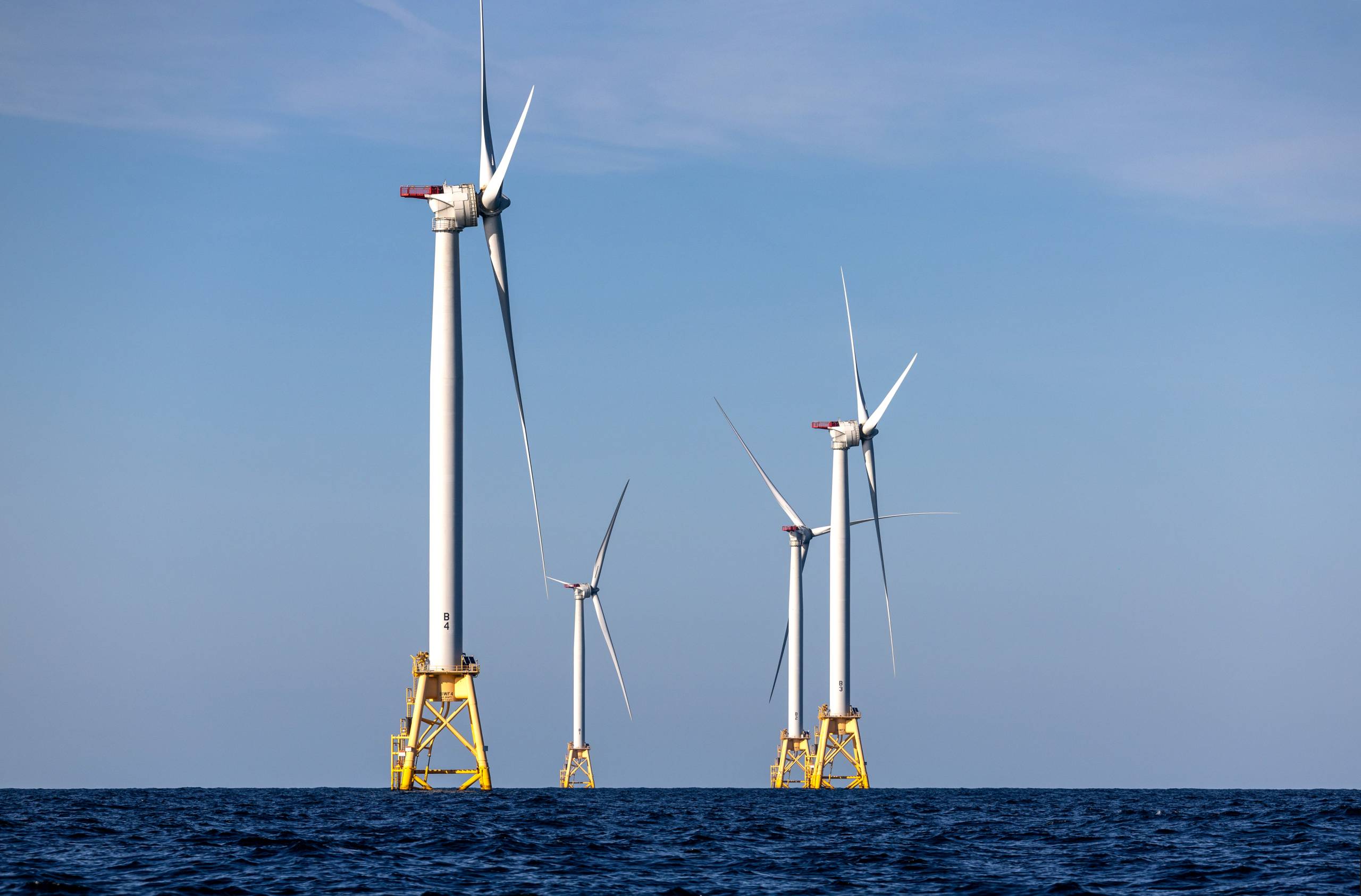
AT SEA - JULY 07: Wind turbines generate electricity at the Block Island Wind Farm on July 07, 2022 near Block Island, Rhode Island. The first commercial offshore wind farm in the United States is located 3.8 miles from Block Island, Rhode Island in the Atlantic Ocean. The five-turbine, 30 MW project was developed by Deepwater Wind and began operations in December, 2016 at a cost of nearly $300 million.  (Photo by John Moore/Getty Images)

Here are the morning’s top stories on Friday, May 1, 2026

  • Environmentalists say the Trump Administration is being short sighted in its decision to offer to buy out the leases of some offshore wind energy projects along California’s Central Coast. 
  • Peach growers in the Yuba-Sutter region and Central Valley are being thrown a lifeline from Washington, D.C. The move follows the closure of a major cannery that’s left farmers without a buyer for their fruit.
  • More than a hundred groups across California are planning a coordinated day of actions on Friday for International Workers’ Day.

Federal government pays company $120 million to drop offshore wind power plans 

The Trump Administration is spending hundreds of millions of dollars to encourage companies to abandon some offshore wind power projects and refocus their efforts on fossil fuels. One of them is off the Central Coast.

The move has led to outrage from green energy advocates in California. “The biggest surprise is the administration is using taxpayer funds that they really aren’t authorized to use to achieve a result that doesn’t make a whole lot of sense,” said Michael Colvin, Director of the California Energy Program with the nonprofit Environmental Defense Fund.

In 2022, three companies purchased offshore federal leases to develop offshore wind projects off Morro Bay. This week, the federal government announced it had reached a $120 million deal with one of the companies, Golden State Wind, to abandon its lease in favor of fossil fuel projects. The company will get the money if it invests $120 million in oil, gas, or liquefied natural gas projects on the Gulf Coast.

The move is seen by some members of Congress and the environmental community as an effort to push the Trump Administration’s preference for fossil fuels. “I think that’s part of the problem. They haven’t justified their action,” said Colvin. “They’re taking a personal preference and making it policy.”

But the offshore wind power plans for the Central Coast are far from dead. Three leases were sold. While Golden State agreed to end its lease, two other companies still have active leases. The federal government isn’t supportive of offshore wind power now, but it will be about four years before physical construction gets underway. Colvin said a new administration could be more receptive to wind energy. “The amount of work that needs to be done pre-development is a long lead time, and the projects are going to take longer to develop than this current administration, and they will last far longer than this current administration,” he said.

Peach growers get reprieve from federal government 

Peach growers in the Yuba-Sutter region and Central Valley are being thrown a lifeline from Washington, D.C. A group of bipartisan lawmakers from California announced earlier this week that they had secured $9 million in federal aid to help farmers remove their peach trees and ultimately replace them.

Congressman Mike Thompson said it’s an important step, after Del Monte Foods’ canning facility in Modesto closed down earlier this year. “They’re going to remove acreage from their farming operation, and USDA, the federal government, is going to step in and provide them with funding,” he said.

According to U.S. Department of Agriculture projections, the tree removal program could save growers roughly $30 million in projected losses. Thompson said a big question on farmers’ minds now is what they’re going to plant in place of the peach trees.

Trump’s immigration crackdown draws out May Day crowds in California

This May Day, thousands across the state, and the Bay Area are expected to take up the cause of workers, joining thousands nationwide in protesting the Trump administration’s immigration agenda and economic inequality.

Hundreds of labor unions and community groups across the country are adopting the slogan “No work, no school, no shopping,” a tactic also used by protestors in Minneapolis after it became the target of a U.S. Immigration and Customs Enforcement surge last December.

The coalition is calling on people to stop those daily activities, and instead take to the streets to protest ICE, the U.S.’s war with Iran and a system they say is enriching corporations and billionaires at the expense of workers.

“In the past year, we’ve seen a lot of our immigrant community being under attack,” said Citlali Fermin, who’s co-coordinating May Day actions in Oakland. “We’ve seen our community in fear. We’ve seen our children not showing up to school, and so our goal for May Day is to bring our community to march in the streets with us.”

Bay Area organizers said the ramp-up of ICE activity over the last year has brought increased scale and urgency to International Workers Day. “ICE, the [Make America Great Again] regime is expanding and ICE [is] entering into really this militarized force that is affecting our neighborhoods, our workplaces,” said David Valencia with Mission Action, which is one of the lead organizations coordinating events in San Francisco.

lower waypoint
next waypoint
Player sponsored by