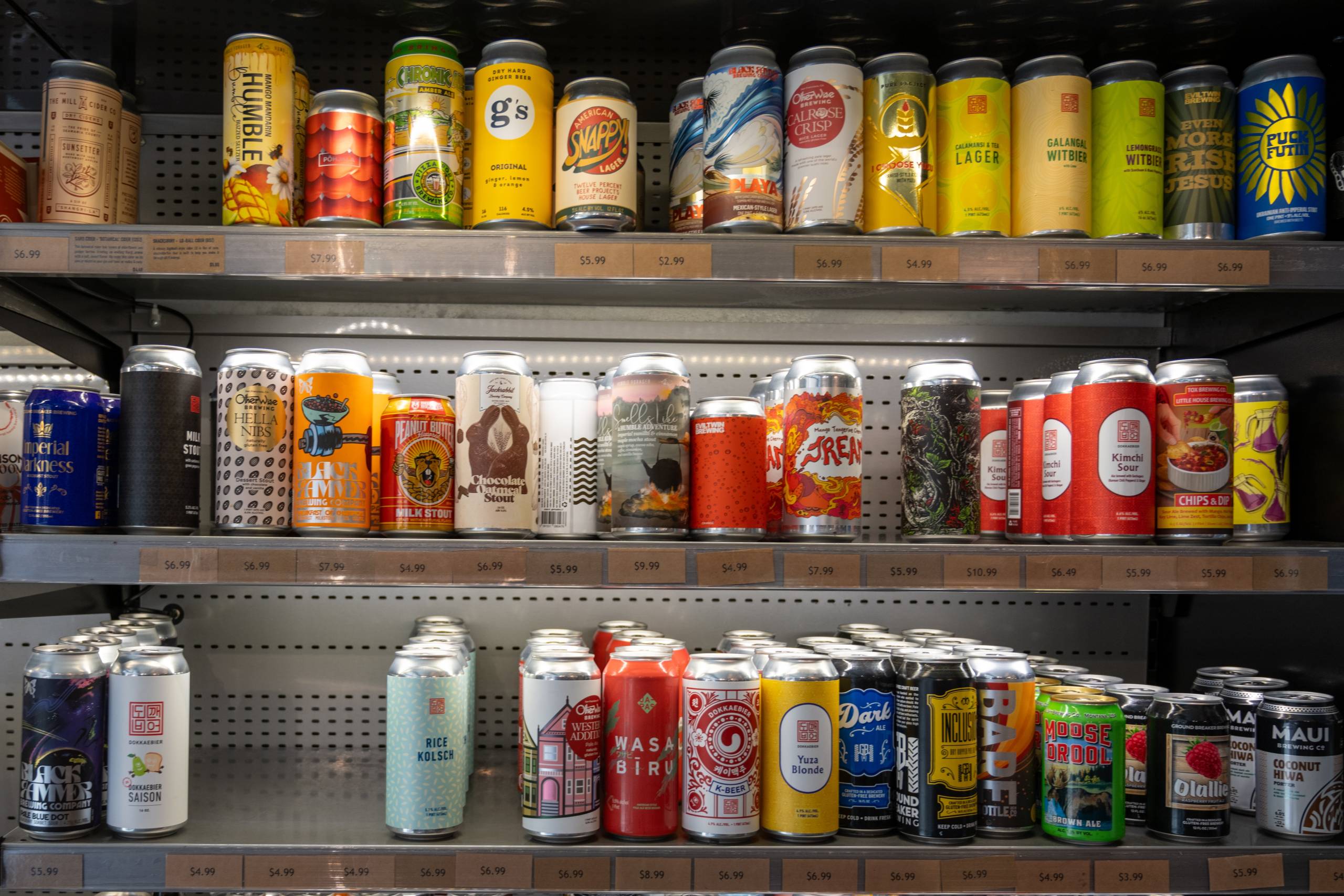
Cilurzo says oversaturation isn’t the only problem. The Covid pandemic took a major toll on small brewers and now they’re dealing with skyrocketing costs and tariffs on everything from aluminum cans to Canadian barley. “Whenever we need parts for our brewhouse or tanks or a mill or something, we have to buy it from the manufacturer in Germany, and it’s a 50% tariff right now,” Cilurzo said.
One way craft brewers are adapting is by focusing on their brewpubs. Kelsey McQuaid-Craig is head of the California Craft Brewers Association in Sacramento. “You’ll see a lot of breweries who have their own food truck now or add in a kitchen because, really, they’re looking to bring people in and have them stay for longer, create an experience,” she said. “It’s not just come for the beer and drink anymore. It’s about hospitality.”
California woman returns home after the Trump administration deported her to Mexico
A California woman who had been living in the U.S. for 27 years before the Trump administration deported her to Mexico in February reunited with her daughter this week after a judge ordered her return.
Mexican citizen Maria de Jesús Estrada Juárez was among the hundreds of thousands of people shielded from deportation under an Obama-era program allowing people brought to the U.S. as children to stay in the country if they generally stay out of trouble. But that changed Feb. 18 when she showed up for an immigration hearing and was arrested by U.S. Immigration and Customs Enforcement and deported the next day.
“I didn’t get to say goodbye,” the 42-year-old mother said at a news conference Tuesday in Sacramento. “It all happened so fast. This has been one of the most painful experiences of my life.”
The federal government has arrested several other recipients of the Deferred Action for Childhood Arrivals program, also known as DACA, during President Donald Trump’s second term. The events come amid the Trump administration’s reshaping of immigration policy more broadly. Immigration advocates say Estrada Juárez’s removal highlights the need to offer more permanent protections for DACA recipients, often referred to as “Dreamers.”
U.S. District Judge Dena Coggins, who was appointed by then-President Joe Biden, issued a temporary restraining order on March 23, giving the federal government seven days to facilitate Estrada Juárez’s return to the U.S. Her deportation was a “flagrant violation” of her DACA protections and infringed upon her due process rights, Coggins wrote. The U.S. Department of Homeland Security has defended the deportation. “ICE follows all court orders,” a department spokesperson said in a statement. “This is yet another ruling from a Biden-appointed activist judge.”
But Estrada Juárez wasn’t aware of a 1998 removal order, which her lawyer argues wasn’t final. “DACA gives you a vested right to not be deported once it’s granted,” said Stacy Tolchin, an immigration attorney based in Pasadena, California. “I really don’t understand what they’re doing.”
Advocates from San Francisco were at the U.S. Supreme Court on Wednesday to defend the long-standing principle that babies born on U.S. soil are U.S. citizens, regardless of their parents’ immigration status, as justices hear a case with massive implications for birthright citizenship.
The high court seemed poised to reject President Donald Trump’s restrictions on birthright citizenship in a consequential case that was magnified by his unparalleled presence in the courtroom.
Despite 128 years of Supreme Court precedent dating back to a case out of San Francisco, the justices agreed to hear arguments in Trump v. Barbara. The Trump administration is seeking to defend a January 2025 executive order from the president stating that, unless a child has a parent who’s a U.S. citizen or lawful permanent resident, they are not a U.S. citizen by birth.
The precedent behind birthright citizenship goes back to a 1898 ruling in the case brought by San Francisco-born Wong Kim Ark, who was barred from re-entry under the Chinese Exclusion Act after a trip to visit family in China, even though he carried paperwork attesting to his U.S. birth. In their decision in Wong’s favor, the justices pointed to the citizenship clause of the 14th Amendment, added to the Constitution in 1868 after the abolition of slavery, which states: “All persons born or naturalized in the United States, and subject to the jurisdiction thereof, are citizens of the United States.” Writing for the majority, Justice Horace Gray said the amendment “affirms the ancient and fundamental rule of citizenship by birth within the territory … including all children here born of resident aliens.”
Overturning that principle would create a bureaucratic nightmare and threaten the very fabric of American society, according to Winnie Kao, senior counsel with San Francisco’s Asian Law Caucus, who is an attorney of record on the Barbara case. “It would be a radical departure from over 120 years of precedent and understanding,” said Kao, whose organization had attorneys in court on Wednesday alongside the ACLU and others. “It would be really hard for the public to understand and, I think, to accept.”