upper waypoint

The Challenges in Removing Cesar Chavez's Name in California Cities

Save ArticleSave Article
Failed to save article

Please try again

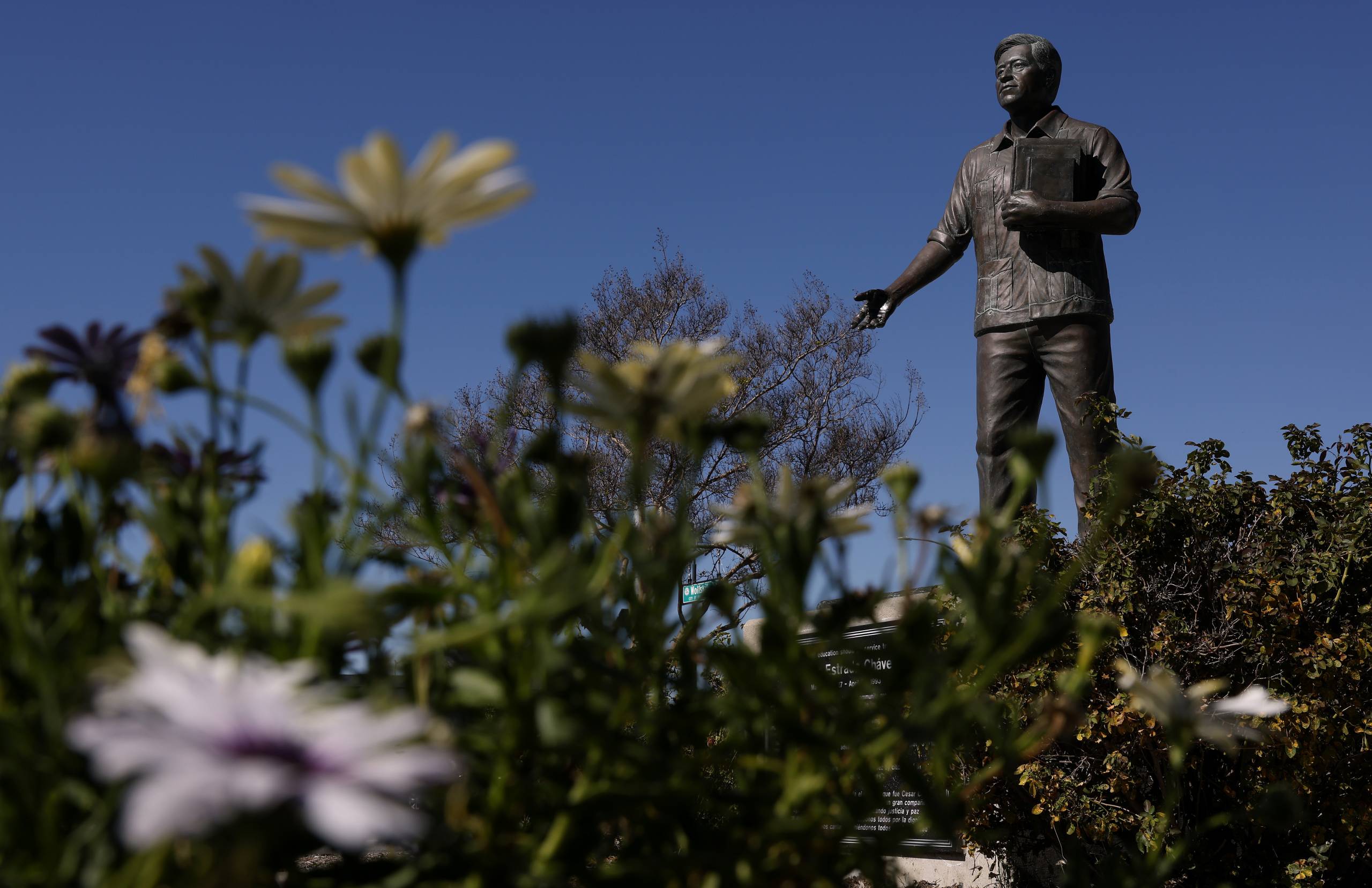
SAN FERNANDO, CALIFORNIA - MARCH 19: A statue of labor leader and civil rights activist Cesar Chavez is seen through a sculpture with the United Farm Workers (UFW) flag at the Cesar E. Chavez Memorial Park on March 19, 2026 in San Fernando, California. A day after mounting calls to reconsider honors for Cesar Chavez amid sexual abuse allegations, California legislative leaders said they would move to rename the March 31 holiday as “Farmworker Day” to reflect the broader labor movement and recognize survivors.  (Photo by Justin Sullivan/Getty Images)

Here are the morning’s top stories on Tuesday, March 31, 2026

  • Tuesday is Farmworkers’ Day, formerly known as Cesar Chavez Day, which has been celebrated for almost 30 years. But last week, Governor Gavin Newsom signed a bill to make the name change official after Cesar Chavez was accused of sexually abusing women and girls. The state is just one of many entities making these name changes, but for some cities that might not happen as quickly.
  • Another man who was detained at the Adelanto ICE Processing Center died last week.  Officials with the Department of Homeland Security say they tried to save the man and later transported him to a hospital. But detainees say the man was denied medical treatment and died on site.

Cities are slowly erasing César Chávez’s name from streets

As Californians reel from César Chávez’s sex abuse allegations, city leaders across the state say they are considering removing his iconography by changing street names, libraries and monuments.

From San Francisco to San Diego, local officials have said they support removing statues and renaming everything from parks to libraries after renowned activist Dolores Huerta, 95, said Chávez forced himself on her in encounters that led to unwanted pregnancies. But the process for renaming a street or monument is often slow, bureaucratic and costly, typically requiring a combination of internal investigations, community input and city council approval. Businesses, too, could face mounting costs from changing addresses listed on business cards and websites.

The process to change a street name can move at a glacial pace, even under special circumstances. In San Diego, changing the city’s road names could be done with a petition with unanimous support from affected property owners and businesses that can be submitted to the city for approval. This option could take months to years, and is unlikely to happen because it would require buy-in from owners who would be volunteering to take on the disruption of renaming their home or business address.

Another option is for the city council to vote on changing a street name. This would take place after the city has completed its own report on all the affected areas, according to San Diego logistics officer Bethany Bezak. The mayor and his staff would then coordinate with the city council to bring it up for approval. City officials could not say how long this process would take. A review of every road, park and building in Cesar Chávez’s name is in the works and could take weeks to complete, Bezak said.

Man dies while being held at Adelanto ICE facility 

A Mexican man died while being detained at the Adelanto ICE Processing Center last week. He is the fifth person to have died either while in custody at the facility or from health complications linked to its conditions since September 2025.

Department of Homeland Security officials said in a statement that guards found Jose Guadalupe Ramos-Solano unconscious in his bunk bed on March 25. Onsite medical staff performed CPR, according to the statement, and Ramos was taken to a medical center in Victorville where he was pronounced dead at 9:30 p.m.

According to DHS, Ramos was arrested in 2025 in Los Angeles county for possession of a controlled substance and theft of personal property and was convicted later that year. Federal Immigration and Custom Enforcement agents arrested Ramos on Feb. 23 during an operation in Torrance and transferred him to Adelanto.

Ramos also received a complete health and physical evaluation during his intake screening at the Adelanto facility on Feb. 24, which identified that he had several medical issues including diabetes and hypertension. “He received constant medical care while he was in custody, including daily medication to treat his illness,” reads the DHS statement. DHS said staff immediately initiated life-saving procedures when he was found unresponsive and emphasized their “commitment to ensuring safe, secure, and humane environments” for people in detention.

But according to the Immigrant Defenders Law Center, detainees who called their rapid response hotline the morning after Ramos’ death said that guards didn’t respond until he was unconscious. According to ImmDef, detainees also witnessed Ramos having trouble breathing and witnessed him removing his shirt because he felt he was suffocating. For years, immigrant and disability rights groups have raised alarms about the conditions inside the Adelanto ICE Processing Center. Ismael Ayala-Uribe died after being held at Adelanto for about a month last year. A few weeks later, Gabriel Garcia Aviles died from cardiac arrest just one week after being transferred to the Adelanto facility. Alberto Gutierrez Reyes and Irvin Cruz Nape both died after being detained there earlier this year.

Mexican President Claudia Sheinbaum has vowed to take action after the death of the Mexican national. Mexico’s government is filing a legal brief as part of a class-action lawsuit alleging unconstitutional conditions at the facility. The number of immigrants in ICE custody is among the highest ever, with ​68,000 held as of last month.

lower waypoint
next waypoint
Player sponsored by