Sponsor MessageBecome a KQED sponsor
upper waypoint

Projects Under Initial Prop 1 Funding Hit Delays

Save ArticleSave Article
Failed to save article

Please try again

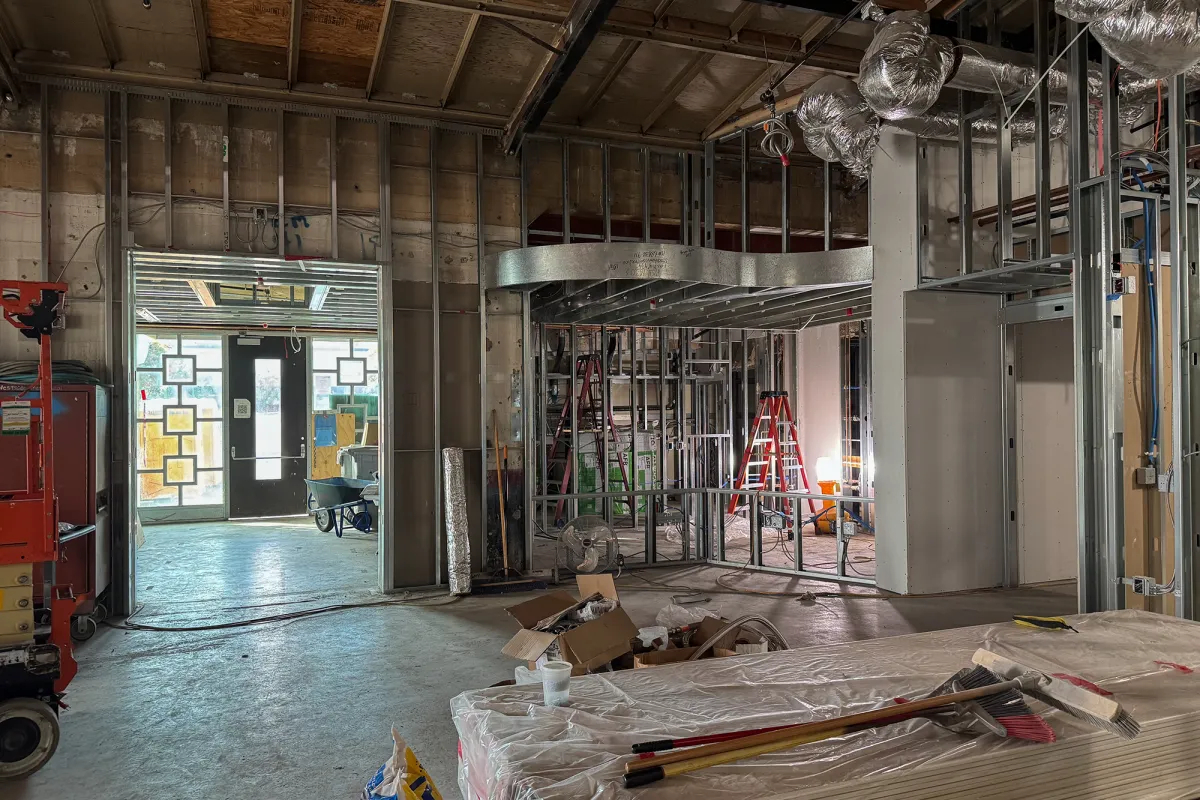
Construction underway at Ritter Center’s Ritter Builds Hope Integrated Behavioral Health Facility in San Rafael. The space will offer medical, behavioral health, case management and basic needs services. (Photo courtesy of Ritter Center)

Here are the morning’s top stories on Thursday, March 12, 2026

  • In 2024, California voters approved Proposition 1. That ballot measure set aside billions of dollars to add more mental health and addiction treatment beds across the state. But new reporting from our California newsroom partner, CalMatters, has found the initiative hasn’t delivered a fraction of the support it promised.
  • It’s not just gas prices rising. The attacks on Iran are also causing fertilizer prices to surge by about 30%, just as the spring planting season gets underway in California. But some farmers here have been adopting techniques that aren’t just resilient to climate change, but also to the supply chain disruption of war.
  • Governor Gavin Newsom says his office is aware of reports that Iran considered launching drones to attack unspecified targets in the state.

10 projects from Newsom’s mental health bond were supposed to open in 2025. That didn’t happen

None of the projects expected in 2025 under Gov. Gavin Newsom’s mental health ballot measure have opened, CalMatters has found, even though the governor says the bond is exceeding its goals.

Newsom promised that thousands of mental health treatment beds would come out of Proposition 1, a $6.4 billion bond California voters passed by a narrow margin in 2024. But projects in the initial round have hit delays, in some cases pushing back opening dates by two years, or been cancelled.

The state awarded nearly half of the money from the bond last spring, kicking off what Newsom described as the fastest distribution of bond funds in California history. When it rolled out that money, the state said it expected 10 of those first 124 projects would be finished by the end of last year.  That didn’t happen. CalMatters has confirmed that nine of those projects were delayed, with new completion dates ranging from this summer to summer 2028. One project was cancelled.

The bond is a cornerstone of Newsom’s broader plan to help Californians living on the street with mental illness, and it’s supposed to provide some of the resources necessary for the governor’s other mental health programs to succeed. Without the new in-patient beds, out-patient treatment slots and housing promised under Prop. 1, programs such as CARE Court, which uses the courts to get more people into treatment, won’t be as effective. The delays in getting Prop. 1 projects built highlight the difficulty of quickly scaling up treatment options to meet the demand for mental health care in California, as well as the challenges of building anything in the state’s expensive and highly competitive real estate market. They also mean some of the state’s most vulnerable residents will have to wait longer for help.

Sponsored

The administration tried to fast-track Prop. 1 projects by smoothing some permitting and other hurdles, Newsom said during a news conference Wednesday. But he admitted there have been snags. “Some of that has been impacted by, candidly, tariffs, supply chain issues,” he said. “So there’s been some slippage in some of the projects. We’re deeply mindful and aware of that, but we’re just managing that on a daily basis.”

Newsom this week awarded the remaining $1.18 billion from Prop. 1 for new treatment beds and outpatient slots. In all, the bond has funded 177 projects, which are supposed to create 6,919 residential treatment beds (119 more than originally promised) and 27,561 outpatient treatment slots (861 more than promised). But those projects, though they have now been funded, have yet to come to fruition.

California farmers try to minimize effects of war as spring planting season begins 

The war with Iran is doing collateral damage to the world economy. The conflict is driving up energy and fertilizer prices and threatening food shortages in poor countries.

Roughly a third of nitrogen fertilizer traded globally flows through the Strait of Hormuz. That waterway has been effectively closed since the U.S. and Israel began attacking Iran almost two weeks ago.

Monterey County Resource Conservation District soil scientist Laura Murphy said farmers who use regenerative techniques may not feel the supply disruption as much. “You can ease out the shocks to this bigger global system if you reduce the complexity of the supply chains by reinvesting in your local soil and nutrient cycling system,” she said.

Murphy said practices like composting and cover cropping add nutrients to the soil, so it needs less fertilizer. While now staving off some of the economic effects of war, these practices are normally used to mitigate and adapt to climate change.

California governor says no imminent threat despite warning about possible Iran drone attack

California Gov. Gavin Newsom said there was no imminent threat to the state, despite a warning from the FBI that Iran could send drones to the West Coast in retaliation for war. Newsom said drone issues “have always been top of mind.” “We’ve been aware of that information. … It’s all about a posture of preparedness for worst-case scenarios,” the governor said Wednesday.

The FBI recently warned police departments that Iran could try to strike the state. “Iran allegedly aspired to conduct a surprise attack using unmanned aerial vehicles from an unidentified vessel off the coast of the United State Homeland, specifically against unspecified targets in California, in the event that the US conducted strikes against Iran,” the alert said, according to ABC News.

“We have no additional information on the timing, method, target, or perpetrators of this alleged attack,” the FBI said. Police in Los Angeles and San Francisco said they were monitoring world events for any risks to their cities. Both said they’re working closely with state and federal authorities.

lower waypoint
next waypoint
Player sponsored by