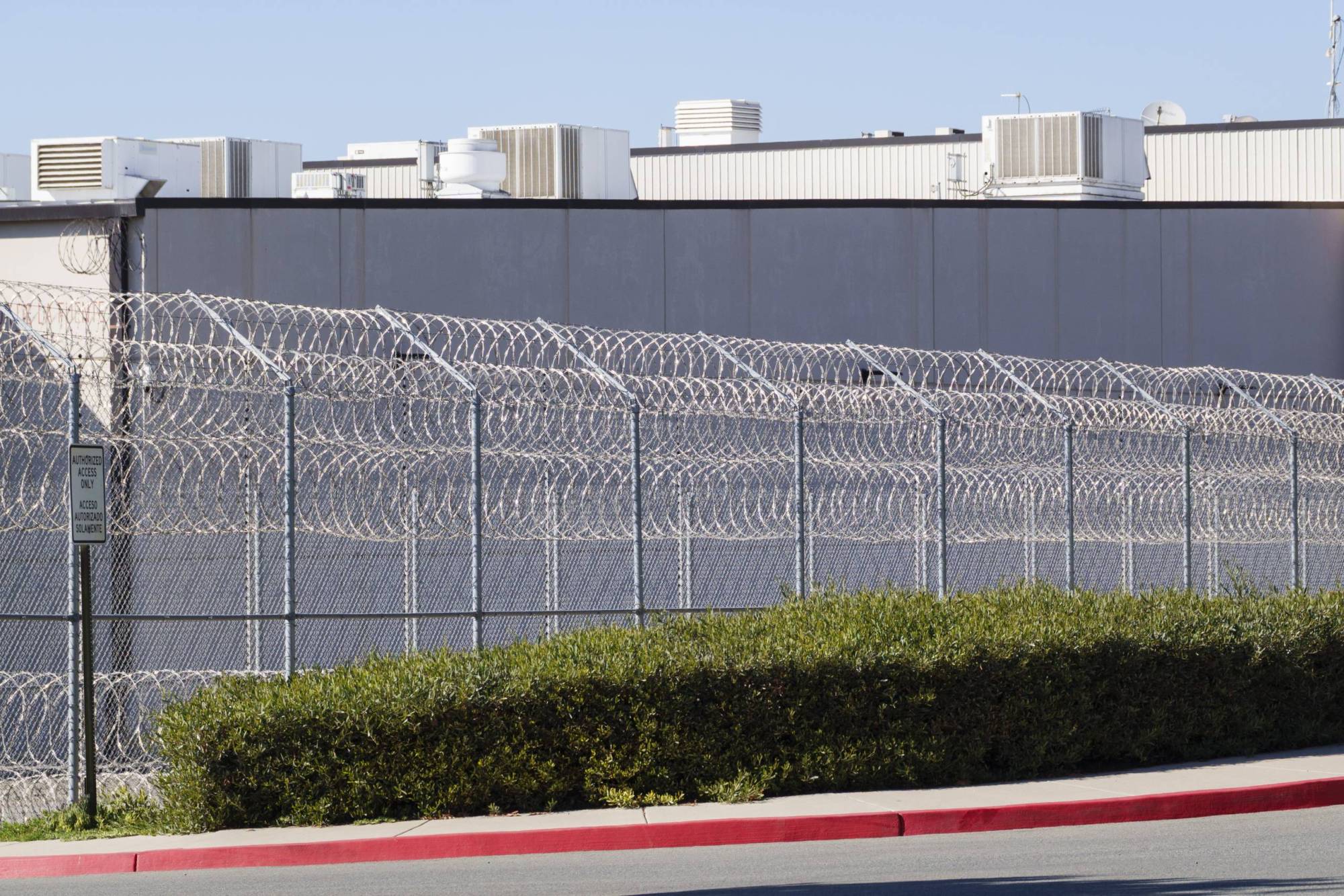
Gonzalez said detainees soon started throwing messages over the wall. They were written notes attached to items like lotion and shampoo bottles. Often the messages would simply be their A Numbers – that’s short for Alien Numbers – or the identification assigned to people who aren’t U.S. citizens. With those numbers, organizers can add money to the detainees commissary and phone accounts.
Since this was first reported in LA Taco, Jeane Wong said the notes have stopped coming over the fence. A detention facility employee told them detainees aren’t going to be allowed out for rec time during the vigil. But, they have started to text with detainees who they’ve identified through an app.
Homeland Security Secretary Kristi Noem testified before members of the Senate on Tuesday amid a pause in funding to her agency and increased bipartisan scrutiny of her leadership.
Republicans called for the hearing just days after Customs and Border Patrol officers shot and killed 37-year-old Alex Pretti in Minneapolis in January. Pretti was the second U.S. citizen killed by federal immigration officers in the city after Renee Macklin Good’s death at the hands of an Immigration and Customs Enforcement officer earlier that month. Noem drew bipartisan scrutiny for labeling Good and Pretti as “domestic terrorists” shortly after their deaths.
Senators Alex Padilla and Adam Schiff of California were among those who questioned Noem. Senator Padilla focused much of his questioning on the condition of immigration detention facilities, particularly one in California City, which he recently visited.
“The nation has watched the violent manner in which many immigrants and citizens alike have been taken into custody by your officers and your agents. In addition to that, 32 people died while in ICE custody last year, and at least eight more have died in the first seven weeks of this year. The numbers are a big increase from prior years. Secretary Noem, yes or no, do you care enough about the human rights of the men, women, and children in your custody to improve the conditions as required by the courts,” Padilla asked.
“Yes, absolutely. We adhere to our federal detention standards, which are higher than virtually all state and local detention standards. We provide medical care to all of our detainees. Three nutritious meals a day. We take care of them. We keep families together,” Noem responded.
“I have to tell you, I believe my own eyes,” Padilla retorted.
Senator Richard Blumenthal of Connecticut brought three U.S. citizens to the hearing. They had either been assaulted or detained by federal agents. One was Javier Ramirez, who was arrested by ICE officers at his job in Southern California last summer and was held for four days. He spoke about his experience following the hearing. “Since everything happened, I don’t feel safe in my own country now. I feel safer being in Mexico than here,” Ramirez said. “It’s sad. It’s traumatizing.”
ICE has released Cambodian Genocide survivor Sithy Yi from immigration detention following an order by a federal judge.
Yi, who fled the genocide and came to the U.S. with her family in 1981, was detained by ICE at a routine immigration check-in in Santa Ana on Jan. 8 and held at the Adelanto Detention Facility for almost two months.
In response to a lawsuit arguing that she was being held unconstitutionally, U.S. District Judge Cynthia Valenzuela issued an order Friday requiring ICE to “immediately release” Yi. The order also prevents the agency from deporting Yi without providing an opportunity to be heard by a neutral arbiter and bans ICE from transferring her outside the court’s jurisdiction. The ruling says the government did not oppose Yi’s request for the court to order her released. Her attorney had alleged ICE failed to follow procedural requirements such as showing she violated any conditions of her release or proving that she would likely be deported in the “reasonably foreseeable future.”