Sponsor MessageBecome a KQED sponsor
upper waypoint

How Federal Homelessness Funding Changes Could Impact Those in Need

Save ArticleSave Article
Failed to save article

Please try again

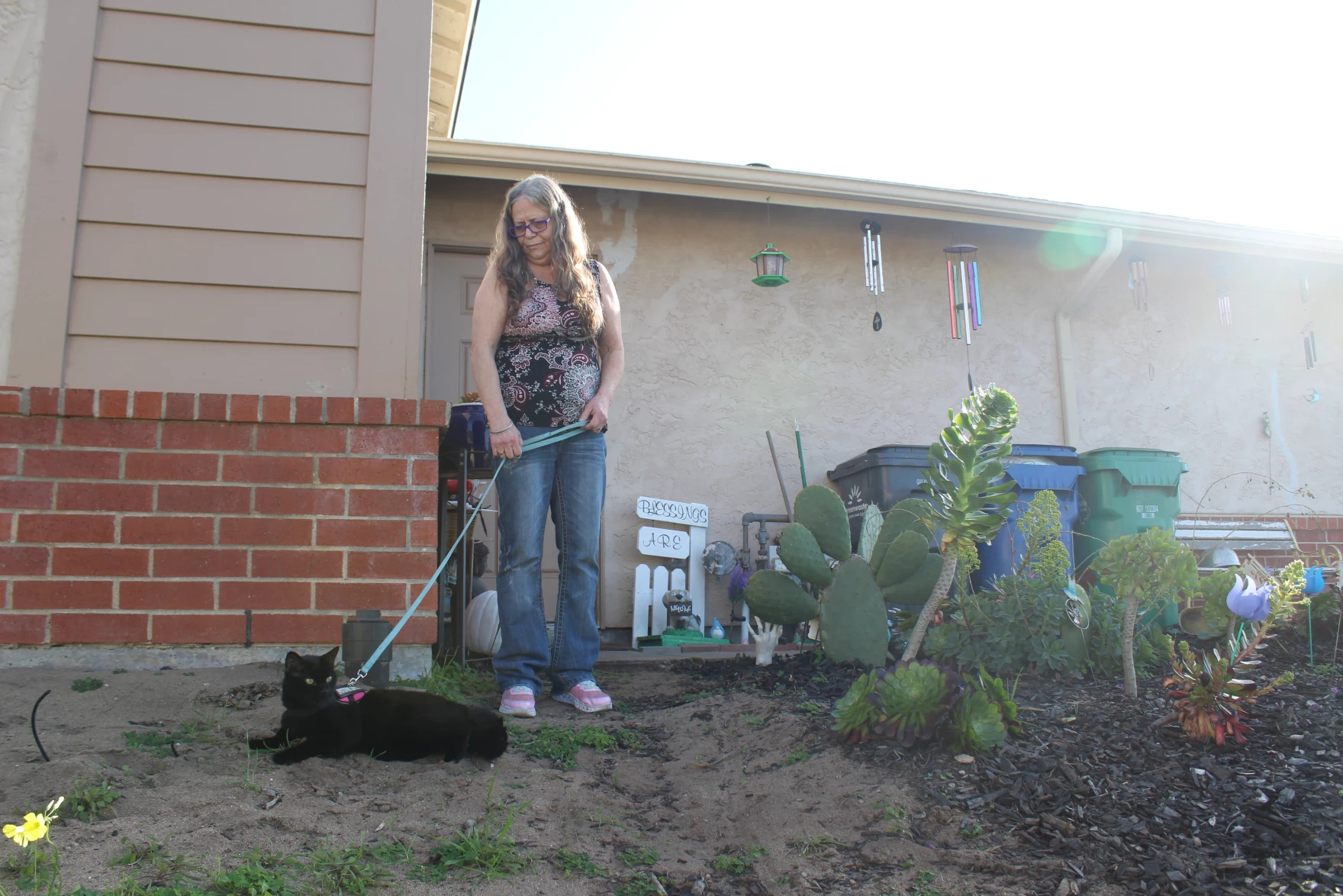
After spending about a decade living out of an RV, Bella Maddox, 68, obtained housing in 2023 thanks to federally-funded permanent housing programs. (Elena Neale-Sacks/KAZU News)

Here are the morning’s top stories on Monday, March 2, 2026

  • The Trump administration tried last fall to drastically reduce the amount of federal grant money counties could use for permanent supportive housing programs. The effort was struck down in court for the current funding cycle. But if next year’s requirements are similar, there could be huge ramifications across California. 
  • Rallies were held across the state this weekend following the US-Israeli airstrikes in Iran.
  • The LAUSD board has voted unanimously to place Superintendent Alberto Carvalho on paid administrative leave. The decision comes days after FBI agents searched Carvalho’s home in San Pedro.

Dozens would lose housing on Central Coast if federal homelessness funding changes take shape

Last fall,  the Trump administration tried to drastically reduce the amount of federal grant money counties could use for permanent supportive housing. These programs integrate long-term housing with voluntary, flexible support services like addiction treatment and case management to provide people with stability.

The administration’s efforts for the current funding cycle were struck down in court. But if this year’s requirements are similar, about 50 people in Monterey and San Benito counties would likely lose their housing.

On a Sunday evening in late January, Tim Heavin is on the mic at KHDC, a small radio station in Salinas. Heeding a listener’s request, he plays a Charlie Puth song. Then he queues up an original, “Heir to Everything.” “This one’s hot right now, so I’ll play this one,” he says. Heavin is a musician and DJ by night, but he also has a rare perspective on homelessness. He experienced it, then got out of it, and now spends most of his time as a community health worker and advocate for unhoused people. But he says that never would have happened if it weren’t for the Helping Hands Program in Hollister. “If I didn’t get in that program, and if I would’ve stayed homeless, who knows where I’d be?” he said while sitting on a bench at a park near KHDC.

In November 2025, the U.S. Department of Housing and Urban Development (HUD) published a Notice of Funding Opportunity—known as a NOFO in the grant writing sphere. The NOFO was for a program called Continuum of Care, the single biggest source of federal homelessness prevention funding. But this NOFO required counties to use less than 30% of the grant for permanent housing programs—like the one that helped lift Heavin out of homelessness. “We were shocked by the 30% cap on permanent housing,” said Katrina McKenzie, the Executive Director of the Coalition of Homeless Services Providers for Monterey and San Benito counties. “That was really a gut punch to our Continuum of Care.” In 2024, CHSP spent about two-thirds of its HUD grant on permanent housing.

Sponsored

A judge forced HUD to reinstate the previous grant criteria for the 2025 NOFO. But McKenzie with CHSP is bracing for a similar effort this year. “That 2025 NOFO that dropped in November was the precursor of what the future’s gonna look like,” she said. “I strongly believe that, for the majority of wild and crazy things in that NOFO, that is what’s going to drop in July of 2026.” If that happens, dozens of people in the region could fall back into homelessness.

Protests, celebrations held following military strikes in Iran

Many Iranian Americans across California celebrated this weekend following the US-Israeli military strikes in Iran that killed the country’s supreme leader,  Ayatollah Ali Khamenei.

In Los Angeles, thousands of people took to the streets downtown and in Westwood. People waved American flags and Israeli flags and carried signs that said, thank you, Trump. But some Iranian Americans had mixed feelings about the attack. Mehdi Yahyanejad is a pro-democracy activist in LA. He says since the mass protests in January in Iran and the brutal crackdown that followed, when the Iranian regime killed thousands, maybe tens of thousands of people, Iranians have been wanting something to happen, some retaliation for the killing. But then came news reports that a girls’ school in Iran was hit during the attack, killing more than 100 people. Yahyanejad says if that keeps happening, we might not see so many celebrations. “What’s important next is to make sure the collateral damage is minimal,” he said. “Otherwise, the people’s attitude can change.”

Amir Parstabar runs a marketing agency in Los Angeles. He left Iran when he was 15. Like so many Iranians, since the January protests, he’s constantly on his phone trying to get news from Iran. His wife’s good friend from high school lost a son in the protests. He was 18. The family says he was shot in the chest by security forces. And Parstabar says Iranians became hopeless after the crackdown. “They just don’t see a future. They say, we have nothing to lose,” he said.

The greater Los Angeles area is home to one of the largest, if not the largest Iranian populations outside of Iran itself.

In other parts of the state, there were celebrations, but also protests against the latest US military action. That includes in San Francisco. Yasmine Mortazavi, an Iranian American and member of the Party for Socialism and Liberation, said she learned of the strikes after waking up Saturday morning. “I’m still in a bit of shock,” she told KQED. “I’m not surprised. This is what I would expect from a U.S.-Israeli action like this.” Mortazavi said her immediate family members were recently in Iran and that she has extended family there as well. She has not heard from her immediate family since the strikes but said friends are evacuating. She acknowledged that Iranian Americans hold a range of political views, including some who support U.S. intervention, but said she believes the future of Iran should be determined by its people.

LAUSD board places superintendent on leave following federal searches

The Los Angeles Unified School Board voted unanimously Friday to place Superintendent Alberto Carvalho on paid administrative leave pending the outcome of an investigation.

The FBI searched Carvalho’s home and district offices Wednesday. A DOJ spokesperson said the agency had a court-authorized warrant but declined to provide additional details. The FBI told LAist media partner CBS LA that the underlying affidavit remained under court-ordered seal.

The board also appointed current Chief of School Operations Andres Chait as acting superintendent after the seven-hour closed meeting Thursday and Friday. “I know that this is a very challenging time,” said Board President Scott Schmerelson in a brief public statement after the decision was announced. “I want you to know that the board believes in you, supports you and knows that you will continue to do your very best to support the students and families of the district.” Schmerelson clarified in an email to LAist that he was referring to Chait. The seven-member board exited the meeting room without taking questions. Carvalho was not present and has not made a public statement since the searches Wednesday.

The board’s decision provided clarity about district leadership but did not shed light on the reason for the searches, which have been the subject of widespread speculation. “While we understand the need for information, we cannot discuss the specifics of this matter pending investigation,” read a district statement.

lower waypoint
next waypoint
Player sponsored by