Episode Transcript
Parade sounds
Olivia Allen-Price: San Francisco’s Italian Heritage parade creates a massive public party in North Beach every October. Streets are blocked off from Fisherman’s Wharf to Washington Square Park on Columbus Day weekend. Bystanders wave mini Italian flags and eat gelato as they watch the fancy floats and trolleys go by.
Parade music
Olivia Allen-Price: At Saints Peter and Paul church, people play a salami toss game.
Salami toss sounds
Olivia Allen-Price: Word is, this is the longest-running Italian parade in the country – started back in 1869. Our question asker this week, Grant Strother [STRUH-ther]], says, he’s not Italian, but he’s walked these streets since he was a teenager.
Grant Strother: I do remember in high school in the early 2000s, you would still hear some Italian conversations on the street. I remember like hearing that at Mario’s and Trieste.
Olivia Allen-Price: Now, as an adult, he works in the financial district and sometimes walks to North Beach for lunch, to grab a caprese sandwich at Molinari’s Deli. But during one of those walks, he wondered … Do Italian people still live in North Beach, or is it all just a tourist trap?
Grant Strother: Obviously, immigration patterns have undoubtedly changed since North Beach was populated. But I was just interested then in how Italian North Beach really is, aside from a lot of the restaurants that are still there.
Olivia Allen-Price: I’m Olivia Allen-Price, and today on Bay Curious, we’ll look at the Italian roots of North Beach, track how things have changed and learn about some of the efforts to keep this history alive.
Sponsor message
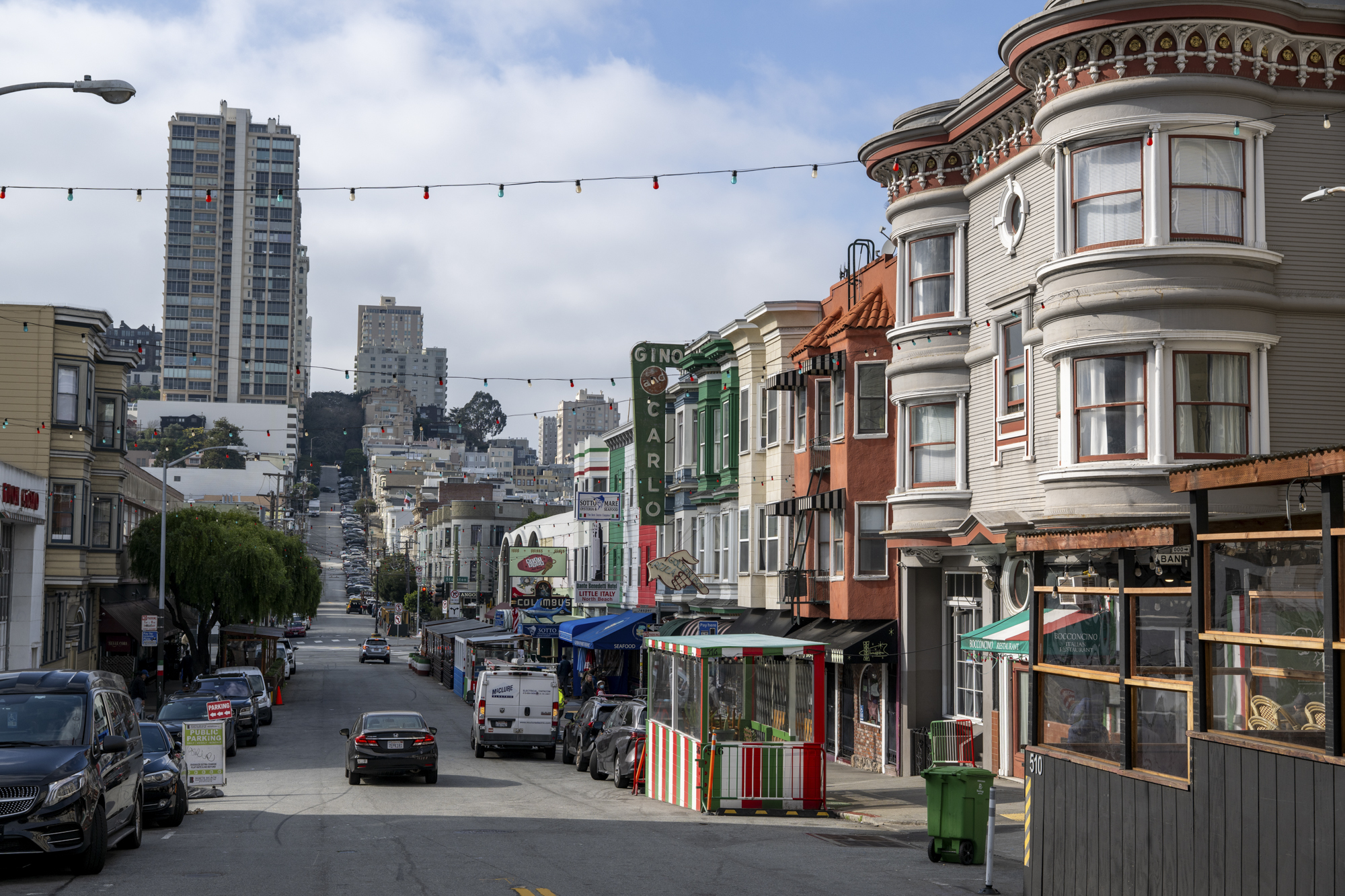
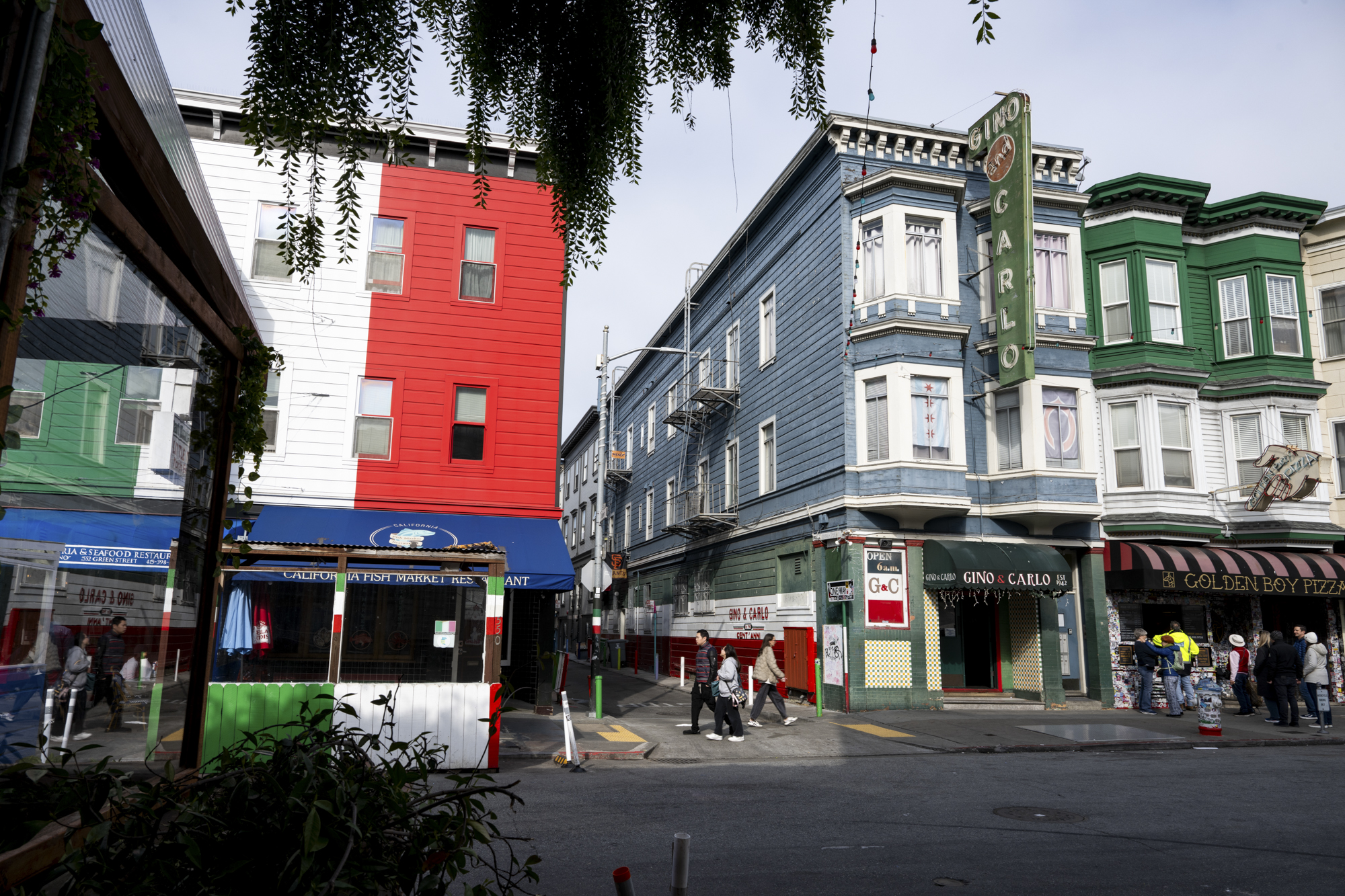
Olivia Allen-Price: Located on San Francisco’s northeast side, North Beach is one of the oldest neighborhoods in the city and has been home to immigrants from many backgrounds over the years. It sits right next to Chinatown and where Little Manilatown used to be. Now, it’s teeming with Italian cafes, restaurants and bakeries. KQED’s Pauline Bartolone went to find out whether any Italians still live in this neighborhood.
Sound of Columbus Avenue
Pauline Bartolone: Remnants of Italian culture are still all around North Beach, but to spot them, it helps to have a guide. Someone like Steve Leveroni, who grew up in North Beach in the 50s and 60s.
Steve Leveroni: Way back when… home of the Genoveses lived on Green street from Green and Mason all the way up to Green and Grant.
Pauline Bartolone: Steve gives me a tour of the neighborhood, his great-great-grandfather, Luigi, landed back in the 1860s. Like many Italian immigrants in North Beach, he came from Northern Italy, the Genoa region. In the decades that followed, other Italians came from Tuscany, Sicily and Calabria to escape poverty and seek new opportunities.
(Sound of walking up steps)
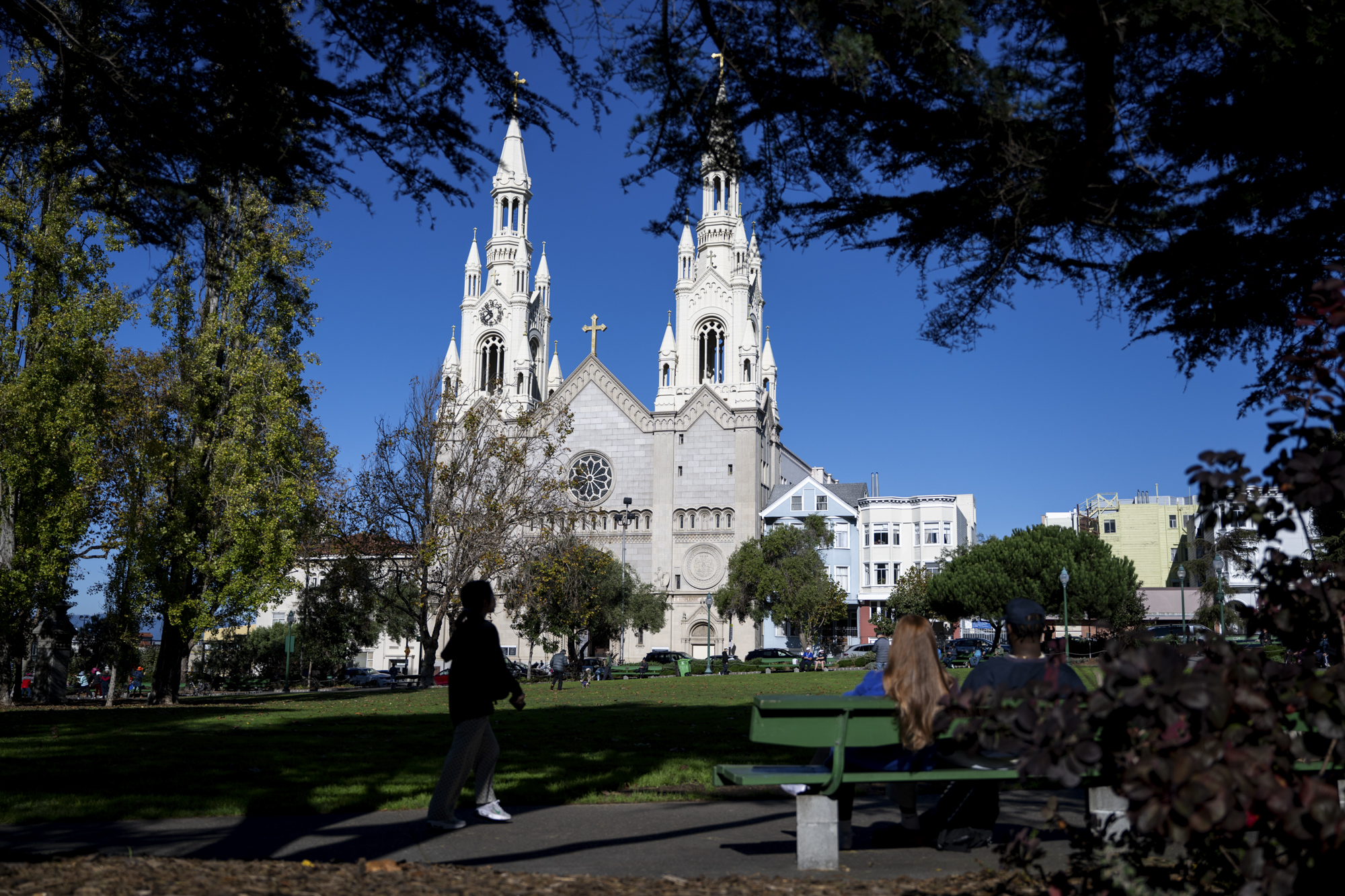
Pauline Bartolone: They settled around the Italian Cathedral, Sts. Peter and Paul Church…still a center point for later generations.
Steve Leveroni: So this is where you come for your baptism, you come for marriage, you also come for your funeral.
Pauline Bartolone: The church towers above Washington Square Park, where residents bask in the sun, play with dogs, practice tai chi and blast music. Steve says when he was growing up, Italians used to hang out here.
Steve Leveroni: You’d see groups sitting down of men and women and they would be speaking in Italian. So that is probably one thing that’s not as much.
Pauline Bartolone: You don’t hear Italian very much because not many Italians live here anymore. At its height in 1930, the Italian community numbered about 60,000 people, almost a tenth of the population of San Francisco. But as early as the 1950s, the Italians here joined many others in the flight to the suburbs. Now, only four percent of residents in North Beach’s main ZIP code have Italian heritage, that’s according to the latest census data of people who reported ancestry. But Steve says even if younger generations moved out of the city, they still come back to the neighborhood for celebrations.
Steve Leveroni: The North Beach area is the gathering place for all the Italians to come back to. But where do they go? They come, you know, to the restaurants.
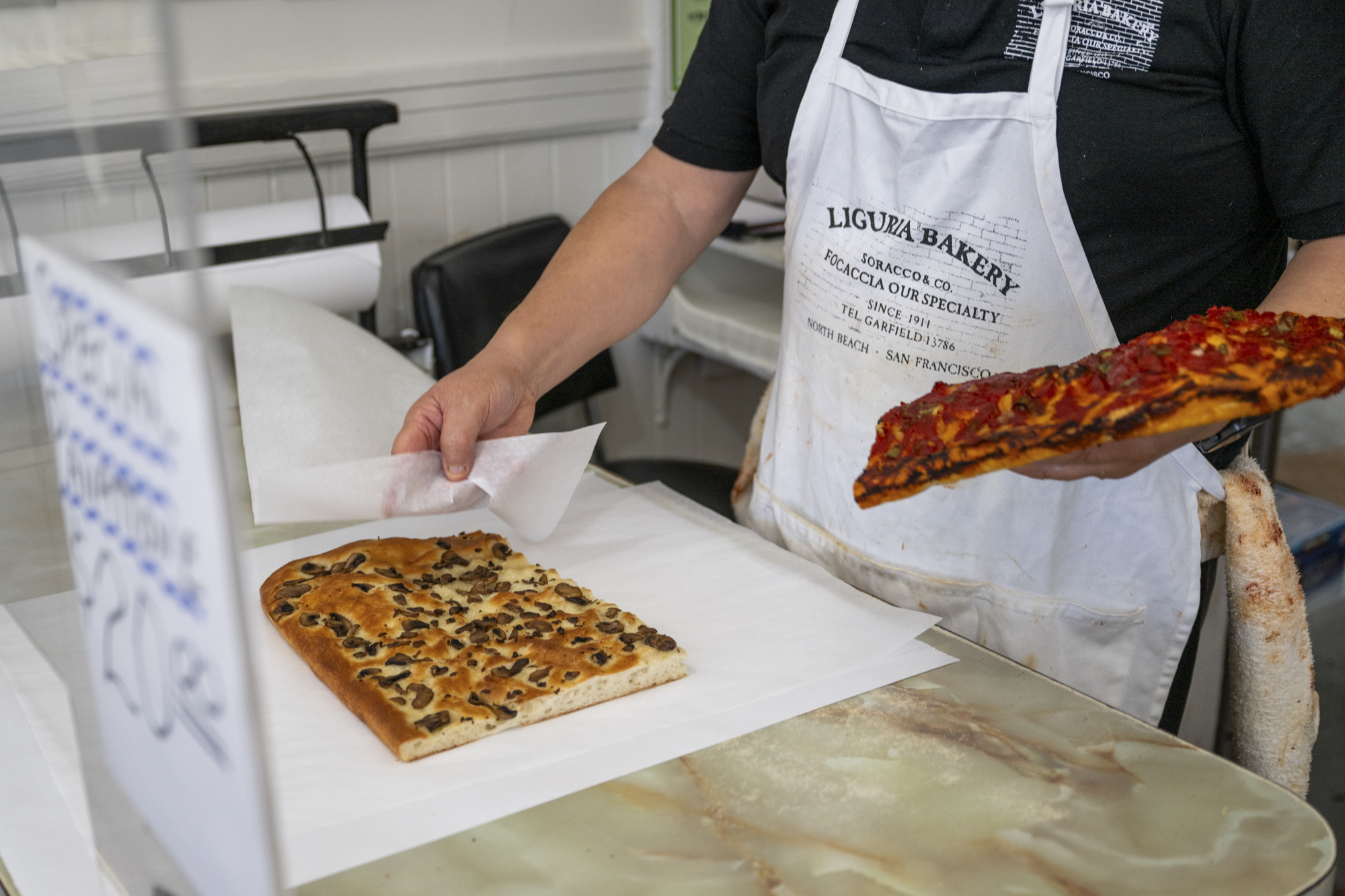
Pauline Bartolone: The restaurants of North Beach are now the most visible and lasting legacy of the Italian enclave here. Graffeo’s coffee on Columbus, since 1935. Molinari’s Deli, our question-asker’s spot, Italian-owned since 1896. Liguria Bakery known for its mushroom or raisin focaccia since 1911.
Restaurant sounds
Pauline Bartolone: Steve wraps up our tour by taking me inside one of the city’s best seafood spots: Sotto Mare, owned by his grammar school friends.
Steve Leveroni: Their sauces are all, I can see all on the stovetop there, so we’re getting some aromas from that. And then probably one of those pots is their crab chipino, which is, which is excellent.
Pauline Bartolone: Nowadays, you have to look pretty hard to find Italian old-timers in the neighborhood, but it’s not impossible.
People speaking Sicilian
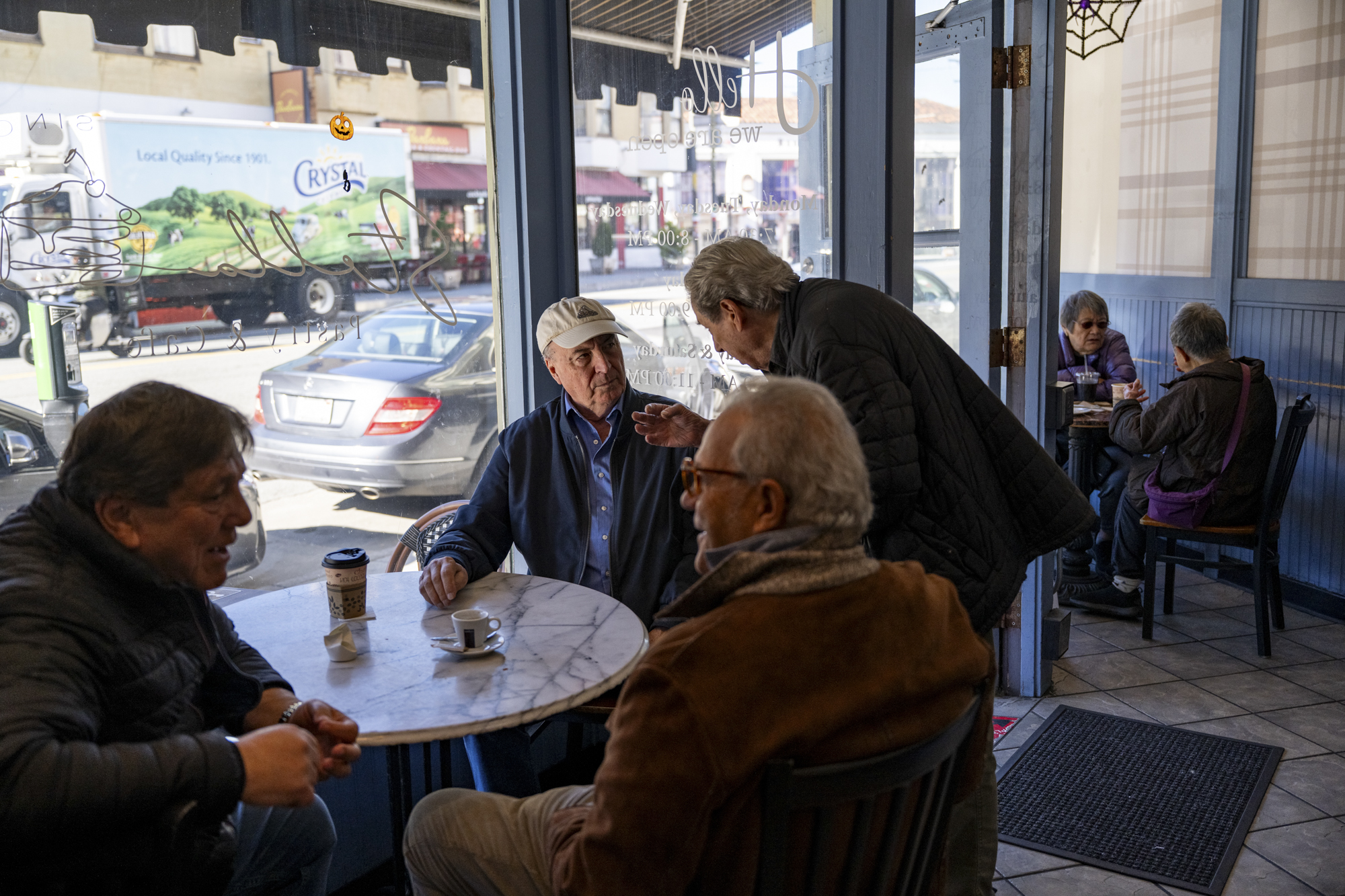
Pauline Bartolone: After weeks of looking around, I finally heard some chatter at Stella’s pastry shop on Columbus Avenue.
Michele Ferrante: We come every morning, seven days a week. Just, you know, we just get a drink espresso and you know we talk Italian, Sicilian actually.
Frank Balistreri: It’s a meeting spot. Come out here and bullshit all day long. That’s it.
Pauline Bartolone: Michele Ferrante and Frank Balistreri both ran Italian restaurants in the neighborhood and still live here. They’re just two of the Sicilians who talk sports and politics here every morning.
Michele Ferrante: We are known as the peccatore. We are all sinners.
Frank Balistreri: Give him the Academy Award, please. Make him happy.
Pauline Bartolone: In fact, San Francisco’s Italian restaurants are what drew Michele here as a young adult in the 1960s. His parents left Palermo for New York, but Michele wanted to come further west.
Michele Ferrante: I told my father, my mother says, Arrivederci, I’m going to California. I heard about the Fisherman Wharf full of restaurants, full of Italians, mostly Sicilians, the Aliotos and others. And also because I was hearing so much about North Beach, and being Sicilian, and being a cook, so well, I can go there and get a job.
Pauline Bartolone: By the late 1960s, North Beach’s reputation was evolving beyond an Italian neighborhood. Beatnik culture was well established by then.
Michele Ferrante: Those were the days of the hippie generation, you know, ‘67 was the summer of love. Everything was going on. One of my favorite hangout was at La Rocca’s Corner, which is still here.
Pauline Bartolone: The beat culture, artists and Italians got along perhaps better than expected… Italian property owners reportedly kept rents low, and poets liked the cafes. In 1976, Lawrence Ferlinghetti, founder of City Lights Bookstore, took note of North Beach’s waning Italian culture in his famous poem “Old Italians are Dying.” Here’s a recording of him reading it.
Lawrence Ferlinghetti: For years the old Italians in faded felt hats have been sunning themselves and dying.
You have seen them on the benches in the park in Washington Square
The old Italians in their black high button shoes
The old men in their felt fedoras with stained hatbands have been dying and dying day by day.
Pauline Bartolone: By the early 1980s, Michele says, North Beach didn’t feel like an Italian enclave anymore.
Michele Ferrante: They all move, Burlingame, San Mateo, Napa, San Helena, Sonoma. San Francisco, not too many living here anymore, very little.
Frank Balistreri: Sure, we saw it change. There’s still some kind of flavor, but not originally what I grew up with. The way I was raised here, you knew who was Italian and who wasn’t. Now you don’t know who’s who. So, basically, you feel like nobody’s here.
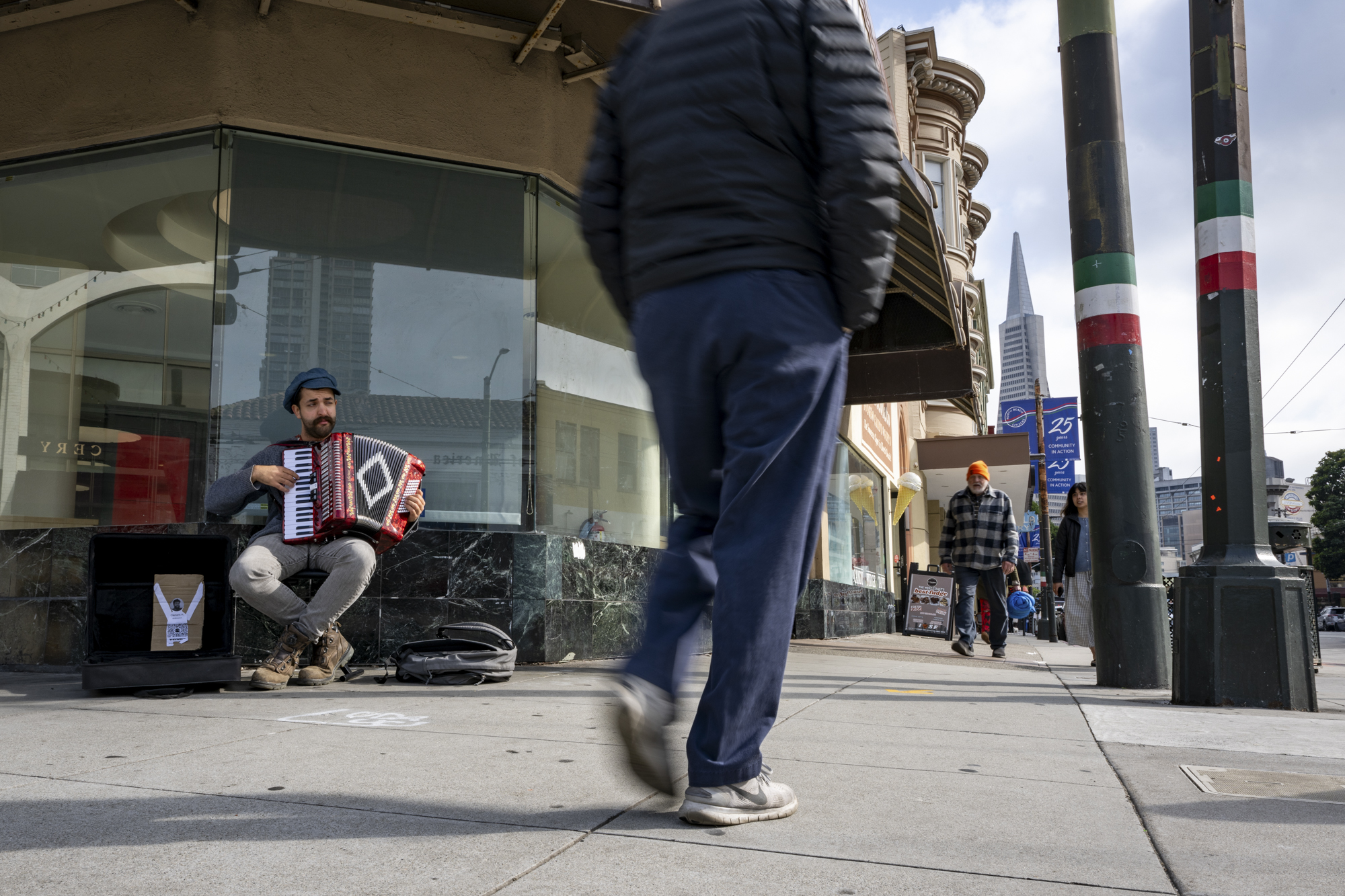
Pauline Bartolone: That feeling of “no Italians” – didn’t sit well with the North Beach chamber of commerce. In the 1990s, they kicked off a marketing campaign for the neighborhood, “Little Italy of the West.” Light poles were painted with Italian flag colors. People could buy “I’m proud to be half Italian” t-shirts. Afterall, research shows, preserving a neighborhood’s ethnic identity is good for business.
Sounds of kids singing in Italian
Pauline Bartolone: Now, new initiatives are popping up to keep Italian heritage alive, like the Little Italy Honor Walk, a series of bronze sidewalk squares that memorialize notable Italians in San Francisco history. Five have been installed around Washington Square Park, and there’s more on the way.
Singing fades out and sounds of Italian being spoken fade in
Pauline Bartolone: Back at Stella’s pastry shop, Michele and Frank say remembering North Beach’s Italian history is important, but they don’t need monuments to remind them.
Frank Balistreri: Times change, things change, I don’t worry about it, as long as I’m here where I want to be. Italians are no Italians, I know who I am, right?
Pauline Bartolone: North Beach’s original Italian enclave may be long gone, but the neighborhood’s history and food will keep bringing tourists…and locals with Italians heritage… back for years to come.
Olivia Allen-Price: That story was brought to you by KQED reporter Pauline Bartolone. Special thanks to the San Francisco State University library where Pauline researched some of North Beach’s history. Thanks also to Jim McKee of EarWax Productions for the recording of Lawrence Ferlinghetti reading “Old Italians Are Dying.”
Today’s question came from Grant Strother, and you could be next! Submit your question about the Bay Area at BayCurious.org.
Bay Curious is made in San Francisco at member-supported KQED.
Our show is produced by Katrina Schwartz, Christopher Beale and me, Olivia Allen-Price.
With extra support from Maha Sanad, Katie Sprenger, Jen Chien, Ethan Toven-Lindsey and everyone on team KQED.
Some members of the KQED podcast team are represented by The Screen Actors Guild, American Federation of Television and Radio Artists. San Francisco Northern California Local.
I’m Olivia Allen-Price. Have a wonderful week.