Sponsor MessageBecome a KQED sponsor
upper waypoint

Elderly Japanese Americans Warn Same Threats Rising That Led to Internment

Save ArticleSave Article
Failed to save article

Please try again

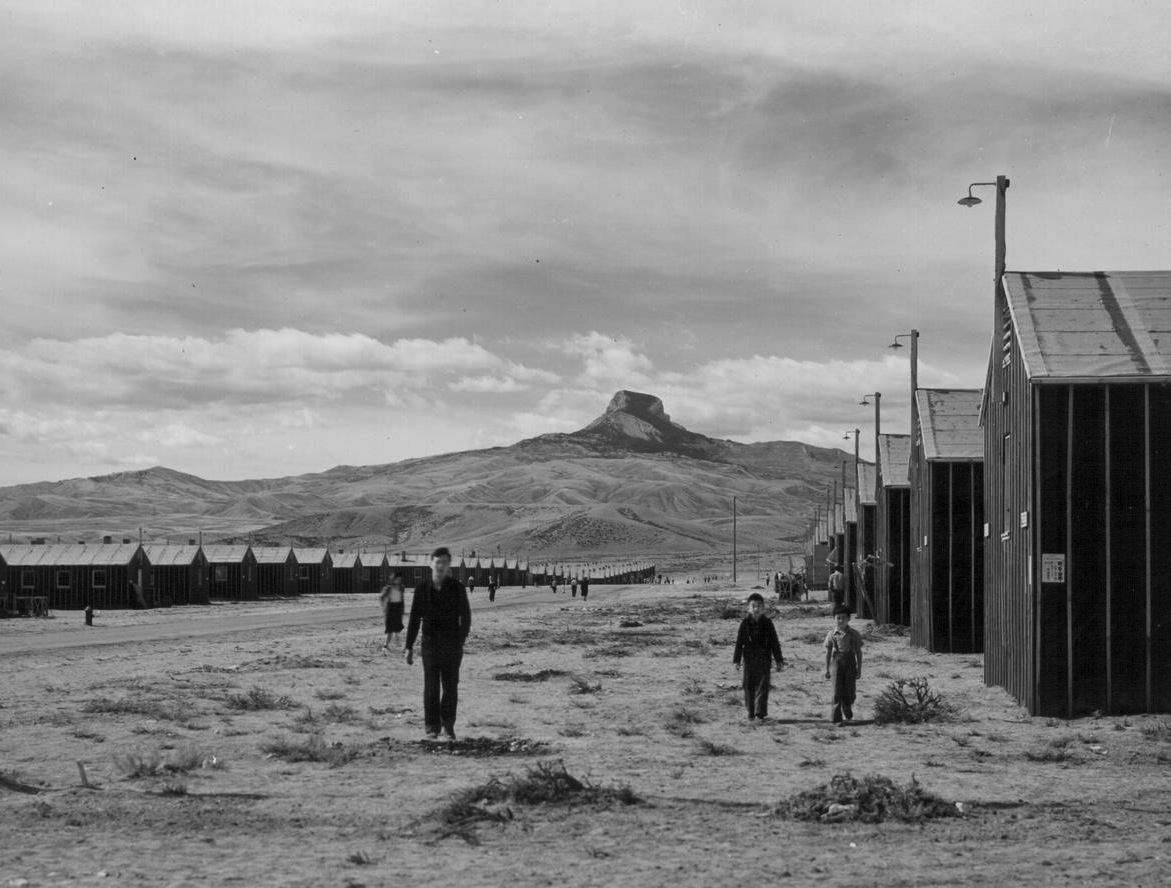
The Heart Mountain Prison Camp in near Cody, Wyoming, was an internment camp used to incarcerate roughly 14,000 Japanese-Americans between August 12, 1942 and November 10, 1945. (Photo provided by the Heart Mountain Wyoming Foundation)

Here are the headline stories in the state for Friday, February 20th, 2026:

  • This week marks the 84th anniversary of the United States, under president Franklin D. Roosevelt, enacting Executive Order 9066, which led to U.S. residents of Japanese descent being dispossessed and interned, even if they were American citizens. Survivors of Japanese internment say they’re seeing the Trump Administration embracing similar policies that led to one of the darkest chapters of the United States in the 20th century.
  • A non-partisan policy analyst is recommending that California lawmakers reject Governor Gavin Newsom’s latest electric vehicle rebate proposal, citing cost concerns.

Japanese Internment Survivors Say White House Could Repeat History With Current Immigration Policy

Franklin Delano Roosevelt ushered in one of the darkest stains on the legacy of the United States when he signed Executive Order 9066 on February 19th, 1942.

A surprise attack by the Imperial Japanese air force on Pearl Harbor Military Base in Hawaii left the country bewildered and clamoring for reprisals; that was on December 7th, 1941. A day later, the U.S. was officially at war with Japan–and Roosevelt used the Alien Enemies Act put a target on the backs of anyone that had Japanese ancestry in the country.

Japanese communities that had emerged in the United States were no strangers to bigotry and discrimination, but anti-Japanese sentiment sky-rocketed after the Pearl Harbor attack. Federal agents conducted raids on Japanese neighborhoods to detain “enemy aliens” without any search warrant or probably cause outside of a person’s ethnicity.

Sponsored

Two months after the Pearl Harbor attack, Roosevelt’s order 9066 empowered the Secretary of War to set up “military zones” anywhere in the United States, and exclude anybody from these areas for reasons of national security. In practice, it led to the de-facto reclassification of people of Japanese descent living in the as enemies of the state.

Then a resident of San Francisco, Sam Mihara, and his family were among more than 125,000 people of Japanese descent that were forced from their homes on the West Coast by the U.S. government, and moved to one of internment camps set up across the United States. At least half of those interned were U.S. citizens.

Kiyo Sato and her family grappled with a similar fate. Back then, she was removed from her home in Sacramento and placed in an internment camp in Poston, Arizona.

The two say that there are unnerving parallels between Roosevelt’s policies that led to Japanese internment, and the Trump Administration’s immigration enforcement–and if nothing is done to stop or curtail the White House’s draconian immigration policies–the country is due to repeat its past mistakes.

Nonpartisan Group Says Lawmakers Should Pump Brakes on Newsom’s Clean Car Rebates

The Legislative Analyst’s Office (L.A.O.) is calling on California legislatures to oppose the electric vehicle rebate plan that has been proposed by Governor Gavin Newsom, because it’s unclear just how the incoming funds would be allocated.

Governor Newsom proposed a $200-million-dollar rebate plan for prospective electric vehicle buyers in the state earlier this year. The plan came after the Trump Administration refused to renew the federal program that gave E.V. buyers a tax rebate of up to $7,500 on their car purchases. 

The plan still needs to be approved by the state legislature, but the L.A.O. is calling for lawmakers to reject the proposal. The group says that California has bigger budget concerns, and Newsom’s rebate program isn’t likely to move the needle when it comes to funding key health and public safety initiatives.


lower waypoint
next waypoint
Player sponsored by