Here are the morning’s top stories on Monday, February 9, 2026
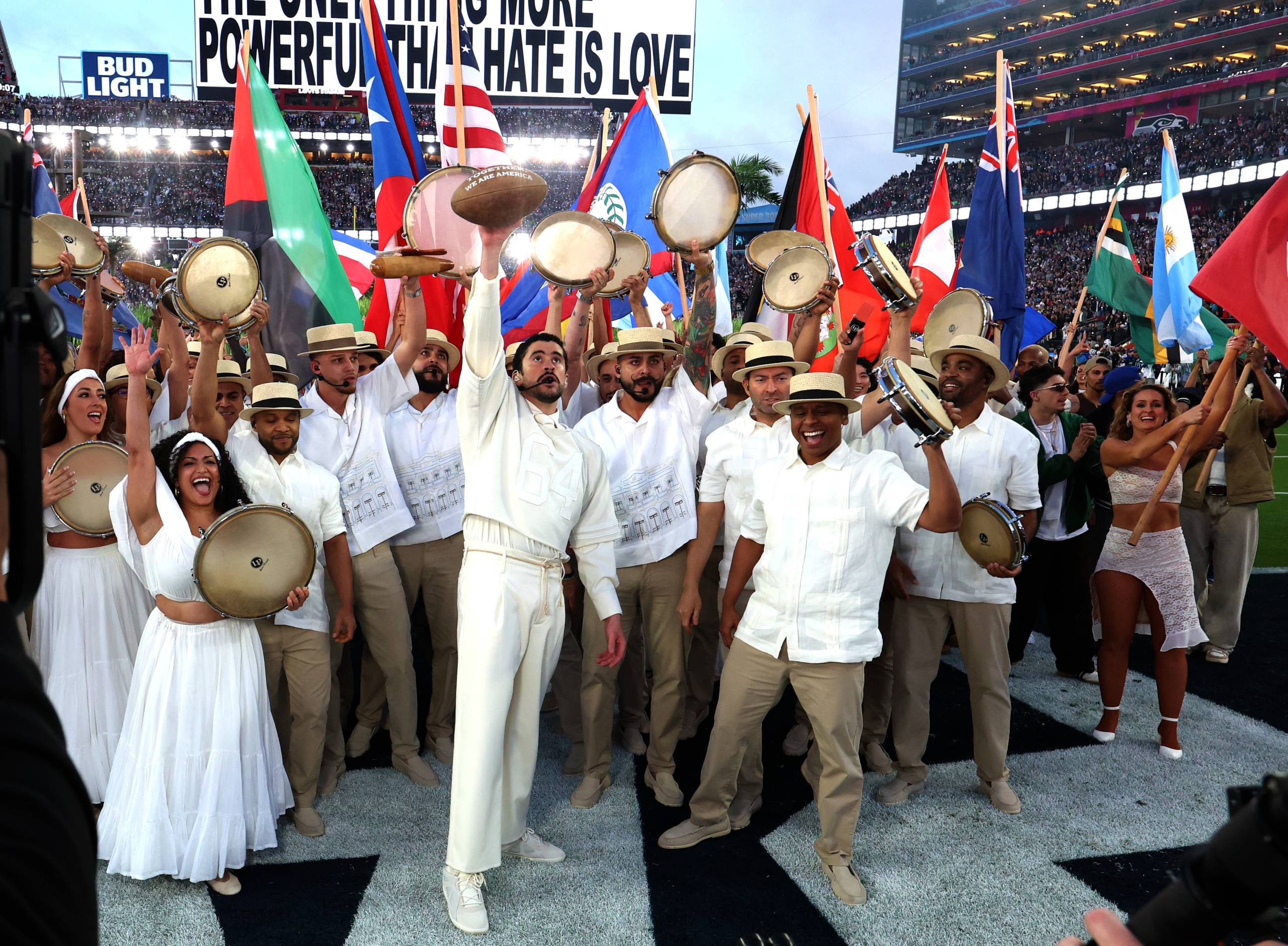
- It was another historic halftime show at this year’s Super Bowl at Levi’s Stadium in Santa Clara as global superstar Bad Bunny took the stage.
- 2025 was a pivotal year for health insurance reform: more than two dozen states, including California, passed laws limiting insurers’ ability to delay or deny medical services after a doctor has ordered them. The practice is known as prior authorization. Criticism of it reached a fever pitch last year and California is leading the way with reform.
Bad Bunny Makes Puerto Rico The Home Team In A Vivid Super Bowl Halftime Show
During the halftime show at Super Bowl LX at Levi’s Stadium in Santa Clara, Bad Bunny paid homage to his home of Puerto Rico. He weaved his way through a set that featured barber shops and bodegas, family gatherings and elders playing dominos. But he also expanded his lens to make an argument about the place of Puerto Rico within a larger American context.
Over a 13-minute set that included more than a dozen of his songs, almost all in Spanish, the artist born Benito Antonio Martínez Ocasio made the perpetual in-betweenness of his home sing. Puerto Rico has long struggled to find its place in the Americas. Too Latin for some in the United States, as reinforced by much of the controversy leading up to Sunday night’s performance and too closely associated with the United States to be fully accepted by some in Latin America. As Bad Bunny often does, he turned not fitting in into a super power, leveraging Puerto Rico’s caught-between-two-worlds cultural identity to create an inclusive, All-American image.
Bad Bunny’s opening words are always worth paying attention to. “Que rico es ser Latino,” he said to start the show at Levi’s Stadium in Santa Clara, Calif. Though there isn’t really a proper English translation, the phrase means something close to, “How wonderful it is to be Latino,” though the understanding of the Spanish phrase is more indulgent. Bad Bunny’s opening line on each of the 31 nights of his residency last summer in San Juan was “Puerto Rico, estamos en casa.” From beat one at the Super Bowl, he made it clear that the casa had expanded. He packed a vibrant punch with quick passes of some of his most popular tracks, like “Tití Me Preguntó” and “Yo Perreo Sola,” mostly leaning on heart-thumping hits. He made major nods to his latest album, the Grammy-winning DeBI TiRAR MaS FOToS, with “Voy a Llevarte pa PR,” “Eoo,” “Baile Inolvidable” and “Café Con Ron.” Like only the most adept DJ or your favorite salsa band, he infused his mix with the kind of energy that could have kept people dancing ’til sunrise.
A watch party at Xingones Cantina in Oakland was sold out. It was specifically Bad Bunny-themed. “I’m a girl who loves Bad Bunny and I wanted to have a Bad Bunny-themed Super watch party,” said organizer Leticia Navarro. And in speaking with the people at the restaurant, there was a real sense of pride. “I have goosebumps right now. I cried last week when he won Album of the Year. This is a real cultural milestone. To see this man representing all Latinos, all people, I think means something so significant,” said Vanessa Rodriguez of Oakland. Jennifer Sanchez of San Jose agreed with those sentiments. “One of the reasons why I got so emotional is because seeing us Latinos being represented so well and all in Spanish, and knowing that in this America, it’s not really accepted. I think it was the most amazing thing he could have done,” she said.
Prior Authorization Laws Reformed
2025 was a pivotal year for health insurance reform: more than two dozen states, including California, passed laws limiting insurers’ ability to delay or deny medical services after a doctor has ordered them. The practice is known as prior authorization.