Sponsor MessageBecome a KQED sponsor
upper waypoint

Big Bear Ski Resorts, Businesses Face Challenging Winter

Save ArticleSave Article
Failed to save article

Please try again

Big Bear, CA - December 21: People ski and snowboard at Bear Mountain Ski Resort on Sunday, Dec. 21, 2025 in Big Bear, CA.  (Eric Thayer / Los Angeles Times via Getty Images)

Here are the morning’s top stories on Tuesday, February 3, 2026

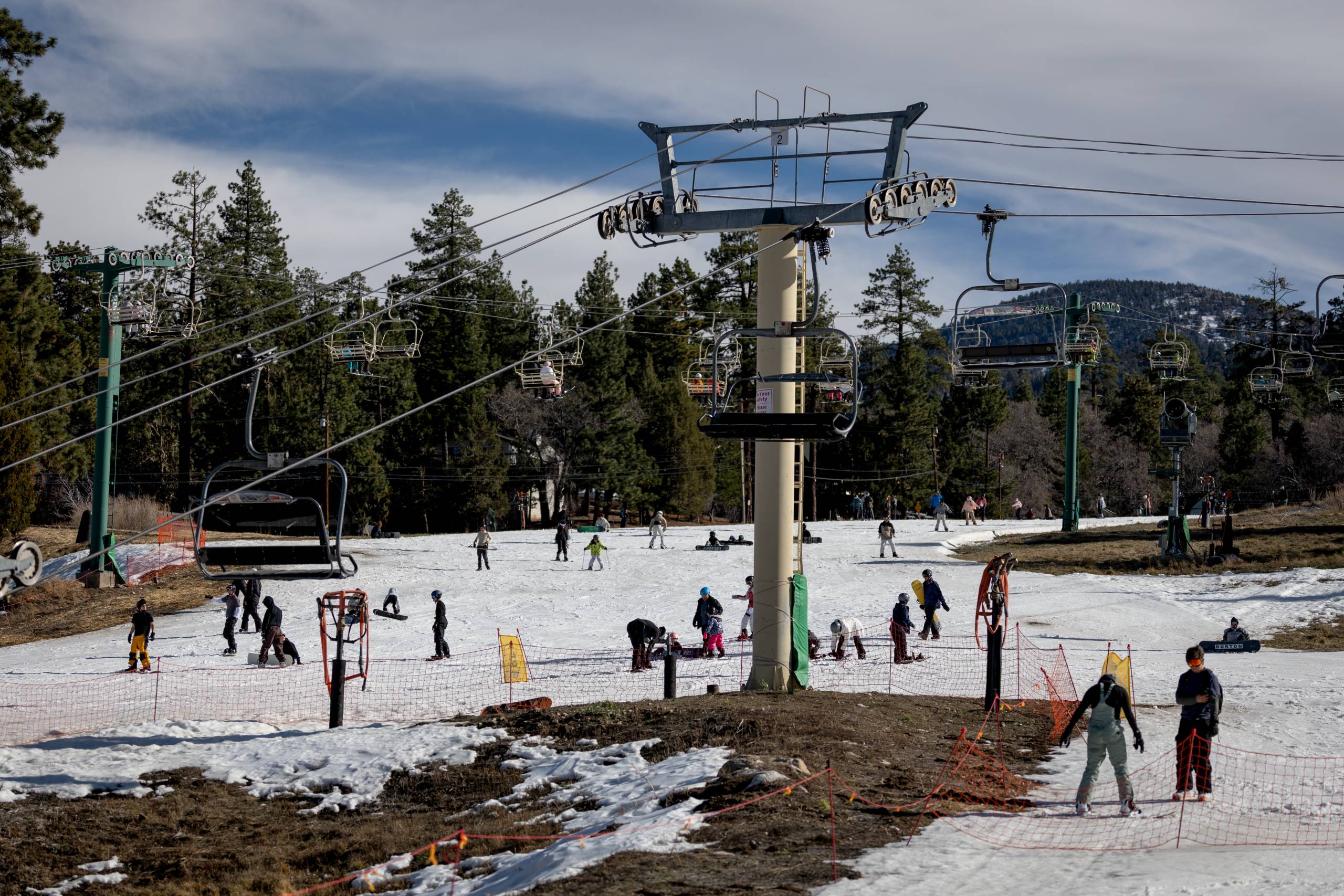
  • Every winter, skiers trek up to the Southern California mountain town of Big Bear to hit the slopes. But this winter, snow has been hard to come by. Rain and unusually warm temperatures have dominated and put a chill on ski resorts and businesses in the region. 
  • Every time there’s a major disaster in California, the state is supposed to write a report on lessons learned. But they’re years behind.
  • A bill to regulate unaccredited groups that help veterans access benefits is pending on Governor Gavin Newsom’s desk.

Warm Weather, Lack Of Snow Impact Big Bear Businesses 

It’s been a challenging winter for Southern California mountain communities. Normally, the slopes at Big Bear are filled with skiers. But warmer than usual weather and a lack of snow has impacted not only ski resorts, but also businesses that rely on tourist dollars.

Julian Villalobos is a ski instructor at Snow Summit Ski Resort in Big Bear. “With this kind of weather right around 1:00pm, 2:00pm, it turns to mashed potatoes. No one wants to ride mashed potatoes. It’s horrible,” he said. Mashed potatoes is ski jargon meaning lumpy, wet snow.

The resort is normally fully open by Christmas. But as of now, just four of 33 runs are. There’s more brown grass than snow and average daytime highs hover around 50 degrees. “I saw bathing suits and bikinis out here,” Villalobos said. “Normally you don’t see that until March or April.” Big Bear hasn’t had a year with this little snowfall in nearly seven decades. That’s according to National Weather Service data.

The conditions aren’t only affecting ski resorts. The community relies heavily on visitor traffic. And without consistent snow on the slopes, it’s tough to attract as many people to Big Bear. Mario Magliozzi is a manager at Goldsmith’s Sports, a ski rental business. “This whole wall of bindings. On a busy day, I could be peeking down from the top front of the shop and just see that it’s empty. And I go, Oh yeah, we’re getting there. We have had days where we run out of equipment. That is not happening this season,” he said. The Big Bear Chamber of Commerce said lodging bookings this season are down by at least a quarter.

Why California Is Years Late On Mandated Disaster Reports — And Why It Matters For The Next Big Fire

On a fall morning 34 years ago, a fire, rekindled and supercharged by Diablo winds, began its assault on the East Bay hills. Many times since, Californians have lived through similar disasters.

Sponsored

The fire then was fueled by brush — desiccated by both long-term drought and days of 90-degree heat during the peak of California’s fire season. Powerful winds cast embers wide, setting shake roofs alight throughout hilly, narrow neighborhood streets.

Communication between departments — including those that rushed into the area to offer mutual aid — was disorganized, with at least one unit waiting 24 hours for orders, while others freelanced, doing what they thought was best. A lack of common radio frequencies delayed evacuations. Those who went to the emergency operations center were “greeted by pandemonium,” according to an after-action report released by the California Governor’s Office of Emergency Services, known as Cal OES. Just days after the Oakland Hills fire began on Oct. 20, 1991, the flames were under control. But 25 people were dead, 150 were injured and more than 3,000 homes were destroyed, making it one of the costliest disasters in U.S. history at the time.

Things had gone so poorly that California’s legislators recognized change was needed. By 1993, they enacted a law to overhaul how the state manages disasters, including how emergency responders coordinated their work and how they disseminated lessons learned. One provision of the law mandates that Cal OES “complete an after-action report within 180 days after each declared disaster.” (The original legislation said 120 days; lawmakers changed it to 180 in 2022.)

The goal was to make sure that emergency departments across the state could learn from thorough recountings of past crises, avoid repeating mistakes and save lives in the process. Records show compliance has been a mess. Since 2017, Cal OES has completed only six after-action reports, a fraction of the more than 100 that need to be completed following disaster proclamations by California governors. Eighteen are listed by the agency as in process.

Bill Aims To Protect Veterans’ Benefits

California is home to over a million and a half veterans. Many of them rely on for-profit companies that help them navigate the bureaucratic morass of accessing benefits quickly, for a fee.

The VA has a backlog of benefits claims, with currently hundreds of thousands of cases pending. Some lawmakers said these organizations are predatory, often charging extremely high rates for services. Democratic Senator Bob Archuleta of Los Angeles is an Army veteran. He introduced legislation to require these organizations operating in California to be federally accredited. “It reaffirms our responsibility to ensure that veterans are not misled, manipulated, or taken advantage of when seeking the benefits they have earned through military service,” he said.

But the proposal has divided veterans serving in the State Capitol. Those opposed contend it’ll leave veterans with less choices when they need help filing benefits claims. “Here we are with a situation, we’re gonna outlaw an entire industry. We are going to say to you, veteran, you know what, I don’t know if you are too stupid or too vulnerable or your judgement is so poor, you can’t choose yourself'” said Democratic Senator Tom Umberg of Anaheim.

Governor Gavin Newsom has until the end of the week to sign or veto the bill.

lower waypoint
next waypoint
Player sponsored by