Sponsor MessageBecome a KQED sponsor
upper waypoint

With New Laws In Place, Lawmakers Look At Solutions For Housing Shortage

Save ArticleSave Article
Failed to save article

Please try again

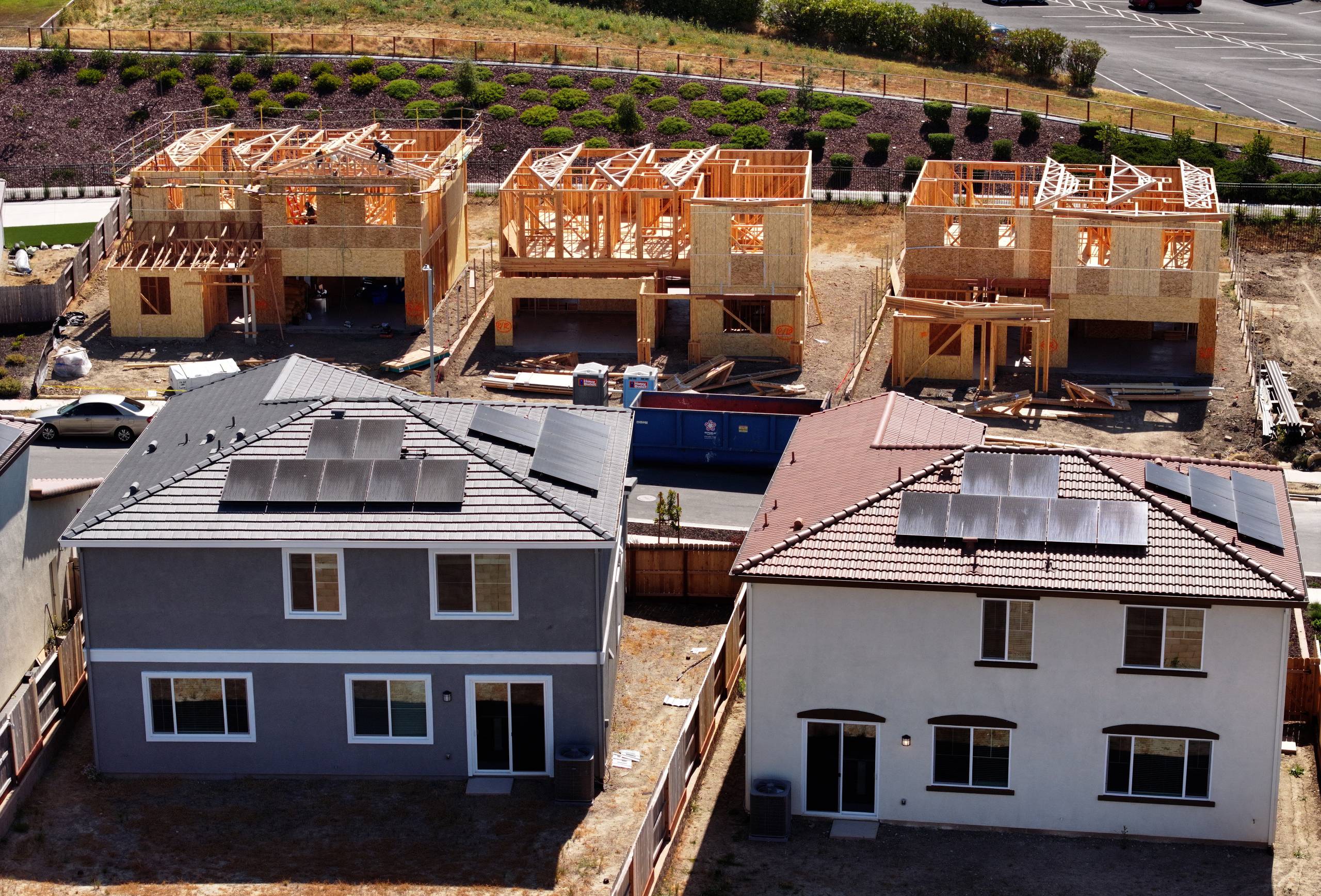
RICHMOND, CALIFORNIA - JULY 01: In an aerial view, homes are seen under construction at a new housing development on July 01, 2025 in Richmond, California.  (Photo by Justin Sullivan/Getty Images)

Here are the morning’s top stories on Friday, January 30, 2026

  • For the past few years, the California legislature has passed a bevy of laws aimed at cutting red tape and spurring housing construction. Assemblymember Buffy Wicks, who represents the 14th district, has been at the forefront of that work. But, it’s still really expensive to build. This year, she is chairing the newly established Select Committee on Housing and Construction Innovation.
  • Immigration arrests in and around San Diego surged nearly 1500% in 2025.  And many of the people who’ve been arrested have no history of criminal convictions.
  • California lawmakers want to set new standards for cleaning homes after toxic fires.

Bay Area Lawmaker Leads Effort To Build More Housing

State lawmakers passed a handful of bills in 2025 aimed at cutting some of the red tape when it comes to building new homes. But will it actually lead to more building?

Bay Area Assemblymember Buffy Wicks chairs the newly established Select Committee on Housing and Construction Innovation, which has already held two meetings this month. “What we’re looking at is how do we bring down the cost of construction? Homes in California are just a lot more expensive to build,” Wicks said. “So one of the things we’re really looking at is what are the newer innovative models of construction that we can really hope to spur and to create here in California to bring down the cost.”

Wicks said that prefab and modular housing, which many cities and countries use around the world, definitely need to be explored. “In the fall, I went to Sweden and looked at their whole industry and how they’ve done this. 85% of their new single-family homes are built in factories. It is efficient. It’s more environmentally friendly. It’s done faster. It’s been cheaper. There’s a real synergy with the timber industry there in terms of supply and demand. The cities are actually developers there. So there was a lot to learn in Sweden,” she said.

Along with finding less expensive building options, Wicks said lawmakers are working to make home ownership easier for Californians.

Immigration Arrests Surge By 1,500% In San Diego Area

While the Trump administration’s immigration blitz hit Midwestern cities like Chicago and Minneapolis, a quieter escalation unfolded in San Diego late last year with agents making thousands of arrests in and around the city.

Sponsored

Government data analyzed by CalMatters show nearly a 1500% increase in arrests for May to October compared to the same time period a year earlier. The arrests occurred in San Diego and Imperial counties, a region the federal government refers to as its San Diego area of responsibility. By September, the number of arrests recorded in the two counties surpassed immigration arrests in the Los Angeles territory, a much larger region that the Trump administration targeted for a headline-grabbing crackdown that summer.

In September and October, federal immigration officers arrested more than twice as many people in the San Diego region than they did in all of 2024, according to government data. “I feel the temperature rising,” said Patrick Corrigan, a volunteer who monitors U.S. Immigration and Customs Enforcement activity at the federal courthouse in San Diego.

As in other blue cities across the nation, activists are worried San Diego could be next on President Donald Trump’s list for a major military-style immigration operation. A Department of Homeland Security spokesperson would not comment about whether more high-profile operations were planned for the San Diego area. David Kim, a Border Patrol spokesman, said the agency cannot confirm future operations.

California Bill Seeks To Set New Standards For Cleaning Homes After Toxic Fires

The fires that tore through urban Los Angeles County in January 2025 didn’t just destroy thousands of homes — they left thousands more filled with toxic ash. Now, a state bill aims to set new standards for post-fire contamination testing and cleaning.

Assemblymember John Harabedian, who represents Altadena, introduced AB 1642 this week. The proposed legislation calls on the state’s Department of Toxic Substances Control to set new standards for removing post-fire contamination from homes, schools and workplaces. “When it comes to our families’ health we trust science, not insurance company guesswork,” Harabedian said in a news release. “Public health will be the standard, not the exception.”

Public health departments have warned residents that smoke from the Eaton and Palisades Fires carried hazardous materials — including lead, asbestos and heavy metals — from burned homes into other nearby properties. But homeowners and renters living near the burn zones have in many cases had to battle their insurance companies and landlords for testing and remediation. Resident groups and local scientists have been testing homes before and after professional remediation. One group found that even after cleaning, 63% of tested homes contained lead on their floors at levels far above EPA safety limits.

lower waypoint
next waypoint
Player sponsored by