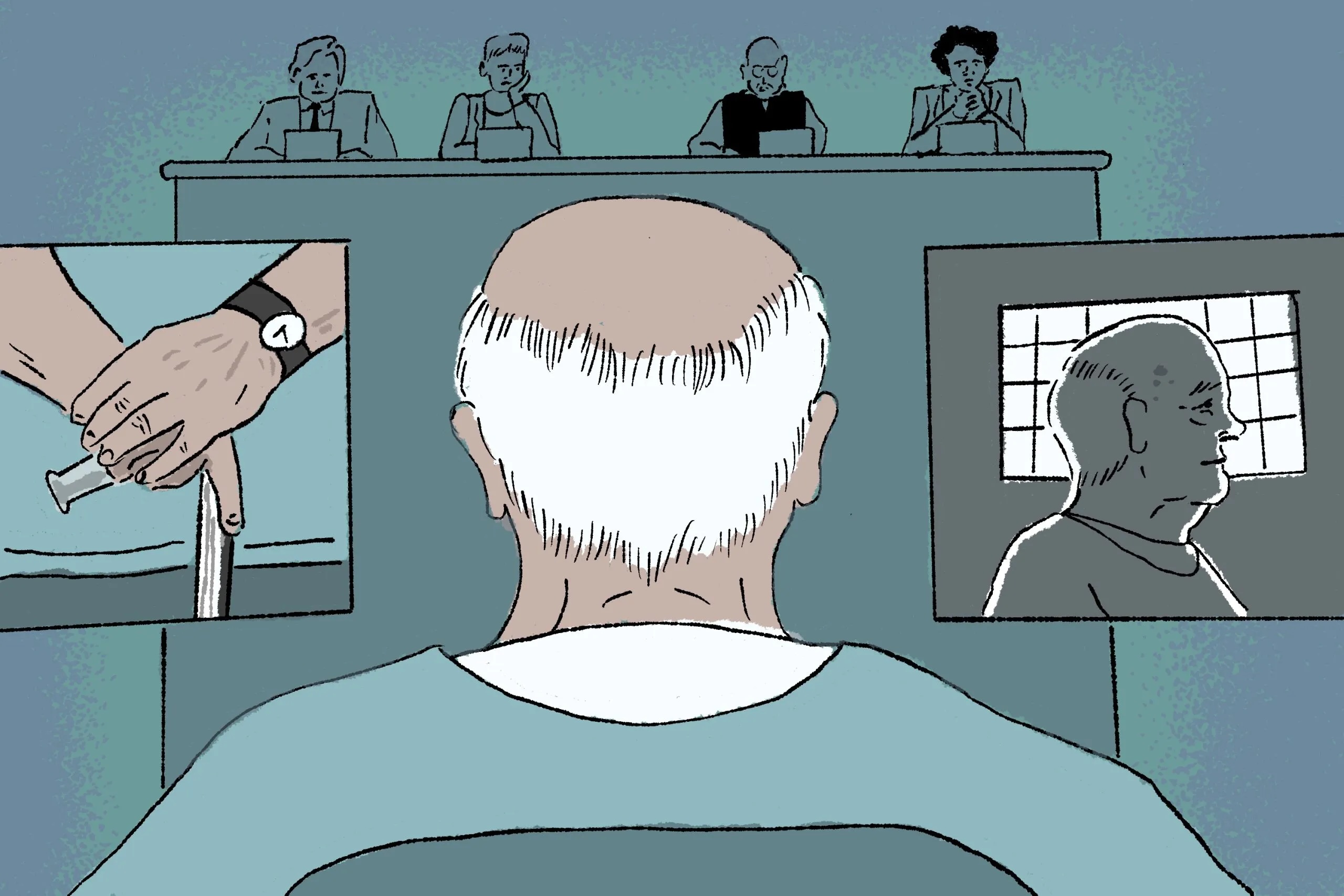
“There’s so many different types of people who commit sex crimes for a large variety of reasons and successful programming for those folks has to be tailored to that specific issue,” said former Board of Parole Hearings Executive Officer Jennifer Shaffer. “So you’ll have, for instance, sadists, people who actually get physically turned on by torturing people. That’s very different from somebody who has anger issues and expresses them through basically sexually dominating somebody.”
Because it’s much harder for sexual offenders to demonstrate to the parole board the necessary personal insight and transformation, parole commissioners are less likely to clear these offenders as no longer an “unreasonable risk to public safety.”
Part of the problem is that it’s more difficult for sexual offenders to clear a psychological risk assessment. “As horrible as this sounds, they may have at some point equated pain with sexual arousal — and breaking that connection is really difficult and takes a lot of very intense programming,” said Shaffer.
A prisoner’s digital footprint
Parole commissioners look through a person’s entire dossier days before their hearing and are tasked with interpreting all the facts within it through the lens of public safety. Any piece of information — such as visitor logs, write-ups, personal expenses and more — might be deemed pertinent.
“In the last few years, the world of information the board is looking at is growing — even though that information isn’t necessarily related to violence risk,” said Paratore. “They’re looking more and more at (unemployment) fraud and restitution avoidance. They’re looking at medical records. They’re looking at confidential information more and more.
“What they think they need to consider has just grown without any guardrails and resulting in more people being denied parole because the board does not know how to properly interpret that information. This is especially true of medical records.”
California began providing free electronic tablets to its incarcerated population in 2021, which ensures that all phone calls and text messages are now digitally monitored and ripe for analysis and search by artificial intelligence. Those types of detailed records can easily be highlighted now and made available to parole commissioners.
For example, more focus can be paid to how prisoners get outside money placed into their institutional trust accounts, and how they go about paying for canteen and other services. In the aftermath of COVID relief and the huge rash of fraudulent unemployment claims statewide, some incarcerated individuals’ trust account activity came into question. The extra level of scrutiny drew unwanted attention to other forms of potential misconduct.
Restitution fraud
Criminal courts can order large amounts of restitution when a person is convicted, usually separated into court fees and victims services fees. Prisoners who owe restitution will always have 50% deducted from any wages or incoming money until the debt is paid off. If a person works in the kitchen for $80 a month, they get to keep $40. Same thing if their family sends them $200. They’ll receive $100 to spend.
Particularly for lifers convicted of violent crimes, restitution can be quite high and seemingly impossible to finish paying through these 50% deducted installments. To avoid losing half their spending money, some prisoners will direct their families and friends to deposit money into other people’s accounts who do not owe restitution. The prisoners will agree to a much lower deduction fee amongst themselves, usually 20%, and hold onto more spending money for canteen.
But such under-the-table transactions now leave more of a digital footprint. Parole commissioners want to see a person show remorse and demonstrate awareness into the impact of their crime on the victims. It’s a bad look for that same individual to be seen participating in restitution avoidance to save themselves money.
“The restitution issue is the only thing I can think of to really explain the decline in the grant rate,” said Vanessa Nelson-Sloane, Director of Life Support Alliance, an advocacy group for incarcerated and formerly incarcerated lifers. “Sometimes when they pass a new law, a new population comes into the parole cycle, but there’s been no new laws recently that would make any difference in the considerations.
“I am so sure that this is it because that’s all I hear about from people who are getting denied — restitution, restitution, restitution.”
CalMatters data reporter Jeremia Kimelman contributed to this story.
Joe Garcia is a California Local News fellow.
This article was originally published on CalMatters and was republished under the Creative Commons Attribution-NonCommercial-NoDerivatives license.