Sponsor MessageBecome a KQED sponsor
upper waypoint

CA Project Makes Thousands Of Rare Songs Available To The Public

Save ArticleSave Article
Failed to save article

Please try again

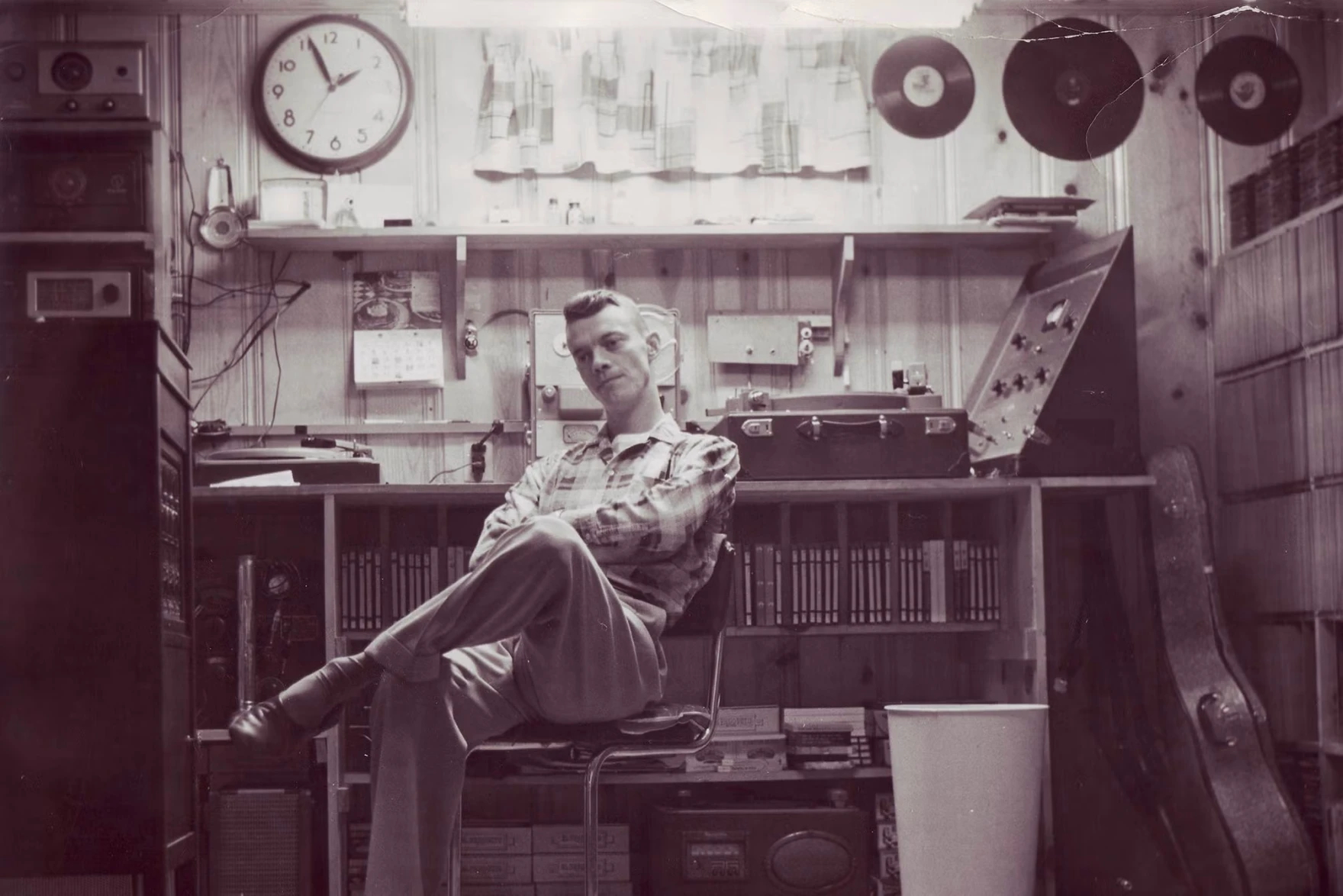
Joe Bussard, circa 1960 (Photo courtesy of Dust-to-Digital Foundation)

Here are the morning’s top stories on Tuesday, December 30, 2025…

  • Thousands of old and rare recordings – some that date back a full century, are now available for the public to enjoy online. That’s thanks to a collaboration between UC Santa Barbara and record company Dust-to-Digital.
  • Mountain lions, foxes, hawks and dozens of other species are dying at an alarming rate from rat poison.  
  • Fort Bragg is about three hours north of San Francisco, and during droughts, the former timber town faces severe water shortages. And they’re not alone. Nearby communities have had to restrict water in lean years, even while these coastal cities sit next to the biggest body of water in the world.

Thousands Of Rare American Recordings — Some 100 Years Old — Go Online For All To Enjoy

Thousands of rare American songs spanning jazz, blues and gospel — some more than a century old — are now available for the public to enjoy online. That’s thanks to a collaboration between UC Santa Barbara and the nonprofit Dust-to-Digital Foundation, which digitized the recordings from rare and aging vinyl collections.

It’s work Dust-to-Digital founder Lance Ledbetter has done since the late 1990s, going into private collections so the recordings can be accessible to all. Ledbetter remembered the first time he got to visit the 30,000-strong record collection of the late Joe Bussard in his Frederick, Maryland, basement. “It was just one great recording after another. And he was getting excited and we were getting excited. And it was fantastic,” Ledbetter recalled.

Bussard was kind of like the original crate digger, sometimes even going door-to-door to build his stockpile. His collection included rarities like “The California Desert Blues,” recorded by Lane Hardin in the 1930s. Ledbetter said only a handful of the records are known to exist. “A lot of that music from that era, the record companies did not keep backups. They were all destroyed, almost all. And it’s all up to the record collectors. They’re the ones who kind of saved the music from that era,” Ledbetter told LAist.

The collaboration between Ledbetter and UC Santa Barbara’s library will bring some 50,000 songs — including many from Bussard’s collection — to the library’s Discography of American Historical Recordings (DAHR) database for all to enjoy. About 5,000 songs are available now. Superior to a random recording uploaded to YouTube with no accompanying information, the database includes things like where the song was recorded and when, as well as lists of musicians and composers who worked on the songs. “These recordings, especially like the Lane Hardin, where there’s two or three known copies — like a Van Gogh painting or something — [they] could disappear into a private collection for the next 50 or 60 years and nobody would be able to hear that copy again,” said David Suebert, curator of the Performing Arts Collection at the UCSB Library. You might assume that the Library of Congress or other archives would already have some of these historic tunes, Suebert said. But they don’t have everything. And bringing these hard-to-find songs spanning decades of historic American music to the public is a source of pride for Suebert.

Animals Are Dying From Rat Poisoning. Here’s How You Can Protect Them

Rat poison continues to sicken and kill California’s wildlife at alarming rates, despite legislation designed to prevent the use of such chemicals.

Sponsored

That’s according to a recently published report from the California Department of Fish and Wildlife. The 2024 survey found anticoagulant rodenticides — a fancy name for one of the most toxic types of rat poison — in the bodies of 95% of mountain lions and 83% of bald eagles tested, as well as dozens of other species, including foxes, bobcats, owls, hawks, black bears and endangered California condors.

Even river otters have been poisoned, a sign these chemicals may be seeping into waterways.

For more than two decades, California has passed laws to limit the use of certain pesticides. Starting in 2020, the state passed a series of legislation banning some of the most toxic types: The Ecosystem Protection Act of 2020 (AB1788) placed a moratorium on all second-generation anticoagulant rodenticides, which are stronger and last in animal tissue longer than earlier types. And the California Ecosystem Protection Act of 2023 and the Poison-Free Wildlife Act of 2024 expanded that moratorium to first generation anticoagulant rodenticides, including chlorophacinone and warfarin, which are older versions of rat poison that take longer to build up in the body.

However, there are exemptions in those laws, including the use of such rodenticides in agriculture, certain public health settings, such as hospitals, and other sensitive settings.

Wave Powered Desalination Buoy Arrives In Fort Bragg

State and regional elected officials are welcoming a piece of innovation to Fort Bragg that could be a savior for water scarce coastal communities.

After a long wait, Oneka Technology’s wave powered desalination buoy is now resting in Fort Bragg. With the nickname the “iceberg,” the wave-powered desalination unit is 22 tons of bright yellow, solid metal.

Dragan Tutic is the founder of the Quebec-based company. “For Oneka, our mission is to make the oceans a sustainable and affordable source of drinking water,” Tutic said at the unveiling ceremony. “The oceans are so abundant and they have a lot of energy from waves, so why not tap into it to create water for coastal regions in California.”

The City of Fort Bragg has repeatedly faced water shortages, notably during drought years in 2014 and 2021. The city uses between 700,000 to a million gallons of water daily. That dropped to around 637,000 gallons daily in 2021, as residents were forced to conserve water. The scarcity has made city officials eager to diversify their freshwater sources. It’s the big reason why they’ve partnered with Oneka to bring a desalination buoy to Mendocino.

How the desalination process works with the buoy is pretty simple. It gets anchored to the sea floor, Tutic says ideally on a sandy bottom to minimize impacts to reef banks, and once fixed in position, sea water is drawn in and filtered via reverse osmosis, Oneka engineer Vincent Blanchard explained, while standing atop the “iceberg”. “Basically with the wave action, just the buoyancy of the buoy kind of pulls on a rope that is tethered to the sea floor,” Blanchard said. “As it comes up…the piston will be pushed inside. So that will suck in water, and also the [at] same time will pressurize the other side. So it’s kind of a double action.”

lower waypoint
next waypoint
Player sponsored by