Here are the morning’s top stories on Wednesday, December 24, 2025…
- Some Mixtec farmworkers in Watsonville have trained as doulas to support other Indigenous women during pregnancy and childbirth.
- A tribal group in central California is celebrating the return of thousands of acres of land back from the state.
Watsonville Farmworkers Train As Doulas To Help Other Indigenous Women
Outside a clinic in Watsonville, Ines (who asked not to use her last name) checks in with an expectant mom after a prenatal visit. A Mixtec farmworker from Oaxaca, Mexico, Ines trained as a doula this year so she can support other Indigenous women in the Watsonville area during pregnancy and childbirth.
She says when she gave birth in the US, she struggled to make her concerns heard because she only spoke Mixtec at that time. “The experience I had before was very difficult because I was alone,” Ines said in Spanish through an interpreter. She felt that her lack of Spanish was a hindrance to getting proper care and swallowed her fears quietly. “Sadly, there are many women who don’t speak Spanish well or don’t fully understand it, and we get looked down on for that. So sometimes we stay quiet out of fear or embarrassment, thinking, ‘What are they going to say?’ or ‘I can’t say it right.'”
After her experience, Ines decided to do two things: learn Spanish and train as a doula, a non-clinical birth worker who provides emotional and physical support during and after pregnancy. “Even if it’s just a small grain of sand, just being there, accompanying someone, giving a little massage, giving a glass of water, that’s what I want to do,” she said.
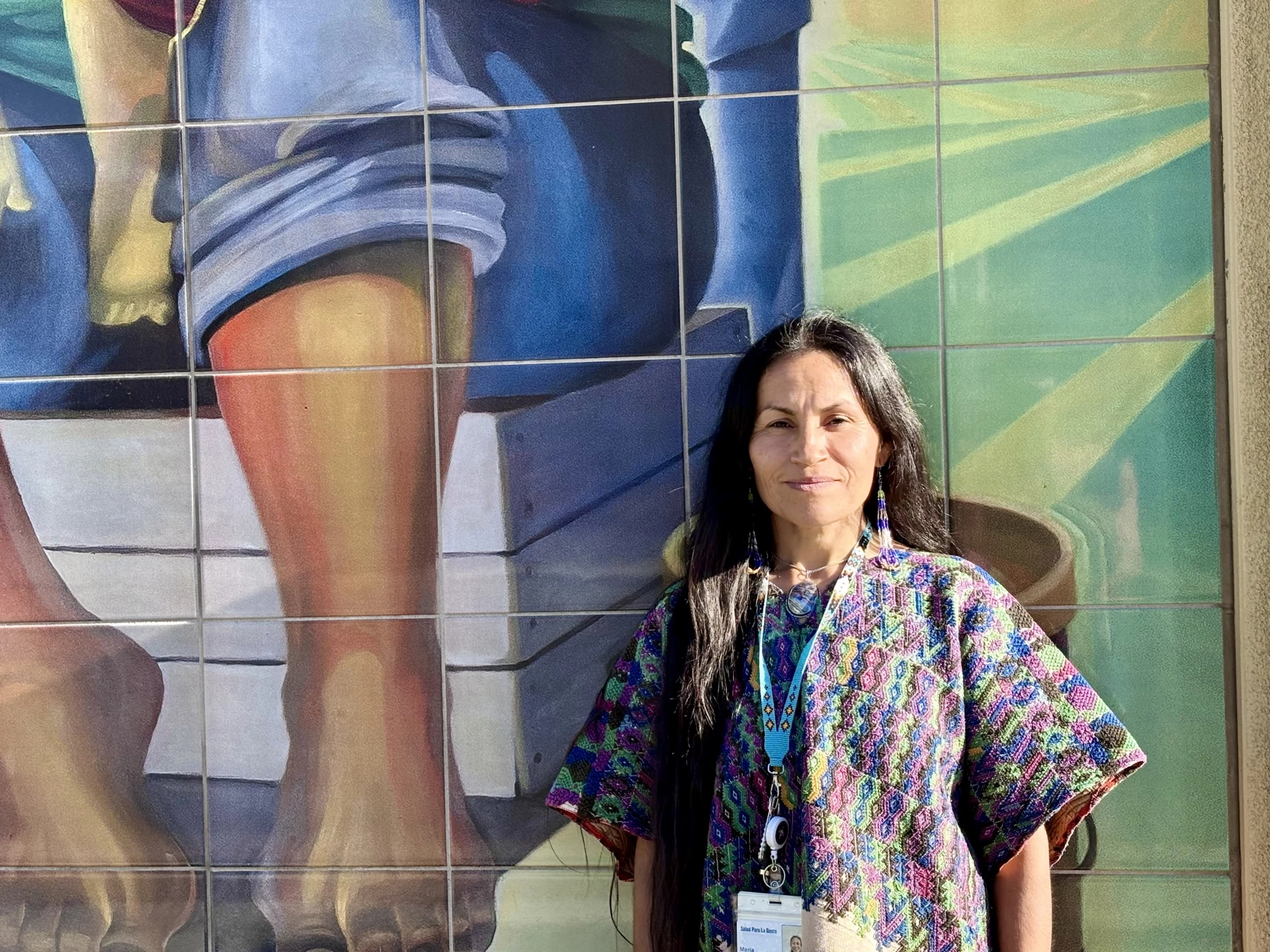
For many pregnant farmworkers, prenatal visits can be lonely, as the people in their immediate support systems are often also working in the fields during those times. So it’s a huge help when someone like Ines can accompany her and also explain in Mixtec what the clinicians tell her. Ines and 11 other farmworker doulas were trained by Maria Bracamontes, a nurse midwife at both Watsonville Community Hospital and the non-profit clinic Salud Para La Gente. In her six years as a midwife in Santa Cruz county, Bracamontes has cared for Indigenous patients who do not speak Spanish either fluently or at all. Many struggle to explain their concerns and fears to clinicians, especially during labor. “ I’ve definitely seen things not go so well sometimes,” she says.