Sponsor MessageBecome a KQED sponsor
upper waypoint

San Diego Law Enforcement Accessing Private License Plate Readers

Save ArticleSave Article
Failed to save article

Please try again

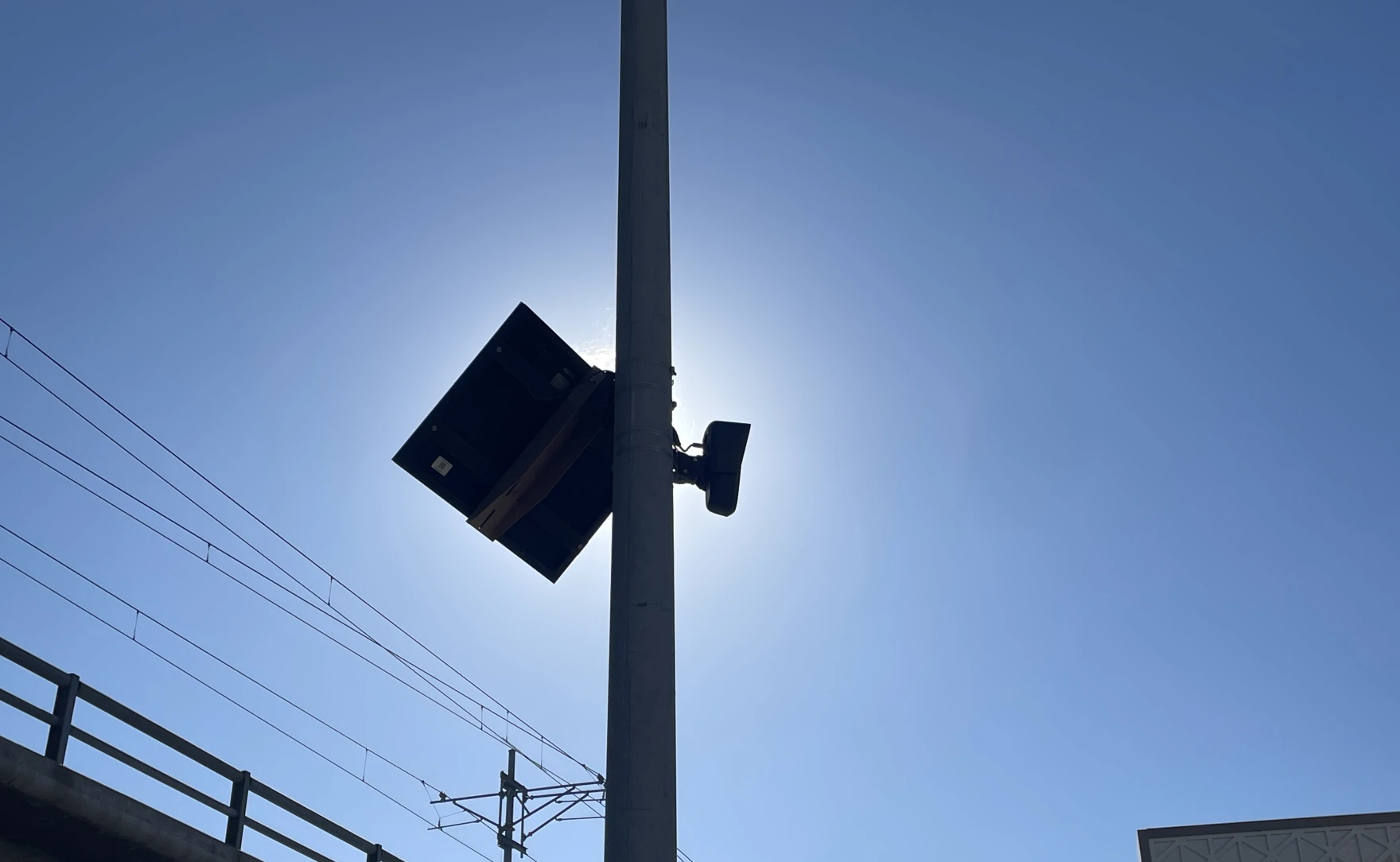
A Flock camera at Fashion Valley Mall cast in silhouette on Oct. 27, 2025. (Scott Rodd/KPBS)

Here are the morning’s top stories on Monday, December 8, 2025…

San Diego County Police Agencies Access Many Private License Plate Readers With Minimal Oversight

The nondescript black cameras are mounted near each entrance of the Las Americas Premium Outlets in San Diego County, capturing the license plate, make and model of every car that enters the mall parking lot.

“As soon as you come in, it’s in the system,” said a former worker with Simon Property Group. The company is the largest owner of shopping malls in the country, including Las Americas, the sprawling complex next to the San Ysidro border crossing.

At first, he embraced the automated license plate reader (ALPR) cameras from Flock Safety, an Atlanta-based surveillance technology company. The former employee believed the ALPR system would help address shoplifting and solve serious crimes that occasionally happened around the mall, like robberies and vehicle theft. And then he realized the power — and scope — of the license plate surveillance system. Flock can help users analyze patterns of movement and potential associations between drivers. And Simon Property Group gave several law enforcement agencies open access to search and receive notifications from its ALPR system.

“If people knew more about it, I would say people will obviously be pissed off,” he said. “Nobody wants big brother watching you on every single little thing.” The former employee agreed to speak with KPBS on the condition of anonymity, fearing professional consequences for discussing company policies. A spokesperson for Simon Property Group did not respond to multiple requests for comment.
Sponsored

The use of license plate reader technology has long been a flashpoint between law enforcement and privacy advocates. In recent years, California has established certain guardrails for ALPR networks owned by police departments and other public entities, including restrictions on how the data can be shared. The systems are also subject to public records requests. But those safeguards don’t apply to the many private businesses — including Home Depot, Lowe’s, the Southwestern Yacht Club, Fashion Valley mall and homeowners associations — that give police access to their license plate readers. These private systems effectively serve as a wide-ranging extension of law enforcement’s surveillance apparatus — even though the private businesses are not subject to the same public scrutiny and transparency requirements. A KPBS review of more than 1,500 pages of police records reveals law enforcement agencies in San Diego County have access to dozens of local private Flock camera networks, which include over 150 previously undisclosed license plate readers.

Veterinarian Group Questions Declawing Ban

A new law banning cat declawing in California is set to take effect next year. West Hollywood was the first city to outlaw cat declawing, back in 2003. San Francisco, Berkeley, and several other California cities later followed.

Declawing isn’t just trimming nails — a veterinarian removes the first bone of each toe. Erik Olstad is a veterinarian at UC Davis. He says there are far better options to prevent scratching, like “soft paws,” rubber coverings that fit over a cat’s nails. “There’s so many other things we can do versus chopping off fingers.”

Olstad — along with the California Veterinary Medical Association — does not support the statewide ban. He says the procedure is already rare, and sometimes medically necessary. For example, an immunocompromised owner could face a dangerous infection if scratched.

California Officials Warn Against Foraging Wild Mushrooms 

California officials are warning foragers after an outbreak of poisoning linked to wild mushrooms that has killed one adult and caused severe liver damage in several patients, including children.

The state poison control system has identified 21 cases of amatoxin poisoning, likely caused by death cap mushrooms, the health department said Friday. The toxic wild mushrooms are often mistaken for edible ones because of their appearance and taste. “Death cap mushrooms contain potentially deadly toxins that can lead to liver failure,” Erica Pan, director of the California Department of Public Health, said in a statement. “Because the death cap can easily be mistaken for edible safe mushrooms, we advise the public not to forage for wild mushrooms at all during this high-risk season.”

Wet weather fuels the growth of death cap mushrooms, and officials warn against any wild mushroom foraging to avoid confusion. Residents in central California’s Monterey County became ill after eating mushrooms found in a local park, according to county health officials. Another cluster of cases were in the Bay Area, but state health officials warned that the risk is everywhere.

lower waypoint
next waypoint