Sponsor MessageBecome a KQED sponsor
upper waypoint

Immigration Lawyers Organize In Effort To Free Clients

Save ArticleSave Article
Failed to save article

Please try again

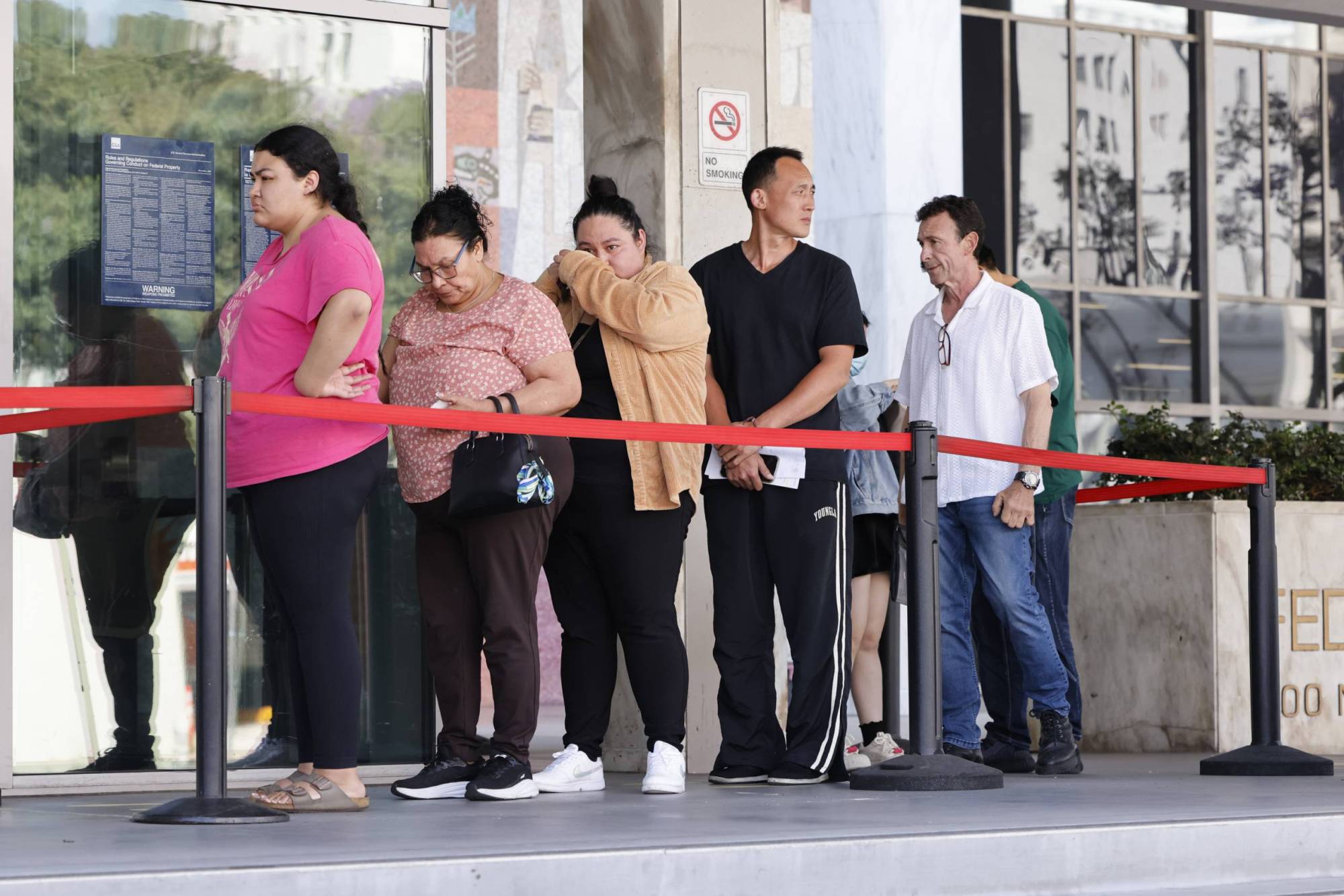
(From left) Sabrina Sarai De La Riva, Maria Elena De La Riva and Erendira De La Riva line up for a court hearing on the status of Alvaro de La Riva, who was detained the previous night by ICE and taken to the Los Angeles Street Immigration Court, on Friday, May 23, 2025 in Los Angeles, California. (Carlin Stiehl / Los Angeles Times via Getty Images)

Here are the morning’s top stories on Tuesday, November 25, 2025…

Immigration Lawyers Get Help From Unlikely Allies In Fight To Free Clients

After the 2024 presidential election, Stacy Tolchin expected the next four years to be an uphill battle. The Pasadena-based immigration lawyer lived through the chaos from the first Trump term. She remembers family separation, the Muslim travel ban and attacks on refugee and asylum programs. Yet, Tolchin and other lawyers and advocates were still surprised at the speed and sophistication of the current administration’s mass deportation campaign.

“It’s really much worse than I even contemplated it would be at the beginning of the year,” she said. The Trump administration has stripped international students of their visas, deported people to one of the most dangerous prisons in the world, and launched violent immigration sweeps in American cities.

Besides the public-facing tactics, the administration has also made a series of quiet legal maneuvers that have made it much more difficult for immigrants to fight deportation cases. These efforts include: Funneling people into fast-track deportation programs, making it harder for immigrants to hire lawyers and making it almost impossible for detainees to get out on bond.

But after being knocked on their heels in the early months of Trump’s new term, lawyers nationwide are now banding together and developing their own legal strategies. “We need warriors, we need people to help us in this fight,” Tolchin said. Chief among them are writ of habeas corpus petitions — federal lawsuits that challenge illegal and indefinite detentions. Collectively, they have filed more than 4,000 habeas petitions as last-ditch efforts to get their clients released from immigration detention centers.

Sponsored

Filing a habeas petition is unfamiliar for many attorneys. To help bridge the knowledge gap, immigration lawyers are turning to informal networks for help. Some organizations, like the American Immigration Lawyers Association, have even hosted formal workshops where lawyers can network and get a crash-course in filing habeas petitions.

Why Regulating Battery Energy Storage Is Taking So Long On The Central Coast

Santa Cruz County took a small step last week toward developing a policy to regulate battery energy storage systems (BESS).

At almost the same time, Monterey County supervisors were having a similar conversation. “We just can’t have somebody come in here while we don’t have an ordinance,” said District 2 Supervisor Glenn Church, during a Nov. 18 meeting. “We gotta develop an ordinance.”

The heart of the issue for both counties is the idea of local control. Currently, companies can apply with the state for permits to build and run a BESS. They don’t have to go through the county. But, if counties have ordinances governing BESS facilities, a company can instead choose to go the local route. That could mean more community support.

Here’s the challenge—the state’s climate goals demand a lot more renewable energy storage, fast. Local government is often slow. In Santa Cruz County, they were deciding whether to start a year-long process to develop an ordinance. Even that was delayed. In Monterey County, they were weighing whether to enact a temporary moratorium on new BESS facilities. That didn’t happen either.

Congressional Hearing Examines Effects Of Immigration Enforcement In Southern California

Los Angeles Mayor Karen Bass and Rep. Robert Garcia, D-Long Beach, convened a congressional hearing in downtown Los Angeles on Monday to gather testimony about alleged violations by federal immigration agents, whom they accuse of improperly detaining immigrants and citizens alike, often without probable cause or warrants.

The hearing included testimony from elected officials, experts and residents who have been directly impacted by the Trump administration’s immigration crackdown. Andrea Velez is a U.S. citizen who was detained by ICE agents while on her way to work in June. “Terrified, I used my work bag as a shield, but he slammed me into the sidewalk and accused me of interfering,” she said. “When I asked for his badge or a warrant, he refused and handcuffed me. They didn’t believe I was a U.S. citizen or bother to check my ID. I spent most of that first day shackled in a van watching others arrive, distraught and taken against their will.”

Democrats on the House Committee on Oversight also launched a new tracking system to document possible misconduct and abuse during federal immigration enforcement operations under the Trump administration.

lower waypoint
next waypoint
Player sponsored by