Here are the morning’s top stories on Wednesday, November 26, 2025…
- Santa Cruz County’s surf breaks are free to enjoy, but worth millions. That’s one of the findings in the first report to put a price on the world-renowned surf playground.
- Humboldt County recently approved its first green cemetery. The model allows bodies to decompose in a more environmentally friendly way.
Report Looks At Surf Industry’s Economic Impact
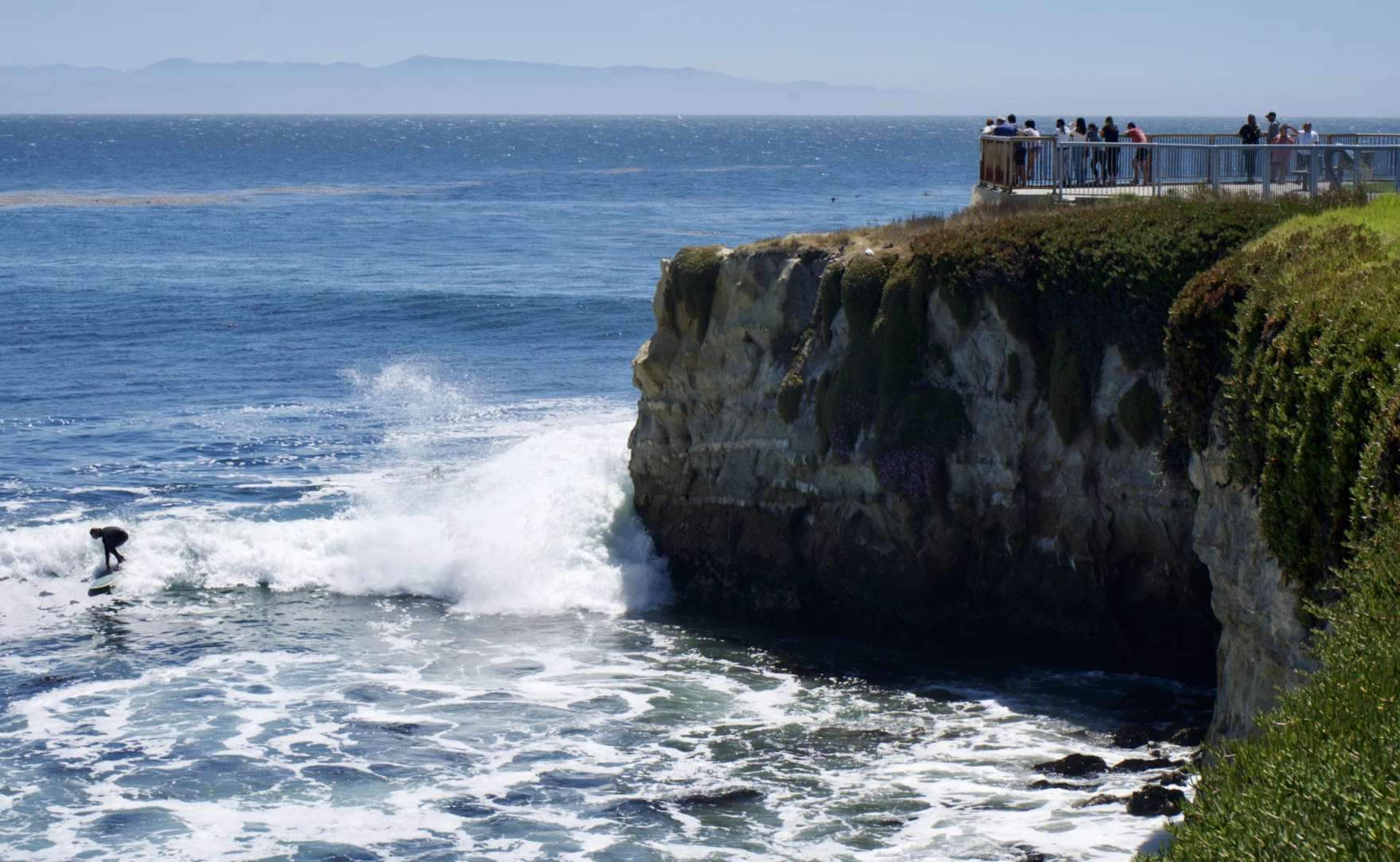
Santa Cruz surf breaks are free to enjoy but worth millions. That’s one of the key findings in the first report to put a dollar value on this world-renowned surf playground. The report identified 30-odd surf spots dotted across Santa Cruz County’s 7-mile stretch of pumping waves. One of them, Cowell’s Beach, is among the busiest, partly because it’s a good place to learn.
The faint sweetness of blueberry surf wax drifts through the brisk morning air as Thomas Mendoza preps his shortboard in the parking lot of Cowell’s. Mendoza has surfed all over the world but caught his first wave here. He remembers the feeling from the front of his dad’s longboard when he was about 5 or 6 years old. “When you get your first wave and you stand up on it and you’re riding it in, the feeling is electric,” he said, “and I knew right away I was hooked and I was gonna be hooked for the rest of my life.”
Santa Cruz attracts surfers of all levels, but also brings in spectators. In its new report, Save the Waves, a national surf-advocacy nonprofit based in Santa Cruz, found surfing draws in 800,000 people and $200 million to the area each year. “A lot of people say surfing’s priceless,” said Shaun Burns, a pro surfer who also works at Save the Waves. “Putting a number to it is pretty awesome and pretty groundbreaking.”
That’s the positive. But there are also concerns: the quality and duration of surfable waves is changing with the climate. The 2-year study—dubbed “surfonomics”—found that as sea level rises, sandy beaches will disappear. As a Santa Cruz native, Burns has seen this happen in his lifetime. “Even in the 33 years that I’ve been around, there’s been a wave that has gone extinct,” said Burns. “I grew up boogie boarding a place that no longer breaks just because there’s not enough sand there for the wave to break far enough out to create a rideable wave.”
New Green Cemetery Coming To Humboldt County
Residents of far Northern California will soon have a new option for their final resting place: Humboldt County’s first green cemetery. The Planning Commission unanimously approved the project recently.