Sponsor MessageBecome a KQED sponsor
upper waypoint

What Will School Meals Look Like Under New Law On Ultra-Processed Food

Save ArticleSave Article
Failed to save article

Please try again

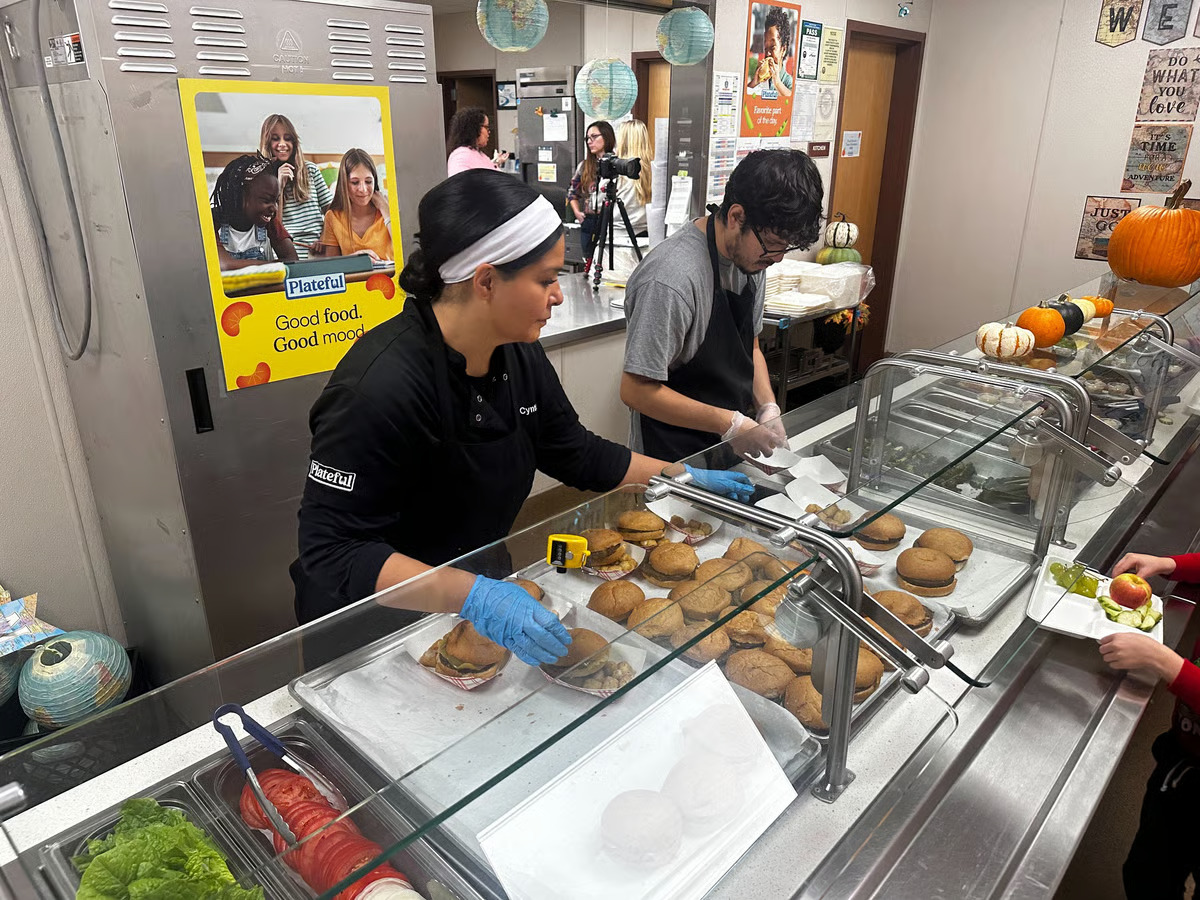
Kitchen staff at Lincoln Crossing Elementary serve up a burger lunch with sides of fruits and veggies on October 27, 2025. Since partnering with the nonprofit Eat Fresh, over half of the school meals are now made up of freshly prepared food. (Manola Secaira/CapRadio)

Here are the morning’s top stories on Thursday, November 20, 2025…

  • A new California law requires the phaseout of certain ultra-processed foods from school meals starting next year. These foods, which could include deli meat or soda, have attracted mainstream attention recently as the federal administration’s Make America Healthy Again campaign has named eliminating them a key issue. But while federal officials have expressed interest in creating a standard definition for ultra-processed foods, it hasn’t happened yet. This law marks the first in the country to give that phrase a statutory definition. 
  • A property management company with hundreds of buildings in California will have to pay $7 million as part of a settlement agreement in an antitrust lawsuit announced this week. 
  • Cal State University trustees have approved a proposal for higher pay for executives, including university presidents.

How California’s New Ultra-Processed Foods Law Will Transform School Lunches

It’s lunch time at Lincoln Crossing Elementary in Placer County. And on this day, they’re serving up burgers. But this meal might be a little different than what you’d expect out of a school lunch. “We have our grass-fed beef,” says Christina Lawson, the food service director for the Western Placer Unified School District. “We have our organic cheddar cheese from Rumiano, which is a producer up in Northern California. We have our local buns that are made by Dos Pisano’s, which is made out of the Bay Area.”

Lincoln Crossing Elementary has been working with the nonprofit Eat Real to phase out ultra-processed foods from school meals since 2023. Lawson says this school could offer an example of what school meals throughout the state could soon look like.

A new California law, kicking in next January, requires the phaseout of certain ultra-processed foods from school meals throughout the state. Some characteristics the law considers when targeting foods to remove or replace include high levels of saturated fat, sugar and sodium, alongside a host of other ingredients like non-nutritive sweeteners, color additives and thickeners. These foods have attracted mainstream attention in recent years, especially as the federal administration’s Make America Healthy Again campaign has named eliminating them a key issue. U.S. Health and Human Services Secretary Robert F. Kennedy Jr. went so far as to describe these foods as “poison.”

But while federal officials have expressed interest in creating a standard definition for ultra-processed foods, it hasn’t happened yet. This law marks the first in the country to give that phrase a statutory definition. “We felt a lot of pressure to get it right,” says Democratic Assemblymember Jesse Gabriel, who represents much of the western San Fernando Valley and authored the bill behind the new law. “It’s basically what the advocates and scientists said to us — science has taken us as far as they can go when it comes to defining ultraprocessed foods, but to have a workable legal definition, this is where we need policymakers to step in.”

Sponsored

The law requires schools to phase out ultraprocessed foods of concern no later than July 2029. It also bans vendors from offering these foods to schools starting in July 2032. Gabriel says he’s expecting to see concrete progress at schools toward phasing these foods out within the next couple of years. But a menu makeover requires investment. At Lincoln Crossing Elementary, that included new equipment for the kitchen and more staff training. Those efforts brought the school to where it is today, with more than half the meals served being freshly prepared. It’s a big jump from where the school started in the 2022-2023 school year, when only around 5% were freshly prepared with the rest of the meals being primarily heat and serve.

Largest US Landlord To Pay $7 Million To Settle Rent‑Setting Algorithm Lawsuit

Greystar, the nation’s largest landlord, has reached a $7 million settlement with nine states that sued the property management giant for using rent-setting algorithms that officials have blamed for driving up housing costs.

The proposed settlement, filed Tuesday in a North Carolina federal court, is the latest to result from antitrust lawsuits targeting RealPage and similar software companies. Prosecutors argue the products help rival property managers illegally align prices and push up rents. A judge must still approve the deal.

“Whether it’s through smoke-filled backroom deals or through an algorithm on your computer screen, colluding to drive up prices is illegal,” Democratic California Attorney General Rob Bonta said in a news release. “Families across the country are staring down an affordability crisis. Companies that intentionally fuel this unaffordability by raising prices to line their own pockets can be sure I will use the full force of my office to hold them accountable.”

As part of the settlement, Greystar will no longer use software that relies on other landlords’ confidential data to set rents. Greystar also agreed separately last month to pay $50 million to settle a class-action lawsuit over its use of RealPage. And in August, the company reached a separate nonmonetary deal with the Department of Justice to halt similar practices.

California State University System Approves Higher Pay For Executives

California State University’s Board of Trustees has approved a proposal to increase how much the system’s 22 campus presidents and other senior executives earn, potentially paving the way for up to 15% in annual incentive-based raises paid for by philanthropic funds and base salaries that reflect how much presidents at similar universities earn.

The plan would depart from Cal State’s previous standard of capping base pay of presidents at a salary that’s no more than 10% above what their predecessors made. Average base pay for campus presidents currently is $453,000, ranging from $370,000 to more than $500,000, system data show.

The overhaul comes at a time when the system is hurting for cash and is also contending with epochal challenges to higher education as the Trump administration seeks to claw back billions in funding to universities and challenge long-held academic freedoms at campuses.

Last month Cal State pushed through initial hesitation to seek a $144 million zero-interest loan from California lawmakers, a financing deal the Legislature permitted to compensate for an equally sized cut to the system’s state support this year. System leaders say they want to use the money to offer one-time bonuses to unionized workers and other staff, including senior executives. Union members want ongoing raises that also support expanded benefits. And Cal State is expecting smaller increases in state support than lawmakers initially signaled. The Legislature intends to increase state spending for Cal State in 2026-27 by just $101 million — far lower than previous promises from Gov. Gavin Newsom of about $250 million.

lower waypoint
next waypoint
Player sponsored by