Here are the morning’s top stories on Wednesday, October 8, 2025…
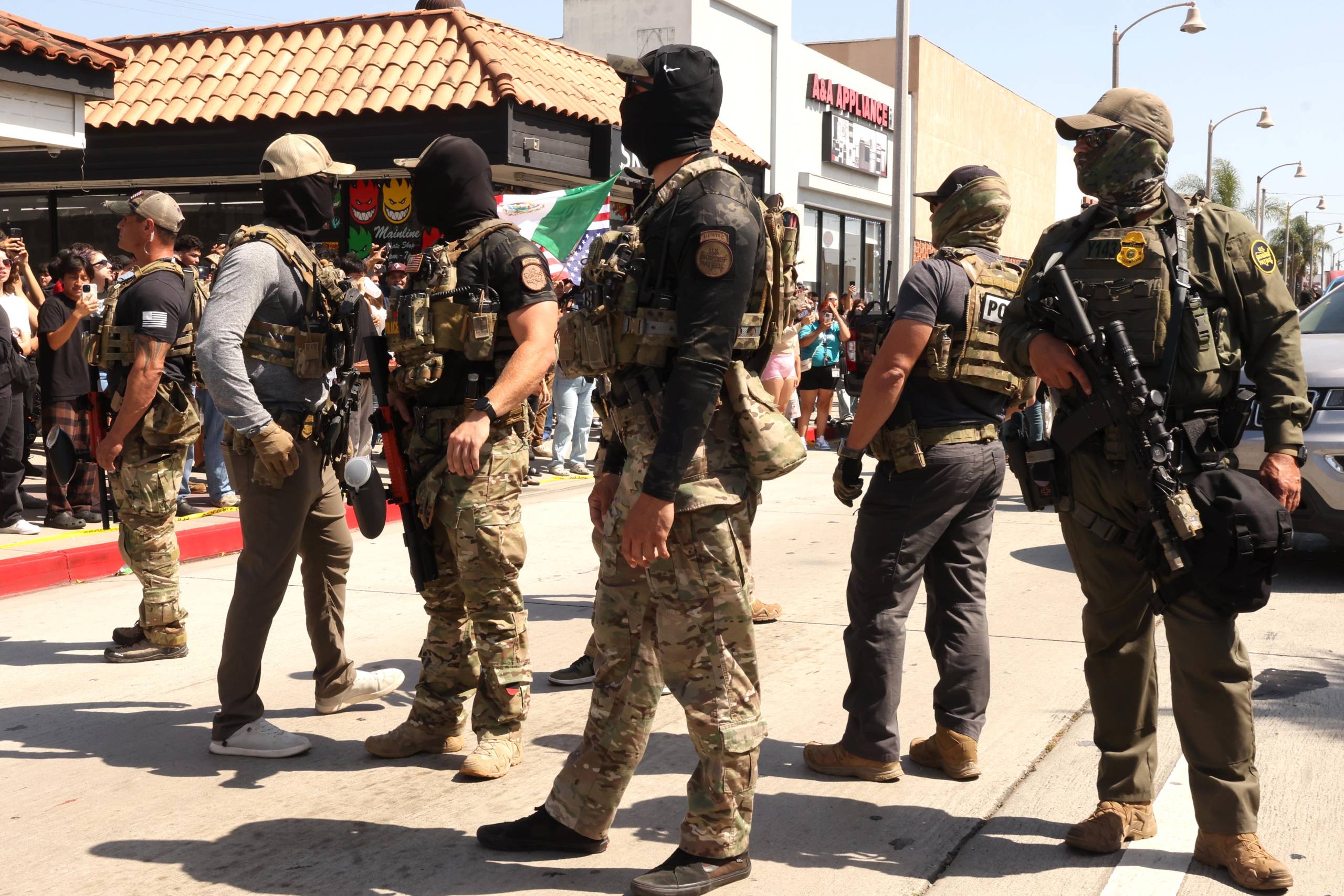
- California made national headlines last month when Governor Newsom signed a bill barring law enforcement officers from wearing masks — a law aimed at immigration agents. Federal officials say they won’t comply. But the skirmish is about more than just masks.
- New data suggests Fresno is a more prosperous city than it was 12 years ago.
Masking Bill Fuels California Legal Battle Over Federal Immigration Agents
The videos have become almost routine: men in dark clothing and vests, often wearing masks, wrestling people to the ground and whisking them away in unmarked vehicles. It could look like a kidnapping or a scene from a movie, but they are American immigration officers, and some of the people being swept up are U.S. citizens. “That’s happening in the United States of America. Masked men jumping out of unmarked cars, people disappearing, no due process, no oversight, zero accountability,” California Gov. Gavin Newsom said recently on “The Late Show with Stephen Colbert.”
In response to the scenes, Newsom signed a bill last month barring local and federal law enforcement from wearing masks while on duty. The new law quickly drew fire from federal officials. Acting U.S. Attorney Bill Essayli instructed federal officers to disregard what he called a dangerous and unconstitutional law. In a recent interview on KCRA, Essayli accused California officials of passing the law because they “don’t want our immigration laws being enforced.”
“So they’re dehumanizing, and they’re delegitimizing the federal government. They call ICE agents kidnappers. They’re saying they’re making people disappear,” he said. “People are being arrested in compliance with federal law and the Constitution. … And all they’re doing with this bill and this rhetoric is putting the lives of our agents in danger.”
The masking bill is the latest skirmish in an ongoing battle between California and the Trump administration over how federal law enforcement agencies operate in the state — a fight likely headed to court. There’s already a pending federal lawsuit over President Donald Trump’s decision to seize control of the California National Guard earlier this summer and deploy guard troops and U.S. Marines to assist in immigration raids. Last weekend, California also joined a lawsuit in Oregon challenging the president’s move to send National Guard troops into Portland. And legal battles over the state’s sanctuary laws, which prohibit state and local police from assisting in immigration enforcement, date back to Trump’s first term.
New Report Shows Fresno Economy Growing More Inclusive
Fresno is used to being an underdog city in California. Incomes are consistently lower than the state average. And unemployment is higher. But that may be changing. Since 2013, the city climbed 30 rankings among major U.S. cities when it comes to economic inclusion – and 60 places for racial inclusion. That’s according to a new report from the non-profit Central Valley Community Foundation.