Sponsor MessageBecome a KQED sponsor
upper waypoint

New Movie Tells The Story Of Bus Driver Who Helped Students, Teachers Escape Camp Fire

Save ArticleSave Article
Failed to save article

Please try again

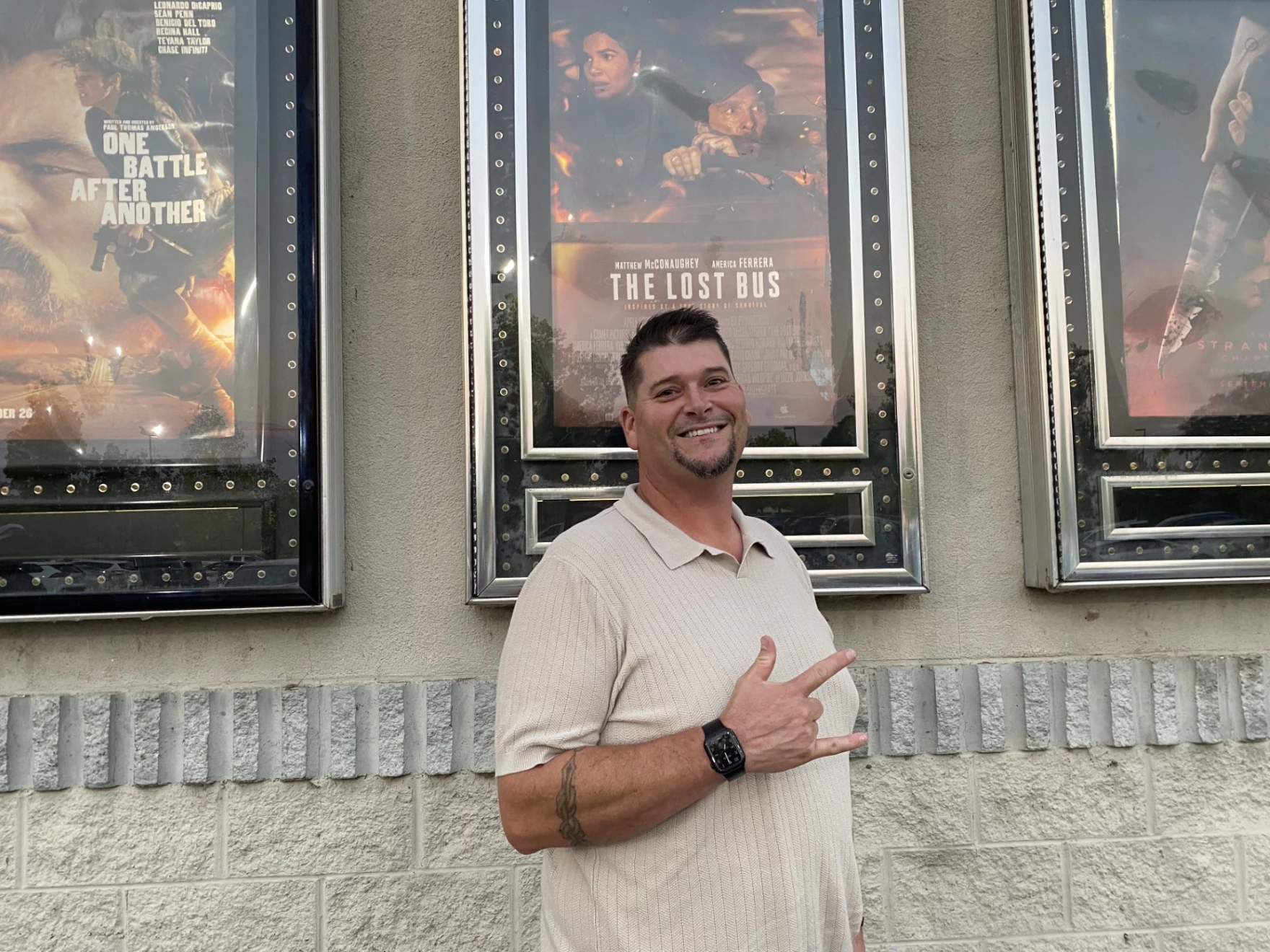
Kevin McKay is the real-life bus driver “The Lost Bus” is based on. He watched the first screening of the film at Feather River Cinemas on Thursday, Sept. 25, 2025 in Oroville, Calif. (Claudia Brancart/North State Public Radio)

Here are the morning’s top stories on Friday, October 3, 2025…

  • The 2018 Camp Fire in Paradise remains California’s deadliest and most destructive wildfire in history. The Northern California fire claimed the lives of 85 people. Now, a new movie depicts the real-life heroic escape of one local bus driver. 
  • Yosemite National Park remains open during the government shutdown, but there won’t be many rangers there to help visitors.
  • The US Department of Education is ending several grant programs that support minority-serving institutions. Department officials say these programs are discriminatory. California stands to lose more grant money than any other state – for programs that support Black, Latino, Asian and Native American students on college campuses.

Paradise Bus Driver, Survivors Relive Camp Fire Escape As ‘The Lost Bus’ Premieres 

“The Lost Bus” tells the story of a Paradise school bus driver and a teacher who helped 22 kids escape the Camp Fire in 2018. The fire killed 85 people and remains the most deadly and destructive in California’s history.

At the movie premiere last month, the film resonated in Chico and Oroville — two cities close to Paradise where many survivors relocated after the fire. Crowds packed into theaters to witness a film about their community’s experience. A line wrapped around The Pageant Theater in Chico, and Feather River Cinemas in Oroville also drew a full house.

Kevin McKay, the real-life bus driver at the heart of the film played by Matthew McConaughey, showed up to Feather River Cinemas with family and friends, many from Cal Fire. He told NSPR what it was like to watch his story on the big screen nearly seven years later.

“It’s super surreal for me, being that the core storyline is about my life,” McKay said. “But at the same time, I’m a Camp Fire survivor, and so, honestly, there’s so many different ways that I connect to the film.” McKay said he hopes other survivors who see the movie feel seen and heard. He also hopes people leave with the message of “normal people, helping other people.”

Yosemite Is Open During The Shutdown — But With Lots Of Changes For Visitors

The shutdown of the federal government has brought the full or partial closure of many National Park Service sites across California — including Muir Woods, where visitors on Wednesday were met with locked gates, and Alcatraz Island.

Sponsored

And the closures have many people, especially curious about the state’s most visited national park, asking: “Is Yosemite National Park open right now?”

The quick answer is yes, Yosemite is still open to the public. But because of the shutdown, many federal employees who staff the park aren’t working. That means many buildings, facilities and resources aren’t currently available in Yosemite, in a way that could have real consequences for a person’s visit. Instead of being stopped and greeted by a park staffer at the Yosemite gates, you’ll now drive straight through. This means there’s nobody in those booths to collect your entry fee (usually $35 per vehicle) or to offer you guidance on your visit — including timely updates on weather conditions and any road closures.

Such expert advice is helpful even for seasoned park-goers, and this is where the visitor centers outside Yosemite really come in handy, said Kim Lawson, director of communications and content at the Yosemite Mariposa County Tourism Bureau. “What we’re recommending is visitors to stop in the gateway communities as they come through,” Lawson said, especially since the Yosemite Welcome Center in Yosemite Valley will be closed during the shutdown.

California Faces Steepest Cuts As Trump Ends Diversity Grants

In a few weeks, over 100 colleges and universities across California will lose access to essential funding for tutoring, academic counseling and other support services aimed at helping Black, Latino, Asian and Native American students succeed in college.

The change comes after the U.S. Department of Education said last month that it was ending a grant program that supports “minority-serving institutions,” claiming that it illegally favors certain racial or ethnic groups.

Every state will lose money, but the Education Department’s decision hits California hardest. The state receives over a quarter of all of these diversity grants, since it has a high percentage of minority students, especially Latinos, and it has more college campuses than any other state.

The state’s community college system could lose $20 million next year as a result of the funding cuts, said Chris Ferguson, who supports finance and strategic relations at the California Community Colleges Chancellor’s Office. The Cal State University and the University of California systems, which also receive this money, did not respond to questions about the amount of funding at risk.

lower waypoint
next waypoint