Sponsor MessageBecome a KQED sponsor
upper waypoint

Car Owners Have Additional Tool To Find Out If They Can Recoup Money From Auctioned Vehicle

Save ArticleSave Article
Failed to save article

Please try again

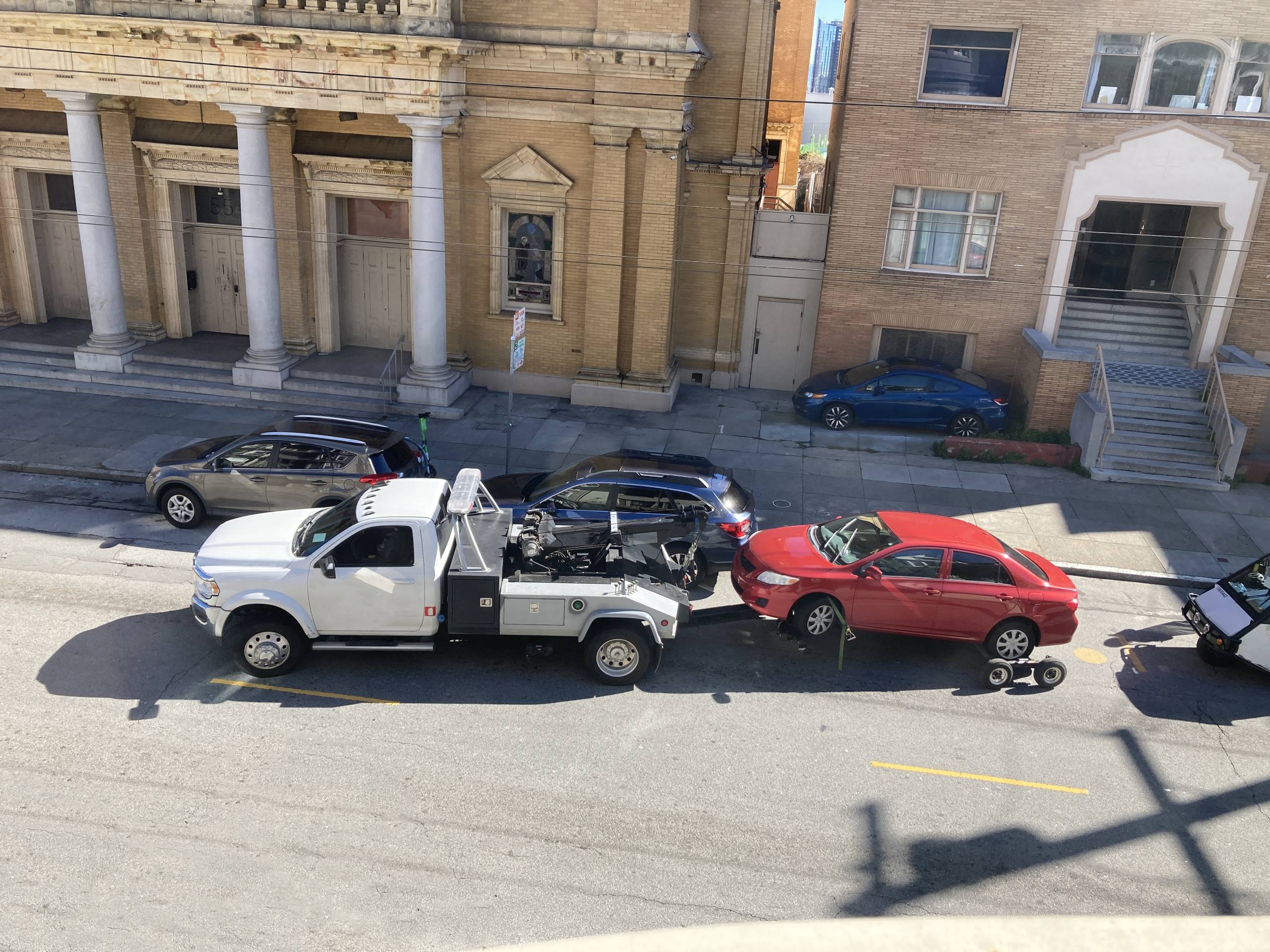
A red sedan is being towed by a white tow truck on a street in San Francisco, California. (Joey Kotfica/Getty Images)

Here are the morning’s top stories on Tuesday, September 23, 2025…

CalMatters Created A Tool To Help You Get Your Money Back From The DMV. Now The Agency’s Copied It

For years, the California Department of Motor Vehicles has been keeping profits from the sales of towed cars, without giving the owners much of a chance to claim money that’s rightfully theirs. That’s changing, thanks to a CalMatters investigation.

The state DMV is now offering a lookup tool on its website, allowing people to see if the DMV owes them money from what’s known as a lien sale. The tool is nearly identical to the one CalMatters created for a story in March.

By law, towing companies, storage yards and car repair shops can sell your car to recoup their costs if you do not pick up your vehicle. It’s known as a lien sale. For poor Californians, the tows and compounding fees are often a trap. Police can tow your car for things like expired registration, but you might not be able to get it back if you can’t renew your registration because you have unpaid fees and fines from things like traffic and parking tickets.

Lien sales have to be approved by the DMV, and any money leftover is supposed to go to the agency. Typically, lien sales end in debt. However, CalMatters found that the DMV collected more than $8 million from nearly 5,300 cars sold at auction between 2016 through the fall of 2024. Owners are entitled to that surplus, and have up to three years to claim it. But the agency does not notify owners of the refunds.

Sponsored

When CalMatters first story ran, the DMV said that it wasn’t required to notify people of their refunds, and there was no mention of how people could claim their lien sale refunds. Now, in addition to the lookup tool, there’s a list of frequently asked questions and instructions on exactly how to claim refunds. The DMV also said it had sent more than $5,000 to a family after admitting it erroneously denied the refund request of Stephen McAllister, who was featured in the CalMatters investigation. “I think there’s a lot of people in this same situation, and that money means a lot to them,” McAllister said.

Federal Judge Orders 500 Health Science Grants At UCLA Restored

A federal judge in California has ordered the Trump administration to restore 500 National Institutes of Health grants that it suspended at UCLA in July over accusations the campus tolerates antisemitism.

Judge Rita Lin’s decision provides researchers at the university a major respite as UCLA and University of California leaders contend with Trump’s demands for a $1.2 billion settlement over a litany of accusations, including that the campus permits antisemitism. It’s a claim that more than 600 Jewish members of the University of California community in a public letter say is “misguided and punitive.” Meanwhile, UCLA’s leadership highlighted its efforts to combat antisemitism days before Trump’s settlement demands.

Lin’s decision follows her string of orders since June that have restored hundreds of other UC research grants from multiple agencies. Her injunction is preliminary; the trial is ongoing.

The science grants pay for research into life-saving drugs, dementia, heart disease in rural areas, robotics education and a whole gamut of science inquiries across the country. They help fuel the country’s research enterprise and are the top source of federal research grants at the UC. The UC system has battled the Trump administration over various efforts to slash its funding since President Donald Trump’s second term began. The science funding is also a key source of income and training for graduate students, who are the next generation of publicly funded academics.

Tulare County Looks To Reforms Amid Sexual Harassment Allegations

The Tulare County Public Defender’s Office has agreed to overhaul an alleged culture of sexual harassment among employees, under the terms of a deal announced Monday.

Under the agreement, the Tulare County Public Defender’s Office will pay $200,000 to an employee who claimed in 2024 that a supervisor sexually harassed them, physically and verbally, for years. The complaint also alleged that there was an openly tolerated culture of workplace misconduct, including an instance of a senior official engaging in inappropriate conduct in front of dozens of staff at an office holiday party.

The office also agreed to survey and train its staff, and be monitored by the California Civil Rights Department, which mediated the deal. In a statement, a spokesman for Tulare County said it’s committed to fostering quality workplaces, and that settling the disputed claim is the most practical way forward to avoid the expense of litigation.

lower waypoint
next waypoint