RFK Jr.'s Vaccine Panel Backs Away From Plan to Require an Rx for a COVID Shot
The group voted to require people who want a COVID shot to be briefed on harms and benefits, but in a close vote, the panel failed to pass a change that would have asked states to require people to get a prescription.
Will Stone
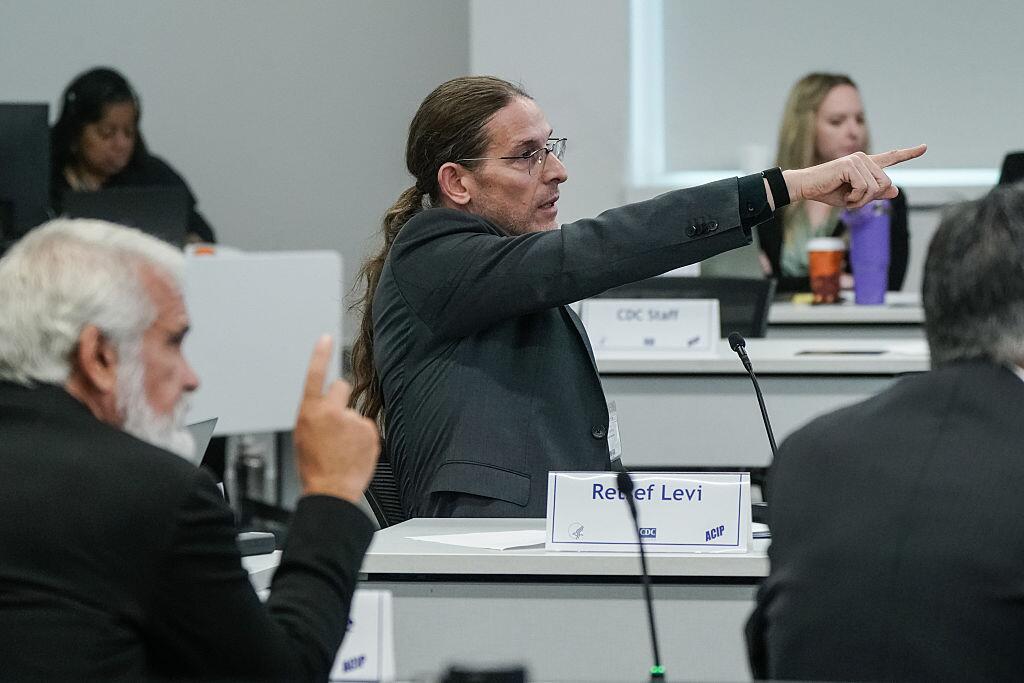
ACIP member Retsef Levi points to a slide while speaking during a meeting of the CDC's Advisory Committee on Immunization Practices on September 18, 2025 in Atlanta, Georgia. The federal vaccine advisory group, recently appointed by Health Secretary Robert F. Kennedy Jr., made recommendations Friday on the COVID vaccine.
A panel of vaccine advisers to the federal government debated several changes to COVID-19vaccine access in a chaotic meeting Friday, marked by confusion over processes, technical difficulties and passionate disagreement among members and other experts in attendance.
Ultimately, the committee backed away from its most controversial proposal that called for states to require those who want a COVID-19 vaccine to get a prescription.
The committee voted to recommend vaccination for adults 65 and older and younger people subject to a process called shared decision making. Their recommendations would not prohibit anyone over six months from getting the shot, but they do call for patients to speak with a clinician about the risks and benefits.
For people 64 and younger the conversation should emphasize that benefits are greatest for people with the most risk of serious disease and lowest for people without increased risk.
The advisers also voted that the CDC should add information about the possible risks and uncertainties related to COVID vaccine effectiveness to information sheets about the shots. Many of the risks were speculative or already known to be unfounded.
While the CDC generally adopts the recommendations of the panel, the votes are not final until acting CDC director Jim O’Neill signs off on them.
The gathering underscored the turbulent and highly politicized nature of vaccine policy under the leadership of Health Secretary Robert F. Kennedy Jr., which is now at odds with positions held by major medical organizations.
Related Article
Over the course of the meeting, many clinicians in attendance raised concerns about how ACIP had sidelined expert input, elevated questionable or preliminary data, and broken from the established process for developing these recommendations, which influence insurance coverage.
“It’s troubling to see the erosion of the committee’s integrity,” said Dr. Sandra Fryhofer, who spoke on behalf of the American Medical Association on Friday, “We’re concerned about how vaccine recommendations are being developed by this new panel, data is being selectively used to justify specific conclusions.”
The recommendations on COVID-19 come on the heels of Thursday’s vote to restrict access to the MMRV vaccine in children under 4, and represent the latest push in Kennedy’s ongoing campaign to reshape vaccine policy in the U.S.
However, some proposals that would have more dramatically reshaped the vaccine schedule did not make it through. A vote to remove the recommendations that infants get the hepatitis B vaccine at birth failed to pass on Friday morning.
And the recommendation that a prescription be required for anyone to get a COVID vaccine – which could have been a new hurdle in many places, if states adopted the recommendation – ended in a tie. ACIP chairman Martin Kulldorff voted no, breaking the tie. The motion failed.
This was the second meeting of the vaccine panel since Kennedy fired the existing roster, chosen during the Biden administration, and installed his own choices. Some on the panel have a history of criticizing vaccines, particularly the COVID-19 shots which have been an animating force for many of Kennedy’s supporters.
One member, Retsef Levi, an MIT professor of operations management, drove much of the discussion leading up the votes on COVID-19, which were not shared publicly until Levi presented them at the end of the meeting. Several outside medical groups in attendance requested that the voting topics be shared to have transparency.
In his comments, Levi emphasized safety concerns about the vaccines.
“I don’t think that the public currently believes the narrative of safe and effective,” he told the panel.
There has been considerable confusion around the availability of COVID-19 shots since late August when the Food and Drug Administration only approved the fall boosters for people who are 65 and up, or have high risk medical conditions.