Here are the morning’s top stories on Wednesday, September 10, 2025…
- For two decades, the nation’s solution to homelessness has been pretty straightforward: get people into housing. This approach is known as Housing First, and in California it’s even written into state law. But this summer, President Trump signed an executive order reversing this policy, turning a California mandate into a liability.
- The Garnet Fire east of Fresno has burned more than 56,000 acres, and has reached the McKinley Grove of Giant Sequoias.
- A San Diego law firm filed a class action lawsuit against Immigration and Customs Enforcement – arguing that federal agents are breaking the law when they arrest asylum seekers at immigration court.
Trump’s ‘Tectonic Shift’ on Homelessness Is Sending Shockwaves Across California
California’s homelessness policy has prioritized getting people into permanent housing with as few barriers as possible. This approach, known as Housing First, has shaped the federal response to homelessness for two decades, and California doubled down in 2016 by requiring state-funded programs to follow its principles.
Now the Trump administration is trying to scrap it. In late July, the president issued an executive order directing federal agencies to stop funding Housing First programs, calling them a failure and turning a California mandate into a liability. The order is the culmination of a backlash that’s been brewing for years — both in California and across the country — as the number of people on the streets keeps ticking up even as the spending on homelessness grows.
The debate over Housing First hinges on a clash over both causes and solutions. Is homelessness the result of rampant drug use and untreated mental illness, or of deeper structural forces like sky-high rents, poverty and racism? Should housing be used as a reward for sobriety and treatment, or provided first, as the foundation for recovery? And, perhaps more fundamentally, should housing be a human right?
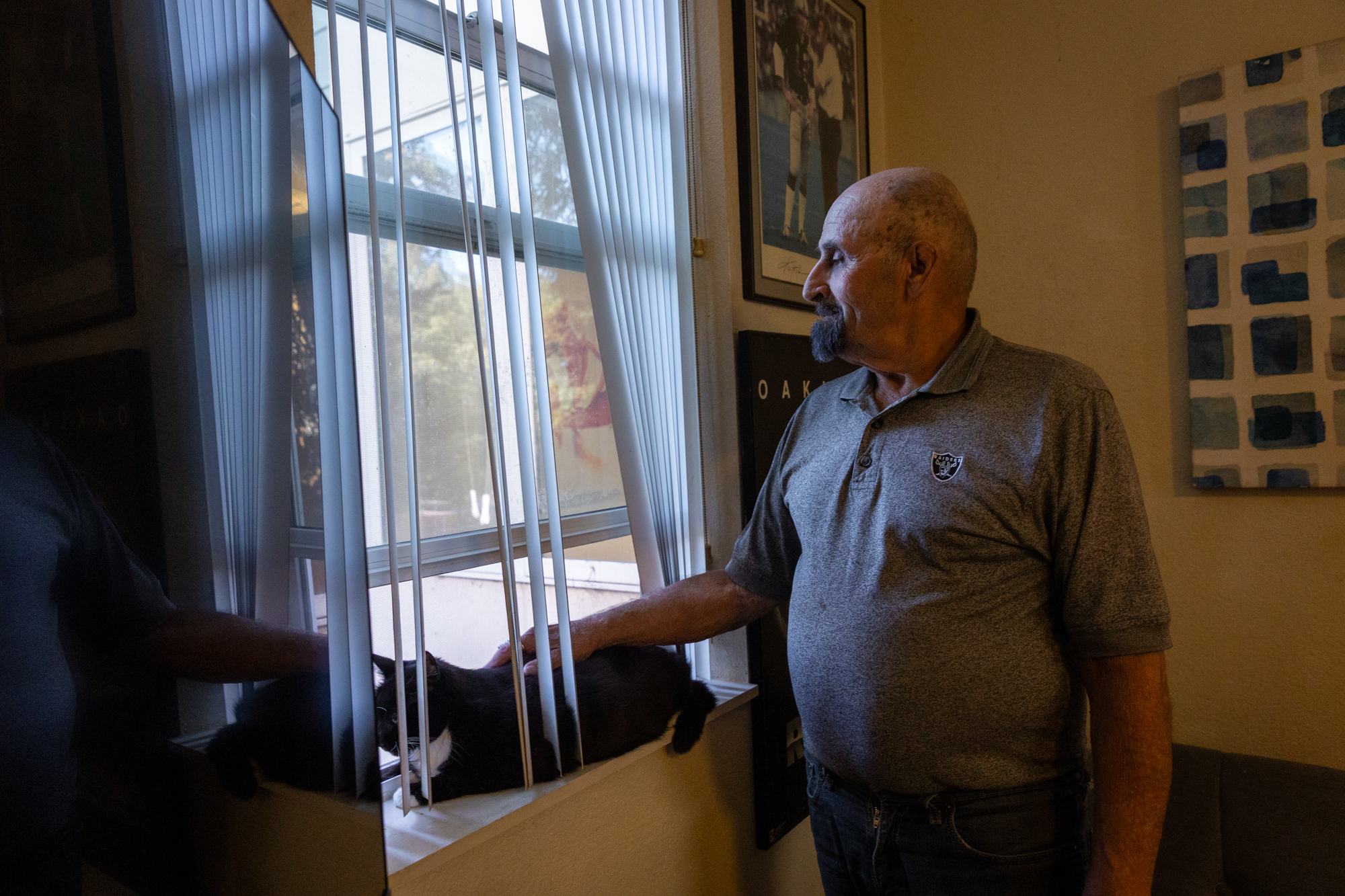
What the federal pullback will mean in California isn’t clear. Local officials are awaiting guidance on whether and how they’ll be able to tap federal dollars. Jonathan Russell, who runs homelessness services for Alameda County, called it a “tectonic shift” that has left local agencies caught between contradictory policies. “There’s a lot of unknowns,” he said.
Grove Of Giant Sequoia Trees Threatened By Wildfire
A lightning-sparked wildfire in California’s Sierra National Forest burned Tuesday through a grove of giant sequoias and set some of the ancient towering trees on fire.