Sponsor MessageBecome a KQED sponsor
upper waypoint

Imperial County Tries To Save Sugar Beet Industry

Save ArticleSave Article
Failed to save article

Please try again

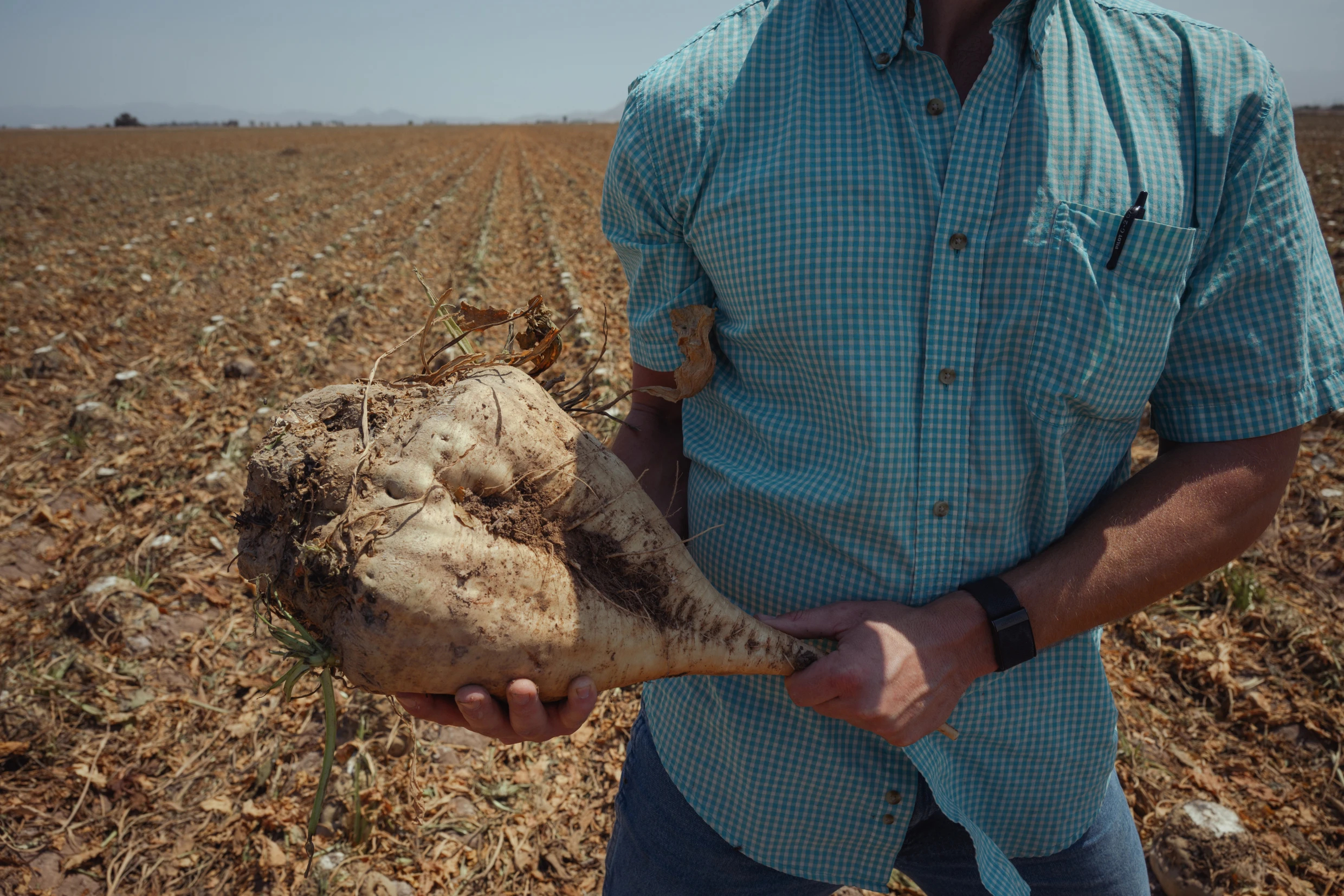
Ben Abatti III holds a defoliated sugarbeet in one of his family's fields outside El Centro in Imperial County on July 16, 2025. Sugarbeets make up over a third of the crops that Abatti and his family grow every year. (Kori Suzuki/KPBS)

Here are the morning’s top stories on Monday, August 18, 2025…

  • The Imperial Valley has been growing sugar beets for more than a century. But this summer’s harvest could be the region’s last. The valley’s only sugar beet factory is shutting down, threatening hundreds of jobs and one of its staple crops.
  • San Diego Unified School District officials are condemning the recent arrest of a parent near an elementary school by immigration agents.
  • Valley Fever is on the rise in California. State health officials say there were more than 5,500 provisional cases from January through June, continuing an upward trend after last year’s record high.

California’s Last Sugar Beet Plant Is Closing. Can Imperial County Keep The Industry Alive?

Some of the sweetest, largest sugar beets in the world are grown in the Imperial Valley. The region has nutrient-rich soil, an abundance of sunlight and century-old claims to water from the Colorado River. Most importantly, the valley has the Spreckels Sugar factory in Brawley, which processes beets into sugar by the truckload.

But the valley likely won’t be able to grow sugar beets for much longer. That’s because this spring, the owner of the Spreckels factory, Southern Minnesota Beet Sugar Cooperative, announced plans to shut down the plant and consolidate their sugar operations to the Midwest. Due to strict federal limits on who can make beet sugar in the United States, the Imperial Valley will be unable to process any more beets once the plant closes — effectively ending sugar beet farming in the region.

The news has rocked the Imperial Valley, where jobs are hard to come by and farming is the second-largest employer. County officials say the plant’s closure means the loss of a $243 million industry and more than 700 local jobs. By the numbers, sugar beet and sugar cane farming together account for roughly 2% of the total crop value produced by the region’s powerful agriculture industry.

Some elected leaders are holding onto hopes that they can keep the industry alive. Earlier this summer, members of the Imperial County Board of Supervisors traveled to Washington D.C. in a bid to secure the federal permissions needed to build a new beet sugar plant.

San Diego Unified Responds To ICE Arrest Outside Linda Vista Elementary

San Diego Unified School District officials said the parent of a student at Linda Vista Elementary School was detained by Immigration and Customs Enforcement (ICE) on Thursday.

Sponsored

The arrest occurred near the elementary school while the father was waiting to pick up his child, minutes before students were dismissed from their classrooms. The child’s mother was informed about the arrest and was able to pick them up from school, district officials said.

The Department of Homeland Security confirmed the name of the man arrested is Juan Jose Martinez Cortes, a Mexican national without legal status. In an emailed statement Tricia McLaughlin, assistant DHS secretary for public affairs, told KPBS Martinez was “fraudulently using an American’s social security number.”

On Friday, district officials held a news conference to address the incident. “Let me be clear: Our schools and our neighborhoods that surround them should be off limits to enforcement actions like this,” said SDUSD Superintendent Fabiola Bagula. “These are spaces for safety, for growth, for belonging, for joy. And there may be a lot of debates about immigration reform, but there should be no debate that this kind of tactic is inhumane.”

San Diego Unified Trustee Sabrina Bazzo said Linda Vista Elementary experienced a decline in attendance Friday as a result of the arrest.

California Valley Fever Cases On Track For Record High

California surpassed 5,500 provisional cases of valley fever in the first six months of 2025, putting the state on track to hit record levels, according to a new snapshot of data from the state’s Department of Public Health.

Last year, California saw 12,500 valley fever cases, the highest year on record in the state, and a major jump from the 7,000–9,000 cases reported annually from 2017 through 2023.

Valley fever — a fungal disease spread by airborne spores — is marked by symptoms similar to COVID-19, like coughs and fevers. The disease can also cause serious lung infections, like pneumonia. Most infections are mild. But Dr. Stuart Cohen, an infectious disease specialist at UC Davis, said he’s seeing more severe cases, even in otherwise healthy patients. “We are seeing higher numbers, and it seems like we’re seeing sicker patients too,” Cohen said.

State health officials note that rates of valley fever continue to be highest in the southern San Joaquin Valley, but are also increasing in other areas, including the northern Central Valley and the Central Coast.

lower waypoint
next waypoint