Sponsor MessageBecome a KQED sponsor
upper waypoint

Residents In California's Most Polluted Communities Call For Local Climate Change Focus

Save ArticleSave Article
Failed to save article

Please try again

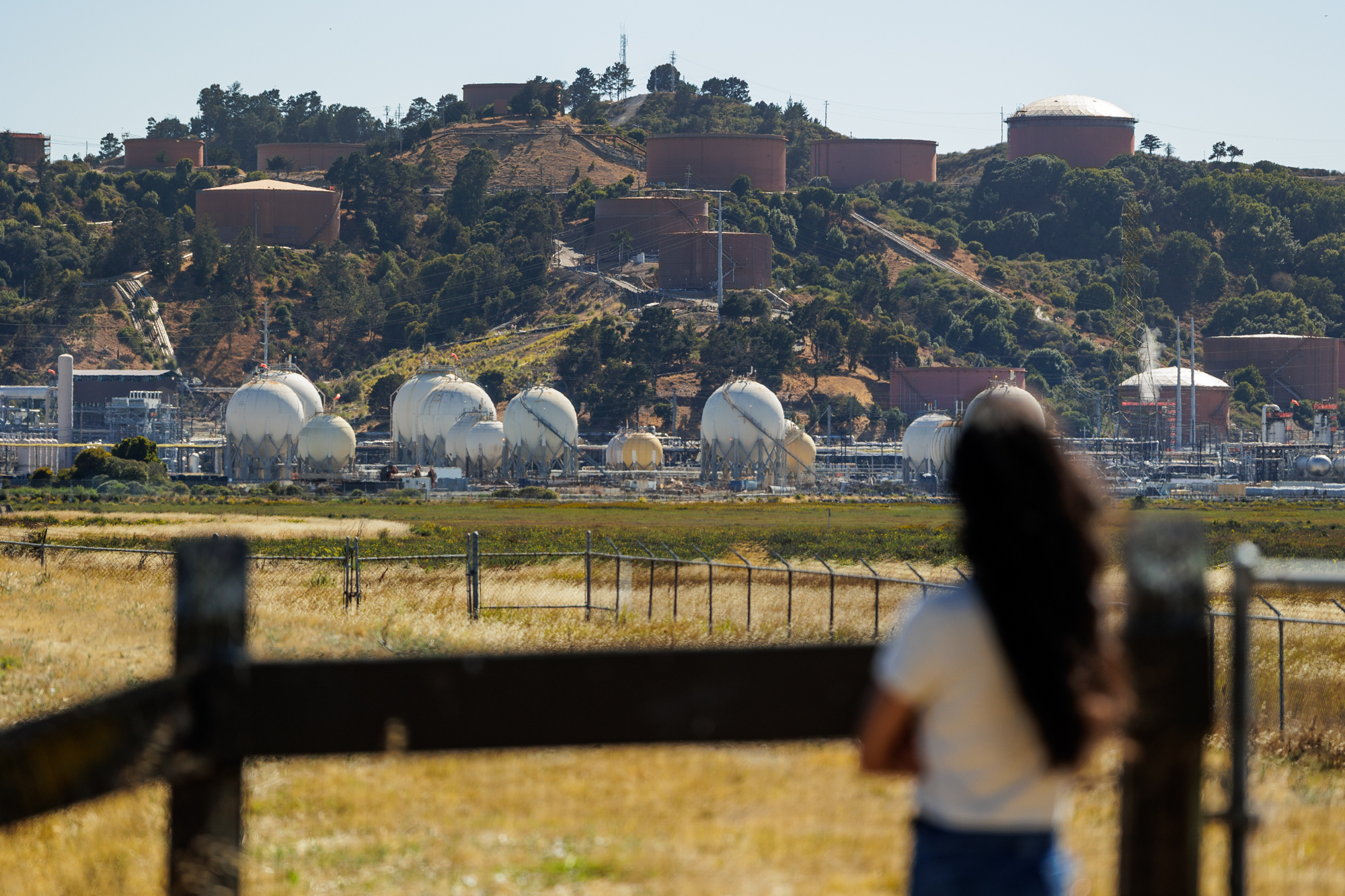
Luna Angulo looks at the Chevron Refinery from the Wildcat Marsh Staging Area in Richmond on Aug. 8, 2025. (Martin do Nascimento/KQED)

Here are the morning’s top stories on Wednesday, August 13, 2025…

  • When California lawmakers return from summer recess on Monday, the legislature is expected to debate the future of the state’s program to fight climate change. But some residents in heavily polluted communities want state leaders to focus on local air quality too. 
  • A federal judge in San Francisco has ordered the Trump administration to reinstate some of UCLA’s science grant funding that it suspended last month. 
  • One of the candidates running to be California’s next governor faces potential conflicts of interest related to her spouse’s business dealings.
  • If you call the Redding Fire Department for help with anything but a life-threatening medical emergency, you may now get a bill.

California’s Clean-Air Program For Polluted Communities Faces Crossroads

On Aug. 6, 2012, a fire broke out at the Chevron refinery in Richmond. Liquid hydrocarbon spewed from a leaky pipe in the crude unit and ignited, sending smoke plumes into the air that could be seen across the Bay. Nearby residents struggled to breathe and reported headaches, chest pains and itchy eyes. More than 15,000 people sought medical help. For Luna Angulo, then in middle school, it was an awakening. “As someone who is 12 and you see the sky suddenly turn black, you’re like — the city is on fire,” Angulo, now 25, said. “What is this about? What is going on?”

Chevron later agreed to upgrade the refinery, which was first established in 1902, and pay more than $1 million in fines. The company also settled a lawsuit with the city of Richmond for $5 million. For Angulo, the flames revealed the human cost of living in the shadow of California’s third-largest refinery.

The 2012 Chevron fire was a key flashpoint in the years-long effort to empower frontline communities like Richmond to fight for cleaner air. That work culminated in the Path to Clean Air — a hyperlocal pollution-reduction roadmap that places decision-making in the hands of residents, not regulators. With such lofty goals, the Path to Clean Air could be a community-powered blueprint that dramatically reshapes Richmond’s local economy and the health of its residents. Or it could collect dust.

Over the next decade, Angulo became deeply involved in local activism, often pressing state and regional agencies to adopt tougher regulations on Chevron. Then, in 2021, she heard about an opportunity to claim a seat at the table. Four years earlier, Gov. Jerry Brown had signed Assembly Bill 617, aimed at improving air quality in California’s most polluted communities. Crucially, the law created local steering committees — made up of residents, not experts — with the power to craft plans to measure and reduce air pollution.

Sponsored

Many local activists saw AB 617 as a breakthrough for community power-building. But statewide environmental justice organizations viewed it as a half-measure, meant to win support from progressive Democrats for Brown’s true priority: extending California’s landmark environmental program known as cap-and-trade. Cap-and-trade sets a declining limit on greenhouse gas emissions from industries such as refineries, power plants and factories. But it does not require reductions at specific sites, such as Chevron’s Richmond refinery, and it only regulates climate-warming greenhouse gases, not local air pollutants like particulate matter. Now, Gov. Gavin Newsom and state legislators are weighing another renewal of cap-and-trade, which could change the way AB 617 is funded. Environmental justice advocates view the negotiations as a chance to strengthen the program and deliver on the promise of clean air in California’s most polluted neighborhoods.

Federal Judge Orders Trump Administration To Restore Hundreds Of UCLA Research Grants

A federal judge ordered the Trump administration to restore a portion of the 800 federal science research grants that it suspended at UCLA last month, delivering a major setback to efforts to force the university into a $1 billion settlement.

California district court judge Rita F. Lin ruled Tuesday that the suspensions violated her June  preliminary injunction in which she ordered the National Science Foundation to restore 114 grants it had terminated at the University of California and blocked the agency from cancelling other grants at the UC system. Her June order came after lawyers for University of California researchers argued the science foundation grant terminations were arbitrary and capricious and in violation of federal law. Those grants and others were terminated over alleged Diversity, Equity, and Inclusion violations following several Trump executive orders in January.

Lin’s order to restore the suspended grants came in response to a court filing lawyers for the UC researchers submitted after 300 National Science Foundation Grants and 500 National Institutes of Health grants at UCLA were suspended. The suspensions froze $584 million. The lawyers aren’t acting on behalf of the UC system, though some are employed at the UC. It is not yet clear if all 300 suspended National Science Foundation grants are to be restored under Lin’s latest order. A lawyer for the researchers, Claudia Polsky, said all 300 should be restored.

This Candidate For California Governor Has A Potential Conflict Of Interest In Her Own Home

If former state Senate leader Toni Atkins is elected governor next year, she would oversee a state contract that puts money in her own pocket.

Following a directive from Gov. Gavin Newsom to develop state-owned properties for affordable housing, the California Department of General Services in 2020 hired a consulting firm to help prioritize sites, conduct market research and evaluate applications from contractors.

That firm, LeSar Development Consultants, is owned by Atkins’ spouse, Jennifer LeSar. And because of California’s community property law that gives couples equal ownership of assets in their marriage, the $1 million contract — which was reupped in February through 2028 — has been worth tens of thousands of dollars to Atkins, according to financial disclosures. It’s just one of the potential conflicts of interest with her spouse’s business dealings that Atkins faces as she seeks the most powerful office in California. Nearly half of the major clients last year at LeSar’s companies employed lobbyists to influence government policy.

Atkins declined an interview request from CalMatters to discuss how she would handle conflicts of interest as governor. She did not say she would take any specific steps to insulate herself from LeSar’s business dealings or make any changes to their current arrangement.

A Call To Redding Fire May Now Cost You

The Redding Fire Department has begun charging a $489 fee for lift assists, non-emergency calls for when someone has fallen but doesn’t need to go to the hospital.

Fire officials said the department receives about 1,200 such calls each year. Sometimes people even call when they need help getting to the restroom, Deputy Chief Jay Sumerlin said. “Calls are becoming so frequent that when we have a true emergency — let’s say a shooting, a stabbing or let’s say a baby not breathing — I may not have a fire engine in place anymore,” he said.

The Redding City Council approved the fee in 2023 to offset costs and dissuade unnecessary calls. Sumerlin said the fire department began gradually rolling out the policy this year. So far, Sumerlin said, about 500 people have received bills.

lower waypoint
next waypoint