Sponsor MessageBecome a KQED sponsor
upper waypoint

California Tribes Scramble To Find Funding For Food Assistance Programs

Save ArticleSave Article
Failed to save article

Please try again

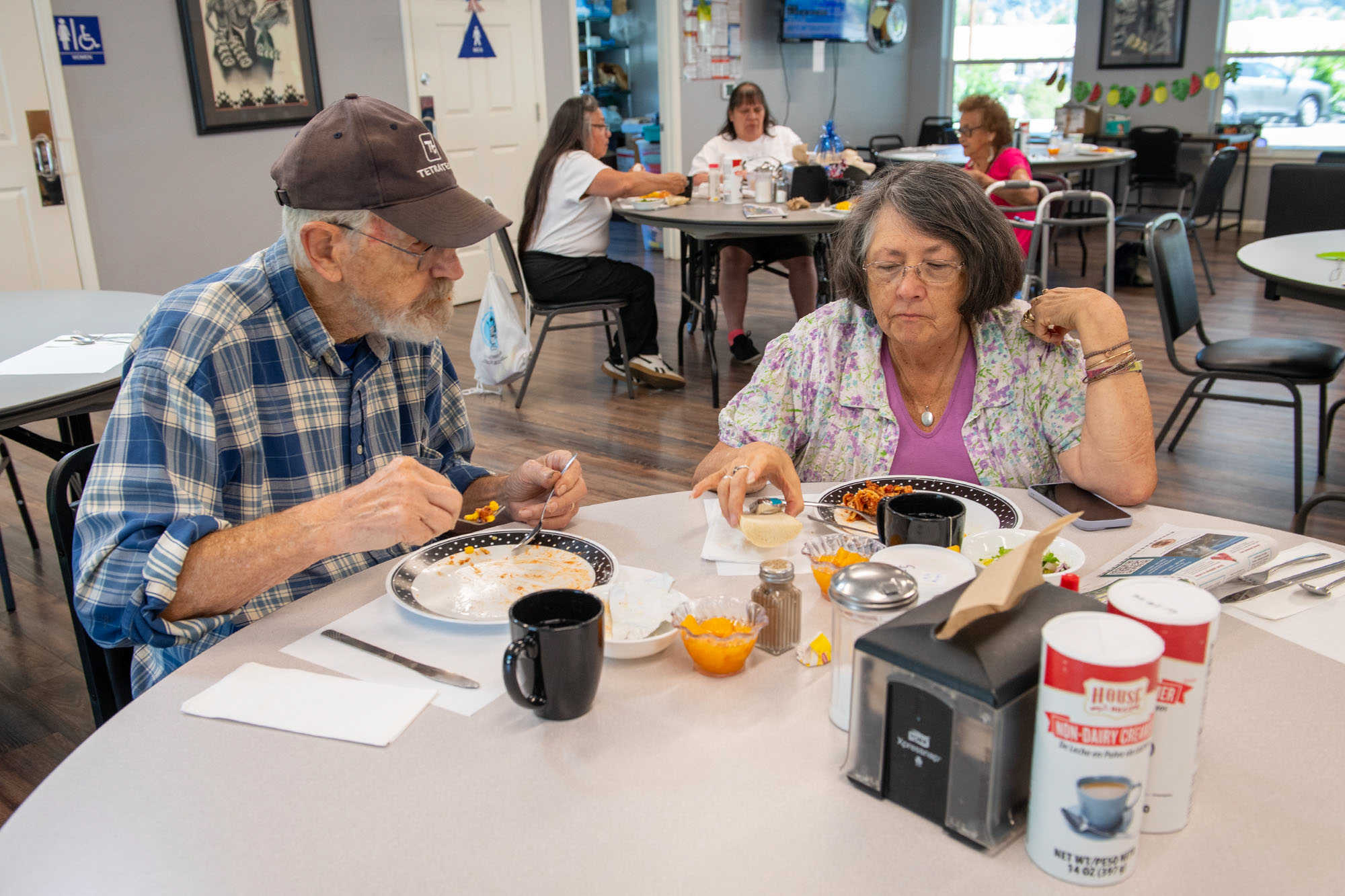
Ken and Norma McAdams eat free lunch at the Senior Nutrition Center in Hoopa, California. Norma is on the board of the Klamath Trinity Resource Conservation District and benefits from the LFDA Program. (Mark McKenna for KQED)

Here are the morning’s top stories on Monday, July 14, 2025…

  • The Trump administration’s decision to cancel a federal food assistance program is hitting California’s tribal communities hard. For the Hoopa Valley Tribe, the funds help them provide fresh, local food for their elders  and creates reliable income for their farmers. With funding set to expire this year, the tribe is scrambling to fill the void.
  • The Trump administration is appealing a federal judge’s order limiting immigration agents from stopping or detaining people based on their race, ethnicity or occupation.
  • A California farmworker has died after falling from a greenhouse roof during a chaotic immigration raid in Ventura County. It marks the first known death tied to the Trump administration’s ICE operations.

Federal Cuts Leave California Tribe Fighting To Find Food Assistance Funding

Every week, 74-year-old Norma McAdams comes to the senior center on the Hoopa Valley Reservation to pick up fresh produce grown by local farmers. The Hoopa Valley tribal member used to grow her own fruit and vegetables. But after a recent osteoporosis diagnosis and back injury, that’s become harder. So these weekly produce boxes are as important as ever.

McAdams is one of 180 Hoopa Valley seniors getting local produce, eggs and beef through the USDA’s Local Food Purchase Assistance program, or LFPA. Since 2022, it’s provided $88.5 million to California food banks and tribal governments. It aims to strengthen local food systems worsened by the pandemic, especially in rural areas like the Hoopa Valley where nearly 30% of residents live in poverty. Tribal member Allie Hostler, who runs the local program, says it benefits both seniors and farmers. “For our local farmers, it meant market stability. It meant being able to sell every tomato that you grow,” she said.

But in March, the Trump administration cancelled the program, leaving tribes without a valuable safety net. Even before the pandemic, the Hoopa Valley tribe was aware of the dangers of relying too much on outside food sources. In 2015, the area was classified as a food desert after its only grocery store closed down. Today, the tribe runs its own market, but much of the food is still trucked in from Central Valley farms. Hostler had hoped LFPA would encourage local farmers to scale up enough to eventually supply the grocery store themselves.

Judge Orders Trump Administration To Halt Indiscriminate Immigration Stops, Arrests

A federal judge on Friday ordered the Trump administration to halt indiscriminate immigration stops and arrests in seven California counties, including Los Angeles.

Sponsored

Immigrant advocacy groups filed the lawsuit last week accusing President Trump’s administration of systematically targeting brown-skinned people in Southern California during its ongoing immigration crackdown. The plaintiffs include three detained immigrants and two U.S. citizens, one of whom was held despite showing agents his identification.

The filing in U.S. District Court asked a judge to block the administration from using what they call unconstitutional tactics in immigration raids. Immigrant advocates accuse immigration officials of detaining someone based on their race, carrying out warrantless arrests, and denying detainees access to legal counsel at a holding facility in downtown L.A. Judge Maame E. Frimpong also issued a separate order barring the federal government from restricting attorney access at a Los Angeles immigration detention facility in response to a request from nonprofit law firm Public Counsel.

The Trump administration is appealing the temporary restraining orders.

California Farmworker Dies After Falling From Greenhouse Roof During ICE Raid

A farmworker who fell from a greenhouse roof during a chaotic ICE raid last week at a California cannabis facility died Saturday of his injuries.

Jaime Alanis Garcia, 57, is the first known person to die during one of the Trump administration’s ongoing immigration enforcement operations. Yesenia Duran, Alanis’ niece, confirmed his death to The Associated Press. Garcia called family to say he was hiding and possibly was fleeing agents before he fell about 30 feet from the roof and broke his neck, according to information from family, hospital and government sources.

Agents arrested some 200 people suspected of being in the country illegally and identified at least 10 immigrant children on the sites in Camarillo and Carpinteria, DHS said in a statement. “This man was not in and has not been in CBP or ICE custody,” DHS Assistant Secretary for Public Affairs Tricia McLaughlin said in a statement. “Although he was not being pursued by law enforcement, this individual climbed up to the roof of a greenhouse and fell 30 feet. CBP immediately called a medivac to the scene to get him care as quickly as possible.”

lower waypoint
next waypoint