California's Law to Fix Unsafe Homeless Shelters Ignored by Cities and Counties
The Supreme Court’s decision on homelessness will test a shelter system that has many problems and lacks accountability.
Lauren Hepler, CalMatters
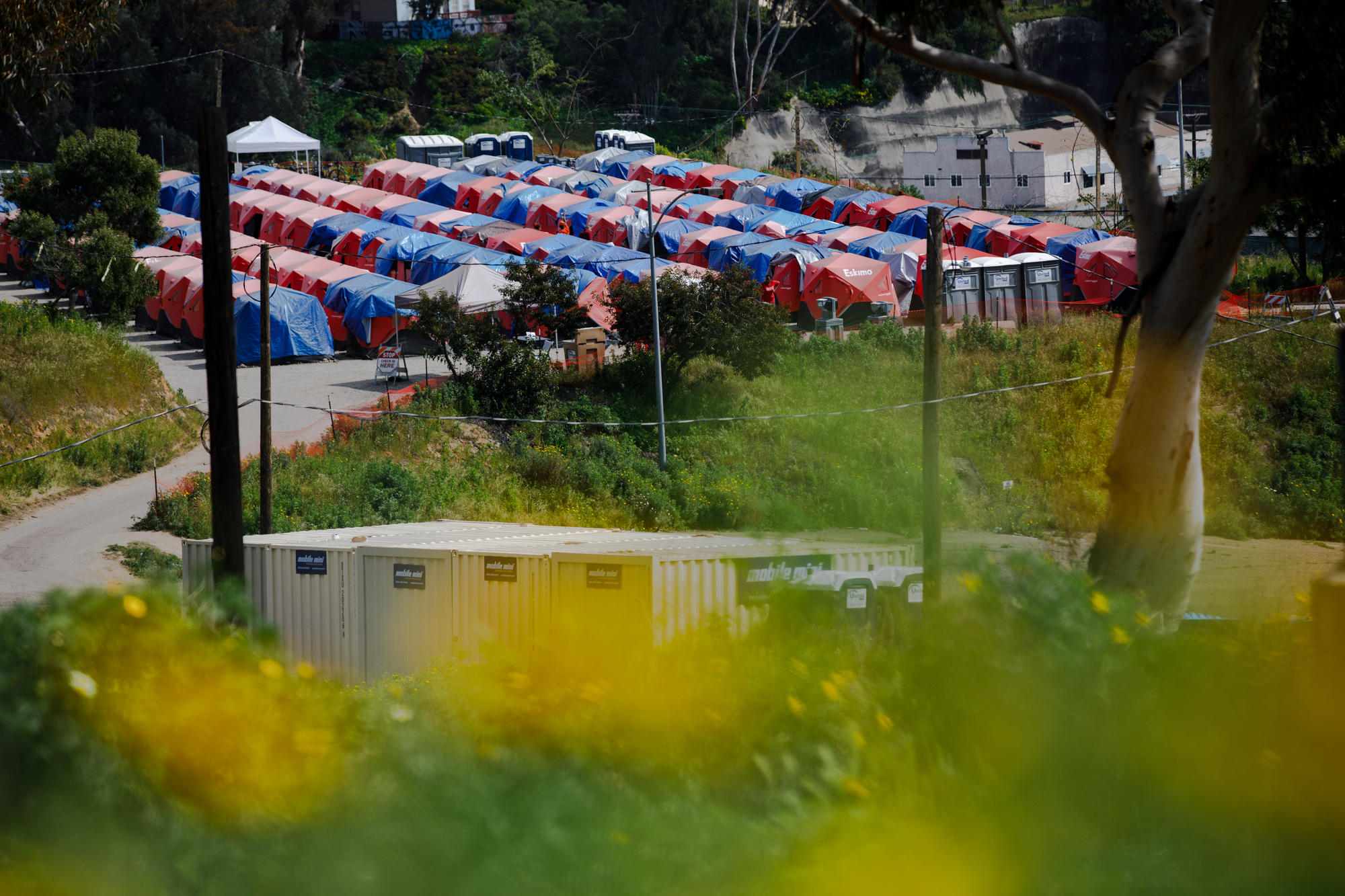
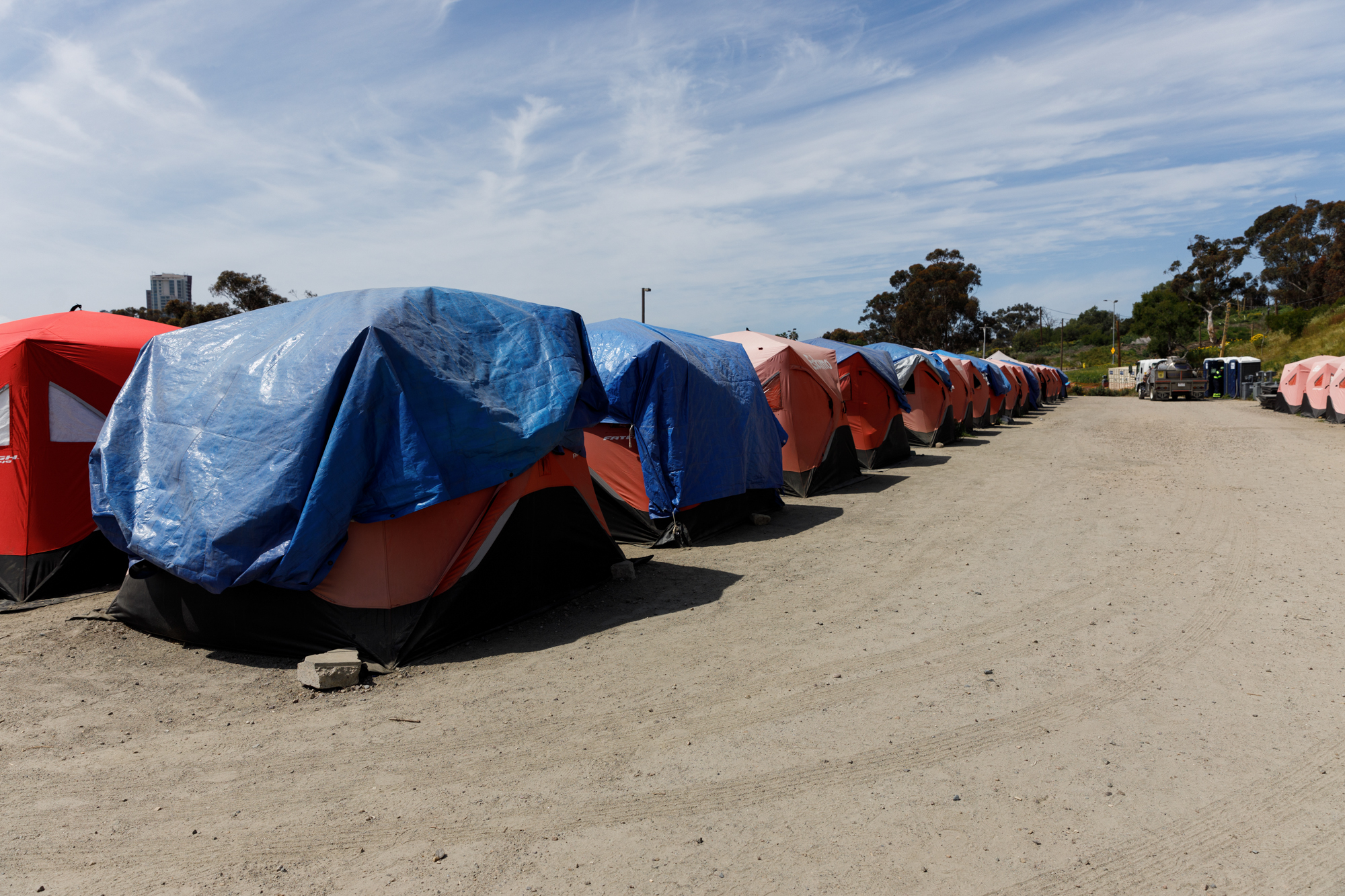
The O Lot Safe Sleeping site at Balboa Park in San Diego on March 22, 2024. (Kristian Carreon / CalMatters)
Now that the Supreme Court has granted cities more power to ban sleeping outside, homeless Californians face a crucial decision: Try to get into a shelter, or risk going to jail.
Those able to find a shelter bed will step into a world rife with reports of violence, theft, health hazards — and a lack of accountability. Public records obtained by CalMatters show that most cities and counties have seemingly ignored a recent state law that aimed to reform dangerous conditions in shelters.
In 2021, following earlier reports of maggots, flooding and sexual harassment in shelters, the state Legislature created a new system requiring local governments to inspect the facilities after complaints and file annual reports on shelter conditions, including plans to fix safety and building code violations.
CalMatters found that just five of California’s 58 counties — Lake, Los Angeles, Monterey, Orange and Yuba — have filed shelter reports. Only 4 of the state’s 478 cities filed reports: Fairfield, Petaluma, Santa Rosa and Woodland, according to records from the agency in charge of implementing the law, the California Department of Housing and Community Development.
“It is shocking, number one, that there is so little reporting, considering that is part of the legislation,” said the law’s author, Assemblymember Sharon Quirk-Silva, a Democrat representing parts of Orange and L.A. counties. “We are asking for the basics here.”
In light of CalMatters’ findings, she said she has requested a meeting with officials at the state housing agency. Quirk-Silva said she will consider audits or other measures as needed.
“Maybe we need to add more teeth,” she said. “There certainly could be a possibility that we will follow up with another piece of legislation.”
Police call logs, shelter incident reports and other records obtained by CalMatters provide a hint of what’s missing as a result of the failure to report: a child falling out of an unreinforced window in San Mateo County and being hospitalized; multiple allegations of sexual harassment in Contra Costa County; food shortages in Placer County; and deaths, mold and vermin in many places across the state.
California has spent at least $1.5 billion on shelters and related solutions since 2018, legislative reports show, on top of millions invested by cities, counties and the federal government. The facilities are designed to be a temporary stop on the road to regaining housing but increasingly function as a bridge to nowhere; the state added new emergency shelter beds at roughly five times the rate of permanent housing with supportive services from 2018 to 2023, gaining 27,544 shelter beds, federaldata shows.
What happens in those shelters is largely a black box. No state agency keeps an updated list of how many shelters are operating or where, officials told CalMatters. There is no state licensing process for shelters. The U.S. Department of Housing and Urban Development tracks numbers of emergency shelter beds and how long people live in them, but no information about resident deaths, health or safety.
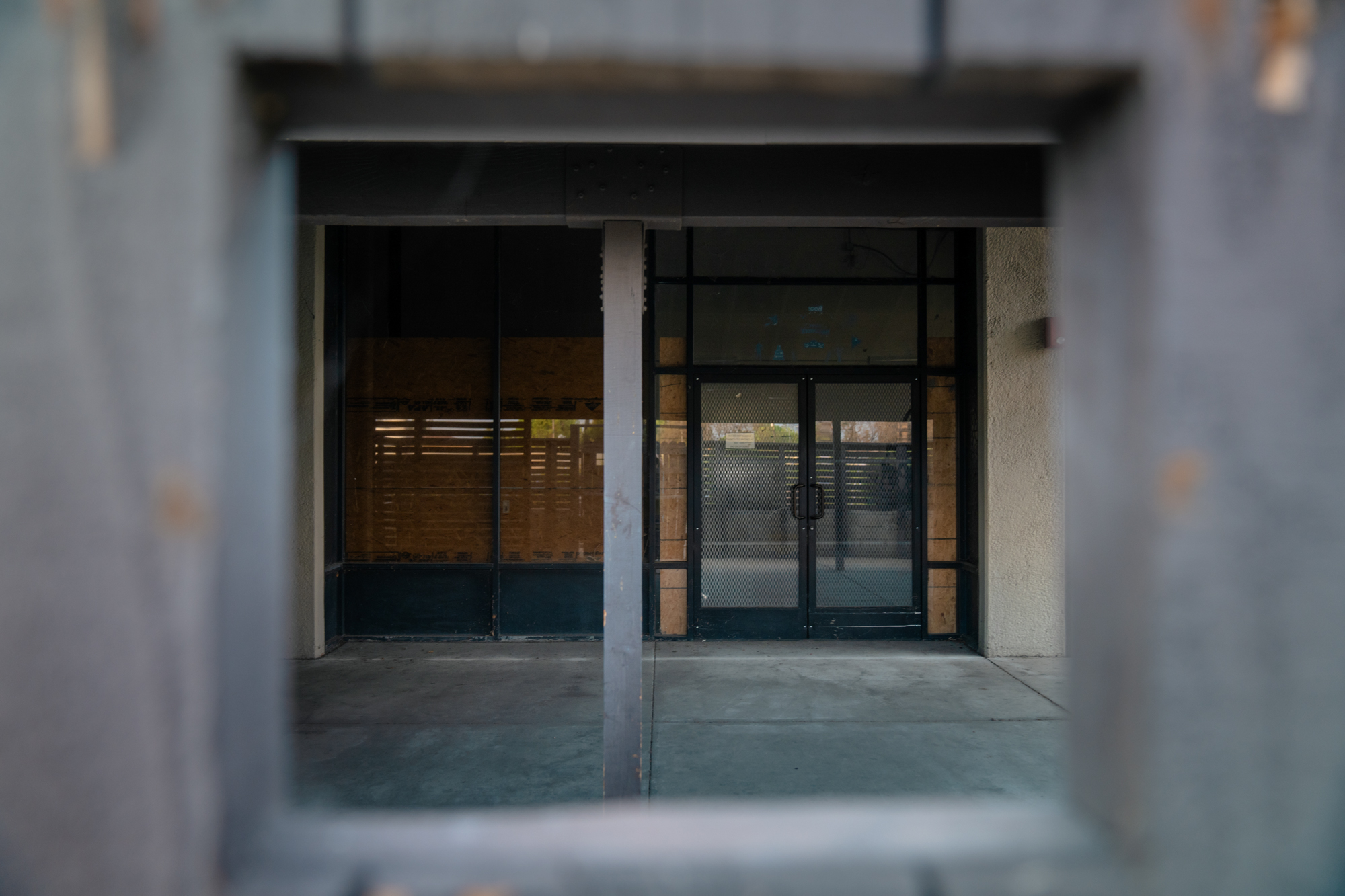
The only 24-hour outdoor access residents had at this former homeless shelter in Anaheim was a small outdoor patio used for smoking. The shelter has since been permanently shut down and partially boarded up. May 14, 2024. (Jules Hotz / CalMatters)
While not every city or county in California has a homeless shelter, state housing officials estimated a total of around 1,300 shelters in 2021. Municipalities continue to invest in them as a more immediate alternative to street homelessness, even as experts stress that other options — such as direct rent subsidies or housing with on-site services — are often more effective at combating the root issue.
“It’s a bad idea. At the same time, so many unhoused people are living in these congregate shelters,” said Eve Garrow, a senior policy analyst and advocate for the ACLU of Southern California. “We want to make sure those spaces are safe and clean for as long as people need them, but we also want to move away from that model.”
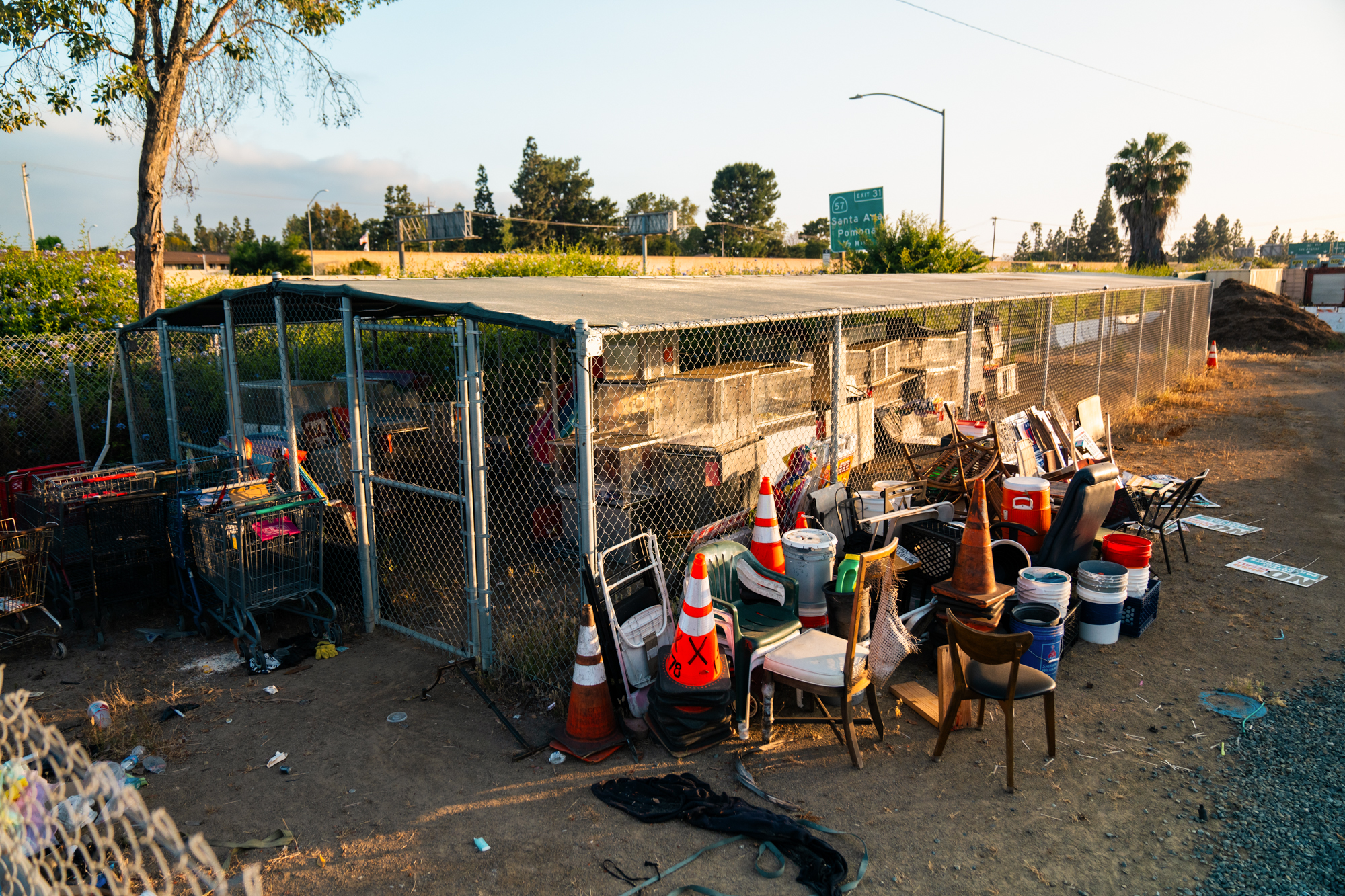
An area where folks experiencing homelessness were given space to store their belongings while staying at the shelter that has since been permanently shut down in Anaheim on May 14, 2024. (Photo by )
The 2021 state law was supposed to help enforce minimum building and safety standards for shelters by creating a new state oversight system. When people staying at shelters or their advocates file complaints, the law requires cities or counties to inspect the facilities and report any violations to the state to reconsider future funding. The catch: cities and counties only have to report to the state if they determine that a violation is severe enough.
“Each city and county has a very unique way of processing complaints,” said Mitchel Baker, assistant deputy director of the Department of Housing and Community Development’s codes and standards division. “What may be perceived as complaints or violations may not ultimately result in the issuance of a notice of violation or corrective order.”
As California and the rest of the country barrel into a new legal era for mass homelessness, promises of safe shelter will be key to determining how many people can avoid more frequent tickets or jail. Many public officials, meanwhile, cast the Supreme Court’s Grants Pass ruling as a necessary clarification after years of conflict over when cities should be allowed to dismantle tents, insisting that they will continue to offer alternatives.
“This decision removes the legal ambiguities that have tied the hands of local officials for years,” Gov. Gavin Newsom said in a statement after the ruling. “The state will continue to work with compassion to provide individuals experiencing homelessness with the resources they need.”
What those resources are is often hard to know, since many shelters are closed to visitors and so few places have filed state reports on conditions. However, people who have lived in shelters paint a more dire picture.
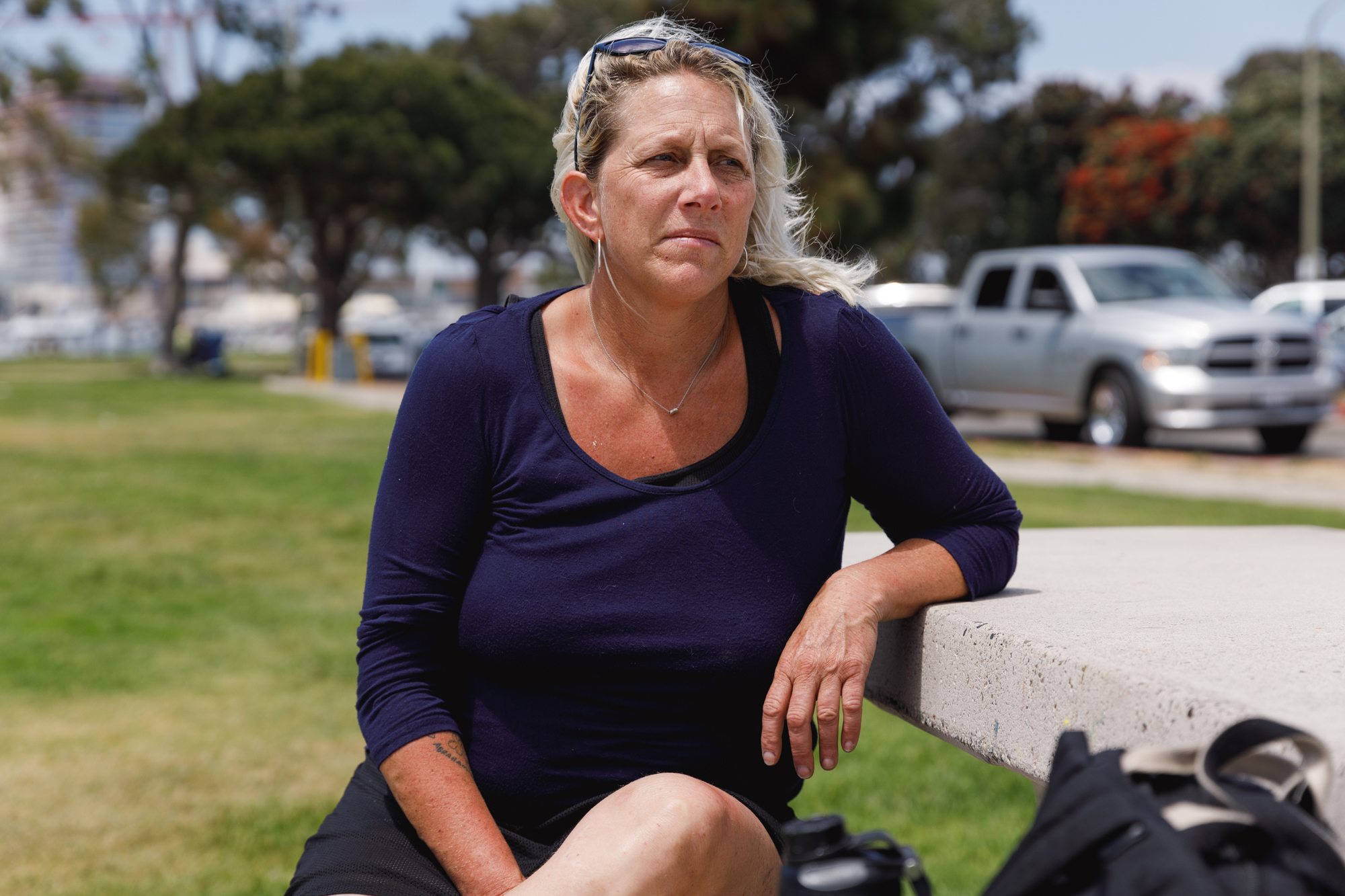
Residents of one Huntington Beach shelter recently complained to health officials about mold, never-ending cases of pneumonia and neighbors walking around with infected, open sores. Homeless people and their families have filed lawsuits in several cities over shelter sexual assaults and wrongful deaths. In San Diego, Sharon Descans has been bouncing between shelters and a borrowed van after being evicted from a newer kind of publicly-funded tent city, where she said she weathered unpaid labor, multiple neighbors’ deaths and flashes of chaos.
“People are pulling swords on each other and hitting each other with two-by-fours,” Descans said. “All I wanted from the day I got there is to get out.”
Sharon Descans at the Chula Vista Bayfront Park on June 23, 2024. Descans has been staying in a van after getting evicted from the O Lot Safe Sleeping site in San Diego’s Balboa Park. (Kristian Carreon / CalMatters)
Old problems, new failures
Up until the 1980s, many of the poorest people in California and other states could still afford rented rooms or cheap hotels. Then came a tidal wave of gentrification, wage stagnation, federal cuts to housing and cash aid, plus shocks like the AIDS and drug epidemics. In less than three decades, the state went from 37,000 dedicated beds for mental health patients to just 2,500 by 1983, according to historians at the National Academies of Sciences.
Vast numbers of people “drifted onto the streets,” the historians wrote, as promised investments in community resources proved inadequate. The “modern era of homelessness” had begun.
Large emergency shelters with bunk beds and communal showers emerged as a stop-gap despite comparisons to jail cells or military barracks. The shelter triage approach spread as California housing construction slowed and homelessness exploded, up 40% in the past five years alone, to more than 181,000 people.
Shelters boomed thanks in large part to court rulings that forbid authorities from cracking down on homeless people solely for being homeless. In Martin v Boise, courts decided that the city violated the U.S. Constitution’s ban on cruel and unusual punishment by ticketing people for sleeping outside when there wasn’t “adequate” shelter available.
“What has happened is cities and counties have quite explicitly raced to build more shelters in order to criminalize more people,” Garrow said. “Shelters become kind of an arm of this criminal legal system.”
Quirk-Silva proposed the 2021 shelter law after a 2019 ACLU report by Garrow documented bedbug infestations, overflowing sewage and sexual harassment by shelter workers. The findings collided with Quirk-Silva’s experience talking with people on the street near her Fullerton neighborhood about why they weren’t in shelters. Her own brother died at age 50 after struggling with housing instability, mental health and alcohol abuse.
Shelters were growing fast, Quirk-Silva realized, and people were staying longer. California shelter residents now stay a median of about five months, or 155 days, the most recent federal data from 2023 shows — a 30% increase since 2019.
Garrow supported the 2021 law’s effort to create minimum standards for shelters. She has seen a few problematic shelters closed down in Orange County, she said, including an old transit station in Santa Ana not meant for human habitation, which previously flooded.
Still, Garrow wasn’t surprised to hear about the small number of cities and counties following through on the law, which she said several amendments weakened. One removed a requirement for local officials to regularly conduct unannounced shelter inspections. Another struck a rule to add signs with information about how to file complaints at shelters.
“I would attribute the low number of complaints not to the fact that shelters are now clean and sanitary and abiding by a new law,” Garrow said. “But to the fact that people aren’t aware.”
Under the law, cities and counties that find violations in their shelters are supposed to report any conditions that are “dangerous, hazardous, imminently detrimental to life or health, or otherwise render the homeless shelter unfit for human habitation.” However, even places filing state shelter reports omit serious potential safety issues.
L.A. County, for example, has filed lists of its several dozen shelters and one-page inventories of violations related to rats, roaches, hot water outages and garbage. Not mentioned were issues like a 2021 conviction of a former shelter security guard on multiple sexual assault charges. Or reports of shelter deaths, physical attacks and other incidents that appear in police call logs requested by CalMatters.
Shelters after SCOTUS
On a recent Friday in San Diego’s crown jewel of a central park, Balboa Park, Sharon Descans laid down on a concrete bench under a palm tree to ease the pain in her joints after a year of constant motion. The former college swimmer said she became homeless for the first time last year, after she got sick with COVID-19, lost two property management jobs, fell behind on rent and got evicted.
What followed was a tour she never wanted of last-ditch housing in a city at the forefront of statewide efforts to vanquish street encampments.
Even before the Supreme Court decision, San Diego officials were moving people off the street to large publicly funded tent cities, called “safe sleeping” sites.
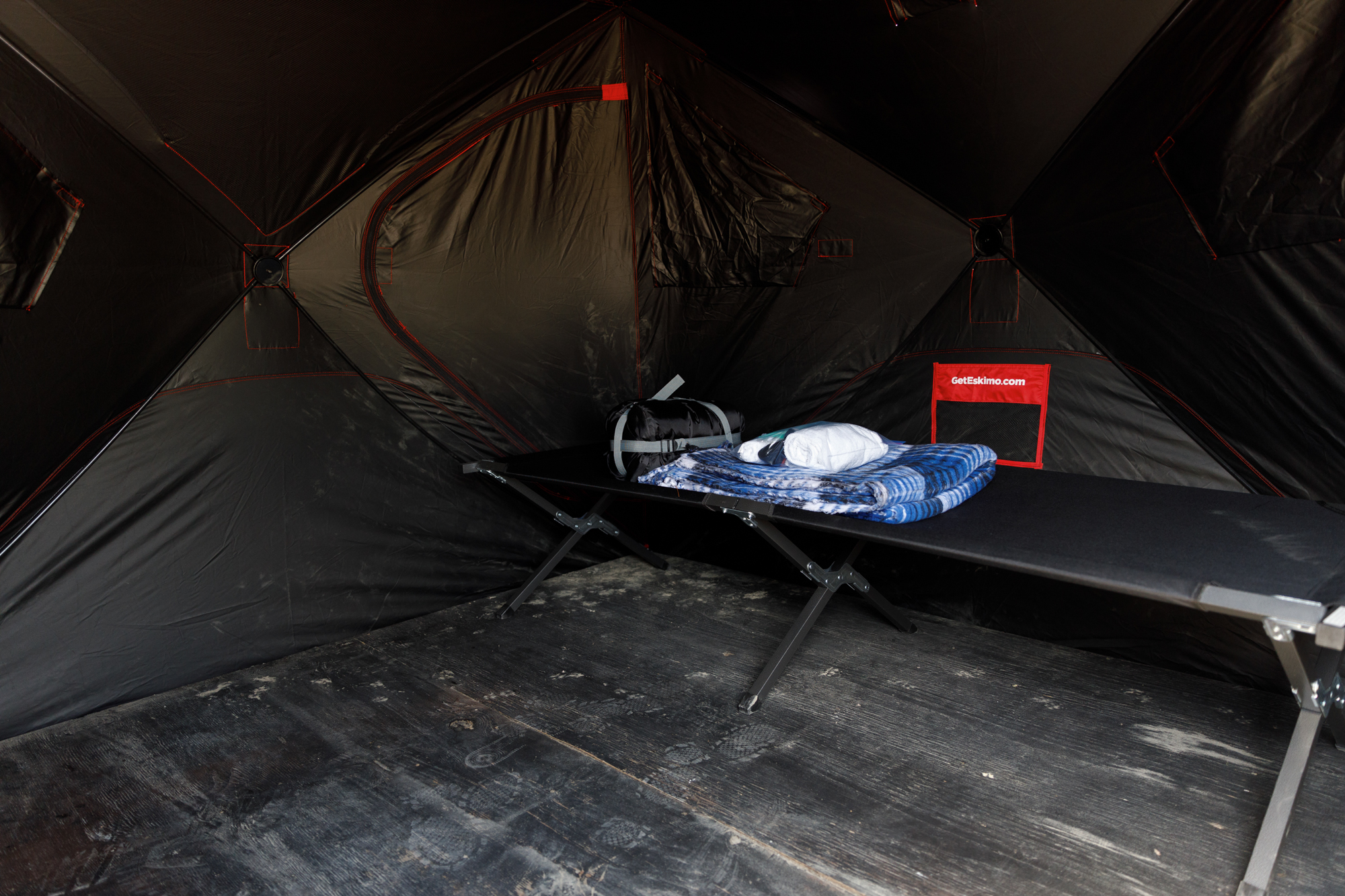
At a site called O Lot, Descans and many neighbors lived in Eskimo-brand ice fishing huts that multiple residents said were prone to leaking during rain. Her anxiety spiked at the makeshift shelter, she said, since she didn’t have a door to lock and witnessed widespread drug use and unpredictable outbursts. One neighbor died of cancer alone in his tent, Descans said, after what seemed like days without anyone checking on him.
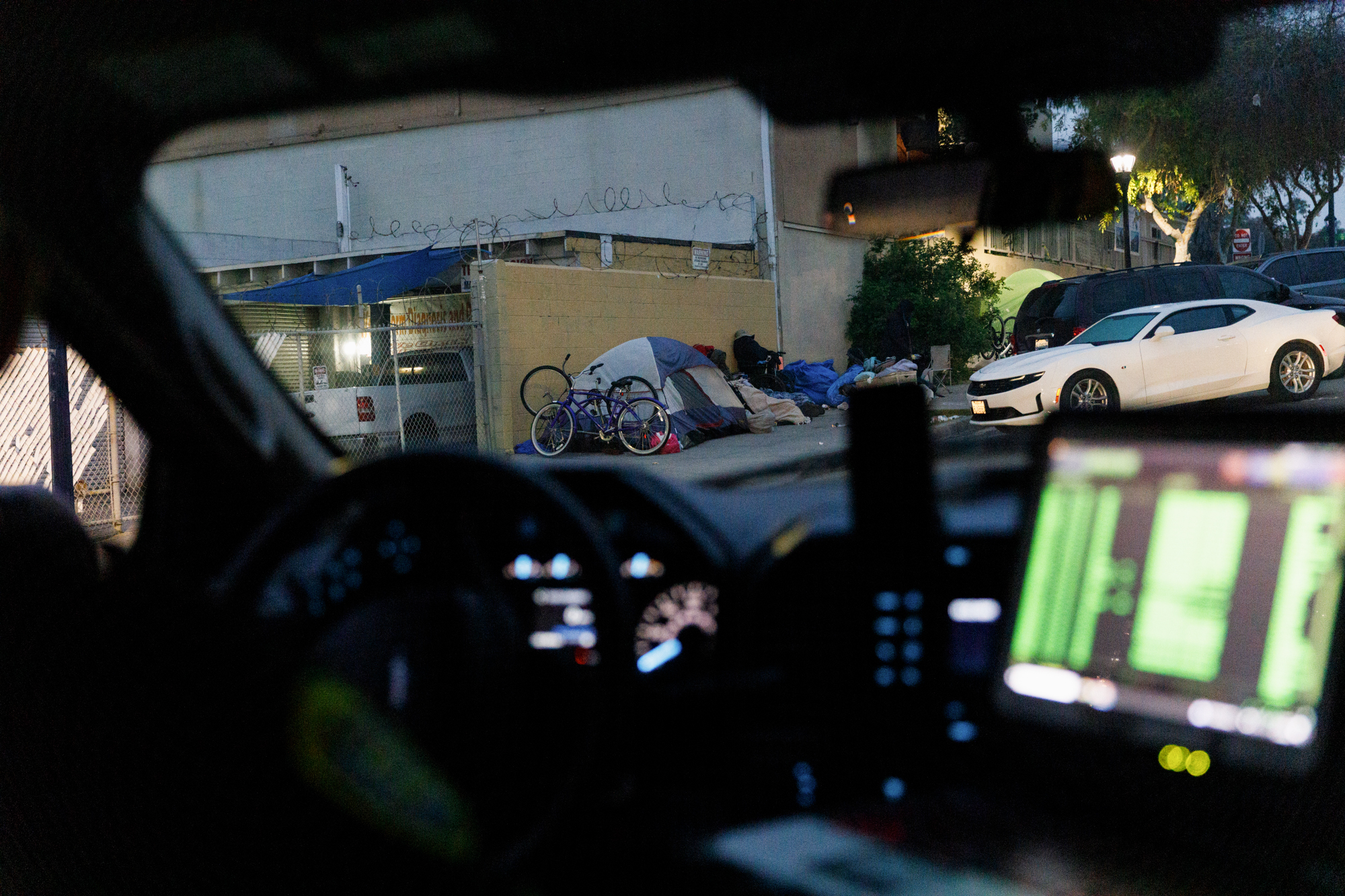
Sgt. Gary Gonzales’ drives past an encampment in downtown San Diego on March 22, 2024. Gonzales is a part of the neighborhood policing division of the San Diego Police Department. (Kristian Carreon / CalMatters)
None of that has been captured in state reports. San Diego is one of the many California locales that has not submitted any reports after the 2021 shelter law, according to state records, despite housing more than a dozen shelters and some 10,600 homeless residents.
(Even if San Diego had filed the reports, state and local spokespeople said it’s not certain they would’ve captured operations at O Lot. Though many homeless people have temporarily lived at the tent site, nonprofit operator Dreams For Change stressed that it is not technically a shelter under federal definitions.)
Tents are shown at the city’s O Lot Safe Sleeping site at Balboa Park in San Diego on March 22, 2024. (Kristian Carreon / CalMatters)
When asked whether there was any process in place for complaints about homeless shelters in San Diego County, a spokesperson said only that the county does not directly operate any shelters. Under the state law, cities and counties are still responsible for monitoring complaints and reporting violations at shelters in their area with other owners or operators.
A spokesman for the city of San Diego said it has received five complaints since the shelter law was passed and that “city staff are working on” evaluating why a state report had not been filed.
“At all city-funded shelters, including the Safe Sleeping and Safe Parking programs, there is a comprehensive complaint process where potential issues are quickly and thoroughly resolved,” spokesperson Matt Hoffman said in a statement. “Every complaint is followed up on and, if needed, action is promptly taken.”
At O Lot, Descans tried to keep her head down. She made friends with another mom whose son had also wrestled at a nearby high school. The pair heard they could earn money to work their way out of the tents by cleaning bathrooms and doing laundry for the nonprofit Dreams for Change. Descans said she was never paid around $1,000 for 55 hours of cleaning work, which she documented in photos and text message complaints to a site supervisor.
The inside of one of the tents provided at the O Lot Safe Sleeping site at Balboa Park in San Diego on March 22, 2024. People are given a cot, blanket, sleeping bag, and hygiene kit. 24/7 staffing, showers, laundry, and shuttles are also provided for clients. (Kristian Carreon / CalMatters)
In June, Descans was “exited” from the shelter — nonprofit-speak for evicted — after forms said she had a verbal altercation with staff and allowed an unpermitted visit from her 17-year-old son, who lives with other family.
“I just feel like nobody cares,” Descans said. “It’s like cover your ass at any expense — who even cares about these homeless people?”
A Dreams for Change spokesperson said the nonprofit cannot comment on individual cases but has a process for formally hiring and paying residents who wish to work. The nonprofit added that it is one of several contractors that operate safe sleeping sites near Balboa Park.
About 80 households have secured permanent housing after living at Dreams for Change’s portion of O Lot, spokesperson Kelly Spoon said in a statement. She confirmed three deaths at the site and added, “Dealing with a diverse population, occasional altercations may arise, but physical altercations are extremely rare.”
Another current resident of the safe sleeping site, who asked not to be identified due to fear of retaliation, said he was also concerned about a lack of sufficient meals, deaths, sexual assaults reported by female neighbors, and a nagging lack of information from caseworkers about housing options.
“The animals almost get better treatment than the people,” he said. “You keep shitting on people, you’re going to get shit results.”
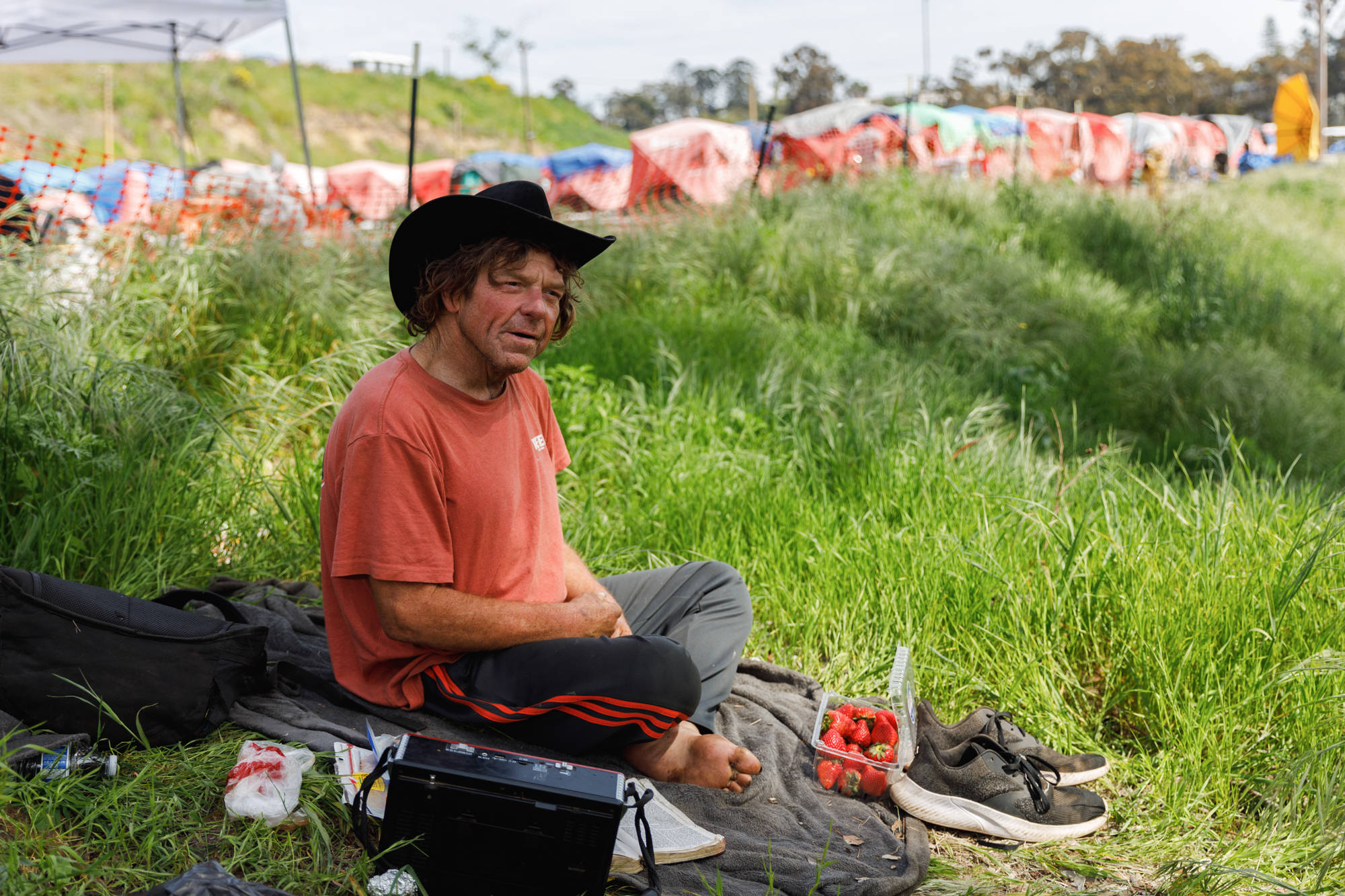
Shawn Swearigen also lived in a tent at O Lot before moving to a subsidized apartment last month. The grandson of a cattle rancher from Imperial County worked in construction for years until family deaths and the 2008 housing crash landed him on the street.
Shawn Swearingen, 55, at the O Lot Safe Sleeping site at Balboa Park in San Diego on March 22, 2024. (Kristian Carreon / CalMatters)
The tent in Balboa Park “wasn’t bad,” he said, though it wasn’t immune from theft and mental health crises that he has found are two constants of homelessness. Swearigen valued having his own space, as opposed to being “dormed up” in a bunk bed like when he first became homeless and stayed at a large shelter. It was so claustrophobic and counter-productive, he said that he spent the next decade trying to stay out of sight, often camping in the woods.
“It was kind of like a lack of options,” Swearigen said. “I really didn’t want to be a burden on people.”
Have you stayed at a California homeless shelter? Tell us about your experience here.
lower waypointnext waypoint
Player sponsored by
window.__IS_SSR__=true
window.__INITIAL_STATE__={
"attachmentsReducer": {
"audio_0": {
"type": "attachments",
"id": "audio_0",
"imgSizes": {
"kqedFullSize": {
"file": "https://ww2.kqed.org/news/wp-content/themes/KQED-unified/img/audio_bgs/background0.jpg"
}
}
},
"audio_1": {
"type": "attachments",
"id": "audio_1",
"imgSizes": {
"kqedFullSize": {
"file": "https://ww2.kqed.org/news/wp-content/themes/KQED-unified/img/audio_bgs/background1.jpg"
}
}
},
"audio_2": {
"type": "attachments",
"id": "audio_2",
"imgSizes": {
"kqedFullSize": {
"file": "https://ww2.kqed.org/news/wp-content/themes/KQED-unified/img/audio_bgs/background2.jpg"
}
}
},
"audio_3": {
"type": "attachments",
"id": "audio_3",
"imgSizes": {
"kqedFullSize": {
"file": "https://ww2.kqed.org/news/wp-content/themes/KQED-unified/img/audio_bgs/background3.jpg"
}
}
},
"audio_4": {
"type": "attachments",
"id": "audio_4",
"imgSizes": {
"kqedFullSize": {
"file": "https://ww2.kqed.org/news/wp-content/themes/KQED-unified/img/audio_bgs/background4.jpg"
}
}
},
"placeholder": {
"type": "attachments",
"id": "placeholder",
"imgSizes": {
"thumbnail": {
"file": "https://cdn.kqed.org/wp-content/uploads/2024/12/KQED-Default-Image-816638274-2000x1333-1-160x107.jpg",
"width": 160,
"height": 107,
"mimeType": "image/jpeg"
},
"medium": {
"file": "https://cdn.kqed.org/wp-content/uploads/2024/12/KQED-Default-Image-816638274-2000x1333-1-800x533.jpg",
"width": 800,
"height": 533,
"mimeType": "image/jpeg"
},
"medium_large": {
"file": "https://cdn.kqed.org/wp-content/uploads/2024/12/KQED-Default-Image-816638274-2000x1333-1-768x512.jpg",
"width": 768,
"height": 512,
"mimeType": "image/jpeg"
},
"large": {
"file": "https://cdn.kqed.org/wp-content/uploads/2024/12/KQED-Default-Image-816638274-2000x1333-1-1020x680.jpg",
"width": 1020,
"height": 680,
"mimeType": "image/jpeg"
},
"1536x1536": {
"file": "https://cdn.kqed.org/wp-content/uploads/2024/12/KQED-Default-Image-816638274-2000x1333-1-1536x1024.jpg",
"width": 1536,
"height": 1024,
"mimeType": "image/jpeg"
},
"fd-lrg": {
"file": "https://cdn.kqed.org/wp-content/uploads/2024/12/KQED-Default-Image-816638274-2000x1333-1-1536x1024.jpg",
"width": 1536,
"height": 1024,
"mimeType": "image/jpeg"
},
"fd-med": {
"file": "https://cdn.kqed.org/wp-content/uploads/2024/12/KQED-Default-Image-816638274-2000x1333-1-1020x680.jpg",
"width": 1020,
"height": 680,
"mimeType": "image/jpeg"
},
"fd-sm": {
"file": "https://cdn.kqed.org/wp-content/uploads/2024/12/KQED-Default-Image-816638274-2000x1333-1-800x533.jpg",
"width": 800,
"height": 533,
"mimeType": "image/jpeg"
},
"post-thumbnail": {
"file": "https://cdn.kqed.org/wp-content/uploads/2024/12/KQED-Default-Image-816638274-2000x1333-1-672x372.jpg",
"width": 672,
"height": 372,
"mimeType": "image/jpeg"
},
"twentyfourteen-full-width": {
"file": "https://cdn.kqed.org/wp-content/uploads/2024/12/KQED-Default-Image-816638274-2000x1333-1-1038x576.jpg",
"width": 1038,
"height": 576,
"mimeType": "image/jpeg"
},
"xxsmall": {
"file": "https://cdn.kqed.org/wp-content/uploads/2024/12/KQED-Default-Image-816638274-2000x1333-1-160x107.jpg",
"width": 160,
"height": 107,
"mimeType": "image/jpeg"
},
"xsmall": {
"file": "https://cdn.kqed.org/wp-content/uploads/2024/12/KQED-Default-Image-816638274-2000x1333-1-672x372.jpg",
"width": 672,
"height": 372,
"mimeType": "image/jpeg"
},
"small": {
"file": "https://cdn.kqed.org/wp-content/uploads/2024/12/KQED-Default-Image-816638274-2000x1333-1-672x372.jpg",
"width": 672,
"height": 372,
"mimeType": "image/jpeg"
},
"xlarge": {
"file": "https://cdn.kqed.org/wp-content/uploads/2024/12/KQED-Default-Image-816638274-2000x1333-1-1020x680.jpg",
"width": 1020,
"height": 680,
"mimeType": "image/jpeg"
},
"full-width": {
"file": "https://cdn.kqed.org/wp-content/uploads/2024/12/KQED-Default-Image-816638274-2000x1333-1-1920x1280.jpg",
"width": 1920,
"height": 1280,
"mimeType": "image/jpeg"
},
"guest-author-32": {
"file": "https://cdn.kqed.org/wp-content/uploads/2025/01/KQED-Default-Image-816638274-1333x1333-1-160x160.jpg",
"width": 32,
"height": 32,
"mimeType": "image/jpeg"
},
"guest-author-50": {
"file": "https://cdn.kqed.org/wp-content/uploads/2025/01/KQED-Default-Image-816638274-1333x1333-1-160x160.jpg",
"width": 50,
"height": 50,
"mimeType": "image/jpeg"
},
"guest-author-64": {
"file": "https://cdn.kqed.org/wp-content/uploads/2025/01/KQED-Default-Image-816638274-1333x1333-1-160x160.jpg",
"width": 64,
"height": 64,
"mimeType": "image/jpeg"
},
"guest-author-96": {
"file": "https://cdn.kqed.org/wp-content/uploads/2025/01/KQED-Default-Image-816638274-1333x1333-1-160x160.jpg",
"width": 96,
"height": 96,
"mimeType": "image/jpeg"
},
"guest-author-128": {
"file": "https://cdn.kqed.org/wp-content/uploads/2025/01/KQED-Default-Image-816638274-1333x1333-1-160x160.jpg",
"width": 128,
"height": 128,
"mimeType": "image/jpeg"
},
"detail": {
"file": "https://cdn.kqed.org/wp-content/uploads/2025/01/KQED-Default-Image-816638274-1333x1333-1-160x160.jpg",
"width": 160,
"height": 160,
"mimeType": "image/jpeg"
},
"kqedFullSize": {
"file": "https://cdn.kqed.org/wp-content/uploads/2024/12/KQED-Default-Image-816638274-2000x1333-1.jpg",
"width": 2000,
"height": 1333
}
}
},
"news_11996092": {
"type": "attachments",
"id": "news_11996092",
"meta": {
"index": "attachments_1716263798",
"site": "news",
"id": "11996092",
"found": true
},
"title": "032223_SD_Encampment-Ban_KC_CM_23",
"publishDate": 1721247123,
"status": "inherit",
"parent": 11996078,
"modified": 1721248104,
"caption": "The O Lot Safe Sleeping site at Balboa Park in San Diego on March 22, 2024. ",
"credit": "Kristian Carreon / CalMatters",
"altTag": "Rows of tents outdoors from a distance.",
"description": null,
"imgSizes": {
"medium": {
"file": "https://cdn.kqed.org/wp-content/uploads/sites/10/2024/07/032223_SD_Encampment-Ban_KC_CM_23-800x533.jpg",
"width": 800,
"height": 533,
"mimeType": "image/jpeg"
},
"large": {
"file": "https://cdn.kqed.org/wp-content/uploads/sites/10/2024/07/032223_SD_Encampment-Ban_KC_CM_23-1020x680.jpg",
"width": 1020,
"height": 680,
"mimeType": "image/jpeg"
},
"thumbnail": {
"file": "https://cdn.kqed.org/wp-content/uploads/sites/10/2024/07/032223_SD_Encampment-Ban_KC_CM_23-160x107.jpg",
"width": 160,
"height": 107,
"mimeType": "image/jpeg"
},
"1536x1536": {
"file": "https://cdn.kqed.org/wp-content/uploads/sites/10/2024/07/032223_SD_Encampment-Ban_KC_CM_23-1536x1024.jpg",
"width": 1536,
"height": 1024,
"mimeType": "image/jpeg"
},
"post-thumbnail": {
"file": "https://cdn.kqed.org/wp-content/uploads/sites/10/2024/07/032223_SD_Encampment-Ban_KC_CM_23-672x372.jpg",
"width": 672,
"height": 372,
"mimeType": "image/jpeg"
},
"twentyfourteen-full-width": {
"file": "https://cdn.kqed.org/wp-content/uploads/sites/10/2024/07/032223_SD_Encampment-Ban_KC_CM_23-1038x576.jpg",
"width": 1038,
"height": 576,
"mimeType": "image/jpeg"
},
"full-width": {
"file": "https://cdn.kqed.org/wp-content/uploads/sites/10/2024/07/032223_SD_Encampment-Ban_KC_CM_23-1920x1280.jpg",
"width": 1920,
"height": 1280,
"mimeType": "image/jpeg"
},
"kqedFullSize": {
"file": "https://cdn.kqed.org/wp-content/uploads/sites/10/2024/07/032223_SD_Encampment-Ban_KC_CM_23.jpg",
"width": 2000,
"height": 1333
}
},
"isLoading": false,
"fetchFailed": false
}
},
"audioPlayerReducer": {
"postId": "stream_live",
"isPaused": true,
"isPlaying": false,
"pfsActive": false,
"pledgeModalIsOpen": true,
"playerDrawerIsOpen": false,
"liveAudioPlayStartedAt": 0,
"liveAudioPlayContext": ""
},
"authorsReducer": {
"byline_news_11996078": {
"type": "authors",
"id": "byline_news_11996078",
"meta": {
"override": true
},
"slug": "byline_news_11996078",
"name": "Lauren Hepler, CalMatters",
"isLoading": false
}
},
"pagesReducer": {},
"pfsSessionReducer": {},
"postsReducer": {
"stream_live": {
"type": "live",
"id": "stream_live",
"audioUrl": "https://streams.kqed.org/kqedradio",
"title": "Live Stream",
"excerpt": "Live Stream information currently unavailable.",
"link": "/radio",
"featImg": "",
"label": {
"name": "KQED Live",
"link": "/"
}
},
"stream_kqedNewscast": {
"type": "posts",
"id": "stream_kqedNewscast",
"audioUrl": "https://www.kqed.org/.stream/anon/radio/RDnews/newscast.mp3?_=1",
"title": "KQED Newscast",
"featImg": "",
"label": {
"name": "88.5 FM",
"link": "/"
}
},
"news_11996078": {
"type": "posts",
"id": "news_11996078",
"meta": {
"index": "posts_1716263798",
"site": "news",
"id": "11996078",
"found": true
},
"articlePosition": 0,
"guestAuthors": [],
"slug": "californias-law-to-fix-unsafe-homeless-shelters-ignored-by-cities-and-counties",
"title": "California's Law to Fix Unsafe Homeless Shelters Ignored by Cities and Counties",
"publishDate": 1721250057,
"format": "standard",
"headTitle": "California’s Law to Fix Unsafe Homeless Shelters Ignored by Cities and Counties | KQED",
"labelTerm": {},
"content": "\u003cp>Now that the \u003ca href=\"https://calmatters.org/housing/2024/06/california-homeless-camps-grants-pass-ruling/\">Supreme Court\u003c/a> has granted cities more power to ban sleeping outside, homeless Californians face a crucial decision: Try to get into a shelter, or risk going to jail.\u003c/p>\n\u003cp>Those able to find a shelter bed will step into a world rife with reports of violence, theft, health hazards — and a lack of accountability. Public records obtained by CalMatters show that most cities and counties have seemingly ignored a recent state law that aimed to reform dangerous conditions in shelters.\u003c/p>\n\u003cp>In 2021, following earlier \u003ca href=\"https://www.aclusocal.org/en/publications/thisplaceiskillingme#:~:text=A%20year%2Dlong%20investigation%20by,porta%20potties%3B%20showers%20with%20no\">reports\u003c/a> of maggots, flooding and sexual harassment in shelters, the state Legislature created \u003ca href=\"https://leginfo.legislature.ca.gov/faces/billTextClient.xhtml?bill_id=202120220AB362\">a new system\u003c/a> requiring local governments to inspect the facilities after complaints and file annual reports on shelter conditions, including plans to fix safety and building code violations.\u003c/p>\n\u003cp>CalMatters found that just five of California’s 58 counties — Lake, Los Angeles, Monterey, Orange and Yuba — have filed shelter reports. Only 4 of the state’s 478 cities filed reports: Fairfield, Petaluma, Santa Rosa and Woodland, according to records from the agency in charge of implementing the law, the California Department of Housing and Community Development.\u003c/p>\n\u003cp>“It is shocking, number one, that there is so little reporting, considering that is part of the legislation,” said the law’s author, Assemblymember Sharon Quirk-Silva, a Democrat representing parts of Orange and L.A. counties. “We are asking for the basics here.”\u003c/p>\n\u003cp>[ad fullwidth]\u003c/p>\n\u003cp>In light of CalMatters’ findings, she said she has requested a meeting with officials at the state housing agency. Quirk-Silva said she will consider audits or other measures as needed.\u003c/p>\n\u003cp>“Maybe we need to add more teeth,” she said. “There certainly could be a possibility that we will follow up with another piece of legislation.”\u003c/p>\n\u003cp>Police call logs, shelter incident reports and other records obtained by CalMatters provide a hint of what’s missing as a result of the failure to report: a child falling out of an unreinforced window in San Mateo County and being hospitalized; multiple allegations of sexual harassment in Contra Costa County; food shortages in Placer County; and deaths, mold and vermin in many places across the state.\u003c/p>\n\u003cp>California has spent \u003ca href=\"https://leginfo.legislature.ca.gov/faces/billAnalysisClient.xhtml?bill_id=202120220AB362\">at least $1.5 billion\u003c/a> on shelters and related solutions since 2018, legislative reports show, on top of millions invested by cities, counties and the federal government. The facilities are designed to be a temporary stop on the road to regaining housing but increasingly function as a bridge to nowhere; the state added new emergency shelter beds at roughly five times the rate of permanent housing with supportive services from 2018 to 2023, gaining 27,544 shelter beds, \u003ca href=\"https://files.hudexchange.info/reports/published/CoC_HIC_State_CA_2023.pdf\">federal\u003c/a> \u003ca href=\"https://files.hudexchange.info/reports/published/CoC_HIC_State_CA_2018.PDF\">data\u003c/a> shows.\u003c/p>\n\u003cp>What happens in those shelters is largely a black box. No state agency keeps an updated list of how many shelters are operating or where, officials told CalMatters. There is no state licensing process for shelters. The U.S. \u003ca href=\"https://files.hudexchange.info/reports/published/CoC_HIC_State_CA_2023.pdf\">Department of Housing and Urban Development\u003c/a> tracks numbers of emergency shelter beds and how long people live in them, but no information about resident deaths, health or safety.\u003c/p>\n\u003cfigure id=\"attachment_11996094\" class=\"wp-caption aligncenter\" style=\"max-width: 2000px\">\u003ca href=\"https://cdn.kqed.org/wp-content/uploads/sites/10/2024/07/051424-OC-Shelter-JAH-CM-32.jpg\">\u003cimg loading=\"lazy\" decoding=\"async\" class=\"size-full wp-image-11996094\" src=\"https://cdn.kqed.org/wp-content/uploads/sites/10/2024/07/051424-OC-Shelter-JAH-CM-32.jpg\" alt=\"The outside of a door.\" width=\"2000\" height=\"1333\" srcset=\"https://cdn.kqed.org/wp-content/uploads/sites/10/2024/07/051424-OC-Shelter-JAH-CM-32.jpg 2000w, https://cdn.kqed.org/wp-content/uploads/sites/10/2024/07/051424-OC-Shelter-JAH-CM-32-800x533.jpg 800w, https://cdn.kqed.org/wp-content/uploads/sites/10/2024/07/051424-OC-Shelter-JAH-CM-32-1020x680.jpg 1020w, https://cdn.kqed.org/wp-content/uploads/sites/10/2024/07/051424-OC-Shelter-JAH-CM-32-160x107.jpg 160w, https://cdn.kqed.org/wp-content/uploads/sites/10/2024/07/051424-OC-Shelter-JAH-CM-32-1536x1024.jpg 1536w, https://cdn.kqed.org/wp-content/uploads/sites/10/2024/07/051424-OC-Shelter-JAH-CM-32-1920x1280.jpg 1920w\" sizes=\"auto, (max-width: 2000px) 100vw, 2000px\">\u003c/a>\u003cfigcaption class=\"wp-caption-text\">The only 24-hour outdoor access residents had at this former homeless shelter in Anaheim was a small outdoor patio used for smoking. The shelter has since been permanently shut down and partially boarded up. May 14, 2024. \u003ccite>(Jules Hotz / CalMatters)\u003c/cite>\u003c/figcaption>\u003c/figure>\n\u003cp>While not every city or county in California has a homeless shelter, \u003ca href=\"https://leginfo.legislature.ca.gov/faces/billAnalysisClient.xhtml?bill_id=202120220AB362\">state housing officials estimated\u003c/a> a total of around 1,300 shelters in 2021. Municipalities continue to invest in them as a more immediate alternative to street homelessness, even as \u003ca href=\"https://www.huduser.gov/portal/sites/default/files/pdf/2020-AHAR-Part-2.pdf\">experts stress\u003c/a> that other options — such as direct rent subsidies or housing with on-site services — are often more effective at combating the root issue.\u003c/p>\n\u003cp>“It’s a bad idea. At the same time, so many unhoused people are living in these congregate shelters,” said Eve Garrow, a senior policy analyst and advocate for the ACLU of Southern California. “We want to make sure those spaces are safe and clean for as long as people need them, but we also want to move away from that model.”\u003c/p>\n\u003cfigure id=\"attachment_11996093\" class=\"wp-caption aligncenter\" style=\"max-width: 2000px\">\u003ca href=\"https://cdn.kqed.org/wp-content/uploads/sites/10/2024/07/051424-OC-Shelter-JAH-CM-30.jpg\">\u003cimg loading=\"lazy\" decoding=\"async\" class=\"size-full wp-image-11996093\" src=\"https://cdn.kqed.org/wp-content/uploads/sites/10/2024/07/051424-OC-Shelter-JAH-CM-30.jpg\" alt=\"Shopping carts next to chairs, safety cones and other materials outside of a fenced in storage unit.\" width=\"2000\" height=\"1333\" srcset=\"https://cdn.kqed.org/wp-content/uploads/sites/10/2024/07/051424-OC-Shelter-JAH-CM-30.jpg 2000w, https://cdn.kqed.org/wp-content/uploads/sites/10/2024/07/051424-OC-Shelter-JAH-CM-30-800x533.jpg 800w, https://cdn.kqed.org/wp-content/uploads/sites/10/2024/07/051424-OC-Shelter-JAH-CM-30-1020x680.jpg 1020w, https://cdn.kqed.org/wp-content/uploads/sites/10/2024/07/051424-OC-Shelter-JAH-CM-30-160x107.jpg 160w, https://cdn.kqed.org/wp-content/uploads/sites/10/2024/07/051424-OC-Shelter-JAH-CM-30-1536x1024.jpg 1536w, https://cdn.kqed.org/wp-content/uploads/sites/10/2024/07/051424-OC-Shelter-JAH-CM-30-1920x1280.jpg 1920w\" sizes=\"auto, (max-width: 2000px) 100vw, 2000px\">\u003c/a>\u003cfigcaption class=\"wp-caption-text\">An area where folks experiencing homelessness were given space to store their belongings while staying at the shelter that has since been permanently shut down in Anaheim on May 14, 2024. \u003ccite>(Photo by )\u003c/cite>\u003c/figcaption>\u003c/figure>\n\u003cp>The 2021 state law was supposed to help enforce minimum building and safety standards for shelters by creating a new state oversight system. When people staying at shelters or their advocates \u003ca href=\"https://calcivilrights.ca.gov/wp-content/uploads/sites/32/2020/03/Discrimination-and-Harassment-in-Shelters_ENG.pdf\">file complaints\u003c/a>, the law requires cities or counties to inspect the facilities and report any violations to the state to reconsider future funding. The catch: cities and counties only have to report to the state if they determine that \u003ca href=\"https://codes.findlaw.com/ca/health-and-safety-code/hsc-sect-17920-3/?DCMP=google:ppc:TRLNA:21219027752:697523562873:161386574133&HBX_PK=&sid=9061109&source=google~ppc&tsid=latlppc&gad_source=1&gclid=CjwKCAjwtNi0BhA1EiwAWZaANIzl4kC28Sc9Kndy8F98puHpp4hD7dhJfgeGKqQGTcsejt7nrnMrGhoCSugQAvD_BwE\">a violation\u003c/a> is severe enough.\u003c/p>\n\u003cp>“Each city and county has a very unique way of processing complaints\u003cem>,\u003c/em>” said Mitchel Baker, assistant deputy director of the Department of Housing and Community Development’s codes and standards division. “What may be perceived as complaints or violations may not ultimately result in the issuance of a notice of violation or corrective order.”\u003c/p>\n\u003cp>As California and the rest of the country barrel into a new legal era for mass homelessness, promises of safe shelter will be key to determining how many people can avoid more frequent tickets or jail. Many public officials, meanwhile, cast the \u003ca href=\"https://www.supremecourt.gov/opinions/23pdf/23-175_19m2.pdf\">Supreme Court’s Grants Pass ruling\u003c/a> as a necessary clarification after years of conflict over when cities should be allowed to dismantle tents, insisting that they will continue to offer alternatives.\u003c/p>\n\u003cp>“This decision removes the legal ambiguities that have tied the hands of local officials for years,” Gov. Gavin Newsom said in a statement after the ruling. “The state will continue to work with compassion to provide individuals experiencing homelessness with the resources they need.”\u003c/p>\n\u003cp>What those resources are is often hard to know, since many shelters are closed to visitors and so few places have filed state reports on conditions. However, people who have lived in shelters paint a more dire picture.\u003c/p>\n\u003cp>Residents of one Huntington Beach shelter recently complained to health officials about mold, never-ending cases of pneumonia and neighbors walking around with infected, open sores. Homeless people and their families have \u003ca href=\"https://calmatters.org/housing/homelessness/2024/04/homeless-shelter-private-security/\">filed lawsuits\u003c/a> in several cities over shelter sexual assaults and wrongful deaths. In San Diego, Sharon Descans has been bouncing between shelters and a borrowed van after being evicted from a newer kind of publicly-funded tent city, where she said she weathered unpaid labor, multiple neighbors’ deaths and flashes of chaos.\u003c/p>\n\u003cp>“People are pulling swords on each other and hitting each other with two-by-fours,” Descans said. “All I wanted from the day I got there is to get out.”\u003c/p>\n\u003cfigure id=\"attachment_11996102\" class=\"wp-caption aligncenter\" style=\"max-width: 2000px\">\u003ca href=\"https://cdn.kqed.org/wp-content/uploads/sites/10/2024/07/062324_HomelessShelterConditions_KC_CM_005.jpg\">\u003cimg loading=\"lazy\" decoding=\"async\" class=\"size-full wp-image-11996102\" src=\"https://cdn.kqed.org/wp-content/uploads/sites/10/2024/07/062324_HomelessShelterConditions_KC_CM_005.jpg\" alt=\"A white woman wearing a dark dress rests her arm on a table outside while sitting down.\" width=\"2000\" height=\"1333\" srcset=\"https://cdn.kqed.org/wp-content/uploads/sites/10/2024/07/062324_HomelessShelterConditions_KC_CM_005.jpg 2000w, https://cdn.kqed.org/wp-content/uploads/sites/10/2024/07/062324_HomelessShelterConditions_KC_CM_005-800x533.jpg 800w, https://cdn.kqed.org/wp-content/uploads/sites/10/2024/07/062324_HomelessShelterConditions_KC_CM_005-1020x680.jpg 1020w, https://cdn.kqed.org/wp-content/uploads/sites/10/2024/07/062324_HomelessShelterConditions_KC_CM_005-160x107.jpg 160w, https://cdn.kqed.org/wp-content/uploads/sites/10/2024/07/062324_HomelessShelterConditions_KC_CM_005-1536x1024.jpg 1536w, https://cdn.kqed.org/wp-content/uploads/sites/10/2024/07/062324_HomelessShelterConditions_KC_CM_005-1920x1280.jpg 1920w\" sizes=\"auto, (max-width: 2000px) 100vw, 2000px\">\u003c/a>\u003cfigcaption class=\"wp-caption-text\">Sharon Descans at the Chula Vista Bayfront Park on June 23, 2024. Descans has been staying in a van after getting evicted from the O Lot Safe Sleeping site in San Diego’s Balboa Park. \u003ccite>(Kristian Carreon / CalMatters)\u003c/cite>\u003c/figcaption>\u003c/figure>\n\u003ch2>Old problems, new failures\u003c/h2>\n\u003cp>Up until the 1980s, many of the poorest people in California and other states could still afford rented rooms or cheap hotels. Then came a tidal wave of gentrification, wage stagnation, federal cuts to housing and cash aid, plus shocks like the AIDS and drug epidemics. In less than three decades, the state went from 37,000 dedicated beds for mental health patients to just 2,500 by 1983, according to historians at the \u003ca href=\"https://www.ncbi.nlm.nih.gov/books/NBK519584/\">National Academies of Sciences\u003c/a>.\u003c/p>\n\u003cp>Vast numbers of people “drifted onto the streets,” the historians wrote, as promised investments in community resources proved inadequate. The “modern era of homelessness” had begun.\u003c/p>\n\u003cp>Large emergency shelters with bunk beds and communal showers emerged as a stop-gap despite comparisons to jail cells or military barracks. The shelter triage approach spread as \u003ca href=\"https://calmatters.org/housing/2024/06/california-housing-law-charter-city/\">California housing construction\u003c/a> slowed and \u003ca href=\"https://calmatters.org/housing/homelessness/2024/01/california-homeless-point-in-time-count-2024/\">homelessness exploded\u003c/a>, up 40% in the past five years alone, to more than 181,000 people.\u003c/p>\n\u003cp>Shelters boomed thanks in large part to court rulings that forbid authorities from cracking down on homeless people solely for being homeless. In \u003ca href=\"https://www.sfchronicle.com/california/article/california-homeless-shelters-17423387.php\">Martin v Boise\u003c/a>, courts decided that the city violated the U.S. Constitution’s ban on cruel and unusual punishment by ticketing people for sleeping outside when there wasn’t “adequate” shelter available.\u003c/p>\n\u003cp>“What has happened is cities and counties have quite explicitly raced to build more shelters in order to criminalize more people,” Garrow said. “Shelters become kind of an arm of this criminal legal system.”\u003c/p>\n\u003cp>Quirk-Silva proposed the 2021 shelter law after a \u003ca href=\"https://www.aclusocal.org/en/publications/thisplaceiskillingme\">2019 ACLU report\u003c/a> by Garrow documented bedbug infestations, overflowing sewage and sexual harassment by shelter workers. The findings collided with Quirk-Silva’s experience talking with people on the street near her Fullerton neighborhood about why they weren’t in shelters. Her own brother died at age 50 after struggling with housing instability, mental health and alcohol abuse.\u003c/p>\n\u003cp>Shelters were growing fast, Quirk-Silva realized, and people were staying longer. California shelter residents now stay a median of about five months, or 155 days, the most recent federal \u003ca href=\"https://public.tableau.com/app/profile/system.performance.measures.hud.public.data/viz/HUDCoCSystemPerformanceMeasures/M2Returns\">data from 2023 shows\u003c/a> — a 30% increase since 2019.\u003c/p>\n\u003cp>Garrow supported the 2021 law’s effort to create minimum standards for shelters. She has seen a few problematic shelters closed down in Orange County, she said, including an old transit station in Santa Ana not meant for human habitation, which \u003ca href=\"https://www.ocregister.com/2019/03/14/aclu-report-alleges-abuse-unsanitary-conditions-common-at-orange-county-homeless-shelters/\">previously flooded\u003c/a>.\u003c/p>\n\u003cp>Still, Garrow wasn’t surprised to hear about the small number of cities and counties following through on the law, which she said several \u003ca href=\"https://leginfo.legislature.ca.gov/faces/billAnalysisClient.xhtml?bill_id=202120220AB362\">amendments\u003c/a> weakened. One removed a requirement for local officials to regularly conduct unannounced shelter inspections. Another struck a rule to add signs with information about how to file complaints at shelters.\u003c/p>\n\u003cp>“I would attribute the low number of complaints not to the fact that shelters are now clean and sanitary and abiding by a new law,” Garrow said. “But to the fact that people aren’t aware.”\u003c/p>\n\u003cp>Under the law, cities and counties that find violations in their shelters are supposed to report any conditions that are “dangerous, hazardous, imminently detrimental to life or health, or otherwise render the homeless shelter unfit for human habitation.” However, even places filing state shelter reports omit serious potential safety issues.\u003c/p>\n\u003cp>L.A. County, for example, has filed lists of its several dozen shelters and one-page inventories of violations related to rats, roaches, hot water outages and garbage. Not mentioned were issues like a \u003ca href=\"https://calmatters.org/housing/homelessness/2024/04/homeless-shelter-private-security/\">2021 conviction\u003c/a> of a former shelter security guard on multiple sexual assault charges. Or reports of shelter deaths, physical attacks and other incidents that appear in police call logs requested by CalMatters.\u003c/p>\n\u003ch2>Shelters after SCOTUS\u003c/h2>\n\u003cp>On a recent Friday in San Diego’s crown jewel of a central park, Balboa Park, Sharon Descans laid down on a concrete bench under a palm tree to ease the pain in her joints after a year of constant motion. The former college swimmer said she became homeless for the first time last year, after she got sick with COVID-19, lost two property management jobs, fell behind on rent and got evicted.\u003c/p>\n\u003cp>What followed was a tour she never wanted of last-ditch housing in a city \u003ca href=\"https://calmatters.org/housing/homelessness/2024/04/homeless-encampment-ban/\">at the forefront\u003c/a> of statewide efforts to vanquish street encampments.\u003c/p>\n\u003cp>Even before the Supreme Court decision, San Diego officials were moving people off the street to large publicly funded tent cities, called “safe sleeping” sites.\u003c/p>\n\u003cp>At a site called \u003ca href=\"https://www.sandiego.gov/insidesd/mayor-gloria-opens-second-safe-sleeping-site-unsheltered-san-diegans\">O Lot\u003c/a>, Descans and many neighbors lived in Eskimo-brand ice fishing huts that multiple residents said were prone to leaking during rain. Her anxiety spiked at the makeshift shelter, she said, since she didn’t have a door to lock and witnessed widespread drug use and unpredictable outbursts. One neighbor died of cancer alone in his tent, Descans said, after what seemed like days without anyone checking on him.\u003c/p>\n\u003cfigure id=\"attachment_11996088\" class=\"wp-caption aligncenter\" style=\"max-width: 2000px\">\u003ca href=\"https://cdn.kqed.org/wp-content/uploads/sites/10/2024/07/032223_SD_Encampment-Ban_KC_CM_02.jpg\">\u003cimg loading=\"lazy\" decoding=\"async\" class=\"size-full wp-image-11996088\" src=\"https://cdn.kqed.org/wp-content/uploads/sites/10/2024/07/032223_SD_Encampment-Ban_KC_CM_02.jpg\" alt=\"A view of tents on a street sidewalk from the a car window.\" width=\"2000\" height=\"1333\" srcset=\"https://cdn.kqed.org/wp-content/uploads/sites/10/2024/07/032223_SD_Encampment-Ban_KC_CM_02.jpg 2000w, https://cdn.kqed.org/wp-content/uploads/sites/10/2024/07/032223_SD_Encampment-Ban_KC_CM_02-800x533.jpg 800w, https://cdn.kqed.org/wp-content/uploads/sites/10/2024/07/032223_SD_Encampment-Ban_KC_CM_02-1020x680.jpg 1020w, https://cdn.kqed.org/wp-content/uploads/sites/10/2024/07/032223_SD_Encampment-Ban_KC_CM_02-160x107.jpg 160w, https://cdn.kqed.org/wp-content/uploads/sites/10/2024/07/032223_SD_Encampment-Ban_KC_CM_02-1536x1024.jpg 1536w, https://cdn.kqed.org/wp-content/uploads/sites/10/2024/07/032223_SD_Encampment-Ban_KC_CM_02-1920x1280.jpg 1920w\" sizes=\"auto, (max-width: 2000px) 100vw, 2000px\">\u003c/a>\u003cfigcaption class=\"wp-caption-text\">Sgt. Gary Gonzales’ drives past an encampment in downtown San Diego on March 22, 2024. Gonzales is a part of the neighborhood policing division of the San Diego Police Department. \u003ccite>(Kristian Carreon / CalMatters)\u003c/cite>\u003c/figcaption>\u003c/figure>\n\u003cp>None of that has been captured in state reports. San Diego is one of the many California locales that has not submitted any reports after the 2021 shelter law, according to state records, despite housing \u003ca href=\"https://sdhc.org/homelessness-solutions/city-homeless-shelters-services/#shelters\">more than a dozen shelters\u003c/a> and some 10,600 homeless residents.\u003c/p>\n\u003cp>(Even if San Diego had filed the reports, state and local spokespeople said it’s not certain they would’ve captured operations at O Lot. Though many homeless people have temporarily lived at the tent site, nonprofit operator Dreams For Change stressed that it is not technically a shelter under federal definitions.)\u003c/p>\n\u003cfigure id=\"attachment_11996089\" class=\"wp-caption aligncenter\" style=\"max-width: 2000px\">\u003ca href=\"https://cdn.kqed.org/wp-content/uploads/sites/10/2024/07/032223_SD_Encampment-Ban_KC_CM_16.jpg\">\u003cimg loading=\"lazy\" decoding=\"async\" class=\"size-full wp-image-11996089\" src=\"https://cdn.kqed.org/wp-content/uploads/sites/10/2024/07/032223_SD_Encampment-Ban_KC_CM_16.jpg\" alt=\"A row of tents with tarps over them.\" width=\"2000\" height=\"1333\" srcset=\"https://cdn.kqed.org/wp-content/uploads/sites/10/2024/07/032223_SD_Encampment-Ban_KC_CM_16.jpg 2000w, https://cdn.kqed.org/wp-content/uploads/sites/10/2024/07/032223_SD_Encampment-Ban_KC_CM_16-800x533.jpg 800w, https://cdn.kqed.org/wp-content/uploads/sites/10/2024/07/032223_SD_Encampment-Ban_KC_CM_16-1020x680.jpg 1020w, https://cdn.kqed.org/wp-content/uploads/sites/10/2024/07/032223_SD_Encampment-Ban_KC_CM_16-160x107.jpg 160w, https://cdn.kqed.org/wp-content/uploads/sites/10/2024/07/032223_SD_Encampment-Ban_KC_CM_16-1536x1024.jpg 1536w, https://cdn.kqed.org/wp-content/uploads/sites/10/2024/07/032223_SD_Encampment-Ban_KC_CM_16-1920x1280.jpg 1920w\" sizes=\"auto, (max-width: 2000px) 100vw, 2000px\">\u003c/a>\u003cfigcaption class=\"wp-caption-text\">Tents are shown at the city’s O Lot Safe Sleeping site at Balboa Park in San Diego on March 22, 2024. \u003ccite>(Kristian Carreon / CalMatters)\u003c/cite>\u003c/figcaption>\u003c/figure>\n\u003cp>When asked whether there was any process in place for complaints about homeless shelters in San Diego County, a spokesperson said only that the county does not directly operate any shelters. Under the state law, cities and counties are still responsible for monitoring complaints and reporting violations at shelters in their area with other owners or operators.\u003c/p>\n\u003cp>A spokesman for the city of San Diego said it has received five complaints since the shelter law was passed and that “city staff are working on” evaluating why a state report had not been filed.\u003c/p>\n\u003cp>“At all city-funded shelters, including the Safe Sleeping and Safe Parking programs, there is a comprehensive complaint process where potential issues are quickly and thoroughly resolved,” spokesperson Matt Hoffman said in a statement. “Every complaint is followed up on and, if needed, action is promptly taken.”\u003c/p>\n\u003cp>At O Lot, Descans tried to keep her head down. She made friends with another mom whose son had also wrestled at a nearby high school. The pair heard they could earn money to work their way out of the tents by cleaning bathrooms and doing laundry for the nonprofit Dreams for Change. Descans said she was never paid around $1,000 for 55 hours of cleaning work, which she documented in photos and text message complaints to a site supervisor.\u003c/p>\n\u003cfigure id=\"attachment_11996090\" class=\"wp-caption aligncenter\" style=\"max-width: 2000px\">\u003ca href=\"https://cdn.kqed.org/wp-content/uploads/sites/10/2024/07/032223_SD_Encampment-Ban_KC_CM_17.jpg\">\u003cimg loading=\"lazy\" decoding=\"async\" class=\"size-full wp-image-11996090\" src=\"https://cdn.kqed.org/wp-content/uploads/sites/10/2024/07/032223_SD_Encampment-Ban_KC_CM_17.jpg\" alt=\"The inside of a tent with a cot, blankets and bag.\" width=\"2000\" height=\"1333\" srcset=\"https://cdn.kqed.org/wp-content/uploads/sites/10/2024/07/032223_SD_Encampment-Ban_KC_CM_17.jpg 2000w, https://cdn.kqed.org/wp-content/uploads/sites/10/2024/07/032223_SD_Encampment-Ban_KC_CM_17-800x533.jpg 800w, https://cdn.kqed.org/wp-content/uploads/sites/10/2024/07/032223_SD_Encampment-Ban_KC_CM_17-1020x680.jpg 1020w, https://cdn.kqed.org/wp-content/uploads/sites/10/2024/07/032223_SD_Encampment-Ban_KC_CM_17-160x107.jpg 160w, https://cdn.kqed.org/wp-content/uploads/sites/10/2024/07/032223_SD_Encampment-Ban_KC_CM_17-1536x1024.jpg 1536w, https://cdn.kqed.org/wp-content/uploads/sites/10/2024/07/032223_SD_Encampment-Ban_KC_CM_17-1920x1280.jpg 1920w\" sizes=\"auto, (max-width: 2000px) 100vw, 2000px\">\u003c/a>\u003cfigcaption class=\"wp-caption-text\">The inside of one of the tents provided at the O Lot Safe Sleeping site at Balboa Park in San Diego on March 22, 2024. People are given a cot, blanket, sleeping bag, and hygiene kit. 24/7 staffing, showers, laundry, and shuttles are also provided for clients. \u003ccite>(Kristian Carreon / CalMatters)\u003c/cite>\u003c/figcaption>\u003c/figure>\n\u003cp>In June, Descans was “exited” from the shelter — nonprofit-speak for evicted — after forms said she had a verbal altercation with staff and allowed an unpermitted visit from her 17-year-old son, who lives with other family.\u003c/p>\n\u003cp>“I just feel like nobody cares,” Descans said. “It’s like cover your ass at any expense — who even cares about these homeless people?”\u003c/p>\n\u003cp>A Dreams for Change spokesperson said the nonprofit cannot comment on individual cases but has a process for formally hiring and paying residents who wish to work. The nonprofit added that it is one of several contractors that operate safe sleeping sites near Balboa Park.\u003c/p>\n\u003cp>About 80 households have secured permanent housing after living at Dreams for Change’s portion of O Lot, spokesperson Kelly Spoon said in a statement. She confirmed three deaths at the site and added, “Dealing with a diverse population, occasional altercations may arise, but physical altercations are extremely rare.”\u003c/p>\n\u003cp>Another current resident of the safe sleeping site, who asked not to be identified due to fear of retaliation, said he was also concerned about a lack of sufficient meals, deaths, sexual assaults reported by female neighbors, and a nagging lack of information from caseworkers about housing options.\u003c/p>\n\u003cp>“The animals almost get better treatment than the people,” he said. “You keep shitting on people, you’re going to get shit results.”\u003c/p>\n\u003cp>Shawn Swearigen also lived in a tent at O Lot before moving to a subsidized apartment last month. The grandson of a cattle rancher from Imperial County worked in construction for years until family deaths and the 2008 housing crash landed him on the street.\u003c/p>\n\u003cfigure id=\"attachment_11996091\" class=\"wp-caption aligncenter\" style=\"max-width: 2000px\">\u003ca href=\"https://cdn.kqed.org/wp-content/uploads/sites/10/2024/07/032223_SD_Encampment-Ban_KC_CM_20.jpg\">\u003cimg loading=\"lazy\" decoding=\"async\" class=\"size-full wp-image-11996091\" src=\"https://cdn.kqed.org/wp-content/uploads/sites/10/2024/07/032223_SD_Encampment-Ban_KC_CM_20.jpg\" alt=\"A white man wearing a cowboy hat, a reddish orange shirt and black track pants with orange stripes sits on a blanket in the grass outside.\" width=\"2000\" height=\"1333\" srcset=\"https://cdn.kqed.org/wp-content/uploads/sites/10/2024/07/032223_SD_Encampment-Ban_KC_CM_20.jpg 2000w, https://cdn.kqed.org/wp-content/uploads/sites/10/2024/07/032223_SD_Encampment-Ban_KC_CM_20-800x533.jpg 800w, https://cdn.kqed.org/wp-content/uploads/sites/10/2024/07/032223_SD_Encampment-Ban_KC_CM_20-1020x680.jpg 1020w, https://cdn.kqed.org/wp-content/uploads/sites/10/2024/07/032223_SD_Encampment-Ban_KC_CM_20-160x107.jpg 160w, https://cdn.kqed.org/wp-content/uploads/sites/10/2024/07/032223_SD_Encampment-Ban_KC_CM_20-1536x1024.jpg 1536w, https://cdn.kqed.org/wp-content/uploads/sites/10/2024/07/032223_SD_Encampment-Ban_KC_CM_20-1920x1280.jpg 1920w\" sizes=\"auto, (max-width: 2000px) 100vw, 2000px\">\u003c/a>\u003cfigcaption class=\"wp-caption-text\">Shawn Swearingen, 55, at the O Lot Safe Sleeping site at Balboa Park in San Diego on March 22, 2024. \u003ccite>(Kristian Carreon / CalMatters)\u003c/cite>\u003c/figcaption>\u003c/figure>\n\u003cp>The tent in Balboa Park “wasn’t bad,” he said, though it wasn’t immune from theft and mental health crises that he has found are two constants of homelessness. Swearigen valued having his own space, as opposed to being “dormed up” in a bunk bed like when he first became homeless and stayed at a large shelter. It was so claustrophobic and counter-productive, he said that he spent the next decade trying to stay out of sight, often camping in the woods.\u003c/p>\n\u003cp>“It was kind of like a lack of options,” Swearigen said. “I really didn’t want to be a burden on people.”\u003c/p>\n\u003cp>[ad floatright]\u003c/p>\n\u003cp>\u003cem>Have you stayed at a California homeless shelter? Tell us about your experience \u003c/em>\u003ca href=\"https://forms.gle/nFga3B3XvLRfd3dv6\">\u003cem>here\u003c/em>\u003c/a>\u003cem>.\u003c/em>\u003c/p>\n\n",
"blocks": [],
"excerpt": "The Supreme Court’s decision on homelessness will test a shelter system that has many problems and lacks accountability.",
"status": "publish",
"parent": 0,
"modified": 1740521034,
"stats": {
"hasAudio": false,
"hasVideo": false,
"hasChartOrMap": false,
"iframeSrcs": [],
"hasGoogleForm": false,
"hasGallery": false,
"hasHearkenModule": false,
"hasPolis": false,
"paragraphCount": 53,
"wordCount": 2897
},
"headData": {
"title": "California's Law to Fix Unsafe Homeless Shelters Ignored by Cities and Counties | KQED",
"description": "The Supreme Court’s decision on homelessness will test a shelter system that has many problems and lacks accountability.",
"ogTitle": "",
"ogDescription": "",
"ogImgId": "",
"twTitle": "",
"twDescription": "",
"twImgId": "",
"schema": {
"@context": "https://schema.org",
"@type": "NewsArticle",
"headline": "California's Law to Fix Unsafe Homeless Shelters Ignored by Cities and Counties",
"datePublished": "2024-07-17T14:00:57-07:00",
"dateModified": "2025-02-25T14:03:54-08:00",
"image": "https://cdn.kqed.org/wp-content/uploads/sites/10/2024/07/032223_SD_Encampment-Ban_KC_CM_23-1020x680.jpg",
"isAccessibleForFree": "True",
"publisher": {
"@type": "NewsMediaOrganization",
"@id": "https://www.kqed.org/#organization",
"name": "KQED",
"logo": "https://cdn.kqed.org/wp-content/uploads/2020/02/KQED-OG-Image@1x.png",
"url": "https://www.kqed.org",
"sameAs": [
"https://www.facebook.com/KQED",
"https://twitter.com/KQED",
"https://www.instagram.com/kqed/",
"https://www.tiktok.com/@kqedofficial",
"https://www.linkedin.com/company/kqed",
"https://www.youtube.com/channel/UCeC0IOo7i1P_61zVUWbJ4nw"
]
}
},
"authorsData": [],
"tagData": []
},
"source": "CalMatters",
"sticky": false,
"nprByline": "Lauren Hepler, CalMatters",
"nprStoryId": "kqed-11996078",
"excludeFromSiteSearch": "Include",
"showOnAuthorArchivePages": "No",
"articleAge": "0",
"path": "/news/11996078/californias-law-to-fix-unsafe-homeless-shelters-ignored-by-cities-and-counties",
"audioTrackLength": null,
"parsedContent": [
{
"type": "contentString",
"content": "\u003cdiv class=\"post-body\">\u003cp>\u003cp>Now that the \u003ca href=\"https://calmatters.org/housing/2024/06/california-homeless-camps-grants-pass-ruling/\">Supreme Court\u003c/a> has granted cities more power to ban sleeping outside, homeless Californians face a crucial decision: Try to get into a shelter, or risk going to jail.\u003c/p>\n\u003cp>Those able to find a shelter bed will step into a world rife with reports of violence, theft, health hazards — and a lack of accountability. Public records obtained by CalMatters show that most cities and counties have seemingly ignored a recent state law that aimed to reform dangerous conditions in shelters.\u003c/p>\n\u003cp>In 2021, following earlier \u003ca href=\"https://www.aclusocal.org/en/publications/thisplaceiskillingme#:~:text=A%20year%2Dlong%20investigation%20by,porta%20potties%3B%20showers%20with%20no\">reports\u003c/a> of maggots, flooding and sexual harassment in shelters, the state Legislature created \u003ca href=\"https://leginfo.legislature.ca.gov/faces/billTextClient.xhtml?bill_id=202120220AB362\">a new system\u003c/a> requiring local governments to inspect the facilities after complaints and file annual reports on shelter conditions, including plans to fix safety and building code violations.\u003c/p>\n\u003cp>CalMatters found that just five of California’s 58 counties — Lake, Los Angeles, Monterey, Orange and Yuba — have filed shelter reports. Only 4 of the state’s 478 cities filed reports: Fairfield, Petaluma, Santa Rosa and Woodland, according to records from the agency in charge of implementing the law, the California Department of Housing and Community Development.\u003c/p>\n\u003cp>“It is shocking, number one, that there is so little reporting, considering that is part of the legislation,” said the law’s author, Assemblymember Sharon Quirk-Silva, a Democrat representing parts of Orange and L.A. counties. “We are asking for the basics here.”\u003c/p>\n\u003cp>\u003c/p>\u003c/div>",
"attributes": {
"named": {},
"numeric": []
}
},
{
"type": "component",
"content": "",
"name": "ad",
"attributes": {
"named": {
"label": "fullwidth"
},
"numeric": [
"fullwidth"
]
}
},
{
"type": "contentString",
"content": "\u003cdiv class=\"post-body\">\u003cp>\u003c/p>\n\u003cp>In light of CalMatters’ findings, she said she has requested a meeting with officials at the state housing agency. Quirk-Silva said she will consider audits or other measures as needed.\u003c/p>\n\u003cp>“Maybe we need to add more teeth,” she said. “There certainly could be a possibility that we will follow up with another piece of legislation.”\u003c/p>\n\u003cp>Police call logs, shelter incident reports and other records obtained by CalMatters provide a hint of what’s missing as a result of the failure to report: a child falling out of an unreinforced window in San Mateo County and being hospitalized; multiple allegations of sexual harassment in Contra Costa County; food shortages in Placer County; and deaths, mold and vermin in many places across the state.\u003c/p>\n\u003cp>California has spent \u003ca href=\"https://leginfo.legislature.ca.gov/faces/billAnalysisClient.xhtml?bill_id=202120220AB362\">at least $1.5 billion\u003c/a> on shelters and related solutions since 2018, legislative reports show, on top of millions invested by cities, counties and the federal government. The facilities are designed to be a temporary stop on the road to regaining housing but increasingly function as a bridge to nowhere; the state added new emergency shelter beds at roughly five times the rate of permanent housing with supportive services from 2018 to 2023, gaining 27,544 shelter beds, \u003ca href=\"https://files.hudexchange.info/reports/published/CoC_HIC_State_CA_2023.pdf\">federal\u003c/a> \u003ca href=\"https://files.hudexchange.info/reports/published/CoC_HIC_State_CA_2018.PDF\">data\u003c/a> shows.\u003c/p>\n\u003cp>What happens in those shelters is largely a black box. No state agency keeps an updated list of how many shelters are operating or where, officials told CalMatters. There is no state licensing process for shelters. The U.S. \u003ca href=\"https://files.hudexchange.info/reports/published/CoC_HIC_State_CA_2023.pdf\">Department of Housing and Urban Development\u003c/a> tracks numbers of emergency shelter beds and how long people live in them, but no information about resident deaths, health or safety.\u003c/p>\n\u003cfigure id=\"attachment_11996094\" class=\"wp-caption aligncenter\" style=\"max-width: 2000px\">\u003ca href=\"https://cdn.kqed.org/wp-content/uploads/sites/10/2024/07/051424-OC-Shelter-JAH-CM-32.jpg\">\u003cimg loading=\"lazy\" decoding=\"async\" class=\"size-full wp-image-11996094\" src=\"https://cdn.kqed.org/wp-content/uploads/sites/10/2024/07/051424-OC-Shelter-JAH-CM-32.jpg\" alt=\"The outside of a door.\" width=\"2000\" height=\"1333\" srcset=\"https://cdn.kqed.org/wp-content/uploads/sites/10/2024/07/051424-OC-Shelter-JAH-CM-32.jpg 2000w, https://cdn.kqed.org/wp-content/uploads/sites/10/2024/07/051424-OC-Shelter-JAH-CM-32-800x533.jpg 800w, https://cdn.kqed.org/wp-content/uploads/sites/10/2024/07/051424-OC-Shelter-JAH-CM-32-1020x680.jpg 1020w, https://cdn.kqed.org/wp-content/uploads/sites/10/2024/07/051424-OC-Shelter-JAH-CM-32-160x107.jpg 160w, https://cdn.kqed.org/wp-content/uploads/sites/10/2024/07/051424-OC-Shelter-JAH-CM-32-1536x1024.jpg 1536w, https://cdn.kqed.org/wp-content/uploads/sites/10/2024/07/051424-OC-Shelter-JAH-CM-32-1920x1280.jpg 1920w\" sizes=\"auto, (max-width: 2000px) 100vw, 2000px\">\u003c/a>\u003cfigcaption class=\"wp-caption-text\">The only 24-hour outdoor access residents had at this former homeless shelter in Anaheim was a small outdoor patio used for smoking. The shelter has since been permanently shut down and partially boarded up. May 14, 2024. \u003ccite>(Jules Hotz / CalMatters)\u003c/cite>\u003c/figcaption>\u003c/figure>\n\u003cp>While not every city or county in California has a homeless shelter, \u003ca href=\"https://leginfo.legislature.ca.gov/faces/billAnalysisClient.xhtml?bill_id=202120220AB362\">state housing officials estimated\u003c/a> a total of around 1,300 shelters in 2021. Municipalities continue to invest in them as a more immediate alternative to street homelessness, even as \u003ca href=\"https://www.huduser.gov/portal/sites/default/files/pdf/2020-AHAR-Part-2.pdf\">experts stress\u003c/a> that other options — such as direct rent subsidies or housing with on-site services — are often more effective at combating the root issue.\u003c/p>\n\u003cp>“It’s a bad idea. At the same time, so many unhoused people are living in these congregate shelters,” said Eve Garrow, a senior policy analyst and advocate for the ACLU of Southern California. “We want to make sure those spaces are safe and clean for as long as people need them, but we also want to move away from that model.”\u003c/p>\n\u003cfigure id=\"attachment_11996093\" class=\"wp-caption aligncenter\" style=\"max-width: 2000px\">\u003ca href=\"https://cdn.kqed.org/wp-content/uploads/sites/10/2024/07/051424-OC-Shelter-JAH-CM-30.jpg\">\u003cimg loading=\"lazy\" decoding=\"async\" class=\"size-full wp-image-11996093\" src=\"https://cdn.kqed.org/wp-content/uploads/sites/10/2024/07/051424-OC-Shelter-JAH-CM-30.jpg\" alt=\"Shopping carts next to chairs, safety cones and other materials outside of a fenced in storage unit.\" width=\"2000\" height=\"1333\" srcset=\"https://cdn.kqed.org/wp-content/uploads/sites/10/2024/07/051424-OC-Shelter-JAH-CM-30.jpg 2000w, https://cdn.kqed.org/wp-content/uploads/sites/10/2024/07/051424-OC-Shelter-JAH-CM-30-800x533.jpg 800w, https://cdn.kqed.org/wp-content/uploads/sites/10/2024/07/051424-OC-Shelter-JAH-CM-30-1020x680.jpg 1020w, https://cdn.kqed.org/wp-content/uploads/sites/10/2024/07/051424-OC-Shelter-JAH-CM-30-160x107.jpg 160w, https://cdn.kqed.org/wp-content/uploads/sites/10/2024/07/051424-OC-Shelter-JAH-CM-30-1536x1024.jpg 1536w, https://cdn.kqed.org/wp-content/uploads/sites/10/2024/07/051424-OC-Shelter-JAH-CM-30-1920x1280.jpg 1920w\" sizes=\"auto, (max-width: 2000px) 100vw, 2000px\">\u003c/a>\u003cfigcaption class=\"wp-caption-text\">An area where folks experiencing homelessness were given space to store their belongings while staying at the shelter that has since been permanently shut down in Anaheim on May 14, 2024. \u003ccite>(Photo by )\u003c/cite>\u003c/figcaption>\u003c/figure>\n\u003cp>The 2021 state law was supposed to help enforce minimum building and safety standards for shelters by creating a new state oversight system. When people staying at shelters or their advocates \u003ca href=\"https://calcivilrights.ca.gov/wp-content/uploads/sites/32/2020/03/Discrimination-and-Harassment-in-Shelters_ENG.pdf\">file complaints\u003c/a>, the law requires cities or counties to inspect the facilities and report any violations to the state to reconsider future funding. The catch: cities and counties only have to report to the state if they determine that \u003ca href=\"https://codes.findlaw.com/ca/health-and-safety-code/hsc-sect-17920-3/?DCMP=google:ppc:TRLNA:21219027752:697523562873:161386574133&HBX_PK=&sid=9061109&source=google~ppc&tsid=latlppc&gad_source=1&gclid=CjwKCAjwtNi0BhA1EiwAWZaANIzl4kC28Sc9Kndy8F98puHpp4hD7dhJfgeGKqQGTcsejt7nrnMrGhoCSugQAvD_BwE\">a violation\u003c/a> is severe enough.\u003c/p>\n\u003cp>“Each city and county has a very unique way of processing complaints\u003cem>,\u003c/em>” said Mitchel Baker, assistant deputy director of the Department of Housing and Community Development’s codes and standards division. “What may be perceived as complaints or violations may not ultimately result in the issuance of a notice of violation or corrective order.”\u003c/p>\n\u003cp>As California and the rest of the country barrel into a new legal era for mass homelessness, promises of safe shelter will be key to determining how many people can avoid more frequent tickets or jail. Many public officials, meanwhile, cast the \u003ca href=\"https://www.supremecourt.gov/opinions/23pdf/23-175_19m2.pdf\">Supreme Court’s Grants Pass ruling\u003c/a> as a necessary clarification after years of conflict over when cities should be allowed to dismantle tents, insisting that they will continue to offer alternatives.\u003c/p>\n\u003cp>“This decision removes the legal ambiguities that have tied the hands of local officials for years,” Gov. Gavin Newsom said in a statement after the ruling. “The state will continue to work with compassion to provide individuals experiencing homelessness with the resources they need.”\u003c/p>\n\u003cp>What those resources are is often hard to know, since many shelters are closed to visitors and so few places have filed state reports on conditions. However, people who have lived in shelters paint a more dire picture.\u003c/p>\n\u003cp>Residents of one Huntington Beach shelter recently complained to health officials about mold, never-ending cases of pneumonia and neighbors walking around with infected, open sores. Homeless people and their families have \u003ca href=\"https://calmatters.org/housing/homelessness/2024/04/homeless-shelter-private-security/\">filed lawsuits\u003c/a> in several cities over shelter sexual assaults and wrongful deaths. In San Diego, Sharon Descans has been bouncing between shelters and a borrowed van after being evicted from a newer kind of publicly-funded tent city, where she said she weathered unpaid labor, multiple neighbors’ deaths and flashes of chaos.\u003c/p>\n\u003cp>“People are pulling swords on each other and hitting each other with two-by-fours,” Descans said. “All I wanted from the day I got there is to get out.”\u003c/p>\n\u003cfigure id=\"attachment_11996102\" class=\"wp-caption aligncenter\" style=\"max-width: 2000px\">\u003ca href=\"https://cdn.kqed.org/wp-content/uploads/sites/10/2024/07/062324_HomelessShelterConditions_KC_CM_005.jpg\">\u003cimg loading=\"lazy\" decoding=\"async\" class=\"size-full wp-image-11996102\" src=\"https://cdn.kqed.org/wp-content/uploads/sites/10/2024/07/062324_HomelessShelterConditions_KC_CM_005.jpg\" alt=\"A white woman wearing a dark dress rests her arm on a table outside while sitting down.\" width=\"2000\" height=\"1333\" srcset=\"https://cdn.kqed.org/wp-content/uploads/sites/10/2024/07/062324_HomelessShelterConditions_KC_CM_005.jpg 2000w, https://cdn.kqed.org/wp-content/uploads/sites/10/2024/07/062324_HomelessShelterConditions_KC_CM_005-800x533.jpg 800w, https://cdn.kqed.org/wp-content/uploads/sites/10/2024/07/062324_HomelessShelterConditions_KC_CM_005-1020x680.jpg 1020w, https://cdn.kqed.org/wp-content/uploads/sites/10/2024/07/062324_HomelessShelterConditions_KC_CM_005-160x107.jpg 160w, https://cdn.kqed.org/wp-content/uploads/sites/10/2024/07/062324_HomelessShelterConditions_KC_CM_005-1536x1024.jpg 1536w, https://cdn.kqed.org/wp-content/uploads/sites/10/2024/07/062324_HomelessShelterConditions_KC_CM_005-1920x1280.jpg 1920w\" sizes=\"auto, (max-width: 2000px) 100vw, 2000px\">\u003c/a>\u003cfigcaption class=\"wp-caption-text\">Sharon Descans at the Chula Vista Bayfront Park on June 23, 2024. Descans has been staying in a van after getting evicted from the O Lot Safe Sleeping site in San Diego’s Balboa Park. \u003ccite>(Kristian Carreon / CalMatters)\u003c/cite>\u003c/figcaption>\u003c/figure>\n\u003ch2>Old problems, new failures\u003c/h2>\n\u003cp>Up until the 1980s, many of the poorest people in California and other states could still afford rented rooms or cheap hotels. Then came a tidal wave of gentrification, wage stagnation, federal cuts to housing and cash aid, plus shocks like the AIDS and drug epidemics. In less than three decades, the state went from 37,000 dedicated beds for mental health patients to just 2,500 by 1983, according to historians at the \u003ca href=\"https://www.ncbi.nlm.nih.gov/books/NBK519584/\">National Academies of Sciences\u003c/a>.\u003c/p>\n\u003cp>Vast numbers of people “drifted onto the streets,” the historians wrote, as promised investments in community resources proved inadequate. The “modern era of homelessness” had begun.\u003c/p>\n\u003cp>Large emergency shelters with bunk beds and communal showers emerged as a stop-gap despite comparisons to jail cells or military barracks. The shelter triage approach spread as \u003ca href=\"https://calmatters.org/housing/2024/06/california-housing-law-charter-city/\">California housing construction\u003c/a> slowed and \u003ca href=\"https://calmatters.org/housing/homelessness/2024/01/california-homeless-point-in-time-count-2024/\">homelessness exploded\u003c/a>, up 40% in the past five years alone, to more than 181,000 people.\u003c/p>\n\u003cp>Shelters boomed thanks in large part to court rulings that forbid authorities from cracking down on homeless people solely for being homeless. In \u003ca href=\"https://www.sfchronicle.com/california/article/california-homeless-shelters-17423387.php\">Martin v Boise\u003c/a>, courts decided that the city violated the U.S. Constitution’s ban on cruel and unusual punishment by ticketing people for sleeping outside when there wasn’t “adequate” shelter available.\u003c/p>\n\u003cp>“What has happened is cities and counties have quite explicitly raced to build more shelters in order to criminalize more people,” Garrow said. “Shelters become kind of an arm of this criminal legal system.”\u003c/p>\n\u003cp>Quirk-Silva proposed the 2021 shelter law after a \u003ca href=\"https://www.aclusocal.org/en/publications/thisplaceiskillingme\">2019 ACLU report\u003c/a> by Garrow documented bedbug infestations, overflowing sewage and sexual harassment by shelter workers. The findings collided with Quirk-Silva’s experience talking with people on the street near her Fullerton neighborhood about why they weren’t in shelters. Her own brother died at age 50 after struggling with housing instability, mental health and alcohol abuse.\u003c/p>\n\u003cp>Shelters were growing fast, Quirk-Silva realized, and people were staying longer. California shelter residents now stay a median of about five months, or 155 days, the most recent federal \u003ca href=\"https://public.tableau.com/app/profile/system.performance.measures.hud.public.data/viz/HUDCoCSystemPerformanceMeasures/M2Returns\">data from 2023 shows\u003c/a> — a 30% increase since 2019.\u003c/p>\n\u003cp>Garrow supported the 2021 law’s effort to create minimum standards for shelters. She has seen a few problematic shelters closed down in Orange County, she said, including an old transit station in Santa Ana not meant for human habitation, which \u003ca href=\"https://www.ocregister.com/2019/03/14/aclu-report-alleges-abuse-unsanitary-conditions-common-at-orange-county-homeless-shelters/\">previously flooded\u003c/a>.\u003c/p>\n\u003cp>Still, Garrow wasn’t surprised to hear about the small number of cities and counties following through on the law, which she said several \u003ca href=\"https://leginfo.legislature.ca.gov/faces/billAnalysisClient.xhtml?bill_id=202120220AB362\">amendments\u003c/a> weakened. One removed a requirement for local officials to regularly conduct unannounced shelter inspections. Another struck a rule to add signs with information about how to file complaints at shelters.\u003c/p>\n\u003cp>“I would attribute the low number of complaints not to the fact that shelters are now clean and sanitary and abiding by a new law,” Garrow said. “But to the fact that people aren’t aware.”\u003c/p>\n\u003cp>Under the law, cities and counties that find violations in their shelters are supposed to report any conditions that are “dangerous, hazardous, imminently detrimental to life or health, or otherwise render the homeless shelter unfit for human habitation.” However, even places filing state shelter reports omit serious potential safety issues.\u003c/p>\n\u003cp>L.A. County, for example, has filed lists of its several dozen shelters and one-page inventories of violations related to rats, roaches, hot water outages and garbage. Not mentioned were issues like a \u003ca href=\"https://calmatters.org/housing/homelessness/2024/04/homeless-shelter-private-security/\">2021 conviction\u003c/a> of a former shelter security guard on multiple sexual assault charges. Or reports of shelter deaths, physical attacks and other incidents that appear in police call logs requested by CalMatters.\u003c/p>\n\u003ch2>Shelters after SCOTUS\u003c/h2>\n\u003cp>On a recent Friday in San Diego’s crown jewel of a central park, Balboa Park, Sharon Descans laid down on a concrete bench under a palm tree to ease the pain in her joints after a year of constant motion. The former college swimmer said she became homeless for the first time last year, after she got sick with COVID-19, lost two property management jobs, fell behind on rent and got evicted.\u003c/p>\n\u003cp>What followed was a tour she never wanted of last-ditch housing in a city \u003ca href=\"https://calmatters.org/housing/homelessness/2024/04/homeless-encampment-ban/\">at the forefront\u003c/a> of statewide efforts to vanquish street encampments.\u003c/p>\n\u003cp>Even before the Supreme Court decision, San Diego officials were moving people off the street to large publicly funded tent cities, called “safe sleeping” sites.\u003c/p>\n\u003cp>At a site called \u003ca href=\"https://www.sandiego.gov/insidesd/mayor-gloria-opens-second-safe-sleeping-site-unsheltered-san-diegans\">O Lot\u003c/a>, Descans and many neighbors lived in Eskimo-brand ice fishing huts that multiple residents said were prone to leaking during rain. Her anxiety spiked at the makeshift shelter, she said, since she didn’t have a door to lock and witnessed widespread drug use and unpredictable outbursts. One neighbor died of cancer alone in his tent, Descans said, after what seemed like days without anyone checking on him.\u003c/p>\n\u003cfigure id=\"attachment_11996088\" class=\"wp-caption aligncenter\" style=\"max-width: 2000px\">\u003ca href=\"https://cdn.kqed.org/wp-content/uploads/sites/10/2024/07/032223_SD_Encampment-Ban_KC_CM_02.jpg\">\u003cimg loading=\"lazy\" decoding=\"async\" class=\"size-full wp-image-11996088\" src=\"https://cdn.kqed.org/wp-content/uploads/sites/10/2024/07/032223_SD_Encampment-Ban_KC_CM_02.jpg\" alt=\"A view of tents on a street sidewalk from the a car window.\" width=\"2000\" height=\"1333\" srcset=\"https://cdn.kqed.org/wp-content/uploads/sites/10/2024/07/032223_SD_Encampment-Ban_KC_CM_02.jpg 2000w, https://cdn.kqed.org/wp-content/uploads/sites/10/2024/07/032223_SD_Encampment-Ban_KC_CM_02-800x533.jpg 800w, https://cdn.kqed.org/wp-content/uploads/sites/10/2024/07/032223_SD_Encampment-Ban_KC_CM_02-1020x680.jpg 1020w, https://cdn.kqed.org/wp-content/uploads/sites/10/2024/07/032223_SD_Encampment-Ban_KC_CM_02-160x107.jpg 160w, https://cdn.kqed.org/wp-content/uploads/sites/10/2024/07/032223_SD_Encampment-Ban_KC_CM_02-1536x1024.jpg 1536w, https://cdn.kqed.org/wp-content/uploads/sites/10/2024/07/032223_SD_Encampment-Ban_KC_CM_02-1920x1280.jpg 1920w\" sizes=\"auto, (max-width: 2000px) 100vw, 2000px\">\u003c/a>\u003cfigcaption class=\"wp-caption-text\">Sgt. Gary Gonzales’ drives past an encampment in downtown San Diego on March 22, 2024. Gonzales is a part of the neighborhood policing division of the San Diego Police Department. \u003ccite>(Kristian Carreon / CalMatters)\u003c/cite>\u003c/figcaption>\u003c/figure>\n\u003cp>None of that has been captured in state reports. San Diego is one of the many California locales that has not submitted any reports after the 2021 shelter law, according to state records, despite housing \u003ca href=\"https://sdhc.org/homelessness-solutions/city-homeless-shelters-services/#shelters\">more than a dozen shelters\u003c/a> and some 10,600 homeless residents.\u003c/p>\n\u003cp>(Even if San Diego had filed the reports, state and local spokespeople said it’s not certain they would’ve captured operations at O Lot. Though many homeless people have temporarily lived at the tent site, nonprofit operator Dreams For Change stressed that it is not technically a shelter under federal definitions.)\u003c/p>\n\u003cfigure id=\"attachment_11996089\" class=\"wp-caption aligncenter\" style=\"max-width: 2000px\">\u003ca href=\"https://cdn.kqed.org/wp-content/uploads/sites/10/2024/07/032223_SD_Encampment-Ban_KC_CM_16.jpg\">\u003cimg loading=\"lazy\" decoding=\"async\" class=\"size-full wp-image-11996089\" src=\"https://cdn.kqed.org/wp-content/uploads/sites/10/2024/07/032223_SD_Encampment-Ban_KC_CM_16.jpg\" alt=\"A row of tents with tarps over them.\" width=\"2000\" height=\"1333\" srcset=\"https://cdn.kqed.org/wp-content/uploads/sites/10/2024/07/032223_SD_Encampment-Ban_KC_CM_16.jpg 2000w, https://cdn.kqed.org/wp-content/uploads/sites/10/2024/07/032223_SD_Encampment-Ban_KC_CM_16-800x533.jpg 800w, https://cdn.kqed.org/wp-content/uploads/sites/10/2024/07/032223_SD_Encampment-Ban_KC_CM_16-1020x680.jpg 1020w, https://cdn.kqed.org/wp-content/uploads/sites/10/2024/07/032223_SD_Encampment-Ban_KC_CM_16-160x107.jpg 160w, https://cdn.kqed.org/wp-content/uploads/sites/10/2024/07/032223_SD_Encampment-Ban_KC_CM_16-1536x1024.jpg 1536w, https://cdn.kqed.org/wp-content/uploads/sites/10/2024/07/032223_SD_Encampment-Ban_KC_CM_16-1920x1280.jpg 1920w\" sizes=\"auto, (max-width: 2000px) 100vw, 2000px\">\u003c/a>\u003cfigcaption class=\"wp-caption-text\">Tents are shown at the city’s O Lot Safe Sleeping site at Balboa Park in San Diego on March 22, 2024. \u003ccite>(Kristian Carreon / CalMatters)\u003c/cite>\u003c/figcaption>\u003c/figure>\n\u003cp>When asked whether there was any process in place for complaints about homeless shelters in San Diego County, a spokesperson said only that the county does not directly operate any shelters. Under the state law, cities and counties are still responsible for monitoring complaints and reporting violations at shelters in their area with other owners or operators.\u003c/p>\n\u003cp>A spokesman for the city of San Diego said it has received five complaints since the shelter law was passed and that “city staff are working on” evaluating why a state report had not been filed.\u003c/p>\n\u003cp>“At all city-funded shelters, including the Safe Sleeping and Safe Parking programs, there is a comprehensive complaint process where potential issues are quickly and thoroughly resolved,” spokesperson Matt Hoffman said in a statement. “Every complaint is followed up on and, if needed, action is promptly taken.”\u003c/p>\n\u003cp>At O Lot, Descans tried to keep her head down. She made friends with another mom whose son had also wrestled at a nearby high school. The pair heard they could earn money to work their way out of the tents by cleaning bathrooms and doing laundry for the nonprofit Dreams for Change. Descans said she was never paid around $1,000 for 55 hours of cleaning work, which she documented in photos and text message complaints to a site supervisor.\u003c/p>\n\u003cfigure id=\"attachment_11996090\" class=\"wp-caption aligncenter\" style=\"max-width: 2000px\">\u003ca href=\"https://cdn.kqed.org/wp-content/uploads/sites/10/2024/07/032223_SD_Encampment-Ban_KC_CM_17.jpg\">\u003cimg loading=\"lazy\" decoding=\"async\" class=\"size-full wp-image-11996090\" src=\"https://cdn.kqed.org/wp-content/uploads/sites/10/2024/07/032223_SD_Encampment-Ban_KC_CM_17.jpg\" alt=\"The inside of a tent with a cot, blankets and bag.\" width=\"2000\" height=\"1333\" srcset=\"https://cdn.kqed.org/wp-content/uploads/sites/10/2024/07/032223_SD_Encampment-Ban_KC_CM_17.jpg 2000w, https://cdn.kqed.org/wp-content/uploads/sites/10/2024/07/032223_SD_Encampment-Ban_KC_CM_17-800x533.jpg 800w, https://cdn.kqed.org/wp-content/uploads/sites/10/2024/07/032223_SD_Encampment-Ban_KC_CM_17-1020x680.jpg 1020w, https://cdn.kqed.org/wp-content/uploads/sites/10/2024/07/032223_SD_Encampment-Ban_KC_CM_17-160x107.jpg 160w, https://cdn.kqed.org/wp-content/uploads/sites/10/2024/07/032223_SD_Encampment-Ban_KC_CM_17-1536x1024.jpg 1536w, https://cdn.kqed.org/wp-content/uploads/sites/10/2024/07/032223_SD_Encampment-Ban_KC_CM_17-1920x1280.jpg 1920w\" sizes=\"auto, (max-width: 2000px) 100vw, 2000px\">\u003c/a>\u003cfigcaption class=\"wp-caption-text\">The inside of one of the tents provided at the O Lot Safe Sleeping site at Balboa Park in San Diego on March 22, 2024. People are given a cot, blanket, sleeping bag, and hygiene kit. 24/7 staffing, showers, laundry, and shuttles are also provided for clients. \u003ccite>(Kristian Carreon / CalMatters)\u003c/cite>\u003c/figcaption>\u003c/figure>\n\u003cp>In June, Descans was “exited” from the shelter — nonprofit-speak for evicted — after forms said she had a verbal altercation with staff and allowed an unpermitted visit from her 17-year-old son, who lives with other family.\u003c/p>\n\u003cp>“I just feel like nobody cares,” Descans said. “It’s like cover your ass at any expense — who even cares about these homeless people?”\u003c/p>\n\u003cp>A Dreams for Change spokesperson said the nonprofit cannot comment on individual cases but has a process for formally hiring and paying residents who wish to work. The nonprofit added that it is one of several contractors that operate safe sleeping sites near Balboa Park.\u003c/p>\n\u003cp>About 80 households have secured permanent housing after living at Dreams for Change’s portion of O Lot, spokesperson Kelly Spoon said in a statement. She confirmed three deaths at the site and added, “Dealing with a diverse population, occasional altercations may arise, but physical altercations are extremely rare.”\u003c/p>\n\u003cp>Another current resident of the safe sleeping site, who asked not to be identified due to fear of retaliation, said he was also concerned about a lack of sufficient meals, deaths, sexual assaults reported by female neighbors, and a nagging lack of information from caseworkers about housing options.\u003c/p>\n\u003cp>“The animals almost get better treatment than the people,” he said. “You keep shitting on people, you’re going to get shit results.”\u003c/p>\n\u003cp>Shawn Swearigen also lived in a tent at O Lot before moving to a subsidized apartment last month. The grandson of a cattle rancher from Imperial County worked in construction for years until family deaths and the 2008 housing crash landed him on the street.\u003c/p>\n\u003cfigure id=\"attachment_11996091\" class=\"wp-caption aligncenter\" style=\"max-width: 2000px\">\u003ca href=\"https://cdn.kqed.org/wp-content/uploads/sites/10/2024/07/032223_SD_Encampment-Ban_KC_CM_20.jpg\">\u003cimg loading=\"lazy\" decoding=\"async\" class=\"size-full wp-image-11996091\" src=\"https://cdn.kqed.org/wp-content/uploads/sites/10/2024/07/032223_SD_Encampment-Ban_KC_CM_20.jpg\" alt=\"A white man wearing a cowboy hat, a reddish orange shirt and black track pants with orange stripes sits on a blanket in the grass outside.\" width=\"2000\" height=\"1333\" srcset=\"https://cdn.kqed.org/wp-content/uploads/sites/10/2024/07/032223_SD_Encampment-Ban_KC_CM_20.jpg 2000w, https://cdn.kqed.org/wp-content/uploads/sites/10/2024/07/032223_SD_Encampment-Ban_KC_CM_20-800x533.jpg 800w, https://cdn.kqed.org/wp-content/uploads/sites/10/2024/07/032223_SD_Encampment-Ban_KC_CM_20-1020x680.jpg 1020w, https://cdn.kqed.org/wp-content/uploads/sites/10/2024/07/032223_SD_Encampment-Ban_KC_CM_20-160x107.jpg 160w, https://cdn.kqed.org/wp-content/uploads/sites/10/2024/07/032223_SD_Encampment-Ban_KC_CM_20-1536x1024.jpg 1536w, https://cdn.kqed.org/wp-content/uploads/sites/10/2024/07/032223_SD_Encampment-Ban_KC_CM_20-1920x1280.jpg 1920w\" sizes=\"auto, (max-width: 2000px) 100vw, 2000px\">\u003c/a>\u003cfigcaption class=\"wp-caption-text\">Shawn Swearingen, 55, at the O Lot Safe Sleeping site at Balboa Park in San Diego on March 22, 2024. \u003ccite>(Kristian Carreon / CalMatters)\u003c/cite>\u003c/figcaption>\u003c/figure>\n\u003cp>The tent in Balboa Park “wasn’t bad,” he said, though it wasn’t immune from theft and mental health crises that he has found are two constants of homelessness. Swearigen valued having his own space, as opposed to being “dormed up” in a bunk bed like when he first became homeless and stayed at a large shelter. It was so claustrophobic and counter-productive, he said that he spent the next decade trying to stay out of sight, often camping in the woods.\u003c/p>\n\u003cp>“It was kind of like a lack of options,” Swearigen said. “I really didn’t want to be a burden on people.”\u003c/p>\n\u003cp>\u003c/p>\u003c/div>",
"attributes": {
"named": {},
"numeric": []
}
},
{
"type": "component",
"content": "",
"name": "ad",
"attributes": {
"named": {
"label": "floatright"
},
"numeric": [
"floatright"
]
}
},
{
"type": "contentString",
"content": "\u003cdiv class=\"post-body\">\u003cp>\u003c/p>\n\u003cp>\u003cem>Have you stayed at a California homeless shelter? Tell us about your experience \u003c/em>\u003ca href=\"https://forms.gle/nFga3B3XvLRfd3dv6\">\u003cem>here\u003c/em>\u003c/a>\u003cem>.\u003c/em>\u003c/p>\n\n\u003c/div>\u003c/p>",
"attributes": {
"named": {},
"numeric": []
}
}
],
"link": "/news/11996078/californias-law-to-fix-unsafe-homeless-shelters-ignored-by-cities-and-counties",
"authors": [
"byline_news_11996078"
],
"categories": [
"news_6266",
"news_8"
],
"tags": [
"news_22307",
"news_4020",
"news_1172",
"news_29607"
],
"affiliates": [
"news_18481"
],
"featImg": "news_11996092",
"label": "source_news_11996078",
"isLoading": false,
"hasAllInfo": true
}
},
"podcastsReducer": {
"isFetching": false,
"fetchFailed": false,
"hasFetched": false,
"podcasts": {}
},
"radioProgramsReducer": {
"isFetching": false,
"fetchFailed": false,
"hasFetched": false,
"radioPrograms": {}
},
"radioSearchSegmentsReducer": {},
"programsReducer": {
"all-things-considered": {
"id": "all-things-considered",
"title": "All Things Considered",
"info": "Every weekday, \u003cem>All Things Considered\u003c/em> hosts Robert Siegel, Audie Cornish, Ari Shapiro, and Kelly McEvers present the program's trademark mix of news, interviews, commentaries, reviews, and offbeat features. Michel Martin hosts on the weekends.",
"airtime": "MON-FRI 1pm-2pm, 4:30pm-6:30pm\u003cbr />SAT-SUN 5pm-6pm",
"imageSrc": "https://cdn.kqed.org/wp-content/uploads/2024/04/All-Things-Considered-Podcast-Tile-360x360-1.jpg",
"officialWebsiteLink": "https://www.npr.org/programs/all-things-considered/",
"meta": {
"site": "news",
"source": "npr"
},
"link": "/radio/program/all-things-considered"
},
"american-suburb-podcast": {
"id": "american-suburb-podcast",
"title": "American Suburb: The Podcast",
"tagline": "The flip side of gentrification, told through one town",
"info": "Gentrification is changing cities across America, forcing people from neighborhoods they have long called home. Call them the displaced. Now those priced out of the Bay Area are looking for a better life in an unlikely place. American Suburb follows this migration to one California town along the Delta, 45 miles from San Francisco. But is this once sleepy suburb ready for them?",
"imageSrc": "https://cdn.kqed.org/wp-content/uploads/2024/04/American-Suburb-Podcast-Tile-703x703-1.jpg",
"officialWebsiteLink": "/news/series/american-suburb-podcast",
"meta": {
"site": "news",
"source": "kqed",
"order": 19
},
"link": "/news/series/american-suburb-podcast/",
"subscribe": {
"npr": "https://rpb3r.app.goo.gl/RBrW",
"apple": "https://itunes.apple.com/WebObjects/MZStore.woa/wa/viewPodcast?mt=2&id=1287748328",
"tuneIn": "https://tunein.com/radio/American-Suburb-p1086805/",
"rss": "https://ww2.kqed.org/news/series/american-suburb-podcast/feed/podcast",
"google": "https://podcasts.google.com/feed/aHR0cHM6Ly9mZWVkcy5tZWdhcGhvbmUuZm0vS1FJTkMzMDExODgxNjA5"
}
},
"baycurious": {
"id": "baycurious",
"title": "Bay Curious",
"tagline": "Exploring the Bay Area, one question at a time",
"info": "KQED’s new podcast, Bay Curious, gets to the bottom of the mysteries — both profound and peculiar — that give the Bay Area its unique identity. And we’ll do it with your help! You ask the questions. You decide what Bay Curious investigates. And you join us on the journey to find the answers.",
"imageSrc": "https://cdn.kqed.org/wp-content/uploads/2024/04/Bay-Curious-Podcast-Tile-703x703-1.jpg",
"imageAlt": "KQED Bay Curious",
"officialWebsiteLink": "/news/series/baycurious",
"meta": {
"site": "news",
"source": "kqed",
"order": 3
},
"link": "/podcasts/baycurious",
"subscribe": {
"apple": "https://podcasts.apple.com/us/podcast/bay-curious/id1172473406",
"npr": "https://www.npr.org/podcasts/500557090/bay-curious",
"rss": "https://ww2.kqed.org/news/category/bay-curious-podcast/feed/podcast",
"amazon": "https://music.amazon.com/podcasts/9a90d476-aa04-455d-9a4c-0871ed6216d4/bay-curious",
"stitcher": "https://www.stitcher.com/podcast/kqed/bay-curious",
"spotify": "https://open.spotify.com/show/6O76IdmhixfijmhTZLIJ8k"
}
},
"bbc-world-service": {
"id": "bbc-world-service",
"title": "BBC World Service",
"info": "The day's top stories from BBC News compiled twice daily in the week, once at weekends.",
"airtime": "MON-FRI 9pm-10pm, TUE-FRI 1am-2am",
"imageSrc": "https://cdn.kqed.org/wp-content/uploads/2024/04/BBC-World-Service-Podcast-Tile-360x360-1.jpg",
"officialWebsiteLink": "https://www.bbc.co.uk/sounds/play/live:bbc_world_service",
"meta": {
"site": "news",
"source": "BBC World Service"
},
"link": "/radio/program/bbc-world-service",
"subscribe": {
"apple": "https://itunes.apple.com/us/podcast/global-news-podcast/id135067274?mt=2",
"tuneIn": "https://tunein.com/radio/BBC-World-Service-p455581/",
"rss": "https://podcasts.files.bbci.co.uk/p02nq0gn.rss"
}
},
"californiareport": {
"id": "californiareport",
"title": "The California Report",
"tagline": "California, day by day",
"info": "KQED’s statewide radio news program providing daily coverage of issues, trends and public policy decisions.",
"imageSrc": "https://cdn.kqed.org/wp-content/uploads/2024/04/The-California-Report-Podcast-Tile-703x703-1.jpg",
"imageAlt": "KQED The California Report",
"officialWebsiteLink": "/californiareport",
"meta": {
"site": "news",
"source": "kqed",
"order": 8
},
"link": "/californiareport",
"subscribe": {
"apple": "https://podcasts.apple.com/us/podcast/kqeds-the-california-report/id79681292",
"amazon": "https://music.amazon.com/podcasts/26099305-72af-4542-9dde-ac1807fe36d5/kqed-s-the-california-report",
"npr": "https://www.npr.org/podcasts/432285393/the-california-report",
"stitcher": "https://www.stitcher.com/podcast/kqedfm-kqeds-the-california-report-podcast-8838",
"rss": "https://ww2.kqed.org/news/tag/tcram/feed/podcast"
}
},
"californiareportmagazine": {
"id": "californiareportmagazine",
"title": "The California Report Magazine",
"tagline": "Your state, your stories",
"info": "Every week, The California Report Magazine takes you on a road trip for the ears: to visit the places and meet the people who make California unique. The in-depth storytelling podcast from the California Report.",
"airtime": "FRI 4:30pm-5pm, 6:30pm-7pm, 11pm-11:30pm",
"imageSrc": "https://cdn.kqed.org/wp-content/uploads/2024/04/The-California-Report-Magazine-Podcast-Tile-703x703-1.jpg",
"imageAlt": "KQED The California Report Magazine",
"officialWebsiteLink": "/californiareportmagazine",
"meta": {
"site": "news",
"source": "kqed",
"order": 10
},
"link": "/californiareportmagazine",
"subscribe": {
"apple": "https://podcasts.apple.com/us/podcast/the-california-report-magazine/id1314750545",
"google": "https://podcasts.google.com/feed/aHR0cHM6Ly9mZWVkcy5tZWdhcGhvbmUuZm0vS1FJTkM3NjkwNjk1OTAz",
"npr": "https://www.npr.org/podcasts/564733126/the-california-report-magazine",
"stitcher": "https://www.stitcher.com/podcast/kqed/the-california-report-magazine",
"rss": "https://ww2.kqed.org/news/tag/tcrmag/feed/podcast"
}
},
"city-arts": {
"id": "city-arts",
"title": "City Arts & Lectures",
"info": "A one-hour radio program to hear celebrated writers, artists and thinkers address contemporary ideas and values, often discussing the creative process. Please note: tapes or transcripts are not available",
"imageSrc": "https://ww2.kqed.org/radio/wp-content/uploads/sites/50/2018/05/cityartsandlecture-300x300.jpg",
"officialWebsiteLink": "https://www.cityarts.net/",
"airtime": "SUN 1pm-2pm, TUE 10pm, WED 1am",
"meta": {
"site": "news",
"source": "City Arts & Lectures"
},
"link": "https://www.cityarts.net",
"subscribe": {
"tuneIn": "https://tunein.com/radio/City-Arts-and-Lectures-p692/",
"rss": "https://www.cityarts.net/feed/"
}
},
"closealltabs": {
"id": "closealltabs",
"title": "Close All Tabs",
"tagline": "Your irreverent guide to the trends redefining our world",
"info": "Close All Tabs breaks down how digital culture shapes our world through thoughtful insights and irreverent humor.",
"imageSrc": "https://cdn.kqed.org/wp-content/uploads/2025/02/CAT_2_Tile-scaled.jpg",
"imageAlt": "KQED Close All Tabs",
"officialWebsiteLink": "/podcasts/closealltabs",
"meta": {
"site": "news",
"source": "kqed",
"order": 1
},
"link": "/podcasts/closealltabs",
"subscribe": {
"apple": "https://podcasts.apple.com/us/podcast/close-all-tabs/id214663465",
"rss": "https://feeds.megaphone.fm/KQINC6993880386",
"amazon": "https://music.amazon.com/podcasts/92d9d4ac-67a3-4eed-b10a-fb45d45b1ef2/close-all-tabs",
"spotify": "https://open.spotify.com/show/6LAJFHnGK1pYXYzv6SIol6?si=deb0cae19813417c"
}
},
"code-switch-life-kit": {
"id": "code-switch-life-kit",
"title": "Code Switch / Life Kit",
"info": "\u003cem>Code Switch\u003c/em>, which listeners will hear in the first part of the hour, has fearless and much-needed conversations about race. Hosted by journalists of color, the show tackles the subject of race head-on, exploring how it impacts every part of society — from politics and pop culture to history, sports and more.\u003cbr />\u003cbr />\u003cem>Life Kit\u003c/em>, which will be in the second part of the hour, guides you through spaces and feelings no one prepares you for — from finances to mental health, from workplace microaggressions to imposter syndrome, from relationships to parenting. The show features experts with real world experience and shares their knowledge. Because everyone needs a little help being human.\u003cbr />\u003cbr />\u003ca href=\"https://www.npr.org/podcasts/510312/codeswitch\">\u003cem>Code Switch\u003c/em> offical site and podcast\u003c/a>\u003cbr />\u003ca href=\"https://www.npr.org/lifekit\">\u003cem>Life Kit\u003c/em> offical site and podcast\u003c/a>\u003cbr />",
"airtime": "SUN 9pm-10pm",
"imageSrc": "https://cdn.kqed.org/wp-content/uploads/2024/04/Code-Switch-Life-Kit-Podcast-Tile-360x360-1.jpg",
"meta": {
"site": "radio",
"source": "npr"
},
"link": "/radio/program/code-switch-life-kit",
"subscribe": {
"apple": "https://podcasts.apple.com/podcast/1112190608?mt=2&at=11l79Y&ct=nprdirectory",
"google": "https://podcasts.google.com/feed/aHR0cHM6Ly93d3cubnByLm9yZy9yc3MvcG9kY2FzdC5waHA_aWQ9NTEwMzEy",
"spotify": "https://open.spotify.com/show/3bExJ9JQpkwNhoHvaIIuyV",
"rss": "https://feeds.npr.org/510312/podcast.xml"
}
},
"commonwealth-club": {
"id": "commonwealth-club",
"title": "Commonwealth Club of California Podcast",
"info": "The Commonwealth Club of California is the nation's oldest and largest public affairs forum. As a non-partisan forum, The Club brings to the public airwaves diverse viewpoints on important topics. The Club's weekly radio broadcast - the oldest in the U.S., dating back to 1924 - is carried across the nation on public radio stations and is now podcasting. Our website archive features audio of our recent programs, as well as selected speeches from our long and distinguished history. This podcast feed is usually updated twice a week and is always un-edited.",
"airtime": "THU 10pm, FRI 1am",
"imageSrc": "https://cdn.kqed.org/wp-content/uploads/2024/04/Commonwealth-Club-Podcast-Tile-360x360-1.jpg",
"officialWebsiteLink": "https://www.commonwealthclub.org/podcasts",
"meta": {
"site": "news",
"source": "Commonwealth Club of California"
},
"link": "/radio/program/commonwealth-club",
"subscribe": {
"apple": "https://itunes.apple.com/us/podcast/commonwealth-club-of-california-podcast/id976334034?mt=2",
"google": "https://podcasts.google.com/feed/aHR0cDovL3d3dy5jb21tb253ZWFsdGhjbHViLm9yZy9hdWRpby9wb2RjYXN0L3dlZWtseS54bWw",
"tuneIn": "https://tunein.com/radio/Commonwealth-Club-of-California-p1060/"
}
},
"forum": {
"id": "forum",
"title": "Forum",
"tagline": "The conversation starts here",
"info": "KQED’s live call-in program discussing local, state, national and international issues, as well as in-depth interviews.",
"airtime": "MON-FRI 9am-11am, 10pm-11pm",
"imageSrc": "https://cdn.kqed.org/wp-content/uploads/2024/04/Forum-Podcast-Tile-703x703-1.jpg",
"imageAlt": "KQED Forum with Mina Kim and Alexis Madrigal",
"officialWebsiteLink": "/forum",
"meta": {
"site": "news",
"source": "kqed",
"order": 9
},
"link": "/forum",
"subscribe": {
"apple": "https://podcasts.apple.com/us/podcast/kqeds-forum/id73329719",
"google": "https://podcasts.google.com/feed/aHR0cHM6Ly9mZWVkcy5tZWdhcGhvbmUuZm0vS1FJTkM5NTU3MzgxNjMz",
"npr": "https://www.npr.org/podcasts/432307980/forum",
"stitcher": "https://www.stitcher.com/podcast/kqedfm-kqeds-forum-podcast",
"rss": "https://feeds.megaphone.fm/KQINC9557381633"
}
},
"freakonomics-radio": {
"id": "freakonomics-radio",
"title": "Freakonomics Radio",
"info": "Freakonomics Radio is a one-hour award-winning podcast and public-radio project hosted by Stephen Dubner, with co-author Steve Levitt as a regular guest. It is produced in partnership with WNYC.",
"imageSrc": "https://ww2.kqed.org/news/wp-content/uploads/sites/10/2018/05/freakonomicsRadio.png",
"officialWebsiteLink": "http://freakonomics.com/",
"airtime": "SUN 1am-2am, SAT 3pm-4pm",
"meta": {
"site": "radio",
"source": "WNYC"
},
"link": "/radio/program/freakonomics-radio",
"subscribe": {
"npr": "https://rpb3r.app.goo.gl/4s8b",
"apple": "https://itunes.apple.com/us/podcast/freakonomics-radio/id354668519",
"tuneIn": "https://tunein.com/podcasts/WNYC-Podcasts/Freakonomics-Radio-p272293/",
"rss": "https://feeds.feedburner.com/freakonomicsradio"
}
},
"fresh-air": {
"id": "fresh-air",
"title": "Fresh Air",
"info": "Hosted by Terry Gross, \u003cem>Fresh Air from WHYY\u003c/em> is the Peabody Award-winning weekday magazine of contemporary arts and issues. One of public radio's most popular programs, Fresh Air features intimate conversations with today's biggest luminaries.",
"airtime": "MON-FRI 7pm-8pm",
"imageSrc": "https://cdn.kqed.org/wp-content/uploads/2024/04/Fresh-Air-Podcast-Tile-360x360-1.jpg",
"officialWebsiteLink": "https://www.npr.org/programs/fresh-air/",
"meta": {
"site": "radio",
"source": "npr"
},
"link": "/radio/program/fresh-air",
"subscribe": {
"npr": "https://rpb3r.app.goo.gl/4s8b",
"apple": "https://itunes.apple.com/WebObjects/MZStore.woa/wa/viewPodcast?s=143441&mt=2&id=214089682&at=11l79Y&ct=nprdirectory",
"tuneIn": "https://tunein.com/radio/Fresh-Air-p17/",
"rss": "https://feeds.npr.org/381444908/podcast.xml"
}
},
"here-and-now": {
"id": "here-and-now",
"title": "Here & Now",
"info": "A live production of NPR and WBUR Boston, in collaboration with stations across the country, Here & Now reflects the fluid world of news as it's happening in the middle of the day, with timely, in-depth news, interviews and conversation. Hosted by Robin Young, Jeremy Hobson and Tonya Mosley.",
"airtime": "MON-THU 11am-12pm",
"imageSrc": "https://cdn.kqed.org/wp-content/uploads/2024/04/Here-And-Now-Podcast-Tile-360x360-1.jpg",
"officialWebsiteLink": "http://www.wbur.org/hereandnow",
"meta": {
"site": "news",
"source": "npr"
},
"link": "/radio/program/here-and-now",
"subsdcribe": {
"apple": "https://itunes.apple.com/WebObjects/MZStore.woa/wa/viewPodcast?mt=2&id=426698661",
"tuneIn": "https://tunein.com/radio/Here--Now-p211/",
"rss": "https://feeds.npr.org/510051/podcast.xml"
}
},
"hidden-brain": {
"id": "hidden-brain",
"title": "Hidden Brain",
"info": "Shankar Vedantam uses science and storytelling to reveal the unconscious patterns that drive human behavior, shape our choices and direct our relationships.",
"imageSrc": "https://ww2.kqed.org/radio/wp-content/uploads/sites/50/2018/05/hiddenbrain.jpg",
"officialWebsiteLink": "https://www.npr.org/series/423302056/hidden-brain",
"airtime": "SUN 7pm-8pm",
"meta": {
"site": "news",
"source": "NPR"
},
"link": "/radio/program/hidden-brain",
"subscribe": {
"apple": "https://itunes.apple.com/us/podcast/hidden-brain/id1028908750?mt=2",
"tuneIn": "https://tunein.com/podcasts/Science-Podcasts/Hidden-Brain-p787503/",
"rss": "https://feeds.npr.org/510308/podcast.xml"
}
},
"how-i-built-this": {
"id": "how-i-built-this",
"title": "How I Built This with Guy Raz",
"info": "Guy Raz dives into the stories behind some of the world's best known companies. How I Built This weaves a narrative journey about innovators, entrepreneurs and idealists—and the movements they built.",
"imageSrc": "https://ww2.kqed.org/news/wp-content/uploads/sites/10/2018/05/howIBuiltThis.png",
"officialWebsiteLink": "https://www.npr.org/podcasts/510313/how-i-built-this",
"airtime": "SUN 7:30pm-8pm",
"meta": {
"site": "news",
"source": "npr"
},
"link": "/radio/program/how-i-built-this",
"subscribe": {
"npr": "https://rpb3r.app.goo.gl/3zxy",
"apple": "https://itunes.apple.com/us/podcast/how-i-built-this-with-guy-raz/id1150510297?mt=2",
"tuneIn": "https://tunein.com/podcasts/Arts--Culture-Podcasts/How-I-Built-This-p910896/",
"rss": "https://feeds.npr.org/510313/podcast.xml"
}
},
"hyphenacion": {
"id": "hyphenacion",
"title": "Hyphenación",
"tagline": "Where conversation and cultura meet",
"info": "What kind of no sabo word is Hyphenación? For us, it’s about living within a hyphenation. Like being a third-gen Mexican-American from the Texas border now living that Bay Area Chicano life. Like Xorje! Each week we bring together a couple of hyphenated Latinos to talk all about personal life choices: family, careers, relationships, belonging … everything is on the table. ",
"imageSrc": "https://cdn.kqed.org/wp-content/uploads/2025/03/Hyphenacion_FinalAssets_PodcastTile.png",
"imageAlt": "KQED Hyphenación",
"officialWebsiteLink": "/podcasts/hyphenacion",
"meta": {
"site": "news",
"source": "kqed",
"order": 15
},
"link": "/podcasts/hyphenacion",
"subscribe": {
"apple": "https://podcasts.apple.com/us/podcast/hyphenaci%C3%B3n/id1191591838",
"spotify": "https://open.spotify.com/show/2p3Fifq96nw9BPcmFdIq0o?si=39209f7b25774f38",
"youtube": "https://www.youtube.com/c/kqedarts",
"amazon": "https://music.amazon.com/podcasts/6c3dd23c-93fb-4aab-97ba-1725fa6315f1/hyphenaci%C3%B3n",
"rss": "https://feeds.megaphone.fm/KQINC2275451163"
}
},
"jerrybrown": {
"id": "jerrybrown",
"title": "The Political Mind of Jerry Brown",
"tagline": "Lessons from a lifetime in politics",
"info": "The Political Mind of Jerry Brown brings listeners the wisdom of the former Governor, Mayor, and presidential candidate. Scott Shafer interviewed Brown for more than 40 hours, covering the former governor's life and half-century in the political game – and Brown has some lessons he'd like to share. ",
"imageSrc": "https://cdn.kqed.org/wp-content/uploads/2024/04/The-Political-Mind-of-Jerry-Brown-Podcast-Tile-703x703-1.jpg",
"imageAlt": "KQED The Political Mind of Jerry Brown",
"officialWebsiteLink": "/podcasts/jerrybrown",
"meta": {
"site": "news",
"source": "kqed",
"order": 18
},
"link": "/podcasts/jerrybrown",
"subscribe": {
"npr": "https://www.npr.org/podcasts/790253322/the-political-mind-of-jerry-brown",
"apple": "https://itunes.apple.com/us/podcast/id1492194549",
"rss": "https://ww2.kqed.org/news/series/jerrybrown/feed/podcast/",
"tuneIn": "http://tun.in/pjGcK",
"stitcher": "https://www.stitcher.com/podcast/kqed/the-political-mind-of-jerry-brown",
"spotify": "https://open.spotify.com/show/54C1dmuyFyKMFttY6X2j6r?si=K8SgRCoISNK6ZbjpXrX5-w",
"amazon": "https://music.amazon.com/podcasts/44420f75-3b0e-4301-ab3b-16da6b09e543/the-political-mind-of-jerry-brown"
}
},
"latino-usa": {
"id": "latino-usa",
"title": "Latino USA",
"airtime": "MON 1am-2am, SUN 6pm-7pm",
"info": "Latino USA, the radio journal of news and culture, is the only national, English-language radio program produced from a Latino perspective.",
"imageSrc": "https://ww2.kqed.org/radio/wp-content/uploads/sites/50/2018/04/latinoUsa.jpg",
"officialWebsiteLink": "http://latinousa.org/",
"meta": {
"site": "news",
"source": "npr"
},
"link": "/radio/program/latino-usa",
"subscribe": {
"npr": "https://rpb3r.app.goo.gl/xtTd",
"apple": "https://itunes.apple.com/WebObjects/MZStore.woa/wa/viewPodcast?s=143441&mt=2&id=79681317&at=11l79Y&ct=nprdirectory",
"tuneIn": "https://tunein.com/radio/Latino-USA-p621/",
"rss": "https://feeds.npr.org/510016/podcast.xml"
}
},
"marketplace": {
"id": "marketplace",
"title": "Marketplace",
"info": "Our flagship program, helmed by Kai Ryssdal, examines what the day in money delivered, through stories, conversations, newsworthy numbers and more. Updated Monday through Friday at about 3:30 p.m. PT.",
"airtime": "MON-FRI 4pm-4:30pm, MON-WED 6:30pm-7pm",
"imageSrc": "https://cdn.kqed.org/wp-content/uploads/2024/04/Marketplace-Podcast-Tile-360x360-1.jpg",
"officialWebsiteLink": "https://www.marketplace.org/",
"meta": {
"site": "news",
"source": "American Public Media"
},
"link": "/radio/program/marketplace",
"subscribe": {
"apple": "https://itunes.apple.com/WebObjects/MZStore.woa/wa/viewPodcast?s=143441&mt=2&id=201853034&at=11l79Y&ct=nprdirectory",
"tuneIn": "https://tunein.com/radio/APM-Marketplace-p88/",
"rss": "https://feeds.publicradio.org/public_feeds/marketplace-pm/rss/rss"
}
},
"masters-of-scale": {
"id": "masters-of-scale",
"title": "Masters of Scale",
"info": "Masters of Scale is an original podcast in which LinkedIn co-founder and Greylock Partner Reid Hoffman sets out to describe and prove theories that explain how great entrepreneurs take their companies from zero to a gazillion in ingenious fashion.",
"airtime": "Every other Wednesday June 12 through October 16 at 8pm (repeats Thursdays at 2am)",
"imageSrc": "https://cdn.kqed.org/wp-content/uploads/2024/04/Masters-of-Scale-Podcast-Tile-360x360-1.jpg",
"officialWebsiteLink": "https://mastersofscale.com/",
"meta": {
"site": "radio",
"source": "WaitWhat"
},
"link": "/radio/program/masters-of-scale",
"subscribe": {
"apple": "http://mastersofscale.app.link/",
"rss": "https://rss.art19.com/masters-of-scale"
}
},
"mindshift": {
"id": "mindshift",
"title": "MindShift",
"tagline": "A podcast about the future of learning and how we raise our kids",
"info": "The MindShift podcast explores the innovations in education that are shaping how kids learn. Hosts Ki Sung and Katrina Schwartz introduce listeners to educators, researchers, parents and students who are developing effective ways to improve how kids learn. We cover topics like how fed-up administrators are developing surprising tactics to deal with classroom disruptions; how listening to podcasts are helping kids develop reading skills; the consequences of overparenting; and why interdisciplinary learning can engage students on all ends of the traditional achievement spectrum. This podcast is part of the MindShift education site, a division of KQED News. KQED is an NPR/PBS member station based in San Francisco. You can also visit the MindShift website for episodes and supplemental blog posts or tweet us \u003ca href=\"https://twitter.com/MindShiftKQED\">@MindShiftKQED\u003c/a> or visit us at \u003ca href=\"/mindshift\">MindShift.KQED.org\u003c/a>",
"imageSrc": "https://cdn.kqed.org/wp-content/uploads/2024/04/Mindshift-Podcast-Tile-703x703-1.jpg",
"imageAlt": "KQED MindShift: How We Will Learn",
"officialWebsiteLink": "/mindshift/",
"meta": {
"site": "news",
"source": "kqed",
"order": 12
},
"link": "/podcasts/mindshift",
"subscribe": {
"apple": "https://podcasts.apple.com/us/podcast/mindshift-podcast/id1078765985",
"google": "https://podcasts.google.com/feed/aHR0cHM6Ly9mZWVkcy5tZWdhcGhvbmUuZm0vS1FJTkM1NzY0NjAwNDI5",
"npr": "https://www.npr.org/podcasts/464615685/mind-shift-podcast",
"stitcher": "https://www.stitcher.com/podcast/kqed/stories-teachers-share",
"spotify": "https://open.spotify.com/show/0MxSpNYZKNprFLCl7eEtyx"
}
},
"morning-edition": {
"id": "morning-edition",
"title": "Morning Edition",
"info": "\u003cem>Morning Edition\u003c/em> takes listeners around the country and the world with multi-faceted stories and commentaries every weekday. Hosts Steve Inskeep, David Greene and Rachel Martin bring you the latest breaking news and features to prepare you for the day.",
"airtime": "MON-FRI 3am-9am",
"imageSrc": "https://cdn.kqed.org/wp-content/uploads/2024/04/Morning-Edition-Podcast-Tile-360x360-1.jpg",
"officialWebsiteLink": "https://www.npr.org/programs/morning-edition/",
"meta": {
"site": "news",
"source": "npr"
},
"link": "/radio/program/morning-edition"
},
"onourwatch": {
"id": "onourwatch",
"title": "On Our Watch",
"tagline": "Deeply-reported investigative journalism",
"info": "For decades, the process for how police police themselves has been inconsistent – if not opaque. In some states, like California, these proceedings were completely hidden. After a new police transparency law unsealed scores of internal affairs files, our reporters set out to examine these cases and the shadow world of police discipline. On Our Watch brings listeners into the rooms where officers are questioned and witnesses are interrogated to find out who this system is really protecting. Is it the officers, or the public they've sworn to serve?",
"imageSrc": "https://cdn.kqed.org/wp-content/uploads/2024/04/On-Our-Watch-Podcast-Tile-703x703-1.jpg",
"imageAlt": "On Our Watch from NPR and KQED",
"officialWebsiteLink": "/podcasts/onourwatch",
"meta": {
"site": "news",
"source": "kqed",
"order": 11
},
"link": "/podcasts/onourwatch",
"subscribe": {
"apple": "https://podcasts.apple.com/podcast/id1567098962",
"google": "https://podcasts.google.com/feed/aHR0cHM6Ly9mZWVkcy5ucHIub3JnLzUxMDM2MC9wb2RjYXN0LnhtbD9zYz1nb29nbGVwb2RjYXN0cw",
"npr": "https://rpb3r.app.goo.gl/onourwatch",
"spotify": "https://open.spotify.com/show/0OLWoyizopu6tY1XiuX70x",
"tuneIn": "https://tunein.com/radio/On-Our-Watch-p1436229/",
"stitcher": "https://www.stitcher.com/show/on-our-watch",
"rss": "https://feeds.npr.org/510360/podcast.xml"
}
},
"on-the-media": {
"id": "on-the-media",
"title": "On The Media",
"info": "Our weekly podcast explores how the media 'sausage' is made, casts an incisive eye on fluctuations in the marketplace of ideas, and examines threats to the freedom of information and expression in America and abroad. For one hour a week, the show tries to lift the veil from the process of \"making media,\" especially news media, because it's through that lens that we see the world and the world sees us",
"airtime": "SUN 2pm-3pm, MON 12am-1am",
"imageSrc": "https://ww2.kqed.org/radio/wp-content/uploads/sites/50/2018/04/onTheMedia.png",
"officialWebsiteLink": "https://www.wnycstudios.org/shows/otm",
"meta": {
"site": "news",
"source": "wnyc"
},
"link": "/radio/program/on-the-media",
"subscribe": {
"apple": "https://itunes.apple.com/us/podcast/on-the-media/id73330715?mt=2",
"tuneIn": "https://tunein.com/radio/On-the-Media-p69/",
"rss": "http://feeds.wnyc.org/onthemedia"
}
},
"pbs-newshour": {
"id": "pbs-newshour",
"title": "PBS NewsHour",
"info": "Analysis, background reports and updates from the PBS NewsHour putting today's news in context.",
"airtime": "MON-FRI 3pm-4pm",
"imageSrc": "https://cdn.kqed.org/wp-content/uploads/2024/04/PBS-News-Hour-Podcast-Tile-360x360-1.jpg",
"officialWebsiteLink": "https://www.pbs.org/newshour/",
"meta": {
"site": "news",
"source": "pbs"
},
"link": "/radio/program/pbs-newshour",
"subscribe": {
"apple": "https://itunes.apple.com/us/podcast/pbs-newshour-full-show/id394432287?mt=2",
"tuneIn": "https://tunein.com/radio/PBS-NewsHour---Full-Show-p425698/",
"rss": "https://www.pbs.org/newshour/feeds/rss/podcasts/show"
}
},
"perspectives": {
"id": "perspectives",
"title": "Perspectives",
"tagline": "KQED's series of daily listener commentaries since 1991",
"info": "KQED's series of daily listener commentaries since 1991.",
"imageSrc": "https://cdn.kqed.org/wp-content/uploads/2025/01/Perspectives_Tile_Final.jpg",
"imageAlt": "KQED Perspectives",
"officialWebsiteLink": "/perspectives/",
"meta": {
"site": "radio",
"source": "kqed",
"order": 14
},
"link": "/perspectives",
"subscribe": {
"apple": "https://podcasts.apple.com/us/podcast/id73801135",
"npr": "https://www.npr.org/podcasts/432309616/perspectives",
"rss": "https://ww2.kqed.org/perspectives/category/perspectives/feed/",
"google": "https://podcasts.google.com/feed/aHR0cHM6Ly93dzIua3FlZC5vcmcvcGVyc3BlY3RpdmVzL2NhdGVnb3J5L3BlcnNwZWN0aXZlcy9mZWVkLw"
}
},
"planet-money": {
"id": "planet-money",
"title": "Planet Money",
"info": "The economy explained. Imagine you could call up a friend and say, Meet me at the bar and tell me what's going on with the economy. Now imagine that's actually a fun evening.",
"airtime": "SUN 3pm-4pm",
"imageSrc": "https://ww2.kqed.org/radio/wp-content/uploads/sites/50/2018/04/planetmoney.jpg",
"officialWebsiteLink": "https://www.npr.org/sections/money/",
"meta": {
"site": "news",
"source": "npr"
},
"link": "/radio/program/planet-money",
"subscribe": {
"npr": "https://rpb3r.app.goo.gl/M4f5",
"apple": "https://itunes.apple.com/us/podcast/planet-money/id290783428?mt=2",
"tuneIn": "https://tunein.com/podcasts/Business--Economics-Podcasts/Planet-Money-p164680/",
"rss": "https://feeds.npr.org/510289/podcast.xml"
}
},
"politicalbreakdown": {
"id": "politicalbreakdown",
"title": "Political Breakdown",
"tagline": "Politics from a personal perspective",
"info": "Political Breakdown is a new series that explores the political intersection of California and the nation. Each week hosts Scott Shafer and Marisa Lagos are joined with a new special guest to unpack politics -- with personality — and offer an insider’s glimpse at how politics happens.",
"airtime": "THU 6:30pm-7pm",
"imageSrc": "https://cdn.kqed.org/wp-content/uploads/2024/04/Political-Breakdown-2024-Podcast-Tile-703x703-1.jpg",
"imageAlt": "KQED Political Breakdown",
"officialWebsiteLink": "/podcasts/politicalbreakdown",
"meta": {
"site": "radio",
"source": "kqed",
"order": 5
},
"link": "/podcasts/politicalbreakdown",
"subscribe": {
"apple": "https://podcasts.apple.com/us/podcast/political-breakdown/id1327641087",
"amazon": "https://music.amazon.com/podcasts/e0c2d153-ad36-4c8d-901d-f1da6a724824/political-breakdown",
"npr": "https://www.npr.org/podcasts/572155894/political-breakdown",
"stitcher": "https://www.stitcher.com/podcast/kqed/political-breakdown",
"spotify": "https://open.spotify.com/show/07RVyIjIdk2WDuVehvBMoN",
"rss": "https://ww2.kqed.org/news/tag/political-breakdown/feed/podcast"
}
},
"possible": {
"id": "possible",
"title": "Possible",
"info": "Possible is hosted by entrepreneur Reid Hoffman and writer Aria Finger. Together in Possible, Hoffman and Finger lead enlightening discussions about building a brighter collective future. The show features interviews with visionary guests like Trevor Noah, Sam Altman and Janette Sadik-Khan. Possible paints an optimistic portrait of the world we can create through science, policy, business, art and our shared humanity. It asks: What if everything goes right for once? How can we get there? Each episode also includes a short fiction story generated by advanced AI GPT-4, serving as a thought-provoking springboard to speculate how humanity could leverage technology for good.",
"airtime": "SUN 2pm",
"imageSrc": "https://cdn.kqed.org/wp-content/uploads/2024/04/Possible-Podcast-Tile-360x360-1.jpg",
"officialWebsiteLink": "https://www.possible.fm/",
"meta": {
"site": "news",
"source": "Possible"
},
"link": "/radio/program/possible",
"subscribe": {
"apple": "https://podcasts.apple.com/us/podcast/possible/id1677184070",
"spotify": "https://open.spotify.com/show/730YpdUSNlMyPQwNnyjp4k"
}
},
"pri-the-world": {
"id": "pri-the-world",
"title": "PRI's The World: Latest Edition",
"info": "Each weekday, host Marco Werman and his team of producers bring you the world's most interesting stories in an hour of radio that reminds us just how small our planet really is.",
"airtime": "MON-FRI 2pm-3pm",
"imageSrc": "https://cdn.kqed.org/wp-content/uploads/2024/04/The-World-Podcast-Tile-360x360-1.jpg",
"officialWebsiteLink": "https://www.pri.org/programs/the-world",
"meta": {
"site": "news",
"source": "PRI"
},
"link": "/radio/program/pri-the-world",
"subscribe": {
"apple": "https://itunes.apple.com/us/podcast/pris-the-world-latest-edition/id278196007?mt=2",
"tuneIn": "https://tunein.com/podcasts/News--Politics-Podcasts/PRIs-The-World-p24/",
"rss": "http://feeds.feedburner.com/pri/theworld"
}
},
"radiolab": {
"id": "radiolab",
"title": "Radiolab",
"info": "A two-time Peabody Award-winner, Radiolab is an investigation told through sounds and stories, and centered around one big idea. In the Radiolab world, information sounds like music and science and culture collide. Hosted by Jad Abumrad and Robert Krulwich, the show is designed for listeners who demand skepticism, but appreciate wonder. WNYC Studios is the producer of other leading podcasts including Freakonomics Radio, Death, Sex & Money, On the Media and many more.",
"airtime": "SUN 12am-1am, SAT 2pm-3pm",
"imageSrc": "https://ww2.kqed.org/radio/wp-content/uploads/sites/50/2018/04/radiolab1400.png",
"officialWebsiteLink": "https://www.wnycstudios.org/shows/radiolab/",
"meta": {
"site": "science",
"source": "WNYC"
},
"link": "/radio/program/radiolab",
"subscribe": {
"apple": "https://itunes.apple.com/us/podcast/radiolab/id152249110?mt=2",
"tuneIn": "https://tunein.com/radio/RadioLab-p68032/",
"rss": "https://feeds.wnyc.org/radiolab"
}
},
"reveal": {
"id": "reveal",
"title": "Reveal",
"info": "Created by The Center for Investigative Reporting and PRX, Reveal is public radios first one-hour weekly radio show and podcast dedicated to investigative reporting. Credible, fact based and without a partisan agenda, Reveal combines the power and artistry of driveway moment storytelling with data-rich reporting on critically important issues. The result is stories that inform and inspire, arming our listeners with information to right injustices, hold the powerful accountable and improve lives.Reveal is hosted by Al Letson and showcases the award-winning work of CIR and newsrooms large and small across the nation. In a radio and podcast market crowded with choices, Reveal focuses on important and often surprising stories that illuminate the world for our listeners.",
"airtime": "SAT 4pm-5pm",
"imageSrc": "https://ww2.kqed.org/radio/wp-content/uploads/sites/50/2018/04/reveal300px.png",
"officialWebsiteLink": "https://www.revealnews.org/episodes/",
"meta": {
"site": "news",
"source": "npr"
},
"link": "/radio/program/reveal",
"subscribe": {
"apple": "https://itunes.apple.com/us/podcast/reveal/id886009669",
"tuneIn": "https://tunein.com/radio/Reveal-p679597/",
"rss": "http://feeds.revealradio.org/revealpodcast"
}
},
"rightnowish": {
"id": "rightnowish",
"title": "Rightnowish",
"tagline": "Art is where you find it",
"info": "Rightnowish digs into life in the Bay Area right now… ish. Journalist Pendarvis Harshaw takes us to galleries painted on the sides of liquor stores in West Oakland. We'll dance in warehouses in the Bayview, make smoothies with kids in South Berkeley, and listen to classical music in a 1984 Cutlass Supreme in Richmond. Every week, Pen talks to movers and shakers about how the Bay Area shapes what they create, and how they shape the place we call home.",
"imageSrc": "https://cdn.kqed.org/wp-content/uploads/2024/04/Rightnowish-Podcast-Tile-500x500-1.jpg",
"imageAlt": "KQED Rightnowish with Pendarvis Harshaw",
"officialWebsiteLink": "/podcasts/rightnowish",
"meta": {
"site": "arts",
"source": "kqed",
"order": 16
},
"link": "/podcasts/rightnowish",
"subscribe": {
"npr": "https://www.npr.org/podcasts/721590300/rightnowish",
"rss": "https://ww2.kqed.org/arts/programs/rightnowish/feed/podcast",
"apple": "https://podcasts.apple.com/us/podcast/rightnowish/id1482187648",
"stitcher": "https://www.stitcher.com/podcast/kqed/rightnowish",
"google": "https://podcasts.google.com/feed/aHR0cHM6Ly9mZWVkcy5tZWdhcGhvbmUuZm0vS1FJTkMxMjU5MTY3NDc4",
"spotify": "https://open.spotify.com/show/7kEJuafTzTVan7B78ttz1I"
}
},
"science-friday": {
"id": "science-friday",
"title": "Science Friday",
"info": "Science Friday is a weekly science talk show, broadcast live over public radio stations nationwide. Each week, the show focuses on science topics that are in the news and tries to bring an educated, balanced discussion to bear on the scientific issues at hand. Panels of expert guests join host Ira Flatow, a veteran science journalist, to discuss science and to take questions from listeners during the call-in portion of the program.",
"airtime": "FRI 11am-1pm",
"imageSrc": "https://cdn.kqed.org/wp-content/uploads/2024/04/Science-Friday-Podcast-Tile-360x360-1.jpg",
"officialWebsiteLink": "https://www.wnycstudios.org/shows/science-friday",
"meta": {
"site": "news",
"source": "npr"
},
"link": "/radio/program/science-friday",
"subscribe": {
"apple": "https://itunes.apple.com/WebObjects/MZStore.woa/wa/viewPodcast?s=143441&mt=2&id=73329284&at=11l79Y&ct=nprdirectory",
"tuneIn": "https://tunein.com/radio/Science-Friday-p394/",
"rss": "http://feeds.wnyc.org/science-friday"
}
},
"snap-judgment": {
"id": "snap-judgment",
"title": "Snap Judgment",
"tagline": "Real stories with killer beats",
"info": "The Snap Judgment radio show and podcast mixes real stories with killer beats to produce cinematic, dramatic radio. Snap's musical brand of storytelling dares listeners to see the world through the eyes of another. This is storytelling... with a BEAT!! Snap first aired on public radio stations nationwide in July 2010. Today, Snap Judgment airs on over 450 public radio stations and is brought to the airwaves by KQED & PRX.",
"airtime": "SAT 1pm-2pm, 9pm-10pm",
"imageSrc": "https://cdn.kqed.org/wp-content/uploads/2024/05/Snap-Judgment-Podcast-Tile-703x703-1.jpg",
"imageAlt": "KQED Snap Judgment",
"officialWebsiteLink": "https://snapjudgment.org",
"meta": {
"site": "arts",
"source": "kqed",
"order": 4
},
"link": "https://snapjudgment.org",
"subscribe": {
"apple": "https://podcasts.apple.com/us/podcast/snap-judgment/id283657561",
"npr": "https://www.npr.org/podcasts/449018144/snap-judgment",
"stitcher": "https://www.pandora.com/podcast/snap-judgment/PC:241?source=stitcher-sunset",
"spotify": "https://open.spotify.com/show/3Cct7ZWmxHNAtLgBTqjC5v",
"rss": "https://snap.feed.snapjudgment.org/"
}
},
"soldout": {
"id": "soldout",
"title": "SOLD OUT: Rethinking Housing in America",
"tagline": "A new future for housing",
"info": "Sold Out: Rethinking Housing in America",
"imageSrc": "https://cdn.kqed.org/wp-content/uploads/2024/04/Sold-Out-Podcast-Tile-703x703-1.jpg",
"imageAlt": "KQED Sold Out: Rethinking Housing in America",
"officialWebsiteLink": "/podcasts/soldout",
"meta": {
"site": "news",
"source": "kqed",
"order": 13
},
"link": "/podcasts/soldout",
"subscribe": {
"npr": "https://www.npr.org/podcasts/911586047/s-o-l-d-o-u-t-a-new-future-for-housing",
"apple": "https://podcasts.apple.com/us/podcast/introducing-sold-out-rethinking-housing-in-america/id1531354937",
"rss": "https://feeds.megaphone.fm/soldout",
"spotify": "https://open.spotify.com/show/38dTBSk2ISFoPiyYNoKn1X",
"stitcher": "https://www.stitcher.com/podcast/kqed/sold-out-rethinking-housing-in-america",
"tunein": "https://tunein.com/radio/SOLD-OUT-Rethinking-Housing-in-America-p1365871/"
}
},
"spooked": {
"id": "spooked",
"title": "Spooked",
"tagline": "True-life supernatural stories",
"info": "",
"imageSrc": "https://cdn.kqed.org/wp-content/uploads/2024/10/Spooked-Podcast-Tile-703x703-1.jpg",
"imageAlt": "KQED Spooked",
"officialWebsiteLink": "https://spookedpodcast.org/",
"meta": {
"site": "news",
"source": "kqed",
"order": 7
},
"link": "https://spookedpodcast.org/",
"subscribe": {
"apple": "https://podcasts.apple.com/us/podcast/spooked/id1279361017",
"npr": "https://www.npr.org/podcasts/549547848/snap-judgment-presents-spooked",
"spotify": "https://open.spotify.com/show/76571Rfl3m7PLJQZKQIGCT",
"rss": "https://feeds.simplecast.com/TBotaapn"
}
},
"tech-nation": {
"id": "tech-nation",
"title": "Tech Nation Radio Podcast",
"info": "Tech Nation is a weekly public radio program, hosted by Dr. Moira Gunn. Founded in 1993, it has grown from a simple interview show to a multi-faceted production, featuring conversations with noted technology and science leaders, and a weekly science and technology-related commentary.",
"airtime": "FRI 10pm",
"imageSrc": "https://cdn.kqed.org/wp-content/uploads/2024/04/Tech-Nation-Radio-Podcast-Tile-360x360-1.jpg",
"officialWebsiteLink": "http://technation.podomatic.com/",
"meta": {
"site": "science",
"source": "Tech Nation Media"
},
"link": "/radio/program/tech-nation",
"subscribe": {
"rss": "https://technation.podomatic.com/rss2.xml"
}
},
"ted-radio-hour": {
"id": "ted-radio-hour",
"title": "TED Radio Hour",
"info": "The TED Radio Hour is a journey through fascinating ideas, astonishing inventions, fresh approaches to old problems, and new ways to think and create.",
"airtime": "SUN 3pm-4pm, SAT 10pm-11pm",
"imageSrc": "https://ww2.kqed.org/radio/wp-content/uploads/sites/50/2018/04/tedRadioHour.jpg",
"officialWebsiteLink": "https://www.npr.org/programs/ted-radio-hour/?showDate=2018-06-22",
"meta": {
"site": "news",
"source": "npr"
},
"link": "/radio/program/ted-radio-hour",
"subscribe": {
"npr": "https://rpb3r.app.goo.gl/8vsS",
"apple": "https://itunes.apple.com/WebObjects/MZStore.woa/wa/viewPodcast?s=143441&mt=2&id=523121474&at=11l79Y&ct=nprdirectory",
"tuneIn": "https://tunein.com/radio/TED-Radio-Hour-p418021/",
"rss": "https://feeds.npr.org/510298/podcast.xml"
}
},
"thebay": {
"id": "thebay",
"title": "The Bay",
"tagline": "Local news to keep you rooted",
"info": "Host Devin Katayama walks you through the biggest story of the day with reporters and newsmakers.",
"imageSrc": "https://cdn.kqed.org/wp-content/uploads/2024/04/The-Bay-Podcast-Tile-703x703-1.jpg",
"imageAlt": "KQED The Bay",
"officialWebsiteLink": "/podcasts/thebay",
"meta": {
"site": "radio",
"source": "kqed",
"order": 2
},
"link": "/podcasts/thebay",
"subscribe": {
"apple": "https://podcasts.apple.com/us/podcast/the-bay/id1350043452",
"amazon": "https://music.amazon.com/podcasts/d800ea4c-7a2c-42f2-b861-edaf78a5db0b/the-bay",
"npr": "https://www.npr.org/podcasts/586725995/the-bay",
"stitcher": "https://www.stitcher.com/podcast/kqed/the-bay",
"spotify": "https://open.spotify.com/show/4BIKBKIujizLHlIlBNaAqQ",
"rss": "https://feeds.megaphone.fm/KQINC8259786327"
}
},
"thelatest": {
"id": "thelatest",
"title": "The Latest",
"tagline": "Trusted local news in real time",
"info": "",
"imageSrc": "https://cdn.kqed.org/wp-content/uploads/2025/05/The-Latest-2025-Podcast-Tile-703x703-1.jpg",
"imageAlt": "KQED The Latest",
"officialWebsiteLink": "/thelatest",
"meta": {
"site": "news",
"source": "kqed",
"order": 6
},
"link": "/thelatest",
"subscribe": {
"apple": "https://podcasts.apple.com/us/podcast/the-latest-from-kqed/id1197721799",
"npr": "https://www.npr.org/podcasts/1257949365/the-latest-from-k-q-e-d",
"spotify": "https://open.spotify.com/show/5KIIXMgM9GTi5AepwOYvIZ?si=bd3053fec7244dba",
"rss": "https://feeds.megaphone.fm/KQINC9137121918"
}
},
"theleap": {
"id": "theleap",
"title": "The Leap",
"tagline": "What if you closed your eyes, and jumped?",
"info": "Stories about people making dramatic, risky changes, told by award-winning public radio reporter Judy Campbell.",
"imageSrc": "https://cdn.kqed.org/wp-content/uploads/2024/04/The-Leap-Podcast-Tile-703x703-1.jpg",
"imageAlt": "KQED The Leap",
"officialWebsiteLink": "/podcasts/theleap",
"meta": {
"site": "news",
"source": "kqed",
"order": 17
},
"link": "/podcasts/theleap",
"subscribe": {
"apple": "https://podcasts.apple.com/us/podcast/the-leap/id1046668171",
"npr": "https://www.npr.org/podcasts/447248267/the-leap",
"stitcher": "https://www.stitcher.com/podcast/kqed/the-leap",
"spotify": "https://open.spotify.com/show/3sSlVHHzU0ytLwuGs1SD1U",
"rss": "https://ww2.kqed.org/news/programs/the-leap/feed/podcast"
}
},
"the-moth-radio-hour": {
"id": "the-moth-radio-hour",
"title": "The Moth Radio Hour",
"info": "Since its launch in 1997, The Moth has presented thousands of true stories, told live and without notes, to standing-room-only crowds worldwide. Moth storytellers stand alone, under a spotlight, with only a microphone and a roomful of strangers. The storyteller and the audience embark on a high-wire act of shared experience which is both terrifying and exhilarating. Since 2008, The Moth podcast has featured many of our favorite stories told live on Moth stages around the country. For information on all of our programs and live events, visit themoth.org.",
"airtime": "SAT 8pm-9pm and SUN 11am-12pm",
"imageSrc": "https://ww2.kqed.org/radio/wp-content/uploads/sites/50/2018/04/theMoth.jpg",
"officialWebsiteLink": "https://themoth.org/",
"meta": {
"site": "arts",
"source": "prx"
},
"link": "/radio/program/the-moth-radio-hour",
"subscribe": {
"apple": "https://itunes.apple.com/us/podcast/the-moth-podcast/id275699983?mt=2",
"tuneIn": "https://tunein.com/radio/The-Moth-p273888/",
"rss": "http://feeds.themoth.org/themothpodcast"
}
},
"the-new-yorker-radio-hour": {
"id": "the-new-yorker-radio-hour",
"title": "The New Yorker Radio Hour",
"info": "The New Yorker Radio Hour is a weekly program presented by the magazine's editor, David Remnick, and produced by WNYC Studios and The New Yorker. Each episode features a diverse mix of interviews, profiles, storytelling, and an occasional burst of humor inspired by the magazine, and shaped by its writers, artists, and editors. This isn't a radio version of a magazine, but something all its own, reflecting the rich possibilities of audio storytelling and conversation. Theme music for the show was composed and performed by Merrill Garbus of tUnE-YArDs.",
"airtime": "SAT 10am-11am",
"imageSrc": "https://cdn.kqed.org/wp-content/uploads/2024/04/The-New-Yorker-Podcast-Tile-360x360-1.jpg",
"officialWebsiteLink": "https://www.wnycstudios.org/shows/tnyradiohour",
"meta": {
"site": "arts",
"source": "WNYC"
},
"link": "/radio/program/the-new-yorker-radio-hour",
"subscribe": {
"apple": "https://itunes.apple.com/us/podcast/id1050430296",
"tuneIn": "https://tunein.com/podcasts/WNYC-Podcasts/New-Yorker-Radio-Hour-p803804/",
"rss": "https://feeds.feedburner.com/newyorkerradiohour"
}
},
"the-sam-sanders-show": {
"id": "the-sam-sanders-show",
"title": "The Sam Sanders Show",
"info": "One of public radio's most dynamic voices, Sam Sanders helped launch The NPR Politics Podcast and hosted NPR's hit show It's Been A Minute. Now, the award-winning host returns with something brand new, The Sam Sanders Show. Every week, Sam Sanders and friends dig into the culture that shapes our lives: what's driving the biggest trends, how artists really think, and even the memes you can't stop scrolling past. Sam is beloved for his way of unpacking the world and bringing you up close to fresh currents and engaging conversations. The Sam Sanders Show is smart, funny and always a good time.",
"airtime": "FRI 12-1pm AND SAT 11am-12pm",
"imageSrc": "https://cdn.kqed.org/wp-content/uploads/2025/11/The-Sam-Sanders-Show-Podcast-Tile-400x400-1.jpg",
"officialWebsiteLink": "https://www.kcrw.com/shows/the-sam-sanders-show/latest",
"meta": {
"site": "arts",
"source": "KCRW"
},
"link": "https://www.kcrw.com/shows/the-sam-sanders-show/latest",
"subscribe": {
"rss": "https://feed.cdnstream1.com/zjb/feed/download/ac/28/59/ac28594c-e1d0-4231-8728-61865cdc80e8.xml"
}
},
"the-splendid-table": {
"id": "the-splendid-table",
"title": "The Splendid Table",
"info": "\u003cem>The Splendid Table\u003c/em> hosts our nation's conversations about cooking, sustainability and food culture.",
"imageSrc": "https://cdn.kqed.org/wp-content/uploads/2024/04/The-Splendid-Table-Podcast-Tile-360x360-1.jpg",
"officialWebsiteLink": "https://www.splendidtable.org/",
"airtime": "SUN 10-11 pm",
"meta": {
"site": "radio",
"source": "npr"
},
"link": "/radio/program/the-splendid-table"
},
"this-american-life": {
"id": "this-american-life",
"title": "This American Life",
"info": "This American Life is a weekly public radio show, heard by 2.2 million people on more than 500 stations. Another 2.5 million people download the weekly podcast. It is hosted by Ira Glass, produced in collaboration with Chicago Public Media, delivered to stations by PRX The Public Radio Exchange, and has won all of the major broadcasting awards.",
"airtime": "SAT 12pm-1pm, 7pm-8pm",
"imageSrc": "https://ww2.kqed.org/radio/wp-content/uploads/sites/50/2018/04/thisAmericanLife.png",
"officialWebsiteLink": "https://www.thisamericanlife.org/",
"meta": {
"site": "news",
"source": "wbez"
},
"link": "/radio/program/this-american-life",
"subscribe": {
"apple": "https://itunes.apple.com/WebObjects/MZStore.woa/wa/viewPodcast?s=143441&mt=2&id=201671138&at=11l79Y&ct=nprdirectory",
"rss": "https://www.thisamericanlife.org/podcast/rss.xml"
}
},
"tinydeskradio": {
"id": "tinydeskradio",
"title": "Tiny Desk Radio",
"info": "We're bringing the best of Tiny Desk to the airwaves, only on public radio.",
"airtime": "SUN 8pm and SAT 9pm",
"imageSrc": "https://cdn.kqed.org/wp-content/uploads/2025/04/300x300-For-Member-Station-Logo-Tiny-Desk-Radio-@2x.png",
"officialWebsiteLink": "https://www.npr.org/series/g-s1-52030/tiny-desk-radio",
"meta": {
"site": "news",
"source": "npr"
},
"link": "/radio/program/tinydeskradio",
"subscribe": {
"rss": "https://feeds.npr.org/g-s1-52030/rss.xml"
}
},
"wait-wait-dont-tell-me": {
"id": "wait-wait-dont-tell-me",
"title": "Wait Wait... Don't Tell Me!",
"info": "Peter Sagal and Bill Kurtis host the weekly NPR News quiz show alongside some of the best and brightest news and entertainment personalities.",
"airtime": "SUN 10am-11am, SAT 11am-12pm, SAT 6pm-7pm",
"imageSrc": "https://cdn.kqed.org/wp-content/uploads/2024/04/Wait-Wait-Podcast-Tile-300x300-1.jpg",
"officialWebsiteLink": "https://www.npr.org/programs/wait-wait-dont-tell-me/",
"meta": {
"site": "news",
"source": "npr"
},
"link": "/radio/program/wait-wait-dont-tell-me",
"subscribe": {
"npr": "https://rpb3r.app.goo.gl/Xogv",
"apple": "https://itunes.apple.com/WebObjects/MZStore.woa/wa/viewPodcast?s=143441&mt=2&id=121493804&at=11l79Y&ct=nprdirectory",
"tuneIn": "https://tunein.com/radio/Wait-Wait-Dont-Tell-Me-p46/",
"rss": "https://feeds.npr.org/344098539/podcast.xml"
}
},
"weekend-edition-saturday": {
"id": "weekend-edition-saturday",
"title": "Weekend Edition Saturday",
"info": "Weekend Edition Saturday wraps up the week's news and offers a mix of analysis and features on a wide range of topics, including arts, sports, entertainment, and human interest stories. The two-hour program is hosted by NPR's Peabody Award-winning Scott Simon.",
"airtime": "SAT 5am-10am",
"imageSrc": "https://cdn.kqed.org/wp-content/uploads/2024/04/Weekend-Edition-Podcast-Tile-360x360-1.jpg",
"officialWebsiteLink": "https://www.npr.org/programs/weekend-edition-saturday/",
"meta": {
"site": "news",
"source": "npr"
},
"link": "/radio/program/weekend-edition-saturday"
},
"weekend-edition-sunday": {
"id": "weekend-edition-sunday",
"title": "Weekend Edition Sunday",
"info": "Weekend Edition Sunday features interviews with newsmakers, artists, scientists, politicians, musicians, writers, theologians and historians. The program has covered news events from Nelson Mandela's 1990 release from a South African prison to the capture of Saddam Hussein.",
"airtime": "SUN 5am-10am",
"imageSrc": "https://cdn.kqed.org/wp-content/uploads/2024/04/Weekend-Edition-Podcast-Tile-360x360-1.jpg",
"officialWebsiteLink": "https://www.npr.org/programs/weekend-edition-sunday/",
"meta": {
"site": "news",
"source": "npr"
},
"link": "/radio/program/weekend-edition-sunday"
}
},
"racesReducer": {},
"racesGenElectionReducer": {},
"racesGenElection2026Reducer": {},
"racesGenElection2026PresidentialReducer": {},
"radioSchedulesReducer": {},
"listsReducer": {},
"recallGuideReducer": {
"intros": {},
"policy": {},
"candidates": {}
},
"savedArticleReducer": {
"articles": [],
"status": {}
},
"newslettersReducer": {
"isFetching": false,
"fetchFailed": false,
"hasFetched": false,
"newsletters": {},
"isSubscribing": false,
"isUnsubscribing": false,
"subscribedNewsletters": {}
},
"termsReducer": {
"about": {
"name": "About",
"type": "terms",
"id": "about",
"slug": "about",
"link": "/about",
"taxonomy": "site"
},
"arts": {
"name": "Arts & Culture",
"grouping": [
"arts",
"pop",
"trulyca"
],
"description": "KQED Arts provides daily in-depth coverage of the Bay Area's music, art, film, performing arts, literature and arts news, as well as cultural commentary and criticism.",
"type": "terms",
"id": "arts",
"slug": "arts",
"link": "/arts",
"taxonomy": "site"
},
"artschool": {
"name": "Art School",
"parent": "arts",
"type": "terms",
"id": "artschool",
"slug": "artschool",
"link": "/artschool",
"taxonomy": "site"
},
"bayareabites": {
"name": "KQED food",
"grouping": [
"food",
"bayareabites",
"checkplease"
],
"parent": "food",
"type": "terms",
"id": "bayareabites",
"slug": "bayareabites",
"link": "/food",
"taxonomy": "site"
},
"bayareahiphop": {
"name": "Bay Area Hiphop",
"type": "terms",
"id": "bayareahiphop",
"slug": "bayareahiphop",
"link": "/bayareahiphop",
"taxonomy": "site"
},
"campaign21": {
"name": "Campaign 21",
"type": "terms",
"id": "campaign21",
"slug": "campaign21",
"link": "/campaign21",
"taxonomy": "site"
},
"careers": {
"name": "Careers",
"type": "terms",
"id": "careers",
"slug": "careers",
"link": "/careers",
"taxonomy": "site"
},
"checkplease": {
"name": "KQED food",
"grouping": [
"food",
"bayareabites",
"checkplease"
],
"parent": "food",
"type": "terms",
"id": "checkplease",
"slug": "checkplease",
"link": "/food",
"taxonomy": "site"
},
"education": {
"name": "Education",
"grouping": [
"education"
],
"type": "terms",
"id": "education",
"slug": "education",
"link": "/education",
"taxonomy": "site"
},
"elections": {
"name": "Elections",
"type": "terms",
"id": "elections",
"slug": "elections",
"link": "/elections",
"taxonomy": "site"
},
"events": {
"name": "Events",
"type": "terms",
"id": "events",
"slug": "events",
"link": "/events",
"taxonomy": "site"
},
"event": {
"name": "Event",
"alias": "events",
"type": "terms",
"id": "event",
"slug": "event",
"link": "/event",
"taxonomy": "site"
},
"filmschoolshorts": {
"name": "Film School Shorts",
"type": "terms",
"id": "filmschoolshorts",
"slug": "filmschoolshorts",
"link": "/filmschoolshorts",
"taxonomy": "site"
},
"food": {
"name": "KQED food",
"grouping": [
"food",
"bayareabites",
"checkplease"
],
"type": "terms",
"id": "food",
"slug": "food",
"link": "/food",
"taxonomy": "site"
},
"forum": {
"name": "Forum",
"relatedContentQuery": "posts/forum?",
"parent": "news",
"type": "terms",
"id": "forum",
"slug": "forum",
"link": "/forum",
"taxonomy": "site"
},
"futureofyou": {
"name": "Future of You",
"grouping": [
"science",
"futureofyou"
],
"parent": "science",
"type": "terms",
"id": "futureofyou",
"slug": "futureofyou",
"link": "/futureofyou",
"taxonomy": "site"
},
"jpepinheart": {
"name": "KQED food",
"relatedContentQuery": "posts/food,bayareabites,checkplease",
"parent": "food",
"type": "terms",
"id": "jpepinheart",
"slug": "jpepinheart",
"link": "/food",
"taxonomy": "site"
},
"liveblog": {
"name": "Live Blog",
"type": "terms",
"id": "liveblog",
"slug": "liveblog",
"link": "/liveblog",
"taxonomy": "site"
},
"livetv": {
"name": "Live TV",
"parent": "tv",
"type": "terms",
"id": "livetv",
"slug": "livetv",
"link": "/livetv",
"taxonomy": "site"
},
"lowdown": {
"name": "The Lowdown",
"relatedContentQuery": "posts/lowdown?",
"parent": "news",
"type": "terms",
"id": "lowdown",
"slug": "lowdown",
"link": "/lowdown",
"taxonomy": "site"
},
"mindshift": {
"name": "Mindshift",
"parent": "news",
"description": "MindShift explores the future of education by highlighting the innovative – and sometimes counterintuitive – ways educators and parents are helping all children succeed.",
"type": "terms",
"id": "mindshift",
"slug": "mindshift",
"link": "/mindshift",
"taxonomy": "site"
},
"news": {
"name": "News",
"grouping": [
"news",
"forum"
],
"type": "terms",
"id": "news",
"slug": "news",
"link": "/news",
"taxonomy": "site"
},
"newsletters": {
"name": "newsletters",
"type": "terms",
"id": "newsletters",
"slug": "newsletters",
"link": "/newsletters",
"taxonomy": "site"
},
"perspectives": {
"name": "Perspectives",
"parent": "radio",
"type": "terms",
"id": "perspectives",
"slug": "perspectives",
"link": "/perspectives",
"taxonomy": "site"
},
"podcasts": {
"name": "Podcasts",
"type": "terms",
"id": "podcasts",
"slug": "podcasts",
"link": "/podcasts",
"taxonomy": "site"
},
"pop": {
"name": "Pop",
"parent": "arts",
"type": "terms",
"id": "pop",
"slug": "pop",
"link": "/pop",
"taxonomy": "site"
},
"pressroom": {
"name": "Pressroom",
"type": "terms",
"id": "pressroom",
"slug": "pressroom",
"link": "/pressroom",
"taxonomy": "site"
},
"quest": {
"name": "Quest",
"parent": "science",
"type": "terms",
"id": "quest",
"slug": "quest",
"link": "/quest",
"taxonomy": "site"
},
"radio": {
"name": "Radio",
"grouping": [
"forum",
"perspectives"
],
"description": "Listen to KQED Public Radio – home of Forum and The California Report – on 88.5 FM in San Francisco, 89.3 FM in Sacramento, 88.3 FM in Santa Rosa and 88.1 FM in Martinez.",
"type": "terms",
"id": "radio",
"slug": "radio",
"link": "/radio",
"taxonomy": "site"
},
"root": {
"name": "KQED",
"image": "https://ww2.kqed.org/app/uploads/2020/02/KQED-OG-Image@1x.png",
"imageWidth": 1200,
"imageHeight": 630,
"headData": {
"title": "KQED | News, Radio, Podcasts, TV | Public Media for Northern California",
"description": "KQED provides public radio, television, and independent reporting on issues that matter to the Bay Area. We’re the NPR and PBS member station for Northern California."
},
"type": "terms",
"id": "root",
"slug": "root",
"link": "/root",
"taxonomy": "site"
},
"science": {
"name": "Science",
"grouping": [
"science",
"futureofyou"
],
"description": "KQED Science brings you award-winning science and environment coverage from the Bay Area and beyond.",
"type": "terms",
"id": "science",
"slug": "science",
"link": "/science",
"taxonomy": "site"
},
"stateofhealth": {
"name": "State of Health",
"parent": "science",
"type": "terms",
"id": "stateofhealth",
"slug": "stateofhealth",
"link": "/stateofhealth",
"taxonomy": "site"
},
"support": {
"name": "Support",
"type": "terms",
"id": "support",
"slug": "support",
"link": "/support",
"taxonomy": "site"
},
"thedolist": {
"name": "The Do List",
"parent": "arts",
"type": "terms",
"id": "thedolist",
"slug": "thedolist",
"link": "/thedolist",
"taxonomy": "site"
},
"trulyca": {
"name": "Truly CA",
"grouping": [
"arts",
"pop",
"trulyca"
],
"parent": "arts",
"type": "terms",
"id": "trulyca",
"slug": "trulyca",
"link": "/trulyca",
"taxonomy": "site"
},
"tv": {
"name": "TV",
"type": "terms",
"id": "tv",
"slug": "tv",
"link": "/tv",
"taxonomy": "site"
},
"voterguide": {
"name": "Voter Guide",
"parent": "elections",
"alias": "elections",
"type": "terms",
"id": "voterguide",
"slug": "voterguide",
"link": "/voterguide",
"taxonomy": "site"
},
"guiaelectoral": {
"name": "Guia Electoral",
"parent": "elections",
"alias": "elections",
"type": "terms",
"id": "guiaelectoral",
"slug": "guiaelectoral",
"link": "/guiaelectoral",
"taxonomy": "site"
},
"source_news_11996078": {
"type": "terms",
"id": "source_news_11996078",
"meta": {
"override": true
},
"name": "CalMatters",
"isLoading": false
},
"news_6266": {
"type": "terms",
"id": "news_6266",
"meta": {
"index": "terms_1716263798",
"site": "news",
"id": "6266",
"found": true
},
"relationships": {},
"featImg": null,
"name": "Housing",
"description": null,
"taxonomy": "category",
"headData": {
"twImgId": null,
"twTitle": null,
"ogTitle": null,
"ogImgId": null,
"twDescription": null,
"description": null,
"title": "Housing Archives | KQED News",
"ogDescription": null
},
"ttid": 6290,
"slug": "housing",
"isLoading": false,
"link": "/news/category/housing"
},
"news_8": {
"type": "terms",
"id": "news_8",
"meta": {
"index": "terms_1716263798",
"site": "news",
"id": "8",
"found": true
},
"relationships": {},
"featImg": null,
"name": "News",
"description": null,
"taxonomy": "category",
"headData": {
"twImgId": null,
"twTitle": null,
"ogTitle": null,
"ogImgId": null,
"twDescription": null,
"description": null,
"title": "News Archives | KQED News",
"ogDescription": null
},
"ttid": 8,
"slug": "news",
"isLoading": false,
"link": "/news/category/news"
},
"news_22307": {
"type": "terms",
"id": "news_22307",
"meta": {
"index": "terms_1716263798",
"site": "news",
"id": "22307",
"found": true
},
"relationships": {},
"featImg": null,
"name": "california laws",
"description": null,
"taxonomy": "tag",
"headData": {
"twImgId": null,
"twTitle": null,
"ogTitle": null,
"ogImgId": null,
"twDescription": null,
"description": null,
"title": "california laws Archives | KQED News",
"ogDescription": null
},
"ttid": 22324,
"slug": "california-laws",
"isLoading": false,
"link": "/news/tag/california-laws"
},
"news_4020": {
"type": "terms",
"id": "news_4020",
"meta": {
"index": "terms_1716263798",
"site": "news",
"id": "4020",
"found": true
},
"relationships": {},
"name": "Homelessness",
"slug": "homelessness",
"taxonomy": "tag",
"description": null,
"featImg": null,
"headData": {
"title": "Homelessness | KQED News",
"description": null,
"ogTitle": null,
"ogDescription": null,
"ogImgId": null,
"twTitle": null,
"twDescription": null,
"twImgId": null,
"metaRobotsNoIndex": "index"
},
"ttid": 4039,
"isLoading": false,
"link": "/news/tag/homelessness"
},
"news_1172": {
"type": "terms",
"id": "news_1172",
"meta": {
"index": "terms_1716263798",
"site": "news",
"id": "1172",
"found": true
},
"relationships": {},
"featImg": null,
"name": "U.S. Supreme Court",
"description": null,
"taxonomy": "tag",
"headData": {
"twImgId": null,
"twTitle": null,
"ogTitle": null,
"ogImgId": null,
"twDescription": null,
"description": null,
"title": "U.S. Supreme Court Archives | KQED News",
"ogDescription": null
},
"ttid": 1183,
"slug": "u-s-supreme-court",
"isLoading": false,
"link": "/news/tag/u-s-supreme-court"
},
"news_29607": {
"type": "terms",
"id": "news_29607",
"meta": {
"index": "terms_1716263798",
"site": "news",
"id": "29607",
"found": true
},
"relationships": {},
"featImg": null,
"name": "unhoused",
"description": null,
"taxonomy": "tag",
"headData": {
"twImgId": null,
"twTitle": null,
"ogTitle": null,
"ogImgId": null,
"twDescription": null,
"description": null,
"title": "unhoused Archives | KQED News",
"ogDescription": null
},
"ttid": 29624,
"slug": "unhoused",
"isLoading": false,
"link": "/news/tag/unhoused"
},
"news_18481": {
"type": "terms",
"id": "news_18481",
"meta": {
"index": "terms_1716263798",
"site": "news",
"id": "18481",
"found": true
},
"relationships": {},
"featImg": null,
"name": "CALmatters",
"description": null,
"taxonomy": "affiliate",
"headData": {
"twImgId": null,
"twTitle": null,
"ogTitle": null,
"ogImgId": null,
"twDescription": null,
"description": null,
"title": "CALmatters Archives | KQED Arts",
"ogDescription": null
},
"ttid": 18515,
"slug": "calmatters",
"isLoading": false,
"link": "/news/affiliate/calmatters"
},
"news_33733": {
"type": "terms",
"id": "news_33733",
"meta": {
"index": "terms_1716263798",
"site": "news",
"id": "33733",
"found": true
},
"relationships": {},
"featImg": null,
"name": "News",
"description": null,
"taxonomy": "interest",
"headData": {
"twImgId": null,
"twTitle": null,
"ogTitle": null,
"ogImgId": null,
"twDescription": null,
"description": null,
"title": "News Archives | KQED News",
"ogDescription": null
},
"ttid": 33750,
"slug": "news",
"isLoading": false,
"link": "/news/interest/news"
}
},
"userPermissionsReducer": {
"wpLoggedIn": false
},
"eventsReducer": {},
"fssReducer": {},
"tvDailyScheduleReducer": {},
"tvWeeklyScheduleReducer": {},
"tvPrimetimeScheduleReducer": {},
"tvMonthlyScheduleReducer": {},
"userAccountReducer": {
"user": {
"email": null,
"emailStatus": "EMAIL_UNVALIDATED",
"loggedStatus": "LOGGED_OUT",
"loggingChecked": false,
"articles": [],
"firstName": null,
"lastName": null,
"phoneNumber": null,
"fetchingMembership": false,
"membershipError": false,
"memberships": [
{
"id": null,
"startDate": null,
"firstName": null,
"lastName": null,
"familyNumber": null,
"memberNumber": null,
"memberSince": null,
"expirationDate": null,
"pfsEligible": false,
"isSustaining": false,
"membershipLevel": "Prospect",
"membershipStatus": "Non Member",
"lastGiftDate": null,
"renewalDate": null,
"lastDonationAmount": null
}
]
},
"authModal": {
"isOpen": false,
"view": "LANDING_VIEW"
},
"error": null
},
"youthMediaReducer": {},
"checkPleaseReducer": {
"filterData": {
"region": {
"key": "Restaurant Region",
"filters": [
"Any Region"
]
},
"cuisine": {
"key": "Restaurant Cuisine",
"filters": [
"Any Cuisine"
]
}
},
"restaurantDataById": {},
"restaurantIdsSorted": [],
"error": null
},
"userAgentReducer": {
"userAgent": "Mozilla/5.0 AppleWebKit/537.36 (KHTML, like Gecko; compatible; ClaudeBot/1.0; +claudebot@anthropic.com)",
"isBot": true
},
"requestOutcomesReducer": {
"notFound": []
}
}