Three board members of Berkeley’s public access television station resigned this week, accusing the organization of failing to responsibly address several alleged instances of sexual harassment and discrimination at the facility, which they said made it an unsafe environment for youth and other vulnerable groups.
The former board members of the nonprofit Berkeley Community Media (BCM), who are all women of color, said the allegations date back to the spring of 2022, but that they only became aware of them earlier this year, when staff members approached the board, reporting “sexual harassment, an unsafe work environment, microaggressions, race-based discrimination, and gender-based violence.”
“Since March, the three resigning board members have tirelessly endeavored to enact structural changes to ensure a safe environment, particularly for youth and vulnerable staff members,” Leena Duwadi, Barbie Penn and Cristina Trujillo, the former board members, said in a joint statement on Monday. “However, their efforts have yielded fruitless months marked by an alarming increase in animosity from senior staff towards the harmed employee.”
Among the board’s remaining seven members, there are now no women of color, Trujillo told KQED, and called for “a complete overhaul of leadership, beginning with the executive director.”
“There needs to be an agency that comes and investigates all of this because we are very concerned about the staff that remains there,” she said.
Following the resignation announcement this week, David Flores, BCM’s executive director, confirmed to KQED that there were “two unfortunate instances of sexual harassment,” but that the center has since addressed the issues and updated its member policies.
The first allegation was made in May 2022 when a youth intern said they were sexually harassed by an adult male inside the facility.
After asking a series of personal questions, the man asked the intern to stand up and turn around so he could “ take a look at them,” according to Jules Menyhart, a former technician at the station who quit in March, citing a hostile work environment. Menyhart did not witness the alleged incident, but recounted it on behalf of the intern, who declined to comment and asked to remain anonymous.
KQED typically does not identify potential victims of sexual harassment.
Menyhart said the alleged perpetrator is an elderly man who paid the station to use its media facilities. Following the allegation, BCM managers gave the man a warning and said he could only enter the facility outside of regular business hours, said Menyhart, who called the response far too lenient.
For decades, BCM — which receives some funding from the city of Berkeley — has produced and aired local TV programming, offered classes and allowed local residents to use its media production resources for a small membership fee.
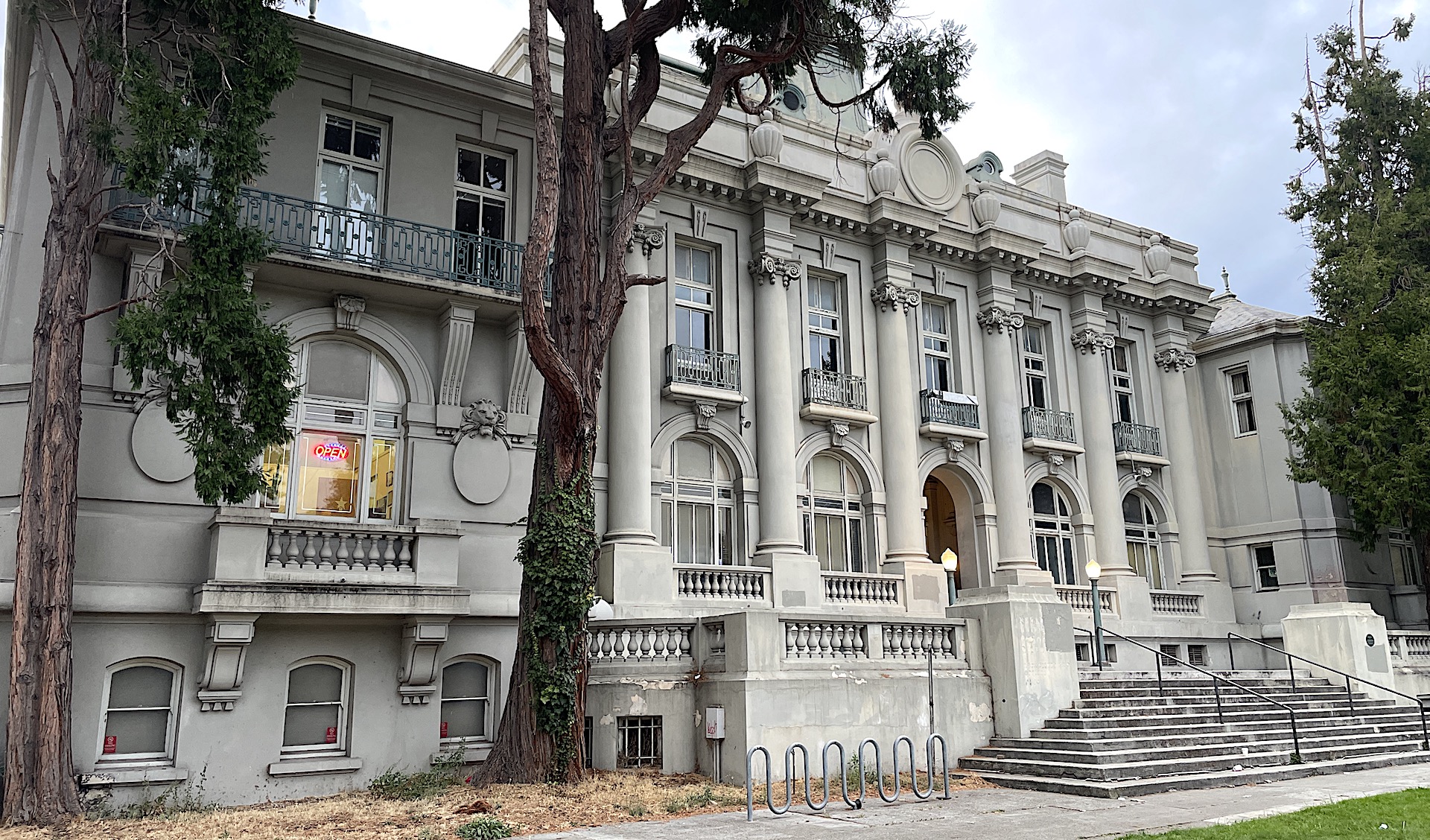
Flores acknowledged that the organization’s previous harassment policy — which it recently updated — “was pretty nebulous.”
“We just had two categories of harassment, it was either a major incident or a minor incident, major being extreme or persistent. And then everything else was minor, which was addressed with first a warning, then a six-month suspension, then a nine-month suspension,” he said. “And if it went past that it would be escalated to major and major was just you’re immediately kicked out.”
He added, “It’s just been stressful because, you know, sexual harassment is a very nuanced thing, I’ve come to learn, because I didn’t have a background with HR when all this began.”
Some six months later, in November 2022, a staff member at the station alleged they were solicited for sex work by an adult male intern, according to a subsequent police report. The man “approached her and stated, ‘I am looking for a sex worker. Let me know if you know any,’ while looking at (the employee) up and down,” the police report reads.
The report also states that the man was prohibited from entering the station after the incident but had nevertheless returned and was attempting to appeal the ban.