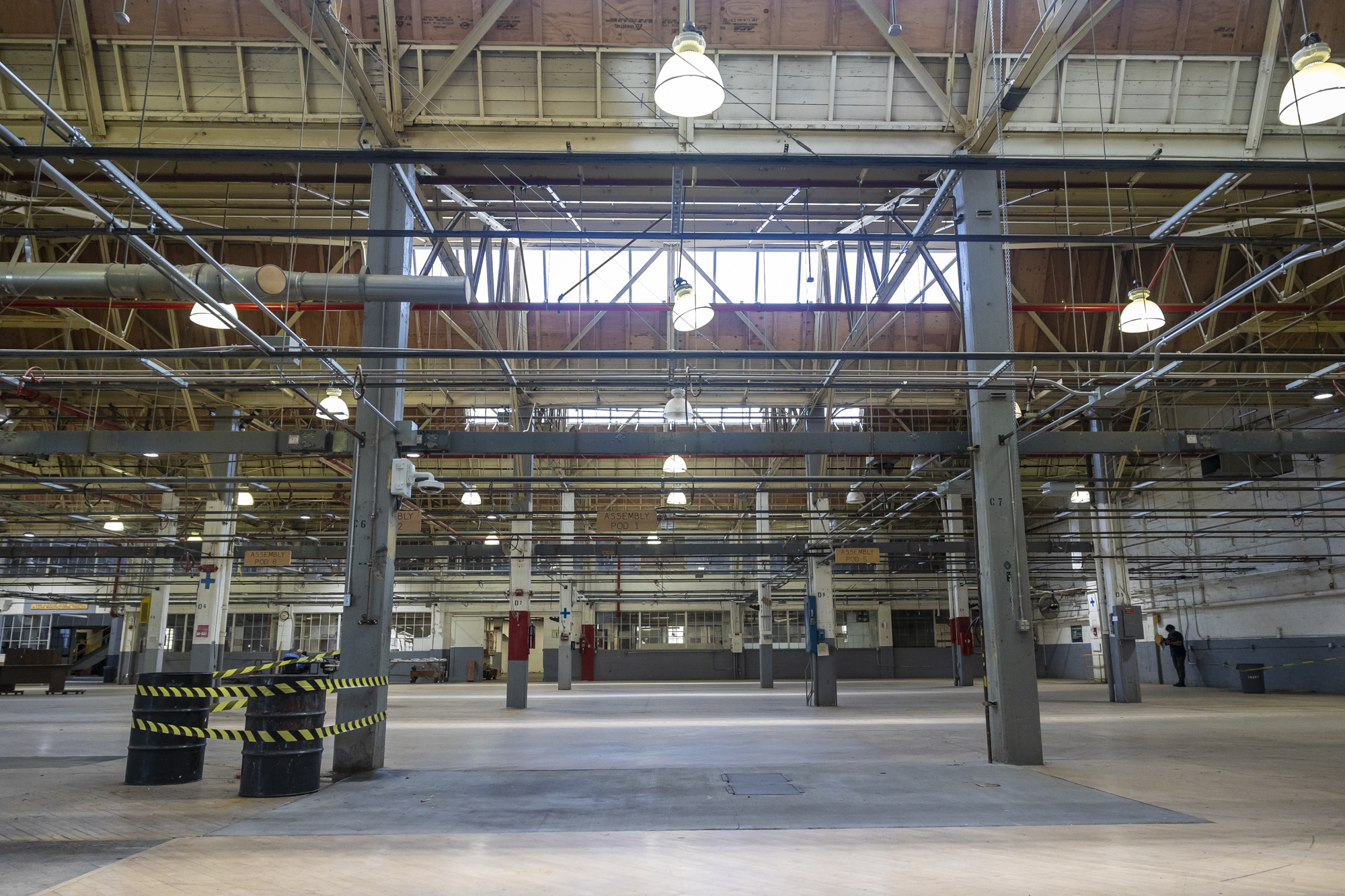
Four months after Gov. Gavin Newsom announced an ambitious plan to transform San Quentin State Prison into a model for rehabilitation, reporters got a tour of the penitentiary best known as home to California’s largest execution chamber.
Newsom’s idea: to move condemned incarcerated people to other maximum security prisons in California and transform the prison on the San Francisco Bay into “the nation’s most innovative rehabilitation facility.”
“We want to create an atmosphere where the residents and the correctional officers are interacting as human beings,” said Sacramento Mayor Darrell Steinberg, the governor’s senior advisor on San Quentin’s future, during a walk through the prison this week.

Steinberg and Ron Bloomfield, the prison’s warden, led about a dozen journalists through an update on the reimagined penitentiary that will focus on preparing incarcerated people for life on the outside.
“[It’s] a fundamental change in the way that personnel, starting with correctional officers, are trained and how they are recruited and retained,” Steinberg said.
The Norway model
Newsom’s plan for San Quentin is based largely on the way Norway and other Scandinavian countries approach crime and punishment, through de-emphasizing incarceration and deprivation of rights and prioritizing rehabilitation.
In a recent interview, state Assembly Public Safety Committee Chair Reggie Jones-Sawyer (D-Los Angeles) joked that “it’s my fault” Newsom is using Norway as a model.
A decade ago, Jones-Sawyer traveled to Norway to see how it approaches crime and punishment.
“And so what I learned is it’s completely different from the way we do it,” he said. “The most you can serve, whether you did murder, rape or whatever, you only would do 25 years, which means you’re going to get out, which means we have to rehabilitate this person no matter what in Norway.”

Broomfield, San Quentin’s warden, acknowledged that comparing California to Norway, where the recidivism rate is less than a third of what it is in the United States, “is like comparing a grape to a watermelon,” but he says he’s 100% behind the shift.
The way Broomfield sees it, public safety requires humanizing incarcerated people and giving them real skills they can use once they are paroled.
“And we’re not going to do that by institutionalizing them,” he said. “We’re going to do that by treating them like citizens of our state. Preparing them with opportunities to really produce a better neighbor upon release.”
San Quentin, like the rest of California’s sprawling prison system, has had more than its share of bad news over the years. In 2009, a three-judge panel ordered the state to reduce its overflowing prison population, which at one point had reached 167% of capacity. The court ruled that the state’s outdated prison health system amounted to cruel and unusual punishment, in violation of the Eighth Amendment of the U.S. Constitution.
And more recently, a Marin County Superior Court judge ruled that California prison officials inflicted “cruel and unusual punishment” on people in San Quentin when more than 2,600 of them — including some staff — contracted COVID-19 in the summer of 2020. The massive outbreak happened shortly after the state transferred 121 inmates from another prison with the highest COVID rates into San Quentin’s general population without properly testing and quarantining them. In all, 28 incarcerated people, and one staff member, died of the disease.

Can San Quentin really be transformed?
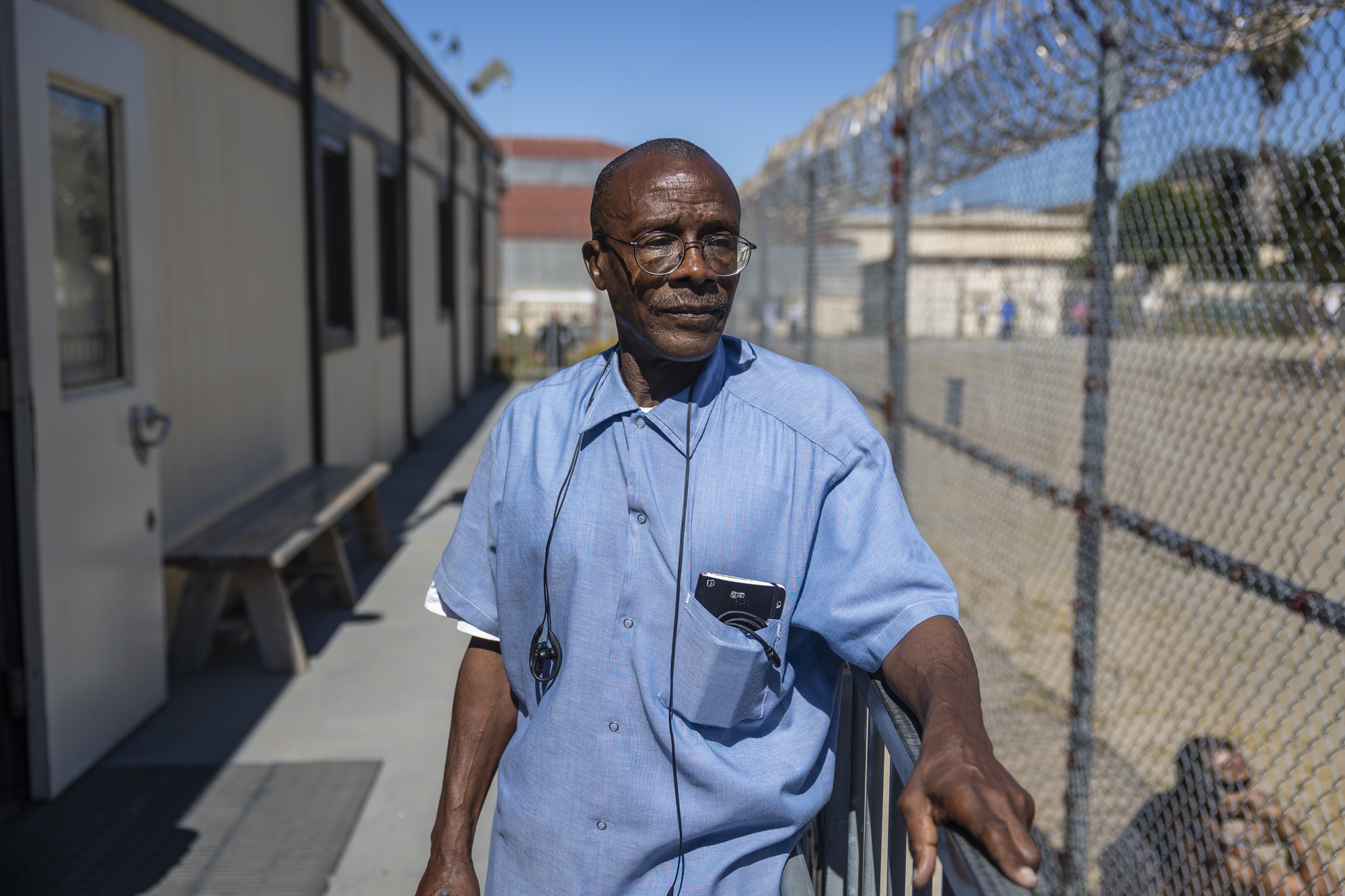
Juan Haines, who has been incarcerated 27 years, is hopeful but also skeptical about the proposed changes.
“There’s a lot of people in California prisons, and just rehabilitation is the last thing on their minds,” Haines, an editor at the San Quentin News, the prison’s award-winning newspaper, told me. “But then there’s a lot of people in California prisons that are really looking for opportunities to better their lives.”
Asked to put on his journalist’s hat and say what makes him question the success of this shift, Haines rattled off several things.
“I’m skeptical about California’s overcrowded prisons and I’m skeptical over buy-in from both sides,” he said. “I’ve talked to a lot of correctional officers that really love this idea. And then there’s some that don’t.”
Jones-Sawyer noted that when he first got to the Legislature over a decade ago, the state Department of Corrections and Rehabilitation, the agency had “a big ‘C’” for corrections, and a “little bitty ‘R'” for rehabilitation — and said he’s pleased that is changing.
Newsom’s goal to transform the state’s oldest prison into a center of innovation and education is a notion that thrills many criminal justice reformers while antagonizing death penalty proponents and other conservatives.