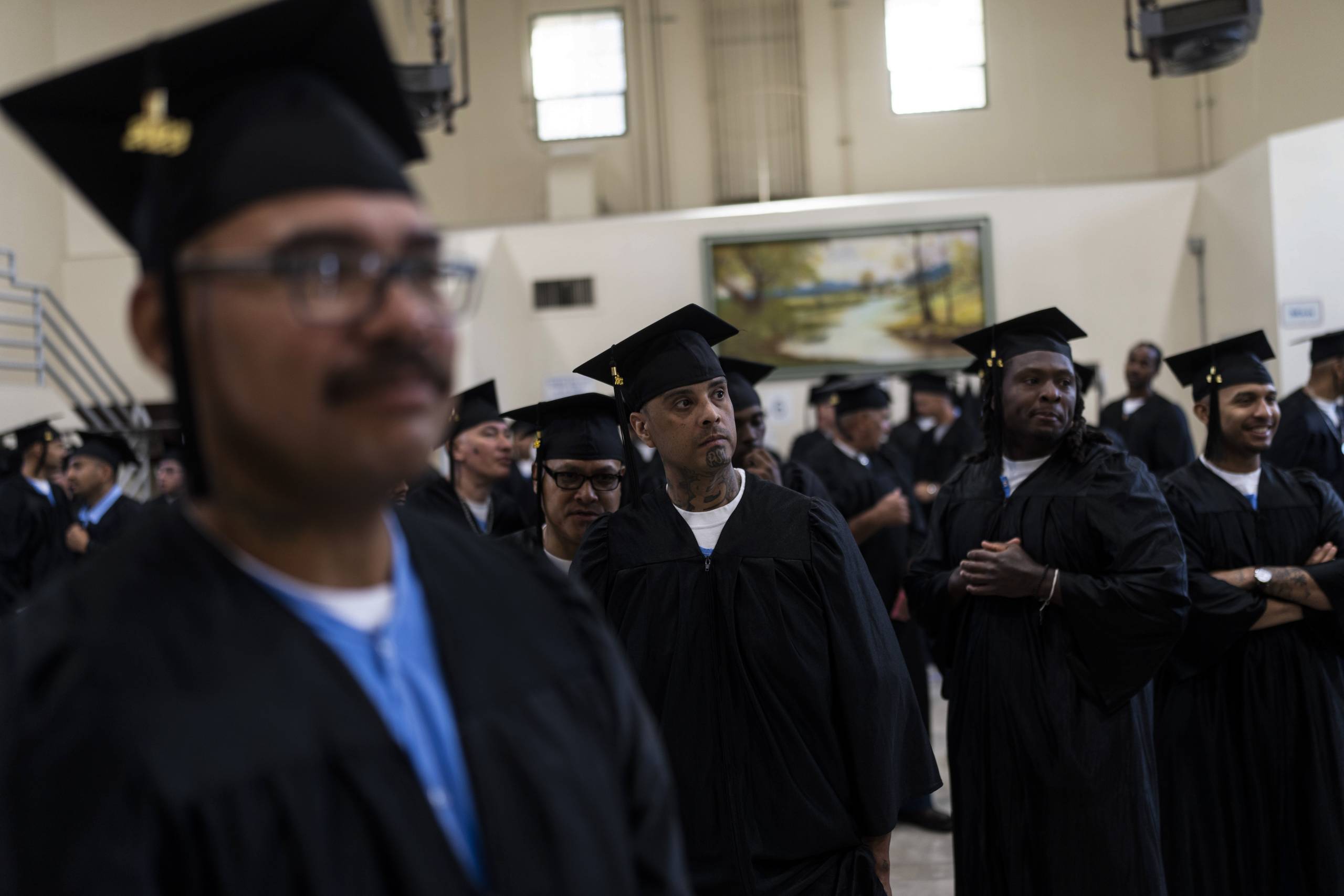
The graduates lined up, brushing off their gowns and adjusting each others’ tassels and stoles. As the graduation march played, the 85 men appeared to hoots and cheers from their families. They marched to a stage surrounded by barbed wire fence.
For these were no ordinary graduates. Their black commencement garb almost hid the aqua and navy-blue prison uniforms they wore as they received college degrees, high school diplomas and vocational certificates earned while they served time at California’s Folsom State Prison.
Thousands of prisoners throughout the United States get their college degrees behind bars, most of them paid for by the federal Pell Grant program, which offers tuition aid to lower-income undergraduates who have persevered through challenging circumstances.
That program is about to expand exponentially next month, giving about 30,000 more students behind bars some $130 million in financial aid per year.
A solid investment
The new rules, which overturn a 1994 ban on Pell Grants for prisoners, begin to address decades of policy during the “tough on crime” 1970s–2000 that brought about mass incarceration and stark racial disparities in the nation’s booming prison system that now holds nearly 2 million people behind bars.
For people in prison who get their college degrees, including those at Folsom who received grants during an experimental period that started in 2016, it can be the difference between a decent life ahead or ending up back behind bars. Finding a job is difficult with a criminal conviction, and a college degree can be an invaluable advantage.
Gerald Massey, one of 11 Folsom students graduating with a degree from the Sacramento State University, has served nine years of a 15-year-to-life sentence for a drunken driving incident that resulted in the death of his close friend.
“The last day I talked to him, he was telling me, I should go back to college,” Massey said. “So when I came into prison and I saw an opportunity to go to college, I took it.”
It costs roughly $106,000 per year to incarcerate one adult in California, and about $20,000 to have that person earn a bachelor’s degree through the Transforming Outcomes Project at Sacramento State, or TOPSS.
If a prisoner receives parole with a degree, never reoffends, gets a job earning a good salary and pays taxes, then the expansion of prison education shouldn’t be a hard sell, said David Zuckerman, the project’s interim director.
“I would say that return on investment is better than anything I’ve ever invested in,” he said.
Major policy shift
That doesn’t mean the idea is always popular. Using taxpayer money to give college aid to people who’ve broken the law — especially those convicted of violent crimes — can be controversial. When the Obama administration offered a limited number of Pell Grants to prisoners through executive action in 2015, some prominent Republicans opposed it, arguing in favor of improving the existing federal job training and reentry programs instead.
The ban on Pell Grants for prisoners caused the hundreds of college-in-prison programs that existed in the 1970s and 1980s to go almost entirely extinct by the late 1990s.
Congress voted to lift the ban in 2020, and since then, about 200 Pell-eligible college programs — like the one at Folsom — have been running in 48 states, Washington, D.C. and Puerto Rico. Under the coming expansion, any college can apply to use Pell Grant funding to serve incarcerated students, and, if approved, launch its own program.
Since entering the White House, President Joe Biden has strongly supported giving Pell Grants to prisoners. That’s a big turnaround — the Violent Crime Control and Law Enforcement Act of 1994, championed by the former Delaware senator, was what barred prisoners from getting Pell Grants in the first place. Biden has since said that he didn’t agree with that part of the compromise legislation.
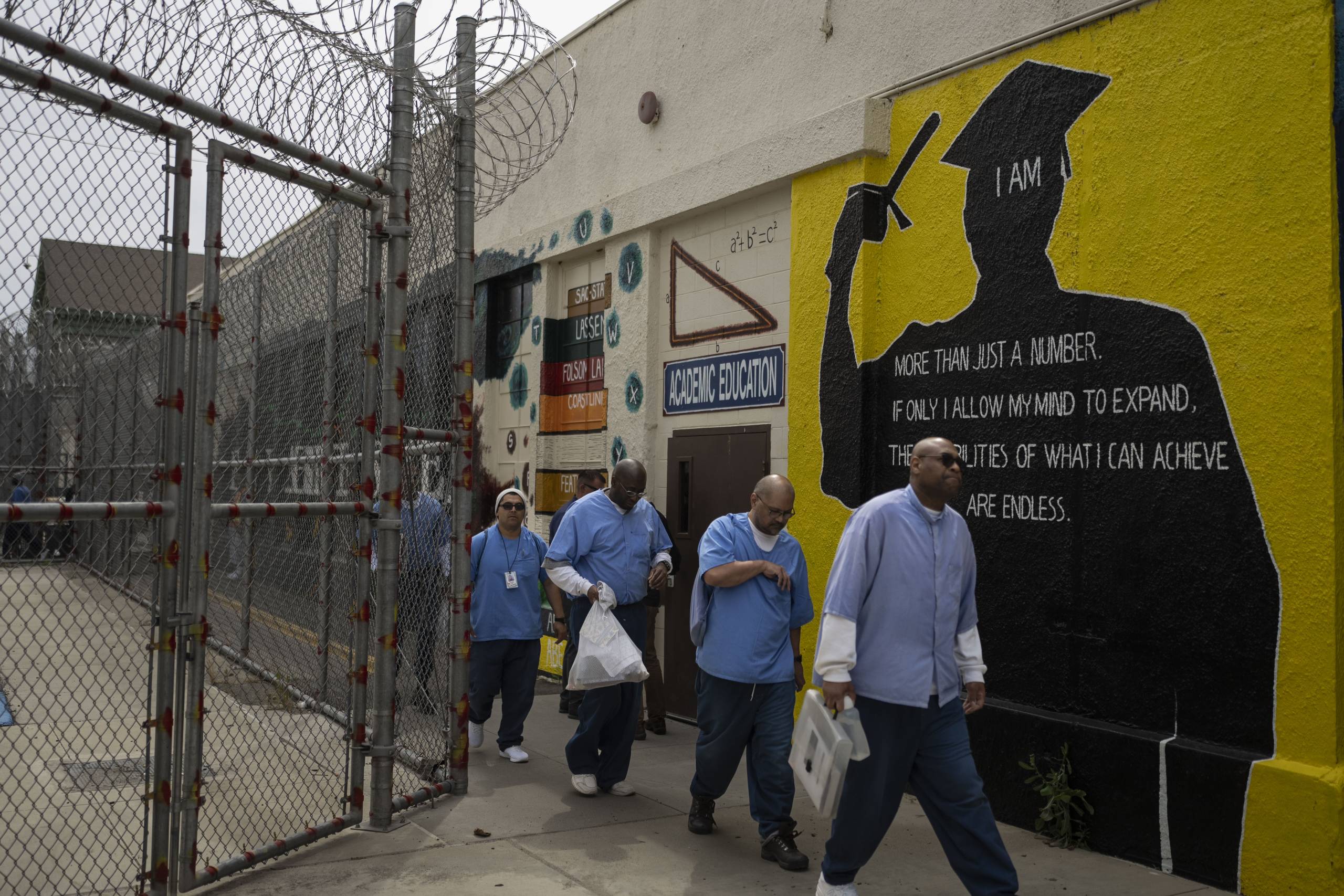
The California Department of Corrections and Rehabilitation had 200 students enrolled in bachelor’s degree programs this spring, and has partnered with eight universities across the state. The goal, says CDCR spokesperson Terri Hardy: transforming prisoners’ lives through education.
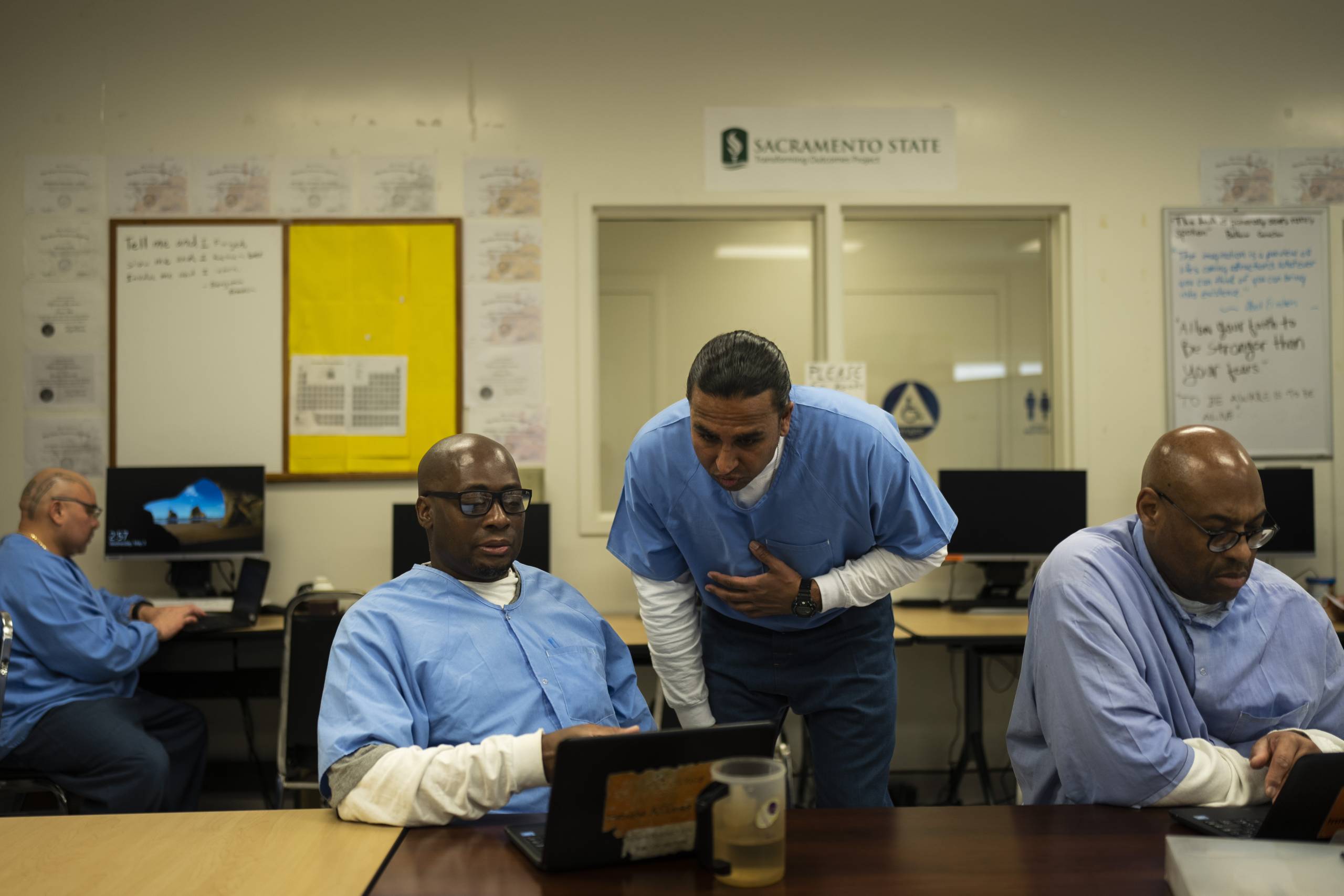
Aside from students dressed in prisoner blues, classes inside Folsom Prison look and feel like any college class. Instructors give incarcerated students the same assignments as they do to pupils back on campus.
‘A big accomplishment’
The students in the Folsom classes come from many different backgrounds. They are Black, white, Hispanic, young, middle aged and senior. Massey, who got his communications degree, is of South Asian heritage.