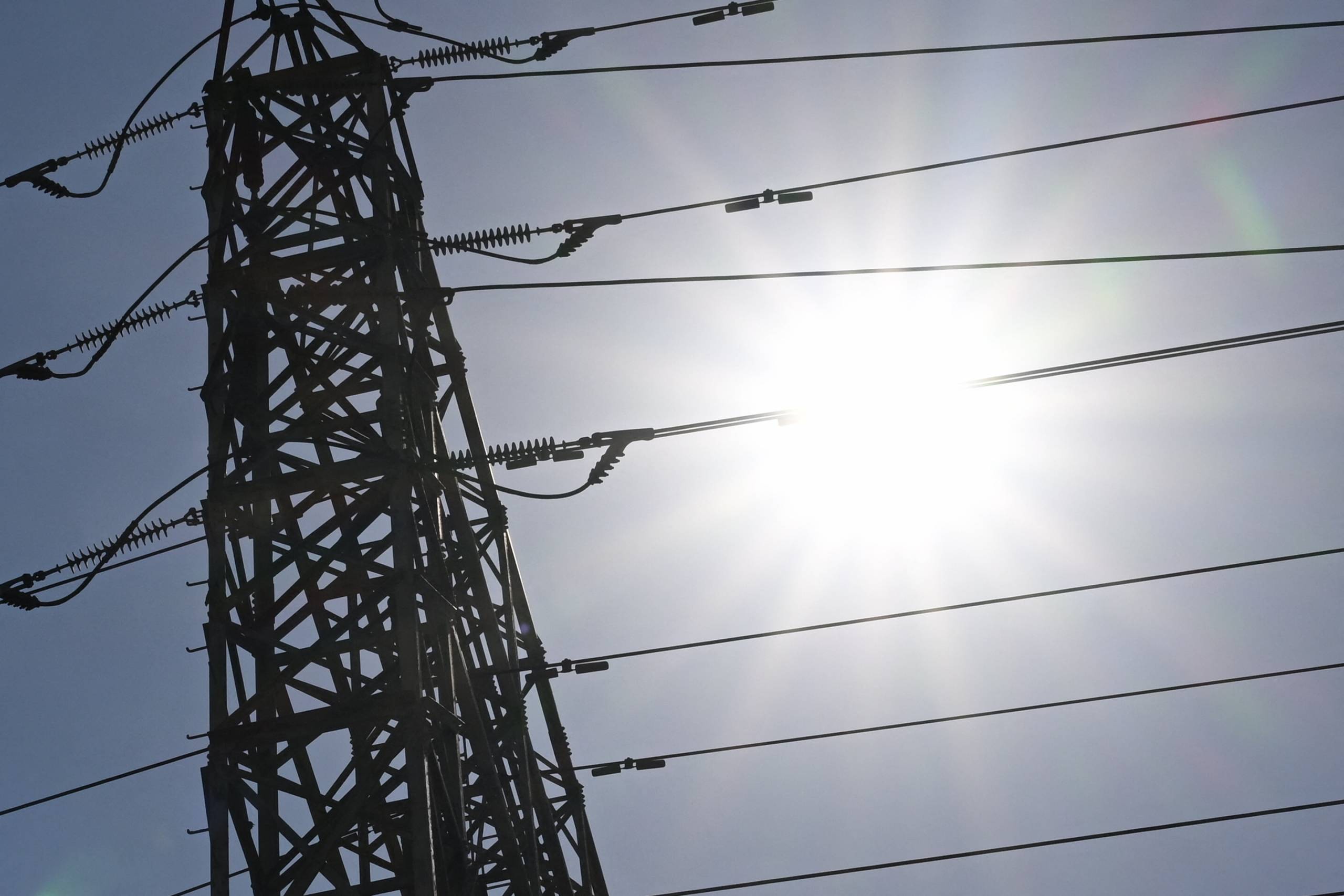
One megawatt of electricity is enough to power about 750 homes.
“I am relieved to say that we are in a much better position than what we were going into 2022,” said Siva Gunda, vice chair of the California Energy Commission.
The struggle to power the state during severe heat waves has been a problem for Democratic Gov. Gavin Newsom, who has aggressively moved the state away from fossil fuels. California gets much of its power now from sources like wind and solar. But those power sources are not always available.
To avoid blackouts during heat waves, Newsom and the state Legislature spent $3.3 billion to create a “strategic reliability reserve.” State officials used the money to extend the life of some gas-fired power plants that were scheduled to retire and to purchase large diesel-powered generators. Last September, when a severe heat wave pushed the statewide demand for electricity to an all-time high, this reserve generated up to 1,416 megawatts of energy.
On Thursday, Newsom was set to update his plan to move the state away from fossil fuels and “outline a plan to achieve California’s ambitious climate goals,” according to a news release from the governor’s office.
While officials say the state should avoid critical power shortages, they warn the weather could change things. Wildfires are also a threat, with the potential to knock out key power transmission lines. Those events could still trigger a “flex alert,” warning people to conserve energy.
Energy agencies, including the California Energy Commission and the California Independent System Operator, or CAISO, are basing their outlook on what they call a 1-in-10 probability of a heat wave that would rapidly drive up power demand.
The “1-in-10” scenario this year projects that statewide power demand will peak at 49,900 megawatts. But the state’s experience in 2022 shows that’s anything but a sure thing.
This year’s projection is close to the forecast the agencies made for peak power demand last year — 49,400 megawatts. Demand stayed well below that level until Labor Day weekend, when much of the state experienced heat that soared into triple digits.
As the weeklong heat wave continued, statewide energy demand hit its highest level ever — 52,061 megawatts. Rolling blackouts were avoided only by calling on emergency generation and a last-ditch text message to California residents from the Governor’s Office of Emergency Services pleading for immediate energy conservation.
The energy agencies say that the improvement in power supplies this year means the state is much better protected against the possibility of rotating outages. Even so, residents should be prepared to conserve.
Wildfires inside and outside the state pose a threat to transmission lines serving California residents. And prolonged heat waves could well prompt CAISO to issue flex alerts — a call for voluntary conservation to help maintain the reliability of the power grid.
“I would say that folks shouldn’t be surprised to see a flex alert,” said Alice Reynolds, president of the California Public Utilities Commission. “I mean, we’re talking about extreme heat, unusual events that are hard to manage.”
This story includes additional reporting from KQED’s Dan Brekke.