
Updated 11:45 a.m. Thursday
Close to 5 million gallons of untreated sewage spilled into Oakland waterways during record-breaking rainfall on New Year’s Eve.
In nearby Castro Valley, residents reported sewage backing up into their drains and front yards.
“This is our worst nightmare,” said Michael Nelson, spokesperson for the Castro Valley Sanitary District. “Nobody wants to have to go stay in a hotel because their home is flooded with sewage.”
The nine atmospheric river storms that began dumping vast amounts of rain on the state in late December, and refused to let up until last weekend, overwhelmed aging sewer systems, forcing wastewater agencies in the nine-county Bay Area to collectively release some 62 million gallons of raw or only partially treated sewage into nearby waterways, according to initial estimates from the San Francisco Bay Regional Water Quality Control Board.
That’s enough sewage to fill about 94 Olympic swimming pools — more than three times the amount the board initially reported after the first round of storms in early January.
Eileen White, the board’s executive officer, confirmed those figures on Thursday, but emphasized that they are “preliminary” and “not exactly precise.”
Local wastewater agencies are required to immediately report the estimated volume of any unauthorized sewage discharges, she said, but noted that a more accurate accounting of the extent of the spillage wouldn’t be available until next month, when their final analyses are submitted.
“But it definitely gives you the magnitude,” said White, who until recently oversaw wastewater operations at the East Bay Municipal Utility District (EBMUD). “The intensity of the storms went beyond [most agencies’] storage and treatment capacity.”
Which brings us to a rather disgusting realization: We’re going to have to change how we get rid of all our poop.
‘The new normal’
“You forget about it when you’re in drought for many years,” White said. “But then when you get to events that occurred over the last week, it’s a wake-up call. Because I think that’s going to be the new normal with climate change.”
These types of massive rainstorms, she notes, are expected to hit the region more frequently — and even increase in intensity.
“When we’re out of the reactive mode,” she added, “I think it’ll be good to reflect afterwards about what can the Bay Area do to be better prepared for these events.”

Usually — ideally — when you flush your toilet or wash your dishes, waste drains into sewer laterals, which are maintained by property owners. From there it flows into the city’s pipes, and is then diverted to the pipes of the local utility district.
In much of the East Bay, the wastewater then passes through interceptors that act as gatekeepers: If the flow is below a certain volume, it continues to EBMUD’s main wastewater treatment facility, where it is cleaned and released into the bay. During some severe storms, excess water is also diverted to wet weather storage tanks, treated to basic standards, and then released.
But on New Year’s Eve — Oakland’s wettest day on record — multiple points along that system were overwhelmed and failed.
Unprecedented rainfall saturated the soil and seeped into old, cracked sewer laterals, adding to the volume of flow. As Castro Valley’s pipes filled to capacity, sewage backed up onto some people’s properties, spilling onto their yards — toilet paper and all.
A torrent of poop
A mighty, mounting flood of poop and rainwater surged through much of EBMUD’s wastewater system. It percolated out of maintenance holes in Berkeley, Albany and Alameda, and overflowed at the utility’s south interceptor near the Oakland Coliseum, dumping some 4.7 million gallons into San Leandro Creek and the Oakland Estuary (PDF).
“The huge influx of rainwater exceeded our ability to move and treat that wastewater,” said Andrea Pook, spokesperson for EBMUD. “It overflowed before it even got to our system, despite the activation of all of our wet-weather facilities.”
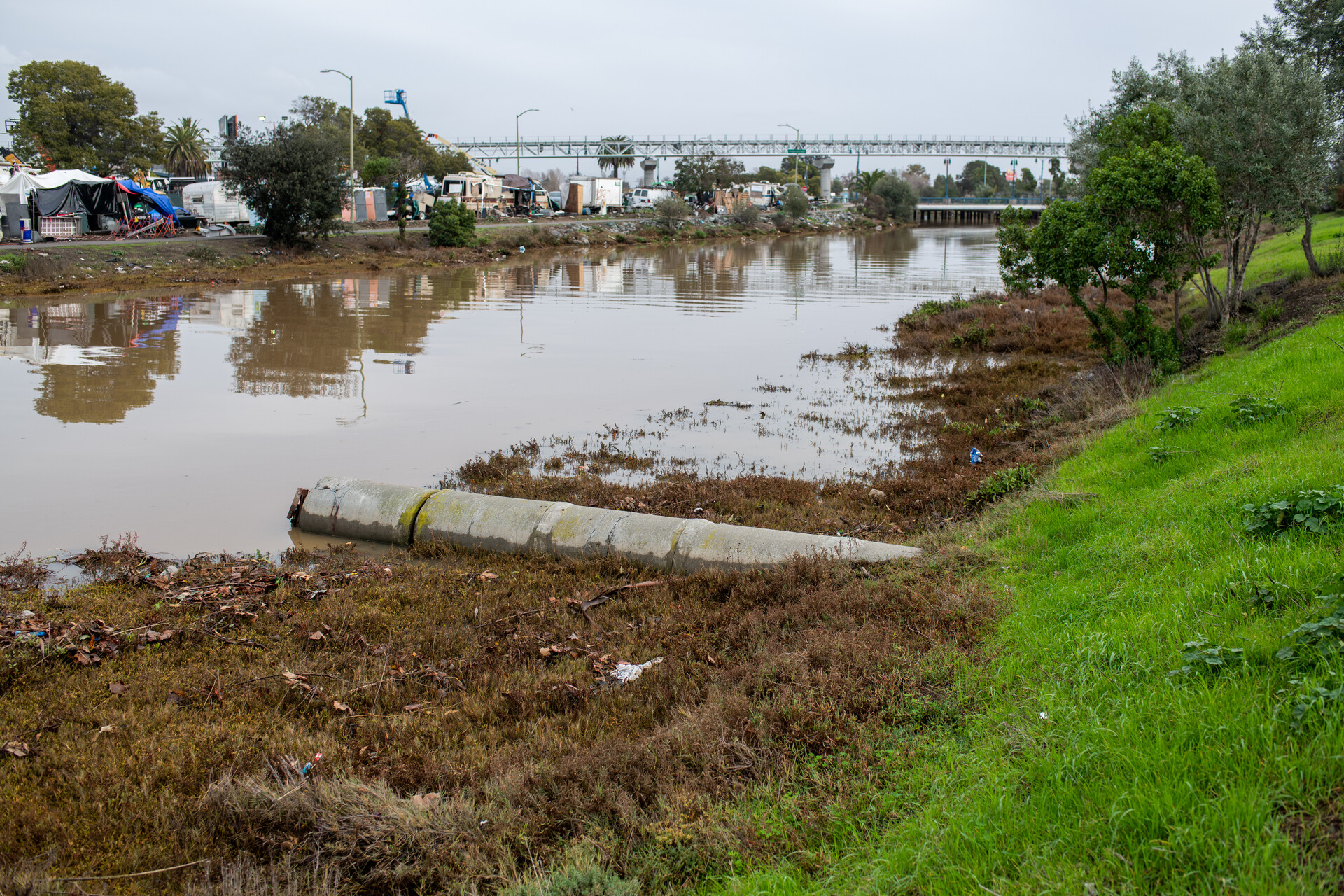
The spillage in the East Bay was hardly unique. Major spills occurred throughout the region.
According to White, from the water board, entire neighborhoods along San Francisco’s Folsom Street flooded with a mixture of stormwater and sewage. (Interestingly, San Francisco and Sacramento, which also experienced flooding, are the only two cities in California that have a single-pipe system for both wastewater and stormwater.)
Among a host of other soiled locations, sewage also flowed into scenic Half Moon Bay, when Pilarcitos Creek flooded the area’s wastewater treatment plant.
Serious health hazards
Raw sewage — even diluted with rainwater — poses serious health hazards. “When we talk about these sewage spills, we’re talking about people being exposed to pathogens, bacteria, viruses that can cause really serious illnesses,” said Sejal Choksi-Chugh, executive director of San Francisco Baykeeper, a regional environmental group.
Choksi-Chugh strongly recommends avoiding any contact with bay water or creek water — or even street puddles — for at least several days after a major storm. “Anyone who is walking down the street is possibly exposed to raw sewage when there’s an overflow in the street from a manhole,” she said.
Meanwhile, Choksi-Chugh notes, lower-income communities of color often live in the most affected neighborhoods — the ones more susceptible to flooding and closer to the bayshore where the sewage ends up. She points out that EBMUD’s main treatment facility, where 50,000 gallons of sewage spilled during a 2020 power outage, is located in West Oakland.
“And that’s already a community that’s impacted really heavily by industrial pollution, and other environmental factors,” she said.
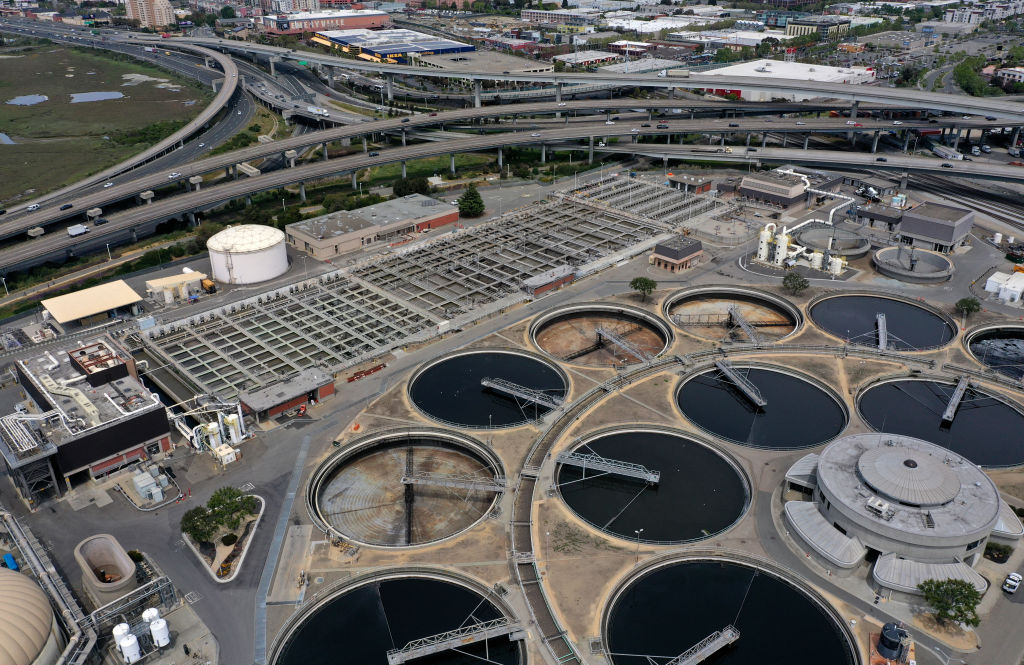
And then there’s the broader environmental impact: The pathogens and bacteria in the sewage — even a large amount of treated sewage — can also sicken fish and other wildlife, Choksi-Chugh said. “It can cause low dissolved oxygen, which can lead to fish not being able to breathe.”
That was on full, fetid display during a heat wave in late August, when thousands of dead fish washed up at Oakland’s Lake Merritt and nearby shorelines. The fish die-off followed an uncontrolled algal bloom — known as a “red tide” event — likely caused by the discharge of too much sewage or fertilizer into the bay.
So, how do we fix this?
With bigger and more frequent storms predicted, most Bay Area wastewater agency officials interviewed for this story agreed on the need to strengthen the region’s aging infrastructure. The question is, which parts of it?