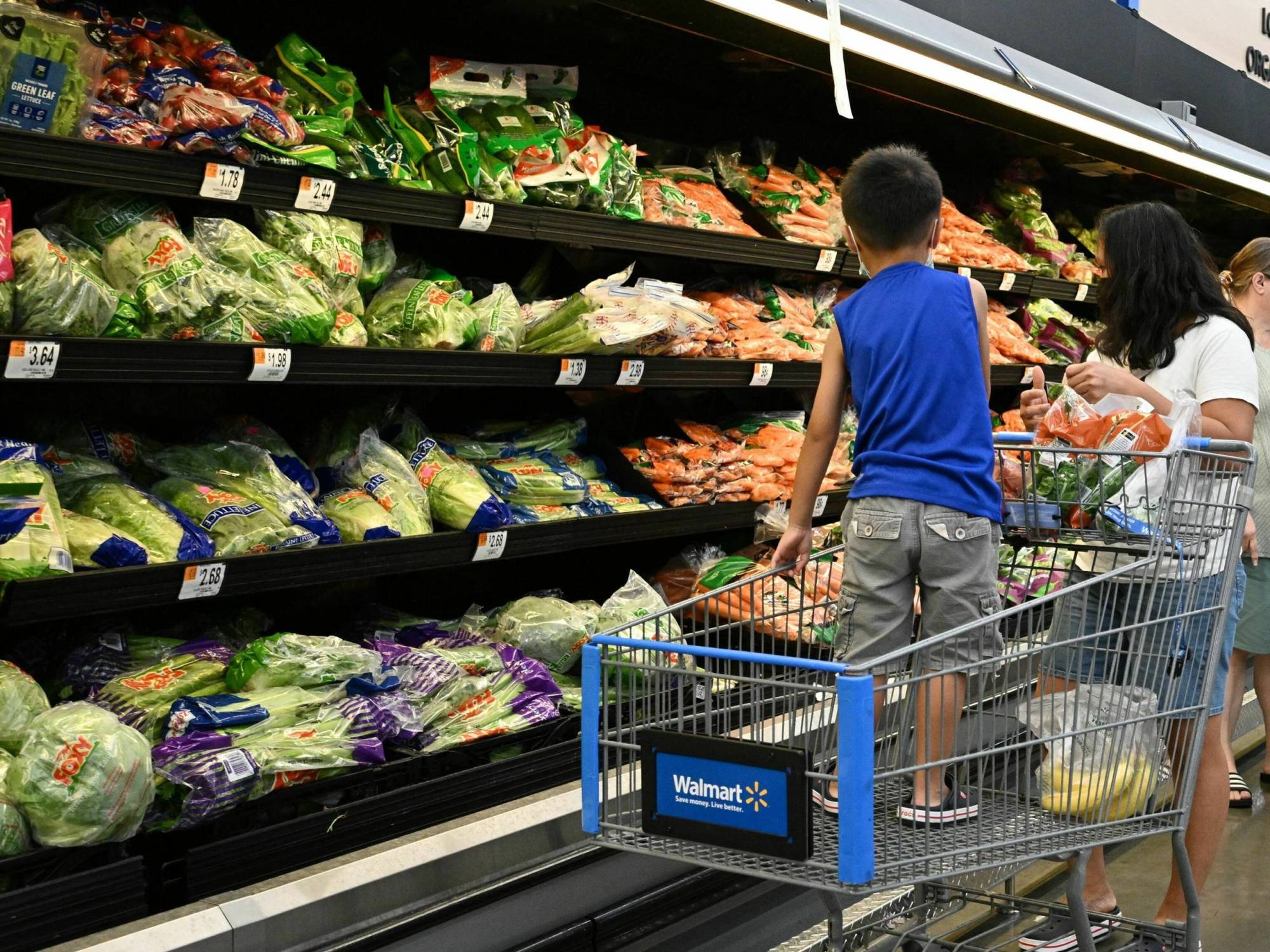
Americans are saving money at the gas pump, only to spend it in the produce aisle.
Gasoline and grocery prices moved in opposite directions last month, as the overall inflation rate declined slightly. Consumer prices in November were up 7.1% from a year ago, compared to an annual increase of 7.7% the month before.
It was the smallest 12-month increase since December of last year.
The inflation figures were released Tuesday by the Labor Department, just as the Federal Reserve prepares to raise interest rates for the seventh time in nine months on Wednesday.
For a year, Americans have seen racing inflation eat away at their savings and add to their credit card debt. A key source of pain was costly gasoline.
But gasoline prices dropped 2% between October and November and gas is now selling for less than it was a year ago, before Russia’s invasion of Ukraine.
As fuel prices fall, however, food prices have been climbing. Grocery prices rose 0.5% in November, led by a whopping 8.9% jump in the price of lettuce.
“I’ve never seen it like this,” said Brian Guarino, a produce distributor outside Philadelphia.
A wholesale box of romaine lettuce that typically sells for $25 to $30 on the east coast is costing up to $100, as a result of growing problems in California and high transportation costs.
“You can’t put lettuce on a hoagie and expect not to put an upcharge on it, when you’re paying $100 for 24 heads of lettuce,” Guarino said.
An insect-borne virus curbed lettuce production in the Salinas Valley this fall. And while gasoline prices have tumbled, the diesel fuel used to truck vegetables still costs nearly $5 a gallon.
While food and energy prices are notoriously volatile, the prices of many other goods appear to be stabilizing. Used car prices fell 2.9% between October and November, while new car prices were flat.
“It is far too early to declare goods inflation vanquished,” Fed chairman Jerome Powell said two weeks ago, about the stabilization. “But if current trends continue, goods prices should begin to exert downward pressure on overall inflation in coming months.”
People are getting roommates and, in turn, easing housing inflation
Likewise, there are signs that housing inflation has begun to ease. Rents are still rising much faster than they were before the pandemic, but not at the breakneck pace they were in the spring.
9(MDAxOTAwOTE4MDEyMTkxMDAzNjczZDljZA004))