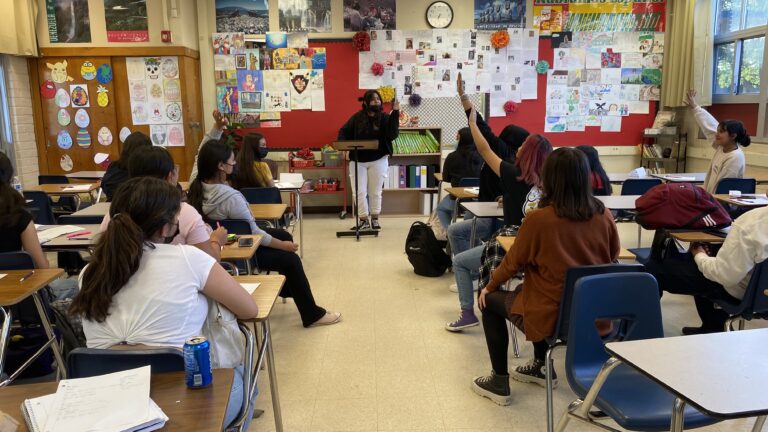
“These classes make me go at a higher level,” Gonzalez said.
Dual enrollment students are entering the workforce in Kern County. Brianna Zatarain graduated from Cal State Bakersfield this spring in just three years — an achievement she credits to college courses that she took in high school. During the school day, Zatarain and her classmates at Robert F. Kennedy High School in Delano would walk next door to Bakersfield College’s satellite campus to take college courses.
Zatarain is now a reading assistant at an elementary school in nearby McFarland. She’s working on her master’s degree in education when many of the students who began college with her still haven’t completed college.
“Taking dual enrollment classes helped me get ahead of the game,” Zatarain said.
On track to earn a degree
As dual enrollment was first rolled out in high schools, college courses were limited and demand was high. But with each passing year, high schools in the Kern Community College District are offering more college courses layered throughout the high school curriculum and more pathways to obtaining an associate degree or certificate.
Serna and her older sister took classes on the first dual enrollment pathway offered at Wonderful College Prep Academy, an associate degree in agricultural business, but she is pleased to see that her younger sisters will have more options, such as education and health care. She’s also glad that there will be more spots available on these pathways. Demand outpaced slots, which made the process to get onto the pathway competitive.
Campbell said the community college district strives to make sure that offerings are not reserved for just honors students or exceptional students. But putting that principle into practice is a tricky balance, especially when there are more applications than seats.
“I don’t think anyone has that answer: How do you get away from tracking, open it up to all students, but also ensure students are successful?” Campbell said. “If anyone has that unique formula, I’d love to hear it, but we’re trying.”
Appealing to students outside of the honors track is key to improving college-going rates in the community.
“They’re bored of what high school has to offer them,” Campbell said. “Getting started on college is the best thing to do, so they don’t burn out and not continue after high school.”
Courses are designed to avoid locking out students with prerequisites. The community college aims to admit students who are interested in the programs — whether that’s industrial automation or the liberal arts.
“It’s really more about that ambition and their plans for themselves,” Campbell said.
Because the district is trying to keep the courses as accessible as possible, college counselors are key. They check in to make sure students are continuing to get good grades in their high school classes, as well as their college courses.
Promotion is a key part of ensuring dual enrollment is offered equitably. Arvin High heavily promotes dual enrollment opportunities to the parents of freshmen through its Parent University program, said Ed Watts, the principal. It works: Freshman dual enrollment students at Arvin overwhelmingly said it was their parents who pushed them to sign up.
“It’s now gaining momentum, because we’re in year six of it, so the community knows it’s here now,” Watts said.
Keep on growing
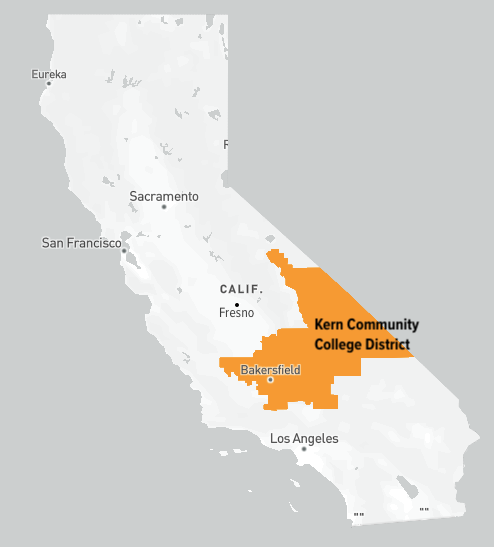
Since 2015, the Kern Community College District has added more dually enrolled students than any other district in the state, and it plans to keep on growing.
Having enough high school teachers qualified to teach dual enrollment courses is crucial. The newly created Kern Regional K–16 Education Collaborative will be key, said Ryan Coleman, director of education services for the Kern High School District. The collaborative, modeled after a similar program in Fresno County, will provide tuition and mentorship for two groups of 25 teachers to receive their master’s degrees in their content area — particularly English, math and science.
Satellite campuses — such as the one Zatarain attended in Delano — have also been a boon for dual enrollment efforts. A crosstown campus in Bakersfield opened in spring and serves as a major hub for dual enrollment courses. A campus is slated to open in Arvin in fall 2024.
The pandemic hit Arvin and its students hard, which caused a decline in dual enrollment, said principal Watts. But he said the future of dual enrollment is bright. Teachers are working on their master’s degrees, which are required for them to teach the college courses. When the satellite campus opens across the street, Arvin High plans to synchronize its schedule, so students can take courses there. Watts compares the school’s efforts with the Kern Community College District to a proverbial snowball.
“It’s a big ball rolling,” said Watts.
This story originally appeared in EdSource.