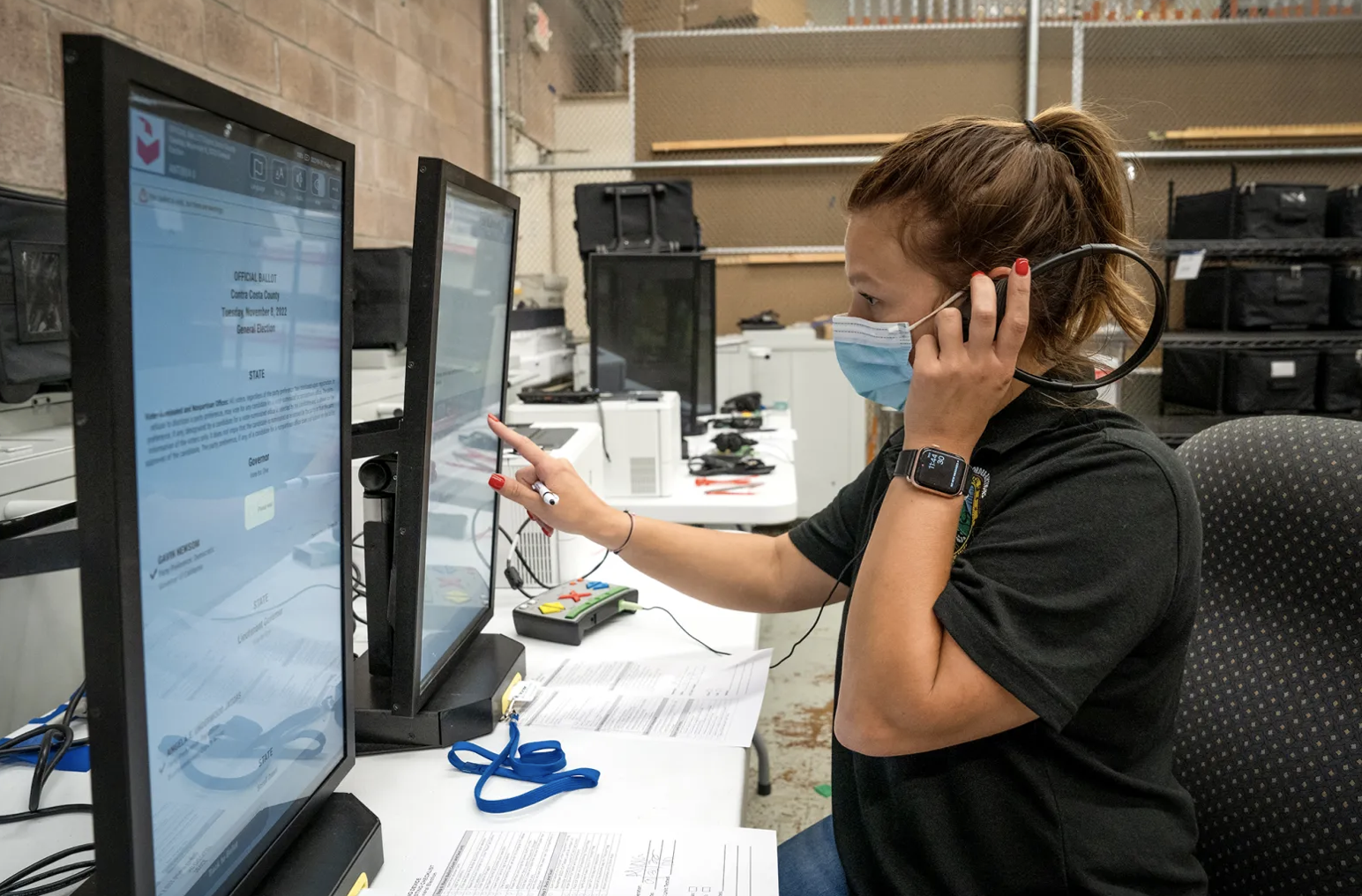
For more than a week after the November 8 election, control of the U.S. House of Representatives remained undetermined. All eyes had turned to more than half a dozen uncalled races in California when, on Wednesday, The Associated Press projected victory for Rep. Mike Garcia in his Los Angeles-area district, finally handing Republicans a slim majority in the new Congress.
As tense days ticked by without resolution, political pundits across the country once again lamented why the vote count takes so long in California, while conservatives resurfaced unsubstantiated claims that late-arriving ballots and slow results exposed Democratic efforts to steal close races.
In reality, the extended count, which will take a month to finish, is a consequence of California’s shift to overwhelmingly voting by mail, a convenience that requires several additional steps of verification by local officials once ballots arrive.
Though election experts in California say there are several ways the state could potentially speed up the tally, there is little urgency to prioritize them. With policymakers focused instead on improving accessibility, participation and security, the waiting game seems here to stay.
“Democracies are not meant to be efficient. They’re built on a foundation that every person’s vote matters,” said state Sen. Steve Glazer, an Orinda Democrat who leads the Senate committee on elections. Instant answers, he said, are not more important than ensuring the accuracy and integrity of the results.
Glazer added that no one has ever raised serious concerns with him about the speed of vote counting.
“The current hysteria generated by some is a lot of bunk that feeds their ideological agenda to the detriment of trust in our democracy,” Glazer said. “Is there a way to make it faster? Yes, there is. It is worth the price, the cost?”
Mail ballots slow the tally
The crawling pace of election results in California — with updates dribbling out day by day — stems from changes in how people vote over the past two decades. The state implemented no-excuse absentee voting in 2002, which during the coronavirus pandemic became a system where every active registered voter is mailed a ballot. Gov. Gavin Newsom signed a law last year making that permanent.
Some experts point to additional factors, including the sheer size of California and its independent redistricting process, which creates more competitive races where the outcome cannot be determined as quickly.
But the timeline is fundamentally driven by mail ballots, which simply take longer to count than those cast at a polling place on election day.
A recent analysis by the nonprofit California Voter Foundation found that, in November 2004, when fewer than a third of voters cast mail ballots, nearly 81% of voters were counted within two days of election day. By comparison, in the June primary this year, more than 91% of voters cast mail ballots and slightly less than half were counted within two days of election day.
As of 10 a.m. today, county election offices had counted about 9.2 million votes, but still had nearly 1.7 million ballots left to process (PDF).
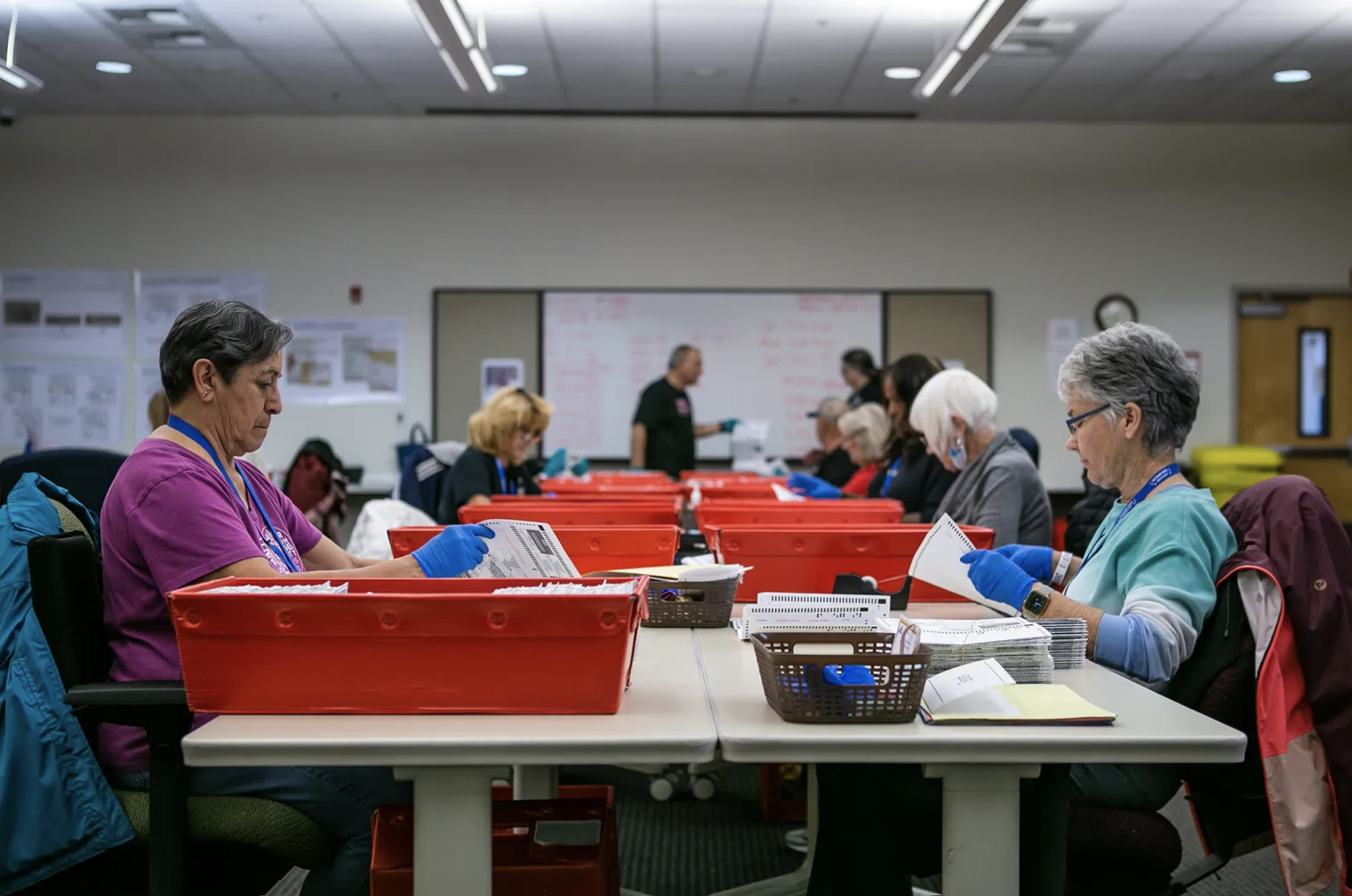
The reasons are not nefarious. Local election officials verify the signature on every mail ballot and check that the voter has not already cast a ballot in another jurisdiction before counting it. To minimize the number of legitimate votes that are disqualified for procedural reasons, California accepts ballots postmarked by election day that arrive as much as a week later and gives voters an opportunity to fix missing or mismatched signatures on their ballots. Before certification, election offices also recount 1% of ballots by hand as an internal audit.
“We have a huge population of registered voters and California stresses enfranchisement, so we have a process that by law ensures both voting rights and the integrity of elections,” Secretary of State Shirley Weber, the state’s chief elections officer, said in a statement Tuesday. “I would call on everyone to be patient.”
Her office did not make Weber available for an interview, but spokesperson Joe Kocurek said that, with the count still ongoing, “It’s a little early for us to assess whether any changes are needed.”