You wouldn’t think BART assisted the plant life cycle in any way, yet the agency has found itself helping local honeybees — an insect that’s key to growing crops — through relocation instead of extermination.
A Sweet Deal: This Oakland Beekeeper Rescues Bees From BART — Then Sells the Honey
When beehives are found in stations and on other BART property, they're considered a potential hazard to workers and riders, and the agency has to remove them. That's when local beekeeper Khaled Almaghafi gets the call.

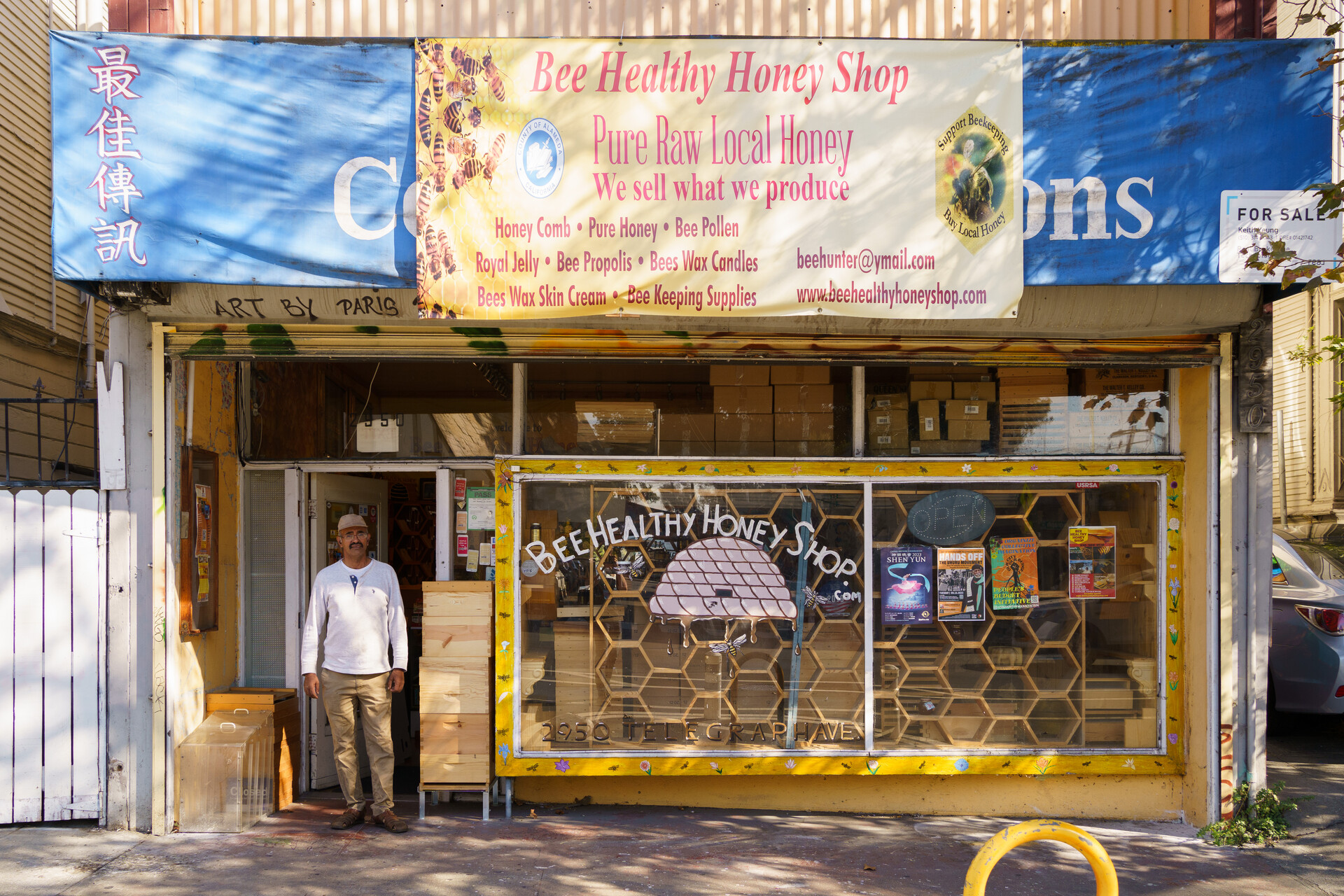
Khaled Almaghafi at his store, Bee Healthy Honey Shop, in Oakland. Almaghafi is paid to remove bees from BART stations, and keeps the bees and honey he finds. (Aryk Copley/KQED)
Related Post
When beehives are found in stations and on other BART property, they’re considered a potential hazard to workers and riders, and the agency has to remove them. BART Facilities Superintendent Glen Eddy said it’s an ongoing concern.
"We get reports of beehives in some weird spots in the BART system,” Eddy said. “They’ve been in our train yards and even on the electrified third rail that powers our trains.”
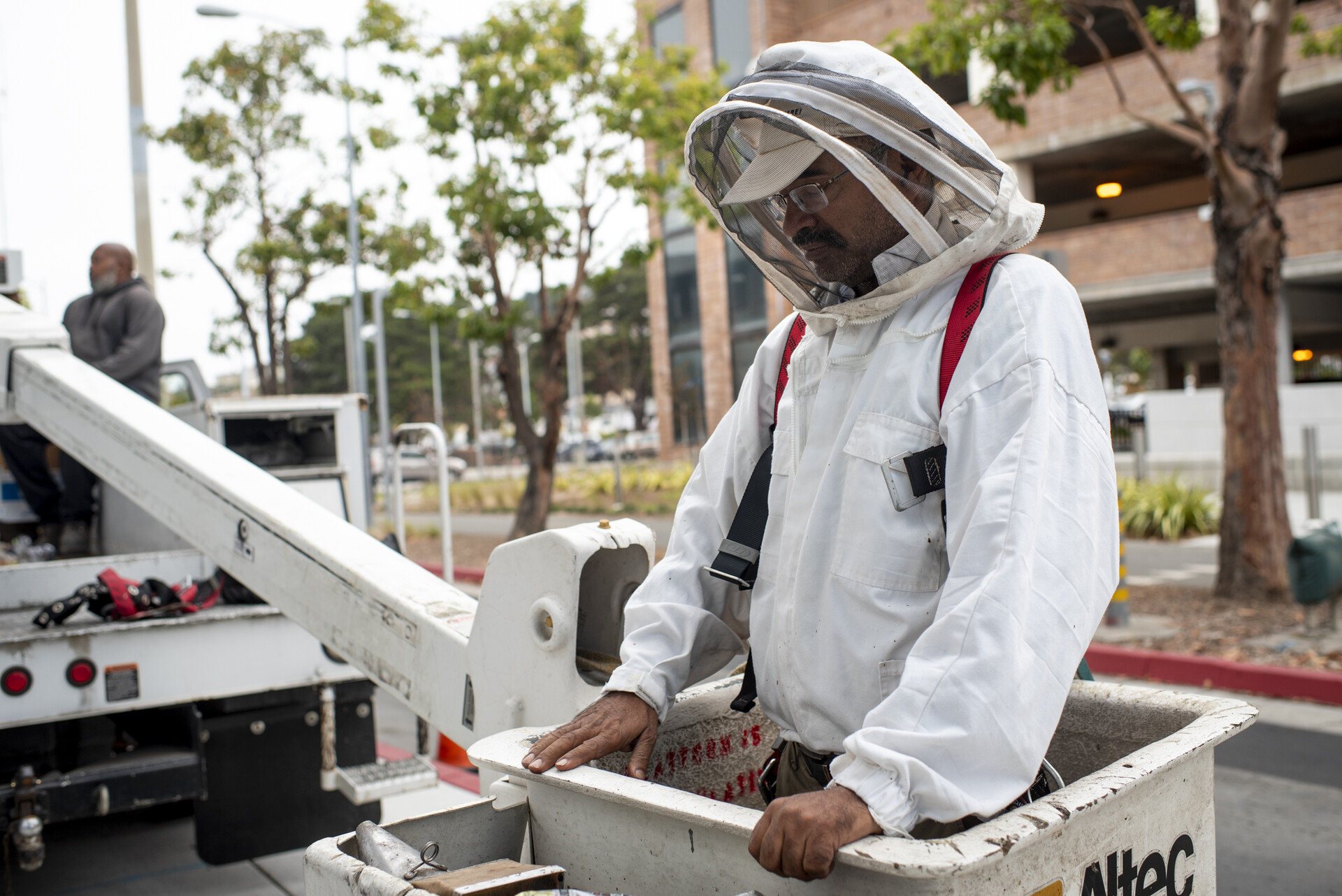
The number of hives varies throughout the year, but hives are found most often in spring, with hives being reported almost daily.
That’s when Khaled Almaghafi gets the call.
Almaghafi is the local beekeeper BART has tasked for the last five years with removing the hives and safely relocating their increasingly vulnerable insect inhabitants — while also getting some good honey out of the deal.
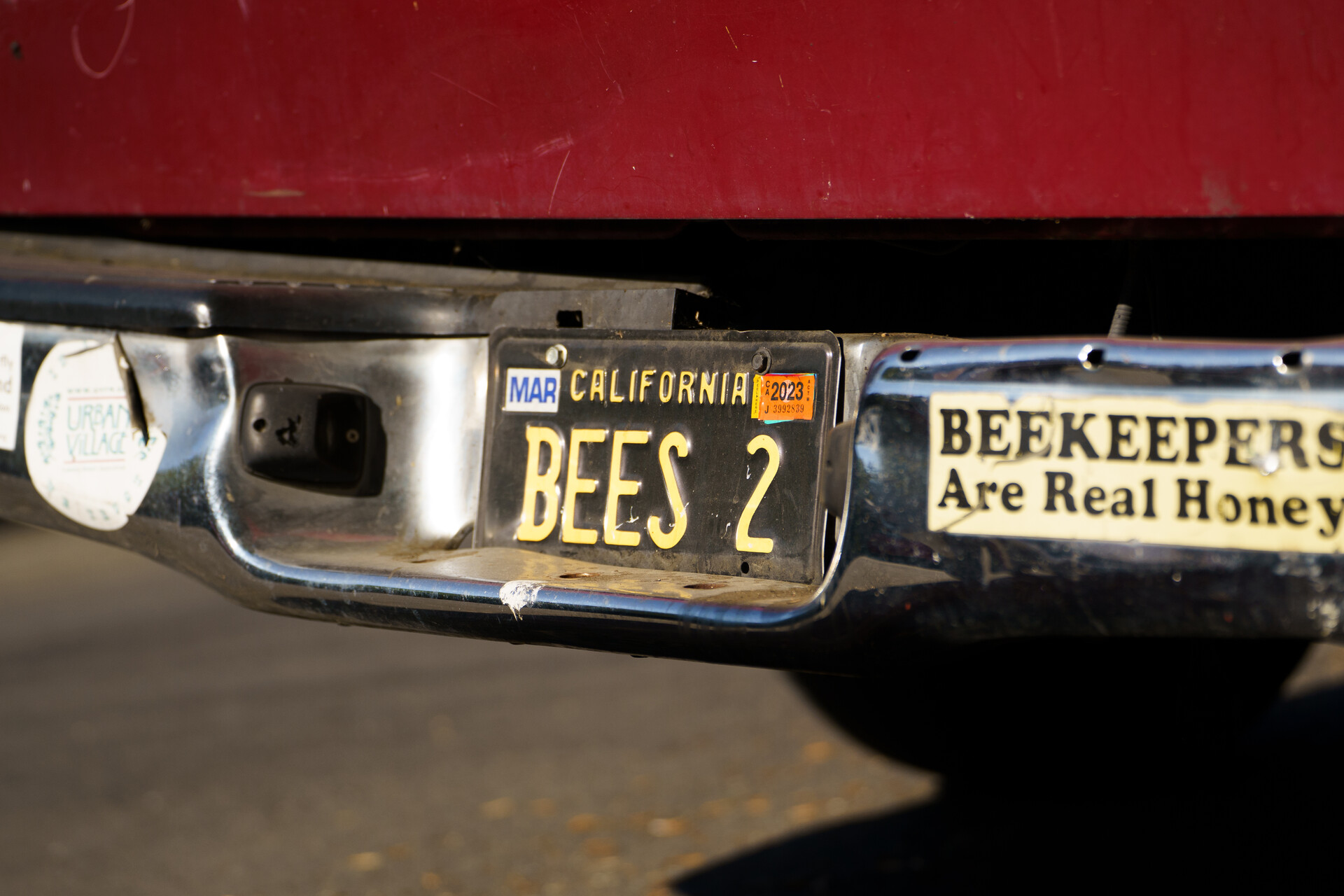
“BART came along and said, ‘Do you remove bees alive?’ I said, ‘Of course I do,’” said Almaghafi, who has tended bees in the Bay Area for nearly three decades, and now takes care of, and harvests from, over a hundred beehives that he keeps in Oakland and Richmond. Almaghafi is paid per job and keeps the bees and honey he finds.
For years, he’s been selling local honey, beeswax candles and honey-based remedies from his store in Oakland on Telegraph Avenue. Jars of honey are proudly displayed on honeycomb-shaped shelves that line the windows and walls.
Behind the counter, there’s a photo of Almaghafi covered in bees from jaw to chest. He said it was taken at a beekeeping conference in Oregon, where he was one of the few men brave enough to wear a bee beard.
BART found Almaghafi after an extensive search of service providers who could safely remove bees.
“He's thorough and sometimes he has to go to a site multiple times,” Eddy said in an emailed statement. “Safely removing the bees is the right thing to do for the environment so it's great we can work with Khaled to make that happen.”
Almaghafi has removed over 50 hives from BART property, he says, accounting for as many as 50,000 bees.

He says the high, hollow concrete ceilings of many BART stations make for ideal locations for bees to build their hives. But the difficult access for humans means it can often take hours to remove a single hive, he says, especially when doing so requires taking down a stucco wall to remove all the honeycomb to ensure the bees don’t come back.
“You have to be very calm, not be afraid of them,” he said, explaining how he uses a balm smoke that calms the bees before he opens their hive. “When you’re afraid of bees, you start producing a pheromone and the bees smell it.”
Almaghafi then extracts the bees with a gentle vacuum and seals them in a bucket to transport them to one of his sites.
“They are important, you know,” he said. “If it wasn't for them, we would probably be starving. No fruit, pollination.”
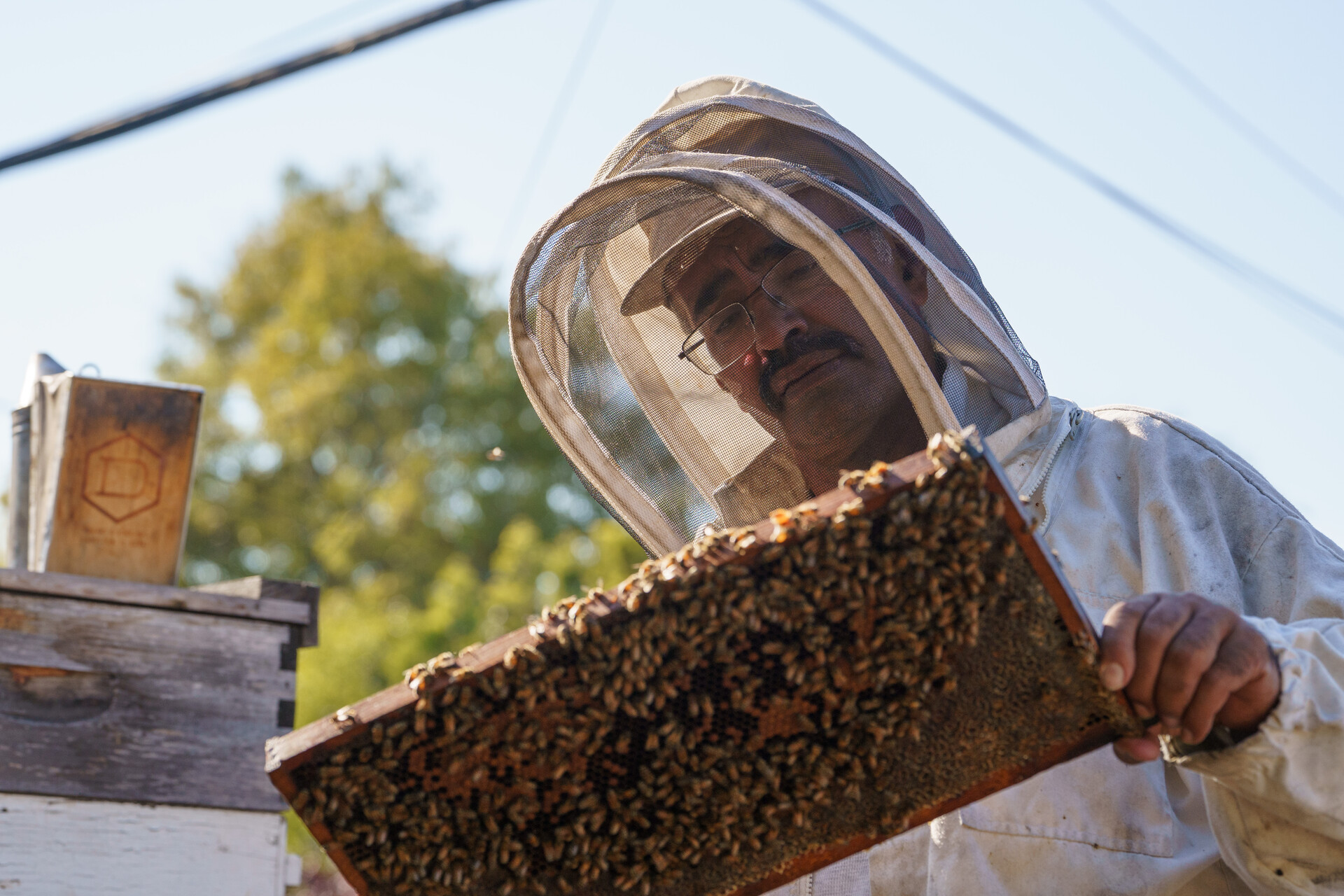
Almaghafi was born and raised in Yemen in a community where he says it was common for residents to keep hives in their yards. When he was 5, he began learning beekeeping from his father.
“From that age I started having a sort of relationship with bees,” Almaghafi said. “[It’s become] a habit for me to be around them, and for them to be around me. We’ve been friends [ever] since.”
When Almaghafi emigrated here with his family in the 1980s, he hoped to pursue a degree in apiology — the study of bees — at UC Davis, but the tuition costs were too high, and he instead continued beekeeping as a hobby before apprenticing with a local beekeeper and then eventually starting his own business.
In Muslim culture, bees have a special significance, he notes. They’re featured prominently in the Quran, and represent healing, wisdom and industry. He also says they’ve taught him patience.
“They don’t ask you to pay them a salary or anything,” Almaghafi said, noting his deep admiration for their incredible work ethic. “They just work, work, work and they benefit us, for nothing in return.”