California and other parts of the country look like they’ve turned a corner on the spread of MPX, also known as monkeypox.
“The rate of increase is definitely slowing down,” said UCSF infectious disease specialist Dr. Peter Chin-Hong. He frames the slowdown as “probably driven by the epicenters, which are parts of Europe and the big cities in the U.S., on the coasts and New York and LA and San Francisco.”
“But it doesn’t mean that it’s gone away,” cautioned Chin-Hong. On September 12, the CDC and public health officials in Los Angeles County confirmed the first death linked to MPX.
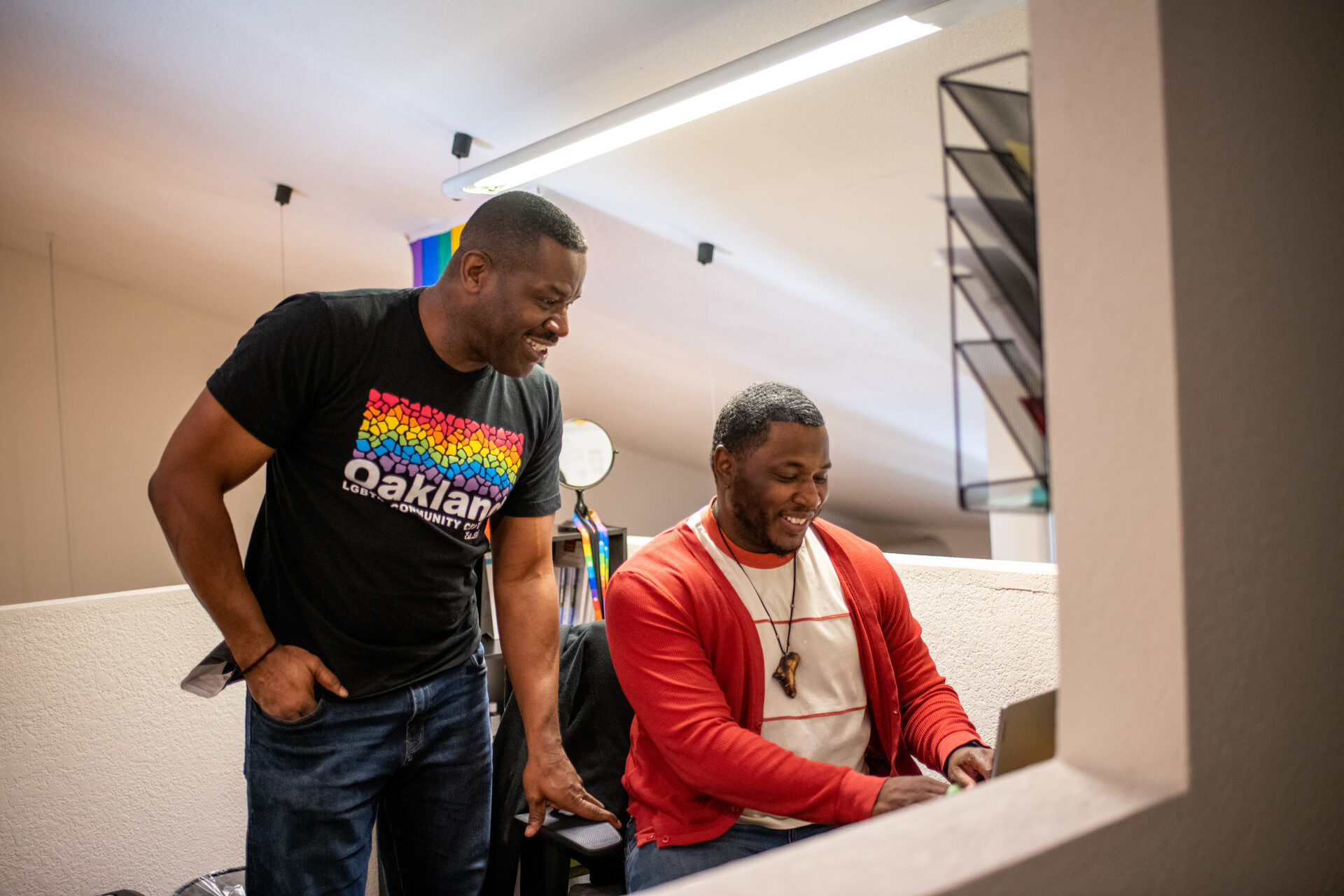
Chin-Hong and other experts attribute the decline in cases in part to behavior change among the highest-risk groups, including men who have sex with men. And one of the community groups raising awareness and getting out the public health message is the Oakland LGBTQ Community Center.
KQED’s Danielle Venton spoke with the organization’s CEO and co-founder, Joe Hawkins, about this phase of the MPX outbreak, and what role spaces like the Oakland LGBTQ Community Center have played in serving the community.
This interview has been lightly edited for length and clarity.
DANIELLE VENTON: Have we really reached a turning point where we can say MPX has been contained?
JOE HAWKINS: I think that what we’ve seen is in these larger areas, these larger cities — especially where we saw monkeypox being most aggressive — there are a number of people in our community who have been very aggressive about trying to get this vaccine.
However, while cases in white men have dropped in recent weeks, Black people are still making up a growing percentage of infections, nearly about 38% here in California. And Latinos also make up a majority of these new cases as well.
What do you expect is driving these disparities that we see?
I think the disparities are consistent with other health disparities in our community.
When you look at the HIV case rates, we’ve not heard much about HIV in America. And that’s, in my opinion, largely because when it comes to white gay males, those numbers have decreased dramatically. Whereas for HIV among Black and Latinx men, there’s … it’s still a problem. A major problem.
The CDC projected that one in two Black gay men will be infected with HIV in their lifetime, and one in four Latinx individuals in their lifetimes if something isn’t done.
We’ve heard folks talk about the potential stigma of lining up publicly for an MPX vaccine, or not wanting to talk to a clinician they don’t trust. Has this been part of the strategy for organizations like yours in trying to address these disparities?
Yes, definitely. I’ve been actually speaking about that from the very beginning. I noticed as the press was descending upon these monkeypox lines and as the weeks went on, you would start seeing more and more people with hoodies on covering their heads. And even from the very outset, many people of color would not go to those vaccination pods — because there was so much press. And because it’s even though it’s not an STI, it’s being associated with sex. The stigma is just quite great.
So we’ve offered still the mass vax clinics here and near our center, but we allow people to have confidential appointments as well. So just allowing people to have options has been critical.