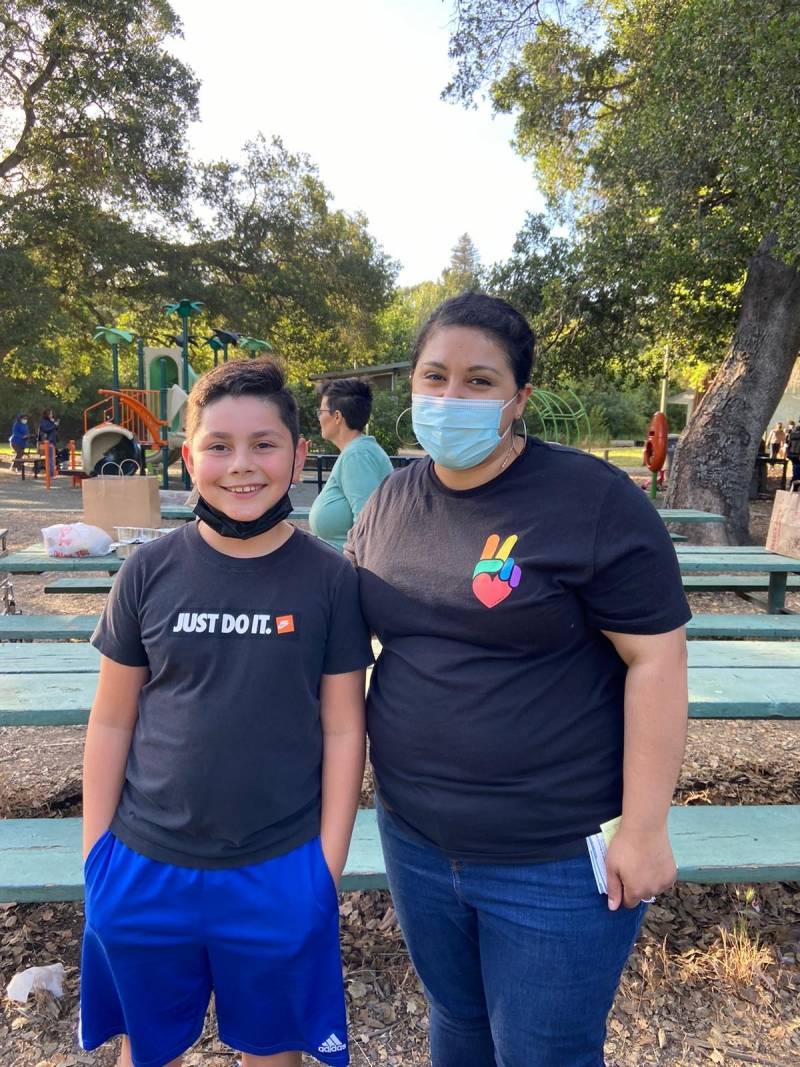
More than 60,000 Californians have died from COVID-19, and The California Report Magazine has launched a series to remember some of them. This week’s tribute honors Maribel Villanueva, who died last October at 46, leaving behind her 10-year-old son, David. David’s aunt, Susana Villanueva Torres, and his teacher, Mayra Alvarado, say Maribel’s death called each of them to take on roles they never imagined.
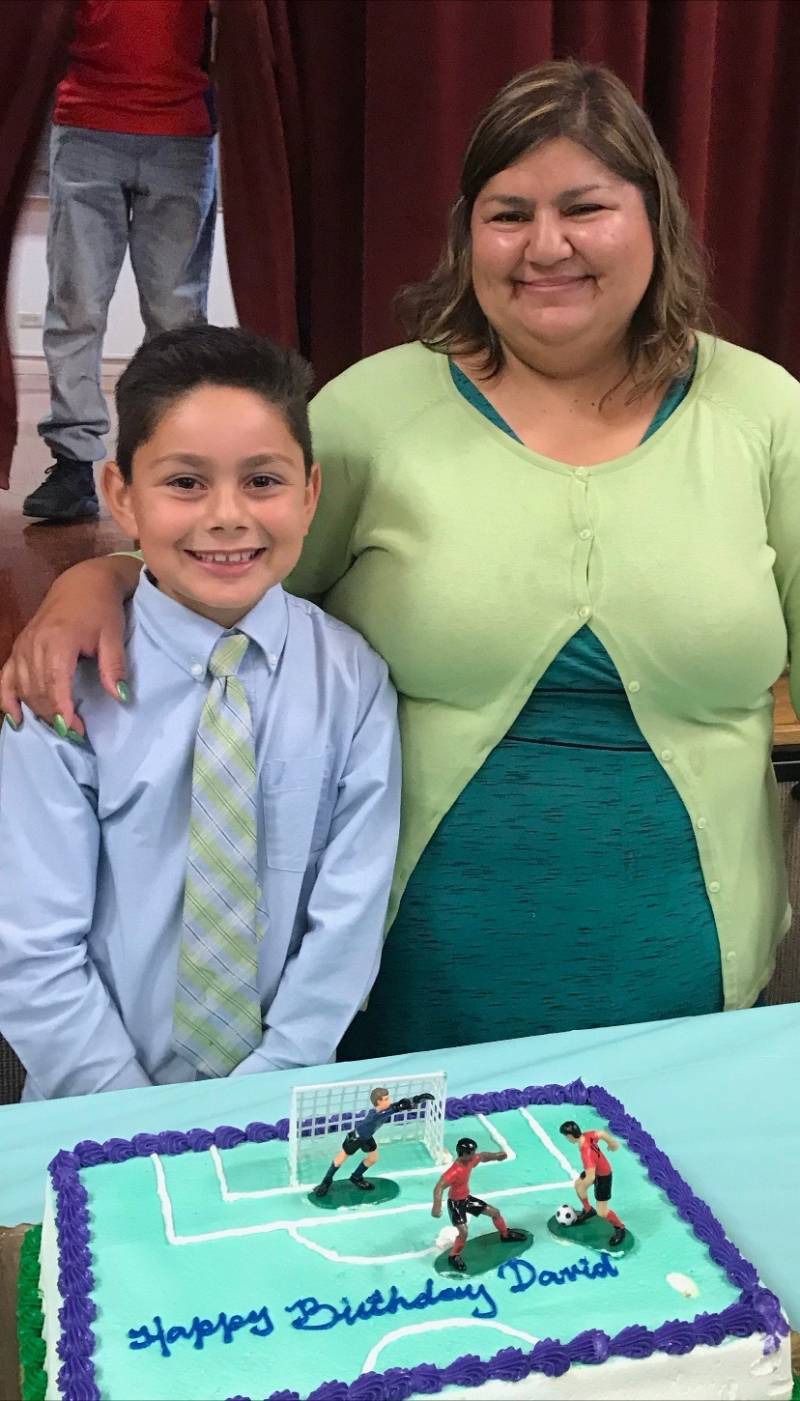
“It’s hard to lose your mom at 10 years old, especially when you didn’t have a chance to say goodbye,” said Susana Villanueva Torres, David’s aunt. Her sister, Maribel Villanueva, was a single mom. After her death, Torres and her husband took custody of David.
In a way, David’s elementary school teacher also became a sort of surrogate mom when he eventually returned to class, though Mayra Alvarado recalls not being prepared whatsoever to handle the death of a school parent. “I was just in shock. I was like, no, this can’t be happening. I know [COVID deaths] happen especially in our communities. But I still was in disbelief.”
It’s been painful to lose so many of our elderly to COVID-19. But there are also many families, especially Latino families, grieving the deaths of those who are younger. Maribel Villanueva was one of 2,389 Latino residents between the ages of 34 and 49 in the state who died; by comparison 333 whites in that age group died. The ripple effect of death in those families has been life altering.
Being the Best Mom Despite Hardships
Torres had always thought of her older sister as resilient. Maribel — everyone called her Mari — was the middle child. “She fought the good fight when she was here,” Torres said. “Like everybody else she had moments of hardship.”
Sitting on the front porch of her two-story home in Oakland, Torres said that hardship was one reason she and her husband welcomed Mari, her son and his grandmother to live under their wing, in a downstairs apartment, for little rent. “We grew up in a domestic violence, alcohol kind of environment. It was hard. I was able to cope in a different way than she did. She was very sensitive. David’s dad not being around … it was hard.”
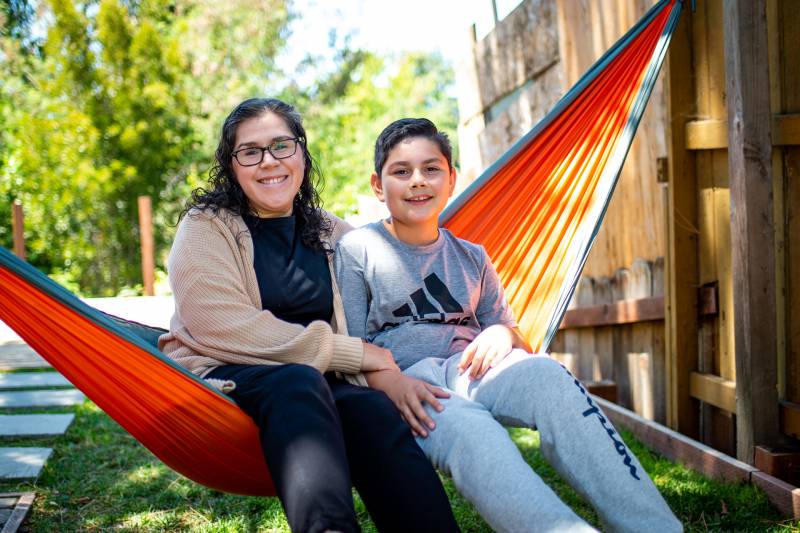
Torres said her sister was a terrific cook, and loved children, always babysitting her niece and nephew when they were young. Mari found work in a child care center and also cleaned homes. What Mari earned she spent on instilling in her son, David, a sense of possibility, Torres added.
On one occasion, David’s mom saved up to take him to the Monterey Bay Aquarium. Not having access to a car made the trip less convenient, but they managed with public transit. Tickets alone would have cost her almost $90. “And they stayed there for a weekend. Her plan was to take him to Disneyland for one of his birthdays,” Torres said.
When Mari got sick, Torres was the one who drove her to the community clinic and then to the hospital, and connected with her via Zoom. She recalled telling her sister, “Stay strong, keep fighting. David, it’s fine. He’s here with us, don’t worry about him.”
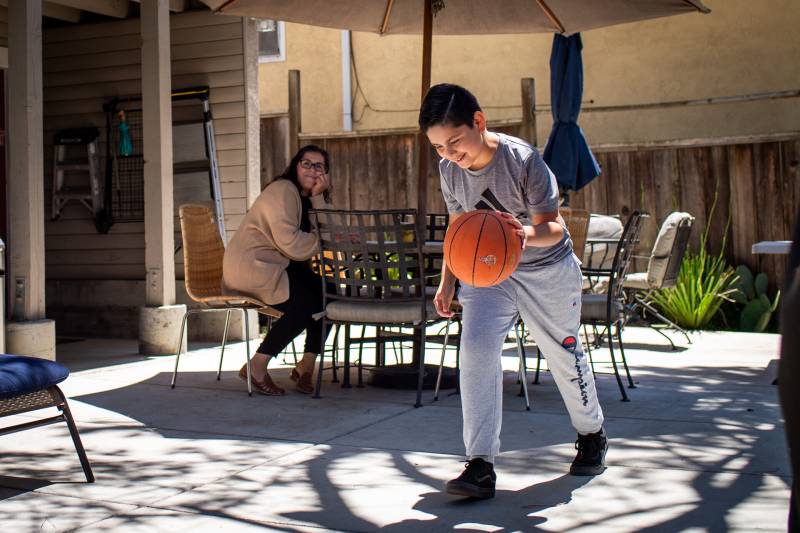
It fell on Torres to set up the last virtual visit with Mari and her son. She was also the one who had to make the hard decisions when the doctors said there was nothing more to be done.
“It just happened really quick,” she said. “You don’t have time to say goodbyes, [don’t] have time to be there with them in their hardest moments.”
After Mari died on Oct. 2, Torres found herself trying to figure out the cost of the funeral. “You’re in the middle of making all the decisions and you’re in the middle of so much pressure, so it was hard to grieve.”
Church members brought them food and flowers. And another community, David’s school, stepped up to help raise money for his mom’s funeral.
Lessons on Empathy
David attends Manzanita SEED Dual Language Immersion Elementary School in Oakland where there was also grief and confusion upon learning one of the school’s parents had died of COVID-19.
Manzanita SEED draws students from the city’s Fruitvale neighborhood, which is majority Latino and has been hard hit by the virus. When word spread that a parent from her school had died of COVID, David’s fifth grade teacher, Mayra Alvarado grew worried about how she could help her students process the news.
“I was just in shock,” she said. “I was like, no, this can’t be happening.” Then, she learned it was David’s mom.
Alvarado wondered what role she should take on to help David, so she kept checking in with Torres. “If he needs time, let him take time to catch up,” she told Torres. “He’s a very engaged student whenever he’s in classes. He’s a really funny kid. He’s just a pleasure to have in class.”
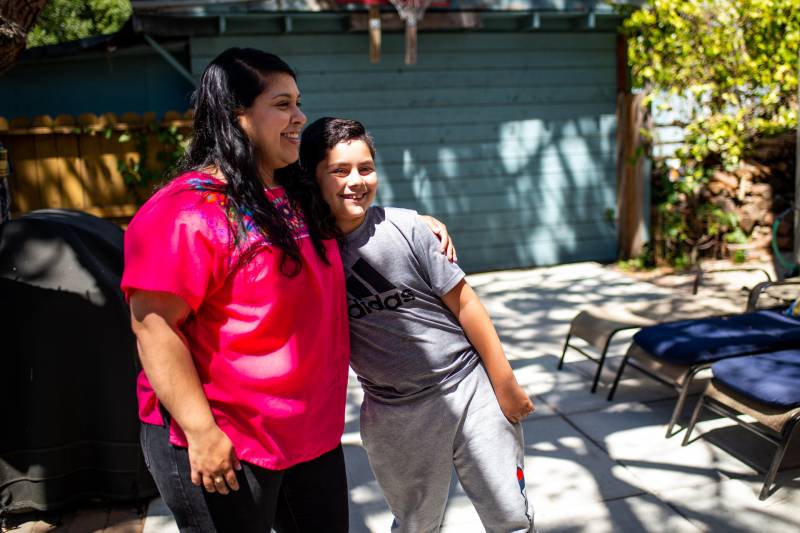
Alvarado knew how much Mari cared about David’s education. “I see a lot of the drive in David [because his mom] had this high expectation of him and just always wanted him to be on top of it.”
Both women decided it would be best for David to get back on Zoom with the class. But that raised more questions for Alvarado about how she should support the rest of the kids through the trauma of a classmate losing a parent.