As of July 17, more than 2,000 people incarcerated at San Quentin State Prison have tested positive for the novel coronavirus and 12 have died, according to the California Department of Corrections and Rehabilitation COVID-19 tracker.
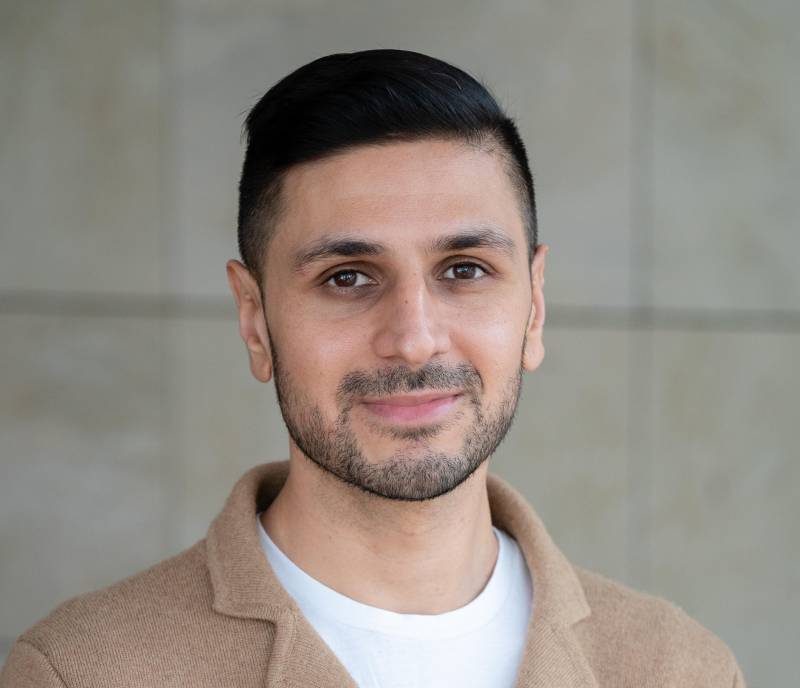
Adnan Khan — who spent the last four years of his prison sentence at San Quentin — has emerged as a vocal advocate for incarcerated people still inside during the outbreak, and for their families. Last year, he was the first person to be released when a new state law challenged the criteria that allowed prosecutors to convict him for a murder he did not commit during the robbery of a marijuana dealer. Khan was sentenced to 25 years to life.
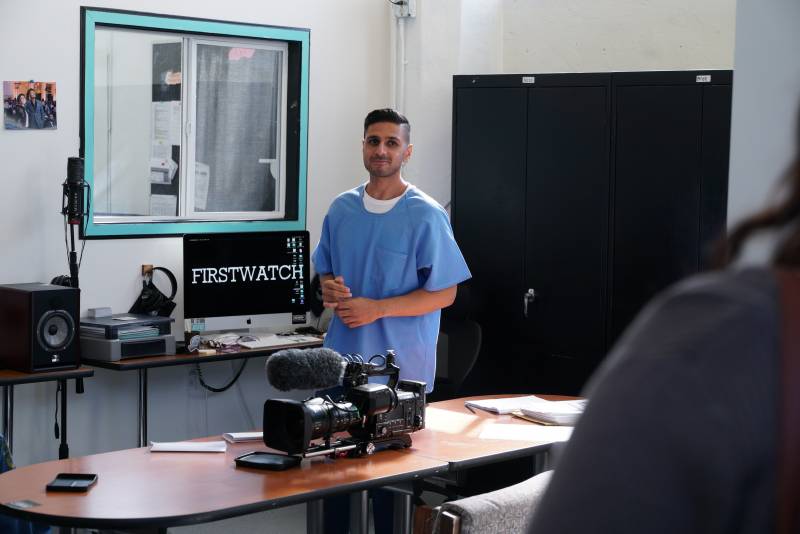
While at San Quentin he founded FirstWatch, a filmmaking project where incarcerated men tell stories about life inside prison. Khan is also the founder and executive director of re:Store Justice, which promotes restorative justice workshops and provides legal help to people who are incarcerated. Khan joined The California Report Magazine host Sasha Khokha from his home in Los Angeles to discuss the COVID-19 outbreak at San Quentin.
This conversation has been edited for brevity and clarity.
On When He Learned About the Outbreak at San Quentin
When the pandemic started back in March, my fears immediately went to the prisons, because the CDC’s guidelines are not applicable to correctional settings. Six foot physical distancing and hand sanitizer — even the ability to wash your hands with soap — is limited in prisons. But somehow, COVID stayed out of San Quentin for about three months. When the botched transfer (of inmates from Chino) happened, that just blew us away.
Editor’s Note: San Quentin had remained COVID-free until 121 inmates were transferred from California Institute for Men in Chino on May 30. The men had not been recently tested for COVID-19 leading up to their transfer to San Quentin.
On the Vulnerability of Prisoners Inside
First of all, San Quentin is the oldest prison in California. The ventilation is absolutely poor. It is dirty. There’s mold. It is very antiquated. And on top of that, the demographic of people that are incarcerated in San Quentin are elderly or have chronic illnesses. There’s a huge population — including a huge transgender population — that we continue to forget, so there are men and women incarcerated at San Quentin, as well as correctional officers and medical staff and kitchen cooks who all live there. A lot of people feel like, ‘Oh, that’s just prison. Whatever happens inside stays there.’ But by neglecting prisons inside, we infect our society.
On Being Released Before San Quentin’s Outbreak
I do feel helpless and I do feel survivor’s guilt. A lot of us were serving life sentences and we either went to the parole board or were commuted by governors. In my situation, a piece of legislation changed and I was immediately released. I really feel like I escaped death.
Now a year later, there is this deadly virus that’s eating people up. It’s not just about surviving. It’s not just about who dies and who lives. People haven’t seen or heard from their families in four months. It’s devastation that we’re seeing — not just what’s happening inside — but as an extension, what’s happening to their families. And so when people say, ‘We’re on lockdown,’ I understand people’s journeys are completely different. For me, I’m just so happy to do this lockdown from the comfort of my home with a cellphone, a laptop and a Netflix subscription. People in (prison) don’t have anywhere near that. It’s just this feeling of helplessness. How do we help our friends? What power do we have to help? It’s hurtful knowing how limited that power is.
On Advocating for People Still Inside
I have spent hours and hours in self-help groups (at San Quentin) listening to and sharing people’s deepest traumas. I know what that did for the trajectory of their life. I know crimes that people committed and the remorse and they feel towards their crimes. I know what making amends looks like. That’s what really breaks my heart. And that’s what society does not see. We’re talking about people who’ve been through a lot and who continue to suffer. We’re talking about human beings, after all. So when people say, ‘So what? They committed a crime. Do the crime, do the time.’ That’s not a public safety response. I always say I went from an eight-year-old Little League Baseball player to an 18-year-old with a life sentence. None of us are born armed and dangerous. The state should have a higher moral authority than the people it condemns.
When Being an ‘Essential Worker’ Is a Prison Job
I recently received a call from one of my good friends in San Quentin. His name is Anthony Ammons, but I know him better as “Ant.” He is an essential hospital worker getting paid $1 an hour to clean COVID-19 areas. He couldn’t refuse to clean because he would get written up, which would affect his parole board hearing. Ant gave me a call and told me that he wasn’t getting showers after coming back from work. He and his cellmate contracted COVID because of that.